Tag: Donald Trump

  • John Fetterman is already backing Donald Trump’s pick to replace Kristi Noem as DHS secretary

    John Fetterman is already backing Donald Trump’s pick to replace Kristi Noem as DHS secretary

    U.S. Sen. John Fetterman promised to back President Donald Trump’s pick to succeed Kristi Noem within minutes of her abrupt firing as secretary of homeland security.

    Trump has tapped U.S. Sen. Markwayne Mullin (R., Okla.) to lead the Department of Homeland Security, which oversees Immigration and Customs Enforcement, the Border Patrol, and the two agencies’ increasingly unpopular operations in carrying out Trump’s deportation agenda.

    Mullin’s nomination must be confirmed by the Senate.

    “I’m not sure how many fellow Democrats will vote to support our colleague [Sen. Mullin] as the next DHS Secretary, but I am AYE,” Fetterman said in a post on X, which also noted his membership on the committee that oversees the department.

    Mullin and Fetterman (D., Pa.) were both elected to the Senate in 2022. The Oklahoma Republican had served in the U.S. House for a decade before joining the upper chamber. Mullin told reporters he had already received a text message from Fetterman after Trump’s announcement.

    “You guys know John and I are friends. … We’re going to try to earn everybody’s vote,” Mullin said when asked whether other Democrats would vote for him.

    The sudden change in leadership at DHS follows growing outrage over ICE’s tactics and questions about Noem’s leadership, both of which escalated nationally after federal agents shot and killed U.S. citizens Renee Nicole Good and Alex Pretti in January in Minneapolis.
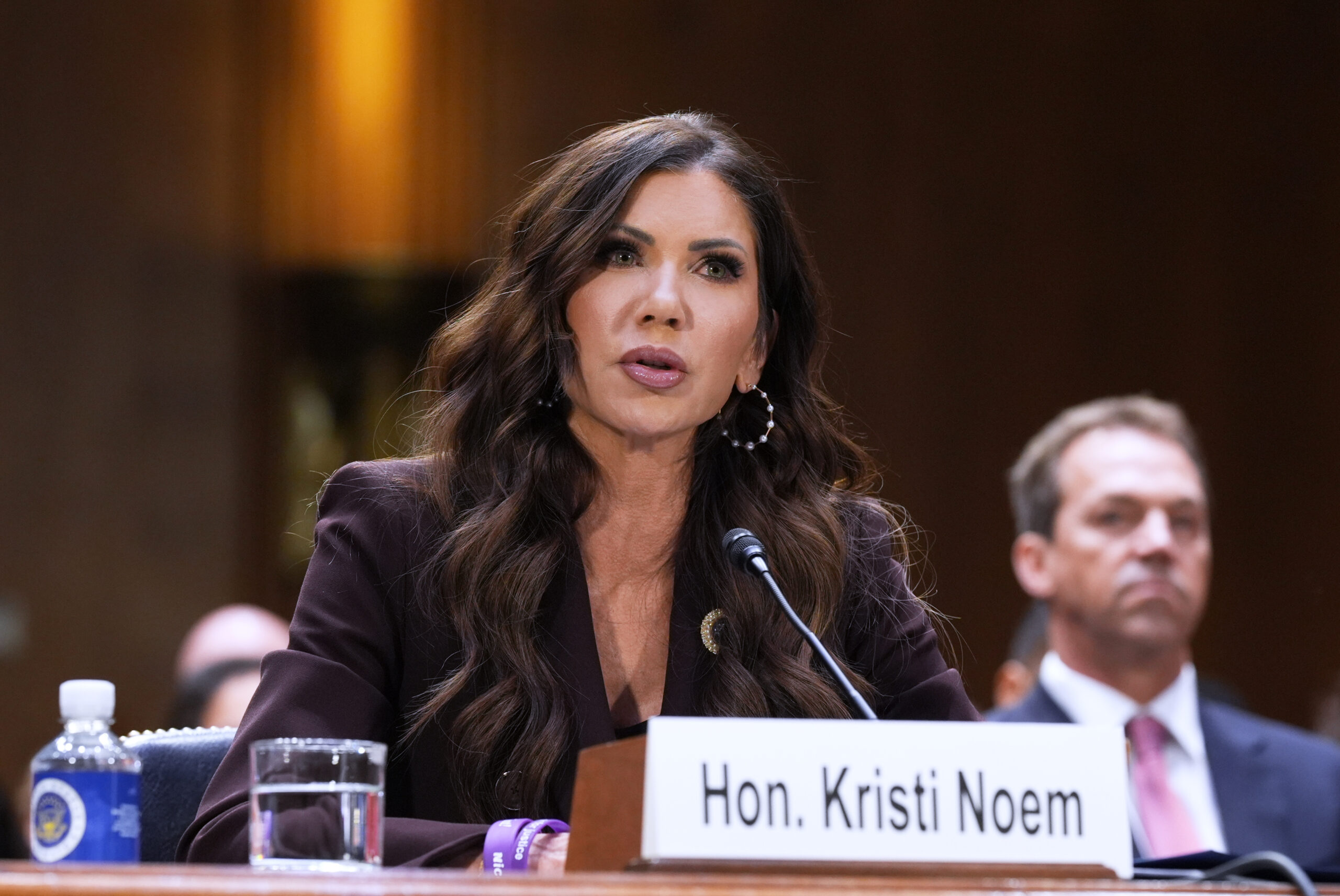
    Homeland Security Secretary Kristi Noem appears for an oversight hearing before the Senate Judiciary Committee, at the Capitol in Washington, March 3, 2026.

    Immigration has gone from one of Trump’s strongest polling issues to a potential drag on his party in the forthcoming midterms. More than half of Pennsylvania voters disapprove of ICE’s enforcement methods, according to a poll from Franklin and Marshall College released Thursday.

    Fetterman and other senators who had voted for Noem’s confirmation called for her to be fired after Pretti’s killing. She also faced criticism from both sides of the aisle at a recent oversight hearing before the Senate that examined a controversial $220 million ad campaign she approved, among other topics.

    “Americans have died,“ Fetterman said in a direct plea to Trump in January. ”She is betraying DHS’s core mission and trashing your border security legacy.”

    U.S. Sen. Dave McCormick (R., Pa.) said on Thursday that he supports Mullin’s nomination.

    It is unclear whether other Democratic senators will give the green light to Mullin’s nomination, but many on Thursday were quick to celebrate Noem’s departure as she transitions into a newly created role in the Trump administration called “the Special Envoy for the Shield of the Americas.”
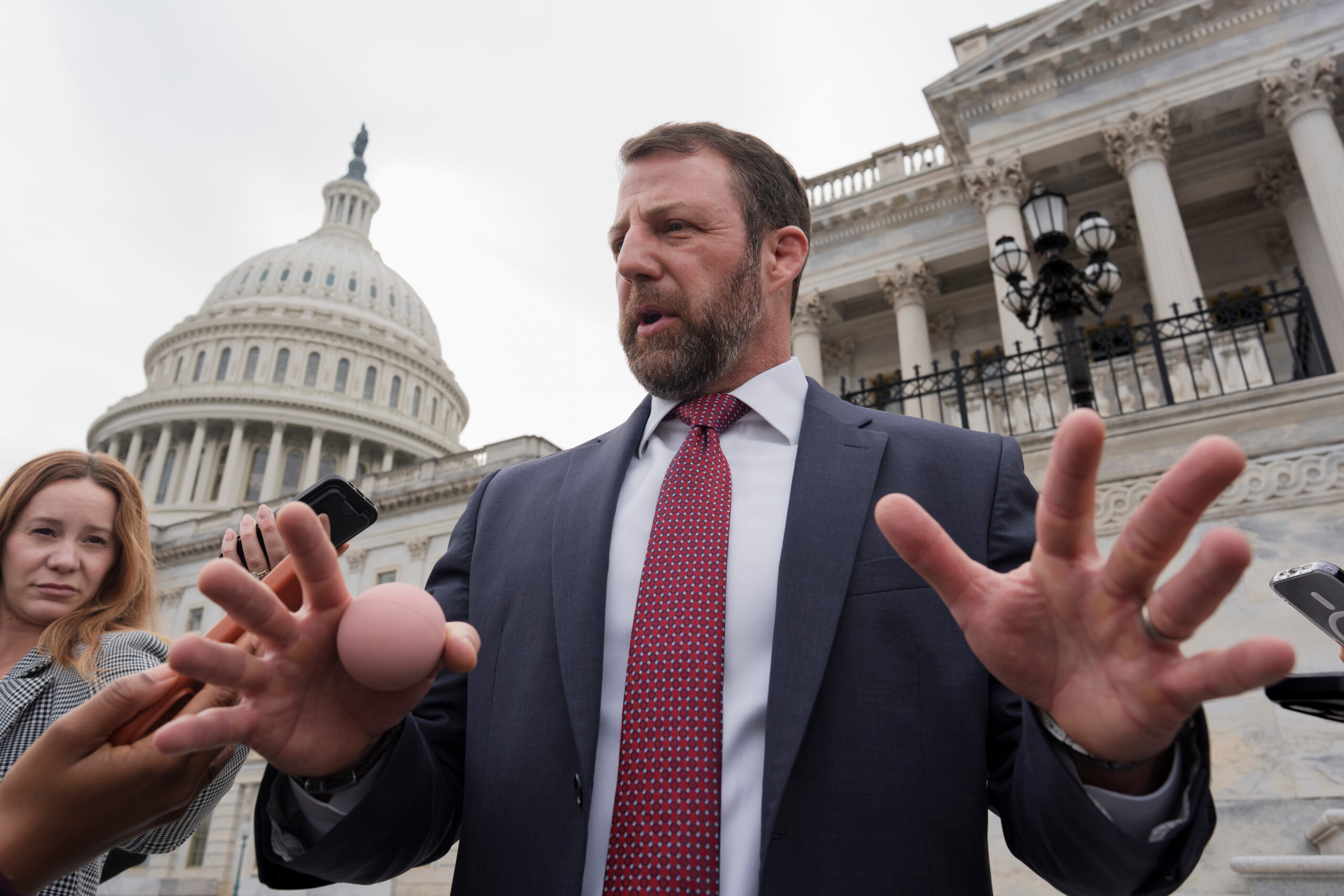
    Sen. Markwayne Mullin, R-Okla., speaks with reporters on the steps at the Capitol in Washington, Thursday, March 5, 2026.

    U.S. Sen. Andy Kim (D., N.J.), who also voted for Noem’s confirmation in January 2025 before calling for her to be fired a year later, said Thursday on X that her firing “Will be the most popular decision of [Trump’s] presidency.”

    But he cautioned that Noem’s termination is “only the start of getting rid of the deep rot of corruption in the Trump administration,” and that other officials, including Trump adviser Stephen Miller and Tom Homan, the border czar, should be held accountable for immigration agents’ conduct.

    The leadership change comes as Pennsylvania and New Jersey officials are pushing back on DHS’s plans to convert warehouses in the states into detention centers.

    Kim and U.S. Sen. Cory Booker (D., N.J.) have offered legislation to prohibit such moves and Gov. Josh Shapiro has floated possible legal action over DHS’s purchase of two warehouses in Pennsylvania.

    Democratic House members from the region echoed Kim’s sentiment that more change is needed than just the leadership of the department.

    Lawmakers are still debating future funding for DHS, with Democrats demanding reforms to immigration enforcement before they will approve more money for the department.

    “Change the lousy policies, not just the person,” U.S. Rep. Dwight Evans (D., Philadelphia) wrote on X.

    “We still need real accountability at DHS, including meaningful reforms to ICE so agents are not terrorizing Americans,” U.S. Rep. Brendan Boyle (D., Philadelphia) said on X.

    Boyle criticized Fetterman for immediately pledging to support Mullin, saying in another post that the Pennsylvania senator is “Trump’s favorite Democrat for a good reason.“

    U.S. Rep. Chrissy Houlahan (D., Chester) congratulated Trump in a statement Thursday for “taking this long overdue action” in firing Noem.

    “I sincerely hope Mr. Mullin or whomever is eventually confirmed will be prepared to reform ICE and to work with the Congress to rein in its most destructive practices,” she said.

    U.S. Rep. Ryan Mackenzie (R., Lehigh), who represents a key swing district, said he looks forward to “seeing a greater emphasis on transparency” under Mullin.

    He stopped short of criticizing Noem and said in the last year DHS “made critical progress towards securing the border once and for all.”

    One of the reforms Democrats have called for is a prohibition on ICE agents wearing masks. U.S. Rep. Brian Fitzpatrick (R., Bucks), a former FBI agent, is one of the few Republicans supporting that proposal as a way to restore trust with the agency.

    His office underlined that a new leader should focus on rebuilding the department’s reputation with the American people.

    “The Department of Homeland Security carries one of the most important missions in government — protecting the American people. That mission requires the public’s trust, and Congressman Fitzpatrick believes a leadership change was needed to help restore confidence in the department,” Fitzpatrick spokesperson Casey-Lee Waldron said in a statement.

    “He hopes Senator Mullin will work to rebuild that trust and strengthen DHS moving forward.”
  • Immigrant living in Philadelphia illegally voted in 2024 federal election, authorities say

    Immigrant living in Philadelphia illegally voted in 2024 federal election, authorities say

    An undocumented West African immigrant who federal authorities say has been living in Philadelphia for more than two decades cast a ballot in the 2024 federal election — and may have voted in at least six other elections, federal authorities said.

    Mahady Sacko was charged with fraudulent voting, according to the affidavit of probable cause for his arrest. If convicted, he could face up to five years in federal prison.

    Investigators said Sacko registered to vote in 2005, affirming on the registration form that he was a U.S. citizen. According to the affidavit, he went on to vote in five federal general elections and two primary elections over the next two decades.

    Prosecutors charged him only with casting a ballot in the 2024 election.

    Sacko had been ordered deported to Mauritania, in Northwest Africa, by an immigration judge in 2000, the affidavit said. But federal authorities never carried out the order because Sacko did not have a valid Mauritanian passport. Instead, immigration officials placed him under supervision, requiring him to regularly report to Immigration and Customs Enforcement.

    The charges against him come amid political attention on allegations that people who are not U.S. citizens are voting rampantly in American elections — a frequent talking point among conservative politicians and commentators. President Donald Trump has pushed federal officials to amp up efforts to prosecute undocumented immigrants who vote.

    But election experts and government investigations have consistently found that such cases are rare. Studies examining tens of millions of ballots have identified only a handful of suspected instances of such voting — a fraction of a percent of votes cast, according to research by the Brennan Center for Justice.

    Only U.S. citizens may vote in federal elections. Voters must attest to their citizenship when registering, and falsely claiming citizenship can lead to criminal prosecution and deportation.

    Voting records show that Sacko registered as a Democrat, though the affidavit does not specify which candidates he supported in the elections in which investigators say he voted.

    A spokesperson for the U.S. Attorney’s Office said Sacko had been released on bail after an initial appearance on Thursday. She did not provide the bail amount.

  • Pa. Gov. Josh Shapiro joins other states challenging Trump’s latest swing at global tariffs

    Pa. Gov. Josh Shapiro joins other states challenging Trump’s latest swing at global tariffs

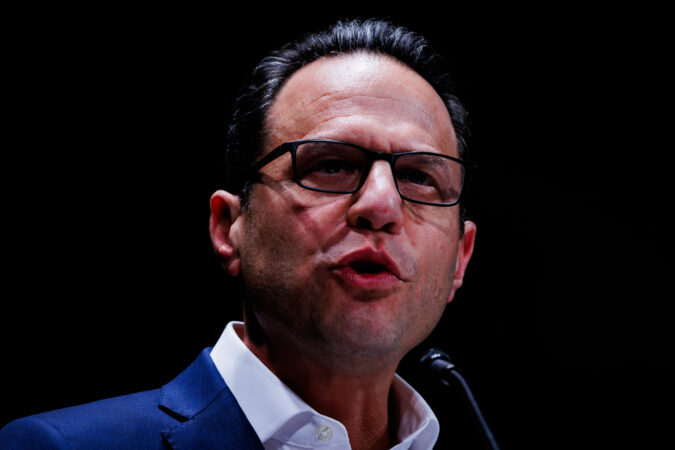
    Pennsylvania Gov. Josh Shapiro joined Democratic leaders from nearly two dozen states in challenging President Donald Trump’s latest global tariffs.

    In a lawsuit filed Thursday, Shapiro and the other state leaders argue Trump’s plan to impose 15% tariffs, which comes after the U.S. Supreme Court blocked his last round of global tariffs, oversteps his powers.

    “The Supreme Court got it right — but instead of following the law, Trump decided to double down,” Shapiro said in a statement.

    “This President’s tariffs have done nothing but cause chaos and raise prices for our farmers, small businesses, and families,” Shapiro said. “I’ve gone to court before to protect Pennsylvanians from the costs of this disastrous trade war — and I’m ready to do it again.”

    The suit, which is being led by the attorneys general of Oregon, Arizona, California, and New York, marks the 21st legal action Shapiro has filed or joined against the administration during Trump’s second term, including two suits he has led.

    Trump’s first round of tariffs sent shock waves through the U.S. economy as prices rose. Exports, including Pennsylvania’s lumber sales, also suffered.

    Shapiro, who is up for reelection this year, has long highlighted his willingness to go up against Trump in court. That record began during Trump’s first term, when Shapiro was state attorney general.

    In Trump’s second term, Shapiro has repeatedly stepped in to sue on behalf of Pennsylvania when Republican Attorney General Dave Sunday has not.

    Kentucky Gov. Andy Beshear, the only other governor signed onto the case, faces similar circumstances in his Republican-leaning state. Both Beshear and Shapiro are seen as likely contenders for the Democratic nomination in 2028.

    New Jersey and Delaware, which have Democratic attorneys general, also joined the suit.

    “Tariffs raise prices for hard-working families and businesses across New Jersey,” New Jersey Attorney General Jennifer Davenport said in a statement. “I will keep fighting against the imposition of unnecessary and illegal costs on our consumers. We’re going to court to protect our state from these illogical and illegal tariffs.”

    The suit is the fourth Davenport has joined against the Trump administration since she was appointed by Gov. Mikie Sherrill in January and the 50th New Jersey has filed since Trump took office last year.

    Trump has said the tariffs are essential to reduce America’s longstanding trade deficits. He imposed duties under Section 122 of the Trade Act of 1974 after the Supreme Court struck down tariffs he imposed last year under an emergency-powers law.

    Trump criticized the high court during last week’s State of the Union address, calling the ruling “very unfortunate.” Trump said in the speech that his new tariffs would be “a little more complex but actually probably better.”

    Section 122, which had never been invoked, allows the president to impose tariffs of up to 15%. They are limited to five months unless extended by Congress.

    The states’ new suit argues that Trump cannot pivot to Section 122 because it was intended to be used only in specific, limited circumstances — not for sweeping import taxes. It also contends the tariffs will drive up costs for states, businesses, and consumers.

    Many of those states also had successfully sued over Trump’s tariffs imposed under a different law: the International Emergency Economic Powers Act (IEEPA).

    Four days after the Supreme Court struck down his sweeping IEEPA tariffs Feb. 20, Trump invoked Section 122 to slap 10% tariffs on foreign goods. Treasury Secretary Scott Bessent told CNBC on Wednesday that the administration would raise the levies to the 15% limit this week.

    The Democratic states and other critics say the president cannot use Section 122 as a replacement for the defunct tariffs to combat the trade deficit.

    The Section 122 provision is aimed at what it calls “fundamental international payments problems.’’ At issue is whether that wording covers trade deficits, the gap between what the U.S. sells other countries and what it buys from them.

    Section 122 arose from the financial crises that emerged in the 1960s and 1970s, when the U.S. dollar was tied to gold. Other countries were dumping dollars in exchange for gold at a set rate, risking a collapse of the U.S. currency and chaos in financial markets. But the dollar is no longer linked to gold, so critics say Section 122 is obsolete.

    Awkwardly for Trump, his own Justice Department argued in a court filing last year that the president needed to invoke the emergency powers act because Section 122 did “not have any obvious application” in fighting trade deficits, which it called “conceptually distinct” from balance-of-payment issues.

    Still, some legal analysts say the Trump administration has a stronger case this time.

    “The legal reality is that courts will likely provide President Donald Trump substantially more deference regarding Section 122 than they did to his previous tariffs under IEEPA,” Peter Harrell, visiting scholar at Georgetown University’s Institute of International Economic Law, wrote in a commentary Wednesday.

    The specialized Court of International Trade in New York, which will hear the states’ lawsuit, wrote last year in its own decision striking down the emergency-powers tariffs that Trump did not need them because Section 122 was available to combat trade deficits.

    Trump does have other legal authorities he can use to impose tariffs, and some have already survived court tests. Duties that Trump imposed on Chinese imports during his first term under Section 301 of the same 1974 trade act are still in place.

    Staff writer Aliya Schneider contributed to this article, which contains information from the Associated Press.

  • Lawmakers honor Philly-born Palestinian American killed by Israeli settlers | City Council roundup

    Lawmakers honor Philly-born Palestinian American killed by Israeli settlers | City Council roundup

    City Council on Thursday formally honored a Philadelphia-born Palestinian American who was killed last month by Israeli settlers in the occupied West Bank.

    In a unanimous voice vote, Philadelphia lawmakers passed a resolution to celebrate the life of 19-year-old Nasrallah Abu Siyam, who was fatally shot during a violent clash in a village on Feb. 18, the beginning of the Muslim holy month of Ramadan.

    Members of Abu Siyam’s family appeared in Council chambers Thursday alongside representatives from the Council on American-Islamic Relations, who called for an independent U.S.-led investigation into the killing.

    “You don’t know what it means to live under occupation. You don’t know what these settlers are doing,” said Abdelhamid Siyam, Nasrallah Abu Siyam’s uncle. “When justice is attacked, silence is treason. … We should stand together and pressure all those elected officials to stand with justice.”

    City Councilmember Rue Landau, a Democrat who authored the honorary resolution in partnership with Councilmember Nicolas O’Rourke, said Thursday that other members of Abu Siyam’s family are trapped in the Middle East after flying there after his death.

    They are unable to travel home, she said, due to the ongoing war in Iran and restrictions on airspace.

    Landau also called on the U.S. State Department and the Department of Justice to “conduct a full investigation and pursue justice for Nasrallah.”

    “We demand accountability so that no other family here or abroad has to stand where this family stands now,” she said during a later event alongside Abu Siyam’s family.

    Thirty U.S. senators signed a letter to President Donald Trump’s administration Thursday calling for an independent investigation into Abu Siyam’s killing. Pennsylvania’s two senators, Republican Dave McCormick and Democrat John Fetterman, did not sign it.

    Here’s what else happened in Council on Thursday.

    What was the highlight?

    Prioritizing transit-oriented development: Mayor Cherelle L. Parker’s administration is pushing Council to approve a package of legislation that makes it easier to build apartment buildings near SEPTA stations, measures that proponents see as a way to boost ridership and increase the city’s housing stock.

    Parker transmitted a package of zoning bills to Council on Thursday, but no member formally introduced it. Members said they saw the legislation for the first time on Wednesday and want more time to review it before introduction.

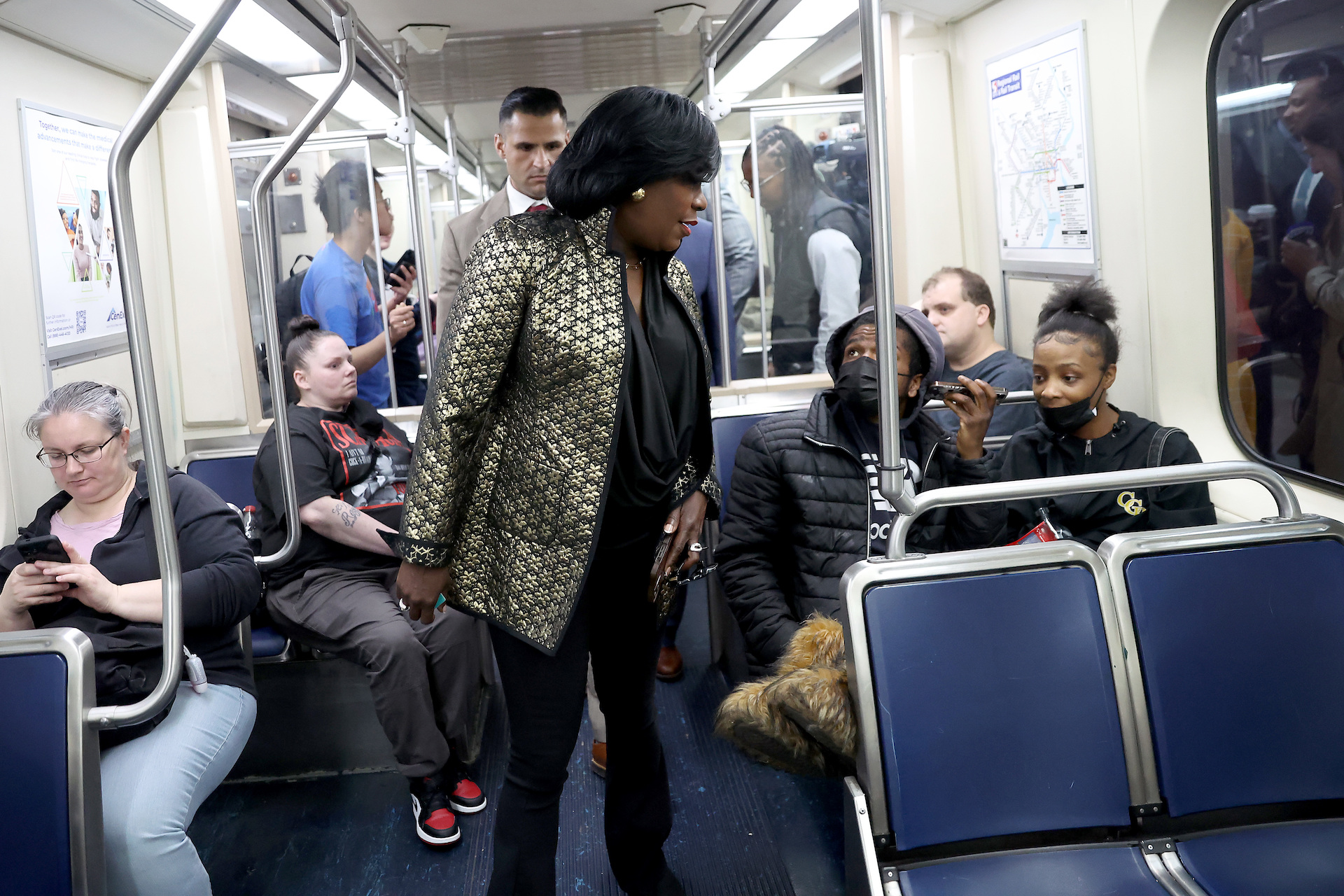
    Mayor Cherelle Parker (center) rides the SEPTA Market-Frankford Line to an event in the Kensington section of Philadelphia, Pa. on Thursday, April 11, 2024.

    The bills are aimed at advancing Parker’s goal to build, preserve, and repair 30,000 housing units.

    Most crucially, one bill expands an existing law that says properties within 500 feet of a Council-designated SEPTA station can receive benefits allowing developers to build more homes. Parker’s legislation increases the radius to 1,320 feet, or a quarter of a mile.

    What else happened?

    Smoke-filled doom: Lawmakers continued their crusade against smoke shops and so-called nuisance businesses Thursday, with Councilmember Katherine Gilmore Richardson bringing legislation to hold commercial landlords accountable for renting to illegal smoke shops.

    The bill is a follow-up to a package of legislation lawmakers passed last year that makes it easier for the city to shut down stores that sell cannabis and tobacco products without permits.

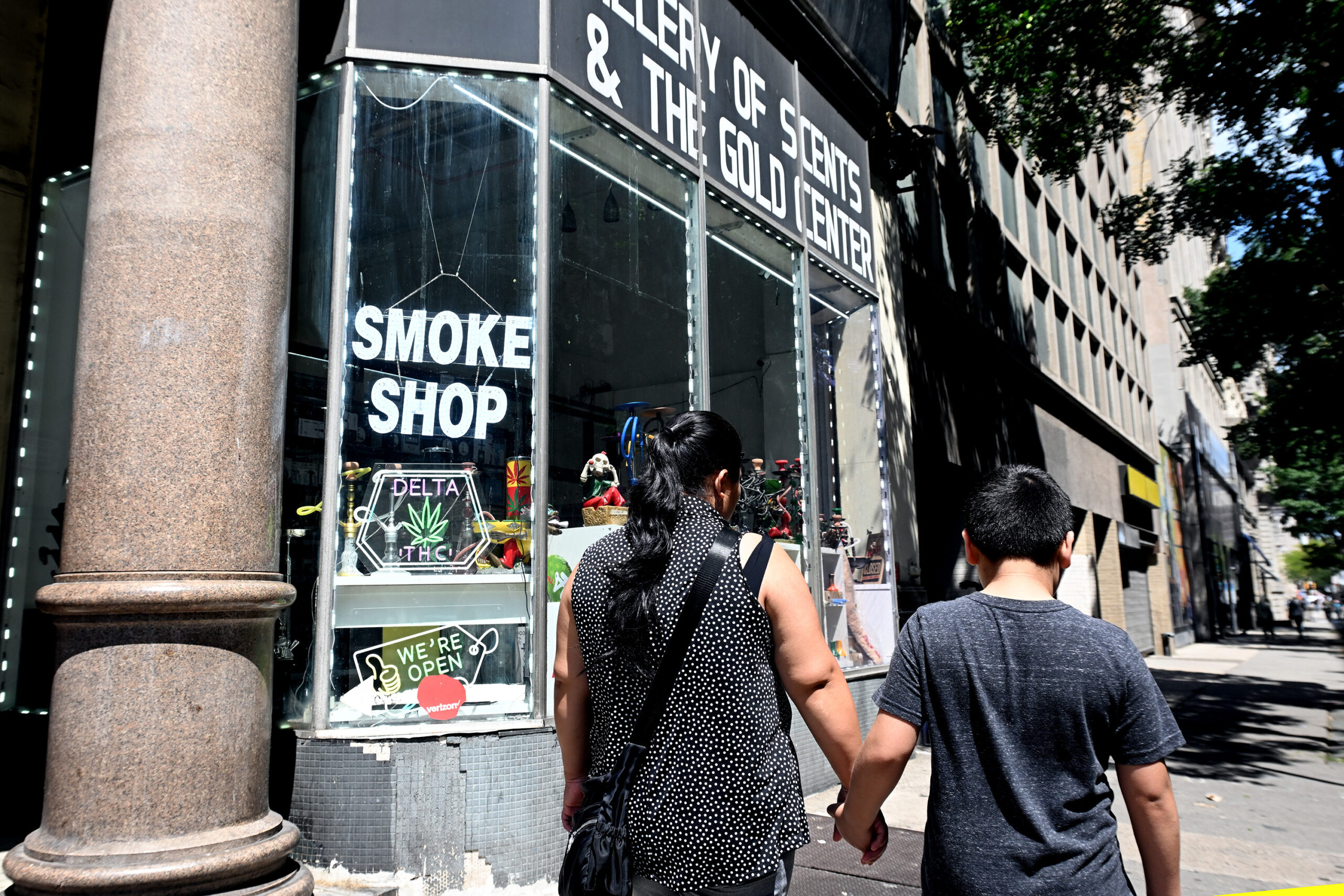
    This file photo shows a city smoke shop exterior on the 1000 block of Chestnut Street in July. City Council has advanced several pieces of legislation aimed at curbing smoke shops.

    Gilmore Richardson introduced a second bill to establish a new license requirement for stores selling products like hemp-based THC and kratom. The ordinance would define the products as “intoxicating substances” and establish a 21-plus age minimum.

    What’s next?

    Block off your calendar: Next week will be a busy one. Parker is scheduled to deliver her annual budget address to Council on Thursday, when she will outline her vision for the coming year.

    The speech will kick off weeks of hearings before Council, when members will have the opportunity to question administration officials from every major department, as well as the leaders of other agencies that receive city dollars, including the city courts, the district attorney, and the Philadelphia School District.

    Quote of the week

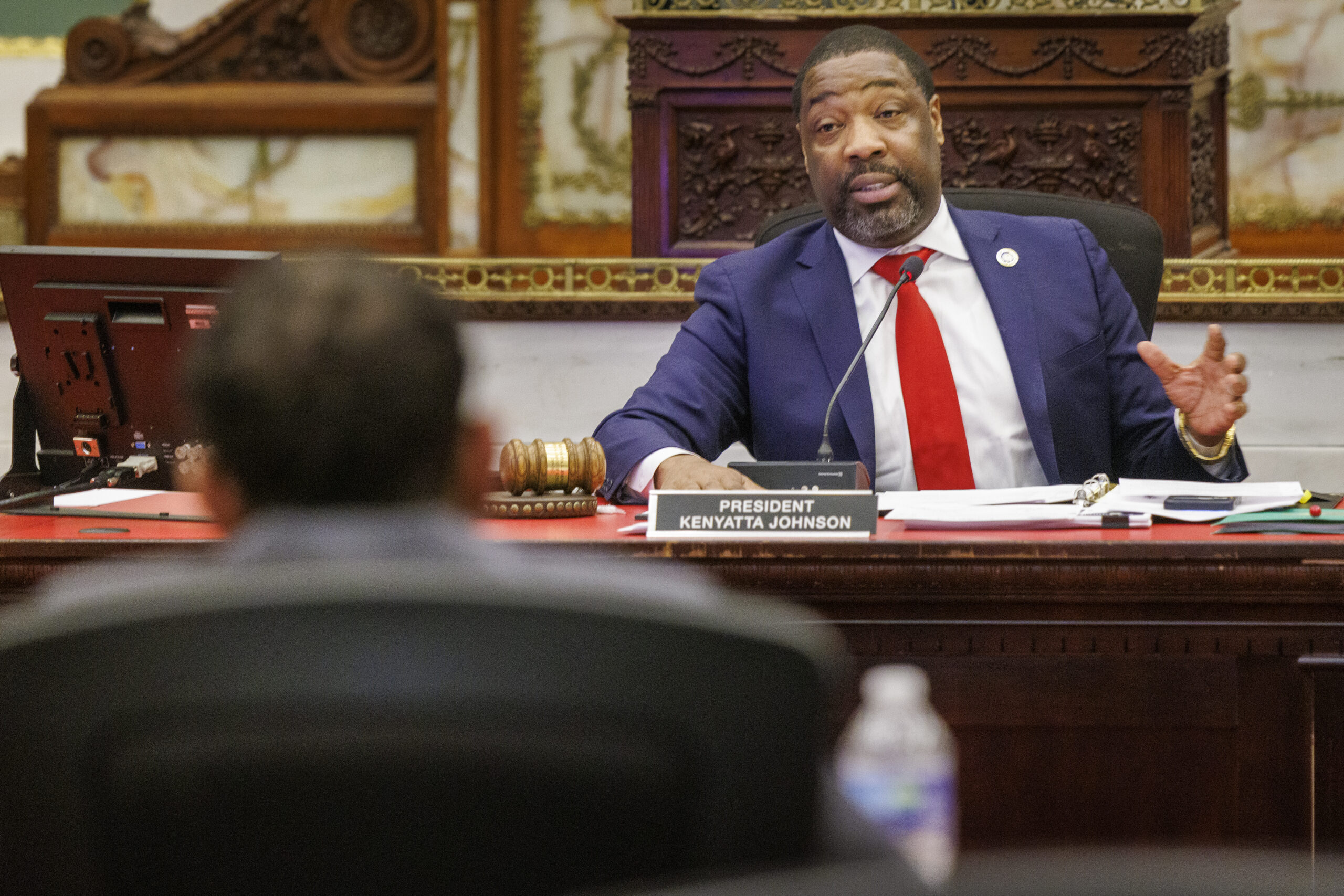
    Philadelphia City Council President Kenyatta Johnson questioning Dr. Tony Watlington, Superintendent of School District of Philadelphia, during a hearing with board members of School District of Philadelphia, Tuesday, Feb. 17, 2026.

    A little school district shade: That was Council President Kenyatta Johnson chiming in on an effort to rename a North Philadelphia street after the late Constance E. Clayton, Philadelphia’s first Black and female schools superintendent.

    Johnson slyly brought up his opposition to parts of the school district’s proposal to close 20 schools as part of its facilities master plan, prompting a wave of “oohs” in the chamber.

    Staff writers Jake Blumgart and Max Marin contributed to this article.

  • Texas primary exposed GOP scheme to rig the 2026 midterms

    Texas primary exposed GOP scheme to rig the 2026 midterms

    A man named Juston Marine had arguably the toughest job in America on Tuesday: “election navigator” in Dallas County, Texas, where a confusing, Republican-engineered change in voting rules for 2026 left many voters dazed, confused, and miles from the place where they were supposed to be casting ballots.

    “There are a lot of infuriated voters,” Marine told a reporter for the Votebeat website as he struggled to do his job outside the Anita Martinez Recreation Center in West Dallas, where he encountered voters as they arrived at the large polling center. It seems this election worker heard a lot of words that aren’t found in the Bible, as he told every second or third voter that they were supposed to be somewhere else.

    “I walked up here because I want to vote so, so bad,” Veronica Anderson told a reporter after traveling two and a half miles on foot to Dallas’ Martin Luther King Jr. Community Center, only to be told she could only cast a ballot at some other location she’d never heard of. She added that the rejection felt like “your self-esteem and everything is torn down.”

    That level of despair is exactly what Donald Trump’s Republican Party is going for, as America this week kicked off an eight-month mad dash to a November midterm election that will be pivotal for the nation’s barely breathing democracy.

    We’ll never know exactly how many intended votes weren’t cast on Tuesday at the site named for the civil rights legend credited for the 1965 Voting Rights Act, or other Dallas County polling places where scores of voters — primarily Democrats — were turned away from highly competitive primaries for a U.S. Senate seat and other key races.

    It may have looked like chaos, but in many ways it all went down according to a Republican plan that will likely inspire further scheming from Trump and his MAGA minions as the general election draws closer.

    With polls showing that an election held today — with the two-term president’s unpopularity at an all-time low — would result in a Democratic takeover of the U.S. House and possibly the Senate, perhaps in a landslide, Team Trump has spent months looking for any and every way to put its finger on the scale of democracy.

    No one, other than some online Chicken Littles, believes Trump would go full banana republic and send in troops to cancel the 2026 midterms. But his attempted coup on Jan. 6, 2021, aiming to undo his 2020 loss, is an indication of how far this autocrat will go to retain power.

    The Trump-led Republican scheme to make the 2026 elections less free and less fair started with a push for red states to do extreme gerrymandering, ripping up the maps drawn after the 2020 Census to make new districts crafted to maximize GOP power. (Texas was Ground Zero for this effort — more on this later.)

    As the calendar flips toward the midterms and Republican popularity wanes, the push is likely to get more extreme. A legislative push for the so-called SAVE America Act, which would make voting harder with harsh ID requirements, has stalled, so Trump is now weighing an executive order to get the same results — which would surely trigger a legal fight — and possibly try to curb mail-in ballots, as well.

    What just happened in Texas’ second-most populous county proved a case study in today’s brand of Republican voter suppression, so let’s unpack it.

    Like much of what happens in a political party that still clings to the Big Lie of nonexistent voter fraud in that 2020 election that Trump lost, the problems in Dallas County all began with a conspiracy theory.

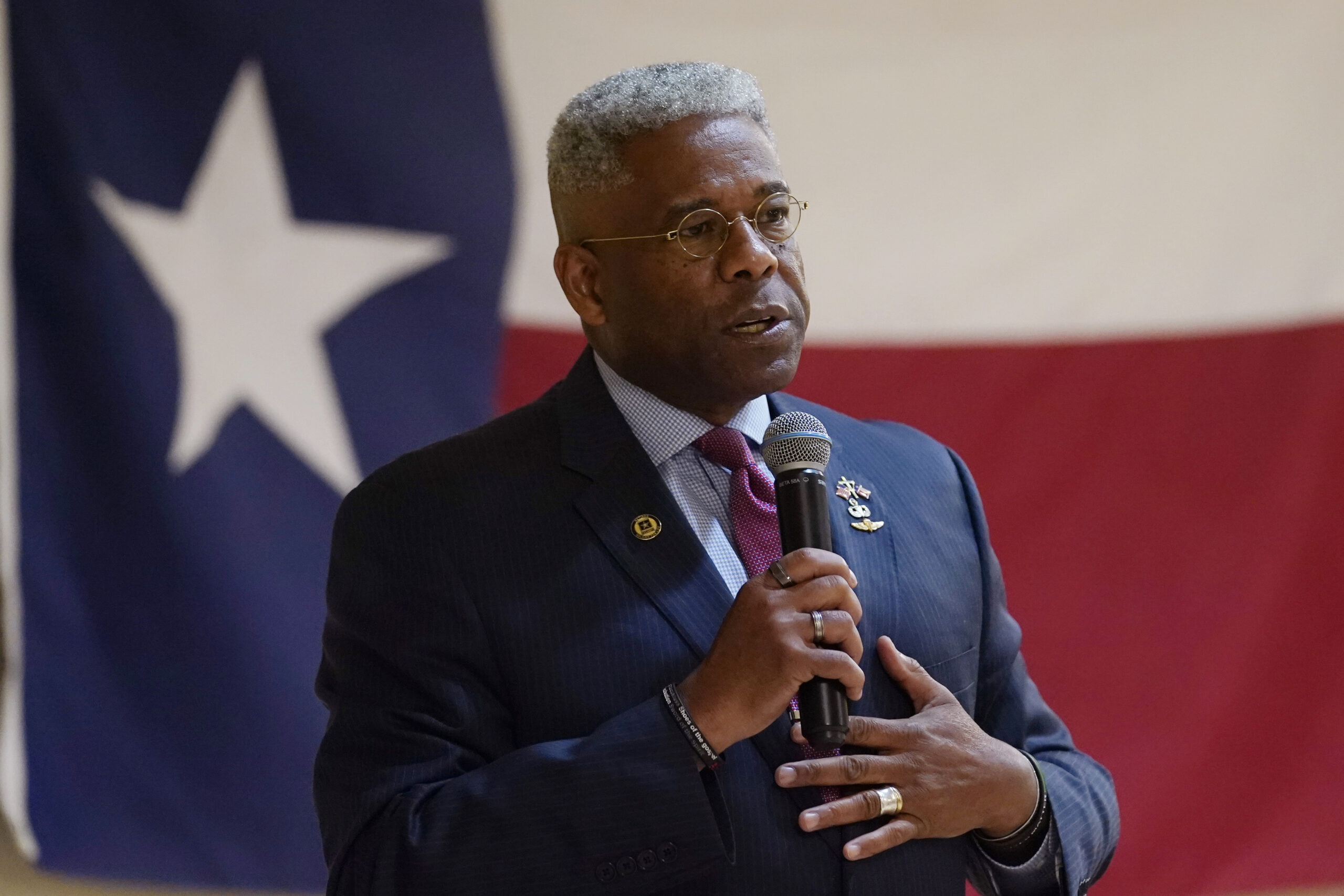
    In this September 2021 file photo, Texas gubernatorial hopeful Allen West speaks at the Cameron County Conservatives anniversary celebration in Harlingen, Texas.

    The county GOP leader in Dallas is a well-known conspiracy theorist, Allen West, an ex-congressman from Florida who moved to Texas and, for a time, ran the state Republican Party, where he adopted a slogan and a style from QAnon and seemed to favor secession, among other extreme views.

    In 2024, West became chair of the Dallas County GOP and made election and voting machine conspiracy theories his prime focus, in a state where parties have a lot of say over how primaries are conducted.

    What the local GOP pushed was for the county to count all of its paper ballots by hand — a laborious process that would also require abandoning the large countywide voting centers and a return to smaller neighborhood precincts. Ultimately, the ballot-counting idea proved not practical, but the switch back to local precinct voting stuck and was in effect Tuesday for both parties — even as Democrats struggled to inform their voters. (A similar change occurred in smaller Williamson County.)

    Election experts note that the GOP generally opposes large centers where anyone in a jurisdiction can vote — much as it opposes early voting, mail-in ballots, or anything else that makes voting easier instead of harder, in an increasingly fragile democracy.

    Voter suppression that unravels the gains from the 1965 Voting Rights Act — weakened and perhaps about to be gutted further by a right-wing U.S. Supreme Court — has been a Republican strategy for decades, but the Dallas debacle was a new low.

    “The confusion is the point,” a Democratic Texas state lawmaker, Ana-María Rodríguez Ramos, posted on social media, noting further, “This is the GOP voter suppression that Dems must come together to overcome in November.”

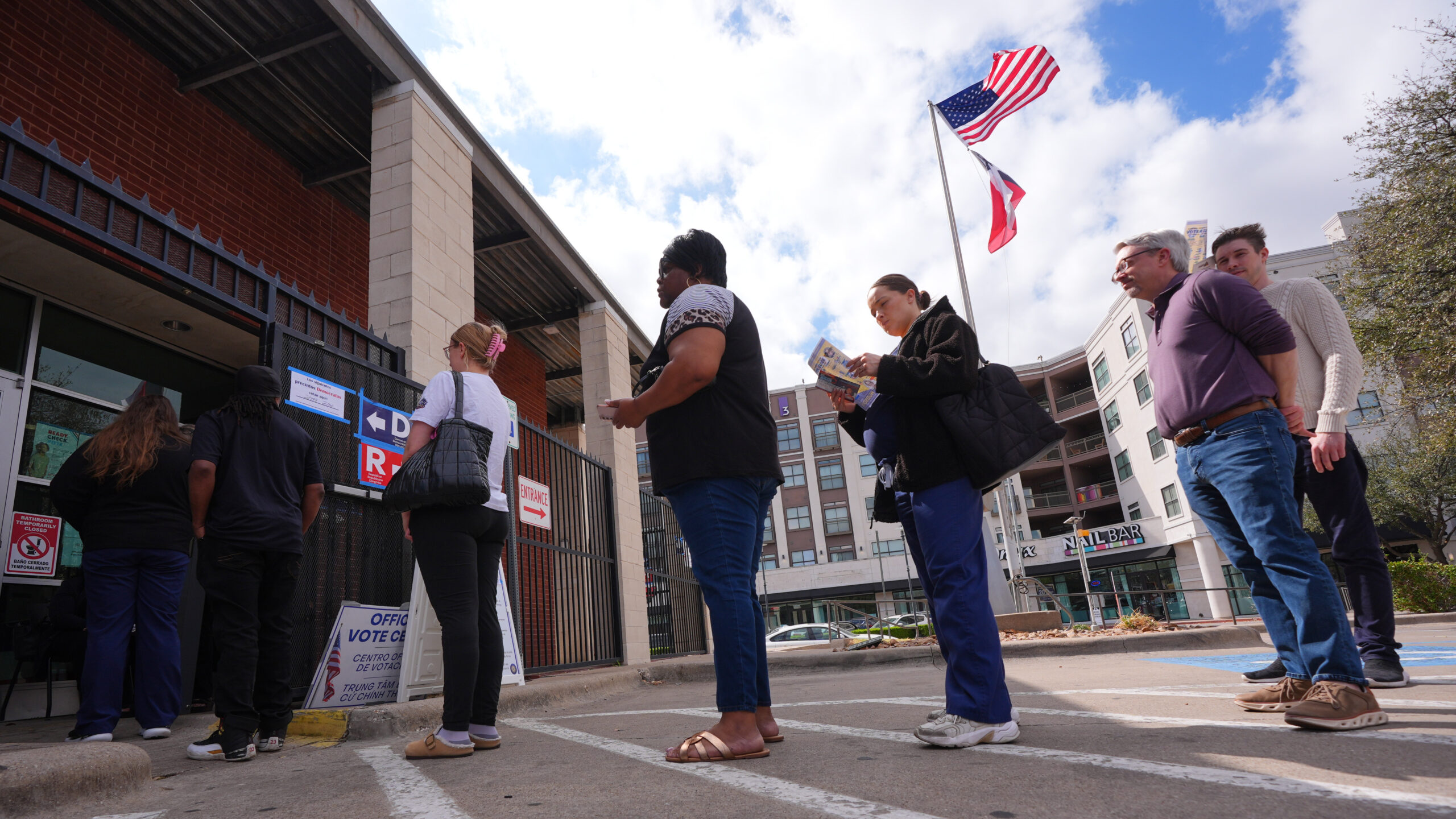
    Primary voters line up to cast ballots at a voting center in Dallas on Tuesday, March 3.

    Ramos also noted one other wrinkle that happened Tuesday. Democrats and fair-voting advocates in both Dallas and Williamson Counties went to court during the day, seeking an emergency order to extend voting hours. That push initially succeeded, and in Dallas County, a judge ordered the polls open for two additional hours.

    But Texas’ right-wing extremist Attorney General Ken Paxton — also a leading candidate in Tuesday’s GOP Senate primary — appealed the ruling and got the state’s conservative Supreme Court to rule in his favor. Votes that were cast after the original 7 p.m. closing time were segregated and may or may not ultimately be counted.

    Not surprisingly, West actually bragged about what looked to many folks like a voting fiasco, blaming the Democrats for not being informed about the confusing rules change. “It’s apparent that Democrats struggled with grasping basic civics and their usual attempt at lawfare backfired,” the GOP leader said in a statement.

    It’s clear that what we saw in Dallas — balloting drenched in conspiracy theories from start to finish, new rules with the sole purpose of making it harder to vote, and an increasingly conservative judiciary making the final call — was clearly a test case for the national election in November.

    It’s not hard to imagine a scenario in which Republicans will manufacture conspiratorial doubt about some of the ballots cast in the fall — as just happened with those post-7 p.m. votes in Dallas — as a pretext for some grander and potentially cataclysmic effort to nullify Democratic victories in Congress.

    But Texas also provided a window into how this MAGA scheme might not work.

    Remember that extreme gerrymander the Lone Star State enacted last year, which aimed to create five additional Republican seats in Congress? Much of the plan aimed to capitalize on a dramatic shift toward the GOP among Texas’ large Latino population during Trump’s last two runs in 2020 and 2024.

    But polls and now early voting have shown the Hispanic vote swinging back toward Democrats since Trump returned to office, thanks to the sluggish economy and the brutal manner of his immigration raids. On Tuesday, Democratic turnout in Texas soared to levels not seen since the high-profile 2008 battle between Barack Obama and Hillary Clinton, in what was a very good year for their party. Voter suppression can be swamped by voter enthusiasm.

    But it shouldn’t have to be that way. The right to vote is the fundamental building block of the American Experiment in democracy, and folks shouldn’t have to walk clear across town or stay up all night to exercise it. Dallas was a warning shot for every citizen: Do not let this nightmare go national in November.

  • More than half of Pennsylvanians oppose ICE’s methods under Trump, new poll finds

    More than half of Pennsylvanians oppose ICE’s methods under Trump, new poll finds

    Pennsylvania voters broadly oppose some of President Donald Trump’s immigration enforcement tactics — but there’s a stark partisan split, according to a new statewide poll of registered voters.

    Franklin & Marshall College’s Center for Opinion Research released a wide-ranging poll Thursday that tracked registered Pennsylvania voters’ opinions on America’s 250th anniversary, ICE enforcement tactics, and other issues facing the state and nation ahead of the midterm election.

    Trump’s approval ratings have remained consistently low since returning to office last year, with a majority of Pennsylvanians disapproving of his job as president.

    Democratic Gov. Josh Shapiro maintains a 50% approval rating heading into the midterm elections later this year.

    Pollsters at Franklin & Marshall College surveyed 834 registered Pennsylvania voters, including 353 Democrats, 347 Republicans and 134 independents. The sample error is +/- 4.1 percentage points.

    Here are three takeaways from the poll of registered Pennsylvania voters, conducted Feb. 18 through March 1 by phone or online.

    Trump is consistently unpopular in Pennsylvania

    Trump’s approval ratings among registered Pennsylvania voters remain low, with 61% of voters rating him as doing a “poor” or “fair” job, according to the statewide poll, which also assessed Trump’s performance on immigration, the economy, and other issues.

    Trump maintained a net negative approval rating throughout his first term in 2017-2021 and so far in his second term, according to the poll.

    Despite winning the state in 2024, he remains divisive with 51% of respondents rating him as doing a “poor” job, and only 10% who rate him as doing a “fair” job. Approximately 39% of registered Pennsylvania voters view Trump as doing an “excellent” or “good” job, according to the poll.

    window.addEventListener(“message”,function(a){if(void 0!==a.data[“datawrapper-height”]){var e=document.querySelectorAll(“iframe”);for(var t in a.data[“datawrapper-height”])for(var r,i=0;r=e[i];i++)if(r.contentWindow===a.source){var d=a.data[“datawrapper-height”][t]+”px”;r.style.height=d}}});

    Trump’s low approval numbers could have a drag effect on Republicans’ performance in the midterm election, said Berwood Yost, the director of Franklin & Marshall’s poll.

    “While there’s still a long way to go until November, [Trump has] got to figure out a way and his party has to find a way to prevent that and earn those voters back,” Yost said.

    Trump’s low numbers align with those of former President Barack Obama or George W. Bush’s approvals at the same point in their second term, Yost added. Both of their parties lost seats in the midterms elections those years.

    However, Trump’s approval ratings are not the lowest they have been in the state. His approval ratings dropped to their lowest, 70% disapproval, during his first term in September 2017.

    Josh Shapiro is still popular

    Gov. Josh Shapiro remains popular ahead of his reelection contest this year: 50% of Pennsylvania voters say he is doing an “excellent” or “good job,” while another 44% believe he is doing a “fair” or “poor” job leading the nation’s fifth most populous state.

    Shapiro is the most popular governor since 2000, when comparing his approval ratings to those of other Pennsylvania governors at the same point during their first terms, Yost said.

    Shapiro also maintains a significant lead over his likely GOP challenger, State Treasurer Stacy Garrity. If the midterm elections were to happen today, 48% of voters said they would reelect Shapiro, while 28% said they would vote for Garrity. Another 7% of voters said they would vote for a different candidate, while 17% were undecided or refused to answer the question.

    Shapiro’s approval ratings have remained steadily high since taking office in January 2023. A Quinnipiac University poll released last month found similar public opinion toward Shapiro’s reelection, while some voters said they were unsure whether they wanted the rumored 2028 presidential candidate to run for higher office.

    Pa. voters broadly oppose some of ICE’s enforcement actions, but are split on others

    Approximately three-fourths of Pennsylvania voters believe ICE should not be able to use deadly force against protesters or enter a home without a warrant, in a major pushback to Trump’s immigration enforcement tactics.

    Pennsylvania voters’ opinions on immigration enforcement varies significantly based on a person’s political party: While nine in 10 Republicans support ICE tactics, only two in five independents and one in 10 Democrats support them.

    Protesters march up Eighth Street, towards the immigration offices, during the Philly stands with Minneapolis Ice Out For Good protest at Philadelphia’s City Hall on Friday, Jan. 23, 2026.

    Republicans support ICE’s use of unmarked vehicles to detain people and their use of masks to hide an agent’s identity at much higher rates than Democrats, while independents are split. On the use of masks, 77% of Republican voters believe agents should be able to wear them, while 40% of independents and only 10% of Democrats do.

    “There’s a lot of consensus about the fundamental principles that protect our individual rights like entering a home without a warrant or using force against protesters, whereas there’s a little more partisanship in others,” Yost said.

    window.addEventListener(“message”,function(a){if(void 0!==a.data[“datawrapper-height”]){var e=document.querySelectorAll(“iframe”);for(var t in a.data[“datawrapper-height”])for(var r,i=0;r=e[i];i++)if(r.contentWindow===a.source){var d=a.data[“datawrapper-height”][t]+”px”;r.style.height=d}}});

    There is also overwhelming support among Pennsylvania voters that non-citizens who are in the U.S. legally — whether by visa, green card, asylum or other protected statuses, or in the process of becoming a citizen — should not be targeted by Immigration and Customs Enforcement for deportation, according to the poll.

    However, a majority of Republicans and independent voters believe undocumented immigrants who have been in the United States illegally for any amount of time and have no criminal record should be targeted for deportation, while less than a quarter of Democrats believe they should.

    Pennsylvania voters want the 250th anniversary to acknowledge the positives and negatives from American history

    As Trump tries to reframe American history for the nation’s 250th anniversary, most Pennsylvanians want the celebrations to acknowledge its positive and negative parts.

    Approximately 73% of Pennsylvania voters believe any retelling of American history should include the upsides and downsides of the nation’s founding, while 24% believe only positive aspects should be celebrated.

    “Most people, they want to see historical interpretations that include the whole picture,” Yost said.

    This finding is of particular interest in Pennsylvania, following the Trump administration’s removal of an exhibit that memorialized the enslaved people who lived in George Washington’s home from the historic President’s House site in Independence National Historical Park. A federal judge ordered the restoration of the exhibit, but the Trump administration is appealing the decision.

  • A statue of a founding father who enslaved people was taken down in Wilmington. It’s moving to D.C.’s Freedom Plaza.

    A statue of a founding father who enslaved people was taken down in Wilmington. It’s moving to D.C.’s Freedom Plaza.

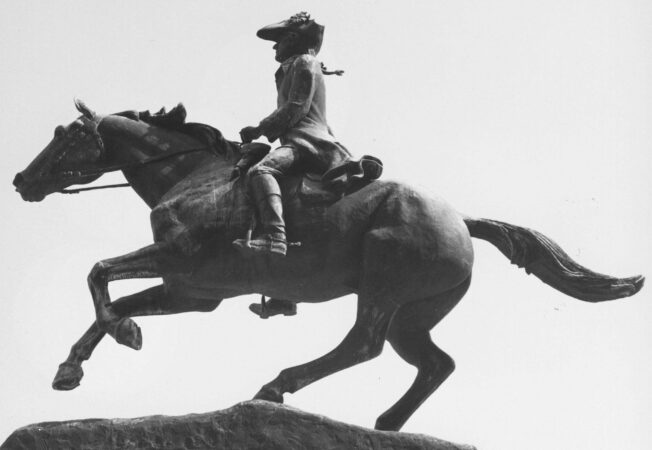
    The statue of a founding father who enslaved Black people in Delaware is moving from a New Castle storage facility to a venerated spot in Washington’s Freedom Plaza as part of President Donald Trump’s celebration of America’s 250th birthday.

    Wilmington officials took down the statue of Caesar Rodney in 2020 amid Black Lives Matter protests and a national reckoning over racism in America, taking it out of public view at the same time as the city removed a statue of Christopher Columbus for similar reasons.

    It wasn’t clear when the bronze monument of Rodney on a horse will be put on temporary display in the plaza on Pennsylvania Avenue, near the White House, according to the New York Times, which learned of the story from a Feb. 3 National Park Service memo.

    The statue had stood in Wilmington’s Rodney Square for around 100 years.

    Rodney’s legend includes a partially disputed story about riding two horses 82 miles from Dover to Independence Hall to sign the Declaration of Independence — a trip five times longer than Paul Revere’s more famous ride a year earlier.

    Rodney arrived spent and mud-spattered on July 2, 1776, to sign the Declaration before its formal adoption on July 4, breaking the tie between two other Delaware delegates, one of whom wouldn’t sign, said Dick Carter, chairman of the Delaware Heritage Commission. The near last-minute inscribing is true, Carter and others say, but it’s possible that Rodney, who suffered from facial cancer and was quite ill, may have covered some of the mileage in a carriage.

    Giving his life to public service, Rodney was a brigadier general in the Continental Army, a sheriff, a justice on the Delaware Supreme Court, and a delegate from Delaware to the Continental Congress.

    Rodney was also among the 41 out of 56 Declaration signers who enslaved people. He was a complex and contradictory figure, especially when viewed through a 21st-century lens, Carter said, adding that it is not fair to “judge historical figures by the norms and mores of the present day.”

    Rodney enslaved anywhere from 20 to 200 people on his estate near Dover. But his legacy also includes a bill he introduced in the state legislature to end the practice of importing enslaved people into Delaware. And upon his death, he freed the 18 people he’d enslaved at the time.

    Trump, during his first term in 2020, praised Rodney in a proclamation issued on the founding father’s birthday.

    In the proclamation, Trump condemned the removal of Rodney’s statue “as part of an ongoing, radical purge of America’s founding generation.”

    Trump said it was a “re-education attempt” and the “end result of an extreme anti-American historical revisionism,” generated by “critical race theorists … [and] mobs on city streets” who say that America is not an exceptional country “but an evil one.”

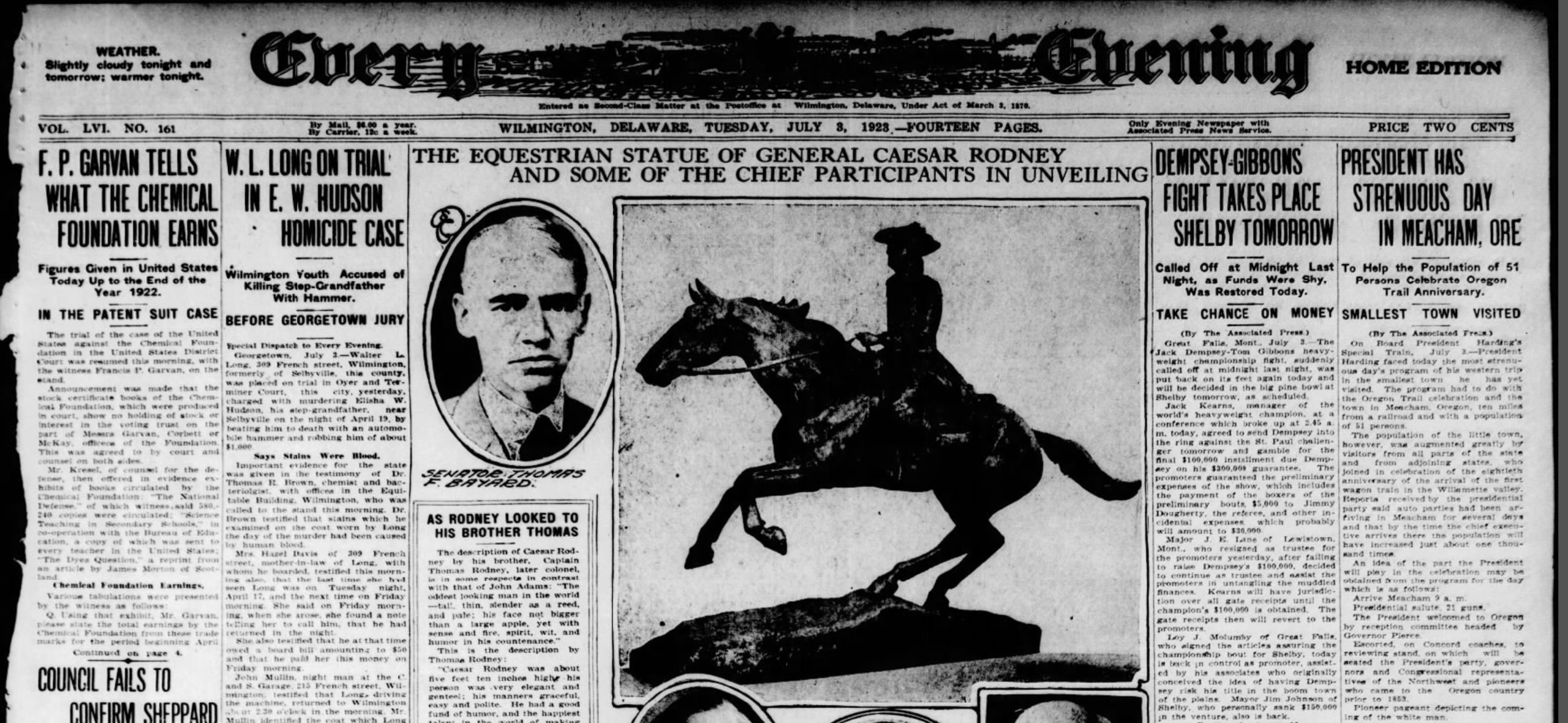
    An image of the front page of the July 3, 1923, edition of the News Journal of Wilmington, Del., which makes note of the dedication of the Caesar Rodney statue on the following day.

    Trump has expressed similar views during his second term and taken steps to change the way Americans are educated about the nation’s history.

    In January, the administration ordered the removal of exhibits depicting slavery at the President’s House in Independence National Historical Park. The U.S. Department of Interior said that the slavery-related materials were being reviewed “to ensure accuracy, honesty, and alignment with shared national values.” Last month, a federal judge ordered the exhibit’s restoration, though the administration is still pursuing the matter.

    In the summer of 2025, the administration restored two statues in the D.C. area that commemorated the Confederacy. One was a statue of Confederate Gen. Albert Pike, the only outdoor statue of a Confederate military leader in the nation’s capital.

    “We see a pattern of celebrating enslavers while reducing teaching about slavery in the United States and limiting diversity, equity, and inclusion,” said Timothy Wellbeck, director of the Center for Anti-Racism at Temple University. “Caesar Rodney has components of character not worth celebrating despite his contributions to America’s founding.”

    Shané Darby, a councilwoman from Wilmington, told the Times that glorifying Rodney was “a slap in the face of Black and brown people of this city… . You can have him, D.C.”

    That’s a view shared by other people in the Black community, said Syl Woolford, a member of the Delaware Heritage Commission. “Some folks in Wilmington are saying, ‘Get that white boy out of here,’” Woolford said. “They tell you there’s no place here for the statue of a slave owner.”

    But, he and other historians say, Rodney’s place in history shouldn’t be completely ignored. Even with the statue gone, elements of Rodney remain. He still appears on the quarter that honors Delaware. And his square continues to bear his name, although there’s discussion it’ll be renamed after President Joe Biden, whose ties to Delaware run deep, Carter said.

    The Department of Interior didn’t answer a request from The Inquirer to comment on criticism from Wellbeck and others that the Trump administration is exalting an enslaver. Instead, a spokesperson said, “Rodney’s journey itself reflected extraordinary courage.”

    “By telling the full story … we strengthen our shared understanding and ensure that future generations inherit not just the land we love, but the truth of the journey that brought us here,” the spokesperson added.

    To avoid further consternation in Wilmington, there’s a plan to send Rodney’s statue to Dover, not Wilmington, after the 250th celebration is over, said Republican State Sen. Eric Buckson.

    “Dover is Rodney’s birth and resting place,” Buckson said.

    He added, however, that “in this climate, folks are rightfully concerned about having monuments minimizing slavery.”

    So, whenever Rodney comes back, his statue will be amended, Buckson said.

    “It’ll include a plaque,” he added, “and that will have the story that, along with everything else, Caesar Rodney was a slave holder.”

  • ‘MAGA is Trump’: President fires back at right-wing mutiny over Iran

    ‘MAGA is Trump’: President fires back at right-wing mutiny over Iran

    As President Donald Trump directs military strikes on Iran, he is also fighting online attacks at home from some of the loudest voices in his MAGA political movement.

    “This is Israel’s war. This is not the United States’ war,” former Fox News host Tucker Carlson said Tuesday on his weekly political podcast.

    “No one should have to die for a foreign country,” Megyn Kelly, another former Fox News host with a massive online following, said on her podcast Monday.

    Daily Wire podcaster Matt Walsh beseeched fellow conservatives on Monday to stop supporting Trump’s military campaign. “I can’t take the gaslighting, guys. I really can’t,” he wrote on X.

    MAGA critics of Trump’s new military conflict say they are struggling to reconcile it with his “America First” principles and long record of criticizing costly and protracted American military interventions. The president has said operations against Iran could go on for four to five weeks, or longer.

    “I think to them it feels legitimately like a betrayal on a fundamental tenet of Trumpism,” said Matthew Dallek, a professor at George Washington University’s Graduate School of Political Management.

    Trump has dismissed the idea that his critics could speak for the Make America Great Again movement: “MAGA is Trump,” he said in an interview with independent journalist Rachael Bade on Monday.

    Online infighting is common in political movements, but Dallek said the degree of open dissent among conservatives over Iran suggested it could be a “breaking point” for some of Trump’s most influential supporters. Carlson, Kelly, and Walsh together list more than 13 million subscribers among them on YouTube, with millions more on X and other platforms.

    Trump claimed that he alone spoke for MAGA after Bade asked him about the rebellion in the ranks of his supporters, according to a post she published late Monday. “MAGA wants to see our country thrive and be safe. And MAGA loves what I’m doing — every aspect of it,” he said.

    White House spokesperson Olivia Wales echoed the president’s comments in a statement to the Washington Post. “President Trump is MAGA and MAGA is President Trump,” she wrote in an email. “With Operation Epic Fury, President Trump is putting America first, eliminating the threat to our people, and securing our Nation and world for generations to come,” she added.

    Trump has made opposition to foreign military intervention a cornerstone of his political platform since he first sought the presidency. In the 2016 Republican primary, he called the Iraq War “a big, fat mistake” as he sought to tie rival Jeb Bush to his brother George W. Bush’s unpopular legacy. Running against Democrat Kamala Harris in 2024, Trump called himself “the candidate of peace,” and said in his election night victory speech: “I’m not going to start a war.”

    Stephen K. Bannon, Trump’s chief strategist for part of his first term in office, warned that turnaround could become a political problem for the president. He criticized the Iran operations after a guest on his War Room podcast over the weekend suggested the conflict could be “a hard slog.”

    “I’m just going to be brutally frank,” Bannon said. “That was not pitched in the 2024 campaign. It just wasn’t. We’re going to bleed support.”

    Whitney Phillips, a professor of information politics at the University of Oregon, said the president was severely testing his supporters’ loyalty.

    “Trump has put these people in such an impossible position,” she said. “He’s not asking them to bend a little — he’s asking them to entirely reconfigure themselves into a new kind of balloon animal.”

    Walsh, who has long urged Trump to take a hard line on immigration, transgender people, and diversity policies, is among the MAGA influencers refusing to reconfigure.

    He criticized the administration’s “confused” messaging on the justification for the Iran operation in an X post on Monday that drew a lengthy response from Trump’s press secretary, Karoline Leavitt. Her X post listed what she called the “clear objectives” of Trump’s military campaign.

    Instead of Walsh and others falling in line, an online fracas ensued. Some X users mused that Walsh might be fired by Daily Wire founder Ben Shapiro, who had opened his own podcast on Sunday by lauding the operation that killed Ayatollah Ali Khamenei. Shapiro did not respond to a request for comment. Walsh stepped up his online campaign against Trump’s strategy, taking aim at his fellow Trump supporters.

    “Conservatives are now running around saying ‘Iran has been waging war on us for 47 years,’” Walsh posted Monday on X. “Okay, then why didn’t any of you call for an attack on Iran at any point until now? … You and I both know that almost every conservative influencer in the business was opposed to war with Iran until just now.”

    Laura Loomer, a right-wing influencer who has described herself as “Trump’s loyalty enforcer,” has used her own online platform to attack critics of the war and sought to enlist Trump in hitting back at them. She posted on X that she had spoken to Trump and congratulated him, but also told him about the criticism he was receiving from Carlson, Kelly, Rep. Thomas Massie (R., Ky.) and former Rep. Marjorie Taylor Greene (R., Ga.) — a group she lumped in with “communist Democrats.”

    “I’m so glad I was able to speak to President Trump after the strikes on Iran and show him what the Woke Reich, including Tucker, Megyn, and Marjorie Traitor Greene have been saying about him,” Loomer added Tuesday. “He was not happy when I showed him, but he told me he is focused on winning and they aren’t.”

    Conservative figures opposing the war appear to be in the minority despite the attention their criticism has generated.

    An analysis by the Post of about 5,000 online posts, podcasts, and newsletters from 79 conservative politicians and commentators since the Iran conflict began last weekend showed that most supported the operation, but that more than a dozen criticized it at least some of the time. Only a few were staunchly opposed to Trump’s new military intervention in Iran.

    While Trump returned to office amid a wave of online loyalty from leading conservative voices, experts in political communication said that in just a few days the Iran attacks had begun to test the limits of his influence.

    A.J. Bauer, a professor of journalism at the University of Alabama, said the pushback has gained traction in part because the administration has struggled to articulate a clear message on Iran for the right to rally around. That has left conservative influencers to chart their own course based on their personal beliefs, their loyalty to Trump, and their assessment of the risk that the conflict becomes unpopular with MAGA voters.

    A flash poll conducted by the Post over the weekend found that Americans oppose Trump ordering airstrikes on Iran by 52% to 39%; 9% said they were unsure.

    Sam Rosenfeld, a professor of political science at Colgate University, said the influencer backlash over Iran also speaks to wider problems emerging for Trump. His approval rating was 39% ahead of last month’s State of the Union address.

    There is an “emerging sense that Trump’s centrality to right-wing politics has an endpoint in the not-so-distant future,” Rosenfeld said. “That all serves to loosen Trump’s symbolic grip on the right’s discourse.”

  • What Democrats need to do to flip Texas, and how Republicans can hang on

    What Democrats need to do to flip Texas, and how Republicans can hang on

    Texas primary voters of both parties voted with cool heads Tuesday, rejecting candidates who appealed to their parties’ bases with more inflammatory styles that could have proved riskier in a general election.

    But challenges remain for Democrat James Talarico — who won the primary outright on a unifying message of reaching out to all Texans — and for Republican Sen. John Cornyn, who nosed ahead of firebrand Attorney General Ken Paxton but now faces a punishing May 26 runoff against him.

    Democrats face an uphill battle to flip a Senate seat in the red state no matter what happens in the runoff, as they mount their long-shot bid to retake the Senate in November. The chamber is currently controlled by Republicans, 53-47, and Democrats would have to flip several deep-red states like Texas to regain control.

    The next few months will determine how well-positioned Texas Democrats are to regain a Senate seat that has eluded them for more than 30 years, as the party hopes unusually high voter enthusiasm and weariness with President Donald Trump could fuel their comeback. Talarico in the coming months must work to unite the party by attracting Black voters who strongly backed his opponent, all while fending off coming attacks from the right painting him as a radical.

    And Cornyn’s political survival may depend on the actions of someone who is notoriously hard to predict or corral — Trump. The president said Wednesday that he would soon endorse one candidate and that the other should quit the race. If he does not get Trump’s endorsement, Cornyn may struggle to clear the runoff, and either way the next few months will be a divisive slugfest between two Republicans with large megaphones.

    “We are not going to go quietly, and we are not going to let you buy the seat,” Paxton said at his election-night party in Dallas, referencing the tens of millions of dollars Cornyn and his allies poured into the race.

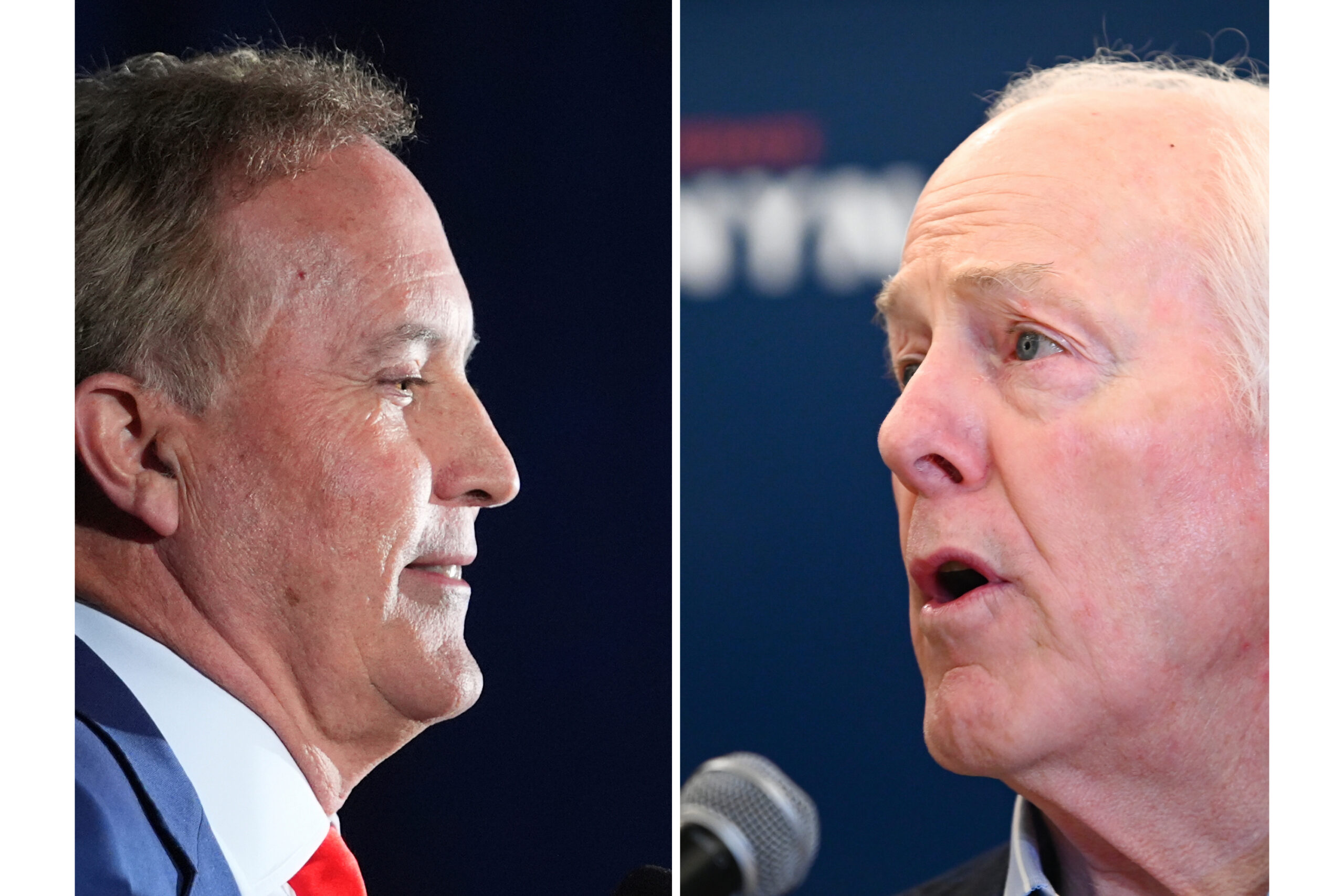
    FILE – This photo combination shows Texas Attorney General Ken Paxton, left, in Dallas and Sen. John Cornyn, R-Texas, in Austin, Texas, both on March 3, 2026. (AP Photo/Julio Cortez, Jack Myer)

    Cornyn, a fourth-term senator who is widely considered to be a stronger general-election candidate than the scandal-plagued Paxton, fell short of the 50% mark that would have avoided a runoff. Paxton was impeached by the GOP-controlled Texas House in May 2023 on charges of bribery but was acquitted by the Senate.

    Cornyn warned Paxton that “judgment” was coming for him. “I refuse to allow a flawed, self-centered, and shameless candidate like Ken Paxton to risk everything we’ve worked so hard to build,” he told reporters.

    The bitter intra-Republican warfare marked a stark contrast to the Democratic side of the ledger, where Rep. Jasmine Crockett set aside her earlier attacks on Talarico — and a legal challenge she filed Tuesday after voters were turned away from polling places in her Dallas district — and urged Democrats to come together Wednesday.

    “Texas is primed to turn blue and we must remain united because this is bigger than any one person,” Crockett wrote in a social media post.

    Talarico also urged unity, telling his supporters Tuesday, “The stakes in Texas are too high for division.”

    Mudslinging in the final weeks of the race may have caused some damage that Talarico will need to repair ahead of November, however. Crockett called the argument that Talarico was more electable than her a “dog whistle” and slammed him for not condemning ads run by a super PAC that supported him as “straight-up racist.” (Talarico does not control the super PAC, and the group denied darkening Crockett’s skin in an ad.)

    Crockett ran strong with the state’s Black voters, while Talarico appeared to run away with the Latino vote in the state. He beat Crockett by 30 percentage points or more in 21 counties that are more than 75% Latino. In counties that were 20% or more Black, Crockett won by 25 percentage points.

    Nancy Zdunkewicz, a Texas Democratic pollster, said she believed that much of the Crockett-Talarico tensions played out online rather than on the campaign trail and that the primary electorate was not divided.

    “She has conceded graciously, and I don’t want to overstate any damage done simply because of the social media dialogue, which was unnoticed by voters,” she said.

    Former Vice President Kamala Harris, who backed Crockett in the final days of the race, urged voters to unify. “I congratulate James Talarico for his win, and the inspiring campaign he continues to build,” she said in a statement. “I offer him my full support in the months ahead.”

    Republicans have a while to go before they can start their postprimary healing process, a delay that could dampen enthusiasm in November. It is also unclear whether Republicans will continue to vote with their heads instead of their hearts in May by backing Cornyn. Runoffs tend to feature a smaller, more intense group of voters compared with regular primaries, which could benefit Paxton. And it remains an open question whether Trump will support Cornyn, a nod that could put him over the top.

    Political analysts also do not know if the roughly 13% of Republicans who voted for GOP Rep. Wesley Hunt, who failed to make the runoff, will show up again in May and, if so, which candidate they would favor.

    Cornyn’s allies have warned the president that should Paxton be their nominee, the party would have to spend $200 million to get him over the finish line — a haul that would take away from other competitive Senate races Republicans are defending in Maine, North Carolina, and Ohio. Paxton historically has not been a strong fundraiser, and Democrats have nominated Talarico, whom they see as a stronger candidate than Crockett in the general election and who may take more resources to beat.

    Cornyn has Trump-connected allies on his side as they make this pitch, including Trump’s former campaign manager Chris LaCivita, who is running his super PAC, and Trump pollster Tony Fabrizio.

    Republicans in the state are sounding the alarm about record-breaking primary turnout for Democrats, which they see as a signifier of high enthusiasm going into November. Ross Hunt, a Republican pollster, called the turnout “a code red alert for Texas Republicans” in an analysis he published earlier this week. He predicted Democrats have added more than 480,000 voters to their turnout in the fall.

    “Republicans will need to do everything right this fall: we will need to select the best nominees for the General Election, maximize GOP turnout, practice intense message discipline, and have a clear-eyed and dispassionate understanding of where the new front line of defense stands after March 3rd,” he wrote.

  • Major historical documents start journey across U.S. as part of nation’s 250th anniversary celebration

    Major historical documents start journey across U.S. as part of nation’s 250th anniversary celebration

    Some of the United States’ most important historical documents are embarking on a first-of-its kind journey as part of the country’s 250th anniversary commemoration.

    Typically housed in highly controlled vaults under the watch of preservation experts at the National Archives, documents such as the 1783 Treaty of Paris that formally ended the Revolutionary War and the 1774 Articles of Association that urged colonists to boycott British goods are rarely moved.

    But those documents, signed by George Washington, John Adams, Benjamin Franklin, and other American revolutionary leaders, will be making their way across the country and put on display for free at local museums.

    “It’s tangible history, and tangible history inspires,” said Jim Byron, senior adviser to the acting archivist of the United States. “These documents have not traveled, and they’ve certainly not traveled collectively, ever. They are here in vaults.”

    The Boeing 737 “Freedom Plane” transporting the documents is just one of many events and activities planned across the country to mark America’s forthcoming 250th anniversary celebrating the signing of the Declaration of Independence on July 4, 1776, in Philadelphia. A congressionally chartered commission, America 250, and a separate White House-led initiative, called Freedom 250, are both coordinating events, an overlap that has faced some criticism in Washington.

    Among the planned activities are a fleet of mobile museums driving across the country, a story collection initiative, and a Great American State Fair on the National Mall in Washington. President Donald Trump has even announced plans for a “Patriot Games” sporting event featuring high school athletes and a UFC mixed-martial arts fight at the White House.

    The “Freedom Plane” departed Ronald Reagan Washington National Airport on Monday en route to its first stop in Kansas City, Mo., where the documents are being transferred to the National WWI Museum and Memorial. The records include a rare original engraving of the Declaration of Independence printed in 1823 from a copperplate of the original; the Oaths of Allegiance, signed in 1778 by George Washington, Alexander Hamilton, and other officers of the Continental Army; and a rare draft copy of the U.S. Constitution that includes handwritten notes by the delegates.

    Other planned stops will be in Atlanta, Los Angeles, Houston, Denver, Miami, the Detroit suburb of Dearborn, and Seattle.

    “The reality that these documents are leaving D.C. and coming to the heartland is fantastic,” said Matt Naylor, president and CEO of the National World War I Museum and Memorial, where they will be on display for a little over two weeks starting Friday. “There’s a lot of excitement about that and a lot of talk in and around the city about what that means.”

    Naylor said the early response has been overwhelming. Local schools have already booked visits for more than 5,000 schoolchildren.

    “That’s indicating that there’s a lot of enthusiasm for this,” he said.

    The “Freedom Plane” tour was inspired in part by the “American Freedom Train” that toured 48 states in 1975 and 1976 as part of the country’s Bicentennial celebration. It carried various pieces of American history, including the original Louisiana Purchase documents, Judy Garland’s dress from The Wizard of Oz, and Jesse Owens’ gold medals from the 1936 Olympic Games.