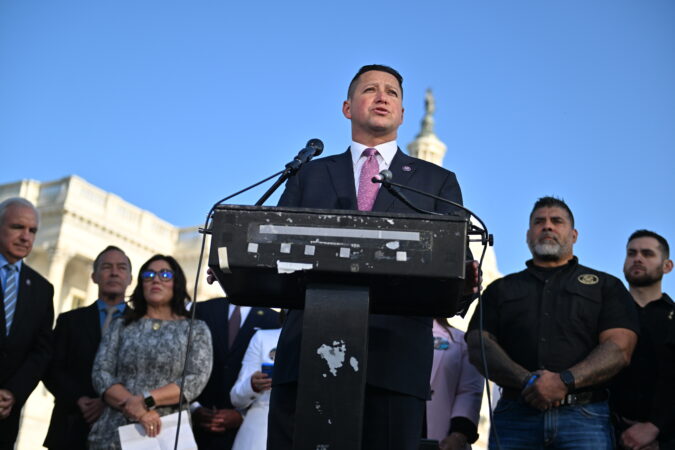
The House Ethics Committee will investigate allegations that Rep. Tony Gonzales (R., Texas) had an affair with a former staff member who later died after setting herself on fire, the committee said Wednesday, ensuring that the scandal that has dogged Gonzales through his bitter primary race will continue to factor heavily as he heads into a runoff.
An investigative subcommittee will look into allegations Gonzales “engaged in sexual misconduct towards an individual employed in his congressional office” and “discriminated unfairly by dispensing special favors or privileges,” Rep. Michael Guest (R., Miss.), chair of the Ethics Committee, wrote in a letter Wednesday.
Under House rules, lawmakers are not permitted to engage in sexual relationships with staff.
Gonzales, a married father of six, has been accused of having an improper relationship with a then-aide, Regina Ann Santos-Aviles, who died in September after lighting herself on fire in her backyard. Her death was ruled a suicide.
Since then, the former aide’s estranged husband has shared text messages that showed Gonzales pressing Santos-Aviles for a “sexy pic” and asking her about her favorite sex position. Santos-Aviles pushed back against the lawmaker, writing, “This is going too far boss,” at one point in the May 2024 conversation.
Gonzales recently declined to say whether the messages are authentic.
Gonzales has denied any wrongdoing or improper relationship with Santos-Aviles, and he adamantly refused calls to resign from Congress or to end his reelection bid — several of which came from his Republican colleagues.
Representatives for Gonzales’ office did not immediately respond to requests for comment Wednesday.
House Speaker Mike Johnson (R., La.), who is holding onto a razor-thin majority in the House, has called the accusations against Gonzales “very serious” but not called on Gonzales to step aside, saying the issue would “play out” in his reelection bid.
Gonzales on Tuesday fell short of the majority vote required to avoid a runoff. Now he will face off against the other top finisher in the GOP primary, Brandon Herrera, a YouTuber with a gun business who calls himself “the AK Guy.” Herrera maintained a narrow lead Wednesday morning with most of the votes counted.
The Office of Congressional Conduct, a nonpartisan office governed by a board of private citizens, had begun looking into allegations against Gonzales in November, according to the San Antonio Express-News, and it was required to refer the matter to the House Ethics Committee by Wednesday for either further review or dismissal.
Under House rules, the Ethics Committee has up to 90 days to release the OCC’s report — unless it creates an investigative subcommittee, as it has this time, in which case it still must release the OCC’s findings within a year. Members of the investigative subcommittee have not been selected yet, Guest said Wednesday, suggesting findings of the investigation will not be made public very soon. There is no timeline for Ethics Committee investigations, which can take months.
Rep. Nancy Mace (R., S.C.), one of the GOP lawmakers who has called on Gonzales to resign, introduced a resolution last week that would compel the Ethics Committee to release, within 60 days of adoption, all reports related to sexual harassment violations involving lawmakers, their staff members, or lobbyists.
“I mean, literally, [Santos-Aviles] killed herself in the most heinous way,” Mace told Fox News on Tuesday, referring to the Gonzales allegations that she said had motivated her to introduce the bill. “She literally lit herself on fire and died, and we’re just going to sit here and say, ‘Let the process play out’? No.”
Voters do not always punish scandals, and this was apparent Tuesday night in other Texas primary races. Rep. Henry Cuellar (D., Texas) handily defeated a primary challenger, despite being charged in 2024 with bribery, money laundering, and conspiracy and being pardoned by President Donald Trump last year.
Texas State Attorney General Ken Paxton, who faced a lengthy impeachment trial and a very public divorce in which his wife accused him of adultery, nevertheless will head into a runoff against Sen. John Cornyn (R., Texas) for his seat after neither captured a majority of the vote Tuesday.
The Pentagon is rapidly burning through its stocks of precision weapons less than a week into the massive campaign of airstrikes against Iran, while also expending sophisticated air defense missiles at a rate that puts the U.S. military potentially “days away” from having to prioritize which targets to intercept, according to three people familiar with the matter.
The scope of “Operation Epic Fury,” which U.S. Central Command’s Adm. Brad Cooper says has hit more than 2,000 targets so far, is forcing U.S. military commanders to make difficult calculations about how quickly their Iranian adversaries will burn through their own munitions — even as President Donald Trump says the war may last four to five weeks.
Top Pentagon leaders dedicated considerable time at a news briefing Wednesday morning to addressing worries the military is reaching too deeply into its inventory at the cost of readiness. “We have sufficient precision munitions for the task at hand, both on the offense and defense,” said Gen. Dan Caine, chairman of the Joint Chiefs of Staff, without offering specifics or numbers.
The United States will rely on its larger stores of less-sophisticated weapons as Iranian defenses are degraded in the coming days, allowing American forces to get closer for their attacks, he said.
“The hardest hits are yet to come from the U.S. military,” Secretary of State Marco Rubio told reporters Monday before a classified briefing with select lawmakers.
In retaliation, Iran has launched thousands of one-way attack drones and hundreds of missiles at an array of U.S. military installations and civilian targets across the region, including in Bahrain, Kuwait, Iraq, Israel, and the United Arab Emirates. At least six U.S. troops were killed in a drone attack in Kuwait, and U.S. Embassies in Riyadh, Saudi Arabia, and Kuwait City have come under Iranian fire.
So far, the U.S. military has expended hundreds of its most sophisticated munitions, including Patriot and Terminal High Altitude Area Defense (THAAD) interceptors — considered the world’s premier missile defense systems — and Tomahawk cruise missiles aimed at Iranian leaders and ballistic missile sites, four people familiar with Pentagon assessments said, speaking on the condition of anonymity to discuss the highly sensitive numbers.
Late Monday night, Trump posted on social media that the U.S. inventories of “medium and upper medium grade” munitions are “virtually unlimited” and could sustain the pace of attacks in Iran indefinitely. He also wrote that weapons at “the highest end” are in “good supply, but are not where we want to be.”
A spokesperson with U.S. Central Command, which oversees operations in the Middle East, referred questions to the Pentagon.
A Pentagon spokesperson, Sean Parnell, said in a statement Tuesday that the military “has everything it needs to execute any mission at any time and place of the President’s choosing and on any timeline.” Trump and Defense Secretary Pete Hegseth, Parnell added, “have made restoring American military dominance their top priority from day one, and American dominance has been proved again and again following every major military operation under this administration.”
Behnam Ben Taleblu, who tracks Tehran’s weapons programs at the Foundation for Defense of Democracies, a think tank, said Iran had more than 2,000 ballistic missiles before the conflict began and “many more-fold” drones.
“It is very apparent it has learned lessons from the 12-day war” in June and is trying to use its weaponry more efficiently, Taleblu said.
Iran, he said, is targeting the United States’ Persian Gulf allies with low-cost drones to terrorize and exhaust limited air defenses, while focusing its ballistic missile attacks on Israel.
“Iran is firing smaller volleys of missiles, signaling an interest in preserving their stocks while still testing and attriting Israel’s air and missile defenses,” Taleblu said. “The goal over time is to make Israel focus its dwindling interceptor stocks on defending smaller patches of terrain.”
“Iran is conscious of missile math, perhaps more so than ever before,” he said.
For the U.S., the trends underscore the urgency of an “effective defanging operation” that aggressively destroys Iran’s missile caches and infrastructure, he added.
The rate at which the U.S. military is expending its most sophisticated munitions has slowed since the first day of the conflict, in which Iran fired many of its highest-end weapons, a U.S. official said, noting that the pace has not fallen “dramatically.”
In the days since, the U.S.and Israel have established air superiority, allowing fighter jets to soon fly closer to targets and use less expensive munitions such as precision-guided glide bombs, the official said, speaking on the condition of anonymity to describe ongoing operations.
Hegseth said Wednesday that the Pentagon would increasingly rely on massive GPS-guided gravity bombs, “of which we have a nearly unlimited stockpile,” and that the military would “no longer need” to dip into its inventory of more sophisticated weapons.
“Iran cannot outlast us,” Hegseth said.
U.S. munitions stocks have been depleted by years of trade-offs in the defense budget, aid to countries such as Ukraine, and more recently the Trump administration’s vast use of the military to carry out its foreign policy. After little more than a year in office, Trump has launched attacks in seven countries — Iraq, Iran, Nigeria, Somalia, Syria, Venezuela, and Yemen — and fired dozens of missiles in more than 40 strikes on alleged drug traffickers at sea around Latin America.
“When you combine the amount of munitions that we have spent over the last year attacking the Houthis, the amount of munitions that are spent on … the seven different military conflicts the president has put America into, our munitions are low,” Sen. Mark Warner of Virginia, the ranking Democrat on the Senate Intelligence Committee, said after attending the briefing with Rubio and other top Trump officials Monday.
The Washington Post previously reported that Caine warned Trump ahead of the operation that an extended campaign posed acute risks for the U.S. military, including a drain on its limited stores of precision weapons, according to multiple people familiar with the discussions.
Following classified briefings before each chamber of Congress on Tuesday, Sen. Andy Kim (D., N.J.) said he asked Caine about the number of munitions the U.S. has depleted compared with Iran. The general, Kim said, did not provide specifics but was not “raising alarms himself” while speaking with lawmakers.
Still, the scarcity could intensifya long-term problem for America’s ability to deter a conflict with China, particularly around the self-governing island of Taiwan, where Beijing has hosted increasingly complex and aggressive military drills in recent years.
Two of the people familiar with the U.S. inventories said that an extended conflict in the Middle East could require drawing down munitions stocks in the Indo-Pacific region. A separate U.S. official, speaking on the condition of anonymity to describe the sensitive state of munitions, said that inventories were so thin that a lengthy campaign against Iran would not leave enough munitions for other threats, especially China.
The first U.S. official said that senior U.S. military leaders around the world are making decisions now about where to reallocate munitions, based on assessments of how far they can dip into stockpiles.
Warner and House Speaker Mike Johnson (R., La.) said that the operation will almost certainly require Congress to pass supplemental money for the Defense Department to replace stocks spent during the attack, though the specific dollar figure would depend on the length of the ongoing campaign in Iran.
Sen. Chris Coons of Delaware, the top Democrat on the Senate Appropriations defense subcommittee, has asked the administration to provide the cost of munitions expended in the war, and said he expects the supplemental funding request to be “in the billions” of dollars.
When he learned last weekend about the killing of Iran’s Ayatollah Ali Khamenei, the Israeli American business executive in New York was excited to cash in.
On the prediction-market site Kalshi, the executive — who spoke on the condition of anonymity due to concern over what his friends would think — had placed two bets, totaling $3,460, that Khamenei would be “out as Supreme Leader” by March or April 1. His Kalshi app placed green check marks next to his bets, indicating he had won payouts worth more than $63,000.
Minutes later, however, Kalshi froze the $54 million trade for everyone who bet on that scenario, saying the site does not allow transactions “directly tied to death.” The change triggered an online uproar, as Kalshi users flooded social media to argue the site had unfairly robbed them of winning bets.
“I was booking my trip to Courchevel,” the French Alps ski resort, he said jokingly to the Washington Post. “Then they changed the rules … and everybody got screwed.”
The outrage has intensified scrutiny intothe explosive rise of prediction markets, which run like traditional sportsbooks but allow people to gamble on elections, international affairs, and real-world events.
Supporters of Kalshi and its biggest competitor, Polymarket, have defended the sites as game-like platforms for following and perhaps profiting off the news. But critics like Sen. Chris Murphy (D., Conn.) have said they are creating a more “dystopian world” by helping people gamble on life-and-death crises and military assaults in a way that could incentivize political violence.
“This is American commercial immorality on steroids,” Murphy said in an interview. “Once events that involve good and evil simply become a financial product, I don’t know how right and wrong matters any longer. … People shouldn’t be rooting for people to die because they placed a bet.”
Kalshi heavily promoted the trade to bettors on its home page and app and in push notifications before Khamenei’s death was publicized. Kalshi also tweeted the morning of the strike that the odds “Khamenei is out as Supreme Leader have surged to 68%,” along with a disclaimer that Kalshi did not broker trades that “settle on death.” In a follow-up, the company said the post was “grammatically ambiguous” and offered to reimburse traders’ lost value.
Murphysaid in an interview he is drafting legislation that would broadly ban prediction-market trades related to government actions, saying they could corrupt public decision-making by allowing military or government officials to profit off secret information.
Polymarket said in August that the president’s eldest son, Donald Trump Jr., had joined its advisory board, and a handful of recent bets on the administration’s moves have sparked public accusations of insider trading.
The analytics firm Bubblemaps said it found six “suspected insiders” on Polymarket that had made $1.2 million by betting that the U.S. would hit Iran by Feb. 28, the date that Operation Epic Fury began. All of the accounts were made last month and bet exclusively on Iran-strike timing; some of the bets were made within hours of the first explosions in Tehran. One account bet $60,000 and won $560,000.
Murphy said in an online post that the trades indicated “people around Trump are profiting off war and death.” Davis Ingle, a White House spokesperson, said on Monday that “the only special interest guiding the Trump administration’s decision-making is the best interest of the American people.”
Polymarket did not respond to questions about whether it knew or would help investigate whether the account holders had internal knowledge of the military campaign. Donald Trump Jr. did not respond to requests for comment.
A similar debate played out in January when an anonymous Polymarket trader won roughly $400,000 after successfully predicting, within a few hours, the timing of Venezuelan President Nicolás Maduro’s capture. The Defense Department said then that it prohibited personnel from using classified information for personal gain.
In the case of Khamenei, Kalshi has argued that the trade, known as an “event contract,” was not specifically a bet on his demise. The company’s chief executive, Tarek Mansour, said on X that long-standing rules ban people “from profiting from death” but that he believed the trade was still “important because leadership changes in Iran have major impact on the world order,” including on oil prices and geopolitical relations.
“It’s always possible for a ruler to step down or transition power without death, even in autocracies. It just happened in Venezuela,” Mansour said.
Furious Kalshi bettors have since flooded social media to argue that the site’s rules were muddled and that they believed they would be paid out upon his death. In one video, the cryptocurrency-content creator Gabriel Haines mocked Kalshi by saying, “We meant a peaceful transition or riding off on a unicorn to kiss [Israeli Prime Minister Benjamin] Netanyahu on a cheek.”
Some users have vowed to close their Kalshi accounts and take their money elsewhere, with one posting, “You owe me $2,500+ & you owe many innocent, casual traders millions more.”
Amanda Fischer, a former chief of staff at the Securities and Exchange Commission who now works as a policy director at the financial advocacy group Better Markets, said the trade offered a “really good mini-model of just how problematic this business is.”
“How is an 86-year-old theocratic leader supposed to lose his power other than through death?” Fischer said. “All of the Kalshi users who placed bets on this believed they were voting on a death market, and many are very angry at how Kalshi broke the trades.”
Lawmakers have worried that allowing death-related trades could offer fatal incentives; an assassin, for instance, could plan and then profit off the date of a victim’s death. “There’s a reason we don’t let people take fire insurance policies out on [other people’s homes] — because it would incent arson,” Fischer said.
The Commodity Futures Trading Commission, which regulates prediction markets, bans any bets that involve or reference terrorism, assassination, or war, and six Democratic senators sent a letter last month voicing concern about any bet that “resolves upon or closely correlates to an individual’s death.”
Dustin Gouker, a gaming-industry consultant and the publisher of Event Horizon, a newsletter about prediction markets, said Kalshi could have a financial incentive to keep the rules vague. It could have specified that the bet would pay out only in the case of a peaceful regime change, but that might have reduced bettors’ interest — and the ensuing fees Kalshi earns from every transaction.
“They could have easily made the title ‘by way other than death,’ but that’s obviously not as exciting to trade, and that’s why they didn’t do it,” Gouker said.
Kalshi has sought to quiet the firestorm by reimbursing any bets, fees, or losses from the trade, which Mansour said led the company to incur “a substantial loss to make users whole.” A person familiar with Kalshi discussions, who spoke on the condition of anonymity to detail internal deliberations, said the payments have cost the company roughly $2.2 million.
Mansour said that the company did not change the trade rules after the incident but that a disclaimer on the listing noting the company’s “death carveout” exception has been overly confusing and will be revised for future bets. Some bettors have pointed out that, after former President Jimmy Carter died, the company paid users who had bet that Carter would not attend President Donald Trump’s inauguration.
For some in the industry, the episode has triggered a moment of self-reflection. Aaron Courtney, the cofounder of market-tracking firm Kalshinomics, said in an online essay that war-related trades are “simultaneously one of the most important and most uncomfortable things prediction markets have produced” and have raised big questions. “Is it morally acceptable to profit from correctly predicting that bombs will fall on people?” he asked.
Polymarket, however, has trumpeted its war-related bets, saying in a note that prediction markets’ ability to create forecasts for world affairs is “particularly invaluable in gut-wrenching times like today” and can give people “the answers they needed in ways TV news and X could not.”
While Kalshi is regulated in the United States, Polymarket operates under different trade rules overseas, and its usershave bet more than $500 million on trades related to the timing of American strikes against Iran, according to platform data. Unlike Kalshi, Polymarket has not frozen trades for bettors wagering that Khamenei would be “out as Supreme Leader” by the end of this month; its trading volume now stands at more than $61 million.
On the first morning of the assault, Polymarket posted a meme image of a man with five screens laying out bets about Khamenei’s ouster and the caption, “Can’t right now babe, I’m monitoring the situation.”
But Polymarket now faces its own questions around potential insider trading. Murphy said in an interview on Monday that he was horrified by the “corrupt and immoral” trades, adding, “It doesn’t smell right to people that these markets are rigged and people inside know the answers … making thousands off whether we send their kids to war.”
Emily Austin, a conservative influencer and sports podcaster who has promoted Polymarket online, said she had friends and siblings who were upset about lost winnings on Kalshi’s Khamenei bet. Despite the scandal, however, she said her love of prediction-market betting remains as strong as ever. She said she sees the bets as a “social community” and a way to keep in touch with friends.
“I’ve been a huge sports bettor since I was allowed to legally bet, but I never thought you’d be able to bet on world leaders being out,” she said. “And if I’m being totally honest, I find it so fun.”
Well, are you also denouncing the removal of the Caesar Rodney statue from a plaza in downtown Wilmington? You should.
The statue of Rodney — a signer of the Declaration of Independence who enslaved about 200 people — was taken down by city officials during the racial reckoning of 2020. And last month, the Trump administration said it would be displayed in Washington, D.C., as part of the nation’s 250th anniversary celebrations.
Cue the culture wars: One side says the statue symbolizes racism, and the other says it embodies patriotism.
They’re both right. And that’s why the statue of Rodney belongs back in Delaware, surrounded by displays about his past as an enslaver. We can’t make sense of the past unless we address its complexities. And we can’t condemn the erasure of history if we’re erasing it ourselves.
That’s what my fellow liberals have been doing since 2020, by demanding the removal of monuments to those who were enslavers. We should instead seek to add information to the memorials, so Americans receive a fuller picture of slavery and its role in our founding.
The Trump administration doesn’t want that, of course, which is why it removed the panels about the enslaved people who labored at the President’s House Site at Independence National Historical Park. Last month, a federal district court judge ordered the panels be reinstalled. Sixteen of the 34 panels were returned to the site before a circuit court judge placed a stay on that order. The other panels will remain in storage until the courts issue a full ruling on the matter.
Rodney was one of them. He raced on horseback from Dover, Del., to Philadelphia on July 2, 1776, to cast his state’s decisive vote in favor of the Declaration of Independence, which was adopted two days later. The town fathers of Wilmington erected a statue in his honor in 1923, shortly before the 150th anniversary of the declaration.
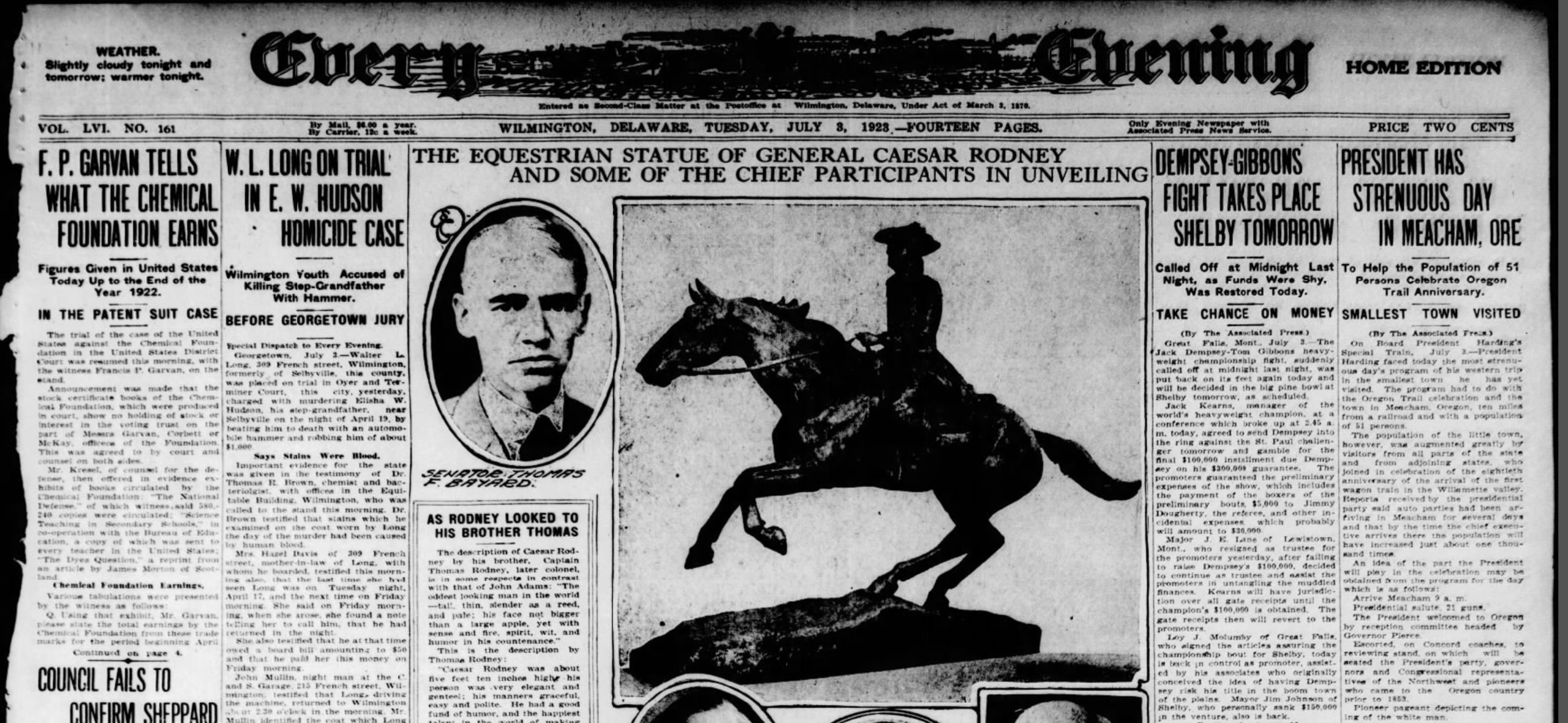
An image of the front page of the July 3, 1923, edition of the News Journal of Wilmington, which notes the dedication of the Caesar Rodney statue on the following day.
But Rodney also enslaved roughly 200 African Americans at his family plantation. That’s why protesters demanded his statue’s removal in 2020, when the police murder of George Floyd led many communities around the country to reconsider their connections to slavery.
In agreeing to remove the statue, Mike Purzycki — the mayor of Wilmington at the time — pledged to conduct a discussion about it. But it’s hard to talk about something when you have hidden it. It’s out of sight, out of mind.
And that’s where some liberals want it to remain. “You can have him, D.C.,” said Wilmington Councilwoman Shané N. Darby, reacting to the news that the statue of Rodney would be moved to Washington. “I do not think he needs to have a statue in his honor at all.”
But giving the statue to Washington concedes way too much to President Donald Trump, who issued a proclamation in October 2020 condemning its removal from Wilmington as “part of an ongoing, radical purge of America’s founding generation.”
The proclamation made no mention of Rodney’s past as an enslaver, because the Trump administration doesn’t want us to address that. All we need to know is that Rodney was a “patriot,” and that the people who denounced the Wilmington statue are engaged in “extreme anti-American historical revisionism,” Trump declared.
But the real revisionists are Trump and his disciples, who want to erase slavery from public memory. And that’s precisely what will happen if the Rodney statue disappears from Delaware.
Like the display at the President’s House, Rodney’s statue should include signage describing his complex relationship to slavery. Although he held human beings captive, Rodney introduced a bill to prohibit the importation of enslaved people into Delaware. And his will directed that the people he enslaved should be freed after he died.
Fewer people will know that history if the statue is gone. Even at Caesar Rodney High School in Camden, Del., students and recent graduates said they weren’t aware of Rodney’s past until the controversy flared over his statue in Wilmington.
So let’s bring it back, perhaps paired with a monument to enslaved people in Delaware. That’s what University of Delaware political scientist Theodore Davis Jr. proposed back in 2020, as the campaign to remove Rodney’s statue gained momentum. Davis, who is Black, understood that we should always be adding to history. Leave the subtracting to Trump.
Americans could start paying more at the gas pump, following the U.S.-Israel strikes on Iran.
West Texas Intermediate crude, an oil produced in the United States, surged 6.2% on Monday to $71.19 per barrel. As of Tuesday, it has spiked another 8%, hovering at around $77. It marks the oil’s highest point in over a year. But that’s just the beginning.
Experts say those surges reflect similar spikes in natural gas and at the gas station.
Here’s what we know.
Why are gas prices going up?
Known as the “crude oil effect,” when oil prices go up, so does the price of the fuel it makes. Crude oil must be processed at refineries to be turned into gasoline.
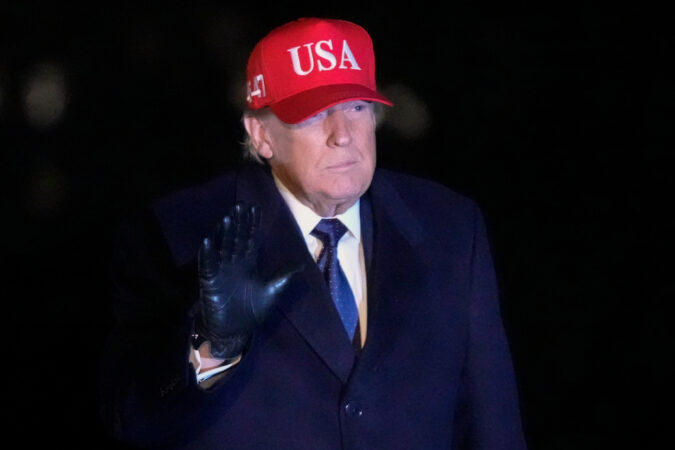
The conflict in the Middle East, which President Donald Trump said he anticipates could take longer than a few weeks, means the global supply of oil is disrupted, and, in turn, the price of a barrel of oil goes up. This causes the price of fuel to also rise.
“Whatever the time is, it’s OK,” Trump said. “Right from the beginning, we projected four to five weeks, but we have capability to go far longer than that. We’ll do it.”
Oil prices were already on the rise, up 17% this year. Experts say the increase is a direct effect of Trump’s rhetoric against Iran, along with his administration’s recent sanctions against the country.
And, as noted by John Quigley, a senior fellow at the University of Pennsylvania’s Kleinman Center for Energy Policy, it’s not just oil and gasoline; natural gas is also seeing a price increase.
And U.S. consumers will be hit hard, he says.
“It’s disrupting global oil and gas markets,” he said. “The war is quickly widening into a regional conflict, with the production capacity of multiple oil- and gas-producing nations being attacked by Iran in retaliatory strikes. This has already disrupted global oil and natural gas shipments.”
How much have gas prices increased since the strike on Iran?
As oil prices surged Monday, the impacts already started to trickle down to gas stations. This week, the national average of gas per gallon surpassed $3 for the first time since November.
Some states, including Illinois, Michigan, and Texas have already reported increases of about 5 cents per gallon.
As of Tuesday morning, the national average hit $3.11, marking the largest single-day increase since 2022, according to GasBuddy, a gas price tracking service.
Quigley says those increases could be just the beginning.
“Prices for natural gas in European and Asian markets have already spiked 50%. U.S. natural gas exporters will rush to take advantage of that, diverting domestic supplies to exports and pushing up domestic natural gas prices,” he said. “That will raise costs for home heating, and worsen already surging electricity costs, because over 40% of electricity generation in PJM, the nation’s largest grid, is fueled by natural gas.”
Do gas prices always rise during war?
Gas prices historically surge when conflicts happen because of a mix of supply disruptions, geopolitical uncertainty, and oil infrastructure attacks.
As detailed by NPR, major price surges occurred during the Gulf War, the 2003 Iraq invasion, and the 2022 Russia-Ukraine war.
How high could gas prices get?
GasBuddy petroleum analyst Patrick De Haan told multiple news outlets he believes some gas stations could charge as much as 30 cents more per gallon by the end of the week.
He estimated prices would be around $3.10 or $3.20 per gallon by the end of the week and anticipated they would hit $3.30 to $3.35 “in time.”
Based on the numbers at this moment (3/3/26, 945am ET), the average price of gasoline would likely climb to about $3.30-$3.35/gal in time. Any further changes in markets will change this, but if everything held still, that's where we'd likely be. Diesel closer to $4.25-$4.45.
What are the average gas prices in the Philadelphia region? How does that compare to the national average?
As of Tuesday morning:
The national average gas price: $3.11
The Pennsylvania average gas price: $3.21
The Philadelphia average gas price: $3.12
Which areas in the Philly region have the lowest gas prices?
The average price of gas in Philly is $3.12 per gallon as of Tuesday morning. Still, there are some spots with lower prices, according to GasBuddy.
Among the lowest appears to be an Eastcoast station in Fairmount (801 N. Broad St.) with gas going for $2.79 as of Monday evening. A Marathon in Southwest Philly (2450 Island Ave.) listed gas at $2.74 within the last 24 hours.
Among the highest appears to be a Gulf station in Kingsessing (5200 Woodland Ave.), priced at $3.29 as of Monday evening.
Who sets gas prices?
No one person sets gas prices. In reality, the price you see at pumps is the result of a combination of oil prices, supply and demand, oil refining costs, distribution, and competition.
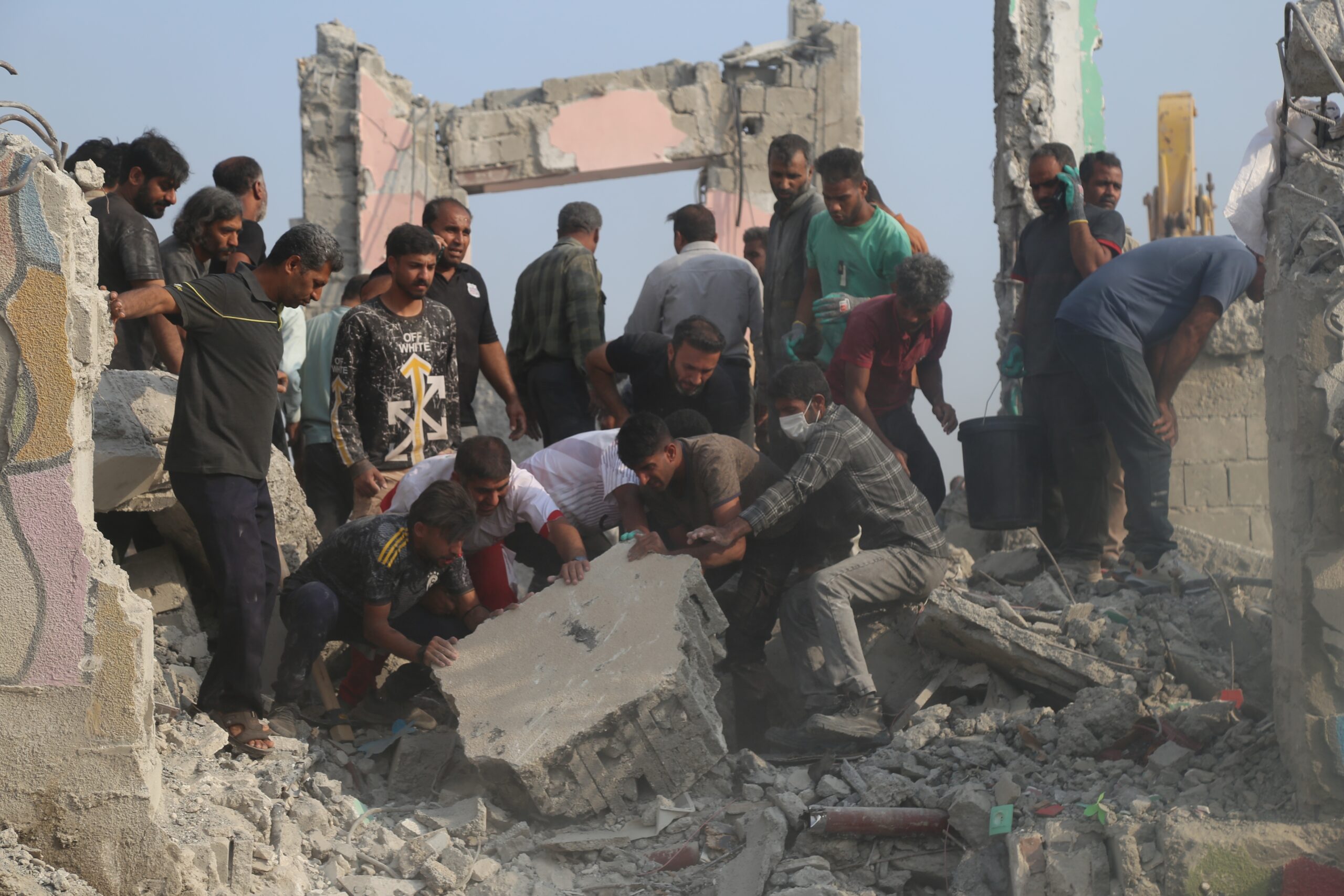
New York Times-verified images from a scene in southern Iran are horrific. A severed arm of a child lying in the rubble. Backpacks covered in ashes. The dead in body bags. Video of rescue workers digging through the remains of what had been a modest, two-story school near a military installation in southern Iran.
Please stop for a moment and think about the babies who died over the weekend. I call them that because that’s really what they were: elementary-age schoolchildren learning their lessons on what had started as a typical school day during their holy month of Ramadan, before turning into a nightmare.
Regardless of what you think about the joint U.S.-Israeli strikes against Iran, these girls were innocents. Students ages 7-12, they didn’t deserve this. Even growing up under the horribly repressive thumb of the late Iranian Supreme Leader Ayatollah Ali Khamenei, they had hopes and dreams for their lives that sadly now will never be realized. Their families must be out of their minds with grief.
It’s tempting to turn away from such a devastating tragedy, but America needs to bear witness to what has happened. President Donald Trump says the U.S. joined with Israel to bring about regime change and stop the production of nuclear weapons. Iranian security forces have reportedly killed thousands of their own people.
It’s still unclear exactly how many schoolgirls were killed, and which nation is responsible for the strike. The Times is reporting that at least 175 people altogether perished during the attack on the school, located in the city of Minab in southern Iran.
Rescue workers and residents search through the rubble in the aftermath of an Israeli-U.S. strike on a girls’ elementary school in Minab, Iran, Feb. 28.
According to the Times, the school is near a naval base where the Iranian Revolutionary Guards Corps is stationed. Reportedly, it was also struck that day. Various news sources reported that a spokesperson for U.S. Central Command said military officials are “aware of reports concerning civilian harm resulting from ongoing military operations” and are “looking into them.”
Meanwhile, the reports have sparked worldwide outrage. Nobel Peace Prize laureate and education activist Malala Yousafzai wrote on X, the social media site formerly known as Twitter, “I stand firmly against violence and the targeting of schools and civilians.” She was a child herself when she was shot while returning home from school in Pakistan in 2012.
Imagine the blanket news coverage that would have taken place if something even remotely like this had taken place at a school on American soil. It would have made the front page of every newspaper. But because it happened in a Muslim country thousands of miles away, it’s easier to act as if it never happened.
We can’t allow this kind of violence to be normalized.
Former Vice President Kamala Harris spoke for many of us over the weekend when she said, “Trump has dragged us into a war that we do not want.” The former Democratic presidential candidate added, “I unequivocally oppose this war of choice, and everyone should.”
Polls show most agree with Harris. Only one in four Americans approves of this war in the Middle East. I get it. We don’t want another drawn-out situation. We didn’t agree to this, and only Congress has the authority to authorize war.
We don’t even know what Trump’s endgame is, but he has let us know that the U.S. can expect more military casualties. More war means more airstrikes and more civilian fatalities — possibly even devastation like what happened at the girls’ school — where, as Yousafzai said on X, “every child deserves to live and learn in peace.”
Given the administration’s reluctance to share more about the planned scope and scale of our military engagement, there is little we can say with certainty. Except that Trump’s reckless war proves his “Board of Peace” is a farce.
Why are Americans allowed to place bets on death and destruction?
An advertisement by the American company Polymarket shows Zohran Mamdani and Andrew Cuomo ahead of the New York City mayoral election on Nov. 4, 2025, in New York.
Donald Trump’s splendid and not-so-little war that started during a Saturday rush hour in Tehran and has spread like a coronavirus to numerous other countries is entering its fourth day on Tuesday — far too early for one of journalism’s oldest clichés: the “winners and losers” piece.
Except for these winners: a few “lucky” — if that word can even apply to such a ghoulish enterprise — gamblers who woke up Saturday morning and learned that the first deadly explosions across Iran had already made them a lot richer, regardless of who wins or loses on the battlefield.
The initial weekend of war wasn’t even over before we learned that Polymarket, one of the two leading prediction markets that are the inevitable next downward spiral of our national sports gambling addiction, was hit by suspicious trading by six individuals who showed up to bet big on when the war would commence.
One trader up for particular attention earned a reported $553,000 over the weekend by placing large bets on when Iran’s supreme leader, Ayatollah Ali Khamenei — killed in the war’s initial minutes, reportedly — would be deposed. The handle on that well-timed, if macabre, gambler? “magamyman.”
My man, you aren’t even trying to hide it.
Polymarket’s brush with possible insider trading on predictive bets over the Iran war that is now a reality came as its customers bet a stunning half a billion dollars on the long-rumored conflict.
Many of them, presumably, are just regular schlubs desperate to get ahead in a dog-eat-dog economy. But it’s also hard not to contemplate that some may have had real advance knowledge of Pentagon war planning that loose-lipped insiders were audibly discussing in Joe’s Stone Crab just hours before the first cruise missile was fired.
I know … it’s shocking that something in America’s death spiral of late-stage capitalism is actually a rigged game, right? Still, it’s hard to decide which is worse about this new low of predictive betting on a war that’s already killed scores of innocent schoolgirls and hospital patients, and at least six U.S. service members: the rank immorality of wagering on death and destruction, or the insider trading that corrupts this already unholy process even further?
Over the weekend, even with the main focus on the latest missile attacks and changing Trump regime explanations for this undeclared war, there was growing outrage over the popularity of predictive betting on the news, especially when the news is deadly. Or, there’s the word the chief U.S. government official tasked with regulating Polymarket, Kalshi, or their rival firms has used to describe what’s happening.
Michael Selig, the lawyer tapped by Trump last year to head the U.S. Commodity Futures Trading Commission (CFTC), which — controversially — regulates these prediction markets, seems less a regulator and more of a cheerleader, maybe as much as “magamyman.” As several states have pushed to regulate or ban predictive markets as akin to sports betting sites, also under its purview, Selig has worked hard to override them with a claim of federal supremacy.
“The CFTC will no longer sit idly by while overzealous state governments undermine the agency’s exclusive jurisdiction over these markets by seeking to establish statewide prohibitions on these exciting products,” Selig wrote in a Wall Street Journal op-ed.
It’s worth noting Selig’s moves came at the same time that six Democratic senators wrote the CFTC chair to urge him to ban gambling on outcomes that result in death or physical harm — inspired by outrage that people were betting on whether a NASA spacecraft would fail to launch, as well as predictions around the fate of the former Venezuelan strongman Nicolás Maduro, seized in January by U.S. troops. Not surprisingly, the high volume of Iran war betting has sparked fresh calls to ban predictive market betting altogether.
“Life stops being something we live, but something we sell and trade,” Connecticut Democratic Sen. Chris Murphy posted on X, before saying he is studying legislation to ban prediction markets. “It will breed both corruption [and] emptiness.”
Unlike sporting events, betting on political or social developments whose occurrence and timing are controlled and known by humans is incredibly prone to insider trading. In a case that seems to typify the fundamental flaw of non-sports prediction markets, and which Kalshi was forced to acknowledge in an internal investigation, an editor for the wildly popular YouTube star Jimmy Donaldson, better known as MrBeast, was caught betting $4,000 on predictions about what MrBeast would say in his next video.
Because betting on influencer video topics is how far off the deep end we are going here. The addictive nature of online sports betting, which was once mostly banned until elite schemers realized how much money was to be made from increasingly desperate people, was always pointing American society in this warped direction.
Zoom out and there’s a much bigger picture here: A society where the traditional pathways to prosperity are rigged for the Epstein class has created an entire ethos that seeks to match that level of wealth through unconventional not-40-hour-workweek paths, like online influencers, or by hitting the big one, whether that’s through buying a meme stock, betting on college basketball, loading up on the right crypto, or — now — gambling on stuff like when Israel is going to bomb women and children in Gaza.
It seems no one near the top of the American kleptocracy is immune to cashing in, including — sigh — Big Media. It was bad enough that CNN partnered with Kalshi to promote predictive odds on events like Tuesday’s Texas primary, but now the venerable Associated Press picked Monday — amid all the negative publicity about the Iran war wagers — to announce its own deal with the site.
Meanwhile, the only safe bet would be a prediction that no one in Washington, D.C., will be able to successfully stop this in the near future. It’s not only that reckless and potentially corrupt get-rich-quick maneuvers like crypto, artificial intelligence, and now these “exciting” predictive markets are simply in the Trump regime’s toxic money-grubbing DNA.
To seal the deal, Donald Trump Jr. joined the advisory board of Polymarket last August, and his venture capital firm, called 1789 Capital, has reportedly invested tens of millions of dollars in the firm, as well. In a remarkable coincidence, two federal investigations into predictive markets that began during the Joe Biden presidency were shut down around the same time.
Today’s dollars stained with blood from the Middle East are the, dare I say it, predictable result. Why merely wage war when you can also wager on it? Our leaders, whether in D.C. or our 50 statehouses, can’t shut down Polymarket, Kalshi, and all their imitators fast enough.
Yo, do this!
Escaping from a global crisis is always a good time to get back to the basics, and for boomers of a certain age, nothing is more fundamental than the power chords and pounding drums of Led Zeppelin. Listening to and thoroughly enjoying Andrew Hickey’s A History of Rock Music in 500 Songs’ two-part episode on how the most classic of all classic rock bands came together at the end of the 1960s made me discover that there’s also an acclaimed 2025 documentary, Becoming Led Zeppelin, streaming on Netflix. Let’s watch it together.
The rising thermometer this week should serve as your reminder that the arrival of March means it’s also time for some baseball that actually counts. The World Baseball Classic, the sport’s World Cup knockoff that comes every three years, starts Thursday and runs through the March 17 final in Miami — site of 2023’s thrilling conclusion in which Japan’s Shohei Ohtani struck out the USA’s (and South Jersey’s) Mike Trout. Some 10 Phillies are competing, including Bryce Harper, Kyle Schwarber, and Brad Keller — on this year’s Team USA — and Dominican Republic ace Cristopher Sánchez, so let the games begin.
Ask me anything
Question: So one school of thought is that they are already trying to steal the midterms; another is that they really can’t. Where are you on the spectrum from mildly worried to totally anxious about this? Especially with Pa. being rather swingy. — Penthesilea (@hansklocker.bsky.social) via Bluesky
Answer: Yes, this is something I’ve already thought about quite a bit, and my answer — for now, anyway — is pretty much smack in the middle of the spectrum. It’s clear Donald Trump intends to use every implement in the voter suppression toolbox — extreme gerrymandering, executive orders aiming to require voter ID, or banning mail-in ballots — that would warp the voting outcomes, without going full Mussolini and canceling the election altogether. But I don’t think that can work for him — partly because any orders will almost certainly be struck down in the courts, but mainly because it looks like a Democratic landslide too large to easily suppress is building momentum. Just look at Texas, where the scheme to gerrymander five new GOP seats depended heavily on Latinos continuing to shift Republican, when polls show the exact opposite happening. Of course, in 2020-2021, few folks thought he would go so far as an attempted coup (I did). Who knows how far he’ll go to maintain power this time around?
What you’re saying about …
Last week’s question about how to handle the new prediction markets — anticipating the mess that occurred with the wagers on the start of the Iran war — and the surge in sports betting drew a tepid response. But it was pretty unanimous that sites like Polymarket and Kalshi should, at the bare minimum, be regulated under state gambling laws, and not as commodities trades — if not banned altogether. Wrote Mary Clare Gumbleton, who would ban Polymarket and Kalshi: “It’s just unregulated corruption and an incredibly awful incentive to both lose your shirt (as it were) and game the system where a handful of corrupt people can make a lot of money.”
📮 This week’s question: There’s only one thing on everyone’s mind: That crazy war in the Middle East. Now that Donald Trump and Benjamin Netanyahu have started it, how on earth do we end it? Please email me your answer and put the exact phrase “Iran war end” in the subject line.
History lesson on when the Iran thing really started
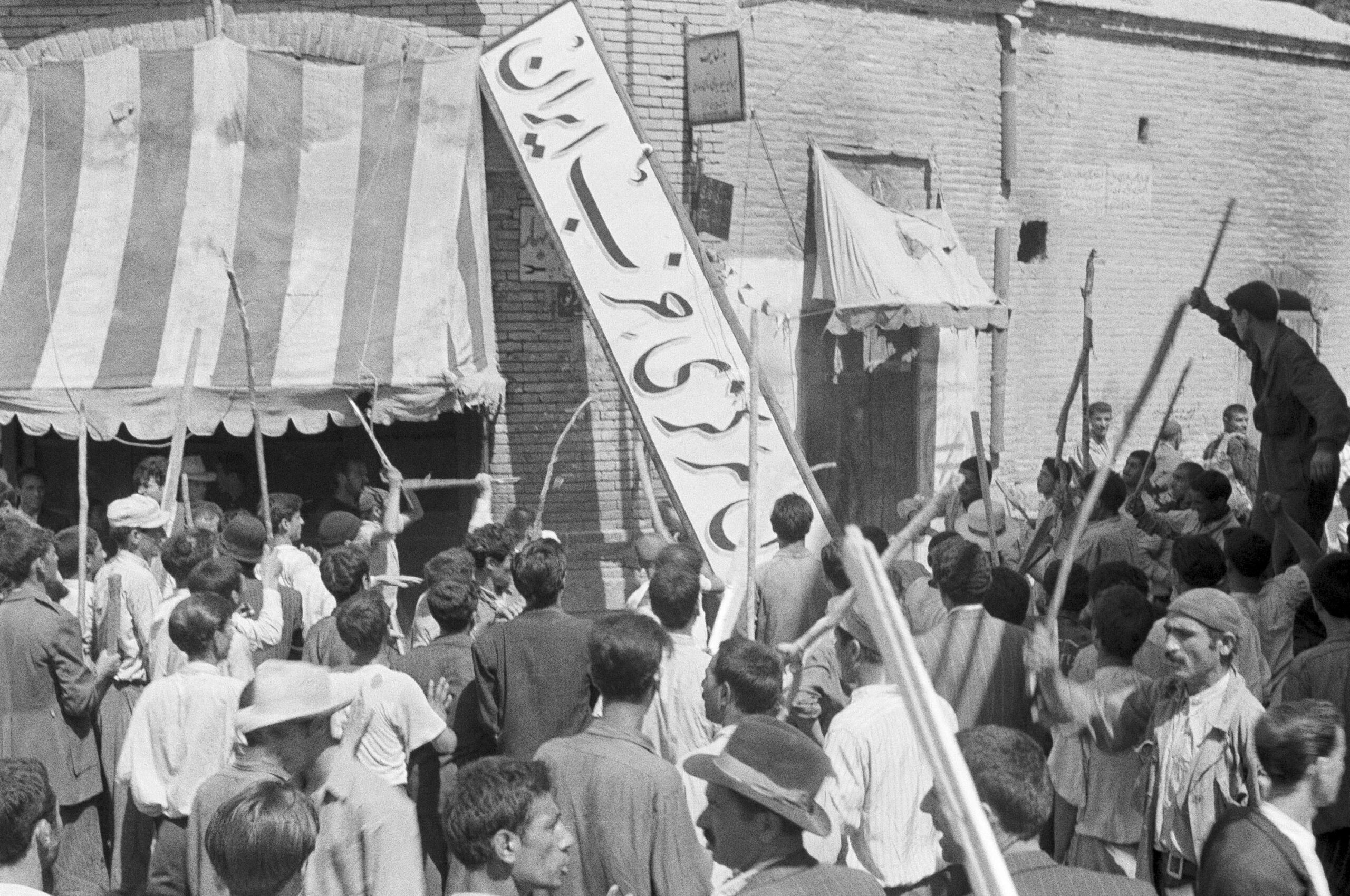
A crowd of demonstrators tear down the Iran Party’s sign from the front of its headquarters in Tehran on Aug. 19, 1953, during the CIA-backed coup that ousted Prime Minister Mohammad Mosaddegh and his government. The operation cemented the rule of Shah Mohammad Reza Pahlavi for more than 25 years before the 1979 Islamic Revolution.
It’s been a while since the last history lesson in this space, but the poor quality of the TV punditry about the four-day-and-counting Iran war screams out for better information. A lot of the folks advocating for this war of choice in the Middle East argue that we didn’t start the fire, that the roots go all the way back to the 1979 Iranian Revolution. That’s the year when Americans who never paid much mind to foreign affairs were shocked to see huge throngs in the streets of Tehran chanting “Death to America” and taking 52 hostages at the U.S. Embassy.
What did we do to deserve this? Well …
For most historians, and for many Iranians, the year that matters is not so much 1979, but 1953. In a post-World War II geopolitical environment where many nations sought to break free of imperialism, Iran in 1951 democratically elected a surprisingly left-leaning prime minister, Mohammad Mosaddegh, whose main project was to nationalize the then-British-controlled oil industry. This sparked great alarm in London, where U.K. leaders spent months lobbying Washington to join them in an effort to depose Mosaddegh in a coup that would advance Western oil interests.
It’s a messy story. The United States wavered and even flirted with backing Mosaddegh for a time, according to histories of the period, but ultimately British leaders leaned on the Eisenhower administration and America’s ongoing anti-left “Red Scare” of that era to get the relatively new CIA and its man in Tehran — Kermit Roosevelt Jr., grandson of Teddy Roosevelt — on board with the plot. The Americans threw around money and anti-Mosaddegh propaganda, and eventually organized street protests ahead of the government’s ouster.
To be sure, there is a never-ending debate over whether the U.S. involvement was central or just a subplot to the coup that gave power to the shah of Iran, Mohammad Reza Pahlavi, who ruled the nation with ruthless brutality for the next 26 years. Certainly, the nation’s Islamic clerics — powerful then, as now — played a key part in ousting a secular government. But the American role was so great that Barack Obama apologized in his 2009 Cairo speech, stating as fact that the CIA played a key role in the “overthrow of a democratically elected Iranian government.”
Whether the U.S. led the coup or was a bit player, the Iranian people have never forgotten our involvement or our close ties to the eventually despised shah. “The rancor has never melted,” a 24-year-old Iranian woman told the Associated Press in 2023, on the 70th anniversary of the coup, as she compared the American meddling to being “like wishing for an earthquake to get rid of a bad neighbor.”
So did a state of war between the United States and Iran start in 1979, as some GOP lawmakers insist, or in 1953, or on Feb. 28 of this year? In arguably the world’s most violent neighborhood, the cycles of violence often seem to have no beginning and no end. An imperial America chose to jump into the middle of this mess 73 years ago, and now getting out feels more impossible than ever.
What I wrote on this date in 2016
He’s all but forgotten now, but up until his mysterious death 10 years ago, the flamboyant Oklahoma natural gas mogul Aubrey McClendon had reshaped the Pennsylvania landscape as king of the commonwealth’s fracking boom. The company that McClendon (known to sports fans as an owner of the NBA’s Oklahoma City Thunder) cofounded, Chesapeake Energy, promised riches to Pennsylvania landowners, but left a trail of lawsuits and pollution. Less than 24 hours after his indictment by a federal grand jury, McClendon drove at full speed into a bridge embankment and was killed instantly. I wrote: “In Pennsylvania, Aubrey McClendon is survived by a legacy mostly of conflict, of thick lawsuits, of protesters facing off against armed marshals, of lawmakers and a governor at war over the taxes that gas drillers never had to pay, of brackish water and leaking methane adding to the greenhouse gases that may someday strangle the planet — of a promise of buried treasure that wasn’t really all it was cracked up to be.”
America is now at war on two fronts. In one column, I tackled the ongoing conflict in the streets of America, and looked at the tragic death on a frigid Buffalo street of the Rohingya refugee, Nurul Amin Shah Alam — a disabled and nearly blind man who was arrested by Border Patrol agents, and then dumped at a closed coffee shop five miles from his family’s home. It was a low point that spotlighted the unrelenting cruelty of a xenophobic mass deportation crusade by the Trump regime that has brought a mounting death toll. On Saturday morning, I knocked out my instant reaction to the news that the Trump regime had joined Israel in an all-out attack on Iran, which was that the war is both unconstitutional without the consent of Congress and also a clear violation of international law.
In moments of national and global crisis such as this, it’s easy to forget that many of the political decisions that shape people’s everyday lives occur on the local level. Here in Philadelphia, the school district’s plan to modernize its schools while closing 20 older buildings came as a shock to city parents, and The Inquirer’s coverage, anchored by our Pulitzer Prize-winning city public schools reporter, Kristen A. Graham, has been all over this story. The newsroom has explained the plan in detail, and covered the community protests and the fights over individual buildings, as well as Philly’s move away from middle schools. One advocate told me The Inquirer’s aggressive coverage of the story is why two schools have now been removed from the plan. A healthy community is one that has a vibrant news media. You nurture a better Philadelphia when you support The Inquirer by subscribing.
By submitting your written, visual, and/or audio contributions, you agree to The Inquirer’s Terms of Use, including the grant of rights in Section 10.
Military officers will see their tuition assistance cut off at 22 schools and institutions, but the University of Pennsylvania is not among them.
The Ivy League institution, which counts President Donald Trump among its alumni, was on an initial list of 34 schools “at risk” of losing Pentagon-funded tuition assistance. But Penn was not part of the 22-university list released by Defense Secretary Pete Hegseth on Friday.
Penn did not immediately respond to a request for comment Tuesday.
Hegseth previously said he intendedto cut off schools where faculty members have “leftist political leanings” and “openly loathe our military,” but he cited no specific examples of bias or misconduct at the 22 schools that will lose tuition assistance beginning with the 2026-27 academic year.
“We will no longer invest in institutions that fail to sharpen our leaders’ warfighting capabilities or that undermine the very values they are sworn to defend,” Hegseth wrote in a letter released Friday with the final list.
It was not immediately clear why Penn and other schools were removed from the initial draft list.
Among the schools still set to lose access to the tuition-assistance program is Princeton University, where Hegseth obtained a bachelor’s degree in 2003. Carnegie Mellon University in Pittsburgh is also on the list, as is Yale University, where Vice President JD Vance obtained a law degree.
The move means members of the military will be banned from using Department of Defense tuition assistance to pay for Senior Service College Fellowship programs at those schools.
The impact will not be large — the Department of Defense said fewer than 100 military students are enrolled in programs at schools that will lose funding. Military personnel currently enrolled may complete their courses of study, Hegseth said, though it is unclear if they will have to change schools to continue receiving financial assistance.
Hegseth’s announcement did not mention several other financial assistance programs for undergraduates, including the GI Bill, which is administered by the Department of Veterans Affairs.
Here is the full list of schools losing tuition assistance from the Pentagon:
Educational institutions
Harvard University
St. Louis University
Massachusetts Institute of Technology
Tufts University
Georgetown University
Carnegie Mellon University
Brown University
Columbia University
Yale University
Middlebury College
Princeton University
George Washington University
College of William and Mary
International institution
Queen’s University (Canada)
Nonprofit institutions
Center for Strategic and International Studies
New America Foundation
Brookings Institution
Atlantic Council
Center for a New American Security
Council on Foreign Relations
Henry L. Stimson Center
Senior Service College
Johns Hopkins University School of Advanced International Studies West Space Scholars Program
The eastern sky is aglow with dawn streaks of orange when the cry of a whistle sounds outside of ICE headquarters in Philadelphia.
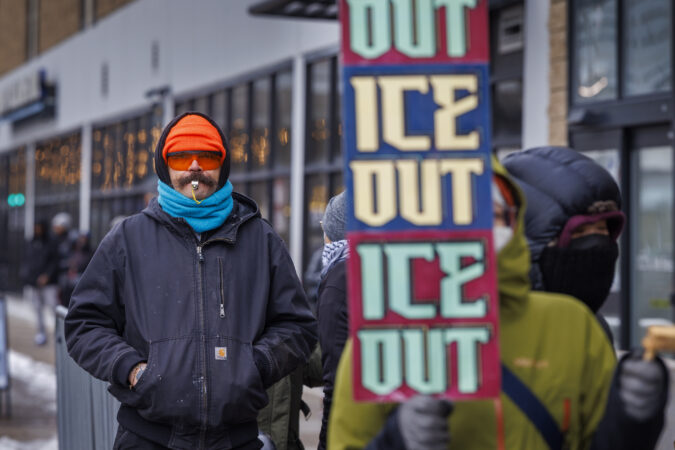
The noise pierces amid an improvised orchestra of protest, as chanting demonstrators shake tambourines, rattle jingle sticks, and beat drums ― one person banged on a kitchen colander ― to create a clamor that makes it challenging to concentrate.
That’s part of the goal of the weekly “Noise Demo” organized by No ICE Philly to raise awareness among morning commuters but also to try to disrupt the work of Immigration and Customs Enforcement agents at the Eighth and Cherry Street office.
“We’re interrupting them,” said a protest leader who asked to be identified only as a member of No ICE Philly out of fear of repercussion from the government.
For advocacy groups here and across the county, the whistle has become both a tool and symbol of the anti-ICE movement.
On the streets, it’s the means to alert neighbors and warn immigrants when ICE arrives on the block, and to try to distract and confuse officers who may already be operating in an unfamiliar neighborhood.
A blast from a standard pea whistle can carry half a mile, and the sound from a specialized emergency whistle can travel a mile or more, depending on conditions.
ICE officials in Philadelphia said last week they had nothing to add on the noise demonstrations or on the use of whistles, beyond what the agency had already said: “Your whistles won’t stop or hinder ICE from arresting criminal illegal alien sex abusers, murderers, gang members, and more,” the agency told Minnesota protesters on social media.
In November, President Donald Trump issued a ban ― so far blocked by the courts ― on creating “loud or unusual noises” at federal facilities in the U.S. That hasn’t slowed No ICE Philly, which gathers to make noise on Mondays, though the snowfall pushed a recent action to Thursday.
“Maybe,” said activist Huston West, who blasted a steady beat on his whistle as ICE officers arrived at work on Thursday, “it makes them think about their life choices.”
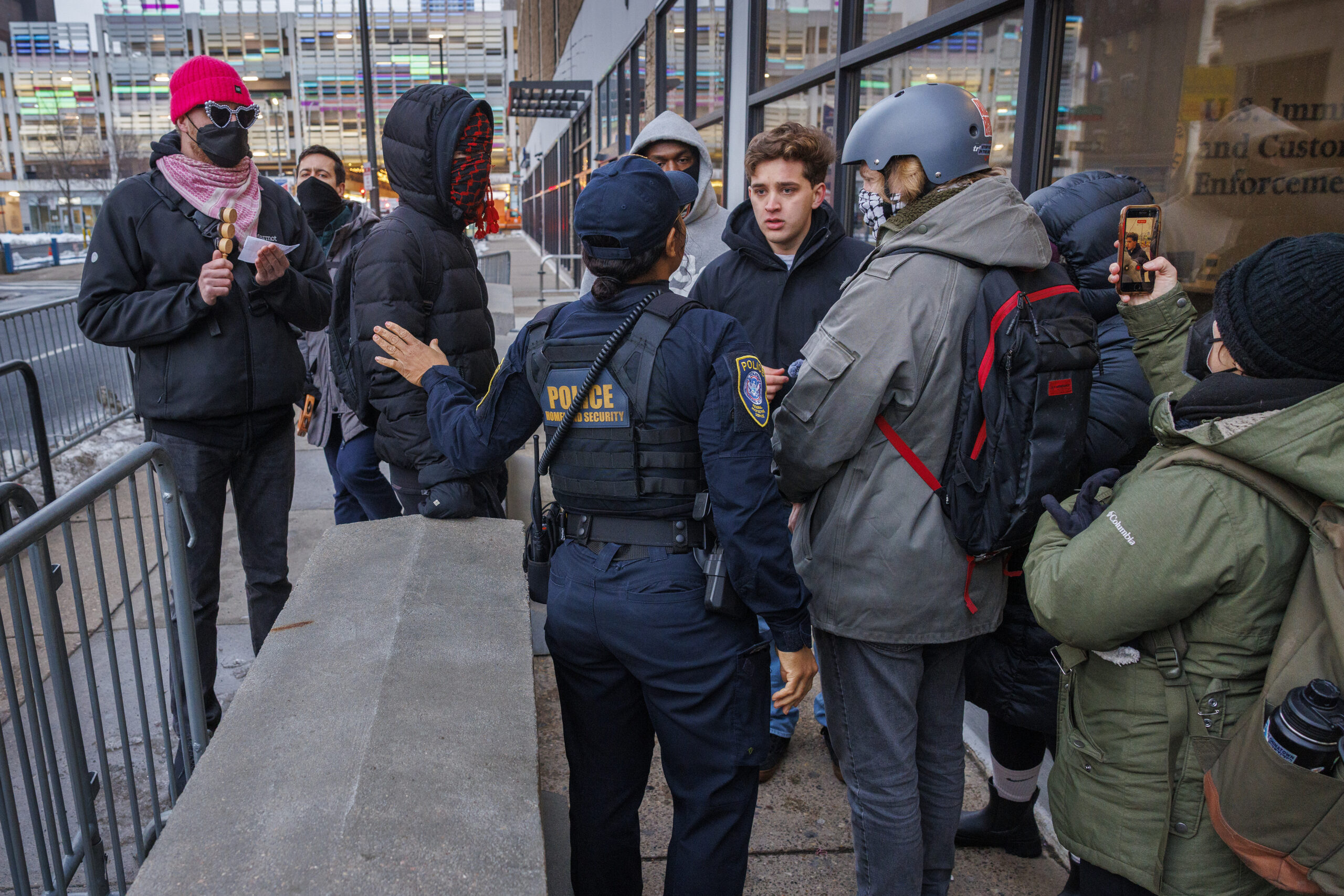
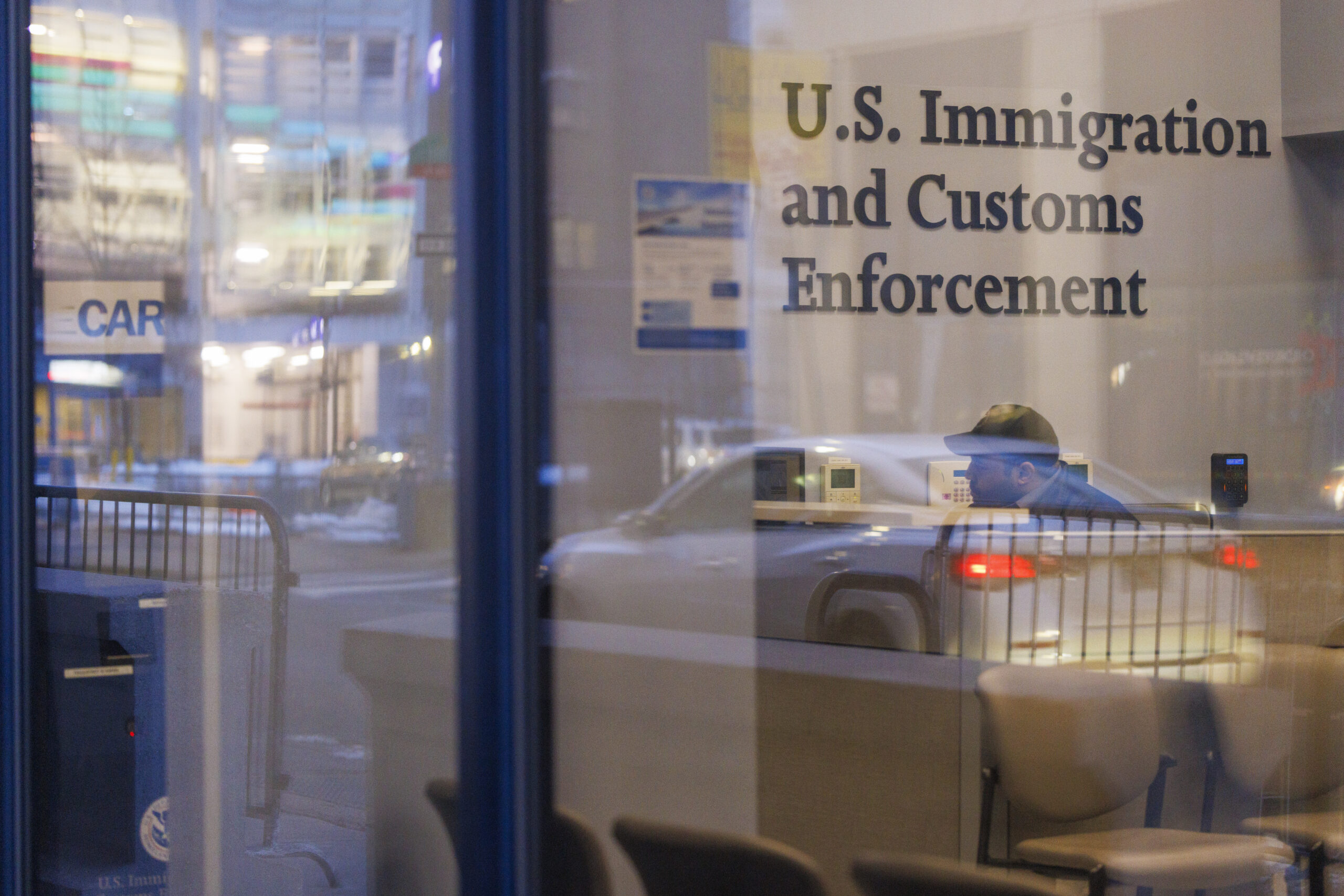
A man who tried to confront demonstrators is engaged by a Homeland Security officer during a No Ice Philly “Noise Demo” outside the U.S. Immigration and Customs Enforcement office at 114 N. Eighth Street in Center City.
Why have whistles become so popular among immigration protesters?
Many reasons.
Whistles are light, portable, reliable ― and cheap, about 20 cents each when bought in bulk. They don’t need batteries or recharging, have no buttons or controls. Everyone knows how to make it work.
To him, protesters’ use of whistles carries symbolism, summoning images of referees calling penalties during sports events. Maybe the activists are saying ICE has broken the rules or needs to stop.
“Like throwing a penalty flag,” he said, “against ICE agents who they deem are acting unlawfully.”
The whistle ranks among the oldest human inventions, the first ones crafted from bone, wood, or clay, used for hunting, signaling, and religious rites.
Englishman Joseph Hudson is considered the inventor of the modern pea whistle ― the tiny ball in the air chamber produces the trill ― in the 1880s. He created the Metropolitan Police whistle for British bobbies and the Acme Thunderer for soccer referees, who to that point had waved handkerchiefs to signal fouls.
Today, hundreds of thousands of whistles have been distributed to ICE protesters around the country ― more than 150,000 sent from Chicago alone, according to the Chicago Sun-Times.
In Minneapolis, activists have used 3D printers to crank out supplies. In Philadelphia, whistles have been given out by the handful at organizing meetings. Temple Beth Zion-Beth Israel ordered 300 whistles for distribution, so neighbors can quickly signal that ICE is present and warn immigrants to seek safety.
The interior lobby of U.S. Immigration and Customs Enforcement at 114 N. Eighth St. in Center City.
The Trump administration wants to ban loud noises outside federal facilities, a move widely seen as an effort to halt protests at ICE offices. A federal judge in Oregon temporarily blocked the restrictions, saying they said could violate the First Amendment by criminalizing free speech.
But even among pro-immigration activists, not everyone sees whistles as consistently beneficial.
Some think the noise adds to the confusion at the scenes of ICE arrests, increasing fear and anxiety among families during what are already tense and sometimes violent encounters.
New Sanctuary Movement of Philadelphia, a major advocacy organization, has begun talking to other groups about finding alternatives to whistles, said co-director Blanca Pacheco.
Yes, she said, it’s important that arrests not be permitted to be carried out in silence. But “what is the kind of noise that people can come up with that is supportive, instead of adding to the trauma?”
Not all in immigrant communities understand the purpose of the whistles, she said. And for those who have survived war or torture the noise can be triggering.
One option may be that people could shout, “ICE is here!” Perhaps two or three people on a block could be designated to blow whistles, rather than everyone at once. Even singing could work, she said.
“I think that Chicago and Minnesota and other places that have used the whistles had to come up with tactics and strategy very quickly,” said Pacheco, who noted Philadelphia is not in that position. “We can learn from other places what has worked and what has not. I think whistles can be used in some scenarios, not all the scenarios.”
Outside the ICE office on Thursday, two ICE agents heading into the building jawed with demonstrators who yelled at them to quit their jobs. Whistle calls and drum beats continued on, toward an 8 a.m. conclusion.
“ICE operates from the very early morning into early afternoon,” said the demonstration leader who declined to give his name. “We just want to make sure that we’re here when they’re here.”
Philadelphia is one of five cities on a list of finalists to host the 2028 Democratic National Convention, a major gathering that could generate millions of dollars in economic impact for the city.
Party officials are also considering Boston, Atlanta, Chicago, and Denver, the Democratic National Committee announced Monday.
The convention will be held from Aug. 7 to Aug. 10, 2028, according to the party. If Philadelphia is selected, the convention would likely be held at the Xfinity Mobile Arena at the South Philly stadium complex, the largest indoor event space in the city.
DNC leaders and advisers are expected to make site visits this spring before selecting a host.
The DNC said in its statement that, in picking a host city, party leaders will consider how each city uses “new and innovative approaches in response to the challenges and opportunities that arise from hosting an event of this magnitude.”
The Republican Party’s 2028 convention will take place in Houston.
Top Philadelphia Democrats and donors formed a host committee — called Pick Pennsylvania — in recent months and, in partnership with Democratic Mayor Cherelle L. Parker, submitted a bid to host the 2028 convention.
In a statement, Parker said that Philadelphia’s selection as a finalist “reflects the strength of its proposal and the broad coalition of civic, business, labor, and community leaders committed to hosting a convention that is inclusive and memorable.”
Parker, who is up for reelection next year, would no doubt play a major role in planning for an upcoming convention. So would Gov. Josh Shapiro, a Democrat currently running for reelection who is considered a contender for the 2028 presidential nomination.
The president of the Philadelphia host committee is David L. Cohen, a prominent party stalwart, and the chair is Daniel J. Hilferty, the CEO of Comcast Spectacor, which owns the Xfinity Mobile Arena.
He said in a statement that “there is no city more excited, more invested and more prepared than Philadelphia to host the 2028 Democratic National Convention.”
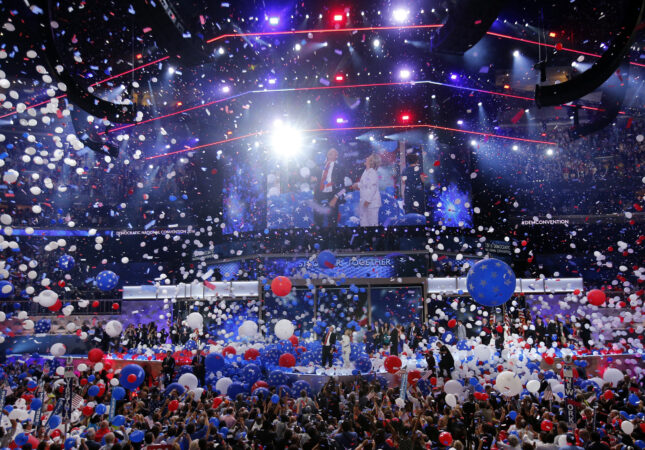
Philadelphia — the largest city in a critical swing state — last hosted a presidential nominating convention in 2016 at the South Philly arena, then called the Wells Fargo Center. Democrats that year nominated former Secretary of State Hillary Clinton, who was later defeated by Republican Donald Trump.
Before 2016, the city hosted major party conventions seven times, including the 2000 Republican National Convention. The GOP that year nominated then-Texas Gov. George W. Bush, who went on to serve two terms in the White House.
Former U.S. Rep. Bob Brady, the chair of the Philadelphia Democratic City Committee, said Monday that he had spoken multiple times to DNC leaders about the prospect of the city hosting the 2028 convention.
“We got a great reputation from the last convention we had,” Brady said. “Plus we’re going to show off the city very well this summer, which will really give us a good look.”
The news that Philadelphia is again a finalist to host the DNC is a welcome development for the city’s tourism and hospitality industry, as party conventions draw thousands of visitors and can be a boon for spending in the city.
The 2016 event generated $230.9 million in economic impact, according to the Philadelphia Convention and Visitors Bureau. Of that, about $132.9 million came from direct convention-related spending, and $11.1 million was generated by state and local taxes. That convention attracted more than 5,000 attendees and some 29,000 other visitors, leading to a record-breaking year for hotels in Center City, the bureau reported.
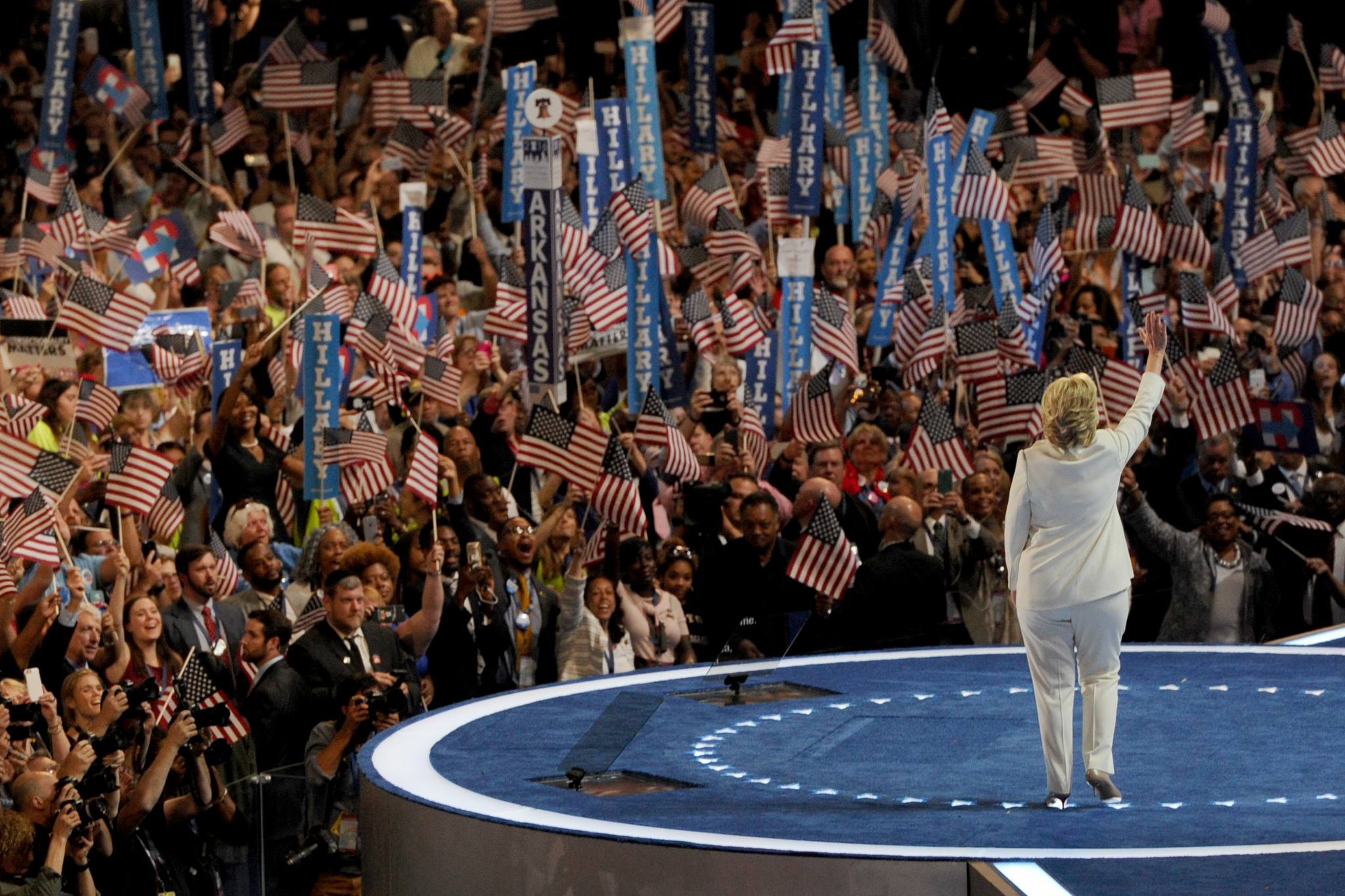
In this July 28, 2016 file photo, then-Democratic presidential nominee Hillary Clinton walks on stage at the arena in South Philly to accept the nomination of her party on the final night of the DNC.
If selected, Philadelphia may be uniquely positioned to host an influx of visitors.
The city’s hotel supply has expanded since the last time it hosted a DNC — and there are more than 19,000 hotel rooms in the city, according to Visit Philadelphia. That’s an increase from about 16,000 available in 2016.
The city has also invested millions of dollars on improvements to public spaces, transit hubs, and security ahead of several major events this year, including World Cup games, the MLB All-Star Game, and the commemoration of the 250th anniversary of America.
Conventions are also major logistical undertakings. Attendees include high-profile politicians and celebrities, and protests often form outside the events. The federal government has over the last two decades designated both parties’ nominating conventions as National Special Security Events, meaning they are deemed at high risk for terrorism and require federally led security.
In Chicago in 2024, the U.S. Secret Service led security planning alongside 16 other public safety entities, according to a local NBC affiliate. The law enforcement and security plan included designated protest zones, airspace monitoring, and traffic control.
Host committees are also responsible for raising millions of dollars to pay for parties, transportation for delegates, construction and venue upgrades, as well as other logistical services such as consultants, accountants, and communications staff.
In 2016, the Philadelphia host committee raised about $85 million — $10 million of which came from taxpayers in the form of a state grant. Other top contributions came from corporations, unions, and wealthy individual donors.