Competition at Philadelphia-area medical schools intensified in 2025, with programs seeing about 50 applicants for every open spot.
That’s the highest demand since 2022, with the number of applications bouncing back after a three-year decline, recently released data from the Association of American Medical Colleges(AAMC) shows.
The annual report offers a look at the composition of the nation’s future doctors through the demographics of the applicants and enrollees at M.D. degree-granting medical schools across the United States and Canada.
It showed increased class sizes and strong female enrollment across the Philadelphia area’s five M.D. degree-granting schools: University of Pennsylvania, Thomas Jefferson University, Temple University, Drexel University, and Cooper Medical School of Rowan University.
And the fraction of first-year medical students from Pennsylvania who identified as Black or African American, excluding the mixed-race student population, fell from 6.9% to 5.4% between 2023 and 2025.
The racial demographics of entering studentsare seeing increased scrutiny in light of the 2023 Supreme Court decision that effectively ended affirmative action, barring race from being used in higher education admissions.
The percentage of first-year medical students from Pennsylvania who are Black is lower this year than the national average. Pennsylvania also lags behind the national average for first-year enrollment of Hispanic or Latino medical students.
This data reflects the results of the application cycle that concluded last spring. Next year’s prospective medical school students are currently in the thick of admissions season, awaiting interviews and offers.
Here’s a look at the key trends we’re seeing:
Applications back up
Demand for spots at Philadelphia area-medical schools is back up after a three-year decline. There were nearly 5,000 more applications last cycle, a 9.3% increase, with all schools except Cooper seeing a boost.
Jefferson’s Sidney Kimmel Medical College helped drive growth the most, with a 16% increase in applications compared to the previous year.
window.addEventListener(“message”,function(a){if(void 0!==a.data[“datawrapper-height”]){var e=document.querySelectorAll(“iframe”);for(var t in a.data[“datawrapper-height”])for(var r,i=0;r=e[i];i++)if(r.contentWindow===a.source){var d=a.data[“datawrapper-height”][t]+”px”;r.style.height=d}}});
More medical students being trained
Orientation icebreakers might take a bit longer to get through at area-medical schools as first-year classes continue to get bigger.
In 2025, Philadelphia-area schools enrolled 1,089new medical students, compared to 991 in 2017. Drexel University College of Medicine contributed to half of that growth, adding 49 seats to its recent entering class compared to that of 2017.
Penn’s Perelman School of Medicine was the only school that did not increase its class size in 2025.
window.addEventListener(“message”,function(a){if(void 0!==a.data[“datawrapper-height”]){var e=document.querySelectorAll(“iframe”);for(var t in a.data[“datawrapper-height”])for(var r,i=0;r=e[i];i++)if(r.contentWindow===a.source){var d=a.data[“datawrapper-height”][t]+”px”;r.style.height=d}}});
Female enrollment remains strong
More female students have entered Philly-area medical schools over the last decade.
In 2025, 55.4% of first-year enrollees at Philly-area medical schools were female, compared to 47.7% in 2017.
Drexel saw the biggest rise, with 181 women entering in 2025, compared to 120 in 2017.
window.addEventListener(“message”,function(a){if(void 0!==a.data[“datawrapper-height”]){var e=document.querySelectorAll(“iframe”);for(var t in a.data[“datawrapper-height”])for(var r,i=0;r=e[i];i++)if(r.contentWindow===a.source){var d=a.data[“datawrapper-height”][t]+”px”;r.style.height=d}}});
The Children’s Hospital of Philadelphia and Denver-based Soar Autism Centers have opened in Newtownthe first of five planned early childhood autism centers in the Philadelphia region and expect the network could grow to more than 30 centers, officials said.
The 50-50 joint venture is designed to reduce wait times for therapy and to make it easier for families to access multiple types of therapy at one location while remaining connected to CHOP specialists.
“It can take a year to get into therapy on a regular basis,“ an extremely long time in a young child’s neurological development, Soar cofounder and CEO Ian Goldstein said.
Such wait times continue to frustrate families despite dramatic growth in the autism-services sector over the last 15 years or so, as states mandated insurance coverage and diagnosis rates soared with more awareness and an expanded definition of autism.
Nationally, applied behavioral analysis, commonly known as ABA therapy, has become popular for autism treatment, increasing nationally by 270% between 2019 and 2024, according to Trilliant Health, a Nashville data analysis firm. The volume of services provided locally — where companies including ABA Centers, Helping Hands Family, and NeurAbilities Healthcare have expanded — was not available.
The increase in diagnoses has outpaced the growth in available services, said Matthew Lerner, an autism expert at Drexel University, who is not involved with the newly launched CHOP-Soar Autism Centers.
When Lerner moved to the Philadelphia region from Long Island in 2023 and started getting plugged into the autism network, a few clinicians here would ask if he could connect patients with services in New York.
“I was coming from eastern Long Island, two hours east of New York City, and people were like, do you know anyone closer to you?” he recalled.
CHOP’s road to a joint venture with Soar
The freestanding, 10,000 square-foot clinic that opened on Jan. 5 in suburban Bucks County near CHOP Pediatric Primary Care Newtown has 35 to 40 rooms and an indoor playground for therapeutic uses.
CHOP, among the largest children’s health systems in the country, has longbeen concerned about limited access to autism care in the region, said Steve Docimo, CHOP’s executive vice president for business development and strategy.
The nonprofit hasprovided diagnostic services, but not the forms of therapy that the CHOP-Soar centers will offer. “The threshold to doing this on our own has always been high enough that it hasn’t been a pool that we’ve jumped in,” he said.
CHOP was in talks with Soar for three years before agreeing to the 50-50 joint venture with the for-profit company.CHOP’s investment will be its share of the startup costs for CHOP-Soar locations.
The partnership plan calls for five locations in the first two years. The partners did not say where the next four centers will be.
Soar has 15 locations in the Denver area, which has about half the population of the Philadelphia region, Goldstein said.
That comparison implies that the CHOP-Soar partnershipcould grow to30 centers, Goldstein added. He thinks the region’s needs could support additional expansion, sayingthe total could reach “into the dozens.”
The first CHOP-Soar Autism Center opened this month in Newtown. Shown here is the reception area.
That’s assuming CHOP-Soar provides high quality care for kids, an appealing family experience, and a system of coordinated care: “There will be a need to do more than five, and I think we’re jointly motivated to do so,” Goldstein said.
The CHOP-Soar approach
Families seeking care for an autistic child typically have to go to different places to get all the types of therapy they need.
Families “get behavioral analytics in one place, occupational therapy somewhere else, and speech language pathology in another place,” Docimo said.
Soar brings all of that together in one center. “If it can be scaled, this will fill a gap in our region in a way that I think will work very well for these families,” he said.
CHOP-Soar centers will emphasize early intervention and treat children through age six. “The brain has its greatest neuroplasticity” up to age 3, “so waiting a year is a really big deal,” Goldstein said. “You’re missing out on that opportunity to really influence the child’s developmental trajectory at a young age.”
Some autism services providers focus on ABA therapy, which breaks social and self-careskills, for example, down into components and then works discretely on each.
But Soar offers what Goldstein described as “integrated, coordinated care for the child.” That includes speech, occupational, and behavioral therapies.
With CHOP, medical specialties, such as genetics, neurology, and gastrointestinal care, can be tied in as well, Goldstein said.
It’s rare for autism providers to offer a wide variety of commonly needed services under one roof, said Lerner, who leads the A.J. Drexel Autism Institute’s Life Course Outcomes Research Program.
He said Soar’s evidence-based, multidisciplinary approachhas a lot to offer the region.
“A person diagnosed with autism will have complex care needs throughout their life, and a one-size-fits-all, one-intervention approach will not work,” he said.
Joseph R. Syrnick, 79, of Philadelphia, retired chief engineer and surveyor for the Philadelphia Streets Department, president and chief executive officer of the Schuylkill River Development Corp., vice chair of the Philadelphia City Planning Commission, former adjunct professor, college baseball star at Drexel University, mentor, and “the ultimate girl dad,” died Saturday, Jan. 17, of cancer at his home in Roxborough.
Reared on Dupont Street in Manayunk and a Roxborough resident for five decades, Mr. Syrnick joined the Streets Department in 1971 after college and spent 34 years, until his retirement in 2005, supervising hundreds of development projects in the city. He became the city’s chief engineer and surveyor in 1986 and oversaw the reconstruction of the Schuylkill Expressway and West River Drive (now Martin Luther King Jr. Drive) in the 1980s, and the addition of new streetlights and trees on South Broad Street and the upgrade of six city golf courses in the 1990s.
He was an optimist and master negotiator, colleagues said, and he worked well with people and the system. “You have concepts that seem simple,” he told The Inquirer in 1998. “But when you commit them to writing, they raise all kinds of other questions.”
In 2000, as Republicans gathered in Philadelphia for their national convention, Mr. Syrnick juggled transit improvements on Chestnut Street and problems with the flags on JFK Boulevard. He also helped lower speed limits in Fairmount Park and added pedestrian safety features on Kelly Drive.
He beautified Penrose Avenue and built a bikeway in Schuylkill River Park. He even moderated impassioned negotiations about where the Rocky statue should be placed.
Since 2005, as head of the Schuylkill River Development Corp., he deftly partnered with public and private agencies, institutions, and corporations, and oversaw multimillion-dollar projects that built the celebrated Schuylkill River Trail, renovated a dozen bridges, and generally improved the lower eight-mile stretch of the Schuylkill, from the Fairmount Dam to the Delaware River, known as Schuylkill Banks.
In an online tribute, colleagues at the Schuylkill River Development Corp. praised his “perseverance and commitment to revitalizing the tidal Schuylkill.” They noted his “legacy of ingenuity, optimism, and service.” They said: “Joe was more than an extraordinary leader. He was a great Philadelphian.”
Dennis Markatos-Soriano, executive director of the East Coast Greenway Alliance, said on Facebook: “He exuded confidence, humility, and unwavering commitment.”
Mr. Syrnick reviews plans to extend a riverside trail in 2009.
Mr. Syrnick was a constant presence on riverside trails, other hikers said. He organized regattas and movie nights, hosted riverboat and kayak tours, cleaned up after floods, and repurposed unused piers into prime fishing platforms.
“Great cities have great rivers,” Mr. Syrnick told The Inquirer in 2005. “Here in Philadelphia, we have Schuylkill Banks.”
He was a Fairmount Park commissioner for 18 years, was named to the Philadelphia City Planning Commission in 2008, and served as vice chair. He lectured about the Schuylkill often and taught engineering classes and led advisory panels at Drexel. In 2015, he testified before the state Senate in support of a waterfront development tax credit.
Friends called him “a visionary,” “a true hero,” and “a Philly jewel.” One friend said: “He should be honored by a street naming or something.”
Mr. Syrnick (fourth from left) and his family pose near a riverboat.
Paul Steinke, executive director of the Preservation Alliance for Greater Philadelphia, said on Facebook: “He left his native Philadelphia a much better place.”
Mr. Syrnick was president of the Philadelphia Board of Surveyors and active with the American Society of Civil Engineers, the Engineers’ Club of Philadelphia, and other organizations. At Drexel, he earned a bachelor’s degree in civil engineering in 1969 and a master’s degree in 1971.
In 2024, Drexel officials awarded him an honorary doctorate for “his visionary leadership in engaging diverse civic partners to revive the promise of a waterfront jewel in Philadelphia.”
He played second base on the Roman Catholic High School baseball team. He was captain of the 1968 Drexel team and later played against other local standouts in the old Pen-Del semipro league.
Mr. Syrnick (center in white shirt) had all kinds of way to publicize fun on the Schuylkill. This photo appeared in The Inquirer in 2007.
Most of all, everyone said, Mr. Syrnick liked building sandcastles on the beach and hosting tea parties with his young daughters and, later, his grandchildren. He grew up with three brothers. Of living with three daughters, his wife, Mary Beth, said: “It was a shock.”
His daughter Megan said: “It was a learning experience. Whether it was sports or tea parties, he became the ultimate girl dad.”
Joseph Richard Syrnick was born Dec. 19, 1946, in Philadelphia. He spent many summer days riding bikes with pals on Dupont Street and playing pickup games at the North Light Community Center.
He knew Mary Beth Stenn from the neighborhood, and their first date came when she was 14 and he was 15. They married in 1970, moved up the hill from Manayunk to Roxborough, and had daughters Genevieve, Amy, and Megan.
Mr. Syrnick received his honorary doctorate from Drexel in 2024.
Mr. Syrnick enjoyed baseball, football, and golf. He was active at St. Mary of the Assumption and Holy Family Churches, and he and his wife traveled together across Europe, Africa, the Middle East, and Asia.
“He was humble,” his daughter Megan said. “He was quiet in leadership. He always said: ‘It’s the team.’”
In addition to his wife and daughters, Mr. Syrnick is survived by seven grandchildren, his brother Blaise, and other relatives. Two brothers died earlier.
Visitation with the family is to be from 6 to 8 p.m. Friday, Jan. 23, at Koller Funeral Home, 6835 Ridge Ave., Philadelphia, Pa. 19128, and 9:30 a.m. Saturday, Jan. 24, at Holy Family Church, 234 Hermitage St., Philadelphia, Pa. 19127. A Mass celebrating his life is to follow at 11 a.m.
When Jackie Fegley, a former nun, got married 51 years ago, money was tight. So she borrowed a dress from a friend.
And when her husband looked at her nurse’s salary the first year he did her taxes, he said: “Do you know you’re borderline poverty?”
But all that changed over the ensuing decades, and on Friday, Jackie and her husband Bill Fegley Jr., who made his career in accounting, gave a $5 million gift to Neumann University. Jackie is a 1971 graduate of Neumann — then called Our Lady of Angels College.
It’s the largest single gift Neumann — a Catholic university in Aston, Delaware County — has received from an individual, and the university in recognition named its nursing college The Jacquelyn Wilson Fegley ’71 College of Nursing.
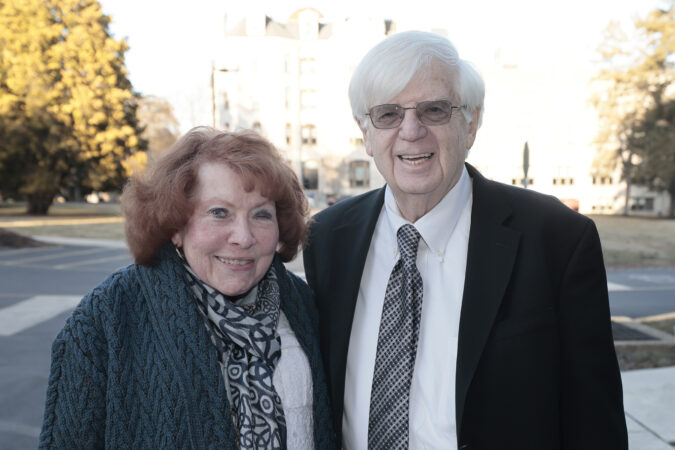
“Bill and I were both lucky to receive a good education,” said Jackie, 81, who lives in Blue Bell with her husband, a Drexel University graduate. “So we decided that’s where we’d really like to give our money.”
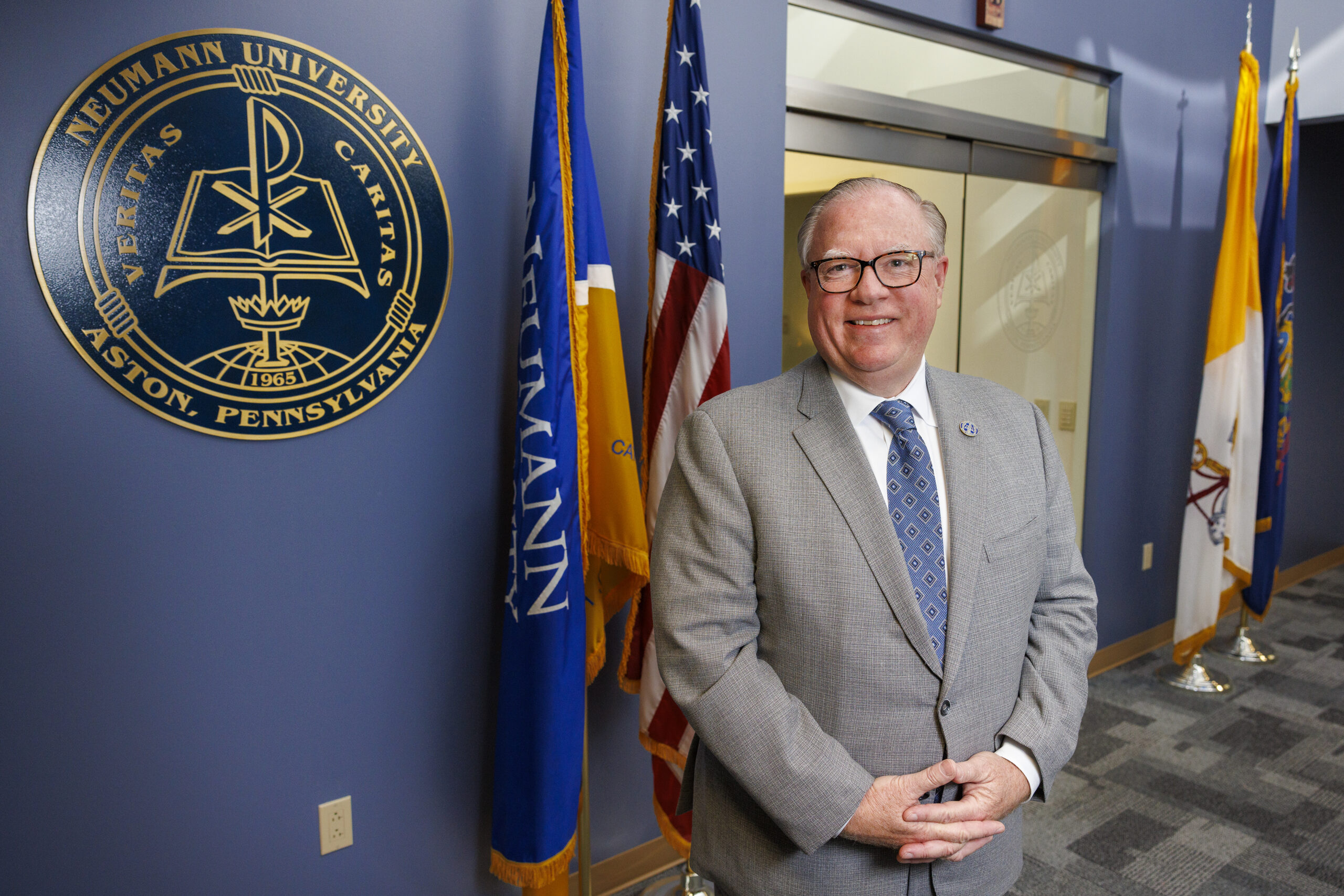
Chris Domes, president of Neumann University
Neumann President Chris Domes said $4.5 million will be used for undergraduate nursing scholarships for students with the most need and highest achievement, and the other $500,000 for lab equipment. The scholarships will begin to be awarded in the fall, with 22 to 25 students benefiting each year and continuing to get the funds over four years.
Nursing is the largest major at Neumann, with 368 undergraduate and graduate students enrolled. That’s about 17% of the 2,174-student body.
“If the scholarships give somebody an opportunity to change their life, it’s amazing,” said Bill, 78, who started his public accounting career with Arthur Young and then founded his own firm, Fegley & Associates, in 1975.
Domes said he hopes the gift encourages others to invest in higher education.
“It sends a signal that Neumann is a place that is financially strong and getting stronger,” he said. “It’s a real sign from Bill and Jackie that they believe in what we are doing here.”
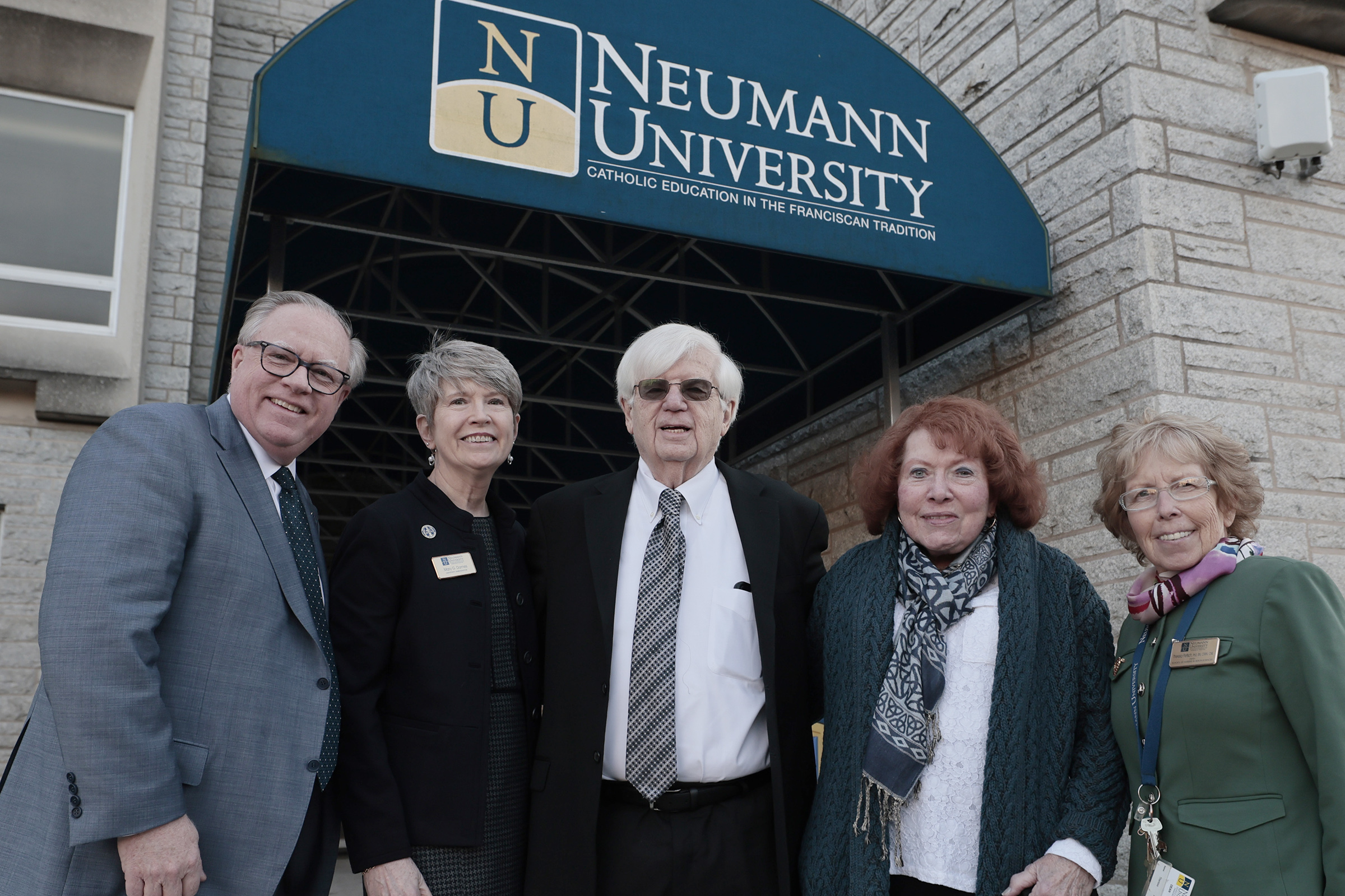
Neumann University President Chris Domes (from left) and his wife Mary Domes, William Fegley Jr. and his wife Jacquelyn Fegley, of Blue Bell and Neumann’s Nursing Health Sciences Dean Theresa Pietsch at Neumann University in Aston, Pa. on Friday, Jan. 16, 2026.
Born in Chester, Jackie said she grew to admire the Franciscan sisters at her local parish and stayed in touch with them through high school. When she graduated from Notre Dame High School in Moylan in 1962, she joined the order.
During her decade there, she taught grade school, including one year at an orphanage where the children ranged in age from 3 to 9. She said that’s when she started to think she wanted a family.
She got her bachelor’s degree while in the order, first taking classes at St. Joseph’s University and then moving over to Our Lady of Angels when it opened. She was part of the college’s second nursing graduating class.
“I think there were 10 of us in the class,” she said, including other nuns and lay people. “It was a wonderful experience integrating everyone together.”
After leaving the convent, she worked as a nurse at Holy Redeemer Hospital in Meadowbrook and Nazareth Hospital in Northeast Philadelphia. In January 1974, she met Bill, who grew up in Tamaqua, at a dance at a local pub. In September of that year, they married.
They have five children, now ages 40 to 50, who work as accountants, a personal trainer, a doctor, and a minimart operator.
Jackie has remained in contact with the sisters through the years.
“I love the sisters,” she said. “I still consider myself a Franciscan, just not a Franciscan sister.”
Bill — whose accounting firm has since merged with Morison Cogen LLP, where he continues to serve as a partner — has served on the foundation board for the Sisters of Saint Francis and has chaired it for about four-and-a-half years. And nine months ago, he joined Neumann’s board of trustees. He also has served as a lecturer at the University of Pennsylvania and an adjunct professor at Drexel and Pennsylvania State University.
The couple has visited Neumann to see how the educational program has grown and were pleased to see its Franciscan spirit thriving.
“I was really thrilled to see that this was how it was progressing,” Jackie said.
The couple attended the naming celebration and gift announcement at Neumann on Friday.
“We’re just pleased that God put us in a position that we’re able to do this,” Bill said.
Physicians Zsofi Szep and Judy Chertok have spent the last three years working to connect Penn Medicine patients with addiction treatment — with the help of a federal grant that they learned was terminated in a form letter Tuesday.
They rushed to find a way to keep caring for their patients, many with HIV or hepatitis C and needing supports such as housing and food after treatment. The salaries of two staffers helping to connect people with such resources had been entirely grant-funded.
“To stop this from one day to the next was obviously devastating,” Szep said. “It’s not possible to stop patient care. We continued to do what we were doing.”
NPR reported that some $2 billion in grants were cut off, and grantees like Szep and Chertok received form letters that said only that their projects no longer aligned with agency priorities.
The move sparked immediate outrage from providers and legislators alike. U.S. Rep. Madeleine Dean (D., Montgomery) helped marshal 100 congressional representatives to sign a bipartisan letter to Health and Human Services Secretary Robert F. Kennedy Jr., demanding the funding be restored.
By Wednesday night, it had been, The Associated Press reported — still with little explanation from federal officials. HHS did not return a request for comment Thursday. The agency also declined to answer questions about the reasons for the rescissions from The Associated Press.
But providers at the programs affected by the whiplash of rescinded, then restored, funding said they were shaken by a chaotic 24 hours and worried about what the move signaled.
As of late Thursday, one Philadelphia provider who receives SAMHSA grants said she had not yet received notice from the agency that funding had been restored.
“It’s a message that what we’re doing is not important,” said Barbara Schindler, the medical director of the women’s addiction treatment program Caring Together.
“The people that work day to day on the front lines, we’re dealing with folks that are living on the edge and need all the help they can get. To feel like your rug can get pulled out from underneath you at any one point, both as a provider as well as a participant, is very upsetting.”
Uncertainty amid attempted cuts
It’s unclear how many programs in the Philadelphia area were affected.
Gaudenzia, an addiction treatment provider with locations across Pennsylvania, Maryland, and Delaware, had grants rescinded, then restored, that were related to expanding treatment access, addiction prevention, and support services, a spokesperson said.
Gaudenzia’s president and CEO, Deja Gilbert, said she understood the need for “fiscal responsibility at the federal level,” but funding changes should be made in collaboration with providers.
“Abrupt funding actions — even when reversed — create uncertainty for providers and the people we serve,” she said in a statement.
Szep and Chertok’s program at Penn, which has served about 125 patients over the last few years, is aimed at some of the health system’s most vulnerable patients, connecting patients in the hospital or outpatient clinics with addiction treatment.
“It’s a very sick and complicated group of patients, who are specifically referred to an extra-specialized team,” Chertok said.
They were relieved when their funding was restored on Thursday but remain worried about the future.
“So many other people have similar grants in our city through SAMHSA — the amount of people that are getting care through these types of programs is really dramatic, and we don’t have other ways of getting them care,” Chertok said.
Schindler, a professor of psychiatry and pediatrics at Drexel University, said SAMHSA funding through two grants allows her 36-year-old clinic to support medication for women with opioid use disorder and a reentry program for women incarcerated for drug-related crimes.
“It allows us to have more addiction counselors and staff that can address the incredible needs these ladies have,” she said. “It really enhances the program.”
She said she was “on pins and needles” waiting to hear that her funding had been restored.
‘Incompetence and cruelty’
Dean said she learned of the cuts when a staffer pulled her aside to share a news article, reporting that SAMHSA had abruptly rescinded $2 billion in funding from more than 2,000 grants. Almost immediately afterward, the head of a Pennsylvania network of addiction treatment providers called her.
They began working to determine how many local grants had been affected, an effort that’s still ongoing.
“Immediately, what I thought was, this will cost lives. People will die as a result of this level of incompetence and cruelty,” Dean said.
She said she had not received answers from the administration on the reasoning behind the cuts.
Dean called the terminations hypocritical, noting that President Donald Trump has justified military operations in Venezuela as an effort to combat drug trafficking even as his administration attempted to cut billions in drug treatment funding at home.
“It’s incompetent, illegal, unconstitutional, and we got no notice,” she said.
Dean said she was pleased that programs were seeing their funding restored, although she was still unsure what had prompted the decision, and was concerned about the precedent the move set.
“I’m of the mind that it will happen again. And there is real harm — I don’t care if the interruption is 24 hours,” she said. “Interruptions can have large impacts.”
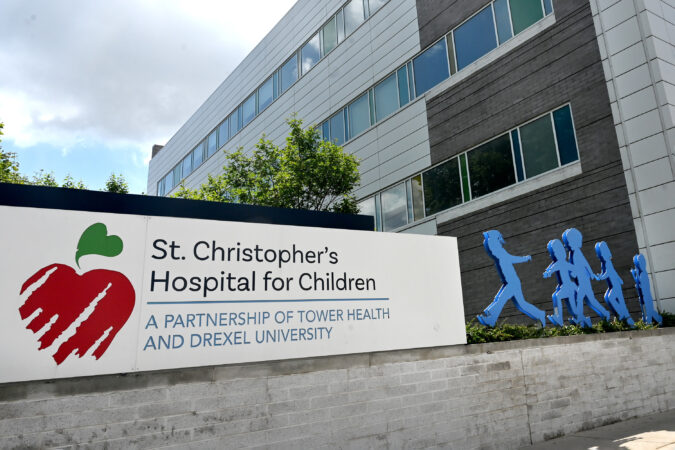
St. Christopher’s Hospital for Children, a key safety-net provider in North Philadelphia, on Wednesday announced its third leadership change in less than two years.
Claire Alminde, the hospital’s chief nursing officer and a 37-year veteran of the institution, is St. Chris’ new acting president.
She is the third interim or acting executive appointed to the top management position at the nonprofit hospital since February 2024 and its fourth leader since 2020. Drexel University and Tower Health have owned St. Chris in a 50-50 joint venture since 2019.
“Claire is firmly committed to St. Christopher’s mission and exemplifies the compassion, expertise and steadfast commitment that define this hospital and the care we provide to children and families across our region,” St. Chris said in an e-mailed statement.
St. Chris’ chief nursing officer Claire Alminde has been named acting president of the North Philadelphia safety-net provider.
There are no immediate plans for a national CEO search. “Right now, Tower’s focus is on helping Claire onboard successfully and lead the organization forward. We are grateful that Claire has committed to serving in this position as long as necessary,” Tower said.
Alminde is replacing Jodi Coombs, who was appointed interim president and CEO last April. Coombs’ previous position was executive vice president at Children’s Mercy Kansas City, in Missouri. Before that, she worked in Massachusetts.
Mueller took the job at St. Christopher’s in the summer of 2020, about seven months after Tower and Drexel University bought the facility, but did not permanently move to Philadelphia.
Tower oversees day-to-day management of the facility, where about 85% of patients have Medicaid insurance for low-income people. That’s an extremely high rate.
St. Chris, which has received significant financial support from other local healthcare institutions in recent years, has not published its financial results for the year that ended June 30, 2025. In fiscal 2024, St. Chris had a $31.6 million operating loss.
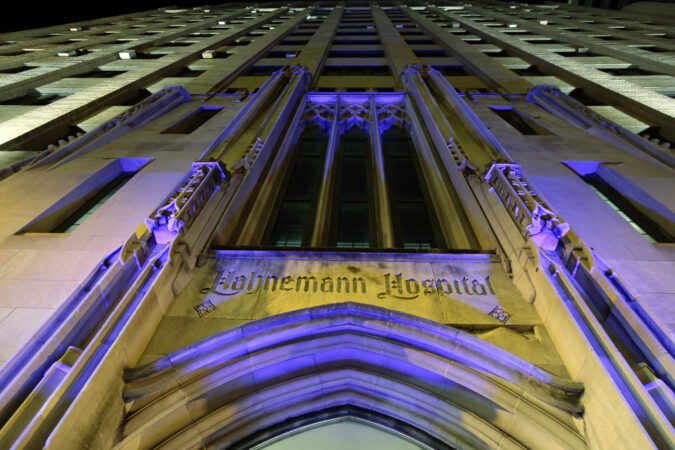
Philadelphia-based Iron Stone Real Estate Partners transferred control of two of their former Hahnemann University Hospital properties in the last two weeks.
The investment group acquired a portfolio of Hahnemann properties in 2021 and began redeveloping them into laboratory and office space.
But in recent weeks Iron Stone disposed of two of these properties.
The company donated the New College Building at 245 N. 15th St. to Drexel University on Dec. 31.
“It’s a charitable donation,” said Jason Friedland, director of operations and investments at Iron Stone. “We felt that that building was best served with Drexel owning it and using it for a long time, long-term, for their research.”
When Iron Stone acquired the New College Building five years ago, Drexel occupied the property’s medical labs and was one of the few remaining tenants in the Hahnemann campus.
Back then the university was considering moving this Center City operation to the suburbs in the short term and to University City in the long term.
“The generous gift will provide the university with flexibility as it continues to consolidate operation of its College of Medicine on its University City campus,” Drexel spokesperson Britt Faulstick said in an email statement. “Plans for the New College Building will be determined in the future.”
On Jan. 6, Iron Stone sold the Broad and Vine Parking Garage at 1416 Wood St. to the Philadelphia Parking Authority for $21.3 million.
The 850-space garage had been exclusively for Hahnemann’s use. Iron Stone renovated the vacant garage after the bankruptcy and hired Metropolis Technologies — the largest parking operator in the United States — to run it.
The acquisition is the first time the Parking Authority has purchased a garage built by someone else, said Rich Lazer, executive director of the Parking Authority.
“Most of our garages, outside of the airport, are Center City-based, so its nice to push out onto North Broad,” Lazer said. “Our garages are lower cost than private garages, so it’ll help us maintain reasonable pricing.”
The authority plans to retain Metropolis Technologies as the operator, Lazer said.
Iron Stone still owns a couple former Hahnemann properties, including the 120,000-square-foot Race Street Laboratories at 1421 Race St. and the 15,000-square-foot building at 231 N. Broad St., which is fully leased by Bayada Home Health Care Inc. with a third of the space and Dynamed Clinical Research with the rest.
Race Street Laboratories was developed to tap into the life sciences and biomedical market, which boomed during the pandemic but has slowed substantially as interest rates spiked. Currently the building has only one tenant, Sbarro Health Research Organization, with 7,500 square feet of space.
Friedland said Iron Stone plans to move its headquarters from University City’s FMC Tower to one of Race Street Lab’s unused floors.
As for the rest of the space, Iron Stone is exploring alternative uses as the life sciences market continues to struggle.
“We’re seeing where the opportunities are in commercial real estate,” Friedland said. “We have a couple things we’re exploring, but we’re not really in a rush.”
Their plans for an apartment building were complicated by a bill introduced in December by Councilmember Jeffery Young to ban housing from the former hospital site.
But on Dec. 24, in advance of City Council action on the legislation, the developer received zoning permits for a 361-unit apartment complex at 222-248 N. Broad St. Dwight Group says they are nonetheless in negotiations with Young to secure his support.
Robert Listenbee, the first assistant district attorney under Larry Krasner and a largely behind-the-scenes enforcer of the office’s progressive agenda, is retiring after nearly eight years as the office’s second-in-command.
Listenbee, 77, is expected to announce Friday that he is stepping down, marking the first shift in Krasner’s leadership team as the top prosecutor begins his third term.
A longtime public defender and juvenile justice advocate, Listenbee joined the administration at the outset of Krasner’s first term in 2018 — even as Krasner openly questioned whether the role of first assistant was necessary beyond its statutory requirement.
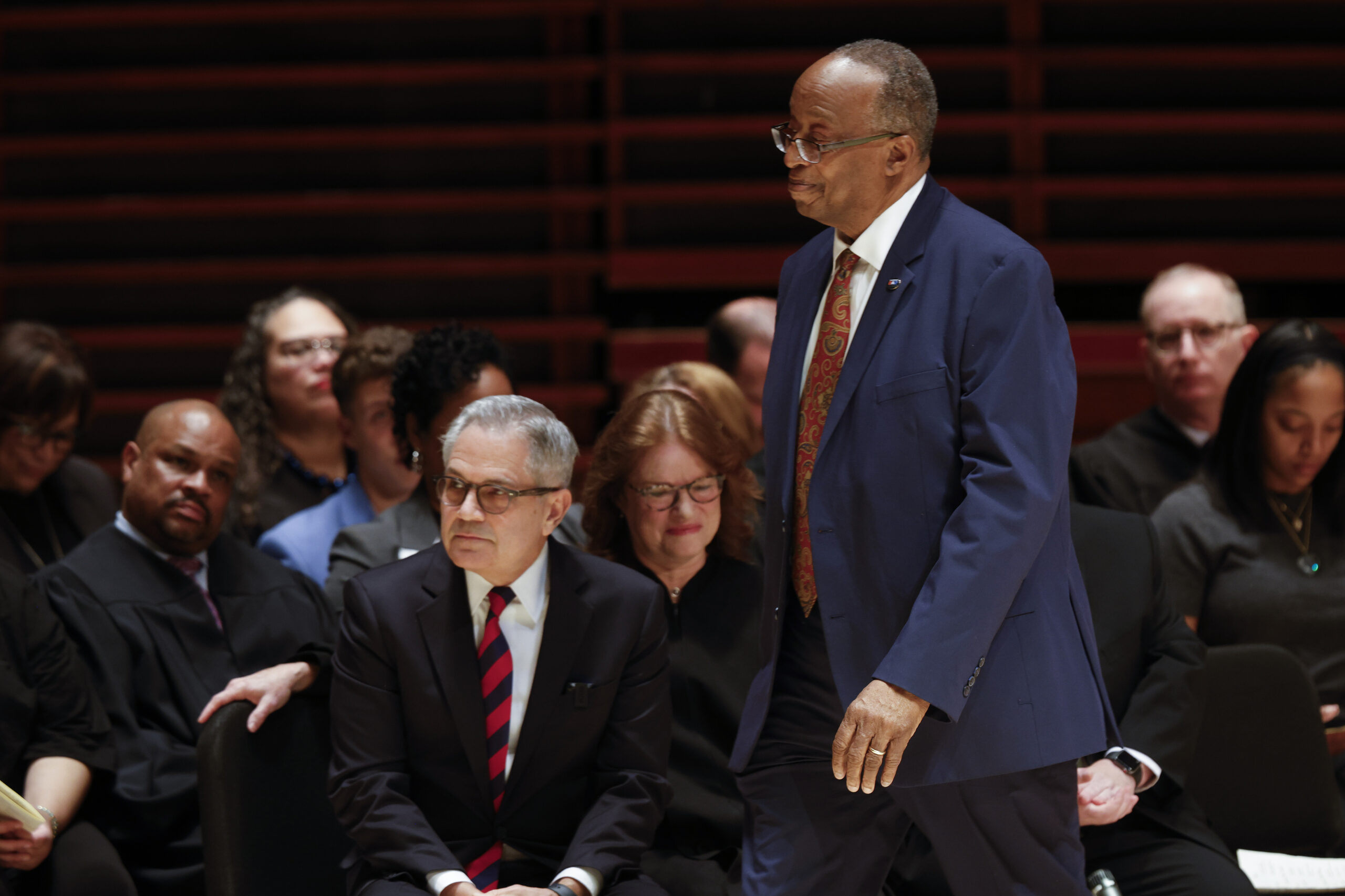
Robert Listenbee joined District Attorney Larry Krasner at the 2026 inaugural ceremony.
Over the course of Krasner’s tenure, Listenbee rarely served as the public face of the office on major cases, focusing instead on juvenile work, recruitment, and personnel matters.
Some prosecutors in the office said that often translated into a lack of visible management compared to previous first assistants, and that he served more as an internal messenger of Krasner’s often controversial agenda than the traditional day-to-day overseer of the office.
Listenbee has said his role was never set up to operate traditionally, and his goal was to carry out Krasner’s vision and reform the office.
Krasner declined to say who might replace him but he said he was evaluating candidates.
Robert Listenbee, first assistant district attorney, announced developments in the case against a West Philadelphia teen who was planning a terrorist attack.
Before joining the district attorney’s office, Listenbee spent decades as a public defender, including 16 years as chief of the juvenile unit at the Defender Association of Philadelphia. He later led the U.S. Department of Justice’s Office of Juvenile Justice and Delinquency Prevention during the Obama administration, and worked at Drexel University before returning to Philadelphia to join Krasner’s team.
We spoke with Listenbee about his unconventional path to the law, his years reshaping juvenile justice, internal tensions within the DA’s office, and his advice for Krasner’s third term.
This interview has been edited for length and clarity.
Tell me about your life growing up.
I was raised in Mount Clemens, just north of Detroit. My father worked in the auto industry. We were poor and lived in the projects. I went to a public high school, and was the first in my family to go to college.
I came from a small African American community where people look out for one another. This community saw something in me very early. When I was only planning to go to Kalamazoo College, a mom at my school decided my life was going to be different. She contacted the recruiter at Harvard University, and they visited me out in my little home in the projects when I hadn’t even applied. I got a full ride to Harvard.
I was among the first large group of African Americans at Harvard. It was 1966. We were in the middle of the Civil Rights Movement and the Vietnam War.
How was that?
There was total upheaval in this nation. Demonstrations everywhere, college campuses being taken over.
I worked on the committee that helped establish the African American Studies Department at Harvard, one of the first in the nation.
This was also at a time when African countries were becoming independent. I spent 16 months as a teacher in the rural area in western Kenya.
Robert Listenbee spent 16 months in Africa teaching English, and then traveled the continent before going to law school.
Instead of coming back from Africa, I decided to hitchhike around the world. I spent six months in Asia — Thailand, Laos, even as the war was going on. I rode a motorcycle into the Mekong Delta in Vietnam and had experiences that make me grateful to be alive. I hitchhiked across Africa and traveled 8,000 miles by train across India. I did all of this on about $600.
After a two-year gap year, I returned to Harvard and finished my degree.
I ended up getting a full-ride scholarship to Berkeley law school.
Where did you go after law school?
I had job offers but I had this crazy idea that I wanted to build a road across Africa, from Nairobi to Lagos, but I was broke and needed money to do it.
This was when the pipeline was being built across the North Slope of Alaska, and you could make gobs of money in a short period of time. So in 1976, I went to Anchorage without a job and lived in the YMCA. I shoveled snow, washed dishes, and worked at McDonald’s.
Robert Listenbee worked in the oil fields building the pipeline on the North Slope of Alaska for several years beginning in 1976.
Finally, I got a job on the pipeline.
I was there for a couple of years. I was a laborer in the oil fields. I worked trucks that rode across the Arctic Ocean in the middle of the winter. I worked on wildcat wells 50 miles from base camp. I had to relieve pressured gas to keep it from blowing up. It was 50 degrees below zero.
Robert Listenbee worked in the oil fields building the pipeline on the North Slope of Alaska for several years beginning in 1976.
I got into fights. People were trying to kill me at different points in time, and I was trying to kill other people, too. So I mean, the reason I know a little bit about criminal justice is because I was almost a criminal.
I never built the road in Africa. I eventually came back to Philadelphia, and worked construction until 1986.
So what about being a lawyer?
After my construction company failed, I was broke again. I ended up going back to legal work, and got a job working at the Defender Association.
You were the head of the juvenile unit for 16 years, and then you finished your career here on the other side — going from defending young people to prosecuting them. How was that transition for you?
Working for the U.S. Department of Justice’s Office of Juvenile Justice and Delinquency Prevention under President Obama helped prepare me for prosecutorial work.
I was adamant I would never work for this office. I thought it was corrupt. Krasner called me three times before I agreed to join as first assistant.
We were engaging in culture change. Some of the behavior of the people who were here was absolutely outrageous, especially in the homicide unit. They had a sense that this office belonged to them. It didn’t belong to the people. They were willing to cheat and do it and hide evidence in the process of doing it. That’s the feeling that I had when I first got here, and that’s what we found.
Robert Listenbee, first assistant district attorney, takes questions from the media after announcing developments in the case against a West Philadelphia teen who investigators say purchased materials including chemicals, wiring, and tactical equipment associated to become a terrorist.
There has been criticism of your juvenile work — some have said that it was too lenient during the period of intense gun violence and that kids went on to commit worse crimes. Others say the office hasn’t gone far enough to treat kids as kids. How do you assess your record?
We’ve reduced the number of kids in out of home placements. We’ve expanded juvenile diversion programs. In 2024, we created a juvenile homicide unit to review all cases of juveniles charged with murder.
I’m satisfied that we’re being as fair as we can and taking the time to carefully evaluate every issue in a case.
The first assistant is typically the person who manages the office day-to-day. Some prosecutors have said that, in this administration, that role functioned differently — that much of the management flowed directly from Krasner. Do you think that perception is fair, and how did you approach leadership in that environment?
The DA did not want the imperial first assistant that had been here before. He would prefer a flat structure to a hierarchical structure, which means you get assigned a lot of odd jobs depending on what he wants you to do.
If I were running the office, I would have run it completely differently. But I have to tell you that, having been here as long as I have, we never would have gotten this far without the DA’s serious concerns about what people around here were doing, whether they were implementing his policy or not. His skepticism, his oversight, is what’s kept this place moving in the direction that he wanted to go in. I wasn’t tuned in enough to the office to understand that from the very beginning, but I listened to him.
We hire people, we fire people, we move people around. That’s happened a lot. We sometimes end up with younger and inexperienced supervisors, because we haven’t really developed a program for training supervisors really well. We’re working on that.
I wish I had worked on juvenile issues earlier than I did.
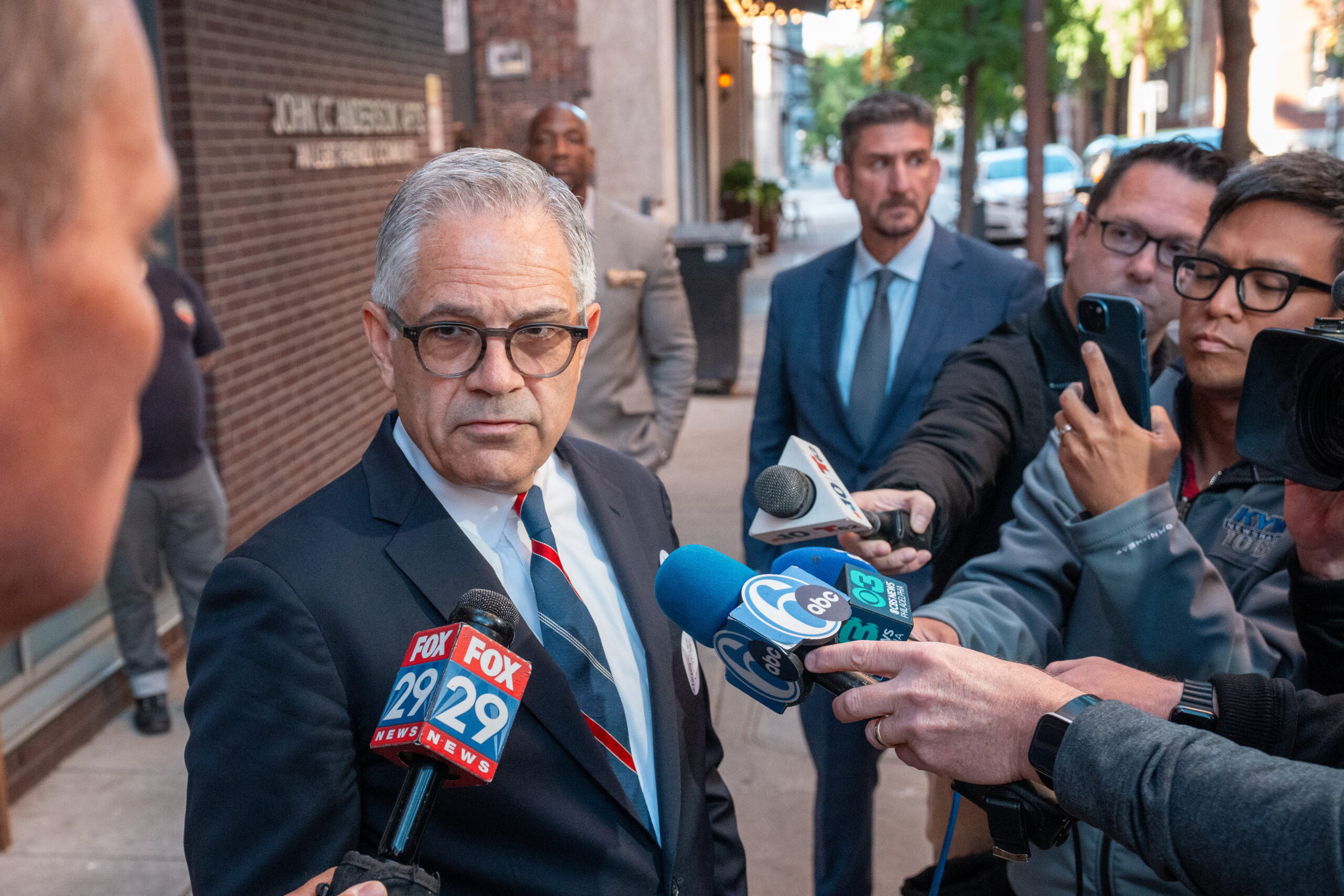
District Larry Krasner speaks with the media after casting his vote in the 2025 primary.
What’s your advice for the next first assistant?
You have to understand the DA’s goals and purposes and how he operates.
So, listen to Larry?
Not that. The DA is not a micromanager. But there’s no written directives on most of the things he wants, and there’s no organizational chart or hierarchy. If we have issues, we often go to him.
Do you have a piece of advice for Krasner in his third term?
This is a city that has a chip on its shoulder. The DA is a person who has a chip on his shoulder. They respect him for that when he speaks out. A lot of the things he says may not be politically astute, but they’re things he believes in. They like that about him.
He is the Donald Trump of the progressive era.
He needs to continue surrounding himself with people who can understand him and help him implement his policies.
A lot of people don’t like him, and I understand that. A lot of people don’t like me because I work for him. A lot of people don’t like what we do. That never mattered to me. I know that the people we have seen in court, the victims and the defendants and the witnesses, I know that we’re doing right by them. That’s my North Star.
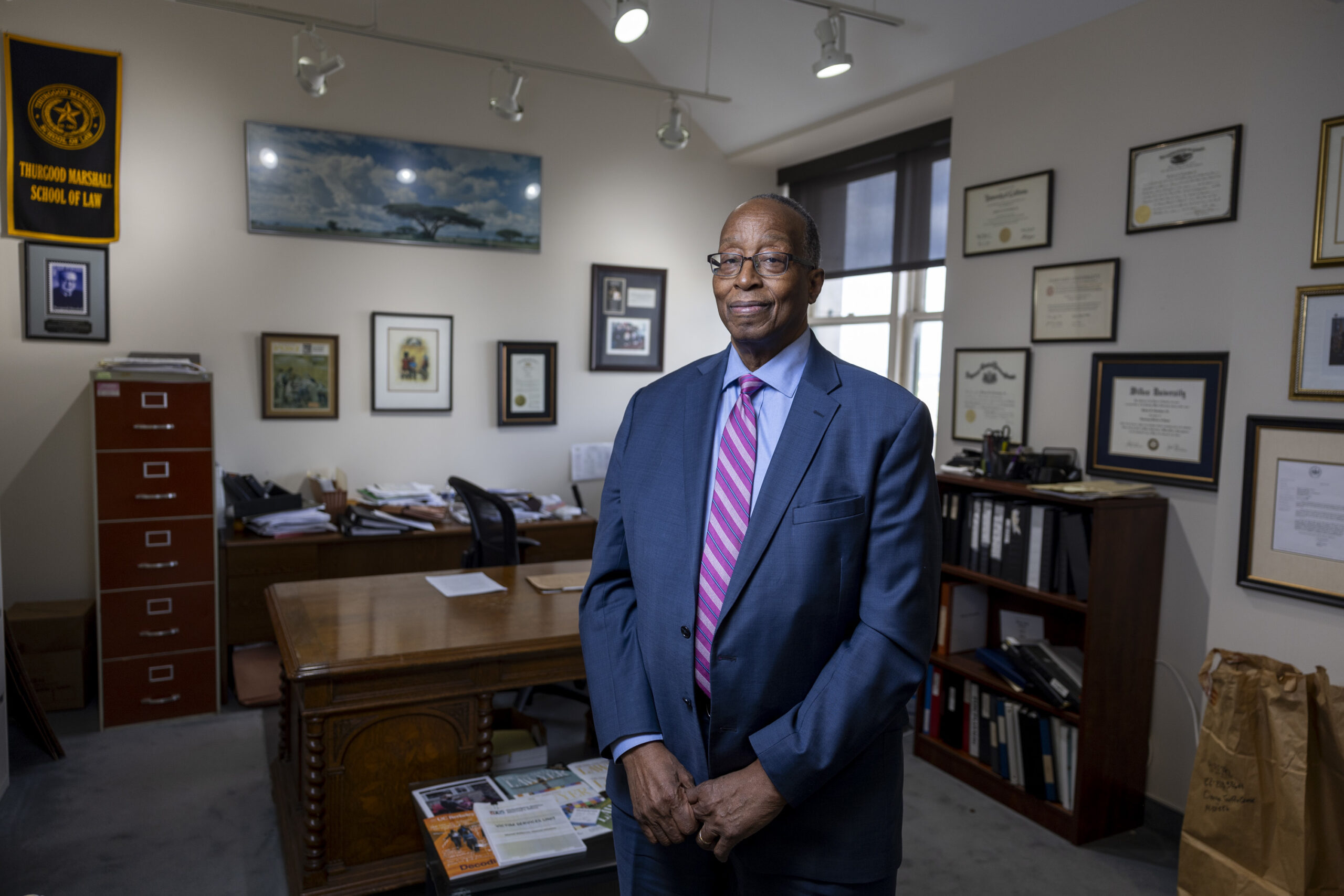
Robert Listenbee, the first assistant to District Attorney Larry Krasner, retired on Friday.
Philadelphia Councilmember Jeffery “Jay” Young introduced a bill at the last City Council meeting of 2025 to ban residential development from the area around former Hahnemann University Hospital.
The proposal covers properties near Broad and Race Streets with owners that include Drexel University, Iron Stone Real Estate Partners, and Brandywine Realty Trust.
But only one known residential project slated for the area is covered by the bill: Dwight City Group’s proposal to redevelop the Hahnemann Hospital patient towers into hundreds of apartments.
If enacted by City Council, which returns on Jan. 22, the bill could have stopped that redevelopment.
But on Dec. 24, Dwight City Group secured a zoning permit for 222-48 N. Broad St. to builda 361-unit apartment building — far larger than the original plan — with space for commercial use on the first floor.
With that permit secured, the project could move forward regardless of whetherYoung’sbill is enacted.
Dwight City Group, however, says they are concentrating on ongoing conversations with Young.
“We are working along with Councilman Young and the community to ensure that this project meets the needs and goals of the district,” said Judah Angster, CEO of Dwight City Group.
The permits show some changes to the original plan. In interviews last year, the developer said the plan contained 288 units and that ground-floor commercial was unlikely.
Young said the proposed housing ban is about preserving jobs by allowing only commercial development at the former hospital site.
“As the city continues to look for ways to incentivize development, we need to ensure jobs and economic opportunities are at the forefront, with engagement from all stakeholders,” Young said in an email. “We look forward to working [with] all stakeholders as this legislation moves through the process.”
Young’s bill confused and outraged manyobservers as a blatant example of spot zoning, in which legislation is used to help or hurt a particular project.
But the tradition of “councilmanic prerogative” would likely guarantee its passage because other Council members are unlikely to vote against a bill that affects only one district.
Nevertheless, the housing and transit advocacy group 5th Square has begun a campaign against the legislation and issued a petition earlier this week calling for its withdrawal.
“The site on Broad and Race Street lies on top of an express subway stop and benefits from proximity to Center City jobs, shops, and cultural amenities,” the petition reads. “Since the shuttering of Hahnemann in 2019, the site currently provides little value to Philadelphians or tax dollars to the city despite its central location.”
John Langdon, 79, formerly of Philadelphia, innovative award-winning graphic designer, painter, writer, and longtime adjunct professor of typography at Drexel University, died Thursday, Jan. 1, of complications from a heart attack at French Hospital Medical Center in San Luis Obispo, Calif.
Mr. Langdon was a lifelong artist and wordsmith. He originated ambigrams in the early 1970s and created distinctive logos for corporate clients, artists, musicians, and others. Ambigrams are words or designs that retain meaning when viewed from different perspectives, and his work influenced countless other designers and typographers who followed.
“They also present familiar concepts in an unfamiliar way,” he told The Inquirer in 1992, “and thus stimulate the reader’s imagination.”
On his website, johnlangdon.net, Mr. Langdon described his work as “making abstract concepts visual, almost always through the design of words, letters, and symbols.” He called it “words as art” and said: “I specialize in the visual presentation of words.”
His designs were featured in more than a dozen solo shows in galleries and museums in Pennsylvania, New Jersey, New York, Connecticut, Maryland, and Delaware, and in more than 50 group exhibitions around the country and Europe. He created six ambigrams for author Dan Brown’s best-selling book, Angels & Demons, and Brown named his fictional protagonist, Harvard symbologist Robert Langdon, after John Langdon.
“John’s art changed the way I think about symmetry, symbols, and art,” Brown told The Inquirer in 2006.
Mr. Langdon’s own book about ambigrams, Wordplay, was first published in 1992 and updated in 2005. He also wrote the forwards of other books and articles for journals and newsletters. He said he had a “particular interest in word origins” in an interview on his website.
He was featured several times in The Inquirer and wrote an op-ed piece in 2014 about the Philadelphia Museum of Art’s new logo. He opened the article with: “Please, beloved Philadelphia Museum of Art, before you print one piece of stationery or a single promotional flier, reconsider your new logo.”
Mr. Langdon’s work was featured in The Inquirer in 2006.
In 1996, he began painting what he called his “visual-verbal meditations and manipulations” on canvas. “My paintings still involve symmetry and illusion, a bit of philosophy, and a few puns thrown in for good measure,” he said on his website.
He cocreated the Flexion typeface and won a 2007 award from the New York-based Type Directors Club. He spoke often about design at colleges and high schools, and to professional societies. He gave a TEDx talk about font and the future of typeface at Drexel.
Douglas Hofstadter, a professor at Indiana University who coined the term ambigram in 1984, told The Inquirer in 2006 that Mr. Langdon had a “very strong sense of legibility but also a marvelous sense of esthetics, flow, and elegance.”
Born in Wynnewood and reared in Narberth, Mr. Langdon graduated from Episcopal Academy in 1964 and earned a bachelor’s degree in English at Dickinson College in Carlisle, Pa. He worked in the photo-lettering department of a type house and for a design studio in Philadelphia after college, and began freelancing as a logo designer, type specialist, and lettering artist in 1977.
He taught typography and logo design classes at Moore College of Art and Design from 1985 to 1988 and at Drexel from 1988 to his retirement in 2015. In an online tribute, one student said he was “one of my favorite teachers of all time.”
He was interested in Taoism and inspired by artists Salvador Dalí and M.C. Escher, and authors Edgar Allan Poe and Ogden Nash. “In the early ’70s, I tried to do with words what Dali and Escher did with images,” he said in a 2006 interview posted on Newswise.com.
John Wilbur Langdon was born April 19, 1946. He played high school and college soccer and drew caricatures of classmates for the Episcopal yearbook.
After college, he took painting and drawing classes at the Pennsylvania Academy of the Fine Arts and the old Philadelphia College of Art. He married Lynn Ochsenreiter, and they had a daughter, Jessica. They divorced later.
Mr. Langdon enjoyed vacation road trips and told stories of hitchhiking around the country in the 1960s. He followed the Phillies, was interested in genealogy, and traced his family back to the Founding Fathers.
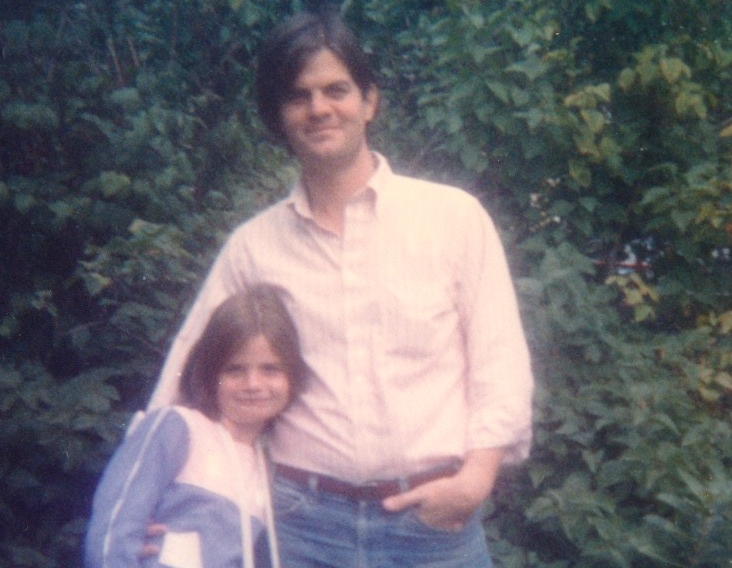
Mr. Langdon stands with his daughter, Jessica.
He lived in Darby, Woodbury, Wenonah, and Philadelphia before moving to California in 2016. “He was jovial, social, and amusing,” his daughter said. “People said he was clever, and everyone liked him.”
He told The Inquirer in 2006: “It may seem counterintuitive, but the more ambiguity you invite into your life, the more things make sense and become understandable.”