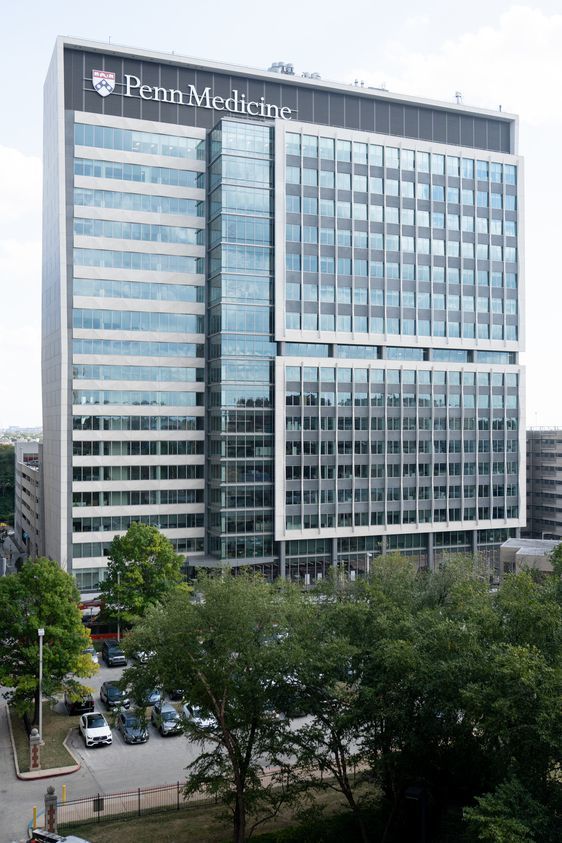
The worst of the coronavirus pandemic that started nearly six years ago is well in the past, but Philadelphia’s biggest nonprofit health systems are still contending with the financial disruption unleashed by the virus that led to thousands of deaths in the area.
Operating conditions for hospitals started improving in 2023, but “the slope of the recovery is a bit more shallow than a lot of health systems had planned for,” said Mark Pascaris, a senior director at Fitch Ratings, one of three major credit ratings agencies.
Patients have returned, but the pandemic led to a resetting of expensesfor labor and supplies at a higher level, Pascaris said. “That’s been the challenge over the last two or three or four years now, trying to manage through a very challenging expense situation,” he said.
To show how the financial landscape has changed, The Inquirer compiled financial data for the region’s six biggest health systems that have fiscal years ending June 30 each year. The analysis compared average operating profits in three years before the pandemic (fiscal years 2017-19) to the results in most recent three years (fiscal years 2023-25).
All six systems showed a substantial drop in a measure of earnings that excludes certain accounting expenses and interest costs. This slice of financial results is known as earnings before interest, depreciation, and amortization. Abbreviated as EBIDA, it’s a primary indicator watched by influential credit ratings agencies.
window.addEventListener(“message”,function(a){if(void 0!==a.data[“datawrapper-height”]){var e=document.querySelectorAll(“iframe”);for(var t in a.data[“datawrapper-height”])for(var r,i=0;r=e[i];i++)if(r.contentWindow===a.source){var d=a.data[“datawrapper-height”][t]+”px”;r.style.height=d}}});
The experience of Children’s Hospital of Philadelphia clearly illustrates what has happened: The organization’s aggregate revenue in the most recent three fiscal years was 58% higher than it was in the three years that ended June 30, 2019, but its EBIDA climbed only by half a percentage point.
“Hospitals and healthcare systems across the country continue to face significant headwinds, driven by reimbursement challenges, increased supply and labor costs, uncertain governmental pressures, and the continued ripple effect of the pandemic,” CHOP said in a statement.
Officials at ChristianaCare, Main Line Health, and Temple University Health System echoed CHOP’s remark.
“Margins were far better prior to the pandemic, largely due to lower supply and labor costs,” Main Line’s chief financial officer Leigh Ehrlich said. “Those costs rose sharply during the pandemic and continue to rise.”
ChristianaCare’s CFO Rob McMurray noted: Not only have Medicare and Medicaid rates not kept up with inflation, but more people have those government forms of insurance for people 65 and older and for low-income people.
The nonprofit is expanding from its base in northern Delaware to Southeastern Pennsylvania and is expanding alternative formats, such as hospital-care-at-home and micro hospitals, to reduce costs, McMurray said.
A significant worry for Temple University Health System is the impact of the 2025 budget reconciliation bill, sometimes called the One Big Beautiful Bill Act. The North Philadelphia nonprofit estimates that Medicaid cuts in that law will cost it $519 million over the next 10 years, said Jerry Oetzel, the system’s CFO.
Phoenixville Hospital was not cited by the Pennsylvania Department of Health for any safety violations between August 2024 and July of this year.
The hospital, located in Phoenixville, is owned by Tower Health.
Here’s a look at the publicly available details:
Sept. 12, 2024: Inspectors followed up on two citations from May and June, and found the hospital was in compliance. In May, the hospital had been cited for discharging a patient to another facility without proper transfer orders. In June, the hospital was cited for using physical restraints on two patients without documenting that staff had first tried less restrictive ways to subdue them.
Feb. 18, 2025: Inspectors came to investigate two complaints but found the hospital was in compliance. Complaint details are not made public when inspectors determine it was unfounded.
April 17: The Joint Commission, a nonprofit hospital accreditation agency, renewed the hospital’s accreditation, effective February 2025, for 36 months.
Villanova professor Ana Santos Rutschman would describe the current state of vaccine policy as a game of chess.
When the federal government does something, some states — primarily Democratic-led states including Pennsylvania—respond immediately to counter.
A prime example followed the federal government’s move, through the Food and Drug Administration, in August to limit eligibility for the updated COVID-19 vaccine. Previously, the annual shot was recommended for all Americans 6 months and older. The new guidance was for people 65 or older and those at high risk of complications from COVID-19.
Pennsylvania’s regulatory body for pharmacists opened up access by allowing pharmacists to follow the broader recommendations of professional medical societies.
“It’s kind of [like] ‘Harry Potter’ chess. Remember when they climb on the gigantic pieces and then try to kill one another?” Rutschman said, referring to the fictional scene where chess pieces violently smash the opposing side’s pieces.
“There’s a certain violence to this from a political perspective,” she added.
States are allowed to diverge from the federal government on vaccine policy because our system of government, known as federalism, divides power between the federal government and the states.
With vaccines, states historicallyhave chosen to align in large part with the federal government’s recommendations.
Rutschman says recent actions byHealth and Human Services Secretary Robert F. Kennedy Jr. have ushered in a new era of what’s being called “vaccine federalism.” Kennedy is a longtime anti-vaccine activist now serving as President Donald Trump’s top health official.
Many states, especially those with Democratic governors, including Pennsylvania and New Jersey, saw recent changes under his leadership as a sign that they “need to do something in direct opposition to the federal government,” Rutschman said.
Now it’s a “head-on collision,” she added.
The Inquirer spoke with Rutschman, who researches vaccine federalism as a health law professor and director of the Health Innovation Lab at Villanova University, to learn more about this new era and its possible consequences in a conversation lightly edited for length and clarity.
What is vaccine federalism?
For vaccination and everything else, our system is split in two. You have the states and then you have the federal government.
There is room for tension between the federal level and the state level. Historically, that tension has been, I would argue, limited. It has existed, but it’s not been the defining feature. Now, particularly in the context of vaccines, it has become probably the most salient feature.
How are states allowed to differ from the federal government as far as vaccine policy?
States don’t have the power to authorize a new vaccine to come to market.
But then you have a lot of things that the Centers for Disease Control have done that are more informational. The federal government recommends which shots children or adults should get, and the time frame for most children to get these shots.
The federal government offers this kind of informational support, and then states set their own policy.
How has vaccine federalism played out in the past?
Examples from the past are not as salient or blatant as the ones you’re seeing right now.
There was a lot of variability around the country, but the overall message was harmonious. Everybody was trying to get, by and large, most of the population vaccinated past herd immunity.
What is happening now?
Now it’s a head-on collision.
States are saying, ‘We’re not going to implement requirements to restrict access to these vaccines.’ The Board of Pharmacy in Pennsylvania decided not to be bound by the CDC’s recommendations. This is a direct clash. We hadn’t had this before between the federal government and the states in the field of vaccines.
What are examples of this new era of vaccine federalism?
One example would be the formation of state clusters. These are a lot of neighboring states in agreement. They’re trying to share data and think of best practices, which is almost that informational function that traditionally fell to the [federal health agencies].
The states are saying, ‘Well, you’re not doing that, so we will.’
‘We will pull resources and information to come up with our own advisory role.’ That’s unprecedented.
You have sort of two speeds in the country. Some states are collaborating and very active in setting regional vaccine policy. And then you have a bunch of states that go completely the other way. You have the, for now, isolated case of Florida saying, ‘We’re going to just basically do away with all vaccination mandates,’ which is going further than the federal government.
Now it’s a much messier situation, legally, philosophically, politically, etc.
They are accomplishing something. You see fewer restrictions in access to vaccines in a place like Pennsylvania than other states.
Whereas states who are not part of these kinds of coalitions — typically excluding the likes of Florida — a lot of them are waiting to see what happens, because this has never happened in the history of vaccination in the United States.
In the meantime, there are a lot of people falling through the cracks who would have been indicated for a vaccine last year. Now they’re wondering what to do, and their providers are not entirely sure.
There’s a lot of confusion about what happens now that federal policy has taken a completely different direction.
What impacts do you see coming from this new era of vaccine federalism?
People hearing one thing out of the CDC and another one out of the state of Pennsylvania may think, ‘Who’s correct? Who should I listen to?’ You start aggregating all the people who might forgo vaccination just because they don’t understand what’s going on.
I think it continues to accelerate the overall phenomenon of vaccine mistrust, and we’re already seeing levels of herd immunity come down for many vaccine-preventable diseases.
If I were a provider, I would be similarly confused and concerned, because nobody takes lightly the idea that from now on, ‘I’ll be doing something that’s in direct opposition to what the federal regulators are suggesting I should be doing.’ So I think there’s a fear factor and confusion.
Lastly, I think there’s an overall chilling effect with regard to vaccines. Yes, some vaccines make money, but they don’t make a whole lot of money to begin with. They’ve never been one of the preferred products for manufacturers. These are not the most profitable things they can be doing.
I think that we will see much less focus on vaccine development in years to come, because that’s the logical position for pharmaceutical companies, and for some funders even to take, which is unfortunate.
What do you think of Pennsylvania’s response?
I think it’s to Pennsylvania’s credit, and I think it’s to some degree reassuring for Pennsylvanians. Although it obviously makes me sad that we have sort of this two-speed mode in the country. Some part of this national fabric has ruptured.
For now, Pennsylvania has protected itself as it can, but states alone don’t control everything. You have Pennsylvanians going to other states where you may have an outbreak of a vaccine-preventable disease. We don’t have real borders. We cross them all the time.
Amid persistently higher costs, three Philadelphia-area health systems have cut expenses over the last two years by changing how they account for investments in facilities and equipment. The change significantly boosted operating income in all three cases.
ChristianaCare and Main Line Health are now spreading the cost of buildings and building improvements over as many as 80 years, they said in their fiscal 2025 audited financial statements. That is double the maximum number of years they previously used to calculate what accountants call depreciation expense. Thomas Jefferson University made a similar change last year.
All three health systems use PricewaterhouseCoopers LLP as their auditor. The firm, which did not respond to a request for comment, also has Philadelphia health-system clients that have not extended their depreciation schedules.
The term depreciation expense refers to the way hospitals and other businesses allocate the cost of a building, a piece of equipment such as an MRI machine, or even software to manage patient records across the number of years the asset is likely to be used.
It’s a noncash expense because the money used to make the purchase is recorded elsewhere in the financial statements. Several financial and accounting experts said the change could be seen as cosmetic.
“It’s not affecting operations. It’s not increasing their revenues. It’s not decreasing their cash expenditures. It is purely a bookkeeping entry,” said Steven Balsam, a professor of accounting at Temple University’s Fox School of Business.
Main Line Health
At Main Line, the extended depreciation schedule reduced the expense by an estimated $37.5 million. That helped the system achieve a small, $4 million operating profit for the first time since fiscal 2021, when federal COVID-19 aid buoyed hospitals.
Without the depreciation savings, Main Line would have had an operating loss of $33.5 million in the year that ended June 30, compared to a $61 million operating loss in fiscal 2024.
Asked for comment, Main Line’s chief financial officer Leigh Ehrlich noted that the system’s financial performance had improved, thanks to “increased patient volumes and continued focus on expense management.”
Excluding noncash depreciation and amortization in each of the last two years, Main Line’s operating income improved to $127.8 million from $96.7 million.
ChristianaCare
ChristianaCare reviewed the depreciation schedules of fixed assets “as part of our ongoing commitment to maintain accurate and reliable financial reporting,” the nonprofit’s chief financial officer Rob McMurray said in an email. The result was a $24.4 million reduction in depreciation expense.
The review also resulted in a $9 million write-off of unspecified assets, which meant that in fiscal 2025 the benefit to operating income was $15 million, McMurray said.
ChristianaCare’s operating income in the year that ended June 30 was $35.5 million, or $20.5 million without the accounting change. The organization had $126.2 million in operating income in fiscal 2024.
Thomas Jefferson University
Last year, Thomas Jefferson University opened its $762 million Honickman Center in Philadelphia. Normally, taking a building like that into service would increase depreciation expense.
Instead, Jefferson’s depreciation expense fell by $68 million, according to its audited financial statement for the year that ended June 30, 2024. The decline happened after Jefferson opted to spread the cost of all buildings and building improvements over as many as 70 years, according to the depreciation schedule in its financial statement.
Even with the depreciation change, Jefferson’s operating income in fiscal 2024 was extremely narrow, at $1.34 million on nearly $10 billion in revenue that year.
The benefit of lower depreciation expense continued in fiscal 2025, as it will in future years for ChristianaCare and Main Line.
Depreciation expense at other local systems
Most Philadelphia-area health systems use a schedule for depreciating buildings and building improvements that maxes out at 40 years, an Inquirer review of financial statements found.
“You’re constantly modernizing your facilities to allow for the delivery of medicine based on current times,” Temple University Health System chief financial officer Jerry Oetzel said in an interview. “Who knows 15 years from now? We don’t have clear insight, but it’s probably going to be more home care.”
That’s why Temple hasn’t adopted a longer depreciation schedule. “It’s just a savings in operating expenses without the benefit of any cash behind it,” Oetzel said.
Editor’s note: This article has been updated to remove a reference to American Hospital Association guidelines.
The Children’s Hospital of Philadelphia called new evidence presented by President Donald Trump’s administration weak and untrustworthy in a blistering legal response to federal efforts to investigate its doctors providing gender-affirming care.
CHOP’s response, filed late Monday in federal court in Philadelphia, came in defense of accusations by the U.S. Department of Justice that it’s investigating “fraudulent billing practices“ at the hospital.Federal officials say they’re looking into whether CHOP doctors were fudging or lying about diagnoses to get private and public health insurance companies to cover off-label drug prescriptions used to treat patients with gender dysphoria — a medical condition in which a person’s body does not match their gender identity.
In its filing, CHOP lawyers called the DOJ’s allegations “unreliable,” and urged U.S. District Court Judge Mark A. Kearney to disregard claims that are “threadbare, of dubious origin, and so heavily qualified and caveated as to offer the court no meaningful information.”
CHOP and the DOJ are locked in a legal battle over a sweeping federal subpoena sent to the hospital in June. The subpoena seeks patient names, Social Security numbers, addresses, diagnoses, and treatment notes, in addition to doctor emails and encrypted text messages.
In July, CHOP filed a motion to limit the scope of the subpoena to protect patient privacy. Judge Kearney is now weighing CHOP’s motion.
In the latest filing, CHOP’s lawyers argued the DOJ’s “new evidence” against the hospital was unfairly “shoehorned” into a separate but related case filed last month by a group of CHOP patients and their families who also want Kearney to block the release of private medical records to the DOJ.
“That new evidence should not be considered because it is not before the Court in this case and is unreliable in any event,” CHOP lawyers wrote in the filing. “The government (still) cannot establish that its need for extraordinarily sensitive and personal patient information outweighs the highest-order privacy interests on the other side of the ledger.”
The DOJ did not immediately respond Tuesday to a request for comment.
Feds seek patient information from CHOP
In April, U.S. Attorney General Pam Bondi issued a memo, entitled “Preventing the Mutilation of American Children,” in which she tasked the DOJ with enforcing measures targeting gender-affirming care for youth.
About two months later, the DOJ sent subpoenas to CHOP and at least 19 other hospitals nationally that are under scrutiny for treating transgender youth. The subpoenas sparked legal opposition playing out in federal courts in Pennsylvania and across the nation.
The DOJ’skey focus is how doctors are prescribing puberty blockers and hormones “off-label,” meaning for a condition not specifically approved by the U.S. Food and Drug Administration.
Once a drug is approved by the FDA, it is legal for doctors to prescribe it to treat other conditions that could benefit from the medication. Off-label prescribing is a common and widely accepted medical practice, especially in pediatrics.
Gender-affirming care for children and adolescents has been deemed medically appropriate by the American Academy of Pediatrics and other major medical and mental health organizations. Research shows young people with gender dysphoria suffer higher rates of suicide, self-harm, depression, and anxiety.
CHOP’s Gender and Sexuality Development Program, created in 2014, is one of the nation’s largest such clinics and provides medical care and mental health support to hundreds of new families each year.
CHOP’s legal fight for patient privacy
Late last month, families and patients joined in CHOP’s fight against the federal subpoena by filing a separate motion to protect their privacy rights. That motion was filed on behalf of five parents with transgender children and one adult who received care at CHOP.
In response to that case, the DOJ filed a “Declaration,” or sworn statement, from Lisa Hsiao, acting director of the DOJ’s Enforcement and Affirmative Litigation Branch, formerly known as the Consumer Protection Branch. In it, Hsiao said the government has new evidence “particular to CHOP that raises concern that federal healthcare offenses may be occurring there.”
Hsiao said the government analyzed CHOP’sinsurance claims and found that between 2017 and 2024, CHOP providers diagnosed 250 minors with central precocious puberty at age 10 or older, “including numerous teenagers aged 14 to 18.”
“This is well beyond the age at which children are typically diagnosed with precocious puberty,” Hsiao stated. The government, she said, suspects doctors are improperly using the precocious puberty diagnosis to get insurance coverage for treatment of gender dysphoria.
In Monday’s court filing, CHOP lawyers accused the DOJ of attempting to “shoehorn its new evidence into CHOP’s case” through the other case.
CHOP also argued Hsiao’s declaration provides nothing to support its contentions surrounding precocious puberty diagnosis.
“Moreover, the government fails to contextualize the findings of its rudimentary analysis, offering no comparator for the use of the code for precocious puberty at peer hospitals, let alone hospitals that, like CHOP, have providers who specialize in treating endocrine disorders,” CHOP lawyers wrote.
The source of “the data set is entirely unknown,” CHOP’s lawyers noted, addingthe declaration never says how many patients were treated for gender dysphoria during that time frame.
The CHOP lawyers also criticized Hsiao for writing in her sworn declaration that the government was aware of a lawsuit filed against CHOP that alleges doctors hastily prescribed puberty blockers and hormones to a minor who later regretted it.
Hsiao later refiled the declaration to remove any reference to a lawsuit after learning that it hadn’t been filed.
CHOP lawyers wrote they believe the lawsuit reference came from a news article about a former CHOP patient. The article said the patient “was suing the hospital.” However, CHOP was unaware of any such lawsuit.
“The similarities between the report and the allegations in the Hsiao Declaration — including the reference to a lawsuit — raise suspicions that, in looking to justify its investigative interest in CHOP, the government simply searched the internet for stories fitting its narrative and presented the one it found as fact without adequately scrutinizing its veracity.”
University of Pennsylvania professor E. John Wherry is good friends with Fred Ramsdell, who was recognized earlier this month with a Nobel Prize for his research in immunology.
Wherry recalled sitting with Ramsdell, a scientific adviser for the California-based biotech company Sonoma Biotherapeutics, in a meeting two months ago and picking his brain about the future of autoimmunity research.
“What are the opportunities? Where is the field going?” Wherry recalled asking.
He said Ramsdell’s advice — to stay focused on supporting the foundational academic research — is helping to inform the scientific direction and programming at Penn’s Colton Center for Autoimmunity, which Wherry directs.
Wherry was happy to see Ramsdell awarded a 2025 Nobel Prize in Physiology or Medicine, shared among three scientists, for his research into peripheral immune tolerance, a process that prevents the immune system from attacking the body.
“It could not have happened to a nicer guy,” he said.
The Nobel Prize-winning discovery is especially important for understanding autoimmunity, he emphasized, and could be leveraged to treat autoimmune diseases.
“We now have the power to push the immune system in different directions, not only to treat those diseases, but also to tell us about where the diseases are going,” Wherry said.
Penn’s new research facility, which will span seven floors of an office building at 3600 Civic Center Blvd. in University City, is focused on using immunology to diagnose, treat, and prevent diseases.
Wherry’s lab is moving into the space this month.
“We are in the most exciting time in my lifetime for immunology,” he said.
The Inquirer spoke with Wherry to learn more about the future of immunology research at Penn in a conversation lightlyedited for length and clarity.
How will this new center change how immunology research is carried out at Penn?
We have the Colton Center for Autoimmunity, with really wonderful philanthropic support from Judy and Stewart Colton. They’re giving us resources to make bets on high-risk, high-reward science, and to do that at a pretty good scale. We made some big bets on CAR-T cells and autoimmunity, on mRNA therapeutics, on high-throughput screening, and on AI drug discovery.
We have this Immune Health Platform lab. The idea is that we should be capturing samples theoretically from every patient we treat, ideally around the time they get a new treatment or there’s some change in their disease.
Once we’ve built a model using this data and understand the rules by which the immune system functions, we can separate the model from the primary data. You can fine-tune the model and make predictions about other diseases, clinical trials that a company might want to do, and other health systems data.
Our large database contains about 3,000 patients’ worth of data. We hope to get to 10 or 20,000 patients’ worth.
Who will be part of this new research facility?
There are about 25 immunology labs moving in. They include disproportionately younger labs, people who have just arrived at Penn in the last two to three years. We have enough space for probably around 35 to 37 labs, so we would like to recruit and bring new ideas in.
The way things happen in science is because people talk. We’ve created a physical workspace that’s going to force people to interact in new and different ways and just create more opportunities for serendipity.
The University of Pennsylvania opened a $376 million, 217,000-square-foot wet lab, office, and research facility at 3600 Civic Center Blvd. The seven-story facility was built on top of an active 250,000 square-foot office tower that opened in 2019.
What are some of the new projects that have been funded?
We have someone funded to work on the way the immune system recognizes our own DNA or RNA. lf the DNA in the nucleus of any cell in your body gets out of the nucleus, it’s a really bad thing, because that looks like a bacteria or a virus [to your immune system]. It triggers massive inflammation. The sensors for that can get miswired, and when they do, it can often lead to really devastating autoimmune disease, sometimes a fatal autoimmune disease within just a few years.
We have a great researcher named Jonathan Miner who’s identified what happens when those proteins get mutated, and has also developed drugs that basically adapt the mutation to not be as pathogenic.
We have some other really interesting studies on being able to regulate the way our bodies make antibodies, since that can be the pathogenic event in autoimmunity. If you make an antibody against proteins in your nerve ending, you can have diseases that end up causing muscle weakness. We’re starting to identify the way the immune system gets triggered to make antibodies against the wrong things.
And then we have some really cool projects on CAR-T cells and autoimmunity, where we’re using standard CAR-T cells from cancer to get rid of B cells, which are cells that make antibodies in autoimmune diseases. We also have people inventing new kinds of CAR-T cells to help address other challenges in autoimmunity.
What is the focus of your lab’s research?
In the late 1990s and early 2000s, I became very interested in how the immune system deals with chronic infections. When you can’t fully eradicate an infection, what does the immune system do? Why doesn’t the immune system clear things like HIV or hepatitis B, and what are the mechanisms behind that failure?
During our studies, we identified a process called T cell exhaustion. T cells are the part of the immune system that fights viruses and also tumors.
Our core is always to understand this idea of immune exhaustion. It plays a role in infectious disease, it plays a role in cancer, and it definitely plays a role in autoimmunity.
What are some of your current projects?
We’re trying to understand the heterogeneity in different autoimmune diseases.
To give an example, one is a really challenging kind of blistering inflammatory skin disease called Hidradenitis suppurativa, where there’s just massive inflammation of immune cells in your skin, and it causes really hard-to-treat skin lesions. We now are profiling all of the immune cells in the tissue in the skin and identifying new targets for therapeutics.
We’re also interested in this idea that the immune system sees everything that’s happening in your tissues, meaning it acts like a biosensor. If we understand the things the immune system is seeing, we can start to predict trajectories of disease. The inspiration for our study on infant health[not yet published] came from a neonatologist who came to the lab and said, ‘These really premature infants have this kind of lung inflammation that we don’t understand.’
We realized that somewhere around 10 or 20% of those really premature infants get infected while they’re in the ICU. And we were able to identify what those infections look like early in life.
We think we can start to piece together ways that we might be able to use the immune system more effectively, or at least treat the damaging inflammation that might come from an early-life infection.
What bets are you making on AI drug discovery?
We’re very excited about an AI-based approach for drug discovery and drug repurposing that is being led by David Fajgenbaum, the physician who had Castleman disease and essentially cured himself.
He has a big infrastructure to basically look at all FDA-approved drugs and identify ways to repurpose them for diseases they weren’t originally intended for. We can do AI predictions, take the top list of drugs from that, and then put that into a high throughput screening facility where Sara Cherry, who is brilliant and amazing, can now screen to identify which of those drugs might be able to provoke the effect we want from cells involved in autoimmunity.
The University of Pennsylvania Health System, the Philadelphia region’s biggest provider of cancer care and a national leader in developing new treatments, is spending more than $500 million on two new cancer facilities in Philadelphia and central New Jersey to keep growing.
“What we’ve seen pretty consistently is that demand is there to meet any capacity increases,” Julia Puchtler, the health system’s chief financial officer, said in an interview about fiscal 2025 financial results.
Penn is not alone in its push to expand cancer services. Jefferson’s Sidney Kimmel Cancer Center, Temple’s Fox Chase Cancer Center, and the MD Anderson Cancer Center at Cooper are pushing into the suburbs to reach more patients.
The same thing is happening nationally as financially pressured health systems are looking for ways to increase revenue in a growing and lucrative market for cancer care.
Penn stands out locally for the scale of its investment in a strategy to deliver cancer care seamlessly across its seven hospitals and a growing network of outpatient clinics, with the expectation that patients will keep coming back for their ongoing health needs.
Penn sees an opportunity to expand its market share even more, as cancer diagnoses rise. The U.S. is expected to see a nearly 40% increase in cancer diagnoses between 2025 and 2050, according to the Philadelphia-based American Association of Cancer Research.
Experts attribute the rise to a wide variety of factors, from better early detection, to longer life spans, and to environmental exposures that are poorly understood.
Much of Penn’s investment is in outpatient facilities, including a $270 million center being built in Montgomeryville that will have radiation oncology and an infusion center. “More and more patients want to receive care closer to home,” according to Lisa Martin, a senior vice president at Moody’s Rating. “All of that is really what’s behind all of this investment.”
Cancer treatment overall is profitable. At Penn, cancer services account for up to 60% of the system’s operating margin by one simple measure that subtracts direct costs from direct revenue and excludes back-office expenses and other centralized costs.
Puchtler attributed the profitability of cancer care to the prevalence of drugs, such as chemotherapy, that Penn can buy at a discount, while getting the full price from insurers, and the higher percentage of younger cancer patients with better-paying private insurance than is typical for many healthcare services.
The expansion efforts are expensive in an industry where the consumers both benefit from advances and pay ever-rising healthcare costs. Proton therapy, in particular, costs more, but has not yet been proven to have better outcomes across a wide range of cancers.
The intensifying competitive landscape
Penn treats about one-third of adults with cancer in its market area, which stretches from central New Jersey to the Susquehanna, according to Robert Vonderheide, who is director of Penn’s Abramson Cancer Center and leads all of Penn’s efforts in oncology treatment and research.
Penn counted 47,053 new cancer patients in the 12 months that ended June 30, up 40% from five years ago, according to Penn. The system has 14 locations where patients can receive chemotherapy and even more radiation oncology sites.
Competitors are also trying to expand their reach, and Temple’s Fox Chase Cancer Center is succeeding.
window.addEventListener(“message”,function(a){if(void 0!==a.data[“datawrapper-height”]){var e=document.querySelectorAll(“iframe”);for(var t in a.data[“datawrapper-height”])for(var r,i=0;r=e[i];i++)if(r.contentWindow===a.source){var d=a.data[“datawrapper-height”][t]+”px”;r.style.height=d}}});
Fox Chase had 21,442 new patients in fiscal 2025, up 148% from 2020, the nonprofit said. Fox Chase has added suburban offices in Voorhees and Buckingham, Bucks County, and is expanding its infusion capacity at its main campus on Cottman Avenue. Fox Chase has a significantly smaller footprint than Penn, with six locations for infusions and four for radiation.
The MD Anderson Cancer Center at Cooper said it had 4,326 new patients last year, up 27% over the last five years. Cooper has taken the MD Anderson Cancer Center brand to the former Cape Regional Medical Center, which it acquired last year and which used to be part of the Penn Cancer Network. Cooper also offers cancer services at its new Moorestown location.
Jefferson Health’s Sidney Kimmel Cancer Center did not respond to requests for patient data, but has in recent years opened cancer center locations at its Torresdale and Bucks County Hospitals. Jefferson’s cancer center also attained the highest designation from the National Cancer Institute last year — the Philadelphia region’s third comprehensive cancer center, matching Penn and Fox Chase.
Lancaster County resident Susan Reese, 56, said she experienced smooth cooperation between her doctor at Penn’s Lancaster General Hospital and the team at HUP during her treatment for non-Hodgkin lymphoma.
“I never had any question in my mind that one doctor didn’t know what the other doctor was doing,” said Reese, who received CAR-T therapy at HUP in September 2022. Penn has since started offering CAR-T at Lancaster General.
After she relapsed in early 2023, she came back to HUP for a stem cell transplant. She could have gone to Penn State Health’s Hershey Medical Center for that. It’s significantly closer to her home in Willow Street, but she wanted to stay within the Penn system.
Reese’s experience of integration of services at HUP and Lancaster General is what Penn is aiming for in a territory that stretches from central New Jersey to central Pennsylvania.
Oncologist Robert Vonderheide, director of Penn Medicine’s Abramson Cancer Center, oversees all Penn’s cancer services and research.
Electronic medical records help with the integration needed to ensure the thousands of cancer patients Penn physicians treat annually get the most advanced care possible, according to Vonderheide, whose research focuses on cellular immunotherapies.
“We treat patients’ cancers now in a very precise way; the precise mutation, the precise type of chemotherapy, the precise dose” are the focus for doctors, Vonderheide said. “This is no longer appropriate for the telephone game. This has to be data-driven.”
Reese’s decision to stay within Penn is part of a broader trend of patients tending to receive all their care within one health system, according to Rick Gundling, a healthcare expert at the Healthcare Financial Management Association in Washington, D.C.
That’s particularly important in oncology, which typically involves multiple specialties, such as medical oncology, radiation oncology, and surgical oncology, he said.
“Seamless coordination across all those disciplines really makes it a better patient experience and clinical experience because it reduces delay, improves access,” Gundling said.
Taking advanced treatments from HUP to the network
Part of Penn’s strategy is to begin offering advanced services at locations beyond HUP. That’s where Penn pioneered CAR-T cell therapy, which harnesses the immune system to attack cancer, and for years that was the only place Penn offered it.
HUP still performed the bulk of the CAR-T treatments for blood cancers, 123 inpatient cases and 14 outpatient cases last year, but now CAR-T is also available at Lancaster General and at Penn’s Pennsylvania Hospital in Center City.
Fox Chase was the next biggest center in the region for the relatively new treatment that Penn scientist Carl June and his research teams helped develop. For the fiscal year that ended June 30, 2025, Fox Chase had 21 inpatient cases and 67 outpatient cases, the center said.
In the Penn system, certain kinds of bone marrow transplants also used to be available only at HUP. “Now we do them at HUP and Pennsylvania Hospital,” Vonderheide said.
Even the most complicated pancreatic surgeries are going to be done at Princeton, in conjunction with experts at HUP, Vonderheide said. Penn held a ceremonial groundbreaking Monday for the hospital’s $295 million cancer center.
Remaining only at HUP are bone marrow transplants that use another person’s cells to treat blood cancers, Vonderheide said. HUP performed 118 of those so-called allogeneic bone marrow transplants on the top floor of its $1.6 billion patient pavilion, now known as the Clifton Center.
Pennsylvania’s next-biggest provider of the treatment was Hershey Medical Center, near Harrisburg, with 71, according to state data.
window.addEventListener(“message”,function(a){if(void 0!==a.data[“datawrapper-height”]){var e=document.querySelectorAll(“iframe”);for(var t in a.data[“datawrapper-height”])for(var r,i=0;r=e[i];i++)if(r.contentWindow===a.source){var d=a.data[“datawrapper-height”][t]+”px”;r.style.height=d}}});
Penn started offering proton therapy at HUP in 2010, and expanded its availability in the last three years to Lancaster General and Voorhees, through a joint venture with Virtua Health. Those two centers only have one proton machine each, compared to five at HUP.
It’s a type of radiation that is designed to precisely target tumors and do less damage to surrounding tissues. That makes the treatment, which costs more, particularly helpful for children, and it is proving beneficial for treating certain neck and throat cancers.The use of proton therapy for the more common prostate cancer has been more controversial.
Penn’s fourth proton center, with two machines, is under construction and is expected to open at Presbyterian in late 2027. When that $224 million center opens, Penn will have more proton treatment rooms than the entire West Coast, said Jim Metz, chair of radiation oncology at Penn.
Currently about 10% of Penn’s roughly 10,000 annual radiation oncology patients are treated with protons, though it’s a higher percentage at locations with proton machines, Penn said.
Penn officials have noted that some cancer patients come to Penn for proton therapy. Even when it’s not appropriate for them, they tend to stay within Penn. “We have seen, when we build protons, our market share increases, ” Metz said.
Editor’s note: This article has been updated with more recent Fox Chase data.
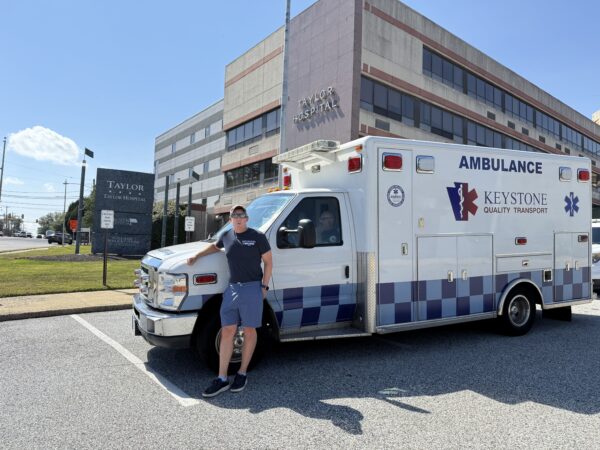
Crozer Health’s shutteredTaylor Hospital in Ridley Park will be soldto a group of local healthcare executives for $1 million, according to an agreement filed Friday in bankruptcy court proceedings for its owner, California-based Prospect Medical Holdings.
The buyer is a partnership led by Delaware County business owner Todd Strine. The group’s goal is to refill the empty property with medical services, Strine said.
“The ideal thing that could happen is we reopen an emergency room, because that’s what Delaware County needs,” said Strine, who is the majority owner of medical transport company Keystone Quality Transport.
Prospect closed Taylor in late April after the failure ofa state-led effort to find a new operator that would return the Crozer health system to nonprofit ownership. Shortly thereafter, Crozer-Chester Medical Center also closed.
Crozer was Delaware County’s largest healthcare system and a provider of critical safety-net services.For-profitProspect had previouslyclosed Springfield Hospital and Delaware County Memorial Hospital in 2022.
“It’s a fact that Delaware County is less safe today than it was when these hospitals were operating,” Strine said.
He said it seems unlikely that a full-blown hospital would return to Taylor.
Ridley Park Council president Dane Collins said he’s hopeful that an emergency department and doctors services will return to the site. “It’s no secret. The area’s in desperate need of it,” he said.
As part of the agreement, Delaware County, Ridley Park Borough, and the Ridley School District agreed to reduce the taxable value of the property from its assessed value of $60 million to a fair market value of $1 million for the next two years.
The reduced value slashes the amount of property taxes that can be earned on the property for the next two years. However, beginning in 2027, the taxing authorities would be permitted to appeal the value of the building.
The decision to reduce the building’s value so dramatically in tax rolls was opposed by some members of Ridley School District’s board of education, which only narrowly approved the measure on a 5 to 4 vote last week.
Prospect hasn’t paid property taxes on the property since 2022, according to public records.
Delaware County councilmember Christine Reuther called the new value a “tough pill to swallow” in an interview. The property was worth more than the “fire sale price” it had gone for, she said.
The building would be worth less than many homes on the county’s tax rolls, Reuther noted, at a time when property values and home costs are increasing.
She called the resolution yet another example of the negative fallout from Prospect’s abandonment of healthcare resources in the community.
“There’s literally nothing we can do that isn’t going to resolve in a worse result, and that’s wrong,” Reuther said.
Strine acknowledged that the price seems cheap, but noted the building is empty, and it’s a special-use building, making it harder to find tenants. “There’s a ton of carrying costs and a lot of uncertainty about how long it’s going to take to fill up,” he said.
The investment needed to bring the building back to life is going to be many times the price, Stine said.
“It’s positive movement to have an experienced local businessperson purchase the property instead of allowing the property to become abandoned,” said Frances Sheehan, president of the Foundation for Delaware County, whose mission is promoting health and welfare in the county.
Taylor is the second shuttered Crozer hospital to be sold in less than a month. Upper Darby School District bought the former Delaware County Memorial Hospital for $600,000 on Aug. 14. It plans to use the property for expansion of its neighboring high school.
In both cases, U.S. Bankruptcy Judge Stacey Jernigan said Prospect could abandon the properties, which means that local authorities would have had to put the real estate up for a tax sale.
Prospect had told the judge that the top offers it had received were $1.25 million for Delaware County Memorial, which closed in 2022, and $575,000 for Taylor.
Given the risk of abandonment by Prospect, county and local authorities riskeda totalloss to tax rolls ifProspect abandoned the property entirely.
Robert Strauss, an economics professor at Carnegie Mellon University who studies property tax, noted that the buyers may have backed out of a deal if they couldn’t obtain the reductions in property taxes.
“It’s hard to envision anything easy happening in the short run that would bring it back onto the tax rolls and be profitable,” he said. “The reduction in revenues seems to me to be inevitable in the next couple of years, regardless.”
This suburban content is produced with support from the Leslie Miller and Richard Worley Foundation and The Lenfest Institute for Journalism. Editorial content is created independently of the project donors. Gifts to support The Inquirer’s high-impact journalism can be made at inquirer.com/donate. A list of Lenfest Institute donors can be found at lenfestinstitute.org/supporters.