Tag: Eds & Meds

  • Rothman Orthopaedics is refocused on Philly region, opening three new surgery centers

    Rothman Orthopaedics is refocused on Philly region, opening three new surgery centers

    Rothman Orthopaedics plans to open three new surgery centers over the next year and keep adding doctors in its Philadelphia-area market, as the large physician-owned group refocuses growth efforts on its original territory.

    “Our biggest priority in the near term is strengthening our core business here, in Southeastern Pennsylvania and New Jersey,” Rothman CEO Christian Ellison said. “We’re not gonna ignore opportunities. We’ll be opportunistic around things that make strategic sense.”

    The new approach comes after a now abandoned effort to break into the New York market, first in a partnership with Northwell Health in 2017 and then with NYU Langone Health. That foray ended last year with the sale of Rothman Orthopaedics of Greater New York and its three locations to NYU Langone.

    Rothman has seen more success after following the lure of fast population growth to Florida, where it opened offices in the Orlando area in 2020 in partnership with AdventHealth.

    “Florida has been a big success, because we’ve had the partnership down there with Advent Health that’s been kind of mutually beneficial,” said Ellison, who became Rothman’s CEO last fall.

    The Philadelphia draw

    The practice headquartered in Center City already has 24 locations in the Greater Philadelphia market. That number includes facilities that Rothman operates in partnership with Jefferson Health, Main Line Health, AtlantiCare, and RWJ Barnabas.

    Rothman located its newest office in West Chester, an area where Rothman had little market share, according to Ellison. He also sees opportunity in other parts of the Philadelphia region and contiguous markets.

    To make that growth possible, Rothman is partway through an effort to hire 41 physicians by the end of this year. That represents a 20% increase and will bring Rothman’s total to 214 physicians, the company said.

    The need for ambulatory surgery centers

    Rothman is a partner in nine surgery centers in Pennsylvania and New Jersey and two surgical hospitals (Rothman Orthopaedic Specialty Hospital in Benslam and Physicians Care Surgical Hospital in Limerick).

    Those outpatient facilities account for nearly two-thirds of Rothman’s surgeries. Even the surgical hospitals function primarily as ambulatory centers, Ellison said. The remaining third of surgeries takes place in acute-care hospitals.

    “We are challenged for operating room capacity right now, both in the acute care hospitals, as well as in our ASCs, and so we feel like we need to bring more operating rooms online,” Ellison said.

    What’s more, Medicare and private insurers want more procedures done in lower-cost surgery centers. In the future, insurers will pay the same price for an outpatient knee replacement whether its done in a hospital of freestanding surgery center, Ellison predicted.

    Rothman hasn’t finalized locations for the new surgery centers, but Ellison said he expects two to be in Southeastern Pennsylvania and one in New Jersey. The centers will likely be in areas where Rothman has an established patient base.

    The physician group prefers to open the new centers independently, as opposed to going through partnerships like it has historically. “We think we’re uniquely positioned to manage that patient experience in the surgical environment,” Ellison said.

  • How much did Philly-area nonprofit health system CEOs make in 2024?

    How much did Philly-area nonprofit health system CEOs make in 2024?

    Jefferson’s Joseph G. Cacchione ranked as the highest-paid CEO at the Philadelphia region’s nonprofit health systems in 2024, with total compensation of $7 million, according to The Inquirer’s annual review of public tax forms.

    Madeline Bell at Children’s Hospital of Philadelphia collected $5.5 million in 2024, giving her the number two spot.

    Both also were top earners in The Inquirer’s 2023 compensation analysis. Jefferson is the largest system based here, both by revenue and number of hospitals, with 33 stretching from South Jersey to near Scranton. CHOP is among the nation’s top-ranked children’s hospitals.

    Janice Nevin at ChristianaCare joined the ranks of the top five. She received $3.5 million, about the same pay as the region’s fourth highest earner, Al Maghezehe at Capital Health, which has a network of outpatient clinics in Bucks County and two hospitals in Mercer County. Maghezehe’s compensation stands out because Capital had by far the lowest revenue among the systems with the 10 highest-paid CEOs.

    A couple of CEOs who left their positions before 2024 continued collecting long-term compensation, as is common in the industry.

    Most notably, Jefferson’s former CEO Stephen K. Klasko collected just over $1 million in 2024. He retired at the end of 2021, but remained an adviser through June 2022. The 2024 payment brought his total through 2024 to $48.7 million for 8½ years as CEO.

    Lori Herndon left AtlantiCare in June 2023. Her compensation the following year was $1.3 million.

    Other CEOs left during 2024, making it possible they will be listed in the next round of 990s. Those executives include Donald Mueller at St. Christopher’s Hospital for Children, Michael Laign at Redeemer Health, and Ronald W. Johnson at Shore Medical.

    Here’s a look at the numbers from The Inquirer’s review of the latest 990 tax returns of 20 nonprofit health systems, covering 11 health systems with operations concentrated in Southeastern Pennsylvania, seven in South Jersey, and two in northern Delaware:

    (function(){function e(){window.addEventListener(`message`,function(e){if(e.data[`datawrapper-height`]!==void 0){var t=document.querySelectorAll(`iframe`);for(var n in e.data[`datawrapper-height`])for(var r=0,i;i=t[r];r++)if(i.contentWindow===e.source){var a=e.data[`datawrapper-height`][n]+`px`;i.style.height=a}}})}e()})();

  • One year of inspections at Lower Bucks Hospital: December 2024 — November 2025

    One year of inspections at Lower Bucks Hospital: December 2024 — November 2025

    Lower Bucks Hospital was cited by the Pennsylvania Department of Health for failing to properly record a patient’s weight and improperly treating another patient’s pressure ulcer last year.

    The issues were among the instances health inspectors visited the Bristol hospital, owned by Prime Healthcare Services, between December 2024 and November 2025.

    Here’s a look at the publicly available details:

    • Dec. 4, 2024: The Joint Commission, a nonprofit hospital accreditation agency, renewed the hospital’s accreditation, effective September 2024, for 36 months.
    • Dec. 16: Inspectors came to investigate a complaint but found the hospital was in compliance. Complaint details are not made public when inspectors determine it was unfounded.
    • Jan. 29, 2025: Inspectors came to investigate a complaint but found the hospital was in compliance.
    • Feb. 27: Inspectors cited the hospital for failing to measure a patient’s weight and instead recording the weight told to staff by the patient’s family member. Staff were retrained that a patient’s weight must be recorded using a hospital scale within eight hours of admission.
    • March 4: Inspectors cited the hospital for failing to properly monitor and care for a patient’s hospital-acquired pressure ulcer. Inspectors found that the ulcer was not reported to a doctor or documented in the internal reporting system. Administrators said they were trying to hire a wound care nurse, and retrained staff on wound care policies.
    • April 1: Inspectors visited for a mental health monitoring survey and found the hospital was in compliance.
    • Aug. 27: Inspectors followed up on the March citation and found the hospital in compliance.
    • Sept. 5: Inspectors followed up on the February citation and found the hospital in compliance.
    • Sept. 9: Inspectors came to investigate a complaint but found the hospital was in compliance.
  • Jefferson Health will close four Einstein pediatric practices and move three others to True North Pediatrics

    Jefferson Health will close four Einstein pediatric practices and move three others to True North Pediatrics

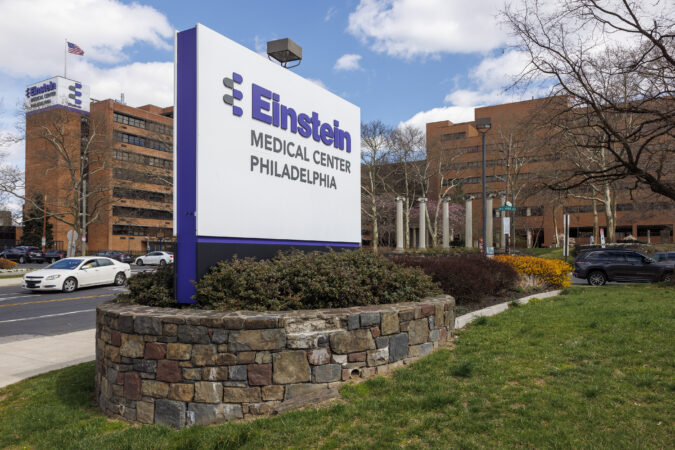
    Jefferson Health is closing four legacy Einstein pediatric practices, including one at Jefferson Einstein Hospital Philadelphia in a low-income area of the city, and moving three others to True North Pediatrics, a private group with a dozen mostly suburban locations.

    The nonprofit health system did not respond to questions Thursday about how many children the practices serve, how many jobs will be cut, or why it was making the change, which is expected to significantly reduce the amount of pediatric care in North and Northeast Philadelphia.

    This week’s pediatric cutbacks are a significant move affecting patient care amid a yearslong effort to make the system with more than $15 billion in annual revenue financially sustainable. From 2015 through 2024, Jefferson grew from three hospitals to more than 30 and now stretches from South Jersey to near Scranton.

    The locations scheduled to close June 30 are the Pediatric & Adolescent Ambulatory Center at Einstein Philadelphia and three Holland Pediatrics locations (Center One/Bustleton in Northeast Philadelphia, Buck Road in Southampton, and Frankford in Torresdale), Jefferson said in a statement.

    The three clinics going to True North are Trappe Pediatric Care at Iron Bridge, Pennypack Pediatrics, and Einstein Pediatrics Elkins Park. Jefferson did not provide details on transaction terms.

    A practice manager at True North, which is based in suburban Philadelphia, did not respond to a request for more information. True North’s website said the practice is independent, “not managed by any big business or larger institution.”

    Jefferson said in a statement that it will continue offering pediatric services through its primary care network, urgent care centers, emergency departments, and Lehigh Valley Health Network’s Reilly Children’s Hospital.

    The pediatric clinics affected had been part of the former Einstein Healthcare Network when Jefferson acquired the system in 2021.

    “With three excellent inpatient pediatric hospitals right here in our region, partnering with True North Pediatrics — an organization whose singular focus is pediatric care — allows us to ensure that families across our region continue to receive the specialized, dedicated attention they deserve,” Jefferson said in an internal communication Monday.

    It’s possible that St. Christopher’s Hospital for Children, which is about 3½ miles by car from Einstein Philadelphia, will pick up many of the thousands of dislocated patients.

    St. Chris already serves almost exclusively patients with Medicaid insurance for low-income families and struggles to make ends meet because of the low rates it receives.

    “We are committed to delivering trusted, compassionate care for every patient who walks through our doors,” St. Chris said in a statement. “Families can access care at our nearby locations, including our Center for the Urban Children and Northeast Pediatrics office.”

  • Pottstown Hospital cited for closing its ICU 13 days ahead of schedule

    Pottstown Hospital cited for closing its ICU 13 days ahead of schedule

    Pottstown Hospital was cited by the Pennsylvania Department of Health for shuttering intensive care services 13 days before it was scheduled to close the unit.

    Tower Health, which owns Pottstown, announced in November that it was closing Pottstown’s ICU, endoscopy center, and the Pottstown outpost of Tower’s McGlinn Cancer Institute effective Jan. 6. Hospitals are required to give 60 days notice before shuttering services.

    The closures were part of a larger downsizing that included laying off 350 workers across Tower’s hospital system. Tower also owns Phoenixville Hospital, Reading Hospital, and has a joint ownership of St. Christopher’s Hospital for Children with Drexel University.

    Tower officials said they closed the unit 13 days ahead of schedule on Dec. 24 because they did not have enough remaining nurses on staff to safely operate.

    “Safe ICU care requires appropriate nurse staffing, and operating the unit under those conditions could have compromised the high-quality care our patients deserve,” Tower said in a statement.

    Pottstown had already limited admissions to the unit to four patients, and began transferring remaining patients to other intensive care facilities on Dec. 22, according to the health department inspection report.

    The hospital’s other services remain open.

    Tower reported an operating loss of $16 million in the first six months of fiscal 2026.

  • Jefferson Health Plans had big gains in Medicare Advantage during open enrollment last year

    Jefferson Health Plans had big gains in Medicare Advantage during open enrollment last year

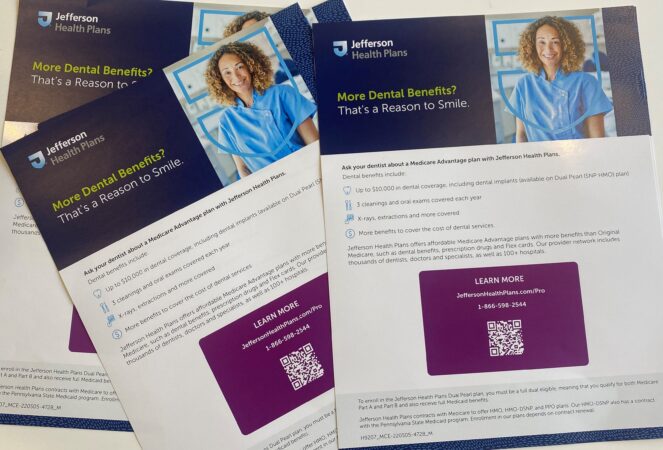
    Jefferson Health Plans added nearly 12,000 new customers to its Medicare Advantage plans during the open enrollment period for coverage this year, the biggest annual gain ever for the insurance arm of Thomas Jefferson University.

    About half of Jefferson’s enrollment gains were in Philadelphia, Montgomery, and Bucks Counties. Still, Jefferson remained the sixth largest provider of private Medicare plans in Southeastern Pennsylvania. The Inquirer compared February 2025 with last month.

    Philadelphia-based Independence Blue Cross was leader, with one-third of the region’s 383,000 Medicare Advantage customers. National companies Aetna, UnitedHealthcare, Humana, and Cigna occupied the next four spots.

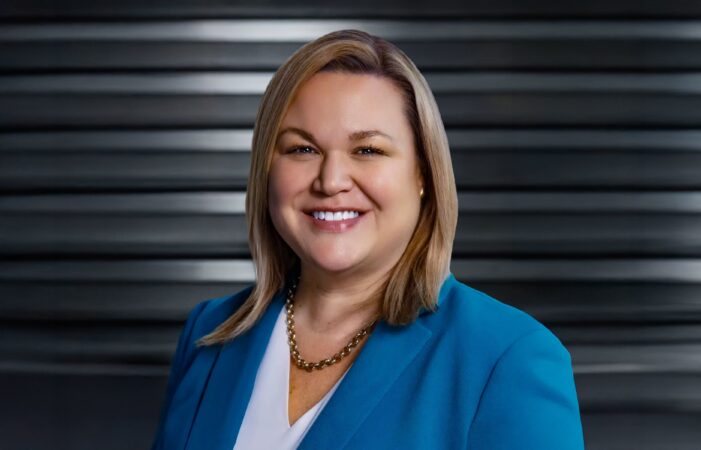
    “This was the strongest Medicare Advantage enrollment period in Jefferson Health Plans’ history,” Jefferson Health Plans president Krista Hoglund said in an email.

    “That level of growth signals a clear gap in the market for coverage that is anchored in the local community, easier to use, and closely connected with the doctors and hospitals they know and trust,” she said.

    window.addEventListener(“message”,function(a){if(void 0!==a.data[“datawrapper-height”]){var e=document.querySelectorAll(“iframe”);for(var t in a.data[“datawrapper-height”])for(var r,i=0;r=e[i];i++)if(r.contentWindow===a.source){var d=a.data[“datawrapper-height”][t]+”px”;r.style.height=d}}});

    New Jersey has been a harder market for Jefferson. Enrollment more than doubled this year, but the eight counties in South Jersey where Jefferson sells plans still account for less than 10% of its members.

    Jefferson gained about 2,400 members in Lehigh Valley counties served by Lehigh Valley Health Network, which Jefferson acquired in 2024. Jefferson’s ownership of an insurer was a key reason why Lehigh Valley chose to become part of Jefferson, health system officials said at the time.

    Jefferson’s gains in the Lehigh Valley came amid a contract dispute with United HealthCare, leading to LVHN going out of network in January for UnitedHealthcare Medicare Advantage plans. Jefferson had warned in October that the contract was expected to end.

    United said then that the timing of the warning during the Medicare Advantage open enrollment period looked like a “negotiating tactic” that could lead United customers to choose other plans.

    The two Pennsylvania counties where United had the biggest percentage declines were Lehigh and Northampton, where LVHN has substantial operations.

    The biggest gains, however, went to Capital Blue Cross, of Harrisburg.

  • AI is reshaping childhood. Here are the risks and benefits parents should know about, according to CHOP researchers.

    AI is reshaping childhood. Here are the risks and benefits parents should know about, according to CHOP researchers.

    Artificial intelligence presents a mixed bag of risks and benefits for children that vary by age, according to Children’s Hospital of Philadelphia researchers who reviewed dozens of academic studies on the emerging technology.

    For young children, an AI chatbot could help with language development, yet it could also distort their perceptions of social interactions.

    For adolescents, the technology could help with career exploration, but its record of inappropriate responses to mental health matters raises concerns.

    The researchers summarized the current evidence on generative AI — tools that imitate human intelligence to produce content in the form of text, audio, images, or videos — in a review article published Wednesday in the medical journal Pediatrics. They reviewed 55 published works largely released in the last five years, including nearly three dozen peer-reviewed studies and a mix of news articles, blog posts, and pending legislation.

    They separated the potential effects across early childhood (ages 0 to 5), middle childhood (6 to 11), and adolescence (12 and older) to lay out the considerations for families.

    Guidance for parents on how AI might reshape childhood remains limited, despite its rapid spread into children’s learning and play, said Robert Grundmeier, a primary care pediatrician at the Children’s Hospital of Philadelphia and the lead author.

    Nearly two-thirds of teens use chatbots, like ChatGPT or Gemini, with 28% doing so daily, according to a Pew Research Center survey last year. They are using the tools for everything from searching for information to getting help on homework and having a digital companion to chat with.

    “Our children are getting exposed to AI at incredibly young ages, well before they have a smartphone,” Grundmeier said.

    The article was what’s called a “state-of-the-art review,” meaning it covers a topic that is rapidly changing, and for which there’s not yet a lot of rigorous research, he said.

    He hopes other researchers will dig deeper into the area “so that we can actually start to, in the future, make some concrete recommendations about best practices.”

    The Inquirer spoke with Grundmeier about what parents should know about children’s use of generative AI in a conversation lightly edited for clarity and length.

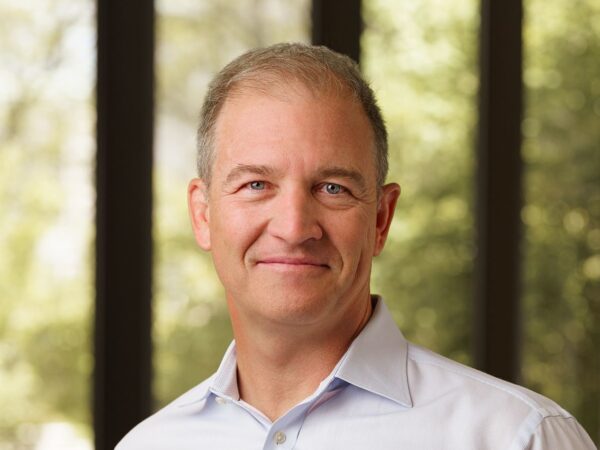
    Robert Grundmeier is a pediatrician at CHOP and lead author on the recent article
    What are the takeaways of your review?

    There’s a lot of opportunity, clearly in the educational domain, in helping to really creatively tailor and customize educational materials.

    One of the biggest concerns that came up had to do with the reliance on artificial intelligence as a companionship tool. You can interact with it in a way that you might a friend. And there are some nice things about that, in terms of being able to explore ideas in a non-judgmental way. But I think there’s a tremendous concern, especially from a child development perspective, that children could learn incorrect mental models of human interaction.

    How might interacting with AI differ?

    AI tools are typically designed to promote engagement. While a human might challenge your ideas and push back — friends do it all the time — an AI tool is typically a little less likely to push back and challenge you in a way that might make you unhappy with the interaction.

    There’s more nuance in the human interaction.

    What are the potential risks and benefits of AI in early childhood?

    There’s a lot of opportunity for creativity, storytelling, and supporting language development that could be a really nice benefit of AI in preschool-aged children. The concern regarding incorrect mental models and not correctly understanding what a human interaction is meant to be like is really most notable, however, in this age category.

    It’s really essential that a parent always remains involved in any AI interactions, looking at the output from AI alongside their child, and preferably pre-screening what’s being generated to make sure their young child is not accidentally exposed to any harmful content.

    What about for school-age children?

    There’s a lot more opportunity to personalize education to people’s different learning styles.

    But similarly, there are definitely school rules that have to be followed on the appropriate use of AI. To the extent parents can start to promote an idea of AI literacy and make sure that their child is not handing over their learning to the AI, then I think there’s a lot of good opportunity there.

    We want to promote skill development, not cause people to have their skills atrophy because they’re relying on the AI to do their homework.

    What are the considerations for adolescents?

    There are social interaction concerns. We reference some of the news related to problems with teenagers using AI tools as a companion or a friend. In particular, there was some research that showed that AI tools may respond very inappropriately to questions about mental health topics, including suicide. There really needs to be a lot of guardrail development on the part of the AI vendors to make sure that teenagers do not have harmful interactions with AI.

    What are potential benefits of adolescents using AI?

    AI is here to stay as part of our futures and our professional careers. To the extent that AI literacy can be supported in the adolescent age group, so that they can enter the workforce as a professional who knows how to use AI appropriately, I think that’s a worthwhile educational effort.

    It can also be a valuable tool for career exploration and college choice. There’s a lot of information about different colleges and career paths, and AI tools are good at summarizing, synthesizing, and interpreting something in light of what you might say are your priorities.

    Is there anything that you feel is still uncertain or needs to be clarified through future research?

    The manner of interacting with AI keeps changing. For example, various household ambient AI tools (devices that passively listen to us) have been in existence for a while, but now the types of interaction have become much more complicated. We need to understand what are safe and effective ways to use these tools in the household in a way that’s supportive of child development.

    Another category of research that is really important is developing guardrails, evaluating them, and making sure that they’re adapted appropriately for different age stages.

    As a pediatrician, what have you been hearing about AI from parents?

    I was chatting with the family of an elementary school-aged child about school performance, and the mom indicated some difficulties supporting his reading comprehension. They had discovered, with support from his school, that they could use AI tools to create reading comprehension paragraphs that they could practice with at home to help their child learn how to really focus on their reading. I thought that was actually a fantastic example.

    What I’m struck by is really the creativity that families are approaching this with. There’s a lot of good opportunity there, as long as we pay attention to the risks and make sure guardrails are in place appropriately.

  • Most Philly-area health systems had improved financial results in first half of fiscal 2026

    Most Philly-area health systems had improved financial results in first half of fiscal 2026

    Six of eight nonprofit health systems in Southeastern Pennsylvania and northern Delaware posted improved financial results for the six months that ended Dec. 31 compared to the year before. Still, half of them had operating losses, according to financial data reported last month to bond investors.

    Jefferson Health and Temple University Health System reported results that were worse than the same period last year.

    Children’s Hospital of Philadelphia remained the region’s most profitable health system, with a 6.2% operating margin, up from 5.2% the year before. CHOP posted $2.7 billion in total revenue in the last six months of 2025, up from $2.4 billion the year before.

    Nonprofit health systems in South Jersey, such as Cooper, Inspira, and Virtua, do not report comparable financial results until they file their annual audited financials statements in the spring.

    Here’s a summary:

    Jefferson Health: Jefferson had an operating loss of $201 million in the six months that ended Dec. 31, compared to a $55 million loss the year before. The $201 million loss included a $64.7 million restructuring charge related to severance for 600 to 700 people laid off in October and other changes designed to improve efficiency in the 32-hospital system that stretches from South Jersey to Scranton, Jefferson said.

    University of Pennsylvania Health System: Penn had an operating profit of $189 million in the first six months of fiscal 2026, up from $117 million in the same period a year ago. Operating income increased, even after Penn put $43 million into reserves for medical malpractice claims. Two years ago, Penn had recorded charges totaling $90 million for the same purpose.

    ChristianaCare: ChristianaCare, Delaware’s largest health system, posted a $37 million operating gain, up from $33 million in the first six months of fiscal 2025. The health system’s revenue rose 9% to $1.75 billion, helped in part by its expansion into Pennsylvania. ChristianaCare took over five of Crozer Health’s freestanding outpatient locations in Delaware County.

    Temple University Health System: Temple had a $50.5 million operating loss in the six months that ended Dec. 31. In the same period the year before, Temple reported a $13.5 million operating gain. The nonprofit attributed some of the losses to costs related to the opening of Temple Women & Families Hospital in September.

    Main Line Health: Main Line had an $8.7 million operating profit in the six months that ended Dec. 31. Main Line’s swing from an $8.9 million loss in the same period of 2024 benefited from a change in accounting for depreciation that reduced expenses. Without that change, Main Line would have had another loss.

    Tower Health: Tower had an operating loss of $16 million in the first six month of fiscal 2026, according to its report to bondholders Friday. In the same period a year ago, the Berks County nonprofit’s loss was $16.1 million.

    Redeemer Health: Redeemer reported an operating loss of $14.7 million, compared to a loss of $19.5 million the year before. The improvement happened even though the health system in Philadelphia’s northern suburbs increased revenue by just 1.2%, to $227 million.

  • Lankenau Medical Center’s new president is Anna Michelle Brandt

    Lankenau Medical Center’s new president is Anna Michelle Brandt

    Main Line Health appointed Anna Michelle Brandt president of its Lankenau Medical Center in Wynnewood, the nonprofit health system announced Monday.

    Brandt mostly recently worked as chief operating officer at University Hospital, a 519-bed academic medical center in Newark, N.J., which Main Line’s new CEO Ed Jimenez led before taking over at Main Line.

    The new Lankenau president also worked previously with Jimenez at UF Health Shands Hospital in Florida.

    Brandt succeeds Katie Galbraith, who left Lankenau in September after about three years to lead New England Baptist Hospital in Boston.

    Lankenau, a level 2 trauma center, sits in Lower Merion Township at the intersection of West Philadelphia and Montgomery and Delaware Counties.

    It also has the Lankenau Institute for Medical Research, which has programs in cancer, cardiovascular, autoimmune, and other diseases.

  • Eating ice cream and paths to a healthy, fulfilling life, according to Penn expert Ezekiel Emanuel

    Eating ice cream and paths to a healthy, fulfilling life, according to Penn expert Ezekiel Emanuel

    University of Pennsylvania health expert Ezekiel Emanuel’s casual conversations often evolve into impromptu medical consultations.

    People ask Emanuel — an oncologist, bioethicist, and health policy scholar who helped write the Affordable Care Act — how to live healthier.

    He said that “incessant asking” inspired him at a time when both information and misinformation are booming in the wellness space.

    His new book, “Eat Your Ice Cream: Six Simple Rules for a Long and Healthy Life,” landed on bookshelves in January. He uses the pages to argue that the goal of life should not be to simply live the longest, but rather to lead a healthy and fulfilling life.

    The Penn professor, who has antique maps in his office and has taught a course on Ben Franklin, weaves in his appreciation for history throughout the book. Emanuel’s advice also addresses contemporary issues such as vaccines and vaping. And he shares personal family stories involving his father (to whom the book is dedicated).

    In one of his favorite anecdotes, he describes looking for a cheap car to buy with his bar mitzvah money. Thinking he found a great deal on a Volvo, Emanuel and his brother bought the car, brought it home, and realized it couldn’t go in reverse.

    “My father says, ‘You guys are schmucks!’” he recalled.

    That became the first of his six rules: “Don’t be a schmuck — avoid self-destructive risks.”

    The Inquirer spoke with Emanuel about tips for living a healthy life in a conversation lightly edited for length and clarity.

    Why do you think wellness has become so big?

    People feel like the world’s topsy-turvy. They’re not controlling it. It is controlling them. They want to assert control over the world, and one way they can do it is through wellness.

    What have people gotten wrong about wellness?

    Spending 10 hours a week on wellness, like some people recommend, is crazy. Just insane. You should not do that. You can spend two or three hours a week, get all the benefit you need, and focus your time on other things — your family, close friends, having a successful career, making the world better, making Philadelphia better. Those are the things that matter.

    What does your first rule (Don’t be a schmuck) mean?

    The first rule is, really, take reasonable risks, but not unreasonable risks.

    The most dangerous thing most of us do in everyday life is turn the ignition on in our car. Driving is actually quite dangerous over a lifetime. And you have to compare the risk you’re willing to take to the risk of driving. I try to organize a chapter laying out unreasonable risks like BASE jumping [an extreme sport in which a person parachutes from a dangerous height]. Why is that so stupid? Well, look at the data. I try to make that assessment much more quantitative.

    What is your second rule?

    The importance of social relations.

    It doesn’t get emphasized by almost anyone in the [wellness] field, and it’s vastly the most important for longevity, for health, and for happiness. We’ve got tons of data. There’s more than 3 million people who’ve been studied on the relationship between loneliness, social isolation, and ill health.

    If you look at the Harvard Study of Adult Development, which started in the late 1930s, the single most important predictor of a long, healthy life with the fewest comorbidities is the number and quality of your social relationships.

    Overall, a professor at Brigham Young University has summarized that being socially isolated is ‘like smoking 15 cigarettes a day.’

    Tell us about your last four rules.

    The third one is stay mentally sharp. If the body’s working fine, but cognitive decline has set in, that would be hell to me. I don’t want to live like that.

    There are only a few people like Ben Franklin where it does not appear to decline at all. One of the things actually I learned after I finished the book is Franklin was the oldest person (aged 81) at the Constitutional Convention in 1787. He was still very nimble with his mind, able to put things together, to craft compromises and things.

    Some of it’s obviously genes, but some of it’s also things you can do — what you can eat, how you exercise, your retirement, your strategies, social interaction, challenges, etc. The brain is a lot like muscle in that either you use it or you lose it.

    The last three rules are the typical: eating well, exercising, and sleeping advice.

    Are there things that you’d want the media to emphasize more when talking about wellness and health?

    There are two really fundamental things on the ‘to do’ side for eating.

    One is you should eat more fermented foods. Whether it’s yogurt or cottage cheese or aged cheeses or kimchi. It’s very important for the microbiome. In Philadelphia, one of our treasures is Di Bruno Bros. cheese shop. They have 200 cheeses on display. Go and get some cheese. It’s really good.

    The other is that more than 90% of Americans don’t get enough fiber in their diet every day. You need to eat more fruits and vegetables. I start out every day by merging these two. This morning, I had a bowl of berries, or some kind of fruit, with yogurt, granola, and oats. I also added hemp hearts, which are high in protein, good fats, omega-3s and omega-6s. Then add a salad at dinner, and you pretty much have enough fruits and vegetables.

    Can you explain the title of your book, “Eat Your Ice Cream?

    Ice cream is good. Dairy products are associated with higher height, especially if, early in life, you eat a lot of dairy. Second, [dairy consumption] is also associated with a lower risk of colorectal cancer, which is all in the news these days.

    And most importantly, it’s about joy. It’s fun. Who doesn’t like ice cream? But it’s important to get good ice cream, not stuff with emulsifiers and fillers and all of that.

    Have a little joy. It goes a long way toward making life lovely.