Tag: Eds & Meds

  • Why Philadelphia loses promising biotech firms to Boston, San Francisco, and San Diego

    Why Philadelphia loses promising biotech firms to Boston, San Francisco, and San Diego

    Capstan Therapeutics’ sale this year for $2.1 billion, the highest price paid for a private early-stage biotech company since 2022, was a triumph for its founders at the University of Pennsylvania.

    Unfortunately for Philadelphia, the company is based in San Diego. Investors wanted an executive who lives there to be CEO.

    Capstan was a miss for Philadelphia, said Jeffrey Marrazzo, who cofounded a high-profile regional biotech company, Spark Therapeutics, and is now an industry investor and consultant.

    If Philadelphia had a bigger talent pool of biotech CEOs, “it would have and should have been here,” he said.

    The company, which aims to treat autoimmune diseases by reengineering cells inside the body, most likely would have been sold wherever it was based, but keeping it here would have boosted the local biotech ecosystem, experts said.

    The Philadelphia region has lagged behind other biotech centers in landing companies and jobs, but industry experts are working to close the gap and better compete with Boston, the San Francisco Bay Area, and San Diego.

    According to Marrazzo and others, the Philadelphia region’s relatively shallow pool of top biotech management is a key challenge.

    Big investors go to managers who have proven ability to deliver big investment returns, said Fred Vogt, interim CEO of Iovance Biotherapeutics, a California company with a manufacturing facility in the Navy Yard.

    “They want the company to perform. They’ll put it in Antarctica, if that was where the performance would come from,” he said.

    A positive sign for Philadelphia is Eli Lilly & Co.’s recent decision to open an incubator for early-stage biotech companies in Center City.

    The Lilly announcement last month also reflects Philadelphia’s national biotech stature. It’s the fourth U.S. city to get a Lilly Gateway Lab, behind Boston, the San Francisco Bay Area, and San Diego.

    Those places have far outpaced Philadelphia in the creation of biotech research and development jobs, even as the sector’s growth has slowed.

    From 2014 through last year, the Boston area added four biotech research and development jobs for every one job added here, according to an Inquirer analysis of federal employment data.

    window.addEventListener(“message”,function(a){if(void 0!==a.data[“datawrapper-height”]){var e=document.querySelectorAll(“iframe”);for(var t in a.data[“datawrapper-height”])for(var r,i=0;r=e[i];i++)if(r.contentWindow===a.source){var d=a.data[“datawrapper-height”][t]+”px”;r.style.height=d}}});

    Penn’s role in Philadelphia biotech

    Philadelphia’s reputation as an innovation center — boosters like to call the region “Cellicon Valley” — starts with the University of Pennsylvania, which has long been a top recipient of National Institutes of Health grants to advance scientific discovery.

    Penn scientists’ 21st-century accomplishments include key roles in figuring out how to arm immune cells to fight cancer, fixing faulty genes, and modifying mRNA to fight disease.

    Research at Penn has contributed to the creation of 45 FDA-approved treatments since 2013, according to the university.

    “Penn discoveries help spark new biotech companies, but we can’t build the whole ecosystem in this area alone,” said John Swartley, Penn’s chief innovation officer. “Great science is just one ingredient. We also need capital, experienced leadership, real estate and manufacturing infrastructure, and strong city and state support.”

    Penn was one of two Philadelphia institutions receiving more than $100 million in NIH funding in the year that ended Sept. 30. The other was the Children’s Hospital of Philadelphia.

    Katalin Karikó and Drew Weissman spoke at a University of Pennsylvania news conference after they were named winners of a 2023 Nobel Prize in medicine. Their work was instrumental to modifying mRNA for therapeutic uses, such as the rapid development of lifesaving vaccines during the COVID-19 pandemic.

    By contrast, the Boston area was home to 10 institutions with at least $100 million in NIH grants, generating more spinoffs and jobs.

    The Philadelphia region has a healthy number of biotech spinouts, but the biggest markets have more from a larger number of research institutions, said Robert Adelson, founder Osage University Partners, a venture capital firm in Bala Cynwyd.

    That concentration of jobs and companies in the Boston area — where nearly 60,000 people worked in biotech R&D last year — makes it easier to attract people. By comparison, there were 13,800 such jobs in Philadelphia and Montgomery County, home to the bulk of the regional sector.

    If a startup fails, which happens commonly in biotech, “there’ll be another startup or another company for me to go to” in a place like Boston, said Matt Cohen, a managing partner for life science at Osage.

    Another challenge for Philadelphia: It specializes in cell and gene therapy, a relatively small segment of the biotech industry, whose allure to investors has faded in the last few years.

    Such market forces shaped the trajectory of Spark, a 2013 Children’s Hospital of Philadelphia spinout that developed Luxterna, the first FDA-approved gene therapy, used to treat an inherited form of blindness. The promise of Spark’s gene therapy work for a form of hemophilia spurred its 2019 acquisition by Swiss pharmaceutical titan Roche for $4.8 billion.

    This year, Roche laid off more than half the company’s workforce as part of a restructuring and a rethinking of treatments for blood diseases that it had been developing.

    The company still employs about 300 in the city, a spokesperson said, and work continues on its $575 million Gene Therapy Innovation Center at 30th and Chestnut Streets in University City.

    The long arc of biotech

    A handful of companies dominated the early days of U.S. biotech. Boston had Biogen and Genzyme, San Francisco had Genentech, San Diego had Hybritech, and Philadelphia had Centocor. All of them started between 1976 and 1981.

    Centocor started in the University City Science Center because one of its founders, virologist Hilary Koprowski, was the longtime director of the Wistar Institute. Centocor’s first CEO, Hubert Schoemaker, moved here from the Boston area, where he had gotten his doctorate at the Massachusetts Institute of Technology.

    Centocor was one of the nation’s largest biotech companies when Johnson & Johnson bought it for $4.9 billion in 1999. Its portfolio included an anticlotting drug called Reopro and Remicade for Crohn’s disease.

    Another drug still under development at the time of the sale, Stelara, went on to become J&J’s top-selling drug as recently as 2023 with $10.9 billion in revenue. Stelara, approved to treat several autoimmune disorders, remains a testament to Centocor’s legacy.

    Despite its product success, Centocor didn’t have the same flywheel effect of creating new companies and a pipeline of CEOs as peer companies did in regions outside of Philadelphia.
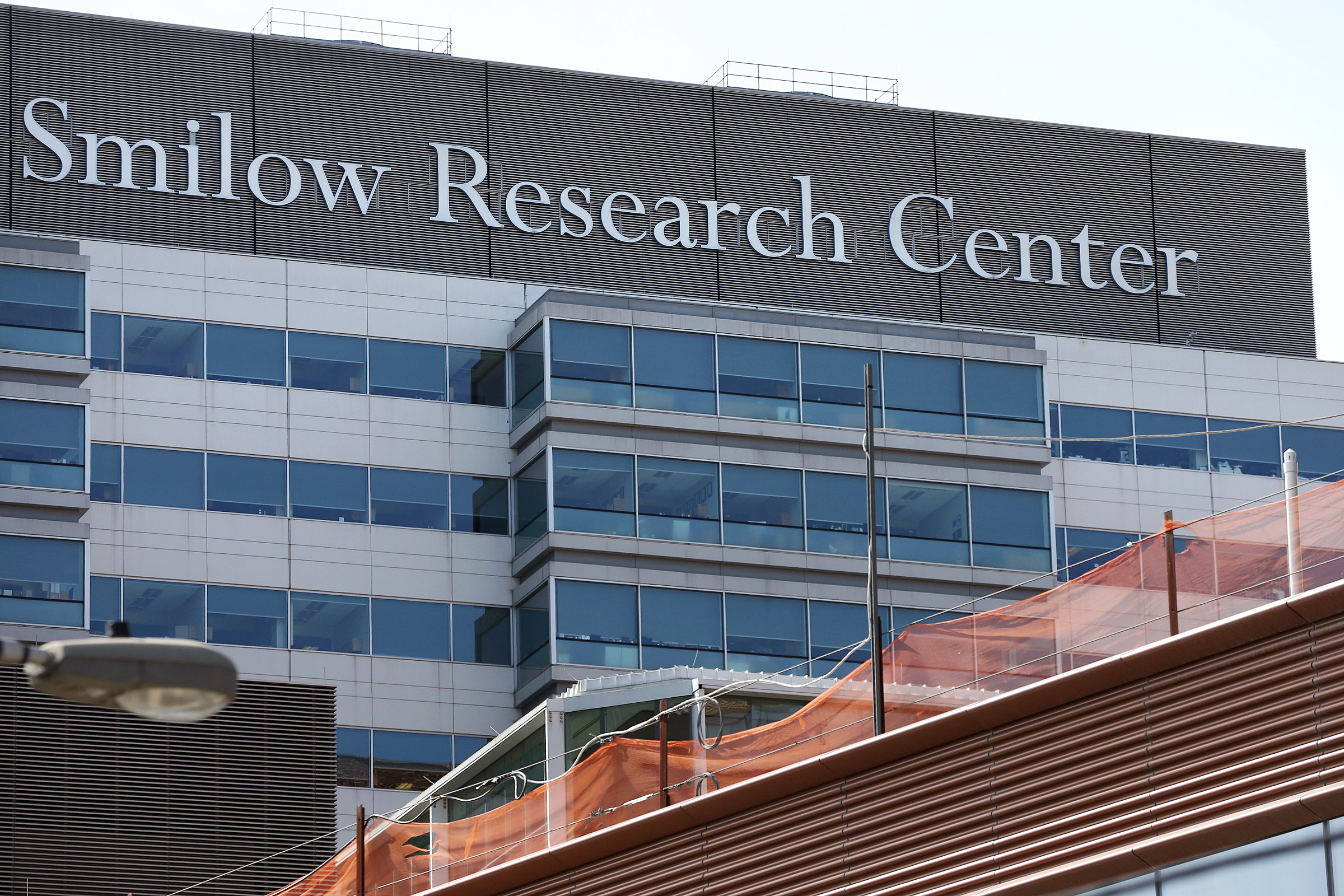
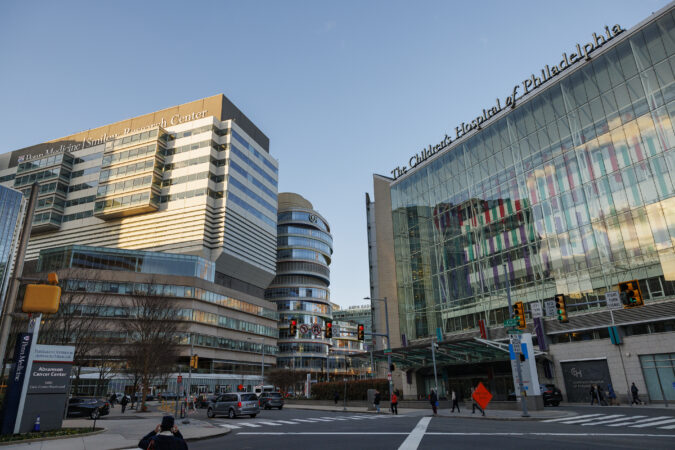
    The University of Pennsylvania’s Smilow Center for Translational Research, shown in 2020, is one of the school’s major laboratory buildings.

    “There are a lot of alums of Centocor that are really impressive, but they seem to have wound up elsewhere,” said Bill Holodnak, CEO and founder of Occam Global, a New York life science executive recruitment firm.

    Among the Centocor executives who left the region was Harvey Berger, Centocor’s head of research and development from 1986 to 1991. He started a new company in Cambridge, Mass.

    At the time, the Philadelphia area didn’t have the infrastructure, range of scientists, or management talent needed for biotech startups, he said.

    Since then, he thinks the regional market has matured.

    “Now, there’s nothing holding the Philadelphia ecosystem back. The universities, obviously Penn, and others have figured this out,” Berger said.

    Conditions have changed

    Penn’s strategy for helping faculty members commercialize their inventions has evolved significantly over the last 15 years.

    It previously licensed the rights to develop its research to companies outside of the area, such as Jim Wilson’s gene therapy discoveries and biochemist Katalin Karikó and immunologist Drew Weissman’s mRNA patents. Now it takes a more active role in creating companies.

    Among Penn’s latest spinouts is Dispatch Bio, which came out of stealth mode earlier this year after raising $216 million from investors led by Chicago-based Arch Venture Partners and San Francisco-based Parker Institute for Cancer Immunotherapy.

    Dispatch, chaired by Marrazzo, is developing a cell therapy approach that uses a virus to attach what it calls a “flare” onto the cells it wants the immune system to attack.

    Marrazzo said in July that he wasn’t going to be involved in Dispatch if it wasn’t based largely in Philadelphia. As of July, 75% of its 60 employees were working in Philadelphia. Still, Dispatch’s CEO is in the San Francisco Bay Area.

    The Philadelphia region is increasingly well-positioned for the current biotech era, said Audrey Greenberg, who played a key role in launching King of Prussia’s Center for Breakthrough Medicines about five years ago. The center is a contract developer and manufacturer for cell and gene therapies.

    “You no longer need to move to Kendall Square to get a company funded,” she said, referring to Cambridge’s biotech epicenter. “You need good data, a credible translational plan, experienced advisers, and access to patient capital, all of which can increasingly be built here.”

    Greenberg now works as a venture partner for the Mayo Clinic, with the goal of commercializing research discoveries within the health system’s network of hospitals in Minnesota, Arizona, and Florida.

    She plans to bring that biotech business to the Philadelphia region.

    “I’m going to be starting my companies all here in Philadelphia, because that’s where I am. And I know everybody here, and everybody I’m going to hire in these startups that are going to be based here,” she said.

  • How quiet is your hospital at night? See how patients rate Philly-area hospitals.

    How quiet is your hospital at night? See how patients rate Philly-area hospitals.

    Once considered the loudest hospital in the Philadelphia area, Riddle Hospital in Media has significantly reduced its nighttime noise levels, newly released federal data shows.

    At the Main Line Health Riddle hospital, only 12% of patients from the most recent survey rated the area around their room at night as “sometimes” or “never” quiet — down from 26% of patients surveyed between July 2022 and June 2023.

    Across the Philadelphia region, 52% of patients said their hospital room was “always” quiet at night. That’s slightly worse than nationally, where patients said hospitals were quiet throughout their stay 57% of the time.

    Virtua Mount Holly Hospital in New Jersey is now rated the loudest by patients.

    Nazareth Hospital in Northeast Philadelphia, owned by Trinity Health, was ranked the second loudest in the region.

    window.addEventListener(“message”,function(a){if(void 0!==a.data[“datawrapper-height”]){var e=document.querySelectorAll(“iframe”);for(var t in a.data[“datawrapper-height”])for(var r,i=0;r=e[i];i++)if(r.contentWindow===a.source){var d=a.data[“datawrapper-height”][t]+”px”;r.style.height=d}}});

    Quieter hospitals have benefits for both patients and staff, helping to lower anxiety levels, improve sleep quality, and ease the flow of communication.

    Riddle Hospital’s improvement follows construction of a new 230,000-square-foot patient pavilion that had temporarily increased noise at its Delaware County campus.

    “With the pavilion’s 2023 completion, as well as the resulting addition of more private rooms, noise is significantly reduced,” spokesperson Larry Hanover said.

    Reducing noise is also priority for Penn Medicine, whose Hospital of the University of Pennsylvania (HUP) was rated the quietest hospital among the 25,000 patients surveyed in the Philly-area.

    Chester County Hospital, also owned by Penn Medicine, was ranked the second quietest.

    The health system has made big investments in recent years to address noise levels at its hospitals, according to the university’s website. The Pavilion, which opened at HUP in Center City in 2021, was designed to reduce noise levels and nightly disruptions by separating nonclinical work from patient care areas.

    Each floor of the $1.6 billion building centers around an “offstage” area for staff to hold conversations and calls away from patient rooms that line the perimeter. The design of the rooms also allows care teams to check vitals and refill medications from the hallway, reducing nighttime disruptions.

    Here’s a look at how patients ranked their Philly-area hospitals on nighttime noise, according to the Centers for Medicare and Medicaid Service’s Hospital Consumer Assessment of Healthcare Providers and Systems data from October 2023 to September 2024.

    window.addEventListener(“message”,function(a){if(void 0!==a.data[“datawrapper-height”]){var e=document.querySelectorAll(“iframe”);for(var t in a.data[“datawrapper-height”])for(var r,i=0;r=e[i];i++)if(r.contentWindow===a.source){var d=a.data[“datawrapper-height”][t]+”px”;r.style.height=d}}});

  • One year of inspections at Doylestown Hospital: November 2024 – October 2025

    One year of inspections at Doylestown Hospital: November 2024 – October 2025

    Doylestown Hospital was not cited by the Pennsylvania Department of Health for any safety violations between November 2024 and October of this year.

    Here’s a look at the publicly available details:

    • Nov. 6, 2024: Inspectors came to investigate a complaint but found the hospital was in compliance. Complaint details are not made public when inspectors determine it was unfounded.
    • Nov. 14: Inspectors followed up on an October 2024 complaint and found the hospital was in compliance. The hospital had been cited for not following protocol for admitting mental health patients.
    • Nov. 20: Inspectors followed up on a July 2024 complaint and found the hospital was in compliance. The hospital had been cited for not following protocol for identifying patients prior to surgery.
    • Jan. 10, 2025: Inspectors visited for a special monitoring survey and found the hospital was in compliance.
    • July 24: Inspectors came to investigate a complaint but found the hospital was in compliance.
  • CHOP was Southeastern Pa.’s most profitable nonprofit health system in first quarter of fiscal 2026. Four systems lost money.

    CHOP was Southeastern Pa.’s most profitable nonprofit health system in first quarter of fiscal 2026. Four systems lost money.

    Children’s Hospital of Philadelphia was the most profitable nonprofit health system in Southeastern Pennsylvania during the three months that ended Sept. 30, according to an Inquirer review of financial filings.

    CHOP reported $70 million in operating income in the first quarter of fiscal 2026, up from $67 million the same period a year ago. The nonprofit’s revenue climbed nearly 9% to $1.3 billion.

    The biggest loss in percentage terms was at Redeemer Health, the region’s smallest health system and the only remaining operator with a single hospital. Redeemer had an $11.7 million operating loss on $103.4 million in quarterly revenue. That was an improvement over an $18.9 million loss last year.

    Jefferson Health had the most patient revenue following its acquisition last year of Lehigh Valley Health Network. The 32-hospital system had $2.9 billion in patient revenue, $100 million more than the $2.8 billion at the University of Pennsylvania Health System, which has seven hospitals.

    window.addEventListener(“message”,function(a){if(void 0!==a.data[“datawrapper-height”]){var e=document.querySelectorAll(“iframe”);for(var t in a.data[“datawrapper-height”])for(var r,i=0;r=e[i];i++)if(r.contentWindow===a.source){var d=a.data[“datawrapper-height”][t]+”px”;r.style.height=d}}});

    Here’s a recap of selected systems’ results for September quarter:

    Jefferson Health

    Jefferson Health reported a $104 million operating loss, as its insurance business continued to drag down results. The loss included $19.4 million in restructuring charges for employee severance related to earlier job cuts and moves designed to make the system more efficient.

    University of Pennsylvania Health System

    University of Pennsylvania Health System had an operating gain of $109.3 million, up from $49.3 million in the same period a year ago. This year’s results include Doylestown Health, which Penn acquired April 1. Total revenue was $3.3 billion, up from $2.8 billion a year ago.

    Temple University Health System

    Temple University Health System’s loss in the quarter was $15 million, an improvement over a $17 million loss last year. Total revenue was $800 million, up 13% from $712.5 million a year ago. Outpatient revenue increased by nearly $62 million, much of it from the health system’s specialty and retail pharmacy business.

  • Hospital-based anti-violence programs get $3 million in state funding

    Hospital-based anti-violence programs get $3 million in state funding

    Several Philadelphia-area violence prevention efforts will benefit from nearly $3 million in newly released state funding to help hospitals address a leading cause of death and injury.

    The new funding for hospital-based violence intervention programs (HVIP) was announced by Pennsylvania Lt. Gov. Austin Davis on Wednesday at Penn Presbyterian Medical Center. One of the recipients, the Penn Trauma Violence Recovery Program, is based at the Penn Medicine hospital in University City.

    Other local awardees include Temple University Hospital in North Philadelphia and the Philadelphia-based nonprofit Urban Affairs Coalition. The coalition received funding on behalf of the Chester Community Coalition to relaunch a program that had been at the now-shuttered Crozer-Chester Medical Center.

    The University of Pittsburgh Medical Center also received funding. The amounts awarded to each program were not announced.

    The Pennsylvania Commission on Crime and Delinquency, which Davis chairs, received 15 applications in total seeking nearly $12 million in funding — four times what was available.

    “Addressing the epidemic of gun violence is a top priority for our administration,” Davis said.

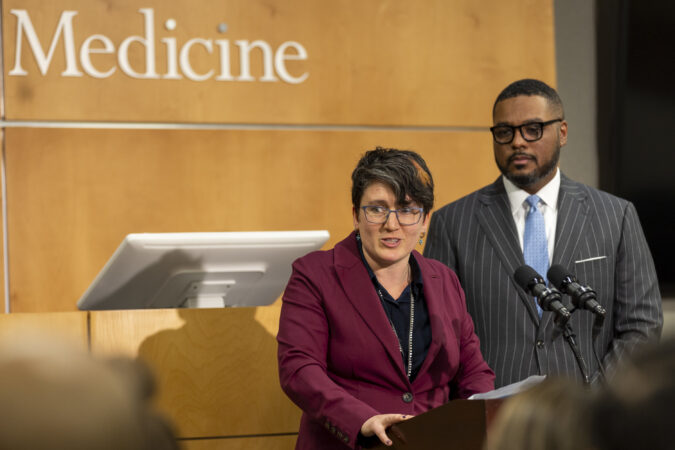
    Lieutenant Governor Austin Davis speaks at a press conference announcing the $3 million in grants for hospital-based violence intervention programs.

    The programs aim to connect patients at risk of repeat violence with resources while they are in a hospital, so they leave with a safety plan. Services can include long-term community-based case management, mentoring, and home visits.

    Since the first HVIP was established in the mid-1990s, dozens have spread around the country and abroad, including in Philadelphia.

    Several local institutions have these programs, including Temple Health, Children’s Hospital of Philadelphia, Penn Medicine, Jefferson Health, and Drexel University. The City of Philadelphia, in conjunction with the area’s Level 1 trauma centers, launched an HVIP Collaborative in 2021.

    Studies have shown these programs reduce rates of repeat violent injuries and recidivism among participants.

    After shootings spiked during the COVID-19 pandemic, gun violence is now declining in Philadelphia. As of July, shootings for the year were at their lowest total since at least 2015.

    Davis noted that Philadelphia has seen a 15% decrease in homicides this year, with roughly four in five gunshot victims surviving their injuries.

    The new funding will allow the Penn Trauma Violence Recovery Program to increase its community presence and mental health programming, said its director, trauma surgeon Elinore Kaufman.

    Through her experience treating victims of violence, she has learned that injuries can be deeper than the physical wounds.

    The program was launched to address social factors often involved in violence by providing psychosocial support and connecting patients with services to help with education, job training, and housing.

    “We’ve worked with patients long enough now that we have high school graduation photos, we have baby pictures,” Kaufman said. “We have patients who want to give back and have joined our patient advisory board to help push us forward.”

  • Baby KJ’s gene-editing treatment lands him on Nature’s top 10 list

    Baby KJ’s gene-editing treatment lands him on Nature’s top 10 list

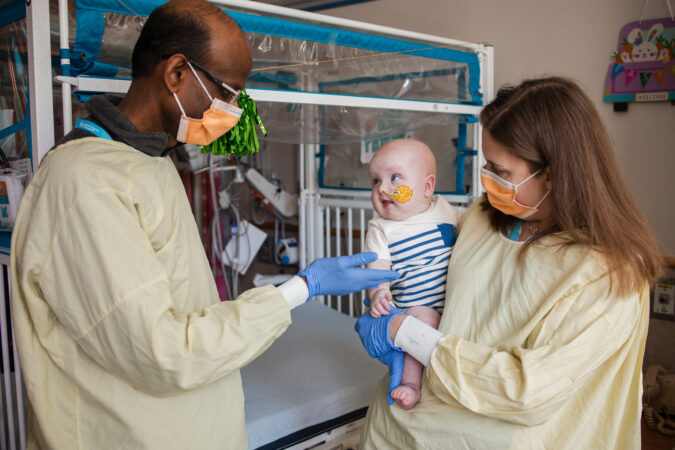
    A Philadelphia-area infant named Baby KJ made international headlines after doctors at Children’s Hospital of Philadelphia and Penn Medicine successfully treated his rare, life-threatening liver condition with a gene-editing drug earlier this year.

    Now back home with his family in Drexel Hill after more than 300 days in the hospital, KJ Muldoon has been named one of 10 people who helped shape medicine in 2025 by Nature, a British scientific journal.

    Nature’s 10 is rounded out by career scientists and public health champions, including a neurologist treating brain disorders, an entomologist unearthing new details about mosquito-borne illnesses, and a data researcher who drew attention to troubling patterns in research retractions. The publication honored Baby KJ as a “trailblazing baby.”

    KJ was born with a rare disorder that prevented his liver from processing protein. He was at risk of dangerous levels of ammonia, a byproduct of protein, building up in his bloodstream, traveling to his brain, and causing irreparable damage. The condition, called severe carbamoyl phosphate synthetase 1 (CPS1) deficiency, is deadly in more than half of cases.

    With few treatment options and limited time, KJ’s doctors proposed a novel treatment using experimental gene-editing technology: They would analyze KJ’s genetic profile to find the genetic mutation that prevented his body from producing a key enzyme that breaks down protein. Then they would infuse a medication laced with bits of genetic code to find the misspelling and fix it, dramatically improving his chances of recovery.

    Within six months, researchers at CHOP and Penn had developed a customized drug specifically for KJ using CRISPR, the buzzy shorthand for a scientific tool that works like a find-and-replace command. It is named after a stretch of genetic code utilized — clustered regularly interspaced short palindromic repeats.

    KJ received three doses of the medication, and in June, he returned home after 307 days in the hospital. He will need ongoing care, but doctors say the treatment has dramatically improved his liver function.

    “This is the future of medicine, a step toward using gene-editing for diseases for which there are few treatments,” Kiran Musunuru, director of the Penn Cardiovascular Institute’s Genetic and Epigenetic Origins of Disease Program and one of the lead doctors on KJ’s case, said during a call with reporters in May.

    Baby KJ’s treatment was a first-of-its-kind drug customized to a unique genetic mutation. It will never be used for another patient, but Philadelphia researchers believe the CRISPR framework could be used to customize drugs for other patients.

    Musunuru and Rebecca Ahrens-Nicklas, the director of CHOP’s Gene Therapy for Inherited Metabolic Disorders Frontier Program, are developing a new clinical trial to test the CRISPR framework for treating customized gene therapies for urea cycle disorders related to any one of seven genes.

    The mechanism will remain the same, but the injection each patient receives will be customized to target their unique genetic mutation.

    They are hopeful that their work will make bespoke treatments available to more people with rare diseases, Ahrens-Nicklas told Nature.

    “Everyone saw the possibility and thought, ‘Why isn’t this available for my child?’”

  • Wistar scientists pinpoint a new approach to ovarian cancer treatment

    Wistar scientists pinpoint a new approach to ovarian cancer treatment

    Wistar Institute scientist Maureen Murphy wants to solve a decades-long mystery: Why is ovarian cancer often resistant to hormone therapy?

    In a recently published study, she shared a new theory as to why treatments designed to block or remove hormones, known as hormone therapy, often fail in ovarian cancer — and a potential approach to make them more effective. Such therapies have cut the risk of death from certain breast cancers by a third and reduced the odds of a recurrence by half.

    She pinpointed a problem facing hormone therapy — the vast majority of ovarian cancer cases have mutations in a key protein called p53.

    Her study, published last month in the medical journal Genes and Development, suggests that mutations in p53, a protein that normally works to stop tumors from growing, drive resistance to hormone therapy and that their effects could be reversed.

    Ovarian cancer is notoriously deadly. The most common form of ovarian cancer, high-grade serous ovarian cancer, has an 80% relapse rate after initial treatment and a five-year survival rate of 34%. It’s also highly resistant to immunotherapy.

    “There are very few drugs that treat it,” Murphy said.

    Her p53 mutation discovery led to her identifying a drug currently in clinical trials that’s promising in a small number of cases. Murphy wants doctors to start testing the combination of the drug and hormone therapy in ovarian cancer.

    If the approach makes it into a clinical trial, it would still take years to evaluate the safety and efficacy of the combination. Most treatments tested in clinical trials do not become standard practice.

    “For ovarian cancer, the treatment hasn’t changed much in the last 20 years, and so we really do need new treatments,” Murphy said.

    How does hormone therapy work?

    Hormones are like the body’s mail service.

    These chemicals carry messages to cells throughout the body, controlling mood, growth, reproduction, and development.

    Tumors can co-opt hormones for their own purposes using proteins called receptors, which act like mailboxes to receive the messages.

    Breast cancers, for example, often have estrogen receptors so that they can receive more of a hormone called estrogen. Similar to how bodybuilders use steroids to build muscle, tumors use estrogen to grow and divide.

    “Breast and ovarian tumors love estrogen. They grow on it,” Murphy said.

    Hormone therapy works by either blocking the receptors from receiving the hormones, or reducing the amount of hormones in the body altogether.

    One of the first hormone therapy drugs for cancer, tamoxifen, was approved in the U.S. in 1977 to target the estrogen receptor in metastatic breast cancer.

    In this study, Murphy looked at fulvestrant and elacestrant, two anti-estrogen drugs approved for breast cancer.

    More than 70% of cases of the most common type of ovarian cancer express estrogen receptors, making them theoretically a good target for hormone therapy, if the p53 problem can be fixed.

    Solving the mystery

    In her first professor job at Temple’s Fox Chase Cancer Center in 1998, Murphy chose to study the tumor suppressor protein p53, with a focus on genetic variants in women of African and Ashkenazi Jewish descent that put them at risk of cancer.

    Decades later, Murphy expanded her focus at Wistar to look at hundreds of genetic variants of the protein found in the general population, in an effort to predict people’s risk of cancer.

    Murphy started to wonder whether mutant p53 controlled the function of the estrogen receptor, and how it might affect the response of tumor cells to hormone therapy.

    That led her team to look at ovarian cancer because of its high prevalence of p53 mutations. They used cell lines and a lab model to mimic stage 3 and 4 tumors.

    The researchers found that when mutant p53 was bound to the estrogen receptor in these models, it inhibited part of the estrogen receptor’s activity, driving resistance to hormone therapy.

    By simply removing the mutant protein, tumors “responded great” to the hormone therapy, Murphy said.

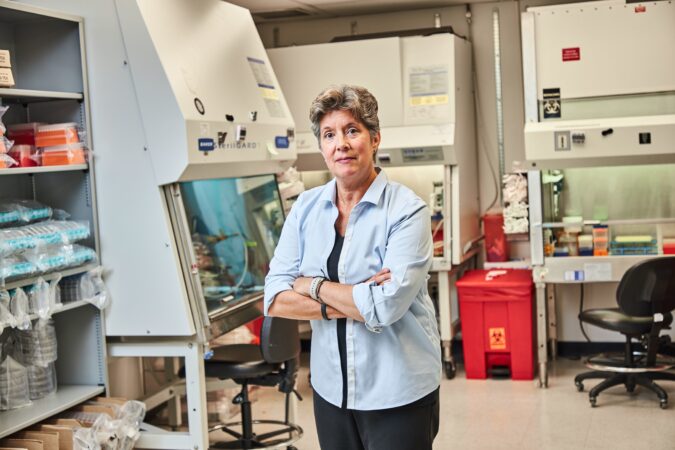
    A lab at the Wistar Institute in Philadelphia.

    Hope for hormone therapy?

    While it’s easy to take away p53 in the lab, it’s not as easy in a patient.

    There is, however, a promising drug currently being tested in clinical trials. Called rezatapopt, it can convert mutant p53 into a normal-functioning version of the protein.

    It works for one particular mutation, Y220C, found in roughly 4% of ovarian cancers.

    Murphy’s team found administering rezatapopt alongside hormone therapy led to 75% shrinkage of ovarian tumor models, versus 50% shrinkage when the hormone therapy was given alone.

    This finding lined up with rezatapopt’s early data from clinical trials.

    “For reasons we didn’t understand, women with ovarian cancer were responding best to this drug,” Murphy said.

    Nineteen out of 44 women treated with rezatapopt alone saw their tumors shrink, with one even having a complete response, according to recent interim results from a phase 2 trial.

    Murphy hopes this paper will prompt clinical trials to test rezatapopt in combination with anti-estrogen therapy.

    However, since rezatapopt only targets one p53 mutation, this approach is limited to a small subset of patients. Murphy hopes that more drugs can be developed that fix other mutant forms of p53 seen in ovarian cancer.

    Murphy’s findings make sense conceptually and present a “promising avenue for future clinical trials,” said Tian-Li Wang, the head of the Molecular Genetics Laboratory of Female Reproductive Cancer at Johns Hopkins University, who was not involved in the Wistar study.

    A caveat is that the study looked at a limited number of cell lines, she said.

    She thinks the results should be confirmed in cases of ovarian cancer that have other types of p53 mutations to see if it could be applied more broadly.

    “[I’m] really interested to see if the approach can benefit patients,” Wang said.

  • One year of inspections at Riddle Hospital: November 2024 – October 2025

    One year of inspections at Riddle Hospital: November 2024 – October 2025

    Riddle Hospital was cited by the Pennsylvania Department of Health for failing to properly monitor a patient’s vital signs in the emergency department earlier this year.

    The incident was among six times inspectors visited the Media hospital, which is owned by Main Line Health, to investigate potential safety problems.

    Here’s a look at the publicly available details:

    • Jan. 10, 2025: Inspectors came to investigate a complaint but found the hospital was in compliance. Complaint details are not made public when inspectors determine it was unfounded.
    • June 30: Inspectors cited the hospital for failing to properly monitor a patient’s vital signs while waiting for care in the emergency department. Inspectors found that a patient was evaluated in the emergency department as a triage level 3, meaning their vital signs should be checked every four hours. Records show the patient’s vital signs were documented at 12:40 a.m., and not again until almost seven hours later. Administrators reviewed the hospital’s emergency triage policies and retrained staff.
    • Aug. 13: Inspectors came to investigate a complaint but found the hospital was in compliance.
    • Sept. 15: Inspectors came to investigate a complaint but found the hospital was in compliance.
    • Sept. 18: Inspectors visited for a special monitoring survey and found the hospital was in compliance.
    • Sept. 18: Inspectors followed up on the June citation regarding vital sign monitoring and found the hospital was in compliance.
  • The Philadelphia scientists who studied garlic-flavored breast milk won a 2025 Ig Nobel Prize

    The Philadelphia scientists who studied garlic-flavored breast milk won a 2025 Ig Nobel Prize

    Philadelphia didn’t take home any Nobel Prizes this year, but work illuminating how babies respond to garlic-flavored breast milk at Monell Chemical Senses Center did get recognized by its satirical counterpart, the Ig Nobel Prize.

    Founded in 1991 by mathematician Marc Abrahams, the Ig Nobel Prize honors “achievements so surprising that they make people LAUGH, then THINK,” according to the Massachusetts-based organization’s website.

    Julie Mennella, a longtime scientist at the center in West Philadelphia, and Gary Beauchamp, Monell’s former director, won the prize earlier this fall for their 1991 study published in the academic journal Pediatrics that disproved popular folklore around breastfeeding.

    Their study examined whether eating garlic would flavor a mother’s breast milk and, if so, how a nursing baby would react to it.

    At the time, breastfeeding women were often told to eat bland foods, for fear their babies would reject strong flavors. However, the study’s results showed the opposite: Babies savored the garlic-flavored breast milk.

    “That simple, elegant study really showed how one of the first ways we learn about foods is through what our mothers eat,” Mennella said.

    These early life experiences shape food preferences and influence cultural food practices around the world, she emphasized. Babies whose mothers come from cultures in which garlic is a defining flavor would have experienced garlic long before their first meal.

    Mennella spoke with The Inquirer about the implications of her Ig Nobel Prize-winning work and her decades of research on flavor sciences and early nutritional programming.

    The following conversation has been lightly edited for length and clarity.

    What did you discover in your Ig Nobel Prize-winning study?

    We found in this study that not only did the milk get flavored with garlic, but contrary to a lot of the folklore, the babies actually liked it. They nursed longer when the milk was garlic-flavored than when it was bland and devoid of garlic.

    We went on to show that when women eat garlic, the flavor of amniotic fluid also gets altered.

    Through these first exposures, babies are learning about what mom is eating, what mom has access to, and what mom likes before their own first taste of solid food.

    What is the takeaway for breastfeeding mothers?

    Eat the healthy foods that you enjoy because your baby’s going to learn about the food. Food is much more than a source of calories. In many cases, it defines who we are as a people.

    What other flavors have you studied?

    A wide variety of flavors, from vanilla to even alcohol if a woman drinks it, get transmitted and flavors the milk. If women smoke, the tobacco flavor does, too. So it’s not only what you eat, but what you breathe.

    Why is it important for babies to learn about food this way?

    There’s a great story about the European rabbit (an animal that nurses), where they tagged the mother’s diet with juniper berry. What they were able to show is that in a group where the mothers ate juniper berry during either pregnancy or lactation, once those young rabbit pups left the nest, they were more likely to forage on juniper berry.

    So, she’s telling them, ‘These are the foods that are out there. I’m eating them. They’re safe.’ It’s really a very elegant, sustainable behavior, how moms transmit this information about the foods in the environment. She’s teaching her young and giving them an advantage early on.

    How long do these flavors last in the milk?

    Depending on the size of the chemical, some will get in fast. Garlic gets in a couple hours after the mom eats it, and then if she stops eating, it’s out of the milk like four or five hours later. The sensory experience of that baby is changing throughout the course of the day, day to day, depending on what she eats.

    What research have you been up to since?

    I’ve gone into so many different directions of looking at not only early flavor learning, but also nutritional programming. I also looked at the taste of medicine in children, looking at individual differences because taste is the primary reason for noncompliance. Children have a harder time because they can’t encapsulate the bad taste in a pill or tablet, so liquid medicines are particularly difficult.

    One study where we looked at variation in the taste of pediatric Motrin (among adult participants) was really interesting. Some people experience a tingle when they taste it. Others don’t. It makes you think that how one child tastes Motrin isn’t like how another does. If you don’t experience the tingle, or this burning sensation, all you taste is a sweet liquid, and those are the children that may be at risk of over-ingestion.

    What is your favorite project that you have worked on since the garlic study?

    I serendipitously found that another flavor that gets transmitted is alcohol, and that became a whole new area of research.

    We found that when women just have the equivalent of one or two glasses of wine or beer, not only did the alcohol get transmitted, but it flavored the milk. That became a lead article in the New England Journal of Medicine.

    At that time, there was talk about a folklore that women should drink when they’re breastfeeding, so they would make more milk. And contrary to that folklore, they actually made less milk.

    How did it feel to win an Ig Nobel?

    It was so nice to celebrate science. That’s really what that award does: It uses humor to teach about science.

  • One year of inspections at Children’s Hospital of Philadelphia: October 2024 – September 2025

    One year of inspections at Children’s Hospital of Philadelphia: October 2024 – September 2025

    Pennsylvania’s Department of Health investigated several complaints at the Children’s Hospital of Philadelphia between October 2024 and September of this year but did not cite the hospital for any safety violations.

    Here’s a look at the publicly available details:

    • Oct. 30, 2024: Inspectors came to investigate a complaint but found the hospital was in compliance. Complaint details are not made public when inspectors determine it was unfounded.
    • Jan. 27, 2025: Inspectors came to investigate a complaint but found the hospital was in compliance.
    • Feb. 18: Inspectors came to investigate a complaint but found the hospital was in compliance.
    • March 11: Inspectors came to investigate a complaint but found the hospital was in compliance.
    • May 15: Inspectors came to investigate a complaint but found the hospital was in compliance.