Tag: free-apple

  • Philly residents thought they had a winter parking system. Then the snow stuck around.

    Philly residents thought they had a winter parking system. Then the snow stuck around.

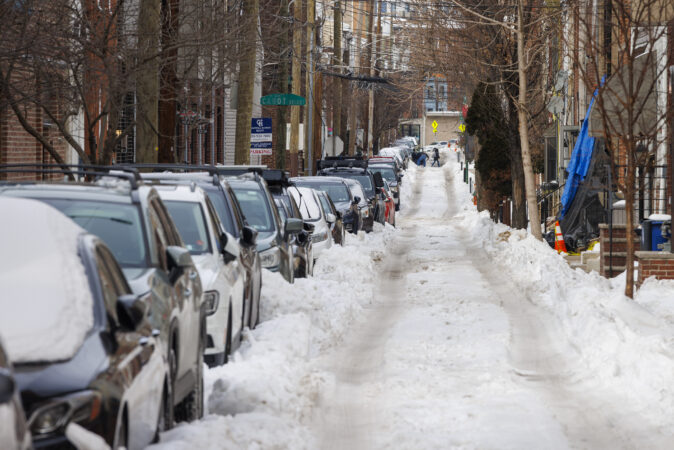
    By the time Taylor Schuler finally freed their car, they were exhausted. It had taken five hours across two days, hacking at the wall of ice encasing their Prius’ bumper, shoveling piles of frozen snow off the tires, to complete the job. As the sun set on their afternoon of labor, they were tempted to put a piece of furniture in their hard-earned spot, a practice sometimes known as “savesies” in Philadelphia.

    But they knew better. Having just moved to Philly from Houston, the 28-year-old academic librarian wasn’t all that familiar with cold-weather etiquette, so they took to the internet ahead of January’s snowstorm to figure out what exactly Philly’s rules are. They gathered that people weren’t all that fond of the “savesies” practice, so, tempted as they were to hold onto their spot, they let it go.

    Once the spot was cleared, they circled the block, a quick trip to make sure their car was still working. Their internet research had also led them to believe no one would just take their spot immediately. As they rounded the corner toward their house, though, they saw another driver lurch into the spot they just spent hours digging out.

    “Oh jeez,” Schuler thought to themselves. “It’s like the Wild West out here.”

    In some snow-burdened cities, saving a shoveled-out parking spot is a deeply ingrained winter habit. Boston even formally acknowledges the practice by allowing residents to mark a spot they dug out for up to 48 hours after a storm. In Chicago, protecting your precious dug-out parking space with a lawn chair is called “dibs,” and it’s been a beloved and widely accepted tradition since the great blizzard of 1967.

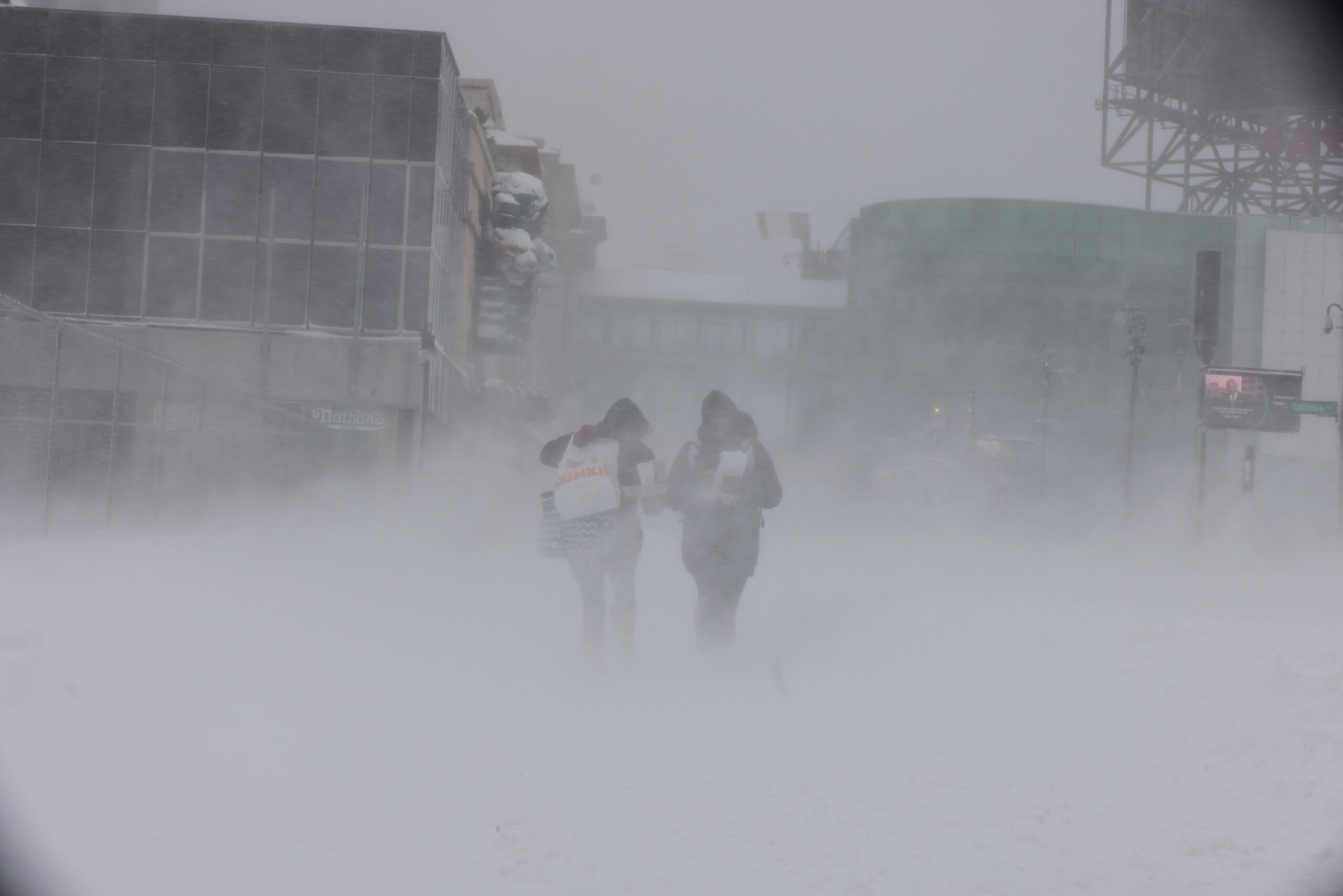
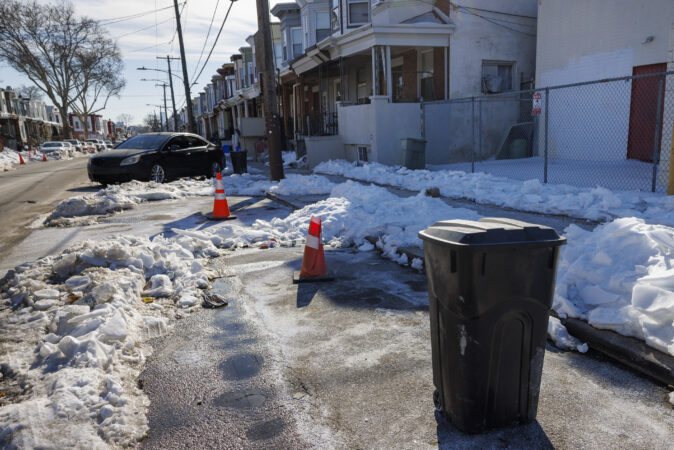
    But Philadelphia exists in a murkier middle ground. Until about two weeks ago, it snowed infrequently enough and melted fast enough that any theory about our collective approach to storm parking was never really put to the test. But the lingering snow has revealed a kind of civic chaos, with neighbors operating under wildly different assumptions and fights breaking out over who is entitled to snow-cleared parking spots.

    The divide is often generational. Older residents, who experienced harsher winters, are more likely to embrace savesies as another classic Philly tradition while younger residents and transplants see it as territorial nonsense, out of step with the values of densely populated city life.

    Schuler finds the entire debate exhausting. “I just want to be able to go to work and come home,” they said. “I didn’t ask for any of this.”
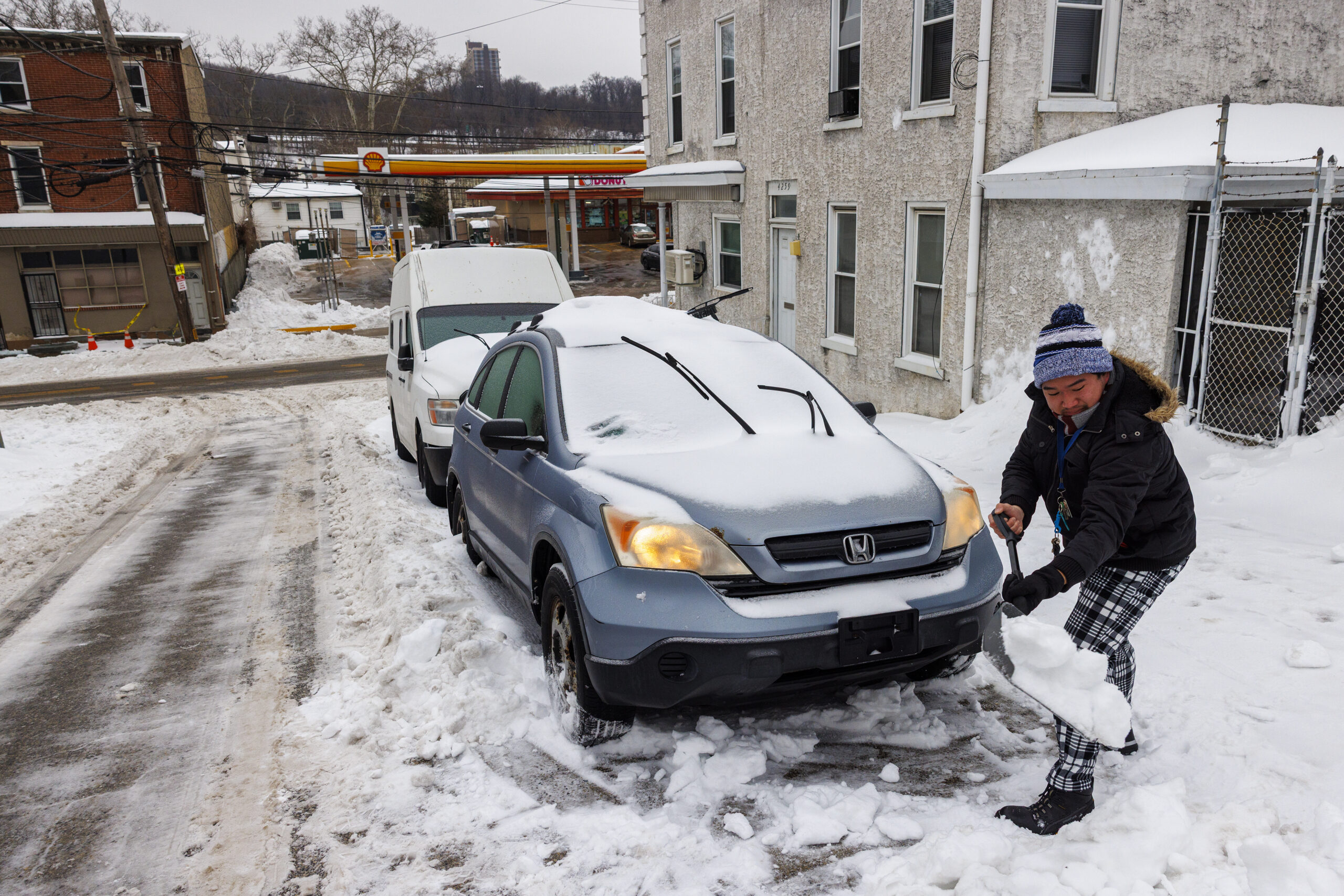
    Connor Phan digs his car out after the recent snowstorm.

    Jeff Martin, 43, who lives in South Philly, describes himself as firmly “no savesies” but with caveats. He won’t put out a chair. He won’t defend one. But he also won’t move someone else’s. “I don’t believe in the chair,” Martin said. “But I’m going to obey the chair.” His reasons are entirely practical. “I don’t want to get keyed,” he said.

    Martin argues Philadelphia’s parking wars are a symptom of the changing climate. “The fact that over the last 20 years, we haven’t gotten as much snow as we did over the previous 20 years has made us forget how to deal with it,” he said, “and the city forget how to deal with it to the point where they don’t properly fund the removal of snow.”

    For the record, the city is firmly in the “#nosavesies” camp, and the police routinely remind Philadelphians that saving parking spots is illegal. Of course, that doesn’t stop people from doing it — and other people complaining about it.

    Lucas Tran didn’t see the cinderblock in the spot he parked in on Tuesday night. It wasn’t until another driver pulled up and told him that he was in her spot that he became aware of it. She said she had dug out the spot herself, saved it with the cinderblock, and that Tran had to move.

    At first, he refused. But he backed down after she called him a liar and a “little b—.” He didn’t want things to escalate. The next day, she left a handwritten apology on his car. “Thank you for moving your car,” it read. “You are NOT a little b—.”

    Tran takes a “special exception” approach to the savesies debate. If the woman had been elderly or a first responder, or if it had been two or three days after the storm rather than a full week later, he might have been more understanding. “But the roads are drivable now, he said. “There are more options to park. You can’t keep claiming a spot that’s public property.”

    Back in West Philly, Schuler spent the week parking wherever they could. The spot they dug out remained occupied until one evening, when they pulled up, excited to reclaim what was once theirs — only to find a folding table balanced on two overturned pots in their way. Someone had “savesied” Schuler’s spot.

    Schuler snapped a photo and uploaded it to Reddit, where the response was nearly unanimous. As one Redditor put it, “that’s diabolical.”

    It was the one version of “savesies” Schuler had never seen defended. “If there’s anything people agree on,” they said, “it’s that you don’t do that.”

  • The cold’s toll: Woodcocks wiped out in Cape May, opossums frostbitten in Philly, robins struck on roads

    The cold’s toll: Woodcocks wiped out in Cape May, opossums frostbitten in Philly, robins struck on roads

    Steve Frates of Ocean View, N.J., was driving along Route 9 in Cape May County on a recent bitter cold day and noticed something strange: dead robins lying by the side of the road.

    Lots of them.

    Frates was even more startled when one flew into his Ford F-150 and died. The 72-year-old retired telecommunications manager wondered what was happening.

    “I noticed when it was really cold that I would see flocks of birds alongside of the road as I was traveling up and down Route 9 and the Garden State Parkway,” Frates said. “I would see a lot of birds that had been hit. I’d never seen anything at that scale. This was at a level I’ve never experienced before.”

    The winter has been hard on the region’s animals, wiping out 95% of the woodcocks in Cape May Point, fostering frostbite on opossums in Philadelphia, and freezing turtles in place in ponds.

    Experts say the animals are well adapted to survive the cold, but this winter has been especially harsh, producing a frozen snowpack that keeps animals from digging for food, and a prolonged cold that has pushed some to the brink.

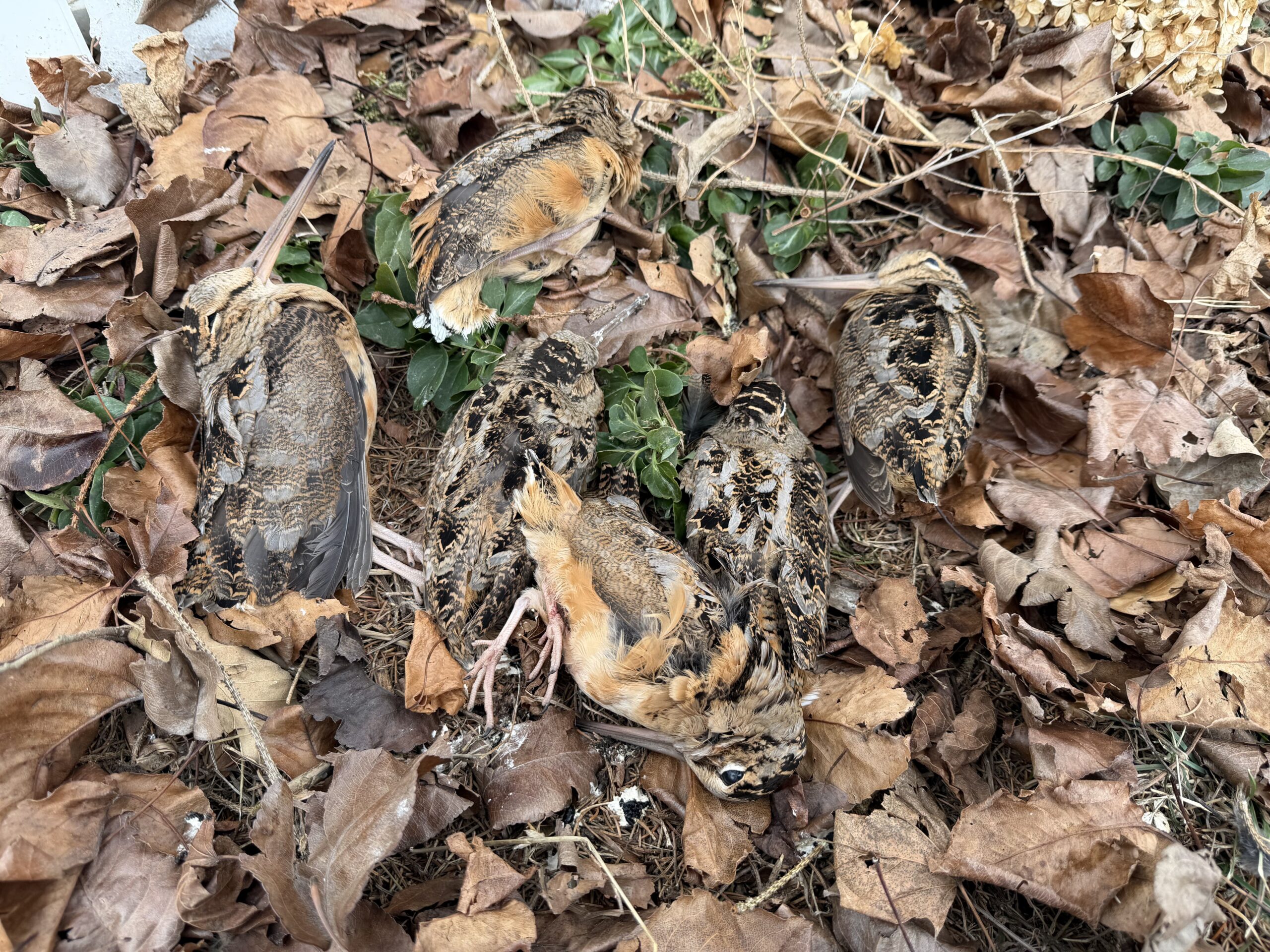
    About 200 woodcocks have died in the area of Cape May Point since the Jan. 25 snowfall that froze under a prolonged cold spell. These were found likely seeking food near the edge of homes.

    Woodcocks are starving

    Mike Lanzone, a wildlife biologist and CEO of Cellular Tracking Technologies, has been busy the last two weeks helping to gather hundreds of dead woodcocks in Cape May Point and West Cape May. His company makes products that track birds via GPS and other technology.

    He described a devastating die-off for the woodcocks, which depend on finding food by probing the ground to extract worms and invertebrates. They have been unable to penetrate the snow and ice, causing starvation.

    “They were losing a lot of muscle mass, and they weren’t able to eat anything,” Lanzone said. “We started seeing them die off. First it was just a few. Then 10. Then 15. Then 40. Then almost 100 woodcocks.”

    Lanzone said about 254 woodcocks had died as of Thursday.

    “There was at least a 90-95% die-off,” he said. “That is what we know for sure. At least in Cape May Point and West Cape May.”

    Lanzone said the woodcocks were being taken to the Academy of Natural Sciences of Drexel University in Philadelphia to be examined.

    Jason D. Weckstein, associate curator of ornithology at the academy, said such die-offs have happened before. He will examine the birds and, using chemical signatures in their bodies, determine where they were born.

    “They’re dying because they’re starving,” Weckstein said. “They can’t feed. Most of those birds were super emaciated and just died.”

    Robins are desperate

    Chris Neff, a spokesperson for New Jersey Audubon, said the robins that Frates saw along the side of the road had been driven there in search of food.

    “Birds are congregating along the melted edges of roads searching for bare ground on which to find food and even meltwater to drink,“ Neff said. ”Birds are desperate to consume enough calories each day during this extreme weather, and this makes them bolder, meaning they may not fly off when a car approaches if they have found something to eat.”

    American robins, he said, travel in large flocks. When their food is exhausted, a few will take off in search of the berries of American holly and Eastern red cedar. The rest will follow en masse, following a path that might lead them across a road.

    The chances of collisions with cars become much higher.

    Neff advises that people should slow down if they see birds congregating along a road and keep an eye out for any that might fly across.

    “Like deer,” Neff said, ”if one darts across the road, there are sure to be more following.”

    A grebe that was rescued amid the harsh winter weather and taken to the Wildlife Clinic at the Schuylkill Center for Environmental Education, where it is being fed and cared for until an open water source can be found for it to be released.

    Opossums and other animals

    Sydney Glisan, director of wildlife rehabilitation for the Wildlife Clinic at the Schuylkill Center for Environmental Education in Northwest Philadelphia, characterizes the severe winter conditions as a critical “make it or not” period for local wildlife.

    Some animals, such as deer, are well adapted to the cold and can eat fibrous bark and twigs to survive. Other species, however, struggle.

    She said Virginia opossums found in Philadelphia, despite being a native species, have physical attributes that “do not really work for this type of weather.” She has treated multiple opossums for frostbite. The latest patient arrived Friday.

    They are susceptible, she said, because their ears, tails, and paws have no fur for protection. Often, tails or fingers need to be amputated.

    Residents often find them curled up and immobile, mistakenly believing the animals are dead when they are actually just trying to stay warm or are in a state of shock.

    The weather also affects aquatic birds like grebes, which become stranded on land because they require open water to take off and cannot walk well on ice or ground.

    Even squirrels struggle, as the ice prevents them from digging up cached food, Glisan said.

    Glisan advises the public to be cautious about intervening for wildlife such as birds. She notes that even well-intentioned acts, such as providing heated birdbaths, can result in hypothermia if a bird’s wet feathers subsequently freeze in the air.

    “As much as it might sound rude, I always say doing nothing is the best thing that you can do,” Glisan said. “I recommend helping by not helping.”

    Reptiles and amphibians

    Susan Slawinski, a wildlife biologist at the Schuylkill Center, said the danger for reptiles and amphibians comes as lakes and ponds freeze over. Aquatic species such as green frogs, painted turtles, and snapping turtles overwinter at the bottom of ponds.

    There, the animals survive by slowing their metabolisms enough to eliminate the need to eat or surface for air. However, prolonged cold poses a specific danger as ponds freeze solid to the bottom. Those hibernating will perish.

    The Schuylkill Center uses a bubbler in its Fire Pond to maintain a gap in the ice to let in oxygen.

    Despite the risks, Slawinski emphasizes that native wildlife is historically resilient, though mortality is an unfortunate reality for animals that select poor hibernation spots.

    For example, the gray tree frog uses glucose to create a natural “antifreeze” that prevents its cell walls from bursting in freezing temperatures.

    “Native wildlife is very good at adapting to cold temperatures,” Slawinski said. “There have been colder winters, longer winters before. Unfortunately, there is always going to be a mortality risk.”

  • Museum reverses course, and it’s the ‘Philadelphia Museum of Art’ once again

    Museum reverses course, and it’s the ‘Philadelphia Museum of Art’ once again

    About the new name for that big museum at the end of the Parkway: Never mind.

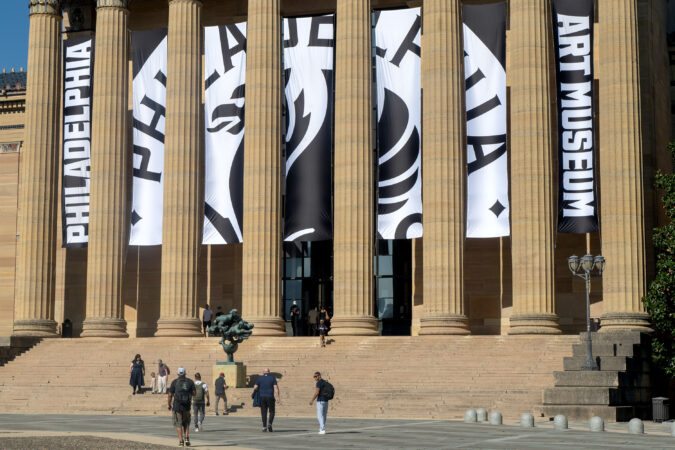
    Four months after rolling out a new name with great fanfare, the Philadelphia Museum of Art is once again calling itself the Philadelphia Museum of Art. The museum’s board Wednesday afternoon voted unanimously at a special meeting to scrap the name Philadelphia Art Museum, which had been announced Oct. 8 as part of a larger rebranding.

    Some signs and materials are being quickly changed over with the old-new name, while others will be reprinted or revamped in coming weeks. The new PhAM acronym used in marketing materials will be dropped, and the museum will once again refer to itself in shorthand as the PMA, as many Philadelphians long have.

    Why the retreat?

    In short, the new name was widely disliked.

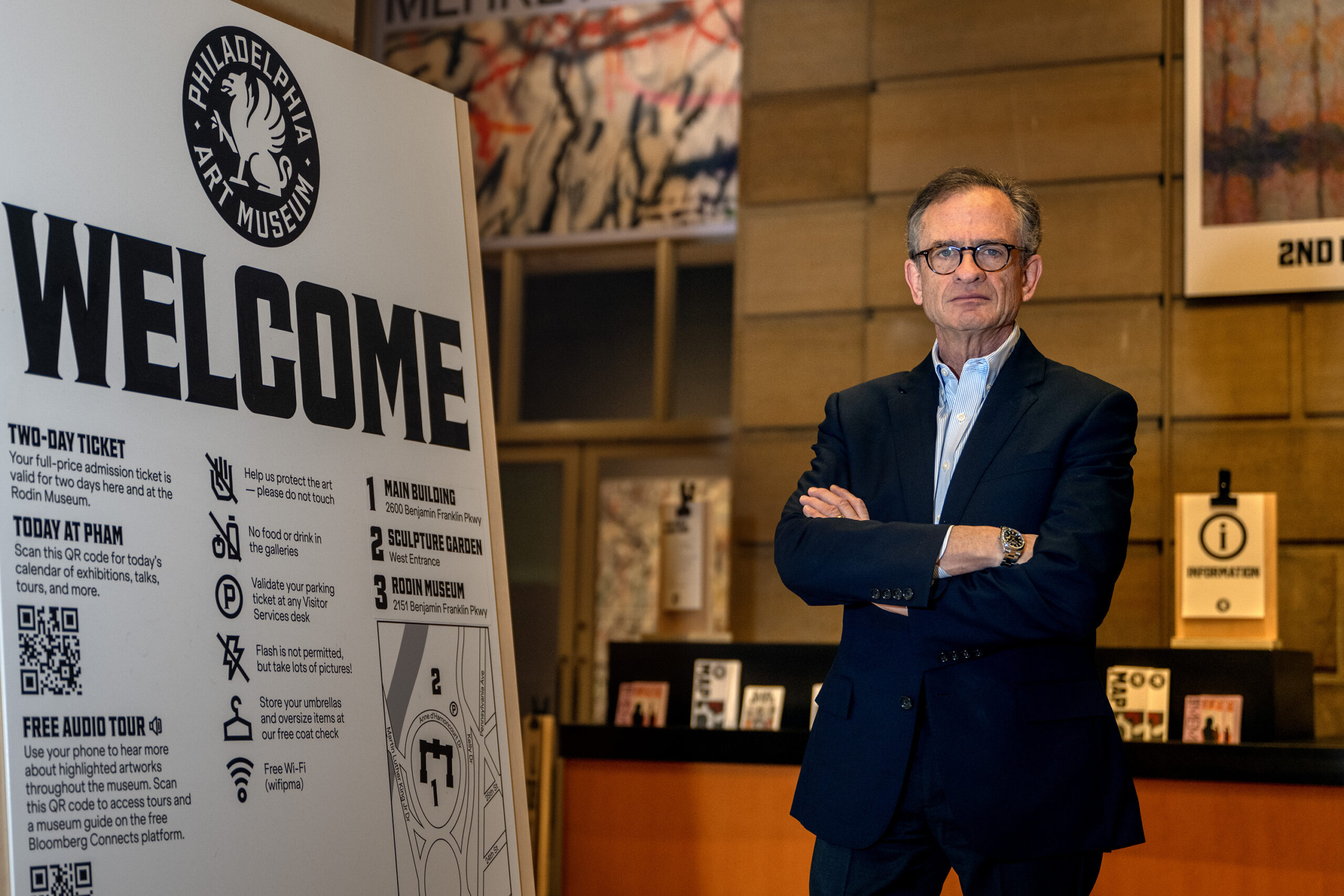
    Daniel H. Weiss, director and CEO of the Philadelphia Museum of Art, in the museum lobby, Jan. 7, 2026.

    The museum spent the past several weeks surveying opinions, said director and CEO Daniel H. Weiss, and “I think what we learned from our survey, and it’s not surprising, is that people who have any knowledge of the institution — donors, staff, trustees, members — they know the name and it resonates with them. It’s something distinctive, it’s who we are. And changing the name for no obvious reason created a sense of alienation and didn’t make sense to a lot of people.”

    Philadelphia Museum of Art had been the name of the nearly 150-year-old institution for 87 years until the change this fall.

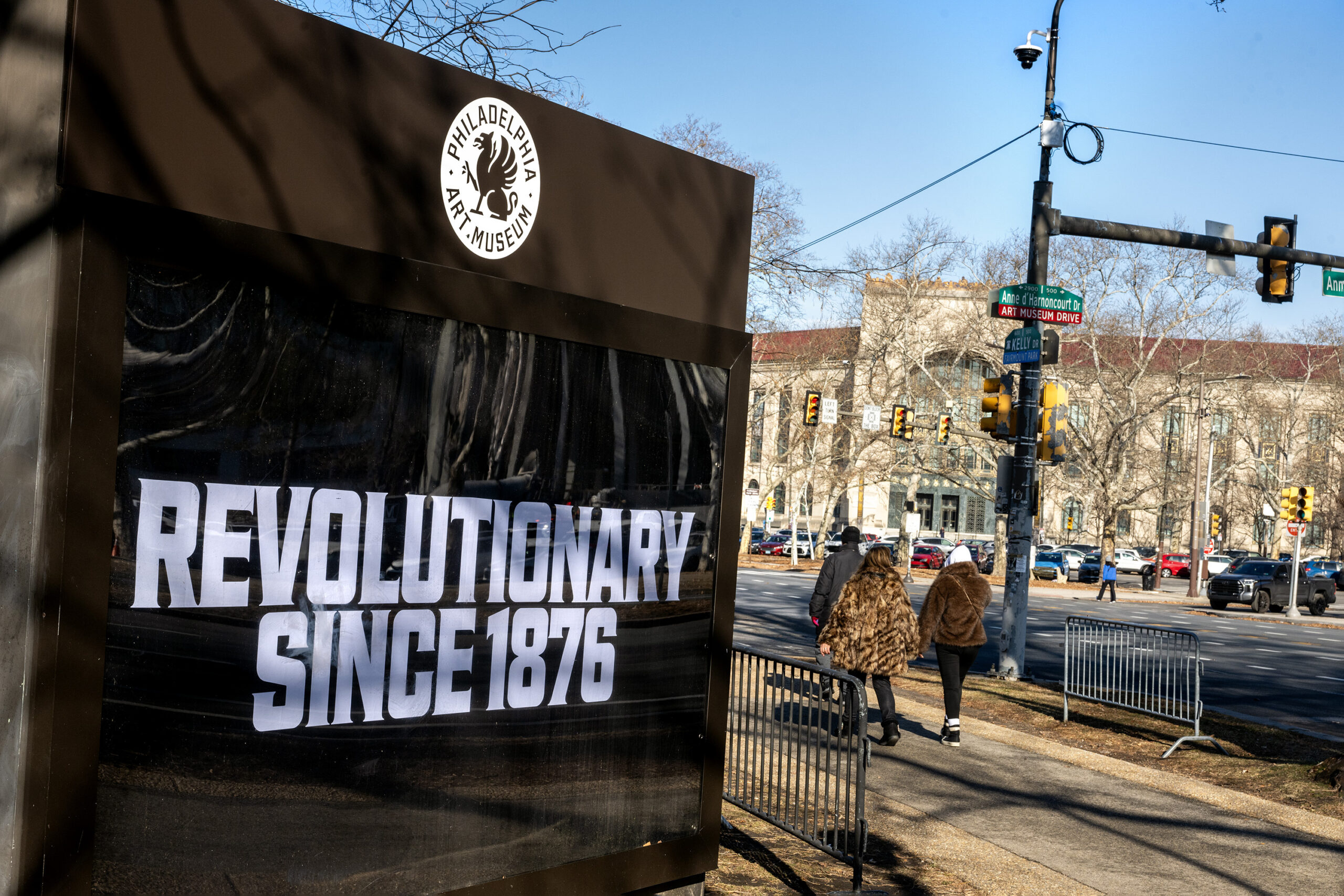
    The museum will, however, keep visual elements of the larger rebranding — the logo that echoes one of the griffin figures along the roofline of the museum’s main building, and bold fonts in signage and promotional materials.

    A rolling video screen above the admissions counter at the West Entrance at the Philadelphia Museum of Art Oct. 6, 2025.

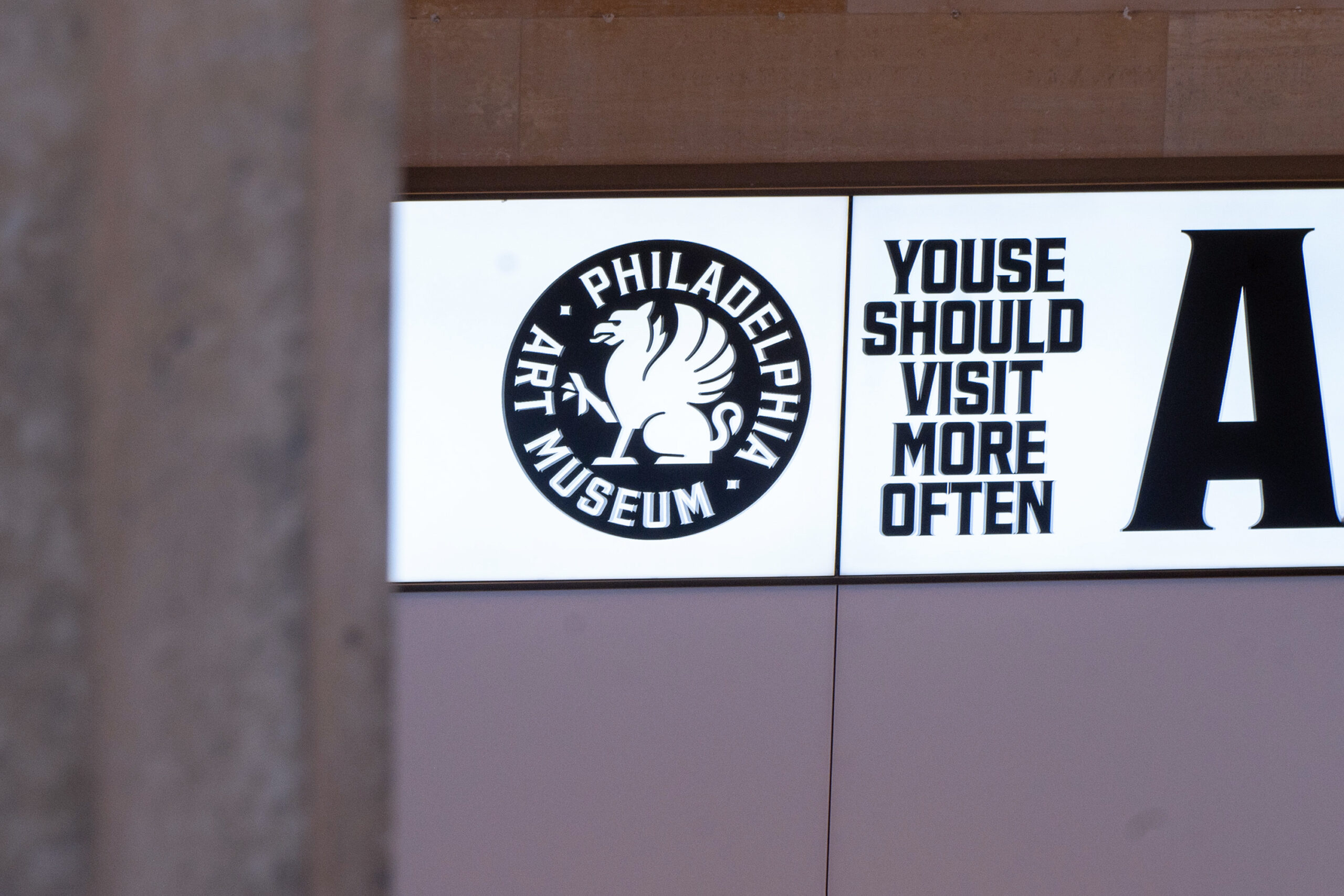
    As for the continued use of slightly irreverent tag lines that came with the rebrand — phrases like “Youse should visit more often,” — “Probably not so much,” said Weiss. “We will modify those a little downstream, but the idea is to return to a slightly more aligned presentation more closely tied to our mission.”

    The rebranding — which was widely, though not universally, criticized upon its rollout — was a major initiative of former director and CEO Sasha Suda and marketing chief Paul Dien.

    When the museum announced the name change, Suda explained it by saying that it was “truly a reflection of what the community has called it for a long time,” and that it was “also a sort of significant way of starting a new chapter and saying, ‘Look, we’re definitely starting a new chapter here.’”

    Dien left the museum as of Feb. 1. Suda was fired Nov. 4 and, after filing a wrongful dismissal lawsuit against the museum, was ordered on Friday by Philadelphia Court of Common Pleas to settle the matter behind closed doors through arbitration rather than in a public trial.

    The north side of the Philadelphia Museum of Art, along Kelly Drive at 25th Street and Art Museum Drive, Jan. 7, 2026.

    The decision around the controversial rebranding is the first visible test of Weiss’s leadership, and he chose the route of inquiry and shared responsibility, directing a nine-member task force to assess its reception. The original rebrand was launched after multiple internal meetings, but without final notification to the board, according to one trustee.

    In a 3½-page note to staff Wednesday afternoon announcing the decision to keep the logo and reverse the name change, Weiss noted the “siloed process” in which the original rebrand was developed, and took pains to emphasize how the reconsideration of it has been, and will be, different.

    “The work of the design team over the past two years was exhaustive, incorporating decades of museum history into their thinking and interviews with dozens of staff and trustees. Yet, the team did not have the benefit of a broad, interdisciplinary group to inform the work along the way, so when the final product was rolled out, many felt surprised or not sufficiently invested in the outcome,” the note reads.

    A series of internal meetings with staff will explain the task force’s findings, Weiss wrote in his note.

    “The task force did consider reverting completely to the prior brand, but ultimately felt strongly that the original reasons for the rebrand are compelling. It was time for the museum to update its look, and the griffin logo is a strong statement that can successfully strengthen and widen our audience.”

    The museum’s new logo keeps the stylized griffin that was part of the rebrand unveiled in October 2025, but shows the return of the museum’s name to the ‘Philadelphia Museum of Art.’ The October rebrand included a renaming to ‘Philadelphia Art Museum,’ a change that has now been scrapped.

    Surveys conducted in recent weeks revealed findings that “went in two very different directions,” Weiss wrote. “Staff, trustees, and members were opposed to the name change, the URL, and the look of the new brand, yet the public reacted positively to the new logo and overall look and feel.”

    Art Museum fan Brian Forsyth, of Exton, said he felt “blindsided by the sudden and uncalled for rebrand,” and when it happened, he asked for (and received) a membership refund.

    He disliked the rebrand in general and said that, while he sometimes called it “the art museum,” he mostly referred to it as “the PMA.”

    “When they took that phrasing away from me, it hurt,” he said.

    Now that the museum is changing its name back, he says he intends to restore his membership.

    “I will not, however, purchase any of the new merch. I still have my classic PMA baseball cap, which I will wear into the ground, literally,” he said.

    Inspiring the museum’s logo: a bronze griffin on the roof of the northern wing of the Philadelphia Museum of Art, Oct. 6, 2025.

    Weiss said that the museum will not be disposing of current materials printed with the Philadelphia Art Museum name, such as brochures or maps. Rather, the change will be cycled through as items need to be replaced.

    Gretel, the Brooklyn firm that designed the rebrand, is working with the museum on the current modifications.

    The rebrand cost the museum about $1 million, Weiss said, and the total cost of the change-back may not exceed $50,000.

    “The idea is to do this as cost-effectively as we can.”

    Weiss called the entire rebrand episode “an unnecessary distraction for us. We want to move on and focus on things that matter most to our mission.”

  • Pa. officials push back as Trump targets Philly in call to nationalize elections ahead of 2026 midterms

    Pa. officials push back as Trump targets Philly in call to nationalize elections ahead of 2026 midterms

    Pennsylvania Secretary of State Al Schmidt on Wednesday rejected President Donald Trump’s false claims about voter fraud in the state as Trump targeted Philadelphia in his push to nationalize elections.

    The state’s top election official said Trump’s proposal would violate the Constitution, which he noted clearly gives states exclusive authority to administer elections.

    “Pennsylvania elections have never been more safe and secure,” said Schmidt, who served as Philadelphia’s Republican city commissioner in 2020, when the city was at the center of Trump’s conspiracy theories.

    “Thousands of election officials — Democrats, Republicans, and Independents alike — across the Commonwealth’s 67 counties will continue to ensure we have free, fair, safe, and secure elections for the people of Pennsylvania,” he said in a statement.

    Speaking to reporters Tuesday in the Oval Office, Trump cited Philadelphia, Detroit, and Atlanta as examples of where the federal government should run elections. He singled out three predominantly Black cities in swing states but offered no evidence of voter fraud or corruption to support his claims of a “rigged election.”

    “Take a look at Detroit. Take a look at Pennsylvania, take a look at Philadelphia. You go take a look at Atlanta,” Trump said. “The federal government should get involved.”

    Philadelphia has been a frequent target of Trump’s false claims of election fraud for several years, going back to his efforts to overturn his loss in the 2020 election. City and state officials have persistently pushed back on those claims, and there is no evidence that elections in the city have been anything but free and fair.

    Trump is advocating for taking control of elections in 15 states, though his administration has not named which ones.

    “The Republicans should say, ‘We want to take over,’” Trump said in December. “We should take over the voting, the voting in at least many — 15 places. The Republicans ought to nationalize the voting.”

    But, Pennsylvania officials and experts noted, he lacks the power to do so unilaterally.

    Congress has limited power to set rules for elections, but the U.S. Constitution grants control of elections to the states.

    “The president has zero authority to order anything about elections,” said Marian Schneider, an election attorney who was Pennsylvania’s deputy secretary of elections during the 2016 election.

    White House press secretary Karoline Leavitt claimed to reporters early Tuesday the president was referring to the SAVE Act, legislation proposed by House Republicans require citizens to show documents like a passport or driver’s license to register to vote.

    But Trump didn’t mention the legislation Tuesday.

    Trump will face an uphill battle in nationalizing elections as even some Republicans in Congress are already pushing back. Senate Majority Leader John Thune (R., S.D.) told reporters Tuesday he disagreed with Trump on any attempt to nationalize elections, calling it “a constitutional issue.”

    “I’m not in favor of federalizing elections,” Thune said.

    Still, Trump’s comments raised alarm as his administration continues to sow doubt in the nation’s elections.

    “This is clearly a case of Trump trying to push the boundaries of federal involvement in election administration because he has a problem with any checks on his power, democracy being one of them,” said Montgomery County Commissioner Neil Makhija, an attorney and a Democrat who chairs the Montgomery County Board of Elections.

    Trump’s comments came a week after the FBI seized ballots and voting records from the 2020 election from the Fulton County election hub in Georgia. In a statement, Fulton County Commissioner Marvin Arrington Jr. said the county will file a motion in the Northern District of Georgia challenging “the legality of the warrant and the seizure of sensitive election records, and force the government to return the ballots taken.”

    Lisa Deeley, a Democratic member of the Philadelphia city commissioners, who oversee elections, accused Trump of trying to distract from federal agents killing two civilians in Minnesota last month.

    “We all know the President’s playbook by now. His remarks on elections are an effort to change the conversation from the fact that the Federal Government is killing American citizens in Minneapolis,” Deeley said in a statement.

    Trump has been making similar claims since 2016, when he erroneously blamed fraud for costing him the popular vote.During a debate with his 2020 opponent, Joe Biden, Trump said, “Bad things happen in Philadelphia, bad things,” viewed at the time as an attempt to sow doubt about the election results and mail voting during the peak of the COVID-19 pandemic.

    Despite losing to Biden in Pennsylvania in 2020 by a little more than 80,000 votes, Trump has repeatedly claimed he actually won, lying about mail-in votes “created out of thin air” and falsely stating there were more votes than voters.

    “Every single review of every single county in the commonwealth has come back within a very small difference, if any, of the results reported back in 2020,” Kathy Boockvar, who served as Pennsylvania’s secretary of state during the 2020 election, told The Inquirer in 2024.

  • A couple bought a house on a quiet street. Then they found a swastika in the basement.

    A couple bought a house on a quiet street. Then they found a swastika in the basement.

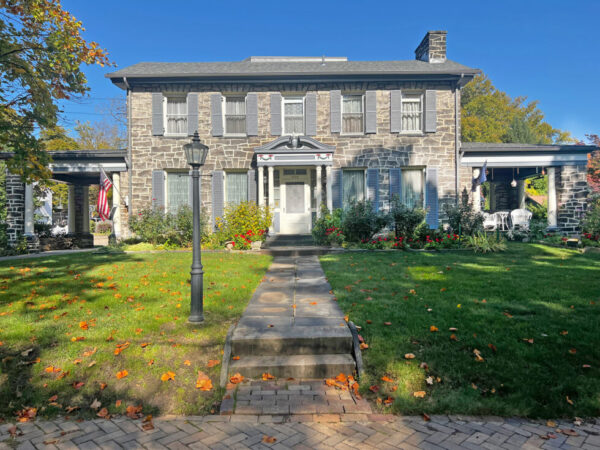
    The property listing in Beaver, Pa., extolled the countless charms of the Colonial Revival. There was the “grand foyer with a handmade railing,” the built-in cabinets and “beautiful” hardwood floors, and the covered porch offering “stunning” views of the nearby Ohio River.

    “This home adorns many wonderful features,” the listing read, “and outstanding details throughout.”

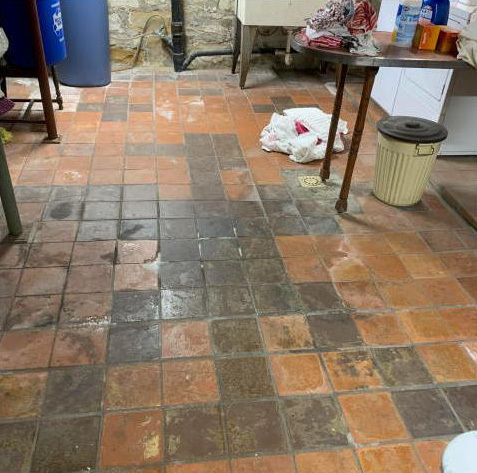
    One detail, however, was notably absent from the listing: the sizable swastika arranged in permanent tile on the basement floor.

    That omission has become the source of an unusual legal battle, a disturbing discovery that has weaved its way through the state court system and raised questions — legal and otherwise — about what represents a “material defect” in a property.

    “I certainly have not seen [this] particular fact-pattern come up before,” said Hank Lerner, chief legal officer for the Pennsylvania Association of Realtors. “It’s a pretty specific one.”

    When Daniel and Lynn Rae Wentworth closed on the five-bedroom home in 2023, for around $550,000, it was easy to see the draw. Anchored on a spacious lot, just a block from the river, the home was idyllic by just about any measure.

    But shortly after moving in, the Wentworths were clearing out the basement when they discovered the grim iconography in tile — a swastika, along with, what appeared to the couple, to be an image of a Nazi eagle. (According to the Wentworths, the tiled images had been covered by rugs during the inspection of the home.)

    After Daniel and Lynn Rae Wentworth purchased a home in Beaver, Pa., they discovered in the basement floor what they believed to be a tiled image of a Nazi eagle (pictured above) and a swastika.

    “Mortified,” as they would later say, the Wentworths filed a complaint in Beaver County civil court, alleging the previous owner had violated the Pennsylvania Real Estate Seller Disclosure Law, and seeking monetary damages.

    The Wentworths argued they would never have bought the home had they known about the tiled floor. Nor, they said, could they be expected to live in the home — or sell it — given its condition. In their complaint, the couple estimated it would cost roughly $30,000 to replace the floor.

    “This … is just not something you’d ever expect to have to deal with,” said Daniel Stoner, an attorney for the Wentworths.

    “They could have actual economic harm from the potential reputational damage if people thought they put it in themselves or were aware of it.”

    The seller — an 85-year-old German immigrant who’d owned the home for nearly a half-century — did not share this view.

    In response to the Wentworths’ suit, Albert A. Torrence, an attorney for the seller, argued in a court filing that “purely psychological stigmas do not constitute material defects of property … and a seller has no duty to disclose them.”

    What’s more, he argued, the Wentworths had failed to identify any untruthful or inaccurate statements he’d made regarding the property.

    In an interview, Torrence denied that the home’s previous owner was a Nazi supporter. Forty years ago, he said, the previous owner had been reading a book about the swastika symbol being co-opted by Germany’s Nazi Party; angry, he decided to include the symbol in a basement renovation project, placed a rug over it not long after, and forgot about it.

    “And, of course, it fits into the narrative, ‘A Nazi lived in this house,’” said Torrence. “It’s just not the narrative that people want it to be.”

    Regardless, the case raised an interesting question: When it comes to property sales, what, exactly, does rise to the level of a material defect worthy of disclosure?

    Pennsylvania law requires sellers to disclose a laundry list of potential problems with a home — termites, structural or heating problems, sewage issues. “[Any] problem with a residential real property or any portion of it that would have a significant adverse impact on the value of the property or that involves an unreasonable risk to people on the property.”

    Absent from that list? Hate symbols that had been permanently embedded.

    In court filings, the previous owner cited an earlier case that had advanced all the way to the Pennsylvania Supreme Court.

    In 2007, after a California resident purchased a Delaware County home, she learned from a neighbor that the property had been the site of a grisly — and highly publicized — murder-suicide. The new owner, Janet S. Milliken, sued.

    In that case, the state’s Supreme Court ruled that the home’s unfortunate history did not represent a material defect, adding that it would be impossible to quantify the psychological impact of various events that might have occurred on a given property.

    “Does a bloodless death by poisoning or overdose create a less significant ‘defect’ than a bloody one from a stabbing or shooting?” the court wrote. “How would one treat other violent crimes such as rape, assault, home invasion, or child abuse? What if the killings were elsewhere, but the sadistic serial killer lived there? What if satanic rituals were performed in the house?”

    Leaning heavily upon the Supreme Court’s decision in the Milliken case, the Beaver County trial court dismissed the Wentworths’ complaint.

    Unsatisfied with the ruling, the Wentworths appealed.

    In a decision filed late last year, three Superior Court judges affirmed the initial ruling that the tiled imagery was not required to be disclosed in accordance with the state’s disclosure law.

    “A basement that floods, a roof that leaks, beams that were damaged by termites … these are the conditions our legislature requires sellers to disclose if they are known,” the judges wrote in an 18-page ruling filed Nov. 12.

    “We are not dismissive of the Wentworths’ outrage, nor their concern that the existence of the images could taint them as Nazi supporters,” the decision went on. “With this lawsuit, however, they have made a public record to counter any supposition in that regard.”

    Though the couple could’ve appealed to the Pennsylvania Supreme Court, Stoner, their attorney, said this week that they had decided against doing so, citing the low likelihood that the case would’ve been heard by the court.

    “I’ve only had one case in my entire career that they’ve actually taken up,” Stoner said. “So the chances of them even getting it heard weren’t the greatest.”

    As for the home, Lynn Rae Wentworth told the Pittsburgh Jewish Chronicle recently that she and her husband planned to remove the tiling once they were sure the legal wrangling had concluded.

    She said they were also considering approaching local legislators in hopes of changing the law, making hate symbols material defects that necessitated disclosure.

    As she told the publication, “I don’t want anyone to have to go through this again.”

  • A coastal ‘bomb’ and single-digit temperatures are expected this weekend in the Philly area

    A coastal ‘bomb’ and single-digit temperatures are expected this weekend in the Philly area

    It remains a long shot that a fresh layer of frosting will coat the hardening and tenacious snowpack, but evidently that street-congesting frozen mass isn’t exiting in the near future.

    As of Friday morning, it appeared that a potent coastal storm that is expected to qualify as a meteorological “bomb” was going to spare the Philadelphia region from another snowfall.

    But it is expected to have serious impacts on the New Jersey and Delaware beaches, with a combination of onshore gales and a tide-inciting full moon, forecasters are warning.

    On the mainland, it is poised to generate winds that would add sting to what has been one of the region’s most significant outbreaks of Arctic air in the period of record.

    Lows at Philadelphia International Airport both Thursday and Friday mornings — 13 and 11, respectively — were several degrees above what was forecast.

    But they are to drop into single digits Saturday morning, and flirt with a record. Wind chills during the weekend are expected be in the 10-below range, said Mike Silva, a meteorologist with the National Weather Service in Mount Holly.

    “Even though there might not be much or any snow in Philly,” he said, “it’s going to be cold, and we’re still going to have the wind impacts.”

    window.addEventListener(“message”,function(a){if(void 0!==a.data[“datawrapper-height”]){var e=document.querySelectorAll(“iframe”);for(var t in a.data[“datawrapper-height”])for(var r,i=0;r=e[i];i++)if(r.contentWindow===a.source){var d=a.data[“datawrapper-height”][t]+”px”;r.style.height=d}}});

    Is the snow threat off the table for Philly?

    Computer models continue to keep the storm far enough off the coast to preclude a major snowfall inland.

    But “it wouldn’t take much of a jog west to really mess up the forecast,” said Tom Kines, senior meteorologist with AccuWeather Inc. It’s been known to happen.

    On Friday morning, the National Weather Service was posting a 30% chance that Philly would get something measurable — technically 0.1 inches — Saturday night into Sunday, with about a 10%shot at an inch.

    The weather service was expecting an inch at the Shore, but with a slight chance of several inches.

    Forecasters are certain that a storm is going to blow up off the Southeast coast as frigid air that is penetrating all the way to Disney World interacts with the warm waters of the Gulf Stream.

    Gusts at the Shore during the day Sunday might be as high as 40 mph as the storm could reach “bomb” status.

    What exactly is a ‘bomb?’

    Two brave souls endure the snow and winds from a meteorological bomb cyclone in Atlantic City in January 2022.

    The technical definition of a meteorological bomb is a drop in central barometric pressure of 0.7 inches in a 24-hour period, about a 2% to 3% change in the weight of the air. That might not seem like much, but it’s a big deal if you’re a column of air.

    Such a drop in pressure indicates a rapidly developing storm. Air is lighter in the centers of storms, as precipitation is set off by lighter warm air rising over denser cold air.

    As a weather term, bomb first appeared in an academic paper in 1980 by atmospheric scientists Frederick Sanders at the Massachusetts Institute of Technology and John Gyakum at McGill University.

    They found that the western Atlantic, in the proximity of the Gulf Stream, was one of two regions on the planet most prone to bombs. The other was the area near the Kuroshio Current in the far northwestern Pacific.

    Both are massive reservoirs of warmer waters that interact with cold air coming off land masses. Some of the European settlers in the colonial era learned about the effects the hard way, experiencing mega-storms that were alien to areas in England.

    Gyakum, who was Sanders’ graduate student at MIT, recalled Thursday that the duo took some blowback for using the word bomb.

    But with a cyclone of such ferocity, the term was worth using to draw the public’s attention to potential impacts, which sometimes exceed those of hurricanes, Gyakum said.

    He said he had no doubt this weekend’s storm would reach bomb status.

    While any heavy snows from this storm are likely to bypass the Philly region, some accumulating snow is possible the middle of next week, Kines said, although nothing in a league with what happened Sunday.

    When can Philly expect a thaw?

    Temperatures during the coming workweek are due to moderate, at least slightly, with highs around freezing Monday through Thursday, 10 to 12 degrees warmer than what is expected this weekend.

    The cold “certainly eases up,” Kines said.

    But that 9.3 inches of snow and sleet that accumulated Sunday evidently has taken a particular liking to the region. As for when it will disappear, he said: “It’s going to take a while.”

    The overall cold upper-air pattern looks to persist, said Paul Pastelok, AccuWeather’s long-range forecaster. And the extensive snow cover is going to have a refrigerant effect on temperatures.

    So when will it warm up and go away?

    “We’ll find out Monday,” Kines said. He was referring to Groundhog Day, of course, when Punxsutawney Phil will issue his extended forecast.

    Nevertheless, he said, meteorologists will be on call if needed.

    “It never hurts to get a second opinion,” he said.

  • Some restaurateurs are coping with rising food prices by charging you less. Here’s how that works.

    Some restaurateurs are coping with rising food prices by charging you less. Here’s how that works.

    Restaurant diners are eating less, ordering fewer drinks, skipping dessert, and, in many cases, dining out less often altogether.

    For restaurants, however, the cost of doing business has not come down. Labor prices are up. So are food prices, particularly beef. Rents continue to climb. But the old solution — raising menu prices — has become increasingly risky as owners worry about alienating customers who are already cutting back.

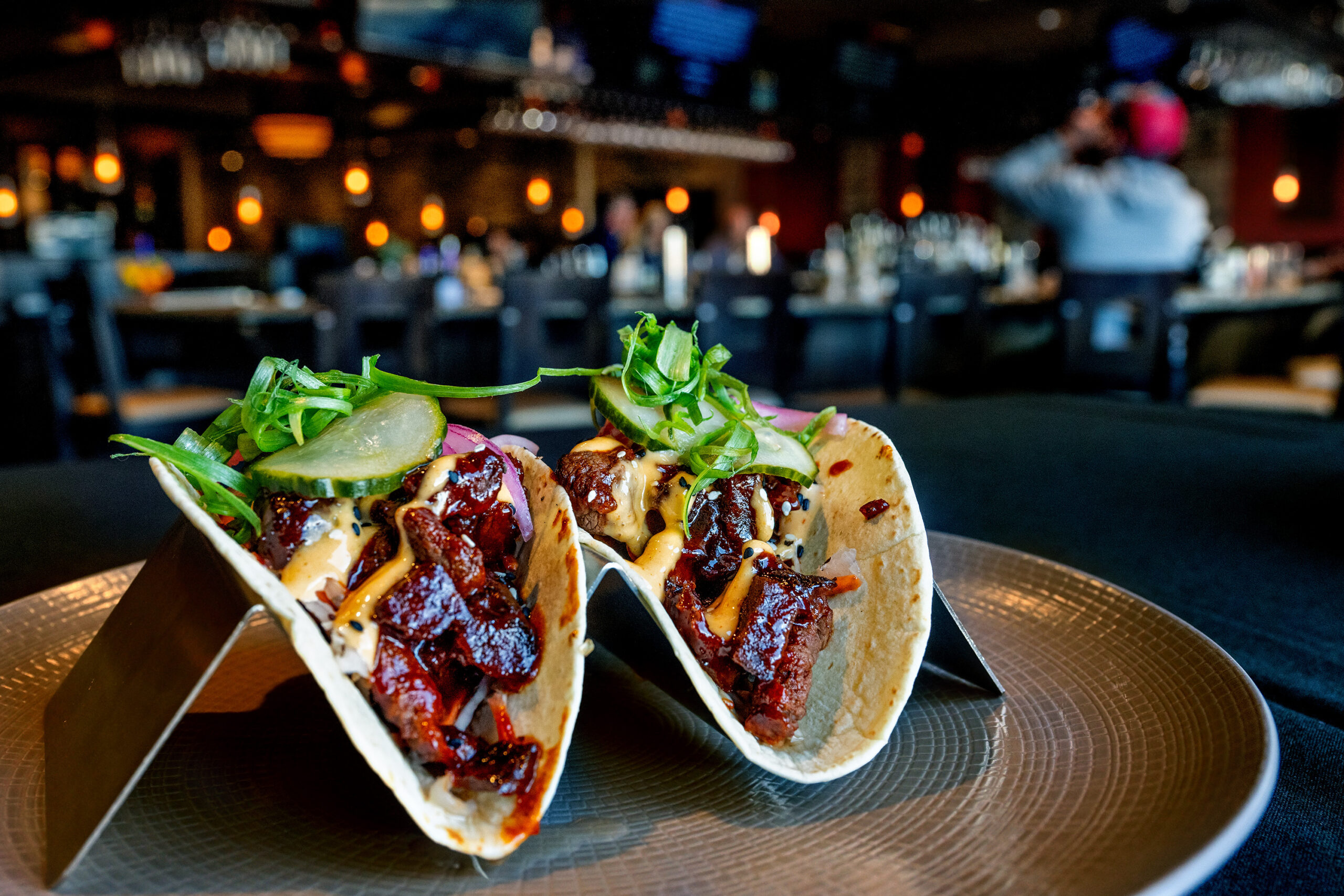
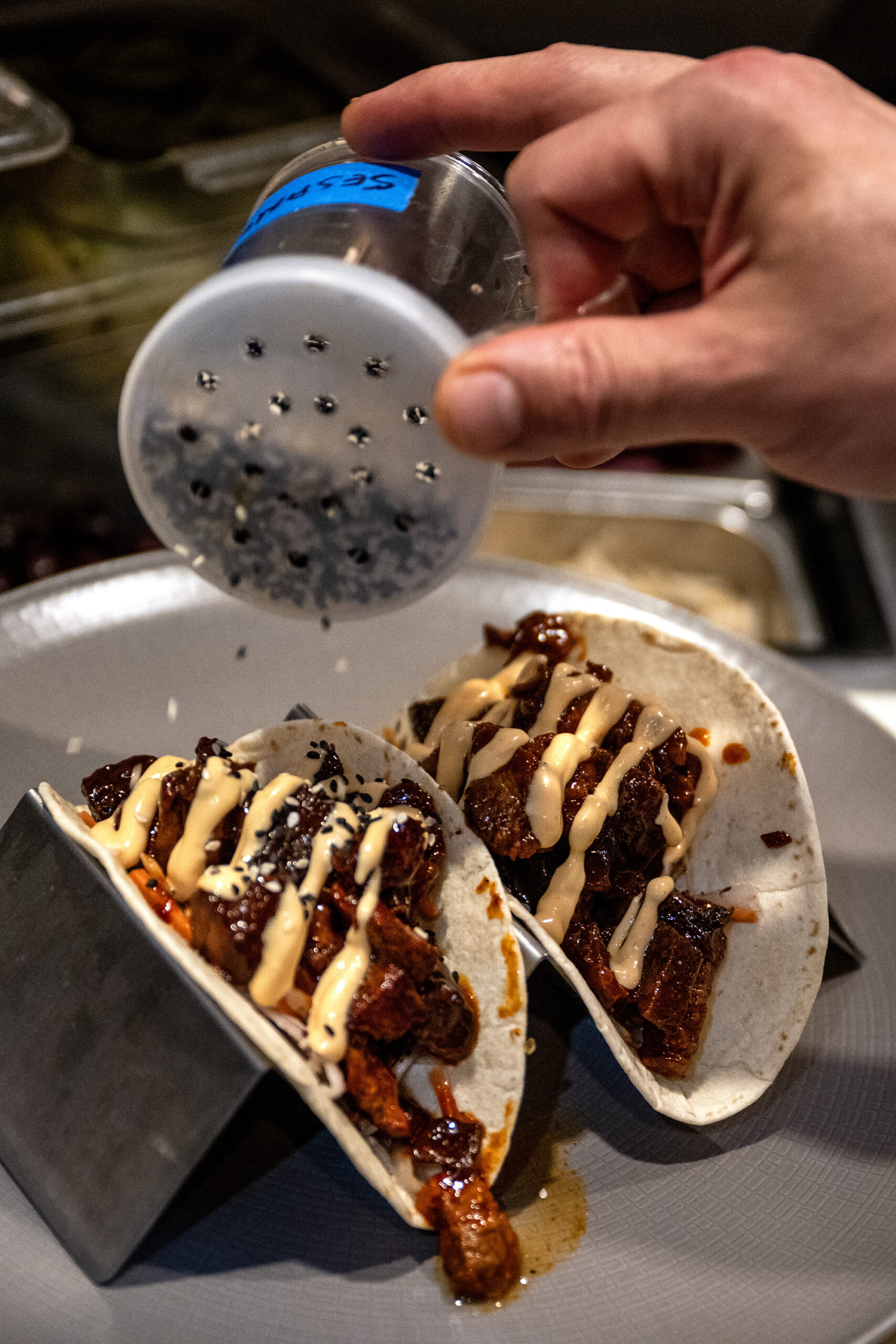
    Korean tacos at Harvest Seasonal Grill are made with the trimmings of New York strip steak.

    This was happening at Harvest Seasonal Grill, a farm-to-table bar-restaurant with eight locations between Lancaster and Moorestown. “Every time check averages went up, guest counts went down,” said founder Dave Magrogan. “Revenue stayed flat, but we were serving fewer people.”

    Rather than raising prices further or shrinking portions, Harvest moved in the opposite direction last summer. First, the restaurants added a lower-priced, three-course supplemental menu, which Magrogan said caught customers’ attention.

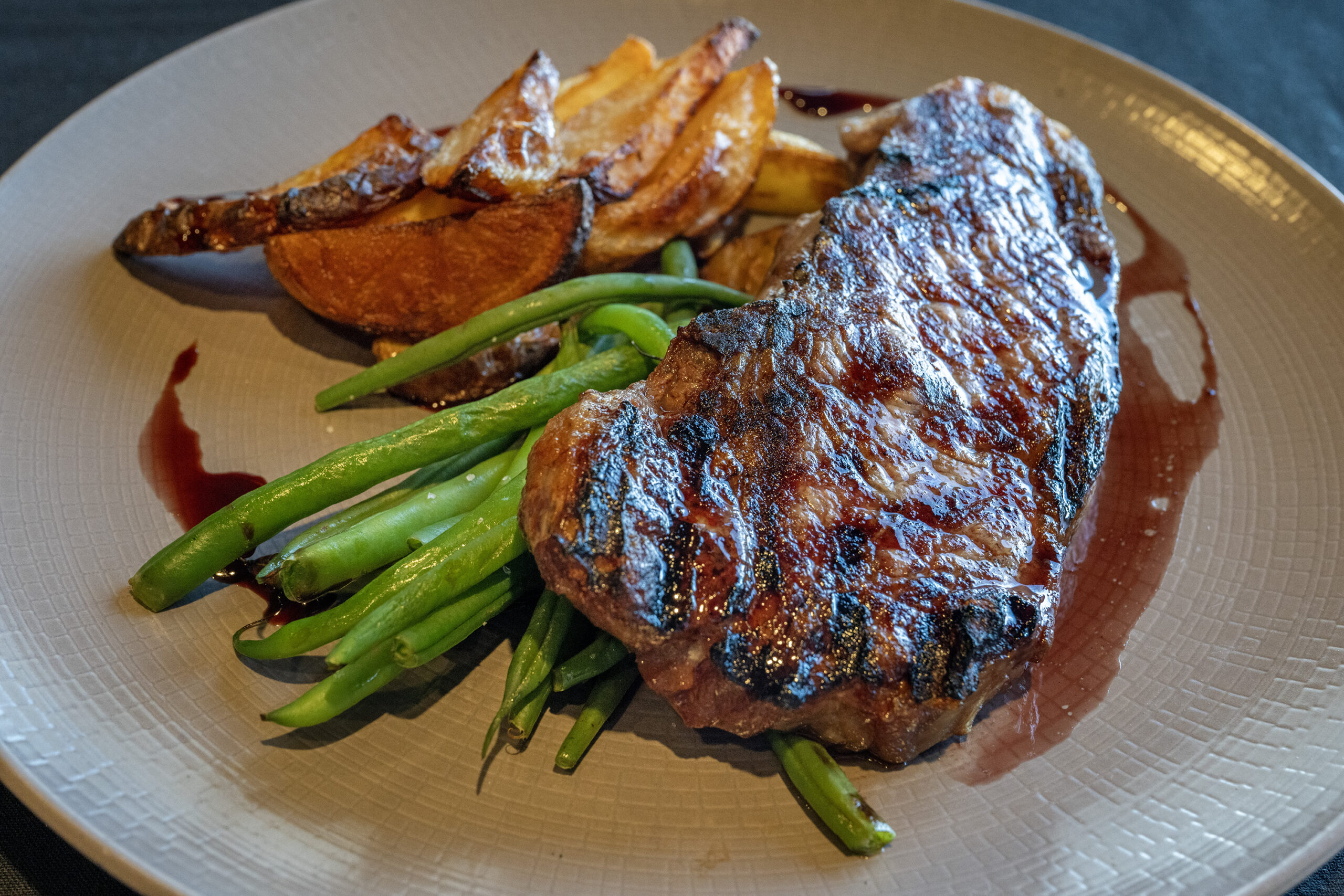
    A New York strip steak with roasted potato, haricot verts, and cabernet reduction at Harvest Seasonal Grill.

    Then last fall, Harvest cut prices across the board while tweaking dishes to eliminate frippery like microgreens and most garnishes, which Magrogan said customers pushed to the side of the plate anyway.

    The seared scallops had to go. As recently as a few years ago, Harvest offered four New Bedford scallops — the picture-perfect, 10-to-a-pound “U-10” beauties — atop a pool of risotto for $34. When the wholesale price began creeping up, Harvest bumped it to $38. When another price increase took it to $43, Magrogan said, “guests complained: ‘Four scallops for $43? I don’t see the value.’”

    Harvest chief operating officer Adam Gottlieb said the company went back to its seafood supplier, who offered scallop pieces — the same scallops, though broken during harvesting — for about half the price. “Instead of putting these seared scallops on top of the dish, we sear the pieces, fold them into the risotto, and make a shrimp and scallop risotto that we can offer for $34 instead of $42,” Gottlieb said. “Guests like it more, and it sells for less.”

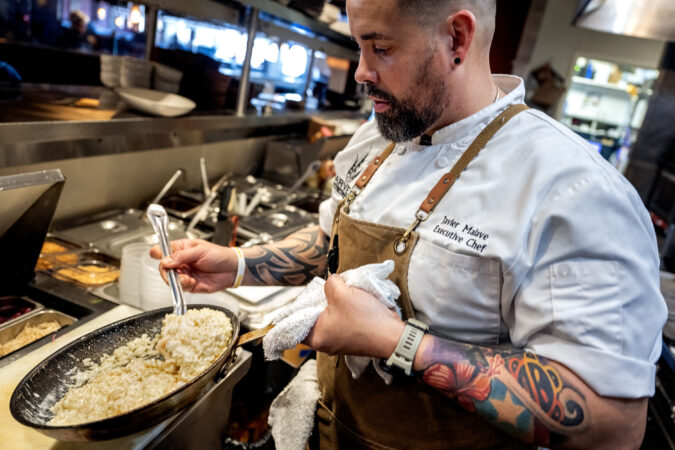
    Harvest also changed its prime steak. “For a while, we were buying individually cut steaks from a big farm operation with a great story behind it [Niman Ranch],” Gottlieb said. “But the prices kept climbing. We found a purveyor that sources all-Pennsylvania prime beef, and now we’re bringing in New York strip loins instead of individually cut steaks. By buying whole loins by the case, we’re able to lower the cost of the dish and use the byproduct for other menu items.”

    Harvest’s across-the-board price drop was scary at first, Magrogan said. Check averages dropped from $44 to $36 while guest counts remained flat.

    But then, word spread of the lower prices. Traffic is up 10% to 14% year over year while check averages have crept back up into the high-$30s, Magrogan said. “Revenue is up. Profitability is up. And we didn’t sacrifice quality.”

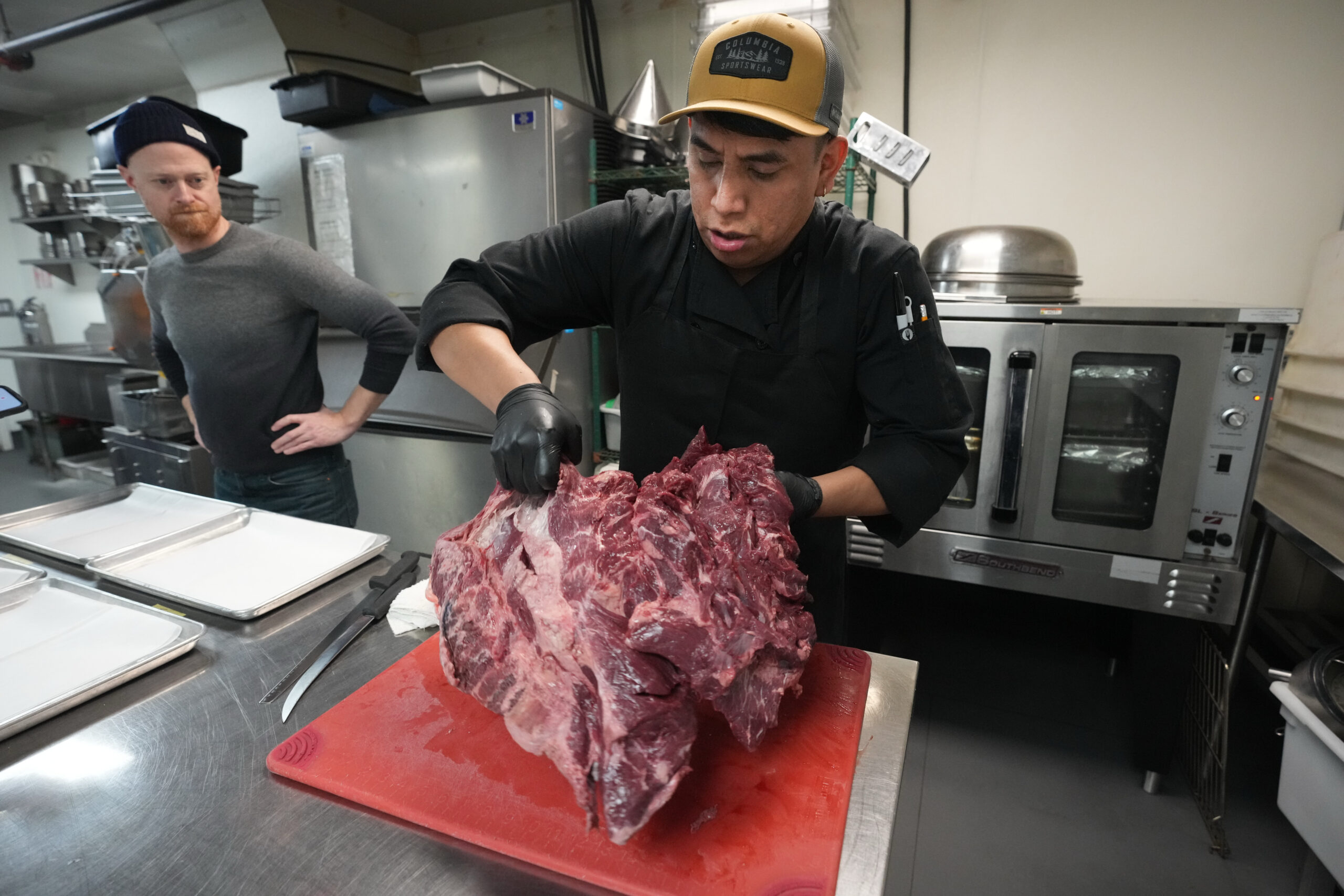
    Restaurateur Daniel McLaughlin (left) watches sous chef Silvestre Rincon break down beef for tacos and other dishes at Mission Taqueria.

    At Mission Taqueria, a second-floor cantina above Oyster House near Rittenhouse Square, owner Daniel McLaughlin has done his own version of what he calls “menu math,” weighing customer psychology against volatile ingredient costs. Like every owner of a Mexican restaurant, he accepts the yo-yo of avocado prices: When they’re reasonable, he’s doing well; when they’re high, he must absorb a loss.

    Tacos, the menu mainstay, he said, are especially tricky. Diners have firm price expectations, regardless of what the ingredients actually cost — even as beef prices are up by double digits in the last year.

    Restaurateur Daniel McLaughlin talking to customers at Mission Taqueria.

    At its opening a decade ago, Mission charged $14 for two carne asada tacos. They’re now $18 — a 29% rise, but below the estimated 47% inflation over that time.

    “Carne asada was our top-selling taco last year, but you can only charge so much for a taco,” McLaughlin said. “

    Each taco has 3 ounces of beef. “The same portion of protein somewhere else, like in a steakhouse served as an entrée, would be totally justifiable at $28 or $32,” he said. “But because it’s in a tortilla, people flinch.”

    To keep costs in check, McLaughlin and his chefs rethought the beef. Mission previously used sirloin for its carne asada but last year switched to chuck roll, a cut from the shoulder. “It actually eats better as a taco,” he said.

    The kitchen still serves seared steak as an add-on for salads, but now economizes by buying whole sides and breaking them down. Aside from the chuck roll, other cuts are used for slow-cooked dishes like barbacoa and birria.

    Korean tacos get a shake of seasoning at Harvest Seasonal Grill.

    The upshot: Mission is charging less for carne asada tacos, relatively speaking, but is making a bit more money. And traffic counts are similar.

    The menu engineering around beef trimmings has factored into Harvest’s moves, as well. Some finds its way atop the chain’s flatbreads, and even becomes the centerpiece of a new dish, Korean-style tacos. “It looks impressive, and it’s become one of our most popular items,” Gottlieb said.

    “The labor part isn’t as complicated as it sounds,” Gottlieb said. “Kitchen work has always been about minimizing waste and being smart with product.”

    A big part of the changes was to make Harvest feel accessible again, Gottlieb said. “I said to Dave, ‘I’m a middle-class guy, and I can’t afford to eat at Harvest as much as I’d like right now. It’s $100 for two people, and I can’t do that on a regular basis.’ Before the price increases, you could get in and out for about $67. The goal was to get back to that — to stop being a special-occasion restaurant and become a place people could think about for regular dining.”

    Magrogan said: “The goal is to serve more people, not fewer. You can’t price yourself out of relevance. If guests feel taken care of, they come back — and that matters more than squeezing every last dollar out of a single check.”

  • DA Larry Krasner forms coalition of progressive prosecutors committed to charging federal agents who commit crimes

    DA Larry Krasner forms coalition of progressive prosecutors committed to charging federal agents who commit crimes

    District Attorney Larry Krasner on Wednesday announced the formation of a new coalition of progressive prosecutors committed to charging federal agents who violate state laws.

    Krasner joined eight other prosecutors from U.S. cities to create the Project for the Fight Against Federal Overreach, a legal fund that local prosecutors can tap if they pursue charges against federal agents.

    The abbreviation for the group, FAFO, is a nod to what has become one of Krasner’s frequent slogans: “F— around and find out.”

    The move places Krasner at the center of a growing national clash between Democrats and the Trump administration over federal immigration enforcement and whether local law enforcement can — or should — charge federal agents for actions they take while carrying out official duties.

    It is also the latest instance in which Krasner, one of the nation’s most prominent progressive prosecutors, has positioned himself as Philadelphia’s most vocal critic of President Donald Trump. He has made opposing the president core to his political identity for a decade, and he said often as he was running for reelection last year that he sees himself as much as a “democracy advocate” as a prosecutor.

    Krasner has used provocative rhetoric to describe the president and his allies, often comparing their agenda to World War II-era fascism. During a news conference Tuesday, he said federal immigration-enforcement agencies are made up of “a small bunch of wannabe Nazis.”

    The coalition announced Wednesday includes prosecutors from Minneapolis; Tucson, Ariz.; and several cities in Texas and Virginia. It was formed to amass resources after two shootings of U.S. citizens by federal law enforcement officials in Minnesota this month.

    Renee Good, 37, was shot and killed in her car by an ICE officer on Jan. 7 as she appeared to attempt to drive away during a confrontation with agents. The FBI said it would not investigate her killing.

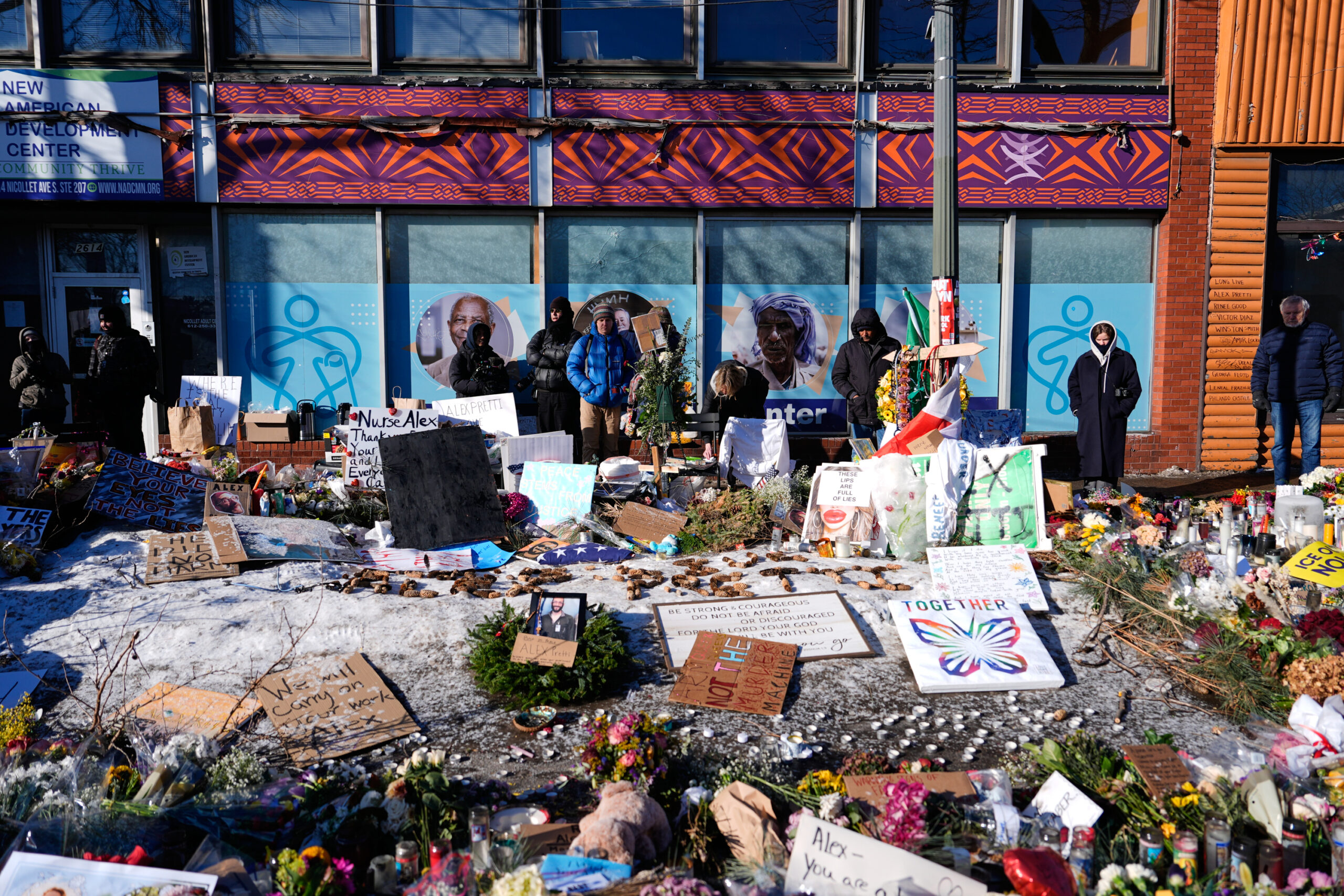
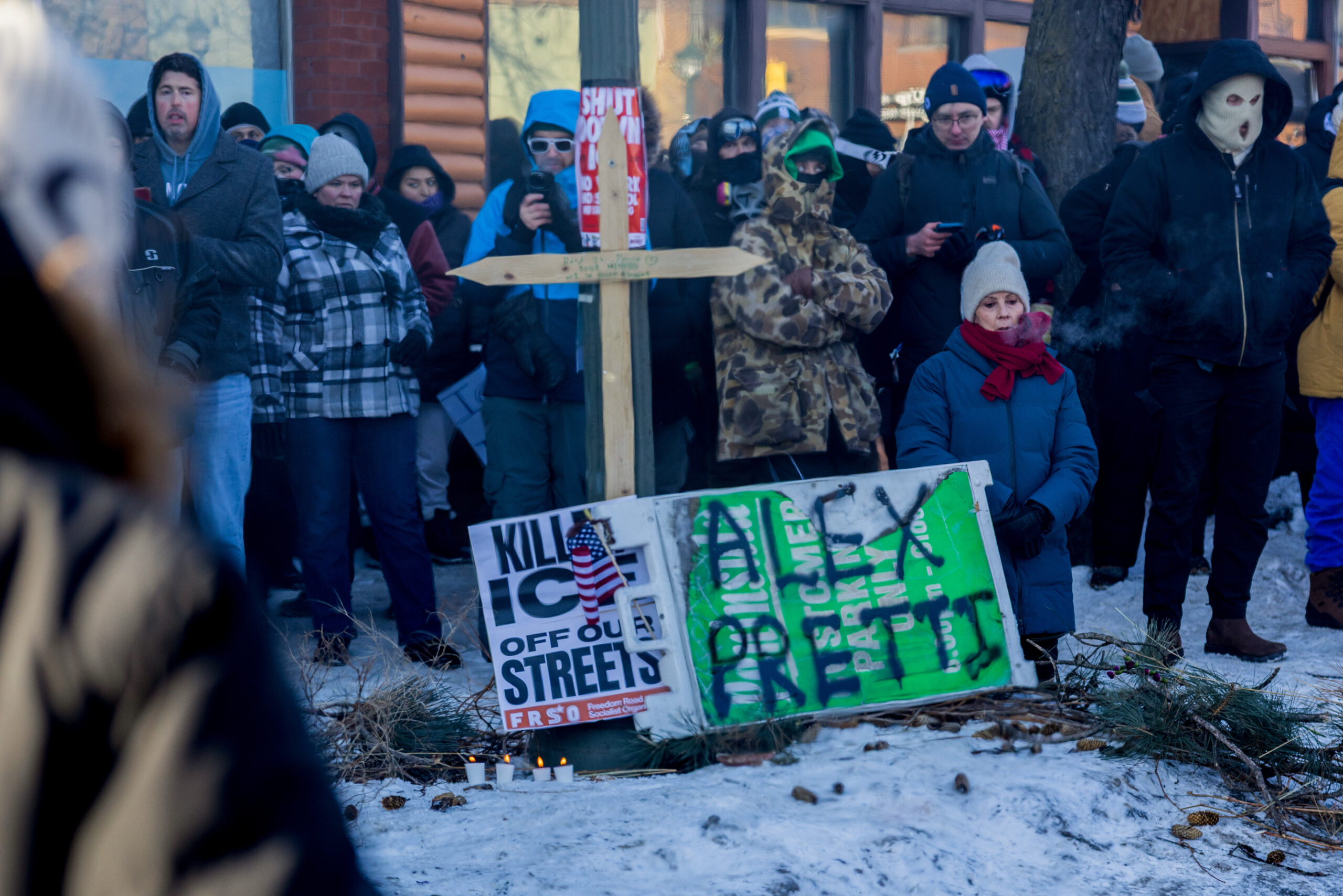
    People visit a memorial for Alex Pretti at the scene in Minneapolis where the 37-year-old was fatally shot by a U.S. Border Patrol officer.

    Then, on Saturday, Alex Pretti, 37, was killed after similarly confronting agents on a Minneapolis street. Video of the shooting, which contradicted federal officials’ accounts, appeared to show Border Patrol agents disarming Pretti, who was carrying a legally owned handgun in a holster. They then shot him multiple times. Federal authorities have attempted to block local law enforcement from investigating the shooting.

    Krasner said that, despite Vice President JD Vance’s recent statement that ICE officers had “absolute immunity” — an assertion the Philadelphia DA called “complete nonsense” — prosecutors in FAFO are prepared to bring charges including murder, obstructing the administration of justice, tampering with evidence, assault, and perjury against agents who commit similar acts in their cities.

    “There is a sliver of immunity that is not going to save people who disarm a suspect and then repeatedly shoot him in the back from facing criminal charges,” Krasner said during a virtual news conference Wednesday. “There is a sliver of immunity that is not going to save people who are shooting young mothers with no criminal record and no weapon in the side or back of the head when it’s very clear the circumstances didn’t require any of that, that it was not reasonable.”

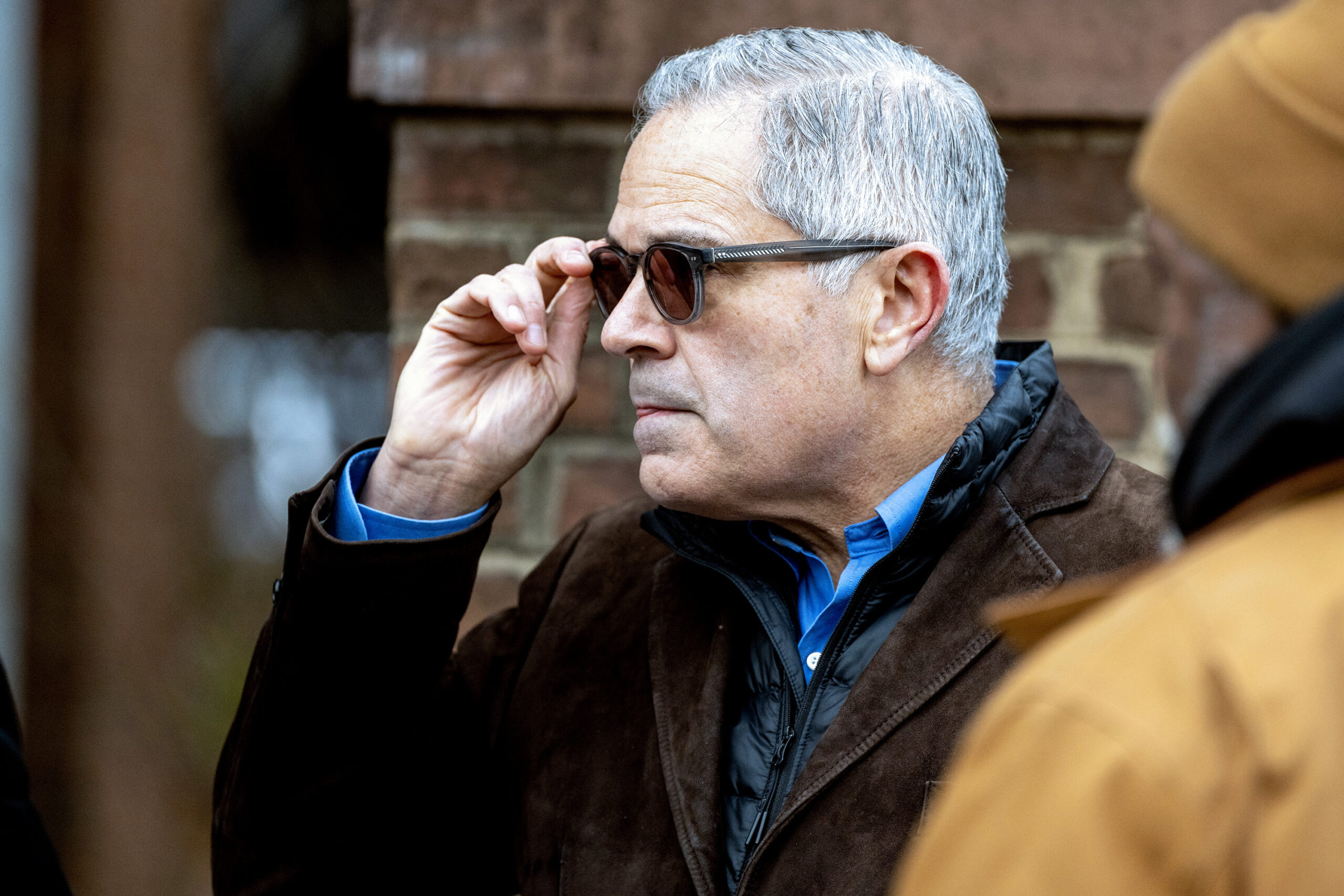
    Philadelphia District Attorney Larry Krasner attends an event at Independence National Historical Park on Dec. 21, 2025.

    How will FAFO work?

    The coalition has created a website, federaloverreach.org, and is soliciting donations.

    Prosecutors who spoke during the news conference said those donations would be toward a legal fund that would allow prosecutors to hire outside litigators, experts, and forensic investigators as they pursue high-profile cases against federal agents.

    “This will function as a common fund,” said Ramin Fatehi, the top prosecutor in Norfolk, Va., “where those of us who find ourselves in the tragic but necessary position of having to indict a federal law enforcement officer will be able to bring on the firepower necessary to make sure that the federal government doesn’t roll us simply through greater resources.”

    The money raised through the organization will not go to the individual prosecutors or their political campaigns, they said Wednesday.

    Scott Goodstein, a spokesperson for the coalition, said the money will be held by a “nonpartisan, nonprofit entity that is to be stood up in the coming days.” He said the prosecutors are “still working through” how the fund will be structured.

    Krasner said it would operate similarly to how district attorneys offices receive grant funding for certain initiatives.

    Most legal defense funds are nonprofit organizations that can receive tax-deductible donations. Those groups are barred from engaging in certain political activities, such as explicitly endorsing or opposing candidates for office.

    Goodstein said the group is also being assisted in its fundraising efforts by Defiance.org, a national clearinghouse for anti-Trump activism. One of that group’s founders is Miles Taylor, a former national security official who, during the first Trump administration, wrote under a pseudonym about being part of the “resistance.”

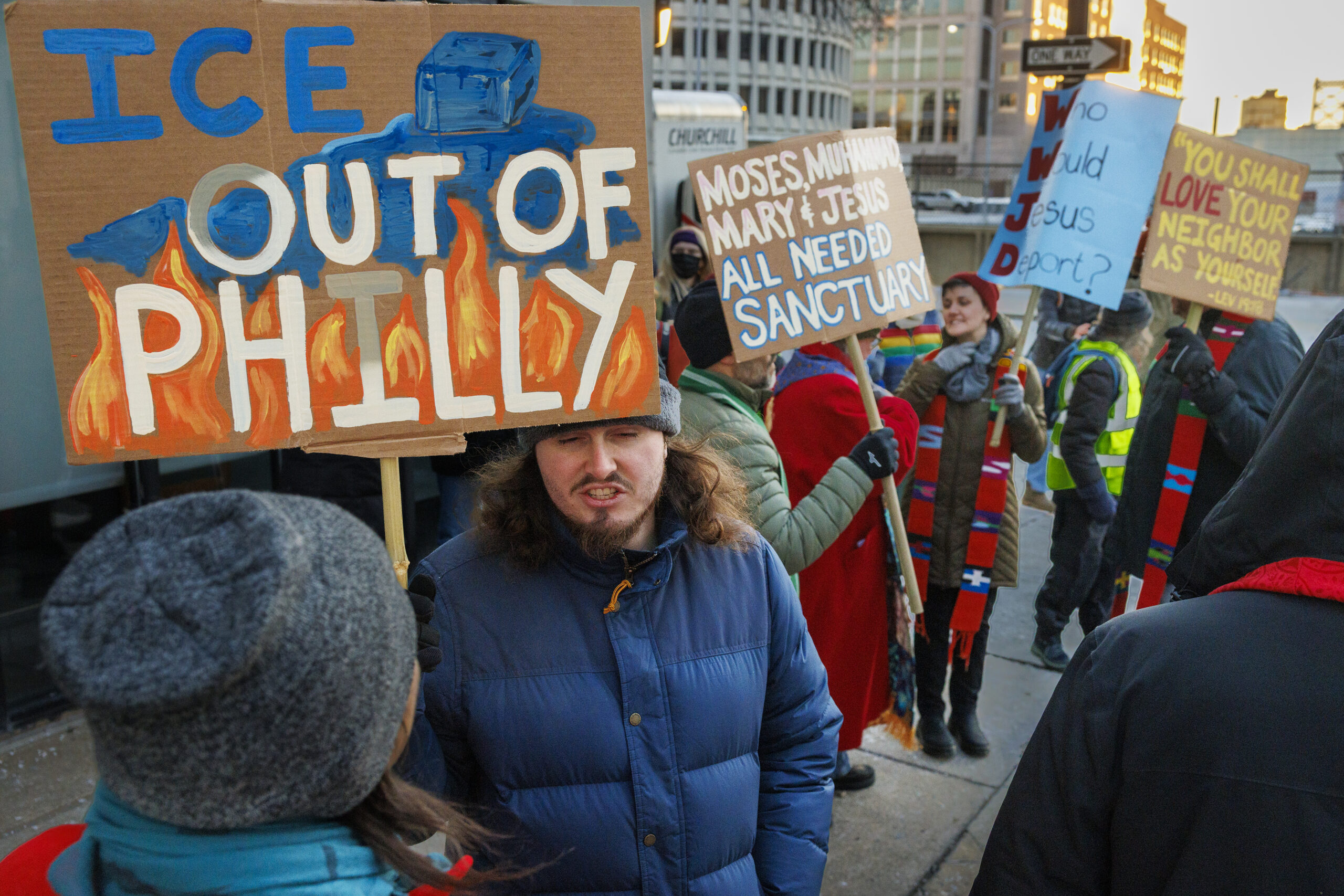
    Demonstrators from No ICE Philly gathered to protests outside the U.S. Immigration and Customs Enforcement, office at 8th and Cherry Streets, on Jan. 20.

    ‘Who benefits?’

    In forming the coalition, Krasner inserted himself into a national controversy that other city leaders have tried to avoid.

    His approach is starkly different from that of Mayor Cherelle L. Parker, a centrist Democrat who has largely avoided criticizing Trump. She says she is focused on her own agenda, and has not weighed in on the president’s deportation campaign.

    Members of the mayor’s administration say they believe her restraint has kept the city safe. While Philadelphia has policies in place that prohibit local officials from some forms of cooperation with federal immigration enforcement, the Trump administration has not targeted the city with surges of ICE agents as it has in other jurisdictions — such as Chicago and Los Angeles — where Democratic leaders have been more outspoken.

    Parker and Police Commissioner Kevin Bethel have at times been frustrated with Krasner’s rhetoric, according to a source familiar with their thinking who spoke on the condition of anonymity to discuss internal communications.

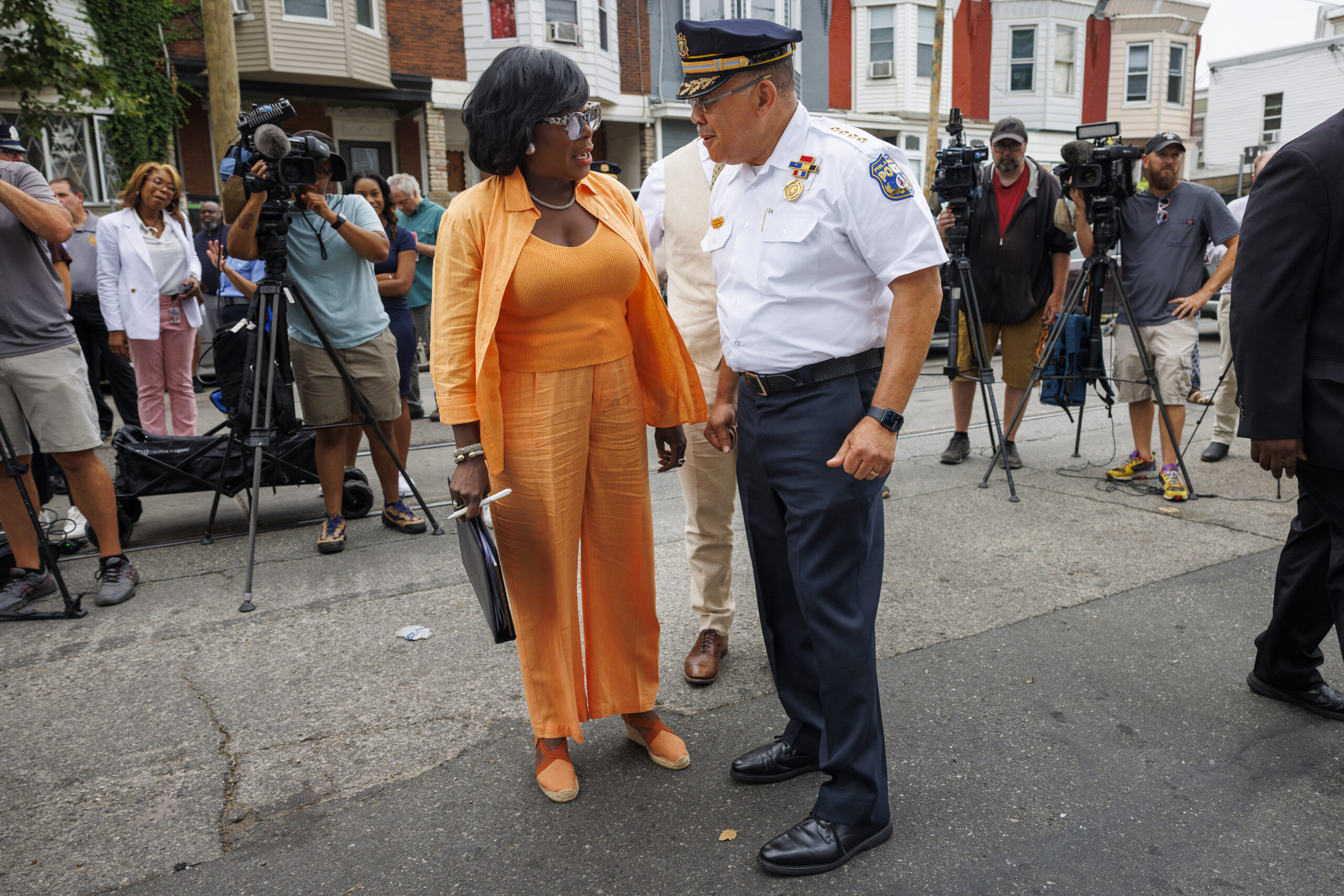
    Philadelphia Mayor Cherelle Parker and Police Commissioner Kevin Bethel speaking ahead of a July 2024 press conference.

    That was especially true this month when Krasner hosted a news conference alongside Sheriff Rochelle Bilal. The pair made national headlines after Krasner threatened to prosecute federal agents — something he has vowed to do several times — and Bilal called ICE a “fake” law enforcement agency.

    Bethel later released a statement to distance the Police Department from the Sheriff’s Office, saying Bilal’s deputies do not conduct criminal investigations or direct municipal policing.

    The police commissioner recently alluded to Parker’s strategy of avoiding confrontation with the federal government, saying in an interview on the podcast City Cast Philly that the mayor has given the Police Department instruction to “stay focused on the work.”

    “It is not trying to, at times, potentially draw folks to the city,” Bethel said. “Who benefits from that? Who benefits when you’re putting out things and trying to… poke the bear?”

    As for Krasner’s latest strategy, the DA said he has received “zero indication or communication from the mayor or the police commissioner that they’re in a different place.”

    “I feel pretty confident that our mayor and our police commissioner, who are doing a heck of a lot of things right,” he said, “will step up as needed to make sure that this country is not invaded by a bunch of people behaving like the Gestapo.”

  • Philly lawmakers want to restrict cooperation with ICE and ban agents from wearing masks

    Philly lawmakers want to restrict cooperation with ICE and ban agents from wearing masks

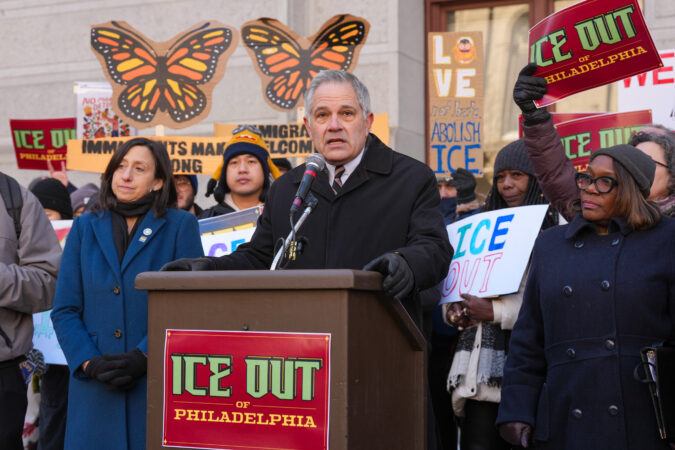
    Philadelphia lawmakers are set to consider legislation that would make it harder for ICE to operate in the city, including limiting information sharing, restricting activity on city-owned property, and prohibiting agents from concealing their identities.

    Among the package of bills set to be introduced Thursday is an ordinance that effectively makes permanent Philadelphia’s status as a so-called “sanctuary city” by barring city officials from holding undocumented immigrants at ICE’s request without a court order. Another bans discrimination based on immigration status.

    Two City Council members are expected to introduce the legislation as U.S. Immigration and Customs Enforcement is facing mounting national scrutiny over its tactics in Minneapolis, where federal agents fatally shot two U.S. citizens this month.

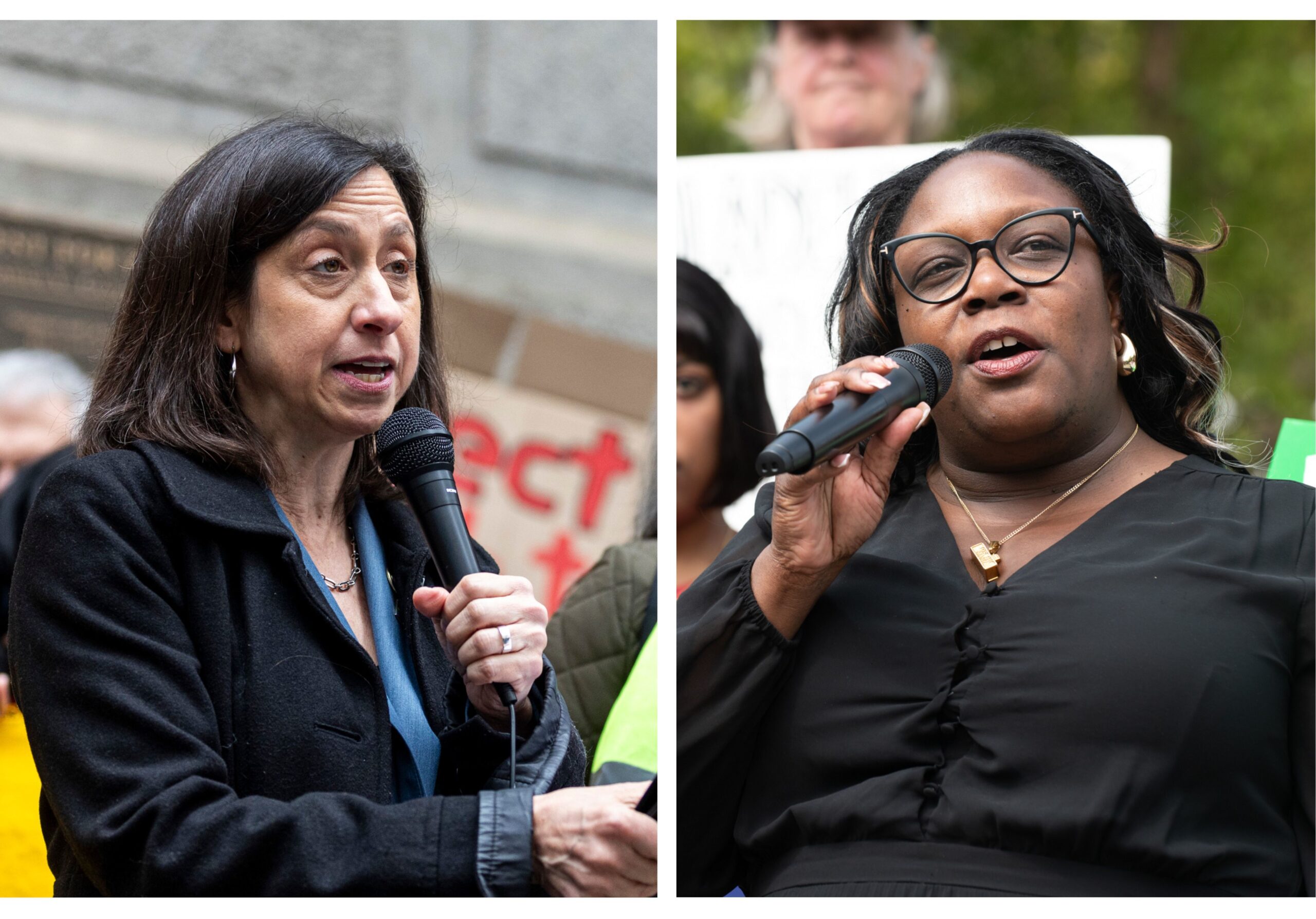
    Councilmembers Rue Landau, a Democrat, and Kendra Brooks, of the progressive Working Families Party, said in an interview that the violence in Minneapolis hardened their resolve to introduce legislation to protect a population that includes an estimated 76,000 undocumented immigrants in Philadelphia.

    “It’s been very disheartening and frightening to watch ICE act with such lawlessness,” Landau said. “When they rise to the level of killing innocent civilians, unprecedented murders … this is absolutely the time to stand up and act.”

    The package of a half-dozen bills is the most significant legislative effort that Council has undertaken to strengthen protections for immigrants since President Donald Trump took office last year on a promise to carry out a mass deportation campaign nationwide.

    Left: City Councilmember Rue Landau. Right: City Councilmember Kendra Brooks. Landau and Brooks are introducing legislation this week to make it harder for ICE to operate in Philadelphia, including by limiting city cooperation with the agency.

    ICE spokespeople did not immediately reply to a request for comment.

    Jasmine Rivera, executive director of the Pennsylvania Immigration Coalition, said it’s not the job nor the jurisdiction of the city to enforce federal law.

    The goal of the legislation, Rivera said, is ensuring that “not a single dime and single second of our local resources is being spent collaborating with agencies that are executing people.”

    Activists have for months urged Mayor Cherelle L. Parker to formally affirm her commitment to the city’s sanctuary status. Top city officials say an executive order signed by the former mayor to limit the city’s cooperation with ICE remains in place.

    But Parker, a centrist Democrat, has taken a quieter approach than her colleagues in Council, largely avoiding criticizing the Trump administration outwardly and saying often that she is focused on her own agenda.

    Now, the mayor could be forced to take a side. If City Council passes Landau and Brooks’ legislation this spring, Parker could either sign the bills into law, veto them, or take no action and allow them to lapse into law without her signature. She has never vetoed a bill.

    Joe Grace, a spokesperson for Parker, declined to comment on the legislation.

    Mayor Cherelle L. Parker speaks at a news conference earlier this month. It is unclear how she will act on upcoming legislation related to ICE operations in Philadelphia.

    It’s unclear what fate the ICE legislation could meet in Council. The 17-member body has just one Republican, but Parker holds influence with many of the Democrats in the chamber.

    City Council President Kenyatta Johnson, a Democrat who controls the flow of legislation, has not taken a position on the package proposed by Landau and Brooks.

    But he said in a statement that “Philadelphia has long positioned itself as a welcoming city that values the contributions of immigrants and strives to protect their rights and safety.”

    “I have deep concerns about federal ICE actions directed by President Donald Trump’s administration that sow fear and anxiety in immigrant communities,” Johnson said, “underscoring the belief that enforcement practices should be lawful, humane, and not undermine trust in public safety.”

    Making sanctuary status the law

    Border Patrol and ICE are both federal immigration agencies, which are legally allowed to operate in public places and subject to federal rules and regulations. Some cities and states — not including Pennsylvania and New Jersey — actively cooperate with ICE through written agreements.

    Since 2016, Philadelphia has operated under an executive order signed by former Mayor Jim Kenney, which prohibits city jails from honoring ICE “detainer requests,” in which federal agents ask the city to hold undocumented immigrants in jail for longer than they would have otherwise been in custody to facilitate their arrest by federal authorities.

    Undocumented immigrants are not shielded from federal immigration enforcement, nor from being arrested and charged by local police for local offenses.

    Some refer to the noncooperation arrangement as “sanctuary.” As the term “sanctuary cities” has become politically toxic, some local officials — including in Philadelphia — have backed away from it, instead declaring their jurisdictions to be “welcoming cities.”

    Parker administration officials have said several times over the last year that Philadelphia remains a “welcoming city.”

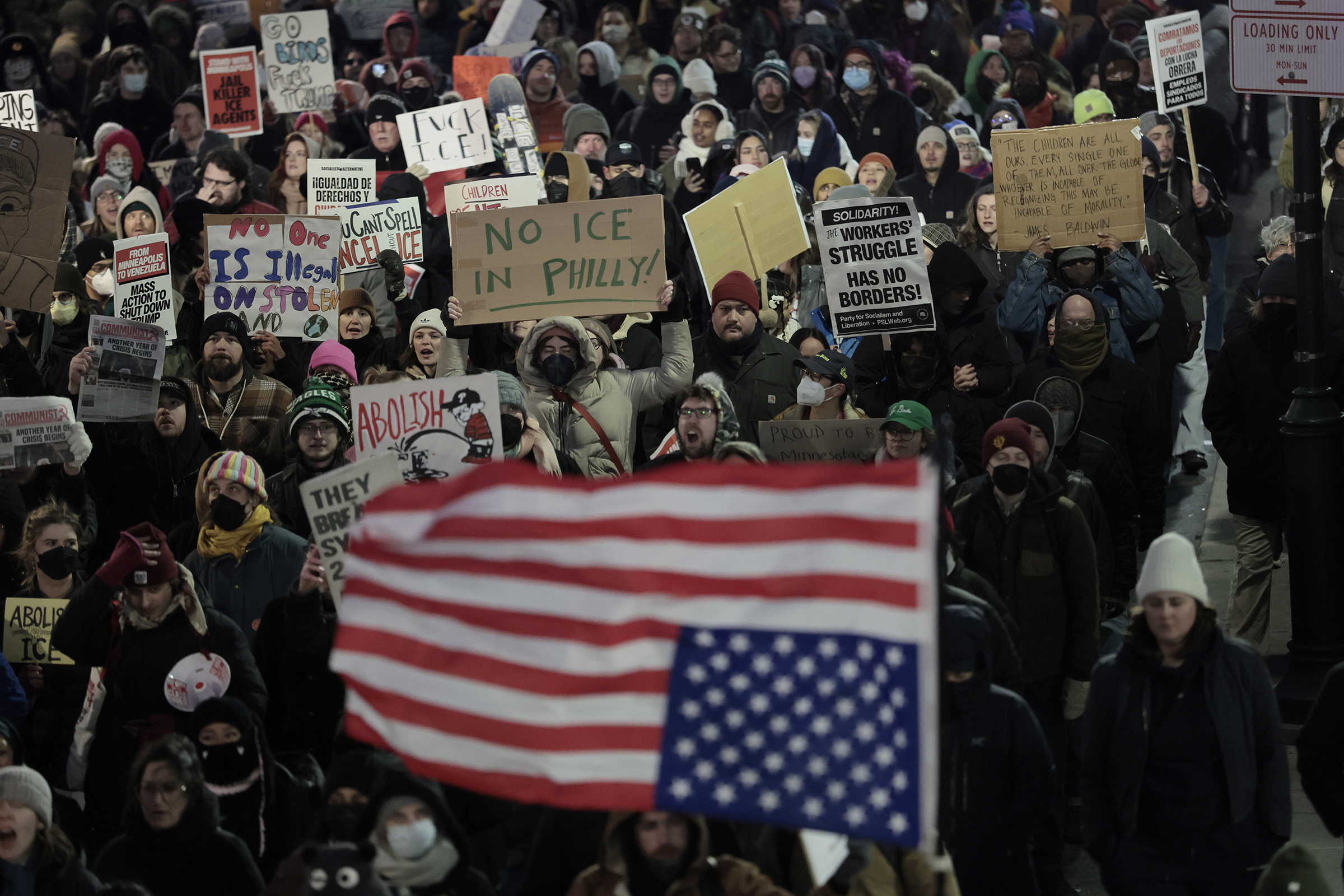
    Protesters march up Eighth Street, toward the immigration offices, during the Philly stands with Minneapolis Ice Out For Good protest at Philadelphia’s City Hall on Jan. 23.

    But advocates for immigrants have said they want an ironclad city policy that can’t be rescinded by a mayor.

    Landau and Brooks’ legislation would be that, codifying the executive order into law and adding new prohibitions on information sharing. The package includes legislation to:

    • Strengthen restrictions on city workers, including banning local police from carrying out federal immigration enforcement and prohibiting city workers from assisting in enforcement operations.
    • Prohibiting law enforcement officers from concealing their identities, including by wearing masks or covering up badges with identifying information.
    • Banning ICE from staging raids on city-owned property and designated community spaces such as schools, parks, libraries, and homeless shelters. (It would not apply to the Criminal Justice Center, where ICE has had a presence. The courthouse is overseen by both city and state agencies.)
    • Prohibiting city agencies and contractors from providing ICE access to data sets to assist in immigration enforcement.
    • Restricting city employees from inquiring about individuals’ immigration status unless required by a court order, or state or federal law.

    Peter Pedemonti, co-director of New Sanctuary Movement of Philadelphia, an advocacy organization that partnered with the Council members to craft the package of bills, compared ICE to an octopus that has multiple arms reaching into different facets of American life.

    The proposed legislation, he said, is a means to bind a few of those arms.

    “The whole world can see the violence and brutality,” Pedemonti said. “This is a moment where all of us need to stand up, and Philadelphia can stand up and speak out loud and clear that we don’t want ICE here to pull our families apart, the families that make Philadelphia Philadelphia.”

    An impending showdown that Parker hoped to avoid

    Homeland Security officials claim that sanctuary jurisdictions protect criminal, undocumented immigrants from facing consequences while putting U.S. citizens and law enforcement officers in peril.

    Last year, the Trump administration named Philadelphia as among the jurisdictions impeding federal immigration enforcement. The White House has said the federal government will cut off funding to sanctuary cities by Feb. 1.

    However, the president has made no explicit threat to ramp up ICE activities in Philadelphia.

    Some of Parker’s supporters say the mayor’s conflict-averse strategy has spared Philadelphia as other cities such as Washington, New York, Los Angeles, Chicago, and Minneapolis have seen National Guard troops or waves of ICE agents arrive in force.

    Residents near the scene of a shooting by a federal law enforcement agent in Minneapolis on Saturday.

    Critics, including the backers of the new legislation, have for months pressed Parker to take a stronger stand.

    Brooks said she “would love to have the support of the administration.”

    “This should be something that we should be working collaboratively on,” she said. “Philadelphia residents are demanding us do something as elected officials, and this is our time to lead.”

    But Parker has not been eager to speak about Philadelphia’s immigration policies.

    For example, the city is refusing to release a September letter it sent to the U.S. Department of Justice regarding its immigration-related policies, even after the Pennsylvania Office of Open Records ruled its reasoning for keeping the document secret was invalid. The Inquirer has requested a copy of the letter under the state Right-to-Know Law.

    The new Council legislation and the increasing tension over Trump’s deportation push may force Parker to take a clearer position.

    Notably, the city sued the federal government last week over its removal of exhibits related to slavery from the President’s House at Independence National Historical Park, potentially signaling a new willingness by Parker to push back against the White House.

    But even then, Parker declined to take a jab at Trump.

    “In moments like this,” she said last week, “it requires that I be the leader that I need to be for our city, and I can’t allow my pride, ego, or emotions to dictate what my actions will be.”

  • John Fetterman calls for Minneapolis ICE operation to ‘immediately end,’ while Dave McCormick wants an investigation into the shooting

    John Fetterman calls for Minneapolis ICE operation to ‘immediately end,’ while Dave McCormick wants an investigation into the shooting

    Sen. John Fetterman (D., Pa.) on Monday called for the federal immigration enforcement operation in Minneapolis to “immediately end” after a Border Patrol agent shot and killed a 37-year-old man there Saturday morning.

    “It has become an ungovernable and dangerous urban theatre for civilians and law enforcement that is incompatible with the American spirit,” Fetterman said in a statement Monday.

    The senator’s comments come two days after a federal agent shot and killed Alex Pretti, an intensive care nurse at a VA hospital, on Saturday amid the Trump administration’s immigration crackdown in Minneapolis. An ICE agent shot and killed Renee Nicole Good, a 37-year-old poet and mother, on Jan. 7, provoking protests nationwide.

    But Fetterman stopped short of backing other Democrats’ calls to shut down the government if ICE does not withdraw from the city. The U.S. Senate is poised to vote on funding for the Department of Homeland Security, which oversees both ICE and the Border Patrol.

    Sen. Dave McCormick (R, Pa.) called for a “full investigation into the tragedy in Minneapolis” on Sunday evening, joining a number of Republicans in voicing concern about the escalating tensions in the wake of President Donald Trump’s immigration enforcement crackdown.

    “We need all the facts,” McCormick said in a post on X Sunday, adding that, “We must enforce our laws in a way that protects the public while maintaining its trust. This gives our law enforcement officers the best chance to succeed in their difficult mission.”

    Fetterman ‘wants a conversation’ about DHS funding

    Fetterman said that both Pretti and Good should “still be alive.” And noted that he believes in a secure border while also believing “there needs to be a path to citizenship for those hardworking families who are here.”

    Some Democrats said they would vote against DHS funding in light of Saturday’s shooting, unless restrictions on immigration enforcement were put in place. This could potentially trigger a federal shutdown for the second time in four months.

    Fetterman said he will never vote for a shutdown. However, he does support having a “conversation on the DHS appropriations bill and stripping it from” the overall government funding package.

    “A vote to shut our government down will not defund ICE,” Fetterman said, noting the agency received nearly $180 billion in Trump’s One Big Beautiful Bill Act, which he opposed.

    “I reject the calls to defund or abolish ICE. I strongly disagree with many strategies and practices ICE deployed in Minneapolis, and believe that must change,” Fetterman said.

    “We must find a way forward and I remain committed to being a voice of reason and common sense,” he added.

    The senator’s public comments followed a Sunday evening social media post from his wife, Gisele Barreto Fetterman, who was formerly living undocumented in the U.S. for more than a decade after emigrating from Brazil.

    “Every day carried the same uncertainty and fear lived in my body — a tight chest, shallow breaths, racing heart,” she said in a post on X. “What I thought was my private, chronic dread has now become a shared national wound. This now-daily violence is not ‘law and order.’ It is terror inflicted on people who contribute, love, and build their lives here. It’s devastatingly cruel and unAmerican.”

    Other Democrats in the region plan to block the funding package without changes.

    Sen. Lisa Blunt Rochester (D, Del.) said in a statement that ICE and federal agents’ actions are “shameful and disturbing.” She called for an end to ICE’s presence in Minnesota, a full investigation into Pretti’s death, and said that she would not be voting for DHS funding.

    “I refuse to support this current package of funding bills as federal agents shoot Americans in the street,” she said.

    McCormick siding with the NRA

    McCormick is one of several Republicans who have voiced concern over violent incidents involving immigration enforcement, without denouncing ICE or Border Patrol. The National Rifle Association, the country’s top gun lobby which has deep ties to the GOP, has called for an investigation.

    The NRA spoke out after it came to light that Pretti was legally carrying a gun that he had a permit for. Homeland Security Secretary Kristi Noem claimed that Pretti was “brandishing” his weapon at federal agents, though in video released by bystanders it appears that was not the case.

    “Responsible public voices should be awaiting a full investigation, not making generalizations and demonizing law-abiding citizens,” the group said in response to a post on X from the first assistant U.S. attorney for the Central District of California, who said: “If you approach law enforcement with a gun, there is a high likelihood they will be legally justified in shooting you. Don’t do it!”

    McCormick said in his statement Sunday that he agreed with the NRA’s statement, which preceded his own, and others in calling for the investigation of Pretti’s killing.

    McCormick qualified his statement on Sunday by maintaining his support for federal immigration enforcement and accusing Minnesota politicians of exacerbating tensions.

    It’s the second time in two days that McCormick spoke out on a highly controversial move by the Trump administration. On Saturday, McCormick said he disagreed with the National Park Service’s decision to dismantle exhibits about slavery at the President’s House at Independence National Historical Park.