Tag: hoops-content

  • 2026 men’s college basketball transfer portal tracker: Latest Big 5 moves, where Philly-area recruits are heading

    2026 men’s college basketball transfer portal tracker: Latest Big 5 moves, where Philly-area recruits are heading

    The college basketball season is officially over, which means it’s time for the transactional period to begin. Welcome to the 2026 transfer portal.

    More than 1,500 men’s basketball players were in the portal in the first 24 hours after it officially opened on April 7. The portal is open for two weeks, but players do not need to make their commitment to a new school during that window. The next few weeks will be filled with salary negotiations during the yearly NCAA free agency process.

    We’ll be tracking it all here, from players moving in and out of — or around — the Big 5 to keeping tabs on Philly-area players at other schools. We’ll also take a look at where some of the top local high school recruits from the Class of 2026 will be playing in the fall.

    Big 5 portal entries

    Here are the players who were at Big 5 schools during the 2025-26 season but have entered the transfer portal.

    Villanova

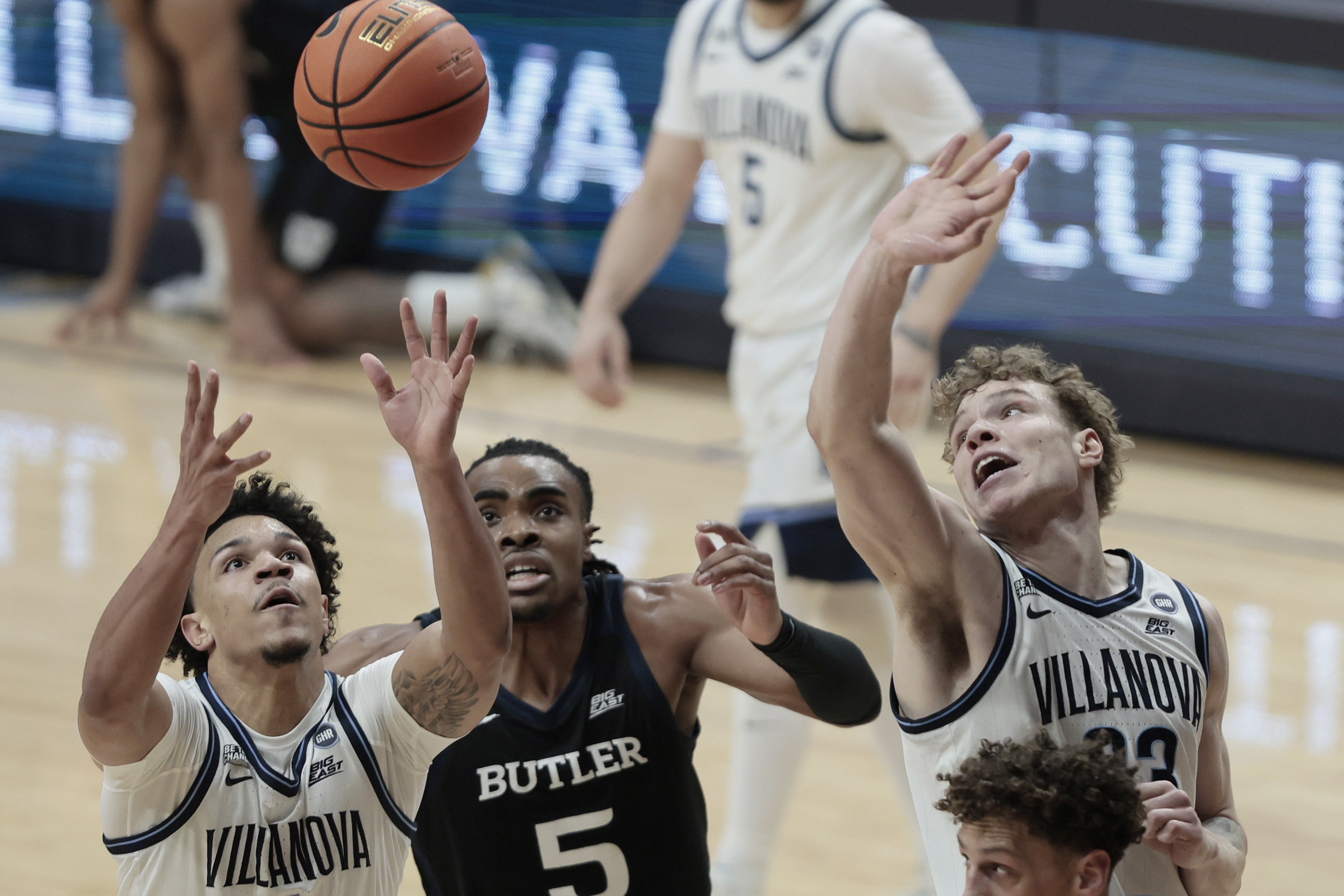
    • Acaden Lewis (point guard) started for the Wildcats during his freshman year and averaged 12.2 points, 5.3 assists, and 3 rebounds. (Transferring to Miami.)
    • Bryce Lindsay (guard) was a redshirt sophomore and Villanova’s best scorer during its nonconference schedule. (Transferring to Indiana.)
    • Malachi Palmer (forward) was a solid contributor off the bench who started down the stretch after Matt Hodge went down. But Villanova recruited multiple forwards out of the portal. (Transferring to Minnesota.)
    • Chris Jeffrey (guard), a freshman backup point guard who missed time after knee surgery but had promising moments.
    • Braden Pierce (center), a redshirt freshman reserve who followed coach Kevin Willard from Maryland, played 6.5 minutes per game and averaged 1.2 points. (Transferring to College of Charleston.)
    • Zion Stanford (forward/West Catholic graduate) transferred to Villanova from Temple, left the team in March after playing in 10 games. (Transferring to Towson.)
    • Tafara Gapare (forward), a senior, left the program at midseason after playing in just nine games.

    Temple

    • Aiden Tobiason (guard) averaged 15.3 points, second on the team, and led the Owls with 39 steals. He’ll have two years of eligibility left. (Transferring to Syracuse.)
    • Babatunde Durodola (forward), a sophomore, started as a freshman and was a key rotational player this season. (Transferring to Ball State.)
    • Jamai Felt (forward) started in 23 games and averaged 4.1 rebounds. (Transferring to Arkansas-Little Rock.)
    • AJ Smith (guard) averaged 7.8 points in eight games and had his season cut short by a shoulder injury.
    • Spencer Mahoney (forward) made 13 appearances as a redshirt sophomore. (Transferring to Denver.)
    • Ayuba Bryant Jr. (forward) appeared in 27 games, averaging 8.1 minutes.
    • Connor Gal (guard/Great Valley High graduate) played 12 minutes across five games and will have one year of eligibility left.
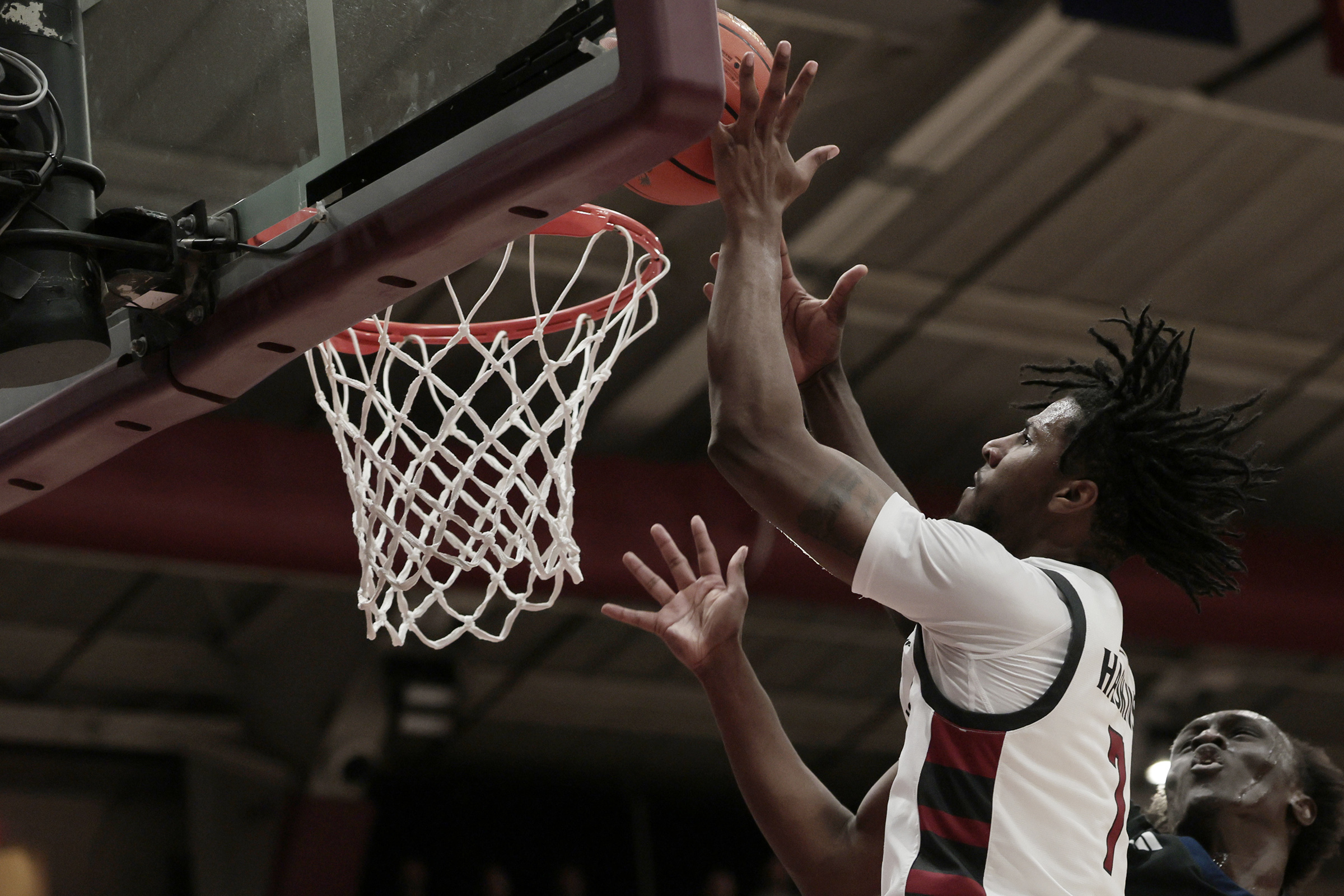
    Dasear Haskins was a key starter for the Hawks this season.

    St. Joseph’s

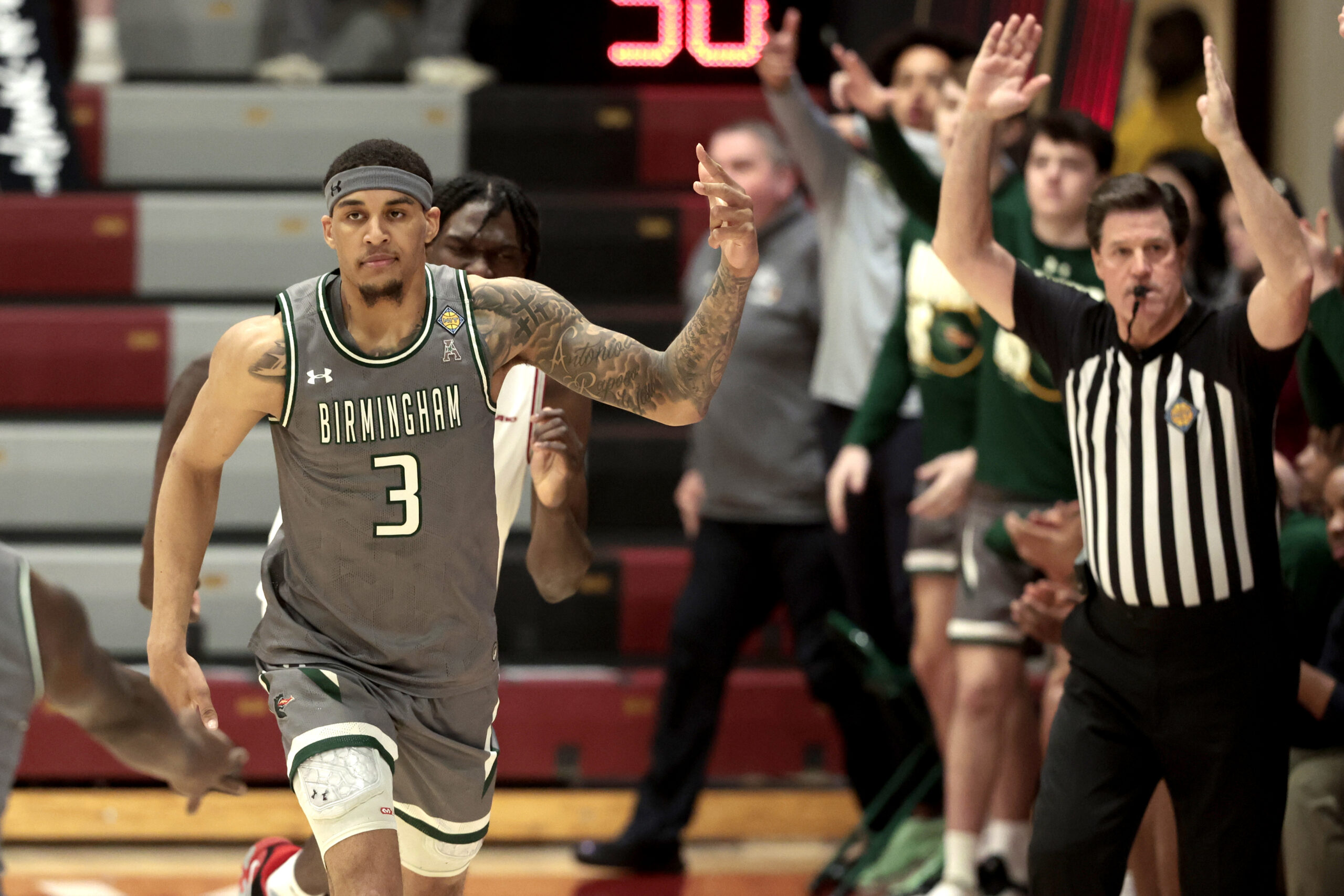
    • Deuce Jones (guard/La Salle), who led the Hawks in scoring during the first two months of the season, was dismissed from the team in December. (Transferring to Alabama-Birmingham.)
    • Dasear Haskins (guard/Camden High graduate) averaged 11.1 points and started for the Hawks as a redshirt sophomore. (Transferring to Ole Miss.)
    • Anthony Finkley (forward/Roman Catholic graduate), a junior, averaged 19 minutes in 35 games. (Transferring to La Salle.)
    • Kevin Kearney (forward) appeared in 14 games as a redshirt freshman. (Transferring to Manhattan.)
    • Jaden Smith (center) averaged 2.8 points and 1.8 rebounds in 9.1 minutes after transferring from Fordham. (Transferring to Ball State.)
    • Steven Solano (center), a redshirt freshman, played in eight games. (Transferring to Delaware.)
    • Al Amadou (center/Springside Chestnut Hill Academy graduate) transferred from Marquette and appeared in 11 games. (Transferring to Wisconsin-Milwaukee.)

    Penn

    • Ethan Roberts (forward) has one year of eligibility remaining — the Ivy League prohibits graduate students from playing intercollegiate athletics — and was the Quakers’ leading scorer (16.9 points per game). (Transferring to Notre Dame.)
    • Cam Thrower (guard), a senior who spent four years at Penn, averaged 17 minutes in 27 games. (Transferring to Elon.)
    • Dylan Williams (guard) played in seven of Penn’s first 10 games before the senior missed the rest of the season with an injury. (Transferring to Northwestern)
    • Michelangelo Oberti (center) appeared in 12 games. (Transferring to Boston University)
    • Alex Massung (guard), who averaged 5.6 minutes in 10 games played. (Transferring to Saint Anselm.)
    • Bradyn Foster (forward) saw action in Penn’s season opener.

    Drexel

    • Shane Blakeney (guard) was Drexel’s leading scorer, averaging 14.2 points in 33 games as a junior. (Transferring to South Carolina.)
    • Kevon Vanderhorst (guard) averaged 9.3 points and 2.9 assists while starting all 33 games for the Dragons. (Transferring to Iona.)
    • Villiam Garcia Adsten (guard), a junior, averaged 17.5 minutes in 32 games. (Transferring to Maine.)
    • Horace Simmons Jr. (forward/La Salle College High School graduate) appeared in 13 games.

    La Salle

    • Ashton Walker (guard) started 21 games and averaged 8.2 points as a freshman. (Transferring to Monmouth.)
    • Eric Acker (guard), a junior, appeared in 26 games, starting 10, and averaged 18.9 minutes. (Transferring to Northern Kentucky.)
    • Nas Hart (forward) played in 20 games as a freshman. (Transferring to Quinnipiac.)
    • Edwin Daniel (forward) played 31 games (14.5 minutes) and averaged nearly four points and 3.5 rebounds. (Transferring to Stephen F. Austin.)
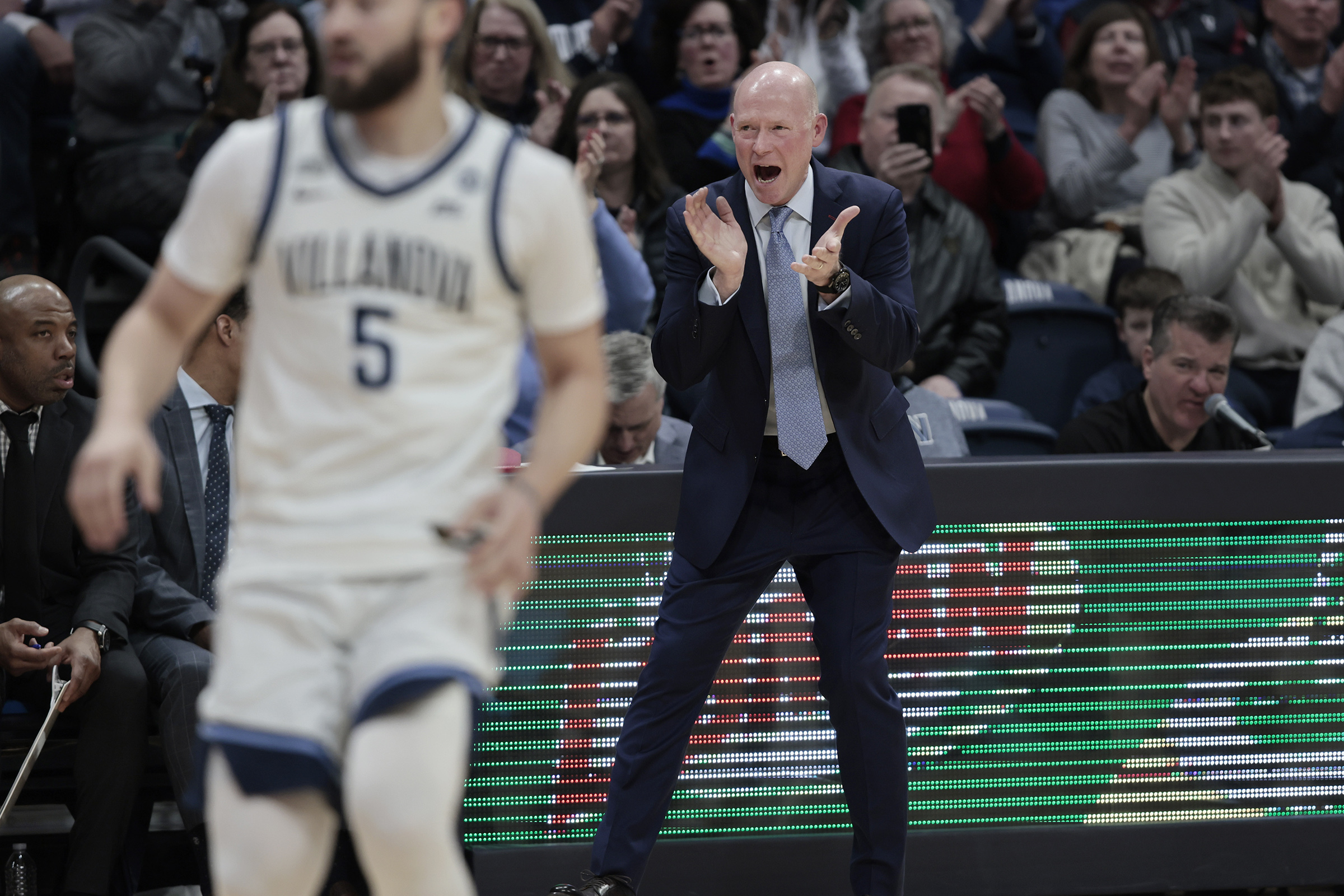
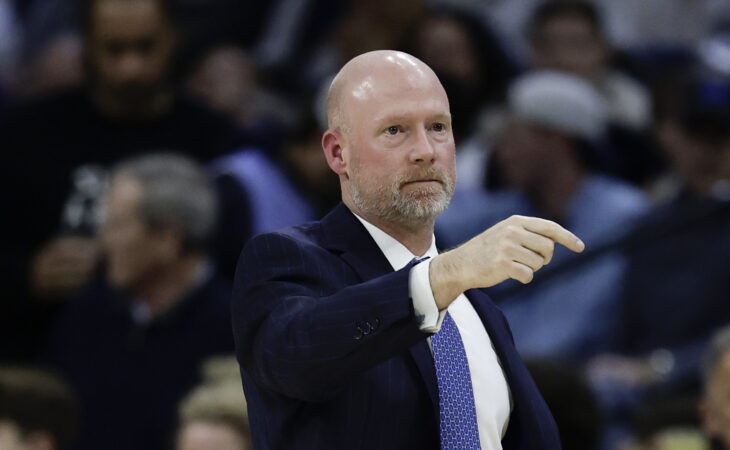
    Villanova coach Kevin Willard directs his team against Butler on Feb. 25.

    Big 5 portal additions

    These are the players who are transferring to Big 5 schools.

    Drexel

    • Panagiotis Pagonis (forward/New Orleans)
    • LaDricus Pittman (guard/LeMoyne-Owen College)
    • Adrian Petkovic (guard/Germany)

    La Salle

    • Trey Moss (guard/George Washington)
    • Vice Zanki (forward/Niagara)
    • Anthony Finkley (forward/St. Joe’s)
    • Jamison Lynam (guard/Arcadia)
    • Kam Burton (guard/Stephen F. Austin)
    • Devin Booker (guard/George Mason/Cristo Rey HS)
    • Eunique Rink (forward/Hampton)

    Penn

    • Sir Mohammed (guard/Notre Dame)

    St. Joe’s

    • Gavin Marrs (center/Oregon State)
    • Logan Carey (guard/Maine)
    • Don Flamer (forward/Elizabeth City State – Division II)
    • Sean Logan (center/Davidson)

    Temple

    • Dez White (guard/Oregon State)
    • Dallis Dillard (guard/Indiana University of Pennsylvania)
    • Baboucarr Njie (forward/UTSA)
    • Cam Scott (guard/South Carolina)
    • Jason Drake (guard/Indiana)
    • Jordan Marsh (guard/USC)
    • Sir Isaac Herron (forward/Louisiana Tech)

    Villanova

    Local portal entries

    In addition to the local players in the Big 5 mentioned above, here are some notable players from the Philly area who are on the move:

    • Kevair Kennedy, Merrimack to Wake Forest (guard/Father Judge)
    • Jalil Bethea, Alabama to Pittsburgh (guard/Archbishop Wood)
    • DJ Wagner, Arkansas to Maryland (guard/Camden)
    • Justin Moore, Loyola-Chicago to Hofstra (guard/Drexel, Archbishop Wood)
    • Budd Clark, Seton Hall to Ole Miss (guard/West Catholic)

    Where local 2026 recruits are going to college

    Here’s a look at where some of the area’s top boys’ basketball players are heading off to play in the fall.

    • Sammy Jackson, Virginia Commonwealth (small forward/Roman Catholic)
    • Ethan Johnston, Marquette (shooting guard/Hill School)
    • Xavier Blake, Hofstra (shooting guard/Phelps School)
    • Derrick Morton-Rivera, Temple (shooting guard/Father Judge)
    • Mani Sajid, Towson (shooting guard/Plymouth Whitemarsh)
    • Darnell Lloyd, Boston University (center/Perkiomen School)
    • RJ Smith, La Salle (guard/Roman Catholic)
    • Michael Pereira, Penn (center/Plymouth Whitemarsh)

    2026 recruits headed to Big 5 schools

    Villanova

    Penn

    • Isaiah Carroll (small forward/Blair Academy of Warren County)
    • Ethan Lin (point guard/Montgomery High of Somerset County)
    • Michael Pereira (center/Plymouth Whitemarsh)
    • Chase Geremia (guard/Newman School)
    • Finley Billy (forward/Bullis School)
    • Johnny Keenan (guard/St. Thomas More)

    Temple

    La Salle

    • RJ Smith (guard/Roman Catholic)
    • Breylon Webb (guard/Western Reserve Academy)

    Drexel

    • BJ Brown (guard/Sumter)
    • Tre Paulding (forward/Lee’s Summit North)

    St. Joe’s

    • BJ Ranson (guard/Mount St. Joseph)
    • Keoni Sacco (forward/Fork Union Military Academy)
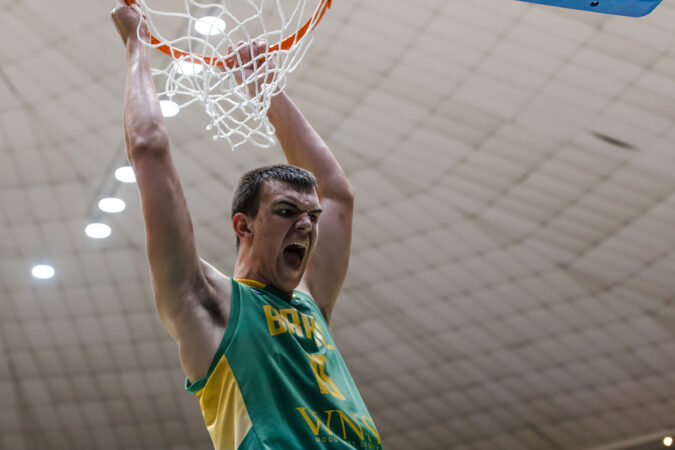
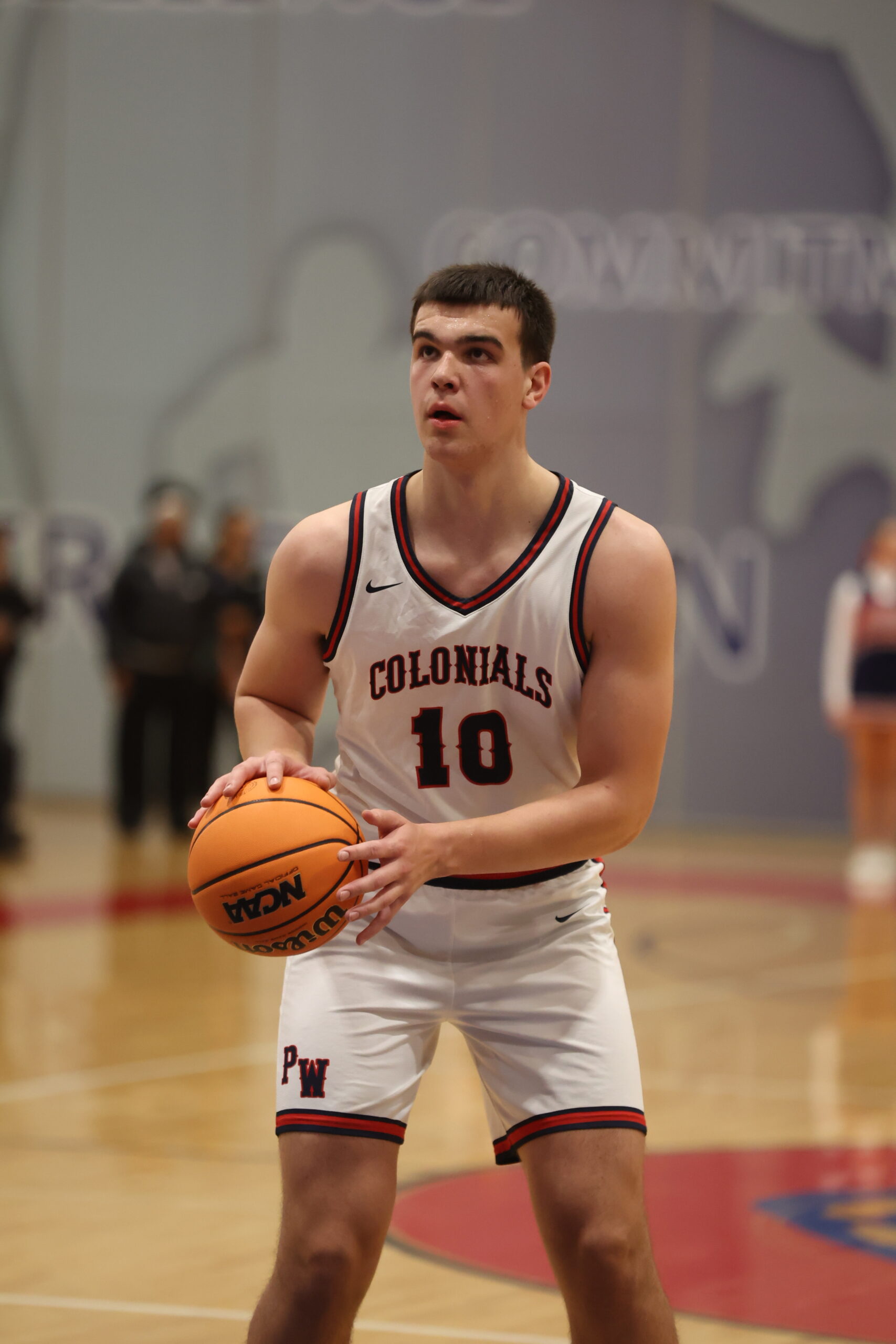
  • Plymouth Whitemarsh’s Michael Pereira brings professor-like IQ and ‘Hulk mode’ to Penn hoops

    Plymouth Whitemarsh’s Michael Pereira brings professor-like IQ and ‘Hulk mode’ to Penn hoops

    Before games, Michael Pereira needs some time alone to visualize the moment.

    “I’m thinking about what I’m going to do and also trying to feel the emotion that would come with doing that thing,” Pereira said. “I’ll think of me dunking, and then feel the jolt of energy you get after you dunk it.”

    It’s a practice he learned from his mother, and being a visionary through his four years at Plymouth Whitemarsh High School has taken the 6-foot-10 center pretty far. After starring for the Colonials, Pereira has been playing internationally for Brazil, where his father was born.

    In June, he missed his senior prom to help the country’s under-18 national team place third in the FIBA AmeriCup in Mexico. Come fall, Pereira will join Penn, where he’s a member of Fran McCaffery’s first recruiting class.

    Pereira is hoping to bring what he learned from international play to Penn.

    “[The AmeriCup] was a great learning opportunity, definitely,” Pereira said. “The pace of play, the physicality of the game was faster because everyone was higher level there compared to what I’m used to.”

    After falling to the United States, 102-56, in the semifinals, Brazil faced Puerto Rico in the third-place game on June 7. At halftime, Puerto Rico led by 19. It seemed as if Brazil would end AmeriCup play with back-to-back blowout losses. Then, Brazil came storming back and took the lead in the closing minutes of the fourth quarter. From there, it was able to hold on to claim an 83-77 victory. Pereira notched 4 points, 11 rebounds, and 2 blocks.

    Michael Pereira averaged 14.1 points, 7.6 rebounds, and 1.3 blocks this season with Plymouth Whitemarsh.

    Three days later, he was back at Plymouth Whitemarsh for his graduation.

    “He’s a serious student-athlete,” said Plymouth Whitemarsh coach Jim Donofrio. “Anyone that can get accepted into Wharton early admissions obviously has a good resumé academically. Michael is a very curious guy when it comes to learning; he is open-minded to learning anything, he has high standards to want to excel in anything he takes on.”

    ‘Something special’

    Pereira’s curiosity drove him into his coach’s Honors Philosophy & Ethics course. In class, Pereira did not shy away from offering his thoughts on whatever topic Donofrio covered that day. But before interjecting, Pereira would always stop and take in the concept.

    Donofrio said this quality has become rare in today’s “hyper impatient society.”

    However, it did not surprise the longtime coach that his player was a diligent and thoughtful student. Pereira showed the same characteristics in practice.

    “One thing in the coaching world that we should emphasize constantly is when I’m talking to you, I want pure eye contact,” Donofrio said. “Michael gives you nothing but eye contact, he almost looks through you. He takes the message and he absorbs it, and that’s mind training — for a young guy to have that kind of discipline to want to listen.”

    Pereira picked up the sport relatively late, in sixth grade. His parents had Chuck and Ronald Moore, two former Plymouth Whitemarsh players who went on to play collegiate basketball, train Pereira and his older brother Will. When Pereira entered eighth grade, Ronald was his coach.

    Then, in high school, Chuck oversaw Pereira’s development as Donofrio’s assistant.

    After McCaffery was hired by Penn, he brought in three assistants. One of them was Ronald Moore, who played under him at Siena. It was Ronald who put Pereira on his former coach’s radar.

    “Tons of respect for Jimmy [Donofrio] and the job that he’s done for so many years there,” McCaffery said. “Also aware of the quality of play in that conference, the teams they played against, and I felt very strongly that Mike would be ready when he got here.

    “When I saw him his junior year, I thought he had a chance. When I saw him his senior year, I knew he was going to be something special.”

    Pereira received offers to play at various high-level prep schools for his senior season, but he wanted to stay at Plymouth Whitemarsh. His decision paid off. Pereira averaged 14.1 points, 7.6 rebounds, and 1.3 blocks, while leading the Colonials to a PIAA District 1 Class 6A championship.

    “Something I liked about Plymouth Whitemarsh was that I could do more stuff, I could try stuff that was out of my comfort zone,” Pereira said. “Since it wasn’t like insanely good competition, I would get away with some stuff.

    “I’ve tried different footwork. I would shoot a three or two in a high school game. But just considering my role in international play, I wasn’t really doing any of that, I was more so just doing what got me on the team in the first place.”

    Improving as a Quaker

    The Colonials’ 2026 campaign ended with a loss to Father Judge in the PIAA Class 6A quarterfinals. Pereira, who logged a double-double, wanted to get his mind off the defeat.

    Coincidentally, Penn was playing in the Ivy League championship against Yale the next day.

    “I don’t want to be depressed after this loss. Let’s just drive up,” Pereira said.

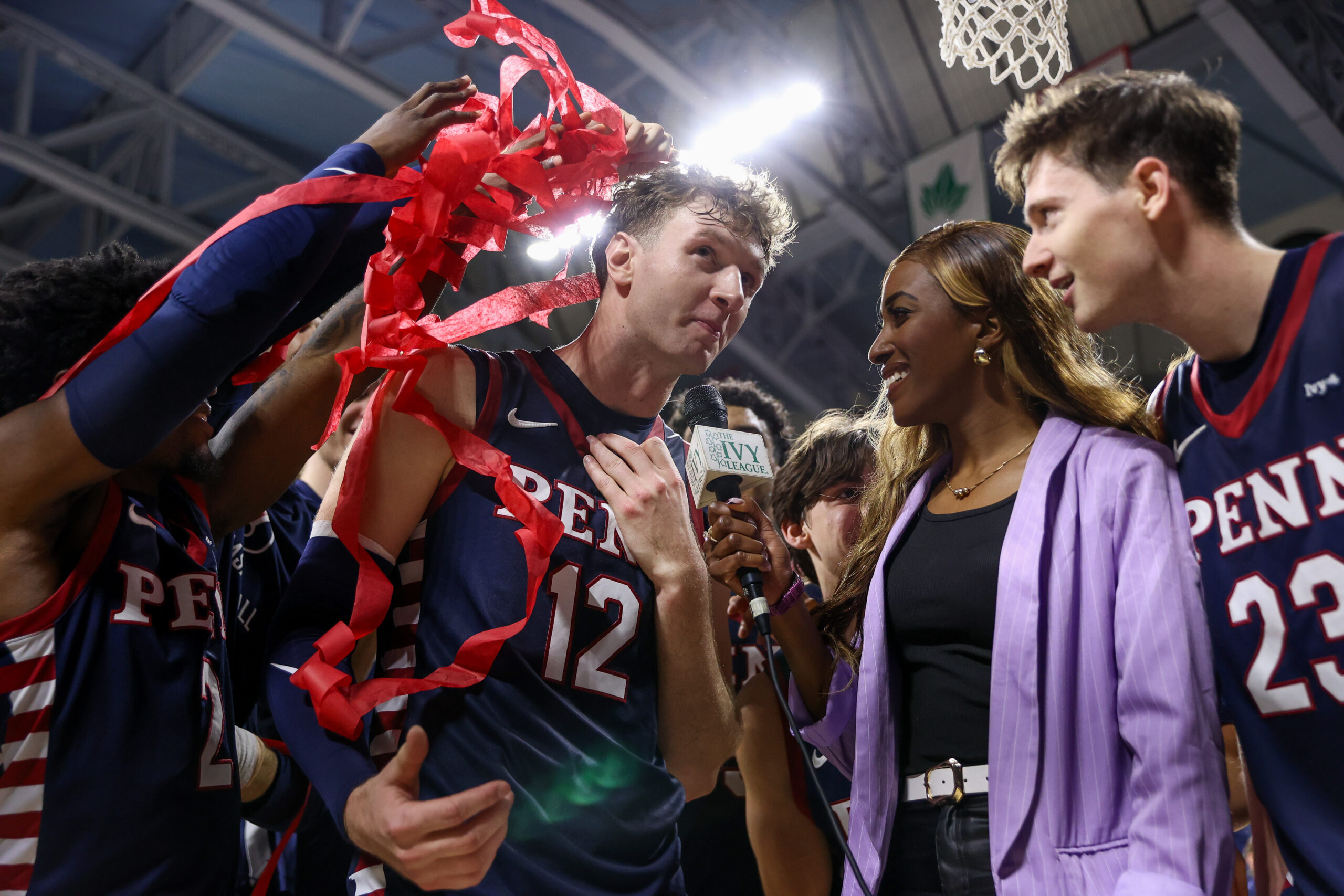
    The game, played at Cornell, offered much more than a distraction. Penn junior forward TJ Power poured in 44 points to lead the Quakers to an 88-84 overtime victory and a ticket to the NCAA Tournament.

    “I still think it’s one of the best games I’ve ever watched in person,” Pereira said.

    Penn is expecting eight newcomers on the roster next season. Going into his second season at the helm, McCaffery has valued acquiring size and flexibility.

    He certainly has found that in Pereira.

    In order to take advantage of his frame, Pereira will need to continue his rapid progression as a player. McCaffery does not believe this will be an issue, noting he expects his new center to develop a “year-round obsession” with improvement under his watch.

    Meanwhile, Donofrio believes that Pereira’s game will translate to the next level if he can better balance his intellectual side.

    “He has to use his humble ability to listen like crazy and his curiosity,” Donofrio said. “All that stuff is really important, but he’s then going to have to learn how to be as aggressive as he can with that body without fouling out, but I almost want him to foul out a few times.”

    “I always said, ‘Mike, you’re like in professor mode, then there’s the Hulk mode, where you turn into the Hulk.’ If we can just get the professor and the Hulk merged together, you got a guy that might be making money at the game someday.”

  • What to know about the Invitational Clash, a pro-am basketball tourney promoting community wellness

    What to know about the Invitational Clash, a pro-am basketball tourney promoting community wellness

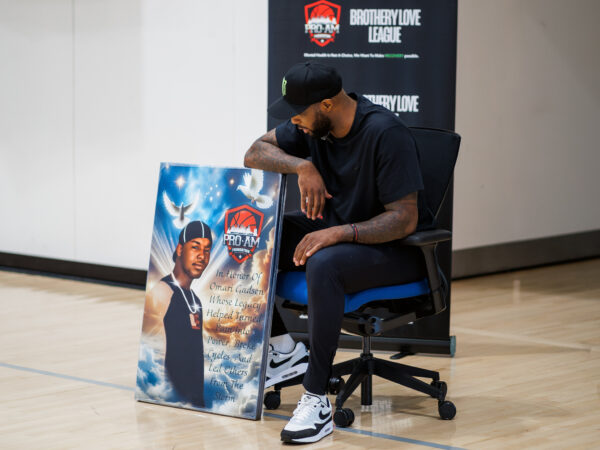
    Serving the community is an important mission for Philadelphia native Novar Gadson. After 14 years of playing professional basketball overseas, he is back home to bring his mission to life through the Invitational Clash Movement.

    The invitational is a five-day initiative at Drexel from Thursday to Monday in which pro-am men’s and women’s basketball teams from as far away as London will compete in a bracket-style tournament.

    The event will also feature other activities, including a youth basketball clinic and mental health workshops.

    “The basketball is obviously at the centerpiece of it, but the vision behind it is community wellness, mental health, and youth development,” said Gadson, 36.

    Eight men’s teams and four women’s teams will battle it out to decide the best pro-am leagues.

    The men’s teams represent Philly’s Brotherly Love League; Drew League from Los Angeles, Rucker Park Streetball from New York; Ball Don’t Stop from Toronto; the Smith League from Cincinnati; Queen City from Charlotte, N.C.; Denard Brothers from Chicago; and Great Britain Select from London.

    The four women’s teams represent Brotherly Love, Rucker Park, Queen City, and Swin City League from Dallas.

    The face behind the mission

    For Gadson, growing up in the city was not easy. His brother, Omari, was a victim of gun violence. He was 18 when he died in 2001.

    “My family has still not recovered from my brother’s murder,” he said.

    To stay out of trouble, Gadson said, he started playing basketball.

    He attended John Bartram High School, where he broke Kobe Bryant’s father Joe’s scoring record. He played at Rider University before playing professionally in Europe, Asia, and South America.

    “Basketball is what saved me from homelessness and sexual assault to everything that I was dealing with as a child,” he said. “I feel like it’s in my heart from Christ to serve people.”

    In 2021, he began developing the vision for a Philadelphia-based event that would engage the community with sports and mental health advocacy.

    Gadson is the chief executive officer of the Brotherly Love League Pro-Am Foundation, a nonprofit committed to increasing access to mental health resources for underserved communities in the area.

    The invitational is an extension of the foundation, he said.

    How the tournament works

    The competition begins on Friday and follows a bracket-style format with the winning teams advancing to the next round.

    The four women’s teams will open play on Saturday.

    Tickets are $10 for adults and free for children.

    Attendees will have a wide variety of community-focused activities that are designed to engage and connect community members with mental health resources.

    The event will also feature food trucks, gaming trucks where children can play in Madden 2K tournaments, hair-cut stations for children, face painting, crowd giveaways, and youth basketball clinics. The boys’ clinic is on Saturday and the girls’ is on Sunday. Participants in the clinics will receive meals and have access to mental health workshops.

    More than 30 resource tables will be available throughout the event with panel discussions focused on mental health in partnership with the National Alliance on Mental Illness Philadelphia. Attendees will have the opportunity to connect with professionals and sign up for licensed therapy sessions after the tournament.

    “People need help,” Gadson said. “I dealt with a lot of PTSD and anxiety from my experiences growing up, so I want to extend help and opportunities for therapy outside the event.”

    He noted that increasing access to resources can create change in the city beyond the basketball court.

    “If we give a lot of resources and access to kids outside of the basketball event, it will help the city as a whole and the violence go down,” he said.

    , Gadson has struggled to revisit the trauma around Omari’s death. He said he has never celebrated his brother’s birthday. But on Monday, Omari’s birthday and the last day of the invitational, Gadson plans to honor his legacy. The foundation will recognize two families who have lost their loved ones to suicide or gun violence.

    “The idea for me is to continue to bring light to his name,” Gadson said.

  • Yaxel Lendeborg’s untraditional path to becoming an NBA draft pick was fueled by his mother

    Yaxel Lendeborg’s untraditional path to becoming an NBA draft pick was fueled by his mother

    On Tuesday night, Yaxel Lendeborg will likely be a first-round pick in the NBA draft.

    But the Pennsauken High graduate’s basketball career nearly ended after playing just 11 varsity games. If not for his mom, Yissel, Lendeborg might not ever have played Division I basketball, much less become a lottery pick.

    “Seeing him, and seeing his mother, and how much she has [meant] to him, and how much work she’s done to be able to help guide him mentally, and obviously on the court, it’s been the honor of my coaching career,” Pennsauken coach Harrison Carsillo said.

    Lendeborg wasn’t academically eligible to play basketball for a large portion of high school. He played on Pennsauken’s freshman team, but was held out for his sophomore and junior seasons, and most of senior year. He trained in the summer with coaches and friends from Pennsauken, but watched from the sidelines during the school year.

    In a Players’ Tribune article, Lendeborg said that the turning point for him was during his senior year. One night, after staying out late with his friends playing video games, his mom confronted him and told him that he needed to focus to even graduate from Pennsauken, much less play basketball.

    “This is no joke right now,” Lendeborg said in the article. “Nobody is smiling here. You have your mom up in this minivan crying her eyes out because you don’t know how to be a good son. Your own mom! Who does everything for you. Works two jobs. Shows you love no matter what. And this is how you’re being?!?!?!”

    Yaxel Lendeborg averaged 15.1 points and 6.8 rebounds in 40 games for Michigan last season.

    During that final year, Lendeborg improved his grades enough to play the final 11 games of the high school season, even competing in the NJSIAA playoffs. But he thought his basketball career was over, until his mom set him up to attend junior college at Arizona Western College. Lendeborg wrote that she planned the going-away party without even telling him he was going, because she knew he needed that push.

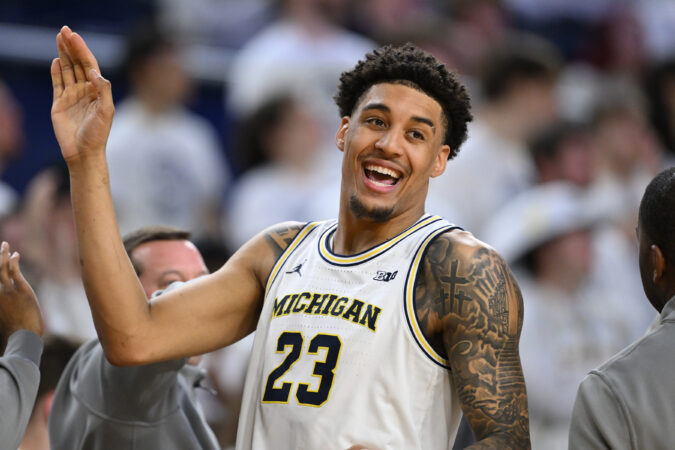
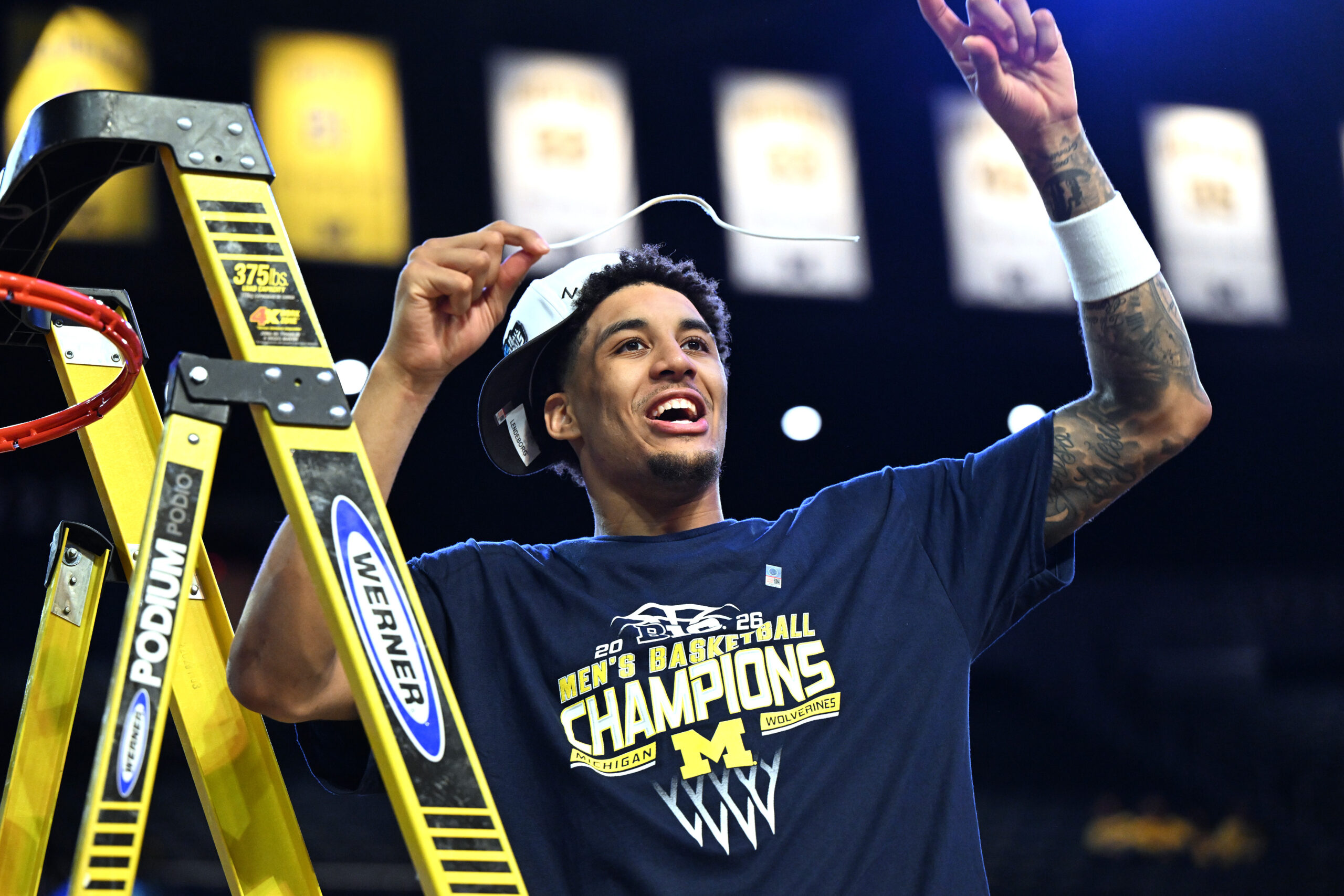
    From there, Lendeborg had one of the most improbable rises to the draft, transferring to Alabama-Birmingham in 2023 and then Michigan before last season, where he won Big Ten Player of the Year and an NCAA title. Lendeborg, a 6-foot-9 forward, averaged 15.1 points and 6.8 rebounds in 40 games for the Wolverines.

    Lendeborg was always talented, Carsillo said. His biggest problem was not believing in himself. Carsillo and Lendeborg’s mom forced him to pick up the phone after Division I schools started calling him about transferring, because he wasn’t sure if that was the right fit for him.

    “He didn’t answer the phone, and I said to him, ‘If you don’t answer that phone call, I’m going to take your phone, and I’m going to smash it, or rip your sneakers.’ I [was] going to be so upset, because he didn’t believe in himself that he could actually do what we knew he could do, if he put his mind to it,” Carsillo said.

    “It was a really funny moment. I obviously wasn’t going to rip his sneakers or smash his phone, but I was very upset, because it was almost just a mental thing going into it, because he had so much potential that he didn’t even see himself.”

    After two years at UAB, Lendeborg was a fringe first-round prospect. He could have ended his college career there, but instead spent another year in college to develop further, and prove to himself and to NBA draft scouts that he could succeed at that highest level. Carsillo said that Lendeborg’s year at Michigan has him more confident and aware of his sky-high potential.

    But what’s stood out the most to Carsillo over the years is Lendeborg’s selflessness, on and off the court. In the Final Four, Lendeborg suffered an MCL and ankle sprain. Some advised him not to play to protect his draft stock, but Lendeborg insisted on helping his teammates see it through and vowed, “I’m playing no matter what.”

    At halftime of the national championship game on April 6, he said he felt “awful,” but still gritted out a 13-point, 36-minute performance in the 69-63 win over UConn.

    Yaxel Lendeborg spent two seasons at UAB after attending Arizona Western College.

    “That’s him,” Carsillo said. “He could have easily just said, ‘No, I’m good.’ He knows he’s going to get drafted. He knows he’s changed his family’s life. It’s amazing. That’s exactly who he is, 100%, and he was like that at Pennsauken, just much lower stakes.”

    Lendeborg even has a chance to reunite with his college coach, Dusty May, who reportedly accepted the Dallas Mavericks’ head coaching job on Monday. The Mavericks hold the No. 9 pick in the draft, slightly above where Lendeborg has been projected, but Lendeborg joked Monday that he’s “going to tell him he better pick me up. If he doesn’t, I’m going to be mad. I might block him.”

    The forward has grown up a lot since high school. He’s one of the oldest prospects in the draft, but he’s played only about six seasons of organized basketball. He grew up playing baseball, and told ESPN that he first learned how to play basketball through the NBA 2K video game.

    “He still has so much room to grow, and he’s still learning how to become a better basketball player; it’s remarkable,” Carsillo said. “He has a little bit of self doubt, but not much anymore. This whole process with the NBA and Michigan turned his eye and turned his mindset around to be able to prove to himself, like, ‘I can do what my mother has always told me I could do.’”

    Lendeborg’s mom can’t attend as many games as she used to. She’s currently nearing the end of her treatment cycle for appendix cancer, which she initially kept hidden from Lendeborg to keep him focused on his season at Michigan. But planned to be in Brooklyn on Tuesday to watch her son’s NBA journey begin — a journey he’d never have come close to if not for her pushing him every step of the way.

  • Kevin Willard accomplished most of his goals in Villanova’s roster rebuild. Then came Luigi Suigo.

    Kevin Willard accomplished most of his goals in Villanova’s roster rebuild. Then came Luigi Suigo.

    Rumors of Villanova’s interest in 7-foot-3 Italian center Luigi Suigo already were swirling when assistant coach Ricky Harris posted a photo last month on his Instagram page from Milan, not far from Suigo’s hometown of Tradate. Villanova was trying to keep its pursuit of Suigo under the radar, but Harris’s post only fueled the speculation.

    Villanova is visiting Suigo in Milan! The staff is all-in on adding the future NBA center! Kevin Willard really wants the cherry on top for this roster rebuild!

    Let’s play a little game of Two Truths and a Lie.

    No, Villanova didn’t send Harris to Milan to visit its next center. The other things are true, though. And the lie is only a partial one. It wasn’t Harris visiting Suigo, it was Willard. Harris was just in Italy enjoying an offseason vacation, with the bulk of the roster overhaul already done. But it wasn’t Milan where Willard went, it was Belgrade, Serbia, where Suigo played this past season with Mega Basket of the Adriatic League.

    “Belgrade was beautiful,” Willard said Monday, nine days after Suigo announced he was leaving the NBA draft and signing with Villanova. “Food was great, people were awesome.”

    It was a short business trip, less than 48 hours. Willard had spent the past month reassembling the Wildcats’ roster. Only two players who dressed in a game from last season’s team, Tyler Perkins and Matt Hodge, returned. The staff surrounded them with plenty of talent, but still needed a true center to round out the roster. Any starting-caliber center would have been fine. The offseason had largely been a success even after losing a few top players like Acaden Lewis and Bryce Lindsay to the transfer portal.

    “We could have gone in a couple directions,” Willard said of the center spot. “For us, it was like, all right, how are we trying to win a championship here?”

    On film, Suigo looked the part of a player who could take the roster to the next level. The size component is obvious. But Suigo is a “really skilled center that can shoot it, that can pass at a high level,” Willard said. “I think one of his best attributes is that he’s extremely unselfish. He’s a great passer.”

    Willard wanted more than film studying, though, so he got on a plane and flew halfway across the world to watch Suigo practice in person, to meet with his coaches, to sit down with him for dinner.

    “Sometimes you can watch clips and you can get fooled,” Willard said. “When I went over there and talked to him in person, met him in person, and saw him play, it was like, yeah, this kid is the real deal.

    “He’s very professional. He knows what he wants. He knows how he wants to play. He knows where he needs to get better at.”

    In 26 games with Mega Basket, Suigo, 19, posted averages of 7.9 points, 5.1 rebounds, and 1 block in 18.8 minutes. He shot 64.9% on his 111 two-point shots, 27.1% on 48 three-point attempts, and 64.7% on 34 free throws.

    Draft evaluators had Suigo projected near the end of the first round or early in the second round. Luring a player out of that range surely was costly for Villanova. Willard declined to discuss financials with The Inquirer. But the region’s rich Italian-American culture and the timing of watching the Knicks on their championship run with Jalen Brunson, Mikal Bridges, and Josh Hart were added bonuses.

    Plus, Suigo was open about wanting to be a top-20 pick throughout the draft process.

    “I think he maybe would have gotten drafted late in the first round, but he doesn’t want that,” Willard said. “He wants to make sure when he gets drafted he’s going to play. The big thing is I think he needs to get Americanized a little bit, to American basketball. I think that’s why college will be really good for him. Get in shape a little bit, just kind of get used to American basketball. I think once he does, the sky is the limit for him.”

    Sky’s the limit for the team, too?

    The offseason had a clear objective.

    “We wanted to make sure that we just didn’t get manhandled the way we got manhandled last year against the top teams,” Willard said.

    He was talking about national champion Michigan and the two top Big East teams, Connecticut and St. John’s. Willard’s first season at Villanova was a success. A streak of three consecutive missed NCAA Tournaments was stopped, though Villanova lost as a No. 8 seed in the first round because it lacked experience and physicality against a veteran Utah State team.

    Tyler Perkins (left) and Matt Hodge (right) will be key contributors again for the Wildcats in 2026-27.

    The first additions of the offseason aimed to address that. Villanova signed Oregon’s Kwame Evans Jr. and Ohio State’s Devin Royal. Both players are incoming seniors who averaged more than 13 points in the Big Ten last season. Evans is 6-10 and Royal is 6-6 but is a physical player who averaged seven rebounds in 2024-25 and nearly six last season.

    With those two and Perkins and Hodge in the fold, the attention turned to the backcourt, specifically to the point guard spot. Willard said he watched more film to fill this spot than any other position during the offseason. Perhaps, then, he could ace a quiz on Illinois-Chicago hoops. Elijah Crawford scored 14 points and dished out five assists in 26 minutes per game last season. More importantly, his decision-making out of pick-and-roll stood out, as did his 75.3% rate from the free-throw line.

    Crawford is the likely starting point guard next to Perkins, with Royal, Evans, and Suigo rounding out the starting five.

    Backcourt depth was a problem at times last season. On paper, it won’t be in 2026-27. The Wildcats added Cornell shooting guard Jake Fiegen, who Willard said “analytically, was probably one of the highest-rated guys.” Fiegen shot 41.4% from three-point range on 5.5 attempts per game. He thrived in catch-and-shoot situations, of which he will have plenty with this Villanova roster.

    Then there’s St. Bonaventure transfer Buddy Simmons. Willard said the staff was actually watching another Atlantic 10 player when they became enamored with Simmons, a 5-11 guard who scored 16.4 points per game and shot 42.5% from deep. While Fiegen is more of a standstill shooter, Simmons produces off the dribble.

    Incoming freshman guard Adam Oumiddoch also is expected to contribute right away. He’ll add to a versatile bench that also includes Hodge, who Willard said is tracking toward being ready for the beginning of the season after undergoing surgery to repair a torn ACL in March.

    Evans could play some minutes at center, as could returning redshirt freshman Nico Onyekwere.

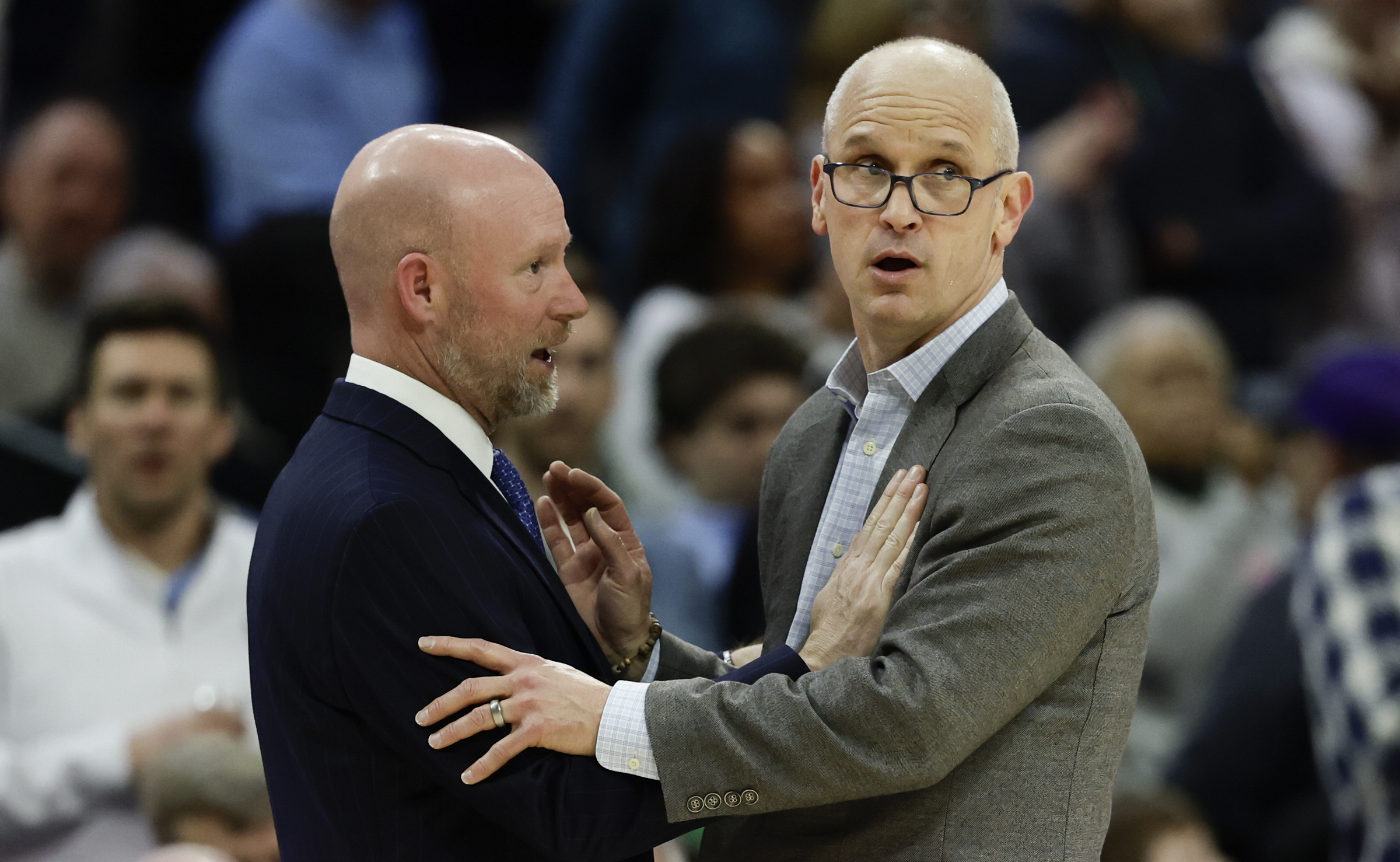
    Villanova hit the offseason trying to build a roster to compete with Dan Hurley’s UConn program.

    “We can play small or we can play really big,” Willard said. “That was my goal. Last year we were kind of hampered in how we could play. This year I think we have so much more flexibility.”

    Signing a 7-3 center helps.

    But Suigo’s signing should have done more than raise the expectations for the 2026-27 season. Sure, the Wildcats may get some preseason top 25 love. But they also showed they can compete financially with other programs.

    “From Father Peter to the board to our alumni and our donors, everyone understands how important Villanova basketball is,” Willard said. “We will never be the highest spender. That’s not in our DNA and it’s not what it is. But I will say that the university understands and financially has been extremely supportive of this program and the women’s program.”

    About those expectations …

    “I’m the head coach at Villanova,” Willard said. “The expectations are huge every year. I knew that when I took this job. I knew that when I took the Maryland job. It’s just part of the job. It’s what makes this job so great. You want those expectations.”

    It’s what you fly to Serbia for.

  • Villanova’s Matt Hodge deals with the bittersweet nature of an NCAA Tournament he can’t play in

    Villanova’s Matt Hodge deals with the bittersweet nature of an NCAA Tournament he can’t play in

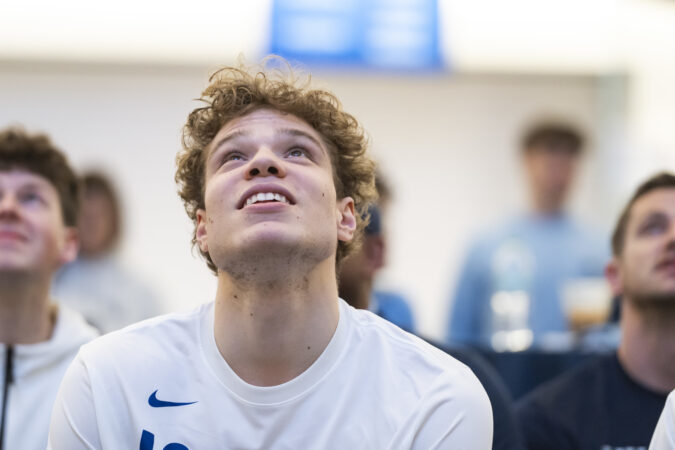
    Matt Hodge stared up at the screen Sunday night at a private Selection Sunday watch party and smiled and cheered with the rest of his Villanova teammates when their name and number were called.

    Villanova’s return to March Madness, the first NCAA Tournament appearance by the men’s basketball team since 2022, is a first for much of the team, and would be for Hodge, a redshirt freshman, if he didn’t have his right leg heavily wrapped in a brace following surgery last week to repair a torn ACL.

    He was understandably dealing with mixed feelings on what was a celebratory night for players, coaches, their families, and program donors.

    “It’s fun to get to see our name get called,” Hodge said, “but at the same time I won’t be able to go and I won’t be able to play. So it’s a feeling of regret and of timing.”

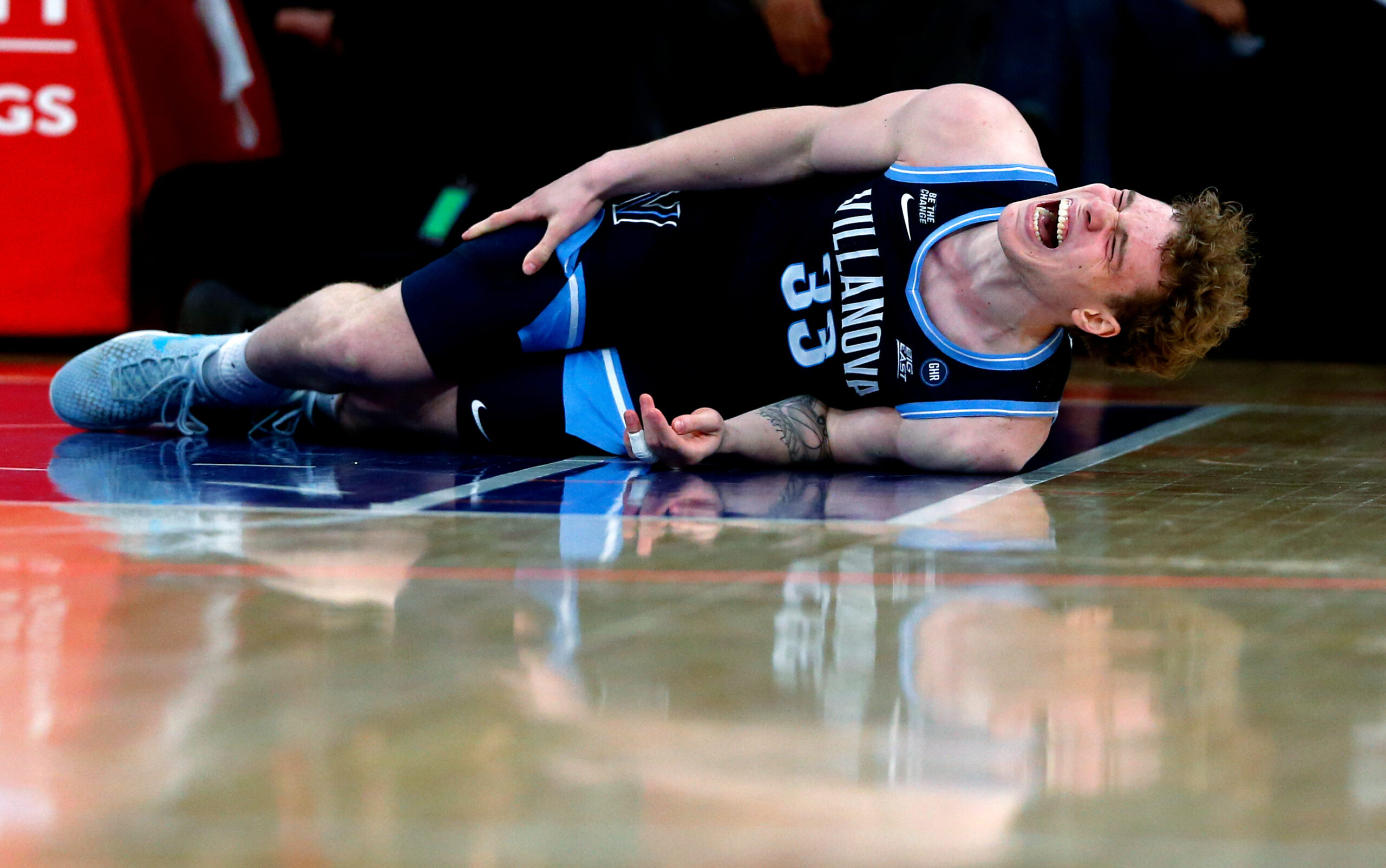
    His season came to an abrupt end early in the second half of Villanova’s Feb. 28 loss to St. John’s at Madison Square Garden. Hodge, a power forward who started in all 29 Villanova games to that point, got the ball in the post against Big East player of the year Zuby Ejiofor and tried to make a move.

    Instead, he collapsed to the floor and writhed in pain.

    “It was a typical basketball play,” Hodge said. “I just knew the moment I planted my foot and I tried to spin off Zuby, I felt something and I knew right away it was wrong.”

    Villanova forward Matt Hodge reacts in pain after suffering a torn ACL during the game against St. John’s on Feb. 28.

    His mind went instantly to his younger brother, Jayden, a high school star who suffered a torn ACL and meniscus in early January.

    “The first thing I said was, ‘I think I tore my ACL like my brother,’” Hodge said.

    Further testing proved his words to Villanova’s athletic training staff true. It’s a cruel result, but Jayden’s experience and recovery have given Hodge someone close to talk to and go through the emotional roller coaster with. The brothers, born in Belgium, came to the U.S. and won a state championship together at St. Rose High School in Belmar, N.J. Jayden, a senior who now plays at Montverde Academy in Florida, is committed to Northwestern.

    “I ask him every day for tips and stuff,” Hodge said. “We can go through it together. He’s a little bit ahead of me, but he also tore his meniscus, so in like a week or so I’ll be ahead of him.”

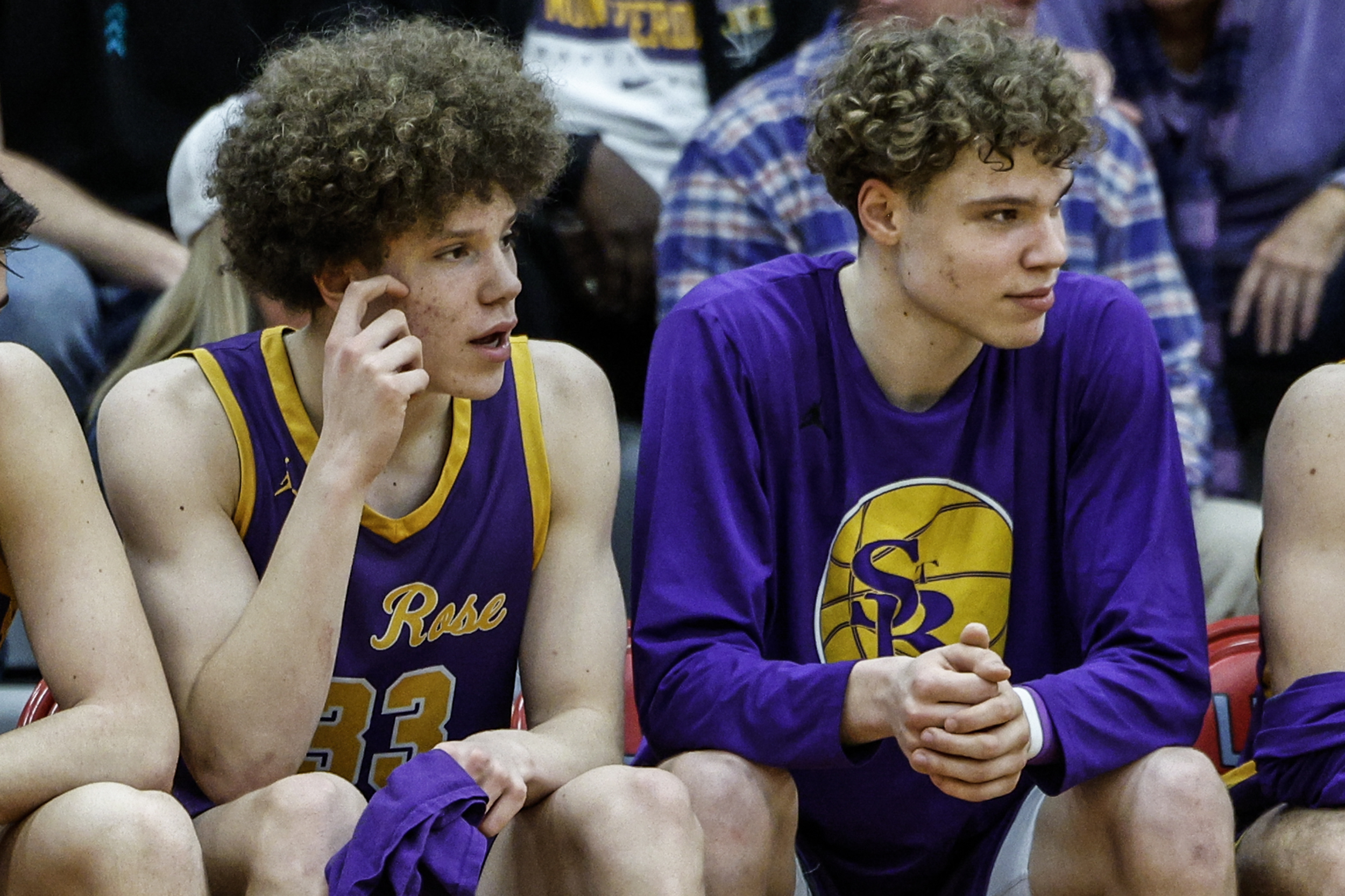
    St. Rose’s Jayden (left) and Matt Hodge watch their team play Bishop Eustace during the fourth quarter of a playoff game on March 4, 2024.

    Hodge’s recovery right now is mostly just relaxing in the immediate aftermath of surgery. He walks by using crutches and keeps his right leg stiffened. Soon, he’ll begin flexing the knee more and will work on building back strength in his quadriceps since his surgery required a nerve blocker. In about six weeks, he said, he’ll shed his current brace to a walking brace and can begin activities like riding a bike.

    It’s a long road back to the basketball court, but Hodge reiterated what Villanova coach Kevin Willard said earlier this month, that the aim is for him to be back to normal basketball activities by mid-to-late October and the goal is to be ready for the beginning of the 2026-27 basketball season.

    “I feel like obviously it’s still a long way ahead of me, but I want to have a goal and I think that goal is pretty realistic,” Hodge said. “I’m just working toward that and I know, in my head and deep down, anything is possible. I might not be ready yet, or I might be ready quicker.”

    Of course, he wishes he was ready by Friday afternoon, when eighth-seeded Villanova faces No. 9 Utah State in a first-round West Regional game in San Diego. The Wildcats could certainly use him. After missing his freshman season because of an NCAA ruling on his academic eligibility following his high school transfer from Belgium to St. Rose, Hodge had an impressive first season of college basketball.

    He averaged 9.2 points and 3.6 rebounds while shooting nearly 37% from three-point range.

    From left, Villanova’s Acaden Lewis, Matt Hodge, Duke Brennan, and Bryce Lindsay after a 79-61 win against Pittsburgh on Dec. 13,

    Without him, Villanova’s depth has taken a hit, especially in a frontcourt where only two players, centers Duke Brennan and Braden Pierce, are taller than Hodge, who is 6-foot-8. Villanova starts Malachi Palmer (6-6) at the power forward spot and sometimes has lineups on the court with four guards and one center, harkening back to the early days of Jay Wright. This quartet, however, doesn’t sing the same way as that one did.

    Willard has mentioned changing things up. He said again Sunday said he could see Villanova opting to have Brennan and Pierce on the floor at the same time, but they haven’t done so in the three games since Hodge went down. But Villanova’s first-round loss in the Big East tournament featured a rebounding disadvantage of 46-25, and it might be time to adjust against a Utah State team that isn’t huge but attacks the offensive glass.

    A win on Friday likely means a date Sunday with top-seeded Arizona, the ninth-best offensive rebounding team in the country that has a 7-2 center and a pair of 6-8 forwards who cause havoc on the glass.

    Hodge was at home watching Thursday night as Villanova crumpled under the bright lights. The days after the injury have been isolating, but his family has been in town, his girlfriend is on campus, and his teammates and coaches have been supportive.

    The pain is “more mentally than anything physically,” Hodge said.

    “I just got to keep my head up now and support the team.”

  • The stars, storylines, and potential upsets to know in the NCAA women’s tournament

    The stars, storylines, and potential upsets to know in the NCAA women’s tournament

    The NCAA women’s tournament is usually pretty chalky, and this one likely won’t be any different. But that’s not just because of the perennial early-round home advantage for the top four seeds in each region. Or even because the bracket hasn’t set up many potential upsets where they more likely happen: in games between two teams traveling to someone else’s floor.

    This time, it’s because of the strength of the four No. 1 seeds: Connecticut, UCLA, South Carolina, and Texas. They are so far ahead of almost the entire rest of the field that they’ll all be clear favorites to reach the Final Four. And if they do, that will make up for some of the dullness along the way.

    The star names will only become more well-known from now until then. UConn has expected national player of the year Sarah Strong and potential No. 1 WNBA draft pick Azzi Fudd. UCLA has Lauren Betts, Kiki Rice, and Gabriela Jaquez. South Carolina has Joyce Edwards and Raven Johnson, and Texas has Madison Booker and Rori Harmon.

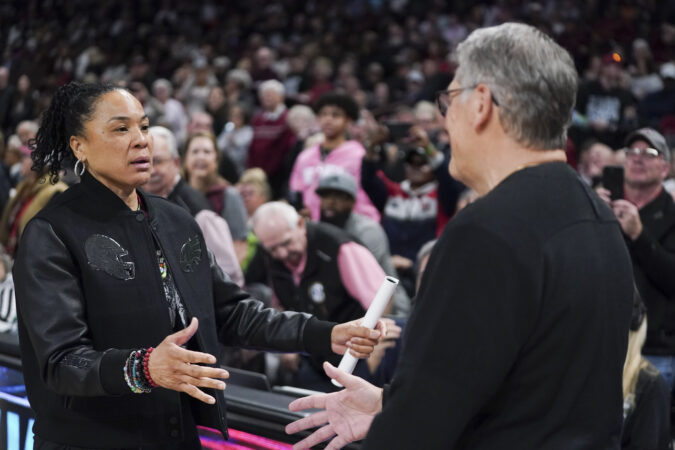
    The alignment of regions means there would be a UConn-South Carolina matchup in the semifinals, which has never happened. Geno Auriemma and Dawn Staley have met three times in the tournament before: the 2025 and 2023 title games and the 2018 East Regional final.

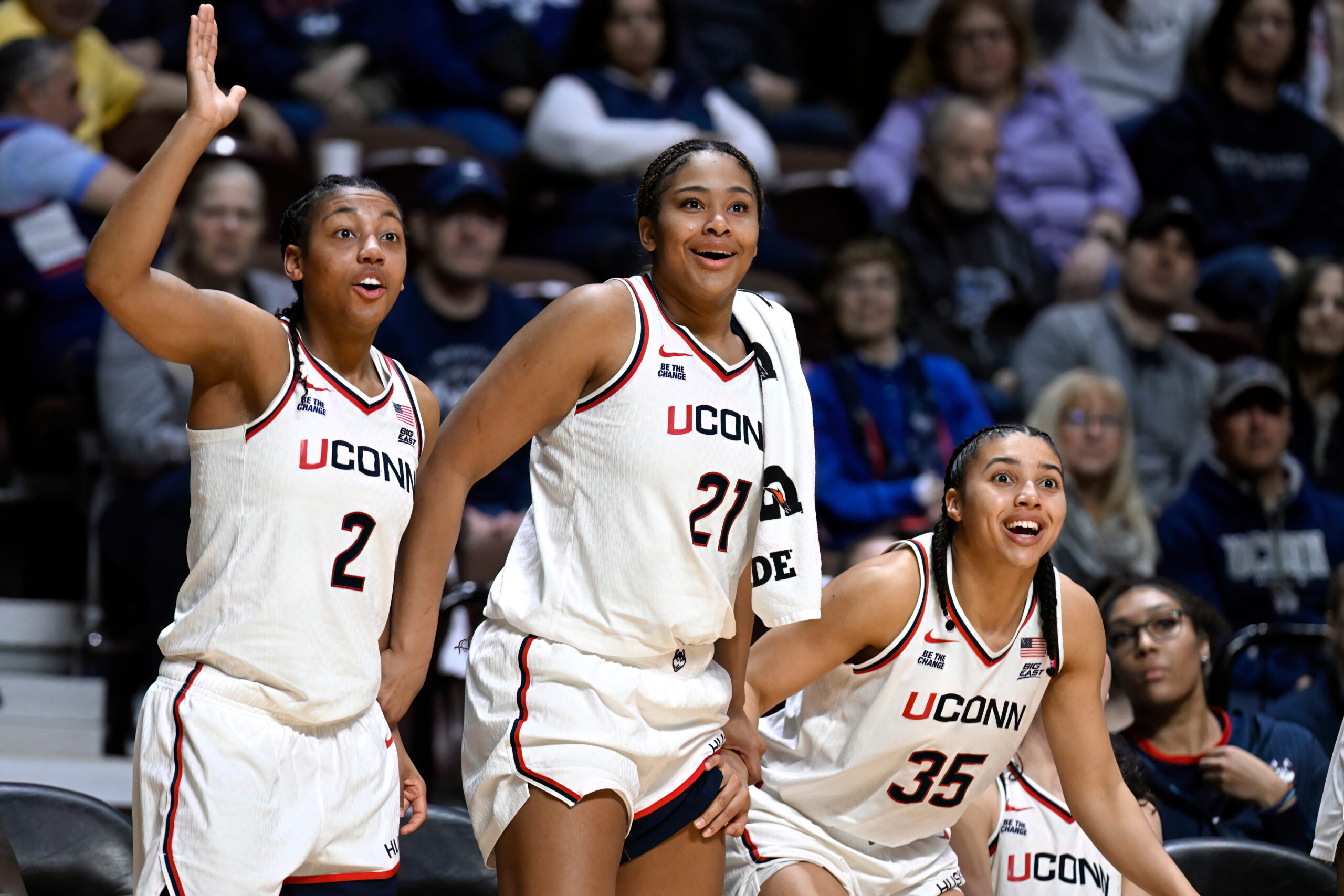
    Connecticut’s star trio of (from left) KK Arnold, Sarah Strong, and Azzi Fudd.

    Who can challenge the top quartet? The list starts with No. 2 seed LSU. The Tigers are led by veteran guards Flau’jae Johnson and South Carolina transfer MiLaysia Fulwiley, and coached by four-time national champion Kim Mulkey. She’s as controversial as she is successful, but she knows how to win in March.

    LSU finished fourth in the ultra-competitive SEC, thanks to a January swoon when they lost to Kentucky and Vanderbilt. They also lost at Texas and twice to South Carolina, at home in the regular season, then in the conference tournament semifinals. But the rest of the record is stacked with big wins: at Duke, home vs. Texas, and two over Oklahoma.

    Expect the Tigers to eat up either Villanova or Texas Tech in the second round, on the way to the Elite Eight. (And yes, Villanova can win that first-round game.)

    No. 2 seeds have interesting stories

    UCLA might be quite annoyed that the best No. 2 seed landed in its region. Not only would anyone want to avoid the Tigers, but the 31-1 Bruins believe they deserved the No. 1 overall seed.

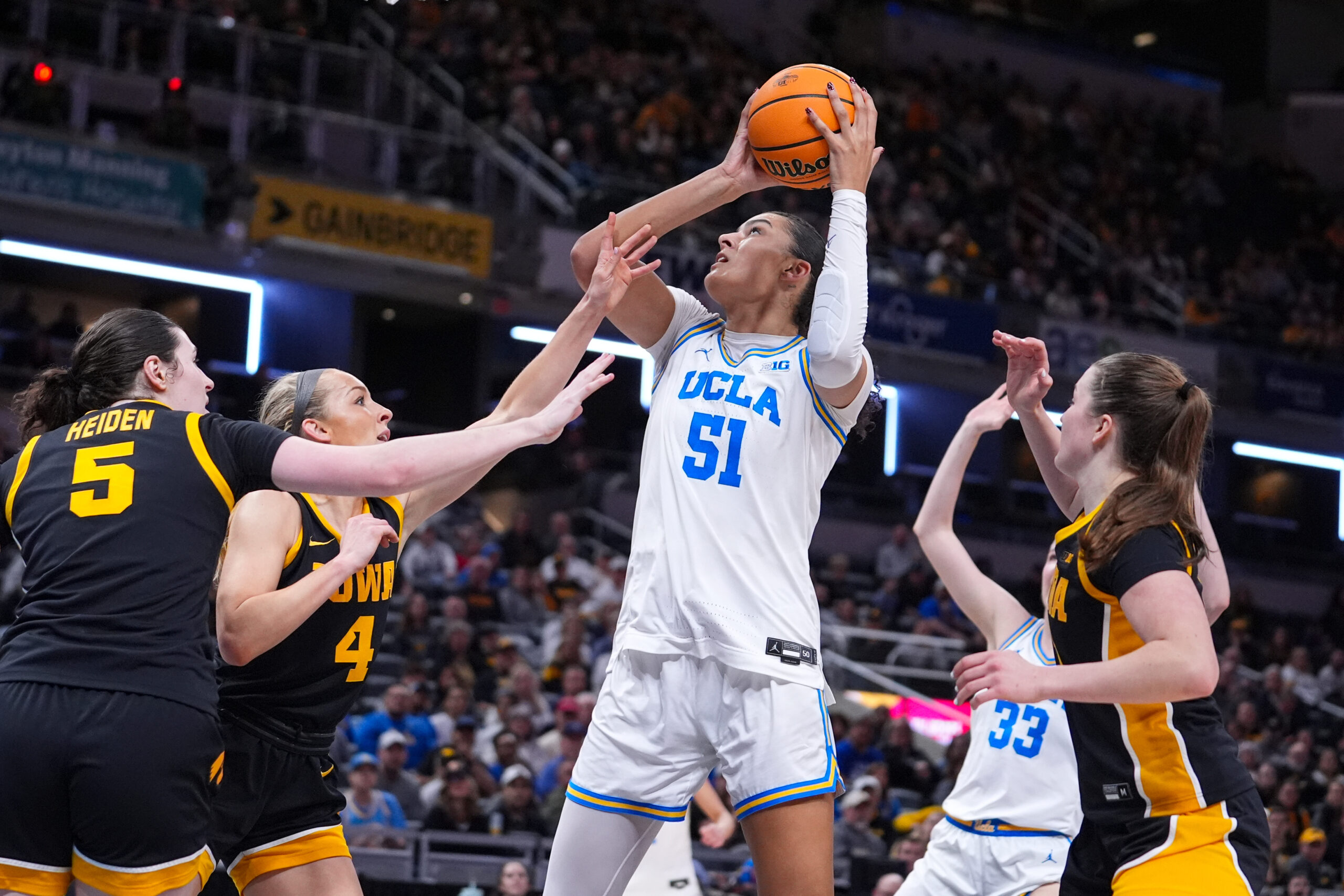
    UCLA’s Lauren Betts goes up for a basket during the Big Ten women’s tournament title game.

    They took the regular season and tournament in the Big Ten, a tougher conference than the Big East, with 12 wins over teams ranked at the time of the contest. Their only loss was to Texas on a neutral floor, and it was back on Thanksgiving.

    LSU might in turn be annoyed that a rematch with Duke looms in the Sweet 16. Though the Blue Devils had six nonconference losses — including South Carolina, UCLA, and LSU in one seven-day stretch — they won the ACC regular season and tournament. They finished No. 8 in the NCAA’s NET rating, and the fourth No. 2 seed, Iowa, finished 10th.

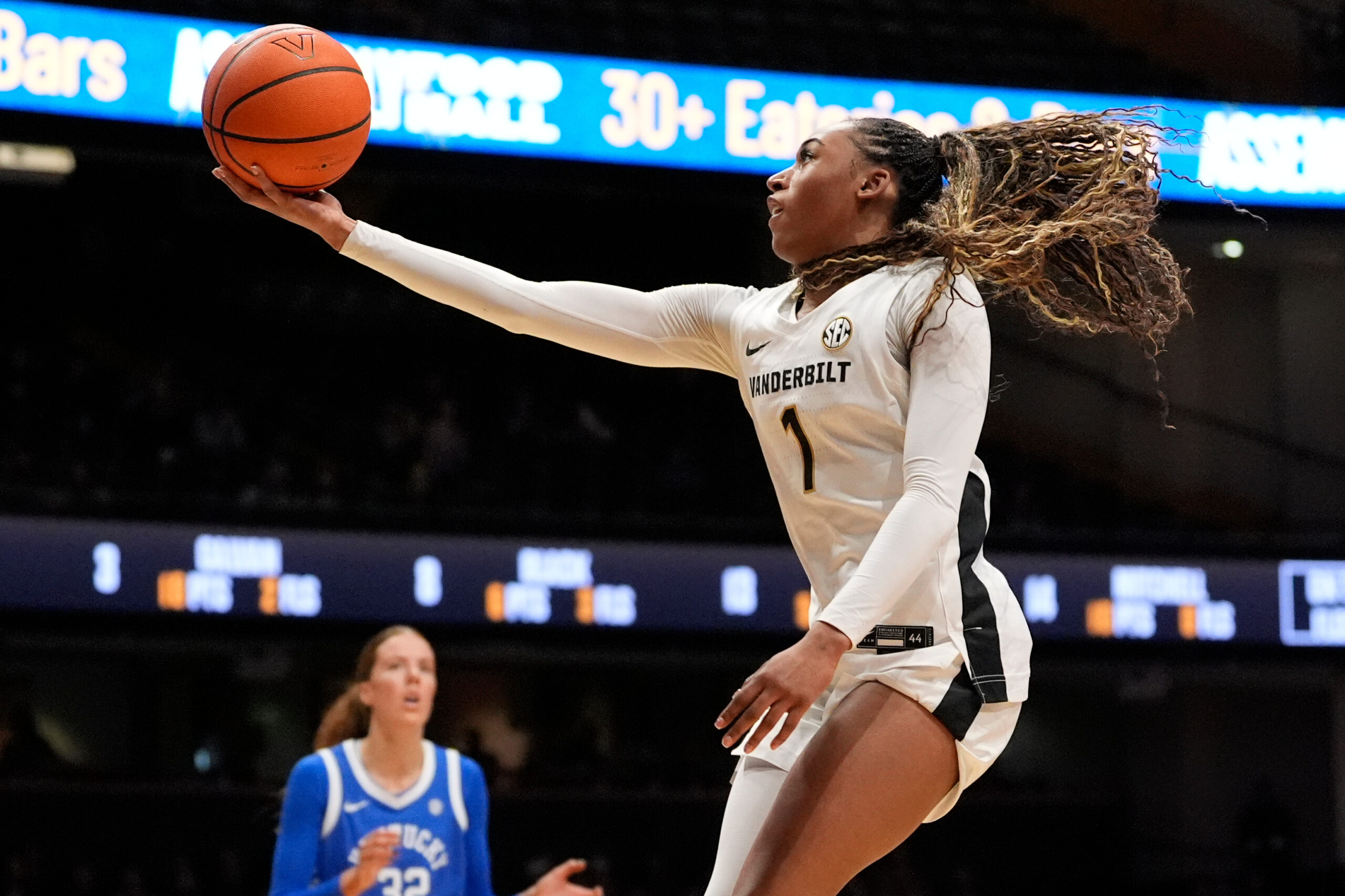
    Another No. 2 seed, Vanderbilt, will get a lot of attention. Guard Mikayla Blakes is the nation’s top scorer at 27 points per game, and also averages 4.4 assists, 3.8 rebounds, and 2.9 steals.

    The Commodores started the season 20-0, including wins over LSU at home and Michigan on a neutral floor. Then came a trip to South Carolina, and Staley reminded them who runs the show with a 103-74 flattening.

    Vanderbilt’s head coach is UConn legend Shea Ralph. If you think the selection committee has a sense of humor, you might think it’s no coincidence that the Huskies are the No. 1 in that region.

    Vanderbilt’s Mikayla Blakes is the nation’s leading scorer.

    Michigan is the No. 2 in Texas’ region, and has a high-ceiling pair of sophomores in Syla Swords and Olivia Olson. But the Wolverines could be tested early by the N.C. State-Tennessee winner, with a little extra juice if it’s the Lady Vols.

    Further down the field

    There are storylines among the No. 3 seeds, too. We’ve mentioned Duke already, and two others deserve attention.

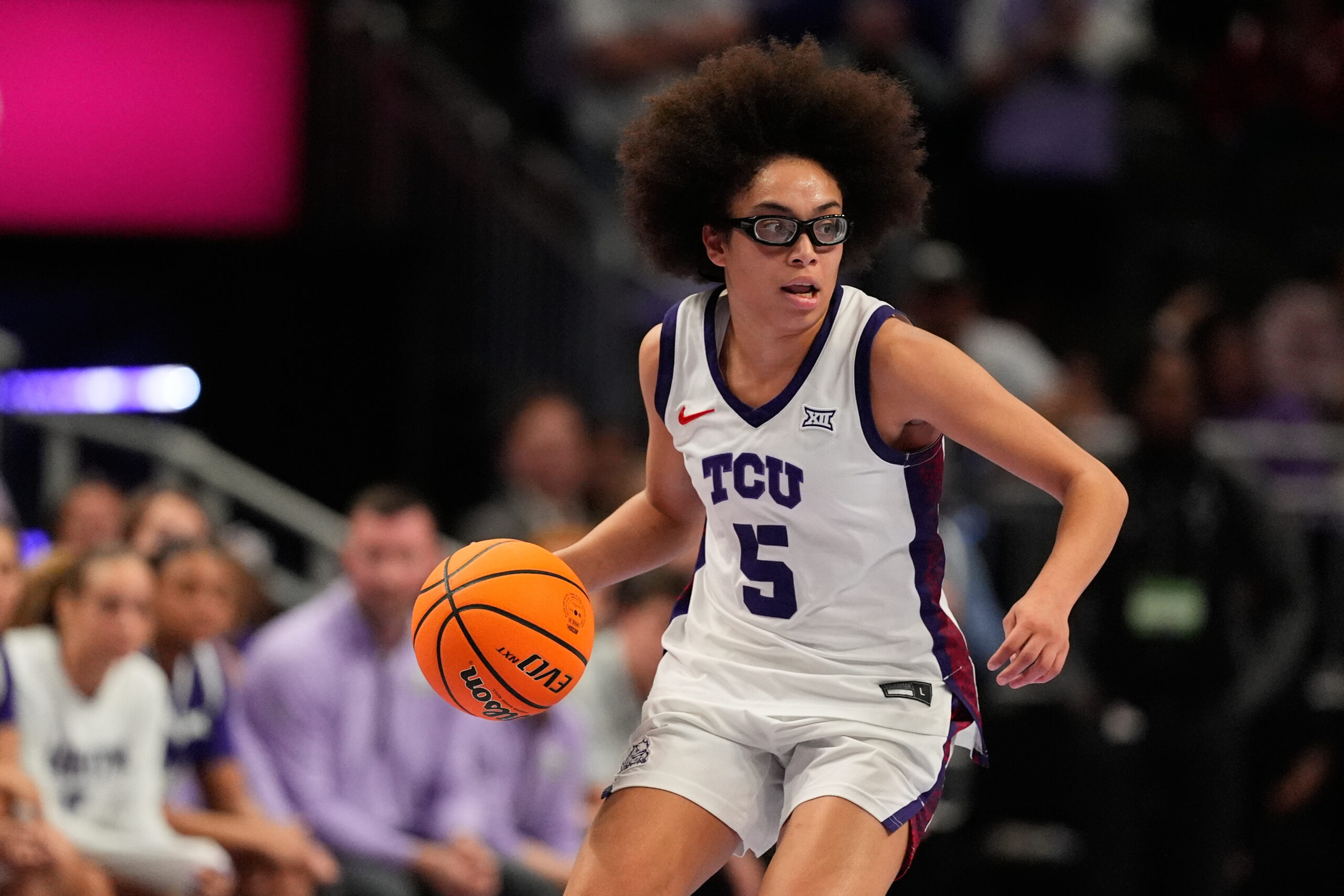
    First is TCU. Guard Olivia Miles earned fame at Notre Dame, and this season led the Horned Frogs to the Big 12 regular-season title. She’ll be another marquee WNBA draft pick, and forward Marta Suárez could join her in the first round. Add that to Iowa being arguably overseeded, and there’s a recipe for an Elite 8 run.

    The other is Ohio State. The Buckeyes are stuck with Notre Dame as the nearby No. 6 seed and Vanderbilt as the No. 2. But Jaloni Cambridge has pro potential, and Notre Dame will have its hands full with Fairfield.

    Olivia Miles could take TCU on a long March run before heading to the WNBA.

    That’s the cue to turn to where the real upsets could lurk.

    Fairfield went 28-4 this season, won at Villanova early, and tested itself later with losses to North Carolina on a neutral floor and at Iowa. The AP poll’s voters recognize the Stags’ quality, putting them two spots outside the top 25.

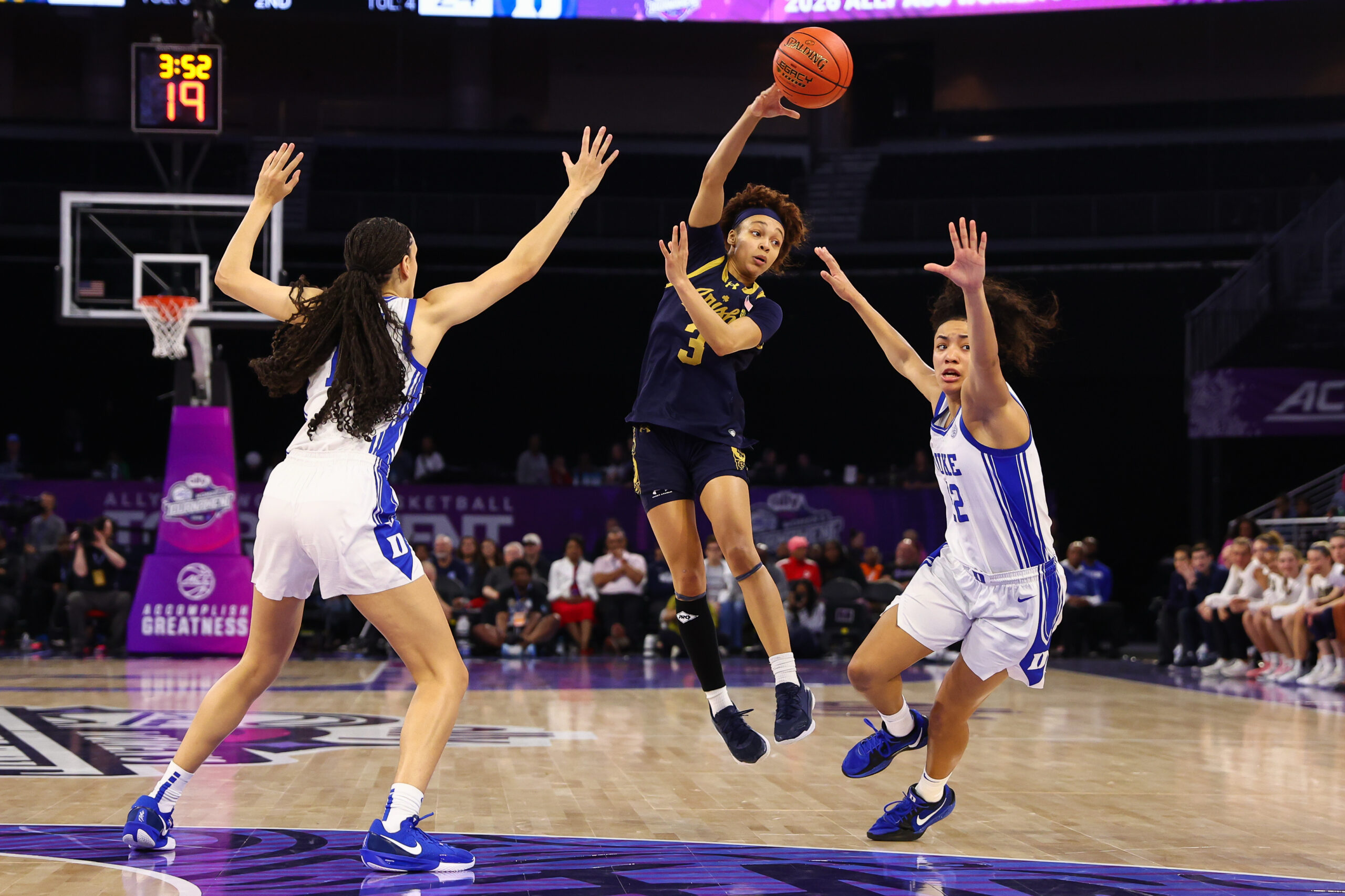
    South Jersey native Hannah Hidalgo has the Fighting Irish getting back on track after some ugly stretches in conference play. She’s third in the nation in scoring at 25.2 points per game, is leading the nation again with 5.41 steals per game, and is averaging 5.3 assists and 6.4 rebounds too.

    How will it go on a neutral floor? Well, let’s see how neutral it actually is. The game will be played at Ohio State right after the Buckeyes’ opener, and if the home fans stick around, they’ll give Notre Dame an earful.

    Hannah Hidalgo (center) lining up a pass during the ACC tournament.

    Richmond, led by former Cardinal O’Hara star Maggie Doogan, got stuck in the play-in game after losing to George Mason in the conference semifinals. But we’ll back the Spiders to beat a Nebraska team that got in despite finishing 12th in the Big Ten with an 18-12 record, including 7-11 in conference play. After that, if Doogan’s on, the Spiders can take a swing at Baylor in a game that Duke will host.

    If you don’t count an 8-9 game as an upset, then you won’t count Princeton beating Oklahoma State. But we will on the principle of an Ivy League team beating a Big 12 team, even if that Ivy League team is deservedly No. 23 in the AP poll. The Cowgirls didn’t even receive votes this week, though they are 29th in the NET to the Tigers’ 38.

  • Beloved coaching figure Bill Courtney remembered as ‘an incredible connector’

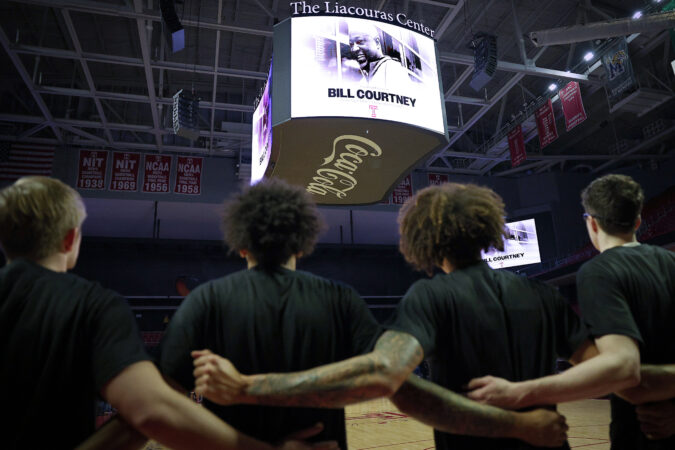
    Beloved coaching figure Bill Courtney remembered as ‘an incredible connector’

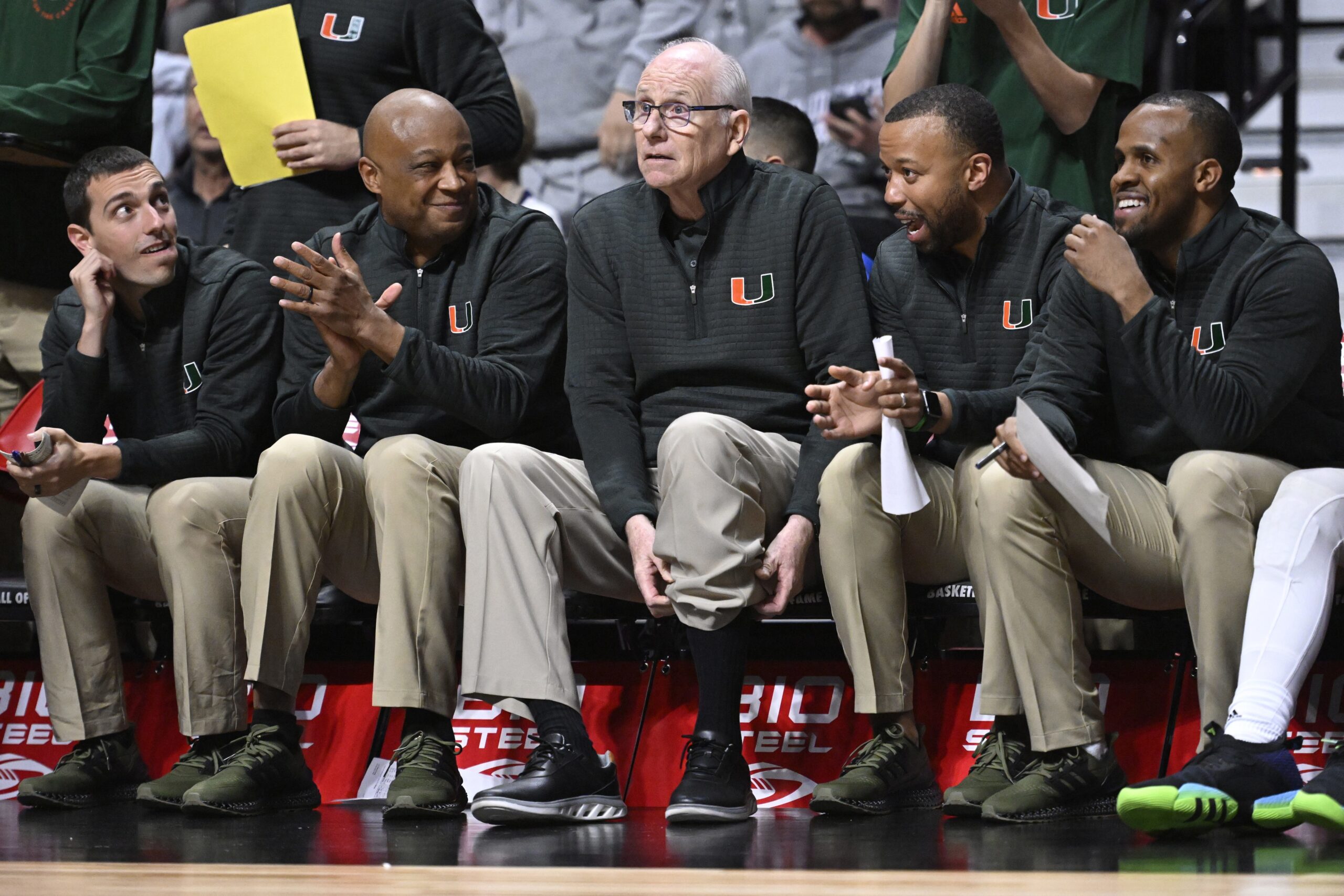
    Jimmy Polisi lived a few houses away from Bill Courtney, while the two were on the men’s basketball staff at the University of Miami. Some nights, Courtney, then an assistant coach, would call the graduate assistant to hang out.

    “Throughout time, we kind of got close,” said Polisi, who spent two years at Miami. “He was just a great guy, to be like a fly on the wall to see how he did everything.”

    Temple hired Courtney last summer as an assistant coach. He reunited with Adam Fisher, whom he coached with at Miami, and Polisi, the Owls’ director of player operations. The Temple head coach viewed Courtney as a mentor and knew he would be a valuable member for his team.

    On Jan. 13, Courtney unexpectedly died at age 55. He was a beloved figure, who spent 30 years in the college basketball coaching scene and “made people feel special.”

    From each of his coaching stints — which included 10 schools — he formed genuine relationships with players and staff members. Those relationships went beyond the court as many looked up to him.

    “He did such an amazing job of making everybody feel special, but it was genuine,” Fisher said. “He wanted to know that when he recruited somebody, he would know the aunt, the uncle, the mom, dad. He found every connection and then knew something about each one of them to connect things. He’s just an incredible connector of people.

    “He had this way about him. That’s why so many people are going through such pain right now, because a lot of people consider him a close friend, because he was, that’s the way he made you feel and it was genuine,” Fisher said.

    Added Polisi: “He brought such a positive light to both Miami and here that it was so needed. The way he made a difference in this program in a short amount of time is huge. In this day and age of college basketball, people come in and out, but you could really tell how much of a difference he was making this program in just a short amount of time.”

    Temple’s players voted to play its game against Memphis the next day. The Owls then got shirts to honor Courtney ahead of their game against Florida Atlantic on Jan. 18.

    The team has since worn a patch on its jerseys and warmup shirts with Courtney’s initials. They still announce Courtney as an assistant coach to honor his legacy during each game.

    Warm welcome

    Most people who met Courtney had a shared a similar phrase about him — he never had a bad day.

    That was what former American assistant coach Bruce Kelley told Jim Larrañaga, who was the head coach at Bowling Green at the time and was searching for a new assistant coach in 1996. He reached out to Courtney, and it wasn’t long till he flew out to the midwest to meet with Larrañaga.

    Courtney stayed in his future boss’s house.

    Jim Larrañaga started working with the late Billy Courtney when he hired him as an assistant at Bowling Green in 1996.

    “I got a feel for Bill, how he interacted with my sons, how he played the game,” Larrañaga said. “I said, ‘We’re going to go back to the house and my wife’s fixing [lunch], there’s going to be a few players over there.’ … I just knew from the way he behaved the whole day. How honest he was and how comfortable he was around people, around me.”

    Courtney got the job. His relationship with Larrañaga spanned over five decades. Larrañaga loved going to the movies. When his wife didn’t want to go see a particular film, she said to “ask Bill,” so Larrañaga did. That became a tradition for them as they went from Bowling Green to George Mason, where Larrañaga became the head coach in 1997.

    Courtney organized pickup basketball games and often invited his boss. Courtney would put Larrañaga on the better team to give him a quality workout. One day, the team Larrañaga played on lost, which prompted him to wonder if Courtney was upset with him.

    The next day at work, Larrañaga asked Courtney if it was true — getting laughter at the thought of that being a possibility.

    “I went into the office the next day. I said, ‘BC, are you mad at me for something?’” Larrañaga said. “He said, ‘No, why would you even suggest that.’ I said, ‘You put me on a terrible team last night. We lost the first game.’ He started laughing ‘You got to be kidding me.’ That’s just our relationship, the way we were.”

    A helping hand

    Courtney landed his first head coaching position at Cornell in 2011, a team fresh off a Sweet 16 appearance.

    During games he cracked jokes to Jeremy Hartigan, Cornell’s senior associate athletic director. Courtney made an effort to get everyone on staff a gift for Christmas during his first season with the Big Red, and he didn’t expect anything in return.

    “We were all kind of embarrassed that Bill had gotten us something and that we didn’t get him anything,” Hartigan said. “I just remember he said, ‘I don’t care if you ever get me anything. I just wanted to show how much I appreciate you guys.’”

    During his time in upstate New York, he met David Metzendorf, who was then at Ithaca College. Injuries spoiled Metzendorf’s playing career, but Courtney brought him on as a manager. When Metzendorf graduated in 2013, a role on staff opened for him.

    He became Courtney’s right hand man.

    “The amount of people in my life who reached out about him afterward, not just because they knew how close we were, but because he had touched them was unbelievable, in terms of, my friends from back home who would come visit me in Ithaca, he would make them feel like part of the crew,” Metzendorf said. “My college buddies who he got to know well because they were at Ithaca College and were right there, they’d come around and he made them feel part of the crew and loved and welcomed.”

    Reuniting with an old friend

    Eventually both went their separate ways as Metzendorf climbed up the coaching ranks. Cornell fired Courtney in 2016. He went to DePaul before reuniting with a familiar face in 2019; Larrañaga, who was the head coach at Miami.

    There, he met Fisher, who had gone from director of player operations in 2013 to assistant coach by the time Courtney joined the staff. They immediately clicked.

    Adam Fisher with his wife and daughter, with the late Bill Courtney and Jim Larrañaga.

    Fisher and Courtney became close friends. They often got lunch together, and Fisher went to Courtney for advice. When his wife, Rebecca, gave birth to their daughter, Fisher asked Courtney how to balance being a father and coach. Courtney was one of the people who met Fisher’s daughter during Thanksgiving, a month after she was born.

    When Courtney joined the staff this summer all the coaches were at the practice facility. As Fisher and Rebecca watched from the window, their daughter, Alivia, organized all the coaches to play duck-duck-goose.

    “I’m looking through the window thinking, ‘Are they playing duck duck goose?’” Fisher said. “BC came in, he’s exhausted. She chased him down the hallway ‘Get back here, BC.’ He goes, ‘I got to go play.’”

    Courtney was at Temple for seven months, but made his presence felt on the team, and it meant a lot for Fisher to work with his friend again.

    “Just being able to work alongside him was an honor,” Fisher said. “I loved every second of it.”

  • Villanova’s teams are going to the NCAA Tournament. Will they have any company from the Big 5?

    Villanova’s teams are going to the NCAA Tournament. Will they have any company from the Big 5?

    The three-year drought with no men’s team from the Big 5 in the NCAA Tournament will end, finally, with Villanova seemingly locked into the field of 68 for the first time since 2022.

    Kevin Willard’s Wildcats (23-7, 14-5 Big East) finish their regular season Saturday at home against Xavier before embarking on their postseason run beginning next week at the conference tournament in New York.

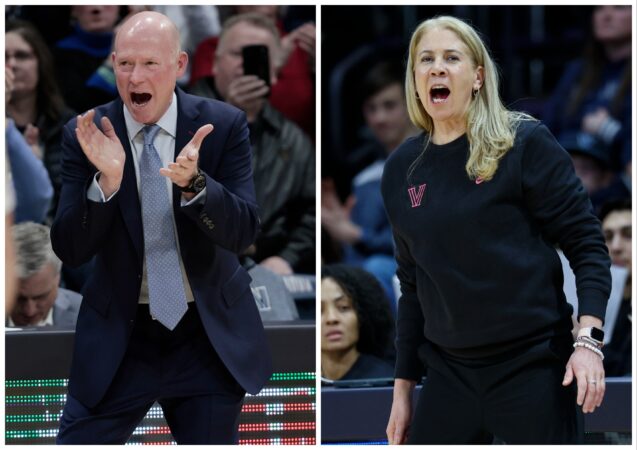
    Villanova’s women, too, appear on their way to the dance after a two-year drought. The Wildcats (23-6, 16-4) were projected as a No. 9 seed in ESPN’s latest women’s bracketology, and it’s hard to imagine that an opening-round loss in the Big East tournament would slide Denise Dillon’s team back to the bubble.

    Will Villanova have any local company?

    The contenders

    St. Joseph’s men: The Hawks may not have the best mathematical chance among the rest of the pack (more on that soon), but it’s worth starting here because they pulled off a pretty impressive road win Wednesday night at Davidson and secured their first double-bye and top-4 seed in the Atlantic 10 tournament since 2018.

    St. Joe’s coach Steve Donahue has his team in the Atlantic 10 tournament with a double-bye and top-4 seed for the first time since 2018. Could the Hawks make a run and reach the NCAA Tournament?

    This has been a pretty remarkable season on Hawk Hill considering all of the context. Former coach Billy Lange bolted for the NBA in the fall. Steve Donahue, whom Lange hired as an assistant after Penn fired him, was given the keys.

    The Hawks stumbled a bit at the start of the season, and then starting guard Deuce Jones was off the team by the holidays. But a team meeting in January helped turn the tide, and Derek Simpson, Jaiden Glover-Toscano, and company have been on a roll.

    Will they cut the nets down in Pittsburgh? It’s still pretty hard to imagine, given the talent of Saint Louis and Virginia Commonwealth at the top of the conference.

    But the double-bye means the Hawks will start the tournament in the quarterfinals, needing just three wins in three days to reach the dance. Bart Torvik’s NCAA hoops analytics site gives the Hawks a 7.8% chance based on thousands of simulations. That’s not nothing.

    Penn men: While we’re on the subject of math, it’s the Ivy League tournament that makes any of its participants more likely than those in other conferences to run the table simply because only four teams are invited and only two wins are needed to win an automatic bid.

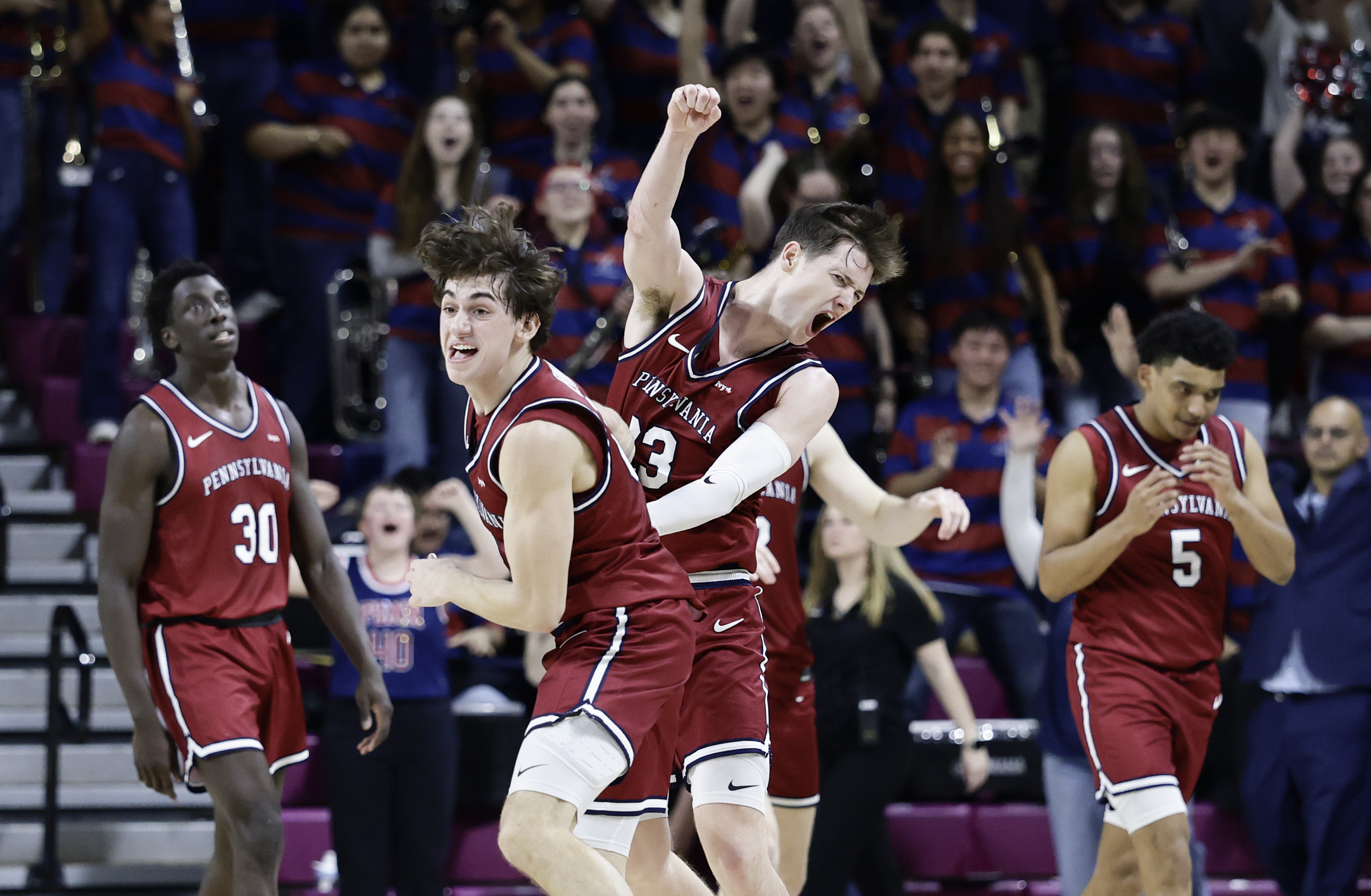
    Penn is back in Ivy Madness for the first time since 2023.

    The Quakers, under Fran McCaffery, are back in Ivy Madness for the first time since 2023. They have plenty of talent with Ethan Roberts and TJ Power leading the way. Penn is the No. 3 seed and plays Harvard in the semifinals, a team the Quakers beat at home last weekend. A win would likely mean a date with Yale, the top team in the Ivy. But the Bulldogs just lost to fourth-seeded Cornell, which is the host site for the tournament. Penn beat Cornell twice this season.

    Torvik has the Quakers at 14.7% to win the league.

    Drexel women: The Dragons have one regular-season game remaining, Saturday at Towson, and sit second in the Coastal Athletic Association with a 13-4 record. That’s certainly good enough to be labeled a contender, especially considering that Amy Mallon led a 10-8 CAA team to a conference tournament championship two seasons ago.

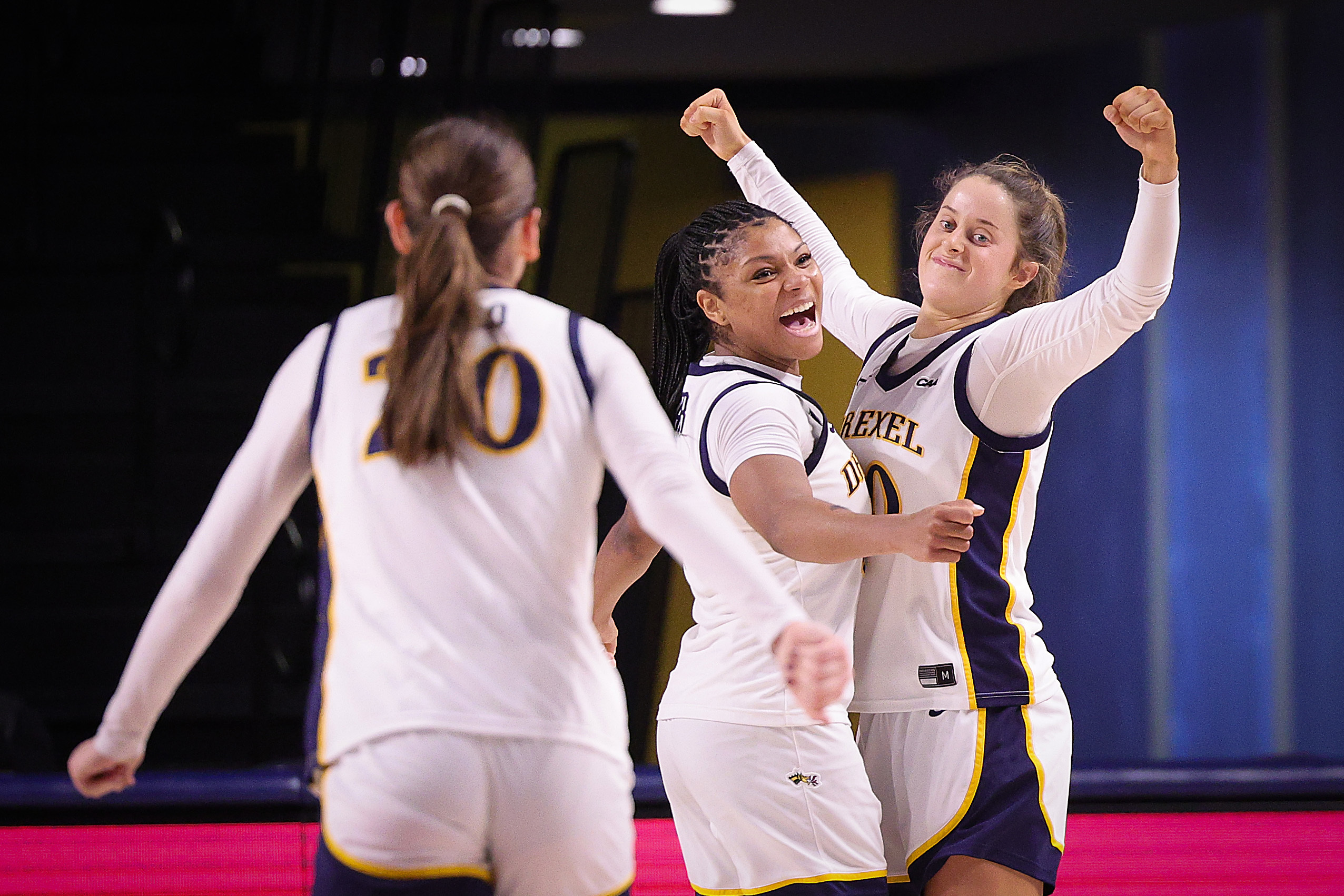
    Drexel guard Laine McGurk (right) celebrates with guard Amaris Baker (center) as Molly Rullo (left) joins them after they defeated North Carolina A&T on March 1.

    This year’s squad has won 11 of 12 and has two local products leading the way. O’Hara’s Amaris Baker, a senior, is second in the CAA in scoring with 19.0 points per game, and her backcourt mate, West Chester Rustin’s Laine McGurk, was at 13.2 points and 4.1 rebounds per game.

    The long(er) shots

    Drexel men: The CAA tournament is usually wide open. Twelfth-seeded Delaware reached the final game last season, a year after seventh-seeded Stony Brook took top-seeded Charleston to overtime in the final. Two years before that, Delaware took a 10-8 conference record and the fifth seed and went all the way to the NCAA Tournament.

    That’s where Drexel stands ahead of its first conference tournament game Saturday, at 10-8 and the No. 5 seed. The Dragons started 0-3 in conference and are 10-5 since. And though they haven’t beaten any of the four seeds ahead of them, weird things tend to happen at the CAA tournament. Torvik says this weird occurrence has a 4.5% chance of happening. So, not all that different from the Hawks running the table in the A-10.

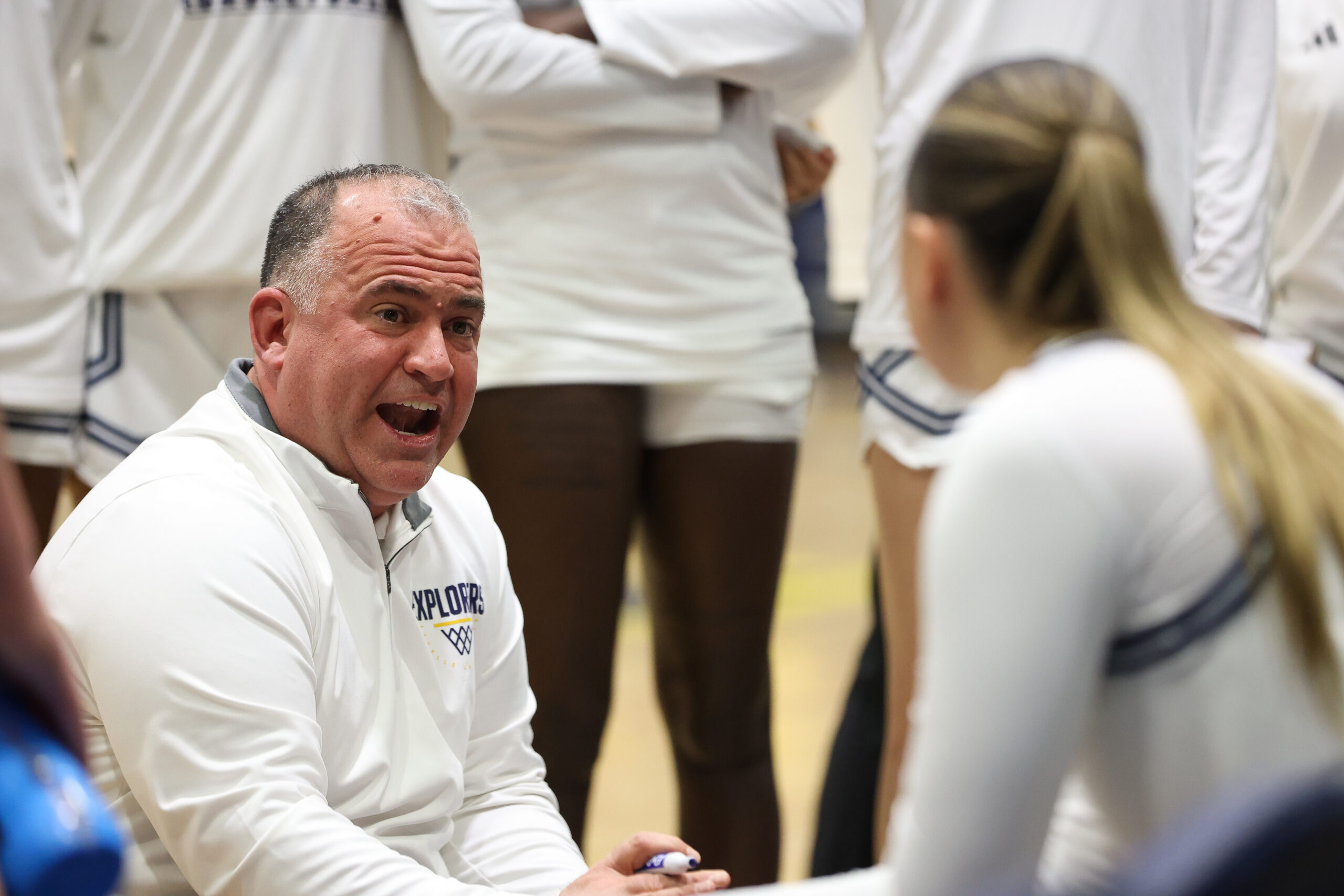
    La Salle coach Mountain MacGillivray has led his team to go 10-8 in the conference.

    La Salle women: Mountain MacGillivray should be getting some coach of the year love both in his conference and locally in the Big 5. The Explorers won three A-10 games last season and five the year before. They went 10-8 this year. They faced Richmond in a tournament quarterfinal Friday night.

    Better luck next year

    La Salle men: Darris Nichols’ first season in Olney was marred by injuries, and though the Explorers have been a tough out at times, it’s bordering on impossible for them to get through the gauntlet that would be five wins in five days. (Torvik chances: 0.1%)

    Temple men: The Owls went from vying for the No. 2 seed and a bye to the semifinals in their conference tournament to needing a win Thursday just to qualify for it. They got that, but the prospect of running the table and winning five games in five days seems too daunting for a team that has seemingly been running out of gas. (Torvik chances: 1%)

    St. Joe’s women: Like La Salle, the Hawks went 10-8 in the A-10 and owned the tiebreaker to get the fifth seed. They lost in the quarterfinals Friday night to Davidson, 64-59, after a 66-45 win over 12th-seeded Duquesne on Thursday.

    Temple women: Temple is 7-10 entering its final regular-season game Saturday at home against Florida Atlantic. The Owls are minus-97 in point differential in seven games against the top four teams in the conference.

    Penn women: The Quakers are 6-7 in the Ivy and have one game remaining, Saturday at home against Brown, but they will not qualify for the four-team league tournament.

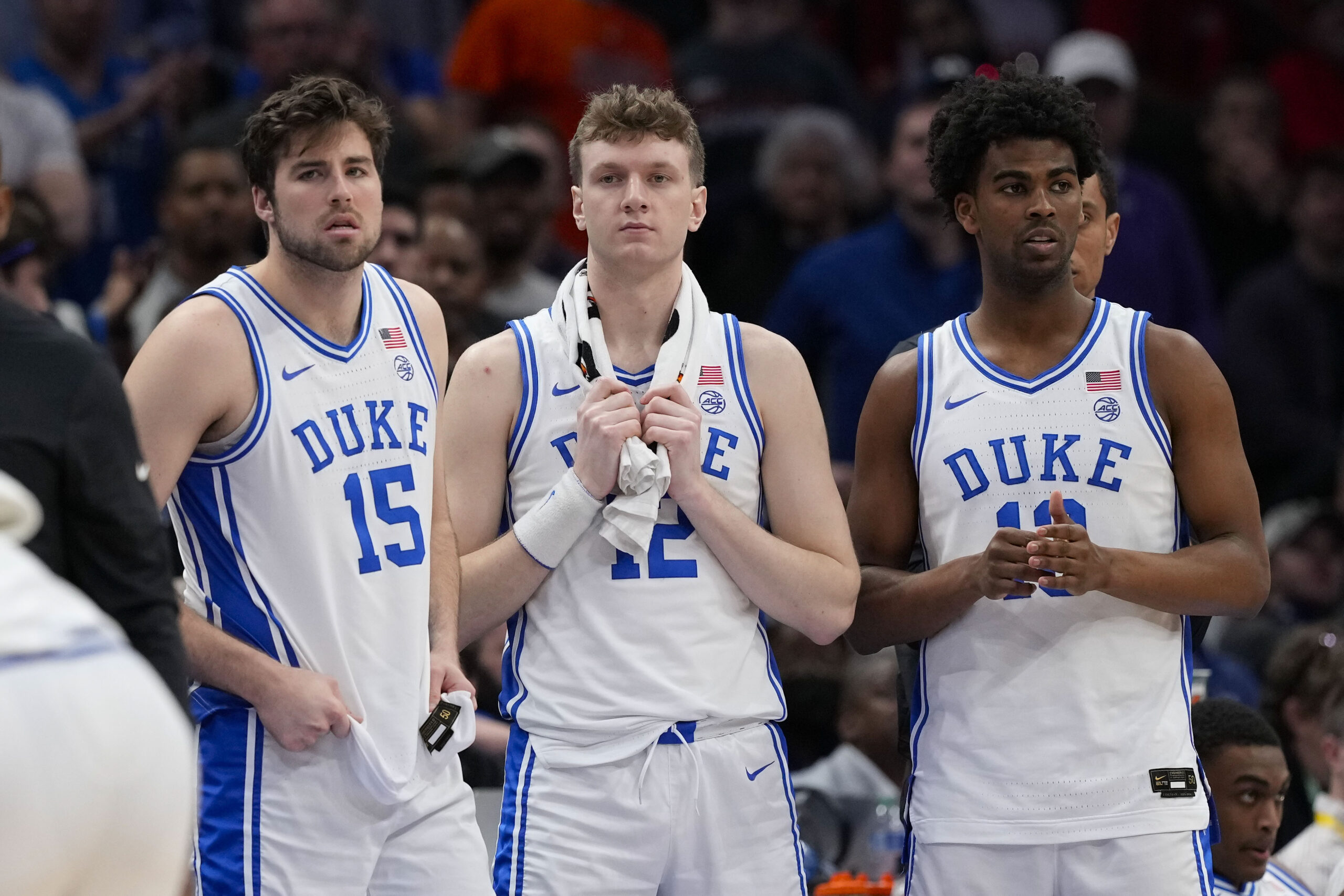
  • Three schools later, TJ Power came to Penn with armor. He’s feeling ‘indestructible.’

    Three schools later, TJ Power came to Penn with armor. He’s feeling ‘indestructible.’

    TJ Power has only been looked at as a basketball player.

    A five-star recruit coming out of Worcester Academy in Massachusetts, his talents landed him at Duke, then his need for opportunity took him to Virginia, but a search for himself brought him to Penn.

    Three years at three schools? Power wouldn’t have it any other way.

    “That suffering tested my faith and my fortitude,” Power said of his collegiate career before Penn. “And like everyone says, that’s how you get stronger. But that’s real, like as a holistic human, I’m so much more mature and better off right now because I had to leave Duke. I had to make that decision. I had to leave Virginia. I had to go through those moments. And now I’m here, and I have armor. I feel like it’s indestructible.”

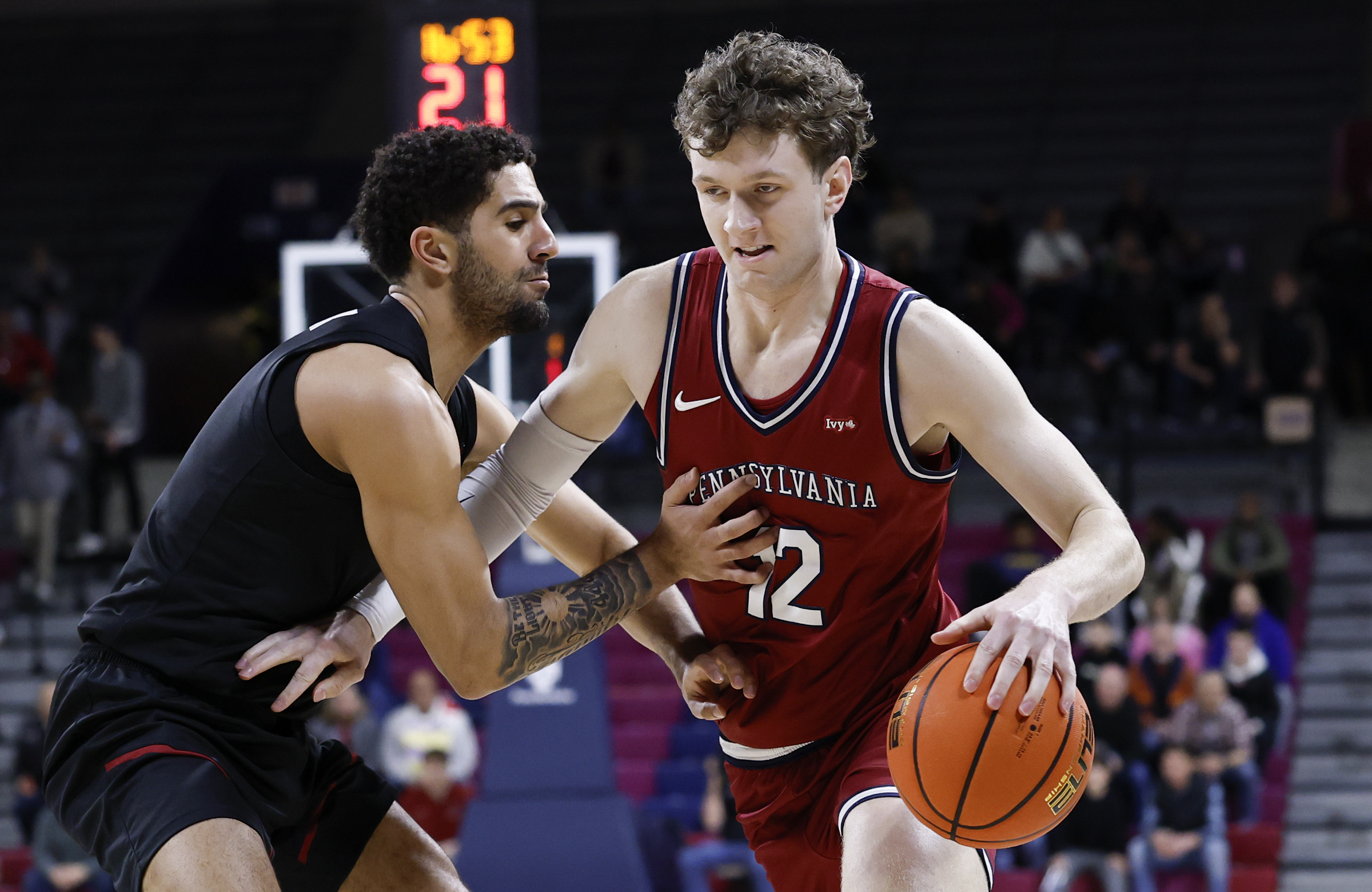
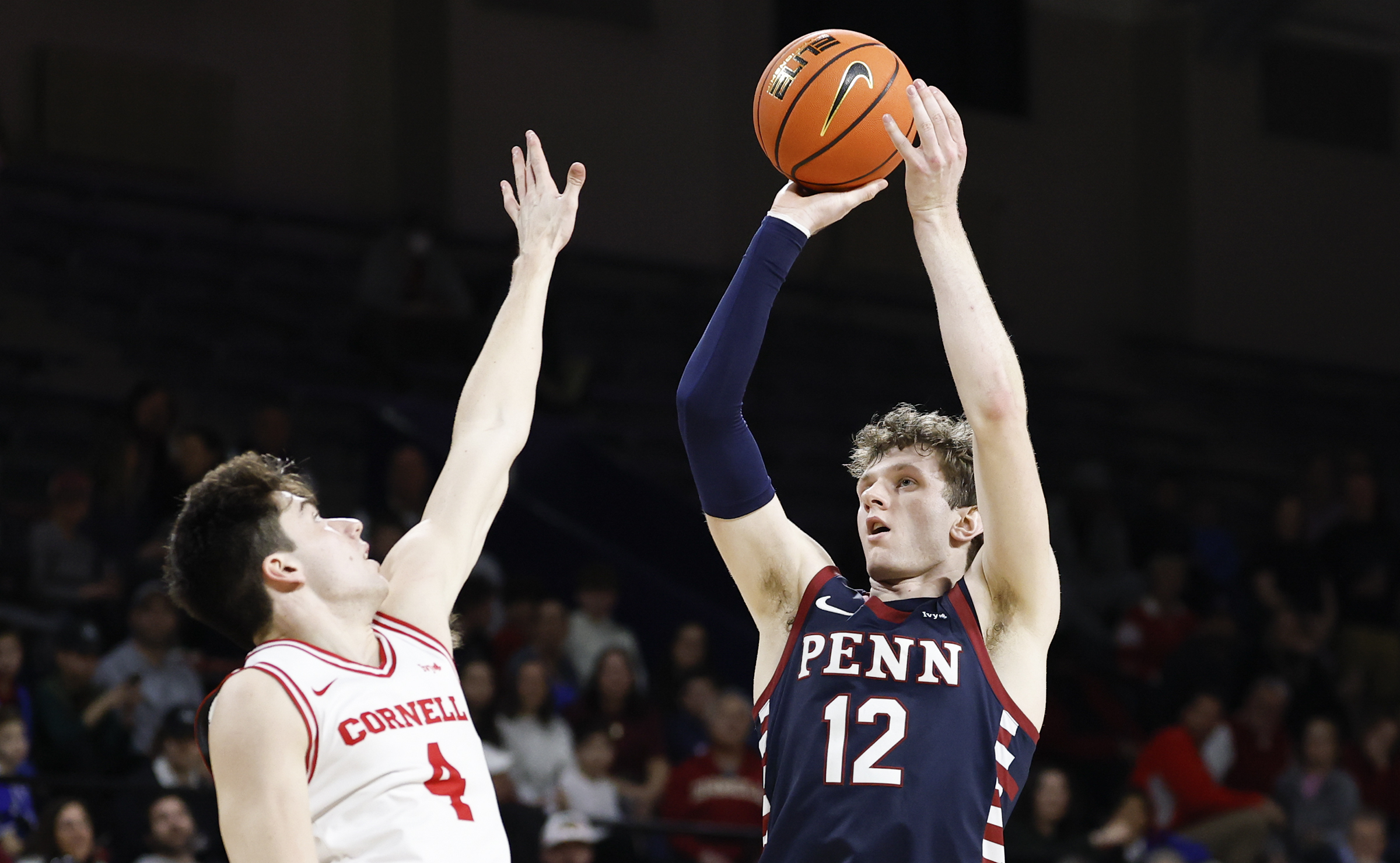
    After struggling for playing time at Duke and Virginia, Power, a 6-foot-9 forward, has soared under first-year Penn coach Fran McCaffery. Power is leading the Ivy League in minutes (34.7 per game), while averaging 15.7 points and a team-best 7.5 rebounds.

    Last weekend, Power posted his best performance of his collegiate career, scoring 38 points against Dartmouth on Friday and then helping Penn gain its first Ivy League Tournament berth in three years with a victory over Harvard on Saturday.

    “I’ve been playing better,” Power said before this weekend. “I think [McCaffery] knows this. I have another level that I can tap into here. I’m trying to get to it week by week. It’s different. I probably had the biggest minutes jump in college basketball history.”

    Penn forward TJ Power leads the Ivy League with 34.7 minutes per game.

    Penn will visit Brown on Friday (7 p.m.) for its final game of the regular season as winners of six of its past seven games, thanks to Power’s resurgence. Penn will then face Harvard in the first round of the conference tournament on March 14 in Ithaca, N.Y., with Yale playing Cornell in the other semifinal.

    ‘Took a chance’

    Power, who grew up in Shrewsbury, Mass., said his father would drive him around the neighborhood as a kid to find local churches and recreation centers to play in games. The pair usually ended their trips at Worcester Academy’s gymnasium.

    By his sophomore year, college coaches were rushing to see Power on the court, including McCaffery, then the head coach at Iowa.

    McCaffery attended Power’s AAU games, and his presence was quickly felt.

    “I had three offensive fouls in the first half,” Power said. “It was terrible, and you know how Fran is with refs. He wasn’t even my coach at the time. Obviously, he’s there to recruit me, and he’s yelling at the ref as I’m playing in an AAU game.”

    TJ Power averaged 6.7 minutes in 26 games as a freshman at Duke.

    As a senior, Power was named the Massachusetts Gatorade Player of the Year after winning a state prep school Class AA championship. He accepted an offer to Duke, but he and his family stayed close to McCaffery.

    Power averaged 6.7 minutes in 26 games as a freshman during the 2023-24 season, but that didn’t stop him from enjoying his experience as a Blue Devil.

    “Duke was one of the best years of my life,” Power said. “Honestly, people from the outside might not think that just because you know basketball and playing time and stuff, but that experience is once in a lifetime.”

    Power planned on staying for his sophomore year, but an “uphill battle” for minutes and competition from the incoming class, which included future NBA lottery picks Cooper Flagg and Kon Knueppel, made Power consider other options.

    Leaving Duke meant saying goodbye to his “best friends for life” Sean Stewart, Caleb Foster, and former 76ers guard Jared McCain, but the decision was best for his career.

    “Knowing this could go bad,” Power said, “where I’m not playing, the hardest decision I ever made was to leave there. I was really emotional about that because people look at transfers and they’re like, ‘Oh, they’re running from stuff.’ I never pictured myself as that, because I took a chance going to Duke.”

    Breaking point

    Before the 2024-25 season, Power entered the transfer portal and committed to Virginia, his second choice coming out of high school. Coach Tony Bennett and Power had grown close during the recruiting process.

    “I felt rejuvenated,” Power said. “I was going to go there and learn from him. We were really close. That whole summer, I played really well, we looked good, and he had said to me in the recruiting process, because they had struggled the year before, he was talking about how he wants to play faster and change the offense.”

    When it finally seemed as though Power found the right fit, Bennett announced his retirement before the start of the season.

    “One day in the fall,” Power said. “He comes back, and we’re going into the film room, like we always do, and he just sits down, starts crying, and tells us he’s going to retire.

    “I remember it was a feeling I’ve never had before, where my whole body started overheating, and the world was shifting. I was in the front row, sitting right in front of him. That was a hard moment. And I don’t know if I have fully moved on from that.”

    Ron Sanchez was named interim head coach, and despite his promise to stick with the offense Bennett wanted to implement, it was never the same for Power. He was injured to begin the season and started just five games, averaging 9.3 minutes in 24 games.

    Virginia finished 15-17, Sanchez was fired, and “everyone entered the portal.” According to Power, the new coaching staff didn’t want him.

    “​​You want to talk about emotional,” Power said. “My time at Virginia [was] some of the darkest moments of my life.”

    Power had not played consistent basketball in almost two years. He decided to visit Penn at the request of an old friend.

    After starting in only five games at Virginia, TJ Power transferred to Penn.

    McCaffery, whowas fired by Iowa, was rumored to be heading back to his alma mater.

    “I eventually got this job,” said McCaffery, who was hired by Penn in March last year. . “It was an easy discussion because he knew that I believed in him, and he knew that our style of play was perfect for him. He came down to campus on his own. I wasn’t even here.”

    Power added: “Penn is a great place, and I’ve come to learn that even more, but in the recruiting process, I was like, wherever Fran goes — I’m going. I’m playing for that dude. If Fran wasn’t here, I wouldn’t be here.”

    ‘I’m coming here’

    Power called his parents, bought a couple of train tickets and a hotel room, drove back to Virginia, and left that night on a train to 30th Street Station.

    Power had struggled with his connection to the game and his identity around it. Coming off the train at 1 a.m., Power reflected back on a moment when he enjoyed basketball and had a familiar request for his dad .

    “I want to see the gym,” Power said.

    Power and his parents pulled up to the Palestra.

    “My dad gets out, and just like our drive around Worcester, shakes on doors,” Power said. “We go to the Palestra front door. He shakes it three times. It opens, and I walk in, and for some reason, the lights are on. I’m standing right there, 1:30 in the morning. It’s just my dad and me. We’re looking at the Palestra. I’m coming here. I got to come here.”

    TJ Power came to Penn to play under coach Fran McCaffery. “If Fran wasn’t here, I wouldn’t be here.”

    Fran was committed to helping Power get back on track, which showed in their first few practices together.

    “If I struggled, he knows what’s on the other side of that wall once I climb it,” Power said. “So that was a huge factor in my decision. I wanted someone I could trust again, and someone who has my back when I inevitably struggle.

    “The first thing Fran said when he called me was, ‘We’re going to have fun playing basketball again.’ No other coach said that.”

    Power has returned to the form that made him a five-star recruit in high school. And he has found a home — on and off the court.

    After years of chasing the best opportunity to help him go pro or get the most playing time, Power chose Penn for another reason: to find who he is outside of the sport.

    “Basketball used to be my identity,” Power said. “People ask me, ‘Who am I?’ I play basketball, I’m a basketball player. When I switched that to my relationship with God coming first, and then my identity is built through that relationship with God. …

    “That path is so much more rewarding. My identity comes first, and … my mission is to play well, and I think that’s going to give me what I want.”