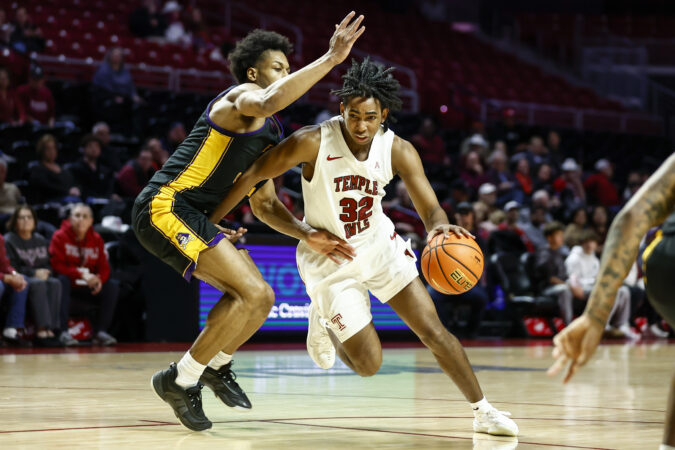
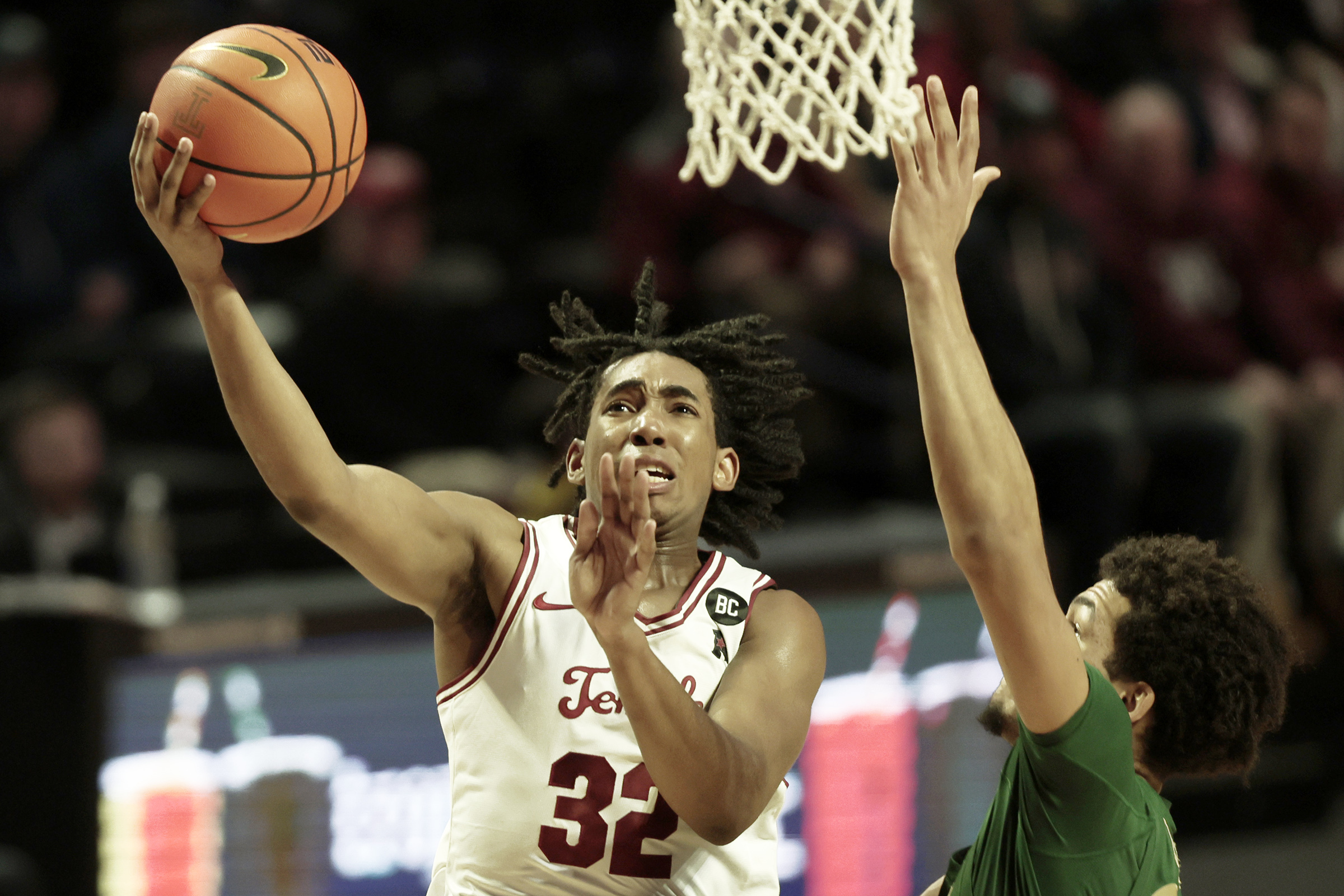
When Jordan Mason entered the transfer portal last spring, he wanted to be part of a winning program.
It wasn’t his first time in the portal. The senior spent two seasons at Texas State before transferring to University of Illinois Chicago in 2024. He got in contact with Temple coach Adam Fisher in the portal and immediately felt at home.
Mason thought his skill set would complement Temple’s screen-heavy offense. He has since been a catalyst for the Owls.
Temple (14-8, 6-3 American Conference) lacked a true point guard for the past two years. Mason has taken over that role. He’s averaging 11.7 points and a team-leading 4.3 assists in 22 starts.
“I saw the way that the coaches interacted with each other and the way they interacted with me and my family,” Mason said. “It felt like a family right away. It felt like home. It was like I could be comfortable here. I can be myself here.”
Mason developed into a key rotational player at Texas State. As a freshman, he averaged 6.3 points in 32 games (19 starts). His numbers more than doubled as a sophomore (12.9 points per game) and 23 starts in 29 games.
He transferred to UIC for the 2024-25 season and averaged 9.6 points. Mason also was an asset defensively and as a ballhandler. He had 3.3 assists and 1.2 steals per game with the Flames.
“He knows when to pick and when [to] shoot,” Fisher said. “Guys enjoy playing with somebody like that, when you know that there’s an opportunity that you’re going to get shots, and he gets you easy looks.”
Jordan Mason played two seasons at Texas State and one at University of Illinois Chicago before joining Temple this offseason.
Mason quickly established himself as Temple’s main ballhandler in the season opener and created scoring opportunities for his teammates, notching six assists in the 83-65 win over Delaware State.
“Every pass I make, it seems like the shot goes in,” Mason said. “So some of it is me getting a little bit better at passing, but a lot of it is just the talent around me. They’re just really good dudes that make a lot of shots. So it makes me look good.”
His play contributed to the Owls winning seven straight from Dec. 9 to Jan. 14 — a stretch in which he also surpassed 1,000 career points. When he struggled in the middle of January, though, the team’s production took a dip.
Temple lost two straight games, but a road trip to his native Texas helped turn things around.
“He’s the heart of our team,” said guard Aiden Tobiason. “Because he’s so important. He’s really the main guy in principle every single time.”
The Owls won both games at Rice and University of Texas at San Antonio, and Mason recorded back-to-back double-digit outings, 15 points against Rice in Houston and 18 at UTSA — with his family in attendance.
“It was pretty amazing,” said Mason, who’s from San Antonio. “I’ve actually played UTSA as a freshman, and I didn’t touch the floor. That was rough for me because it was my first time playing at home, and it was, to be honest, a little embarrassing not playing. So to be able to come back, full-circle moment my senior year and play in front of everybody and beat UTSA because we lost to [them] my freshman year.”
Entering Saturday’s noon matchup at East Carolina (7-15, 2-7), Temple sits in fourth place in the American and could snatch a top-four seed in the conference tournament in March.
Mason, in his final year of eligibility, looks to make that happen.
“I want to win the conference tournament and go to the NCAA Tournament,” Mason said. “That’s the big goal for our team.”
After an offseason that saw Zach Spiker’s squad lose four of its five starters to the transfer portal, the Dragons went 6-7 in nonconference play, dropping all three of their Big 5 matchups in the process. The team started its Coastal Athletic Conference campaign looking for relief but was confronted with more of the same: It lost three in a row to tip off conference play. The season looked like a loss.
Then, on Jan. 8, a switch seemed to flip. The Dragons shut down Stony Brook, limiting the Seawolves to just 37 points in a win. From there, Drexel started rattling off victories powered by its defense, winning six of seven games to move into conference contention. The Dragons have held opponents to an average of 56.3 points over that stretch
Drexel (12-11, 6-4 CAA) is in a tie for third place ahead of Thursday’s matchup (7 p.m., FloSports) at Campbell (10-13, 4-6). The Dragons will receive a first-round bye in the CAA Tournament if they stay in the top four.
The potential for the program’s first NCAA Tournament berth since 2021 has offered some guarded optimism for the Dragons.
“I don’t feel a recent surge in excitement and fun after winning,” junior guard Shane Blakeney said. “We’re all taking a deep breath like this is what it should have been like. We’re frustrated because we should have been playing like this, and we also still feel like we haven’t played our best yet.”
Added junior guard Kevon Vanderhorst: “We’re constantly learning through our losses … It’s not necessarily that we’ve just had a reawakening. It’s [that] we’ve been learning the whole time.”
In their last outing on Saturday, Drexel outlasted North Carolina A&T, 61-60, in a slugfest that came down to the final whistle.
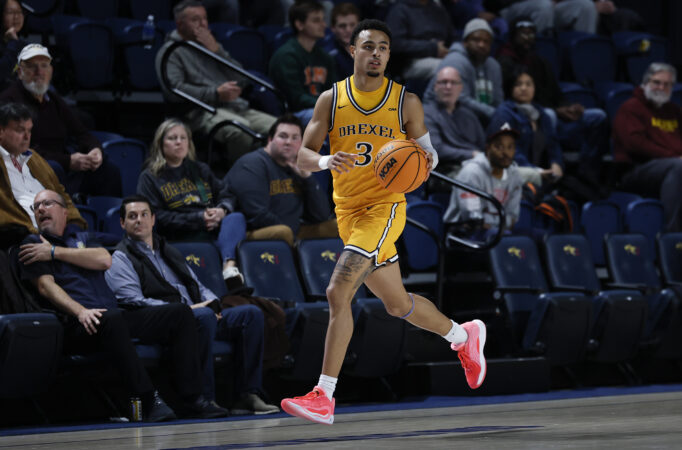
With no timeouts and down by one point, the Dragons had to advance the length of the court in 3.2 seconds. After a bit of backcourt misdirection, the ball was inbounded to Vanderhorst. The guard beat his defender down the court, converting a contested scoop at the buzzer to win the game.
“We practice shots like that … three seconds on the clock, somebody has to go get a bucket,” Vanderhorst said. “In terms of just our process, nothing really has changed here.”
Although the team has practiced that situation countless times, hitting the buzzer-beater in a game garnered national attention. Vanderhorst’s sprint to the bucket landed third on SportsCenter’s daily top 10 plays feature.
“It’s definitely been a surreal moment,” Vanderhorst said. “I think that’s the perfect word for it. Growing up, SportsCenter top 10 is that show you turn on in the morning [when] you want to see all the highlights from the day before.”
Vanderhorst, who is averaging 9.6 points, is part of an offense that boasts five players scoring eight or more points per game. Blakeney averages a team-high 13.3 points. The balanced offensive approach has made it difficult for opposing defenses to focus on a single player.
“Our coaches recruited talent. It’s shown in a lot of plays especially through this stretch of the season,” Blakeney said. “Teams can’t really be surprised when we play together — we look good. … We play fast, play connected.”
Drexel has been dominant defensively. The program logged the best defensive effective field goal percentage in the NCAA during January. Since the start of conference play, Drexel is allowing an average of 6.8 fewer points than Hampton, the CAA’s second best statistical defense.
Despite the team’s prowess on defense, not one Drexel player can be found in the top 10 in total steals or blocks among CAA players since the beginning of conference play. Like the offense, Drexel’s suffocating defense has been a team effort.
The Dragons have had the luxury of not leaving campus in two weeks, playing their last three at home. Starting with Campbell on Thursday, though, five of their final eight games are away. Despite boasting a 10-3 record at home, the team is a combined 2-8 in away and neutral games.
“I think this home stretch was nice because it’s given us confidence a little bit,” Vanderhorst said. “In those past games that we had away in Monmouth and Towson, I think dudes were really just getting the hang of sticking together through adversity.
“[Doing that] on the road and [in] those environments is super important, so I don’t think it’s anything that needs to change. I think we’ve kind of gotten the hang of it now.”
When Ronald Moore became an NCAA Tournament hero in 2009, TikTok and Instagram had not yet been invented. The iPhone was in only its second iteration, the 3G, and the first one had been launched just two years before.
You could certainly become a national sensation, but it would have been with a highlight reel play instead of a viral one.
Yet for all that has changed in technology since then — to say nothing of all that has changed in college basketball — some things never go out of style. A mid-major toppling a Big Ten beast in March is certainly one of them.
It was news enough that Siena had taken Ohio State to overtime, and all the better since the game was in Dayton, just over an hour from Columbus. With 9.1 seconds left in the extra session, the Saints trailed the Buckeyes, 65-62.
Moore, a Plymouth Meeting native who was then a junior guard from Plymouth-Whitemarsh High, took the inbounds pass and raced up the floor. When he neared the three-point arc, he faked left on Ohio State’s P.J. Hill and dribbled right. Hill bit, Moore let fly, and the shot was inch-perfect.
As CBS announcers Verne Lundqist and Bill Raftery joined the crowd in delirium, Ohio State’s Jon Diebler shot a potential game-winner off the rim. A second overtime beckoned.
“The little guy that could!” Raftery exclaimed over replays of 6-foot-tall Moore’s three, including a wide-eyed Siena coach Fran McCaffery and an even more wide-eyed bench.
With 19 seconds left in the second OT, future 76er Evan Turner’s gutsy layup put Ohio State ahead, 72-71. Moore again took the inbounds pass, this time dribbling left, then toward the middle.
He passed to Edwin Ubiles, who gave a pump fake, a dribble, and a pass back out of a triple team to the man of the hour. The clock read 5.4 when Moore let fly.
“Three-pointer … Yes!” Lundquist roared, with Raftery landing an “Oh!” right on top of his partner.
Then came the moment that really sticks in many fans’ minds: Raftery’s “Onions! Double order!” exclamation. The sport’s king of rhetorical flourishes had never taken his most famous line to that level, and it’s still rare.
Bill Raftery (left) calling a game on CBS with former Villanova coach Jay Wright in 2022.
Had Turner made the running jumper he missed on Ohio State’s last possession, perhaps all of this would have been forgotten. But the ball rolled around the rim and out, and the nation had a new star.
‘A great moment in time’
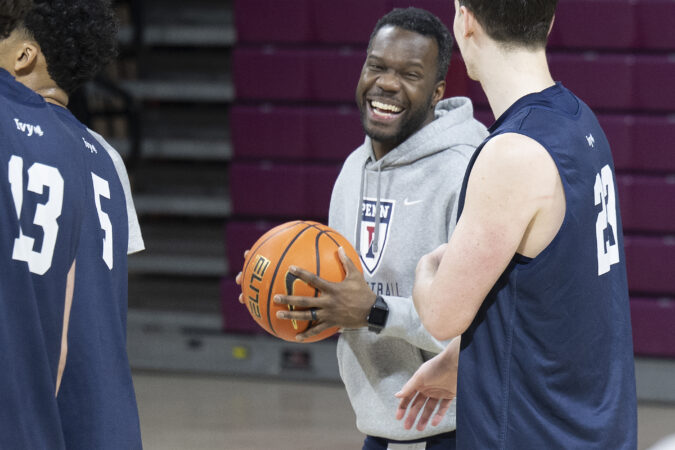
Countless fans of Cinderella have memories of Moore’s heroics. So does Siena’s all-time assists leader, now 37 and settled back in his hometown as an assistant coach at Penn.
“They’re always vivid,” he said in an interview this week. “I’m blessed to have had that moment in my basketball career. And every March, it’s always a flashback, whether someone brings it to my attention or I catch a glimpse of it in some of the highlight reels they play of March Madness.”
And he still gets “the same feeling every time I see it — just because of what it meant to not only the university, but to myself, to my teammates. So it’s always a great moment in time when I flash back and look at those shots.”
McCaffery, now at the helm of Penn, hasn’t forgotten either, just as he hasn’t forgotten many of his great moments as a player and a coach. But he offered a reminder of something those fans might have forgotten: Siena was a ninth seed that year, and this was its second straight tournament with a win.
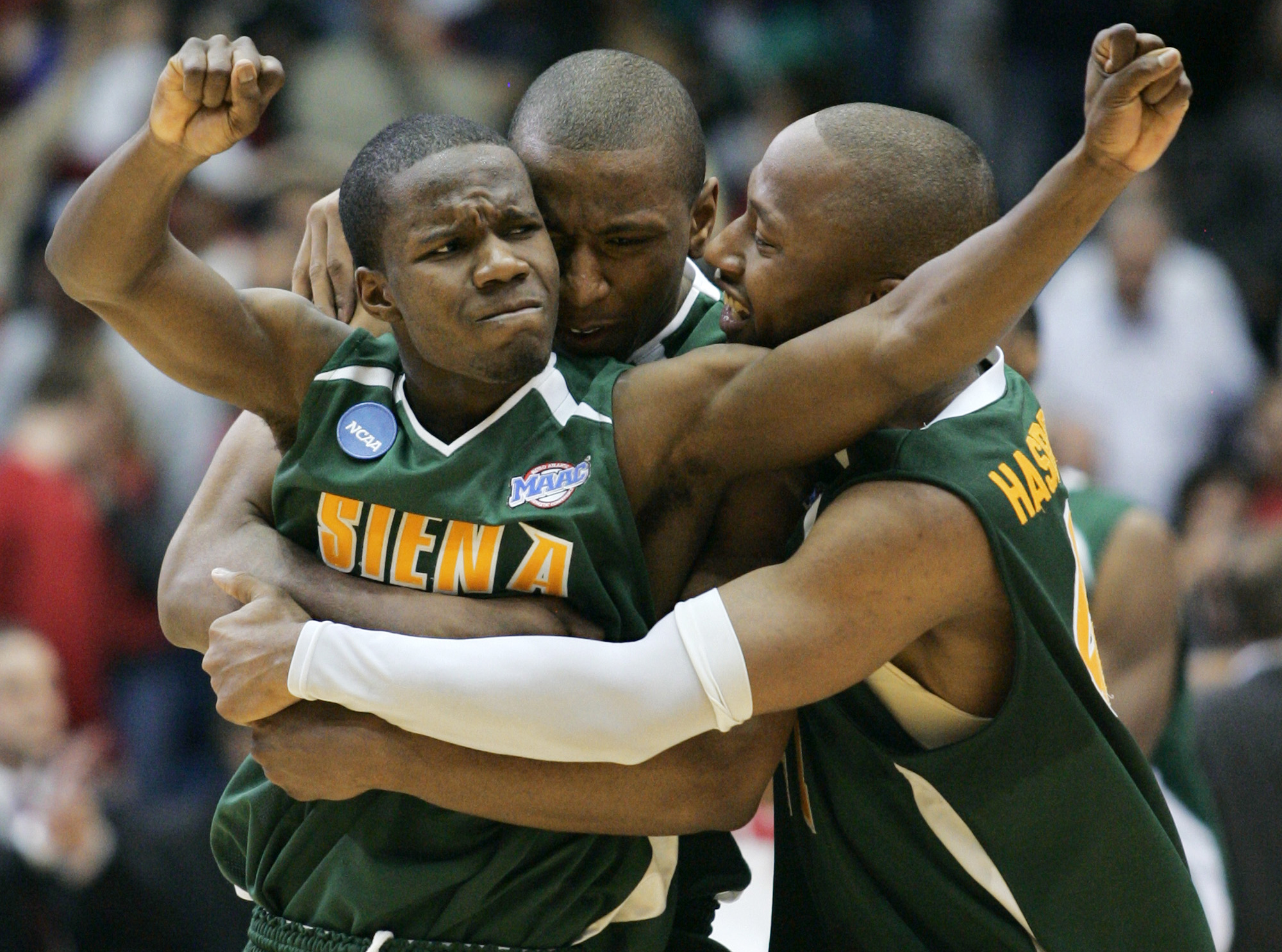
Ronald Moore (left) celebrates with teammates after his famous game-winning three-pointer.
“In the moment you’re just thinking about adjustments, personnel — what are we in defensively? What are they in? Are we in the bonus?” McCaffery recalled. “With that team, it was easy to trust your guys. It was a veteran group, they were really smart, and they were incredibly mentally tough. So you can play Ohio State in Ohio [and] nobody’s rattled at all.”
McCaffery also recalled what followed: “That was as good a locker room celebration as I can remember.”
After graduating in 2010, Moore went on to play professional basketball in Europe for 11 years, for teams in Slovakia, Poland, Hungary, Ukraine, Italy, and France. He retired from the court in 2021, then returned to his hometown to run a youth basketball outfit.
“I felt that it was something that was my calling, just to kind of help the next generation and give all the knowledge that I possibly can to help those kids try to help achieve their goals and their dreams in the game of basketball,” he said. “It’s brought me so much that I wanted to be able to help someone do the same.”
Then, last spring, his old college coach returned to his hometown, and his alma mater. When McCaffery hired Moore to the staff at Penn, some people of a certain age reacted: “That Ronald Moore?”
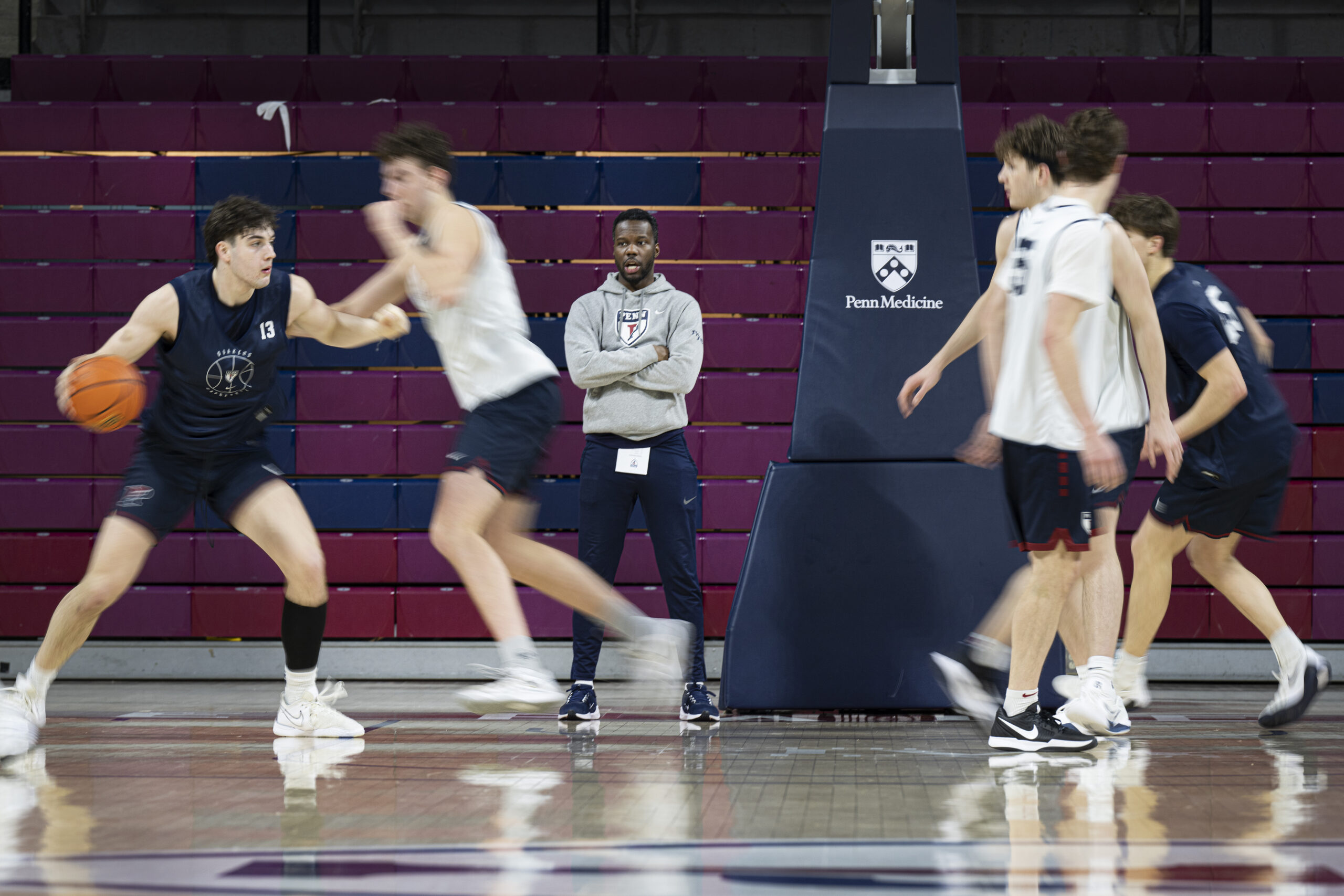
Ronald Moore watching Penn’s players practice at the Palestra this week.
Yes, that Ronald Moore. He and his old coach had stayed in close touch over the years. They traded text messages, and when time allowed, Moore would visit McCaffery at Iowa, where the coach moved in 2010. Their families got to know each other, too.
“It’s just the type of person Fran is, man,” Moore said. “I think a lot of people get a misconception of when he’s out here yelling and trying to motivate guys on the floor, but off the court, he’s always been an open book, and someone who would be approachable to talk about anything.”
Hiring him made ‘perfect sense’
McCaffery had long felt Moore would make a good coach someday, and had told him so.
“I always thought about having him on my staff no matter where I was, but it makes perfect sense in Philadelphia, where we’re both from,” McCaffery said.
Now Moore’s experiences make him even better-suited for the job.
“He’s played at an incredibly high level internationally,” McCaffery said. “He’s played for some really good coaches — played for some coaches who probably weren’t very good, and that’s part of the growth in this profession. … But his knowledge is just next-level of the game. So the coaching side of it is easy.”
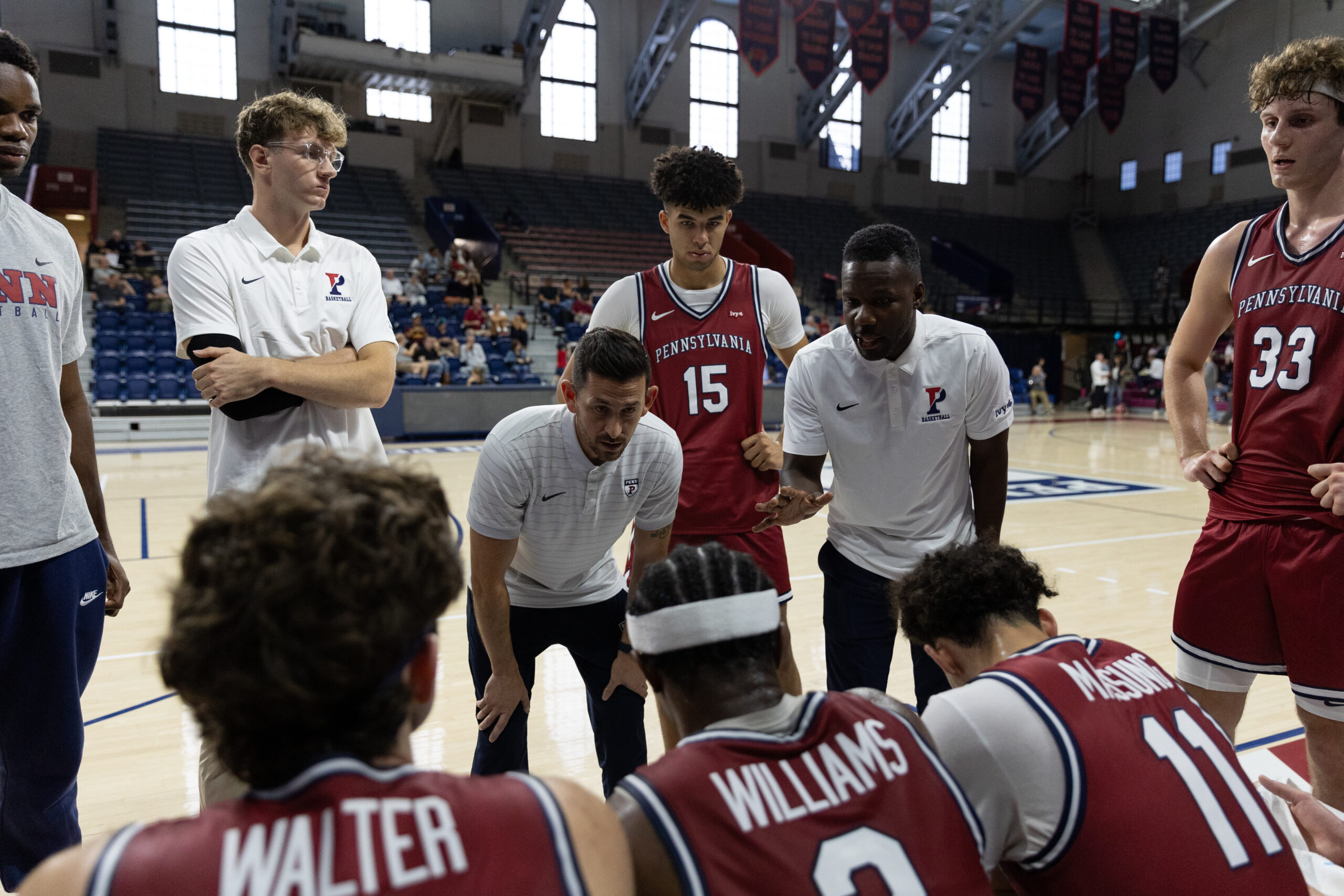
Ronald Moore (second from right) and fellow Penn assistant coach Ben Luber talking with players during a preseason scrimmage last fall.
When the offer came to join Penn’s staff, Moore felt that “it just was a full-circle moment.” And he was ready.
“Many people have asked me, ‘Hey, have you ever thought about getting into college coaching?’” he said. “I had plenty of friends that coached at the college level, so I knew what it entails, but I didn’t really want to move around. So him coming back to Penn and getting that phone call, it kind of just seemed like a no-brainer.”
On top of that, he now has a key to the Palestra, his city’s basketball shrine. He appreciates that too with one of its annual rituals played on Saturday’s. The 61-60 win over rival Princeton, ended an 8-year, 14-game skid an offered a measure of Penn’s progress this season.
“You soak it all in when you’re in this place and it’s quiet and nobody’s around — you kind of can stand back and look at it from a different lens,” Moore said. “Having been able to play here as a college player, play here as a high school player, knowing what it means to the city of Philadelphia, and just its history in general, it’s a special place to be able to work at and come in every day.”
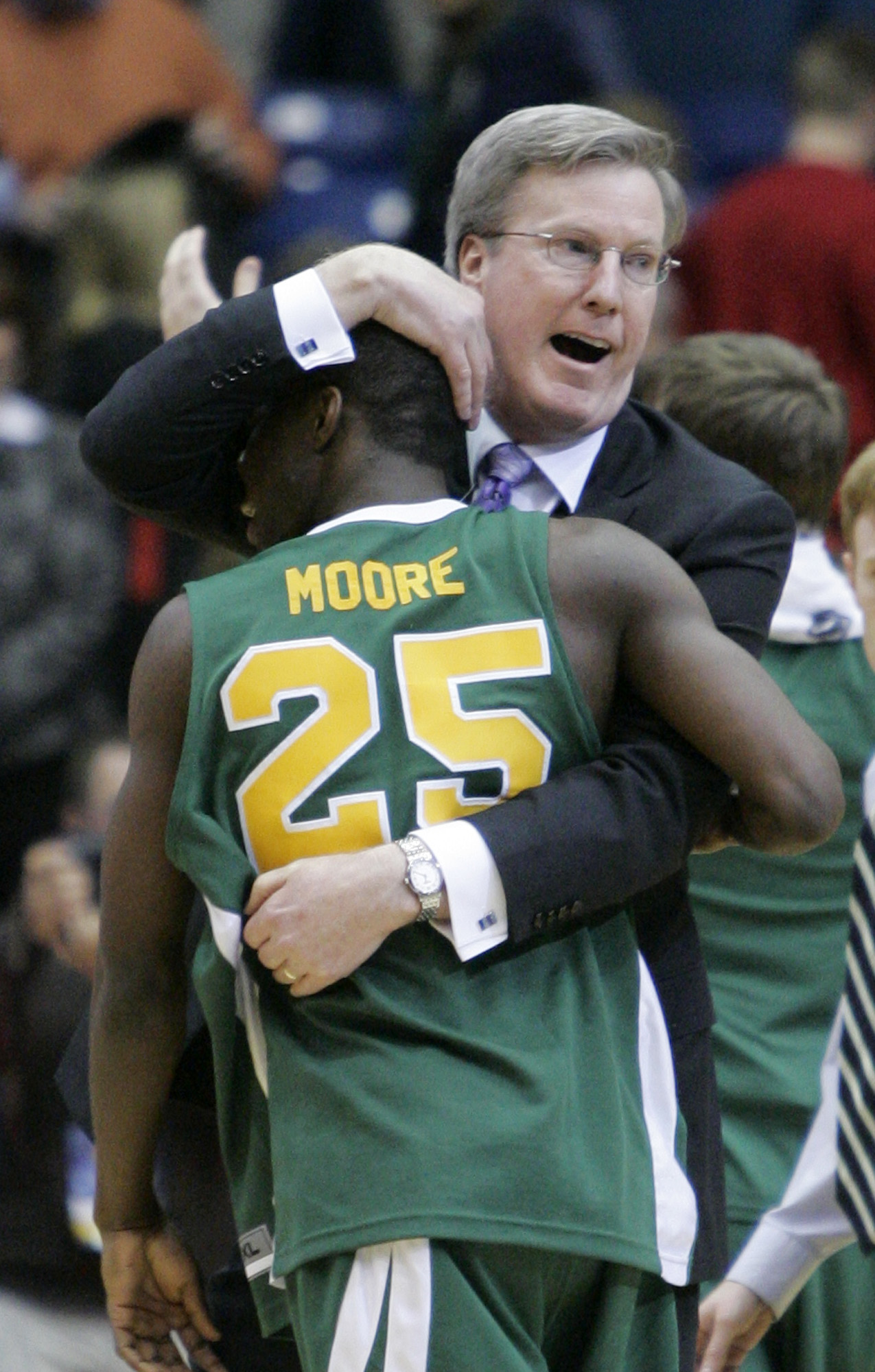
Fran McCaffery embraces Ronald Moore after Siena’s upset of Ohio State.
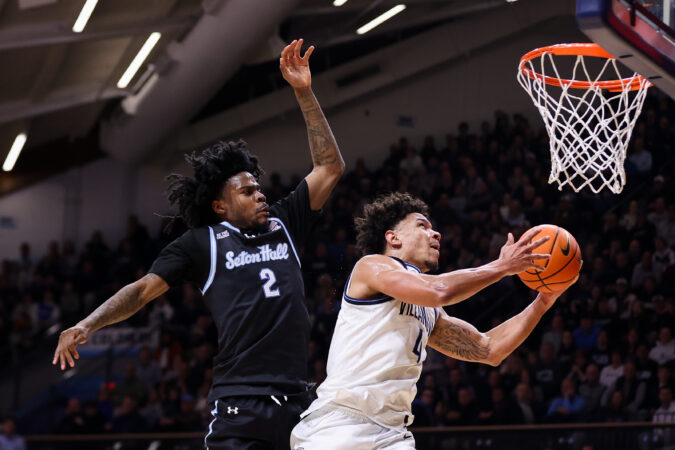
Kevin Willard was going on about his appreciation for the way his Villanova team works during practices when he referred to junior guard Tyler Perkins, seated to his right after Villanova’s 72-60 victory over Seton Hall, as a “pain in the ass.”
He meant it in the best way possible.
“He works too much,” Willard said. “His processor gets burned out sometimes.”
Villanova improved to 17-5 on the season and 8-3 in the Big East for a variety of reasons Wednesday night. The Wildcats, who never trailed, got a key effort from Malachi Palmer, who scored a career-high 15 points off the bench and helped ignite an 11-2 run to end the first half to send Villanova into the break with a 15-point lead. They forced Seton Hall point guard and Philadelphia native Adam “Budd” Clark to shoot jump shots and limited his ability to impact the game in transition. They outrebounded one of the better rebounding teams in the conference, 37-27.
But they won again because Perkins, the only returning regular player from last season, continues to excel. It has been a different guy on some nights for Villanova. Early in the season, it was Acaden Lewis and Bryce Lindsay driving the backcourt with Duke Brennan manning the middle.
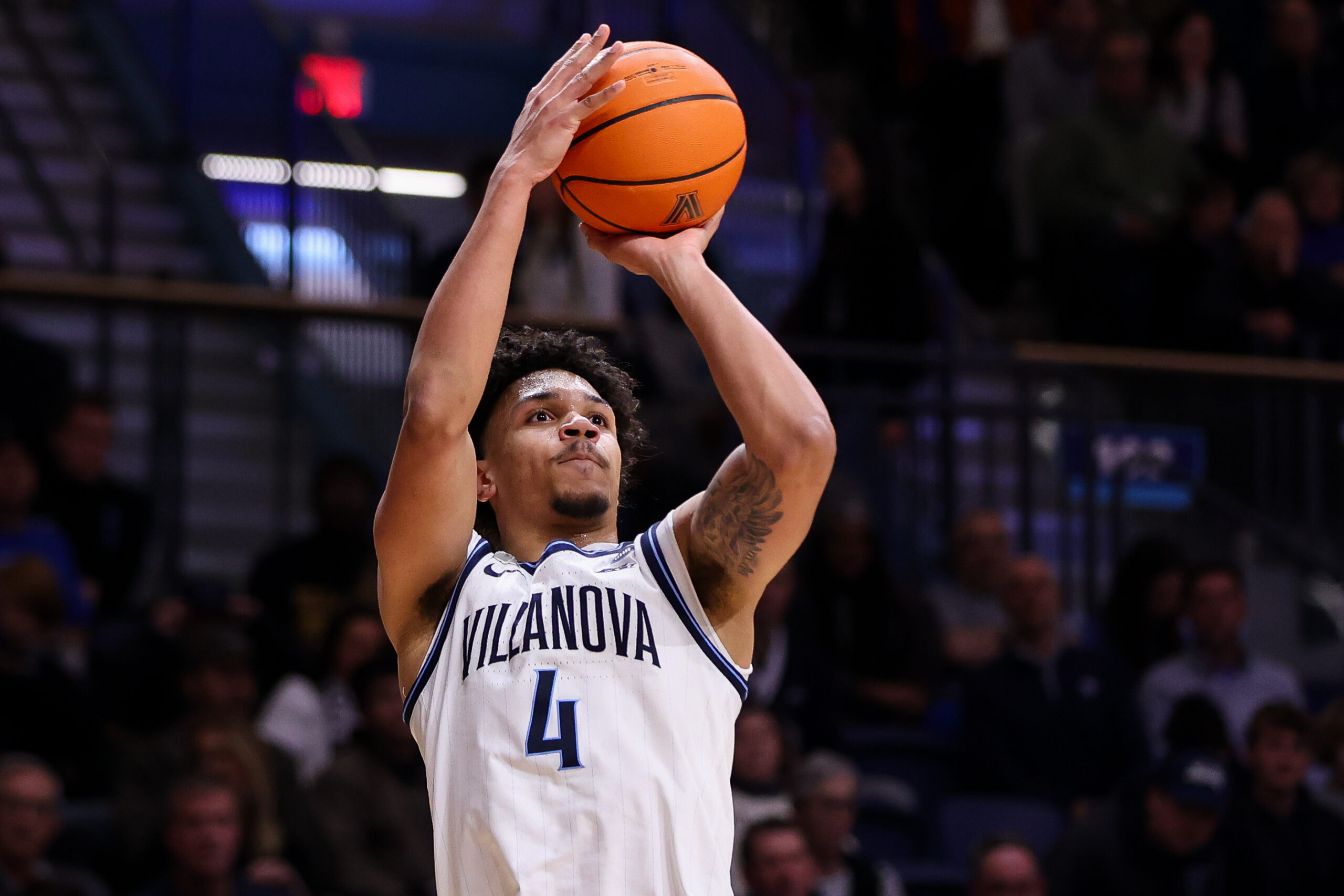
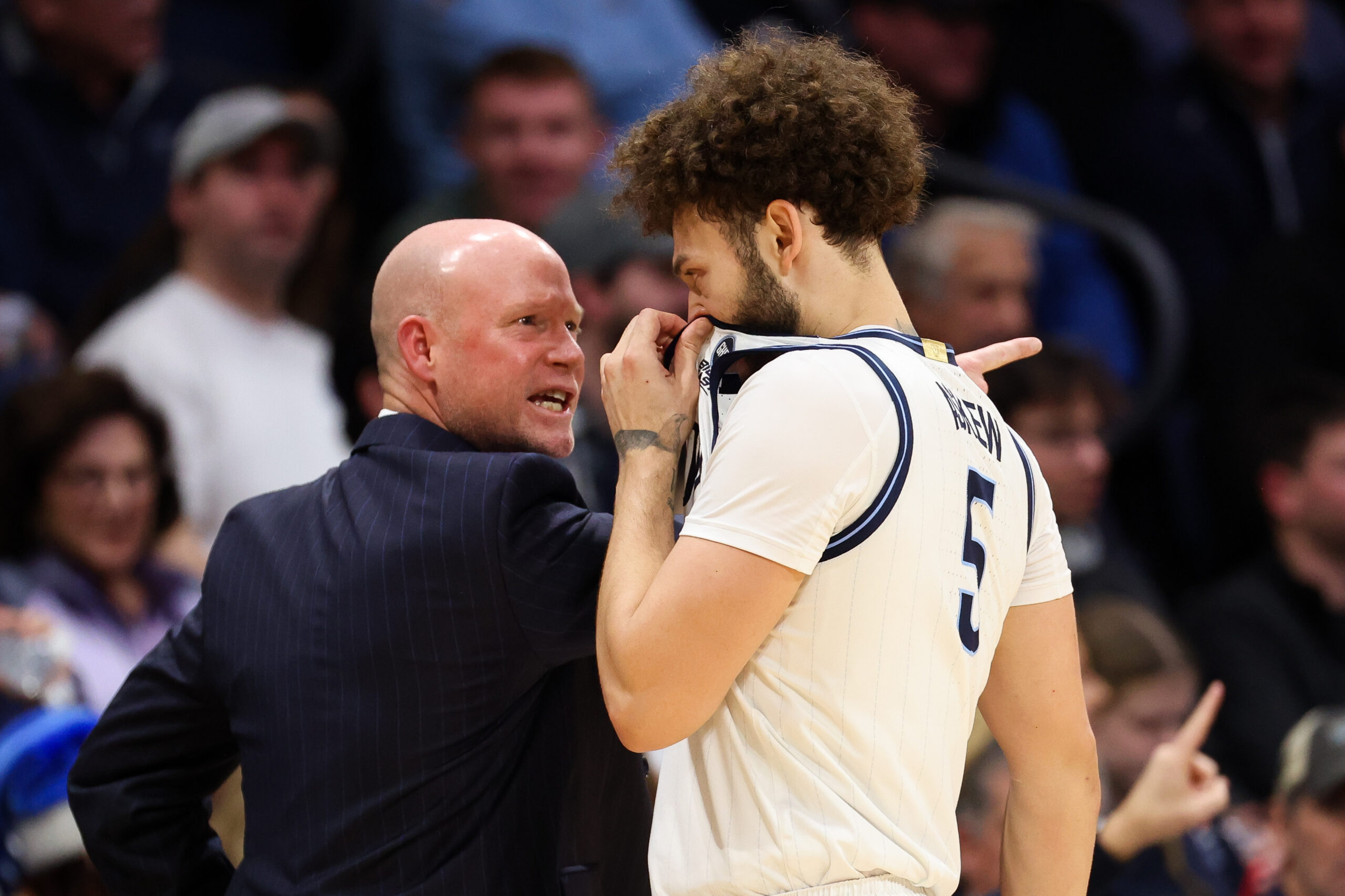
Devin Askew has chipped in strong efforts off the bench, especially lately. Wednesday night was Palmer’s turn. But Perkins, who transferred to Villanova from Penn after his freshman season, scored 18 points and added five rebounds. It was his 10th double-digit scoring effort in Villanova’s last 12 games.
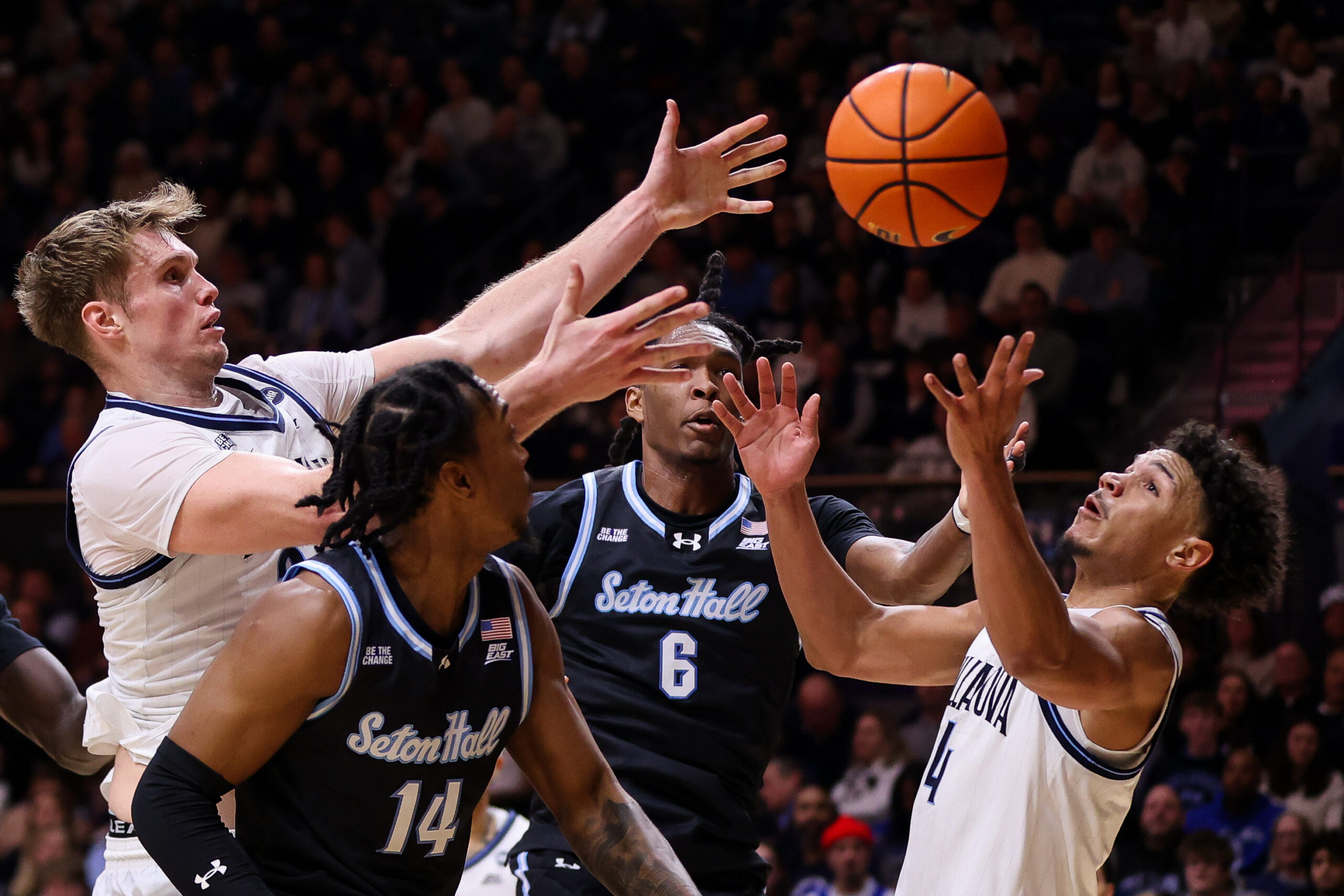
Villanova forward Duke Brennan and guard Tyler Perkins compete for a rebound against Seton Hall.
“He’s just the glue of their team,” Seton Hall coach Shaheen Holloway said. “He’s just solid.
“For him to be a junior, he’s a grown man. He plays bigger than his size.”
Being a “glue guy” can be a derogatory term to some players. And maybe it’s an unfair label for Perkins, a 6-foot-4 guard, who is averaging 17.8 points and 6.5 rebounds over his last six games. Lewis and Lindsay have, at times, struggled with the physicality required to get through a Big East season. Perkins hasn’t.
You can call him whatever you want.
“A lot of people say it, but at the end of the day I’m just trying to do whatever I can to help my team,” Perkins said. “I can impact the game in many ways. I’m fine with that if we win.”
Tyler Perkins is averaging 17.8 points and 6.5 rebounds over his last six games.
He made winning plays Wednesday, and some were more obvious than others. Seton Hall threatened to erase a Villanova lead that grew as large as 20. The Pirates dialed up the pressure and forced Villanova into 11 second-half turnovers. The lead was down to 11 when Perkins turned a missed Palmer three-pointer into a putback layup plus a free throw to push the lead back to 14 with 5 minutes, 50 seconds to go. He was just 1-for-6 from three-point range but made all five of his free throws and turned the ball over just once.
Willard was doing some reminiscing Wednesday with his former school in the building. He was asked if Perkins reminded him of Josh Hart with all of the little things he does.
“Josh kicked my ass for four years,” Willard said. “Three games a year, I got it from Josh. One of the things I loved about Josh is he affected the game at every level and never made a mistake. He was OK not touching the ball for eight or nine possessions. Once [Perkins] realizes it’s OK not to touch the ball a little bit, and he can still affect the game at an unbelievable level, that’s what made Josh a pro. Josh affected the game without having to score, but he found ways to score. He found ways to shut down the best offensive guy.
“[Perkins] is starting to figure that out. That’s about a big a compliment as I can give to somebody because Josh was not only a phenomenal person, which Tyler is, but just a winner. And Tyler is a winner.”
He may not have the kind of NBA future that Hart has created for himself, but Perkins is affecting winning right now on a Villanova team that is tracking toward snapping a three-year NCAA Tournament drought in Willard’s first season. The Wildcats play next at Georgetown on Saturday, a team they beat by 15 at home two weeks ago. There are more winnable games on the calendar ahead, and rematches with No. 3 UConn and No. 22 St. John’s remaining, too.
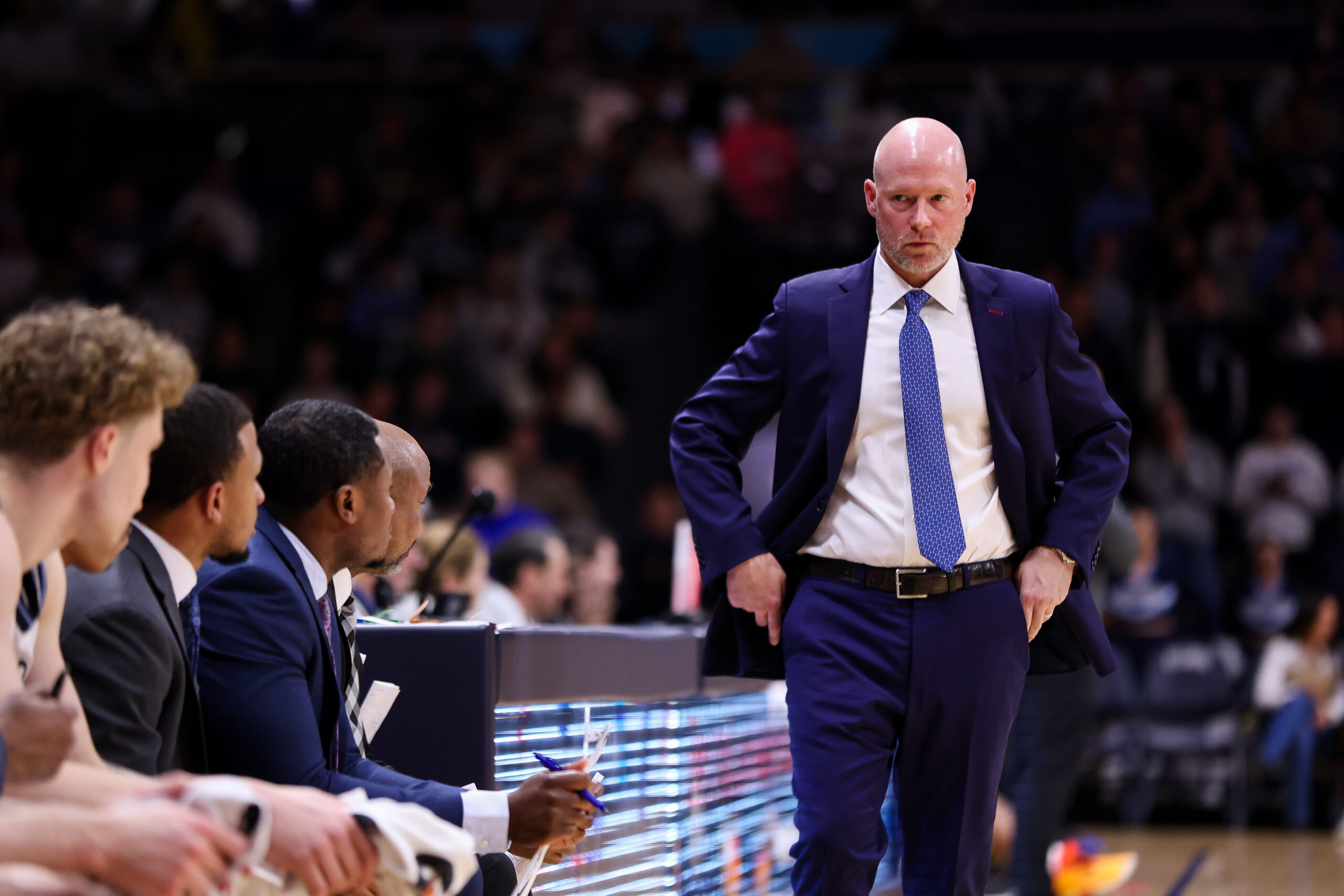
Villanova coach Kevin Willard said he isn’t satisfied with his team: “We’ve got a lot of work to do.”
With all the success Willard has had so far through 22 games, the coach was asked Wednesday night what he’s most satisfied with so far.
“Nothing,” he said. “We’ve got a lot of work to do. February is not a time to be [satisfied]. You should be looking at your team right now in February and saying, ‘What do I need to improve? What do I need to fix?’ I have to fix our offense a little bit.”
Over his 12 years coaching at Seton Hall and against Jay Wright, Kevin Willard figured that he knew Villanova as well as any outsider could, especially one who would eventually become the university’s men’s basketball coach. His next-door neighbors in Westfield, N.J., were ’Nova alumni, as were three of his golfing buddies at Plainfield Country Club, and there were all those Big East battles between his teams and Wright’s at the Finneran Pavilion, at the Prudential Center in Newark, and at Madison Square Garden in March.
Then he went to Maryland. Maryland wasn’t the northeast. It wasn’t Jersey. It wasn’t Philly. It wasn’t even the Main Line. It was the Big Ten. The Big Ten has big-time football, and more importantly, it has football money and a football mindset, even for its basketball programs. The Big Ten also has 18 member schools, so Willard stopped watching Big East basketball altogether. He had 17 conference opponents to study, after all. Then he returned to the Big East this season, replacing Kyle Neptune at Villanova.
He doesn’t feel comfortable there yet, he said. Too much to do. Too much change so quickly. Too much of a whirlwind.
“The comfort won’t happen until Year 3,” he said. “When I came, I definitely had rose-colored glasses. I had a perception of what this was, not remembering it had been three years since Jay had left.”
The Wildcats are 17-5 following their 72-60 victory Wednesday night over Willard’s former team, Seton Hall. And Villanova’s strong season so far might allow its donors and alumni to regard the last three years as just a blip — a small stint in purgatory before Willard got the program back to where those who support it presumed it should and would always be. During an hourlong interview in his office late Tuesday afternoon, though, Willard made it clear where he comes down on Villanova’s future … and its recent past.
No matter Wright’s intentions, his tenure and presence loomed over Neptune as an ever-present reminder of his 21 years as head coach and nerve center, of two national championships and four Final Fours and the status as the top program in the country. Neptune, who had a single season at Fordham as a head coach and had spent 12 years at Villanova on Wright’s staff, couldn’t escape that shadow or the comparisons, and he couldn’t win enough to buy himself more time. Willard doesn’t want to fall into the same trap, and he thinks he knows how to avoid it, believing his three years at Maryland and in the Big Ten, that experience elsewhere, will be vital to understanding how Villanova has to evolve.
“It’s so important,” he said. “My 12 years at Seton Hall, I did it my way. You get very isolated, and Jay was here for so long, and they were winning. But it was Jay. And I know this because I went against him. It was Jay. It was Jay’s way. It was the way it was. They didn’t need to change anything. They didn’t need to worry about anything because they had Jay. Once Jay left, you need to go, ‘All right, what’s everyone else doing? Where has everyone else made gains where maybe this place didn’t because they had Jay?’”
Kevin Willard doesn’t want to erase all of the Wildcats’ basketball history, rather use it as a valuable resource.
For Willard, the caution and smaller-time approach that worked under Wright — that worked because of Wright, and because Villanova was operating in a pre-NIL/transfer portal/pay-for-play world — won’t fly anymore. It would be foolish for Willard to try. He’s a Villanova outsider still, rougher around the edges than Wright, than the man who was the most polished coach in the country, and the circumstances in this wild, wild west era of college hoops are different and more challenging.
The luxury of redshirting players such as Mikal Bridges and Donte DiVincenzo, for instance, allowing them to get acclimated and mature, won’t necessarily be available to Willard. The way to make up for Wright’s departure isn’t to operate as if his successors will be able to replicate his methods or even his culture. It’s to pay the cost of acquiring big-time players and tout their skills as part of social-media branding campaigns and recognize that this isn’t anything like amateur basketball anymore.
“It’s like growing up in a small town and going to their amusement park, and then you go to Disney World,” Willard said. “You can’t say, ‘We just need to make the roller coaster better.’ Everything’s got to get better, bigger — fairy dust everywhere. It’s not even a money thing or a structural thing. It’s more about a mentality. Jay was monstrous. Jay was Villanova basketball. But we don’t have Jay anymore. …
“Everyone else is being Disney World. We can’t be the small, little amusement park. We’re not the small, little amusement park, but the mentality a little bit is. ‘We can do it like this because we’ve always done it that way.’”
Willard insisted he doesn’t intend to erase all of the Wildcats’ basketball history, that he can’t ignore or disregard what Villanova is as a university or how Rollie Massimino, Steve Lappas, Wright, and Neptune did their jobs and why. “If you just go against 60 years of tradition,” he said, “you’re going to get [expletive] blown out of the water.” So he views Wright’s presence as an asset, his knowledge and success as valuable resources.
Kevin Willard said he won’t feel comfortable coaching on the Main Line until year three.
“If I was in my third year of coaching, I wouldn’t feel the same way,” he said. “I’m 20 years a head coach. I’m not cocky, but I feel pretty confident that I know what I’m doing at this point. I love the fact [that] I have Jay around. It’s only going to help. If I was younger and was coming here after three years at Seton Hall, I would be like, ‘What the [hell]? Why is he at the game? This is [expletive] crazy.’ But I love that he comes to practice. I love that he’s at games. I love that I can text him or call him or go out to dinner with him because he built this. He knows this place better than anybody.”
He likely always will. It’s a standard, though, that Kevin Willard doesn’t have to exceed or even meet yet. It’s still just Year 1 for him. Check back in Year 3. He doesn’t have to know Villanova as well as Jay Wright did. He just has to do his part in this new time of college basketball. He just has to know it well enough.
Paging through the bulky Sunday Inquirer on Nov. 28, 1976, readers encountered a sports section that might have been compiled in Mount Athos, the tiny Greek republic that’s been off-limits to women for centuries.
It was stuffed with man’s-world staples — stories, stats, and standings on the NFL, NHL, pro and college basketball. There were columns on hunting, golf, boys’ high school sports; features on boxing, men’s cross-country, minor league hockey; an entire page devoted to horse racing.
The ads were no less macho-flavored, promoting car batteries, rifles, tires. A prominent one hyped January’s U.S. Pro Indoor Tennis Championship at the Spectrum with its lineup of “50 of the world’s top male pros.”
About the only indications that women participated in sports were an account of a West Chester State field hockey game and, buried on the gray scoreboard page, a truncated leaders’ list from that weekend’s LPGA tournament.
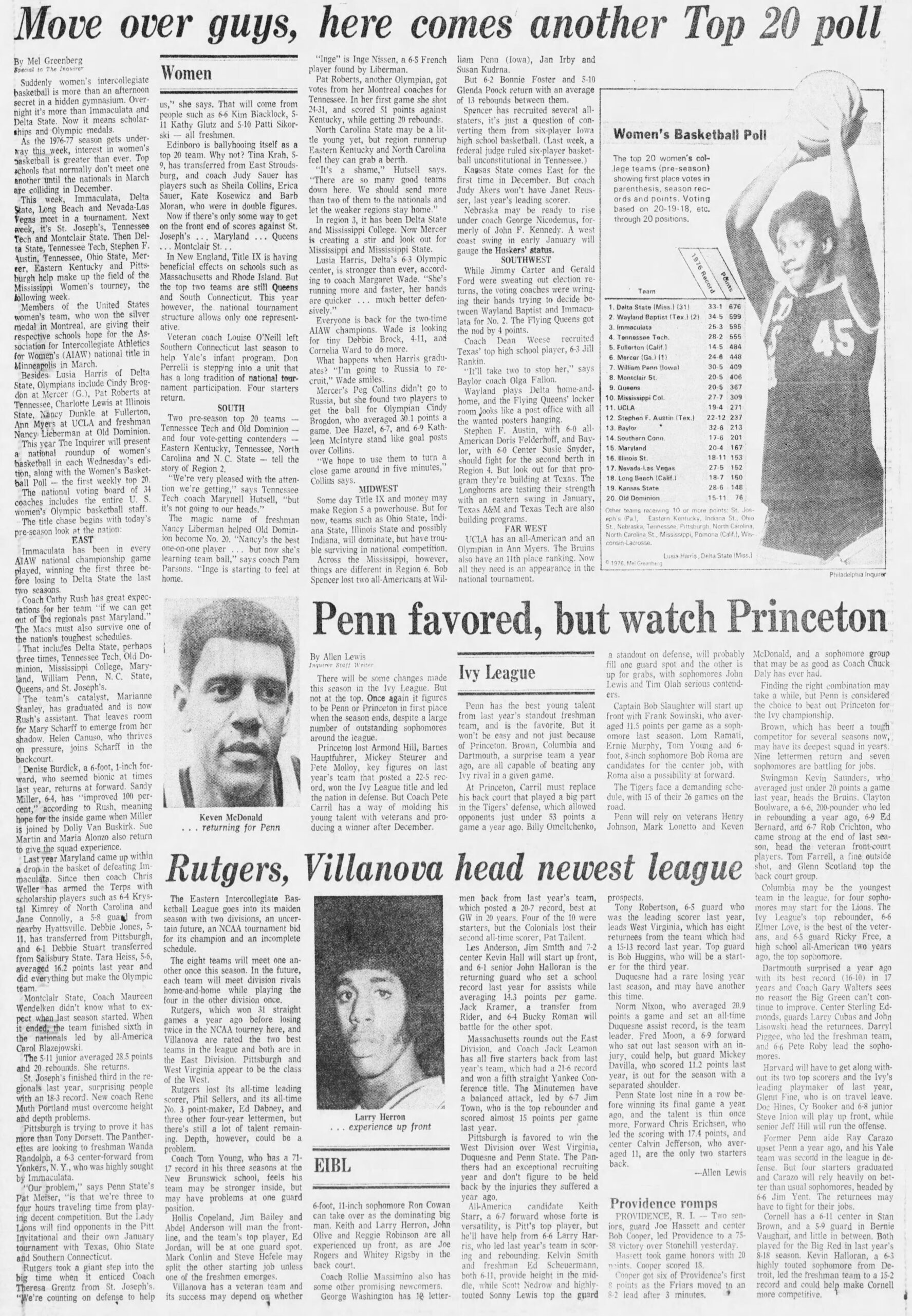
But for those who reached Page 16, a strange interloper awaited. Sandwiched between two men’s basketball previews, as if editors thought it incapable of standing alone, was one of the earliest and most consequential harbingers of a bubbling sports revolution — the first women’s college basketball poll.
Conceived by then-Inquirer sports editor Jay Searcy and obsessively nurtured by a Temple-educated newspaper clerk named Mel Greenberg, its headline read like a polite plea for recognition: “Move over guys, here comes another Top 20 poll.”
A clipping from the Nov. 28, 1976, edition of The Inquirer that features the first installation of what became the AP women’s basketball poll.
It came. And it stayed. Week after week, year after year, Greenberg’s poll accumulated popularity and heft, becoming a building block in the growth of women’s basketball. A sport that had been widely ignored and loosely governed by the Association for Intercollegiate Women’s Athletics now had validation, a common sense of purpose, and unity.
“That poll gave coaches and others around the country an opportunity to know what was going on everywhere with women’s college basketball,” said Marianne Stanley, a star on Immaculata’s 1970s championship teams and later a successful college and WNBA coach. “Prior to that, there was only word-of-mouth. Newspapers didn’t cover it, and no one was tracking what was happening nationally.”
Revisiting that debut poll in this, its 50th anniversary year, is eye-opening. Its top 10 might today be mistaken for a ranking of Division III field hockey teams — Delta State, Wayland Baptist, Immaculata, Tennessee Tech, Fullerton, Mercer, William Penn, Montclair State, Queens, and Mississippi College.
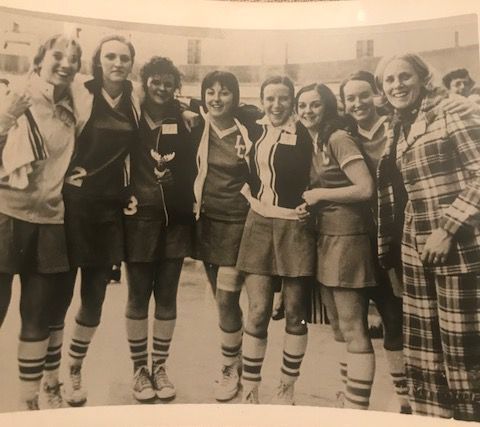
Theresa Grentz (second from left) and Marianne Stanley (fourth from right) with Immaculata teammates and coach Cathy Rush at right. Immaculata was one of women’s college basketball’s first powers.
The large state schools that dominate in 2026 mostly were absent.
But not for long.
Motivated by the mandates of 1972’s Title IX and by a desire to see themselves in the new rankings, many started to invest in the sport.
By 1981, when the NCAA replaced the AIAW as the game’s overseer, there were 234 women’s Division I programs. That jumped to 284 in 1991, 317 in 2001. Last season there were 325 D-I programs, and more than 1,000 when Division II and III are included.
“The fact that so many schools where women’s basketball was nonexistent or an afterthought went all in is a credit to Mel and his poll,” said Jim Foster, the retired women’s coach at St. Joseph’s, Ohio State, and elsewhere.
Deirdre Kane, the retired West Chester University coach, said that “until Mel’s poll, the NCAA wasn’t even acknowledging our existence. That poll made people realize, some of them for the first time, that women’s collegiate basketball was being played.”
Greenberg built a national network of coaches and administrators, contacting them weekly for information and input. As newspapers beyond Philadelphia added his poll, its significance deepened.
“We were all fighting for recognition, but none of us were getting much,” said Geno Auriemma, the Norristown-raised, spectacularly successful coach at Connecticut. “Mel came along, and he was one of the few who gave us a little. His poll helped us all grow the game.”
It grew so widely that in 1996 the NBA launched a women’s pro league, stocked with the stars of the college game. The WNBA now has a national TV contract, recognizable superstars, and a lineup of big-city franchises that in 2030 will include Philadelphia.
“When Philadelphia gets that team,” Foster said, “they ought to call it the Philadelphia Mels.”
It took 28 years after the inception of the Associated Press’ men’s college basketball poll for the women to get one. In 1976, Searcy, who before arriving at The Inquirer had covered women’s sports for the New York Times, decided the time had come. His motivation likely sprang from developments in that Bicentennial year.
Women’s basketball made its Olympic debut that summer in Montreal. A few months earlier, Immaculata had appeared in its fifth straight AIAW national title game. The Mighty Macs, who in 1971 played in the first nationally televised women’s game, had won the first three and were runners-up the next two years.
Searcy reached out to Greenberg, an editorial clerk who by then was the de facto Immaculata beat writer.
“Jay called me into his office and said, ‘What do you think of the idea of a women’s basketball poll?’” Greenberg said. “And I said, ‘I think you’re nuts.’”
As Greenberg prepared for the poll’s November launch, Searcy promoted it. He revealed his plan to Temple students during a campus visit. In that audience was Foster, then a physical education major who also coached Bishop McDevitt High School’s girls.
“It was really exciting news for anyone interested in the sport,” Foster said. “He told us he was going to start a women’s basketball poll that would be just like the men’s.”
Still, many scoffed. Women’s basketball, after all, existed deep in the shadows. Most newspapers and TV stations ignored it. With few exceptions, games were played before tiny crowds, often in substandard gyms. Rules weren’t standardized, qualified coaches and referees were in short supply, and, until the AIAW’s 1971 founding, there was no universally accepted end-of-season tournament.
“The only people who followed women’s basketball then were the people involved in the game,” Kane said.
But if there was a hotbed, it probably was the Philadelphia area. Numerous elementary schools, high schools, and colleges here had teams. West Chester State, with its strong physical education program, gained prominence in the 1960s under coach Carol Eckman, now known as “the mother of women’s college basketball.” And it was a West Chester grad, Cathy Rush, who turned Immaculata into the nation’s best team in the early 1970s.
“There was always a huge basketball presence in Philadelphia,” Stanley said. “But it wasn’t until Immaculata that many people noticed the women. Then, the AIAW was formed, and that was big. Now, here comes the poll, and suddenly we’ve got a way to track and pay attention to what was happening not just here but across the country.”
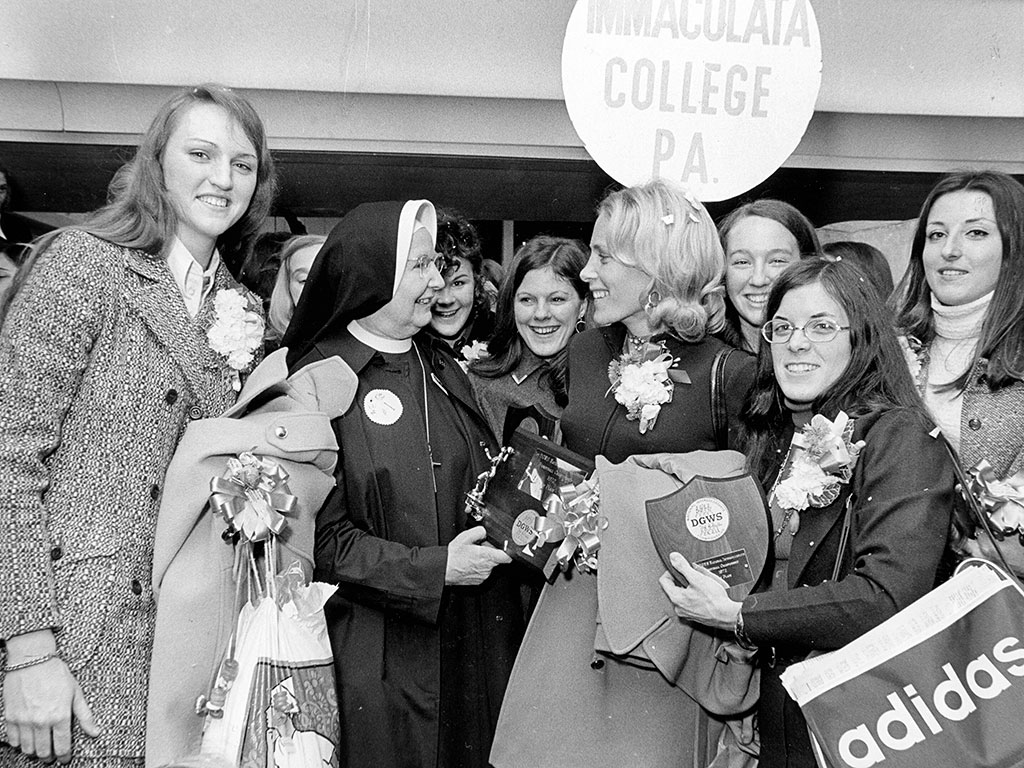
Members of the Immaculata College basketball team gather around their coach as they return after winning the first women’s collegiate national championship in 1972. From left in the foreground are Theresa Shank, college president Sister Mary of Lourdes, coach Cathy Rush, and Janet Ruch.
Despite Greenberg’s occasional stories on the Mighty Macs, few readers knew much of the women’s basketball world beyond. And few sports editors and writers besides Searcy and Greenberg saw its potential.
“I loved women’s basketball,” said Dick Weiss, a veteran sportswriter who then was covering men’s college basketball for the Philadelphia Daily News, “but most of us never saw it becoming a regular beat. All our energy went into the Sixers with Julius Erving and the Big 5, which still had NCAA teams filled with local talent.”
Launching the poll proved problematic. If women’s programs were second-class on most campuses, so were their support staffs. Gathering schedules and stats was nearly impossible. When Greenberg reached out to the AIAW for help, the organization balked.
“They told me women’s sports shouldn’t get involved in things like newspaper polls because that would lead to the evils of men’s athletics,” he said.
So he built a Rolodex of contacts, then he and some basketball contacts painstakingly collected information over the phones.
“Mel based the poll operation in our sports department,” said Gene Foreman, then The Inquirer’s managing editor. “His volunteer helpers were several tall women.”
Coaches telephoned in their votes on Sunday nights. One, N.C. State’s Kay Yow, provided an early indication of the poll’s impact.
On Jan. 2, 1977, Immaculata visited N.C. State, which typically played before small gatherings. But the new rankings promised a compelling matchup. The Wolfpack were ranked No. 15; Immaculata, which triumphed, 95-90, was No. 2.
“I remember Yow calling and talking about how excited she was,” Greenberg said. “It was snowing before the game, but there was a long line of fans outside the arena waiting for tickets.”
In 1978, the Associated Press began distributing the poll, giving most news outlets access. Then, in 1994, Greenberg ceded its compilation to the AP, and media members replaced coaches as the voters.
The poll was a cornerstone of the game, and in 2000, another Sunday Inquirer spotlighted women’s basketball’s maturity.
Philadelphia was hosting that year’s Final Four. Its lineup of Connecticut, Tennessee, Rutgers, and Penn State revealed the game’s progression from the days when little Immaculata could win three straight titles. Its two sessions attracted nearly 40,000 fans. Millions more watched on ESPN.
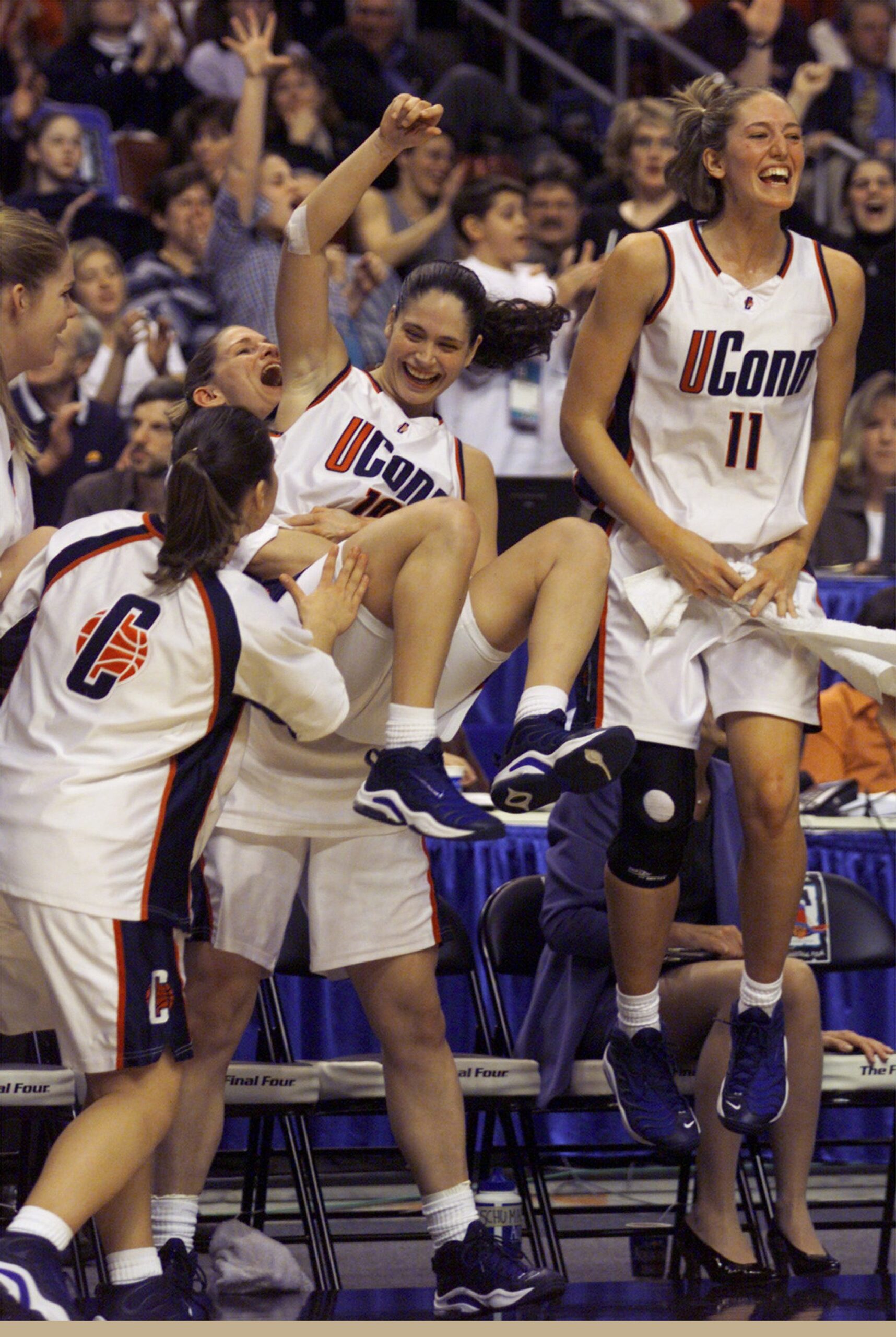
Stacy Hansmeyer, Sue Bird, and the UConn bench celebrate after Swin Cash makes a breakaway layup late in the second half of UConn’s Final Four game against Penn State on March 31, 2000, at what then was called the First Union Center.
The April 2 Inquirer ballyhooed that night’s title game on Page 1. Inside was an entire section previewing the event from every angle. There were profiles of coaches, players, even the referees. There were analyses, features, columns, statistics, photos and predictions.
And the poll?
Well, the championship game itself proved just how plugged in it was. Connecticut, the No. 1 team in the regular season’s final rankings, defeated No. 2 Tennessee.
Greenberg retired from The Inquirer in 2010 but still compiles a widely read blog. Organizations, including the Naismith Basketball Hall of Fame, have recognized him and his poll’s contributions.
“Mel was a gift to the women’s game,” Stanley said. “He was so passionate, and so dedicated and so single-minded. Who knows how long it otherwise would have taken for anything of substance to occur? Not many news outlets gave a crap about it, but Mel and The Inquirer decided to do something about women’s basketball. And that poll has stood the test of time.”
Devin Askew was covered in sweat when he sat down in a room inside the practice facility at Villanova on Monday, fresh off an on-court workout with development coach JayVaughn Pinkston that followed a weightlifting session.
Askew, Villanova’s sixth man, is on a tear as of late, averaging 15.8 points during a six-game stretch in which the 23-year-old guard has made 17 of 29 three-pointers. Sessions with Pinkston, a former Villanova player, have helped. Pinkston’s role is exactly that, to do the little things to get the most out of every player. But with Askew, Pinkston’s presence also is a reminder of the past and the winding journey Askew has traveled to put himself in the running for Big East Sixth Man of the Year.
There are few connections remaining to the Villanova program of old, and Pinkston, who played for the Wildcats from 2011 to 2015, is one of them. Which gives him the right to playfully rib Askew about 2019, when, as a top recruit in the class of 2020 from California, he chose Kentucky over Villanova (and others).
“He’ll always tell me I should have been here five years ago,” Askew said. “I should’ve always been a Villanova Wildcat.”
Devin Askew is making a strong case for Big East sixth man of the year.
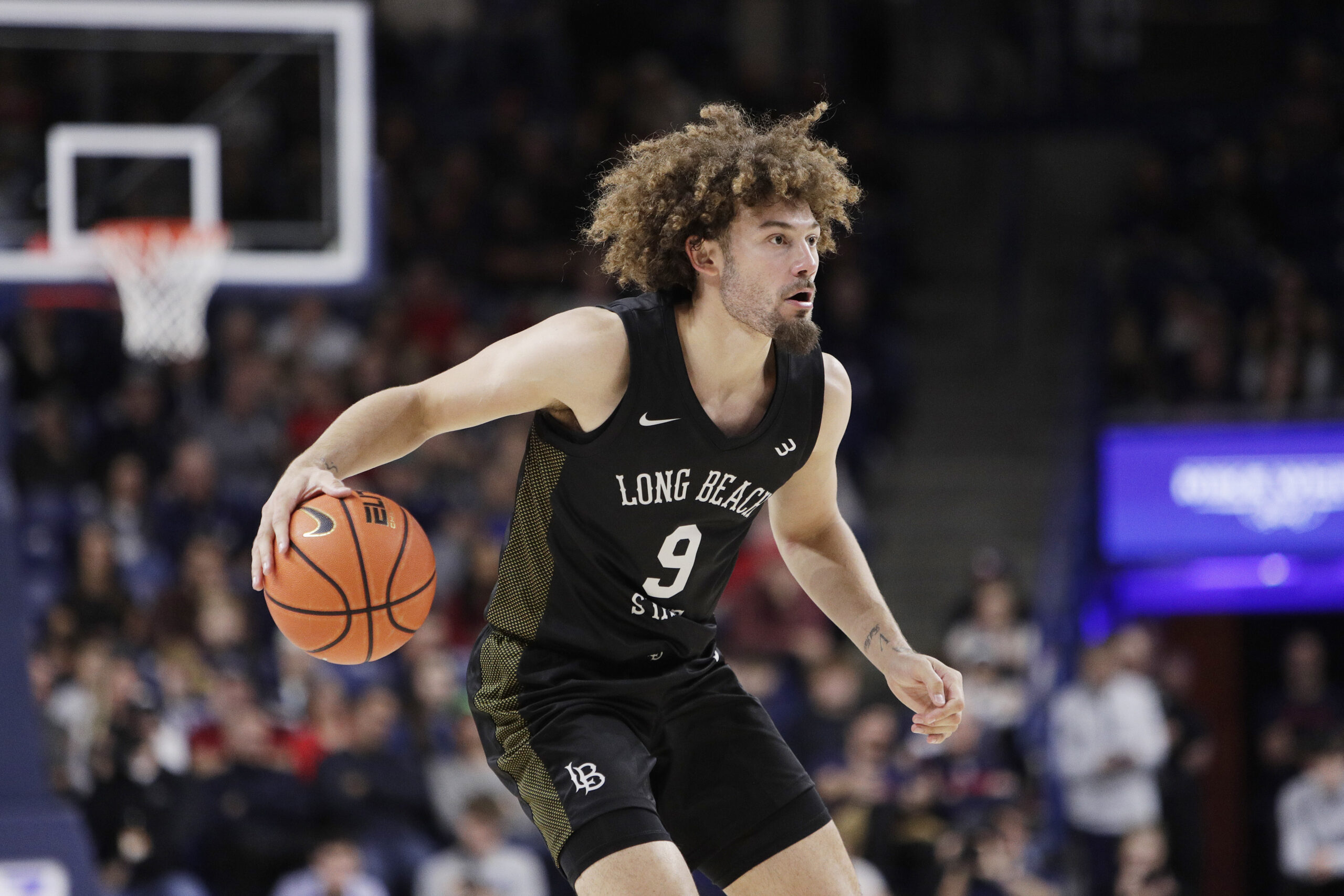
He is here now almost by accident. His college journey has traveled more than 8,000 miles from Mater Dei High School in California to Lexington, Ky., to Austin, Texas, to Berkeley, Calif., to Long Beach, Calif., and, finally, to the Main Line. Five schools in six years. Which made him just another sign of the times when Kevin Willard plucked him out of the transfer portal to give his roster a much-needed experienced ballhandler and shooter.
He was, to the outside world, another mercenary college basketball player passing through a random place on a map and collecting a paycheck to bridge his way to wherever professional hoops takes him.
But for Askew, his time at Villanova has been a “full-circle” experience. Like in most people, his past explains the present, and it’s fitting the journey ends here, where his future is being determined during a critical turning-point season for him and Villanova.
‘It’s why we brought him here’
This recent stretch is what Willard imagined when Villanova recruited Askew this time around. It’s a young Villanova roster, especially at guard. Freshman Acaden Lewis and sophomore Bryce Lindsay have had breakout seasons with the Wildcats, but Askew lately has been a steady presence, and his experience has allowed him to compete on both ends during the physical demands of a Big East schedule.
Before the last six games, Askew reached double figures just three times in 15 contests. It took a little bit longer for it all to come together because he suffered a knee injury during the lead-up to the season. His injury history followed him. A sports hernia injury ended his junior season at California after 13 games, and a foot injury ended his following season, the 2023-24 campaign, after just six.
That injury gave him a redshirt season, but also extra perspective to get through his first few months at Villanova, when he missed nearly two months of practice and was not 100% when the season started.
“I’m tough, and I’m not going to quit,” Askew said when asked what he has learned about himself along his college journey.
Were past versions of him not as tough?
“The true test of knowing that is to go through something,” he said. “I’m willing to go through it and deal with anything that comes to me because I love the game, I love the sport of basketball. I don’t want to stop playing.”
Villanova has needed Askew to be a stabilizing force at times, and it also has needed him to take over games offensively, like against St. John’s and Connecticut, two of the more experienced teams in the conference.
“I don’t view it as they need me to take over,” Askew said. “There are so many things going on within a game, taking over a game could be a defensive stop.”
Devin Askew scored a team-high 20 points off the bench against Providence on Friday.
Willard credited a recent run of strong practices after Askew made five three-pointers and scored 20 points in Friday’s win over Providence. The coach has talked recently about how critical it is to have Askew’s experience. He’s a big reason the Wildcats are 16-5 overall and 7-3 in the Big East as they head into Wednesday night’s home game vs. Seton Hall.
“It’s why we brought him here,” Willard said. “This is the type of player he is. When you go into the portal, you really have to evaluate and watch film and see what he has. When he was on his visit, I think the best part about it was I just loved his maturity. He’s a terrific, terrific person.
“He’s getting rewarded for being a hard worker and a terrific person.”
A piece from all the places
There is a part of every stop that make up the player and person Askew is.
He chose Kentucky as a 17-year-old top-40 prospect because who wouldn’t want to play for John Calipari and follow in the footsteps of top guards like Shai Gilgeous-Alexander and Tyrese Maxey?
What did he learn from each stop? Askew went through them one by one.
Devin Askew said his time at Kentucky “taught me patience and to be even-keeled.”
At Kentucky, he learned how to go from being the guy on a high school team to being one really good player on a team of other really good players. It wasn’t an easy learning experience. “It actually taught me patience and to be even-keeled,” he said. “There’s going to be ups and downs, and you can’t get too high or too low. I was just an emotional kid.” He had high expectations for himself and didn’t meet them. He started losing his love of basketball.
Enter Texas, which may be the most important stop of the five. “That brought back all that love for me,” Askew said. “No, you still love this game. Chris Beard and that coaching staff saved my career.” Askew averaged 14.9 minutes off the bench and was a role player on a team that reached the NCAA Tournament. He fell back in love with basketball, but he wanted a place where he could start, so he went back home to California.
At Cal, it was time to “go show it,” Askew said. “I was ready. And the seasons just got cut short to injuries both years, and that’s where we kept learning and kept growing. … This is the life we chose.”
Cal allowed him to be closer to his family. He has leaned heavily on his two brothers and his parents over the years. Cal also gave him his undergraduate degree in interdisciplinary studies. But entering the 2024-25 season, he was an oft-injured journeyman with two seasons of eligibility left — one redshirt year, one COVID year — looking to prove he could still play. To the portal, and to Long Beach State, he went.
“Go do it,” Askew said of Long Beach. “It wasn’t go show everyone, because I wasn’t into showing everyone. But it was prove to yourself again.” He scored 18.9 points per game and shot 37.6% from three-point range on a team that won seven games and ended the season by losing its last 15.
At Long Beach State, Devin Askew averaged 18.9 points.
“Not a lot of people believed in me and believed I could play still,” Askew said. “They gave me the platform to show what I could still do.”
There are a lot of reasons to gripe about the state of college basketball, and a player going to five schools in six years is one of them. Askew is, in a sense, a one-year rental who helped Willard get Villanova back on track in his first season.
Off the court, Askew is taking classes toward a master’s certificate in Villanova’s public administration program, a year after earning a certificate in communications at Long Beach. On the court, Askew is helping Villanova get back to the NCAA Tournament.
When the topic of the tournament came up, Askew shook his arms and said he got chills.
“That would mean everything to me,” he said. “I kind of get emotional thinking about it. As a kid you always want to play in the tournament. You go to college and want to play college basketball to make the tournament.”
A continuation of his current form will go a long way toward making that possible, and helping him raise his own profile. The NBA probably isn’t in his future, but there is a country or league out there for a lot of players like him.
“I don’t know what this year will do for me,” Askew said. “And I don’t like to hope, because what will happen will happen. I’m just thankful wherever this game takes me, thankful and grateful.”
Sometimes it takes you to the place where maybe you were always supposed to be.
Head to the corner of 32nd and Berks, Kahleah Copper says. And find the telephone pole with the backboard still nailed to it.
“That’s where I started hooping,” Copper said Thursday. “That’s where it all really began for me.”
That spot is so meaningful that Copper took her Unrivaled teammates on a walking tour there, traipsing through snow-lined sidewalks and frigid temperatures to reach it. The 31-year-old wanted them to see the North Philly she always boasts about, to “share that little piece of me.”
Kah visiting where it all started👑 #Unrivaled #WNBA
It was part of the nostalgia and “waves of gratitude” Copper felt during this particular trip home, culminating in playing Friday night at Xfinity Mobile Arena in professional women’s basketball’s return to Philly. While speaking about the family, friends, and mentors in that sold-out crowd — who knew the kid who once shot on that makeshift hoop — Copper’s emotions quickly (and unexpectedly) bubbled to the surface.
“There’s so many people that just kind of stepped into my life,” said Copper, eyes teary and voice breaking, “and did stuff for me, literally not looking for anything in return. … For them to see me now, like I really made it because of y’all. That’s tough. That’s fire.
“Everybody literally planted little seeds for me to be who I am today. That’s why it’s so special.”
An early opponent on that neighborhood basket? One of her three sisters, whom Kahleah claims “wasn’t even that good, and she did not even, like, like it.” It is how she realized how much she did love basketball — and hated losing.
Then there were the guys who welcomed her into pickup games at Fairmount Park playground courts at 33rd and Diamond, even though she was a girl. As long as she did not cry. As long as she was ready to take hits. And as long as, whenever she lost, she got off the court and found her way back into the next game.
“Nothing being handed to me. Got to go get it. Got to be tougher,” Copper said. “That’s kind of where I got my mindset, and that’s how I approach everything.”
Eric Worley, the cofounder of Philadelphia Youth Basketball, first met Copper as a middle schooler. Sabrina Allen, a friend and then the coach at Girard College, recognized potential in Copper. Worley agreed that Copper “could run real fast, could jump real high” — and “got off the ground twice before the other player got off the ground once.”
“She just came in the game and you knew she was going to bring energy,” Worley told The Inquirer in front of an arena suite Friday night. “Get some offensive rebounds. Get some putbacks. And just kind of bring that North Philly toughness that she always kind of goes back to.
“That’s really true, and that has always been part of her makeup.”
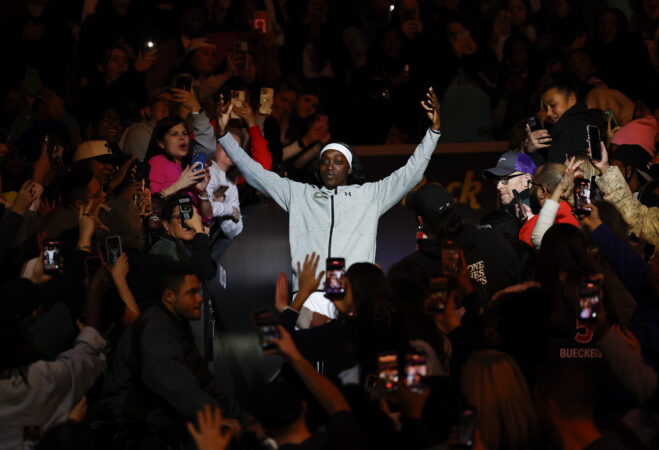
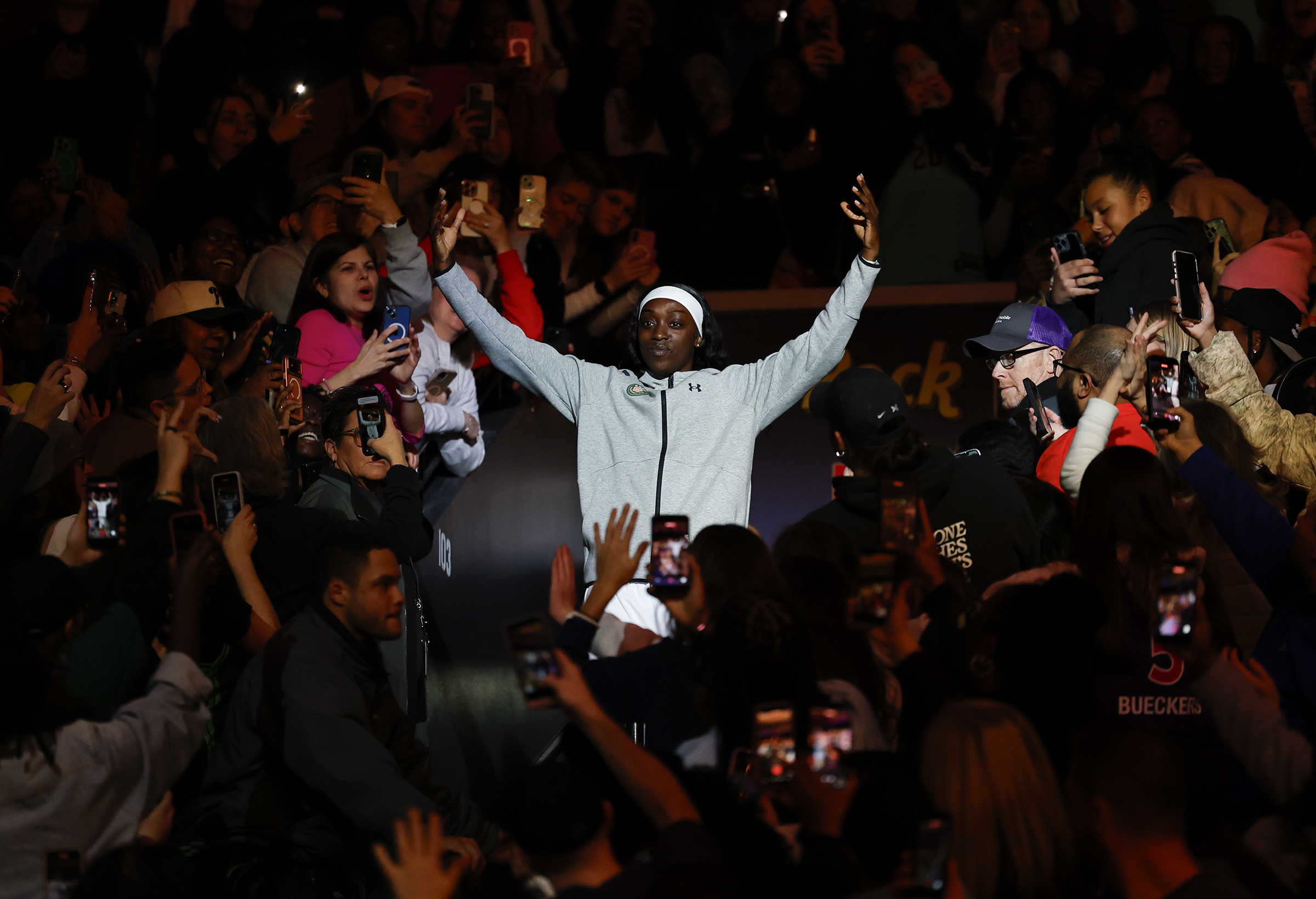
Kahleah Copper introduced in front of the Philly crowd. Got something cooking on her that you’ll be able to read tomorrow 👀
Yet because of work and family obligations for Copper’s mother, Leticia, Kahleah often needed a ride to practices or AAU games. Worley and his family stepped in. Reminiscing about that kindness is what first made Copper’s voice waver in front of reporters on Thursday. The next day, Worley called the gesture “easy” because of the Copper family’s honesty about their situation and appreciation for the support.
“She trusted us with her baby,” Worley said of Copper’s mother. “She was like, ‘Hey, I know y’all are good people. I know you have her best interests at heart. Come get her. What time do I need to have her ready? She’s going to have her bags packed and ready to go.’”
Copper later moved to 23rd and Diamond, into the same Raymond Rosen projects where basketball legend Dawn Staley grew up. Copper started playing at Hank Gathers Recreation Center and walked Broad Street to Temple to join the pickup games with the women’s basketball team.
Eventually, Copper branched out, starring in college at Rutgers before turning pro. She blossomed into a four-time All-Star and won the 2021 WNBA championship and Finals MVP. She played overseas in Belgium, Poland, Turkey, Israel, and Spain. This past fall, she helped the Phoenix Mercury to a surprise Finals run, upsetting the defending champion New York Liberty along the way.
Then Unrivaled, the offseason league in its second season, finally brought Copper home to play professionally.
Veteran star Skylar Diggins sat behind Copper on the bus once they arrived, watching her take in her hometown. Copper kept a camcorder handy to document everything from the familiar surroundings to her teammates crammed in an elevator in their hotel. Awaiting everybody was a massive cheesesteak order from the iconic Dalessandro’s, ready for Copper to dress her sandwich with mayonnaise, salt and pepper, and ketchup (but no onions).
“Everybody I know [eats it that way],” Copper said. “That’s real Philly right there.”
All four Unrivaled teams practiced at the Alan Horwitz “Sixth Man” Center located about 10 minutes from where she grew up. She marveled at the easily accessible “safe space” — complete with study areas, therapy rooms, and meals — it provides area kids today. That is where she first reunited with Worley, the coach calling it “genuine love.” Copper then spent time with some of Worley’s current players, along with kids who have grown up attending Copper’s summer camp, launched nine years ago.
“Now it’s time to really cement your legacy,” Worley said, “by paying it forward for the next generation.”
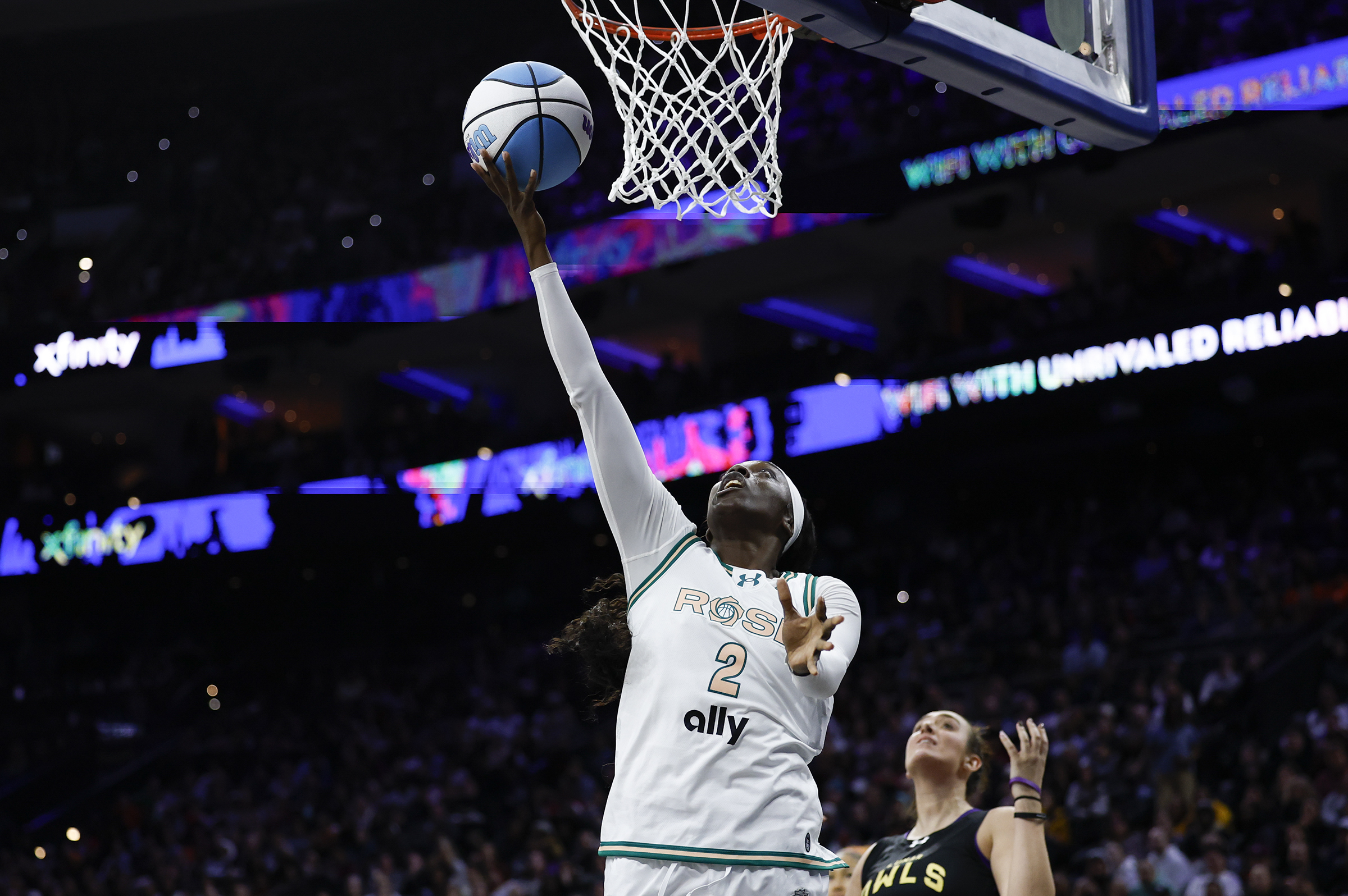
Kahleah Copper of the Rose scored 19 points and had four rebounds during the Philly Is Unrivaled doubleheader on Friday.
And with her Rose BC teammates in tow, Copper still squeezed in that neighborhood walk she made countless times as a kid. They began at the park and then moved to the pole with the backboard, which Copper said left everybody “in awe.” Then they went to her home, sat on the stoop, and yelled “Norf!”
Throughout the stroll, Copper pointed out her favorite water ice stand and go-to gas station. She shared memories of trying to hurry back home before the streetlights came on. It all illustrated why, in teammate Shakira Austin’s words, Copper is an “embodiment of Philly.”
“You can just see the way she speaks about things,” Austin said Friday. “She’s so excited about this opportunity and about this experience. She’s been rambling a lot, but it’s so fun to hear and just to see her be her true self.
“She’s probably been the most out of her shell since we’ve been here.”
Copper took all 60 tickets provided by Unrivaled for “her people” to attend Friday’s game, with several others sharing that they had bought their own. She could not wait to scan the crowd and “probably see people I haven’t seen since I was maybe in college, or maybe in high school.” After the Rose’s 85-75 loss, in which she totaled 19 points and four rebounds, Copper ventured into Section 123, wrapping those loved ones in hugs and posing for photos.
Many of them know all about 32nd and Berks, and the pole with the backboard. And now, so do her Unrivaled teammates.
“I made them walk in that cold,” Copper said. “But they love so much, so they did it for me. I was just super grateful to be able to show that little piece of me.”
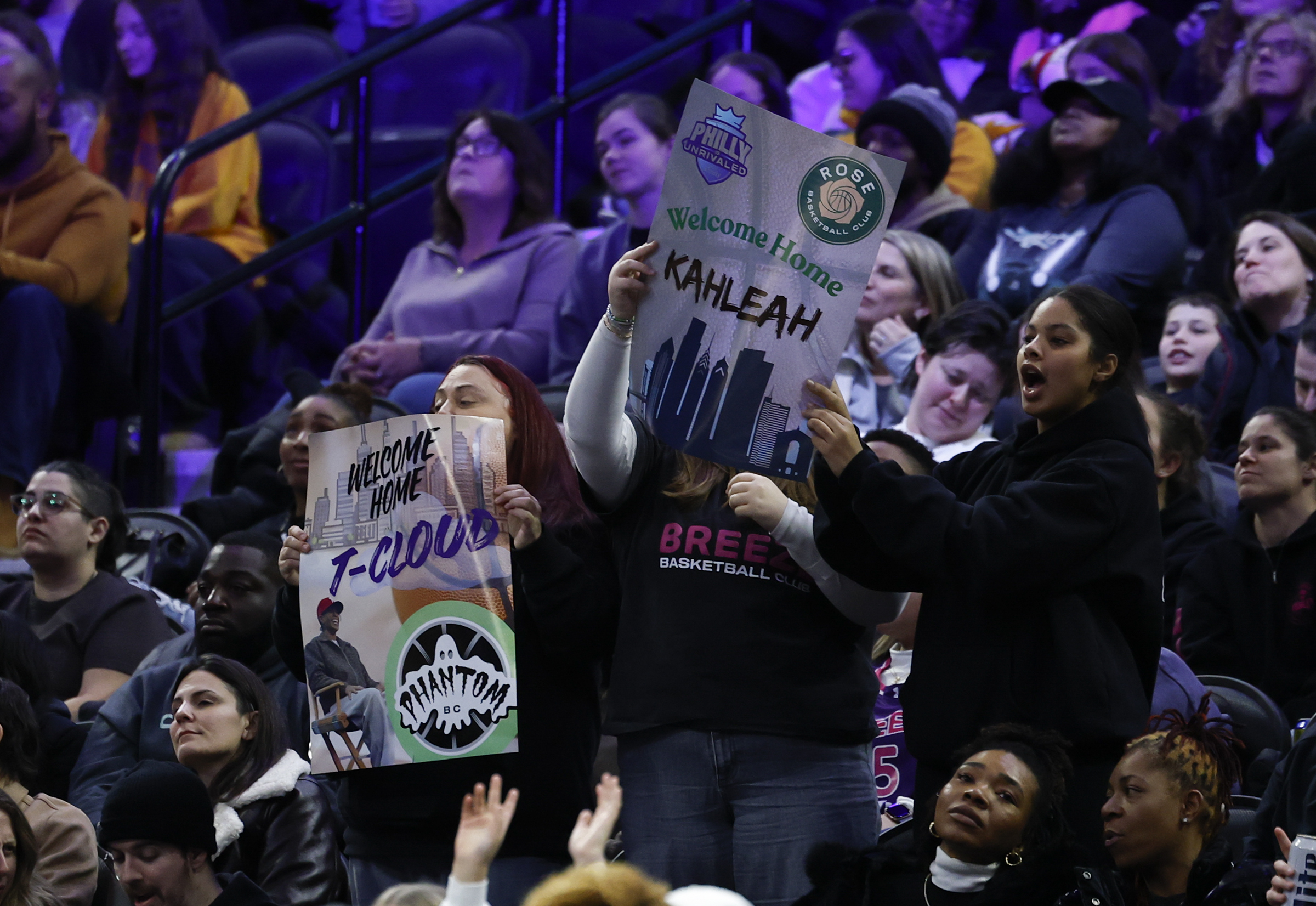
Fans hold up their signs supporting Kahleah Copper of the Rose and Natasha Cloud of the Phantom during the Philly Is Unrivaled doubleheader on Friday.
We hear often that it’s good to run things in life like a business. It’s said especially loudly about women’s sports, in Philadelphia and elsewhere.
So let’s do that.
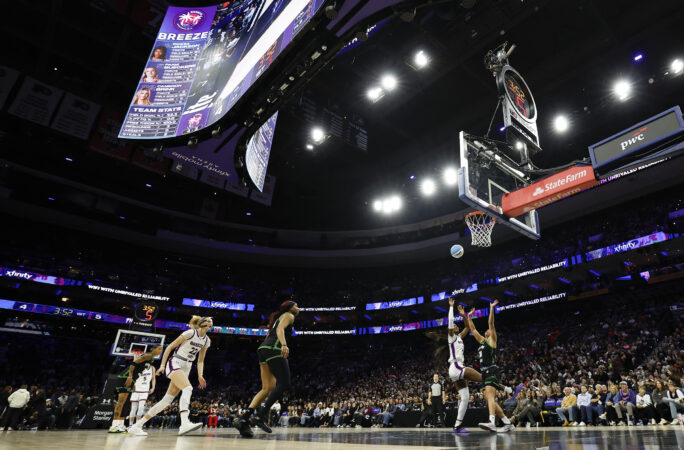
The 21,490 fans who packed Xfinity Mobile Arena for Friday’s Unrivaled basketball showcase clearly had business on their minds. It was the largest announced attendance in arena history, helped by Unrivaled’s three-on-three court being smaller than regulation, and it was full of wallets.
They were opened often, to buy T-shirts, hats, hoodies, hot dogs, and all the fancier food and drinks on offer these days.
The crowd roared for hometown heroes Natasha Cloud and Kahleah Copper, but not just for them. Paige Bueckers, Kelsey Plum, Chelsea Gray, and Marina Mabrey also drew big cheers.
Kahleah Copper during player introductions before the Rose game against the Lunar Owls in Game 2 of the Philly is Unrivaled doubleheader on Friday.
“I think it was awesome to see them come out and support us like that,” Mabrey said after scoring an Unrivaled game record 47 points in the Lunar Owls’ 85-75 win over Rose. “I don’t know what I expected, but I didn’t realize it was going to be so much hype around it and so much support.”
There was celebrity wattage from Wanda Sykes, Leslie Jones, Freeway, and Jason and Kylie Kelce. Dawn Staley was in the front row, of course. The 76ers’ Tyrese Maxey, Kyle Lowry, Andre Drummond, Trendon Watford, and Dominick Barlow had courtside seats too.
They all helped answer a question that’s been simmering in town for a while.
At any business school, they’ll teach you that the most fundamental rule of economics is supply and demand. But how can you prove there’s demand when there’s no supply in the first place?
One way, for sure, is to not try in the first place. That was the case with women’s basketball in Philadelphia for 28 years, the time between the end of the Philadelphia Rage in 1998 and now. It’s mostly been the case with women’s soccer since the Independence folded in 2011, though at least the U.S. national team visits every few years.
Yet Philadelphia has now set two women’s sports attendance records in recent years. In 2019, Lincoln Financial Field hosted 49,504 fans for a U.S. women’s soccer game, and that’s still the largest crowd for a standalone home friendly. On Friday, the arena across 11th Street hosted the largest crowd to watch a regular-season professional women’s basketball game.
Another path to travel invokes another rule of economics. In a free market, shouldn’t someone be able try something? If they fail, so be it, and if they succeed, they profit.
The people who brought Unrivaled here, and those who will bring a WNBA team here in 2030, chose the second road.
‘It wasn’t a charity event’
On the day in October when Unrivaled announced it would come here, Comcast Spectacor chief financial officer Blair Listino watched her phone light up with notifications of ticket sales.
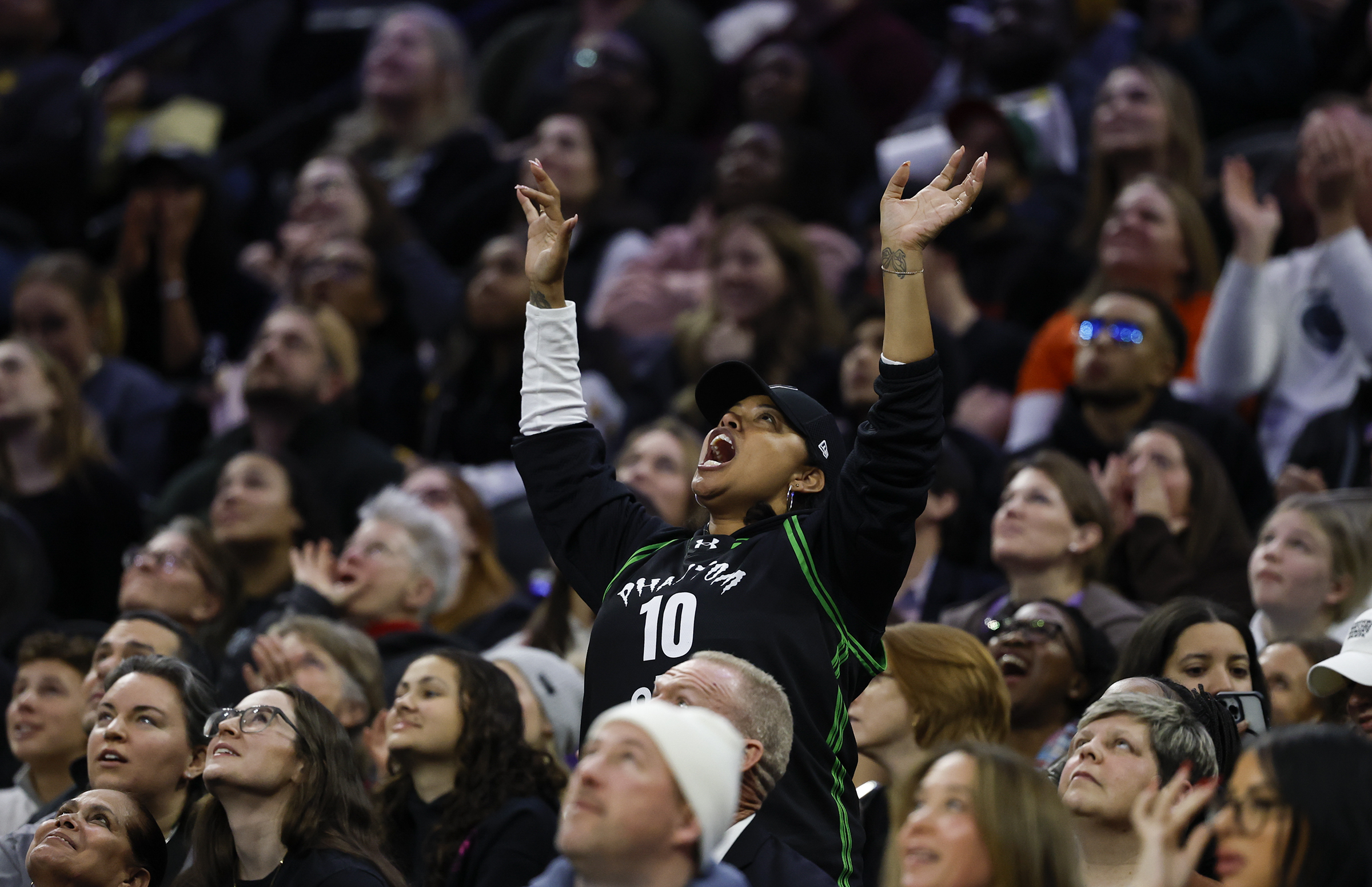
A Phantom fan cheers the team during its game against Breeze.
“While we were sitting there waiting for the [announcement] event to happen,” she told The Inquirer, “7,000 tickets were sold within the first few hours of the event being on sale. So right then and there, I knew, ‘OK, there is demand.’”
Listino also is an alternate governor of the Flyers. She was the team’s CFO from 2019 to 2023 and has worked for Comcast in a range of finance-related capacities since 2011. So she has plenty of experience with measuring what Philadelphia sports fans want — and with making hard business deals.
“We worked with Unrivaled management, and we treated it like any other event,” she said. “It wasn’t a charity event; we didn’t give them a sweetheart deal. It was a true rental agreement where we said, ‘We believe in you, we think that you’ll be able to sell out this building, and we’ll all be profitable from it.’”
That made it, she said, “good business sense for both us and Unrivaled.”
Philadelphia welcomes Paige Bueckers to the floor:
It was not just based on Jen Leary, the founder of Watch Party PHL, holding events and selling out of “Philly Is A Women’s Sports Town” T-shirts for over a year. Or Chivonn Anderson opening Marsha’s, a women’s sports bar on South Street. Or any number of people on social media, or in this reporter’s inbox, or so on.
No, this was Philadelphia’s biggest company believing that women’s sports can be profitable in its city. And now there’s proof.
Along with that, an Unrivaled spokesperson told The Inquirer on Saturday that the night delivered $2 million in revenue to the league, including over $1 million in ticket sales and $400,000 in merchandise sales at the arena.
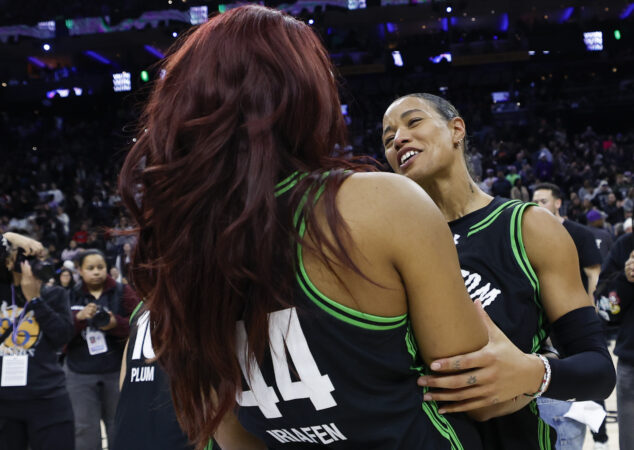
“I think when choosing a market that doesn’t necessarily have a team, but there’s demand, you take a leap of faith into your decision,” said Cloud, whose Phantom beat Breeze, 71-68. “And Unrivaled chose the right city, the right sports town, and the right fan base.”
The crowd returned the favor many times over Friday, bringing the Broomall native to tears in a postgame interview on court.
“You just give us the opportunity to actually do it,” North Philadelphia’s Copper said. She recalled playing a WNBA preseason game in Toronto with the Chicago Sky in 2023 in front of a sellout crowd at the city’s NBA arena. That moment lit a spark that led to the Toronto Tempo, an expansion team that will tip off this year.
“How they were able to kind of lead up and have that build up, I think it’s kind of the same,” she said. “And I think the city has been wanting it. So this is a good introduction, and we’ll give them something to look forward to.”
It’s not just the local products who’ve felt that. Players from elsewhere who are used to big crowds at their games were excited to be part of a first here.
“Kudos to Alex [Bazzell], our president, and the whole league having ‘Tash’ and ‘Kah’ be spokespersons for this amazing city,” said Breeze’s Cameron Brink, who played collegiately for Stanford and is now with the WNBA’s Los Angeles Sparks. “Kah has done so much for women’s basketball in this city and the resources that are now available. I’m just proud that we saw that this is a city that wants to cheer on women’s basketball — so hopefully there’s more of it in the future.”
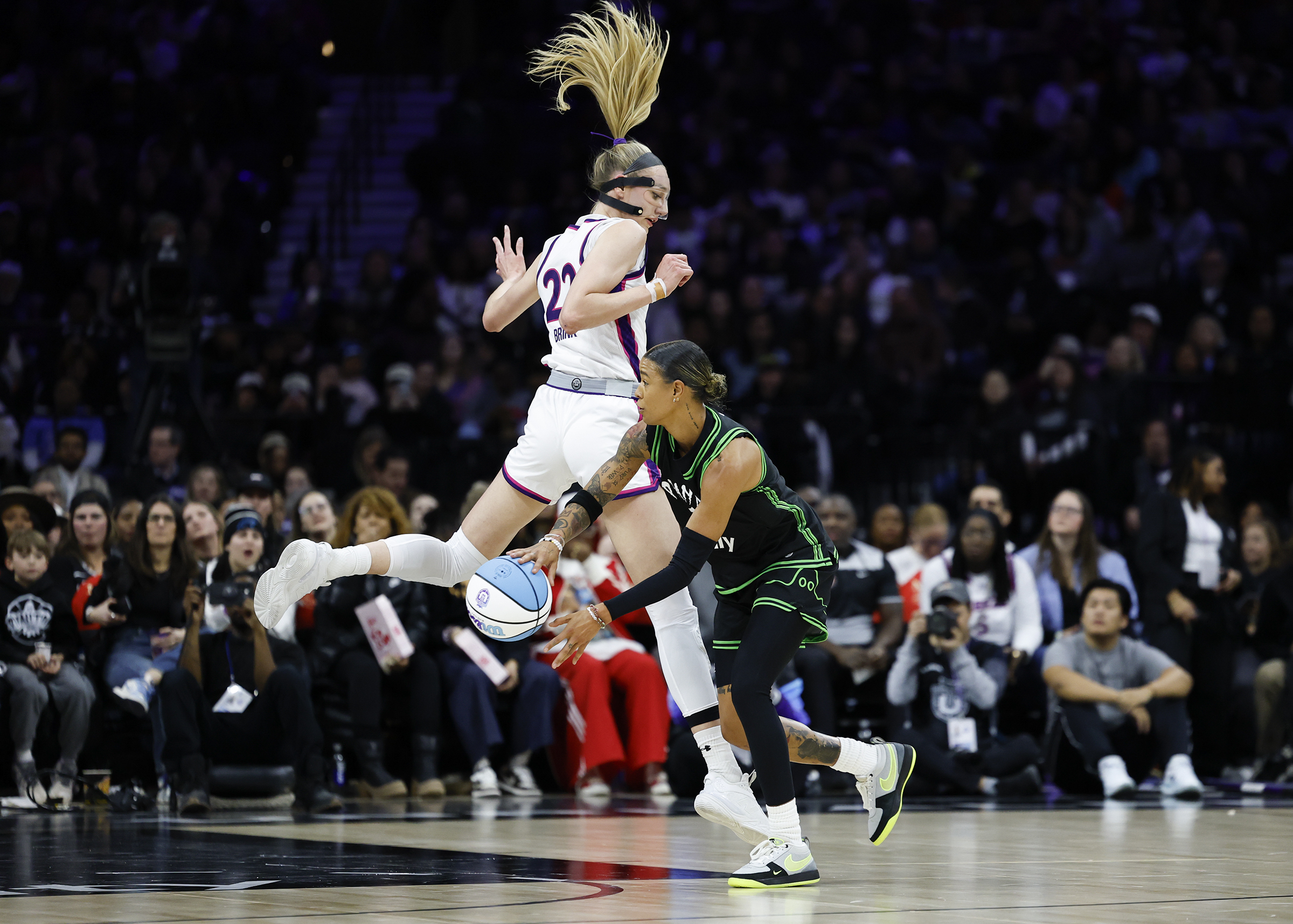
Cameron Brink leaps past Natasha Cloud (right) during the first quarter of the Breeze-Phantom game.
Brink grew up in Princeton, N.J., and her parents played college basketball at Virginia Tech. She moved to the Portland, Ore., suburbs at age 8, but heard plenty of stories from her mother, Michelle, about the East Coast.
“I was talking with her the other day — she’s like, ‘I honestly can’t believe women’s basketball has gotten to this point,’” Brink said. “I mean, we’ve always believed, but it’s really special that we get to soak in this moment. So I just think back to the women before me, and I’m just thankful for how they paved the way.”
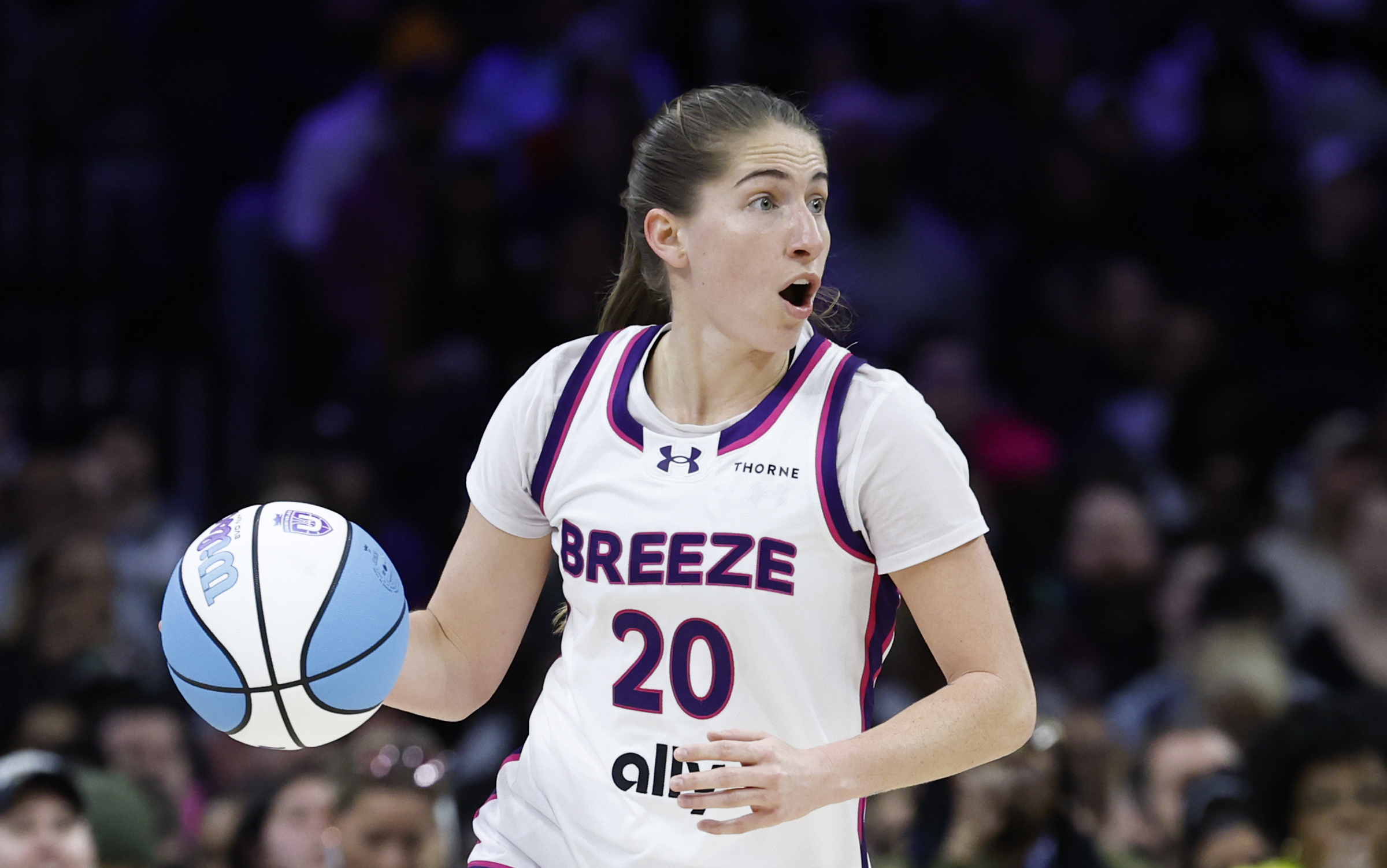
Kate Martin of Unrivaled’s Breeze has played for Iowa and the WNBA’s Golden State Valkyries, both of which draw huge crowds to every game. She knew Philadelphia doesn’t have that track record, so she was excited to be part of a first.
“I think it’s really important for young girls to be able to see people that they want to be like,” Martin said. “I think it’s important for them to be able to see if they want to be a women’s basketball player, to see that in their city, and be able to have access to going to a game.”
Kate Martin in action Friday.
Friday’s spectacle undoubtedly will push Unrivaled to take more of its games on the road next season, and they may well come back here. There might not be another full house with the novelty factor gone, and one night in 2026 doesn’t mean the future WNBA team will sell out all of its games years later.
Nor does it mean that what’s true today was true in past years, when Cloud and Copper weren’t yet big names.
But it does mean there’s demand for a product right now, and that it can make money right now. Philadelphia finally got an opportunity, and took it.
The crowd inside Xfinity Mobile Arena for Philly is Unrivaled already was high-energy. Then Marina Mabrey brought the house down with an Unrivaled-record 47 points in the second game of the doubleheader.
The Belmar, N.J., native plays in Connecticut and has no real connection to Philadelphia, but the crowd went crazy for every three-pointer like she was one of their own.
“I brought my Jersey to Philly, and I hope that you guys enjoyed it,” Mabrey said. “Thank you for welcoming me with open arms.”
Friday’s Unrivaled doubleheader at Xfinity Mobile Arena was the first time the three-on-three league had left its Miami-area home. Unlike the WNBA or NBA, the teams are not tied to a specific city or region. That makes the league a fascinating “social experiment,” TV analyst Renee Montgomery said.
Unrivaled is driven by fans’ love for players and for the game, Rose BC’s Lexie Hull said. A number of the 21,490 fans in the building came in repping their favorite players across the women’s basketball world, with plenty of love for superstar Paige Bueckers and Philly locals Natasha Cloud and Kahleah Copper, or in T-shirts declaring that “Everyone Watches Women’s Sports” or that “Philly is a Women’s Sports Town.”
“Philly is a basketball city,” Montgomery said. “… I think there’s certain cities that lean in and they don’t just halfway do anything, and I feel like Philly is that type of city. They see that Unrivaled chose this place to be the first one, and Philly’s like, ‘Bet, let’s show out.’ That’s what it felt like to me.”
The neutral crowds make Unrivaled a different environment in the pro sports landscape, but neutral didn’t mean there was any less passion.
“One thing I know about Philly is, it’s really passionate about its sports, good and bad, through and through, the City of Brotherly Love,” Bueckers said. “You feel that, and we felt that tonight, just how passionate they were and are about women’s basketball.”
Philadelphia has never been home to a WNBA franchise, and was home to an American Basketball League franchise for just two years before the team folded in 1998. But with an expansion franchise set to come to Philadelphia in 2030, Unrivaled’s sold-out crowd at Xfinity Mobile Arena was just a taste of Philly’s appetite for women’s professional basketball.
Hull said she hoped to see Unrivaled continue to thrive in that niche, serving markets like Philadelphia that don’t have WNBA franchises yet. Unrivaled’s Philly tour stop set the record for most fans at a regular-season professional women’s basketball game, and a building record for Xfinity Mobile Arena.
“With the growth of the sport, there’s just so many people that want to see it live and don’t have the opportunity to fly to a [WNBA] city and watch a game during the season,” Hull said. “This gives them the opportunity to get to watch and grow the game, so it’s awesome.”
Sixers Kyle Lowry, Andre Drummond, Trendon Watford, and Dominick Barlow, and New York Liberty guard Sabrina Ionescu were among the basketball stars in the building.
But of course, one of the most excited fans in the building was South Carolina head coach and local basketball legend Dawn Staley. For Phantom BC’s Aliyah Boston, who played for Staley in college, it was an amazing surprise to see Staley courtside again.
“I was shocked, when I came out, one of our assistants was like, ‘See Coach Staley?’” And I was like, ‘What? What?’ Saw her right over there, gave her a hug.”
Boston said that the two still have a “special relationship,” and she had to go up to Staley at halftime to ask for feedback on her game.
After playing for Staley, Boston said she had an idea of what to expect of playing in Philly, and the intensity and toughness needed for the tight game matched her expectations.
“The biggest thing for her was just that mindset,” Boston said. “She talked about her upbringing and that grind in Philly, and that’s the approach that she wants us to take on the court. Just have that dog mentality. Being able to hear that for four years just continued to shape me into who I am as a player today.”
Friday’s event was a huge head start in showing the players just how good of a women’s basketball market Philly can be. With the record-setting, energetic crowd, the conversation now turns to how to keep the momentum going until the WNBA franchise establishes itself in 2030.
Unrivaled players were excited about the prospect of adding new tour stops and continuing to travel in the seasons to come, and Unrivaled president Alex Bazzell confirmed Friday that the league plans to do more road trips next year.
Could Philly be on that list a second time?
Breeze BC’s Kate Martin, who played for the Golden State Valkyries in their inaugural season last year, shared the advice she’d give to anyone playing for a Philly expansion franchise, after the Valkyries quickly became the most-attended team in the WNBA in their first year.
“When you start to build that sense of community, that people feel more like they have a relationship with you, they want to come, they want to support,” Martin said. “Making the atmosphere fun, making people feel welcome, making people feel excited about basketball.”
Kate Martin, who plays for the Breeze and the WNBA’s Golden State Valkyries, knows a thing or two about building a fan base.