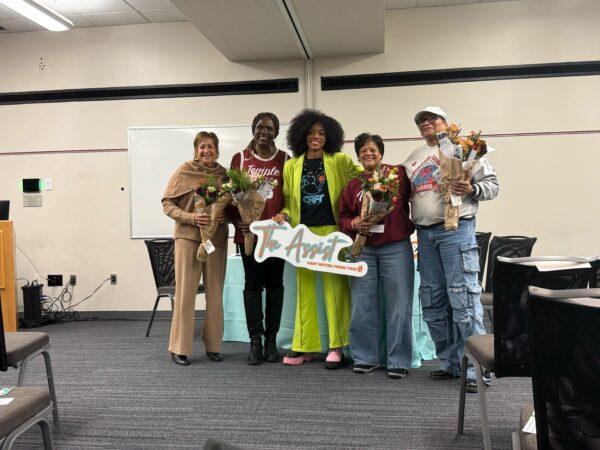
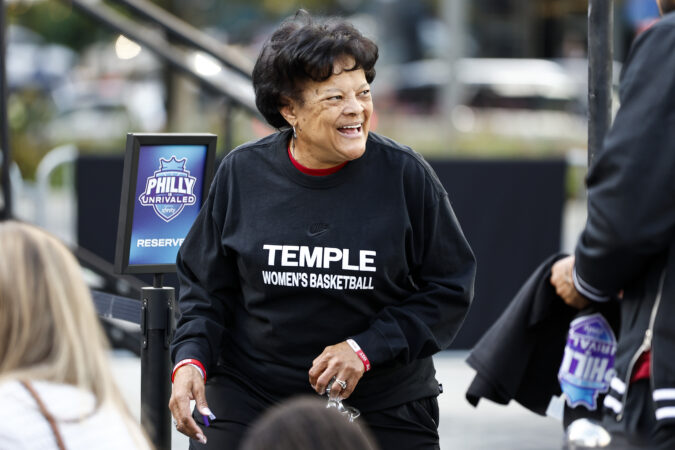
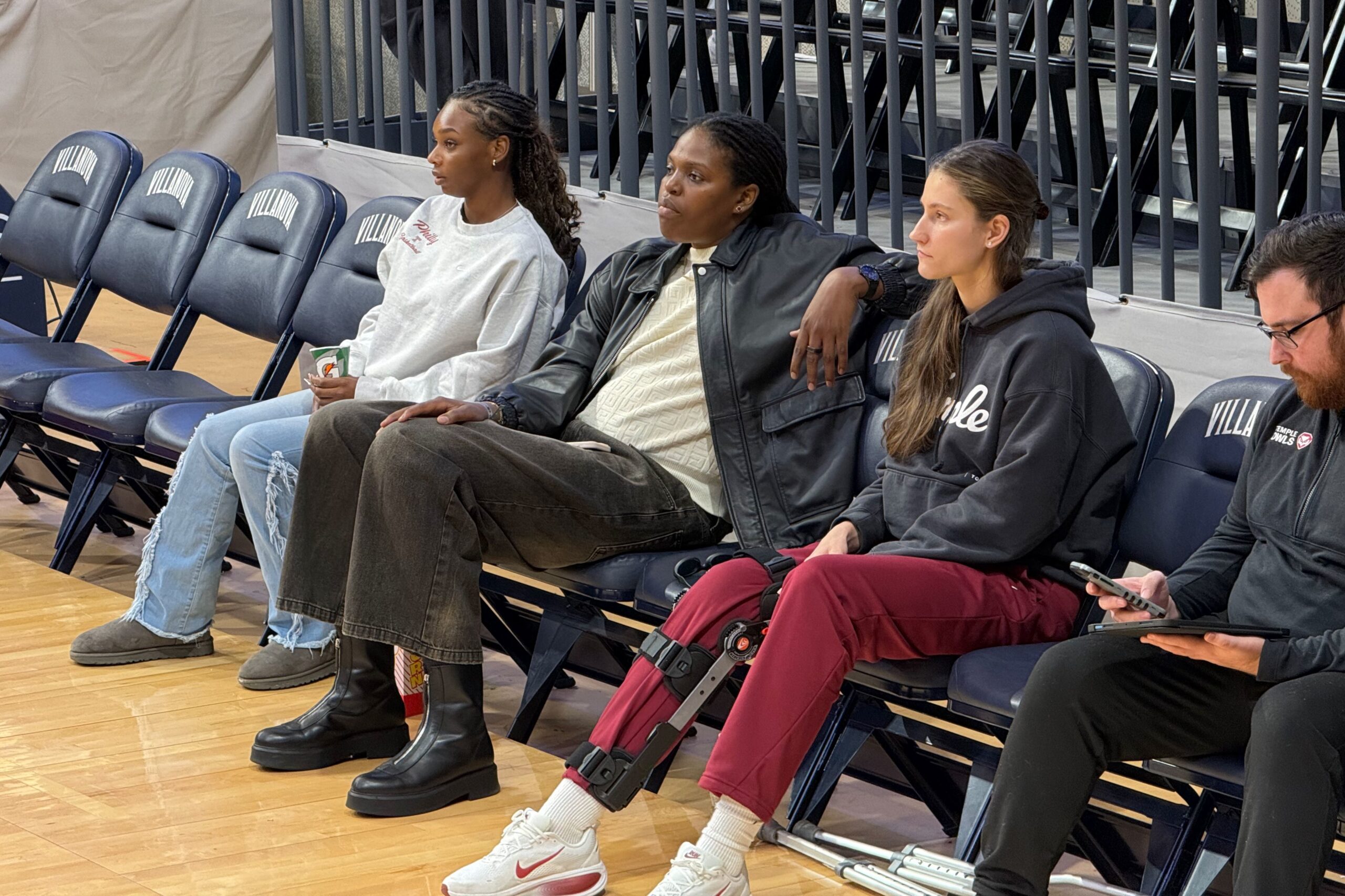
The project, directed by Melanie Page, was featured at Temple on Thursday night. Page shared a teaser of her documentary about women’s basketball greats who have come through the Philadelphia area over the years.
The event included a panel discussion with Temple coach Diane Richardson, Temple Hall of Famer Marilyn Stephens, Philly basketball legend Yolanda Laney, and former Army coach Lynn Arturi-Chiavaro. Page’s first documentary, about women’s basketball in the Washington, D.C., area, also was screened.
“I’m a student of basketball, but that was how I was raised in my upbringing from 5 years old,” Page said. “Seeing the Washington Mystics, it’s never left me. And here I am today, being able to tell more stories and bring the youth up to speed.”
The Philly documentary will feature prominent local women’s basketball figures like Laney and Stephens. The DMV documentary starred Richardson from when she was the head coach at Riverdale Baptist School and Towson and an assistant at Maryland, along with Temple associate head coach Wanisha Smith, who played for Richardson at Riverdale Baptist. (Richardson also was an assistant at two other Washington-based universities, American and George Washington.)
Page started the project during the pandemic in 2020. A DMV native, she began her storytelling there, and it gained some traction in 2021, when she released clips of her interviews from the documentary.
The next step was to bring it to Philly. Arturi-Chiavaro played for the city’s first professional women’s basketball team, the Philadelphia Fox of the Women’s Professional Basketball League, which only lasted from 1978 to 1981.
Stephens was a ball girl for the Fox and starred at Temple from 1980 to 1984. She scored 2,194 points and grabbed 1,516 rebounds, ranking second in school history in points and first in rebounds. She was inducted into the school’s Hall of Fame in 1995.
“You can’t erase our history,” Stephens said. “We got to just stand strong and educate the generations that’s come behind us and give them the information about women’s basketball.”
Richardson and Laney also emphasized the importance of not letting the history of women’s basketball be forgotten.
Laney helped lead Cheyney State (now known as Cheyney University) to the first-ever NCAA women’s national championship game in 1982. Her daughter, Betnijah Laney-Hamilton, plays for the New York Liberty. Richardson is not from the area, but has become one of the biggest advocates for women’s basketball in the city since being hired at Temple in 2022.
“We heard a question for what would you name the Philadelphia WNBA team … I would call it the Philadelphia Cradle,” Laney said. “Because we are cradling basketball history in this area and we have a different style of play in Philadelphia basketball.”
With a WNBA franchise coming to Philly in 2030, Richardson and Laney believe the documentary will help keep the city excited.
“Doing things right now like what Melanie is doing and just opening people’s eyes to the explosion of women’s basketball is really important,” Richardson said. “We’ve got to catch that lightning in a bottle and do it now because five years from now, we’re going to be too late.”
Stephens, Arturi-Chiavaro, Richardson, and Laney have a hand in the history and future of women’s basketball. Page wants to keep educating folks about their impact.
“This is the standard,” Page said. “This is how it should be. This should be the norm of what we are doing. People should know Yolanda Laney’s name off the top of their heads. They should know Marilyn Stephens. … It should definitely be the standard. That’s the message.”
The youth coach used to hold 6 a.m. workouts inside a Baptist church on City Avenue, where Cloud first learned how to be disciplined in basketball and in life.
“I hope he sees this,” Cloud said Thursday afternoon, while facing a slew of television and phone cameras inside the Alan Horwitz “Sixth Man” Center. “… He set a standard. He set an expectation. And he set a work ethic for my skill set, my career.”
Cloud brings all of that back to Philly on Friday night for the Unrivaled offseason league’s two games at Xfinity Mobile Arena. The 33-year-old Broomall native called it a “dream come true” to help lead the return of professional women’s basketball to her city ahead of the WNBA’s arrival in 2030. Yet Cloud is most elated for “Young Tash,” who has blossomed into a WNBA champion, an 11-year professional, a dynamic personality, and an activist on and off the court.
“I carry this city everywhere I go,” Cloud said following practice for the Phantom, her Unrivaled team. “… I just never thought I would be here, so I think the most gratifying thing is just trusting God’s journey for my life. Doing it my way, too. Because I don’t think a lot of people get to do their careers their way.”
Before Mr. Ross, Cloud credits her Aunt Dawn as one of her first sports role models. A Delaware County basketball and softball star, she helped Cloud embrace being a tomboy — and a “powerful, badass woman.”
So Cloud honed that athleticism on the basketball hoop on the side of her home, which became a neighborhood gathering spot on school half-days. She played King — nah, Queen — of the Court against the boys. They lowered the rim so they could dunk. They idolized Allen Iverson and Dawn Staley.
When Linus McGinty, the legendary Cardinal O’Hara girls’ basketball coach, first watched Cloud play as an eighth grader, he believed she had WNBA potential because “she could do everything.” And Cloud wanted to play for that program because, in her words, “in Linus we trust.”
Cloud also appreciated O’Hara’s structure, from the nuns on campus to McGinty’s “strict” practices. She became an immediate starter on a talented team immersed in the competitive Philadelphia Catholic League.
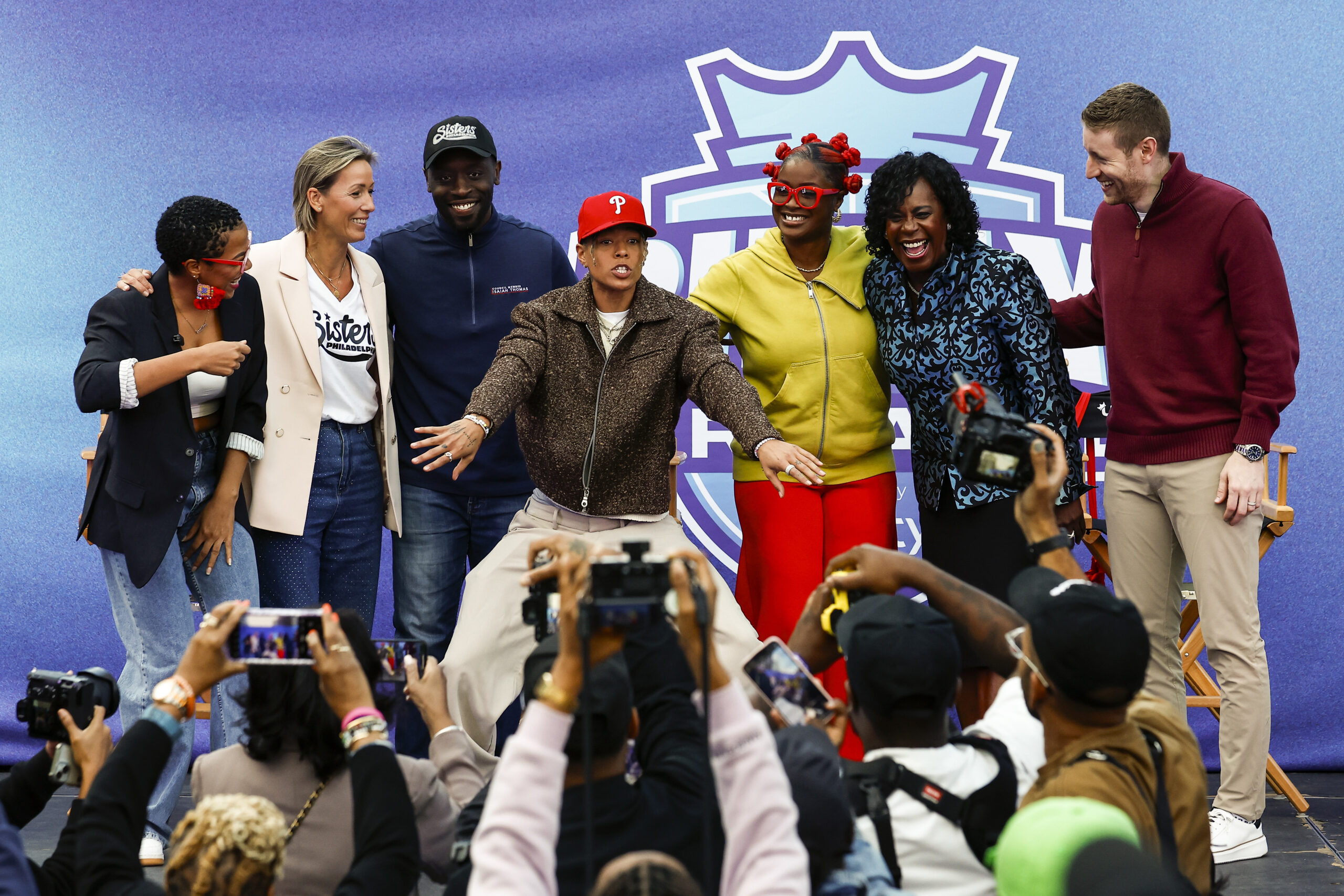
New York Liberty player Natasha Cloud dances while standing with other officials during an announcement about the Unrivaled Women’s Basketball League 2026 Philly tour stop.
McGinty’s one gripe about Cloud? She was almost too unselfish as the point guard.
“She never tried to score first,” the coach told The Inquirer by phone last week.
But Cloud made up for that in defensive prowess. The 5-foot-10 Cloud guarded the much more imposing Morgan Tuck and Elena Delle Donne, then elite recruits who became college and WNBA stars. Cloud preserved O’Hara’s 2008 PCL title victory by blocking a three-point attempt at the buzzer.
Then when Cloud was the only starter who returned her senior year, she finally carried more of O’Hara’s offensive load. She was an All-State selection after averaging 12.3 points, 7.9 rebounds, 5.2 assists, and four steals, before beginning her college career at Maryland in 2010-11.
After her freshman season, she transferred to St. Joseph’s to be closer to home. Her sister had been diagnosed with stomach cancer, and she was looking for a similar family atmosphere within her next college program.
“Tash is a very compassionate person,” St. Joe’s coach Cindy Griffin recently told The Inquirer by phone. “So if there’s anything going on at home, she feels that. She would have to learn how to manage that, and she did an unbelievable job doing that.”
While sitting out the 2011-12 season because of NCAA transfer rules at the time, Cloud worked on refining her jumper. Her energy filtered to teammates and staff, Griffin said, even when she was playing on the scout team. That perhaps was most evident on defense, where she consistently covered ground (and others’ mistakes) while understanding how to rotate sharply and when to take risks on the ball. She was the Atlantic 10 Defensive Player of the Year in 2014.
“That just fueled fire for all of her teammates,” Griffin said, “and it just elevated everybody around her. … They really appreciated that, and they wanted to play hard for her and with her.”
Then when the Hawks needed more scoring punch from Cloud as her career progressed, she delivered.
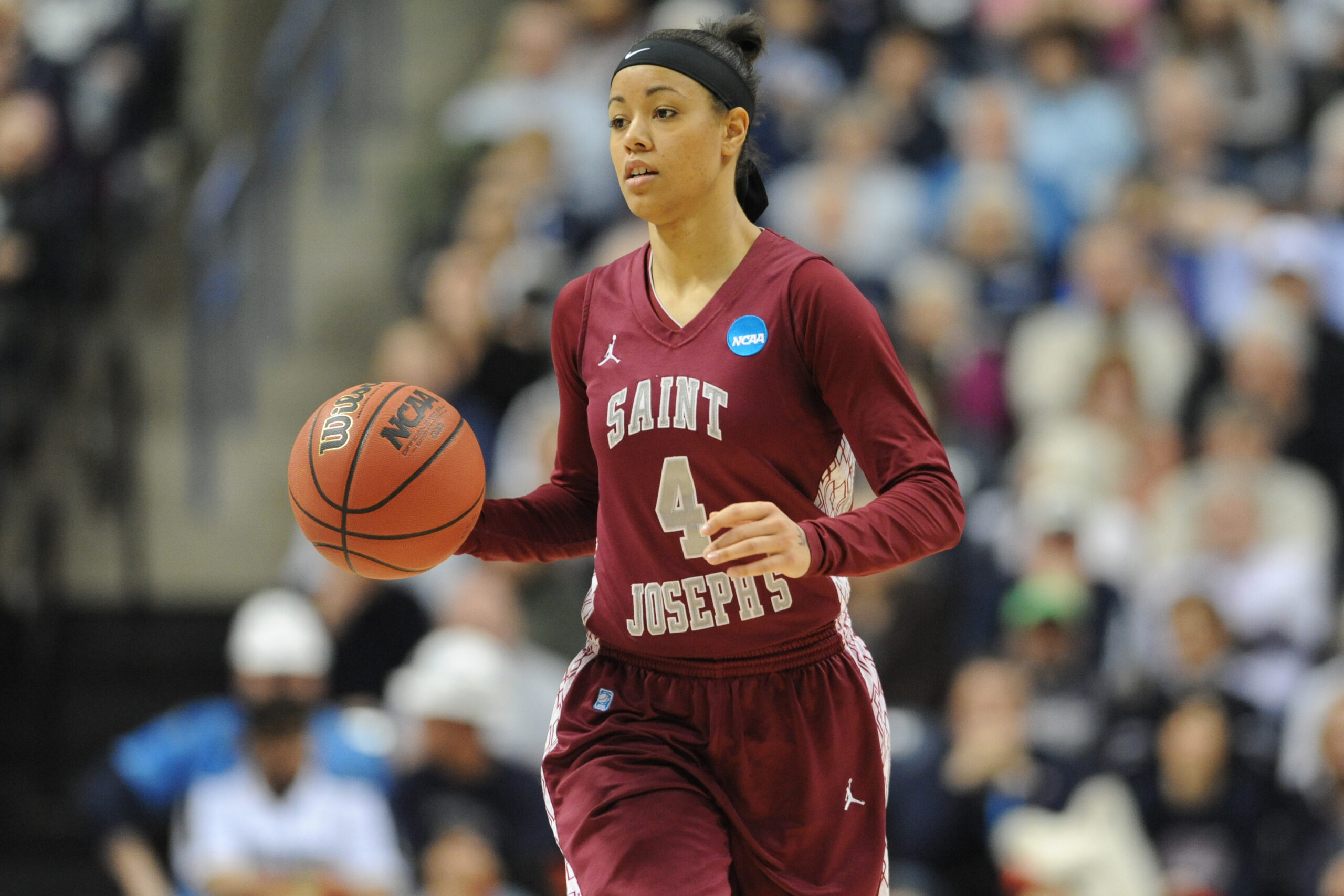
Before her WNBA career, Natasha Cloud starred at St. Joe’s.
She totaled 15 points, six assists, and six rebounds in a comeback win over Fordham in the 2013 A-10 tournament championship game, and “looked like a pro out there, finishing in transition, taking and making tough shots,” the coach said. That carried over to the next season, when Cloud hit timely buckets to propel the ninth-seeded Hawks’ to upset eighth-seeded Georgia in the first round of the NCAA Tournament.
“Came down to a 1-5 ball screen,” Griffin said, “and [Cloud] being able to put us on her shoulders and win the game for us. … The answer is yes she can, and yes she will.”
Cloud’s impact has now stretched far beyond Philly.
She won the 2019 WNBA championship with the Washington Mystics and led the league in assists in 2022. She has made a WNBA All-Defensive team three times. She has played overseas in Turkey and Australia. She opted out of the 2020 WNBA “bubble” season to focus on social justice issues and remains outspoken on such topics.
But she has stayed connected to her roots.
She still has a house in town, meaning one might catch her during the offseason at the local Wawa or driving her truck. She regularly visits St. Joe’s to work out and chat with the team, reminding them how special college bonds can be. Unprompted, she told The Inquirer last week that she hopes to have her jersey number retired by St. Joe’s and O’Hara — preferably while her parents are still around to celebrate with her.
And now, she finally gets to play professional basketball in Philly. When she learned Unrivaled would be making a tour stop here, she knew fans would “show up and show out” for the showcase event. She stepped onstage wearing a Phillies cap for the October announcement at LOVE Park and pumped up the crowd. She hopes local kids getting to watch her play in person is a jolt of inspiration.
Among those in attendance Friday will be the Hawks, “shouting as loud as we can for Natasha Cloud and the Phantom,” Griffin said. An intrigued McGinty said he also might need to get down to South Philly. Mr. Ross surely is welcome, too. And it will be the first time Cloud plays in front of her family here since 2015.
They all helped develop “Young Tash.” And that is why she carries the city with her everywhere she goes — including back home.
“I’ve stayed true to myself,” Cloud said. “True to my character, my morals, my values through all of it. And that’s just a testament to, I feel like, being from Philly. We stand on our [stuff]. We’re going to talk our [stuff]. You can’t tell us otherwise. We know who we are.
“We’re confident in who we are, and a lot of people take it as arrogance. But it’s just, like, ‘Man, God has blessed me so abundantly. Who am I to not walk out in this light every single day?’”
It was easy to imagine the 2025-26 St. Joseph’s season as being a lost one on Jan. 3, after the Hawks went six minutes without a basket in crunch time and blew an 11-point second-half lead to Davidson to fall to 8-7 overall and 0-2 in the Atlantic 10.
In fairness, that’s what it had been to date. This wasn’t glass-half-empty thinking. Consider what had transpired in the four previous months. Former coach Billy Lange abruptly left in September, and St. Joe’s turned to Steve Donahue, whom Lange had hired as associate head coach after Donahue was fired by Penn.
Who would stay? Who would leave? It was a little late for the players to reasonably find somewhere else to go. Lange had built a roster capable of competing in the upper half of the A-10, but then came a 2-3 start. By mid-December, leading scorer Deuce Jones, a La Salle transfer, was off the team.
The Hawks went 3-for-22 from three-point range in that Davidson loss. By that point, only one of their eight victories had come against a team ranked inside the KenPom top 200, and even in that one they needed a frantic comeback and a wild shot from Jones before the buzzer to beat Temple. Two of the eight wins were against Division III teams.
St. Joe’s has won five of six since then. What changed? The shots are falling more consistently, which always helps, and there’s more of a sense of togetherness when you watch the Hawks than in games earlier in the season.
But never question the power of a meeting. The Hawks had one in the aftermath of that Davidson loss in Donahue’s office, where six players entered with change in mind.
“When we looked at ourselves in the mirror, we saw something that we didn’t like,” said senior guard Derek Simpson, who scored a season-low six points in that Davidson loss but has scored 19.2 points per game in the six since.
“We got our feelings out,” Simpson said. “We were able to tell each other how we felt.”
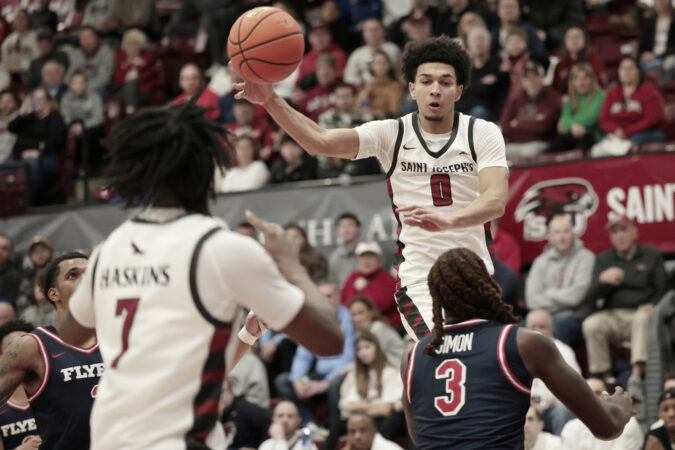
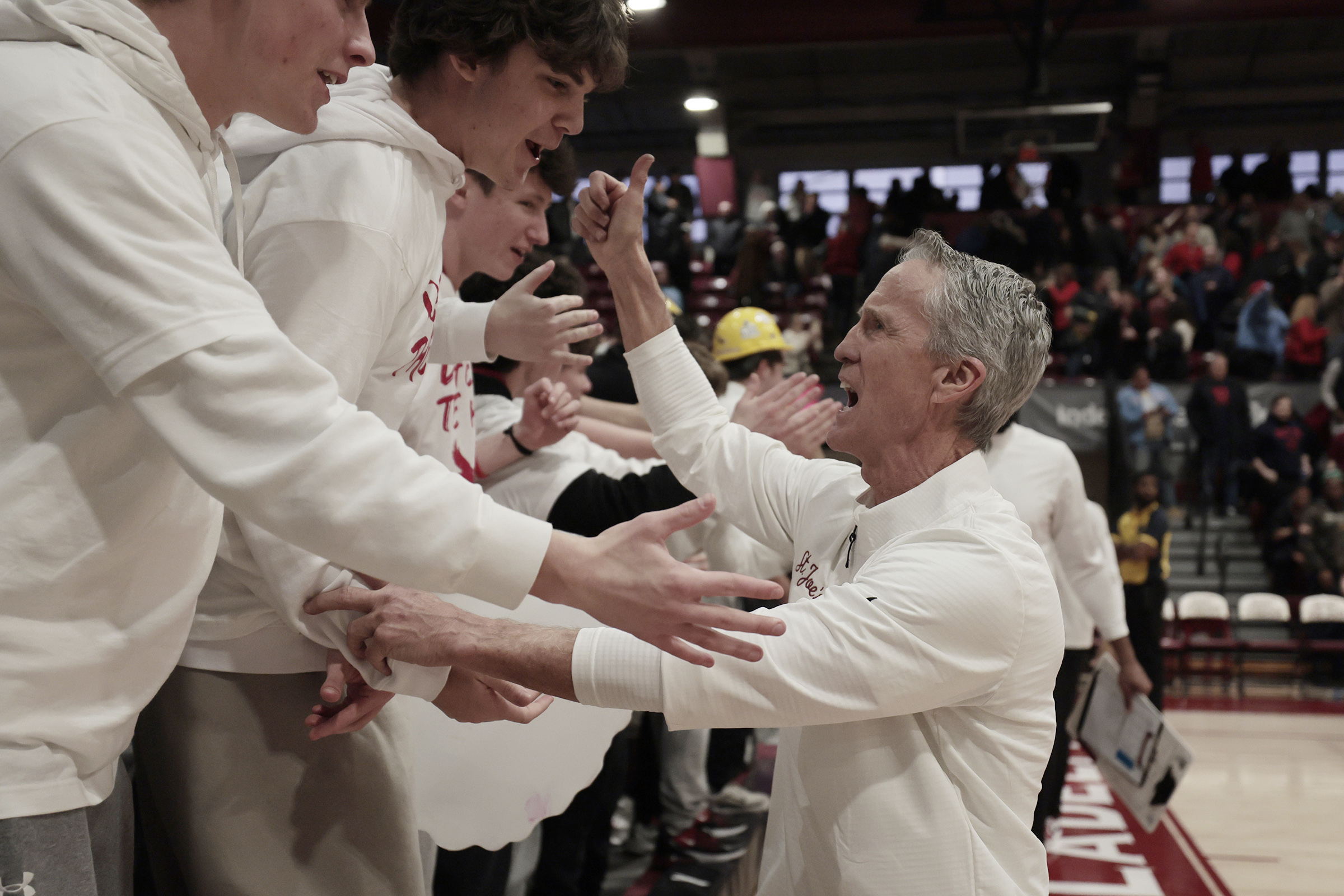
St. Joe’s coach Steve Donahue celebrates with fans after a victory over Dayton on Saturday.
St. Joe’s (13-8, 5-3) has been nearly perfect since. The only blemish came against a Virginia Commonwealth team rated 46th at KenPom (St. Joe’s is 157th), and the Hawks could have won that game. They got 20 points from Jaiden Glover-Toscano to help knock off Dayton one game later, and the St. John’s transfer is starting to show more flashes of why he was a high-major prospect in the first place. He had the highlight of the night Tuesday when he threw down a one-handed slam, one of the Hawks’ 12 dunks in a blowout win over lowly Loyola-Chicago.
Next on the schedule for St. Joe’s is a game Saturday against its crosstown rival, La Salle, that looks a lot more interesting than it did a few weeks ago.
That’s because the best win of the young Darris Nichols era in Olney happened last week when the Explorers started Dayton off on its Philadelphia trip from hell by jumping out to a 33-8 lead and held on for dear life in a 67-64 victory.
That came on the heels of a win over St. Bonaventure.
The Explorers (7-14, 3-5), who are much healthier now than they were earlier in the season, lost Wednesday night at Fordham, but they’ve hung in against some of the A-10’s elite and play a style that won’t be fun to go against in the conference tournament.
Or if you’re a St. Joe’s team looking to keep the train on the tracks Saturday.
Temple announced more than 2,600 attendees at its Wednesday night home game vs. Charlotte, but it didn’t take a census veteran to realize that number was way overinflated. Half of that number might have been generous. Some students showed up, but many of them were gone after the iPad giveaway was doled out.
The Owls probably deserve a little more support. That aforementioned heartbreaker vs. St. Joe’s at the Big 5 Classic was followed by a seven-game winning streak. Then, during the week when assistant coach Bill Courtney died suddenly, Temple nearly beat two of the best teams in the American Athletic Conference.
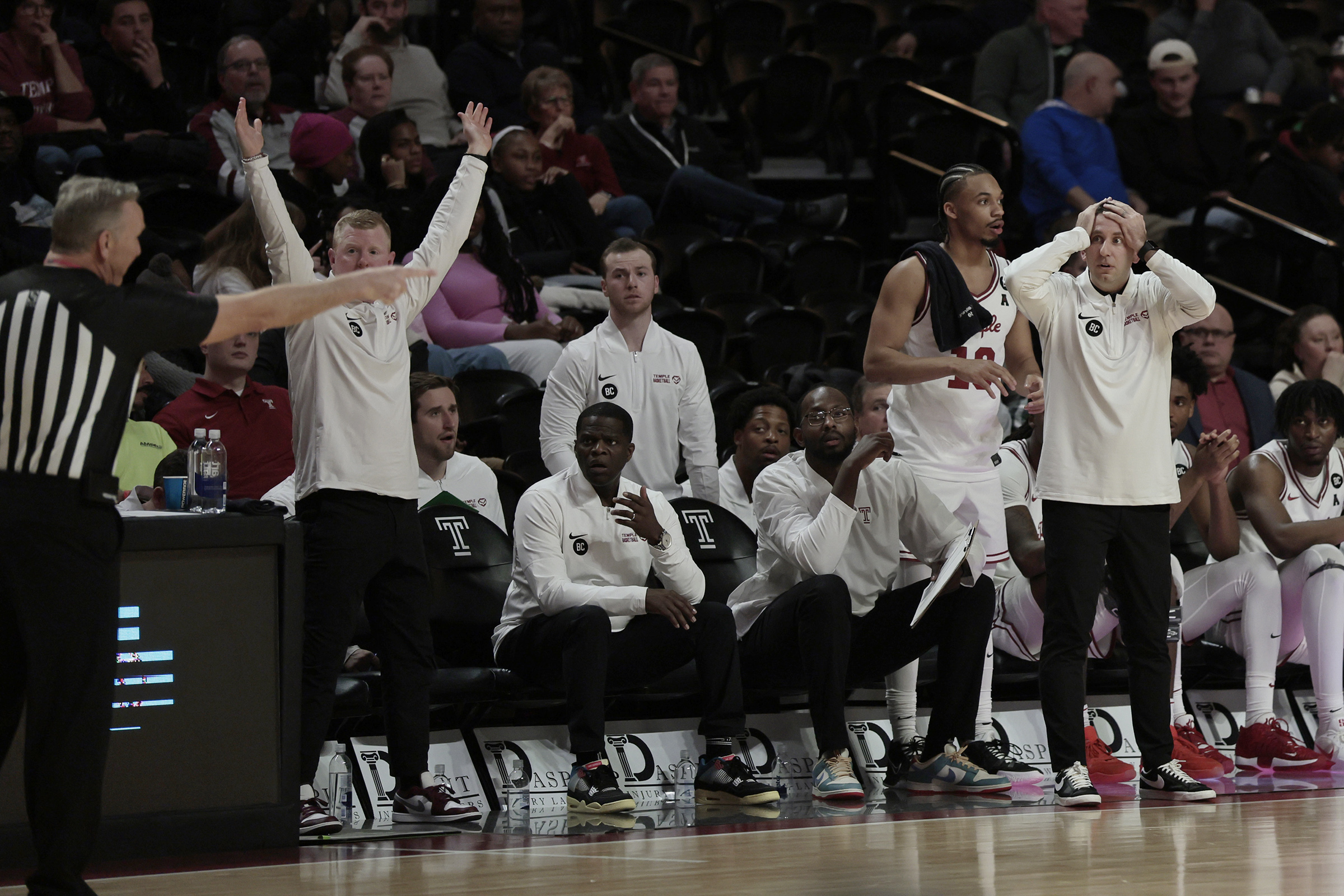
Temple coach Adam Fisher (right) reacts to an official’s call during the loss to Charlotte.
The Owls should have closed out a win over Charlotte on Wednesday, despite being without key starter Gavin Griffiths. They led by nine with six minutes left before losing in overtime. But they’re 5-3 in conference play (13-8 overall) and just one game back of first place.
They host a South Florida team on Saturday night that is 6-2 and in a four-way tie for first (8 p.m., ESPN2). It’s White Out night at the Liacouras Center.
An ode to Dan McQuade, a man who loved basketball
Philadelphia is a lot worse off without Dan McQuade, who died of cancer at 43 years old this week. McQuade, the son of longtime Daily News assistant sports editor Drew McQuade, was a singular writer who wrote for various publications — Defector, Deadspin, and Philadelphia Magazine among them — with flair and fun and with more curiosity than most.
Dan wrote about a lot of things, but he sure loved Philly basketball, and wrote about it often, like when he went to the Catholic League final in 2023 and implored people in a Defector article to go out and see more basketball games in person. Or when he wrote about attending a La Salle home game and witnessing an economic professor light the silly smoke machine at Gola Arena. Or when he went to a Big 5 doubleheader at the Palestra, where he attended many games as a former Penn student and sports writer, and wrote a compelling case for little kids playing basketball being the best version of the halftime show.
Chris Cervino wasn’t trying to become a TikTok influencer. He just wanted to make a “funny, trolling” video to get in his opponents’ heads before a game last year. That was until he went viral.
“I made this video, it was called, ‘Road to D2,’” said the Thomas Jefferson freshman guard. “There’s this kid, his name [online] is ‘Road to D1,’ and we were going to play against his team. … I made the video, it blew up. And then in that game, I actually ended up having a really good game. There were a bunch of videos posted about me [afterward]. One actually got like 2 million views and like 700,000 likes.
“It was a lot happening all at once, but it was a really cool experience. That’s kind of how it took off just from that moment right there.”
“Road to D1” is Troy Hornbeck, a 2026 recruit who has documented his journey to play Division I basketball and gained a large following doing so. He has more than 466,900 followers on his TikTok and is attending IMG Academy in Bradenton, Fla.
The two played against each other in the Overtime Elite league last year when Cervino’s YNG Dreamerz beat Hornbeck’s Diamond Doves en route to an OTE championship. The Atlanta-based league acts similar to a professional league, offering high-level training for athletes ages 16 to 20 years old. It also claims to boost athletes’ brand and social media presence.
So Cervino took advantage of the traction he gained on social media and continued to post videos — from dancing to highlighting moments in his basketball career — while playing at Jefferson. He’s the only player on the men’s basketball team with an NIL deal and has gained 9,090 followers on TikTok.
“On social media, I like to just display myself,” he said. “I don’t really care about what other people think of me, even in basketball games. I wear gray socks. I don’t care what people think of me. People have looked down on me my whole life. … I’m happy with myself and who I am as a person.”
But the most interesting aspect of Cervino’s journey is how he got there.
The Franklin Lakes, N.J., native grew up playing basketball with San Antonio Spurs rookie Dylan Harper, who was drafted second overall in June. The two became close friends while playing AAU ball for Brick City, a team coached by Harper’s mother, before high school.
“In my backyard, we would go at it one-on-one almost every day, because we lived so close to each other,” Cervino said. “We would just play one-on-one in the backyard, talk smack to each other. I would run away with a bloody nose; it was a lot of fun. We would always challenge each other when we were young, and seeing him grow up to play where he is now, it’s crazy.”
While Harper played for Don Bosco Prep, Cervino won back-to-back state championships at Ramapo.
As a junior, he was part of the team’s first state title in program history. During his senior year, Cervino eclipsed 1,000 career points after he scored 34 in the state final. Playing in college was always the dream, he said. It didn’t matter the level.
Before arriving at Jefferson, Chris Cervino had a stop at Moravian Prep in North Carolina, which is an affiliate of Overtime Elite.
Coming out of high school, he had interest from one school, Felician University, which competes with Jefferson in the Central Atlantic Collegiate Conference.
However, he didn’t know if he was ready yet. Instead, he decided to opt for a prep year.
“If I got an extra year, I would be much more developed,” Cervino said. “So I took the extra year. I went to a really good school, played in the Overtime Elite League, played against five stars every single day, got my body better, developed myself as a player, and then that eventually led me to come here.”
He attended Moravian Prep in North Carolina, which is considered one of the top high school basketball programs in the nation. The school is also an affiliate with Overtime Elite, meaningit plays two schedules during the year: a national high school schedule and an OTE schedule, where the team is called YNG Dreamerz.
“Moving to North Carolina, it was a crazy jump,” he said. “But I learned a lot about life there, and how basketball could open up opportunities for me. For example, with social media, basketball opened that up for me, so I learned a lot from there.”
Through Overtime, Cervino was exposed to a social media agency called Press Upload, which gave him pointers on how to monetize his name. He eventually signed with an agency that finds brand deals on his behalf — like VKTRY insoles, which he partnered with and noted “it was really cool” since he grew up wearing those in his shoes.
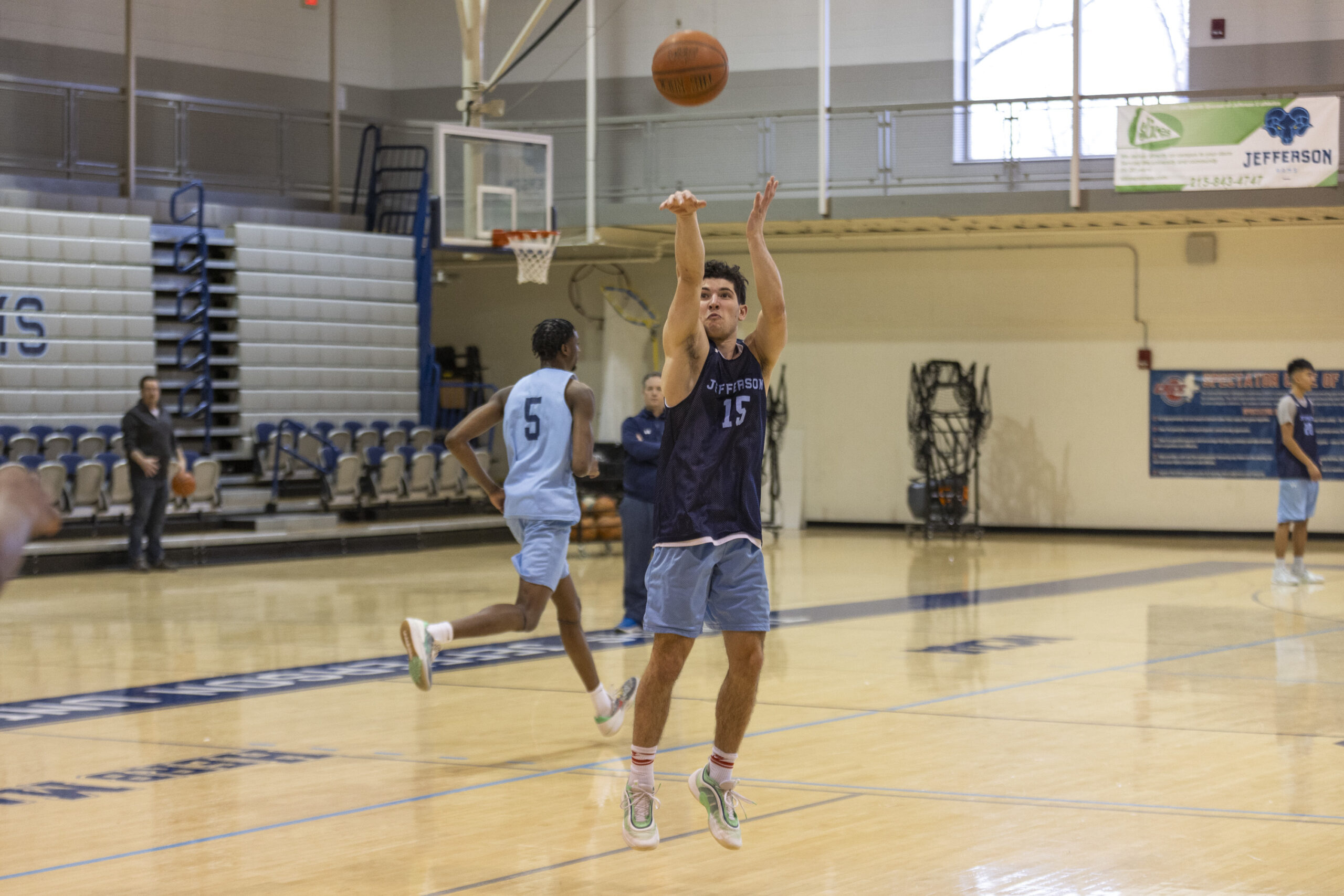
Cervino, a 6-foot shooting guard, is still learning the ropes in his first year at Jefferson. He has played in three games this season and tries to be a sponge in practice under coach Jimmy Riley, who spent 15 seasons on Hall of Famer Herb Magee’s staff.
When it comes to his social media platform, Cervino is not chasing a number of followers or views; it’s about having fun with it while “living in the moment and seeing what happens next.” He also hopes other athletes at the Division II level see that they can have a platform, too.
“There’s always going to be people overlooking you,” Cervino said. “You only can control what you can control, which is how much work you put in, the effort you put into it, and all that stuff. Focus on yourself, focus on what you need to do.”
Paige Bueckers has lived in a big spotlight since her senior year of high school. It, understandably, hasn’t always been easy, but she is pretty comfortable with it these days.
She also is comfortable using her fame as a platform, and she has done so again.
The 24-year-old grew up in Hopkins, Minn., about 10 miles southwest of downtown Minneapolis. Immigration and Customs Enforcement’s recent swarming of the Twin Cities, from raiding homes and business to the killings by ICE officers of Renee Nicole Good and Alex Pretti, hit especially close to home for her.
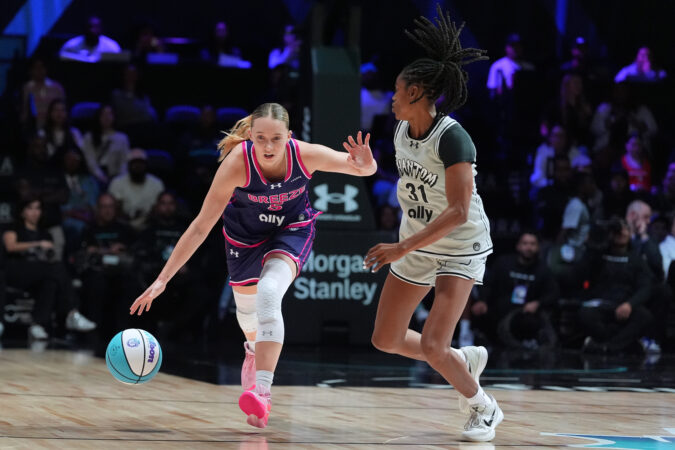
On Friday night, Bueckers will be in another big spotlight, in a city that has paid much attention to ICE’s actions. The Unrivaled basketball showcase will have a sellout crowd at Xfinity Mobile Arena and another national TV audience watching from home.
“Innocent lives are being taken; innocent families are being broken apart,” Bueckers said Thursday amid the four touring teams’ practices at the Alan Horwitz Sixth Man Center. “People are afraid to send their children to school, people are afraid to go to work and provide for their family, people are afraid to go to the grocery store. What’s going on is not OK, and at some point — we feel like, and we hope and we pray, that there’s a change in direction in where this is heading.”
All of Unrivaled’s games this season except Friday’s are played in Medley, Fla., just outside Miami, with the season running from early January to early March. That has kept Bueckers away from participating in protests at home, which she said she would do if she could.
“I’m very proud to be from Minnesota, and to see the community come together and show strength and unity and try to do everything possible to stay together through this really tough time,” she said. “That’s kind of what Minnesota is all about. So it’s tough, just being from there and not being able to go there and help and [have] feet on land, but you try to do everything from afar to support.”
In the meantime, Bueckers has put her money where her mouth is.
At the start of the week, she won Unrivaled’s $50,000 prize for having the best free-throw shooting percentage through the three-on-three league’s first five games of this season. Soon after that, she put the same sum on the table as a donation match to the Hopkins Strong Relief Fund.
The fund describes itself as “an ongoing drive to help feed Hopkins children and meet other urgent needs during this time of heightened stress and uncertainty in our community.”
Bueckers, who also plays for the WNBA’s Dallas Wings, spoke resolutely about the importance of leveraging her fame.
“I feel like I’ve been very blessed and fortunate,” she said, “and God has given me this platform to speak out on things that are important to me and use my platform for good. And whether that be donations or just speaking out or standing up for what I think is right, I think that’s very important.”
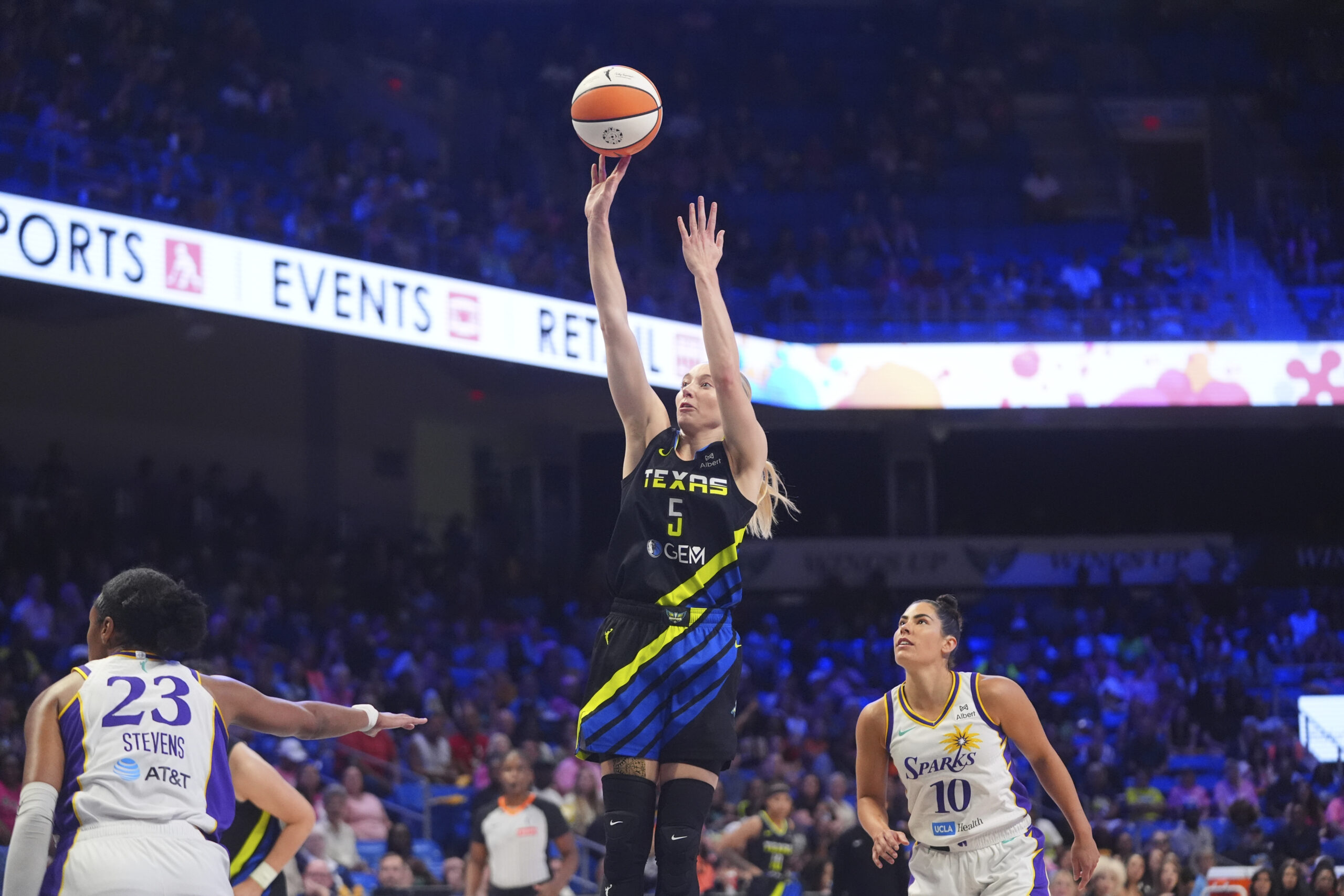
Paige Bueckers (5) in action with the Dallas Wings last year.
She also was ready for a response she has seen often across society.
“As athletes, it can be so easy for people to say, ‘Just play your sport. Don’t worry about politics; don’t worry about all of life’s issues,’” Bueckers said. “But I think as somebody who’s in the entertainment business, and we get this platform, and we have this platform to say things, I think it’s important for us to use our voice and stand up for what we believe in.”
Fellow superstar Breanna Stewart of Mist BC and the New York Liberty made a major statement Sunday when she held up a handwritten “ABOLISH ICE” sign during that day’s player introductions.
“All day yesterday, I was just disgusted from everything that you see on Instagram and in the news,” Stewart said afterward. “Everyone here [at Unrivaled] is feeling that way, one way or another. … We’re so fueled by hate right now instead of love, so I wanted to have a simple message of ‘ABOLISH ICE,’ which means having policies to uplift families and communities instead of fueling fear and violence.”
Another Minnesota native playing in Unrivaled, the Lunar Owls’ Rachel Banham, added her voice on Thursday.
“There’s a lot of things that need to, on a deeper level, be fixed, right?” said Banham, who also plays for the Chicago Sky. “I think the biggest thing that we can control — I mean, obviously, use your voice, continue to pray, continue to be there for people who need it. Lend a helping hand, if you can, because a lot of us have that privilege to be able to do that.”
She also acknowledged the scale of the current task.
“It’s going to be something that’s going to be [from] higher up, right?” Banham said of finding a solution. “It’s come from the top, government-wise.”
Bueckers did not say whether she’ll do something specific at Friday’s games. But she praised the WNBA’s tradition of player activism for “having always inspired me in that way.” She also spoke of her own history having “grown up, and I’ve seen, and I’ve been a part of, peaceful marches and protests and the community coming together just because of tragic events.”
She added that the Unrivaled player group has “talked about” doing something collectively, and “we want to do something to stand up for [it].”
Temple coach Diane Richardson is not from Philadelphia. She spent much of her life in the Maryland and Washington region, which included several coaching stints in the area.
When Richardson was hired at Temple in 2022, she got a taste of what the Big 5 — and sports in general — mean to the city. But seeing how Philly responded to the women’s side of the Big 5 intrigued Richardson. It made her want to grow women’s basketball even more.
Richardson has become an advocate for professional women’s basketball and hopes to bring more eyes to the game, with a WNBA franchise set to come to Philadelphia in 2030. In the meantime, Unrivaled will make its first trip out of the Miami area and play at Xfinity Mobile Arena on Friday.
“It really sets the tone for what Philly has to come,” Richardson said. “The WNBA is coming here in a few years and to have Unrivaled come here, the first place that they have come to, it really shows the support that’s here for women’s basketball and how Philly’s grabbing ahold of it. So I’m excited about it. I’m really excited about the representation. I’m excited for the young girls in Philly to be able to see that up close and personal.”
Basketball was not always Richardson’s calling card. She was named one of the top female executives in the country in 1995, but she left her post as founder and chief operating officer of American Security Corporation to pursue a different passion, mentoring young girls through basketball.
Part of Richardson’s inspiration to make that change came from former college basketball coach and current color commentator Carolyn Peck. Richardson crossed paths with Peck during a recruiting visit with a player while Peck was at the University of Florida and Richardson was coaching at Riverdale Baptist School in Upper Marlboro, Md. She was enamored by Peck’s drive to help young athletes.
“I saw the care she had with her student-athletes and how she wanted to project women’s sports,” Richardson said. “I was just amazed and inspired that when you can be in a position like that, you can actually inspire other people. I left corporate America to coach because I saw her example. And I love what I’m doing now.”
Richardson arrived on North Broad before the 2022 season and quickly got to work, not just with her new program, but with women’s basketball overall.
Richardson bought into the Big 5 Classic, and when the format changed before the 2024-25 season, she was all for it. The the tripleheader has been held at Villanova’s Finneran Pavilion the first two seasons. While Richardson believes the first two iterations have been successful, there is more to be done.
“I think we could use some more exposure,” Richardson said. “We’re playing at Villanova and the guys are playing downtown [at Xfinity Mobile Arena]. And I think if we put enough money into it, enough marketing into it, and we can market it locally and get a lot of people there.”
Richardson also has her team engage with the community in women’s basketball events. The Owls held a camp with Skilladelphia, a basketball clinic for young girls, and attended a WNBA watch party with Watch Party PHL to see a game that featured Jonquel Jones, Natasha Cloud, and Kahleah Copper.
Temple attended a WNBA watch party in July at Libertee Grounds.
A key part of Richardson’s involvement over her four years at Temple has been the involvement of Jones and Copper. Jones, who plays for the New York Liberty, is Richardson’s adopted daughter and makes the trip to Philly whenever she can.
She acted as a tour guide when the Owls went to the Bahamas in November. Copper, who plays for the Phoenix Mercury, is from North Philly and has been a great friend of the program. She attended many practices during Richardson’s first two seasons.
New York Liberty star Jonquel Jones (second from left), the adopted daughter of Temple women’s college basketball coach Diane Richardson, was courtside to watch the Owls play the Drexel on Dec. 7.
Having professionals involved with the program has been beneficial for the team. It’s an opportunity to see what basketball can do for them.
“Coach Rich is really great at networking,” said junior guard Kaylah Turner. “We’ll have little meetings here and there to meet this person and that person she wants us to talk to. She knows that every person has one thing that we can take away from, as far as lessons. We meet a lot of different people, and just watching her, she knows everybody.”
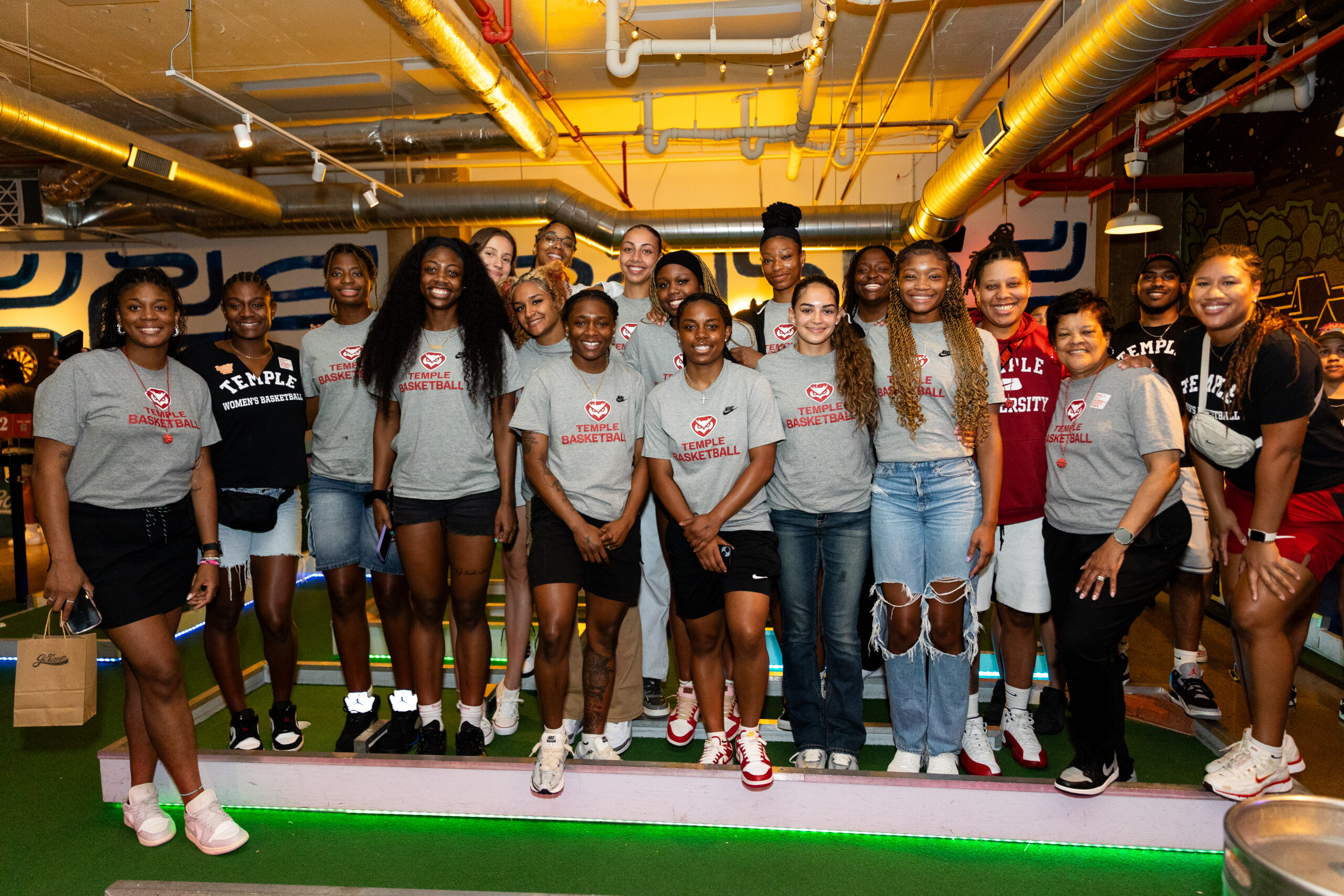
Richardson brought her whole team to the Unrivaled announcement event on Oct. 2, when the pro three-on-three league announced it would visit the city on Jan. 30. Unrivaled is the next step to growing women’s basketball in the area.
Richardson hopes a lot comes from Unrivaled, including gaining more women’s basketball fans.
“I hope that the people who talk bad about women’s sports and the WNBA will see that this is true basketball,” Richardson said. “It’s not just some stuff on the corners. It’s not just AAU or church league. This is real professional basketball, and it should be respected as such.”
After Unrivaled, the city will have four years to prepare to welcome its WNBA team. The support that has come from Unrivaled is encouraging, and Richardson believes that with continued marketing, Philly will be more than ready for a pro team.
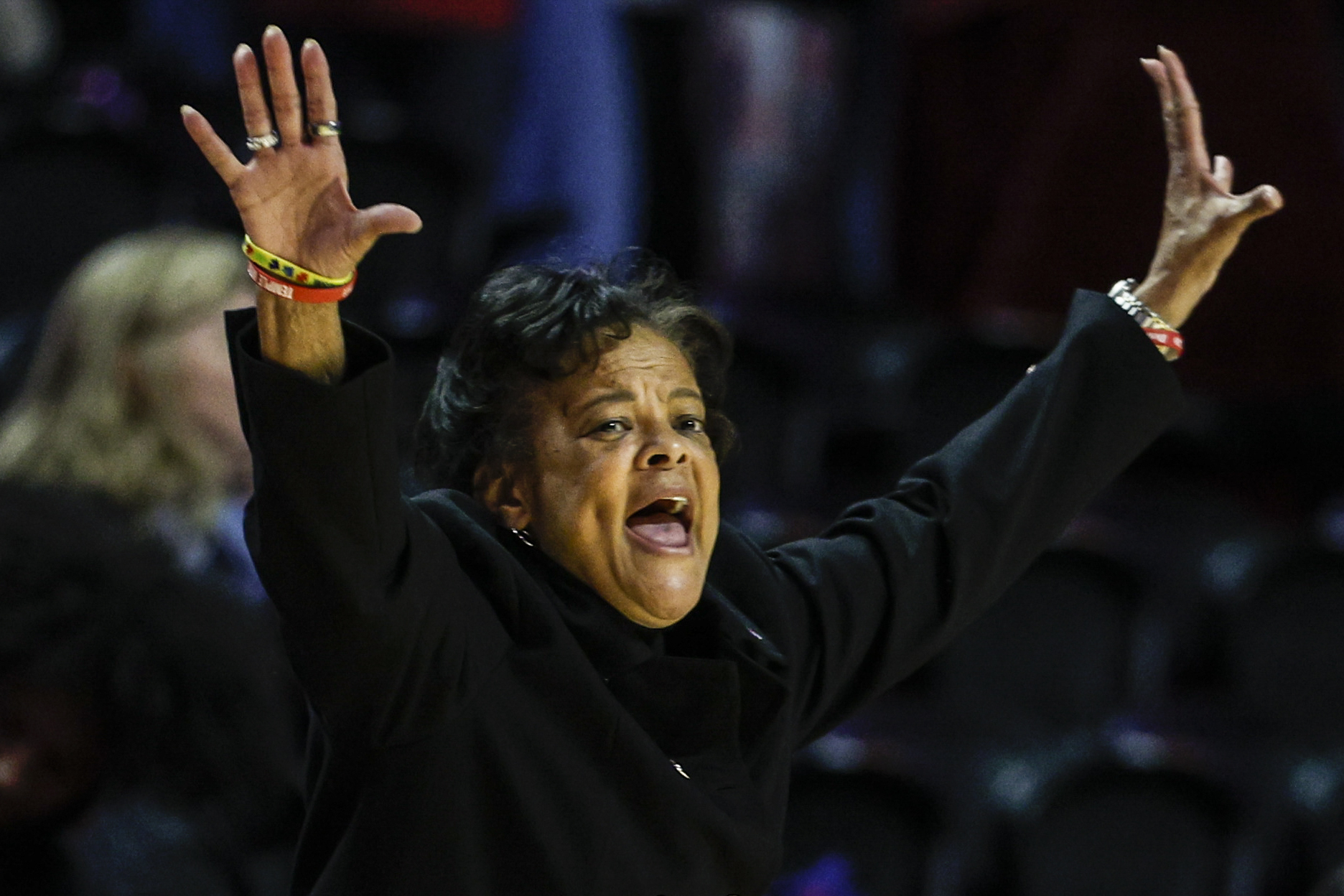
Temple coach Diane Richardson calls plays against Charlotte on Saturday.
“With the WNBA coming here … we’re going to be exploding,” Richardson said. “To get Unrivaled sold out in a matter of days, that tells you we are ready for the WNBA. I think if we continue to have programs and events like that, it’ll get there, and I think we’ll have sold-out stadiums when the WNBA gets here.”
In her short time in the city, Richardson has been at the forefront of the push to grow women’s basketball here. She hopes others will see the beauty in the sport, too.
“If they are a true sports fan, they will love women’s basketball,” Richardson said. “And it’s not just to say that it’s women’s basketball, but if you love sports, you’ll love women’s basketball, because it’s basketball.”
Sunday is the first day of February, which means March is right around the corner, which means it is officially no longer too early to think about the NCAA Tournament.
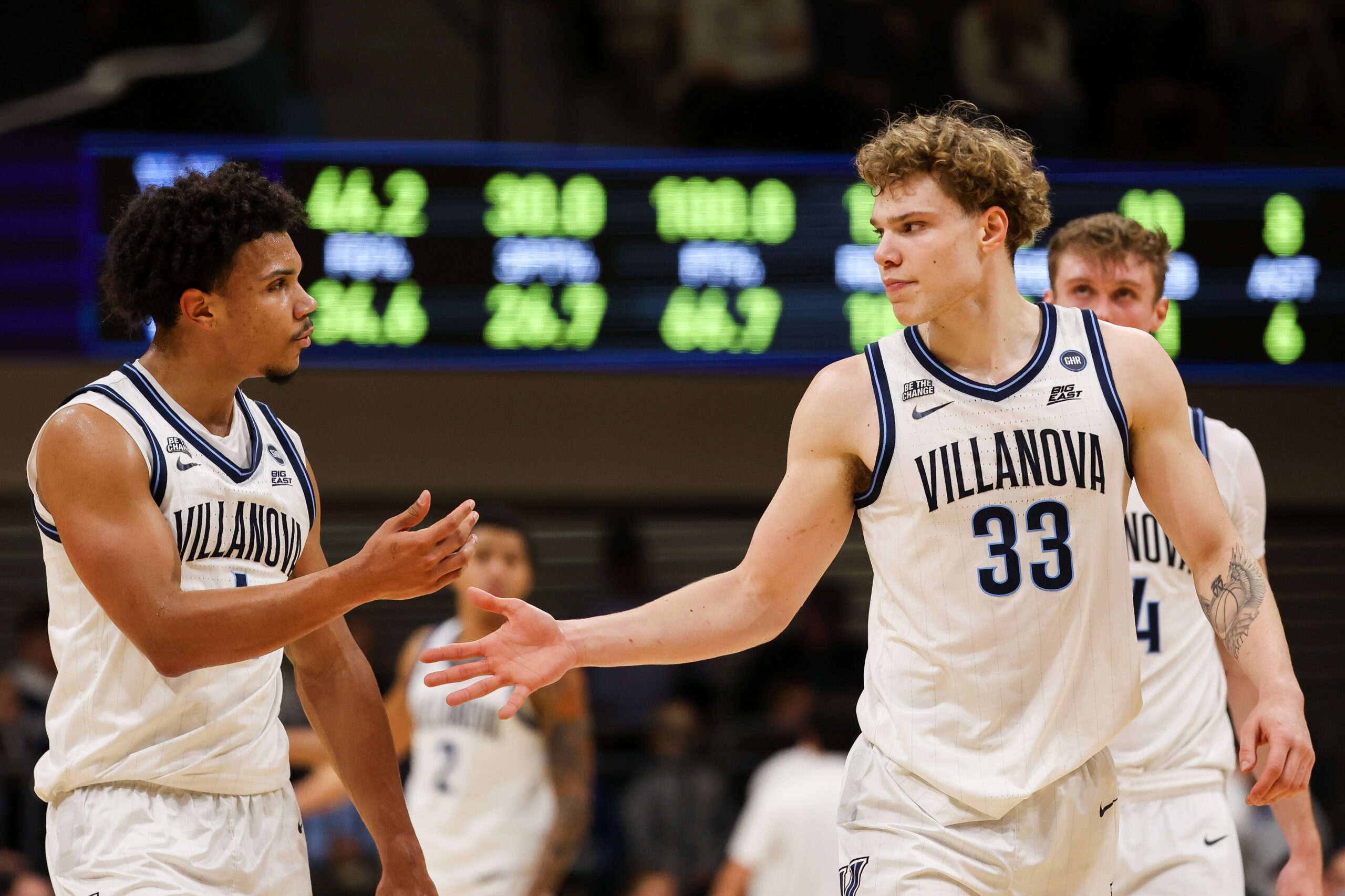
Villanova is 20 games through its 31-game schedule, and nine games through its 20-game Big East slate. The Wildcats, who host Providence on campus Friday night, are 15-5 overall and 6-3 in their conference matchups in the first season of the Kevin Willard era.
School administration moved on from Kyle Neptune last March after a third consecutive season ended without an invitation to the NCAA Tournament. Villanova officials believe the school should field a basketball team that perennially is in the at-large bid conversation, and three consecutive seasons without meaningful basketball was not acceptable.
Right now, it’s hard to believe the drought could stretch to four.
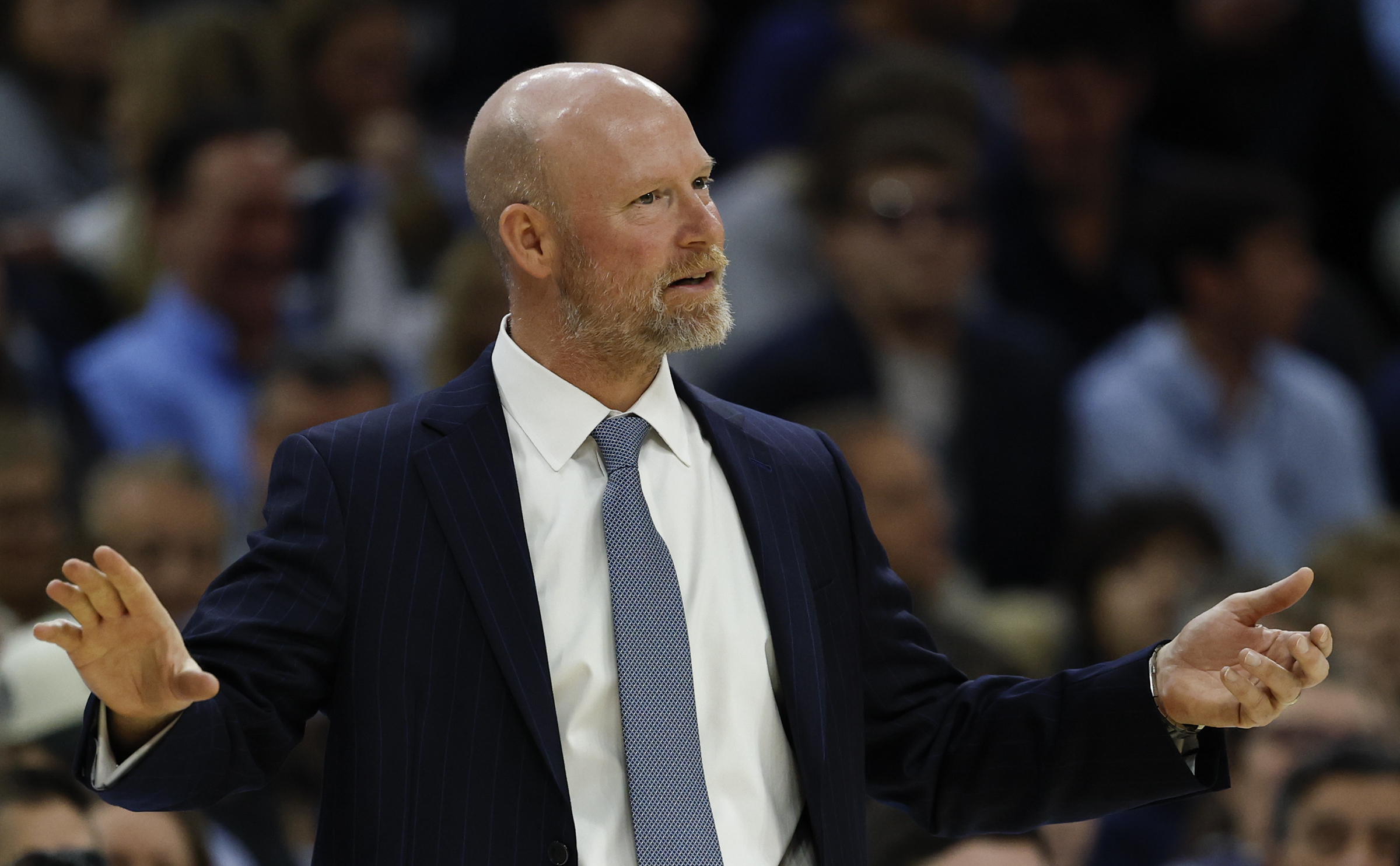
Villanova coach Kevin Willard is on pace to get the Wildcats back to the tourney.
The Wildcats aren’t yet a lock, but it’s looking pretty safe for their fans to preemptively look into taking a PTO day or two for the third week of March.
What are the numbers saying? We went to ESPN’s bracket guru himself, Joe Lunardi, for some help.
‘A very long leash’
Saturday’s loss to No. 2 UConn in Hartford, Conn., was an “insurance policy” kind of game, Lunardi said. Villanova declined coverage. The Wildcats let an upset opportunity slip away in an overtime loss, but the result, Lunardi said, was a “wash.” Villanova was a double-digit underdog and lost by eight.
“It didn’t hurt, and it didn’t help,” said Lunardi, who had the Wildcats as a No. 7 seed in his latest bracket projection released Tuesday morning.
The metrics support that notion. Villanova barely budged in the NCAA’s NET rankings, where it was ranked 34th as of Wednesday afternoon, and at KenPom (27).
What has to happen to stay on the right path?
“All they really need to do is win games they’re favored, and they can even afford to lose [a few] of those,” Lunardi said. “If they go 6-5, they’re going to make it.”
That’s some leeway.
“That’s a very long leash given the fact that, frankly, the league is good but not great,” Lunardi said.
Guard Acaden Lewis is among those who could land the Wildcats back in the dance.
As things stand right now, Villanova likely would be favored in at least eight of its final 11 contests. Take care of six or seven of those, and there’s no need for a marquee win over UConn or St. John’s.
While 6-5 the rest of the way probably would be a disappointment, Lunardi projects that a final record of 21-10 gets Villanova “at worst” a No. 10 seed. The Wildcats’ ceiling, meanwhile, is “probably a five,” Lunardi said.
So, don’t count on the NCAA rewarding the Wildcats with a “home” game at Xfinity Mobile Arena to start the tournament.
Asked to put the resumé in perspective, Lunardi said: “I would describe it as a resumé of a regular good Jay Wright team, meaning a mid-single-digit seed, not a Final Four team. Everything has to go right to make the second weekend.”
That’s probably a result any rational person in ’Nova Nation would have signed up for nine months ago.
It also seems pretty accurate. Villanova is 15-5 because it mostly has taken care of business against teams it is supposed to beat. The nonconference schedule started with a loss to nationally ranked BYU, but then came seven consecutive games against teams well outside the KenPom top 100, including three dominant Big 5 wins.
The Wildcats were then blown out by Michigan before traveling to Wisconsin to beat the Badgers in overtime, which was followed up with a road victory over Seton Hall to begin conference play. At the time, those were pretty good wins. Only the Wisconsin game has aged well.
As of Tuesday morning, Seton Hall was Lunardi’s first team outside the field of 68 after a four-game losing streak.
Forward Matt Hodge and guard Tyler Perkins have Villanova in good shape despite a near-miss against UConn on Saturday.
It is a Villanova resumé without a signature win, and it might not need one. Why?
“They don’t have the dreaded bad loss,” Lunardi said.
Last year’s resumé had losses to Columbia, St. Joseph’s, and a down Virginia team. The year before featured losses to St. Joe’s, Penn, and Drexel. This year’s biggest blip currently is against a Creighton team that still is on the NCAA Tournament bubble.
Show me the math
Lunardi says his projections are pretty conservative and include some emphasis on past similar resumés. Right now, Villanova has more than an 80% chance of making the NCAA Tournament, according to Lunardi’s projections.
On the more extreme side, the TourneyCast projections at Bart Torvik’s analytics site have Villanova at 96% to make the dance. Torvik’s numbers are based on thousands of simulations playing out the rest of the season.
“It’s too early to make anybody a lock,” Lunardi said.
But it’s getting closer to that time.
If there was anything to worry about right now for Villanova fans, it should be health. The Wildcats are a key injury or two — even minor ailments — from scrambling a bit. They don’t have a reliable backup center, for example. Their depth has taken a hit elsewhere, too.
But those worries are hypothetical. Then again, all of this is.
What about the rest of the Big 5?
Villanova is the only one of the six Big 5 schools with an at-large path to the men’s NCAA Tournament. The others would need to win their respective conference tournaments. Of the bunch, only Temple (5-2) and St. Joe’s (5-3) entered Wednesday with a winning conference record.
Villanova celebrates after a win over Xavier on Jan. 8.
On the women’s side
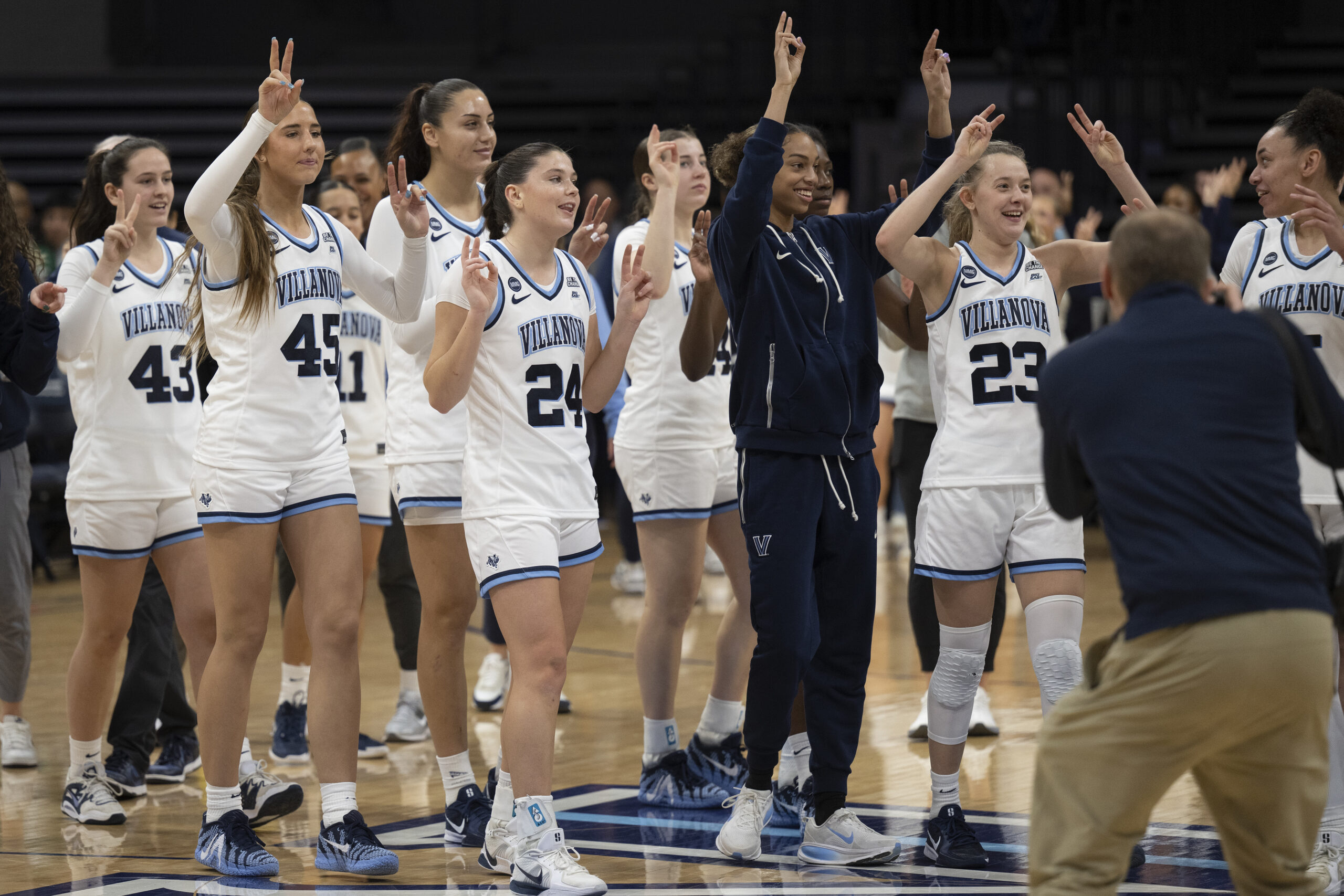
Similar story. Villanova (16-5, 9-3) was projected as a No. 10 seed on the right side of the NCAA Tournament bubble with an at-large bid in the latest ESPN women’s bracketology. No other team has an at-large path, and only Drexel (4-3) had a winning conference record entering Wednesday.
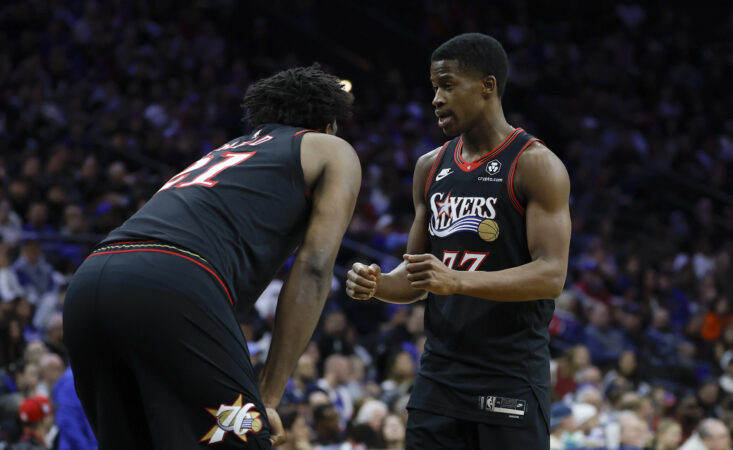
As John Buck watched the final seconds of the Dec. 4 matchup between the 76ers and Golden State Warriors, he was unsurprised by how VJ Edgecombe reacted to teammate Tyrese Maxey’s deep fadeaway jumper with 2.5 seconds remaining.
Edgecombe instantly sensed where the ball might be if the shot fell short, Buck said, then “slithered” into that space, elevated, and grabbed the partially blocked attempt to convert a game-winning putback.
“How many guards just stand there and watch the ball get shot and hope it goes in?” said Buck, who coached Edgecombe at Long Island Lutheran High School in Brookville, N.Y. “VJ was moving into the spot where it may have missed.”
Yes, Edgecombe’s athleticism is electric. Yes, the rookie’s three-point shooting has been a pleasant surprise. But perhaps what Sixers coach Nick Nurse and teammates have raved most about Edgecombe so far is his beyond-his-years basketball IQ.
That natural feel helped put Edgecombe in position to be one of the NBA’s top rookies — on Monday night he was named to the Rising Stars roster for All-Star Weekend — along with an immediate starter for a Sixers team in the thick of the Eastern Conference playoff picture, and a player already with a knack for clutch fourth-quarter moments on both ends of the floor. When asked recently about this aspect of his game, Edgecombe agreed it has “played a lot” into his early NBA success.
“If you watch the game,” Edgecombe told The Inquirer at his locker last week, “you understand the game, understand the flow of the game, the importance of possessions, I rely on my IQ a lot. That’s the most [important part] of the game, the mental part.
“I just try to make sure I’m locked in mentally, to make certain plays and be decisive.”
So what are the origins of such a trait? Matter-of-factly, Edgecombe says, “I watch so much basketball.”
As a child in Bimini, the Bahamas, he initially spent the bulk of his free time playing the sport on dirt courts and makeshift hoops outside. But once his mother bought him a tablet as a middle schooler, YouTube became an endless supply of player highlights and archived games. He could utilize his already “really good memory” while transitioning from watching for entertainment to studying. He even discovered some of Maxey’s film from his time playing for South Garland High School in the Dallas suburbs.
“He didn’t believe me,” Edgecombe said, explaining how he told Maxey after they became Sixers teammates. “And I had to literally tell him my basketball knowledge.”
When Edgecombe moved to the United States and eventually joined Long Island Lutheran’s nationally ranked program, he received access to online scouting reports with full games or clips from opponents. While Buck said he needed to “beg” some players to spend time reviewing that film while walking down the aisle during bus rides to games, Edgecombe’s commitment to that preparation was “elite.”
That gave Edgecombe the confidence to make suggestions about defensive coverages or individual assignments during timeouts, Buck said. And to better leverage his supreme physical gifts.
Buck witnessed it on blocks, when Edgecombe could pin the ball on the glass because he beat the shooter to the spot. Or in his timing on offensive rebounds. Or whenever he got into a shooting rhythm because he picked the correct moments to fire away, later prompting Buck to chuckle when NBA scouts called to ask about his three-point potential as a professional. The early returns vindicate that reaction, with Edgecombe entering Monday 12-of-22 on “clutch” NBA three-pointers, including an overtime game-winner at Memphis in late December.
“There are players who are extremely athletic,” Buck told The Inquirer by phone earlier this month, “but you don’t see it in the flow of a game, or you see it rarely. … With [Edgecombe], it would show up in so many ways.”
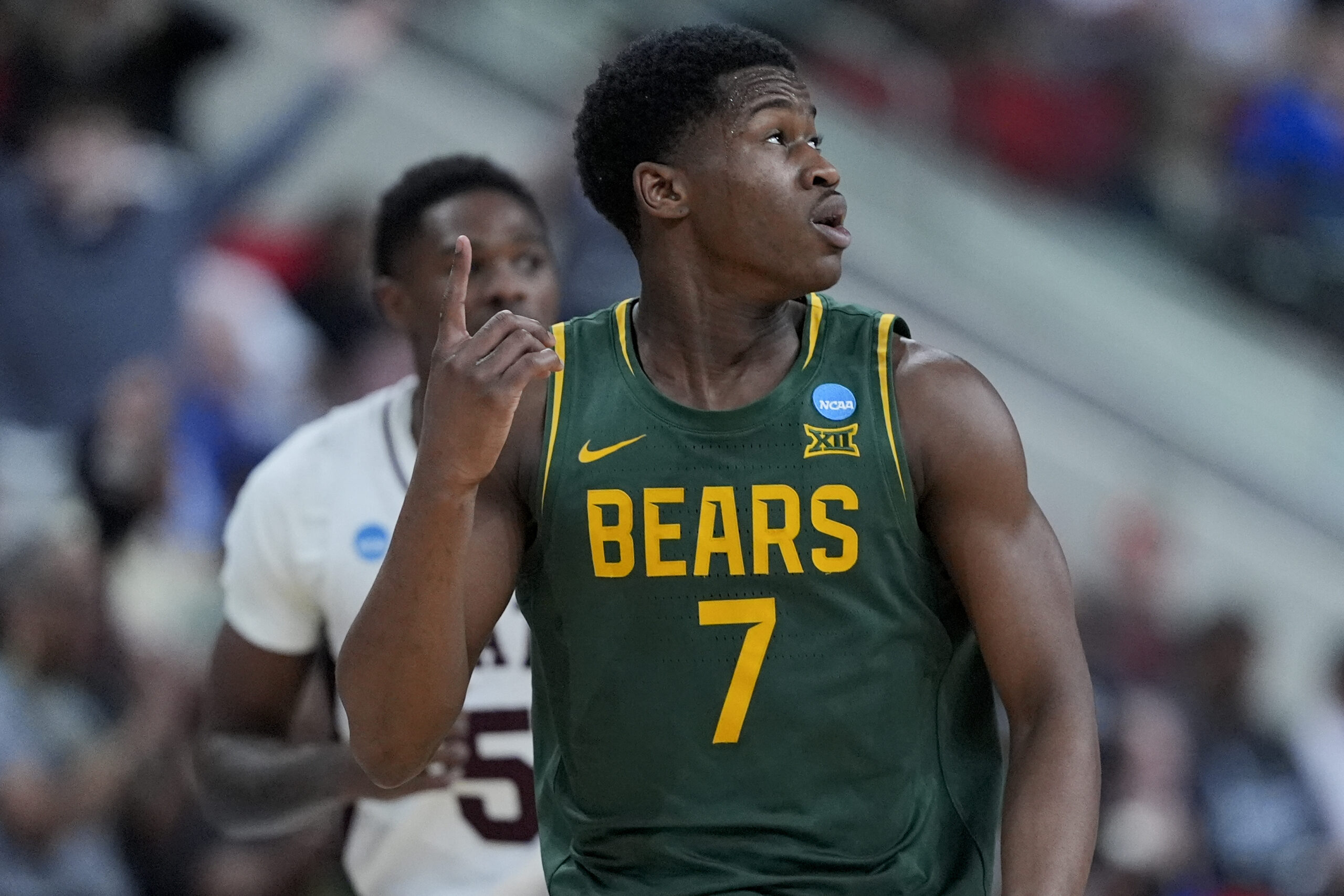
Guard VJ Edgecombe spent one season with Baylor before becoming the No. 3 pick in the 2025 NBA draft.
Another coach who valued Edgecombe’s IQ: Baylor’s Scott Drew.
During Edgecombe’s lone college season, Drew recognized his “boldness” to speak up during practices, “wisdom” to be accurate with his question or suggestion, and “heart” to keep it centered on the team. Most freshmen in his program, Drew added, only learn one position that first season. Edgecombe could play every spot but center, offering the Bears flexibility to use him as a lead ballhandler or as a power forward in four-guard lineups.
“It allows a coach to have an opportunity to steal a couple baskets by putting in new plays [and] doing things that are harder to guard,” Drew said last week. “And in one-, two-, three-possession games, if you have enough of those plays, you win a lot of those games.”
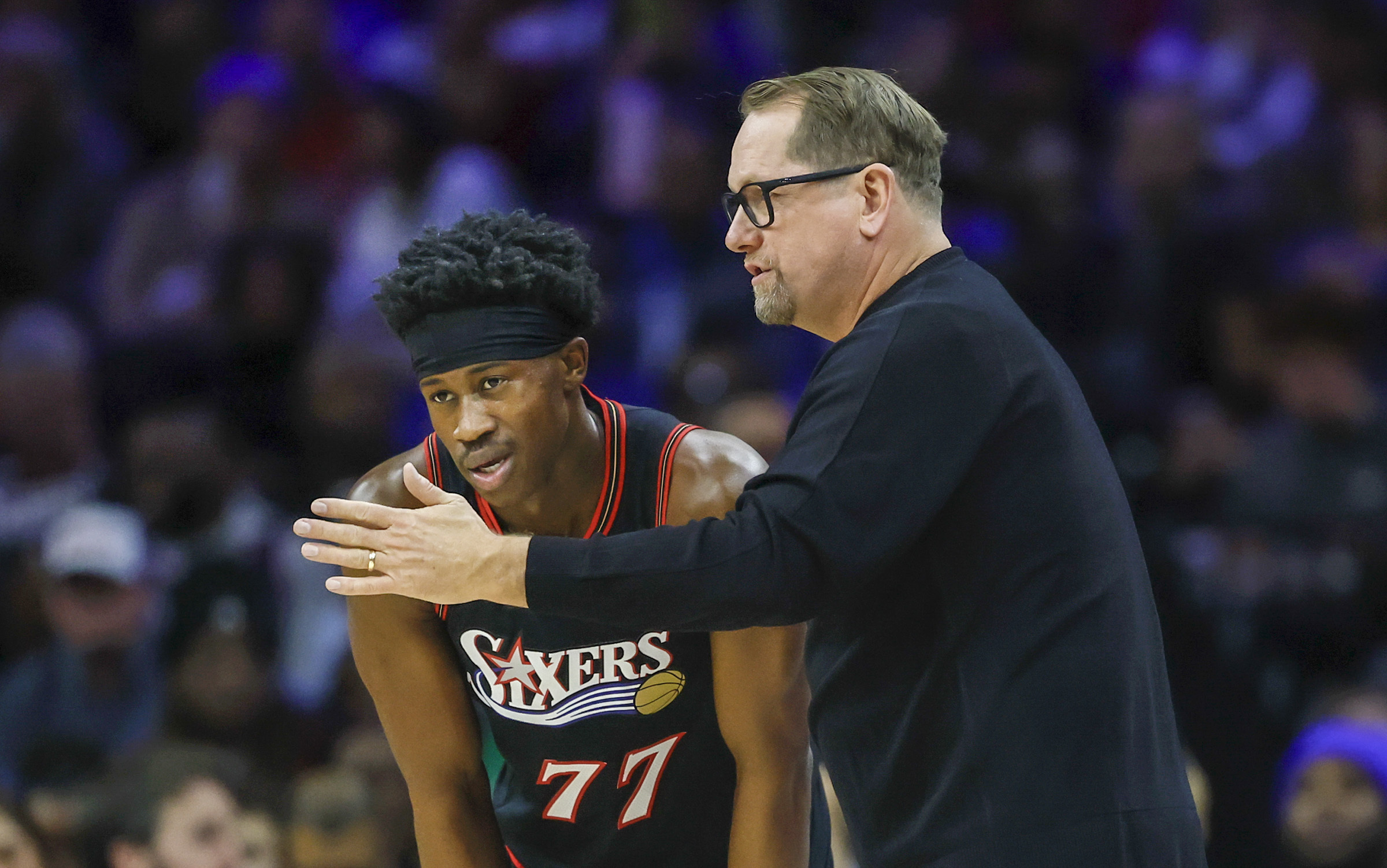
When Edgecombe first arrived in Philly, Nurse also asked himself, “How did he get like this?”
Nurse quickly recognized Edgecombe had already “absorbed a lot of basketball — and, probably, a little bit obsessively” because of his interest in the game’s history. That is not as common as an outsider might think for a player born in 2005, but was apparent to Nurse when Edgecombe marveled while walking into Chicago’s United Center for the first time.
Edgecombe’s inquisitive nature during practices also has continued at the NBA level. While still building out schemes throughout the first half of the season, Nurse said, Edgecombe could already identify future wrinkles. Edgecombe said he typically first goes to a teammate to clarify if such additions are possible, then to coaches to get their point of view.
“I just want to make sure my team is in the best possible [situation],” said Edgecombe, who entered Monday averaging 15.6 points, 5.3 rebounds, 4.2 assists, and 1.5 steals.
Added Nurse: “I answer them a lot with, ‘We’re getting to that.’ … Then you kind of quickly explain, ‘Yeah, we can do that, and here’s what happens. That’ll be coming when we need it — and when we see it and when we can polish and can put it in.’”
On the court, that IQ has translated to Edgecombe immediately taking on some ballhandling responsibilities — and committing only two combined turnovers when Maxey missed two games with an illness. Veteran forward Paul George has been most impressed with Edgecombe’s defensive savvy, recognizing when to make sharp rotations or well-timed playmaking risks. Edgecombe’s feel also shows up in how he spaces the floor on offense, clocks when a teammate has not gotten a shot recently, and balances when to be aggressive with the ball in his hands or facilitate.
“He could be a guy that just takes off,” Nurse added, “and jumps in the air and figures it out three or four seconds later. But he doesn’t do that. He makes pretty good basketball plays.”
Sixers coach Nick Nurse has been impressed by guard VJ Edgecombe’s ability to absorb information.
That is why Nurse has reiterated that he still wants more out of Edgecombe, even as the Sixers’ roster has returned to full strength. Following a Jan. 16 loss to the Cleveland Cavaliers, Maxey told Edgecombe in the locker room that taking only five shots “is not going to cut it for us.” Nurse also has shown Edgecombe film examples of more opportunities to attack the rim or create space for a pull-up jumper.
“He’s just a little too unselfish for me,” Nurse said. “I know that sounds funny, but we need him to use those gifts a little bit more. … I’m like, ‘That was a great move. You only did it once last night. I need like eight of those.’”
Edgecombe acknowledged last week that he is “still learning” but does feel the game slowing down. And he flashed that knack during Saturday’s loss to the New York Knicks. In less than five seconds of the game’s final minute, he buried a three-pointer, forced a jump ball on a tie-up with Jalen Brunson, made two free throws after being fouled to cut the Sixers’ deficit to three points — and nearly drew an off-ball foul on Brunson before the ensuing inbounds pass, but that call was overturned on a coach’s challenge.
Buck is not exactly shocked that such high-IQ play is fueling Edgecombe’s rookie season. He saw it in that heads-up putback against Golden State. And in a game-winning three-pointer in Memphis.
And, behind the scenes, when Edgecombe paid an impromptu visit to a Long Island Lutheran practice just before his rookie season began.
“We’re running a set, and he kind of waves me over,” Buck recalled. “And he’s like, ‘Hey, Coach. I think the spacing for this guy right here should be a little bit different to maximize the play.’ That’s just not normal for a 19-, 20-year-old guy to be coming to practice, not just kind of chilling or being there to be there. But kind of saying, ‘Hey, let me look at this. I think there’s a way to improve that.’”
Now, Edgecombe is applying that as an NBA rookie, to a degree drawing raves from his coach and teammates.
“He’s not out there looking lost or forcing anything,” George said. “He kind of just lets the game come to him. And that right there makes the greats, greats. …
“The game just evolves around them, and that’s kind of what he has.”
Drexel hired Bill Herrion as men’s basketball coach in 1991. Replacing longtime head coach Eddie Burke, who led the Dragons to their first NCAA Tournament appearance in 1986, Herrion took the program to three more NCAA tourneys, and Malik Rose was a big reason.
Drexel assistant Walt Fuller recommended that Herrion recruit the overlooked center from Overbrook High, and Rose caught the first-year Drexel coach’s attention at the All-Star Labor Classic between the best players in the Public and Catholic Leagues.
It was enough to give Rose a scholarship.
“Coach Herrion saw something in me that nobody else really did,” said Rose, 51. “None of the Big 5 coaches thought they saw it. None of the other coaches in the region or the area saw it.”
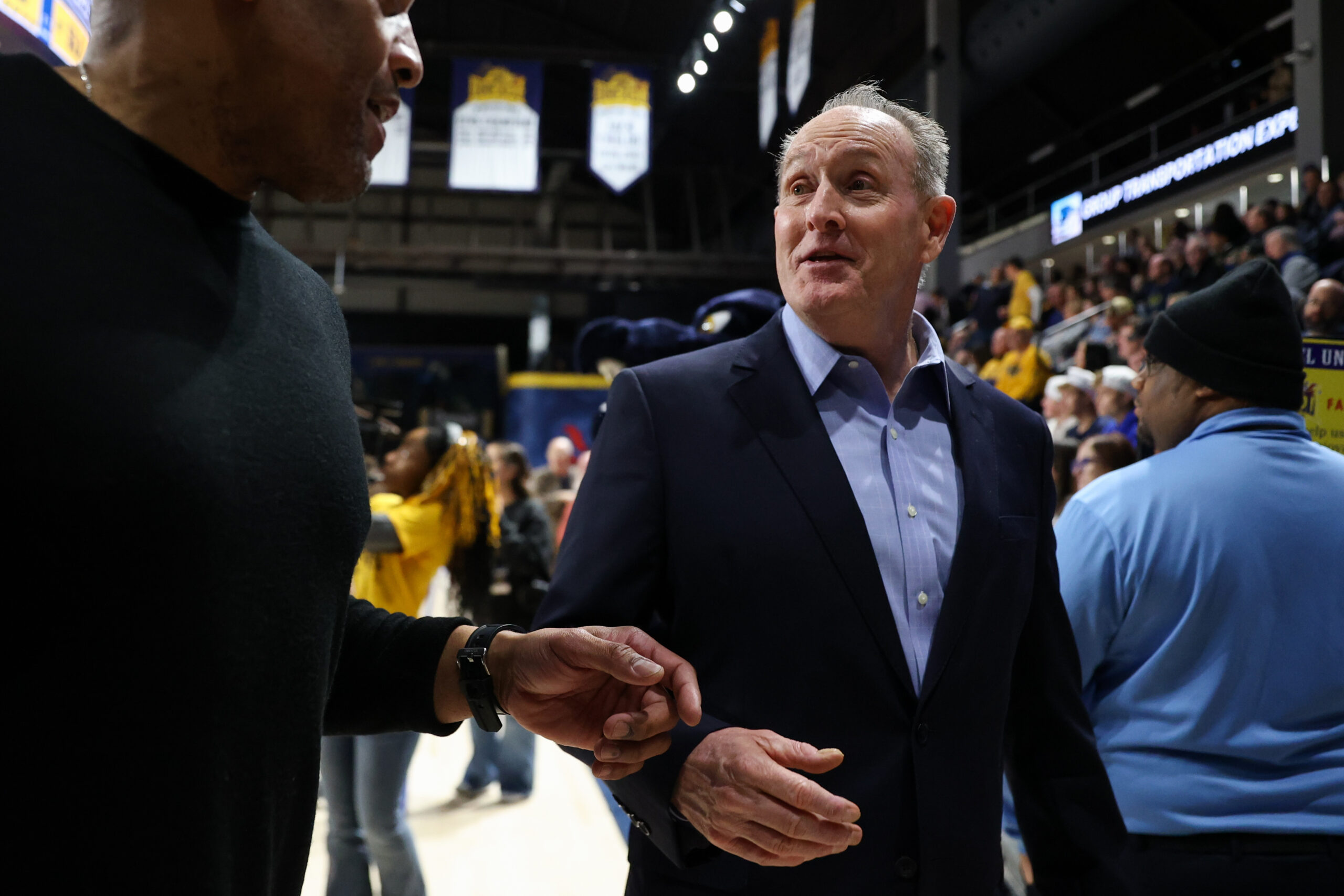
Former Drexel coach Bill Herrion during the game between the Dragons and the Northeastern Huskies at the Daskalakis Athletic Center.
With the 6-foot-7 center as the program’s premier player, Herrion’s Dragons made the NCAA Tournament from 1994 to 1996. In its third and final appearance, Drexel upset Memphis as a No. 12 seed. Rose scored 21 points in what is still the only NCAA win in program history.
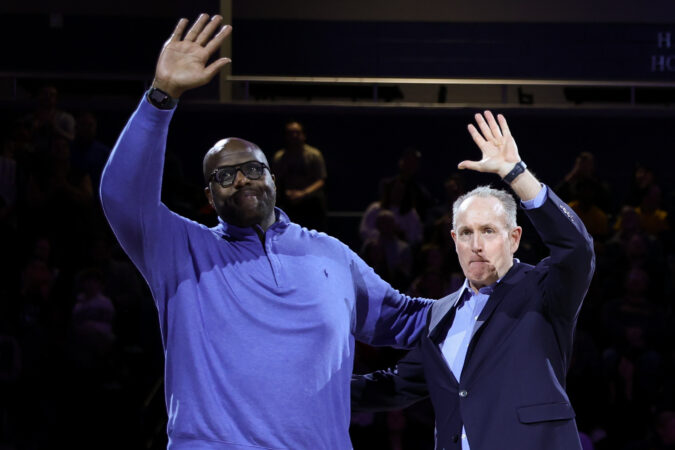
On Saturday, the Dragons welcomed Rose and Herrion into Drexel Athletics Hall of Fame during an 83-78 victory against Northeastern.
“It’s a very special and humbling event for me,” said Rose, Drexel’s all-time leading rebounder with 1,514. “It means a lot to me — probably more than any other sports memory I’ve had in my career.”
Added Herrion: “I’m very honored, very privileged for the recognition. But, I always go back to this. These things only happen as a coach if you’re very, very fortunate to have really good players.”
A lot of those players were in attendance Saturday. After Herrion and Rose made their way to center court, shaking hands with Drexel athletic director Maisha Kelly and university president Antonio Merlo, players from the ’90s tournament teams joined them.
Malik Rose and Bill Herrion were inducted into the Drexel Athletics Hall of Fame today pic.twitter.com/8GbwpGxhfE
“One of the reasons for this taking so long is because I never really wanted to do it,” Rose said. “I don’t really like a lot of this type stuff, but I spoke with Coach Herrion and Maisha the AD — she was really working hard. They were able to get a lot of my former teammates there. … That’s what really hit me. I was like, ‘Man, I get a chance to spend some time with the knuckleheads I rode the bus and the planes with.’”
The Charlotte Hornets drafted Rose in the second round in 1996, 44th overall, but he spent only one season in Charlotte before signing as a free agent with San Antonio. Rose was a valued role player for two championship teams in eight seasons with Spurs. After that, he played five years for the New York Knicks and a lone season in Oklahoma City. After a stint in broadcasting and multiple executive roles, Rose is now the head of basketball operations for the NBA G League.
Through all these stops, his Philadelphia roots have stuck around.
“When I was in the NBA, I think we had [around] 21 players from Philly that came up in the Philly [area] leagues: myself, Alvin Williams, Cuttino Mobley, Kobe [Bryant], Aaron McKie, Rasheed Wallace. … We all grew up playing together, from high school to the Pizza Hut three-on-three leagues up at King of Prussia to the hardwood courts of the NBA. We still have that brotherhood today.”
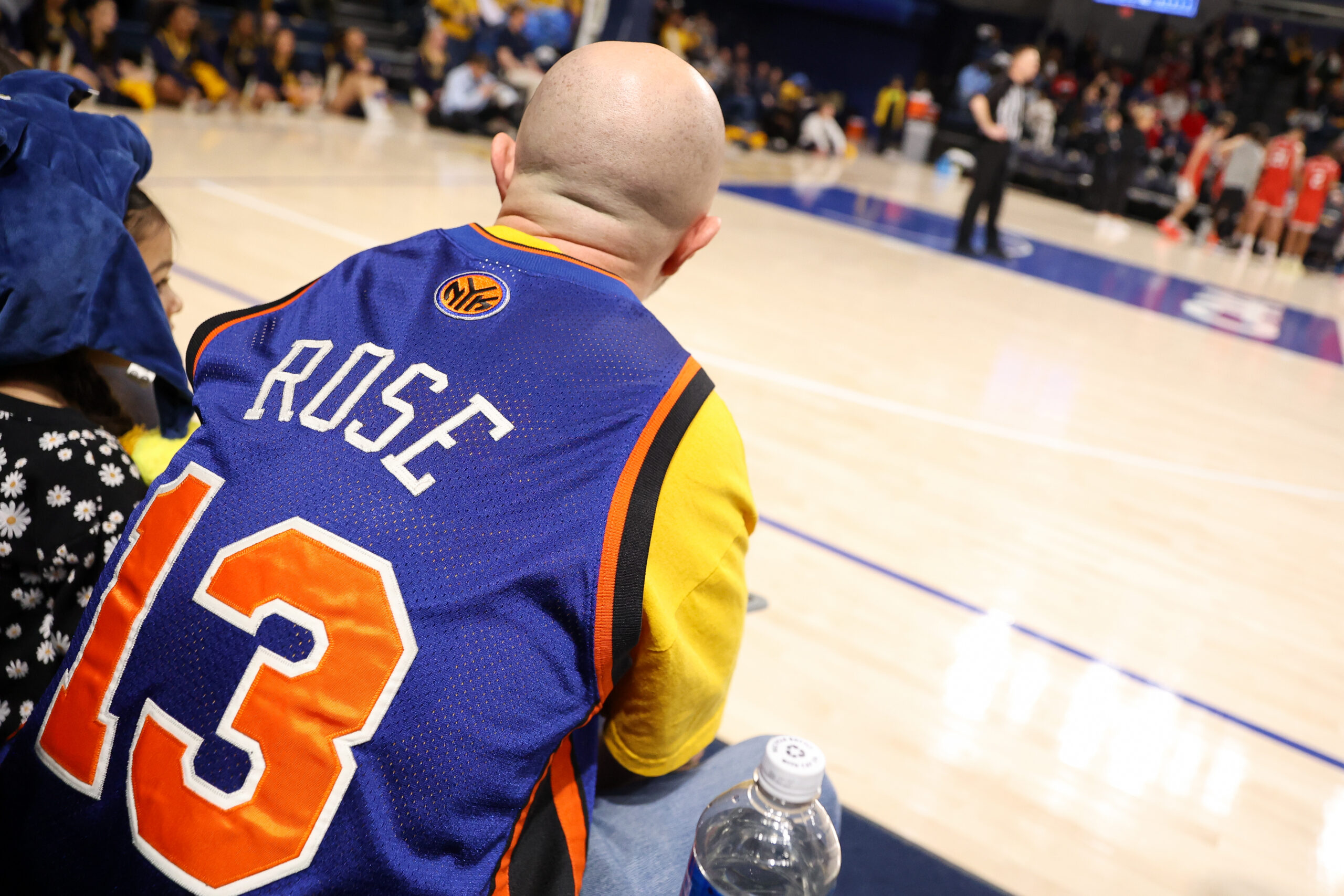
Bill Martin, a Drexel 2006 graduate and season ticket holder from North Jersey, wearing his jersey from Malik Rose’s time with the Knicks.
Herrion left Drexel after eight seasons. He coached for six years at East Carolina and 18 at New Hampshire. With the Wildcats, he garnered a program-high 227 victories. Herrion, who is now an assistant at Stonehill in Massachusetts, has the most wins in America East Conference history. His career record as a head coach is 464-472.
“The remainder of my head coaching career would not even have been possible if it wasn’t for those eight years at Drexel,” Herrion said. “The great thing about it was doing it in Philadelphia, which is such a great college basketball city. All the Big Five coaches I became friendly with. We finally gained unbelievable respect in the city.”
Now a member of the Big 5, Drexel no longer needs to vie for respect from the other programs. That is still not the biggest change from Herrion and Rose’s time with the Dragons, though. The average NIL budget for a mid-major program, like Drexel, is over $291,000.
“When I talk to some of my teammates, we remember over Christmas break that we were allowed to get $21 a day. It was like seven bucks a meal,” Rose said. “That’s all we could get each day over Christmas break, and we loved it. We were thankful for it. Times have definitely changed.”
Behind 22 points from Josh Reed, the current Dragons captured a bit of the energy from the NCAA Tournament teams that routinely packed Drexel’s gym. Afterward, Rose got his wish to spend some more time with his old teammates. The Dragons of the past celebrated a conference win with the team’s present players in the locker room.
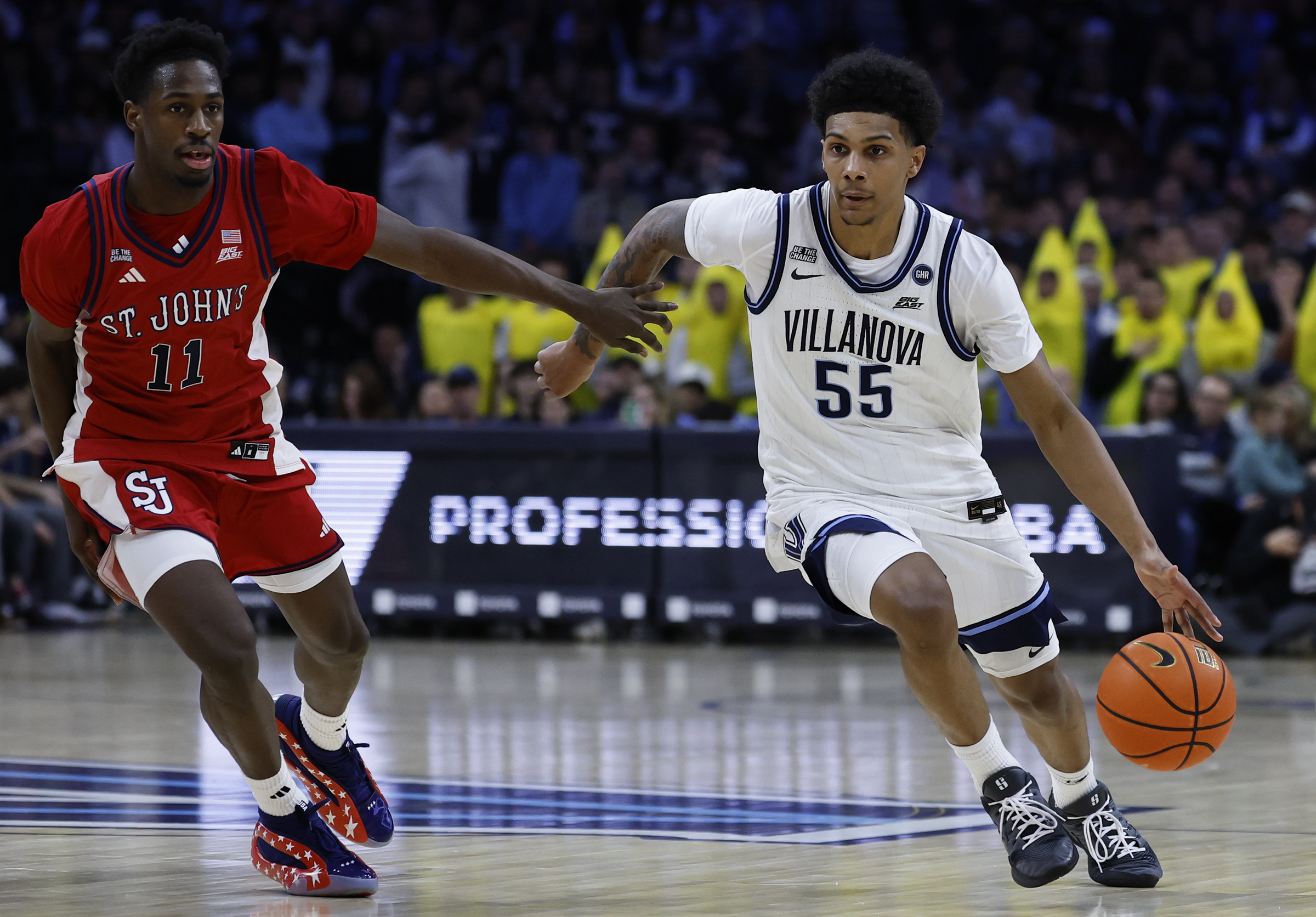
HARTFORD, Conn. — Devin Askew drove into the paint with Villanova trailing Connecticut by just one point inside two minutes to play. The defense collapsed, so Askew kicked the ball to the wing and into the waiting hands of … Kevin Willard.
The Villanova coach pounded the basketball onto the court with two hands. One of Villanova’s 11 turnovers came at an inopportune time.
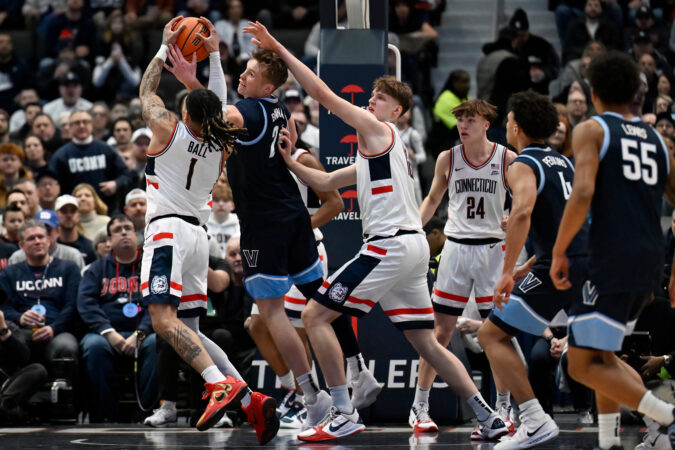
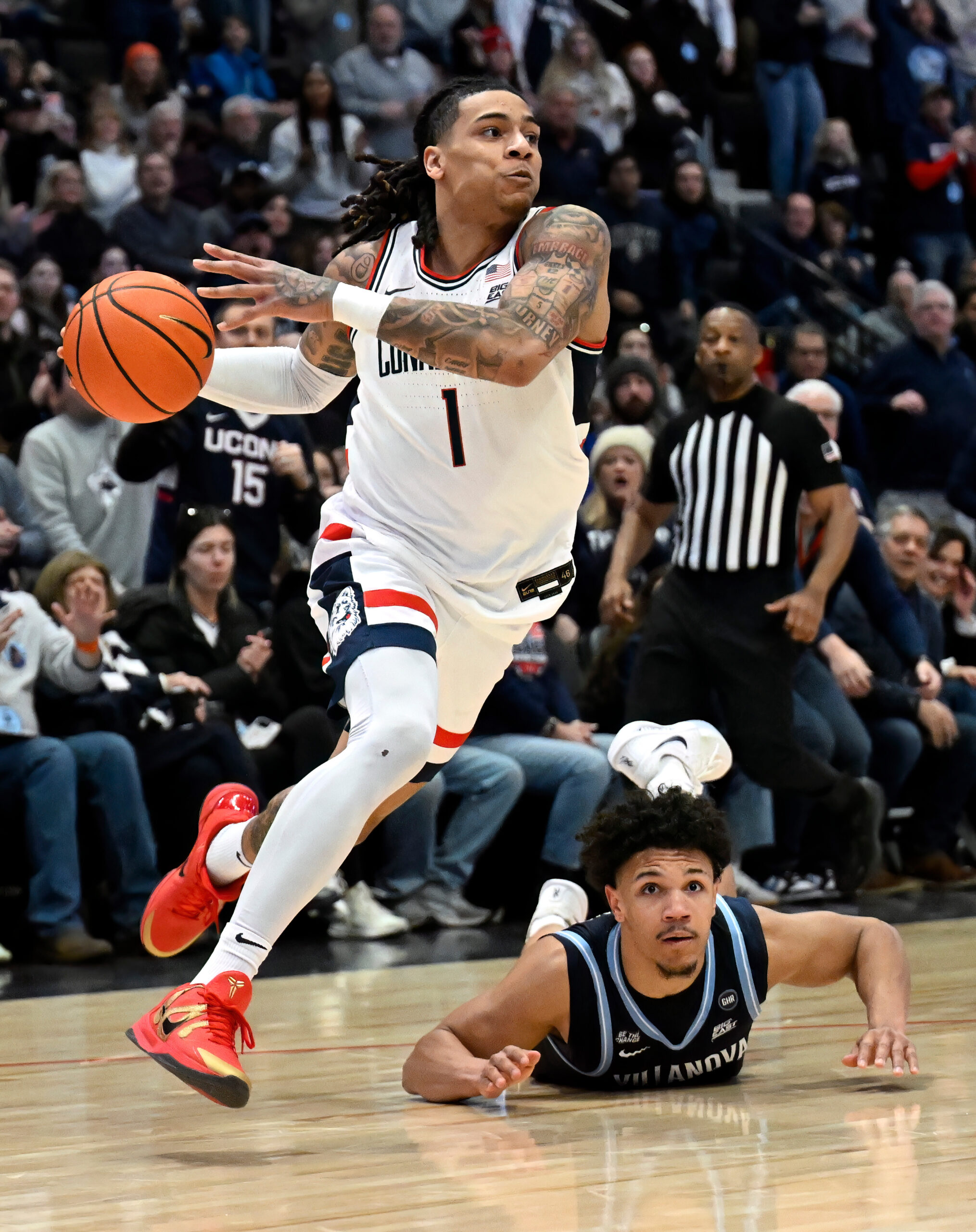
The Wildcats later had a lead with less than a minute on the clock, and they still did take the second-ranked team in the country to overtime, but Askew’s turnover was one of many little moments that didn’t go Villanova’s way in a 75-67 loss at PeoplesBank Arena.
Where to start? There was Acaden Lewis’ out-of-control drive down two in overtime with just over a minute to go. Back in regulation, Bryce Lindsay missed an open runner in the paint shortly after the Askew turnover. Then Villanova’s leading scorer, who was held to three points and didn’t make any of his eight attempts, had a three-point attempt blocked in a tie game with less than 30 seconds to play.
Villanova started overtime with a Tyler Perkins three-pointer, then got the ball back when Perkins drew a charging foul. But instead of building on the lead, Lindsay had his pocket picked by Silas Demary Jr., leading to a runout dunk from Tarris Reed Jr. Perkins’ triple, 12 seconds into overtime, was Villanova’s only made basket of the extra session.
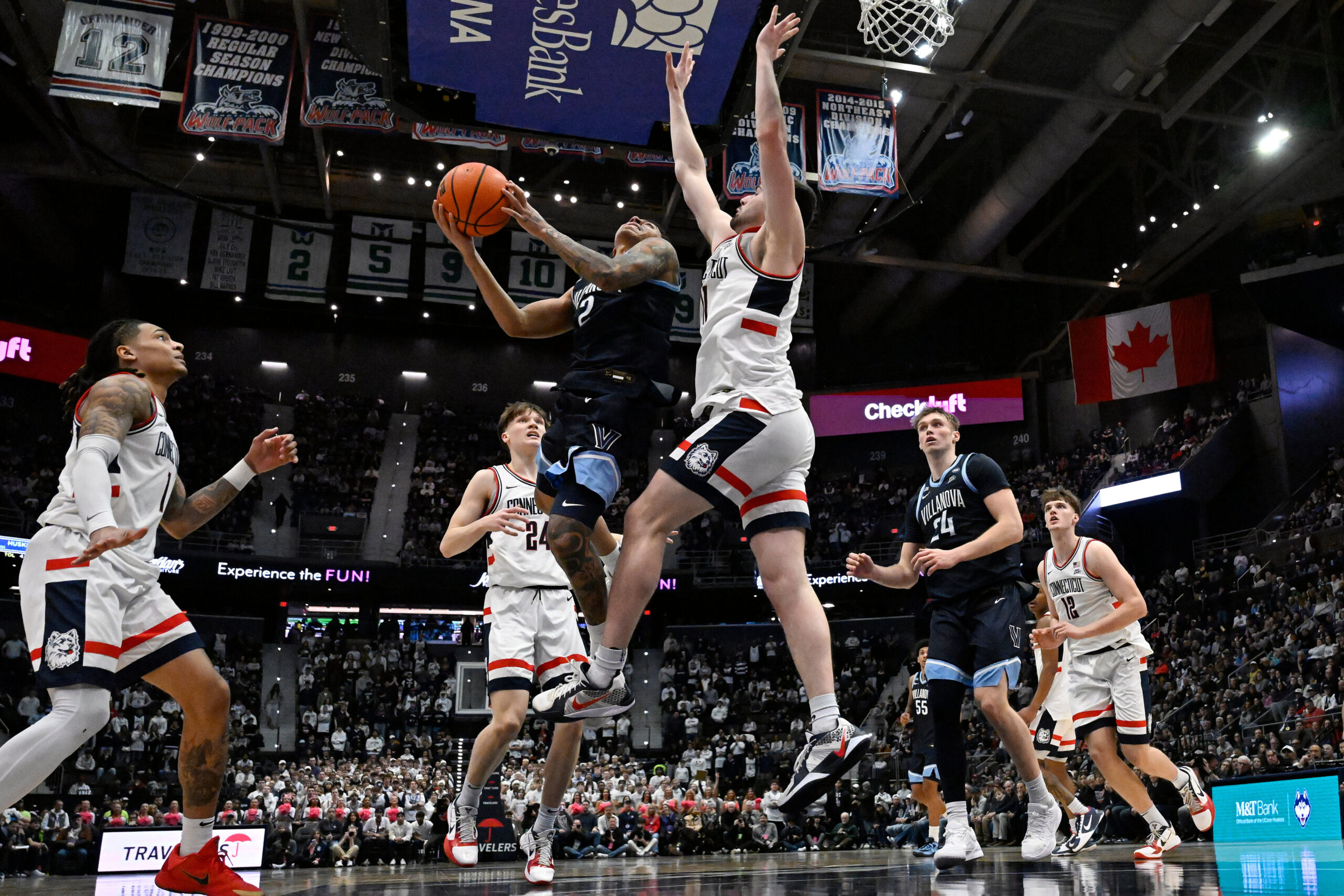
Villanova guard Bryce Lindsay shoots as UConn forward Alex Karaban defends on Saturday.
“It just hurts,” said Villanova senior big man Duke Brennan, who struggled last week with the size and physicality of St. John’s but battled back in a big way Saturday. He had 16 points and 14 rebounds and, perhaps most importantly, made eight of his nine free-throw attempts in 40 minutes. “We fought until the end. That’s a great team over there.”
To be sure, there were things Villanova did well enough to win. You don’t take the No. 2 team in the country to overtime without doing things correctly. The Wildcats had answers for a lot of UConn’s offensive action. They held Alex Karaban, who averages nearly 14 points, off the scoreboard for the first 30 minutes (though he did finish with 17 points).
Perkins had 16 points and 10 rebounds and continued to be the physical and experienced guard presence Villanova needs. Askew, too, continued his strong stretch of games with 13 points, four rebounds, and three assists before he fouled out in overtime. Matt Hodge followed up consecutive games being held to four points or less with 12 points on 4-for-6 shooting from three-point range, including a corner three that gave Villanova a 61-59 lead with just over a minute to go.
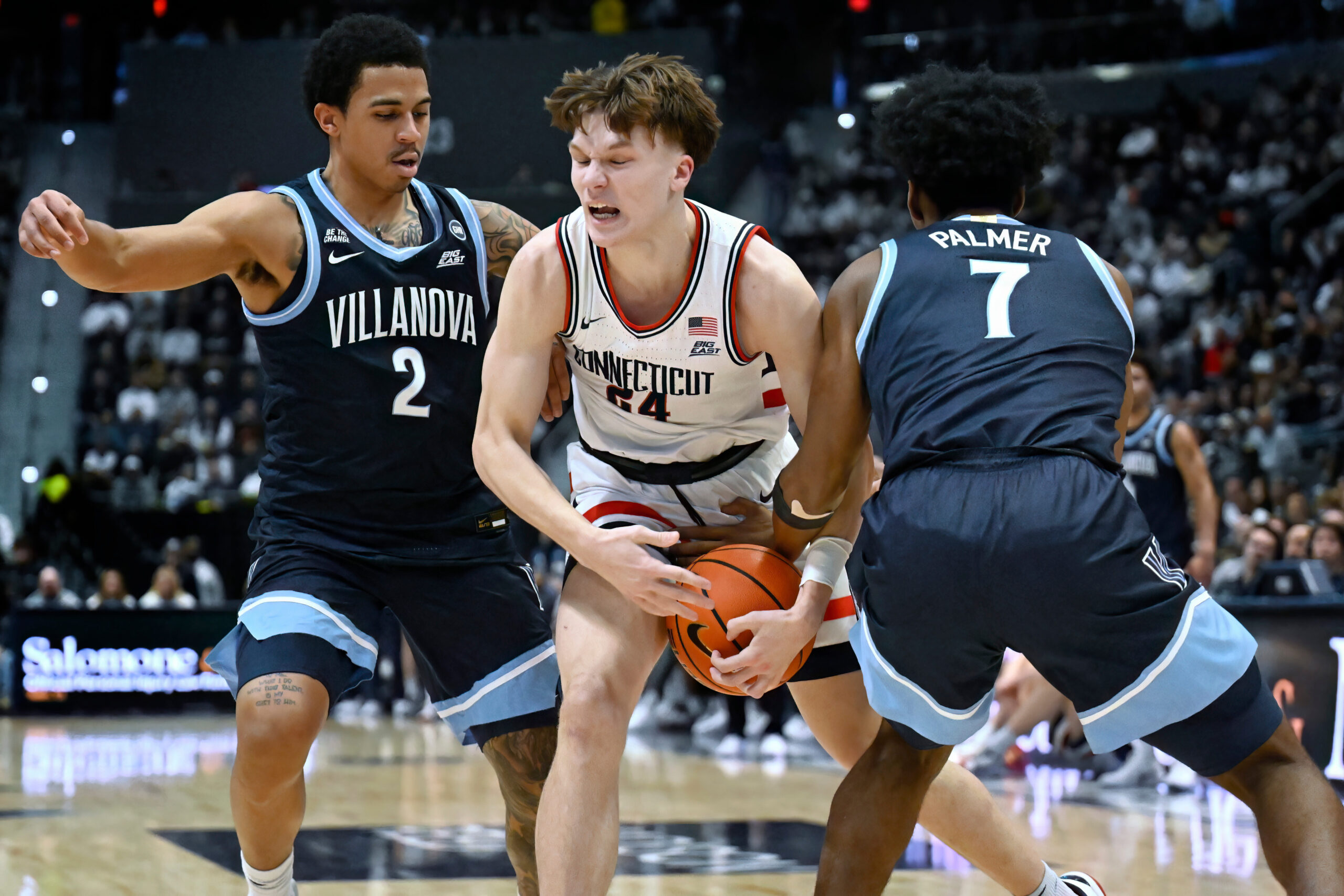
UConn guard Braylon Mullins is guarded by Villanova guards Bryce Lindsay (2) and Malachi Palmer (7) on Saturday.
But then came another costly error. Demary missed a driving layup, and Villanova couldn’t secure a rebound, allowing Reed to tip in the tying basket.
In the end, UConn made the plays when it mattered. Solo Ball, who led all scorers with 24 points, hit arguably the game’s biggest shot, a three-pointer with two minutes left in overtime that turned a one-point Villanova lead into a two-point deficit.
It is hard for Villanova to win when Lindsay doesn’t make a shot and Lewis goes 1-for-13 from the field. Yet, it nearly happened anyway.
“We’re a young team,” Willard said. “Guys were trying to make plays. We got to the rim. We didn’t finish at the rim, and I thought we had some opportunities at the rim.”
Villanova made 5 of 15 layup attempts.
“We’re still going down and playing high-level defense,” Willard said. “If we can continue to build on that, then we’ll get out in transition and get some easier buckets.”
It was the closing minutes that Willard said he needed to “get better at.” Lewis was seemingly benched for a large stretch of the second half. Brennan was in foul trouble. The Wildcats are a team without much depth.
“I got to put the right lineups out there at times and I’m learning a lot about certain guys and what to do,” Willard said. “At the end of the day, we don’t do a free throw box out, and we don’t get a huge rebound when we’re up four with about six minutes to go. … Sometimes to get there on the road you got to make sure you finish possessions, and I thought there was three or four times where we didn’t finish possessions with rebounds.”
An encouraging game nonetheless?
“No,” Willard replied. “I don’t like losing. We should have won that game.”
UConn guard Solo Ball, who led all scorers with 24 points, dribbles around Villanova guard Tyler Perkins on Saturday.
The reality for Villanova is Saturday’s loss is one that won’t necessarily hurt. A road upset helps a lot more than an eight-point overtime loss stings as far as the meaningful metrics go. The Wildcats are 15-5 overall and 6-3 in Big East play. They started the day rated 25th at KenPom and were still there by late Saturday afternoon. They have rest ahead before a Friday home game vs. Providence, and plenty of winnable games on the calendar as they continue to hunt for an at-large bid to the NCAA Tournament.
Plus, two more shots at the conference’s elite. On consecutive Saturdays, Villanova took St. John’s and Connecticut to the brink.
“The good thing about conference is you play every team twice,” Brennan said. “We get another shot at those dudes. St. John’s we felt like we didn’t play good at all, all throughout our program. This game we felt like we really battled.
“It feels like it got away and we felt like we were there the whole game. There are certain little things that come down at the end of the game where it can flip one way. It wasn’t on our side tonight.”