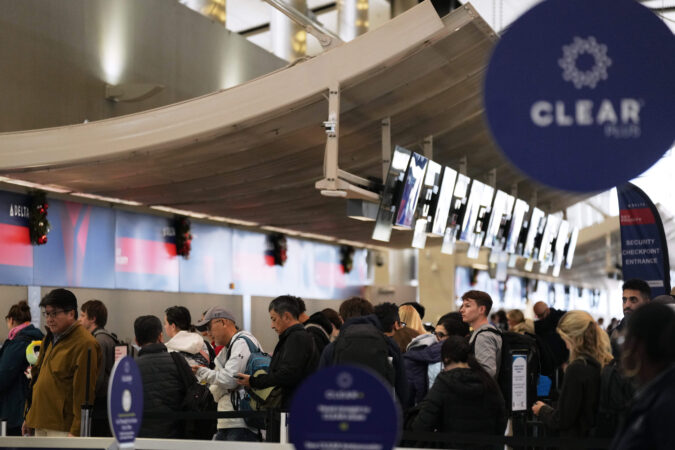
WASHINGTON — Foreigners who are allowed to come to the United States without a visa could soon be required to submit information about their social media, email accounts and extensive family history to the Department of Homeland Security before being approved for travel.
The notice published Wednesday in the Federal Register said Customs and Border Protection is proposing collecting five years’ worth of social media information from travelers from select countries who do not have to get visas to come to the U.S. The Trump administration has been stepping up monitoring of international travelers and immigrants.
The announcement refers to travelers from more than three dozen countries who take part in the Visa Waiver Program and submit their information to the Electronic System for Travel Authorization (ESTA), which automatically screens them and then approves them for travel to the U.S. Unlike visa applicants, they generally do not have to go into an embassy or consulate for an interview.
DHS administers the program, which currently allows citizens of roughly 40 mostly European and Asian countries to travel to the U.S. for tourism or business for three months without visas.
The announcement also said that CBP would start requesting a list of other information, including telephone numbers the person has used over the past five years or email addresses used over the past decade. Also sought would be metadata from electronically submitted photos, as well as extensive information from the applicant’s family members, including their places of birth and their telephone numbers.
The application that people are now required to fill out to take part in ESTA asks for a more limited set of questions such as parents’ names and current email address.
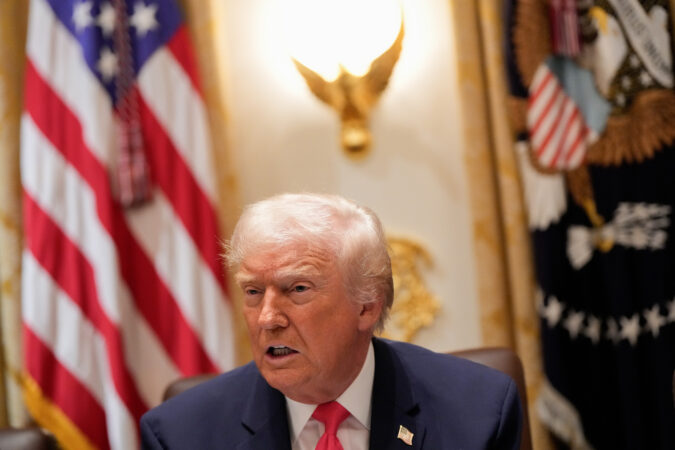
Asked at a White House event whether he was concerned the measure might affect tourism to the U.S., President Donald Trump said no.
“We want safety, we want security, we want to make sure we’re not letting the wrong people come into our country,” Trump said.
The public has 60 days to comment on the proposed changes before they go into effect, the notice said.
CBP officials did not immediately respond to questions about the new rules.
The announcement did not say what the administration was looking for in the social media accounts or why it was asking for more information.
But the agency said it was complying with an executive order that Trump signed in January that called for more screening of people coming to the U.S. to prevent the entry of possible national security threats.
Travelers from countries that are not part of the Visa Waiver Program system are already required to submit their social media information, a policy that dates back to the first Trump administration. The policy remained during Democratic President Joe Biden’s administration.
But citizens from visa waiver countries were not obligated to do so.
Since January, the Trump administration has stepped up checks of immigrants and travelers, both those trying to enter the U.S. as well as those already in the country. Officials have tightened visa rules by requiring that applicants set all of their social media accounts to public so that they can be more easily scrutinized and checked for what authorities view as potential derogatory information. Refusing to set an account to public can be considered grounds for visa denial, according to guidelines provided by the State Department.
U.S. Citizenship and Immigration Services now considers whether an applicant for benefits, such as a green card, “endorsed, promoted, supported, or otherwise espoused” anti-American, terrorist or antisemitic views.
The heightened interest in social media screening has drawn concern from immigration and free speech advocates about what the Trump administration is looking for and whether the measures target people critical of the administration in an infringement of free speech rights.
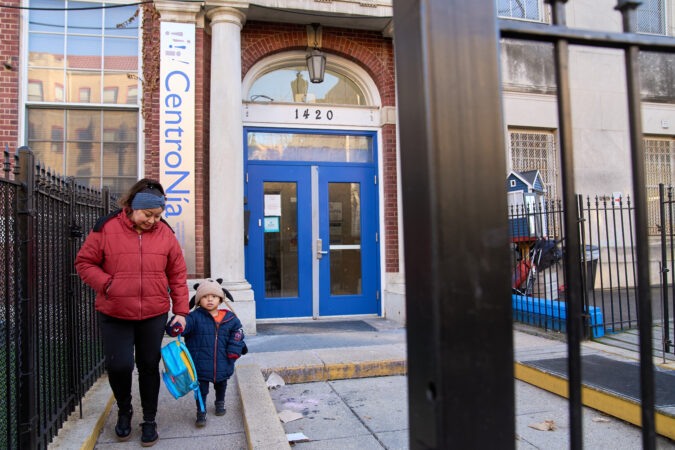
WASHINGTON — Not long after President Donald Trump took office in January, staff at CentroNía bilingual preschool began rehearsing what to do if Immigration and Customs Enforcement officials came to the door. As ICE became a regular presence in their historically Latino neighborhood this summer, teachers stopped taking children to nearby parks, libraries, and playgrounds that had once been considered an extension of the classroom.
And in October, the school scrapped its beloved Hispanic Heritage Month parade, when immigrant parents typically dressed their children in costumes and soccer jerseys from their home countries. ICE had begun stopping staff members, all of whom have legal status, and school officials worried about drawing more unwelcome attention.
All of this transpired before ICE officials arrested a teacher inside a Spanish immersion preschool in Chicago in October. The event left immigrants who work in childcare, along with the families who rely on them, feeling frightened and vulnerable.
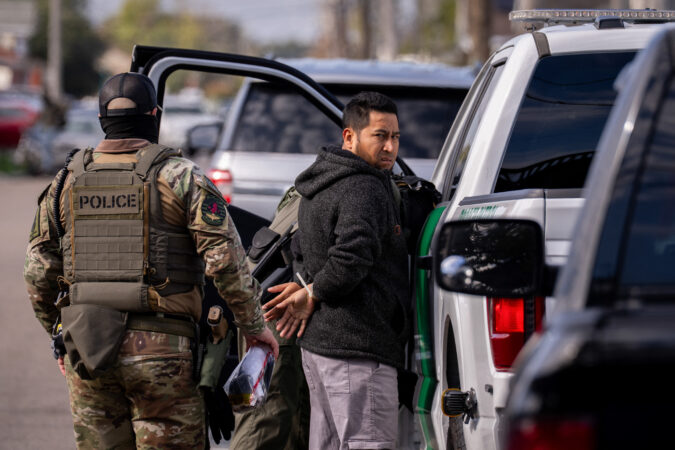
Trump’s push for the largest mass deportation in history has had an outsized impact on the childcare field, which is heavily reliant on immigrants and already strained by a worker shortage. Immigrant childcare workers and preschool teachers, the majority of whom are working and living in the U.S. legally, say they are wracked by anxiety over possible encounters with ICE officials. Some have left the field, and others have been forced out by changes to immigration policy.
At CentroNía, CEO Myrna Peralta said all staff must have legal status and work authorization. But ICE’s presence and the fear it generates have changed how the school operates.
“That really dominates all of our decision making,” Peralta said.
Instead of taking children on walks through the neighborhood, staff members push children on strollers around the hallways. And staff converted a classroom into a miniature library when the school scrapped a partnership with a local library.
The childcare industry depends on immigrants
Schools and childcare centers were once off limits to ICE officials, in part to keep children out of harm’s way. But those rules were scrapped not long after Trump’s inauguration. Instead, ICE officials are urged to exercise “common sense.”
Tricia McLaughlin, spokesperson for the Department of Homeland Security, defended ICE officials’ decision to enter the Chicago preschool. She said the teacher, who had a work permit and was later released, was a passenger in a car that was being pursued by ICE officials. She got out of the car and ran into the preschool, McLaughlin said, emphasizing the teacher was “arrested in the vestibule, not in the school.” The man who had been driving went inside the preschool, where officials arrested him.
About one-fifth of America’s childcare workers were born outside the United States and one-fifth are Latino. The proportion of immigrants in some places, particularly large cities, is much higher: In the District of Columbia, California, and New York, around 40% of the childcare workforce is foreign-born, according to UC Berkeley’s Center for the Study of Child Care Employment.
Immigrants in the field tend to be better educated than those born in the United States. Those from Latin America help satisfy the growing demand for Spanish-language preschools, such as CentroNía, where some parents enroll their kids to give them a head start learning another language.
The American Immigration Council estimated in 2021 that more than three-quarters of immigrants working in early care and education were living and working in the U.S. legally. Preschools like CentroNía conduct rigorous background checks, including verifying employees have work authorization.
There is evidence the toll on the workforce is mounting. Since January, the number of immigrants working in childcare has dropped by 39,000, according to a report published Wednesday by New America, a left-leaning think tank. This, in turn, made it more challenging for U.S.-born mothers of children under 6 to work. The researchers estimate there are 79,000 fewer of them in the workforce because of the increase in ICE arrests.
Beyond the deportation efforts, the Trump administration in recent months has stripped legal status from hundreds of thousands of immigrants. Many of them had fled violence, poverty or natural disasters in their homes and received Temporary Protected Status, which allowed them to live and work legally in the U.S. But Trump ended those programs, forcing many out of their jobs — and the country. Just last month, 300,000 immigrants from Venezuela lost their protected status.
CentroNía lost two employees when they lost their TPS, Peralta said, and a Nicaraguan immigrant working as a teacher left on his own. Tierra Encantada, which runs Spanish immersion preschools in several states, had a dozen teachers leave when they lost their TPS.
Fear is affecting even those in the U.S. legally
At CentroNía, one staff member was detained by ICE while walking down the street and held for several hours, all the while unable to contact colleagues to let them know where she was. She was released that evening, said the school’s site director, Joangelee Hernández-Figueroa.
Another staff member, teacher Edelmira Kitchen, said she was pulled over by ICE on her way to work in September. Officials demanded she get out of her car so they could question her. Kitchen, a U.S. citizen who immigrated from the Dominican Republic as a child, said she refused and they eventually let her go.
“I felt violated of my rights,” Kitchen said.
Hernández-Figueroa said ICE’s heightened presence during the federal intervention in the city, has taken a toll on employees’ mental health. Some have gone to the hospital with panic attacks in the middle of the school day.
When the city sent mental health consultants to the school earlier this year as part of a partnership with the Department of Behavioral Health, school leadership had them work with teachers rather than students, worried their anguish would spill over to the classroom.
“If the teachers aren’t good,” Hernández-Figueroa said, “the kids won’t be good either.”
It’s not just adults who are feeling more anxious. At a Guidepost Montessori School in Portland, Ore., teachers observed preschoolers change in the weeks after an ICE arrest near the school in July. After pulling over a father who was driving his child to the school, officials encountered him in the school parking lot and tried to arrest him. In the ensuing commotion, the school went into lockdown: Children were pulled off the playground, and teachers played loud music and had children sing along to drown out the yelling.
Amy Lomanto, who heads the school, said teachers noticed more outbursts among students, and more students retreating to what the school calls “the regulation station,” an area in the main office with fidget toys kids can use to calm themselves.
She said what unfolded at her school underscored that even wealthy communities, like the one the school serves, are not immune from exposure to these kinds of events.
“With the current situation, more and more of us are likely to experience this kind of trauma,” she said. “That level of fear now is permeating a lot more throughout our society.”
Donald Trump let us know exactly who he is when he rode down that escalator in June 2015, declared his presidential candidacy, and said this about Mexicans: “They’re bringing drugs. They’re bringing crime. They’re rapists.”
We’ve heard him refer to Haiti, African nations, and El Salvador as “shithole countries.” Last year, he accused Haitians in Springfield, Ohio, of eating their neighbors’ dogs and cats. Trump allows mask-wearing U.S. Immigration and Customs Enforcement agents to terrorize undocumented immigrants, most recently in New Orleans, as reported by my colleague Will Bunch.
No one should be surprised he called Somalis “garbage” who “contribute nothing” and should leave America during a cabinet meeting last week.
“These are people that do nothing but complain,” Trump said. “When they come from hell, and they complain and do nothing but bitch, we don’t want them in our country. Let them go back to where they came from and fix it.”
Trump talks a really good game about putting America First, but he really means people of color last. An example of that was when he suspended refugee admissions, but then turned around and made an exception for white South Africans.
Even knowing Trump’s agenda, it’s still upsetting to hear a sitting U.S. presidentdenigrate the roughly 250,000 Somalis in this country.
He’s talking about law-abiding folks like Salma Hussein. She made headlines in 2022 when she became the first female Somali principal in her school district in suburban Minneapolis,and possibly in the entire state of Minnesota.
Hussein was born in Somalia, but has lived in America since the age of 7, and is a naturalized citizen. She’s a wife. She’s a mother of two. She’s a good person. “It’s really hurtful, and he’s giving permission to people to be hateful, and that’s really disheartening,” Hussein said.
I stumbled across some of her social media posts about what’s been happening and decided to reach out. When I got her on the phone last week, Hussein, 37, and I talked about a lot of things, including how a stranger had emailed her saying: “Watch out. You’re not wanted. We’re taking out the trash from our country.”
Salma Hussein, a Somali American who’s lived in the U.S. since she was 7, said the president is “giving permission to people to be hateful.”
I shouldn’t even have to write this:Most Somalis are honest, law-abiding people. Many settled in Minnesota during the early 1990s after fleeing their war-torn country. Of the state’s foreign-born Somalis, most are naturalized U.S. citizens. They have every right to live in the Land of 10,000 Lakes. They vote. They pay taxes. Trump is their president, too. Some, oddly enough, even voted for him.
I wish they’d thought longer and harder before voting for Trump, who posted on Truth Social that Minnesota is “a hub of fraudulent money laundering” and announced he was terminating Somalis’ Temporary Protected Status.
Dozens of Somalis in Minnesota are facing charges in connection with a nefarious scheme to defraud the U.S. government of hundreds of millions in funding that had been set aside to feed hungry children atthe height of the pandemic. Still, it’s unfair for a sitting U.S. president to stereotype an entire community for the actions of a subset. “As a Somali American, I’m just as upset about the people in my community who use fraud to make money,” Hussein told me.
Somalis, who have built a large and influential enclave inMinnesota, are terrified that masked agents from ICE will take them into custody. Some have started carrying their passports. Others refuse to even leave their homes.
“This kind of dangerous rhetoric and this level of dehumanizing can lead to dangerous actions by people who listen to the president,” said Rep. Ilhan Omar (D., Minn.) on CBS’s Face the Nation on Sunday.
It’s textbook Trump — and, of course, MAGA loves it.
Rep. Ilhan Omar (D., Minn.) speaks during a news conference, May 24, 2023, on Capitol Hill in Washington.
Which ethnic minority Trump will single out next for harassment is anybody’s guess. The only thing we can be certain of is that they will be from a Black or brown community.
Sabrina Carpenter’s not mincing words when it comes to the Trump administration using one of her songs in a video promoting ICE and the Department of Homeland Security.
On Tuesday, the pop princess condemned the White House for posting a video featuring ICE arresting protesters and undocumented immigrants to one of her songs. The video, which was published on the White House’s X account one day earlier, was captioned “Have you ever tried this one?“ alongside the hearteye emoji and was paired with Carpenter’s track ”Juno.”
It’s a nod to a scene in Carpenter’s just-wrapped “Short n’ Sweet” tour, where she would playfully “arrest” someone in the crowd “for being so hot,” giving them a souvenir pair of fuzzy pink cuffs before performing “Juno.”
Carpenter, a Bucks County native, replied to the post, “this video is evil and disgusting. Do not ever involve me or my music to benefit your inhumane agenda.” Her response has been viewed more than 2 million times.
this video is evil and disgusting. Do not ever involve me or my music to benefit your inhumane agenda.
It’s the latest in a series of similar incidents, where artists ranging from Beyoncé to the Rolling Stones have objected to the White House using their music in videos promoting the Trump administration’s agenda without their consent.
Last month, Olivia Rodrigo had a similar exchange in the comments of a White House Instagram video demanding that undocumented immigrants self-deport over the singer’s track “All-American Bitch.” Rodrigo, who is Filipino American, commented at the time, “Don’t ever use my songs to promote your racist, hateful propaganda.”
The White House also used a song by Carpenter’s friend and musical collaborator, Berks County’s Taylor Swift, last month. Fans of Swift’s called out the use of “The Fate of Ophelia” in a video celebrating President Donald Trump, despite the president’s repeated slights toward the pop star. Swift herself did not comment on the video, but she has previously criticized Trump for posting AI photos of her on his social platforms.
Carpenter, 26, worked with HeadCount on her “Short n’ Sweet” tour, registering 35,814 voters — more than any other artist the nonpartisan voter registration group worked with in 2024. She’s been vocal about her support for LGBTQ+ rights and has publicly donated to the National Immigration Law Center.
When Trump won last year, she took a moment during her concert to say “I’m sorry about our country and to the women here, I love you so, so, so much.”
“Here’s a Short n’ Sweet message for Sabrina Carpenter: We won’t apologize for deporting dangerous criminal illegal murderers, rapists and pedophiles from our country,” White House spokesperson Abigail Jackson told the New York Times. “Anyone who would defend these sick monsters must be stupid, or is it slow?”
The number of immigrants confined in federal detention facilities has surged past 65,000, perhaps the highest figure ever and a two-thirds increase since President Donald Trump took office in January.
The 65,135 in custody across the nation represents a shattering of the 60,000 threshold, which was last passed briefly in August before dropping back down. The new figure is up from 39,238 when Trump was inaugurated, as his administration quickly undertook an unprecedented campaign to arrest, detain, and deport immigrants.
“It’s quite stunning,” said Jonah Eaton, a Philadelphia immigration attorney who teaches about detention at Temple University’s Beasley School of Law. “They are dead serious about moving as many people out of the country as possible, and keeping them detained while they do it.”
The data, current as of Nov. 16, come from the Transactional Records Access Clearinghouse, an information-and-research organization that obtains information from ICE and other federal agencies.
An ICE spokesperson said the agency could not comment on statistics compiled by third parties.
window.addEventListener(“message”,function(a){if(void 0!==a.data[“datawrapper-height”]){var e=document.querySelectorAll(“iframe”);for(var t in a.data[“datawrapper-height”])for(var r,i=0;r=e[i];i++)if(r.contentWindow===a.source){var d=a.data[“datawrapper-height”][t]+”px”;r.style.height=d}}});
The Trump administration says it is arresting the “worst of the worst,” criminal immigrants who have committed serious and sometimes violent offenses. But the new data show ― as they consistently have ― that 74% of those in detention have no criminal convictions.
“The question is ‘What’s going to be the ceiling for this?’ as the administration has designs to expand the capacity to detain individuals as arrests increase,” said Cris Ramon, an independent immigration consultant in Washington. “If the goal is to remove as many people as possible, they’re going to be leaning on the detention centers to be, first and foremost, a staging ground.”
Ramon said he was not surprised by the high detention numbers, given the Trump administration’s determination to carry out large-scale operations in cities like Charlotte, N.C., and Chicago.
The Moshannon Valley Processing Center outside Philipsburg, a U.S. Immigration and Customs Enforcement facility in Clearfield County, Pennsylvania that is privately operated by the GEO Group under contract with ICE. It is the largest ICE detention center in the Northeast United States.
Today 81% of people in detention were arrested by ICE, up from 38% when Trump took office. The president has demanded that Immigration and Customs Enforcement make more arrests more quickly, and won new funding to encourage that.
The agency generally operates in the interior United States.
New Jersey has two detention facilities, in Newark and Elizabeth, and might be getting a third, in South Jersey. The administration plans to hold detainees at Joint Base McGuire-Dix-Lakehurst, one of two military sites that have been designated for that purpose. The other is Camp Atterbury in Indiana.
Many of those in custody are subject to “mandatory detention,” meaning they are not allowed to seek release on bond. In the summer, the administration announced a policy change that prevented immigration judges from granting bond to anyone in detention who had entered the United States without documentation.
The result, according to the National Immigration Law Center, is that the Trump administration has ensured that migrants have almost no way out of detention “other than death or deportation.”
ICE is arresting, detaining, and refusing to release far more people than before, the law center said, including many who rarely would have been held in the past.
Immigration detention is civil in nature, to hold people as they progress through their court cases or await deportation. It is not supposed to be a punishment.
When Joe Biden assumed the presidency in 2021, there were 14,195 people in immigration detention. That figure more than doubled during his term and eventually topped 39,000.
“Trump’s cruel mass detention and deportation agenda has reached a previously unimaginable scope and scale,” Carly Pérez Fernández, communications director at Detention Watch Network in Washington, said in a statement.
She called the new detention figure “a grim reminder” of a larger plan that is “targeting people based on where they work and what they look like, destabilizing communities, separating families, and putting people’s lives at risk.”
ICE holds detainees across the country, in ICE facilities, in federal prisons, in privately owned lockups, and in state and local jails. As detentions have surged, so has the need for places to house people.
As of this summer, ICE detained people in all 50 states as well as in Guantánamo Bay, Cuba, Puerto Rico, Guam, the Northern Mariana Islands, and the U.S. Virgin Islands, according to the Vera Institute of Justice in New York.
Texas had the most facilities with 69, and Florida was second with 40, the institute said.
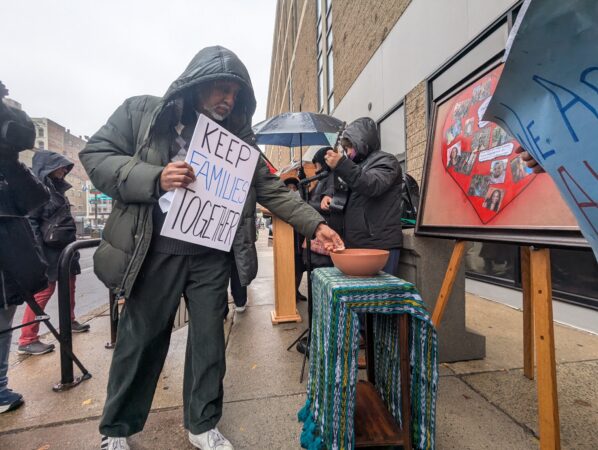
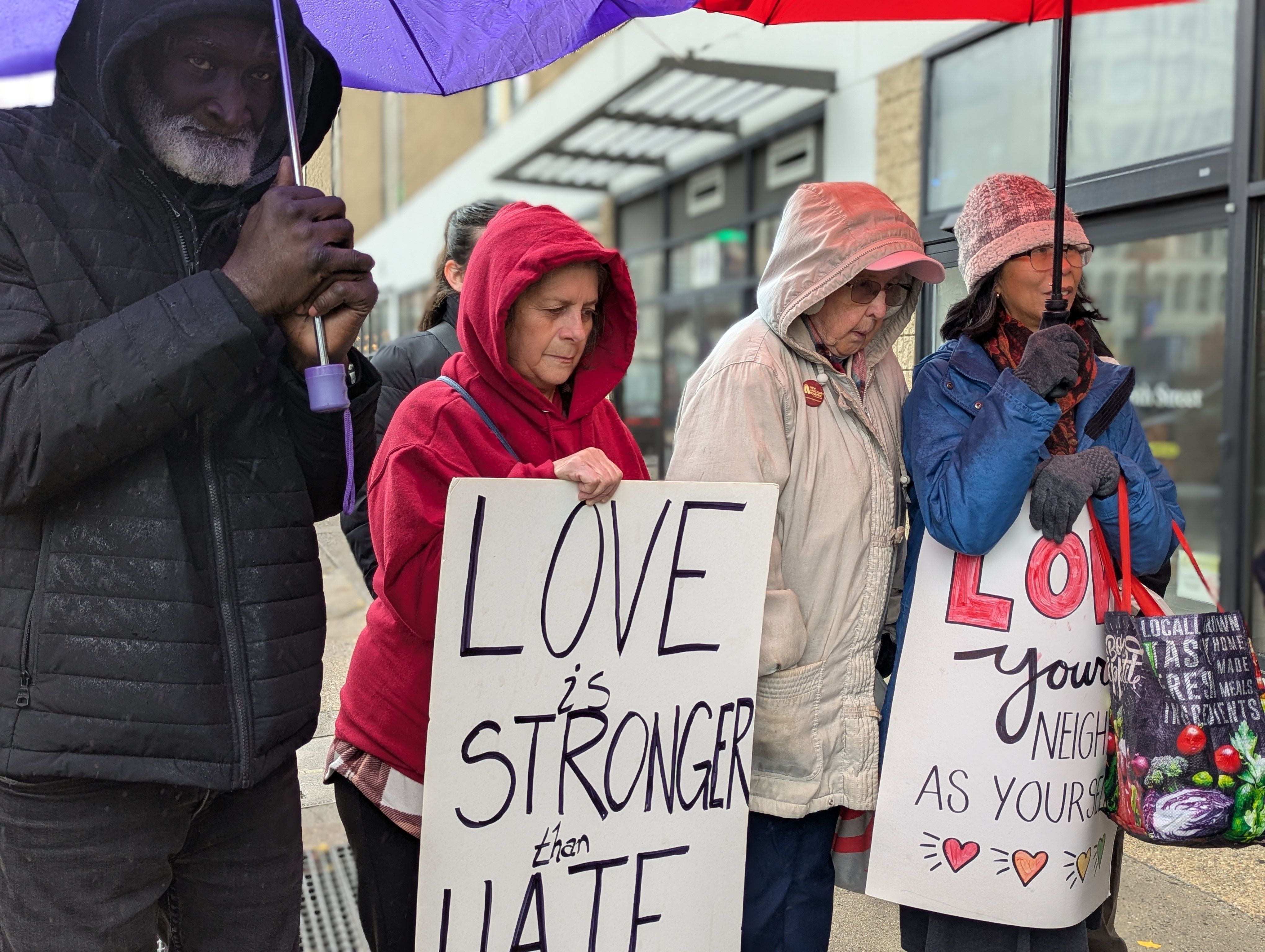
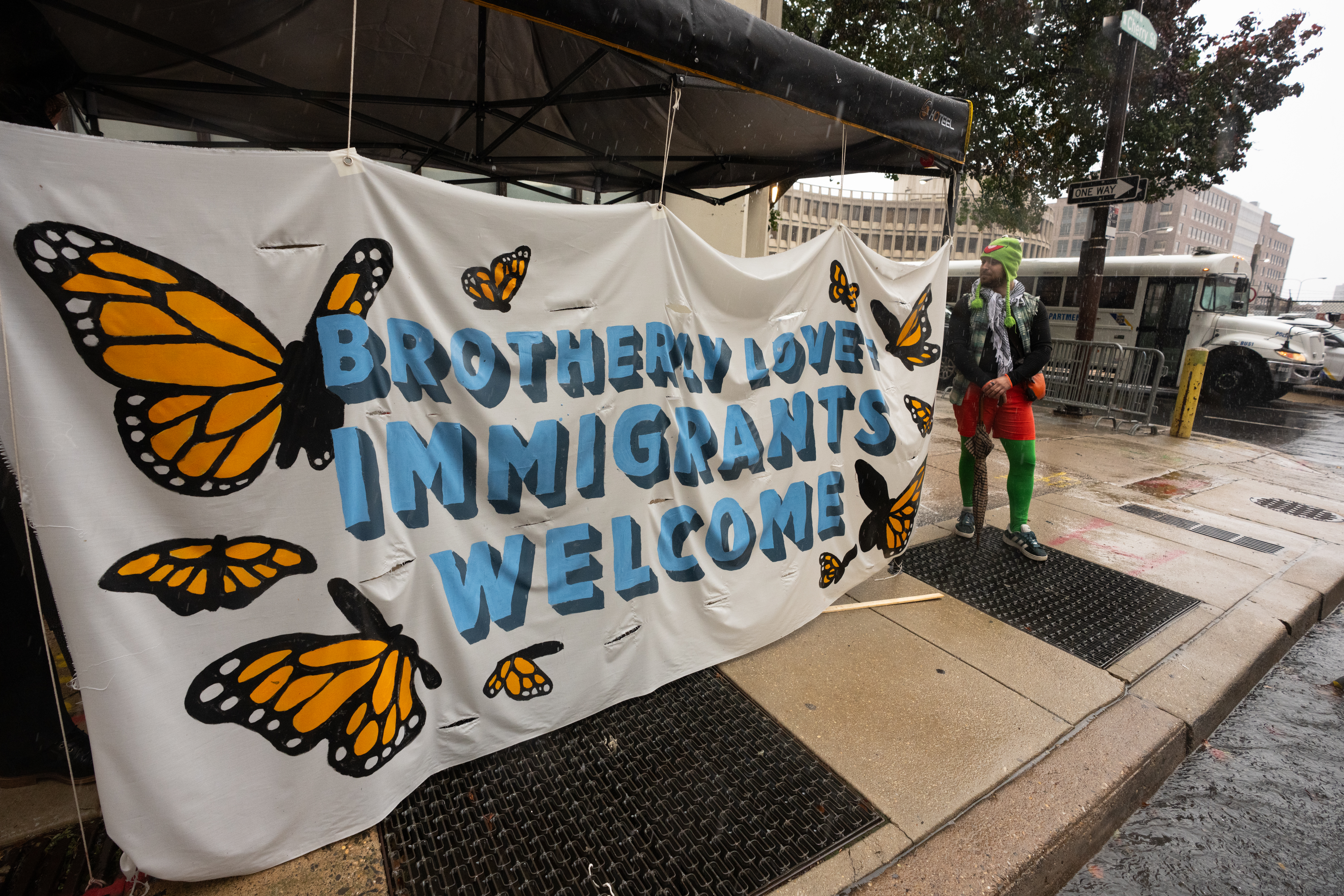
On a rainy Wednesday a week before Thanksgiving, members of the congregations of the Roman Catholic parishes of Holy Innocents and St. Joan of Arc gathered in front of the U.S. Immigration and Customs Enforcement office in Center City.
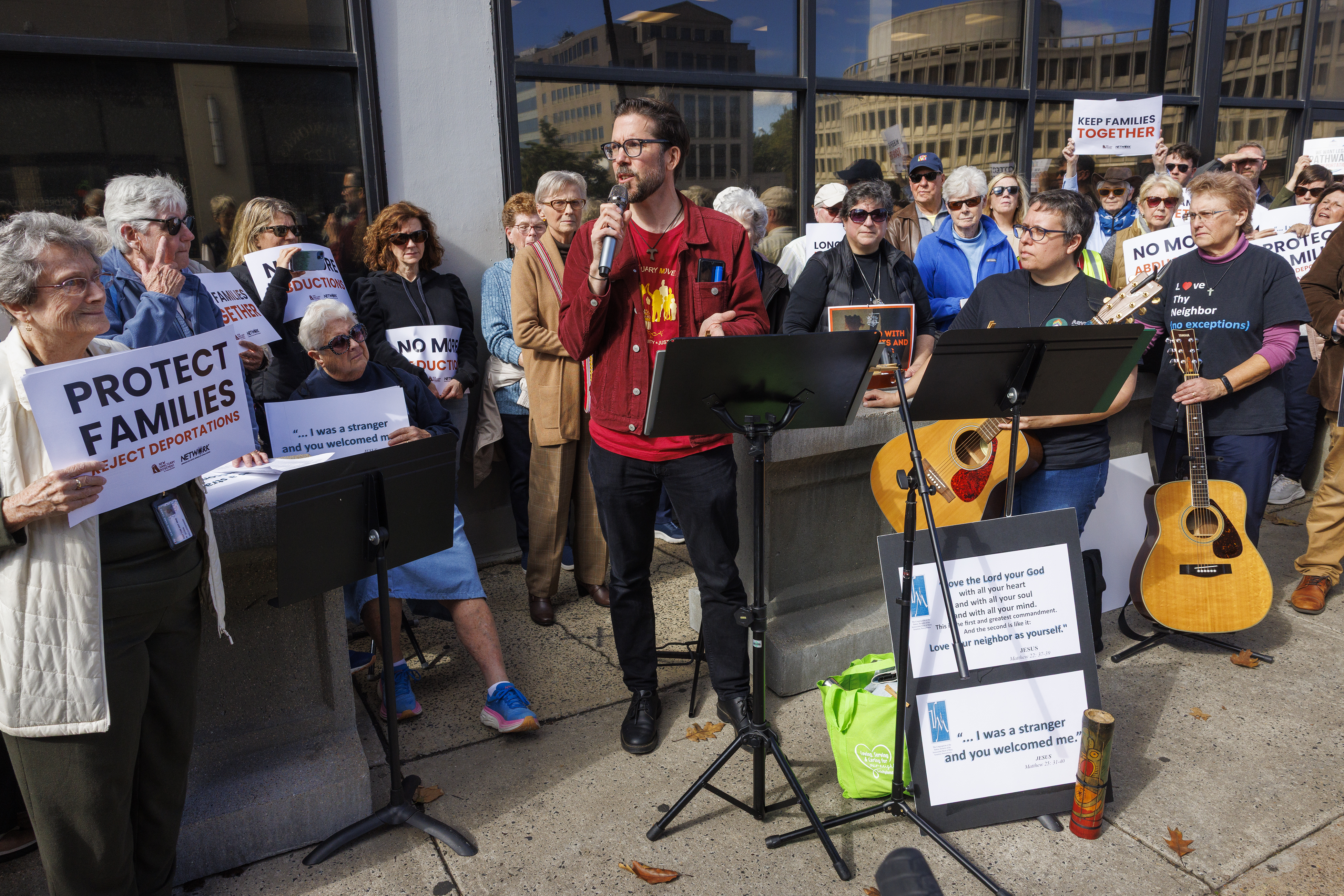
Another religious group appeared at ICE’s door near Eighth and Cherry Streets on the day before Thanksgiving. This time, it was an interfaith mix of folks led by Christianity for Living Ministries.
And there will be more. On Wednesdays to come, members of Mennonite Action, a couple of United Methodist churches, a Quaker meeting, two synagogues, a Presbyterian church, the Sisters of St. Joseph of Philadelphia and more Catholic parishes have all pledged to take part in a recurring demonstration that Neilson calls ICE Profest 40 — an ecumenical and interfaith action to oppose the government’s pitiless anti-immigrant crackdown slated to take place over 40 weeks. The word profest was coined by Neilson to mean “an amalgamation of faith expressed through proclamation, prayer, and protest.”
Members of the congregations of Holy Innocents and St. Joan of Arc parishes gathered Nov. 19 for an interfaith prayer vigil outside the ICE office in Center City. It was the kickoff of 40 weeks of vigils planned by faith communities across Philadelphia.
But organizers are hopeful that whatever their movement might lack in numbers, it more than makes up for in the power of their spiritual conviction — a conviction that is grounded in the Bible and other sacred texts.
“We proclaim God’s word of justice, mercy, and humility (Micah 6:8),” Neilson told me via email. “We pray for ICE agents and authorities (St. Matthew 5:44-45; St. Luke 3:24; 6:27-28; I Timothy 2:1-4), many of whom are conflicted and have crises of conscience. [We pray] for their courage, transformation, and turning, and for the protection and provision of the detainees and deportees, who are traumatized, from family separation and living in constant fear (Isaiah 1:17; Psalm 10:17-18; 82:3; St. Luke 4:18-19).”
“And,” he added, “we protest ICE activity, i.e., the orders ICE agents are given and the ways in which they are carried out, that dehumanizes and victimizes those created in the image and likeness of God [who] are our neighbors, and [which] disobeys and violates God’s command to welcome and love the stranger and alien (Leviticus 19:33-34; Deuteronomy 10:18-19; St. Matthew 25:31-46).”
The Rev. Christopher Neilson said that demonstrators at the protests pray for detainees and deportees who have been traumatized by family separation and are living in fear. They also pray for the safety of ICE agents and that the organization’s leaders might change their policies.
The number of weeks — 40 — during which this will happen has biblical significance, Neilson said, as a period of transition from trial to transformation. (Think of the 40 days and 40 nights Jesus traveled in the wilderness before the crucifixion.)
For me, the timing of when ICE Profest 40 is gearing up is especially resonant.
We’re moving from Thanksgiving — a secular holiday which, in good years, I get to celebrate with a family that includes foreign-born and U.S.-born folks — into Advent.
The beginning of the liturgical year is when Christians like me move from anticipation to action as we wait to celebrate the birth of Christ into a humble, migrant human family. I love the hush that precedes a world on the brink of transformation. I suspect that is why the quiet power of ICE Profest 40 actions moves me so deeply.
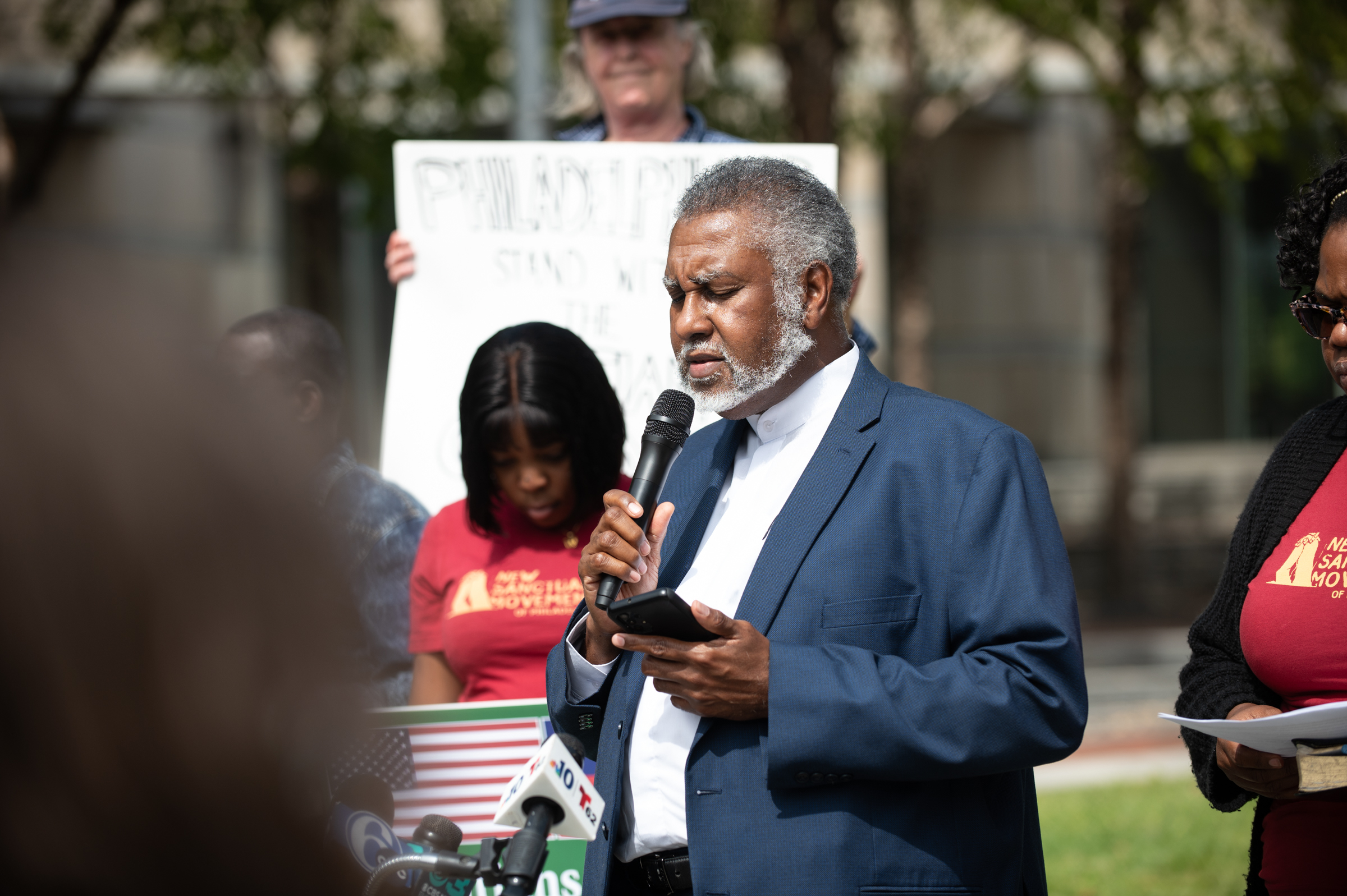
“The tone of these vigils is different,” Peter Pedemonti, the codirector of New Sanctuary Movement of Philadelphia, told me via email.
Peter Pedemonti, codirector of the New Sanctuary Movement, addressing Catholics gathered outside the ICE office at Eighth and Cherry Streets, in October.
“They are not as loud as a protest, but they have the potential for big impact,” he said. “We are seeing people sign up who are new to public witness, and so they serve as an entry into collective action. This is important as we fight not only the attacks on immigrant communities, but also Trump’s rapid steps toward authoritarianism. We need everyone right now, and it is really important we have paths for new people to get involved.”
“I have been doing faith-rooted organizing for nearly 20 years. These spiritual tools we have work. We can’t always see the immediate impact, but I have seen them help win campaigns. And so I believe that when we bring them to ICE, we are engaging in something powerful,” Pedemonti added. “The religious community has an important role right now. We are the moral voice, and when we see Trump trample our faith teachings and our democracy, it is critical [that] faith communities speak out.”
While my own faith tradition has long had priests, religious men and women accompanying immigrants and advocating for their rights, the United States Conference of Catholic Bishops has been pretty circumspect about commenting on the Trump administration’s policies.
But for Catholics who supported Trump — 55% overall (62% of white Catholics, 41% of Hispanic Catholics), according to the Pew Research Center — the Catholic bishops’ statement could serve as a come-to-Jesus (heh!) moment.
It is certainly a clear call for transformation during this most transformative of seasons.
I won’t speak for other people of faith, but for me, those are questions that go beyond political affiliation or temporal power, and touch on the “act justly, love mercy, and walk humbly” core requirements Neilson referenced.
On the first Sunday of Advent, one of the readings will be Isaiah’s proclamation that the people “shall beat their swords into plowshares, and their spears into pruning hooks; one nation shall not raise the sword against another, nor shall they train for war again,” and that throws me right back into the fact that both the Catholic bishops in their statement, and the Rev. Neilson in his description of the ICE Profest 40 vigils, reference ICE agents.
ICE agents aren’t wielding swords, of course, but they do carry firearms and other implements with which they smash the windows and doors of terrified immigrants. And with the proposal that military members could be “trained” by deployment to U.S. cities to support ICE and U.S. Customs and Border Protection agents, it’s not that much of a stretch to make Isaiah fit the moment.
I’m going to confess something now. I’ve prayed often for immigrants, never for ICE agents. In fact, I bristled a bit when I heard the bishops equating the vilification immigrants have experienced with the vilification of ICE agents — no one has accused ICE agents of eating pets, or separated them from their families, or turned them from legally residing to unauthorized in a moment.
But, as we saw with this week’s shooting of two National Guard members in Washington, D.C., those who have been asked to carry out the administration’s ill-conceived and oppressive policies may also be endangered by them.
The shooting reminded me of what Pedemonti told me: “If we want ICE to see the humanity of those they are persecuting, then we need to model that and see the humanity of ICE agents.”
“The religious community has an important role right now. We are the moral voice, and when we see Trump trample our faith teachings and our democracy, it is critical [that] faith communities speak out,” Peter Pedemonti said.
“We believe all people can change,” he added, “and so in the tradition of St. Óscar Romero, who called on soldiers in El Salvador’s authoritarian regime to put down their arms, we call for ICE agents to follow their conscience and refuse to follow orders, to leave people with their families, to leave the people in peace.”
I guess it’s time to broaden my prayers. Don’t get me wrong, my rosary (the one which, along with its crucifix and Our Lady of Guadalupe medallion, has monarch butterfly beads representing migrants) will still be in regular rotation with prayers for immigrant justice. But maybe the Romero quote with which I open my prayers using a niner that has his medallion will be different: I want to make a special appeal to soldiers, National Guard members, and policemen: Each of you is one of us.
The first candle we light at Advent represents hope, after all, and no matter how far away or unlikely the desired outcome appears, hope always leads to transformation.
WASHINGTON — The Supreme Court is meeting in private Friday with a key issue on its agenda — President Donald Trump’s birthright citizenship order declaring that children born to parents who are in the United States illegally or temporarily are not American citizens.
The justices could say as soon as Monday whether they will hear Trump’s appeal of lower court rulings that have uniformly struck down the citizenship restrictions. They have not taken effect anywhere in the United States.
If the court steps in now, the case would be argued in the spring, with a definitive ruling expected by early summer.
The birthright citizenship order, which Trump signed on the first day of his second term in the White House, is part of his administration’s broad immigration crackdown. Other actions include immigration enforcement surges in several cities and the first peacetime invocation of the 18th century Alien Enemies Act.
The administration is facing multiple court challenges, and the high court has sent mixed signals in emergency orders it has issued. The justices effectively stopped the use of the Alien Enemies Act to rapidly deport alleged Venezuelan gang members without court hearings, while they allowed the resumption of sweeping immigration stops in the Los Angeles area after a lower court blocked the practice of stopping people solely based on their race, language, job or location.
The justices also are weighing the administration’s emergency appeal to be allowed to deploy National Guard troops in the Chicago area for immigration enforcement actions. A lower court has indefinitely prevented the deployment.
Birthright citizenship is the first Trump immigration-related policy to reach the court for a final ruling. Trump’s order would upend more than 125 years of understanding that the Constitution’s 14th Amendment confers citizenship on everyone born on American soil, with narrow exceptions for the children of foreign diplomats and those born to a foreign occupying force.
In a series of decisions, lower courts have struck down the executive order as unconstitutional, or likely so, even after a Supreme Court ruling in late June that limited judges’ use of nationwide injunctions.
While the Supreme Court curbed the use of nationwide injunctions, it did not rule out other court orders that could have nationwide effects, including in class-action lawsuits and those brought by states. The justices did not decide at that time whether the underlying citizenship order is constitutional.
But every lower court that has looked at the issue has concluded that Trump’s order violates or most likely violates the 14th Amendment, which was intended to ensure that Black people, including former slaves, had citizenship.
The U.S. Court of Appeals for the 9th Circuit in San Francisco ruled in July that a group of states that sued over the order needed a nationwide injunction to prevent the problems that would be caused by birthright citizenship being in effect in some states and not others.
Also in July, a federal judge in New Hampshire blocked the citizenship order in a class-action lawsuit including all children who would be affected.
The American Civil Liberties Union, leading the legal team in the New Hampshire case, urged the court to reject the appeal because the administration’s “arguments are so flimsy,” ACLU lawyer Cody Wofsy said. ”But if the court decides to hear the case, we’re more than ready to take Trump on and win.”
Birthright citizenship automatically makes anyone born in the United States an American citizen, including children born to mothers who are in the country illegally, under long-standing rules. The right was enshrined soon after the Civil War in the first sentence of the 14th Amendment.
The administration has asserted that children of noncitizens are not “subject to the jurisdiction” of the United States and therefore not entitled to citizenship.
“The lower court’s decisions invalidated a policy of prime importance to the president and his administration in a manner that undermines our border security,” Solicitor General D. John Sauer wrote in urging the high court’s review. “Those decisions confer, without lawful justification, the privilege of American citizenship on hundreds of thousands of unqualified people.”
Activists rallied outside the Philadelphia Criminal Justice Center on Thursday to press their assertion that ICE has been allowed to turn the courthouse into “a hunting ground” for immigrants.
The noon demonstration crystalized months of contention between activists and lawyers who say the courthouse must be a place to seek and render justice ― not to target immigrants ― and federal authorities who insist that making arrests there is legal, safe, and sane.
No ICE Philly, the rally organizer, says agents have been enabled to essentially hang out at the Center City courthouse, waiting in the lobby or scouring the hallways, then making arrests on the sidewalks outside, a pattern they say has been repeated dozens of times since President Donald Trump took office in January.
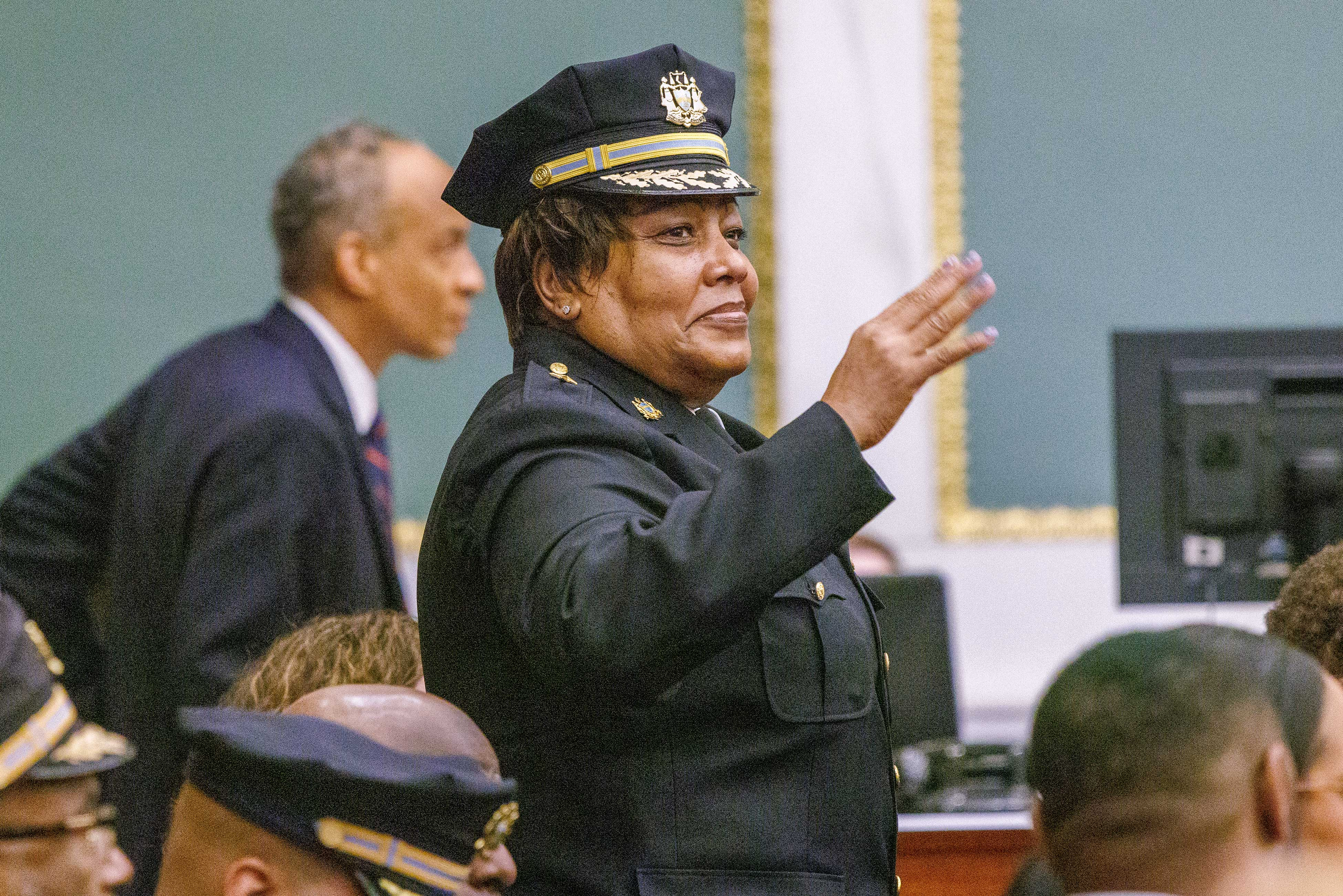
“ICE is kidnapping immigrants who are obeying the law and coming to court,” said Ashen Harper, a college student who helped lead the demonstration, which targeted Sheriff Rochelle Bilal. “She is capitulating and cooperating with ICE.”
Many people who go to the courthouse, the group noted, are not criminal defendants ― they are witnesses, crime victims, family members, people dealing with alleged offenses like shoplifting or trespassing, and others who are already in diversionary programs.
Organizers said ICE has arrested about 90 people outside the courthouse since January, a dramatic increase over the previous year. And they pledged to return on Dec. 4 ― lugging a podium for Bilal so that, organizers said, she can explain changes she intends to make, including barring ICE.
The sheriff did not immediately reply to a request for comment Thursday.
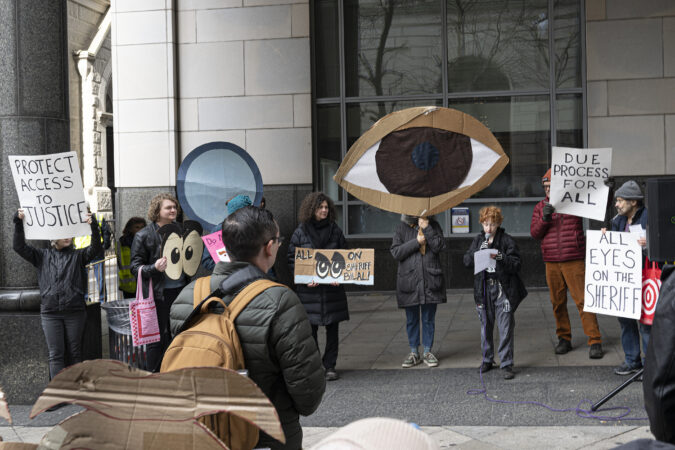
Members of No ICE Philly rally outside the Criminal Justice Center on Thursday, calling on the sheriff to cut off Immigration and Customs Enforcement access to the building.
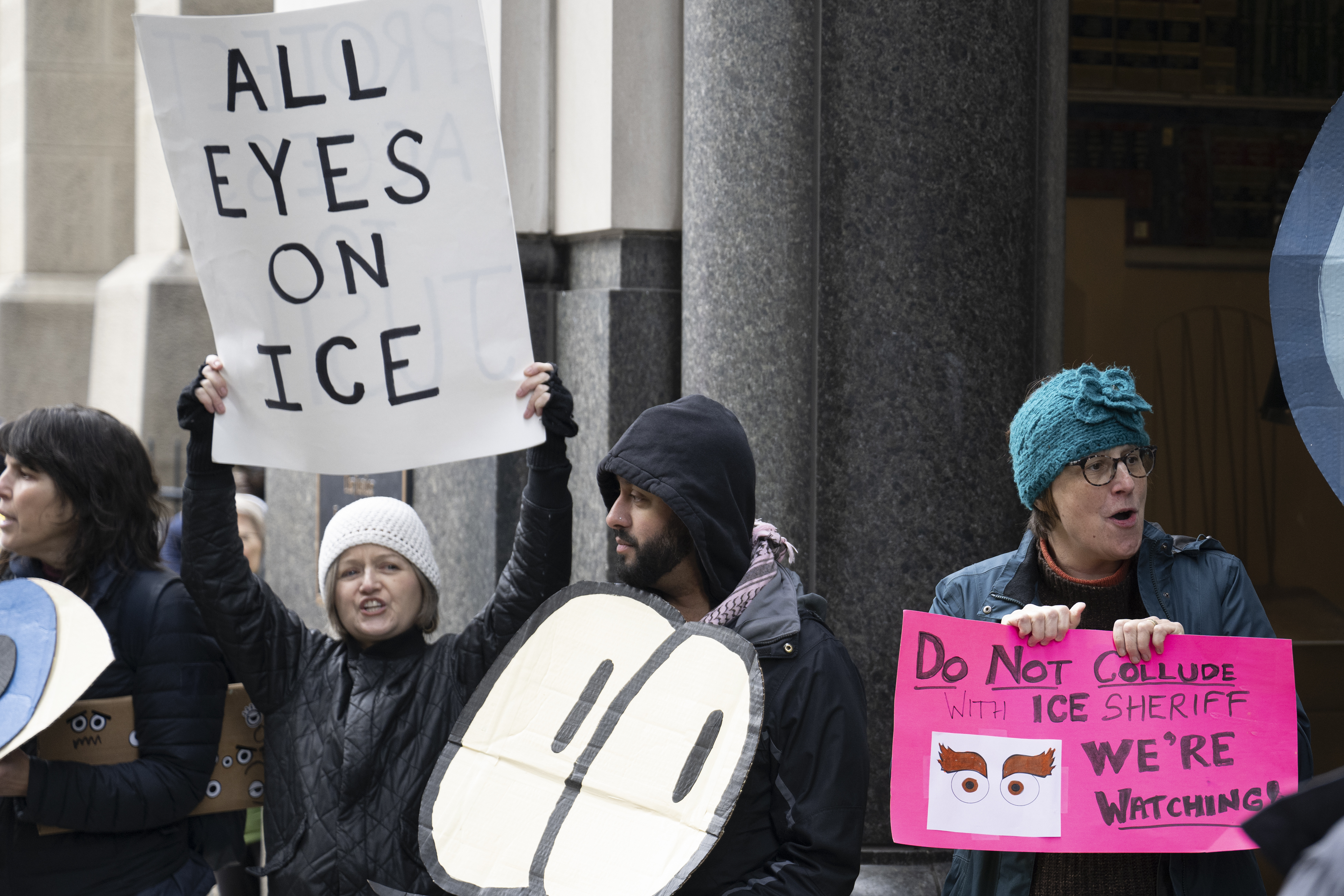
“We want to put the sheriff on notice that we’re watching,” said Aniqa Raihan, a No ICE Philly organizer. “We want to raise awareness of the fact … that ICE is using the courthouse as a hunting ground.”
As word of plans for the demonstration spread, Bilal issued a statement aimed at “addressing public concerns” around ICE activity.
“Let me be very clear: the Philadelphia Sheriff’s Office does not partner with ICE,” the sheriff said. “Our deputies do not assist ICE, share information, or participate in immigration enforcement.”
Deputies verify the credentials of ICE agents entering the courthouse ― and those agents are not permitted to make arrests in courtrooms or anywhere else inside, she said.
Raihan and other advocates say that is no protection. ICE agents linger in the lobby, they said, then follow their target outside and quickly make the arrest.
A police department spokesperson said at the time that the Spanish-speaking officer offered to walk with the man to help translate, but did not detain him. The Defender Association of Philadelphia and others questioned how the incident squared with the city’s sanctuary policies.
U.S. Immigration and Customs Enforcement officials in Philadelphia did not reply to a request for comment.
On Thursday, about 40 demonstrators gathered outside the courthouse, chanting and singing under the watchful eye of city police officers and sheriff’s deputies. No ICE agents were visible. Protesters carried signs to indicate that they, too, were watching, raising colorful cardboard eyeballs, eyeglasses, and magnifiers.
Lenore Ramos, the community defense organizer with the Juntos advocacy group, called on the sheriff and city government officials to protect immigrants at the courthouse. Proclaiming Philadelphia a welcoming city, she said, is not just a slogan ― it’s a promise, one that local government must fulfill.
“The city is not standing behind our immigrant communities,” Ramos said. “It is walking all over them.”
In an interview earlier this week, Whitney Viets, an immigration counsel at the Defender Association, said ICE agents are at the courthouse almost every day, and arrests occur there almost daily.
The government does not publicly release data detailing where most immigration arrests occur, but Viets estimated that dozens of arrests have taken place at the courthouse since the start of the year. Masked plainclothes agents are seen outside the building, in the lobby, in courtrooms, and in hallways, she said.
“Agents are effectively doing enforcement in the courthouse, through identification,” she said.
She explained that agents may identify a person they are seeking in or near a courtroom, then either follow them outside or alert other agents who are already waiting on the sidewalk.
It is unclear where ICE is obtaining information on who will be at the courthouse on any particular day, although some details about ongoing criminal cases are available in public records.One result of ICE enforcement, she said, is people are afraid to come to court.
“This is about whether our justice system operates effectively,” Viets said. “The actions of ICE have gotten brazen. … What we need at this time is public engagement against this activity.”
No ICE Philly decried “kidnappings” by the agency and demanded the sheriff “protect everyone inside and outside the courthouse,” including “immigrants targeted by ICE as well as citizens observing and documenting ICE arrests.”
The Philadelphia Sheriff’s Office is in charge of courthouse security. However, Bilal said in her statement, her office has no authority to intervene in lawful activities that are conducted off the property.
“Inside the courthouse, everyone’s rights and safety are protected equally under the law,” she said. “We are law enforcement professionals who follow the law.”
Philadelphia Sheriff Rochelle Bilal stands to be recognized at City Hall in March.
In Philadelphia and places around the country, courthouses have become disputed locales as the Trump administration pursues ever-more-aggressive arrest and deportation policies.
Under President Joe Biden, limits were set on what ICE could do at courthouses. Agents were permitted to take action at or near a courthouse only if it involved a threat to national security, an imminent risk of death or violence, the pursuit of someone who threatened the public safety, or a risk of destruction of evidence.
Even then, advocacy groups accused ICE of violating the policy by arresting people who were only short distances from courthouses.
The Biden restrictions on ICE vanished the day after Trump took office.
The new guidance said agents could conduct enforcement actions in or near courthouses ― period. The only conditions were that agents must have credible information that their target would be present at a specific location and that the local jurisdiction had not passed laws barring such enforcement.
The guidance said that, to the extent practicable, ICE action should take place in nonpublic areas of the courthouse and be done in collaboration with court security staff. Officers should generally avoid making arrests in or near family or small-claims courts.
The Department of Homeland Security said that the Biden administration had “thwarted law enforcement” from doing its job, that arresting immigrants in courthouses is safer for agents and the public because those being sought have passed through metal detectors and security checkpoints.
“The ability of law enforcement to make arrests of criminal illegal aliens in courthouses is common sense,” Assistant Secretary Tricia McLaughlin said earlier this year. “It conserves valuable law enforcement resources because they already know where a target will be.”
Philadelphia city officials have said repeatedly that they do not cooperate with ICE, and that the sanctuary city policies created under former Mayor Jim Kenney remain in place under Mayor Cherelle L. Parker.
Protesters Elias Siegelman, right, with No Ice Philly, who also works with the groups Indivisible, Jewish Voice for Peace, and Progressive Victory, outside the ICE office, in Philadelphia on Oct. 30.
Nationally, 10 months into the Trump administration, some Democratic jurisdictions are acting to tighten ICE access at courthouses.
In Connecticut this month, state lawmakers passed a bill to bar most civil immigration arrests at courthouses, unless federal authorities have obtained a signed judicial warrant in advance.
The Senate bill, already approved by the House, also bans law enforcement officers from wearing face coverings in court, Connecticut Public Radio reported. Democratic Gov. Ned Lamont is expected to sign the measure.
Last month in Chicago, which has faced weeks of controversial immigration enforcement, the top Cook County judge barred ICE from arresting people at courthouses. That came as federal agents stationed themselves outside courthouses, drawing crowds of protesters, CBS News reported.
On Monday, a federal judge dismissed a Trump administration challenge to a New York law that barred the immigration arrests of people going into and out of courthouses. New York passed the Protect Our Courts Act in 2020, during Trump’s first term, a law the administration said had imposed unconstitutional restrictions on enforcement, the Hill reported.
The Thursday rally marked the third recent protest by No ICE Philly, which seeks to stop agency activity in the city. The organization’s Halloween Eve demonstration outside the ICE office erupted into physical confrontations with police, with several people pushed to the ground and four arrested.
The arrests came after some demonstrators attempted to stop ICE vehicles from leaving the facility at Eighth and Cherry Streets.
No ICE Philly organizers said Thursday that they will continue to scrutinize ICE activity at the courthouse.
“There are people watching. We have eyes on this,” Raihan said, adding that ICE is “allowed to hang in the lobby, sometimes in the courtrooms.”
“Somehow they seem to know when somebody vulnerable is in the courthouse. … We’re concerned with how they’re finding out that information.”
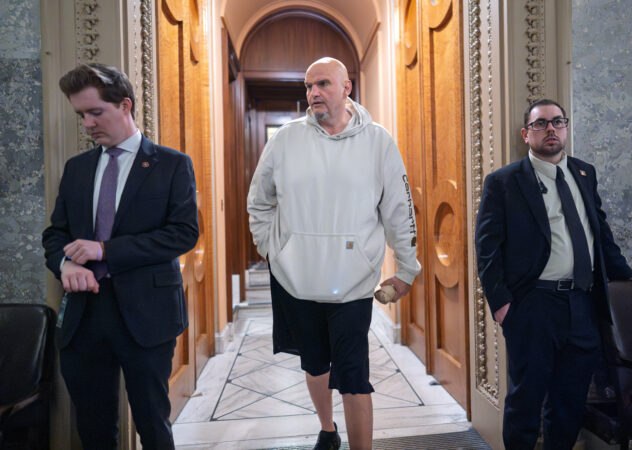
Fetterman has not announced whether he will run for reelection in 2028, but the progressive party put out a public declaration Tuesday pledging to endorse — and, if necessary, recruit and train — a challenger.
The announcement, first reported by The Inquirer, is a remarkable step for the left-leaning organization to take more than two years before an election and speaks to the degree of frustration with Fetterman among progressives.
“At a time when Donald Trump and Republicans in Congress are doing everything they can to make life harder for working people, we need real leaders in the Senate who are willing to fight for the working class,” Shoshanna Israel, Mid-Atlantic political director for the Working Families Party, said in a statement.
“Senator Fetterman has sold us out, and that’s why the Pennsylvania Working Families Party is committed to recruiting and supporting a primary challenge to him in 2028.”
Fetterman did not immediately return a request for comment about the Working Families Party’s announcement.
The Working Families Party is a progressive, grassroots political party that is independent from the Democratic Party, but it often endorses and supports Democratic candidates.
Though he supports extending federal healthcare subsidies, Fetterman has long said he is against government shutdowns as a negotiating tactic and will always vote to get federal coffers flowing and federal employees paid.
“I’m sorry to our military, SNAP recipients, gov workers, and Capitol Police who haven’t been paid in weeks,” Fetterman said in a post on X after the vote. “It should’ve never come to this. This was a failure.”
Already one of the most well-known and scrutinized senators in Washington, Fetterman was back in the spotlight this week as he returns to work following a hospitalization after a fall near his home in Braddock. His staff said he suffered a “ventricular fibrillation flare-up” and hit his face, sustaining “minor injuries.”
Ventricular fibrillation is the most severe form of arrhythmia — an abnormal heart rhythm — and the most common cause of sudden cardiac death.
He spent Thursday and Friday in the hospital and was released Saturday, saying he was feeling good and grateful for his care with plans to be back in the Senate this week.
Working Families on the offensive
Israel said in addition to the online portal, the party will hold a number of recruitment events across Pennsylvania in the coming months to train candidates and campaign staff on the basics of running for office and managing a campaign with hopes of finding quality candidates for a variety of races ahead of 2028.
The party is also pledging a robust ground game and fundraising for a potential challenger it supports.
It wouldn’t be the first time the Working Families Party has opposed Fetterman. In the 2022 Democratic Senate primary, WFP endorsed State Rep. Malcolm Kenyatta (D., Philadelphia) over Fetterman, who was lieutenant governor at the time.
The book makes no mention of a reelection bid but laments the ugly politics he experienced in both the Democratic primary and his general election race against Mehmet Oz.
Fetterman said in the book that Oz’s attacks during his rehabilitation from his stroke became so mentally crushing he felt he should have quit the race.
And he grapples with criticism he faced during the primary surrounding a 2013 incident in which he wielded a shotgun and apprehended a Black jogger he suspected of a shooting. Fetterman calls the backlash an early trigger of his depression.
Fetterman has said he will remain a Democrat even as Republicans have lauded his independent streak and willingness to work with the GOP.
Earlier this year, Fetterman was the first Senate Democrat to support the Laken Riley Act, a Republican immigration bill that requires U.S. Immigration and Customs Enforcement to detain and take into custody individuals who have been charged with theft-related offenses, even without a conviction. Critics of the law say it severely cracks down on due process for immigrants.
Fetterman was the sole Senate Democrat to vote to confirm Attorney General Pam Bondi, who was one of Trump’s attorneys when he tried to overturn the results of the 2020 election.
“He has repeatedly shown disregard for the rights of Palestinians,” the Working Families Party release said. “Refusing to support a two-state solution and breaking with the rest of the Democratic caucus on Israel’s illegal annexation of the West Bank.”
Staff writer Aliya Schneider contributed to this article.
On Oct. 16, Rian Andrianzah walked into a Philadelphia office of U.S. Citizenship and Immigration Services for what he thought was a routine biometrics appointment. He expected to be fingerprinted and photographed and sent on his way.
Instead, while his wife waited in an outer room, he was arrested by ICE ― and now faces deportation in a case that has angered the city’s Indonesian community.
Andrianzah, 46, is among a growing number of immigrants whose families say they showed up for in-person appointments or check-ins, only to be suddenly handcuffed and spirited into detention.
Green-card applicants, asylum-seekers, and others who have ongoing legal or visa cases have been unexpectedly taken, part of a Trump administration strategy, lawyers and advocates say, to boost the number of immigration arrests and to deport anyone who can possibly be deported.
“ICE was waiting for him,” said Philadelphia immigration attorney Christopher Casazza, who represents Andrianzah and his family. “In 15 years, I have never once seen somebody arrested at their biometrics appointment ― except in the past few months.”
Andrianzah legally entered the United States on a visitor’s visa in February 2000, but did not return to Indonesia. He was placed in removal proceedings in 2003, and a judge issued a final order of deportation in November 2006. His appeal was denied two years later.
The removal order was never enforced, as had been common for what the government thensaw as low-priority immigration violators. Some people with final orders have lived in the U.S. for decades.
In the ensuing years, Andrianzah worked factory and warehouse jobs ― and married Siti Rahayu, 44, also of Indonesia. They made a home in South Philadelphia, parents to two U.S.-citizen children, a son, age 8, and a daughter, 15.
Andrianzah and his wife went to USCIS that day as part of her application for a T visa, available to people who have been victims of human trafficking. In an interview with The Inquirer,Rahayu said she was sent to the U.S. in 2001 by relatives who saw her as a means to pay off a debt, delivering her to an underground organization that puts people in low-paying jobs, then keeps them working indefinitely.
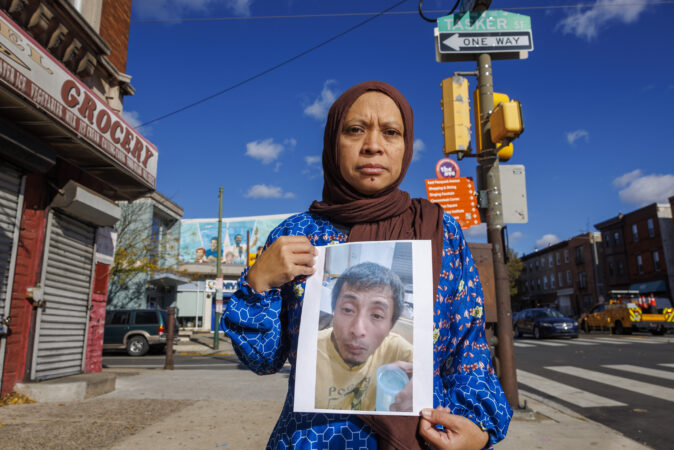
Siti Rahayu of Philadelphia, here on Thursday, November 6, 2025. Her husband Rian Andrianzah walked into United States Citizenship and Immigration Services office for a routine visit but he was sent to Moshannon detention center to await deportation.
Casazza, of the Philadelphia firm Palladino, Isbell & Casazza LLC, said Rahayu has a strong case for a T visa, which offers permission to live in the U.S. and a path to permanent residency and citizenship.
As her husband, Andrianzah would receive those same benefits under her visa.
That’s why, Casazza said, it makes no sense for ICE to confine and deport him. Once his wife’s visa was approved, Andrianzah would be able to legally live in the United States, the attorney said.
Asked about Andrianzah’s arrest and the couple’s situation, a U.S. Immigration and Customs Enforcement spokesperson in Philadelphia said in a statement: “Due to privacy issues, we are not authorized to discuss this case.”
Andrianzah is being held at the Moshannon Valley Processing Center, an ICE detention facility in Clearfield County, Pa.
As President Donald Trump presses his deportation agenda, what were routine meetings with federal authorities have now become risky for immigrants. Advocates say many of those arrested were following the rules and doing what the government asked:
On May 27, the wife of a Marine Corps veteran was detained in Louisiana after meeting with USCIS about her green-card application, CBS News reported. Paola Clouatre, 25, said she came to the U.S. as a child with her mother, but was abandoned as a teenager and unaware that the government had ordered them deported. She spent about eight weeks in custody before being fitted with an ankle monitor and released.
On June 3, federal agents in New York City arrested at least 16 immigrants who showed up for check-ins, after a private contractor working with ICE summoned them to urgent appointments, The City, a news organization, reported.
On Oct. 22, a 21-year-old California college student was arrested by ICE at an appointment at a USCIS office in San Francisco, Newsweek reported. Government officials said Esteban Danilo Quiroga-Chaparro, a Colombian national and green-card applicant, had missed mandatory meetings, though his husband said that was untrue.
On Oct. 23, a Venezuelan couple pursuing asylum were arrested during a check-in at the ICE office in downtown Milwaukee, Urban Milwaukee reported. Diego Ugarte-Arenas and Dailin Pacheco-Acosta sought protection after fleeing their homeland in 2021. An ICE spokesperson told the news agency that “all aliens who remain in the U.S. without a lawful immigration status may be subject to arrest and removal.”
“There’s a lot of risks right now,” said Ana Ferreira, who serves on the executive board of the Philadelphia chapter of the American Immigration Lawyers Association.
Some clients went intoimmigrationappointments knowing there was a possibility they could be detained, she said. Others were shocked to be taken.
“None of this would have happened years ago,” Ferreira said. “It’s a completely different landscape.”
Siti Rahayu of Philadelphia holds a photograph of her husband, Rian Andrianzah. He walked into a United States Citizenship and Immigration Services office for what he thought would be a routine visit but was sent to the Moshannon detention center to await deportation. Photograph taken on Thursday, November 6, 2025.
Rahayu said that on Oct. 16, she completed her own biometrics appointment, then grew concerned when her husband did not appear. She asked the staff what was happening.
“They [said they] don’t know anything, and they say this is new for them,” Rahayu said.
Finally someone told her: He’s gone. Rahayu fears for her husband’s health in custody because he suffers from diabetes, which impairs his vision.
The local Indonesian American community reacted immediately, supported by Asian Americans United, the advocacy group. An estimated 2,000 Indonesians live in Philadelphia, the 10th-largest community in the nation.
Andrianzah said through his wife that he wished to thank everyone who has tried to help him and his family, that he is grateful for their care and concern. Supporters have raised about $13,000.
Each year thousands of people physically report to ICE or related immigration agencies for mandatory check-ins.
Some immigrants are required to appear every couple of weeks, some once a month, others once a year. The appointments help immigration officials keep track of people who in the past have been low priorities for deportation, allowed to live freely as they pursue legal efforts to stay in the United States.
Biometrics appointments are usually brief sessions, perhaps half an hour, at which the government captures fingerprints, a passport-style photo, and a signature. The immigrant may also be asked to provide information like height and weight.
Despite the fresh risk of being arrested on the spot, immigrants have little option except to show up. Many types of immigration applications require in-person appearances. And failure to appear for a required ICE appointment can by itself result in an order for removal.
“They’re trying to grab everybody, wherever they can,” and that included Andrianzah, Casazza said. “ICE is going to do their best to deport him.”