Tag: Immigration

  • Will there be a government shutdown this weekend? Here’s what we know.

    Will there be a government shutdown this weekend? Here’s what we know.

    New year, same you googling repeatedly, “Is a government shutdown happening?” We see you. We get it. And the answer is: “Maybe.”

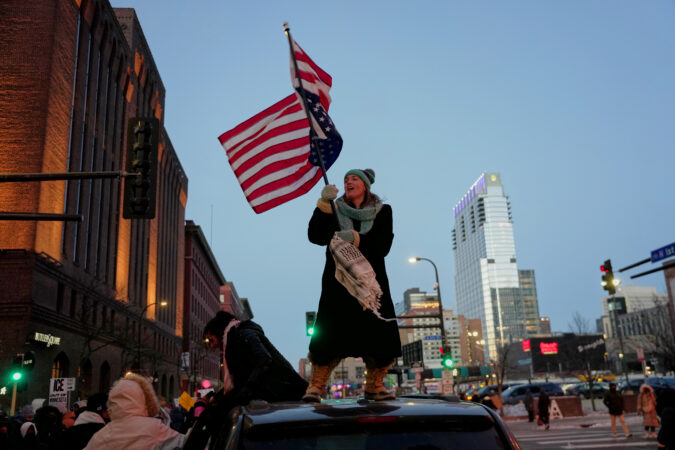
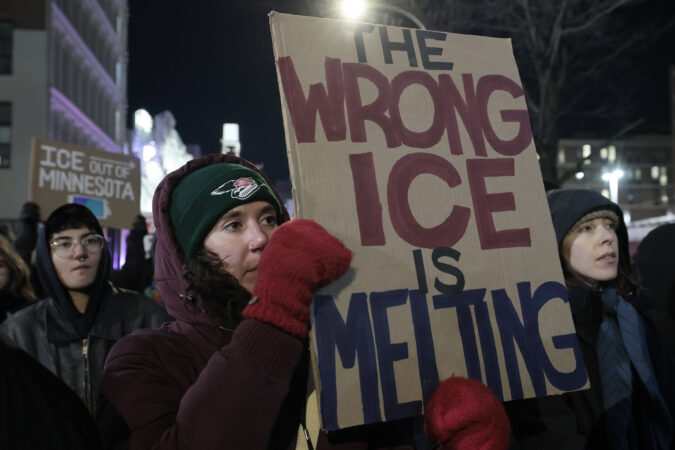
    The likelihood of a partial government shutdown this weekend has ramped up following a surge in immigration enforcement and related backlash in Minnesota.

    The highly publicized presence of Immigration and Customs Enforcement and the Department of Homeland Security in Minneapolis, alongside the death of Alex Pretti, the second person federal agents have fatally shot in the state, has reinvigorated efforts among Democrats to reject a bill to fund DHS.

    “The appalling murders of Renee Good and Alex Pretti on the streets of Minneapolis must lead Republicans to join Democrats in overhauling ICE and CBP [Customs and Border Protection] to protect the public,” Senate Minority Leader Chuck Schumer said in a statement Sunday. “People should be safe from abuse by their own government.”

    Schumer (D., N.Y.) said Democrats would not support keeping the government fully open if it means funding the Department of Homeland Security. Other Democratic senators have joined in calling for Senate Republicans to collaborate on advancing five other pending bills, aside from the DHS bill, and separately retooling the DHS measure.

    In case you need a refresher, here is what you need to know about deadlines, what a partial government shutdown looks like, and more.

    What’s a government shutdown vs. a partial government shutdown?

    A full government shutdown happens when all (or most) federal agencies have not secured funding. It usually means widespread furloughs, sometimes layoffs, and any nonessential government services are put on pause.

    Meanwhile, a partial government shutdown happens when Congress has funded only certain federal agencies, leaving others in limbo. In turn, some parts of the government would close while others keep operating.

    When a partial shutdown happens, some federal agencies and operations, like Social Security and air traffic control, keep running as usual. But other federal employees are furloughed.

    In this instance, agencies at risk of expiring funding include the Departments of Defense, Health and Human Services, Labor, Education, Transportation, Housing and Urban Development, Treasury, and State; the Securities and Exchange Commission; and the federal court system, according to Reuters.

    Democrats are pushing Republicans to decouple the spending bill so disagreements over DHS don’t fuel disruptions to the other agencies. But Republicans so far say they will not break up the spending bill.

    When does government funding expire?

    Federal funding is set to expire at 12:01 a.m. Saturday. A partial shutdown would occur if Congress and President Donald Trump’s administration do not reach an agreement by then.

    Where does the DHS funding bill stand?

    The House has done its part and is in recess until February. But Senate Democrats are pushing back on approvals, citing the Trump administration’s treatment of immigrants. That leaves the Senate with only a few options to avoid a shutdown if it cannot pass the current measures.

    Most legislation in the Senate needs 60 votes to move forward. Republicans hold 53 seats, meaning they need bipartisan support to pass the existing measure, which covers about $1.3 trillion in annual government spending, including military and social service funding.

    But Democrats want new guardrails on immigration enforcement and added oversight on DHS. Some demands include requiring judicial warrants for immigration arrests, and agents to wear visible identification, Time reported.

    Several Democratic senators who broke with their party last year to keep the government open say the killings of Pretti and Good at separate protests have changed their stance.

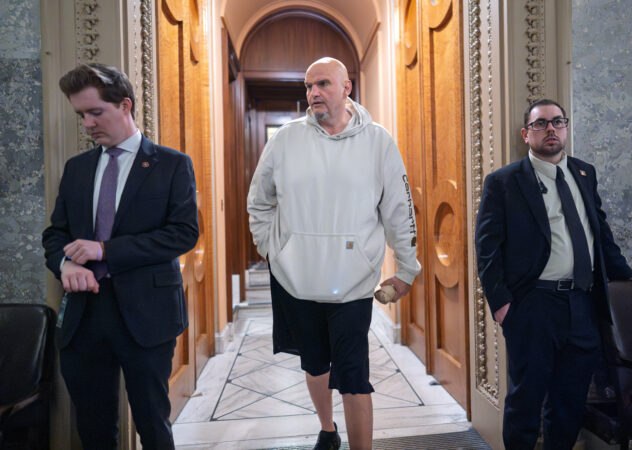
    Sen. John Fetterman (D., Pa.), who has historically broken with the Democratic Party to avoid government shutdowns, released a lengthy statement Monday saying that he wanted to see the DHS operation in Minneapolis end but would not support a government shutdown. But on Thursday, in a surprising break, Fetterman voted against advancing the six-bill package.

    His vote, along with 54 other senators who voted “no,” meant the financial package could not move forward.

    It is also worth noting that DHS would continue to operate and receive funding under a government shutdown. That is because DHS agencies received major funding through Trump’s One Big Beautiful Bill Act last year. In turn, ICE and other parts of the agency would continue operating under a shutdown.

    Who is affected by a government shutdown?

    Hundreds of thousands of federal employees are affected, since many would be expected to work but would not receive pay until after the shutdown is lifted. Employees are typically guaranteed back pay.

    Many employees are also at risk of being furloughed and would not be allowed to work (but would also receive back pay thanks to legislation passed in 2019).

    Some of the main groups of employees that a shutdown could affect include (but are not limited to) active members of the military, federal law enforcement, federal transportation workers (like air traffic controllers and Transportation Security Administration agents, but not SEPTA workers), scientific researchers, and the IRS.

    The federal court system said it would not be able to continue full operations past Feb. 4, which could disrupt hearings and other activities, Reuters reported. Data and research activity from the Bureau of Labor Statistics and the National Institutes of Health could also go dark.

    What about tax season?

    This potential partial shutdown comes during tax season.

    If a shutdown happens, funding for the IRS could lapse, which would in turn mean tax processing — and refunds — could be disrupted.

    During last year’s shutdown in October, the IRS approved a contingency plan that let the agency continue some activities under a shutdown. But, the agency said, refunds would be delayed aside from some direct electronic returns that could be automatically processed and direct-deposited. Taxpayers were still expected to file and pay their taxes on time.

    The IRS has not yet commented on a potential shutdown. Trump previously touted larger refunds this year because of the One Big Beautiful Bill Act. Some experts say that emphasis could play a role in the agency remaining partially open.

    When would the government shut down?

    Congress and the Trump administration need to reach an agreement by midnight Friday. If they don’t, a shutdown would go into effect at 12:01 a.m. Saturday.

    What was the longest government shutdown?

    The longest government shutdown was the most recent one, which began on Oct. 1, 2025, and lasted 43 days. It broke the record for the longest shutdown on the 36th day.

    What could a government shutdown mean for Philly?

    In Philadelphia, the October shutdown led to the closing of Independence Hall and the Liberty Bell Center, to the chagrin of tourists. But that would not happen this time, because the national parks are funded by the Department of the Interior, which secured its funding through an already passed appropriations bill for the year.

    SNAP benefits would also not be affected this time.

    The Department of Transportation would close during this shutdown, but air traffic controllers would be required to work without pay. Similar to the last shutdown, this could lead to flight delays and cancellations.

    Other impacts could be in store as the shutdown’s implications become more clear.
  • John Fetterman joins other Democrats in voting against advancing DHS funding as potential shutdown looms

    John Fetterman joins other Democrats in voting against advancing DHS funding as potential shutdown looms

    U.S. Sen. John Fetterman (D., Pa.) on Thursday voted against advancing a highly contested government funding package that includes allocations for the Department of Homeland Security, despite noting his objections to shutting down the government.

    The Senate voted 45-55 on the key procedural vote, failing to advance a budget package as the country moves closer to a partial government shutdown this weekend.

    With Fetterman aboard, every Democrat voted against the appropriations package because of the inclusion of funding for DHS. The party previously vowed to block DHS funding in the aftermath of federal immigration agents’ fatal shooting of two Americans in Minneapolis this month.

    Sen. Dave McCormick (R., Pa.) voted to advance the bill.

    Fetterman’s vote came as a surprise given the senator’s comments earlier in the week, when he said he would “never vote to shut our government down, especially our Defense Department,” one of the agencies that would have received funding from the appropriations package.

    It was unclear Thursday why Fetterman voted against the package, but it is unlikely to be the final version considered by the Senate, as eight Republicans also voted no. A shutdown is slated to begin Saturday if Congress does not pass a package this week.

    A spokesperson for Fetterman did not immediately return a request for comment on the senator’s vote.

    Senate Majority Leader John Thune (R., S.D.) was among the Republicans who voted no so that he could make a motion to reconsider the legislation.

    DHS oversees Immigration and Customs Enforcement and Border Patrol, the agencies involved in the fatal Minnesota shootings. Democrats have been calling for a halt to additional funding in the wake of the deaths of Renee Good and Alex Pretti.

    But Fetterman noted Monday that the department received $178 billion from last year’s One Big Beautiful Bill Act, which he opposed, and that ICE would continue to operate during a shutdown.

    “A vote to shut our government down will not defund ICE,” Fetterman said.

    Fetterman has previously suggested removing DHS funding from the package under consideration as a compromise. He has also urged President Donald Trump to fire DHS Secretary Kristi Noem.

    A reporter from the Hill posted on X minutes after the vote that Fetterman saw his no vote as setting the stage to decouple DHS funding from the other five bills under consideration, rather than triggering a shutdown.

    Senate Minority Leader Chuck Schumer (D., N.Y.) has pushed Republicans and the White House to strip the Department of Homeland Security funding from the rest of the bill. In a deal reached with the White House, DHS would still be funded, but for a short time to allow for negotiations on the Democrats’ demands. Other agencies included in the bill would be funded through the end of September.

    Negotiations remained ongoing Thursday.

    Within the last week, Fetterman faced mounting pressure from fellow Pennsylvania Democrats and constituents to vote against the package as tensions in Minneapolis continued to escalate.

    On Tuesday, every Democratic member of Pennsylvania’s U.S. House delegation cosigned a letter urging Fetterman and McCormick to vote against the funding. Constituents also gathered outside Fetterman’s office in Philadelphia on Tuesday to protest his stance.

    “We can no longer continue to give Homeland Security a blank check,” U.S. Rep. Brendan Boyle (D., Pa.) said Thursday morning in a virtual news conference with U.S. Rep. Dwight Evans (D., Pa.).

    Boyle was an outspoken critic of Fetterman’s votes against the previous government shutdown last year during a fight over healthcare subsidies.

    McCormick voted as expected to advance the GOP-led legislation.

    “I’m just not in favor of shutting down the government or stopping funding the government, and that’s the position that I’ve had through the last shutdown,” McCormick said about his support for the funding on a tele-town hall Tuesday night. “I’m not in favor of ever shutting down the government. It doesn’t matter what party is in power, but some people see that differently.”

    If lawmakers fail to pass a package by Friday, the federal government will undergo its second shutdown in four months, starting Saturday, potentially demoralizing federal workers and inconveniencing members of the public who rely on affected services.

    The previous shutdown started on Oct. 1, 2025, and lasted 43 days — the longest shutdown in U.S. history.

    This shutdown would be a partial one, affecting the Departments of Defense, State, Transportation, Education, Labor, Treasury, Health and Human Services, and Housing and Urban Development in addition to DHS.

    The U.S. Department of Agriculture, which provides nutrition assistance to needy families, would not be affected.

    The other four Democratic senators from the Philadelphia region — Sens. Andy Kim and Cory Booker of New Jersey and Sens. Chris Coons and Lisa Blunt Rochester of Delaware — all joined Fetterman in voting no Thursday.

    Kim argued the vote was a bipartisan rebuke of the Trump administration’s immigration strategy and said he would be working with colleagues to deliver “real security” to the American public.

    “Their lawlessness has taken lives on the streets of our neighborhoods, and I’ve heard from so many about an overwhelming fear that they can be targeted next,” Kim said in a statement. “We need real changes to fix a broken and lawless system that has led to so many Americans losing trust in their government to keep them safe.”

    This story is developing and will be updated.

    Staff writer Aliya Schneider contributed to this article, which contains information from the Associated Press.

  • Gov. Mikie Sherrill says N.J. will create a database for uploading videos of ICE: ‘Get your phone out’

    Gov. Mikie Sherrill says N.J. will create a database for uploading videos of ICE: ‘Get your phone out’

    New Jersey Gov. Mikie Sherrill said her administration will create an online database for people to upload videos they record of ICE.

    “If you see an ICE agent in the street, get your phone out,” she urged New Jerseyans in an appearance on The Daily Show on Wednesday night with host Desi Lydic in New York City.

    Sherrill, a Democrat and former member of Congress, said her administration will set up an online portal “so people can upload all their cell phone videos and alert people.”

    Cell phone video from onlookers has been used to rebut the narrative of President Donald Trump’s administration after federal agents fatally shot Renee Good and Alex Pretti in Minneapolis.

    Sherrill outlined her plan just eight days after she was sworn into office. She became the second woman to lead the state and the first female veteran governor in the country.

    “They will pick people up, they will not tell us who they are … they’ll pick up American citizens. They picked up a 5-year-old child,” she said on the show. “We want documentation, and we are going to make sure we get it.”

    The policy announcement was not featured in the television broadcast, but it was posted to YouTube shortly afterward by The Daily Show.

    New Jersey residents routinely report ICE activity and arrests around the state, including recently in Bridgeton and Princeton. The Garden State is home to about the seventh-largest undocumented population in the country, an estimated 476,000 people, according to the Migration Policy Institute in Washington.

    Amy Torres, executive director of the New Jersey Alliance for Immigrant Justice, said Sherrill needs to do more.

    “We don’t need to see more evidence of what ICE is doing,” Torres said. “They’ve arrested a New Jersey mayor. They’ve gone after a sitting member of Congress. They’ve opened up a 1,000-bed facility in our state’s largest city and they’re ripping our families apart. New Jersey doesn’t need more evidence, we need leadership who is going to act.”

    She said the governor should work to pass additional immigrant protections, like those contained in two bills former Gov. Phil Murphy rejected in his final day in office that would have safeguarded immigrants’ data and expanded the state’s sanctuary policy.

    Sherrill, meanwhile, also said her administration plans to put out information to help New Jerseyans know their rights in the state. And she said she will not allow ICE raids “to be staged from state properties.”

    Sherrill, a former Navy helicopter pilot, compared U.S. Immigration and Customs Enforcement to secret police forces she observed in foreign nations during her service.

    “I knew where this was headed when we started to see DHS people taking loyalty oaths to the president, not the Constitution,” she said. “We saw people in the street with masks and no insignia, so not accountable at all, hiding from the population.”

    New Jersey has become a key state in the Trump administration’s plan to arrest and deport millions of immigrants, and has been slated for an expansion of ICE detention.

    A facility in Elizabeth was for a time the only detention center in the state. But the 1,000-bed Delaney Hall in Newark was reopened for detention in May, and the administration recently announced plans to hold 1,000 to 3,000 detainees at Joint Base McGuire-Dix-Lakehurst, which spans parts of Burlington and Ocean Counties.

    The specific details surrounding that South Jersey undertaking remain unknown.

    In Wednesday night’s television appearance, Sherrill denounced the Minneapolis shootings, calling Good “a mother of three, who drops her 6-year-old off in her Honda Pilot and then gets shot and killed.”

    And she noted that Pretti worked at the Minneapolis VA as an ICU nurse.

    “I saw his official photo, and I’ve seen a million of those … with the flag in the background, I know those guys,” Sherrill said.

    Pretti was fatally shot by a Border Patrol agent, while Good was shot and killed by an ICE agent. Both agencies fall under the Department of Homeland Security.

    The new governor also said on The Daily Show that she called Trump to discuss his decision to freeze funding for the planned Gateway Tunnel in North Jersey, a project championed by Sherrill that would connect New York and New Jersey under the Hudson River.

    New Jersey Gov. Mikie Sherrill does her best New Jersey “Oh!” and “C’mon!” impressions on The Daily Show with host Desi Lydic.

    “I haven’t heard back from him yet to flag for him that this is about 100,000 jobs in the region, and by the way, his numbers aren’t looking so good in that area,” she said.

    Sherrill said the president “should listen to me because I just won back all his voters,” citing her victory in November of more than 14 percentage points, outperforming her Democratic predecessors and reversing rightward shifts in 2024.

    But she also said it is time to “rethink” the federal government’s relationship with states because of attacks from Trump.

    “We need to start looking at expanding,” she said. “This is a time when I think we’re going to see a large expansion of state power, because the states are the rational actors in this space.”

    Sherrill also played a game with Lydic where she picked which things were most New Jersey, choosing Tony Soprano over Snookie; hating New Yorkers over hating Pennsylvanians; diners over Wawa; and “C’mon!” over “Oh!”

  • Philly City Council members will soon consider seven ‘ICE Out’ bills. Here’s what the proposals would do.

    Philly City Council members will soon consider seven ‘ICE Out’ bills. Here’s what the proposals would do.

    City Councilmembers Kendra Brooks and Rue Landau on Thursday plan to formally introduce their “ICE Out” legislative package, which aims to place restrictions on federal immigration enforcement operations in Philadelphia.

    The seven bills range from codifying into law Philadelphia’s existing “sanctuary city” policies to a controversial ban on law enforcement officers wearing masks. Almost all of the bills contain exceptions noting that they do not apply if Immigration and Customs Enforcement agents secure judicial warrants for their activities or are acting under superseding federal laws.

    If all of the legislation becomes law, Philadelphia would have some of the nation’s most stringent local restrictions on federal immigration-enforcement operations.

    It’s likely that several of the bills will face legal questions, such as whether the mask ban is constitutional and whether Council has the authority to enact some of the rules the proposals seek to establish.

    After the bills are introduced Thursday, Council President Kenyatta Johnson will refer them to committee. One or more hearings will likely be scheduled in the spring.

    At that point, officials from Mayor Cherelle L. Parker’s administration, stakeholders, and experts will testify. Lawmakers could then amend the bills and vote on them in committee. If they advance, they would head to the Council floor for a final vote.

    In a sign that the bills are likely to gain traction, Majority Leader Katherine Gilmore Richardson on Wednesday praised Brooks’ and Landau’s efforts.

    “My heart breaks for everyone who has been impacted by ICE’s violent and dangerous actions and for everyone who feels afraid and unsafe in their communities,” Gilmore Richardson said, adding that she will work with other Council members “to protect our residents.”

    If approved on final passage, the bills would head to Parker’s desk. The mayor can veto them, sign them into law, or allow them to become law without her signature.

    Parker so far has largely avoided confrontation with President Donald Trump’s administration over his aggressive deportation campaign. The “ICE Out” bills may force her to engage more directly.

    Here’s what you need to know about each of the bills.

    Banning ICE agents from wearing masks

    Author: Brooks.

    Key excerpt:A law enforcement officer is guilty of criminal concealment if the law enforcement officer, while performing official duties and interacting with the public …. wears a mask, facial covering, disguise or any other garment that obscures the identity of the law enforcement officer, or fails to identify themselves to a subject of arrest, holding or detention.”

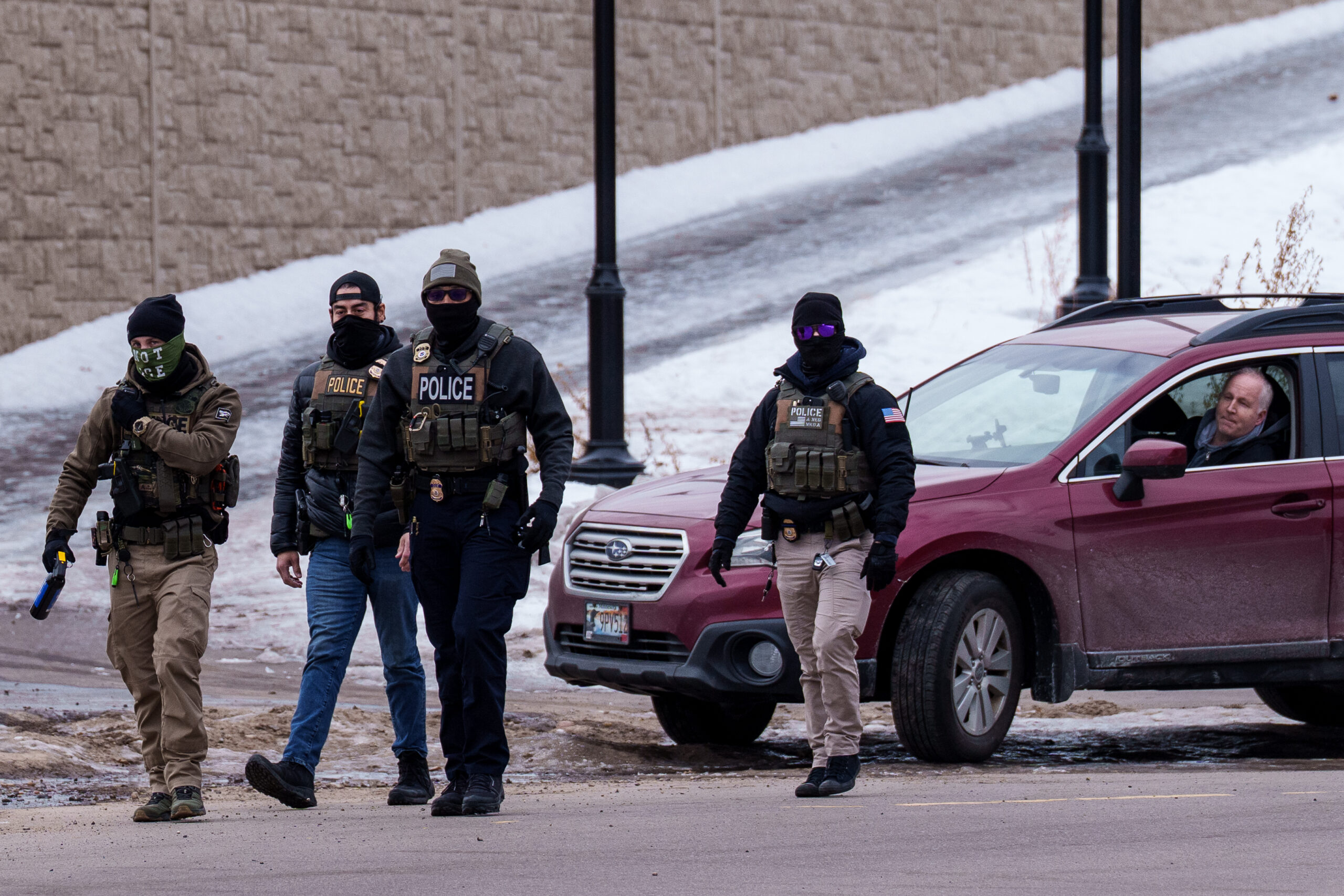
    A person looks out of their vehicle as Immigration and Customs Enforcement (ICE) agents walk away, Thursday, Jan. 15, 2026, in Richfield, Minn. (AP Photo/Adam Gray)

    What it does: The bill would ban law enforcement officers from obscuring their identities with masks. It also would require officers to wear badges, and would make it an offense to conceal badges or to decline to provide identifying information if requested by people they are arresting. Additionally, the bill would ban officers from using unmarked vehicles.

    Exceptions: The bill includes exceptions for undercover assignments, medical or religious masks, SWAT teams, and smoke-filtering masks worn during fires or similar emergencies.

    How it would be enforced: The district attorney would be able to charge an officer with a summary offense, the lowest level of crime in Pennsylvania. If found guilty, the officer would pay a fine of $300 for each day the law was violated or face up to 90 days in prison.

    Additionally, the bill would give any individual “aggrieved by a violation” the right to sue an agent for wearing a mask, with fines up to $2,000 per offense if a judge sides with the plaintiff.

    Twist: This bill applies to all law enforcement officers, not just ICE agents. That includes city police. It is likely that the Philadelphia Police Department, which sometimes uses unmarked cars, will have something to say about the proposed rules once the bill gets a committee hearing.

    Stopping Philly from coordinating with ICE

    Author: Brooks.

    Key excerpt:No City Agency or Employee shall enter into, renew, or participate in a 287(g) Agreement with the federal government.”

    What it does: The primary objective of this bill is to ensure the city never enters into a 287(g) agreement, in which local law enforcement officers are trained to perform immigration enforcement duties. (The agreement refers to a section of the U.S. Immigration and Nationality Act.) Philadelphia is not currently in a 287(g) agreement, so that provision would not have a significant impact in the near term.

    But the bill includes several other notable provisions, such as prohibiting city employees from assisting immigration enforcement in any way, and requiring them to report requests to assist ICE to their superiors.

    How it would be enforced: The city solicitor, Philadelphia’s top lawyer, would be responsible for suing city agencies or employees who violate the bill’s provisions. Potential consequences include a $2,000 fine and termination.

    Kendra Brooks shown here during a news conference at City Hall on Tuesday to announce a package of bills aimed at pushing back against ICE enforcement in Philadelphia.

    Prohibiting discrimination based on immigration status in city services

    Author: Landau.

    Key excerpt: “No City agency, official, employee, contractor or subcontractor shall …

    • “request information about a person’s citizenship or immigration status …
    • “condition the provision of City benefits, services, or opportunities on a person’s citizenship or immigration status or national origin …
    • “threaten, coerce, or intimidate a person based on their actual or perceived citizenship or immigration status [or] …
    • “initiate an investigation or take law enforcement action based on a person’s actual or perceived citizenship or immigration status.”

    What it does: This bill aims to protect individuals from being treated differently based on their immigration status when dealing with city government services.

    How it would be enforced: The city solicitor or anyone aggrieved by violations of the bill would be able to sue the offending city employee or agency.

    Banning employment discrimination based on immigration status

    Author: Landau.

    Key excerpt: “It shall be an unlawful employment practice to deny or interfere with the employment opportunities of an individual based upon … citizenship or immigration status.”

    What it does: The bill would add “citizenship or immigration status” to Philadelphia’s Fair Practices Ordinance, which prohibits employers from discriminating against workers based on characteristics including race, ethnicity, gender, and sexual orientation.

    How it would be enforced: If the bill is approved, Philadelphians who feel their employers have discriminated against them based on their immigration status will be able to file complaints to the Philadelphia Commission on Human Rights, which adjudicates alleged violations of the Fair Practices Ordinance.

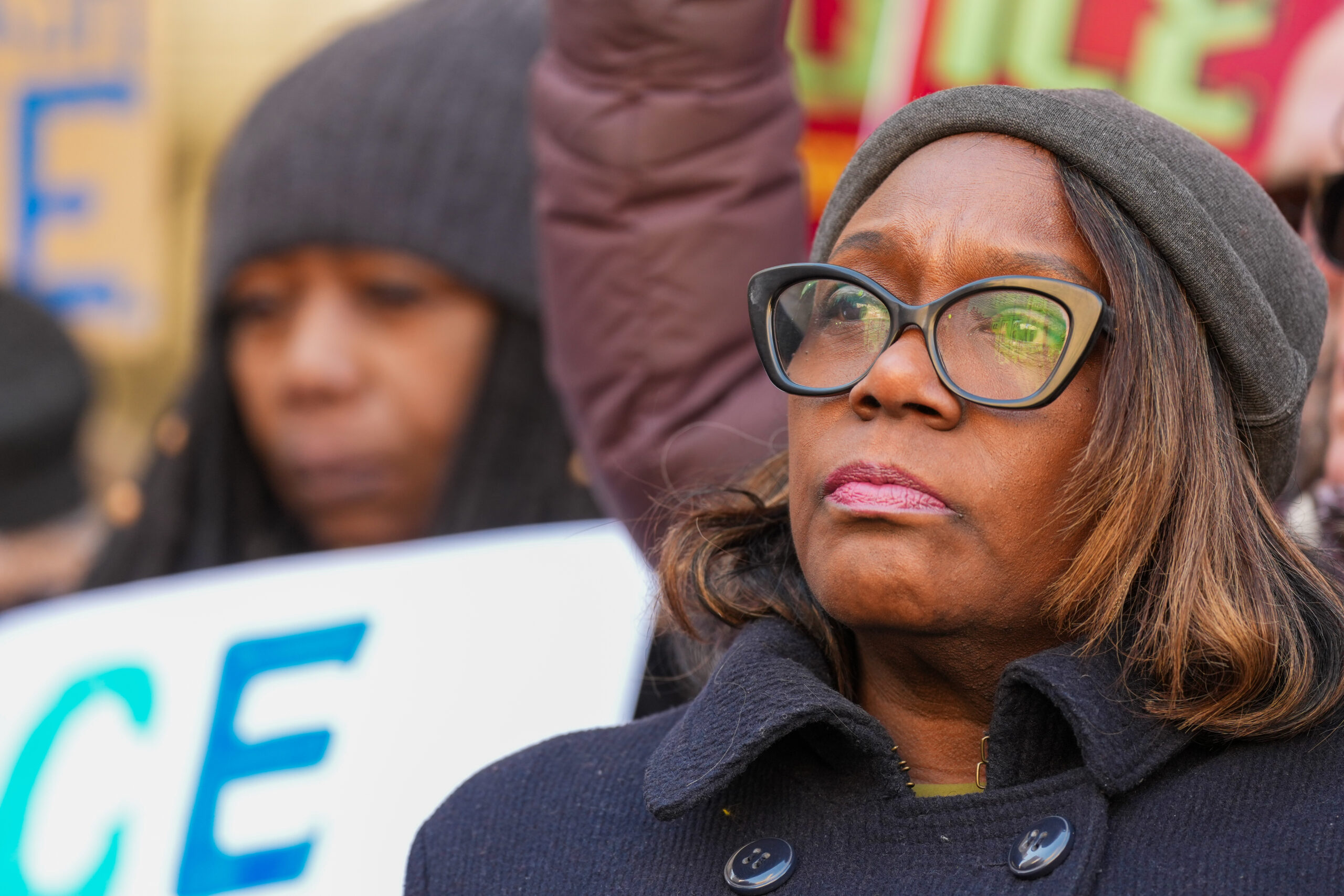
    Rue Landau shown here at the Tuesday news conference.

    Withholding data on citizenship and immigration status

    Author: Landau.

    Key excerpt: “No City agency … shall enter into any contractual agreement or arrangement with a federal agency or federal contractor to provide access to any data, database, or dataset where the purpose of such access includes assisting or supporting immigration enforcement operations.”

    What it does: This bill aims to prevent the federal government from accessing city data that could help immigration agents determine individuals’ citizenship status.

    It also would require the city to produce an annual report tallying federal data requests related to immigration status and any violations of the bill.

    How it would be enforced: The city solicitor or any individual aggrieved by violations of the bill would be able to sue the offending city employee or agency.

    Prohibiting immigration enforcement on city-owned property

    Author: Brooks.

    Key excerpt:It is unlawful to use City-owned or controlled property for the purposes of staging, conducting or assisting federal immigration enforcement activities.”

    What it does: The bill prohibits immigration enforcement operations on city-owned land, such as federal agents making arrests in city parks or ICE staging raids on municipally owned parking lots.

    The bill also allows city agencies to post signs on municipal property stating: “This property is owned and controlled by the City of Philadelphia. It may not be used for immigration enforcement activities.”

    How it would be enforced: The city solicitor may file a lawsuit to ask a judge to order the federal government to cease and desist from using city property.

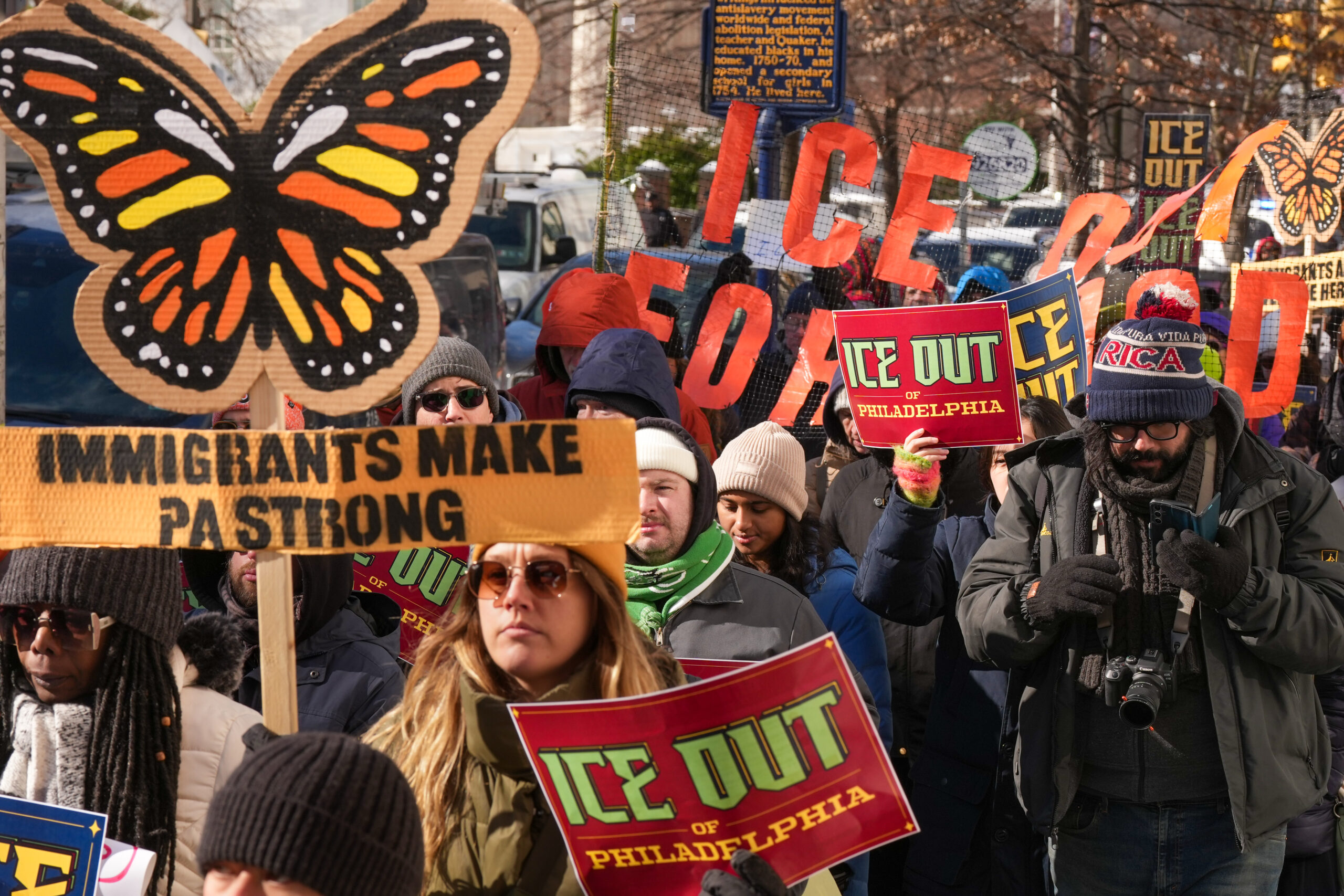
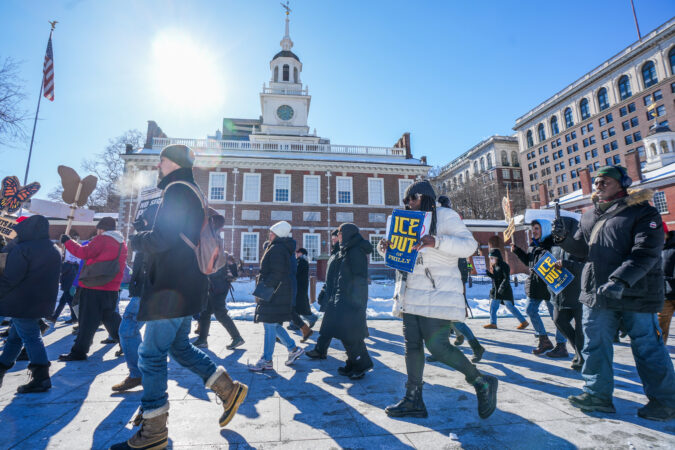
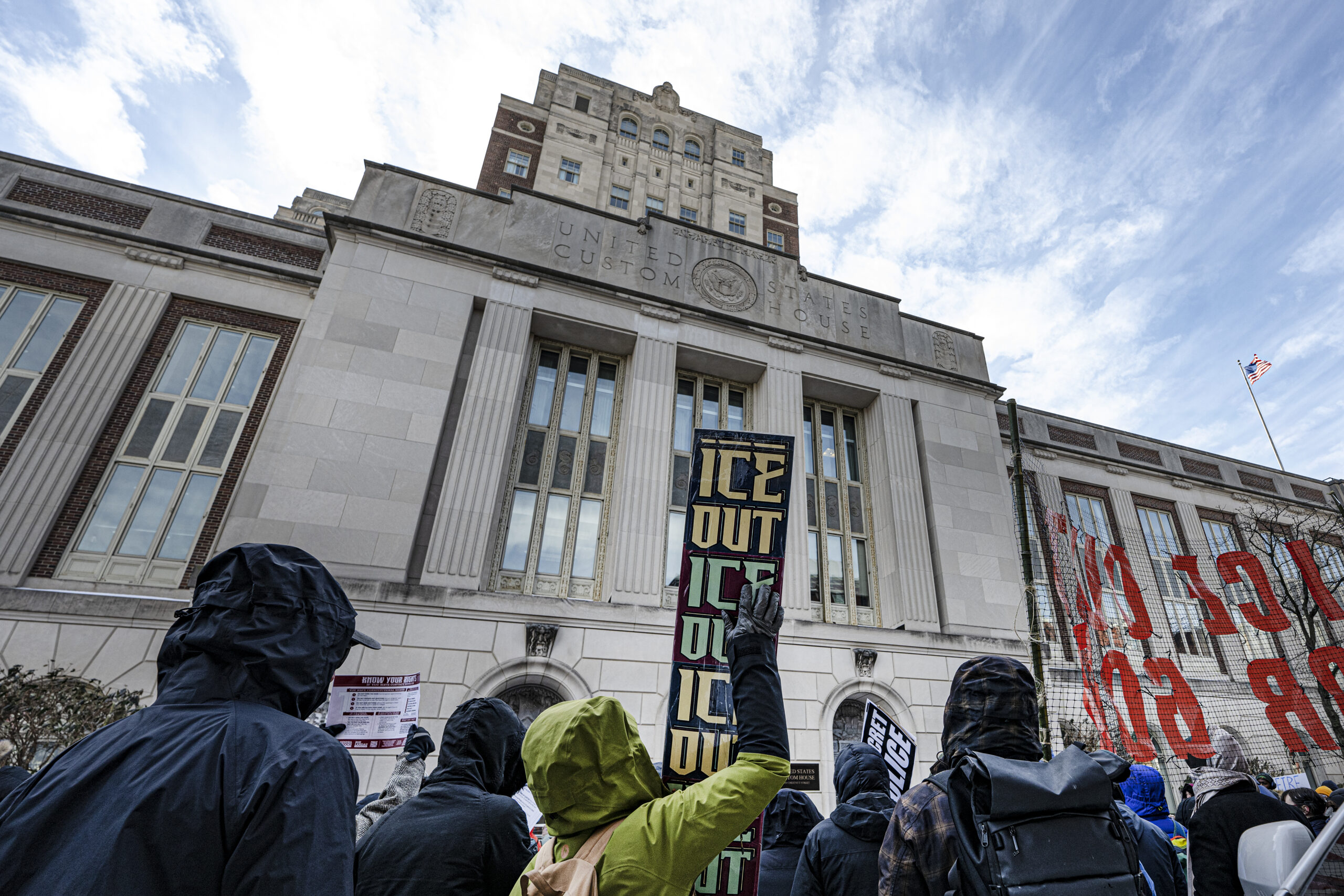
    Advocates and protesters on Tuesday in Center City call for ICE to get out of Philadelphia.

    Requiring warrants for nonpublic areas of ‘Safe Community Spaces’

    Author: Brooks.

    Key excerpt:No employee or agent engaged in official duties at a Safe Community Place shall have the authority to consent to permitting a law enforcement officer to enter a nonpublic area of the facility … to identify, arrest or otherwise impose a penalty upon a person for purposes of federal immigration enforcement.”

    What it does: The bill would effectively require immigration agents to secure judicial warrants to access nonpublic areas in “Safe Community Spaces,” including city-owned or -controlled hospitals, libraries, courthouses, recreation centers, and other city facilities. Currently, agents can access those areas if they get permission.

    The proposal also would also require judicial warrants for instances in which law enforcement seeks access to nonpublic areasto identify or impose civil or criminal liability upon a person” exercising protected rights such as the freedom of speech, assembly, and petitioning.

    Lastly, the bill would require city agencies to “identify property that has been, and is likely to be used by, immigration enforcementand mark it with signage stating: “In nonpublic areas of this property, a judicial warrant is required for law enforcement activities and no voluntary consent may be solicited from any employee.”

    How it would be enforced: Only the city solicitor can sue to enforce the bill’s provisions. Such a suit would not be filed against a federal agent. Instead, it would be filed against a staffer at a “Safe Community Space” who gave federal agents permission to access nonpublic areas at the facility.

    Staff writers Anna Orso and Jeff Gammage contributed to this article.

  • Bruce Springsteen releases ICE protest song, ‘Streets of Minneapolis’

    Bruce Springsteen releases ICE protest song, ‘Streets of Minneapolis’

    Bruce Springsteen has released an anti-ICE protest song called “Streets of Minneapolis.”

    Singing out on behalf of Renee Good and Alex Pretti, both of whom were shot to death by federal immigration enforcement agents this month, Springsteen’s song is harshly critical of the Trump administration and the Department of Homeland Security’s occupying force in Minnesota this year.

    “King Trump’s private army from the DHS, guns belted to their coats,” Springsteen sings in the slowly building, folk-gospel song’s opening verse. “Came to Minneapolis to enforce the law, or so their story goes.”

    “I wrote this song on Saturday, recorded it yesterday and released it to you today in response to the state terror being visited on the city of Minneapolis,” Springsteen said on social media on Wednesday. “It’s dedicated to the people of Minneapolis, our innocent immigrant neighbors, and in memory of Alex Pretti and Renee Good. Stay free.”

    The second verse continues:

    “Against smoke and rubber bullets, in the dawn’s early light / Citizens stood for justice, their voices ringing through the night / And there were bloody footprints, where mercy should have stood / And two dead left to die on snow-filled streets, Alex Pretti and Renee Good.”

    Springsteen campaigned against Trump in 2024, singing at a rally for Democratic presidential candidate Kamala Harris at the Liacouras Center on the Temple University campus in North Philly in the lead-up to the election.

    Last year, while on tour in Europe, Springsteen began his concerts by calling the Trump administration “corrupt, incompetent, and treasonous” before performing his patriotic song, “Land of Hope and Dreams.”

    President Trump responded by calling Springsteen “Highly Overrated,” “not a talented guy,” and a “dried prune of a rocker.”

    “Streets of Minneapolis,” which is Springsteen’s third “Streets” song after “Streets of Fire” and “Streets of Philadelphia,” speaks truth to power not only about Trump, but also Department of Homeland Security head Kristi Noem and White House deputy chief of staff Stephen Miller.

    Referring to claims that ICE agents responded with gunfire because their own lives were at risk, Springsteen sings, as the music swells: “Their claim was self-defense sir, just don’t believe your eyes / It’s our blood and bones and these whistles and phones / Against Miller and Noem’s dirty lies.”

    “Street of Minneapolis” is not the first Springsteen song to protest a death at the hands of law enforcement. His 2001 song “American Skin (41 Shots)” was written in response to the 1999 shooting of Amadou Diallo by four plainclothes police officers of the New York Police Department who were subsequently acquitted on all charges.

    The weekend before Pretti’s death, Springsteen made a surprise appearance at the Light of Day benefit concert in Red Bank, N.J., where he dedicated “Promised Land” to Good and said, “If you believe you don’t deserve to be murdered for exercising your American right to protest, then send a message to this president, as the mayor of the city said: ‘ICE should get the f— out of Minneapolis.’ ”

    “Streets of Minneapolis” leans into its rage as it progresses, and promises to continue to honor Good and Pretti, as it closes with Springsteen singing:

    “We’ll take our stand for this land, and the stranger in our midst / We’ll remember the names of those who died on the streets of Minneapolis.”

  • Immigration activists stage protests at Philly Target stores, demand the company reject ICE

    Immigration activists stage protests at Philly Target stores, demand the company reject ICE

    Activists with No ICE Philly demonstrated at Target stores in the city on Tuesday evening, attempting to slow business operations at a company that they say wrongly cooperates with federal immigration enforcement.

    Stores in South Philadelphia, Rittenhouse, Fairmount, Port Richmond and on Washington Avenue and City Avenue were among those targeted, the group said.

    Advocates say the retailer has failed to speak out against U.S. Immigration and Customs Enforcement, to safeguard employees and customers, and has allowed the agency to set up operations in its parking lots.

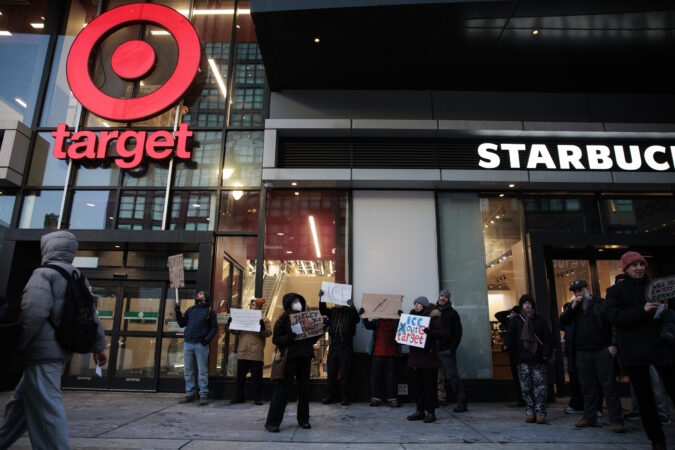
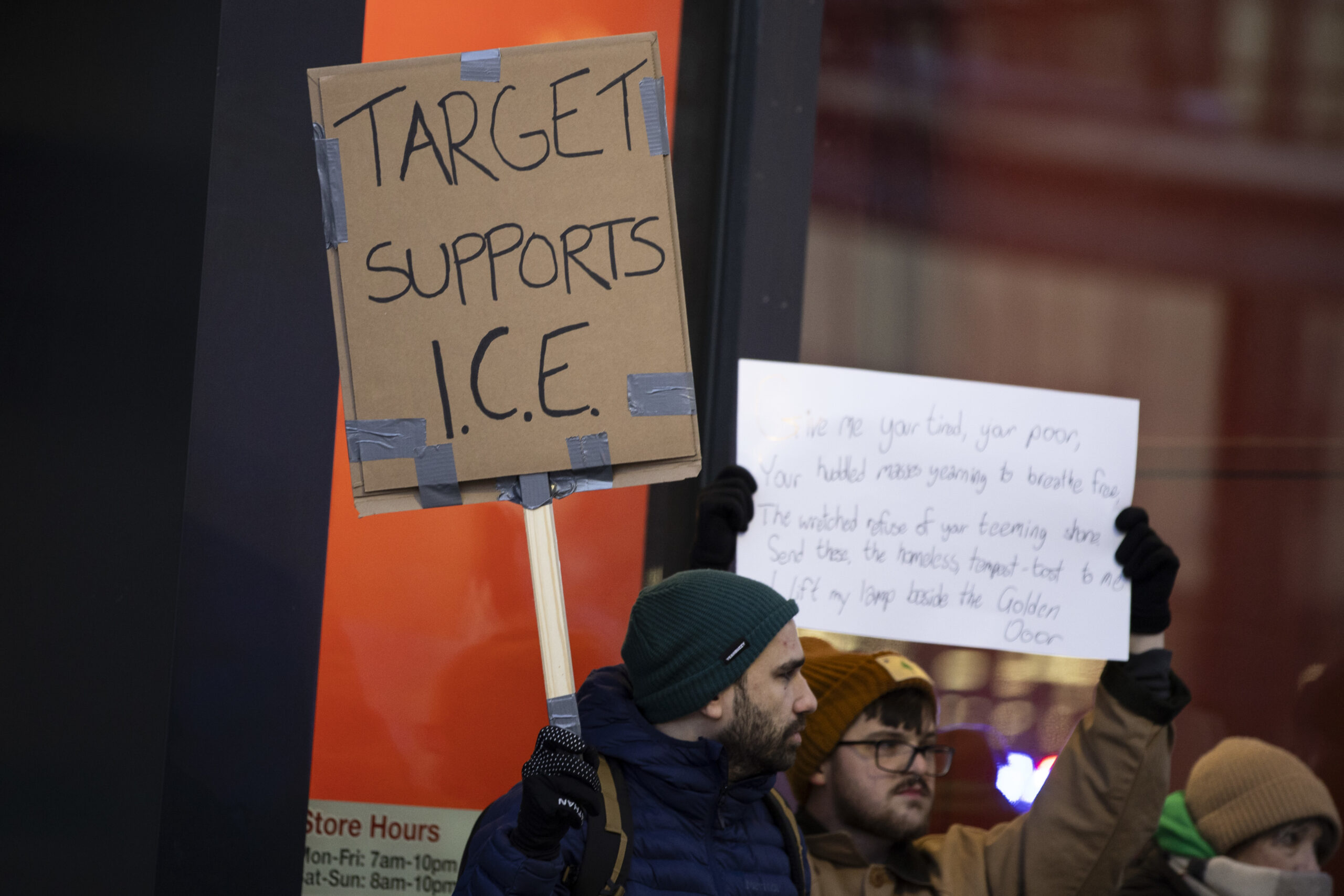
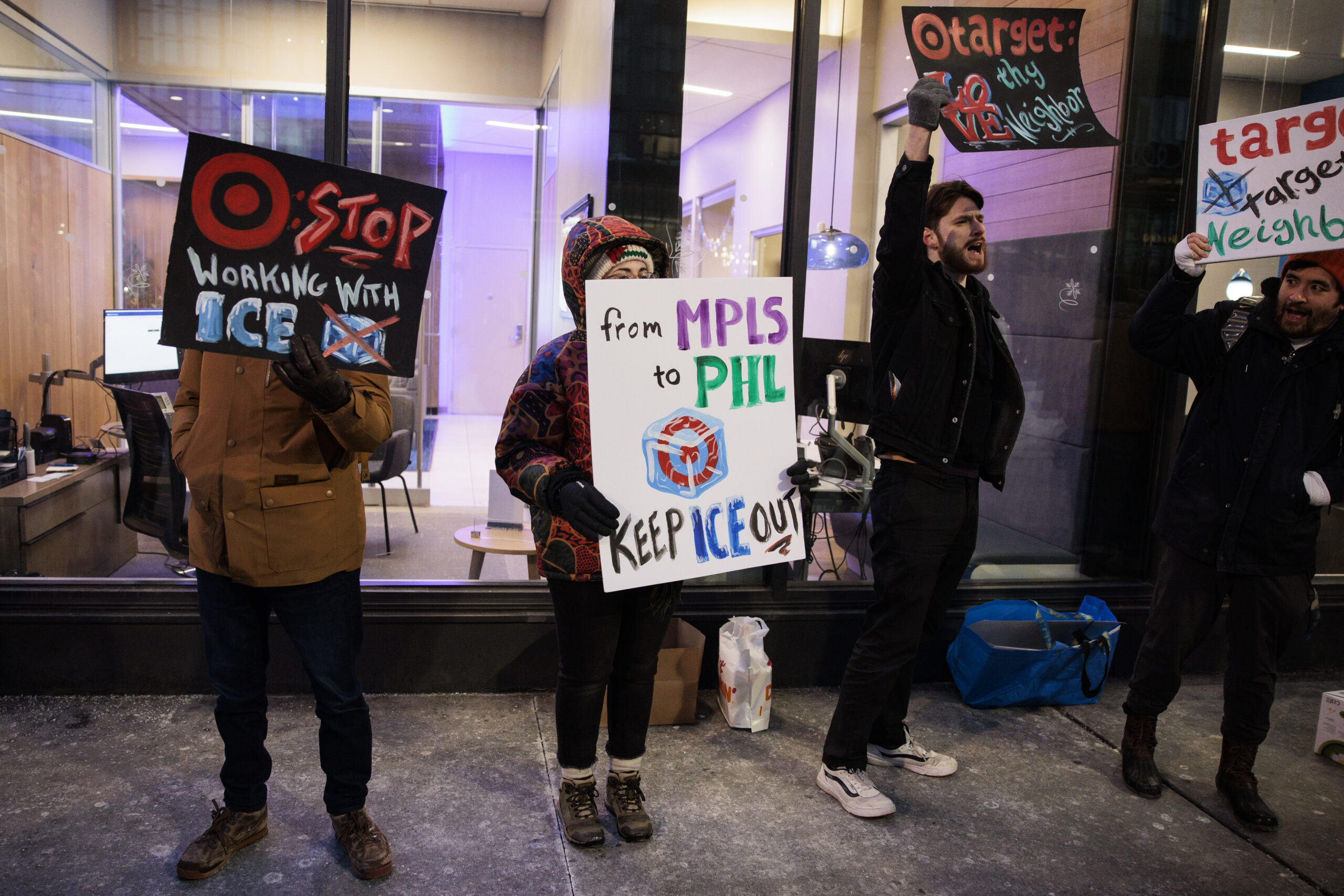
    More than 40 people rallied on a frozen, 19-degree night outside the Target at Broad Street and Washington Avenue, holding signs that showed solidarity with Minneapolis residents who have resisted ICE in their community.

    “From MPLS to PHL, keep ICE out,” read one sign.

    Demonstrators gathered outside of the Target at Broad and Washington on Tuesday in Philadelphia.

    Inside, some masked customers bought ice trays and single bottles of table salt. As soon as they paid for the items at the checkout counters, they headed to the “Returns” area to seek refunds.

    Items were quickly restocked on store shelves by staff, only to be purchased and returned again.

    Demonstrators visited at least seven stores, according to the Rev. Jay Bergen, a leader of No ICE Philly and pastor at the Germantown Mennonite Church.

    “Our actions are in solidarity with people across the country responding to the call from Minneapolis communities to pressure Target,” Bergen said Wednesday.

    Company spokespeople did not immediately reply to a request for comment on the protests in Philadelphia. Target, founded in 1962, operates 1,989 stores across the United States and has a net revenue of more than $100 billion a year.

    At Broad and Washington on Tuesday, members of No ICE Philly handed out pocket-sized fliers that described their goals as they urged shoppers to go elsewhere. Some people turned away after talking to demonstrators. Others who went inside were met with boos.

    “Find another store!” the protesters shouted, as a police officer looked on.

    Elijah Wald, 66, said the Washington Avenue location was his neighborhood Target.

    “Our main hope is that businesses will understand that they need to protect their employees, that they need to not collaborate with a government that right now is targeting everybody,” he said.

    Wald, whose mother was a Jewish refugee who fled Nazi Austria, said he has always felt positive about immigration, that the United States was built of “people who are used to moving to find work, moving to find cheaper housing.”

    But the discourse over ICE operations in major cities has gone beyond undocumented people, said Wald.

    “They’re shooting U.S. citizens now,” he said.

    Demonstrators gathered outside of the Target at Broad and Washington Streets on Tuesday.

    At the Target at Snyder Plaza, about 20 demonstrators encouraged people to do their shopping elsewhere.

    “Protest with your wallet; Acme is right there,” a protester said through a sound system.

    Celine Bossart, 34, said boycotts are an effective way to denounce ICE actions.

    “As citizens, our power is limited, but a big part of the power that we do have is where we choose to spend our money,” she said, “and at the end of the day, corporations aren’t necessarily going to listen until it hits their bottom line.”

    A man in a Flyers jersey stopped to heckle the demonstrators, who responded with words of their own. Bossart said the protest did not aim to make anyone’s day difficult.

    “Our neighbors are people who work at Target, people who work at Acme; these are the neighbors who we’re trying to protect,” she said. “So we’re just trying to send a message to upper, upper management.”

    Last week, demonstrators held a sit-in at a store in Minneapolis, where the company is headquartered, chanting, “Something ’bout this isn’t right ― why does Target work for ICE?”

    At other Minnesota stores, demonstrators formed long lines to buy bags of winter ice melt, then immediately got back in line to return them, slowing the checkout process.

    No ICE Philly, which has led demonstrations against the agency, and against the arrests of immigrants outside the city Criminal Justice Center, said Target must:

    • Publicly call for Immigration and Customs Enforcement to leave Minnesota.
    • Post signs in its stores that deny entrance to immigration agents, absent a signed judicial warrant.
    • Train store staff on how to respond if agents arrive.
    • Publicly call for Congress to end ICE funding.

    Chief executives of Target and more than 60 large Minnesota companies issued a public letter on Sunday calling for an “immediate de-escalation of tensions.” It marked the first time, The New York Times reported, that the most recognizable businesses in the state weighed in on the turmoil in Minneapolis.

    Critics said the letter offered too little, too late, coming after two local U.S. citizens were shot to death by federal agents.

  • ICE tactics in Minneapolis set off political firestorm from Philadelphia City Hall to Washington

    ICE tactics in Minneapolis set off political firestorm from Philadelphia City Hall to Washington

    In Philadelphia, lawmakers on Tuesday unveiled legislation that would institute some of the nation’s toughest limits on federal immigration-enforcement operations.

    In Harrisburg, a top Democrat floated making Pennsylvania a so-called sanctuary state to protect undocumented immigrants.

    And in Washington, senators faced mounting pressure to hold up funding for the Department of Homeland Security, an effort that could result in a government shutdown by the end of the week.

    Across the nation, lawmakers are fielding calls to rein in U.S. Immigration and Customs Enforcement after President Donald Trump’s administration surged forces into Minneapolis as part of his aggressive nationwide deportation campaign. Frustration with the agency reached new heights Saturday after agents fatally shot protester Alex Pretti, the second killing of a U.S. citizen there this month.

    Democrats nationwide slammed ICE and called on Trump to pull the forces out of Minnesota. Sen. John Fetterman, the Pennsylvania Democrat who has at times sided with Trump on immigration matters, said DHS Secretary Kristi Noem should be fired.

    Anti-ICE activists demonstrate outside U.S. Sen. John Fetterman’s Philadelphia office on Monday, calling for an end to federal immigration enforcement policies.

    But Fetterman has also said he will not vote to shut down the government. That angered protesters, who rallied on Tuesday outside his Philadelphia office. Some of the senator’s fellow Democrats, including members of Pennsylvania’s U.S. House delegation, urged him to vote against a bill to fund DHS.

    A growing number of Republicans have also signaled their discomfort with the Minneapolis operation, including Trump allies who called on members of the administration to testify before Congress. Sen. Dave McCormick, a Pennsylvania Republican, has called for an independent investigation into Pretti’s killing.

    Trump, for his part, showed some willingness to change course, sending border czar Tom Homan to Minneapolis to meet with Democratic leaders there. The president on Tuesday called Pretti’s death a “very sad situation.”

    Rue Landau shown here during a press conference at City Hall to announce a package of bills aimed at pushing back against ICE enforcement in Philadelphia on Tuesday.

    However, a chorus of Democrats and activists said Tuesday that the agency needs to change its tactics and be held accountable for missteps. And local leaders said they are laying out plans in case a surge of immigration enforcement comes to Philadelphia, home to an estimated 76,000 undocumented immigrants.

    “We have spent hours and hours and hours doing tabletop exercises to prepare for it,” Gov. Josh Shapiro, a Democrat, said during a Monday night interview on The Late Show with Stephen Colbert.

    Shapiro, who is running for reelection and is a rumored presidential contender, added: “I want the good people of Pennsylvania to know — I want the American people to know — that we will do everything in our power to protect them from the federal overreach.”

    Codifying sanctuary policies

    Philadelphia officials said the best way they can prepare is by limiting the city’s cooperation with federal immigration enforcement.

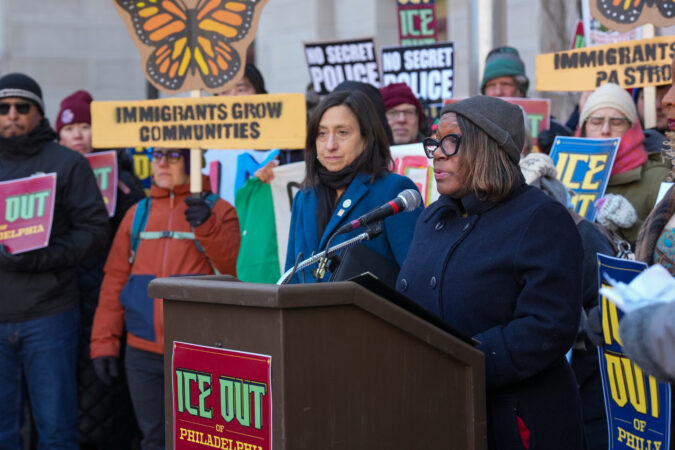
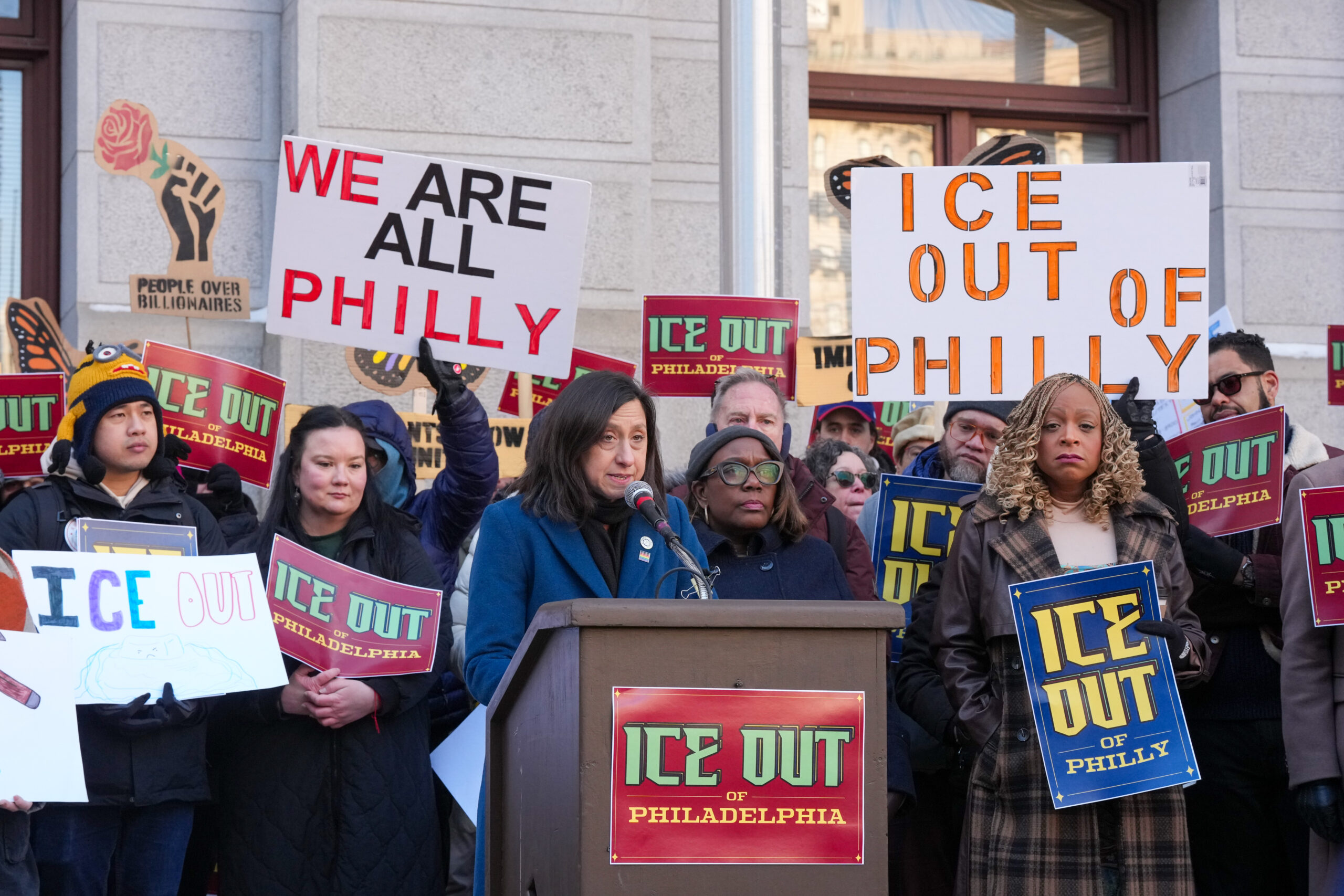
    City Councilmember Kendra Brooks, of the progressive Working Families Party, and Councilmember Rue Landau, a Democrat, were joined by dozens of activists and other elected officials during a news conference Tuesday to unveil a package of legislation aimed at codifying into law the city’s existing “sanctuary city” practices.

    Those policies, which are currently executive orders, bar city officials from holding undocumented immigrants in custody at ICE’s request without a judicial warrant.

    Landau and Brooks’ legislative package, expected to be introduced in Council on Thursday, goes further, preventing ICE agents from wearing masks, using city-owned property for staging raids, or accessing city databases.

    Erika Guadalupe Núñez, executive director of immigrant advocacy organization Juntos, said the legislation “goes beyond just ‘We don’t collaborate.’”

    Juntos gets regular calls about ICE staging operations at public locations in and around Philadelphia, and people have been worried, despite official assurances, whether personal information held by the city will be secure from government prying.

    “We deserve a city that has elected leadership that’s willing to step forward with clear and stronger protections,” Núñez said.

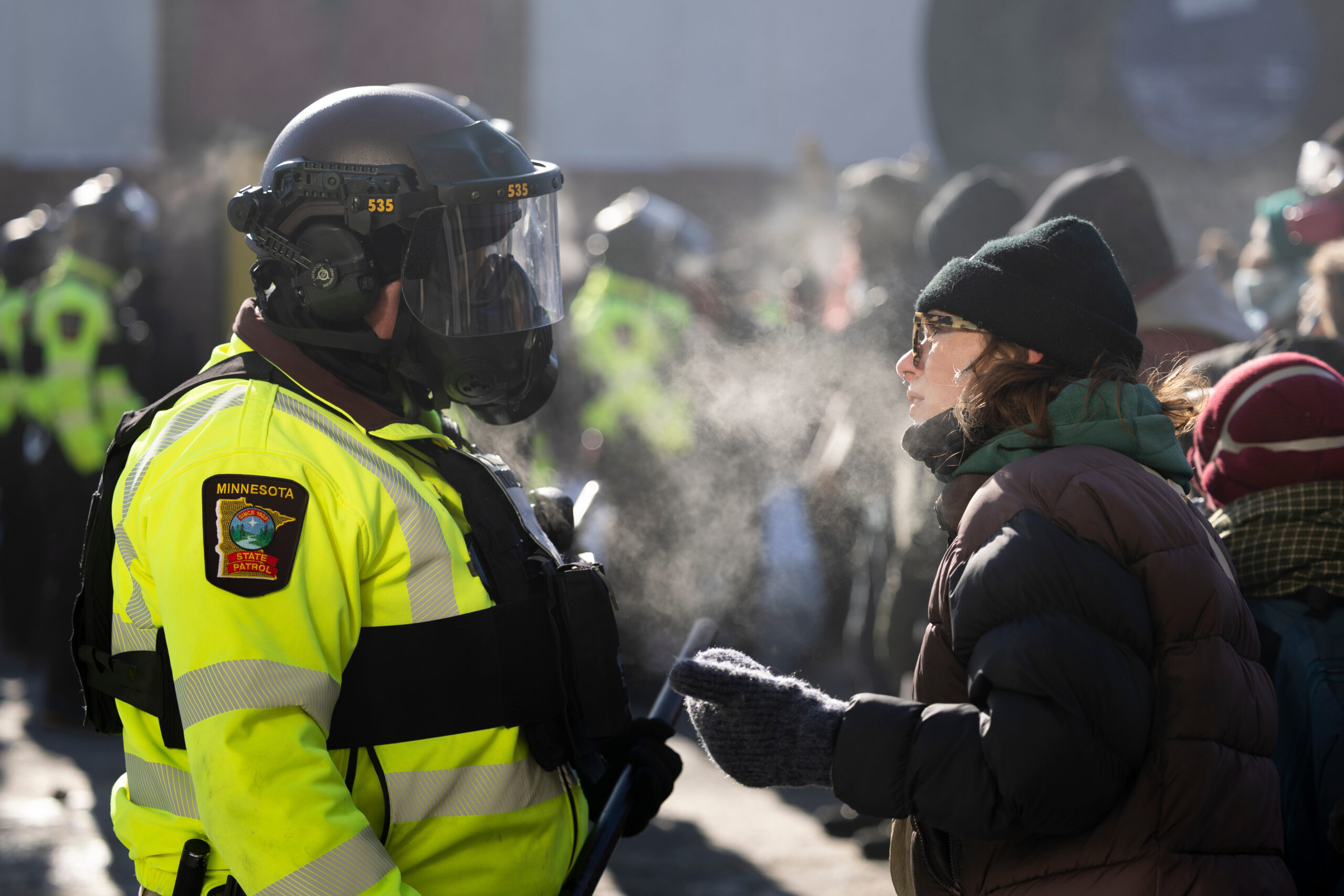
    A protester speaks to a Minnesota State Patrol officer near the site of the fatal shooting of 37-year-old Alex Pretti by federal agents in Minneapolis on Saturday.

    If the legislation is approved, Philadelphia would have some of the most stringent protections for immigrants in the country.

    Oregon has especially strong restrictions against cooperation with federal immigration authorities, including barring local law enforcement from detaining people or collecting information on a person’s immigration status without a judicial warrant.

    In Illinois, local officers “may not participate, support, or assist in any capacity with an immigration agent’s enforcement operations.” They are also barred from granting immigration agents access to electronic databases or to anyone in custody.

    California, New York, Colorado, Vermont — and individual jurisdictions in those states — also provide strong protections for immigrants.

    In New Jersey, Gov. Mikie Sherrill, a Democrat who was sworn in last week, has kept the state’s sanctuary directive in place as lawmakers seek to expand and codify the policy into law. Legislators came close in the final days of former Gov. Phil Murphy’s administration, but he killed a related bill that had won approval in Trenton, saying he worried that enacting a law that included changes to the state’s current policy would invite new lawsuits.

    Meanwhile, some conservatives say bolstering sanctuary policies risks community safety.

    “If an illegal immigrant breaks the law, they should be dealt with and handed over to federal law enforcement, not be released back into our neighborhoods to terrorize more victims and commit more crime,” said James Markley, a spokesperson for the Pennsylvania Republican Party.

    He added: “Sanctuary policies don’t protect communities, they endanger all of us by shielding criminals from accountability for their crimes.”

    Democrats are taking varying approaches

    The widespread outrage over ICE’s tactics in Minneapolis has exposed sharp divisions in elected Democrats’ responses.

    On one end of the party’s ideological spectrum is Fetterman, who has said often that he will not bow to activist demands and strongly opposes shutting down the federal government, even if it means funding DHS.

    On the other end is District Attorney Larry Krasner, Philadelphia’s most prominent progressive, who has on several occasions threatened to file criminal charges against ICE agents who commit crimes in the city.

    “There will be accountability now. There will be accountability in the future. There will be accountability after [Trump] is out of office,” Krasner said Tuesday. “If we have to hunt you down the way they hunted down Nazis for decades, we will find your identities.”

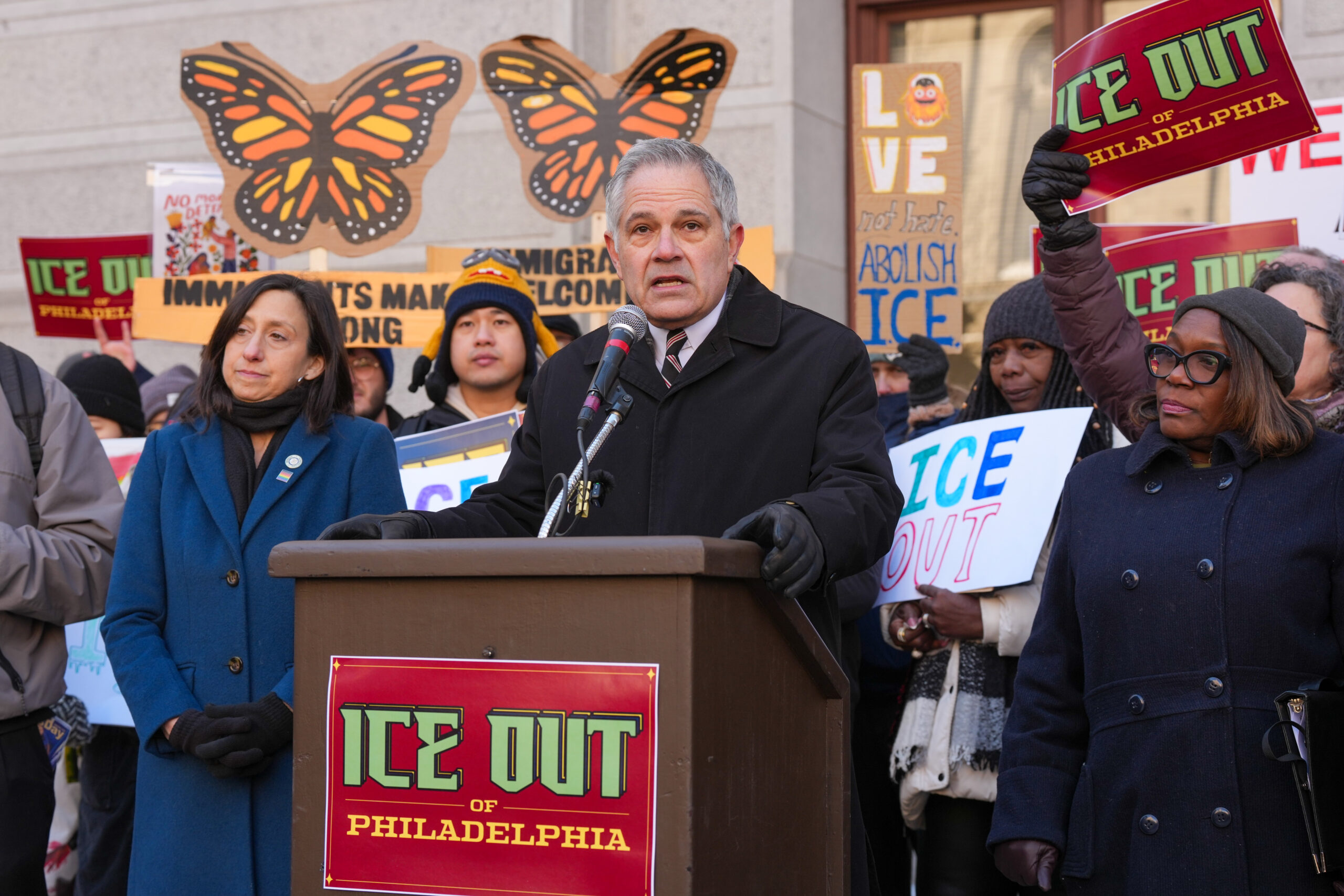
    District Attorney Larry Krasner speaks during a news conference at City Hall on Tuesday to announce a package of bills aimed at pushing back against ICE enforcement in Philadelphia.

    Somewhere in the middle is State Sen. Sharif Street, a Philadelphia Democrat and former head of the state party who is running for Congress.

    Street does not have Krasner’s bombast, but this week he announced plans to introduce legislation to prevent state dollars from funding federal immigration enforcement. The bill has less of a chance of becoming law in Pennsylvania’s divided state legislature than similar measures would in Philadelphia, where City Council is controlled by a supermajority of Democrats.

    “Who knows the amount of money that the state could incur because of Trump’s reckless immigration policies?” Street said in an interview Tuesday. “I don’t think state taxpayers should be paying for Donald Trump’s racist, reckless policies.”

    The city’s most prominent Democrat — Mayor Cherelle L. Parker — has perhaps said the least.

    The centrist Democrat has largely avoided outwardly criticizing Trump or his administration, saying often that she is focused on carrying out her own agenda.

    The mayor’s critics have said her approach is not responsive to the city’s overwhelmingly Democratic residents.

    “To the people of Philadelphia, I want to say: I hear you. You want ICE out of our city, and you want your local government to take action,” Brooks, the Council member, said Tuesday. “Some people believe that silence is the best policy when dealing with a bully, but that’s never been an option for me.”

    Kendra Brooks shown here during a news conference at City Hall on Tuesday to announce a package of bills aimed at pushing back against ICE enforcement in Philadelphia.

    Others say Parker’s conflict-averse strategy is appropriate.

    “All of us have different roles to play,” Street said. “The mayor has to manage the city. She’s got to command law enforcement forces. … As a state legislator, we make policy.”

    Rafael Mangual, a fellow who studies urban crime and justice at the right-leaning Manhattan Institute in New York City, said legislative efforts to erect barriers between federal and local law enforcement could backfire.

    “If you don’t engage at all, and you do something that seems to actively frustrate the federal government,” Mangual said, “that would seem to be an invitation for the federal government to prioritize a city like Philadelphia.”

    Staff writers Alfred Lubrano, Aliya Schneider, and Gillian McGoldrick contributed to this article.

  • Gov. Shapiro tells Stephen Colbert he’s planning for the possibility of federal troops entering Pa.

    Gov. Shapiro tells Stephen Colbert he’s planning for the possibility of federal troops entering Pa.

    Saying the Trump administration is using the federal government for “pure evil” in its immigration crackdown in Minneapolis, Gov. Josh Shapiro revealed on late-night television Monday that he’s preparing Pennsylvania to respond should the state face such an incursion.

    Shapiro’s wide-ranging remarks on The Late Show With Stephen Colbert — which included Shapiro deriding Vice President JD Vance as a “sycophant” and a “suck-up” — sounded at times like a speech before a studio audience that applauded him vigorously. Making the rounds to promote his new book, Where We Keep the Light: Stories from a Life of Service, Shapiro also appeared on CBS Sunday Morning, Good Morning America on Monday, and The View on Tuesday.

    On Colbert, the governor sharply criticized the Trump administration’s actions in Minneapolis, where he said “untrained” agents from U.S. Immigration and Customs Enforcement (ICE) have been creating “chaos” by fatally shooting two American citizens.

    “I think Americans are outraged by what they see,” Shapiro said, adding: “The mission in Minnesota must be terminated immediately.”

    When Colbert said there are “rumors” that federal troops will be sent to Philadelphia “to foment fear,” Shapiro nodded. On The View, he said troops could show up in Philadelphia, Pittsburgh, or Lancaster.

    “We have spent hours and hours and hours doing tabletop exercises to prepare for it,” Shapiro said, without being specific. The governor did not elaborate.

    He added that “it’s a sad day in America that a governor of a commonwealth needs to prepare for a federal onslaught where they would send troops in to undermine the freedoms and the constitutional rights of our citizens. This is un-American.”

    “But I want the good people of Pennsylvania to know — I want the American people to know — that we will do everything in our power to protect them from the federal overreach.”

    Asked for comment, Abigail Jackson, a White House spokesperson, said Tuesday: “It’s pure evil when Democrat leaders provide sanctuary to dangerous criminal illegal aliens who assault, murder, and rape innocent American citizens. President Trump is keeping his promise to the American people to deport criminal illegal aliens.”

    Referencing ICE agents wearing masks, Shapiro said that members of the Pennsylvania State Police “have strict rules on when they can wear a mask. You want to be identified as folks who are keeping people safe.”

    He added, “Of all the tools that we give our law enforcement in Pennsylvania, the most important tool you need to have is trust with the community that you police.”

    When the conversation turned to Vance’s statement that the ICE officer who shot and killed Minneapolis resident Renee Macklin Good on Jan. 7 has “absolute immunity,” Shapiro retorted that it was untrue.

    He added that Vance is “such a sycophant, such a suck-up. He embarrasses himself daily as he seeks the affirmation of Donald Trump.”

    ICE agents “are not above the law,” Shapiro added moments later. “I don’t care what B.S. Vance [says.]”

    The governor’s reelection bid this year, as well as rumors that he may be a presidential candidate in 2028, did not come up. Instead, Colbert touted Shapiro’s book.

    Shapiro said that the courts, Congress, and public opinion need to be marshaled to prevent the Trump administration from sending more troops to U.S. cities.

    “All of you have powerful voices,” Shapiro told the audience. He added: “The story of America is ordinary Americans rising up, demanding more, seeking justice.”

  • Minneapolis shooting scrambles Second Amendment politics for Trump

    Minneapolis shooting scrambles Second Amendment politics for Trump

    Prominent Republicans and gun rights advocates helped elicit a White House turnabout this week after bristling over the administration’s characterization of Alex Pretti, the second person killed this month by a federal officer in Minneapolis, as responsible for his own death because he lawfully possessed a weapon.

    The death produced no clear shifts in U.S. gun politics or policies, even as President Donald Trump shuffles the lieutenants in charge of his militarized immigration crackdown. But important voices in Trump’s coalition have called for a thorough investigation of Pretti’s death while also criticizing inconsistencies in some Republicans’ Second Amendment stances.

    If the dynamic persists, it could give Republicans problems as Trump heads into a midterm election year with voters already growing skeptical of his overall immigration approach. The concern is acute enough that Trump’s top spokeswoman sought Monday to reassert his brand as a staunch gun rights supporter.

    “The president supports the Second Amendment rights of law-abiding American citizens, absolutely,” White House press secretary Karoline Leavitt told reporters.

    Leavitt qualified that “when you are bearing arms and confronted by law enforcement, you are raising … the risk of force being used against you.”

    Videos contradict early statements from administration

    That still marked a retreat from the administration’s previous messages about the shooting of Pretti. It came the same day the president dispatched border czar Tom Homan to Minnesota, seemingly elevating him over Homeland Security Secretary Kristi Noem and Border Patrol chief Greg Bovino, who had been in charge in Minneapolis.

    Within hours of Pretti’s death on Saturday, Bovino suggested Pretti “wanted to … massacre law enforcement,” and Noem said Pretti was “brandishing” a weapon and acted “violently” toward officers.

    “I don’t know of any peaceful protester that shows up with a gun and ammunition rather than a sign,” Noem said.

    White House deputy chief of staff Stephen Miller, an architect of Trump’s mass deportation effort, went further on X, declaring Pretti “an assassin.”

    Bystander videos contradicted each claim, instead showing Pretti holding a cellphone and helping a woman who had been pepper sprayed by a federal officer. Within seconds, Pretti was sprayed, too, and taken to the ground by multiple officers. No video disclosed thus far has shown him unholstering his concealed weapon -– which he had a Minnesota permit to carry. It appeared that one officer took Pretti’s gun and walked away with it just before shots began.

    As multiple videos went viral online and on television, Vice President JD Vance reposted Miller’s assessment, while Trump shared an alleged photo of “the gunman’s gun, loaded (with two additional full magazines!).”

    On Tuesday, Trump was asked if he agreed with Miller’s comment describing Pretti as an “assassin” and answered “no.” But he added that protesters “can’t have guns” and said he wants the death investigated.

    “You can’t walk in with guns, you just can’t,” Trump told reporters on the White House lawn before departing for a trip to Iowa.

    Swift reactions from gun rights advocates

    The National Rifle Association, which has backed Trump three times, released a statement that began by casting blame on Minnesota Democrats it accused of stoking protests. But the group lashed out after a federal prosecutor in California said on X that, “If you approach law enforcement with a gun, there is a high likelihood they will be legally justified in shooting you.”

    That analysis, the NRA said, is “dangerous and wrong.”

    FBI Director Kash Patel magnified the blowback Sunday on Fox News’ “Sunday Morning Futures With Maria Bartiromo.” No one, Patel said, can “bring a firearm, loaded, with multiple magazines to any sort of protest that you want. It’s that simple.”

    Erich Pratt, vice president of Gun Owners of America, was incredulous.

    “I have attended protest rallies while armed, and no one got injured,” he said on CNN.

    Conservative officials around the country made the same connection between the First and Second amendments.

    “Showing up at a protest is very American. Showing up with a weapon is very American,” state Rep. Jeremy Faison, who leads the GOP caucus in Tennessee, said on X.

    Trump’s first-term vice president, Mike Pence, called for “full and transparent investigation of this officer involved shooting.”

    A different response from the past

    Liberals, conservatives and nonpartisan experts noted how the administration’s response differed from past conservative positions involving protests and weapons.

    Multiple Trump supporters were found to have weapons during the Jan. 6, 2021, attack on the U.S. Capitol. Trump issued blanket pardons to all of them.

    Republicans were critical in 2020 when Mark and Patricia McCloskey had to pay fines after pointing guns at protesters who marched through their St. Louis neighborhood after the police killing of George Floyd in Minneapolis. And then there’s Kyle Rittenhouse, a counter-protester acquitted after fatally shooting two men and injuring another in Kenosha, Wisconsin, during the post-Floyd protests.

    “You remember Kyle Rittenhouse and how he was made a hero on the right,” Trey Gowdy, a Republican former congressman and attorney for Trump during one of his first-term impeachments. “Alex Pretti’s firearm was being lawfully carried. … He never brandished it.”

    Adam Winkler, a UCLA law professor who has studied the history of the gun debate, said the fallout “shows how tribal we’ve become.” Republicans spent years talking about the Second Amendment as a means to fight government tyranny, he said.

    “The moment someone who’s thought to be from the left, they abandon that principled stance,” Winkler said.

    Meanwhile, Democrats who have criticized open and concealed carry laws for years, Winkler added, are not amplifying that position after Pretti’s death.

    Uncertain effects in an election year

    The blowback against the administration from core Trump supporters comes as Republicans are trying to protect their threadbare majority in the U.S. House and face several competitive Senate races.

    Perhaps reflecting the stakes, GOP staff and campaign aides were reticent Monday to talk about the issue at all.

    The House Republican campaign chairman, Rep. Richard Hudson of North Carolina, is sponsoring the GOP’s most significant gun legislation of this congressional term, a proposal to make state concealed-carry permits reciprocal across all states.

    The bill cleared the House Judiciary Committee last fall. Asked Monday whether Pretti’s death and the Minneapolis protests might affect debate, an aide to Speaker Mike Johnson did not offer any update on the bill’s prospects.

    Gun rights advocates have notched many legislative victories in Republican-controlled statehouses in recent decades, from rolling back gun-free zones around schools and churches to expanding gun possession rights in schools, on university campuses and in other public spaces.

    William Sack, legal director of the Second Amendment Foundation, said he was surprised and disappointed by the administration’s initial statements following the Pretti shooting. Trump’s vacillating, he said, is “very likely to cost them dearly with the core of a constituency they count on.”

  • Trump administration’s immigration crackdown contributed to a drop in the U.S. growth rate last year

    Trump administration’s immigration crackdown contributed to a drop in the U.S. growth rate last year

    ORLANDO, Fla. — President Donald Trump’s crackdown on immigration contributed to a year-to-year drop in the nation’s growth rate as the U.S. population reached nearly 342 million people in 2025, according to population estimates released Tuesday by the U.S. Census Bureau.

    The 0.5% growth rate for 2025 was a sharp drop from 2024’s almost 1% growth rate, which was the highest in two decades and was fueled by immigration. The 2024 estimates put the U.S. population at 340 million people.

    Immigration increased by almost 1.3 million people last year, compared with 2024’s increase of almost 2.8 million people. If trends continue, the annual gain from immigrants by mid-2026 will drop to only 321,000 people, according to the Census Bureau, whose estimates do not distinguish between legal and illegal immigration.

    In the past 125 years, the lowest growth rate was in 2021, during the height of the coronavirus pandemic, when the U.S. population grew by just 0.16%, or 522,000 people and immigration increased by just 376,000 people because of travel restrictions into the U.S. Before that, the lowest growth rate was just under 0.5% in 1919 at the height of the Spanish flu.

    Births outnumbered deaths last year by 519,000 people. While higher than the pandemic-era low at the beginning of the decade, the natural increase was dramatically smaller than in the 2000s, when it ranged between 1.6 million and 1.9 million people.

    Lower immigration stunts growth in many states

    The immigration drop dented growth in several states that traditionally have been immigrant magnets.

    California had a net population loss of 9,500 people in 2025, a stark change from the previous year, when it gained 232,000 residents, even though roughly the same number of Californians already living in the state moved out in both years. The difference was immigration since the number of net immigrants who moved into the state dropped from 361,000 people in 2024 to 109,000 in 2025.

    Florida had year-to-year drops in both immigrants and people moving in from other states. The Sunshine State, which has become more expensive in recent years from surging property values and higher home insurance costs, had only 22,000 domestic migrants in 2025, compared with 64,000 people in 2024, and the net number of immigrants dropped from more than 411,000 people to 178,000 people.

    New York added only 1,008 people in 2025, mostly because the state’s net migration from immigrants dropped from 207,000 people to 95,600 people.

    South Carolina, Idaho, and North Carolina had the highest year-over-year growth rates, ranging from 1.3% to 1.5%. Texas, Florida, and North Carolina added the most people in pure numbers. California, Hawaii, New Mexico, Vermont, and West Virginia had population declines.

    The South, which has been the powerhouse of growth in the 2020s, continued to add more people than any other region, but the numbers dropped from 1.7 million people in 2024 to 1.1 million in 2025.

    “Many of these states are going to show even smaller growth when we get to next year,” Brookings demographer William Frey said Tuesday.

    The effects of Trump’s immigration crackdown

    Tuesday’s data release comes as researchers have been trying to determine the effects of the second Trump administration’s immigration crackdown after the Republican president returned to the White House in January 2025. Trump made a surge of migrants at the southern border a central issue in his winning 2024 presidential campaign.

    The numbers made public Tuesday reflect change from July 2024 to July 2025, covering the end of President Joe Biden’s Democratic administration and the first half of Trump’s first year back in office.

    The figures capture a period that reflects the beginning of enforcement surges in Los Angeles and Portland, Ore., but do not capture the impact on immigration after the Trump administration’s crackdowns began in Chicago; New Orleans; Memphis, Tennessee; and Minneapolis, Minn..

    The 2025 numbers were a jarring divergence from 2024, when net international migration accounted for 84% of the nation’s 3.3 million-person increase from the year before. The jump in immigration two years ago was partly because of a new method of counting that added people who were admitted for humanitarian reasons.

    “They do reflect recent trends we have seen in out-migration, where the numbers of people coming in is down and the numbers going out is up,” Eric Jensen, a senior research scientist at the Census Bureau, said last week.

    How the population estimates are calculated

    Unlike the once-a-decade census, which determines how many congressional seats and Electoral College votes each state gets, as well as the distribution of $2.8 trillion in annual government funding, the population estimates are calculated from government records and internal Census Bureau data.

    The release of the 2025 population estimates was delayed by the federal government shutdown last fall and comes at a challenging time for the Census Bureau and other U.S. statistical agencies. The bureau, which is the largest statistical agency in the U.S., lost about 15% of its workforce last year due to buyouts and layoffs that were part of cost-cutting efforts by the White House and its Department of Government Efficiency.

    Other recent actions by the Trump administration, such as the firing of Erika McEntarfer as Bureau of Labor Statistics commissioner, have raised concerns about political meddling at U.S. statistical agencies. But Frey said the bureau’s staffers appear to have been “doing this work as usual without interference.”

    “So I have no reason to doubt the numbers that come out,” Frey said.