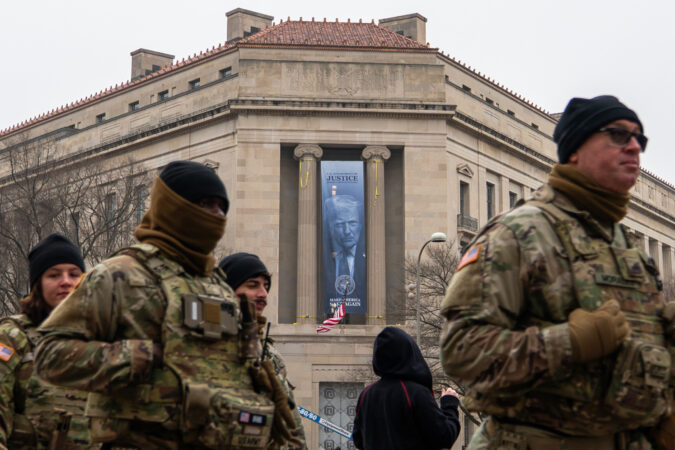
As America prepares to celebrate its 250th anniversary, the state of the union is in turmoil.
In little more than a year in office, President Donald Trump has assailed the country’s institutions, upset the constitutional system of checks and balances, flouted the law, undermined democracy at home and abroad, and ignored the rising cost of living for ordinary people while lining his family’s pockets.
Under Trump — at the whims of his unelected billionaire buddy, Elon Musk — senseless funding cuts have gutted U.S. medical research, led to thousands of federal employees losing their jobs, and more than 800,000 lives lost due to discontinued foreign aid.
The president’s chaotic mass deportation efforts have a body count — including two citizens — as the nation’s streets are overrun by heavily armed, masked federal agents who routinely use excessive force with little accountability. Meanwhile, the government continues to protect the rich and powerful listed in the Jeffrey Epstein files, perhaps hoping to redact away their sins.
When the president addresses Congress on Tuesday at the annual State of the Union address, he will do so with a 60% disapproval rating, according to a Washington Post-ABC News-Ipsos poll. Those abysmal numbers echo those seen after the Jan. 6, 2021, assault on the U.S. Capitol by Trump followers.
The reproach has been hard-earned by the president, who has squandered away the goodwill of voters after his undeniable 2024 election victory.
Rather than focusing on the kitchen-table issues that won him a return trip to the White House, Trump has ramped up the cruelty of his anti-immigrant policies and ignored the economic pressures many people face.
Instead of presiding over cooling inflation, the president’s obsession with tariffs cost American families an extra $1,000 last year. In place of policies that would make owning a home more affordable and bring down the cost of rent, Trump said he wants to keep housing prices high. Contrary to what the administration wants people to believe, mass deportations don’t create jobs; they stunt economic growth.
The tax cuts promised in Trump’s signature piece of legislation, the One Big Beautiful Bill Act, mostly benefited the very wealthy. The law allots billions to hire U.S. Immigration and Customs Enforcement agents and build vast detention facilities on the back of steep cuts to Medicaid and food assistance.
That people are roundly pushing back against the president’s upside-down priorities and abuses of power seems to have restored some conservative leaders’ resolve.
In Congress, a handful of Republicans have also rejected Trump’s wishes, denouncing his administration’s refusal to release the Epstein files and the president’s ill-conceived tariffs on Canada. GOP lawmakers have so successfully abandoned their authority to Trump that even these limited developments are heartening.
When it comes to the president, perhaps the legislative branch should pay heed to the judicial.
In the same court decision that denied Trump his tariff authority, Justice Neil Gorsuch, who is part of the conservative majority, laid it out clearly.
“Yes, legislating can be hard and take time. And, yes, it can be tempting to bypass Congress when some pressing problem arises,” the Trump appointee wrote in his concurrence. “But the deliberative nature of the legislative process was the whole point of its design. Through that process, the Nation can tap the combined wisdom of the people’s elected representatives, not just that of one faction or man.”
The American people and the courts are speaking. If the state of the union is to ever recover, Congress must listen.
UPPER BERN, Pa. — Not enough clean water. Hundreds of thousands of gallons of sewage dumped into systems designed to handle much less. More calls for already overwhelmed EMS departments.
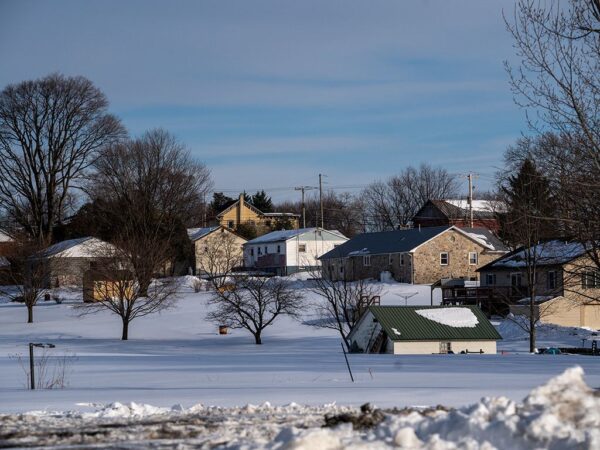
Pennsylvania leaders, municipal officials, and first responders say communities will be overwhelmed by the federal government’s plans to turn vacant warehouses in Berks and Schuylkill Counties into massive ICE detention centers and processing facilities.
A recently released memo from the Department of Homeland Security (DHS) says it selected sites based on engineering reviews and found a warehouse-to-detention center conversion would have “no detrimental effect.”
But state officials and Upper Bern Township leaders — who were blindsided by the Feb. 2 purchase and are still largely operating in the dark — are pointing to facts about capacity and raising serious concerns about how these plans would play out.
Commonwealth leaders in emergency management, environmental protection, health, and labor cosigned a Feb. 12 letter to Homeland Security Secretary Kristi Noem asking that the department not “impose such intolerable burdens on residents of Schuylkill and Berks counties.”
“If reporting about DHS’s plans is accurate, the facilities will violate the legal requirements applicable to public drinking water, sewage, and water pollution,” the state officials wrote.
They continued: “The stress each facility will place on local infrastructure will, among other things, jeopardize Pennsylvanians’ access to safe water, deplete resources and infrastructure needed for emergencies, and overextend already strained emergency response personnel.”
The federal government has provided few specifics on the impacts Immigration and Customs Enforcement’s plans could have on these rural communities. A meeting among federal, state, and local officials has yet to materialize.
Upper Bern Township’s Board of Supervisors, who have spoken publicly through solicitor Andrew Hoffman, said in a prepared statement on Feb. 12 that ICE’s plans at the vacant warehouse would “more than double” Upper Bern’s population.
Its wastewater treatment plant could be overwhelmed by a 1,500-bed facility, and supervisors wonder what extracting “potable water from wells for those 1,500 or more people” could do to the water supply.
Here’s what we know about the potential impact on the community:
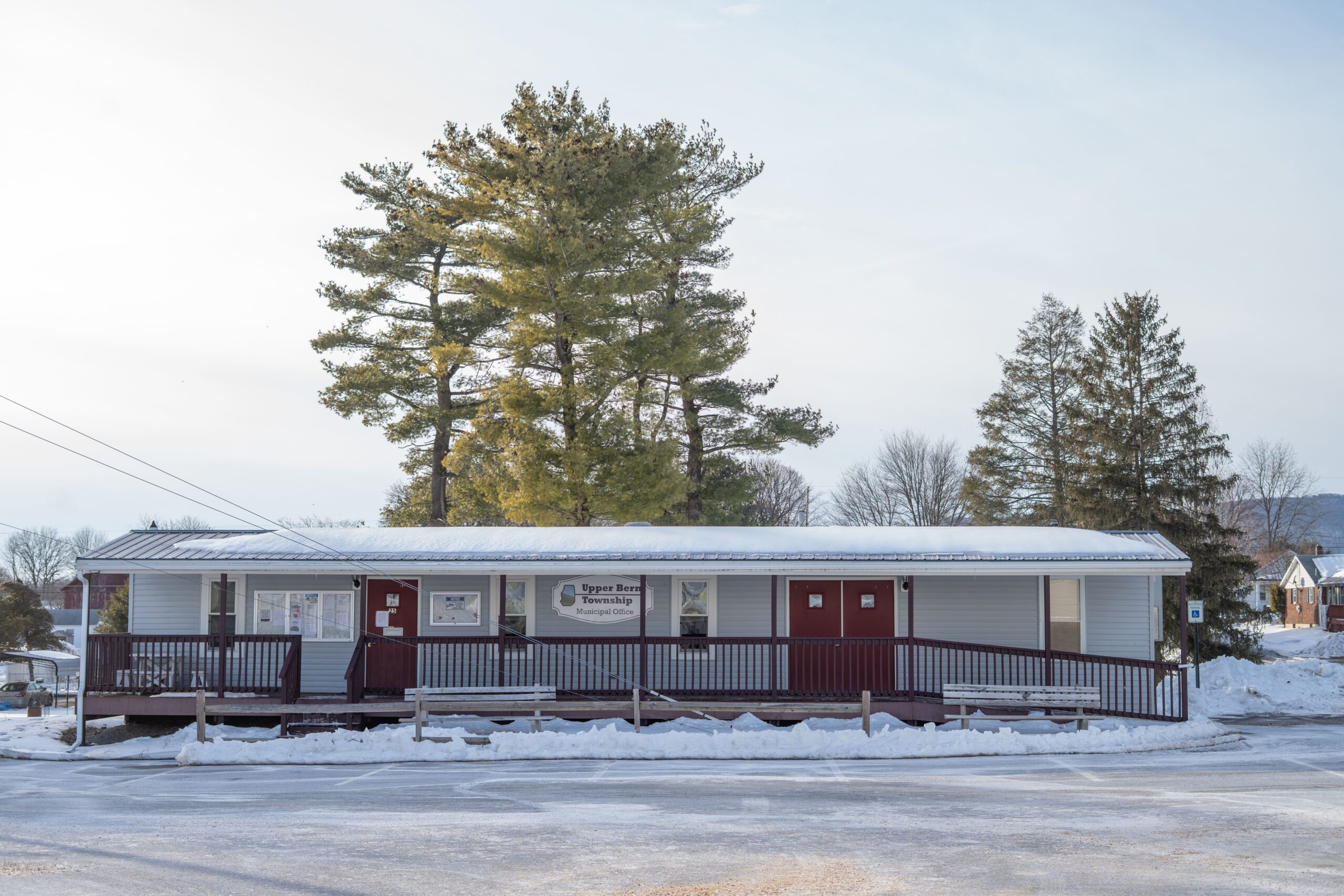
A view from the Upper Bern Township building near Shartlesville, Pa., on Feb. 9.
Sewage
When the Department of Environmental Protection (DEP) signed off on the plan to build the Hamburg Logistics Center several years ago, documents show the agency approved the warehouse to produce 8,000 gallons of sewage daily.
If it’s used as an ICE processing center and holds up to 1,500 people, that number would skyrocket to more than 100,00 gallons per day, officials said in their letter to Noem.
Upper Bern’s “maximum monthly flow from serving its current customers is 131,000 gallons per day,” they continued. And its treatment plant is designed to only treat up to 155,000 gallons daily.
Upper Bern renewed its wastewater permit with DEP in January 2024, indicating that the township was not modifying or adding onto the system. The average monthly flow reported during that renewal was 78,000 gallons per day.
Township sewer engineer John Roche said no one has submitted a formal request to change the use or increase sewer capacity at the warehouse.
“If the use changes, we’d have to look at that on an individual basis,” Roche told Spotlight PA after a supervisors’ meeting on Feb. 12. “We haven’t had any new requests yet.”
Neither Roche nor Upper Bern’s solicitor was available for comment for this story.
The former Big Lots warehouse in Schuylkill County, which ICE wants to turn into a detention center for 7,500 people, has a system approved to discharge even less than the one in Upper Bern — no more than 6,000 gallons per day, according to the letter. The system is also connected to the treatment facility by a 2-inch diameter pipe, which state officials told Noem isn’t suitable for a detention center.
Drinking water
Neither warehouse was designed to provide the amount of potable water that would be needed to run these detention centers, state officials warn, and finding alternatives would be all but impossible.
Upper Bern officials said the township has no public water system. Homes and businesses rely on wells for potable water.
In the letter to Noem, state officials wrote that the vacant warehouse is designed to draw water from an on-site water well. The Department of Environmental Protection (DEP) previously approved the construction of such a system, “because it could provide treated water for use by a limited number of employees engaged in warehouse activities based on three anticipated separate shifts in a 24-hour period.”
However, the agency hasn’t approved the operation of the system. What’s more, it’s not designed to provide drinking water 24 hours a day for some 1,500 people, they wrote.
During an April 2025 inspection, DEP officials also found several deficiencies that suggest the drinking water system “was not constructed in accordance with the approved designs.”
The Tremont Township warehouse is even more strained, the letter said. While it is serviced by the Schuylkill County Municipal Authority’s public water system, that system already struggles to provide adequate services to the community.
State officials estimate a 7,500-bed facility would need up to 800,000 gallons of safe water per day, which is nearly all of the available 1 million gallons stored for the Tremont area. The plant is permitted to only treat 330,000 gallons daily by the Susquehanna River Basin Commission.
That not only threatens access to safe drinking water, but could also “lead to calamity in the event of an emergency,” state department heads warned. For example, the same water supply is used for fighting fires, and the current systems may not have the supply or the water pressure needed to extinguish a blaze.
Emergency services
Communities across Pennsylvania are already experiencing an EMS crisis. Adding high-density facilities to the rural communities of Upper Bern and Tremont Townships — populations 1,600 and 300, respectively — will exacerbate those problems, local first responders told Spotlight PA.
Hamburg EMS has served Upper Bern Township for years, Chief Leslie Herring told Spotlight PA. While there are still many unknowns, she said first responders worry about how the ICE processing facility would impact their call volumes and response times.
“We’re just concerned because it’s not only going to affect us, it’s going to affect every other neighboring squad in the county,” Herring said. “We’re worried about what it’s going to do to all the surrounding municipalities and boroughs.”
Berks County officials declined to discuss the impact on emergency services. Emergency Services Director Brian Gottschall referred a Spotlight PA reporter to county spokesperson Jonathan Heintzman. Heintzman later declined to comment after consulting with the county commissioners and solicitor.
Scott Krater, director of Schuylkill County’s 911 center, is responsible for dispatching EMS, police, and fire personnel throughout the county, and noted the challenges these sectors already have. He said attracting 911 call operators is difficult.
Schuylkill County already has three prisons — run by the county, state, and federal governments — but none house the number of people anticipated for the empty warehouse. The county prison typically incarcerates fewer than 300 people, and both the federal and state prisons have about 1,200 inmates each.
“Those normal challenges that we have here would obviously be the same, or maybe more taxing on the telecommunicators that are working currently with the increase in call volume,” Krater told Spotlight PA.
Western Berks Ambulance Association provides mutual aid for Upper Bern Township and is the second in line to respond to emergencies, CEO Anthony Tucci said.
Tucci reached out to other EMS companies and DHS to learn more and better prepare, but said he hasn’t heard back. He estimates an ICE facility could add an additional 60 to 70 EMS calls a month.
“I think it’s going to be a huge impact on our community,” Tucci said.
Fire departments operate on a similar system of mutual aid and could also experience an increase in emergency calls, state leaders wrote in their letter to Noem.
While Tremont is serviced by five fire departments, Upper Bern is protected by just one: Shartlesville Fire Company, which is staffed by volunteers. It’s unclear how many calls the department averages monthly. Calls and emails to the fire company were not returned.
DHS has also failed to engage with area hospitals that would serve the ICE facilities, the Pennsylvania agency leaders said in their letter, which they called disconcerting. Hospitals need to plan for disasters, such as a fire at these buildings, that would cause an influx in patients.
“Area hospitals may not have the capacity to prepare for these emergency events without support and the lack of communication from federal officials raises serious concerns,” the state leaders wrote.
Reading Hospital and Penn State Health St. Joseph in Berks County did not immediately respond to Spotlight PA’s questions, nor did St. Luke’s Hospital or Lehigh Valley Hospital in Schuylkill County.
The Hospital and Healthsystem Association of Pennsylvania, which represents more than 235 providers across the state, was unable to say whether DHS has contacted local hospitals.
“Hospitals continuously update their plans — especially when there is a major change in the community — to ensure they are prepared to respond to emergencies and address their communities’ needs,” the association said in an emailed response to Spotlight PA questions. “Strong collaboration with local leaders, state and federal agencies, and other stakeholders is an important part of this process.”
Public safety
Neighbors have questioned how the proposed processing center would affect public safety.
Chelsey and Zach Kramer, who live in a mobile home community across the road from the warehouse, came to Upper Bern Township’s Board of Supervisors meeting on Feb. 12 to oppose ICE’s purchase of the warehouse.
They said they are worried about guns and security presence at the site, road closures, and not being able to access their home.
“Are we going to have to be showing ID to get home? Are they going to be blocking off our roads?” Chelsey Kramer told Spotlight PA.
The Kramers said they also worry about how a detention facility could impact recreational and family-friendly spaces near their home.
“When they were looking at these facilities, who at DHS looked at the campground and the mobile home community and the game lands and public trails and everything, and the community park right here, and said: ‘Let’s put one right there,’” Zach Kramer said. “The campground is going to go under for one, because who’s going to want to go vacationing near a detention facility? I know most of my neighbors are upset about this.”
The Berks County township doesn’t have its own police department, and State Police are responsible for coverage. Cars already back up at the major thoroughfares near Mountain Road during shift changes at nearby warehouses, local first responders told Spotlight PA.
Some speakers during the Feb. 12 meeting said they are worried about protesters and “agitators” coming to the area, and ensuring that people can exercise their rights to protest.
State Police “remain committed to providing the best law enforcement coverage with the utmost professionalism,” agency spokesperson Ethan Brownback told Spotlight PA in a statement, adding that their dedication to the area “remains unchanged.”
Property taxes
The $87.4 million sale of the Upper Bern warehouse to the federal government takes the sprawling property — located near the Appalachian Trail — off the tax rolls.
Since the warehouse was built and placed on the market, the property has remained vacant while generating about $199,620 annually in county property taxes, $31,229 in township taxes, and $597,110 for the Hamburg Area School District.
The township did not respond to Spotlight PA’s questions about how that revenue loss would affect the community’s annual budget.
“They’re losing $600,000 a year on school property taxes, and that’s important,” county Commissioner Dante Santoni Jr. said during a Feb. 11 town hall. “The most important thing is what it does to our communities, and we’ve seen what it’s done around this country. It tears us apart, it pits people against each other, and creates chaos.”
Spotlight PA’s Gabriela Martínez contributed to this article.
BEFORE YOU GO … If you learned something from this article, pay it forward and contribute to Spotlight PA at spotlightpa.org/donate. Spotlight PA is funded by foundations and readers like you who are committed to accountability journalism that gets results.
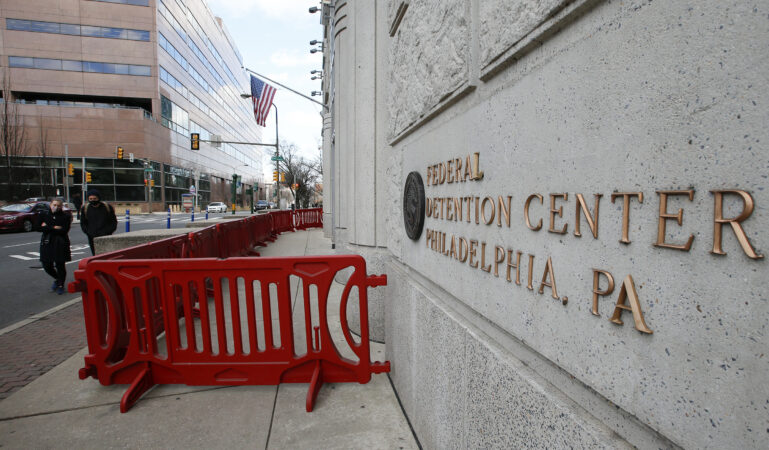
Philadelphia’s federal courthouse has become awash in lawsuits filed by undocumented immigrants challenging the government’s attempts to detain them, an Inquirer review has found, the latest example of how the mass deportation push by President Donald Trump’s administration has been affecting the nation’s legal landscape.
Through six weeks this year, court figures show, 168 such lawsuits have been filed in Pennsylvania’s Eastern District Court, up from 115 in all of 2025.
By contrast, only 11 such suits were filed between 2020 and 2024, meaning a new practice of litigation dominating the region’s federal court practically sprung up overnight.
<iframe title="An Unprecedented Rise In Release Petitions" aria-label="Column Chart" id="datawrapper-chart-Ze5f9" src="https://datawrapper.dwcdn.net/Ze5f9/1/" scrolling="no" frameborder="0" style="width: 0; min-width: 100% !important; border: none;" height="499" data-external="1"></iframe><script type="text/javascript">window.addEventListener("message",function(a){if(void 0!==a.data["datawrapper-height"]){var e=document.querySelectorAll("iframe");for(var t in a.data["datawrapper-height"])for(var r,i=0;r=e[i];i++)if(r.contentWindow===a.source){var d=a.data["datawrapper-height"][t]+"px";r.style.height=d}}});</script>
In other jurisdictions, the surge has become so pronounced that judges and attorneys say they’re struggling to keep up. In New Jersey, the region’s chief judge last week issued new procedures for filing and litigating the petitions, writing: “The volume and timing of these filings is creating a substantial burden on the Court’s ability to expeditiously docket, assign, and address” them.
In Philadelphia, nearly all of the increase in habeas petitions appears tied to the Trump administration’s decision last summer to mandate detention for virtually every undocumented immigrant encountered by authorities. ICE and other agencies are now confining people who would have previously been eligible to remain in the community while their cases wound through the immigration system, such as people who have been in the country for years, or those who have not complied with ICE’s instructions while living here.
“It was not a big part of our work up until about six months ago,” said Chris Setz-Kelly, a managing attorney with HIAS Pennsylvania, a nonprofit that provides legal assistance to immigrants.
For decades, Setz-Kelly said, there had been a clear understanding about who was or was not eligible to be released on bond once they were picked up by ICE. But he said that changed under mandatory detention, which also says anyone who is newly detained should be denied a bond hearing.
And the petitions represent just the tip of the iceberg, the attorney said, as many detained immigrants don’t have representation or leave the country during the process.
“It had really dire consequences to the community,” Setz-Kelly said.
The number of people in immigration detention has since grown from about 50,000 people in June, to nearly 70,000 people at the start of this year, federal data show.
‘The border is everywhere’
Trump’s administration has been clear about its desire to increase deportations. And it has scored one legal victory in a higher court so far while defending its mandatory detention policy in court.
Earlier this month, a three-judge panel in the Fifth Circuit Court of Appeals ruled the policy was legal and could be applied in Louisiana, Mississippi, and Texas.
The government’s main argument in that case was that every undocumented immigrant is, in legal terms, “seeking admission” to the United States, despite a longstanding interpretation that the phrase only applied to people who had recently crossed the border without proper paperwork.
“The everyday meaning of the statute’s terms confirms that being an ‘applicant for admission’ is not a condition independent from ‘seeking admission,’” the majority opinion said.
Two Fifth Circuit judges agreed with the government’s position.
The one who dissented, U.S. Circuit Judge Dana M. Douglas, wrote that the government’s interpretation contradicted the basics of immigration law and, in effect, would create a situation in which “the border is now everywhere.”
A ‘trap’
The ruling in the Fifth Circuit — based in New Orleans, and widely considered one of the most conservative courts in the country — has done little to change the views of judges in Pennsylvania’s Eastern District Court.
This region’s federal judges have consistently criticized the government’s mandatory detention policy over the last eight months, ruling in favor of nearly every immigrant seeking to be released from confinement.
Some judges have quoted Greek mythology to describe what they’ve cast as an unending attempt by the Trump administration to continue defending a policy that has been resoundingly rejected in court. The region’s chief judge even wrote that “the law is piled sky high against the government’s position.”
Diamond, in an opinion this month, wrote that he’d reviewed 201 recent decisions in the district involving habeas petitions, and found that judges in every case had rejected the government’s view that mandatory detention — with no opportunity for bond — was both warranted and legal.
U.S. District Judge Karen Spencer Marston, a Trump appointee, wrote in a recent decision that she was “unpersuaded” by the Fifth Circuit’s ruling as she agreed to free an undocumented immigrant from custody.
Still, government attorneys have appealed dozens of those losses to the region’s Third Circuit Court of Appeals. Experts believe the effort is part of a Justice Department attempt to create opposing appellate rulings and propel the question of the policy’s legality to the U.S. Supreme Court, which has a conservative majority.
“I think they’re just trying to tee up the right cases,” said Chris Casazza, a Philadelphia-based immigration attorney who has filed more than 60 habeas petitions in recent months. “They’re hoping the Supreme Court is going to rubber stamp this.”
In the meantime, judges in Philadelphia are continuing to confront and rule on dozens of petitions in an emerging area of law.
This week, in a blistering opinion, U.S. District Judge Gail A. Weilheimer wrote that ICE had set up a “trap” for “thousands of non-citizens,” who are required to file forms, attend check-ins, or apply for asylum to receive permission to stay in the country.
But under mandatory detention, Weilheimer wrote, those applicants will now get arrested and taken to a detention facility for the duration of their removal proceedings, which could take months or years.
The judge compared the situation to the government handing immigrants a bow and instructing them to shoot an arrow at a tree.
If anyone hits it, Weilheimer said, “the Government will look at the mark, paint a target to the left of it, and accuse them of missing.”
Correction: This story has been updated to correct the spelling of Chris Setz-Kelly.
On an icy, 13-degree Saturday morning in January, José Hernández sat in his pickup truck outside a Bensalem church, waiting for his phone to ring.
It didn’t take long.
Calls, texts, and emails have become constant, as Hernández, a machinist by trade, has become a crucial connection for many township residents who are living in the United States without official permission.
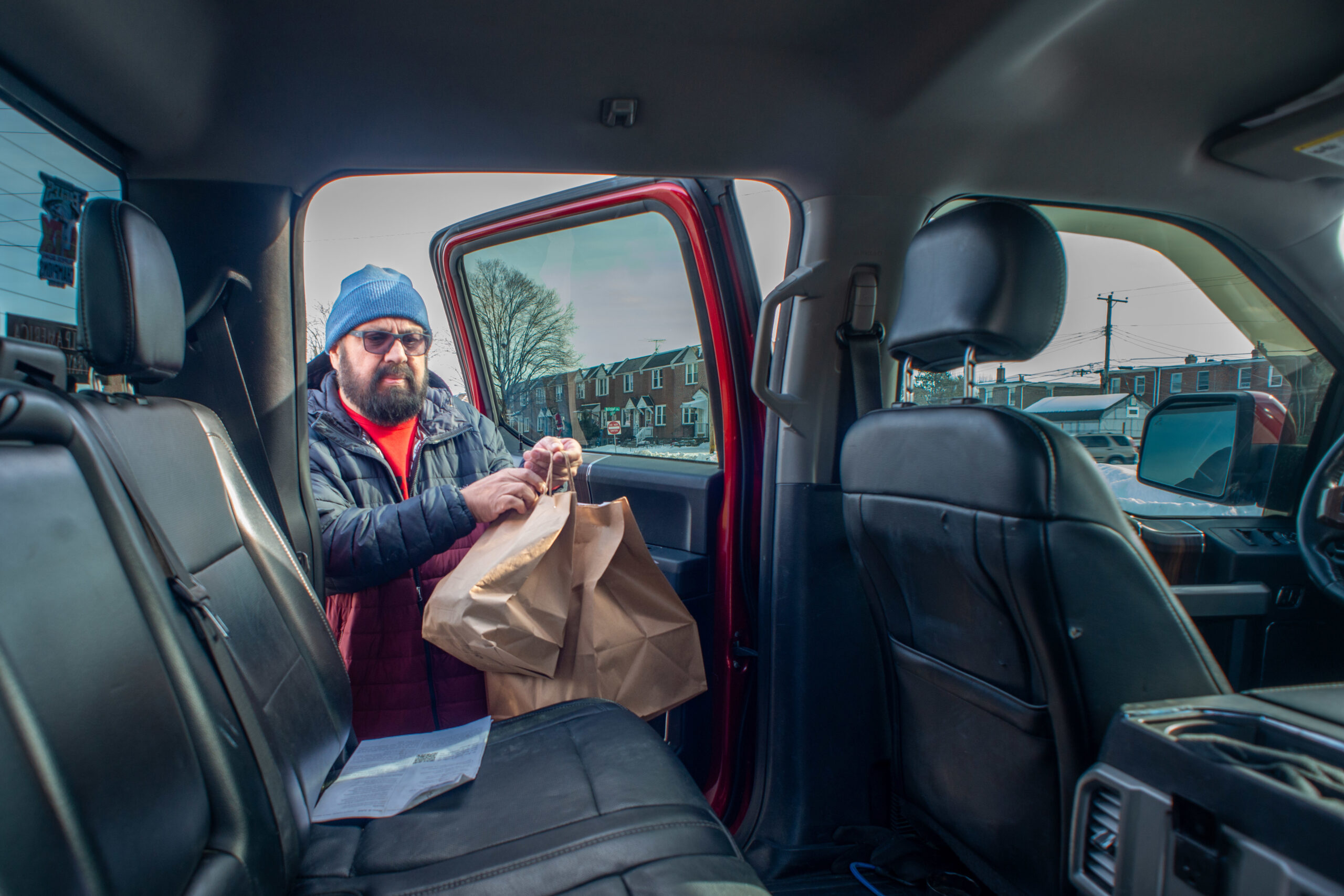
What started as a simple good deed, delivering groceries to a few people worried about attracting ICE attention, has for Hernández, 61, become a full-time, unpaid job. Worry has hardened into fear amid the Trump administration’s dramatic escalation in immigration enforcement, leaving some people afraid to leave their homes.
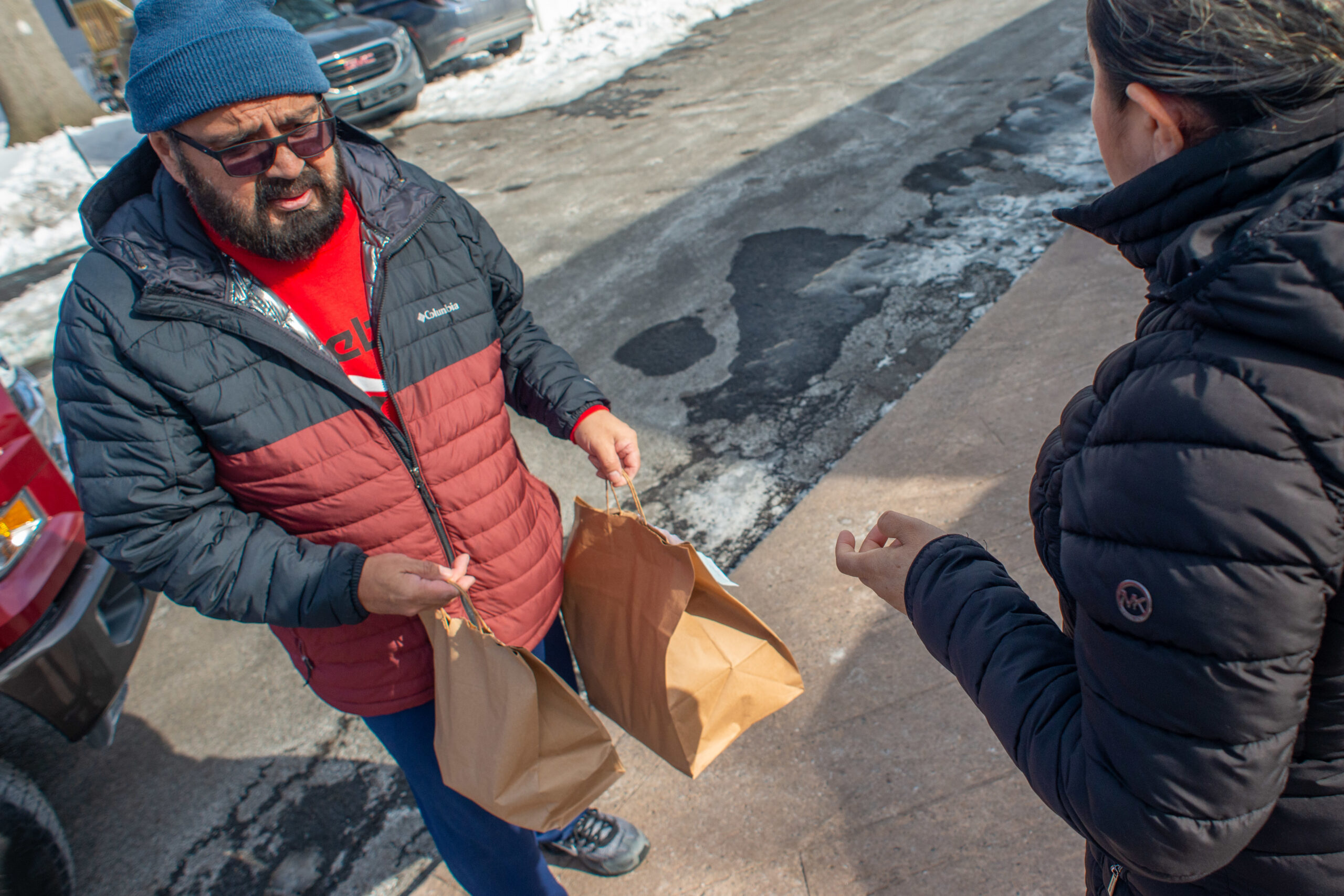
Hernández’s weekend rounds ― picking up people’s grocery orders at stores, bringing the food to their homes, always with a glance over his shoulder ― ensures sustenance for families for whom discovery would mean arrest, separation, and likely deportation.
About 14% of the Bucks County township’s 63,000 residents are Latino. Among immigrants, everyone has a friend or family member who has been arrested by ICE and not seen again. And many fear that they’ll be next.
Connie and Ivan came from Mexico over two decades ago. Fear of being detained by ICE has led them to turn to Hernández for food-delivery help.
“They come out to pick up their order and you can see the fear in their faces,” Hernández said. “Many people come out saying, ‘Please hurry up, los delHielo can be here any second.’”
That’s what some community members call ICE agents — los del Hielo, meaning “the iced ones.” There are other names too, like elEscalofrío (“the chills”) and los Helados (“the frozen ones”).
The nicknames come not from anger but from anxiety — fear that even speaking aloud the words Immigration and Customs Enforcement could summon danger.
“We try to only go out when the darkness of the night protects us,” said an Ecuadoran mother, 32, who declined to provide her name for fear of arrest. “It’s a false sense of safety, but we must hold on to it.”
Hernández recently delivered two bags of groceries and a birthday cake to her home, as her son was turning 12.
“When I am in school,” the boy said, “the only thing I think about is if dad will make it home today. I wait all day, and then he comes, and I am happy he is still here. I am learning that being an American means that I have to be worried for the people I love.”
A third of his immediate family ― an uncle and two cousins ― was arrested in November and December.
José Hernández works to deliver groceries to local undocumented immigrants.
Intensified ICE enforcement in the region and the nation has altered their lives ― exactly as the Trump administration intended when it promised to carry out the largest deportation program in U.S. history.
For undocumented residents, freedom is no longer guaranteed by living quietly, obeying the law, and staying off the government radar. Now, discovery of having entered the country without approval, a civil violation, often means the end of an American life built across years.
As a result, people are staying indoors.
Many have stopped going to the doctor. And to church. They keep their children home from school when news of ICE activity surges. Businesses have had to temporarily close when workers stay away.
ICE officials did not reply to requests for comment.
In 2025, the agency detained 307,713 people in the U.S. ― detentions closely mirror arrests ― compared to 93,342 in 2024.
That’s more than a 230% increase.
Today more and more of those arrested face no criminal charges, even as the Trump administration pledges to deport “the worst of the worst.”
Hernández uses his own money, earned from his job as a machinist, to pay for gas for deliveries.
Hernández didn’t plan to be doing this work, spending his weekends traversing Bensalem.
A decade ago he founded a group called Movimiento Guadalupano, a committee to organize Catholic activities. That grew into a broader support group for Latinos, and now he’s one of four volunteers who have become a central source of assistance and information on ICE activity.
“Don’t go out today,” the Movimiento website warned on a recent weekend. “Volunteers will deliver your groceries from Hispanic stores to your home free of charge.”
Hernández is a U.S. citizen, born in this country. He carries no fear of ICE, but plenty of worry that people in the Latino community will struggle without reliable food deliveries.
In the truck, Hernández’s phone rang.
Soon he was parked and walking through the doors of a Bensalem store stocked with traditional Mexican foods. He looked around, to be sure he wasn’t followed, but also so he could update Movimiento’s Facebook page if he saw ICE agents.
A married couple shopping at the store recognized him and said hello ― Hernández had brought groceries to their home, bags of chorizo, tortillas, milk, cereal, and coffee.
“Having the groceries delivered has been a huge relief,” said the man, Ivan, 44, who declined to provide his surname for fear of being identified to ICE. “We don’t have to choose between risking ourselves and feeding our children.”
Maira wasn’t acquainted with Hernández, as her sister usually delivers her groceries. A recent medical emergency made it impossible, and with her family of four running out of food, she dialed the number Movimiento listed for delivery.
Bensalem has been their home for 24 years, the couple explained, but their efforts to obtain legal status have failed. Meanwhile personal disaster has crept close.
In December, at a construction site where he worked, Ivan said, two coworkers left for lunch and never returned. He later learned they had been arrested by ICE.
“It’s just very difficult to be in a country that we know isn’t ours,” said Ivan’s wife, Connie, “but we love it as if it were.”
A clerk interrupted: Hernández’s food order was ready. He grabbed the bag and headed out, Ivan watching him as he left.
“He could be at home with his family, instead, he is helping,” Ivan said. “He brings a little bit of peace in this environment, like we still are a community.”
Ten minutes later, Hernández slowed his truck near a row of houses, looking for anyone who might seem like they were waiting.
A woman at a doorway froze when their eyes met.
“Did you order a delivery?” Hernández called to her from the truck, watching relief come over her face.
“You scared me,” she said, explaining that his car looked like one driven by a man who phones ICE to report people.
The woman, who asked to be identified only by her first name, Maira, because she worried about immigration enforcement, said her husband hasn’t left the house since late November, when he barely escaped an ICE raid at a Norristown construction site. She still goes to work each morning, once she and her sister, who is a U.S. citizen, check the Movimiento site for a safe route.
“I feel like crying all the time,” said Maira, 48. “I feel like a fugitive without having done anything, but I still have to keep working and paying taxes.”
A receipt attached to a bag of groceries that José Hernández will deliver to local undocumented immigrants in Bensalem.
After 25 years, she said, she thought she was part of Bensalem. That changed when a neighbor complained there were “too many cars” on Maira’s driveway when her sister visited. After that, she said, she stopped hosting family gatherings, concerned that the neighbor would call ICE.
Hernández handed her the groceries and turned to leave.
Maira tried to give him a $5 bill.
“No, no, no,” he said. “How can I be of help if I charge you?”
Hernández likes to think he brings more than groceries, that with him comes a kind word, a smile, and maybe even some hope. Don José, as folks call him, says his worry is not the weight of the bags or the length of the checkout lines in stores.
“I am scared,” he said, “that we will get used to this [ICE enforcement], that it will be so normalized that people stop helping one another.”
As the day wound down, Hernández’s wife phoned to see how he was doing. He drove to a nearby Walgreens pharmacy to check out a report that ICE agents were in the parking lot. They weren’t.
His phone rang.
“Hi, is this Don José?” a young man asked, apologizing for calling. “I really need your help with a delivery.”
“Don’t worry, place your order,” Hernández replied. “I will be right there.”
People are calling for the longtime Quakertown Borough police chief to resign, two days after videos emerged that appear to show him barreling into a crowd of teenagers, sustaining a barrage of punches, and grappling with a girl on the ground.
The incident happened Friday after about 35 Quakertown Senior High School students walked out of class to protest Immigration and Customs Enforcement (ICE). The school initially approved the walkout but canceled it for safety reasons earlier that morning. Quakertown Borough Police said it arrested five students and one adult after a scuffle with officers.
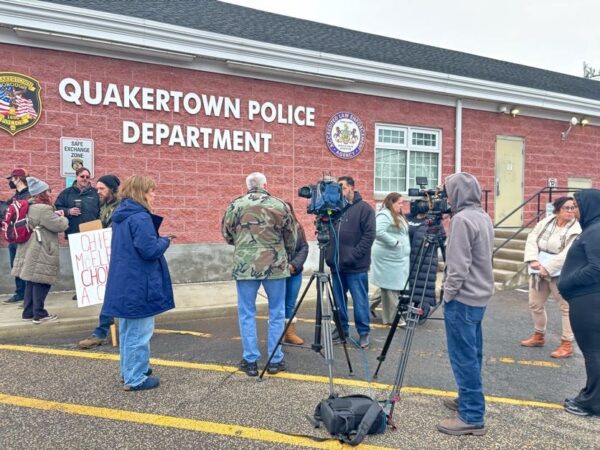
Police Chief Scott McElree and the police department have not responded to requests for comment over the weekend. But as videos of the incident have spread online, demands for answers and accountability have grown. Community members held a rally outside the police department Saturday morning. Hours later, the office of Bucks County District Attorney Joe Khan said that it is investigating the police response.
As of Sunday afternoon, more than 4,000 people have signed a Change.org petition, “Demand Chief Scott McElree’s resignation.” It’s not clear how many of the signers are locals.
“The video made me cry,” wrote a petition signer identified as Karen. “I know every one of those children. They were taught to trust the police. They were also taught to fight back against an attacker.”
Karen and other petition signers noted that McElree was not wearing anything identifying himself as a police officer in the videos.
Another petition signer, identified as Sora from Quakertown, said the students should be held accountable for walking out of class. But that didn’t justify McElree’s response.
“This protest got violent because the chief [of] police chose to start the violence, the students were ready to defend because they have seen everything happening in other states with ICE,” the commenter said.
“Once students left school grounds without authorization and walked into town … they were no longer under the district’s custodial control or supervision, and we have almost no legal ability to regulate or investigate their behavior,” Lisa Hoffman, acting superintendent of schools for Quakertown Community School District said in a statement Sunday night.
According to the Quakertown Borough website, McElree serves as chief of police, borough manager, and open records officer for the community. About 9,400 people live there, recent U.S. census numbers show. Quakertown is in northwest Bucks County about a half hour from Allentown.
McElree has served as both police chief and borough manager since 2007, according to news reports. He previously was a Whitemarsh Township police officer for about 30 years, according to his LinkedIn profile.
Contacted by phone Sunday, Quakertown Borough Council Member Michael Johnson said the council may discuss the matter at a work session set for Monday night at 7:30 p.m.
Johnson, who has earned accolades for his work as a local law enforcement officer, declined to say whether he was concerned about McElree.
“I’m going to wait to see all the video before I make any comments,” Johnson said.
Other council members and borough council president Donald E. Rosenberger did not respond to requests for comment Sunday.
Scant details are available about the teenagers’ status.
“These are juvenile arrests, and because of that, their files are shielded by the Pennsylvania Juvenile Act,” said Bucks County District Attorney’s Office spokesperson Manuel Gamiz Jr.
Due to a major storm expected Sunday night, Gamiz noted, the Bucks County Justice Center is closed Monday.
That could potentially delay the students’ legal proceedings.
Editor’s note: A statement from Quakertown school officials was added after publication.
Several students at Quakertown High School were taken into custody on Friday after a student walkout protesting federal immigration enforcement escalated into a confrontation that left at least one teenager bloodied and in handcuffs, according to witnesses and video footage from the scene.
School officials said the episode began shortly before noon, when dozens of students left campus without permission to demonstrate along Front Street in opposition to the policies of U.S. Immigration and Customs Enforcement. What followed, according to videos posted widely on social media, was a chaotic scene involving students, an unidentified man, and local police officers.
By late afternoon, authorities had released few details about what prompted officers to intervene or how many students were detained.
In a letter to parents, Lisa Hoffman, the acting superintendent of the Quakertown Community School District, said 35 students left school grounds at about 11:30 a.m. to stage the protest. She said district officials were informed by the Quakertown Police Department that the students were “engaging in unsafe and disruptive behavior,” though she did not elaborate on what that behavior entailed.
The school also went on a short lockdown as a precaution, she said.
Quakertown police contradicted the account offered by school officials, saying in a statement that as many as 50 students were involved in the protest, which “began peacefully” but became dangerous when students entered traffic, threw snowballs, kicked cars, and damaged property, including a car’s sideview mirror.
“Officers issued additional warnings to maintain civil,” the statement said, before “confrontation escalated, and some individuals assaulted officers.”
Police said “five to six juveniles and one adult have been taken into custody,” but offered no additional information.
Videos circulating online offer a fragmented glimpse of the confrontation. In one clip, a man is seen grabbing a teenage girl and placing her in a chokehold. A male student rushes in and strikes the man, after which police officers move in and take the student into custody. Other footage shows protest signs scattered across the sidewalk, speckled with blood, and a teenage girl in handcuffs with blood visible along the side of her face.
A woman who was dining inside a restaurant along Front Street said she watched the confrontation unfold just outside the window.
“This man was easily twice her size,” said the woman, who asked not to be identified for fear of reprisal. “She couldn’t have been much more than 100 pounds.”
When a male student stepped in to help the girl, she said, the scene quickly spiraled. Another woman in the restaurant recalled that several adults — including police officers — forced the boy to the ground.
“The situation completely escalated,” said the second woman, who also asked not to be identified out of fear of reprisal. “There were multiple grown men getting in the faces of the children, spit flying out of their mouths.”
It remains unclear what role the man played in the altercation. Both women said they later saw him drive away from the scene in a police vehicle.
The statement by police made no mention of the man, nor did it include details about any injuries sustained by the students.
Messages seeking comment from the school district were not immediately returned Friday afternoon.
The Buck’s County District Attorney’s Office said in a statement Friday that it was aware of the incident and was “gathering information.”
“We are committed to ensuring public safety and will provide updates if and when legally appropriate,” the office said.
By late afternoon, the number of students taken into custody had not been disclosed, and school officials had not said whether any would face disciplinary action.
Videos also showed papers and books scattered on the sidewalk next to dropped and bloodied signs. “These children were thrown around and brutalized by these officers,” said one of the women.
School officials had been aware of the planned student walk-out, according to the high school’s Facebook page, and canceled it Friday morning.
“While we respect students’ rights to express their views, our first priority is to ensure a safe and secure environment for all,” House Principal Jason D. Magditch wrote in a letter posted on the Facebook page. “At this time, we believe canceling the protest is the most appropriate course of action in the interest of student safety and well-being.”
In the everyday chaos that characterizes President Donald Trump’s America, the news cycle changes faster than most of us can keep up with it.
But can we please pause for a moment and consider the gravity ofwhat happened to Nekima Levy Armstrong at the hands of the U.S. government? She led a group of activists who interrupted a worship service in Minnesota on Jan. 18. The demonstrators went to Cities Church in St. Paul to stage a protest in support of immigrant rights.
The choice of venue was very much intentional: One of the leaders at the church is an administrator at a local U.S. Immigration and Customs Enforcement office. Four days later, Levy Armstrong, a half dozen other protesters, and two journalists were arrested.
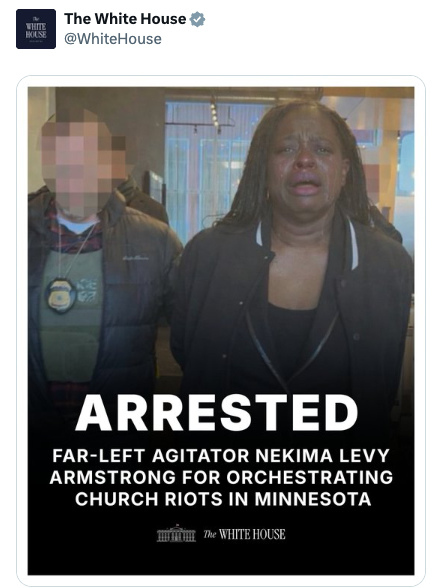
Afterward, while she was still in custody, Trump administration officials released an AI-manipulated image of her on X, the social media site formerly known as Twitter, on accounts for Homeland Security Secretary Kristi Noem and the White House.
The doctored image shows Levy Armstrong (no relation) with her mouth open as if she’s sobbing hysterically. Her face also appears to have been darkened. The photo caption reads: “ARRESTED far-left agitator Nekima Levy Armstrong for orchestrating church riots in Minnesota.”
It wasn’t a riot. Nor was she crying. But all that is beside the point. The Trump administration officials wanted to make her look bad, even if it meant reshaping reality to do so. What’s especially concerning is the dishonest way it went about it. According to photos and video of her arrest, Levy Armstrong maintained a mostly impassive expression on her face throughout the ordeal.
On Jan. 22, the White House posted an AI-altered image of Nikema Levy Armstrong on the White House’s official X feed. The altered image makes Levy Armstrong appear as crying, the original image shows no such emotion.
A lot of people might see the digitally altered image of her sobbing and assume that because it was posted on a verified social media channel from the highest levels of government, it is an accurate representation of what happened — when it’s anything but.
A New York Times analysis concluded that the photo had been manipulated — something the White House admits to doing, and is unrepentant about. The manipulated photo is a meme, according toWhite House spokesperson Kaelan Dorr, who doubled down on X, saying, in part: “Enforcement of the law will continue. The memes will continue.”
No one should be surprised at that reaction, considering how many questionable AI images Trump has shared. (And, although it wasn’t artificial intelligence, don’t get me started on his racist post about the Obamas earlier this month.)
He once posted an AI video of himself — with a crown on his head — flying a plane that dumps feces onto “No Kings” protesters. It was even more disturbing when he released a deepfake video of former President Barack Obama, who seems to live rent-free inside Trump’s head, being arrested in the Oval Office.
Imagine the uproar if another president had done such a thing. Many people have normalized this kind of corrosive behavior so much that Teflon Don usually gets off with a shrug. But those of us who care about accountability have to keep calling him out.
Dirty politics are one thing, but when Trump administration officials manipulated the photo of Levy Armstrong, a private citizen, it made my blood boil. It’s another reminder that there’s no bottom with Trump when it comes to how low he will go, and that’s really scary.
I recently had a chance to speak with Levy Armstrong, and can report that, despite the administration’s efforts, she is unbowed and unbroken.
She called the government’s use of the fake image “horrifying and deeply disturbing,” and insists “I was cool, calm, and collected” during the arrest.
“I guess because they didn’t see me broken, they needed to manufacture an image of me broken,” Levy Armstrong told me.
“This is not unlike what has happened historically to Black people with all of the Sambo imagery and the mammy imagery that’s out there, with exaggerated features and darkened skin,” she said. “That’s the same thing that I went through, and that’s what they did to me. Not to mention making me look hysterical.”
She added that “I felt caricaturized, just like our people have been during slavery and Jim Crow.”
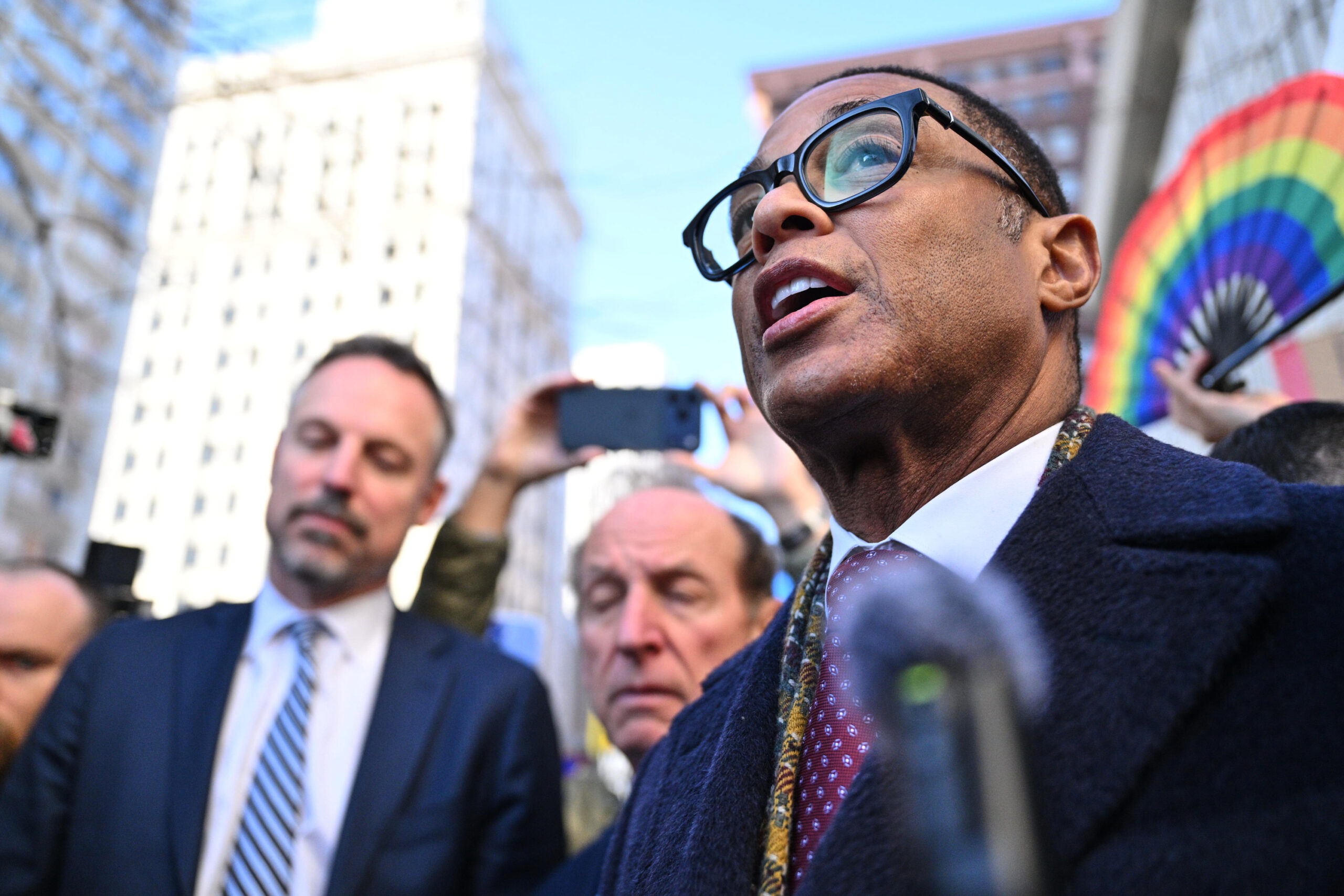
While I had her on the phone, I also asked Levy Armstrong about the arrest of former CNN anchor Don Lemon, who covered the protest she organized.
Journalist Don Lemon speaks to the media outside the U.S. District Courthouse in St. Paul, Minn., on Feb. 13.
Levy Armstrong disputes MAGA claims that Lemon was a participant in the demonstration, as opposed to being an observer. Levy Armstrong told me, “I just think it’s foolishness that they would try to rope him in as a protest organizer.”
“He’s not an activist. He’s not an organizer,” she pointed out. “He’s not a protester whatsoever.”
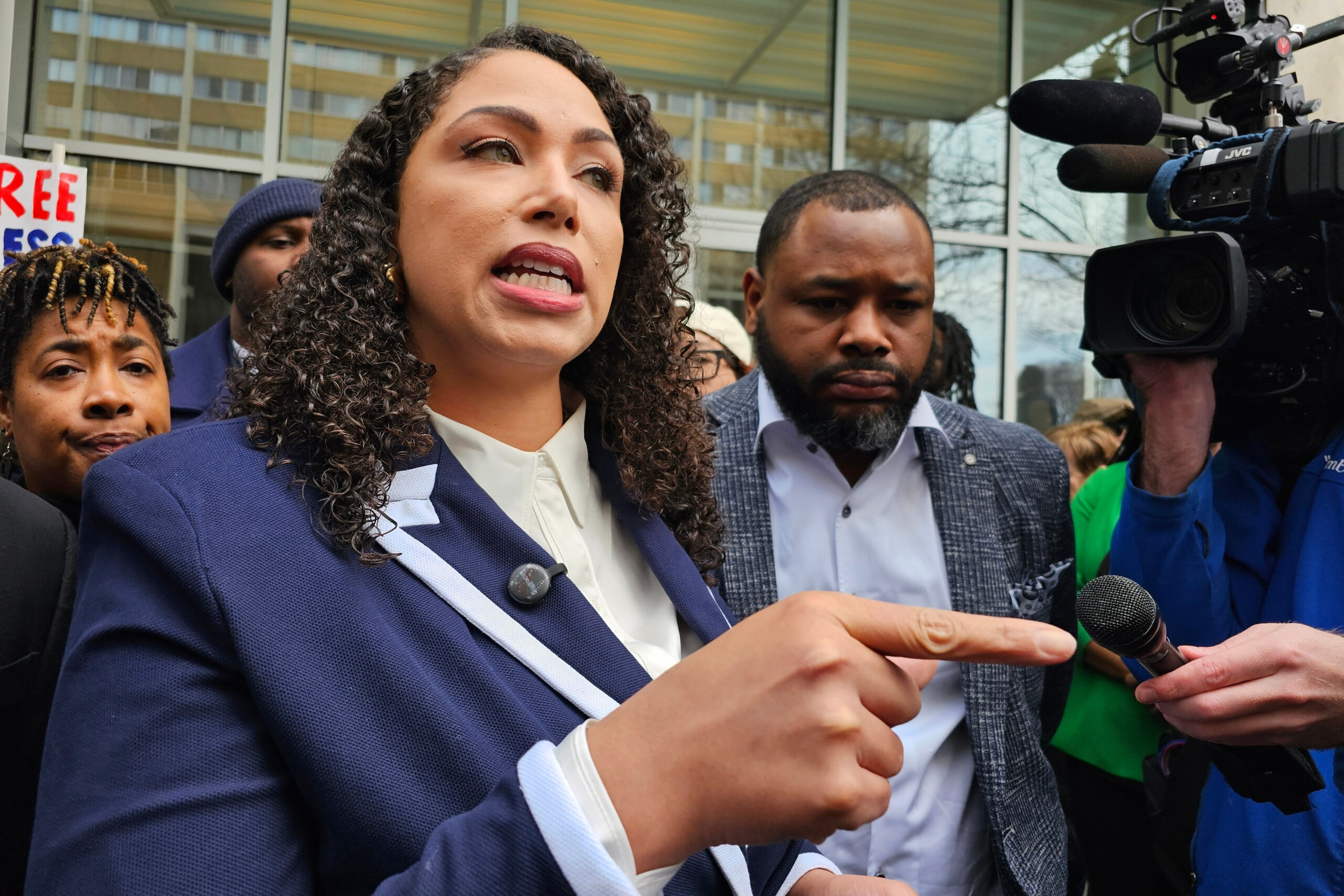
The former law professor said that referring to Lemon as an organizer was an excuse to attack him, as well as Georgia Fort, an Emmy Award-winning independent Black journalist based in Minnesota, who also faces federal charges after covering the protest.
Minnesota-based independent journalist Georgia Fort speaks to reporters and supporters outside the federal courthouse in St. Paul, Minn., on Feb. 17, after pleading not guilty over her alleged role in a protest that disrupted a Sunday service at a Southern Baptist church in St. Paul.
I’ve covered many protests throughout my journalism career, and find what happened particularly upsetting. Republicans talk a good game about upholding the Constitution, but the arrests were clearly an attempt to keep journalists from exercising their First Amendment right to freedom of the press.
Meanwhile, no arrests have been made in the fatal shootings by Border Patrol and ICE, respectively, last month of Alex Pretti, an intensive care nurse, or Renee Good, a mother of three.
But Levy Armstrong has been charged for her role in a disruptive but peaceful protest inside a church during which no one was physically harmed. (And, yes, although they are rare, demonstrations in churches happen. During the civil rights movement, demonstrators would hold “kneel-ins” to protest segregated churches in the Jim Crow South.)
An ordained minister, Levy Armstrong told me she draws strength from such icons of the civil rights movementas Fannie Lou Hamer, Rosa Parks, and the Rev. Dr. Martin Luther King Jr., all of whom had suffered the indignity of being arrested while fighting for their basic human rights.
“Everybody needs to wake up,” she said. “This is not just about immigration. This is about our constitutional rights. This is about our democracy. This is about our freedoms.”
Freedoms we stand to lose if we allow the Trump administration to try and silence us the way it has attempted to do with Lemon, Fort, and Levy Armstrong, among so many others.
Levy Armstrong has nothing but praise for Philadelphia District Attorney Larry Krasner, who is vocal about prosecuting ICE agents who run afoul of the law. Her suggestion for concerned Philadelphians? “Get some whistles,” she said. “Get some people organized. Hold your elected leaders accountable.”
Mayor Cherelle L. Parker’s administration last August told the U.S. Department of Justice that Philadelphia remains a “welcoming city” for immigrants and that it had no plans to change the policies the Trump administration has said make it a “sanctuary city,” according to a letter obtained by The Inquirer through an open-records request.
“To be clear, the City of Philadelphia is firmly committed to supporting our immigrant communities and remaining a welcoming city,” City Solicitor Renee Garcia wrote in the Aug. 25, 2025, letter. “At the same time, the City does not maintain any policies or practices that violate federal immigration laws or obstruct federal immigration enforcement.”
Garcia sent the letter last summer in response to a demand from U.S. Attorney General Pam Bondi that Philadelphia end its so-called sanctuary city policies, which prohibit the city from assisting some federal immigration tactics. Bondi sent similar requests to other jurisdictions that President Donald Trump’s administration contends illegally obstruct immigration enforcement, threatening to withhold federal funds and potentially charge local officials with crimes.
Although some other cities quickly publicized their responses to Bondi, Parker’s administration fought to keep Garcia’s letter secret for months and initially denied a records request submitted by The Inquirer under Pennsylvania’s Right-To-Know Law.
The city released the letter this week after The Inquirer appealed to the Pennsylvania Office of Open Records, which ruled that the Parker administration’s grounds for withholding it were invalid.
The letter largely mirrors Parker’s public talking points about immigration policy, raising questions about why her administration sought to keep it confidential.
But the administration’s opaque handling of the letter keeps with the approach Parker has taken to immigration issues since Trump returned to office 13 months ago. Parker has vowed not to change immigrant-friendly policies enacted by past mayors, while avoiding confrontation with the federal government in a strategy aimed at keeping Philadelphia out of the president’s crosshairs as he pursues a nationwide deportation campaign.
Although U.S. Immigration and Customs Enforcement officers operate in the city, Philadelphia has not seen a surge in federal agents like the ones Trump sent to Minneapolis and other jurisdictions.
A spokesperson for the Justice Department did not respond to a request for comment.
Immigrant advocates have called on Parker to take a more aggressive stand against Trump, and City Council may soon force the conversation. Councilmembers Rue Landau and Kendra Brooks have proposed a package of bills aimed at further constricting ICE operations in the city, including a proposal to ban law enforcement officers from wearing masks. The bills will likely advance this spring.
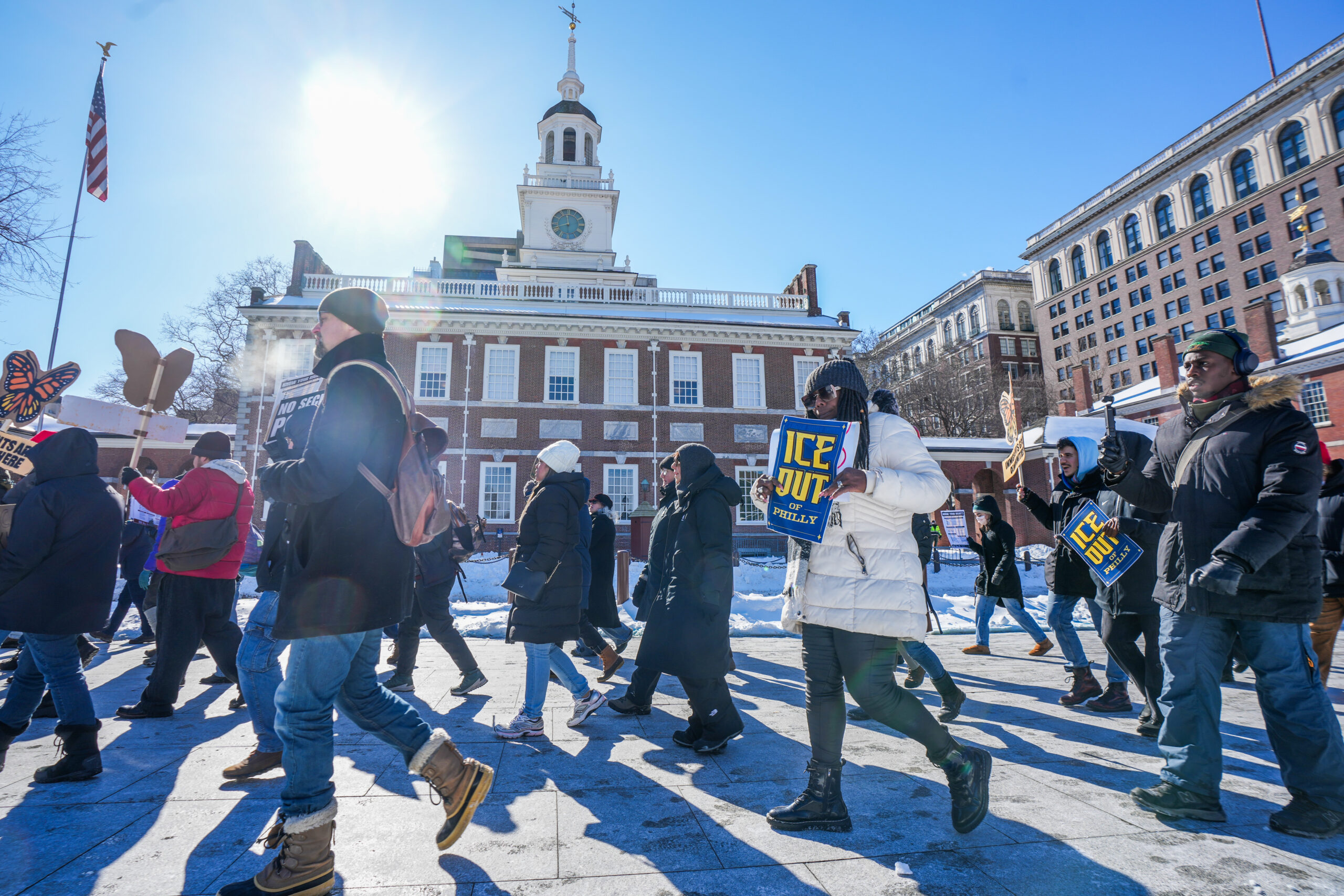
Advocates and protesters call for ICE to get out of Philadelphia in Center City on January 27, 2026.
Parker’s delicate handling of immigration issues stands in contrast to her aggressive response to the Trump administration’s removal last month of exhibits related to slavery at the President’s House Site on Independence Mall.
The city sued to have the panels restored almost immediately after they were taken down. After a federal judge sided with the Parker administration, National Park Service employees on Thursday restored the panels to the exhibit in a notable win for the mayor.
Bondi’s letter, which was addressed to Parker, demanded the city produce a plan to eliminate its “sanctuary” policies or face consequences, including the potential loss of federal funds.
“Individuals operating under the color of law, using their official position to obstruct federal immigration enforcement efforts and facilitating or inducing illegal immigration may be subject to criminal charges,” Bondi wrote in the letter, which is dated Aug. 13. “You are hereby notified that your jurisdiction has been identified as one that engages in sanctuary policies and practices that thwart federal immigration enforcement to the detriment of the interests of the United States. This ends now.”
“Sanctuary city” is not a legal term, but Philadelphia’s policies are in line with how the phrase is typically usedto describe jurisdictions that decline to assist ICE.
Immigrant advocates have in recent years shifted to using the label “welcoming city,” in part because calling any place a “sanctuary” is misleading when ICE can still operate throughout the country. The newer term is also useful for local officials hoping to evade Trump’s wrath, as it allows them to avoid the politically hazardous “sanctuary city” label.
Philly’s most notable immigration policy is a 2016 executive order signed by then-Mayor Jim Kenney that prohibits city jails from honoring ICE detainer requests, in which ICE agents ask local prisons to extend inmates’ time behind bars to facilitate their transfer into federal custody. The city also prohibits its police officers from inquiring about immigration status when it is not necessary to enforce local law.
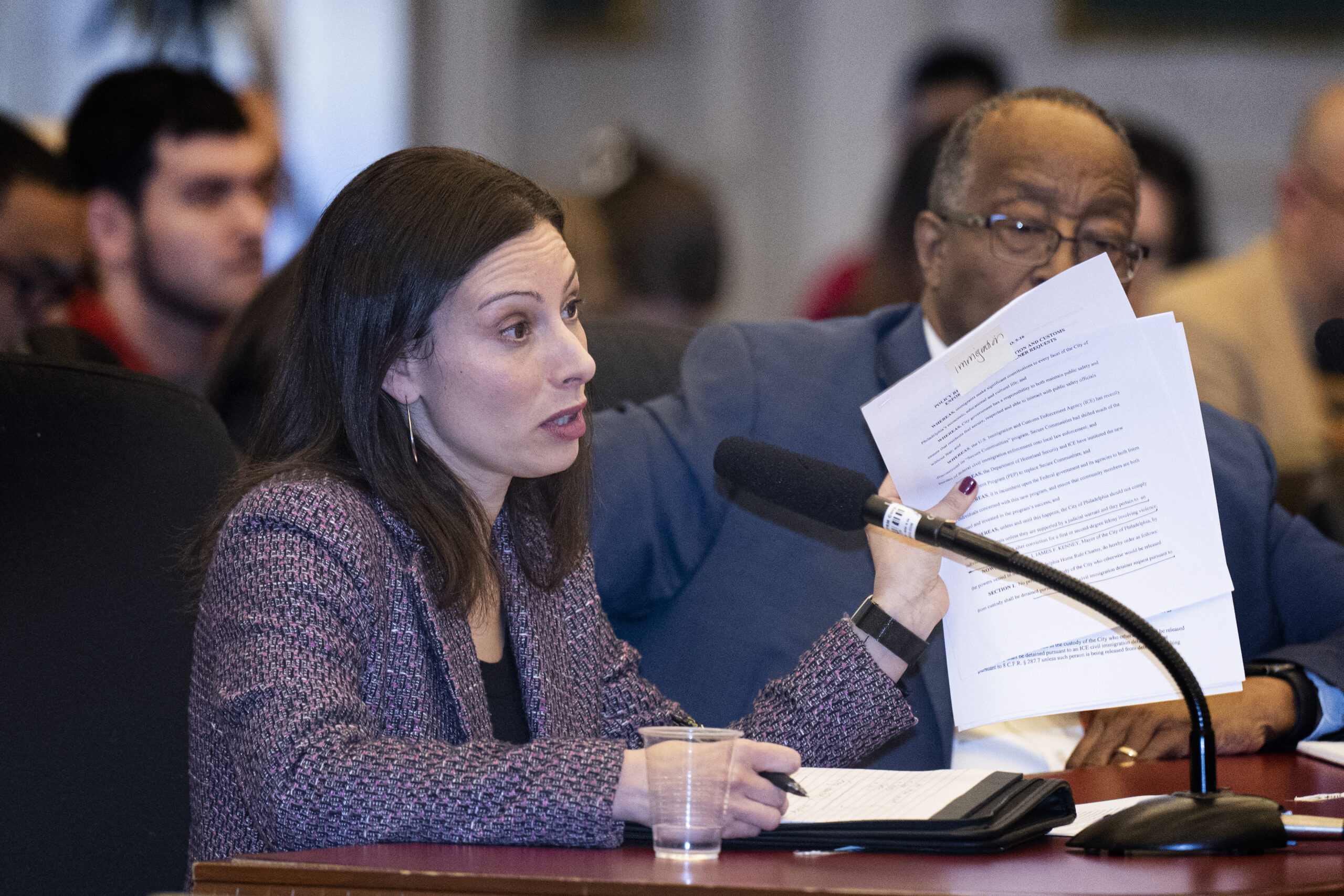
Renee Garcia, Philadelphia City Solicitor speaks before City Council on Jan 22, 2025.
Garcia wrote in the August letter that Kenney’s order “was not designed to obstruct federal immigration laws, but rather to clarify the respective roles of the Police Department and the Department of Prisons in their interactions with the Department of Homeland Security when immigrants are in City custody.” The city, she wrote, honors ICE requests when they are accompanied by judicial warrants.
Immigration enforcement is a federal responsibility, and — in a case centered on Kenney’s order — the Philadelphia-based U.S. Court of Appeals for the Third Circuit ruled in 2019 that cities do not have to assist ICE.
The court, Garcia wrote, “held that the federal government could not coerce Philadelphia into performing immigration tasks under threat of federal repercussions, including the loss of federal funds.”
City loses fight over records
In Pennsylvania, all government records are considered public unless they are specifically exempted from disclosure under the Right-To-Know Law. In justifying its attempt to prevent the city’s response to the Trump administration from becoming public, the Parker administration cited two exemptions that had little to do with the circumstances surrounding Garcia’s letter.
First, the administration argued that the letter was protected by the work product doctrine, which prevents attorneys’ legal work and conclusions from being shared with opposing parties. Given that the letter had already been sent to the federal government — the city’s opponent in any potential litigation — the doctrine “has been effectively waived,” Magdalene C. Zeppos-Brown, deputy chief counsel in the Pennsylvania Office of Open Records, wrote in her decision in favor of The Inquirer.
“Despite the [city’s] argument, the Bondi Letter clearly establishes that the Department of Justice is a potential adversary in anticipated litigation,” Zeppos-Brown wrote.
Second, the city argued that the records were exempted from disclosure under the Right-To-Know Law because they were related to a noncriminal investigation. The law, however, prevents disclosure of records related to Pennsylvania government agencies’ own investigations — not of records related to a federal investigation that happen to be in the possession of a local agency.
“Notably, the [city] acknowledges that the investigation at issue was conducted by the DOJ, a federal agency, rather than the [city] itself,” Zeppos-Brown wrote. “Since the DOJ is a federal agency, the noncriminal investigation exemption would not apply.”
Garcia’s office declined to appeal the decision, which would have required the city to file a petition in Common Pleas Court.
“As we stated, the City of Philadelphia is firmly committed to supporting our immigrant communities as a Welcoming City,” Garcia said in a statement Wednesday after the court instructed the city to release the letter. “At the same time, we have a long-standing collaborative relationship with federal, state, and local partners to protect the health and safety of Philadelphia, and we remain [in] compliance with federal immigration laws.”
Staff writers Anna Orso and Jeff Gammage contributed to this article.
Federal authorities in New Jersey have violated dozens of judicial orders in recent months as immigration cases have surged in the courts, the Justice Department acknowledged in a court filing, including by transferring some detained immigrants to other jurisdictions and, in one instance, improperly deporting a man to Peru.
The admissions came in a declaration filed by Associate Deputy Attorney General Jordan Fox, who has recently been helping lead the U.S. Attorney’s Office in New Jersey, and who is also a top adviser to Deputy Attorney General Todd Blanche.
Fox issued her declaration in response to an order from U.S. District Judge Michael Farbiarz, who has been overseeing a lawsuit from an immigrant challenging his detention. Farbiarz was frustrated that Immigration and Customs Enforcement had transferred the man to another jurisdiction — despite the judge’s order to keep him in New Jersey.
So earlier this month, court records show, Farbiarz directed prosecutors to review similar immigration lawsuits filed in the state’s federal courts since December and “enumerate each instance in which the Respondents or people acting on their behalf violated an order issued by a judge of this district.”
Fox, in her response filed last week, said her office had identified 547 such cases — known as habeas petitions — filed since early December. And in 56 instances, the declaration said, prosecutors did not comply with a judicial order.
Some concerned lawyers’ behavior, the document says, including six instances in which attorneys missed filing deadlines, and 10 cases in which government attorneys did not provide complete discovery.
But others outlined ways in which federal authorities handled immigrants in custody. In 17 instances, Fox wrote, ICE or other federal authorities transferred immigrants in detention after judges had ordered them not to be moved.
Fox wrote that each of those mistakes “occurred inadvertently,” because of either communication delays or “administrative oversight,” and that prosecutors in each case had agreed to return the petitioner to New Jersey.
In December, court records show, ICE also “erroneously removed” a man and deported him to Peru despite a judicial injunction prohibiting his removal.
Fox wrote that the deportation “occurred due to an inadvertent administrative oversight by the local ICE custodian.” She said that authorities worked with the man’s lawyer to try to arrange his return to the United States, but that he “decided to remain in Peru instead.”
Farbiarz, the judge, responded in a filing Tuesday by crediting Fox and her staff for providing thorough answers to his questions.
Still, he wrote, he was concerned that the violation he observed in his case was apparently “not fully an outlier.”
“Judicial orders,” he wrote, “should never be violated.”
He instructed the Justice Department to file an affidavit “detailing the procedures that are in place (or that will be put in place in the near-term) to ensure that court orders issued by district judges in New Jersey are timely and consistently complied with.”
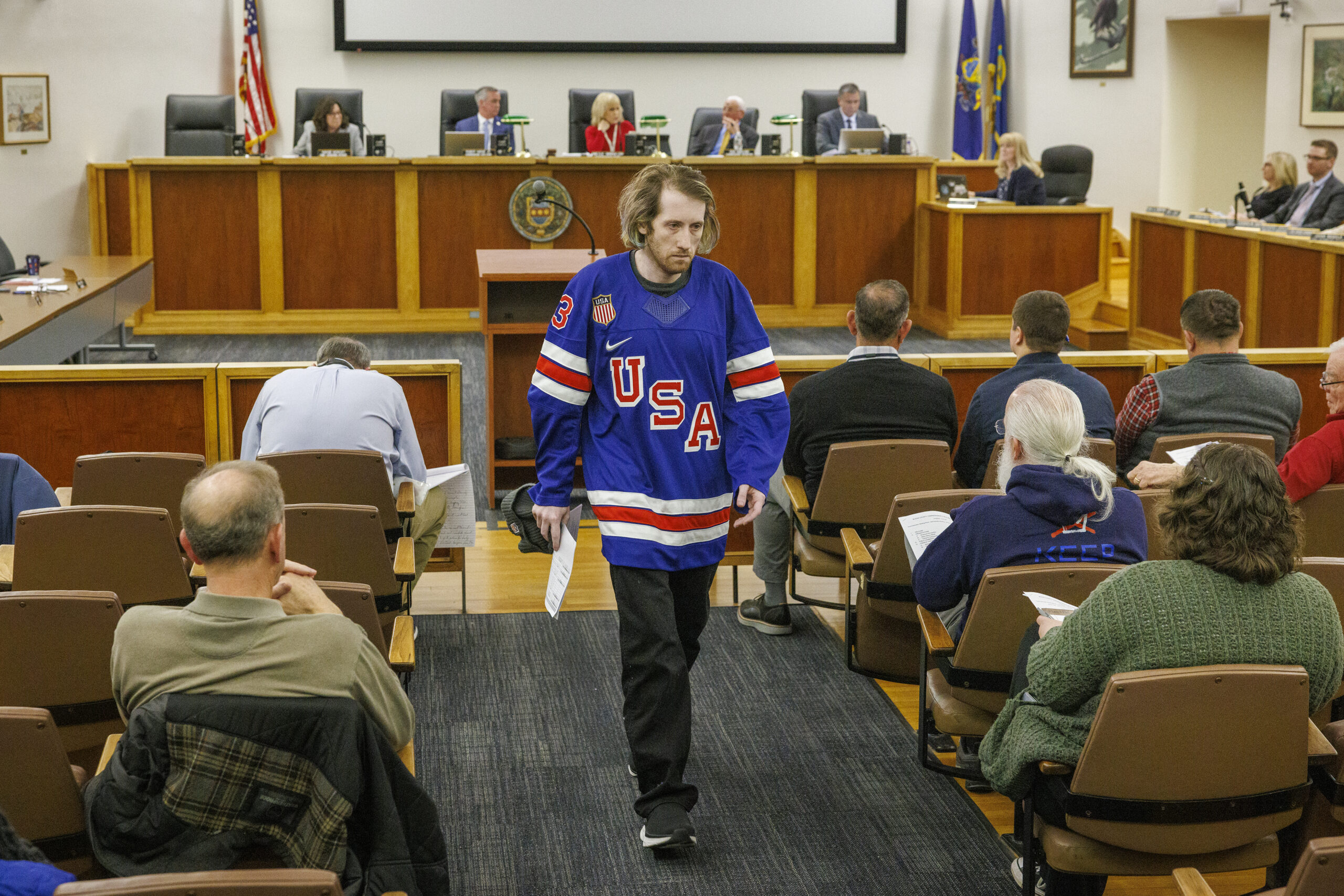
The contentious national discussion over the rapid expansion of ICE came to the doorstep of the Philadelphia region on Wednesday, as the Bucks County commissioners voted to oppose having any processing or detention facilities in the county.
Commissioners said they learned that the federal government had recently approached warehouse owners in two communities, Bensalem Township and Middletown Township, about possible conversions. Neither owner is going forward, they said.
The commissioners voted 3-0 ― including the board’s lone Republican ― to approve a resolution that said such a center would be harmful for county residents and the people who would be confined there.
ICE officials did not immediately reply to a request for comment.
The commissioners voted a day after U.S. Rep Brian Fitzpatrick said that he would oppose such a facility ― and that he had received federal assurances none was planned in his district, which covers Bucks County and parts of eastern Montgomery County.
Fitzpatrick, a Republican who is seeking reelection in the purple district, faces a likely November challenge from Democratic Bucks County Commissioner Bob Harvie, who also opposes ICE sites.
In Doylestown on Wednesday, Commissioner Gene DiGirolamo, a Republican who serves with two Democrats, said he heard about the federal interest in two local sites and strongly disapproved.
Jake Didinsky of Southampton, said he opposes ICE warehouses in his county, comparing them to Japanese interment camps.
“Bucks County is not a county that needs or wants a detention facility,” he said.
Harvie, the board’s vice chair, said Bucks County “is no place for these kinds of facilities” and cautioned: “We have been down this road before, with Japanese Americans. And with Italian Americans.”
During World War II the U.S. government forcibly incarcerated thousands of people of Japanese descent, holding them in concentration camps mostly in the western part of the country. About two-thirds of those confined were American citizens.
Some Italian Americans endured the same treatment.
A resolution conveys the opinion and wishes of the board, but holds no force of law.
The Bucks resolution said the county opposes “the use of warehouses or similar industrial facilities not intended for human occupancy as facilities to hold, jail, detain, house or otherwise store human beings.”
In addition to humanitarian concerns, the resolution says, “such facilities, being hastily erected in areas and structures not intended for human occupation, would place unanticipated demands upon water and sewer systems, creating hazards to public health, as well as heaping new strain upon public safety services.”
The vote came as the growth of ICE leasing and purchases has become contentious in Pennsylvania and across the United States.
U.S. Immigration and Customs Enforcement expects to spend $38.3 billion to acquire warehouses around the country and retrofit them into immigrant detention centers to hold tens of thousands of people, the Washington Post reported. The newspaper analyzed agency documents that were provided to New Hampshire’s governor and published on the state’s website.
ICE intends to buy and convert 16 buildings to serve as regional processing centers, each holding 1,000 to 1,500 immigrant detainees. An additional eight detention centers would hold 7,000 to 10,000 detainees and serve as primary sites for deportations.
Last week Gov. Josh Shapiro formally asked Homeland Security Secretary Kristi Noem in a letter to reconsider the conversion of the Berks and Schuylkill sites, citing “real harms” to the communities.
He questioned the legality of the facilities and hinted at a possible lawsuit, saying if DHS goes forward, his administration will “aggressively pursue every option to prevent these facilities from opening.”
DHS spokesperson Tricia McLaughlin confirmed the plans for the Pennsylvania sites, saying that they would undergo community-impact studies and a rigorous due-diligence process, and that they would bring 11,000 jobs to the two Pennsylvania communities.
The two sites would hold a combined 9,000 people.
On Tuesday, Fitzpatrick’s office said it had received assurances from DHS and ICE that they had no plans or intention to open a detention facility within the First Congressional District.
“After hearing from concerned residents, our office immediately contacted U.S. Immigration and Customs Enforcement, and we have received assurances that no such facility is planned,” Fitzpatrick said.