Tag: John Fetterman

  • Josh Shapiro is most popular politician among Philadelphia residents — by a long shot

    Josh Shapiro is most popular politician among Philadelphia residents — by a long shot

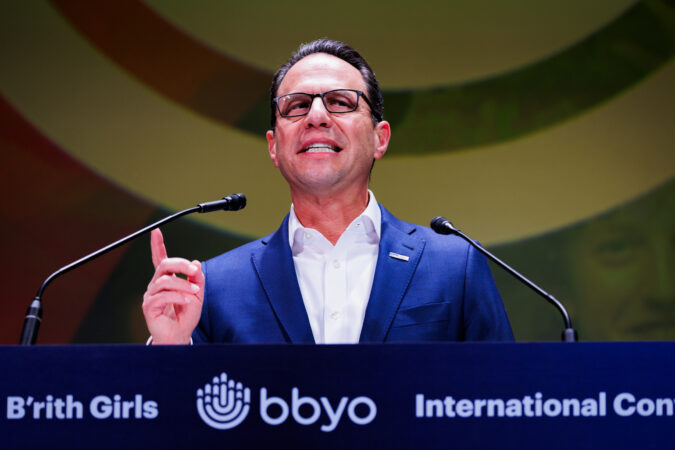
    Gov. Josh Shapiro is by far the most popular political figure among Philadelphia residents, a boost as he looks toward November and beyond.

    In a new Suffolk University/Philadelphia Inquirer CityView poll, 62% of Philadelphians have a favorable opinion of Shapiro, double digits above any other political figure included in the survey.

    Not only did the Democratic incumbent running for reelection win over three-quarters of his own party’s voters in the blue stronghold, he also got positive reviews from almost half the city’s independents and more than one-third of Republicans.

    “He has strong bona fides within his own party, 76% favorable and 11% unfavorable, but he’s also at least somewhat competitive among independents and even some Republicans, so that’s an amazing profile for a candidate who’s an incumbent these days,” said David Paleologos, the polling director at Suffolk.

    Just 16% of residents have an unfavorable view of Shapiro, and only 8% have never heard of the one-term governor, who was on former Vice President Kamala Harris’ short list of potential running mates in 2024.

    (function(){function e(){window.addEventListener(`message`,function(e){if(e.data[`datawrapper-height`]!==void 0){var t=document.querySelectorAll(`iframe`);for(var n in e.data[`datawrapper-height`])for(var r=0,i;i=t[r];r++)if(i.contentWindow===e.source){var a=e.data[`datawrapper-height`][n]+`px`;i.style.height=a}}})}e()})();

    The poll of 500 residents in the city, which was conducted by phone from June 16 to 20, had a margin of error of 4.4 percentage points. Pollsters reached residents in all 66 wards in the city.

    Shapiro clobbers his Republican opponent, Treasurer Stacy Garrity, whom just 9% of the poll’s respondents view favorably.

    That’s not unexpected in a city where Democrats outnumber Republicans 6-1. But it’s Garrity’s lack of name recognition that plays a larger role. A whopping 61% of those surveyed had never heard of Garrity, a glaring figure less than five months until the November election.

    Although the state GOP coalesced around her last year and she faced no challengers for her primary nomination this year, only 26% of Republicans had even heard of Garrity.

    (function(){function e(){window.addEventListener(`message`,function(e){if(e.data[`datawrapper-height`]!==void 0){var t=document.querySelectorAll(`iframe`);for(var n in e.data[`datawrapper-height`])for(var r=0,i;i=t[r];r++)if(i.contentWindow===e.source){var a=e.data[`datawrapper-height`][n]+`px`;i.style.height=a}}})}e()})();

    “She’s kind of a blank slate, and that works to the challenger’s advantage, but if you’re Stacy Garrity you want to start defining yourself quickly before someone else does,” Paleologos said.

    Shapiro can drive up his statewide total if voters in Philadelphia, an overwhelming Democratic electorate, turn out in large numbers — though that has been less reliable in recent years.

    His broad favorability could also help him stretch his bank account further. Shapiro, who hails from nearby Montgomery County, has spent the least amount of money so far in the Philadelphia television market and the most in Pittsburgh, which could show his campaign knows where he is already strong.

    Fetterman is far less popular in Philly, particularly among young voters

    Shapiro’s popularity in the city stands in stark contrast with the state’s other top Democrat: U.S. Sen. John Fetterman.

    In the swing state’s most Democratic city, the one-term senator is faring poorly.

    Less than one-quarter, 24%, of Philly residents have a favorable opinion of Fetterman, compared with 43% with an unfavorable view. The numbers are even worse within his own party, with just 17% of Democrats holding a favorable view of the senator, who has often feuded with progressives and repeatedly crossed party lines to cast key votes in support of President Donald Trump’s nominees.

    His numbers are particularly sour among voters ages 18 to 24 and 25 to 34.

    (function(){function e(){window.addEventListener(`message`,function(e){if(e.data[`datawrapper-height`]!==void 0){var t=document.querySelectorAll(`iframe`);for(var n in e.data[`datawrapper-height`])for(var r=0,i;i=t[r];r++)if(i.contentWindow===e.source){var a=e.data[`datawrapper-height`][n]+`px`;i.style.height=a}}})}e()})();

    A strong majority of Republican voters, 60%, view him favorably in the poll, but the Pennsylvania Democrat has repeatedly insisted he has no interest in switching parties heading into 2028, when he is likely to face a primary challenge if he runs for another term.

    While slightly more Philadelphians have a favorable view of Fetterman than his GOP colleague, U.S. Sen. Dave McCormick, a greater share of Philly voters have an unfavorable view of the Democrat.

    McCormick earned 17% favorable views compared with 25% unfavorable views, while the rest had not heard of the freshman senator or were undecided.

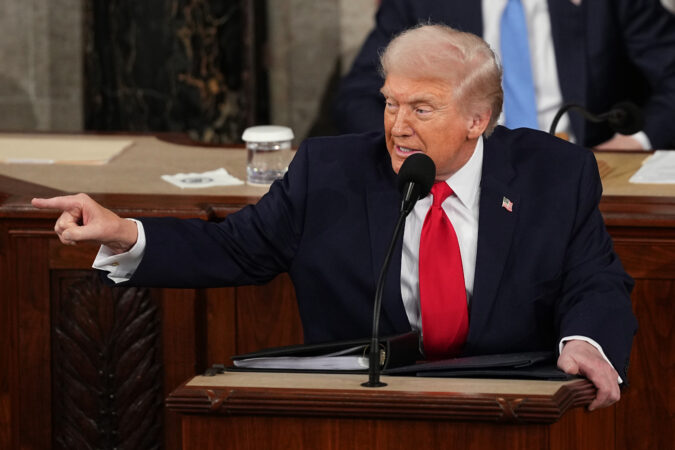
    But the least popular politician in Philly was Trump, who had just 12% favorability in the city.

    Ninety-two percent of Democrats view Trump unfavorably, and 31% of Philadelphia Republicans do, too. The poll also found that nearly 70% of Philly voters had grown less confident in American democracy under Trump’s presidency.

    Trump made inroads in the deep-blue city in 2024, but Harris still won Philadelphia handily with 78% of the vote.

    The president is a frequent target of Shapiro, who has blamed Trump’s tariffs and other policies for exacerbating the cost of living.

    Taking on Trump may be boosting Shapiro’s popularity as he pursues reelection. His numbers show opportunity as he continues building a national profile, likely with ambitions for higher office. In a city where voters favor liberal and left-leaning candidates, Paleologos said, the polling results could be somewhat extrapolated to a national Democratic primary for president in 2028.

    What Shapiro has going in his favor is high popularity among women, with 69% viewing him favorably. That is good news for the governor, since women consistently make up a large proportion of Democratic primary voters, according to exit surveys.

    “In a Democratic primary, you really want to be strong among women, and he is,” Paleologos said. “If 60% of women are voting a Democratic primary, that really plays to his strength.”

    He also ranks in the 70s for favorability among people ages 45 to 74.

    “Those are people who are bill payers, they’re raising children, they’re taking care of sick parents, they’re very stretched in terms of economics. Just terrific numbers,” Paleologos said.

    Shapiro’s favorability is far above that of other Democratic politicians in the city, including Mayor Cherelle L. Parker and State Rep. Chris Rabb, who won last month’s competitive primary to represent the 3rd Congressional District, which stretches from Northwest Philly to parts of South Philly.

    A majority of respondents had not heard of Rabb despite his recent win. But 26% of respondents said they had a favorable view of the progressive lawmaker, compared with only 7% with an unfavorable view.

    The mayor was viewed favorably by nearly 44% of respondents, compared with nearly 35% who viewed her unfavorably — a net positive rating but a much closer split than Shapiro.

    “There are there are pockets of strength that make her electorally strong, but I wouldn’t call it broad-based,” Paleologos said of Parker.

  • More people in Philly and region struggle with insufficient food after Trump cuts: ‘Hunger has never been higher’

    More people in Philly and region struggle with insufficient food after Trump cuts: ‘Hunger has never been higher’

    Shelly Gaither, 51, of Cheltenham, makes sure her three sons, ages 6, 9, and 18, get their meals while she manages with whatever is left over — if anything ever is.

    “Oh, my God, groceries are too expensive,” said Gaither, a former data analyst who suffers from a disability that makes working difficult. She visits a food pantry regularly to make sure her kids eat chicken when they can. Her monthly SNAP (Supplemental Nutrition Assistance Program) benefits were reduced from $400 to $200 earlier this year because of changes to the program under President Donald Trump’s One Big Beautiful Bill Act.

    “I don’t think there’s hope,” she said. “I feel guilty for bringing children into a world that doesn’t want them to exist because the government makes cuts that take away their food and their healthcare.”

    For people like Gaither throughout the United States, levels of food insecurity have seen a “remarkable” rise since the pandemic in 2020, according to a national survey taken earlier this year and released in late May by the Federal Reserve Bank of New York.

    Around 10% of 1,300 heads of households polled in February reported a lack of enough food and said their children were missing meals, according to the survey. Nearly 16% relied on food donations. Among families taking in less than $50,000 a year, almost 20% reported being forced to skip meals or go without.

    In 2020, when the federal government stepped in to help families at the height of the pandemic, just 4% of households reported missing meals, including less than 7% of families earning less than $50,000 a year, according to the survey.

    At that time, temporary supplemental unemployment benefits, expanded SNAP payments, and direct government relief payments helped stave off hunger among Americans. Food insecurity increased after COVID-19 relief expired, according to the Urban Institute.

    But the recent surge in hunger has also been attributed to the sweeping law Trump signed last year, which reduces SNAP benefits and other safety net programs to help pay for his tax cut.

    Findings in the bank’s report also reflect Gaither’s sense of despair, a pessimism about personal finances and the overall economy among people with low incomes. That same group exhibits diminished expectations for finding a job and declining levels of consumer confidence, the survey says.

    (function(){function e(){window.addEventListener(`message`,function(e){if(e.data[`datawrapper-height`]!==void 0){var t=document.querySelectorAll(`iframe`);for(var n in e.data[`datawrapper-height`])for(var r=0,i;i=t[r];r++)if(i.contentWindow===e.source){var a=e.data[`datawrapper-height`][n]+`px`;i.style.height=a}}})}e()})();

    According to the reserve bank’s report, non-white Americans have been especially hard hit. The number of such households that reported missing meals increased from 4% in 2020 to 19% in February. At the same time, the number of non-white people receiving SNAP benefits jumped from 14% to more than 26%.

    Overall, the survey found food insecurity was particularly acute among lower-educated and lower-income households, as well as households with young children. Many families are experiencing financial stress due to the high cost of living, persistent inflation, and high interest rates, even as the stock market has been steadily rising, according to the survey.

    Pantries struggle to keep up with demand

    More people are flocking to food pantries, but they are not equipped to take up the slack of reduced SNAP benefits.

    “Pantries across the state are in perpetual crisis mode,” said Stuart Haniff, CEO of Hunger-Free Pennsylvania in Pittsburgh. Add to that the advent of summer, when kids are no longer receiving free breakfast and lunch at school. “Families must now provide those 60 to 80 meals a month,” Haniff said.

    In Norristown, “immense need” has increased the number of people frequenting Martha’s Choice Marketplace, the largest food pantry in Montgomery County, by 100% since 2022, said Patrick Walsh, director of programs. “And I don’t expect things to get better.”

    Food prices are also up 3.2% this spring over last, according to U.S. Department of Agriculture figures, exacerbating the issue.

    In South Jersey, “we are seeing record numbers at our food distributions,” said Jane Asselta, president and CEO of the Food Bank of South Jersey, in a statement to The Inquirer. “Life is getting harder to afford for more and more people.”

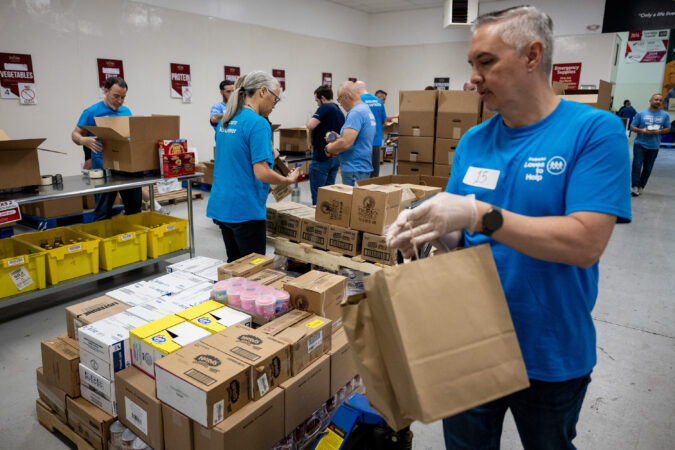
    Matt McDevitt (left) and Michael Hickey load their vehicle at the Food Bank of South Jersey Thursday, June 11, 2026. The men are volunteers at the Temple Lutheran Church in Pennsauken and their food bank is open from 5-6 p.m. every Thursday.

    Asselta said the Federal Reserve Bank’s report “mirrors” what her organization has observed through its network of 300 community partners.

    “Hunger has never been higher,” said Pastor Sonita Johnson, who runs the food pantry at St. John’s Pentecostal Outreach Church in Salem City, Salem County. “Food prices are high, and the lines you see you would not believe — a 50% increase in people just over the last two months.”

    Nationwide, between January 2025 and January 2026, SNAP rolls decreased by more than 4 million people — from 42 million to 38 million — according to USDA figures.

    Between last September and April of this year, nearly 90,000 Pennsylvanians lost SNAP benefits due to new eligibility requirements stipulated by the Trump administration, according to an analysis by the Pennsylvania Department of Human Services (DHS).

    And between December 2025 and last month, more than 32,000 Philadelphians lost benefits, DHS figures show.

    In New Jersey, SNAP participation has fallen by more than 50,000 individuals between March 2025 and March of this year, New Jersey Department of Human Services figures show.

    The Trump administration’s SNAP changes include an expansion of work requirements for people who receive SNAP benefits and increased documentation requirements “designed to make maintaining eligibility increasingly difficult,” according to the Food Research and Action Center (FRAC), the largest anti-hunger lobby in the United States.

    Deputy White House press secretary Anna Kelly said in a statement that Trump signed the changes to strengthen SNAP and to ensure that it is “sustainable for future generations.” She added that Trump was “elected to eliminate runaway spending across the federal government.”

    William Meo works on the loading dock at the Food Bank of South Jersey Thursday, June 11, 2026.

    For people like Shelley Gaither, how her reduced SNAP benefits could be seen as part of “runaway spending” is tough for her to figure, given her needs. To survive this precarious moment, Gaither said, she will do whatever she can.

    “We eat more vegetarian meals and I don’t buy my kids cookies or snacks,” she said. “If I drink enough coffee, maybe I just need one meal a day. This is our existence now. This is how we live.”

  • TSA closes Terminal C checkpoint at PHL Airport due to staffing shortages

    TSA closes Terminal C checkpoint at PHL Airport due to staffing shortages

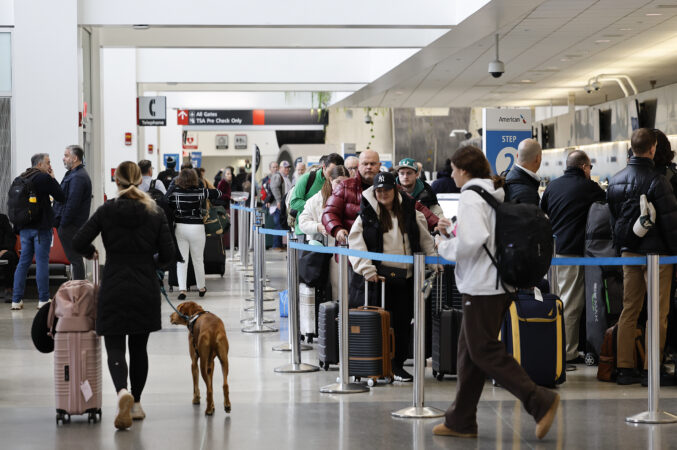
    The Transportation Security Administration temporarily closed the Terminal C security checkpoint at Philadelphia International Airport on Thursday morning.

    “Due to staffing constraints related to the government shutdown, the TSA, in collaboration with the airport, is temporarily closing the Terminal C checkpoint,” said PHL spokesperson Heather Redfern.

    All other security checkpoints remain open, and TSA PreCheck passengers can use the designated lanes at the Terminal A-East and D/E checkpoints. There is no timeline for when Terminal C will be back up and running.

    “We encourage you to check the MyTSA app or the airport’s website to find current wait times and to arrive early to the airport,” said an American Airlines spokesperson. “We are grateful for our federal partners at TSA who continue to ensure safe travel for our customers.”

    The scene at the TSA checkpoint line in Terminal B at Philadelphia International Airport on Sunday morning, Nov. 9, 2025.

    The TSA is experiencing a lapse in funding, alongside other Department of Homeland Security agencies, because its budget has not been passed by Congress.

    In January, federal lawmakers narrowly avoided another full government shutdown by approving budgets for all federal agencies except the Department of Homeland Security. Republicans and President Donald Trump agreed to carve out the DHS budget for further negotiations as Democrats want to put more guardrails on federal immigration enforcement.

    There have been a couple of attempts at passing the DHS budget, but neither side has budged on its demands. The only Senate Democrat to support funding DHS is Pennsylvania Sen. John Fetterman.

    At this point, there is no end in sight to the DHS shutdown and, by proxy, the lapse in TSA funding that is leading to staff shortages across the country, including Philadelphia’s airport.

  • John Fetterman is already backing Donald Trump’s pick to replace Kristi Noem as DHS secretary

    John Fetterman is already backing Donald Trump’s pick to replace Kristi Noem as DHS secretary

    U.S. Sen. John Fetterman promised to back President Donald Trump’s pick to succeed Kristi Noem within minutes of her abrupt firing as secretary of homeland security.

    Trump has tapped U.S. Sen. Markwayne Mullin (R., Okla.) to lead the Department of Homeland Security, which oversees Immigration and Customs Enforcement, the Border Patrol, and the two agencies’ increasingly unpopular operations in carrying out Trump’s deportation agenda.

    Mullin’s nomination must be confirmed by the Senate.

    “I’m not sure how many fellow Democrats will vote to support our colleague [Sen. Mullin] as the next DHS Secretary, but I am AYE,” Fetterman said in a post on X, which also noted his membership on the committee that oversees the department.

    Mullin and Fetterman (D., Pa.) were both elected to the Senate in 2022. The Oklahoma Republican had served in the U.S. House for a decade before joining the upper chamber. Mullin told reporters he had already received a text message from Fetterman after Trump’s announcement.

    “You guys know John and I are friends. … We’re going to try to earn everybody’s vote,” Mullin said when asked whether other Democrats would vote for him.

    The sudden change in leadership at DHS follows growing outrage over ICE’s tactics and questions about Noem’s leadership, both of which escalated nationally after federal agents shot and killed U.S. citizens Renee Nicole Good and Alex Pretti in January in Minneapolis.

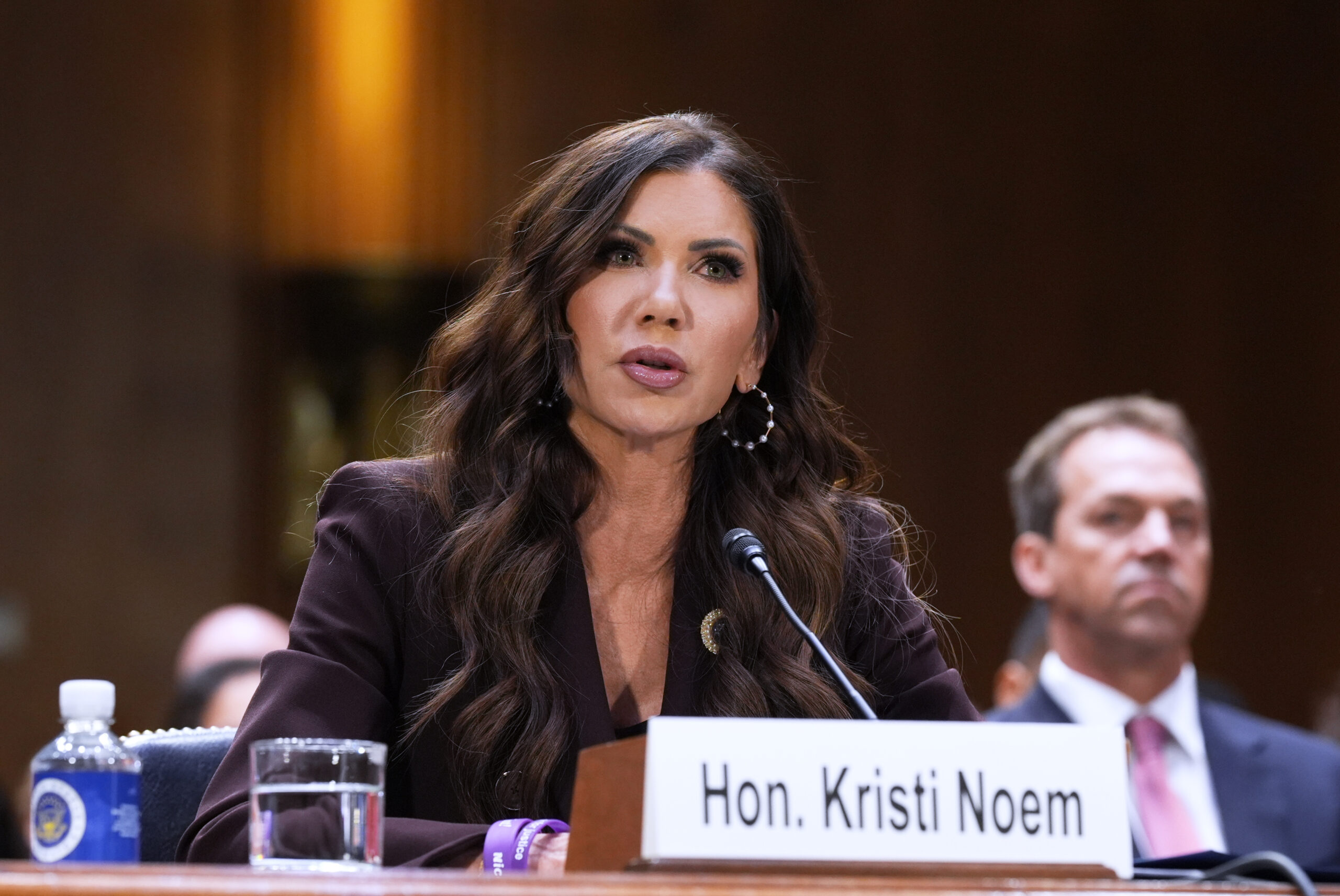
    Homeland Security Secretary Kristi Noem appears for an oversight hearing before the Senate Judiciary Committee, at the Capitol in Washington, March 3, 2026.

    Immigration has gone from one of Trump’s strongest polling issues to a potential drag on his party in the forthcoming midterms. More than half of Pennsylvania voters disapprove of ICE’s enforcement methods, according to a poll from Franklin and Marshall College released Thursday.

    Fetterman and other senators who had voted for Noem’s confirmation called for her to be fired after Pretti’s killing. She also faced criticism from both sides of the aisle at a recent oversight hearing before the Senate that examined a controversial $220 million ad campaign she approved, among other topics.

    “Americans have died,“ Fetterman said in a direct plea to Trump in January. ”She is betraying DHS’s core mission and trashing your border security legacy.”

    U.S. Sen. Dave McCormick (R., Pa.) said on Thursday that he supports Mullin’s nomination.

    It is unclear whether other Democratic senators will give the green light to Mullin’s nomination, but many on Thursday were quick to celebrate Noem’s departure as she transitions into a newly created role in the Trump administration called “the Special Envoy for the Shield of the Americas.”

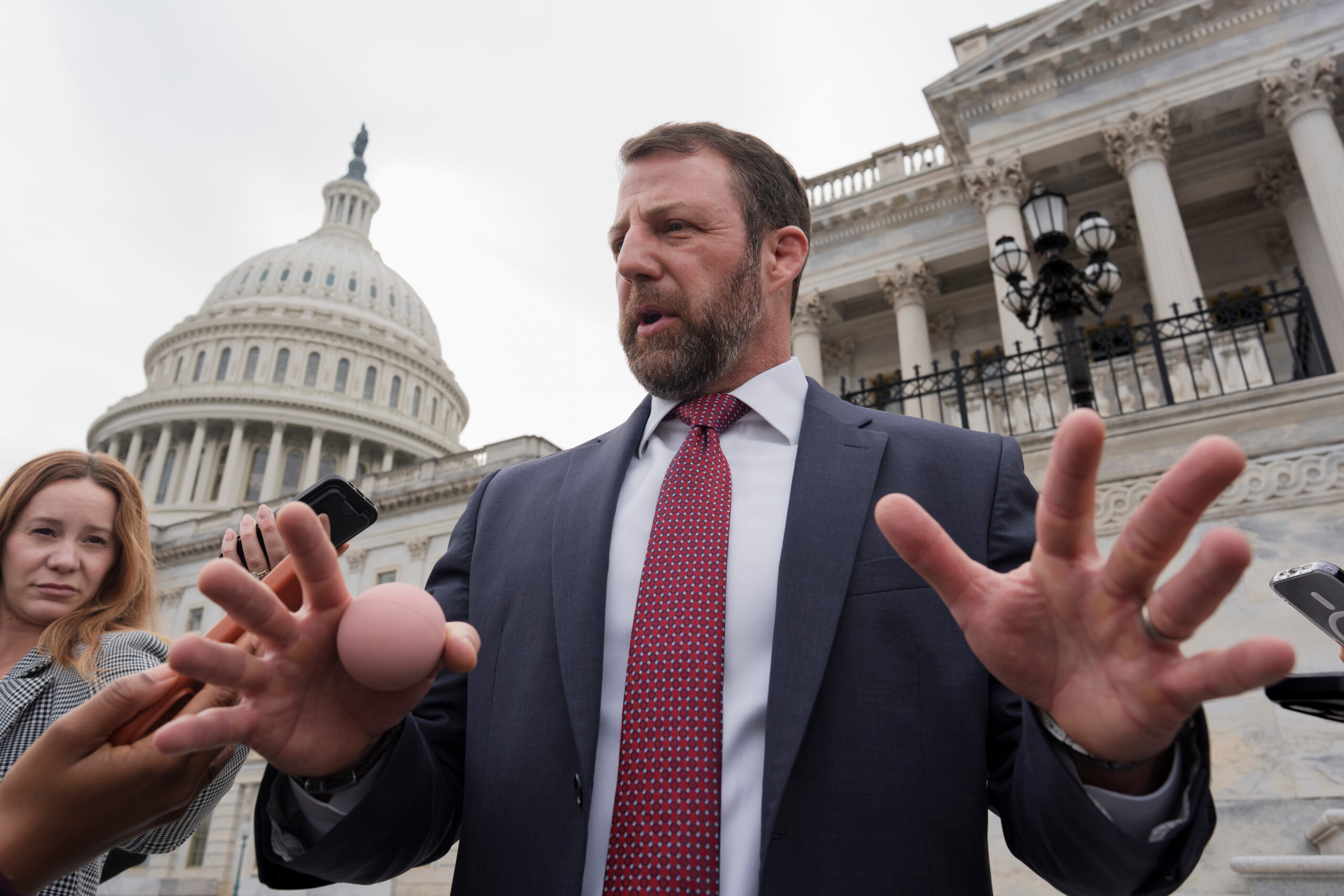
    Sen. Markwayne Mullin, R-Okla., speaks with reporters on the steps at the Capitol in Washington, Thursday, March 5, 2026.

    U.S. Sen. Andy Kim (D., N.J.), who also voted for Noem’s confirmation in January 2025 before calling for her to be fired a year later, said Thursday on X that her firing “Will be the most popular decision of [Trump’s] presidency.”

    But he cautioned that Noem’s termination is “only the start of getting rid of the deep rot of corruption in the Trump administration,” and that other officials, including Trump adviser Stephen Miller and Tom Homan, the border czar, should be held accountable for immigration agents’ conduct.

    The leadership change comes as Pennsylvania and New Jersey officials are pushing back on DHS’s plans to convert warehouses in the states into detention centers.

    Kim and U.S. Sen. Cory Booker (D., N.J.) have offered legislation to prohibit such moves and Gov. Josh Shapiro has floated possible legal action over DHS’s purchase of two warehouses in Pennsylvania.

    Democratic House members from the region echoed Kim’s sentiment that more change is needed than just the leadership of the department.

    Lawmakers are still debating future funding for DHS, with Democrats demanding reforms to immigration enforcement before they will approve more money for the department.

    “Change the lousy policies, not just the person,” U.S. Rep. Dwight Evans (D., Philadelphia) wrote on X.

    “We still need real accountability at DHS, including meaningful reforms to ICE so agents are not terrorizing Americans,” U.S. Rep. Brendan Boyle (D., Philadelphia) said on X.

    Boyle criticized Fetterman for immediately pledging to support Mullin, saying in another post that the Pennsylvania senator is “Trump’s favorite Democrat for a good reason.“

    U.S. Rep. Chrissy Houlahan (D., Chester) congratulated Trump in a statement Thursday for “taking this long overdue action” in firing Noem.

    “I sincerely hope Mr. Mullin or whomever is eventually confirmed will be prepared to reform ICE and to work with the Congress to rein in its most destructive practices,” she said.

    U.S. Rep. Ryan Mackenzie (R., Lehigh), who represents a key swing district, said he looks forward to “seeing a greater emphasis on transparency” under Mullin.

    He stopped short of criticizing Noem and said in the last year DHS “made critical progress towards securing the border once and for all.”

    One of the reforms Democrats have called for is a prohibition on ICE agents wearing masks. U.S. Rep. Brian Fitzpatrick (R., Bucks), a former FBI agent, is one of the few Republicans supporting that proposal as a way to restore trust with the agency.

    His office underlined that a new leader should focus on rebuilding the department’s reputation with the American people.

    “The Department of Homeland Security carries one of the most important missions in government — protecting the American people. That mission requires the public’s trust, and Congressman Fitzpatrick believes a leadership change was needed to help restore confidence in the department,” Fitzpatrick spokesperson Casey-Lee Waldron said in a statement.

    “He hopes Senator Mullin will work to rebuild that trust and strengthen DHS moving forward.”

  • Lawmakers honor Philly-born Palestinian American killed by Israeli settlers | City Council roundup

    Lawmakers honor Philly-born Palestinian American killed by Israeli settlers | City Council roundup

    City Council on Thursday formally honored a Philadelphia-born Palestinian American who was killed last month by Israeli settlers in the occupied West Bank.

    In a unanimous voice vote, Philadelphia lawmakers passed a resolution to celebrate the life of 19-year-old Nasrallah Abu Siyam, who was fatally shot during a violent clash in a village on Feb. 18, the beginning of the Muslim holy month of Ramadan.

    Members of Abu Siyam’s family appeared in Council chambers Thursday alongside representatives from the Council on American-Islamic Relations, who called for an independent U.S.-led investigation into the killing.

    “You don’t know what it means to live under occupation. You don’t know what these settlers are doing,” said Abdelhamid Siyam, Nasrallah Abu Siyam’s uncle. “When justice is attacked, silence is treason. … We should stand together and pressure all those elected officials to stand with justice.”

    City Councilmember Rue Landau, a Democrat who authored the honorary resolution in partnership with Councilmember Nicolas O’Rourke, said Thursday that other members of Abu Siyam’s family are trapped in the Middle East after flying there after his death.

    They are unable to travel home, she said, due to the ongoing war in Iran and restrictions on airspace.

    Landau also called on the U.S. State Department and the Department of Justice to “conduct a full investigation and pursue justice for Nasrallah.”

    “We demand accountability so that no other family here or abroad has to stand where this family stands now,” she said during a later event alongside Abu Siyam’s family.

    Thirty U.S. senators signed a letter to President Donald Trump’s administration Thursday calling for an independent investigation into Abu Siyam’s killing. Pennsylvania’s two senators, Republican Dave McCormick and Democrat John Fetterman, did not sign it.

    Here’s what else happened in Council on Thursday.

    What was the highlight?

    Prioritizing transit-oriented development: Mayor Cherelle L. Parker’s administration is pushing Council to approve a package of legislation that makes it easier to build apartment buildings near SEPTA stations, measures that proponents see as a way to boost ridership and increase the city’s housing stock.

    Parker transmitted a package of zoning bills to Council on Thursday, but no member formally introduced it. Members said they saw the legislation for the first time on Wednesday and want more time to review it before introduction.

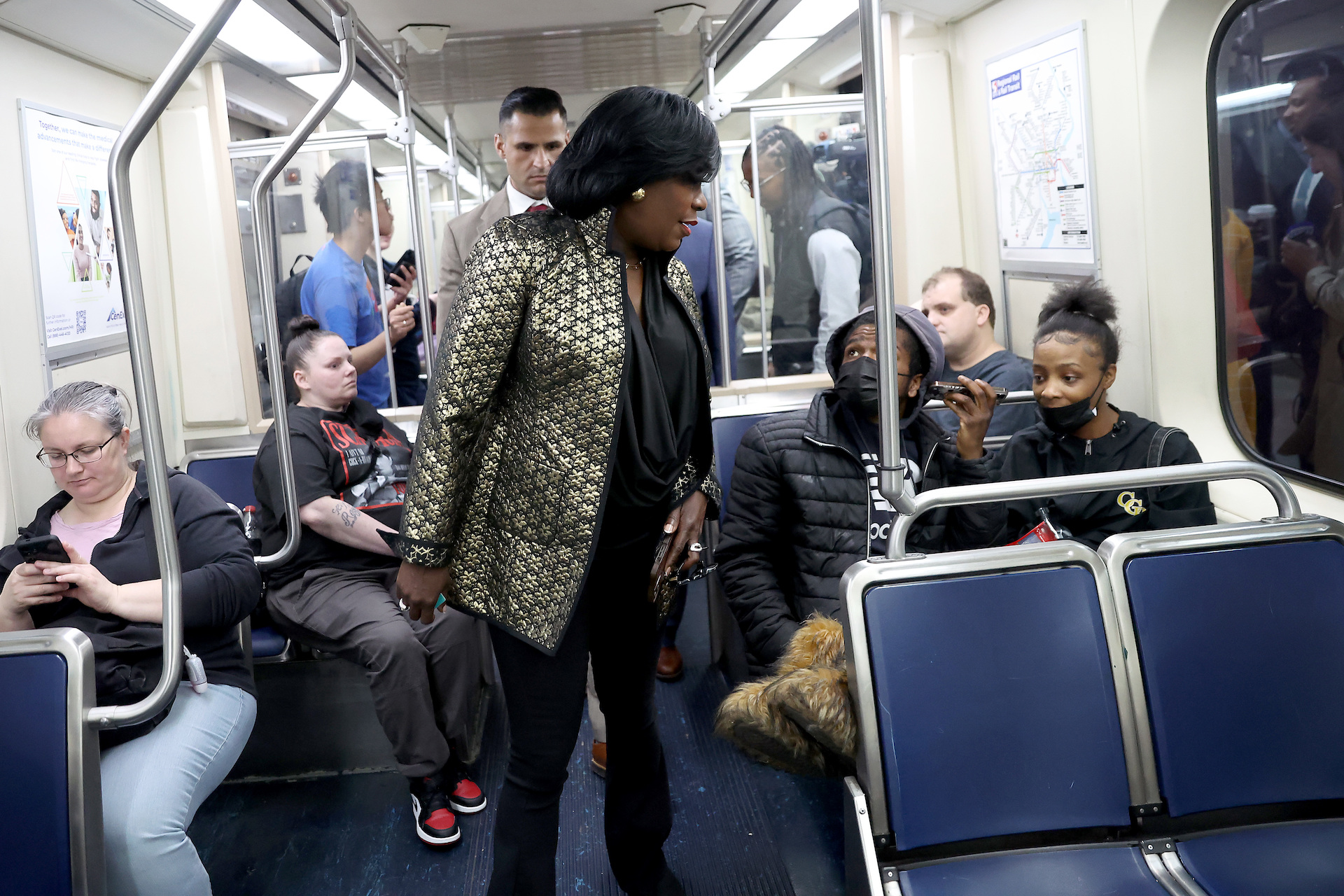
    Mayor Cherelle Parker (center) rides the SEPTA Market-Frankford Line to an event in the Kensington section of Philadelphia, Pa. on Thursday, April 11, 2024.

    The bills are aimed at advancing Parker’s goal to build, preserve, and repair 30,000 housing units.

    Most crucially, one bill expands an existing law that says properties within 500 feet of a Council-designated SEPTA station can receive benefits allowing developers to build more homes. Parker’s legislation increases the radius to 1,320 feet, or a quarter of a mile.

    What else happened?

    Smoke-filled doom: Lawmakers continued their crusade against smoke shops and so-called nuisance businesses Thursday, with Councilmember Katherine Gilmore Richardson bringing legislation to hold commercial landlords accountable for renting to illegal smoke shops.

    The bill is a follow-up to a package of legislation lawmakers passed last year that makes it easier for the city to shut down stores that sell cannabis and tobacco products without permits.

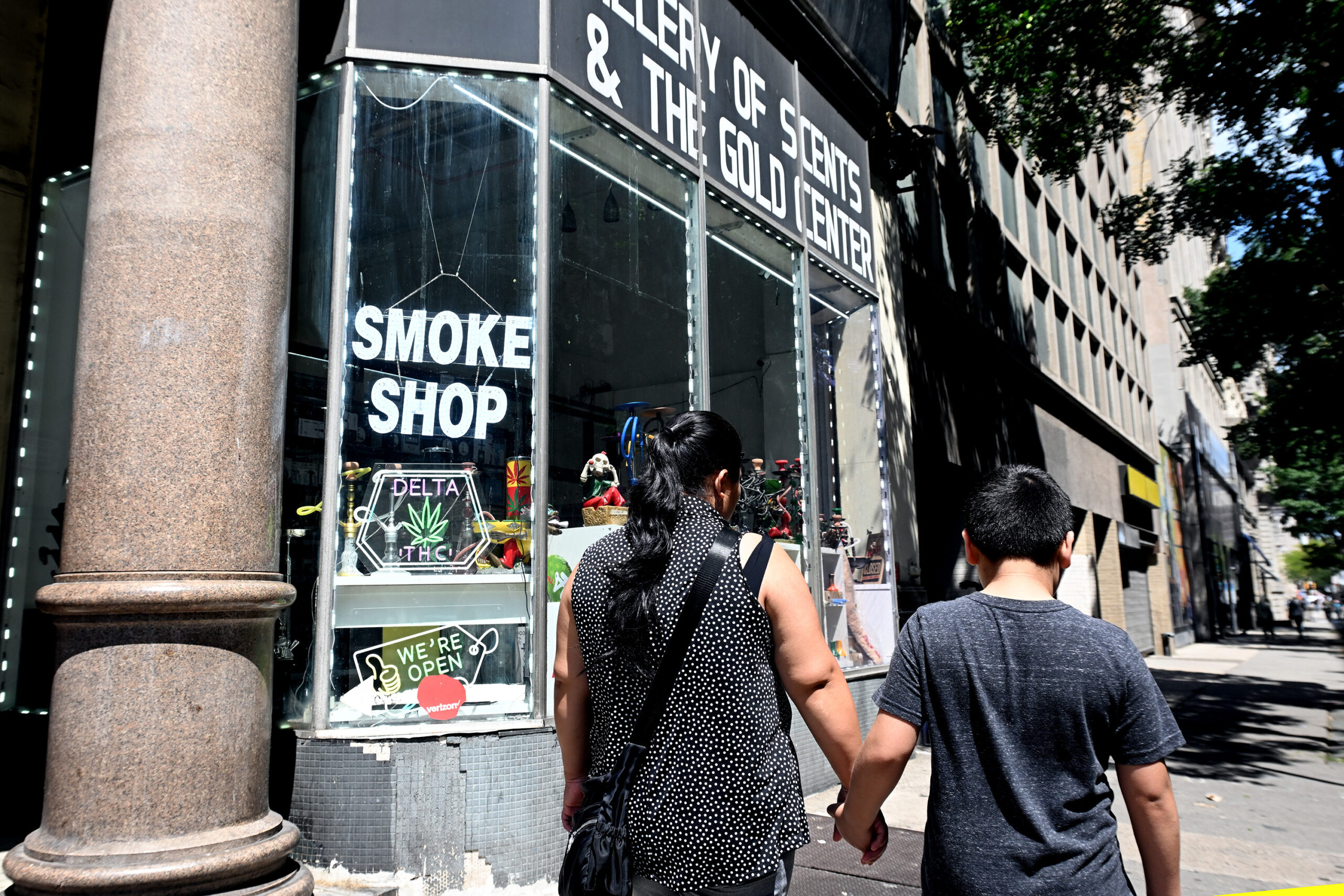
    This file photo shows a city smoke shop exterior on the 1000 block of Chestnut Street in July. City Council has advanced several pieces of legislation aimed at curbing smoke shops.

    Gilmore Richardson introduced a second bill to establish a new license requirement for stores selling products like hemp-based THC and kratom. The ordinance would define the products as “intoxicating substances” and establish a 21-plus age minimum.

    What’s next?

    Block off your calendar: Next week will be a busy one. Parker is scheduled to deliver her annual budget address to Council on Thursday, when she will outline her vision for the coming year.

    The speech will kick off weeks of hearings before Council, when members will have the opportunity to question administration officials from every major department, as well as the leaders of other agencies that receive city dollars, including the city courts, the district attorney, and the Philadelphia School District.

    Quote of the week

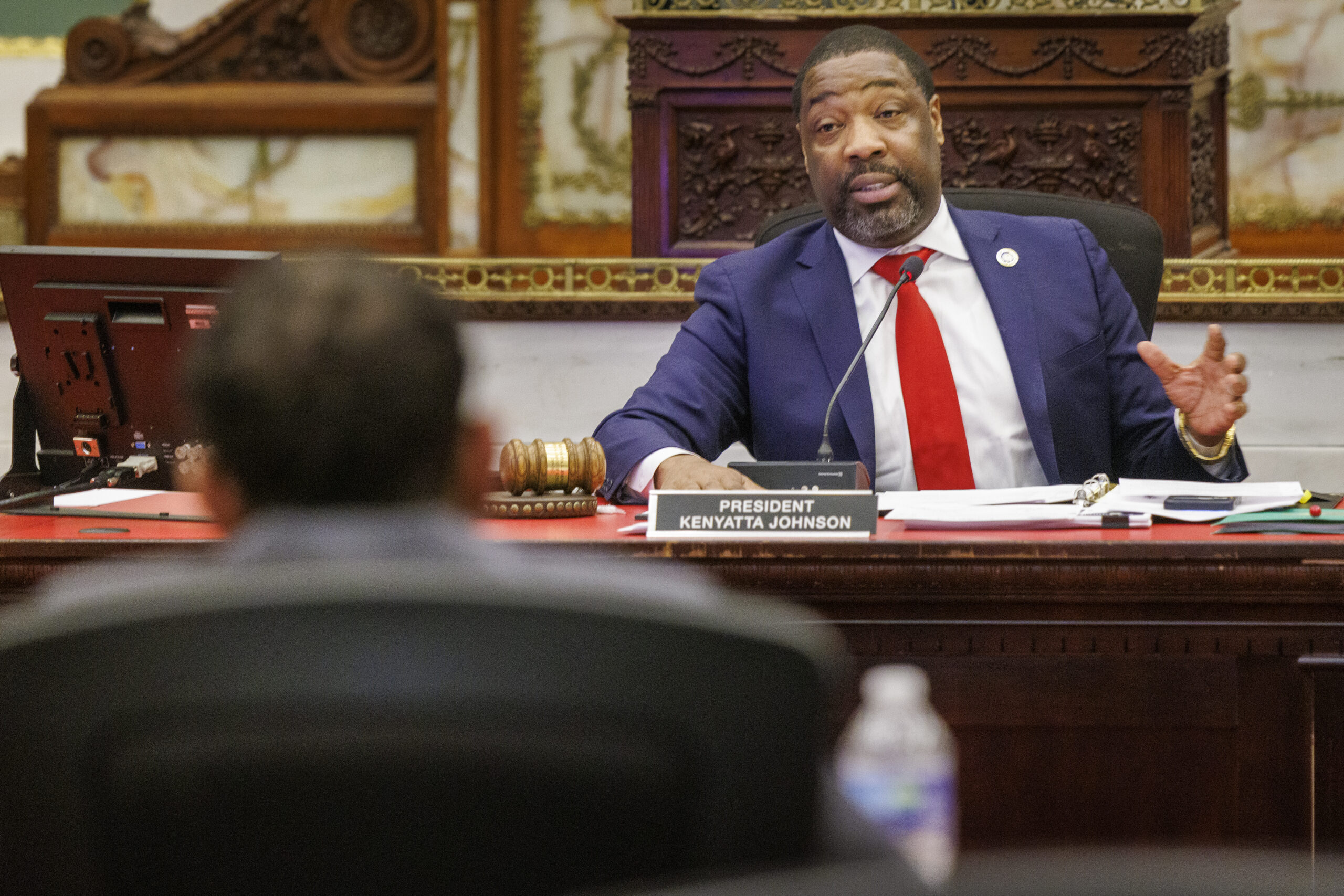
    Philadelphia City Council President Kenyatta Johnson questioning Dr. Tony Watlington, Superintendent of School District of Philadelphia, during a hearing with board members of School District of Philadelphia, Tuesday, Feb. 17, 2026.

    A little school district shade: That was Council President Kenyatta Johnson chiming in on an effort to rename a North Philadelphia street after the late Constance E. Clayton, Philadelphia’s first Black and female schools superintendent.

    Johnson slyly brought up his opposition to parts of the school district’s proposal to close 20 schools as part of its facilities master plan, prompting a wave of “oohs” in the chamber.

    Staff writers Jake Blumgart and Max Marin contributed to this article.

  • McCormick, Fetterman: Here’s why we’re behind a bipartisan plan to help first-time home buyers

    McCormick, Fetterman: Here’s why we’re behind a bipartisan plan to help first-time home buyers

    When we were teenagers growing up in rural Pennsylvania, Americans typically bought their first home at the age of 29. Now, first-time home buyers tend to be in their 40s.

    As U.S. senators from different parties, we don’t agree on everything. But as friends, parents of nine children between us, and representatives of working families across Pennsylvania, we cannot accept this terrible trend.

    The American dream — the promise that if you work hard and play by the rules, you can build a good life and financial security in a home that you own — must not fall out of reach of young Pennsylvanians.

    That’s why we support the ROAD to Housing Act. This bipartisan bill, which the U.S. Senate is expected to vote on this week, will help address Pennsylvania’s housing crisis by making it easier to build more homes, more affordably, while also preserving and repairing the housing stock we already have.

    The commonwealth has 100,000 fewer homes than it needs today and is on track to be short 185,000 by 2035.

    As a result of this shortage, home prices have increased 75% in the last five years. More than one million Pennsylvania households spend over 30% of their income on housing, and more than half of our housing stock is over 50 years old, driving up repair costs and straining family budgets.

    Sens. John Fetterman (D., Pa.) (left) and Dave McCormick (R., Pa.) greet before participating in a debate in Boston moderated by Fox News in June.

    That combination — too few and too many aging homes — creates a squeeze felt from Erie to Philly: young families delaying having kids, seniors stuck in homes they can’t afford to fix, workers turning down jobs because they can’t find a place to live nearby.

    The shortage will get even more acute as new investments in Pennsylvania’s energy and artificial intelligence, defense, and life-science industries generate great new jobs across the commonwealth.

    We have celebrated these transformative investments, from U.S. Steel to the Philly Shipyard, but more jobs mean more workers, and workers need homes.

    The ROAD Act delivers by taking three commonsense approaches. First, it tackles affordability at the source — supply — by reducing delays and lowering construction costs.

    Second, it strengthens accountability and modernizes federal programs to ensure they work for the people they’re meant to serve.

    Third, it empowers Pennsylvanians to build what fits local needs.

    We’re proud that the bill includes provisions to protect Pennsylvania workers, veterans, and homeowners, which we championed together. Our Whole-Home Repairs legislation, for example, supports homeowners, especially in markets like ours with many historic residences, by offering grants and forgivable loans for repairs and upgrades of aging homes, keeping families in their homes and stabilizing neighborhoods.

    This isn’t a Republican problem or a Democratic problem. It’s an American one, and it demands bipartisan action.

    For these reasons, we stand united, as we have on many other issues, in voting yes for the ROAD to Housing Act.

    Dave McCormick and John Fetterman represent Pennsylvania in the U.S. Senate.

  • Josh Shapiro’s presidential prospects and John Fetterman’s eye-popping numbers: Highlights from a new Pa. poll

    Josh Shapiro’s presidential prospects and John Fetterman’s eye-popping numbers: Highlights from a new Pa. poll

    Pennsylvania voters appear to be all in on Gov. Josh Shapiro’s reelection bid, while some are still warming up to the thought of him being president one day.

    Among registered voters, the Democratic incumbent leads his Republican challenger, state Treasurer Stacy Garrity, 55-37%, according to a Quinnipiac University poll released Wednesday.

    Meanwhile, 40% of Pennsylvania voters think that Shapiro, who has been bolstering his national political profile and has a job approval rating of 56%, would make a good president, according to the poll.

    But 43% of the state’s voters do not think he would make a good president and 16% did not offer an opinion, despite his high overall approval.

    A strong majority of Democrats and a plurality of independent voters both said he would be a good president, but a strong majority of Republicans disagreed.

    The survey, conducted among 836 registered voters in Pennsylvania from Feb. 19 to 23, offers a glimpse of what voters in one of the most politically consequential states think of top elected officials a little more than eight months ahead of the high-stakes 2026 midterms.

    Pennsylvania voters also shared their perceptions of U.S. Sen John Fetterman (D., Pa.), who has significant support among Republicans but a low rating with his own party, and President Donald Trump, whose job approval rating is sitting below 50% in a state he won two years ago.

    Here’s what else to know from the Quinnipiac poll:

    Sen. John Fetterman, D-Pa., left, and Sen. Dave McCormick, R-Pa., right, greet before participating in a debate moderated by Fox News anchor Shannon Bream, not shown, Monday, June 2, 2025, at the Edward M. Kennedy Institute for the United States Senate, Monday, June 2, 2025, in Boston, as livestreamed on Fox Nation. (AP Photo/Steven Senne)

    Republicans support John Fetterman. Democrats don’t.

    Fetterman has been known to cross the political aisle, and his willingness to embrace Trump and take key votes with Republicans appears to be costing him with voters in his own party.

    Sixty-two percent of Democratic Pennsylvania voters disapprove of how Fetterman is handling his job, while only 22% approve.

    Those dismal numbers with his own party are worse than Fetterman’s Republican colleague, Sen. Dave McCormick, who has a 54% disapproval rate with Democrats.

    After three years in office, Fetterman does much better with Republicans than his own party. Among GOP voters, 73% approve of the Democratic senator, compared with just 18% who disapprove, according to the poll. Among independents in the swing state, 48% approve and 37% disapprove.

    This dynamic has helped fuel speculation of a future party switch — something Fetterman has repeatedly shot down — or a Democratic primary challenge.

    The progressive Working Families Party has said it will support and, if needed, recruit a challenger. Fetterman has repeatedly sparred with progressives on a range of issues from unconditional support for Israel’s military actions in Gaza to his stance on immigration enforcement.

    He also drew ire from fellow Pennsylvania Democrats for crossing the aisle to support a Republican plan to end last year’s government shutdown without a deal to address expiring healthcare subsidies.

    U.S. Rep. Brendan Boyle (D., Philadelphia), a potential primary challenger, has repeatedly called Fetterman “Trump’s favorite Democrat,” including on Tuesday night, when the senator shook the president’s hand at the State of the Union address.

    Other names floated as potential contenders include U.S. Rep. Chris Deluzio (D., Beaver) and former U.S. Rep. Conor Lamb, who lost the 2022 primary to Fetterman.

    Which party do Pa. voters want to win the midterms?

    Forty-nine percent of Pennsylvania registered voters want to see Democrats win control of the U.S. House in November, while 43% want Republicans to maintain their advantage.

    November’s midterms are consequential for both parties, especially in the House, where Republicans currently have a slim majority.

    But voters in Pennsylvania have soured on Trump, who receives just 40% approval in the poll, compared with 55% disapproval. And he is losing ground on two key issues that propelled him to office: the economy and immigration.

    According to the poll, only 28% of Pennsylvania voters think the economy is getting better, while 47% think it is getting worse and 23% think it is staying the same.

    Additionally, 56% believe the Trump administration’s immigration enforcement is too harsh in how it treats undocumented immigrants. Meanwhile, 36% think the president is handling immigration correctly and 6% think the administration is being too lenient.

    Democrats believe they can capitalize on these issues and defeat incumbents in key swing districts: Republican U.S. Reps. Brian Fitzpatrick in Bucks County, Ryan Mackenzie in Lehigh County, Rob Bresnahan in Lackawanna County, and Scott Perry in York County.

    Trump has endorsed every member of the Republican U.S. House delegation in Pennsylvania except Fitzpatrick.

  • From talking up the 250th anniversary to shaking John Fetterman’s hand, here are the Pa. moments in Trump’s State of the Union address

    From talking up the 250th anniversary to shaking John Fetterman’s hand, here are the Pa. moments in Trump’s State of the Union address

    President Donald Trump ended his historically long State of the Union address Tuesday night with how he began it — talking about the United States’ 250th birthday this summer.

    He mentioned the “historic streets of Philadelphia,” Thomas Jefferson’s final breath, and the FIFA World Cup games, some of which will take place in the city this summer.

    But his talk of the 250th celebrations served as bookends to what was otherwise a speech in which he railed against immigrants, spread falsehoods and lashed out at political opponents.

    During the speech, Trump took credit for ending DEI programs across the country, doubled down on his push to end sanctuary cities, falsely suggested his opponents cheat during elections and called for proof of citizenship in order to vote.

    The president chastised Supreme Court justices for their recent ruling against his tariffs. And he frequently lambasted Democrats, bristling when they would not stand to applaud.

    “These people are crazy,” Trump said.

    Pennsylvania popped up throughout the evening as Trump leaned on the 250th as a framing device for his speech and pointed to a woman from the Poconos to promote his economic agenda.

    Trump talks of ‘epic milestone’ 250th celebrations

    Trump mentioned the “epic milestone” of the United States’ upcoming 250th anniversary in July just moments in his remarks.

    “This July 4, we will mark two and a half centuries of liberty and triumph, progress and freedom, in the most incredible and exceptional nation ever to exist on the face of the earth and you’ve seen nothing yet, we’re going to do better and better and better,” Trump said.

    Philadelphia will be at the center of 250th anniversary celebrations this year, especially during the warmer months when the city is expected to see an influx of tourism which by one estimate could bring in as much as $2.5 billion to the city and region.

    But when visitors stop by Philly’s iconic sites, it’s unclear whether they’ll be seeing the full picture of U.S. history.

    Last month, the Trump administration ordered the takedown of every educational panel from the President’s House at Independence National Historical Park. The site serves as a memorial to the nine people George Washington enslaved at his Philadelphia residence.

    The incident has sparked outrage from Philadelphians who have rallied to protect the site and spurred Mayor Cherelle L. Parker’s first major confrontation with Trump.

    After a lawsuit from the Parker administration and tireless community activism, a federal judge last week ordered the site to be restored. The panels were mostly reinstalled Thursday and Friday before a federal appeals judge ordered park employees to pause while the Trump administration’s appeal remains pending.

    Trump did not address the controversy in his speech even as he touted the city’s history and the founding fathers in his speech.

    The Philadelphia case is the most high-profile battle over the Trump administration’s broader effort to sanitize U.S. history ahead of the 250th. The National Park Service has removed content from parks throughout the country, including the Grand Canyon, underan order from Trump forbidding displays that “inappropriately disparage Americans past or living.”

    Trump gives a shoutout to working mom from Pa.

    The president brought Megan Hemhauser, a waitress and mom of two from Cresco, Pa., a town in the Poconos, as one of his guests to his address Tuesday night, saying in his speech that because of his “No Tax on Tips” and “No Tax on Overtime” policies she is “so, so much richer.”

    Hemhauser was also featured at Trump’s rally in Mount Pocono in December when the president invited her to speak. She shared that these policies have helped her invest in her family.

    “It saves us and it’s for the future of our children,” she said at the time.

    Under Trump’s One Big Beautiful Bill Act, tipped workers can deduct up to $25,000 of certain tips per year, but the lowest earners and some tipped workers won’t be eligible for the tax break, CNBC reported. For overtime, certain individuals can deduct up to $12,500 for single filers or $25,000 for married couples filing their taxes jointly each year from 2025 through 2028.

    Both tax breaks are available from 2025 through 2028 and decreases in size when earnings exceed $150,000 for single filers or $300,000 for married couples filing jointly.

    Democrats have pointed out the same legislation also included cuts to SNAP and Medicaid, two programs heavily relied by low-income Americans. They’ve blamed other Trump policies, including his signature tariffs and his opposition to extending health care policies, for exacerbating the cost of living for Pennsylvanians.

    “Trump promised to lower costs for Pennsylvania families on Day One, but he’s done the exact opposite,” said DNC chair Ken Martin in a statement ahead of the speech.

    Protesting with a pin

    U.S. Rep. Madeleine Dean (D., Montgomery) attended Trump’s State of the Union, but ended up leaving the event once Trump announced that Vice President JD Vance would be leading a “war on fraud.”

    “I just had had enough of the lies,” Dean said in an interview after the address.

    The Pennsylvania lawmaker joined other members of the House Democratic Women’s Caucus in wearing white as an homage to the suffragettes. She also wore a pin and scarf showing her support for Ukraine, as Tuesday marks four years since Russia waged its attack on the country.

    “How I would have wished the president would have said ‘I am dismayed that I have not been able to bring an end to that brutal war and that is going to be my singular focus,’” said Dean, a member of the Ukraine caucus. “But, of course, he doesn’t say that.”

    Other Democrats showed their opposition to Trump by boycotting his speech, including several from the region.

    U.S. Rep. Mary Gay Scanlon (D., Delaware) and U.S. Rep. Summer Lee (D., Allegheny) both attended “People’s State of the Union,” an alternative event hosted by progressive groups instead of the president’s address.

    Other Democrats who skipped Trump’s speech include retiring U.S. Reps. Dwight Evans of Pennsylvania and U.S. Sen Cory Booker of New Jersey.

    John Fetterman wears a suit and shakes hands with Trump

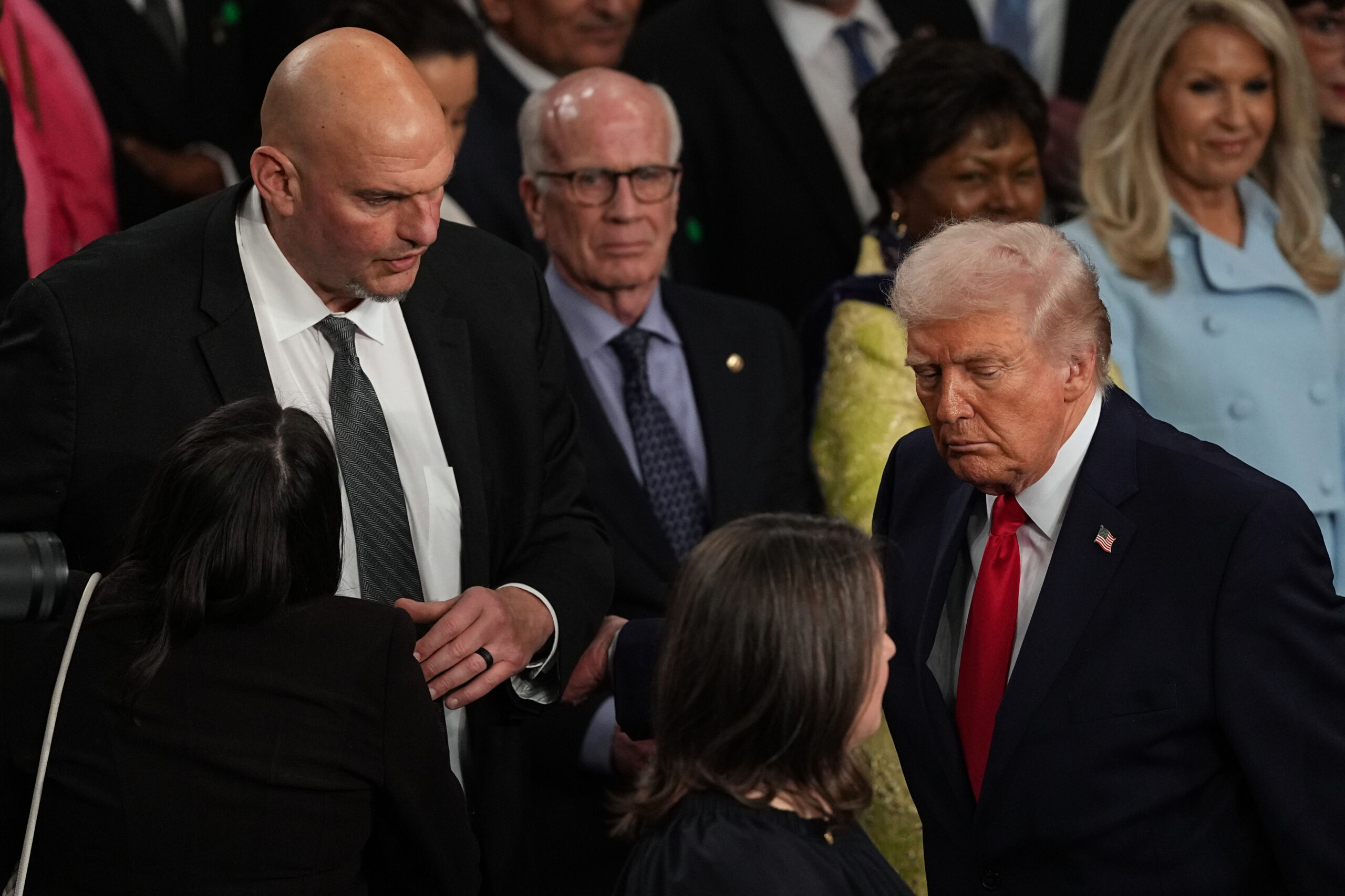
    Known to seldom wear dress clothes, U.S. Sen. John Fetterman traded his usual hoodie for a suit Tuesday evening when he shook hands with Trump during the president’s entrance to the House chamber.

    Fetterman’s greeting of Trump comes in contrast to many of his Democratic colleagues and underscores the senator’s willingness to embrace the other side of the political aisle, often earning him ire from his own party.

    U.S. Rep. Brendan Boyle (D., Philadelphia) criticized Fetterman in a post on X Tuesday night.

    “I’m not surprised PA Senator John Fetterman finally got dressed up for once and so warmly greeted Donald Trump tonight,” wrote Boyle, who has been floated as a potential primary challenger to Fetterman in 2028. “After all, as the White House has previously stated, John Fetterman is Trump’s favorite Democrat.”

    During a Wednesday morning interview with Fox News, Fetterman criticized fellow Democrats for not standing and applauding during several moments in Trump’s speech that he felt should have garnered bipartisan support, including when Trump recognized Erika Kirk, whose husband Charlie Kirk was shot and killed last year during a speech in Utah.

    Fetterman also defended his handshake with the president and believes he was only Democrat to make such a gesture.

    “Yes, I shook his hand. Of course. He walked in, and I’m always going to do that, for sure,” Fetterman said.

    President Donald Trump passes Sen. John Fetterman, D-Pa., as he departs after delivering the State of the Union address to a joint session of Congress in the House chamber at the U.S. Capitol in Washington, Tuesday, Feb. 24, 2026.

    Summer Lee’s Working Families Party response

    Lee, a Pittsburgh progressive in her second term, delivered a response to Trump’s address on behalf of the Working Families Party, a grassroots progressive party that often endorses Democratic candidate.

    The Pennsylvania lawmaker criticized Trump’s tariffs, Medicaid cuts, escalation of federal immigration agents, and mass layoffs of federal employees.

    “The state of the union is dire,” Lee said. “We can’t afford to believe Trump’s lies, and we have to pay attention to his actions. This is not a normal time, and our response to it can’t be politics as usual.”

  • Philly DA Larry Krasner casts doubt on running against Mayor Cherelle Parker

    Philly DA Larry Krasner casts doubt on running against Mayor Cherelle Parker

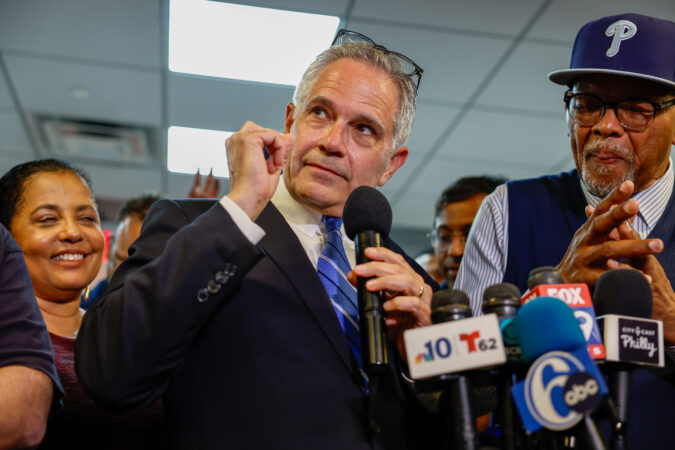
    Philadelphia District Attorney Larry Krasner on Wednesday dismissed rumors that he may challenge Mayor Cherelle L. Parker when she will face reelection next year, and he said in a statement that he is focused on his job as the city’s top prosecutor.

    Krasner, who last year won his third term as district attorney and has cultivated a national brand, told The Inquirer that talk he might challenge the incumbent divides the city’s leadership.

    His statement came after the news website Axios Philly reported that some political insiders were floating Krasner’s name as a potential mayoral contender.

    “Especially in these times, all Philadelphia residents need to stand together and work together for Philly,” Krasner said. “Not sure whose agenda this narrative serves, but there’s nothing new about insiders stirring things up to benefit themselves at the expense of everyone else.”

    Talk of Parker facing a potential primary challenge ramped up in recent days after the mayor’s political action committee filed a campaign finance report showing she had raised $1.7 million last year, a striking sum for a sitting mayor two years out from a reelection bid.

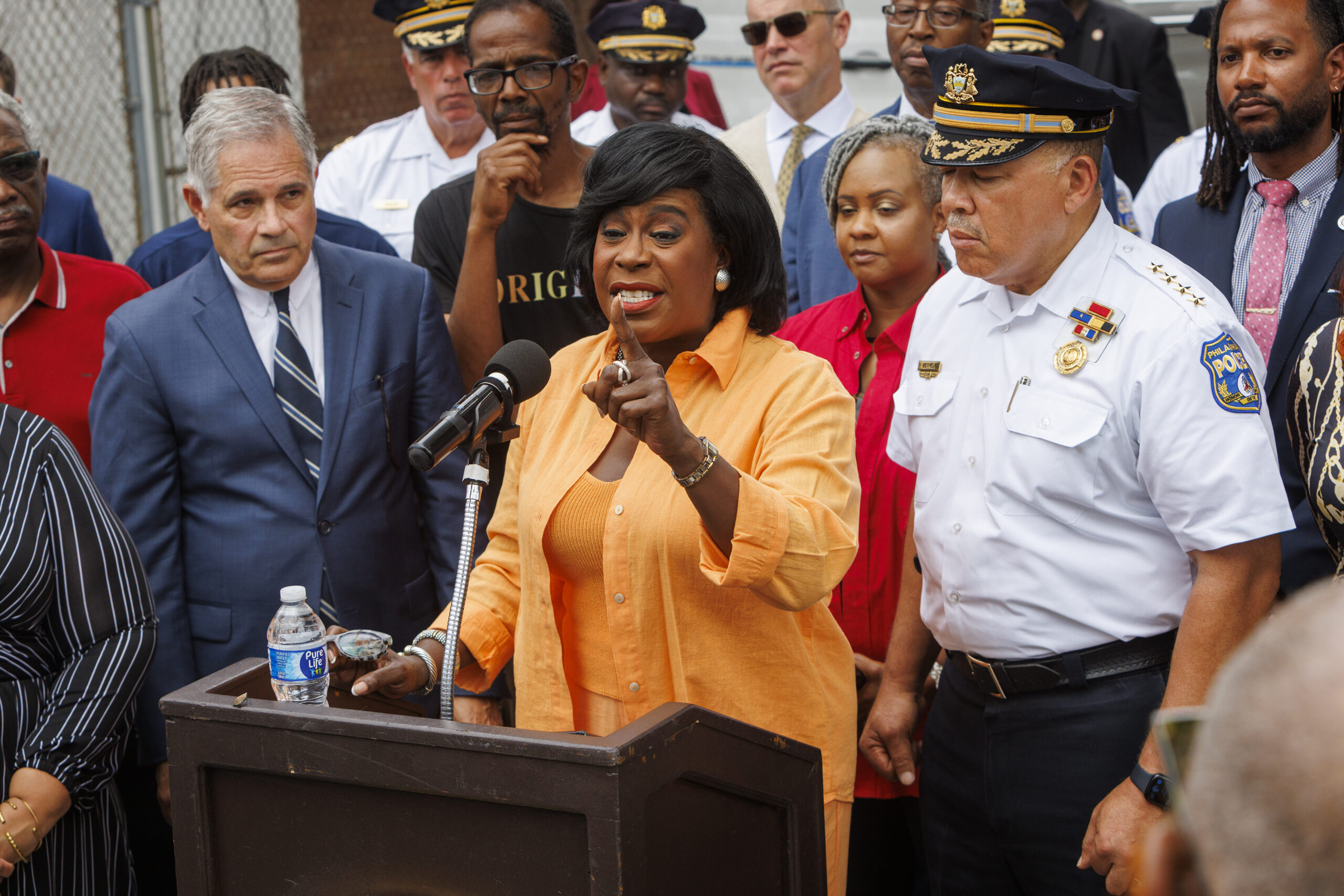
    In this 2024 file photo, Philadelphia Mayor Cherelle L. Parker is flanked by Police Commissioner Kevin Bethel and District Attorney Larry Krasner during a news conference.

    The fundraising report fueled speculation among the city’s political class that Parker, a centrist Democrat who is backed by much of the party establishment, may be expecting a challenge in the primary.

    A progressive would be a natural fit for a challenger. The city’s left has opposed some of Parker’s initiatives, including her law enforcement-driven plan to address the Kensington drug market. Activists have also been critical of Parker’s cautious approach to President Donald Trump, whom she generally avoids attacking directly.

    Krasner, 64, is the most prominent progressive in the city. He won reelection last year in landslide fashion, and he has positioned himself as the city’s most vocal Trump opponent, often drawing comparisons between the federal government and 20th-century fascism.

    And several past district attorneys have run for mayor, including Ed Rendell, who went on to serve two terms in City Hall and then was elected governor of Pennsylvania.

    But for Krasner, any run at Parker would be tricky.

    Krasner, who is white, has been successful in electoral politics in large part because of support from the city’s significant bloc of Black voters, politicians, and clergy. Those groups are also key to the base of support that has backed Parker, who comes from a long line of Black politicians hailing from the city’s Northwest.

    Allies of the district attorney say a better fit — if he decided to seek higher office — could be running for a federal seat.

    Political observers have suggested a handful of Democrats, including Krasner, could run for the U.S. Senate seat currently occupied by Sen. John Fetterman. The Democratic senator, who will be up for reelection in 2028, has an independent streak and has angered many in the party for at times siding with Republicans.

    Several other Democrats have been floated as potential contenders for the seat, including U.S. Reps. Brendan Boyle, of Philadelphia, and Chris Deluzio, whose Western Pennsylvania district includes Allegheny County. Some have also speculated that former U.S. Rep. Conor Lamb, also of Western Pennsylvania, could run.

    Fetterman has not said whether he intends to run for reelection. Left-leaning organizations have already pledged to back a primary challenger against him.

  • Sen. John Fetterman said he ‘absolutely’ expects a DHS shutdown as ICE negotiations stall

    Sen. John Fetterman said he ‘absolutely’ expects a DHS shutdown as ICE negotiations stall

    U.S. Sen. John Fetterman said Sunday that he expects the Department of Homeland Security to shut down Friday as negotiations over immigration enforcement have stalled, an outcome that could impact air travel and emergency response across the nation.

    “I absolutely would expect that it’s going to shut down,” the Pennsylvania Democrat said during an interview on Fox News’ Sunday Morning Futures with Maria Bartiromo.

    Funding for DHS is scheduled to lapse Friday, a deadline that lawmakers set after separating the agency’s funding from other parts of the federal budget and approving a two-week extension to continue talks.

    At the center of the impasse is Democrats’ insistence on overhauling federal immigration enforcement. The party’s leaders drafted a list of 10 policies they want Republicans to agree to in exchange for their support in funding DHS, which includes U.S. Immigration and Customs Enforcement.

    Among Democrats’ demands are banning immigration enforcement agents from wearing masks and requiring DHS officers to obtain a warrant signed by a judge before entering a home.

    House Minority Leader Hakeem Jeffries (D., N.Y.) said Sunday during an interview on CNN’s State of the Union that “at this point” he was not willing to accept a deal that didn’t include President Donald Trump’s administration implementing Democrats’ full list of ICE changes.

    “We know that ICE is completely and totally out of control,” Jeffries said. “They’ve gone way too far, and the American people want them reined in.”

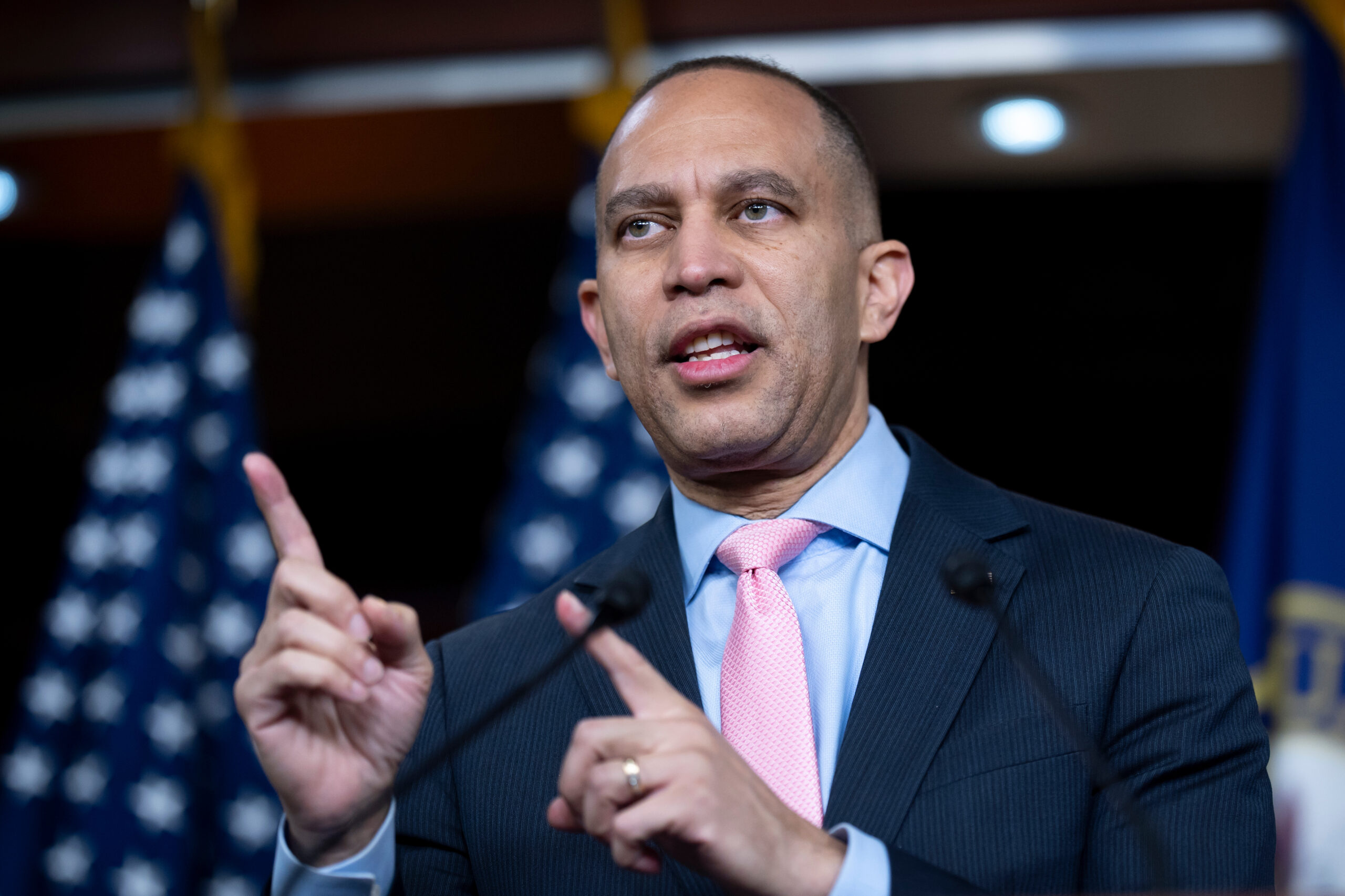
    House Minority Leader Hakeem Jeffries (D., N.Y.) speaks to reporters about Venezuela, the ICE shooting in Minneapolis, and affordability ahead of a vote in the House to extend the Obamacare subsidies for three years at the Capitol on Jan. 8. (AP Photo/J. Scott Applewhite)

    Fetterman has called for significant changes at DHS, including the firing of Secretary Kristi Noem. But he said Sunday that Democrats shouldn’t expect to “get all 10″ demands.

    “We, the Democrats, we provided 10 kinds of basic things, and then the Republicans pushed back quickly saying, ‘That’s a Christmas wish list,’ and that they’re nonstarters,” Fetterman, a member of the Senate Homeland Security Committee, said. “I truly don’t know what specifically are the Democrats’ red lines that it has to be — certainly not going to get all 10.”

    Fetterman generally opposes any measure that would shut down the government and has been the only Senate Democrat to vote for some Republican budget proposals. He added that he is concerned about federal workers, including TSA agents, not being paid amid a funding lapse.

    “Every American deserves to be paid for the work that they’ve done,” he said. “That’s real lives, and they’re not wealthy if they’re TSA folks. They’re allowing us to fly safe here in America, and that’s part of that conversation now, too.”