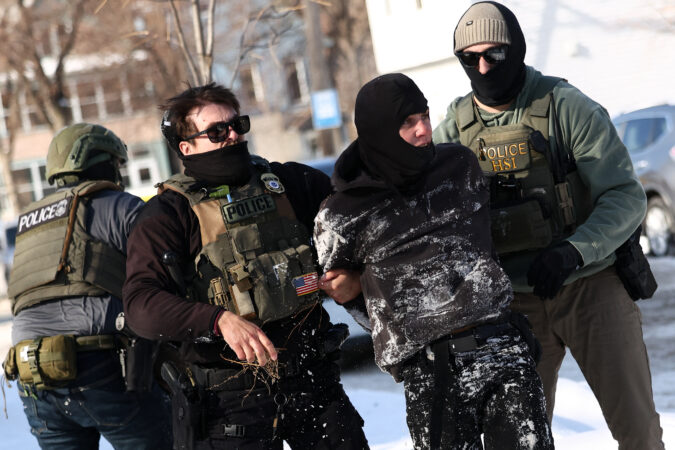
One of the lasting images of President Donald Trump’s mass deportation campaign will be the masks worn by federal immigration agents.
The widespread use of facial coverings by U.S. Immigration and Customs Enforcement officers is among the suite of tactics — agents dressed in plainclothes, wearing little identification, jumping out of unmarked cars to grab people off the street — that have fueled immigration advocates’ use of terms like “kidnappings” and “abductions.”
Now Philadelphia lawmakers appear poised to pass legislation that would ban all officers operating in the city — including local police — from concealing their identitiesby wearing masks or conducting enforcement from unmarked cars.
The question is whether the city can make that rule stick.
Legal hurdles loom for municipalities and states attempting to regulate federal law enforcement. Local jurisdictions are generally prohibited from interfering with basic federal functions, and Trump administration officials say state- and city-level bans violate the constitutional provision that says federal law reigns supreme.
There are also practical concerns about enforcement. Violating the mask ban would be a civil infraction, meaning local police would be tasked with citing other law enforcement officers for covering their faces.
“No doubt this will be challenged,” said Stanley Brand, a distinguished fellow at Penn State Dickinson Law. “This ordinance will be a protracted and complicated legal slog.”
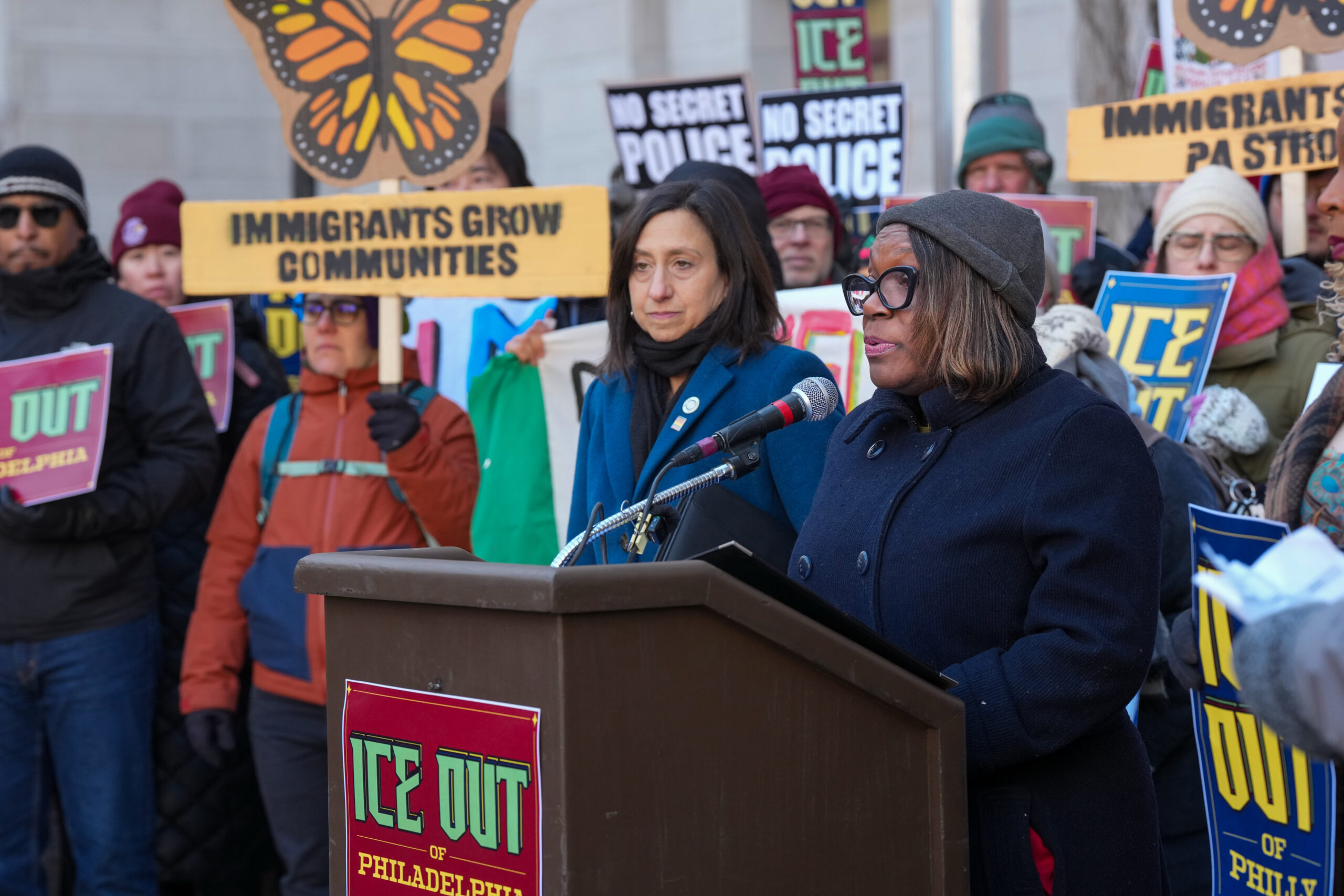
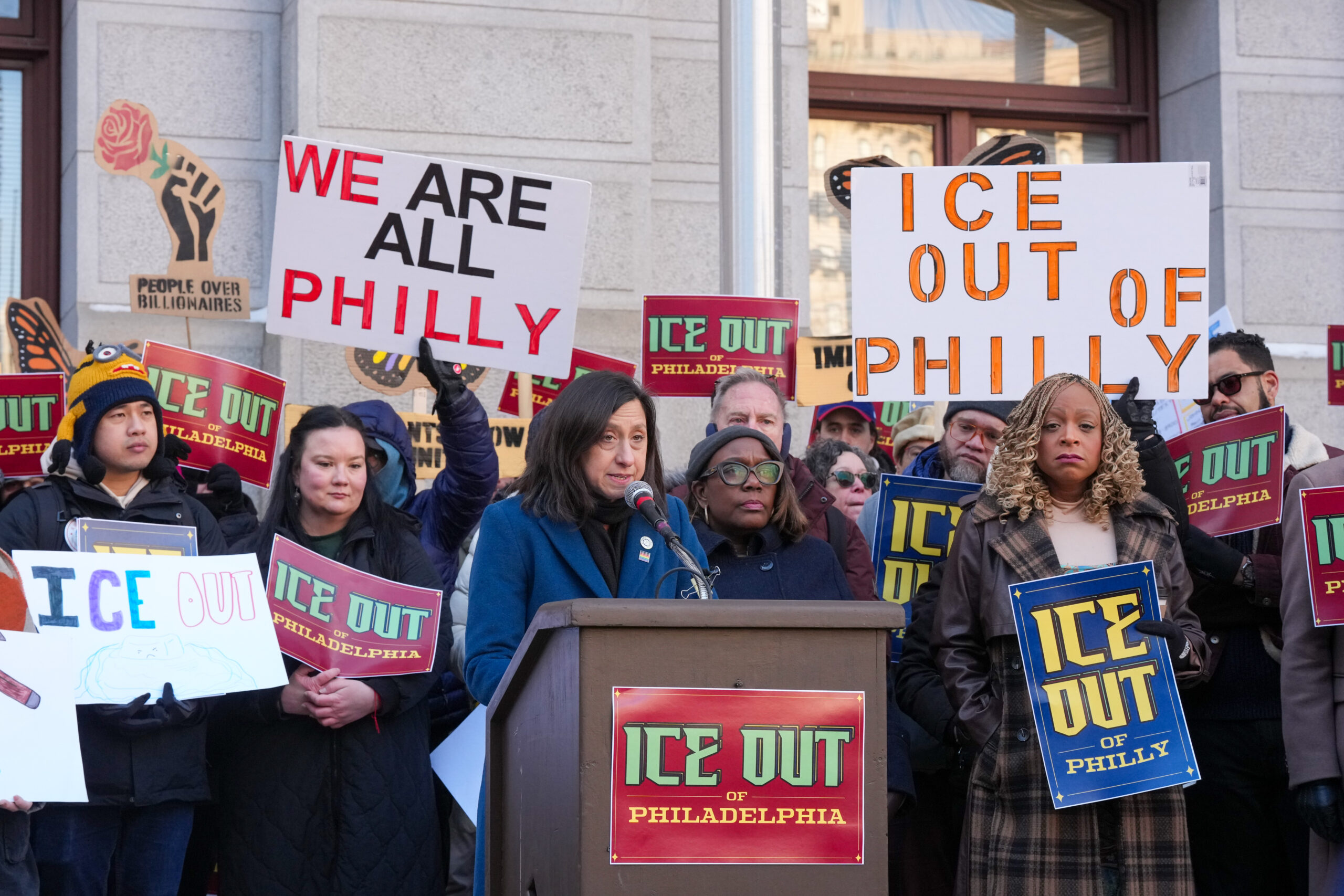
Councilmember Kendra Brooks speaks during a news conference at City Hall to announce a package of bills aimed at pushing back against ICE enforcement on Jan. 27.
Advocates for immigrants say that unmasking ICE agents is a safety issue, and that officers rarely identify themselves when asked, despite being required to carry badges.
Mask use can also spur impersonators, they say. At least four people in Philadelphia have been arrested for impersonating ICE officers in the last year.
“You see these people in your community with guns and vests and masks,” said Desi Bernette, a leader of MILPA, the Movement of Immigrant Leaders in Pennsylvania. “It’s very scary, and it’s not normal.”
Democrats in jurisdictions across America, including Congress and the Pennsylvania General Assembly, have introduced legislation to ban ICE agents from concealing their faces. California is the furthest along in implementing a mask prohibition, and a judge is currently weighing a challenge filed by the Trump administration.
Senate Democrats negotiating a budget deal in Washington have asked for a nationwide ban on ICE agents wearing masks in exchange for their votes to fund the Department of Homeland Security.
And polling shows getting rid of masks is popular. A recent Pew Research Center survey found that 61% of Americans believe federal agents should not wear face coverings to conceal their identities while on duty.
ICE officials say agents should have the freedom to conceal their faces while operating in a hyperpartisan political environment.
Last year, ICE head Todd Lyons told CBS News that he was not a proponent of agents wearing masks, though he would allow it. Some officers, he said, have had private information published online, leading to death threats against them and their families.
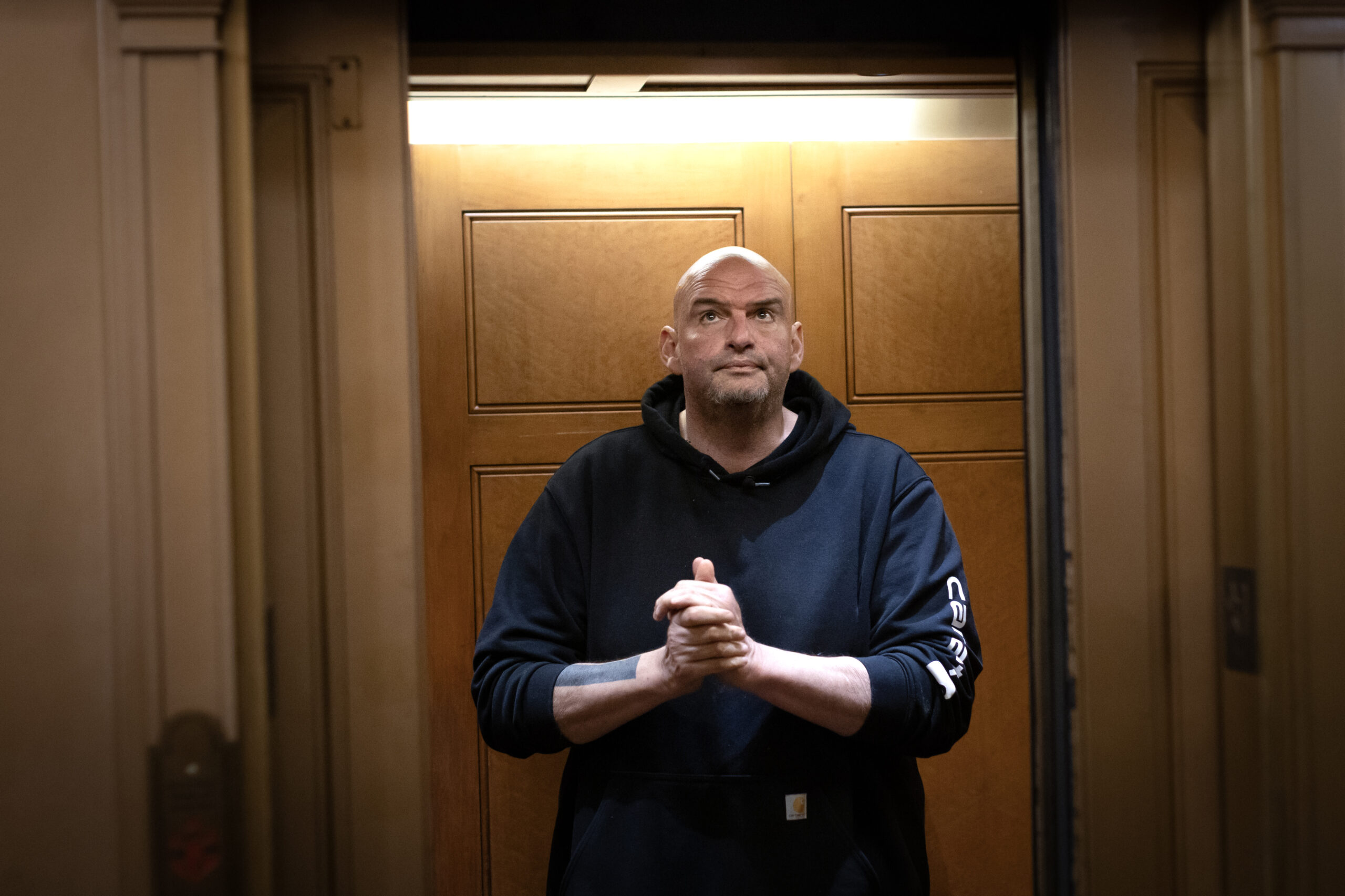
“They could target [agents’] families,” Fetterman said in an interview on Fox News, “and they are organizing these people to put their names out there.”
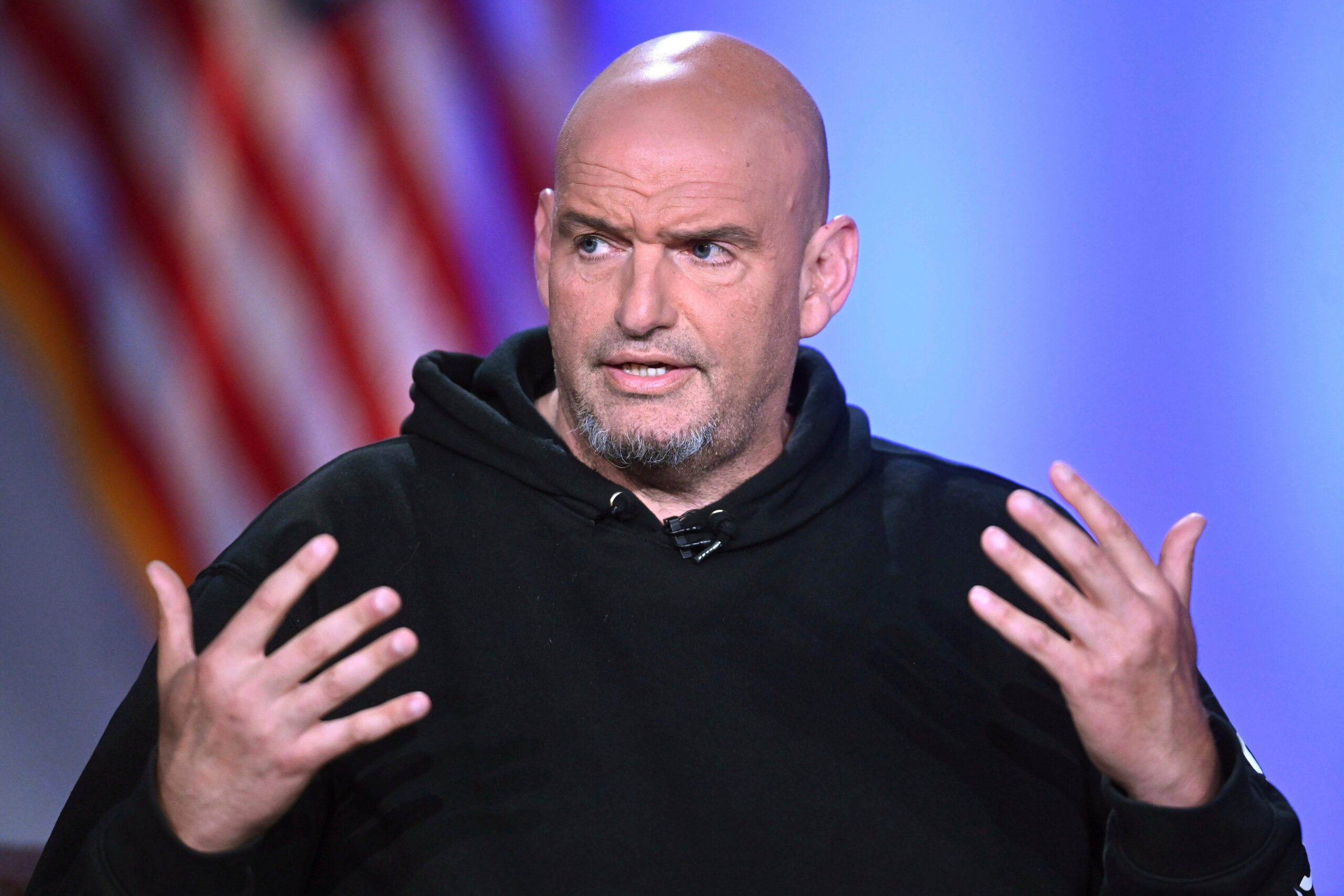
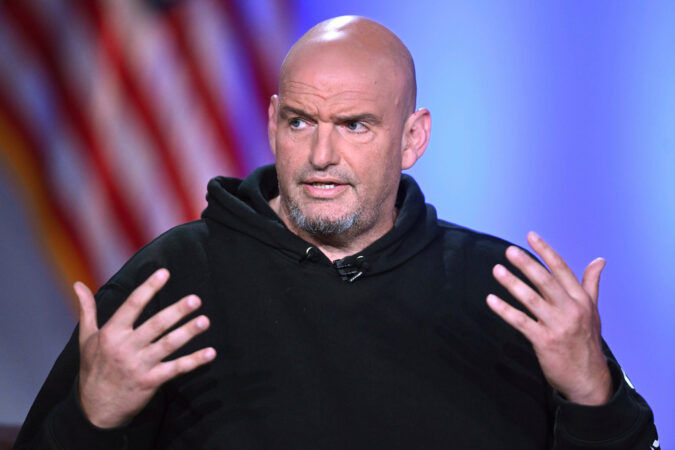
Sen. John Fetterman, D-Pa., participates in a debate on June 2, 2025, in Boston.
The Council authors of the Philadelphia bills say they are responding to constituents who are intimidated by ICE’s tactics, and they believe their legislation can withstand a legal challenge.
“Our goal is to make sure that our folks feel safe here in the city,” said City Councilmember Kendra Brooks. “We are here to protect Philadelphians, and if that means we eventually need to go to court, that’s what would need to happen.”
The constitutional limits on unmasking ICE
The bill introduced last week by Brooks and Councilmember Rue Landau is part of a package of seven pieces of legislation aimed at limiting how ICE operates in Philadelphia. The proposals would bar Philadelphia employees from sharing information with ICE and ban the agency from using city property to stage raids.
Fifteen of Council’s 17 members signed on to the package of legislation, meaning a version of it is likely to become law. Passing a bill in City Council requires nine votes, and overriding a mayoral veto takes 12. Mayor Cherelle L. Parker has said her team is reviewing the legislation, which can still be amended before it becomes law.
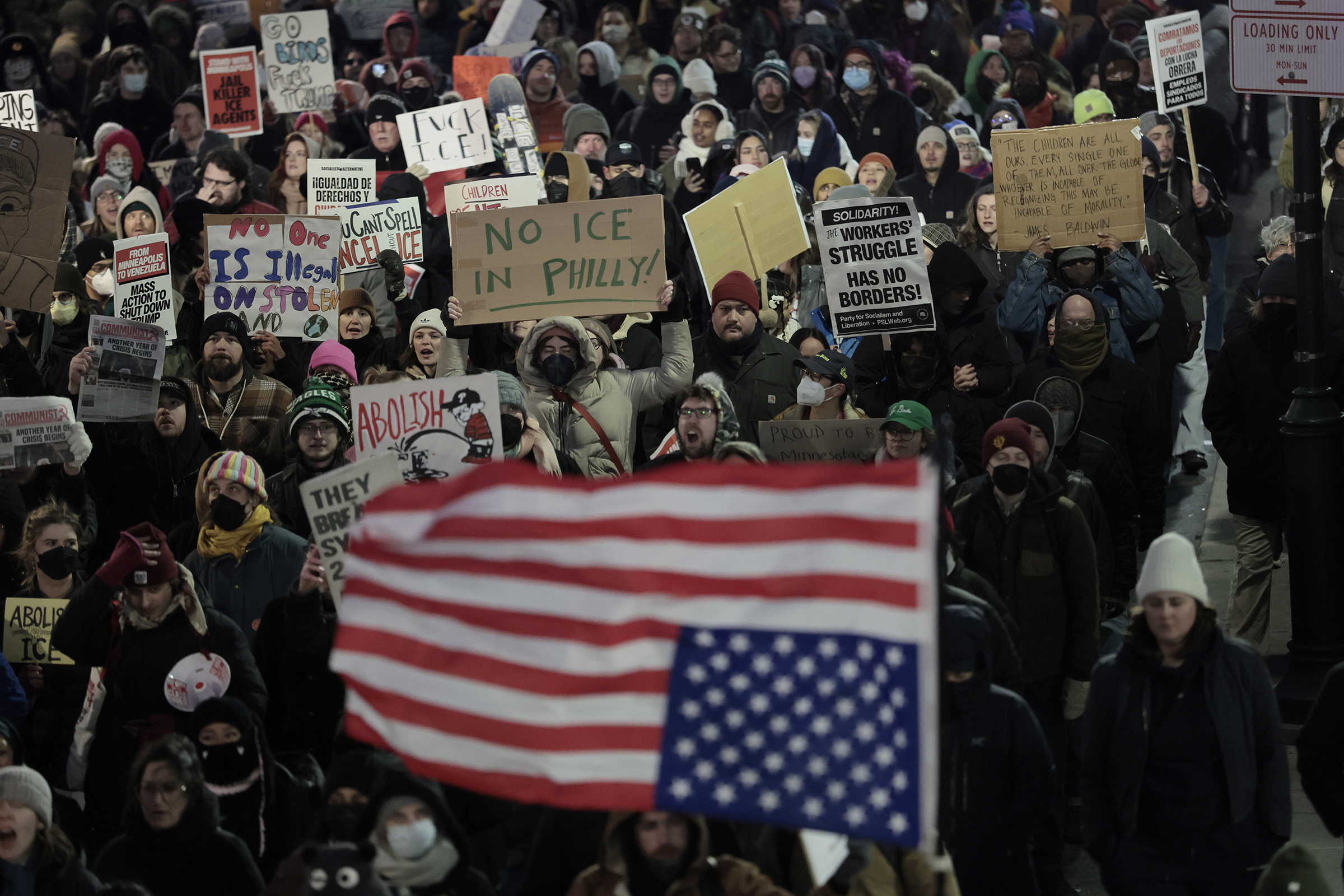
Anti-ICE activists demonstrate outside U.S. Sen. John Fetterman’s Philadelphia office, Jan. 27, calling for an end to federal immigration enforcement policies.
One of the two members who did not cosponsor the package was Councilmember Mike Driscoll, a Democrat who represents parts of Lower Northeast Philadelphia. He indicated that he had concerns about whether the “ICE Out” legislation would hold up in court.
Brooks said Council members worked with attorneys to ensure the legislation is “within our scope as legislators for this city to make sure that we protect our folks against these federal attacks.”
Brand, of Dickinson Law, said the legislation is a classic example of a conflict between two constitutional pillars: the clause that says federal law is supreme, and the 10th Amendment, which gives states powers that are not delegated to the federal government.
He said there is precedent that the states — or, in this case, cities — cannot interfere with laws enacted by Congress, such as immigration matters.
“If I were betting, I would bet on the federal government,” Brand said.
But there is a gray area, he said, and that includes the fact that no law — or even regulation — says federal law enforcement agents must wear masks.
Kermit Roosevelt, a law professor at the University of Pennsylvania who is an expert on the Constitution and conflict of laws, said if there is no agency policy, that is “free space” for states and cities to regulate.
Roosevelt said Brooks’ legislation steers clear of other constitutional concerns because it applies to all police officers, not just federal agents.
“If they were trying to regulate only federal agents, the question would be, ‘Why aren’t you doing that to your own police officers?’” he said. “If you single out the federal government, it looks more like you’re trying to interfere with what the federal government is doing.”
Applying the law to local police
Experts say part of the backlash to ICE agents covering their faces is because Americans are not used to it. Local police, sheriff’s deputies, and state troopers all work largely without hiding their faces.
“Seeing law enforcement actions happening with federal agents in masks, that’s extremely jarring,” said Cris Ramon, an immigration consultant based in Washington. “Why are you operating outside of the boundaries of what every other law enforcement agency is doing?”
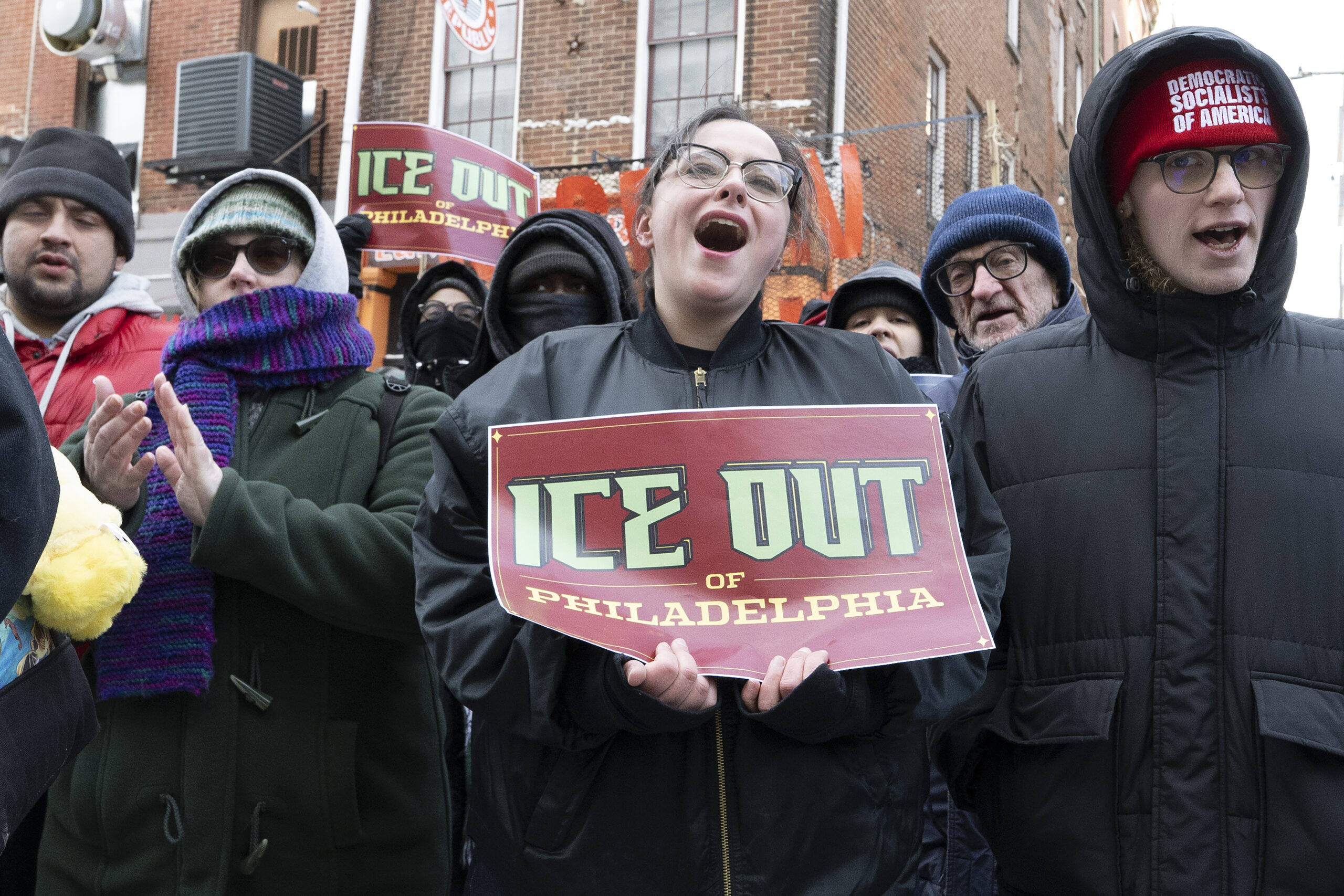
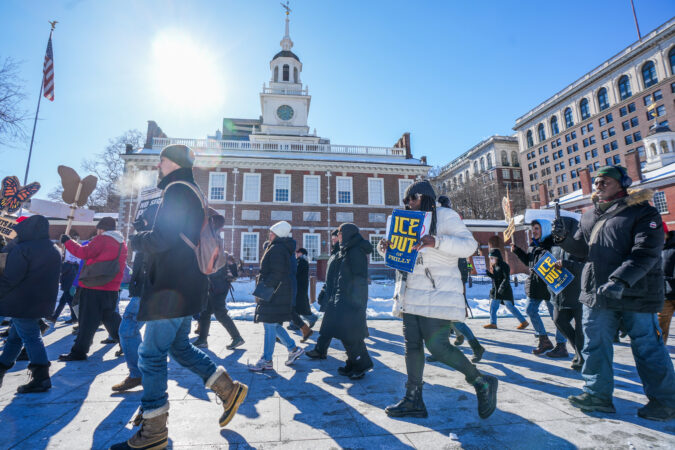
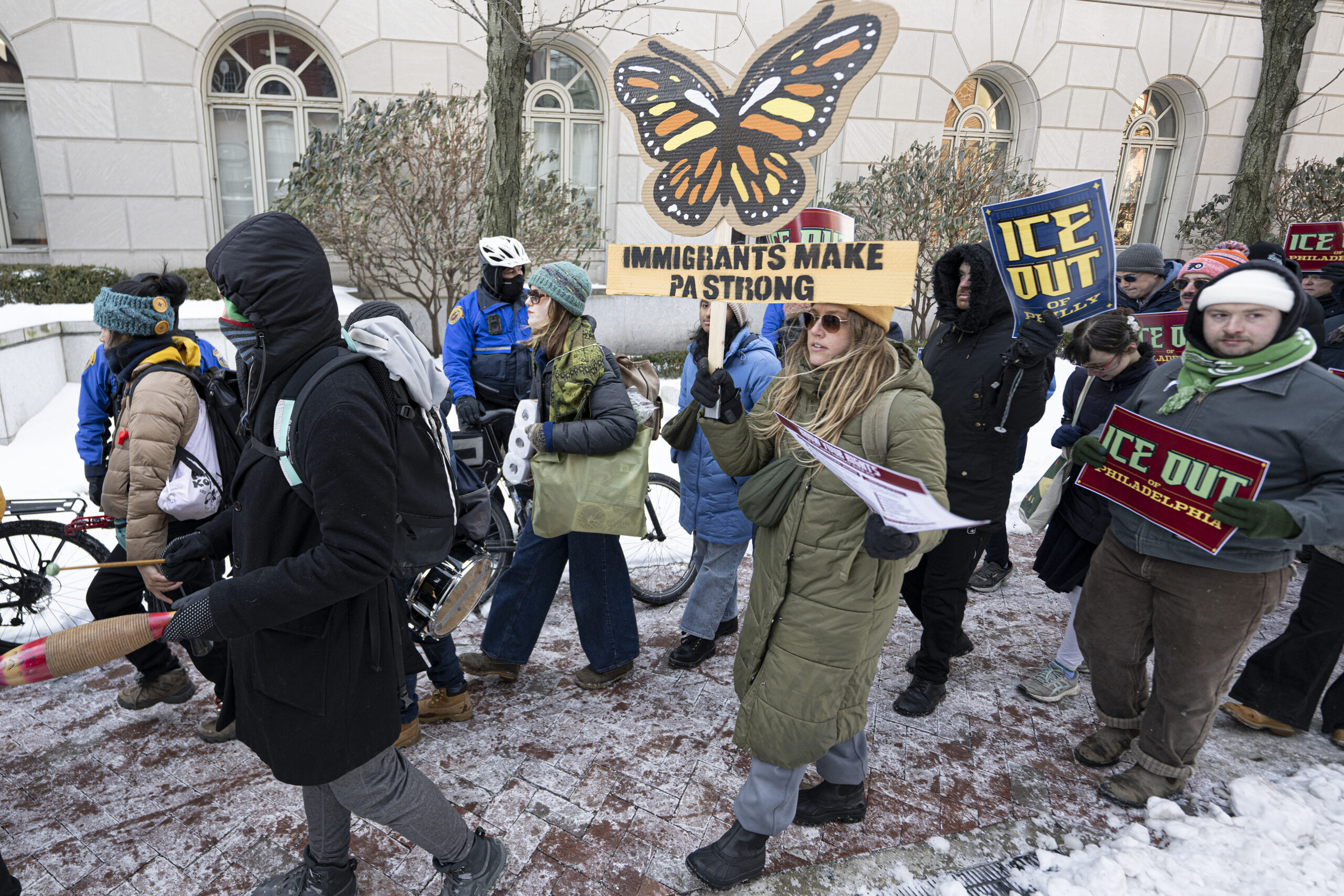
Protesters march up Eighth Street, toward the immigration offices, during the Philly stands with Minneapolis Ice Out For Good protest at Philadelphia City Hall on Jan. 23.
The Council legislation includes exceptions for officers wearing medical-grade masks, using protective equipment, or working undercover. It also allows facial coverings for religious purposes.
However, the federal government could still raise First Amendment concerns, said Shaakirrah R. Sanders, an associate dean at Penn State Dickinson Law.
The administration, she said, could argue that the city is only trying to regulate law enforcement officers and claim that would be discriminatory.
Sanders said defending the legislation could be “very costly” and the city should consider alternatives that fall more squarely within its authority. She pointed to efforts like New Jersey Gov. Mikie Sherrill’s announcement that the state would create a database for residents to upload videos of ICE interacting with the public.
“It looks like the city wants to wield big legislative power,” Sanders said. “My alternative is more in the grassroots work, where you are the first ear for your citizens, not the regulator of the federal government.”
Philadelphia’s bombastic district attorney, Larry Krasner, is no stranger to opposition from within his own party, but the anger directed at him last week after he said ICE agents are “wannabe Nazis” was more pronounced than usual.
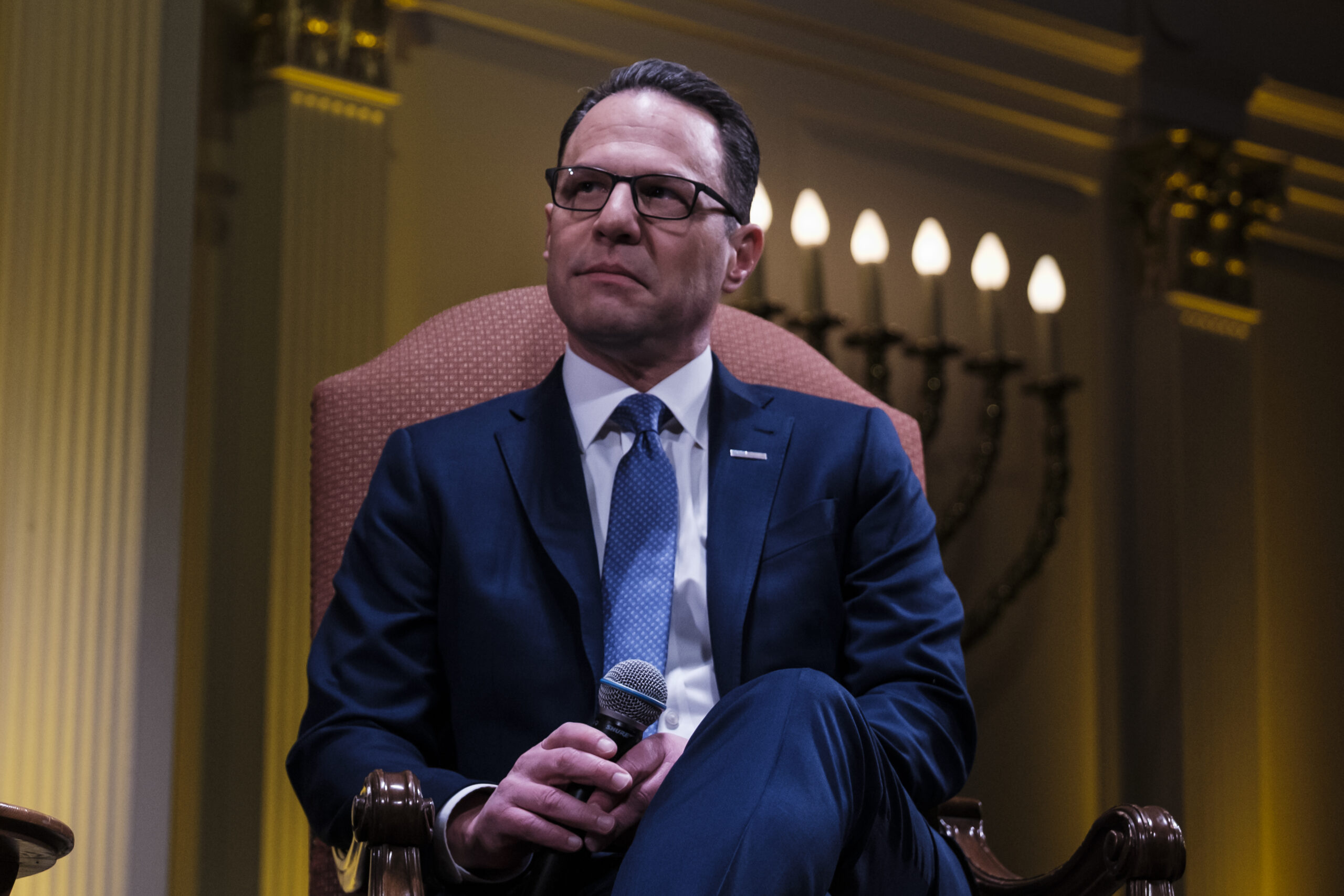
After making the comparison, Krasner faced a wave of criticism, including from Pennsylvania Gov. Josh Shapiro, a Democrat, who called the comments “abhorrent” and said the rhetoric doesn’t help “bring down the temperature.”
But the progressive district attorney said Monday that he would not back down, saying “these are people who have taken their moves from a Nazi playbook and a fascist playbook.”
“Governor Shapiro is not meeting the moment,” Krasner said in an interview. “The moment requires that we call a subgroup of people within federal law enforcement — who are killing innocent people, physically assaulting innocent people, threatening and punishing the use of video — what they are. … Just say it. Don’t be a wimp.”
Krasner pointed to a speech by Rabbi Joachim Prinz at the March on Washington in 1963: “Bigotry and hatred are not the most urgent problem. The most urgent, the most disgraceful, the most shameful, and the most tragic problem is silence.”
In invoking that speech, Krasner said: “A reminder, Mr. Governor: Silence equals death.”
Krasner’s defense came after days of criticism from across the political spectrum, ranging from the White House press secretary to Democratic members of Congress. And it punctuated a yearslong history of conflict with Shapiro.
The governor and Philadelphia’s top law enforcement official have feuded politically,sparred in court, and disagreed on policy. In 2019 — when lawyers from Krasner’s office decamped to work for then-Attorney General Shapiro — DA’s office staffers referred to Shapiro’s office as “Paraguay,” a reference to the country where Nazis took refuge after the war.
Last week, during a news conference about proposed restrictions on immigration enforcement in Philadelphia, the district attorney said he would “hunt down” and prosecute U.S. Immigration and Customs Enforcement agents who commit crimes in the city.
“There will be accountability now. There will be accountability in the future. There will be accountability after [Trump] is out of office,” Krasner said. “If we have to hunt you down the way they hunted down Nazis for decades, we will find your identities.”
During an interview Thursday on Fox News’ Special Report with Bret Baier, Shapiro was asked about Krasner’s comparison of ICE agents to Nazis and called the comments “unacceptable.”
“It is abhorrent and it is wrong, period, hard stop, end of sentence,” Shapiro said.
Several other Democrats in political and media circles weighed in. U.S. Sen. John Fetterman, a Pennsylvania Democrat who has at times sided with Trump on immigration matters, appeared on Fox News and said he “strongly” condemned Krasner’s language.
He said that “members of ICE are not Nazis.”
“That’s gross,” Fetterman said. “Do not compare anyone to Nazis. Don’t use that kind of rhetoric. That can incite violence.”
U.S. Rep. Chris Deluzio, a Democrat who represents parts of Western Pennsylvania, in an interview with the Washington Examiner contrasted his own approach with Krasner’s, saying: “I reserve throwing the phrase Nazis at actual Nazis. I don’t just throw that around.”
And State Rep. Manuel Guzman Jr., a Democrat who represents a significant Latino population in Berks County, wrote on social media Friday: “I really, really want Krasner to chill tf out.”
“I get it. We want to protect our immigrant community,” Guzman wrote, “but I question if constantly poking the bear is the right strategy. At the end of the day it’s my community that is under siege.”
And U.S. Rep. Dan Meuser, a Republican who represents parts of Northeast Pennsylvania, appeared on Newsmax and called Krasner a “psychopath with a badge.”
Meuser — who considered challenging Shapiro for governor with Trump’s backing but ultimately decided not to run — also on social media decried “the Left’s silence and, in many cases, encouragement of this rhetoric.”
Krasner doubled down. In an interview on CNN on Thursday, he criticized Fetterman as “not a real Democrat” and also said, “There are some people who are all in on the fascist takeover of this country who do not like the comparison to Nazi Germany.”
He said that when he promised to “hunt down” federal agents who kill someone in his jurisdiction, he was attempting to make a point that there is no statute of limitations on homicide.
The interviewer, Kaitlan Collins, asked Krasner whether he could have made that point without comparing agents to Nazis.
“Why would I do that?” Krasner responded. “They’re taking almost everything they do out of the Nazi playbook.”
WASHINGTON, D.C. – Gov. Josh Shapiro told national reportersThursdaythat he likes U.S. Sen. John Fetterman (D., Pa.), and still talks to him — citing a meeting several months ago.
It’s long been clear that Pennsylvania’s two top Democrats have a tense relationship, a dynamic Fetterman explained in detail in his memoir, Unfettered, released in November, writing that the two men no longer speak after they butted heads as members of the Pennsylvania Board of Pardons.
Speaking to a roundtable of Washington journalists hosted by the Christian Science Monitor on Thursday, Shapiro said he “of course” likes the commonwealth’s senior senator and still speaks to him.
“We were in a meeting together a few weeks ago with (U.S. Transportation) Secretary (Sean) Duffy, working on an important issue in Pennsylvania. So we all work together, Senator McCormick as well,” Shapiro said. “We’ve got to work together for the people of Pennsylvania.”
That meeting, however, was in November when Shapiro and Fetterman met with Duffy to discuss SEPTA — roughly a week before the release of Fetterman’s book. Mayor Cherelle L. Parker and Sen. Dave McCormick (R., Pa.) also participated in that meeting.
A spokesman for Shapiro did not immediately respond to questions about whether they’ve spoken since.
Though Shapiro and Fetterman’s disagreements date back to the pair’s days on the state pardons board, the senator has increasingly drawn ire from his fellow Democrats in recent months for voting with Republicans and has faced calls for a primary challenge.
Shapiro was mum when asked whether he’d support Fetterman if he sought reelection.
“John will decide if he wants to run for reelection. I appreciate the service,” he said.
Fetterman claims in a chapter of his book titled “The Shapiro Affair” that Shapiro, as attorney general, had been unwilling as a member of the pardons board to recommend the commutation of two men that Fetterman strongly believed should be released.
Fetterman, who was lieutenant governor at the time, even threatened in a private meeting to run against Shapiro for governor if he didn’t support the commutations.
“I told him there were two tracks — that one and the one in which he ran for governor and I ran for the Senate (which was the one I preferred),“ Fetterman wrote in the memoir. ”I had no interest in friction, only in what I felt was justice.”
Fetterman also claimed that Shapiro’s cautionin these cases was about protecting his future political ambitions.
“I believe what drove him to delay and deny applications was not the facts of a given case as much as a fear that someone whose sentence he’d commuted would go on to commit terrible violence on the outside,” Fetterman wrote.
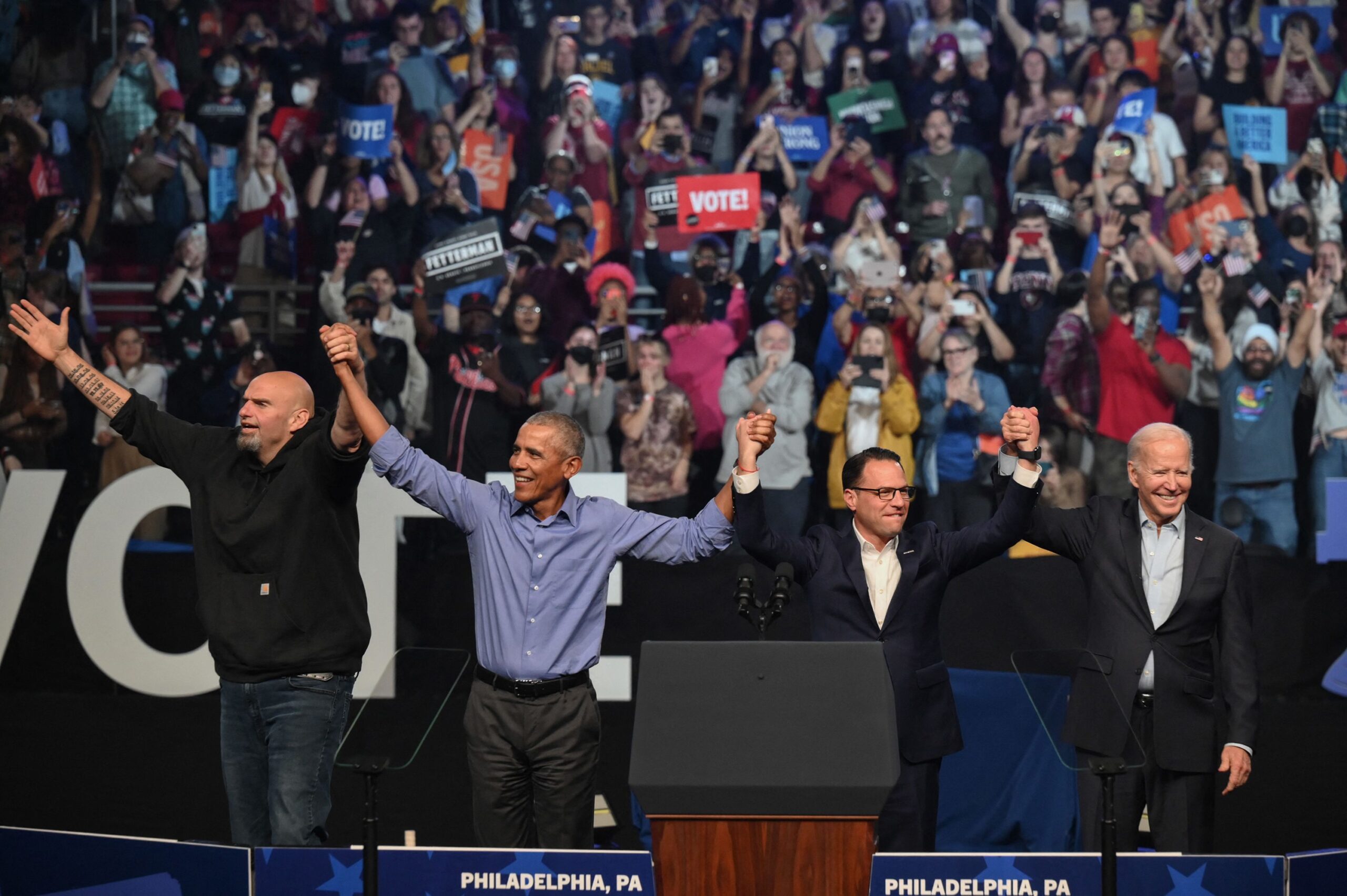
Then-Senate candidate John Fetterman, former President Barack Obama, then-candidate for governor for Pennsylvania Josh Shapiro, and then-President Joe Biden ahead of the 2022 election.
In his own book, Shapiro reflects on agonizing over those decisions including the concern that a commuted individual would go on to harm others. Throughout his book tour he has dodged questions about potential presidential aspirations.
Things got so bad that then-Gov. Tom Wolf had to get involved by meeting with them privately, and Fetterman later got caught on a 2020 Zoom meeting calling Shapiro a “f— asshole,” not realizing that his microphone was still live.
While Fetterman devoted an entire chapter of his 240-page book to Shapiro, the state’s senior U.S. senator only gets two passing mentions in Shapiro’s book.
In one mention, Shapiro notes that he spoke with Fetterman backstage at a 2022 Erie County Democratic Committee dinner when Shapiro debuted a new speech about what “real freedom” means, just days before Fetterman had a stroke in lead up to that year’s primary election.
Shapiro also mentions Fetterman in a chapter about the governor’s history with former President Barack Obama. Shapiro and Fetterman were both on the ballot in 2022 and cohosting a campaign rally, where Obama and former President Joe Biden came to stump for them.
Fetterman is not mentioned in the rest of the book. Shapiro does not delve into the fellow Democrat’s threat to run against him.
U.S. Sen. John Fetterman (D., Pa.) on Thursday voted against advancing a highly contested government funding package that includes allocations for the Department of Homeland Security, despite noting his objections to shutting down the government.
The Senate voted 45-55 on the key procedural vote, failing to advance a budget package as the country moves closer to a partial government shutdown this weekend.
With Fetterman aboard, every Democrat voted against the appropriations package because of the inclusion of funding for DHS. The party previously vowed to block DHS funding in the aftermath of federal immigration agents’ fatal shooting of two Americans in Minneapolis this month.
Sen. Dave McCormick (R., Pa.) voted to advance the bill.
Fetterman’s vote came as a surprise given the senator’s comments earlier in the week, when he said he would “never vote to shut our government down, especially our Defense Department,” one of the agencies that would have received funding from the appropriations package.
It was unclear Thursday why Fetterman voted against the package, but it is unlikely to be the final version considered by the Senate, as eight Republicans also voted no. A shutdown is slated to begin Saturday if Congress does not pass a package this week.
A spokesperson for Fetterman did not immediately return a request for comment on the senator’s vote.
Senate Majority Leader John Thune (R., S.D.) was among the Republicans who voted no so that he could make a motion to reconsider the legislation.
DHS oversees Immigration and Customs Enforcement and Border Patrol, the agencies involved in the fatal Minnesota shootings. Democrats have been calling for a halt to additional funding in the wake of the deaths of Renee Good and Alex Pretti.
But Fetterman noted Monday that the department received $178 billion from last year’s One Big Beautiful Bill Act, which he opposed, and that ICE would continue to operate during a shutdown.
“A vote to shut our government down will not defund ICE,” Fetterman said.
Fetterman has previously suggested removing DHS funding from the package under consideration as a compromise. He has also urged President Donald Trump to fire DHS Secretary Kristi Noem.
A reporter from the Hill posted on X minutes after the vote that Fetterman saw his no vote as setting the stage to decouple DHS funding from the other five bills under consideration, rather than triggering a shutdown.
Senate Minority Leader Chuck Schumer (D., N.Y.) has pushed Republicans and the White House to strip the Department of Homeland Security funding from the rest of the bill. In a deal reached with the White House, DHS would still be funded, but for a short time to allow for negotiations on the Democrats’ demands. Other agencies included in the bill would be funded through the end of September.
Negotiations remained ongoing Thursday.
Within the last week, Fetterman faced mounting pressure from fellow Pennsylvania Democrats and constituents to vote against the package as tensions in Minneapolis continued to escalate.
On Tuesday, every Democratic member of Pennsylvania’s U.S. House delegation cosigned a letter urging Fetterman and McCormick to vote against the funding. Constituents also gathered outside Fetterman’s office in Philadelphia on Tuesday to protest his stance.
“We can no longer continue to give Homeland Security a blank check,” U.S. Rep. Brendan Boyle (D., Pa.) said Thursday morning in a virtual news conference with U.S. Rep. Dwight Evans (D., Pa.).
McCormick voted as expected to advance the GOP-led legislation.
“I’m just not in favor of shutting down the government or stopping funding the government, and that’s the position that I’ve had through the last shutdown,” McCormick said about his support for the funding on a tele-town hall Tuesday night. “I’m not in favor of ever shutting down the government. It doesn’t matter what party is in power, but some people see that differently.”
If lawmakers fail to pass a package by Friday, the federal government will undergo its second shutdown in four months, starting Saturday, potentially demoralizing federal workers and inconveniencing members of the public who rely on affected services.
This shutdown would be a partial one, affecting the Departments of Defense, State, Transportation, Education, Labor, Treasury, Health and Human Services, and Housing and Urban Development in addition to DHS.
The U.S. Department of Agriculture, which provides nutrition assistance to needy families, would not be affected.
The other four Democratic senators from the Philadelphia region — Sens. Andy Kim and Cory Booker of New Jersey and Sens. Chris Coons and Lisa Blunt Rochester of Delaware — all joined Fetterman in voting no Thursday.
Kim argued the vote was a bipartisan rebuke of the Trump administration’s immigration strategy and said he would be working with colleagues to deliver “real security” to the American public.
“Their lawlessness has taken lives on the streets of our neighborhoods, and I’ve heard from so many about an overwhelming fear that they can be targeted next,” Kim said in a statement. “We need real changes to fix a broken and lawless system that has led to so many Americans losing trust in their government to keep them safe.”
This story is developing and will be updated.
Staff writer Aliya Schneider contributed to this article, which contains information from the Associated Press.
Blocking the package would set off a partial government shutdown.
“I will never vote to shut our government down, especially our Defense Department,” Fetterman said in a statement on Monday, which is one of the agencies that is relying on the pending appropriations package.
Even so, Fetterman thinks that changes are needed to President Donald Trump’s immigration strategy. He urged Trump to fire Homeland Security Secretary Kristi Noem, and he said immigration agents’ presence in Minneapolis needs to “immediately end,” after federal agents shot and killed two Americans this month.
Fetterman has suggested removing DHS funding from the package under consideration as a compromise, but Senate Republican leaders are unlikely to do that.
If a partial government shutdown kicks off Friday,impacted agencies include the Departments of State, Treasury, Health and Human Services, Transportation, and Housing and Urban Development.
With a partial government shutdown potentially just days away, here’s what to know about Fetterman’s stance.
Why won’t Fetterman join Democrats in blocking funding for DHS?
Senate Democrats have said they won’t support funding for DHS in the wake of the killings of Renee Nicole Good and Alex Pretti this month by federal immigration agents in Minneapolis. DHS oversees U.S. Immigration and Customs Enforcement and the Border Patrol, the two agencies involved in the fatal shootings.
Democrats have also signaled that they want major reforms to federal agents’ conduct as they carry out Trump’s immigration enforcement agenda.
Fetterman said this week that he spent “significant time hearing many different positions on the funding bills,” but will still never vote to shut the government down.
Further, he thinks shutting down the government over U.S. Immigration and Customs Enforcement won’t have much of an impact at all.
U.S. Immigration and Customs Enforcement and border enforcement operations are still likely to be operational even during a shutdown, CBS News reported. Agents have typically been considered essential employees.
“A vote to shut our government down will not defund U.S. Immigration and Customs Enforcement,” Fetterman wrote in a statement this week, noting that DHS received $178 billion in funding from the One Big Beautiful Bill Act, which Fetterman opposed.
Homeland Security Secretary Kristi Noem speaks during a news conference at Federal Emergency Management Agency headquarters, Saturday, Jan. 24, 2026, in Washington.
Why did Fetterman call for Kristi Noem to be fired?
On Tuesday, Fetterman made a direct plea to Trump: Fire Noem.
“Americans have died,“ Fetterman wrote in a post on X. ”She is betraying DHS’s core mission and trashing your border security legacy.”
The Pennsylvania Democrat also tried to appeal to Trump by criticizing former President Joe Biden’s DHS secretary, Alejandro Mayorkas, saying: “DO NOT make the mistake President Biden made for not firing a grossly incompetent DHS Secretary.”
An increasing number of lawmakers and advocacy groups have called for Noem’s ouster, including Republican U.S. Sens. Thom Tillis, of North Carolina, and Lisa Murkowski, of Alaska.
Fetterman had previously joined six other Democrats in voting to confirm Noem’s nomination for DHS secretary last year, including Sen. Andy Kim of New Jersey. (Kim has also called for Noem to be fired).
What constituents and elected officials are saying
The pressure on Fetterman from colleagues and constituents appears to be growing.
Every Democratic member of Pennsylvania’s U.S. House delegation cosigned a letter on Tuesday calling for Fetterman and Sen. Dave McCormick (R, Pa.) to vote against DHS funding, The Inquirer reported.
Anti-ICE activists demonstrate outside U.S. Sen. John Fetterman’s Philadelphia office, Jan. 27, 2026, calling for the Pennsylvania Democrat to vote against DHS funding.
“We urge you to stand with us in opposing any DHS funding bill that does not include critical reforms,” the lawmakers said in the letter, delivered Tuesday. “We look forward to working together to advance legislation that both keeps our nation secure and upholds our fundamental values.”
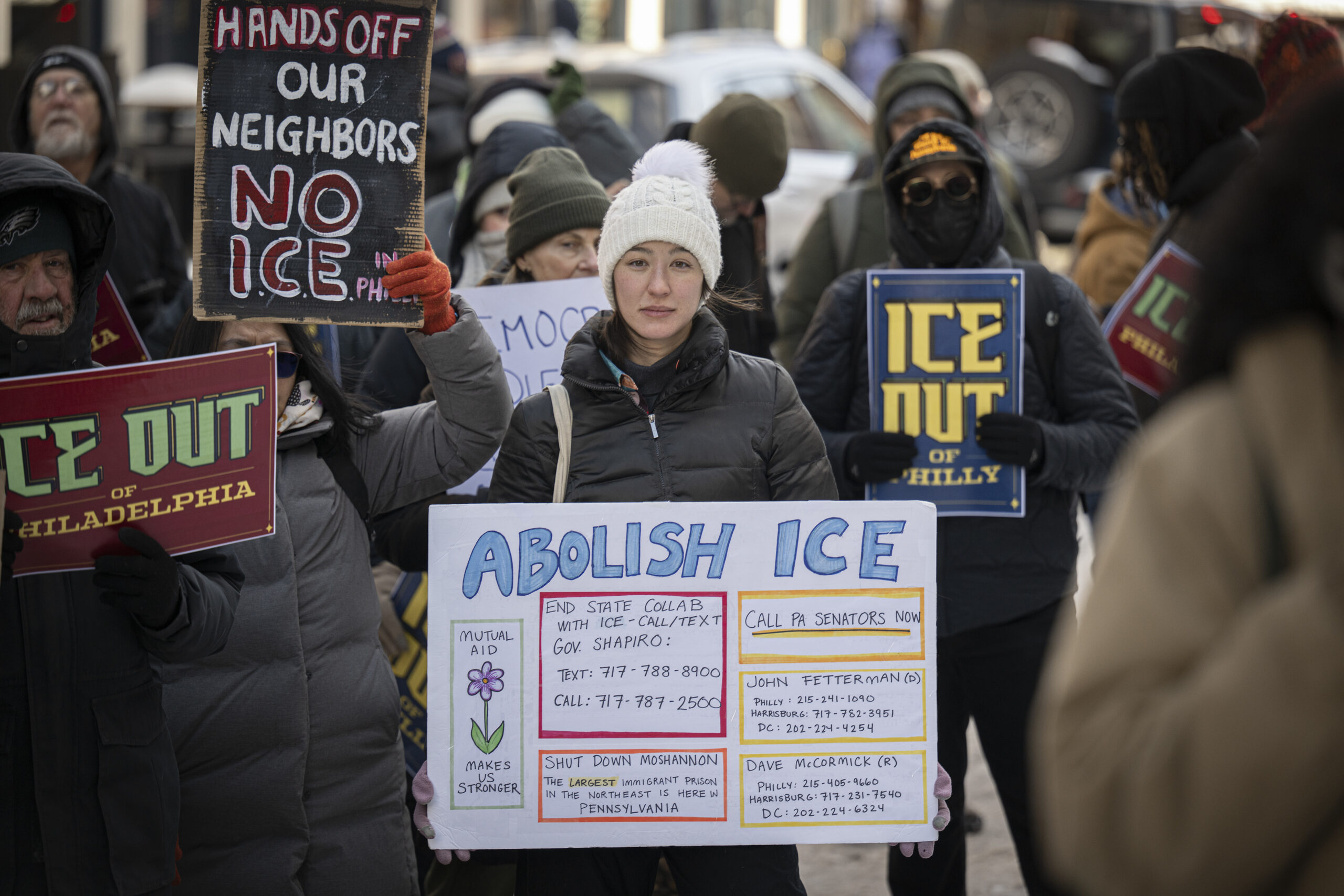
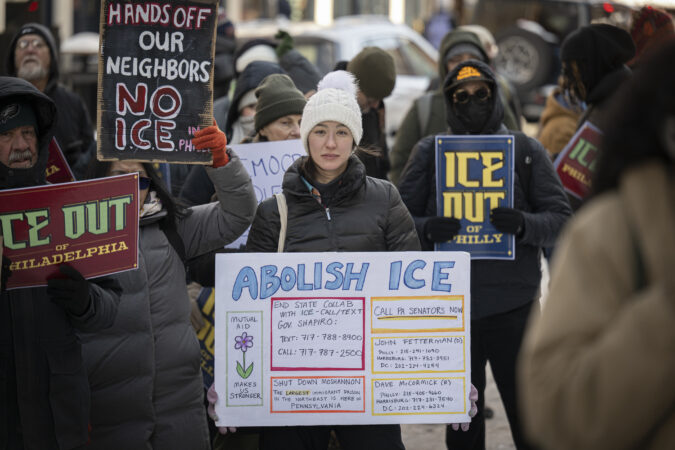
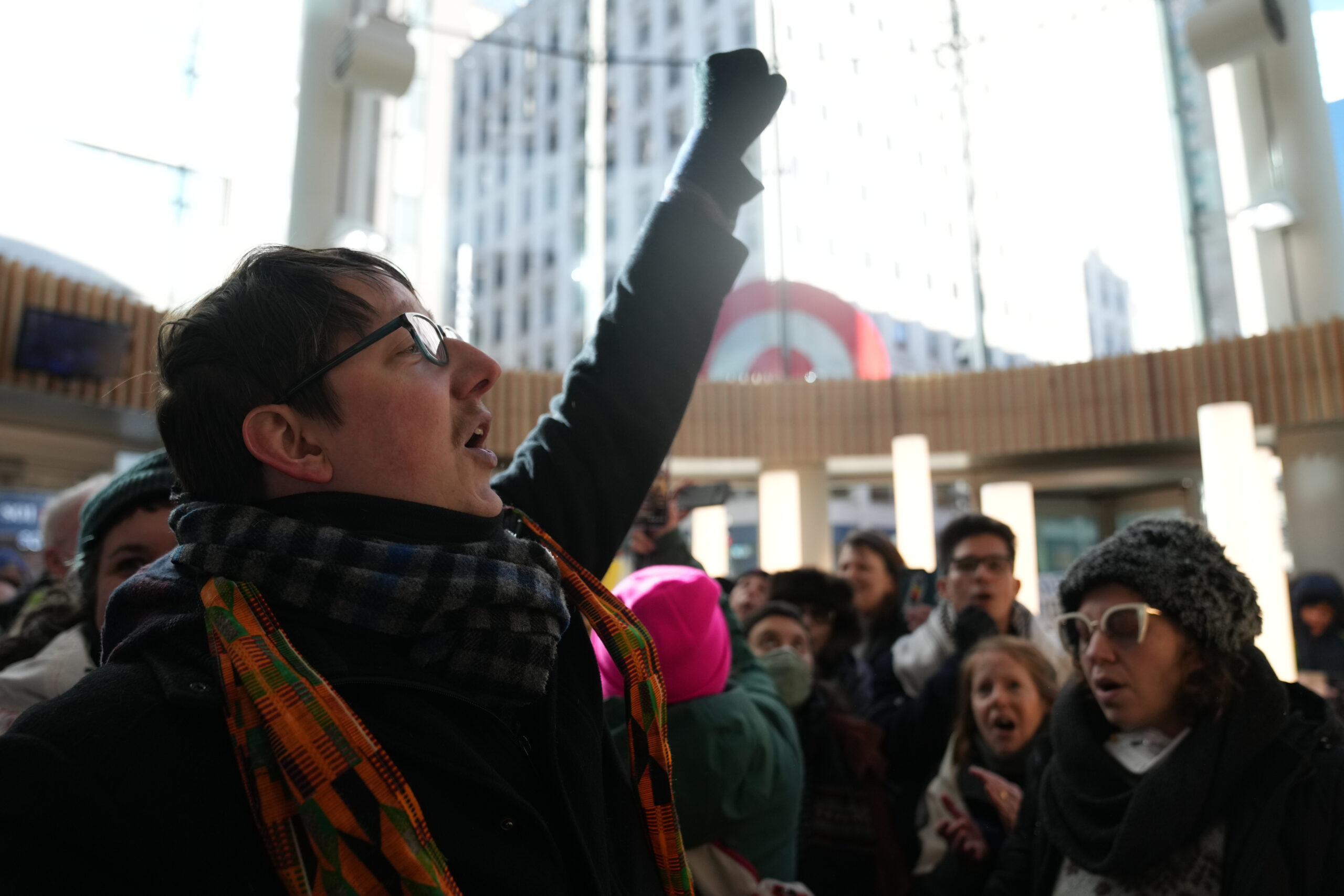
Meanwhile, around 150 protesters gathered in front of Fetterman’s Philadelphia office in freezing temperatures on Tuesday to urge him to vote against the funding.
“What do we want? U.S. Immigration and Customs Enforcement out,” the crowd chanted.
In Harrisburg, a top Democrat floated making Pennsylvania a so-called sanctuary state to protect undocumented immigrants.
And in Washington, senators faced mounting pressure to hold up funding for the Department of Homeland Security, an effort that could result in a government shutdown by the end of the week.
Across the nation, lawmakers are fielding calls to rein in U.S. Immigration and Customs Enforcement after President Donald Trump’s administration surged forces into Minneapolis as part of his aggressive nationwide deportation campaign. Frustration with the agency reached new heights Saturday after agents fatally shot protester Alex Pretti, the second killing of a U.S. citizen there this month.
Democrats nationwide slammed ICE and called on Trump to pull the forces out of Minnesota. Sen. John Fetterman, the Pennsylvania Democrat who has at times sided with Trump on immigration matters, said DHS Secretary Kristi Noem should be fired.
Anti-ICE activists demonstrate outside U.S. Sen. John Fetterman’s Philadelphia office on Monday, calling for an end to federal immigration enforcement policies.
A growing number of Republicans have also signaled their discomfort with the Minneapolis operation, including Trump allies who called on members of the administration to testify before Congress. Sen. Dave McCormick, a Pennsylvania Republican, has called for an independent investigation into Pretti’s killing.
Trump, for his part, showed some willingness to change course, sending border czar Tom Homan to Minneapolis to meet with Democratic leaders there. The president on Tuesday called Pretti’s death a “very sad situation.”
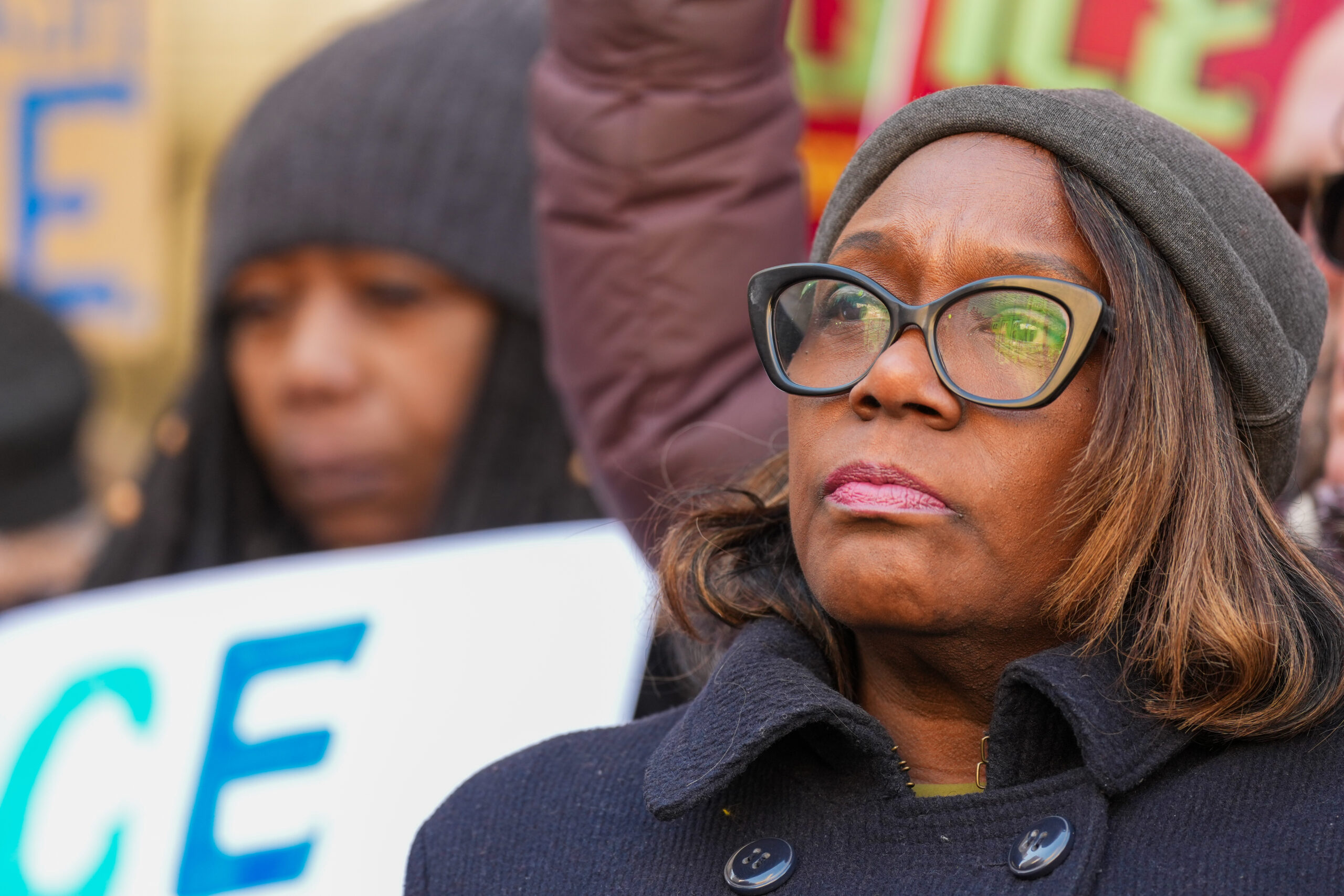
Rue Landau shown here during a press conference at City Hall to announce a package of bills aimed at pushing back against ICE enforcement in Philadelphia on Tuesday.
However, a chorus of Democrats and activists said Tuesday that the agency needs to change its tactics and be held accountable for missteps. And local leaders said they are laying out plans in case a surge of immigration enforcement comes to Philadelphia, home to an estimated 76,000 undocumented immigrants.
“We have spent hours and hours and hours doing tabletop exercises to prepare for it,” Gov. Josh Shapiro, a Democrat, said during a Monday night interview on The Late Show with Stephen Colbert.
Philadelphia officials said the best way they can prepare is by limiting the city’s cooperation with federal immigration enforcement.
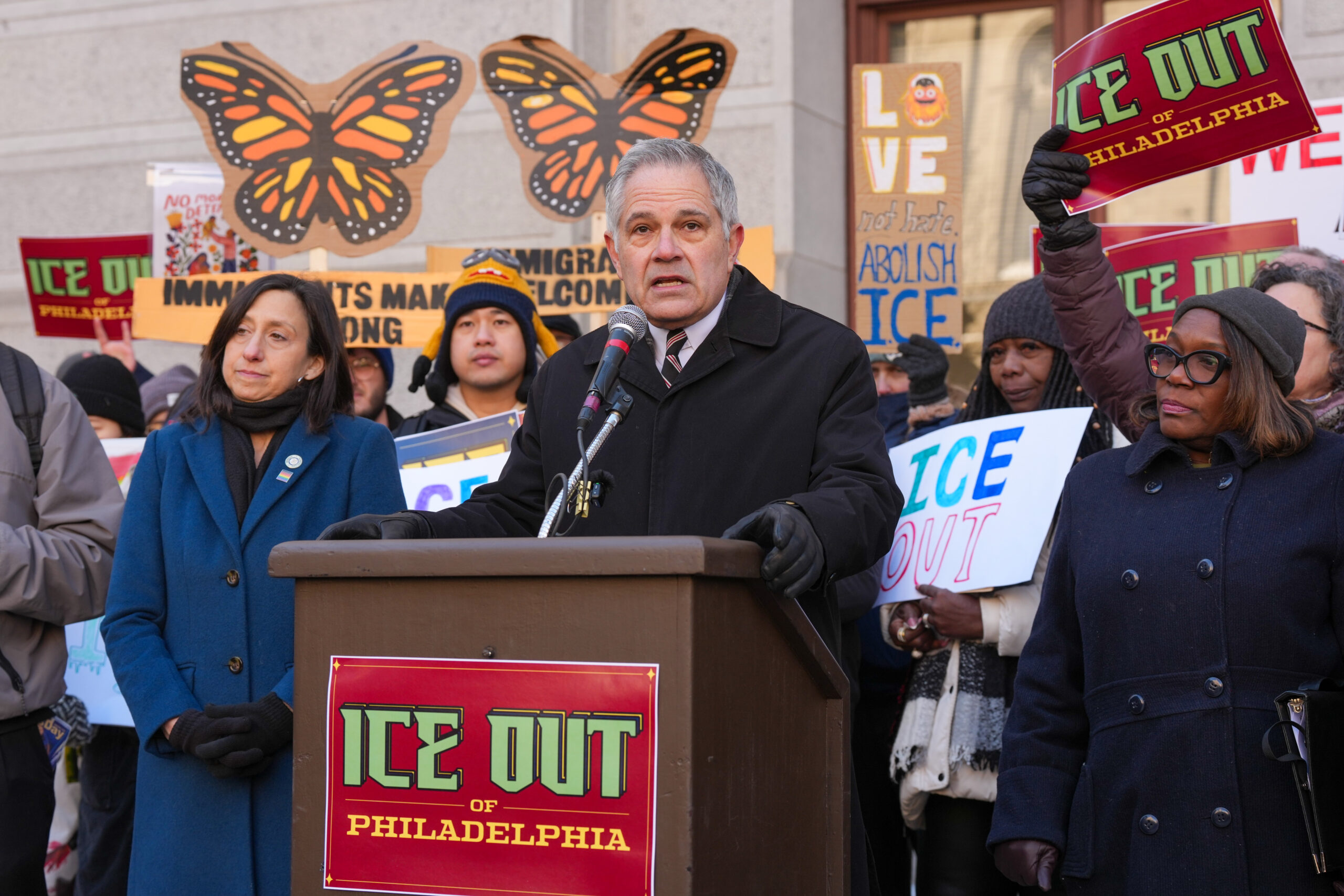
City Councilmember Kendra Brooks, of the progressive Working Families Party, and Councilmember Rue Landau, a Democrat, were joined by dozens of activists and other elected officials during a news conference Tuesday to unveil a package of legislation aimed at codifying into law the city’s existing “sanctuary city” practices.
Those policies, which are currently executive orders, bar city officials from holding undocumented immigrants in custody at ICE’s request without a judicial warrant.
Landau and Brooks’ legislative package, expected to be introduced in Council on Thursday, goes further, preventing ICE agents from wearing masks, using city-owned property for staging raids, or accessing city databases.
Erika Guadalupe Núñez, executive director of immigrant advocacy organization Juntos, said the legislation “goes beyond just ‘We don’t collaborate.’”
Juntos gets regular calls about ICE staging operations at public locations in and around Philadelphia, and people have been worried, despite official assurances, whether personal information held by the city will be secure from government prying.
“We deserve a city that has elected leadership that’s willing to step forward with clear and stronger protections,” Núñez said.
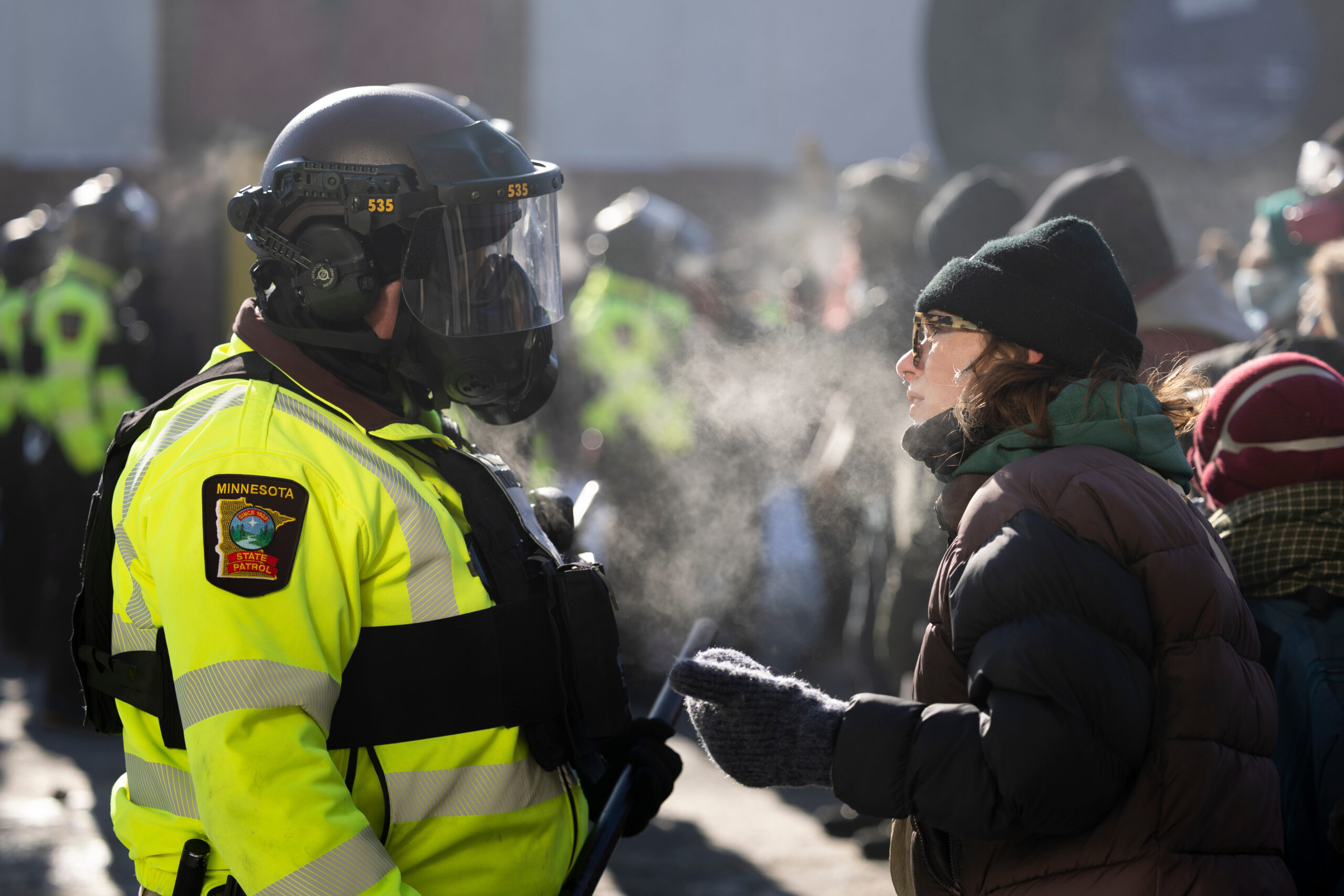
A protester speaks to a Minnesota State Patrol officer near the site of the fatal shooting of 37-year-old Alex Pretti by federal agents in Minneapolis on Saturday.
If the legislation is approved, Philadelphia would have some of the most stringent protections for immigrants in the country.
Oregon has especially strong restrictions against cooperation with federal immigration authorities, including barring local law enforcement from detaining people or collecting information on a person’s immigration status without a judicial warrant.
In Illinois, local officers “may not participate, support, or assist in any capacity with an immigration agent’s enforcement operations.” They are also barred from granting immigration agents access to electronic databases or to anyone in custody.
California, New York, Colorado, Vermont — and individual jurisdictions in those states — also provide strong protections for immigrants.
In New Jersey, Gov. Mikie Sherrill, a Democrat who was sworn in last week, has kept the state’s sanctuary directive in place as lawmakers seek to expand and codify the policy into law. Legislators came close in the final days of former Gov. Phil Murphy’s administration, but he killed a related bill that had won approval in Trenton, saying he worried that enacting a law that included changes to the state’s current policy would invite new lawsuits.
Meanwhile, some conservatives say bolstering sanctuary policies risks community safety.
“If an illegal immigrant breaks the law, they should be dealt with and handed over to federal law enforcement, not be released back into our neighborhoods to terrorize more victims and commit more crime,” said James Markley, a spokesperson for the Pennsylvania Republican Party.
He added: “Sanctuary policies don’t protect communities, they endanger all of us by shielding criminals from accountability for their crimes.”
Democrats are taking varying approaches
The widespread outrage over ICE’s tactics in Minneapolis has exposed sharp divisions in elected Democrats’ responses.
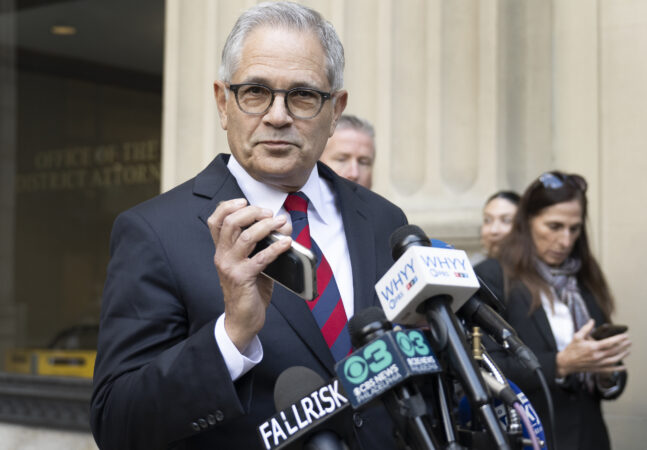
“There will be accountability now. There will be accountability in the future. There will be accountability after [Trump] is out of office,” Krasner said Tuesday. “If we have to hunt you down the way they hunted down Nazis for decades, we will find your identities.”
District Attorney Larry Krasner speaks during a news conference at City Hall on Tuesday to announce a package of bills aimed at pushing back against ICE enforcement in Philadelphia.
Somewhere in the middle is State Sen. Sharif Street, a Philadelphia Democrat and former head of the state party who is running for Congress.
Street does not have Krasner’s bombast, but this week he announced plans to introduce legislation to prevent state dollars from funding federal immigration enforcement. The bill has less of a chance of becoming law in Pennsylvania’s divided state legislature than similar measures would in Philadelphia, where City Council is controlled by a supermajority of Democrats.
“Who knows the amount of money that the state could incur because of Trump’s reckless immigration policies?” Street said in an interview Tuesday. “I don’t think state taxpayers should be paying for Donald Trump’s racist, reckless policies.”
The mayor’s critics have said her approach is not responsive to the city’s overwhelmingly Democratic residents.
“To the people of Philadelphia, I want to say: I hear you. You want ICE out of our city, and you want your local government to take action,” Brooks, the Council member, said Tuesday. “Some people believe that silence is the best policy when dealing with a bully, but that’s never been an option for me.”
Kendra Brooks shown here during a news conference at City Hall on Tuesday to announce a package of bills aimed at pushing back against ICE enforcement in Philadelphia.
Others say Parker’s conflict-averse strategy is appropriate.
“All of us have different roles to play,” Street said. “The mayor has to manage the city. She’s got to command law enforcement forces. … As a state legislator, we make policy.”
Rafael Mangual, a fellow who studies urban crime and justice at the right-leaning Manhattan Institute in New York City, said legislative efforts to erect barriers between federal and local law enforcement could backfire.
“If you don’t engage at all, and you do something that seems to actively frustrate the federal government,” Mangual said, “that would seem to be an invitation for the federal government to prioritize a city like Philadelphia.”
Staff writers Alfred Lubrano, Aliya Schneider, and Gillian McGoldrick contributed to this article.
All seven Democratic members of the U.S. House representing Pennsylvania cosigned a letter to Sens. John Fetterman and Dave McCormick on Tuesday calling on them to vote against funding for the Department of Homeland Security, which oversees both ICE and the Border Patrol.
The letter, which was first obtained by The Inquirer, comes a day after Fetterman, their Democratic colleague, said he would not vote against funding the agency, which could trigger a partial government shutdown.
“We urge you to stand with us in opposing any DHS funding bill that does not include critical reforms,” the lawmakers said in the letter, delivered Tuesday. “We look forward to working together to advance legislation that both keeps our nation secure and upholds our fundamental values.”
The effort was led by U.S. Rep. Chris Deluzio, whose Western Pennsylvania district includes parts of Allegheny County. Deluzio has been floated in Democratic circles as a potential primary challenger to Fetterman in 2028.
Deluzio was joined by Democratic U.S. Reps. Brendan Boyle and Dwight Evans, who represent Philadelphia, as well as U.S. Reps. Madeleine Dean, Mary Gay Scanlon, and Chrissy Houlahan, whose districts include the Philadelphia suburbs. U.S. Rep. Summer Lee, a progressive Democrat whose district includes Pittsburgh, also signed the letter.
Boyle, another potential contender for Fetterman’s seat and the dean of the delegation, said in a statement that “ICE is currently operating like a lawless, out-of-control agency.”
“We cannot send it another blank check,” he added.
Anti-ICE activists demonstrate outside U.S. Sen. John Fetterman’s Philadelphia office, Jan. 27, 2026, calling for the senator to vote against DHS funding.
The House Democrats urged the senators to vote against any bill that funds the department “without first securing meaningful, enforceable reforms to U.S. Immigration and Customs Enforcement (ICE) and related DHS agency activity.”
Fetterman spoke out against ICE’s operation in Minneapolis and called for DHS Secretary Kristi Noem’s firing on Tuesday but said he “will never vote to shut our government down, especially our Defense Department.” He said that allowing a partial shutdown would not defund ICE, since the agency was granted $178 billion in funding from the One Big Beautiful Bill Act, which he did not support.
“I reject the calls to defund or abolish ICE,” Fetterman said Monday. “I strongly disagree with many strategies and practices ICE deployed in Minneapolis, and believe that must change.”
He said he wants “a conversation” about the DHS appropriations bill and supports taking it out of the spending package, but said “it is unlikely that will happen.”
McCormick, a Republican, affirmed his support for Border Patrol and ICE on Sunday while also calling for “a full investigation into the tragedy in Minneapolis.”
Only a handful of House Democrats — none of whom represent Pennsylvania — joined Republicans last week in passing a bill to fund DHS. It was sent to the Senate as a package with other appropriations bills.
“We voted against this bill last week and ask that you do the same,” the lawmakers say in the letter. “Funding without adequate reform risks endorsing current approaches that undermine public safety and due process, erode American liberties, and weaken public trust.”
After a second U.S. citizen was fatally shot by ICE in Minneapolis over the weekend, Senate Minority Leader Chuck Schumer (D., N.Y.) said Democrats would not vote for the forthcoming appropriations legislation if funding for DHS is part of it.
Democrats have pushed for provisions in the spending bill to increase training for ICE agents, to require warrants for immigration arrests, to require agents to identify themselves, and for Border Patrol to stay on the border instead of helping ICE elsewhere.
Upward of 150 protesters gathered in front of Fetterman’s Philadelphia office in the cold on Tuesday to urge him to vote against the funding. One protester held a sign saying “listen to your wife,” referencing Gisele Fetterman, who was undocumented as a child before becoming a citizen and posted on X for the first time in nearly a year on Sunday to speak against ICE.
“Sen. Fetterman, we’re here to remind you: You work for us in Philadelphia. We don’t want ICE in Pennsylvania,” Tiffany Chang, an Asian and Pacific Islander Political Alliance activist, said into a microphone.
“We want ICE out of the government spending bill,” Chang added. “So today, we need everyone listening to tell Sen. Fetterman: ‘Vote no on funding an agency that kills with impunity.’”
After the protest, participants said they did not feel that Fetterman was listening to his constituents.
“I thought a show of people in front of his building might actually get some attention,” said Stefanie Nicolosi, 39, a Phoenixville resident and member of Indivisible Chester County.
Sen. John Fetterman on Tuesday urged President Donald Trump “to immediately fire” Homeland Security Secretary Kristi Noem after federal agents killed two citizens in Minneapolis this month during an immigration enforcement operation.
“Americans have died,” Fetterman (D., Pa.) said in a statement. “She is betraying DHS’s core mission and trashing your border security legacy.”
The senator’s call for Noem’s firing comes after federal agents killed two Americans during the Minneapolis operation. On Saturday, a Border Patrol agent shot and killed Alex Pretti, an intensive care nurse at a VA hospital. An ICE agent shot and killed Renee Nicole Good, a 37-year-old poet and mother, on Jan. 7.
Fetterman referenced Noem’s predecessor, Alejandro Mayorkas, who served under former President Joe Biden and faced impeachment by the Republican-led House in 2024 amid a backlash over increased border crossings under Biden.
Sen. Andy Kim (D., N.J.), who also voted for Noem, joined the growing chorus of Democrats calling for Noem to step down on Tuesday. The South Jersey lawmaker has previously called the vote a mistake.
Fetterman’s plea to fire Noem comes a day after he called for the withdrawal of federal agents from Minneapolis. And it comes as the U.S. Senate is poised to vote this week on funding for the Department of Homeland Security, which oversees both ICE and the Border Patrol.
Senate Minority Leader Chuck Schumer said Democrats would vote against it, which could trigger a partial federal government shutdown.
About 150 protesters gathered outside Fetterman’s office in Philadelphia in the snow on Tuesday to urge him to join the effort, but the senator said on Monday that he will never vote to shut down the government. He also argued that doing so would not pull the $178 billion dedicated to DHS through the One Big Beautiful Bill Act, which he did not support.
“I would like him to listen and actually represent us, because that’s his job,” said James Pierson, 42, an Exton resident attending the demonstration.
Fetterman suggested pulling the DHS bill from the package of bills under consideration by the Senate this week rather than another shutdown vote.
“I reject the calls to defund or abolish ICE,” he said. “I strongly disagree with many strategies and practices ICE deployed in Minneapolis, and believe that must change.”
Is this actually an honest-to-goodness turning point in the war for the soul of America? Monday night, the deny-everything-admit-nothing Trump regime surprised observers by revealing that violence-provoking Border Patrol commander Greg Bovino has been sent home from Minneapolis and may even be retiring. That’s a giant win for the power of everyday people resisting, but turning around the battleship of tyranny will still take much more work.
Corporate America may pay a steep price for its cowardly ICE neutrality
Protesters gather Friday at Target’s corporate headquarters in Minneapolis.
One of the many remarkable and lasting ideas the Rev. Dr. Martin Luther King Jr. placed into the national conversation was the concept of something he called “negative peace.”
Although the phrase began appearing in the writings of the civil rights leader in the late 1950s, King made the idea famous in his 1963 “Letter From Birmingham Jail,” where he was locked up for fighting segregation in Alabama’s largest city. He was annoyed by a letter from eight local white clergymen, titled a “Call for Unity,” that begged King to end a civil disobedience crusade for racial integration and seek progress through negotiations and the courts.
When an aide smuggled the newspaper into King’s cell, he began furiously scribbling his response in the margins of the ad before writing more on any scrap of paper he could find. His key passage argues that the white moderate was a greater threat to Black freedom than the KKK, because he was someone “more devoted to ‘order’ than to justice; who prefers a negative peace which is the absence of tension to a positive peace which is the presence of justice,” and who wants African Americans to wait for a “more convenient season.”
Flash-forward 63 years, and the grand pooh-bahs of U.S. capitalism have learned nothing from this. On Sunday, 60 major corporations based in Minnesota — feeling caught in the crossfire of the federal immigration raids tearing apart Greater Minneapolis and the growing resistance movement — issued a cowardly and pathetic call for a negative peace to reduce the tensions.
The open letter that was released through the Minnesota Chamber of Commerce was signed by the CEOs or equivalents of almost every major Gopher State brand that you could think of — including Target, 3M, General Mills, Hormel, UnitedHealth (yes, that UnitedHealth), and all five major sports franchises. Some of these firms are beginning to see real economic fallout from the U.S. Immigration and Customs Enforcement raids and protest activities, which have kept some frightened Black and brown workers at home and triggered a large general strike last Friday.
The letter reads little differently from the Birmingham ministers’ “Call for Unity.”
“With yesterday’s tragic news” — a vague, bloodless reference to the 10 shots fired by federal officers into a 37-year-old intensive care nurse named Alex Pretti — “we are calling for an immediate deescalation of tensions and for state, local and federal officials to work together to find real solutions,” the letter states. It notes that Minnesota business leaders have been in touch with Gov. Tim Walz, the Donald Trump White House, and others in pleading for what it hopes would be a solution to the state’s crisis.
Pretti is never mentioned in the letter. Neither is Renee Nicole Good, the 37-year-old mother of three who was gunned down behind the wheel of her family SUV by an ICE agent as she attempted to drive away from a confrontation. In fact, ICE is never mentioned, nor are the federal agency’s most outrageous tactics, such as the seizure of a 5-year-old boy as “bait” to detain him and his father, or dragging a barely dressed Hmong refugee who is a U.S. citizen out of his home in frigid weather.
The entire letter is remarkable not for what it says — since it says very little beyond praying this whole mess somehow goes away so they can go back to making money without thinking about such dreadful things — than for what it doesn’t say.
There is no condemnation of the murders of two U.S. citizens who did nothing beyond legally monitoring the federal officers and their activities while on public streets. There is no condemnation of the ICE tactics in seizing hardworking migrants with no criminal records who are the backbone of the Minnesota community. There is nothing about what MLK would have called “positive peace” — a desire for real justice.
That’s probably because positive peace requires bold choices and displays of real courage — qualities that modern corporate America seems to have misplaced in a giant warehouse somewhere.
Exhibit A would have to be Target, the large national retailer that, with its hundreds of stores and its name slapped on the NBA’s Timberwolves’ arena, is now to many Americans the corporate face of Minnesota. Under pressure from demonstrators, including more than 100 clergy who protested outside Target’s Minneapolis headquarters on Friday, the retailer still said nothing — before the tepid group letter — about the ongoing ICE raids, or why agents have been allowed to stage operations in its parking lots and even inside stores.
There’s a bleak history here. In 2020, Minnesota became the epicenter of the fight for racial justice when the Minneapolis police murder of George Floyd was captured on video. That time, the state’s CEOs not only expressed moral outrage but pledged to spend heavily on diversity initiatives. Five years later, the local news site Racket reported many of these firms had backtracked, and that barely a third of the pledged $550 million had been spent.
This time, the business leaders just want the “tension” to disappear. That’s not so easy. Just ask Target. Its early 2025 move to end its diversity initiatives as Trump took office sparked calls from Black leaders for a boycott that has cut into store traffic and lowered Target’s stock price. It seems that moral surrender actually does have a price.
Also on Sunday, the team chaplain for the Timberwolves — ironically, one of the teams that signed onto the corporate letter — issued a personal statement with loud echoes of the “Letter from Birmingham Jail,” calling out any churches that had prayed that morning for peace and unity but not for justice.
“Peace is what the powerful ask for when they don’t want to be interrupted,” Matt Moberg wrote in a short piece that went viral on social media, adding, “Unity that refuses to name violence is just loyalty to the ones holding the weapons.”
This wouldn’t be the first time corporate America misread the room. Sunday’s statement suggested a continued deer-in-the-headlights reaction from the shock of Trump’s return to office — even as the CEOs ignore not just the power of the Target boycotts but the recent success of economic justice campaigns against firms from Disney to Avelo Airlines, not to mention the solidarity that drove the Minneapolis general strike.
Already, there is growing talk of a national general strike or expanded boycotts by millions of citizens who are also consumers, and who are both furious over the Good and Pretti murders and now flabbergasted by the corporate cone of silence. America’s business leaders don’t understand that cowardice has a steep cost attached.
Yo, do this!
There’s no better writer about the long fight for social justice in America than historian Heather Ann Thompson. Her searing 2016 book about the 1971 Attica prison uprising — Blood in the Water — won a well-deserved Pulitzer Prize, and locals were thrilled when it was reported that the next book from Thompson, who taught for a while at Temple, would be on the 1985 MOVE bombing. Instead, she has taken a detour. Her Fear and Fury: The Reagan Eighties, the Bernie Goetz Shootings, and the Rebirth of White Rage is out today. I just downloaded the audiobook, and cannot wait to listen.
It’s Academy Award season, and so — hopelessly snowed in on Sunday — I took a family break from football (!) to rent a movie … from 2009. Given my obsession with 1960s rock and roll radio, it’s weird that I’d never seen Pirate Radio, a fictional homage to the U.K.’s government-defying offshore radio stations of the British Invasion era that stars the late Philip Seymour Hoffman. The plot can be muddled at times, but it’s maybe the best movie soundtrack ever!
Ask me anything
Question: Why do Dem Leaders want to save ICE, when nobody really else does? What’s the motivation? — @keynesaddiction.bsky.social via Bluesky
Answer: I wonder this, too. Both ICE and the current crew at U.S. Customs and Border Protection have been simmering for far too long in a toxic, unredeemable culture that cannot be reformed. What’s more, the shocking abuses on display in Minnesota and two killings have now convinced a plurality of U.S. voters that ICE should be abolished. Still, I can understand the Democrats’ bind, since at the moment the party has no other political leverage beyond the ability to block most Senate legislation with the filibuster. It might be best to push hard for as much as can be done in 2026, while running in the midterms on a platform of abolishing ICE when they gain power on Capitol Hill.
What you’re saying about …
LOL — remember that whole Greenland thing? It feels like that was five years ago, but some of you had some good responses on dealing with Trump’s bluster about an American takeover, even if things have temporarily cooled down. Tom Desmond said the Europeans “need to quit pretending that they can ‘manage’ him through flattery and soft words. Instead, they need to apply threats — i.e., whatever tariffs he imposes on Europe over Greenland they will return against the U.S. three-fold.” Jo Parker said Congress needs to reassert its powers over tariffs and declaring war, but “With the spineless [Dave] McCormick and [John] Fetterman representing us, I’m not sanguine that such actions will take place, however.”
📮 This week’s question: Things are coming to a head in Congress over funding for ICE and the U.S. Department of Homeland Security. Should Democrats make a deal for ICE reforms, such as unmasking and requiring arrest warrants, or must they push for bigger concessions, or even abolishing ICE? Please email me your answer and put the exact phrase “ICE funding” in the subject line.
Backstory on the day (a) Fetterman spoke out
U.S. Sen. John Fetterman and his wife, Gisele Barreto Fetterman, await the arrival of President Joe Biden at Philadelphia International Airport in July 2024.
I must confess that keeping up with the downward spiral of Pennsylvania’s Democratic Sen. John Fetterman since he took office in 2023 can get tiresome. At first, Fetterman’s rightward tack seemed largely a function of his zealous support for Israel, which caused him to wave off allegations of war crimes by Benjamin Netanyahu’s right-wing government. Soon, others pointed to his health woes — hospitalizations for a stroke and depression, among other things — as he endorsed more and more Trump-flavored ideas.
Amid mounting outrage over Trump’s aggressive immigration raids, Fetterman made some comments that had his growing legion of critics wonder if the senator’s real heart issue was whether he had one. “ICE performs an important job for our country,” the Democrat posted on X last July, adding that any calls to abolish the agency were “inappropriate and outrageous.” Even after the Jan. 7 ICE killing of Renee Nicole Good in Minneapolis, Fetterman’s middle-of-the-road stance was this: “Secure the border. Deport all the criminals. Stop targeting the hardworking migrants in our nation.” In the immediate aftermath of Saturday’s killing of Alex Pretti by federal agents, even Pennsylvania’s GOP Sen. Dave McCormick had called for a congressional investigation before Fetterman said anything.
On Sunday night, though, Fetterman issued a heartfelt and moving statement. Well, a Fetterman did.
“For more than a decade, I lived undocumented in the US,” the senator’s wife, Gisele Barreto Fetterman, a native of Brazil, posted on X. “Every day carried the same uncertainty and fear lived in my body — a tight chest, shallow breaths, racing heart. What I thought was my private, chronic dread has now become a shared national wound. This now-daily violence is not ‘law and order.’ It is terror inflicted on people who contribute, love, and build their lives here. It’s devastatingly cruel and unAmerican.” Her post ended with an emoji of a broken heart.
Sen. Fetterman finally issued a statement nearly a day later. He called for “an immediate end” to the ICE operations in Minnesota, adding, “It has become an ungovernable and dangerous urban theatre for civilians and law enforcement that is incompatible with the American spirit.” But Fetterman still disappointed critics of Trump’s immigration policy, insisting that while he wants ICE reforms, he still supports the embattled agency, and won’t join other Democrats in shutting down the federal government if those reforms aren’t happening.
Pennsylvanians thought they were getting a progressive voice and a moral leader when they elected Fetterman in 2022. It feels now like we elected the wrong Fetterman.
What I wrote on this date in 2010
It was only 16 years ago, but at the dawn of the 2010s, there was still a robust conversation about how to save the traditional journalism outlets— especially newspapers — that had flourished in the 20th century. On Jan. 27, 2010, I criticized an idea coming from Apple that a new kind of $1,000 iPad, nicknamed “the Jesus tablet,” would fix everything. I wrote: “To survive, we need to change our whole worldview — finding ways to encourage more dialogue with readers and more community involvement so that local readers feel they have a stake in this thing. And we also need to do a better job at the thing we claim to be already good at — real journalism that makes a difference.”
On the national beat, there’s no bigger story than the fallout from the inhumanity of the Trump regime’s mass deportation policies. In my Sunday column, I looked at the other way people are dying in ICE’s reign of terror: inside the growing network of squalid and overcrowded jails and detention camps. The death rate in these facilities so far in 2026 is already 10 times higher than it was in the last year of the Biden administration. Over the weekend, I quickly shifted gears and turned a planned column about faith leaders in Minneapolis and an America yearning for morality into a lament over the shocking ICE murder of a 37-year-old observer, Alex Pretti. The contrast between good and evil in America has never been more stark.
The many tentacles of the mass deportation story stretch well beyond Minneapolis and other hot spots like Maine, including stepped-up ICE enforcement activity here in Philadelphia since Trump returned to office. The Inquirer’s veteran immigration reporter, Jeff Gammage, has drilled deeply into the human stories on the front lines here. Written with colleague Michelle Myers, this week’s installment was both poignant and infuriating. A local family of four is returning to Bolivia after the dad — the prime caregiver for his 5-year-old son, being treated at Children’s Hospital of Philadelphia for brain cancer — has stopped fighting his deportation after five months in ICE detention. As his family prepares to leave, the child’s future in a South American country with substandard medical care is highly uncertain. Old-school beat reporting like this is what local community journalism is all about. You support this vital work when you subscribe to The Inquirer.
By submitting your written, visual, and/or audio contributions, you agree to The Inquirer’s Terms of Use, including the grant of rights in Section 10.
“It has become an ungovernable and dangerous urban theatre for civilians and law enforcement that is incompatible with the American spirit,” Fetterman said in a statement Monday.
The senator’s comments come two days after a federal agent shot and killed Alex Pretti, an intensive care nurse at a VA hospital, on Saturday amid the Trump administration’s immigration crackdown in Minneapolis. An ICE agent shot and killed Renee Nicole Good, a 37-year-old poet and mother, on Jan. 7, provoking protests nationwide.
But Fetterman stopped short of backing other Democrats’ calls to shut down the government if ICE does not withdraw from the city. The U.S. Senate is poised to vote on funding for the Department of Homeland Security, which oversees both ICE and the Border Patrol.
Sen. Dave McCormick (R, Pa.) called for a “full investigation into the tragedy in Minneapolis” on Sunday evening, joining a number of Republicans in voicing concern about the escalating tensions in the wake of President Donald Trump’s immigration enforcement crackdown.
“We need all the facts,” McCormick said in a post on X Sunday, adding that, “We must enforce our laws in a way that protects the public while maintaining its trust. This gives our law enforcement officers the best chance to succeed in their difficult mission.”
Fetterman ‘wants a conversation’ about DHS funding
Fetterman said that both Pretti and Good should “still be alive.” And noted that he believes in a secure border while also believing “there needs to be a path to citizenship for those hardworking families who are here.”
Some Democrats said they would vote against DHS funding in light of Saturday’s shooting, unless restrictions on immigration enforcement were put in place. This could potentially trigger a federal shutdown for the second time in four months.
Fetterman said he will never vote for a shutdown. However, he does support having a “conversation on the DHS appropriations bill and stripping it from” the overall government funding package.
“A vote to shut our government down will not defund ICE,” Fetterman said, noting the agency received nearly $180 billion in Trump’s One Big Beautiful Bill Act, which he opposed.
“I reject the calls to defund or abolish ICE. I strongly disagree with many strategies and practices ICE deployed in Minneapolis, and believe that must change,” Fetterman said.
“We must find a way forward and I remain committed to being a voice of reason and common sense,” he added.
The senator’s public comments followed a Sunday evening social media post from his wife, Gisele Barreto Fetterman, who was formerly living undocumented in the U.S. for more than a decade after emigrating from Brazil.
“Every day carried the same uncertainty and fear lived in my body — a tight chest, shallow breaths, racing heart,” she said in a post on X. “What I thought was my private, chronic dread has now become a shared national wound. This now-daily violence is not ‘law and order.’ It is terror inflicted on people who contribute, love, and build their lives here. It’s devastatingly cruel and unAmerican.”
Other Democrats in the region plan to block the funding package without changes.
Sen. Lisa Blunt Rochester (D, Del.) said in a statement that ICE and federal agents’ actions are “shameful and disturbing.” She called for an end to ICE’s presence in Minnesota, a full investigation into Pretti’s death, and said that she would not be voting for DHS funding.
“I refuse to support this current package of funding bills as federal agents shoot Americans in the street,” she said.
McCormick siding with the NRA
McCormick is one of several Republicans who have voiced concern over violent incidents involving immigration enforcement, without denouncing ICE or Border Patrol. The National Rifle Association, the country’s top gun lobby which has deep ties to the GOP, has called for an investigation.
“Responsible public voices should be awaiting a full investigation, not making generalizations and demonizing law-abiding citizens,” the group said in response to a post on X from the first assistant U.S. attorney for the Central District of California, who said: “If you approach law enforcement with a gun, there is a high likelihood they will be legally justified in shooting you. Don’t do it!”
McCormick said in his statement Sunday that he agreed with the NRA’s statement, which preceded his own, and others in calling for the investigation of Pretti’s killing.
McCormick qualified his statement on Sundayby maintaining his support for federal immigration enforcement and accusing Minnesota politicians of exacerbating tensions.
It’s the second time in two days that McCormick spoke out on a highly controversial move by the Trump administration. On Saturday, McCormick said he disagreedwith the National Park Service’s decision to dismantle exhibits about slavery at the President’s House at Independence National Historical Park.