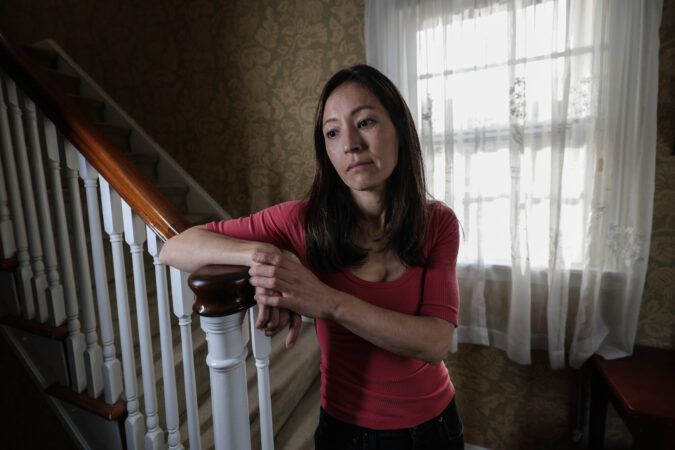
Sasha Kinney fears she cannot afford the $750 a month it will cost to keep her Affordable Care Act health plan in 2026. But she will put the insurance bill on a credit card before risking a medical emergency without access to the doctors she sees regularly.
The 42-year-old Drexel Hill resident’s insurance costs soared this year, after Congress did not extend a federal incentive program that ensured that no one paid more than 8.5% of income on health coverage.
She earns enough doing freelance work for nonprofits, while serving as her mother’s primary caregiver, that she is not eligible for Medicaid, the publicly funded health program for low-income people.
A private health plan through Pennsylvania’s Obamacare marketplace, Pennie, was a major expense, but one she prioritized to help manage her chronic headaches and stress-related pain. But the incentive program expired at the end of last year, leading to skyrocketing ACA insurance costs in Pennsylvania and across the country. Kinney will now pay an extra $250 without the added tax credit.
“I will go into debt because of these increasing costs,” she said. “But it still seems better than not having coverage.”
Congress has failed so far to strike a deal to bring back tax credits that have helped record numbers of Americans get health insurance. The U.S. House of Representatives approved legislation last week that would renew the program for three years, but it is unclear if the Senate will act.
President Donald Trump on Thursdayannounced a healthcare plan that White House officials said would help address rising healthcare costs by creating new drug price controls and sending health subsidies directly to consumers. The sparsely detailed plan is intended to serve as a framework for Congress, though officials did not say which lawmakers are actively working on new healthcare legislation, the Associated Press reported.
Meanwhile, people who are covered by Obamacare plans are running out of time to decide how to handle massive price hikes that doubled the average cost of the health plans in Pennsylvania.
The deadline to enroll in a plan for 2026 in Pennsylvania and other states is Jan. 31. After that date, people can drop their coverage if they find it is too expensive, but they will not be able to select a new plan until the fall enrollment period.
In Pennsylvania, about 70,000 people who bought Pennie plans in 2025 have decided they cannot afford the price increase and dropped their coverage. The dropout rate is unprecedented — about 1,000 people a day, said Devon Trolley, Pennie’s executive director.
Nationally, about 800,000 fewer people have selected Obamacare plans compared with this time last year, a 3.5% drop in total enrollment so far, according to the AP.
With just weeks to go in the enrollment period, marketplace leaders are urging people to think carefully about whether they can afford their plan for the full year and to look at other Pennie plan options. If Congress ultimately renews the enhanced tax credits, they have said, they would work quickly to adjust prices.
“At this point, we are telling people they should make the best decision for their family based on the current cost,” Trolley said. “We want to make sure people who currently have coverage aren’t staying with a plan they can’t afford.”
Trolley worries that people will stick with a plan they like, not realizing they can no longer afford it, only to be forced to drop the coverage and become uninsured partway through the year.
window.addEventListener(“message”,function(a){if(void 0!==a.data[“datawrapper-height”]){var e=document.querySelectorAll(“iframe”);for(var t in a.data[“datawrapper-height”])for(var r,i=0;r=e[i];i++)if(r.contentWindow===a.source){var d=a.data[“datawrapper-height”][t]+”px”;r.style.height=d}}});
Congress considering tax credit extension
The add-on tax credits that expired at the end of 2025 were introduced in 2021 and have been renewed by Congress annually since then.
In Pennsylvania, the federal incentive program ensured the vast majority of enrollees qualified for at least some amount of financial help, driving peak marketplace enrollment of 497,000 in 2025.
The program became a major sticking point in federal budget discussions last fall, with Democrats forcing a government shutdown after Republicans refused to include the tax credits without significant restrictions.
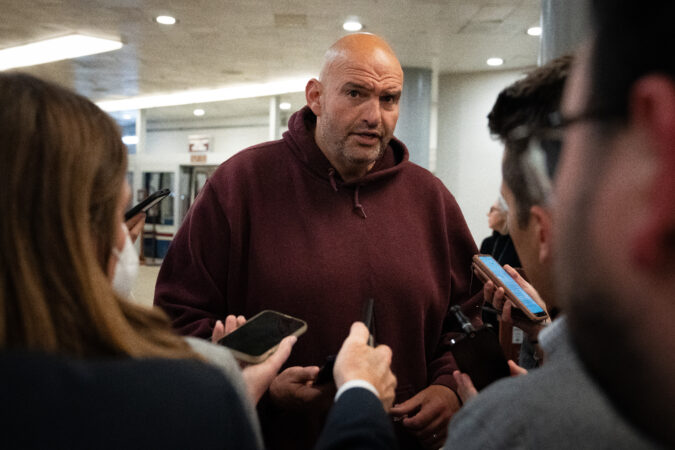
The budget ultimately passed without the tax credits after key Senate Democrats, including Pennsylvania’s John Fetterman, voted with Republicans to end the shutdown.
Last week, 17 House Republicans — including Pennsylvania Reps. Brian Fitzpatrick, Robert Bresnahan, and Ryan MacKenzie — sided with Democrats to approve legislation that would reinstate the tax credits for three years. The measure must be approved by the Senate, and would need to return to the House to consider any changes.
While the incentive program’s expiration is a major blow to the Obamacare marketplaces, Trolley, Pennie’s executive director, urged people not to rule out finding affordable coverage.
President Barack Obama’s landmark health law also included income-based tax credits for people who earn less than 400% of the federal poverty level — about $60,000. These tax credits cannot expire because they are part of the law.
“We have been encouraging people to not assume it’s too expensive,” Trolley said.
Devon Trolley, executive director of Pennie, has been outspoken about how cuts to ACA tax credits are affecting people who buy Pennie health plans. Pictured during a 2025 roundtable with Pennsylvania lawmakers, stakeholders, health systems at the University City Science Center in Philadelphia.
Other factors that affect cost include household size, age, and income. People who are generally healthy and use insurance sparingly may be able to save money by opting for a plan that has a low monthly cost and a higher deductible (the amount of money spent out-of-pocket before the plan begins covering a greater share of costs).
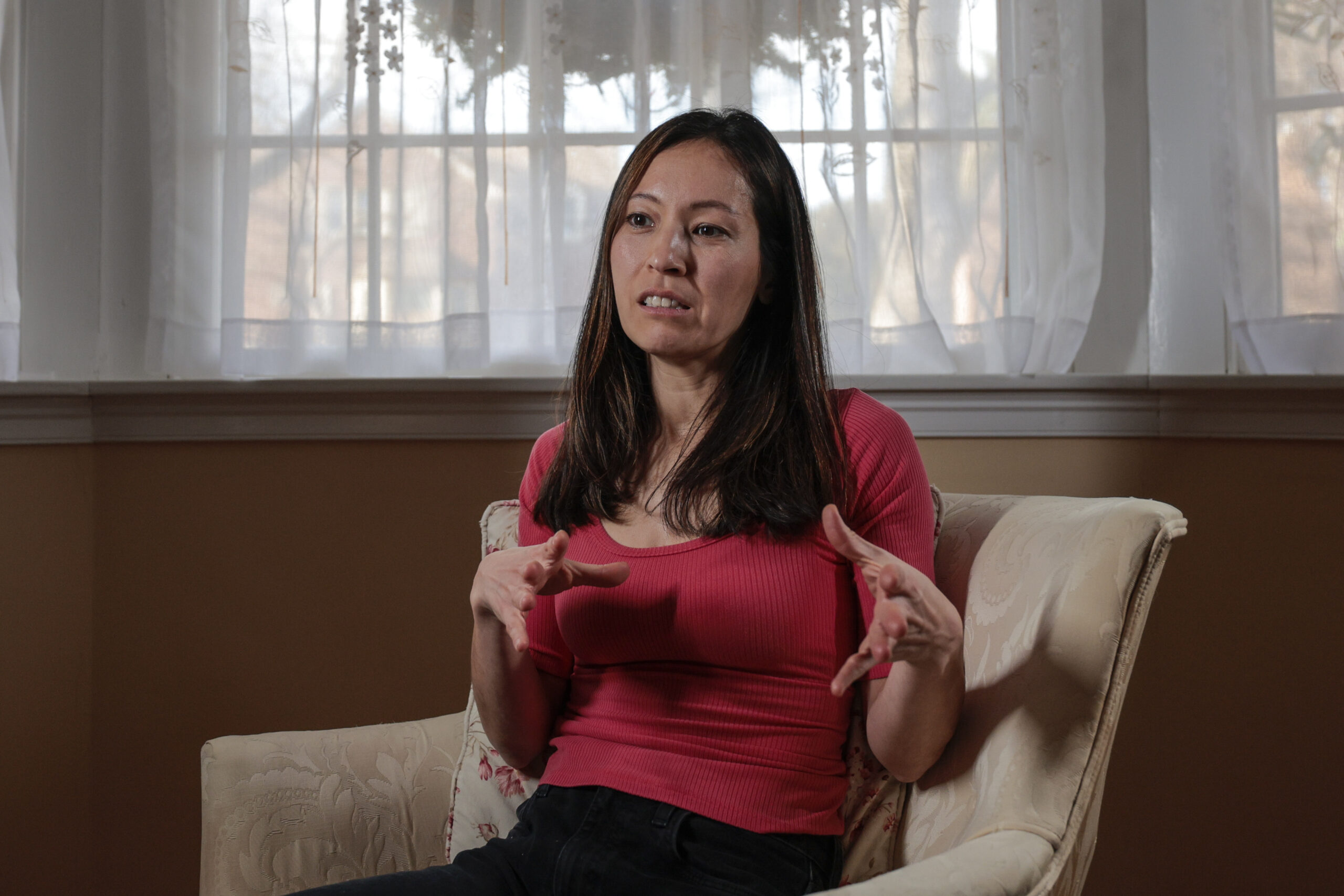
Sasha Kinney, 42, of Drexel Hill, considered switching to a high-deductible health plan to lower her monthly premium, but ultimately stuck with her old Pennie plan because it offered better coverage.
In Drexel Hill, Kinney considered switching to a cheaper plan when she saw how much it would cost to keep her current coverage.
Her current plan has a low deductible, and even so, Kinney said, she still spends hundreds on co-pays and other costs not covered.
She worried that if she switched to a plan with even higher out-of-pocket costs, she would end up skipping appointments and avoiding needed care.
She routinely sees doctors and physical therapists, and didn’t want to risk having to find new providers.
“In the end I think it washes out — you can lower your monthly cost, but if the deductible and co-pays are higher, you’re paying the same,” she said. “There’s basically no way to save money.”
Sen. John Fetterman (D., Pa.) on Monday praised President Donald Trump’s order to capture Venezuelan President Nicolás Maduro and his wife, breaking with most Democrats’ messaging on the military operation that took place early Saturday without congressional authorization.
“I don’t know why we can’t just acknowledge that it’s been a good thing what’s happened. … We all wanted this man gone, and now he is gone,” Fetterman said during an interview on Fox & Friends on Monday morning.
Fetterman’s comments come days after the Trumpadministration orchestrated a strike on Caracas, resulting in the capture of Maduro, Venezuela’s president since 2013, and his wife, Cilia Flores, early Saturday.
The event followed months of escalation by the U.S. military and claims from the Trump administration that Maduro is responsible for large-scale drug trafficking operations. The future of the Venezuelan government is unclear, but Trump has suggested that U.S. involvement will continue.
“I think [the military operation] was appropriate and surgical,” Fetterman said during the interview. “This wasn’t a war, this wasn’t boots on the grounds, and in that kind of way, this was surgical and very efficient, and I want to celebrate our military.”
The military operation provoked mixed reactions from members of the Philadelphia region’s Venezuelan community, some of whom are thankful for Maduro’s ouster but were concerned by Trump’s comments over the weekend that the U.S. would “run” Venezuela.
The incident also garnered sharp disapproval from many Democratic lawmakers.
Sen. Cory Booker (D., N.J.) said in a post on X on Saturday that Maduro is a “brutal dictator who has committed grave abuses” and that the U.S. military carries out their orders with “professionalism and excellence,” but stressed that Trump’s military operation defies the Constitution and isa culmination of a repeated failure by Congress to exercise its check on presidential power.
“We face an authoritarian-minded president who acts with dangerous growing impunity. He has shown a willingness to defy court orders, violate the law, ignore congressional intent, and shred basic norms of decency and democracy,” Booker said.
“This pattern will continue unless the Article I branch of government, especially Republican congressional leadership, finds the courage to act,” Booker said.
Other Democrats and opponents to the military operation havealsoquestioned its legality.
This is not the first time that Fetterman has differed with fellow Democrats on key issues. Recently, the Pennsylvania senator wasone of only a handful of Senate Democrats who supported the Republican-led plan to reopen the federal government without addressing the expiration of healthcare subsidies.
During his interview Monday, Fetterman noted that Democrats, including former President Joe Biden, have called for the ouster of Maduro.
“Why have a bounty of $25 million if we didn’t want him gone? Why would you do these things if you weren’t willing to actually do something other than harsh language,” Fetterman said.
New Jersey lawmakers passed a bill to prohibit households from being denied housing because they use public assistance.
The legislation, which lawmakers passed on Dec. 18, makes explicit that the state’s anti-discrimination law includes protections for residents based on their source of income for housing payments, including government vouchers, child support payments, and assistance from nonprofits. And the bill affirms that protections apply both to people paying rent and those paying mortgages.
State Sen. Angela V. McKnight (D., Hudson County), one of the bill’s sponsors, said the legislation will protect the rights of homeowners and tenants.
“Access to stable housing should never hinge on the source of a person’s legal income, especially for vulnerable populations like single parents, veterans, or those living with disabilities who often rely on assistance to make ends meet,” she said in a statement.
The legislation, which would take effect immediately after Gov. Phil Murphy signs it, is part of local and national efforts to prevent people from being denied housing because they use public assistance to pay for it. More than 2.3 million families use federal Housing Choice Vouchers, formerly known as Section 8 vouchers.
In September, Democratic U.S. Sen. John Fetterman cosponsored a bill that would create federal protections for these tenants. The Fair Housing Improvement Act of 2025 would prohibit landlords from denying housing to tenants because they pay rent using Housing Choice Vouchers; Social Security benefits; payments from a trust; income from a court order, such as spousal or child support; or other legal sources of income.
It also would expand protections in the Fair Housing Act of 1968 to prohibit discrimination based on source of income or military or veteran status.
“It’s hard enough to find an affordable place to call home,” Fetterman said in a statement. “Every veteran and every family struggling to keep a roof over their head deserve dignity and our support, not discrimination based upon their service or if they use a voucher.”
Chantelle Wilkinson, vice president of strategic partnerships and campaigns at the National Low Income Housing Coalition, said source of income discrimination “is far too often a main barrier for households seeking stable housing.”
“When a landlord denies a voucher holder access to housing despite meeting all other qualifications, that ‘no’ is not just about a home: it’s denial of opportunity, equity, and stability,” she said in a statement.
In Philadelphia, the city’s Fair Practices Ordinance bans rental property owners from discriminating against potential tenants based on the source of the income they will use to pay their rent. That includes housing vouchers and other public assistance.
In June 2024, City Council passed a bill to expand protections under the Fair Practices Ordinance. The legislation explicitly stated that housing providers renting or selling a property cannot advertise or communicate that they do not accept housing vouchers. It also explicitly says that Housing Choice Vouchers are an example of a protected income source.
And it makes fighting this type of housing discrimination easier for renters.
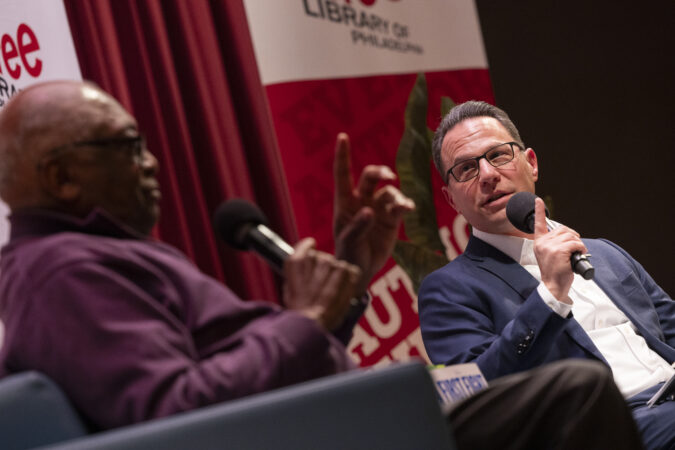
Days before his memoir is set to hit shelves Pennsylvania Gov. Josh Shapiro will kick off his book tour at Philadelphia’s Parkway Central Library on Jan. 24.
Shapiro will swing through Philadelphia, New York and Washington, D.C., in the final week of January to promote his book Where We Keep the Light: Stories from a Life of Service, according to events posted online.
The tour and the book, set for release Jan. 27, will fuel speculation about a potential presidential run in 2028 as Shapiro works to expand his national profile as he also seeks reelection in Pennsylvania next year.
The forthcomingmemoir is expected to detail his life and political career, including the attempted arson attack on the governor’s mansion while he, and his family, slept inside earlier this year on Passover.
Shapiro, who grew up in Montgomery County and first forged his political brand there, has become a leading figure in the national Democratic Party. The memoir will delve into his vetting to serve as Vice President Kamala Harris’ running mate last year, according to the publicized summary.
The Pennsylvania governor, Harris wrote, would be unable to “settle for a role as number two” and questioned her about whether he could get Pennsylvanian’s artwork in the vice president’s residence.
The Democratic senator, who has publicly feuded with the governor, described the tension between Pennsylvania’s two top Democrats, which traces back to their time together on the Pennsylvania Board of Pardons when Fetterman was lieutenant governor and Shapiro was state attorney general.
It’s unclear whether Shapiro will discuss his relationship with Fetterman in the memoir.
Shapiro’s book tour will kick off at a 3 p.m. event at the Parkway Central Library on Jan. 24. He will also speak at the Kauffman Concert Hall in New York on Jan. 27 and Sixth and I, a historic synagogue and Jewish cultural center in Washington, D.C., on Jan. 29.
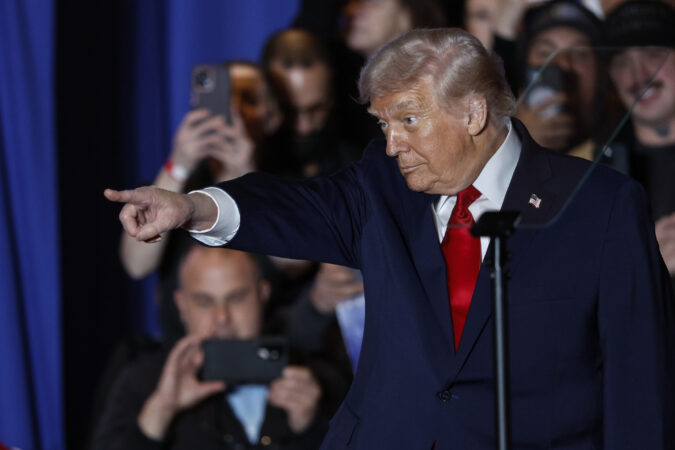
President Donald Trump’s raucous rally Tuesday night in Pennsylvania was billed as the launch of a national tour focused oneasing voters’ economic anxieties that threaten Republicans’ hold in Washington with the 2026 midterms looming.
But the economy couldn’t maintain the president’s interest for the duration of the speech.
Instead, he rallied the crowd at the Mount Airy Casino Resort in Mount Pocono by fomenting anger at Democratic U.S. Rep. Ilhan Omar and other Somali immigrants who live in Minnesota and teasing a 2028 run, despite constitutional limits on a third term.
Employing a method he calls “the weave,” Trump darted back and forth between cost-of-living issues and entirely unrelated material, such as claiming credit for the use of the phrase “Merry Christmas” during the holiday season.
“If I read what’s on the teleprompter, you’d all be falling asleep right now,” Trump said.
It was Trump’s third trip to Pennsylvania since he began his second term, following a campaign in which he spent a considerable amount of time in the Keystone State, winning it back in part by promising to cure a beleaguered economy. It’s the president’s first return to Northeast Pennsylvania, where he saw his biggest gains in the region during the last election, and which will be a crucial battleground in next year’s election, when the GOP’s razor-thin House majority is on the line.
“America is winning again. Pennsylvania is prospering again. And I will not rest until this commonwealth is wealthier and stronger than ever before,” Trump proclaimed at the large casino and hotel complex tucked in between ski resorts in the Pocono Mountains.
The casino stayed open Tuesday and gamblers played slots and card games on the floor upstairs as Trump spoke in the ballroom below.
Trump, in a speech that stretched over an hour, blamed high prices on hisDemocratic predecessor, formerPresident Joe Biden. He argued gas prices are down and car prices are dropping thanks to relaxed fuel-efficiency standards. The stock market is up this year and overall growth for the third quarter is strong. Trump also has signed agreements to reduce list prices on prescription drugs.
While Trump again called concerns about affordability a “hoax,” the event itself was at least an acknowledgment that frustrations with the economy are damaging the Republican brand ahead of the midterms. He spoke in front of a large “lower prices, bigger paychecks,” banner.
“Democrats talking about affordability is like Bonnie and Clyde preaching about public safety,” he said.
The most compelling part of the evening came more than an hour in, when the president called up members of the local community, including a waiter and an EMT to share personal stories about how no taxes on tips or overtime would benefit their families when tax returns are filed next year.
Trump played to the Pennsylvania crowd, noting his connections to the state as a graduate of the University of Pennsylvania’s Wharton School. “I love Philadelphia. It’s gotten a little rougher, but we will take it,” he quipped.
“It’s like I hit a piece of steel. … He’s so strong,” Trump said about patting the Eagles player on the back.
But despite these light-hearted moments, Trump repeatedly went after Omar and the Somali immigrant community.
Trump asked if anyone from the crowd was from Somalia and asked them to raise their hands before tearing into Omar, the progressive Minnesota Democrat who left the African country as a refugee.
“She comes from a country where, I mean, it’s considered about the worst country in the world, right?”
Later in the speech, Trump complained about immigration from Somalia, Afghanistan and Haiti — instead of countries like Norway and Denmark — as he recounted and affirmed his use of the phrase “shithole countries” during his first term, something he denied at the time.
He also accused Democrats of making Pennsylvania a “dumping ground” for immigrants.
Despite this incendiary rhetoric, Trump also celebrated his performance with Black and Latino voters in the last election. He put up the strongest Republican performance with these demographic groups in decades, though a majority both went for Vice President Kamala Harris.
“Black people love Trump,” Trump said. “I got the biggest vote with Black people. They know a scam better than anybody. They know what it is to be scammed.”
In his speech, Trump touted his tariffs as bringing in “hundreds of billions of dollars,” and noted his administration would be steering $12 billion to farmers through that revenue. The money is meant to help agriculture producers cope with retaliatory measures taken by China and other trading partners in response to Trump’s tariffs, which Trump did not mention in his remarks.
“We gave the farmers a little help … and they are so happy.” Trump said.
Poll after poll shows Americans see rising home prices, groceries, education, and electricity costing more. Gallup’s Economic Confidence Index found a 17-month low in terms of trust in the economy, and the survey found Americans’ views of the job market are at their most negative since the end of Trump’s first term during the height of the pandemic.
For the average Pennsylvanian, there is a “financial struggle” with higher prices on food, childcare, healthcare, and electricity, among other expenses, said Mark Zandi, chief economist at Moody’s Analytics.
He attributes it to Trump’s tariffs and immigration policies, including deportation, which he said limits the number of people working and has “hurt growth and raised inflation.”
“Everyone’s paying a lot more for basic necessities, most everything,” Zandi said.
Zandi noted Trump’s economic policies include a few positives for workers and employers, including tax breaks for businesses from Trump’s Big Beautiful Bill Act, as well as the tax cuts on tips and overtime.
“But net, I think the policies have contributed to the financial hardship of the typical Pennsylvanian,” Zandi said.
Pennsylvania, however, is the only growing economy in the Northeast, according to Moody’s Analytics. The state has secured $31.6 billion in private-sector investments since Democratic Gov. Josh Shapiro took office in 2023, according to his administration.
Shapiro has been quick to argue the state’s relative fiscal health has come in spite of federal policies he argued are hurting Pennsylvanians. He called Trump “a president who seems to want to blame everybody else, whose economic policies are failing,” in an interview Monday night on MS NOW.
“I mean, if he comes to Pennsylvania and spews more B.S. … I think what you’re ultimately going to find are people tuning him out,” Shapiro, a potential contender for the presidency in 2028, saidahead of Trump’s visit.
Sen. John Fetterman (D., Pa.) told MS NOW in a separate interview on Tuesday that polling shows the president, “he’s really kind of losing the plot with a part of his own voters now front and center.”
A key battleground
The setting for Trump’s speech is also one of the most closely watched battlegrounds in the state, home to freshman Republican U.S. Rep. Rob Bresnahan’s district, which Democrats are targeting to flip. Bresnahan won by 1.5 percentage points last year.
Bresnahan was more on message in brief remarks. He said he and Trump have heard the call for relief.
“The message is the same everywhere we go: Lower the cost, higher-paying jobs, keep our community safe, and listen to the people during the work,” he told the crowd in Mount Pocono.
He argued policies authored by Trump and passed by the Republican-led Congress, like tax credits for working families and seniors, are already helping people.
The Democratic Congressional Campaign Committeeseized on the visit to blast Bresnahan in ads on the Wilkes-Barre Times Leader website, highlighting his penchant for stock trading. And Scranton Mayor Paige Cognetti, a Democrat running to unseat Bresnahan, took the moment to call him “the exact kind of self-serving politician that Northeastern Pennsylvanians … all agree we need to get rid of.”
Whether Trump’s message resonates in this part of the country will be telling. Monroe County, home to Mount Pocono, flipped to Trump in the 2024 election after backing Biden in 2020.
The region is home to a large number of New York City transplants who have moved here seeking more-affordable housing in a region that largely relies on Pocono Mountains tourism as the main source of jobs.
While views on the economy were mixed on the casino floor, attendees in the ballroom gave the president a warm welcome back to the state. The Secret Service had to turn people away, and many who got in had waited more than four hours outside on an 18-degree day.
Trump’s ongoing response to affordability woes could have major implications for other vulnerable Republicans hoping to be reelected in the state. In last month’s election, Democrats successfully ran on affordability in the New Jersey and Virginia gubernatorial races — and picked up a slew of local seats in Pennsylvania.
The DCCC has its sights on the seats of three other Pennsylvania Republicans, along with Bresnahan: U.S. Rep. Brian Fitzpatrick of Bucks County; U.S. Rep. Ryan Mackenzie of Lehigh County; and U.S. Rep. Scott Perry of York County.
Attendees in the crowd Tuesday night held “Keep the House, Keep the Country,” posters.
Trump told the crowd he’d be back on the trail for Republicans in the midterms, and reflected, that like his off-the-cuff speech, he enjoys stumping.
Whether the current state of the economy affects Republicans’ chances in 2026 could depend on how those future appearances go and how willing the party will be to keep acknowledging that many Americans are struggling.
Marc Stier, executive director of the Pennsylvania Policy Center, who was a leading advocate for the establishment of the ACA, argued that “voters are not fools, particularly when it comes to their pocketbook.”
“How they talk about it will determine in some ways how badly they get hurt,” Stier said. “If they acknowledge a problem and, say, come up with ideas to deal with it, they will probably be hurt less. If they followed Trump’s line … I think they’re gonna get clobbered.”
Eric Stern drove out to Erie last January and got a slice of pizza with Christina Vogel at Donato’s, the downtown shop she has owned for nine years.
The small-business owner and political novice was interested in running for county executive against a vulnerable Republican incumbent. Stern, a longtime Democratic political operative, was part of a newly founded firm looking for candidates to help flip Republican-held seats.
“It all started with trying to find candidates who were, frankly, better messengers for the values we had and the things we cared about,” Stern said. “She was someone who understood the urgency of this moment as a small-business owner and mom but just as critically was not part of this broken system that had Democrats losing in the past.”
FIGHT is working with Scranton Mayor Paige Cognetti in Northeast Pennsylvania and firefighter Bob Brooks in the Lehigh Valley. U.S. Rep Rob Bresnahan and U.S. Rep. Ryan Mackenzie, the freshman Republicans who represent those areas, each won by about a percentage point in 2024, making them two of the most vulnerable incumbents in next year’s elections.
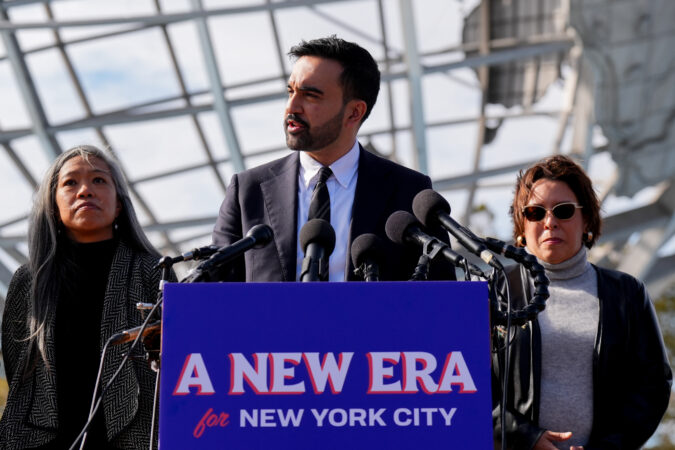
This past year FIGHT’s six-person teamhelped Zohran Mamdani win the New York mayoral race, the buzziest contest of the cycle.The Philadelphia-based agency had a hand in the Pennsylvania Supreme Court slate’s retention, county executive wins in Lehigh and Erie, and two successful Democratic judicial campaigns in the state.
The firm was cofounded by Rebecca Katz, a Central High graduate who lives in New York; Philadelphia ad-maker Tommy McDonald; and Julian Mulvey, an architect of Sen. Bernie Sanders’ 2016 presidential campaign.
“New York isn’t Pennsylvania and Pennsylvania isn’t New York,” Katz said of lessons learned from Mamdani’s win, also noting primaries and generals are extremely different. “But there’s a universal desire for authentic candidates laser-focused on the affordability crisis.”
The strategists started the firm in January 2025 after Democrats suffered across-the-board lossesin 2024, a year she helped Sen. Ruben Gallego defy that trend and win an open seat in Arizona.
Stern, a Pittsburgh native and resident, and McDonald both quit their jobs to sign on with the agency.
Their most basic strategy is creating authentic campaigns that reflect the communities the candidates are running in, clear economic messaging, and trying different things across media platforms to win back working-class voters, Katz said.
“We try to think about what makes an ad pop, what makes people look up from their phone, or, if they’re on their phone, what makes them stay there,” Katz said. “It can’t look like everything else on TV.”
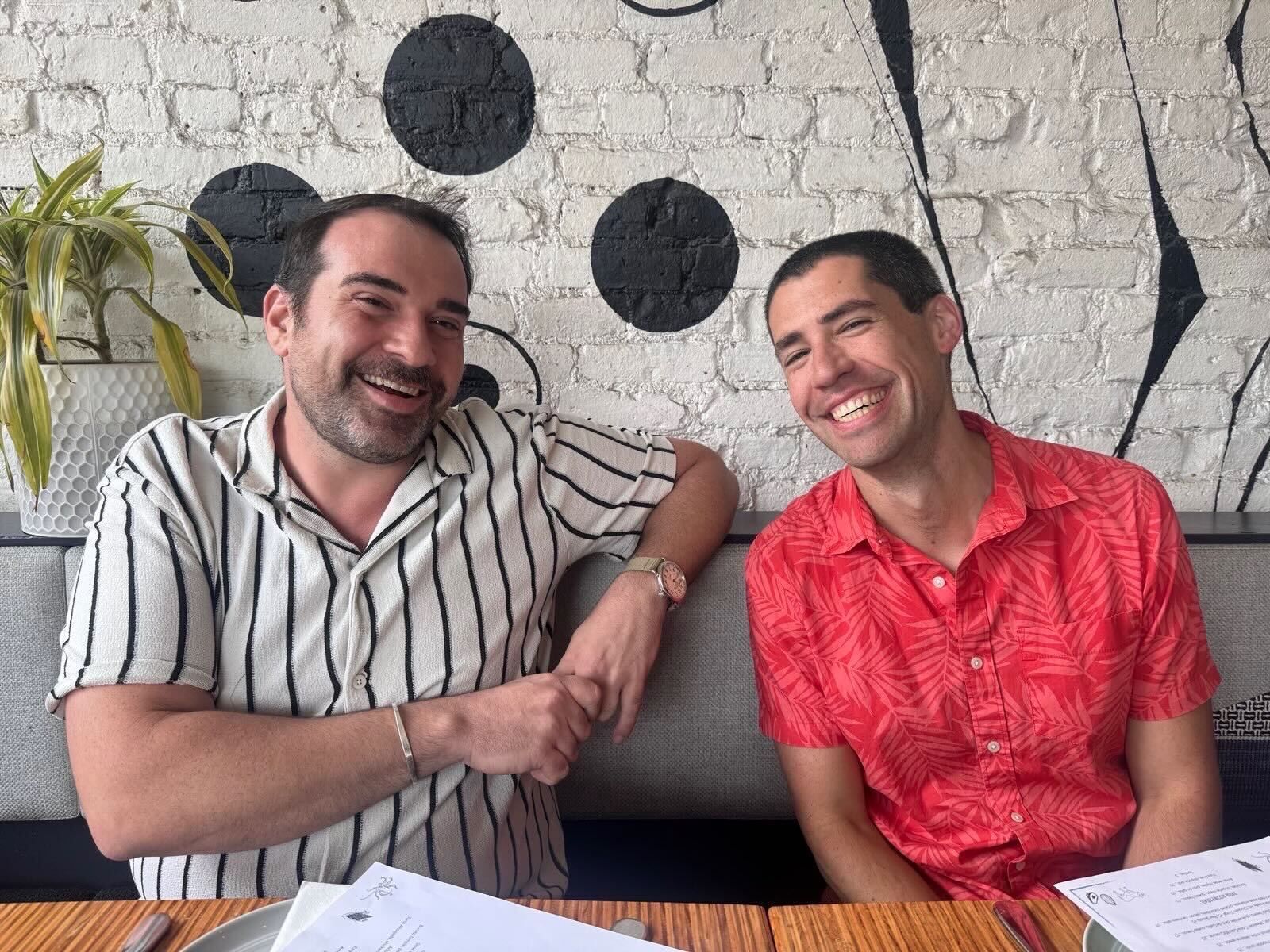
Tommy McDonald (left), and Eric Stern (right), are longtime Democratic media consultants now with FIGHT, a Philly-based agency working on two key Congressional races in Pennsylvania in 2026.
‘A new road map’
In the November election, standing out meant ads about the state Supreme Court race that featured Pennsylvanians talking directly to the camera about how they felt their rights had been protectedby the three justices on the ballot, who were all first elected as Democrats. Sixteen Pennsylvania counties that Vice President Kamala Harris lost wound up voting to retain the judges in the most expensive judicial contest in state history.
The victory provided a blueprint for Gov. Josh Shapiro and other Democrats running in Pennsylvania in 2026, said McDonald, who made the ads for the retention race.
“These are the typical working-class voters that Democrats are bleeding,” McDonald said. “It’s Beaver County. It’s where the New York Times visits diners. It showed us there’s a new road map for how to get persuadable voters in Pennsylvania. We know where they are now.”
Stern, Katz, and McDonald all worked on Fetterman’s 2022 campaign, a race that included the unprecedented challenge of navigating a candidate’s stroke days before the primary and running a general election campaign as he recovered.
They wound up winning awards for the campaign, which featured bright yellow and black branding and creative trolling of Republican nominee Mehmet Oz’s New Jersey ties. McDonald had the idea to fly a banner plane along the Jersey shoreline: “HEY DR. OZ, WELCOME HOME TO NJ! ♥ JOHN,” it read.
They called that July, which also included Jersey Shore cast member Nicole “Snooki” Polizzi making a surprise cameo, “New Jersey Summer.”
“We all learned politics here,” McDonald said of his home state. “The idea is to try to do things differently, redefine Democratic campaigns.”
This year,political headwinds certainly helped Democrats, but hyperlocal messaging did, too, the strategists argue.
Stern worked with Vogel’s campaign in Erie to create ads that looked like a pizzeria’s commercials, to stand out from the cookie-cutter format.
”In Erie County, we know good things start with the right ingredients,” the ad says as a hand scatters toppings atop a pie.
Another ad showed Republicans and self-proclaimed three-time Donald Trump voters on-camera saying they were supporting Vogel over the incumbent, Republican Brenton Davis. A Democrat cannot win in the county without some independent and Republican support.
“They were all people I met on the campaign trail,” Vogel said of the ad. “We really focused on what matters most with affordability, how stretched thin people are across the U.S., and just focused relentlessly on the same message and reminding people why voting matters.”
And in Lehigh County, a slightly bluer but still purple region, Stern worked with State Rep. Josh Siegel’s campaign for county executive. That was more of an offensive against Republican Roger MacLean, a former Allentown police chief, whom ads described as a “grifter and a disgrace,” highlighting his multiple beach houses amid an affordability crisis.
“We came up with an ad strategy that basically determined the most important thing was to beat the crap out of this guy,” Stern said.
“I think Democrats have pulled their punches for way too long,” he added. “There’s a difference between fighting dirty and fighting back, and we have to be in a position where we’re willing to say, ‘We’re here to fight.’”
Siegel, 32, soon to become the youngest county executive in Pennsylvania history, credited the agency with urging him to be specific in his pitch to voters.
“For me, the problem with the way we communicate as Democrats is part of the professional consultant class has created this art form of saying a lot and saying nothing,” he said. “I think people have a particularly adept bulls— detector and they are tired of what is just the most inoffensive, poll-tested, style-over-substance speak we’ve perfected.”
As they look to next year, Stern thinks anti-corruption will be the key issue in the race against Bresnahan in the Northeast. Bresnahan has faced criticism for stock trading while in Congress. Cognetti, his opponent, has been the mayor since 2020, when she won on an anti-corruption platform.
While affordability runs across races, Stern said campaigns cannot make the mistake of being too general in their messaging. “There’s no one right message that cuts across all these districts,” he said.
“Too many folks are running the same ads or calling the same plays they would have a decade ago. We are in a different world. Things have totally changed in a million different ways.”
WASHINGTON — Ahead of a morning Budget Committee meeting, U.S. Rep. Brendan Boyle gathered his senior advisers in a brightly lit conference room just off the Capitol to settle on a simple strategy.
“Let’s keep the main thing the main thing,” he said. “Fifteen million Americans are gonna lose their healthcare because Republicans care more about tax breaks for billionaires. It’s accurate. You can describe it in a sentence.”
Boyle, a six-term lawmaker, is the most veteran of Pennsylvania’s eight Democrats in Washington. He has been the ranking member of the House Budget Committee since 2023, meaning he is the top Democrat playing defense as the Republican-controlled Congress ushers through GOP spending priorities. It can be a futile exercise in shouting into a void — until the yelling starts to echo outside.
“He’s one of our best messengers who appropriately comes across as both strong and authentic at the same period of time,” House Minority Leader Hakeem Jeffries (D., N.Y.) said in an interview late last month.
Jeffries credited Boyle with homing inon a key statistic: Taken together, Trump’s reconciliation bill andthe expiration ofAffordable Care Act tax credits represent the largest cut to Medicaid in American history.
“That one observation became core to our arguments in pushing back against that toxic piece of legislation, and it’s also one of the reasons I believe that the law is so deeply unpopular amongst the American people,” Jeffries said.
Democrats have been recently on a roller coaster — securing big wins in the November election and then splitting over how long to withstand the government shutdown, with eight senators ultimately crossing the aisle to end the impasse. But Boyle’s messaging war is ongoing, and he thinks it is his party’s best bet for winning key midterm races in his home state, where Democrats are targeting four Republican-held seats in swing areas.
If Democrats reclaim Congress in next year’s election, Boyle would shift from ranking member to chair of the powerful Budget Committee — becoming the first Pennsylvanian to lead it since Philadelphian Bill Gray, a Democratwho chaired it from 1985 to 1989. It would be another resumé builder for the 48-year-old lawmaker whose role in Washington keeps growing and who has not ruled out a potential Senate run in 2028, when Democratic Sen. John Fetterman’s seat would be up.
“I get asked a lot: How do you keep this message going for the next year?” Boyle said in an interview in his Washington office. “Well, we started this five months ago, and actually more people know about it today than over the summer. Every single day, continuing to talk about healthcare, continuing a broader conversation about affordability, is absolutely what we have to do.”
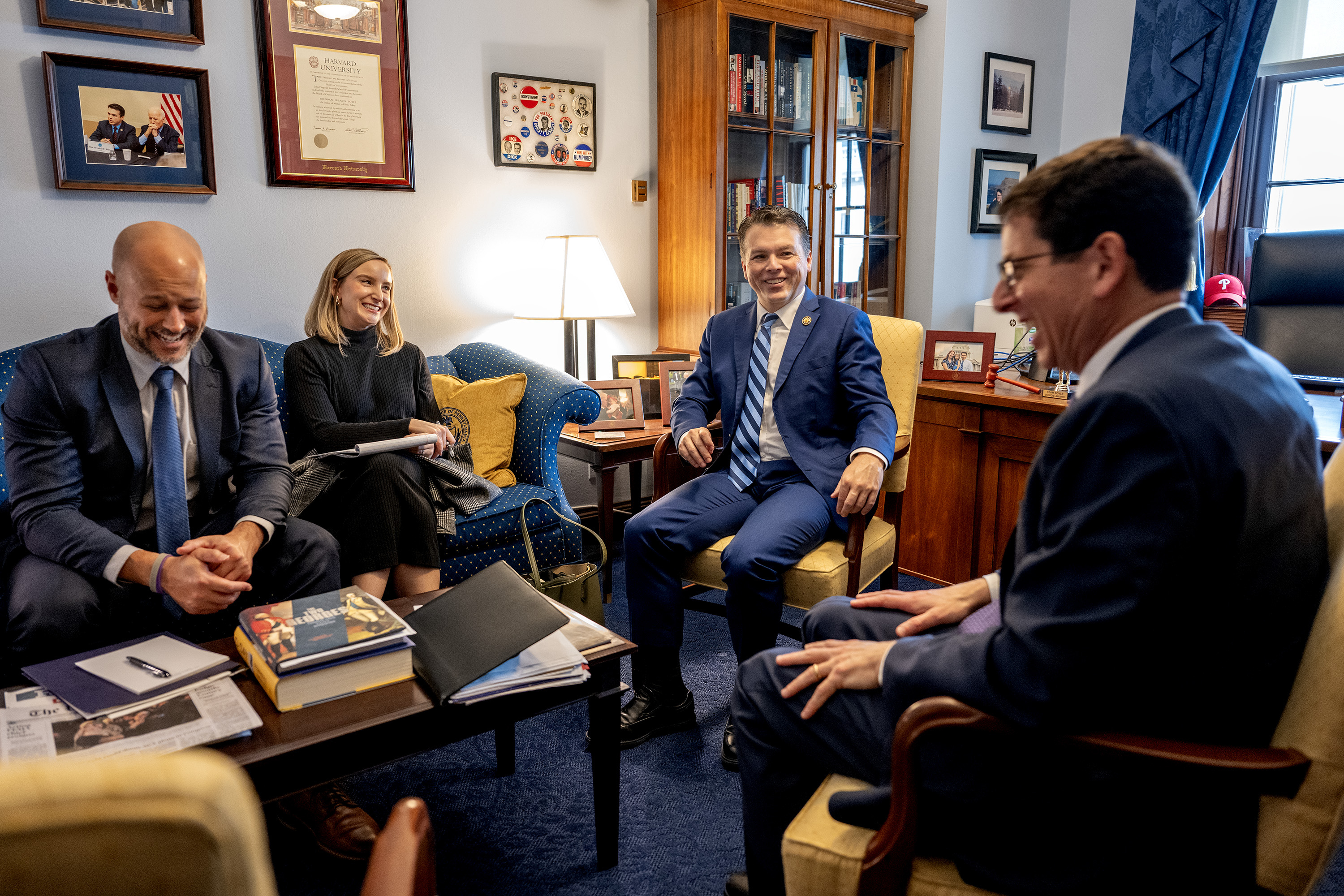
U.S. Rep. Brendan Boyle (center) meets in his Capitol Hill office with Phillip Swagel (right), director of the Congressional Budget Office, following Swagel’s testimony before House Committee on the Budget last month. As Budget’s ranking member, Boyle has been central in shaping Democratic messaging around Republican policies.
‘Scrappy Irish Catholic boys from Olney’
Boyle, who lives in Somerton with his wife and 11-year-old daughter, is an affable, earnest lawmaker in a role that is unapologetically wonky — and high-profile, especially lately.
From Oct. 1 through the end of November — a period including the shutdown — Boyle popped up on TV news more than two dozen times, by his office’s count.
His political beginnings were far less polished. In 2014, Boyle shocked Philadelphia’s political establishment by winning the Democratic primary over a field that included former U.S. Rep. Marjorie Margolies, scion of a powerful political family. Then a 37-year-old state representative, Boyle ran as a blue-collar, antiestablishment pragmatist from Northeast Philly. His ads cast his opponents as out of touch, and he leaned hard on his family’s story: his father, an Irish immigrant, worked at an Acme warehouse and later as a SEPTA janitor; his mother was a school crossing guard. Boyle still keeps his dad’s SEPTA cap on a bookshelf in his Washington office.
That same year, his brother Kevin won a seat in the state House, prompting Philadelphia Magazine to profile the “scrappy Irish Catholic boys from Olney” who were reshaping the party.
A decade later, Democrats are still striving to win back blue-collar voters. Boyle, meanwhile, has traded some of his insurgent edge for the stature of a Hill veteran.As Philadelphia elects a replacement for retiring U.S. Rep. Dwight Evans next year, Boyle will be a key ally for the new lawmaker, and a coveted endorsement during the election, though he has said he does not plan to weigh in. He has been in the thick of some of the year’s biggest fights — leading Democrats through a 12-hour reconciliation markup, testifying at a 1 a.m. Rules Committee hearing, and grinding through an overnight Ways and Means marathon.
His younger brother has had a far more tumultuous path. Kevin lost his state House seatlast year amid long-running mental health struggles.
Boyle declined to discuss the situation beyond saying: “The last five years — almost exactly five years — have been very challenging. And I’ll just leave it at that.”
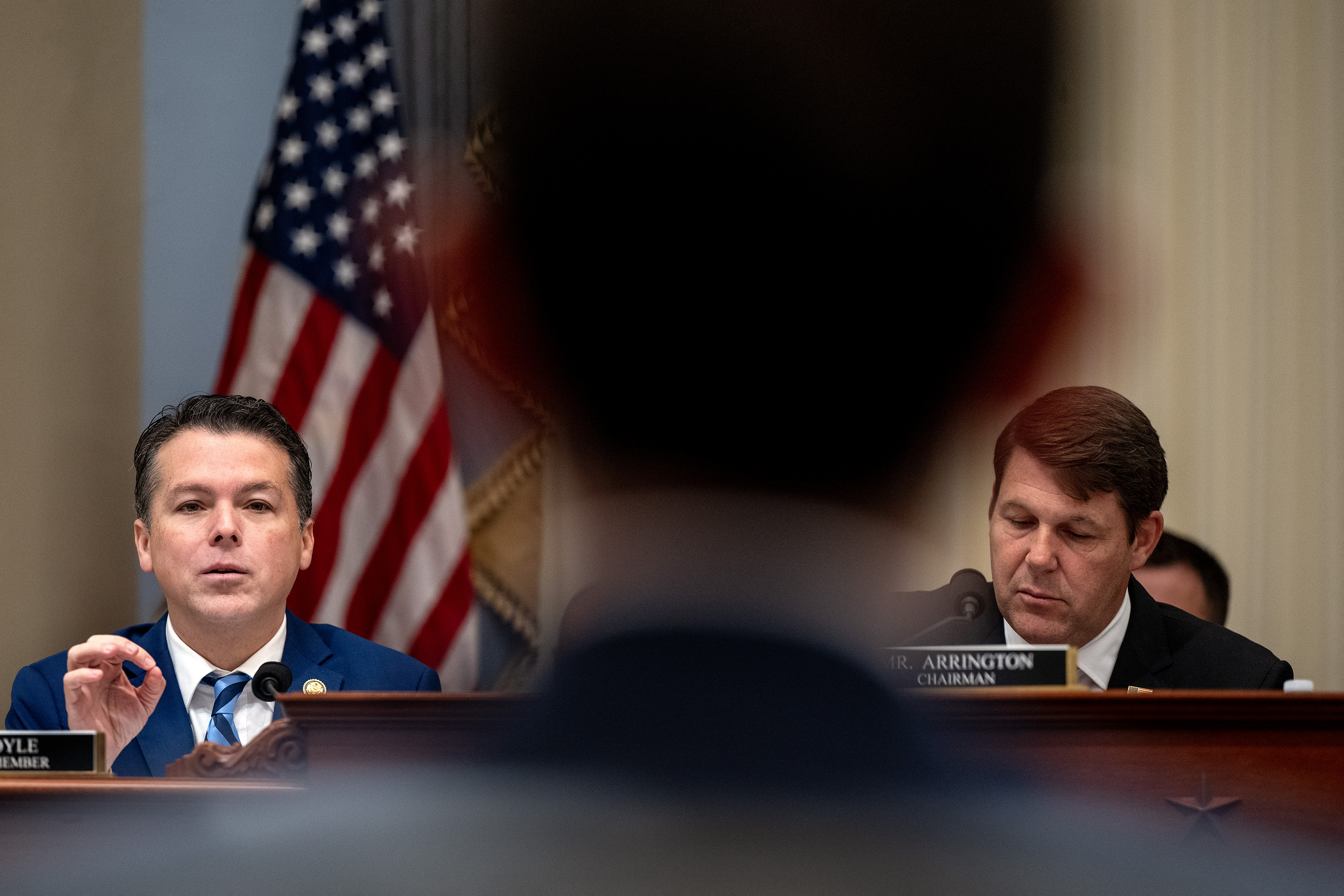
U.S. Reps. Brendan Boyle (left) (D., Philadelphia) and Jodey Arrington (right) (R., Texas) question Phillip Swagel (back to camera), director of the nonpartisan Congressional Budget Office, during a hearing on Capitol Hill in Washington, D.C. Tuesday, Nov. 18, 2025. Arrington chairs the House Budget Committee, while Boyle is the panel’s top Democrat.
In line for the gavel
Before that late November hearing, Boyle had already reached out to fellow Democrats on the committee: Talk about healthcare, he urged them. Talk about affordability. Talk about it ad nauseam.
He sat at the dais across from a portrait of Gray in an ornate hearing room, surrounded by paintings of former budget chairs, and delivered his opening remarks.
“The president has stopped calling it the ‘Big, Beautiful Bill.’ He’s stopped talking about the bill altogether,” Boyle said. “… Because it’s not just that healthcare’s become unaffordable in America. It is beef, it is coffee, it’s electricity, almost every staple in the average consumer basket.”
The director of theCongressional Budget Office, Phillip Swagel, was called before the committee that day and fielded questions from both sides. Democrats wanted to know Swagel’s projections on how Trump’s policies would affect everything from the national debt to the price of Thanksgiving dinners, eager for sound bites to send to constituents back home and to pressure Republicans on the healthcare debate.
Republicans were pushing Swagel for an audit, seekingmore transparency on how the nonpartisan agency comes to its projections.
“We need to be able to cut through the politics and the partisanship and figure out where you and your team can do a better job,” said U.S. Rep. Jodey Arrington,the Texas Republican who chairs the committee.
Boyle, whose office uses CBO projections to compile and distribute national and district-level data to Democrats, said he is open to an audit, if performed responsibly and not as a means to “discredit” the agency over numbers Republicans don’t like.
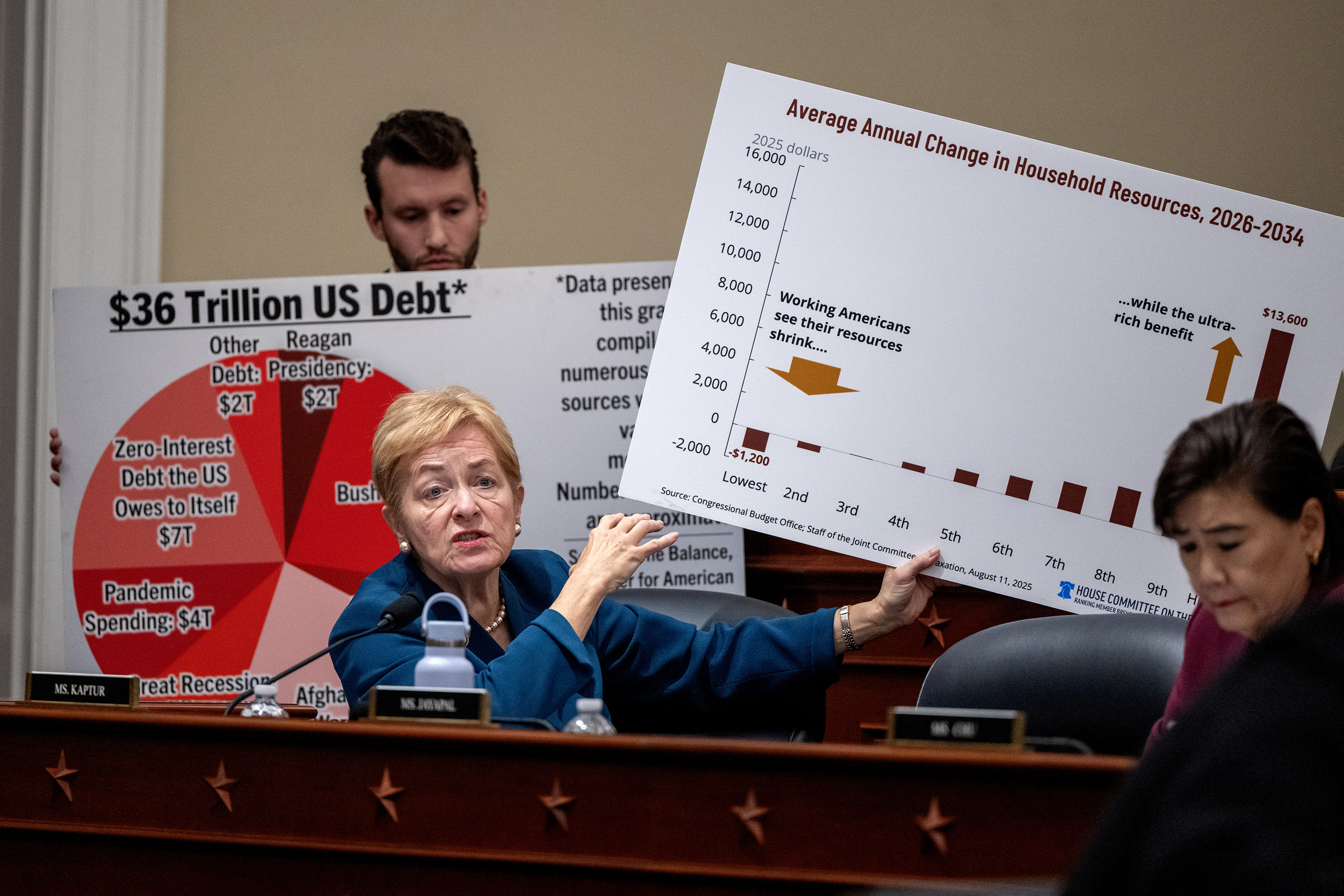
U.S. Rep. Marcy Kaptur, a Democrat from Ohio, brings visual aids to a hearing of the House Committee on the Budget on Capitol Hill in Washington, D.C. Tuesday, Nov. 18, 2025.
Throughout the three-hour hearing, Boyle would sidebar with Arrington, who is retiring next year. The Philly Democrat and the West Texas conservative make an unlikely pair, but the two have bonded across many late-night sessions over having younger children and their college football fanaticism — Boyle for his alma mater, Notre Dame, Arrington for Texas Tech.
“He’s a very good communicator because he’s a really smart and thoughtful guy,” Arrington said. “I always can appreciate, whether I agree or not, with a good communicator. He’s authentic in what he believes and he’ll even say, ‘I grant you it’s not perfect,’ or ‘You make a good point.’”
The midterms will dictate not just the party that controls Congress but also which ideological track the Budget Committee takes. If Democrats win, and Boyle takes the gavel, he plans to put more scrutiny on the administration and aim to regain some of Congress’ control over purse strings that Republicans have ceded to Trump.
Another Pennsylvanian, U.S. Rep. Lloyd Smucker, a Republican who represents Lancaster, has announced he is running to be the top Republican on the committee following Arrington’s retirement. That means regardless of party control, two Pennsylvanians will likely be at the helm of one of the most powerful committees in Congress. Smucker, a fiscal conservative running with Arrington’s backing, said in an interview he would focus on rising national debt and getting a budget resolution adopted. He was a key negotiator for Republicans during reconciliation, helping to get conservative House Freedom Caucus members on board.
Smucker called Boyle someone who is “serious about the budget process, and wants to make sure that it functions.”
“He genuinely cares about strengthening Congress as an institution,” Smucker added.
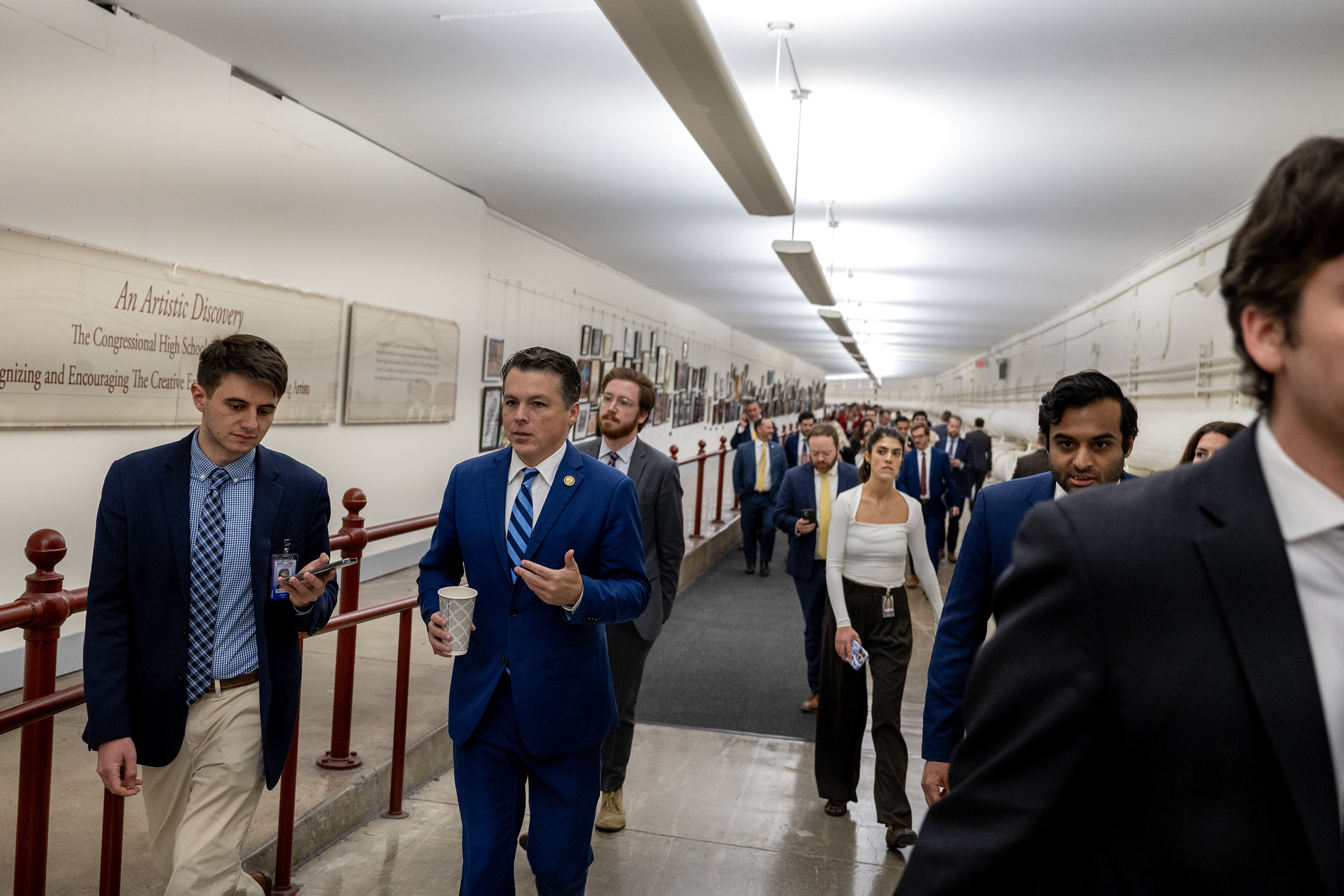
U.S. Rep. Brendan Boyle is interviewed by Charles Hilu (left), a reporter with the Dispatch, as he moves between office buildings on Capitol Hill in Washington, D.C. Tuesday, Nov. 18, 2025.
The road ahead
The longer Boyle stays in the House, in a safe Democratic seat, the harder it is to think about walking away.
In September, Jeffries appointed him the lead Democrat for the congressional delegation to the NATO Parliamentary Assembly. For Boyle, a history lover who has biographies of George Washington on his office coffee table, it’s an exciting opportunity to represent the country internationally as Trump continues to criticize the historic alliance. Boyle would become the leader of the parliamentary assembly delegation if Democrats take control of the House, just as he would take the gavel in the Budget Committee. Past committee chairs include former House Speaker Paul Ryan (R., Wis.), former Defense Secretary Leon Panetta, and former Ohio Gov. John Kasich.
“Some really high-quality, high-caliber people have done that over the last 40 years. So that’s what I’m looking forward to in the near term,” Boyle said. “After that, come 2028, and beyond, we’ll deal with that then. But it is interesting, like the longer you’re here, and if you move up the ranks, then actually it does make it more difficult to leave.”
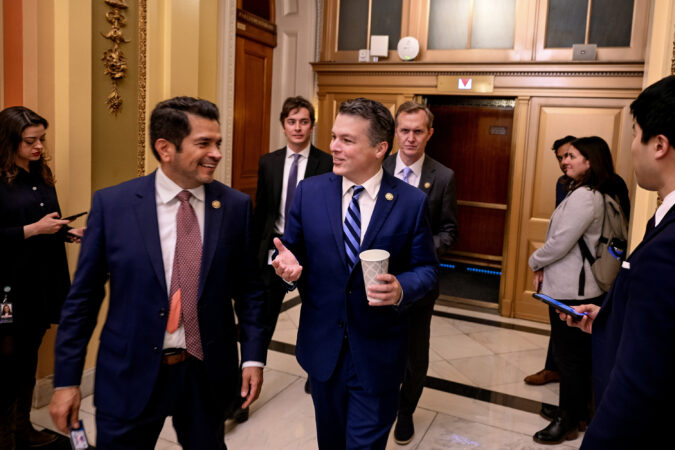
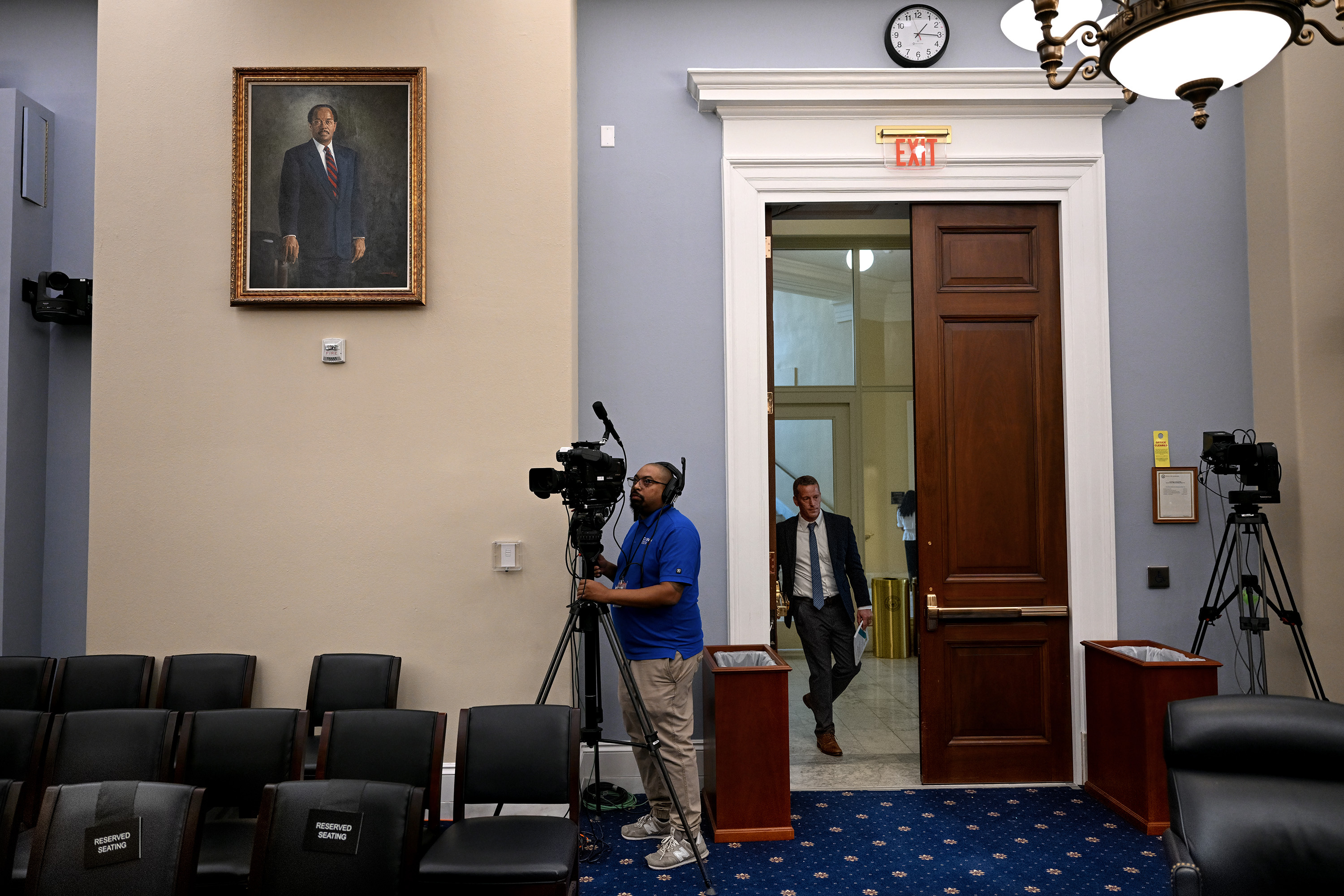
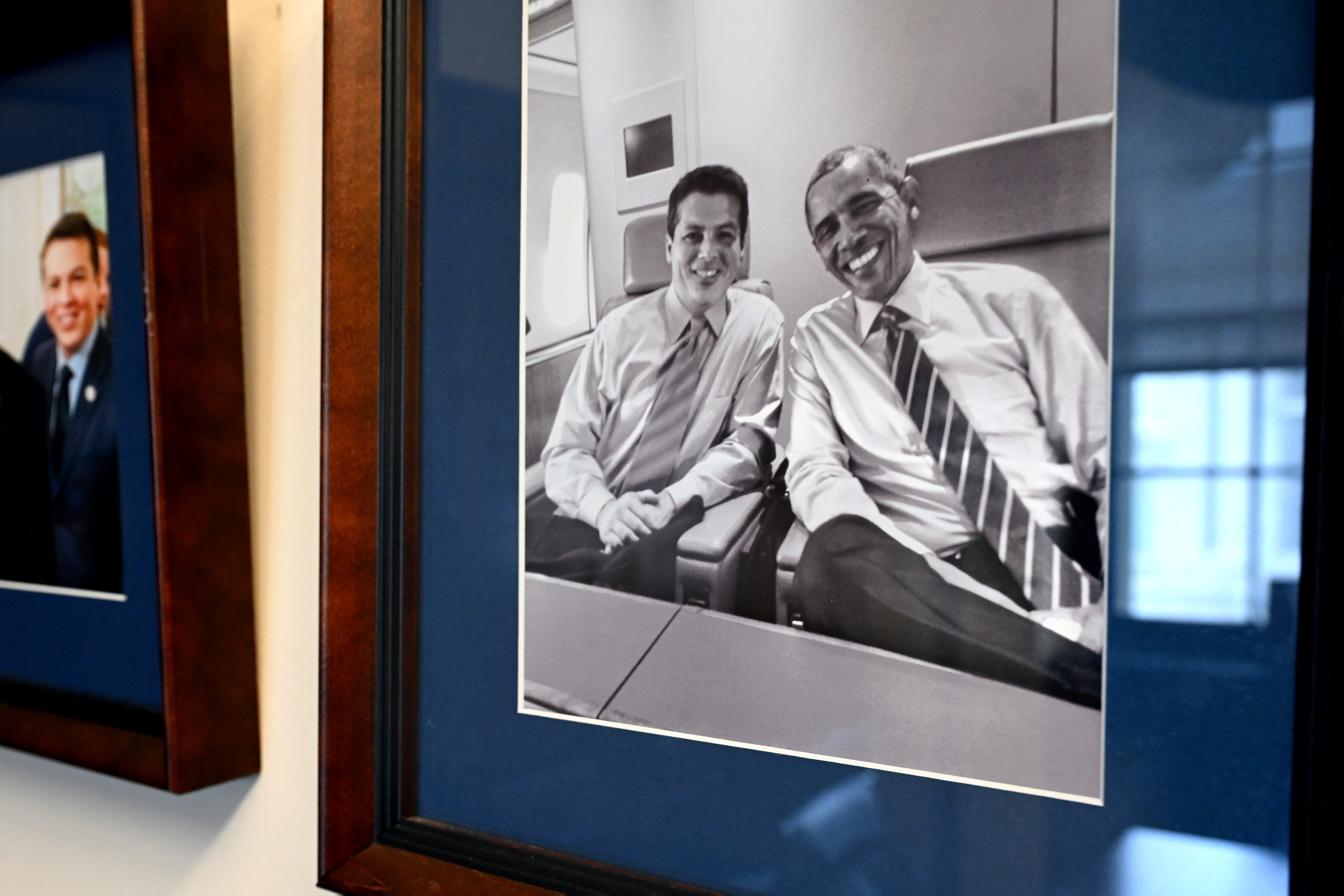
A painting of former U.S. Rep. William H. Gray III hangs in the hearing room of the House Committee on the Budget on Capitol Hill. It’s been 40 years since a Philadelphia lawmaker led a House committee. A photo of U.S. Rep. Brendan Boyle with former President Barack Obama on Air Force One hangs in his office on Capitol Hill in Washington, D.C.
But Boyle has not been shy about airing frustrations with Fetterman, whose term is up in 2028, sparking speculation Boyle could have an interest in a run against him.
Boyle said he avoided criticizing Fetterman until this spring, when the senator’s positions started to directly conflict with the party messaging he was pushing out.
“As I was doing TV opportunity after TV opportunity, what I increasingly found was that the clip they would show before I would be asked the question wouldn’t be a clip of what Donald Trump had said; it would be a clip of what my state’s Democratic senator had said,” Boyle said. “And I obviously would have to combat it.”
Fetterman has embraced an independent streak as a purple-state senator, often willing to work with the GOP. While pleasing to voters eager to see compromise and bipartisanship in a tenuous moment in Washington, it has also alienated some progressives.
Boyle said when it comes to the Senate, “I don’t rule anything in and I don’t rule anything out.”
If he were to run, a challenge could be building his statewide profile. He is still relatively unknown outside Philadelphia, though he has proven to be a prolific fundraiser. Today’s politics also tend to elevate showmen and outsiders, while Boyle has the more traditional cadence of an establishment politician — disciplined, polished, and most compelling when he speaks off-script.
Some local Philadelphia Democrats have criticized Boyle’s voting record on immigration, arguing it has not reflected the interests of the Latino community he represents in his majority-minority district. Boyle voted for the bipartisan Laken Riley Act, which requires the Department of Homeland Security to detain noncitizens who are arrested or charged with certain crimes, often forgoing due process. He was one of 46Democrats in the House along with 12 in the Senate, including Fetterman, to support the GOP-led bill.
“I have the same criticism as I do of Josh Shapiro: I wish he would take a stronger stance on immigration,” said State Rep. Danilo Burgos, who represents North Philadelphia. At the same time, Burgos credited Boyle as being a “good partner in our community” who always returns phone calls and texts.
For now, Boyle keeps an extremely busy schedule. The day of the budget hearing, his schedule stretched over 15 hours. He hustled from a meeting with Social Security and Medicaid experts to a floor vote to release the Jeffrey Epstein files.
Back in his office, where Eagles throw blankets, Phillies pennants, and a painting of Donegal, Ireland, his father’s home county, decorate the space, he sat down for his final meeting of the day.
Gwen Mills, the international president of UNITE HERE,a labor union that represents hospitality workers, wanted advice on how to translate Democrats’ work in Washington to members frustrated with both parties.
“Talk about affordability and how Republicans are making it worse — with the so-called beautiful bill,” Boyle suggested, running through some numbers and data before offering up a simpler sound bite:
“It boils down to life in America is just too damn expensive right now.”
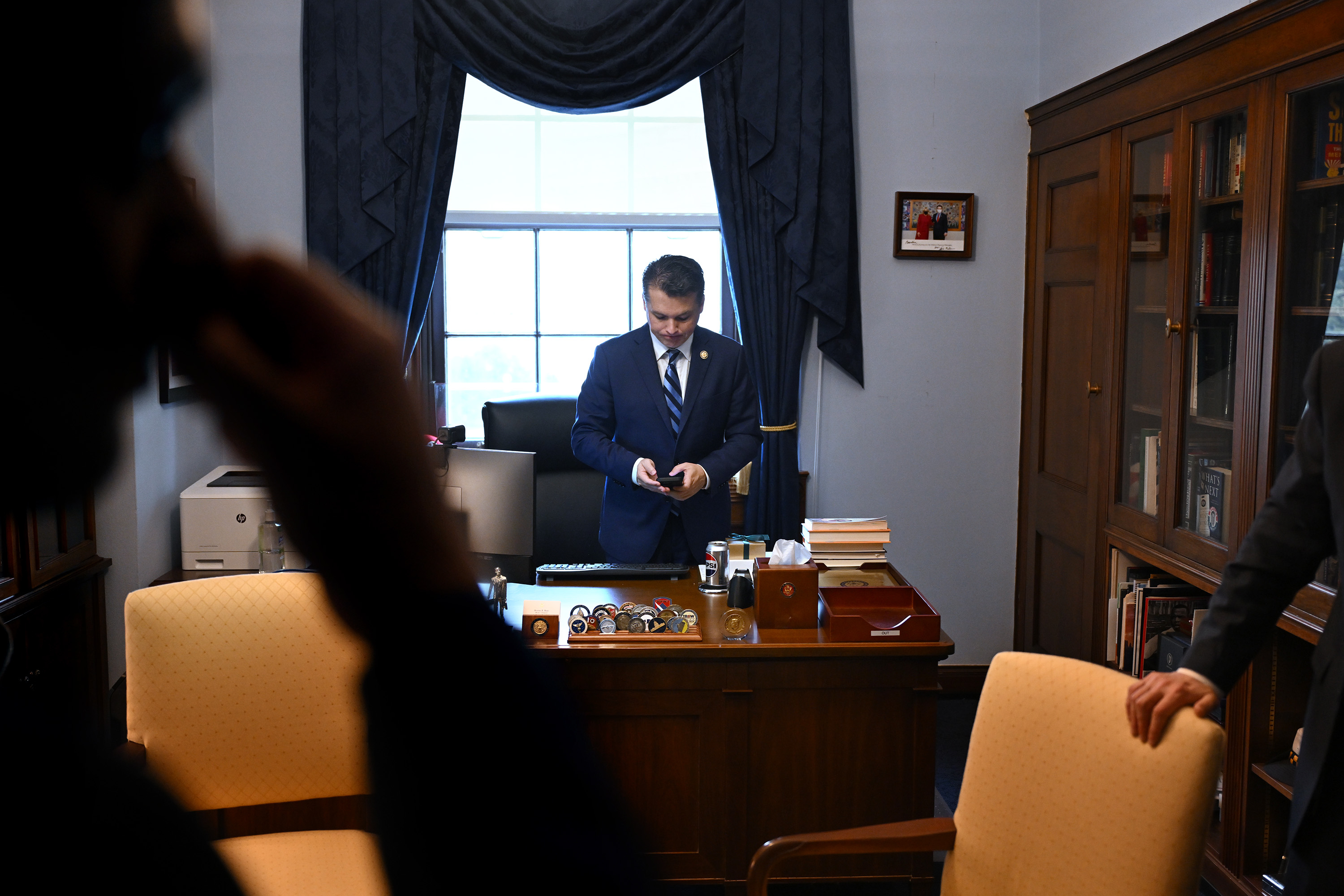
U.S. Rep. Brendan Boyle checks his phone before leaving his office on Capitol Hill in Washington, D.C. Tuesday, Nov. 18, 2025.
I’m always reluctant to talk about upcoming columns, because in this twisted era everything changes at the drop of a MAGA hat, and I hate to jinx things. But as of now, I’m booked for a trip to Charlotte (or Raleigh?…I’ve already jinxed it, maybe) this coming weekend, where I hope to report from the front lines of the Border Patrol’s latest big-city invasion that has terrorized the immigrant community in North Carolina. So I’m going to spend a couple days reading up on what to do in a tear-gas attack, and I’ll see you again this weekend.
Fearless college kids are saving journalism. Grown-ups? Not so much
Editions of the Indiana Daily Student in the student media area in Franklin Hall on Indiana University’s campus on Oct. 14.
In American journalism’s year of the bended knee, nobody would have been surprised if the student editors of the Harvard Crimson followed the sorry example of major outlets like CBS News or the Washington Post in groveling before the rich and powerful — in this case, their ex-university president and still plugged-in professor Larry Summers.
Earlier this month, Summers took to social media (the Elon Musk-owned X, of course) with a rant against the student-run paper at the Ivy League school he once helmed, linked to an article by conservative commentator (and former Crimson editor) Ira Stoll accusing the Crimson of biased coverage in favor of Palestine. Summers said ominously, “I do hope alumni trustees will investigate and take any necessary steps lest a problematic situation deteriorate any further.”
But instead ofbacking down, Harvard’s student journalists stepped up. When the emails of the late financier and sex fiend Jeffrey Epstein, released last week by a House committee, proved to be riddled with his communications with Summers — long after Epstein had pleaded guilty to teen sex trafficking in Florida — the Crimson produced the most in-depth takedown of any media outlet, anywhere.
“As Summers Sought Clandestine Relationship With Woman He Called a Mentee, Epstein Was His ‘Wing Man’” was the blistering headline on the article by undergraduates Dhruv T. Patel and Cam N. Srivastava. It described, in excruciating detail, the married Summers’ missives to Epstein about his efforts to woo a much younger Chinese economist on campus whom he was mentoring (and whom the former U.S. treasury secretary and his felonious friend code-named, with a racism they thought would remain forever private, as “peril.”)
Take that to the alumni trustees, Mr. Summers!
With a devastating kicker that shows Summers still emailing Epstein up until 1:27 p.m. of the day before his pal was busted on new federal sex charges in 2019, the Crimson article went viral over the weekend. By Monday morning, Massachusetts U.S. Sen. Elizabeth Warren was calling for Summers’ ouster from his faculty post. By Monday night, a “deeply ashamed” Summers announced that he’s pulling back from his public commitments, although he plans to continue teaching.
The students’ reporting was another win for truth, justice, and the American way — but not an isolated incident. In recent years, as mainstream journalism looks increasingly weak and flabby in the face of U.S. authoritarianism, and with college campuses on the front lines of a culture war, scribes in their teens and early 20s — burning with youthful idealism and the freedom of not much to lose — have raced into the void.
Some 3,000 miles from Harvard Square, the student journalists at the Stanford Daily stood their ground after one of its reporters was charged with three felonies, at the behest of a top university administrator, for attempting to cover a pro-Palestinian protest on the California campus. Under increasing public pressure, the charges were dropped in March — another triumph for the paper whose 2022 investigative reporting into research irregularities took down the university president.
In the heartland, the editors of the Indiana Daily Student at that state’s flagship public university last month stood up to school administrators banning their print editions, blasting the move in a front-page editorial that said “telling us what we can and cannot print is unlawful censorship.” The students, who worked with their peers at nearby Purdue University to publish a special issue that circumvented the ban, rallied support from prominent alums and got the school to reverse course.
“I think that many of these college journalists are laser-focused on their beats, are developing great sources among administrators, faculty and students, and are unfazed by the possibility that their stories might piss off a valued source or two,” Columbia Journalism School professor Bill Grueskin, who covered the Stanford fracas for Columbia Journalism Review, told me Monday. “In other words, they’re doing the things that the best reporters do. They’re just not able to buy a beer (legally, at least) when their story shakes up the world.”
I know what some of you are thinking here. Investigating corruption or misconduct among university leaders, or fighting for a free press…aren’t these college students just doing what any journalist worth their saltwould do? Well, yes and no.
Consider those Epstein emails that continue to dominate the news. It turns out that two prominent journalists corresponded frequently with the convicted sex creep: the “palace intrigue” access journalist Michael Wolff, and a soon-to-be-fired New York Times business reporter, Landon Thomas Jr. The missives suggest they had zero interest in reporting on Epstein’s proclivity for underage girls but very much wanted the access to the rich and famous that jeevacation@gmail.com offered.
And it gets worse. Thomas actually solicited a $30,000 donation from Epstein to a favored charity — a severe ethical breach that cost him his job in America’s most prestigious newsroom. Wolff, meanwhile, was offering Epstein advice on how to leverage — in essence, blackmail — the sitting U.S. president, Donald Trump. At the same time, he was pushing a business venture that would link him not only with Epstein but another man later convicted of sex crimes, filmmaker Harvey Weinstein. It seems like both conflicted journalists wanted to play in the big leagues with the much richer people they were supposed to watchdog.
This is something that too many elite journalists share with the increasingly conflicted corporations that employ them: a desire to comfort the comfortable in return for access, or prestige, or money — and to avoid getting sued, which might jeopardize those first three things.
How else to explain major TV networks like CBS or ABC, owned by corporations with myriad issues before the federal government, settling frivolous lawsuits by Trump for millions of dollars, or the similarly conflicted Jeff Bezos telling his Washington Post to spike its endorsement of Kamala Harris, or the mealy-mouthed “both sides” reporting on rising authoritarianism that plagues so many elite newsrooms of the traditional media?
The late, great Kris Kristofferson told us that freedom’s just another word for nothing left to lose, and maybe that simple explanation has a lot to do with the bravery of college journalists — that they are freer to question authority than folks with a mortgage and worries about paying for their own kids to attend a top school.
Still, it’s important to understand that most of the rot in modern mainstream journalism — too much consolidation in the hands of too few conglomerates with too much at risk to be seen as anti-regime — is institutional. We should strive to make something great out of the fact that the next generation of American journalists has arrived with smarts, savvy, and a moral compass yet to be worn down by late-stage capitalism.
Our challenge, as a society, is to tear down the decrepit structures of the corrupted old media and build a new one that rewards independent journalists who actually afflict the comfortable, and offers them incentives to keep doing that instead of cutting venture-capitalism deals with the folks they allegedly cover. Most of today’s college journalism majors would never trade emails with the likes of Jeffrey Epstein — except to take him down.
Yo, do this!
The stroke of timing behind Ken Burns’ latest documentary epic, The American Revolution, which is currently running this week on PBS stations like WHYY here in Philadelphia and also streaming, was supposed to be the 250th anniversary of the conflict that created the United States. But the project has taken on much greater relevance in a fraught present, when folks are heatedly arguing just what the Founders’ American Experiment is really all about. Critics have praised Burns and his skilled team for blending the ideals and leadership of the George Washingtons and Thomas Paines with the realities faced by everyday folk, including indigenous and enslaved people.
Personally, I’ve been embroiled in my nostalgia for a more recent revolution — the cultural and musical explosions that occurred in 1966. I’ve been listening to the audiobook about that tumultuous year — 1966: The Year the Decade Exploded — by the British author Jon Savage, whose later book on the year 1971 was the basis for an outstanding but largely ignored documentary series on Apple TV, But 1971’s classic rock wouldn’t have happened without the cultural pioneers and a youthful clamor for liberation that came five years earlier. The book is an engrossing reminder that change is possible.
Ask me anything
Question: Now that People Magazine has revealed the disgusting “piggy” story, why isn’t this atop every news outlets coverage? We spent 3 full weeks on Biden’s age, a week on his pardon of his son with such moral outrage from every outlet. This doesn’t even get covered? — BigTVFan (@bigtvfan.bsky.social) via Bluesky
Answer: The episode that BigTVFan is referring to occurred with a gaggle of journalists about Air Force One, but just started getting viral attention Monday night. It is, indeed, shocking to watch. When a Bloomberg woman journalist pressed Donald Trump on the Epstein files, the president erupted. “Quiet! Quiet, Piggy!” Yes, this should be a front-page story in the traditional media, and not only because of the stunning sexism (when the subject is Epstein, no less!) and the regal arrogance, but also this: the man who’s followed around by the nuclear suitcase seems to be losing his grip on reality. Monday afternoon, Trump spoke to a gathering of franchisees of the fast-food addiction that may be just one reason why nobody believes he only weighs 16 ounces more than Jalen Hurts, McDonald’s, and was at times beyond incoherent. Yet Trump’s rapidly deteriorating mental state remains mostly off-limits for the elite media. It’s a massive error of omission that the world will look back on and regret.
What you’re saying about…
It’s funny how one week can feel like a decade in 2025. Last week’s question about the eight senators (seven Democrats and an independent) who cut a deal to end the long government shutdown drew a huge response from folks fired up about an issue that now almost feels like ancient history after the Epstein email release. Readers were passionate but divided. Certainly many felt the eight senators had caved in the worst possible way. An outraged Freddi Carlip wrote that “most people wanted to do what was best for Americans who are hurting and that is to stand up to bullies.” But a number of you thought the opposition had few real options but to deal from a weak hand. “This was always going to end with the government opening under the black flag of the Big Ugly Bill,” wrote Kent Dietz. “Oft repeated but true: elections have consequences.”
📮 This week’s question: It’s all Epstein all the time, so let’s talk about it. Do you think Trump has sincerely flip-flopped and the relevant files will soon be released? Or is the White House still playing a long game aiming to keep Epstein’s secrets buried with him? Please email me your answer and put the exact phrase “Epstein files” in the subject line.
History lesson on ‘Charlotte’s Web’…and fascism
U.S. Border Patrol Commander at large Gregory Bovino, right, looks on as a detainee sits by a car Monday, in Charlotte, N.C.
Nobody reads any more, at least not to the end. That’s been driven home this autumn by several efforts from tech bros and other leaders of our dystopia falling flat on their face with their attempts at literary allusions. A viral post on Bluesky recently mocked the Icarus Flying Academy, whose founders may be blissfully unaware that their Greek mythological namesake flew too close to the sun and crashed. On Monday, gazillionaire Jeff Bezos also invoked ancient Greece by announcing his AI startup Project Prometheus, invoking an inventor who was ultimately bound to a rock by Zeus for his overreaching. Then there’s the bad people behind the U.S. Border Patrol and its inhumane mass deportation drive, who took their horror show to North Carolina this past weekend with their “Operation Charlotte’s Web.”
The “brains” behind the BP’s masked goon squad, Gregory Bovino, named the operation — which netted 81 detainees in its first Saturday during a chaotic surge through suburban lawns and Home Depot parking lots — after the 1952 classic children’s novel by E.B. White about a farm, a pig, and the compassionate spider, Charlotte, who saves the pig’s life. Why? Because Bovino’s secret police force are ensnaring scores of immigrants in their web. In Charlotte, N.C. Get it? Bovino even took to social media’s X with a wildly out-of-context quote from the novel: “Wherever the wind takes us. High, low. East, west. North, south. We take to the breeze, we go as we please.”
In a viral essay, the writer Chris Geidner of the excellent site LawDork demolished Bovino’s literary aspirations for his police-state operation. His piece went well beyond the obvious point that a children’s novel that centers on a spider’s quest to protect someone different from her — a pig — from his human predators is the 180-degree polar opposite from the web of inhumanity that Team Bovino is spinning in Charlotte, terrorizing the Latino community there. Geidner notes that much of E.B. White’s wider work was in opposition to the very fascism that’sbehind the mass deportation drive of Bovino and his ultimate boss, Donald Trump.
Geidner quotes White from a 1940 essay, as Adolf Hitler’s stormtroopers were advancing across Europe: “I am in love with freedom and that it is an affair of long standing and that it is a fine state to be in, and that I am deeply suspicious of people who are beginning to adjust to fascism and dictators merely because they are succeeding in war. From such adaptable natures a smell rises. I pinch my nose.”
White, and his fictional Charlotte, would have done more than pinch their nose from the stench of this operation in a proud city that shares its name with a heroic spider. For sure, Bovino’s crimes against literature pale in comparison to his ongoing crimes against humanity. But he may discover that the rapidly spinning American thread of community and common decency that is resisting mass deportation is the true sequel to Charlotte’s Web.
What I wrote on this date in 2018
It was Mississippi’s most famous writer, William Faulkner, who wrote, “The past is never dead. It’s not even past.” Seven years ago on this date, I wrote about how a justice-denied 1955 murder of a Black man trying to deliver absentee ballots to the county courthouse in Brookhaven, Miss., haunted the modern Senate campaign of that town’s GOP U.S. Sen. Cindy Hyde-Smith. I wrote: “Four years after [Lamar Smith] was killed, a baby girl was born in Brookhaven named Cindy Hyde. Over the next 59 years, she immersed herself in the politics of a community that bitterly refuses to concede the just cause that Lamar Smith died for.” Read the rest from Nov. 18, 2018: “Why the blood of a 1955 Mississippi murder drenches today’s U.S. Senate race.”
Recommended Inquirer reading
Only one column this week, and as you might expect it drilled deeply into the true meaning of the Jeffrey Epstein emails that have dominated the headlines. I went beyond the suggestive comments about Donald Trump to look at the deeper moral decay of the rich and famous who continued to seek out Epstein and his connections years after his Florida guilty plea to child prostitution charges. The missives from billionaires and political insiders also reveal their growing — and justified — worries that the public may be reaching for pitchforks.
The John Fetterman saga never ends, nor does Pennsylvania readers’ bottomless fascination with his decade-plus odyssey from outspokenly progressive mayor of struggling Braddock, Pa., to the U.S. Senate, where he is increasingly at odds with his fellow Democrats about practically everything. The Inquirer’s coverage of revelations in Fetterman’s new autobiography, including his long-running feud with Gov. Josh Shapiro, was one of the most widely read stories last week. So was what happened next, as renewed heart problems caused Fetterman to fall flat on his face and again be hospitalized. There’s three more years until the end of Fetterman’s term and an all-but-certain primary challenge from his political left. No one is going to cover this better than The Inquirer, so why not subscribe today?
By submitting your written, visual, and/or audio contributions, you agree to The Inquirer‘s Terms of Use, including the grant of rights in Section 10.
Fetterman has not announced whether he will run for reelection in 2028, but the progressive party put out a public declaration Tuesday pledging to endorse — and, if necessary, recruit and train — a challenger.
The announcement, first reported by The Inquirer, is a remarkable step for the left-leaning organization to take more than two years before an election and speaks to the degree of frustration with Fetterman among progressives.
“At a time when Donald Trump and Republicans in Congress are doing everything they can to make life harder for working people, we need real leaders in the Senate who are willing to fight for the working class,” Shoshanna Israel, Mid-Atlantic political director for the Working Families Party, said in a statement.
“Senator Fetterman has sold us out, and that’s why the Pennsylvania Working Families Party is committed to recruiting and supporting a primary challenge to him in 2028.”
Fetterman did not immediately return a request for comment about the Working Families Party’s announcement.
The Working Families Party is a progressive, grassroots political party that is independent from the Democratic Party, but it often endorses and supports Democratic candidates.
Though he supports extending federal healthcare subsidies, Fetterman has long said he is against government shutdowns as a negotiating tactic and will always vote to get federal coffers flowing and federal employees paid.
“I’m sorry to our military, SNAP recipients, gov workers, and Capitol Police who haven’t been paid in weeks,” Fetterman said in a post on X after the vote. “It should’ve never come to this. This was a failure.”
Already one of the most well-known and scrutinized senators in Washington, Fetterman was back in the spotlight this week as he returns to work following a hospitalization after a fall near his home in Braddock. His staff said he suffered a “ventricular fibrillation flare-up” and hit his face, sustaining “minor injuries.”
Ventricular fibrillation is the most severe form of arrhythmia — an abnormal heart rhythm — and the most common cause of sudden cardiac death.
He spent Thursday and Friday in the hospital and was released Saturday, saying he was feeling good and grateful for his care with plans to be back in the Senate this week.
Working Families on the offensive
Israel said in addition to the online portal, the party will hold a number of recruitment events across Pennsylvania in the coming months to train candidates and campaign staff on the basics of running for office and managing a campaign with hopes of finding quality candidates for a variety of races ahead of 2028.
The party is also pledging a robust ground game and fundraising for a potential challenger it supports.
It wouldn’t be the first time the Working Families Party has opposed Fetterman. In the 2022 Democratic Senate primary, WFP endorsed State Rep. Malcolm Kenyatta (D., Philadelphia) over Fetterman, who was lieutenant governor at the time.
The book makes no mention of a reelection bid but laments the ugly politics he experienced in both the Democratic primary and his general election race against Mehmet Oz.
Fetterman said in the book that Oz’s attacks during his rehabilitation from his stroke became so mentally crushing he felt he should have quit the race.
And he grapples with criticism he faced during the primary surrounding a 2013 incident in which he wielded a shotgun and apprehended a Black jogger he suspected of a shooting. Fetterman calls the backlash an early trigger of his depression.
Fetterman has said he will remain a Democrat even as Republicans have lauded his independent streak and willingness to work with the GOP.
Earlier this year, Fetterman was the first Senate Democrat to support the Laken Riley Act, a Republican immigration bill that requires U.S. Immigration and Customs Enforcement to detain and take into custody individuals who have been charged with theft-related offenses, even without a conviction. Critics of the law say it severely cracks down on due process for immigrants.
Fetterman was the sole Senate Democrat to vote to confirm Attorney General Pam Bondi, who was one of Trump’s attorneys when he tried to overturn the results of the 2020 election.
“He has repeatedly shown disregard for the rights of Palestinians,” the Working Families Party release said. “Refusing to support a two-state solution and breaking with the rest of the Democratic caucus on Israel’s illegal annexation of the West Bank.”
Staff writer Aliya Schneider contributed to this article.
Sen. John Fetterman is back to work after recovering from a fall that required hospitalization.
Fetterman (D., Pa.) was hospitalized last week following a fall after he experienced a heart issue, an unnamed spokesperson announced Thursday. On Saturday, Fetterman shared a selfie after being released from the hospital with a coffee in hand.
Come Monday he was back in the public eye, appearing at an event hosted by the Jewish Federations of North America (JFNA)in Washington. His presence sent the message that he’s back in commission.
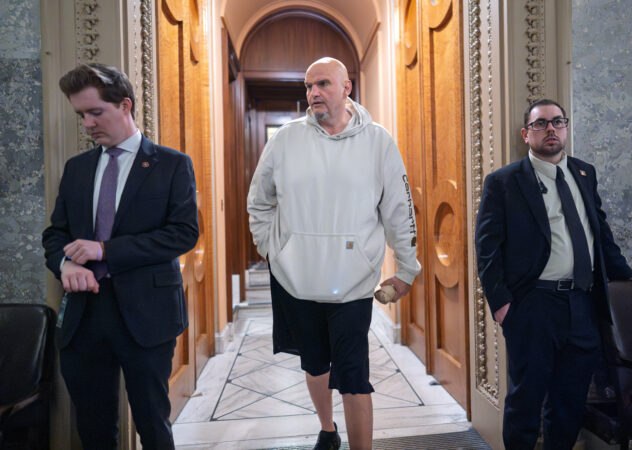
Photos posted by attendees on social media show the senatorwearing his signature hoodie and shorts.
His face is still healing from the fall after what he described in his Saturday post as “20 stitches later and a full recovery.”
“See you back in DC,” he said on X.
20 stitches later and a full recovery, I’m back home with @giselefetterman and the kids.
I’m overwhelmed + profoundly grateful for all the well-wishes.
Truly.
Grateful for @UPMC for the incredible medical care that put me back together.
Fetterman’s Monday appearance was part of the JFNA’s General Assembly — which began on Sunday and will continue through Tuesday. The three-day event is described on the group’s website as a gathering for Jewish community leaders, professionals, philanthropists, and community partners to “address pressing issues, explore best practices, and cultivate innovative solutions.”
Fetterman sat on stage during a session called “Monday Morning Plenary: Protecting Our Communities Today.” It was advertised as giving attendees the opportunity to “hear from leaders on the front lines who are building stronger systems of protection and trust.”
Other guests listed alongside Fetterman for the morning program included Annie Sandler, president of the Joint Distribution Committee; the Rev. Juan Rivera, president of the Hispanic Israel Leadership Coalition; Zibby Owens, founder of Zibby Media; and Olivia Reingold, staff writer at the Free Press. The Free Press is a center-right outlet that Fetterman had provided an exclusive excerpt of his book to ahead of its release.
Steven Schimmel, executive director of the Jewish Federation of Central Massachusetts, said in a post on X that Fetterman shared on the JNFA stage that his wife Gisele’s free store “has been vandalized by anti-Israel activists.”
His unnamed spokesperson had said his fall last week was due to a ventricular fibrillation “flare-up.” Ventricular fibrillation is a life-threatening heart issue. The incident comes after the senator suffered a near-fatal stroke in 2022.
The medical incident came just two days after he released his new memoir, Unfettered, in which he discusses his recovery from the stroke and his battle with depression that followed.