Tag: Josh Shapiro

  • Gov. Shapiro can’t be sued by his Abington neighbors over a property dispute, judge rules. But Josh Shapiro, a homeowner, can.

    Gov. Shapiro can’t be sued by his Abington neighbors over a property dispute, judge rules. But Josh Shapiro, a homeowner, can.

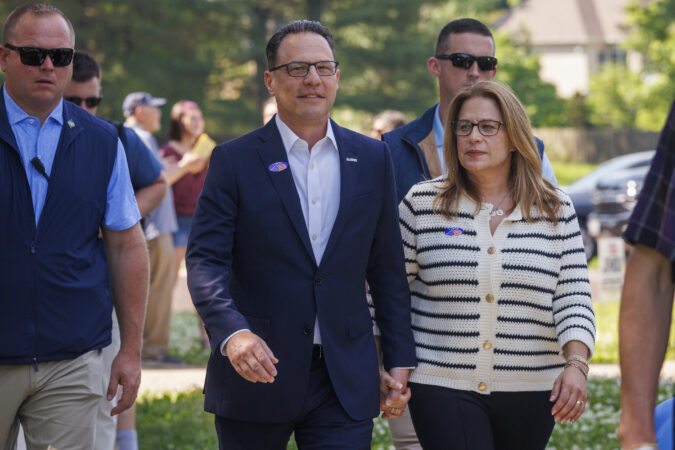
    A federal judge had some good news this week for Josh Shapiro, governor of Pennsylvania, but not so much for Josh Shapiro, resident of Montgomery County.

    Shapiro, as governor, cannot be sued in his official capacity in a dispute over a strip of yard between his and his Abington Township neighbors’ adjoining properties, U.S. District Judge Harvey Bartle III ruled Tuesday.

    But Shapiro and his wife, Lori, will still have to face their neighbors in federal court as homeowners, Bartle also determined.

    The conflict came into public view in February, when Jeremy and Simone Mock, whose backyard abuts the Shapiros’ lawn in a tree-lined neighborhood near Pennsylvania State University’s Abington campus, sued Shapiro — both as governor and in his individual capacity — and George Bivens, acting Pennsylvania State Police commissioner. The lawsuit alleged the officials were illegally occupying part of the Mocks’ yard to build an eight-foot security fence last summer in what they claimed was an “outrageous abuse of power” that violated their constitutional rights. Bartle dismissed those claims in his ruling Tuesday, in what Shapiro’s administration called a major win.

    But while Shapiro and Bivens are immune from the federal lawsuit as state officials, Shapiro as an individual and his wife are not, Bartle’s opinion said.

    “We are pleased that the court has dismissed the claims against the office of the governor and the Pennsylvania State Police, and recognize that the allegations against these officials are without merit,” said Rosie Lapowsky, a spokesperson for Shapiro. “The Shapiros are confident that the facts will ultimately show that the Mocks’ remaining claims are meritless and politically motivated and will fail.”

    The dispute in federal court over the 2,900-square-foot strip of land disrupted the otherwise sleepy suburban neighborhood and led to a separate lawsuit in Montgomery County Court filed by the Shapiros, in their personal capacities, against the Mock family. Shapiro’s office has called the Mocks’ legal effort a political stunt, in addition to other efforts by Republican officials to scrutinize the safety measures state police say are needed to keep Shapiro and his family safe.

    The dueling lawsuits came in the wake of the attempted murder of Shapiro in April 2025 at the state-owned governor’s residence in Harrisburg, when a man firebombed the mansion on the first night of Passover while the governor and his extended family slept inside.

    The attack prompted more than $33 million in security upgrades to the state-owned governor’s residence, in addition to $1 million in upgrades and landscaping to Shapiro’s personal home in Abington Township, where he and his family live part-time.

    Shapiro’s safety remains a priority for state police, as one of the nation’s most prominent Jewish elected officials. A Delaware County man was arrested Wednesday for threatening to burn down the governor’s residence, state police said.

    But the Mocks’ attorney, Wally Zimolong, said the lawsuit at hand is about property rights and due process, and called Bartle’s ruling a “strong decision.”

    “Make no mistake about it,” Zimolong said, “a federal court has said that the sitting governor of Pennsylvania can be held liable for damages over constitutional violations.”

    The Delaware County lawyer who has represented high-profile Republican officials and candidates, including President Donald Trump, said it is “nonsense” to call the litigation political. Zimolong added that he hopes the Shapiros reconsider and attempt to resolve the case amicably.

    The conflict’s origins

    The dispute between the Shapiros and Mocks began last summer when, as part of a plan to build a security fence at the Abington house, a surveyor learned that a sliver of yard that the Shapiros had used for over two decades was actually on property belonging to the Mocks.

    After the Mocks rejected the Shapiros’ offer to buy the land, court fillings said, Pennsylvania’s first couple invoked a state law that allows a person to gain ownership of a property they have actively used for at least 21 years. The Shapiros have lived in their Montgomery County home for 23 years.

    “What followed was an outrageous abuse of power by the sitting Governor of Pennsylvania and its former Attorney General,” the Mocks’ February lawsuit said.

    (function() { var l = function() { new pym.Parent( ‘shapiroyard__graphic’, ‘https://media.inquirer.com/storage/inquirer/ai2html/shapiroyard/index.html’); }; if(typeof(pym) === ‘undefined’) { var h = document.getElementsByTagName(‘head’)[0], s = document.createElement(‘script’); s.type = ‘text/javascript’; s.src = ‘https://pym.nprapps.org/pym.v1.min.js’; s.onload = l; h.appendChild(s); } else { l(); } })();

    A security fence was purchased but never installed, SpotlightPA reported. Instead, contractors hired by the state began planting arborvitae-type trees and other plants on the Mocks’ property. State police also flew drones over the Mocks’ property, threatened to remove healthy trees, and chased away contractors, the Mocks alleged in the suit.

    The complaint also accused Shapiro of directing state police to patrol the property, and instructing the Mocks to leave the “security zone.”

    The Shapiros’ countersuit in Montgomery County asks a judge to find that they are the “legal and equitable owners” of the area in dispute, having tended to the land that borders their front yard for 23 years. That suit is pending and a judge is expected to rule on preliminary objections filed by Zimolong.

    Separately, the Shapiros and state attorneys filed motions asking Bartle to dismiss the federal complaint against them.

    This week, the judge partially obliged, finding the state officials to be immune from the lawsuit while allowing the case against the Shapiros to proceed.

    The judge also refused to freeze the federal case while the lawsuit in Montgomery County plays out, determining that the two cases are different enough to proceed.

    “The claims here extend far beyond a disagreement between neighbors over the metes and boundaries of their properties,” Bartle wrote.

  • Delco man arrested after antisemitic tirade and threats against Gov. Josh Shapiro, state police say

    Delco man arrested after antisemitic tirade and threats against Gov. Josh Shapiro, state police say

    A Delaware County man was charged Wednesday after allegedly making threats against Gov. Josh Shapiro during a visit to a state representative’s office, including a threat to “burn down … [Shapiro’s] mansion with him in it,” Pennsylvania State Police said.

    Police said the threats occurred when Richard John Franklin, 65, of Brookhaven, visited State Rep. Leanne Krueger’s legislative office in Brookhaven alongside his brother on Tuesday to dispute and request help with an unanticipated and unpaid tax bill totaling $19, according to the criminal complaint. When a staffer tried to assist Franklin in completing a form to waive the taxes, Franklin “became irate and crumbled up the paper,” police said.

    Franklin then began making threats the staffer believed were “threatening, harassing, and antisemitic in nature,” according to the complaint, including: “I guess I’ll pay that Jew. That Jew needs the money more than me” and “I’d like to burn down his [expletive] mansion with him in it.” Police said Franklin repeatedly referred to Shapiro as a “‘Jew’ multiple times in a negative manner.”

    State law enforcement officers charged Franklin with felony levels of terroristic threats and ethnic intimidation, in addition to lower-level charges of harassment and disorderly conduct.

    Shapiro, a Democrat who is among the most prominent Jewish officials in the country, has faced multiple threats of violence since becoming Pennsylvania’s top executive. In April 2025, a man broke into the state-owned governor’s mansion on the first night of Passover with a hammer and set several firebombs inside while Shapiro and his family were sleeping in a different part of the residence. The man, Cody Balmer, later pleaded guilty to attempted murder and was sentenced to 25 to 50 years in prison.

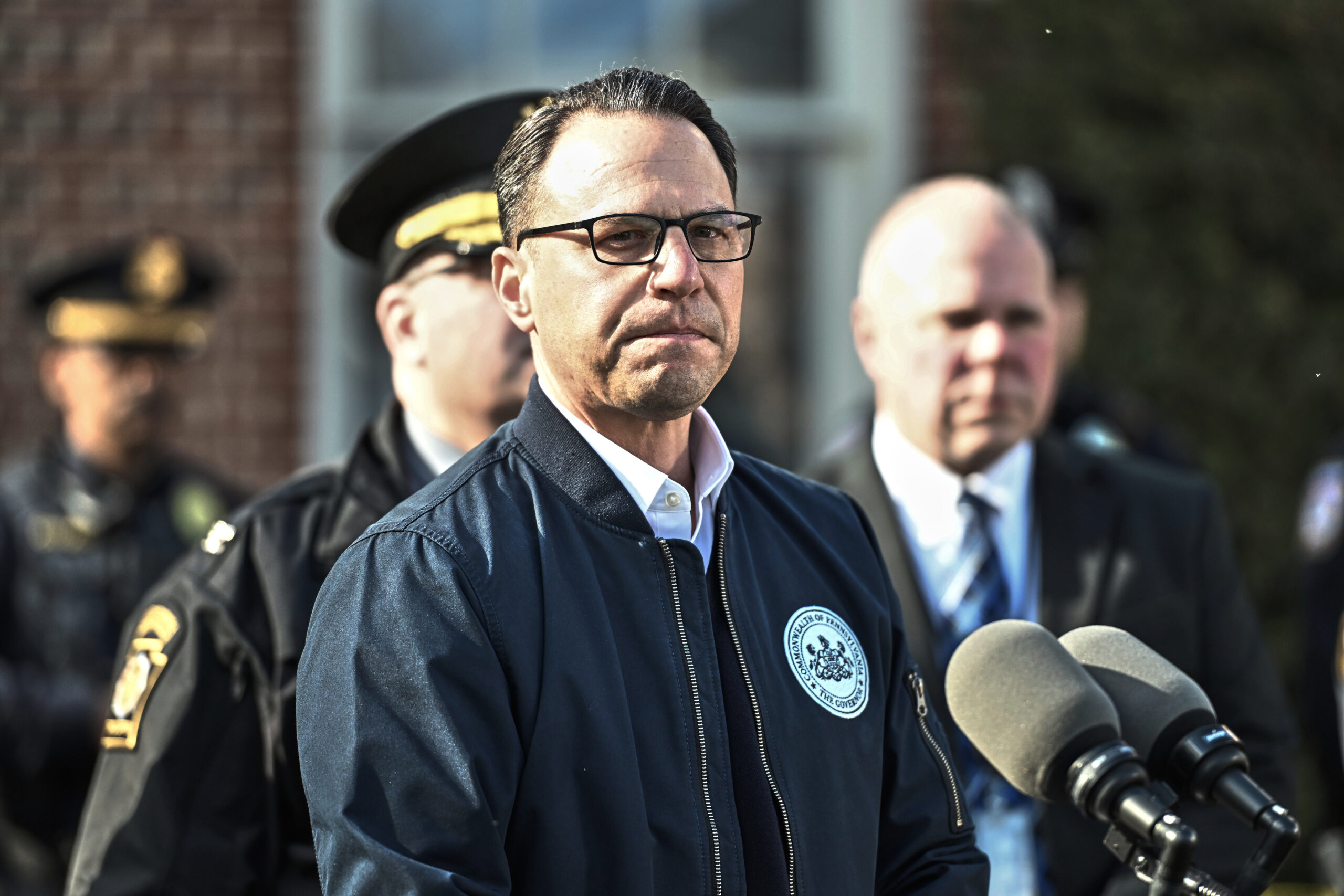
    Pennsylvania Gov. Josh Shapiro pauses during a news conference at the governor’s official residence discussing the alleged arson that forced him, his family and guests to flee in the middle of the night on the Jewish holiday of Passover, Sunday, Apr. 13, 2025, in Harrisburg, Pa.

    Early Wednesday, investigators from the state police political violence threat unit visited Franklin at his Brookhaven home, where he provided conflicting accounts of what occurred at Krueger’s office before ultimately admitting to “calling the Governor a ‘Jew’ in a negative manner” and added that his “brother told him he should not have made the statement,” according to the criminal complaint. Franklin denied making any threats toward Shapiro, but admitted to referring to the previous arson attempt at the governor’s residence during the outburst, police said.

    State police said they arrested Franklin without incident.

    Franklin’s brother, who witnessed the events at Krueger’s office, disputed the state police account and said his brother never threatened the governor.

    Leroy Franklin, 72, of Chester, said his brother visited the state representative’s office seeking information about a tax bill he had received, despite paying his state taxes through an accountant this year.

    After the brothers spoke to a staffer who did not have answers for them, Richard Franklin became upset and raised his voice, Leroy Franklin said.

    In a phone interview Wednesday, Leroy Franklin recalled his younger brother saying something to the effect of: “I’ve been on disability for 15 years, but I guess the state needs my money more than I do.”

    The two were together at Krueger’s office the entire time, Leroy Franklin said, adding that he did not hear his brother use an antisemitic slur. He also disputed that his brother threatened arson.

    “Anybody who said he did is lying,” Leroy Franklin said.

    Around 2 a.m. Wednesday, Leroy Franklin said, he received a call from his younger brother. Richard Franklin told him that police were at his apartment and he was not sure where they were going to take him, Leroy Franklin recounted.

    When the two spoke on the phone again later that morning, Leroy Franklin said, he learned police were taking his brother to jail.

    “I don’t know what the heck anyone is talking about,” Leroy Franklin said Wednesday. “This is a bit extreme, to put it mildly.”

    Richard Franklin was being held at the Delaware County prison with bail set at $100,000, according to court records. A preliminary hearing is scheduled for July 16, according to court documents. A lawyer for Franklin was not listed on court records.

    Franklin is a registered Democrat, Pennsylvania voting records show. He has no prior convictions in Pennsylvania.

    Shapiro’s office referred requests for comment about the incident to state police.

    In a statement Wednesday, State Police Sgt. Logan Brouse said the agency “takes threats against the lives of public officials seriously,” noting the state police political violence threat unit was created “to address the growing amount of ideologically motivated violence against elected officials.”

    The unit was created in May, after a Lebanon County man allegedly posted a “hit list” to social media targeting 20 state Democratic lawmakers. Adam Berryhill, 42, was arrested on May 6, after he was connected to an X account that posted a potential plan to attack the legislators. Some of the lawmakers named on the list said they had not been alerted to the threats against them, prompting state police leaders to update their communication protocols and create the investigations unit.

    Krueger (D., Delaware) referred a request for comment to a spokesperson for House Democrats.

    Nicole Reigelman, a spokesperson for House Speaker Joanna McClinton (D., Philadelphia), said in a statement that threats of political violence are becoming commonplace, “and every incident must be treated with the seriousness it deserves.”

    “Healthy democracies depend on robust debate and respectful disagreement — not threats, intimidation, or violence,“ Reigelman added. ”Political violence has no place in our communities, and Pennsylvanians must unite in condemning it whenever and wherever it occurs.”

  • Pope Leo XIV celebrates immigrants in speech to Philadelphia crowd amid clash with Trump ahead of 250th anniversary

    Pope Leo XIV celebrates immigrants in speech to Philadelphia crowd amid clash with Trump ahead of 250th anniversary

    Addressing a Philadelphia crowd live from the Vatican, Pope Leo XIV called for a “recommitment” to American ideals.

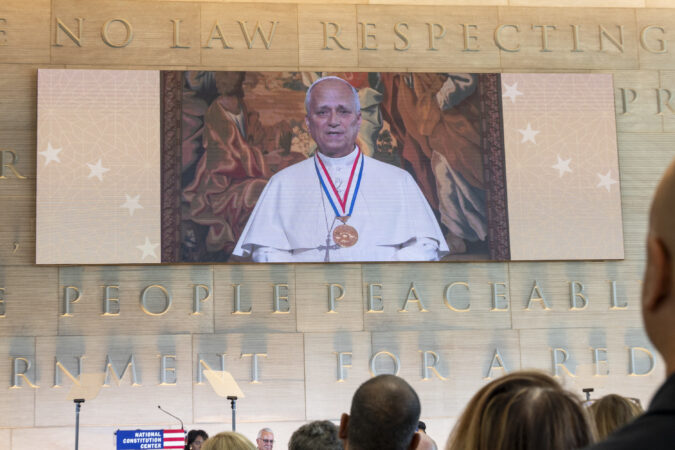
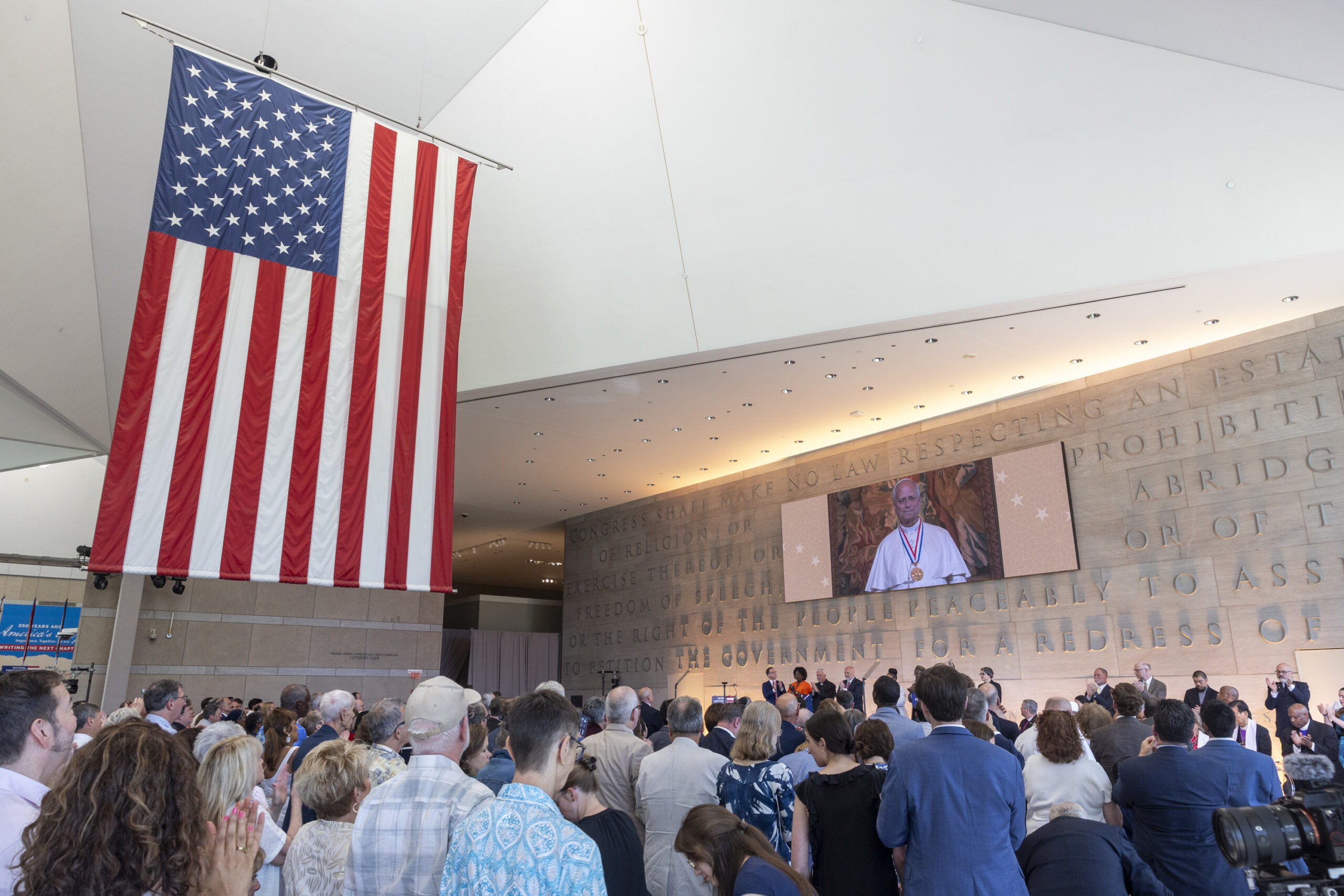
    The first U.S.-born pope delivered remarks virtually at an interfaith ceremony inside Philadelphia’s National Constitution Center on the eve of the United States’ 250th birthday to accept the center’s prestigious Liberty Medal.

    Facing a screen showing the live, cheering Philadelphia audience, the pontiff wore his Liberty Medal along with a cross around his neck.

    Leo, who grew up in Chicago and attended Villanova University, quickly pointed out his American roots, calling himself “a son of this great country.”

    “I join you in asking God’s blessings upon America’s future that the lofty ideals enshrined at the beginning of the Declaration of Independence may continue to guide the flourishing of the nation in unity, justice, and peace,” he said.

    Leo, who was elected pope last year, spent years serving the church in Peru and has been outspoken about calling for international peace. That’s landed him at odds with President Donald Trump’s administration on the issue of migrants, the war in Iran, and more.

    The pope leaned into some of those themes in his speech, even though he did not refer to the president directly.

    He nodded to his advocacy for humane treatment of immigrants and noted that the founders of the United States “made America a byword for freedom, as the country opened its doors to successive waves of immigrants, enabling them and their children to play their part in shaping the future of the nation.”

    He said the “love of freedom” in the United States has inspired the country “to look beyond itself and at great sacrifice to champion the cause of freedom beyond its own borders.” But he acknowledged that mission hasn’t been straightforward, noting that building a society that embodies such ideals “was not always easy and, in many respects, is still a work in progress.”

    The pontiff’s speech comes the day before he plans to visit Lampedusa, an Italian island known as a stop for migrants making the dangerous journey across the Mediterranean Sea from North Africa to Europe. His predecessor Pope Francis made his first official visit outside of Rome in 2013 to the same island and condemned the “globalization of indifference” toward migrants.

    Pope Leo XIV speaks at the Liberty Medal Ceremony at the National Constitution Center in Philadelphia on Friday.

    Julie Silverbrook, the chief content and learning officer for the National Constitution Center, emphasized in a Friday interview that Leo is a “global leader who has been uniquely shaped by American ideals.”

    “He has brought together people of different faith traditions, and through his ministry really reflected his belief in the inherent dignity of all human beings,” she said.

    Leo declined an invitation from Trump to the United States to celebrate the country’s 250th birthday on July Fourth, the New York Times reported. The first American-born pope opting to visit migrants instead sends a stark message as the president pursues his mission of mass deportations.

    But the pontiff’s participation in the Philadelphia program highlights his connections to the region, which isn’t lost on the National Constitution Center.

    The Philadelphia-based private nonprofit organization chose Leo for the award due to “his lifelong work promoting religious liberty and freedom of conscience and expression around the world — ideals enshrined by America’s founders in the First Amendment to the U.S. Constitution.” That, and also because he is the first pope born in the United States, and has connections to Philadelphia, Silverbrook said.

    “He was shaped by those freedoms … in much the same way that the Declaration of Independence was shaped by the city of Philadelphia, and of course a reflection of American values that have been carried globally,” she said.

    When a delegation from Philadelphia’s National Constitution Center met with Leo at the Vatican in April to present him with the medal in person, they also bore a few local goodies: a bundle of Villanova swag, a replica of George Washington’s Acts of Congress, and a Wawa tote bag filled with Tastykakes.

    “I think he very much so feels a connection to Philadelphia, both having been educated here, and I think in this semiquincentennial moment, I think the eyes of the world are on Philadelphia, and we’re thinking about the ideals that have emanated from this place for 250 years,” Silverbrook said.

    Leo, a 1977 Villanova alum, recently passed on a surprise message to graduates of his alma mater. Vince Stango, the interim president and CEO of the National Constitution Center, also went to the Augustinian university on the Main Line, which co-sponsored the NBC10 broadcast of the event along with the archdiocese and Malvern Prep.

    (From left to right) Gov. Josh Shapiro, Rev. Nelson J. Pérez, Mayor Cherelle L. Parker, Interim President & CEO of National Constitutional Center Vince Stango, Rev. Carolyn C. Cavaness, Imam Quaiser D. Abdullah, Rev. Luis A. Cortés Jr., and Rabbi Jill L. Maderer, pose for a photo at the Liberty Medal Ceremony at the National Constitution Center in Philadelphia, Pa., on Friday.

    Clashing with Trump

    The pope has contended that it’s up to each country to determine how they want to accept migrants while also denouncing the Trump administration’s “extremely disrespectful” treatment of them.

    He has also spoken out against Trump’s threats against Iran, and declined to participate in the president’s “Board of Peace” for Gaza’s reconstruction.

    In an April social media rant, Trump complained that he doesn’t “want a Pope who criticizes the President of the United States.” The president called the Catholic leader weak and accused him of “catering to the Radical Left.”

    Leo told reporters that month that he has “no fear, neither of the Trump administration, nor of speaking out loudly about the message in the Gospel, and that’s what I believe I am called to do, what the church is called to do.”

    In his Friday remarks, the pope made a call for unity but warned that a country should come together with “ideals that do not fade with the passing of time.”

    He called on the United States to recognize its values of “peace and prosperity, a country characterized by generosity and nobility of heart,” and said the values of “shared human dignity, equality, and the rights laid out in the Declaration of Independence” can help unite and guide the nation.

    The Liberty Medal

    The Liberty Medal was created in 1988 and has been hosted by the National Constitution Center since 2006.

    The award has gone to storytellers, philanthropists, civil rights leaders, and politicians on both sides of the aisle, such as Ukrainian President Volodymyr Zelenskyy, former Supreme Court Justice Ruth Bader Ginsberg, the Bushes, Malala Yousafzai, and Thurgood Marshall.

    The center describes its recipients as individuals who “strive to secure the blessings of liberty to people around the globe.”

    The process of selecting Leo began about a year ago, Silverbrook said.

    The speech was initially going to be projected on Independence Mall, but the event was moved indoors due to the extreme heat and livestreamed by the center online.

    Rich Russo, 63, a Fishtown resident who attended the event in person, called the experience “once in a lifetime.”

    “How many times do you get the pope talking to you?” said Russo, who works for a bank.

    Gov. Josh Shapiro, who is Jewish, and Mayor Cherelle L. Parker, a Baptist — both Democrats who have been outspoken about their own faiths — joined Philadelphia Archbishop Nelson J. Pérez and other religious leaders who made remarks on stage prior to the pope’s speech. Pennsylvania Attorney General Dave Sunday, a Republican, rang a replica Liberty Bell outside.

    “Philly is proud that the pope is a graduate of Villanova University who spent time living and working in our region,” Pérez said on stage. “Pope Leo knows us, and we feel like we know him, too.”

    “His influence, however, extends beyond Philadelphia,” the archbishop added.

  • I visited the Great American State Fair on the National Mall in D.C. It wasn’t great.

    I visited the Great American State Fair on the National Mall in D.C. It wasn’t great.

    WASHINGTON — It was blisteringly hot when I showed up at President Donald Trump’s much-ballyhooed Great American State Fair on the National Mall in honor of the nation’s 250th birthday.

    As I headed off to check in as a member of the media, a friend who’d accompanied me decided to wait at a lemonade stand.

    At first, I was a little concerned, wondering how I was ever going to find her. A lemonade stand on the National Mall in Washington, D.C., was bound to be mobbed on a scorcher of a day like the one we had on Monday.

    I needn’t have worried. It wasn’t that kind of party. Crowds were so thin that I quickly spotted her standing alone and eating a snow cone that cost a whopping $8. “Even on a hot day, there was no line at the lemonade stand,” pointed out my friend, Pamela Thomas of Pathfinders Travel, who had taken the train from Philadelphia with me.

    That should give you a pretty good idea of how it was at the so-called Great American State Fair, brought to us by Freedom 250, an organization created by President Donald Trump.

    Low crowds.

    High food prices.

    Lots of walking.

    The Great American State Fair was downright boring.

    Oh, there was an 110-foot Ferris wheel borrowed from the Smithsonian Institution. I watched people stand unsheltered under the blazing sun as they waited for their turn. But that’s the only carnival ride I saw.

    This wasn’t like any state fair I’d ever attended. Where was the merry-go-round? Where was the roller coaster? The cotton candy? The local beauty queens? The fair could use a quilting demonstration and band performances. I saw only one cornhole game.

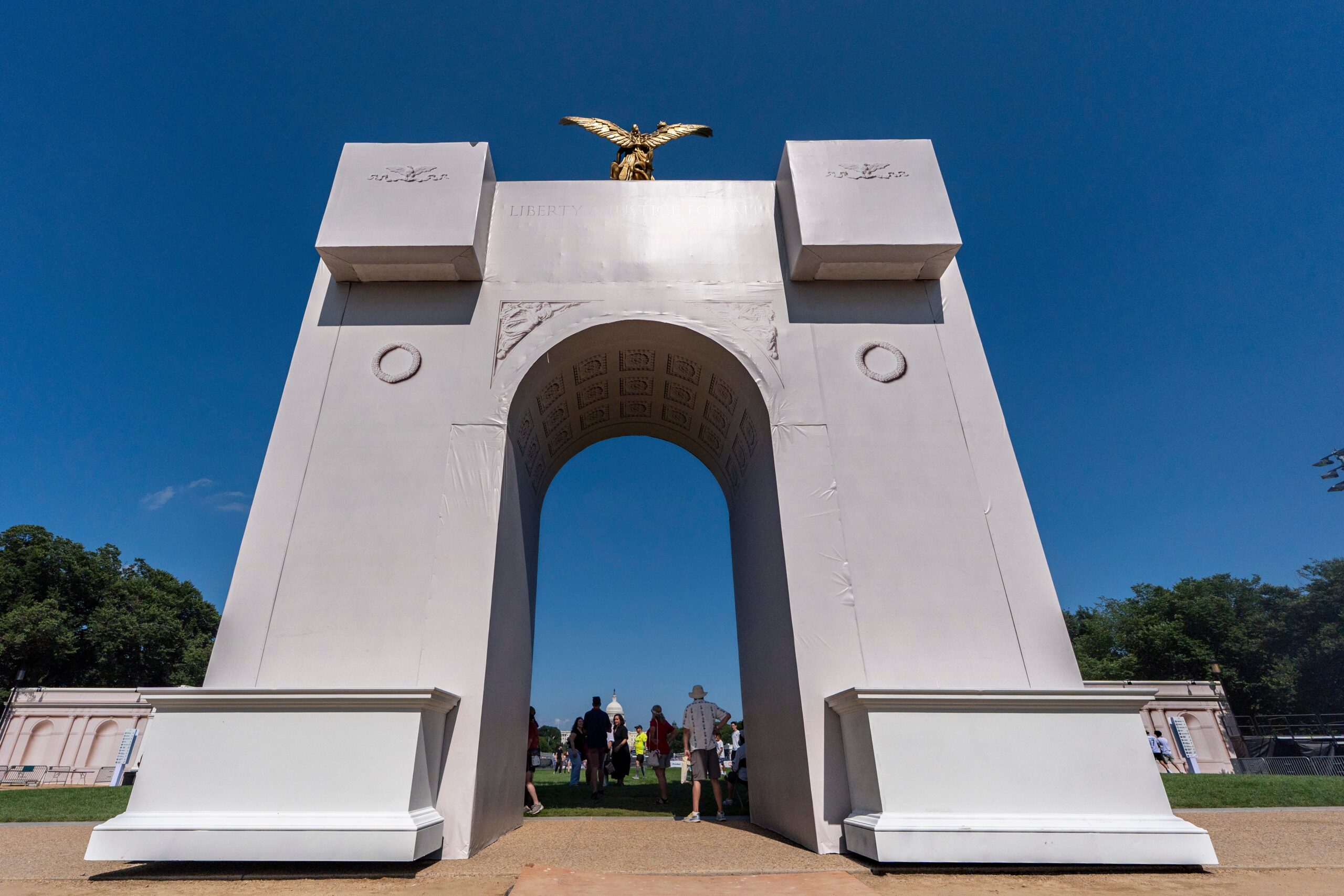
    A mockup of President Donald Trump’s proposed Triumphal Arch stands at the Great American State Fair on the National Mall on June 29.

    The so-called Great American State Fair needs a whole lot more fun and a whole lot less Trump.

    There wasn’t much for children to do besides have souvenir replicas of their new Trump passports stamped.

    I managed to find some shade while sitting on a folding chair inside an area called David’s Tent. As I cooled off, I listened to a woman onstage sing religious songs. Behind me was an aboveground swimming pool set up, ostensibly, for on-the-spot baptisms. In the spirit of inclusivity, there was also a candle-filled menorah positioned in the front of the tent.

    At one point, we made our way over to the Hawaii booth. Inside, all we saw was a large mural of the Aloha State that included a picture of former President Barack Obama that someone had defaced.

    A smiling woman offered to stamp our “passports.” There was nothing else going on in that booth. Not a flowered lei or macadamia nut in sight. No hula dance demonstration. No ukulele performance.

    Same thing with the neighboring Alaska booth.

    I made a point of checking out the North Carolina booth, which had been criticized for having images of Confederate flags on display on TV monitors. This one was a bit more inviting, with its colorful NASCAR displays. I didn’t see anything resembling a rebel flag — but I did see a bale of cotton just sitting on the floor, which can be seen as offensive because of its slavery connotations. The setup had been organized by private donors. One company, Mt. Olive Pickles, has since pulled out of the fair.

    The D.C. booth had some upbeat music playing, a fake cherry blossom tree, and a giant map of the mall that attendees stuck pins into to represent where they lived. “No go-go music?” I asked an attendant, who assured me that some was in the playlist.

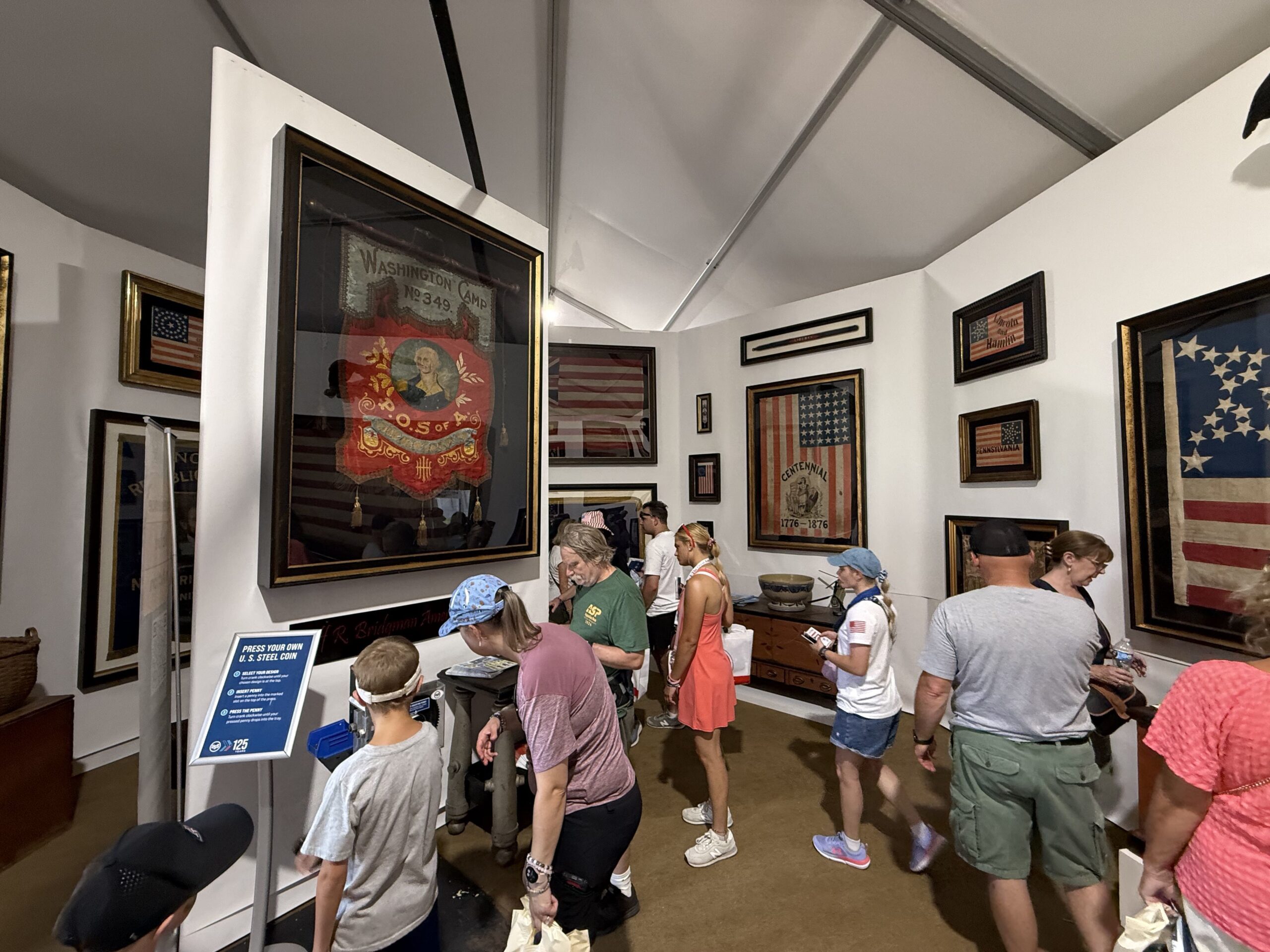
    Pennsylvania’s pavilion showcases state history and memorabilia at the Great American State Fair on June 30 in Washington, D.C.

    Pennsylvania had initially opted out of participating, but its booth opened the day after I was there, funded by private sponsors and pulled together by U.S. Sens. Dave McCormick (R., Pa.) and John Fetterman (D., Pa.) after Gov. Josh Shapiro passed on participating.

    Cape May County, a Republican stronghold, sponsored the New Jersey booth and brought in an impressive-looking eight-foot sand castle. But I noticed one small red plastic bucket of saltwater taffy that a kid was rummaging through. For an area as rich and diverse as the Garden State, the display felt incomplete.

    Soon, I had had enough.

    We stopped by the media table again on our way out and asked about what was on the schedule for later. The answer? A rodeo demonstration at 7 p.m. That was it.

    I was stunned. America deserved more and better for its 250th birthday celebration.

    So, if you decide to go experience the Great American State Fair before it is dismantled on July 10, don’t say I didn’t warn you.

  • The 250th anniversary gathering of Congress at Independence Hall touches on divided times, uneven history

    The 250th anniversary gathering of Congress at Independence Hall touches on divided times, uneven history

    Two days before the American revolutionaries signed the Declaration of Independence in 1776, the Second Continental Congress gathered in Philadelphia to formally vote on the matter.

    Standing in virtually the same spot 250 years later, their distant successors commemorated that historic moment while grappling, at times, with what it left out.

    “The fact that we have you here together is a symbol of progress,” said U.S. Rep. Dwight Evans, a retiring Democrat who’s spent more than four decades as one of Philadelphia’s central Black political leaders. “250 years ago, people like me were not fully included in the founders’ vision. … The struggle to live up to our founding ideals was hard fought.”

    More than 30 members of the 119th Congress attended the event at Independence Hall, one of many marking the Semiquincentennial in the city this week. U.S. Rep. Brendan Boyle, a Philadelphia Democrat whose district includes the historic site, had worked for years to bring his colleagues to the site to mark the nation’s founding.

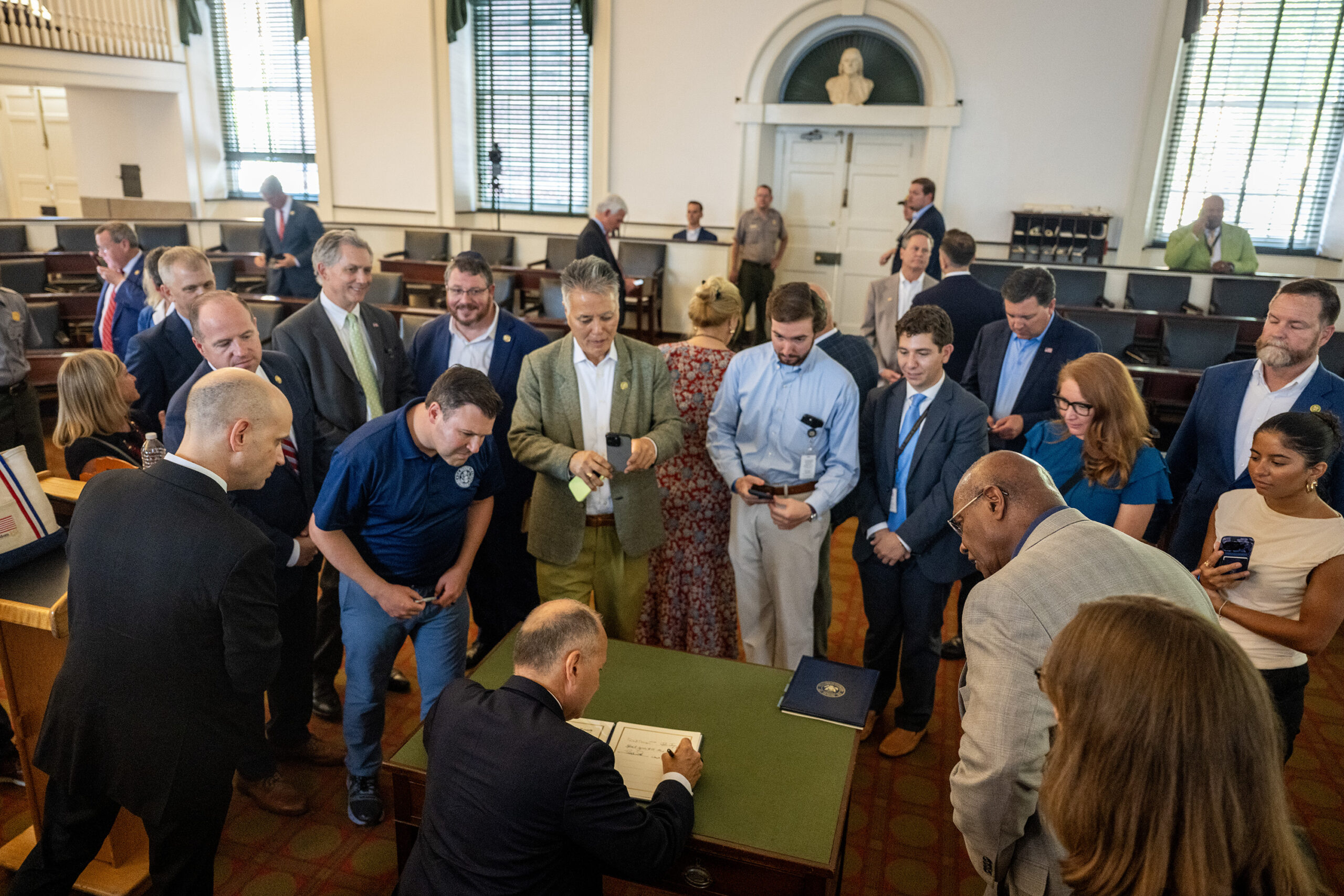
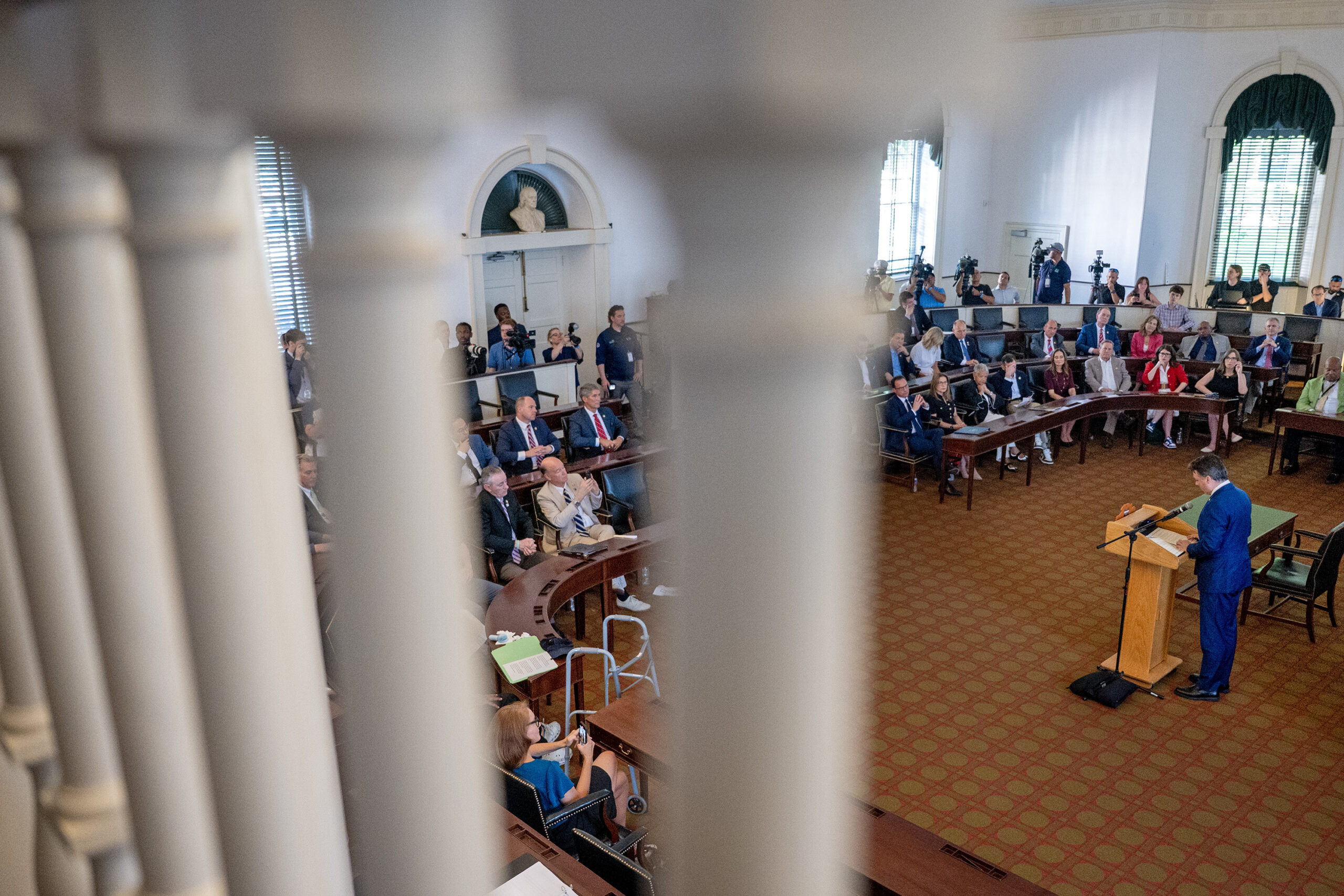
    A bust of Benjamin Franklin is above the door in the back of Congress Hall as U.S. Rep. Lloyd Smucker of Lancaster County signs a ceremonial document after the House of Representatives met at Independence Hall on Thursday.

    As Boyle and others walked through that history in Congress Hall — the room where the legislative branch convened before relocating to Washington — they referenced both the uneven history of the country and the divided, polarized times that define modern America.

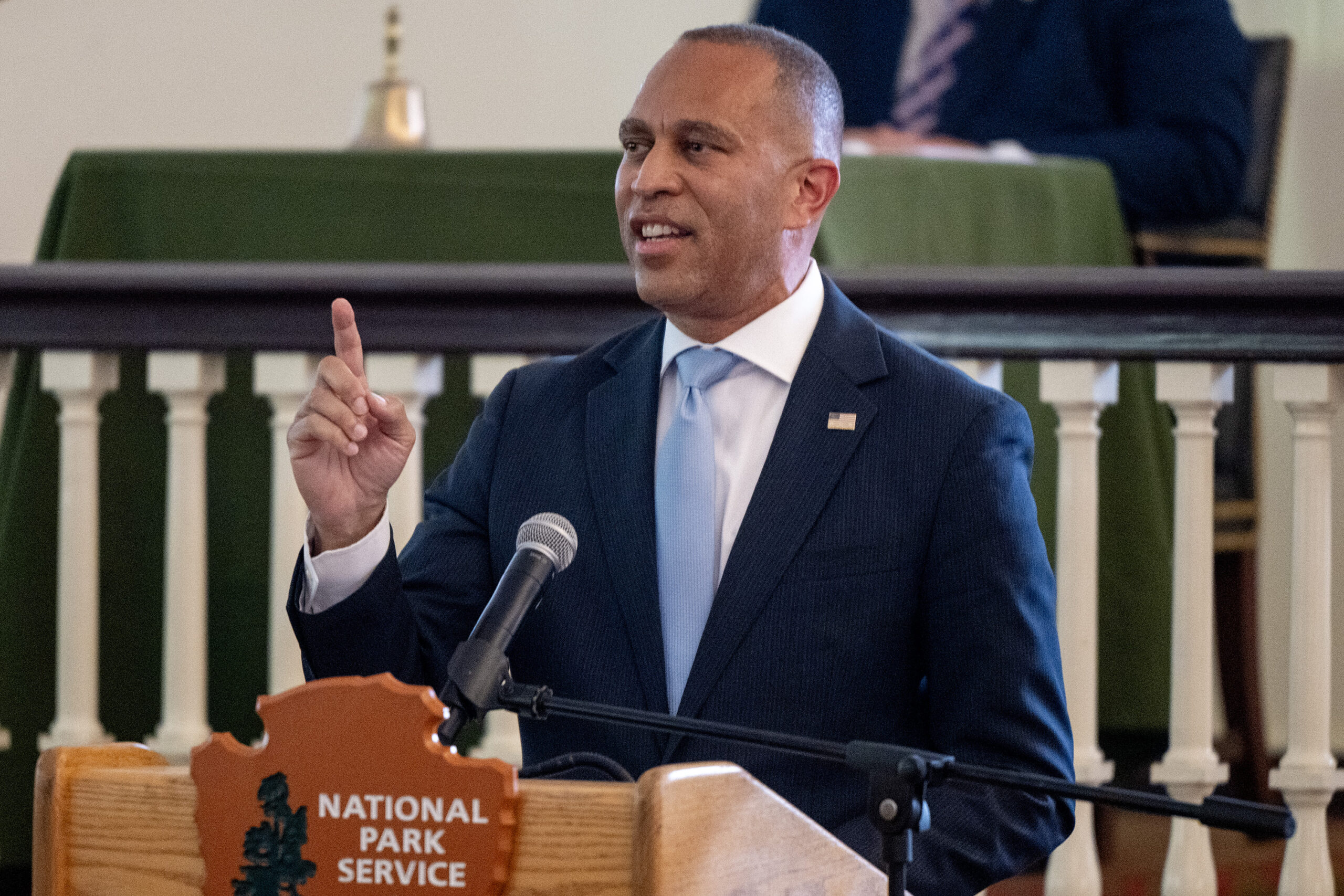
    “America has indeed struggled at times, beginning with the horrors of chattel slavery and the oppression of Native Americans, to live up to our highest ideals,” said House Minority Leader Hakeem Jeffries (D., N.Y.). “But the highminded principles, upon which this great country was born, have served as an eternal lamp post for us to continue to strive and march toward a more perfect union.”

    Jeffries’ remarks — from a high-profile lawmaker poised to become the first Black speaker of the U.S. House if his party wins control in the midterms later this year — came as President Donald Trump’s administration has tried to pull back the federal government’s references to the history of slavery, including on Independence Mall, most notably at the President’s House, a block from where the lawmakers gathered.

    The Democratic leader was one of multiple speakers, including Pennsylvania Gov. Josh Shapiro, who made veiled references to Republicans’ ceding Congress’ role as a check on Trump. The members of Congress who served at Independence Hall believed the chamber “would be separate and coequal, never subservient or co-opted,” Jeffries said.

    “Let us never forget that we don’t work for any other branch of government,” he said. “There are no kings in the United States of America. We work exclusively for the American people.”

    House Democratic Leader Hakeem Jeffries addresses the Representatives meeting in Congress Hall. He said it was important to speak about the history of slavery in America. The gathering marked the 250th anniversary of the day the Second Continental Congress voted for independence.

    U.S. Rep. Glenn “GT” Thompson, a Centre County Republican and dean of the Pennsylvania delegation, presided over the event. He said afterward that some of the remarks turned “a little political.”

    “But it is an excellent observation,” Thompson said. “We don’t have a king. We can thank George Washington for that.”

    Thompson was one of several Pennsylvania Republicans to attend the mostly Democratic event, but other top officials were noticeably absent.

    Pennsylvania’s top-ranking Republican federal official, U.S. Sen. Dave McCormick, did not attend. Neither did U.S. Sen. John Fetterman, a Democrat who has increasingly aligned himself with Trump and Republicans.

    U.S. Sen. Andy Kim (D., N.J.), who lives in nearby Burlington County, was the only senator to attend.

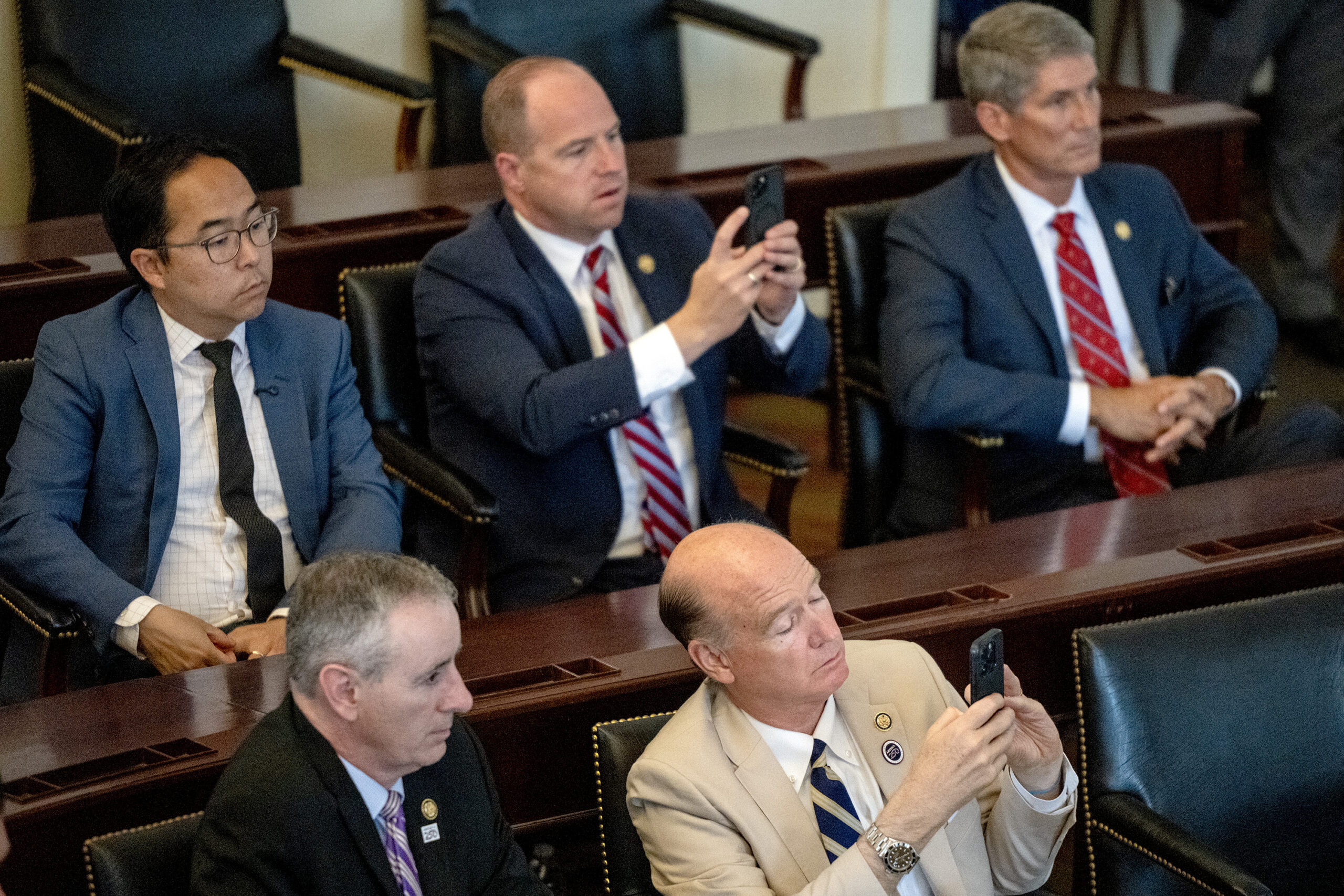
    U.S. Senator Andy Kim (left) of New Jersey joins House members.

    ‘Let this sacred place awaken us’

    Since 1800, Congress has met outside Washington, D.C., on only extremely rare occasions.

    In 1987, a ceremonial joint session in Philadelphia marked the 200th anniversary of the Constitution, and in September 2002, more than 300 members met in New York City for the first anniversary of 9/11.

    Thursday’s gathering in Philadelphia was considered a ceremonial event, not a formal joint session, so the lawmakers did not debate legislation or cast votes in the room where they conducted that kind of official business in the earliest days of the nation.

    There weren’t defined political parties, all those years ago.

    But the fissures that soon arose in the nation’s first capital — and that have only become more entrenched since then — were evident both in and around Thursday’s event.

    The 45-minute ceremony was a bipartisan showing. A pair of Pennsylvania Republicans in particular, Thompson and U.S. Rep. Brian Fitzpatrick (R., Bucks), kicked off the day with a call to order and invocation. Others like U.S. Reps. Ryan Mackenzie (R., Lehigh), Lloyd Smucker (R., Lancaster) and John Joyce (R., Blair) also attended.

    Fitzpatrick, a moderate Republican facing a tough reelection campaign this year, and Boyle, a moderate Democrat, were among several speakers who talked about the anniversary being a moment for Congress to recommit to its founding goals.

    “Let this sacred place awaken us, a solemn charge that flows from what was proclaimed here 250 years ago,” Fitzpatrick said.

    Among the over 30 lawmakers, though, Democrats outnumbered their colleagues across the aisle. Jeffries addressed the room, while no members of House Republican leadership, who control the chamber, made an appearance.

    ‘A great balancing act’

    The day itself came after a chaotic few weeks in Washington, even during an unusually divisive two-year term.

    The most significant bipartisan legislation produced during Trump’s second term, a comprehensive housing bill that includes a home-repair program that originated in Pennsylvania, was temporarily scuttled when the president refused to sign it. His demands for a controversial voter-ID and elections reform bill first was derided by members of both parties.

    U.S. Rep. Brendan F. Boyle speaks as members of Congress gather for the ceremonial event.

    Just 48 hours before Thursday’s gathering, that move was still causing turbulence on Capitol Hill as Republican House Speaker Mike Johnson canceled the rest of the week’s agenda because of disagreements around the legislation, known as the SAVE America Act.

    Johnson did not attend the event at Independence Hall.

    Shapiro, a Democrat and potential 2028 presidential candidate, made a veiled reference to the current Republican-led Congress’ failure to serve as a check on Trump. He said the founders set in motion “a great balancing act” that lawmakers were responsible for upholding.

    “Two and a half centuries later, we continue to work to find that balance, work that each of you is charged with taking up every single day,” Shapiro said.

    Even in the blocks around the lawmakers’ gathering, the tensions of the Trump era were evident.

    A few blocks away at the historic Christ Church, local advocates and interfaith leaders gathered before the congressional event to call out the president’s aggressive immigration enforcement tactics. One local member of Congress — U.S. Rep. Mary Gay Scanlon, a Delaware County Democrat — stood with them before joining her colleagues at Independence Hall.

    And just down the street at the President’s House, tourists saw an incomplete display after the Trump administration took down information that memorialized the nine people George Washington enslaved in Philadelphia during the nation’s founding.

    Boyle pointed to fights by “generations of Americans who refused to accept that liberty and equality belonged only to some.”

    “That struggle is not separate from the American story,” Boyle said. “It is the American story.”

  • As Congress comes to Philadelphia, Josh Shapiro takes center stage in America 250 celebrations

    As Congress comes to Philadelphia, Josh Shapiro takes center stage in America 250 celebrations

    Pennsylvania Gov. Josh Shapiro has a message for members of Congress when they convene at Independence Hall in Philadelphia on Thursday:

    This is the birthplace of democracy, and with it, comes the responsibilities that America’s founders left behind.

    “The founders made clear that we have a real responsibility to do the work to constantly perfect our union,” Shapiro said in an interview this week, ahead of his speech before the ceremonial meeting of Congress, marking 250 years since the Declaration of Independence was signed in that same building. “And that the Congress of the United States has a unique responsibility in that to be a check on the executive branch.”

    Those words come at a critical inflection point in America’s history, amid a tumultuous presidency, and as Shapiro is rumored to have aspirations of a White House bid in 2028. The first-term Democratic governor will appear before approximately 40 bipartisan members of Congress in Old City at the event convened by U.S. Rep. Brendan Boyle (D., Pa.), speaking to the lawmakers from across the country about their collective duty to the public. Shapiro will attend numerous other 250th celebrations across Philadelphia in the coming days, during which he said he plans to share his optimism for America’s future and deep concerns that President Donald Trump has led the nation astray from its founders’ design.

    “I don’t think patriotism belongs to one party. I don’t think it should ever be partisan,” Shapiro said. “Unfortunately, Donald Trump routinely divides us, routinely injects partisanship into his definition of patriotism, and his actions, in many ways, are the opposite of patriotism.”

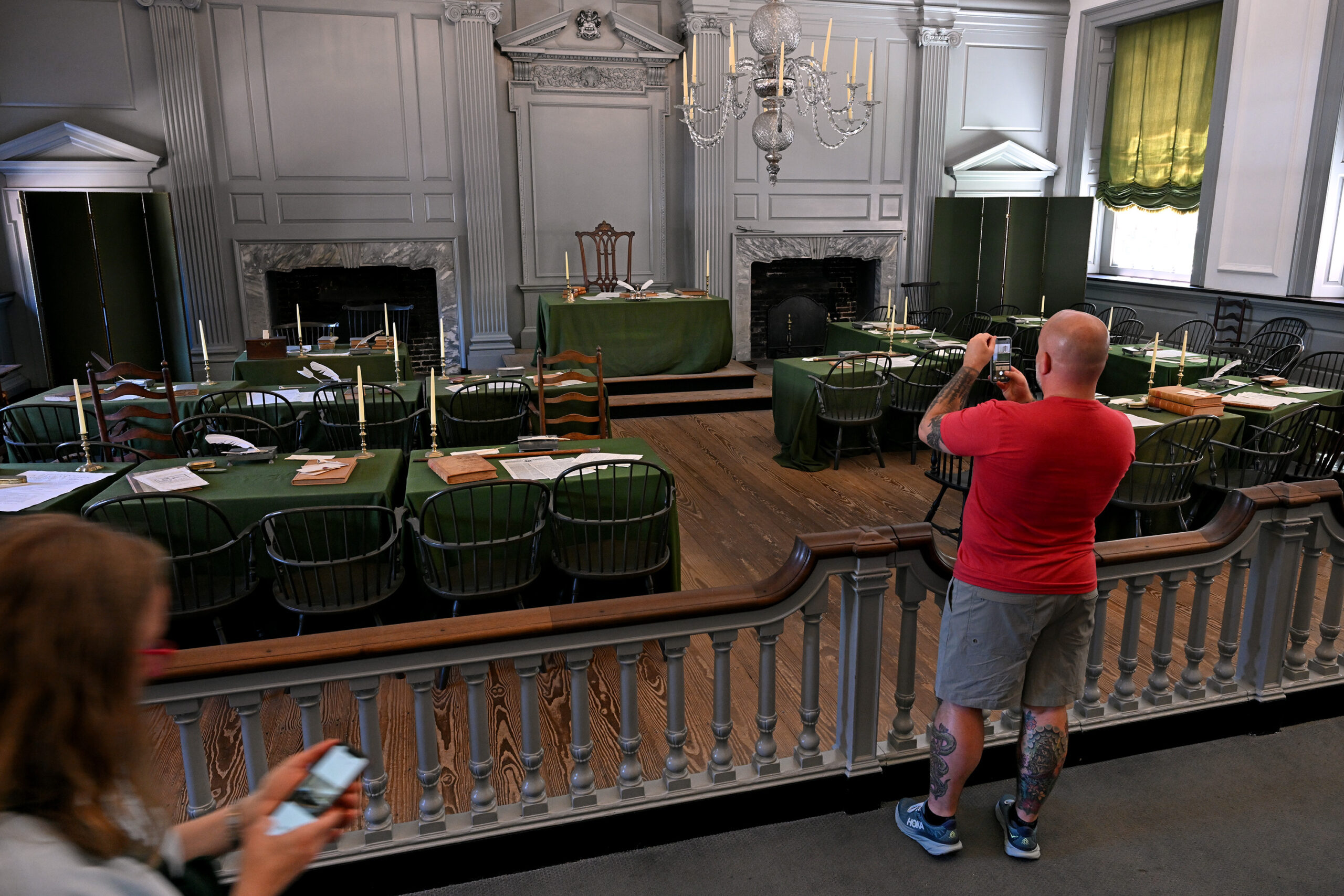
    Assembly Room in Independence Hall (Pennsylvania State House) Monday, June 15, 2026. This is the exact space where the Second Continental Congress met and the Declaration of Independence was adopted.

    As Trump plans to spend America’s 250th birthday hosting a political rally on the National Mall — with no plans to visit Philadelphia, the city where the nation was founded — Shapiro sees his own role as a unifier, and in direct contrast to Trump. As attention shifts to Philadelphia this weekend, he’ll appear on the national stage from sunup to sundown at events and on frequent TV hits — all with a home-turf advantage for his 2028 presidential prospects, as the governor of the nation’s quintessential swing state and also most important to the country’s founding.

    “[Celebrating the 250th] allow the spotlight to shine on Shapiro, even though it’s not entirely about him,” said Alison Dagnes, a political-science professor at Shippensburg University. “Do I think that helps his ambitions? Sure.”

    ‘Direct contrast’

    Sitting with Shapiro in his Harrisburg office earlier this week, it’s undeniable that he’s a history nerd — another reason why he was built for the moment.

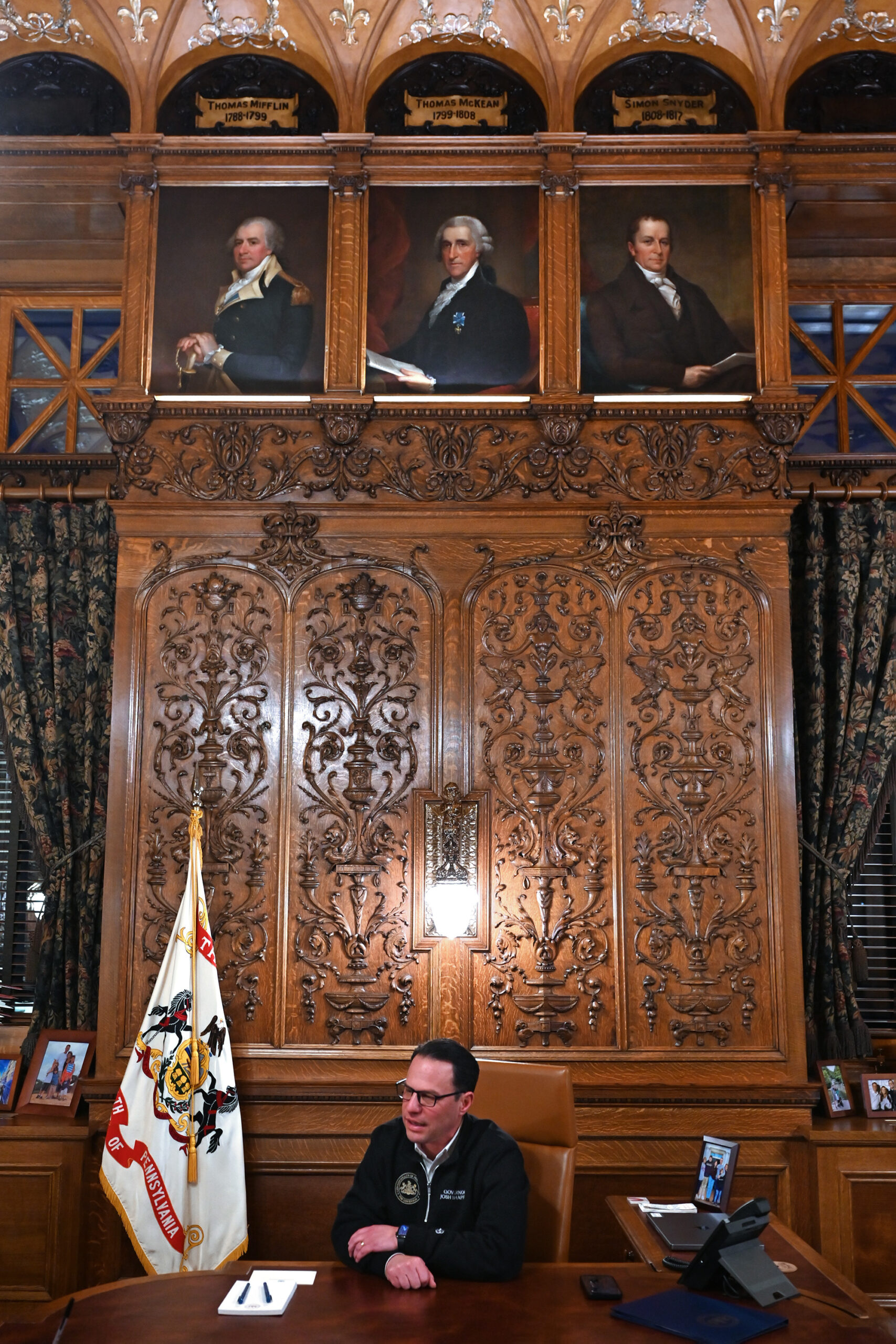
    He casually quotes segments of The Federalist Papers, and references his favorite story about Benjamin Franklin‘s fixation on a half-sun on the back of George Washington’s chair during the 1787 Constitutional Convention, which Franklin remarked during the U.S. Constitution signing that “it is a rising and not setting sun.” Without having to look for its location, he points to his right to a portrait of Franklin, one of his predecessors as governor of Pennsylvania, hanging on his office wall. He notes lesser-known Pennsylvanians who played an important role in the nation’s founding whom he plans to highlight over the coming days.

    “You know, I hate to quote a guy not from Pennsylvania,” Shapiro said, returning to The Federalist Papers to recite James Madison’s concerns about giving an executive too much power.

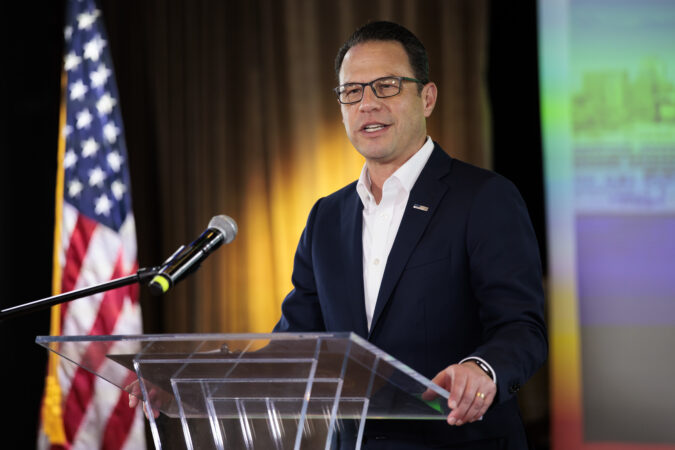
    Gov. Josh Shapiro in the Capitol in Harrisburg Feb. 21, 2023.

    “If Madison were here today, he’d be really concerned about how one man has accumulated so much power and is wielding it in really dangerous ways, and I hope that at this 250-year mark we find our way back to that balance and back to the constraints on the people who lead our government,” he said.

    Shapiro sees his leadership style as a “direct contrast” to Trump’s, especially at this moment.

    “[Trump] restricts peoples’ freedom and liberties,” the governor added. “He whitewashes our history. That doesn’t further a sense of community, that doesn’t further patriotism. All that does is divide us, and I refuse to participate in that.”

    But for the next few days, Shapiro said his approach to the 250th celebrations is to: “Celebrate America, find ways to bring people together, and to have some fun in the process.”

    Fair games

    Despite his overtures of political unity, Shapiro has faced accusations from Republicans in recent days for playing partisan games over Pennsylvania’s participation in Trump’s 16-day Great American State Fair. Shapiro, in addition to several other Democratic governors last week, announced that Pennsylvania would not take part in the fair due to his administration being unable to secure any state businesses to sponsor the exhibit. Staffing and sponsoring the exhibit on the state’s dime would have cost $700,000 that would be better spent on in-state 250th events, he said this week.

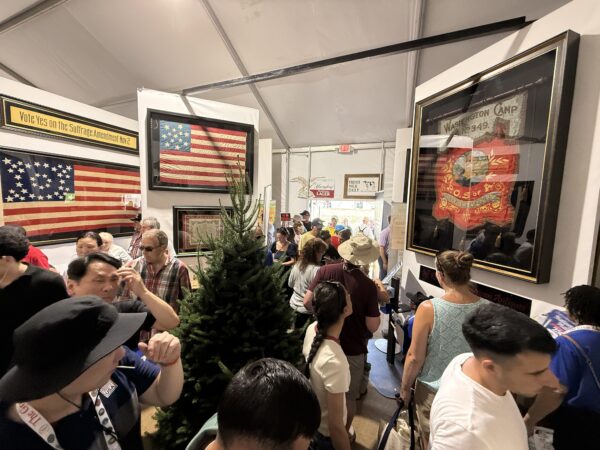
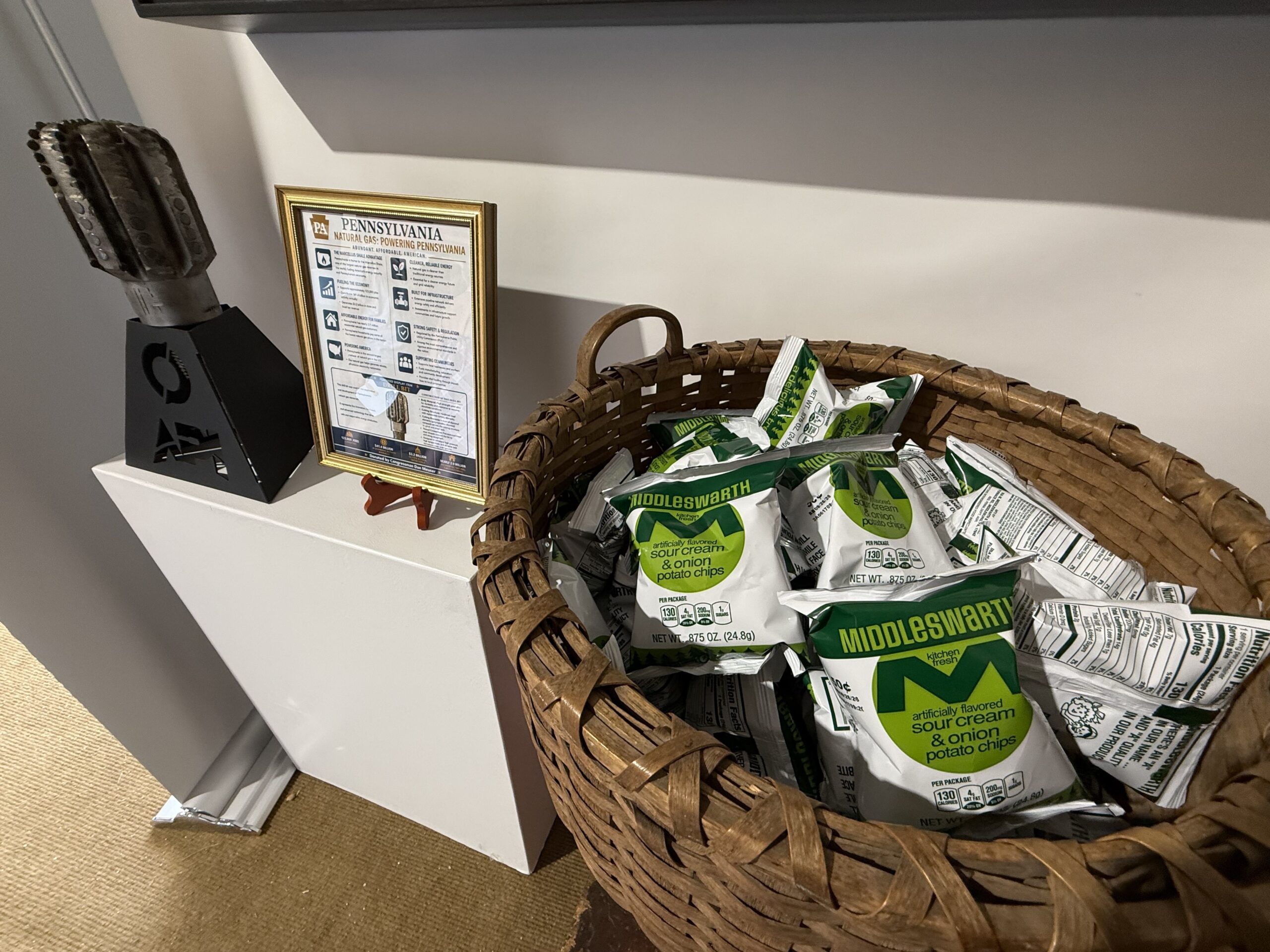
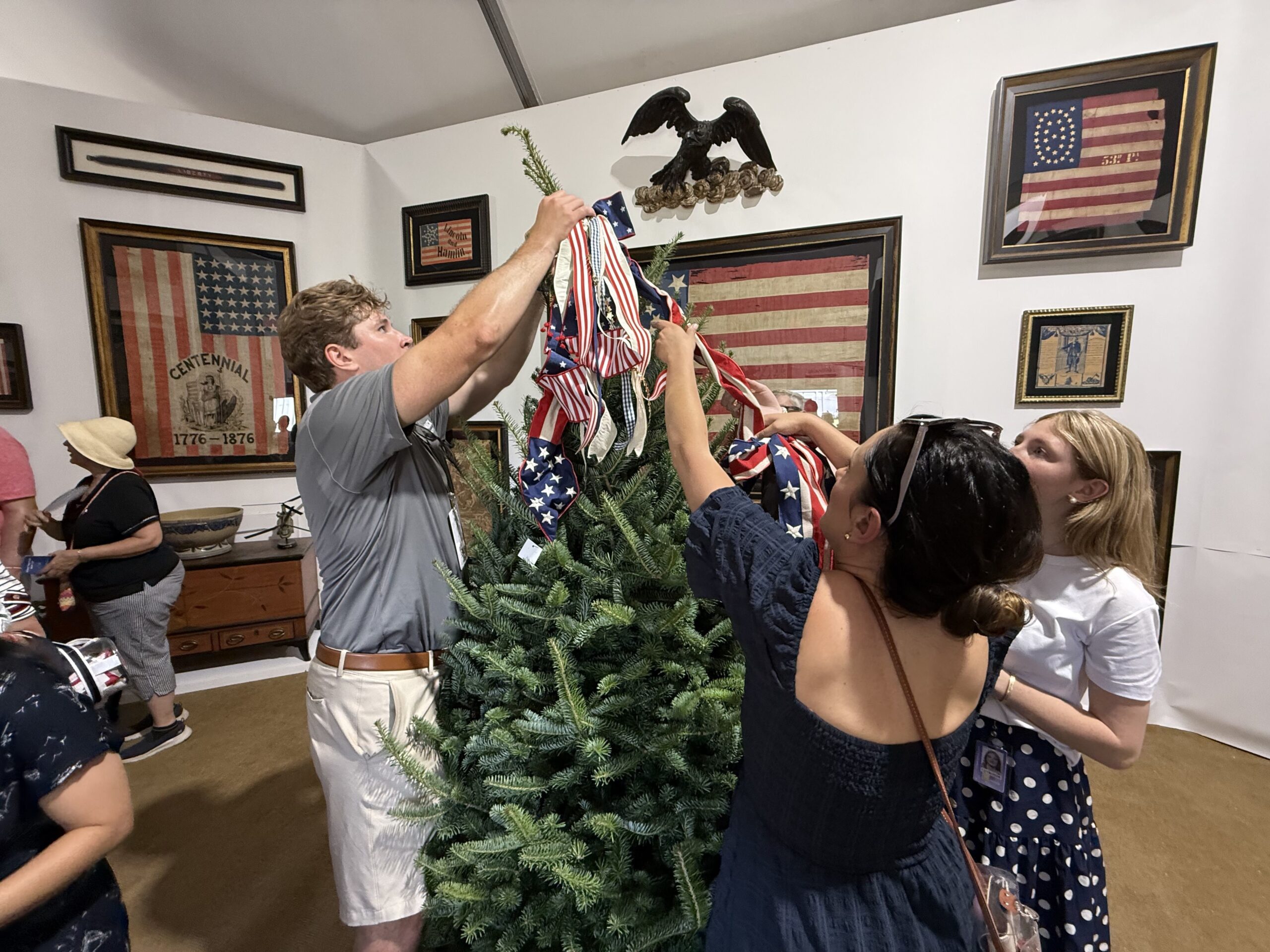
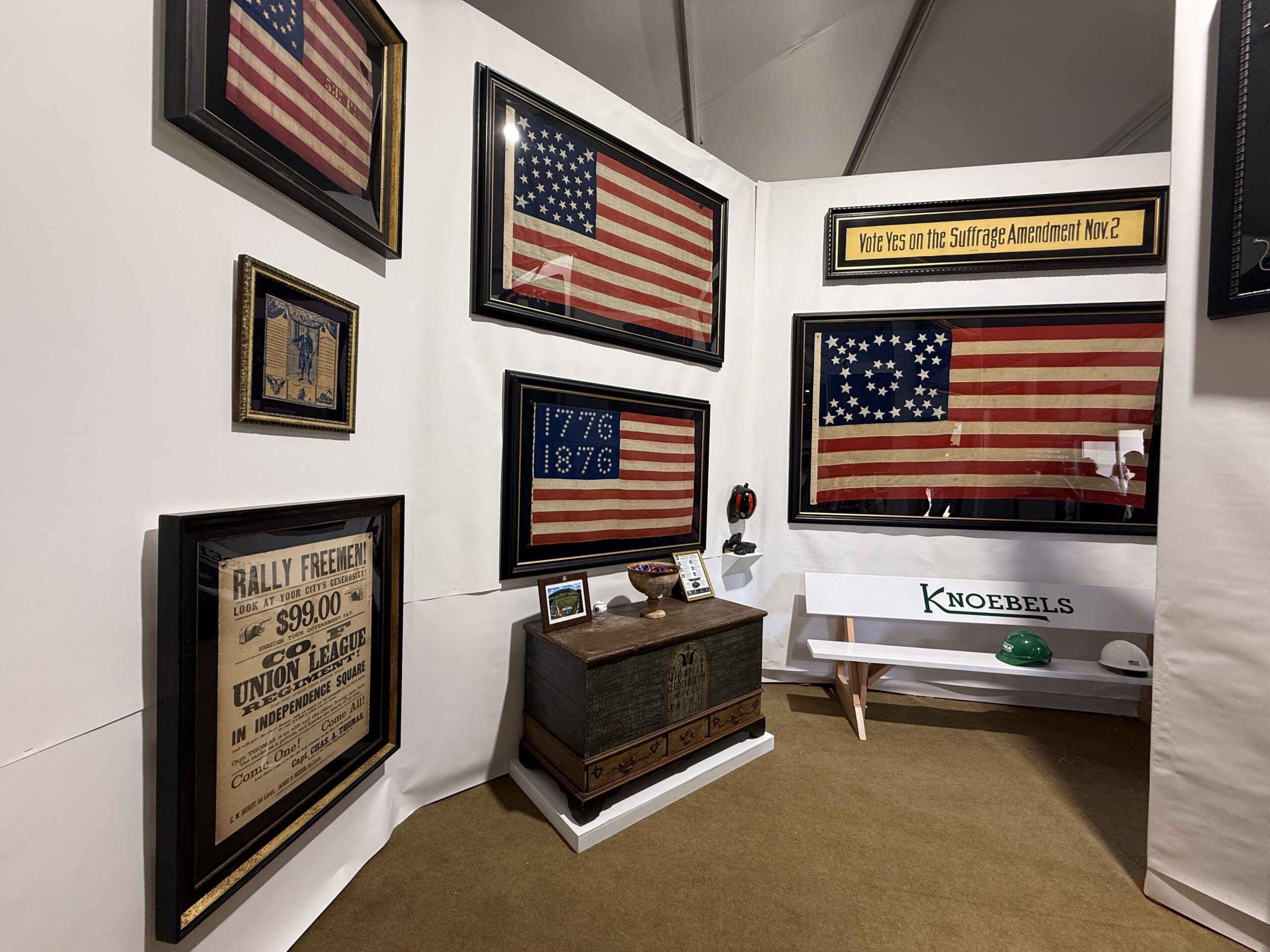
    In the weekend that followed, Pennsylvania’s U.S. senators, Republican Dave McCormick and Democrat John Fetterman, made a push to fill the state’s empty exhibit. By Tuesday, it was filled with antique flags lent by a York County man, bags of potato chips from Snyder County, and a Christmas tree display from Fayette County, among other Pennsylvania-centric items.

    Pennsylvania’s pavilion showcases state history and memorabilia at the Great American State Fair on June 30, 2026, in Washington, D.C.

    Some of the businesses originally told Shapiro’s office they didn’t have enough time to participate. But when McCormick and Fetterman approached them with the idea to fill the empty pavilion, they joined in.

    “They obviously had a change of heart at the last minute. That’s fine,” Shapiro said about the revived Pennsylvania pavilion.

    State Treasurer Stacy Garrity — Shapiro’s Republican challenger for governor, who has aligned herself with Trump — in a statement called Shapiro the “only career politician who has politicized America 250.”

    “Josh Shapiro put his political ambitions above his commonwealth and his nation when he pulled Pennsylvania out of the national celebration of our 250th birthday in a pitiful attempt to score cheap political points with the liberal wing of his party,” Garrity said.

    Beyond the 250th

    Shapiro’s strength as a politician has always been his ability to appear “harmonizing” and bringing people together, dating back to his days as a Montgomery County commissioner, Dagnes said.

    A careful politician, Shapiro is known to stick to his message and has faced criticism from some fellow Democrats for his well-rehearsed statements.

    When Shapiro delivers his messages of unity and freedom to a broader audience in the coming days, voters are likely to view them as authentic — one of the most important qualities to any presidential hopeful, she added.

    “If [California Gov.] Gavin Newsom is the guy who’s gonna punch Trump in the face, then Shapiro is going to be the guy who’s like, ‘No, let me offer you an alternative,’” Dagnes said.

    “It’s what he should be doing right now, because this is what America is about,” she added.

  • Pennsylvania’s state budget is late — again

    Pennsylvania’s state budget is late — again

    HARRISBURG — Pennsylvania enters the new fiscal year on Wednesday without a state budget in place for a fifth consecutive year, while top leaders in the politically split legislature publicly disagreed over whether a deal was near.

    Lawmakers in the Republican-controlled Senate and the Democratic-led House have known for months that Pennsylvania faces fiscal straits, as the state is on a path to spend more than it brings in in revenue in fiscal 2027. Top negotiators have spent weeks meeting behind closed doors about how the state should spend more than $50 billion in taxpayer dollars, in hopes of avoiding another drawn-out budget impasse.

    Under first-term Democratic Gov. Josh Shapiro’s proposed $53.2 billion budget, Pennsylvania would spend $4.8 billion more than its $48.6 billion in projected revenue and would require lawmakers to create new revenue streams, cut spending, or raise taxes — or dip into the state’s reserves.

    Senate Republicans on Tuesday recessed until legislators have a final budget deal to vote on, with Senate Majority Leader Joe Pittman (R., Indiana) saying that there is “no reason we cannot conclude our work early next week” and that lawmakers “have a very good trajectory in front of us.”

    Pittman — a top negotiator in the closed-door talks — made those remarks just one day after a Senate committee voted to gut the main spending bill in Shapiro’s budget proposal, which was approved by the House in April, from $53.1 billion to $25 million.

    State Senate Majority Leader Joe Pittman (R., Indiana) during a press conference at the Capitol in Harrisburg in February.

    In a news conference Tuesday, House and Senate Democratic leaders offered a different picture: Despite lawmakers traditionally staying in Harrisburg in the days leading up to July Fourth in hopes of hashing out a deal, Senate Republicans are already packing up for the holiday weekend, the Democrats said, and are politically motivated to hold up the state budget. (House Democrats later canceled their scheduled legislative session on Thursday.)

    “[Senate Republicans are] going to tell you that progress is being made, and that it’s important that we allow time for members to go home for the weekend. And by the way, it’s Tuesday,” said Senate Minority Leader Jay Costa (D., Allegheny).

    “The bottom line is they’re not serious about getting a budget done, they’re slow-walking this process for weeks and weeks, and we’re calling them on it,” Costa said.

    Shapiro echoed the same frustration with Senate Republicans in an interview Tuesday, adding that the Senate “decided to go home on vacation” when lawmakers are due to deliver a budget bill to him for his signature.

    “I think it’s disrespectful to the people of Pennsylvania,” Shapiro said, noting that Pennsylvania has a revenue surplus. “They should be here, and they should be working. And instead, they ran away.”

    Speaker of the House Joanna McClinton (left) and Lt. Gov. Austin Davis are seated behind Gov. Josh Shapiro as he delivers his third budget address to a joint session of the state House and Senate at the state Capitol on Feb. 4.

    Senate GOP leaders, in a statement following their recess Tuesday, said they believe they are “well on our way to effectuating a full budget agreement in the days.”

    House Minority Leader Jesse Topper (R., Bedford) told reporters that legislative leaders have been constantly in contact “over the past month” no matter if members are in the building.

    “At the end of the day, the talks continue,” Topper said. “This kind of stunt feels a lot like politics.”

    Top legislative leaders have been tight-lipped about what the remaining sticking points are in budget talks.

    Pennsylvania is constitutionally required to deliver a balanced budget by the start of the new fiscal year on July 1, releasing state funds which are then sent to school districts, county governments, and nonprofit organizations that offer critical services to residents.

    The true impact of the missed deadline won’t be felt by local governments and schools for weeks. However, these entities are often required by law to submit their own budgets despite inaction by the state, often leaving them unable to predict how much state money to budget. State employees and lawmakers continue to receive pay during a state budget impasse.

    Last year, a nearly five-month budget impasse required schools, counties, and service providers to cut jobs, take out high-interest loans, or stop services altogether. The School District of Philadelphia, the state’s largest school district, borrowed $1.5 billion to pay its bills, resulting in $30 million in interest and borrowing costs that weren’t repaid when the state approved its annual spending plan.

    Lawmakers were at a bitter standstill about whether to allocate a new, reliable funding stream for public transit, reviving the state’s long-held rural-urban divide. Members also couldn’t agree on how much to spend, until ultimately reaching a $50.1 billion budget deal in November 2025.

    This year, both chambers have slim margins for budget votes: House Democrats hold a one-seat majority, while Senate Republicans have a three-seat majority with several conservative members who rarely support spending increases. This often means legislative leaders must work with the minority parties to come to a final deal.

    On Monday, Senate Republicans leaders did not show up to a scheduled meeting with Shapiro and Democratic leaders, Costa said, signaling potential discord.

    Legislators still need to reach agreements on a number of issues, including whether to tax and regulate so-called skill games differently from slot machines and whether the state should overhaul existing school choice programs.

    Democrats have wholly backed Shapiro’s budget proposal, which included legalizing recreational marijuana and raising the state minimum wage. Republicans have emphasized a need to slow down spending, citing the state’s structural deficit.

    The leaders will also trade a number of legislative priorities in closed-door meetings unrelated to state spending as part of an overall deal, such as data center oversight proposals.

    In Pennsylvania, the state budget topped $50 billion for the first time last year. It had increased by 25% — about $10 billion — over a five-year period.

  • Pa. lawmakers must pass a full moratorium on hyperscale data centers

    Pa. lawmakers must pass a full moratorium on hyperscale data centers

    Artificial intelligence is fundamentally changing the world we live in at a speed unprecedented in modern history.

    Headlines buzz with warnings that this tech boom will bring a disruptive reindustrialization, and people are already seeing this play out in real time. Behemoth data center campuses have been proposed across the nation, including dozens right here in Pennsylvania.

    Gov. Josh Shapiro has been at the helm of this push, incentivizing data center developers to take advantage of Pennsylvania’s resources to accommodate these energy-guzzling facilities and offering industry tax breaks that will cost taxpayers big time.

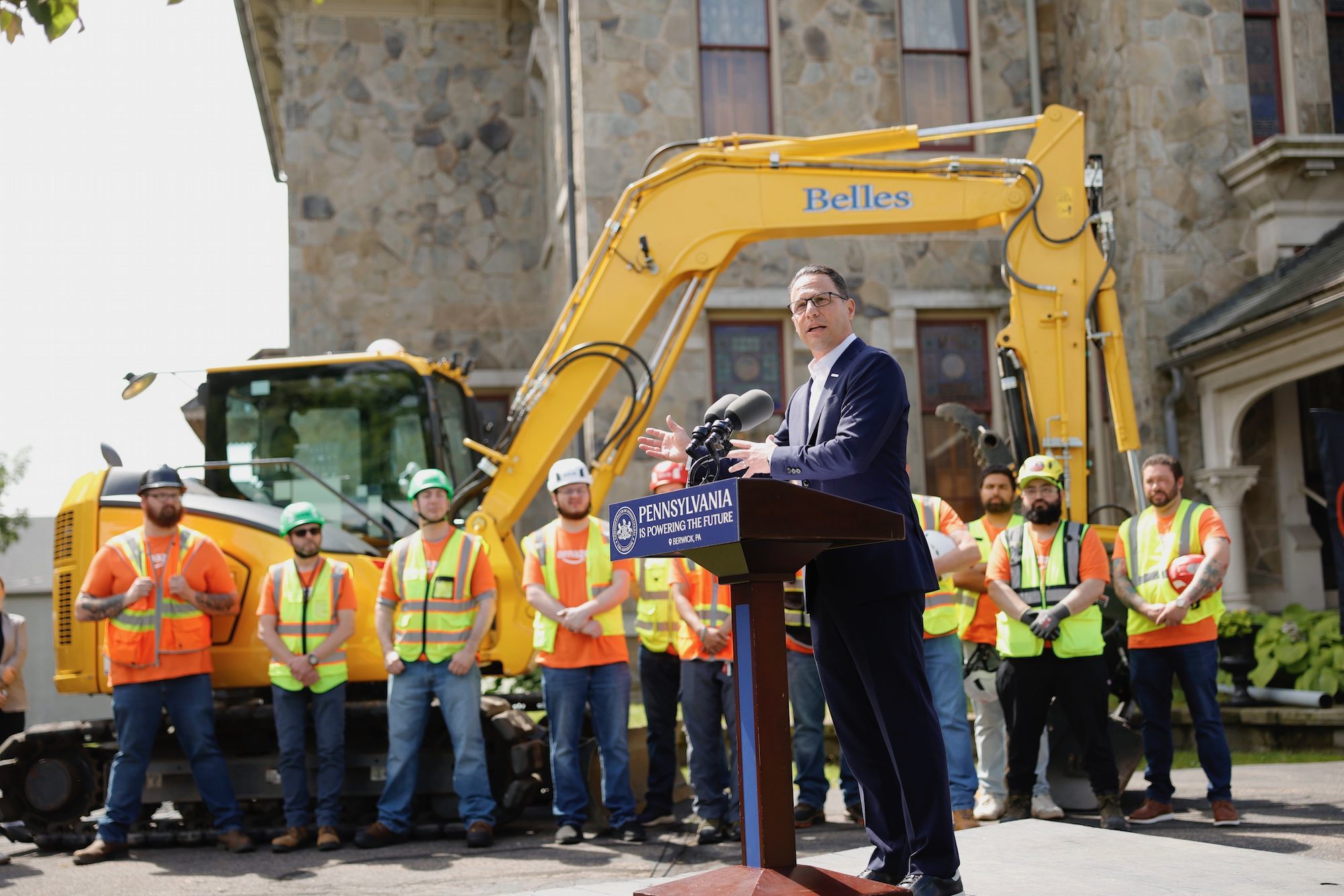
    Gov. Josh Shapiro announces a $20 billion investment by Amazon in Pennsylvania data centers in Salem Township and Falls Township in June 2025.

    The governor’s so-called Responsible Infrastructure Development (GRID) standards, which passed the House last week, are yet another effort to grease the wheels for data center developers. These voluntary half-measures are a naive effort to placate widespread data center opposition — worse still, Right to Know files obtained by Concerned Citizens of Montour County found that Amazon had first dibs on GRID input. That doesn’t sound like putting Pennsylvanians first.

    Instead of diving in headfirst, lawmakers must consider the real-world consequences of a largely unfettered data center build-out. That’s why the grassroots organization I am part of, Food and Water Watch, has endorsed the three-year moratorium State Sen. Katie Muth (D., Berks, Chester, and Montgomery) introduced in the Assembly.

    A recent comprehensive report from Food and Water Watch details the harms AI-driven hyperscale data centers will bring. Shapiro’s embrace of this technology — notwithstanding his recent attempt to make data center development less worrisome to Pennsylvania residents — has left communities grappling with secretive billion-dollar projects that threaten to swallow agricultural land, drive up residential and small-business electricity rates, and ruin quality of life.

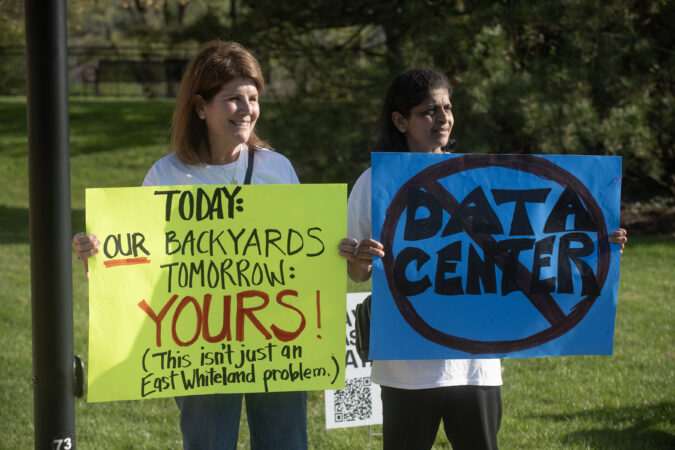
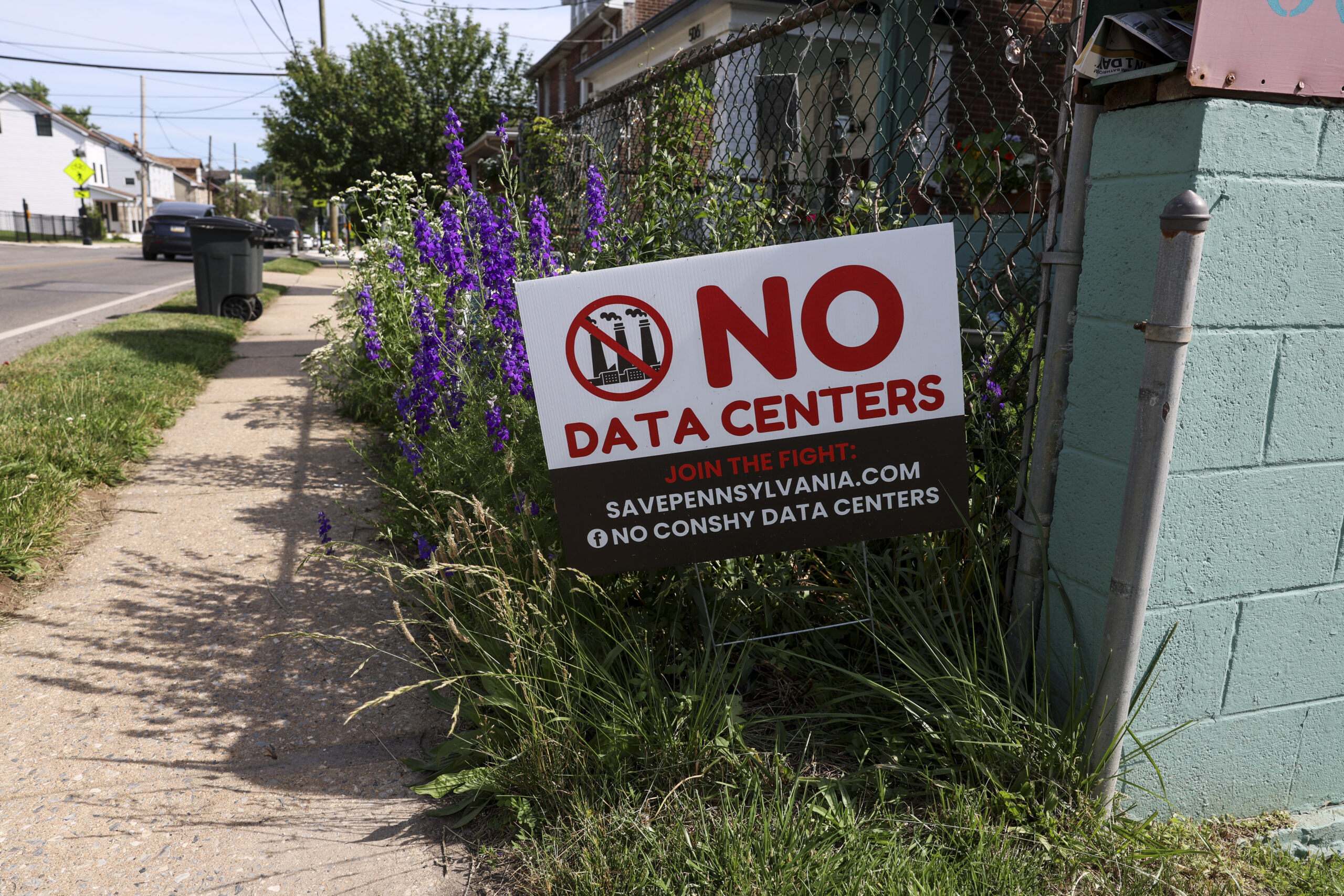
    A yard sign protests the proposed data center on New Elm Street near the Closed Cleveland-Cliffs steel mill, photographed on June 4 in Conshohocken.

    Communities across Pennsylvania have pushed back on each and every data center project, from East Whiteland and Hazle Townships to Montour County and beyond. Concerns include lack of transparency and due process, high water use, skyrocketing energy prices, an unprecedented build-out of power plants and high-voltage transmission lines, and more.

    These concerns are not purely theoretical — Pennsylvanians are already seeing the financial impacts of the data center build-out. In 2024, Pennsylvanians paid $492 million in energy infrastructure upgrades for 16 data centers. Shapiro’s GRID plan notwithstanding, as more projects are proposed and more infrastructure is needed to bring these sites online, we can expect ratepayers to fork over more of their hard-earned cash for facilities that do not serve their needs or interests.

    Pennsylvanians don’t have to look far to see what unchecked data center expansion can do to communities.

    Two states away in Virginia, massive, loud data centers have been built right next to homes, turning neighborhoods into industrial sites. Now this industry is attempting to bully Pennsylvania communities to accept the same fate.

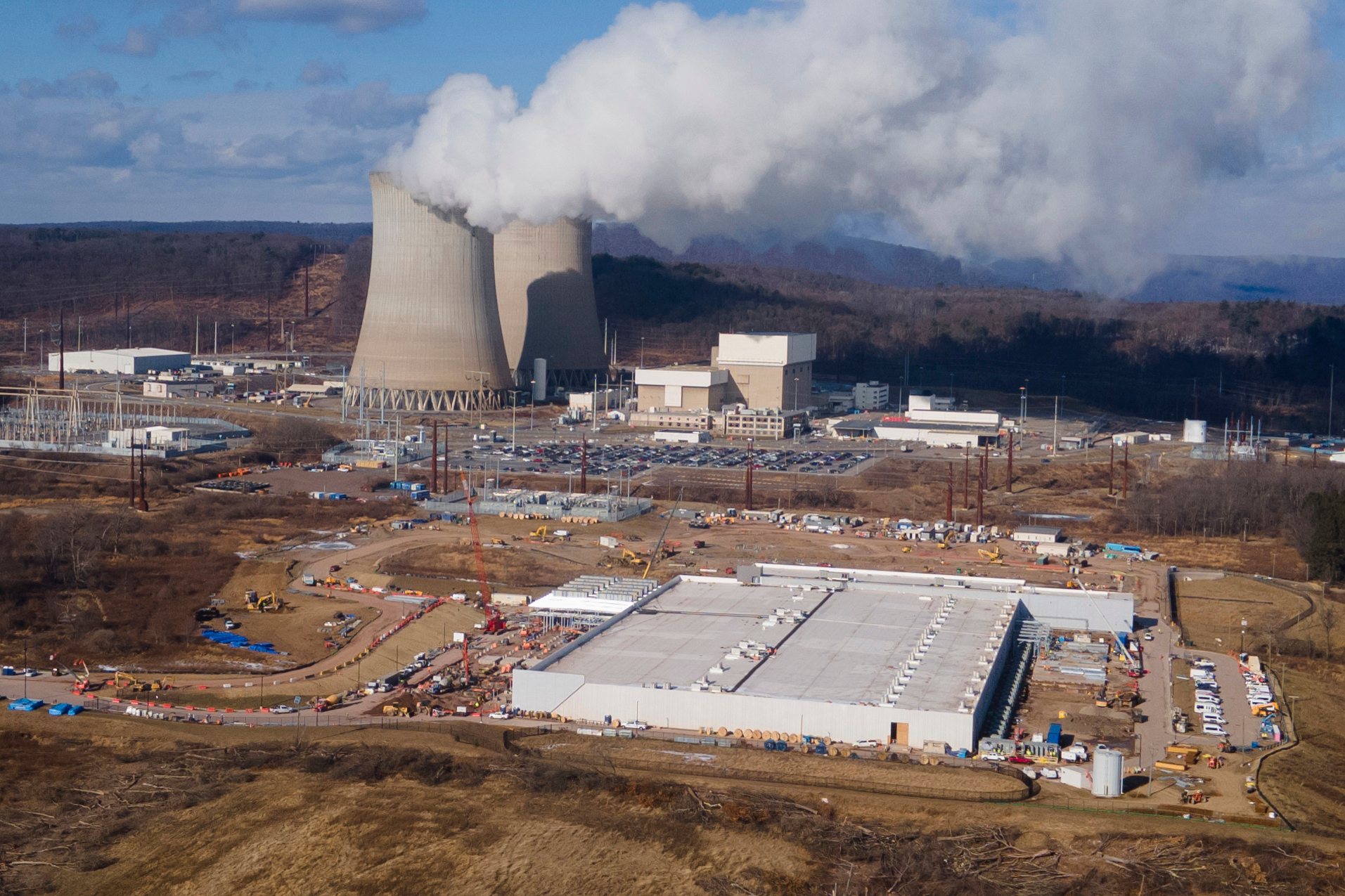
    A data center owned by Amazon Web Services, front right, under construction next to the Susquehanna nuclear power plant in Berwick, Pa., in January 2025.

    Many of these industrial compounds are proposed for rural Pennsylvania, threatening to disrupt communities’ way of life. A proposed data center in South Whitehall Township, Lehigh County, would include six buildings spread across 410 acres — which Food and Water Watch analysis finds is equivalent to the size of 100 Walmart supercenters.

    On an even grander scale, as part of the Shapiro-touted $20 billion data center AI investment by Amazon, a proposed campus in Luzerne County would stretch across 1,5200-1,700 acres.

    These are not modest developments. They are sprawling industrial complexes that threaten to reshape rural and residential communities beyond recognition.

    These proposals also threaten drinking water supplies. Hyperscale data centers can consume as much as two million to eight million gallons of water daily, putting enormous strain on local water supplies. This comes as the majority of Eastern Pennsylvania, a hot spot for development, is currently experiencing moderate to severe drought.

    Nationwide, two-thirds of data centers built since 2022 have been built in water-stressed regions, showing an alarming pattern of development that ignores the limits of local resources. Pennsylvanians should not be forced to compete with corporate server complexes for access to safe, reliable drinking water.

    Data centers are not a public good. They are profit-driven extractive industrial facilities that destroy local communities’ quality of life, all while draining their most necessary resources.

    Lawmakers have the choice to stand with communities and allow state regulators to pause and take an informed path when deciding if — not how — data centers can coexist with the needs of Pennsylvanians.

    It’s why Food and Water Watch drove 180-plus impacted residents facing data center projects in their communities to Harrisburg on June 23, and it’s why Pennsylvanians across the commonwealth must call on their legislators to support Muth’s bipartisan moratorium on hyperscale data centers today, before we all pay the price later.

    Ginny Marcille-Kerslake is a senior organizer for Food and Water Watch in West Whiteland Township.

  • Chips, a Christmas tree, and the Liberty Bell: Here’s what’s inside Pennsylvania’s new showcase at the Great American State Fair

    Chips, a Christmas tree, and the Liberty Bell: Here’s what’s inside Pennsylvania’s new showcase at the Great American State Fair

    WASHINGTON — A replica Liberty Bell, a Knoebels amusement park bench, hundreds of bags of potato chips, and dozens of sweating tourists packed into Pennsylvania’s location at President Donald Trump’s Great American State Fair on Tuesday — a stark turnaround from when the signature 250th anniversary event opened in Washington last week without a Keystone State presence.

    Pennsylvania was one of the few Democratic-led states that — describing the two-week fair as too partisan — had either decided not to participate or failed to find another host to showcase local history and memorabilia.

    The interest, Gov. Josh Shapiro said at the time, was just not there.

    But after a weekend-long sprint initiated by U.S. Sens. Dave McCormick (R., Pa.) and John Fetterman (D., Pa.) to dredge up that interest, Pennsylvania’s pavilion opened Tuesday with nearly every inch of the space filled.

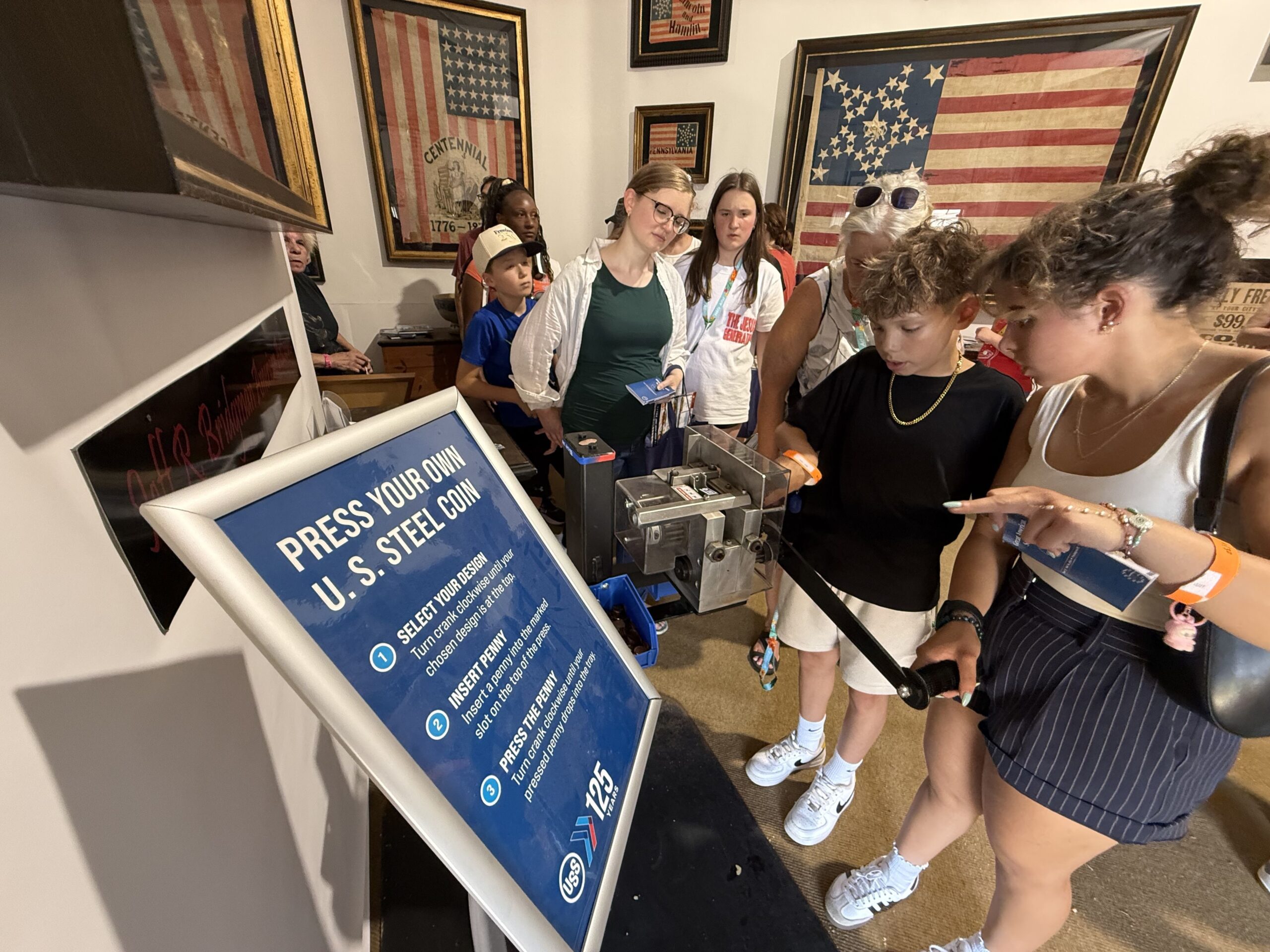
    The walls were covered by antique flags and signs lent by York County’s Jeff R. Bridgman Antiques. Children stood in line for a U.S. Steel penny-press machine, grabbed bags of Middleswarth chips made in Snyder County, and Crayola crayons from Easton. (Additional chip donations from Utz and Martin’s will be arriving soon.)

    Tourists collected pamphlets about Gettysburg and the Pennsylvania Farm Bureau. They took pictures of anthracite coal and a drill bit used for fracking, both of which were on loan from U.S. Rep. Dan Meuser (R., Luzerne).

    Pennsylvania’s pavilion showcases a natural gas drill bit and Middleswarth chips at the Great American State Fair on June 30, 2026, in Washington, D.C.

    “I always look for an opportunity to highlight our industry,” Beth Ann Bossio, a Christmas tree farmer from Fayette County, said after driving three and a half hours to drop off a tree to display in the center of the space.

    Pennsylvania is one of the largest producers of Christmas trees, and Bossio said it was important to her that both the state and its farmers were represented at the fair.

    Beth Ann Bossio (front center), a Christmas tree farmer from Fayette County, helps staff from U.S. Sen. Dave McCormick’s office set up a tree she brought for Pennsylvania’s pavilion at the Great American State Fair on June 30, 2026, in Washington, D.C.

    “That was my vision to come here, to make sure that Pa. is being reflected of what we are, and what we represent,” she said before tying an American flag-themed bow on the tree. “Farmers are very proud of that. We’re patriotic. We take pride in our land and how we steward it.”

    The packed room on the National Mall came together in a rush in recent days, after Shapiro joined Democratic governors from other states in declining to use state resources to create and staff a pavilion, which his office said would have run a tab of “hundreds of thousands of taxpayer dollars.”

    He also said his administration’s search for another Pennsylvania host came up short. No companies or other kinds of groups were interested, he said, even as businesses and local governments stepped up to fill the spaces in other states.

    While Shapiro last week blamed the lack of interest on the president’s polarizing impact on the 250th celebrations, he said in an interview Tuesday with The Inquirer that it “was never a political exercise. This was an exercise in practicality.”

    Shapiro said Pennsylvania’s pavilion would have cost the state $700,000, all of which was money he saw better spent on the major events happening in Pennsylvania this year, including the NFL Draft, PGA Championship, MLB All-Star Game, the ongoing World Cup games, and a number of events across the state for the nation’s 250th birthday.

    “My focus is on spending the taxpayer dollars here,” he said.

    His administration spent two or three weeks reaching out to businesses and to the Pennsylvania Chamber asking them if they wanted to participate. None of them did, Shapiro said.

    “They obviously had a change of heart at the last minute. That’s fine,” Shapiro said about the revived Pennsylvania pavilion.

    Organizing the booth in Shapiro’s place were the state’s two senators, a bipartisan duo who have often worked together.

    McCormick and Fetterman withheld any direct criticisms of Shapiro while talking about their effort, though Fetterman has clashed with the governor in the past and has also repeatedly broken Democratic ranks to support Republican-led efforts.

    McCormick said he understood Shapiro’s desire not to spend taxpayer money, but when he found out there would be nothing to represent the state that is “the center of America’s history,” he sprang into action.

    The freshman Republican said he and Fetterman spoke Saturday morning and quickly made calls to the Pennsylvania Chamber of Business and Industry, the Pennsylvania Farm Bureau, and individual businesses to donate time and resources.

    “It’s just inconceivable that we wouldn’t have a booth that would represent all that Pennsylvania had to offer,” said McCormick, whose staff greeted guests at the pavilion all day Tuesday.

    Fetterman, who has said Pennsylvania’s role as a purple state means he should consistently work across the aisle, said he was proud to work with McCormick on the effort.

    “America’s turning 250 years old,” Fetterman said alongside McCormick during an appearance in Philadelphia on Monday. “Can’t we all just celebrate that and not just find new ways to fight about the politics and the dynamic right now?”

    McCormick’s office listed 23 companies or groups that signed up to help, though only a few corporate sponsors were front and center in the space.

    Two large signs showcase the Marcellus Shale Coalition, a natural gas advocacy group that has a significant lobbying presence in Harrisburg. And U.S. Steel, the Pittsburgh-based company that benefited from a Trump-approved takeover by a Japanese-owned company last year, offered the penny press and colorful wristbands reading “forging the future.” Hats and signage commemorating Yuengling and Mack Trucks were lent from the Pennsylvania Manufacturers’ Association.

    Tourists use a U.S. Steel penny-press machine on display at Pennsylvania’s pavilion at the Great American State Fair on June 30, 2026, in Washington, D.C.
    Pennsylvania’s pavilion showcases state history and memorabilia at the Great American State Fair on June 30, 2026, in Washington, D.C.

    Some organizations have acknowledged earlier conversations with Shapiro’s office to participate that didn’t go anywhere.

    A report from The New Republic that Pennsylvania would not be participating in the affair “caught us off guard because that was not our experience at all, nor was it what we had communicated to the [the governor’s] office,” said Jon Anzur, the senior vice president of public affairs for the Pennsylvania Chamber of Business and Industry. “It’s unfortunate that it occurred that way.”

    He said the governor’s office approached the chamber less than two weeks out from the start of the fair to help get companies involved.

    “It just seems odd that we were approached at the eleventh hour and now it sounds like the governor’s office is trying to point fingers when there was ample time to get ducks in a row,” he said.

    The Hershey Co. is among the Pennsylvania-based companies that declined to participate.

    “We were asked by Gov. Shapiro’s office in mid June and then again over the weekend by Sen. McCormick’s office,” said Todd Scott, a spokesperson for the chocolate business.

    Both were told that the size of the ask and the limited amount of time to make it happen was not possible.

    “We were asked so late in the game that logistically we couldn’t make that happen. We just cannot provide on a moment’s notice that amount of product that they would have been asking for,” he said.

    But the summer weather was also a factor.

    “There’s no refrigeration on the mall, and with extreme heat, chocolate doesn’t do well in 100-degree temperatures,” he said. “We always want to make sure that people have the best experience with our products that they can.”

    But another candy company, Asher’s Chocolate Co. in Souderton, decided to join.

    “Asher’s was asked to participate by the Chamber of Commerce [Monday] and agreed to donate prepackaged bite-size pieces of fudge, which were on hand,” said David Neff, who represents Asher’s. “Asher’s is deeply committed to America and celebrating America’s 250.”

    Bob Asher, a longtime influential GOP leader in Southeastern Pennsylvania from Montgomery County, was previously involved with the company but he has no remaining financial interests, Neff said. Asher donated thousands of dollars to Treasurer Stacy Garrity, Shapiro’s Republican opponent for governor, and is her honorary campaign chair.

    Other Philadelphia-area companies are also financially supporting Trump’s effort.

    SAP, the German business-software giant whose U.S. headquarters and 2,000 staff are in Newtown Square, Delaware County, donated $5.6 million to Trump’s Freedom 250 initiative.

    “SAP is committed to the communities where our customers, employees, and partners live and work. SAP’s support of America’s 250th anniversary celebrations reflects our long‑standing commitment to supporting innovation, economic strength, and workforce development,“ SAP spokesperson Bridget Carroll said in a statement.

    SAP software is used by the U.S. military and its NATO allies to track troop deployments, military supply chains, and equipment maintenance.

    The military aircraft producer Lockheed Martin, which has engineering centers in King of Prussia and in Moorestown, N.J., is the top donor to Trump’s initiative, giving nearly $20 million.

    This story has been updated to clarify Bob Asher’s role in Asher’s Chocolate Co.

    Staff writer Joseph N. DiStefano contributed to this article.

    This story was updated to clarify that Bob Asher is no longer involved in Asher’s Chocolate Co.

  • Supreme Court upholds birthright citizenship in momentous immigration ruling

    Supreme Court upholds birthright citizenship in momentous immigration ruling

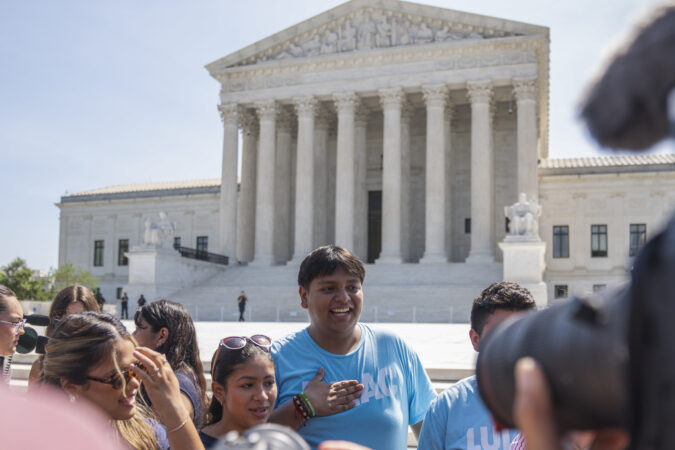
    The Supreme Court upheld the principle of birthright citizenship in a ruling for the ages on Tuesday, affirming amid rancorous national debate that people born in this country are American citizens.

    The decision handed a key loss to President Donald Trump in a case that represented a major goal of his administration ― the denial of citizenship for children born on American soil to undocumented parents.

    Instead, the court upheld what has been recognized as the law of the land for nearly 160 years, enshrined in the Constitution by ratification of the 14th Amendment shortly after the Civil War.

    “Citizenship, then and now, was the right to have rights — to freely participate in our political community. The Framers of the Fourteenth Amendment extended that promise to ‘every free-born person in this land,’” Chief Justice John Roberts wrote for the court. “We keep that promise today.”

    The court ruled 6-3, with three conservative justices voting to let Trump’s proposed restrictions take effect.

    Reaction flooded in immediately, with Cathryn Miller-Wilson, executive director at HIAS Pennsylvania, the immigrant-support organization, saying the decision fell “on the right side of history.”

    “It shouldn’t be a surprise because birthright citizenship is enshrined in our Constitution,” she said of the decision. “But unfortunately there are many other things that have been enshrined that the Supreme Court has ignored. So it was a point of anxiety, I think, for all of us.”

    Trump’s planned restrictions had been blocked by lower courts and had not taken effect.

    The Pennsylvania Immigration Coalition, an advocacy organization based in Philadelphia, called the decision “a victory for families, for immigrant communities, and for the shared values that should guide our country: belonging, safety, and unity.”

    “Today’s decision affirms what our communities have always known: no child’s belonging should be up for debate,” said Jasmine Rivera, the coalition executive director.

    Democratic Gov. Josh Shapiro said on social media that Trump’s effort to end birthright citizenship was cruel and “goes against centuries of hard work to advance American freedom.”

    Days before the nation’s 250th birthday, Shapiro said, the court affirmed “that the fundamental promise of America still rings true — that this is a land of freedom and opportunity for all.”

    In New Jersey, one of the first states to sue over the issue, Attorney General Jennifer Davenport said she was thrilled by the decision.

    “The president cannot change our citizenship laws with the stroke of a pen. We stood up for the rule of law, we stood up for our residents, and we won,” said Davenport, an appointee of Democratic Gov. Mikie Sherrill.

    Meanwhile, House Speaker Mike Johnson (R., La.) said that he was “very disappointed” by the ruling, that it will subject the country to “serious challenges going forward and we’ll have to deal with that.”

    Johnson, who has worked as a constitutional lawyer primarily on religious issues, said the 14th Amendment is being abused by people who are coming to the U.S. to have children in a practice called birth tourism.

    U.S. Rep. Scott Perry, a York County Republican, railed against the court, saying that it had “failed the American people,” and that justices Roberts and Amy Barrett were joining an effort to protect birthright citizenship specifically for the children of undocumented immigrants.

    “Now, more than ever, we must ensure the security of our borders and to prevent those who wish to do us harm by exploiting our immigration system are unable to do so; which means closing EVERY. SINGLE. LOOPHOLE,” Perry said in a statement.

    U.S. Rep. Chrissy Houlahan, a Chester County Democrat, mentioned the path trod by her father, a Polish-born Holocaust survivor who emigrated to the U.S. as a child.

    “I’m deeply grateful for the Supreme Court’s protection of the 14th Amendment, and for all of the first-generation Americans who make our community stronger,” she said on social media.

    On April 1 the Supreme Court heard oral arguments on one of the most important cases of the time, one that had been expected to define who gets to be a citizen of the United States. Trump traveled to the court to hear the arguments in person, departing after government lawyers wrapped up their presentation.

    There was no indication at the time of how the justices might rule, though several of the justices seemed skeptical of the administration’s arguments and peppered government attorneys with sharp questions.

    When Solicitor General John Sauer argued that “we’re in a new world now,” Roberts responded, “It’s a new world. It’s the same Constitution.”

    On Tuesday, the longest-serving justice, Clarence Thomas, joined by Neil Gorsuch, offered a 91-page dissent, saying the ruling added “to the sad history of the Fourteenth Amendment, which was designed and understood to secure equal rights for the freed Blacks but has instead been repurposed for political projects that the Reconstruction Congress did not support.”

    On the day he was inaugurated for a second term in 2025, Trump signed an executive order to end birthright citizenship for children born in this country to undocumented immigrants. That marked an attempt to reverse legal and Constitutional precedent, which has long held that people born in the United States are U.S. citizens.

    The ACLU sued within hours, and New Jersey officials went to court the next day, with then-Attorney General Matt Platkin saying, “Presidents in this country have broad powers, but they are not kings.”

    Birthright citizenship, simply put, is the legal foundation under which American citizenship is automatically conferred upon people who are born in the United States, with limited exceptions. The formal term is jus soli, Latin for “right of the soil.”

    Automatic citizenship also extends to children who are born abroad to U.S. citizens.

    Birthright citizenship is guaranteed in the Constitution by the 14th Amendment, ratified in 1868 after the end of the Civil War. It says that “all persons born or naturalized in the United States, and subject to the jurisdiction thereof, are citizens of the United States and of the state wherein they reside.”

    Trump and other opponents argue that the practice encourages people to enter the country illegally, so that children who are born here will automatically gain American citizenship. Those citizens, at age 21, can sponsor close family members to live permanently in the United States.

    The Trump administration contended that birthright citizenship had limited intent, meant only to ensure that formerly enslaved people and their children were U.S. citizens.

    The administration focused on the clause “subject to the jurisdiction thereof,” saying that excludes people with temporary or unlawful presence. The president’s order would have denied citizenship to babies born in the U.S. unless at least one parent is a U.S. citizen or lawful permanent resident at the time of the birth.

    Trump’s opponents said reliance on those five words makes no sense, that of course people who live in the United States without permission are subject to its jurisdiction ― its laws, orders, and government regulations ― the same as everyone else.

    The administration also invoked the practice of birth tourism as a main argument for revocation, elevating what was a side issue to a central cause.

    Birth tourism is when people from other countries travel to the U.S. for the purpose of giving birth, thereby obtaining citizenship for their babies.

    It’s relatively rare, the high estimate at 26,000 births a year, from the Center for Immigration Studies, which advocates for low immigration. That’s a fraction of the roughly 3.6 million children born annually in the United States.

    In Pennsylvania, all eight Democratic federal lawmakers who represent the state opposed Trump’s attempt to end birthright citizenship.

    Along with 208 other Democrats in Congress, they signed an amicus brief in February arguing that the 14th Amendment set a “constitutional minimum — a floor — for birthright citizenship” and that the administration’s arguments were incoherent.

    The Democrats who signed were U.S. Sen. John Fetterman and U.S. Reps. Houlahan, Brendan Boyle, Dwight Evans, Madeleine Dean, Mary Gay Scanlon, Summer Lee, and Chris Deluzio.

    Some Republicans in Congress filed amicus briefs supporting Trump’s case, though none of the 11 Republicans representing Pennsylvania signed on to them.

    The Republicans argued that within the 14th Amendment, the words “subject to the jurisdiction” were key.

    “The Framers would have recoiled at the present debasement of citizenship, understanding that ‘jurisdiction’ requires more than mere physical presence,” they wrote. “It demands total allegiance to the sovereign. To hold otherwise places sovereignty, citizenship, and our nation’s survival in jeopardy.”

    Staff writers Andrea Padilla, Sam Janesch, and the Associated Press contributed to this article.