Tag: Josh Shapiro

  • Josh Shapiro is most popular politician among Philadelphia residents — by a long shot

    Josh Shapiro is most popular politician among Philadelphia residents — by a long shot

    Gov. Josh Shapiro is by far the most popular political figure among Philadelphia residents, a boost as he looks toward November and beyond.

    In a new Suffolk University/Philadelphia Inquirer CityView poll, 62% of Philadelphians have a favorable opinion of Shapiro, double digits above any other political figure included in the survey.

    Not only did the Democratic incumbent running for reelection win over three-quarters of his own party’s voters in the blue stronghold, he also got positive reviews from almost half the city’s independents and more than one-third of Republicans.

    “He has strong bona fides within his own party, 76% favorable and 11% unfavorable, but he’s also at least somewhat competitive among independents and even some Republicans, so that’s an amazing profile for a candidate who’s an incumbent these days,” said David Paleologos, the polling director at Suffolk.

    Just 16% of residents have an unfavorable view of Shapiro, and only 8% have never heard of the one-term governor, who was on former Vice President Kamala Harris’ short list of potential running mates in 2024.

    (function(){function e(){window.addEventListener(`message`,function(e){if(e.data[`datawrapper-height`]!==void 0){var t=document.querySelectorAll(`iframe`);for(var n in e.data[`datawrapper-height`])for(var r=0,i;i=t[r];r++)if(i.contentWindow===e.source){var a=e.data[`datawrapper-height`][n]+`px`;i.style.height=a}}})}e()})();

    The poll of 500 residents in the city, which was conducted by phone from June 16 to 20, had a margin of error of 4.4 percentage points. Pollsters reached residents in all 66 wards in the city.

    Shapiro clobbers his Republican opponent, Treasurer Stacy Garrity, whom just 9% of the poll’s respondents view favorably.

    That’s not unexpected in a city where Democrats outnumber Republicans 6-1. But it’s Garrity’s lack of name recognition that plays a larger role. A whopping 61% of those surveyed had never heard of Garrity, a glaring figure less than five months until the November election.

    Although the state GOP coalesced around her last year and she faced no challengers for her primary nomination this year, only 26% of Republicans had even heard of Garrity.

    (function(){function e(){window.addEventListener(`message`,function(e){if(e.data[`datawrapper-height`]!==void 0){var t=document.querySelectorAll(`iframe`);for(var n in e.data[`datawrapper-height`])for(var r=0,i;i=t[r];r++)if(i.contentWindow===e.source){var a=e.data[`datawrapper-height`][n]+`px`;i.style.height=a}}})}e()})();

    “She’s kind of a blank slate, and that works to the challenger’s advantage, but if you’re Stacy Garrity you want to start defining yourself quickly before someone else does,” Paleologos said.

    Shapiro can drive up his statewide total if voters in Philadelphia, an overwhelming Democratic electorate, turn out in large numbers — though that has been less reliable in recent years.

    His broad favorability could also help him stretch his bank account further. Shapiro, who hails from nearby Montgomery County, has spent the least amount of money so far in the Philadelphia television market and the most in Pittsburgh, which could show his campaign knows where he is already strong.

    Fetterman is far less popular in Philly, particularly among young voters

    Shapiro’s popularity in the city stands in stark contrast with the state’s other top Democrat: U.S. Sen. John Fetterman.

    In the swing state’s most Democratic city, the one-term senator is faring poorly.

    Less than one-quarter, 24%, of Philly residents have a favorable opinion of Fetterman, compared with 43% with an unfavorable view. The numbers are even worse within his own party, with just 17% of Democrats holding a favorable view of the senator, who has often feuded with progressives and repeatedly crossed party lines to cast key votes in support of President Donald Trump’s nominees.

    His numbers are particularly sour among voters ages 18 to 24 and 25 to 34.

    (function(){function e(){window.addEventListener(`message`,function(e){if(e.data[`datawrapper-height`]!==void 0){var t=document.querySelectorAll(`iframe`);for(var n in e.data[`datawrapper-height`])for(var r=0,i;i=t[r];r++)if(i.contentWindow===e.source){var a=e.data[`datawrapper-height`][n]+`px`;i.style.height=a}}})}e()})();

    A strong majority of Republican voters, 60%, view him favorably in the poll, but the Pennsylvania Democrat has repeatedly insisted he has no interest in switching parties heading into 2028, when he is likely to face a primary challenge if he runs for another term.

    While slightly more Philadelphians have a favorable view of Fetterman than his GOP colleague, U.S. Sen. Dave McCormick, a greater share of Philly voters have an unfavorable view of the Democrat.

    McCormick earned 17% favorable views compared with 25% unfavorable views, while the rest had not heard of the freshman senator or were undecided.

    But the least popular politician in Philly was Trump, who had just 12% favorability in the city.

    Ninety-two percent of Democrats view Trump unfavorably, and 31% of Philadelphia Republicans do, too. The poll also found that nearly 70% of Philly voters had grown less confident in American democracy under Trump’s presidency.

    Trump made inroads in the deep-blue city in 2024, but Harris still won Philadelphia handily with 78% of the vote.

    The president is a frequent target of Shapiro, who has blamed Trump’s tariffs and other policies for exacerbating the cost of living.

    Taking on Trump may be boosting Shapiro’s popularity as he pursues reelection. His numbers show opportunity as he continues building a national profile, likely with ambitions for higher office. In a city where voters favor liberal and left-leaning candidates, Paleologos said, the polling results could be somewhat extrapolated to a national Democratic primary for president in 2028.

    What Shapiro has going in his favor is high popularity among women, with 69% viewing him favorably. That is good news for the governor, since women consistently make up a large proportion of Democratic primary voters, according to exit surveys.

    “In a Democratic primary, you really want to be strong among women, and he is,” Paleologos said. “If 60% of women are voting a Democratic primary, that really plays to his strength.”

    He also ranks in the 70s for favorability among people ages 45 to 74.

    “Those are people who are bill payers, they’re raising children, they’re taking care of sick parents, they’re very stretched in terms of economics. Just terrific numbers,” Paleologos said.

    Shapiro’s favorability is far above that of other Democratic politicians in the city, including Mayor Cherelle L. Parker and State Rep. Chris Rabb, who won last month’s competitive primary to represent the 3rd Congressional District, which stretches from Northwest Philly to parts of South Philly.

    A majority of respondents had not heard of Rabb despite his recent win. But 26% of respondents said they had a favorable view of the progressive lawmaker, compared with only 7% with an unfavorable view.

    The mayor was viewed favorably by nearly 44% of respondents, compared with nearly 35% who viewed her unfavorably — a net positive rating but a much closer split than Shapiro.

    “There are there are pockets of strength that make her electorally strong, but I wouldn’t call it broad-based,” Paleologos said of Parker.

  • Trump was welcomed to Pa. by Stacy Garrity. He didn’t mention her at all.

    Trump was welcomed to Pa. by Stacy Garrity. He didn’t mention her at all.

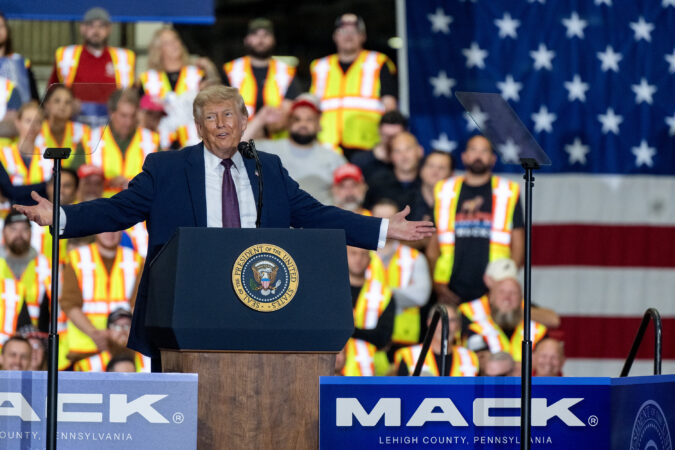
    MACUNGIE, Pa. — President Donald Trump’s speech on manufacturing in a key Pennsylvania swing district repeatedly veered into other topics and musings about elections in other states, like Maine and California.

    It took the president nearly an hour to even reference by name GOP U.S. Rep. Ryan Mackenzie, the vulnerable incumbent whose district Trump was visiting to boost his chances in this year’s midterm elections.

    And GOP gubernatorial nominee Stacy Garrity did not even get a mention during Trump’s speech to roughly 1,500 attendees, including workers at the Mack Trucks facility in Macungie in Lehigh County.

    Trump’s visit came just days after the company received $47 million through a Defense Department contract.

    And while he touted the trucks, he spent just as much time meandering about weight-loss drugs, immigration, firearms, the role of transgender athletes in women’s sports, and the UFC fight recently held on the White House lawn. He also repeated conspiracy theories about the races for Los Angeles mayor and California governor, saying he had asked the U.S. attorney in that state to investigate after conservative mayoral candidate Spencer Pratt did not advance to the general election.

    And he threw jabs at Pennsylvania Gov. Josh Shapiro amid 2028 speculation and appeared to undermine Shapiro’s Republican opponent, Garrity.

    Speaking about recent victories by democratic socialist candidates around the country, Trump quipped that “Shapiro is not that much better, to be honest with you.”

    He referenced the Democratic governor’s potential presidential aspirations, warning that “a guy like Shapiro is going to be forced on the left, otherwise he’s not going to get the nomination.”

    But though he weighed in on Shapiro, the governor’s Republican challenger’s name was noticeably absent from Trump’s list of shout-outs to GOP officials, despite the fact that Garrity spoke earlier in the event.

    Trump instead heaped praised on U.S. Rep. Dan Meuser, a Pennsylvania Republican who considered a run before ultimately opting against it and enabling the state party to coalesce around Garrity.

    “Meuser’s another great guy who was thinking about running for governor. I think he would have won. He was thinking of running for governor, and I said ‘I want you to stay in Congress,’” Trump said.

    Trump endorsed Garrity earlier this year, but the lack of acknowledgment Tuesday was striking given the election year focus of the event and Garrity’s own promises to support Trump’s agenda.

    “We need a governor in Harrisburg who will be a partner with President Trump in Washington, not an opponent in the courtrooms,” she said before Trump took the stage. “We need a governor who will fight for Pennsylvania jobs, like right here at Mack Trucks.”

    State Treasurer and Republican candidate for governor Stacy Garrity is seen on a big screen as she speaks to supporters before the arrival of President Donald Trump at Mack Trucks in Macungie Tuesday, June 23, 2026. Trump did not mention Garrity when he later spoke to the crowd in the Lehigh Valley.

    Trump restated his belief that tariffs have revitalized and would further boost the U.S. economy, though gas prices have reached new heights since he began a war with Iran, stymieing the flow of oil. (The Strait of Hormuz has reopened, following a tentative peace deal struck this month.)

    “I placed a 25% tariff on foreign automobiles and very importantly posed a 25% tariff on medium and heavy-duty trucks, so Mack Trucks could do very well with this factory in Pennsylvania,” he said.

    “They weren’t gonna come in from foreign lands and steal your jobs,” Trump added.

    However, the company cited Trump’s tariffs last year as contributing to its decision to lay off hundreds of workers at its Lehigh Valley operations center, the Pennsylvania Capital-Star reported at the time.

    Tuesday marked Trump’s fourth Pennsylvania appearance in his second term and his first this year ahead of November’s high-stakes midterm elections. The visit was billed as an official event as part of Trump’s American Workers First tour, but the event had the feel of a campaign rally.

    Four U.S. House districts in Pennsylvania are considered competitive, the most of any state, and the event took place in the 7th Congressional District, which is viewed as one of the most likely to flip to Democratic control.

    “We have to reelect a certain congressman,” Trump told the crowd.

    In 2024, Mackenzie won the seat by 1 percentage point, while Trump defeated Democrat Kamala Harris and won Pennsylvania in the presidential race.

    “Workers, like the ones here at Mack, are spearheading the great American comeback,” Mackenzie said.

    Bob Brooks, a union leader and firefighter who won the Democratic nomination to challenge Mackenzie, praised the union workers at Mack ahead of the event for building “the literal engine for the American economy,” but he blasted Trump and Mackenzie for failing to bring down prices.

    “No speech from Mackenzie can change the fact that his time in Congress has been an absolute disaster for the hardworking people of the Lehigh Valley,” Brooks said in a statement ahead of Tuesday’s event.

    Lt. Gov. Austin Davis, in a media call earlier Tuesday, said Trump’s choice to rally at Mack Trucks specifically signals he and his party recognize a “real political danger” because of Trump’s policies.

    “Donald Trump’s agenda is putting Congressman Mackenzie at serious risk,” Davis said. “They’re circling the wagons and trying to save that seat.”

    Affordability is likely to be a key issue on voters’ minds as they choose between Mackenzie and Brooks.

    Steve Leiby, 52, who works for Mack and attended Tuesday’s event, said he understands the tariffs Trump enacted are controversial, but he still supports them.

    “It’s a big risk, if we had a war, that we didn’t make a lot of war supplies in the U.S.,” he said.

    President Donald Trump leaves after a visit to Mack Trucks in Macungie, in the Lehigh Valley Tuesday, June 23, 2026.

    Brent and Francine Stanley, both 60, from New Tripoli, said they support Mackenzie because he shares their conservative values. His office organized an elder-care symposium that Francine Stanley attended because the couple have a 23-year-old child with disabilities, and they were able to get connected to resources.

    But they both know how competitive this election is, noting the stack of pro-Brooks mailers they have already received and predicting that Democrats will be knocking on their doors as November approaches.

    “They’re really persistent, and if you don’t answer, they follow up,” Francine Stanley said. Mackenzie, she said, should consider doing the same.

    Staff reporters Andrea Padilla and Sam Janesch contributed to this article.

  • ‘Blur our differences and find our commonalities’: Josh Shapiro stresses unity at World Cup

    ‘Blur our differences and find our commonalities’: Josh Shapiro stresses unity at World Cup

    Gov. Josh Shapiro thinks sports could be the key to unity ahead of the nation’s 250th anniversary.

    “To me, sports is still one of the few things that allows people from all different walks of life, and different political views, to actually come together and enjoy each other’s company,” Shapiro said in an interview with 6abc while in Philadelphia for Monday’s World Cup match between France and Iraq.

    Luckily for Shapiro, Pennsylvania has had no shortage of sporting events. After this spring’s NFL draft and PGA Championships were both held in the state, Philadelphia is hosting six World Cup games through July and the forthcoming MLB All-Star Game.

    Shapiro said this was intentional.

    “We worked really, really hard to stack these events up,” Shapiro told 6abc. “And I was really purposeful about this, that as we celebrate our history, we have to find ways to come together.”

    Shapiro has attended two of the three World Cup games held in the city so far, taking in Ivory Coast’s 1-0 win over Ecuador on June 14 before attending France’s 3-0 victory against Iraq.

    VisitPA has committed $31.6 million to Philadelphia Soccer 2026 to help aid World Cup costs. Through this sponsorship, the state, including Shapiro, has access to tickets and suites.

    “The Commonwealth has access to a mix of suite, VIP, and general admission tickets, which are being used to host business leaders, prospective partners, and other guests to further strengthen Pennsylvania’s economic development and promote the Commonwealth as the best place to visit, live, and do business,” Rosie Lapowsky, a spokesperson for Shapiro, wrote in an email.

    Shapiro said he stopped by the FIFA Fan Festival at Lemon Hill before the game and admired how welcoming Philadelphians were to tourists from all over the globe.

    “We are welcoming people,” Shapiro said. “We want you here, and we want you to celebrate not just a great sport; we want you to celebrate the greatest country on the face of the earth at this important moment as we celebrate the 250th birth of this nation.”

    Fan fests are being held in multiple locations, allowing Pennsylvanians to bask in the World Cup excitement across the state.

    “We were really insistent that this fan fest not be the only one, that we have them across the state,” Shapiro told The Inquirer during that event. “So we got one in Scranton, Reading, and Pittsburgh, and I think we’re going to see a lot of the excitement in there, too.”

    Shapiro, a potential 2028 presidential candidate, is among the many possible 2028 aspirants to attend World Cup events. According to Politico, California Gov. Gavin Newsom, Secretary of State Marco Rubio, and Health and Human Services Secretary Robert F. Kennedy Jr. have all also attended games.

    Politico reported that, ahead of the games, Shapiro distributed 700 free tickets to Philadelphia community organizations to make the games as accessible as possible and bring people together.

    “I think it [the World Cup] has a great way of allowing us to kind of blur our differences and find our commonalities and come together,” Shapiro told 6abc.

    Staff writer Owen Hewitt contributed to this article.

  • The ‘demand is real’ for backyard cottages, in-law suites, and other ADUs, says a Philly-area builder

    The ‘demand is real’ for backyard cottages, in-law suites, and other ADUs, says a Philly-area builder

    Homeowners across the Philadelphia region want to build garage apartments, in-law suites, and backyard cottages on their properties.

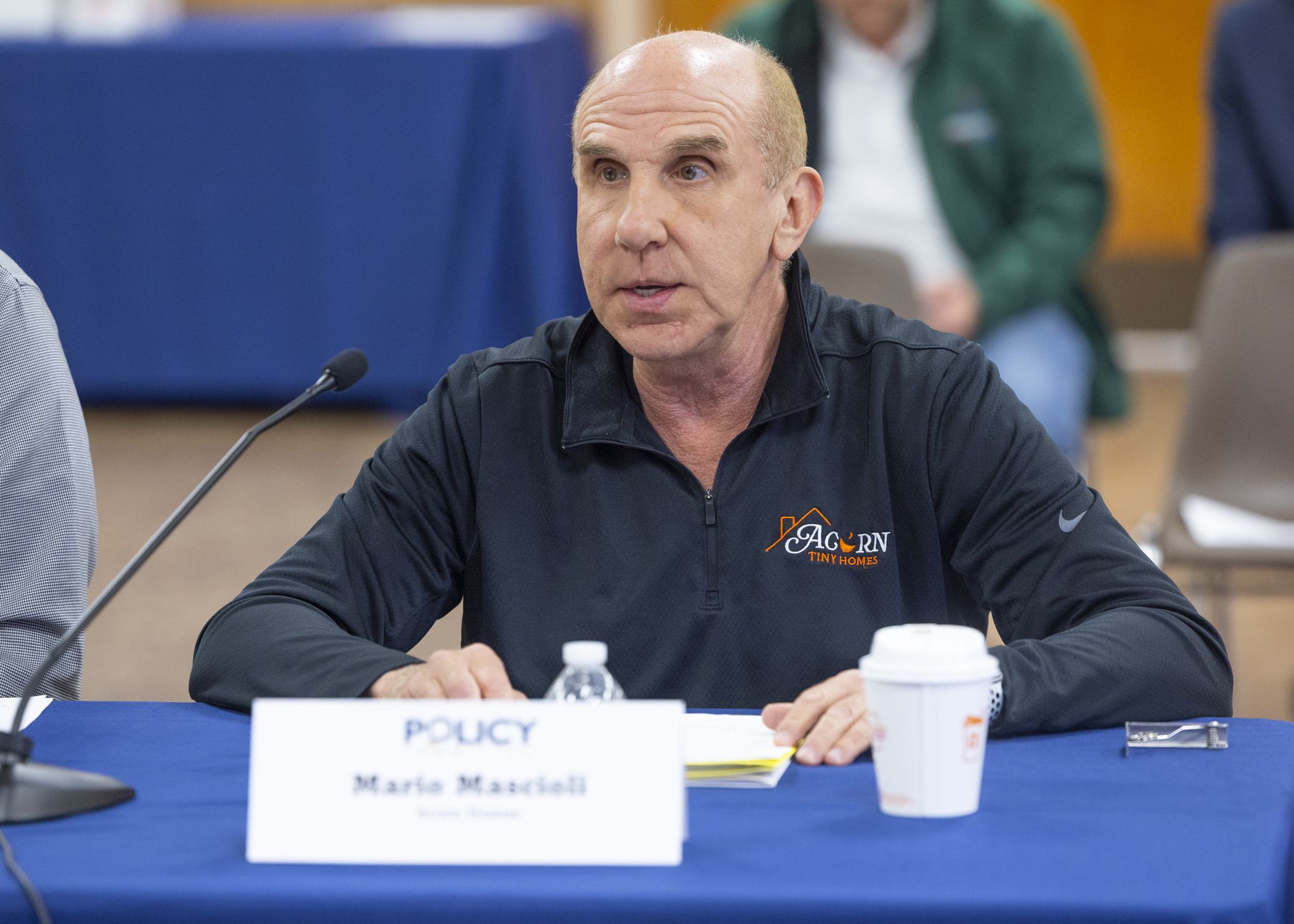
    Mario Mascioli, owner of Acorn Built Homes, said he gets hundreds of inquiries per month for these accessory dwelling units (ADUs), which have made up the bulk of Mascioli’s business since his company opened in late 2024.

    “The demand is real,” said Mascioli, who works across southeastern Pennsylvania and in Princeton. And builders like him are ready to create ADUs. But municipalities’ varying and often restrictive land-use rules often make that difficult.

    Pennsylvania lawmakers are currently considering legislation that would allow homeowners to create ADUs in places that are zoned for single-family houses without having to get special permission. The bill passed the state House earlier this month and is now before a state Senate committee.

    Allowing for the construction of ADUs is part of Pennsylvania Gov. Josh Shapiro’s plan to increase the state’s housing supply and provide Pennsylvanians with more affordable housing options.

    Mascioli has testified before state lawmakers to advocate for the loosening of restrictions for ADUs.

    “It would mean that homeowners that want these — which are plenty of them — would be able to get it done quickly, more economically, favorably,“ he said. ”It would be fantastic.”

    The Inquirer talked to Mascioli about the ADU landscape.

    This interview has been edited for length and clarity.

    Mario Mascioli, owner of Acorn Built Homes, testifies about accessory dwelling units at a policy committee hearing of Pennsylvania legislators on May 21, 2026.
    Why do people want ADUs?

    The three drivers for why people want them are: aging-in-place elderly parents; adult children that can’t afford rent or can’t afford to buy a home; and third, people want rental income.

    What types of ADUs do you offer?

    We build studios as small as 240 square feet. [But] most people want a space that has at least 500 square feet. Most opt for one or two bedrooms.

    We [also] do additions. We do garage conversions. We do conversions of basements.

    In many cases, we have to attach an ADU as an addition to a house because of the township requirements. And in many cases, we’re limited as to the features we can put into it, because of those requirements.

    What’s something that clients have asked for that they weren’t able to get because of local land-use rules?

    I’ll give you a real-time example. We start every project with what we call our “feasibility and scoping” phase. That takes about four or so weeks to dial in on what’s buildable from a structural, construction, architectural, and also an approvable perspective.

    We have a customer we’re in the final phase of that study with. They have a beautiful property, plenty of land. They wanted a detached ADU for the couple’s mother, who’s going to be moving up from Florida to take care of their newborn, [who is due] in December. In this case, we can’t do a detached unit without going through a variance.

    We also uncovered through our feasibility process that … if we were to extend the garage and build on top of it, that would require a variance.

    Third thing is there’s a floodplain that runs through the property. And any modification to the footprint of the property would also be a variance.

    Those are three separate variance processes, each of which would require attorneys and fees and zoning hearing boards.

    So what we’re left building [without zoning approvals] is to raise up the loft on the second floor of the garage, put some dormers in it to make it more spacious, and create a one-bedroom living space there — but without a full kitchen with built-in cooking facilities. We can only put a kitchenette in.

    That is very typical. That’s 90% of what we deal with as it relates to ADUs.

    What’s different about building an ADU vs. a typical single-family home?

    Basically, the red tape impedes or kills [ADU] projects before they start. And that is because there’s over 2,500 municipalities in Pennsylvania. Each with different zoning rules as it relates to ADUs.

    In some townships, you can build one with no issues. But if you step, you know, a mile over the line in any direction, it’s either banned entirely or there are so many restrictions and other requirements that it takes [a] very long [time], if at all, to get through zoning hearing boards.

    Permitting and the expense of the red tape can make many projects impractical.

    Why did you decide to go into the ADU business in Pennsylvania with the challenges you’ve described?

    If you look at things from a national perspective, 20 states have passed legislation like Pennsylvania currently has in its legislature.

    People want them. That’s about affordable housing. I thought and still believe that it would be inevitable that ultimately Pennsylvania would pass such legislation. And if we were here in advance of that, establishing ourselves in the market, we would benefit from that legislation being passed.

  • In Harrisburg, Philadelphia Mayor Parker asks lawmakers to double school renovation fund to $250 million

    In Harrisburg, Philadelphia Mayor Parker asks lawmakers to double school renovation fund to $250 million

    HARRISBURG — Philadelphia Mayor Cherelle L. Parker called on Pennsylvania’s General Assembly to double what it sets aside for school districts to update their aging facilities, as the Philadelphia School District embarks on a $3.3 billion plan to modernize 169 school buildings.

    Parker hosted a two-hour news conference at the state Capitol on Monday, asking Pennsylvania’s split legislature and Gov. Josh Shapiro to increase the amount of money available for school facility renovations from its current $125 million to $250 million as part of this year’s state budget, which is due at the end of the month.

    The school district is on track to close 17 schools as part of the larger modernization efforts, following months of protest and controversy over the facilities plan.

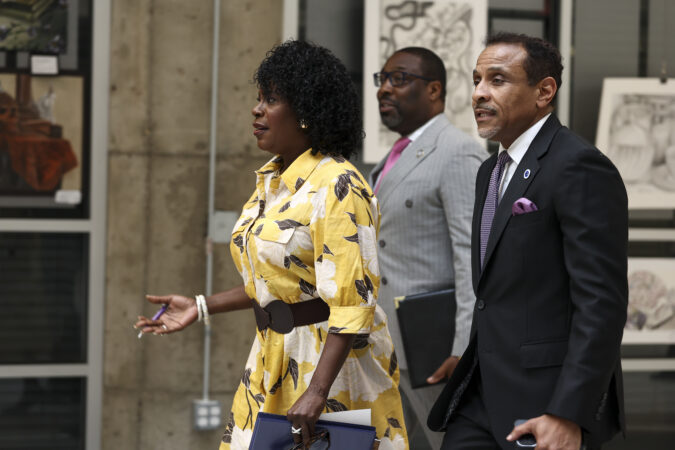
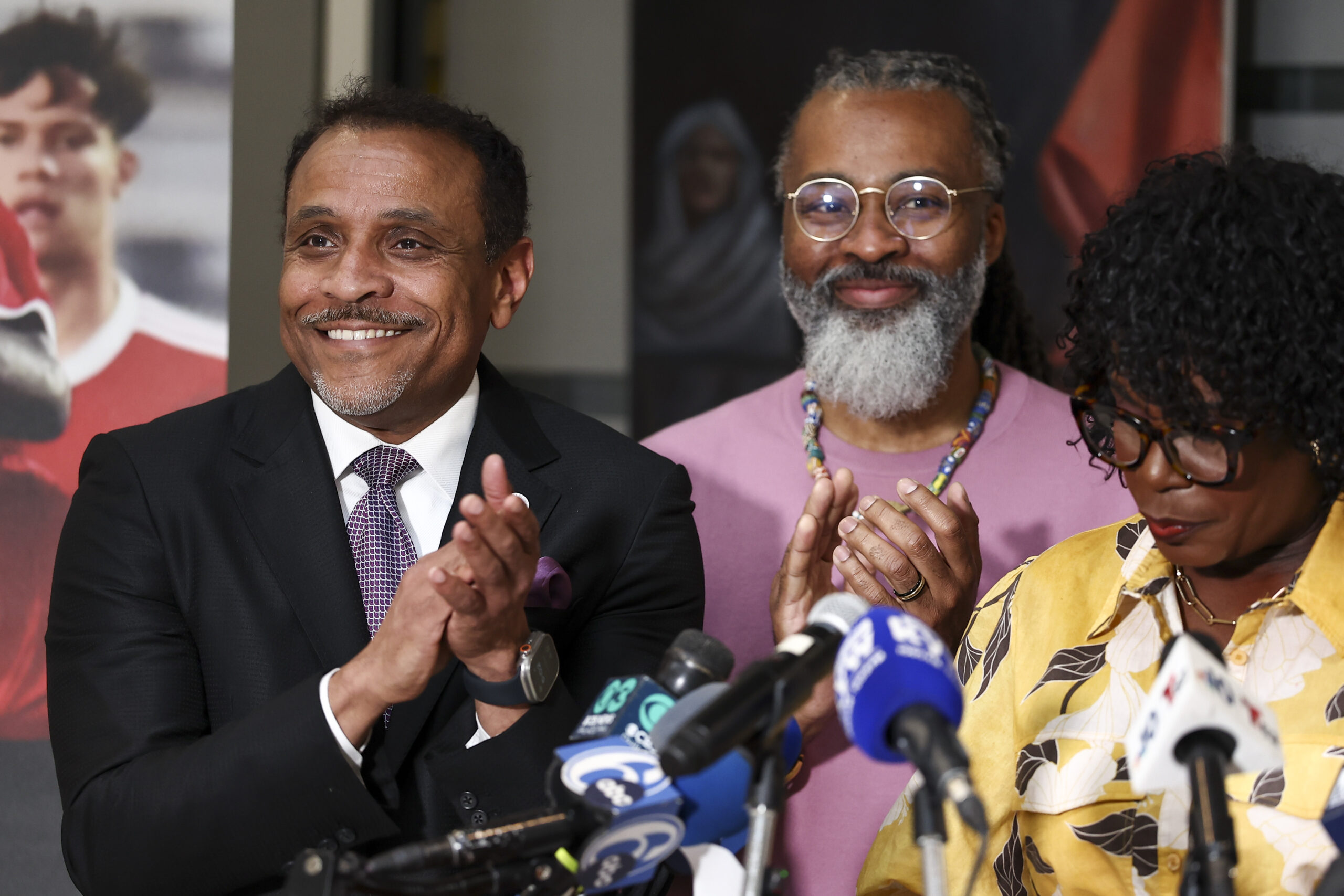
    Parker appeared alongside City Council President Kenyatta Johnson, Philadelphia School Superintendent Tony B. Watlington Sr., and school board president Reginald L. Streater, following several weeks of tensions with state and city legislative leaders over her proposed tax plans to raise revenue for the city and the school district, which ultimately failed.

    But on Monday, the city leaders appeared as a united front in Harrisburg, showcasing their commitment to “rightsizing” Pennsylvania’s largest school district, which is the ninth-largest in the nation.

    “We are here united to let you know that we are proud that the City of Philadelphia has some skin in the game, and we are not coming here simply with our hat in hand, asking the Commonwealth of Pennsylvania to come save the School District of Philadelphia,” Parker said, noting that the city was able to stave off classroom cuts.

    “It is the General Assembly who told us last year we will not give additional funding until you come back with a facilities plan. So we went to work,” Johnson said during the news conference Monday.

    Now it is on the state to set aside additional funding to help school districts update their facilities, Parker and Johnson said.

    Shapiro, a first-term Democrat, proposed keeping the pot of money at $125 million for the coming fiscal year, as part of his $53.2 billion budget proposal.

    Pennsylvania is facing its own budget problems, as the state is on track to spend more than it brings in in revenue this year and in future years. Shapiro’s budget proposal would spend $4.3 billion more than the state’s projected revenue for the coming fiscal year, meaning Parker’s funding increase request faces an uphill battle.

    The event highlighted a coalition of advocates, from labor leaders to recent graduates to public education advocates — all calling on the state to increase the state’s capital fund, in addition to continuing to increase the city’s adequacy funding.

    The school district is facing a $300 million structural deficit and had planned to cut more than 300 school-based positions before city officials cut a deal to keep funding the positions with a yet-to-be-determined revenue source.

    Several of the speakers recalled recent times when their young children did not have access to bathrooms, or instances when schools had to shift to virtual learning because the buildings are unequipped to handle cold or hot weather.

    The speakers, including Parker, emphasized that the issue of aging school buildings is not exclusive to Philadelphia. It is an issue faced by school districts around Pennsylvania, including rural and suburban ones.

    “So goes the decision-making in this building, so goes the future of rural, urban, and suburban Pennsylvania, and all of our children,” Parker said.

    In a letter sent Monday to members of the General Assembly, top leaders from the Pennsylvania League of Urban Schools and the Pennsylvania Association of Rural and Small Schools echoed the calls.

    “Safe, modern school buildings should not depend on a community’s zip code, and we stand with Mayor Parker in calling for Harrisburg to make that needed commitment to students in every corner of the Commonwealth,” the letter said.

    In a letter to Shapiro in January, ahead of his annual budget pitch, Parker requested that the state double the amount available for school facility improvements, and she sought a revision to the guidelines to allow a single district to receive up to 25% of the total grant funding in a given year. That would open approximately $50 million to $60 million annually for the district to tap into to improve school buildings, according to the letter.

    Parker, who served as a state representative for 10 years before joining City Council and her election as mayor, received a major blow to her tax plans from Harrisburg in the final days of city budget negotiations. Three sources with knowledge of the closed-door state budget talks told The Inquirer then that lawmakers would not approve increases to the city’s hotel and long-term rental taxes she requested to help expand the city’s homelessness services.

    Only one state lawmaker joined the mayor’s event: Sen. Art Haywood (D., Philadelphia/Montgomery). Parker met separately in a private meeting with Philadelphia’s House delegation to Harrisburg.

  • Brian Fitzpatrick ties the knot with Fox News’ Jacqui Heinrich in NYC wedding

    Brian Fitzpatrick ties the knot with Fox News’ Jacqui Heinrich in NYC wedding

    U.S. Rep. Brian Fitzpatrick (R., Pa.), who represents Bucks County, and Fox News senior White House correspondent Jacqui Heinrich got married Saturday in New York City.

    The wedding was attended by high-profile figures in politics and media and featured a nighttime cruise around the Statue of Liberty.

    The celebrations for the newlyweds and their 302 guests included a ceremony at St. Patrick’s Cathedral and a reception on a yacht called Horizon’s Edge, with a 10-piece brass band and the toasts of former GOP House Speaker Kevin McCarthy and former Sen. Joe Manchin (I., W. Va.), People magazine reported.

    The nuptials of Fitzpatrick, 52, and Heinrich, 37, comes almost a year after their engagement and amid the Republican’s high-stakes reelection campaign to represent Pennsylvania’s 1st Congressional District against Democratic challenger Bob Harvie.

    Fitzpatrick and Heinrich said they chose New York for their wedding because of its significance in jumpstarting their respective careers as an FBI agent and a network news reporter and its connection to their families’ immigration journey, People reported. It was also a central meeting point for the couple’s families from New England and Pennsylvania.

    The reception featured other nods to family — Heinrich’s parents got married on a chartered cruise and the couple’s cake-cutting song was an “Irish tune,” People reported, written by Fitzpatrick’s great-uncle, an NYPD officer who was killed in the line of duty, according to People.

    Former Sen. Joe Manchin (I, W.Va) and former GOP House Speaker Kevin McCarthy (right) give a toast to U.S. Rep. Brian Fitzpatrick and Fox News reporter Jacqui Heinrich’s nuptials.

    Guests took to social media to congratulate the newlyweds including Heinrich’s Fox News colleagues, U.S. Rep. Don Bacon (R., Neb.), and President Donald Trump’s former Labor Secretary Lori Chavez-DeRemer.

    Pennsylvania Gov. Josh Shapiro was invited to the wedding, but the Democrat was unable to attend.

    Fitzpatrick and Heinrich met in Washington when Heinrich was a correspondent on Capitol Hill. After she switched beats to cover the White House, Fitzpatrick asked her on a date to the Kennedy Center Honors.

    Heinrich’s LinkedIn page shows she began working as Fox News’ White House correspondent in May 2021 during former President Joe Biden’s term.

    They are one of the most high-profile couples on Capitol Hill, sometimes earning the ire of Trump.

    Last month, after Fitzpatrick won his GOP primary unopposed, Trump threatened Fitzpatrick, without saying his name, when asked a question by Heinrich, who is vice president of the White House Correspondents Association.

    “Her husband votes against me all the time. Can you imagine? I don’t know what’s with him,” Trump said. “You better ask what’s with him. She’s married to a certain congressman. He likes voting against Trump, You know what happens with that? It doesn’t work out well.”

  • Stacy Garrity on potentially being the first female governor of Pennsylvania: ‘It’s my least favorite thing to talk about’

    Stacy Garrity on potentially being the first female governor of Pennsylvania: ‘It’s my least favorite thing to talk about’

    If elected in November, Stacy Garrity would become Pennsylvania’s first female governor in the state’s 238-year history.

    Even now, she is one of only two women in history to receive the Republican Party’s nomination for the job.

    The state has never had a woman as its governor; no woman has been elected as U.S. senator; and both times a woman ran for president, she lost the state. Over the last two centuries, Pennsylvania’s political glass ceiling has proven stubbornly resistant to cracks.

    But on the campaign trail against Democratic Gov. Josh Shapiro, Garrity, 62, said she doesn’t give that too much thought.

    “It’s my least favorite thing to talk about,” she said. “I was the oldest of four daughters, and we were just told that we were expected to work hard.”

    Navigating gender dynamics in politics can prove to be a particularly fine balance. Republicans, in particular, often emphasize that candidates should rise on their skills and talent, not personal identity.

    Garrity emphasized her attention is on issues like the power grid, education, and reining in spending, though she recognizes the historic significance of a potential win.

    “Republicans, for the most part, are based on merit, and that’s how I was raised,” said Garrity, who spent decades serving in the Army Reserve and as an executive in the manufacturing industry before becoming state treasurer. When she was reelected in 2024, she broke the record in Pennsylvania for the most number of votes cast in her favor for a statewide office, a distinction formerly held by Shapiro.

    In addition to taking on centuries of male-dominated leadership, Garrity will face other challenges in November.

    She is a Republican who has aligned herself closely with President Donald Trump — including campaigning at his Mar-A-Lago Club in Florida — at a time when Trump has been experiencing historic dissatisfaction among voters and the national political environment favors Democrats.

    And she is running against Shapiro, a Democratic incumbent with a rising national star who is popular even among independents. He has $38 million banked as of May, vastly outpacing Garrity’s $2.8 million. Shapiro is also counting on a strong showing in the midterms to help Democrats win the majority in the U.S. House.

    “I think [voters] are excited to have a first female governor, but I don’t think that is the reason anybody would vote for me,” she said.

    In Pennsylvania and 16 other states

    It is hard to be what you can’t see. And for voters who have never experienced a woman at the top of the hierarchy, it is difficult to imagine what that could look like, experts said.

    It has been 300 years since a woman led Pennsylvania — before it was a state.

    Hannah Callowhill Penn led the colony of Pennsylvania, governing first while her husband, William Penn, suffered several strokes, and then alongside a group of trustees after he died. Over 14 years, she settled boundary disputes, appointed and replaced government officials, and navigated relations with the monarchy in England.

    Other Pennsylvania women made attempts to break gender barriers but came up short. Barbara Hafer ran as a Republican against Democratic incumbent Bob Casey Sr. in the 1990 governor’s race, but lost with just 32% of the vote.

    Former U.S. Rep. Allyson Schwartz lost to Tom Wolf during the Democratic primary for governor in 2014, and Laura Ellsworth was defeated by Scott Wagner in the 2018 Republican gubernatorial primary.

    “It could just be a coincidence, but also it’s very hard to break political traditions, and one of those traditions in Pennsylvania, unfortunately, is male leadership,” said Nichola Gutgold, a professor at Pennsylvania State University’s Lehigh Valley campus, who has researched women in politics.

    Pennsylvania, however, is not alone. There are 17 states that have never had a female senator, and 17 states have never had a female governor, according to the Pew Research Center. That distinction spans geographic ranges and party control.

    Still, Pennsylvania is one of just four states that has never had either, along with Idaho, Indiana, and Colorado. Among them, only Colorado went for Democrats Hillary Clinton and Kamala Harris for president.

    “We have certain variables at play in the Commonwealth of Pennsylvania that make it more challenging for women to run for elected office,” said Dana Brown, executive director of the Pennsylvania Center for Women and Politics.

    The role of the parties on the state and county levels means they have a strong influence on recruiting candidates and pushing them up through the pipeline. Historically, recruiting tended to come from more masculine bases — such as fire stations or township supervisor positions.

    Now, though, “both sides of the aisle recognize that women can win here in Pennsylvania, and so Republicans and Democrats have been purposely recruiting more women,” she said.

    Women have made strides in other Pennsylvania elected offices.

    In Harrisburg, State Rep. Joanna McClinton (D., Philadelphia) is the first woman and second Black person to serve as speaker of the Pennsylvania House. Republican State Sen. Kim Ward of Westmoreland County is the first woman in Pennsylvania history to serve as Senate president pro tempore and Senate majority leader.

    When former Democratic U.S. Rep. Susan Wild, the first woman to represent the Lehigh Valley in Congress, was elected in 2018, “it took a real concentrated effort from [political action committees] and from groups that really wanted to see a woman win to make that happen,” Gutgold said.

    In other cases, as in neighboring New Jersey or Virginia, women have ascended with a combination of fortunate timing, skill, experience, and deft campaigning.

    When Gov. Mikie Sherrill last year became the second woman elected to lead New Jersey, Brown said, “it was a change election for New Jersey, and it was a sign of pushing back against what the federal government is doing with ICE and immigration and also with the economy.”

    Even though Sherrill, a Democrat, shares the same party as her predecessor, Phil Murphy, New Jersey’s vote for a woman represents change, Brown said. “She also worked really, really hard for it, as most women do,” she added.

    Sometimes, female candidates succeed by pushing against expected norms for women by emphasizing military experience or work in male-dominated trades, Gutgold said. Garrity has emphasized her military and business experience on the campaign trail, holding a Veterans for Garrity rally last week.

    “I think that, rhetorically speaking, it would be easier to elect a woman who appears to hold more conservative views, because of the way we, the electorate, still views women’s role in society,” Gutgold said.

    Republican women have scored victories in the Deep South by upholding conservative values such as opposition to abortion and support of gun rights. Kay Ivey holds the governor’s mansion in Alabama, and Nikki Haley previously led South Carolina for two terms. In Tennessee, U.S. Sen. Marsha Blackburn has represented the state since 2018 and publicly repudiated gender-specific titles, such as congresswoman vs. congressman.

    Garrity, on the campaign trail, has also vowed to clean up the “boys will be boys” culture in Harrisburg and has criticized Shapiro’s handling of a sexual harassment case involving a longtime aide.

    The aide, Mike Vereb, abruptly stepped down in 2023, while the administration quietly agreed to pay $295,000 to settle claims from an employee in the governor’s office that Vereb had made repeated sexual advances toward her, and made lewd claims about her and other women.

    “We don’t need to settle for a governor who will sweep sexual harassment and abuse charges under the rug. We don’t need to accept that our state government is a cesspool where intimidation is the norm and public employees fear retribution,” Garrity said during a news conference this year.

    Manuel Bonder, a spokesperson for Shapiro, rejected those accusations.

    “Governor Shapiro has a track record of taking on powerful institutions, exposing sexual abuse, and putting predators behind bars — and he continues to fight to deliver real accountability and justice for survivors here in Pennsylvania,” he said.

    Could Pa. women give Garrity a boost?

    Nationally, women voters tend to lean more toward the Democratic Party, Pew Research Center data show, so it’s unlikely that the Republican Party will attract a huge turnover — even with a female candidate on the top of the ticket.

    Sometimes, however, the gender divide can become even more entrenched. In 2024, for example, when the candidates were broadly polling neck-and-neck, Harris saw a 17-point advantage with Pennsylvania women, while Trump led with men in the state by 11 points, according to a Philadelphia Inquirer/New York Times/Siena College poll.

    Garrity said she is putting together agendas that speak to various coalitions of voters, such as veterans, Latinos, and small-business owners.

    “I don’t think we’ve done specifically females, but that might be a good idea,” she said. A campaign spokesperson added that Garrity would be rolling out women-focused events in the coming weeks.

    Campaigns can target women by speaking directly to certain issues. Democrats have often focused their message on support for reproductive access and abortion rights, especially since the 2022 Supreme Court decision overturning Roe v. Wade.

    According to a Pew Research Center report in March, 64% of women and 55% of men say abortion should be legal in all or most cases. But Garrity has been inconsistent on the issue. She said “Roe was wrong from the beginning” on the day the ruling came out and sold T-shirts on her campaign website that opposed abortion. But in an interview last September, Garrity said she would “respect” Pennsylvania’s current abortion law and would not support a state ban.

    Republicans, meanwhile, often promote public safety and have sought to make women’s sports a wedge issue in recent elections by pushing restrictions on the participation of transgender athletes.

    It is a tactic Garrity will use against Shapiro, who has called attempts to silo transgender athletes discriminatory.

    “A lot of people think that he’s moderate because he likes to be all things to all people, and they don’t understand, he is really for boys competing against girls in sports,” Garrity said.

    There are other issues women candidates are often seen as more trusted on, such as education, healthcare, and children’s needs, Gutgold said.

    Amy Widestrom, executive director of the League of Women Voters of Pennsylvania, said top of mind for members of her organization right now is the right to vote. She said some women have expressed concern that requiring documentary proof of citizenship, which Republicans say is meant to ensure immigrants in the country illegally do not vote, could affect those who change their legal name and do not have matching identification records.

    Appealing to women on these issues can pay off, as they represent a significant voting bloc. Among registered voters in Pennsylvania, 52% are female. Of registered Democrats, 59% are female, and 47% of registered Republicans are female. Roughly 40% of unaffiliated voters are female, according to Widestrom, via voter data.

    But Macy Charles of Concerned Women for America, a socially conservative political nonprofit focused on women, said candidates should speak more expansively when courting women voters.

    “It’s pretty offensive to assume that when we’re talking about issues women care about, it’s only women’s specific issues, like abortion,” said Charles, a legislative strategist. “Women care about the economy, women care about the U.S. borders. Because they have maternal instincts, they care about their families, they care about the well-being of America’s future.”

    Rather than leaning into identity, Charles said, Garrity is reinforcing her reputation of competence.

    “More than just her identity as a woman, she is willing to stand up for common sense and truth and really put families first,” she said.

    Still, Garrity recognizes the achievement her potential victory could bring.

    To be Pennsylvania’s first female governor, “I think it would be great,” she said, “but I think it will be because I am absolutely the best candidate.”

  • With a city funding plan in place, Mayor Parker is headed to Harrisburg for help to shore up school finances

    With a city funding plan in place, Mayor Parker is headed to Harrisburg for help to shore up school finances

    Mayor Cherelle L. Parker and other top leaders of the city government and the Philadelphia School District will travel to Harrisburg on Monday for a high-stakes trip aimed at securing millions of dollars in new funding for the financially strapped public schools.

    Parker will spend much of the day advocating for increased public education dollars as state lawmakers hurtle toward their June 30 budget deadline. The mayor is slated to host an afternoon rally in the Capitol Rotunda alongside Superintendent Tony B. Watlington Sr., school board president Reginald L. Streater, and City Council President Kenyatta Johnson.

    Their trip to the Capitol comes after weeks of tension among those same leaders, who earlier this month hammered out a city budget deal that was in large part centered on finding new funding for the school district, which is facing a $300 million structural deficit and had planned to cut more than 300 school-based staff positions.

    Parker and school officials wanted the city to levy a $1-per-ride tax on rideshare services like Uber and Lyft to secure about $50 million a year in recurring funding, but Council rejected that plan, and instead voted on a one-time diversion of money to the district that came out of the existing city budget.

    City officials have pledged $216 million to the district over five years to keep funding the school workers, though the exact sources of that money is yet-to-be-determined.

    Parker, who served in the state legislature for a decade before becoming a City Council member and then taking office as mayor in 2024, said when she announced the new funding plan that city leaders would be able to travel to Harrisburg “saying we’ve made tough decisions, we’ve made sure we’ve done our best to take care of our own, and we have a plan.

    “Philadelphia is primed to travel to Harrisburg to advocate in unity to ensure that our children get access to the revenue that they deserve,” she said, “so that they can have a first-class school district here in the city.”

    Superintendent Tony B. Watlington Sr., school board president Reginald L. Streater, and Mayor Cherelle L. Parker stand together during an announcement at the School District of Philadelphia Headquarters on June 10 in Philadelphia. Philadelphia School District officials will move to restore 340 classroom-based jobs that were slated to be cut, despite top district leaders saying earlier that they did not have the recurring funding needed to keep the positions.

    The mayor’s message to lawmakers will be largely focused on securing capital dollars for the district’s $3 billion plan to modernize 169 aging school buildings over the next decade. In April, the school board adopted its controversial facilities plan — which includes an intention to close 17 schools — with the goal of bringing in $2 billion of that money from state and philanthropic sources.

    Finding that money in Harrisburg could be a tall task as the state faces its own multibillion-dollar budget shortfall. All 203 state representatives and half of the 50-member Senate are up for reelection this year, and many lawmakers gearing up to face voters in November are averse to broad-based tax increases aimed at juicing revenue.

    In addition, gridlock is commonplace in the divided legislature, where reaching a state budget deal has been a drawn-out and arduous process in recent years. Last year’s bitter negotiations stalled for more than five months, leading to mass service disruptions statewide.

    Gov. Josh Shapiro, a Democrat who is in the midst of his own reelection battle and is seen as a potential contender for president, has also said that he is generally not looking to raise taxes. Leaders in Harrisburg last month rejected a separate proposal by Parker to raise the city’s hotel tax to generate new funding for homelessness prevention programs.

    However, Shapiro has positioned himself as a champion of public education, and he proposed increasing the Philadelphia School District’s general funding allocation to about $2.2 billion in the coming fiscal year, a $151 million increase over this year’s amount.

    Statewide, Shapiro called for an additional $565 million for public schools as part of the state’s new “adequacy funding” formula, a multiyear plan developed to address the chronic underfunding of low-wealth school districts.

    The formula was adopted in 2024 after a Commonwealth Court ruling that the state had for years unconstitutionally deprived some children of an adequate education by sustaining a funding plan largely reliant on local property tax dollars. Philadelphia is the only school district in the state that can’t itself raise taxes. Instead, it depends on the city and state governments for funding.

    Parker said earlier this month that despite her own tax proposal to fund the schools falling through, she intends to “take this fight on the road.”

    “We stand in unity with our legislative leaders in Harrisburg, our legislative leaders on both sides of the aisle, [and] we stand with our governor,” she said. “And we fight until the end to ensure that we do everything we possibly can to ensure that our school district has access to the resources that it needs.”

  • Bill Gates’ nuclear company plans $450 million plant in Philly’s Bellwether District making radioactive cancer treatments

    Bill Gates’ nuclear company plans $450 million plant in Philly’s Bellwether District making radioactive cancer treatments

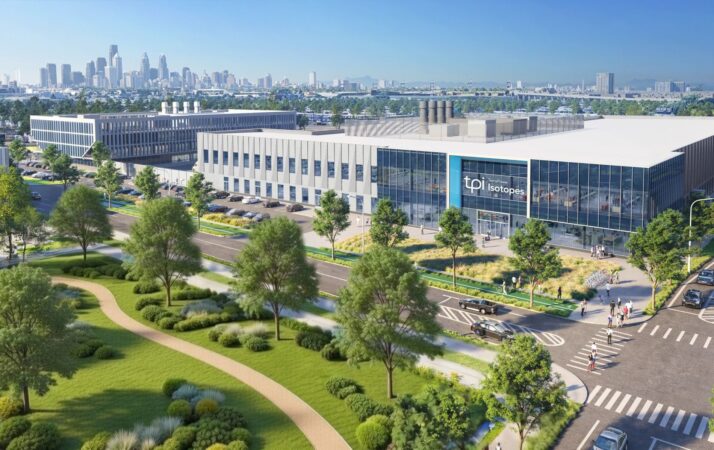
    TerraPower Isotopes, part of a nuclear power company founded by Bill Gates, plans a $450 million plant in the Bellwether District to make radioactive molecules for cancer research and potential treatments, Gov. Josh Shapiro announced Tuesday.

    Bellwether’s developer HRP Group will build a 250,000-square-foot facility for the Bellevue, Wash., company at the former refinery site. TerraPower Isotopes is expected to employ 225 people in Philadelphia to meet anticipated demand for a type of molecule that can be used to kill tumors without damaging surrounding tissue.

    TerraPower’s material, an isotope called actinium-225, is ultimately derived from weapons-grade uranium. Researchers are exploring precision cancer treatments that involve attaching actinium-225 to an antibody that is targeted to specific cancer cells. The isotope then emits high doses of radiation at close range.

    “This new facility is a testament to the demand for actinium-225 as part of the growing industry, which is transforming how cancer is treated,” TerraPower Isotopes President Scott Claunch said in Shapiro’s announcement. “Our team is proud to be building a large-scale manufacturing facility in Philadelphia, which will play a pivotal role in expanding global access to this rare isotope.”

    Pennsylvania government is supporting the project with $10 million in grants. The Bellwether District is in a Keystone Opportunity Zone that has tax benefits through 2043. That means TerraPower Isotopes won’t have to pay many state and local taxes, though it will remain responsible for city wage taxes.

    TerraPower Isotopes, part of a bigger nuclear sciences company called TerraPower, is the second radiopharmaceutical company to announce a factory in the region. In 2024, Nucleus RadioPharma, which counts Fox Chase Cancer Center among its investors, shared plans for a 48,000-square-foot facility in Spring House, Montgomery County.

    TerraPower’s move to South Philadelphia is the third significant life sciences development announced this year by Shapiro and his economic development team.

    Eli Lilly & Co. said in January that it is building a $3.5 billion pharmaceutical plant in the Lehigh Valley to expand manufacturing capacity for next-generation weight-loss medicines. Last month, Johnson & Johnson shared plans for a $1 billion cell therapy plant in Montgomery County.

    TerraPower is the second tenant in the 1,300-acre Bellwether District, which HRP is trying to develop into a new industrial and life sciences hub. Late last year, it announced that California-based canned beverage manufacturer DrinkPAK will build a 1.4 million-square-foot factory that will product 3 billion cans a year.

  • Meta on trial: ‘We’re basically pushers.’ Lawmakers must require social media platforms to prioritize children’s safety

    Meta on trial: ‘We’re basically pushers.’ Lawmakers must require social media platforms to prioritize children’s safety

    One block from the Los Angeles courthouse where Mark Zuckerberg testified in February, families gathered around the Lost Screen Memorial: 50 illuminated phones, each bearing the face of a child their families say social media killed.

    Inside the courtroom, the unsealed documents were unsparing: “We’re basically pushers,” one Meta employee wrote. A 2018 internal memo laid out the strategy: “If we wanna win big with teens, we must bring them in as tweens.”

    Internal research found that teens described Instagram in terms of what the documents called an “addict’s narrative” — compulsive behavior they knew was harmful but felt powerless to stop. Meta’s own engineers proposed fixes, warning internally that “our product exploits weaknesses in human psychology to promote product engagement and time spent.”

    Executives chose profits instead.

    Nylah Anderson, 10, in Chester, liked TikTok videos and she accepted the “blackout challenge” in personal TikTok feed last December as a fun dare. She asphyxiated herself. Her mother has sued TikTok in Philadelphia federal court.

    In December 2021, 10-year-old Nylah Anderson of Chester died after TikTok’s algorithm recommended a “Blackout Challenge” on her “For You” page. In August 2024, the U.S. Third Circuit Court of Appeals ruled that this was not protected speech. The court determined that TikTok’s act of serving that video to a 10-year-old was an expressive act. That ruling cracked Section 230, the legal shield platforms had used for two decades to avoid accountability.

    Thirteen-year-old Levi Maciejewski of Cumberland County never made it to a courtroom. He died by suicide in August 2024, two days after opening an Instagram account and being extorted by a predator through Instagram’s “Accounts You May Follow” feature.

    Internal Meta audits from 2022, cited in his family’s wrongful death lawsuit, found that same feature was recommending accounts engaged in “inappropriate interactions” to 1.4 million minors. Meta’s own documents from 2015 estimated that approximately 4 million users under the age of 13 were already on Instagram — roughly 30% of all 10- to 12-year-olds in the U.S. — despite that age being prohibited.

    Anyone who worked with children during the adoption of the smartphone watched their minds deteriorate. When I started teaching in 2009, students socialized, made eye contact, were able to focus. By the end of that decade, they arrived sleep-deprived and anxious, reaching for their phones at every opportunity.

    Lunch rooms and hallways were quieter, earbuds in, eyes locked on screens. Teachers, like parents, were being asked to compete against a billion-dollar engineering operation. We weren’t losing because of personal failings. We were losing because we were outmatched by a trillion-dollar campaign to harvest attention.

    Big Tech is making the same argument the tobacco industry made for 50 years about smokers who couldn’t quit. Plaintiff KGM — known in court as Kaley — testified this month that she began using YouTube at age 6 and Instagram at age 9, with no barriers to stop her. Instagram was the first thing she opened every morning and the last thing she looked at before sleep. Not getting enough likes left her feeling “insecure” or “ugly.” Asked whether she felt that way before social media, she said: “No, I didn’t.” By age 10, she was cutting herself.

    Meta’s lawyers argued her struggles came from a difficult home life. Kaley answered them directly: most of the arguments with her mother were about the phone. She is 20 now. She told the jury her life would have been “unequivocally better” without these platforms.

    Kaley is not an outlier. For an entire generation, physical activity, academic performance, and time spent with friends are all down. Depression, self-harm, and suicide are all up. The average teen spends nearly five hours a day on social media alone. Three-quarters of U.K. children spend less time outdoors than prison inmates.

    In the years that social media became ubiquitous, the suicide rate for 10- to 14-year-olds tripled. We don’t stand at the edge of a lake watching children drown and demand more longitudinal studies to figure out the cause. We see the harm. We act.

    The tobacco parallel is more than rhetorical; it provides the applicable legal and moral framework for addressing Big Tech. We do not let tobacco companies advertise to children. We do not allow stores to sell to them. We require warning labels. None of that required settling every clinical debate. It required a political decision that some harms to children are unacceptable regardless of whether we can precisely quantify them.

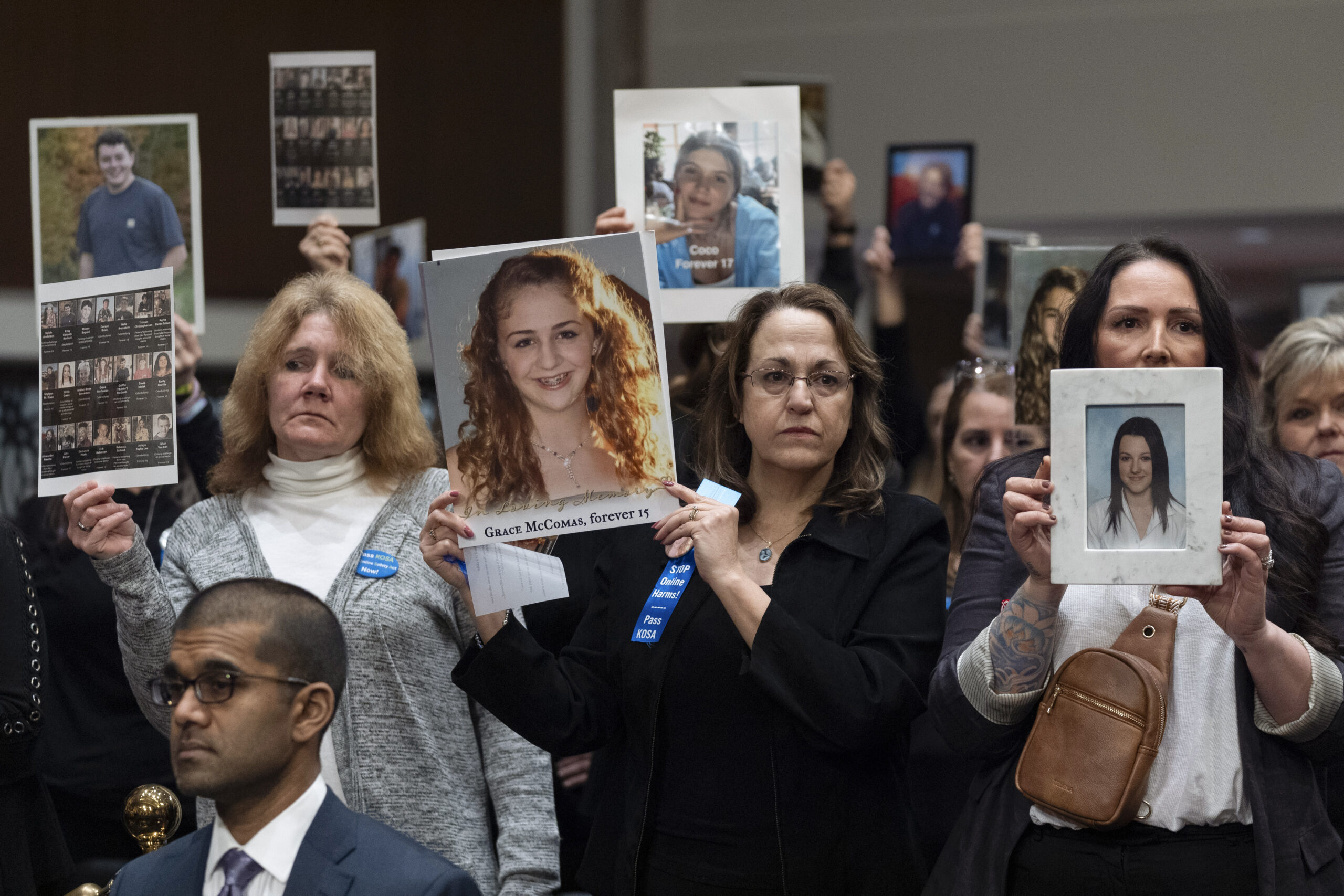
    People in the audience hold up photos of their loved ones during a Senate Judiciary Committee hearing on online child safety on Capitol Hill in January 2024.

    In February, West Virginia’s attorney general sued Apple after the company’s own internal communications described iCloud as “the greatest platform for distributing child porn.” Meta is on trial in Los Angeles. For the first time, tech executives are producing documents under court order, with legal penalties attached. For the first time, the “we didn’t know” defense is colliding with internal evidence that they did. The legal reckoning is not coming. It is here.

    The Kids Online Safety Act, which would require platforms to prioritize children’s safety over engagement, passed the Senate 91-3 in 2024. Last week, the House Energy and Commerce Committee responded — not with that bill, but with a weakened substitute called the KIDS Act, advancing it to the House floor 28-24, along party lines.

    The House substitute is a retreat dressed as progress: It omits the “duty of care” language that would require companies to design products with children’s safety in mind, sets a federal safety floor lower than existing state protections, and, most damaging, would preempt stronger state laws — potentially nullifying thousands of pending lawsuits, including the cases in Los Angeles that are finally forcing these documents into the open.

    Big Tech spent over $60 million on federal lobbying in 2024. The bill tells you exactly where that money went.

    In Pennsylvania, legislators have made progress. Senate Bill 1014 — a bell-to-bell cell phone ban in public and private schools — passed the state Senate 46-1 last month, with Gov. Josh Shapiro’s endorsement already secured. As one parent leading the effort put it: “Teachers, kids, and parents have been tasked with managing the unmanageable. It’s time to recognize that our current approach isn’t working.”

    The House should finish the job. But even a unanimous phone ban is a seven-hour policy competing against platforms that spend billions optimizing addiction across the other 17 hours of a child’s day. Keeping phones out of classrooms is a start.

    Keeping companies from engineering compulsion in the first place is the actual problem — and that requires a federal duty of care with teeth, and political leaders who care about children more than cashing their checks.

    Nylah Anderson was 10 years old. Levi Maciejewski was 13. Their tragedies helped start the battle against these companies. The House has a bill on its desk.

    Act — before another Pennsylvania child’s face joins those 50 phones outside the courthouse.

    AJ Ernst worked as a teacher and administrator in Philadelphia for 13 years and holds a doctoral degree in educational leadership from the University of Pennsylvania’s Graduate School of Education.