The announcement that the Philadelphia School District will close additional schools because of budget shortfalls is devastating, but sadly not surprising.
When schools close, students who have already faced instability pay the highest price. Parents scramble to rearrange transportation and childcare. Children lose trusted teachers and friendships. Communities lose institutions that once anchored them. Families deserve more than reassignment letters and uncertainty. They deserve meaningful options.
Two solutions are within reach: Lifeline Scholarships for Pennsylvania and the federal program, the Educational Choice for Children Act (ECCA). These programs would allow funding to follow Pennsylvania students to schools that meet their needs. These scholarships would give parents — not bureaucracies — the ability to choose a safe, effective learning environment, whether that is a public charter school, private school, faith-based school, or specialized program tailored to a child’s needs.
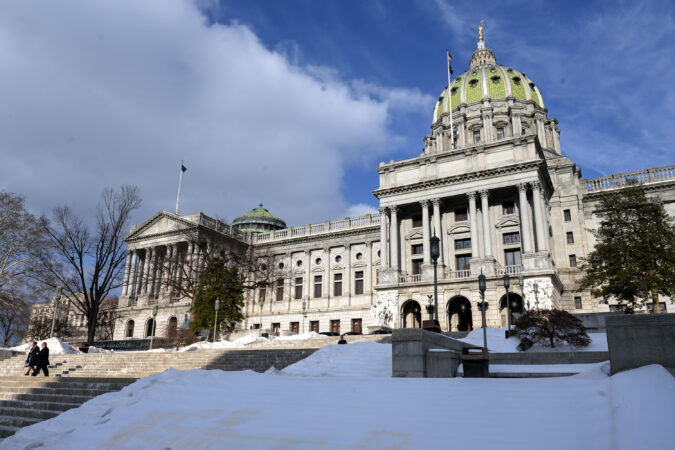
Students get off the bus at Laura W. Waring elementary school in Spring Garden last month. The school is set to close in 2027.
Gov. Josh Shapiro has the opportunity to act, and he needs to opt in now. By supporting Lifeline Scholarships and opting Pennsylvania into federal education choice programs like ECCA, the state could help families immediately. These are education dollars intended for children. Allowing them to follow students would give parents real leverage and real hope.
Other states are already moving forward. In Texas and Florida, tens of thousands of families are applying for scholarships that open doors to schools better suited to their children. Reports from Texas show more than 80,000 applications from families seeking alternatives. These parents are not abandoning public education; they are seeking opportunity where it exists.
Critics argue that school choice harms public schools. But forcing families to remain in schools that are unsafe or chronically underperforming harms children. Choice introduces accountability. When families have options, schools must improve to keep students. Competition can spark innovation, encourage responsiveness, and reward excellence.
This is not about politics or ideology. It is about fairness.
Every parent wants the same basic things: a safe school, strong teachers, and a chance for their child to succeed. For too many Philadelphia families, those expectations remain unmet. School closures make that reality even more urgent. Lifeline Scholarships and federal education choice programs like ECCA could offer stability in a time of upheaval.
Philadelphia parents and community leaders should make their voices heard. Contact your legislators. Write to Gov. Shapiro. Ask Pennsylvania to adopt policies that put students first and give families the freedom to choose schools that work for their children.
Our children cannot wait another decade for incremental change. When schools close, families need solutions — not promises. These solutions are already working for families in many states across the country; why not in Pennsylvania?
Philadelphia is one of five cities on a list of finalists to host the 2028 Democratic National Convention, a major gathering that could generate millions of dollars in economic impact for the city.
Party officials are also considering Boston, Atlanta, Chicago, and Denver, the Democratic National Committee announced Monday.
The convention will be held from Aug. 7 to Aug. 10, 2028, according to the party. If Philadelphia is selected, the convention would likely be held at the Xfinity Mobile Arena at the South Philly stadium complex, the largest indoor event space in the city.
DNC leaders and advisers are expected to make site visits this spring before selecting a host.
The DNC said in its statement that, in picking a host city, party leaders will consider how each city uses “new and innovative approaches in response to the challenges and opportunities that arise from hosting an event of this magnitude.”
The Republican Party’s 2028 convention will take place in Houston.
Top Philadelphia Democrats and donors formed a host committee — called Pick Pennsylvania — in recent months and, in partnership with Democratic Mayor Cherelle L. Parker, submitted a bid to host the 2028 convention.
In a statement, Parker said that Philadelphia’s selection as a finalist “reflects the strength of its proposal and the broad coalition of civic, business, labor, and community leaders committed to hosting a convention that is inclusive and memorable.”
Parker, who is up for reelection next year, would no doubt play a major role in planning for an upcoming convention. So would Gov. Josh Shapiro, a Democrat currently running for reelection who is considered a contender for the 2028 presidential nomination.
The president of the Philadelphia host committee is David L. Cohen, a prominent party stalwart, and the chair is Daniel J. Hilferty, the CEO of Comcast Spectacor, which owns the Xfinity Mobile Arena.
He said in a statement that “there is no city more excited, more invested and more prepared than Philadelphia to host the 2028 Democratic National Convention.”
Philadelphia — the largest city in a critical swing state — last hosted a presidential nominating convention in 2016 at the South Philly arena, then called the Wells Fargo Center. Democrats that year nominated former Secretary of State Hillary Clinton, who was later defeated by Republican Donald Trump.
Before 2016, the city hosted major party conventions seven times, including the 2000 Republican National Convention. The GOP that year nominated then-Texas Gov. George W. Bush, who went on to serve two terms in the White House.
Former U.S. Rep. Bob Brady, the chair of the Philadelphia Democratic City Committee, said Monday that he had spoken multiple times to DNC leaders about the prospect of the city hosting the 2028 convention.
“We got a great reputation from the last convention we had,” Brady said. “Plus we’re going to show off the city very well this summer, which will really give us a good look.”
The news that Philadelphia is again a finalist to host the DNC is a welcome development for the city’s tourism and hospitality industry, as party conventions draw thousands of visitors and can be a boon for spending in the city.
The 2016 event generated $230.9 million in economic impact, according to the Philadelphia Convention and Visitors Bureau. Of that, about $132.9 million came from direct convention-related spending, and $11.1 million was generated by state and local taxes. That convention attracted more than 5,000 attendees and some 29,000 other visitors, leading to a record-breaking year for hotels in Center City, the bureau reported.
In this July 28, 2016 file photo, then-Democratic presidential nominee Hillary Clinton walks on stage at the arena in South Philly to accept the nomination of her party on the final night of the DNC.
If selected, Philadelphia may be uniquely positioned to host an influx of visitors.
The city’s hotel supply has expanded since the last time it hosted a DNC — and there are more than 19,000 hotel rooms in the city, according to Visit Philadelphia. That’s an increase from about 16,000 available in 2016.
The city has also invested millions of dollars on improvements to public spaces, transit hubs, and security ahead of several major events this year, including World Cup games, the MLB All-Star Game, and the commemoration of the 250th anniversary of America.
Conventions are also major logistical undertakings. Attendees include high-profile politicians and celebrities, and protests often form outside the events. The federal government has over the last two decades designated both parties’ nominating conventions as National Special Security Events, meaning they are deemed at high risk for terrorism and require federally led security.
In Chicago in 2024, the U.S. Secret Service led security planning alongside 16 other public safety entities, according to a local NBC affiliate. The law enforcement and security plan included designated protest zones, airspace monitoring, and traffic control.
Host committees are also responsible for raising millions of dollars to pay for parties, transportation for delegates, construction and venue upgrades, as well as other logistical services such as consultants, accountants, and communications staff.
In 2016, the Philadelphia host committee raised about $85 million — $10 million of which came from taxpayers in the form of a state grant. Other top contributions came from corporations, unions, and wealthy individual donors.
This week’s column analyzes the city’s camera surge, the need for political challengers, and calls for some basic sense about security.
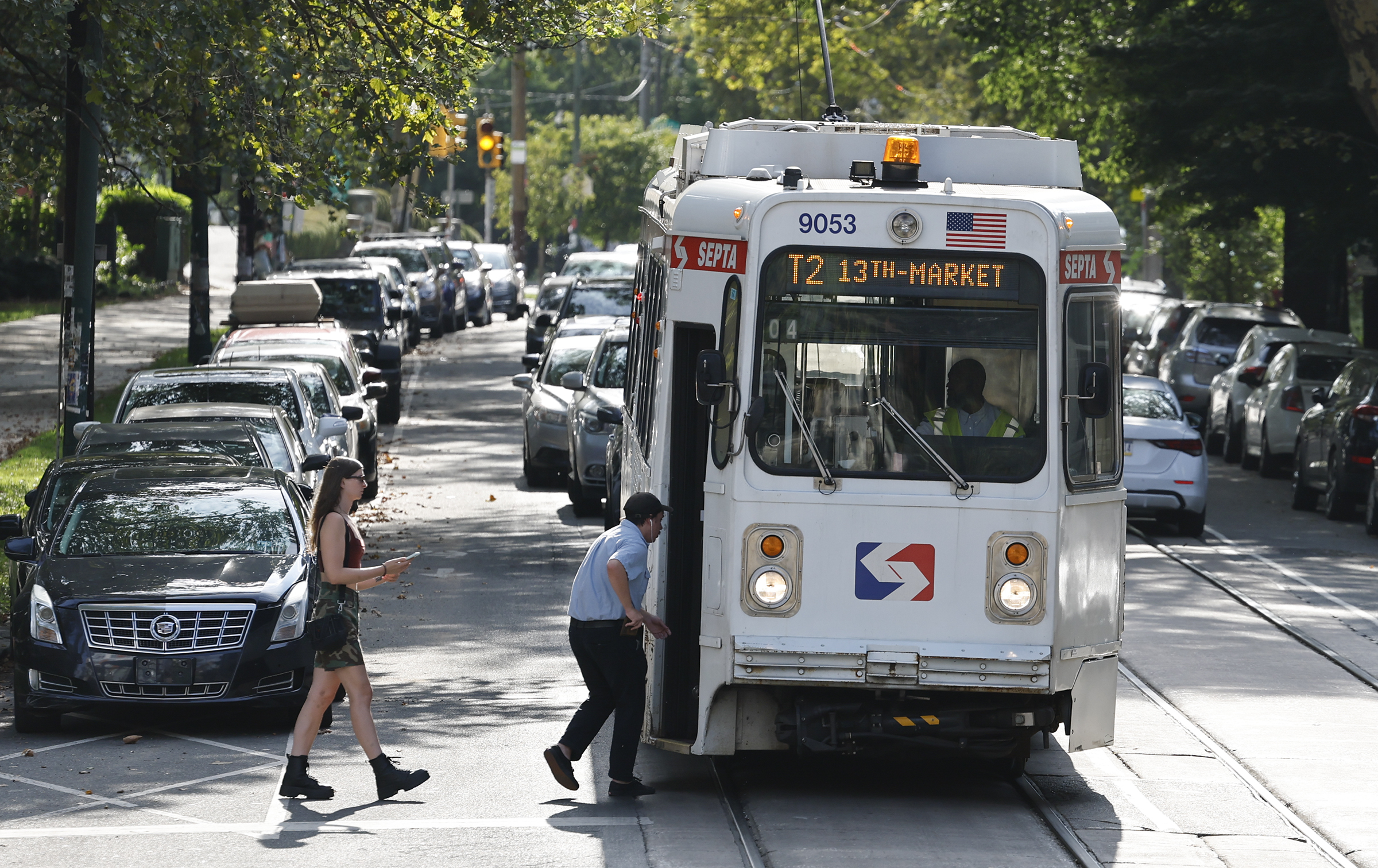
Passengers board a SEPTA trolley along Baltimore Avenue in West Philadelphia.
Trolley cams
Over the last few years, Philadelphians have increasingly come under surveillance. Cameras enforce bus lane violations, issue speeding tickets, and help prevent and solve violent crime. Just this week, the Philadelphia Parking Authority announced it is now adding cameras to the city’s trolleys.
This surge in surveillance has led to some residents bemoaning what they view as a cash grab. These worries were echoed last year by City Councilmember Jeffery “Jay” Young during a committee meeting in which he held up authorization for school zone cameras. Fortunately, these concerns are unwarranted.
Our speed and red-light cameras are not designed to raise revenue. While camera systems in states like Illinois are used to pay for regular local government expenses, Pennsylvania’s are earmarked for traffic safety projects. Philadelphia is getting $13 million from the most recent distribution. This leaves politicians with little incentive other than to focus on safety and efficiency when choosing where and why to place the cameras. The system isn’t designed to take advantage of sudden speed traps, a problem that occurs with both automated and traditional traffic enforcement systems.
Per a PPA spokesperson, 63% of vehicle owners who get a bus camera ticket don’t get a second one.
In the case of the trolley cameras, it is also a question of basic fairness. If you ride the trolleys enough, you’ll eventually end up stuck. Almost always, it is because someone decided to inconvenience 20 to 40 people to avoid parallel parking or walking a short distance. While no one likes getting a ticket, motorists who opt to block trolleys should be happy with the fact that they aren’t being immediately towed.
Candidates in the Democratic primary for Philadelphia’s 3rd Congressional District include, clockwise from upper left: State Sen. Sharif Street, State Rep. Chris Rabb, Ala Stanford, and State Rep. Morgan Cephas.
Marquee matchup
The race to replace U.S. Rep. Dwight Evans was always going to be close-fought. With the youthful Brendan Boyle occupying the city’s other congressional seat, this could be the best chance to represent Philadelphia in Washington, D.C., for decades. State Sen. Sharif Street (the son of former Mayor John F. Street) and State Rep. Morgan Cephas (who chairs the Philadelphia delegation in the state House) are both long-expected candidates for the job. They’ve been joined by progressive firebrand Chris Rabb, surgeon Ala Stanford, and a handful of other candidates with less funding and political support. For Southeast Pennsylvania politicos, it’ll have to do. There simply aren’t a lot of competitive races this year.
In state Senate District 34, Towamencin Township Supervisor Kofi Osei is running against party-endorsed candidate Chris Thomas. There are also a couple of contested primaries for state House seats. That’s all, folks.
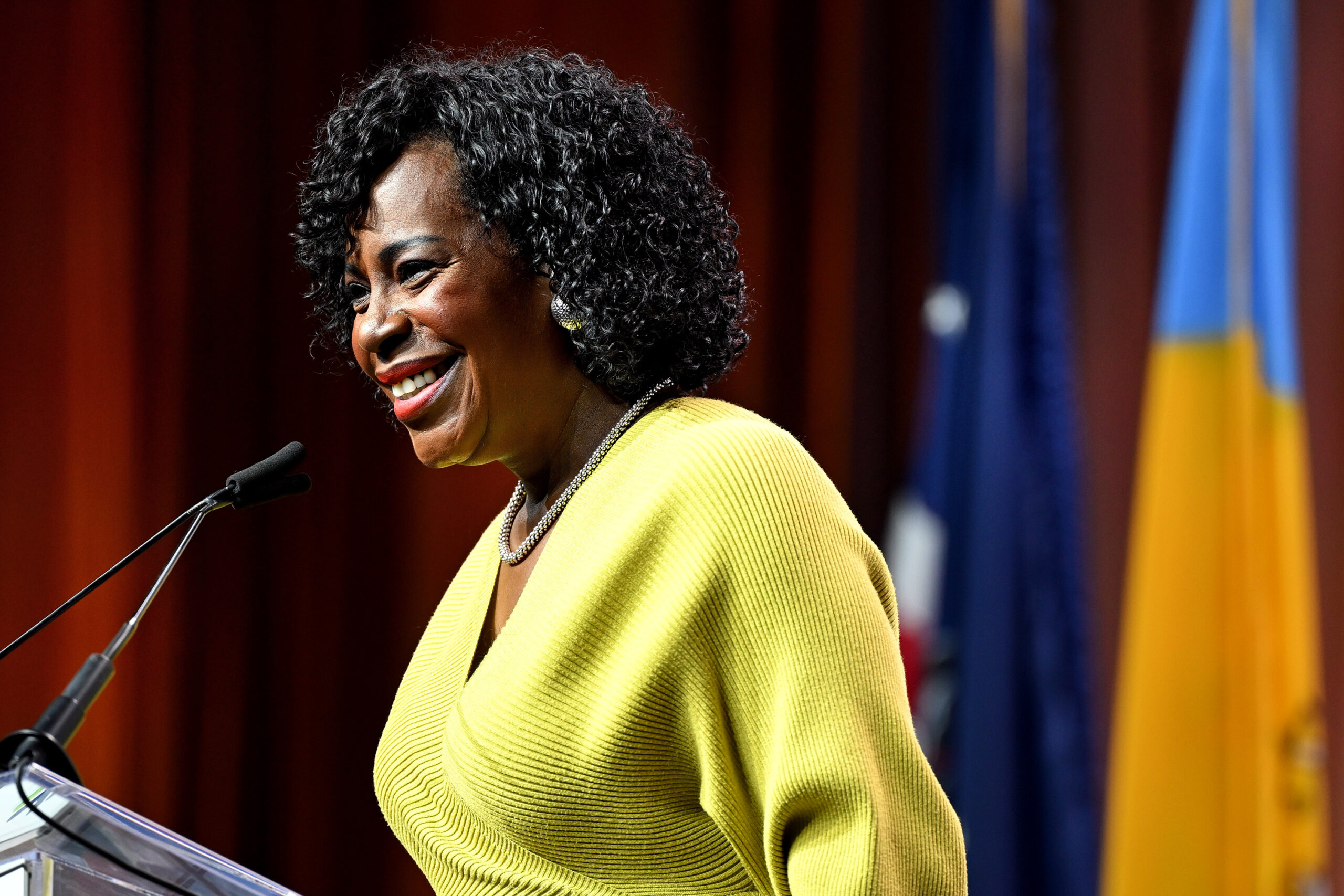
Mayor Cherelle L. Parker delivers her keynote address at the Chamber of Commerce for Greater Philadelphia’s Annual Mayoral Luncheon, in February.
Challengers needed
Next year also looks fairly empty. While some progressive groups have polled residents to gauge the viability of defeating Mayor Cherelle L. Parker, few potential candidates appear eager to take her on. That’s perhaps not surprising. Only one Philadelphia mayor has failed to be reelected in the last 70 years. That includes W. Wilson Goode Sr., who bombed a city block during his first term, and Frank Rizzo, who failed a lie-detector test he himself had suggested.
What the city really could use are more challengers for City Council seats. So far, I am aware of just one candidate, Jalon Alexander, who has put his hat in the ring. Alexander plans to challenge Young in the 5th District, citing capricious decision-making. But Young, while he may be the most egregious example, is not the only Council member who could use some competition.
I expect the city’s progressive groups, like Reclaim Philadelphia and the Working Families Party, will eventually find candidates to challenge some of the weaker members, including Young, Cindy Bass, Nina Ahmad, and Jim Harrity. Last cycle, these groups organized around ideas, like rent control, that simply aren’t viable in Philadelphia.
Despite being mostly frozen out by Council President Kenyatta Johnson and their colleagues, the current progressive delegation has been somewhat unwilling to challenge that body’s status quo. While Councilmember Kendra Brooks voted against a ban on safe injection sites, and Rue Landau voted against one of Young’s ill-considered moves, the city could use at least one councilmember who is willing to consistently challenge their colleagues’ bad decisions.
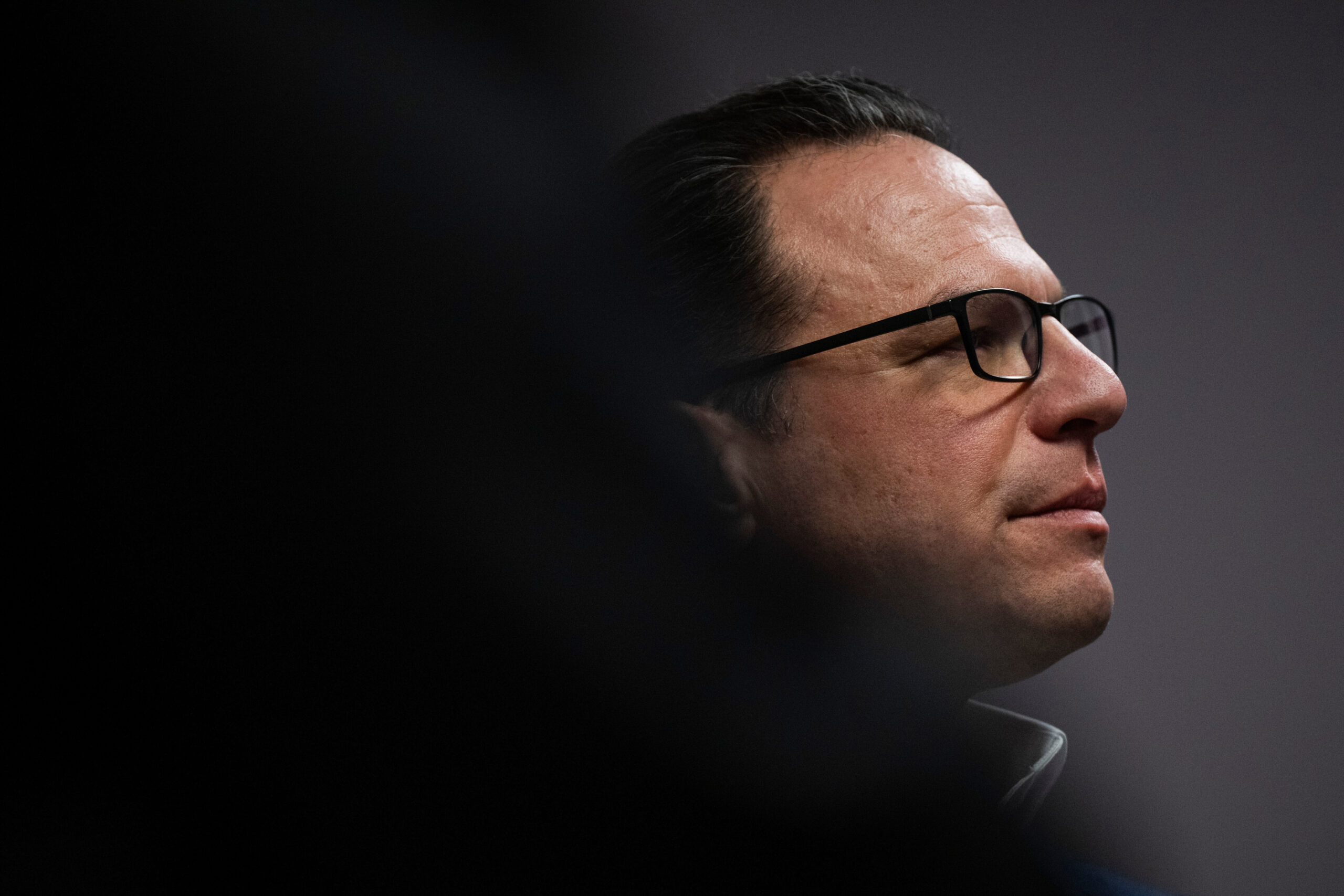
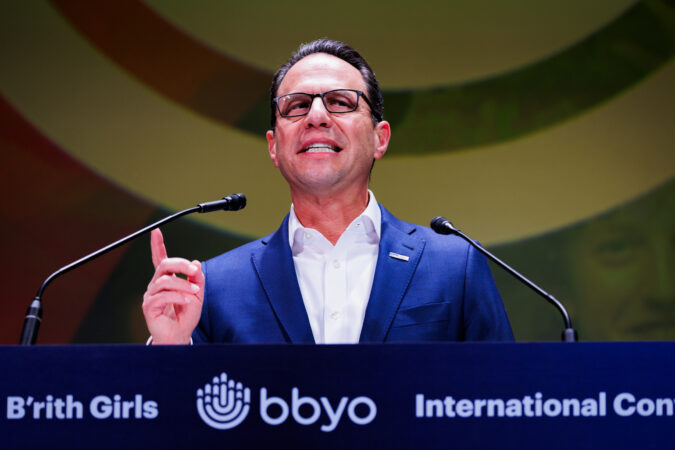
Pennsylvania Gov. Josh Shapiro is seen after a B’nai B’rith Youth Organization International Convention on Feb. 12 in Philadelphia.
Security snafu
We call Gov. Josh Shapiro the Ambitious Abingtonian here for a reason. The governor is a hard-charging, elbows-up politician who has turned many friends into enemies over the years. Republicans seem to believe they have finally found a weakness in Shapiro’s political armor: the decision to spend taxpayer money to secure his home in Abington, and the seizure of a small strip of adjoining land that accompanied it. State Sen. Tracy Pennycuick, who represents western Montgomery County and eastern Berks County, even opined that Shapiro “put his family at a higher level of risk” by moving them home instead of to a bunker after the April arson attack at the governor’s mansion.
Of course, the Shapiros just survived an attempted assassination. Let’s be human beings for one second. Shapiro’s shell-shocked children deserved to sleep in familiar settings.
If Republicans want spending decisions to critique, they should start with Shapiro’s reliance on an opaque group called Team PA to pay for everything from travel to sporting events instead.
State Rep. Steven Malagari (D., Montgomery) plans to introduce a bill that could put THC drinks in beer stores, while State Sen. Dan Laughlin (R., Erie), a major proponent of weed legalization — unlike his party’s leaders — is working on legislation that would open the door to hemp-derived THC being regulated like medical marijuana. Pennsylvania hemp businesses look toward these efforts with optimism, but as the clock races down, stakeholders are asking for urgency.
Representatives from the hemp, medical marijuana, and beer wholesaler industries spoke to state regulators at January’s Pennsylvania Farm Show about shielding the hemp industry from the Nov. 12 deadline that would outlaw all intoxicating hemp products, including Delta-9 THC and CBD, which is what the majority of hemp is grown for in Pennsylvania. Under new rules, many of the state’s hemp farmers would be out of business by fall.
Across all competing interests, industry representatives said one thing was clear: Lawmakers need to regulate the billion-dollar state hemp market.
Testifying before the Center for Rural Pennsylvania, stakeholders, including Montgomery County District Attorney Kevin Steele, agreed, stressing the need for safeguards.
“It’s not about taking away people’s livelihoods in hemp farming and people working in this industry,” Steele said during his testimony. “It’s about community safety and establishing guardrails through legislation to oversee that safety.”
But, as Congress disagrees on when and if it will regulate hemp-derived THC — including if the ban deadline should be extended — those delays cascade to the states, where local lawmakers await federal guidance before regulating it themselves. While any state proposals for regulation are purely speculative until Congress passes hemp legislation, Laughlin’s and Malagari’s efforts in Pennsylvania imagine what is possible.
It is important to note, however, that regulating intoxicating hemp products is an uphill battle in a state where recreational marijuana legalization is opposed by Republican state leadership.
Whether these bills become law or save the state’s hemp industry as it currently stands is up in the airwith federal delays, but local hemp businesses choose to be optimistic.
A view of Tyler Shannon’s Adams County hemp farm. Unless regulations change, he will have to shut down his hemp farm by next year.
What does any of this mean for Pennsylvania hemp?
For Tyler Shannon, an Adams County hemp farmer, a full ban on hemp products would be devastating. With the vast majority of Pennsylvania’s hemp grown for cannabinoids, such as Delta-9 THC and CBD, it means that “if hemp is not saved, my family will lose everything, including our farm,” Shannon said.
Shannon is not alone. Beau Whitney, a leading cannabis market analyst who testified at the January hearing, estimated that Pennsylvania’s cannabinoid market generates just under $1 billion in revenue annually. In his latest report, he found that the majority of Pennsylvania’s hemp-derived THC and CBD products were sold “legally” through semi-regulated channels, in stores or online. “As a result, there were 9,500 jobs, generating $382 million in wages in Pennsylvania,” Whitney said.
Those in the local hemp industry are confident that a deadline extension will help protect them, but planting season is fast approaching, while hemp farmers have no reassurance that their crops will be legal come fall, Shannon said. His family farm is holding off on a planned $175,000 facility expansion due to the looming ban.
As of now, no federal or state legislation has been passed to avert the impending doomsday scenario for hemp, and despite the constant regulatory discussions, small hemp farmers and businesses don’t feel on solid ground, Sebastian Stelmach of Manayunk’s Keystone Dispensary said.
“It’s just scary to think that come November, I might be unemployed and close up shop,” Stelmach said. “A lot of lawmakers realize that we can’t let this industry die. I believe that they’re going to do something, but what that is, I don’t know.”
Trade organizations, like the U.S. Hemp Roundtable, are lobbying Congress to extend the federal ban deadline by one year, giving regulators time to flesh out less restrictive standards for hemp products.
“Even [federal agencies] said they don’t have enough time to enforce the rules under the current bill,” said Jonathan Miller, U.S. Hemp Roundtable’s general counsel. “We’ve created a mess here, and we really need this extension to be more deliberate and responsible.”
In this 2019 file photo, Steve Groff is getting ready to harvest his first crop of hemp plants at his farm in Holtwood, Lancaster County.
Intoxicating hemp regulated like marijuana
Laughlin’s bill to establish a Cannabis Control Board would see the state’s medical marijuana program come under new oversight, similar to the liquor and gaming control boards.
While hemp is not the primary focus of that legislation, organizations like the Pennsylvania Cannabis Coalition (PCC), which represents the state’s medical marijuana industry, hope to see hemp included in Laughlin’s bill to open the doors for more responsive hemp regulation.
“The Cannabis Control Board would have the authority to deal with hemp products and decide what is safe for consumers as a single regulatory body,” said Meredith Buettner, executive director of PCC. Buettner said it makes the most sense for intoxicating hemp products to be regulated alongside cannabis.
Laughlin argues that “if it’s a consumable cannabis product, it should fall under one clear regulatory structure.”
How and where specific hemp THC products would be sold will be worked out in the legislation, but “intoxicating products should be sold through appropriate, regulated channels,” he said.
Jake Sitler, who owns Lancaster-based Endo THC drinks and testified at the January regulatory hearing, is ready to support any regulation that saves the current hemp framework, like incorporating hemp into a control board, but worries small businesses will get cut out of the deal.
“The hemp industry concern is where our seat is at the table and to make sure new laws are appropriate for our farmers and our industry,” Sitler said. “And that any new regulation isn’t used as a guise to out-regulate small business down the road.”
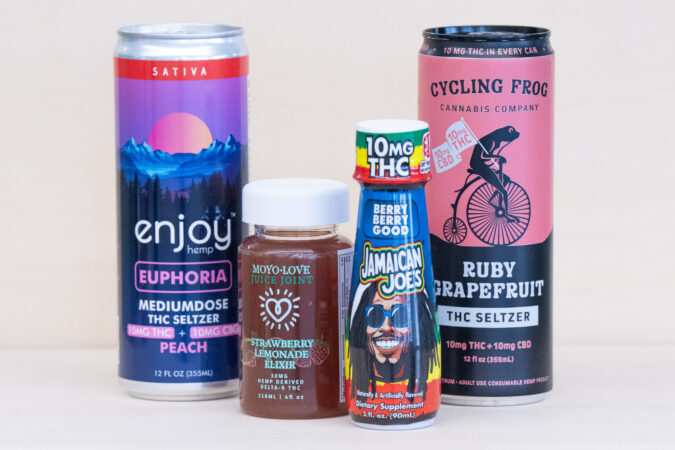
THC and CBD-infused beverages on the shelves of Free Will Collective, an Ardmore smoke shop and wellness store owned by Will Angelos. As Congress moves to ban most intoxicating hemp products, business owners like Angelos aren’t sure they will be able to keep the doors open long past 2027 if current regulations go into effect.
Delta-9 THC drinks in Pennsylvania beer stores
The bill from Malagari would carve out regulation for hemp-derived Delta-9 THC drinks, which are among some of the most popular intoxicating hemp products, with a national market of $1.5 billion in annual sales.
Malagari, who previously worked in beverage wholesale, wants to see THC drinks regulated similarly to beer and malt-beverage products in Pennsylvania.
Pennsylvania operates a three-tiered system for beer, with licenses at the manufacturing level, distribution level, and retail level. THC drinks would be incorporated into this system, which would begin by allowing established three-tiered license holders to manufacture and sell hemp-derived Delta-9 THC drinks.
Jake Sitler and his wife, Jamie, standing inside the Endo drinks warehouse. The Lancaster couple founded one of Pennsylvania’s first hemp-derived THC drinks and is grappling with the fact that their business might have to shut down if Congress doesn’t rework its hemp regulations.
Common retail spaces for beer and malt beverages include beer distributors, grocery stores, restaurants, and bars.
This legislation, if passed and signed into law, would not prohibit THC drinks from being sold in medical marijuana dispensaries and could work alongside Laughlin’s CCB bill, Malagari said. But he believes that lawmakers should approach THC beverages differently from hemp-derived flower and vapes.
As an owner of a hemp beverage company, Sitler could benefit from Malagari’s bill, but also wonders if it is too early for beverage carve-outs before a fuller state framework is in place. “A hemp beverage bill with no overarching regulation is putting the cart a bit before the horse,” Sitler said.
Gov. Josh Shapiro met with leaders in Berks and Schuylkill Counties on Thursday as the communities confront the planned federal conversion of two warehouses into ICE detention centers, and the governor pledged to do everything possible to block the Trump administration’s plans in Pennsylvania.
Shapiro, a Democrat who first publicly announced his opposition to the potential detention centers earlier this month, cited concerns over the impact on local economies, water resources, and residents’ quality of life.
Government warehouse purchases around the country, undertaken as part of a massive ICE expansion of detention capability, have sparked anger, lawsuits — and, in one instance, a suspected arson, when someone attempted to burn down a property in Arizona.
“I’m even more determined to do everything in my power to stop these facilities,” Shapiro said Thursday at a news conference in Berks County.
He spoke on the same day that New Jersey’s two Democratic U.S. senators, Andy Kim and Cory Booker, introduced legislation to ban the federal government from buying or converting warehouses for immigrant detention or processing.
“People across the country are standing up against this inhumanity, and Congress needs to stand with them,” Kim said in a statement.
Shapiro offered few details on how the state government could block the facilities, citing possible legal or regulatory action.
The governor, who is running for reelection, has been increasingly vocal in his opposition to ICE tactics even as his administration retains some cooperation with the agency. Earlier this month, Shapiro wrote a letter to Homeland Security Secretary Kristi Noem promising to “aggressively pursue every option” to block the detention centers from opening in Pennsylvania.
Expanding warehouses
The ICE effort to buy and repurpose warehouses as detention centers has quickly become one of the most contentious issues in immigration enforcement.
The ability to confine and process huge numbers of immigrants is essential to President Donald Trump’s promise to carry out an unprecedented deportation campaign. The number of people currently held has already reached historic highs, topping 70,000 this year, and the administration says it needs more space.
But as Trump’s plan has become public, opposition has been both immediate and fierce. Immigrant advocates call the warehouses “concentration camps” and question how buildings that were built to store consumer and industrial goods can safely and humanely hold thousands of people.
ICE expects to spend $38.3 billion to buy and retrofit warehouses around the nation.
Sixteen buildings would be converted into regional processing centers, each holding 1,000 to 1,500 immigrants. An additional eight detention centers would hold 7,000 to 10,000 detainees and serve as primary sites for deportations.
Shapiro on Thursday sought to send a clear signal to federal officials that he would fight any facilities in Pennsylvania. Following his news conference, Shapiro posted a video to Twitter declaring that Noem “will hear us in Pennsylvania.”
Standing outside the proposed facility location in Berks County, Shapiro outlined the impact detention facilities would have on local communities ― including increased pollution in Berks County and draining of water resources in Schuylkill County.
“I’m pissed,” Shapiro said. “And I’m not going to allow this to happen.”
“If you continue to go forward here, you will face legal and regulatory consequences,” he warned federal officials.
In Bucks County earlier this month, commissioners said that the federal government recently approached warehouse owners in Bensalem Township and Middletown Township about converting the buildings to ICE facilities. Neither owner is going forward with a sale, they said.
In Maryland, Democratic Attorney General Anthony Brown has sued the Trump administration to try to stop plans to hold 1,500 immigrants in a warehouse near Williamsport, about eight miles south of the Pennsylvania border.
Brown and Maryland Democratic Gov. Wes Moore say the project is unlawful, going forward without an environmental review or public input.
ICE purchased the warehouse for $102.4 million in January, the property built as a commercial facility with 825,620 square feet of warehouse space, minimal office facilities, four toilets, and two water fountains, according to the attorney general.
The 1,500 immigrants held there would nearly equal the population of Williamsport, home to about 2,000 people.
Farther south, in Wilson County, Tenn., ICE is examining a two-building complex that would hold a combined 14,000 to 16,000 immigrants, by far the largest immigration detention center in the country, according to Project Salt Box, a Baltimore-based group that tracks ICE warehouse activity.
This month in Surprise, Ariz., someone tried to burn down a warehouse that ICE bought to turn into a 1,500-bed detention center, but the fire was quickly extinguished by the interior sprinkler system, the Arizona Mirror reported, quoting federal officials.
The plan to create a fixed, large-scale network of converted warehouses represents a radical new approach to immigration detention.
Historically, the American Immigration Council noted, ICE’s detention funding has gone almost entirely to contract providers, the private prison companies and state and local governments that lease facilities to the agency. As of February 2025, ICE owned only 10 of the 220 facilities being used to detain immigrants, the council said.
Now, ICE seeks to reengineer a detention system that was not centrally planned, but emerged over decades as Congress gradually increased agency funding, the council said.
ICE currently operates five detention facilities in Pennsylvania, including the 1,876-bed Moshannon Valley Processing Center, the largest detention center in the Northeast. Two more are located in New Jersey, in Elizabeth and Newark, and the Trump administration has been exploring adding a third at Joint Base McGuire-Dix-Lakehurst.
Pennsylvania voters appear to be all in on Gov. Josh Shapiro’s reelection bid, while some are still warming up to the thought of him being president one day.
Among registered voters, the Democratic incumbent leads his Republicanchallenger, state Treasurer Stacy Garrity, 55-37%, according to a Quinnipiac University poll released Wednesday.
But 43% of the state’s voters do not think he would make a good president and 16% did not offer an opinion, despite his high overall approval.
A strong majority of Democrats and a plurality of independent voters both said he would be a good president, but a strong majority of Republicans disagreed.
The survey, conducted among 836 registered voters in Pennsylvania from Feb. 19 to 23, offers a glimpse of what voters in one of the most politically consequential states think of top elected officials a little more than eight months ahead of the high-stakes 2026 midterms.
Pennsylvania voters also shared their perceptions of U.S. Sen John Fetterman (D., Pa.), who has significant support among Republicans but a low rating with his own party, and President Donald Trump, whose job approval rating is sitting below 50% in a state he won two years ago.
Here’s what else to know from the Quinnipiac poll:
Sen. John Fetterman, D-Pa., left, and Sen. Dave McCormick, R-Pa., right, greet before participating in a debate moderated by Fox News anchor Shannon Bream, not shown, Monday, June 2, 2025, at the Edward M. Kennedy Institute for the United States Senate, Monday, June 2, 2025, in Boston, as livestreamed on Fox Nation. (AP Photo/Steven Senne)
Republicans support John Fetterman. Democrats don’t.
Fetterman has been known to cross the political aisle, and his willingness to embrace Trump and take key votes with Republicans appears to be costing him with voters in his own party.
Sixty-two percent of Democratic Pennsylvania voters disapprove of how Fetterman is handling his job, while only 22% approve.
Those dismal numbers with his own party are worse than Fetterman’s Republican colleague, Sen. Dave McCormick, who has a 54% disapproval rate with Democrats.
After three years in office, Fetterman does much better with Republicans than his own party. Among GOP voters, 73% approve of the Democratic senator, compared with just 18% who disapprove, according to the poll. Among independents in the swing state, 48% approve and 37% disapprove.
The progressive Working Families Party has said it will support and, if needed, recruit a challenger. Fetterman has repeatedly sparred with progressives on a range of issues from unconditional support for Israel’s military actions in Gaza to his stance on immigration enforcement.
He also drew ire from fellow Pennsylvania Democrats for crossing the aisle to support a Republican plan to end last year’s government shutdown without a deal to address expiring healthcare subsidies.
U.S. Rep. Brendan Boyle (D., Philadelphia), a potential primary challenger, has repeatedly called Fetterman “Trump’s favorite Democrat,” including on Tuesday night, when the senator shook the president’s hand at the State of the Union address.
Other names floated as potential contenders include U.S. Rep. Chris Deluzio (D., Beaver) and former U.S. Rep. Conor Lamb, who lost the 2022 primary to Fetterman.
Which party do Pa. voters want to win the midterms?
Forty-nine percentof Pennsylvania registered voters want to see Democrats win control of the U.S. House in November, while 43% want Republicans to maintain their advantage.
November’s midterms are consequential for both parties, especially in the House, where Republicans currently have a slim majority.
But voters in Pennsylvania have soured on Trump, who receives just 40% approval in the poll, compared with 55% disapproval. And he is losing ground on two key issues that propelled him to office: the economy and immigration.
According to the poll, only 28% of Pennsylvania voters think the economy is getting better, while 47% think it is getting worse and 23% think it is staying the same.
Additionally, 56% believe the Trump administration’s immigration enforcement is too harsh in how it treats undocumented immigrants. Meanwhile, 36% think the president is handling immigration correctly and 6% think the administration is being too lenient.
Democrats believe they can capitalize on these issues and defeatincumbents in key swing districts: Republican U.S. Reps. Brian Fitzpatrick in Bucks County, Ryan Mackenzie in Lehigh County, Rob Bresnahan in Lackawanna County, and Scott Perry in York County.
Trump has endorsed every member of the Republican U.S. House delegation in Pennsylvania except Fitzpatrick.
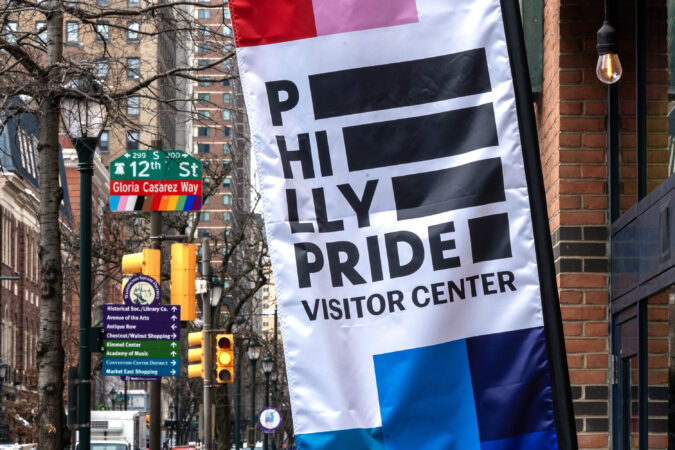
It is a simple, sleek storefront in the Gayborhood. And it is now a welcoming spot.
On Wednesday, Gov. Josh Shapiro, city tourism and marketing leaders, and LGBTQ+ advocates officially opened the Philadelphia Pride Visitor Center, one of the country’s first LGBTQ+ visitor centers.
“We need happy things in the world,” Shapiro said, during a ribbon cutting at the center. “And we need places like this that bring people together. That is the Pennsylvania way.”
Gov. Josh Shapiro opens the Philly Pride Visitor Center Wednesday, Feb. 25, 2026, in the heart of the city’s Gayborhood at 12th & Locust. With him, from left, are Mark Segal, Philadelphia Gay News founder; City Councilmembers Rue Landau and Mark Squilla; and Anne Ryan, Pennsylvania Deputy Secretary of Tourism.
The Philly Pride Center is now just one of a handful of LGBTQ+-dedicated visitor centers in America, including ones in New York and Miami. Opening ahead of Philadelphia’s big summer celebrations for the 250th anniversary of America in 2026, also known as the Semiquincentennial, officials described the center as a symbol that Philadelphia, the city of the nation’s birth, welcomes all.
“At a time when other states are walking away from their LGBTQ+ community, we are walking toward it,” Shapiro said. “At a time when other states are saying ‘no’ to pride-based tourism, we are embracing it.”
Located near 12th and Locust Streets, in a storefront connected to Knock Restaurant and Bar, the center offers visitor services, including itinerary planning, attraction ticketing, and travel information, with a focus on LGBTQ+-affirming destinations, businesses, and cultural institutions. Souvenirs made by LGBTQ+-owned businesses and artists are on sale.
Neil Frauenglass (second from right), chief marketing officer with Visit Philadelphia, is recognized for his work during grand opening of the Philly Pride Visitor Center Wednesday, Feb. 25, 2026, in the heart of the city’s Gayborhood at 12th & Locust. With him, from left, are Donna Jackson Stephans, Philadelphia’s chief diversity, equity and inclusion officer; Philadelphia Visitor Center President and CEO Kathryn Ott Lovell; and Gov. Josh Shapiro.
“The Philly Pride Center reflects something we believe with all of our hearts,” said Kathryn Ott Lovell, president and CEO of Philadelphia Visitor Center Corp., which will run the new center. “That every visitor should feel like they are welcome and that they belong. We want the Philly pride visitor center to be both a very practical resource and a very visible statement about who we are as a city.”
More than a year in the making — and now open Thursday through Monday, noon to 6 p.m., at 1130 Locust Street — the site will represent Philly’s fifth visitor center, including ones at Independence Mall, City Hall, Love Park, and the Parkway Visitor Center & Rocky Shop.
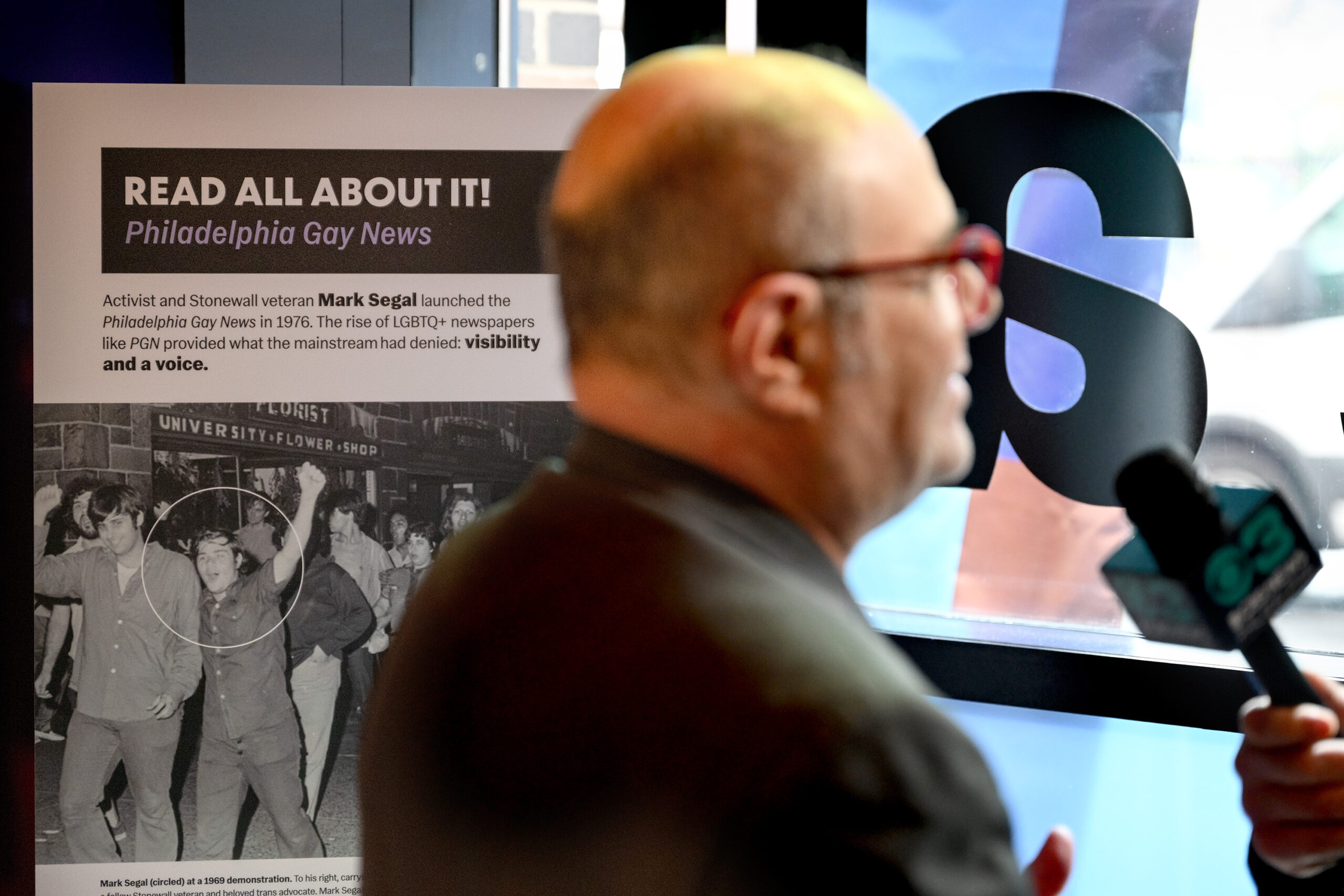
“Philadelphia’s LGBTQ+ history helped shape this country’s story, and the Philly Pride Center brings that legacy forward in a powerful and visible way,” said Angel Val, president and CEO of Visit Philadelphia, which helped found the center, along with Mark Segal, founder and publisher of Philadelphia Gay News. Segal, an activist and author, who was part of the seminal riots at the Stonewall Inn in Greenwich Village in 1969, curated the historical information exhibited at the center, telling of Philly’s long and powerful LGBTQ+ legacy.
Mark Segal, Philadelphia Gay News founder and publisher is interviewed during the grand opening of the Philly Pride Visitor Center Wednesday, Feb. 25, 2026. At left is a photo (circled) of him demonstrating for Gay rights in 1969, part of his newspaper’s 50th Anniversary.
It is a point of pride, Segal said, that the Philly Pride Visitor Center comes at a time when many scholars and activists believe the Trump administration is attempting to sanitize American history.
“At this time in history, there are many people who are trying to erase us and erase our history,” Segal said. “But today, by opening a new Pride Center, which yells and screams ‘visibility and take pride in who you are,’ we’re saying, ‘No, we’re not going to allow anyone to put us back in the closet ever again.’”
When a messy land dispute between Gov. Josh Shapiro and his backyard neighbor poured into public view via federal court filings earlier this month, it jolted his sleepy Montgomery County neighborhood.
The picturesque suburban community tucked behind Penn State Abington is usually quiet and boring, current and former neighbors said, just the way they like it. It’s a great place to raise their kids, and where Shapiro’s four children have grown up. Among the biggest points of contention is when one neighbor fails to say hello to another. Many houses in the neighborhood sit a quarter-mile away from the main road, behind winding, tree-lined driveways. Some of the homes have been purchased in recent years for upward of $1 million. In many ways, the neighbors said, it’s the perfect picture of the suburban American dream.
But this month, the neighborhood also became the battleground for dueling lawsuits between Shapiro and his neighbors, Jeremy and SimoneMock, bringing tension to atranquil community.
What’s more: Shapiro’s office alleges the lawsuit against him is a political hit job to hurt him as he runs for reelection, citing the Mock family’s communications with the top Republican in the state Senate and his frequent sparring partner, President Pro Tempore Kim Ward. The family’s attorney in the lawsuit is also a local lawyer known to represent Republican causes, and whose former clients include the political campaigns of President Donald Trump and U.S. Sen. Dave McCormick.
The Mocks, meanwhile, argue in their lawsuit — filed in the U.S. District Court for the Eastern District of Pennsylvania — that Shapiro has used his powerful position as governor to infringe on their constitutional rights and take their land.
The disputed land — a 2,900-square-foot strip between Shapiro and his neighbor’s lawn — had not been an issue between them until security updates were proposed to Shapiro’s home after a Harrisburg man firebombed the state-owned governor’s residence last April while Shapiro and his family slept inside, both the Shapiros and Mocks said in court filings. The man, Cody Balmer, later pleaded guilty to attempted murder and related crimes for the attack, and was sentenced to 25 to 50 years in prison.
Afterward, state police proposed security upgrades to Shapiro’s personal residence and the state-owned governor’s mansion in Harrisburg, suggesting the installation of an eight-foot fence along the perimeter of Shapiro’s personal property, along with tree trimming, a new security system, and other landscaping efforts expected to cost more than $1 million, Spotlight PA reported. The proposed taxpayer-funded improvements to the Montgomery County home — criticized by the Republican-controlled state Senate — came in addition to the more than $32 million in repairs and security upgrades made to the governor’s mansion in Harrisburg, which included the replacement of an existing security fence there.
(function() { var l = function() { new pym.Parent( ‘shapiroyard__graphic’, ‘https://media.inquirer.com/storage/inquirer/ai2html/shapiroyard/index.html’); }; if(typeof(pym) === ‘undefined’) { var h = document.getElementsByTagName(‘head’)[0], s = document.createElement(‘script’); s.type = ‘text/javascript’; s.src = ‘https://pym.nprapps.org/pym.v1.min.js’; s.onload = l; h.appendChild(s); } else { l(); } })();
The Shapiros allege in a countersuit that they believed the disputed piece of lawn was theirs, and that they had maintained it for 22 years. When a land surveyor hired by the state to help with the security upgrade projects found that the Shapiros did not own the disputed part of the land, the Shapiros approached the Mocks in July to purchase or lease it.
Ultimately, the talks fell apart, as the neighbors blamed one another for being unwilling to make a deal.
Any resolution is now likely to be decided in court.
The Mocks in their lawsuit — represented by Delaware County attorney Wally Zimolong, who describes himself on his website as the “‘go-to’ lawyer in Pennsylvania for conservative causes and candidates” — accused Shapiro in his official capacity as governor of an “outrageous abuse of power” by illegally occupying a part of their yard that they pay taxes on. The Shapiro family quickly filed a countersuit in the Montgomery County Court of Common Pleas, arguing they have control of the land through adverse possession, a legal mechanism through which a person can gain ownership of a property they’ve actively used for at least 21 years.
The Mocks have asked a federal judge to find that Shapiro, as governor, violated their constitutional rights; as well as prohibit state officials from trespassing on their property moving forward; and to award them damages. Private attorneys representing Shapiro have asked the Common Pleas Court to find they are the owners of the disputed part of the yard and refund attorney fees.
‘Everybody got along’
Shapiro and his wife, Lori, have lived in the same home in the neighborhood for 22 years, purchasing the four bed, three-and-a-half bath property in June 2003 for $465,000 as the young couple wanted to move back to the Philadelphia suburbs after spending several years working as staffers on Capitol Hill. Shapiro ran for state House the following year and represented the area until 2011, in what was the beginning of his decades-long political career that has helped flip Montgomery County, the state’s third-most populous county, from red to blue.
Several current and former neighbors in the Philadelphia suburb raced to defend the Shapiros as great neighbors, adding they don’t mind the additional state police presence as his star rises as a top Democrat and after the governor and his family were victims of political violence. Others said they’ve had a good relationship with the Mocks so far.
“We had nothing but pleasant experiences with Josh. I have nothing that I can say negative in any way, shape, or form,” said Eileen Simon, who used to live next door to Shapiro until 2020. Simon lived in the neighborhood for 48 years. She hasn’t spoken to the Shapiro family in a few years, but recalled that her grandchildren would often play on the Shapiro’s backyard swing set.
“We were all neighbors together, and everybody got along,” Simon added. “I’m devastated that this has happened.”
Cathy Keim, who moved out of the neighborhood seven years ago and shared a boundary line with the Shapiros for some of the nearly 40 years she lived there, also recalled a neighborhood where everyone got along. Keim said she believes the current dispute is petty, and added thatwhen Shapiro first built his swing set behind her pool fence, he mistakenly put it on her property. When the Keims alerted him to it, Shapiro quickly moved it back onto his own backyard, she said.
“That area, it looked like it should be theirs because of the pool fence,” she said. “I had to tell them, ‘that’s our property,’ and they very quickly moved it.”
Stephanie Berrong, whose backyard also abuts the Shapiro’s property, said in a text message that after the arson attack, the Shapiros asked if they could remove a tree on her property to build the security fence. Berrong and her husband agreed, and said the Shapiros were “respectful of our time and our property” throughout the tree-removal process. She did not comment on the Mocks.
“We just felt it was the right thing to do, considering someone tried to burn down the governor’s mansion with them, and their kids, inside,” Berrong added.
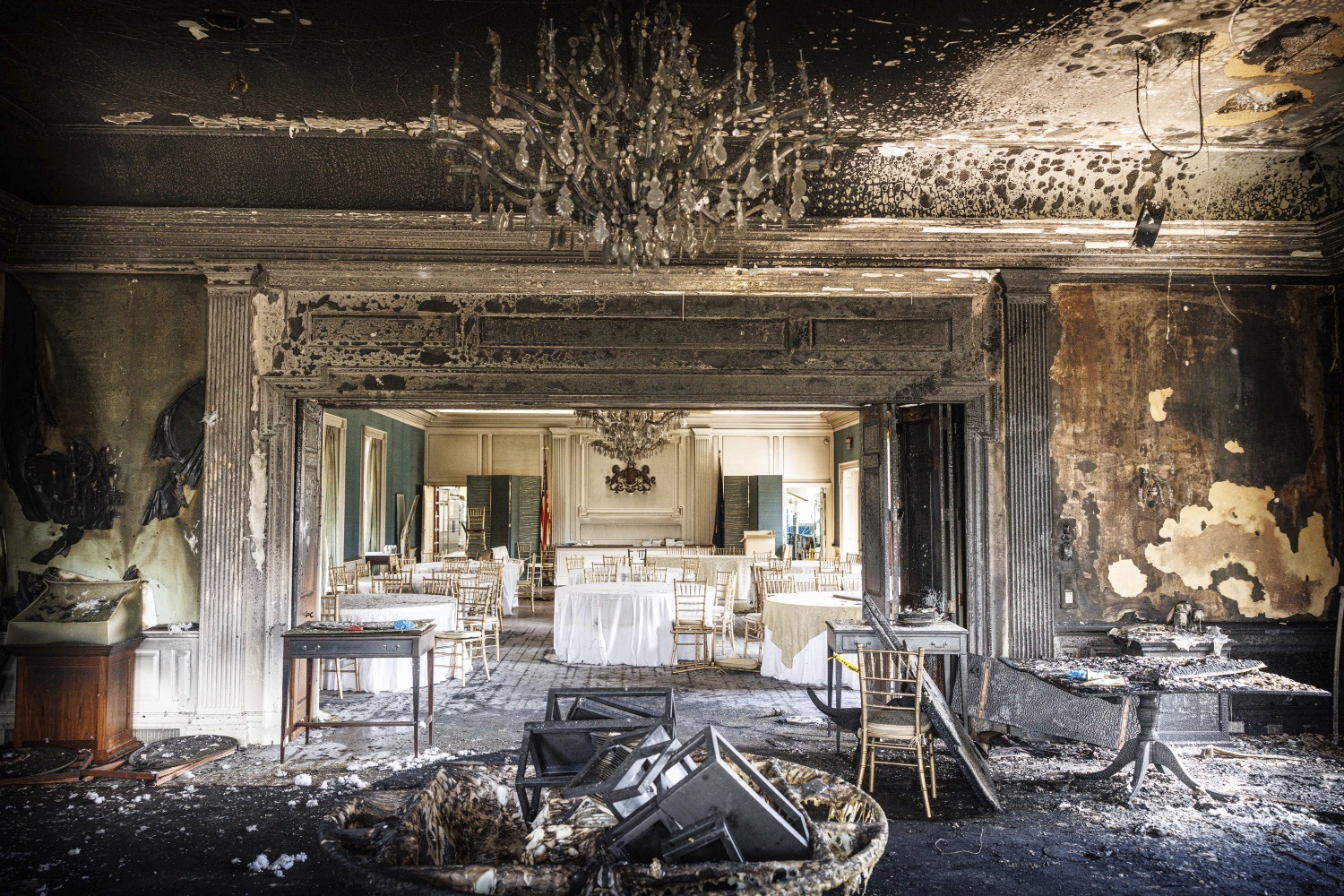
This image provided by Commonwealth Media Services shows damage after a fire at the Pennsylvania governor’s mansion while Democratic Gov. Josh Shapiro and his family slept inside on April 13, 2025, in Harrisburg.
State police never built the security fence that started the land feud, instead opting to surround Shapiro’s home with updated landscaping. That escalated the conflict with the Mocks. In their lawsuit, the Mocks allege that despite ongoing negotiations over the strip of land, the Shapiros began planting arborvitae-type trees and other plants on the Mocks’ property, flying drones over it, and threatening to remove healthy trees. The lawsuit also accuses state police of “chasing away” contractors who came to work in the Mocks’ yard.
The Shapiros, meanwhile, argue in court filings that the Mocks’ alleged harassment is causing them irreparable harm and further threatening their safety. According to a source briefed on the conflict, the Mocks at one point posted a series of signs on the land and a tree that read “Hippity hoppity, stay off my property,” and “This is my property,” among other efforts to antagonize the Shapiros.
John Ginsberg grew up in the home now owned by the Mocks during the 1970s and ‘80s, and said he never thought of their property as stretching into the land now owned by the Shapiro family.
“It just wasn’t an area that was used,” said Ginsberg, who now works as an attorney in Washington. “It wasn’t maintained, and it was brambly.”
Another man, who requested anonymity to speak freely about his neighbors, said he lived next to the Shapiros for more than 21 years, and has for decades shared the upkeep on a portion of the property highlighted in the lawsuit with Shapiro, taking turns clearing and replanting the area.
“I don’t think either of us thought twice about that little strip of land,” he said.
The Shapiros have been great neighbors, he said, and the Mocks have been “good neighbors to us,” describing them as a “nice young family.”
Political allegations
Shapiro has faced ongoing scrutiny from the state Senate for implementing the $1 million in security upgrades to his personal home, in addition to $32 million in repairs and security upgrades to the governor’s mansion following the arson attack. All of the upgrades were implemented without legislative approval due to their urgent nature.
A Senate committee in December took the unprecedented step to subpoena Shapiro over the security upgrades to his personal home, arguing that his administration had not been transparent in previous inquiries about how state taxpayer dollars were being used to upgrade security at Shapiro’s personal home.
Ward, the top official in the state Senate, has been critical of the state spending on security upgrades, saying that taxpayer dollars should not be funding security upgrades to Shapiro’s private residence.
Shapiro’s office is quick to note that Ward has been in contact with the neighbors taking the governor to court — saying that helps show the land dispute lawsuit is politically motivated.
Ward, of Westmoreland County, told ABC27 earlier this month that she had had contact with the Mock family on two occasions. A person close to Ward said that the senator is an acquaintance of the Mocks, but that the family had already obtained legal counsel by the time Ward reached out to them, and that the lawmaker did not encourage Shapiro’s neighbors to take any legal action against him.
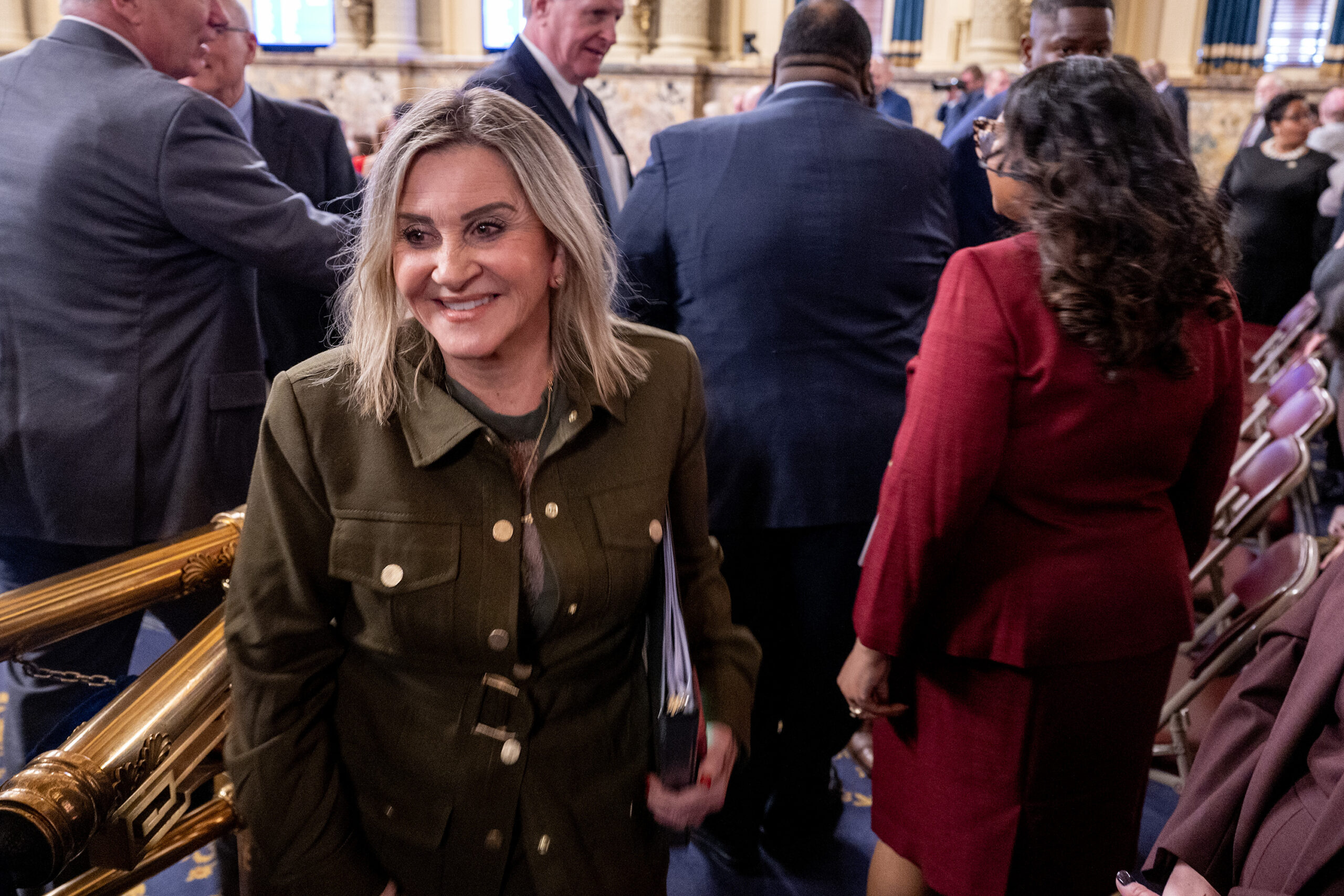
Senate President Pro Tempore Kim Ward leaves the House chamber Feb. 3 following Gov. Josh Shapiro annual budget proposal in Harrisburg.
Jeremy Mock has owned a small coffee business in Ward’s legislative district in western Pennsylvania since 2022, according to public business filings. He and his wife moved to the Abington Township neighborhood in 2017, and have had no issues with the Shapiros until the fence feud, according to both parties’ lawsuits.
“This dispute over a small piece of the Shapiros’ backyard has been turned into a shameless political stunt by their neighbors and members of the Republican State Senate, who are now harassing and exploiting the Shapiros,” said Rosie Lapowsky, a spokesperson for Shapiro, without directly naming Ward.
Zimolong, the Mocks’ attorney, said the fact that the couple was willing to work with the Shapiros to find a solution dispels any claim that their suit is politically motivated. The Mocks could have said “no” from the outset when the Shapiros approached them, he argued, but instead participated in negotiations.
“At base, this is a straightforward defense of the property rights of two innocent owners, who were living peacefully next to the Shapiros for over nine years,” Zimolong added in a statement.
“Even today, the Mocks remain open to resolving the dispute,” Zimolong said.
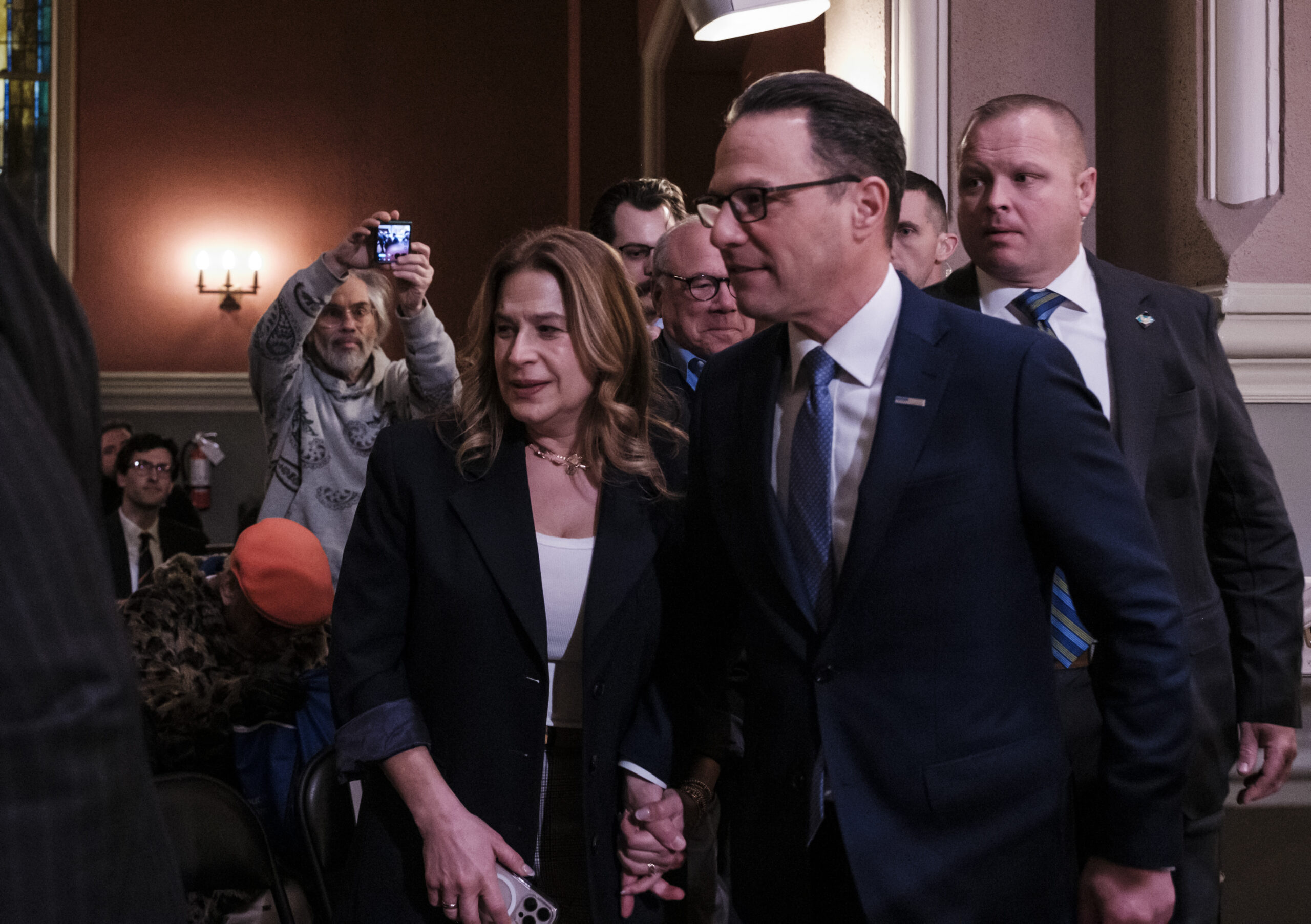
Gov. Josh Shapiro and his wife, Lori Shapiro, depart a talk for his new memoir “Where We Keep the Light” on Jan. 29 in Washington, D.C
Zimolong says he has never discussed the lawsuit with Ward or coordinated with her staff over the issue, “and I have no intention of doing so.”
He saidhe is one of few attorneys in southeastern Pennsylvania who is “not afraid to hold a powerful governor accountable” and does not have work before the state that would present an ethical conflict.
Erica Clayton Wright, a spokesperson for Ward, noted that taxpayer funds have now been used to pay for security upgrades to Shapiro’s personal residence and the property of his neighbors, and argued that it’s “not the first time Gov. Shapiro’s team has been put in the awkward position of pointing fingers to distract from Gov. Shapiro’s questionable methods of operation.”
“It is important not to lose sight of the need to ensure the governor and his family are safe while also safeguarding the processes in place to manage taxpayer funds,” Clayton Wright said.
“Absolutely no one but Gov. Shapiro himself is responsible for trying to take his neighbor’s property via squatter rights, which has resulted in federal and state lawsuits,” she said.
Staff writer Abraham Gutman contributed to this article.
Pennsylvania pays out hundreds of millions in overtime pay to its employees annually. For some agencies, overtime work is in the nature of the jobs, which involve responding to emergencies. But understaffing sometimes plays a role as well.
Last year, Pennsylvania paid $397 million in overtime to roughly 56,000 employees, according to state data. The state plans to spend a similar amount this year.
“Overtime is a necessary part of operating state government,” Daniel Egan, a spokesperson for the Pennsylvania Office of Administration, said via email in February. “Many Commonwealth agencies provide 24-7 services Pennsylvanians rely on, including plowing roads, responding to emergencies, staffing correctional facilities, and caring for patients in state hospitals and nursing homes.”
In Pennsylvania, overtime spending has increased by nearly 50% since 2019. Some of the agencies that paid the most overtime were the Department of Corrections, Department of Transportation, Department of Human Services, and the State Police.
Dolling out millions in overtime is not uncommon in state governments and it’s been increasing among some. New York spent 1.3 billion on overtime in 2024, a roughly 10% increase from the previous year. Maryland spent $404 million that year, up almost 38% from four years prior. In Delaware, overtime spending reached $84 million in 2025, about a 20% increase from 2023.
While staffing shortages contribute to overtime needs, agencies say a variety of factors contribute to this spending.
Top spenders on overtime in Pa.
Overtime accounted for 3.9% of Pennsylvania’s personnel costs in 2025, says Egan, which last year ran up to over $10 billion.
These costs include salaries, wages, employee benefits, and other personnel costs like overtime.
window.addEventListener(“message”,function(a){if(void 0!==a.data[“datawrapper-height”]){var e=document.querySelectorAll(“iframe”);for(var t in a.data[“datawrapper-height”])for(var r,i=0;r=e[i];i++)if(r.contentWindow===a.source){var d=a.data[“datawrapper-height”][t]+”px”;r.style.height=d}}});
Pennsylvania’s personnel costs have grown from $8.2 billion to $10 billion between 2019 and 2025, while overtime spending increased from $269 million to nearly $400 million last year.
But the state’s other expenses have grown even more. Personnel was 9.4% of the budget in 2019, and dropped to 7.8% last year.
window.addEventListener(“message”,function(a){if(void 0!==a.data[“datawrapper-height”]){var e=document.querySelectorAll(“iframe”);for(var t in a.data[“datawrapper-height”])for(var r,i=0;r=e[i];i++)if(r.contentWindow===a.source){var d=a.data[“datawrapper-height”][t]+”px”;r.style.height=d}}});
Egan noted that state employee pay rates have increased by roughly 28% since 2019 “to keep up with the cost of living and ensure the commonwealth remains a competitive employer for high-quality employees,” and overtime is based on employees’ base rate of pay. He also noted that many state agencies must operate “around the clock.”
Staffing shortages
Corrections doled out roughly $163 million in overtime to 13,600 employees in 2025.
“Overtime in corrections will always be a reality due to the 24/7 operation of essential security posts,” but the department has been working to curb its staffing shortages, said spokesperson Maria Bivens.
In Pennsylvania, Corrections has looked to address the shortage in recent years by dropping the age requirement for trainees and allowing out-of-state applicants.
“As corrections officer vacancies decrease, our facilities become safer, more cost-effective, and better equipped to meet the needs of the incarcerated population,” department secretary Laurel Harry said last year.
Curbing the staffing shortage helps reduce the agency’s reliance on overtime, which in turn reduces employee burnout and saves taxpayers money, the department has noted.
The officer vacancy rate fell from 11.3% in September 2022 to 6.4% in September 2025. Bivens said vacancy should continue to drop to roughly 3% in March once two facilities close and their staff are deployed to other positions.
A Pennsylvania State Police vehicle parked in Center City Philadelphia.
At the Pennsylvania State Police, “overtime is not determined solely by vacancy rates,” said spokesperson Logan Brouse. It can include responding to critical incidents and court appearances, Brouse noted.
“As part of our public safety operations, overtime is sometimes necessary to uphold our mission by ensuring we can respond efficiently and effectively to emergencies, maintain adequate staffing levels, and meet operational demands,” said Brouse.
The department paid roughly $55 million in overtime to about 5,700 employees last year.
The governor’s budget proposal includes funds to add 380 troopers, and removes a cap on how many the state can hire, said Brouse.
“The department continually reviews staffing levels, scheduling practices, and operational needs to manage overtime responsibly,” said Brouse. “We always strive to be good stewards of taxpayer money while ensuring that public safety services are delivered effectively and without interruption.”
Agencies on call 24-7
Some agencies say overtime is inevitable given the all-hours nature of their work.
Last year, PennDot paid $70 million in overtime to roughly 12,100 employees. Their work includes emergency response during weather events, as well as roadway or bridge repairs, noted spokesperson Erin Waters-Trasatt.
“Pennsylvanians expect our employees to respond to emergencies 24-7 and during major events — like the January 2026 snowstorm,” said Waters-Trasatt. “Overtime is required to keep our roadways clear and safe for travel.”
PennDot trucks load up on salt at their facility on Hunting Park Avenue on Friday morning Jan. 19, 2024.
The Department of Human Services paid about $65 million in overtime to 8,513 employees last year.
The department runs psychiatric hospitals and other residential care facilities that operate 24-7 and “must continue to function even when employees have reached the standard number of work hours per day or week,” said spokesperson Natalie Scott.
The department has also been trying to fill vacancies, Scott noted, adding that Gov. Josh Shapiro’s administration has cut down the time it takes to hire state employees.
“Progress made to increase staff will allow employees more time and resources to effectively do their work and reduce the amount of overtime spent,” said Scott.
Does Donald Trump have to ruin everything? The answer is obviously yes, but this one was heartbreaking. Sunday’s overtime thriller over Canada, which gave U.S. men’s hockey its first gold medal since this senior citizen was a college junior, was a howl of joy in what’s been a dire year for America. But then (taxpayer-)Ka$h Patel showed up to party, and soon Trump was on the phone, egging on the boys with misogynistic trash talk about their gold medal compatriots, the women’s hockey team. Now the men are invited to Trump’s State of the Union address, the women “had other plans,” and I almost wish our Canadian friends had won the game.
How Indiana University won a football crown and lost the plot
Indiana University’s victory flag flies over Memorial Stadium in January in Bloomington, Ind.
Even in a state where the sports miracles, from Rudy and The Knute Rockne Story to Hoosiers, are so big they tend to make it to Hollywood, there’s never been a feel-good script quite like Indiana University — with the most losses in college football history until this season, when it went 16-0 and won the national championship.
“The energy is just absolutely insane,” Katie Shin, a recent Indiana alumna, told the Athletic as thousands of fans went wild on the Bloomington campus that night, saluting Heisman Trophy quarterback Fernando Mendoza and their unsmiling genius head coach Curt Cignetti. “The whole state is just rallying around IU.”
But there’s a huge irony for anyone who’s a big fan of America’s colleges for more than just what happens on the gridiron. In the same season Indiana was slowly climbing to the top of the football polls, the flagship public university was also ranked dead last in the nation.
For something arguably more important: free speech.
The Foundation for Individual Rights and Expression (FIRE), the national campus speech group based here in Philadelphia, last fall ranked IU 255th on its 2026 ranking of universities over freedom of expression — the lowest-rated public institution in America, and only higher than the controversy-wracked private sister schools, Columbia University and Barnard College.
Interestingly, the FIRE low-ranking came after a slew of campus controversies in which the silenced speakers or protesters were all over the map ideologically — a canceled Jewish speaker and a shout down of right-wing speakers, but also draconian moves against pro-Palestinian protesters, including harsh penalties for a 2024 encampment. Last month, a federal court ruled that IU’s punishments of the Gaza campers and its anti-protest policies were unconstitutional.
FIRE’s lambasting of IU’s free speech transgressions was reported upon last Sept. 9 in the student paper, the Indiana Daily Student. The following month, school administrators ousted the faculty adviser to the IDS and told the student journalists they could no longer print the paper, and that news could only be published online. The university’s insistence that this was purely an economic move was a surprise to the ex-adviser, who sued and said he was fired “after he refused to censor the students’ work.”
It ought to go without saying that curbing the free exchange of ideas is antithetical to the most sacred values of American higher education. But the free speech mess at IU is but one controversy at an iconic heartland university that has become a poster child for the moral crisis of U.S. universities, even as it celebrates football glory.
Clearly, the leadership at IU — and this includes its board of trustees, with three new conservative, pro-MAGA members that GOP Gov. Mike Braun named in June under a law that also allowed him to boot three trustees elected by IU’s alumni — is eager to keep its pigskin prowess as the main thing America knows about the university.
The school just signed its field general, Cignetti, to a contract extension that will pay him $13.2 million a year through 2033, making him one of the three highest-paid coaches in the nation. But his new deal flabbergasted a growing number of critics, who note the big raise came as IU — just days after the new conservative trustees were named — either eliminated or made deep cuts in nearly 250 academic programs such as French, art history, geography, and East Asian studies.
Meanwhile, Cignetti isn’t the only high-profile figure at IU to see a big raise. Also this weekend, the trustees gave Whitten a $100,000 pay hike, to an even $1 million a year — citing her willingness to work with industry.
At least 250 IU alums, joined by current faculty and students, have signed on so far to an open letter and donation freeze demanding that, instead, Whitten step down. They also want the university to restore both its diversity programs and robust free speech protections, as well as the reinstatement of the three alumni trustee positions. But they are swimming against a red tide of conservatism that’s polluted the public college universe in Indiana.
Cross-state public rival Purdue University is reeling from a recent report in its hometown newspaper that the school, under pressure from conservative lawmakers, has informally banned the admission of international students from China and a slew of other countries. Students and faculty have complained of an unwritten “soft ban” on many overseas applicants, although Purdue has denied that such a policy exists.
Meanwhile, the regional campus of IU Indianapolis caused a stir and triggered a protest when it abruptly canceled the 57-year tradition of an annual Rev. Dr. Martin Luther King Jr. dinner — a move that was undertaken not long after the school removed campus signs that read “Black Lives Matter” and “Discrimination has no place here.”
Indiana is hardly alone. The 2025-26 academic year has been marked by similar outrages against unfettered speech and racial inclusion, especially in the most pro-Trump red states. To cite just one of many examples, the University of Texas System just adopted a new policy aimed at limiting discussion of “controversial topics” in the classroom. Isn’t that the whole point of the college experience?
The erosion of freedom at the American university has happened gradually and then suddenly, and it needs to be getting a lot more attention. That’s hard when the president is sending aircraft carriers to threaten Iran, imposing steep taxes for no reason, and generally acting and talking like the mad king he is.
Yet, nothing is more important for MAGA’s authoritarian project than what is happening at Indiana University and other college campuses right now. As I wrote in my 2022 book, After the Ivory Tower Falls, higher ed is the fulcrum of America’s political divide, now more than ever.
Every tactic — murdering the humanities and the social sciences, making campuses more white, ensuring our future elites aren’t exposed to “controversial topics” while entertaining them with the beer and circuses (a phrase, ironically, coined by an IU English professor) of big-time football — is another step toward MAGA’s strategic goal of an American electorate that cannot think critically.
The fight for the soul of Indiana University is the fight for the soul of the United States, and it’s not what’s happening inside Memorial Stadium against Ohio State or Michigan.
“We know that IU alums are smart enough to celebrate the success of the Football Hoosiers and condemn what Pamela Whitten is doing to degrade the prestige of our degrees,” the university dissidents write in their open letter. “Please help us take a stand against the debasement of our university and restore the glory of old IU.”
Yo, do this!
You might have noticed that the late Jeffrey Epstein and his randy U.K. royal pal, the artist formerly known as Prince Andrew, have been in the news a lot lately. But did you know there’s an excellent 2024 Netflix movie called Scoop about the drama behind the disastrous 2019 BBC interview that started the long downfall of Andrew Mountbatten-Windsor, now arrested and under a British police investigation? I watched Scoop over the weekend, and it’s both an entertaining and highly relevant journalism thriller.
Since this space is devoted to my weird entertainment choices, and not what normal people are doing, I have to share that I’ve been escaping today’s banality of evil with a deep dive into the musical world of … mass murderer Charles Manson. My all-time favorite podcast, Andrew Hickey’s A History of Rock Music in 500 Songs, did a remarkable four-parter a couple of years ago about Manson and his shockingly close ties to the Beach Boys (and others like, sigh, Neil Young) that resulted in the murder mastermind’s uncredited cowriting of their 1968 song, “Never Learn Not to Love.” There’s also a compelling detour into the life of Black music pioneer Huddie “Lead Belly” Ledbetter, and a book recommendation that sounds equally incredible: Bring Judgment Day: Reclaiming Lead Belly’s Truth from Jim Crow’s Lies by Sheila Curran Bernard.
Ask me anything
Question: Update us on what is and what should be happening in Quakertown [please]. — @marco2751.bsky.social via Bluesky
Answer: Thanks for this, Marco, because if readers aren’t up to speed on what’s been happening in Quakertown, an exurb nearly an hour’s drive north of Philadelphia, then they need to learn. Quick version: A peaceful Friday walkout by Quakertown High School students protesting U.S. Immigration and Customs Enforcement raids turned shockingly violent, highlighted by a grown man placing a teen girl in what appeared on video to be a dangerous choke hold. It turned out this man was the Quakertown police chief and interim borough manager, Scott McElree. Adding insult to injury, five students were arrested and spent the entire weekend in jail before they could see a judge. What should be done? Quakertown can’t fire McElree quickly enough. The right to peacefully assemble and protest the government is the heart of the First Amendment, and what makes America a democracy. A police chief who can’t honor the U.S. Constitution should not have a job.
What you’re saying about …
Last week’s take-a-step-back-from-the-madness question about who is the greatest living American (inspired by the passing of the Rev. Jesse Jackson) didn’t get a large response, but brought some compelling arguments. Two men were named twice: Pope Leo XIV, the Villanova alum who has shone as an advocate for immigrants and for peace on the world’s stage since last summer, and Sen. Bernie Sanders, who has never wavered in fighting for progressive values. Other suggestions included Bob Dylan, Edward Snowden, Barack Obama, and — in a show of respect for science under siege — the health experts Anthony Fauci and Peter Hotez, who, wrote Pat Eisenberg, “is trying to improve the health of Americans despite all the things the Trump administration is doing to ruin our health.”
📮 This week’s question: I’m hopefully going to be writing soon about the scourge of prediction markets like Kalshi, and more broadly, the problem of sports betting. Should these forms of gambling be banned, or at least more strictly regulated? Please email me your answer and put the exact phrase “Betting bans” in the subject line.
Backstory on what pundits don’t get about ‘28
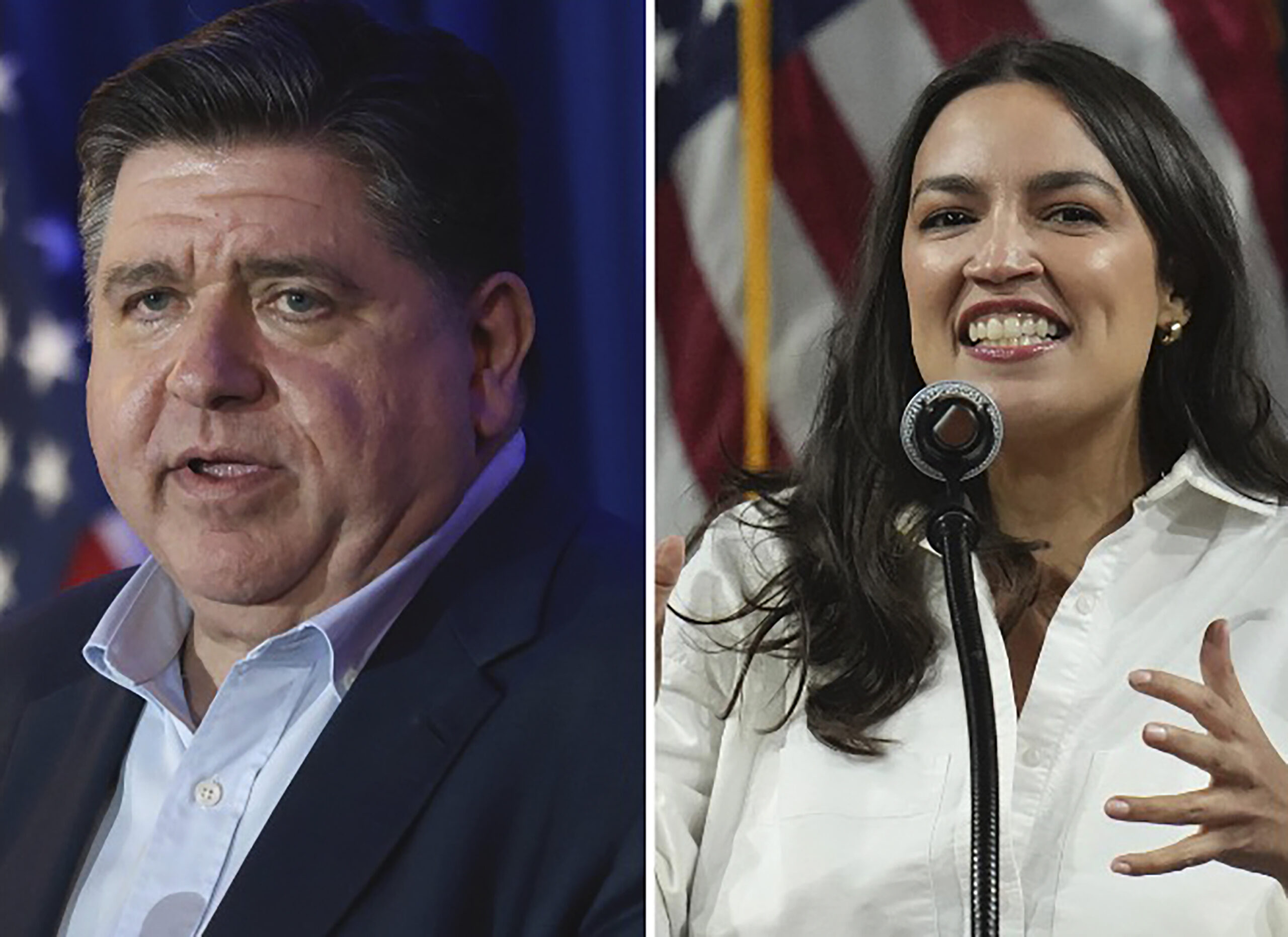
This photo combo shows Illinois Gov. JB Pritzker, left, speaking during the McIntyre-Shaheen 100 Club Dinner, April 27, 2025, in Manchester, N.H., and U.S. Rep. Alexandria Ocasio-Cortez (D., N.Y.) speaking during a “Fighting Oligarchy” tour event at Arizona State University, March 20, 2025, in Tempe, Ariz.
Get 13 Democratic and left-leaning independent voters together in the same chat — as the New York Times did with a recent focus group, the latest in its running series — and you’d surely hear some harsh words about Donald Trump and the GOP. But ask them what they think about the Democratic Party, and you might want to cover your ears.
“Spineless.” “More complacent than I thought they would be.” “Paralyzed.” “Afraid.” “Incompetent.” “I guess suffocated, or given up …” “Sold out.” I’m not leaving out the positive responses, because there weren’t any. You also won’t be surprised that these 13 Democratic or aligned voters — very diverse across racial, class, and age lines — want more radical leaders who will take the party, and hopefully the nation, in a bold new direction. There was positive buzz for the likes of new New York Mayor Zohran Mamdani and Texas Rep. Jasmine Crockett — anyone with fresh ideas and a willingness to mix it up with Trump. Said a 36-year-old independent woman from Washington state: “I still don’t agree with everything she’s doing, but Alexandria Ocasio-Cortez is a well-known name and seems to be fighting against Trump.”
I thought a lot about the Times’ focus group last week as I heard or read two veteran pundits try, at this relatively early date, to handicap the 2028 presidential race. Mark Halperin (who’s somehow still around despite this) went on POTUS radio with Michael Smerconish to defend his picks: He included ex-Chicago mayor Rahm Emanuel, a center-right figure who is passionately hated by any real Democrat I’ve ever spoken with, and also overrated Kamala Harris (floating on the fumes of her name ID), as well as his No. 1 pick, California Gov. Gavin Newsom, with Pennsylvania Gov. Josh Shapiro at No. 2. He said he included AOC and upgraded Illinois Gov. JB Pritzker only because his “sources” told him to — because his sources understand the Democrats while the clueless Halperin does not.
Ditto Nate Silver, who has magically reappeared in the Times, which first made him a star in 2012. Although Silver did place AOC in second, behind Newsom, he also — much like Halperin — uprated tired conventional wisdom candidates like Shapiro (No. 6) and Michigan Gov. Gretchen Whitmer (No. 4, despite being invisible recently), and grossly downrated progressive favorites like Pritzker (14) and Connecticut Sen. Chris Murphy (18), as well as more interesting and unorthodox names like Arizona Sen. Mark Kelly (12) and Kentucky Gov. Andy Beshear (15). He sees Newsom as the darling of “Resistance Libs,” the Trump-hating MS Now watchers who controversially get tagged as heavily “wine moms.” Said Silver of Newsom: “They want a fighter. And Newsom plays expertly into that.”
True, but I expect Newsom’s standing among Democratic primary voters will crumble once voters learn more about his ties to Silicon Valley billionaires, or his verbal sellouts of the transgender community, or his “meh” popularity among the Californians who know him best. Readers of this newsletter were unanimous earlier this month in not wanting Shapiro to run. I’m not going to do a numerical ranking, but I would place Pritzker, who’s made all the right moves against Trump without Newsom’s train car of baggage, and AOC, who’s making all the right enemies, including the worst Beltway journalists, as my top two. I’ve covered presidential races since 1984, and I’ve learned the only thing that matters two years out is to listen to the people. The pundits know nothing right now.
What I wrote on this date in 2019
It’s impossible to top this anniversary: The day I appeared in the Epstein files. In February 2019, with the walls closing in, Epstein’s close adviser and quasi-journalist friend, Michael Wolff, wanted to make sure he saw my Feb. 24, 2019, column about elite male impunity that mentioned him and two billionaires in his orbit: Donald Trump and New England Patriots owner Robert Kraft. What did Epstein read, assuming he clicked on it? I wrote that “this isn’t really ‘a sex scandal.’ The real scandal here is the gross imbalance of power involving women who were held in a form of human bondage to serve as objects of gratification for powerful men intoxicated by their belief they can get away with anything.”
I took a short break from the relentless anti-Trump, anti-ICE beat last week to write about the other threat to the American way of life: artificial intelligence. Rapid advances in AI technology make it clear that robots and chatbots and the like are going to upend the economy — most importantly, the job market — sooner rather than later. Can wary voters find politicians who are willing to regulate AI and its threats to employment, education, and the environment, or will pols continue to prefer Silicon Valley’s campaign donations? Over the weekend, I highlighted the recently leaked ICE blueprint for an American concentration camp in Georgia, and what that document tells us about the moral depravity of mass deportation.
In a city as large and as history-bound as Philadelphia, all big stories are inevitably local. That was never truer than at the Winter Olympics in northern Italy, especially for the most-watched event on these shores: the U.S. men’s hockey’s thrilling overtime victory over Canada. The on-ice celebration blended with copious tears as Team USA teammates went into the stands and skated back with Johnny Jr. and Noa Gaudreau, the young children of late South Jersey NHL hockey icon Johnny Gaudreau. Their dad and their uncle Matty were killed by an alleged drunk driver while cycling on a South Jersey road in August 2024, as Gaudreau was training to hopefully make this Olympic squad. The players centered the Gaudreau family and his No. 13 jersey during the gold-medal celebration, and The Inquirer’s Alex Coffey captured the whole emotional story — one you won’t read anywhere else. “This is a history book [moment] that there will be a movie about,“ sister Katie Gaudreau told Coffey. ”And in that movie, Noa and Johnny will be on the ice.” You get the big, moving stories like this, and allow us to keep covering them, when you subscribe to The Inquirer.
By submitting your written, visual, and/or audio contributions, you agree to The Inquirer’s Terms of Use, including the grant of rights in Section 10.