Tag: Josh Shapiro

  • Pa. Attorney General Dave Sunday talks Supreme Court’s Krasner ruling, abortion appeal

    Pa. Attorney General Dave Sunday talks Supreme Court’s Krasner ruling, abortion appeal

    Attorney General Dave Sunday has spent 18 months as the state’s chief law enforcement officer, overseeing a sprawling office that handles criminal prosecution, civil litigation, consumer protection services, civil rights enforcement, and more.

    In that time, the 51-year-old Republican and Harrisburg native says, he has taken on issues ranging from the opioid crisis to illegal crime guns. And last week, the Pennsylvania Supreme Court handed his office broad authority to review the efforts of Philadelphia prosecutors to overturn murder convictions they have called unjust, a signature initiative of District Attorney Larry Krasner’s office.

    In a recent interview at his Philadelphia office, Sunday talked about that and more.

    What is your reaction to the Supreme Court ruling on the work of District Attorney Larry Krasner’s Conviction Integrity Unit?

    Obviously, it’s an unprecedented ruling.

    Oftentimes, the best outcome is through the adversarial process. We work with the Philly DA’s office in a lot of different areas, and I viewed this ruling as any other that provides me with instructions on a way on which I have to run my office.

    Moving forward, the ruling requires your office to review any post-conviction concession that Krasner’s office aims to pursue. How will that work?

    There are questions. How many times will we have to intervene? What will that do to staffing? Will we have the logistics and resources to do it appropriately? I think that process will unfold over the next month or so.

    There’s no other real comparison for this ruling, and so what I can say very simply is this: It is absolutely crucial that there is a voice for the families of victims, and at the same time, I think it’s crucial to make sure that we protect the rights of individuals who are charged with crimes and convicted of crimes.

    That balance is found in applying the law and the facts to the issue. That’s something we will enthusiastically do.
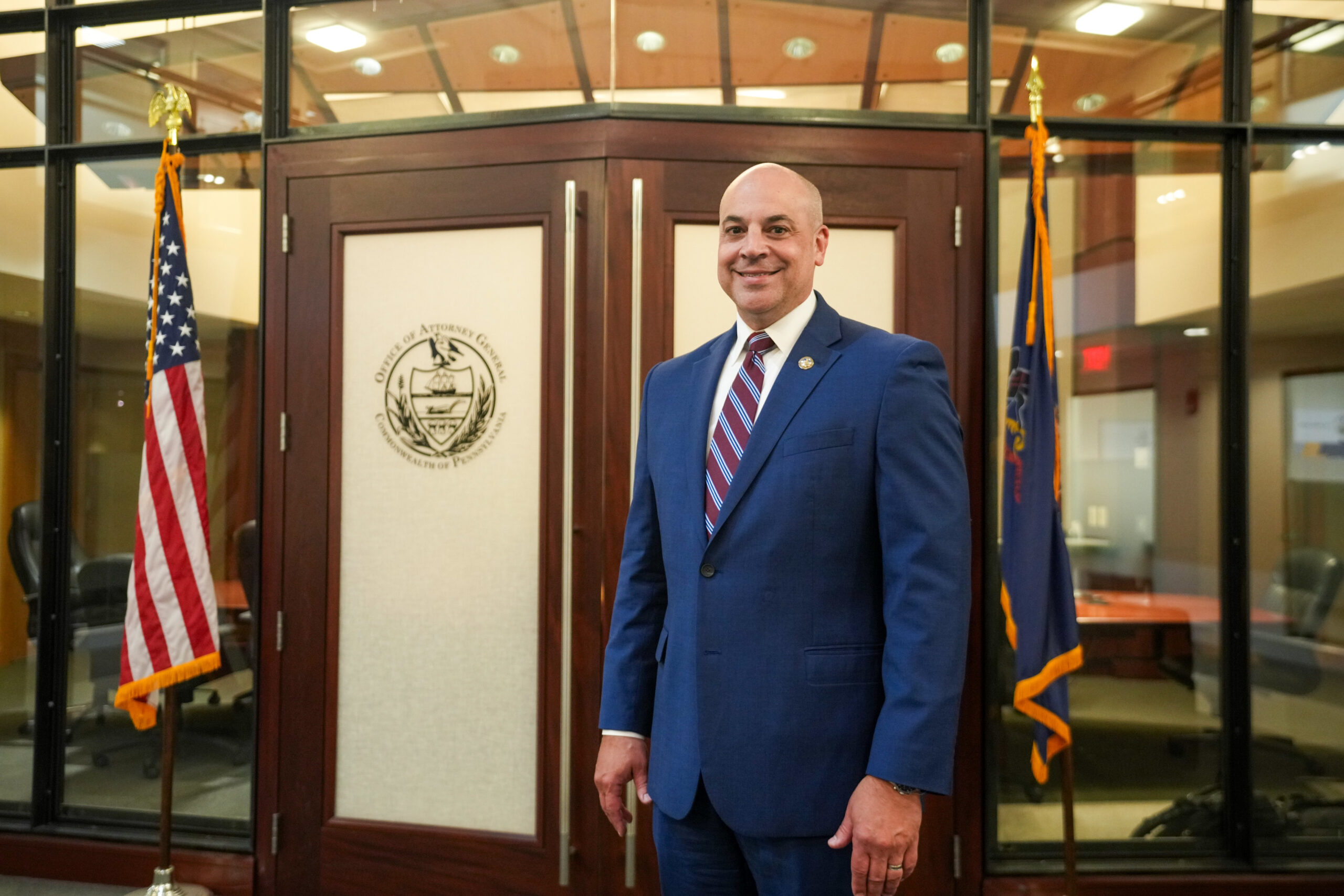
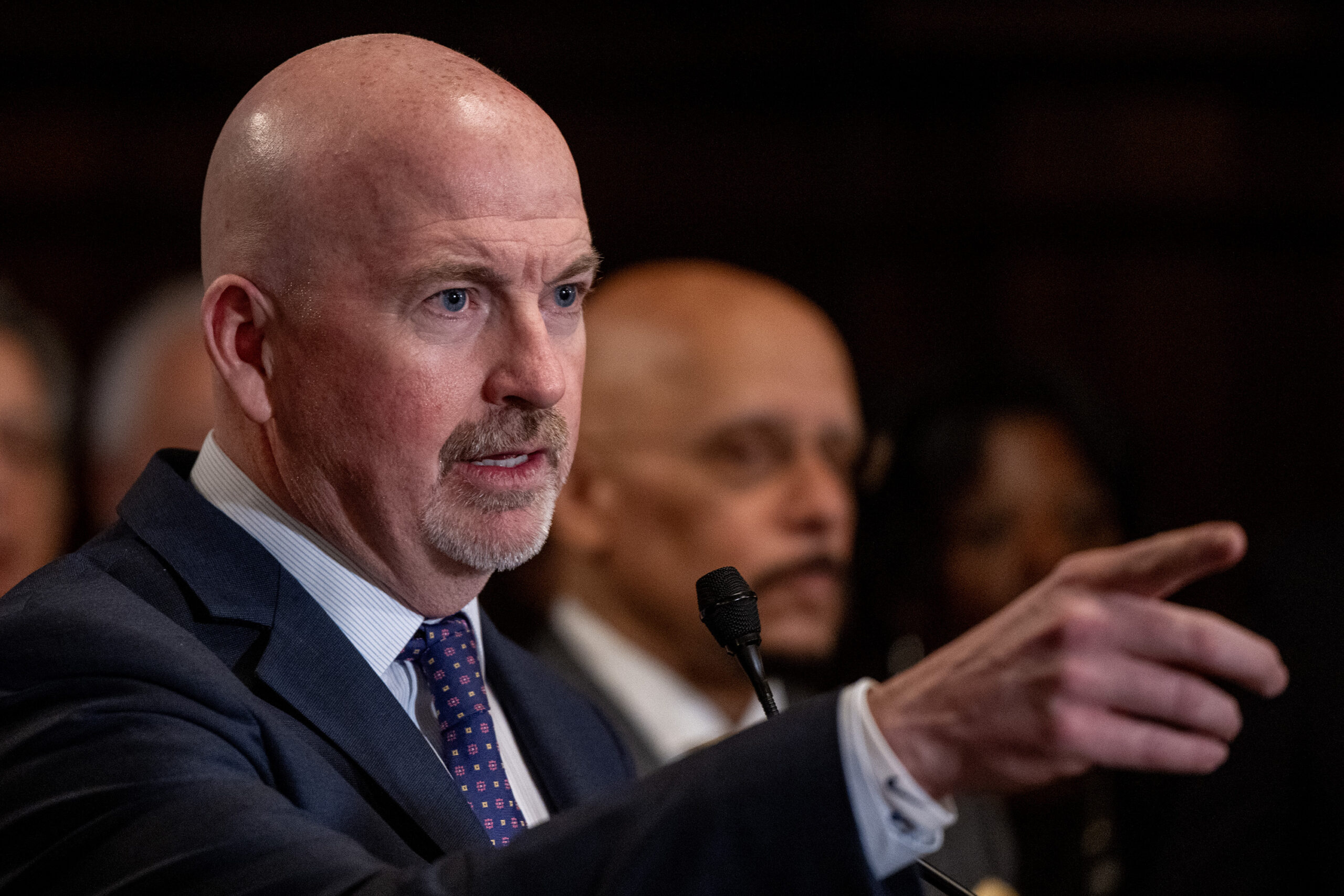
    .Assistant General David Sunday, in Philadelphia, June 23, 2026.
    Since Krasner first took office, his prosecutors have supported efforts to overturn around 115 convictions. Given the Supreme Court’s findings, do you now question whether some of those overturned convictions should be reconsidered?

    Well, we have to look at the legal process there. For individuals who the court has already ruled in a manner in which they’re out of prison, those cases are done.

    But with cases that are still going through the appellate process, individuals that are incarcerated, those are situations where we’re going to have to take a look at it. I mean, this is very serious, and when the Pennsylvania Supreme Court rules in this manner — not just the ruling itself, but the verbiage — I, as attorney general, take that extremely seriously.

    We will do our job, and we’ll do our duty, and we’ll review it, but it’s also important to understand that this isn’t a quest to prove someone wrong. It’s a quest to ensure that all parties are zealously advocated for.

    Krasner has strongly opposed the ruling. He’s likened this issue to the struggles of the Civil Rights Movement and said that the decision undermines the votes of those who elected him to office. What is your response to that?

    I don’t think that it benefits anyone for criminal justice leaders to editorialize a lot of the work we do.

    It’s critical that the citizenry knows and understands that their case will be dealt with by applying the facts to the law — and I know that’s not the most exciting answer, but there are things that are in my control and there are things that aren’t in my control, and his reaction to anything is completely out of my control.

    The last thing individuals who live in the community want to hear are elected officials yelling at each other. They want to see outcomes.

    Earlier this year, justices ruled that mandatory life sentences without parole for those convicted of second-degree murder are unconstitutional. What are your thoughts on that?

    Third-degree murder, second-degree murder, those are cases where the acts resulting in the crime are vastly different case to case. As a prosecutor, I’ve tried horrific second-degree murder cases — one was an in-home burglary where an individual was left face down on the ground, duct-taped, and they ultimately died from positional asphyxiation, which really is torture.

    At the same time, there are second-degree murder cases where you have multiple codefendants, and — this case is highlighted a lot — one of the codefendants pulls a gun out, kills an individual, and all those codefendants, because they were acting in concert and furthering some conspiracy, they’re all guilty of second-degree murder and they’re in for life.

    So there are second-degree murder cases where the individuals should have an opportunity for parole, and at the same time, there are cases that are absolutely horrific, where individuals should spend the rest of their lives in prison.

    The important place we’re in now is the legislative process, moving forward to ensure that the punishment is commensurate with the harm caused in the crime.

    Violent crime has fallen dramatically from its pandemic-era highs in Philadelphia and across the state. Should the attorney general’s office get some credit for that?

    There is no one individual or agency that can take credit for these outcomes. We’re with our federal partners, we work with everybody.

    After I was elected, some of the very first calls I made were to the Philadelphia mayor and the police commissioner, and I made it very clear that we’re partners. I’m excited, let’s go. And that’s what we’ve done.

    The Attorney General’s Gun Violence Task Force is a huge part. We do everything we can every day to go after gun traffickers, illegal straw purchasers. We’ve removed more than 500 crime guns off the streets [statewide] in 2025.

    In addition to that, our Bureau of Narcotics works every day in Philadelphia. Last year, we removed 56 million doses of fentanyl from the streets, and a large portion of that was in the city.

    The Commonwealth Court struck down a decades-old law that banned Pennsylvanians from using their Medicaid benefits to pay for abortions, and last month, your office appealed. Why?

    A lot of people don’t understand the role of the AG in a lot of issues. In Pennsylvania, we have the Commonwealth Attorneys Act, the rules that dictate the job, and one of the rules in there is that the attorney general shall defend the constitutionality of statutes in Pennsylvania.

    I have irritated the entire political spectrum, because I am defending statutes whether you like them or not. That’s literally my job. What a lot of people don’t understand is that the [Medicaid] law is part of the Abortion Control Act — the same law that allows abortions to occur up to six months of pregnancy, the very same law.

    In that law is a subsection that also says that government funds cannot be used for abortions — so I’m defending the abortion law in Pennsylvania, just like I would any other section of that law.

    Critics say that by appealing the ruling and prolonging this issue, you are denying Pennsylvanians of what the court called a “fundamental right to reproductive autonomy.” How do you respond?

    Just like every law we defend — every single one — there are people that like it and don’t like it, and they will have commentary. I certainly respect their absolute right to have that commentary.

    What I will say is, this decision has nothing to do with that. It is the job of the attorney general to defend the statute.
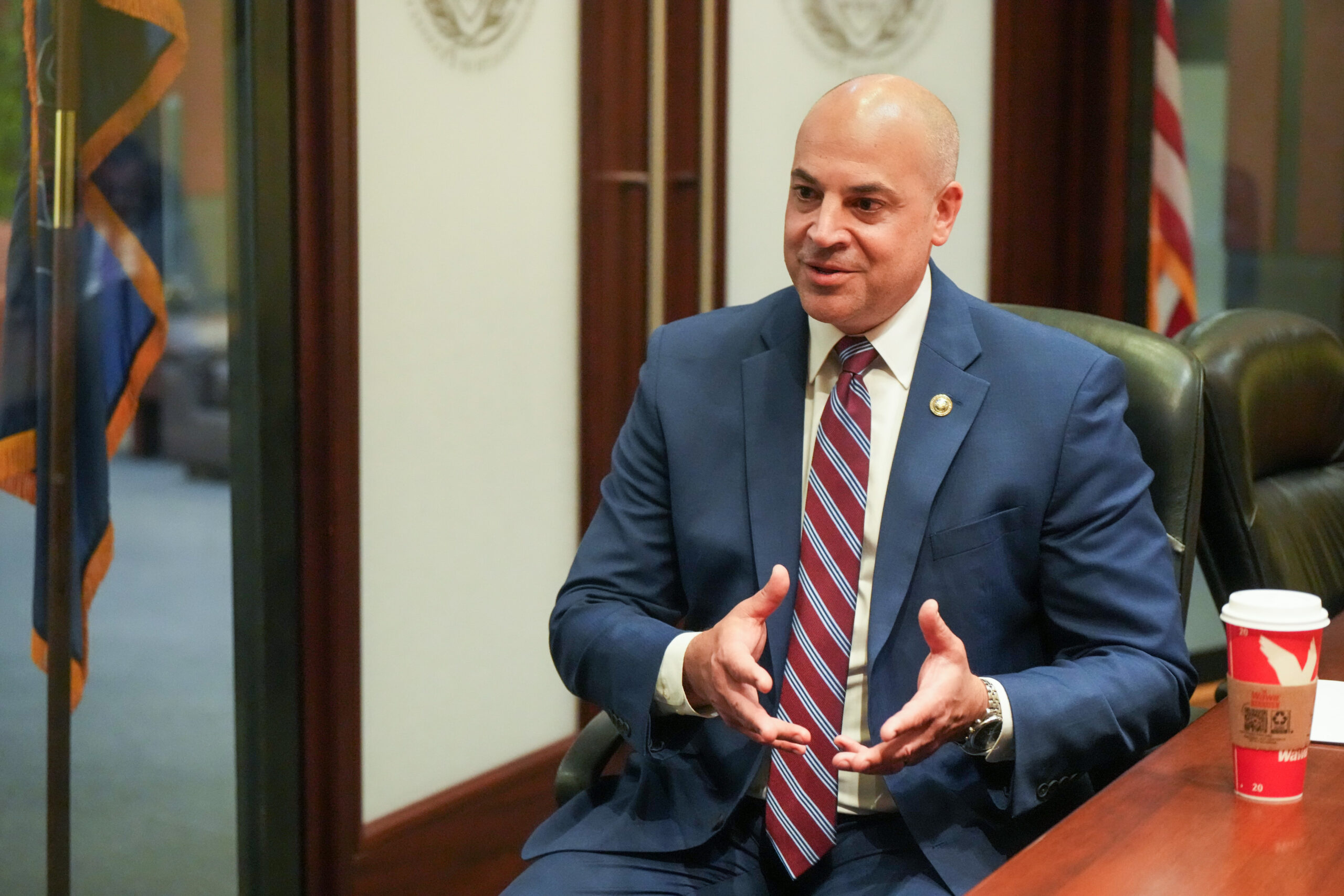
    .Assistant General David Sunday, in Philadelphia, June 23, 2026.
    What would you say has set your tenure apart from your predecessor, Gov. Josh Shapiro, and his appointed successor, Michelle Henry?

    Very simply, I came into this job as a prosecutor. I ran on public safety. I wasn’t a legislator, so when I look at the office, I view it as a place where you follow the facts in the law, and you fight hard to keep people safe.

    With that being said, I have hyper-focused on issues impacting citizens. We have huge crises in Pennsylvania that need to be addressed, specifically the mental health crisis.

    When I came into office, I saw our prisons are full of people that have mental and behavioral health challenges. Individuals go to jail solely because they have a mental health crisis, and what I want to see are people getting treatment.

    What we did was create a new initiative that gives police a toolbox, so when they come into contact with someone in a mental health crisis [who is committing a low-level criminal offense], they can get that person into treatment [if the person chooses to do so]. At the same time, that person can be charged, and the police have the flexibility to hold that charge.

    This is brand-new, and we have nine counties that are already signed up and are rolling. We have five more lined up and ready to roll over the next few months.

    President Donald Trump held a rally in Pennsylvania on Tuesday, and he was joined by some of the state’s other top Republican officials, such as Stacy Garrity. Is that an event you would have liked to attend?

    In all candor, I have events that have been scheduled for months and months, and the reality is, a lot of these [presidential] events pop up pretty quickly.

    On Tuesday, I had an event with the first elected attorney general in Pennsylvania, LeRoy Zimmerman. I was with him at a fireside chat, talking about what the AG’s office has looked like, and how it’s changed over the last 30 years.

  • Urban Outfitters’ Navy Yard headquarters is growing as the company adds employees

    Urban Outfitters’ Navy Yard headquarters is growing as the company adds employees

    The Navy Yard got a new boat this month. It isn’t a military ship and won’t be setting sail.

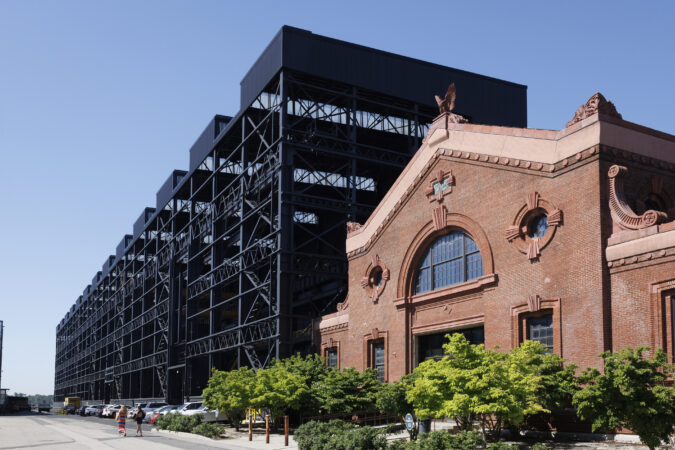
    The decommissioned 1977 tugboat, now painted in Urban’s signature yellow and marked by its logo, is now permanently stationed outside the company’s headquarters — as a sort of mascot, to company cofounder and CEO Dick Hayne.

    The tugboat’s arrival coincides with a momentous anniversary for Urban: the company’s 20th year at the Navy Yard. Urban staff started relocating 500 employees there in 2004, and the headquarters was fully operational by 2006. Now it has 15 buildings and just over 2,500 employees.

    And the company is continuing to grow.

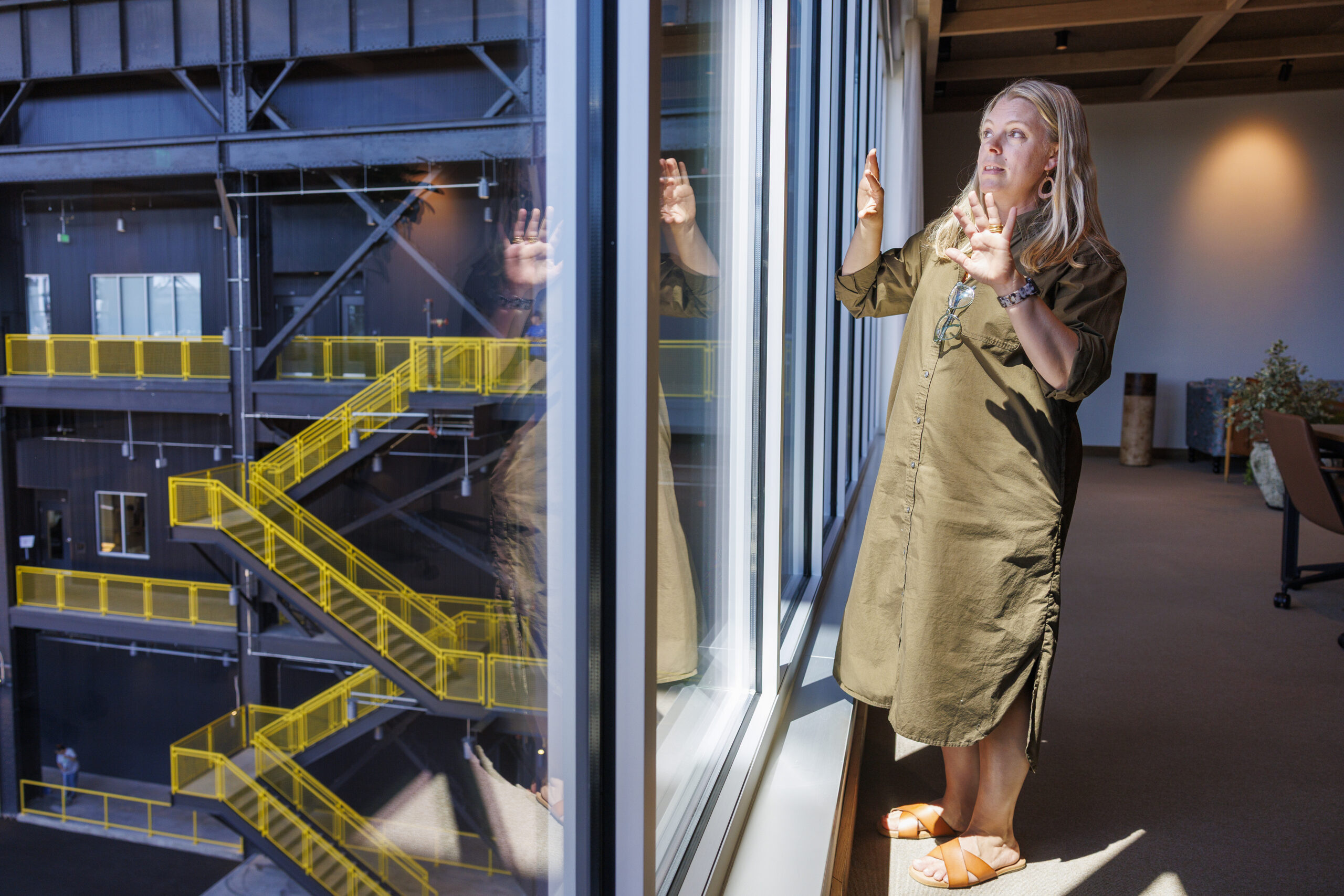
    Urban Outfitters chief development officer Dave Ziel stands with a retired tugboat the company acquired for display at its Navy Yard headquarters.

    Urban’s newest addition at the Navy Yard is a 117,000-square-foot photo studio building, which opened in April.

    Urban announced earlier this month that it plans to hire at least 450 workers at the Navy Yard and at least 600 at a new Bucks County facility, which is set to open by 2028. Gov. Josh Shapiro joined Hayne for the news conference, and lauded the business as a home-grown global company bringing jobs to Pennsylvania.

    “We intend to stay here,” said CEO Hayne. “We have no thought of leaving.”

    How Urban grew from Philly roots to global retailer

    Urban was founded in 1970. The company’s roots are in West Philadelphia, where it opened its first store, a Free People. It now has almost 800 stores across the globe under the brand names Urban Outfitters, Free People, FP Movement, and Anthropologie.

    Walking into an Urban store doesn’t feel like stepping into a Macy’s where there are racks of clothes and bright fluorescent lighting, said senior analyst Gerard Machado at RetailStat.

    “It’s not like you’re running an errand to get something,” said Machado. “You might want to spend a little time looking at things. That’s a unique feature of Urban Outfitters.”

    Similarly, customers who wander into Anthropologie find artfully arranged dinner plates and glassware amid scented candles — not just items stacked in rows on shelves.

    Analysts say Urban is one of the more successful names in retail today, with strong sales numbers, loyal customers, and the ability to market to different audiences with its multiple brands. The company competes with the likes of J.Crew, Abercrombie & Fitch, Uniqlo, Ralph Lauren, Zara, and H&M.

    The company grew profits by more than 15% in its most recent fiscal year, with nearly $465 million in net income in the year ending Jan. 31.

    The Anthropologie store at 18th and Walnut Streets in Center City is shown in this 2020 file photo.
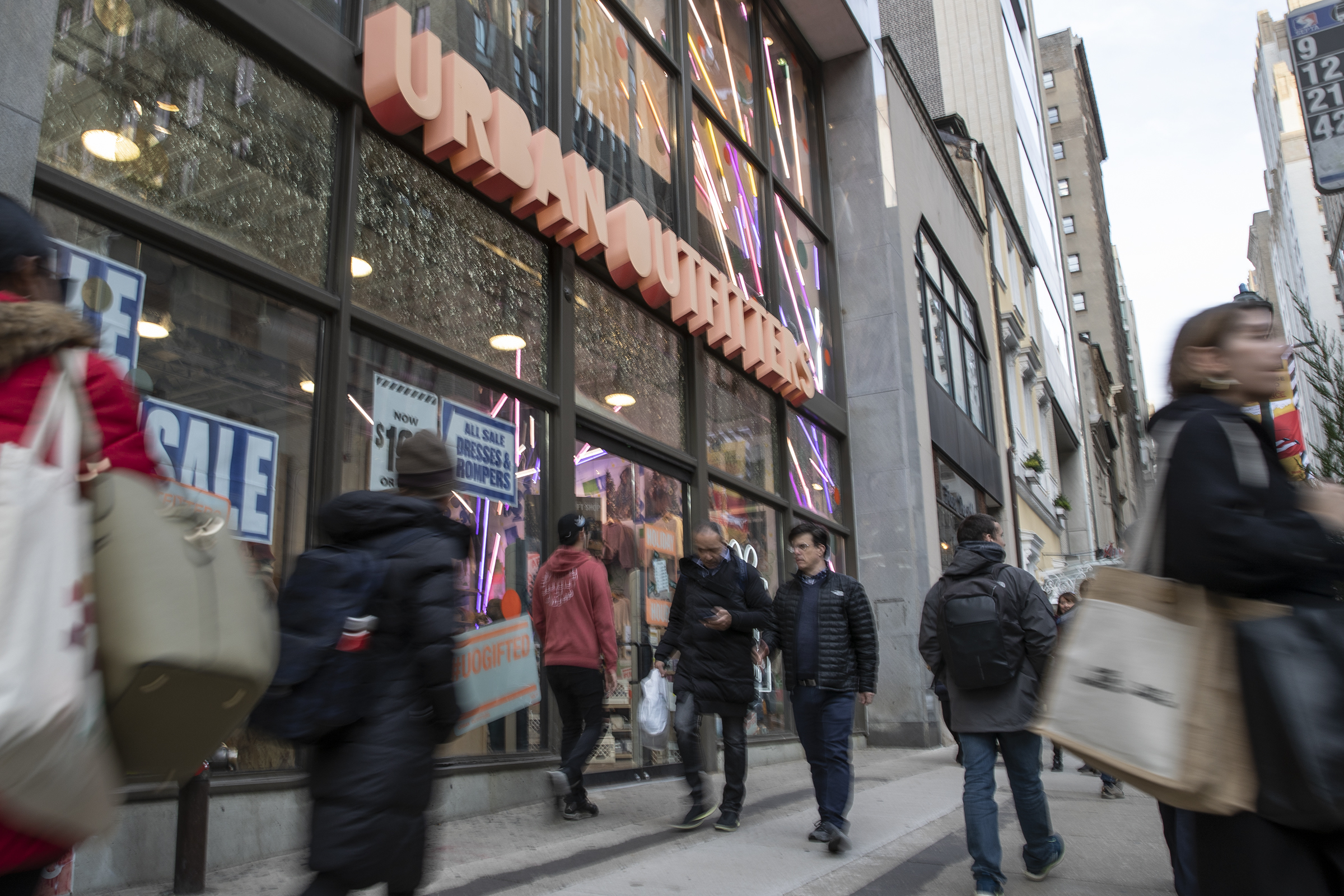
    People walk outside the Urban Outfitters store near 16th and Walnut Streets in Center City in November 2019.

    One key feature of Urban is that it’s experimental and innovative, said Neil Saunders, a retail analyst and managing director at GlobalData. Nuuly, the company’s clothing rental platform, which launched in 2019, is one of the “very few players that’s really successful” in that industry, he said. For $98 a month, subscribers get six fashionable items delivered to their door, which they can wear for a month and then ship back.

    But there have been financial hurdles, too.

    The Urban Outfitters brand struggled with declining sales in recent years. Gen Z consumers migrated “heavily into ultra fast fashion,” said Machado, and the brand didn’t adapt quickly enough. As merchandise piled up in inventory, Urban cut prices, which consumers grew to expect.
    To turn the brand around, the company set out to rebuild relationships with customers, bring on more items attractive to Gen Z, and engage with customers on platforms they were already on, like TikTok and YouTube, The Inquirer reported in 2023. The company hired a new president to helm the brand in 2024, and it returned to profitability last year.

    (function(){function e(){window.addEventListener(`message`,function(e){if(e.data[`datawrapper-height`]!==void 0){var t=document.querySelectorAll(`iframe`);for(var n in e.data[`datawrapper-height`])for(var r=0,i;i=t[r];r++)if(i.contentWindow===e.source){var a=e.data[`datawrapper-height`][n]+`px`;i.style.height=a}}})}e()})();

    Tariffs have also pushed the company to adapt in part by negotiating better terms with vendors, shipping items by sea instead of air, and slightly adjusting pricing.

    There have been workforce challenges too. In 2020, when a racial reckoning erupted in the country and seeped into corporate offices following the killing of George Floyd, Urban saw criticism from within its own workplace. Reports emerged of employees allegedly racially profiling customers as potential shoplifters, and some employees said people of color faced challenges to advancing their careers at the company, or reporting discrimination.

    “Since 2020, we have prioritized creating a culture of inclusion and belonging at our home office, in our stores, and at our facilities,” said Meaghan Condon, Urban’s director of communications and impact, in an emailed statement this month. She said that includes training for new hires and managers focused on inclusivity.

    Another key ingredient in the company’s culture: the Hayne family.

    Pennsylvania Gov. Josh Shapiro (left) with Urban Outfitters CEO Dick Hayne at the company’s newest building, which houses photo studios. They held a press conference in June to announce Urban Outfitters’ plans to hire over 1,000 new employees.

    Cofounder and CEO Dick Hayne’s son, Dave, is chief technology officer and president of Nuuly, and his nephew, Azeez Hayne, is chief administrative officer. His wife, Meg, is Urban’s co-president and chief creative officer.

    Together, Meg and Dick Hayne own roughly a quarter of the company shares, according to recent company filings.

    Frank Conforti, chief operating officer and co-president at Urban, said the family ties are an asset and part of the culture.

    Having a cofounder still at the helm has allowed Urban to focus on long-term strategy and take calculated risks, said Conforti, such as launching Nuuly. Investors weren’t all in on the idea to begin with.

    Now Nuuly has over 450,000 active subscribers — more than doubling that number since 2023.

    “We sort of don’t rest on what we did yesterday,” said Conforti. “It’s not about yesterday’s bestsellers.”

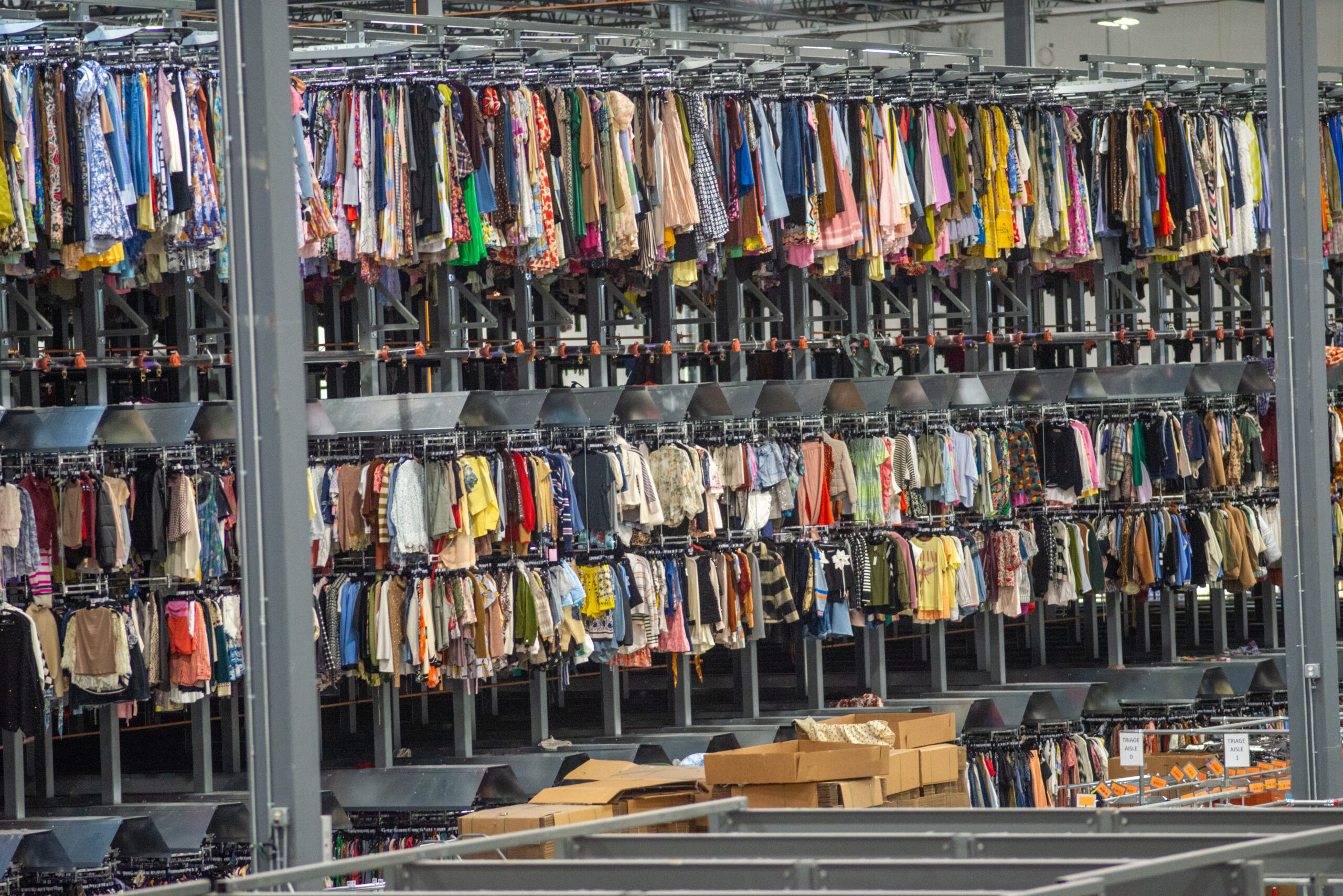
    Racks of clothing inside the Nuuly warehouse in Levittown, Pa., last year. Nuuly is a clothing rental subscription service that offers a variety of styles, sizes, and brands.

    A more efficient process

    In Urban’s newest building at the Navy Yard, rows and rows of wheeled clothing racks are spread across several rooms. Industrial metal shelves are filled with sneakers, sandals, and handbags. Lamps and armchairs wait to be photographed for e-commerce.

    The space was once used for building and housing ship components, noted Jennifer Calliagas, Urban’s North America director of planning, who led the new building’s development. Urban bought it from Rhoads Industries in 2016 for an undisclosed sum.

    Urban spent about $40 million to fit the space for its needs, which included stripping the building down to its structure, said chief development officer Dave Ziel. Construction started last year, and Urban employees began working in the space by mid-April.

    Inside the new building are adjoining rooms to seamlessly carry out the photography process: Clothing, shoes, and accessories are received in one room, then moved into the next room to be styled, and finally to the studio where they’re photographed. Staging areas are set up to portray bedrooms and bathrooms, functioning kitchens were built for cooking food to show in photos, and plants are on hand to finish off the staged living spaces.

    The Inquirer was not permitted to photograph the studios because the merchandise had not yet been released publicly.

    Not long ago, the company’s photo work was done in rented studios in New York City, Calliagas said, or scattered across the company headquarters.

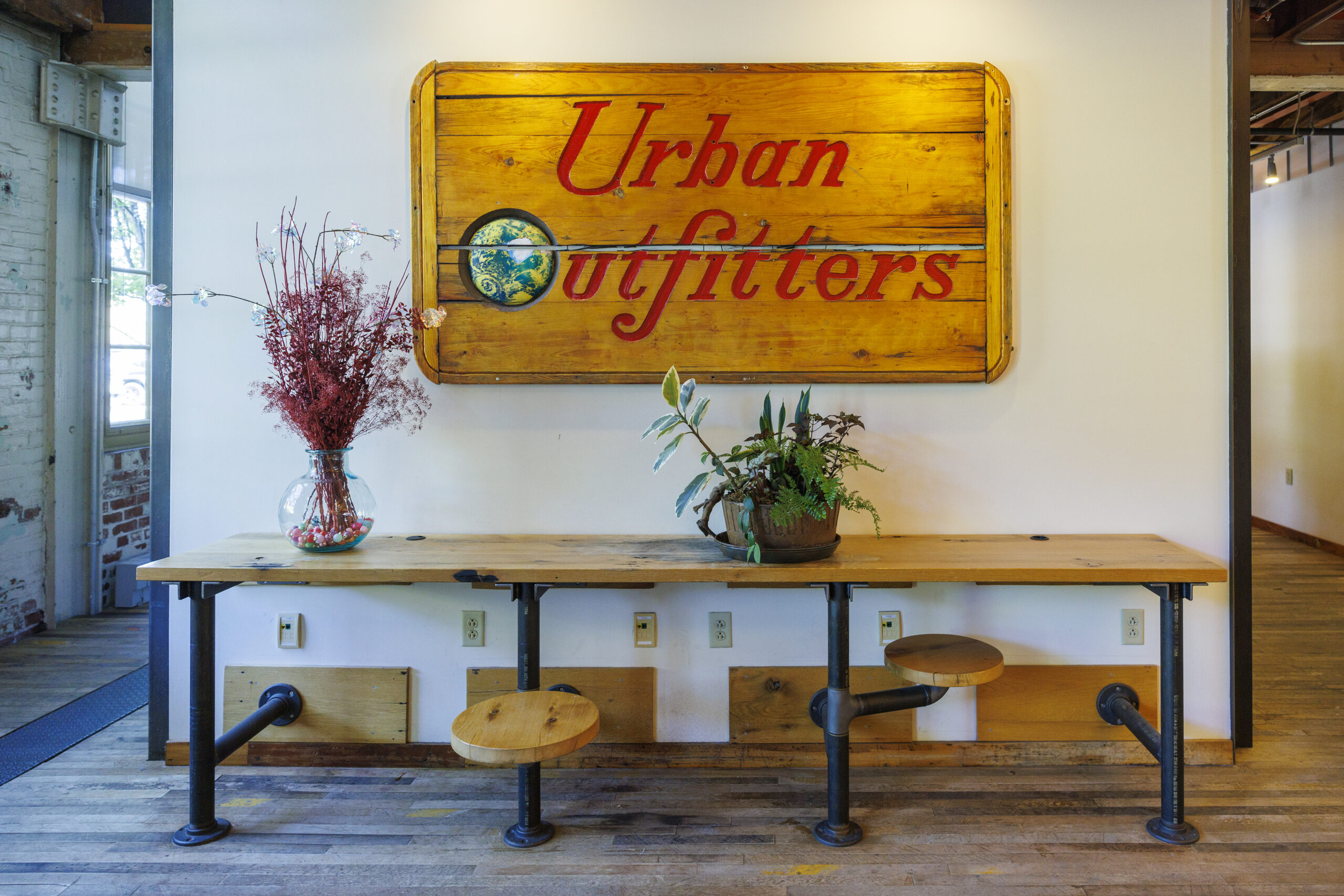
    Vintage signage from the early days of Urban Outfitters, now displayed in the company’s Navy Yard headquarters.
    Massive outdoor signage marks Urban Outfitters’ presence at the Navy Yard.

    “Anthropologie, for instance … would be receiving in one area and then going to another building for style-outs, and then sometimes going back into another building for shooting,” Calliagas said. “It was a really inefficient process.”

    At the Navy Yard, the company’s brands are housed in separate buildings, in part because they each “speak to their customer” in a different way, said Oona McCullough, executive director of investor relations. She called this kind of separation “states’ rights.”

    Consolidating the photo work under one roof has freed up space in other buildings, said Ziel, which is helpful for the continued growth of brands.

    “The brands are still growing pretty aggressively,” said Calliagas.

    Jennifer Calliagas, director of planning for North America, discusses how the company will use its photo studios at its newest building in the Navy Yard.

    A campus with more possibilities

    Conforti refers to the headquarters as a “campus,” with a “youthful” and “very collegiate” atmosphere. When bankers or investors visit the headquarters, “we tell them to dress down casual,” he said. “They drop their tie.”

    In keeping with standards set long ago by Google and other Silicon Valley tech companies, the campus is full of amenities. The newer ones include pickleball courts, a basketball court, and a walking track. And there’s plenty of green space for employees to walk their dogs, which are welcome in the workplace.

    Most people work in the office at least three days a week, said Conforti.

    “We’re not the most red-tape, bureaucratic company,” he said. “There’s just nothing like being here on campus getting things done. There’s an efficiency to it — and there’s a community.”

    People walk to and from the building that houses Urban Outfitters’ cafeteria, which is open to employees and the public.

    On a recent Monday, Urban’s cafeteria was just about to start serving warm lunches, and a few dozen people waited in line, while others roamed the large building with its decorative pools. Some wore U.S. Navy uniforms — the cafeteria is open to the public. Options included pizza, Teriyaki beef rice bowls, and grab-and-go items like ice cream bars and boxed sushi.

    CEO Hayne stopped in for a bag of chips and a wrap, seemingly unnoticed.

    At the June news conference, he recalled his first impression of the Navy Yard over 20 years ago: “I drove down Broad Street, came in Kitty Hawk [Avenue], looked at all these beautiful old brick buildings from the turn of the 20th century, and I said ‘sold!’”

    When Ziel, Urban’s chief development officer, first came to the Navy Yard with Hayne, he said, “there was nobody here.”

    “There was a raccoon — that was who I saw when we looked at the first buildings,” said Ziel, who has led the company’s real estate development.

    Decades later, Ziel still sees more opportunities for growth. “I have a couple excess buildings up my sleeve.”

  • Three years ago, the school choice debate shut down Harrisburg. Now Democrats are ready to engage.

    Three years ago, the school choice debate shut down Harrisburg. Now Democrats are ready to engage.

    HARRISBURG — Three years after a bitter budget standoff over allowing state funding to be used for private school tuition, top Democrats in Harrisburg are ready to engage on school choice.

    Legislative action and comments from a top House Democrat this week expressing openness to a federal school-choice program marked a notable change from 2023, when a fight over school vouchers put Democratic lawmakers at odds with both Republicans and Gov. Josh Shapiro, a member of their own party.

    The shift comes as Shapiro, who has embraced school choice and is a likely 2028 presidential contender, faces a deadline to opt in to President Donald Trump’s new federal tax credit program.

    House Majority Leader Matt Bradford (D., Montgomery) said this week that some of the uses of Trump’s tax credits, which are opposed by the country’s largest teachers unions, are “intriguing.” And he noted he is proud of some money the state now pours into one of the tax credits to fund private-school scholarships for low-income families in low-achieving districts. Those comments from Bradford, a top leader in Harrisburg, suggested a public softening on an issue that was previously a non-starter for his party — and signaled the school-choice debate may once again factor into state budget negotiations.

    “For our members of our caucus who want to see alternatives for the poorest kids in the poorest schools, we’re being responsive to the needs of those constituents,” he said in an interview, referencing growing support for school choice among some House Democrats, particularly those from Philadelphia.

    State Rep. Matt Bradford (D., Montgomery County) during a press conference at the Capitol in Harrisburg Feb. 3, 2026.

    The school-choice movement, a largely Republican-backed effort to allow public dollars to go to private schools, faces strong opposition from education advocates who say such programs can take money from public schools.

    And that debate is sure to continue. Bradford said more oversight — and an overall reform of the current tax credits — is needed to make sure the state tax dollars are actually reaching poor students.

    Earlier this week, House Democrats fast-tracked an overhaul to the state’s current $680 million school-choice tax-credit programs to require additional reporting from private schools in order to secure funding. The legislation is likely to face opposition in the GOP-led Senate, where Republicans on Thursday advanced a $25 million increase to the programs ahead of a June 30 deadline to pass a state budget.

    Senate Republicans called the tax credits a “priority for empowering parents,” while the Archdiocese of Philadelphia said the House bill would be “devastating” to local Catholic schools and lead to fewer scholarships for students.

    A spokesperson for Shapiro said his office is reviewing the House bill, and declined to comment on whether his position on school choice has changed. Shapiro, who has sent his own children to private school in Montgomery County, has previously said he supports school choice, including school vouchers.

    Shapiro has until the end of the year to decide whether to opt in to the federal program. But the signal of openness from Bradford, who is close with the governor, offers potential insight into his path forward.

    That program, enacted last year under Trump’s “One Big Beautiful Bill Act,” would offer federal tax credits to donors for giving to organizations that grant private school scholarships. Many GOP-led states have already signed on, while some Democratic governors have declined to participate.

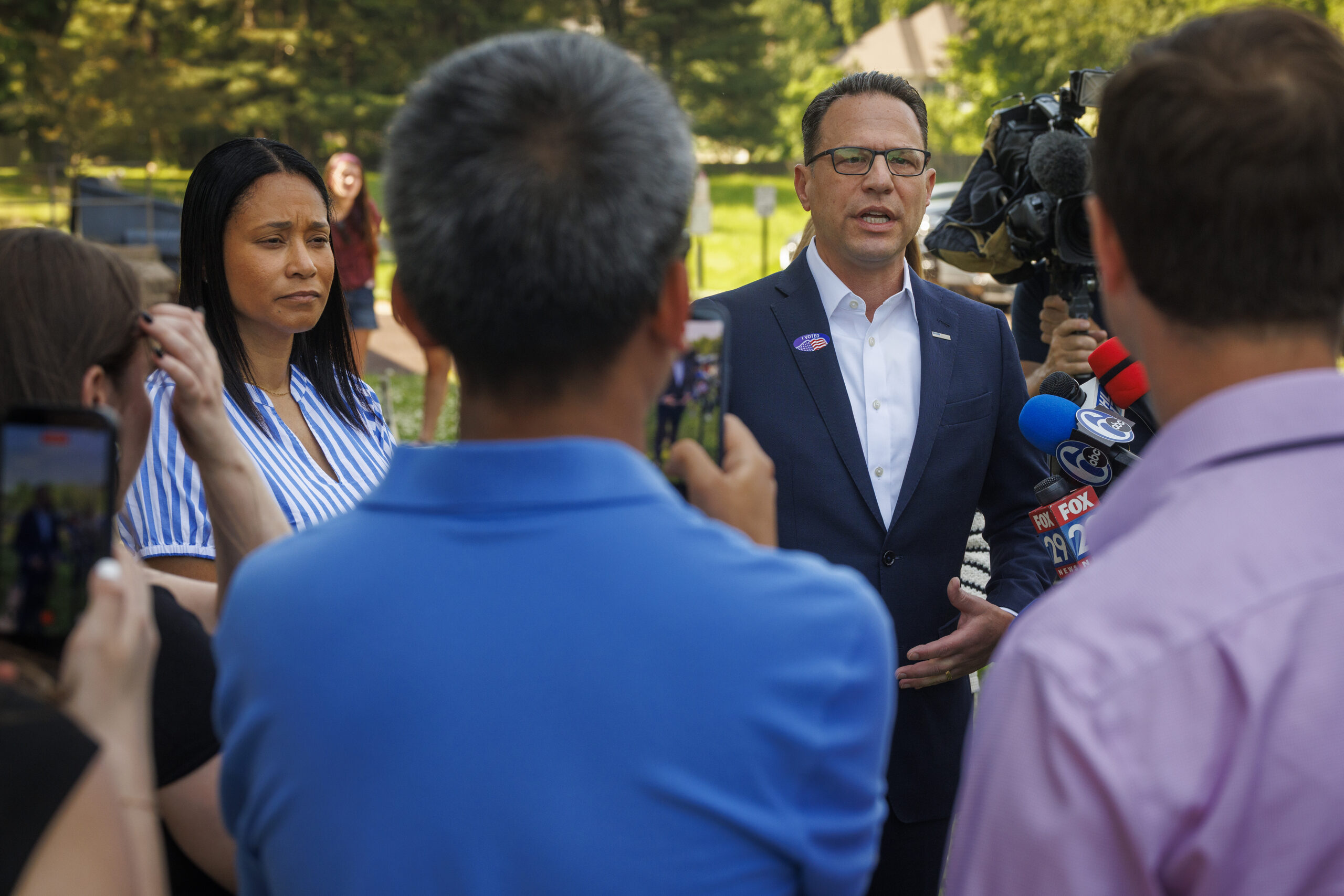
    Pennsylvania Governor Josh Shapiro taking questions from media on election day, Tuesday, May 19, 2026. He voted today at Rydal Elementary (West) 1231 Meetinghouse Road Rydal, PA. At left is Jamila H. Winder, Chair, Montgomery County Commissioners.

    Shapiro will also likely face questions about school choice on the campaign trail.

    He is running for reelection in November against Republican Treasurer Stacy Garrity. Garrity’s platform focuses, in part, on expanding school-choice options in Pennsylvania and she has the support of Commonwealth Partners, a political action committee largely funded by Pennsylvania’s richest man, Jeff Yass, which has poured money into supporting school choice.

    The issue will also likely surface a national stage if Shapiro enters the 2028 Democratic presidential primary race. His support for vouchers drew criticism from fellow Democrats in 2024, when he was a potential vice presidential nominee.

    Debate over state tax credits

    Pennsylvania does not have a direct school voucher program. Instead, the state sets aside $680 million each year for tax credits that allow businesses and individuals to write off charitable giving that supports private school scholarships.

    House Democratic support for those credits has quietly grown in recent years. In a June 2025 letter recently obtained by The Inquirer, 10 House Democrats, including five from Philadelphia and the head of the Pennsylvania Legislative Black Caucus, asked their leadership to expand a portion of the tax credits for students in the lowest-achieving school districts — revealing more Democratic support for the programs than was previously known.
    Public education advocates who oppose voucher programs say the state is funneling money to private schools with little accountability.

    “It’s just a pot of money that a bunch of people get, and nobody really knows where it goes or what happens to it,” said Susan Spicka, executive director of Education Voters PA.

    New requirements approved by the state legislature last year are set to take effect in November and will require scholarship organizations to report the dollar amount of each award, the recipient’s district of residence, and where they attend private school.

    The bill advanced by the House in a 105-97 vote this week would also require organizations to report each scholarship recipient’s income level — reducing the current limit to $144,000 for a family of four — and the amount of remaining tuition charged to a student. Advocates, including Spicka, called that information key to gauging whether scholarships are going to families who otherwise could afford private school.

    Bradford said he’s proud of the $110 million earmarked in existing state tax credits to provide additional money to kids attending schools where a majority of students are getting scholarships. House Democrats say their newest proposal would steer more money toward those students.

    But the proposed legislation — which would also reduce the tax credit donors could claim for some contributions, and require scholarship organizations to set 2% of funding aside for state oversight of the programs — drew swift backlash from private school advocates.

    Philadelphia Archbishop Nelson J. Pérez is “deeply concerned that this legislation would have a devastating impact,” said spokesperson Ken Gavin. “The clear intent is to lead to the dilution or elimination of the programs, which are vital.”

    Schools affiliated with the Philadelphia archdiocese educate nearly 44,000 students across 117 schools in the region, according to its website.

    Bradford, who is Catholic, said the Archdiocese’s response “missed the mark,” arguing that this legislative effort is trying to achieve a similar goal of serving students from poor families who attend the roughest schools.

    “I’m proud of my own Catholic faith. I love when my Catholic Church stands for those communities,” Bradford added. “No one should ever fear transparency, especially when you’re talking about three-quarters of a billion dollars of state tax dollars.”

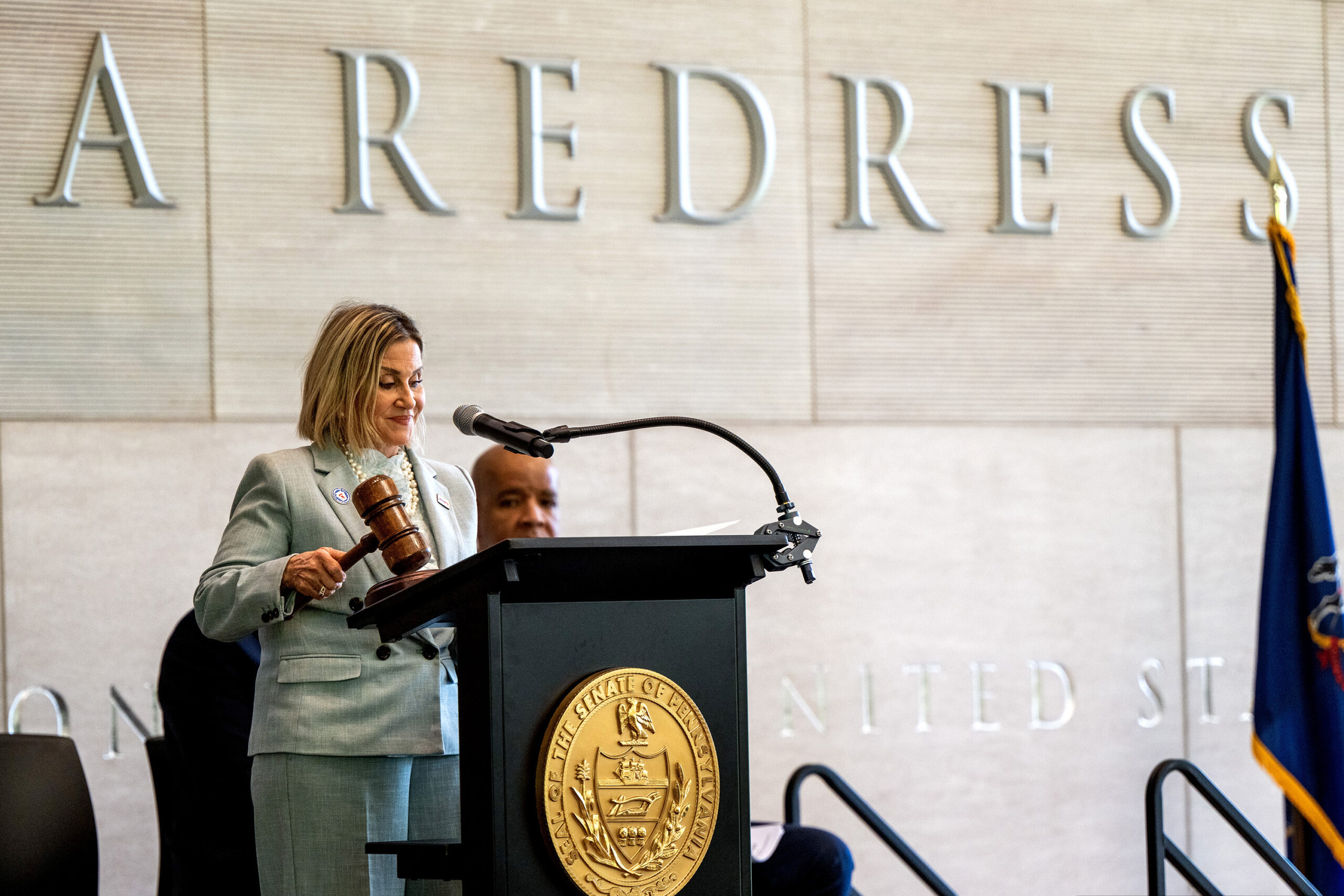
    President Pro Tempore Kim Ward gavels the opening as the Pennsylvania Senate hosts a ceremonial meeting at the National Constitution Center Tuesday, May 5, 2026.

    Meanwhile, Senate Republicans on Thursday amended another House bill to increase the state’s current tax credit programs to $705 million.

    President Pro Tempore Kim Ward (R., Westmoreland), a staunch supporter of school vouchers, said in a statement that Bradford‘s attention to school choice is disingenuous, criticizing the House Democrats’ bill as “overly burdensome auditing requirements disguised as ‘transparency.’”

    The 2023 budget breakdown, where Shapiro ultimately vetoed the school voucher program he‘d helped draft with Senate Republicans because it couldn’t pass the Democratic-controlled House, continues to tarnish his relationships with top GOP leaders, including Ward. He and Ward have hardly spoken since.

    “While Senate Republicans have consistently advanced legislation to provide scholarships to disadvantaged students, the track record for Gov. Josh Shapiro and House Democrats has been nothing more than a case of whiplash as their words and actions rarely align,” Ward said. “To me, it seems like the support for school choice by the House Democrat Leadership is more of a façade as they continue to cater to political special interests.”

    Ward has also called for changes to Pennsylvania’s new public school funding system, which includes an adequacy formula that directs more money to the state’s poorest school districts, including Philadelphia.

    Bradford, in response, said he is open to conversation about accountability and transparency, but that debate needs to include private schools benefiting from taxpayer dollars.

    “We shouldn’t carve out any portion of our K-to-12 education,” Bradford added. “That conversation needs to be uniform.”

    A choice for states on Trump’s tax credits

    Shapiro has previously said he would wait for more details before making a decision on whether to participate in the new federal tax credit program. The U.S. Department of the Treasury earlier this month released additional details, including that it will allow individuals to receive up to $1,700 in credits for making donations to private school scholarships that can cover tuition, tutoring, and more. In Philadelphia, families making $368,100 annually, or 300% of the county’s gross median income, would be eligible to receive the scholarship.

    School-choice advocates say Pennsylvania taxpayers will be able to claim the credit regardless of whether Shapiro opts in. But in order for Pennsylvania schools and students to benefit, the governor needs to join.

    Shapiro’s press secretary Rosie Lapowsky said the governor appreciates the guidance, but continues to await information on “how this will affect use of our existing tax credits, how states will be expected to administer the program, and how eligibility will be determined.”

    Twenty-eight states have opted in to the program, most of which are led by Republicans. And Democrats are facing pressure to stay out of the program.

    In a letter sent to Democratic governors this week, American Federation of Teachers President Randi Weingarten and National Education Association President Becky Pringle called the program “a Trojan horse carrying near-universal K-12 private school vouchers into every state that participates.”

    So far, Democratic governors elsewhere have taken differing approaches to the program. New York Gov. Kathy Hochul has said her state will participate but is waiting for final guidance before officially signing on. Other governors like Minnesota Gov. Tim Walz and Oregon Gov. Tina Kotek have announced that their states will not participate. Democratic governors in Arizona and Wisconsin have vetoed legislative efforts to force their states to opt in, while governors’ similar vetoes in North Carolina and Kentucky were overridden by legislators.

    Bradford said it’s “an abomination” that funding for Trump’s program came from Republicans making other cuts to the federal budget, and emphasized that state Democrats remain committed to increasing public education funding.

    “Here in Pennsylvania,” he said, “we are a humble 102 [Democrats] in the Pennsylvania House and we are nimble and pragmatic.”

  • McCormick and Fetterman are stepping in to fill Pennsylvania’s empty booth at Trump’s Great American State Fair

    McCormick and Fetterman are stepping in to fill Pennsylvania’s empty booth at Trump’s Great American State Fair

    In the latest twist over Pennsylvania’s participation in President Donald Trump’s Great American State Fair, U.S. Sens. Dave McCormick and John Fetterman announced Saturday that the state where America was founded will be represented after all.

    Pennsylvania Gov. Josh Shapiro initially signaled the intention for the state to participate in Trump’s 16-day fair on the National Mall. But this week, he said state officials could not find a Pennsylvania business to sponsor the state’s booth.

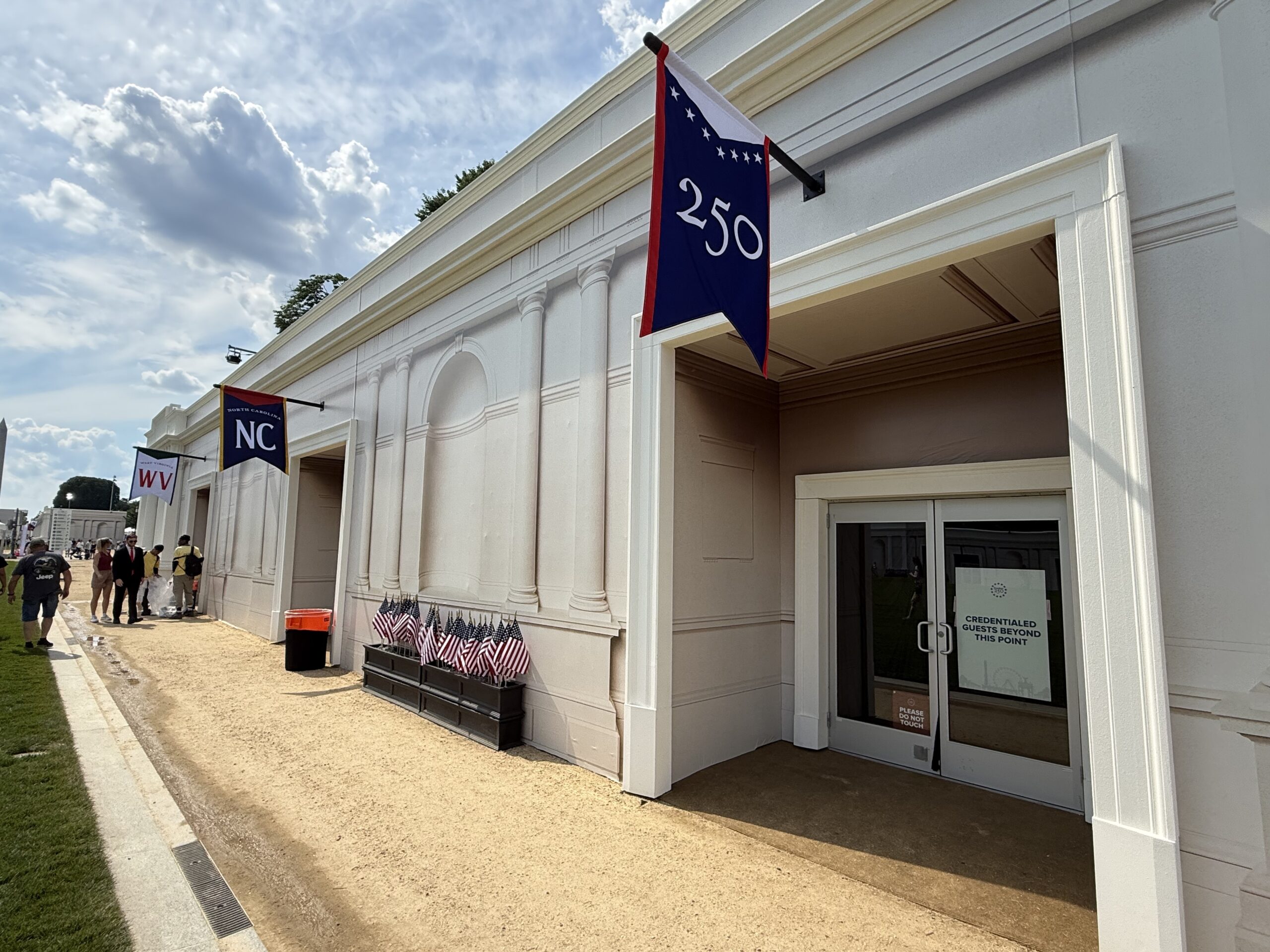
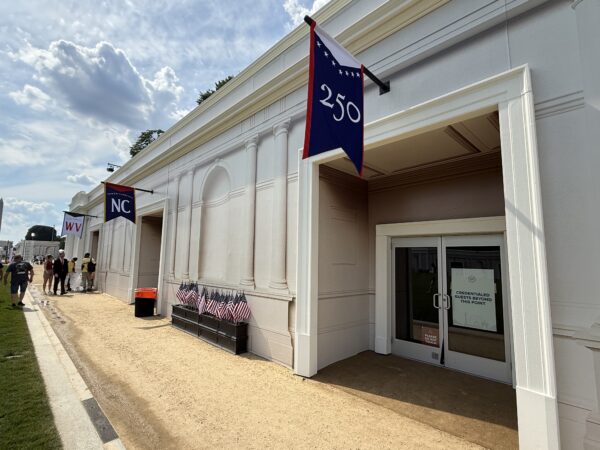
    On the fair’s opening day, Pennsylvania had no official presence, and the booth reserved for the commonwealth remained empty, except for a flag that read “250” in Pennsylvania’s space.

    After that news, McCormick (R., Pa.) and Fetterman (D., Pa.) said in a joint news release Saturday that they secured private-industry sponsors for the booth at no cost to taxpayers. Sponsors include the Pennsylvania Chamber of Business and Industry, the Pennsylvania Farm Bureau, and other organizations.

    “Pennsylvania is where America’s story began, and there was no way we were going to let the Commonwealth go unrepresented during our Nation’s 250th birthday celebration,” McCormick said in the release.

    “Celebrating America’s 250th birthday and Pennsylvania’s special role in our country is important and bipartisan,” Fetterman said. “We discovered our commonwealth wasn’t participating in the Great American State Fair on the National Mall, and we should be.”

    A ferris wheel is on the National Mall as part of the Great American State Fair, one of the celebratory events organized by the Trump administration commemorating the 250th anniversary of the United States in Washington, D.C., June 25, 2026. At the kickoff to the Great American State Fair, exhibits celebrating the nation were on display. So were conservative themes. (Alex Kent/The New York Times)

    Shapiro told the New Republic earlier this week that when his administration approached major Pennsylvania companies to participate, “none were interested.”

    “It reflects this sad state of affairs that we find ourselves in — that the president has politicized this to a degree that businesses don’t want to participate,” he told the New Republic.

    However, sources who worked on the sponsor search confirmed for The Inquirer that at least two major Pennsylvania companies agreed to provide products and other donations to give away at Pennsylvania’s fair booth but were unable to initially do so due to short notice. The sources asked The Inquirer to not name them because they were not authorized to speak on the search.

    In a statement Saturday after the senators announced their plans, a Shapiro spokesperson said the administration was “unwilling to spend hundreds of thousands of taxpayer dollars to fund the Great American State Fair amid the historic slate of events across Pennsylvania in 2026.”

    Before McCormick and Fetterman’s intervention, Shapiro administration officials were told that Freedom250, the organization planning the fair, would be “handling the booth” in the absence of formal state participation, said Rosie Lapowsky, Shapiro’s press secretary.

    Pennsylvania’s Department of Agriculture also sent state literature that began appearing in the booth on Saturday, according to Freedom250.

    The Great American State Fair Thursday, June 25, 2026, in Washington, D.C. This pavilion would have belonged to Pennsylvania if the state had participated in President Donald Trump’s 250th anniversary event on the National Mall.

    But Pennsylvania’s search for business sponsors was brief, according to a source close to the search.

    The Pennsylvania Chamber of Business and Industry, which was charged with finding sponsors, said Shapiro’s office called the organization less than two weeks before the fair began. Other states, the chamber said, had been working on their displays since January.

    “The Governor’s team asked us for assistance with business outreach for the Great American State Fair just two weeks before the event. While there was interest, the short time frame made it difficult for many businesses to fully commit,” said Jon Anzur, the chamber’s senior vice president of public affairs. “We are now reengaging those and other companies as we partner with Sens. McCormick and Fetterman.”

    In the absence of official Pennsylvania representatives and sponsors, McCormick and Fetterman were suddenly on Saturday able to secure private groups to staff the booth and help coordinate sponsors for the remainder of the fair.

    According to a source briefed on the conversation, Shapiro and McCormick spoke Saturday about the senators’ plans to fill the booth, and Shapiro offered to send additional state literature. The Inquirer is not naming the source because they were not authorized to speak on the conversation.

    Crayola is among the sponsors that will send along crayons, markers, and coloring books for a coloring station, which should be operational as early as Sunday. Other sponsors have signed on as well, though they were not immediately identified and their contributions were not disclosed.

    Pennsylvania is among a list of at least 10 states, some Democratic-led, that have officially dropped out of the Great American State Fair, including Connecticut, Illinois, Maine, Massachusetts, North Carolina, Oregon, Rhode Island, Vermont, and Washington.

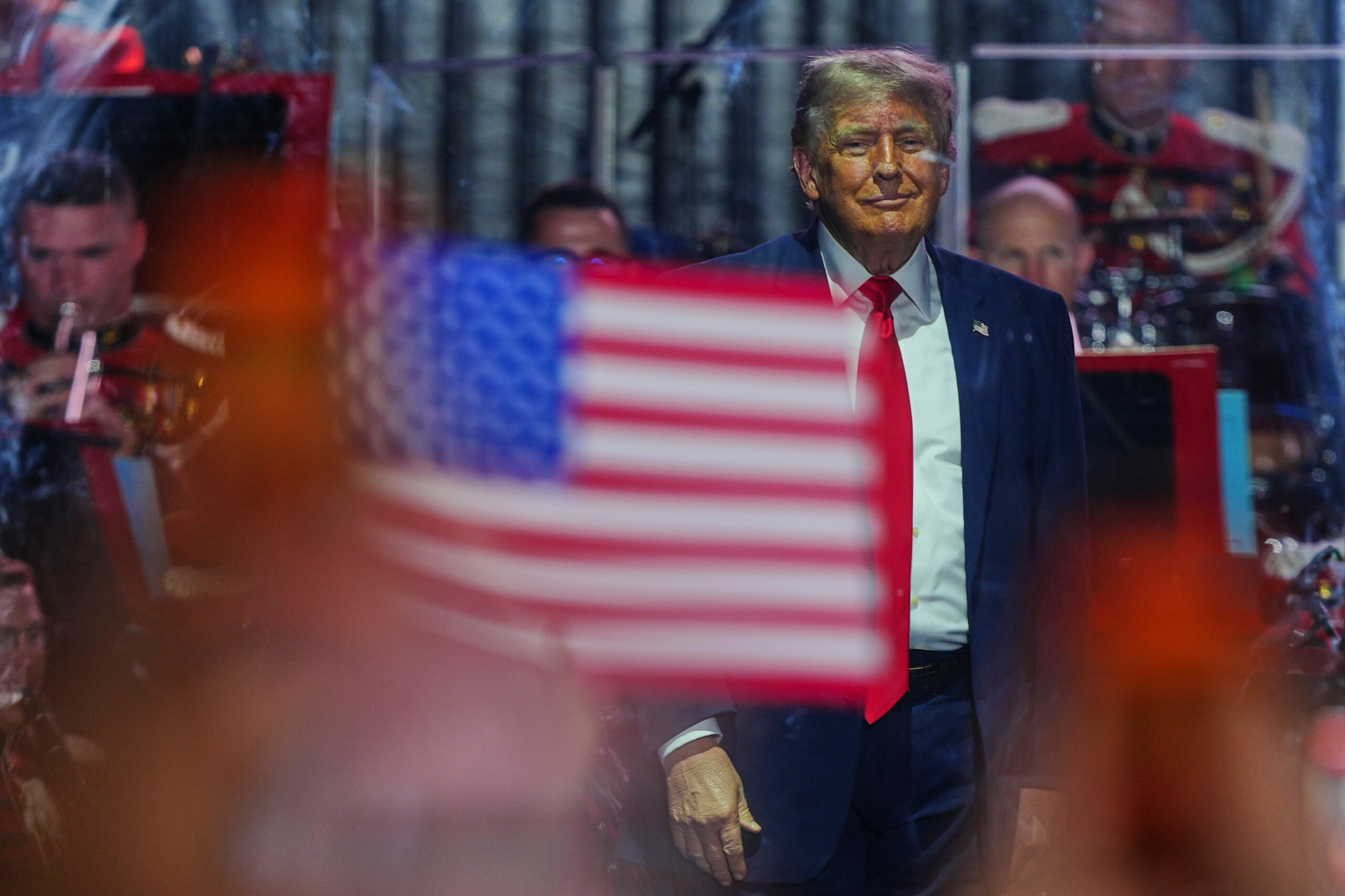
    President Donald Trump stands on stage after speaking at the opening of the Great American State Fair on the National Mall, Wednesday, June 24, 2026, in Washington. (AP Photo/Julia Demaree Nikhinson)

    During the fair’s opening days, nearly every other state was represented, with most sending government staff or tourism officials to host educational or interactive exhibits.

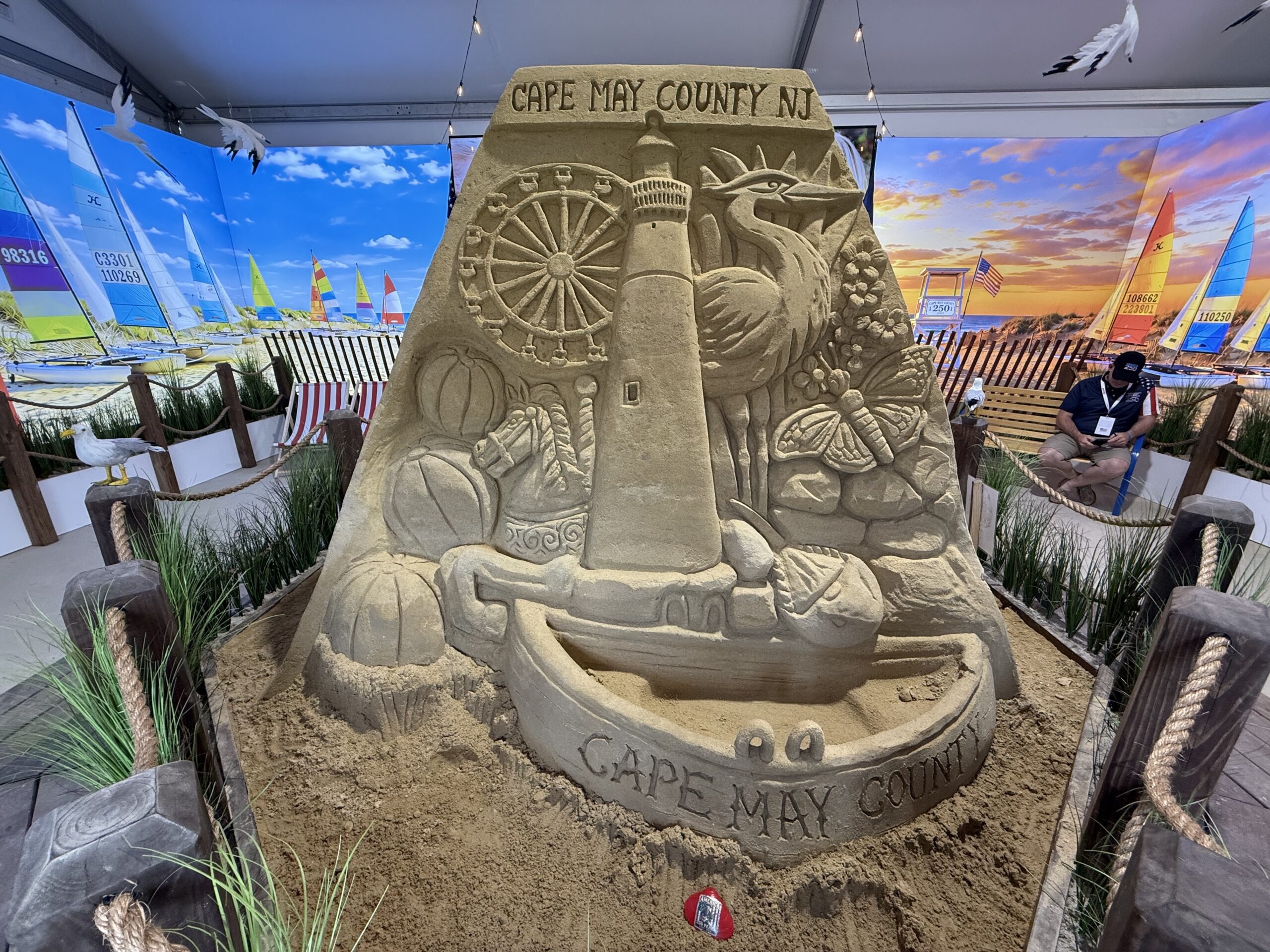
    New Jersey also officially declined to participate, but Cape May County, a Republican stronghold, stepped in to represent the state. Its exhibit features an 8-ton sand sculpture created by a Wildwood artist over the course of more than four days.

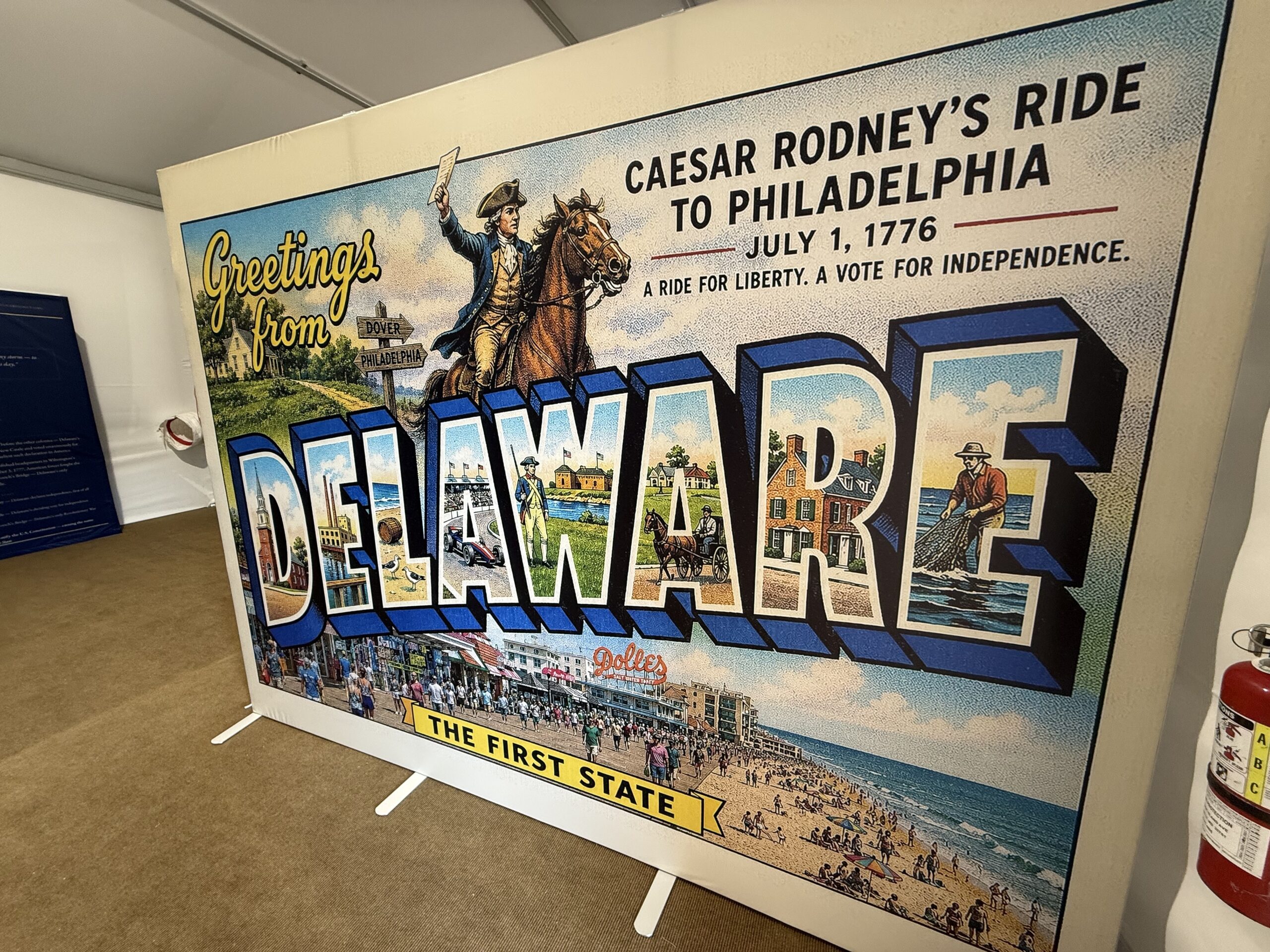
    Delaware highlighted Founding Father Caesar Rodney’s ride to cast the decisive vote for independence in Philadelphia.

    Sam Janesch and Andrea Padilla contributed to this article.

  • Gov. Shapiro welcomes 63 new U.S. citizens from 17 countries in Chesco alongside a George Washington reenactor and bald eagle

    Gov. Shapiro welcomes 63 new U.S. citizens from 17 countries in Chesco alongside a George Washington reenactor and bald eagle

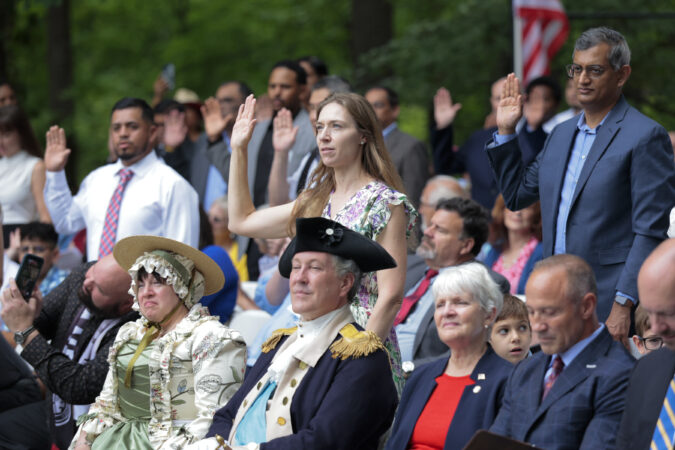
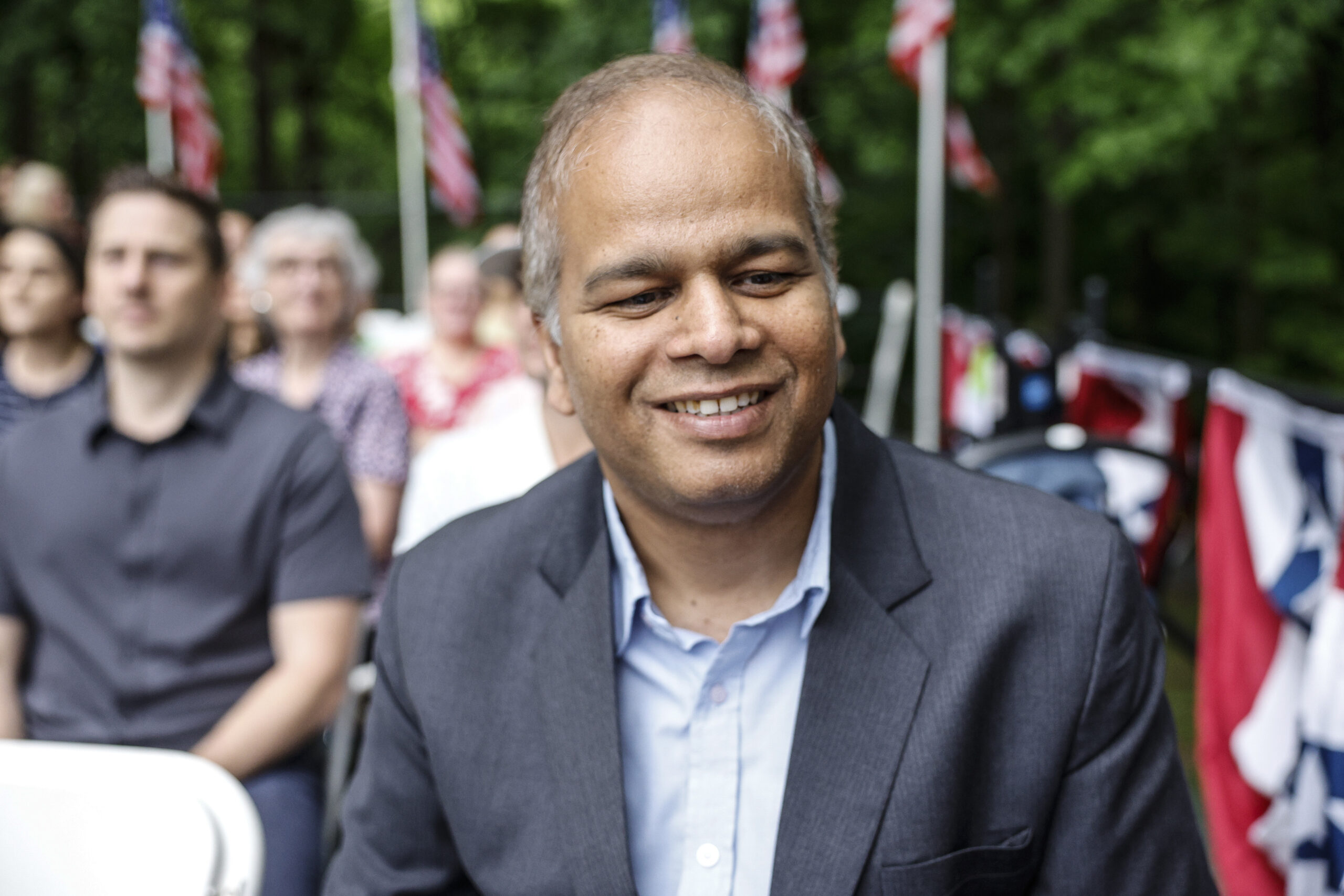
    It’s been a long time coming, Matthew Mckena reflected. There were hiccups in the process. But by midday Friday, he was officially a U.S. citizen, in time for the country’s 250th birthday, and welcomed by Gov. Josh Shapiro, a George Washington reenactor, and even a bald eagle.

    “It just became a battle of perseverance, but also we’ve come so far,” he said. “The hope in itself is also in the waiting, and so it’s now coming in full circle. It’s just unbelievable of having waited for so long for something, and then finally having it.”

    Mckena, 21, was one of 63 people from 17 counties to take their oaths as new citizens in Valley Forge on Friday. For many of them, who ranged in ages 18 to 87, the day was a culmination of years of effort and lives they’d built in the country.

    Mckena’s siblings were born in the United States, before his family moved back to Kenya, where he was born. When he was in high school, his family returned to the U.S. He’s now a college student pursuing a degree in mechanical engineering.

    “[There are] so many opportunities that have been afforded with this move to be at a place where it’s so easy to access education infrastructure,” he said.

    New citizen Helene Hartmann Dirani with her 3-year-old daughter Victoria are greeted by Gov. Josh Shapiro as he welcomes 63 new citizens from 17 countries at the historic Founding Forward in Phoenixville.

    Helene Hartmann Dirani, 42, has called a few nations home: Originally from Kazakhstan, she moved to Germany at 13 years old, and then studied in Austria. She later met her now-husband in the United States. After years of long-distance dating, they settled down, and she moved to the country 13 years ago. Three children later, the ceremony felt like a special moment for Hartmann Dirani.

    “Being with my husband and my children, and settling down is really what makes it so special,” she said.

    The naturalization ceremony was held one week before America’s Semiquincentennial in historic Valley Forge. Chester County Court of Common Pleas President Judge Ann Marie Wheatcraft called the new citizens’ attention to that legacy.

    “Valley Forge reminds us that citizenship is not simply inherited, it is claimed often at a great cost, and many of the many of us take that for granted. You understand better than most,” she said. “You chose America. You worked hard for this. … Bear with us your gifts, your culture, and all that makes you unique.”

    Rohan Bakshi talks about becoming a new citizen before Gov. Josh Shapiro welcomed 63 new citizens from 17 countries at the historic Founding Forward in Phoenixville on Friday, June 26, 2026.

    America has always been “a land of dreams” for Rohan Bakshi, 45. He came to the country from India in 2012, and has felt a part of the country. He built a life, family, and career here. After so many years, this was a “dream come true,” he said.

    “This is the best country to live in,” said Bakshi, whose wife will be sitting in his seat soon, as she pursues her own citizenship. “I’ve seen other countries as well. It’s a privilege to be an American citizen.”

    Lina Zhang, 41, felt emotional as she waited to take her oath. Roughly 14 years ago, she moved from China to the United States. In the beginning, her English “sucked,” she said. But she learned fast: attending GED classes, using her translator app to translate English to Chinese, and then translating back to English, so she could take her exams.

    Her hard work earned her some of the highest marks her teacher had seen in years, she said. She went on to college, majoring in accounting and minoring in finance, landing a job with a public accounting firm.

    Surrounded by her family Friday, she was glad to be sitting at the ceremony.

    “I’m proud of myself,” she said.

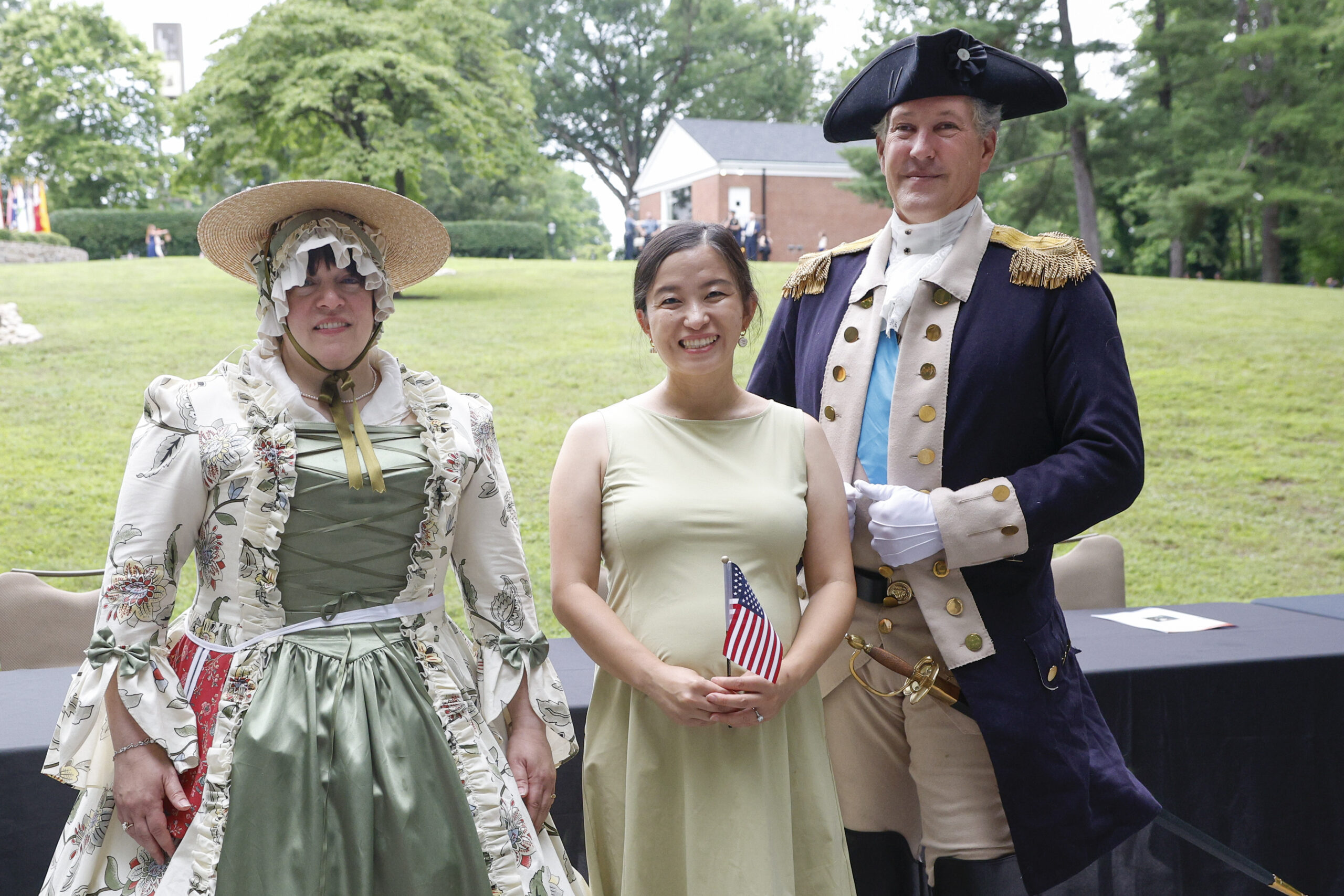
    New citizen Lina Zhang poses with George and Martha Washington reenactors Randall Spackman and Karyrn Saece before taking the oath of citizenship with 63 new citizens from 17 countries at the historic Founding Forward in Phoenixville.

    Speaking to the new citizens, Gov. Josh Shapiro recognized the work each person had put in to reach this moment. But, he warned: “As new Americans, your work is just beginning.”

    Recalling Ben Franklin’s famous quote, “A Republic, if you can keep it,” Shapiro told them those words — “if you can keep it” — was their charge.

    “Each successive generation of Americans have continued that work, caring for their neighbors, standing up for freedoms that our founding fathers fought for, taking an oath of citizenship, working in the halls of Congress, the halls of our state capitol, the halls of our county — that work now falls to each of you to be engaged American citizens,” he said.

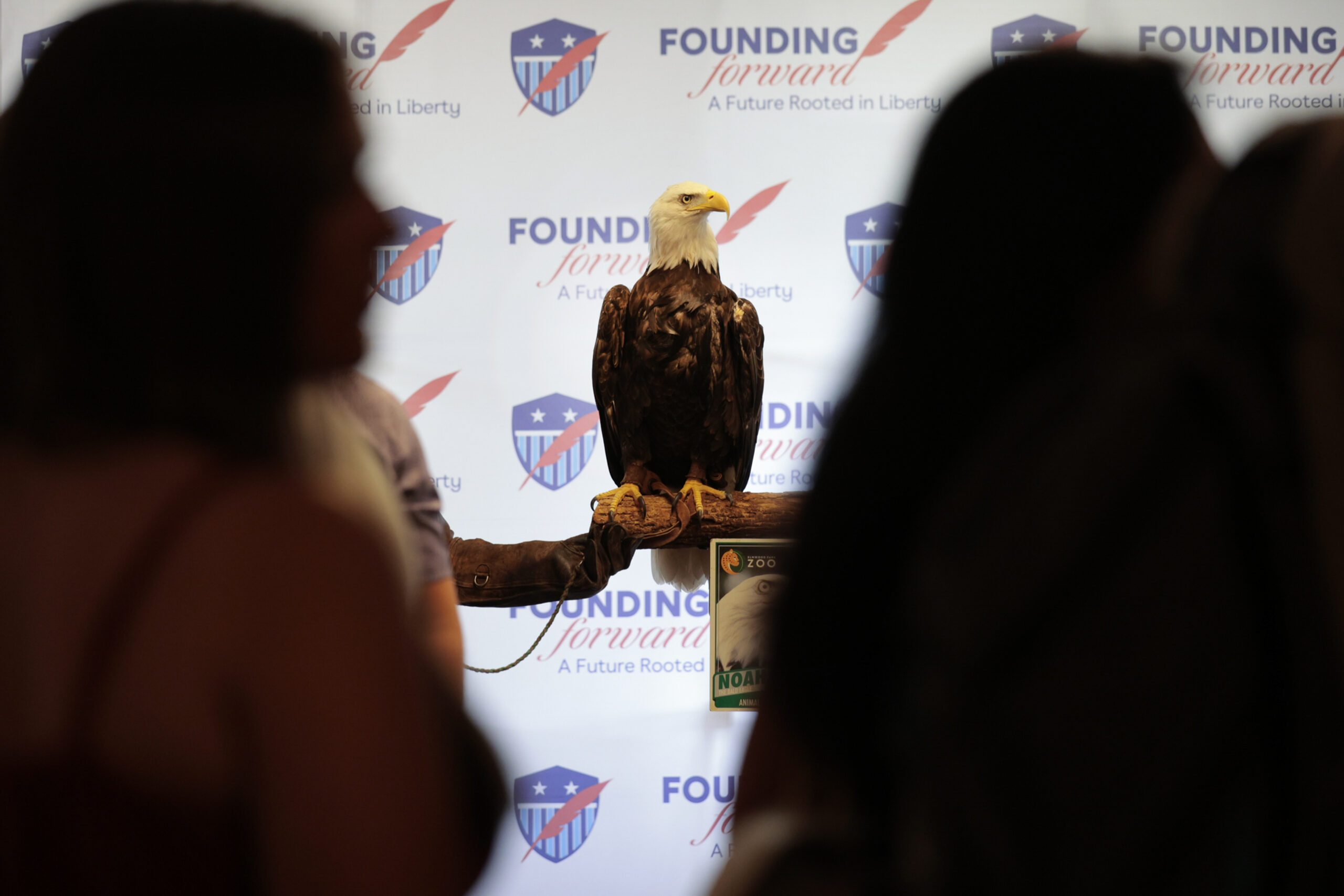
    New citizens got to visit with Noah the bald eagle from the Elmwood Park Zoo after some 63 new citizens from 17 countries took the oath of citizenship at the historic Founding Forward in Phoenixville.

    After the ceremony, Mckena said, from his experience, a lot of people discount the value of American citizenship.

    “There really is a high cost that a lot of people pay, and there really is a huge disparity in what democracy offers and what the rest of the world offers, and so really it’s a special opportunity,” he said. “People who already had it [should] really treasure and understand it. And for those who don’t, seek after it.”

    This suburban content is produced with support from the Leslie Miller and Richard Worley Foundation and The Lenfest Institute for Journalism. Editorial content is created independently of the project donors. Gifts to support The Inquirer’s high-impact journalism can be made at inquirer.com/donate. A list of Lenfest Institute donors can be found at lenfestinstitute.org/supporters.

  • Could a Pa. Supreme Court decision on skill games help fund SEPTA?

    Could a Pa. Supreme Court decision on skill games help fund SEPTA?

    More funding for SEPTA and dozens of financially strained mass transit systems across Pennsylvania has been on the back burner in this year’s budget debate, but it may get some more attention now.

    The Pennsylvania Supreme Court ruled June 15 that tens of thousands of the so-called skill games in bars and convenience stores are in fact slot machines — and illegal unless licensed, regulated, and taxed like casino-based slots.

    “By dedicating a portion of skill game revenue to transportation, we can protect and strengthen transit services without placing additional burdens on taxpayers, while ensuring our transit agencies have the resources they need,” Republican State Sen. Frank Farry of Bucks County said Friday in a statement.

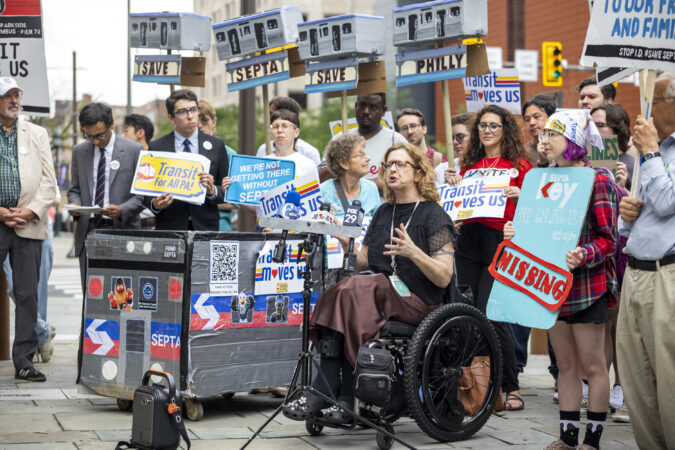
    Transit advocates renewed what has become an annual public push for more money for SEPTA and fellow transit agencies at a news conference in front of the Fifth Street/Independence Hall Station — prompted in part by the court decision.

    Farry issued the statement in support of that effort.

    “I have the freedom to be able to come here, thanks to this elevator behind us, which was recently renovated,“ said Julie Rea, an organizing fellow for Transit Forward Philadelphia who uses a wheelchair and depends on the Market-Frankford El (now called the L).

    “Without the long-term funding that SEPTA really needs, we’re not going to be able to keep the system accessible for all,” she said.

    Last year, lawmakers and Gov. Josh Shapiro failed for a third time to reach agreement on his proposal to dedicate an increased portion of general sales tax revenue to consistently fund transit agency operations for five years.

    Republicans, who control the Senate, did not want to take more sales tax revenue for transit, and the Democrats in charge of the House did not want to take up the GOP leadership’s counterproposal to use state money for infrastructure projects for operations instead.

    Farry offered legislation in 2024 to regulate and tax skill games and dedicate 50% of the revenue to create a stable source of funding for public transit. The most optimistic assessments are that taxes on the games at or near the rate casinos must pay for their slots could generate up to $1 billion a year.

    Taxing skill games has been discussed in budget deliberations for several years, though it never came together, in part because of differences of opinion in the GOP Senate caucus.

    “Maybe the court decision will spur people to get their act together,” Farry, who is up for reelection in the fall, said in an interview. “We have a pathway.”

    Shapiro has proposed taxing skill games at 52%, the same rate casinos pay for slot machine proceeds. Last year, the Senate GOP proposed a tax rate of 35% on the machines.

    When a transit funding deal failed to come together in 2025, SEPTA raised fares and slashed service, eliminating 32 bus routes outright, until a Philadelphia court ordered it to restore cuts in service.

    Shapiro then allowed SEPTA to use $394 million of reserved capital money in a state trust fund to pay to operate the transit system for two years; ironically, that was the same maneuver behind the GOP’s proposal.

    Meanwhile, this year, paratransit and shared-ride services are in trouble throughout the state and transit systems in Lancaster, Westmoreland County, and the Lehigh Valley are considering service cuts.

    “We know that the rural-urban divide is manufactured, and that a public good, like transit, touches us all,” said Connor Descheemaker, statewide campaign manager for Transit for All PA.

  • Rachel Maddow recalls her ‘formative’ time in Philly and the city’s most overlooked hero ahead of MS NOW event

    Rachel Maddow recalls her ‘formative’ time in Philly and the city’s most overlooked hero ahead of MS NOW event

    Rachel Maddow’s brief turn as a Philadelphian began with her bicycle being stolen on the first day of a new job.

    “I got to work at 9 a.m. and I got out for lunch before noon, because I didn’t have anything to do,” Maddow said. “My bike was already gone.”

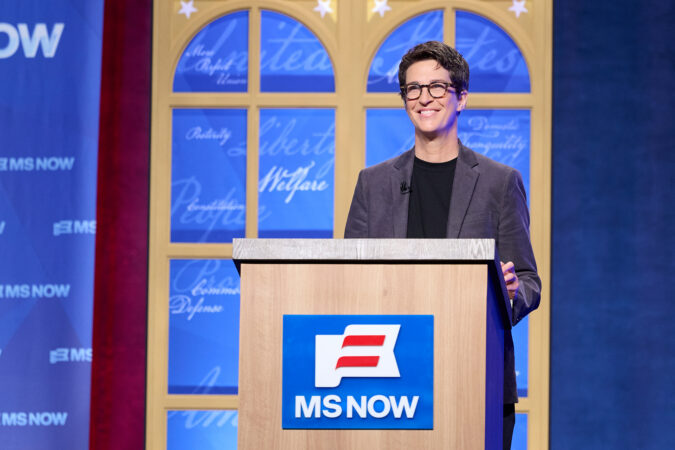
    MS NOW’s top star was in Center City on Thursday night to interview constitutional legal expert Sherrilyn Ifill live in front of nearly 2,000 people at the Academy of Music.

    But prior to the event, she reminisced about her brief time in Philly in the early 1990s, shortly after she came out as gay during her freshman year of college at Stanford University.

    “It didn’t go well at home, so it was a bit of a scramble in terms of like paying for college, figuring out what I was going to do, where I was going to live,” Maddow said. “And I got an internship at a think tank at Penn.”

    Maddow lived in West Philadelphia and basically ate nothing but Ethiopian food for a few months, though she can’t remember the name of the street: “It was in the 40s and it was one of the tree-named streets.”

    In college she was an AIDS activist and focused on healthcare policy, so landing at the University of Pennsylvania’s Leonard Davis Institute of Health Economics seemed liked an ideal fit.

    Maddow said her job was to answer the phone. But the internship didn’t last long.

    “I was not an additive,” Maddow said. “I don’t think I was an asset to the organization.”

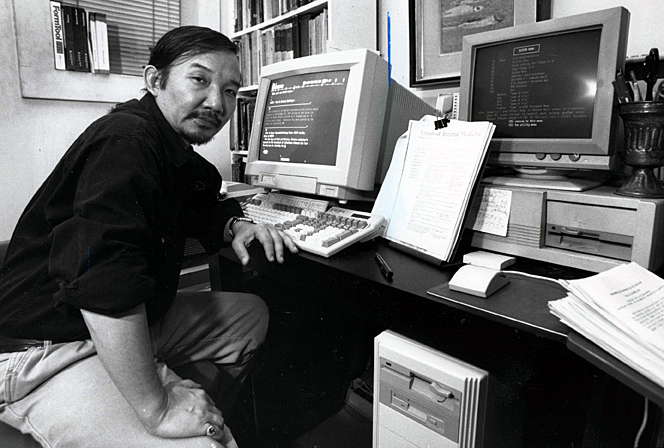
    Kiyoshi Kuromiya seen here in 1992, was a gay civil rights activist who helped establish ACT UP Philly.

    Maddow’s activism began when she was still in high school, when she began working at a hospice for people who were dying during the AIDS epidemic.

    Still, those few months living in Philadelphia influenced Maddow’s developing political voice. She idolized ACT UP Philly, an activist organization fighting for people with HIV/AIDS, and thinks that gay civil rights activist Kiyoshi Kuromiya is the city’s most overlooked hero for the work he did helping connect people with hard-to-find information about the virus and treatment.

    “He saved millions of lives,” Maddow said. “The city needs to build a statue for Kiyoshi Kuromiya.”

    Maddow has returned to Philly a number of times over the years, and every time she does, it makes her feel like she’s 19 again. Things have changed — seeing Indego bicycles to rent on street corners after hers was stolen is pretty jarring — but though her time living here was brief, she didn’t hesitate saying, “Philly was really formative for me.”

    “The thing I loved about Philly at the time, and that I kind of fell in love with, even before I really knew what to do with it, was the really sparky, edgy, impolite activist spirit,” Maddow said. “I think I’m just a middle-class polite kid who doesn’t like to offend anybody, and Philly kind of shook me out of that a little bit, and made me aspire to edgier things.”

    More live events and a new app coming from MS NOW

    Nearly 2,000 people attended Thursday night’s event at the Academy of Music.

    A strong Philly current ran through MS NOW’s event Thursday night, which highlighted the messy history of the American experiment leading up to the country’s 250th anniversary next week.

    MS NOW president Rebecca Kutler, who oversaw the event, is a Philly native who grew up in Center City and later Montgomery County. Host Ali Velshi lives in Bryn Mawr and commutes to New York every day to host The 11th Hour, which he recently took over as part of a lineup change.

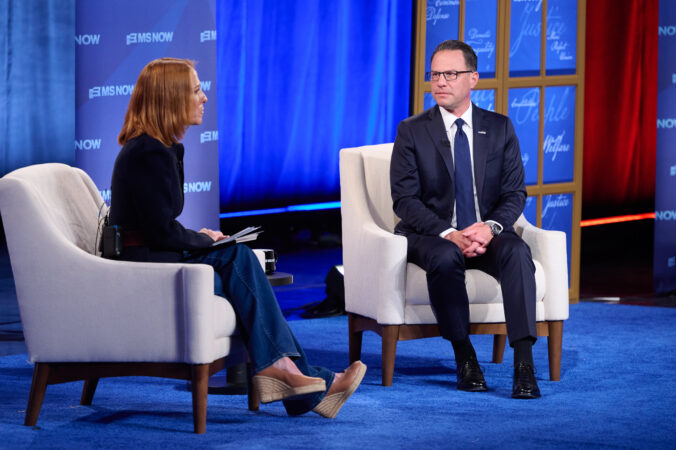
    Former White House press secretary for then-President Joe Biden and current MS NOW host Jen Psaki was also part of Thursday event, where she interviewed Pennsylvania Gov. Josh Shapiro, who was raised in Upper Dublin Township in Montgomery County. Psaki doesn’t have any connection to the area other than friends who live here — and

    “My mother’s best friend of 70 years lives here,” Psaki said.

    Thursday’s event was part of a larger strategy of engagement at the network after breaking away from NBC and becoming part of Versant, hence the name change from MSNBC to MS NOW. Ratings are up, but the cord-cutting trend is undeniable, so MS NOW is attempting to secure a digital future while it remains a popular TV destination.

    The network has now hosted three large fan events since 2024 and another is planned for Sept. 26 ahead of the midterm elections, though further details have not been announced. Attendees in Philly on Thursday night received a free, one-year subscription to MS NOW’s membership product that is set to launch soon. It will act as a streaming platform and online community for the network’s progressive fans and provide access to its biggest stars.

    “We’re always looking for ways to connect with our MS NOW community, to meet more viewers where they are, and to engage them in new ways,” said Lauren Peikoff, the network’s executive producer of live events.

    Cecil Parker, a Philadelphia musician, said the state of affairs in Washington compelled him to attend Thursday’s event.

    “Urgency. That’s the all-encompassing word,” Parker said, who often tunes into MS NOW to get their take on the news. “They have their opinions, but it’s based on the facts. So I dig that.”

    Some audience members traveled from as far as Arizona and California to have a chance to hear Maddow and her MS NOW colleagues in person.

    Tony Clyburn and his wife, Lisa, drove more than 10 hours from West Columbia, S.C., to take part. A radio host back home, Clyburn said it was inspiring being in a room with people from different walks of life who want what’s best for their neighbors and their country.

    “These gatherings are good because they’re as close to a town hall as we can get,” Clyburn said.

  • Josh Shapiro says progressives’ wins in New York show voters ‘are channeling that pain into purpose’

    Josh Shapiro says progressives’ wins in New York show voters ‘are channeling that pain into purpose’

    The Democratic Party should be a big tent and welcoming to a diversity of voices, Gov. Josh Shapiro told MS NOW’s Jen Psaki in a live event in Philadelphia on Thursday.

    Following Tuesday’s primary races in New York that saw the elections of more progressive and socialist candidates, Shapiro said the results there and around the country show that voters are eager for change.

    “I appreciate the passion that we are seeing from voters all across this country,” Shapiro said during the event at the Academy of Music, part of MS NOW’s celebration of America’s 250th birthday.

    People are feeling the strain and opting to support more progressive candidates, Shapiro said, because of rising health insurance costs, struggles to purchase a house, and the feeling that their rights are being stripped away.

    “They are channeling that pain into purpose, they’re channeling that into showing up at the ballot box, they’re channeling that into showing enthusiasm,” he said. “That is a good thing.”

    But he stopped short of explicitly endorsing more left-leaning ideologies. In a separate interview with CNN on Thursday, Shapiro added that the successful candidates must now deliver results.

    “I get that there are some candidates out there that just say a lot words and attract a lot of attention but what we need to do as a party is drill down on how we take those words turn them into actions and make people’s lives better,” he said.

    In Philadelphia, voters elected Chris Rabb, the democratic socialist who has challenged the city’s political establishment, in May’s Democratic primary for Pennsylvania’s 3rd Congressional District. Shapiro did not get directly involved in Rabb’s district, despite making endorsements in other races.

    He also dodged direct criticism of Sen. John Fetterman, a fellow Pennsylvania Democrat who has become increasingly unpopular among the party’s voters, after Psaki posed some of the senator’s recent comments to Shapiro.

    Fetterman referred to the New York congressional candidates, endorsed by Mayor Zohran Mamdani, as “the dirtbag left” and “outrageous” on Fox News. (The phrase “dirtbag left” comes from the leftist podcast Chapo Trap House and refers to a strand of democratic socialism that counters the political right by mimicking its dark humor, among other tactics.)

    Shapiro said “John should answer for himself.”

    In both Philadelphia and New York, the victorious progressive candidates during their campaigns heavily criticized Israel’s war in Gaza and the United States’ role in supporting its material.

    Psaki did not ask Shapiro, who supports Israel but has been critical of Prime Minister Benjamin Netanyahu, about the issue during the event. And he did not refer to it when talking about the New York results.

    To show voters that Democrats hear their pain, the party needs to get “real stuff done to make people’s lives better,” he said.

    Sandra Dungee Glenn, who attended the event Thursday, said Shapiro could have been even more forceful against Fetterman, who is viewed unfavorably by 43% of Philadelphia residents, according to a recent poll.

    “Don’t even mention that name,” said Glenn, who lives in West Philadelphia, referring to Fetterman. “He’s a big disappointment.”

    In addition to his own reelection campaign in November, Shapiro is focused on getting Democrats elected in four competitive congressional seats and flipping the Pennsylvania state Senate, which has been under Republican control for three decades.

    Should the chamber flip, Shapiro said his immediate priority would be raising the state’s minimum wage and codifying the right to access abortion — blaming Republicans for standing in his way.

    But Shapiro, a first-term Democrat, is also looking ahead, past 2026 and Donald Trump’s presidency, as he builds a national profile and becomes a likely contender for the presidency in 2028.

    He said Congress should pass a 28th Amendment to the U.S. Constitution that guards against corruption and gerrymandering, and railed against the 2024 U.S. Supreme Court decision that gave presidents absolute immunity from criminal prosecution for actions taken within their constitutional authority, following Trump’s efforts to overturn the 2020 election.

    Shapiro said he is also open to adding more justices to the Supreme Court, which has been set at nine justices since 1869.

    “I think we’ve got to have everything on the table. We’ve got to be bold,” he said.

    Expansion has been pushed by progressives as a way to reform the court and end its conservative majority.

    Leslie Berger, 69, who attended MS NOW’s event Thursday said she supports adding more justices to the court.

    “These norms we have aren’t etched in stone,” she said. “We need to change this justice system and more justices would be a great start.”

    Democrats, Shapiro said, need to be aggressive and elevate candidates who will drive down costs, increase access to healthcare, repair the country’s standing in the world and rein in artificial intelligence.

    “We’ve got to understand that our sole mission right now is winning in these midterms and providing a check against Donald Trump at the state and the federal level,” he said. “Then as we go forward, I think we have to understand that rebuilding a federal government like it was before Donald Trump showed up cannot be the answer to the Democratic Party.”

  • Corner stores say ‘skill games’ are an essential part of their business. A court ruling threatens that.

    Corner stores say ‘skill games’ are an essential part of their business. A court ruling threatens that.

    Amid rising inflation and business costs, many Philadelphia corner stores, bars, laundromats, and smoke shops have turned to skill games, the slot machine look-alikes, to help keep their slim margins afloat.

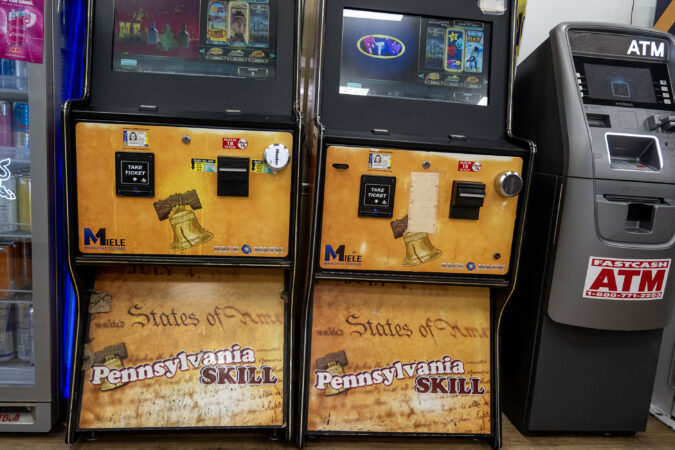
    The machines, which shop owners say also encourage their customers to linger in stores and make additional purchases, are particularly profitable because they are not taxed or regulated like slot machines — and they have been operating without state oversight in a legal gray area for more than a decade. But a recent state Supreme Court ruling may force that to change.

    Last week, Pennsylvania’s highest court handed down a decision deeming skill games the same as slot machines. That means the skill game terminals proliferating around the state will soon be illegal if not operated and taxed at 52%, and housed in a highly regulated casino or truck stop with a license to carry slot machines. Those terms will take effect in less than four months unless the state legislature intervenes.

    Owners and clerks at several corner stores throughout Philadelphia that offer the games say they do not contribute a lot of revenue to their establishments directly, but they foster more of a lounge atmosphere in the shops that leads patrons to stay longer and purchase more snacks, drinks, lottery tickets, and other goods. Many of the business owners said they are willing to stomach a tax on skill games, but additional regulations would make them rethink keeping the machines.

    José Pérez, who runs a corner store on Opal Street in South Philadelphia, said his store runs on incremental profits. And, he said, when people play the skill game machines and start feeling lucky, they often are inclined to make other purchases there.

    “This business is about getting a little bit of money from every product, and the machines are a tiny source of income that adds up to that,” he said in Spanish between transactions at the store’s register. “While people play, they buy other stuff in the store. And if they win, they buy lottery tickets. Because when someone has one vice, they probably have two.”

    Tax proposals from Harrisburg

    Lawmakers in Harrisburg have for years failed to reach an agreement on how to tax and regulate the so-called skill games

    The issue has proved to be tricky in Pennsylvania’s split legislature, where Democrats narrowly control the House and Republicans control the Senate. The skill games industry leader, Georgia-based Pace-O-Matic, long maintained a friendly relationship with the Senate GOP, and the Republican lawmakers appeared willing to support policies that benefited them. But last year, the goodwill began to sour after the company backed political campaigns against incumbent Republican state lawmakers who did not support its requested low tax rate on the machines.

    State Rep. Danilo Burgos (D., Philadelphia) and State Sen. Anthony H. Williams (D., Philadelphia) have introduced a bipartisan bill in their chambers to impose a $500-per-month fee on each skill game machine operated in Pennsylvania, with a 50,000-machine cap across the state. There are currently an estimated 70,000 skill game machines in Pennsylvania, according to the state attorney general’s office.

    Skill games can be seen through the door of a mini mart on Kensington Avenue in the Kensington section of Philadelphia on Wednesday, July 30, 2025.

    The proposed legislation would split revenues among transit and infrastructure, local governments, and state police for enforcing the cap and fee. The bills also prohibit small businesses whose “primary source of net revenue” is from skill games, in an effort to prevent mini casinos in stop-and-go corner stores around the city. Burgos estimates the regulations would bring in $300 million in new revenue to the state in their first year.

    The bill includes additional protections for Philadelphia, where City Council voted in 2024 to ban the machines. The ban never went into effect, after a lawsuit was filed seeking to block it. In the legislation before the General Assembly, Philadelphia has specific carve-outs that would allow city officials to block stop-and-go businesses or “chronic nuisance” businesses from getting a license to carry the games.

    Surrounded by hundreds of skill games supporters at a news conference Wednesday on the Capitol steps in Harrisburg, Williams said rank-and-file lawmakers would hold up passing the state budget, due June 30, if there is not a deal to protect small businesses from losing their skill games altogether.

    “In this time when everybody talks about affordability, I can’t afford a 52% tax,” Williams said.

    The fee-per-machine option offered in the Democratic-sponsored bills is backed by Pace-O-Matic, which has spent millions of dollars on political campaigns and lobbying in the state, in addition to millions more spent by other parts of Pennsylvania’s booming gambling industry.

    Meanwhile, a separate proposal backed by the Senate GOP and penned last year would set the tax at 35% on gross terminal revenue, in addition to annual license fees. A small portion of those fees would go toward the state’s resources for problem gambling.

    Gov. Josh Shapiro, a first-term Democrat, has proposed taxing the machines at the same rate as slot machines — a hefty 52% levy on each machine’s net revenue — in his last two budget proposals. As the machines have continued to proliferate around the state, Shapiro’s office estimated the newly regulated industry could bring in nearly $800 million in revenue in its first year.

    Uncertain future with uncertain revenue

    Philly store owners were divided on whether it would be worth keeping the machines if they needed to pay a lofty tax on either housing the devices or the profits they made on them.

    Andrew Karki, who operates a laundromat near Pérez‘s store in South Philadelphia, said the machines occupy the customers while they wait for their laundry to finish and, as at Pérez‘s store, lead to purchases of candy and soda from the small bodega he runs inside the laundromat.

    He estimated the machines make up 15% to 20% of his monthly revenue, and he said he would likely be willing to take on a tax on the games, even a rather large one, to keep them around.

    “It’s hard, but we got to pay it. We got to pay it,” Karki said.

    For others, like Diego Reyes, who runs a secondhand shop on Kensington Avenue with about a dozen skill machines inside, taxing the small businesses for the machines does not seem fair. The terminals are often owned by small amusement companies, and are largely operated by Pace-O-Matic. The business owners get a cut from the machine’s revenue for allowing the terminal in their building.

    “They should tax the owner,” Reyes said in Spanish, wearing a Phillies cap and T-shirt with a size-medium sticker still stuck on the back, as three people played the machines.

    Pérez agreed that any tax should be on skill games companies and not on the businesses that carry them.

    It is frustrating to think another tax may be coming down the line, he said, when small-business owners already pay so many of them and see little return on the investment in the community.

    “Look outside, that pothole has been there for six months. We have no safety,” Pérez said. “What do you want me to pay more taxes for if you are not doing anything to better the conditions with it?”

    Staff writer Isabel Maney contributed to this article.

  • No sign of Pennsylvania at Trump’s 250th fair as state fails to find companies to participate

    No sign of Pennsylvania at Trump’s 250th fair as state fails to find companies to participate

    WASHINGTON — Pennsylvania is not participating in President Donald Trump’s Great American State Fair, which kicked off Wednesday, after state leaders failed to find a company willing to represent it at one of the hallmark 250th anniversary events in Washington that some say have become overly partisan.

    Pennsylvania’s state government, like those in some other Democratic-led states, had already chosen to not sponsor a booth at the 16-day fair. Gov. Josh Shapiro’s office had still been trying to connect Freedom 250, the nonprofit behind the fair, with organizations and companies that could represent the state, according to federal and state sources familiar with the planning.

    “Unfortunately, due to the high cost to taxpayers and not being able to secure PA businesses to sponsor the booth, Pennsylvania will not be a participant in the Great American State Fair,” the Pennsylvania Department of Economic and Community Development said in a statement.

    The fair, being held at the National Mall to celebrate the nation’s 250th anniversary, was originally planned to feature a pavilion dedicated to each state and territory.

    But as tourists visited Thursday on the fair’s first full day, there were no signs of the commonwealth where American democracy was born 250 years ago.

    Almost every other state was showcased — with most sending state or local government staff and tourism boards to host educational or interactive exhibits.

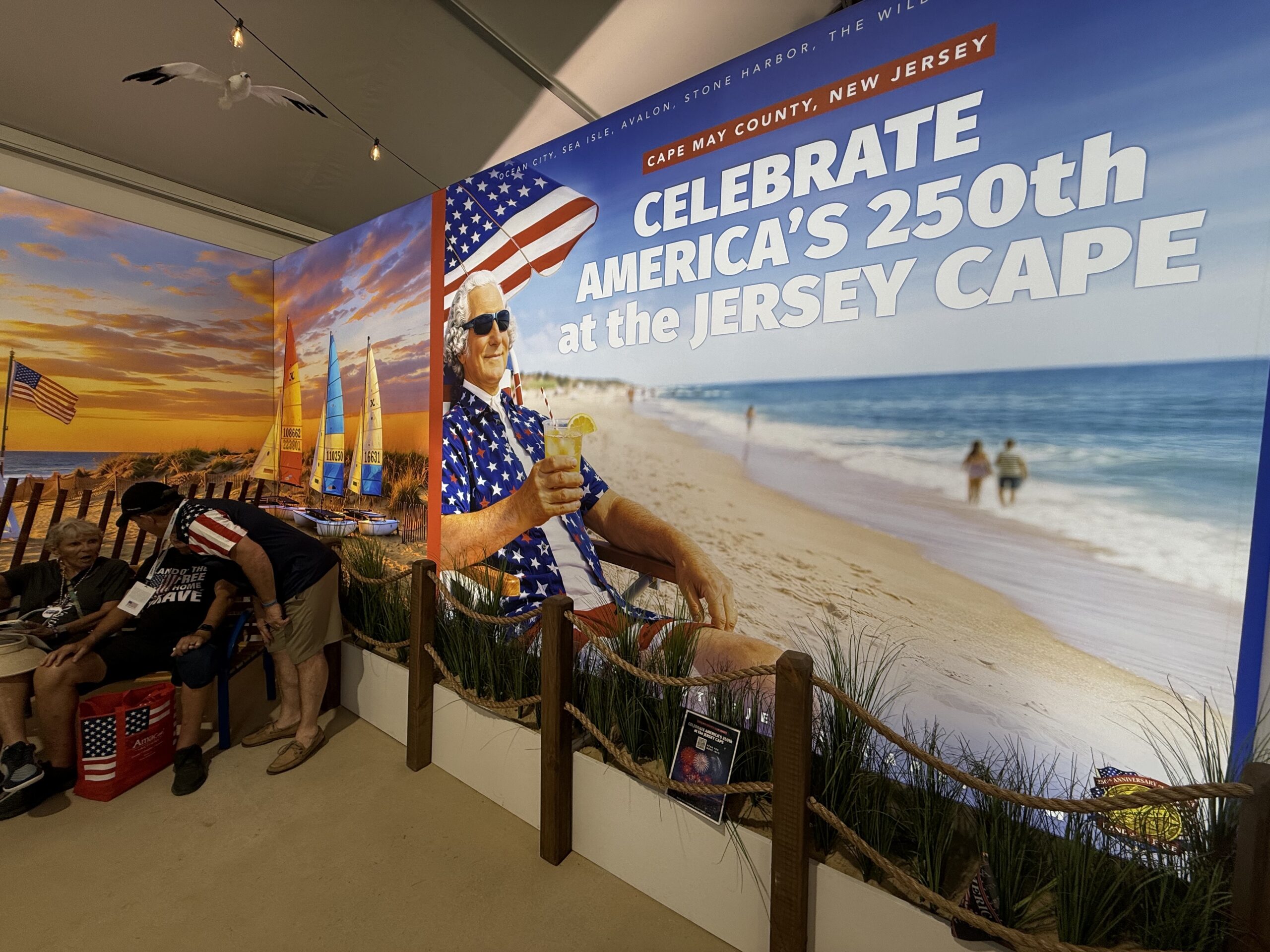
    Cape May County, a Republican stronghold that is representing New Jersey after the state government declined to participate, featured an 8-ton sand sculpture that a sculptor from Wildwood took 4½ days to create.

    An 8-ton sand sculpture promotes Cape May at New Jersey’s pavilion at the Great American State Fair, in Washington, D.C. The pavilion was sponsored by Cape May County, a Republican stronghold that chose to represent New Jersey after the state government declined to participate.

    Maryland’s state tourism department handed out information about its vacation hot spots. Staff in the Lone Star State’s pavilion greeted tourists with a cheerful “Welcome to Texas” and offered an interactive space flight exhibit, a replica of the Alamo, and an Austin City Limits music display.

    Delaware highlighted Founding Father Caesar Rodney’s ride to cast the decisive vote for independence in Philadelphia.

    Delaware’s pavilion at The Great American State Fair highlights Caesar Rodney’s ride to cast the deciding vote for independence.

    Pennsylvania joined seven other Democratic-led states — Connecticut, Illinois, Maine, Massachusetts, North Carolina, Oregon, and Washington — in declining to participate.

    Some of those states had flags outside the pavilions where they would have been located. A few chairs and a sign with the state’s name were also inside.

    But in the booth where, according to an interactive map, Pennsylvania’s location was supposed to be, a flag reading just “250″ was outside and the room was blocked off for the fair’s staff.

    As recently as this month, Pennsylvania was still seeking companies to represent it, but Rosie Lapowsky, Shapiro’s spokesperson, confirmed Thursday that the state had given up that effort.

    “None were interested,” Shapiro said to the New Republic in a story that first reported Pennsylvania’s lack of participation. “It reflects this sad state of affairs that we find ourselves in — that the president has politicized this to a degree that businesses don’t want to participate.”

    Trump’s presence has increasingly hung over events tied to the 250th anniversary in the nation’s capital, with the president planning to hold a political rally on the Fourth of July as part of the long-planned fireworks celebrations. It has made the decision to participate by entertainers and states alike more politically fraught.

    “Freedom 250 is a nonpartisan organization, full stop — and our track record of collaboration across red, blue, and purple states speaks for itself,” Freedom 250 spokesperson Rachel Reisner said in a statement earlier this month. She did not respond to a request for comment Thursday about Pennsylvania’s lack of involvement or Shapiro’s comments.

    Cape May represents New Jersey at the Great American State Fair Thursday, June 25, 2026, in Washington, D.C.

    In New Jersey’s pavilion, visitors were met with not just the sand sculpture but also a new three-minute video highlighting Cape May County and a giant image of George Washington lounging at the beach with a cold drink.

    County administrator Kevin Lare said it took a significant amount of work — and at least $150,000 from the county’s tourism budget — to pull it all together in recent weeks. It is worth it, he said, to highlight the county in the hopes of bolstering its largest economic engine — tourism.

    “It’s a once-in-a-250-year event,” Lare said. “It’s not something the county will do every year at this level. It’s a celebration of our country, and our board of commissioners still believe we live in the greatest nation in the world. They’re happy to be a part of it.”

    Staff writer Gillian McGoldrick contributed to this article.