Tag: Josh Shapiro

  • Josh Shapiro doesn’t need Pa. Society, the Parker-Johnson relationship, Kim Ward’s budget ballad, and more takeaways from Pa.’s weekend in NYC

    Josh Shapiro doesn’t need Pa. Society, the Parker-Johnson relationship, Kim Ward’s budget ballad, and more takeaways from Pa.’s weekend in NYC

    NEW YORK — Pennsylvania’s political class schmoozed their way across Midtown Manhattan this past weekend, bouncing from cocktail parties to swanky receptions organized to woo the elite ahead of a big midterm election year.

    Hundreds of Pennsylvania politicos made their way for the state’s annual weekend of civility, bipartisanship, fundraising, and more than a few hangovers.

    Four Inquirer political writers were among those who traveled to the Pennsylvania Society gathering, chatting with lawmakers and interviewing candidates inside the moody bars and penthouse parties. Here are our takeaways.

    Maybe Shapiro doesn’t need Pa. Society anymore

    Gov. Josh Shapiro this year has hosted fundraisers in New Jersey and Massachusetts for his unannounced reelection campaign.

    But he didn’t need to make the rounds this weekend among Pennsylvania’s political elite as he emerges as a top contender for the 2028 Democratic nomination for president.

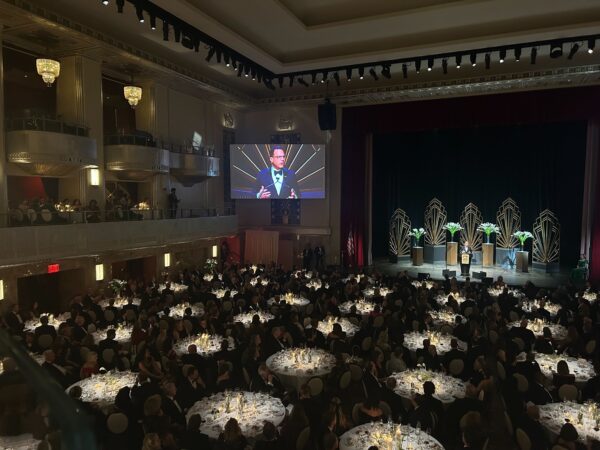
    Shapiro traveled to New York City only to deliver his annual speech to the Pennsylvania Society and honor former U.S. Ambassador to Canada, David L. Cohen, who received the society’s top award.

    Instead of handshaking and fundraising like most incumbent governors would, Shapiro has largely avoided Pennsylvania Society mingling during his time as governor. His reelection campaign did not appear to change that.
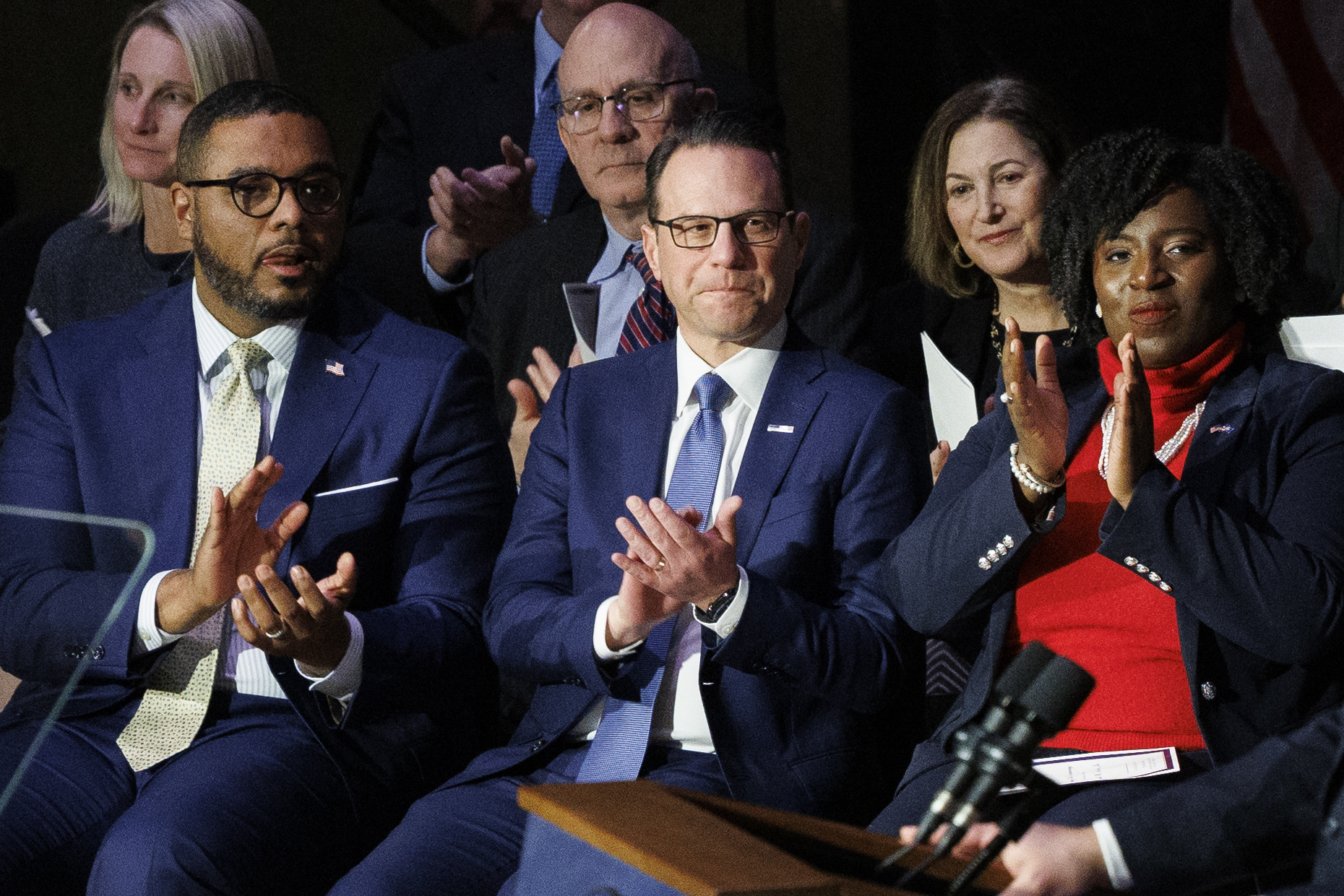
    Pennsylvania politicians (from left) Lt. Gov. Austin Davis, Gov. Josh Shapiro and State House of Representatives Speaker Joanna E. McClinton last January attending the swearing-in ceremony of Attorney General David W. Sunday, Jr. in Harrisburg.

    Instead, Lt. Gov. Austin Davis hosted a solo fundraiser for their joint reelection ticket.

    “There’s a lot of demands on the governor’s time,” Davis said following a speech at the annual luncheon hosted by the Pennsylvania Manufacturers’ Association.

    The Third Congressional District race was the talk of the town

    Three of the candidates vying to replace retiring U.S. Rep. Dwight Evans in the Third Congressional District had a busy weekend in New York. State Sen. Sharif Street, pediatric surgeon Ala Stanford, and State Rep. Morgan Cephas made the rounds.
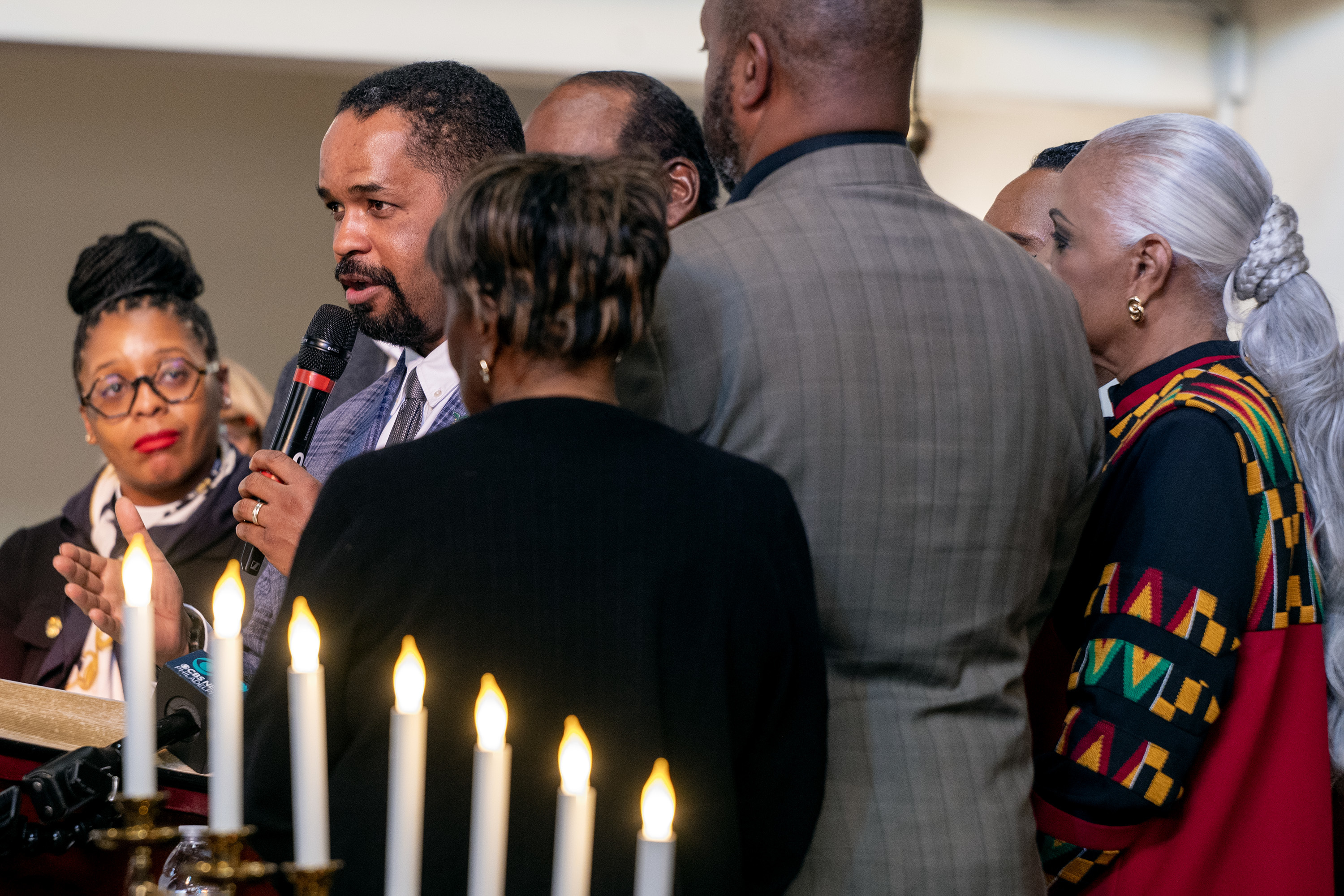
    Sharif Street speaks from the pulpit of Mother Bethel A.M.E. church Sunday, Nov. 2, 2025 as the Black Clergy of Philadelphia and Vicinity holds a press conference with other community and political leaders to discuss the negative impacts of the ongoing government shutdown. Mother Bethel Pastor Rev. Carolyn Cavaness is at left.

    Stanford held a somewhat star-studded fundraiser Thursday evening, hosted, according to a posted listing for the private event, by Hamilton actor Leslie Odom Jr. (who did not attend but lent his name).

    Street, the former state party chair and a longtime attendee at Pennsylvania Society, held two fundraisers in Manhattan, fresh off his endorsement last week by former Gov. Ed Rendell.

    Not spotted: State Rep. Chris Rabb, who is running as an anti-establishment progressive.

    “That’s not really my thing,” he said in a text message.

    The Parker-Johnson relationship was a hot topic

    Philadelphia City Council wrapped up its final meeting of the year the day before the Pennsylvania Society began, and the lawmakers gave the chatterati plenty to talk about in Manhattan, with a dramatic close to the session.

    One major topic of conversation in New York: What did Council’s recent conflict with Mayor Cherelle L. Parker over her housing plan mean for the unusually tight relationship between Council President Kenyatta Johnson and the mayor?

    The consensus: Mom and Dad were fighting, but they’ll probably patch things up.

    “Disagreements between Council and mayor — it happens,” said Larry Ceisler, a Philadelphia-based public affairs executive whose firm hosted a packed party in Midtown on Saturday. “It’s the way the system is set up.”

    But Ceisler said he’s not worried that Parker and Johnson will abandon their goal of emulating then-Mayor Rendell’s close working relationship with Council President John F. Street in the 1990s.

    “The fact is they’re certainly in sync more than they’re not,” Ceisler said.
    City Council president Kenyatta Johnson speaking with Philadelphia Mayor Cherelle Parker in June 2024.

    Johnson, he said, likely improved his standing with members by holding firm against a last-minute amendment Parker proposed to alter Council’s version of the housing plan’s budget.

    Parker and Johnson both made the trek to Manhattan, along with Councilmembers Rue Landau, Nina Ahmad, Jamie Gauthier, Jeffery “Jay” Young Jr., Kendra Brooks, Katherine Gilmore Richardson, Jim Harrity, Cindy Bass, and Quetcy Lozada.

    The mayor also took the opportunity to engage in a bit of bipartisanship. She has often touted her ability to build relationships across the aisle, despite Philadelphia politics being dominated by Democrats.

    At the PMA luncheon, Parker embraced former Gov. Tom Corbett and gave a warm greeting to Auditor General Tim DeFoor, both Republicans.
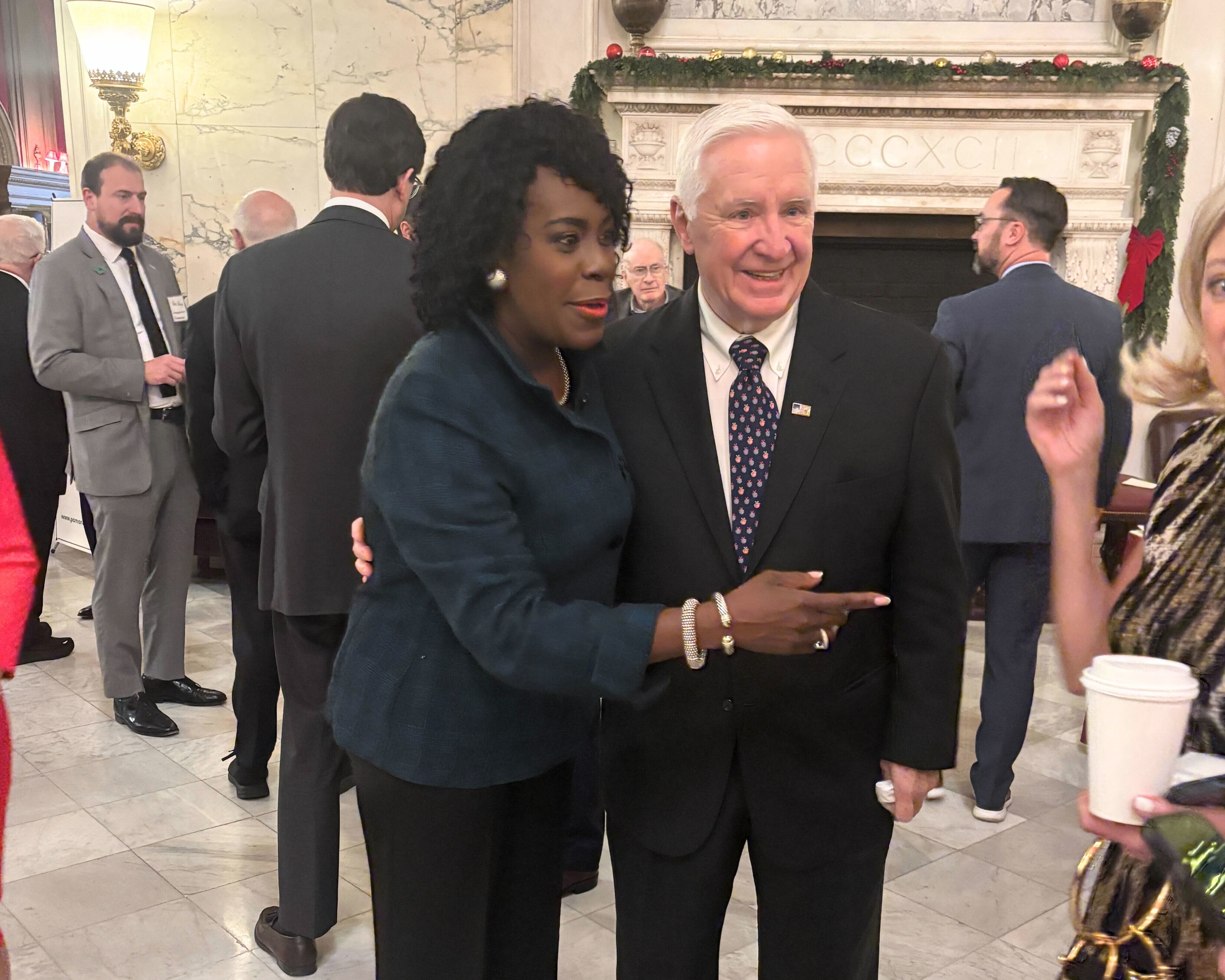
    Mayor Cherelle L. Parker (left) and former Gov. Tom Corbett at the luncheon hosted by the Pennsylvania Manufacturers’ Association on Saturday in New York.

    At the same event, Republican U.S. Sen Dave McCormick shouted out Parker multiple times during his prepared remarks. The pair have forged a working relationship despite their partisan differences.

    “We talk about challenges in the city that we’re facing right now, and the hope is that we can count on some folks as allies,” Parker said of meeting with members of the GOP.

    She added: “It’s great to try to maintain those lines of communication.”

    Special interests woo political elite

    Many of the events were hosted by special-interest groups and corporations that have business with the government and are looking to win influence over glasses of Champagne.

    There were the usual suspects and big law firms: Duane Morris always hosts a marquee late-night event on Friday in the sprawling Rainbow Room atop Rockefeller Center. Other firms including Cozen O’Connor, Ballard Spahr, and Saul Ewing also hosted cocktail parties.

    One notable newcomer to the party scene was Pace-O-Matic, the Georgia-based operator of “skill games” at the center of negotiations over regulation and taxing of the machines.

    The company, which has spent millions on political contributions and lobbying, threw a cocktail reception Thursday night at an Italian restaurant attended by a sizable contingent of state lawmakers.

    Legislators have yet to agree on how to regulate and tax skill games, which remain entirely unregulated and untaxed.

    But solutions seemed possible at the Pace-O-Matic party, as Central Pennsylvania Republicans and Philadelphia Democrats milled about the bar in an unlikely alliance.

    Another bipartisan event — this one in a sunny room atop the vintage Kimberly Hotel — was hosted by Independence Blue Cross and AmeriHealth Caritas, insurance companies that have Medicaid contracts with the state.

    Lawmakers often credit the weekend of partying in New York as a time for civil conversations in a neutral territory that ultimately benefit a philanthropic cause at the Pennsylvania Society’s annual dinner.

    But Rabbi Michael Pollack, who leads the government accountability group March on Harrisburg, said the civility seems to come only when special interests are footing the bill.

    “It’s absolutely embarrassing that our legislators can only interact with each other when a lobbyist sets up a playdate for them,” he said.

    A Christmas budget ballad by DJ Ward

    Senate President Pro Tempore Kim Ward debuted a hidden musical talent on stage at the annual bipartisan Pennsylvania Chamber of Business and Industry breakfast: She can write a Harrisburg holiday hit.

    “I did live in Nashville for six years and no one discovered me,” she joked, before launching into a three-minute budget balladto the tune of “Deck the Halls.”

    Ward (R., Westmoreland) debuted her song after an ugly budget battle that lasted 135 days and ended just last month. Punctuated by fa-la-las, she called out each of the top leaders who were in the closed-door budget talks.
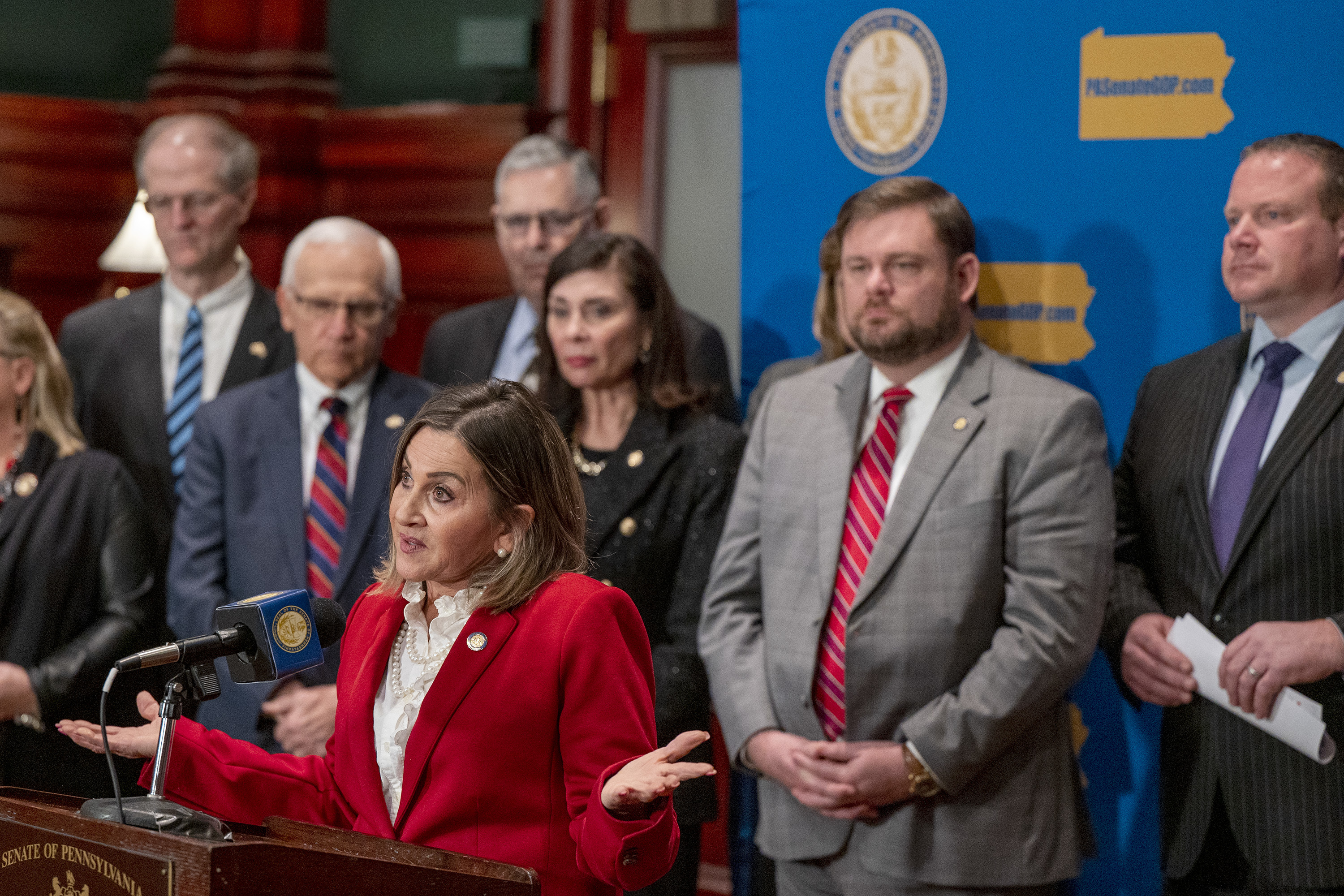
    Senate President Pro Tempore Kim Ward (R., Westmoreland) speaking in February 2024 at the Capitol in Harrisburg.

    Ward is among Shapiro’s top critics. The two had hardly spoken since 2023 until Ward joined in-person budget negotiations at the end of October.

    During those negotiations, Ward has said Shapiro gave her a special heart-shaped cookie to break the ice. And it appears that she’s not yet letting that go, dedicating a moment in her song to the encounter:

    Mr. Shapiro give me a break

    You know you gave me that heart cookie cake

    Why are you saying that you didn’t do it?

    Ward’s jingle wasn’t the first time a Pennsylvania Republican leader leaned on the power of song during the bitter budget battle.

    At the peak of the clash over transit funding in August, Senate Majority Leader Joe Pittman quoted heavily from the lyrics of John Mellencamp’s “Small Town” in recalling his upbringing in rural Western Pennsylvania.

    Shapiro will propose a new budget in February, restarting the budget negotiation process. Ward urged the group of leaders to take a break from fighting during the holiday season.

    It’s Christmas and we’re all here together

    Republicans and Democrats, and all who matter

    Let’s celebrate the birth of Jesus

    For the next three weeks, let’s not be egregious

    Perhaps next budget season will inspire a mixtape.
  • The ‘resign-to-run’ rule is a rare case where Philly provides a national model for good government. Why change it?

    The ‘resign-to-run’ rule is a rare case where Philly provides a national model for good government. Why change it?

    Here we go again.

    A proposal in City Council aims to amend the so-called resign-to-run rule that requires elected city officials to give up their seats if they want to run for another office.

    Philadelphia voters have already rejected a similar plan twice, once in 2007 and again in 2014. A third attempt stalled out in Council in 2020.

    Councilmember Isaiah Thomas, who proposed eliminating the rule last year, is back with a modified measure that would allow city officeholders to keep their seats while running for a state or federal office. They would still have to resign to run for another city office, such as mayor.

    Sorry, councilman, but there’s no such thing as being a little bit pregnant. Many of the same good government reasons that require resigning to run for another office still hold.

    Namely, running for office is a full-time job. The fundraising, campaign stops, debates, and town halls that take place during the day, nights, and weekends leave little time for officials to do the six-figure day job they were elected to do.

    Depending on the office, running for a statewide or federal seat could also require additional travel across the state that would further distract from serving the constituents the official was elected to represent.

    There would also be the temptation to use taxpayer-funded city resources — including the car, office, and staff — to help with the campaign. That is in addition to the taxpayer-funded salary and benefits elected city officials would collect while campaigning for a higher office.

    Lastly, the elected official could also leverage their position against other candidates to benefit themselves or donors.

    City Councilmember Isaiah Thomas said he would like to see the “resign-to-run” rule eliminated, but for now he was trying to strike a compromise.

    The arguments for allowing an elected official to remain in office while campaigning for another job just don’t hold up.

    The main argument is that it will allow more competition. For example, Thomas said some of his Council colleagues may have entered the race to replace retiring U.S. Rep. Dwight Evans — a five-term Democrat from the 3rd District — if they did not have to resign.

    But even under the current rule, there is no lack of competition for Evans’ seat. Eleven people have already announced their candidacy, and the primary is not until May 19.

    The diverse field already has a number of excellent candidates, including several who have never run for office before. Voters will have plenty of good options.

    Thomas argued voters would benefit if the field included Council members. “There could be even more great candidates,” he said in an interview.

    Thomas said city officials faced an uneven playing field, since state and federal elected officials do not have to resign to run for another office. That is true.

    Three of the congressional candidates hold state elected office. But the better reform is to require state and federal elected officials to resign to run for another office.

    As the saying goes, two wrongs don’t make a right.

    Voters are already fed up with professional politicians. It is even more annoying when an official gets reelected and months later launches a bid for another office.

    Even with the current rule, there is no lack of competition for retiring U.S. Rep. Dwight Evans’ seat, Paul Davies writes. Eleven candidates so far are vying to succeed the five-term Democrat from the 3rd District.

    That scenario may soon play out with Gov. Josh Shapiro. He faces reelection in November, and many assume he will run for president in 2028. That means if Shapiro is reelected governor, he could spend much of the first half of his second term campaigning in Iowa, New Hampshire, and beyond.

    After then-New Jersey Gov. Chris Christie launched his first bid for president, he would go on to spend 262 full or partial days out of the state in 2015. He traveled with a security detail that included New Jersey state troopers driving black SUVs with the state’s license plates, costing taxpayers more than $600,000.

    Likewise, when then-U.S. Sen. Marco Rubio (R., Fla.) ran for president in the same election cycle, he missed 50% of the votes in the Senate.

    Thomas conceded it would be difficult to balance city duties while running for an office that would require campaigning across the state. But he said city officials running for a congressional seat in Philadelphia while holding office would “not miss a beat.”

    That may be true since Council doesn’t meet in the summer. But that’s an argument for making Council a part-time job, especially since they can, and some do, hold second jobs.

    Philadelphia’s resign-to-run rule was added to the Home Rule Charter in 1951. At the time, the Committee of Seventy, a nonpartisan organization established in 1904 to combat corruption, strongly supported the rule.

    After then-New Jersey Gov. Chris Christie launched his first bid for president, he would go on to spend 262 full or partial days out of the state in 2015, Paul Davies writes.

    Any measure that prevents corruption still seems like a good idea. But surprisingly, the good-government group’s position has “evolved,” Lauren Cristella, the head of the Committee of Seventy, said in a statement.

    The organization “reluctantly” supported the repeal of the rule in 2014, citing the need for more competition.

    But Philadelphia voters rejected the effort. Just as they did in 2007.

    This time, the Committee of Seventy said it would only support ending the resign-to-run rule if it was part of a broader reform package that includes term limits and “stronger safeguards for ethical, transparent government.”

    The Committee of Seventy said the proposed change in its current form only serves the “political interests, but not the public interest.”

    Rest assured, if the resign-to-run rule were modified to allow city officials to run for state and federal office, it would just be a matter of time before Council tried to repeal it altogether.

    Even Thomas said he would like to see the rule eliminated, but for now, he was trying to strike a compromise.

    Philadelphia has long been criticized as being “corrupt and contented.” But reforms like resign-to-run and the city’s strict campaign finance regulations passed a decade ago are models of good government.

    Indeed, only a couple of cities and states have a resign-to-run rule. Philadelphia should champion its position as a good-government leader.

    Harrisburg — which has no such measure and some of the worst campaign finance rules — would benefit from following the city’s lead.

    The country needs more good government, not less.

  • Pennsylvania Democrats are beginning their efforts to flip the state Senate in 2026 with this suburban Philly seat

    Pennsylvania Democrats are beginning their efforts to flip the state Senate in 2026 with this suburban Philly seat

    A Montgomery County Democratic Committee leader has set his sights on unseating a Republican state senator in the suburbs — part of a larger effort by Pennsylvania Democrats to flip the state Senate for the first time in 31 years.

    Chris Thomas, the former executive director of the Montgomery County Democratic Committee, who left his role at the end of November to run for Senate, launched his bid on Wednesday to challenge State Sen. Tracy Pennycuick, a first-term senator representing parts of Montgomery and Berks Counties.

    Thomas, 29, is also an Upper Frederick Township volunteer firefighter and taught in a Philadelphia public school for a year prior to his jump into politics. His campaign is focused on increasing public school funding, finding a new funding stream for mass transit, and making Pennsylvania more affordable for working people.

    Pa. state Rep. Tracy Pennycuick (R., Montgomery County). (Photo: Pa. House of Representatives)

    Thomas announced his campaign with dozens of endorsements from state and local elected officials, including five sitting senators from the Philadelphia suburbs. He also secured the endorsement of House Majority Leader Matt Bradford (D., Montgomery), another driving force behind the Democratic efforts to flip the state Senate in the 2026 midterm election in attempts to control all three branches of Pennsylvania’s government.

    Pennsylvania is one of few divided legislatures in the country, where Democrats hold a narrow majority in the state House, 102-101, and Republicans control the Senate, 27-23.

    Gov. Josh Shapiro, a Democrat, and House Democrats frequently butt heads with GOP Senate leaders. By flipping two seats next November, Democrats would tie the chamber 25-25 and Democratic Lt. Gov. Austin Davis would act as a tiebreaker. But Democrats are targeting four GOP-held seats, three of which are in the Philadelphia suburbs, in hopes of gaining control in the upper chamber for the first time in 31 years.

    The GOP-controlled state Senate has been a thorn in the side of Shapiro and House Democrats, as the more conservative members of the GOP Senate caucus have objected to most spending increases and rejected top Democratic priorities, like a long-term revenue source for mass transit. The state budget, passed in November, was 135 days late, requiring school districts, counties, and social service providers to take out loans or lay off staff to continue operating during the monthslong standoff.

    Mirroring national efforts to win control of congressional seats, Pennsylvania Democrats are targeting GOP-held districts that President Donald Trump won in 2024 but Shapiro carried in 2022. With Pennsylvania’s popular first-term governor and potential 2028 contender back at the top of the ticket — and a methodical, behind-the-scenes effort by Shapiro to orchestrate a decisive year for Democrats in 2026 — Democrats see it as possible this time around.

    Thomas’ first order of business if he is elected to Harrisburg and Democrats flip the chamber: electing Democratic floor leaders in the chamber.

    “No meaningful legislation moves in Harrisburg unless we fix who’s in charge, and right now Sen. Pennycuick is supporting a Senate leadership that’s failed working people,” Thomas said.

    Pennycuick said she “welcomes this campaign as an opportunity” to talk about the successes she has achieved while serving in the state Senate, such as her support for public education funding, reducing overreaching regulations, and her bipartisan proposal to create safeguards around artificial intelligence.

    Kofi Osei, a Towamencin Township supervisor and Democrat, has also announced his bid for Senate District 24, which stretches along the northwestern parts of Montgomery County and into parts of Berks County.

    The state Senate Democratic Campaign Committee does not endorse candidates in a primary election, and will support whoever wins the Democratic nomination in Pennsylvania’s May 19 primary. However, State Sen. Vincent Hughes (D., Philadelphia), who chairs the SDCC, said Thomas’ candidacy is “the right time and the right moment.”

    “I’m really excited about having a young person in there, generating young people and getting young people motivated,” Hughes added.

    The state Senate Republican Campaign Committee, meanwhile, is fundraising off Democrats’ efforts to flip the state’s upper chamber, warning voters that Democratic special interest group dollars are already pouring in.

    “State Democrats have made it clear their goal is to have a blue trifecta in Pennsylvania in 2026,” the SRCC wrote in a fundraising email Tuesday. “They know Senate Republicans are the last line of defense against Josh Shapiro and PA House Democrats far-left agenda.”

    Thomas was a public school teacher for one year at the Northeast Community Propel Academy, teaching seventh-grade math and science. He comes from a family of educators, he said, but quickly realized he needed to get more involved to improve the education system and government services to better serve these students. He made the jump to politics to try to make change.

    “I was sitting there, trying to feed my kids in the morning to make sure they had full stomachs to learn, having supplies to make sure they’re fully equipped for the day,” Thomas added. “I saw a system that wasn’t working for our students.”

    If elected, Thomas would be Pennsylvania’s youngest sitting state senator, and would join State Sen. Joe Picozzi (R., Philadelphia), 30, as part of a new generation of leaders hoping to shape the state’s future.

    “Our generation has grown up during economic crashes, school shootings, endless wars, and now we’re watching our parents and grandparents struggle to retire with dignity,” Thomas said.

  • WTF? Embracing profanity is one thing both political parties seem to agree on

    WTF? Embracing profanity is one thing both political parties seem to agree on

    WASHINGTON — As he shook President Barack Obama’s hand and pulled him in for what he thought was a private aside, Vice President Joe Biden delivered an explicit message: “This is a big f— deal.” The remark, overheard on live microphones at a 2010 ceremony for the Affordable Care Act, caused a sensation because open profanity from a national leader was unusual at the time.

    More than 15 years later, vulgarity is now in vogue.

    During a political rally Tuesday night in Pennsylvania that was intended to focus on tackling inflation, President Donald Trump used profanity at least four times. At one point, he even admitted to disparaging Haiti and African nations as “shithole countries” during a private 2018 meeting, a comment he denied at the time. And before a bank of cameras during a lengthy cabinet meeting last week, the Republican president referred to alleged drug smugglers as “sons of bitches.”

    While the Biden incident was accidental, the frequency, sharpness, and public nature of Trump’s comments are intentional. They build on his project to combat what he sees as pervasive political correctness. Leaders in both parties are seemingly in a race now to the verbal gutter.

    Vice President JD Vance called a podcast host a “dips—” in September. In Thanksgiving remarks before troops, Vance joked that anyone who said they liked turkey was “full of s—.” After one National Guard member was killed in a shooting in Washington last month and a second was critically injured, top Trump aide Steven Cheung told a reporter on social media to “shut the f— up” when she wrote that the deployment of troops in the nation’s capital was “for political show.”

    Among Democrats, former Vice President Kamala Harris earned a roar of approval from her audience in September when she condemned the Trump administration by saying “these motherf— are crazy.” After Trump called for the execution of several Democratic members of Congress last month, Sen. Chris Murphy (D., Conn.) said it was time for people with influence to “pick a f— side.” Senate Democratic leader Chuck Schumer of New York said the administration cannot “f— around” with the release of the Jeffrey Epstein files. Democratic Rep. Jasmine Crockett, who on Monday announced her Senate campaign in Texas, did not hold back earlier this year when asked what she would tell Elon Musk if given the chance: “F— off.”

    The volley of vulgarities underscore an ever-coarsening political environment that often plays out on social media or other digital platforms where the posts or video clips that evoke the strongest emotions are rewarded with the most engagement.

    “If you want to be angry at someone, be angry at the social media companies,” Utah Gov. Spencer Cox, a Republican, said Tuesday night at Washington National Cathedral, where he spoke at an event focused on political civility. “It’s not a fair fight. They’ve hijacked our brains. They understand these dopamine hits. Outrage sells.”

    Cox, whose national profile rose after calling for civility in the wake of conservative activist Charlie Kirk’s assassination in his state, approved an overhaul of social media laws meant to protect children. A federal judge has temporarily blocked the state law.

    Tough political talk is nothing new

    Tough talk is nothing new in politics, but leaders long avoided flaunting it.

    Recordings from Democrat Lyndon B. Johnson’s administration, for instance, revealed a crude, profane side of his personality that was largely kept private. Republican Richard Nixon bemoaned the fact that the foul language he used in the Oval Office was captured on tape. “Since neither I nor most other Presidents had ever used profanity in public, millions were shocked,” Nixon wrote in his book In the Arena.

    “Politicians have always sworn, just behind closed doors,” said Benjamin Bergen, a professor at the University of California-San Diego’s Department of Cognitive Science and the author of What the F: What swearing reveals about our language, our brains, and ourselves. “The big change is in the past 10 years or so, it’s been much more public.”

    As both parties prepare for the 2026 midterm elections and the 2028 presidential campaign, the question is whether this language will become increasingly mainstream. Republicans who simply try to imitate Trump’s brash style do not always succeed with voters. Democrats who turn to vulgarities risk appearing inauthentic if their words feel forced.

    For some, it is just a distraction.

    “It’s not necessary,” said GOP Rep. Don Bacon of Nebraska, who is retiring next year after winning five elections in one of the most competitive House districts. “If that’s what it takes to get your point across, you’re not a good communicator.”

    There are risks of overusing profanity

    There also is a risk that if such language becomes overused, its utility as a way to shock and connect with audiences could be dulled. Comedian Jerry Seinfeld has talked about this problem, noting that he used swear words in his early routines but dropped them as his career progressed because he felt profanity yielded only cheap laughs.

    “I felt like well I just got a laugh because I said f— in there,” he said in a 2020 interview on the WTF podcast with fellow comedian Marc Maron. “You didn’t find the gold.”

    White House spokesperson Liz Huston said Trump “doesn’t care about being politically correct, he cares about making America great again. The American people love how authentic, transparent, and effective the President is.”

    But for Trump, the words that have generated the most controversy are often less centered in traditional profanity than slurs that can be interpreted as hurtful. The final weeks of his 2016 campaign were rocked when a tape emerged of him discussing grabbing women by their genitals, language he minimized as “locker room talk.” His “shithole” remark in 2018 was widely condemned as racist.

    More recently, Trump called Bloomberg reporter Catherine Lucey “piggy,” comments that his press secretary, Karoline Leavitt, defended as evidence of a president who is “very frank and honest.” Trump’s use of a slur about disabled people prompted an Indiana Republican whose child has Down syndrome to come out in opposition to the president’s push to redraw the state’s congressional districts.

    On rare occasions, politicians express contrition for their choice of words. In an interview with The Atlantic published last week, Pennsylvania Gov. Josh Shapiro, a Democrat, dismissed Harris’ depiction of him in her book about last year’s presidential campaign by saying she was “trying to sell books and cover her a—.”

    He seemed to catch himself quickly.

    “I shouldn’t say ‘cover her a—,” he said. “I think that’s not appropriate.”

  • Trump strays from script at Poconos rally, calling affordability a ‘hoax’ and Pa. a ‘dumping ground’ for immigrants

    Trump strays from script at Poconos rally, calling affordability a ‘hoax’ and Pa. a ‘dumping ground’ for immigrants

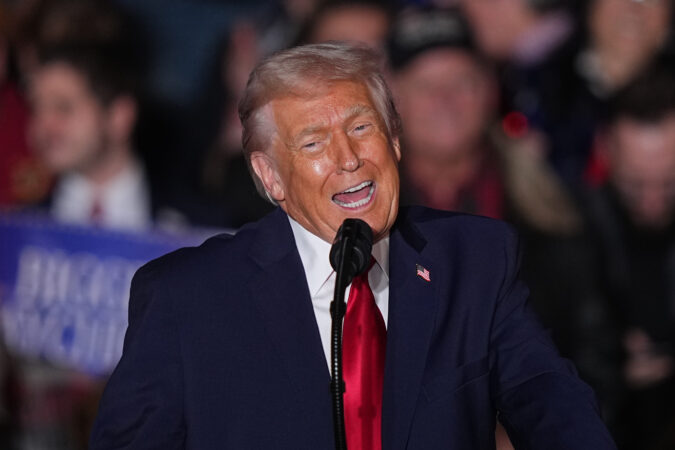
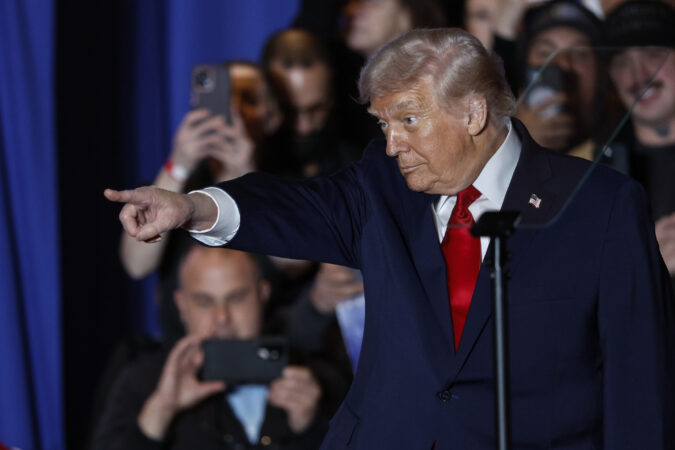
    President Donald Trump’s raucous rally Tuesday night in Pennsylvania was billed as the launch of a national tour focused on easing voters’ economic anxieties that threaten Republicans’ hold in Washington with the 2026 midterms looming.

    But the economy couldn’t maintain the president’s interest for the duration of the speech.

    Instead, he rallied the crowd at the Mount Airy Casino Resort in Mount Pocono by fomenting anger at Democratic U.S. Rep. Ilhan Omar and other Somali immigrants who live in Minnesota and teasing a 2028 run, despite constitutional limits on a third term.

    Employing a method he calls “the weave,” Trump darted back and forth between cost-of-living issues and entirely unrelated material, such as claiming credit for the use of the phrase “Merry Christmas” during the holiday season.

    “If I read what’s on the teleprompter, you’d all be falling asleep right now,” Trump said.

    It was Trump’s third trip to Pennsylvania since he began his second term, following a campaign in which he spent a considerable amount of time in the Keystone State, winning it back in part by promising to cure a beleaguered economy. It’s the president’s first return to Northeast Pennsylvania, where he saw his biggest gains in the region during the last election, and which will be a crucial battleground in next year’s election, when the GOP’s razor-thin House majority is on the line.

    “America is winning again. Pennsylvania is prospering again. And I will not rest until this commonwealth is wealthier and stronger than ever before,” Trump proclaimed at the large casino and hotel complex tucked in between ski resorts in the Pocono Mountains.

    The speech comes as many Americans lament the cost of living, workers have lost power in the job market and with their employers, and people are bracing for Affordable Care Act tax credits to expire at the end of the year.

    The casino stayed open Tuesday and gamblers played slots and card games on the floor upstairs as Trump spoke in the ballroom below.

    Trump, in a speech that stretched over an hour, blamed high prices on his Democratic predecessor, former President Joe Biden. He argued gas prices are down and car prices are dropping thanks to relaxed fuel-efficiency standards. The stock market is up this year and overall growth for the third quarter is strong. Trump also has signed agreements to reduce list prices on prescription drugs.

    While Trump again called concerns about affordability a “hoax,” the event itself was at least an acknowledgment that frustrations with the economy are damaging the Republican brand ahead of the midterms. He spoke in front of a large “lower prices, bigger paychecks,” banner.

    “Democrats talking about affordability is like Bonnie and Clyde preaching about public safety,” he said.

    The most compelling part of the evening came more than an hour in, when the president called up members of the local community, including a waiter and an EMT to share personal stories about how no taxes on tips or overtime would benefit their families when tax returns are filed next year.

    Trump played to the Pennsylvania crowd, noting his connections to the state as a graduate of the University of Pennsylvania’s Wharton School. “I love Philadelphia. It’s gotten a little rougher, but we will take it,” he quipped.

    He then reminisced about hosting the Philadelphia Eagles at the White House earlier this year following their Super Bowl win. He hailed coach Nick Sirianni as a “real leader” and marveled at running back Saquon Barkley’s muscles.

    “It’s like I hit a piece of steel. … He’s so strong,” Trump said about patting the Eagles player on the back.

    But despite these light-hearted moments, Trump repeatedly went after Omar and the Somali immigrant community.

    Trump asked if anyone from the crowd was from Somalia and asked them to raise their hands before tearing into Omar, the progressive Minnesota Democrat who left the African country as a refugee.

    “She comes from a country where, I mean, it’s considered about the worst country in the world, right?”

    Later in the speech, Trump complained about immigration from Somalia, Afghanistan and Haiti — instead of countries like Norway and Denmark — as he recounted and affirmed his use of the phrase “shithole countries” during his first term, something he denied at the time.

    He also accused Democrats of making Pennsylvania a “dumping ground” for immigrants.

    Despite this incendiary rhetoric, Trump also celebrated his performance with Black and Latino voters in the last election. He put up the strongest Republican performance with these demographic groups in decades, though a majority both went for Vice President Kamala Harris.

    “Black people love Trump,” Trump said. “I got the biggest vote with Black people. They know a scam better than anybody. They know what it is to be scammed.”

    ‘Everyone’s paying a lot more’

    Nationwide, prices and inflation have increased this year — with many experts saying that the president’s tariff policies have contributed.

    In his speech, Trump touted his tariffs as bringing in “hundreds of billions of dollars,” and noted his administration would be steering $12 billion to farmers through that revenue. The money is meant to help agriculture producers cope with retaliatory measures taken by China and other trading partners in response to Trump’s tariffs, which Trump did not mention in his remarks.

    “We gave the farmers a little help … and they are so happy.” Trump said.

    Poll after poll shows Americans see rising home prices, groceries, education, and electricity costing more. Gallup’s Economic Confidence Index found a 17-month low in terms of trust in the economy, and the survey found Americans’ views of the job market are at their most negative since the end of Trump’s first term during the height of the pandemic.

    For the average Pennsylvanian, there is a “financial struggle” with higher prices on food, childcare, healthcare, and electricity, among other expenses, said Mark Zandi, chief economist at Moody’s Analytics.

    He attributes it to Trump’s tariffs and immigration policies, including deportation, which he said limits the number of people working and has “hurt growth and raised inflation.”

    “Everyone’s paying a lot more for basic necessities, most everything,” Zandi said.

    Zandi noted Trump’s economic policies include a few positives for workers and employers, including tax breaks for businesses from Trump’s Big Beautiful Bill Act, as well as the tax cuts on tips and overtime.

    “But net, I think the policies have contributed to the financial hardship of the typical Pennsylvanian,” Zandi said.

    Pennsylvania, however, is the only growing economy in the Northeast, according to Moody’s Analytics. The state has secured $31.6 billion in private-sector investments since Democratic Gov. Josh Shapiro took office in 2023, according to his administration.

    Shapiro has been quick to argue the state’s relative fiscal health has come in spite of federal policies he argued are hurting Pennsylvanians. He called Trump “a president who seems to want to blame everybody else, whose economic policies are failing,” in an interview Monday night on MS NOW.

    “I mean, if he comes to Pennsylvania and spews more B.S. … I think what you’re ultimately going to find are people tuning him out,” Shapiro, a potential contender for the presidency in 2028, said ahead of Trump’s visit.

    Sen. John Fetterman (D., Pa.) told MS NOW in a separate interview on Tuesday that polling shows the president, “he’s really kind of losing the plot with a part of his own voters now front and center.”

    A key battleground

    The setting for Trump’s speech is also one of the most closely watched battlegrounds in the state, home to freshman Republican U.S. Rep. Rob Bresnahan’s district, which Democrats are targeting to flip. Bresnahan won by 1.5 percentage points last year.

    Bresnahan was more on message in brief remarks. He said he and Trump have heard the call for relief.

    “The message is the same everywhere we go: Lower the cost, higher-paying jobs, keep our community safe, and listen to the people during the work,” he told the crowd in Mount Pocono.

    He argued policies authored by Trump and passed by the Republican-led Congress, like tax credits for working families and seniors, are already helping people.

    The Democratic Congressional Campaign Committee seized on the visit to blast Bresnahan in ads on the Wilkes-Barre Times Leader website, highlighting his penchant for stock trading. And Scranton Mayor Paige Cognetti, a Democrat running to unseat Bresnahan, took the moment to call him “the exact kind of self-serving politician that Northeastern Pennsylvanians … all agree we need to get rid of.”

    Whether Trump’s message resonates in this part of the country will be telling. Monroe County, home to Mount Pocono, flipped to Trump in the 2024 election after backing Biden in 2020.

    The region is home to a large number of New York City transplants who have moved here seeking more-affordable housing in a region that largely relies on Pocono Mountains tourism as the main source of jobs.

    While views on the economy were mixed on the casino floor, attendees in the ballroom gave the president a warm welcome back to the state. The Secret Service had to turn people away, and many who got in had waited more than four hours outside on an 18-degree day.

    Trump’s ongoing response to affordability woes could have major implications for other vulnerable Republicans hoping to be reelected in the state. In last month’s election, Democrats successfully ran on affordability in the New Jersey and Virginia gubernatorial races — and picked up a slew of local seats in Pennsylvania.

    The DCCC has its sights on the seats of three other Pennsylvania Republicans, along with Bresnahan: U.S. Rep. Brian Fitzpatrick of Bucks County; U.S. Rep. Ryan Mackenzie of Lehigh County; and U.S. Rep. Scott Perry of York County.

    Attendees in the crowd Tuesday night held “Keep the House, Keep the Country,” posters.

    Trump told the crowd he’d be back on the trail for Republicans in the midterms, and reflected, that like his off-the-cuff speech, he enjoys stumping.

    Whether the current state of the economy affects Republicans’ chances in 2026 could depend on how those future appearances go and how willing the party will be to keep acknowledging that many Americans are struggling.

    Marc Stier, executive director of the Pennsylvania Policy Center, who was a leading advocate for the establishment of the ACA, argued that “voters are not fools, particularly when it comes to their pocketbook.”

    “How they talk about it will determine in some ways how badly they get hurt,” Stier said. “If they acknowledge a problem and, say, come up with ideas to deal with it, they will probably be hurt less. If they followed Trump’s line … I think they’re gonna get clobbered.”

  • Approximately 2.7 million state agency letters were never mailed to Pennsylvania residents last month, officials say

    Approximately 2.7 million state agency letters were never mailed to Pennsylvania residents last month, officials say

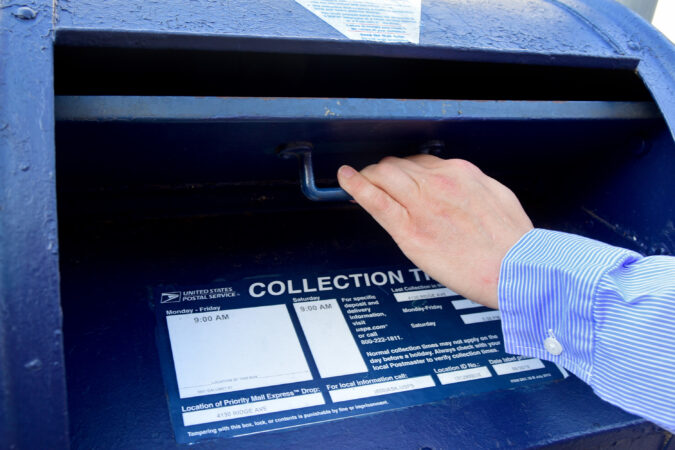
    HARRISBURG — Approximately 2.7 million pieces of state agency mail never reached Pennsylvania residents last month after a state-contracted vendor failed to send them, affecting outgoing correspondence from the state Department of Human Services and the Department of Transportation, officials said Tuesday.

    From Nov. 3 through Dec. 3, officials said, the affected state agency mail was never presorted and delivered by the vendor to the U.S. Postal Service, resulting in a backlog of millions of unsent state communications.

    Late last week, Pennsylvania state officials discovered that a month’s worth of mail had never been sent to residents by the outside vendor, Harrisburg-based Capitol Presort Services LLC. Once the issue was discovered, the state fired the vendor for failing to fulfill its contract and hired another vendor to work through the backlog.

    The state Department of Human Services, which oversees the care of the state’s most vulnerable residents and children, is still determining “the exact volume and categories of delayed mail,” said Paul Vezzetti, a spokesperson for the state Department of General Services. However, DHS was able to confirm that some services were not interrupted: residents waiting on Electronic Benefit Transfer (EBT) cards for receiving food assistance, mail sent by county assistance offices, and notices about suspended benefits during the federal government shutdown were not affected, Vezzetti added.

    PennDot driver’s license and vehicle registration renewal invitations, driver’s license camera cards, vehicle registration cards, and address update cards are all among the routine correspondences that were never sent to residents over the last month, Vezzetti said. Driver’s license suspensions were not impacted by the stalled mail. Vehicle registration and license renewal registrations are sent three months in advance, so anyone who was due to receive one at the start of November will have until February to submit it, the agency said.

    It was not clear on Tuesday which other state agencies’ mail had been impacted by the lapse in service.

    All of the recently discovered unsent state agency mail was transported to USPS on Monday by the state’s new vendor and will be promptly delivered to residents by the Postal Service, officials said. PennDot customers should receive any expected mail from the time period of Nov. 3 to Dec. 3 within the next 7-10 days, Vezzetti added.

    On Friday, the state secured a $1 million emergency contract with another mail presorting company, Pitney Bowes, to handle the multimillion-letter backlog.

    The state had contracted with Capitol Presort Services since May 1, 2021. The company filed for bankruptcy in 2022, but had continued its work for the state until last week, when the agency mail pileup was uncovered.

    It remained unclear Tuesday why it took a full month for officials to determine that 2.7 million pieces of state agency mail had not been reaching residents. It was also unclear how the issue was discovered by officials last week.

    The unsent mail may prove to be a major headache for Gov. Josh Shapiro’s administration, depending on which state communications were not delivered to residents. The backlog could include critical correspondence relating to state services, such as health benefits or food assistance, among others.

    State agencies regularly send communications by mail about an individual’s eligibility for services or benefits, renewals and appeals, and whether a person is due to appear at a hearing about that eligibility, and more.

    “Agencies across the Commonwealth continue to evaluate any potential negative effects of this mail delay and are taking proactive steps to mitigate potential impacts on Pennsylvanians,” Vezzetti added.

    A spokesperson for Gov. Josh Shapiro declined to comment.

    According to the state’s contract with Capitol Presort Services from 2021, the vendor was responsible for delivering more than 16 million pieces of state agency mail each year. Almost all of this mail was to be for the delivery of the state’s First Class and Next-Day mail, which are among the U.S. Postal Services’ fastest delivery options.

    Philip Gray, the president and owner of Capitol Presort Services, did not immediately respond to questions about his company’s bankruptcy and how the backlog of mail came about.

    Capitol Presort Services advertises itself as a way for “companies to maximize postal discounts while improving their mail delivery,” according to its website. Mail presorting allows organizations to prepare mail with the proper bar codes and trays needed for easy delivery by USPS, which USPS offers to companies at a discounted rate.

  • Gov. Shapiro ‘was instrumental’ in preventing SEPTA strike

    Gov. Shapiro ‘was instrumental’ in preventing SEPTA strike

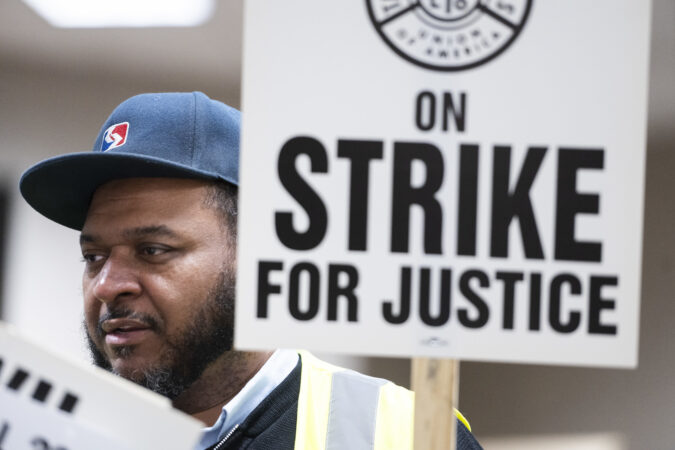
    Transport Workers Union Local 234 and SEPTA agreed Sunday night to continue contract talks in the morning, avoiding for now a strike that could have ground to a halt much of Philadelphia.

    Beginning in late afternoon, members of Gov. Josh Shapiro’s staff met with union leaders and SEPTA senior managers at the governor’s Philadelphia office. The goal was to unstick talks that had faltered, seeing if compromise was possible.

    The union’s push for an increase in pensions and SEPTA’s proposal for union members to pay a greater share of the cost of their healthcare coverage emerged over the last week as the biggest obstacles to an agreement, according to both union and transit authority sources.

    “Gov. Shapiro’s office brought the parties together and they made progress,” SEPTA spokesperson Andrew Busch said. “It was significant.”

    In a statement, the union said “significant progress” was made.

    “Gov. Shapiro was instrumental in preventing a strike that could have started as soon as Monday morning. We’re grateful for his close involvement,” said TWU Local 234 President Will Vera.

    Sticking points

    On Friday, Vera declared he was out of patience at what the union saw as SEPTA’s intransigence and threatened to lead members in a walkout.

    A work stoppage would have brought chaos to a mass transit system that carries a weekday average of 790,000 riders.

    TWU Local 234 represents 5,000 bus, subway, elevated train and trolley operators, as well as mechanics, cashiers, maintenance people and custodians, primarily in the city.

    Their one-year labor contract expired Nov. 7, but members stayed at their posts. On Nov. 16, they authorized Local 234’s leaders to call a strike if needed. The vote was unanimous.

    SEPTA and the union were not far apart on salary and both wanted a two-year deal after a series of one-year pacts during a time of financial crisis for the transit agency, sources said.

    Management wanted to hike what union members pay for health coverage and increase co-pays for doctor and hospital visits.

    The union pushed for an enhancement to the formula that determines retirees’ monthly pensions, based on years of service. It was last increased in 2016.

    SEPTA officials calculated that TWU’s proposed changes would have created an annual unfunded liability of about $6 million for an undetermined length of time. The union says the pension plan books showed a bump was affordable.

    Because TWU Local 234 is the largest SEPTA union, its contracts are used as a template for the other locals working for the transit system, which could boost costs.

    Regional Rail was a concern to SEPTA because commuter railroad workers, like others, receive a federal pension that has tended to be less generous. Those unions would have wanted a SEPTA sweetener to their retirement benefits too.

    TWU Local 234 also wanted changes to work rules involving sick time benefits and the length of time it takes new members to qualify for dental and vision benefits — currently 15 months.

    The local also represents several hundred suburban workers, primarily operators, in SEPTA’s Frontier district, which runs 24 bus routes in Montgomery County, Lower Bucks County, and part of Chester County.

    The Victory district has a similar number of employees, who are represented by SMART Local 1594. They run Delaware County’s two trolley lines, the Norristown High Speed Line, and 20 bus routes in the suburbs.

    Unions for both the Frontier and Victory districts could choose to strike alongside TWU Local 234. If that happened, Regional Rail, already plagued by delays and cancellations due to federally-mandated repairs on train cars, would be the only public transit running.

    Strike-prone reputation

    SEPTA unions have walked off the job at least 12 times since 1975, earning the authority a reputation as the most strike-prone big transit agency in the United States.

    TWU last struck in 2016. It lasted for six days and ended the day before the general election. Democrat Hillary Clinton’s presidential campaign was worried about voter turnout, and the city sought an injunction to end the strike. That proved unnecessary.

    Regional Rail would operate during a TWU strike. Locomotive engineers and conductors on the commuter service are represented by different unions than transit employees, and are working under current contracts.

  • Philly fans are ready for the ‘once in a lifetime experience’ of hosting a World Cup in their hometown

    Philly fans are ready for the ‘once in a lifetime experience’ of hosting a World Cup in their hometown

    Friday morning at Stateside Live! felt like a fever dream for Philadelphia sports fans.

    Pennsylvania governor Josh Shapiro stood above guests on the second floor of the entertainment venue surrounded by Phang, Gritty, Swoop, and the Phanatic as they prepared for the Philadelphia Soccer 2026 World Cup final draw watch party.

    “We won this bid to host the FIFA World Cup next year because we’ve got the greatest fans on the face of the earth,” Shapiro said. “The eyes of the world are going to be on Philly next year when we celebrate USA 250. … FIFA World Cup is going to be great. And let’s pray for a USA-Mexico matchup on July 4th right here in Philly.”

    Almost three hours from the John F. Kennedy Center for the Performing Arts, where the World Cup Final Draw was hosted, Philadelphia sports fans — including Union season ticket holders Donna and Gary Brown — gathered as they waited in anticipation to learn the fates of their favorite nations.

    “I’ve only been able to see the World Cup one other time and that was when we lived in Orlando and it was amazing,” Gary said. “But again, it’s our hometown now and our hometown team, so it just makes it even more special that it’s going to be here. It’s Philadelphia, it’s the birthplace of our country … and it’s our country’s 250th birthday.”

    The final draw was a pivotal moment for fans, as it sets the stage for what is expected to be an unforgettable summer of soccer, with the U.S. joining Canada and Mexico as host nations, and Philly being one of 11 American cities to host games.

    To witness history, Jim House, 45, and his son Maxwell, 13, made the trip from Atlantic City.

    “We really wanted to check out what’s happening with the World Cup,” Jim said. “It’s a once in a lifetime experience for my son and myself to hang out together and get to see all this.”

    Maxwell added: “I’m really excited for the World Cup. I’ll be watching a lot of the games.”

    During Friday’s draw, qualified teams — with a few spots left to be decided — were placed into 12 groups of four to make up the 48-team World Cup field. The United States was placed in Group D, alongside Paraguay, Australia, and the winner of a March 2026 UEFA playoff between Turkey, Romania, Slovakia, and Kosovo.

    Gabriel Luzbet of Harrison, N.J., juggles a soccer ball during the FIFA World Cup draw watch party at Stateside Live! on Friday.

    After seeing their grouping, Chester native Jared Micklos believes the United States has a good chance to advance to the knockout rounds.

    “The World Cup is a tricky tournament,” Micklos said. “It’s as much about the teams as it is the order you’re playing in. I think there’s a team we know well. We just played Paraguay and obviously that was a good result for the U.S. The play-in game, if that’s Turkey, I think it gets a lot trickier. That’s a difficult team. So, if they win the playoff, our group probably gets a little bit tougher.”

    Philadelphia will host six matches, including five Group Stage games and a round-of-16 match on the Fourth of July. Some fans, like 65-year-old Vorhees native George Flunt, don’t plan on missing a minute. Flunt already has his tickets for all six games, and spent a total of $11,000 to attend.

    “It’s a splurge, a little,” Flunt said. “Well worth it. It’s a true world event. We don’t get too many of those here in Philly. To bring in all the different countries together and showcase how good this city is, it really means a lot.”

    window.addEventListener(“message”,function(a){if(void 0!==a.data[“datawrapper-height”]){var e=document.querySelectorAll(“iframe”);for(var t in a.data[“datawrapper-height”])for(var r,i=0;r=e[i];i++)if(r.contentWindow===a.source){var d=a.data[“datawrapper-height”][t]+”px”;r.style.height=d}}});

  • Gov. Josh Shapiro’s administration just fired a vendor for failing to send state agency mail, impacting an unknown number of residents

    Gov. Josh Shapiro’s administration just fired a vendor for failing to send state agency mail, impacting an unknown number of residents

    HARRISBURG — An unknown amount of mail from Pennsylvania state agencies to residents has gone undelivered, Gov. Josh Shapiro’s administration discovered this week.

    The Pennsylvania Department of General Services said in a statement Friday that it has ended its contract with an unidentified vendor that pre-sorts state agency mail before delivering it to the U.S. Postal Service to be sent to residents around the state. The department discovered in the last 48 hours that the vendor “had been failing to deliver Commonwealth mail to constituents,” said Paul Vezzetti, a spokesperson for the department.

    The state is still determining how much and what type of mail was not delivered to Pennsylvania’s residents. It was unclear Friday why the vendor failed to send the state’s mail, where the mail was located when it was not in the state’s possession, how long the mail went unsent, and how the failure was not identified sooner.

    The unsent mail could prove to be a major headache for Shapiro’s administration, depending on the magnitude of the issue and which state communications were not delivered to residents.

    After discovering the backlog, the Department of General Services rapidly hired a new vendor to sort and deliver the unsent mail “as quickly as possible,” Vezzetti said. The unsent mail has already been transferred to the new vendor and the state estimates that it will be mailed by early next week.

    According to an emergency contract made public Friday, the state hired technology solutions company Pitney Bowes for $1 million, citing its preparedness to process and resume mail operations. If the services were not immediately restored, it “could result in missed deadlines, loss of services, delayed benefits, legal exposure, and operational disruptions for multiple agencies and constituents,” according to contract.

    The unsent mail from unspecified state agencies could include critical communications relating to state services, such as health benefits or food assistance, among other potential communications. State agencies send communications by mail about an individual’s eligibility for services or benefits, renewals and appeals, and whether a person is due to appear at a hearing about that eligibility, and more.

    Vezzetti declined on Friday to confirm which agencies were impacted by the stalled mail, or to name the vendor that had been fired.

    Pennsylvania lawmakers last month ended a 135-day-long state budget impasse that required counties, schools and social service organizations to take out loans or limit their services during the protracted budget fight.

    The state is now taking steps to “carefully assess and mitigate impacts” of the mail delay and adjust deadlines for impacted residents.

    Staff writer Ximena Conde contributed to this article.

  • Jeffrey Yass, Pennsylvania’s richest man, details how school vouchers drive his massive political spending operation in rare interview with Washington Post

    Jeffrey Yass, Pennsylvania’s richest man, details how school vouchers drive his massive political spending operation in rare interview with Washington Post

    It’s no secret that Jeffrey Yass, Pennsylvania’s richest man, is a big political spender.

    Just within the past year, the billionaire megadonor and founder of the Bala Cynwyd-based Susquehanna International Group largely bankrolled the unsuccessful effort to oust three Pennsylvania Supreme Court justices and has helped pay for President Donald Trump’s presidential transition and controversial White House ballroom.

    But in a rare interview with the Washington Post, published Thursday, Yass shared details on the key motivation behind his political spending: school vouchers, which supporters say will allow parents and students to choose their school. Yass’ unwavering support for vouchers and other school choice measures has led him to throw his dollars to Pennsylvania, other states, and to Trump, whose candidacy he once opposed.

    And in 2026, he said he’ll continue to financially back pro-voucher candidates across the nation.

    “I have come across what I think is a great way to relieve the suffering of tens of millions of kids,” Yass told The Washington Post. “To most people it’s like if you’re a libertarian billionaire, you must be Lex Luthor trying to do something nefarious. If I gave to a hospital, you wouldn’t be saying that.”

    School vouchers, which are opposed by teacher unions and public school advocates, have been a high-profile issue in Pennsylvania’s state budget talks in years past, but they’ve failed to pass it. Yass poured money into that effort, but Democratic Gov. Josh Shapiro, who has embraced — though softened — his support for a voucher program, vetoed the measure from the state budget after it couldn’t pass a Democratic-controlled state House in 2023.

    Yass told the Post that “It was a dramatic failure. We thought we had it.“

    The billionaire saw better success in Texas where he contributed to help defeat anti-voucher Republicans in the primary, creating a more favorable atmosphere for passing the state’s $1 billion voucher program.

    But these instances were hardly the beginning — or the end — of Yass’ involvement with politics. He gave $3.2 million in political contributions in Pennsylvania in 2018, and by last year, that had risen to $35 million, the Post reported.

    Though now known as a major backer of GOP candidates, he has supported Democrats who he believes can help champion the school choice message. The first major beneficiary of Yass’ contributions was State. Sen. Anthony Williams (D., Philadelphia) who unsuccessfully ran for governor in 2010 and Philadelphia mayor in 2015.

    And in 2007, Yass conversed with then-Sen. Barack Obama, who received a $2,300 donation from Yass for his 2008 presidential campaign, the Post reported. Yass believed that Obama would support school choice if elected, but his administration ended up opposing voucher programs for children in the D.C. school system.

    According to the Post, this may have been an indication to Yass that Democrats would not be an ally for the school choice cause.

    His allegiance to school choice also appears to have made him switch his perspective of Trump from an opponent — who spent millions of dollars to back GOP primary opponents in 2024 — to a supporter.

    But after the November 2024 election, where Trump was victorious, Yass changed his tune and helped bankroll Trump’s $14 million presidential transition and donated at least $2.5 million to the president’s proposed White House ballroom.

    The billionaire owed his change of thought on Trump to the president being “a true champion” of school choice, Yass told the post, crediting him for the passage of the Texas voucher bill and a new federal tax credit for donations to scholarship organizations.

    His support for the president also coincides with Yass having business in front of the Trump administration. Yass’ trading firm is a top stakeholder in ByteDance, TikTok’s parent company. Trump is mulling the fate of the popular social media app in the United States and Yass could benefit from a deal supported by Trump to keep TikTok operational here.