Tag: Montgomery County

  • Three years ago, the school choice debate shut down Harrisburg. Now Democrats are ready to engage.

    Three years ago, the school choice debate shut down Harrisburg. Now Democrats are ready to engage.

    HARRISBURG — Three years after a bitter budget standoff over allowing state funding to be used for private school tuition, top Democrats in Harrisburg are ready to engage on school choice.

    Legislative action and comments from a top House Democrat this week expressing openness to a federal school-choice program marked a notable change from 2023, when a fight over school vouchers put Democratic lawmakers at odds with both Republicans and Gov. Josh Shapiro, a member of their own party.

    The shift comes as Shapiro, who has embraced school choice and is a likely 2028 presidential contender, faces a deadline to opt in to President Donald Trump’s new federal tax credit program.

    House Majority Leader Matt Bradford (D., Montgomery) said this week that some of the uses of Trump’s tax credits, which are opposed by the country’s largest teachers unions, are “intriguing.” And he noted he is proud of some money the state now pours into one of the tax credits to fund private-school scholarships for low-income families in low-achieving districts. Those comments from Bradford, a top leader in Harrisburg, suggested a public softening on an issue that was previously a non-starter for his party — and signaled the school-choice debate may once again factor into state budget negotiations.

    “For our members of our caucus who want to see alternatives for the poorest kids in the poorest schools, we’re being responsive to the needs of those constituents,” he said in an interview, referencing growing support for school choice among some House Democrats, particularly those from Philadelphia.
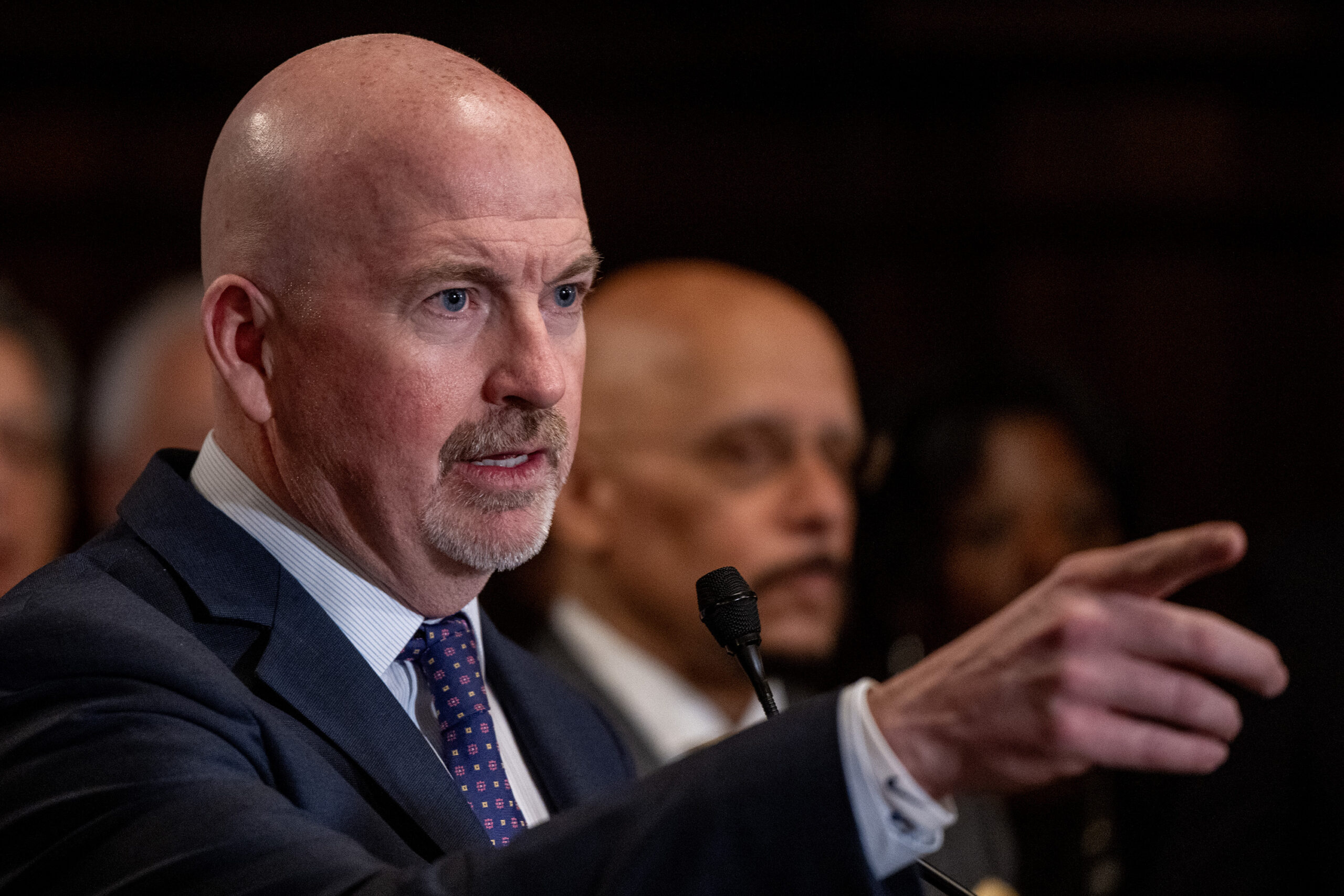
    State Rep. Matt Bradford (D., Montgomery County) during a press conference at the Capitol in Harrisburg Feb. 3, 2026.

    The school-choice movement, a largely Republican-backed effort to allow public dollars to go to private schools, faces strong opposition from education advocates who say such programs can take money from public schools.

    And that debate is sure to continue. Bradford said more oversight — and an overall reform of the current tax credits — is needed to make sure the state tax dollars are actually reaching poor students.

    Earlier this week, House Democrats fast-tracked an overhaul to the state’s current $680 million school-choice tax-credit programs to require additional reporting from private schools in order to secure funding. The legislation is likely to face opposition in the GOP-led Senate, where Republicans on Thursday advanced a $25 million increase to the programs ahead of a June 30 deadline to pass a state budget.

    Senate Republicans called the tax credits a “priority for empowering parents,” while the Archdiocese of Philadelphia said the House bill would be “devastating” to local Catholic schools and lead to fewer scholarships for students.

    A spokesperson for Shapiro said his office is reviewing the House bill, and declined to comment on whether his position on school choice has changed. Shapiro, who has sent his own children to private school in Montgomery County, has previously said he supports school choice, including school vouchers.

    Shapiro has until the end of the year to decide whether to opt in to the federal program. But the signal of openness from Bradford, who is close with the governor, offers potential insight into his path forward.

    That program, enacted last year under Trump’s “One Big Beautiful Bill Act,” would offer federal tax credits to donors for giving to organizations that grant private school scholarships. Many GOP-led states have already signed on, while some Democratic governors have declined to participate.
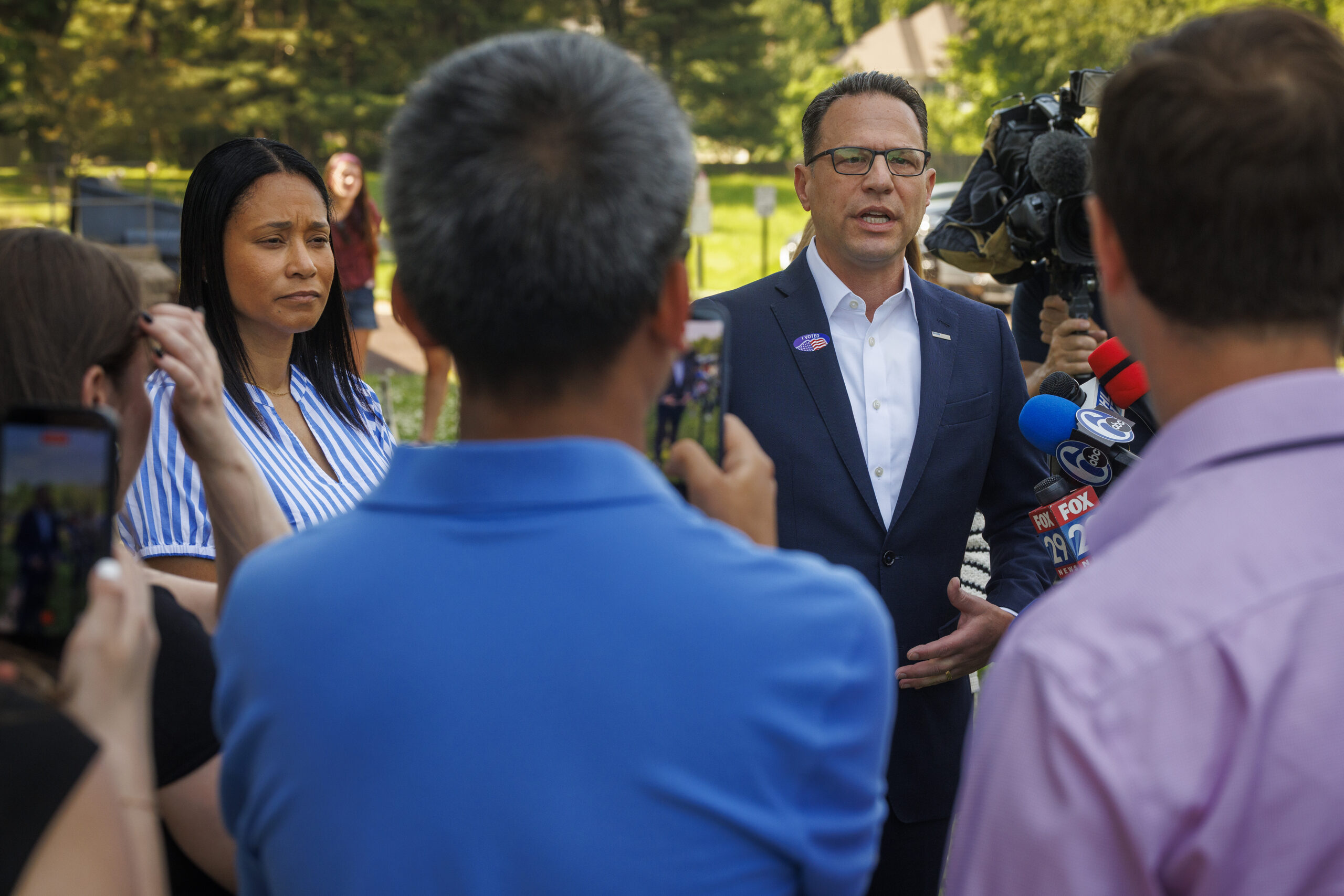
    Pennsylvania Governor Josh Shapiro taking questions from media on election day, Tuesday, May 19, 2026. He voted today at Rydal Elementary (West) 1231 Meetinghouse Road Rydal, PA. At left is Jamila H. Winder, Chair, Montgomery County Commissioners.

    Shapiro will also likely face questions about school choice on the campaign trail.

    He is running for reelection in November against Republican Treasurer Stacy Garrity. Garrity’s platform focuses, in part, on expanding school-choice options in Pennsylvania and she has the support of Commonwealth Partners, a political action committee largely funded by Pennsylvania’s richest man, Jeff Yass, which has poured money into supporting school choice.

    The issue will also likely surface a national stage if Shapiro enters the 2028 Democratic presidential primary race. His support for vouchers drew criticism from fellow Democrats in 2024, when he was a potential vice presidential nominee.

    Debate over state tax credits

    Pennsylvania does not have a direct school voucher program. Instead, the state sets aside $680 million each year for tax credits that allow businesses and individuals to write off charitable giving that supports private school scholarships.

    House Democratic support for those credits has quietly grown in recent years. In a June 2025 letter recently obtained by The Inquirer, 10 House Democrats, including five from Philadelphia and the head of the Pennsylvania Legislative Black Caucus, asked their leadership to expand a portion of the tax credits for students in the lowest-achieving school districts — revealing more Democratic support for the programs than was previously known.

    Public education advocates who oppose voucher programs say the state is funneling money to private schools with little accountability.

    “It’s just a pot of money that a bunch of people get, and nobody really knows where it goes or what happens to it,” said Susan Spicka, executive director of Education Voters PA.

    New requirements approved by the state legislature last year are set to take effect in November and will require scholarship organizations to report the dollar amount of each award, the recipient’s district of residence, and where they attend private school.

    The bill advanced by the House in a 105-97 vote this week would also require organizations to report each scholarship recipient’s income level — reducing the current limit to $144,000 for a family of four — and the amount of remaining tuition charged to a student. Advocates, including Spicka, called that information key to gauging whether scholarships are going to families who otherwise could afford private school.

    Bradford said he’s proud of the $110 million earmarked in existing state tax credits to provide additional money to kids attending schools where a majority of students are getting scholarships. House Democrats say their newest proposal would steer more money toward those students.

    But the proposed legislation — which would also reduce the tax credit donors could claim for some contributions, and require scholarship organizations to set 2% of funding aside for state oversight of the programs — drew swift backlash from private school advocates.

    Philadelphia Archbishop Nelson J. Pérez is “deeply concerned that this legislation would have a devastating impact,” said spokesperson Ken Gavin. “The clear intent is to lead to the dilution or elimination of the programs, which are vital.”

    Schools affiliated with the Philadelphia archdiocese educate nearly 44,000 students across 117 schools in the region, according to its website.

    Bradford, who is Catholic, said the Archdiocese’s response “missed the mark,” arguing that this legislative effort is trying to achieve a similar goal of serving students from poor families who attend the roughest schools.

    “I’m proud of my own Catholic faith. I love when my Catholic Church stands for those communities,” Bradford added. “No one should ever fear transparency, especially when you’re talking about three-quarters of a billion dollars of state tax dollars.”
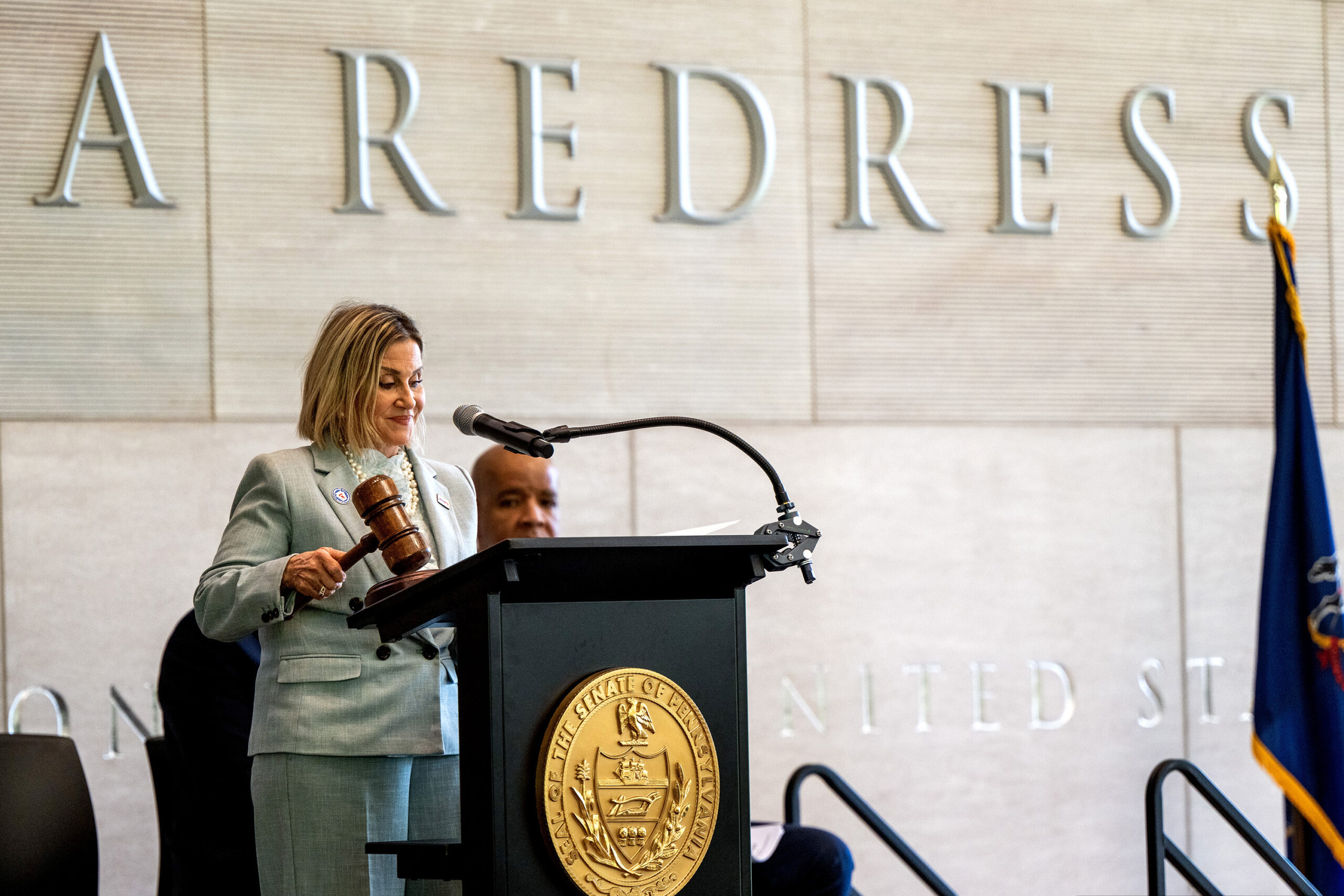
    President Pro Tempore Kim Ward gavels the opening as the Pennsylvania Senate hosts a ceremonial meeting at the National Constitution Center Tuesday, May 5, 2026.

    Meanwhile, Senate Republicans on Thursday amended another House bill to increase the state’s current tax credit programs to $705 million.

    President Pro Tempore Kim Ward (R., Westmoreland), a staunch supporter of school vouchers, said in a statement that Bradford‘s attention to school choice is disingenuous, criticizing the House Democrats’ bill as “overly burdensome auditing requirements disguised as ‘transparency.’”

    The 2023 budget breakdown, where Shapiro ultimately vetoed the school voucher program he‘d helped draft with Senate Republicans because it couldn’t pass the Democratic-controlled House, continues to tarnish his relationships with top GOP leaders, including Ward. He and Ward have hardly spoken since.

    “While Senate Republicans have consistently advanced legislation to provide scholarships to disadvantaged students, the track record for Gov. Josh Shapiro and House Democrats has been nothing more than a case of whiplash as their words and actions rarely align,” Ward said. “To me, it seems like the support for school choice by the House Democrat Leadership is more of a façade as they continue to cater to political special interests.”

    Ward has also called for changes to Pennsylvania’s new public school funding system, which includes an adequacy formula that directs more money to the state’s poorest school districts, including Philadelphia.

    Bradford, in response, said he is open to conversation about accountability and transparency, but that debate needs to include private schools benefiting from taxpayer dollars.

    “We shouldn’t carve out any portion of our K-to-12 education,” Bradford added. “That conversation needs to be uniform.”

    A choice for states on Trump’s tax credits

    Shapiro has previously said he would wait for more details before making a decision on whether to participate in the new federal tax credit program. The U.S. Department of the Treasury earlier this month released additional details, including that it will allow individuals to receive up to $1,700 in credits for making donations to private school scholarships that can cover tuition, tutoring, and more. In Philadelphia, families making $368,100 annually, or 300% of the county’s gross median income, would be eligible to receive the scholarship.

    School-choice advocates say Pennsylvania taxpayers will be able to claim the credit regardless of whether Shapiro opts in. But in order for Pennsylvania schools and students to benefit, the governor needs to join.

    Shapiro’s press secretary Rosie Lapowsky said the governor appreciates the guidance, but continues to await information on “how this will affect use of our existing tax credits, how states will be expected to administer the program, and how eligibility will be determined.”

    Twenty-eight states have opted in to the program, most of which are led by Republicans. And Democrats are facing pressure to stay out of the program.

    In a letter sent to Democratic governors this week, American Federation of Teachers President Randi Weingarten and National Education Association President Becky Pringle called the program “a Trojan horse carrying near-universal K-12 private school vouchers into every state that participates.”

    So far, Democratic governors elsewhere have taken differing approaches to the program. New York Gov. Kathy Hochul has said her state will participate but is waiting for final guidance before officially signing on. Other governors like Minnesota Gov. Tim Walz and Oregon Gov. Tina Kotek have announced that their states will not participate. Democratic governors in Arizona and Wisconsin have vetoed legislative efforts to force their states to opt in, while governors’ similar vetoes in North Carolina and Kentucky were overridden by legislators.

    Bradford said it’s “an abomination” that funding for Trump’s program came from Republicans making other cuts to the federal budget, and emphasized that state Democrats remain committed to increasing public education funding.

    “Here in Pennsylvania,” he said, “we are a humble 102 [Democrats] in the Pennsylvania House and we are nimble and pragmatic.”


  • Haverford parents are worried about chatbots in classrooms after a vote to buy AI tools

    Haverford parents are worried about chatbots in classrooms after a vote to buy AI tools

    A move by the Haverford Township School District to buy artificial intelligence tools for students and teachers has been met with protest from parents who fear the technology will erode learning.

    At a meeting last week, the Haverford school board voted 5-3 to approve contracts with School AI, which features AI “tutors,” and Brisk, which automates tasks for teachers, like developing quizzes and giving students feedback.

    While administrators said the tools wouldn’t supplant teaching and learning, critics said it was inevitable that AI would be used inappropriately — making it easier for kids to avoid work.

    “The idea of putting chatbots on computers — I don’t even care what age. I’m pretty disgusted by that,” said Christine Seewagen, a district parent of rising 12th and 7th graders.

    The district already struggles to manage technology in the classroom, said Seewagen, who said her older child has observed students run math questions through an AI tool on their phones. Her younger child, meanwhile, had a teacher who directed students to upload essays to an AI tool to get feedback, Seewagen said.

    “They’re just using AI, and not really being instructed on how to do it,” Seewagen said in an interview.

    Administrators said they were recommending buying AI tools in part because teachers are already using freely available versions, and they want to “eliminate free roaming around platforms,” Robert Anderson, the district’s technology director, said at the June 18 board meeting.

    Haverford’s superintendent, Matthew Hayes, said the School AI contract would “allow us to have a resource so that as we go through the process of the strategic plan and looking at all the implications down the line,” the district could begin teaching AI “thoughtfully, responsibly, ethically.”

    He added: “And also reducing screen time,” without providing further details.

    The controversy around AI in Haverford is the latest example of area parents pushing back on what they see as excessive and unchecked technology use in schools.

    In Lower Merion, parents have pushed to opt their kids out of district-assigned laptops or tablets; the district is planning changes to reduce usage for younger students, but has told parents they cannot opt out entirely. Parents in other districts are also raising concerns about too much Chromebook use.

    In Haverford, some parents said they were caught off guard by the proposal to adopt technology they felt posed risks to their kids.

    Patrick Burland, the parent of an incoming 10th grader and 6th grader, noted he’d had to sign numerous permission slips for his younger child to participate in end-of-year celebrations.

    “Apparently, sugar requires a signature, but cognitively rewiring her brain does not,” Burland told the board.

    Anderson said Haverford had been considering how to incorporate AI for years. He said the district sought feedback from teachers, including through an AI working group, before proposing the contracts.

    Board members who voted for the AI tools, meanwhile, said kids needed to learn how to use the technology responsibly.

    “Not acknowledging that it’s here … we don’t gain anything, right? We actually lose and we put ourselves farther behind because it’s not going anywhere,” said board member LaTonia Lee.

    But some raised questions about what the district was planning to do with the tools.

    Dave Schwartz, another board member, said he would support teaching kids about AI. But the district hasn’t said how it plans to do that, he said.

    “We’ve been talking very much in vague terms, and I can’t vote for something that I don’t understand,” Schwartz said.

    A district spokesperson did not respond to a question this week about examples of how School AI might be used.

    Board member Chris Shelton asked Anderson about criticism that the tool’s “historical figure” chatbots were giving students inaccurate information. (Last year, School AI acknowledged that responses from an Anne Frank character “didn’t provide critical historical details about the Nazis’ role in the Holocaust.”)

    Anderson called it “unfortunate” that the company had promoted the historical figures feature, but said the district “would have the option to potentially not use something like that.”

    John Flagler, a board member and English teacher, said he understood the burdens placed on teachers, “but I also believe there are lines that should not be crossed.”

    The suggestion that grading papers is a “menial task” that could be offloaded to AI “is an insult to both the teacher and the student,” Flagler said, calling grading essential to teachers learning about students.

    Administrators said Brisk wouldn’t be used for grading, but would provide “first-level feedback” — informing students they’re missing a topic sentence, for instance, said Meridith Herne, the district’s technology integration coordinator.

    “We insist that our teachers read it over and modify it so it’s in their own voice,” Herne said of Brisk’s feedback. Hayes said that 97 district teachers already use a free version of the tool.

    He said the tool was not meant to replace teachers.

    “That’s not my intent at all,” Hayes said, describing Brisk as “an option for individuals who want exposure to it.”

    He noted that the contracts with Brisk, for $22,260, and School AI, for $12,999, were each limited to one year.

    Teachers will be trained on the School AI platform, Anderson said; it will be up to them to decide whether they want to use it. He said the district envisions the platform being used in high school and “potentially” middle school, but isn’t planning for it to be used in elementary schools.

    Parents like Burland and Seewagen, who said like-minded parents have been organizing on social media, weren’t persuaded.

    “It does not feel like to me they have put any guardrails on,” Burland said in an interview. He questioned whether the district would have considered turning off School AI chatbots, for instance, had it not been asked at the board meeting.

    Seewagen said many parents who have learned about the AI plans aren’t happy.

    “It did not go under the radar,” she said.

  • Rachel Maddow recalls her ‘formative’ time in Philly and the city’s most overlooked hero ahead of MS NOW event

    Rachel Maddow recalls her ‘formative’ time in Philly and the city’s most overlooked hero ahead of MS NOW event

    Rachel Maddow’s brief turn as a Philadelphian began with her bicycle being stolen on the first day of a new job.

    “I got to work at 9 a.m. and I got out for lunch before noon, because I didn’t have anything to do,” Maddow said. “My bike was already gone.”

    MS NOW’s top star was in Center City on Thursday night to interview constitutional legal expert Sherrilyn Ifill live in front of nearly 2,000 people at the Academy of Music.

    But prior to the event, she reminisced about her brief time in Philly in the early 1990s, shortly after she came out as gay during her freshman year of college at Stanford University.

    “It didn’t go well at home, so it was a bit of a scramble in terms of like paying for college, figuring out what I was going to do, where I was going to live,” Maddow said. “And I got an internship at a think tank at Penn.”

    Maddow lived in West Philadelphia and basically ate nothing but Ethiopian food for a few months, though she can’t remember the name of the street: “It was in the 40s and it was one of the tree-named streets.”

    In college she was an AIDS activist and focused on healthcare policy, so landing at the University of Pennsylvania’s Leonard Davis Institute of Health Economics seemed liked an ideal fit.

    Maddow said her job was to answer the phone. But the internship didn’t last long.

    “I was not an additive,” Maddow said. “I don’t think I was an asset to the organization.”

    Kiyoshi Kuromiya seen here in 1992, was a gay civil rights activist who helped establish ACT UP Philly.

    Maddow’s activism began when she was still in high school, when she began working at a hospice for people who were dying during the AIDS epidemic.

    Still, those few months living in Philadelphia influenced Maddow’s developing political voice. She idolized ACT UP Philly, an activist organization fighting for people with HIV/AIDS, and thinks that gay civil rights activist Kiyoshi Kuromiya is the city’s most overlooked hero for the work he did helping connect people with hard-to-find information about the virus and treatment.

    “He saved millions of lives,” Maddow said. “The city needs to build a statue for Kiyoshi Kuromiya.”

    Maddow has returned to Philly a number of times over the years, and every time she does, it makes her feel like she’s 19 again. Things have changed — seeing Indego bicycles to rent on street corners after hers was stolen is pretty jarring — but though her time living here was brief, she didn’t hesitate saying, “Philly was really formative for me.”

    “The thing I loved about Philly at the time, and that I kind of fell in love with, even before I really knew what to do with it, was the really sparky, edgy, impolite activist spirit,” Maddow said. “I think I’m just a middle-class polite kid who doesn’t like to offend anybody, and Philly kind of shook me out of that a little bit, and made me aspire to edgier things.”

    More live events and a new app coming from MS NOW

    Nearly 2,000 people attended Thursday night’s event at the Academy of Music.

    A strong Philly current ran through MS NOW’s event Thursday night, which highlighted the messy history of the American experiment leading up to the country’s 250th anniversary next week.

    MS NOW president Rebecca Kutler, who oversaw the event, is a Philly native who grew up in Center City and later Montgomery County. Host Ali Velshi lives in Bryn Mawr and commutes to New York every day to host The 11th Hour, which he recently took over as part of a lineup change.

    Former White House press secretary for then-President Joe Biden and current MS NOW host Jen Psaki was also part of Thursday event, where she interviewed Pennsylvania Gov. Josh Shapiro, who was raised in Upper Dublin Township in Montgomery County. Psaki doesn’t have any connection to the area other than friends who live here — and

    “My mother’s best friend of 70 years lives here,” Psaki said.

    Thursday’s event was part of a larger strategy of engagement at the network after breaking away from NBC and becoming part of Versant, hence the name change from MSNBC to MS NOW. Ratings are up, but the cord-cutting trend is undeniable, so MS NOW is attempting to secure a digital future while it remains a popular TV destination.

    The network has now hosted three large fan events since 2024 and another is planned for Sept. 26 ahead of the midterm elections, though further details have not been announced. Attendees in Philly on Thursday night received a free, one-year subscription to MS NOW’s membership product that is set to launch soon. It will act as a streaming platform and online community for the network’s progressive fans and provide access to its biggest stars.

    “We’re always looking for ways to connect with our MS NOW community, to meet more viewers where they are, and to engage them in new ways,” said Lauren Peikoff, the network’s executive producer of live events.

    Cecil Parker, a Philadelphia musician, said the state of affairs in Washington compelled him to attend Thursday’s event.

    “Urgency. That’s the all-encompassing word,” Parker said, who often tunes into MS NOW to get their take on the news. “They have their opinions, but it’s based on the facts. So I dig that.”

    Some audience members traveled from as far as Arizona and California to have a chance to hear Maddow and her MS NOW colleagues in person.

    Tony Clyburn and his wife, Lisa, drove more than 10 hours from West Columbia, S.C., to take part. A radio host back home, Clyburn said it was inspiring being in a room with people from different walks of life who want what’s best for their neighbors and their country.

    “These gatherings are good because they’re as close to a town hall as we can get,” Clyburn said.

  • A gift to Temple will create the first endowed editor position at its student newspaper

    A gift to Temple will create the first endowed editor position at its student newspaper

    Jack Pinkowski relished his time as a photojournalist for Temple University’s student newspaper when he was enrolled there in the 1960s.

    And he always admired the work of his father, the late Edward Pinkowksi, an historian and author who founded a small newspaper in the Montgomery County borough of Bridgeport.

    This month, Pinkowski, a 1968 Temple grad, and his wife, Monica, gave Temple a $1.25 million gift, a portion of which will for the first time endow the editor-in-chief position for the Temple News, as well as increase other staff salaries and pay for some story-related travel and new equipment.

    Pinkowski said the need for journalists has never been more important, and he lamented the struggles print journalism has faced.

    “We hope to show it a lifeline, give it some support to encourage people to go into that as a field of endeavor,” said Pinkowski, 78, of Plantation, Fla. “This named editorship is a tribute to my father for starting a newspaper and having a lifetime as a critical mind that searched for facts and put them together and brought stories to the enjoyment of people.”

    Of the gift, $250,000 will be used to create an endowment for the student newspaper, and the remaining $1 million will fund scholarships of up to $10,000 per academic year for students to study at Temple’s Rome campus. Applicants must have knowledge of, coursework in, or a commitment to promoting Polish or Italian studies, history, or culture.

    The Pinkowskis made their money by investing in and managing real estate as well as through other careers.

    The couple both worked in businesses with global ties — Jack as an importer of furniture and Monica as an importer of gourmet foods to restaurants — and saw the merit in global study. They also both attended a study abroad program for adults at Temple Rome in 2024.

    Given the federal government’s policies affecting foreign students, Pinkowski said, he thought it was important to support the Rome campus so that students have an alternative way to attend an American university.

    Temple president John Fry said he especially likes that the gift is so personal and that it is widening access to students to participate in both studying on the Rome campus and working for the student newspaper.

    “These are two really important experiences that many students have to forgo, and I think the Pinkowskis are making both of those possible,” Fry said. “Its meaning and impact are significant.”

    The gift comes as the college prepares to close a record fundraising year, led by a record $55 million gift from alumnus Christopher Barnett in October and a large gift in April from alumna Jane Creamer Sullivan and her late husband, Thomas J. Sullivan, to start its new honors college.

    A boost for the Temple News

    John DiCarlo, managing director of student media and adviser to the Temple News, said its portion of the Pinkowski gift will be incredibly important in supporting the newspaper with a staff of 37, which last academic year ran on a $115,596 budget that largely covers salaries and print costs.

    Most of the costs were covered by the university, with the newspaper responsible for raising $23,500 through ad revenue and other means. If the publication exceeds that goal — which it did last year, raising over $29,000 — it can funnel the additional money back into operations, DiCarlo said.

    The new endowment, DiCarlo said, will bring in an additional $10,000 to $12,000 annually, depending on its earnings.

    Incoming senior Sienna Conaghan, 20, who will be the inaugural Edward Pinkowski Editor-in-Chief, said she is grateful for the funding, which will cover her approximate $5,400 salary. And she is glad that salaries for other staffers can get boosted, too.

    “We’re asking them to do full-time jobs on a college student’s budget and a college student’s schedule,” DiCarlo said. “It takes a lot out of them because they really care.”

    Conaghan, a journalism major from West Yellowstone, Mont., estimates that she spends about 30 hours a week on Temple News work. She freelanced freshman year, was assistant sports editor sophomore year, and worked as sports co-editor last year.

    The experience is more important than the paycheck, said Conaghan, who plans to pursue a career in sports journalism, but the money helps.

    “It has really been everything,” Conaghan said of her Temple News work. “I think I’ve learned so much from working at the Temple News, from how to be a journalist and also just how to be an adult and a person.”

    The Pinkowskis initially gave a gift to the Temple News in 2023 to help it reach a fundraising goal. The college wanted to be able to pay student journalists a little more because some were having to take on second jobs to generate more income, DiCarlo said. At that time, he said, he had no idea the couple would return with such a large gift three years later; it is the largest gift the Temple News has ever received.

    “Monica and I are avid readers and avid followers of print journalism,” said Jack Pinkowski, a graduate of Philadelphia’s Central High School.

    Pinkowski said his father decided to start the now-defunct Bridgeport South Side Press in 1950 because the community did not have a local paper. He also wrote history books about the local area, using skills he developed as a journalist, Pinkowski said.

    The Pinkowskis have had other career experience in addition to real estate and import businesses.

    He was a general contractor and wedding photographer early on and later spent 18 years as an associate professor of public administration at Nova Southeastern University’s school of business and entrepreneurship in Florida.

    And she was a flight attendant at one time and as a child grew up working in a family traveling carnival business in Missouri — which helped pay for her education at the University of Missouri-Kansas City.

    Jack Pinkowski said the common thread in their endeavors has been “inquisitiveness and intellectual curiosity and the ability to take something where there’s nothing and make something of it.”

    Both Temple officials and the Pinkowskis hope their gift will motivate others.

    “I do believe that other people pay attention to that, and it makes them say, well, maybe they can do something as well,” Jack Pinkowski said.

  • Philly area set to receive record-breaking $322M in state and federal money for trails

    Philly area set to receive record-breaking $322M in state and federal money for trails

    Philadelphia and its surrounding counties are set for what could be a record-breaking $322 million in federal and state funding to go toward building new trails segments, say trail advocates.

    Projects in line for funding include the much-anticipated Spring Garden Connector in Philly. And it would include the Newtown Rail, Chester Creek, and Parkside-Wynnefield-Cynwyd trails in the suburban counties.

    The money is part of a larger $8.2 billion pool of transportation funding updated through the federal Transportation Improvement Program (TIP) for 2027 and spread over four years.

    “We consider this to be potentially record breaking,” said Patrick Monahan, vice chair of the Circuit Trails Coalition in Pennsylvania. “It’s proof that the trails are being treated as essential infrastructure, making it safer and easier to walk and bike in the region.”

    In 2024, Pennsylvania received $200 million for trails under TIP.

    Pennsylvania gets its TIP plan updated every two years and the majority of money goes to highways, bus and rail systems, trolleys, and ferries. It is part of an agreed-upon list of priority transportation projects. That list includes 344 projects.

    In all, this year’s proposed $322 million in funding for trails would advance 27 bike and pedestrian projects across Philadelphia, Bucks, Chester, Delaware, and Montgomery Counties.

    The Delaware Valley Regional Planning Commission (DVRPC) is set to vote on approving the allocations in July.

    The trails, either begun or being planned, are part of the Circuit Trails, a network of hundreds of miles of multiuse trails throughout the Philadelphia region including southern New Jersey, which updates its TIP funding in alternate years.

    A sample of the trail projects in line for funding include:

    • $11 million for the second phase to extend the Schuylkill Banks trail in Philadelphia south from near 61st Street to Passyunk Avenue that would include a new park at the base of the Passyunk Avenue Bridge.
    • $58.5 million for Philadelphia’s Spring Garden Connector project that would link trail systems along the Delaware and Schuylkill rivers and make Spring Garden Street safer for cyclists and pedestrians.
    • $50 million to improve safety for roadway users, including pedestrians and cyclists, on PA 291 from Irving Street to Ridley Creek. The project includes building a multiuse side path that will be designated as part of the East Coast Greenway, a trail system linking Maine to Florida.
    • $8.5 million for the Chester Valley Trail, a multiuse trail along the alignment of the former Philadelphia and Thorndale Branch, a former freight train route, including renovation of the Whitford Bridge and Downingtown Trestle Bridge for bicycle and pedestrian use.
    • $10 million to develop a segment in Whitemarsh Township, Montgomery County, that would run from the existing Wissahickon Trail in Fort Washington State Park to the existing Cross County Trail near SEPTA’s Fort Washington Station.
  • Merakey USA, a large Montco-based human services provider, is expanding with Ohio acquisition

    Merakey USA, a large Montco-based human services provider, is expanding with Ohio acquisition

    Merakey USA, based in Lafayette Hill, is acquiring Boundless, an Ohio nonprofit that provides services for people with intellectual and developmental disabilities and behavioral health needs, in a deal that leaders of both organizations described this week as a model for their industry.

    “It’s the marriage of two financially stable organizations” that are preparing for turbulence in the human services sector, said Merakey CEO Joseph S. Martz. More typically human services deals happen because one nonprofit needs a financial rescue, as happened with Philadelphia’s Resources for Human Development in 2024.

    Merakey and Boundless planned to announce the news Thursday.

    Martz and the CEO of Boundless, Patrick Maynard, both said the size of the combined organization — more than $1 billion in revenue — would enable it to invest in the systems, technology, training, and workforce development needed to be financially sustainable.

    The deal, expected to close in July, will create an organization that supports 50,000 individuals and families annually in 12 states and employs 11,000 people.

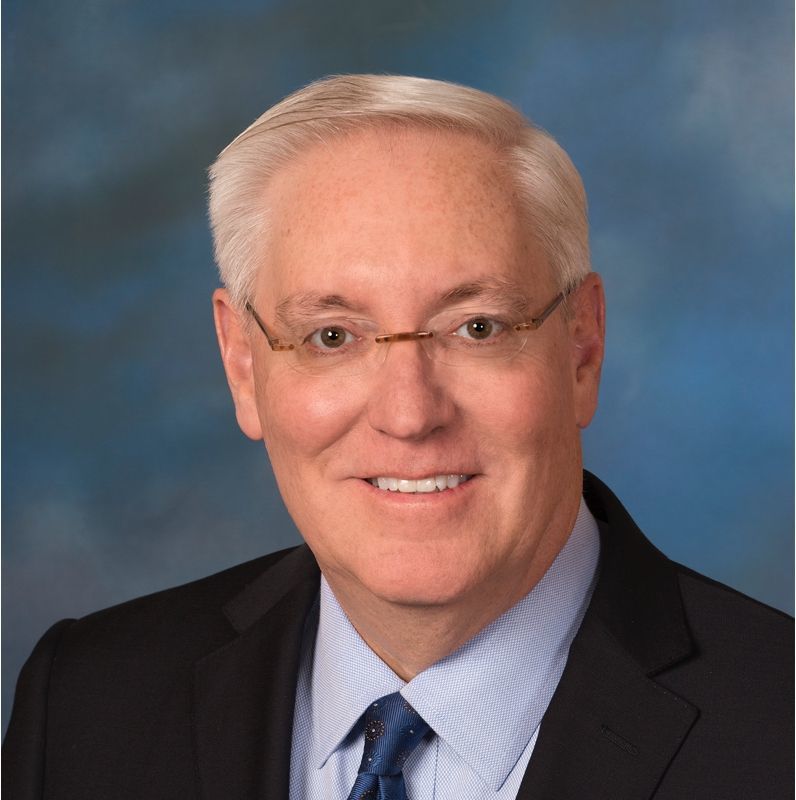
    Joseph S. Martz is CEO of Merakey USA, which is acquiring Boundless, a human services provider based in Columbus, Ohio.

    The executives cited pressures from an expected change in how their organizations get paid. A shift is underway to payment for results rather than for straight volumes of services. Looming cuts to Medicaid over the next decade are also forcing human services providers to rethink how they operate.

    “We’re entering a time when resources are going to be a lot tighter, and I think organizations need to be thinking differently about how they approach that. We’re seeing some other pretty large consolidations,” said Chuck Ingoglia, CEO of the National Council for Mental Wellbeing, a Washington nonprofit advocacy group.

    Origins of the Merakey-Boundless deal

    Stacy DiStefano, CEO of Consulting for Human Services, a Philadelphia-based adviser firm, introduced Martz and Maynard to each other in July 2024.

    That led to a series of conversations about issues the two organizations were spending money to solve and the realization: “Why don’t we just come together and use the combined resources of our organizations to solve that problem,” Martz said.

    Merakey and Boundless had already been growing through acquisitions, though Boundless has grown more dramatically. In the last seven years, the nonprofit made five acquisitions that helped increase its annual revenue to an expected $200 million this year from $20 million, Maynard said.

    “My goal was to create sustainability in a broken system where most of us are living off of Medicaid, which comes nowhere close to providing the resources that cover the costs,” Maynard said.

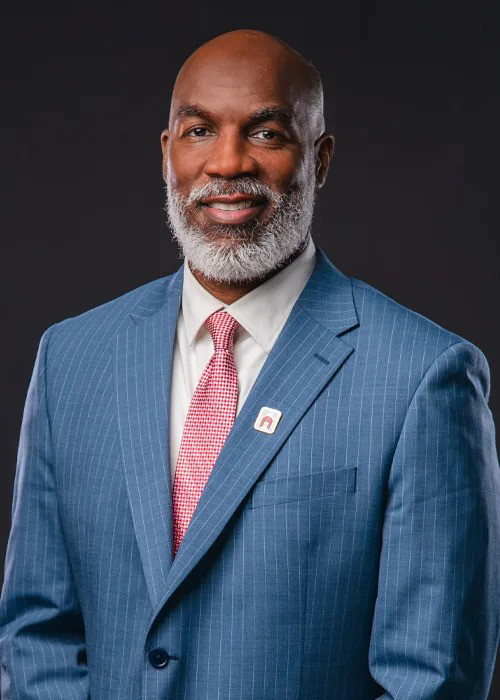
    Patrick Maynard is CEO of Boundless, a Ohio human services provider that is merging into Merakey USA, of Lafayette Hill.

    The added scale enabled Boundless to add healthcare and dentistry for its clients, but the Medicaid shortfall for those dental services is $75,000 a month, Maynard said. That kept Maynard looking for even bigger partners, like Merakey.

    Maynard cited Merakey’s expenditure of $18 million for Workday software, a system for human resources and financial management as an example of something Boundless could never afford. At $200 million in annual revenue, Boundless struggled to spend $2 million on a system for electronic health records, he said.

    A new structure

    Merakey, which started as the Northwest Center in the Mount Airy section of Philadelphia in 1969, remains firmly rooted in Pennsylvania. The state is expected to account for more than half its $850 million in revenue for the fiscal year that ends this month, Martz said.

    In 2023, Merakey and Elwyn, a similar nonprofit based in Delaware County, announced a preliminary merger agreement, but a final deal did not happen.

    States where Merakey operates include Indiana, Kentucky, Ohio, Michigan, and Wisconsin. A new division called Boundless Midwest, led by Maynard, will assume responsibility for Merakey’s operations in that region when the deal is done.

    Both boards have approved the transaction, which remains under review by the Ohio Attorney General.

    Martz said he expect Boundless to continue growing though acquisitions and the development of new programs with the support of Merakey.

    “We are going to be a big organization, but it’s really about being a better organization, about the quality of care that we provide,” Martz said. “If you’re not culturally aligned, bigger for bigger sake, just doesn’t make any sense to me.”

  • Former Hatboro daycare worker charged with assault for injuring a child with special needs, police say

    Former Hatboro daycare worker charged with assault for injuring a child with special needs, police say

    A former employee at a Hatboro daycare injured a child with special needs by slamming him, hard, into a chair and, later, onto the floor, Montgomery County prosecutors said Wednesday.

    Thomas Coleman, 42, of Holland, Bucks County, has been charged with endangering the welfare of a child and simple assault in connection with the March 23 incident involving a 4-year-old boy at KinderCare on Warminster Road.

    Coleman remained in custody Wednesday with bail set at $25,000. His attorney, Stephen Jones, did not return a request for comment.

    Coleman had been the subject of two previous investigations of his conduct toward children at KinderCare, according to the affidavit of probable cause for his arrest. Those incidents involved him “putting a kid down on a mat too hard and yelling at students,” the affidavit said.

    Administrators at KinderCare placed Coleman on leave after the earlier incidents, the affidavit said, but they allowed him to return to work after completing training.

    After the latest incident, however, he was fired, the affidavit said.

    KinderCare’s director, Ashley Ross, did not return a request for comment Wednesday.

    Hatboro police learned of the alleged assault when the boy’s parents contacted them in March, the affidavit said.

    The mother said another parent had seen Coleman pick up her son, who is autistic, by his arms and roughly place him in a chair, hitting the boy’s neck on the back of the chair, and then forcefully push the chair into a nearby desk, the affidavit said.

    The boy then got out of his seat and walked to a carpeted area of the room, according to the parent who witnessed the assault. Coleman, appearing frustrated, than grabbed the boy by his chin and slammed him down onto the floor, the parent said.

    When the boy’s mother picked him up from daycare, she said, she noticed scratches and marks on his neck. Coleman told her the injuries were self-inflicted but would not provide more details, the affidavit said.

    Later, the woman had her son examined by a chiropractor, who told her the boy’s hips were out of alignment.

    Coleman is scheduled to appear before a district judge for a preliminary hearing on July 2.

  • Abington schools are reviewing security after a man charged with trying to rape a girl repeatedly entered the high school

    Abington schools are reviewing security after a man charged with trying to rape a girl repeatedly entered the high school

    The Abington School District is reviewing security procedures after police charged a 25-year-old man with trying to rape a student who repeatedly let him into Abington Senior High School.

    Police charged Raeem Grange-Allen of Philadelphia on Friday with attempted rape by force and attempted statutory sexual assault, among other charges. The student, a 14-year-old girl, told police she had met Grange-Allen at the high school.

    Grange-Allen initially identified himself as a student and began communicating with the girl through text messages and social media, according to a police affidavit.

    Grange-Allen later asked the girl to let him into the school “and requested she perform oral sex on him behind a stairwell,” according to the affidavit. The girl told police she “saw him or let him into the school approximately three to four times.”

    In a message to families Tuesday, Abington Superintendent Jeffrey Fecher said the girl let Grange-Allen into the high school on two occasions in March, opening a back door during the school day.

    “Video footage shows he was wearing a hoodie and was able to briefly blend in as a student while moving in the hallways,” Fecher said.

    On March 27, Grange-Allen came to the girl’s home in Abington Township, where he held her down and attempted to rape her, according to the police affidavit. The girl screamed, and her mother caught Grange-Allen, according to the affidavit. The girl went to the police the next day.

    Fecher said there were “numerous unresolved questions about this man’s presence in the high school, as well as, where and when he initially encountered the victim.”

    The district is “launching a third-party internal investigation” and reviewing security protocols, Fecher said. While exterior doors are locked throughout the school day, “building occupants always have the ability to open them from the inside for evacuation purposes, as required by law,” he said.

    Fecher said the district would be working with the Montgomery County Department of School Safety “to determine whether additional security measures can be put in place.”

    “We share in the concern and shock that this information causes, and we are committed to addressing it effectively,” Fecher said.

    As of Wednesday, Grange-Allen was being held at the Montgomery County Correctional Facility on $250,000 cash bail.

  • AristaCare at Meadow Springs is keeping patients in-house for a lung procedure that used to require a transfer to a hospital

    AristaCare at Meadow Springs is keeping patients in-house for a lung procedure that used to require a transfer to a hospital

    AristaCare at Meadow Springs, a Plymouth Meeting nursing home that specializes in patients who need ventilators to help them breathe, has started doing a key lung procedure in-house that used to require patients to be transferred to a hospital.

    The effort is part of a broad trend in healthcare to provide more care outside of hospitals, which are the most expensive sites of care.

    Meadow Springs’ goal in doing the lung-clearing procedures in-house is reducing the number of times its residents are hospitalized, the facility’s administrator Rob Nealon said.

    Keeping residents in the facility benefits Meadow Springs financially even though it doesn’t charge for the treatment because it doesn’t lose revenue to hospitals, Nealon said. It’s also better for residents to avoid difficult transitions and long hospital stays, he said.

    The treatment, called a bronchoscopy, uses suction tubing with video to go deep inside a patient’s lungs to clear out secretions and mucus plugs that make it hard for ventilator patients to breath, said Lejoy Mathew, respiratory director for the facility.

    The nursing home with 153 licensed beds has the capacity to care for 72 people on ventilators.

    AristaCare did its first bronchoscopy in February and has done four more since then, Mathew said.

    Patients who are dependent on ventilators often have a chronic respiratory disease, neuromuscular or neurodegenerative diseases, or traumatic brain injuries.

    The company, based in Cranford, N.J., also owns AristaCare at East Falls, another ventilator facility it acquired in 2024, and plans to start doing bronchoscopies there as well. The East Falls facility has 66 beds.

  • The Norristown school board plans to hire Delaware’s Superintendent of the Year

    The Norristown school board plans to hire Delaware’s Superintendent of the Year

    The Norristown school board plans to vote Monday to hire Delaware’s Superintendent of the Year as the district’s next leader.

    The board announced Sunday that it had selected Dorrell Green, the superintendent of the Red Clay Consolidated School District in New Castle County as its pick for superintendent.

    Green is expected to start as superintendent in the Norristown Area School District on July 20, under a five-year term with an initial salary of $270,000, according to an agenda for Monday’s meeting.

    Dorrell Green, the superintendent of the Red Clay Consolidated School District in New Castle County, Del., is to join Norristown Area School District as superintendent on July 20, 2026.

    Green’s selection comes after the board, which has a new majority after November’s school board elections, moved this spring to oust Superintendent Christopher Dormer, citing poor test scores. The board has since sparked controversy with other changes, including eliminating its DEI director.

    Throughout the superintendent search process, “our community made it clear that they were seeking a visionary leader who is committed to student achievement, educational excellence, and meaningful engagement with all stakeholders,” the board’s president, Jeremiah Lemke, said in a statement.

    He said Green’s “experience, leadership record, and commitment to serving diverse school communities” set him apart during a search process that was led by a consulting group and attracted 88 applicants.

    Green has worked in public education for more than 25 years, including as a teacher, principal, and assistant superintendent.

    In Red Clay, Delaware’s largest school district with 15,000 students, Green has served as superintendent since 2019. He expanded early childhood education during his tenure there and increased access to advanced course work, according to the Norristown board.

    Before that, Green was the first executive director of the Delaware Department of Education’s Office of Innovation and Improvement, an office created by former Delaware Gov. John Carney to support the state’s neediest schools.

    Green has a bachelor’s degree in elementary education and master’s degree in educational leadership from the University of Delaware. He has a doctoral degree in organizational leadership from Wilmington University.