Angelo’s Pizzeria owner Danny DiGiampietro has been pursuing two ambitious goals: reviving a landmark Montgomery County bakery and opening a branch of his Michelin-recommended pizza-and-sandwich operation in South Jersey, where it all began.
Both projects now appear to be gaining momentum. While Angelo’s vaunted rolls are being baked at the former Conshohocken Italian Bakery property, which DiGiampietro purchased last year, the long-held plans to reopen the bakery’s counter to retail customers remain on hold. DiGiampietro said the building requires additional work, which he declined to specify. “Every time we fix one thing, something else comes up,” he said.
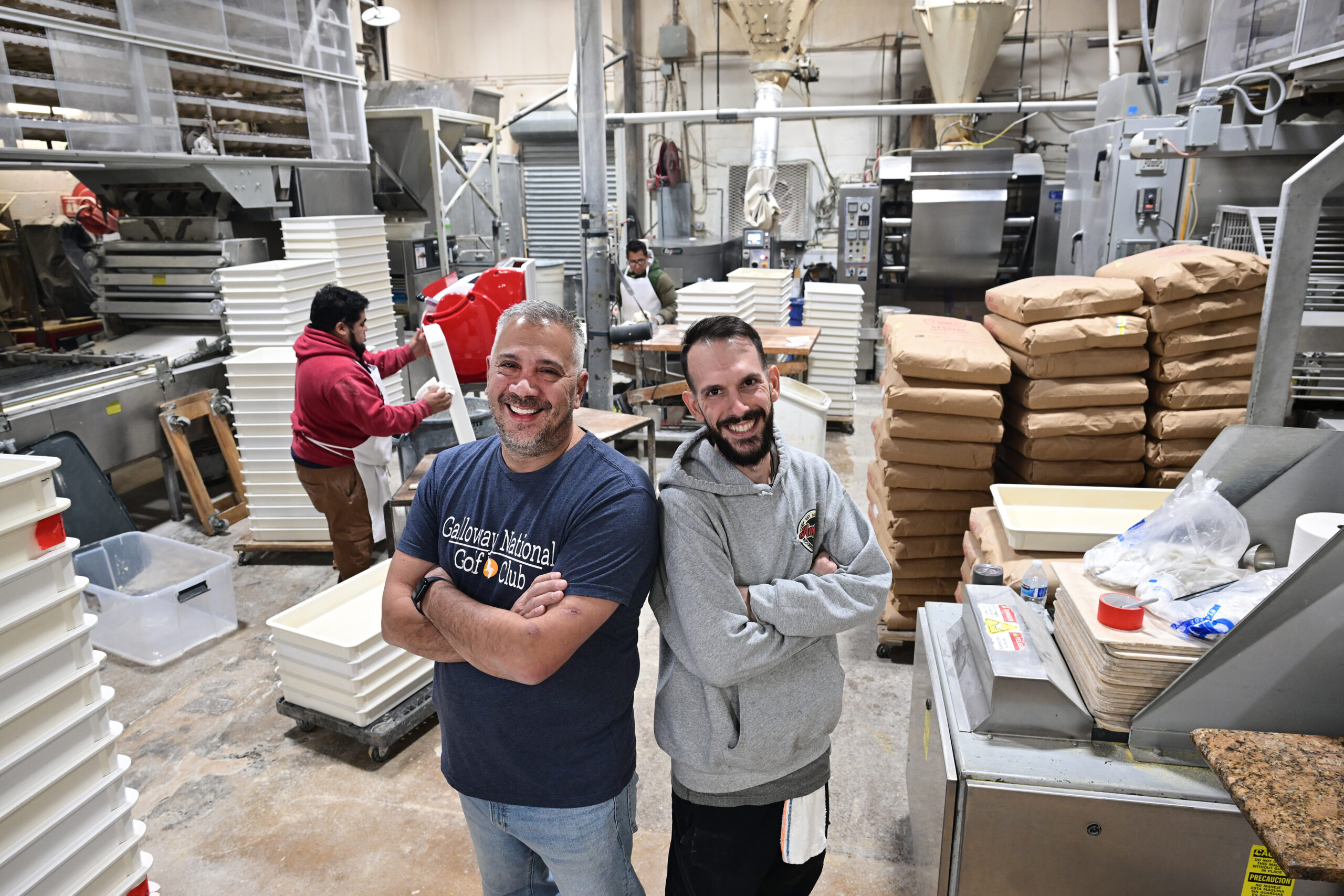
Danny DiGiampietro (left), owner of Angelo’s Pizzeria, with partner Jared Braunstein at the bakery in Conshohocken in December 2024.
But Angelo’s is moving into wholesale bread production, the backbone of Conshohocken Italian Bakery’s business under the Gambone family for more than a half-century before its 2024 closing.
A key piece of the puzzle is on the way: a massive Polin oven imported from Italy to give his bakers more flexibility, DiGiampietro said.
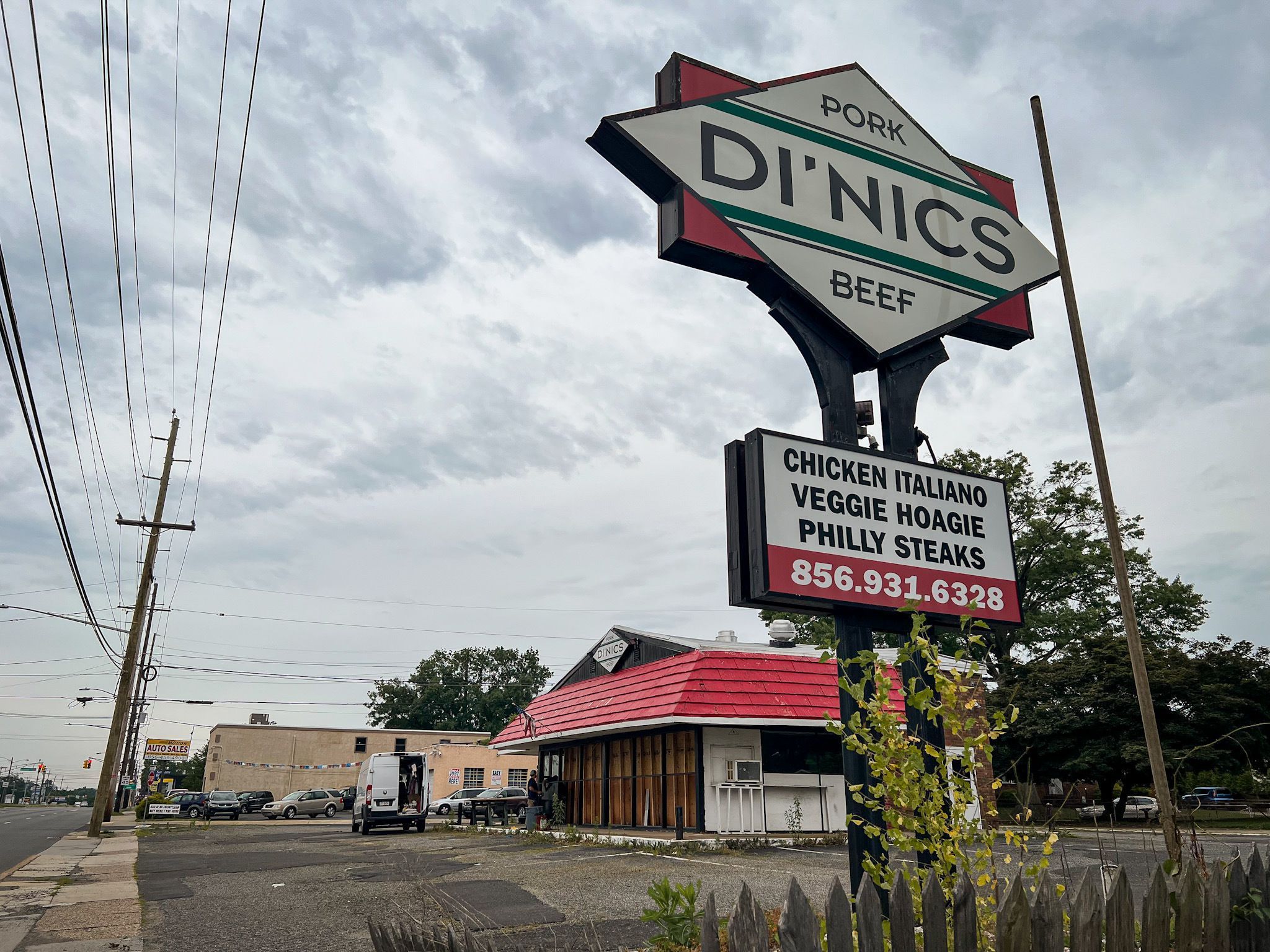
The future location of Angelo’s Pizzeria in West Collingswood Heights, previously Di’Nics, on June 18, 2026.
At “Conshy,” as the Jones Street bakery was known, the Gambone family supplied rolls and bread to hundreds of restaurants and sandwich shops throughout the region. Its closing created a frenzy among customers and competitors.
DiGiampietro said the new oven will allow bakers to create a line of kaiser rolls, potato rolls, steak rolls, and hoagie rolls. Although he will in effect be selling to his sandwich shop competitors, he likens it to giving shops “the canvas to make their art,” DiGiampietro said. “Everyone’s different.”
A return to wholesaling was not in the initial plans for DiGiampietro, who owned a bread bakery in South Philadelphia about 20 years ago. “I went bankrupt the first time. So hopefully I don’t go bankrupt again.”
Meanwhile, demolition and rebuilding are underway at the future Angelo’s Pizzeria location at 310 Black Horse Pike in the West Collingswood Heights neighborhood of Haddon Township, Camden County. The stand-alone building was formerly Di’Nics.
Crews recently gutted the building, which DiGiampietro hopes to transform into a full-service Angelo’s within the next several months.
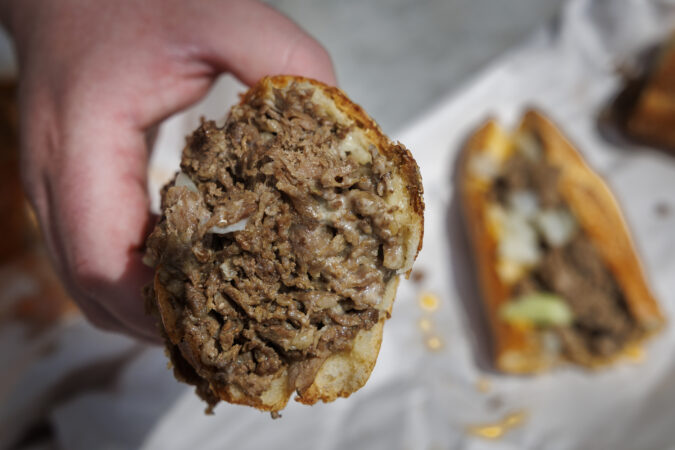
The project will mark his return to New Jersey. DiGiampietro opened his first Angelo’s in Haddonfield in 2013 before closing it in 2018 to focus on the Ninth Street location in South Philadelphia, which opened in 2019 and helped turn Angelo’s into one of the region’s most sought-after pizzeria and cheesesteak shops.
The Angelo’s in West Collingswood Heights, about 10 minutes from the Walt Whitman Bridge, will include table seating as well as a counter overlooking the kitchen. Initially, DiGiampietro wanted more seating. Then he began talking about a takeout-only operation.
“But people love the show,” he said. “They like to see everything happening.”
The build-out still requires installation of a pizza oven, walk-in refrigeration, and other equipment. Even so, DiGiampietro believes the compact space can work.
“We think we can keep a dining room and still fit everything we need in there,” he said. “It’ll be tight, but we work on Ninth Street in basically a submarine, so how much tighter can it get?”
Shelly Gaither, 51, of Cheltenham, makes sure her three sons, ages 6, 9, and 18, get their meals while she manages with whatever is left over — if anything ever is.
“Oh, my God, groceries are too expensive,” said Gaither, a former data analyst who suffers from a disability that makes working difficult. She visits a food pantry regularly to make sure her kids eat chicken when they can. Her monthly SNAP (Supplemental Nutrition Assistance Program) benefits were reduced from $400 to $200 earlier this year because of changes to the programunder President Donald Trump’s One Big Beautiful Bill Act.
“I don’t think there’s hope,” she said. “I feel guilty for bringing children into a world that doesn’t want them to exist because the government makes cuts that take away their food and their healthcare.”
For people like Gaither throughout the United States, levels of food insecurity have seen a “remarkable” rise since the pandemic in 2020, according to a national survey taken earlier this year and released in late May by the Federal Reserve Bank of New York.
Around 10% of 1,300 heads of households polled in February reported a lack of enough food and said their children were missing meals, according to the survey. Nearly 16% relied on food donations. Among families taking in less than $50,000 a year, almost 20% reported being forced to skip meals or go without.
In 2020, when the federal government stepped in to help families at the height of the pandemic, just 4% of households reported missing meals, including less than 7% of families earning less than $50,000 a year, according to the survey.
At that time, temporary supplemental unemployment benefits, expanded SNAP payments, and direct government relief payments helped stave off hunger among Americans. Food insecurity increased after COVID-19 relief expired, according to the Urban Institute.
But the recent surge in hunger has also been attributed to the sweeping law Trump signed last year, whichreduces SNAP benefits and other safety net programs to help pay for his tax cut.
Findings in the bank’sreport also reflect Gaither’s sense of despair, a pessimism about personal finances and the overall economy among people with low incomes. That same group exhibits diminished expectations for finding a job and declining levels of consumer confidence, the survey says.
(function(){function e(){window.addEventListener(`message`,function(e){if(e.data[`datawrapper-height`]!==void 0){var t=document.querySelectorAll(`iframe`);for(var n in e.data[`datawrapper-height`])for(var r=0,i;i=t[r];r++)if(i.contentWindow===e.source){var a=e.data[`datawrapper-height`][n]+`px`;i.style.height=a}}})}e()})();
According to thereserve bank’s report, non-white Americans have been especially hard hit. The number of such households that reported missing meals increased from 4% in 2020 to 19% in February. At the same time, the number of non-white people receiving SNAP benefits jumped from 14% to more than 26%.
Overall, the survey found food insecurity was particularly acute among lower-educated and lower-income households, as well as households with young children. Many families are experiencing financial stress due to the high cost of living, persistent inflation, and high interest rates, even as the stock market has been steadily rising, according to the survey.
Pantries struggle to keep up with demand
More people are flocking to food pantries, but they are not equipped to take up the slack of reduced SNAP benefits.
“Pantries across the state are in perpetual crisis mode,” said Stuart Haniff, CEO of Hunger-Free Pennsylvania in Pittsburgh. Add to that the advent of summer, when kids are no longer receiving free breakfast and lunch at school. “Families must now provide those 60 to 80 meals a month,” Haniff said.
In Norristown, “immense need” has increased the number of people frequenting Martha’s Choice Marketplace, the largest food pantry in Montgomery County, by 100% since 2022, said Patrick Walsh, director of programs. “And I don’t expect things to get better.”
Food prices are also up 3.2% this spring over last, according to U.S. Department of Agriculture figures,exacerbating the issue.
In South Jersey, “we are seeing record numbers at our food distributions,” said Jane Asselta, president and CEO of the Food Bank of South Jersey, in a statement to The Inquirer. “Life is getting harder to afford for more and more people.”
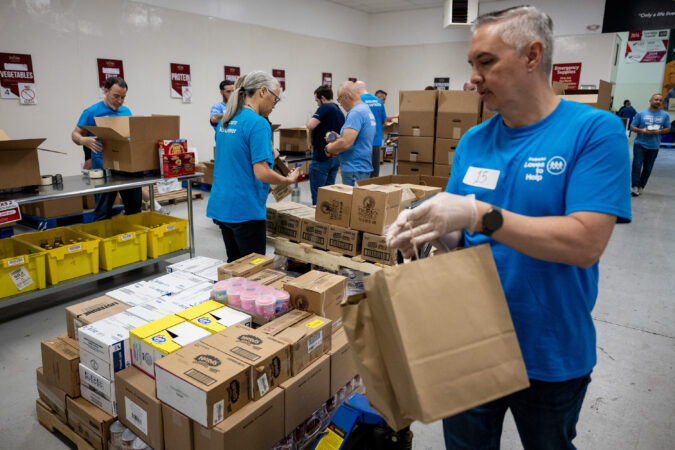
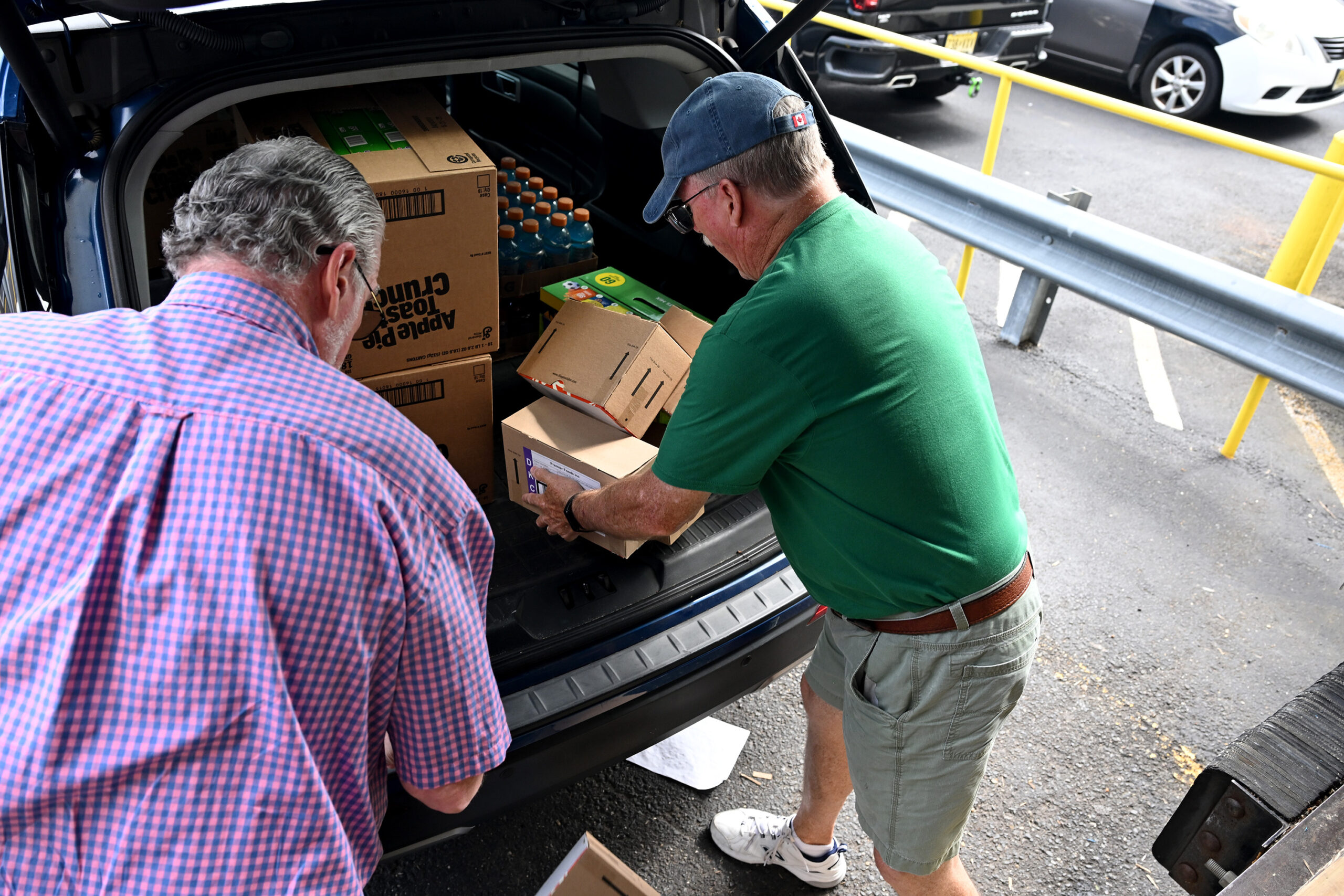
Matt McDevitt (left) and Michael Hickey load their vehicle at the Food Bank of South Jersey Thursday, June 11, 2026. The men are volunteers at the Temple Lutheran Church in Pennsauken and their food bank is open from 5-6 p.m. every Thursday.
Asselta said the Federal Reserve Bank’s report “mirrors” what her organization has observed through its network of 300 community partners.
“Hunger has never been higher,” said Pastor Sonita Johnson, who runs the food pantry at St. John’s Pentecostal Outreach Church in Salem City, Salem County. “Food prices are high, and the lines you see you would not believe — a 50% increase in people just over the last two months.”
Nationwide, between January 2025 and January 2026, SNAP rolls decreased by more than 4 million people — from 42 million to 38 million — according to USDA figures.
Between last September and April of this year, nearly 90,000 Pennsylvanians lost SNAP benefits due to new eligibility requirements stipulated by the Trump administration, according to an analysis by the Pennsylvania Department of Human Services (DHS).
And between December 2025 and last month, more than 32,000 Philadelphians lost benefits, DHS figures show.
In New Jersey, SNAP participation has fallen by more than 50,000 individuals between March 2025 and March of this year, New Jersey Department of Human Services figures show.
The Trump administration’s SNAP changes include an expansion of work requirements for people who receive SNAP benefits and increased documentation requirements “designed to make maintaining eligibility increasingly difficult,” according to the Food Research and Action Center (FRAC), the largest anti-hunger lobby in the United States.
Deputy White House press secretary Anna Kelly said in a statement that Trump signed the changes to strengthen SNAP and to ensure that it is “sustainable for future generations.” She added that Trump was “elected to eliminate runaway spending across the federal government.”
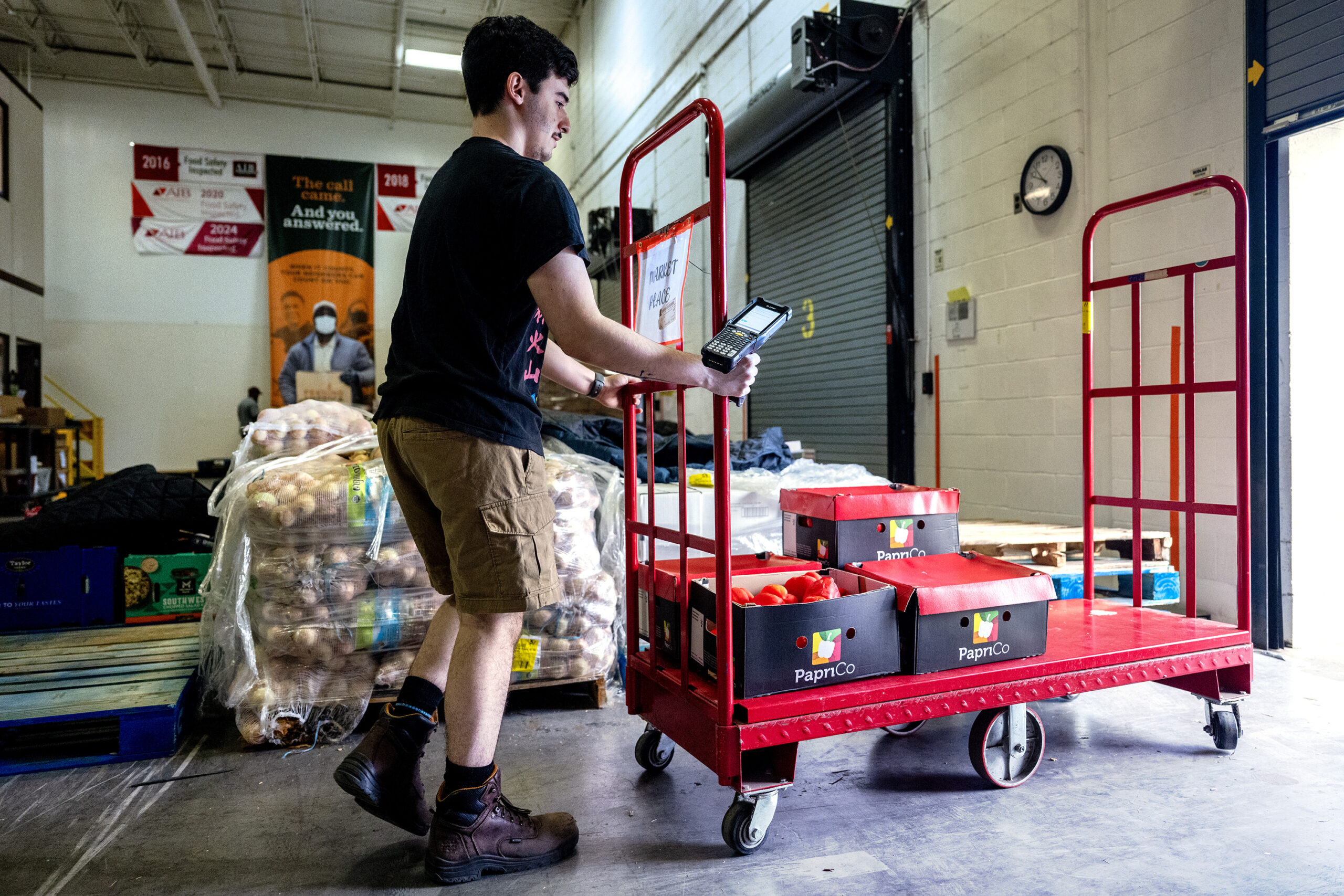
William Meo works on the loading dock at the Food Bank of South Jersey Thursday, June 11, 2026.
For people like Shelley Gaither, how her reduced SNAP benefits could be seen as part of “runaway spending” is tough for her to figure, given her needs. To survive this precarious moment, Gaither said, she will do whatever she can.
“We eat more vegetarian meals and I don’t buy my kids cookies or snacks,” she said. “If I drink enough coffee, maybe I just need one meal a day. This is our existence now. This is how we live.”
One woman said at Nicklas’ preliminary hearing that she felt compelled to work with them because they told her that her ex-wife was being targeted by “black magic” and that her life was in danger.
“As someone who loved my wife and my family, I felt like I had no choice,” she said. “I wanted to save them.”
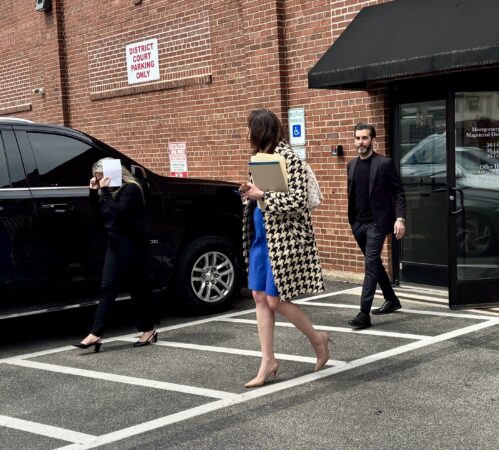
District Judge R. Emmett Madden dismissed four charges against Nicklas, 41, including racketeering and dealing in unlawful proceeds, but held him for trial on theft and related crimes. Marks, his paramour and business partner, waived her preliminary hearing and will face a county judge on all of the charges.
Nicklas’ attorney, Elizabeth Lippy, argued that Marks, not he, was the one who ran Jenkintown Psychic Visions and directed the transfer of money and high-priced items, including designer purses and watches.
“This is not the Jenkintown mafia,” Lippy said, referencing the use of racketeering charges to disrupt organized crime rings. “This is a storefront psychic who advertised her own abilities, and giving money to Mr. Nicklas doesn’t create a corrupt organization.”
Assistant District Attorney Christian Taffe presented evidence that between 2022 and their arrest in October, Marks and Nicklas encouraged the two women to make multiple wire transfers to bank accounts and a CashApp account operated by Nicklas. Marks also instructed them to withdraw large amounts of cash and to store the money in pillowcases as part of various rituals with supposedly paranormal purposes.
One woman said she hired Marks in hopes that her ex-fiancé, who had called off their wedding, would reach out to her and come back into her life.
She said Marks initially told her to keep the money in her home, but later asked her to bring it to her and Nicklas in person as part of a “marriage ritual.”
That ritual, the woman said, also required a $6,000 Chanel purse that Marks told her to purchase after asking her to extend a higher line of credit with her bank.
Marks, she said, promised to return both the purse and money to her.
“She told me not to worry about money,” the woman said, “because ‘money comes and money goes.’”
After months of cajoling Marks, the woman received a fraction of her money and the purse, which she was able to return to the store for a partial refund.
When the women pressed for more money to be returned, she said Marks threatened to contact her ex and create fake social media accounts for her, using personal information she had shared during their psychic readings.
The other victim said Marks placed similar demands on her: In addition to a pillowcase full of money, she was directed to buy expensive Rolex and Cartier watches, again as part of a ritual.
When the woman tried to get her money back, Marks became irate, she testified. Nicklas would then join the conversation, telling her to “trust the process” and promising that everything would be returned to her if she completed the ritual.
Lippy, Nicklas’ attorney, asserted that no theft had occurred. Both women, she said, believed in the paranormal and had agreed to pay for psychic services.
“Both of these victims have free will,” she said. “When a psychic promises their services, it’s a service nonetheless.”
If you made the typical income in your community, could you afford to buy the typical home for sale there?
Across the Mid-Atlantic, “the answer is a resounding no in most places,” said Lisa Sturtevant, chief economist at the multiple listing service Bright MLS.
But in a region where buying a home can be challenging, Delaware County stands out.
It was the only county in the Philadelphia region where a household making the median income could afford to buy a median-priced home for sale at the end of last year, according to an analysis by Bright MLS. In Delaware County, the median asking price of homes in the last quarter of 2025 was $289,450, and the median household income was about $89,500.
Bright MLS calculated affordability based on a homebuyer’s ability to qualify to purchase a median-priced home, assuming a 10% down payment with the average interest rate for a 30-year, fixed-rate mortgage and average payments for property taxes and insurance.
Of the roughly 90 counties in the company’s service area across Pennsylvania, New Jersey, Delaware, Maryland, Virginia, West Virginia, and the nation’s capital, Delaware County was one of only five counties where the median-priced home was affordable for a household making the median income in the last quarter of 2025. The city of Baltimore also made the affordable list.
Sturtevant said everyone knows housing affordability is a challenge, but “when you see the data so starkly like this, it really brings the point home.”
window.addEventListener(“message”,function(a){if(void 0!==a.data[“datawrapper-height”]){var e=document.querySelectorAll(“iframe”);for(var t in a.data[“datawrapper-height”])for(var r,i=0;r=e[i];i++)if(r.contentWindow===a.source){var d=a.data[“datawrapper-height”][t]+”px”;r.style.height=d}}});
Across the Mid-Atlantic, median home prices are up 35% since 2020. The five counties that are most affordable are generally places with lower costs of living where the housing stock is older, she said.
Michael Maerten, a real estate agent on the board of directors for Tri-County Suburban Realtors, which represents members in Chester, Delaware, and Montgomery Counties, said Delaware County’s dense housing and smaller homes also help keep costs down.
He’s seen homebuyers in Chester and Montgomery Counties have a harder time affording homes. He said he’s working with a homebuyer who was originally focused on the area around Abington Township in Montgomery County and is now looking in the Haverford Township area of Delaware County where they can get what they want with the money they have.
“The running joke about Delaware County is people don’t leave,” he said.
But Delaware County’s spot on Bright MLS’ affordable list doesn’t mean households aren’t struggling to afford homes. It’s still challenging for many people, Sturtevant said.
First-time homebuyers in particular have it rough. Bright MLS found that across the about 90 counties it tracks, renters are effectively priced out of becoming homeowners. There is no county where a renter who makes the median income could afford to buy a starter home.
“That’s crazy to me,” Sturtevant said.
window.addEventListener(“message”,function(a){if(void 0!==a.data[“datawrapper-height”]){var e=document.querySelectorAll(“iframe”);for(var t in a.data[“datawrapper-height”])for(var r,i=0;r=e[i];i++)if(r.contentWindow===a.source){var d=a.data[“datawrapper-height”][t]+”px”;r.style.height=d}}});
Bright MLS defines starter homes as those priced at the 35th percentile, meaning 35% of homes are priced below that level and 65% are priced above.
Sturtevant said high construction costs have made building starter homes more difficult. At the same time, homeowners are holding onto smaller, more affordable homes instead of selling for a larger home because of elevated mortgage interest rates and uncertainty in the economy. So first-time buyers have fewer options and more competition.
Still, Maerten said a “good percentage” of his buyers are purchasing for the first time.
“They’re going through their struggles of making offers and competing in the suburbs,” he said.
Maerten said that in his experience, homebuyers know exactly where they want to purchase and are more likely to save money until they can buy where they want rather than buying in an area just because it’s more affordable.
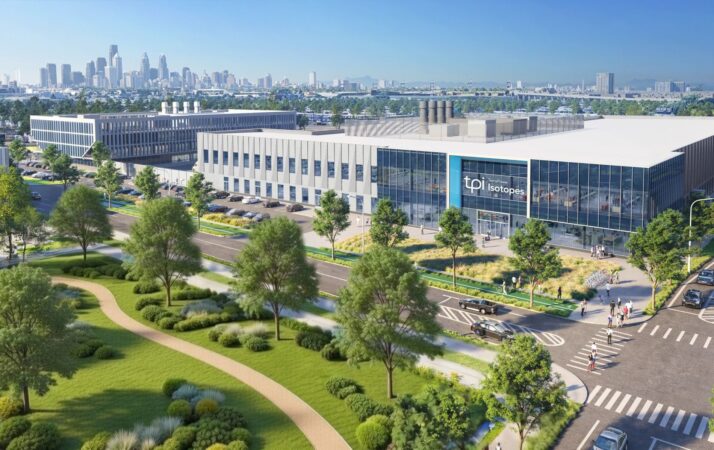
TerraPower Isotopes, part of a nuclear power company founded by Bill Gates, plans a $450 million plant in the Bellwether District to make radioactive molecules for cancer research and potential treatments, Gov. Josh Shapiro announced Tuesday.
Bellwether’s developer HRP Group will build a 250,000-square-foot facility for the Bellevue, Wash., company at the former refinery site. TerraPower Isotopes is expected to employ 225 people in Philadelphia to meet anticipated demand for a type of molecule that can be used to kill tumors without damaging surrounding tissue.
TerraPower’s material, an isotope called actinium-225, is ultimately derived from weapons-grade uranium. Researchers are exploring precision cancer treatments that involve attaching actinium-225 to an antibody that is targeted to specific cancer cells. The isotope then emits high doses of radiation at close range.
“This new facility is a testament to the demand for actinium-225 as part of the growing industry, which is transforming how cancer is treated,” TerraPower Isotopes President Scott Claunch said in Shapiro’s announcement. “Our team is proud to be building a large-scale manufacturing facility in Philadelphia, which will play a pivotal role in expanding global access to this rare isotope.”
Pennsylvania government is supporting the project with $10 million in grants. The Bellwether District is in a Keystone Opportunity Zone that has tax benefits through 2043. That means TerraPower Isotopes won’t have to pay many state and local taxes, though it will remain responsible for city wage taxes.
TerraPower Isotopes, part of a bigger nuclear sciences company called TerraPower, is the second radiopharmaceutical company to announce a factory in the region. In 2024, Nucleus RadioPharma, which counts Fox Chase Cancer Center among its investors, shared plans for a 48,000-square-foot facility in Spring House, Montgomery County.
TerraPower’s move to South Philadelphia is the third significant life sciences development announced this year by Shapiro and his economic development team.
TerraPower is the second tenant in the 1,300-acre Bellwether District, which HRP is trying to develop into a new industrial and life sciences hub. Late last year, it announced that California-based canned beverage manufacturer DrinkPAK will build a 1.4 million-square-foot factory that will product 3 billion cans a year.
Two prominent Jewish day schools in the Philadelphia suburbs are set to merge, a decision school leaders say will keep the institutions competitive in the region’s strong educational market.
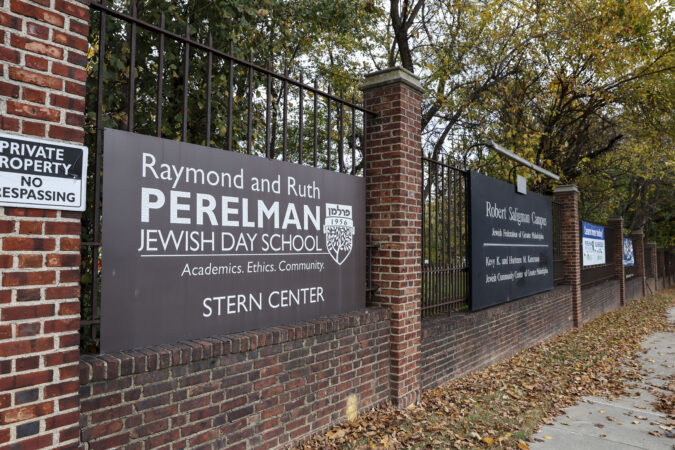
Perelman Jewish Day School, a private Jewish pre-K and elementary school located in Melrose Park and Wynnewood, and Jack M. Barrack Hebrew Academy, a Jewish middle and high school located in Bryn Mawr, will merge next year to become the only unified pre-K through twelfth-grade Jewish day school in the Philadelphia area.
Perelman and Barrack will maintain their current operations for the 2026-27 school year, while beginning to combine their admissions and development programs. Faculty, staff, and students will come under the unified school umbrella beginning in fall 2027. Perelman and Barrack will continue to operate on all three campuses.
School officials say the merger will help streamline curriculum development and strategic planning while bringing more families into the Jewish day school system by offering a consistent, pre-K-through-high-school experience.
Perelman Jewish Day School was founded in 1956 as the Solomon Schechter Day School of Greater Philadelphia. The school operates across two campuses, one in Melrose Park, which serves parts of Philadelphia County, eastern and northern Montgomery County, and Bucks County, and another in Wynnewood, which serves Center City and Philadelphia’s western suburbs.
Jack M. Barrack Hebrew Academy, originally Akiba Hebrew Academy, was the nation’s first pluralistic Jewish secondary day school when it opened in Center City in 1946. The school moved to Merion Station in 1956, then Bryn Mawr in 2008. Barrack boasts numerous notable alumni, including Gov. Josh Shapiro and CNN anchor Jake Tapper.
Perelman and Barrack completed a partial merger in 2012, when the schools combined their middle schools into a single sixth-through-eighth-grade program on Barrack’s campus.
Tuition at Perelman ranges from $21,500 to $32,300 per year, and tuition at Barrack ranges from $34,900 to $42,700. Both schools offer tuition assistance. Perelman says it awards over $3 million in tuition assistance each year to families earning up to $500,000.
School leaders say the merger will ensure Perelman and Barrack are an attractive option for families in Philadelphia’s rich educational ecosystem, where parents can choose from dozens of strong public and private schools. Often, families choosing private education are looking for continuity from pre-K through high school, something that Perelman and Barrack have not been able to provide until this point.
The ability to have students “become part of an educational system from their earliest years and grow within that system” will be academically and socially “deeper and more impactful,” said Rabbi Marshall Lesack, Barrack’s head of school and a Barrack alumnus. Lesack will lead the unified school beginning in 2027.
Daniel Eisenstadt, a member of the Perelman board of directors who will chair the new, combined board, said the merger will also allow for more cohesive planning. The schools will be able to align their vacation calendars, external messaging, and curriculum plans.
Though the overwhelming majority of Perelman students already matriculate to Barrack, bringing the schools under one system will allow for more parity in what to teach and when to teach it. Elementary, middle, and high school teachers will be able to sit in the same room and plan best practices for everything from math to art to Jewish studies, considering the arc of a student from ages 5 to 18, Eisenstadt said.
Both schools’ enrollment has been “stable to growing” in the past few years, said Eisenstadt. Both he and Lesack were clear that the merger is not in response to a souring financial outlook, as can be the case when educational institutions merge.
“We’re both coming from a place of strength,” Lesack said.
Barrack reported revenue of $20.9 million in 2024, an increase of $3.4 million over 2023, according to tax records. Perelman reported a revenue of $13.4 million in 2024, up $400,000 from 2023.
However, Eisenstadt said, “there is a recognition that we operate in an environment where there are excellent other independent schools, and excellent public schools. Rather than waiting for a moment where we see a dip in enrollment or where there are challenges, I think the general feeling from a leadership point of view was, ‘Let’s be proactive.’”
When it comes to growing enrollment at Barrack and Perelman, however, Eisenstadt said there’s no one cause. He is “a little bit skeptical about the generic narrative” that the Israel-Hamas war and rising antisemitism have solely drivenincreased interest in Jewish education. He says Perelman and Barrack can’t rest on the assumption that larger forces will inevitably push families toward the Jewish day school experience. In a “dynamic world,” the schools need to continue to evolve, he said.
In Eisenstadt’s words, Barrack and Perelman can’t “assume that any one thing that’s occurred, any one event, or any one trend is the future.”
Lesack and Eisenstadt said many of the merger’s details are still up in the air and will be decided by the board. However they noted that there are plans for major investments across all of Perelman and Barrack’s facilities. Plans have long been in the works to find a new home for Perelman’s Melrose Park campus. School leaders say they are committed to having a continued presence in Philly’s northern suburbs.
Lesack and Eisenstadt acknowledged the challenges of merging two schools with different campuses and cultures. Yet there’s “an unbelievably strong foundation” upon which to build, Lesack said, citing the many families, values, and traditions that the schools already share.
This suburban content is produced with support from the Leslie Miller and Richard Worley Foundation and The Lenfest Institute for Journalism. Editorial content is created independently of the project donors. Gifts to support The Inquirer’s high-impact journalism can be made at inquirer.com/donate. A list of Lenfest Institute donors can be found at lenfestinstitute.org/supporters.
A Florida developer who is building data centers in Pennsylvania. A Chicago crypto trader whose company was sued by the Biden administration. And a Southwestern Pennsylvania coal magnate whose firm received a permit from state regulators last year to expand operations — and is now seeking approval to open a new mine.
Shapiro’s gubernatorial campaign raised at least $8.5 million last year from nearly 240 CEOs, founders, business owners, and other top executives, according to an Inquirer analysis of campaign-finance records that were made public last month.
That includes the single biggest donation to the campaign: $2.5 million from billionaire and former New York City Mayor Michael Bloomberg. Shapiro’s haul from top executives represents 50.8% of the $16.8 million he raised from donors who listed their occupation in campaign finance filings.
window.addEventListener(“message”,function(a){if(void 0!==a.data[“datawrapper-height”]){var e=document.querySelectorAll(“iframe”);for(var t in a.data[“datawrapper-height”])for(var r,i=0;r=e[i];i++)if(r.contentWindow===a.source){var d=a.data[“datawrapper-height”][t]+”px”;r.style.height=d}}});
During his first three years in office, Shapiro, 52, has sought to build a profile as a pragmatic, business-friendly governor, focusing on speeding the permitting process and promoting economic development through government grants and tax breaks.
At the same time, the governor has proven adept at raising campaign cash from people who have business interests before state government in Harrisburg. Those include a skill game developer who staved off a major policy defeat this year and a waste coal power plant owner who gave $100,000 to Shapiro two days before the governor pulled out of a multistate program that requires such facilities to pay for their greenhouse gas emissions.
It’s a contrast with the rising populism on both the left and right, marked by a “Fighting Oligarchy” tour by progressive leaders and the MAGA movement’s deep suspicion of elites.
It’s not unusual for corporate executives to make contributions to candidates from both parties. But the practice could invite scrutiny for Shapiro in a White House run — particularly among voters and activists who are dismayed by the role of money in politics.
“We are concerned about any elected leaders taking monetary donations from corporate interests, regardless of who they are,” said Ashley Funk, executive director of the Mountain Watershed Association, a nonprofit that opposes a Shapiro donor’s coal mining expansion.
“I think that it influences decision-making,” she said.
‘The speed of business’
For now, Shapiro’s pledge to make Pennsylvania’s government run “at the speed of business” appears to have won over many executives, helping him build a massive fundraising advantage in his reelection bid. Shapiro raised $23.2 million overall in 2025, compared with the $1.5 million reported by his likely Republican opponent, State Treasurer Stacy Garrity.
“I’ve long admired the way the commonwealth approaches economic development and innovation, and I have deep respect for Gov. Shapiro’s leadership,” said Bob Clark, executive chairman and founder of Clayco, a Chicago-based real estate and construction firm that is redeveloping a site at the industrial hub known as the Bellwether District in South Philadelphia.
Clark gave Shapiro’s campaign $100,000 last year. “I consider him both a trusted colleague and an effective leader,” he said.
In recent weeks, the governor has celebrated pledges by pharmaceutical companies to invest billions of dollars in new facilities in Montgomery County and the Lehigh Valley, secured with tens of millions of dollars in state incentives. And last year, Amazon said it would spend $20 billion in Pennsylvania to build two new artificial intelligence data centers, in what officials called the single largest private investment in state history.
Shapiro’s allies say he stands up to big business, too, highlighting how he successfully prodded PJM Interconnection LLC — the Valley Forge-based regional electric grid operator whose voting members largely consist of companies in the electricity industry — to impose and extend a price cap. He has also received support from organized labor.
Shapiro argues that the way to restore faith in institutions is not by railing against billionaires but by showing that the government can fix real problems — “get s— done,” in his parlance.
Garrity, the Republican state treasurer, says Shapiro’s actions don’t live up to the hype.
“Liberal national donors may be investing in Josh Shapiro’s political vanity project, but hardworking Pennsylvanians are seeing nothing in return,” she said in a statement.
Garrity received nearly $380,000 from more than 60 CEOs and other top business executives. That figure represents about 41% of her contributions from donors who listed their occupation in campaign-finance filings.
Shapiro’s campaign said his coalition is “reflective of a governor who is delivering for all Pennsylvanians — and of a campaign that is fighting to win up and down the ballot.”
window.addEventListener(“message”,function(a){if(void 0!==a.data[“datawrapper-height”]){var e=document.querySelectorAll(“iframe”);for(var t in a.data[“datawrapper-height”])for(var r,i=0;r=e[i];i++)if(r.contentWindow===a.source){var d=a.data[“datawrapper-height”][t]+”px”;r.style.height=d}}});
The governor has “focused on growing our economy and creating jobs, and he has delivered — creating tens of thousands of jobs, winning major deals, and building the only growing economy in the Northeast,” campaign spokesperson Manuel Bonder said in a statement.
Shapiro highlighted one such deal in July, when he appeared alongside executives at defense contractor Rhoads Industries at the Navy Yard in South Philly to announce the firm’s $100 million plan to build a new manufacturing facility, create 450 jobs, and boost production of submarine parts.
“One of the things that Rhoads is known to do is get things done. … We want to turn out product; we want to turn it around; we want to get it done,” president Mike Rhoads said.
Looking toward Shapiro, he said, “Somebody standing to my left has the kind of same attitude.”
Gov. Josh Shapiro (right) with Rhoads Industries CEO Dan Rhoads in July 2025 at the Navy Yard.
Taking his turn at a lectern that read “Rebuilding America’s Fleet,” Shapiro said Rhoads’ investment — with help from the state — would “ensure the future of submarine manufacturing, shipbuilding, and all things important to securing our freedom is going to run right through the Philadelphia Shipyard.”
Three months later, in October, CEO Dan Rhoads contributed $10,000 to Shapiro’s campaign — the single largest donation he made to a candidate for state office in the last decade, records show. Rhoads did not respond to requests for comment.
Data centers and ‘skill games’
Shapiro donors’ business interests include everything from data center construction to state regulation of slot machine-style games and approvals for a nuclear reactor.
Dan Hilferty, CEO of Philadelphia-based Comcast Spectacor — which owns the Flyers and the Xfinity Mobile Arena in South Philly — gave $40,000. A political action committee affiliated with parent company Comcast also gave $50,000. Comcast Spectacor and the 76ers are building a new arena at the South Philadelphia sports complex, and Shapiro last year did not rule out offering state incentives. Hilferty, a former CEO of Independence Blue Cross, previously gave Shapiro’s campaigns $27,500 over the last decade. Other Comcast Spectacor executives contributed about $95,000 during that period.
Top executives at Pace-O-Matic, the Georgia-based developer of so-called skill games that have proliferated across convenience stores and bars, gave $50,000. Operators for Skill, a PAC affiliated with the firm, contributed $10,000. The company successfully fended off a push in 2025 by Shapiro and lawmakers to tax the games at a level the industry considered too high. The governor has renewed a push to regulate the games, which some Philadelphia lawmakers say they would prefer to see banned. Pace-O-Matic contributes to both parties and remains “committed to fighting for fair regulation and taxation of Pennsylvania skill games,” said Mike Barley, chief public affairs officer for Pace-O-Matic.
Joseph Dominguez, president of Baltimore-based Constellation Energy, gave $25,000. The company is seeking to restart a nuclear reactor at Three Mile Island, just outside Harrisburg, and needs state and federal approvals. The plant would supply power to Microsoft to support the tech company’s data centers. “Constellation executives contribute to policymakers on both sides of the aisle who, like Gov. Shapiro, prioritize results and pragmatic solutions over politics,” a company spokesperson said.
Brian Patten, CEO of Next Generation Land Co. LLC, gave $10,000. He is a Florida data center developer who says he is pursuing projects in Pennsylvania. Data centers that power companies’ cloud storage and computing needs have drawn backlash across the U.S. over fears of rising electricity rates. In his February budget address, Shapiro said he wants data centers to supply their own energy and pay for any new generation they need. He has also said the U.S. needs to win the AI race against China.
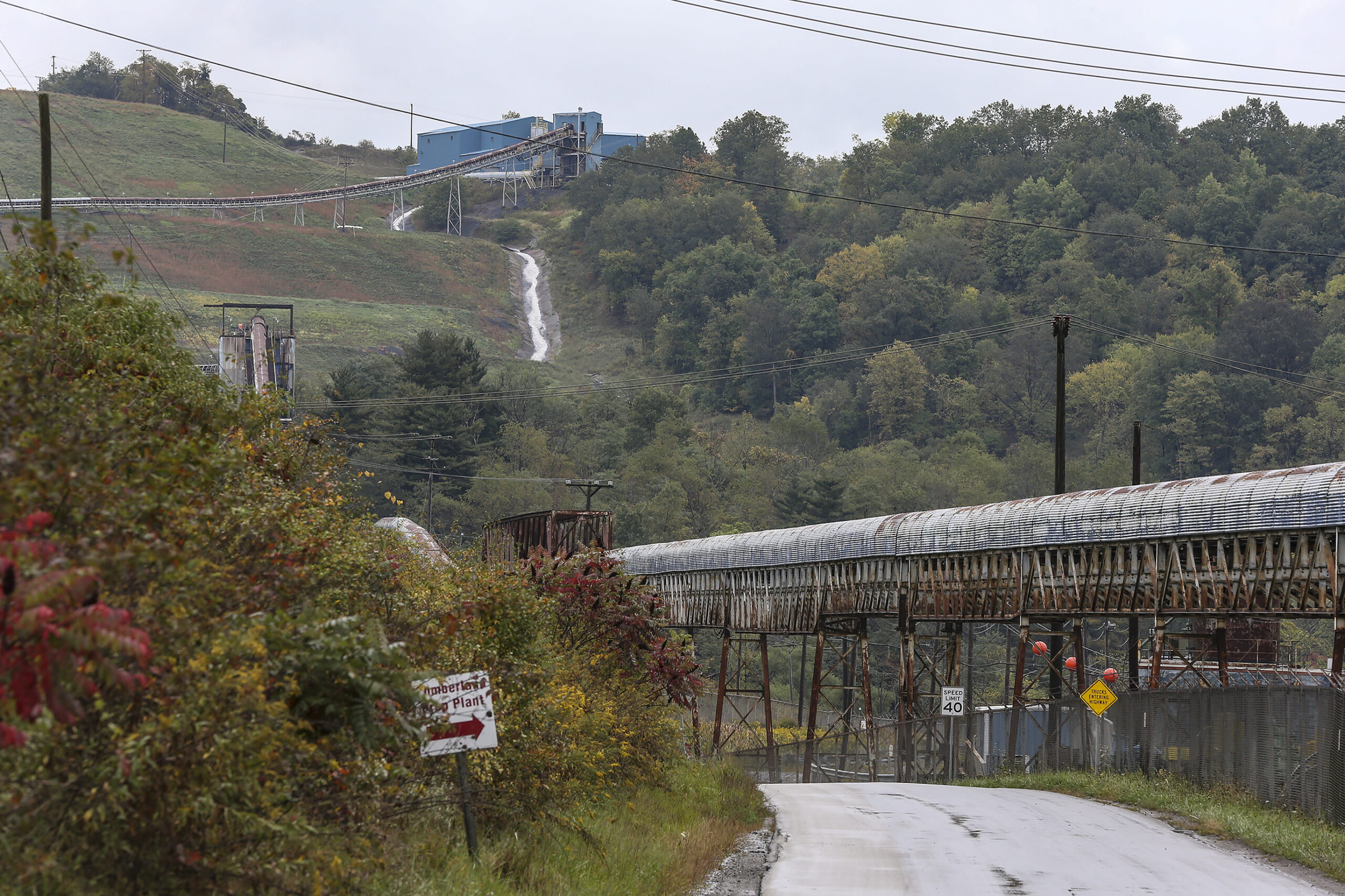
Justin Thompson, CEO of Iron Senergy, a coal operator, gave $10,000. His firm owns the Cumberland Mine in Greene County. When Pennsylvania applied to the U.S. Environmental Protection Agency for a $400 million grant, it mentioned several firms — including Iron Senergy — that could use the money for decarbonization projects, the Pittsburgh Post-Gazette reported in 2024. The EPA awarded the grant, and the Pennsylvania Department of Environmental Protection is tasked with administering it. The state is now reviewing applications, which it says are confidential.
The Cumberland Coal Mine in Greene County seen in 2020.
Local and national donors
Shapiro drew on a mix of executives from local and national firms. In Pennsylvania, he raised money from health system CEOs (Joseph Cacchione of Thomas Jefferson University, $10,000), bankers (Richard J. Green of Philly-based Firstrust Bank, $125,000), and a home remodeler (Asher Raphael of Power Home Remodeling in Chester, $100,000). Josh Kopelman — founder of First Round Capital and chairman emeritus of The Inquirer’s board of directors — and his wife, Rena, each gave $50,000.
There were private equity investors (San Francisco billionaire John Pritzker, cousin of Illinois Gov. JB Pritzker, $50,000), Hollywood producers (Jimmy Miller of talent management and production firm Mosaic, $75,000), professional sports team owners (telecom billionaire Robert Hale, minority owner of the Boston Celtics, $50,000), and a Massachusetts sports betting executive (Jason Robins of DraftKings, $10,000).
For his part, Bloomberg is “a big fan of Gov. Shapiro and a big believer in his leadership, and thinks he’s done a great job for Pennsylvania,” adviser Howard Wolfson told Axios.
At least one donor had ties to President Donald Trump, whom Shapiro often criticizes.
Don Wilson Jr., CEO of Chicago-based trading firm DRW Holdings LLC, gave $10,000 to Shapiro in September.
The Securities and Exchange Commission filed civil charges against a unit of Wilson’s firm while President Joe Biden, a Democrat, was in office. The SEC accused it of operating as an unregistered cryptocurrency dealer.
Biden-era regulators said that firms were dodging that rule by claiming crypto was a commodity, not a security. The enforcers argued this exposed investors to extra risks associated with digital currencies.
Then last March, a couple of months after Trump took office, the new administration dropped the charges against Wilson’s firm. Nine weeks later, Wilson invested $100 million into a Trump bitcoin project, the Financial Times reported.
The company told the newspaper it engages in a “variety of strategies in the crypto ecosystem” and saw value in holding bitcoin. “This transaction was viewed purely through that lens,” it said.
Trump denies having conflicts of interest.
That didn’t stop the Democratic National Committee from flagging the news on its “CORRUPTION WATCH” page.
The Trump administration, the Democrats’ post said, “now appears to be engaged in blatant pay-to-play politics.”
Power plants and coal mines
Among corporate executives, two of the eight biggest donors to Shapiro’s campaign last year were the father-and-son owners of privately held Robindale Energy Services, which owns about 20 companies involved in waste coal reclamation, power generation, mining, and logistics. Robindale’s assets include multiple power plants fueled by waste products from abandoned coal mines.
CEO Scott Kroh and his son Judson, the Latrobe-based company’s president, gave a total of $271,000.
That included a $100,000 contribution from Scott Kroh two days before Shapiro signed the annual budget, which came after a monthslong stalemate. The deal with Senate Republicans included language pulling the state out of the Regional Greenhouse Gas Initiative, a multistate effort to generate cleaner power that Robindale had vocally opposed.
Robindale’s executives did not respond to requests for comment.
In June 2023, Judson Kroh spoke out against RGGI at a public hearing, telling Pennsylvania lawmakers that Robindale’s power plants have enough capacity to power 500,000 homes. “Our main concern is you’ll see a significant decrease in power exports out of the state due to RGGI, as well as a significant decrease in coal production,” Kroh said.
Other energy industry firms, Republican lawmakers, and building trades unions have also long opposed the initiative, which requires power plants to buy allowances to cover their carbon emissions. They call it a job killer and an electricity tax. Environmental groups say it has reduced pollution and led to investments in clean energy in other states.
Shapiro had for years expressed concerns about the greenhouse gas initiative, which Pennsylvania joined under his predecessor but never implemented due to litigation. Shapiro said in 2021 during his first run for governor that “it’s not clear to me” that the program protected jobs, addressed climate change, or ensured energy reliability.
The Kroh family donated a total of $55,000 to his 2022 campaign and $21,000 the following year. Judson Kroh was among the more than 300 people who served on Shapiro’s transition team.
Many of Robindale’s operations are regulated by the state, and the company spent $150,000 lobbying state government officials last year, records show. Company executives in recent years have largely donated to Republicans in Harrisburg, though they have also supported some Democrats, including Shapiro.
window.addEventListener(“message”,function(a){if(void 0!==a.data[“datawrapper-height”]){var e=document.querySelectorAll(“iframe”);for(var t in a.data[“datawrapper-height”])for(var r,i=0;r=e[i];i++)if(r.contentWindow===a.source){var d=a.data[“datawrapper-height”][t]+”px”;r.style.height=d}}});
In addition to its power generation business, Robindale owns coal mines that are subject to state inspections and oversight. When two people died in a Somerset County mine operated by subsidiary LCT Energy, DEP required the company to update its safety protocols. The deaths in 2022 and 2023 came during a time in which there were 20 coal mining fatalities nationwide, according to federal data.
Johnstown-based LCT is currently expanding.
About 30 miles west of Maple Springs, LCT opened another mine in 2018 in Westmoreland County called Rustic Ridge 1, which produces 600,000 tons of coal a year.
The state renewed the permit for the 2,800-acre underground mine in January last year, and from that month through March, the Kroh family donated $70,000 to Shapiro’s campaign.
In April, after a yearslong review, the Pennsylvania Department of Environmental Protection approved a permit authorizing LCT to expand its operations there, adding 1,400 acres under the Pennsylvania Turnpike — the equivalent of 93 Lincoln Financial Fields. The permit allows LCT to mine coal up to 600 feet underground. The company sells the coal for production of steel.
The nonprofit Mountain Watershed Association is appealing the DEP’s approval to the Pennsylvania Environmental Hearing Board — whose judges are appointed by the governor, subject to confirmation by the state Senate — arguing that the expansion could harm groundwater and streams.
Others say the mine supports jobs and helps the local economy. Before opening, the company said in 2014 that it would invest $50 million to develop the mine, according to local news reports.
The state budget Shapiro signed in November expanded a program for expedited permitting involving approvals from the DEP, which reviews 40,000 permits a year. Introduced in 2024, the program is currently available for eligible permits such as air quality, dam safety, and oil and gas erosion and sediment control.
The budget legislation — cheered by Shapiro and GOP lawmakers — added more permit types, including one for mining, “which DEP is in the process of adding to the program,” a department spokesperson said.
Funk — the executive director of the watershed association, which has spent millions of dollars over the last 30 years repairing the environmental damage of legacy coal mining — said she is concerned the Krohs’ political giving “might be having an influence over Shapiro and his administration as we work to permit some of Robindale’s projects such as LCT Energy.”
Shapiro says permitting reform reflects his governing ethos.
“When you think about getting stuff done … it requires focus and speed,” he said in December at a National Governors Association event. “We’ve gotta be speedier as a country.”
It was at the end of last year in the hazy stretch between Christmas and New Year’s when time doesn’t feel real, and some of Philly’s top Democrats were huddled around a secret proposal, racing to meet a deadline.
The group — convened by Mayor Cherelle L. Parker, her aides, and some key Philadelphia boosters — was preparing a lengthy bid to bring the Democratic National Convention back to the city in either 2028 or 2032, a potential economic boon and a chance to show off in front of lawmakers, celebrities, and international media.
The confidential proposal to the Democratic National Committee included everything from the city’s hotel space to police outfitting to nitty-gritty details about the electrical grid and voltage capacity at Xfinity Mobile Arena. SEPTA officials drafted a section about the public transportation Philadelphia could offer visitors, and tourism agencies chipped in with insights on hotels and restaurants.
David L. Cohen, a longtime Democratic fundraiser and the president of the recently formed nonprofit host committee called Pick Pennsylvania, said that while the mayor led the effort, the bid also emphasized the “unity of the region and the commonwealth.”
“She wanted it to be really clear this is more than a Philadelphia bid,” he said. “This is a unified Pennsylvania bid.”
It appears the Democratic National Committee was impressed. On Monday, the DNC announced that it is considering five cities, including Philadelphia, to host the 2028 convention, where a Democratic presidential nominee will be coronated. The party is also looking closely at Atlanta, Denver, Chicago, and Boston to hold the early August event.
What comes next is a campaign to lure the convention to Philly, complete with a carefully coordinated public relations effort and a significant fundraising push. Philadelphia’s host committee for 2016, the last time the city held a presidential nominating convention, raised more than $85 million.
The DNC has asked host cities to raise $5 million before being selected. Philly’s fundraising, Cohen said, “will be substantially higher than that number.”
In this 2021 file photo, David L. Cohen speaks as Philadelphia Soccer 2026, the city’s World Cup 2026 bid committee, launched an interactive exhibit at the Independence Visitors Center in Philadelphia. He is now heading an effort to bring the Democratic National Convention to Philadelphia.
Cohen, a former Comcast executive and erstwhile chief of staff to former mayor Ed Rendell, is leading the effort alongside Daniel J. Hilferty, now the CEO of Comcast Spectacor.
Hilferty and Cohen have worked together repeatedly over the last two decades to bring major events to Philadelphia, including a successful bid to become one of a handful of North American cities to host World Cup games this year.
Also involved in coordinating the DNC proposal was Erin Wilson, a Philadelphia native who was a top aide to former Vice President Kamala Harris. She was the national political director for former President Joe Biden’s campaign and planned his 2021 inauguration.
When the DNC comes to town
DNC officials are expected to make a final decision on the 2028 site later this year. That call will likely be made by chair Ken Martin in consultation with top advisers and the committee’s Technical Advisory Group, which assesses logistics and operational matters.
Philadelphia could also have an advocate in State Rep. Malcolm Kenyatta, who represents parts of North Philadelphia and is a DNC vice chair. He is known to have a close relationship with Martin.
Committee officials and the advisory group will tour each of the five finalist cities for a yet-to-be-scheduled site visit this spring.
If history is any indication, the city will roll out the red carpet. In 2014, when 18 members of the DNC came to Philly to check out the city ahead of the 2016 convention, the host committee spent six figures to charm them.
The trip included a tour of Philly’s most popular sites, like Reading Terminal Market and the Philadelphia Museum of Art, as well as a swanky rooftop party and a breakfast at the Comcast Center. Predictably, cheesesteaks were also involved.
“The site visits are as much about feel as they are about technical details,” Cohen said. “After site visits, the teams who are making choices leave here and they have their socks knocked off. They can’t believe how vibrant the city is.”
In this 2014 file photo, Congressman Bob Brady, left, talks with DNC CEO Amy Dacey, center, as they have lunch at Pat’s Steaks in South Philadelphia.
Ryan Boyer, the head of the Philadelphia Building and Construction Trades Council and a close Parker ally, said one of Philadelphia’s best assets might be its mayor. Parker is an unabashed cheerleader for the city and is leading preparations for several major events this year, including World Cup games, the MLB All-Star Game, and the commemoration of America’s 250th anniversary.
“She’s the most effective advocate for bringing people together,” Boyer said, “with just her level of passion, her love of the city, and her love of the job.”
Cohen said he spoke to Parker last year about the potential to bid for the convention, and when she asked him to lead the host committee, he said yes because the city has “a serious chance.”
“As a friend and longtime supporter of hers, if I didn’t think we had a legitimate shot, I would try to talk her out of it,” Cohen said. “If anything, I have poured gasoline on her flames of enthusiasm and said, ‘We should be all in for this.’
”I said, ‘Do what you do best,’” he added. “Get everyone excited about this.’”
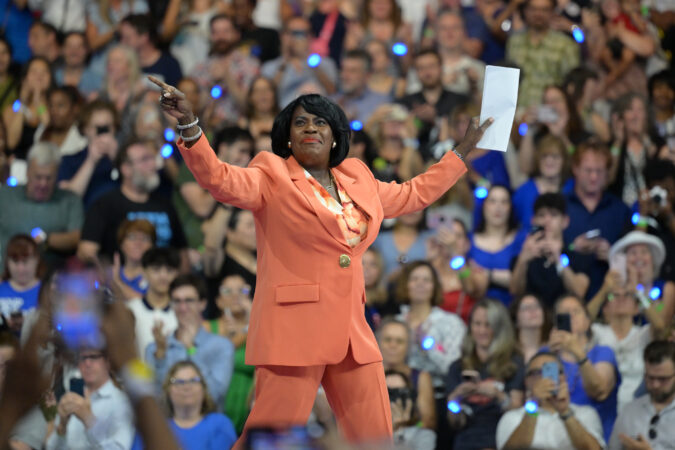
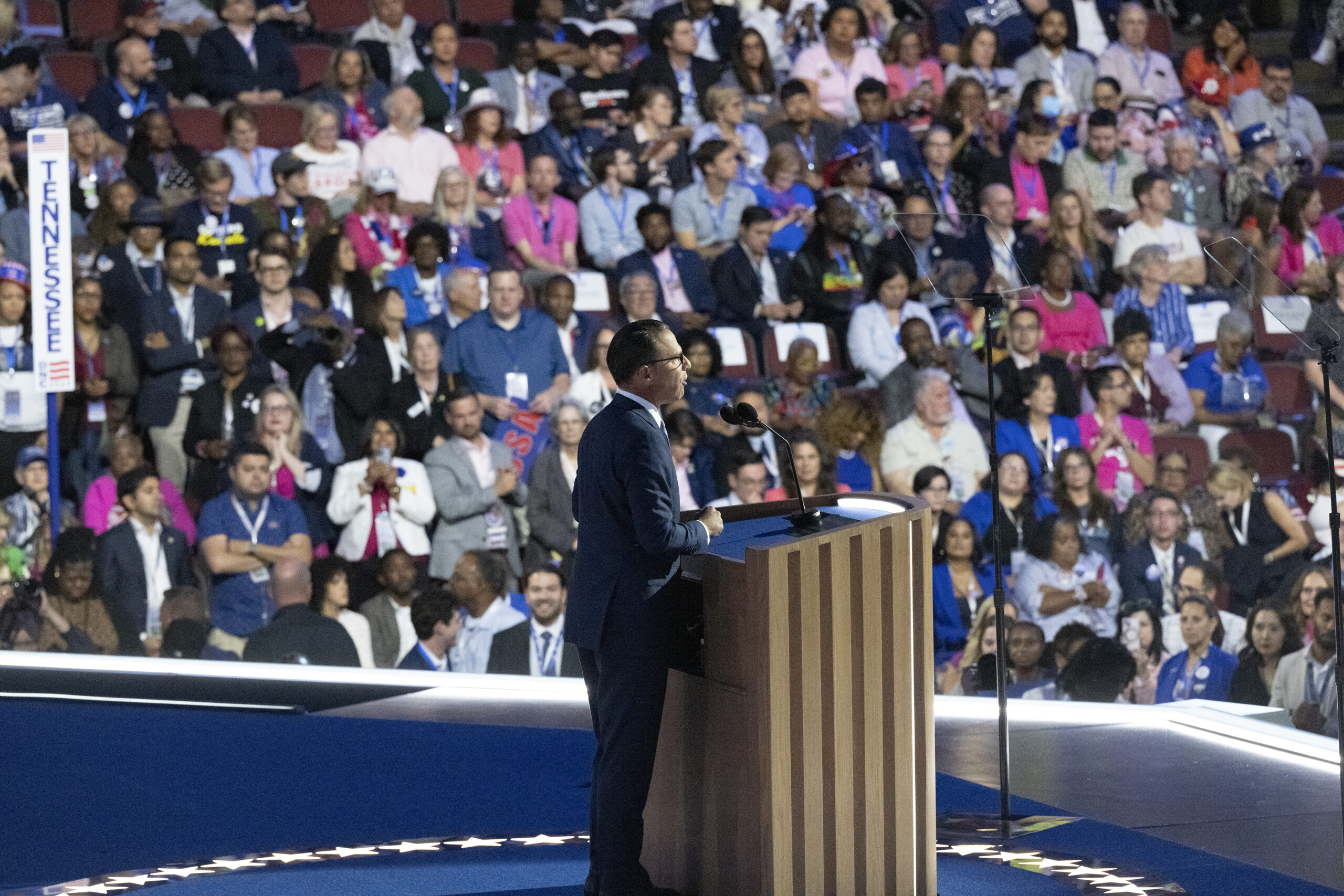
That means there is a chance that Shapiro, who was raised in Montgomery County and whose family still lives there, could be nominated in what is essentially his hometown.
Pennsylvania Gov. Josh Shapiro speaks during the Democratic National Convention Aug. 21, 2024, in Chicago.
In a letter to Martin, Shapiro wrote that Philadelphia “would see substantial economic benefits” from hosting the convention and vowed that the state would be “prepared to ensure our infrastructure, public safety agencies, workforce, and business community are equipped to host thousands of delegates and attendees.”
What’s next: a close look at security and logistics
Behind the pomp of the DNC’s spring site visit will be a serious evaluation of security, transportation, hotels, and arena logistics.
The DNC said in a statement Monday that it will value “new and innovative approaches” to hosting a large-scale event that is likely to bring thousands of tourists. In 2016, the convention drew more than 5,000 attendees and an additional 29,000 visitors — nearly 20,000 of whom were media members.
Nominating conventions are typically designated as National Special Security Events, meaning the federal government leads security because the event is deemed at high risk for terrorism or other criminal activity. That means planners need to know specifics about law enforcement staffing, gear, and other capabilities.
Placards promoting Philadelphia as the host city of the Democratic National Convention in 2016, while the Democratic National Committee was touring the city in August.
Support will also have to come from outside the city. During past conventions, federal law enforcement teamed up with Philadelphia police to secure the venue, and they were joined by officers from across the region.
The DNC also said in its announcement Monday that the committee would prioritize “the importance of forging a strong partnership between the DNC and the host city, including its community, political, and business leaders.”
To that end, the host committee and Parker asked elected officials and civic leaders from across the state to write letters of support that accompanied the city’s bid.
Authors ranged from City Council President Kenyatta Johnson, whose district includes the South Philadelphia stadium complex, to labor leaders to Democrats from the Philadelphia collar counties.
Montgomery County Commissioner Neil Makhija, who wrote a letter to the DNC boosting the bid, said it is important for the committee to see that local governments and law enforcement agencies outside the city are willing to offer support, because “pulling something like this off requires a lot of cooperation on many different fronts.”
“A real concern now when you’re thinking about hosting a political convention is ‘How are we going to manage public safety and a threat environment?’” he said. “There are a number of reasons to point to our region and see a level of collaboration that inspires confidence.”
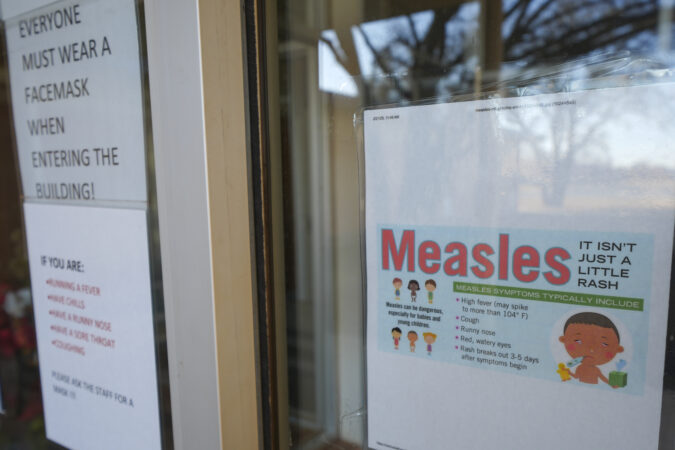
Pennsylvania had 12 confirmed cases of measles among state residents and two more involving visitors to the state as of Tuesday, the state health department said.
Eight cases are associated with an outbreak in Lancaster County, where the Pennsylvania Department of Health declared an outbreak involving five cases a month ago.
The latest case was reported last Wednesday in that county. LNP reported that the three most recent cases there were diagnosed in people who were already quarantining after a measles exposure.
Pennsylvania officials also have confirmed two cases in Chester County — one in a county resident and another in a person visiting the county.
One of the Chester cases was connected to the Lancaster outbreak, and the other was linked to an outbreak at Ave Maria University, a small Catholic college in Florida, said Jeanne Franklin, the county’s public health director.
Likewise, four cases in Montgomery County — one in a person visiting the county and three in county residents — were connected to the Ave Maria outbreak.
A person infected with measles connected to that outbreak traveled to Montgomery County; later, two members of their household and a person who had visited an urgent care clinic at the same time as the original patient were diagnosed with measles.
The person infected at the urgent care developed symptoms about 20 days after exposure. Measles has a long incubation period of up to 21 days.
That person had visited a Wawa in Limerick and a car dealership in Royersford multiple times while contagious, and late last month county officials issued warnings about possible exposures to residents who may have been in those locations.
None of the Pennsylvania patients diagnosed with measles had been vaccinated.
Measles cases have risen in the last several years in the United States. In South Carolina, a major outbreak has caused at least 935 cases since last fall. At least 83 people have been sickened in Collier County, Fla., where Ave Maria University is located. Florida has seen 114 total cases so far this year, the Naples Daily News reported.
Closer to home, in late February, Delaware health officials reported a potential measles exposure at the Nemours Children’s Hospital emergency room.
Pennsylvania health officials, citing state privacy laws, declined to specify how the outbreak in Lancaster County began.
“The department investigates each reported case of measles to understand the potential source of their infection. Some of the cases in Pennsylvania have been connected to cases in other states,” the department said in an email.
The state conducts contact tracing to identify people who were exposed to the highly contagious disease; the virus can linger in the air for up to two hours. Health officials determine whether those exposed are immune to the virus, either through vaccination or a prior infection.
People without immunity can get vaccinated for measles within 72 hours or receive immunoglobulin within six days to avoid contracting the disease.
In a health alert issued last month, state officials urged physicians to “maintain a high index of suspicion” for measles if patients show up with a rash and fever. If doctors suspect a measles case, they should not wait for lab confirmation and instead immediately notify the health department.
The department stressed that the measles, mumps, and rubella vaccine is the best way to protect against measles; two doses of the vaccine are 97% effective at preventing the disease.
About 94% of Pennsylvania residents have received the MMR vaccine. That is “likely to help limit the number of measles cases in Pennsylvania, compared to other states with lower vaccination rates,” the health department’s statement said.
A Douglass Township school bus driver was charged with driving under the influence and related crimes after she drove more than 50 elementary school-age children while intoxicated, officials said.
Kelly Weber, 46, of Boyertown, drove her school bus “erratically” on Feb. 6 while children were inside, narrowly missing vehicles and nearly hitting a telephone pole, the Montgomery County District Attorney’s Office said.
Police responded in the rural township north of Pottstown after receiving calls about Weber’s driving, officials said.
They searched the bus and found an open 750ml bottle of Tito’s vodka, two empty Tito’s bottles, and a liquor store receipt for the alcohol from 9:22 a.m. that day.
Investigators found that 54 children had ridden on Weber’s bus that day, and that multiple children had called or texted their parents expressing fear about the manner in which she was driving.
One of the children got off the bus before arriving at school and was picked up by their parents, officials said.
Police tested Weber’s blood-alcohol content and found it was 0.331, which is four times the legal threshold for intoxication in Pennsylvania.
In addition to DUI, Weber was charged with 54 counts of endangering the welfare of children and 54 counts of reckless endangerment.
Weber voluntarily entered a rehab facility after she was issued an arrest warrant, according to officials.
She is working with police to arrange a time to turn herself in, when her bail will be set and she will be formally arraigned, officials said.