Tag: Montgomery County

  • Carl W. Schneider, longtime celebrated attorney and former SEC adviser, has died at 93

    Carl W. Schneider, longtime celebrated attorney and former SEC adviser, has died at 93

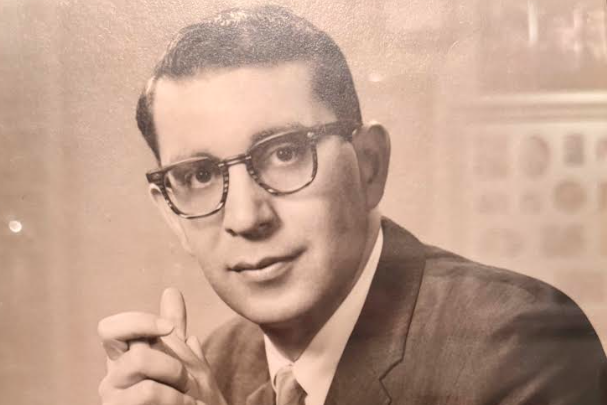
    Carl W. Schneider, 93, of Philadelphia, retired longtime attorney at the old Wolf, Block, Schorr, & Solis-Cohen law firm, former special adviser to the Securities and Exchange Commission, visiting associate professor at what is now the University of Pennsylvania Carey Law School, writer, poet, mentor, and volunteer, died Thursday, Dec. 18, of pneumonia at Pennsylvania Hospital.

    Mr. Schneider was an expert on corporate, business, and securities law, and he spent 42 years, from 1958 to his retirement in 2000, at Wolf, Block, Schorr, & Solis-Cohen in Philadelphia. He was adept at handling initial public offerings and analyzing stock exchange machinations, and he became partner in 1965 and chaired the corporate department for years.

    Although he did not plan to specialize in securities law after graduating from Penn’s law school in 1956, Mr. Schneider told the American Bar Association in 1999: “I found this type of work to be challenging, gratifying, stimulating, and educational.”

    He spent most of 1964 on leave from the law firm as a special adviser to the Securities and Exchange Commission’s Division of Corporation Finance in Washington. His recommendations to SEC officials regarding its public-offering process, disclosure system, civil liability rules, and arbitration procedure, many of which were ahead of their time, eventually led to modernization and reforms in the administration of federal securities laws. “I was cast in the role of the constructive critic,” he said in 1999.

    He chaired committees for the Philadelphia and American Bar Associations and was active in leadership roles with the American Law Institute and other groups. He clerked for Supreme Court Justice Harold H. Burton and Judge Herbert F. Goodrich of the U.S. Court of Appeals for the Third Circuit for two years after graduating from law school.

    He also taught classes as a visiting associate professor at Penn’s law school and lectured extensively elsewhere on the continuing legal education circuit. “I am aware of two personality traits that have shaped my career,” he said in 1999, “a need to fix things and a love of teaching.”

    He spent the 1978-79 school year as head of Penn’s Center for Study of Financial Institutions and said in 1999 that he would have taught full time had he not enjoyed his legal work so much. “I was a practitioner,” he said, “and I tried to give my classes useful training to do what most practitioners do.”

    Mr. Schneider wrote, cowrote, and edited dozens of scholarly articles, books, and pamphlets, including the celebrated Pennsylvania Corporate Practice and Forms manual in 1997. He also penned poetry, and used this stanza to open a chapter about boilerplate clauses in the Pennsylvania Corporate Practice and Forms manual:

    Mr. Schneider and his wife, Mary Ellen, were inseparable for 68 years.

    “The ending stuff gets little thought/Like notice, gender, choice of laws/If badly done you may get caught/With a provision full of flaws.”

    He volunteered with what is now Jewish Family Service, the Jewish Federation of Greater Philadelphia, Abramson Senior Care, and Congregation Rodeph Shalom. He mentored countless other lawyers and students, and agreed in 1972 to a request by The Inquirer’s Teen-Age Action Line to be interviewed in his office for a high school student’s research project.

    “He was often described as brilliant, humble, a dry wit, and a great listener,” his family said in a tribute. “He gave everyone he spoke to the same time, attention, and respect.”

    He was quoted often in The Inquirer and lectured about legal matters at conferences and panels. He earned several service and achievement awards and said in 1999: “I suppose I am one of those compulsives who cannot see something in the world important to him that is broken without feeling the need to repair it.”
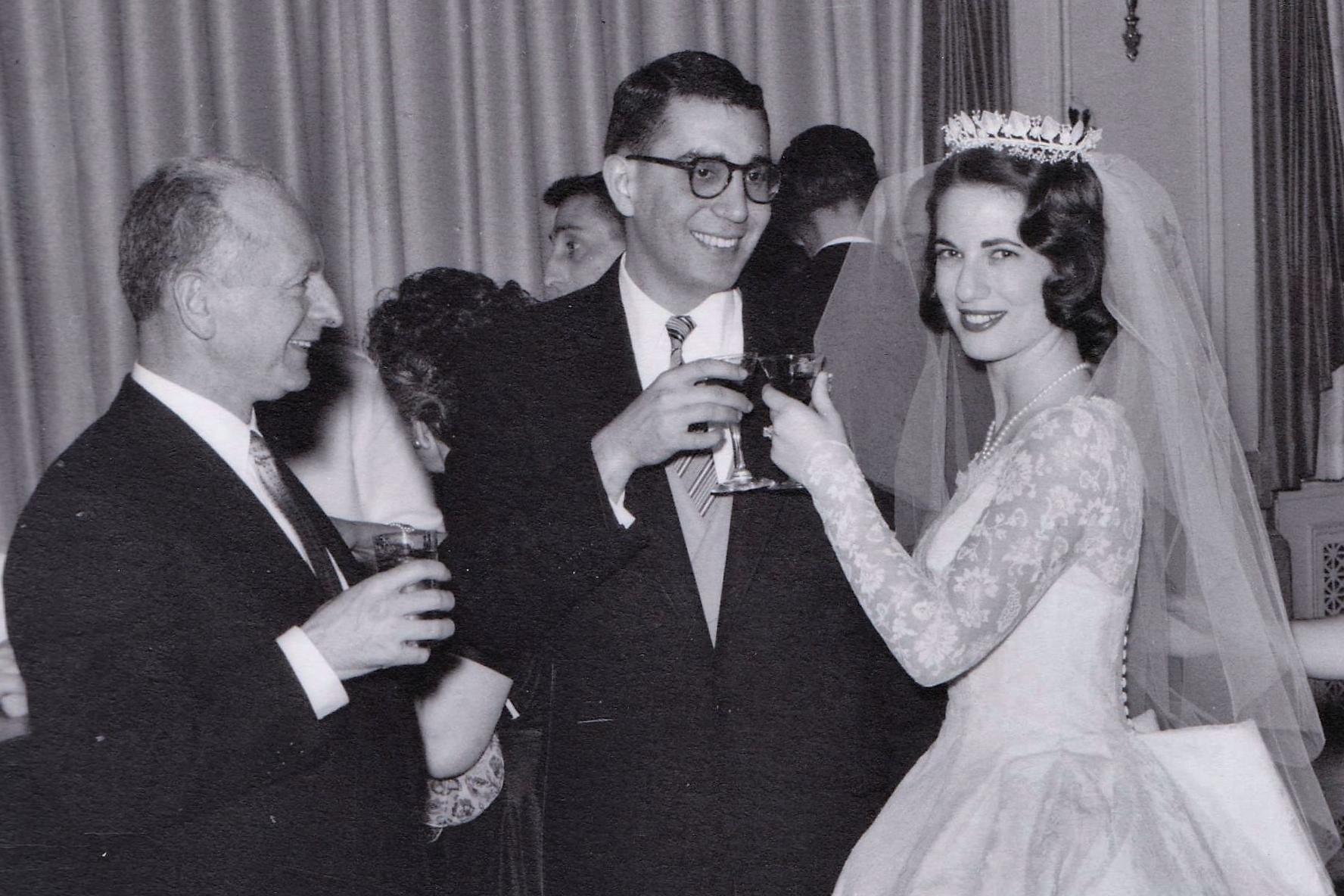
    Mr. Schneider and his wife, Mary Ellen, married in 1957.

    Carl William Schneider was born April 27, 1932, in the Wynnefield section of Philadelphia. His family later moved to Elkins Park, Montgomery County, and he graduated from Cheltenham High School in 1949.

    He knew he wanted to be a lawyer, like his father and grandfather, when he was young and said in a 2014 video interview at Penn that school was his favorite place. He earned a bachelor’s degree at Cornell University in 1953 and served on the law review at Penn.

    He met Mary Ellen Baylinson through a mutual friend, and they married in 1957. They had sons Eric, Mark, and Adam and a daughter, Cara, and lived for years in Elkins Park. He and his wife moved to Center City in 2005.

    Mr. Schneider enjoyed reading, bird-watching, photography, swimming, tennis, and springtime strolls through Rittenhouse Square. His favorite song was “The Gambler” by Kenny Rogers.

    Mr. Schneider drove his family across the country in a motorhome he nicknamed Herman.

    He collected old-fashioned scales, spent quality time with family and friends on Long Beach Island, N.J., and drove cross-country on a family road trip in a motorhome he nicknamed Herman. He ran unsuccessfully for commissioner in Melrose Park in the 1960s.

    He made sure to be home every night for dinner and drew smiley faces inside the capital C when he signed his name. “He never judged, never overreacted,” his daughter said.

    His son Adam said: “He was a gentle man but forthright and direct.” His son Mark said: “He had a moral code on how to live a life and never deviated from it.”

    His son Eric said: “He left the world a better place.”
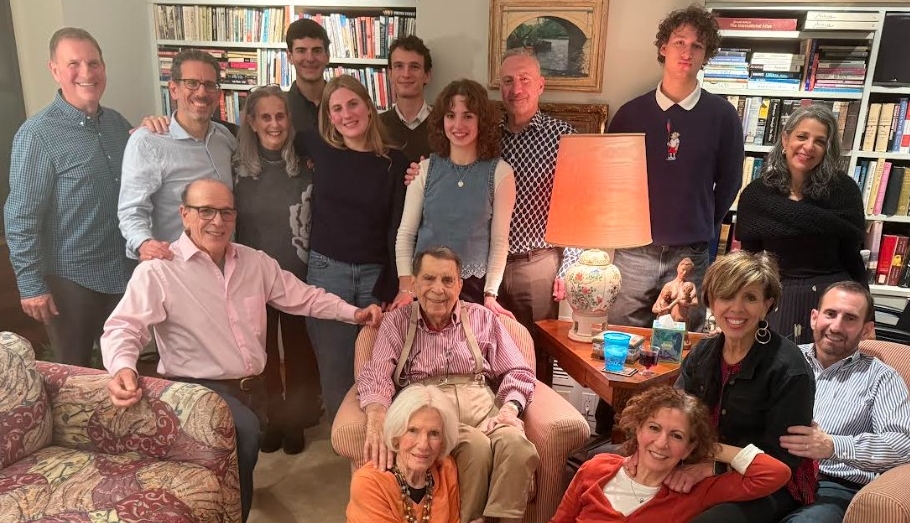
    Mr. Schneider (center) and his family spent many Thanksgivings together.

    In addition to his wife and children, Mr. Schneider is survived by three grandchildren; a sister, Julie; and other relatives.

    Services were held Monday, Dec. 22.

    Donations in his name may be made to Congregation Rodeph Shalom, 615 N. Broad St., Philadelphia, Pa. 19123.
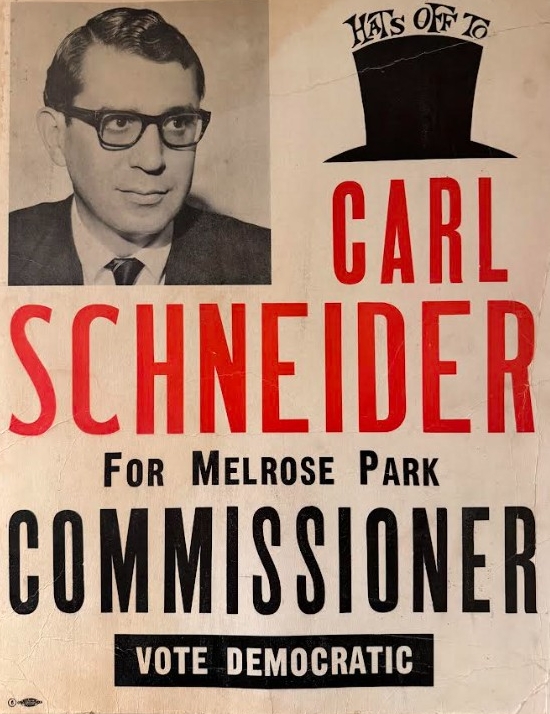

    Mr. Schneider was interested in civic and community issues as well as legal affairs.
  • What does Montco’s PJM have to do with data centers and why is Gov. Shapiro always so mad at it?

    What does Montco’s PJM have to do with data centers and why is Gov. Shapiro always so mad at it?

    Pennsylvania Gov. Josh Shapiro spotlighted energy affordability and the rapid expansion of data centers during his annual budget address Tuesday, singling out PJM to speed up new electrical connections for the centers.

    PJM Interconnection — the region’s dominant electric grid operator — is poised to play a central role in the expansion of data centers, as the independent organization has been shoved into the national spotlight and subjected to mounting pressure over the last year.

    It has been a frequent target of Shapiro, officials from other states, consumer advocates, and the federal government.

    In many ways, PJM may be one of the most consequential Philly‑area institutions that most residents have barely heard of, even though their electricity supply and monthly bills hinge on its decisions.

    The organization has faced escalating scrutiny nationwide and across the region because of its position as the country’s largest independent grid operator and the challenges tied to surging energy demand.

    What is PJM?

    Based in Audubon, Montgomery County, PJM manages the minute-by-minute flow of electricity for 67 million people across 13 states and the District of Columbia.

    It helps keep the lights on for 13 million Pennsylvanians.

    Why are there concerns about PJM and data centers?

    Concerns have risen over the cost to consumers posed by hyperscale data centers — the massive server farms needed to run artificial intelligence — that are poised to come online across Pennsylvania and the U.S.

    PJM plays a major role in getting those data centers powered and connected to the regional electrical grid.

    Consumer advocates say the data centers are forcing consumers to pay for the new power plants and equipment needed to keep up with that demand. And they fear that huge demand could result in electrical outages during times of peak demand.

    Already, consumers have seen electricity prices spike — and that’s before most of the proposed data centers are even built.

    How much consumers pay is influenced by an annual auction held by PJM designed to get enough commitments from power producers so that the electrical grid can meet forecast demand for several years and to ensure power during peak times. That is known as grid reliability.

    Map produced by The National Resources Defense Council estimates electricity capacity costs to utility companies based on PJM forecasts through 2032.

    Why is Gov. Shapiro critical of PJM?

    Shapiro and other governors have been sharply critical of how PJM has designed its auction, saying the process lacks transparency.

    In a 2024 lawsuit, Shapiro’s office referred to PJM’s decisions as “inept” and responsible for “the country’s most snarled interconnection queue,” in reference to projects lined up for approval to be added to the grid.

    After the 2025-26 auction, Shapiro reached an agreement with PJM on a price cap that he said would save consumers over $21 billion and avoid historic price hikes. The cap limited the increase of wholesale electricity payments to power plant owners.

    PJM held another auction in December for 2027-28, in which it failed to procure enough supply to meet forecast demand next year.

    PJM forecasts that data centers will drive a need for more than 30 gigawatts of peak electricity capacity by 2030 — enough to power more than 20 million households, or approximately all the homes in New Jersey, Pennsylvania, Ohio, Virginia, and Maryland, according to the Natural Resources Defense Council (NRDC).

    The NRDC says that could lead to another spike in electricity costs through 2033 and cost homeowners and businesses an estimated extra $70 per month.

    As a result, Shapiro and federal officials have urged PJM to extend the current price cap another two years.

    Why is there a push for more data centers?

    At the same time, however, officials are also pushing PJM to fast-track data centers.

    Late last year, the Federal Energy Regulatory Commission issued an order on so-called colocation that will allow tech companies to plug their data centers directly into power plants.

    In January, the Trump administration and a group of governors, including Shapiro, urged PJM to move quickly to boost power supplies and keep bills from rising.

    They also want PJM to hold a separate power auction in which tech companies would bid on 15-year contracts to build new power plants. That way, data center operators, not regular consumers, would pay for the power.

    Data centers that do not have their own power source and do not volunteer to be cut off from the grid during power emergencies should be billed for the cost of new power plants, they said.

    Why do people resist data centers near their homes?

    The quick rise of data centers has met stiff resistance from residents who fear the projects will radically alter the character of rural neighborhoods, increase electricity and water costs, and harm the environment.

    Developers have submitted applications for at least 20 hyperscale data centers in Pennsylvania. PJM would have to find a way to make sure they can be powered and connected reliably to the grid, or provide their own power.

    At least six data centers are being planned or proposed in the Philadelphia region, with some reaching 2 million square feet. Residents have fought the proposals, some of which have run into zoning and planning problems.

    Data centers are proposed in Falls Township, Bucks County; East Vincent and East Whiteland in Chester County; Limerick in Montgomery County; and Vineland, N.J. A proposal for a data center in Plymouth Meeting, Montgomery County, has been withdrawn, but another proposal could be submitted at any time.

    Residents of some of those communities are alarmed by a new Pennsylvania House bill (HB 2151), which is backed by Shapiro. It provides a model ordinance designed to speed data center development.

    Opponents believe the bill is an attempt by the tech industry to get data centers approved.

    “HB2151 would undermine Pennsylvanians’ herculean grassroots efforts to keep dirty data centers out of our communities — it must be stopped,” said Ginny Marcille-Kerslake, an organizer for Food and Water Watch, an environmental advocacy nonprofit.

    “This bill pushes Shapiro’s reckless embrace of data centers even further onto communities struggling to grapple with Big Tech’s land, power, and water grab,” she said, calling it a part of “backroom deals” the state is making.

    A vote on the bill before the House Energy Committee is scheduled for Wednesday.

    What’s next?

    Environmentalists and other groups, including some legislators, say a process by PJM to fast-track electricity-producing projects excludes clean energy and gives special treatment to fossil fuel power plants, allowing them to cut ahead in the queue over renewable sources that have waited years to connect to the grid.

    Meanwhile, PJM recently released its much-anticipated plan for how to deal with the demand created by data centers.

    That plan calls for changes in PJM policies to bring new power online quickly by providing a streamlined path for state-sponsored power generation projects, improving load forecasts, giving a bigger role in the process to states, and offering ways for data centers to bring in their own power generation while curtailing power in times of system need.

    The plan, PJM said, “will also help address the supply-and-demand imbalance that has the potential to threaten grid reliability and is currently driving up wholesale costs that can impact consumer bills.”

    Jeff Shields, a spokesperson for PJM, said the imbalance has been created as sources of power generation are being retired without enough new generation coming online to keep pace. At the same time, demand for electricity has increased substantially due to the proliferation of data centers.

    “PJM is doing its part to bring new generation onto the system, and any suggestion otherwise is just not true,” Shields said.

    He also noted that while PJM does run wholesale power markets, it does not directly set rates for residential, commercial, or industrial customers. Those rates are set by utilities, such as Peco, along with government agencies, such as the Pennsylvania Public Utility Commission.

  • Jefferson Health plans to boost capacity at the Abington Hospital emergency department

    Jefferson Health plans to boost capacity at the Abington Hospital emergency department

    Jefferson Health is boosting emergency department capacity at Abington Hospital to enable it to receive 100,000 visits annually, up from 80,000 now, the nonprofit health system said Tuesday.

    The department, which is also a Level II trauma center, will be named the Goodman Emergency Trauma Center in honor of an unspecified donation from Montgomery County residents Bruce and Judi Goodman. Bruce Goodman is a commercial real estate developer and a longtime Abington board member, Jefferson said.

    Jefferson, which acquired Abington in 2015, described the Goodman gift as the cornerstone of a $30 million ongoing fundraising campaign for the hospital’s emergency department.

    The project will reconfigure more than 24,000 square feet of existing clinical space and reallocate 10,000 additional square feet from a courtyard and a gift shop to the ED to expand capacity from 80 to 116 treatment spaces, Jefferson said.

    In November, Jefferson said it had closed Abington’s inpatient behavioral health unit to accommodate extra patients in its emergency department.

    Also last year, Jefferson announced $19 million in upgrades to the emergency department at Thomas Jefferson University Hospital in Center City. The system also added a 20-bed observation unit in the ED at Jefferson Einstein Philadelphia.

  • Eli Lilly plans a $3.5 billion Lehigh Valley pharma campus for new weight-loss drugs

    Eli Lilly plans a $3.5 billion Lehigh Valley pharma campus for new weight-loss drugs

    Eli Lilly & Co. plans to build a $3.5 billion pharmaceutical plant in the Lehigh Valley to expand manufacturing capacity for next-generation weight-loss medicines, the Indiana company announced Friday in Allentown.

    The decision by Lilly to build one of its four new U.S. factories in Lehigh County marks a significant win for Pennsylvania as states compete for the billions Big Pharma, under pressure from Washington, is spending to boost domestic manufacturing.

    “The Mid-Atlantic, Northeast in recent years hasn’t seen this type of mega-plant investment. Most of that has gone to the South and the Southwest,” Don Cunningham, CEO of Lehigh Valley Economic Development Corp., said in an interview.

    The Lehigh Valley sits in the middle of a pharmaceutical manufacturing belt that stretches from Montgomery County into central New Jersey, but historically has been known for steel, cement, and Mack Trucks. The Lilly plant will put it on the map for life sciences, said Cunningham, whose agency helped recruit Lilly.

    Montgomery County, a major drug and vaccine manufacturing hub, secured another significant project during the ongoing pharmaceutical investment push. The British company GSK said in September that it will build a biologics factory in Upper Merion Township, but did not specify how much it would spend there.

    Merck, the New Jersey-based drug giant, announced plans for a $1 billion factory and lab near Wilmington, beyond its existing major operations in Montgomery County.

    Until now, Lilly has been busy in the South. Last year, Lilly announced plans to spend a total of $17.5 billion on three factories in Alabama, Texas, and Virginia. The Lehigh Valley was in the competition for the Virginia project, which will be built west of Richmond, Cunningham said.

    The 150-acre Lehigh Valley site, in Upper Macungie Township, was selected from more than 300 applications for one of the four new Lilly plants. Ohio was among the other finalists, Cunningham said. The property Lilly is acquiring is adjacent to Interstate 78 on the north side just west of the Route 100 interchange.

    Pennsylvania boosted its chances of landing the Lilly project by offering up to $50 million in tax credits and $50 million in grants. An additional $5 million will go to a local community college for a job-training program.

    Gov. Josh Shapiro played an important part in securing the Lilly commitment, Cunningham said, with “his team bringing to bear every resource the state could.”

    When fully operational in 2031, the Lilly complex is expected to employ 850. The average annual pay in a Lilly facility is $100,000, Lilly’s chair and CEO David A. Ricks told a crowd gathered at the Da Vinci Science Center in downtown Allentown.

    “Those are high-value jobs that I can say with a lot of confidence change the trajectory of families,” Ricks said.

    Among the products Lilly anticipates manufacturing at the plant are Zepbound, which Ricks called the world’s best-selling medicine, and retatrutide, a type of weight-loss medication dubbed “triple G” that acts on three aspects of appetite regulation.

    Early results suggest such next-generation medications may lead to more weight loss than seen with the current drugs on the market, such as Novo Nordisk’s Ozempic and Lilly’s Mounjaro, which target one or two metabolic drivers.

  • ‘The favorite Auntie’: Woman who died after a car struck her wheelchair remembered at sentencing for the vehicle’s driver

    ‘The favorite Auntie’: Woman who died after a car struck her wheelchair remembered at sentencing for the vehicle’s driver

    She was more than just an unhoused person.

    That’s the way Sharon Cary-Irvine would like the world to remember her sister, Tracey.

    In 2024, Tracey Cary was struck and killed by a 39-year-old driver in Lower Merion as she crossed City Avenue in a wheelchair.

    The driver, Jamal McCullough, assessed his vehicle for damage before fleeing the scene without helping her or calling police, prosecutors said. He turned himself in to authorities after reports of the collision — and his photograph — aired across local news outlets.

    On Friday, McCullough was sentenced in Montgomery County Common Pleas court to serve three to six years in a state prison, the mandatory minimum for such a crime. While prosecutors said he was not at fault in the fatal collision because Cary was crossing outside of a posted crosswalk, they said his actions after the crash were criminal.

    For Cary-Irvine, the hearing was a chance to offer the public a more complete image of her late sister.

    Cary, 61, was an avid reader who loved children, traveling, and the outdoors, according to Cary-Irvine. She was a fan of spelling bee competitions, and she had a sense of humor: she was known for calling up her nieces and nephews and speaking to them as Cookie Monster, her sister said.

    “She had a love of people — babies were her specialty,” Cary-Irvine said. “She was the favorite Auntie. To know Tracey was to love Tracey.”

    Cary was also a mother to a son who is in his 20s, her sister said, and she held a variety of jobs throughout her life, working for the Philadelphia School District, St. Joseph’s University, and later UPS.

    She was a singer of gospel songs, and grew up attending Union Tabernacle Baptist Church in West Philadelphia.

    Before Cary’s death, the siblings’ father died from COVID-19, leading Cary to struggle with mental illness, her sister said. Soon she was living on the street.

    It was on the street where McCullough struck Cary shortly after 2 a.m. on Nov. 11, 2024.

    Surveillance footage showed that McCullough, of East Germantown, struck Cary with enough force to eject her from her wheelchair. After checking on his vehicle, he walked within feet of Cary’s body but did not stop to help her, prosecutors said.

    The father of two was en route to a shift as a sanitation worker with Waste Management.

    During his sentencing, McCullough apologized for the incident, which he said was an accident.

    “I want to apologize for my ignorance, apologize for maybe how I went about things,” McCullough said.

    “If I could take it back, I definitely would.”

    Minutes earlier, Cary-Irvine read a victim impact statement aloud, telling the court that, in her view, McCullough acted “entitled and without remorse” that morning.

    “This sentence is not about revenge — it’s an opportunity, perhaps your last, to reflect honestly on your life,” Cary-Irvine told McCullough.

    “If you do not learn from your mistakes,” she continued, “you will repeat them.”

  • How much snow, and when will it begin snowing in the Philadelphia region?

    How much snow, and when will it begin snowing in the Philadelphia region?

    Philadelphia is expected to see its most significant winter storm in years this weekend, with nearly a foot of snow and ice expected from a formidable low-pressure system sweeping across the eastern United States.

    Official National Weather Service forecasts say six to 18 inches of snow is possible across most of New Jersey and Pennsylvania, including Philadelphia as the storm pushes through the region Saturday night to early Monday morning. More than 21 states are expected to experience at least moderate impacts from the storm, the weather service said.

    Forecasters said that mixing with sleet and freezing rain could hold down overall snow totals across Philadelphia and South Jersey, but the storm is likely to hinder if not halt most travel on Sunday, regardless.

    The National Weather Service puts out forecasts for every few square miles of land in the United States four times a day through a system called the National Digital Forecast Database.

    The maps below display that data. Use it to find how much snow is expected anywhere in the eastern United States. It will show the most recent forecast for the next three days.

    (function () {window.addEventListener(‘message’, function (e) { var message = e.data; var els = document.querySelectorAll(‘iframe[src*=”‘ + message.id + ‘”]’); els.forEach(function(el) { el.style.height = message.height + ‘px’; }); }, false); })();

    A considerable amount of freezing rain and sleet may also fall during the storm, leading to icing concerns. The map below displays the forecast for ice accumulation, or accretion, over the next three days.

    (function () {window.addEventListener(‘message’, function (e) { var message = e.data; var els = document.querySelectorAll(‘iframe[src*=”‘ + message.id + ‘”]’); els.forEach(function(el) { el.style.height = message.height + ‘px’; }); }, false); })();

  • Fallcatcher scammer has been sentenced to 5+ years

    Fallcatcher scammer has been sentenced to 5+ years

    A Florida fraudster who fooled 60 mostly Philadelphia-area investors into contributing $5 million to develop biometric anti-addiction systems, then fled investigators and spent five years as a multinational fugitive before surrendering, was sentenced Wednesday to 5½ years in federal prison.

    Henry Ford, also known as Cleothus “Lefty” Jackson, had pleaded guilty to securities fraud and seven counts of wire fraud for forging documents from insurance companies to inflate the prospects of Fallcatcher, a company he said he was developing to track people in recovery and reduce the risk they would fall back into addiction.

    At his plea hearing last year, Ford insisted his idea for a platform that would track people in recovery was legitimate but admitted that he had falsified claims that insurers and state agencies supported the project and would soon make it profitable. The goal had been to sell the company at a big profit for its investors.

    He was sentenced Wednesday by U.S. District Judge Joel H. Slomsky to the prison term, plus three years supervised release and $2.1 million in restitution.

    Ford started the business in Florida in 2017 but by 2018 was running out of money, according to prosecutors. He then incorporated the company in Delaware and hired managers and a board. He paid Montgomery County insurance salesman Dean Vagnozzi to recruit private investors from Vagnozzi’s network with email pitches and free meals in Montgomery County and South Jersey. But he gave Vagnozzi and the investors false information about Fallcatcher’s prospects.

    Ford fled Philadelphia in 2019 after giving SEC investigators phony documents in an attempt to disprove allegations that he was exaggerating Fallcatcher’s prospects and after learning that he and Fallcatcher were subjects of a criminal investigation.

    He went to Miami, then flew to Morocco, according to federal investigators. Ford later told officials he lived and worked in the United Arab Emirates; Thailand; Malaysia; Indonesia; Tunisia; Guinea; and Mexico.

    Ford filed a Freedom of Information Act request from Mexico in 2024 with the U.S. Marshals Service to see if they were still looking for him.

    Ford crossed the border into Arizona in April 2024, where he was arrested on a warrant for the Fallcatcher case. He was sent to Philadelphia for trial and detained in the federal jail as a flight risk. In 2011, he had been convicted of mortgage fraud in federal court in Arizona as Cleothus “Lefty” Jackson and served a prison term before starting Fallcatcher.

    Part of the money Ford raised for Fallcatcher has been collected for investors from business and personal accounts seized from him in 2019 after Scott Bennett, a company executive, became suspicious that Ford was collecting improper payments from the company and reported him to the SEC.

    According to prosecutors, Ford gave salesman Vagnozzi and investors “false and misleading information” about Fallcatcher and showed them phony documents about an insurer’s promise to fund a pilot Fallcatcher program. Ford paid Vagnozzi $500,000, which Vagnozzi refunded as part of a civil settlement with the SEC, plus 4 million shares of Fallcatcher stock, which proved worthless.

    Vagnozzi is suing that agency, alleging that federal officials improperly seized his former business, A Better Financial Plan, as part of the 2020 court-ordered government takeover of Par Funding, a Ponzi scheme whose unregistered securities Vagnozzi also sold to clients. He later sued his lawyer, former Eckert Seamans partner John Pauciulo, who Vagnozzi said gave him bad advice about Par, Fallcatcher, and other investments.

    The case against Ford was investigated by the FBI and the SEC’s New York regional office.

  • A ‘vital’ Norristown day shelter is racing to find its own new home

    A ‘vital’ Norristown day shelter is racing to find its own new home

    A lifeline for Montgomery County’s low-income and homeless residents is running out of time.

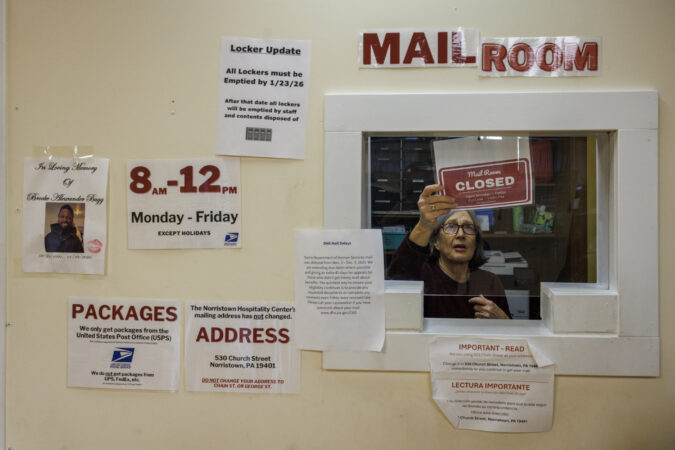
    The Norristown Hospitality Center, a nonprofit day shelter offering free meals, showers, laundry, legal aid, and other services, must move out of its home by the end of January.

    Last year, the Hospitality Center offered services to 1,400 people, roughly a third of whom lacked housing, according to executive director Sunanda Charles. No other similar day shelters offer the same array of services in the immediate area.

    “The community would be losing a very vital resource,” Charles said.

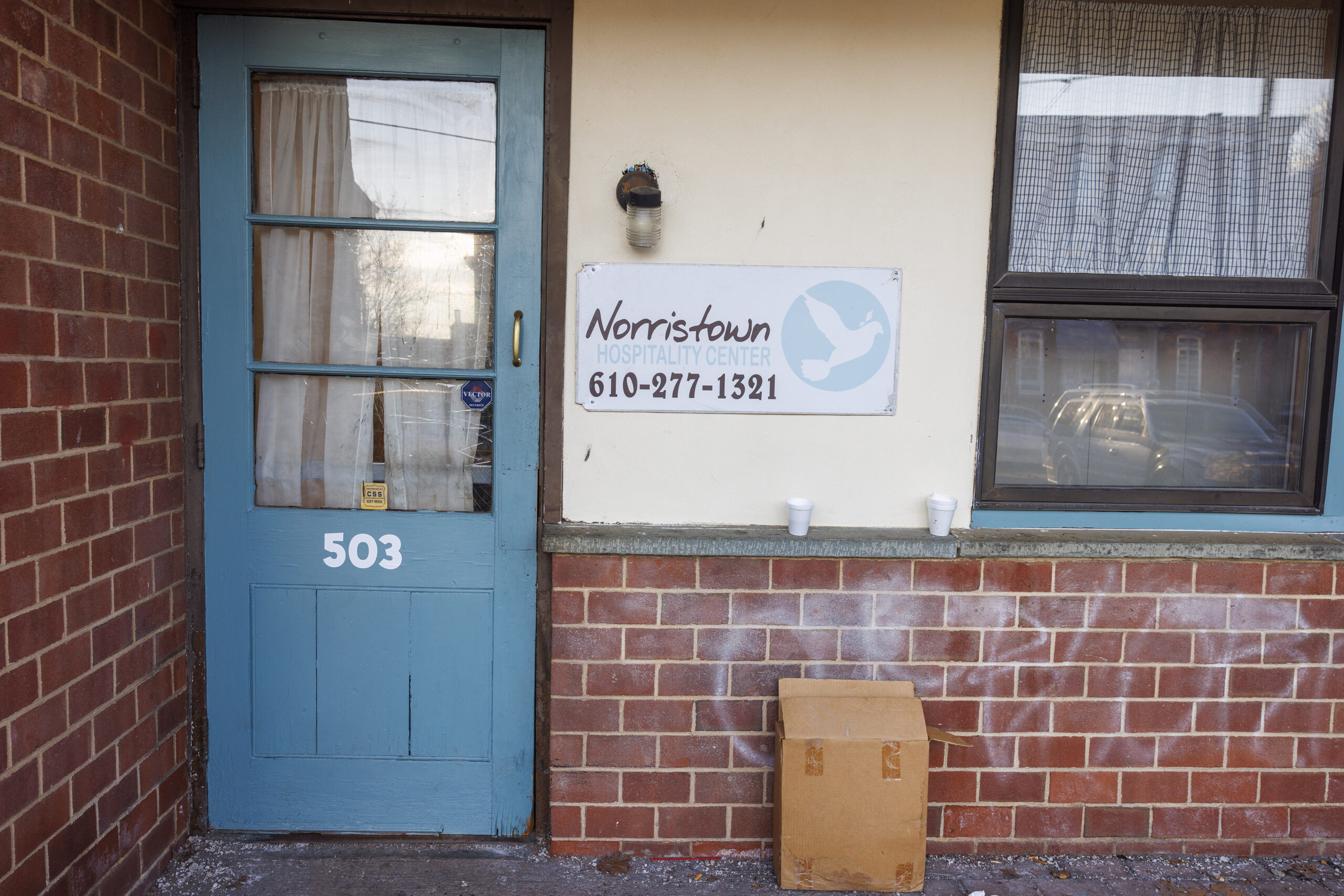
    The Norristown Hospitality Center, which provides services for the homeless, is looking for a new location.

    The Hospitality Center, which opened in 1992, has been heading toward this inflection point since it vacated its home of over two decades at 530 Church St. by the end June 2025.

    It arranged a six-month lease with the Senior Adult Activities Center of Montgomery County, originally set to expire on Dec. 31. The center was granted a one-month extension, but is still searching for its next temporary and permanent home.

    Zoning woes

    The Hospitality Center’s search for a new location has been complicated by the organization’s needs and vocal NIMBYism.

    The Hospitality Center’s longtime Church Street home was owned by St. John’s Episcopal Church, which notified the center in 2024 it needed to vacate the building. Charles said the church told them it was because of concerns about the optics of visitors loitering outside. The notice came as a surprise, she said, but they were given a year to find their next location.

    St. John’s Rev. Christopher L. Schwenk disputed Charle’s characterization of why the church required the Hospitality Center to vacate the building, and said the center did not report property damage in 2023 that required renovations, and failed to pay rent on time for seven months of that year.

    “After months of conversation with Director Sunanda Charles, and then the Center’s Board, we made the difficult decision to end their lease due to breach of contract. Director Charles’ characterization of this decision as rooted in ‘the optics of loitering’ is as disappointing as it is false. We see Christ in the faces of our neighbors living in homelessness and are proud to continue serving them right here on Church St.,” he said in a statement.

    The Hospitality Center only shut down for three days as staff moved operations to the Senior Activities Center, but they knew this home would be temporary. Charles said the Senior Activities Center received funding for extensive renovations through the American Rescue Plan Act, which would expire if they don’t begin construction soon.

    After a process of careful planning and community outreach, the Hospitality Center identified a new building at 336 E. Moore St. and entered a purchasing agreement for it in December 2024.

    Mike Kingsley, program manager at the Norristown Hospitality Center, greets clients as they enter the center for breakfast Friday.

    But doing so required a zoning variance request, which brought the matter before the Norristown Zoning Hearing Board in May. The proposed building was located in a residential area, which ignited the public. Norristown residents testified for hours both for and against the Hospitality Center’s move, with some speaking about the essential services the center provides, while others worried about those suffering from substance abuse loitering where their children are.

    The board ultimately voted 2-1 against the center’s request.

    “I get to see firsthand those who are truly living on the margins of the city of Norristown. It is extremely disappointing — the whole ‘not-in-my-backyard’ attitude — it’s disheartening,” the Rev. Andrea Gardner, board president of the Norristown Hospitality Center, told The Times Herald following the vote.

    Charles said that the Hospitality Center has learned important lessons about the regulatory process and building community support from that experience as it searches for other options.

    But most potential properties in Norristown would require a similar variance request or special exemption for the Hospitality Center to move in. When that time comes, Charles anticipates needing to argue again for the center’s existence in the heart of Norristown.

    “These are people in the community. It is the community’s responsibility as well. Everyone can make a difference. And sometimes, the difference may be in the perspective of how you view people,” she said.

    Staying in position

    Until the Hospitality Center’s future is settled, Brian Van Scoyoc plans to keep spending every day there that he can.

    Van Scoyoc, 54, has been homeless for about five years, since the Norristown home he shared with his ex-girlfriend caught fire and burned down. His ex had to pull him back from jumping into the blaze to rescue his dog, Loggie, who died in the fire.

    “I got sort of displaced and didn’t know where to go or what to do,” he said.

    He’s worked odd jobs here and there, spending his nights at a shelter or in a tent in the woods. But his visits to the Hospitality Center have been a welcome reprieve.

    He comes for coffee and breakfast to start his day, a pleasant escape from the cold early mornings after the overnight shelter closes its doors. He enjoys the chance to chat, watch TV, and play games with the other visitors, and appreciates the center’s laundry and legal aid services. Having a place to plug in his phone and store his belongings in a locker are helpful too, he said.

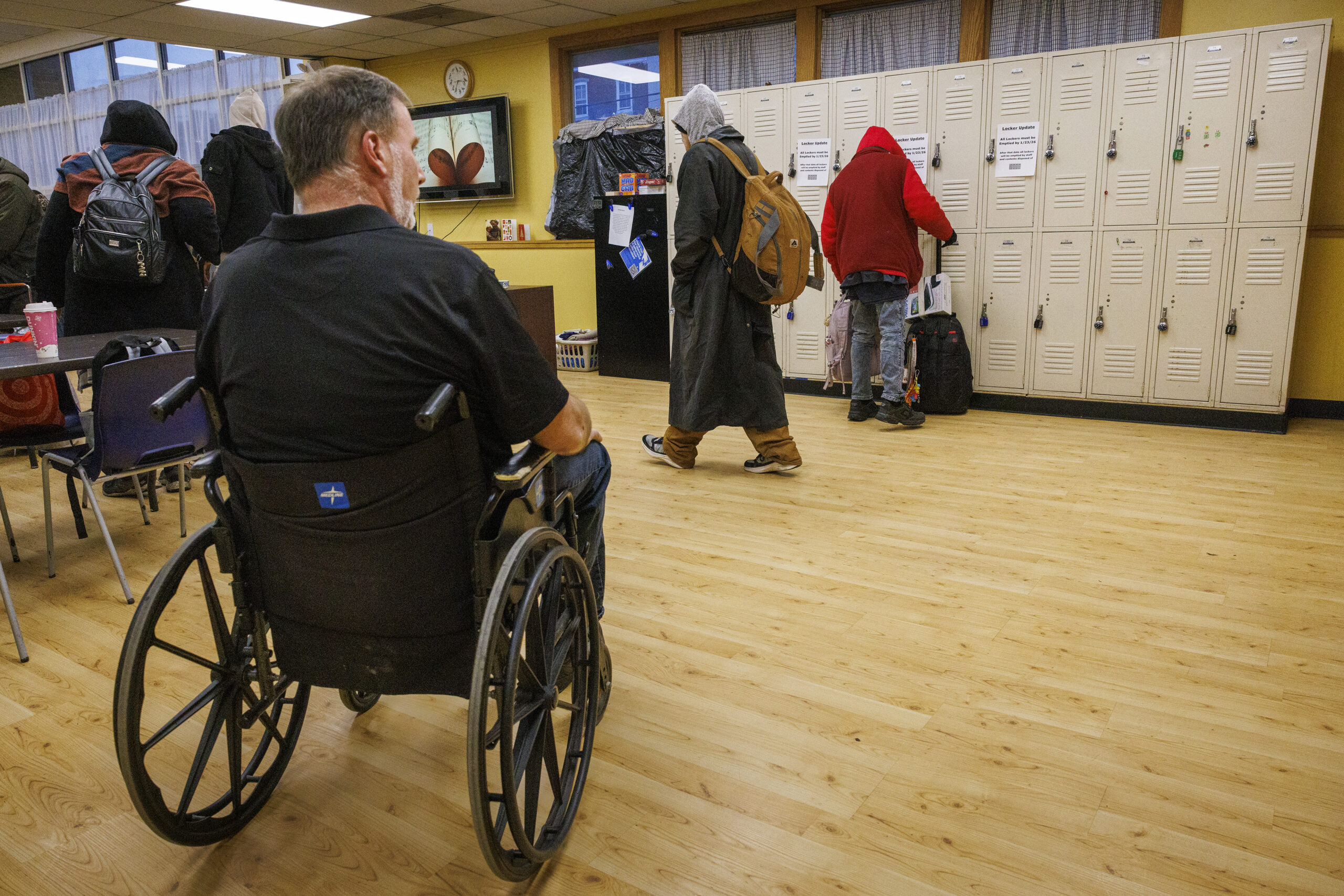
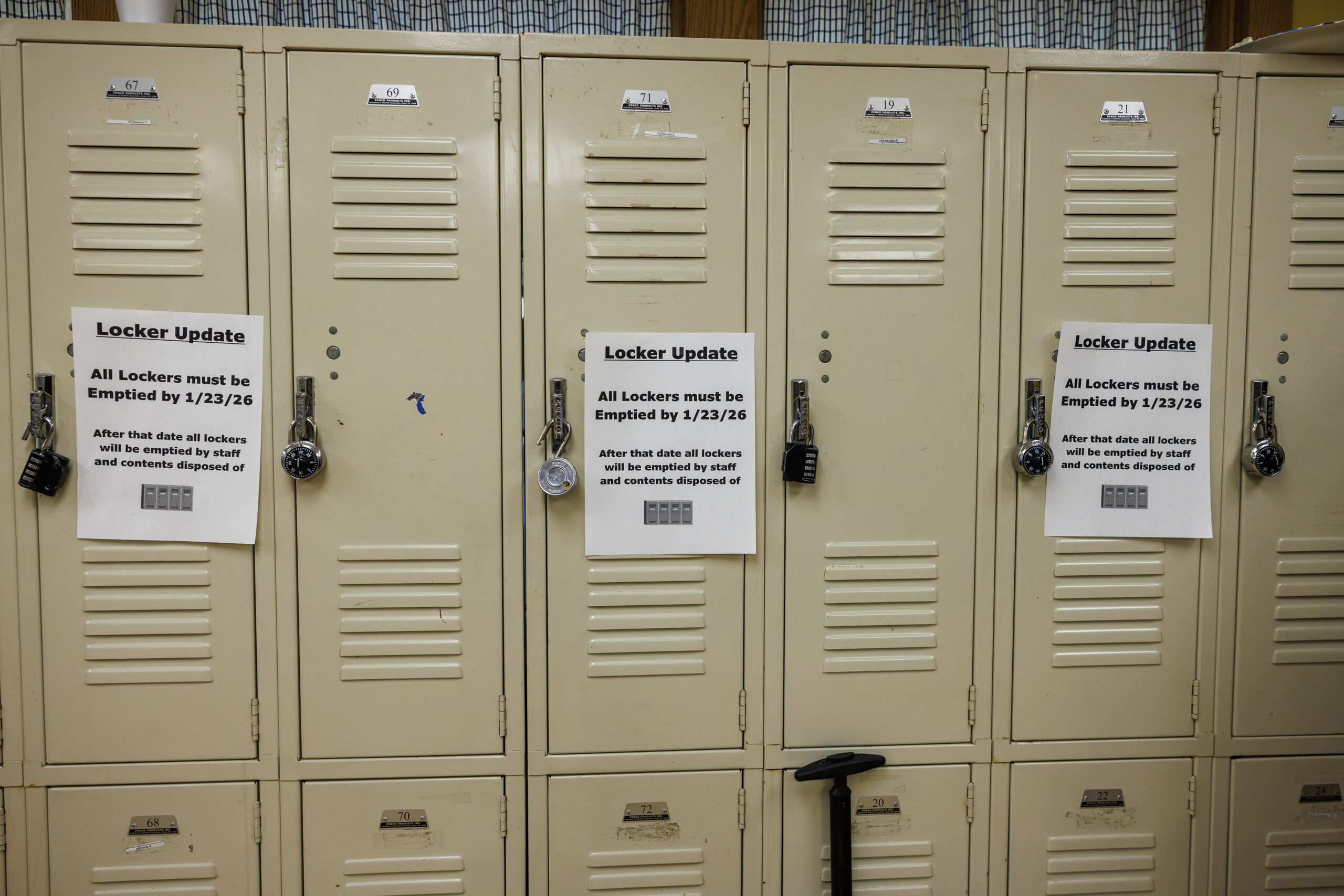
    Lockers at the Norristown Hospitality Center have been posted so clients know to empty them by Jan. 23.

    Van Scoyoc recently picked up frostbite after spending a night in his tent when he believes he didn’t let his wet feet dry properly. It’s difficult and painful for him to walk, so the center has helped arranged rides for him to get around.

    If the Hospitality Center were to close for an extended period time, Van Scoyoc said it would be a great distress.

    “It’s a great place to be. You should go check it out,” he said.

    As news has spread of the center’s plight, Charles said she’s received countless calls and emails from people who used its services in the past. They’ve expressed their support and gratitude, as well as their sadness at hearing that the center is up against the clock.

    One voicemail in particular has kept Charles motivated. A woman who spent time at the center in 2009 called her to share that she has been sober since connecting them, and is no longer homeless. She said in her message: “God is going to do a wonderful thing for you. Stay in position,” according to Charles.

    “We do believe there is a plan for us. And we are excited about it,” Charles said.

  • A Philly-area university prof is competing in the Jeopardy! tournament of champions

    A Philly-area university prof is competing in the Jeopardy! tournament of champions

    As Joshua Weikert shared ground rules for quizzes in his early morning international relations class, he sought to put his students at ease.

    “I don’t want you stressing out about these,” he said Tuesday, as the new semester got underway at Immaculata University in Chester County. “I myself was a terrible student.”

    Weikert, 47, of Collegeville, may not have been a star student, but he sure knows a lot.

    The politics and public policy professor will compete on Jeopardy! 2026 Tournament of Champions at 7 p.m. Friday on ABC, having won six games when he was on the show in March.

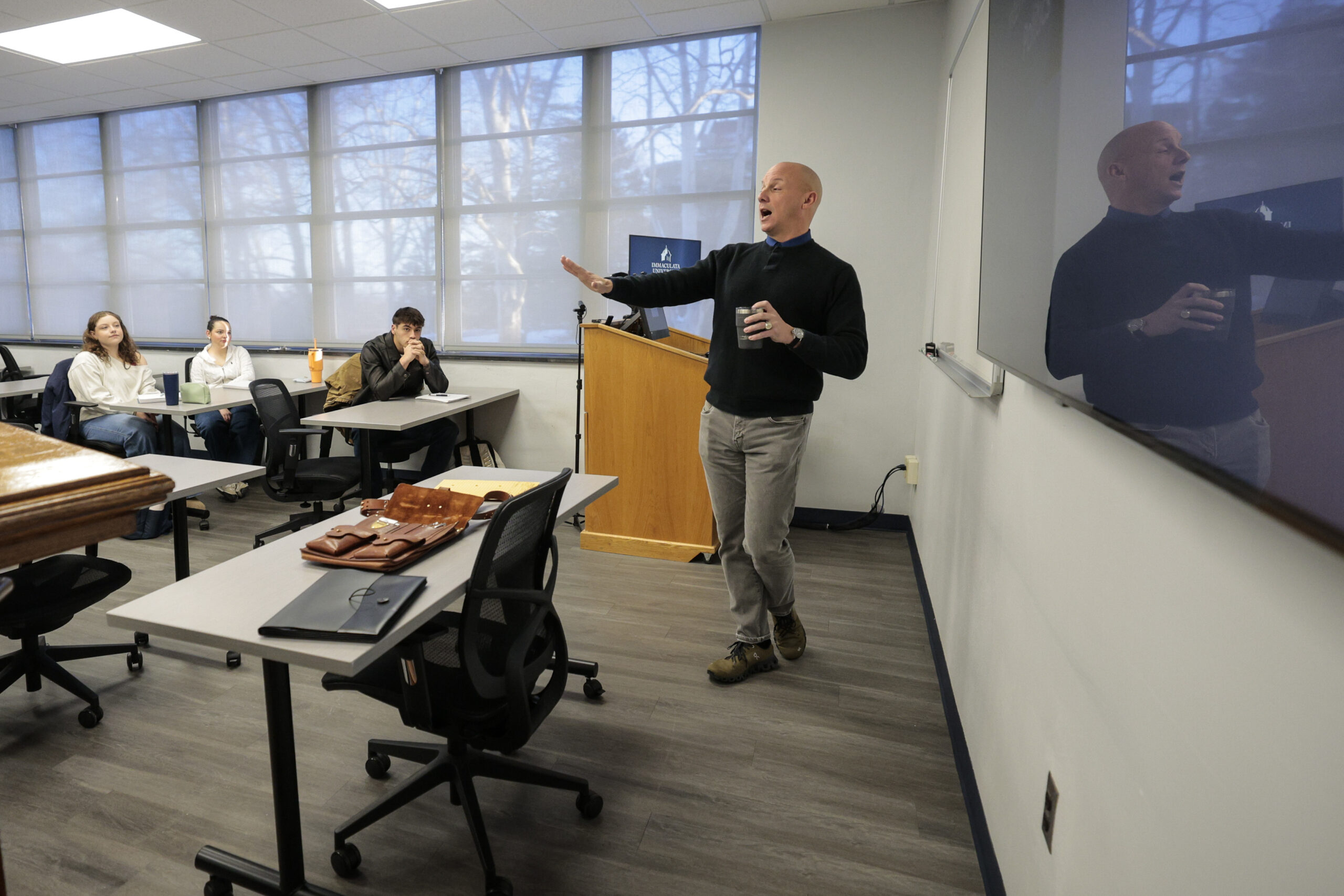
    Joshua Weikert teaches a class in international relations at Immaculata University.

    Over a couple weeks, Jeopardy! shows will feature him vying against 20 other champions, including Allegra Kuney, a doctoral student at Rutgers University’s New Brunswick campus, and Matt Massie, a Philadelphia lawyer who moved to the area in 2024, who also will appear on Friday’s show.

    Friday’s match is a quarter-final, and if Weikert wins, he’ll advance to the semifinals. (Kuney won her quarter-final Tuesday.)

    Weikert won about $103,000 when he competed last year, 10% of which he donated to a memorial scholarship fund named for his late friend, Jarrad Weikel, a Phoenixville man who died unexpectedly at age 40 in 2022. The winner of the champions tournament —which will conclude sometime in early February — will take home a grand prize of a quarter million.

    Weikert will watch the show Friday among family and friends — including his fellow contestant Massie — at Troubles End Brewing in Collegeville, which named one of its beers after him. It’s an English Bitter, one of Weikert’s favorites, called “Who is Josh?”

    At Immaculata, a Catholic college where Weikert has taught since 2016, students and staff are stoked. A campus watch party is planned, President Barbara Lettiere said.

    His appearance last year, she said, has put a welcome spotlight on the school and brought an outpouring of enthusiasm from alumni. On tours, some prospective students and their parents who spot Weikert have recognized him, she said.

    “I never knew that this show was as watched as it appears to be,” she said. “Win or lose, Immaculata wins.”

    Student Ben Divens talks about his Jeopardy-star professor Joshua Weikert.

    Ben Divens, 19, said it’s “jaw-dropping” and “surreal” to know his teacher will compete in the Jeopardy! champion tournament.

    “I knew from the first time I met him he was a super, super smart person,” said Divens, a prelaw major from Souderton.

    “He’s guided us so much in our major already,” added Bailey Kassis, 18, a political science major from Fort Washington.

    “He’s guided us so much in our major already,” student Bailey Kassis said about her professor Joshua Weikert.

    An early gamer

    Weikert said he has watched Jeopardy! ever since he can remember, probably since 1984 when he was 6, and it came back on the air with Alex Trebek as host. He grew up just outside of Gettysburg in a family that loved to play games, he said.

    “We took them very seriously, which is to say that they didn’t just let the kids win,” he said of his parents, both of whom had accounting degrees. “We were destroyed routinely in the games we played.”

    About his performance as a student, he said he often skipped his homework.

    “Just give me an exam,” he said, describing his attitude at the time. “I’ll pass it.”

    He got his bachelor’s degree in international relations from West Chester University, master’s degrees from Villanova and Immaculata, and his doctorate from Temple. He also attended the Defense Language Institute Foreign Language Center, where he studied modern standard Arabic while serving in the U.S. Army.

    Joshua Weikert sets expectations for students as a new semester gets underway at Immaculata University.

    In addition to teaching, he also works as a policy adviser to the Pennsylvania House of Representatives under state Rep. Joe Webster, a Democrat serving part of Montgomery County. He vets legislators’ ideas and offers ideas of his own.

    “The only thing they’ve ever told me no on was [when] I tried to abolish the Pennsylvania Senate,” he said.

    So many bills pass one body, then die in the other, he explained. If there were one legislative body where all House and Senate members served, that might be different, he said.

    Weikert’s office walls are lined with framed newspaper front pages highlighting major events: “Nixon Resigns,” “Nazis Surrender,” “Man Walks on Moon,” “Kennedy Shot to Death.”

    “Every once in a while, I just get up and read one of the stories,” he said.

    He got them from his mother-in-law’s basement and put them up after his wife told him his office needed some decor.

    Weikert’s status as a Jeopardy! champion makes clear he’s a fast thinker. He’s also a fast talker.

    “I don’t really drink caffeine. I just talk this fast,” he told his students.

    His wife, he told the class, tells him to slow down.

    “Keep up,” he tells her, he said.

    The road to Jeopardy

    Since his mid-20s, Weikert has been trying to get on Jeopardy!. Years ago, he got a call from the game show, but he put the caller on hold to get to a quiet place. They hung up.

    “I was like, well, I guess I missed that opportunity,” he said.

    But he kept trying and started taking the online tests, which typically draw 200,000 participants annually. In 2024, he got an email, inviting him to take the test again — and then again under Zoom surveillance.

    Next came a virtual audition and practice game in August 2024. That earned him a place in a pool of about 3,000 people, of whom a few hundred eventually became contestants.

    Weikert got the call last January and was invited to fly to California the next month to compete.

    In reality, his varied interests and life path had already prepared him for the show. He reads a lot. He’s a fan of historical fiction, pop culture, and movies. His work as a public policy scholar helps, too.

    But to try and up his game, he read plots of Shakespeare plays and a book on great operas. He flipped through lists of presidents and vice presidents. His wife, Barbara, a Norristown School District middle school music teacher, read questions to him from old Jeopardy! shows. He knew about 80% of the answers, he said.

    That, however, didn’t stop him from having panic dreams of being on stage and knowing nothing.

    The toughest category for him, he said, is popular music. Movies, history, and politics are his strongest.

    But the hardest questions, he said, are the ones with four or five strong possible answers.

    “Getting a Jeopardy! answer right is more about knowing what it’s not than what it is,” he said.

    Ultimately, he said, it’s impossible to really study for the game show.

    “The odds that something you study would come up is almost zero,” he said.

    It was an intense experience on stage last March, but the staff put contestants at ease, he said. Host Ken Jennings, formerly one of the show’s most successful contestants, told them, according to Weikert: “I promise you something today is going to be a win for you, so just relax and have fun.”

    He has a hard time remembering his winning answers. He readily recalls his dumbest, he said.

    The answer was “sacred cow.” He uttered “holy cow.”

    “Even as it was coming out of my mouth, I knew it was wrong,” he said.

    He’s proud that he only froze on one answer involving lyrics from the B-52’s “Love Shack,” he said.

    There was less pressure competing in the championship match last month, given he was already a winner, he said. But it was harder in that the contestants were the best of the best.

    “During the regular season, it’s a little under a quarter of a second between when you can start to buzz in and when the buzz actually comes,” he said. “In the tournament of champions, that drops to 0.08 seconds.”

    This time, he also prepped by reading children’s books on topics such as basic cell biology, a tip he got from another contestant.

    “It’s the simplest language they can use to convey the information,” he said.

    He also read the book, Timelines of Everything: From Woolly Mammoths to World Wars.

    He most enjoyed the camaraderie among contestants, he said. When filming was over, they hung out in a bar and — watched Jeopardy!.

    “We were yelling out the answers,” he said.

  • Renovating this Rydal home posed new challenges for a Philly kitchen designer

    Renovating this Rydal home posed new challenges for a Philly kitchen designer

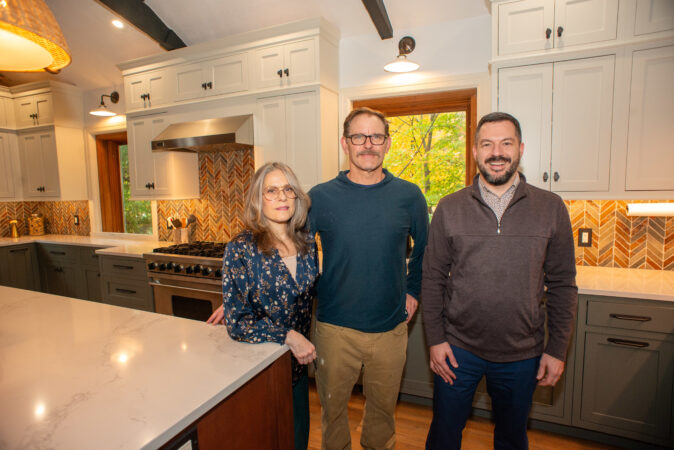
    When Diane and Keith Reynolds moved back to the Philadelphia area from Austin, Texas, in 2023, and bought their house in Rydal, Montgomery County, they knew immediately that they wanted to remodel the kitchen.

    But they also knew that project alone wouldn’t make a home they’d be satisfied with.

    “We wanted to keep it craftsman style,” said Diane, referring to the arts and crafts movement of the late 19th century. The style is characterized by simplicity, emphasis on natural materials, and closeness to nature.

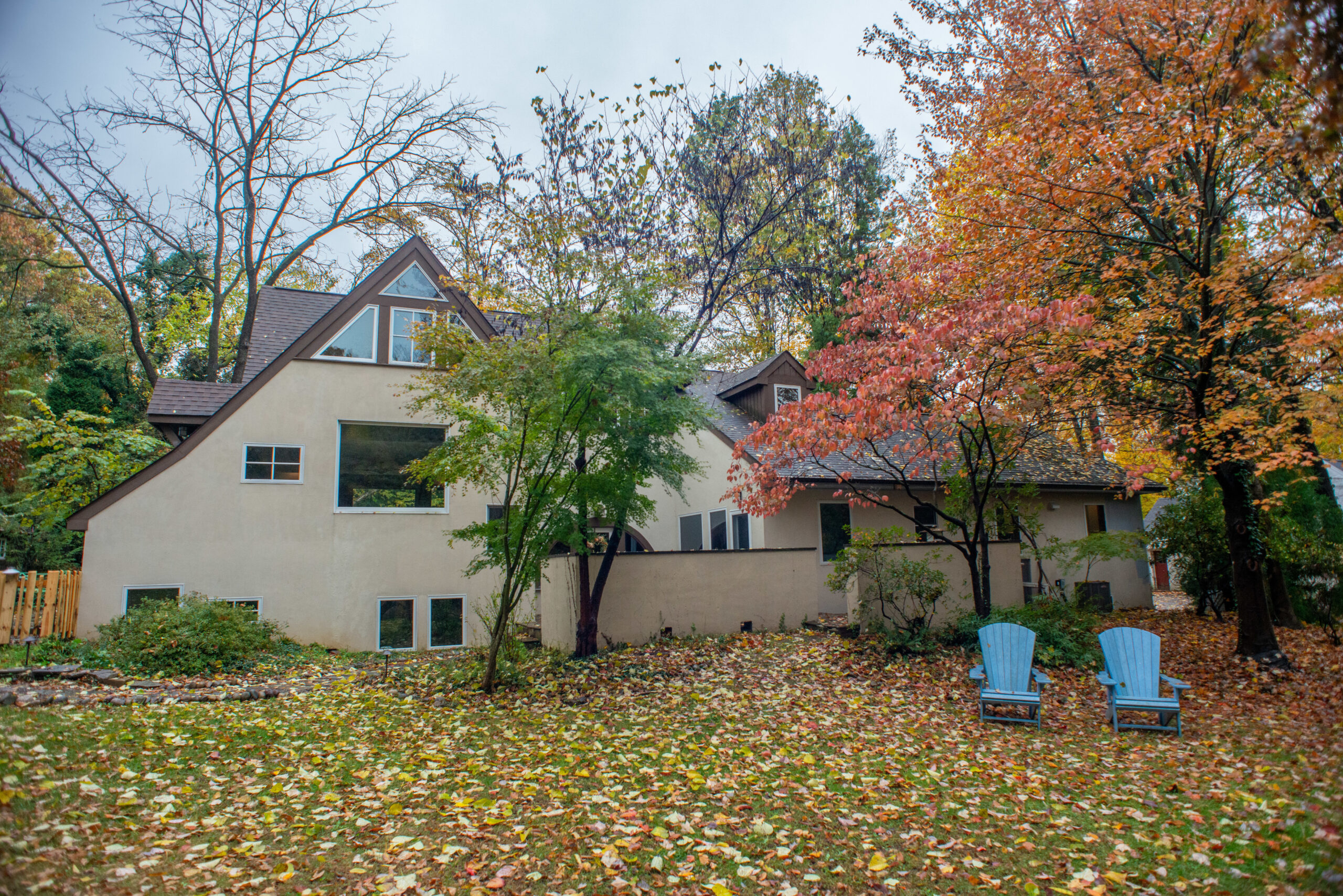
    An exterior view of the Reynolds’ home. It was originally built as a Cape Cod, and a later addition brought in the craftsman style.

    Keith, a software sales engineer for a technology company, said he specifically wanted to avoid a “cutesy” environment in the home. Diane, executive assistant for a trade association, called it “bringing nature inside.” It was the third house they’d lived in since they married.

    Through an internet search, the couple found Philadelphia-based Airy Kitchens and designer Sean Lewis for the remodel.

    “It was an interesting design dilemma,” Lewis said.

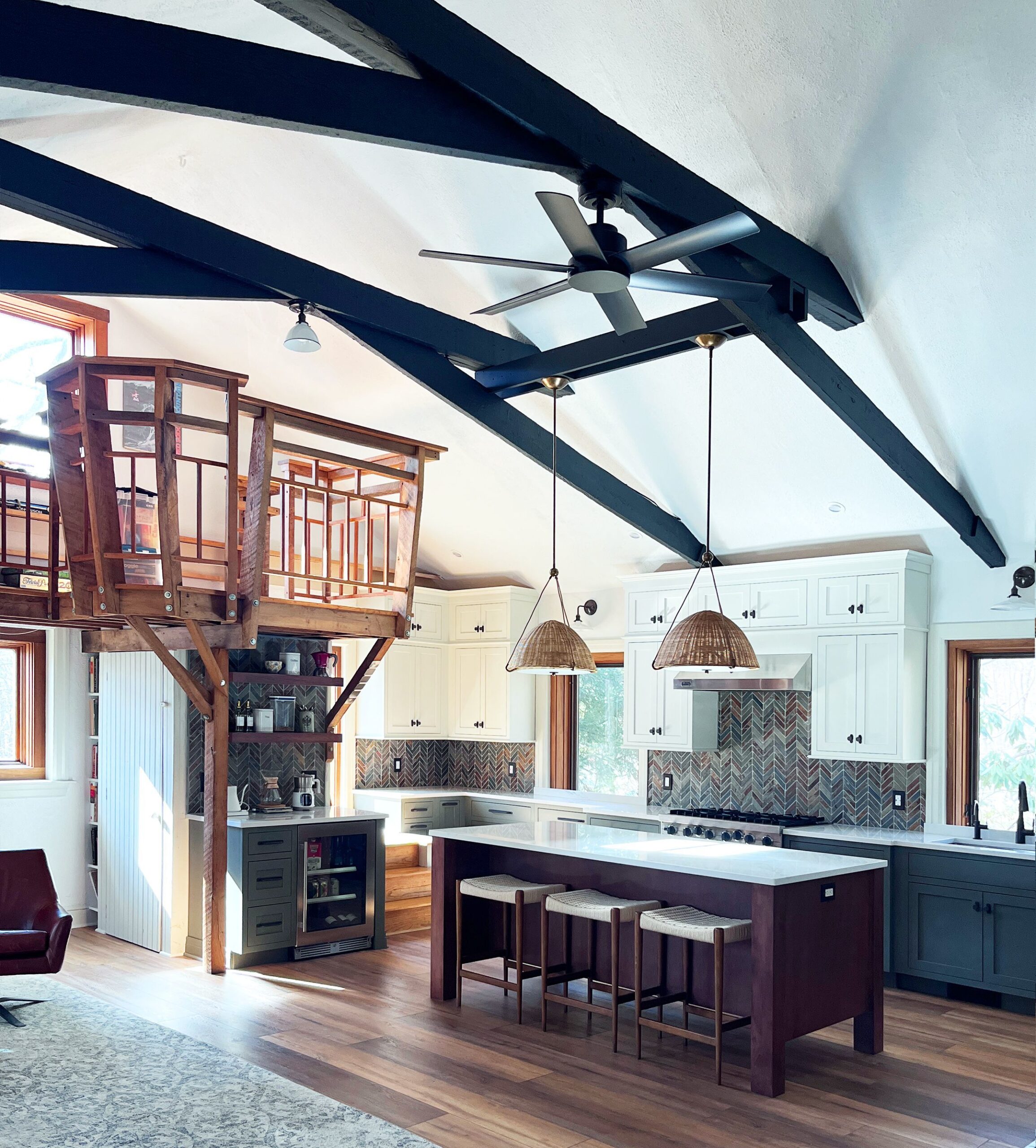
    The house was originally built in the Cape Cod style in 1914, but when the previous owner added onto the home, he chose the craftsman style. By 2023, the kitchen needed significant updating for practical use. It had an unusual layout, opening up into a larger great room with high ceilings and a loft built from reclaimed wood towering over one side of the space.

    The loft over the kitchen created a unique design task. The range had previously been placed underneath it, but it was relocated to another wall.

    The loft was retained, but many other details were changed. “We changed a lot of the symmetry,” Lewis said.

    For example, a full bathroom tucked behind the kitchen was made into a powder room, giving Lewis more kitchen space to play with.

    The home’s kitchen after renovations. At the upper left, the reclaimed wood loft remains.

    The refrigerator and gas range were reused. A new hood, dishwasher, and beverage refrigerator were added. The custom island — larger than its predecessor — is a stained cherry wood that was chosen to match the natural wood trim on the existing windows.

    The backsplash is a multicolored earth-toned slate material in a chevron pattern, evoking the outdoors from within their kitchen.

    “It’s the first time we’ve seen or used that material as a backsplash,” Lewis said, and it was the jumping-off point for choosing the colors in the kitchen.

    “The assignment of rethinking a kitchen space is not unusual for us,” he said. But the home’s disparate styles and unique features, like the loft, beams, and open floor plan, created an “unusual design problem.”

    “It’s quite unusual for a 100-year-old home to have a great-room layout with a vaulted ceiling,” Lewis said. “The reclaimed wood loft installed by the previous architect is something I’ve never seen before, and I’m sure will never see again.”

    Maximizing storage was a no-brainer, and they accomplished that simply by adding cabinets.

    One of the key challenges was providing counter space around the range. The range was previously located below the loft, but is now centered on the kitchen’s longest wall, between two windows, with the sink off to the right, just below a window. This allowed Lewis to add counter space around the range, for more practicality.

    The backsplash tiles and wood stain were chosen to match colors from the surrounding yard.

    The windows were left untreated in the Craftsman style.

    Inside, woodwork was stained to match the outside.

    The stove was relocated so it would be surrounded by counter space.
    The refrigerator was reused in the remodeled kitchen.

    Diane said she and Keith looked at the house as a “homecoming” from their time in Austin, “a little bit like reclaiming our roots.” He grew up in the nearby neighborhood of Meadowbrook, and she is from King of Prussia.

    “From the second we walked into the house it was so warm — we felt immediately connected. There’s something grounding about watching the seasons change,” she said. “It’s colors and leaves and movement. Every day it just restores me.”

    Is your house a Haven? Nominate your home by email (and send some digital photographs) at properties@inquirer.com.