Tag: Montgomery County

  • The race between Josh Shapiro and Stacy Garrity for Pa. governor has officially begun. Here’s what you need to know.

    The race between Josh Shapiro and Stacy Garrity for Pa. governor has officially begun. Here’s what you need to know.

    Pennsylvania’s race for governor has officially begun. And 10 months before the election, the November matchup already appears to be set.

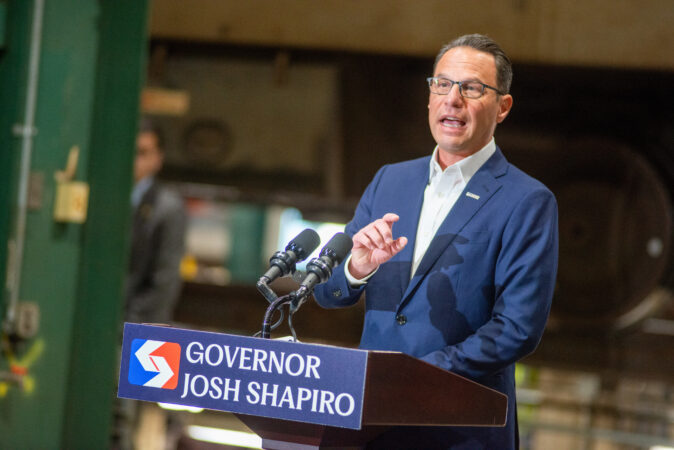
    Democratic Gov. Josh Shapiro formally announced his reelection campaign Thursday — not that anyone thought he wouldn’t run. And Republicans have rapidly coalesced behind the state party’s endorsed candidate, Pennsylvania Treasurer Stacy Garrity.

    The race will dominate Pennsylvania politics through November, but it could also have a national impact as Democrats hope Shapiro at the top of the state ticket can elevate the party’s chances in several key congressional races.

    Here’s what you need to know about the high-stakes contest.

    The candidates

    Josh Shapiro

    Shapiro is seeking a second term as Pennsylvania’s top executive as he’s rumored to be setting his sights on the presidency in 2028. Just weeks after his campaign launch, Shapiro will head to New York and Washington, D.C., as part of a multicity book tour promoting his memoir.

    Shapiro was first elected to public office in 2004 when he flipped a state House seat to represent parts of Montgomery County. As a freshman lawmaker, he quickly built a reputation of brokering deals across party lines. He went on to win a seat on the Montgomery County Board of Commissioners in 2011, flipping the board blue for the first time in decades.

    Shapiro was elected state attorney general in 2016, a year when Pennsylvania went for Republican Donald Trump in the presidential contest. The position put Shapiro in the national spotlight in 2020 when Trump sought to overturn his loss in the state that year through a series of legal challenges, which Shapiro’s office successfully battled in court.

    He went on to decisively beat Trump-backed Republican State. Sen. Doug Mastriano for the governorship in 2022. Despite an endorsement from Trump, Mastriano lacked the support of much of Pennsylvania’s Republican establishment and spent the election cycle discouraging his supporters from voting by mail.

    Throughout Shapiro’s first term as governor, he has highlighted his bipartisan bona fides and ability to “get stuff done” — his campaign motto — despite contending with a divided legislature. His launch video highlights the quick reconstruction of I-95 following a tanker explosion in 2023.

    In 2024, Shapiro was vetted as a possible running mate for then-Vice President Kamala Harris, who ultimately snubbed the Pennsylvanian in favor of Minnesota Gov. Tim Walz. Harris went on to lose the state to Trump.

    Stacy Garrity

    Garrity is Shapiro’s likely opponent in the general election. She earned an early endorsement from the Pennsylvania Republican Party in September after winning a second term to her current position in 2024 with the highest total of votes in history for a state office, breaking a record previously held by Shapiro.

    She has been quick to go on the attack against the Democratic governor in recent months. Throughout Pennsylvania’s monthslong budget impasse Garrity criticized Shapiro’s leadership style and panned the final agreement he reached with lawmakers as fiscally irresponsible.

    Garrity’s campaign has focused on contrasting her priorities with Shapiro’s, arguing the governor is more interested in higher office than he is in Pennsylvania.

    A strong supporter of Trump, Garrity is one of the only women that has been elected to statewide office in Pennsylvania history. If elected, she would be the first female governor in state history.

    Garrity is a retired U.S. Army colonel who was executive at Global Tungsten & Powders Corp. before she was elected treasurer in 2020. Running a relatively low-key state office, Garrity successfully lobbied Pennsylvania’s General Assembly to allow her to issue checks to residents whose unclaimed property was held by her office, even if they hadn’t filed claims requesting it.

    Anyone else?

    While Shapiro and Garrity are the likely nominees for their parties, candidates have until March to file petitions for the race. That theoretically leaves the possibility of a primary contest open for both candidates, but it appears unlikely at this point.

    Mastriano, who ran against Shapiro in 2022, spent months floating a potential run for governor against Garrity. He announced Wednesday that he would not be seeking the Republican nomination.

    The stakes

    Why this matters for Pennsylvanians

    The outcome of Pennsylvania’s gubernatorial race could hold wide-ranging impacts on transportation funding, election law, and education policy, among other issues.

    The state’s governor has a powerful role in issuing executing actions, setting agendas for the General Assembly, and signing or vetoing new laws. The governor also appoints the secretary of state, the top Pennsylvania election official who will oversee the administration of the next presidential election in the key swing state.

    Throughout the entirety of Shapiro’s first term, he has been forced to work across the aisle because of the split legislature. Throughout that time the balance of power in Harrisburg has tilted toward Democrats who hold the governor’s mansion and the Pennsylvania House. But many of the party’s goals — including expanded funding for SEPTA and other public transit — have been blocked by the Republican-held Senate.

    If Garrity were to win that dynamic would shift, offering Republicans more leverage as they seek to cut state spending and expand school voucher options (while Shapiro has said he supports vouchers, the policy has not made it into any budget deals under him).

    Shapiro’s ambition

    Widely rumored to have his sights set on higher office, Shapiro’s presidential ambitions may rise and fall with his performance in his reelection campaign.

    Shapiro coasted to victory against Mastriano in 2022, winning by 15 points. The 2026 election is expected to be good for Democrats with Trump becoming an increasingly unpopular president.

    But Garrity is viewed as a potentially stronger opponent to take on Shapiro than Mastriano, even though her political views have often aligned with the far-right senator.

    When the midterms conclude, the 2028 presidential cycle will begin. If Shapiro can pull off another decisive win in a state that voted for Trump in 2024, it could go a long way toward aiding his national profile. But if Garrity wins, it could end the governor’s chances of putting up a serious campaign for the presidency in 2028.

    Every other race in Pennsylvania

    The governor’s contest is the marquee race in Pennsylvania in 2026. Garrity and Shapiro have the ability to help or hurt candidates running for Pennsylvania’s statehouse and Congress.

    The momentum of these candidates, and their ability to draw voters to the polls could play a key role in determining whether Democrats can successfully flip four competitive U.S. House districts as they attempt to take back the chamber.

    Democrats also narrowly hold control of the Pennsylvania House and are hoping to flip three seats to regain control of the Pennsylvania Senate for the first time in decades. If Democrats successfully flip the state Senate blue, it would offer Shapiro a Democratic trifecta to push for long-held Democratic goals if he were to win reelection.

    Strong Democratic turnout at the statewide level could drive enthusiasm down-ballot, and vice versa. Similarly, weak turnout could aid Republican incumbents in retaining their seats.

    The dates

    The election is still months away but here are days Pennsylvanians should put on their calendars.

    • May 4: Voter registration deadline for the primary election.
    • May 19: Primary election.
    • Oct. 19: Voter registration deadline for the general election.
    • Nov. 3: General election.
  • Josh Shapiro’s reelection campaign in Pennsylvania starts now — but 2028 looms large

    Josh Shapiro’s reelection campaign in Pennsylvania starts now — but 2028 looms large

    He’s running.

    Gov. Josh Shapiro officially announced his widely expected reelection bid for Pennsylvania governor Thursday, as speculation over a 2028 run for president continues to build. The question now: How will the Democrat’s rumored presidential ambitions bolster or detract from his must-win election at home in 2026?

    Shapiro will kick off his reelection campaign with not one but two rallies — first stopping in Pittsburgh, then in Philadelphia. In a campaign video posted to social media Thursday morning, he touted his three years of leading a divided legislature and his bipartisan achievements in a politically split state, via a campaign that has already amassed a record $30 million war chest.

    He coasted to victory in 2022, elevating his profile within the national Democratic Party, and is not expected to face a primary challenger. In the general election, he will likely face Republican State Treasurer Stacy Garrity, who largely consolidated GOP support early.

    But that’s not the only race on the line in November.

    Shapiro, whose campaign declined to comment for this article, has been elusive when asked directly about plans to run for president. But in the last year, he’s taken bold steps to build a national profile, while quietly making moves behind the scenes that signal bigger political aspirations. He’s expanded his public affairs team, planned a book tour for the end of January, and sat for interviews with national magazines like the Atlantic, which published an extensive feature on him late last year. Last month, he and Democratic presidential candidate kingmaker U.S. Rep. Jim Clyburn (D., S.C.) discussed the pioneering Black lawmakers’s new book on a stage in Philadelphia. Earlier in December, he and Utah Gov. Spencer Cox, a Republican, discussed curbing political violence with NBC News host Savannah Guthrie, a conversation that highlighted Shapiro’s emphasis on bipartisanship.

    At home, he’s a local political celebrity, boasting approval ratings between 52% and 60%. But outside the Keystone State, he has yet to become a household name.

    As Shapiro looks to potential parallel runs, he’ll need to continue to build a national profile without outwardly focusing too much on the presidential picture.

    Gov. Josh Shapiro is interviewed by TV news in the spin room at the Convention Center following the debate between former President Donald Trump and Vice President Kamala Harris Tuesday, Sept. 10, 2024.

    “The challenge, of course, is you have to take care of your next election first,” said Christopher Borick, a pollster at Muhlenberg College. “Of anything he does, he knows this is the most important thing for his potential success in 2028 if he was to run.”

    The former Pennsylvania attorney general, Montgomery County commissioner, and state representative has never in 20 years suffered an electoral defeat. Being passed over for Vice President Kamala Harris’ running mate in 2024 kept that winning streak alive.

    In the governor’s race, Shapiro will likely face a more formidable opponent in Garrity than he did in state Sen. Doug Mastriano (R., Franklin) in 2022, but he’ll also be running in a far more favorable political atmosphere for Democrats amid souring attitudes toward President Donald Trump and the GOP. If he can retain the governor’s mansion decisively and bring a ticket of Democrats vying for the statehouse and Congress to victory with him, that’s a narrative that could be strong in a Democratic presidential primary.

    “Having a win, and maybe an impressive one in Pennsylvania, the key swing state heading into that cycle, is about as big of a boost as any that you can have,” Borick added.

    Running local

    The 2028-curious Democrats include several other sitting governors generating buzz: California’s Gavin Newsom, Kentucky’s Andy Beshear, Maryland’s Wes Moore, Michigan’s Gretchen Whitmer, and Illinois’ JB Pritzker. Shapiro has formed alliances with several of them.

    But unlike some of his peers, Shapiro hasn’t been a frequent guest on cable news or podcasts with national reach.

    That’s not to say he hasn’t made moves toward a potential presidential run.

    On Oct. 4, 2024, nearly a month before Harris lost the presidential election to Trump, Shapiro confidentially requested that the state ethics commission determine whether he would violate any state ethics laws for accepting royalties from a book about his life in public service, according to the filing.

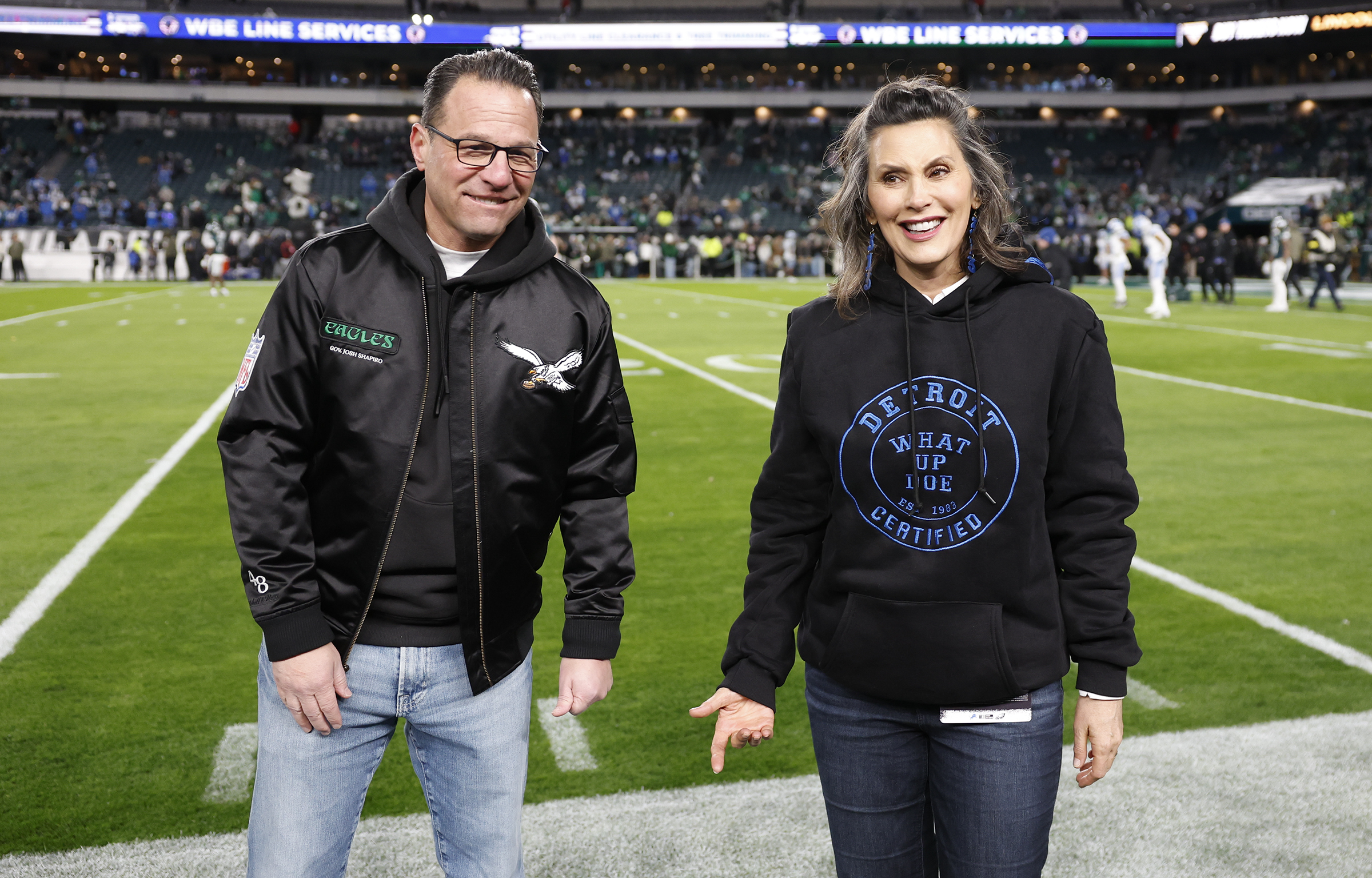
    Pennsylvania Gov. Josh Shapiro (right) and Michigan Gov. Gretchen Whitmer before the Eagles played the Detroit Lions at Lincoln Financial Field on Sunday, Nov. 16, 2025, in Philadelphia, PA.

    His book, Where We Keep the Light, will publish later this month, recounting his political upbringing, his vice presidential vetting, and the firebombing of his home last year. He’s not alone. Harris published a memoir about the 2024 election last year, and Newsom is due out with Young Man in a Hurry: A Memoir of Discovery in February.

    But in the coming months, several Democratic strategists predict Shapiro will be squarely focused on the governor’s race he has to win in Pennsylvania — simultaneously proving he has what it takes to capture the vote of the nation’s most important swing state.

    “He’s such a careful politician. He’s not taking anything for granted,” said former Gov. Ed Rendell, a Democrat who also once faced scrutiny for having potential presidential ambitions.

    Shapiro is likely to follow the same campaign playbook in Pennsylvania as he did in 2022: Stump in every region of the state, including areas where Democrats don’t usually show up. That helped him run down the margins in longtime GOP strongholds like Lancaster or Schuylkill Counties toward his resounding victory over Mastriano. Those stops in most of Pennsylvania’s 67 counties won’t give him as much time to visit South Carolina, Iowa, and New Hampshire, as the other Democratic presidential hopefuls start their sojourns.

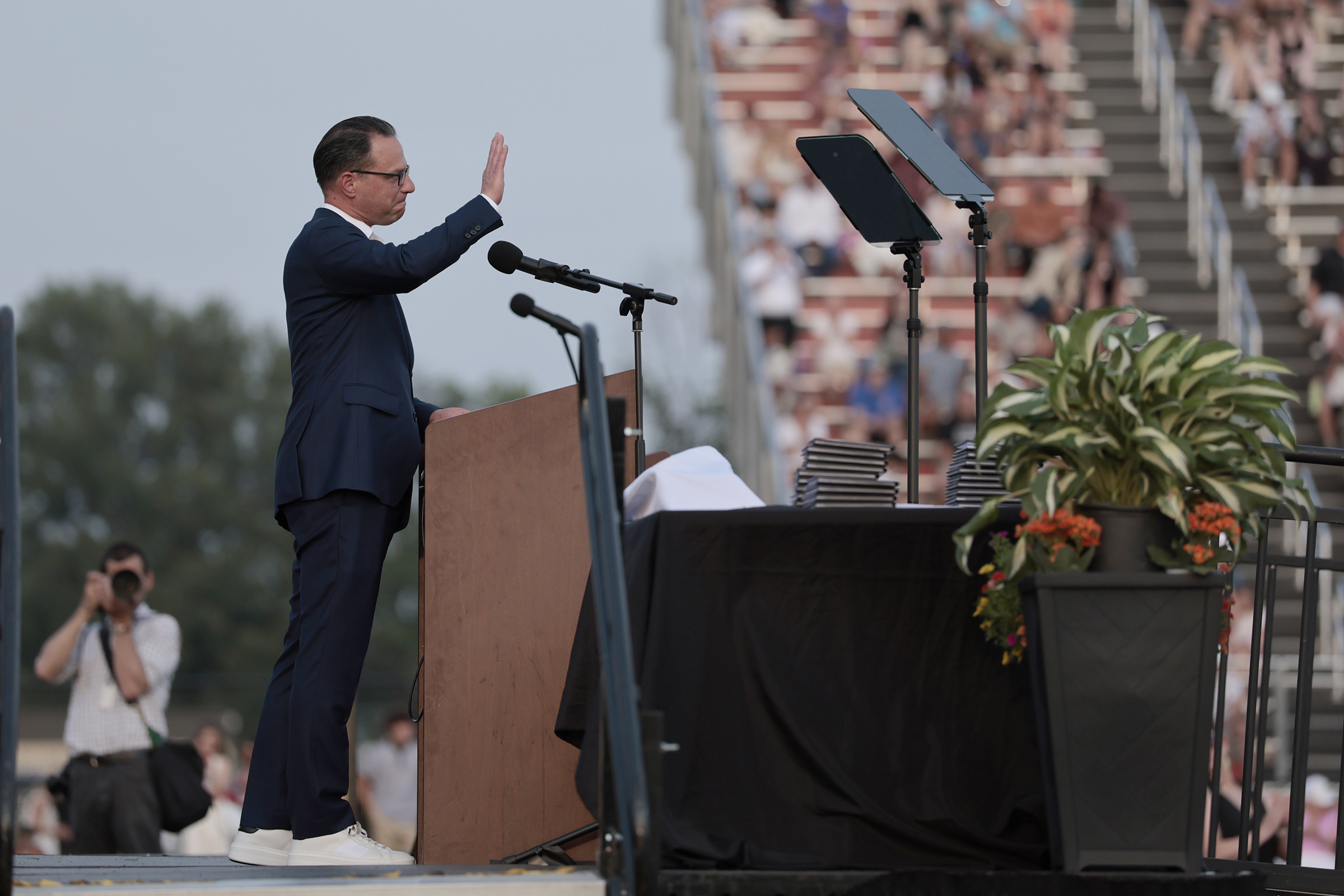
    Pennsylvania Governor Josh Shapiro waves goodbye to the crowd after speaking during graduation ceremonies at Pennsbury High School in Fairless Hills on Thursday, June 12, 2025.

    “The No. 1 caveat is stay focused on the race you’re running,” echoed Alan Kessler, a national fundraiser based in Philadelphia who has supported and fundraised for Shapiro.

    Still, the campaign is likely to generate attention beyond the Keystone State.

    Shapiro will still court donors in blue states as he fundraises for reelection, Kessler added.

    Come November, he will be the only governor with rumored 2028 aspirations up for reelection in a swing state. And his brand as a popular, moderate Democratic governor trying to restore trust in government — as well as his potential to help boost Democrats down ballot — will easily capture a wider audience and bring national media into Pennsylvania.

    As Democrats seek to flip control of the U.S. House in 2026, targeting several congressional districts in the state, the election may once again come down to Pennsylvania, and in turn, increase the spotlight on Shapiro. The governor is widely seen as someone who can boost the congressional Democratic candidates also on the ballot, having won three of the four districts that Democrats are targeting in the state by double digits in 2022.

    “Every single Democrat that I know that’s running for office in 2026 in Pennsylvania wants the governor to campaign with them,” Democratic state party chair Eugene DePasquale said.

    Preparing for an onslaught

    Republicans have targeted several weaknesses to try to erode Shapiro’s popularity in Pennsylvania and boost Garrity. They point to a lack of rigorous electoral challengers in his past. They question his record of “getting stuff done” — his oft-repeated motto — including three late state budgets. And they’ve harped on a lack of transparency as governor, including claims he used tax dollars for political benefit as well as a sexual harassment scandal involving a former top aide. They’ve also criticized his support for Minnesota Gov. Tim Walz, who recently dropped his third gubernatorial bid following a fraud scandal among the state’s Somali refugee population totaling $1 billion, according to federal prosecutors.

    Among the emerging attacks: Republicans want to highlight Shapiro’s presumed presidential ambitions, as they try to cast him as an opportunist more interested in a future White House bid than the problems of everyday Pennsylvanians.

    “Josh Shapiro is more concerned with a promotion to Pennsylvania Avenue than serving hardworking Pennsylvanians,” Garrity said in a statement, noting the state fared poorly in U.S. News and World Report rankings on the economy and education. “In the military, I learned the importance of putting service before self. Pennsylvanians are the hardest-working, most compassionate, strongest people in the nation, and together we will return Pennsylvania to our rightful place as a national and global leader.”

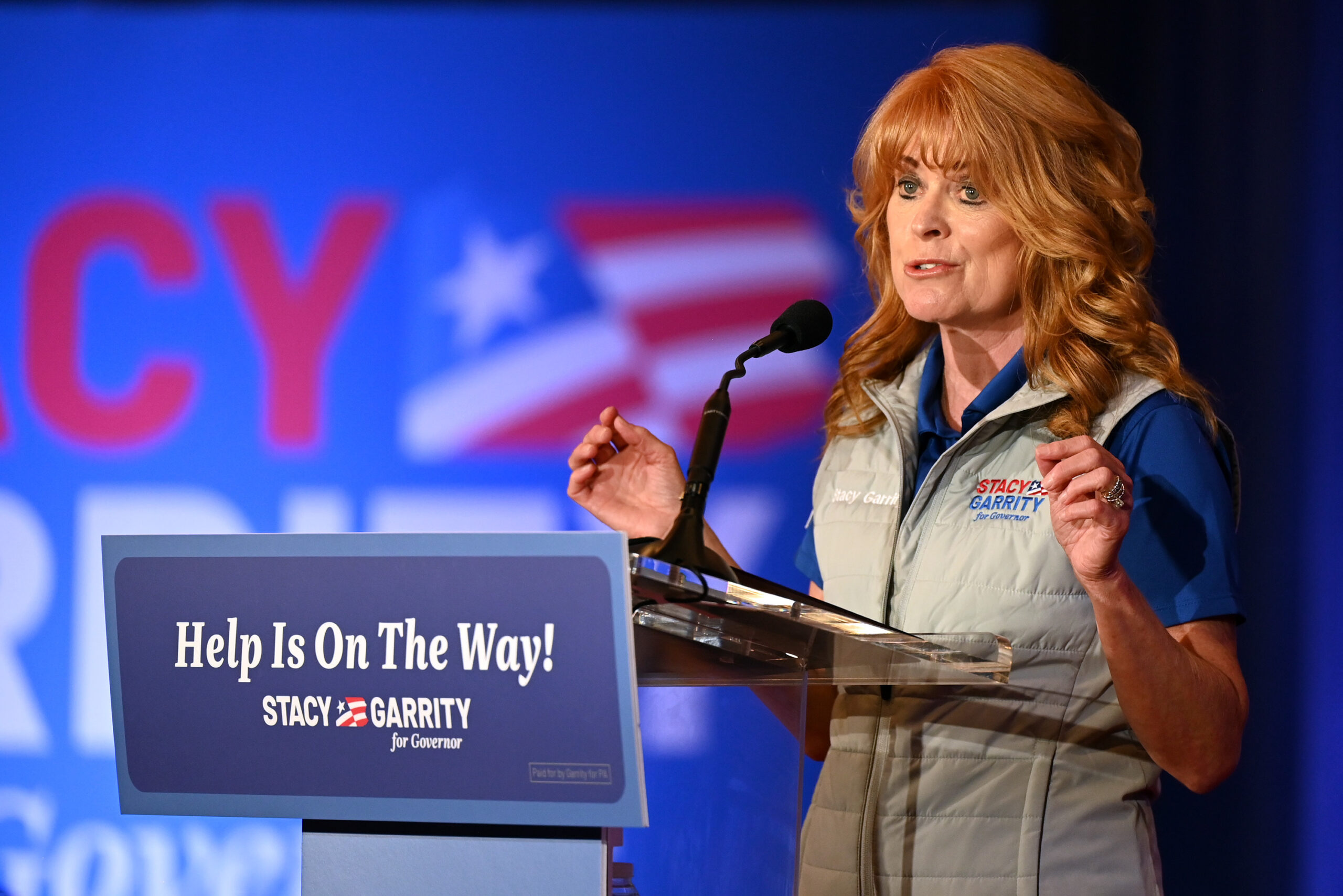
    State Treasurer and Republican candidate for governor Stacy Garrity holds a rally in Bucks County Sept. 25, 2025 at the Newtown Sports & Events Center.

    There are lingering missteps that could come up in a reelection campaign or afterward. He was unable to secure a long-term funding stream for mass transit, requiring him to use capital funds to keep SEPTA operating. He has yet to follow through on his support for school vouchers, a GOP-selling point for him that angered the powerful teachers’ unions in the state. And he’s faced questions over a number of actions his administration has taken, including $1.3 million in security improvements to his personal home following the attack on the governor’s residence in Harrisburg, his use of the state plane, and his transparency in open records requests, among others.

    Mastriano, the far-right Republican state senator who announced Wednesday he won’t run for governor, said in a statement earlier this week that Shapiro “owes [Pennsylvanians] straight answers” over his use of the state plane, security updates to his personal home in Abington Township, and more.

    “Pennsylvanians deserve accountability, not ambition,” he added, making a nod to Shapiro’s potential longer-term plans.

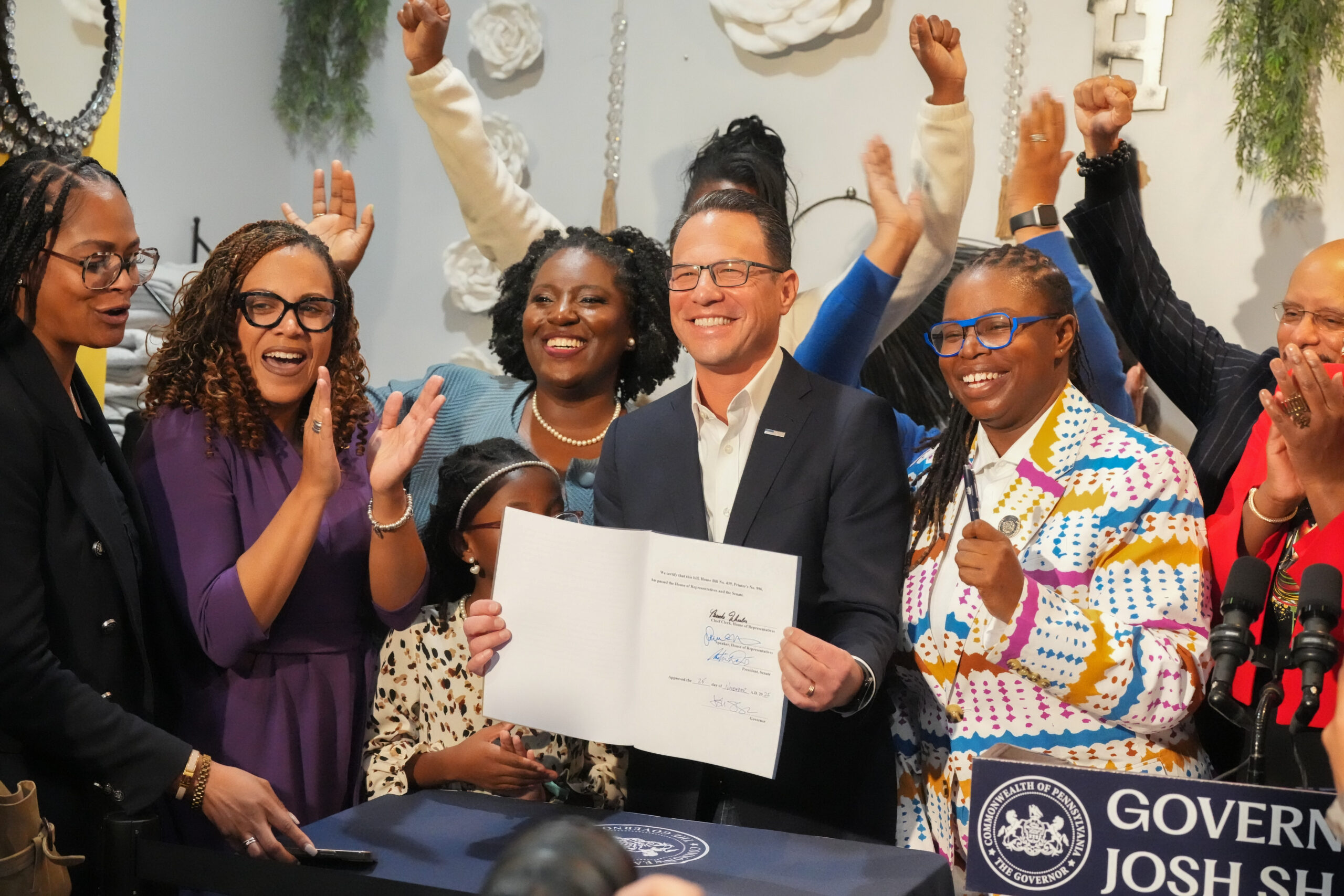
    House Speaker Joanna McClinton, back center left, Gov. Josh Shapiro, front center, and State Rep. La’Tasha D. Mayes, right, celebrate the signing of the CROWN Act, which prohibits discrimination based on a person’s hair type, during a press conference at Island Design Natural Hair Studio, in West Philadelphia, November 25, 2025.

    Borick, the pollster, was skeptical that attacks on Shapiro’s potential wider ambitions could reverse his largely positive public sentiment.

    “If that’s all they got, they don’t got a lot.”

    Republicans insist they see a path to victory for Garrity in a politically divided state with months to go until the election. But behind the scenes, some Republicans are already acknowledging the goal is to lose by less and prevent big losses in state legislature or congressional races.

    If Shapiro does look poised to cruise to victory, it might mean less media attention on the race, and it could mean he’s less vetted ahead of a much bigger stage.

    “I think Josh is better served if the [Republican Governors Association] puts $100 million into this race because then it’s nationalized,” said a Democratic political strategist based in Pennsylvania who did not want to be named speculating on Shapiro’s presidential run. “If it’s a cakewalk, CNN’s not gonna cover it …If he wants to be governor for another four years, he should pray for a cakewalk. If he wants to be president, he should pray for a difficult campaign.”

    Florida Gov. Ron DeSantis, for example, the strategist noted, cleaned up in his 2022 reelection, but failed to gain traction in the GOP presidential primary that Trump dominated.

    Beyond 2026

    Shapiro speaks Pennsylvanian very well. Raised in Montgomery County, he’s lived here almost all of his life, and has built an image as a popular moderate focused on problem-solving in a purple state. That’s earned him the support of about 30% of Trump voters in the state.

    But winning a general election in Pennsylvania is different than winning a Democratic presidential primary.

    He’s tried not to alienate the MAGA base, focusing on issues with bipartisan appeal like funding for apprenticeship and vocational-training programs. He’s taken on Trump in court, but has picked his personal battles with the president more carefully.

    But being a strategic, self-described “progressive pragmatist” can end up alienating voters on both sides.

    Gov. Josh Shapiro leaves after an event at the Port of Philadelphia Thursday, Apr. 10, 2025, the day after President Trump paused some tariffs.

    Becky Carroll, a Democratic political consultant in Chicago who has worked with Pritzker, said Shapiro seems less on the radar of voters in the Midwest. As she’s followed Shapiro’s career, she said she sees a “damn fine governor,” but someone who’s taken a more muted approach to Trump than blue state governors like Pritzker and Newsom.

    When it comes to a Democratic primary, candidates may be judged in part on their pushback to Trump, she said. “I think we’re in a moment where you can sulk in a corner and hope it’ll all go away or fight …,” Carroll said. “And if you’re gonna put yourself out there for a primary battle, you better show you have battle scars to prove you can fight for the most vulnerable in the country right now.”

    Gov. Josh Shapiro is interviewed by TV news in the spin room at the Convention Center following the debate between former President Donald Trump and Vice President Kamala Harris Tuesday, Sept. 10, 2024.

    But other national strategists see Shapiro’s moderate appeal as a potential asset in 2028. Jared Goldberg-Leopold, a former communications director for the Democratic Governors Association, thinks Shapiro’s biggest asset is his electoral track record in a state the nation knows is critical on the path to the White House. Primaries have previously been won by moderates whom the party thinks have the best chance at winning the general.

    But the first step, Goldberg-Leopold stressed, is the governor’s race ahead.

    “It would be easy for the Eagles to look past the 49ers to the next week of playoffs, but they’ve gotta focus on only one thing. And the same is true for the governor,” he said. “You can only prepare for what’s ahead of you, and the way people get in trouble in politics is planning too many steps ahead.”

    Staff writer Katie Bernard contributed to this article.

  • Pennsylvania’s leaders are losing Gen Z

    Pennsylvania’s leaders are losing Gen Z

    In Pennsylvania, just over 2% of Gen Z students believe elected officials act in their best interests. Three-quarters say they don’t.

    These findings come from more than 2,800 conversations across 16 colleges and universities in the state. Project 26 Pennsylvania collected them without a script, giving students space to speak freely.

    Young Pennsylvanians believe the commonwealth’s institutions are slow to respond and are detached from daily realities. They pointed to artificial intelligence and its workforce implications, social polarization, and global issues that feel increasingly vital to confront on a local and regional level.

    In my role with the United Nations Association of the USA, I meet regularly with young Americans across the country. They’re not apathetic — far from it. They know what it looks like when institutions function — and when they drift.

    A few weeks ago, I visited a campus in Bethlehem and heard from students who were deeply engaged and informed. They focused on conservation, economic growth, healthcare access, and local governance. But when the conversation turned to institutional performance, their confidence plummeted.

    They described government bodies that move slowly, communicate inconsistently, and prioritize politics over problem-solving.

    There is a clear contrast between what they see at home and what I see globally.

    The U.N. has expanded youth engagement at a historic pace. It created a dedicated Youth Office and invited young people into negotiations. Leaders expect a direct report on the concerns and ideas of young Americans.

    Pennsylvania’s institutions should view this as a model if they want to start restoring trust.

    That’s because the risk of inaction is more than disengagement; it’s dislocation. Young adults are moving to places that do pay attention to and meet their needs.

    A Pennsylvania State Data Center analysis found that almost half of Pennsylvanians moving out of state were between the ages of 18-34. Many of them are opting for faster-growing places like Florida, North Carolina, and Texas.

    If a global system of 193 member states that agree on little else can coalesce around the need to build structured pathways for youth involvement, then Pennsylvania’s agencies and local governments can do the same.

    This shift does not require a redesign of government — just consistency and intention. There are steps the Keystone State can take now.

    Several Pennsylvania cities already show what youth engagement can look like.

    Allentown created a Council of Youth by resolution, though all 16 seats appear vacant. Pittsburgh has a youth coordinator who runs its Youth Commission, and Philadelphia operates a Youth Commission of its own. These are promising starts, and all townships and boroughs should follow. But they are often tucked deep into municipal websites rather than positioned as visible civic priorities.

    Gov. Josh Shapiro should create a statewide youth advisory cabinet with a direct line to major agencies. States like Iowa, North Carolina, and Massachusetts already run strong statewide youth councils.

    In fact, Pennsylvania does have a strong model already in the NextGen Advisory Council, which brings young leaders into decision-making on conservation and public lands. That same approach should be extended across agencies.

    These steps are practical. They also reflect respect for young people, who are not the “next” generation, but are active contributors shaping our commonwealth.

    They organize events, testify at meetings, vote in local elections, and devote time to issues that affect their communities. They have shaped mental health advocacy, launched small businesses, and pushed for housing initiatives in cities across the state.

    If institutions want to restore trust, they need to match that level of seriousness.

    Trust does not return through campaign outreach or social media posts. It grows when young people see their work is taken seriously and leads to outcomes — and when institutions welcome their involvement with regularity and purpose.

    Pennsylvania has a window to rebuild confidence. The Project 26 findings should not be dismissed as youth discontent, but read as a statement of expectations — and an opportunity.

    Half of the students surveyed said they would be motivated to take political action “if they felt it would make a difference.” They are engaged, ready, and eager to help build a stronger Pennsylvania.

    The question is whether the commonwealth’s leaders will invite them into the process.

    Jarrett James Lash serves as the 14th UNA-USA youth observer to the United Nations and is a municipal planner in Montgomery County.

  • Lower Merion swore in five new commissioners this week. Here’s who they are.

    Lower Merion swore in five new commissioners this week. Here’s who they are.

    Lower Merion swore in five new commissioners on Monday, kicking off the board’s 126th year of governing the Montgomery County township.

    Between rounds of applause and family photos, commissioners outlined the major challenges, and opportunities, the body will face in 2026. Board members highlighted recent accomplishments — creating a process for establishing board priorities, restricting gas-powered leaf blowers and plastic bags, advancing capital projects, hiring a police superintendent, supporting the development of affordable housing, and reversing the post-pandemic decline in police staffing levels.

    Yet they also underscored that much awaits the new board, including negotiating two collective bargaining agreements, overseeing Main Line Health’s redevelopment of the St. Charles Borromeo Seminary property, and addressing a difficult fiscal reality (the board last month authorized an 8% property tax increase, citing the “mistake” of having kept tax rates stagnant for over a decade).

    “We’re solving problems, we’re moving forward, and we’re even having a little fun,” said commissioner V. Scott Zelov, who was sworn in for his sixth term.

    Zelov on Monday night became the eighth commissioner in Lower Merion history to serve for at least 20 years, board President Todd Sinai said.

    Sinai, who was first elected to the board in 2017, was unanimously reelected board president. Incumbent commissioner Sean Whalen called Sinai a “stalwart leader of this board,” praising Sinai’s leadership through economic ups and downs.

    Jeremiah Woodring, also an incumbent commissioner, was unanimously elected vice president. Sinai described Woodring as “thoughtful and inquisitive,” “balanced,” and “diplomatic.”

    Jana Lunger was sworn in as Lower Merion tax collector.

    Here’s a who’s who of the five newly elected Lower Merion commissioners, all of whom replaced outgoing commissioners who chose not to run again in 2025.

    Michael Daly, an attorney and the former president of the Gladwyne Civic Association, was sworn in to represent Ward 2, which includes Gladwyne and Penn Valley. Daly has lived in Lower Merion for around 15 years with his wife and three children, all of whom are products of the Lower Merion School District. In his law practice, he focuses on defending class action lawsuits and complex litigation. In a candidate interview earlier this fall, Daly said he’s focused on quality of life issues, including walkability, public parks, and safe streets. He replaced outgoing commissioner Joshua Grimes.

    Charles Gregory, a longtime township employee, will represent Ward 4, which encompasses Ardmore and Haverford. Gregory, who was born and raised in Ardmore, worked for Lower Merion Township for 23 years until 2024. He’s the former president of the Lower Merion Workers Association and a Boy Scout troop leader. During a candidate forum, Gregory said he believed he could “make a difference from a blue collar aspect.” Gregory replaced outgoing commissioner Anthony Stevenson.

    Christine McGuire is a forensic psychologist and business owner who will serve Rosemont and Villanova in Ward 6. McGuire lived in Gladwyne for nine years before moving to Villanova around three years ago. In a candidate forum, McGuire said she has been active in the Gladwyne Civic Association and in the parent group that studied Lower Merion’s school start time change. As the owner of a psychology practice, she said she understands “what a budget is and that you have to work within the budget and not look at it like a blank check.” She replaced outgoing commissioner Andrew Gavrin.

    Craig Timberlake, an Ardmore resident who was instrumental in the 2025 redevelopment at Schauffele Plaza, will represent Ward 8’s South Wynnewood and East Ardmore. Timberlake moved to Ardmore around 15 years ago from Maine. He says he was drawn to Ardmore’s high-quality schools, walkable neighborhoods, and transit options. He believes the township should incentivize “smaller,” “incremental,” and locally funded development and decrease speed limits to protect pedestrians. Timberlake is a project manager at OnCourse, an education technology platform. He replaced Shawn Kraemer, the board’s outgoing vice president.

    Shelby Sparrow, the former president of the Penn Wynne Civic Association and a longtime community organizer, will represent Penn Wynne and Wynnewood in Ward 14. Sparrow’s priorities include ensuring the community is engaged in Main Line Health’s redevelopment of the St. Charles Borromeo Seminary property; addressing pedestrian safety; and encouraging sustainability and park stewardship. She was previously the director of development for St. Peter’s Independent School in Center City. She replaced outgoing commissioner Rick Churchill.

    Sinai and Zelov, who were reelected in November, were sworn in, and sitting commissioners Woodring, Whalen, Daniel Bernheim, Louis Rossman, Ray Courtney, Maggie Harper Epstein, and Gilda Kramer were welcomed back.

    This suburban content is produced with support from the Leslie Miller and Richard Worley Foundation and The Lenfest Institute for Journalism. Editorial content is created independently of the project donors. Gifts to support The Inquirer’s high-impact journalism can be made at inquirer.com/donate. A list of Lenfest Institute donors can be found at lenfestinstitute.org/supporters.

  • Deer hunter shot with arrow by another hunter in Montgomery County, police say

    Deer hunter shot with arrow by another hunter in Montgomery County, police say

    A 48-year-old man who was deer hunting Tuesday afternoon was shot with an arrow by another hunter in Montgomery County, police said.

    Just before 3:50 p.m., emergency responders were called to the 7700 block of Green Valley Road in the Wyncote section of Cheltenham Township for a report of an injured hunter, police said.

    The injured man was transported to an area trauma center and was expected to survive, police said.

    The hunter who shot the arrow remained at the location, summoned emergency services, and was cooperating with the investigation, police said.

    The Pennsylvania Game Commission assumed primary responsibility for investigating the incident, police said.

    No other information about the hunters was released by police.

  • Gov. Josh Shapiro, Pa. Democratic lawmakers criticize Trump’s Jan. 6 rioter pardons on anniversary of Capitol attack

    Gov. Josh Shapiro, Pa. Democratic lawmakers criticize Trump’s Jan. 6 rioter pardons on anniversary of Capitol attack

    Five years after rioters stormed the U.S. Capitol, Gov. Josh Shapiro and other Pennsylvania Democrats on Tuesday marked the anniversary of the Jan. 6, 2021, attack by sharply criticizing President Donald Trump.

    Trump, who was impeached for inciting the riot in the final days of his first administration, pardoned nearly every Jan. 6 defendant and commuted sentences for a handful of violent offenders as one of his first actions upon returning to office last year.

    “Law enforcement officers literally gave their lives to protect our country and our democracy — yet one of the first things Donald Trump did when he took office was pardon people who were convicted of assaulting police officers,” Shapiro said in a post on X Tuesday morning.

    “The President may not respect our law enforcement officers’ courage and commitment to service — but here in Pennsylvania, we remember the sacrifices they make and will always have their backs.”

    Shapiro played a key role as state attorney general in defending the 2020 election results in Pennsylvania in the weeks leading up to the attack, which took place the same day that Congress was certifying former President Joe Biden’s victory.

    His comments Tuesday came as he’s preparing to announce his reelection bid for governor. As Shapiro has built a national profile as a potential Democratic presidential contender in 2028, he has repeatedly criticized Trump and presented himself as an alternative vision of leadership.

    The president has continued to falsely claim he won Pennsylvania in 2020, including at his rally in Mount Pocono last month, even after he won the White House again in 2024.

    Trump has downplayed the events of Jan. 6, and on Tuesday the White House unveiled a webpage dedicated to the events, falsely describing the riot as a peaceful protest and blaming Capitol Police for the violence that unfolded.

    Pennsylvania Senate Democrats hold an event in the state Capitol Tuesday to commemorate the Jan. 6, 2021, attack on the U.S. Capitol.

    Shapiro was one of several Democrats who marked the anniversary of the attack for the first time since Trump returned to office.

    State Rep. Malcolm Kenyatta, of Philadelphia, introduced a resolution alongside other House Democrats to designate Jan. 6 as the “Democracy Observance Day for Education, Remembrance, and Vigilance.”

    And Pennsylvania Senate Democrats held an event in the state Capitol Tuesday.

    State Sen. Art Haywood, who represents parts of Montgomery County and Philadelphia, described the events of Jan. 6, 2021, as an “attempted coup” orchestrated by Trump.

    He recounted the events in minute-by-minute detail drawing from what has been reported about the day, from Trump’s direction to rally-goers to go to the Capitol to former Vice President Mike Pence’s evacuation from the Senate chambers and rioters’ success breaking into offices.

    State Sen. Jay Costa, of Pittsburgh, said Tuesday’s anniversary event was aimed at drawing attention to the “lawlessness” of the day. Trump’s decision to pardon those involved, he said, was a “slap in the face” to law enforcement.

    Scores of Pennsylvanians were charged with taking part in the Jan. 6 attack, some of whom were convicted of committing acts of violence at the Capitol. In addition to the sweeping pardons eliminating the criminal cases of more than 1,500 people, the president also commuted the sentences of 14 people — including Philadelphia native Zach Rehl, the leader of the local far-right Proud Boys chapter who was convicted of seditious conspiracy and sentenced to 15 years in prison.

    Costa contended that other incidents of political violence in the years that have followed could be traced back to Jan. 6.

    “We cannot pick and choose, as our president has done, when we think about what we’re going to do and say about our law enforcement officers,” he said. “We need to stand with them all the time.”

  • How Montco is addressing homelessness with an unusually bipartisan effort

    How Montco is addressing homelessness with an unusually bipartisan effort

    By the end of this year, Montgomery County will have three emergency short-term shelters with beds for 190 people in Pottstown, Lansdale, and Norristown.

    In late 2024, it had zero full-time shelters, even as homelessness soared to new heights in the county — Pennsylvania’s second wealthiest.

    The three-member board of commissioners is currently composed of two Democrats and one Republican, but in the past year they have operated with an unusual degree of cohesion on both the challenge of homelessness and on a county budget that included a small property tax increase.

    “We came in with similar goals around addressing the homeless problem throughout the county,” said Tom DiBello, the Republican commissioner. “We all heard it when we were campaigning [in 2023] and when we got elected, we felt that we needed to do something. We can’t continue doing it the way it’s always been done in the past, where people just kept talking about it.”

    Although the Montgomery County commissioners have formed a united front on many issues last year, housing policy issues are more likely to divide them in 2026.

    In Pennsylvania, county governments’ revenue sources are restricted to the politically sensitive property tax. And counties have no direct influence over municipal-level zoning restrictions that limit how much housing can be built.

    But the Democrat commissioners, Neil Makhija and Jamila Winder, have ideas about how to get around those limitations to directly fund more affordable housing and encourage local governments to allow more building.

    DiBello is not excited about many of the proposals being considered by the two Democrats. He opposes creating new county-level taxes and says zoning powers should be left to localities.

    Still, DiBello has further housing policy goals he would like to pursue — such as developing more affordable homes for senior citizens.

    As the county releases its 2026 housing blueprint, expected early this year, the first round of these debates will begin in earnest. This planning document, created by county government staff with commissioner feedback, lays out goals for the county based on a comprehensive housing policy — the first its seen in recent memory, Makhija says.

    “It’s going to be the first time that the entire board has had a voice and a view on what our role is to address a crisis in the cost of housing,” said Makhija. “There are things we can do to help people.”

    How the shelters got built

    Making policy to address homelessness is difficult because many municipalities and community groups fight against having shelters placed in their neighborhoods.

    The number of people in Montgomery County experiencing homelessness has grown with the cost of housing. In 2024, there were 435 people living without a roof over their heads. In 2025, the number grew to 534.

    Meanwhile, Montgomery County’s last full-service homeless shelter closed in 2022.

    Opposition to new shelters or affordable housing bloomed in Norristown, where officials said the rowhouse-dominated municipality was already asked to shoulder too many social services, and in Lower Providence where the local government denied a shelter application (the legal fallout is ongoing).

    The county commissioners decided to get involved by courting local governments and personally attending zoning hearings about potential placements. DiBello attended meetings in Pottstown, near where he lives. Winder went to hearings in Norristown, including one that stretched past midnight, then stuck around to discuss neighbors’ concerns.

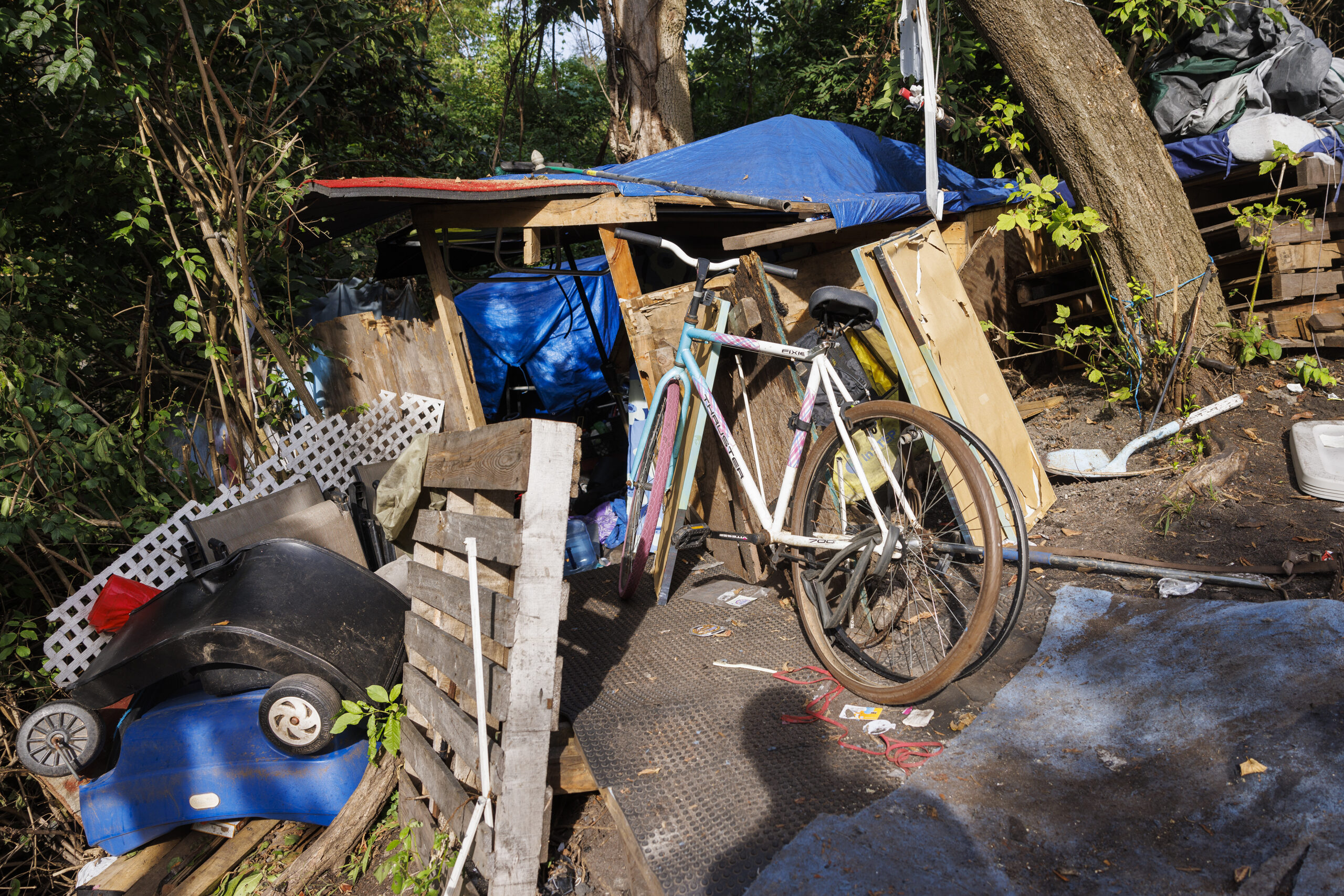
    A homeless encampment near the Schuylkill River Trail and Norristown in Montgomery County.

    In some parts of the county, efforts to address the issue overcame opposition.

    Communities like East Norriton have established more code blue shelters, which only operate during freezing weather, and in wealthy Lower Merion, a new affordable housing complex for seniors and people with disabilities, called Ardmore House II, is under construction.

    “It takes political courage in these moments,” Winder said, referring to local officials who have embraced shelters and affordable housing. “Sometimes you have loud voices in the room and just have to say, well, this is the right thing to do.”

    The commissioners provided $5.3 million in county funding for the shelters. The county also provided a quarter of Ardmore House II’s $20 million budget. And as federal funding cuts loom under President Donald Trump’s administration, the commissioners have also been engaging with philanthropists and foundations.

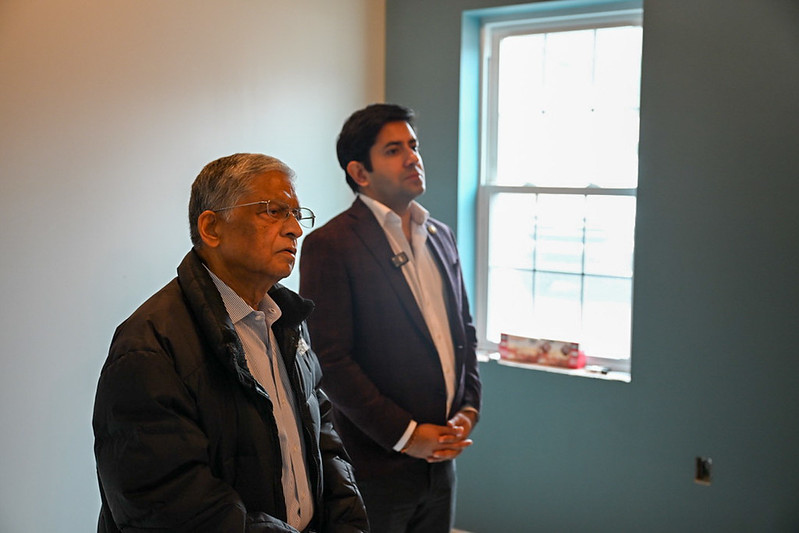
    Earlier this month, Nand Todi, president of Montgomery County-based Penn Manufacturing Industries, announced a $1 million donation to the Lansdale shelter.

    Nand Todi, president of Montgomery County-based Penn Manufacturing Industries, and County Commissioner Neil Makhija at a walk-through of the completed Lansdale shelter.

    Winder hopes this example of generosity is just the beginning.

    “I come from the private sector, so I believe in public-private partnerships,” said Winder. “We’re home to some of the largest corporations in the southeast area. We know that companies have social responsibility goals. So how do we partner with corporations?”

    What can a county government do?

    This year, the commissioners want to continue to tackle housing issues.

    But county-level politicians do not have large budgets at their command, and unlike their municipal-level counterparts, they do not set zoning policy.

    Makhija and Winder want to push those limits.

    For example, the county dispenses infrastructure grants, and Makhija says the rules around that funding could be rewritten to incentivize municipalities to reform their zoning codes, perhaps using model ordinances established by the county.

    Such ordinances could, for example, allow more transit-oriented development. Or they could legalize accessory dwelling units — small living spaces such as a garage apartment or in-law suite that can be rented out.

    “If you have a grant program and it says these are the requirements, then people are going to prioritize getting those things done,” said Makhija, though, he said, he still has to make the case to his colleagues.

    He also noted that county planning staff can help implement new municipality policies.

    DiBello is skeptical of the county getting involved in local zoning policy.

    “The governing structure in Pennsylvania is that municipalities are autonomous to county and state when it comes to zoning,” said DiBello. “It’s up to the communities.”

    The Democrats would also like to find revenue sources to pay for more housing projects without increasing the property tax, which would cut against their goal of affordability.

    But for that they would need permission from Harrisburg, which Republicans in the state Senate have denied.

    “There are opportunities for us to advocate to the state legislature, to give counties like ours other means to generate revenue,” said Winder. “It’s not sustainable to continue to burden taxpayers by increasing property taxes, and we can’t fund these programs unless we have the money to do so.”

    DiBello is also opposed to creating new taxes (if Harrisburg allows it), and doesn’t want to see more property tax increases either. But he still wants to see proactive housing investments by county government.

    These debates will unfold next year as the housing blueprint dominates the commissioners’ agenda.

    “We’re the second wealthiest county in Pennsylvania, and people struggling to find housing can be quite invisible in these communities,” said Winder. “We’ve got an embarrassment of riches, but there are people that are struggling and so we’re trying to be on the ground helping to solve these issues.”

  • Former Rep. Dick Schulze, who represented the Philly burbs in Congress for 18 years, has died at 96

    Former Rep. Dick Schulze, who represented the Philly burbs in Congress for 18 years, has died at 96

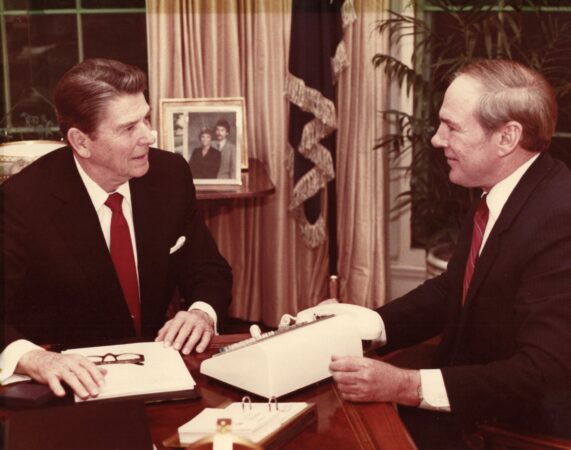
    Former U.S. Rep. Richard “Dick” Schulze, a Republican who represented the Philadelphia suburbs from 1975 until 1993, died last week at the age of 96.

    Mr. Schulze, who served in the Pennsylvania General Assembly before running for Congress, died of heart failure in his home in the Washington, D.C., area on Dec. 23, according to a news release from his wife, Nancy Shulze, and former chief of staff Rob Hartwell.

    During his first term in the U.S. House, Mr. Schulze led the charge to make Valley Forge, seven miles from his home at the time, a national historical park. President Gerald Ford signed the legislation Mr. Shulze authored into law on July 4, 1976, the nation’s bicentennial.

    By the time he retired from the House in 1993, Mr. Schulze was a member of the powerful House Ways and Means Committee. He spent his whole congressional career in the political minority, retiring shortly before Republicans retook the chamber in 1994 for the first time since the mid-50s.

    “He knew what he believed and he stood for what he believed but he was not, he was not partisan,” Nancy Schulze said in an interview with The Inquirer Tuesday.

    Mr. Schulze’s former employees described him as tough but fair, demanding a lot of his staff but offering them the space to achieve it.

    “You really had to be at the top of your game,” said Tim Haake, a former attorney in Mr. Schulze’s congressional office who had reconnected with him in recent years. “Overall he was a very nice man, very polite, very cordial.”

    Mr. Schulze, Hartwell said, “probably taught me more in my life than anybody.”

    Hartwell remembered his former boss as a man willing to work across the aisle in a way that is less common in today’s politics. Mr. Schulze founded the Congressional Sportsman Caucus and served on the National Fish and Wildlife Board among other posts focused on wildlife.

    Hartwell recalled that Mr. Schulze played a key role in securing the 1983 release of Romanian Orthodox priest Gheorghe Calciu-Dumitreasa who had been held as a political prisoner in the country, representing President George H.W. Bush in negotiations with the country’s communist leaders.

    Serving in the minority throughout his career, Hartwell said, Mr. Schulze was willing to make deals and work for the benefit of his district, which included portions of Montgomery, Delaware, and Chester Counties.

    “He was a man of his word and he was a man who wanted to accomplish things for his district and his constituents,” Hartwell said. “Unlike today he would reach across the aisle to get those things done.”

    Mr. Schulze unsuccessfully proposed a constitutional amendment imposing term limits of 18 years for members of the House of Representatives. Although the proposal did not advance, Mr. Schulze himself chose not to seek reelection in 1992 after serving 18 years in office. He went on to work as a lobbyist for a conservative firm.

    “He did not cling to his role as a congressman and he did not go to occupy a seat,” Nancy Schulze said.

    Nancy Schulze and Dick Schulze were married following the 1990 death of his first wife, Nancy Lockwood Schulze, after a battle with cancer, and the death of her first husband, Montana Secretary of State Jim Waltermire.

    In addition to his wife, Mr. Schulze is survived by four children, seven grandchildren, and five great-grandchildren.

    Nancy Schulze remembered her husband as a gentleman, an Eagle Scout who lived by the scouting oath and was dedicated to loving and serving his country, state, district and family.

    “He was a man of dignity,” she said.

    Services to honor Mr. Schulze are scheduled for Saturday Jan. 10 at 2 p.m. at the Great Valley Presbyterian Church in Malvern.

  • Marsha Levick, a ‘superhero’ who helped rewrite the country’s juvenile justice system, steps down from Juvenile Law Center

    Marsha Levick, a ‘superhero’ who helped rewrite the country’s juvenile justice system, steps down from Juvenile Law Center

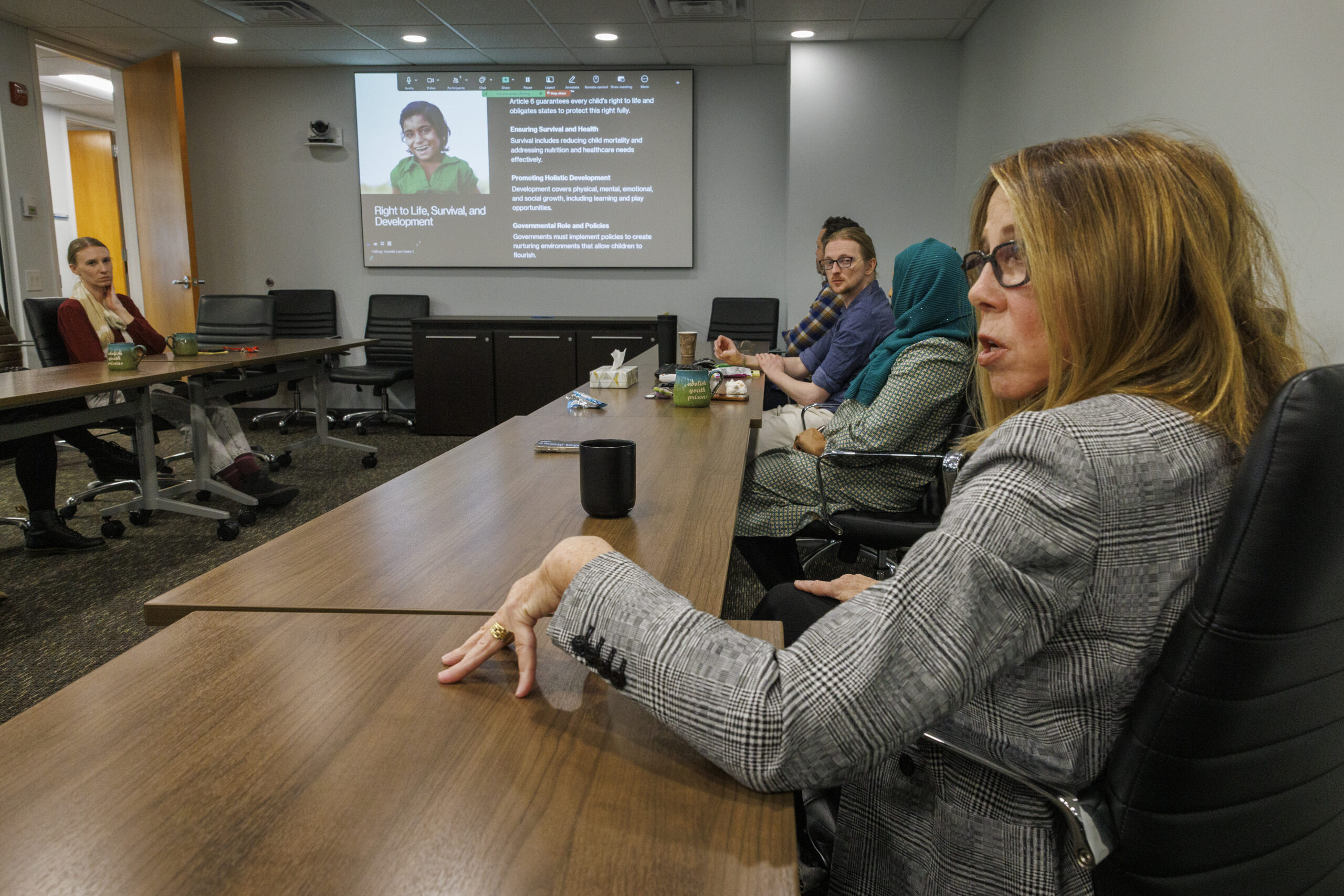
    Marsha Levick took her seat at a conference table at the Juvenile Law Center on a recent Wednesday for what would be one of her last meetings. She walked colleagues through the basic principles of the United Nations Convention on the Rights of the Child, the 1989 treaty that laid out, in clear terms, what the world said it owed young people.

    At the heart of the treaty is a simple idea: A child’s best interests come first — even when that child enters the justice system. It has been ratified by all but one of the U.N.’s member nations: the U.S. And in many of those 196 other countries, Levick said, children younger than 14 cannot be prosecuted at all.

    “Wait,” a staffer interjected. “Kids younger than 14 aren’t in the justice system?”

    “I know,” Levick said. “It’s very different.”

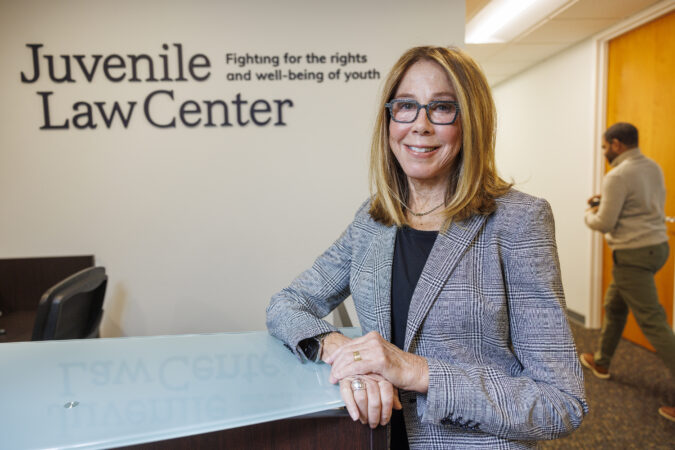
    Marsha Levick, chief legal officer and cofounder of the Juvenile Law Center, speaks with staff on Dec. 17.

    For 50 years, Levick, 74, has been one of the most persistent and influential voices in the American juvenile justice system, a driving force in turning what was once a niche legal specialty into a national civil rights movement. Colleagues credit her with helping to rewrite how courts view children — persuading judges, including those on the U.S. Supreme Court, to treat youth not as miniature adults but as citizens with distinct constitutional protections and needs.

    Levick will step down Wednesday from her position as chief legal officer of the Juvenile Law Center, the Philadelphia-based organization she helped build from a walk-in legal clinic in 1975 into a national leader in children’s rights.

    Her departure coincides with the center’s 50th anniversary. At a celebration gala in May, the nonprofit honored Levick with a leadership award that recognized her body of work.

    Levick’s career ranged from representing individual teenagers to steering landmark litigation that forced states to overhaul abusive practices. She helped lead the Juvenile Law Center’s response to the “kids for cash” scandal in Luzerne County. She coauthored briefs in a series of U.S. Supreme Court victories that throttled the harshest punishments for kids, including life in prison.

    But Levick is also stepping down at what she calls a “dark moment” for civil liberties in America — a time when rights once thought settled are being rolled back.

    Levick was in law school in 1973 when the U.S. Supreme Court handed down Roe v. Wade, the landmark decision that recognized a constitutional right to abortion. In the years that followed, a constellation of rights — from marriage equality to access to contraception — also expanded.

    Roe was overturned, however, in 2022. Since then, other decisions have also chipped away at affirmative action in colleges and LGBTQ+ protections.

    “It’s hard to convey the shock that it imposes,” Levick said in a recent interview. “Now, 50 years later, you’re pushing the rock back up the hill.”

    She made clear she was unsparing with herself, quick to point out what she perceived as shortcomings. “There were high moments for sure,” she said. “But I am not foolishly happy about that. I’m shocked that that’s all we could do. That’s as far as we got.”

    Yet even as fresh battles loom, colleagues say the groundwork Levick has laid will guide the Juvenile Law Center’s mission and the broader fight for children’s rights for years to come.

    Jessica Feierman, the center’s senior managing director, will step into Levick’s role. “It is a huge privilege and also an immense responsibility,” she said. “In this moment of attacks on civil rights and children’s rights, it’s even more vital that we build on the victories of the last 50 years.”

    From Philadelphia to the U.S. Supreme Court

    Raised in Philadelphia’s Fairmount neighborhood, Levick discovered early the charge of using her voice, first as a girl who demanded a recount in an elementary school election and won the presidency, and later as a teenager who inhaled The Feminine Mystique and the feminist writers who followed. She earned an undergraduate degree from the University of Pennsylvania and a law degree from what is now Temple University Beasley School of Law.

    She cofounded the Juvenile Law Center in 1975 with three law school classmates: Bob Schwartz, a classical music aficionado and part-time semi-pro baseball umpire; Phil Margolis, a vegetarian and free spirit; and Judy Chomsky, a mother of two and passionate Vietnam War resister.

    Seven years earlier, the U.S. Supreme Court had ruled that juveniles were entitled to due process. That decision cracked open an untapped field, Levick said, to build with her classmates a new kind of civil rights practice focused on children.

    For the first year, they worked out of the Chestnut Street office of Chomsky’s husband, a cardiologist, carving out space in his waiting room and sidestepping an exam room on the days he saw patients.

    In its earliest years, the center took on individual cases for children. One of Levick’s first clients was in Montgomery County, a teen girl who had participated in a protest at a nuclear plant and who was arrested and charged with trespassing, she said.

    But the center struggled financially. The founding partners laid themselves off at one point, Levick said, so they could keep paying the few employees they had hired: a divorced mother who worked as a receptionist; their first lawyer, Anita DeFrantz, who was an Olympic rower; and a social worker.

    In 1982, Levick quit the center to become the legal director of the national NOW Legal Defense and Education Fund, now Legal Momentum. By the time she left there six years later, she had become its executive director.

    At the NOW Legal Defense and Education Fund, Levick said, she learned how to build national cases — coordinating multistate litigation and filing amicus briefs in federal courts. By the time she returned to the Juvenile Law Center in 1995, after a stint at a small Paoli firm, she had come to believe that individual wins, while necessary, would not be enough to create lasting change.

    The center’s mission became more focused on appellate litigation and national advocacy, setting the stage for children’s rights to reach state supreme courts and, eventually, the U.S. Supreme Court.

    Hundreds of juveniles resentenced, released

    In 2005, in Roper v. Simmons, Levick cowrote in a brief that social science research on youth development should inform constitutional law. Children, she also wrote, have a greater capacity to change.

    “We just pushed ourselves into the center of it,” Levick said. “We were like, ‘We’re here. We’re writing the amicus brief.’”

    The high court overturned decades of precedent when it ruled in Roper that the Eighth Amendment forbids the death penalty for juveniles. Five years later, in Graham v. Florida, it barred life-without-parole sentences for juveniles in non-homicide cases, after reading another brief Levick coauthored.

    In 2012, Levick helped persuade the court to end mandatory life-without-parole sentences for youths convicted of homicide in Miller v. Alabama. And in 2016, she served as cocounsel in Montgomery v. Louisiana, the case that made the Miller decision retroactive across the country.

    Since then, hundreds of juveniles — including nearly 500 in Pennsylvania — have been resentenced or released from prison. One of them: Donnell Drinks, freed in 2018 after 27 years.

    The first time Drinks met Levick, he hugged her. “I couldn’t believe how small she was, because of her presence, her legal prowess, has all been so enormous,” recalled Drinks, who works as a leadership and engagement coordinator at the Campaign for the Fair Sentencing of Youth. Levick is 5-foot-3.

    Those cases brought Levick into courtrooms across the state, often alongside public defenders. One of them, Bradley S. Bridge, a retired Philadelphia public defender who worked with her on dozens of resentencings, called Levick a “zealous advocate” who “always saw the big picture.”

    Her ability, he said, “to think toward the future, I think, was most glorious.”

    Levick agreed that looking ahead had always been part of her work. “We always tried to look around the corner,” she said.

    One of those moments came in 2008, when she and her colleagues began fielding troubling calls from Luzerne County — the first hints of what would become the “kids-for-cash” scandal.

    Seeing more in the ‘kids-for-cash’ scandal

    In 2007, Laurene Transue called the Juvenile Law Center. Her daughter, 14-year-old Hillary Transue, had been ordered to serve three months in a detention facility after she created a Myspace page mocking her school principal, she said at the time.

    “We saw in that one phone call something that was clearly much bigger,” Levick said.

    In fact, it was one of the most egregious judicial corruption cases in modern American history: Two Luzerne County judges had accepted kickbacks in exchange for sentencing thousands of juveniles — many for minor misbehavior — to extended stays in private detention centers.

    “It was kind of like, if I may, what the f— in my mind,” Levick recalled.

    Levick and the center petitioned the Pennsylvania Supreme Court, which ultimately threw out and expunged thousands of adjudications. They later helped families pursue civil damages, with the help of other firms. The judges, Mark Ciavarella and Michael Conahan, were convicted of federal crimes and sentenced to long prison terms; President Joe Biden commuted Conahan’s sentence in 2024.

    Hillary Transue now serves on the Juvenile Law Center’s board.

    Transue told The Inquirer that as a teenager she believed that “highly educated” adults in “positions of authority” were “mean, nasty people who were out to hurt you.” But Levick, she said, “brushed up against my perception of adults” and proved her wrong.

    “I think she’s a goddamn superhero,” Transue said recently.

    Marsha Levick (center) stands with staffers at the Juvenile Law Center earlier this month.

    Among the successes, Levick still sees failures

    Despite the victories, Levick is quick to cite the cases she lost. “I’ve had successes. I’ve also failed many times,” she said.

    She still thinks about clients like Jamie Silvonek, sentenced to 35 years to life in prison after killing her mother, whose early release Levick has fought for but has not yet won, or a recent bid to expand parole access for people convicted as juveniles that fell flat in Florida.

    Those losses have hardened her view of how deeply punishment is embedded in American law. “I feel like punishment is in our bones,” she said. “The way that we think about crime is that it is always followed by punishment.”

    That instinct, she said, has left behind people who could have thrived outside prison — including juvenile lifers who will never be released. One of them is Silvonek, whom Levick described as brilliant and warm. “I want her to be able to share that warmth and joy with her family and with her community, who are all behind her,” Levick said.

    “We lost what they had to give,” she added.

    Levick isn’t done yet

    Levick, who is married with two adult daughters, is not leaving the field. She will become the Phyllis Beck chair at Temple’s Beasley School of Law, a post once held by her cofounder Bob Schwartz, and will teach constitutional law to first-year students.

    She feels newly urgent about the course. “I am outraged at the degree to which the law has been perverted by the current moment, and I think I still can say and do something about that,” she said. “I think that the things that motivate me include outrage.”

    She expects much of the future progress in youth justice to come from state supreme courts rather than the U.S. Supreme Court — a shift she sees as pragmatic, not pessimistic. Washington State Supreme Court Justice Mary Yu, who has heard Levick argue successfully before her, called her a fearless litigator. “She’s an extraordinary appellate lawyer,” Yu, who is also retiring Wednesday, said in an interview. “It’s almost instinctual to her.”

    And even now, Levick said, she has hope.

    “We’re not going to abolish the juvenile justice system in America, but we could transform it radically,” Levick said. “I believe that. But it takes more than just lawyers to care. It takes more than the community to care. It takes people in positions of power to care. And that’s the hard part.”

    Correction: An earlier version of this article misstated the name of a legal advocacy group at which Levick worked. She worked at NOW Legal Defense and Education Fund. The story also misstated the year Laurene Transue called the Juvenile Law Center; she called the law center in 2007.

  • Pa. just gave low-income workers a tax credit boost. Now it’s Philadelphia’s turn.

    Pa. just gave low-income workers a tax credit boost. Now it’s Philadelphia’s turn.

    Last month, Gov. Josh Shapiro and the General Assembly adopted the state’s first working Pennsylvanians tax credit, ensuring anyone who qualifies for the federal earned income tax credit (EITC) will also automatically receive a state credit equal to 10% of the federal credit when they file taxes next year.

    Pennsylvania joins 31 states and the District of Columbia in giving low-income workers an effective, research-backed wage boost; in 2024, the federal and state credits combined lifted an estimated 6.8 million working people from poverty.

    While the new state EITC is incredibly welcome and historic, it is relatively modest compared with other refundable state EITCs. Most range from 20% to 50% of the federal credit, with a handful below 10% or over 50%. This major step forward still won’t overcome the hardship facing low-wage workers — hardship compounded by Pennsylvania’s and Philadelphia’s deeply regressive overall tax structure.

    The Institute on Taxation and Economic Policy’s “Who Pays?” report found that the lowest-income Pennsylvanians pay 15.1% of their income in state and local taxes — more than double the share paid by the wealthiest 1%, making the new state EITC essential for offsetting the lopsided tax code.

    In the same way states are building upon federal tax credits, localities should consider building on state tax credits.

    In Philadelphia, low earners pay an even higher share of their income in state and local taxes, in part due to the highly regressive, flat wage tax.

    The city’s wage tax refund ordinance, a well-intentioned credit aiming to address regressivity by retroactively reducing the city’s income tax to 1.5%, reaches very few people. This year, 2,700 applications were approved, even though 50,000 were eligible, a dismal 4.5% take-up rate (which is actually double last year’s rate).

    One major reason for this abysmal take-up is linkage to the state’s special income tax forgiveness program, requiring people to first be approved by the Pennsylvania Revenue Department for individuals earning no more than $8,750, or $24,750 for a family of three.

    Councilmember Kendra Brooks in chambers as City Council meets Dec. 11.

    Councilmembers Kendra Brooks and Nicolas O’Rourke introduced legislation as part of the People’s Tax Plan that would raise income eligibility to that of the PACENET prescription assistance program and expand the wage tax refund to include the entire 3.75% wage tax, but the proposals have not moved forward.

    Councilmember Nicolas O’Rourke in chambers as City Council meets Dec. 11.

    Pennsylvania’s new state EITC opens the door for a far more generous and administratively simple wage tax refund that reaches more residents. Tying the wage tax refund directly to the new state EITC and coordinating with the state can streamline this process.

    Montgomery County, Md., pioneered one practical and high take-up approach: It partners with the state to automatically deliver the refundable portion of its county credit to all residents receiving a refund from the state. The credit is directly deposited or mailed with no additional application required.

    Similarly, Philadelphia can improve eligibility for the wage tax refund by disconnecting it from the state’s income tax forgiveness program and instead linking it to the state’s working Pennsylvanians tax credit. Local policymakers should also automate applications, wage and residence documentation, and payouts.

    Our city’s poverty rate is nearly double the state average. Local refundable credits, such as earned income tax credits and child tax credits, are anti-poverty tools proven to quickly lift incomes and stabilize households facing increasingly high costs. With the federal government retreating from long-standing health and economic security programs, the responsibility now falls even more heavily on states and cities to step up.

    A strengthened, refundable, and automatic local EITC is exactly the kind of targeted investment that can help Philadelphia reverse decades of persistent poverty.

    Kamolika Das is the local tax policy director at the Institute on Taxation and Economic Policy, a nonprofit, nonpartisan tax policy organization that conducts analyses of tax and economic proposals. She lives in Queen Village with her husband and daughter.