Tag: no-latest

  • Trump says he might sue Fed Chair Jerome Powell for ‘gross incompetence’

    Trump says he might sue Fed Chair Jerome Powell for ‘gross incompetence’

    President Donald Trump on Monday said he might sue Federal Reserve Chair Jerome H. Powell for what the president called “gross incompetence,” injecting new tension into the already strained relationship between the White House and the independent central bank.

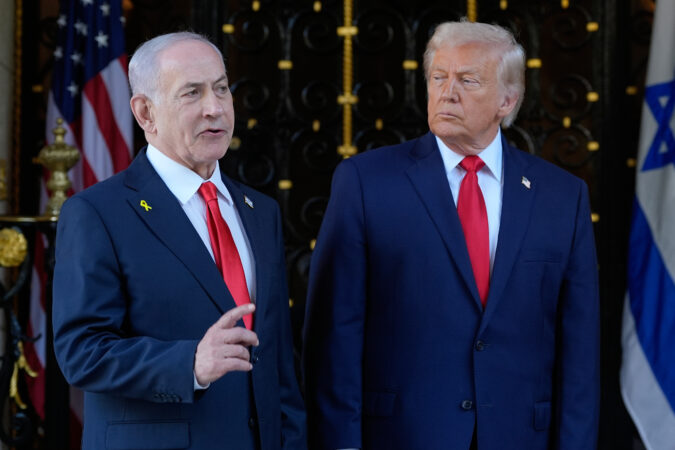
    Speaking at a news conference beside Israeli Prime Minister Benjamin Netanyahu at Mar-a-Lago in Florida, Trump said, “The guy is just incompetent.” Trump first brought up the Fed’s multibillion-dollar renovation project, which at times has become a stand-in for Trump’s ongoing attacks on the Fed system.

    “It’s gross incompetence against Powell,” Trump said, adding: “We’re going to probably bring a lawsuit against him.”

    Trump threatened a “major lawsuit” against Powell over the summer, but he never followed through. It wasn’t clear what specific claims Trump was referring to Monday, or how or when a suit could be brought. The White House did not respond to a request for more information.

    The Fed declined to comment.

    The Fed’s renovation project isn’t the only way Trump has put pressure on the bank. White House officials and their allies routinely call for lower interest rates, even though monetary policy is supposed to be siloed off from politics. Trump has threatened to oust Powell and has tried to fire Federal Reserve governor Lisa Cook, setting up an ongoing legal battle over a president’s ability to remove central bankers.

    Trump administration officials have alleged Powell either lied to Congress about the renovation or grossly mismanaged the project. Over the summer, when Trump’s criticism was most acute, the price tag for the project had swelled to nearly $2.5 billion, up from an estimate of $1.9 billion before the pandemic. The health crisis and ensuing economic upheaval caused materials such as steel and cement to go up in price, the Fed has said.

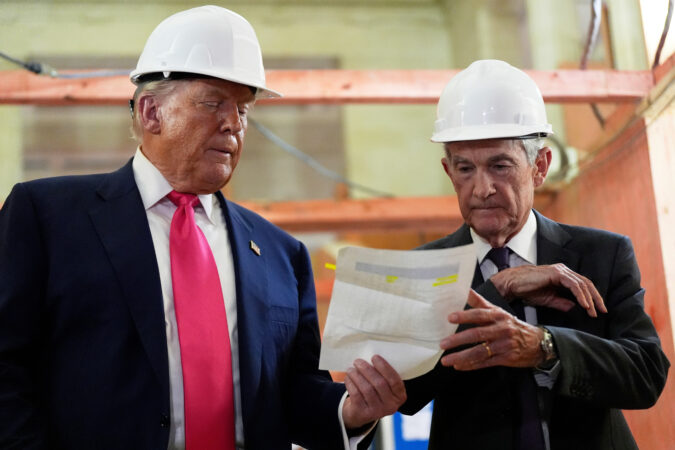
    Trump toured the renovations over the summer. But the visit proved surprisingly cordial, with Trump saying he wouldn’t fire Powell and wanted the project to continue. At one point, Powell held his ground and fact-checked Trump’s comments that the renovation had cost more than $3 billion.

  • Homeland Security says fraud investigation is underway in Minneapolis

    Homeland Security says fraud investigation is underway in Minneapolis

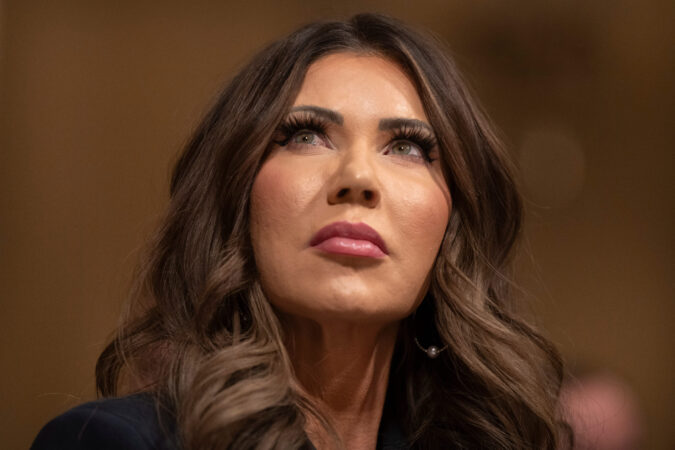
    MINNEAPOLIS — Federal Homeland Security officials were conducting a fraud investigation on Monday in Minneapolis, Department of Homeland Security Secretary Kristi Noem said.

    The action comes after years of investigation that began with the $300 million scheme at the nonprofit Feeding Our Future, for which 57 defendants in Minnesota have been convicted. Prosecutors said the organization was at the center of the country’s largest COVID-19-related fraud scam, when defendants exploited a state-run, federally funded program intended to provide food for children.

    A federal prosecutor alleged earlier in December that half or more of the roughly $18 billion in federal funds that supported 14 programs in Minnesota since 2018 may have been stolen.

    Minnesota Gov. Tim Walz said then that fraud will not be tolerated and that his administration “will continue to work with federal partners to ensure fraud is stopped and fraudsters are caught.”

    Noem on Monday posted a video on the social platform X showing DHS officers going into an unidentified business and questioning the person working behind the counter. Noem said that officers were “conducting a massive investigation on childcare and other rampant fraud.”

    “The American people deserve answers on how their taxpayer money is being used and ARRESTS when abuse is found,” U.S. Immigration and Custom Enforcement posted.

    The action comes a day after FBI Director Kash Patel said on X that the agency had “surged personnel and investigative resources to Minnesota to dismantle large-scale fraud schemes exploiting federal programs.”

    Patel said that previous fraud arrests in Minnesota were “just the tip of a very large iceberg.”

    President Donald Trump has criticized Walz’s administration over the fraud cases to date.

    In recent weeks, tensions have been high between state and federal enforcement in the area as the Trump administration’s immigration crackdown focused on the Somali community in the Minneapolis-St. Paul area, which is the largest in the country.

    Among those running schemes to get funds for child nutrition, housing services, and autism programs, 82 of the 92 defendants are Somali Americans, according to the U.S. Attorney’s Office for Minnesota.

    Walz spokesperson Claire Lancaster said that the governor has worked for years to “crack down on fraud” and was seeking more authority from the Legislature to take aggressive action. Walz has supported criminal prosecutions and taken a number of other steps, including strengthening oversight and hiring an outside firm to audit payments to high-risk programs, Lancaster said.

  • Trump administration rolls out rural health funding, with strings attached

    Trump administration rolls out rural health funding, with strings attached

    States will share $10 billion for rural healthcare next year in a program that aims to offset the Trump administration’s massive budget cuts to rural hospitals, federal officials announced Monday.

    But while every state applied for money from the Rural Health Transformation Program, it won’t be distributed equally. And critics worry that the funding might be pulled back if a state’s policies don’t match up with the administration’s.

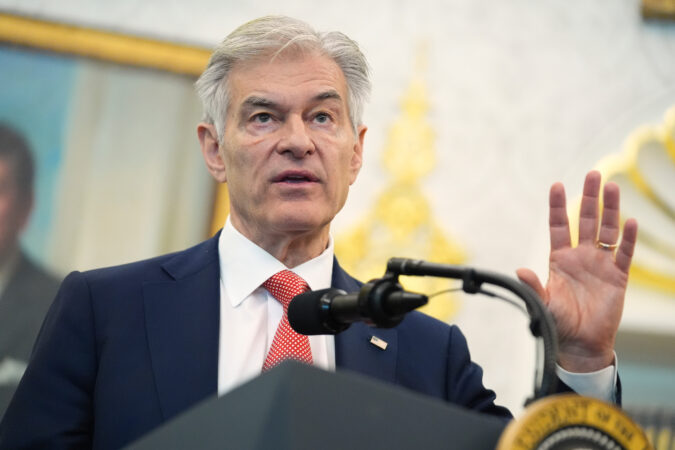
    Officials said the average award for 2026 is $200 million, and the fund puts a total of $50 billion into rural health programs over five years. States propose how to spend their awards, and the Centers for Medicare and Medicaid Services assigns project officers to support each state, said agency administrator Mehmet Oz.

    “This fund was crafted as part of the One Big Beautiful Bill, signed only six months ago now into law, in order to push states to be creative,” Oz said in a call with reporters Monday.

    Under the program, half of the money is equally distributed to each state. The other half is allocated based on a formula developed by CMS that considered rural population size, the financial health of a state’s medical facilities, and health outcomes for a state’s population.

    The formula also ties $12 billion of the five-year funding to whether states are implementing health policies prioritized by the Trump administration’s Make America Healthy Again initiative. Examples include requiring nutrition education for healthcare providers, having schools participate in the Presidential Fitness Test, or banning the use of SNAP benefits for so-called junk foods, Oz said.

    Several Republican-led states — including Arkansas, Iowa, Louisiana, Nebraska, Oklahoma, and Texas — have already adopted rules banning the purchase of foods like candy and soda with SNAP benefits.

    The money that the states get will be recalculated annually, Oz said, allowing the administration to claw back funds if, for example, state leaders don’t pass promised policies. Oz said the clawbacks are not punishments, but leverage governors can use to push policies by pointing to the potential loss of millions.

    “I’ve already heard governors express that sentiment that this is not a threat, that this is actually an empowering element of the One Big Beautiful Bill,” he said.

    Carrie Cochran-McClain, chief policy officer with the National Rural Health Association, said she’s heard from a number of Democratic-led states that refused to include such restrictions on SNAP benefits even though it could hurt their chance to get more money from the fund.

    “It’s not where their state leadership is,” she said.

    Experts say fund is inadequate in face of other cuts

    Oz and other federal officials have touted the program as a 50% increase in Medicaid investments in rural healthcare. Rep. Don Bacon, a Republican from Nebraska who has been critical of many of the administration’s policies but voted for the budget bill that slashed Medicaid, pointed to the fund when recently questioned about how the cuts would hurt rural hospitals.

    “That’s why we added a $50 billion rural hospital fund, to help any hospital that’s struggling,” Bacon said. “This money is meant to keep hospitals afloat.”

    But experts say it won’t nearly offset the losses that struggling rural hospitals will face from the federal spending law’s $1.2 trillion cut from the federal budget over the next decade, primarily from Medicaid. Millions of people are also expected to lose Medicaid benefits.

    Estimates suggest rural hospitals could lose around $137 billion over the next decade because of the budget measure. As many as 300 rural hospitals were at risk for closure because of the GOP’s spending package, according to an analysis by the Cecil G. Sheps Center for Health Services Research at the University of North Carolina at Chapel Hill.

    “When you put that up against the $50 billion for the Rural Health Transformation Fund, you know — that math does not add up,” Cochran-McClain said.

    She also said there’s no guarantee that the funding will go to rural hospitals in need. For example, she noted, one state’s application included a proposal for healthier, locally sourced school lunch options in rural areas.

    And even though innovation is a goal of the program, Cochran-McClain said it’s tough for rural hospitals to innovate when they were struggling to break even before Congress’ Medicaid cuts.

    “We talk to rural providers every day that say, ‘I would really love to do x, y, z, but I’m concerned about, you know, meeting payroll at the end of the month,’” she said. “So when you’re in that kind of crisis mode, it is, I would argue, almost impossible to do true innovation.”

  • During Netanyahu visit, Trump warns Iran of further U.S. strikes if it reconstitutes nuclear program

    During Netanyahu visit, Trump warns Iran of further U.S. strikes if it reconstitutes nuclear program

    PALM BEACH, Fla. — President Donald Trump warned Iran on Monday that the U.S. could carry out further military strikes if the country attempts to reconstitute its nuclear program as he held wide-ranging talks with Israeli Prime Minister Benjamin Netanyahu at his home in Florida.

    Trump had previously insisted that Tehran’s nuclear capabilities were “completely and fully obliterated” by U.S. strikes on key nuclear enrichment sites in June. But with Netanyahu by his side, Trump raised the possibility that suspected activity could be taking place outside those sites. Israeli officials, meanwhile, have been quoted in local media expressing concern about Iran rebuilding its supply of long-range missiles capable of striking Israel.

    “Now I hear that Iran is trying to build up again,” Trump told reporters gathered at his Mar-a-Lago estate. “And if they are, we’re going to have to knock them down. We’ll knock them down. We’ll knock the hell out of them. But hopefully that’s not happening.”

    Trump’s warning to Iran comes as his administration has committed significant resources to targeting drug trafficking in South America and the president looks to create fresh momentum for the U.S.-brokered Israel-Hamas ceasefire. The Gaza deal is in danger of stalling before reaching its complicated second phase that would involve naming an international governing body and rebuilding the devastated Palestinian territory.

    At a news conference with Netanyahu after their meeting, Trump suggested that he could order another U.S. strike.

    “If it’s confirmed, they know the consequences, and the consequences will be very powerful, maybe more powerful than the last time,” Trump said.

    Iran has insisted that it is no longer enriching uranium at any site in the country, trying to signal to the West that it remains open to potential negotiations over its atomic program. The two leaders discussed the possibility of taking new military action against Tehran just months after June’s 12-day war.

    The Iranian mission to the United Nations did not immediately respond to a request for comment on Trump’s warning.

    Gaza ceasefire progress has slowed

    Trump, with Netanyahu by his side, said he wants to get to the second phase of the Gaza deal “as quickly as we can.”

    “But there has to be a disarming of Hamas,” Trump added.

    The ceasefire between Israel and Hamas that Trump championed has mostly held, but progress has slowed recently. Both sides accuse each other of violations, and divisions have emerged among the U.S., Israel, and Arab countries about the path forward.

    The truce’s first phase began in October, days after the two-year anniversary of the initial Hamas-led attack on Israel that killed about 1,200 people. All but one of the 251 hostages taken then have been released, alive or dead.

    The Israeli leader, who also met separately with Secretary of State Marco Rubio and Defense Secretary Pete Hegseth, has signaled he is in no rush to move forward with the next phase as long as the remains of Ran Gvili are still in Gaza.

    Gvili’s parents met with Netanyahu as well as Rubio, U.S. envoy Steve Witkoff, and the president’s son-in-law, Jared Kushner, in Florida on Monday.

    “They’re waiting for their son to come home,” Trump said of the family of the young police officer known affectionately as “Rani.”

    Next phase is complex

    The path to implementing Trump’s peace plan is certainly complicated.

    If successful, the second phase would see the rebuilding of a demilitarized Gaza under international supervision by a group chaired by Trump and known as the Board of Peace. The Palestinians would form a “technocratic, apolitical” committee to run daily affairs in Gaza, under Board of Peace supervision.

    It further calls for normalized relations between Israel and the Arab world and a possible pathway to Palestinian independence. Then there are thorny logistical and humanitarian questions, including rebuilding war-ravaged Gaza, disarming Hamas, and creating a security apparatus called the International Stabilization Force.

    Much remains unsettled

    Two main challenges have complicated moving to the second phase, according to an official who was briefed on those meetings. Israeli officials have been taking a lot of time to vet and approve members of the Palestinian technocratic committee from a list given to them by the mediators, and Israel continues its military strikes.

    Trump’s plan also calls for the stabilization force, proposed as a multinational body, to maintain security. But it, too, has yet to be formed. Whether details will be forthcoming after Monday’s meeting is unclear.

    A Western diplomat said there is a “huge gulf” between the U.S.-Israeli understanding of the force’s mandate and that of other major countries in the region, as well as European governments.

    All spoke on the condition of anonymity to provide details that haven’t been made public.

    The U.S. and Israel want the force to have a “commanding role” in security duties, including disarming Hamas and other militant groups. But countries being courted to contribute troops fear that mandate will make it an “occupation force,” the diplomat said.

    Hamas has said it is ready to discuss “freezing or storing” its arsenal of weapons but insists it has a right to armed resistance as long as Israel occupies Palestinian territory. One U.S. official said a potential plan might be to offer cash incentives in exchange for weapons, echoing a “buyback” program Witkoff has previously floated.

    Trump makes case once again for Netanyahu pardon

    The two leaders, who have a long and close relationship, heaped praise on each other. Trump also tweaked the Israeli leader, who at moments during the war has raised Trump’s ire, for being “very difficult on occasion.”

    Netanyahu said Trump during the lunch was formally told that his country’s education ministry will award him the Israel Prize, breaking the long-held convention of bestowing the honor on an Israeli citizen or resident.

    “President Trump has broken so many conventions to the surprise of people,” Netanyahu said. He added, “So we decided to break a convention, too, or create a new one.”

    Trump also renewed his call on Israeli President Isaac Herzog to grant Netanyahu, who is in the midst of a corruption trial, a pardon.

    Netanyahu is the only sitting prime minister in Israeli history to stand trial, after being charged with fraud, breach of trust, and accepting bribes in three separate cases accusing him of exchanging favors with wealthy political supporters.

    Trump has previously written to Herzog to urge a pardon and advocated for one during his October speech before the Knesset. He said Monday that Herzog has told him “it’s on its way” without offering further details.

    “He’s a wartime prime minister who’s a hero. How do you not give a pardon?” Trump said.

    Herzog’s office said in a statement that the Israeli president and Trump have not spoken since the pardon request was submitted, but that Herzog has spoken with a Trump representative about the U.S. president’s letter advocating for Netanyahu’s pardon.

    “During that conversation, an explanation was provided regarding the stage of the process in which the request currently stands, and that any decision on the matter will be made in accordance with the established procedures,” the Israeli president’s office said.

  • Zohran Mamdani has bold promises. Can he make them come true as New York City mayor?

    Zohran Mamdani has bold promises. Can he make them come true as New York City mayor?

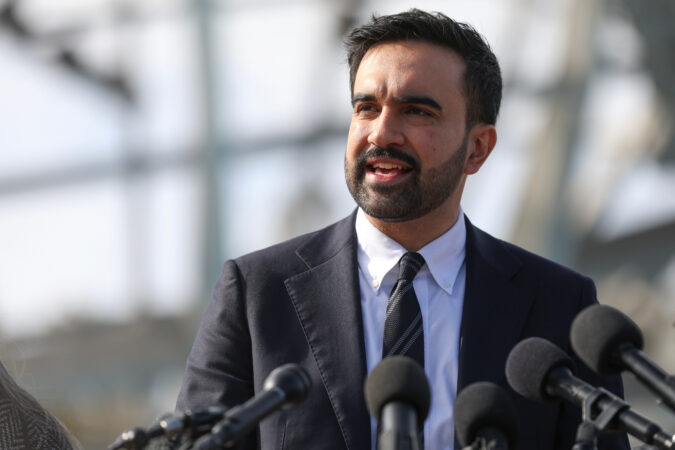
    Zohran Mamdani has promised to transform New York City government when he becomes mayor. Can he do it?

    Mamdani, a 34-year-old democratic socialist, already faces intense scrutiny, even before taking office in one of the country’s most scrutinized political jobs. Republicans have cast him as a liberal boogeyman. Some of his fellow Democrats have deemed him too far left. Progressives are closely watching for any signs of him shifting toward the center.

    On Jan. 1, he will assume control of America’s biggest city under that harsh spotlight, with the country watching to see if he can pull off the big promises that vaulted him to office and handle the everyday duties of the job. All while skeptics call out his every stumble.

    For Mamdani, starting off strong is key, said George Arzt, a veteran Democratic political consultant in New York who worked for former Mayor Ed Koch.

    “He’s got to use the first 100 days of the administration to show people he can govern,” he said. “You’ve got to set a mindset for people that’s like, ‘Hey, this guy’s serious.’”

    That push should begin with Mamdani’s first speech as mayor, where Arzt said it will be important for the city’s new leader to establish a clear blueprint of his agenda and tell New Yorkers what he plans to do and how he plans to do it.

    Mamdani will be sworn in around midnight during a private ceremony at a historic, out-of-use City Hall subway station. Then in the afternoon, he will be sworn in a second time on the steps of City Hall, while his supporters are expected to crowd surrounding streets for an accompanying block party.

    From there, Arzt said, Mamdani will have to count on the seasoned hands he’s hired to help him handle the concrete responsibilities of the job, while he and his team also pursue his ambitious affordability agenda.

    Managing expectations as a movement candidate

    Mamdani campaigned on a big idea: shifting the power of government toward helping working class New Yorkers, rather than the wealthy.

    His platform — which includes free childcare, free city bus service, and a rent freeze for people living in rent stabilized apartments — excited voters in one of America’s most expensive cities and made him a leading face of a Democratic Party searching for bright, new leaders during President Donald Trump’s second term.

    But Mamdani may find himself contending with the relentless responsibilities of running New York City. That includes making sure the trash is getting picked up, potholes are filled, and snow plows go out on time. When there’s a subway delay or flooding, or a high-profile crime or a police officer parked in a bicycle lane, it’s not unusual for the city’s mayor to catch some heat.

    “He had a movement candidacy and that immediately raises expectations locally and nationally,” said Basil Smikle, a Democratic political strategist and Columbia University professor, who added that it might be good for Mamdani to “Just focus on managing expectations and get a couple of good wins under your belt early on.”

    “There’s a lot to keep you busy here,” he said.

    A large part of Mamdani’s job will also be to sell his politics to the New Yorkers who remain skeptical of him, with Smikle saying “the biggest hurdle” is getting people comfortable with his policies and explaining how what he’s pushing could help the city.

    “It’s difficult to have this all happen on day one,” he said, “or even day 30 or even day 100.”

    Challenges and opportunities

    Mamdani’s universal freechild care proposal — perhaps one of his more expensive plans — is also one that has attracted some of the strongest support from New York Gov. Kathy Hochul, a moderate from Buffalo who endorsed the mayor-elect.

    Hochul is eager to work with Mamdani on the policy and both leaders consider the program a top priority, although it’s not yet clear how exactly the plan could come to fruition. The governor, who is up for reelection next year, has repeatedly said she does not want to raise income taxes — something Mamdani supports for wealthy New Yorkers — but she has appeared open to raising corporate taxes.

    “I think he has allies and supporters for his agenda, but the question is how far will the governor go,” said state Senate Deputy Leader Michael Gianaris, a Mamdani ally.

    “There’s an acknowledgment that the voters have spoken, and there’s very clear policies that were associated with his successful campaign,” he said, “so to not make progress on them would be us thumbing our noses at the voters.”

    Mamdani’s pledge to freeze the rent for roughly 1 million rent-stabilized apartments in the city would not require state cooperation.

    But that proposal — perhaps the best known of his campaign — is already facing headwinds, after the city’s departing mayor, Eric Adams, made a series of appointments in recent weeks to a local board that determines annual rent increases for the city’s rent stabilized units.

    The move could potentially complicate the mayor-elect’s ability to follow through on the plan, at least in his first year, although Mamdani has said he remains confident in his ability to enact the freeze.

    Other challenges await

    His relationship with some of the city’s Jewish community remains in tatters over his criticisms of Israel’s government and support for Palestinian human rights.

    The Anti-Defamation League, a prominent Jewish advocacy organization, plans to track Mamdani’s policies and hires as it pledged to “protect Jewish residents across the five boroughs during a period of unprecedented antisemitism in New York City.”

    Earlier this month, a Mamdani appointee resigned over social media posts she made more than a decade ago that featured antisemitic tropes, after the Anti-Defamation League shared the posts online.

    The group has since put out additional findings on others who are serving in committees that Mamdani set up as he transitions into his mayoral role. In response, Mamdani said the ADL often “ignores the distinction” between antisemitism and criticism of the Israeli government.

    The mayor-elect’s past calls to defund the city’s police department continue to be a vulnerability. His decision to retain Jessica Tisch, the city’s current police commissioner, has eased some concerns about a radical shake-up at the top of the nation’s largest police force.

    And then there’s Trump.

    Tensions between Trump and Mamdani have appeared to cool — for now — after months of rancor led into a surprisingly friendly Oval Office meeting. Future clashes may emerge given the sharp political differences between them, particularly on immigration enforcement, along with anything else that could set off the mercurial president.

  • How Vance brokered a truce between Trump and Musk

    How Vance brokered a truce between Trump and Musk

    Vice President JD Vance was doggedly working the phones, trying to quell a rebellion in his midst. Elon Musk had just declared his intention to form a third party this spring, turning a simmering feud into an all-out war against the MAGA movement.

    Backlash to Musk’s radical government cost-cutting campaign, the U.S. DOGE Service, along with his public swipes at President Donald Trump on social media, had damaged the relationship between the president and his billionaire backer. Now, Vance and those around him feared a new party could hurt the GOP in the 2026 midterms and beyond, according to two people familiar with his thinking, who spoke on the condition of anonymity to describe private conversations.

    Vance already had appealed to Musk directly. This time, he urged Musk allies to push him to back off his third party plans. And Vance would later personally lobby lawmakers to support restoring the nomination of Musk ally Jared Isaacman to head NASA, the agency that funds Musk’s space exploration business SpaceX, said the two people.

    The monthslong offensive by Vance and other White House officials, the details of which have not been previously reported, has worked. Having scrapped his third party project, Musk appeared at the White House in November, attending a dinner for Crown Prince Mohammed bin Salman of Saudi Arabia. The killing of conservative activist Charlie Kirk spurred Musk to put support behind GOP campaigns in the midterms, said a person directly familiar with his political operation, who spoke on the condition of anonymity to discuss its inner workings. Privately, Musk is considering reworking his donations by seeding existing groups with cash rather than wielding his own super PAC, the person added.

    But though Trump and Musk are once again on good terms, their truce is fragile, allies of both men say.

    This story is based on interviews with more than a dozen people familiar with the relationship between Musk and the White House and DOGE’s ongoing influence, most of whom spoke on the condition of anonymity to describe the private deliberations.

    The reconciliation offers a glimpse into the next phase of the singular political partnership — one that carries both risk and reward for all involved. Musk and Trump forged their relationship around a set of shared aims: winning an election and trimming back what they saw as government largesse. But there were deep gaps in their mutual understanding, six of the people said. Trump’s camp was surprised at the speed and brazenness with which Musk inserted himself into government, commandeered computer systems and email servers to briskly uproot federal agencies; moved to dismantle the U.S. Agency for International Development; and was willing to take shots at anyone — including Cabinet members.

    Though Musk is unpredictable, he is also a formidable ally. With his nearly unlimited resources and unmatched digital megaphone, Musk could prove a powerful asset to the MAGA movement once Trump leaves the stage.

    Vance in particular stands to benefit. Though the falling-out between Trump and Musk dominated the headlines, Vance’s role in the reunion highlights his own relationship with the billionaire. He talks regularly with Musk, who sees Vance as a viable 2028 candidate, according to one of the people. Musk and Vance, a former Silicon Valley investor, share not just a tech-infused worldview but a fondness for online performance — especially on Musk’s social media platform, X, where Vance has embraced a sharp, “own-the-libs” style that can mirror Musk’s own taste for provocation. Their alliance could further entrench the influence of tech titans in the White House, extending the authority of private entrepreneurs.

    But Vance, who has been dogged by criticism dating back to his 2021 Senate campaign that his close ties to billionaires undermine his populist bona fides, may have to tread carefully. Ties to a tech billionaire of Musk’s stature carry political risk at a moment when skepticism of Silicon Valley runs deep among many Americans — and even within the MAGA movement itself.

    And advisers to both Trump and Vance understand that Musk’s support comes with baggage beyond the usual demands of deep-pocketed donors, with Musk eager at times to command the spotlight — and drive policy toward his own worldview. Republican officials eager for Musk’s financial help are aware of that reality.

    “Obviously, we would love to see [Musk] contribute generously,” said Oscar Brock, a member of the Republican National Committee from Tennessee. “But he brings with him a lot of media attention, and so we want to be careful that he’s spreading the right word … we don’t want him taking sides on issues that aren’t aligned with the party right now.”

    But if a year ago the culture clash between a billionaire used to controlling his corporate fiefdom and a new administration attuned to public opinion came as a shock, now everyone involved understands the stakes.

    “He enjoys kind of that kingmaker role,” said the person familiar with Musk’s political operation. “Part of being a kingmaker is making sure everybody in the world knows you’re the king.”

    Vance and White House AI czar David Sacks, who is close to Vance and Musk, declined to comment. Musk did not respond to requests for comment.

    “President Trump pledged to cut the waste, fraud, and abuse in our bloated government, and the Administration is committed to delivering on this pledge for the American people,” said White House spokesperson Davis Ingle.

    Trump officials, including Vance, Sacks, White House chief of staff Susie Wiles, and Taylor Budowich, a former White House deputy chief of staff, sought a reconciliation on the grounds that it would be better for the country if the right’s two most prominent figures got along, the people interviewed for this story said.

    Musk, for his part, has emerged having learned some lessons, including understanding that the government doesn’t run like his businesses. “Best to avoid politics where possible,” he told podcaster Nikhil Kamath recently, describing it as a “blood sport.”

    Musk has said he is unlikely to take on another project like the U.S. DOGE Service, his signature cost-cutting venture, which fell far short of its promise to cut $2 trillion from the federal budget. The program continues in decentralized form, Trump administration officials and Musk allies have said, with a small number of people in the White House working on streamlining the design of government services — and former DOGE members embedded as full-time workers within an array of federal agencies.

    To some veterans of government reform, Musk’s DOGE is not a failed experiment, but a lasting wound. “The entire development world: crushed,” said Max Stier, the chief executive of the Partnership for Public Service, who described the effort as “Godzilla rampaging through the city.”

    Focusing on the gap between promised savings and actual results, he argued, misses the deeper damage. “It’s the wrong idea to say he promised $2 trillion and didn’t make it,” Stier said. “He promised $2 trillion and blew up the place. … He slammed our whole government into reverse.”

    Yet Musk is buoyed by a chorus in Silicon Valley and among remaining government allies, who argue that his effort achieved a higher goal: fundamentally reforming the workings of government, according to five of the people.

    The effort, they argue, helped eradicate taboos in Washington, normalizing aggressive hiring and firing, expanding the use of untested technologies, and lowering resistance to boundary-pushing startups seeking federal contracts. In short, he made it possible for the government to run more like a company.

    “That’s the cultural shift, the shift in the Overton window,” said Isaiah Taylor, CEO of the nuclear company Valar Atomics, referring to the political theory describing how a radical idea can become acceptable.

    The result, said Taylor, who was close to aspects of DOGE, is “a new urgency injected into government agencies. … We can actually allow American builders to move.”

    From first buddy to a falling-out

    Soon after Trump’s victory, Musk, who put more than $288 million toward electing GOP candidates during the 2024 cycle, began spending his days in Palm Beach, Fla. The billionaire traipsed around Mar-a-Lago, referring to himself as the first buddy while plotting the future Department of Government Efficiency, an effort Trump hailed as the potential “‘Manhattan Project’ of our time.”

    The outside group would be run by Musk and biotech entrepreneur Vivek Ramaswamy and report to budget office director Russell Vought, a White House official who had long advocated for radical government cuts. DOGE was the culmination of an ethos Musk had brought to his companies, where he’d cut large numbers of employees briskly — sometimes achieving wildly ambitious goals as he drew lawsuits and skirted regulatory guardrails.

    Despite that track record, seasoned operators in Washington were skeptical that DOGE could have the same slash-and-burn effect, assuming that Musk would be bogged down by bureaucratic processes and red tape.

    They were wrong. Swiftly after inauguration, DOGE began an unprecedented sweep through federal agencies, culling the federal workforce, hoovering up data, and dismantling entire organizations, including the U.S. Agency for International Development. It turned to creative methods: To end some federal grants, it stopped payments from going out. In February, Musk brandished a chain saw at the Conservative Political Action Conference to brag about his cost-cutting strategy.

    But the Tesla CEO’s work proved deeply unpopular and the company’s stock price plunged amid protests in front of its showrooms. Musk’s hard-charging style alienated those around him, including some of his DOGE recruits, who felt he had gone too far, particularly in breaking policies around extracting and manipulating government information, according to two of the people familiar with the workings of DOGE. His efforts to persuade Congress to issue legislation to support his changes were largely rebuffed.

    “He’s used to being the emperor,” said another Musk associate, speaking on the condition of anonymity to describe the billionaire’s thinking. “But he wasn’t treated with much respect in Congress. And he doesn’t do politicking.”

    He clashed repeatedly with administration officials, some of whom resented Musk’s taking command of personnel and other decisions within their agencies. By the time he left the White House at the end of May, Musk’s private spats with administration officials had leached into the public, with a roster of adversaries including Treasury Secretary Scott Bessent, Secretary of State Marco Rubio, Transportation Secretary Sean P. Duffy, Trade Adviser Peter Navarro, and White House aide Sergio Gor.

    The Gor dynamic would prove the most troublesome. On Musk’s final day as a special government employee, Gor, a White House aide involved in personnel matters, provided Trump with printouts showing that Jared Isaacman, a billionaire with ties to SpaceX whom Musk had pushed to lead NASA, had donated to Democrats, said a person familiar with Musk and Trump’s falling-out. Gor was aware that Trump was sensitive to hires that did not share his political ideology, the person said.

    Trump pulled Isaacman’s nomination, announcing the decision in a Saturday night post on Truth Social. Three days later, Musk railed on X against Trump’s signature tax and immigration legislation, the “One Big Beautiful Bill.”

    Privately, both Wiles and Vance began to back channel to Musk to de-escalate the situation, said two people with knowledge of the conversations. Vance and Musk were friends before the election, but the men had become closer since the billionaire came to Washington for DOGE, three people said. Days into the new administration, Vance invited Musk over for dinner with his family at the Naval Observatory in February, and the two talked multiple times a week in the months that followed. They had shared mutual friends in Silicon Valley, including Sacks, who had introduced the men years earlier. Musk had also lobbied Trump to pick Vance as his running mate, three people said.

    But Musk was undeterred. In June, he accused Trump on X of being in files related to the deceased convicted sex offender Jeffrey Epstein. In July, when Trump’s bill appeared headed for passage, Musk said he would start a new political party “to give you back your freedom.” He dubbed his new venture the “America Party.”

    The third party declaration sent shock waves through MAGA world. Musk’s funding of a party to rival the GOP could splinter the base, White House officials worried, delivering wins to Democrats.

    Vance began making calls to people in Musk’s circle in an effort to get him to back off of the plans, said three people familiar with the calls. Sacks stepped in, too, sharing with Musk his view that a splintering between the right’s two most prominent figures was bad for the country, one of the people said.

    But Musk’s associates say he doesn’t make empty threats. “Whenever Elon talks, there are only two possibilities,” said a longtime associate. “He’s either telling you what he wants you to do — or what he is going to do — or he is trying to be funny.”

    “I didn’t interpret [the third party announcement] as funny,” the person added.

    But a few factors altered Musk’s plans. The political operatives in Musk’s orbit were reluctant to start working on a third party — an effort that they saw as unlikely to be successful and one that could sabotage their own careers which, unlike Musk’s, were rooted in the GOP, according to the person directly familiar with his operation.

    Then in early September, Charlie Kirk was killed during an appearance on a Utah college campus. Musk felt compelled to act by what happened, the person familiar with his operation said. He has increasingly engaged with Republican operatives in recent months, even expressing a desire to return to politics for the 2026 midterm elections.

    Meanwhile, the White House began discussing ways to bring Musk back into the fold. Vance and others knew a top priority for Musk was the confirmation of his friend Isaacman as NASA administrator. Vance pushed for Isaacman to have the position again, speaking with relevant members on the Senate Commerce Committee to make sure Isaacman had the support he needed and would receive a quick confirmation. Wiles also worked behind the scenes to get Isaacman’s nomination restored, despite objections from acting NASA administrator Duffy, the people said.

    Then the White House reassigned Gor, the official who had intervened against Isaacman, to a foreign posting.

    “[Gor’s ouster] made it easier for everyone to go back to liking each other,” said one of the people familiar with the dynamic.

    Before long, Musk was back.

    The bloodstream of the government

    In late November, Musk gathered former DOGE operatives for a reunion of sorts in Bastrop, Texas, home of the Boring Company and other Musk ventures. Beaming in from a videoconferencing screen — Musk said he couldn’t be there in person because he feared an assassination attempt — he predicted the start of a “great 12-year span” of Trump’s second term followed by eight years of a Vance presidency, according to Politico.

    In Washington, people debated what had become of DOGE. “DOGE doesn’t exist anymore,” Scott Kupor, a Silicon Valley venture capitalist serving as director of the White House’s Office of Personnel Management, told Reuters in November.

    But as the headline zinged across the capital, Kupor clarified. Though it no longer had centralized leadership, “the principles of DOGE remain alive and well,” Kupor wrote on X. He named “deregulation; eliminating fraud, waste and abuse; reshaping the federal workforce; making efficiency a first-class citizen” as the principles that were carried forward.

    “DOGE catalyzed these changes,” he added. His team and the agencies would now “institutionalize them.”

    He listed other shifts, such as changes to the federal hiring process and such as a new Merit Hiring Plan, being carried out by his team. Kupor did not reply to a request for comment.

    Many of Musk’s DOGE hires have burrowed throughout government, where they still occupy key positions within federal agencies. And while DOGE must be evaluated based on its financial aims, focusing only on dollars saved misses a broader point, said several Silicon Valley executives with close ties to Vance, Musk and DOGE.

    To Musk and his deputy, Steve Davis, DOGE was primarily about changing the government, not about curtailing costs, said one person. Another said that administration officials deeply misunderstood the lengths that Musk would go to when he sought to destroy the “deep state.”

    “We would never have gotten reusable rockets if Elon hadn’t set a goal to occupy Mars. You have to set an audacious goal to make any incremental steps at all, and Elon is a master of that strategy,” the person said. “If you go in with a soft approach, you will be defeated by a bureaucratic leviathan.”

    Musk set the stage for his protégés as he stepped back from his government work last spring.

    “Is Buddha needed for Buddhism?” he asked then. “Was it not stronger after he passed away?”
  • Bomb cyclone brings blizzards, dangerous wind chills to Midwest

    Bomb cyclone brings blizzards, dangerous wind chills to Midwest

    A strengthening bomb cyclone barreled across the northern U.S. on Monday, unleashing severe winter weather in the Midwest as it took aim at the East Coast.

    The storm brought blizzard conditions, treacherous travel, and widespread power outages to parts of the Plains and Great Lakes on Monday as sharply colder air, strong winds, and a mix of snow, ice, and rain swept through.

    Forecasters said the storm intensified quickly enough to meet the criteria of a bomb cyclone, a system that rapidly strengthens as surface pressure drops. The sharp cold front left parts of the central U.S. waking up Monday to temperatures as much as 50 degrees Fahrenheit colder than the day before.

    The driving wind and snow created “a pretty significant system for even this part of the country,” said Cody Snell, a meteorologist with the Weather Prediction Center. Forecasters expect the storm to intensify as it moves east, fueled by a sharp clash between frigid Canadian air and lingering warmth across the southern United States.

    The plunging temperatures, combined with strong winds, created dangerous wind chills as low as minus 30 degrees Fahrenheit across parts of North Dakota and Minnesota. The National Weather Service warned of whiteout conditions beginning Sunday that could make travel impossible in some places.

    In Iowa, blizzard conditions eased but high winds were still blowing fallen snow across roadways, keeping more than 200 miles of Interstate 35 closed Monday morning. State troopers reported dozens of crashes during the storm, including one that killed a person.

    The strong area of low pressure tracking from the Great Lakes into southeast Canada brought heavy snow to parts of Michigan on Monday, with powerful winds and intense lake-effect snow expected across the Great Lakes into New York.

    In Detroit, three semitrailers and roughly 20 other vehicles crashed on Interstate 75, injuring one person, said Michigan Department of Transportation spokesperson Diane Cross, as strong winds whipped newly fallen snow into sudden squalls.

    Nationwide, about 400,000 customers were without power Monday morning, nearly a third of them in Michigan, according to Poweroutage.us. U.S. airports reported around 5,000 flight delays and around 700 cancellations.

    Snow piled up quickly in Michigan’s Upper Peninsula, where as much as 2 feet fell in some areas, according to the National Weather Service. Meteorologist Ryan Metzger said additional snow was expected in the coming days, although totals would be far lighter than what fell overnight.

    Rain and a wintry mix fell farther east across parts of the Northeast. Freezing rain was reported in parts of northern New York, with the threat extending into Vermont, New Hampshire, and Maine. Forecasters warned the ice could strain power lines and trees. State police in Vermont said they responded to 92 crashes overnight, three of which resulted in injuries.

    On the West Coast, the National Weather Service warned that moderate to strong Santa Ana winds were expected in parts of Southern California through Tuesday, raising concerns about downed trees in areas where soils have been saturated by recent storms. Two more storms were forecast later this week, with rain on New Year’s Day potentially soaking the Rose Parade in Pasadena for the first time in about two decades.

    A weekend snowstorm hit Alaska’s northern panhandle with 15 to 40 inches, according to the National Weather Service, keeping the region under a winter storm warning Monday as Juneau braced for up to 9 more inches and possible freezing rain. City facilities were closed and road crews piled snow into towering berms, while communities farther south faced flood watches from snowmelt and heavy rain.

    And in central Illinois, an EF1 tornado with peak winds of 98 mph damaged buildings and snapped power poles on Sunday.

  • Judge orders release of transcript from closed hearing for man accused of killing Charlie Kirk

    Judge orders release of transcript from closed hearing for man accused of killing Charlie Kirk

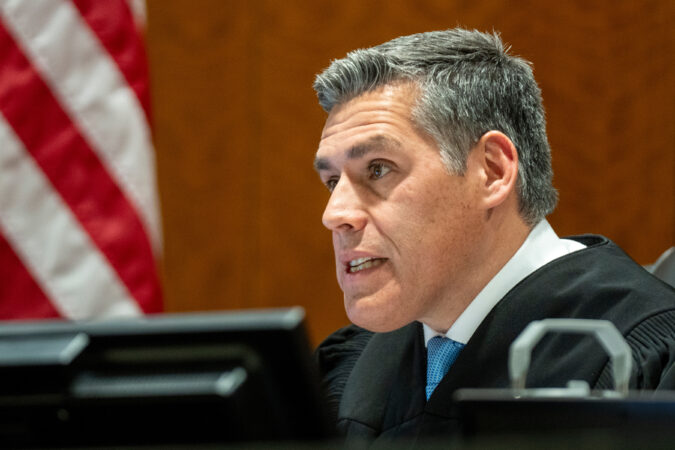
    A Utah judge on Monday ordered the release of a transcript from a closed-door hearing in October over whether the man charged with killing Charlie Kirk must be shackled during court proceedings.

    State District Judge Tony Graf said the transcript must be posted on the court docket by the end of the day. Attorneys for media outlets including the Associated Press had argued for details of the closed hearing to be made public.

    Prosecutors have charged Tyler Robinson with aggravated murder in the Sept. 10 shooting of the conservative activist on the Utah Valley University campus in Orem, just a few miles north of the Provo courthouse. They plan to seek the death penalty.

    Defense attorneys for Robinson in early October requested that he be allowed to appear in court in civilian clothes and without restraints, to prevent any bias against him among potential jurors.

    Days after an Oct. 24 closed-door hearing on the matter, Graf ruled that Robinson could appear in civilian clothes but must wear restraints. Utah court rules require defendants who are in custody to be restrained unless otherwise ordered.

    Graf wrote in an Oct. 27 order that restraints for Robinson would protect the safety of court staff and the defendant, by allowing him to be quickly secured if court proceedings were disrupted.

    But the judge said Monday that public transparency was “foundational” to the judicial system before ordering details of the closed hearing to be released. The judge ordered limited redactions to remove discussions of security protocols in the closely watched case.

    Graf also ordered the release of an audio recording of the hearing, again with redactions.

    Lawyers for the media wrote in recent filings that an open court “safeguards the integrity of the fact-finding process” while fostering public confidence in judicial proceedings. Criminal cases in the U.S. have long been open to the public, which the attorneys argued is proof that trials can be conducted fairly without restricting reporters.

    Graf has said in a separate order that Robinson’s restraints could not be shown by media outlets that publish or broadcast photographs of court proceedings.

    Graf briefly stopped a media livestream of a hearing earlier this month and ordered the camera be moved after Robinson’s attorneys said the stream showed the defendant’s shackles.

    In a separate ruling Monday, Graf denied a request from attorneys for the media who sought to intervene in the case. The judge said members of the press do not need to be formal parties in the proceedings to access court records.

    Robinson was not present in court Monday but appeared via audio link from the Utah County Jail.

    A preliminary hearing, where prosecutors will lay out their case against him, is scheduled for the week of May 18.

  • China stages military drills around Taiwan to warn ‘external forces’ after U.S., Japan tensions

    China stages military drills around Taiwan to warn ‘external forces’ after U.S., Japan tensions

    HONG KONG — China’s military on Monday dispatched air, navy, and missile units to conduct joint live-fire drills around the island of Taiwan, which Beijing called a “stern warning” against separatist and “external interference” forces. Taiwan said it was placing forces on alert and called the Chinese government “the biggest destroyer of peace.”

    Taiwan’s aviation authority said more than 100,000 international air travelers would be affected by flight cancellations or diversions.

    The drills came after Beijing expressed anger at what could be the largest-ever U.S. arms sale to the self-ruled territory, and at a statement by Japan’s prime minister, Sanae Takaichi, saying its military could get involved if China takes action against Taiwan. China says Taiwan must come under its rule.

    China’s military did not mention the United States and Japan in its statement on Monday, but Beijing’s foreign ministry accused Taiwan’s ruling party of trying to seek independence through requesting U.S. support.

    Taiwan’s Defense Ministry said rapid response exercises were underway, with forces on high alert. “The Chinese Communist Party’s targeted military exercises further confirm its nature as an aggressor and the biggest destroyer of peace,” it said.

    Beijing sends warplanes and navy vessels toward the island on a near-daily basis, and in recent years it has stepped up the scope and scale of the exercises.

    Senior Col. Shi Yi, spokesperson of China’s People’s Liberation Army’s Eastern Theater Command, said the drills would be conducted in the Taiwan Strait and areas to the north, southwest, southeast, and east of the island.

    Shi said activities would focus on sea-air combat readiness patrol, “joint seizure of comprehensive superiority” and blockades on key ports. It was the first large-scale military drill where the command publicly mentioned one goal was “all-dimensional deterrence outside the island chain.”

    “It is a stern warning against ‘Taiwan independence’ separatist forces and external interference forces, and it is a legitimate and necessary action to safeguard China’s sovereignty and national unity,” Shi said.

    China and Taiwan have been governed separately since 1949, when a civil war brought the Communist Party to power in Beijing. Defeated Nationalist Party forces fled to Taiwan. The island has operated since then with its own government, though the mainland’s government claims it as sovereign territory.

    Drills will continue

    China’s command on Monday deployed destroyers, frigates, fighters, bombers, and unmanned aerial vehicles, alongside long-range rockets, to the north and southwest of the Taiwan Strait. It carried out live-fire exercises against targets in the waters. Among other training, drills to test the capabilities of sea-air coordination and precise target hunting were conducted in the waters and airspace to the east of the strait.

    Hsieh Jih-sheng, deputy chief of the general staff for intelligence of the Taiwanese Defense Ministry, said that as of 3 p.m. Monday, 89 aircraft and drones were operating around the strait, with 67 of them entering the “response zone” — airspace under the force’s monitoring and response. The ministry detected 14 navy ships around the strait and four other warships in the Western Pacific, in addition to 14 coast guard vessels.

    “Conducting live-fire exercises around the Taiwan Strait … does not only mean military pressure on us. It may bring more complex impact and challenges to the international community and neighboring countries,” Hsieh told reporters.

    Military drills are set to continue Tuesday. Taiwan’s Civil Aviation Administration said Chinese authorities had issued a notice saying seven temporary dangerous zones would be set up around the strait to carry out rocket-firing exercises from 8 a.m. to 6 p.m., barring aircraft from entering them.

    The Taiwanese aviation authority said more than 850 international flights were initially scheduled during that period and the drills would affect over 100,000 travelers. Over 80 domestic flights, involving around 6,000 passengers, were also canceled, it added.

    Commercial airlines began to announce dozens of cancellations and delays for domestic routes across Taiwan, particularly ones along islands near China.

    The Chinese command released themed posters about the drills online accompanied by provocative wording. One depicted two shields with the Great Wall alongside three military aircraft and two ships. Its social media post said the drills were about the “Shield of Justice, Smashing Illusion,” adding that any foreign interlopers or separatists touching the shields would be eliminated.

    Last week, Beijing imposed sanctions against 20 U.S. defense-related companies and 10 executives, a week after Washington announced large-scale arms sales to Taiwan valued at more than $10 billion. It still requires approval by the U.S. Congress.

    Under U.S. federal law in place for many years, Washington is obligated to assist Taipei with its defense, a point that has become increasingly contentious with China. The U.S. and Taiwan had formal diplomatic relations until 1979, when President Jimmy Carter’s administration recognized and established relations with Beijing.

    Asked about the drills, Chinese foreign ministry spokesperson Lin Jian said Taiwan’s Democratic Progressive Party has attempted “to seek independence by soliciting U.S. support and even risk turning Taiwan into a powder keg and ammunition depot.”

    “External forces’ attempts to use Taiwan to contain China and to arm Taiwan will only embolden the Taiwan independence forces and push the Taiwan Strait toward a dangerous situation of military confrontation and war,” he said.

    There was no immediate U.S. statement on the drills.

    Taiwanese army on high alert

    Karen Kuo, spokesperson for the Taiwanese president’s office, said the drills were undermining the stability and security of the Taiwan Strait and Indo-Pacific region and openly challenging international law and order.

    “Our country strongly condemns the Chinese authorities for disregarding international norms and using military intimidation to threaten neighboring countries.” she said.

    Taiwan’s Defense Ministry released a video that featured its weapons and forces in a show of resilience. Multiple French Mirage-2000 aircraft conducted landings at an air force base.

    In October, the Taiwanese government said it would accelerate the building of a “Taiwan Shield” or “T-Dome” air defense system in the face of the military threat from China.

    The military tensions came a day after Taipei Mayor Chiang Wan-an said he hoped the Taiwan Strait would be associated with peace and prosperity, instead of “crashing waves and howling winds,” during a trip to Shanghai.

  • US pledges $2 billion for U.N. humanitarian aid as Trump warns agencies must ‘adapt or die’

    US pledges $2 billion for U.N. humanitarian aid as Trump warns agencies must ‘adapt or die’

    GENEVA — The United States on Monday announced a $2 billion pledge for U.N. humanitarian aid as President Donald Trump’s administration slashes U.S. foreign assistance and warns United Nations agencies to “adapt, shrink or die” in a time of new financial realities.

    The money is a small fraction of what the U.S. has contributed in the past but reflects what the administration believes is still a generous amount that will maintain America’s status as the world’s largest humanitarian donor.

    “This new model will better share the burden of U.N. humanitarian work with other developed countries and will require the U.N. to cut bloat, remove duplication, and commit to powerful new impact, accountability and oversight mechanisms,” Secretary of State Marco Rubio said on social media.

    The pledge creates an umbrella fund from which money will be doled out to agencies and priorities, a key part of U.S. demands for drastic changes across the U.N. that have alarmed many humanitarian workers and led to severe reductions in programs and services.

    The $2 billion is only a sliver of traditional U.S. humanitarian funding for U.N.-coordinated programs, which has run as high as $17 billion annually in recent years, according to U.N. data. U.S. officials say only $8 billion to $10 billion of that has been in voluntary contributions. The United States also pays billions in annual dues related to its U.N. membership.

    “The piggy bank is not open to organizations that just want to return to the old system,” Jeremy Lewin, the State Department official in charge of foreign assistance, said at a press conference Monday in Geneva. ”President Trump has made clear that the system is dead.”

    The State Department said “individual U.N. agencies will need to adapt, shrink, or die.” Critics say the Western aid cutbacks have been shortsighted, driven millions toward hunger, displacement, or disease, and harmed U.S. soft power around the world.

    A year of crisis in aid

    The move caps a crisis year for many U.N. organizations, including its refugee, migration, and food aid agencies. The Trump administration has already cut billions in U.S. foreign aid, prompting the agencies to slash spending, aid projects, and thousands of jobs. Other traditional Western donors have reduced outlays, too.

    The U.S. pledge for aid programs of the United Nations — the world’s top provider of humanitarian assistance and biggest recipient of U.S. humanitarian aid money — takes shape in a preliminary deal with the U.N. Office for the Coordination of Humanitarian Affairs, or OCHA, run by Tom Fletcher, a former British diplomat and government official.

    Fletcher, who has spent the past year lobbying U.S. officials not to abandon U.N. funding altogether, appeared optimistic at the deal’s signing in Geneva.

    “It’s a very, very significant landmark contribution. And a month ago, I would have anticipated the number would have been zero,” he told reporters. “And so I think, before worrying about what we haven’t got, I’d like to look at the millions of people whose lives will be saved, whose lives will be better because of this contribution, and start there.”

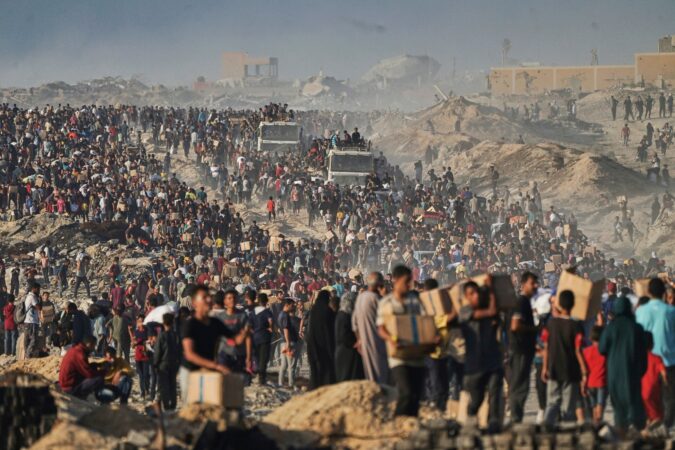
    Even as the U.S. pulls back its aid contributions, needs have ballooned worldwide: Famine has been recorded this year in parts of conflict-ridden Sudan and Gaza, and floods, drought, and natural disasters that many scientists attribute to climate change have taken many lives or driven thousands from their homes.

    The cuts will have major implications for U.N. affiliates like the International Organization for Migration, the World Food Program, and refugee agency UNHCR. They have already received billions less from the U.S. this year than under annual allocations from the Biden administration — or even during Trump’s first term.

    Now, the idea is that Fletcher’s office — which has aimed to improve efficiency — will become a funnel for U.S. and other aid money that can be redirected to those agencies, rather than scattered U.S. contributions to a variety of individual appeals for aid.

    Asked by reporters if the U.S. language of “adapt or die” worried him, Fletcher said, “If the choices are adapt or die, I choose adapt.”

    U.S. seeks aid consolidation

    U.S. officials say the $2 billion is just a first outlay to help fund OCHA’s annual appeal for money. Fletcher, noting the upended aid landscape, already slashed the request this year. Other traditional U.N. donors like Britain, France, Germany, and Japan have reduced aid allocations and sought reforms this year.

    “This humanitarian reset at the United Nations should deliver more aid with fewer tax dollars — providing more focused, results-driven assistance aligned with U.S foreign policy,” U.S. Ambassador to the United Nations Mike Waltz said.

    At its core, the change will help establish pools of funding that can be directed either to specific crises or countries in need. A total of 17 countries will be initially targeted, including Bangladesh, the Democratic Republic of the Congo, Haiti, Syria, and Ukraine.

    Two of the world’s most desperate countries, Afghanistan and Yemen, are not included, with U.S. officials citing aid diversion to the Taliban and Houthi rebels as concerns over restarting contributions.

    Also not mentioned on the list are the Palestinian territories, which officials say will be covered by money stemming from Trump’s as-yet-incomplete Gaza peace plan.

    The U.N. project, months in the making, stems from Trump’s longtime view that the world body has great promise but has failed to live up to it and has — in his eyes — drifted too far from its original mandate to save lives while undermining American interests, promoting radical ideologies, and encouraging wasteful, unaccountable spending.

    “No one wants to be an aid recipient. No one wants to be living in a UNHCR camp because they’ve been displaced by conflict,” Lewin said. “So the best thing that we can do to decrease costs, and President Trump recognizes this and that’s why he’s the president of peace, is by ending armed conflict and allowing communities to get back to peace and prosperity.”