Tag: no-latest

  • Letters to the Editor | Dec. 18, 2025

    Letters to the Editor | Dec. 18, 2025

    Incomplete portrait

    Rabbi Linda Holtzman’s op-ed about suspending military aid to Israel crucially omits the role of Hamas and the trauma of Oct. 7, 2023, presenting an incomplete and troubling framework. Rather than presenting a legitimate criticism of Israeli policy, Rabbi Holtzman depends on contemporary anti-Zionism that denies Jewish people the same right to safety, self-determination, and moral consideration afforded to others.

    Hanukkah commemorates the Jewish people’s struggle for survival, religious freedom, and self-determination in our ancestral homeland, values many Jews hold close. This holiday should not be used to argue for policies that leave Israel vulnerable to continued terror and violence.

    Both Palestinian and Jewish lives are precious, and the impact of the war is felt by all. Any path toward peace must reject extremism and uphold the right of Jews to live in safety and dignity.

    Our community is strengthened not by absolutism, but by nuance, responsibility and a shared commitment to human dignity for all.

    Jason Holtzman, chief of the Jewish Community Relations Council, The Jewish Federation of Greater Philadelphia

    A battle for ballots

    Winston Churchill called the Battle of the Bulge “the greatest American battle of the war.” It was the German offensive launched against the U.S. Army in World War II in a snowbound Belgium forest during the Christmas season of 1944. Known as America’s Greatest Generation, thousands fought in that historic military operation so that future generations could live in a society where tyranny has no place and the authority of government depends on the consent of the governed.

    Eighty-one years later, America is once again engaged in a fight to preserve our representative democracy. Voting, democracy’s most fundamental right, is under siege by Republican lawmakers seeking to corrupt the electoral process through manipulative gerrymandering.

    Since our nation’s founding, countless Americans have fought in defense of self-governance. Let’s not desecrate the graves of the fallen by turning a blind eye to an assault on the freedoms they died to protect.

    Jim Paladino, Tampa, Fla.

    Who’s the more foolish?

    As the adage goes, “Fool me once, shame on you; fool me twice, shame on me.” Sadly, judging from the description of President Donald Trump’s recent rally in Mount Pocono, there are still plenty of folks willing to believe Trump’s lies. It was well known before the election that he is a liar and a cheat, but that didn’t seem to matter to the folks who voted for him last November and still support him. I’ve been accused of being woke, but I’d much rather be woke than asleep.

    Carol Sundeen, Lower Makefield

    Join the conversation: Send letters to letters@inquirer.com. Limit length to 150 words and include home address and day and evening phone number. Letters run in The Inquirer six days a week on the editorial pages and online.

  • Horoscopes: Thursday, Dec. 18, 2025

    ARIES (March 21-April 19). If you give a performance that’s too far off from how you really are on the inside, the applause won’t feel like it’s really for you. Anyway, it feels better to give ‘em the real you today, and it works better, too.

    TAURUS (April 20-May 20). Strength is admirable, but pushing past your limits is unnecessary if you have proper support. And if you don’t, it’s better to spend your effort getting support than wearing yourself out. Sustainable success will emerge from a collective push.

    GEMINI (May 21-June 21). Here comes a bit of tension. You feel it instantly. You either seek the source to see if you can ease the situation, or you put some distance between you and the source. Either way, you can trust your instincts.

    CANCER (June 22-July 22). Communicating well today is easier when you’re in listening mode than talking mode. It’s easier to be observant when you’re not the one sharing. Channel your energy into reading between the lines to pick up on subtle cues.

    LEO (July 23-Aug. 22). You will solve problems of all kinds today — how satisfying! And they won’t all be your own, either. Your forte: coming up with interesting fixes, using what’s on hand, simplifying and making it fun.

    VIRGO (Aug. 23-Sept. 22). Someone you love is being difficult. Instead of confronting them directly and getting into a power struggle that will escalate tension, calm yourself, soften the energy and imagine the two of you in harmony. The picture of connection will come true.

    LIBRA (Sept. 23-Oct. 23). Dwell a while in your favorite fantasy as though it were in the realm of possibility, because the theme of the day is self-fulfilling prophecy. What you see for the future can emerge. Put your mind on what you want, not what you fear.

    SCORPIO (Oct. 24-Nov. 21). Reconnecting with people from the past can be sweetly enriching, or it can be an irritating reminder of why you lost touch. Expect a little of both. Go gently, in goodwill, with few expectations and healthy boundaries in place.

    SAGITTARIUS (Nov. 22-Dec. 21). Your friendliness disarms people today. Truly, it’s a kind of magic. No one can treat you the way they treat everyone else, because you’re so unique you flip their script. This dynamic will be key to your influence.

    CAPRICORN (Dec. 22-Jan. 19). If the task is within your current ability, you’ll nail it. If not, you’ll learn what you need for next time. Just know, your effectiveness is simply a reflection of how much experience you’ve built so far.

    AQUARIUS (Jan. 20-Feb. 18). You and your focus. You’re becoming legendary for it. Someone finds you intriguing, and a lot of the attraction has to do with the magnetism that builds in your scene when you’re obsessed with what interests you.

    PISCES (Feb. 19-March 20). Being cool isn’t just hard, it’s a state that is impossible to create alone. It’s an emergent quality involving not just one person but an entire set of circumstances around context, reception, chemistry and timing. Forget about “cool” and concentrate on warmth.

    TODAY’S BIRTHDAY (Dec. 18). This is your Year of Cosmic Sweetener. Everything good gets better — your living space, your income, your circle, your sense of self. You’ll feel generous because abundance is real. More highlights: You’re a magnet for good fortune and kind souls who will seek your company and collaboration. Also, a profitable side venture, and love that feels both thrilling and safe. Virgo and Pisces adore you. Your lucky numbers are: 9, 16, 24, 37 and 45.

  • Dear Abby | Wife thinks camper guest is getting a little too cozy

    DEAR ABBY: My 58-year-old husband recently shared a bed in our camper with a 21-year-old family friend. The friend is female. This happened in my absence. He thinks of her as a “daughter,” and although I’m not concerned about anything inappropriate happening between them, I still feel it was inappropriate. I expressed my feelings to him and said I didn’t want it to happen again, but it did. He still thinks it’s perfectly fine, but I do not. What are your thoughts?

    — INAPPROPRIATE IN THE EAST

    DEAR INAPPROPRIATE: My thought is that it’s unusual and inappropriate for a 21-year-old woman to share a bed with your husband (more than once!) in light of the fact that you objected. I can’t help but wonder why no other sleeping arrangement was possible, and what her parents (who, I assume, are friends) think about the arrangement. Perhaps it’s time you had a chat with the young woman about this. You may find it enlightening.

    ** ** **

    DEAR ABBY: A family member — a woman in her 60s — almost certainly has narcissistic personality disorder. She has caused problems in the family, so much so that some have quit their jobs, sold their homes and moved out of town to get away from her dysfunction. This woman blames others, never apologizes for anything and doesn’t seem to think she has a problem.

    Having burned all her bridges, she is now moving out of state. However, she still has ties to the family business. We want her to get the treatment she needs, and we want peace and order restored in our family. How do families in a similar situation accomplish this?

    — SURVIVING IN KENTUCKY

    DEAR SURVIVING: I can tell you how some people in your situation manage. Recognizing that they cannot change the behavior of the disruptive family member, they seek family therapy to learn how to handle their contacts with her. I hope it helps for you.

    ** ** **

    DEAR ABBY: I would love your thoughts on the protocol, if any, for mentioning the name of a decedent’s very good friend/companion in an obituary. I have seen, on occasion, an obituary that lists all the family members (wife, children, grandchildren, caregiver, etc.) and then includes the name of a dear friend/companion, who, in this instance, had been dating the decedent for four years, during which the two of them developed a very close relationship.

    — WONDERING IN ILLINOIS

    DEAR WONDERING: I don’t think it is obligatory to mention all of the deceased’s relationships when an obituary is written. Often the family is grieving and distracted by the multitude of arrangements that must be made. If you are referring to yourself, and you had a warm relationship with the family, I am sure your name was not omitted to deliberately ignore the caring relationship you shared with the deceased, and sometimes people want to have a say about what’s included in their obituary. If your companion put in writing that your name should be included, then the family was wrong not to follow through.

  • Bongino announces he is leaving FBI deputy director job in January

    Bongino announces he is leaving FBI deputy director job in January

    FBI Deputy Director Dan Bongino announced Wednesday that in January he will leave the powerful job in which he helped oversee a tumultuous period at the bureau with major shifts of resources and dramatic dismissals of experienced agents.

    President Donald Trump commended Bongino on his tenure and suggested that he would be returning to his job as a conservative podcaster.

    “Dan did a great job. I think he wants to go back to his show,” Trump told reporters Wednesday afternoon.

    Bongino — the second most powerful person in the FBI — had left Washington for the year more than a week ago and said he would not be returning to the agency’s headquarters, according to the two people, who spoke on the condition of anonymity to discuss a personnel issue they were not authorized to talk about publicly. He had previously told colleagues that his last official day at the bureau will be in January, according to two people familiar with the matter.

    “I want to thank President Trump, [Attorney General Pam Bondi] and [FBI Director Kash Patel] for the opportunity to serve with purpose,” Bongino wrote in a social media post announcing his departure. “Most importantly, I want to thank you, my fellow Americans, for the privilege to serve you. God bless America, and all those who defend Her.”

    The departure after less than a year would mark the end of a tumultuous tenure for Bongino, who left a lucrative job as a podcaster to serve as second-in-command at the FBI when Trump became president. Bongino serves under FBI Director Kash Patel.

    Patel and Bongino have shifted FBI resources to immigration enforcement, sinking morale at an agency that typically attracts law enforcement officials who are trained to work on more complex investigations. They have also pushed out seasoned veterans within the bureau with years of experience in national security and public corruption probes.

    Multiple people familiar with his thinking said he has been unhappy at the FBI and has threatened to leave multiple times.

    Three months into his job, Bongino expressed frustration with the demands of the deputy director position during a Fox News appearance.

    “I gave up everything for this. My wife is struggling,” he said in the May interview. He continued, “I stare at these four walls all day in D.C., by myself, divorced from my wife — not divorced — but, I mean, separated, and it’s hard.”

    When Trump named Bongino deputy director, the president transformed what was long a powerful career position that oversaw the day-to-day operations of the bureau into a political job with a more public presence.

    Bongino, a Trump loyalist who had previously worked at the Secret Service, built his reputation within right-wing circles during the Biden administration. He did so in part by spreading conspiracy theories about the FBI and its workforce and criticizing law enforcement as politicized.

    After Bongino began his job at the FBI and couldn’t prove the baseless theories he spread on his podcast, many of his right-wing supporters turned on him.

    Bongino and Patel — also a conservative media personality — used their platforms, for example, to spread inaccuracies about the high-profile sex-trafficking investigation into Jeffrey Epstein, accusing the Biden administration without evidence of covering up key details of the case.

    When the Justice Department declared during the summer that there was no rumored “client list” tied to Epstein and that the law enforcement agency would not be releasing any more investigatory files, many people directed their ire at Bongino and Patel and accused the Trump administration of lying to the American people.

    At the time, Bongino tried to distance himself from the White House response.

    In August, the Trump administration named then-Missouri Attorney General Andrew Bailey as the FBI’s co-deputy director, installing the Republican firebrand to serve alongside Bongino. Bailey was considered for a top Justice Department position at the beginning of the administration, but the president opted not to nominate him.

    Since joining the bureau, Bailey has assumed a more behind-the scenes role than Bongino. Bailey is expected to remain in his slot as deputy director.

    Patel and Bongino have pushed out senior FBI officials across the country, often with no stated reason or in response to far-right critics online who have called for the agents’ removals because of cases they may have been involved in. That has prompted multiple lawsuits against the FBI.

    The lawsuits have portrayed Bongino and Patel as more concerned with their reputations online than with learning how the FBI operates.

  • Rob and Michele Reiner’s son appears in court on murder charges while siblings speak of their loss

    Rob and Michele Reiner’s son appears in court on murder charges while siblings speak of their loss

    LOS ANGELES — Nick Reiner made his first court appearance Wednesday in Los Angeles on two counts of first-degree murder in the killing of his parents, actor-director Rob Reiner and his wife Michele Singer Reiner, while the couple’s other two children made their first public statement on their crushing loss.

    Nick Reiner, 32, did not enter a plea as he appeared from behind glass in a custody area in the large Los Angeles courtroom where newly charged defendants are arraigned. He was in shackles and wearing a blue, padded suicide prevention smock used in jail.

    His arraignment was postponed until Jan. 7 at his attorney’s request. He spoke only to say “yes, your honor” to agree to the date. He is being held without bail.

    Jake and Romy Reiner talk about their ‘unimaginable pain’

    His older brother Jake Reiner and younger sister Romy Reiner released their statement through a family spokesperson.

    “Words cannot even begin to describe the unimaginable pain we are experiencing every moment of the day,” they said. “The horrific and devastating loss of our parents, Rob and Michele Reiner, is something that no one should ever experience. They weren’t just our parents; they were our best friends.”

    The brother and sister said they are “grateful for the outpouring of condolences, kindness, and support we have received not only from family and friends but people from all walks of life. We now ask for respect and privacy, for speculation to be tempered with compassion and humanity, and for our parents to be remembered for the incredible lives they lived and the love they gave.”

    Medical Examiner says ‘sharp force injuries’ killed couple

    Also Wednesday, the LA County Medical Examiner listed the primary cause of death for both Rob and Michele Reiner as “multiple sharp force injuries” as the office released its investigators’ initial findings.

    The office said more investigation is needed before further details will be revealed, but the bodies can now be released to the family.

    The cause of death was consistent with police describing the couple as having stab wounds.

    Nick Reiner’s attorney urges caution

    After the court hearing, Nick Reiner’s attorney, Alan Jackson, called the case “a devastating tragedy that has befallen the Reiner family.” He said the proceedings will be very complex and asked that the circumstances be met “not with a rush to judgment, not with jumping to conclusions.”

    Jackson declined to answer shouted questions from dozens of reporters surrounding him and has not addressed the guilt or innocence of his client.

    Nick Reiner was charged Tuesday with killing Rob Reiner, 78, and Michele Singer Reiner, 70.

    They were killed sometime in the early morning hours of Sunday, the District Attorney’s Office said. They were found dead late in the afternoon in their home in the upscale Brentwood neighborhood on the west side of Los Angeles, authorities said.

    Nick Reiner did not resist when he was arrested hours later in the Exposition Park area near the University of Southern California, about 14 miles from the crime scene, police said.

    The two counts of first-degree murder come with special circumstances of multiple murders and an allegation that the defendant used a dangerous weapon, a knife. The additions could mean a greater sentence.

    District Attorney Nathan Hochman said at a Tuesday news conference that his office has not yet decided whether to seek the death penalty.

    Meg Ryan and others remember the Reiners

    Rob Reiner was the Emmy-winning star of the sitcom All in the Family who went on to direct films including Stand by Me, The Princess Bride, and When Harry Met Sally …, whose star Meg Ryan paid tribute to the Reiners on Wednesday.

    “Thank you, Rob and Michelle, for the way you believe in true love, in fairy tales, and in laughter. Thank you for your faith in the best in people, and for your profound love of our country,” Ryan said in an Instagram post. “I have to believe that their story will not end with this impossible tragedy.”

    Rob Reiner met Michele Singer Reiner during the shooting of the classic rom-com, and he said the meeting inspired him to change the film to have a happy ending.

    Ryan’s co-star Billy Crystal, a close friend of Rob Reiner for decades, was part of a group that also included Albert Brooks, Martin Short, and Larry David that released a statement mourning and celebrating the couple Tuesday night.

    “They were a special force together — dynamic, unselfish and inspiring,” the statement said. “We were their friends, and we will miss them forever.”

    Rob Reiner has another daughter, Tracy Reiner, from his first marriage, to actor-director Penny Marshall.

    The lawyers on the Reiner case

    Nick Reiner’s attorney Jackson is a high-profile defense attorney and former LA County prosecutor who represented Harvey Weinstein at his Los Angeles trial and Karen Read at her intensely followed trials in Massachusetts. He was a central figure in the HBO documentary on the Read case.

    On the other side will be Deputy District Attorney Habib Balian, whose recent cases included the Menendez brothers’ attempt at resentencing and the trial of Robert Durst.

    Authorities have not said anything about a motive for the killings and would give few details when asked at the news conference.

  • Senate passes $901 billion defense bill that pushes Hegseth for boat strike video

    Senate passes $901 billion defense bill that pushes Hegseth for boat strike video

    WASHINGTON — The Senate gave final passage Wednesday to an annual military policy bill that will authorize $901 billion in defense programs while pressuring Defense Secretary Pete Hegseth to provide lawmakers with video of strikes on alleged drug boats in international water near Venezuela.

    The annual National Defense Authorization Act, which raises troop pay by 3.8%, gained bipartisan backing as it moved through Congress. It passed the Senate on a 77-20 vote before lawmakers planned to leave Washington for a holiday break. Two Republicans — Sens. Rand Paul and Mike Lee — and 18 Democrats voted against the bill.

    The White House has indicated that it is in line with President Donald Trump’s national security priorities. However, the legislation, which ran over 3,000 pages, revealed some points of friction between Congress and the Pentagon as the Trump administration reorients its focus away from security in Europe and toward Central and South America.

    The bill pushes back on recent moves by the Pentagon. It demands more information on boat strikes in the Caribbean, requires that the U.S. keep its troop levels in Europe at current levels and sends some military aid to Ukraine.

    But overall, the bill represents a compromise between the parties. It implements many of Trump’s executive orders and proposals on eliminating diversity and inclusion efforts in the military and grants emergency military powers at the U.S. border with Mexico. It also enhances congressional oversight of the Department of Defense, repeals several years-old war authorizations and seeks to overhaul how the Pentagon purchases weapons as the U.S. tries to outpace China in developing the next generation of military technology.

    “We’re about to pass, and the president will enthusiastically sign, the most sweeping upgrades to DoD’s business practices in 60 years,” said Sen. Roger Wicker, the Republican chair of the Senate Armed Services Committee.

    Still, the sprawling bill did face objections from both Democratic and Republican leadership on the Senate Commerce Committee and the head of the National Transportation Safety Board. That’s because the legislation could allow military aircraft to obtain a waiver to operate without broadcasting their precise location, as an Army helicopter had done before a midair collision with an airliner over Washington, D.C., in January that killed 67 people.

    To address those concerns, the Senate advanced a bill to require all military and civilian aircraft to broadcast their locations. Republican Sen. Ted Cruz, the chair of the Senate Commerce Committee, said the tragedy might have been avoided had the Black Hawk been broadcasting its location before the crash.

    That bill will now go to the House, and Cruz said he’s optimistic it could reach the president’s desk as soon as next month. The White House supports the bill and is committed to helping get it passed, said an official who spoke on condition of anonymity ahead of the formal public statement on the bill.

    Boat strike videos

    Republicans and Democrats agreed to language in the defense bill that threatened to withhold a quarter of Hegseth’s travel budget until he provided unedited video of the strikes, as well as the orders authorizing them, to the House and Senate Committees on Armed Services.

    Hegseth was on Capitol Hill Tuesday ahead of the bill’s passage to brief lawmakers on the U.S. military campaign in international water near Venezuela. The briefing elicited contrasting responses from many lawmakers, with Republicans largely backing the campaign and Democrats expressing concern about it and saying they had not received enough information.

    The committees are investigating a Sept. 2 strike — the first of the campaign — that killed two people who had survived an initial attack on their boat. The Navy admiral who ordered the “double-tap” strike, Adm. Frank “Mitch” Bradley, also appeared before the committees shortly before the vote Wednesday in a classified briefing that also included video of the strike in question.

    Several Republican senators emerged from the meeting backing Hegseth and his decision not to release the video publicly, but other GOP lawmakers stayed silent on their opinion of the strike.

    Democrats are calling for part of the video to be released publicly and for every member of Congress to have access to the full footage.

    “The American people absolutely need to see this video,” said Sen. Richard Blumenthal, a Connecticut Democrat. “I think they would be shocked.”

    Congressional oversight

    Lawmakers have been caught by surprise by the Trump administration several times in the last year, including by a move to pause intelligence sharing with Ukraine and a decision to reduce U.S. troop presence in NATO countries in eastern Europe. The defense legislation requires that Congress be kept in the loop on decisions like that going forward, as well as when top military brass are removed.

    The Pentagon is also required, under the legislation, to keep at least 76,000 troops and major equipment stationed in Europe unless NATO allies are consulted and there is a determination that such a withdrawal is in U.S. interests. Around 80,000 to 100,000 U.S. troops are usually present on European soil. A similar requirement also keeps the number of U.S. troops stationed in South Korea at 28,500.

    Lawmakers are also pushing back on some Pentagon decisions by authorizing $400 million for each of the next two years to manufacture weapons to be sent to Ukraine.

    Cuts to diversity and climate initiatives

    Trump and Hegseth have made it a priority to purge the military of material and programs that address diversity, anti-racism or gender issues, and the defense bill would codify many of those changes. It will repeal diversity, equity and inclusion offices and trainings, including the position of chief diversity officer. Those cuts would save the Pentagon about $40 million, according to the Republican-controlled House Armed Services Committee.

    The U.S. military has long found that climate change is a threat to how it provides national security because weather-related disasters can destroy military bases and equipment. But the bill makes $1.6 billion in cuts by eliminating climate-change related programs at the Pentagon.

    Repeal of war authorizations and Syria sanctions

    Congress is writing a closing chapter to the war in Iraq by repealing the authorization for the 2003 invasion. Now that Iraq is a strategic partner of the U.S., lawmakers in support of the provision say the repeal is crucial to prevent future abuses. The bill also repeals the 1991 authorization that sanctioned the U.S.-led Gulf War.

    The rare, bipartisan moves to repeal the legal justifications for the conflicts signaled a potential appetite among lawmakers to reclaim some of Congress’ war powers.

  • Trump pays respects to 2 Iowa National Guardsmen and interpreter killed in Syria as they return home

    Trump pays respects to 2 Iowa National Guardsmen and interpreter killed in Syria as they return home

    DOVER AIR FORCE BASE, Del. — President Donald Trump paid his respects Wednesday to two Iowa National Guard members and a U.S. civilian interpreter who were killed in an attack in the Syrian desert, joining their grieving families as their remains were brought back to the country they served.

    Trump met privately with the families at Dover Air Force Base in Delaware before he joined top military officials and other dignitaries on the tarmac for the dignified transfer, a solemn and largely silent ritual honoring U.S. service members killed in action.

    The guardsmen killed in Syria on Saturday were Sgt. Edgar Brian Torres-Tovar, 25, of Des Moines, and Sgt. William Nathaniel Howard, 29, of Marshalltown, according to the U.S. Army. Both were members of the 1st Squadron, 113th Cavalry Regiment, and have been hailed as heroes by the Iowa National Guard. Their remains will be taken to Iowa.

    Torres-Tovar’s and Howard’s families were at Dover for the return of their remains, alongside Iowa Gov. Kim Reynolds, members of Iowa’s congressional delegation and leaders of the Iowa National Guard.

    Ayad Mansoor Sakat, of Macomb, Mich., a U.S. civilian working as an interpreter, was also killed. Three other Iowa National Guard members were injured in the attack. The Pentagon has not identified them.

    They were among hundreds of U.S. troops deployed in eastern Syria as part of a coalition fighting the Islamic State group.

    Returning to Joint Base Andrews after the transfer, Trump said it was a “beautiful event for three great people. And they’re now looking down and their parents and wives and all of the people that were there were, I mean, were devastated but great people, great people.”

    The return of service member remains

    Trump observed several dignified transfers at Dover in his first term and has said it was “the toughest thing I have to do” as president.

    There is no formal role for a president at a dignified transfer other than to watch in silence, keeping all thoughts to himself for the moment. There is no speaking by any of the politicians and other dignitaries who attend, with the only words coming from the military officials who direct the highly choreographed transfers.

    Trump, wearing an overcoat against the chill and brisk wind, joined the other attendees in a salute that was held as each of the American flag-draped transfer cases was carried from the belly of a hulking C-17 military cargo plane and loaded into a dark, unmarked van nearby.

    He gazed straight ahead as each case passed in front of him, though he turned to look after the first one was placed inside the vehicle. The remains were taken to the on-base mortuary for processing before they are released to the families.

    At the start of the transfer, Trump and Gen. Dan Caine, the chairman of the Joint Chiefs of Staff, joined several others from the military at the open rear of the cargo plane, where all but Trump bowed their heads. The president looked inside the plane. Trump then stood alongside Defense Secretary Pete Hegseth when the group joined the official party.

    Before Trump joined the others, White House chief of staff Susie Wiles, who flew up with Trump, dabbed her eyes with a tissue.

    Iowa National Guard members hailed as heroes

    Howard’s stepfather, Jeffrey Bunn, has said Howard “loved what he was doing and would be the first in and last out.” He said Howard had wanted to be a soldier since he was a boy. Howard’s brother, a staff sergeant in the Iowa National Guard, was escorting him back to Iowa.

    Torres-Tovar was remembered as a “very positive” family-oriented person who always put others first, according to fellow Guard members who were deployed with him and issued a statement to the local TV broadcast station WOI.

    Dina Qiryaqoz, the daughter of the civilian interpreter, said Wednesday in a statement that her father worked for the U.S. Army during the invasion of Iraq from 2003 to 2007. Sakat is survived by his wife and four adult children.

    The interpreter was from Bakhdida, Iraq, a small Catholic village southeast of Mosul, and the family immigrated to the U.S. in 2007 on a special visa, Qiryaqoz said. At the time of his death, Sakat was employed as an independent contractor for Virginia-based Valiant Integrated Services.

    Sakat’s family was still struggling to believe that he is gone. “He was a devoted father and husband, a courageous interpreter and a man who believed deeply in the mission he served,” Qiryaqoz said.

    Trump’s reaction to the attack in Syria

    Trump has vowed retaliation, and the Pentagon’s chief spokesperson, Sean Parnell, has said the attack is under active investigation. The U.S. military said the gunman was killed in the attack.

    Before this attack, the most recent instance of U.S. service members being killed in action was in January 2024, when three American troops died in a drone attack in Jordan.

    Saturday’s deadly attack followed a rapprochement between the U.S. and Syria, bringing the former pariah state into a U.S.-led coalition fighting the Islamic State group.

    Trump has forged a relationship with interim Syrian President Ahmed al-Sharaa, the onetime leader of an Islamic insurgent group who led the ouster of former President Bashar Assad. The leaders met at the White House last month.

    Trump said Monday that the attack had nothing to do with the Syrian leader, who Trump said was “devastated by what happened.”

    During his first term, Trump visited Dover in 2017 to honor a U.S. Navy SEAL killed during a raid in Yemen, in 2019 for two Army officers whose helicopter crashed in Afghanistan, and in 2020 for two Army soldiers killed in Afghanistan when a person dressed in an Afghan army uniform opened fire.

  • Trump officials say they will dismantle ‘global mother ship’ of climate and weather forecasting

    Trump officials say they will dismantle ‘global mother ship’ of climate and weather forecasting

    The Trump administration said Tuesday it was breaking up one of the world’s preeminent earth and atmospheric research institutions, based in Colorado, over concerns about “climate alarmism” — a move that comes amid escalating attacks from the White House against the state’s Democratic lawmakers.

    “The National Science Foundation will be breaking up the National Center for Atmospheric Research (NCAR) in Boulder, Colorado,” wrote Russell Vought, the director of the White House Office of Management and Budget on X. “This facility is one of the largest sources of climate alarmism in the country.”

    The plan was first reported by USA Today.

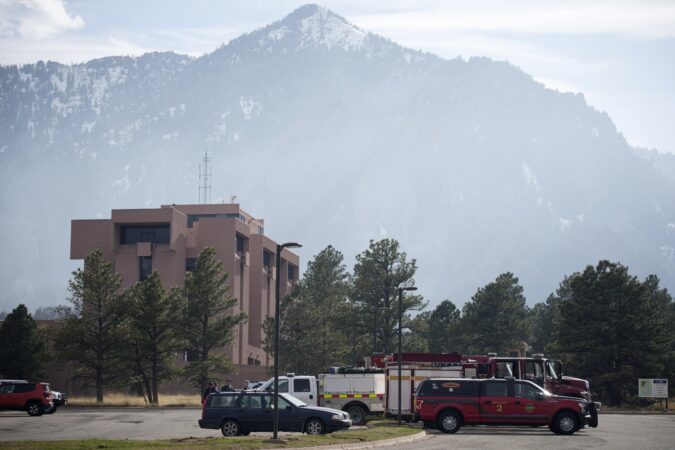
    The NCAR laboratory in Boulder was founded in 1960 at the base of the Rocky Mountains to conduct research and educate future scientists. Its resources include supercomputers, valuable datasets, and high-tech research planes.

    The announcement drew outrage and concern from scientists and local lawmakers, who said it could imperil the country’s weather and climate forecasting, and appeared to take officials and employees by surprise.

    NCAR’s dismantling would be a major loss for scientific research, said Kevin Trenberth, a distinguished scholar at NCAR and an honorary academic in physics at the University of Auckland in New Zealand.

    Trenberth, who joined NCAR in 1984 and officially retired in 2020, said the research center is key to advanced climate science discoveries as well as in informing the climate models that produce the weather forecasts we see on the nightly news.

    Colorado Gov. Jared Polis said in a statement that the state had not received information about the administration’s intentions to dismantle NCAR.

    “If true, public safety is at risk and science is being attacked,” said Polis. “Climate change is real, but the work of NCAR goes far beyond climate science. NCAR delivers data around severe weather events like fires and floods that help our country save lives and property, and prevent devastation for families.”

    The action comes as Republicans have escalated their attacks on Polis and others in the state for their handling of a case involving Tina Peters, a former county clerk in Colorado who was convicted in state court on felony charges related to efforts to overturn the 2020 presidential election. President Donald Trump announced last week that he is pardoning Peters, who is serving a nine-year sentence, but it is unclear whether Trump has that authority, because she was not convicted in federal court.

    In a joint statement, Colorado’s two Democratic senators, John Hickenlooper and Michael Bennet, and Rep. Joe Neguse (D., Colo.) slammed the move and vowed to fight back against it.

    In his social media post, Vought said that “any vital activities such as weather research will be moved to another entity or location” — but did not specify further.

    “The Colorado governor obviously isn’t willing to work with the president,” said a White House official, who spoke on the condition of anonymity because they were not authorized to discuss the matter publicly.

    The official declined to cite any specifics about how Polis is refusing to cooperate, from the administration’s perspective, but denied that the move was in response to the state’s refusal to release Peters from prison.

    The facility “is not in line with the president’s agenda,” the official added, noting that it had “been on the radar” of the administration “for a while.”

    The National Science Foundation, the federal science agency that funds the center, was blindsided by the announcement, according to a person familiar with NSF operations who spoke on the condition of anonymity to avoid retribution. But they said facilities managers at NSF will need to be involved in moving assets or capabilities. An NSF spokesman did not immediately respond to questions about the plan to dismantle NCAR.

    Antonio Busalacchi, the president of the University Corporation for Atmospheric Research, which oversees NCAR, said it was aware of reports to break up the center but did not have “additional information about any such plan.”

    “Any plans to dismantle NSF NCAR would set back our nation’s ability to predict, prepare for, and respond to severe weather and other natural disasters,” Busalacchi said.

    An internal email obtained by the Washington Post, sent Tuesday night, emphasized the critical work NCAR does for “community safety and resilience.”

    Busalacchi wrote that the news had come as a shock, and the institution had reached out to NSF for more information. “We understand that this situation is incredibly distressing, and we ask that you all continue doing what you have done so well all year — provide support for one another as we navigate this turbulent time,” Busalacchi wrote.

    The center is “quite literally our global mother ship,” Katharine Hayhoe, a Texas Tech University professor and chief scientist for the Nature Conservancy, wrote on X. “Dismantling NCAR is like taking a sledgehammer to the keystone holding up our scientific understanding of the planet.”

    NCAR plays a unique role in the scientific community by bringing together otherwise siloed specialists to collaborate on some of the biggest climate and weather questions of our time, Caspar Ammann, a former research scientist at the center, said in an email.

    “Without NCAR, a lot could not happen,” he said. “A lot of research at US Universities would immediately get hampered, industry would lose access to reliable base data.”

    Ammann added that around the world, weather and climate services use NCAR modeling and forecasting tools.

    The Colorado-based center draws scientists and lecturers from all over the world, and through its education programs has helped produce future scientists, Trenberth said.

    He said he feared not just for the discoveries and data that would be lost if the center were to close, but for the early careers that could also be affected or destroyed.

    “If this sort of thing happens, things will go on for a little while,” he said. “But the next generation of people who deal with weather and science in the United States will be lost.”


  • FCC leader says agency is no longer independent as he’s grilled by Democrats over Kimmel controversy

    FCC leader says agency is no longer independent as he’s grilled by Democrats over Kimmel controversy

    WASHINGTON — Democratic senators on Wednesday hammered the Federal Communications Commission’s leader for pressuring broadcasters to take ABC late-night host Jimmy Kimmel off the air, suggesting that Brendan Carr was politicizing an independent agency and trampling the First Amendment.

    The FCC chairman refused to disown his comments about Kimmel and, when questioned by Democrats about an agency long considered autonomous, suggested it was not insulated from Trump’s pressure.

    “The FCC is not an independent agency,” Carr said.

    Carr later sidestepped questions about whether he considered the Republican president to be his boss and whether he had taken orders from Trump or his inner circle.

    “President Trump has designated me as chairman of the FCC,” Carr added later. “I think it comes as no surprise that I’m aligned with President Trump on policy.”

    Sen. Ben Ray Luján (D., N.M.) noted that the FCC’s website described it as an “independent U.S. government agency overseen by Congress.”

    Soon after, with the hearing still underway, the website changed, removing “independent” from a section describing its mission.

    Trump has waged an aggressive campaign against the media in his second term, filing lawsuits against outlets whose coverage he dislikes, and threatening to revoke TV broadcast licenses. On Wednesday, he criticized NBC for an interview with Democratic Sen. Raphael Warnock, saying the network “should be ashamed of themselves.”

    “The Public airwaves, which these Networks are using at no charge, should not be allowed to get away with this any longer!” Trump wrote on Truth Social. “They should be properly licensed, and pay significant amounts of money for using this very valuable Public space.”

    The 2½-hour hearing before the Senate Commerce committee repeatedly circled back to Carr’s stance on Kimmel after the late-night host’s comments on slain conservative activist Charlie Kirk. At the time, Carr’s vocal criticism and veiled threats were equated with that of a mob boss.

    Carr said he was simply enforcing laws holding networks to stricter scrutiny than cable and other forms of media and that “the FCC has walked away from enforcing the public interest standard.”

    Democrats insisted he was warping the laws Carr invoked.

    “You are weaponizing the public interest standard,” said Sen. Ed Markey (D., Mass.), who told Carr that he should resign.

    Republican senators referenced perceived First Amendment violations by the administration of former President Joe Biden, calling Democrats’ free speech arguments disingenuous. GOP members appeared intent on bringing up broadcast spectrum auctions, undersea cable infrastructure, algorithm-driven content, robocalls, and just about anything other than Carr’s statements about Kimmel.

    The committee chairman, Sen. Ted Cruz, had previously equated Carr’s comments to those of a mobster and called them “dangerous as hell.” But at the hearing, Cruz (R., Texas) took a far softer stance. He dismissed Kimmel as “tasteless” and “unfunny,” and shifted to criticizing Biden’s administration, a tack that Carr parroted throughout the hearing.

    “Joe Biden is no longer president,” Sen. Amy Klobuchar, (D., Minn.) shot back at one point.

    The hearing also included the two other commissioners, Olivia Trusty and Anna M. Gomez. Gomez, a Biden appointee, said that the FCC has “undermined its reputation as a stable, independent, and expert-driven regulatory body.”

    “Nowhere is that departure more concerning,” Gomez said, “than its actions to intimidate government critics, pressure media companies and challenge the boundaries of the First Amendment.”

    Carr was nominated to the FCC by both Trump and Biden and unanimously confirmed by the Senate three times. But he has more recently shown more overtly right-wing views, writing a section on the FCC for “Project 2025,” the sweeping blueprint for gutting the federal workforce and dismantling agencies in Trump’s second term.

    Since becoming chairman this year, Carr has launched separate investigations of all three major broadcast networks. After Kimmel’s comments on the September killing of Kirk, who was a Trump ally and leading voice of the right, Carr said: “We can do this the easy way or the hard way. These companies can find ways to take action on Kimmel or there is going to be additional work for the FCC ahead.”

    Cruz was unflinchingly critical at the time, saying “I think it is unbelievably dangerous for government to put itself in the position of saying we’re going to decide what speech we like and what we don’t, and we’re going to threaten to take you off air if we don’t like what you’re saying.”

    While Cruz did not repeat those words Wednesday, they were repeatedly invoked by Democrats. Carr did not directly respond to questions from reporters following the hearing about Cruz’s original comments.

    “I think the hearing went really well,” Carr said in response.

  • Mamdani gets 74,000 resumés in sign of New York City’s job-market misery

    Mamdani gets 74,000 resumés in sign of New York City’s job-market misery

    More than 74,000 people, with an average age of 28, have applied for roles in Zohran Mamdani’s new administration. Those figures are both a measure of enthusiasm for New York City’s incoming mayor and a sign of how tough the job market is for young people in the five boroughs.

    Young voters and volunteers fueled the 34-year-old Mamdani’s fast rise from a relatively unknown Queens assemblyman to mayor-elect of America’s largest city. A lot of them had time on their hands: New Yorkers aged 16 to 24 faced a 13.2% unemployment rate in 2024, 3.6 percentage points higher than in 2019, according to a May report from the New York state comptroller.

    New York City had a 5.8% unemployment rate overall in August, 1.3 percentage points above the U.S. average. The city added roughly 25,000 jobs this year through September, compared with about 106,000 during the same period in 2024, according to city data.

    Mamdani’s campaign pledge to lower the cost of living in New York resonated with voters struggling to find jobs and establish themselves at a time when rents have stayed high and income growth has slowed. Now he’s looking to hire an unspecified number of roles across 60 agencies, 95 mayoral offices, and more than 250 boards and commissions, with senior roles a priority, according to his transition team.

    The typical size of the New York City mayoral staff — commissioners, communications, operations and community affairs — is about 1,100, according to Ana Champeny, vice president of research at the Citizens Budget Commission, a nonprofit finance watchdog. City government in total hired 39,455 people in 2024, according to New York City data.

    Applications for roles in Mamdani’s administration have come from workers of all experience levels and from a wide range of backgrounds and industries, said Maria Torres-Springer, co-chair of the mayor-elect’s transition team. About 20,000 of the applicants came from out of state.

    When Barack Obama was elected U.S. president in 2008, workers submitted more than 300,000 job applications to his administration. Blair Levin, who co-led the technology transition team for Obama, said he received around 3,000 of those resumes. He whittled the pool down to 75, a relatively easy task because he needed applicants with specific tech and economics skills, he said.

    Without invoking the term “AI,” Torres-Springer said the applications would be filtered using “the typical technology that any big corporation would have in an applicant-tracking system.” The resumes will then be sorted and matched to different agencies.

    Mamdani’s avid use of social media, which helped him connect with young people during his campaign, has continued into his transition efforts, creating excitement — among young people especially — about the prospect of joining his administration.

    “The average age does tell a particularly interesting story in two ways,” Torres-Springer said. “It might be because of volatility in the job market but it’s also because I think we are attracting, the administration is attracting, New Yorkers who may not have considered government in the past.”

    Take David Kinchen, a 28-year-old data engineer who moved to New York from northern Virginia three years ago. Since getting laid off from a job in fraud detection at Capital One, he has applied for more than 1,000 roles and completed at least 75 interviews without an offer, he said. Kinchen volunteered for Mamdani’s campaign and applied to the administration, highlighting his tech credentials and a passion for photography.

    “I did data engineering, so I could help with database decisions. There was also a creative option on the application, since I could work as a staff photographer too,” Kinchen said.

    Another applicant, 22-year-old Aurisha Rahman, has struggled to find a job since graduating with a civil-engineering degree from Hofstra University on Long Island.

    “The job market is even worse than it was last fall,” Rahman said. Mamdani’s resumé portal was one of the few places she found open to entry-level applicants.

    Rahman, who was born and raised in Queens, said she wants to give back to the city where she was raised and wouldn’t be picky about a position. “Whatever they need, I’ll do it. I don’t care,” she said. “Right now, it’s better to be busy with something than nothing.”