Tag: no-latest

  • Trump administration says it will withhold SNAP from Democrat-led states if they don’t provide data

    Trump administration says it will withhold SNAP from Democrat-led states if they don’t provide data

    WASHINGTON — President Donald Trump’s administration said Tuesday that it will move to withhold SNAP food aid from recipients in most Democratic-controlled states starting next week unless those states provide information about those receiving the assistance.

    Agriculture Secretary Brooke Rollins said at a cabinet meeting Tuesday that the action is looming because those states are refusing to provide data the department requested such as the names and immigration status of aid recipients. She said the cooperation is needed to root out fraud in the program. Democratic states have sued to block the requirement, saying they verify eligibility for SNAP beneficiaries and that they never share large swaths of sensitive data on the program with the federal government.

    Marissa Saldivar, a spokesperson for California Gov. Gavin Newsom, a Democrat, was skeptical about whether funding will really be taken away.

    “We no longer take the Trump Administration’s words at face value — we’ll see what they actually do in reality,” she said in a statement. “Cutting programs that feed American children is morally repugnant.”

    Twenty-two states and the District of Columbia previously sued over the request for information, which was initially made in February. A San Francisco-based federal judge has barred the administration, at least for now, from collecting the information from those states.

    The federal government last week sent the states a letter saying that it was time to comply, as other states have, but the parties all agreed to give the states until Dec. 8 to respond.

    Approximately 2 million Pennsylvanians receive SNAP benefits, or nearly one in six of the state’s residents.

    This fall, Gov. Josh Shapiro, a Democrat, joined 21 other states in his capacity as Pennsylvania’s governor in suing the USDA to prevent the department from withholding its SNAP payments. A federal judge in California in October ruled in favor of the Democratic-led states and temporarily blocked the USDA effort from going into effect.

    A spokesperson for Shapiro on Tuesday declined to comment.

    Administration says data is needed to spot fraud

    About 42 million lower-income Americans, or 1 in 8, rely on SNAP to help buy groceries. The average monthly benefit is about $190 per person, or a little over $6 a day.

    Rollins has cited information provided by states that have complied, saying it shows that 186,000 deceased people are receiving SNAP benefits and that 500,000 are getting benefits more than once.

    “We asked for all the states for the first time to turn over their data to the federal government to let the USDA partner with them to root out this fraud, to make sure that those who really need food stamps are getting them,” Rollins said, “but also to ensure that the American taxpayer is protected.”

    Her office has not released detailed data, including on how much in benefits obtained by error or fraud are being used.

    It’s also not clear which states have handed over the information. Rollins said 29 have complied and 21 have not. But 22 have sued to block the order.

    Additionally, Kansas, which was not part of the lawsuit, has not provided it. The USDA told the state in September that SNAP funds would be cut off. The state asked the agency to reverse the action. A spokesperson for Gov. Laura Kelly, a Democrat, said there had not yet been a reply as of Tuesday. North Carolina appears to be the only state with a Democratic governor that has handed over the information.

    Experts say that while there is certainly fraud in a $100 billion-a-year program, the far bigger problems are organized crime efforts to steal the benefit cards or get them in the name of made-up people — not wrongdoing by beneficiaries.

    Democratic officials question administration’s motives

    U.S. Rep. Jahana Hayes, a Connecticut Democrat who is a co-sponsor of legislation to undo recent SNAP changes, said Rollins is trying to make changes without transparency — or without a role for Congress — and that she is mischaracterizing the program.

    “Individuals who are just trying to buy food, those aren’t the ones who are gaming the system in the way that the administration is trying to portray,” Hayes said in an interview on Tuesday before Rollins announced her intention.

    Democratic officials responded to Rollins’ announcement by blasting the administration.

    “The Governor wishes President Trump would be a president for all Americans rather than taking out his political vendettas on the people who need these benefits the most,” said Claire Lancaster, a spokesperson for Minnesota Gov. Tim Walz, a Democrat. ”Whether it’s threatening highway funding or food assistance, the President is making malicious decisions that will raise prices and harm families.”

    In response to Rollins’ comments, New York Gov. Kathy Hochul tweeted, “Genuine question: Why is the Trump Administration so hellbent on people going hungry?”

    SNAP has been in the spotlight recently

    The program is not normally in the political spotlight, but it has been this year.

    As part of Trump’s big tax and policy bill earlier in the year, work requirements are expanding to include people between the ages of 55 and 64, homeless people and others.

    And amid the recent federal government shutdown, the administration planned not to fund the benefits for November. There was a back-and-forth in the courts about whether they could do so, but then the government reopened and benefits resumed before the final word.

    In the meantime, some states scrambled to fund benefits on their own and most increased or accelerated money for food banks.

    Staff writer Gillian McGoldrick contributed to this article.
  • Supreme Court sympathetic to antiabortion center in fight over donor names

    Supreme Court sympathetic to antiabortion center in fight over donor names

    New Jersey Attorney General Matt Platkin issued a subpoena in 2023 — part of an investigation into whether a chain of faith-based, antiabortion pregnancy centers were deceiving clients and donors by falsely suggesting they offered abortion referrals.

    First Choice Women’s Resource Centers Inc. quickly sued in federal court. The broad request for donor information and other material chilled its First Amendment rights and was an act of intimidation by an official hostile to the group’s views on abortion, the organization said.

    Tuesday, the Supreme Court appeared sympathetic to First Choice’s argument, which is backed by other religious and antiabortion groups and also by some free-press advocates. The threat of disclosure was enough to make donors think twice about giving to the group, several justices suggested.

    “You don’t think it might have a future effect on donors if their name, addresses and phone number is disclosed?” Chief Justice John G. Roberts Jr. asked an attorney for New Jersey.

    The case turns on a technical legal issue — whether First Choice has met the bar to challenge the subpoena in federal court rather than state courts — but it has potentially wide implications.

    A range of ideological groups, from LGBTQ+ advocates to firearms rights organizations, have increasingly come under scrutiny by attorneys general armed with broad powers. They say the ability to file suits against subpoenas in federal court at an early stage of litigation will give them a tool to fight politically motivated investigations. The Reporters Committee for Freedom of the Press told the justices in a friend-of-the-court brief that investigative subpoenas could be used to threaten news organizations that investigate official misconduct.

    Erin M. Hawley, an attorney for First Choice, called the subpoena in this case “sweeping,” adding there were 28 categories of documents the attorney general was seeking.

    “That is a death knell for nonprofits like First Choice,” Hawley said.

    The case began after a state probe found some of First Choice’s client-facing websites and donation pages omitted or obscured its antiabortion mission, saying it was “a network of clinics providing the best care and most up-to-date information on your pregnancy and pregnancy options.” First Choice has five centers in New Jersey, where abortion is legally protected.

    First Choice denies any wrongdoing.

    Clinics like First Choice have been operating for decades to persuade women to continue their pregnancies, and they saw a surge of financial support after the Supreme Court struck down a right to abortion in 2022. Antiabortion strategists hoped more women would turn to centers like First Choice if they could not access an abortion. Red-state leaders rushed to fund the clinics to the tune of millions.

    The clinics say they offer valuable services, but critics have accused them of masking their antiabortion mission and using false advertising to lure pregnant women, including patients who need medical care that the clinics are not properly equipped for. There are more than 2,500 pregnancy centers across the United States, according to estimates by researchers at the University of Georgia.

    In 2023, a Massachusetts woman took a pregnancy center to court saying it had failed to catch signs of her ectopic pregnancy — which can be fatal if left untreated. The clinic later settled.

    This is not the first case the Supreme Court has considered in this area.

    In a major 2018 ruling, the high court ruled that pregnancy centers could not be required to tell their clients about abortion services, saying such a mandate would probably be a First Amendment violation.

    Platkin issued his subpoena in November 2023 seeking the names of First Choice’s donors, staff information and more, sparking a protracted and complicated court fight. First Choice argued that disclosing its donors would make them less likely to give money, chilling their free speech and association rights.

    The legal question at the heart of the case is whether First Choice’s claims are “ripe.” To bring legal action in federal court, plaintiffs are required to show they have suffered an actual harm, not a hypothetical one.

    The subpoena that Platkin issued for First Choice’s records requires a state court in New Jersey to order its enforcement. To date, a state judge has told First Choice to respond to the subpoena but has yet to demand it turn over the records. For that reason, Sundeep Iyer, chief counsel to the New Jersey attorney general, said First Choice had not yet suffered a concrete harm.

    Any harm was “wholly contingent on a future court order” that had yet to materialize, Iyer said.

    But several justices pushed back on that idea, including liberal Justice Elena Kagan who said “one of the funders for this organization or for any similar organization presented with this subpoena and then told ‘but don’t worry it has to be stamped by a court’ is not going to take that as very reassuring.”

    Iyer said if the justices embraced First Choice’s arguments, groups might challenge thousands of subpoenas that state governments issue each year, creating a logjam in the courts.

    “The risk would be federal court would be inundated,” Iyer said.

  • Hegseth cites ‘fog of war’ in defending follow-on strike on alleged drug boat

    Hegseth cites ‘fog of war’ in defending follow-on strike on alleged drug boat

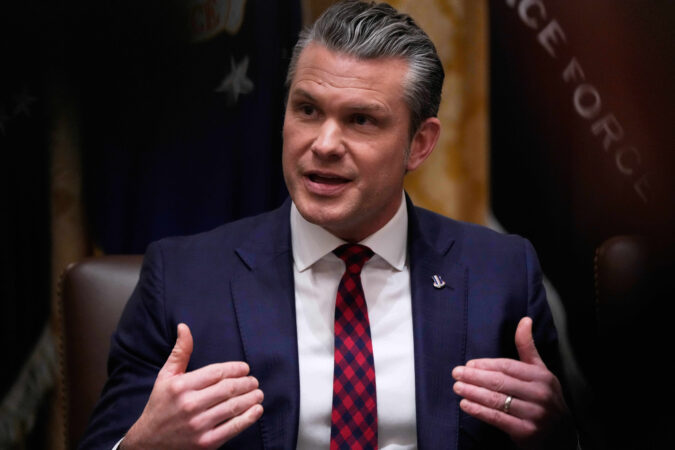
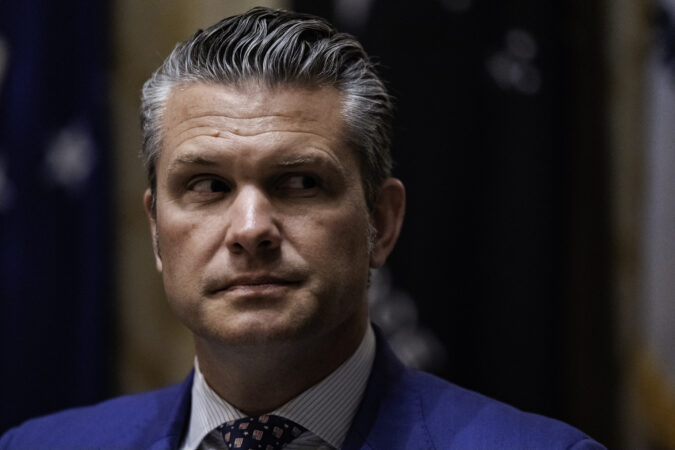
    Defense Secretary Pete Hegseth said Tuesday that “a couple of hours” passed before he was made aware that a September military strike he authorized and “watched live” required an additional attack to kill two survivors, further distancing himself from an incident now facing congressional inquiry.

    Speaking in the Cabinet Room alongside President Donald Trump, Hegseth delivered the most extensive public accounting yet of his involvement in the strike on alleged drug smugglers in the Caribbean Sea. Lawmakers and law of war experts have questioned whether the episode constitutes a war crime and, if so, who bears responsibility.

    “I did not personally see survivors,” he said in response to a reporter’s question, “ … because that thing was on fire and was exploded, and fire, smoke, you can’t see anything. You got digital, there’s — this is called the fog of war.”

    Hegseth and Trump deflected responsibility for the killing of two survivors, pointing instead to the senior military officer in charge of the operation on Sept. 2, Adm. Frank M. Bradley. And while they praised the military for conducting the mission, both sought to make clear they had not known that a second order was given to kill the survivors as they were clinging to the boat’s wreckage.

    “I didn’t know about the second strike. I didn’t know anything about people. I wasn’t involved, and I knew they took out a boat,” Trump said during a meeting with members of his cabinet.

    Spokespeople for U.S. Special Operations Command, where Bradley is the top commander, have not commented publicly on the matter.

    Hegseth said he had observed a live video of the initial attack before he “moved on to my next meeting.”

    “I watched that first strike live,” Hegseth said, noting that he did not witness the entire sequence of events that unfolded next.

    “As you can imagine,” he added, at the Defense Department “we got a lot of things to do. So I didn’t stick around for the hour and two hours, whatever. … A couple of hours later, I learned that that commander had made the — which he had the complete authority to do, and by the way, Admiral Bradley made the correct decision to ultimately sink the boat and eliminate the threat.”

    The Washington Post reported Friday that Hegseth gave a spoken order before the first missile strike to kill the entire crew of a vessel thought to be ferrying narcotics in the Caribbean, the first of nearly 20 such strikes directed by the administration since early September. When two survivors were detected, Bradley directed another strike to comply with Hegseth’s order that no one be left alive, people with direct knowledge of the matter told the Post.

    The Trump administration has said 11 people were killed as a result of the operation.

    It is unclear whether separate written orders explicitly detailed plans to kill suspected drug traffickers or contained more comprehensive information about what options were available in the event of any survivors. Military officials, in planning subsequent missions, have put greater emphasis on rescuing those who have survived the strike, according to people familiar with the matter. It is unclear who directed the change in protocol and when.

    Hegseth has called the Post’s reporting “fabricated,” even as he and other administration officials have corroborated aspects of it in recent days.

    For instance, in his remarks at the White House on Tuesday, Hegseth said he was directly involved early on as the administration began its military campaign in Latin America.

    “Now, the first couple of strikes, as you would, as any leader would want, you want to own that responsibility,” he said. “So I said, I’m going to be the one to make the call after getting all the information and make sure it’s the right strike.”

    Karoline Leavitt, the White House press secretary, said Monday that Hegseth had authorized Bradley to conduct the strikes on Sept. 2, asserting that the admiral “worked well within his authority and the law, directing the engagement to ensure the boat was destroyed.”

    Legal experts have said the survivors who were killed did not pose an imminent threat to U.S. personnel and thus were illegitimate targets. A group of former military lawyers and senior leaders who have scrutinized the Trump administration’s military activities in Latin America said in a statement issued over the weekend that the targeting of defenseless people is prohibited — regardless of whether the United States is in an armed conflict, conducting law enforcement or other military operations.

    On Capitol Hill, two Republican-led committees have opened bipartisan fact-finding inquiries into the attack. Sen. Roger Wicker (R., Miss.), who chairs the Senate Armed Services Committee, has said he spoke this week with Hegseth and the Joint Chiefs chairman, Gen. Dan Caine, and that he expects to speak with Bradley also.

    Wicker has said that he is seeking video and audio recordings of the strikes and that once those materials are received, he will decide how to proceed.

    Lawmakers in the Senate and the House have criticized the administration for withholding information related to its military campaign and the legal arguments supporting the deadly boat strikes, even as Hegseth has vowed to continue the attacks.

    In October, Wicker and his Democratic counterpart, Sen. Jack Reed (Rhode Island), published two letters they had sent to the Pentagon weeks earlier requesting videos and orders documenting the strikes, which so far have killed more than 80 people. To date, the Pentagon has not complied, Wicker and Reed have said.

  • Eugene Hasenfus, key figure in 1980s Iran-Contra affair, dies at 84

    Eugene Hasenfus, key figure in 1980s Iran-Contra affair, dies at 84

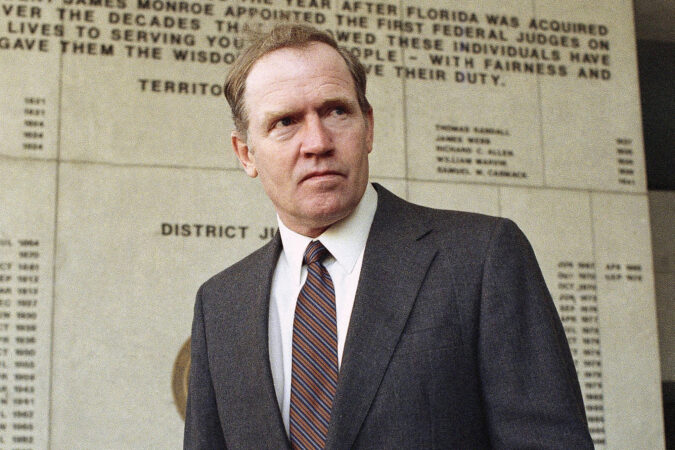
    MADISON, Wis. — Eugene Hasenfus, who played a key role in unraveling the Iran-Contra affair after his CIA-backed supply plane was shot down over Nicaragua in 1986, has died.

    Mr. Hasenfus died on Nov. 26 in Menominee, Mich., after a nine-year battle with cancer, according to his obituary from the Hansen-Onion-Martell Funeral Home in Marinette, Wis. He was 84.

    Mr. Hasenfus was born Jan. 22, 1941, in Marinette. He served with the Marines in Vietnam and continued a private career in aviation before he became a key figure in the Cold War’s Iran-Contra scandal in 1986.

    In 1981, President Ronald Reagan authorized the CIA to support the anti-communist right-wing guerrilla force known as the Contras who were working against the Sandinistas in the Nicaraguan government. Congress cut off all military assistance to the Contras in 1984.

    Months before the cutoff, top officials in Reagan’s administration ramped up a secret White House-directed supply network to the Contras. The operation’s day-to-day activities were handled by National Security Council aide Oliver North. The goal was to keep the Contras operating until Congress could be persuaded to resume CIA funding.

    The secrecy of North’s network unraveled after one of its planes with Mr. Hasenfus on board was shot down over Nicaragua in October 1986. Three other crew members died, but Mr. Hasenfus parachuted into the jungle and evaded authorities for more than 24 hours.

    He was captured by the leftist Nicaraguan government and charged with several crimes, including terrorism.

    Mr. Hasenfus said after his capture that the CIA was supervising the supply flights to the Contras. At first, Reagan administration officials lied by saying that the plane had no connection to the U.S. government.

    Congress, spurred by controversy over the Hasenfus flight, eventually launched an investigation.

    Mr. Hasenfus was convicted in Nicaragua of charges related to his role in delivering arms to the Contras and sentenced to 30 years in prison. Nicaraguan President Daniel Ortega pardoned Mr. Hasenfus a month later and he returned to his home in northern Wisconsin.

    In 1988, he filed an unsuccessful lawsuit seeking $135 million in damages against two men and two companies linked to the Iran-Contra arms deals.

    In 2003, he pleaded guilty in Brown County Circuit Court to a charge of lewd, lascivious behavior after he exposed himself in the parking lot of a grocery store. His probation was revoked in 2005 and he spent time in jail, according to online court records.

    He is survived by his four children and eight grandchildren.

  • Former Honduras President Juan Orlando Hernández is freed from prison after a pardon from Trump

    Former Honduras President Juan Orlando Hernández is freed from prison after a pardon from Trump

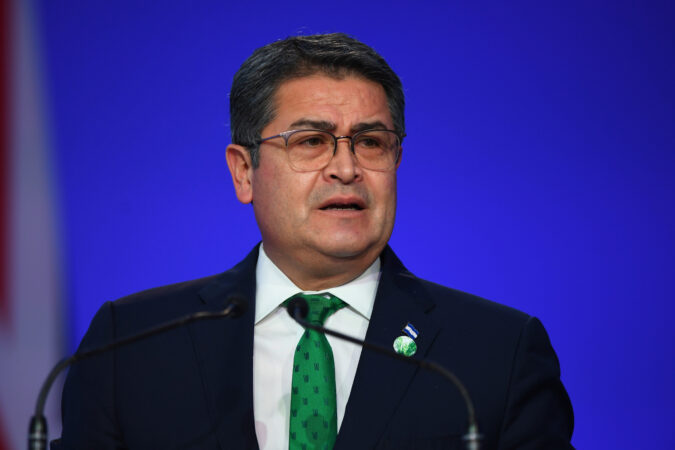
    TEGUCIGALPA, Honduras — Former Honduras President Juan Orlando Hernández, sentenced last year to 45 years in prison for his role in a drug trafficking operation that moved hundreds of tons of cocaine to the United States, was released from prison following a pardon from President Donald Trump, officials confirmed Tuesday.

    Hernández was released Monday from U.S. Penitentiary Hazelton in West Virginia, a spokesperson for the Federal Bureau of Prisons told the Associated Press. The bureau’s online inmate records also reflected his release.

    The release of Hernández — a former U.S. ally whose conviction prosecutors said exposed the depth of cartel influence in Honduras — comes just days after the country’s presidential election. Trump defended the decision aboard Air Force One on Sunday, saying Hondurans believed Hernández had been “set up,” even as prosecutors argued he protected drug traffickers who moved hundreds of tons of cocaine through the country.

    The pardon also unfolds against the backdrop of Trump’s aggressive counter-narcotics push that has triggered intense controversy across Latin America. In recent months, U.S. forces have repeatedly struck vessels they say were ferrying drugs north, a series of lethal maritime attacks that the administration argues are lawful acts of war against drug cartels — and that critics say test the limits of international law and amount to a pressure campaign on Venezuela’s President Nicolás Maduro.

    The Trump administration has carried out 21 known strikes on vessels accused of carrying drugs, killing at least 83 people. The administration has justified the attacks as a necessary escalation to stem the flow of drugs into the United States and asserted the U.S. is engaged in an “armed conflict” with drug cartels, similar to the war against al-Qaida following the Sept. 11 attacks.

    Hernández’s wife applauds his release

    Ana García thanked Trump for pardoning her husband via the social platform X early Tuesday.

    Speaking to reporters Tuesday outside her home in Tegucigalpa, she thanked Trump for pardoning her husband and drew a parallel between the two men.

    “Today the whole world realizes that, like they did with President Donald Trump, the same Southern District, the same prosecutor created a political case,” García said.

    She said Hernández called her Monday evening to say he was in the office of the prison head and had been told he will be released. García said Hernández is in an undisclosed location for his safety, but that he plans to address the Honduran people on Wednesday.

    Hernández’s attorney Renato Stabile said in an emailed statement he also would not share the former president’s current location.

    García said the process to seek a pardon began several months ago with a petition to the office of pardons. Then on Oct. 28, Hernández’s birthday, he wrote a letter to Trump. He announced he was pardoning Hernández last Friday.

    “My husband is the president who has done the most for Honduras in the fight against organized crime,” Garcia said.

    Trump’s rationale for the pardon

    Trump was asked Sunday why he pardoned Hernández.

    “I was asked by Honduras, many of the people of Honduras,” Trump told reporters traveling with him on Air Force One.

    “The people of Honduras really thought he was set up, and it was a terrible thing,” he said.

    “They basically said he was a drug dealer because he was the president of the country. And they said it was a Biden administration setup,” Trump said. ”And I looked at the facts and I agreed with them.”

    Stabile, the attorney, said Hernández is glad the “ordeal” is over.

    “On behalf of President Hernández and his family I would like to thank President Trump for correcting this injustice,” Stabile said.

    Democratic lawmakers expressed condemnation and disbelief that Trump issued the pardon.

    “They prosecute him, find him guilty of selling narcotics through these cartels into the United States. Can you think of anyone more reprehensible than that? Selling drugs to this country, finding more victims by the day,” said Sen. Dick Durbin of Illinois in a speech on the Senate floor.

    “This is not an action by a President trying to keep America safe from narcotics,” Durbin added.

    The Trump administration has declared drug cartels to be unlawful combatants and has carried out strikes in the Caribbean against boats the White House says were carrying drugs.

    The case against the former president

    Hernández was arrested at the request of the United States in February 2022, weeks after current President Xiomara Castro took office.

    Two years later, Hernández was sentenced to 45 years in prison in a New York federal courtroom for taking bribes from drug traffickers so they could safely move some 400 tons of cocaine north through Honduras to the United States.

    Hernández maintained throughout that he was innocent and the victim of revenge by drug traffickers he had helped extradite to the United States.

    During his sentencing, federal Judge P. Kevin Castel said the punishment should serve as a warning to “well educated, well dressed” individuals who gain power and think their status insulates them from justice when they do wrong.

    Hernández portrayed himself as a hero of the anti-drug trafficking movement who teamed up with American authorities under three U.S. presidential administrations to reduce drug imports.

    But the judge said trial evidence proved the opposite and that Hernández employed “considerable acting skills” to make it seem that he strongly opposed drug trafficking while he deployed his nation’s police and military to protect the drug trade.

    Hernández is not guaranteed a quick return to Honduras.

    Immediately after Trump announced his intention to pardon Hernández, Honduras Attorney General Johel Zelaya said via X that his office was obligated to seek justice and put an end to impunity.

    He did not specify what charges Hernández could face in Honduras. There were various corruption-related investigations of his administration across two terms in office that did not lead to charges against him. Castro, who oversaw Hernández’s arrest and extradition to the U.S., will remain in office until January.

    The pardon promised by Trump days before Honduras’ presidential election injected a new element into the contest that some said helped the candidate from his National Party Nasry Asfura as the vote count proceeded Tuesday.

  • Pope Leo XIV shares his thoughts on the conclave, reflects on spirituality and future travels

    Pope Leo XIV shares his thoughts on the conclave, reflects on spirituality and future travels

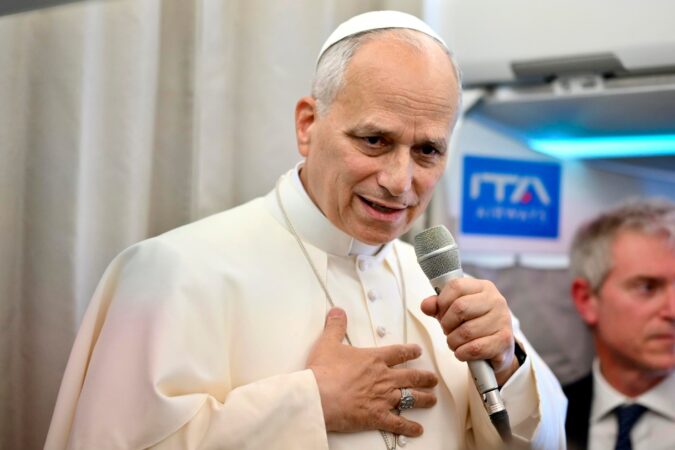
    ABOARD THE PAPAL PLANE — Pope Leo XIV on Tuesday shared for the first time what he was thinking when the votes started going his way during the conclave that elected him, saying he resigned himself to the inevitable and put the rest in God’s hands.

    “I took a deep breath. I said ‘Here we go Lord. You’re in charge and you lead the way,’” Leo told reporters during a wide-ranging airborne news conference coming home from his inaugural trip to Turkey and Lebanon.

    Leo fielded questions for a half-hour, responding easily in English, Spanish, and Italian about a variety of church and international news. He hinted at behind-the-scenes discussions about Hezbollah and Israel in Lebanon, urged dialogue rather than U.S. military threats on Venezuela and discussed his hoped-for future travels in Africa and South America, among other topics.

    But it was his remarks about the conclave and his papal learning curve that shed new light on Leo the man and what makes him tick. His responses, after seeming timid with the media early in his pontificate, showed he is much more comfortable now, is paying close attention to what is being reported about him, and that he has a good sense of humor about it.

    Leo was asked what he was thinking when he saw a huge crowd of people at one of his events in Lebanon, where it seemed as if the size had taken him by surprise. Leo suggested that wasn’t necessarily the case.

    “My face is very expressive but I’m oftentimes amused by how the journalists interpret my face,” he said. “It’s interesting. Sometimes I get really great ideas from all of you because you think you can read my mind or my face.”

    “You’re not always correct,” he added, to laughs.

    A spirituality that leaves everything up to God

    More instructive to understanding what he’s thinking, Leo said, would be to read up about his spirituality. Beyond St. Augustine, the fifth-century theologian who inspired his religious order and is Leo’s most-frequently cited church father, Leo recommended a book The Practice of the Presence of God, by a 17th-century Carmelite friar, Brother Lawrence.

    “It describes, if you will, a type of prayer and spirituality where one simply gives his life to the Lord and allows the Lord to lead. If you want to know something about me, that’s been my spirituality for many years,” he said.

    “In midst of great challenges — living in Peru during years of terrorism, being called to service in places where I never thought I’d be called to serve — I trust in God,” he said.

    That held true in the May conclave, he said, when the former Cardinal Robert Prevost was elected in a remarkably fast four ballots on the second day of voting. According to cardinals who participated, it was clear already by the third ballot that morning that the votes were going his way and that Prevost would be elected history’s first American pope.

    “I resigned myself to the fact when I saw how things were going and I said ‘This could be a reality,’” Leo said.

    Speaking to a reporter who is about to retire, Leo said he had had different plans for his future.

    “Just a year or two ago, I too thought about retiring some day,” he said. “You’ve received that gift apparently. Some of us will continue to work.”

    In Lebanon, Leo had a taste of what it’s like to be a pope on the road, and he said the enthusiasm of young Catholics was “awe-inspiring.”

    “I think to myself, ‘These people are here because they want to see the pope.’ But I say to myself, ‘They’re here because they want to see Jesus Christ and they want to see a messenger of peace,’” he said. “Just to listen to their enthusiasm and to hear their response to that message is something that I think is — that enthusiasm — is awe-inspiring.”

    “I just hope I never get tired of appreciating everything that all these young people are showing,” he said.

    On pressing international issues

    • Leo urged the United States to pursue dialogue and even exert economic pressure on Venezuela’s leaders to achieve its goals, rather than threats of military action. “The voices coming from the United States change, with a certain frequency at times,” he said. “I believe it’s better to look for ways of dialogue, perhaps pressure — including economic pressure — but looking for other ways to change, if that’s what the United States wants to do.”
    • Leo said he hopes to make his second trip as pope to Africa next year, visiting several countries but especially Algeria because of its important role in Christian-Muslim relations and its significance to St. Augustine, who inspired his religious order.
    • Leo also said he hoped to visit three countries in Latin America in either 2026 or 2027: Argentina, Uruguay and Peru, where he lived for two decades as a missionary. Argentina especially has been waiting for a papal visit after Pope Francis never went home after his 2013 election.
  • RFK Jr.’s vaccine advisers plan biggest change yet to childhood schedule

    RFK Jr.’s vaccine advisers plan biggest change yet to childhood schedule

    Federal vaccine advisers selected by Health Secretary Robert F. Kennedy Jr. are planning to vote on ending the practice of vaccinating all newborns for hepatitis B and to examine whether shots on the childhood immunization schedule are behind the rise of allergies and autoimmune disorders, the newly appointed chair of the group told the Washington Post.

    Kirk Milhoan, a pediatric cardiologist and critic of coronavirus vaccination who recently took over as chair of the influential vaccine panel, said members meeting Thursday and Friday are broadly scrutinizing vaccines recommended for children. The wide-ranging discussions on the timing of vaccines and ingredients could signal major changes to how children in the United States are vaccinated, marking the latest flash point in an accelerating reshaping of immunization policy under Kennedy.

    For decades, the childhood and adolescent immunization schedule has called for administering vaccines at set milestones. But Kennedy, the founder of an anti-vaccine group, has long linked the rise of chronic disease, autism, and food allergies in the U.S. to what he calls the “exploding vaccine schedule” — claims that have been rebutted by medical associations and extensive research into the safety of shots.

    The members of the Advisory Committee on Immunization Practices are preparing to make their most significant change to the childhood vaccine schedule yet since Kennedy purged the panel and replaced members with experts who have largely been critical of public health vaccination practices.

    The new members plan to vote Thursday on scrapping the recommendation to give babies a dose of hepatitis B vaccine within 24 hours of birth if their mothers test negative for the virus. Instead, the panel is weighing a delay in that first dose byan interval that is “still being finalized,” Milhoan said. Vaccine advisers pushed back a vote on hepatitis B vaccine recommendations at their September meeting following disagreement.

    The birth dose has been credited for a 99% drop in infections in children and teens since the 1991 recommendation from the Centers for Disease Control and Prevention and the American Academy of Pediatrics, according to a 2023 study in the official journal of the U.S. Surgeon General.

    Critics of the birth dose, including Kennedy, say that it is unnecessary to vaccinate all children for the virus when the vast majority are not at risk for infection.

    Clinicians say the birth dose acts as a safety net to give infants immediate protection if they acquire the infection from mothers whose infection status is unknown, incorrectly documented or whose test results are delayed.

    ACIP makes recommendations to the CDC director on how approved vaccines should be used. CDC directors have almost always adopted the committee’s recommendations, which compel insurers to pay for vaccines and have traditionally guided pediatricians and medical organizations.

    The committee also plans to begin public discussions on its effort to review the childhood immunization schedule and the cumulative health effects of the dozens of shots children receive.

    “We’re looking at what may be causing some of the long-term changes we’re seeing in population data in children, specifically things such as asthma and eczema and other autoimmune diseases,” Milhoan said in an interview Monday.

    “What we’re trying to do is figure out if there are factors within vaccines,” he said, such as their ingredients or unintended substances contaminating them during manufacturing.

    Milhoan said the panel is focusing on the use of aluminum as an adjuvant, an ingredient added to vaccines to help the body produce an immune response strong enough to protect the person from the disease.

    Aluminum salts are in more than a dozen routinely recommended vaccines such as hepatitis A, hepatitis B, diphtheria-tetanus-containing vaccines, Haemophilus influenzae type B, HPV, and meningococcal B and pneumococcal vaccines. Adjuvants are essential because without them, the vaccine might not be able to trigger adequate immune responses.

    Aluminum salts have been used safely in vaccines for more than 70 years, according to the CDC. Aluminum-adjuvant-containing vaccines have only uncommonly been associated with severe local reactions, according to the Food and Drug Administration, which tests vaccines containing adjuvants extensively in clinical trials before they are licensed. The agency notes that the most common source of exposure to aluminum is food and drinking water.

    Public health and medical experts have raised alarms that the panel is moving toward recommending that only vaccines without aluminum adjuvants be used, a move that health and industry experts have said would be expensive and difficult on a practical level and could lead to shots being pulled from the market. Milhoan said the panel is not calling for the removal of aluminum from vaccines.

    “We’re not saying that at all,” he said. “We’re just starting to have the discussion.”

    The FDA generally has the responsibility to direct manufacturers to remove ingredients from vaccines. Some high-level FDA officials think that it would be infeasible to take aluminum adjuvants out of vaccines and that it cannot be done on any practical timeline, according to a senior federal health official who spoke on the condition of anonymity to be candid.

    Vaccine industry officials said that removing aluminum adjuvants from vaccines would cost billions of dollars and that finding a replacement would take years, according to people involved in the drug industry who spoke on the condition of anonymity to avoid publicly antagonizing the administration. The costs and technical complexities of doing so are enormous, one of the people said.

    The two-day ACIP meeting this week follows intense upheaval in the federal vaccination system.

    The committee has come under intense criticism from public health groups who accused the new members of botching and misstating science to further an agenda to undermine vaccines.

    Sean O’Leary, who chairs the infectious-diseases committee of the American Academy of Pediatrics, said revisions to the childhood immunization schedule by the newly reformulated ACIP “should not be trusted.”

    “Any changes they do make could be devastating to children’s health and public health as a whole,” O’Leary said in a briefing with reporters.

    Andrew Nixon, a spokesman for the Department of Health and Human Services, said in a statement that the vaccine panel “remains committed to evidence based decision making, and will carefully consider all data before any recommendation is made.”

    HHS announced Monday that Milhoan would be chair because his predecessor Martin Kulldorff, a Swedish biostatistician and prominent critic of the public health response to COVID, is joining the health agency in a staff role.

    Milhoan is affiliated with an organization that promoted ivermectin as a coronavirus treatment despite trials finding it is not effective, and in March, he called for mRNA vaccines to be halted.

    Former CDC director Susan Monarez said she was fired in August after refusing to rubber-stamp recommendations from the reformulated committee, and several top CDC officials resigned in protest.

    Last week, the CDC revised its website to contradict its longtime guidance that vaccines don’t cause autism. Kennedy told the New York Times he personally directed the change.

    On Friday, the nation’s top vaccine regulator, Vinay Prasad, announced plans to impose a more stringent approach to approving vaccines, including the annual flu shot, citing his team’s conclusion — without detailing the underlying evidence — that coronavirus vaccines had contributed to the deaths of at least 10 children.

    With the exception of the vote on hepatitis B vaccine, the federal vaccine advisers have not scheduled any other votes on the childhood vaccine schedule this week. According to the draft agenda, there are no presentations about vaccine effectiveness, access, equity or practical consequences of disrupting well-established schedules, which were always included before panel membership changed.

    Milhoan said vaccine benefits are well known and have been extensively discussed.

    “Not enough attention is being paid to risk,” he said.

  • ‘Franklin the Turtle’ publisher slams Hegseth post joking about boat strike

    ‘Franklin the Turtle’ publisher slams Hegseth post joking about boat strike

    The publisher of Franklin the Turtle, a Canadian book franchise aimed at preschoolers, has expressed criticism after Defense Secretary Pete Hegseth appeared to make light of deadly boat strikes in Latin America by posting a doctored image that showed the well-known turtle character attacking the crew of a narcotics vessel.

    The Washington Post reported exclusively Friday that Hegseth gave a spoken order to kill the entire crew of a vessel thought to be ferrying narcotics in the Caribbean Sea, the first of more than 20 such strikes carried out by the administration since early September. When two survivors were detected, a military commander directed another strike to comply with Hegseth’s order that no one be left alive, the Post reported.

    In a post on X over the weekend, Hegseth shared an image of a doctored book cover, titled “Franklin Targets Narco Terrorists,” that depicted the elementary-school-aged turtle firing a rocket-propelled grenade at apparent drug traffickers. “For your Christmas wish list …” Hegseth wrote.

    In a statement late Monday, the cartoon’s publisher, Kids Can Press, issued a statement that did not name Hegseth, but said: “Franklin the Turtle is a beloved Canadian icon who has inspired generations of children and stands for kindness, empathy, and inclusivity. We strongly condemn any denigrating, violent or unauthorized use of Franklin’s name or image, which directly contradicts these values.”

    In an emailed response to a request for comment Tuesday, chief Pentagon spokesman Sean Parnell said, “We doubt Franklin the Turtle wants to be inclusive of drug cartels … or laud the kindness and empathy of narcoterrorists.”

    The Franklin the Turtle franchise began in 1986 and spans over 30 books, as the young turtle embarks on familiar coming-of-age milestones including falling in love, celebrating Thanksgiving and having a sleepover. The series has sold more than 65 million copies in over 30 languages, according to its publisher, and has been made into two educational television series and multiple movies.

    On Monday, Senate Minority Leader Charles E. Schumer described Hegseth’s post as a “sick parody of a well-known children’s book,” and accused Hegseth of being childish and unserious. “This man is a national embarrassment. Tweeting memes in the middle of a potential armed conflict is something no serious military leader would ever even think of doing.”

    Pressure has been mounting on the Pentagon to provide a full accounting of its orders to target alleged narcotics traffickers in the Caribbean Sea with lethal force, in strikes that have killed more than 80 people to date. Following the Post’s report, lawmakers in the House and Senate pledged to open inquiries to see if a war crime was committed during the first strike, where the two survivors were targeted. Legal experts have said the survivors did not pose an imminent threat to U.S. personnel and thus were illegitimate targets.

    On Monday, White House press secretary Karoline Leavitt acknowledged Hegseth had authorized the commander, Adm. Frank M. Bradley, to conduct the Sept. 2 strikes, while saying Bradley had “worked well within his authority and the law, directing the engagement to ensure the boat was destroyed.” Writing on social media Monday night, Hegseth said he stood by the admiral and “the combat decisions he has made.”

    The statements were seen as an attempt to distance Hegseth from the growing fallout from the strikes, with military officials expressing concern that he was attempting to insulate himself from any legal recourse and leave Bradley to face the fallout alone, the Post reported.

  • Michael and Susan Dell donate $6.25 billion to encourage families to claim ‘Trump Accounts’

    Michael and Susan Dell donate $6.25 billion to encourage families to claim ‘Trump Accounts’

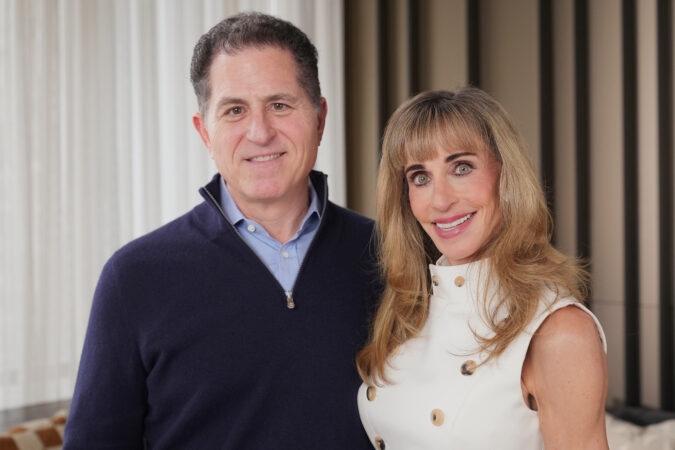
    NEW YORK — Billionaires Michael and Susan Dell pledged $6.25 billion Tuesday to provide 25 million American children 10 and under an incentive to claim the new investment accounts for children created as part of President Donald Trump’s tax and spending legislation.

    The historic gift has little precedent, with few single charitable commitments in the last 25 years exceeding $1 billion. Announced on GivingTuesday, the Dells believe it’s the largest single private commitment made to U.S. children.

    Its structure is also unusual. Essentially, it builds on the “Trump Accounts” program, where the U.S. Department of the Treasury will deposit $1,000 into investment accounts it sets up for American children born between Jan. 1, 2025, and Dec. 31, 2028. The Dells’ gift will use the “Trump Accounts” infrastructure to give $250 to each qualified child under 11.

    “We believe that if every child can see a future worth saving for, this program will build something far greater than an account. It will build hope and opportunity and prosperity for generations to come,” said Michael Dell, the founder and CEO of Dell Technologies whose estimated net worth is $148 billion, according to Forbes.

    Though the “Trump Accounts” became law as part of the president’s signature legislation in July, the Dells say the accounts will not launch until July 4, 2026. Michael Dell said they wanted to mark the 250th anniversary of U.S. independence.

    “We want these kids to know that not only do their families care, but their communities care, their government, their country cares about them,” Susan Dell told the Associated Press.

    Under the new law, “Trump Accounts” are available to any American child under 18 with a Social Security number. Account contributions must be invested in an index fund that tracks the overall stock market. When the children turn 18, they can withdraw the funds to put toward their education, to buy a home or to start a business.

    The Dells will put money into the accounts of children 10 and younger who live in zip codes with a median family income of $150,000 or less and who won’t get the $1,000 seed money from the Treasury. Because federal law allows outside donors to target gifts by geography, the Dells said using zip codes was “was the clearest way to ensure the contribution reaches the greatest number of children who would benefit most.”

    The Dells hope their gift will encourage families to claim the accounts and deposit more money into it, even small amounts, so it will grow over time along with the stock market.

    There is a political benefit for Trump and fellow Republicans. The accounts will become available in the midst of a midterm election, providing money to millions of voters — and a campaign talking point to GOP candidates — at a critical time politically. The $1,000 deposits are slated to end just after the 2028 presidential election.

    At the White House on Tuesday, Trump praised the Dells saying their gift was, “truly one of the most generous acts in the history of our country.”

    Trump said many companies and many of his friends would also be donating, adding “I’ll be doing it, too.”

    Brad Gerstner, a venture capitalist, who championed this legislation, said the accounts will give all children renewed hope in the American dream.

    “It’s hard to give effective dollars away at scale, particularly to the country’s neediest kids in a way that you have confidence that those dollars are going to compound with the upside of the U.S. economy,” said Gerstner, who is also the founder of Invest America Charitable Foundation, which is supporting the Treasury in launching the accounts.

    “Fundamentally, we need to include everybody in the upside of the American experiment. Otherwise, it won’t last. And so, at its core, we think it can re-energize people’s belief in free market, capitalist democracy,”″ Gerstner said of the accounts.

    About 58% of U.S. households held stocks or bonds in 2022, according to the U.S. Securities and Exchange Commission, though the wealthiest 1% owned almost half the value of stocks in that same year and the bottom 50% owned about 1% of stocks.

    In 2024, about 13% of children and young people in the U.S. lived in poverty, according to the Annie E. Casey Foundation, and experts link the high child poverty rates to the lack of social supports for new parents, like paid parental leave.

    While the funds in the Trump Accounts may help young adults whose families or employers can contribute to them over time, they won’t immediately help to diminish childhood poverty. Cuts to Medicaid, food stamps and childchildcare were also included in the spending package are likely to reduce the support children from low-income families receive.

    Ray Boshara, senior policy adviser with both the Aspen Institute and Washington University in St. Louis, said he is excited about the idea that the Trump Accounts will be able to receive contributions from the business, philanthropic and governmental sectors.

    “We would like to see this idea continue and get better over time, just like any big policy,’ said Boshara, who co-edited the book The Future of Building Wealth. “The ACA, Social Security — they start off fairly flawed, but get much better and more progressive and inclusive over time. And that’s how we think about Trump Accounts. It’s a down payment on a big idea that deserves to be improved and there’s bipartisan interest in improving them.”

    Through the Michael & Susan Dell Foundation, the Dell’s have reported giving $2.9 billion since 1999, with a large focus on education.

    Michael Dell said they had not initially envisioned committing so much to boost the child investment accounts, but Susan Dell said that changed over time.

    “We’re thrilled to be spearheading this in the philanthropy sector and are so excited because we know that more people are going to jump on board because really, we can’t think of a better idea and better way to help America’s children,” she said.

  • Trump’s push to end the Russia-Ukraine war raises fears of an ‘ugly deal’ for Europe

    Trump’s push to end the Russia-Ukraine war raises fears of an ‘ugly deal’ for Europe

    BRUSSELS – However Donald Trump’s latest push to end the war in Ukraine pans out, Europe fears the prospect of a deal – sooner or later – that will not punish or weaken Russia as its leaders had hoped, placing the continent’s security in greater jeopardy.

    Europe may well even have to accept a growing economic partnership between Washington, its traditional protector in the NATO alliance, and Moscow, which most European governments – and NATO itself – say is the greatest threat to European security.

    Although Ukrainians and other Europeans managed to push back against parts of a 28-point U.S. plan to end the fighting that was seen as heavily pro-Russian, any deal is still likely to carry major risks for the continent.

    Yet Europe’s ability to influence a deal is limited, not least because it lacks the hard power to dictate terms.

    It had no representatives at talks between U.S. and Ukrainian officials in Florida at the weekend, and will only watch from afar when U.S. Special Envoy Steve Witkoff visits Russian President Vladimir Putin on Tuesday.

    “I get the impression that, slowly, the awareness is sinking in that at some point there will be an ugly deal,” said Luuk van Middelaar, founding director of the Brussels Institute for Geopolitics think tank.

    “Trump clearly wants a deal. What is very uncomfortable for the Europeans…is that he wants a deal according to great-power logic: ‘We’re the U.S., they are Russia, we are big powers’.”

    Rubio seeks to reassure Europeans

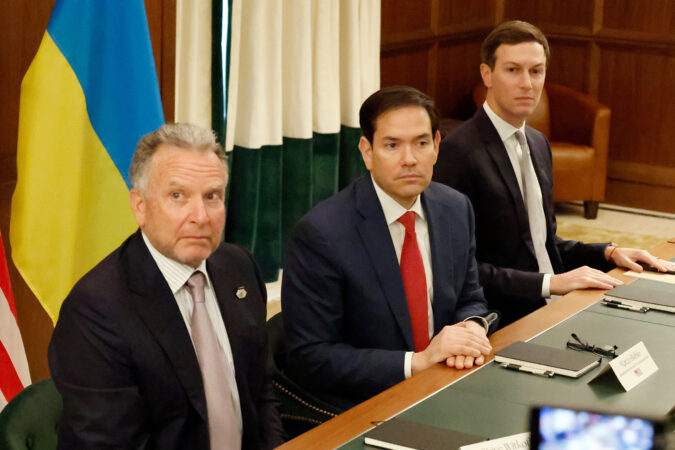
    U.S. Secretary of State Marco Rubio has said Europeans will be involved in discussions about the role of NATO and the European Union in any peace settlement.

    But European diplomats take limited comfort from such reassurances. They say that just about every aspect of a deal would affect Europe – from potential territorial concessions to U.S.-Russian economic cooperation.

    The latest initiative has also triggered fresh European worries about the U.S. commitment to NATO, which ranges from its nuclear umbrella through numerous weapons systems to tens of thousands of troops.

    German Defence Minister Boris Pistorius said last week that Europeans no longer know “which alliances we will still be able to trust in future and which ones will be durable.”

    Despite Trump’s previous criticism of NATO, he affirmed his commitment to the alliance and its Article 5 mutual defense clause in June in return for a pledge by Europeans to ramp up their defense spending.

    But Rubio’s plans to skip a meeting of NATO foreign ministers in Brussels this week may only fan European jitters, amid fears that an eastern member of the alliance may be Moscow’s next target.

    “Our intelligence services are telling us emphatically that Russia is at least keeping open the option of war against NATO. By 2029 at the latest,” German Foreign Minister Johann Wadephul said last week.

    Europeans fear territorial concessions will embolden Putin

    European officials say they see no sign that Putin wants to end his invasion of Ukraine. But if he does, they worry that any deal that does not respect Ukraine’s territorial integrity could embolden Russia to attack beyond its borders again.

    Yet it now seems likely any peace accord would let Moscow at least keep control of Ukrainian land that it has taken by force, whether borders are formally changed or not.

    The Trump administration has also not rejected out of hand Russian claims to the rest of the Donbas region that Moscow has been unable to capture after nearly four years of war.

    Moreover, Trump and other U.S. officials have made clear they see great opportunities for business deals with Moscow once the war is over.

    European officials fear that ending Russia’s isolation from the Western economy will give Moscow billions of dollars to reconstitute its military.

    “If Russia’s army is big, if their military budget is as big as it is right now, they will want to use it again,” EU foreign policy chief Kaja Kallas told reporters on Monday.

    Europe struggles to exert leverage

    But European leaders have struggled to exert a strong influence on any peace settlement, even though Europe has provided some 180 billion euros ($209.23 billion) in aid to Ukraine since Russia’s invasion in February 2022.

    The EU has a big potential bargaining chip in the form of Russian assets frozen in the bloc. But EU leaders have so far failed to agree on a proposal to use the assets to fund a 140-billion-euro loan to Ukraine that would keep Kyiv afloat and in the fight for the next two years.

    To try to show they can bring hard power to bear, a “coalition of the willing” led by France and Britain has pledged to deploy a “reassurance force” as part of postwar security guarantees to Ukraine.

    Russia has rejected such a force. But even if it did deploy, it would be modest in size, intended to bolster Kyiv’s forces rather than protect Ukraine on its own, and it could only work with U.S. support.

    “The Europeans now are paying the price for not having invested in military capabilities over the last years,” said Claudia Major, senior vice president for transatlantic security at the German Marshall Fund of the United States think tank.

    “The Europeans are not at the table. Because, to quote Trump, they don’t have the cards,” she said, referring to the U.S. president’s put-down of Ukrainian President Volodymyr Zelenskiy in February.

    ($1 = 0.8603 euros) (Additional reporting by Lili Bayer, John Irish and Sabine Siebold; writing by Andrew Gray; editing by Mark Heinrich)