Tag: no-latest

  • The surprising new use for GLP-1s: Alcohol and drug addiction

    The surprising new use for GLP-1s: Alcohol and drug addiction

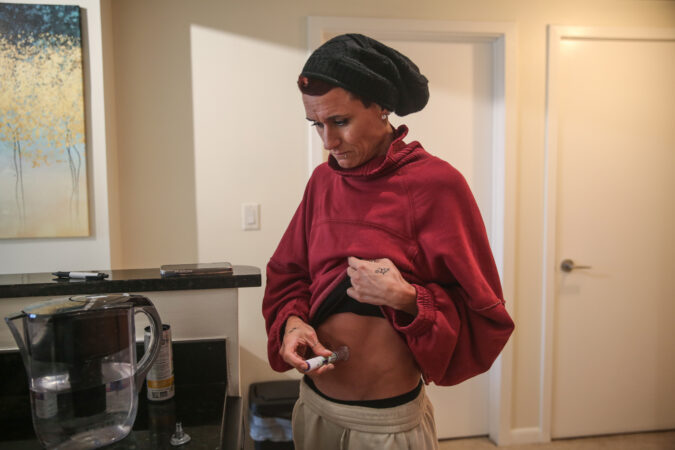
    When Susan Akin first started injecting a coveted weight-loss drug early this year, the chaos in her brain quieted. The relentless cravings subsided — only they’d never been for food.

    The medication instead dulled her urges for the cocaine and alcohol that caused her to plow her car into a tree, spiral into psychosis, and wind up admitted to a high-end addiction treatment center in Delray Beach, Fla.

    Doctors at Caron Treatment Centers tried a novel approach for the slender 41-year-old by prescribing her Zepbound, part of a blockbuster class of obesity and diabetes medications known as GLP-1s. Federal regulators have not approved the drugs for behavioral health, but doctors are already prescribing them off-label, encouraged by studies suggesting that they could reshape addiction treatment.

    Scientists caution that the research remains nascent. Health insurers do not cover the pricey drugs for that purpose. Addiction specialists say the medications might not be a cure but may work as a tool to quell addictive behaviors.

    For Akin, the weekly shot helps her endure a world full of triggers. She can visit a gas station without wanting to buy beer or see sugar without dialing a cocaine dealer. The cravings linger but are muted, she said.

    “I know when I’m due for my shot because I get a little antsy or irritable, or just kind of off,” Akin said. “But it has changed my life.”

    Emerging science

    As GLP-1 drugs for weight loss generate billions for pharmaceutical companies, researchers are exploring their potential for other purposes. Clinical trials have already shown that semaglutide, the active ingredient in Ozempic and Wegovy, can reduce the risk of heart attacks and treat liver disease.

    These drugs appear to reduce cravings for food because they mimic a natural hormone that boosts insulin production, curbs appetite, and slows stomach emptying to create a feeling of fullness. Tirzepatide, the active ingredient in Zepbound, imitates a related hormone that enhances insulin release and amplifies appetite suppression.

    The mechanism of how GLP-1s could also curb alcohol and drug cravings is not entirely understood. The medication may block release of dopamine, the chemical associated with reinforcing pleasurable activities, said Kyle Simmons, a professor of pharmacology and physiology at Oklahoma State University. The medications appear to be “turning down the gain on the reward circuitry in the brain,” Simmons said, possibly explaining why they have a broad effect on behavior.

    The potential has ushered in a wave of research that includes whether the drugs help veterans with moderate to severe drinking problems, diabetic patients who smoke, and people addicted to opioids, among others.

    Federally backed studies of patient records released since early 2024 have shown GLP-1 use in some patients who are diabetic or obese is associated with lower risks of alcohol abuse, cannabis use disorder, and opioid overdoses.

    Associations alone do not prove that the weight-loss drugs are causing those changes, but small early clinical trials have shown promise. In one study published in February in JAMA Psychiatry, researchers found that problem drinkers who received a weekly semaglutide injection drank less and had fewer cravings for alcohol and cigarettes compared with those given a placebo.

    Researchers at the National Institute on Drug Abuse and Simmons are running separate but similar double-blind clinical trials to measure whether the drugs curb alcohol cravings in patients with drinking problems. Researchers are charting brain activity to see how participants respond when exposed to alcohol cues and using virtual-reality headsets to measure how they respond to images of food. In the NIDA study, scientists have built a mock bar to observe how patients react to being near alcohol.

    A spokeswoman for Eli Lilly, which manufactures Zepbound, said the company is considering clinical trials to assess the drug as a treatment for substance use disorders, including for alcohol and tobacco. Novo Nordisk, the maker of Wegovy and Ozempic, declined to say whether it would study the drugs’ effectiveness for addiction.

    Medical treatments lacking

    The use of GLP-1s for unapproved purposes is surging, including micro-dosing to promote longevity and wellness, despite little evidence supporting these lower doses. Researchers also caution that long-term use of the drugs — which can cause unpleasant stomach side effects — remain understudied.

    Still, if GLP-1s prove effective at curbing cravings of different substances — and include behavioral addictions such as gambling and shopping — it “really opens up a whole new sort of therapeutic avenue that’s not been available before,” said Joji Suzuki, an addiction researcher at Brigham and Women’s Hospital in Boston.

    An estimated 48 million Americans had a substance use disorder last year, according to federal researchers. More than 80,000 died of drug overdoses last year while more than 47,000 died from alcohol complications, according to federal estimates.

    There are no approved medications to reduce cravings for other substances including cannabis, cocaine, or methamphetamine. For opioid addiction, medications such as buprenorphine or methadone are considered effective at staving off withdrawal and cravings, but carry stigma.

    While the FDA has approved three drugs to reduce alcohol consumption, only 2 to 4% with alcohol-use disorder get any medication treatment, said Lisa Clemans-Cope, a researcher at the Urban Institute, a nonpartisan economic and social policy research group.

    An affordability problem

    Early research and anecdotal evidence proved enough for Steven Klein, a physician who specializes in addiction at Caron, to begin prescribing GLP-1s to his patients.

    For Klein, the project is more than a professional curiosity: He is a recovering alcoholic who has long struggled with his weight. Three years ago, while in recovery and working as a pediatrician, Klein was prescribed the anti-diabetes drug Mounjaro for weight loss. He found the drug calmed his mind. “The voice that was talking to me about food was very similar to the voice that used to talk to me on drugs and alcohol,” Klein said.

    Moved by his experience, Klein switched to addiction care and joined Caron, a high-end rehab center with facilities near Reading and in Atlanta, Washington, and Delray Beach.

    He spearheads a pilot program that has prescribed GLP-1s to more than 130 patients in Pennsylvania and South Florida, most diagnosed with alcohol-use disorder and some who took stimulants.

    Klein has also partnered with Open Doors, a nonprofit in Rhode Island that helps formerly incarcerated women reenter society, to begin offering GLP-1s through its recovery program.

    “We see how hard it is for people to maintain their recovery long-term after they leave the support of our housing,” Open Doors Co-Executive Director Nick Horton said. “But with this medicine, I’m hopeful.”

    Regina Roberts, a 41-year-old alcoholic in recovery, is living at an Open Doors facility after stints in rehab and a family court program after she lost custody of her teenage son. She has been sober since 2023 with the help of 12-step programs, therapy, and life-skills classes. But she faced frequent reminders of her past: walking past a liquor store, smelling alcohol on someone’s breath, cigarette smoke wafting in the air. When Open Doors told her about the promise of GLP-1s several months ago, she agreed.

    “I figured, why not try it?” Roberts said. “I’ll take anything to help me stay on my road to sobriety.”

    With her cravings dialed back, Roberts hopes to reunite with her teenage son and move out of Open Doors in a few months. But she’s unsure whether she can keep taking the medication; she can’t afford to pay out of pocket and Medicaid might not cover it.

    At Caron’s Wernersville location, staff reduce costs by receiving semaglutides from compounding pharmacies, which can legally produce cheaper versions of name-brand mediations.

    In the Delray Beach facility, most patients receive Zepbound through their insurance by “piggybacking” under FDA-approved uses, or by paying out of pocket with manufacturer discounts, said medical director Mohammad Sarhan. Those costs add to the price of rehab programs that can cost up to $100,000.

    Akin, the Caron patient who is approaching one year sober, said she relies on her inheritance to pay nearly $1,000 every month for prefilled Zepbound shots. Akin could receive a modest discount in the coming months now that Eli Lilly, along with Novo Nordisk, announced they could lower direct-to-consumer prices as part of a deal struck with the Trump administration.

    She considers Zepbound an essential drug like insulin.

    “It’s not a cure. We have to do the work,” Akin said. “But it helps. It slows things down enough to the point where you don’t feel like you have to jump off a bridge or put your head in a cocaine plant to survive.”


  • Letters to the Editor | Nov. 21, 2025

    Letters to the Editor | Nov. 21, 2025

    Low bar

    The staggeringly vile actions of Donald Trump continue to pour out of his administration. Two recent articles highlight that.

    The ruler of Saudi Arabia, a country that supports terrorism, denies human rights, beheads its enemies in public, and has others brutally murdered on foreign soil, is welcomed by this president with open arms. Trump brushes off Mohammed bin Salman’s crimes with a wave of the hand, saying “things happen,” then considers selling him F-35s, the most advanced fighter jet in the world, in a deal that could land the plane’s technology in the hands of bin Salman’s close ally, China.

    And on Air Force One last week, Trump, who has stalled the release of the Jefferey Epstein files until it became clear even his allies in Congress were going to force his hand, responded to Bloomberg News correspondent Catherine Lucey with, “Quiet, quiet, piggy,” when she asked him about the files. It is just one in a long list of examples of Trump’s antipathy toward strong women.

    But I guess we should expect nothing less from a man who admires dictators and is a convicted sexual abuser. These are just two examples of what so saddens me, that so many in my country can support him. A common refrain from my friends who do support him is that they don’t like the man, but they like his policies. Is there no one out there among Republicans who is not amoral and lacks honor, and who can implement the same policies they support?

    Steven Barrer, Huntingdon Valley

    Pardonpalooza

    The recent editorial on Donald Trump’s abuse of presidential pardon power is so important. Everyone should read it. Trump’s Department of Injustice, under Pam Bondi, is a travesty. Trump talks about “weaponizing” the Justice Department, and that’s exactly what he has done. The Justice Department is supposed to be independent of the executive branch, not subservient to it. Bondi does whatever Trump tells her to do, whether it’s legal or not. The Injustice Department was just caught using Trump’s signature, with or without his permission, to pardon criminals.

    In a recent letter to the editor, Terry Hansen wrote about Daniel Rodriguez, one of the insurrectionists on Jan. 6, 2021, who received a pardon from Trump. He repeatedly drove a stun gun into the skull of a police officer, Michael Fanone, causing him to lose consciousness and suffer a heart attack. Rodriguez was sentenced to 12 years in prison. Trump pardoned him.

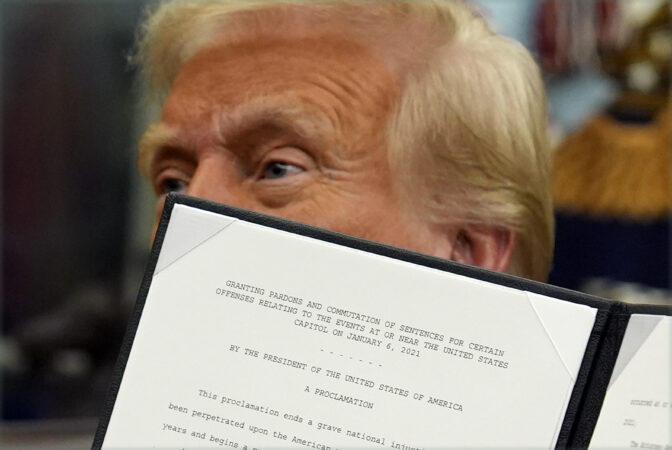
    Trump has pardoned all 1,500 of the insurrectionists from Jan. 6. Trump issued two pardons for Daniel Edwin Wilson — the first for the invasion of the U.S. Capitol Building on Jan. 6 and the second recently for gun charges. He pardoned Suzanne Kaye, who was sentenced to 18 months for threatening an FBI agent. Trump has also pardoned numerous convicted criminals for all sorts of violent crimes, fraud, embezzlement, extortion, and other felonies — all in just his first 10 months in office.

    The big question is, why? Trump never does anything that does not benefit Trump or the Trump family’s fortunes. Is he setting a new precedent? Or is he sending a message to his loyal followers: No matter what you do on my behalf, I will pardon you. Don’t you worry.

    Most presidents don’t hand out pardons until their last year in office. We have three more Trump years to go. What more can we expect?

    Patrick Thompson, Media

    Hope on the horizon

    Unexpectedly, I long for the days of George H.W. Bush’s call for “a kinder, gentler nation” and Richard Nixon’s creation of the Environmental Protection Agency and focus on energy efficiency. After decades of increasing respect for the rights of all, regardless of race, gender, and social status, we have entered a period of degradation, incivility, greed, and violent threats toward others. Earth is threatened by strident demands to stop renewable energy projects. Immigrants, even American citizens, are being ruthlessly and indiscriminately torn from families. As noted in a recent Inquirer editorial, drug runner suspects have been summarily executed without due process. The government shutdown caused needless hardship for furloughed federal employees and for the hardworking poor who rely on SNAP and affordable healthcare. This month’s election offered a glimmer of hope, but the greed of a few continues to oppress the many. Let’s hope our course changes with next year’s midterm election, if we have one.

    John Groch, West Chester

    Fatal illusion

    Trudy Rubin’s recent column correctly identifies the fundamental flaw in Donald Trump’s Gaza peace plan: its failure to address Palestinian political aspirations.

    Peace is indeed achievable, as Rubin suggests, but it requires more than clever diplomacy or economic incentives. It demands one basic ingredient that has been consistently missing: genuine recognition of Palestinian aspirations to live free from occupation.

    Rubin describes how Trump’s plan “regurgitates ideas that have previously failed” by offering economic benefits without political sovereignty. But this pattern extends far beyond the current administration. For decades, Israel has pursued a strategy of dividing the Palestinian people — separating Gaza from the West Bank, Fatah from Hamas, and creating internal rivalries — to maintain the occupation while claiming there is “no partner for peace.”

    As long as Israel continues this division strategy, violence will persist. The occupation itself breeds resistance, and Israel seems to exploit Palestinian disunity as justification for maintaining control.

    Real peace requires moral clarity: the recognition that Palestinians have the right to live free from military occupation, just as Israelis have the right to security. These rights are not mutually exclusive, but the current approach — attempting to offer economic development under permanent military control — is fundamentally wrong and will never succeed.

    Sam Kuttab, cofounder, Prayers for Peace Alliance, Philadelphia

    . . .

    “If you will it, it is no dream” was a core belief of those who defied the odds and built the great country of Israel.

    I am appalled at the treatment of Yifat Tomer-Yerushalmi, Israel’s top military prosecutor, by her own government, after she shone a light on the brutal abuse of Palestinian prisoners. Prime Minister Benjamin Netanyahu calling her a traitor, as well as his apparent indifference to violent attacks by settlers in the West Bank, further undermines his legitimate authority.

    I agree with Trudy Rubin that the only path to long-term peace is a two-state solution. I hope responsible leaders in Israel will rise and will this dream to come true.

    Rob Howard, Rosemont

    Faux surplus

    Nearly every article about the possibility of school closures in Philadelphia includes some version of this statement: The school district has 70,000 surplus seats. But the class size expectations used to calculate that number are not reported. ats.

    Citing the 70,000 number without explaining expected class sizes, estimated special education programs, and specialists’ needs (or maybe even a library one day!) creates an exaggerated sense of urgency that manipulates the public into supporting closures.

    At my child’s school, the district claims we are not at capacity, but our special education teachers are sharing classrooms, autistic students have no sensory room, there is no storage for excess materials, and if we ever got funding for a library, there would be no place to put it.

    If I have two pairs of pants, you could technically say I have a surplus of pants, but we all know two pairs of pants is still not many pants. Claiming everything beyond the bare minimum is a surplus sends a message that we have no right to expect more for our students.

    Tamara Sepe, Philadelphia

    Join the conversation: Send letters to letters@inquirer.com. Limit length to 150 words and include home address and day and evening phone number. Letters run in The Inquirer six days a week on the editorial pages and online.

  • Horoscopes: Friday, Nov. 21, 2025

    ARIES (March 21-April 19). Today it’s not just about knowing what steps to take; it’s knowing what order to take them in. Get the help of someone who’s done it, and don’t be afraid to ask lots of questions. Getting the order right is absolutely crucial to a successful outcome.

    TAURUS (April 20-May 20). You can feel deeply for what others are going through and still know that not every situation is yours to rescue. Because your first responsibility is to yourself and your inner circle. When that is taken care of, then you can extend compassion outward.

    GEMINI (May 21-June 21). Your vibe is delightfully odd today, and the right people will love it. Expect curious glances and unexpected introductions. When the universe sends kindred spirits your way, get their number. The plot thickens from here.

    CANCER (June 22-July 22). You’re skilled at weighing options, which is great for understanding but not great for momentum. When you’ve decided on a direction and are ready to progress, close off all other roads. Commit to one destination and route, and success will follow.

    LEO (July 23-Aug. 22). Tides of change are powerful and pointless to fight. Stay relaxed, and provide no resistance. Float through. Eventually, seas calm, and that’s when you can start to swim again in the direction that makes sense.

    VIRGO (Aug. 23-Sept. 22). If you reach and they run, you’re not in a relationship of reciprocity; you’re in a game. It’s better to be in a dance than a game. There’s no chasing in dance, just maintaining space to avoid stepping on toes.

    LIBRA (Sept. 23-Oct. 23). You’ll see how you’re a little different from who you were, and that’s proof of how you’ve grown and where you’re going, too. Today brings indicators you can use when you decide what stays and what goes for the new version.

    SCORPIO (Oct. 24-Nov. 21). You pay attention, notice how things work and show genuine interest in others. This way of being has you blending and contributing. It’s social savvy. It’s cultural intuition. It’s why you belong everywhere. Your curiosity, humility and respect make any environment feel like home.

    SAGITTARIUS (Nov. 22-Dec. 21). Newness is often inherently uncomfortable, which is why not everyone is an adventurer. But you know the secret. You never know where you might find belonging until you step out of the places where you already belong.

    CAPRICORN (Dec. 22-Jan. 19). The person you can be silly around is a treasure in your realm of relationships and worthy of special care. Don’t think in terms of what you need to do to keep connected; think in terms of what you can do that’s over the top. Make a memory.

    AQUARIUS (Jan. 20-Feb. 18). An eagle sees sharply from above; an owl sees in the dark — animals develop sight suited to finding their food. You, too, see what you seek. Your longings and goals determine what stands out to you in the world.

    PISCES (Feb. 19-March 20). You’re a kind of channeler today. Once the channel opens, insights will start to flow effortlessly — an abundance of ideas, phrases, plans, solutions will seem dictated from a wiser part of yourself. Grab a pen and get this down as fast as it comes to you.

    TODAY’S BIRTHDAY (Nov. 21). Welcome to your Year of Luxury. You’ll crave and manifest quality over quantity in every realm — possessions, people, plans. Elegance becomes your superpower. More highlights: There will be five significant gatherings, meaningful to your group and your legacy. Some are peaceful, some exciting. Important exploration is a theme, too — driven by intuition and curiosity. Aries and Capricorn adore you. Your lucky numbers are: 7, 18, 19, 3 and 20.

  • Dear Abby | Noble gesture puts elderly father in precarious situation

    DEAR ABBY: My 19-year-old niece didn’t finish high school and has been in and out of rehab for years. She’s about to leave a residential program and is looking for a place to live. Her parents have implemented “house rules” she doesn’t like, notably staying drug-free and away from her boyfriend.

    I have three kids at home, and I’m not able to take her in. My elderly father just offered to let her live with him. This is going to be a disaster. Financially and physically, he is barely able to keep an apartment on his own. We perform a lot of his daily tasks and have been looking for home health options for when he’s ready to accept more help.

    Dad is in no position to take in a troubled teenager. However, he thinks he is, and since he’s still independent, it’s his choice. If she could help take care of him, that would be great, but there’s no way it is going to happen. I’m not even sure it would be safe for him to have her and her friends in his place.

    My father won’t listen to reason. My niece’s social worker won’t talk to me, citing privacy issues. Her parents have warned Dad with the same result I’ve had. I want to protect my father. How do I get in front of this craziness before it gets ugly?

    — DREADING IT IN MISSOURI

    DEAR DREADING IT: I don’t think there is any way for you to prevent your father from taking the girl in. Stay in close touch so you can monitor what’s happening. Let this play out and step in if you see the situation becoming dangerous to his health and welfare, which, at that point, may require involving the authorities.

    ** ** **

    DEAR ABBY: I have a nephew and niece who are in their 20s. As teens and adults, they chose not to acknowledge gifts. I stopped sending them anything as a result.

    I have recently learned my nephew is engaged. He will be eloping and then having a family reception in a few months. Nobody in my family has met his fiancée. I do not live in the same town they do. Would it be wrong to not attend the reception? I have never said anything to their father (my brother) about his kids’ lack of acknowledgment. I know my mother will give me grief, because she did a few months ago when I didn’t attend my niece’s graduation party.

    — STAYING AWAY IN NORTH CAROLINA

    DEAR STAYING AWAY: I understand you are miffed because you weren’t thanked for gifts you gave your niece and nephew when they were younger. However, I am sorry you didn’t attend your niece’s graduation and even sorrier that you are planning not to attend your nephew’s wedding reception.

    Are you estranged from your brother? Aren’t you the least bit curious about the young woman who will be joining your extended family? By pouting and not having a conversation with your brother about your feelings, you are effectively estranging yourself from that branch of the family, which I feel is a mistake.

  • Philly’s Mo’ne Davis selected 10th overall by Los Angeles in first Women’s Pro Baseball League draft

    Philly’s Mo’ne Davis selected 10th overall by Los Angeles in first Women’s Pro Baseball League draft

    Pitcher and outfielder Kelsie Whitmore is returning to familiar surroundings after being selected by San Francisco with the first pick in the inaugural Women’s Pro Baseball League draft on Thursday night.

    Mo’ne Davis, meantime, had to wait until the 10th pick before being selected by Los Angeles. The 24-year-old Davis, who’s from Philadelphia, competed at the 2014 Little League World Series at age 13 and became the first girl to win a game and pitch a shutout.

    Whitmore is from San Diego and made her professional debut in the Bay Area with a coed team, the Sonoma Stompers, in 2016. The 27-year-old has won two silver medals representing the United States at the Women’s Baseball World Cup and won gold at the 2015 Pan-Am Games in Toronto.

    “You ask a 6-year-old version of me about this opportunity happening right now, she would, one, probably not believe you, but, two, just be so, so, so, so excited for it,” said Whitmore, who in 2022 signed with the Staten Island FerryHawks, becoming the first woman to compete in pro baseball’s Atlantic League. She played for the Savannah Bananas this season.

    Whitmore was among 120 players selected in the six-round draft that also included teams representing New York and Boston.

    Major League Baseball commissioner Rob Manfred opened the draft by congratulating the WPBL for its launch. The league is scheduled to begin play on Aug. 1.

    Each team made five picks per round, with the order of selection determined by a random draw. Teams will cut their 30-player rosters to 15 for the start of the season.

    Mo’ne Davis slides to third base during the first day of tryouts for the Women’s Professional Baseball League on Aug. 25.

    Japan’s Ayami Sato went No. 2 to Los Angeles. The 35-year-old right-hander is a five-time World Cup winner and the only player to earn three tournament MVP honors.

    New York selected U.S. infielder Kylee Lahners with the third pick. Boston chose South Korean catcher Hyeonah Kim at No. 4.

    The startup league had a four-day tryout camp in Washington this summer with more than 600 hopefuls on hand.

    The league is scheduled to play all of its games at Robin Roberts Stadium in Springville, Illinois. Teams will be based there over a seven-week season, split up into a four-week regular season, a week for all-star activities and a two-week playoff.

    The WPBL was co-founded by Justine Siegal, who became the first woman to coach for an MLB team with the Oakland Athletics in 2015. It will be the first pro baseball league for women since the All-American Girls Professional Baseball League — immortalized in the film “A League of Their Own” — dissolved in 1954.

  • Tyrese Maxey scores career-high 54 points as Sixers outlast Bucks 123-114 in overtime

    Tyrese Maxey scores career-high 54 points as Sixers outlast Bucks 123-114 in overtime

    MILWAUKEE — Tyrese Maxey scored a career-high 54 points and tied the game by hitting two free throws with seven seconds left in the fourth quarter of the 76ers’ 123-114 overtime victory over the Milwaukee Bucks on Thursday night.

    Maxey’s previous career high was a 52-point performance in a 133-126, double-overtime victory over San Antonio on April 7, 2024. He also had nine assists and played over 46½ minutes.

    Maxey, who entered Thursday averaging a league-high 40.3 minutes, had played 39 minutes one night earlier in a 121-112 home loss to the Toronto Raptors.

    Milwaukee’s Ryan Rollins scored 32 points to match a career high and also had a career-best 14 assists. The Bucks have lost four of their last five games.

    Neither team had its former league MVP available.

    Milwaukee’s Giannis Antetokounmpo, the MVP in 2019 and 2020, got hurt Monday at Cleveland and is expected to miss about two weeks. The Bucks labeled it a left groin strain Monday but have since specified that it’s a left adductor strain.

    Philadelphia’s Joel Embiid, who won the award in 2023, missed a sixth straight game due to an issue with his right knee.

    Sixers head coach Nick Nurse watches his team during the first half of their win against the Bucks.

    The Sixers (9-6) scored the first five points in overtime on a three-pointer from Justin Edwards — who scored just two points in regulation — and a basket from Maxey.

    Milwaukee (8-8) got the margin down to 113-112 on a driving layup from Rollins with 1 minute, 43 seconds remaining, but Quentin Grimes hit a three-pointer 20 seconds later and Philadelphia stayed ahead by at least two the rest of the way.

    Milwaukee trailed 94-87 midway through the fourth quarter but rallied to take the lead on Myles Turner’s three-pointer with 14.8 seconds remaining.

    The Sixers tied the game with seven seconds left when Maxey drove into the lane, drew a foul, and hit his free throws. Rollins missed a three-pointer at the buzzer.

    Paul George added 21 points for Philadelphia. Bobby Portis had 19 and Kyle Kuzma 17 for Milwaukee.

    The Sixers return home Sunday to host the Miami Heat (1 p.m., NBCSP) at Xfinity Mobile Arena.

  • U.S. employers added a surprisingly solid 119,000 jobs in September, the government said in a delayed report

    U.S. employers added a surprisingly solid 119,000 jobs in September, the government said in a delayed report

    WASHINGTON — U.S. employers added a surprisingly solid 119,000 jobs in September, the government said, issuing a key economic report that had been delayed for seven weeks by the federal government shutdown.

    The increase in payrolls was more than double the 50,000 economists had forecast.

    Yet there were some troubling details in the delayed report.

    Labor Department revisions showed that the economy lost 4,000 jobs in August instead of gaining 22,000 as originally reported. Altogether, revisions shaved 33,000 jobs off July and August payrolls. The economy had also shed jobs in June, the first time since the 2020 pandemic that the monthly jobs report has gone negative twice in one year.

    And more than 87% of the September job gains were concentrated in two industries: healthcare and social assistance and leisure and hospitality.

    “We’ve got these strong headline numbers, but when you look underneath that you’ll see that a lot of that is driven by healthcare,’’ said Cory Stahle, senior economist at the Indeed Hiring Lab. ”At the end of the day, the question is: Can you support an economic expansion on the back of one industry? Anybody would have a hard time arguing everybody should become a nurse.”

    The unemployment rate rose to 4.4% in September, highest since October 2021 and up from 4.3% in August, the Labor Department said Thursday. The jobless rate rose partly because 470,000 people entered the labor market — either working or looking for work — in September and not all of them found jobs right away.

    The data, though late, was welcomed by businesses, investors, policymakers and the Federal Reserve. During the 43-day shutdown, they’d been groping in the dark for clues about the health of the American job market because federal workers had been furloughed and couldn’t collect the data.

    The report comes at a time of considerable uncertainty about the economy. The job market has been strained by the lingering effects of high interest rates and uncertainty around Trump’s erratic campaign to slap taxes on imports from almost every country on earth. But economic growth at midyear was resilient.

    Healthcare and social assistance firms added more than 57,000 jobs in September, restaurants and bars 37,000, construction companies 19,000 and retailers almost 14,000. But factories shed 6,000 jobs — the fifth straight monthly drop. The federal government, targeted by Trump and billionaire Elon Musk’s DOGE cost cutters, lost 3,000 jobs, the eighth straight monthly decline..

    Average hourly wages rose just 0.2% from August and 3.8% from a year earlier, edging closer to the 3.5% year-over-year increase that the Federal Reserve’s inflation fighters like to see.

    The latest reading on jobs Thursday makes a rate cut by the Fed officials at their next meeting in December less likely. Many were already leaning against a cut next month, according to minutes of their October meeting released Wednesday. Steady hiring suggests the economy doesn’t need lower interest rates to expand.

    The September jobs report will be the last one the Fed will see before its Dec. 9-10 meeting. Officials are split between those who see stubbornly high inflation as the main challenge they need to address by keeping rates elevated, and those who are more concerned that hiring is sluggish and needs to be supported by rate reductions.

    Hiring has been strained this year by the lingering effects of high interest rates engineered to fight a 2021-2022 spike in inflation and uncertainty around Trump’s campaign to slap taxes on imports from almost every country on earth and on specific products — from copper to foreign films.

    Labor Department revisions in September showed that the economy created 911,000 fewer jobs than originally reported in the year that ended in March. That meant that employers added an average of just 71,000 new jobs a month over that period, not the 147,000 first reported. Since March, job creation has fallen farther — to an average 59,000 a month.

    With September numbers out, businesses, investors, policymakers and the Fed will have to wait awhile to get another good look at the numbers behind the American labor market.

    The Labor Department said Wednesday that it won’t release a full jobs report for October because it couldn’t calculate the unemployment rate during the government shutdown.

    Instead, it will release some of the October jobs data — including the number of jobs that employers created last month — along with the full November jobs report on Dec. 16, a couple of weeks late.

    The 2025 job market has been marked by an awkward pairing: relatively weak hiring but few layoffs, meaning that Americans who have work mostly enjoy job security – but those who don’t often struggle to find employment.

    Megan Fridenmaker, 28, lost her job last month as a writer for a podcast network in Indianapolis. She’s applied for at least 200 jobs and landed just one interview. “I am far from the only unemployed person in my friend group,’’ she said. “Where the job market’s at right now – people will apply for hundreds and hundreds (of jobs) before getting one interview.’’

    “Out of everything I’ve applied for, I get a response from maybe a quarter of them,’’ she said. “And the vast majority of the responses are the automated – ‘Thank you so much, but we’ve gone with another candidate.’ ‘Thank you so much, but we’ve already filled the position.’

    “The whole job-hunting experience has felt so cold and so distant and so removed from who we are as humans.”

  • Is my husband a narcissist? He’s self-centered and lacks empathy. | Expert Opinion

    Is my husband a narcissist? He’s self-centered and lacks empathy. | Expert Opinion

    Q: I’ve been married for only two years, and I’m already wondering if I made a bad decision. When we were dating, my husband was incredibly charming and thoughtful, and in many ways, much more sensitive and dialed in than most of the men I had dated. And since my track record hasn’t been great, I dated him for at least a year before getting engaged so I had time to really get to know him. Or so I thought, because the warm and charming man he once was started going away almost as soon as our wedding was over. And far from being the considerate person who charmed me, he’s incredibly self-centered, moody and angry most of the time. When the topic is on him, it’s all good; but as soon as I want to talk about what’s going on in my life, he gets bored, annoyed, or downright mean. Did I marry a narcissist?

    A: It’s not uncommon for people to wonder whether a partner’s self-centeredness, emotional volatility, or lack of empathy points to narcissism. The term gets thrown around so often that it can lose meaning — but for those who live with a truly narcissistic partner, the experience is anything but trivial.

    Recent research shows that while full narcissistic personality disorder (NPD) is relatively rare, its impact on intimate relationships can be profound. People with NPD share a cluster of traits centered on grandiosity (believing they’re superior or above the rules), entitlement, and impaired empathy, expressed through an exaggerated need for admiration, a fragile and easily threatened sense of self, and a tendency to exploit or dismiss others’ needs. They often oscillate between inflated self-importance and deep insecurity, react poorly to criticism, and rely on defenses such as blame-shifting, minimization, or rage to protect a vulnerable self-image.

    Studies of couples in which one partner has elevated narcissistic traits or NPD have found patterns of low empathy, high conflict, and poor responsiveness to a partner’s needs, often driven by the narcissistic partner’s fragile self-esteem and heightened sensitivity to criticism.

    This means that the distress you feel is not imagined — NPD reliably predicts greater marital dissatisfaction, more emotional volatility, and higher rates of separation.

    Researchers today also distinguish between grandiose and vulnerable narcissism. Grandiose narcissists tend to be dominant, entitled, and attention seeking. They’re also more likely to be difficult in romantic relationships, less empathic, and more prone to infidelity.

    Vulnerable narcissists, on the other hand, tend more toward hypersensitivity and fears of being shamed. Like grandiose narcissists, vulnerable narcissists crave validation, but withdraw or attack when criticized. Both forms undermine romantic relationships, but in different ways: one through arrogance, the other through insecurity.

    However, whether he is narcissistic doesn’t necessarily mean that you should leave him. Research suggests that narcissistic traits can soften over time, particularly when life experiences challenge the person’s grandiosity.

    Therapy can also help partners by getting them to focus less on “fixing” the narcissist and more on clarifying boundaries, recognizing manipulation, and reclaiming one’s own sense of reality.

    Psychotherapy can also help if he is motivated, but genuine change requires confronting shame, entitlement, and fear of dependency — tasks many with NPD tend to resist.

    It may not be just narcissism

    In addition to narcissism, there are other potential diagnoses and dynamics that could be operating. Perhaps your husband is depressed. Research shows that men often externalize depression through irritability, defensiveness, or emotional shutdown rather than sadness. This occurs in part because of cultural expectations that discourage vulnerability in men. What can look like indifference or hostility may, in some cases, be a form of masked distress — an effort to manage feelings that are too threatening to acknowledge directly.

    On the other hand, he may have issues with drugs or alcohol, which can also lead to moodiness, self-centered behavior and, in the case of stimulants, grandiosity.

    Perhaps he has intense fears of losing you and that causes him to defend against how weak or vulnerable it makes him feel. Instead, he diminishes your value so you’re not as important in his heart or mind.

    None of these make him easy to live with, but they all suggest a different response from you or a different treatment strategy if he or you were to enter therapy.

    The pull of the familiar

    Since you said that your track record with choosing men isn’t great, it may be useful to do some reflection or therapy around why you’re drawn to certain types. Sometimes we have blind spots in who we’re attracted to because they have much in common with parental figures who made us feel unloved or unseen. Familiarity can be a serious attractor because of the kind of predictability it seems to offer.

    In addition, someone who appears to “have it all” may promise to heal all the broken or wounded places inside us and blind us to the reality that they’re a little too good to be true.

    We don’t fall for people at random — we choose those who make us feel like ourselves. The trouble is, if our self-view isn’t great, we’re vulnerable to choosing partners, even friends, who bruise us in familiar ways. Psychologists call this self-verification: the drive to confirm what we already believe about ourselves, however irrational or negative that self-image.

    Whatever the diagnosis, you’ll need additional support to navigate what you’re facing. A good couples therapist can be particularly helpful because they can assess what’s driving his behavior and identify whether referrals to other therapists or agencies are warranted.

    Meanwhile, regardless of the diagnosis, your needs for empathy, care, and reflection are just as important as his. If he does carry the diagnosis of NPD, the following principles can help:

    1. Stop arguing with reality. People with NPD often distort facts to preserve their self-image. Trying to prove your version of events can leave you frustrated and drained. Instead of debating every detail, focus on what’s true for you: your boundaries, feelings, and choices.

    2. Set limits early and consistently. Boundaries aren’t punishments; they’re forms of self-respect. If he’s responding to you with hostility, try saying the following: “I won’t be talked to in that way. If you have something you’d like to tell me, I’m happy to listen, but I won’t tolerate being criticized or demeaned by you or anyone else.” If you find yourself close to the edge of divorce, tell him before it’s too late. His self-centeredness may blind him to the possibility of losing you. You can say, “If this doesn’t change, I’m not sure I can stay married to you.” Narcissistic partners may test limits repeatedly, so consistency matters more than explanation. Calm, brief, and predictable responses are more effective than emotional appeals.

    3. Don’t take the bait. Narcissistic partners often escalate conflict to reassert dominance or control. When you stay centered and refuse to match their reactivity, you deprive the dynamic of its usual fuel. This isn’t submission — it’s strategy. Use the technique of “gray rocking.” If he begins provoking you with criticism or baiting you into an argument, try responding in a neutral, minimally reactive way, such as: “I understand that you’re upset.” No counteraccusations, defending, or emotional escalation. You keep your tone flat and your answers brief, and you avoid being pulled into the cycle. The goal isn’t to be cold; it’s to not reward the behavior with the intensity or engagement it’s designed to elicit, which often helps de-escalate the interaction.

    4. Protect your self-esteem. Over time, living with a narcissistic partner can make you question your value. Remind yourself that their inability to empathize isn’t proof that you’re unworthy — it’s evidence of their disorder. Surround yourself with people who mirror your strengths and kindness, not your partner’s distortions.

    5. Plan for safety — emotional and physical. If manipulation turns to threats, intimidation, or physical aggression, take it seriously. Reach out to trusted friends, a therapist, or a domestic violence hotline. Protecting yourself isn’t betrayal; it’s survival.

    You didn’t cause your husband’s behavior, nor can you cure it — but you can respond with clarity and care. Whether the problem is narcissism, depression, or something else, healthy relationships require mutual accountability, empathy, and respect. If he’s willing to work on those qualities, change is possible. If not, your task isn’t to fix him — it’s to protect your own stability and make choices that restore safety and dignity. Sometimes the healthiest outcome is renewed and deepened understanding; other times, it’s learning to let go without bitterness. Either way, your safety and sanity are nonnegotiable.

    Joshua Coleman, PhD, is a clinical psychologist in the Bay Area, keynote speaker and senior fellow with the Council on Contemporary Families. His newest book is “Rules of Estrangement: Why Adult Children Cut Ties and How to Heal the Conflict.” His Substack is Family Troubles.

  • ‘They don’t return home’: Cities across U.S. fail to curb traffic deaths

    ‘They don’t return home’: Cities across U.S. fail to curb traffic deaths

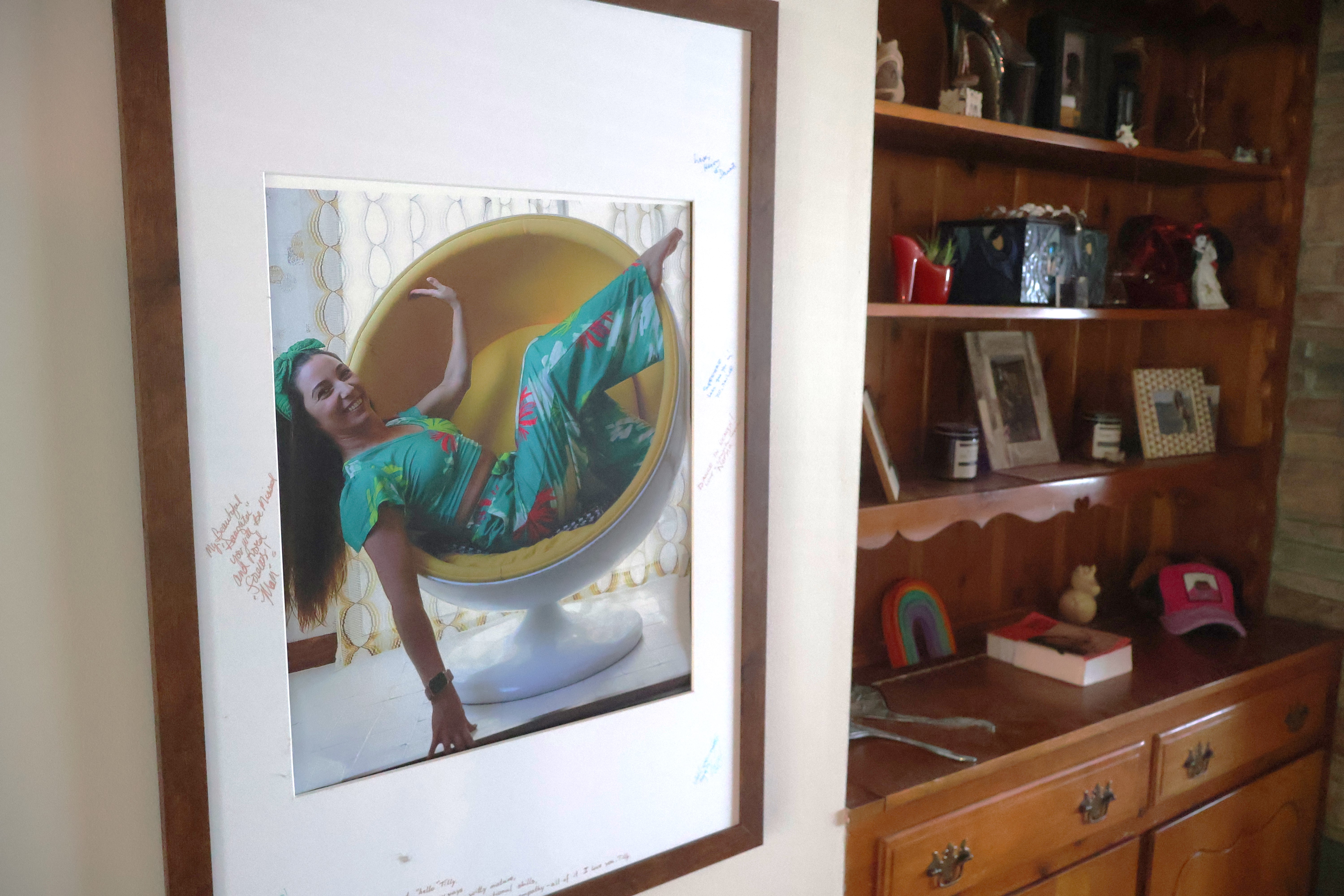
    Kris Edwards waited at home with friends for his wife, Erika “Tilly” Edwards, to go out to dinner, but she never made it back to the house they had purchased only four days earlier. Around 9 p.m. on June 29, a hit-and-run driver killed Tilly as she walked to her car after a fundraiser performance in Hollywood.

    “I’ve just got to figure out how to keep living. And the hard part with that is not knowing why,” Edwards said of his wife’s death.

    Despite local, state, and federal safety campaigns, such as the global Vision Zero initiative to eliminate traffic fatalities, such deaths are up 20% in the U.S. from a decade ago, from 32,744 in 2014 to an estimated 39,345 in 2024, according to data from the Department of Transportation’s National Highway Traffic Safety Administration. Although traffic deaths have declined since peaking at 43,230 in 2021, the number of deaths remains higher than a decade ago.

    Since the COVID-19 pandemic, the Pew Research Center found, Americans’ driving habits have worsened across multiple measures, from reckless driving to drunken driving, which road safety advocates call a public health failure. They say technology could dramatically reduce traffic deaths, but proposals often run up against industry resistance, and the Trump administration is focusing on driverless cars to both innovate and improve public safety.

    “Every day, 20 people go out for a walk, and they don’t return home,” said Adam Snider, a spokesperson for the Governors Highway Safety Association, which represents state road safety offices.

    American roads have become more dangerous than violent crimes in some cities: Los Angeles, San Francisco, and Houston are among the major cities that now report more traffic fatalities than homicides. In 2024, the Los Angeles Police Department reported an estimated 268 homicides and 302 traffic deaths, the second consecutive year that the number of people killed in collisions exceeded the number of homicide victims, according to Crosstown LA, a nonprofit community news outlet.

    San Francisco reported more than 40 traffic deaths and 35 homicides in 2024. In Houston, approximately 345 people died in crashes and 322 from homicide.

    Philadelphia had 134 traffic deaths last year, 59 of which involved pedestrians hit by vehicles.

    “Simply put, the United States is in the middle of a road safety emergency,” David Harkey, president of the Insurance Institute for Highway Safety, testified during a House Energy and Commerce subcommittee hearing this summer. Out of 29 high-income countries, America ranks at the bottom in road safety, Harkey said. “This spike is not — I repeat, is not — a global trend. The U.S. is an outlier.”

    In January 2017, then-Mayor Eric Garcetti joined 13 other L.A. city leaders in pledging to implement the Vision Zero action plan and eliminate traffic deaths in the city by 2025.

    Instead, deaths have increased.

    An audit released in April that was commissioned by the city’s administrative officer found that the level of enthusiasm for the program at City Hall has diminished and that it suffered because of “the pandemic, conflicts of personality, lack of total buy-in for implementation, disagreements over how the program should be administered, and scaling issues.” The report also cited competing interests among city departments and inconsistent investment in the city’s most dangerous traffic corridors.

    Mayor Karen Bass’ office did not immediately respond to requests for comment.

    A hit-and-run driver killed Erika “Tilly” Edwards as she walked to her car after a fundraiser performance in Los Angeles’ Hollywood neighborhood in June 2025. Despite safety campaigns, U.S. traffic deaths are up 20% from a decade ago, according to the Department of Transportation. (Chaseedaw Giles/KFF Health News)

    Last year, California state Sen. Scott Wiener proposed a bill that would have required new cars sold in the state to include “intelligent speed assistance,” software that could prevent vehicles from exceeding the speed limit by more than 10 mph. But the bill was watered down following pushback from the auto industry and opposition from some legislators who called it government overreach. It was ultimately vetoed by Democratic Gov. Gavin Newsom, who said a state mandate would disrupt ongoing federal safety assessments.

    Meanwhile, the Alliance for Automotive Innovation, an influential automotive lobby, this year sued the federal government over an automatic emergency braking rule adopted during the Biden administration. The lawsuit is pending in federal court while the Department of Transportation completes a review. Even before Donald Trump was sworn in for his second term, the alliance appealed to the president-elect in a letter to support consumer choice.

    Under Trump, Transportation Secretary Sean Duffy is prioritizing the development of autonomous vehicles by proposing sweeping regulatory changes to test and deploy driverless cars. “Federal Motor Vehicle Safety Standards were written for vehicles with human drivers and need to be updated for autonomous vehicles,” NHTSA Chief Counsel Peter Simshauser said in September in announcing the modernization effort, which includes repealing some safety rules. “Removing these requirements will reduce costs and enhance safety.”

    Some Democratic lawmakers, however, have criticized the administration’s repeal of safety rules as misguided since new rules can be implemented without undoing existing safeguards. NHTSA officials did not respond to requests for comment about Democrats’ concerns.

    Advocates worry that without continued adoption of road safety regulations for conventional vehicles, factors such as excessive speed and human error will continue to drive fatalities despite the push for driverless cars.

    “We need to continue to have strong collaboration from the federal, state, local sectors, public sector, private sector, the everyday public,” Snider, of the Governors Highway Safety Association, said. “We need everyday drivers to get involved.”

    It took nearly a month for police to track down the driver of a Mercedes-Benz G-Wagen allegedly involved in Tilly’s death. Authorities have charged Davontay Robins with vehicular manslaughter with gross negligence, felony hit-and-run driving, and driving with a suspended license due to a previous DUI. He has pleaded not guilty to all charges and is out on bail.

    Kris Edwards now tends to the couple’s backyard garden by himself. Since his wife’s death, he has experienced sleep deprivation, fatigue, and trouble eating, and he relies on a cane to walk. His doctors attribute his ailments to the brain’s response to grief.

    “I’m not alone,” he said. “But I am lonely, in this big, empty house without my partner.”

    Edwards hopes for justice for his wife, though he said he’s unsure if prosecutors will get a conviction. He wants her death to mean something: safer streets, slower driving, and for pedestrians to be cautious when getting in and out of cars parked on busy streets.

    “I want my wife’s death to be a warning to others who get too comfortable and let their guard down even for a moment,” he said. “That moment is all it takes.”

  • Letters to the Editor | Nov. 20, 2025

    Letters to the Editor | Nov. 20, 2025

    The Pardoner’s Tale

    It seems the idea of a con man selling false pardons to fearful sinners was the subject of satire as far back as Geoffrey Chaucer’s The Canterbury Tales. Whereas Chaucer’s barbs were directed at a corrupt medieval church hierarchy, we now almost daily witness a corrupt president handing out pardons like candy to his friends and co-indictees/conspirators, while at the same time prosecuting his perceived enemies. Chaucer was well aware of the irony of his tale’s narrator capitalizing on the very sin of avarice that he condemned. This rogue president continues to flout the spirit of clemency and the rule of law, brazenly lining his own pockets and those of his cronies. Meanwhile, an ineffectual Congress and a compromised U.S. Supreme Court allow this mockery of justice to go on unchecked. Who will finally call out the hypocrisy and end this criminal enterprise? We the people grow impatient.

    Charles Derr, Philadelphia

    Glaring omission

    A recent Associated Press article on the global conference on climate change in Brazil left out one crucial fact.

    While most of the world’s nations sent delegations to the annual gathering, the United States did not send any official emissary. Not only is the current administration ignoring the perils of climate change, but by being absent, we are missing an opportunity to promote American technology to the rest of the world.

    While we ignore the problem and prioritize the use of fossil fuels, the Trump administration is endangering Americans’ health and our economy. We need a government in Washington that takes climate change more seriously, rather than one that keeps its head in the sand and enriches its fossil fuel donors.

    Steve Stern, Mount Laurel

    Cassandras for our time

    As an emeritus professor at Drexel University, I would like to express my appreciation of professor Lisa Tucker of Drexel’s School of Law for her coauthorship with Dean Erwin Chemerinsky of their op-ed in praise of Justices Sonia Sotomayor and Ketanji Brown Jackson’s principled dissents from the U.S. Supreme Court’s repeated failures to uphold the rule of law against President Donald Trump’s serial breaches of it. Drexel itself faced its own crisis when, at a time when Mr. Trump refused to accept his defeat in the 2020 presidential election, faculty realized that its School of Law had previously conferred an honorary doctorate on his chief defender, Rudolph Giuliani. Together with action by Drexel’s Faculty Senate and petitioners from each of its schools, both the faculty and student body of the law school called unanimously for Giuliani to be stripped of his degree, and the board of trustees revoked it. The nation’s law schools would, I think, do well to apply this precedent to Mr. Trump’s conduct in office, and to the Supreme Court majority that has been his chief enabler.

    Robert Zaller, Drexel University, Distinguished University Professor of History, emeritus

    Join the conversation: Send letters to letters@inquirer.com. Limit length to 150 words and include home address and day and evening phone number. Letters run in The Inquirer six days a week on the editorial pages and online.