Tag: no-latest

  • Judge orders U.S. to release 5-year-old and dad taken into custody in Minnesota crackdown

    Judge orders U.S. to release 5-year-old and dad taken into custody in Minnesota crackdown

    SAN ANTONIO — A judge on Saturday ordered the U.S. to release a 5-year-old boy and his father from a Texas detention center where they were taken after being detained in a Minneapolis suburb last month.

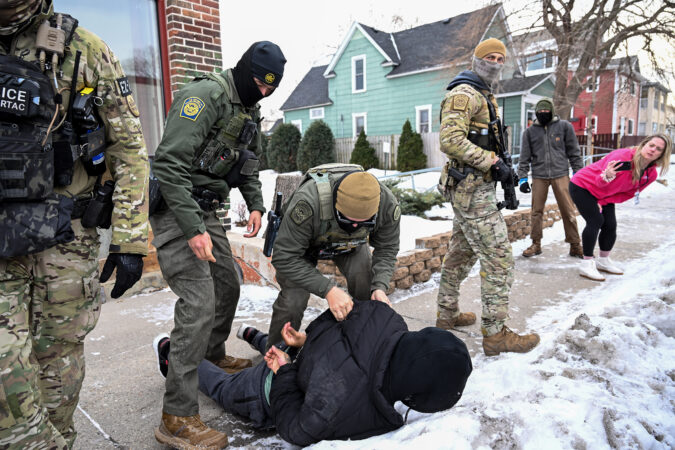
    Images of Liam Conejo Ramos, with a bunny hat and Spiderman backpack being surrounded by U.S. Immigration and Customs Enforcement officers, sparked even more outcry about President Donald Trump’s immigration crackdown in Minnesota. It also led to a protest at the family detention center and a visit by two Texas Democratic members of Congress.

    U.S. District Judge Fred Biery, who was appointed by former Democratic President Bill Clinton, said in his ruling “the case has its genesis in the ill-conceived and incompetently-implemented government pursuit of daily deportation quotas, apparently even if it requires traumatizing children.”

    Stephen Miller, the White House chief of staff for policy, has said there’s a target of 3,000 immigration arrests a day. It’s that figure which the judge seemed to describe as a “quota.”

    Biery had previously ruled that the boy and his father, Adrian Conejo Arias, could not be removed from the U.S., at least for now.

    Biery also included in his ruling a photo of Liam Conejo Ramos and references to two lines in the Bible: “Jesus said, ’Let the little children come to me, and do not hinder them, for the kingdom of heaven belongs to such as these,” and “Jesus Wept.”

    Spokespersons from the U.S. Department of Justice and U.S. Department of Homeland Security did not immediately reply to requests for comment.

    Neighbors and school officials say that federal immigration officers in Minnesota used the preschooler as “bait” by telling him to knock on the door to his house so that his mother would answer. The Department of Homeland Security has called that description of events an “abject lie.” It said the father fled on foot and left the boy in a running vehicle in their driveway.

    During the Jan. 28 visit with Reps. Joaquin Castro and Jasmine Crockett, the boy slept in the arms of his father, who said Liam was frequently tired and not eating well at the detention facility housing about 1,100 people, according to Castro.

    Detained families report poor conditions like worms in food, lack of clean water, and poor medical care at the detention center since its reopening last year. In December, a report filed by ICE acknowledged they held about 400 children longer than the recommended limit of 20 days.

  • Trump wants to build a 250-foot-tall arch, dwarfing the Lincoln Memorial

    Trump wants to build a 250-foot-tall arch, dwarfing the Lincoln Memorial

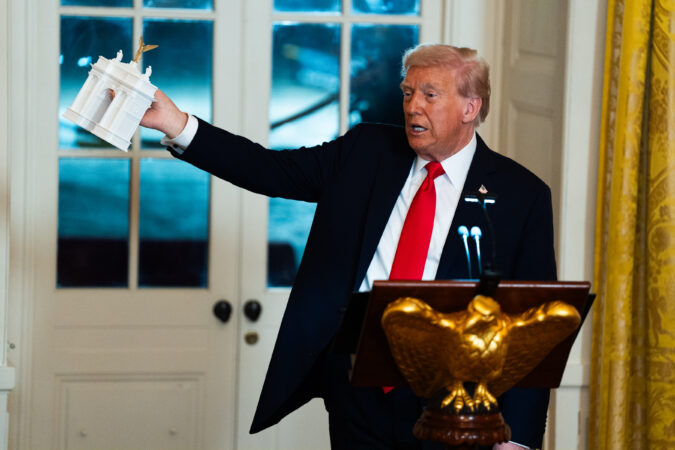
    The White House stands about 70 feet tall. The Lincoln Memorial, roughly 100 feet. The triumphal arch President Donald Trump wants to build would eclipse both if he gets his wish.

    Trump has grown attached to the idea of a 250-foot-tall structure overlooking the Potomac River, according to two people who spoke on the condition of anonymity to describe his comments, a scale that has alarmed some architectural experts who initially supported the idea of an arch but expected a far smaller one.

    The planned Independence Arch is intended to commemorate the United States’ 250th anniversary. Built to Trump’s specifications, it would transform a small plot of land between the Lincoln Memorial and Arlington National Cemetery into a dominant new monument, reshaping the relationship between the two memorials and obstructing pedestrians’ views.

    Trump has considered smaller versions of the arch, including 165-foot-high and 123-foot-high designs he shared at a dinner last year. But he has favored the largest option, arguing that its sheer size would impress visitors to Washington, and that “250 for 250” makes the most sense, the people said.

    Architectural experts counter that the size of the monument — installed in the center of a traffic circle — would distort the intent of the surrounding memorials.

    “I don’t think an arch that large belongs there,” said Catesby Leigh, an art critic who conceived of a more modest, temporary arch in a 2024 essay — an idea that his allies championed and brought to the White House. His allies also passed along Leigh’s recommendation of an architect, Nicolas Leo Charbonneau, who has been retained by the White House to work on the project.

    Charbonneau did not respond to requests for comment.

    Asked about the arch’s height, the White House on Saturday referred to the president’s previous comments.

    “The one that people know mostly is the Arc de Triomphe in Paris, France. And we’re going to top it by, I think, a lot,” Trump said at a White House Christmas reception in December.

    The Arc de Triomphe — already one of the world’s largest triumphal arches — measures 164 feet.

    Trump also told Politico in December that he hoped to begin construction of the arch within two months, a timeline that appears unlikely given that White House officials have yet to make the final plans public or submit them to federal review panels. Memorial Circle, the plot of land that the president has eyed, is controlled by the National Park Service.

    The White House reiterated the president’s desire to have an iconic monument.

    The arch will become “one of the most iconic landmarks not only in Washington, D.C., but throughout the world,” spokesperson Davis Ingle said in a statement sent to the Washington Post after this article’s publication. “President Trump’s bold vision will be imprinted upon the fabric of America and be felt by generations to come.”

    Washington does not have a triumphal arch, making it unusual among major cities that have built arches to commemorate wars and celebrate milestones, and some historians and civic leaders have long argued that such a monument is needed.

    Rodney Mims Cook Jr., an Atlanta-based developer and president of the National Monuments Foundation, proposed a peace arch to Washington leaders in 2000 before the plans were withdrawn in the wake of the Sept. 11, 2001, terrorist attacks. Cook later built a monumental arch in Atlanta, the Millennium Gate Museum, intended to celebrate Georgia’s history.

    Trump this month appointed Cook to the Commission of Fine Arts, a federal panel that would be set to review and approve the design of new monuments in Washington — including the president’s potential arch.

    Trump on Jan. 23 also posted images on his Truth Social platform with no comment that depict three versions of a large triumphal arch, including one option with gold gilding — a hallmark of Trump’s construction projects. Asked about the president’s post, White House officials said that the arch design continues to be refined. The White House also said the plan to put a large Lady Liberty statue atop the arch, which was included in previous concepts presented by Trump and Charbonneau but not in the president’s Truth Social post, has not been abandoned.

    City planners have eyed the land around what is now Memorial Circle for more than a century. A 1901-1902 report overseen by the Senate Park Commission, which laid the groundwork to construct the National Mall and beautify much of the city’s core, appears to envision some sort of structure in the circle, drawings show. Architect William Kendall in 1928 also presented plans to the Commission of Fine Arts to construct a memorial there.

    Local historians and architectural experts have said that a large arch could change the relationship between several historic sites, including Arlington Memorial Bridge itself, which was intended as a bridge between North and South in the wake of the Civil War, and memorials for Lincoln and Confederate Gen. Robert E. Lee.

    “It’s a very somber corridor,” said John Haigh, the chairperson of Benedictine College’s architecture program, who visited Memorial Circle with his students last year to consider the arch project. “We discussed the gravity of putting an arch there,” particularly one intended to be triumphal.

    The structure as planned could obstruct views of Arlington House, the former Lee estate that sits on a hillside in Arlington National Cemetery.

    “I would be very concerned about the scale,” said Calder Loth, a retired senior architectural historian for the Virginia Department of Historic Resources, warning that a 250-foot-high arch could alter pedestrians’ views as they approach Arlington National Cemetery from Washington. “It would make Arlington House just look like a dollhouse — or you couldn’t see it all, with the arch blocking the view.”

    They also cautioned that, barring major changes to the circle, it could be difficult for pedestrians to visit a potential monument there, given the busy motor traffic.

    Loth also invoked the vantage point from Arlington National Cemetery, where visitors often look across the river toward the Lincoln Memorial and the capital beyond — a view he said the proposed arch would reshape.

    “How does it impact the panorama of Washington?” Loth said, invoking a question that he said should guide designers of monuments. “What is supposed to be doing the speaking?”

    Leigh initially proposed a 60-foot arch that could pop up as a temporary structure to mark America’s 250th. Trump instead wants a permanent arch, more than four times larger, funded with leftover private donations to his White House ballroom project, which he has said could cost about $400 million. Publicly identified donors to the ballroom project, such as Amazon, Google, and Lockheed Martin, collectively have billions of dollars in contracts before the administration. (Amazon founder Jeff Bezos owns the Washington Post.)

    Any construction plan for the arch would probably need to go through several review panels and potentially require the sign-off of Congress, given laws around constructing monuments in Washington.

    Trump’s interest in enlarging the arch mirrors his desire to expand the White House ballroom, which last year sparked clashes with James McCrery II, the architect initially tapped for the project. Shalom Baranes, the architect now leading that work, told federal review panels this month that White House officials have halted plans to make the ballroom even larger.

    Leigh suggested a compromise location that could allow Trump his large monument without imposing on other structures.

    “If you’re going to build an arch that big, you should build it in another part of town and one possible site that comes to mind is Barney Circle,” Leigh said, referencing a site in Southeast Washington next to Congressional Cemetery, overlooking the Anacostia River. “There’s nothing around it competing with it.”

  • Judge won’t scale back Trump’s immigration surge in Minnesota for now

    Judge won’t scale back Trump’s immigration surge in Minnesota for now

    A judge on Saturday declined to order the Trump administration to immediately scale back its immigration enforcement surge in Minnesota, rejecting pleas from state officials who said the campaign was stepping on their sovereignty and endangering the public.

    U.S. District Judge Kate Menendez said Minnesota and the Twin Cities had not definitively shown that the administration’s decision to flood the state with immigration agents, an initiative dubbed Operation Metro Surge, was unlawful or designed to coerce local officials into cooperating with other administration objectives.

    However, while she denied the state’s request for a preliminary injunction ending the surge, the judge stressed that she was making not making a final determination on the state’s claims, a step that would take place after further litigation. She also cautioned that she was not deciding whether specific actions taken by immigration authorities during the surge were unlawful.

    “It would be difficult to overstate the effect this operation is having on the citizens of Minnesota, and the Court must acknowledge that reality here,” wrote Menendez, who was named to the bench by President Joe Biden. “However, those are not the only harms to be considered. … Defendants have presented evidence that entry of the injunction requested by Plaintiffs would harm the federal government’s efforts to enforce federal immigration law.”

    Immigration agents have flooded Minnesota in recent weeks, sparking protests as well as an intensive effort among residents to track and document the enforcement efforts. Federal authorities have shot and killed two people in Minneapolis since this surge began, prompting widespread outrage in Minnesota and across the country.

    Minnesota officials sued the Trump administration on Jan. 12 in response to the surge, saying that federal agents had “stormed the Twin Cities to conduct militarized raids and carry out dangerous, illegal, and unconstitutional stops and arrests.”

    In their lawsuit, Minnesota authorities said the Trump administration launched the campaign “to punish political opponents and score partisan points.” They said the federal government was putting public safety at risk, provoking protests, and undermining public trust in local law enforcement.

    The Trump administration said Minnesota officials were “effectively seeking a state veto over the enforcement of federal law by federal officers.”

    Federal officials wrote in court papers that the immigration crackdown has been a success despite attacks and threats against federal personnel. President Donald Trump campaigned on enforcing immigration laws, the Justice Department wrote, and “Minnesota is a crucial priority for immigration enforcement.”

    Federal officials said in a court filing Monday that there were approximately 3,000 officers and agents from the U.S. Immigration and Customs Enforcement and Customs and Border Protection “conducting immigration enforcement actions in the greater Minneapolis area.”

    Minnesota officials, in court filings and public comments, have said the situation in and around Minneapolis is dire and required urgent help from the courts. They have also pointed to the two recent shootings by federal authorities to bolster their case.

    After an ICE officer shot and killed Renée Good on Jan. 7, Minneapolis launched its emergency preparedness protocols, leading to “significant additional work” for police and others in the city, Minnesota officials wrote in a court filing.

    Federal agents fatally shot Alex Pretti, a 37-year-old ICU nurse, on Jan. 24. In a letter to the court the same day, Minneapolis and Minnesota officials said Pretti’s killing further illustrated the need for “a court-ordered respite” to the ongoing situation.

    During a court hearing Monday, Menendez said that while “we are in shockingly unusual times,” she was skeptical about whether her authority let her decide if the immigration agents could remain deployed in Minnesota.

    Menendez also questioned a letter Attorney General Pam Bondi wrote to Minnesota Gov. Tim Walz (D) on the day Pretti was killed, demanding access to the state’s voter rolls and records relating to food assistance programs.

    Bondi appeared to link these moves with a possible end to the immigration crackdown in Minnesota. During the hearing, Menendez asked whether the letter was akin to a ransom note.

  • U.N. secretary general says global body is at risk of fiscal collapse

    U.N. secretary general says global body is at risk of fiscal collapse

    The United Nations is on the verge of “imminent financial collapse,” in large part due to the failure of member states to pay their mandatory dues, Secretary General António Guterres said in a letter sent this week to the 193 U.N. ambassadors.

    Leading the list of those in arrears is the United States, which owes nearly $2.2 billion in overdue and current assessments for the regular U.N. operating budget, dating back to the end of 2024, and hundreds of millions in funds pledged or assessed to other programs, according to a U.N. official.

    Under a formula in which each nation pays annually according to its gross national income, population, and debt, the United States is assessed 22% of the regular budget, which for 2026 is $3.45 billion. Closely following is China, which is assessed 20% and paid up until the beginning of this year.

    The next highest arrears, $38 million, is owed by Venezuela, according to the official, who spoke on the condition of anonymity under rules set by the United Nations. Caracas’ vote in the General Assembly has been suspended, as mandated by the organization’s charter for any member that doesn’t pay for two years.

    “We have managed difficult periods of unpaid assessed contributions before,” Guterres wrote without mentioning any specific country. “But today’s situation is categorically different. … The current trajectory is untenable.”

    Republican administrations and lawmakers have long criticized the U.N. as wasteful, liberal, and ineffective — and in some years has reduced or temporarily withheld partial payments. The Trump administration has refused to pay at all, although it has not officially informed the U.N. whether it intends to make any future or overdue payments.

    Although annual payments are usually due in January, many countries pay in tranches throughout the year. The Biden administration left office last January with its second-half 2024 assessment unpaid.

    The U.S. mission at the U.N., where President Donald Trump’s former national security adviser Mike Waltz serves as ambassador, did not respond to queries on the budget.

    Trump has said the U.N. has great “potential” but is not living up to its promise to keep world peace. In an executive order signed early this month, he ordered U.S. withdrawal from 66 international organizations, agencies, and commissions, nearly half of them at the U.N., because, he said, they “undermine America’s independence and waste taxpayer dollars on ineffective or hostile agendas.”

    Trump’s recently announced Board of Peace, originally designed as the supervisory board for implementing his Gaza peace plan, has led to concerns that he plans to replace the U.N. altogether.

    In a letter sent to 60 world leaders invited to join (25 have officially signed up so far, none of them major U.S. allies), Trump said the board would “embark on a bold new approach to resolving Global Conflict.” Trump appointed himself board chair, with personal veto power over membership and virtually every action it might take.

    Responding to reporters Thursday who asked whether he thought the board was a U.N. competitor, Guterres said: “In my opinion, the basic responsibility for international peace and security lies with U.N., lies with the Security Council. … No other body or other coalition can legally be required to have all member states to comply with decisions on peace and security.”

    “Global problems will not be solved by one power,” Guterres said.

    Trump has also withdrawn U.S. participation from other U.N. agencies whose budgets are separate and voluntary, including the World Health Organization. Other voluntary humanitarian programs include refugee and natural disaster aid, to which the administration last month pledged $2 billion, a fraction of what Washington has contributed in the past.

    In addition to the problem of unpaid dues, Guterres in his letter called on the General Assembly to revise a system in which any budgeted money that is unspent at year’s end is returned to member governments, whether or not they have paid their dues.

    “We are suffering a double blow: on one side, unpaid contributions; and on the other side, an obligation to return funds that were never received in the first place,” he wrote. “In other words, we are trapped in a Kafkaesque cycle; expected to give back cash that does not exist.”

    U.N. officials expect this problem, if left unaddressed, to increase exponentially by 2027, as the amount of money that must be returned cuts into each new year’s available funds. The U.N. could run out of cash as early as July, by some accounts, if neither the dues nor the financial system is addressed.

    Guterres, whose term expires at the end of this year, sounded the alarm last year and proposed cutting the regular operating budget by as much as 20% via staff cuts, streamlining, building sales, and relocation of some offices from expensive locations such as Geneva to less costly regions. The General Assembly finally approved a 2026 regular budget that was 7.6% lower than last year.

    In an interview with the New York Post earlier this month, Waltz claimed U.S. credit for forcing the U.N. to accept “actual real cuts for the first time in its modern history. … They’ve never seen anything like it.”

    Saying he was now pushing to revamp pension and compensation plans, Waltz stressed the importance of the U.N. to international diplomacy. “There needs to be one place in the world where everyone can talk,” he told the New York Post. “We want that one place in the world to be in the United States, not in Brussels or Beijing.”

  • Israeli airstrikes kill 32 in Gaza, Palestinian officials say

    Israeli airstrikes kill 32 in Gaza, Palestinian officials say

    JERUSALEM — Airstrikes killed at least 32 people in Gaza overnight Friday, according to hospital and emergency response officials in the enclave, as Israel launched what it said were extensive strikes targeting Hamas militants and weapons sites.

    It was one of the bloodiest nights in Gaza since the Israel-Hamas ceasefire brokered by President Donald Trump in October, as the peace process enters its precarious second phase. Israel is due to open the key Rafah border crossing with Egypt on Sunday and begin allowing the limited entry and exit of people — a concession made by Prime Minister Benjamin Netanyahu under pressure from Trump.

    Egypt, a mediator in the conflict, condemned the strikes as the latest of Israel’s “repeated violations” of the ceasefire. An Israeli security official said Hamas had provoked Israel with “blatant violations” of the ceasefire by sending eight militants out of a tunnel in Rafah the previous night.

    Israel also struck weapons storage, manufacturing, and launch sites in Gaza, the Israel Defense Forces said in a statement.

    The Gaza Civil Defense emergency response team and hospital officials said Israel struck a tent in Khan Younis that housed the Abu Hadayed family, killing seven people; a residential home in the al-Nasr neighborhood west of Gaza City; and a police station in Gaza City’s Sheikh Redwan area.

    The majority of the 32 dead as of Saturday afternoon were women and children, according to Gaza Civil Defense spokesperson Mahmoud Bassal.

    The Israeli military has killed 509 Gazans and injured more than 1,400 since the ceasefire took effect Oct. 11, according to the Gaza Health Ministry. The Israeli campaign has killed more than 71,000 people in the enclave since October 2023, according to the ministry, which does not distinguish between combatants and civilians.

    The Israeli government launched the campaign after Hamas led an assault on southern Israel that killed 1,200 people and took 251 back to Gaza as hostages, according to Israeli officials.

    The IDF believes the number of deaths in Gaza is about 70,000, not including bodies buried under rubble, a senior Israeli military official told Israeli reporters on background this week. The IDF is still reviewing how many of the dead were combatants and how many were civilians, the official said.

    After Israeli media reported the official’s comments, the IDF clarified that it was not disclosing formal casualty estimates.

    “The details published do not reflect official IDF data,” Lt. Col Nadav Shoshani wrote on X. “Any publication or report on this matter will be released through official and orderly channels.”

  • ICE claim that a man shattered his skull running into wall triggers tension at a Minnesota hospital

    ICE claim that a man shattered his skull running into wall triggers tension at a Minnesota hospital

    MINNEAPOLIS — Intensive care nurses immediately doubted the word of federal immigration officers when they arrived at a Minneapolis hospital with a Mexican immigrant who had broken bones in his face and skull.

    Immigration and Customs Enforcement agents initially claimed Alberto Castañeda Mondragón had tried to flee while handcuffed and “purposefully ran headfirst into a brick wall,” according to court documents filed by a lawyer seeking his release.

    But staff members at Hennepin County Medical Center determined that could not possibly account for the fractures and bleeding throughout the 31-year-old’s brain, said three nurses familiar with the case.

    “It was laughable, if there was something to laugh about,” said one of the nurses, who spoke to the Associated Press on the condition of anonymity because they were not authorized to discuss patient care. “There was no way this person ran headfirst into a wall.”

    The explanation from ICE is an example of recent run-ins between immigration officers and healthcare workers that have contributed to mounting friction at Minneapolis hospitals. Workers at the Hennepin County facility say ICE officers have restrained patients in defiance of hospital rules and stayed at their sides for days. The agents have also lingered around the campus and pressed people for proof of citizenship.

    Since the start of Operation Metro Surge, President Donald Trump’s immigration crackdown in Minnesota, ICE officers have become such a fixture at the hospital that administrators issued new protocols for how employees should engage with them. Some employees complain that they have been intimidated to the point that they avoid crossing paths with agents while at work and use encrypted communications to guard against any electronic eavesdropping.

    Similar operations have been carried out by federal agents in Los Angeles, Chicago, and other cities, where opponents have criticized what they say are overly aggressive tactics. It’s not clear how many people have required hospital care while in detention.

    Injuries appeared inconsistent with ICE account

    The AP interviewed a doctor and five nurses who work at HCMC, who spoke on condition of anonymity to talk about Castañeda Mondragón’s case and conditions inside the hospital. The AP also consulted with an outside physician who affirmed his injuries were inconsistent with an accidental fall or running into a wall.

    ICE’s account of how he was hurt evolved during the time that federal officers were at his bedside. At least one ICE officer told caregivers that Castañeda Mondragón “got his (expletive) rocked” after his Jan. 8 arrest near a St. Paul shopping center, the court filings and a hospital staff member said. His arrest happened a day after the first of two fatal shootings in Minneapolis by immigration officers.

    The situation reached a head when ICE insisted on using handcuffs to shackle his ankles to the bed, prompting a heated encounter with hospital staff, according to the court records and the hospital employees familiar with the incident.

    At the time, Castañeda Mondragón was so disoriented he did not know what year it was and could not recall how he was injured, one of the nurses said. ICE officers believed he was attempting to escape after he got up and took a few steps.

    “We were basically trying to explain to ICE that this is how someone with a traumatic brain injury is — they’re impulsive,” the nurse said. “We didn’t think he was making a run for the door.”

    Security responded to the scene, followed by the hospital’s CEO and attorney, who huddled in a doctor’s office to discuss options for dealing with ICE, the nurse said.

    “We eventually agreed with ICE that we would have a nursing assistant sit with the patient to prevent him from leaving,” the nurse said. “They agreed a little while later to take the shackles off.”

    The Department of Homeland Security, which includes ICE, did not respond to repeated requests for comment on Castañeda Mondragón’s injuries. A deportation officer skirted the issue in the court documents, saying that during the intake process at an ICE detention center, it was determined he “had a head injury that required emergency medical treatment.”

    Gregorio Castañeda Mondragón said his older brother is from Veracruz, Mexico, and worked as a roofer. He has a 10-year-old daughter living in his hometown who he helps support.

    According to his lawyers, Alberto Castañeda Mondragón entered the U.S. in 2022 with valid immigration documents. Minnesota incorporation filings show he founded a company called Castañeda Construction the following year with an address listed in St. Paul.

    He appears to have no criminal record. His lawyers told a court that Castañeda Mondragón was racially profiled during the crackdown, and that officers determined only after his arrest that he had overstayed his visa.

    “He was a brown-skinned, Latino Spanish speaker at a location immigration agents arbitrarily decided to target,” his lawyers wrote in a petition seeking his release from ICE custody.

    Hours after arrest, immigrant has eight skull fractures

    Castañeda Mondragón was initially taken to an ICE processing center at the edge of Minneapolis. Court records include an arrest warrant signed upon his arrival by an ICE officer, not an immigration judge.

    About four hours after his arrest, he was taken to a hospital emergency room in suburban Edina with swelling and bruising around his right eye and bleeding. A CT scan revealed at least eight skull fractures and life-threatening hemorrhages in at least five areas of his brain, according to court documents. He was then transferred to HCMC.

    Castañeda Mondragón was alert and speaking, telling staff he was “dragged and mistreated by federal agents,” though his condition quickly deteriorated, the documents show.

    The following week, a Jan. 16 court filing described his condition as minimally responsive and communicative, disoriented, and heavily sedated.

    AP shared the details of Castañeda Mondragón’s injuries with Lindsey C. Thomas, a board-certified forensic pathologist who worked as a medical examiner in Minnesota for more than 30 years. She agreed with the assessment of hospital staff.

    “I am pretty sure a person could not get these kinds of extensive injuries from running into a wall,” Thomas said, adding that she would need to see the CT scans to make a more definitive finding.

    “I almost think one doesn’t have to be a physician to conclude that a person can’t get skull fractures on both the right and left sides of their head and from front to back by running themselves into a wall,” she said.

    ICE officers stay with hospitalized detainees for days

    ICE officers have entered the hospital with seriously injured detainees and stayed at their bedside day after day, staffers said. The crackdown has been unsettling to hospital employees, who said ICE agents have been seen loitering on hospital grounds and asking patients and employees for proof of citizenship.

    Hospital staff members said they were uncomfortable with the presence of armed agents they did not trust and who appeared to be untrained.

    The nurses interviewed by AP said they felt intimidated by ICE’s presence in the critical care unit and had even been told to avoid a certain bathroom to minimize encounters with officers. They said staff members are using an encrypted messaging app to compare notes and share information out of fear that the government might be monitoring their communications.

    The hospital reminded employees that ICE officers are not permitted to access patients or protected information without a warrant or court order.

    “Patients under federal custody are first and foremost patients,” hospital officials wrote in a bulletin outlining new protocols. The hospital’s written policy also states that no shackles or other restraints should be used unless medically necessary.

    “We have our policies, but ICE personnel as federal officers don’t necessarily comply with those, and that introduces tension,” said a doctor who spoke on condition of anonymity because they were not authorized to comment for the hospital.

    Hospital spokesperson Alisa Harris said ICE agents “have not entered our facilities looking for individuals.”

    On Saturday, more than two weeks after Castañeda Mondragón was arrested, a U.S. District Court judge ordered him released from ICE custody.

    “We are encouraged by the court’s order, which affirms that the rule of law applies to all people, in every corner of our country, including federal officers,” said Jeanette Boerner, director of Hennepin County Adult Representation Services, which filed the lawsuit on Castañeda Mondragón’s behalf.

    To the surprise of some who treated him, Castañeda Mondragón was discharged from the hospital Tuesday. A hospital spokesperson said she had no information about him.

    The Justice Department filed court documents this week affirming Castañeda Mondragón is no longer in custody. Prosecutors did not respond to a request for comment on the man’s injuries.

    Castañeda Mondragón has no family in Minnesota and co-workers have taken him in, the man’s brother said. He has significant memory loss and a long recovery ahead. He won’t be able to work for the foreseeable future, and his friends and family worry about paying for his care.

    “He still doesn’t remember things that happened. I think (he remembers) 20% of the 100% he had,” said Gregorio Castañeda Mondragón, who lives in Mexico. “It’s sad that instead of having good memories of the United States, you’re left with a bad taste in your mouth about that country because they’re treating them like animals.”

  • New cache of Epstein documents yields details on his ties to the rich and powerful

    New cache of Epstein documents yields details on his ties to the rich and powerful

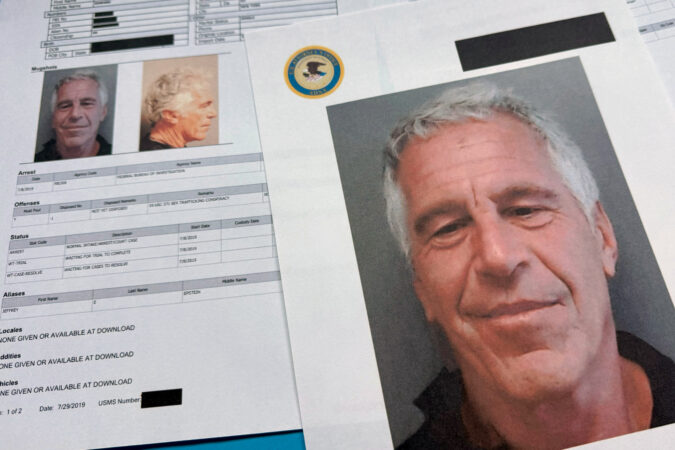
    NEW YORK — Newly disclosed government files on Jeffrey Epstein are offering more details about his interactions with the rich and famous after he served time for sex crimes in Florida, and on how much investigators knew about his abuse of underage girls when they decided not to indict him on federal charges nearly two decades ago.

    The documents released Friday include Epstein’s communications with former White House advisers, an NFL team co-owner, and billionaires including Bill Gates and Elon Musk.

    President Donald Trump’s Department of Justice said it would be releasing more than 3 million pages of documents along with more than 2,000 videos and 180,000 images under a law intended to reveal most of the material it collected during two decades of investigations involving the wealthy financier.

    The files, posted to the department’s website, included documents involving Epstein’s friendship with Britain’s Andrew Mountbatten-Windsor, formerly known as Prince Andrew, and Epstein’s email correspondence with onetime Trump adviser Steve Bannon, New York Giants co-owner Steve Tisch, and other prominent contacts with people in political, business, and philanthropic circles.

    Other documents offered a window into various investigations, including ones that led to sex trafficking charges against Epstein in 2019 and his longtime confidant Ghislaine Maxwell in 2021, and an earlier inquiry that found evidence of Epstein abusing underage girls but never led to federal charges.

    Draft indictment detailed Epstein’s abuse

    The FBI started investigating Epstein in July 2006 and agents expected him to be indicted in May 2007, according to the newly released records. A prosecutor wrote up a proposed indictment after multiple underage girls told police and the FBI that they had been paid to give Epstein sexualized massages.

    The draft indicated prosecutors were preparing to charge not just Epstein but also three people who worked for him as personal assistants.

    According to interview notes released Friday, an employee at Epstein’s Florida estate told the FBI in 2007 that Epstein once had him buy flowers and deliver them to a student at Royal Palm Beach High School to commemorate her performance in a school play.

    The employee, whose name was blacked out, said some of his duties were fanning $100 bills on a table near Epstein’s bed, placing a gun between the mattresses in his bedroom, and cleaning up after Epstein’s frequent massages with young girls, including disposing of used condoms.

    Ultimately, the U.S. attorney in Miami at the time, Alexander Acosta, signed off on a deal that let Epstein avoid federal prosecution. Epstein pleaded guilty instead to a state charge of soliciting prostitution from someone under age 18 and got an 18-month jail sentence. Acosta was Trump’s first labor secretary in his earlier term.

    Epstein offers to set Andrew up on a date

    The records have thousands of references to Trump, including emails in which Epstein and others shared news articles about him, commented on his policies or politics, or gossiped about him and his family.

    Mountbatten-Windsor’s name appears at least several hundred times, including in Epstein’s private emails. In a 2010 exchange, Epstein appeared to try and set him up for a date.

    “I have a friend who I think you might enjoy having dinner with,” Epstein wrote.

    Mountbatten-Windsor replied that he “would be delighted to see her.” The email was signed “A.”

    Epstein, whose emails often contain typographical errors, wrote later in the exchange: “She 26, russian, clevere beautiful, trustworthy and yes she has your email.”

    Concerns over how DOJ handled records

    The Justice Department is facing criticism over how it handled the latest disclosure.

    One group of Epstein accusers said in a statement that the new documents made it too easy to identify those he abused but not those who might have been involved in Epstein’s criminal activity.

    “As survivors, we should never be the ones named, scrutinized, and retraumatized while Epstein’s enablers continue to benefit from secrecy,” it said.

    Meanwhile, Maryland Rep. Jamie Raskin, the top Democrat on the House Judiciary Committee, pressed the department to let lawmakers review unredacted versions of the files as soon as Sunday. He said in a statement that Congress must assess whether the redactions were lawful or improperly shielded people from scrutiny.

    Epstein’s ties to powerful on display

    The released records reinforced that Epstein was, at least before he ran into legal trouble, friendly with Trump and former President Bill Clinton. None of Epstein’s victims who have gone public has accused Trump, a Republican, or Clinton, a Democrat, of wrongdoing. Both men said they had no knowledge Epstein was abusing underage girls.

    Epstein killed himself in a New York jail in August 2019, a month after being indicted.

    In 2021, a federal jury in New York convicted Maxwell, a British socialite, of sex trafficking for helping recruit some of his underage victims. She is serving a 20-year prison sentence.

    U.S. prosecutors never charged anyone else in connection with Epstein’s abuse. One victim, Virginia Roberts Giuffre, sued Mountbatten-Windsor, saying she had sexual encounters with him starting at age 17. The now-former prince denied having sex with Giuffre but settled her lawsuit for an undisclosed sum.

    Giuffre died by suicide last year at age 41.

  • Dear Abby | Husband is aware of wife’s secretive comings and goings

    DEAR ABBY: My wife of seven years secretly visits her ex-husband on multiple occasions. She visits him with and without his spouse present. However, she forbids me from speaking to or visiting any woman from my past unless she is present.

    My wife suffers from major depression. She’s on medication but refuses to see a counselor. Her family has informed me that she was unfaithful to spouses prior to me. I am faithful to her. The person she visits is a friend she has known for years. Should I look the other way, or am I entitled to be upset about the situation?

    — UPSET IN CONNECTICUT

    DEAR UPSET: You are entitled to be upset. The woman to whom you are married appears to live by a double standard. If you want to spend your life under her thumb and looking the other way while she may or may not cheat on you, I can’t stop you. But the person who should be talking to a counselor is not her. She’s living her life exactly the way she wants. The person who should be receiving counseling is you, because if your marriage were a happy one, you wouldn’t have found it necessary to write to me.

    ** ** **

    DEAR ABBY: A friend invited me to his birthday dinner at a popular restaurant. I got him a nice bottle of wine and a small book as a gift. There were 10 people at the table. One person had flown in from Chicago; another from L.A.

    After we’d eaten and were conversing, the birthday boy excused himself. While he was gone, the waiter presented the bill, and it was then made clear that the rest of us were expected to pay for his birthday celebration. Split amongst us, it came to $99 each.

    I put it on my credit card without comment; however, I was taken aback. I would never invite friends and then expect them to pay. I bounced this off a couple of other friends. Both said it was unacceptable behavior. What is your opinion? Am I unaware of this as a social norm?

    — STUNNED IN SAN FRANCISCO

    DEAR STUNNED: If this has become a social norm, I am as unaware as you are. When guests are invited to a celebration, it is the host’s responsibility to treat them UNLESS IT IS UNDERSTOOD WHEN THE INVITATION IS ISSUED THAT EVERYONE WILL BE EXPECTED TO PAY FOR THE MEAL. The next time this person invites you somewhere, make sure to ask whether you will be splitting the bill. That way there will be no surprises.

    ** ** **

    DEAR ABBY: I am one of those unfortunate people who has loud, violent sneezes. When I’m at home, it is no problem, but how do I keep them quiet when I’m out or at work? Stifling them hurts my back and stomach muscles.

    — SNEEZY IN NEW YORK

    DEAR SNEEZY: It may not be healthy to stifle a sneeze. Because you know you are prone to this, keep a handkerchief at the ready, which may muffle some of the sound.

  • Horoscopes: Jan. 31, 2026

    ARIES (March 21-April 19). You’ll make the great discovery that you have — and maybe are — the cure for something that ailed you. And don’t forget that fun, humor and good people are also vital to your continued well-being. Laughter is cardio for your insides.

    TAURUS (April 20-May 20). Assess the financial angle today. A person who is paid for what they do may be no more successful than the one who is not being paid for the same action. Success is measured in many more ways than money can account for.

    GEMINI (May 21-June 21). Desire is illogical. In the clutches of it, judgment flies out the window. Counterintuitively, the best way to sometimes return to reason is to go deeper into the madness of desire until the wanting plays out.

    CANCER (June 22-July 22). You know what matters most, and you spend your best energy there. Maybe you can’t give the time you would like to, but you make up for it with intensity and a life force that moves and affects.

    LEO (July 23-Aug. 22). You will notice the times during the day when you feel most like yourself. These times will stretch out and become more a part of your week because you make efforts to protect and prioritize them.

    VIRGO (Aug. 23-Sept. 22). It’s wise to acknowledge the limits of one’s own knowledge. You avoid the moral or intellectual self-righteousness that might narrow thinking and shut down learning. People who stay curious and open tend to be more constructive than people who are rigidly certain.

    LIBRA (Sept. 23-Oct. 23). Your heart and mind are engines of creation. Anything you commit to now must amplify your creativity. If it doesn’t inspire you, elevate you or help you build your world, it has no place here.

    SCORPIO (Oct. 24-Nov. 21). Choosing feels tricky because your options seem so similar. That is, until you go by feeling because one option feels more exciting to you. Act on these feelings and they’ll guide you well.

    SAGITTARIUS (Nov. 22-Dec. 21). Vague feelings and tensions are worth exploring. Once you name them, they become contained by the word, and you can then hold them, examine from different angles and place them where they are best kept.

    CAPRICORN (Dec. 22-Jan. 19). Let nothing stop you from being hopeful. Imagine the scene where it all comes together and you rise, victorious, enjoying the prize. It’s a fun way to think about the future. Focus on whatever lifts your spirits.

    AQUARIUS (Jan. 20-Feb. 18). Scientific inquiry works for you. You’ll make a prediction and then do an experiment to see what actually occurs. Record it all so you can repeat what works. These experiments will eventually bring you compounding, enduring success.

    PISCES (Feb. 19-March 20). The composer’s secret: the note that is most beautiful beyond compare is silence. You’ll use it well now to create profound emphasis, allow for great understanding and lay a foundation for what you most want to express.

    TODAY’S BIRTHDAY (Jan. 31). Welcome to your Year of the Inspired Upgrade. Your surroundings match who you are becoming. And it’s not just about your material world, but more importantly, the people in it and the stellar relationships you nurture. More highlights: You find the group, circle or community that feels like home from the first conversation. You’ll take pride in hosting or creating, and experience a feeling of safety that supports your boldest ideas. Taurus and Virgo adore you. Your lucky numbers are: 6, 15, 24, 40 and 9.

  • Trump administration approves new arms sales to Israel worth $6.67 billion

    Trump administration approves new arms sales to Israel worth $6.67 billion

    WASHINGTON — The Trump administration has approved a massive new arms sales package to Israel totaling $6.67 billion, including 30 Apache attack helicopters and related equipment and weapons, as well as 3,250 light tactical vehicles.

    The State Department announced the four separate sales to Israel late Friday amid rising tensions in the Middle East over the possibility of U.S. military strikes in Iran.

    The sales also were announced as President Donald Trump pushes ahead with his ceasefire plan for Gaza that is intended to end the Israel-Hamas conflict and reconstruct and redevelop the Palestinian territory after two years of war left it devastated, with tens of thousands dead.

    The Apache helicopters, which will be equipped with rocket launchers and advanced targeting gear, are the biggest part of the total package, coming to $3.8 billion, according to the State Department, which notified Congress of its approval of the sales on Friday.

    The next largest portion is the light tactical vehicles, which will be used to move personnel and logistics “to extend lines of communication” for the Israel Defense Forces and will cost $1.98 billion, it said.

    Israel will spend an additional $740 million on power packs for armored personnel carriers it has had in service since 2008, the department said. The remaining $150 million will be spent on a small but unreported number of light utility helicopters to complement similar equipment it already has, it said.

    In separate but nearly identical statements, the department said none of the new sales would affect the military balance in the region and that all of them would “enhance Israel’s capability to meet current and future threats by improving its ability to defend Israel’s borders, vital infrastructure, and population centers.”

    “The United States is committed to the security of Israel, and it is vital to U.S. national interests to assist Israel to develop and maintain a strong and ready self-defense capability,” the statements said.