Tag: no-latest

  • Tens of thousands face another arctic blast without power as East Coast preps for a new storm

    Tens of thousands face another arctic blast without power as East Coast preps for a new storm

    BELZONI, Miss. — As tens of thousands of people endured nearly a week with no electricity, another storm loomed on the East Coast where residents braced for near-hurricane force winds, heavy snow, and potential flooding.

    More than 230,000 homes and businesses were without electricity Friday, with the vast majority of those outages in Mississippi and Tennessee, according to the outage tracking website poweroutage.us.

    In Mississippi’s Lafayette County, where about 12,000 people were still without electricity midday Friday, emergency management agency spokesperson Beau Moore said he knows not everyone will get power back before the cold hits.

    “It’s a race against time to get it on for those we can get it on for,” Moore said.

    Workers are attacking the project by ground and air. A video on the Tennessee Valley Authority’s Facebook page shows a worker sitting on the skids of a hovering helicopter so they can repair a giant power structure.

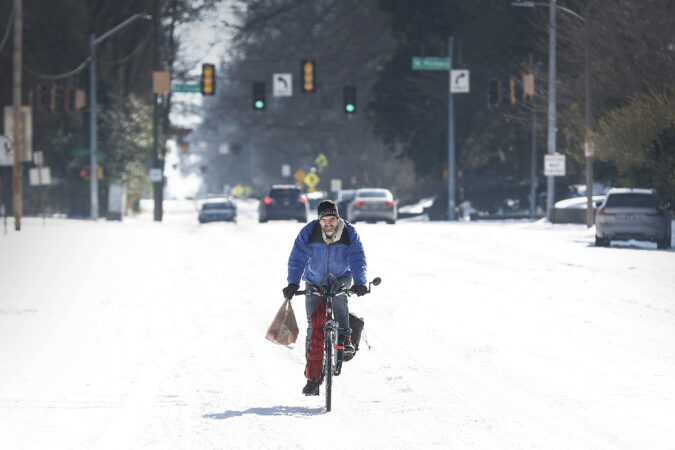
    Arctic air moving into the Southeast was expected to cause already frigid temperatures to plummet into the teens on Friday night in cities like Nashville, where many still lacked power nearly a week after a massive storm dumped snow and ice across the eastern U.S., the National Weather Service said.

    Forecasters say the subfreezing weather will persist in the eastern U.S. into February and there’s high chance of heavy snow in the Carolinas, Virginia, and northeast Georgia this weekend, possibly up to a foot in parts of North Carolina. Snow is also possible along the East Coast from Maryland to Maine.

    On Saturday night and early Sunday, forecasters expect wind and snow that could lead to blizzard conditions before the storm starts to move to sea.

    Snow should pile up in the Carolinas

    Several inches of snow, possibly 1 foot in some locations, were forecast statewide, particularly in eastern counties.

    Hundreds of state National Guard soldiers were ready to help. State workers have also been preparing roads.

    In Myrtle Beach, S.C., a town more accustomed to hurricanes, traffic jams and tourists, the National Weather Service predicted 6 inches of snow.

    The city has no snow removal equipment. Mayor Mark Kruea said they will “use what we can find” — maybe a motor grader or bulldozer to scrape streets.

    “With a hurricane you can storm proof many things,” Kruea said Friday. “But at a place like this, there is only a few things you can do to get ready for snow.”

    In North Carolina, several inches of snow, possibly 1 foot in some locations, were forecast statewide, particularly in eastern counties.

    In Wake Forest, N.C., people filled propane tanks Friday at Holding Oil and Gas, where employee Stanley Harris disconnected one tank, set it aside with a clank and then hooked up another.

    In Dare County to the east, home to much of North Carolina’s Outer Banks, longtime resident Bob Woodard said he’s worried about that more unoccupied houses in communities like Rodanthe and Buxton could collapse into the Atlantic Ocean.

    Hypothermia risks grow

    With the wave of dangerous cold heading for the South, experts say the risk of hypothermia heightens for people in parts of Mississippi and Tennessee who are entering their sixth day trapped at home without power in subfreezing temperatures.

    “The body can handle cold temperatures briefly very well, but the prolonged exposure is a problem,” said Hans House, University of Iowa professor of emergency medicine.

    People who are more vulnerable — the elderly, infants and those with underlying health conditions — may have started experiencing hypothermia symptoms within hours of exposure to the frigid temperatures, explained Zheng Ben Ma, medical director of the University of Washington Medical Center’s northwest emergency department. That can include exhaustion, slurred speech, and memory loss.

    “Once you get into days six, seven, upward of 10, then even a healthy, resilient person will be more predisposed to experiencing some of those deleterious effects of the cold temperature,” he said.

    Frostbite is also a concern in southern states, where people might not own clothes for northern winters, said David Nestler, an emergency medicine specialist at the Mayo Clinic in Minnesota.

    Mississippi and Tennessee still seeking full power

    Mississippi officials say it’s the state’s worst winter storm since 1994. About 80 warming centers were opened in one of the nation’s poorest states. National Guard troops were delivering supplies by truck and helicopter.

    Yazoo Valley Electric Power Association workers, some of whom don’t have power at their own homes, are working 16-hour days to restore electricity in Mississippi. Workers cut their way through downed trees to reach some areas for repairs, said Michael Neely, CEO and general manager.

    Worker Ethan Green, 21, said he feels pressure to get the job done quickly. “We can only go so quick,” he said. “In order to do it safely, we have to take our time.”

    In Tennessee, crews were also distributing supplies, said Gov. Bill Lee.

    The governor on Friday also said he has shared “strong concerns” with Nashville Electric Service leadership, saying communication with customers and power restoration efforts must improve.

    Tennesseans “need a clear timeline for power restoration, transparency on the number of linemen deployed, and a better understanding of when work will be completed in their neighborhood,” Lee said.

    Nashville residents’ criticisms have grown louder over their utility’s storm preparations and recovery, as more than 60,000 homes and businesses it serves remained powerless with frigid temperatures expected. Nashville Electric Service has defended its approach, saying it was an unprecedented storm. At the peak, about half of its customers in and near the capital city lost power.

    Nearly 90 people have died in bitter cold from Texas to New Jersey. Roughly half the deaths were reported in Tennessee, Mississippi, and Louisiana. While some deaths have been attributed to hypothermia, others are suspected to be related to carbon monoxide exposure. Officials have not released specific details about how some of the people died.

    The arctic cold was expected to plunge as far south as Florida.

  • Israel reopening Gaza’s border crossing with Egypt on Sunday after long closure

    Israel reopening Gaza’s border crossing with Egypt on Sunday after long closure

    JERUSALEM — Israel said Friday that it will reopen the pedestrian border crossing between the Gaza Strip and Egypt over the weekend, marking an important step forward for U.S. President Donald Trump’s Gaza ceasefire plan.

    COGAT, the Israeli military body in charge of coordinating aid to Gaza, said in a statement that starting on Sunday a “limited movement of people only” would be allowed through the Rafah crossing, Gaza’s main gateway to the outside world.

    The announcement followed statements from Israeli Prime Minister Benjamin Netanyahu and Ali Shaath, newly appointed to head the Palestinian administrative committee governing Gaza’s daily affairs, that it would likely open soon.

    While COGAT said the passage will open in both directions on Sunday, Shaath said the first day will be a trial for operations and that travel both ways will start Monday.

    Israel as of Friday agreed to allow up to 150 people to leave each day — 50 medical patients with two family members, an official familiar with the situation told the Associated Press, speaking on condition of anonymity because they were discussing diplomatic talks. Up to 50 people who fled during the war can return daily, the source said.

    Roughly 20,000 sick and wounded Palestinians need treatment outside Gaza, according to the territory’s health ministry. Gaza’s health system was decimated in the war, rendering advanced surgical procedures out of reach.

    COGAT said both Israel and Egypt will vet individuals for exit and entry through the crossing, which will be supervised by European Union border patrol agents. In addition to screenings at the crossing, Palestinians leaving and returning will be screened by Israel in the adjacent corridor, which remains under Israeli military control.

    The crossing has been under a near complete closure since Israel seized it in May 2024, saying the step was part of a strategy to halt cross-border arms smuggling by Hamas. It was briefly opened for the evacuation of medical patients during a short-lived ceasefire in early 2025.

    Israel had resisted reopening the crossing, but the recovery of the remains of the last hostage in Gaza on Monday cleared the way to move forward. A day later, Netanyahu said the crossing would soon open in a limited and controlled fashion.

    Thousands of Palestinians inside Gaza are trying to leave the war-battered territory, while tens of thousands who fled the territory during the heaviest fighting say they want to return home.

    The reopening is one of the first steps in the second phase of last year’s U.S.-brokered ceasefire agreement, which includes challenging issues ranging from demilitarizing Gaza to putting in place an alternative government to oversee rebuilding the mostly destroyed enclave.

    Netanyahu said this week that Israel’s focus is on disarming Hamas and destroying its remaining tunnels. Without these steps, he said that there would be no reconstruction in Gaza, a stance that could make Israel’s control over Rafah a key point of leverage.

    More deadly strikes in Gaza

    Palestinians in Gaza on Friday mourned friends and relatives who died earlier this week in Israeli strikes, which have slowed but not stopped since the return of the remains of the final hostage held in the territory.

    Three Palestinians were laid to rest in traditional Islamic funeral rites. Men gathered to pay their final respects, carrying the shrouded bodies through the streets before praying over them.

    Israel’s military said four people were killed in airstrikes Friday in central Gaza, saying they were armed and approaching troops near the ceasefire line dividing Israeli-held areas and most of Gaza’s Palestinian population.

    The most recent deaths Friday are on top of the 492 Palestinians killed since the ceasefire began in October, according to the Gaza Health Ministry. The ministry doesn’t distinguish between civilians and combatants in its figures. It maintains detailed casualty records that are seen as generally reliable by U.N. agencies and independent experts.

  • Cubans scramble to survive as U.S. vise on island tightens in push to oust government

    Cubans scramble to survive as U.S. vise on island tightens in push to oust government

    HAVANA — Cubans are hustling to become more self-sufficient as the U.S. government tightens its economic noose over the communist-run island in a move experts say is meant to force a popular uprising and usher in a new government.

    A sharp increase in U.S. sanctions was already suffocating Cubans when critical oil shipments from Venezuela were disrupted after the U.S. attacked the South American country and arrested its leader.

    The long-term repercussions of those halted shipments have yet to hit Cuba, but its people are not waiting.

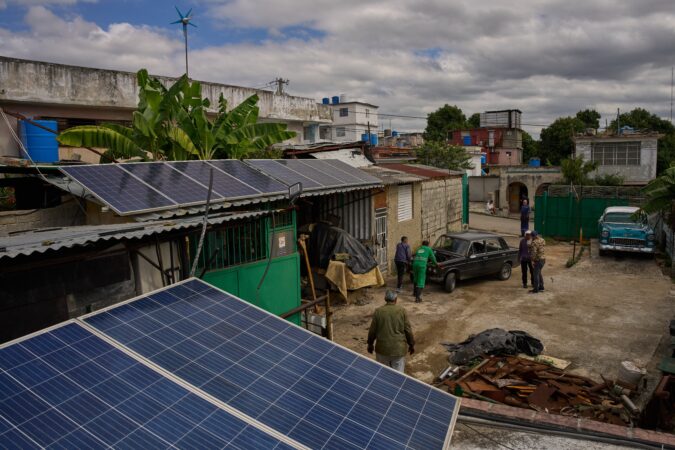
    Some are installing solar panels while others are growing their own crops or returning to a simpler way of life, one that doesn’t rely on technology or petroleum.

    “It’s how you survive,” said Jose Ángel Méndez Faviel. “It’s best to depend on yourself.”

    Méndez recently moved from the center of Havana to a farm in the rural community of Bacuranao because of Cuba’s severe blackouts. At the farm, he can cook with firewood and charcoal, something unthinkable in a darkened city apartment.

    Méndez said he doesn’t know what to make of President Donald Trump’s threats against Cuba, but he’s not taking any chances. He’s stocking up on gasoline, charcoal, and produce, which he began planting three months ago at his farm.

    Méndez also is thinking of buying back his old horse that he sold in favor of motorized equipment to transport vegetables he sells at local markets.

    “You don’t need fuel for a horse,” he said. “We need to go back in time.”

    ‘Very close to failing’

    Before the U.S. attacked Venezuela and disrupted oil shipments to Cuba, the island already was struggling with chronic blackouts, soaring prices, and a lack of basic goods.

    With experts warning of a potentially catastrophic economic crisis, some wonder if Cuba is reaching its breaking point. For Trump, who signed an executive order Thursday that would impose a tariff on any goods from countries that sell or provide oil to Cuba, it’s all but guaranteed.

    “Cuba is really a nation that is very close to failing,” he recently said.

    But Cubans scoff at that assertion, especially those who remember the so-called “Special Period,” when cuts in Soviet aid sparked the 1990s deprivation that eased when Venezuela became an ally under former President Hugo Chávez.

    Yadián Silva, a nurse and driver of a classic car who has seen tourism plummet, said Cubans aren’t dumb.

    “We have problems, and we know we have a lot of problems,” he said. “But when things happen in Cuba, it’s because people truly feel they should happen. Not because someone from the outside says, ‘do this.’”

    On a recent weeknight, tens of thousands of Cubans clutched flaming torches and joined an annual march to remember national hero José Martí. Many of them were university students.

    “We are a dignified people, a people eager to move forward, eager to prosper, who do not believe in threats and are not intimidated by any reprisals from the enemy,” said Sheyla Ibatao Ruíz, a 21-year-old law student. “If we have to take up arms, we will be the first to do so.”

    Before the march began, a presenter addressed the massive audience that included Cuban President Miguel Díaz-Canel.

    “This is not an act of nostalgia, it is a call to action,” said Litza Elena González Desdín, president of the Federation of University Students in a speech that included references to Trump.

    A day later, Christopher Landau, U.S. deputy secretary of state, noted that the U.S. embraces Martí “because he shared that passion that we have for freedom.”

    “We hope that by 2026, Cubans will finally be able to exercise their fundamental freedoms,” Landau said Wednesday in a recording played at a small gathering at the U.S. embassy in Havana. “The communist Castro regime is tottering; it won’t last much longer. After 67 years of a failed revolution that has betrayed the Cuban people, it’s time for the change that the people on the island are yearning for.”

    ‘We’ll ride bicycles’

    Last September, Ángel Eduardo launched a small business to install solar panels. He called it “Con Voltage,” a word with double meaning in Cuba that can refer to doing something well.

    He said he was fed up with studying in the dark and being forced to write in a notebook instead of a computer to obtain his degree as an automation control engineer.

    Eduardo started rigging pieces to light a single bulb for his home and ended up learning how to install solar systems thanks to a combination of a friend, Chat GPT and social media.

    He now has installed dozens of systems across Cuba, averaging one to two installations a day since November on an island where daily demand for electricity on average surpasses 3,000 megawatts when only about half that is available during peak hours.

    Eduardo said he saw a surge in calls from people in Havana seeking solar systems ever since the disruption in oil shipments from Venezuela.

    Growing a business is something that 62-year-old Niuvis Bueno Zavala has been pondering. A retired Russian interpreter for the Cuban government, she now runs a small wooden shack near the sea that sells drinks but not food.

    “I’ve never had it this hard,” she said, adding that she might start selling homemade food. “There’s always a helping hand to assist us. But now those helping hands can’t reach us. We’re blocked from all sides.”

    Many Cubans decry the embargo, including retired pilot Pedro Carbonell.

    The 73-year-old recently waited more than two hours to buy gasoline. He said Cubans have to keep fighting.

    “If we don’t have fuel, then we’ll ride bicycles,” he said, recalling how Cubans walked a lot during the Special Period. “Our wine is bitter. But it’s our wine. Do you understand? And we don’t want anyone from somewhere else coming here and telling us how to drink our wine.”

  • DOJ has opened a federal civil rights probe into the death of Alex Pretti, deputy AG says

    DOJ has opened a federal civil rights probe into the death of Alex Pretti, deputy AG says

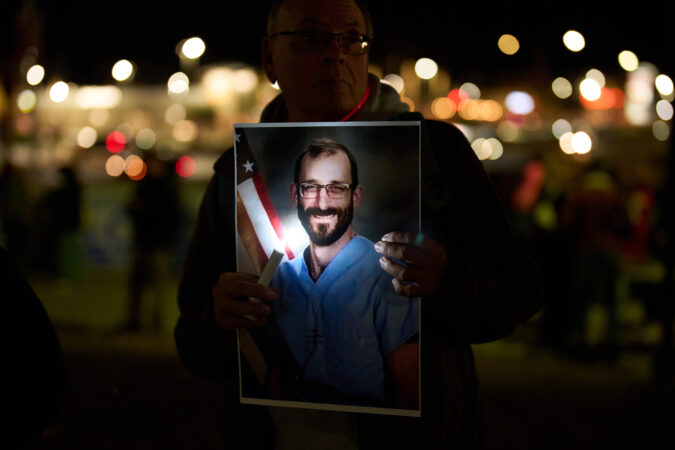
    WASHINGTON — The Justice Department has opened a federal civil rights investigation into the shooting of Alex Pretti, the Minneapolis resident killed Saturday by Border Patrol officers, Deputy Attorney General Todd Blanche said Friday.

    “We’re looking at everything that would shed light on what happened that day and in the days and weeks leading up to what happened,” Blanche said during a news conference.

    Blanche did not explain why DOJ decided to open an investigation into Pretti’s killing, but has said a similar probe is not warranted in the Jan. 7 death of Renee Good, who was shot by an Immigration and Customs Enforcement officer in Minneapolis. He said only on Friday that the Civil Rights Division does not investigate every law enforcement shooting and that there have to be circumstances and facts that “warrant an investigation.”

    “President Trump has said repeatedly, ‘Of course, this is something we’re going to investigate,’” Blanche said of the Pretti shooting.

    Steve Schleicher, a Minneapolis-based attorney representing Pretti’s parents, said Friday that “the family’s focus is on a fair and impartial investigation that examines the facts around his murder.”

    FBI to take over federal investigation

    The Department of Homeland Security also said Friday that the FBI will lead the federal probe into Pretti’s death.

    Homeland Security Secretary Kristi Noem first disclosed the shift in which agency was leading the investigation during a Fox News interview Thursday evening. Her department previously said Homeland Security Investigations, a departmental unit, would head the investigation.

    “We will continue to follow the investigation that the FBI is leading and giving them all the information that they need to bring that to conclusion, and make sure that the American people know the truth of the situation and how we can go forward and continue to protect the American people,” Noem said, speaking to Fox host Sean Hannity.

    Homeland Security spokesperson Tricia McLaughlin said Homeland Security Investigations will support the FBI in the investigation. Separately, Customs and Border Protection, which is part of DHS, is doing its own internal investigation into the shooting, during which two officers opened fire on Pretti.

    DHS did not immediately respond to questions about when the change was made or why. The FBI did not immediately respond to a request for comment.

    It was not immediately clear whether the FBI would share information and evidence with Minnesota state investigators, who have thus far been frozen out of the federal investigation.

    In the same interview, Noem appeared to distance herself from statements she made shortly after the shooting, claiming Pretti had brandished a handgun and aggressively approached officers.

    Multiple videos that emerged of the shooting contradicted that claim, showing the intensive care nurse had only his mobile phone in his hand as officers tackled him to the ground, with one removing a handgun from the back of Pretti’s pants as another officer began firing shots into his back.

    Pretti had a state permit to legally carry a concealed firearm. At no point did he appear to reach for it, the videos showed.

    Videos emerge of previous altercation

    The change in agency comes after two other videos emerged of an earlier altercation between Pretti and federal immigration officers 11 days before his death.

    The Jan. 13 videos show Pretti yelling at federal vehicles and at one point appearing to spit before kicking out the taillight of one vehicle. A struggle ensues between Pretti and several officers, during which he is forced to the ground. Pretti’s winter coat comes off, and he either breaks free or the officers let him go and he scurries away.

    When he turns his back to the camera, what appears to be a handgun is visible in his waistband. At no point do the videos show Pretti reaching for the gun, and it is not clear whether federal agents saw it.

    Schleicher, the Pretti family attorney, said Wednesday the earlier altercation in no way justified the shooting more than a week later.

    In a post on his Truth Social platform early Friday morning, President Donald Trump suggested that the videos of the earlier incident undercut the narrative that Pretti was a peaceful protester when he was shot.

    “Agitator and, perhaps, insurrectionist, Alex Pretti’s stock has gone way down with the just released video of him screaming and spitting in the face of a very calm and under control ICE Officer, and then crazily kicking in a new and very expensive government vehicle, so hard and violent, in fact, that the taillight broke off in pieces,” Trump’s post said. “It was quite a display of abuse and anger, for all to see, crazed and out of control. The ICE Officer was calm and cool, not an easy thing to be under those circumstances!”

  • TikTok star Shirley Raines, known for bringing meals and respect to people on Skid Row, dies at 58

    TikTok star Shirley Raines, known for bringing meals and respect to people on Skid Row, dies at 58

    Shirley Raines, a social media creator and nonprofit founder who dedicated her life to caring for people experiencing homelessness, has died, her organization Beauty 2 The Streetz said Wednesday. She was 58.

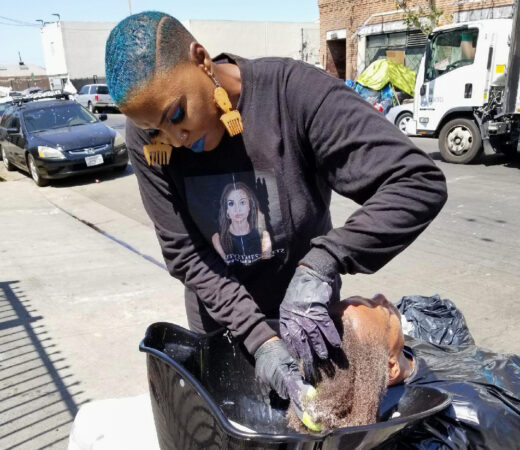
    Ms. Raines was known as “Ms. Shirley,” to her more than 5 million TikTok followers and to the people who regularly lined up for the food, beauty treatments, and hygiene supplies she brought to Los Angeles’ Skid Row and other homeless communities in California and Nevada.

    Ms. Raines’ life made an “immeasurable impact,” Beauty 2 The Streetz wrote on social media.

    “Through her tireless advocacy, deep compassion, and unwavering commitment, she used her powerful media platform to amplify the voices of those in need and to bring dignity, resources, and hope to some of the most underserved populations,” the organization said.

    Ms. Raines’ cause of death was not released, but the organization said it would share additional information when it is available.

    Ms. Raines had six children. One son died as a toddler — an experience that left her a “very broken woman,” Ms. Raines said in 2021 when she was named CNN’s Hero of the Year.

    “It’s important you know that broken people are still very much useful,” she said during the CNN award ceremony.

    That deep grief led her to begin helping homeless people.

    “I would rather have him back than anything in the world, but I am a mother without a son, and there are a lot of people in the street that are without a mother,” she said. “And I feel like it’s a fair exchange — I’m here for them.”

    Ms. Raines began working with homeless communities in 2017. On Monday, Ms. Raines posted a video shot from inside her car as she handed out lunches to a line of people standing outside her passenger window. She greeted her clients with warm enthusiasm and respect, calling them “King,” or “Queen.”

    One man told her he was able to get into an apartment.

    “God is good! Look at you!” Ms. Raines replied, her usual cheerfulness stepping up a notch. In a video posted two weeks earlier, she handed her shoes to a barefoot child who was waiting for a meal, protecting the girl’s feet from the chilly asphalt.

    California’s homelessness crisis is especially visible in downtown Los Angeles, where hundreds of people live in makeshift shanties that line entire blocks in the notorious neighborhood known as Skid Row. Tents regularly pop up on the pavement outside City Hall. Encampments are increasingly found in suburban areas under freeway overpasses. A 2025 survey found that about 72,000 people were homeless on any given night across Los Angeles County.

    Crushow Herring, the art director of the Sidewalk Project, said Ms. Raines was both sentimental and protective of the homeless community. The Sidewalk Project uses art and peer empowerment programs to help people experiencing homelessness in Los Angeles.

    “I’ve been getting calls all morning from people, not just who live in Skid Row but Angelenos who are shocked” by Ms. Raines’ death, Herring said. “To see the work she did, and how people couldn’t wait to see her come out? It was a great mission. What most people need is just feeling dignity about themselves, because if they look better, they feel better.”

    Ms. Raines would often give people on the street a position working with her as she provided haircuts or handed out goods, Herring said.

    “By the time a year or two goes by, they’re part of the organization — they have responsibility, they have something to look forward to,” he said. “She always had people around her that were motivational, and generous and polite to community members.”

    Melissa Acedera, founder of Polo’s Pantry, recalled joining Raines every Saturday to distribute food when Beauty 2 The Streetz was first getting started. Ms. Raines remembered people’s birthdays and took special care to reach out to transgender and queer people who were often on the outskirts of Skid Row, she added.

    “It’s hard not to think of Shirley when I’m there,” Acedera said.

    In 2025, Ms. Raines was named the NAACP Image Award Winner for Outstanding Social Media Personality. Other social media creators lauded her work and shared their own grief online Wednesday.

    “Ms. Shirley was truly the best of us, love incarnate,” wrote Alexis Nikole Nelson, a foraging educator and social media creator known as “blackforager.”

  • 4 Parkinson’s disease symptoms that can show up decades before a diagnosis

    4 Parkinson’s disease symptoms that can show up decades before a diagnosis

    Many people think of a tremor as the quintessential warning sign of Parkinson’s disease. But other symptoms — many of them not involving changes in movement — can appear much earlier than what’s known as a resting tremor.

    In fact, a resting tremor, which is a rhythmic shaking of a body part such as a hand when at rest, isn’t even required for diagnosis. Up to 20% of people with Parkinson’s disease don’t have one.

    “Parkinson’s is what we call a movement disorder because it affects our movement, but there’s a whole side of Parkinson’s that is non-motor,” said Rachel Dolhun, a neurologist and principal medical adviser at the Michael J. Fox Foundation for Parkinson’s Research. “We long thought it was just a movement disease, but now we see that it affects the whole body in different ways.”

    Certain symptoms show up years before motor changes

    Parkinson’s disease is one of the most common neurological disorders in the world, with cases expected to reach 25.2 million by 2050. While inherited genetic mutations are associated with 10 to 15% of cases, the rest have no known cause. Symptoms can be managed with available treatments, but there is no cure — although exercise is thought to reduce the risk of developing the condition. And there are several other things you can do to reduce your risk of Parkinson’s disease, as well.

    To make a Parkinson’s diagnosis, neurologists look for characteristic movement symptoms, including slowness, stiffness, and resting tremor. However, common non-motor symptoms of Parkinson’s, such as constipation and loss of sense of smell, often precede such changes in movement by more than a decade. This early stage of Parkinson’s, known as the prodromal phase, marks the beginning of a gradual onset of disease.

    “It’s a slow disease, and we’re realizing just how slow it can be,” said Ronald Postuma, a professor of neurology and neurosurgery at McGill University in Montreal. “It’s progressing in the brain, year by year, until it crosses a threshold at which doctors can make the diagnosis.”

    Parkinson’s disease damages neurons that produce dopamine, a chemical that transmits signals between cells and plays a crucial role in controlling movement and coordination in the brain. By the time motor symptoms show up, 50 to 70% of these neurons in the substantia nigra, a small but vital structure for voluntary movement located in the brain stem, have already died.

    In the last two decades, researchers have made major advances in understanding markers of prodromal Parkinson’s that they hope could, one day, be used for earlier diagnosis.

    “It’s important to stress that not everyone who has these symptoms goes on to develop Parkinson’s,” Dolhun said. “But we know that in some people, these can be some of the earliest signs.”

    Here are four early symptoms that often appear in people who are later diagnosed with Parkinson’s disease:

    Loss of sense of smell

    The inability to detect odors, known as anosmia, can be a temporary side effect from a cold or sinus infection, or even a more permanent issue after COVID. But more than 90% of people with Parkinson’s disease lose their sense of smell gradually over a long period of time. It can begin years or even decades before motor symptoms.

    “We’ve estimated that the loss of the sense of smell is occurring 20 years before the disease is diagnosed,” Postuma said.

    “We know that people who lose their sense of smell have about a fivefold increased risk of developing Parkinson’s in the future,” he said. “People lose their ability to detect and identify odors, and they are often not very aware because it happens so gradually.”

    Researchers are still trying to understand what causes anosmia in Parkinson’s disease and why it is one of the earliest symptoms. One hypothesis states that the disease could actually begin in the olfactory bulb, the part of the brain that controls sense of smell, where abnormal proteins wreak havoc and damage neurons.

    Adults ages 40 and older in the United States or Canada who have not been diagnosed with Parkinson’s disease can request a free scratch-and-sniff smell test from the Michael J. Fox Foundation for Parkinson’s Research. The test is part of a brain health study that uses loss of sense of smell as a way of identifying people who haven’t yet developed Parkinson’s but might in the future.

    Acting out dreams

    Normally, the body enters a state of almost total paralysis during rapid eye movement (REM) sleep, which is the sleep stage with the most vivid dreams. REM sleep behavior disorder is a chronic condition characterized by a loss of this paralysis that leads people to physically act out their dreams. They will sit up in bed, have one-sided conversations, and even punch or kick their partner.

    Studies have shown that between 50 and 70% of people with REM sleep behavior disorder will develop Parkinson’s disease or a related condition such as Lewy body dementia within an average of five to 10 years. People ages 50 and older with REM sleep behavior disorder have a 130 times greater likelihood of developing Parkinson’s compared with someone without the sleep condition.

    If you think you’re acting out your dreams, talk to your doctor and request a sleep study for confirmation. People who receive a diagnosis can sign up for a registry established by the North American Prodromal Synucleinopathy (NAPS) Consortium, which aims to develop treatments to delay or prevent Parkinson’s and related diseases.

    Constipation

    Constipation is one of the most common gastrointestinal complaints in the United States and usually not serious. However, chronic constipation that persists for several weeks or longer affects two-thirds of all people with Parkinson’s. Parkinson’s can affect the nerves that line the digestive tract, and studies have found clumps of abnormal protein in neurons lining the intestines of people with Parkinson’s.

    A meta-analysis of nine studies found that people with constipation — either assessed by a questionnaire or diagnosed by a healthcare professional — were twice as likely to develop Parkinson’s compared with those without constipation. Another study followed 6,790 men ages 51 to 75 over a 24-year period, and those who had a bowel movement less often than once a day had a greater risk of Parkinson’s.

    “Even people who are constipated in their 20s or 30s seem to have an increased chance of getting Parkinson’s 30, 40 years later,” Postuma said. “So, now we’re starting to wonder: Is the disease affecting the nerves that control the gut, or is being constipated a risk factor for Parkinson’s, as well?”

    Dizziness when standing up

    Postural low blood pressure, known as orthostatic hypotension, is a drop in blood pressure that occurs when a person goes from sitting or lying down to standing. It can lead to dizziness, lightheadedness, and even fainting. Orthostatic hypotension can be triggered by mild dehydration, low blood sugar, or overheating. But chronic, persistent orthostatic hypotension can be more serious.

    “When it’s neurological in origin — in other words, not dehydration, medication, or a heart problem — about half of these patients develop Parkinson’s or a related condition,” Postuma said. “So it’s a very high risk factor. Most people, though, don’t have a neurologic cause.”

    Researchers have identified orthostatic hypotension as a possible feature of prodromal Parkinson’s disease, although the evidence is not as strong as for other markers. For example, one study found that otherwise unexplained orthostatic hypotension was associated with an eventual diagnosis of Parkinson’s or a related condition in 18 of 79 (23%) patients after a 10-year follow-up.

    What prodromal markers mean

    At this point, these prodromal markers aren’t specific enough to definitively signal Parkinson’s on their own, and there’s a good chance they may be because of a different cause or medical condition. But if you have several markers at once or a family history of the disease, you may want to speak to your doctor.

    “If you start to combine some of these symptoms, then it really increases your risk for developing Parkinson’s disease in the future,” said Kelly Mills, director of the Parkinson’s disease and Movement Disorders Center at Johns Hopkins Medicine. “If someone has constipation, loss of smell sensation, and they’re acting out their dreams, you’re adding the risk of those different factors. But don’t necessarily jump to any conclusions without getting an evaluation.”

  • Shared stories on social media can fight addiction | Expert Opinion

    Shared stories on social media can fight addiction | Expert Opinion

    When you think of tools for studying substance use and addiction, a social media site like Reddit, TikTok, or YouTube probably isn’t the first thing that comes to mind. Yet the stories shared on social media platforms are offering unprecedented insights into the world of substance use.

    In the past, researchers studying peoples’ experiences with addiction relied mostly on clinical observations and self-reported surveys. But only about 5% of people diagnosed with a substance use disorder seek formal treatment. They are only a small sliver of the population who have a substance use disorder — and until recently, there has been no straightforward way to capture the experiences of the other 95%.

    Today, millions of people openly discuss their experiences with drugs online, creating a vast collection of raw narratives about drug use. As a doctoral student in information science with a background in public health, I use this material to better understand how people who use drugs describe their lives and make sense of their experiences, especially when it comes to stigma.

    These online conversations are reshaping how researchers think about substance use, addiction, and recovery. Advances in artificial intelligence are helping make sense of these conversations at a scale that wasn’t possible before.

    The hidden population

    The vast majority of people diagnosed with a substance use disorder address the issue informally — seeking support from their community, friends or family, self-medicating, or doing nothing at all. But some choose to post about their drug use in dedicated online communities, such as group forums, often with a level of candor that would be difficult to capture in clinical interviews.

    Their social media posts offer a window into real-time, unscripted conversations about substance use. For example, Reddit, which is comprised of topical communities called subreddits, contains over 150 interconnected communities dedicated to various aspects of substance use.

    In 2024, my colleagues and I analyzed how participants in drug-related forums on Reddit connect and interact. We found that they focused on the chemistry and pharmacology of substances, support for drug users, recreational experiences such as festivals and book clubs, recovery help, and harm reduction strategies. We then selected a few of the most active communities to develop a system for categorizing different types of personal disclosures by labeling 500 Reddit posts.

    Policymakers and public health experts have expressed concerns that social media encourages risky drug use. Our work did not assess that issue, but it did support the notion that platforms such as Reddit and TikTok often serve as a lifeline for people seeking just-in-time support when they need it most.

    When we used machine learning to analyze an additional 1,000 posts, we found that most users in the forums we focused on were seeking practical safety information. Posters often posed questions such as how much of a substance is safe to take, what interactions to avoid, and how to recognize signs of trouble.

    We observed that these forums function as informal harm reduction spaces. People share not just experiences but warnings, safety protocols, and genuine care for each other’s well-being. When community members are lost to overdose, the responses reveal deep grief and renewed commitments to keeping others safe. This is the everyday reality of how people navigate substance use outside medical settings — with far more nuance and mutual support than critics might expect.

    We also explored TikTok, analyzing more than 350 videos from substance-related communities. Recovery advocacy content was the most common, depicted in 33.9% of the videos we analyzed. Just 6.5% of the videos showed active drug use. As on Reddit, we frequently saw people emphasizing safety and care.

    Why AI is a game changer

    Platforms like Reddit, TikTok, and YouTube host millions of posts, videos, and comments, many filled with slang, sarcasm, regional language, or emotionally charged stories. Analyzing this content manually is time-consuming, inconsistent, and virtually impossible to do at scale.

    That’s where AI comes in. Traditional machine learning approaches often rely on fixed word lists or keyword matching, which can miss important contextual cues. In contrast, newer models — especially large language models like OpenAI’s GPT-5 — are capable of understanding nuance, tone, and even the underlying intent of a message. This makes them especially useful for studying complex issues like drug use or stigma, where people often communicate through implication, coded language, or emotional nuance rather than direct statements.

    These models can identify patterns across thousands of posts and flag emerging trends. For example, researchers used them to detect shifts in how Canadians on X, the social media site formerly called Twitter, discussed cannabis as legalization approached — capturing shifts in public attitudes that traditional surveys might have missed.

    In another study, researchers found that monitoring Reddit discussions can help predict opioid-related overdose rates. Official government data, like that from the Centers for Disease Control and Prevention, typically lags by at least six months. But adding near-real-time Reddit data to forecasting models significantly improved their ability to predict overdose deaths — potentially helping public health officials respond faster to emerging crises.

    The role that stigma plays in substance use disorder is difficult to capture in traditional surveys and interviews.

    Bringing stigma into focus

    One of the most difficult aspects of substance use to study — and to address — is the stigma.

    It’s deeply personal, often invisible, and shaped by a person’s identity, relationships, and environment. Researchers have long recognized that stigma, especially when internalized, can erode self-worth, worsen mental health, and prevent people from seeking help. But it’s notoriously hard to capture using traditional research methods.

    Most clinical studies rely on surveys or interviews conducted at regular intervals. While useful, these snapshots can miss how stigma unfolds in everyday life. Stigma scholars have emphasized that understanding its full impact requires paying attention to how people talk about themselves and their experiences over time.

    On social media platforms, people often discuss stigma organically, in their own words, and in the context of their lived experiences. They might describe being judged by a healthcare provider, express shame about their own substance use, or reflect on how stigma shapes their relationships. Even when posts aren’t directly naming the experience as stigma, they still reveal how stigma is internalized, challenged, or reinforced.

    Using large language models, researchers can begin to track these patterns at scale, identifying linguistic signals like shame, guilt, or expressions of hopelessness. In recent work, my colleagues and I showed that stigma expressed on Reddit aligns closely with long-standing stigma theory — suggesting that what people share on social media reflects recognizable stigma processes, not something fundamentally new or separate from what researchers have long studied.

    That matters because stigma is one of the most significant barriers to treatment for people with substance use disorder. Understanding how people who use drugs talk about stigma, harm, recovery, and survival, in their own words, can complement surveys and clinical studies and help inform better public health responses.

    By taking these everyday expressions seriously, researchers, clinicians, and policymakers can begin to respond to substance use as it is actually lived — messy, evolving, and deeply human.

    Layla Bouzoubaa is a doctoral student in information science at Drexel University.

    Reprinted from The Conversation.

  • TSA’s faster PreCheck lane is expanding to more airports

    TSA’s faster PreCheck lane is expanding to more airports

    A faster way to get through airport security may be coming to an airport near you.

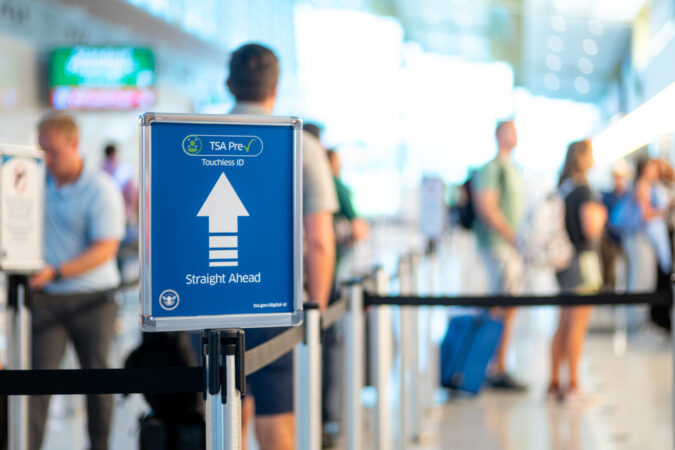
    TSA PreCheck Touchless ID, a new program that uses facial recognition, is expanding to 65 airports this spring. The expansion will prioritize 2026 World Cup host cities, where travel is expected to surge, said Transportation Security Administration spokesperson R. Carter Langston.

    “Passengers seem to absolutely appreciate it — the speed, the efficiency,” Langston said. “All they show is their face, and the officer just waves them right into the checkpoint. No hassling with passports or IDs or phones.”

    TSA launched the first iteration of the program in 2021 in partnership with Delta Air Lines at Hartsfield-Jackson Atlanta International Airport. It’s now available for five airlines across 22 airports.

    Critics worry that the program raises privacy concerns. It is voluntary, and travelers can opt out at any time and use a standard ID verification instead.

    What is PreCheck Touchless ID?

    TSA said in an email that the initiative is a joint effort from U.S. Customs and Border Protection, airports, and airlines that allows travelers “to move through dedicated lanes with ease, enjoying a smoother and more convenient airport experience.”

    The program uses the CBP Traveler Verification Service to create “a secure biometric template of a passenger’s live facial image taken at the checkpoint and matches it against a gallery of templates of pre-staged photos that the passenger previously provided to the government (e.g., U.S. Passport or Visa),” the agency website said.

    Who is eligible for PreCheck Touchless ID?

    To use the program, fliers must be a current TSA PreCheck member with a valid “known traveler number” and an active airline profile (such as being enrolled in a loyalty program). They must also have a valid passport uploaded to their airline profile.

    The airlines currently participating in the program include Alaska, American, Delta, Southwest, and United.

    TSA PreCheck Touchless ID offers current TSA PreCheck members an expedited airport security screening by way of “facial comparison technology.”

    It’s only available at select airports, through participating airlines — which vary. For example, travelers at John F. Kennedy International Airport, but only if they are flying with Alaska, America, or Delta. It is available at George Bush Intercontinental in Houston, but only for passengers flying with American. For a list of availability, visit the TSA website.

    How can travelers opt in?

    To use the program, travelers must first opt in through their airline’s website or app before checking in to their flight.

    The process varies by airline, but you can generally find the prompt under a “travel documents” section (where you add your known traveler number or passport details) of your airline loyalty program app or website.

    American Airlines customers, for example, will find the opt-in choice toward the bottom of the “Information and password” page of their AAdvantage profile, while Alaska Airlines customers should go to their account settings, then click into the “travel documents” section.

    Once travelers have opted in, then checked in for their flight, a TSA PreCheck Touchless ID symbol should then appear on their boarding pass. If the symbol is not on your boarding pass, you won’t be able to use the lane, even if you show an employee that you are enrolled in the program.

    At the airport, travelers should follow signs to a separate TSA PreCheck Touchless ID lane. Instead of handing an ID over to an officer to verify your identity, you’ll instead pause to scan your face, then keep moving.

    Is it really faster?

    It can be, for two reasons.

    First: There is no slowdown to hand over and scan your ID; travelers must only pause during their walk through the line dividers before proceeding to the X-ray machines.

    Second: Because the program is new, requires signing up in advance, and is not available for every airline, it’s getting a fraction of the traffic that regular security, Clear, or PreCheck lanes are.

    We’ve had mixed results. When it works, it’s incredible; you really are through in seconds.

    But we’ve also been delayed when the facial comparison machine was undergoing maintenance and out of use, sending us back into the longer PreCheck lane.

    Which airports offer PreCheck Touchless ID?

    TSA PreCheck Touchless ID is already available at 22 airports (however, participating airlines will vary; check the TSA website for more information):

    • Boston Logan International Airport
    • Charlotte Douglas International Airport
    • Chicago O’Hare International Airport
    • Dallas-Fort Worth International Airport
    • Denver International Airport
    • Detroit Metropolitan Wayne County Airport
    • Dulles International Airport
    • George Bush Intercontinental Airport
    • Harry Reid International Airport in Las Vegas
    • Hartsfield-Jackson Atlanta International Airport
    • John F. Kennedy International Airport
    • LaGuardia Airport
    • Los Angeles International Airport
    • Minneapolis–Saint Paul International Airport
    • Newark Liberty International Airport
    • Palm Beach International Airport
    • Philadelphia International Airport
    • Portland International Airport in Oregon
    • Ronald Reagan Washington National Airport
    • Salt Lake City International Airport
    • San Francisco International Airport
    • Seattle-Tacoma International Airport

    What are the privacy concerns?

    The TSA is using more facial recognition at the airport, including in regular security lanes and CBP checks.

    The CBP says its Enhanced Passenger Processing involves taking a traveler’s photo using “auto capture technology” to simplify the inspection and adjudication process.

    Travelers can also use biometric screenings to speed through Global Entry, using a CBP app.

    TSA says on its website that it may share your information with “CBP, DHS S&T, or others as necessary.” The agency confirmed that includes sharing information about travelers with Immigration and Customs Enforcement to check for deportation orders.

    There has been a bipartisan effort to put more guardrails on its use at airports.

    In 2019, the Department of Homeland Security said that photos of travelers were taken in a data breach, accessed through the network of one of its subcontractors. (TSA says its databases are encrypted).

    A new Senate bill would allow officers to continue scanning travelers’ faces if they opt in; it would ban the technology’s use for anything other than verifying identities. It would also require the agency to immediately delete the scans once the check is complete.

    If you change your mind about TSA PreCheck Touchless ID, you can opt out at any time and ask for standard ID verification instead. You can opt out of any facial recognition at the airport by saying, “I’d prefer a standard ID check.”

    The agency also says it deletes photos and personal data within 24 hours of scheduled flight departures. The TSA website’s FAQ section addresses some privacy concerns and says that all data collected during facial comparison checks is protected.

  • Letters to the Editor | Jan. 30, 2026

    Letters to the Editor | Jan. 30, 2026

    ICE Out

    Mayor Cherelle L. Parker and everyone on City Council must urgently support the “ICE Out” legislative package introduced by Councilmembers Kendra Brooks and Rue Landau, which would restrict local cooperation with federal agents. We’ve all watched the horrific scenes playing out in Minneapolis, and while Mayor Parker has made it clear that she wants to avoid antagonizing the White House, the fact is that laying low has never been the right response to fascism. We know how spectacle-focused Donald Trump is, so with the nation’s 250th anniversary celebrations coming to Philadelphia this year, it’s only a matter of time before the president turns his gaze on our city and tries to make an example of our community. Let’s prepare now to protect our neighbors in whatever ways we can — including by passing the “ICE Out” bills.

    Melina Blees, Philadelphia

    Getting the job done

    The critical role of immigrant workers in healthcare is underscored by your recent article about the death of nurse Muthoni Nduthu, the nurse who perished with two others in an explosion at Silver Lake Nursing Home in Bucks County.

    Ms. Nduthu and her family emigrated from Kenya to Philadelphia two decades ago. Like many immigrants — some, yes, undocumented — she worked long hours and put herself through school to become part of the huge share of foreign-born workers in the healthcare sector — 28% of the overall direct care workforce for long-term care, and 32% of workers in home care settings, according to a 2025 analysis by KFF.

    What would the steadily growing U.S. aging population do without these men and women?

    As a nurse myself, and recently having family members in other rehabilitation centers, I can attest to the important roles of immigrants and people of color in providing care. It is tough work, with a median annual wage of $16,800, according to a brief prepared for the SCAN Foundation. Consequently, there isn’t a clamor for these jobs by native-born Americans.

    The Trump administration’s immigration policies and U.S. Immigration and Customs Enforcement deployments are having a chilling effect on immigrants seeking employment in healthcare — something we absolutely don’t need as our aging population demands more care.

    We need more people committed to helping others like Nduthu. Let’s honor her memory by welcoming newcomers to our country, thoughtfully reforming immigration laws, and realizing that adequate healthcare can’t be achieved without immigrants.

    Pat Ford-Roegner, Glen Mills

    Blaming the victim?

    I’ve been increasingly frustrated with Jonathan Zimmerman’s columns, which strike me as not meeting the moment we live in. His most recent, “On guns, everyone’s a hypocrite,” is a prime example of what I would describe as utopian thinking. I agree that “Guns are a scourge on America.” But I would urge him to consider: What exactly does it accomplish to publicly state that Alex Pretti “carrying a gun certainly made it more likely that he would [die]”? Doing so reinforces the statements of the Trump administration, aiding in providing cover to murderers. Far better to highlight the hypocrisy of the administration abandoning its Second Amendment principles out of convenience. And we need not look far for a counterexample, Renee Good, who was unarmed and yet was still murdered.

    I would love to live in a world in which simply repeating over and over the data and history of the gun debate brought an end to gun violence. But we’ve been doing that for decades now. We don’t live in the same world we did before Donald Trump took office. In my opinion, the moment calls for realpolitik, not idealism. To appropriate the National Rifle Association’s oft-repeated oversimplification: Guns didn’t kill Alex Pretti. ICE agents did.

    Michael Fox, Philadelphia

    . . .

    The both-sides-ing on display in Jonathan Zimmerman’s column, “On guns, everyone’s a hypocrite,” is pathetic and counterproductive.

    Not every issue needs to be seen from both sides. When one “side” shows up to a protest and murders someone with a gun, and the other “side” shows up to a protest and gets murdered while armed.

    Zimmerman is missing the point that the left’s defense of gun ownership is in response to our government lying to us and saying Alex Pretti posed a threat as a retroactive excuse for the actions of their fascist goon squads, while video evidence proved otherwise. Maybe he wants to write an article about gun control, but this framing is completely missing the point; it is victim-blaming garbage.

    Timothy Burgess, Philadelphia

    Somalis targeted

    I was a U.S. Peace Corps volunteer in Somalia and had the opportunity to experience the rich Somali culture. I am appalled and ashamed to have Donald Trump treat the Somali population of the United States with disdain and disrespect.

    Unfortunately, this attitude has spread to U.S. Immigration and Customs Enforcement members in Minnesota. It is reported that ICE is stopping people and asking, “Are you Somali?” as if that were a crime. In that climate, it’s no wonder Somali American U.S. Rep. Ilhan Omar found herself being attacked during a recent town hall she was hosting there.

    Seventy-three percent of Somali immigrants are naturalized citizens. In Minnesota, this figure is even higher, with about 95% of the state’s Somali population holding U.S. citizenship.

    No people deserve to be called “garbage.” I do not believe this reflects the character or convictions of most Americans. Most of us are descended from immigrants.

    Our country is founded on the belief that all people have the right to due process and to be treated with respect.

    We need to depend on our government of laws and judicial review to protect our rights, including those of the Somali Americans among us. Raise your voices in protest. Write the president and your members of Congress. Do something to help keep our democracy alive.

    Lally Turner, Philadelphia

    History, past and present

    George Santayana is quoted as saying, “Those who cannot remember the past are condemned to repeat it.” I think for our times, we need a slight variant of this saying. This seems especially true in light of the Trump administration’s decision to remove the exhibit at the President’s House Site about the nine enslaved people who were held captive by George Washington. Please ask yourself, “Why does this administration not want us to remember them?” I now believe the Santayana saying should read, “Those who seek to erase the past intend to repeat it.”

    Beware, my fellow citizens: If these nine — Austin, Christopher Sheels, Giles, Hercules, Joe Richardson, Moll, Oney Judge, Paris, and Richmond — can be erased, who is next?

    Deborah Zubow, Philadelphia

    Man in the mirror

    I read the recent article about Donald Trump supporters in Northeast Pennsylvania having “voter’s remorse” after casting ballots for Trump. Sorry, boys and girls, you get no sympathy from me. Trump is exactly who he has always been, and your failure to see that in the 2024 election is nothing more than an indictment of you. One woman interviewed made the incredible statement that Trump was “honest.” Give me a break. I have always maintained that Trump himself is only part of the equation, the “frontman,” if you will. The real problem is represented by the people who believe, support, and back him up. They say they don’t particularly like him, but they like his “policies.” What policies might they be? Attempting to steal Greenland? Already having stolen Venezuela’s oil? Insulting allies? Threatening NATO and its members? Attempting to rewrite the parts of our history he doesn’t like? Failing to reduce inflation as he promised? Failing to end the Ukraine war as he promised? Killing American citizens while his ICE squad rounds up immigrants? The list goes on and on.

    I am anything but a liberal, having never voted for a Democrat for any office. I’d go so far as to say I support some of Trump’s policies, but he simply can’t get anything right, let alone keep his mouth shut or control his “Twitter finger.” If Trump doesn’t like it, everyone else be damned. A decent parent wouldn’t accept this kind of behavior from a 6-year-old.

    Enough already. Trump is what he has always been: a pompous, egotistical, selfish, childish buffoon — the same guy voted into office by those people interviewed for your article. If their standards revolve around the likes of Trump, they need to do the country a favor. Stay home in November and then again in 2028. Let the rest of us try to fix the problem you helped to create.

    Peter Moore, Jeffersonville

    Join the conversation: Send letters to letters@inquirer.com. Limit length to 150 words and include home address and day and evening phone number. Letters run in The Inquirer six days a week on the editorial pages and online.

  • Horoscopes: Friday, Jan. 30, 2026

    ARIES (March 21-April 19). You’ve fantasized about your future, and now that wishful thinking is in the realm of possibility. Go forward. The next steps still take a bit of courage, just because they are new. But they aren’t nearly as risky as you once imagined.

    TAURUS (April 20-May 20). A relationship may still be undefined, but there’s freedom in the lack of definition, and furthermore, the ambiguity leaves room for imagination. Consider letting this one define itself.

    GEMINI (May 21-June 21). Don’t assume that people think and behave like you do. Lean into differences. Get curious. You’ll be around people with talents different from yours, but you have to ask to know it’s true, and ask more to find a way to work together.

    CANCER (June 22-July 22). You’ve hung your heart on a distant star, and that’s more than OK because you also have the dedication to do what it takes and the resilience to keep coming back to it in a new way until you’ve figured it out.

    LEO (July 23-Aug. 22). Your eyes are doing a lot of work today, not only taking life in but telegraphing it out, sending signals as they complete your smile or perhaps smile on their own without any help from the rest of you. Your eyes may reveal a little more than intended.

    VIRGO (Aug. 23-Sept. 22). Identity isn’t a single rigid structure; it’s layered. Some layers can shift without the core being disturbed. You can reinvent, make-over or glow-up without erasing your former self. You’ll release a role and still remain fully yourself.

    LIBRA (Sept. 23-Oct. 23). You often seem to know just the thing to say to make someone feel better or act better. Today, you can do the same thing without words. Your silent presence has a vibe, and that tells it all. Some moments just require you to hold the space.

    SCORPIO (Oct. 24-Nov. 21). You’ve learned to keep things interesting for everyone, especially yourself, because bored people tend to misbehave. It’s time to change it up again. One new location will do the trick.

    SAGITTARIUS (Nov. 22-Dec. 21). A group is becoming increasingly important to you. As you participate, you’ll learn more about its members and develop an even deeper connection. Much can be accomplished here.

    CAPRICORN (Dec. 22-Jan. 19). Your life is yours to build, but you are also aware that you’re working inside systems and structures that entrap you. Both things can be true. For now, stick with anything that adds to your fulfillment, and life will get easier.

    AQUARIUS (Jan. 20-Feb. 18). The influences you choose will be people who move in the spirit of positivity. There’s someone you know who seems doubly grateful for half the blessings. Though their accounting is unusual, it’s a beneficial math.

    PISCES (Feb. 19-March 20). Emotional truth and factual truth are different kinds of honesty that don’t always show up together. Someone might express genuine pain even if their interpretation of events isn’t precise. Understanding often requires listening for both kinds of truth.

    TODAY’S BIRTHDAY (Jan. 30). Welcome to your Year of the Living Yes. You do what lights you up. Experiences stack beautifully. You’ll receive invitations to meals, music, travel and conversations that remind you how good life feels when shared. More highlights: A move, renovation or change of scenery lifts and sharpens you. Steady financial growth helps, too. A tender relationship favorably affects your confidence and daily life. Capricorn and Gemini adore you. Your lucky numbers are: 10, 16, 35, 2 and 44.