Tag: no-latest

  • Republicans took control of education. Can Democrats take it back?

    Republicans took control of education. Can Democrats take it back?

    WATER VALLEY, Miss. — A crowd turned out to hear a politician talk big about improving schools, but it wasn’t a Republican railing about transgender athletes or school vouchers or any of the issues the GOP has used to put Democrats into a defensive crouch.

    On this night, the politician taking questions was a Democrat — former Chicago mayor and President Barack Obama’s chief of staff Rahm Emanuel — talking about reading. For the past several years, Republicans have dominated the education debate with a focus on culture war politics. Emanuel, who is exploring a 2028 presidential run, makes the case for returning to the education part of education: achievement and learning rather than book bans and gender identity.

    That would benefit students and, he says, Democrats, who have not led a national conversation about student achievement since Obama was president. Instead, Republicans have been able to make up ground, capitalizing on anger about school closures during the pandemic and heated fights over transgender rights, race and other subjects.

    Emanuel talks about school achievement with a frequency and urgency rarely heard from Democrats in recent years. And he says both parties have wasted time on education culture wars.

    “This distracts us from the priorities of education,” he said in an interview. Questions around gender identity, he said, affect “less than 1 percent of the population and yet dominate 99 percent of the conversation. … You want to pick a pronoun? Great. Now can we focus on the other 35 kids that don’t know what a goddamn pronoun is?”

    While a dozen or more Democratic presidential hopefuls scramble to carve out their identities in advance of the 2028 election, many of them better known than he is, Emanuel is betting that a renewed focus on education can fuel a Democratic victory — and more immediately, his own prospects.

    As Chicago mayor, Emanuel successfully pushed several school reforms, including a longer school day, and saw graduation rates jump. But he had a contentious relationship with the teachers union and his tenure was marred by a seven-day strike. He also angered many Chicagoans by closing 50 schools. He says he has learned from his mistakes and hopes to take some of his successes national.

    Emanuel traveled to Mississippi this month to examine and promote the state’s success in teaching reading. On fourth-grade tests, the state moved from 49th in the nation in 2013 to ninth in 2024 by focusing on what’s called the science of reading — instruction built on sound-it-out phonics. The state combined that with increased funding, a heavy dose of teacher training and support, and a requirement that third graders pass a reading test to advance to fourth grade.

    Emanuel argues that Washington should use federal dollars to incentivize other states to do the same. And he is proposing renewed federal standards and accountability, ideas that faded a decade ago.

    At the town hall meeting in Water Valley, a tiny town in the north of the state, more than 125 people gathered. There were no questions about race, gender or culture wars, giving Emanuel space to drive home his central thesis.

    “We’ve got a 30-year low in reading scores,” he said. “Has a single governor called for an emergency meeting of the governors association?”

    Left unsaid was that he might run against some of those governors in a 2028 Democratic primary.

    Emanuel brought a film crew with him, and within a day of leaving the state, he had posted video from the visit to his social media accounts.
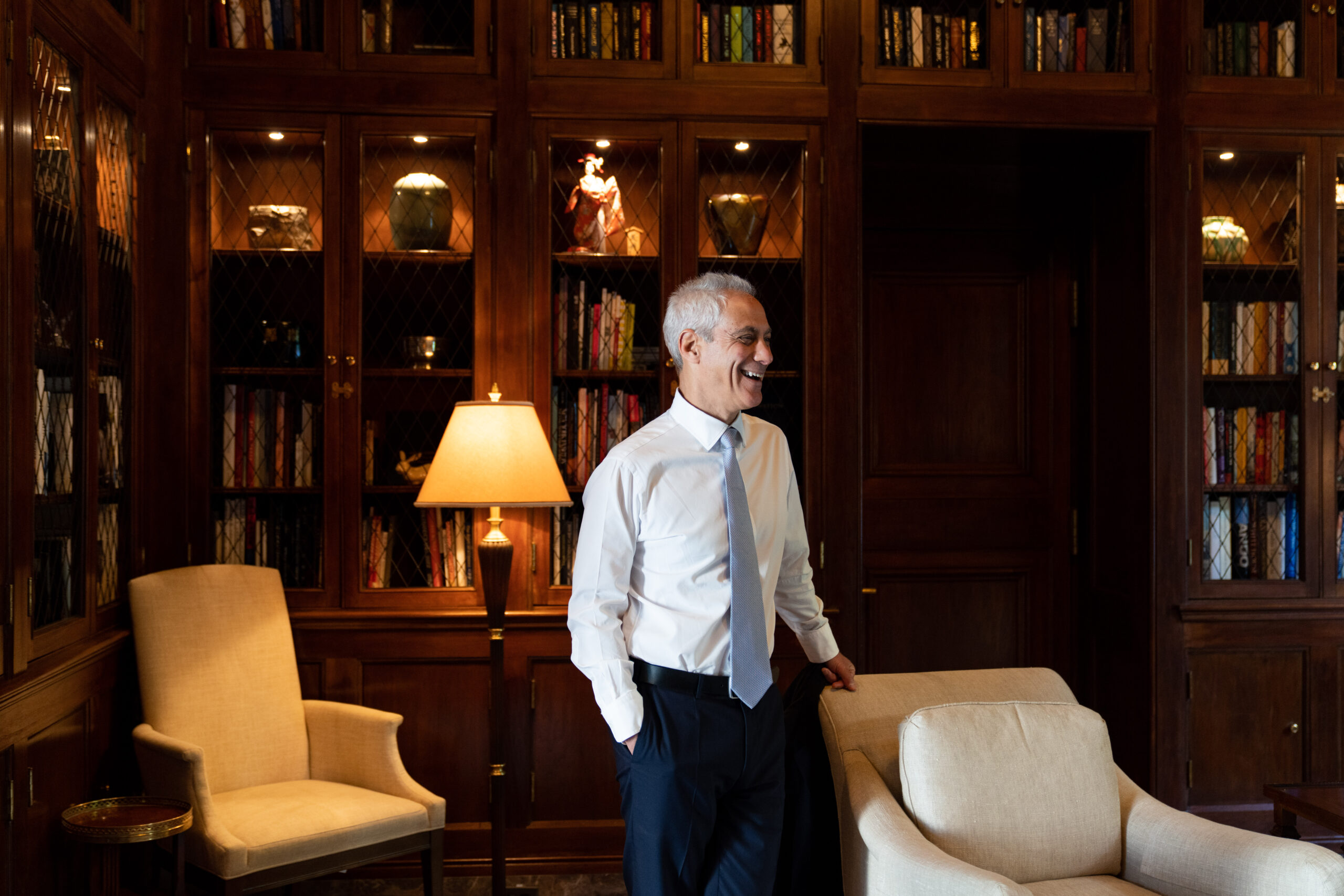
    Rahm Emanuel in 2023, when he served as U.S. ambassador to Japan.

    An education evolution

    Emanuel likes to hark back to an era when education reform was in vogue. A national movement centered on standards and accountability began in the states and culminated with the bipartisan passage of the No Child Left Behind Act in 2001. Schools were required to make progress on annual tests or face escalating consequences.

    Eight years later, Obama continued pressing for accountability with the Race to the Top competition that awarded states with extra federal money for adopting favored policies such as Common Core standards and using student scores to measure teacher quality.

    But by the end of Obama’s tenure, opposition had built to the high-stakes testing that the accountability system was built on. The Race to the Top program ended, and most of the requirements under the 2001 law were reversed. The bipartisan consensus collapsed, and soon the political parties gravitated to their partisan corners.

    Democrats backed increased funding for public schools and racial equity initiatives. They adopted policies in support of transgender students. Today, most Democratic governors continue to focus on new funding — for prekindergarten, community schools, teacher pay, free meals, and other priorities.

    Republicans promoted tax dollars for private school vouchers. During the pandemic, they blamed Democrats for keeping schools closed too long and for requiring measures like masks once school buildings reopened. Conservative parent groups that formed around pandemic issues soon used that momentum to build support for book bans and influence how educators address race and LGBTQ+ issues. GOP legislatures and conservative school boards passed laws and policies restricting how those topics could be dealt with in school.

    Republicans began eating into Democrats’ commanding lead on education issues. In 2006, a Fox News poll found Democrats with a 17-percentage-point lead when asked whom they trust on education issues, though their advantage was not that big in other surveys. By 2022, Republicans had narrowed the gap significantly – som— polls found the parties virtually tied. (Several newer polls have found that Democrats regained their advantage following President Donald Trump’s election.)

    In the wake of the pandemic, scores on national math and reading exams slid to a 30-year low.

    The Trump administration repeatedly cites this data in making the case for closing the Education Department and for backing school choice policies. Now, some Democrats are arguing that their party needs its own response to the slide.

    “It is deeply frustrating to me as a Democrat that we completely ceded this issue,” said Lanae Erickson, senior vice president for social policy, education, and politics at Third Way, a centrist Democratic think tank. “We have absolutely no ideas on the table.”

    In the 2024 presidential election, President Joe Biden and Vice President Kamala Harris, who took his place on the ticket, put forward only vague education goals. One day before the election, the Center for American Progress, a leading Democratic think tank, published a set of education recommendations. Even then, there was not much about student achievement.

    Jared Bass, senior vice president for education at CAP, said the group is now working on a new set of proposals that will squarely address academics.

    “There’s a real sense of humility within the party. We used to be the party that was trusted on education,” he said. “We need to get it right.”

    Even with a hunger for action among Democrats, Emanuel’s ideas are likely to face pushback inside his party and beyond. Many progressives argue that racial inequity and racism are to blame for the low achievement rates of many students of color, and they may resist leaders who want to pivot away from those topics. Teachers unions, who are active in the Democratic Party, strongly oppose the accountability systems that rely on standardized testing that Emanuel hopes to bring back.

    Randi Weingarten, president of the American Federation of Teachers and a longtime power in the Democratic Party, said she would oppose a return to accountability systems that too often, in her view, devolved into blaming teachers. Still, she agrees that Democrats need a new vision.

    “Democrats are all too reactive and as a result they have lost ground on education,” she said. “It’s very frustrating.”

    A new Race to the Top

    Emanuel is betting that while other Democratic presidential candidates concentrate on standing up to Trump, voters will want a candidate more focused on their daily concerns.

    On his trip to Mississippi, Emanuel toured an elementary school in Hattiesburg, crouching beside children’s desks to peek at their work and hearing from the principal about what has succeeded. And he met with Jim Barksdale, whose $100 million donation beginning 25 years ago set Mississippi on its path to a new reading program.

    “When do we get to geek out?” he asked Barksdale as they took seats in his living room with a trio of people involved in education in Mississippi. He turned to the group and asked, simply, “How did you do it?”

    After a long conversation about the reading program, Barksdale told Emanuel that a lot of people say they want to learn from Mississippi’s success. “They say, ‘I’m all for it. How’d you do this?’” he said. “And then they don’t do it because it costs money.”

    “It also costs guts,” Emanuel replied.

    Emanuel, long known as a partisan brawler, says he is ready to fight for this.

    In an interview, Emanuel sketched the outlines of the federal program he would like to see. He suggested a new version of Obama’s Race to the Top that would incentivize states to adopt science of reading curriculums — what Mississippi uses — and other policy changes.

    The program, he said, also could encourage high schools to offer more college courses, and he favors a policy he advanced in Chicago requiring all seniors to have a plan for college, trade school or the military to graduate from high school. He also wants to incentivize states to replicate Chicago’s promise of free community college for students who graduate from high school with a B average.

    States would have to adopt these types of changes to get the new federal money, he said. He contrasted that approach with the unprecedented $130 billion in COVID funding that went to K-12 schools under the Biden administration, which Emanuel slammed as having too few requirements. For instance, the program was sold as a way to reopen schools, but districts were not required to reopen.

    He argues that the No Child Left Behind system was too test-driven, but that the country “overcorrected.” The right answer, he said, lies somewhere in between.

    As for the culture wars, he is trying to stay far away. He dismisses some of the racial equity efforts that swept through schools, mocking San Francisco’s effort to rename schools, including one named for Abraham Lincoln.

    He also opposes allowing trans athletes to compete in girls’ and women’s sports, saying it’s not fair to other competitors. But he said he does not know whether he would, if elected president, pull federal funding from schools that resist, as Trump has done, and he said he is not interested in discussing the finer points of these policies. The entire debate, he said, has been a “dead-bang loser” — both politically and for the young people involved.

    As Democrats begin to rethink their positions on education, they will need to weigh whether Emanuel’s prescriptions are the right ones and also whether he is the right messenger for them. For now, though, Emanuel is one of the few people making this case.

    At the town hall meeting, a questioner asked what he had done right and wrong as mayor, and Emanuel replied that he mishandled his relationship with the teachers union at first, specifically by unilaterally canceling a scheduled pay raise.

    “It created a lot of animosity,” he said, describing his first term as “hand-to-hand combat.” He said he should have tried to work with the union president to find a solution together.

    “You can’t drive reform if people don’t feel part of it,” he said. “That’s like 101, and I screwed it up — Mr. Smarty Pants over here. And I learned a lot.”


  • Flamingo fans fight to unseat the mockingbird as Florida’s state bird

    Flamingo fans fight to unseat the mockingbird as Florida’s state bird

    Jim Mooney has launched a high-wattage campaign to elevate the flamingo to Florida’s state bird.

    The Republican has handed out flamingo lapel pins and 11-by-16 prints of flamingo artwork to his 119 colleagues in the state legislature. He sported a suit with a pink shirt, a pink pocket square, and a tie festooned with flamingos to testify on behalf of his legislation.

    But the gangly pink bird must unseat the mockingbird, which has been Florida’s official bird for 99 years, to gain the distinction Mooney says it deeply deserves.

    To accomplish this, the lawmaker is hoping to reach a political compromise with supporters of the sprightly and charming Florida scrub jay, who have torpedoed his legislation in the past. The scrub jay would be honored as the state’s songbird under Mooney’s bill, while the flamingo would become the state bird.

    “It’s unbelievable how this has taken on a life of its own,” said Mooney, a retired high school sports coach and former mayor of Islamorada. “I’m seeing flamingos everywhere I go. Across the state, everywhere I turn around, it’s a flamingo here and a flamingo there. People are sending me texts and letters about it. Everybody is on board for the flamingo.”

    He quickly added, “And the scrub jay.”

    Florida struck a similar deal in 2022 when strawberry growers lobbied the state to honor the strawberry shortcake. Many in the state especially in Mooney’s Florida Keys district — were outraged at the prospect that the key lime pie, the official state pie, could be pushed aside. Instead, state lawmakers just created a new category — state dessert — and awarded it to the strawberry shortcake.

    “There’s room for both, just like there’s room for both the flamingo and the scrub jay,” Mooney said.

    At stake are mostly bragging rights, though supporters also hope to secure more money for the study and conservation of flamingos. The American flamingo is already protected by the U.S. Migratory Bird Treaty Act, but conservationists say it should also be considered a threatened species, offering it even more protection after it was nearly wiped out in Florida in the past century by plume hunters and, later, habitat loss.

    Audubon Florida Executive Director Julie Wraithmell refuses to choose a favorite among the flamingo, mockingbird, and scrub jay — “we don’t choose between our kids” — but hopes the bird competition will lead to them all receiving more recognition.

    “If you’re Team Flamingo, you should put your influence and your support where your loyalty lies and really support Everglades restoration,” Wraithmell said. “If you’re Team Scrub Jay, you need to be paying attention to if the state is appropriating enough funding for upland land management for our parks and preserves.”

    Supporters have been campaigning for flamingos, one of the state’s most celebrated symbols, for years. But a debate among scientists about whether the wading bird, which on average can stand five feet tall, is native to the Sunshine State has hampered those efforts. Skeptics noted that few were seen in the wild, or outside a zoo, for more than 100 years.

    But Mooney, who has sponsored pro-flamingo legislation for four years, said a new University of Central Florida study may finally settle the dispute. Flamingos are native to the state and “genetically fit for restoration,” according to the study released in December. Audubon Florida also found that more than 101 flamingos landed in the state during Hurricane Idalia in 2023 and didn’t leave.

    The exact number of flamingos in Florida is unknown — the state doesn’t keep track — but residents regularly report sightings, including Mooney, who likes to show everyone he encounters a video of nearly three dozen flamingos serenely feeding in the Florida Bay in early January. A scientist spotted a flamboyance of 125 flamingos in the Everglades in July.

    The proposal, being debated during the current legislative session, isn’t as weighty as some of the other topics Florida lawmakers are expected to tackle, including the cost of property insurance, Mooney said, but is still important.

    “We seldom have bills that make you feel good,” he said. “This bill does, and it also has some real intrinsic value. It shows that our restoration projects are bearing fruit, and that flamingos are here to stay.”

    He was thrilled when Florida Gov. Ron DeSantis gave the birds a shout-out during his State of the State address Jan. 13. “Even the flamingos have returned,” DeSantis said while touting the state’s Everglades restoration work.

    Efforts to elevate the flamingo have overtaken a decades-long pro-scrub jay campaign. The friendly blue-and-white bird has fans among Florida schoolchildren, who have formed clubs and written lawmakers in support of the scrub jay being named state bird. It also has a devoted following among environmentalists who often argue against overdevelopment that would disturb their habitats.

    In 1999, Marion Hammer, the first female president of the National Rifle Association and considered among the most formidable lobbyists in Tallahassee, helped derail scrub jay supporters. They are “evil little birds that rob the nests of other birds and eat their eggs and kill their babies,” she said.

    A northern mockingbird keeps a keen eye out for intruders in 2015 n Houston. After nearly a century on its lofty perch, the northern mockingbird may be singing its last melodies as the state bird of Florida.

    Hammer was on Team Mockingbird and in an op-ed in 2016 noted that they are good parents and also remarkable songbirds, while the scrub jay “can’t even sing — it can only squawk.”

    The scrub jay lets out a soft trill during courtship but is often lumped in with songbirds, like blue jays, that it is related to. Flamingos, meanwhile, make squawky sounds.

    The mockingbird should remain the state bird, just as it has been since 1927, Hammer argued. (It’s also the state bird in Arkansas, Mississippi, Tennessee, and Texas.)

    Hammer couldn’t be reached for comment on the latest bird competition, but the scrub jay also has adversaries among Florida developers. It is at the center of a federal lawsuit filed in 2024 over homeowner rights in southwest Florida, where Charlotte County officials charge a fee to build in the bird’s habitat.

    “The scrub jay has just been commandeered to really violate property rights across Florida, and I just cannot allow it to be elevated to this level,” state Rep. Monique Miller, a Central Florida Republican, said during a committee meeting in December. “I wish these were decoupled because I want to make the flamingo your bird so badly.”

    Jackson Oberlink, a third-generation Floridian, has testified on behalf of the flamingo for the past three years, only to see his hopes dashed. He’s not nearly as optimistic as Mooney that it will succeed this time.

    “Every year, there seems to be a few more flamingo props in a committee room, and it seems like there’s a bit more enthusiasm. And then every year, it kind of peters out,” said Oberlink, the former legislative director for Florida for All, a liberal lobbying group.

    But he’s not ready to give up.

    Oberlink said he became enchanted with the gangly pink birds when he encountered Pinky, a flamingo that was blown into the St. Marks National Wildlife Refuge in north Florida by Hurricane Michael in 2018.

    “I have a tattoo of Pinky and the St. Marks Lighthouse. So it definitely left a mark on me, and I’ll always be rooting for the flamingo in Florida.”

  • Letters to the Editor | Jan. 25, 2026

    Letters to the Editor | Jan. 25, 2026

    Fate of ‘Rocky’ statue

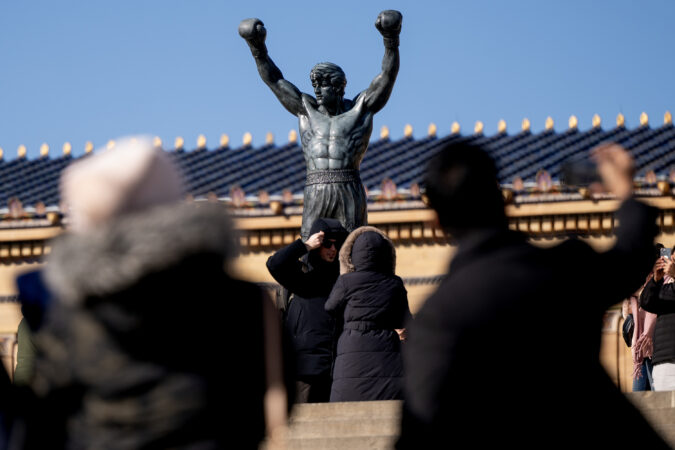
    F. Eugene Dixon, former chair of the Philadelphia Art Commission, was asked in the early ’80s whether the Rocky statue should be placed atop the steps of the Philadelphia Museum of Art. Mr. Dixon responded, “Surely you jest.”

    City officials had argued that the statue was “not art but a movie prop,” and it was moved to the old Spectrum arena. For the filming of Rocky V, the statue was temporarily moved to the top of the steps at the Philadelphia Museum of Art. For many years, it has been at the bottom of the steps. The Philadelphia Art Commission, not jesting, recently voted 4-1 to move the statue back to the top of the steps.

    Landis W. Doner, Jenkintown, islanderdon@gmail.com

    . . .

    The kerfuffle over the Rocky statue is as artificial as the celluloid boxer. If a Rocky statue defining grit belongs at the Art Museum, cast it in the image of the real Rocky Balboa who fought the real Apollo Creed. Chuck Wepner lost a 1975 bloodbath to Muhammad Ali when he was knocked out in the 15th round. Sylvester Stallone used the fight (and much of Wepner’s persona) to create a billion-dollar franchise. Wepner sued Stallone, claiming he was unjustly enriched by Wepner’s story, settling out of court.

    Philadelphia produced many great fighters who demonstrated grit and courage. Harold Johnson, Joey Giardello, and Bernard Hopkins come to mind. Matthew Saad Muhammad — abandoned at the Benjamin Franklin Parkway at age 5 — began boxing as Matt Franklin, changing his name when he converted to Islam. He was a champion who fought the best of his generation with power and determination. After winning the championship, he defended it eight times. He remained in Philadelphia after retiring, where he died broke, homeless, and largely forgotten.

    Joe Frazier had an equally difficult upbringing. After moving to Philadelphia alone at age 15, he became an Olympic gold medalist and heavyweight champion. He fought Ali three times, beating him in the 1971 title bout that riveted a nation.

    Rocky’s sculptor stated that “Rocky is the DNA” of Philadelphia. Nope. Fighters such as the above, and many others who worked in gritty blue-collar jobs, provided the DNA, giving Philadelphia the tough, hardworking ethic it claims, not a celluloid fighter. If the Rocky statue belongs anywhere, it would be near the shuttered Blue Horizon boxing venue in North Philadelphia, which Ring magazine once called the greatest boxing venue in the world. The fictional Rocky is tied to boxing far more than to art.

    Stewart Speck, Wynnewood

    Expensive ICE

    As a lifelong Democrat, I am profoundly disappointed in my party’s apparent capitulation on U.S. Immigration and Customs Enforcement funding. $10 billion? People not making half of any Congress member’s salary are out in the cold in Minnesota, peacefully registering outrage at the city’s brutal occupation by ICE, and my party is compromising on $10 billion so ICE can have a fleet of Boeing airliners, too. No budget cut for ICE, no congressional imposition of policing standards common in every city in America to protect due process and privacy rights. Democrats had better put up some real opposition now — or they may fail to convince voters later this year that they are a true alternative. Congress, please stand up for the poor folks in Minnesota.

    William Culleton, Philadelphia

    Join the conversation: Send letters to letters@inquirer.com. Limit length to 150 words and include home address and day and evening phone number. Letters run in The Inquirer six days a week on the editorial pages and online.

  • Dear Abby | Patron provides two cents’ worth on tipping

    DEAR ABBY: It seems that everywhere I go, people expect tips. Yesterday, I pulled up to the drive-through at a cookie store, and before I paid or was handed my cookies, the clerk asked, “Would you like to leave a tip?” My niece recently told me that after she left a tip at a restaurant, the server followed her outside and asked if she hadn’t been a very good server because the tip was small. I can give you more examples just from my family regarding their experience with tipping.

    In this economy, I don’t feel the 20% rule should apply. For the price of a lunch for two at a sit-down restaurant these days, the tip costs as much as a small entree. When I go through a drive-through, I don’t feel I need to tip because I’m not inside using their facility. But if I don’t, I get a disappointed look from the gal who gets paid to make and hand me my drink. What are your thoughts?

    — TIPPED OUT IN IDAHO

    DEAR TIPPED OUT: The server you mentioned may need tips to survive on her subminimum or minimum wage income. However, a tip should never be requested, and for a server to follow your niece out of a restaurant to discuss a small tip is beyond the pale. Although some establishments “suggest” tips that can go as high as 35%, most customers give 15% or 20% of the total bill.

    Since you asked for my opinion, here it is: Quit complaining. If you think you received adequate service, leave a tip, and you will be warmly welcomed at whatever eatery you choose to patronize.

    ** ** **

    DEAR ABBY: Once a month, my wife and I play music trivia with my brother and his wife at our local pub. We invited them, thinking it would be a great way for us to get closer. (I have an older brother we are closer to.) As it turns out, my sister-in-law belittles my brother in front of us if he questions an answer someone might give (which we all do at one point or another).

    At first, we laughed and considered it to be playful banter, but now it has become really uncomfortable. My brother doesn’t say anything back because he doesn’t want to create a scene, so the night always ends on a sour note for me and my wife.

    Abby, we’re to the point of telling my brother we no longer want them as partners on our team, but I’m not sure how to go about it. What can we say without creating a major blowup? Help, please.

    — SOUR NOTE IN MICHIGAN

    DEAR SOUR NOTE: Tell your brother and sister-in-law privately, together, that if she has any criticisms to make about your brother, you would prefer that it not be in public or in front of you because it makes you UNCOMFORTABLE. It is the truth. It may cause them to stop playing music trivia with you, which will solve your problem. However, if they show up and she does it again, end your participation, with no additional explanation needed.

  • Horoscopes: Sunday, Jan. 25, 2026

    ARIES (March 21-April 19). Your energy needs to come first today. Relationships and projects have been too demanding of you. Get back to honoring yourself by choosing what gives you strength and joy. Perhaps anything that drains you doesn’t have to be your concern.

    TAURUS (April 20-May 20). Today’s commercial offers come with hidden costs, conditions or disappointments that make them a poor use of your energy. Skip the new purchase and you’ll find you can use what you already have, and it will work just fine.

    GEMINI (May 21-June 21). There’s satisfaction in finishing something you started. Completion frees attention and makes room for the next chapter. Make quick work of it. It doesn’t have to be perfect; it just has to be done.

    CANCER (June 22-July 22). The day offers permission to relax, stop comparing yourself and focus on your own effort rather than the scoreboard. The usual focus on “winning” or “losing” is irrelevant. The end result won’t define the experience.

    LEO (July 23-Aug. 22). When you consider what can go wrong, do it briefly, just long enough to understand necessary precautions to take. Visualization works whether you use it to see a desirable or an undesirable outcome, so be careful what mental pictures you paint.

    VIRGO (Aug. 23-Sept. 22). There is one person who you haven’t talked to in a long while. This will be an auspicious time to catch up. You’ll discover how you can help one another, even if it’s just by being a witness to what’s happening in their world.

    LIBRA (Sept. 23-Oct. 23). Boundaries are universal in nature, and ignoring them can lead to conflict. So stay aware of the animal instinct inside every human that is always scanning the environment for signals that assure their territory will be respected.

    SCORPIO (Oct. 24-Nov. 21). Let fantasy help you. Reality always wins in the end, but you don’t have to give it the beginning and middle, too. Wishes, plans, hopes and dreams can keep you motivated. They help you bend reality to your vision.

    SAGITTARIUS (Nov. 22-Dec. 21). The need for novelty is real. You may even feel agitated by overly familiar circumstances, the way songs that repeat too much get irritating. Doing something different from your usual routine is very important. Put something new on the books.

    CAPRICORN (Dec. 22-Jan. 19). Relationships are a dance. It helps if everyone is listening to the same music. And even when that is the case, it can be difficult not to step on toes. You’ll achieve grace with your timing and awareness of others.

    AQUARIUS (Jan. 20-Feb. 18). Success is built one brick at a time. Even the most lavish and lovely construction in the world is done bit by bit, which can feel very unglamorous in practice, but at least this one is a beauty — it will be worthwhile to inhabit.

    PISCES (Feb. 19-March 20). You’re in the thrust of life, expressing your talents, skills and passions, and there’s nothing more attractive than that. You’re not in it for the attention, but you’ll get it anyway. What do you want? This is the time to ask for it.

    TODAY’S BIRTHDAY (Jan. 25). Welcome to your Year of Quiet Triumphs. You’ll master subtle forms of winning, and with your timing, restraint and diplomacy you will use each win to propel you to your goal of amassing the power to make a difference in the lives of others. More highlights: Family dynamics improve as you navigate with patience and humor. Love steadies, and respect deepens all around you. Gemini and Leo adore you. Your lucky numbers are: 3, 21, 11, 2 and 41.

  • The man killed by a federal officer in Minneapolis was an ICU nurse, family says

    The man killed by a federal officer in Minneapolis was an ICU nurse, family says

    MINNEAPOLIS — Family members say the man killed by a U.S. Border Patrol officer in Minneapolis on Saturday was an intensive care nurse at a Department of Veterans Affairs hospital who cared deeply about people and was upset by President Donald Trump’s immigration crackdown in his city.

    Alex Jeffrey Pretti, 37, was an avid outdoorsman who enjoyed getting in adventures with Joule, his beloved Catahoula leopard dog who also recently died. He had participated in protests following the killing of Renee Good by a U.S. Immigration and Customs officer on Jan. 7.

    “He cared about people deeply and he was very upset with what was happening in Minneapolis and throughout the United States with ICE, as millions of other people are upset,” said Michael Pretti, Alex’s father. “He thought it was terrible, you know, kidnapping children, just grabbing people off the street. He cared about those people, and he knew it was wrong, so he did participate in protests.”

    Pretti was a U.S. citizen, born in Illinois. Like Good, court records showed he had no criminal record and his family said he had never had any interactions with law enforcement beyond a handful of traffic tickets.

    In a recent conversation with their son, his parents, who live in Colorado, told him to be careful when protesting.

    “We had this discussion with him two weeks ago or so, you know, that go ahead and protest, but do not engage, do not do anything stupid, basically,” Michael Pretti said. “And he said he knows that. He knew that.”

    The Department of Homeland Security said that the man was shot after he “approached” Border Patrol officers with a 9 mm semiautomatic handgun. Officials did not specify if Pretti brandished the gun. In bystander videos of the shooting that emerged soon after, Pretti is seen with a phone in his hand but none appears to show him with a visible weapon.

    Family members said Pretti owned a handgun and had a permit to carry a concealed handgun in Minnesota. They said they had never known him to carry it.

    Alex Pretti’s family struggles for information about what happened

    The family first learned of the shooting when they were called by an Associated Press reporter. They watched the video and said the man killed appeared to be their son. They then tried reaching out to officials in Minnesota.

    “I can’t get any information from anybody,” Michael Pretti said Saturday. “The police, they said call Border Patrol, Border Patrol’s closed, the hospitals won’t answer any questions.”

    Eventually, the family called the Hennepin County Medical Examiner, who they said confirmed had a body matching the name and description of their son.

    Alex Pretti grew up in Green Bay, Wisc., where he played football and baseball and ran track for Preble High School. He was a Boy Scout and sang in the Green Bay Boy Choir.

    After graduation, he went to the University of Minnesota, graduating in 2011 with a bachelor’s degree in biology, society, and the environment, according to the family. He worked as a research scientist before returning to school to become a registered nurse.

    Pretti had protested before

    Pretti’s ex-wife, Rachel N. Canoun, said she was not surprised he would have been involved in protesting Trump’s immigration crackdown. She said she had not spoken to him since they divorced more than two years ago and she moved to another state.

    She said he was a Democratic voter and that he had participated in the wave of street protests following the killing of George Floyd by a Minneapolis police officer in 2020, not far from the couple’s neighborhood. She described him as someone who might shout at law enforcement officers at a protest, but she had never known him to be physically confrontational.

    “These kinds of things, you know, he felt the injustice to it,” Canoun said. “So it doesn’t surprise me that he would be involved.”

    Canoun said Pretti got a permit to carry a concealed firearm about three years ago and that he owned at least one semiautomatic handgun when they separated.

    “He didn’t carry it around me, because it made me uncomfortable,” she said.

    Pretti had ‘a great heart’

    Pretti lived in a four-unit condominium building about 2 miles from where he was shot. Neighbors described him as quiet and warmhearted.

    “He’s a wonderful person,” said Sue Gitar, who lived downstairs from Pretti and said he moved into the building about three years ago. “He has a great heart.”

    If there was something suspicious going on in the neighborhood, or when they worried the building might have a gas leak, he would jump in to help.

    Pretti lived alone and worked long hours as a nurse, but he was not a loner, his neighbors said, and would sometimes have friends over.

    His neighbors knew he had guns — he’d occasionally take a rifle to shoot at a gun range — but were surprised at the idea that he might carry a pistol on the streets.

    “I never thought of him as a person who carried a gun,” said Gitar.

    Pretti was passionate about the outdoors

    A competitive bicycle racer who lavished care on his new Audi, Pretti had also been deeply attached to his dog, who died about a year ago.

    His parents said their last conversation with their son was a couple of days before his death. They talked about repairs he had done to the garage door of his home. The worker was a Latino man, and they said with all that was happening in Minneapolis he gave the man a $100 tip.

    Pretti’s mother said her son cared immensely about the direction the county was headed, especially the Trump administration’s rollback of environmental regulations.

    “He hated that, you know, people were just trashing the land,” Susan Pretti said. “He was an outdoorsman. He took his dog everywhere he went. You know, he loved this country, but he hated what people were doing to it.”

  • Trump heaps praise on U.K. troops following furor over Afghanistan comments

    Trump heaps praise on U.K. troops following furor over Afghanistan comments

    LONDON — U.S. President Donald Trump heaped praise Saturday on British soldiers who fought in Afghanistan, in a post on social media that represented a partial reversal of comments he made this week that drew a cascade of criticism in the U.K., particularly from families of those killed and seriously injured in the conflict.

    In the wake of a conversation earlier with British Prime Minister Keir Starmer, Trump said on Truth Social that the “great and very brave soldiers of the United Kingdom will always be with the United States of America.”

    He described the 457 British servicemen and women who died in Afghanistan and those that were badly injured as “among the greatest of all warriors.”

    Trump added that the bond between the two countries’ militaries is “too strong to ever be broken” and that the U.K. “with tremendous heart and soul, is second to none (except for the USA).”

    Trump’s comments follow an interview with Fox Business Network on Thursday in Davos, Switzerland, when he said he wasn’t sure the other 31 nations in NATO would be there to support the United States if and when requested and that troops from those countries stayed “a little off the front lines.”

    Trump did not apologize directly for those comments, nor retract them, as Starmer had suggested in his initial response on Friday when he described the words of the president as “insulting and frankly appalling.”

    Starmer’s office in No. 10 Downing Street said the issue was raised in a conversation between the pair on Saturday, in which other topics were discussed, including the war in Ukraine and security in the Arctic region.

    “The prime minister raised the brave and heroic British and American soldiers who fought side by side in Afghanistan, many of whom never returned home,” Downing Street said in a statement. “We must never forget their sacrifice.”

    Trump’s view as expressed in the Fox Business interview stands at odds with the reality that in October 2001, nearly a month after the 9/11 attacks, the U.S. led an international coalition in Afghanistan to destroy al-Qaida, which had used the country as its base, and the group’s Taliban hosts.

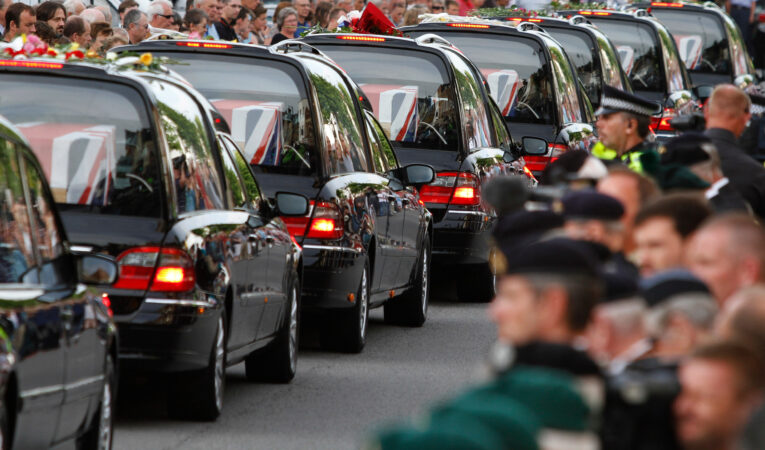
    Alongside the U.S. were troops from dozens of countries, including from NATO, whose mutual-defense mandate had been triggered for the first time after the attacks on New York and Washington. More than 150,000 British troops served in Afghanistan in the years after the invasion, the largest contingent after the American one.

    The Italian and French governments also expressed their disapproval Saturday at Trump’s comments, with both describing them as “unacceptable.”

  • Iran’s Revolutionary Guard commander warns U.S. his force has its ‘finger on the trigger’

    Iran’s Revolutionary Guard commander warns U.S. his force has its ‘finger on the trigger’

    DUBAI, United Arab Emirates — The commander of Iran’s paramilitary Revolutionary Guard, which was key in putting down recent nationwide protests in a crackdown that left thousands dead, warned that his force is “more ready than ever, finger on the trigger,” as U.S. warships headed toward the Middle East.

    Nournews, a news outlet close to Iran’s Supreme National Security Council, reported on its Telegram channel that the commander, Gen. Mohammad Pakpour, warned the United States and Israel “to avoid any miscalculation.”

    “The Islamic Revolutionary Guard and dear Iran stand more ready than ever, finger on the trigger, to execute the orders and directives of the Commander-in-Chief,” Nournews quoted Pakpour as saying.

    Tension remains high between Iran and the U.S. in the wake of a bloody crackdown on protests that began on Dec. 28, triggered by the collapse of Iran’s currency, the rial, and swept the country for about two weeks.

    Meanwhile, the number of people reported by activists as having been arrested jumped to more than 40,000, as fears grow some could face the death penalty.

    Trump’s warnings

    U.S. President Donald Trump has repeatedly warned Tehran, setting two red lines for the use of military force: the killing of peaceful demonstrators and the mass execution of people arrested in the protests.

    Trump has repeatedly said Iran halted the execution of 800 people detained in the protests. He has not elaborated on the source of the claim, which Iran’s top prosecutor, Mohammad Movahedi, strongly denied Friday in comments carried by the judiciary’s Mizan news agency.

    On Thursday, Trump said aboard Air Force One that the U.S. was moving warships toward Iran “just in case” he wants to take action.

    “We have a massive fleet heading in that direction and maybe we won’t have to use it,” Trump said.

    A U.S. Navy official, who spoke on condition of anonymity to discuss military movements, said Thursday that the aircraft carrier USS Abraham Lincoln and other warships traveling with it were in the Indian Ocean.

    Trump also mentioned the multiple rounds of talks American officials had with Iran over its nuclear program before Israel launched a 12-day war against the Islamic Republic in June, which also saw U.S. warplanes bomb Iranian nuclear sites. He threatened Iran with military action that would make earlier U.S. strikes against Iranian uranium enrichment sites “look like peanuts.”

    Airline jitters

    The tension has led at least two European airlines to suspend some flights to the wider region.

    Air France canceled two return flights from Paris to Dubai over the weekend. The airline said it was “closely following developments in the Middle East in real time and continuously monitors the geopolitical situation in the territories served and overflown by its aircraft in order to ensure the highest level of flight safety and security.” It said it would resume its service to Dubai later Saturday.

    Luxair said it had postponed its Saturday flight from Luxembourg to Dubai by 24 hours “in light of ongoing tensions and insecurity affecting the region’s airspace, and in line with measures taken by several other airlines.”

    It told the AP it was closely monitoring the situation “and a decision on whether the flight will operate tomorrow will be taken based on the ongoing assessment.”

    Arrivals information at Dubai’s international airport also showed the cancellation of Saturday flights from Amsterdam by Dutch carriers KLM and Transavia. The airlines did not immediately respond to requests for comment.

    Some KLM flights to Tel Aviv in Israel were also canceled on Friday and Saturday, according to online flight trackers.

    Rising death toll and arrests

    Although there have been no further demonstrations in Iran for days, the death toll reported by activists has continued to rise as information trickles out despite the most comprehensive internet blackout in Iran’s history, which has now lasted more than two weeks.

    The U.S.-based Human Rights Activists News Agency on Saturday put the death toll at 5,200, with the number expected to increase. The group’s figures have been accurate in previous unrest and rely on a network of activists in Iran to verify deaths. That death toll exceeds that of any other round of protest or unrest there in decades, and recalls the chaos surrounding Iran’s 1979 Islamic Revolution.

    Iran’s government offered its first death toll on Wednesday, saying 3,117 people were killed. It said 2,427 were civilians and security forces, and labeled the rest as “terrorists.” In the past, Iran’s theocracy has undercounted or not reported fatalities from unrest.

    The activist agency on Saturday also increased the total number of people arrested to 40,879 — a significant jump from the more than 27,700 people in its previous update.

    There have been fears Iran could apply the death penalty to arrested protesters, as it has done in the past.

    Iranian judiciary officials have called some of those being held “mohareb” — or “enemies of God” — a charge that carries the death penalty. It had been used along with other charges to carry out mass executions in 1988 that reportedly killed at least 5,000 people.

    At a U.N. Human Rights Council special session on Iran held in Geneva Friday, Volker Türk, the U.N.’s high commissioner for human rights, expressed concern over “contradictory statements from the Iranian authorities about whether those detained in connection with the protests may be executed.”

    He said Iran “remains among the top executioner states in the world,” with at least 1,500 people reportedly executed last year — a 50% increase over 2024.

  • Trump letter banning DEI in schools is dead after legal appeal is dropped

    Trump letter banning DEI in schools is dead after legal appeal is dropped

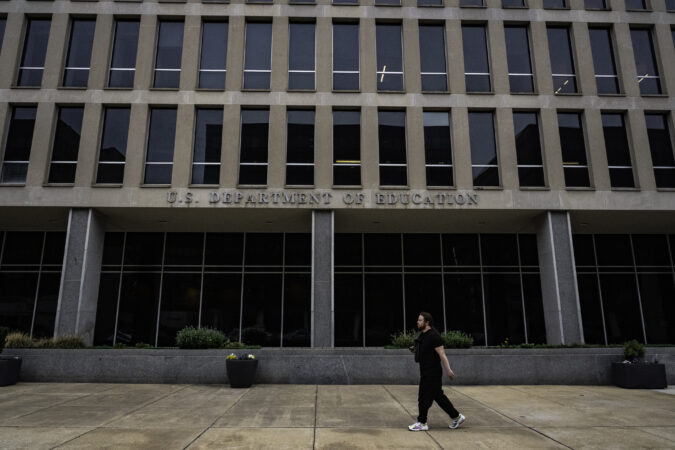
    Nearly a year ago, the Education Department sent universities and K-12 school districts scrambling with a sweeping but vague directive. The “Dear Colleague” letter said schools may be in violation of federal law if they consider race in virtually any way — hiring, discipline policy, scholarships, or programming.

    After a lawsuit and a defeat in court, however, the Trump administration says it is dropping the matter entirely.

    That means an August federal court order blocking the “Dear Colleague” letter will stand. The Trump administration had also demanded that schools certify that they are in compliance with the letter, and that demand is now dead, too.

    Still, it is unclear how significant the impact will be. The Trump administration, which made sweeping changes to education over its first year, can still work to impose its view of the law on schools through enforcement actions and other pressure. For instance, in July, the Justice Department published a memo that included many of the same ideas that were in the Education Department’s letter.

    Further, many schools have already changed their diversity, equity, and inclusion policies, wary of running afoul of the administration’s anti-DEI stance.

    In a statement, Education Department spokesperson Julie Hartman said the agency will continue to interpret Title VI of the Civil Rights Act as barring “impermissible DEI initiatives” that discriminate on the basis of race, color, or national origin.

    “Title VI has always prohibited schools from racial preferencing and stereotyping, and it continues to do so with or without the February 14th Dear Colleague Letter,” Hartman said. She said the agency’s civil rights office “will continue to vigorously enforce Title VI to protect all students and hold violators accountable.”

    The letter, issued by the department last February, laid out the agency’s interpretation of civil rights law and argued that schools at every level had embraced “pervasive and repugnant race-based preferences and other forms of racial discrimination.”

    It said that efforts to consider race in staffing, programming, and other aspects of campus life were unlawful, and that even race-neutral policies aimed at diversity could result in schools, colleges, and universities losing federal funding.

    Soon after, the American Federation of Teachers filed a lawsuit challenging the directive.

    In court, the government argued that it was simply clarifying and reaffirming that schools may not practice racial discrimination. But in August, U.S. District Judge Stephanie Gallagher in Maryland struck down both the guidance and the certification requirement, saying the department was trying to “substantially alter the legal obligations” of schools without going through proper procedures.

    “The government did not merely remind educators that discrimination is illegal: it initiated a sea change in how the Department of Education regulates educational practices and classroom conduct, causing millions of educators to reasonably fear that their lawful, and even beneficial, speech might cause them or their schools to be punished,” she wrote.

    The judge pointed to the letter’s suggestion that teaching about “systemic and structural racism” would be discriminatory. That, she wrote, is “textbook viewpoint discrimination” and contrary to law.

    The government appealed Gallagher’s ruling, and the case was proceeding until Wednesday, when the administration informed the court that it was dropping its challenge. That left the August ruling in place.

    The American Federation of Teachers and Democracy Forward, which brought the case, hailed the legal victory as a “final defeat” for the administration’s attempt to enforce what they see as an unlawful interpretation of civil rights law.

    “With the stroke of a pen, the administration tried to take a hatchet to 60 years of civil rights laws that were meant to create educational opportunity for all kids,” Randi Weingarten, president of the American Federation of Teachers, the lead plaintiff, said in a statement.

    The government’s decision to drop its appeal should put an end to the assertions in the original guidance since it was so thoroughly rejected by the court, said Michael Pillera, who worked for a decade at the Education Department’s civil rights office before becoming director of the educational opportunities project at the Lawyers’ Committee for Civil Rights Under Law.

    “The Dear Colleague letter was really their opening volley in their campaign of chaos against DEI, and what we have now is a spectacular failure,” he said. “They could not defend their positions in court. They had no argument to stand on.”

    But he conceded that it’s possible nothing will change and said the administration’s behavior “is often untethered to law.”

    Many schools may continue to comply with the anti-DEI directive in an effort to stave off attention from the administration, said Frederick Hess, director of education policy studies at the American Enterprise Institute, a conservative think tank.

    “One of the things we have seen is how reluctant institutional leaders are to get crosswise with the federal government, whether or not it’s clearly aligned with the law,” he said.

    Either way, Hess said, he was pleased that the February letter is no longer in force. That’s because he does not think those types of guidance documents should be used to make policy — something that both Democratic and Republican administrations have done in the past.

    “Dear Colleague letters have become a blunt instrument to move thousands of postsecondary institutions or 10,000-plus school districts in one direction or another, and I don’t think that’s an appropriate use of them,” he said. “I don’t think that’s good for anybody.”

  • Trump threatens Canada with 100% tariffs over its new trade deal with China

    Trump threatens Canada with 100% tariffs over its new trade deal with China

    WASHINGTON — President Donald Trump on Saturday threatened to impose a 100% tariff on goods imported from Canada if America’s northern neighbor went ahead with its China trade deal, intensifying a feud with Prime Minister Mark Carney, a rising voice in the West’s pushback to Trump’s new world order.

    Trump said in a social media post that if Carney “thinks he is going to make Canada a ‘Drop Off Port’ for China to send goods and products into the United States, he is sorely mistaken.”

    While Trump has waged a trade war over the past year, Canada this month negotiated a deal to lower tariffs on Chinese electric vehicles in return for lower import taxes on Canadian farm products.

    Trump initially had said that agreement was what Carney “should be doing and it’s a good thing for him to sign a trade deal.”

    Carney’s office did not immediately respond to a request for comment.

    Trump’s threat came amid an escalating war of words with Carney as the Republican president’s push to acquire Greenland strained the NATO alliance. Trump had commented while in Davos, Switzerland, this week that “Canada lives because of the United States.” Carney shot back that his nation can be an example that the world does not have to bend toward autocratic tendencies. “Canada doesn’t live because of the United States. Canada thrives because we are Canadian,” he said.

    Trump later revoked his invitation to Carney to join the president’s “Board of Peace” that he is forming to try to resolve global conflicts.

    Trump’s push to acquire Greenland has come after he has repeatedly needled Canada over its sovereignty and suggested it also be absorbed the United States as a 51st state. He posted an altered image on social media this week showing a map of the United States that included Canada, Venezuela, Greenland, and Cuba as part of its territory.

    In his message Saturday, Trump continued his provocations by calling Canada’s leader “Governor Carney.” Trump had used the same nickname for Carney’s predecessor, Justin Trudeau, and his first use of it toward Carney was the latest mark of their soured relationship.

    Carney has emerged as a leader of a movement for countries to find ways to link up and counter the U.S. under Trump. Speaking in Davos before Trump, Carney said, “Middle powers must act together because if you are not at the table, you are on the menu” and he warned about coercion by great powers — without mentioning Trump’s name. The prime minister received widespread praise and attention for his remarks, upstaging Trump at the World Economic Forum.

    The prime minister even spoke of a “rupture” between the U.S. under Trump and its Western allies that would never be repaired.

    Trump, in his Truth Social post Saturday, also said that “China will eat Canada alive, completely devour it, including the destruction of their businesses, social fabric, and general way of life.”

    Carney has not yet reached a deal with Trump to reduce some of the tariffs that he has imposed on key sectors of the Canadian economy. But Canada has been protected from the heaviest impact of Trump’s tariffs by the Canada-U.S.-Mexico Agreement. That trade agreement is up for a review this year.

    In the fall, the Canadian province of Ontario aired an anti-tariff ad in the U.S. that prompted Trump to end trade talks with Canada. The television ad used the words of former President Ronald Reagan to criticize U.S. tariffs. Trump pledged to increase tariffs on imports of Canadian goods by an extra 10%. He did not follow through.

    As for China, Canada had initially mirrored the United States by putting a 100% tariff on electric vehicles from Beijing and a 25% tariff on steel and aluminum. China had responded by imposing 100% import taxes on Canadian canola oil and meal and 25% on pork and seafood.

    But as Trump pursued pressure tactics, Canada’s foreign policy has been less aligned with the U.S., creating an opening for an improved relationship with China. Carney made the tariff announcement earlier this month during a visit to Beijing.

    “The China trade deal is quite limited as is the U.S. deal with China on (semiconductor) chips. The China deal may grow, however. I expect Chinese interest in funding a pipeline to northern British Columbia,” said Nelson Wiseman, professor emeritus of political science at the University of Toronto.

    Carney has said that Canada’s relationship with the U.S. is complex and deeper and that Canada and China disagree on issues such as human rights.

    Canada is the top export destination for 36 U.S. states. Nearly $3.6 billion Canadian (US $2.7 billion) worth of goods and services cross the border each day. About 60% of U.S. crude oil imports are from Canada, as are 85% of U.S. electricity imports.

    Canada is also the largest foreign supplier of steel, aluminum, and uranium to the U.S. and has 34 critical minerals and metals that the Pentagon is eager for and investing in for national security.