Tag: no-latest

  • Trump letter banning DEI in schools is dead after legal appeal is dropped

    Trump letter banning DEI in schools is dead after legal appeal is dropped

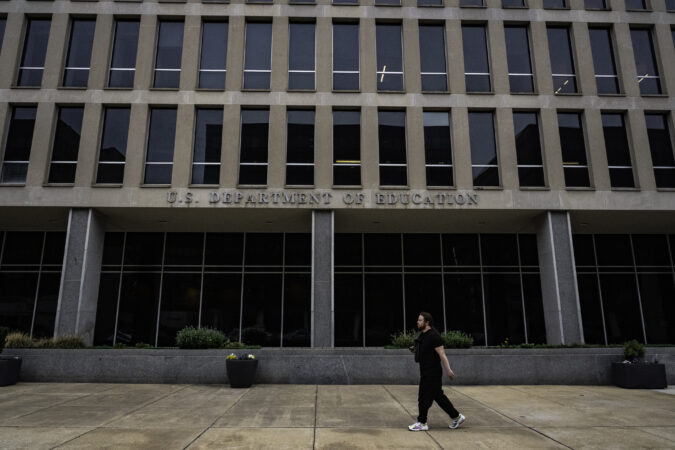
    Nearly a year ago, the Education Department sent universities and K-12 school districts scrambling with a sweeping but vague directive. The “Dear Colleague” letter said schools may be in violation of federal law if they consider race in virtually any way — hiring, discipline policy, scholarships, or programming.

    After a lawsuit and a defeat in court, however, the Trump administration says it is dropping the matter entirely.

    That means an August federal court order blocking the “Dear Colleague” letter will stand. The Trump administration had also demanded that schools certify that they are in compliance with the letter, and that demand is now dead, too.

    Still, it is unclear how significant the impact will be. The Trump administration, which made sweeping changes to education over its first year, can still work to impose its view of the law on schools through enforcement actions and other pressure. For instance, in July, the Justice Department published a memo that included many of the same ideas that were in the Education Department’s letter.

    Further, many schools have already changed their diversity, equity, and inclusion policies, wary of running afoul of the administration’s anti-DEI stance.

    In a statement, Education Department spokesperson Julie Hartman said the agency will continue to interpret Title VI of the Civil Rights Act as barring “impermissible DEI initiatives” that discriminate on the basis of race, color, or national origin.

    “Title VI has always prohibited schools from racial preferencing and stereotyping, and it continues to do so with or without the February 14th Dear Colleague Letter,” Hartman said. She said the agency’s civil rights office “will continue to vigorously enforce Title VI to protect all students and hold violators accountable.”

    The letter, issued by the department last February, laid out the agency’s interpretation of civil rights law and argued that schools at every level had embraced “pervasive and repugnant race-based preferences and other forms of racial discrimination.”

    It said that efforts to consider race in staffing, programming, and other aspects of campus life were unlawful, and that even race-neutral policies aimed at diversity could result in schools, colleges, and universities losing federal funding.

    Soon after, the American Federation of Teachers filed a lawsuit challenging the directive.

    In court, the government argued that it was simply clarifying and reaffirming that schools may not practice racial discrimination. But in August, U.S. District Judge Stephanie Gallagher in Maryland struck down both the guidance and the certification requirement, saying the department was trying to “substantially alter the legal obligations” of schools without going through proper procedures.

    “The government did not merely remind educators that discrimination is illegal: it initiated a sea change in how the Department of Education regulates educational practices and classroom conduct, causing millions of educators to reasonably fear that their lawful, and even beneficial, speech might cause them or their schools to be punished,” she wrote.

    The judge pointed to the letter’s suggestion that teaching about “systemic and structural racism” would be discriminatory. That, she wrote, is “textbook viewpoint discrimination” and contrary to law.

    The government appealed Gallagher’s ruling, and the case was proceeding until Wednesday, when the administration informed the court that it was dropping its challenge. That left the August ruling in place.

    The American Federation of Teachers and Democracy Forward, which brought the case, hailed the legal victory as a “final defeat” for the administration’s attempt to enforce what they see as an unlawful interpretation of civil rights law.

    “With the stroke of a pen, the administration tried to take a hatchet to 60 years of civil rights laws that were meant to create educational opportunity for all kids,” Randi Weingarten, president of the American Federation of Teachers, the lead plaintiff, said in a statement.

    The government’s decision to drop its appeal should put an end to the assertions in the original guidance since it was so thoroughly rejected by the court, said Michael Pillera, who worked for a decade at the Education Department’s civil rights office before becoming director of the educational opportunities project at the Lawyers’ Committee for Civil Rights Under Law.

    “The Dear Colleague letter was really their opening volley in their campaign of chaos against DEI, and what we have now is a spectacular failure,” he said. “They could not defend their positions in court. They had no argument to stand on.”

    But he conceded that it’s possible nothing will change and said the administration’s behavior “is often untethered to law.”

    Many schools may continue to comply with the anti-DEI directive in an effort to stave off attention from the administration, said Frederick Hess, director of education policy studies at the American Enterprise Institute, a conservative think tank.

    “One of the things we have seen is how reluctant institutional leaders are to get crosswise with the federal government, whether or not it’s clearly aligned with the law,” he said.

    Either way, Hess said, he was pleased that the February letter is no longer in force. That’s because he does not think those types of guidance documents should be used to make policy — something that both Democratic and Republican administrations have done in the past.

    “Dear Colleague letters have become a blunt instrument to move thousands of postsecondary institutions or 10,000-plus school districts in one direction or another, and I don’t think that’s an appropriate use of them,” he said. “I don’t think that’s good for anybody.”

  • Trump threatens Canada with 100% tariffs over its new trade deal with China

    Trump threatens Canada with 100% tariffs over its new trade deal with China

    WASHINGTON — President Donald Trump on Saturday threatened to impose a 100% tariff on goods imported from Canada if America’s northern neighbor went ahead with its China trade deal, intensifying a feud with Prime Minister Mark Carney, a rising voice in the West’s pushback to Trump’s new world order.

    Trump said in a social media post that if Carney “thinks he is going to make Canada a ‘Drop Off Port’ for China to send goods and products into the United States, he is sorely mistaken.”

    While Trump has waged a trade war over the past year, Canada this month negotiated a deal to lower tariffs on Chinese electric vehicles in return for lower import taxes on Canadian farm products.

    Trump initially had said that agreement was what Carney “should be doing and it’s a good thing for him to sign a trade deal.”

    Carney’s office did not immediately respond to a request for comment.

    Trump’s threat came amid an escalating war of words with Carney as the Republican president’s push to acquire Greenland strained the NATO alliance. Trump had commented while in Davos, Switzerland, this week that “Canada lives because of the United States.” Carney shot back that his nation can be an example that the world does not have to bend toward autocratic tendencies. “Canada doesn’t live because of the United States. Canada thrives because we are Canadian,” he said.

    Trump later revoked his invitation to Carney to join the president’s “Board of Peace” that he is forming to try to resolve global conflicts.

    Trump’s push to acquire Greenland has come after he has repeatedly needled Canada over its sovereignty and suggested it also be absorbed the United States as a 51st state. He posted an altered image on social media this week showing a map of the United States that included Canada, Venezuela, Greenland, and Cuba as part of its territory.

    In his message Saturday, Trump continued his provocations by calling Canada’s leader “Governor Carney.” Trump had used the same nickname for Carney’s predecessor, Justin Trudeau, and his first use of it toward Carney was the latest mark of their soured relationship.

    Carney has emerged as a leader of a movement for countries to find ways to link up and counter the U.S. under Trump. Speaking in Davos before Trump, Carney said, “Middle powers must act together because if you are not at the table, you are on the menu” and he warned about coercion by great powers — without mentioning Trump’s name. The prime minister received widespread praise and attention for his remarks, upstaging Trump at the World Economic Forum.

    The prime minister even spoke of a “rupture” between the U.S. under Trump and its Western allies that would never be repaired.

    Trump, in his Truth Social post Saturday, also said that “China will eat Canada alive, completely devour it, including the destruction of their businesses, social fabric, and general way of life.”

    Carney has not yet reached a deal with Trump to reduce some of the tariffs that he has imposed on key sectors of the Canadian economy. But Canada has been protected from the heaviest impact of Trump’s tariffs by the Canada-U.S.-Mexico Agreement. That trade agreement is up for a review this year.

    In the fall, the Canadian province of Ontario aired an anti-tariff ad in the U.S. that prompted Trump to end trade talks with Canada. The television ad used the words of former President Ronald Reagan to criticize U.S. tariffs. Trump pledged to increase tariffs on imports of Canadian goods by an extra 10%. He did not follow through.

    As for China, Canada had initially mirrored the United States by putting a 100% tariff on electric vehicles from Beijing and a 25% tariff on steel and aluminum. China had responded by imposing 100% import taxes on Canadian canola oil and meal and 25% on pork and seafood.

    But as Trump pursued pressure tactics, Canada’s foreign policy has been less aligned with the U.S., creating an opening for an improved relationship with China. Carney made the tariff announcement earlier this month during a visit to Beijing.

    “The China trade deal is quite limited as is the U.S. deal with China on (semiconductor) chips. The China deal may grow, however. I expect Chinese interest in funding a pipeline to northern British Columbia,” said Nelson Wiseman, professor emeritus of political science at the University of Toronto.

    Carney has said that Canada’s relationship with the U.S. is complex and deeper and that Canada and China disagree on issues such as human rights.

    Canada is the top export destination for 36 U.S. states. Nearly $3.6 billion Canadian (US $2.7 billion) worth of goods and services cross the border each day. About 60% of U.S. crude oil imports are from Canada, as are 85% of U.S. electricity imports.

    Canada is also the largest foreign supplier of steel, aluminum, and uranium to the U.S. and has 34 critical minerals and metals that the Pentagon is eager for and investing in for national security.

  • Border Patrol officer shoots, kills another person in Minneapolis. National Guard activated

    Border Patrol officer shoots, kills another person in Minneapolis. National Guard activated

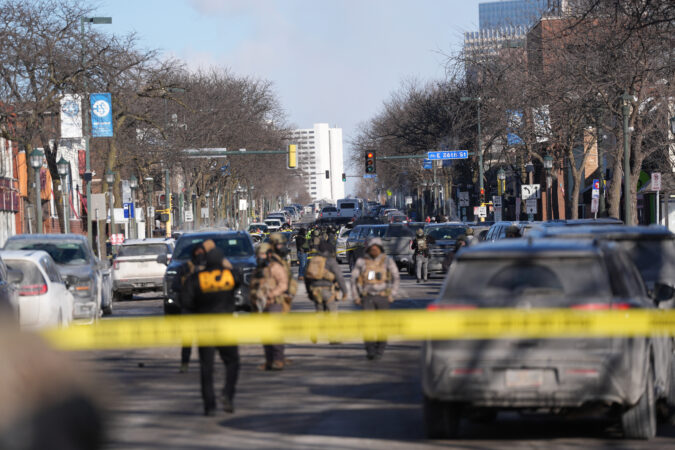
    MINNEAPOLIS — Federal immigration officers shot and killed a man Saturday in Minneapolis, drawing hundreds of protesters onto the frigidly cold streets in a city already shaken by another fatal shooting weeks earlier.

    Minneapolis Police Chief Brian O’Hara said a 37-year-old man was killed but declined to identify him. He added that information about what led up to the shooting was limited. The man was identified by his parents as Alex Pretti, an intensive care unit nurse.

    The Minnesota National Guard, which had been activated earlier by Gov. Tim Walz, was assisting local police amid growing protests.

    Department of Homeland Security spokesperson Tricia McLaughlin said in a statement that federal officers were conducting an operation as part of the Trump administration’s immigration crackdown and fired “defensive shots” after a man with a handgun approached them and “violently resisted” when officers tried to disarm him. O’Hara said police believe the man was a “lawful gun owner with a permit to carry.” The officer who shot the man is an eight-year Border Patrol veteran, federal officials said.

    President Donald Trump weighed in on social media by lashing out at Minnesota’s governor and the Minneapolis mayor.

    Trump shared images of the gun that immigration officials said was recovered and said: “What is that all about? Where are the local Police? Why weren’t they allowed to protect ICE Officers?”

    Video shows officers, man who was shot

    In a bystander video obtained by the Associated Press, protesters can be heard blowing whistles and shouting profanities at agents on Nicollet Avenue.

    The video shows an officer shoving a person who is wearing a brown jacket, skirt, and black tights and carrying a water bottle. That person reaches out for a man and the two link up, embracing. The man, wearing a brown jacket and black hat, seems to be holding his phone up toward the officer.

    The same officer shoves the man in his chest and the two, still embracing, fall back.

    The video then shifts to a different part of the street and then comes back to the two individuals unlinking from each other. The video shifts focus again and then shows three officers surrounding the man.

    Soon at least seven officers surround the man. One is on the man’s back and another who appears to have a cannister in his hand strikes a blow to the man’s chest. Several officers try to bring the man’s arms behind his back as he appears to resist. As they pull his arms, his face is briefly visible on camera. The officer with the cannister strikes the man near his head several times.

    A shot rings out, but with officers surrounding the man, it’s not clear from where the shot came. Multiple officers back off of the man after the shot. More shots are heard. Officers back away and the man lies motionless on the street.

    The police chief appealed for calm, both from the public and and from federal law enforcement.

    “Our demand today is for those federal agencies that are operating in our city to do so with the same discipline, humanity, and integrity that effective law enforcement in this country demands,” the chief said. “We urge everyone to remain peaceful.”

    Customs and Border Patrol Commander Gregory Bovino said the officer who shot the man had extensive training as a range safety officer and in using less-lethal force.

    “This is only the latest attack on law enforcement. Across the country, the men and women of DHS have been attacked, shot at,” he said.

    Walz, a Democrat, said he had no confidence in federal officials and that the state would lead the investigation into the latest fatal shooting.

    The New York Times reported that a U.S. official said that DHS would investigate the shooting by its officer, with the assistance of the FBI.

    Drew Evans, superintendent of the Minnesota Bureau of Criminal Apprehension, said during a news conference Saturday that federal officers blocked his agency from the shooting scene, and when they returned with a signed judicial warrant, they were still blocked.

    Protests continue in Minneapolis

    Protesters continued to converge at the scene of the shooting despite dangerously cold weather.

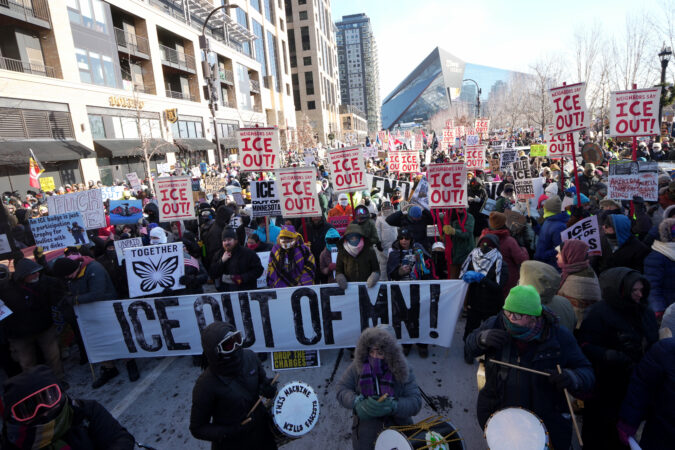
    At Saturday midday, the worst of an extreme cold wave was over, but the temperature was still -6 degrees. The Arctic blast hadn’t deterred thousands of protesters from marching in downtown Minneapolis on Friday afternoon to call for ICE to leave the Minnesota.

    The shooting happened amid widespread daily protests in the Twin Cities since the Jan. 7 shooting of 37-year-old Renee Good, who was killed when an Immigration and Customs Enforcement officer fired into her vehicle. Saturday’s shooting unfolded just over a mile away from where Good was shot.

    After the shooting, an angry crowd gathered and screamed profanities at federal officers, calling them “cowards” and telling them to go home. One officer responded mockingly as he walked away, telling them: “Boo hoo.” Agents elsewhere shoved a yelling protester into a car. Protesters dragged garbage dumpsters from alleyways to block the streets, and people who gathered chanted, “ICE out now,” referring to Immigrations and Customs Enforcement.

    “They’re killing my neighbors!” said Minneapolis resident Josh Koskie.

    Federal officers wielded batons and deployed flash bangs on the crowd.

    Walz said he had been in contact with the White House after the shooting. He urged Trump to end what the Department of Homeland Security has called its largest-ever immigration enforcement operation.

    U.S. Rep. Bennie Thompson, the top Democrat on the U.S. House Homeland Security Committee, called for Homeland Security Secretary Kristi Noem to be impeached and denounced statements from the administration about the man DHS agents killed.

    “Apparently, the Trump administration and its secret police only support the First and Second Amendments when it’s convenient to them,” Thompson said in a statement.

    Thompson called on Demorats in the U.S. Senate to vote against a funding bill for DHS that passed the lower chamber last week.“This is un-American and has to stop,” Thompson said. “The House must immediately take steps to impeach Kristi Noem.”

    Vice President JD Vance responded to the shooting in a post on X and said that when he visited Minneapolis this week, “what the ICE agents wanted more than anything was to work with local law enforcement so that situations on the ground didn’t get out of hand.”

    He accused local officials in Minnesota of ignoring requests from ICE agents to work with them.

    Notably, federal officials refused to cooperate with local officials on an investigation into the shooting death of Renee Good on Jan. 7 and blocked state investigators from the site of Saturday’s shooting.

  • Dear Abby | Siblings’ relationship suffers sharp decline in value

    DEAR ABBY: A few years back, my brother gave me a substantial amount of cryptocurrency. A couple of years after that, he did something that hurt me and my husband deeply and destroyed any trust I had in him. As a result, I have greatly reduced contact with him as well as my entire family.

    When I explained how what he did made me feel and how it affected my life, my brother “sort of” apologized, but it wasn’t genuine — and during this fake apology, he mentioned he wanted his crypto back.

    Because I had had some financial difficulties, I couldn’t give back the money. The cryptocurrency had been a GIFT. When he gave it to me, there was no agreement about paying him back or what to do with it. (He confessed that he had made a huge mistake by giving it to me.) When I told him I couldn’t give it back, he sort of let it go. But now we are barely on speaking terms, and I feel awkward because I can feel his resentment.

    I no longer trust him, and I’m not sure how to proceed. I’m not angry; I’m just cautious because of his previous careless actions and because he lacks a verbal filter, especially toward my husband, who is sensitive. How do I deal with the fallout?

    — ONCE BITTEN, TWICE SHY

    DEAR O.B.T.S.: I wish you had gone into more detail in the second sentence of your letter. If I have read it correctly, your problems with your brother have less to do with the cryptocurrency debacle and far more about how he treats your husband. As I see it, you have every right to proceed with caution where your brother is concerned. If he can’t watch his mouth around your husband, some distance may be better for all of you.

    ** ** **

    DEAR ABBY: I’m retired and have discovered a love for making bags, totes and purses with my sewing machine. A few years ago, I started doing local craft shows — not because I’ve turned this into a business, but because it helps clear out the growing inventory. Financially, we’re fine. I’m not risking money we don’t have.

    My husband, who still works, strongly disapproves of this. He says I’ve made a job out of a hobby, and he thinks it’s silly since I don’t really make money. He has even suggested I’d be better off throwing my creations away. In truth, after a lifetime of working and raising kids, I finally have time to do something that makes ME happy.

    I feel torn. Must I stop doing something I love to keep peace at home, or continue and risk his ongoing resentment? It’s heartbreaking to feel that every time I try something new, I’m met with resistance.

    — STILL STITCHING IN THE SOUTH

    DEAR STILL STITCHING: Your husband appears to be more than a little controlling by attempting to tell you how to spend your free time. Your hobby is what it is. It’s a source of pleasure — and it’s not meant to be another income stream. Continue doing what you enjoy and please do not buckle under the pressure.

  • Horoscopes: Saturday, Jan. 24, 2026

    ARIES (March 21-April 19). Your energy changes people, places and things. Even minor interactions prove this. Sometimes you lose sight of the difference you make, but being somewhat aware of it today will fuel and inspire your next move.

    TAURUS (April 20-May 20). You’re quick on your feet today. Keep in mind that improvisation works best when it follows certain rules, like agreeing to the reality that is and adding on to it. Your spontaneous solutions will be brilliant, your whims inspired.

    GEMINI (May 21-June 21). A question is all you need to get things started today. Asking a good one will open doors and reframe challenges into opportunities. A shared laugh will lighten the atmosphere. Humor acts as a reset button, restoring balance and goodwill.

    CANCER (June 22-July 22). The moments that slip from your control teach you facets of your humanity. Knowing yourself in an imperfect moment allows you to connect with others. As your empathy grows, so will the fullness of your experience.

    LEO (July 23-Aug. 22). How would things be different if you had their love? It’s the question to ponder. It’s not that you could come up with an entirely accurate answer, as there are many unknown factors, but exploring your expectations and projections will be most enlightening today.

    VIRGO (Aug. 23-Sept. 22). You appreciate beauty in ordinary scenes. This attentiveness adds richness to the day and fuels creativity. You’ll be open to collaboration, but if it doesn’t come it’s even better for you because you’ll enjoy your own company so much today.

    LIBRA (Sept. 23-Oct. 23). There are things to be judiciously ignored for a time. Remember that most people are doing their best and acting in accordance with the understanding they currently hold. Give them time to work things out on their own and they’ll pleasantly surprise you.

    SCORPIO (Oct. 24-Nov. 21). You don’t romanticize less-than-perfect circumstances, nor do you let them define you. These challenges add texture to your work, your relationships and your outlook.

    SAGITTARIUS (Nov. 22-Dec. 21). Today would be frustrating for some people, but not you — this is just the challenge that you eat for breakfast. Lived experience has taught you to reframe, improvise and continue. Resources appear as needed; skills surface when called upon.

    CAPRICORN (Dec. 22-Jan. 19). The work you did counts, but not in the way you were going for. That’s OK — and even better than you think, actually. Effort can be redirected. Stay open to multiple paths and you’ll thrive in a new reality you weren’t expecting.

    AQUARIUS (Jan. 20-Feb. 18). What matters will occur face to face, and that’s what makes it so exciting. You never do know what the other person might do or say, and each moment is filled with risk and aliveness.

    PISCES (Feb. 19-March 20). You’ve already been many people, and more incarnations will unfold. Let it happen freely. You don’t have to worry about losing anything that’s “so you” because it’s impossible to lose what is indelibly yours.

    TODAY’S BIRTHDAY (Jan. 24). Welcome to your Year of Emotional Fluency, in which feelings become useful information rather than interruptions. You read the room, honor your inner weather and respond with the emotional intelligence to make relationships golden. And yes, you keep getting promoted, befriended and paid for this very useful human skill. More highlights: thrilling times with a special person, game-night triumphs, an unforgettable collaboration with legendary results. Gemini and Scorpio adore you. Your lucky numbers are: 2, 10, 40, 33 and 14.

  • More than half the U.S. threatened with ice, snow, and cold in massive winter storm

    More than half the U.S. threatened with ice, snow, and cold in massive winter storm

    DALLAS — Freezing rain was falling in West Texas on Friday as a huge, dayslong winter storm began a trek that threatened to bring snow, sleet, ice, and bone-chilling temperatures as well as extensive power outages to about half the U.S. population.

    Forecasters warned that catastrophic damage, especially in areas pounded by ice, could rival a hurricane. Schools in Chicago and other Midwestern cities called off classes Friday, airlines canceled thousands of weekend flights, churches moved Sunday services online, and the Grand Ole Opry in Nashville decided to hold its Saturday night radio performance without fans. Carnival parades in Louisiana were canceled or rescheduled.

    At least 182 million people were under watches or warnings for ice and snow and more than 210 million were under cold weather advisories or warnings. In many places, those overlapped. Utility companies braced for power outages because ice-coated trees and power lines can keep falling long after a storm has passed.

    “It’s going to be a big storm,” Maricela Resendiz said as she picked up chicken, eggs, and pizzas at a Dallas store to get her, her 5-year-old son and her boyfriend through the weekend. Her plans: “Staying in, just being out of the way.”

    (function () {window.addEventListener(‘message’, function (e) { var message = e.data; var els = document.querySelectorAll(‘iframe[src*=”‘ + message.id + ‘”]’); els.forEach(function(el) { el.style.height = message.height + ‘px’; }); }, false); })();

    Freezing rain was already slickening roads in Lubbock, Texas, on Friday afternoon as temperatures dropped. After sliding into the South with ice and sleet, the storm was expected to move into the Northeast, dumping about a foot of snow from Washington, D.C., through New York and Boston, the National Weather Service predicted.

    Arctic air was the first piece to fall in place

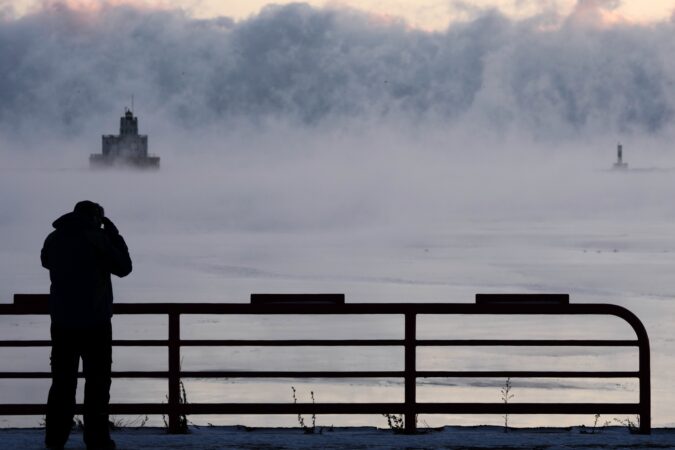
    Arctic air that spilled down from Canada prompted schools throughout the Midwest to cancel classes Friday. With windchills as low as minus 40 degrees Fahrenheit, frostbite could set in within 10 minutes, making it too dangerous to walk to school or wait for the bus.

    In Bismarck, N.D., where the windchill was minus 41 Fahrenheit, Colin Cross cleaned out an empty unit for the apartment complex where he works.

    “I’ve been here awhile and my brain stopped working,” said Cross, bundled up in long johns, two long-sleeved shirts, a jacket, hat, hood, gloves and boots.

    Despite bitter cold, a protest over an immigration crackdown went on as planned in Minnesota, with thousands demonstrating in downtown Minneapolis.

    Nationwide, more than 1,000 flights were delayed or canceled Friday, with well over half of them in Dallas, according to the flight tracking website FlightAware. About 2,300 Saturday flights were canceled.

    In Oklahoma, Department of Transportation workers treated roads with salt brine, the Highway Patrol canceled troopers’ days off, and National Guard units were activated to help stranded drivers.

    The federal government put nearly 30 search and rescue teams on standby. Officials had more than 7 million meals, 600,000 blankets, and 300 generators placed throughout the area the storm was expected to cross, according to the Federal Emergency Management Agency.

    President Donald Trump said via social media that his administration was coordinating with state and local officials and “FEMA is fully prepared to respond.”

    Northeast prepares for heavy snow

    The Northeast could see its heaviest snow in years.

    Boston declared a cold emergency through the weekend, and Connecticut was working with neighboring New York and Massachusetts in case travel restrictions are needed on major highways.

    Connecticut Gov. Ned Lamont urged people to go grocery shopping now and “stay home on Sunday.”

    Philadelphia announced schools would be closed Monday. Superintendent Tony B. Watlington Sr. told students, “It’s also appropriate to have one or two very safe snowball fights.”

    Ice could take down power lines and pipes could freeze

    Once ice and snow end, the frigid air from the north will head south and east. It will take a while to thaw out, an especially dangerous prospect because ice can add hundreds of pounds to power lines and branches and make them more susceptible to snapping, especially if it’s windy.

    In at least 11 Southern states from Texas to Virginia, a majority of homes are heated by electricity, according to the U.S. Census Bureau.

    A severe cold snap five years ago took down much of the power grid in Texas, leaving millions without power for days and resulting in hundreds of deaths. Gov. Greg Abbott said Thursday that won’t happen again, and utility companies were bringing in thousands of employees to help keep the power on.

    Pipes are also at risk.

    In Atlanta, where temperatures could dip to 10 degrees and stay below freezing for 36 hours, M. Cary & Daughters Plumbing co-owner Melissa Cary ordered all the pipe and repair supplies she could get. She said her daily calls could go from about 40 to several hundred.

    “We’re out there; we can’t feel our fingers, our toes; we’re soaking wet,” Cary said. “I keep the hot chocolate and soup coming.”

    People are hunkering down

    Stephen McDonald, who hasn’t had a home in three years, was hoping to get out of the cold in Jackson, Miss. But the Shower Power homeless shelter was adding spray foam insulation and ceiling heaters, keeping it closed until Saturday.

    Friday night’s forecast called for lows near freezing. “Your hands get frozen solid, and they hurt real bad,” said McDonald. “It’s not good.”

    At the University of Georgia in Athens, sophomore Eden England was staying on campus to ride out the weather with her friends, even as the school encouraged students to leave dorms and go home because of concerns about losing power.

    “I was texting my parents and we kind of just realized that whether I’m here or at home, it’s going to suck either way,” England said. “So I’d rather be with my friends, kind of struggling together if anything happens.”

  • Thousands rally against immigration enforcement in subzero Minnesota temperatures

    Thousands rally against immigration enforcement in subzero Minnesota temperatures

    MINNEAPOLIS — Police arrested about 100 clergy demonstrating against immigration enforcement at Minnesota’s largest airport Friday, and thousands gathered in downtown Minneapolis despite Arctic temperatures to protest the Trump administration’s crackdown.

    The protests are part of a broader movement against President Donald Trump’s increased immigration enforcement across the state, with labor unions, progressive organizations, and clergy urging Minnesotans to stay away from work, school, and even shops. The faith leaders gathered at the airport to protest deportation flights and urge airlines to call for an end to to what the Department of Homeland Security has called its largest-ever immigration enforcement operation.

    The clergy were issued misdemeanor citations of trespassing and failure to comply with a peace officer and were then released, said Jeff Lea, a Metropolitan Airports Commission spokesman. They were arrested outside the main terminal at the Minneapolis-St. Paul International Airport because they went beyond the reach of their permit for demonstrating and disrupted airline operations, he said.

    The Rev. Mariah Furness Tollgaard of Hamline Church in St. Paul said police ordered them to leave but she and others decided to stay and be arrested to show support for migrants, including members of her congregation who are afraid to leave their homes. She planned to go back to her church after her brief detention to hold a prayer vigil.

    “We cannot abide living under this federal occupation of Minnesota,” Tollgaard said.

    Protesters demand ICE leave Minnesota

    The Rev. Elizabeth Barish Browne traveled from Cheyenne, Wyo., to participate in the rally in downtown Minneapolis, where the high temperature was minus 9 degrees Fahrenheit despite a bright sun.

    “What’s happening here is clearly immoral,” the Unitarian Universalist minister said. “It’s definitely chilly, but the kind of ice that’s dangerous to us is not the weather.”

    Protesters have gathered daily in the Twin Cities since Jan. 7, when 37-year-old mother of three Renee Good was fatally shot by an Immigration and Customs Enforcement officer. Federal law enforcement officers have repeatedly squared off with community members and activists who track their movements.

    Sam Nelson said he skipped work so he could join the march. He said he’s a former student of the Minneapolis high school where federal agents detained someone after class earlier this month. That arrest led to altercations between federal officers and bystanders.

    “It’s my community,” Nelson said. “Like everyone else, I don’t want ICE on our streets.”

    Organizers said Friday morning that more than 700 businesses statewide have closed in solidarity with the movement, from a bookstore in tiny Grand Marais near the Canadian border to the landmark Guthrie Theater in downtown Minneapolis.

    “We’re achieving something historic,” said Kate Havelin of Indivisible Twin Cities, one of the more than 100 participating groups.

    Detention of a 2-year-old and a 5-year-old

    A 2-year-old was reunited with her mother Friday, a day after she was detained with her father outside of their home in South Minneapolis, lawyer Irina Vaynerman told the Associated Press.

    Vaynerman said they had quickly challenged the family’s detention in federal court. The petition states that the child, a citizen of Ecuador, was brought to the U.S. as a newborn. The child and her father, Elvis Tipan Echeverria, both have a pending asylum application and neither are subject to final orders of removal.

    A U.S. district judge on Thursday had barred the government from transferring the toddler out of state, but she and her father were on a commercial flight to Texas about 20 minutes later, according to court filings. They were flown back Friday.

    Agents arrested Tipan Echeverria during a targeted operation, according to a DHS statement said. DHS said the child’s mother was in the area but refused to take the child.

    Vaynerman rejected that explanation, saying Tipan Echeverria was “not allowed” to bring his 2-year-old to her mother inside their home.

    DHS repeated its allegation Friday that the father of 5-year-old Liam Ramos abandoned him during his arrest by immigration officers in Columbia Heights on Tuesday, leading to the child being detained, too.

    Department spokesperson Tricia McLaughlin said Liam was detained because his father, Adrian Alexander Conejo Arias, “fled from the scene.” The two are detained together at the Dilley Detention Center in Texas, which is intended to hold families. McLaughlin said officers tried to get Liam’s mother to take him, but she refused to accept custody.

    The family’s attorney Marc Prokosch said he thinks the mother refused to open the door to the ICE officers because she was afraid she would be detained. Columbia Heights district superintendent Zena Stenvik said Liam was “used as bait.”

    Prokosch found nothing in state records to suggest Liam’s father has a criminal history.

    On Friday, Border Patrol commander Gregory Bovino sought to shift the narrative away from Liam’s detention by attacking the news media for, in his view, insufficient coverage of children who have lost parents to violence by people in the country illegally. After briefly mentioning the 5-year-old during a news conference, he talked about a mother of five who was killed in August 2023.

    Details from Good’s autopsy

    The Hennepin County Medical Examiner posted an initial autopsy report online for Good that classified her death as a homicide and determined she died from “multiple gunshots wounds.”

    A more detailed independent autopsy commissioned by Good’s family said one bullet pierced the left side her head and exited on the right side. This autopsy, released Wednesday through the Romanucci & Blandin law firm, said bullets also struck her in the arm and breast, although those injuries weren’t immediately life-threatening.

    Antonio Romanucci, an attorney for the family, said in a statement that the family is still awaiting the full report from the medical examiner and “hope that they communicate with Renee’s family and share their report before releasing any further information to the public.”

    A spokesperson for the firm said there were no funeral plans to share yet.

  • U.S. carries out first known strike on alleged drug boat since Maduro’s capture

    U.S. carries out first known strike on alleged drug boat since Maduro’s capture

    WASHINGTON — The U.S. military said Friday that it has carried out a deadly strike on a vessel accused of trafficking drugs in the eastern Pacific Ocean, the first known attack since the raid that captured Venezuelan President Nicolás Maduro earlier this month.

    U.S. Southern Command said on social media that the boat was “engaged in narco-trafficking operations” and that the strike killed two people and left one survivor. It said it notified the Coast Guard to launch search and rescue operations for that person.

    A video accompanying the post announcing the latest strike shows a boat moving through the water before exploding in flames. The U.S. military has focused lately on seizing sanctioned oil tankers with connections to Venezuela since the Trump administration launched an audacious raid to capture Maduro and bring him to New York to face drug trafficking charges.

    With the latest military action, there have been 36 known strikes against alleged drug smuggling boats in South American waters since early September that killed at least 117 people, according to announcements from the U.S. military and Trump. The majority of those of strikes have occurred in the Caribbean Sea.

    The last reported boat strikes occurred in late December, when the military said it struck five alleged drug-smuggling boats over two days, killing a total of eight people while others jumped overboard. Days later, the Coast Guard suspended its search.

    The U.S. conducted a large-scale operation in Caracas, the capital of Venezuela, on Jan. 3 that led to the capture of Maduro and his wife, who were then flown to New York to face federal drug trafficking charges.

    Maduro, before his capture, said the U.S. military operations were a thinly veiled effort to oust him from power.

    President Donald Trump has repeatedly said that the U.S. strikes targeting alleged smugglers are having an enormous impact on slowing drug trafficking routes in the Caribbean and eastern Pacific.

    “We’ve stopped — virtually stopped almost 100% of all drugs coming in by water,” Trump said in remarks on Thursday at the World Economic Forum at Davos.

  • Vance touts the Trump administration’s record against abortion at a Washington rally

    Vance touts the Trump administration’s record against abortion at a Washington rally

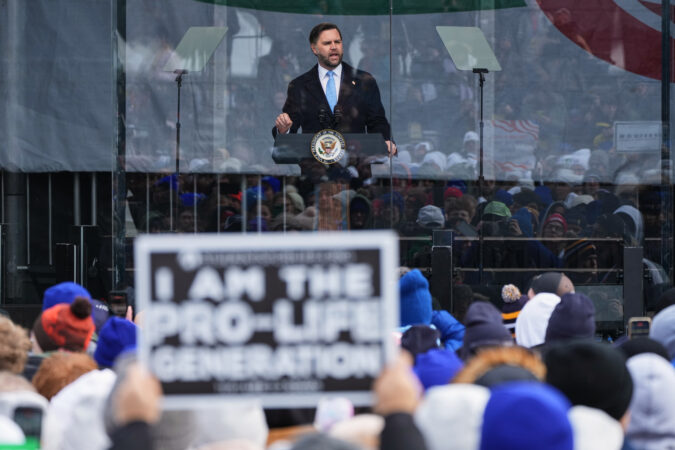
    Vice President JD Vance on Friday encouraged anti-abortion activists to “take heart in how far we’ve come” on the quest to limit the practice, listing the Trump administration’s accomplishments including an expansion of a ban on U.S. foreign aid for groups supporting abortion services.

    “There is still much road ahead to travel together,” Vance told attendees at the annual March for Life demonstration, which draws tens of thousands of people annually to Washington. Attendees rallied on the National Mall before heading to the Supreme Court.

    Vance, a Republican, has spent years passionately advocating for Americans to have more children. He repeatedly expressed alarm about declining birth rates as he launched his political career in 2021 with a successful bid for the U.S. Senate in Ohio, and as vice president he has continued on that mission.

    “I want more babies in the United States of America,” Vance said in addressing last year’s March for Life.

    Earlier this week, Vance and his wife, second lady Usha Vance, announced in a social media post they are expecting a son, their fourth child, in late July.

    “Let the record show, you have a vice president who practices what he preaches,” Vance said Friday.

    Vance cited the Supreme Court’s 2022 Dobbs decision, which overturned Roe v. Wade, calling it “the most important Supreme Court decision of my lifetime.” He said President Donald Trump’s leadership and appointment of conservative jurists “put a definitive end to the tyranny of judicial rule on the question of human life.”

    He also lauded the “historic expansion of the Mexico City policy,” the broadening of a ban on U.S. foreign aid for groups supporting abortion services, to include assistance going to international and domestic organizations and agencies that promote gender identity as well as diversity, equity and inclusion programs.

    “We believe that every country in the world has the duty to protect life,” Vance said, to a sea of supporters waving signs reading “Choose Life,” “Make More Babies,” and “I am the Pro-Life Generation.”

    “It’s not our job as the United States of America to promote radical gender ideology,” he said. “It’s our job to promote families and human flourishing.”

    From the Vatican, Pope Leo XIV — the first U.S.-born pope — sent a message of support to participants in the march.

    “I would encourage you, especially the young people, to continue striving to ensure that life is respected in all of its stages,” Leo wrote in a letter shown on a video at the march. “May Jesus, who promised to be with us always, accompany you today as you courageously and peacefully march on behalf of unborn children.”

    On Thursday, an official said the Trump administration was implementing new rules, halting foreign assistance from going not only to groups that provide abortion as a method of family planning but also to those that advocate “gender ideology” and DEI. The official spoke on the condition of anonymity ahead of the rules’ publication in the Federal Register on Friday.

    First established under President Ronald Reagan, a Republican, the policy was rescinded by subsequent Democratic administrations and was reinstated in Trump’s first term.

    With its origins in the 1973 Roe v. Wade decision that nationally enshrined federal protection for abortion rights, the March for Life developed an entrenched presence among conservatives arguing against abortion. In 2017, Trump addressed the march by video, becoming the first sitting U.S. president to make live remarks. Three years later, he attended the event in person, further cementing its role in conservative politics.

    In a video address to this year’s crowd, Trump recounted his administration’s “unprecedented strides to protect innocent life and support the institution of the family like never before,” enumerating his appointment of “judges and justices who believed in interpreting the Constitution as written” and “reflecting on the Dobbs decision that overturned Roe v. Wade.

    Since the June 2022 Supreme Court ruling that overturned Roe, the march has become more celebratory, with organizers relishing a state-by-state fight in legislatures around the country and urging a continued fight until abortion is eliminated.

  • Ukraine, Russia, U.S. to discuss fraught issue of territorial concessions in Abu Dhabi

    Ukraine, Russia, U.S. to discuss fraught issue of territorial concessions in Abu Dhabi

    Ukrainian President Volodymyr Zelensky said the future of Ukraine’s eastern Donbas region will be a key focus as negotiators from Ukraine, Russia, and the United States meet in Abu Dhabi on Friday for talks to end Russia’s nearly four-year full-scale invasion.

    The UAE’s foreign ministry said the talks commenced on Friday and are scheduled to continue over two days “as part of ongoing efforts to promote dialogue and identify political solutions to the crisis.”

    The White House described the talks as productive and said conversations would continue on Saturday.

    The three-way talks come hours after Russian President Vladimir Putin discussed the settlement in Ukraine with President Donald Trump’s envoys Steve Witkoff and Jared Kushner during marathon overnight talks. The Kremlin insisted that to reach a peace deal, Kyiv must withdraw its troops from the areas in the east that Russia illegally annexed but never fully captured.

    Zelensky said after meeting with Trump that while the future status of land in eastern Ukraine currently occupied by Russia remains unresolved, the peace proposals are “nearly ready.”

    He also reiterated his openness to establishing a free trade zone under Ukraine’s control in the country’s east, adding that he discussed the proposal with Trump in Davos, Switzerland, on Thursday: “I think it will be positive for our business,” Zelensky told reporters.

    Friday is the first known time that officials from the Trump administration simultaneously meet with negotiators from both Ukraine and Russia. While it’s unclear how the talks will unfold and many obstacles to peace remain, some see it as a sign that the parties are making headway in closing a deal.

    Speaking in his evening address to the nation late Friday, Zelensky said the Ukrainian delegation attending the talks reported to him “almost every hour.”

    “They are discussing the parameters for ending the war,” Zelensky said. ”Now, they should at least get some answers from Russia, and the most important thing is that Russia should be ready to end this war, which it itself started.”

    He added that “it’s too early to draw conclusions about the content of today’s negotiations — we’ll see how the conversation goes tomorrow and what the results will be. It’s not just about Ukraine’s desire to end this war and achieve full security — it’s also about Russia somehow developing a similar desire,” Zelensky said.

    Kremlin insists on ‘solving territorial issue’

    “Today’s meeting will be in the format of Ukraine, Russia and the United States, and afterward the Europeans will certainly receive feedback from us,” Zelensky told journalists in a WhatsApp audio message.

    The Kremlin offered little detail beyond calling Friday’s meeting a “working group on security issues.”

    Kremlin spokesman Dmitry Peskov reaffirmed Friday that Russia’s demand for the Ukrainian troops’ withdrawal from the eastern Donbas region is an “important condition,” adding that there are also other “nuances” on the talks agenda that he wouldn’t specify.

    Kremlin foreign affairs adviser Yuri Ushakov, who participated in Putin’s meeting with Witkoff and Kushner, said “it was reaffirmed that reaching a long-term settlement can’t be expected without solving the territorial issue.” He described the talks with the U.S. as “frank, constructive,” and “fruitful.”

    Russia’s state Tass news agency reported that the discussions included possible buffer zones and control measures.

    Peskov told reporters that the Russian delegation, headed by Adm. Kostyukov, is comprised of military officials. Separately, Putin’s envoy Kirill Dmitriev will hold talks with Witkoff on economic issues, Peskov added.

    The U.S. has confirmed Witkoff and Kushner are attending the talks in Abu Dhabi along with Army Secretary Dan Driscoll and NATO’s top general, U.S. Air Force Gen. Alexus Grynkewich.

    The Ukrainian team includes Rustem Umerov, head of Ukraine’s national security and defense council; Andrii Hnatov, chief of the general staff; and Kyrylo Budanov, head of the presidential office.

    Trump’s meeting with Zelensky

    Hours before the Kremin talks, Zelensky met with Trump behind closed doors for about an hour at the World Economic Forum in Davos, describing the meeting as “productive and meaningful.”

    Speaking to reporters aboard Air Force One as he flew back to Washington from Davos, Trump said his meeting with Zelensky went well, adding that both Putin and Zelensky want to reach a deal and that “everyone’s making concessions” to try to end the war.

    He said the sticking points in talks remain the same as they’ve been during talks held during the past six or seven months, noting “boundaries” was a key issue. “The main hold-up is the same things that’s been holding it up for the last year,” he said.

    Russia’s bigger army has managed to capture about 20% of Ukraine since hostilities began in 2014 and its full-scale invasion of 2022. But the battlefield gains along the roughly 600-mile front line have been costly for Moscow, and the Russian economy is feeling the consequences of the war and international sanctions.

    Ukraine is short of money and, despite significantly boosting its own arms manufacturing, still needs Western weaponry. It is also short-handed on the front line. Its defense minister last week reported some 200,000 troop desertions, and draft-dodging by about 2 million Ukrainians.

    Zelensky blasts European allies

    Addressing the World Economic Forum on Thursday after meeting with Trump, Zelensky listed a litany of grievances and criticisms of Europe.

    He chided Europe for being slow to act on key decisions, spending too little on defense, failing to stop Russia’s ”shadow fleet” of oil tankers that are breaking international sanctions, and balking at using its frozen assets in Europe to finance Ukraine, among other things.

    “Europe looks lost,” Zelensky said in his speech, urging the continent to become a global force. He contrasted Europe’s response with Washington’s bold steps in Venezuela and Iran.

    The former comic actor referred to the movie “Groundhog Day,” in which the main character must relive the same day over and over again.

    “Just last year, here in Davos, I ended my speech with the words: Europe needs to know how to defend itself. A year has passed. And nothing has changed. We are still in a situation where I must say the same words again,” Zelensky said.