Tag: no-latest

  • TikTok finalizes a deal to form a new American entity

    TikTok finalizes a deal to form a new American entity

    TikTok has finalized a deal to create a new American entity, avoiding the looming threat of a ban in the United States that has been in discussion for years on the platform now used by more than 200 million Americans.

    The social video platform company signed agreements with major investors including Oracle, Silver Lake, and the Emirati investment firm MGX to form the new TikTok U.S. joint venture. The new version will operate under “defined safeguards that protect national security through comprehensive data protections, algorithm security, content moderation and software assurances for U.S. users,” the company said in a statement Thursday. American TikTok users can continue using the same app.

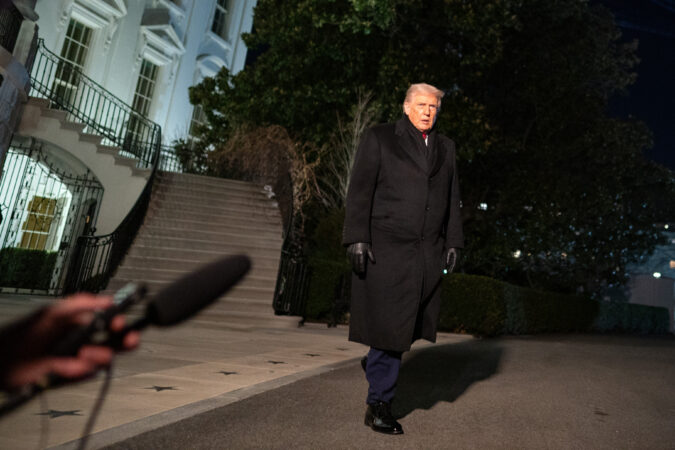
    President Donald Trump praised the deal in a Truth Social post, thanking Chinese leader Xi Jinping specifically “for working with us and, ultimately, approving the Deal.” Trump add that he hopes “that long into the future I will be remembered by those who use and love TikTok.”

    Adam Presser, who previously worked as TikTok’s head of operations and trust and safety, will lead the new venture as its CEO. He will work alongside a seven-member, majority-American board of directors that includes TikTok’s CEO Shou Chew.

    The deal ends years of uncertainty about the fate of the popular video-sharing platform in the United States. After wide bipartisan majorities in Congress passed — and President Joe Biden signed — a law that would ban TikTok in the U.S. if it did not find a new owner in the place of China’s ByteDance, the platform was set to go dark on the law’s January 2025 deadline. For a several hours, it did. But on his first day in office, President Donald Trump signed an executive order to keep it running while his administration sought an agreement for the sale of the company.

    “China’s position on TikTok has been consistent and clear,” Guo Jiakun, a Chinese Foreign Ministry spokesperson in Beijing, said Friday about the TikTok deal and Trump’s Truth Social post, echoing an earlier statement from the Chinese embassy in Washington.

    Apart from an emphasis on data protection, with U.S. user data being stored locally in a system run by Oracle, the joint venture will also focus on TikTok’s algorithm. The content recommendation formula, which feeds users specific videos tailored to their preferences and interests, will be retrained, tested and updated on U.S. user data, the company said in its announcement.

    The algorithm has been a central issue in the security debate over TikTok. China previously maintained the algorithm must remain under Chinese control by law. But the U.S. regulation passed with bipartisan support said any divestment of TikTok must mean the platform cuts ties — specifically the algorithm — with ByteDance. Under the terms of this deal, ByteDance would license the algorithm to the U.S. entity for retraining.

    The law prohibits “any cooperation with respect to the operation of a content recommendation algorithm” between ByteDance and a new potential American ownership group, so it is unclear how ByteDance’s continued involvement in this arrangement will play out.

    “Who controls TikTok in the U.S. has a lot of sway over what Americans see on the app,” said Anupam Chander, a professor of law and technology at Georgetown University.

    Oracle, Silver Lake, and MGX are the three managing investors, each holding a 15% share. Other investors include the investment firm of Michael Dell, the billionaire founder of Dell Technologies. ByteDance retains 19.9% of the joint venture.

  • You can get stronger with gentle weight training, new study finds

    You can get stronger with gentle weight training, new study finds

    If you’re intimidated by weight training, a new study is full of reassurance.

    Weight workouts don’t have to be complicated or grueling to be effective, the study found. Almost any kind of lifting led to increased muscle and strength in the study. Whether people lifted heavy weights or light, through many repetitions or few, the results were broadly comparable.

    “Lift however you like to lift. That’s the lesson,” said Stuart Phillips, a professor of kinesiology at McMaster University in Ontario, Canada, and an expert in resistance exercise. Phillips is the senior author of the study, which was published last month in the Journal of Physiology.

    The study also provided other lessons, some unexpected, including about the importance of genetics in our bodies’ response to weight training and how some of us may get stronger without getting much bigger — or vice versa — when we begin to train.

    Do you have to lift heavy weights?

    Gym culture is full of widely held beliefs about the best ways to lift, Phillips said, many backed by scant evidence.

    “You’ll see guys who’ve been lifting for decades and swear you have to lift heavy” to gain substantial muscle mass and strength, he said. For them, weights must be hefty enough that you can barely grunt through eight or nine taxing reps before your arms or legs give out.

    But mounting evidence suggests that heavy weights are overrated. A comprehensive 2023 review of hundreds of past experiments concluded that, compared with no exercise, any lifting — not just with heavy weights — “promoted strength and hypertrophy” or larger muscles.

    But questions remain about the most effective weight workouts. If you use lighter weights, how many times should you repeat each lift? What drives muscle growth, if it’s not heavy loads? And will everyone make the same gains from the same workouts?

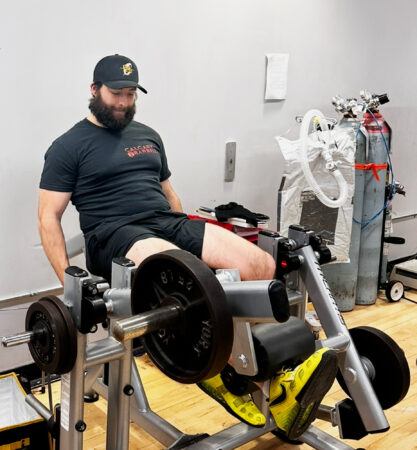
    For answers, Phillips and his colleagues recruited 20 healthy, young men who didn’t normally weight train and checked the size and strength of their muscles. (They have a similar study underway with women.) The men’s limbs were then randomized to heavy or light lifting; that is, their right or left arm was randomly assigned to complete biceps curls using a heavy weight, while the other arm did the same exercise with a much lighter weight. Similarly, one leg did knee extensions against a heavy weight; the other leg completed the same exercise with a much lighter load.

    The heavy weights were challenging enough that lifters could manage no more than 12 repetitions before reaching muscular failure, meaning they felt they couldn’t lift again. With the lighter weights, the participants lifted through as many as 25 repetitions before deciding they couldn’t do another.

    Light weights work fine

    The men worked out three times a week under the researchers’ supervision, increasing their weights once they could easily complete more than 12 heavy or 25 light repetitions. At the end of 10 weeks, the researchers retested everyone.

    By then, the men’s muscles were almost all stronger and larger, with little difference between limbs. The arm that lifted light weights was just as buff as the one that lifted heavy and ditto for legs. Both approaches were equally effective.

    This finding “reinforces the idea that load isn’t an important determinant” of muscular response, Phillips said. “Effort is.” If people lifted until their muscles tired, they got results.

    The practical takeaway is that you can “pick what works for you,” Phillips said. Have sore joints or little taste for big weights? Use smaller ones. Have limited time? You’ll finish faster with heavier loads.

    But don’t expect your results to exactly mirror mine. There were substantial differences from one volunteer to the next. Some nearly doubled their strength or mass; others added less. And there was little relationship between bulk and strength. Some men got far stronger without growing much bigger, and some achieved almost the opposite.

    These differences underscore the role of genetics. “To some extent, our muscular responses are baked in,” Phillips said. After 10 weeks of the same lifting routine, I won’t look precisely like you. But we’ll both be stronger and better muscled.

    What about body weight exercises?

    This study “was very well-designed,” said Brad Schoenfeld, an exercise scientist at CUNY Lehman College in the Bronx, who researches resistance training but was not involved with the new work. The findings suggest that “within broad limits, you can build similar amounts of muscle mass” with light or heavy loads.

    The study has limitations, though. It involved only young men new to lifting. Phillips said he believes the results would be similar for women, older people, and anyone who’s been weight training for years. But studies are needed with those groups to be sure.

    The training also involved gym machines. Would the results be the same with body weight exercises? “I think so,” Phillips said, adding, “I’m counting on it.”

    Much of his own training nowadays, at age 60, takes place at home, he said, and involves body weight work. “I’ve got enough space in my basement to do squats, do deadlifts,” he said. He repeats each exercise until he can barely finish another rep, he said. “I do what I preach.”

    But the key point is that he does something, Phillips said, and regularly. “Based on self-report and participation data, about 80% of people do not lift weights at all.” He hopes his group’s study and other research will encourage more people to try some kind of resistance training routine, he said. “Let’s make 2026 the year of strength.”

  • Letters to the Editor | Jan. 23, 2026

    Letters to the Editor | Jan. 23, 2026

    Where do we turn?

    Will Bunch’s recent column on Donald Trump and how he is guided by “his own morality” hit me hard. Bunch alluded to “America’s battered psyche.” That is exactly how I feel — battered. Every day seems to fill me with sadness as our president and the people who surround him weaken our democracy and diminish our moral standing as a country to be proud of. American citizens and immigrants are being bullied, beaten, and killed.

    The president has even threatened to use force if other countries do not bend to his will.

    Meanwhile, people in our own country are struggling to pay for healthcare because the president and our congressional leaders do not have the decency to vote for affordable healthcare.

    So where do I find hope? I see hope when Bunch reminds us that our morality is what can make a difference. Hope comes from seeing my neighbors and members of my parish at the recent MLK Day of Action. Hope also comes when I remember I am not alone.

    Mary DiVito, Philadelphia

    Madam President

    Jenice Armstrong wrote an excellent column on what a massive difference a Kamala Harris victory in last year’s presidential election would have meant to this nation and to the world. Every newspaper in the country should publish her commentary. Voters made a catastrophic mistake by not electing Harris. As Ms. Armstrong’s article details, it is a tragedy on a global scale.

    The corruption, self-enrichment, and cruelty of the Donald Trump presidency cannot be overstated. By 180-degree contrast, a Harris administration would have been competent, stable, humane, and dedicated to improving the lives of all people in our nation. Under a President Harris, we would have sane foreign policies aimed at peaceful relations and fair trade with other countries, while promoting human rights and providing humanitarian aid for people harmed by wars and natural disasters.

    Harris would have brought intelligence, integrity, altruism, and decency to the presidency. Instead, over the past 12 months, Trump’s lawlessness and pathological character have become blatantly clear.

    I thank and commend Ms. Armstrong and The Inquirer. Please continue to write your critically important observations and analyses about the destructive, immoral, malignant, egomaniacal insurrectionist who never should have been allowed to have any position in government.

    Mark DeWitte, Lyndell

    Join the conversation: Send letters to letters@inquirer.com. Limit length to 150 words and include home address and day and evening phone number. Letters run in The Inquirer six days a week on the editorial pages and online.

  • Horoscopes: Friday, Jan. 23, 2026

    ARIES (March 21-April 19). Nonstop motion isn’t necessarily productivity. Don’t confuse activity with effectiveness. Give yourself the time to think about what really matters and what accomplishment you’re going to feel good about at the end of the day.

    TAURUS (April 20-May 20). While you like to have a strategy, today’s game doesn’t let you prepare in the way yesterday’s did. Stay on high alert for clues, make alliances and let logic lead. That’s all the strategy you need.

    GEMINI (May 21-June 21). You’re attuned to undercurrents like the mood in the room, people’s unspoken needs and clues to their interests. Sensitivity that used to be a burden to you is now an asset, a navigational tool and a secret advantage.

    CANCER (June 22-July 22). You’ll have the option to pay for something a lot of people pay for, but should you? Many unwise choices are, nonetheless, commonplace. You’ll be very aware today that every dollar spent is a vote.

    LEO (July 23-Aug. 22). You’re running things on a scale that challenges you to be organized, courageous and calm. If you do get a bit overwhelmed, take it as just something that goes with this beautiful ambition of yours.

    VIRGO (Aug. 23-Sept. 22). Jell-O is both a liquid and a solid, depending on how you look at it. You have a relationship that defies category, and like Jell-O, it will fit multiple descriptions while also being sweet, fun and moldable.

    LIBRA (Sept. 23-Oct. 23). Today pairs closure with authority: You’ve seen what works, you know what you can carry forward, and you’re ready to formalize the next phase with maturity and resolve. You’ll simply commit and go.

    SCORPIO (Oct. 24-Nov. 21). Woe be to the one who interrupts your sleep. Your quality of life depends on not only the number of hours you rest, but the quality in depth of your sleep. It’s worth the effort to set yourself up for the best possible result.

    SAGITTARIUS (Nov. 22-Dec. 21). Don’t forget your superpower: perspective. Yours is so flexible and astute. You’ll step back to see humor. You’ll float up and get the bigger pattern. You’ll lean in and understand the nature of things. And from right where you are, you’ll see endless possibility.

    CAPRICORN (Dec. 22-Jan. 19). Hang back and watch others play the game until it’s time to make your move. The right moment to make your move is the moment you know you’ll have it all completely in hand. Keep looking out for the chance you can take control of the situation.

    AQUARIUS (Jan. 20-Feb. 18). Every day, you train yourself toward kindness. That’s why you find it so easy to handle your life with grace. People notice it about you today — the way you evaporate problems with your big heart.

    PISCES (Feb. 19-March 20). You’ll ponder a while on a topic most people don’t put much thought into. This attention is well invested. These ideas you’re coming up with will matter more and more in the future. You’re ahead of the curve. Write down your process.

    TODAY’S BIRTHDAY (Jan. 23). Welcome to your Year of Lasting Satisfaction, defined by choices that hold up over time. You invest energy where it matters, say yes to what nourishes you and build a sense of contentment that doesn’t depend on constant change. More highlights: VIP access, social invitations that spark joy, a home comfort boost and someone who believes in your talent and puts money behind it. Cancer and Libra adore you. Your lucky numbers are: 10, 18, 23, 35 and 47.

  • Dear Abby | Husband’s social media seems to serve one purpose

    DEAR ABBY: I saw my husband’s Instagram account, and he’s following only women who show their bodies provocatively. Is that emotional cheating, or is it just lust? Also, is that grounds for divorce? His looking at and lusting after women online hurts my feelings.

    — IMAGE PROBLEM IN ALABAMA

    DEAR IMAGE PROBLEM: What you have described is lust. Emotional cheating involves starting a relationship with someone. While there are many grounds for divorce in the state of Alabama, looking “with lust” at scantily clad women on Instagram is not one of them. Many men do this, and it doesn’t present a threat to their marriages. (Consider it an updated version of the old Playboy calendars you might have seen hanging in garages.)

    Come to think of it, there was once a PlayGIRL magazine containing centerfolds with photos of gorgeous, scantily clad men. (I’m sure a friend told me about them.)

    ** ** **

    DEAR ABBY: I’ve been a hairstylist for 37 years. My niece is getting married in two months. Four months ago, my sister-in-law asked me to do her hair for the wedding, and I agreed. Well, about a month ago, I learned that another niece (who doesn’t do hair) has offered to do it because she and her best friend want to start a wedding planning service. This hurts my feelings so bad. Please help me understand why I shouldn’t be upset finding out about this.

    — READY TO STYLE IN OHIO

    DEAR READY: You write that another niece has offered to do the bride’s hair. Did the bride accept her offer? If the answer is yes, dry your tears and wait to see the result when an amateur pushes a professional out of the way on the most important day in a young bride’s life. If you have any compassion in your heart, pack your gear in your trunk and have it handy, because the bride may need your help. Desperately.

    ** ** **

    DEAR ABBY: Every time I tell my wife something, she questions it, doubts it or disagrees. I could walk inside soaking wet and say, “It’s raining,” and she’d still check her phone’s weather app. We went to counseling years ago, but the counselor focused mainly on my communication problems, not so much on hers, which made her behavior worse.

    I have reached my breaking point. I no longer want to talk to my wife because I know she’ll question whatever I say. Each time it happens, I feel myself getting angrier. One day, I may snap and tell her exactly how I feel about her behavior.

    — KEEP IT TO MYSELF

    DEAR KEEP: “One day” you will tell her? How about getting it off your chest right now? Swallowing your anger has only allowed this problem to fester. Tell your wife you have reached your breaking point, that you both need more counseling from a different therapist. If she refuses, consult one for yourself, starting now.

  • People in Gaza dig through garbage for things to burn to keep warm — a far cry from Trump’s vision

    People in Gaza dig through garbage for things to burn to keep warm — a far cry from Trump’s vision

    CAIRO — Desperate Palestinians at a garbage dump in a Gaza neighborhood dug with their bare hands for plastic items to burn to keep warm in the cold and damp winter in the enclave, battered by two years of the Israel-Hamas war.

    The scene in the Muwasi area of the city of Khan Younis contrasted starkly with the vision of the territory projected by world leaders gathered in Davos, Switzerland, where they inaugurated President Donald Trump’s Board of Peace that will oversee Gaza.

    At the World Economic Forum in Davos, Trump claimed that “record levels” of humanitarian aid had entered Gaza since the October start of a U.S.-brokered ceasefire deal. His son-in law, Jared Kushner, and envoy Steve Witkoff triumphantly touted the devastated territory’s development potential.

    A starkly different reality

    In Gaza, months into the truce, hundreds of thousands of Palestinians still languish in displacement camps, sheltering in tents and war-ravaged buildings, unable to protect them from the temperatures dropping below 50 degrees Fahrenheit at night.

    Despite the ceasefire, there are still recurring deadly strikes in Gaza. Israeli tank shelling on Thursday killed four Palestinians east of Gaza City, according to Mohamed Abu Selmiya, director of the Shifa Hospital, where the bodies were taken. The Israeli military did not immediately comment.

    Some in Gaza expressed skepticism about Trump’s Board of Peace and whether it would change their grim lives.

    “This committee includes Israelis. I don’t understand, as citizens, how can we understand this situation?” Rami Ghalban, who was displaced from Khan Younis, said Thursday. “The Israelis that inflicted suffering upon us.”

    But grappling with what’s ahead seems futile for others.

    “We are in a position where there are no alternatives,” said Fathi Abu Sultan. “Our situation is miserable.”

    While aid flow into Gaza has significantly increased since the ceasefire, residents say fuel and firewood are in short supply. Prices are exorbitant and searching for firewood is dangerous. Two 13-year-old boys were shot and killed by Israeli forces on Wednesday as they tried to collect firewood, hospital officials said.

    At the Nasser hospital in southern Gaza, dozens of Palestinians gathered Thursday to mourn three Palestinian journalists — including a frequent contributor to Agence France-Presse — killed the day before when an Israeli strike hit their vehicle, according to Gaza health officials.

    The Israeli military said the strike came after it spotted suspects who were operating a drone that posed a threat to its troops.

    Survival means digging through garbage

    For Sanaa Salah, who lives in a tent with her husband and six kids, starting a fire is a critical daily chore so they can cook and keep warm. Her family has barely has enough clothes to keep them warm.

    She said the family cannot afford to buy firewood or gas, and that they are aware of the dangers of burning plastic but have no other choice.

    “Life is very hard,” she said as her family members threw plastic and paper into a fire to keep it burning. “We cannot even have a cup of tea.”

    “This is our life,” she said. “We do not sleep at night from the cold.”

    Firewood is just too expensive, said Aziz Akel. His family has no income and they can’t pay the 7 or 8 shekels (about $2.50) it would cost.

    “My house is gone and my kids were wounded,” he said.

    His daughter, Lina Akel, said he leaves the family’s tent early each morning to look for plastic in the garbage to burn — “the basics of life.”

    Mourners bid farewell to 3 Palestinian journalists

    The three journalists killed Wednesday were filming near a displacement camp in central Gaza, managed by an Egyptian government committee, said Mohammed Mansour, the committee’s spokesperson.

    One of them, Abdul Raouf Shaat, a regular contributor to AFP, was not on assignment for the news agency at the time, it said. A statement from AFP demanded a full investigation.

    Israel has barred international journalists from entering to cover the war, aside from rare guided tours. News organizations rely largely on Palestinian journalists and residents in Gaza to show what is happening on the ground.

    Mourners on Thursday wept over the journalists’ bodies, which were covered in body bags and had press vests placed on their chests.

    More than 470 people have been killed by Israeli fire in Gaza since the ceasefire began in October, according to Gaza’s health ministry. At least 77 have been killed by Israeli gunfire near a ceasefire line that splits the territory between Israeli-held areas and most of Gaza’s Palestinian population, the ministry says.

    The ministry, which is part of the Hamas-led government, maintains detailed casualty records that are seen as generally reliable by U.N. agencies and independent experts.

    What’s next in Gaza?

    While Trump tries to build support for his Board of Peace by mapping out a future for Gaza, more details about what’s ahead were emerging Thursday.

    Ali Shaath, the head of a new, future technocratic government in Gaza, said the Rafah border crossing will open in both directions next week on the Gaza-Egypt border. Israel said in early December it would open the Gaza side of the crossing but has yet to do so.

    Reopening the crossing would make it easier for Palestinians in Gaza to seek medical treatment or visit family in Egypt.

    Russian President Vladimir Putin wants to send $1 billion to the Board of Peace for humanitarian purposes in Gaza if the U.S. unblocks the money. He met with Palestinian President Mahmoud Abbas in Moscow.

    “We believe that only forming and proper functioning of the Palestinian state can lead to a final settlement of the Middle East conflict,” Putin said.

  • What ICE is doing that’s so controversial

    What ICE is doing that’s so controversial

    It’s not just Minneapolis. In cities across America, Immigration and Customs Enforcement agents have arrested hundreds of thousands of immigrants and clashed with protesters in what is on its way to becoming one of the largest deportation efforts in U.S. history.

    The White House says it’s deporting both criminals and people who are working in the country illegally.

    But ICE is increasingly unpopular, and it’s getting more headlines for its sometimes-violent tactics than it is for getting supposed bad guys off the streets.

    “They’re going to make a mistake sometimes, too rough with somebody,” President Donald Trump said of ICE. “You know they are rough people.”

    ICE’s reach is only expected to spread. It has been infused with billions more from the Republicans’ tax bill, and the Brennan Center for Justice estimates it will become one of America’s largest police forces. It is spending $100 million to try to hire gun rights supporters and military enthusiasts.

    “By the end of this, almost everyone is going to know someone who had a friend or family member or colleague affected, or who witnessed an arrest happening,” said David Bier, the director of immigration studies at the libertarian-leaning Cato Institute. “I think it’s unnerving to see people targeted who don’t seem to be doing anything out of the ordinary, just going to work or doing their jobs.”

    Here’s more about what’s happening:

    What ICE is doing on the streets

    There are about 11 million undocumented immigrants in the United States. ICE can’t be everywhere all at once, so the agency typically works with local authorities to help arrest people in the country illegally.

    But now agents are on a mission to deport as many people as possible.

    What was once a job largely out of the public eye is now taking place on city streets, parking lots of big-box stores, deep in local neighborhoods, and at churches and workplaces as agents mine federal data and go door-to-door to create what the nonpartisan Migration Policy Institute says is an unprecedented show of force in cities.

    Immigration agents have surged into Chicago, Los Angeles, D.C., Minneapolis, and Charlotte, rushing into upscale neighborhoods and shops, country clubs and near schools. Sometimes they are in plain clothes; many times they are masked.

    They’ve been recently empowered by the Supreme Court to stop people based on factors such as race, ethnicity, language or job.

    Some agents are using chokeholds to arrest people; others have been filmed smashing car windows to get at someone. U.S. citizens of color say they’re being asked to show paperwork (including off-duty police officers).

    Trump and his administration say they are targeting “the worst of the worst.” But there’s no evidence migrants commit crimes at a higher rate than Americans, and most migrants arrested don’t have a criminal record, according to the Migration Policy Institute.

    A record number of children are being detained, and data suggests families are being separated, ProPublica finds. The New York Times reported on a Cuban migrant arriving for a check-in with ICE and being immediately separated from her 17-month-old daughter she was breastfeeding and deported.

    “It feels like a member of my family is under attack,” one Charlotte woman told The Washington Post after telling her children’s caregiver to stay at home.

    Trump cracking down hard on protesters

    Communities of activists have sprung up to try to slow or stop arrests and film what’s happening.

    “I’ve been in touch with friends and former students in Minneapolis as well as Chicago, Los Angeles and now, Maine,” Robert Reich, a former labor secretary and prominent Trump critic, wrote this week. “Some have been extraordinarily brave. A few tell me they’ve tailed ICE agents and whistled loudly to warn others of ICE’s whereabouts. Some have sought to block agents from entering schools, courthouses, and clinics. Others have been taking videos to give to the media or use in court.”

    Trump has responded with force. His administration has tried to label protesters as “domestic terrorists” (which legal experts say isn’t an actual designation) and has sought to deploy the National Guard where there are protests. He’s also threatened to send in the military to arrest protesters in Minneapolis. Vice President JD Vance said the ICE agent who killed protester Renée Good has “absolute immunity.” ICE agents are launching tear gas and pointing guns at protesters. The Trump administration has launched criminal investigations into Democratic officials in Minnesota who have criticized ICE.

    Yet for all the conflict, Bier is tracking federal charges of protesters and finds it’s rare, suggesting many of their actions are protected by the First Amendment.

    ICE detentions also controversial

    Trump is building some of largest deportation centers in history, including makeshift facilities and plans by ICE to hold up to 80,000 immigrants in seven large-scale warehouses, The Post reported.

    Conditions can be tough. Some ICE facilities have been described as “inhumane,” with reports of spoiled food, undrinkable water or lights on 24 hours a day. The pro-immigration American Immigration Council writes that ICE is “trapping hundreds of thousands of noncitizens in an increasingly opaque world of remote jails and private prisons.”

    An ICE detainee died in January; witnesses say he was choked, and his death may be classified as a homicide. (The government disputes that account of events.) He is one of dozens who have died in ICE custody since Trump took office a year ago.

    ICE getting harder to defend politically

    Polls show that Trump’s ICE raids have strong support from Republicans.

    “Letting millions of illegal immigrants come to work in the U.S. will depress wages, and we can’t allow that to happen,” says Nick Iacovella with the Coalition for a Prosperous America, a conservative, pro-tariff group that also supports Trump’s mass deportations.

    But a new Economist/YouGov poll finds 47 percent of Americans think ICE is making America less safe, compared with 34 percent who said more safe. And for months now, a majority of Americans have disapproved of how Trump is handling immigration overall, on what used to be his strongest issue. Republicans are particularly concerned mass deportations are hurting them with Latino voters, who helped Trump win the presidency again.

    “For the first time, immigration is maybe having a negative impact on my party,” former North Carolina Gov. Pat McCrory, a Republican, told Politico this fall.

  • Trump budget office orders review of funds to Democratic-controlled states

    Trump budget office orders review of funds to Democratic-controlled states

    The Trump administration has ordered Cabinet agencies to review federal funding for a group of Democratic-controlled states, according to a White House budget official and records reviewed by The Washington Post, as the administration looks to cut off resources for “sanctuary” jurisdictions that refuse to collaborate with immigration enforcement authorities.

    The White House Office of Management and Budget ordered all federal agencies except the Defense and Veterans Affairs departments to report every grant, loan, contract, subcontract and “other monetary awards” to a group of 14 states and Washington, D.C.

    The memo, sent Monday with instructions to report back by Jan. 28, says the exercise is meant to “facilitate efforts to reduce the improper and fraudulent use of those funds through administrative means or legislative proposals to Congress.”

    “This is a data-gathering exercise only,” the memo states later. “It does not involve withholding funds and therefore does not violate any court order.”

    President Donald Trump declared in a speech last week that as of Feb. 1, the federal government would stop making “any payments to sanctuary cities, or states having sanctuary cities, because they do everything possible to protect criminals at the expense of American citizens.”

    The Trump administration has surged immigration enforcement in Minneapolis as prosecutors focus on nonprofits there that have received federal grants. Many of the targeted organizations are affiliated with the city’s large Somali community, and Trump has used the situation to call for a crackdown on both federal benefits fraud and immigration from East Africa.

    During a speech Wednesday at the World Economic Forum in the Swiss resort town of Davos, Trump described the investigation’s targets as “Somalian bandits.”

    “We are moving forward with taking fraud seriously,” said an OMB spokesperson, who spoke on the condition of anonymity to discuss internal proceedings.

    The jurisdictions included in the budget office’s request are: California, Colorado, Connecticut, Delaware, Illinois, Massachusetts, Minnesota, New Jersey, New York, Oregon, Rhode Island, Vermont, Virginia, and Washington state. It also includes the District of Columbia.

    The memo was reported earlier by RealClearPolitics and CNN.

    It requests agencies provide detailed information on all funds to those states, including money routed for state and local governments, nonprofit organizations and higher education institutions.

    The memo includes a worksheet that asks agencies to report money sent to those recipients in the 2025 fiscal year and estimated spending for the 2026 fiscal year.

    White House budget director Russell Vought has faced off with Democratic-controlled states before.

    During the 43-day government shutdown that stretched from the start of October into mid-November, Vought’s office paused billions of dollars for New York subway and rail projects; Democrats’ leaders in Congress, Sen. Charles Schumer and Rep. Hakeem Jeffries, both represent the Empire State.

    Vought also attempted to cancel $8 billion in clean energy funds for a group of 16 Democratic-run states. A federal judge said this month that the move was unlawful and reinstated the money.

    “Defendants freely admit that they made grant-termination decisions primarily – if not exclusively – based on whether the awardee resided in a state whose citizens voted for President Trump in 2024,” Judge Amit Mehta, of the District Court of the District of Columbia, wrote in his ruling.

  • Formal U.S. withdrawal from WHO is decried as ‘scientifically reckless’

    Formal U.S. withdrawal from WHO is decried as ‘scientifically reckless’

    The United States formally withdrew from the World Health Organization on Thursday, one year after President Donald Trump announced plans to pull out of the preeminent global health alliance.

    Trump justified the move based on what he viewed as the “mishandling” of the coronavirus pandemic, a failure to adopt changes and inappropriate political influence from some members.

    The departure stunned global health experts and international authorities because the U.S. had been the most influential member of the 194-member organization and played a key role in its establishment in 1948. It had also historically been the organization’s largest financial contributor.

    “Withdrawing from the World Health Organization is scientifically reckless,” Ronald Nahass, president of the Infectious Diseases Society of America, said in a statement. “It fails to acknowledge the fundamental natural history of infectious diseases. Global cooperation is not a luxury; it is a biological necessity.”

    In announcing the withdrawal, the Department of Health and Human Services said the U.S. will remain a global leader in health, but through “existing and new engagements directly with other countries, the private sector, nongovernmental organizations, and faith-based entities.”

    During a briefing with reporters, a senior HHS official said U.S.-led global health efforts going forward will rely on the presence that federal health agencies, such as the Centers for Disease Control and Prevention, the National Institutes of Health and the Food and Drug Administration, already have in 63 countries and bilateral agreements with “hundreds of countries.”

    “I just want to stress the point that we are not withdrawing from being a leader on global health,” the official said, speaking on the condition of anonymity under ground rules for the briefing.

    All U.S. personnel and contractors assigned to or embedded with WHO offices have been recalled. All U.S. government funding to the WHO has been terminated, nearly $280 million, according to a person familiar with the government funding who spoke on the condition of anonymity because they were not authorized to discuss the matter on the record. The State Department and HHS did not respond to questions about the funding.

    According to the WHO, the U.S. must meet its financial obligations before withdrawing and the organization’s executive board is set to consider the matter at its February meeting.

    Public health experts have questioned how the U.S. can continue to be a global public health leader.

    Health Secretary Robert F. Kennedy Jr. said in June that the U.S. would no longer contribute to Gavi, an independent public-private financing group that buys vaccines and distributes them in low- and middle-income countries. As part of sweeping HHS staffing cuts last year, the CDC’s Global Health Center lost its director and some other employees.

    “It’s almost laughable that the Trump administration thinks they can lead in global health,” said Lawrence Gostin, a law professor at Georgetown University and director of a WHO Collaborating Center for National and Global Health Law. “They’ve decimated the global health capacities of the CDC. They’ve slashed global health funding around the world.”

    It’s unclear how the formal withdrawal will affect some key meetings where U.S. officials have historically played a major role. Next month, the WHO is scheduled to convene a global meeting of influenza experts to decide which virus strains should be included in next season’s flu vaccine, a process that guides vaccine production months in advance.

    Scientists from WHO collaborating centers, including the CDC, other countries’ public health agencies and academic laboratories, review global surveillance data, genetic sequencing and laboratory analyses to assess which influenza strains are spreading and how they are changing.

    In February 2025, CDC scientists were allowed to participate in the WHO meeting. Asked whether CDC scientists would be able to take part next month, the senior HHS official told reporters that there are ongoing conversations and that an announcement will come “in the near future.”

  • House Republicans barely defeat war powers resolution to check Trump’s military action in Venezuela

    House Republicans barely defeat war powers resolution to check Trump’s military action in Venezuela

    WASHINGTON — The House rejected a Democratic-backed resolution Thursday that would have prevented President Donald Trump from sending U.S. military forces to Venezuela after a tied vote on the legislation fell just short of the majority needed for passage.

    Democrats forced the vote on the war powers resolution to direct the president to remove U.S. troops from the South American nation, bringing up a debate in the Republican-controlled Congress on Trump’s aggressions in the Western Hemisphere.

    The Trump administration told senators last week that there are no U.S. troops on the ground in Venezuela and committed to getting congressional approval before launching major military operations there. But Democrats argued that the resolution is necessary after the U.S. raid to capture Venezuelan leader Nicolás Maduro and since Trump has stated plans to control the country’s oil industry for years to come.

    Thursday’s vote was the latest test in Congress of how much leeway Republicans will give a president who campaigned on removing the U.S. from foreign entanglements but has increasingly reached for military options to impose his will in the Western Hemisphere. So far, almost all Republicans have declined to put checks on Trump through the war powers votes.

    Rep. Brian Mast, the Republican chair of the House Armed Services Committee, accused Democrats of bringing the war powers resolution to a vote out of “spite” for Trump.

    “It’s about the fact that you don’t want President Trump to arrest Maduro, and you will condemn him no matter what he does, even though he brought Maduro to justice with possibly the most successful law enforcement operation in history,” Mast added.

    Still, Democrats stridently argued that Congress needs to assert its role in determining when the president can use wartime powers. They have been able to force a series of votes in both the House and Senate as Trump in recent months ramped up his campaign against Maduro and set his sights on other conflicts overseas.

    “Donald Trump is reducing the United States to a regional bully with fewer allies and more enemies,” New York Rep. Gregory Meeks, the top Democrat on the House Foreign Affairs Committee, said during a floor debate. “This isn’t making America great again. It’s making us isolated and weak.”

    Last week, Senate Republicans were only able to narrowly dismiss a Venezuela war powers resolution after the Trump administration persuaded two Republicans to back away from their earlier support. As part of that effort, Secretary of State Marco Rubio committed to a briefing next week before the Senate Foreign Relations Committee.

    Response to Trump’s foreign policy

    When the House voted on a similar Venezuela war powers resolution last month, three Republican House members — Reps. Don Bacon of Nebraska, Thomas Massie of Kentucky, and Marjorie Taylor Greene of Georgia, who has since resigned from Congress — joined Democrats in voting for the legislation. Trump has since carried out the attack on Venezuela to seize Maduro, as well as turned his ambitions to possessing Greenland.

    Trump’s insistence that the U.S. will possess Greenland over the objections of Denmark, a NATO ally, has alarmed some Republicans on Capitol Hill. They have mounted some of the most outspoken objections to almost anything the president has done since taking office.

    Trump this week backed away from military and tariff threats against European allies as he announced that his administration was working with NATO on a “framework of a future deal” on Arctic security.

    But Bacon still expressed frustration with Trump’s aggressive foreign policy and planned to vote for the war powers resolution, even though it only applies to Venezuela.

    “I’m tired of all the threats,” he said.

    Trump’s recent military actions — and threats to do more — have reignited a decades-old debate in Congress over the War Powers Act, a law passed in the early 1970s by lawmakers looking to claw back their authority over military actions.

    The war powers debate

    The War Powers Resolution was passed in the Vietnam War era as the U.S. sent troops to conflicts throughout Asia. It attempted to force presidents to work with Congress to deploy troops if there hasn’t already been a formal declaration of war.

    Under the legislation, lawmakers can also force votes on legislation that directs the president to remove U.S. forces from hostilities.

    Presidents have long tested the limits of those parameters, and Democrats argue that Trump in his second term has pushed those limits farther than ever.

    The Trump administration left Congress in the dark ahead of the surprise raid to capture Maduro. It has also used an evolving set of legal justifications to blow up alleged drug boats and seize sanctioned oil tankers near Venezuela.

    Democrats question benefits from Venezuelan oil licenses

    As the Trump administration oversees the sale of Venezuela’s petroleum worldwide, Senate Democrats are questioning who is benefitting from the contracts.

    In one of the first transactions, the U.S. granted Vitol, the world’s largest independent oil broker, a license worth roughly $250 million. A senior partner at Vitol, John Addison, gave roughly $6 million to Trump-aligned political action committees during the presidential election, according to donation records compiled by OpenSecrets.

    “Congress and the American people deserve full transparency regarding any financial commitments, promises, deals, or other arrangements related to Venezuela that could favor donors to the President’s campaign and political operation,” 13 Democratic senators wrote to White House Chief of Staff Susie Wiles Thursday in a letter led by Democratic Sen. Adam Schiff of California.

    The White House has said it is safeguarding the South American country’s oil for the benefit of both the people of Venezuela and the U.S.