Tag: no-latest

  • Baby dies from cold in Gaza as leaders meet to discuss Trump’s Board of Peace

    Baby dies from cold in Gaza as leaders meet to discuss Trump’s Board of Peace

    DEIR AL-BALAH, Gaza Strip — A Palestinian baby died from hypothermia on Tuesday in the Gaza Strip, underscoring the grim humanitarian conditions in the territory as world leaders were gathering at a Swiss resort where President Donald Trump’s Gaza ceasefire plan is high on the agenda.

    Shaza Abu Jarad’s family found the 3-month-old on Tuesday morning in their tent in the Daraj neighborhood of Gaza City.

    “She was freezing, and dead,” the baby’s father, Mohamed Abu Jarad, told the Associated Press by phone after a funeral. “She died from cold.”

    The man, who worked in Israel before the war, lives with his wife and their seven other children in a makeshift tent after their house was destroyed during the war.

    The family took the girl to the Al-Ahli hospital where a doctor pronounced her dead from hypothermia, said her uncle, Khalid Abu Jarad. Gaza’s Health Ministry confirmed that the baby died from hypothermia.

    The family is among hundreds of thousands of people sheltering in tent camps and war-battered buildings in Gaza which experiences cold, wet winters, with temperatures dropping below 50 Fahrenheit at night.

    As Palestinians in the war-ravaged enclave languish in displacement camps, Trump hopes to establish his new Board of Peace at the World Economic Forum in Davos. But the initiative, initially conceived to oversee the Gaza ceasefire, faces many questions over its membership and scope.

    Israel on Tuesday began demolishing the Jerusalem headquarters of the U.N. agency for Palestinian refugees, pressing ahead with its crackdown against a body it has long accused of anti-Israel bias.

    Shaza Abu Jarad was the ninth child to die from severe cold this winter in Gaza, according to the strip’s health ministry, part of the Hamas-run government and staffed by medical professionals. The U.N. and independent experts consider it the most reliable source on war casualties. Israel disputes its figures but has not provided its own.

    More than 100 children who have died since the start of the ceasefire in October — a figure that includes a 27-day-old girl who died from hypothermia over the weekend.

    The ceasefire paused two years of war between Israel and Hamas militants and allowed a surge in humanitarian aid into Gaza, mainly food.

    But residents say shortages of blankets and warm clothes remain, and there is little wood for fires. There’s been no central electricity in Gaza since the first few days of the war in 2023, and fuel for generators is scarce.

    The International Committee of the Red Cross said recent biting cold and rainfall in Gaza were “ultimately a threat to survival.”

    Trump’s Board of Peace was initially seen as a mechanism focused on ending the Israel-Hamas war in Gaza.

    But recent invitations sent to dozens of world leaders show that the body could have a far broader mandate of other global crises, potentially rivaling the U.N. Security Council.

    Trump says the body would “embark on a bold new approach to resolving global conflict,” an indication that the body may not confine its work to Gaza.

    During a White House press briefing on Tuesday, Trump was asked by a reporter whether the Board of Peace should replace the United Nations.

    “It might,” Trump said. “The U.N. just hasn’t been very helpful. I’m a big fan of the potential, but it has never lived up to its potential.”

    But he added, “I believe you got to let the U.N. continue, because the potential is so great.”

    The panel was part of Trump’s 20-point ceasefire plan that stopped the war in Gaza in October. Many countries, including Russia, said they received Trump’s invitation and were studying the proposal. France said it does not plan to join the board “at this stage.”

  • U.S. citizen says ICE took him at gunpoint in only underwear despite frigid cold and no warrant

    U.S. citizen says ICE took him at gunpoint in only underwear despite frigid cold and no warrant

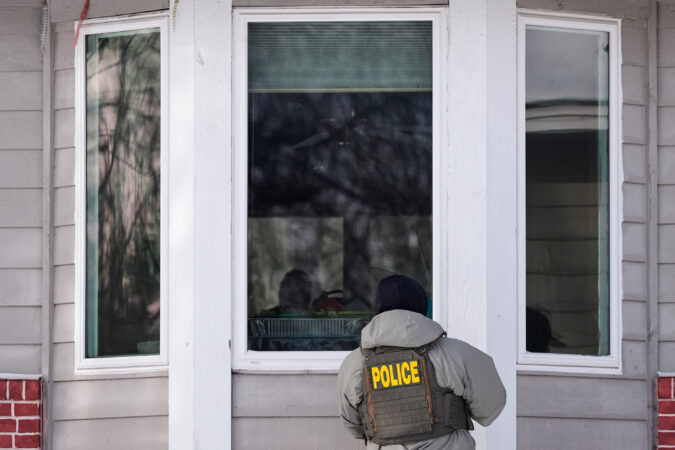
    ST. PAUL, Minn. — Federal immigration agents bashed open a door and detained a U.S. citizen in his Minnesota home at gunpoint without a warrant, then led him out onto the streets in his underwear in subfreezing conditions, according to his family and videos reviewed by the Associated Press.

    ChongLy “Scott” Thao told the AP that his daughter-in-law alerted him on Sunday afternoon that U.S. Immigration and Customs Enforcement agents were banging at the door of his residence in St. Paul. He told her not to open it. Masked agents then forced their way in and pointed guns at the family, yelling at them, Thao recalled.

    “I was shaking,” he said. “They didn’t show any warrant; they just broke down the door.”

    Amid a massive surge of federal agents into the Twin Cities, immigration authorities are facing backlash from residents and the local leaders for warrantless arrests, aggressive clashes with protesters, and the fatal shooting of mother of three Renee Good.

    “ICE is not doing what they say they’re doing,” St. Paul Mayor Kaohly Her, a Hmong American, said in a statement about Thao’s arrest. “They’re not going after hardened criminals. They’re going after anyone and everyone in their path. It is unacceptable and un-American.”

    Encounter is caught on video

    Thao, who has been a U.S. citizen for decades, said that as he was being detained he asked his daughter-in-law to find his identification but the agents told him they didn’t want to see it.

    Instead, as his 4-year-old grandson watched and cried, Thao was led out in handcuffs wearing only sandals and underwear with just a blanket wrapped around his shoulders.

    Videos captured the scene, which included people blowing whistles and horns and neighbors screaming at the more than a dozen gun-toting agents to leave Thao’s family alone.

    Thao said agents drove him “to the middle of nowhere” and made him get out of the car in the frigid weather so they could photograph him. He said he feared they would beat him. He was asked for his ID, which agents earlier prevented him from retrieving.

    Agents eventually realized that he was a U.S. citizen with no criminal record, Thao said, and an hour or two later, they brought him back to his house. There they made him show his ID and then left without apologizing for detaining him or breaking his door, Thao said.

    Homeland Security defends the operation

    The Department of Homeland Security described the ICE operation at Thao’s home as a “targeted operation” seeking two convicted sex offenders.

    “The US citizen lives with these two convicted sex offenders at the site of the operation,” DHS said. “The individual refused to be fingerprinted or facially ID’d. He matched the description of the targets.”

    Thao’s family said in a statement that it “categorically disputes” the DHS account and “strongly objects to DHS’s attempt to publicly justify this conduct with false and misleading claims.”

    Thao told the AP that only he, his son, and daughter-in-law and his grandson live at the rental home. Neither they nor the property’s owner are listed in the Minnesota sex offender registry. The nearest sex offender listed as living in the zip code is more than two blocks away.

    DHS later released the names and photos of two people it described as “violent illegal alien sexual offenders” that it was seeking to detain in St. Paul. Thao said he had never seen these men before and they did not live with him.

    DHS did not respond to an earlier request from the Associated Press asking why the agency believed they were present in Thao’s home.

    Thao’s son, Chris Thao, said ICE agents stopped him while he was driving to work before they went to detain his father. He said he was driving a car he borrowed from his cousin’s boyfriend, whose first name matches that of one of the men DHS said it was seeking. Chris Thao said he did not know the boyfriend’s last name.

    Family fled Laos after helping U.S.

    The family said they are particularly upset by ChongLy Thao’s treatment at the hands of the U.S. government because his mother had to flee to the U.S. from Laos when communists took over in the 1970s since she had supported American covert operations in the country and her life was in danger.

    Thao’s adopted mother, Choua Thao, was a nurse who treated CIA-backed Hmong soldiers in the U.S. government’s “Secret War” from 1961 to 1975 against the communists, according to the Hmong Nurses Association website.

    Choua Thao, who passed away in late December, “treated countless civilians and American soldiers, working closely with U.S. personnel,” her daughter-in-law Louansee Moua wrote on a GoFundMe page for the family.

    ChongLy Thao says he’s planning to file a civil rights lawsuit against DHS and no longer feels secure to sleep in his home.

    “I don’t feel safe at all,” Thao said. “What did I do wrong? I didn’t do anything.”

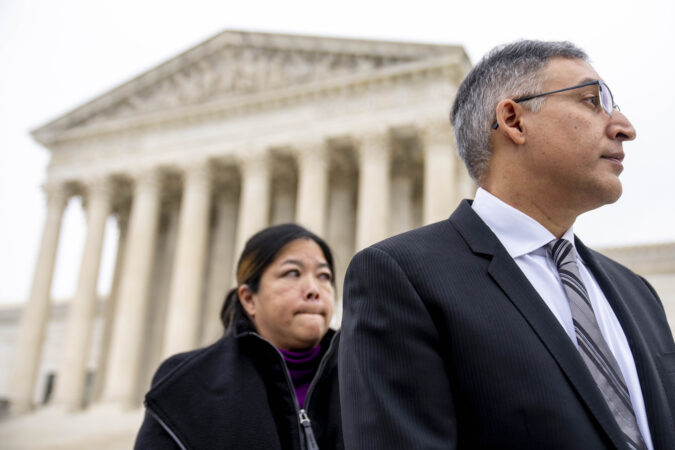
  • Supreme Court seems skeptical of Hawaii limits on carrying guns

    Supreme Court seems skeptical of Hawaii limits on carrying guns

    The Supreme Court on Tuesday appeared skeptical of the constitutionality of a Hawaii law that sharply restricts where people can carry firearms — a case that may offer a strong indication of how far the justices will go in their push to loosen restrictions on guns.

    Hawaii’s law bans people from carrying firearms on private property open to the public unless they have the owner’s consent. The court’s conservatives sharply questioned an attorney defending Hawaii’s law, suggesting it unduly burdened a constitutional right to bear arms.

    The decision will reverberate beyond Hawaii because four other states, including California and New York, have enacted similar laws in response to a landmark 2022 ruling by the high court that made it easier to challenge gun limits.

    The default rule in most states is that gun owners can carry firearms onto private property open to the public until they have been told otherwise. The Hawaii law flipped the rule. Property owners generally have the right to restrict guns on land closed to the public.

    “You are relegating the Second Amendment to second-class status,” Justice Samuel A. Alito Jr. told Neal Katyal, an attorney for Hawaii.

    Chief Justice John G. Roberts Jr. said the First Amendment permitted a political candidate to walk up to someone’s door to campaign, and he questioned why Hawaii could place limits on another constitutional right in the same context. He said gun rights are often disfavored.

    “You say it’s different for the Second Amendment,” Roberts said to Katyal. “What exactly is the distinction?”

    The court’s three liberal justices all indicated they thought Hawaii’s law probably passed constitutional muster. Justice Sonia Sotomayor pointed out that Hawaii had long had some of the nation’s strictest gun-control laws and cited polling that indicates the restriction on public carry is popular.

    “Nothing about Hawaii’s customs, tradition or culture creates an expectation that the general public carries guns wherever they go, correct?” Sotomayor said.

    A trio of gun owners with concealed-carry permits and a gun rights group challenged the Hawaii law, which was enacted in 2023. The Trump administration is backing the gun owners.

    The law also bans the carrying of firearms in 15 sensitive locations, including bars, parks, restaurants that serve alcohol and youth centers. The legality of those restrictions is not at issue in the Supreme Court case.

    The petitioners argue Hawaii’s law violates the Supreme Court’s 2022 decision inNew York State Rifle & Pistol Assoc. v. Bruen,which found that “the Second Amendment guarantees a general right to public carry.”

    That ruling held that any restriction on firearms must have precedent rooted in American history. The decision has sparked thousands of challenges to gun-control laws across the country, resulting in rulings that have relaxed restrictions on high-capacity magazines, age limits for firearms purchases and other rules. The decision has also created some confusion among judges about how to conduct the historical analysis.

    The Supreme Court clarified the Bruen decision last term in a case in which it held that states could bar people with domestic violence restraining orders from obtaining guns. The court found modern gun restrictions need not have a “historical twin” but rather a “historical analogue.”

    Justice Brett M. Kavanaugh questioned whether Hawaii’s law was based on precedents deeply rooted in American history. “There’s no sufficient history,” he said. “Case closed.”

    The court has largely expanded gun rights since the Bruen ruling, but not in all cases. In one ruling, the justices struck down a federal ban on bump stocks, devices that allow semiautomatic rifles to fire hundreds of rounds a minute. In a major case last term, the justices upheld Biden-era restrictions on ghost guns.

    In Hawaii’s case,a federal judge issued a preliminary injunction blocking the statelaw in 2023, but a panel of the U.S. Court of Appeals for the Ninth Circuit sided with the state last year. The appeals court cited historical laws from New Jersey and Louisiana that were “dead ringers” for Hawaii’s statute as it upheld the state law.

    The ruling created a split among appeals courts because a Second Circuit panel struck down a similar New York law.

    Alan A. Beck, an attorney for the gun owners and the Hawaii Firearms Coalition, said the Ninth Circuit ruling illegally constrains their rights since Hawaii’s law essentially outlaws public carry in much of the state. He also said the historical precedents that the appeals court relied on were outliers that should be discounted.

    “There’s a clear body of evidence this law was passed to undermine Bruen and the Second Amendment,” Beck said.

    Katyal countered that the state’s law had precedent in anti-poaching laws and — controversially during arguments — a Louisiana “Black Code” statute aimed at preventing African Americans from possessing firearms.

    “There is no constitutional right that every invitation to enter property is a right to bear arms,” Katyal said.

    The case is not the only Second Amendment challenge the justices will hear this term.

    The court will also decide the constitutionality of a federal law that bans habitual drug users from possessing firearms. Hunter Biden, the son of former President Joe Biden, was convicted of violating the law in 2024. Biden later pardoned him.

    The Trump administration, which usually supports gun rights, urged the high court to uphold that ban.

    “By disqualifying only habitual users of illegal drugs from possessing firearms, the statute imposes a limited, inherently temporary restriction — one which the individual can remove at any time simply by ceasing his unlawful drug use,” Solicitor General D. John Sauer wrote in a friend-of-the-court brief

  • Justice Department subpoenas Walz and others in immigration enforcement obstruction probe

    Justice Department subpoenas Walz and others in immigration enforcement obstruction probe

    MINNEAPOLIS — Federal prosecutors served six grand jury subpoenas Tuesday to Minnesota officials as part of an investigation into whether they obstructed or impeded federal law enforcement during a sweeping immigration operation in the Minneapolis-St. Paul area, a person familiar with the matter said.

    The subpoenas, which seek records, were sent to the offices of Gov. Tim Walz, Attorney General Keith Ellison, Minneapolis Mayor Jacob Frey, St. Paul Mayor Kaohly Her, and officials in Ramsey and Hennepin counties, the person said.

    The person was not authorized to publicly discuss an ongoing investigation and spoke to the Associated Press on condition of anonymity.

    The subpoenas are related to an investigation into whether Minnesota officials obstructed federal immigration enforcement through public statements they made, two people familiar with the matter said Friday. They said then that it was focused on the potential violation of a conspiracy statute.

    Mayor: Subpoenas are to stoke fear

    Walz and Frey, both Democrats, have called the probe a bullying tactic meant to quell political opposition. Frey’s office released a subpoena, which requires a long list of records for a grand jury on Feb. 3, including “cooperation or lack of cooperation” with federal authorities and “any records tending to show a refusal to come to the aid of immigration officials.”

    “We shouldn’t have to live in a country where people fear that federal law enforcement will be used to play politics or crack down on local voices they disagree with,” Frey said.

    Her, a Hmong immigrant and a Democrat, also acknowledged a subpoena, saying she’s “unfazed by these tactics.” The governor’s office referred reporters to a statement earlier Tuesday in which he said the Trump administration was not seeking justice, only creating distractions.

    The subpoenas came a day after the government urged a judge to reject efforts to stop the immigration enforcement surge that has roiled Minneapolis and St. Paul for weeks.

    The Justice Department called the state’s lawsuit, filed soon after the fatal shooting of Renee Good by an immigration officer, “legally frivolous.”

    “Put simply, Minnesota wants a veto over federal law enforcement,” government attorneys wrote.

    Ellison said the government is violating free speech and other constitutional rights. He described the armed officers as poorly trained and said the “invasion” must cease.

    The lawsuit filed Jan. 12 seeks an order to halt or limit the enforcement action. It’s not known when U.S. District Judge Katherine Menendez will make a decision.

    Ilan Wurman, who teaches constitutional law at University of Minnesota Law School, doubts the state’s arguments will be successful.

    “There’s no question that federal law is supreme over state law, that immigration enforcement is within the power of the federal government, and the president, within statutory bounds, can allocate more federal enforcement resources to states who’ve been less cooperative in that enforcement space than other states have been,” Wurman told the Associated Press.

    Hard to track arrests

    Greg Bovino of U.S. Border Patrol, who has commanded the Trump administration’s big-city immigration crackdown, said more than 10,000 people in the U.S. illegally have been arrested in Minnesota in the past year, including 3,000 “of some of the most dangerous offenders” in the last six weeks during Operation Metro Surge.

    He did not elaborate, though he highlighted the capture of three people with criminal records from Laos, Guatemala and Honduras.

    “These are not technical violations. As I mentioned, these are individuals responsible for serious harm,” Bovino said at a news conference.

    Julia Decker, policy director at the Immigrant Law Center of Minnesota, expressed frustration that advocates have no way of knowing whether the government’s arrest numbers and descriptions of the people in custody are accurate.

    “These are real people we’re talking about, that we potentially have no idea what is happening to them,” Decker said.

    Bovino defends his ‘troops’ as ethical

    Good, 37, was killed on Jan. 7 as she was moving her vehicle, which had been blocking a Minneapolis street where ICE officers were operating. Trump administration officials say the officer, Jonathan Ross, shot her in self-defense, although videos of the encounter show the Honda Pilot slowly turning away from him.

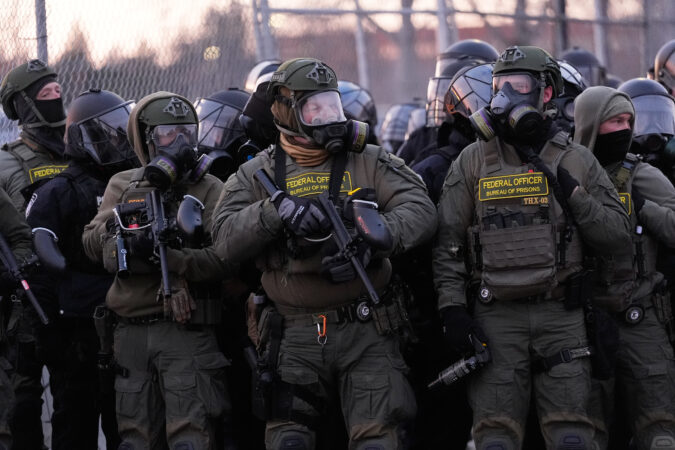
    Since then, the public has repeatedly confronted officers, blowing whistles and yelling insults at ICE and Border Patrol. They, in turn, have used tear gas and chemical irritants against protesters. Bystanders have recorded video of officers using a battering ram to get into a house as well as smashing vehicle windows and dragging people out of cars.

    Bovino defended his “troops” and said their actions are “legal, ethical and moral.”

    “What we see when folks get swept up, as you say, oftentimes it’s as agitators, as rioters, and now I call them anarchists,” he told reporters, not “ordinary citizens, Ma, Pa America.”

    Police in the region, meanwhile, said off-duty law enforcement officers have been racially profiled by federal officers and stopped without cause. Brooklyn Park police Chief Mark Bruley said he has received complaints from residents who are U.S. citizens, including his own officers.

  • Mexico sends 37 cartel members to U.S. in latest offer to Trump administration

    Mexico sends 37 cartel members to U.S. in latest offer to Trump administration

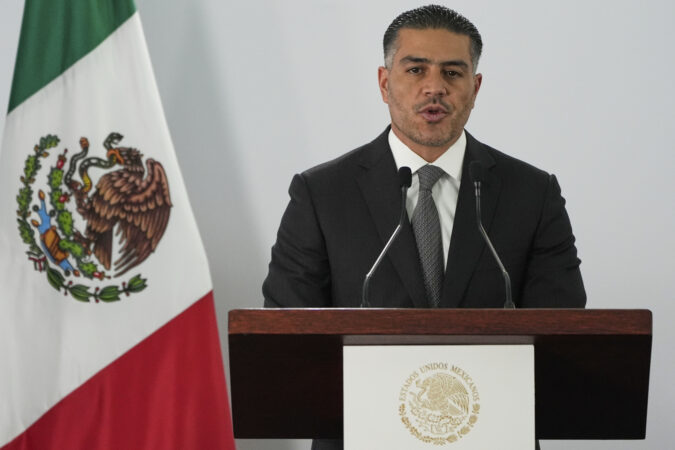
    MEXICO CITY — Mexico’s security minister said Tuesday that it had sent another 37 members of Mexican drug cartels to the United States, as the Trump administration ratchets up pressure on governments to crack down on criminal networks it says are smuggling drugs across the border.

    Mexican Security Minister Omar García Harfuch wrote in a social media post on X that the people transferred were “high impact criminals” that “represented a real threat to the country’s security.”

    It is the third time in less than one year that Mexico has sent detained cartel members to the U.S. as the country attempts to offset mounting threats by U.S. President Donald Trump. García Harfuch said the government has sent 92 people in total.

    Video shared by Mexican authorities shows a line of handcuffed prisoners surrounded by heavily-armed and masked officers being loaded onto a military jet at an airport on the outskirts of Mexico City.

    “As the pressure increases, as demands from the White House dial up, [Mexico’s government] needs to resort to extraordinary measures, such as these transfers,” said David Mora, a Mexico analyst at the International Crisis Group.

    The U.S. State Department and Justice Department did not immediately respond to a request for comment.

    Tuesday’s transfer included a handful of important figures from the Sinaloa Cartel, the Beltrán-Leyva cartel, Jalisco New Generation Cartel, the Northeast Cartel, a remnant of the infamous Zetas based in the Mexican border state of Tamaulipas, across from Texas. Mexican authorities said that all had pending U.S. cases.

    Among those transferred was María Del Rosario Navarro Sánchez, the first Mexican citizen to face charges in the U.S. for providing support to a terrorist organization, after being accused of conspiring with a cartel.

    Trump has publicly entertained the idea of military action on Mexican cartels, language that has only gotten more combative since a U.S. military operation in Venezuela deposed former President Nicolás Maduro earlier this month.

    Turning his attention to Mexico shortly after the Venezuela attack, Trump said in an interview with Fox News: “We’ve knocked out 97% of the drugs coming in by water and we are going to start now hitting land, with regard to the cartels.”

    Last week, Mexico President Claudia Sheinbaum spoke with Trump, telling him that U.S. intervention in Mexico was “not necessary,” but emphasizing that the two governments would continue to collaborate.

    Last February, Mexico sent 29 cartel figures to the U.S., including drug lord Rafael Caro Quintero, who was behind the killing of a U.S. DEA agent in 1985. In August, a second round saw 26 Mexican cartel figures sent to the U.S. None had the profile of Caro Quintero, but spanning multiple cartels, the figures could help U.S. prosecutors build cases.

    After the August transfer, García Harfuch said it was a public safety decision, because Mexico did not want them to continue operating their illicit businesses from inside Mexican prisons.

    Another transfer of prisoners to the U.S. had been rumored for weeks. Mexico has sought to assure the Trump administration that it continues to be a willing partner in combating drug traffickers.

    “For the Trump administration and the Trump base, what is going to matter in the end is some wins that Trump can actually bring back and say ‘Look this is what I’m getting out of Mexico,’” said Mora.

  • Trump’s ICE force is sweeping America. Billions in his tax and spending cuts bill are paying for it

    Trump’s ICE force is sweeping America. Billions in his tax and spending cuts bill are paying for it

    WASHINGTON — A ballooning Immigration and Customs Enforcement budget. Hiring bonuses of $50,000. Swelling ranks of ICE officers, to 22,000, in an expanding national force bigger than most police departments in America.

    President Donald Trump promised the largest mass deportation operation in U.S. history, but achieving his goal wouldn’t have been possible without funding from the big tax and spending cuts bill passed by Republicans in Congress, and it’s fueling unprecedented immigration enforcement actions in cities like Minneapolis and beyond.

    The GOP’s big bill is “supercharging ICE,” one budget expert said, in ways that Americans may not fully realize — and that have only just begun.

    “I just don’t think people have a sense of the scale,” said Bobby Kogan, senior director of federal budget policy at the Center for American Progress and a former adviser to the Biden administration’s Office of Management and Budget.

    “We’re looking at ICE in a way we’ve never seen before,” he said.

    Trump’s big bill creates massive law enforcement force

    As the Republican president marks the first year of his second term, the immigration enforcement and removal operation that has been a cornerstone of his domestic and foreign policy agenda is rapidly transforming into something else — a national law enforcement presence with billions upon billions of dollars in new spending from U.S. taxpayers.

    The shooting death of Renee Good in Minneapolis showed the alarming reach of the new federalized force, sparking unrelenting protests against the military-styled officers seen going door to door to find and detain immigrants. Amid the outpouring of opposition, Trump revived threats to invoke the Insurrection Act to quell the demonstrations and the U.S. Army has 1,500 soldiers ready to deploy.

    But Trump’s own public approval rating on immigration, one of his signature issues, has slipped since he took office, according to an AP-NORC poll.

    “Public sentiment is everything,” said Rep. Nydia M. Velázquez (D., N.Y.) at a news conference at the Capitol with lawmakers supporting legislation to impeach Homeland Security Secretary Kristi Noem.

    Americans, she said, are upset at what they are seeing. “They didn’t sign on for this,” she said.

    Border crossings down, but Americans confront new ICE enforcements

    To be sure, illegal crossings into the U.S. at the Mexico border have fallen to historic lows under Trump, a remarkable shift from just a few years ago when President Joe Biden’s Democratic administration allowed millions of people to temporarily enter the U.S. as they adjudicated their claims to stay.

    Yet as enforcement moves away from the border, the newly hired army of immigration officers swarming city streets with aggressive tactics — in Los Angeles, Chicago, and elsewhere — is something not normally seen in the U.S.

    Armed and masked law enforcement officers are being witnessed smashing car windows, yanking people from vehicles and chasing and wrestling others to the ground and hauling them away — images playing out in endless loops on TVs and other screens.

    And it’s not just ICE. A long list of supporting agencies, including federal, state, and local police and sheriff’s offices, are entering into contract partnerships with Homeland Security to conduct immigration enforcement operations in communities around the nation.

    House Speaker Mike Johnson (R., La.) has warned Democrats that this is “no time to be playing games” by stirring up the opposition to immigration enforcement officers in Minneapolis and other places.

    “They need to get out of the way and allow federal law enforcement to do its duty,” Johnson said at the Capitol.

    Noem has said the immigration enforcement officers are acting lawfully. The department insists it’s targeting criminals in the actions, what officials call the worst of the worst immigrants.

    However, reports show that noncriminals and U.S. citizens are also being forcibly detained by immigration officers. The Supreme Court last year lifted a ban on using race alone in the immigration stops.

    Trump last month called Somali immigrants “garbage,” comments that echoed his past objections to immigrants from certain countries.

    The Trump administration has set a goal of 100,000 detentions a day, about three times what’s typical, with 1 million deportations a year.

    Money from the big bill flows with few restraints

    With Republican control of Congress, the impeachment of Noem or any other Trump official is not a viable political option for Democrats, who would not appear to have the vote tally even among their own ranks.

    In fact, even if Congress wanted to curtail Trump’s immigration operations — by threatening to shut down the government, for example — it would be difficult to stop the spend.

    What Trump called the “big, beautiful bill” is essentially on autopilot through 2029, the year he’s scheduled to finish his term and leave office.

    The legislation essentially doubled annual Homeland Security funding, adding $170 billion to be used over four years. Of that, ICE, which typically receives about $10 billion a year, was provided $30 billion for operations and $45 billion for detention facilities.

    “The first thing that comes to mind is spending on this level is typically done on the military,” said Kathleen Bush-Joseph, a policy analyst at the Migration Policy Institute. “Trump is militarizing immigration enforcement.”

    Ahead, Congress will consider a routine annual funding package for Homeland Security unveiled Tuesday, or risk a partial shutdown Jan. 30. A growing group of Democratic senators and the Congressional Progressive Caucus have had enough. They say they won’t support additional funds without significant changes.

    Lawmakers are considering various restrictions on ICE operations, including limiting arrests around hospitals, courthouses, churches and other sensitive locations and ensuring that officers display proper identification and refrain from wearing face masks.

    “I think ICE needs to be totally torn down,” said Sen. Ruben Gallego (D., Ariz.) on CNN over the weekend.

    “People want immigration enforcement that goes after criminals,” he said. And not what he called this “goon squad.”

    Big spending underway, but Trump falls short of goals

    Meanwhile, Homeland Security has begun tapping the new money at its disposal. The department informed Congress it has obligated roughly $58 billion — most of that, some $37 billion, for border wall construction, according to a person familiar with the private assessment but unauthorized to discuss it.

    The Department of Homeland Security said its massive recruitment campaign blew past its 10,000-person target to bring in 12,000 new hires, more than doubling the force to 22,000 officers, in a matter of months.

    “The good news is that thanks to the Big Beautiful Bill that President Trump signed, we have an additional 12,000 ICE officers and agents on the ground across the country,” Assistant Secretary Tricia McLaughlin said in a December statement.

    The department also announced it had arrested and deported about 600,000 people. It also said 1.9 million other people had “voluntarily self-deported” since January 2025, when Trump took office.

  • ‘Morally acceptable’ for U.S. troops to disobey orders, archbishop says

    ‘Morally acceptable’ for U.S. troops to disobey orders, archbishop says

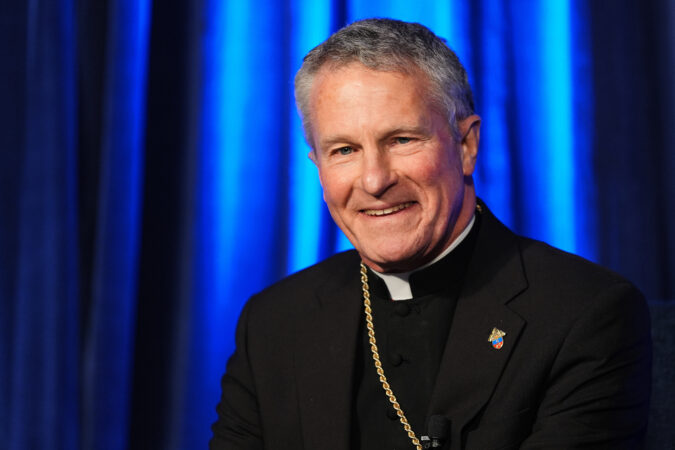
    As the Trump administration intervenes in Venezuela, readies troops for a possible deployment to Minnesota, and threatens to seize Greenland, the Catholic archbishop for the U.S. armed forces said it “would be morally acceptable” for troops to disobey what violated their conscience.

    Archbishop Timothy P. Broglio is one of a chorus of Catholic leaders questioning the administration’s use of force. His comments also underscored the mounting concern being voiced by the first American pontiff, Pope Leo XIV, as well as his top cardinals in the United States, over the Trump administration’s foreign policy.

    “Greenland is a territory of Denmark,” Broglio told the BBC Sunday. “It does not seem really reasonable that the United States would attack and occupy a friendly nation.”

    Asked whether he was “worried” about the military personnel in his pastoral care, Broglio replied: “I am obviously worried because they could be put in a situation where they’re being ordered to do something which is morally questionable.”

    “It would be very difficult for a soldier or a Marine or a sailor to by himself disobey an order,” he said. “But strictly speaking, he or she would be, within the realm of their own conscience, it would be morally acceptable to disobey that order, but that’s perhaps putting that individual in an untenable situation — and that’s my concern.”

    As head of the D.C.-based Archdiocese for the Military Services USA, Broglio oversees the chaplains who serve Catholics and others at U.S. military bases, Veterans Affairs healthcare facilities and diplomatic missions worldwide.

    A former president of the U.S. Conference of Catholic Bishops, the Ohio native is seen as a church conservative. As the Obama administration was ending Don’t Ask, Don’t Tell, he spoke against allowing LGBT troops to serve openly. When the Trump administration disqualified transgender people from serving in the military, he said “sexual orientation and gender identity issues” reflected an “incorrect societal attitude.”

    He has also criticized military strikes on boats the administration says are smuggling drugs. U.S. forces have killed at least 115 people in more than 30 such strikes in international waters in the Caribbean and the Pacific since September.

    “In the fight against drugs, the end never justifies the means,” he said in a statement last month. “No one can ever be ordered to commit an immoral act, and even those suspected of committing a crime are entitled to due process under the law.”

    He issued the statement after the Washington Post reported that commanders in the first known boat strike saw survivors and ordered a second barrage to kill them. He did not refer to the incident, but appeared to allude to it.

    “As the moral principle forbidding the intentional killing of noncombatants is inviolable,” he said, “it would be an illegal and immoral order to kill deliberately survivors on a vessel who pose no immediate lethal threat to our armed forces.”

    Trump is set to arrive Wednesday in Davos, Switzerland, for the World Economic Forum, at which European leaders plan to discuss his demand to seize and annex Greenland — a demand that has transformed the annual gathering of the world’s political and financial elite into an emergency diplomatic summit.

    Members of the military take an oath to the Constitution, not to the president. They swear an oath of enlistment to “support and defend the Constitution of the United States against all enemies” and “obey the orders of the President of the United States and the orders of the officers appointed over me,” according to the Uniform Code of Military Justice. They have an obligation not to follow “manifestly unlawful orders,” but such situations are rare and legally fraught, The Washington Post reported. Military personnel can be court-martialed for failing to obey lawful orders.

    The Pentagon in November announced an investigation into Sen. Mark Kelly (D., Ariz.), a prominent Trump critic and combat veteran, after he spoke in a video with five other Democrats reminding U.S. service members of their duty under military law to disobey illegal orders. The message move criticized by Trump at the time as “SEDITIOUS BEHAVIOR,” and the other lawmakers said this month they were now under investigation by his administration for the video.

    Kelly filed a lawsuit earlier this month seeking to reverse Defense Secretary Pete Hegseth’s letter of censure and effort to potentially demote him in rank.

    Broglio’s comments echoed concerns made in a joint statement Monday by the three highest-ranking U.S. Catholic archbishops, who warned that a resurgence in the use or threat of military force, including by the United States in Venezuela and Greenland, had thrown “the moral foundation for America’s actions in the world” into question.

    “The events in Venezuela, Ukraine and Greenland have raised basic questions about the use of military force and the meaning of peace,” wrote Cardinals Blase Cupich of Chicago, Robert McElroy of D.C., and Joseph Tobin of Newark.

    In the days after the U.S. operation in Venezuela to capture Nicolás Maduro, and after Trump said he was now “in charge” of that nation, the pope insisted on respect for Venezuela’s sovereignty.

    In a Jan. 9 meeting with diplomats in Vatican City, Leo decried a new era in which multilateralism is being replaced by “a zeal for war” and “peace is sought through weapons as a condition for asserting one’s own dominion.” He did not name the United States.

    Broglio, in his comment on the U.S. boat strikes, invoked just war theory. In Catholic teaching, the “defensive use of military force” against an aggressor may be legitimate as a final resort under strict criteria.

    According to the Catechism of the Catholic Church, the damage inflicted by the aggressor must be “lasting, grave and certain”; all other means of stopping it “must have been shown to be impractical or ineffective”; there must be “serious prospects of success”; and the action “must not produce evils and disorders graver than the evil to be eliminated.”

  • Syrian military, Kurdish-led forces announce new truce after guards leave camp housing IS families

    Syrian military, Kurdish-led forces announce new truce after guards leave camp housing IS families

    RAQQA, Syria — Guards from the Kurdish-led Syrian Democratic Forces abandoned a camp Tuesday in northeast Syria housing thousands of people linked to the Islamic State group, and the Syrian military said that allowed detainees to escape.

    Hours later, the Syrian government and the SDF announced a new four-day truce after a previous ceasefire broke down. The two sides have been clashing for two weeks, amid a breakdown in negotiations over a deal to merge their forces together.

    The al-Hol camp houses mainly women and children who are relatives of IS members. Thousands of accused IS militants are separately housed in prisons in northeast Syria.

    Syria’s interior ministry accused the SDF of allowing the release of “a number of detainees from the ISIS militant [group] along with their families.” The AP could not independently confirm if detainees had escaped from the camps or how many.

    The SDF subsequently confirmed that its guards had withdrawn from the camp, but did not say whether any detainees escaped. The group blamed “international indifference toward the issue of the [IS] terrorist organization and the failure of the international community to assume its responsibilities in addressing this serious matter.”

    It said its forces had redeployed in other areas “that are facing increasing risks and threats” from government forces.

    An official with the U.S. military’s Central Command who spoke on condition of anonymity because they were not authorized to speak publicly said, “We are aware of the reports and are closely monitoring the situation.”

    The SDF and the government also traded blame over the escape Monday of IS members from a prison in the northeastern town of Shaddadeh.

    The Syrian defense ministry in a statement said it is prepared to take over al-Hol camp and the prisons and accused the SDF of using them as “bargaining chips.”

    Al-Hol holds tens of thousands of detainees

    At its peak in 2019, some 73,000 people were living at al-Hol camp. Since then the number has declined with some countries repatriating their citizens.

    Sheikhmous Ahmad, a Kurdish official overseeing camps for displaced in northeastern Syria, told the Associated Press that the al-Hol’s current population is about 24,000, about 14,500 of whom are Syrians and nearly 3,000 Iraqis.

    He added that about 6,500 from other nationalities are held in a highly secured section of the camp, many of whom are die-hard IS supporters who came from around the world to join the extremist group.

    Government and SDF trade blame over prison break

    Earlier Tuesday, Syria’s interior ministry said that 120 IS members had escaped Monday from the prison in Shaddadeh, amid clashes between government forces and the SDF. Security forces recaptured 81 of them, the statement said.

    Also Tuesday, the SDF accused “Damascus-affiliated factions” of cutting off water supplies to the al-Aqtan prison near the city of Raqqa, which it called a “blatant violation of humanitarian standards.”

    The SDF, the main U.S.-backed force that fought IS in Syria, controls more than a dozen prisons in the northeast where some 9,000 IS members have been held for years without trial.

    IS was defeated in Iraq in 2017 and in Syria two years later, but the group’s sleeper cells still carry out deadly attacks in both countries.

    Under a deal announced Sunday, government forces were to take over control of the prisons from the SDF, but the transfer did not go smoothly.

    New ceasefire deal announced

    The Syrian military announced Tuesday evening a new four-day ceasefire. The SDF confirmed the deal and said “it will not initiate any military action unless our forces are subjected to attacks.”

    Elham Ahmad, a senior official with the Kurdish-led local administration in northeast Syria, told journalists Tuesday that an earlier ceasefire had fallen apart after SDF leader Mazloum Abdi requested a five-day grace period to implement the conditions and Syrian Interim President Ahmad al-Sharaa refused.

    She blamed the government for violating the agreement but called for a return to dialogue.

    In response to a journalist’s question regarding whether the SDF had requested help from Israel — which previously intervened in clashes between government forces and groups from the Druze religious minority last year — Ahmad said “certain figures” from Israel had communicated with the SDF. She added that the SDF is ready to accept support from any source available.

    A statement from al-Sharaa’s office said that government forces will not enter Kurdish-majority areas until plans are agreed upon for their “peaceful integration” and that Kurdish villages will be patrolled by “local security forces drawn from the residents of the area.”

    It said Abdi will put forward nominees from the SDF for the posts of deputy defense minister, governor of al-Hassakeh province, representatives in the parliament, and for other positions in Syrian state institutions.

    SDF officials have expressed disappointment that the U.S. did not intervene on their behalf. The group was long the main U.S. partner in Syria in the fight against IS, but that has changed as the Trump administration has developed closer ties with al-Sharaa’s government.

    U.S. envoy to Syria Tom Barrack in a statement Tuesday urged the SDF to move forward with integration into the new Syrian government and army and appeared to warn the Kurdish-led force that no help would be coming from Washington if it continued fighting.

    He said SDF’s role as the primary anti-IS force “has largely expired, as Damascus is now both willing and positioned to take over security responsibilities” and that “recent developments show the U.S. actively facilitating this transition, rather than prolonging a separate SDF role.”

    Since toppling Bashar Assad in December 2024, Syria’s new leaders have struggled to assert full authority over the war-torn country. An agreement was reached in March that would merge the SDF with Damascus, but it didn’t gain traction.

    Earlier this month, clashes broke out in the city of Aleppo, followed by the government offensive that seized control of Deir el-Zour and Raqqa provinces, critical areas under the SDF that include oil and gas fields, river dams along the Euphrates and border crossings.

    Al-Sharaa postponed a planned trip to Germany Tuesday amid the ongoing tensions.

  • Researchers find Antarctic penguin breeding is heating up sooner, and that’s a problem

    Researchers find Antarctic penguin breeding is heating up sooner, and that’s a problem

    WASHINGTON — Warming temperatures are forcing Antarctic penguins to breed earlier and that’s a big problem for two of the cute tuxedoed species that face extinction by the end of the century, a study said.

    With temperatures in the breeding ground increasing 5.4 degrees Fahrenheit (3 degrees Celsius) from 2012 to 2022, three different penguin species are beginning their reproductive process about two weeks earlier than the decade before, according to a study in Tuesday’s Journal of Animal Ecology. And that sets up potential food problems for young chicks.

    “Penguins are changing the time at which they’re breeding at a record speed, faster than any other vertebrate,” said lead author Ignacio Juarez Martinez, a biologist at Oxford University in the United Kingdom. “And this is important because the time at which you breed needs to coincide with the time with most resources in the environment and this is mostly food for your chicks so they have enough to grow.’’

    For some perspective, scientists have studied changes in the life cycle of great tits, a European bird. They found a similar two-week change, but that took 75 years as opposed to just 10 years for these three penguin species, said study co-author Fiona Suttle, another Oxford biologist.

    Researchers used remote control cameras to photograph penguins breeding in dozens of colonies from 2011 to 2021. They say it was the fastest shift in timing of life cycles for any backboned animals that they have seen. The three species are all brush-tailed, so named because their tails drag on the ice: the cartoon-eye Adelie, the black-striped chinstrap and the fast-swimming gentoo.

    Warming creates penguin winners, losers

    Suttle said climate change is creating winners and losers among these three penguin species and it happens at a time in the penguin life cycle where food and the competition for it are critical in survival.

    The Adelie and chinstrap penguins are specialists, eating mainly krill. The gentoo have a more varied diet. They used to breed at different times, so there were no overlaps and no competition. But the gentoos’ breeding has moved earlier faster than the other two species and now there’s overlap. That’s a problem because gentoos, which don’t migrate as far as the other two species, are more aggressive in finding food and establishing nesting areas, Martinez and Suttle said.

    Suttle said she has gone back in October and November to the same colony areas where she used to see Adelies in previous years only to find their nests replaced by gentoos. And the data backs up the changes her eyes saw, she said.

    “Chinstraps are declining globally,” Martinez said. “Models show that they might get extinct before the end of the century at this rate. Adelies are doing very poorly in the Antarctic Peninsula and it’s very likely that they go extinct from the Antarctic Peninsula before the end of the century.”

    Early bird dining causes problems

    Martinez theorized that the warming western Antarctic — the second-fasting heating place on Earth behind only the Arctic North Atlantic — means less sea ice. Less sea ice means more spores coming out earlier in the Antarctic spring and then “you have this incredible bloom of phytoplankton,” which is the basis of the food chain that eventually leads to penguins, he said. And it’s happening earlier each year.

    Not only do the chinstraps and Adelies have more competition for food from gentoos because of the warming and changes in plankton and krill, but the changes have brought more commercial fishing that comes earlier and that further shortens the supply for the penguins, Suttle said.

    This shift in breeding timing “is an interesting signal of change and now it’s important to continuing observing these penguin populations to see if these changes have negative impacts on their populations,” said Michelle LaRue, a professor of Antarctic marine science at the University of Canterbury in New Zealand. She was not part of the Oxford study.

    People’s penguin love helps science

    With millions of photos — taken every hour by 77 cameras for 10 years — scientists enlisted everyday people to help tag breeding activity using the Penguin Watch website.

    “We’ve had over 9 million of our images annotated via Penguin Watch,” Suttle said. “A lot of that does come down to the fact that people just love penguins so much. They’re very cute. They’re on all the Christmas cards. People say, ‘Oh, they look like little waiters in tuxedos.’”

    “The Adelies, I think their personality goes along with it as well,” Suttle said, saying there’s “perhaps a kind of cheekiness about them — and this very cartoonlike eye that does look like it’s just been drawn on.”

  • Russia batters Ukraine’s power grid again as officials seek momentum in U.S.-led peace talks

    Russia batters Ukraine’s power grid again as officials seek momentum in U.S.-led peace talks

    KYIV, Ukraine — Russia bombarded Ukraine with more than 300 drones and ballistic and cruise missiles in its latest nighttime attack on the Ukrainian power grid, President Volodymyr Zelensky said Tuesday, as Moscow gives no public sign that it’s willing to end the invasion of its neighbor anytime soon.

    The attack knocked out heating to more than 5,600 apartment buildings in the capital, Kyiv Mayor Vitali Klitschko said. Nearly 80% of the affected buildings had recently had their heating supply restored after a major Russian barrage on Jan. 9 that plunged thousands of people into a dayslong blackout, he said.

    Ukraine is enduring one of its coldest winters for years, with temperatures in Kyiv falling to minus 4 Fahrenheit. At the same time, Russia has escalated its aerial attacks on the electricity supply, aiming to deny Ukrainians heat and running water and wear down their resistance almost four years after Moscow launched its full-scale invasion on Feb. 24, 2022.

    Meanwhile, Ukrainian officials are trying to keep up the momentum of U.S.-led peace talks. A Ukrainian negotiating team arrived in the United States on Saturday. Their main task was to convey how the relentless Russian strikes are undermining diplomacy, according to Zelensky.

    The Ukrainian leader said last week that the delegation would also try to finalize with U.S. officials documents for a proposed peace settlement that relate to postwar security guarantees and economic recovery. If American officials approve the proposals, the U.S. and Ukraine could sign the documents at the World Economic Forum in Davos, Switzerland, this week, he said.

    Kremlin spokesman Dmitry Peskov said Tuesday that presidential envoy Kirill Dmitriev plans to meet with some American representatives at Davos.

    He refused to name the officials Dmitriev would meet with, but media reports said they would include U.S. envoy Steve Witkoff and U.S. President Donald Trump’s son-in-law, Jared Kushner.

    Attacks described as ‘cruel’

    Ukrainian Foreign Minister Andrii Sybiha said his country needs urgent assistance and additional sanctions on Russia to make Moscow change course.

    Russian President Vladimir Putin’s “barbaric strike this morning is a wake-up call to world leaders gathering in Davos,” Sybiha said on X.

    U.N. Human Rights Chief Volker Türk said that he was outraged by the repeated large-scale attacks on Ukraine’s energy infrastructure, which especially affect children, older people, and those with disabilities.

    The strikes “can only be described as cruel,” he said in Geneva. “They must stop. Targeting civilians and civilian infrastructure is a clear breach of the rules of warfare.”

    Several electrical substations providing power vital for nuclear safety in Ukraine were affected, said Rafael Mariano Grossi, director-general of the International Atomic Energy Agency.

    Air defense systems are expensive

    Ukraine’s air force command said that 27 missiles and 315 drones were shot down or jammed, while five missiles and 24 drones hit 11 locations.

    The Russian Defense Ministry claimed that its forces targeted Ukrainian military and industrial installations as well as energy and transport infrastructure used by the Ukrainian armed forces.

    The constant attacks have stretched Ukraine’s air defenses and, according to Zelensky, some systems recently ran out of ammunition before a new shipment arrived.

    The fight is also expensive: the air defense ammunition that Ukraine used against the Russian missiles overnight cost about 80 million euros ($93 million), Zelensky said.

    Ukrainian air defenses are adopting a new approach, with the appointment of a new deputy air force commander, Pavlo Yelizarov, according to Zelensky.

    “This system will be transformed,” he said late Monday, without providing details.

    Ukraine relies on sophisticated air defense systems produced by Western countries, especially the U.S., to thwart Russia’s missile and drone attacks.