Tag: no-latest

  • Trump appears to back away from threats to Colombia’s president

    Trump appears to back away from threats to Colombia’s president

    BOGOTÁ — Two days after publicly weighing an invasion of Colombia, President Donald Trump appeared to call it off on Wednesday night.

    He said he had spoken to an erstwhile nemesis, Colombian President Gustavo Petro. Trump had previously called Petro a “drug leader” who “better watch his ass.” But after the Wednesday night call, Trump wrote on Truth Social: “I appreciated his call and tone.” The two men agreed to meet in Washington.

    It was the most recent jolt to one of the Western Hemisphere’s closest relationships. Days earlier, when Trump said that invading Colombia “sounds good to me,” he was threatening to attack a top recipient of U.S. military assistance.

    On Thursday morning, as tensions appeared to ease, Petro reflected on the call, which he said in an X post was brokered by Sen. Rand Paul (R., Ky.) and lasted for 55 minutes.

    “I know that President Trump doesn’t agree with me, but it’s more convenient to start a dialogue … than to settle it on battlefields,” he wrote.

    No country in Latin America has a closer partnership with the Pentagon. The two countries share intelligence daily; U.S. military liaisons are fixtures in Colombia’s Defense Ministry; and the United States has vetted specialized units within Colombia’s military and police, according to past statements by both governments.

    Yet, as the relationship between Trump and Petro deteriorated, the countries found themselves in the bizarre position of historic partners whose leaders were acting as if preparing for war.

    In the wake of the U.S. seizure of Venezuelan President Nicolás Maduro, analysts and Colombian officials said they couldn’t entirely discount Trump’s threats to Colombia, even though they seemed profoundly unlikely. Trump called Petro a “sick man who likes making cocaine and selling it.”

    In response, Petro said he was preparing his “people” to defend him “from any illegitimate violent act.” A former rebel, he said in a post on X that “for the sake of the fatherland I will take up weapons again.” He sent 30,000 troops to the Venezuela border.

    Colombia’s Foreign Ministry did not respond to requests for comment. On Tuesday, the country’s foreign minister, Rosa Villavicencio, said at a news conference that it would respond militarily to any U.S. “aggression.”

    “For that, we have a very well-trained army,” Villavicencio said.

    The threat of war between the two allies “boggles the mind,” said Adam Isacson, the head of the defense oversight program at the Washington Office on Latin America, a think tank.

    “These two countries have had an intimate relationship going back to the Korean War,” Isacson said. “Colombia modeled its joint military structures after [the] U.S. It’s hard to imagine closer relations.”

    Trump has frequently pointed to Colombia’s failure to crack down on cocaine exports. In 2023, a U.N. report said coca was being cultivated on 253,000 acres in Colombia, a record high. It was more than half of the global coca crop. On the Wednesday night call, Petro said he “laid out my policy against the narcos that spans nearly 20 years.”

    While experts say Petro’s drug policy does bear some responsibility for that growth, there is no evidence that he is complicit in the trafficking of drugs. Still, Trump had appeared to be modeling his accusations against Petro after the drug case the Justice Department built against Maduro, which culminated in a 25-page indictment.

    “He better wise up or he’ll be next,” Trump said of Petro last month, suggesting to target Colombia in a possible expansion of the military buildup and antidrug trafficking operations directed at Venezuela.

    Petro had been seen by some as having gone out of his way to antagonize Trump over the past year. In September, he spoke at a protest in New York City about the immorality of some U.S. military missions.

    “I ask all soldiers in the United States Army not to point their rifles at humanity,” Petro said through a megaphone. “Disobey Trump’s order! Obey the order of humanity!” The U.S. said it later suspended his visa.

    It was the kind of spectacle that many Colombians saw as a political stunt — an effort by Petro to use his vocal opposition to Trump to animate his leftist base. Petro has announced a national demonstration in Bogotá on Wednesday in response to Trump’s comments and “to defend national sovereignty.”

    Petro’s term expires later this year, and Colombia’s constitution does not allow him to seek a second consecutive term — another reason many here had doubted that Trump would attempt to capture him. In his Truth Social post on Wednesday, Trump said the White House meeting between the two men would take place in the “near future.”

    Petro wrote on X: “Now we have to see the consequences of the reestablishment of diplomatic conversation.”

    If that meeting goes poorly — which some experts expect it might — Trump’s threats against Petro could affect the next Colombian election, which will take place in May. Already, opponents of Petro’s coalition are arguing that the next president should be someone who won’t antagonize the U.S., given the political and economic risks.

    “Right and center-leaning candidates are telling voters that Petro has been derelict in managing the country’s most important bilateral relationship,” said Elizabeth Dickinson, the deputy director for Latin America at International Crisis Group.

    Iván Cepeda, the candidate who will represent Petro’s coalition, has rebuffed Trump’s comments about Petro, writing on X that Colombia is not “a colony or a protectorate of the United States.”

    In addition to targeting Maduro, Trump has proved increasingly willing to intervene in Latin American elections to prevent leftist candidates from winning. The candidate he endorsed in Honduras, Nasry Asfura, won the election there by a razor-thin margin after Trump suggested that he would cut aid to the country if Asfura lost.

    On Monday, as if to summarize Trump’s evolving foreign policy in the region, the State Department posted on X a photo of Trump with the words: “THIS IS OUR HEMISPHERE.”

  • Denmark, Greenland envoys meet with White House officials over Trump’s call for a ‘takeover’

    Denmark, Greenland envoys meet with White House officials over Trump’s call for a ‘takeover’

    Denmark and Greenland’s envoys to Washington have begun a vigorous effort to urge U.S. lawmakers as well as key Trump administration officials to step back from President Donald Trump’s call for a “takeover” of the strategic Arctic island.

    Denmark’s ambassador, Jesper Moller Sorensen, and Jacob Isbosethsen, Greenland’s chief representative to Washington, met on Thursday with White House National Security Council officials to discuss a renewed push by Trump to acquire Greenland, perhaps by military force, according to Danish government officials who were not authorized to comment publicly and spoke on the condition of anonymity.

    The White House did not respond to a request for comment about the meeting.

    The envoys have also held a series of meetings this week with American lawmakers as they look to enlist help in persuading Trump to back off his threat.

    Secretary of State Marco Rubio is expected to meet next week with Danish officials.

    Trump, in a New York Times interview published Thursday, said he has to possess the entirety of Greenland instead of just exercising a long-standing treaty that gives the United States wide latitude to use Greenland for military posts.

    “I think that ownership gives you a thing that you can’t do with, you’re talking about a lease or a treaty. Ownership gives you things and elements that you can’t get from just signing a document,” Trump told the newspaper.

    The U.S. is party to a 1951 treaty that gives it broad rights to set up military bases there with the consent of Denmark and Greenland.

    Meanwhile, Vice President JD Vance told reporters that European leaders should “take the president of the United States seriously” as he framed the issue as one of defense.

    “What we’re asking our European friends to do is take the security of that landmass more seriously, because if they’re not, the United States is going to have to do something about it,” Vance said.

    In a floor speech Thursday, Sen. Lisa Murkowski (R., Alaska) warned that the rhetoric from some in the Trump administration is “profoundly troubling.”

    “We’ve got a lot ahead of us in 2026,” Murkowski said. “Greenland — or taking Greenland, or buying Greenland — should not be on that list. It should not be an obsession at the highest levels of this administration.”

    Danish officials were hopeful about the upcoming talks with Rubio in Washington.

    “This is the dialogue that is needed, as requested by the government together with the Greenlandic government,” Danish Defense Minister Troels Lund Poulsen told Danish broadcaster DR.

    The island of Greenland, 80% of which lies above the Arctic Circle, is home to about 56,000 mostly Inuit people.

    Vance criticizes Denmark

    Vance said on Wednesday that Denmark “obviously” had not done a proper job in securing Greenland and that Trump “is willing to go as far as he has to” to defend American interests in the Arctic.

    In an interview with Fox News, Vance repeated Trump’s claim that Greenland is crucial to both the U.S. and the world’s national security because “the entire missile defense infrastructure is partially dependent on Greenland.”

    He said the fact that Denmark has been a faithful military ally of the U.S. during World War II and the more recent “war on terrorism” did not necessarily mean they were doing enough to secure Greenland today.

    “Just because you did something smart 25 years ago doesn’t mean you can’t do something dumb now,” Vance said, adding that Trump “is saying very clearly, ‘you are not doing a good job with respect to Greenland.’”

    Right to self-determination

    Earlier, Rubio told a select group of U.S. lawmakers that it was the Republican administration’s intention to eventually purchase Greenland, as opposed to using military force.

    “Many Greenlanders feel that the remarks made are disrespectful,” Aaja Chemnitz, one of the two Greenlandic politicians in the Danish parliament, told The Associated Press. ”Many also experience that these conversations are being discussed over their heads. We have a firm saying in Greenland, ‘Nothing about Greenland, without Greenland.’”

    She said most Greenlanders “wish for more self-determination, including independence” but also want to “strengthen cooperation with our partners” in security and business development as long as it is based on “mutual respect and recognition of our right to self-determination.”

    Chemnitz denied a claim by Trump that Greenland is “covered with Russian and Chinese ships all over the place.”

    Greenland is “a long-standing ally and partner to the U.S. and we have a shared interest in stability, security, and responsible cooperation in the Arctic,” she said. “There is an agreement with the U.S. that gives them access to have bases in Greenland if needed.”

    France’s President Emmanuel Macron has denounced the “law of the strongest” that is making people “wonder if Greenland will be invaded.”

    In a speech to French ambassadors at the Elysee presidential palace on Thursday, Macron said: “It’s the greatest disorder, the law of the strongest, and everyday people wonder whether Greenland will be invaded, whether Canada will be under the threat of becoming the 51st state (of the United States) or whether Taiwan is to be further circled.”

    He pointed to an “increasingly dysfunctional” world where great powers, including the U.S and China, have “a real temptation to divide the world amongst themselves.”

    The United States is “gradually turning away from some of its allies and freeing itself from the international rules,” Macron said.

    Surveillance operations for the U.S.

    “Greenland belongs to its people,” Antonio Costa, president of the European Council, said on Wednesday. “Nothing can be decided about Denmark and about Greenland without Denmark, or without Greenland. They have the full solid support and solidarity of the European Union.”

    The leaders of Canada, France, Germany, Italy, Poland, Spain and the U.K. joined Denmark’s Prime Minister Mette Frederiksen on Tuesday in defending Greenland’s sovereignty in the wake of Trump’s comments about Greenland, which is part of the NATO military alliance.

    After Vance’s visit to Greenland last year, Danish Foreign Minister Lars Løkke Rasmussen published a video detailing the 1951 defense agreement between Denmark and the U.S.. Since 1945, the American military presence in Greenland has decreased from thousands of soldiers over 17 bases and installations on the island, Rasmussen said, to the remote Pituffik Space Base in the northwest with some 200 soldiers today. The base supports missile warning, missile defense and space surveillance operations for the U.S. and NATO.

    The 1951 agreement “offers ample opportunity for the United States to have a much stronger military presence in Greenland,” Rasmussen said. “If that is what you wish, then let us discuss it.”

    ‘Military defense of Greenland’

    Last year, Denmark’s parliament approved a bill to allow U.S. military bases on Danish soil. The legislation widens a previous military agreement, made in 2023 with the Biden administration, where U.S. troops had broad access to Danish air bases in the Scandinavian country.

    Denmark is moving to strengthen its military presence around Greenland and in the wider North Atlantic.

    Last year, the government announced a 14.6 billion-kroner ($2.3 billion) agreement with parties including the governments of Greenland and the Faroe Islands, another self-governing territory of Denmark, to “improve capabilities for surveillance and maintaining sovereignty in the region.”

    The plan includes three new Arctic naval vessels, two additional long-range surveillance drones and satellite capacity.

    Denmark’s Joint Arctic Command, headquartered in Nuuk, is tasked with the “surveillance, assertion of sovereignty and military defense of Greenland and the Faroe Islands,” according to its website. It has smaller satellite stations across the island.

    The Sirius Dog Sled Patrol, an elite Danish naval unit that conducts long-range reconnaissance and enforces Danish sovereignty in the Arctic wilderness, is also stationed in Greenland.

  • China played big role in reducing opioid deaths, research suggests

    China played big role in reducing opioid deaths, research suggests

    Chinese crackdowns on chemicals used to make illicit fentanyl may have played a significant role in the sharp reduction of U.S. overdose deaths, according to research published Thursday.

    The paper suggests that the illicit fentanyl trade — which drove a historic surge in drug deaths during the past decade — experienced a large-scale decline in supply. Overdose deaths had surpassed 100,000 annually during the Biden administration, but began to decline in mid-2023 and plunged further in its final year. They have kept falling under President Donald Trump, who invokes drug trafficking as he imposes steep tariffs on other countries and unleashes missile strikes on suspected drug boats in the Caribbean.

    The research, published Thursday in the journal Science, adds to debates among government officials, public health researchers, and addiction experts over the complex reasons for the precipitous drop in deaths.

    They have also pointed to billions spent on addiction treatment, the overdose reversal drug naloxone and law-enforcement actions that disrupted traffickers domestically and abroad. Researchers in the Science paper stressed that those factors have been crucial in saving lives but emphasized the importance of efforts to prevent fentanyl from even being manufactured.

    In suggesting a major disruption in the fentanyl trade “possibly tied to Chinese government actions,” researchers also analyzed death trends in Canada, the purity of seized fentanyl and online posts about shortages of the drugs.

    “This demonstrates how influential China can be and how much they can help us — or hurt us,” said Keith Humphreys, a co-author of the paper and former White House drug policy adviser under President Barack Obama.

    U.S. government and law enforcement agencies have long scrutinized the role China’s chemical and pharmaceutical industries played in the international fentanyl trade.

    China agreed to internal restrictions on fentanyl-related substances during the first Trump administration. But that led to Mexican criminal groups synthesizing illicit fentanyl in secret labs in Mexico with precursor chemicals bought from companies in China. Since 2023, the Chinese government has shut down some of those companies as part of a broader crackdown.

    The Drug Enforcement Administration, in its latest annual drug intelligence report, noted that some China-based chemical suppliers are wary of supplying them to international customers, “demonstrating an awareness on their part that the government of China is controlling more fentanyl precursors.”

    According to state data compiled by the Centers for Disease Control and Prevention, estimated drug deaths plummeted in 2024 to about 81,711, of which 49,241 involved synthetic opioids such as fentanyl. Estimates for 2025 won’t be published for several months, but researchers believe the decline is continuing.

    The Science researchers caution that the precise scope of China’s crackdown is difficult to assess, given the opacity of enforcement in the country. China’s cooperation with U.S. drug authorities on fentanyl has long been fragile, often collapsing when broader tensions flare.

    That changed ahead of a November 2023 summit between President Joe Biden and Chinese leader Xi Jinping, when the two governments agreed to launch a multiagency crackdown on Chinese chemical suppliers tied to the fentanyl trade. Chinese authorities subsequently arrested about 300 people and moved to restrict roughly 55 additional synthetic substances — steps Beijing had previously resisted.

    The summit, however, happened months after overdose deaths had already begun to fall — a timing mismatch the researchers acknowledge. Humphreys theorizes China may have begun crackdowns months earlier before the agreements were announced.

    Other researchers are skeptical. Vanda Felbab-Brown, a senior fellow at the Brookings Institution specializing in security and counternarcotics, noted that when overdoses began to fall, tensions between Washington and Beijing remained high over issues of trade, technology and security. Beijing would want to trumpet its enforcement, she said.

    In a statement, the Chinese embassy said the country’s broad efforts to combat the spread of deadly synthetic drugs has achieved “remarkable results.”

    The embassy said that between October 2023 and August 2025, the Chinese government has shut down 286 companies and forced more than 500 to delete information on chemical sales. About 160,000 ads have been removed in that time, the statement said.

    “China has been helping the U.S. tackle the fentanyl issue and is willing to continue the cooperation on the basis of equality and mutual respect,” the embassy said.

    The Science paper does not account for how overdose death rates fell in parts of the U.S. first, or how fatalities in more populous states can skew national statistics, said Nabarun Dasgupta, an epidemiologist at the University of North Carolina at Chapel Hill. He said fentanyl habits have been changing as fewer people start using it, and many users are cutting back or no longer using alone.

    “It’s not a straight line between drug supply and overdose deaths because of protective behaviors that have been adopted in between,” Dasgupta said.

    In trying to determine reasons for the sharp decrease in deaths, researchers pointed out that purity of fentanyl seizures tested by the DEA dropped around the same time U.S. deaths were falling. Seizures fell too, an indication of reduced supply, they said.

    Researchers also analyzed posts on Reddit, the online forum where users often post about the illicit drug market. They noted a spike in mentions of fentanyl shortages in the middle of 2023, “roughly coinciding with the beginning of the decline in fatal overdoses,” researchers wrote.

    Researchers also analyzed fentanyl trends in Canada, where criminal groups also secure precursor chemicals from China.

    Canada has typically embraced a more public-health-centered approach to combating the opioid epidemic than the U.S. — for example, authorizing numerous centers where users can consume drugs under supervision. Still, deaths began falling around the same time, researchers said. Chinese crackdowns may explain the “parallel mortality declines,” the authors of the Science paper said.

    “What’s really striking is that parallel across the two countries, even though the two countries have very different domestic policies,” Jonathan Caulkins, a Carnegie Mellon University professor who researches the criminal drug trade and was a study co-author.

    Inside China, sellers of chemicals have offered mixed message on the impacts of the 2023 measures. They said there is heightened oversight of scheduled substances and online advertising but enforcement varies widely by locality.

    Some companies left the business after 2023, said one Hubei-based employee at a chemical manufacturer, whose products can be used to make fentanyl and who spoke on the condition of anonymity to talk candidly about the industry.

    Asked whether the company is still able to sell controlled chemicals to customers, including those in Mexico, the employee said those sales persist.

    “We don’t sell much anymore because the company focus has changed,” the person said, but “it’s not much trouble to do that.”

  • Rep. Steny Hoyer to retire, ending storied career in elected office

    Rep. Steny Hoyer to retire, ending storied career in elected office

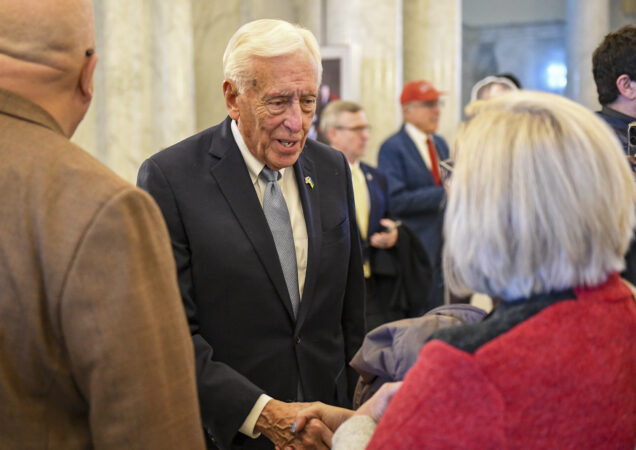
    Rep. Steny H. Hoyer announced Thursday he will not run for reelection and will end a nearly six-decade career in elected office that spanned his rising-star days in Maryland government to a two-decade run as the No. 2 U.S. House Democrat.

    Hoyer, the third-longest-serving member of the House, said he reached the decision over the holidays with his family, feeling content with a career that never brought the brass ring of the House speaker’s gavel but put him at the center of this century’s biggest debates.

    “At this young age, it’s probably premature,” the 86-year-old quipped in a two-hour interview Tuesday at his sprawling home on the Patuxent River in St. Mary’s County.

    Now three years out of leadership, Hoyer remains an active legislator but feared ending up like many other elderly lawmakers, becoming physically or mentally frail in their final days in office.

    “I did not want to be one of those members who clearly stayed, outstayed his or her ability to do the job,” said Hoyer.

    He delivered a formal announcement in a House floor speech Thursday morning, with dozens of colleagues from both sides of the aisle on hand to cheer.

    In his remarks, Hoyer made clear he was not like the more than 40 other House members who, largely fed up with Congress, are running for other offices or retiring. Hoyer said he still loves the institution, while recognizing that his style of extending a courteous hand to the political opposition is outdated.

    Hoyer spent decades on the Appropriations Committee, helping to pour billions of dollars into a congressional district that begins just a few miles east of the Capitol. But Hoyer’s final years on the panel have seen it snarled in partisan gridlock.

    In the Tuesday interview, Hoyer said his constituents, more reliant on the federal government than most, ask when Congress will work in a more functional way, a question that Hoyer puts back on those voters.

    “As long as the people of America elect angry, confrontational people, don’t be surprised that democracy works and you get an angry, confrontational Congress,” Hoyer said.

    Hoyer said American politics are in a state of decades-long deterioration. But he blamed President Donald Trump for making bipartisan comity harder than ever, pointing out the pardons of those convicted for the Jan. 6, 2021, Capitol attack during his interview with The Washington Post, which took place on the fifth anniversary of the insurrection.

    “His greatest strength, he has no shame, does not,” Hoyer said of Trump. “And his people don’t care whatever he does, pardoning 1,600 people who committed treason. Just astounding, and then he gets away with it.”

    Hoyer will go down in history behind only Leslie C. Arends (R., Ill.) for length of leadership service in the No. 2 post for a House caucus without ever getting promoted to the top spot. From the early 1940s until 1974, Arends totaled almost 30 years as the GOP’s first deputy.

    Hoyer’s list of legislative accomplishments is long — including authoring the Americans With Disabilities Act and the election law responding to the disputed 2000 presidential race — but his biggest contribution may have been serving as a cooling agent when partisan temperatures ran hot in the raucous House.

    Many Republicans viewed him as an honest broker and a lighter touch than Rep. Nancy Pelosi (D., Calif.), who led the caucus for the 20 years Hoyer served as her deputy.

    In his Thursday speech, Hoyer lamented the decay of bipartisan relationships and a House that produces less legislation than in years past.

    “I am deeply concerned that this House is not living up to the Founders’ goals,” Hoyer told his colleagues. “I urge my colleagues on both sides of the aisle to examine their conscience, renew their courage.”

    Hoyer lost a 2001 race for minority whip to Pelosi, a contest that highlighted the party’s pivot away from the South and Midwest and toward the more professional class of voters along the coasts. When Pelosi took charge in January 2003, the caucus unanimously elected Hoyer as her top lieutenant.

    Hoyer said he understands why “tough-as-nails” Pelosi remained leader so long, calling her the best of 10 speakers he served under in nearly 45 years in the House.

    “Sure, I would have loved to have been speaker. Who wouldn’t love to be speaker? But they’re not deep regrets,” he said in the interview.

    Hoyer and Pelosi, along with Rep. James E. Clyburn (D., S.C.), are together linked for their historically long runs as the top three lawmakers running the caucus. They notched victories such as the 2008 financial rescue, the 2010 Affordable Care Act and several trillion dollars worth of pandemic relief this decade.

    When Republicans won the House majority in the 2022 midterms, all three decided to step down and let a younger generation take the reins of the caucus. Pelosi announced in November that she will not run for reelection, while Clyburn has so far signaled he will run again.

    “Ironically, Nancy, Jim and I have not talked about any one of our actions or any one of our retirements. So I haven’t talked to Nancy. I haven’t talked to Jim,” Hoyer said.

    Pelosi, 85, and Hoyer are retiring as their party is still in a heated debate over whether its elder statesmen have stayed too long in Washington, particularly after President Joe Biden’s late exit from the 2024 presidential campaign.

    Hoyer’s wife, Elaine C. Kamarck, a Brookings Institution political scholar, dubbed the trio of Pelosi, Hoyer, and Clyburn as “super-agers” for their ability to effectively run the Democratic caucus while in their 80s, but Hoyer is conscious of passing the baton to the next generation.

    Pelosi, Hoyer, and Clyburn carved out different responsibilities and represented a new, diverse 21st-century caucus: a liberal woman from California’s tech center; a White man with close ties to the shrinking ranks of Democrats from the South and Midwest; and the highest-ranking Black member of Congress.

    Hoyer said he considers passage of the Affordable Care Act a prototype for when their leadership style worked. Pelosi — who has “a spine of steel,” he said — led the effort and had the bona fides to tell liberals what the best deal possible was. Hoyer served as sounding board for dozens of Democrats in competitive districts worried about their 2010 elections.

    “A number of people would say I played an important part in bringing along people who had concerns about it from their district’s standpoint,” he said.

    Democrats lost a stunning 63 seats in those midterms and spent eight subsequent years in the minority, leading some to question whether new, younger leadership was needed.

    Pelosi and Hoyer have had a sometimes strained relationship — dating at least to the late 1990s when they began a several-year campaign against one another for a leadership post — but the caucus seemingly wanted that balance.

    “We were put together by the caucus,” Hoyer said. “And what I mean by that, Nancy was elected, I was elected and Clyburn was elected. We weren’t elected as a team.”

    The current House Democratic leadership team — Minority Leader Hakeem Jeffries (N.Y.), Minority Whip Katherine Clark (Mass.) and Rep. Pete Aguilar (Calif.) — effectively ran together three years ago trying to replicate the ideological and diverse balance of the old team.

    Hoyer had not yet drawn a top primary challenge in his congressional district, but his exit will undoubtedly prompt many younger Maryland politicians to consider running in a race where Hoyer said he will not make an early endorsement.

    His early endorsement of Wes Moore, helped elevate the then-long-shot candidate to victory in the 2022 Maryland governor’s race. Now running for reelection at 47, Moore is mentioned as a future presidential candidate — a campaign Hoyer said he hopes to play a role in.

    “His true genius resides not simply in the grand American story he has helped to write, but in the many quiet moments of service and support he has given,” Moore said in a statement.

    A vast majority of House members have no idea Hoyer’s first image in politics was as a young man in a hurry. Just 27 when he took office in the Maryland state Senate in 1967, Hoyer became the chamber’s president at 35 and plotted a run for governor in 1978, with his ultimate ambition being the U.S. Senate.

    “I was a little ahead of myself,” he recalled Tuesday. He eventually accepted a spot as lieutenant governor candidate on a ticket that lost the party nomination badly.

    His start in politics was launched when, as an undergraduate at the University of Maryland, he attended a campus rally for Sen. John F. Kennedy’s presidential campaign in 1960.

    Following a file clerk job at the Central Intelligence Agency, Hoyer began working for Rep. Daniel Brewster (D., Md.), would move with him to the Senate in 1963 and meet a young Pelosi as a co-worker.

    In 1981, after the local congresswoman suffered a heart attack and fell into a coma, Hoyer narrowly won a crowded primary and was on his way up the ladder in the U.S. House.

    The family of his first wife bought land in St. Mary’s County on the Patuxent in 1989, and the Hoyers built their getaway home well outside his district.

    The 1992 redistricting brought this rural territory into Hoyer’s 5th Congressional District, and the couple turned it into a permanent home. An educator in Prince George’s County schools, Judith Hoyer died in 1997 and the congressman passed legislation creating “Judy Centers” for early-childhood programs.

    The home, dubbed “Hoyer’s Point of View,” hosted his wedding to Kamarck in 2023. A proud Dane who’s looked out for Nordic interests on the Helsinki Commission, Hoyer flies the flag of Denmark alongside those of Maryland and the U.S.

    Hoyer said he’s not sure how he will handle life outside elective politics, but he has a ready answer when people ask him about Congress.

    “How do we make this better?” he said. “You do. You’re a voter. You send the right people there, it’ll get better.”

  • These clever dogs rival toddlers when it comes to learning words

    These clever dogs rival toddlers when it comes to learning words

    In many households, it’s a forbidden four-letter word. It can’t be uttered aloud, only spelled, so those within earshot don’t get too worked up.

    “Can you take the dog for a W-A-L-K?”

    Many dog owners know their pets excel at learning words such as “walk,” “sit,” “stay,” and even their own names. But researchers have discovered the word-acquisition ability of certain canines can rival that of toddlers.

    A study published in the journal Science on Thursday found that some dogs can learn words simply by overhearing conversations, even when the pets are not directly addressed, an ability humans begin to acquire at about 18 months old.

    “This can really give us more appreciation to how exceptional dogs can be,” said lead author Shany Dror, a comparative cognition researcher at the University of Veterinary Medicine in Vienna and Eötvös Loránd University in Budapest.

    For their experiments, Dror and her team recruited 10 dogs and their owners from around the world. The breeds included a miniature Australian shepherd, a German shepherd, a Labrador retriever, and several border collies — all herding or sporting breeds known for their trainability.

    Dogs tend to be better at learning words for actions — think “fetch” or “roll over” — than at retaining the names of objects. So Dror sought out what she called “gifted” dogs that had previously demonstrated an ability to learn the names of their toys.

    Basket, a 7-year-old border collie in New York, was among them.

    “I noticed she started to actually know the names of her toys without me giving her assistance when she was about 8 months old,” said one of her owners, Elle Baumgartel-Austin.

    The researchers instructed the dog owners to discuss two toys that their dogs had never seen before. The dogs were present for those conversations. But the owners never directly addressed their pets.

    “It was very funny watching the video after the fact, just to see what she was doing,” Baumgartel-Austin said. Basket had followed the toy with her eyes as they talked. “She got a little frustrated. It was not very fun to see two humans play with a toy that she wanted.”

    To assess what the dogs learned by eavesdropping, a day or more later the owners were guided to place the toys in a different room among other plushies and then ask their dog to retrieve one of the two new toys by name. Seven of the 10 dogs, including Basket, regularly fetched the correct toy. Although the sample size was small, the results were statistically significant.

    The discovery not only reveals a previously unknown cognitive ability of canines, but it could also offer clues to how human language may have evolved.

    Overhearing the conversations of parents and other adults is part of how toddlers learn to talk. That some dogs are able to do so as well suggests that an ability to read social cues needed to follow a conversation predates language itself.

    “This is something that came before language,” Dror said. “Because dogs don’t have language, and yet they do have these abilities.”

    Gabriella Lakatos, a researcher at Britain’s University of Hertfordshire who also has studied human-dog interactions, said the findings “extend the list of behaviors and abilities previously described in dogs as analogous to those of young children.”

    Among other animals, the ability to eavesdrop has also been documented in bonobos. Canine researchers have known since the early 2000s that some dogs can recognize more than 200 items by name and can even infer the names of new toys by excluding ones they already know.

    But Juliane Kaminski, a comparative psychology associate professor at Britain’s University of Portsmouth who conducted that early research, cautioned against overinterpreting the results to say dogs can deeply learn language the same way people do. “The interpretation in terms of ‘word learning’ in the linguistic sense seems a little too strong for me,” she said. “What the study shows is that dogs can learn labels without being explicitly directed toward” an object.

    She added it is still unclear why only a handful of dogs are able to learn the names of their toys. Her own work with label-learning dogs suggests they are more curious and focused than their less-gifted canine counterparts.

    “However, what we do not know is what comes first,” Kaminski said. Are some dogs born better learners? Or do they simply get used to fetching objects when asked?

    “It’s a chicken-and-egg problem, and we need further research to explore this,” she said.

    Dror tried for years in vain to train other less gifted but still very good dogs — including her own German shepherd, Mitos — to associate names with toys. “Nothing worked. It was very frustrating.”

    Still, Mitos nuzzled his way into the new paper. He died last year at 15, just as Dror was submitting the research for publication, and she dedicated the paper to him. “It’s definitely hard to lose someone that’s been such a huge part of your life for so long,” she said.

    Now, Dror has a new puppy — a schipperke named Flea. She is introducing her to toys and hoping she can learn.

  • Judge blocks Trump administration from purging DEI-related terms from Head Start grant applications

    Judge blocks Trump administration from purging DEI-related terms from Head Start grant applications

    WASHINGTON — A federal judge has temporarily blocked the Trump administration’s efforts to remake Head Start, ordering it to stop purging words it associates with diversity, equity and inclusion from grant applications and barring it from laying off any more federal employees in the Office of Head Start.

    The order came this week in a lawsuit filed in April against Department of Health and Human Services Secretary Robert F. Kennedy Jr. and other officials. The lawsuit accuses the Trump administration of illegally dismantling Head Start by shutting down federal Head Start offices and laying off half the staff. It also challenges the administration’s attempts to bar children who are in the U.S. illegally from Head Start programs and to ban language they view as suggestive of DEI.

    The plaintiff organizations representing Head Start providers and parents said in a court filing last month that officials told a Head Start director in Wisconsin to axe the terms “race,” “belonging” and “pregnant people” from her grant application. They later sent a list with nearly 200 words the department discouraged her from using in her application, including “Black,” “Native American,” “disability” and “women.”

    A Health and Human Services spokesperson said he could not comment on the judge’s order.

    Head Start, founded six decades ago as part of President Lyndon B. Johnson’s War on Poverty, is an early education and family support program that serves hundreds of thousands of children who come from low-income households, foster homes or homelessness. It is federally funded but operated by nonprofits, schools and local governments.

    Joel Ryan, who heads the Washington State Head Start & Early Childhood Education and Assistance Program, said the order halts an attack on Head Start centers.

    “When a Head Start program has their funding withheld because of their efforts to provide effective education to children with autism, serve tribal members on a reservation, or treat all families with respect, it is an attack on the fundamental promise of the Head Start program,” Ryan said.

    The directive on the forbidden words raised confusion for Head Start directors, who must describe how they will use the money in grant applications and are required by law to provide demographic information about the families they serve. A director in Washington state said in a court filing the guidance led her to cancel staff training on how to support children with autism and children with trauma.

    The order from U.S. District Judge Ricardo S. Martinez of Seattle, published Monday, bars Health and Human Services from cutting any more employees and from punishing Head Start providers if they use the prohibited language.

  • As a shooting unfolded at Brown, students turned to anonymous app for answers before official alerts

    As a shooting unfolded at Brown, students turned to anonymous app for answers before official alerts

    PROVIDENCE, R.I. — When a gunman began firing inside an academic building on the Brown University campus, students didn’t wait for official alerts warning of trouble. They got information almost instantly, in bits and bursts — through phones vibrating in pockets, messages from strangers, rumors that felt urgent because they might keep someone alive.

    On Dec. 13 as the attack at the Ivy League institution played out during finals week, students took to Sidechat, an anonymous, campus-specific message board used widely at U.S. colleges, for fast-flowing information in real time.

    An Associated Press analysis of nearly 8,000 posts from the 36 hours after the shooting shows how social media has become central to how students navigate campus emergencies.

    Fifteen minutes before the university’s first alert of an active shooter, students were already documenting the chaos. Their posts — raw, fragmented, and sometimes panicked — formed a digital time capsule of how a college campus experienced a mass shooting.

    As students sheltered in place, they posted while hiding under library tables, crouching in classrooms and hallways. Some comments even came from wounded students, like one posting a selfie from a hospital bed with the simple caption: #finalsweek.

    Others asked urgent questions: Was there a lockdown? Where was the shooter? Was it safe to move?

    It would be days before authorities identified the suspect and found him dead in New Hampshire of a self-inflicted gunshot wound, later linking him to the killing of a Massachusetts Institute of Technology professor.

    Here’s a look at how the shooting unfolded.

    Stream of collective consciousness

    Described by Harvard Magazine as “the College’s stream of collective consciousness,” Sidechat allows anyone with a verified university email to post to a campus feed. On most days, the Brown feed is filled with complaints about dining hall food, jokes about professors, and stress about exams — fleeting posts running the gamut of student life.

    On the Saturday afternoon just before the shooting, a student posted about how they wished they could “play Minecraft for 60 hours straight.” Then, the posts abruptly shifted.

    Crowds began pouring out of Brown’s Barus and Holley building, and someone posted at 4:06 p.m.: “Why are people running away from B&H?”

    Others quickly followed. “EVERYONE TAKE COVER,” one wrote. “STAY AWAY FROM THAYER STREET NEAR MACMILLAN 2 PEOPLE JUST GOT SHOT IM BEING DEAD SERIOUS,” another user wrote at 4:10 p.m.

    Dozens of frantic messages followed as students tried to fill the information gap themselves.

    “so r we on lockdown or what,” one student asked.

    By the time the university alert was sent at 4:21 p.m., the shooter was no longer on campus — a fact Brown officials did not yet know.

    “Where would we be without Sidechat?” one student wrote.

    A university spokesperson said Brown’s alert reached 20,000 people minutes after the school’s public safety officials were notified shots had been fired. Officials deliberately didn’t use sirens to avoid sending people rushing to seek shelter into harm’s way, said the spokesperson, Brian E. Clark, who added Brown commissioned two external reviews of the response with the aim of enhancing public safety and security.

    Long hours of hiding

    Long after the sun had set, students sheltered in dark dorm rooms and study halls. Blinds were closed. Doors were barricaded with dressers, beds, and mini fridges.

    “Door is locked windows are locked I’ve balanced a metal pipe thing on the handle so if anyone even tries the handle from the outside it’ll make a loud noise,” one student wrote.

    Students reacted to every sound — footsteps in hallways, distant sirens, helicopters overhead. When alerts came, the vibrations and ringtones were jarring. Some feared that names of the dead would be released — and that they would recognize someone they knew.

    Law enforcement moved through campus buildings, clearing them floor by floor.

    A student who fled Barus and Holley asked whether anyone could text his parents to let them know he had made it out safely. Others said they had left phones behind in classrooms when they fled, unable to reach frantic loved ones. Ironically, those closest to the shooting often had the least information.

    Many American students expressed emotions hovering between numbness and heartbreak.

    “Just got a text from a friend I haven’t spoken to in nearly three years,” one student wrote. “Our last messages? Me checking in on her after the shooting at Michigan State.” Multiple students replied, saying they’d had similar experiences.

    International students posted about parents unable to sleep on the other side of the world.

    “I just want a hug from my mom,” one student wrote.

    Anxiety sets in

    As the hours dragged on, students struggled with basic needs. Some described urinating in trash cans or empty laundry detergent bottles because they were too afraid to leave their rooms. Others spoke of drinking to cope.

    “I was on the street when it happened & suddenly I felt so scared,” one student wrote. “I ran and didn’t calm down for a while. I feel numb, tired, & about to throw up.”

    Another wrote: “I’m locked inside! Haven’t eaten anything today! I’m so scared i don’t even know if I get out of this alive or dead.”

    Some students posted into the early morning, more than 10 hours into the lockdown, saying they couldn’t sleep. Sidechat also documented acts of kindness, including a student going door to door with macaroni and cheese cups in a dark dorm.

    Information, and its limits

    Students repeatedly asked the same questions — news? sources? — and challenged one another to verify what they saw before reposting it.

    “Frankly I’d rather hear misinformation than people not report stuff they’ve heard,” one student wrote.

    Others pushed back, sharing a Google Doc that would grow to 28 pages where students could find the most updated, verified information. Some posted police scanner transcriptions or warned against relying on artificial intelligence summaries of the developing situation. Professors — who rarely post on the app — joined the feed, urging caution and offering reassurance.

    “If you’re talking about the active situation please add a source!!!” one student wrote.

    But “reliable information,” students noted, often arrived with a delay.

    Within about 30 minutes of the shooting, posts incorrectly claimed the shooter had been caught. Reports of more gunshots — later proven false — continued into the night and the next day, fueling fear and frustration. Asked one student, what are police doing “RIGHT NOW”?

    Replies came quickly.

    “They are trying their best,” one person responded. “Be grateful,” another added. “They are putting their lives in danger at this moment for us to be safe.”

    A campus changed

    Students awoke Sunday to a campus they no longer recognized. It had snowed overnight — the first snowfall of the academic year.

    In post after post, students called the sight unsettling. What was usually a celebration felt instead like confirmation something had irrevocably shifted.

    “It truly hurt seeing the flakes fall this morning, beautiful and tragic,” one student wrote.

    Even as the lockdown lifted, many said they were unsure what to do — where they could go, whether dining halls were open, whether it was safe to move.

    “What do I do rn?” one student posted. “I’m losing my mind.”

    Students walked through fresh snow in a daze, heading to blood donation centers. Others noticed flowers being placed at the campus gates and outside Barus and Holley.

    Many mourned not only the two students killed, but the innocence they felt had been stripped from their campus.

    “Will never see the first snow of the season and not think about those two,” one student wrote.

    With the lockdown ended, students returned to their dorms as Sidechat continued to fill with grief and reflection. Many said Brown no longer felt the same.

    “Snow will always be bloody for me,” one person posted.

  • Trump administration jails migrant teens in Pa. facility known for child abuse

    Trump administration jails migrant teens in Pa. facility known for child abuse

    MORGANTOWN, Pa. — The Trump administration says it is focused on protecting unaccompanied migrant children. It imposed strict new background checks on those seeking custody of young migrants and cut ties with a chain of youth shelters accused of subjecting children in its care to pervasive sexual abuse.

    “This administration is working fearlessly to end the tragedy of human trafficking and other abuses of unaccompanied alien children who enter the country illegally,” said Health Secretary Robert F. Kennedy Jr., who oversees the Office of Refugee Resettlement, or ORR, which cares for unaccompanied migrant children.

    But for the last three months, that office has also locked some teenage migrant boys inside a secure juvenile prison about 50 miles west of Philadelphia with a long and publicly documented history of staff physically and sexually abusing juvenile offenders in its care, a Washington Post investigation has found.

    “ORR is sending children to a juvenile detention center who should not be there,” said Becky Wolozin, a senior attorney at National Center for Youth Law.

    ORR awarded $9 million to Abraxas Alliance in August to hold up to 30 young immigrants deemed a danger to themselves or others in its facility in Morgantown, Berks County. At various times since early October, between five and eight migrant teenage boys have been held inside a dedicated wing of the juvenile detention center, sleeping inside locked cells the size of walk-in closets, according to lawyers who met with them.

    Pennsylvania state inspectors have documented at least 15 incidents since 2013 in which they said staff physically mistreated minors at the Morgantown facility, which holds principally juveniles facing or convicted of criminal offenses. In at least two incidents, officials documented allegations of staff sexually harassing or sexually abusing young residents. The most recent reported abuse occurred in November.

    In a lawsuit filed in 2024, six former residents of the facility allege they were sexually abused by staff between 2007 and 2016, accusing management of enabling a “culture of abuse.”

    A spokesperson for Abraxas Alliance, the Pittsburgh nonprofit that operates the facility, did not respond to a long list of questions about its treatment of children. After some of the incidents cited by inspectors, Abraxas suspended or fired staff members and submitted correction plans to state regulators, promising to retrain workers on proper restraining techniques and install more surveillance cameras.

    ORR has wide latitude over the types of facilities it uses to house children, though federal rules require it to use “the least restrictive setting that is in the best interests of the child.” The rules say ORR may place minors in secure facilities if they have been charged with a crime, or if the agency determines they could harm themselves or others.

    HHS spokesman Andrew Nixon said decisions on where to place migrant children “are based on each child’s specific circumstances, behavior-based risk assessments, and legal criteria.” All the teens at the Morgantown facility were provided a notice with “specific details as to why they are placed there,” he added.

    Some of the migrant boys have no pending criminal charges, and several have parents or close relatives in the U.S. asking to be reunited with them, said Becky Wolozin, a senior attorney at National Center for Youth Law who visited the facility and spoke to some of the boys in November.

    The Post was unable to identify any of the boys or verify Wolozin’s claims about their circumstances, because neither their immigration lawyers nor government officials would share details about their cases due to strict rules protecting the records of minors.

    License revoked

    In November, Pennsylvania revoked one of the three licenses held by different units within the Morgantown facility, Abraxas Academy. The state accused Abraxas of “gross incompetence, negligence, and misconduct” following a Nov. 4 incident of staff violence against a child, state records show. According to those documents, a staff member put his hand on a child’s neck and shoved his face into a table, an incident the facility’s operator did not report to local authorities.

    Ali Fogarty, a spokeswoman for Pennsylvania’s Department of Human Services, said state law prevented her from commenting on the incident, including whether the child was a migrant placed by ORR or another juvenile held in the facility. The state increased its monitoring of the Morgantown facility and reduced its maximum capacity under one license by 25 residents while the company appeals the revocation. Its two other licenses were unaffected, and it is still permitted to hold more than 100 individuals, Fogarty said.

    Nixon, the HHS spokesman, said ORR “will make any necessary adjustments to its use of the facility based on the outcome of the state’s licensing process” and its own review of the incident, adding that “ORR has zero tolerance for sexual abuse and harassment of children in our care.”

    The problems at the nation’s only secure jail for migrant youths are unfolding as the Trump administration pushes measures it says are aimed at safeguarding the 2,300 unaccompanied migrant children in its custody, as well as those it releases to sponsors within the country.

    In March, ORR ended its use of shelters operated by Southwest Keys — a Texas nonprofit which the Justice Department sued in 2024, alleging its workers repeatedly sexually abused children in the nonprofit’s shelters from 2015 to at least 2023. The company said in a 2024 statement that the lawsuit did not “present the accurate picture of the care and commitment our employees provide to the youth and children.” The department dropped the lawsuit last year.

    Around the same time, ORR also began requiring people to provide income documents and submit to DNA testing, fingerprinting and interviews before regaining custody of young migrants, including their own children, which agency officials say will help ensure they are not being claimed by traffickers.

    The Trump administration said President Joe Biden had released tens of thousands migrant children to sponsors with little or no vetting, including to some adults with a history of violent crimes. U.S. Immigration and Customs Enforcement says it’s enlisting the help of local law enforcement agencies to locate the children and verify their safety.

    Jen Smyers, a former deputy director of ORR under Biden, said this population has faced abuse for decades, across several administrations. She said stricter vetting cannot always prevent mistreatment.

    Partly as a result of the Trump administration’s new vetting procedures, the average child remains in ORR custody about six months — nearly three times longer than at the beginning of 2025, government data shows.

    A history of abuse allegations

    By jailing migrant children in a secure detention center, especially one with a recent history of abuse, the administration is exposing these young people to some of the same risks it says it wants to eliminate, said Jonathan White, a former career HHS official who managed the unaccompanied children program during part of Trump’s first term.

    Under any previous administration, a track record of physical or sexual abuse would be “instantly disqualifying” for federal contracts involving the care of minors, White said. “This is the kind of thing under Republican and Democratic administrations you terminate existing grants for — you don’t give new grants to places like that.”

    Abraxas Academy, part of a chain of 10 youth detention and treatment centers, holds dozens of teenage boys from surrounding areas, many of whom are serving sentences for violent crimes or awaiting court hearings. Rob Monzon, a former director of the Morgantown facility, calls it “the most extreme setting in juvenile detention.” Its young inmates, some who claim to be from gangs, frequently lash out at one another, vandalize the building and attack staff members, he said.

    State inspection records show that staff members have at times responded with violence.

    One staff member “picked up [a child] by the shirt and threw the child to the ground, holding the child down with a knee, and banging the child into the wall,” a 2013 report on the state’s website said. Another threw punches at a different minor and yet another bit an incarcerated child in the abdomen, other reports said. The reports noted that one staff member “frequently escalates situations” by applying restraint holds that are “known to cause pain to the child.”

    Workers have been trained to defend themselves by placing inmates into restrictive holds, waiting for them to calm down and calling for help from other employees, according to Shamon Tooles, who worked as a supervisor at Abraxas Academy for eight months in 2023. But due to a lack of training, supervision, and frequent short-staffing, he said, some workers resorted to fighting back.

    “A lot of the staff were just scared,” said Tooles, who said he does not condone any mistreatment of children.

    In December 2016, Pennsylvania state inspectors said they found “a preponderance of evidence” that a staff member sexually harassed a child at the Morgantown facility. The staff member, who was not identified, was put on leave and subsequently resigned.

    One of the former detainees who is suing Abraxas Alliance claimed a staff member took away his food or gym privileges or locked him in his room if he did not comply with sexual requests.

    In court records, attorneys for Abraxas Alliance denied any wrongdoing and said they would need the names of all the abusers to confirm details of the alleged abuse. The lawsuit, which covers allegations lodged by 40 former residents from five Abraxas facilities, is still active and no trial date has been set.

    Nixon, the HHS spokesman, said Abraxas Academy was the only state-licensed facility that submitted a bid on the ORR contract that “operated a secure care facility for youth between the ages of 13 to 17.” He said the contract is part of an effort to “restore” the government’s capacity to hold “children whose needs cannot be safely supported” in less restrictive settings.

    Fresh paint

    Abraxas Academy sits at the end of a three-mile road, deep in the farmlands of Amish country. It’s so remote that when nine boys escaped through a hole in the barbed wire fence in 2023, they were quickly discovered a few miles away, lost and shivering in the rain, ready to go back, according to Paul Stolz, the police chief of nearby Caernarvon Township.

    When Wolozin visited Nov. 5, she said the walls smelled like fresh paint and workers were still renovating the floors of the wing designated for immigrant boys, separate from the teens serving criminal sentences. At that time, there were eight migrant boys; at least two have since been transferred to less restrictive facilities, and another was moved to an adult detention center upon turning 18, according to their lawyers. At least two new detainees arrived in December.

    Wolozin’s group advocates for children in the foster care, juvenile detention and immigration detention systems and has special permission to meet with them per the terms of a landmark 1997 legal agreement. She has personally supported Democratic politicians and causes.

    According to Wolozin, the conditions for migrant boys at Abraxas Academy mirror those of children serving criminal sentences. The boys are woken from their cells and counted every morning. Their use of a “family room,” with TVs, board games and bean bag chairs, is restricted to certain times, as is their access to an outdoor recreation area with farm animals and an indoor gym. Some have told lawyers and advocates they have been limited to two 15-minute phone calls to family members per week. Federal rules require at least three calls per week.

    Wolozin, who interviewed five of the migrant boys but has not reviewed their files, said one appeared to have severe cognitive disabilities. Another had completed his sentence for a criminal charge and was set to be released to his family but was instead transferred to ORR custody. Others had never been in jail before.

    “What became very apparent to me is that ORR is sending children to a juvenile detention center who should not be there,” she said.

    The vast majority of the migrant children in government custody live in shelters where they move freely around a campus. But the government can place children in more restrictive settings if they are deemed a risk — a broad authority that former child welfare officials say ORR has misused.

    In 2018, ORR found it had “inappropriately placed” 18 of the 32 minors who were in secure facilities at the time, according to the court deposition of a former agency official. One child, the official said, had been placed in a jail because they were an “annoyance” and not an actual danger.

    ORR had moved away from juvenile detention centers since 2023, after the government settled lawsuits that claimed children in these facilities were subjected to inhumane punishments or illegally locked up based on being mislabeled gang members. As part of the settlements, ORR agreed to implement new rules providing stronger legal protections for migrant children in custody.

    Now, the administration is expanding the practice of secure detention once more. Along with the 30 beds for migrant teens at Abraxas Academy, ORR is exploring a second secure facility that would hold up to 30 additional migrant children in Texas, government procurement records show.

    Advocates for migrant youths say these jails are unnecessary and harmful — and evident from the government’s tumultuous history with ORR detention centers before the Abraxas contract.

    ‘I just went on myself’

    Young people detained at Virginia’s Shenandoah Valley Juvenile Center said in 2018 court declarations that they had been locked in small rooms for most of the day. Some said they were beaten by guards. If they acted out, some said, they were put in a restraint chair, with straps around their head, elbows, legs and feet, and wheeled into a room where they were left to sit alone for hours with their head covered in a white mesh hood so they couldn’t spit on the guards.

    “This is embarrassing, but on one occasion, I had to pee, and they wouldn’t let me, so I just went on myself,” a child identified as “R.B.” said in a court filing. “I know one or two other kids this happened to as well; they peed on themselves while they were in the chair.”

    Shenandoah’s operators said their use of the restraint chair was not abuse. ORR policies permit such restrains as a last resort. A federal judge ruled in 2018 that the government had improperly placed minors in secure facilities including Shenandoah but did not determine whether its use of restraints constituted abuse.

    California’s Yolo County Juvenile Detention Center commonly used chemical agents and physical force to control children, the state’s attorney general found in 2019. A spokeswoman for Yolo County said in an emailed statement that the facility took measures to reduce its reliance on chemical agents, including staff training on nonviolent crisis intervention.

    Community activists pressured city and state officials to stop jailing migrant children there, citing lawsuits and the growing costs of defending against them. One Salvadoran teen alleged in court papers he was shipped across the country to the facility simply because New York police claimed he was a member of MS13. A federal judge found no unequivocal evidence of the boy’s ties to any gang.

    By 2023, Shenandoah, Yolo and another juvenile detention center in Alexandria, Va., had all opted not to renew their contracts with ORR.

    “Nobody wants these contracts,” said Holly S. Cooper, co-director of the Immigration Law Clinic at UC Davis, who was involved in the effort to end the Yolo contract. “There was a massive public outcry.”

    According to Smyers, ORR’s No. 2 official at the time, the agency in late 2023 solicited proposals for a new kind of facility where children could have restrictions increased or reduced depending on their behavior. ORR has not awarded this contract, but Nixon said it is still a priority.

    Fights, an escape attempt

    The Abraxas chain of youth detention and treatment centers has changed ownership at least twice. At the time of many of the abuse incidents in the inspection reports, it was owned by private prison firm Geo Group, which purchased the chain for $385 million in 2010. Geo has said in court records it is not aware of any sexual abuse.

    The company sold parts of the Abraxas business to a nonprofit group run by Jon Swatsburg, the unit’s longtime executive, for $10 million in 2021. At the time, Geo was losing federal contracts and being shunned by major banks in response to community activism against its business. Geo still owns the building in Morgantown and leases it out to Abraxas Alliance, securities filings show.

    A spokesman for Geo did not respond to requests for comment.

    Swatsburg, who has overseen the properties for more than two decades, was paid $752,000 by Abraxas and related entities in 2022, according to the most recent tax filings available. Inperium, an investor in the nonprofit group, said Swatsburg was departing in 2023, but he continued to list himself as president and chairman of Abraxas in corporate filings in 2024 and 2025. As of last year, Swatsburg was also listed as a vice president of Geo Group.

    Last year alone, police responded to at least 34 incidents at the facility, local records show, including inmate fights, at least one attempted escape, a suicidal detainee, an incident that left three police officers with minor injuries and another incident in which a staff member’s finger was partly amputated by a door.

    Meanwhile, the migrant boys at Abraxis have told advocates that they feel stuck.

    “They had plans and family, and lives and school and girlfriends, and things going on that they planned to do,” Wolozin said. “Instead, they are in this place.”

  • The ICE agent in Minneapolis was not in the vehicle’s path when he fired at Renee Good, video shows

    The ICE agent in Minneapolis was not in the vehicle’s path when he fired at Renee Good, video shows

    A deadly encounter in Minneapolis on Wednesday between federal Immigration and Customs Enforcement agents and a 37-year-old woman escalated in a matter of seconds.

    In the aftermath, Homeland Security Secretary Kristi L. Noem said the woman had committed an act of “domestic terrorism,” first disobeying officers’ commands and then weaponizing her SUV by attempting to “run a law enforcement officer over.” President Donald Trump said the woman “violently, willfully and viciously ran over the ICE officer.”

    A frame-by-frame analysis of video footage, however, raises questions about those accounts. The SUV did move toward the ICE agent as he stood in front of it. But the agent was able to move out of the way and fire at least two of three shots from the side of the vehicle as it veered past him, according to the analysis.

    Video taken by a witness shows Renee Nicole Good’s vehicle, a burgundy Honda Pilot SUV, stopped in the middle of a one-way road in a residential area of south Minneapolis on Wednesday morning. That footage and other videos examined by The Washington Post do not show the events leading up to that moment.

    The agent, who has not been publicly identified, can be seen standing behind Good’s SUV, holding up a phone and pointing it toward a woman who also has her phone out. The two appear to be recording each other.

    The agent then walks around the passenger side of Good’s vehicle.

    A pickup truck pulls up, and two additional agents exit the vehicle and approach Good, the video shows. A voice can be heard saying to “get out” of the car at least two times. One of the agents puts a hand on the opening of the driver’s side window and with his other hand tugs twice quickly on the door handle, but the driver’s door does not open.

    That same agent puts his hand farther in the opening of Good’s window, and almost simultaneously, the SUV begins to back up.

    The agent who was first seen behind Good’s SUV reemerges in front of the vehicle, still appearing to hold up a phone. The SUV quickly pulls forward, and then veers to the right, in the correct direction of traffic on the one-way street.

    As the vehicle moves forward, video shows, the agent moves out of the way and at nearly the same time fires his first shot. The footage shows that his other two shots were fired from the side of the vehicle.

    Videos examined by The Post, including one shared on Truth Social by Trump, do not clearly show whether the agent is struck or how close the front of the vehicle comes to striking him. Referring to the officer, Trump wrote in his post that it was “hard to believe he is alive.” Video shows the agent walking around the scene for more than a minute after the shooting.

    Good’s SUV travels a short distance before crashing into a car parked on the opposite side of the street.

    The FBI and Minnesota’s Bureau of Criminal Apprehension are investigating the shooting. The White House and the Department of Homeland Security did not immediately respond to a request seeking comment for this story.

  • Why are malnutrition deaths soaring in America?

    Why are malnutrition deaths soaring in America?

    Something strange is happening with malnutrition.

    It’s by far the fastest-growing cause of death in America, soaring sixfold over the past decade or so, according to our analysis of death certificate data from the Centers for Disease Control and Prevention.

    To be sure, we wouldn’t yet call it commonplace. But while it accounts for fewer than 1 in 100 deaths, its toll is rising so fast that it’s now in the same league as arterial disease, mental disorders, and deaths from assault.

    But when you dig into the data, it doesn’t look like our mental image of malnutrition, one which revolves around food banks and famine. For starters, it doesn’t quite map to economic hardship.

    It tends to kill somewhat more people in lower-income states, and among folks with less education in general. But the relationship isn’t as strong as you’d think, and it bears surprisingly little relation to state measures of food insecurity or food stamp use.

    More important, we’re worried here about the meteoric rise in deaths, not the level. And the rise is much harder to explain with demographics. We see it across the board. Every state, every education level, every race, every gender.

    When we split the numbers every which way, only one metric showed clear differences: age. Americans 85 or older die of malnutrition at around 60 times the rate of the rest of the population, and such deaths are rising about twice as fast among that group.

    What’s going on? Are older Americans struggling to eat?

    Yes (but). Uche Akobundu, a dietitian who directs nutrition strategy at Meals on Wheels America, told us the program’s local providers “consistently report serving seniors who struggle to afford or access nutritious food while living on fixed incomes and facing rising costs for housing, utilities, and healthcare.”

    Indeed, the share of Americans 65 or older who report some level of food insecurity hit a high in 2023. The rate among the 85-plus crowd was lower, but still near record levels.

    And those records may not be broken, at least after 2024. The source we used, a supplement to the Census Bureau’s Current Population Survey, has been canceled by the Agriculture Department. The forthcoming release could be the last.

    But before we declared this a closed case, we stepped back and put the numbers in context. Food insecurity among older Americans has risen 5% from 2011 to 2023. That’s not a good number, or one you can just wave off. But at the same time, it can’t explain a 746% increase in malnutrition deaths over that period. (And, yes, we adjusted for the aging population.)

    So, we called the American Society for Parenteral and Enteral Nutrition — also known as ASPEN or, more descriptively, the nation’s intravenous-nutrition and feeding-tube experts. If there’d been a sudden surge of malnutrition among older Americans, ASPEN would have noticed.

    Peggi Guenter led clinical practice, quality, and advocacy at ASPEN for two decades. Her best guess is simple: Malnutrition “has always been there. … We’re just identifying and documenting it better than we ever have in the past.”

    What happened in the past? Well, it has never been unusual for someone with a serious condition to lose weight. Watching a loved one waste away isn’t a modern phenomenon. But physicians used to see malnutrition as part of the patient’s overall decline.

    But around 2010, researchers started accumulating evidence that showed what they had long assumed: The lack of nutrients was, itself, a risk factor. A pile of papers now tell that malnourished people have more emergency room visits, spend longer in the hospital, and need more healthcare.

    Doctors weren’t trained to diagnose it separately, especially since research has shown it wasn’t as easy as lab-testing for a single indicator, according to Alison Steiber, chief research, impact, and strategy officer at the Academy of Nutrition and Dietetics.

    That started to change in 2012. That’s when, prompted partly by new research finding malnutrition could be driven by inflammation as well as lack of calories, ASPEN and the nutrition academy released the Consensus Statement on “Characteristics Recommended for the Identification and Documentation of Adult Malnutrition (Undernutrition).”

    Not long after, in 2014, we saw the first big jump in death certificates labeled with malnutrition as the underlying cause of death. Nobody’s willing to say the declaration caused the rise in diagnoses. “Cause” is a sacred, hard-earned word in medicine. But it’s also true that the nutrition academy, ASPEN, and friends went all out to ensure that the statement caused physicians to be aware that they needed to diagnose malnutrition more often.

    The Academy of Nutrition and Dietetics, ASPEN, and their allies taught clinicians from all over the country to diagnose malnutrition by looking not just for weight loss, but also for factors such as muscle loss, loss of under-the-skin fat pads, fluid retention, and simply not eating enough. They held awareness weeks, tons of trainings and — perhaps most notably — launched an ambitious Malnutrition Quality Improvement Initiative, which worked with hundreds of hospitals starting in 2013.

    All those efforts paid off.

    “I started practicing in 2010, and I was not trained to identify malnutrition in my education program, like in my internship,” said Michelle Schneider, ASPEN’s manager of clinical practice. And the 2012 paper and awareness push “is when I myself started … really evaluating the set of clinical characteristics that can identify and diagnose malnutrition.”

    When she and her colleagues started looking for malnutrition, their hospital’s related case numbers went up. It happened all over the country. As a rule of thumb, multiple experts told us that at least 1 in 5 hospital patients probably suffer from some kind of malnutrition. In 2010, about 3% were diagnosed with it. By 2018, it hit 9%, Guenter and her colleagues found.

    “As with other conditions, such as celiac disease, increased prevalence rates do not necessarily reflect more cases, but rather improved detection, diagnosis, and intervention,” Steiber told us.

    But what about older patients specifically? We called on the American Academy of Hospice and Palliative Medicine and got ludicrously lucky: They put us in touch with their chief medical officer, Kristina Newport.

    Newport runs palliative medicine at Penn State Health, speaks in fully formed paragraphs, and probably could have dictated a better version of this column over breakfast before she’d had her first coffee. She confirmed everything we’d heard — then added another variable.

    “The other thing that happened around this timeline is that CMS, the Center for Medicare and Medicaid Services, changed the impact of the diagnosis of some of these diagnoses that fall under malnutrition,” she said.

    “When hospitals are measured on their mortality, the calculation includes a comparison of how many people actually die compared to how many people are expected to die. And that expected number is determined by the complexity of documented illnesses as reflected in diagnosis codes. So when there was more weight given to malnutrition as a diagnosis code — when it was better defined, based on the understanding that nutrition often correlates with severity of illness — all of a sudden, it changed the calculation.”

    So, hospitals and other providers were given a strong incentive to look out for malnutrition, because now official statistics (correctly) recognized it increases the odds that someone will have an awful outcome, which means you’re not penalized as much if said outcome occurs.

    “Long-term care facilities have also started paying very close attention to weight loss and are held accountable for folks having abnormal weight loss,” she added. In fact, nursing homes must have a dietitian or nutrition specialist on staff.

    And hospice, which can be part of many medical or at-home settings, has its own incentives.

    “You’re only eligible for hospice enrollment if you’re expected to die within six months and if you’re not pursuing life-prolonging treatments,” she told us. “The hospice clinicians have to regularly demonstrate that somebody is progressing toward death, which is crazy, right? And so one of the ways that they have to routinely demonstrate that there’s evidence that this person is dying is to routinely assess different aspects of nutrition.”

    It might not be weight loss, since people in failing health might retain water, but you can still look at arm circumference and other metrics. It helps demonstrate the decline needed to maintain eligibility (and payment) for hospice services, she said, and it can be an indirect way to measure the progress of a patient’s disease, particularly for folks who might not have a clear terminal illness.

    “So your 85-year-old woman who has a little bit of cognitive impairment but has never been diagnosed with dementia — she gets a urinary tract infection every once in a while, but she doesn’t have one right now. She had mild diabetes. None of those things are explicitly taking her life,” Newport said. “The most objective thing you can say is she continues to lose weight.”

    “Somebody like that may end up with a diagnosis of malnutrition on her death certificate because none of those other things obviously took her life. Right? But it wasn’t because she didn’t have access to food.”

    In fact, regardless of your condition, weight loss and loss of appetite are one of the most common pathways toward death as the body shuts down.

    So, malnutrition is often a normal part of dying. It hints at the presence of other underlying conditions. So how did it end up as the underlying cause of death on almost 25,000 death certificates last year?

    Newport had a hint for us on that one, too. We cherish death certificates as one of the most authoritative data sources out there — and they are, since they cover pretty much the entire population and are certified by professionals. But those professionals are human.

    “Despite the importance of the cause of death and filling out this form, there’s very little education or standardization of doing it,” she told us. “So that’s just something to keep in mind.”

    And we did. So we set out to learn about death certificates.

    We started with the folks who quarterback the entire certification process and make sure the families and doctors get what they need. We called the funeral directors.

    Chris Robinson just finished his term as president of the National Funeral Directors Association. He also runs Robinson Funeral Homes at the foot of South Carolina’s sliver of the Blue Ridge.

    When someone dies, Robinson gets a report from the hospital, hospice, or coroner. It tells him their next of kin and date of birth. He meets with the family to fill in vital statistics. But he’s not allowed to fill in the cause of death.

    “We submit it electronically to the certifying physician or coroner, whoever’s going to certify the death,” Robinson told us. “And then they send it back to us with the cause of death.” Robinson then sends the certificate to the health department to be finalized, so he can get official paper death certificates for the family.

    That pointed us to the next step in following the certificate on its journey. That step was Reade Quinton. Quinton is president of the National Association of Medical Examiners. He also runs the pathology residency at the Mayo Clinic. Filling out the cause of death on certificates — and teaching others to do so — is a large part of his career.

    “There’s a science and an art to filling out a death certificate,” he told us. It’s a forensic pathologist’s job to ask why, to get to the root of the problem. Ideally, he said, you’ll rarely see malnourishment on a death certificate by itself — the document should also define the underlying cause.

    You see, under cause of death, a typical certificate has four blanks. You start with what Quinton would call the “final insult,” and then tease out the causal chain until, by the fourth blank — if you need that many — you’ve listed the underlying cause.

    So, the chain might go something like: gastrointestinal bleeding due to swollen veins in the esophagus due to cirrhosis due to alcohol use disorder. In that case, the alcohol abuse would be the underlying cause.

    Malnutrition could play a role in that four-step mortality chain. But why are people listing it as the ultimate cause? Quinton’s not sure, but death certification isn’t really taught in depth outside of pathology residencies, and most deaths aren’t certified by pathologists.

    “There’s a large number of people … who fill out death certificates,” Quinton explained. “So you may have forensic pathologists filling them out in certain cases, you may have hospitalists filling them out, residents on service who are still in training, coroners. It’s incredibly variable depending on whose jurisdiction the death occurred in.”

    And looking at the data, we see clues that most of these malnutrition deaths probably weren’t certified by medical examiners.

    For example, we’ve seen very little growth in malnutrition deaths in hospitals in recent years. The increase has been sharpest at nursing homes and long-term care facilities, where some residents may arrive with nutrition issues, followed by deaths at home or hospice. Similarly, almost no patients who had an autopsy got malnutrition listed as a cause of death.

    Is it a perfect smoking gun? No. Malnutrition is a routine part of death. And unless someone suspects neglect, routine deaths often don’t cross the desk of specialists such as Quinton and his protégés.

    But we reckon it’s a hint, especially when paired with something else we heard from Quinton and several others.

    “Electronic records are so accessible now,” he told us. “We have a lot more information at our fingertips than we had 10 or 20 years ago. So is it possible that now they’re getting a better list of underlying conditions and saying, ‘Oh, he’s got malnutrition,’ and so they put that on there as well.”

    And that’s our best guess. A better understanding of malnutrition means it has appeared on more medical charts. And from there, it occasionally makes its way onto a death certificate, perhaps helped by a harried physician.

    But does that mean rising malnutrition deaths are a mirage?

    We didn’t really expect Kurt Soffe to answer that question. The fine folks at the National Funeral Directors Association put us in touch with Soffe, the director of Jenkins-Soffe Funeral Home south of Salt Lake City, to answer questions about death certificates in Utah, the state with the highest rate of malnutrition deaths.

    But when he logged on to Zoom, we saw Soffe was on his phone. He was in the driver’s seat of his vehicle, parked outside the retirement facility where he’d just dropped off his wife. Her 93-year-old father had just entered hospice.

    He said he’d seen diagnoses like malnutrition on more and more death certificates. But all the time he spent with grieving families still didn’t prepare him for the reality.

    “He was a robust healthy man just a few months ago,” Soffe said. “And he basically is 120 pounds of nothing now.”

    His father-in-law suffered a stroke. Doctors removed the blockage, but away from his beloved home and even-more-beloved yard, he lost the desire to eat. He told them everything tasted like “sand.”

    “We tried Boost protein drinks, we tried protein bars, we tried steak and potatoes, we tried everything,” Soffe told us.

    It reminded us of something we heard from Newport, the palliative care physician.

    “One of the main ways we take care of people we love is we feed them, right? And so it’s very distressing for caregivers to look at their loved ones and to see that they don’t want to eat. … We have to understand that in some situations, it’s not something we can fix.”

    We watched Soffe struggle with that conflict in real time.

    “You watch his mental change, his physical change, his capacity to communicate change, and then just watch him decline by the millimeter,” Soffe said, his voice breaking.

    “I’ve been in funeral service all my life and have been a caregiver all my life. Born and raised in the building, and I found myself absent of words because I didn’t know what to even say to my own father-in-law, who I knew was dying.”

    “There really isn’t anything to say other than ‘I love you’ and ‘thank you.’”

    Soffe’s father-in-law died about 12 hours later.