Tag: no-latest

  • Swiss investigators believe sparkling candles atop wine bottles ignited fatal bar fire

    Swiss investigators believe sparkling candles atop wine bottles ignited fatal bar fire

    CRANS-MONTANA, Switzerland — Investigators said Friday that they believe sparkling candles atop Champagne bottles ignited a fatal fire at a Swiss ski resort when they came too close to the ceiling of a bar crowded with New Year’s Eve revelers.

    Authorities planned to look into whether sound-dampening material on the ceiling conformed with regulations and whether the candles, which give off a stream of upward-shooting sparks, were permitted for use in the bar.

    Forty people were killed and 119 injured in the blaze early Thursday as it ripped through the busy Le Constellation bar at the ski resort of Crans-Montana, authorities said. It was one of the deadliest tragedies in Switzerland’s history.

    Officials said they would also look at other safety measures on the premises, including fire extinguishers and escape routes. The attorney general for the Valais region warned of possible prosecutions if any criminal liability is found.

    Arthur Brodard, 16, from the Swiss city of Lausanne, was among the missing. His mother, Laetitia, was in Crans-Montana on Friday and frantic to find him. She held out “a glimmer of hope” that he might be one of the six injured people who had yet to be identified.

    “I’m looking everywhere. The body of my son is somewhere,” she told reporters. “I want to know, where is my child, and be by his side, wherever that may be — be it in the intensive care unit or the morgue.”

    The injured included 71 Swiss nationals, 14 French, and 11 Italians, along with citizens of Serbia, Bosnia-Herzegovina, Luxembourg, Belgium, Portugal, and Poland, according to Frédéric Gisler, police commander of the Valais region. The nationalities of 14 people were unclear.

    An evening of celebration turns tragic

    Among the crowd was Axel Clavier, a 16-year-old from Paris, who said he felt as if he was suffocating inside the Swiss Alpine bar where moments before he had been ringing in the new year.

    The teenager escaped the inferno by forcing a window open with a table. The dead included one of Clavier’s friends, and he told the Associated Press that two or three other friends were still missing hours after the disaster.

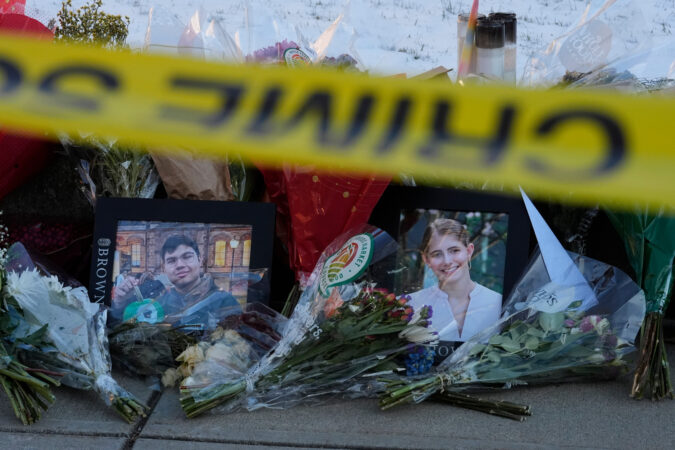
    An impromptu memorial took shape near the bar, where mourners left candles and flowers. Hundreds of others prayed for the victims at the nearby Church of Montana-Station.

    A French teenager on Friday brought a bouquet of tulips to the regional hospital in Sion for her best friend, a fellow 17-year-old girl who was badly burned and in intensive care. The two attend school together in Lausanne, said the girl, who was in distress and did not give her full name to the AP.

    But when she arrived at the hospital, her friend had been heavily sedated for a dressing change and could not see visitors. It was the latest in hours of heartbreak for the teen, who had intended to join a dozen schoolmates at the bar but ultimately decided against it.

    She said she has since learned that two of the 12 are in a Zurich hospital. She did not know if the others survived.

    On Instagram, an account filled up with photos of people who were unaccounted for, and friends and relatives begged for tips about their whereabouts.

    Valais regional government head Mathias Reynard told RTS radio Friday that officials have “numerous accounts of heroic actions, one could say, of very strong solidarity in the moment.”

    He lauded the work of emergency officials on the day after the fire but added “in the first minutes it was citizens — and in large part young people — who saved lives with their courage.”

    Servers arrived with burning sparklers

    Clavier, the Parisian teenager, said he did not see the fire start, but saw servers arrive with Champagne bottles topped with the burning sparklers.

    Two women told French broadcaster BFMTV they were inside when they saw a male bartender lifting a female bartender on his shoulders as she held a lit candle in a bottle. The flames spread, collapsing the wooden ceiling, they told the broadcaster.

    One of the women described a crowd surge as people frantically tried to escape from the basement nightclub up a flight of stairs and through a narrow door.

    Another witness speaking to BFMTV described people smashing windows to escape the blaze, some gravely injured, and panicked parents rushing to the scene in cars to see whether their children were trapped inside.

    Gianni Campolo, a Swiss 19-year-old who was in Crans-Montana on vacation, raced to the bar to help first responders after receiving a call from a friend who escaped the inferno. He described people on the ground suffering from terrible burns.

    “I have seen horror, and I don’t know what else would be worse than this,” Campolo told French television network TF1.

    The severity of the burns made it difficult to identify bodies, requiring families to supply authorities with DNA samples. In some cases, wallets and any identification documents inside turned to ash in the flames.

    Emanuele Galeppini, a promising 17-year-old Italian golfer who competed internationally, was officially listed as missing. His uncle Sebastiano Galeppini told Italian news agency ANSA that their family is awaiting the DNA checks, though the Italian Golf Federation on its website announced that he had died.

    With high-altitude ski runs rising nearly 9,850 feet in the heart of the Valais region’s snowy peaks and pine forests, Crans-Montana is a major destination for international Alpine skiing competitions. It’s also home to the European Masters each August.
  • Israeli hostage released from 2 years of captivity in Gaza struggles to rebuild his life

    Israeli hostage released from 2 years of captivity in Gaza struggles to rebuild his life

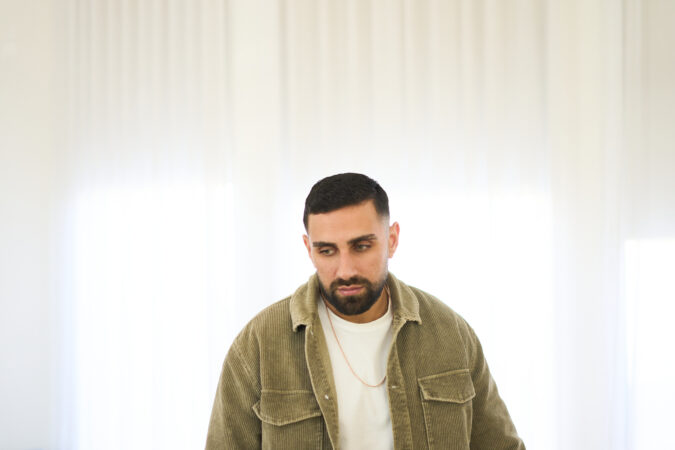
    DIMONA, Israel — During the two years he was held captive in Gaza, Segev Kalfon had a recurring dream: slowly walking through a supermarket, browsing each aisle for his favorite foods, taking in the brightly colored packages and smells.

    Since being released on Oct. 13, his dreams have flipped: Most nights when he closes his eyes, he is back on a dirty piece of foam mattress in the 22-square-foot room in a Hamas tunnel where he was kept with five other hostages, counting each tile and crack in the cement to distract himself from severe hunger and near-daily physical torture.

    “I was in the lowest place a person can be before death, the lowest. I had no control over anything, when to eat, when to shower, how much I want to eat,” said Kalfon, 27. During the worst parts of captivity, he was so skinny he could count the individual vertebrae jutting from his spine.

    Now that he’s back home in Dimona in southern Israel, Kalfon is trying to piece together a post-captivity life. He spends much of his time juggling appointments with an array of doctors and psychologists.

    One of the strangest aspects of his release, Kalfon said, is that for two years, his entire life revolved around trying to please his captors, so they might share more food or spare a beating. Now that he’s out, “everyone is trying to please me,” he said.

    From a family bakery to a Hamas tunnel

    Before being taken hostage at the Nova music festival, Kalfon worked at his family’s bakery in the town of Arad and was studying finance and investments.

    When rockets started flying at the start of the Hamas attack on Oct. 7, 2023, Kalfon said he and his closest friend tried to help others at the festival escape. Kalfon remembers pleading with a group of people who had taken cover in a yellow dumpster, telling them to come with him, that they were in a death trap. For two years, Kalfon wondered what happened to them. After his release, he learned they were all killed.

    Hamas-led militants killed some 1,200 people and took about 250 hostages during their cross-border assault that day. Israel’s ensuing offensive has killed more than 71,000 Palestinians in Gaza, according to Gaza’s Health Ministry, which does not differentiate between civilians and combatants in its count. The ministry is part of the Hamas-run government and maintains detailed casualty records that are seen as generally reliable by U.N. agencies and independent experts.

    While in captivity, every moment “felt like an eternity,” Kalfon said. The only thing that broke up the monotony was a meager portion of food and water once a day.

    There were so many times he felt close to death: during frequent bombardment by the Israeli military, going through COVID and other illnesses with no medicine, enduring starvation and frequent physical torture. He said his captors used bicycle chains as whips and pummeled the hostages while wearing large rings to leave painful welts.

    “We didn’t even have energy to yell out, because no one hears you,” he said. “You’re in a tunnel 30 meters underground; no one knows what’s going on.”

    The worst part was the last three months of his captivity, Kalfon said, when he was kept in isolation and felt like he was losing his sanity.

    In the darkest places, faith brings a ray of light

    Both Kalfon and his family, advocating in Israel for his release, further turned to their Jewish faith to get through the dark times. Kalfon’s family filled their homes with additional Jewish books, ritual objects, and prayers from senior rabbis.

    Kalfon and the other five hostages made a tradition of marking the start of Jewish holidays or the Sabbath by saying prayers over a bit of water and moldy pita.

    The hostages used a square of precious toilet paper, where one roll had to last six people for two months, for the ritual skullcap that Jewish men traditionally wear during prayers.

    A radio the captors had given to the hostages in hopes of converting them to Islam through recordings of the Quran sometimes allowed them to capture signals from Israeli news.

    Once, when Kalfon was at his lowest and considering an escape attempt, which likely would have led to his death, he turned on the radio and heard his mother’s voice. He said it felt like a divine message to hold on for a little longer.

    “I was living in the body of a dead person, living in a grave,” Kalfon said. “To get out of this grave, it’s nothing else if not a miracle.”

    Kalfon was released along with 19 other living hostages as part of the U.S.-brokered ceasefire. He considers President Donald Trump a “messenger from God,” sure that no one else could have halted the fighting. His family has hung nearly a dozen American flags around the house in recognition of the U.S. contribution to his return.

    ‘War is starting with my soul’

    Since his return, Kalfon is getting used to a new life, one where he is famous after his name and face were broadcast across Israel during the fight to release the hostages.

    “Everyone wants to support me and say, ‘You’re such a hero,’” Kalfon said. “I don’t feel like a hero. Every person would want to survive.”

    Kalfon knows he has a long journey to recovery after his years in captivity and a post-traumatic stress disorder diagnosis from before he was taken hostage.

    “Although the war in Gaza is over, now my war is starting with my soul, to try to deal with thoughts that are very difficult,” he said.

    He tries to keep his schedule busy to distract himself.

    “But every night when I’m alone, it comes up,” Kalfon said. Even a small noise can startle him awake and thrust him into a terrifying flashback, so he barely sleeps.

    For the immediate future, he wants to share his story more widely. He said he has been shocked by the rise in global antisemitism and anti-Israel fervor since he was captured and wants to make sure people hear his story, especially those who tore down posters of the hostages or accuse Israel of lying.

    “I’m proof that it happened,” he said. “I felt it with my body. I saw it with my own eyes.”

  • Trump and top Iranian officials exchange threats over protests roiling Iran

    Trump and top Iranian officials exchange threats over protests roiling Iran

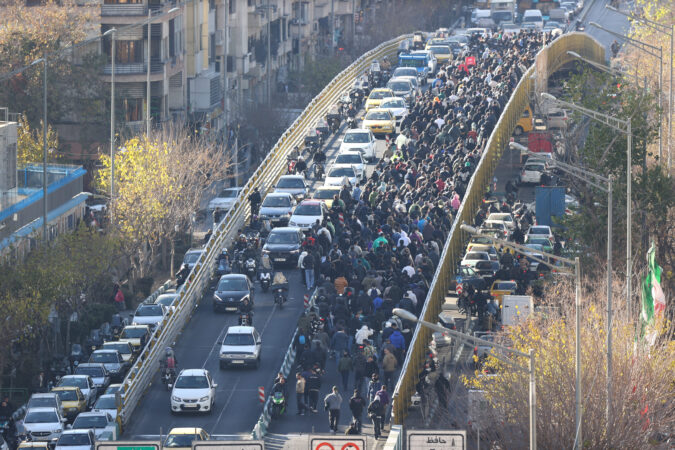
    DUBAI, United Arab Emirates — President Donald Trump and top Iranian officials exchanged dueling threats Friday as widening protests swept across parts of the Islamic Republic, further escalating tensions between the countries after America bombed Iranian nuclear sites in June.

    At least seven people have been killed so far in violence surrounding the demonstrations, which were sparked in part by the collapse of Iran’s rial currency but have increasingly seen crowds chanting anti-government slogans.

    The protests, now in their sixth day, have become the biggest in Iran since 2022, when the death of 22-year-old Mahsa Amini in police custody triggered nationwide demonstrations. However, the demonstrations have yet to be countrywide and have not been as intense as those surrounding the death of Amini, who was detained over not wearing her hijab, or headscarf, to the liking of authorities.

    Trump post sparks quick Iranian response

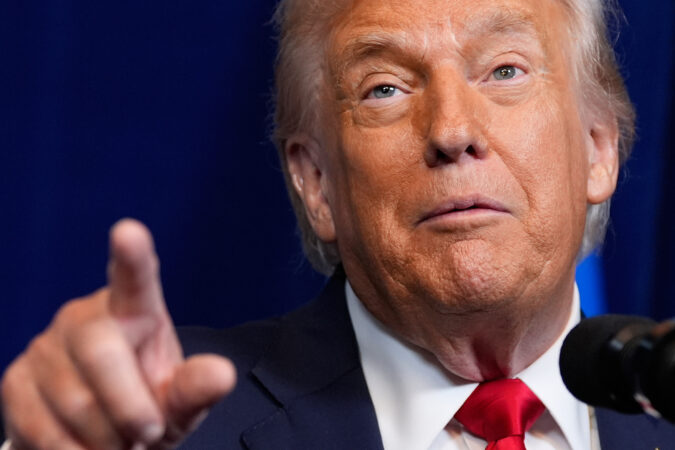
    Trump initially wrote on his Truth Social platform, warning Iran that if it “violently kills peaceful protesters,” the United States “will come to their rescue.”

    “We are locked and loaded and ready to go,” Trump wrote, without elaborating.

    Shortly after, Ali Larijani, a former parliament speaker who serves as the secretary of Iran’s Supreme National Security Council, alleged on the social platform X that Israel and the U.S. were stoking the demonstrations. He offered no evidence to support the allegation, which Iranian officials have repeatedly made during years of protests sweeping the country.

    “Trump should know that intervention by the U.S. in the domestic problem corresponds to chaos in the entire region and the destruction of the U.S. interests,” Larijani wrote on X, which the Iranian government blocks. “The people of the U.S. should know that Trump began the adventurism. They should take care of their own soldiers.”

    Larijani’s remarks likely referenced America’s wide military footprint in the region. Iran in June attacked Al Udeid Air Base in Qatar after the U.S. strikes on three nuclear sites during Israel’s 12-day war on the Islamic Republic. No one was injured, though a missile did hit a radome there.

    Iran’s Foreign Minister Abbas Araghchi wrote on X, formerly Twitter, that “the Great People of Iran will forcefully reject any interference in their internal affairs. Similarly, our Powerful Armed Forces are on standby and know exactly where to aim in the event of any infringement of Iranian sovereignty.”

    Araghchi also said that Trump’s message likely was influenced by those who fear diplomacy between the two nations without elaborating.

    Video circulated on social media late Friday showed protests continued in many cities across the country, including at least three points in the south and east of the capital Tehran. The Associated Press cannot independently verify the footage.

    No major changes have been made to U.S. troop levels in the Middle East or their preparations following Trump’s Iran post, said a U.S. official, who spoke on condition of anonymity to discuss sensitive military plans.

    Ali Shamkhani, an adviser to Supreme Leader Ayatollah Ali Khamenei who previously was the council’s secretary for years, separately warned that “any interventionist hand that gets too close to the security of Iran will be cut.”

    “The people of Iran properly know the experience of ‘being rescued’ by Americans: from Iraq and Afghanistan to Gaza,” he added on X.

    Iran’s hard-liner parliament speaker Mohammad Bagher Qalibaf also threatened that all American bases and forces would be “legitimate targets.”

    Iran’s Foreign Ministry spokesperson Esmail Baghaei also responded, citing a list of Tehran’s longtime grievances against the U.S., including a CIA-backed coup in 1953, the downing of a passenger jet in 1988 and taking part in the June war.

    The Iranian response came as the protests shake what has been a common refrain from officials in the theocracy — that the country broadly backed its government after the war.

    Trump’s online message marked a direct sign of support for the demonstrators, something that other American presidents have avoided out of concern that activists would be accused of working with the West. During Iran’s 2009 Green Movement demonstrations, President Barack Obama held back from publicly backing the protests — something he said in 2022 “was a mistake.”

    But such White House support still carries a risk.

    “Though the grievances that fuel these and past protests are due to the Iranian government’s own policies, they are likely to use President Trump’s statement as proof that the unrest is driven by external actors,” said Naysan Rafati, an analyst at the International Crisis Group.

    “But using that as a justification to crack down more violently risks inviting the very U.S. involvement Trump has hinted at,” he added.

    Protests continue Friday

    Demonstrators took to the streets Friday in Zahedan in Iran’s restive Sistan and Baluchestan province on the border with Pakistan. The burials of several demonstrators killed in the protests also took place, sparking marches.

    Online video purported to show mourners chasing off security force members who attended the funeral of 21-year-old Amirhessam Khodayari. He was killed Wednesday in Kouhdasht, over 250 miles southwest of Tehran in Iran’s Lorestan province.

    Video also showed Khodayari’s father denying his son served in the all-volunteer Basij force of Iran’s paramilitary Revolutionary Guard, as authorities claimed. The semiofficial Fars news agency later reported that there were now questions about the government’s claims that he served.

    Iran’s civilian government under reformist President Masoud Pezeshkian has been trying to signal it wants to negotiate with protesters. However, Pezeshkian has acknowledged there is not much he can do as Iran’s rial has rapidly depreciated, with $1 now costing some 1.4 million rials. That sparked the initial protests.

    The protests, taking root in economic issues, have heard demonstrators chant against Iran’s theocracy as well. Tehran has had little luck in propping up its economy in the months since the June war.

    Iran recently said it was no longer enriching uranium at any site in the country, trying to signal to the West that it remains open to potential negotiations over its atomic program to ease sanctions. However, those talks have yet to happen as Trump and Israeli Prime Minister Benjamin Netanyahu have warned Tehran against reconstituting its atomic program.

  • He exposed myth of the South’s ‘Lost Cause.’ His death shook Richmond.

    He exposed myth of the South’s ‘Lost Cause.’ His death shook Richmond.

    RICHMOND — In a cavernous gallery of the Valentine museum filled with marble busts and giant images of maps, Bill Martin gestured at a humble 1950s school history textbook in a display case.

    “This is where it gets personal for me,” Martin said one day last August.

    That book taught generations of young Virginia fourth graders — including Martin — that slavery was benign and enslaved people were happy. Now, as the director of a history museum, he had featured it in an exhibit that exploded the lies of the Southern “Lost Cause” mythology.

    Martin has been one of the most beloved and influential figures in the movement to retell the story of Richmond — and, by extension, Virginia and the nation — in a more honest and clear-eyed fashion.

    Over the weekend, Martin, 71, was struck by a vehicle and killed while crossing a street near the Valentine in downtown Richmond.

    His sudden loss has brought an outpouring of grief and shock from a wide swath of the community, ranging from historians to activists to politicians.

    “He stood in the gap for so many — helping to connect some of the very most complicated corners of the city through arts, culture, and history,” Sesha Joi Moon, co-leader of the JXN Project’s effort to commemorate a historic Black neighborhood, said in a written statement. Moon has been nominated as state director of diversity by Gov.-elect Abigail Spanberger.

    “No one was more dedicated to fostering a deep understanding of Virginia’s complicated history than Bill Martin,” Sen. Tim Kaine (D., Va.) posted on X this week.

    A bespectacled white man from rural Culpeper County with a soft Southern accent and a wit as sharp as his penchant for neckties, William J. “Bill” Martin was an unlikely agent of reform in the former capital of the Confederacy.

    He graduated from Virginia Tech and had worked at museums in Georgia and Florida before landing in Petersburg, Va., in 1987 to run that city’s museums and tourism effort. Martin joined the Valentine, which is dedicated to Richmond history, in 1994, just in time to see it nearly sink from depleted finances and low attendance.

    Over time, Martin became known as the “dean” of Richmond’s many museums, a one-man welcoming committee for new directors and a clearinghouse for collaborative efforts.

    He was a congenial force for change as the city wrestled with its complicated history. As recently as 2020, giant statues of Confederate leaders still loomed over busy intersections and enthusiasts waving the rebel battle flag regularly greeted traffic outside the national headquarters of the United Daughters of the Confederacy.

    Martin led a long process to reorganize the Valentine, using community input to focus its collections and slowly homing in on a story he felt it was uniquely positioned to tell: the origins of the Lost Cause, the romanticized view of the South that took hold in the years after the Civil War. After all, one of the primary creators of the images that fueled the myth was sculptor Edward Valentine, first president of the museum that bears his family’s name and the artist behind some of the iconic statues of Confederate leaders.

    When Martin’s changes to the museum’s message provoked hate mail and even death threats, he was known to invite his critics to lunch, as recounted last year by Richmond’s StyleWeekly magazine in naming him Richmonder of the Year for 2024. “You can’t do history and sit on the sidelines,” Martin told the magazine.

    That philosophy was put into action in 2020 when Richmond’s streets erupted in racial justice protests over the killing of George Floyd by Minnesota police. One night in early June, Martin stayed alone at the Valentine in case there was rioting or vandalism. Police broke up demonstrations with chemical sprays and trapped protesters in a warren of downtown blocks, arresting them by the dozens.

    As he described in an interview with the Post that year, Martin heard voices whispering outside a museum window and found several young protesters hiding in the bushes. He hustled them inside, helped wash the chemical spray out of their eyes with milk, and kept watch until it was safe for them to leave without being arrested. The next morning, he gathered rubber bullets and signs from the streets to display in the museum.

    Only a few days later, protesters dragged down a statue of Confederate president Jefferson Davis from stately Monument Avenue. That touched off a series of events that saw city and state officials eventually remove almost all Confederate monuments from public spaces in the city.

    Martin had quietly been angling to get Davis into the Valentine for several years, at least since the deadly Unite the Right rally in Charlottesville in 2017 began turning the tide of public opinion against the monuments. The Davis figure was an Edward Valentine creation — the former Confederate had posed for his likeness in the carriage house studio that now sits on the grounds of the museum.

    While the rest of Richmond’s statues went into storage, the Davis — dented and spattered with paint — went on display at the Valentine. The museum convened community meetings to discuss how to remake the sculpture studio to better tell the story of what Valentine’s body of work had created.

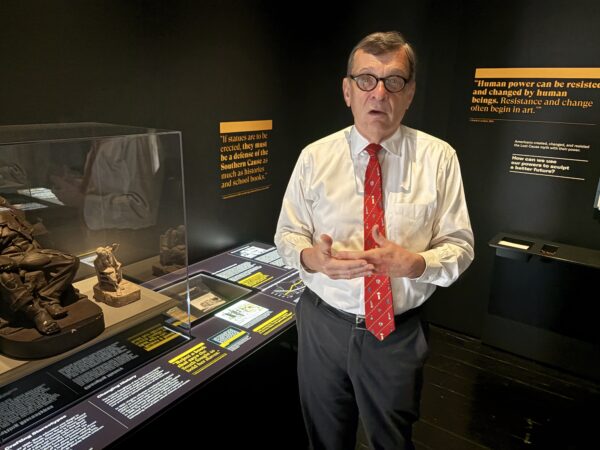
    On Aug. 19 of this year, reporters descended on the Valentine to see the Davis statue removed from the museum to be loaned to a gallery in Los Angeles. Martin was there, of course, and pulled a few reporters aside individually to show them something he considered more profound: the remade sculpture studio, located across a courtyard from the main gallery.

    Where floor-to-ceiling shelves once held hundreds of pieces of Valentine’s work — studies of hands, heads, other body parts — now a black screen covered the far wall. A multimedia display would occasionally illuminate sculptures behind the screen, bringing them out of darkness to tell the story of how the South constructed a new narrative for itself after the Civil War.

    Or, as Martin put it, “How does fiction become accepted truth?”

    He emphasized that the answer to that question came not with lecturing or preaching but with facts. Around the room, quotes highlighted in orange signified primary sources — figures from the postwar era stating, clearly and in their own words, that they were devising a massive publicity campaign to burnish Southern honor.

    “All that is left of the South is the ‘war of ideas,’ ” author Edward Pollard wrote in his 1866 book The Lost Cause, which was published in Richmond.

    “If statues should be erected, they must be defensive of the Southern cause, as much as histories and school books,” sculptor Valentine wrote in a letter around 1900. He was a chief image maker of the movement, creating everything from the noble statue of Gen. Robert E. Lee that until recently represented Virginia in the U.S. Capitol to caricatures of happy, simpleminded Black people.

    With an animated map, Martin demonstrated how grand monuments proliferated across Richmond — not in the immediate aftermath of the Civil War, but in the 20th century during the repression of Jim Crow, when the statues made the same intimidating point as the Ku Klux Klan Christmas parade that’s also depicted in the gallery. Similar tales played out across the South.

    “Richmond is the only place” to tell that story, Martin said, “because you have every part of the history here.”

    Martin spent more than 30 years investing in that belief. On Saturday, Dec. 27, he stopped by the Valentine to check in — as he often did on weekends, staffers said. He left around 2 p.m. and was just two blocks away, crossing Broad Street, when he was struck by a vehicle. Martin died the next day in a hospital.

    Police have released little information about the incident, other than to say the driver remained at the scene and that the investigation is ongoing.

    Martin’s leadership “helped shape the museum into the place it is today, and his impact will be felt for generations to come,” Meg Hughes, who will serve as acting director while the Valentine’s board seeks a replacement for Martin, said in a written statement to museum members. “We remain committed to serving our community and honoring the legacy that he leaves behind.”

  • Letters to the Editor | Jan. 2, 2026

    Letters to the Editor | Jan. 2, 2026

    Freedom of the press

    I applaud The Inquirer for last Sunday’s Opinion section, which was made up entirely of an editorial documenting the damage done by Donald Trump over the past 11 months. In 2025, we learned once again how important a free press is to inform our citizens about the path Trump’s administration is taking. The most recent episode of CBS News’ Sunday Morning disappointed me. In its year in review, no mention was made of the three large protests: “Hands Off” (three million people), “No Kings I” (five million people), and “No Kings II” (seven million people). Why were these peaceful demonstrations not mentioned? I believe CBS fears retribution by Trump. A free, informative, fact-based news media is so important to maintain our democracy. Shame on CBS for its cowardly bowing to Trump — first in suppressing the 60 Minutes report on the inhumane treatment in an El Salvadoran detention center, and then by not mentioning our peaceful protests.

    Marie Kania, Media

    . . .

    Thank you for your recent editorial that comprehensively details the most egregious of Donald Trump’s corruption. It was masterful, given the overwhelming volume of material that you had to sort through.

    Yet, Trump is only one person. Most Senate and House Republicans have done nothing to fulfill their Oath of Office to support and defend the Constitution. There are too few Republicans willing to do the right thing. Their near total obedience to this corrupt regime — and not to the Constitution — has enabled the near collapse of our democracy. Why? Most of them seem to want to hold on to their piece of the financial pie and cling to the power they have but refuse to use.

    The Constitution clearly outlines many paths to dealing with the corruption of this administration, but most Republicans continue to enable and obey MAGA Mike Johnson’s abuse of power, rules manipulation, and time wasting. Chaos enables corruption, and the majority of Republicans at the local, state, and federal levels like it. They think that if they bend the knee to Trump, they’ll be safe. They are so ensconced that even though they don’t believe the GOP rhetoric, they willingly play along and spew it to constituents.

    Let’s hope the coming elections continue to reestablish the ideals of our democracy by voting out all politicians — Republican and/or Democrat — who have lost their sense of right and wrong or played along. Let’s hope a younger, idealistic generation of politicians emerges from this chaos, because the GOP has sunk so low that it protects rich pedophiles without a thought of the victims. After these heinous crimes were exposed publicly, it finally moved a few Republicans to denounce Trump’s actions, even though they had fully enabled him up to this point. Still, too few were moved, and still others who knew the details before the public disclosures but chose to look the other way.

    We appreciate newspaper journalism. Other mainstream media outlets do not cover issues in depth, and many have capitulated to the current regime so much that they can no longer be trusted.

    H. Tunney, Huntingdon Valley

    . . .

    Dec. 26 was my 67th birthday. The weather was cold and bleak, like the year had been. Unlike during Donald Trump’s first term, the major news networks, along with many of the nation’s top newspapers, had fallen to Trump’s authoritarian bullying, or had hopped onto the oligarchy bandwagon for the goodies. Universities, top law firms, and business titans paid coin to join the gravy train, or at least not to be run over by Trump’s retribution railroad. But on my birthday, The Inquirer stood tall and published “The Damage Done” online. Maybe it is weird that an in-depth piece detailing the breadth, depth, and speed at which Trump is destroying our country and the institutions that should be protecting us felt like a gift. But Philly has grit, and our paper has gravitas. The Inquirer understands there is risk in speaking out. The risk of remaining silent is greater.

    Lynn Strauss, West Chester

    Minimum wage increase

    The Inquirer recently reported that the state of New Jersey was moving to raise its minimum wage to $15.92 per hour. A just and modest increase from $15.49 per hour.

    Recently, the city of Santa Fe, N.M., moved forward with a proposal to increase its minimum wage, as well. Something that caught my eye is that the article about it in the Albuquerque Journal mentions that Santa Fe has, since 2003, mandated an automatic increase in minimum wage, which occurs every year. I personally think this would be a fantastic policy for the city of Philadelphia to investigate.

    For decades, Philadelphia was the poorest big city in America (that honor now belongs to Houston, I believe). Nonetheless, as a city that is still fairly poor, Philadelphia still has a huge section of its population that holds positions that pay minimum wage, which is still $7.25 an hour in Pennsylvania. Now, one could debate what parameters go into determining the increase of that minimum wage, but I think it is beyond doubt that a policy that automatically increased minimum wage and tied it either to inflation, Consumer Price Index, or some other parameter would benefit literally tens of thousands of Philadelphians.

    The “Fight for 15” movement started in 2012, and every year that goes by means inflation makes that $15 an hour worth less and less. (Thankfully, New Jersey is inching toward $16 per hour.) A great deal of time and political capital is spent fighting for or against one-time increases. If a schema for automatic increases could be agreed upon, it would save our political energy (which is pulled in so many directions these days) for figuring out other problems. Perhaps an automatic system could even be considered business-friendly, as it would allow businesses to plan for and budget for small increases over time instead of lobbying against their own workers in pursuit of preventing big wage jumps.

    In New York, Zohran Mamdani was right to tap into the issue of affordability and wages as a universal problem in our great American cities. Now is the time to get creative about how to address that problem here in Philadelphia.

    Alex Palma, Philadelphia

    No one is safe

    Nick Elizalde, my grandson, was shot and killed at his high school football game on Sept. 27, 2022. That year, 516 homicides were recorded in Philadelphia, and 51 school shootings in the U.S. In 2024, we saw 84 school shootings nationwide. The U.S is the only country in the world where the leading cause of death for children is guns.

    On Dec. 13, two students were shot and killed at Brown University. Donald Trump shrugged. “Things can happen,” he said. One day later, Providence, R.I., Mayor Brett Smiley assured residents that they are safe. No, Mayor, they’re not. Americans aren’t safe. Not in Providence, Uvalde, Newtown, Blacksburg, Parkland … Not in schools, places of worship, theaters, our front porches. We’re killed at home and away. Murdered on buses. In cars. Like Trump, we shrug. We may tell ourselves, “It can’t happen here.” Friends and neighbors become statistics. By continuing to support elected officials who fail to act, we accept the carnage.

    Following rare mass shootings, New Zealand, Norway, and Canada banned assault weapons. Sweden limited access to semiautomatic weapons. After the Dec. 14 murder of 15 people on Bondi Beach, Australia will strengthen its gun laws to include limiting gun ownership. Why not here?

    In Delaware County this year, the council took bold action and banned untraceable ghost gun parts and machine gun conversion devices. Why not your county?

    In this election year, demand more from lawmakers. Vote only for those who support commonsense solutions to gun violence. Vote all others out. It’s too late for Nick, but maybe not for the folks you love.

    Marge LaRue, Aston, laruehouse@verizon.net

    Join the conversation: Send letters to letters@inquirer.com. Limit length to 150 words and include home address and day and evening phone number. Letters run in The Inquirer six days a week on the editorial pages and online.

  • Horoscopes: Friday, Jan. 2, 2026

    ARIES (March 21-April 19). It won’t be necessary to meet anyone halfway because people want what you want. So you’ll have effortless compatibility — the kind where you just understand each other and don’t have to compromise.

    TAURUS (April 20-May 20). The day asks for forgiveness, especially of yourself. Carrying old blame into a new year is like wearing too many coats for the weather. Shed it. You’ve learned what you needed to know, and today you are brand new.

    GEMINI (May 21-June 21). Forget about mistakes of the past. Compassionate integration is the way. Take the lesson, close the chapter and let the ghosts linger in history where they belong. This new day is for the living.

    CANCER (June 22-July 22). Don’t worry so much about timing. You’re not behind. It’s impossible to know other people’s process, so don’t bother comparing. You’re headed toward good things, and nothing can keep you from your destiny.

    LEO (July 23-Aug. 22). Outdated identities no longer fit? Just drop them. You don’t owe loyalty to other versions of yourself. Your self-definition is allowed to change with the times, with your circumstances and according to your latest expectations.

    VIRGO (Aug. 23-Sept. 22). They say knowledge is power, but today highlights the more accurate truth: knowledge is (SET ITAL) potential (END ITAL) power. Application is everything! The insight you pick up will be a treasure just as soon as you figure out how to use it.

    LIBRA (Sept. 23-Oct. 23). You’ll find yourself lit up by a podcast or conversation that feeds your mind in a way real-life people haven’t lately. It’ll remind you that your people are out there, even if today they’re voices through speakers.

    SCORPIO (Oct. 24-Nov. 21). You may feel like hiding your creativity until it’s “ready,” but that will slow you down. What if you opted for playful experimentation instead? Make messy drafts, weird notes and unfinished scenes, and let the process be joyful instead of secretive.

    SAGITTARIUS (Nov. 22-Dec. 21). People tend to do what’s easy for them. Those who do more aren’t necessarily working harder; they just have more skill or strength. What looks impressive is still easy for them. Those are the ones to hire, befriend and learn from.

    CAPRICORN (Dec. 22-Jan. 19). You put people first, and everything good comes from that choice. Relationships bring you opportunities that no one could have predicted. Bonus: When you’re busy making magic for others, your own life feels magical.

    AQUARIUS (Jan. 20-Feb. 18). Emotional downsides such as embarrassment, rejection or temporary discomfort will be quickly overcome and are worth risking if the upside is money, opportunity, relationships, reputation or progress.

    PISCES (Feb. 19-March 20). You’ll have one moment where you think, “Wow, I’m actually proud of how I handled that.” Whether it’s a boundary, a decision or a tiny act of self-respect, it’ll feel like a small but unmistakable shift into your next era.

    TODAY’S BIRTHDAY (Jan. 2). Welcome to your Year of the Glorious Detour. The plan changes, and the reroute is destiny. You’ll stumble into opportunities meant for you long before you thought you were ready. Finances stabilize with a clever new habit you adopt almost accidentally. More highlights: a friendship that becomes a chosen-family anchor, three professional showcase moments and a getaway that shifts how you see the world. Leo and Pisces adore you. Your lucky numbers are: 14, 30, 28, 9 and 22.

  • Dear Abby | Jealousy alienates last person in loner’s life

    DEAR ABBY: My husband and I have been together 23 years, married for almost nine. We are in our 60s. It’s the second marriage for both of us. I retired due to having to move to another state for his job. I make friends wherever I go and get involved in community activities.

    My husband has NO friends. Seriously. ZERO! He goes to work and comes home. Over the years, he has accused me of wanting relationships with my male friends (whose wives are also my friends) and tells me I should just go on and be happy with the other man. Neither my friends nor I have ever done anything to spark his pathological jealousy.

    Currently, I am on a nonprofit board of directors and must communicate often with the male president. He has become the new target. Counseling is out of the question because psychiatry is my husband’s specialty. Also, he seems to think he is always right about everything. He has never issued an apology as long as I’ve known him.

    I do not respond to his tirades because it’s pointless, but I’m sick and tired of his behavior and thought process. I understand the “why” to this behavior (his heritage and environment), but that doesn’t give him carte blanche to use it as an excuse. Any suggestions for moving forward?

    — WEARY IN FLORIDA

    DEAR WEARY: From what you have written, your antisocial husband is a bottomless vessel of insecurity. If you haven’t been able to assuage it in all these years, I doubt you ever will. Many psychotherapists use mental health professionals themselves. But unless your husband is willing to admit that perhaps he, and not you, is the problem and seeks help, nothing will change. Frankly, I am surprised your marriage has lasted this long. Is this how you want to live the rest of your life? Answering that question is the way to move forward.

    ** ** **

    DEAR ABBY: I work from home a few days a week and live a block from the local middle school. Recently, I’ve broken up a group of kids in my yard hitting and fighting with each other. I don’t know these kids, have no children in school and realize this is an ongoing issue. I’m not certain how to handle it.

    I could ignore it, but I’m afraid not only that one of the kids will get hurt, but also that a parent would be upset that this happened on my property. I could report it to the police, but that may be overkill. I could also try reaching out to the school, but without any information on who these kids are, I’m not sure that would be much help either. Any ideas?

    — WITNESS IN OHIO

    DEAR WITNESS: I do have a suggestion. You have already spoken to the children involved in these altercations. You are correct that there could be liability if one or more of them are injured on your property. Contact the principal of the middle school and explain what has been going on. Once that’s done, call or visit the police department and report that your yard is being turned into a battleground. If you do, the next time something starts happening and you call the police, they may respond quickly.

  • Russia says Ukrainian drone strike kills 24 in occupied territory

    Russia says Ukrainian drone strike kills 24 in occupied territory

    KYIV, Ukraine — Russian officials said Thursday that a Ukrainian drone strike killed 24 people and wounded at least 50 more as they celebrated the new year in a Russian-occupied village in Ukraine’s Kherson region.

    Three drones struck a cafe and hotel in the resort town of Khorly on the Black Sea coast, the region’s Moscow-installed leader Vladimir Saldo said in a statement on Telegram. He said that one of the drones carried an incendiary mixture, sparking a blaze.

    Ukrainian officials did not immediately comment on the claim of a strike. The attack could not be independently verified by the Associated Press.

    The attack was condemned by a number of Russian officials as tensions between the two nations continue to spike despite diplomats hailing productive peace talks.

    Valentina Matviyenko, the chair of Russia’s upper house of parliament, the Federation Council, said that the strike “strengthened” Russia’s resolve to quickly achieve its goals in its almost four-year invasion of Ukraine.

    The strike “once again demonstrates the validity of our initial demands,” Matviyenko said.

    The statement follows claims from Moscow that Ukraine launched a long-range drone attack against one of Russian President Vladimir Putin’s official residences in northwestern Russia on Tuesday. Kyiv has denounced the claims as a “lie.”

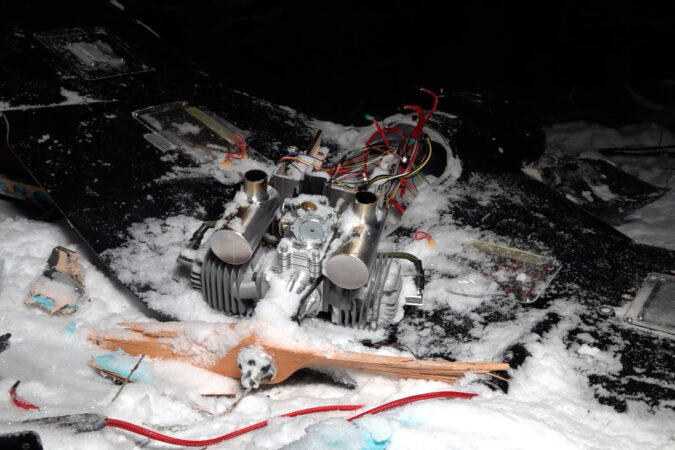
    Russia’s Ministry of Defense said Thursday that its specialists had accessed the navigation system in one of the drones it claimed was used in the Tuesday attack and used its data to confirm that Putin’s residence was the drone’s final destination.

    The claim could not be verified as the ministry did not share evidence on the findings, but officials said that it would transfer the data to U.S. officials “through established channels.”

    On Wednesday, Russia’s Defense Ministry also released a video on Wednesday of a downed drone it said was involved in the attack.

    The nighttime clip showed a man wearing camouflage, a helmet, and a Kevlar vest standing near a damaged drone lying in snow. The man, his face covered, talks about the drone. Neither the man nor the Defense Ministry provided any location or date and neither the video nor its claims could be independently verified.

    Kyiv has called the allegations of an attack on Putin’s residence a ruse to derail ongoing peace negotiations, which have ramped up in recent weeks on both sides of the Atlantic.

    In his New Year’s address, Ukrainian President Volodymyr Zelensky said that a peace deal was “90% ready” but warned that the remaining 10%, believed to include key sticking points such as territory, would “determine the fate of peace, the fate of Ukraine and Europe, how people will live.”

    Trump’s special envoy Steve Witkoff said Wednesday that he, Secretary of State Marco Rubio and Trump’s son-in-law and adviser Jared Kushner had a “productive call” with the national security advisers of Britain, France, Germany, and Ukraine “to discuss advancing the next steps in the European peace process.”

    “We focused on how to move the discussions forward in a practical way on behalf of (Trump’s) peace process, including strengthening security guarantees and developing effective deconfliction mechanisms to help end the war and ensure it does not restart,” Witkoff said in a post on X.

    Lead Ukrainian negotiator Rustem Umerov also reaffirmed that European and Ukrainian officials plan to meet Saturday. Zelensky is due to hold talks next week with European leaders.

    In the diplomatic sphere, Kyiv has also continued to push the International Atomic Energy Agency (IAEA) to take action against Russia for alleged attacks on electricity infrastructure deemed “critical for nuclear safety and security” at Ukraine’s nuclear power stations.

    The IAEA on Tuesday published a Note Verbale sent by Kyiv to the agency, saying that a Russian drone and missile attack on Dec. 23 had caused certain Ukrainian nuclear power plants to lose a “significant part of their off-site power connections.”

    Elsewhere in Ukraine, Russia attacked the Odesa region overnight, targeting civilian infrastructure in several waves of drone attacks, according to regional head Oleh Kiper.

    In a post on Telegram, Kiper said that a two-story residential building was damaged and that a drone hit an apartment on the 17th floor of a high-rise building without detonating. There were no casualties reported.

    In its daily report, Ukraine’s air force said air defense forces had downed or suppressed 176 of 205 drones targeting the country overnight. It said hits by 24 strike drones were recorded at 15 locations and the attack was still ongoing.

  • Trump, in interview, defends his energy and health

    Trump, in interview, defends his energy and health

    WASHINGTON — President Donald Trump defended his energy and health in an interview with the Wall Street Journal and disclosed that he had a CT scan, not an MRI scan, during an October examination about which he and the White House delayed offering details.

    Trump, in the interview, said he regretted undergoing the advanced imaging on his heart and abdomen during an October visit to Walter Reed National Military Medical Center because it raised public questions about his health.

    His physician said in a memo the White House released in December that he had “advanced imaging” as a preventative screening for men his age.

    Trump had initially described it as an MRI but said he didn’t know what part of his body he had scanned. A CT scan is a quicker form of diagnostic imaging than an MRI but offers less detail about differences in tissue.

    The president’s doctor, Navy Capt. Sean Barbabella, said in a statement released Thursday by the White House that Trump underwent the exam in October because he planned to be at Walter Reed to meet people working there. Trump had already undergone an annual physical in April.

    “President Trump agreed to meet with the staff and soldiers at Walter Reed Medical Hospital in October. In order to make the most of the President’s time at the hospital, we recommended he undergo another routine physical evaluation to ensure continued optimal health,” Barbabella said.

    Barbabella said that he asked the president to undergo either a CT scan or MRI “to definitively rule out any cardiovascular issues” and the results were “perfectly normal and revealed absolutely no abnormalities.”

    White House press secretary Karoline Leavitt said in a statement Thursday that the president’s doctors and the White House have “always maintained the President received advanced imaging” but said that “additional details on the imaging have been disclosed by the President himself” because he “has nothing to hide.”

    “In retrospect, it’s too bad I took it because it gave them a little ammunition,” Trump said in the interview with the Wall Street Journal published Thursday. “I would have been a lot better off if they didn’t, because the fact that I took it said, ‘Oh gee, is something wrong?’ Well, nothing’s wrong.”

    Trump, 79, became the oldest person to take the oath of office when he was sworn in as president last year and has been sensitive to questions about his health, particularly as he has repeatedly questioned his predecessor Joe Biden’s fitness for office.

    Biden, who turned 82 in the last year of his presidency, was dogged at the end of his tenure and during his abandoned attempt to seek reelection over scrutiny of his age and mental acuity.

    But questions have also swirled around Trump’s health this year as he has been seen with bruising on the back of his right hand that has been conspicuous despite a slathering of makeup on top, along with noticeable swelling at his ankles.

    The White House this summer said the president had been diagnosed with chronic venous insufficiency, a common condition among older adults. The condition happens when veins in the legs can’t properly carry blood back to the heart and it pools in the lower legs.

    In the interview, Trump said he briefly tried wearing compression socks to address the swelling but stopped because he didn’t like them.

    The bruising on Trump’s hand, according to Leavitt, is from “frequent handshaking and the use of aspirin,” which Trump takes regularly to reduce the risk of heart attack and stroke.

    He said he takes more aspirin than his doctors recommend but said he has resisted taking less because he’s been taking it for 25 years and said he is “a little superstitious.” Trump takes 325 milligrams of aspirin daily, according to Barbabella.

    “They say aspirin is good for thinning out the blood, and I don’t want thick blood pouring through my heart,” Trump said. “I want nice, thin blood pouring through my heart. Does that make sense?”

    Trump, in the interview, denied that he has fallen asleep during White House meetings when cameras have caught him with his eyes closed, instead insisting that he was resting his eyes or blinking.

    “I’ll just close. It’s very relaxing to me,” he said. “Sometimes they’ll take a picture of me blinking, blinking, and they’ll catch me with the blink.”

    He said that he’s never slept much at night, a habit he also described during his first term, and said he starts his day early in the White House residence before moving to the Oval Office around 10 a.m. and working until 7 or 8 p.m.

    The president dismissed questions about his hearing, saying he struggled to hear only “when there’s a lot of people talking,” and said he has plenty of energy, which he credited to his genes.

    “Genetics are very important,” he said. “And I have very good genetics.”

  • NYC’s Mamdani sworn in on a Quran full of symbolism

    NYC’s Mamdani sworn in on a Quran full of symbolism

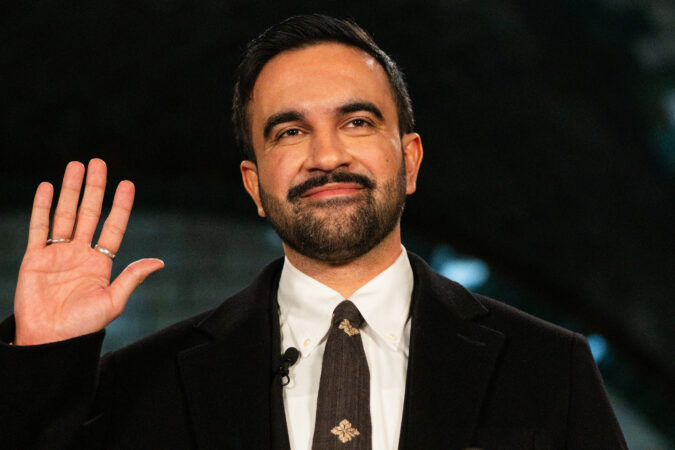
    NEW YORK — Incoming Mayor Zohran Mamdani took his midnight oath of office on a centuries-old Quran, marking the first time a mayor of New York City used Islam’s holy text to be sworn in and underscoring a series of historic firsts for the city.

    Mamdani, a 34-year-old Democrat, became mayor in a long-closed subway station beneath City Hall, the first Muslim, first South Asian, and first African-born person to hold that position.

    These milestones — as well as the historical Quran — reflect the longstanding and vibrant Muslim residents of the nation’s most populous city, according to a scholar who helped Mamdani’s wife, Rama Duwaji, select one of the books.

    Most of Mamdani’s predecessors were sworn in on a Bible, although the oath to uphold the federal, state, and city constitutions does not require the use of any religious text.

    And while he has focused heavily on the issue of affordability during his campaign, Mamdani was outspoken about his Muslim faith. He frequently appeared at mosques across the five boroughs as he built a base of support that included many first-time South Asian and Muslim voters.

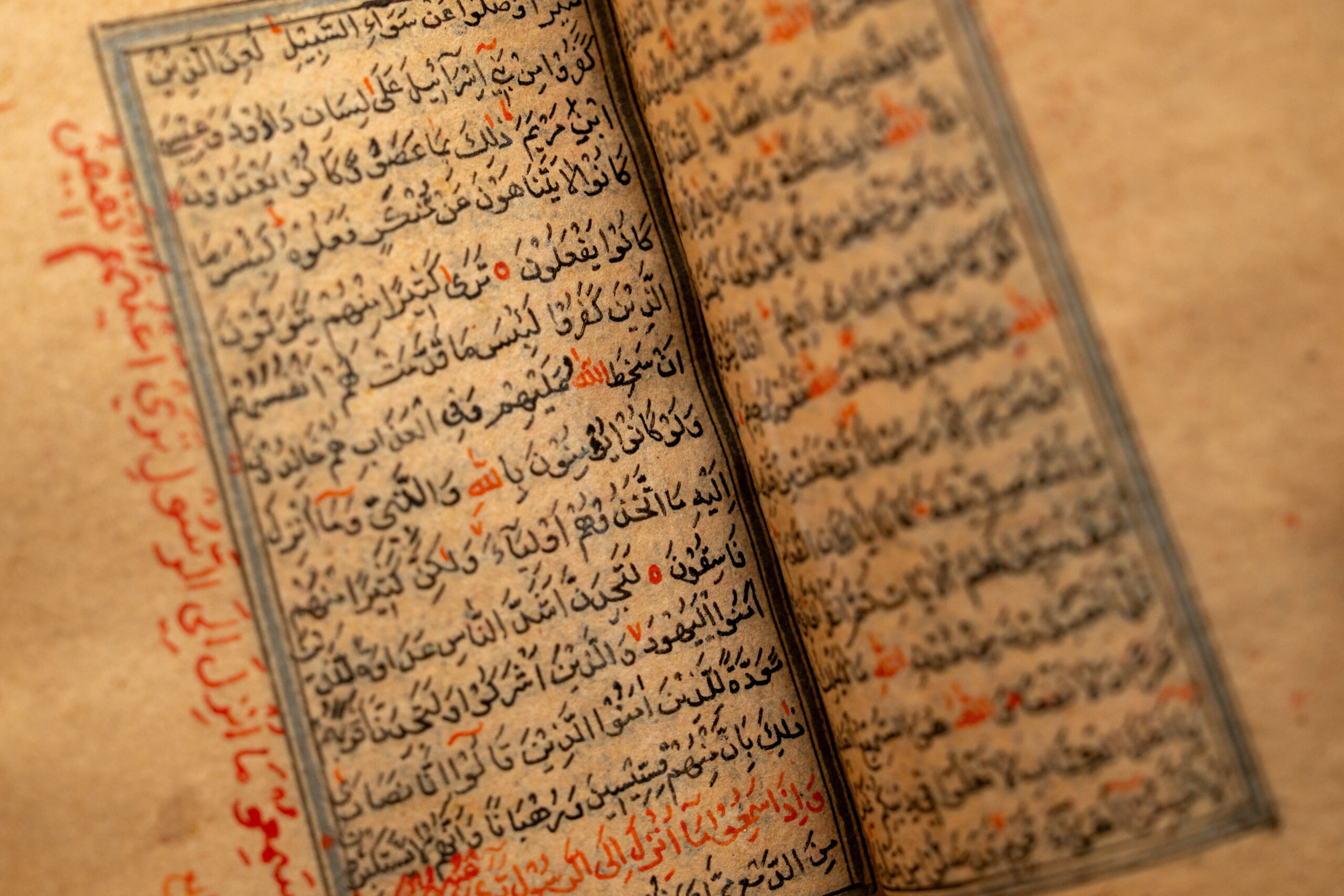
    This photo provided by the New York Public Library shows the Schomburg Quran.

    A look at the three Qurans that Mamdani used

    Two Qurans were to be used during the subway ceremony: his grandfather’s Quran and a pocket-sized version that dates to the late 18th or early 19th century. It is part of the collection at the New York Public Library’s Schomburg Center for Research in Black Culture.

    That copy of the Quran symbolizes the diversity and reach of the city’s Muslims, said Hiba Abid, the library’s curator for Middle Eastern and Islamic Studies.

    “It’s a small Quran, but it brings together elements of faith and identity in New York City history,” Abid said.

    For a subsequent swearing-in ceremony at City Hall on the first day of the year, Mamdani used both his grandfather’s and grandmother’s Qurans. The campaign hasn’t offered more details on those heirlooms.

    One Quran’s long journey to Mamdani’s hand

    The manuscript was acquired by Arturo Schomburg, a Black Puerto Rican historian whose collection documented the global contributions of people of African descent. While it is unclear how Schomburg came into possession of the Quran, scholars believe it reflected his interest in the historical relationship between Islam and Black cultures in the United States and across Africa.

    Unlike ornate religious manuscripts associated with royalty or elites, this copy of the Quran is modest in design. It has a deep red binding with a simple floral medallion and is written in black and red ink. The script is plain and readable, suggesting it was created for everyday use rather than ceremonial display.

    Those features indicate the manuscript was intended for ordinary readers, Abid said, a quality she described as central to its meaning.

    “The importance of this Quran lies not in luxury, but in accessibility,” she said.

    Because the manuscript is undated and unsigned, scholars relied on its binding and script to estimate when it was produced, placing it sometime in the late 18th or early 19th century during the Ottoman period in a region that includes what is now Syria, Lebanon, Israel, the Palestinian territories and Jordan.

    Abid said the manuscript’s journey to New York mirrors Mamdani’s own layered background. Mamdani is a South Asian New Yorker who was born in Uganda, and Duwaji is American-Syrian.

    Identity and controversy

    The meteoric rise of a Muslim democratic socialist also brought a surge of Islamophobic rhetoric, amplified by national attention on the race.

    In an emotional speech days before the election, Mamdani said the hostility had only strengthened his resolve to be visible about his faith.

    “I will not change who I am, how I eat, or the faith that I’m proud to call my own,” he said. “I will no longer look for myself in the shadows. I will find myself in the light.”

    The decision to use a Quran has drawn fresh criticism from some conservatives. U.S. Sen. Tommy Tuberville of Alabama, a Republican, wrote on social media, “The enemy is inside the gates,” in response to a news article about Mamdani’s inauguration. The Council on American-Islamic Relations, a civil-rights group, has designated Tuberville as an anti-Muslim extremist based on past statements.

    Such backlash is not new. In 2006, Keith Ellison, a Democrat from Minnesota who was the first Muslim elected to Congress, faced condemnation from conservatives after he chose to use a Quran for his ceremonial oath.

    Following the inauguration, the Quran will go on public display at the New York Public Library. Abid said she hopes attention surrounding the ceremony — whether supportive or critical — will prompt more people to explore the library’s collections documenting Islamic life in New York, ranging from early 20th century Armenian and Arabic music recorded in the city to firsthand accounts of Islamophobia after the Sept. 11 attacks.

    “This manuscript was meant to be used by ordinary readers when it was produced,” Abid said. “Today it lives in a public library where anyone can encounter it.”