Tag: Norristown

  • Philly’s fireworks won’t start until midnight on July 4th and some residents say that’s too late

    Philly’s fireworks won’t start until midnight on July 4th and some residents say that’s too late

    Fairmount residents are accustomed to annual July Fourth fireworks; it comes with the territory of living near Benjamin Franklin Parkway, where the city stages its major celebrations. With the United States’ 250th birthday, this July Fourth is no different — except that the fireworks will start closer to midnight.

    “We have the whole family coming to our home, all on their way right now,” said Fairmount resident Margo DelliCarpini. “But 11:30, midnight is just too late for some families with children. I understand that it’s the Fourth of July, but the late start for fireworks is decidedly not a family-friendly decision.”

    DelliCarpini will have her children and grandchildren visit to experience the Semiquincentennial in the city where the country began. But with young children in tow, parents along for the trip were hoping to have them in bed by midnight, she said. Instead, the large group is looking to catch one of the fireworks shows at Valley Forge or across Montgomery County, which start around 9 p.m.

    Fans react to the music as the Wawa Welcome America Festival concluded July 4, 2023, with a free concert on Benjamin Franklin Parkway.

    Philadelphia’s July Fourth concert and fireworks show, the One City: Unity Concert for America, is expanding its lineup from two to three acts like in years past, to 10 artists, including Christina Aguilera, Will Smith, Meek Mill, and Seal. The show will also start earlier and end later, spanning into July 5 by the time people head home.

    The city did not respond to request for comment.

    Other cities, like New York, Boston, and Los Angeles, are keeping their 9-9:30 p.m. start times, while Washington, D.C. is among the cities pushing back its fireworks show to 10:30 p.m. or even 11 p.m. to allow for its expanded America 250 showcase.

    Mykola Kosyk, 36, a lifelong Fairmount resident, has been witnessing the Parkway fireworks for years. Usually he’ll catch some of the concert with his wife, head back home, have time to set off some fireworks of his own with family, and then all head back to the Parkway for the city’s grand finale. Kosyk said he’ll still likely watch the midnight fireworks on Saturday, but feels disappointed that younger Philadelphians may not get to experience it as children during 1976’s Bicentennial, Kosyk’s father recalled.

    “It is the 250th, so if there is a time to do something big, I’m open to the idea,” Kosyk said of the later show. “But I also feel bad for the youngsters coming out, because 9 p.m. is usually a pretty good time for kids to watch the show. Midnight is pushing it a little for kids.”

    For residents like Kosyk and DelliCarpini, the nuisance is less with the noise of fireworks which most Fairmount residents are used to by now, but how late the show will run, limiting access to younger kids and delaying vehicle and pedestrian traffic later into the morning.

    The Inquirer reported that this year’s event will cost more to operate after Mayor Cherelle L. Parker decided to change the management of the festival from its previous nonprofit partner to a for-profit production company. Parker defended that decision at a news conference Wednesday: Philadelphia needed to meet the moment and host a celebration that is “fitting to and for our historical significance and prominence.”

    Jason Derulo performs during the Wawa Welcome America July 4th Concert on the Parkway in 2022.

    Moving an expected 300,000 attendees and their vehicles

    Besides the hurdles for parents with younger children, there’s also the headache of moving an expected 300,000 people from the Parkway back home after the show.

    SEPTA has covered most of its bases for getting people home. Regional Rail lines will have extended service on all lines, but the Landsale/Doylestown, Paoli/Thorndale, Manayunk/Norristown, Trenton, and West Trenton lines are the only lines that will run their last train between 1 a.m. and 1:10 a.m. All other Regional Rail lines stop running before 1 a.m., and in some cases before midnight, so people traveling in from the suburbs should plan accordingly.

    Subways and trolleys will run overnight for those heading back home within the city, and bus service will run on a Sunday schedule, which usually stops operating around 2 a.m. for some routes.

    But vehicle and pedestrian traffic could use some city intervention, said Dustin Dove, president of the Fairmount Civic Association, as there is concern among local civic leaders and some residents about how the city is handling traffic leaving the Parkway.

    “It’s usually a bit of a mess near the Parkway after the fireworks and can lead to some reckless driving nearby as people are stuck,” Dove said. “Historically, after the fireworks, there are thousands of pedestrians and cars that come into the neighborhood.”
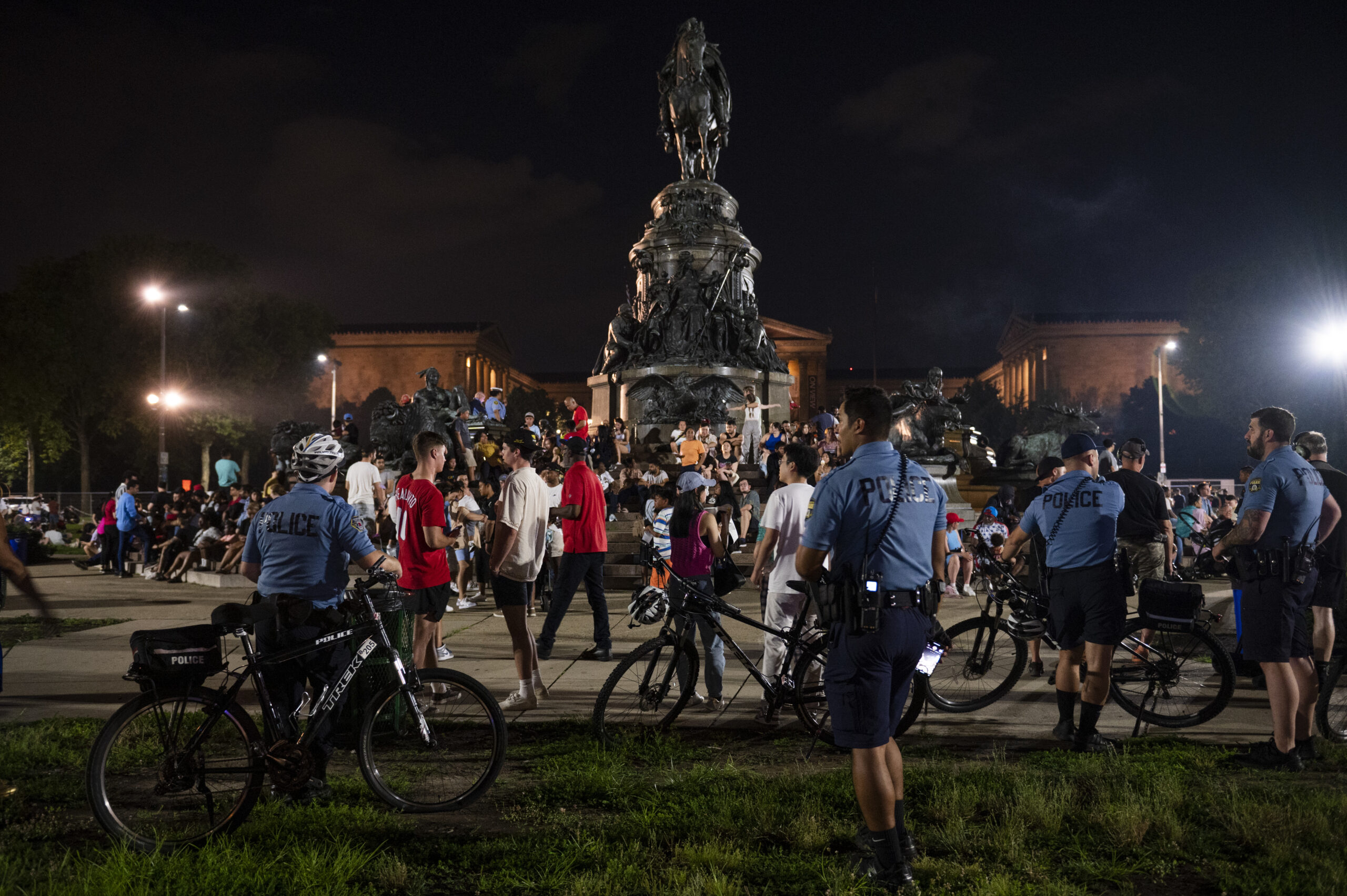
    A police presence is seen in Eakin’s Oval as people wait for the fireworks to start at the Wawa Welcome America Festival on Tuesday, July 4, 2023.

    Dove and others are hoping to see an increased police presence and traffic direction, as the event will be much later with more people this year, Dove said.

    Additionally, residents hope police manage safety accordingly on Saturday.

    “There’s going to be problems when you live in a city; it’s not like it’s the middle of nowhere with no neighbors, but this week … you’re now having people walk back home at midnight, 12:30 a.m.,” DelliCarpini said. “There needs to be a safe environment after the show.”

  • The Norristown school board plans to hire Delaware’s Superintendent of the Year

    The Norristown school board plans to hire Delaware’s Superintendent of the Year

    The Norristown school board plans to vote Monday to hire Delaware’s Superintendent of the Year as the district’s next leader.

    The board announced Sunday that it had selected Dorrell Green, the superintendent of the Red Clay Consolidated School District in New Castle County as its pick for superintendent.

    Green is expected to start as superintendent in the Norristown Area School District on July 20, under a five-year term with an initial salary of $270,000, according to an agenda for Monday’s meeting.

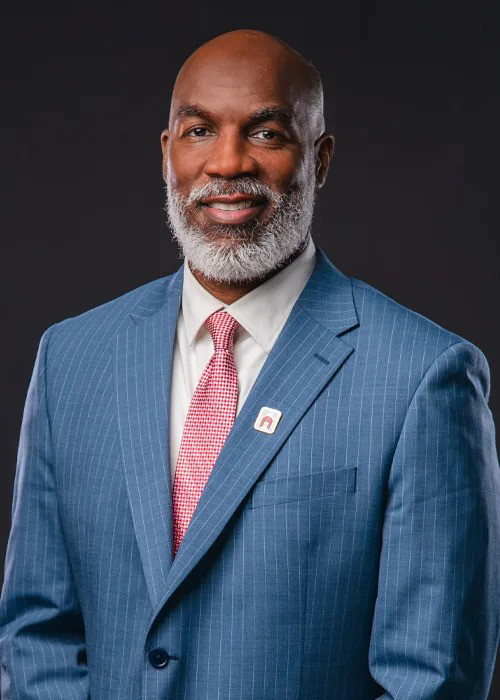
    Dorrell Green, the superintendent of the Red Clay Consolidated School District in New Castle County, Del., is to join Norristown Area School District as superintendent on July 20, 2026.

    Green’s selection comes after the board, which has a new majority after November’s school board elections, moved this spring to oust Superintendent Christopher Dormer, citing poor test scores. The board has since sparked controversy with other changes, including eliminating its DEI director.

    Throughout the superintendent search process, “our community made it clear that they were seeking a visionary leader who is committed to student achievement, educational excellence, and meaningful engagement with all stakeholders,” the board’s president, Jeremiah Lemke, said in a statement.

    He said Green’s “experience, leadership record, and commitment to serving diverse school communities” set him apart during a search process that was led by a consulting group and attracted 88 applicants.

    Green has worked in public education for more than 25 years, including as a teacher, principal, and assistant superintendent.

    In Red Clay, Delaware’s largest school district with 15,000 students, Green has served as superintendent since 2019. He expanded early childhood education during his tenure there and increased access to advanced course work, according to the Norristown board.

    Before that, Green was the first executive director of the Delaware Department of Education’s Office of Innovation and Improvement, an office created by former Delaware Gov. John Carney to support the state’s neediest schools.

    Green has a bachelor’s degree in elementary education and master’s degree in educational leadership from the University of Delaware. He has a doctoral degree in organizational leadership from Wilmington University.

  • How to have a perfect Philly day, according to actor and director Amina Robinson

    How to have a perfect Philly day, according to actor and director Amina Robinson

    South Philly-raised director and actor Amina Robinson is one of the region’s most celebrated theater makers, known for directing major productions including Fat Ham, Once on This Island, and The Color Purple. Now based in Cherry Hill with her husband and son, Robinson was just named the new artistic director of Norristown’s Theatre Horizon, where she’ll take the helm later this year.

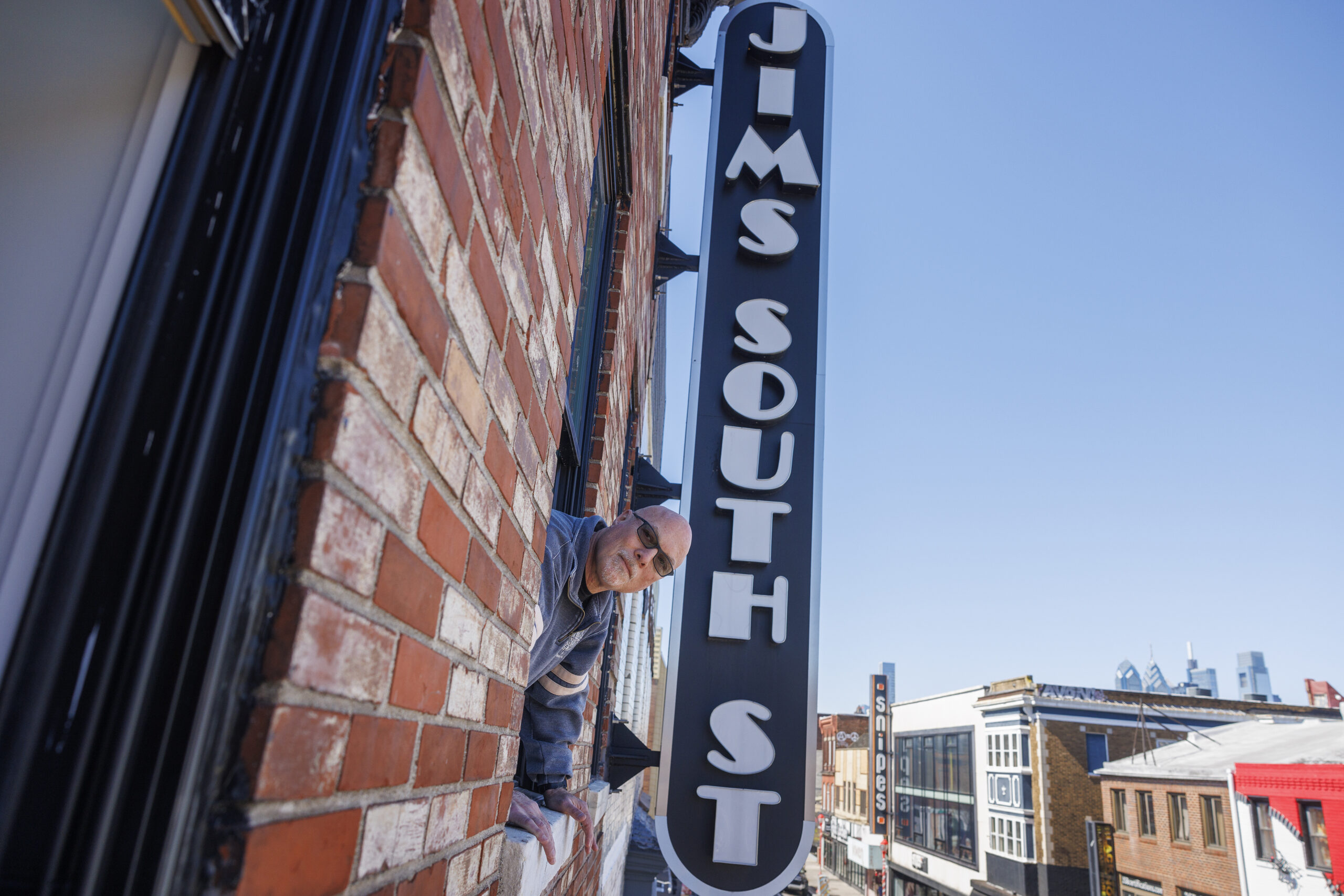
    When she’s not directing plays and musicals like this spring’s Ain’t Misbehavin’, the Temple University professor spends her days walking around Philadelphia and visiting family in West Philly. On her perfect Philly day, she takes her family for cheesesteaks at Jim’s before walking around the Schuylkill and, of course, catching a show at her soon-to-be artistic home, Theatre Horizon.

    8 a.m.

    I get up and I wake up my son and my husband. We decide to get ready and go to Philly for breakfast. We’re gonna go to Eggcellent Cafe on Chestnut Street and I’m gonna eat their truffle avocado toast — it’s so big and good. I’m gonna have their golden turmeric latte, too.

    Families and friends gather from all over to watch the firework show over the Delaware River on New Years Eve at Penn’s Landing in Philadelphia on Wednesday, Dec. 31, 2025.

    10:30 a.m.

    We’ll walk breakfast off by taking a nice little walk down Penn’s Landing, right along the water.

    11 a.m.

    After that, we’ll go visit my mom in Overbrook Park. I would bring her decaffeinated Dunkin’ Donuts coffee, that’s a must. Then we’ll sit and talk with my mom for a little bit. I would see my brother and my stepdad, and probably my nephew, and maybe my brother’s girlfriend would be there, but I really would be going to visit my mommy.

    Ken Silver, owner of Jim’s Steaks, corner of 4th and South Street with sign on front of building.The restaurant is under construction after 2022 fire destroyed the cheesesteak restaurant. Photo taken on Monday, March 25, 2024.

    1 p.m.

    For lunchtime I want to go down to Jim’s on South Street and get a cheesesteak with whiz and fried onions. I probably need to walk off my cheesesteak, but I’m not going to walk off my cheesesteak. I’m going to let it just sit in my belly for a while.

    3 p.m.

    Then we’ll go out to the Art Museum area and chill out and walk around. Maybe we’ll have ice cream, there are usually ice cream trucks out there. I love walking around that area so much — I’ve always loved West River Drive and Kelly Drive. When I was a kid, I didn’t know that Boathouse Row was like boathouses, even though it’s called that — I used to always say, when I grew up, I’m gonna live in one of those houses.

    Boathouse Row is relit with a new programmable system containing 6,400 LED lights that allow for 16 million color combinations in Philadelphia, Pa. on Thursday, March 7, 2024.

    5:30 p.m.

    At night, I’m gonna go to Norristown. There’s this Mexican restaurant on Main Street that’s so freaking good, Taqueria La Michoacana. I would definitely have their beans and rice, and tacos, and I don’t know what else.

    7:30 p.m.

    I would go see a show at Theatre Horizon. They want to foster empathy and edify the people who come to see the theater. As the incoming artistic director, I’d love to start programs like that to grow the artistic community there, all the while supporting the community that’s already been built there.

    New artistic director Amina Robinson at an event for Theatre Horizon’s 2018 production of ‘The Color Purple.’

    10 p.m.

    I’d head home to sit outside and watch the cars go by, just like chill out and relax. Then I’ll lay on the couch and fall asleep watching a television show, probably a Lifetime Movie Network movie.

  • More people in Philly and region struggle with insufficient food after Trump cuts: ‘Hunger has never been higher’

    More people in Philly and region struggle with insufficient food after Trump cuts: ‘Hunger has never been higher’

    Shelly Gaither, 51, of Cheltenham, makes sure her three sons, ages 6, 9, and 18, get their meals while she manages with whatever is left over — if anything ever is.

    “Oh, my God, groceries are too expensive,” said Gaither, a former data analyst who suffers from a disability that makes working difficult. She visits a food pantry regularly to make sure her kids eat chicken when they can. Her monthly SNAP (Supplemental Nutrition Assistance Program) benefits were reduced from $400 to $200 earlier this year because of changes to the program under President Donald Trump’s One Big Beautiful Bill Act.

    “I don’t think there’s hope,” she said. “I feel guilty for bringing children into a world that doesn’t want them to exist because the government makes cuts that take away their food and their healthcare.”

    For people like Gaither throughout the United States, levels of food insecurity have seen a “remarkable” rise since the pandemic in 2020, according to a national survey taken earlier this year and released in late May by the Federal Reserve Bank of New York.

    Around 10% of 1,300 heads of households polled in February reported a lack of enough food and said their children were missing meals, according to the survey. Nearly 16% relied on food donations. Among families taking in less than $50,000 a year, almost 20% reported being forced to skip meals or go without.

    In 2020, when the federal government stepped in to help families at the height of the pandemic, just 4% of households reported missing meals, including less than 7% of families earning less than $50,000 a year, according to the survey.

    At that time, temporary supplemental unemployment benefits, expanded SNAP payments, and direct government relief payments helped stave off hunger among Americans. Food insecurity increased after COVID-19 relief expired, according to the Urban Institute.

    But the recent surge in hunger has also been attributed to the sweeping law Trump signed last year, which reduces SNAP benefits and other safety net programs to help pay for his tax cut.

    Findings in the bank’s report also reflect Gaither’s sense of despair, a pessimism about personal finances and the overall economy among people with low incomes. That same group exhibits diminished expectations for finding a job and declining levels of consumer confidence, the survey says.

    (function(){function e(){window.addEventListener(`message`,function(e){if(e.data[`datawrapper-height`]!==void 0){var t=document.querySelectorAll(`iframe`);for(var n in e.data[`datawrapper-height`])for(var r=0,i;i=t[r];r++)if(i.contentWindow===e.source){var a=e.data[`datawrapper-height`][n]+`px`;i.style.height=a}}})}e()})();

    According to the reserve bank’s report, non-white Americans have been especially hard hit. The number of such households that reported missing meals increased from 4% in 2020 to 19% in February. At the same time, the number of non-white people receiving SNAP benefits jumped from 14% to more than 26%.

    Overall, the survey found food insecurity was particularly acute among lower-educated and lower-income households, as well as households with young children. Many families are experiencing financial stress due to the high cost of living, persistent inflation, and high interest rates, even as the stock market has been steadily rising, according to the survey.

    Pantries struggle to keep up with demand

    More people are flocking to food pantries, but they are not equipped to take up the slack of reduced SNAP benefits.

    “Pantries across the state are in perpetual crisis mode,” said Stuart Haniff, CEO of Hunger-Free Pennsylvania in Pittsburgh. Add to that the advent of summer, when kids are no longer receiving free breakfast and lunch at school. “Families must now provide those 60 to 80 meals a month,” Haniff said.

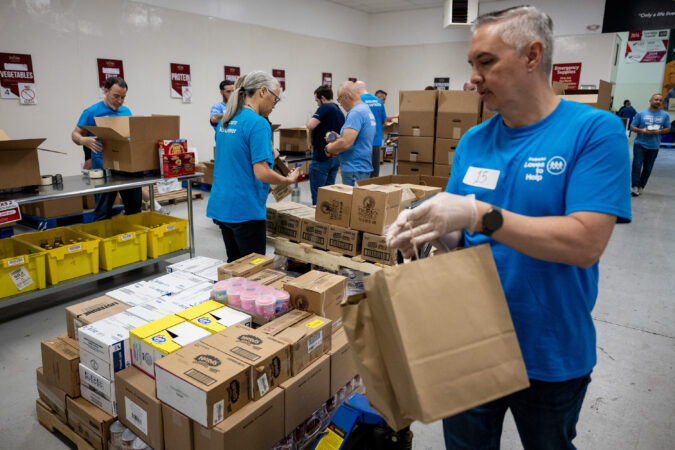
    In Norristown, “immense need” has increased the number of people frequenting Martha’s Choice Marketplace, the largest food pantry in Montgomery County, by 100% since 2022, said Patrick Walsh, director of programs. “And I don’t expect things to get better.”

    Food prices are also up 3.2% this spring over last, according to U.S. Department of Agriculture figures, exacerbating the issue.

    In South Jersey, “we are seeing record numbers at our food distributions,” said Jane Asselta, president and CEO of the Food Bank of South Jersey, in a statement to The Inquirer. “Life is getting harder to afford for more and more people.”

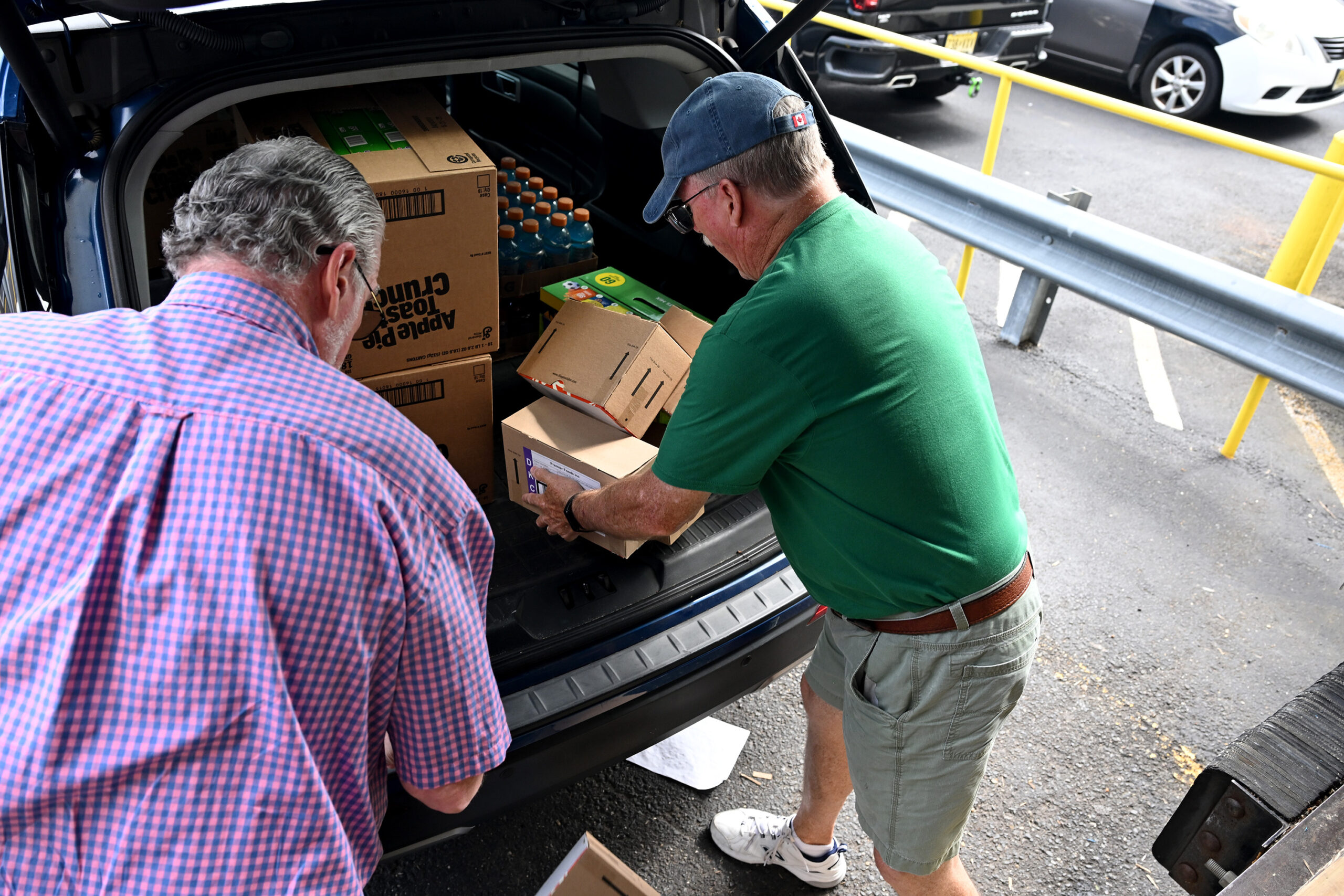
    Matt McDevitt (left) and Michael Hickey load their vehicle at the Food Bank of South Jersey Thursday, June 11, 2026. The men are volunteers at the Temple Lutheran Church in Pennsauken and their food bank is open from 5-6 p.m. every Thursday.

    Asselta said the Federal Reserve Bank’s report “mirrors” what her organization has observed through its network of 300 community partners.

    “Hunger has never been higher,” said Pastor Sonita Johnson, who runs the food pantry at St. John’s Pentecostal Outreach Church in Salem City, Salem County. “Food prices are high, and the lines you see you would not believe — a 50% increase in people just over the last two months.”

    Nationwide, between January 2025 and January 2026, SNAP rolls decreased by more than 4 million people — from 42 million to 38 million — according to USDA figures.

    Between last September and April of this year, nearly 90,000 Pennsylvanians lost SNAP benefits due to new eligibility requirements stipulated by the Trump administration, according to an analysis by the Pennsylvania Department of Human Services (DHS).

    And between December 2025 and last month, more than 32,000 Philadelphians lost benefits, DHS figures show.

    In New Jersey, SNAP participation has fallen by more than 50,000 individuals between March 2025 and March of this year, New Jersey Department of Human Services figures show.

    The Trump administration’s SNAP changes include an expansion of work requirements for people who receive SNAP benefits and increased documentation requirements “designed to make maintaining eligibility increasingly difficult,” according to the Food Research and Action Center (FRAC), the largest anti-hunger lobby in the United States.

    Deputy White House press secretary Anna Kelly said in a statement that Trump signed the changes to strengthen SNAP and to ensure that it is “sustainable for future generations.” She added that Trump was “elected to eliminate runaway spending across the federal government.”

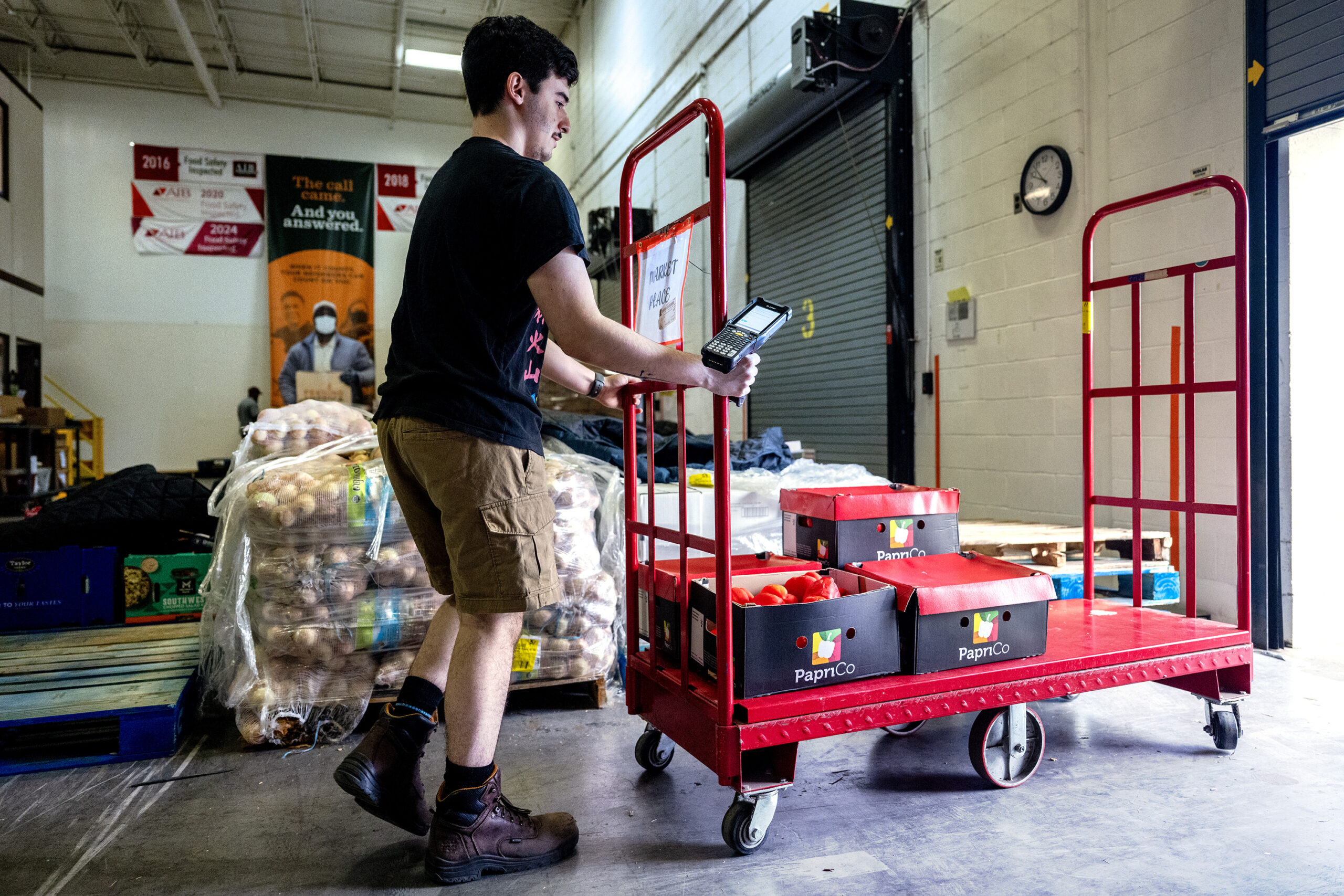
    William Meo works on the loading dock at the Food Bank of South Jersey Thursday, June 11, 2026.

    For people like Shelley Gaither, how her reduced SNAP benefits could be seen as part of “runaway spending” is tough for her to figure, given her needs. To survive this precarious moment, Gaither said, she will do whatever she can.

    “We eat more vegetarian meals and I don’t buy my kids cookies or snacks,” she said. “If I drink enough coffee, maybe I just need one meal a day. This is our existence now. This is how we live.”

  • ‘Riverbend,’ the lost 1989 film that was brought back to life in Norristown

    ‘Riverbend,’ the lost 1989 film that was brought back to life in Norristown

    In the 1990s, before Michael Dennis was a filmmaker, screening host, or archivist, he worked at the Video Library, the fabled video store in Mount Airy. He remembers the 1989 film Riverbend being on the shelves, but he had never watched it.

    Dennis, who founded the Philadelphia-based production company Reelblack in 1999, finally got around to watching the film in 2019. Charles Woods, Dennis’ mentor and podcast cohost, had asked him to transfer a VHS copy of the film to digital. He wanted to post the film on Reelblack TV’s YouTube channel.

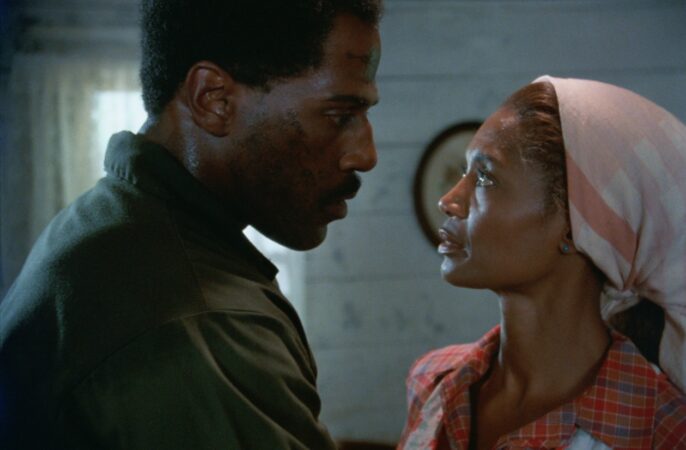
    Riverbend, directed by Sam Firstenberg, is set in 1966 and tells the story of a group of Black Vietnam veterans who lead an uprising against a racist sheriff in a small Southern town. It’s an action-adventure film, in the tradition of the Rambo and Missing in Action series, firmly rooted in the B-movie style of the late 1980s — complete with a synthesizer-heavy musical score — but with much more of a social message than was typical of that time.

    The film had only a perfunctory theatrical release and was released on VHS in 1990. In its brief run, the film opened only in New York, Texas, and Florida. But now, it has gotten an unlikely revival in Philadelphia, a city where it was never shown.

    “The film itself is very revolutionary in some respects,” Dennis said. “I mean, it’s a genre picture, of course, but the theme is very revolutionary … and I was interested to talk to Sam about how the movie actually got made because it’s so different from most American films, nearly all American films.”

    A few months after he posted the film on YouTube, Dennis received an email from Firstenberg, a B-movie stalwart whose credits also include American Ninja, American Samurai, and Breakin’ 2: Electric Boogaloo.

    “I thought it was going to be a cease-and-desist letter, but instead he said, ‘No, you’re doing this movie a great service because it’s an orphan film and it was financed independently, and it’s basically lost,’” said Dennis, who teaches a course on race and ethnicity in American Cinema in Temple’s Film and Media Arts Department.

    During the COVID-19 lockdown, Dennis saw a 35 mm print of Riverbend being sold on eBay by a seller in South Africa. He put in a winning bid for the print that’d take months to reach him.

    Dennis considers himself an archivist, although he hadn’t previously mounted a full-scale restoration of a film before. But in keeping with Reelblack’s long-stated mission of encouraging the appreciation of Black film, especially rarer ones, he sought to restore Riverbend.

    The eBay print, he said, had “every scratch known to mankind on it.” It was also missing seven minutes of material. Replacing the missing scenes with materials from the VHS, calling it a “sort of grindhouse cut,” Dennis gave the film its first public screening in decades at the Denton Black Film Festival in Texas in 2024. There, he met Valerie Vance, the widow of the film’s screenwriter and producer, Sam Vance.

    “We were trying to find out where [Riverbend’s] negative was,” Dennis said, “And we had no luck because all the labs had closed and have become different companies.”

    He got in touch with Dennis Doros, who runs the Missing Movies Instagram account and Milestone Films, a company known for rescuing “lost films.” Within days, the film assets were located at the film lab FotoKem, with Amazon/MGM paying the bills to host it.

    Missing Movies, Vance, and Realblack worked out a deal to acquire the film’s negative and other assets.

    The film then traveled to Norristown, where it was restored at Reel Revival, a company that provides scanning services. Austin Squitieri, its proprietor, started by scanning and digitizing the Riverbend negative. What followed was a painstaking process of digital repair, which included dirt removal, some Photoshopping, and final assembly of the edited footage.

    Squitieri had not seen the film before working on the restoration, although he had heard of it.

    “It’s a fun title,” he said. “It tackles something serious, and you can tell it was made passionately, as some of the more niche films tend to be.”

    After premiering at the American Cinematheque Aero Theater in Los Angeles last October, the restored version of Riverbend is now headed to Philadelphia. The film will screen at Film Society East on Thursday and will be released on Blu-ray on June 27, through a new label called Reelblack Renaissance.

    “There’s so many great Black independent films that are in danger of being lost or forgotten,” Dennis said. Reelblack Renaissance’s mission is “to restore them, reclaim them, and represent them in the Blu-ray and streaming market.”

    Firstenberg, 76, will be on hand for the Philadelphia premiere.

    “He tours the country supporting his body of work. And, this is like rescuing a lost child for him,” Dennis said.

    “Riverbend” will be shown at 7 p.m. Thursday at Film Society East, 125 S. Second St. Information: filmadelphia.org/movies/riverbend/

  • As ICE enforcement intensifies, one man works to keep undocumented families fed in Bensalem

    As ICE enforcement intensifies, one man works to keep undocumented families fed in Bensalem

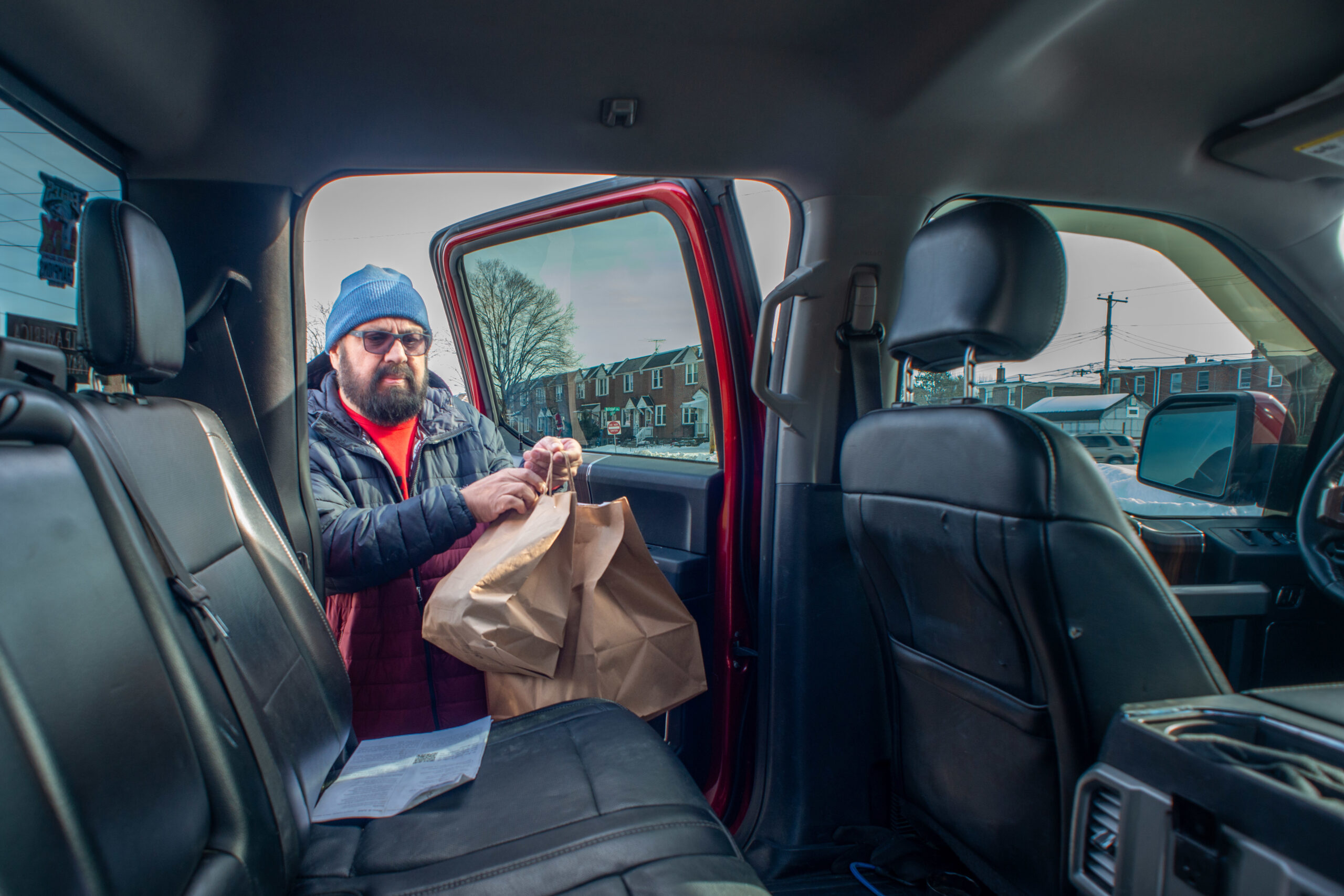
    On an icy, 13-degree Saturday morning in January, José Hernández sat in his pickup truck outside a Bensalem church, waiting for his phone to ring.

    It didn’t take long.

    Calls, texts, and emails have become constant, as Hernández, a machinist by trade, has become a crucial connection for many township residents who are living in the United States without official permission.

    What started as a simple good deed, delivering groceries to a few people worried about attracting ICE attention, has for Hernández, 61, become a full-time, unpaid job. Worry has hardened into fear amid the Trump administration’s dramatic escalation in immigration enforcement, leaving some people afraid to leave their homes.

    Hernández’s weekend rounds ― picking up people’s grocery orders at stores, bringing the food to their homes, always with a glance over his shoulder ― ensures sustenance for families for whom discovery would mean arrest, separation, and likely deportation.

    About 14% of the Bucks County township’s 63,000 residents are Latino. Among immigrants, everyone has a friend or family member who has been arrested by ICE and not seen again. And many fear that they’ll be next.

    Connie and Ivan came from Mexico over two decades ago. Fear of being detained by ICE has led them to turn to Hernández for food-delivery help.

    “They come out to pick up their order and you can see the fear in their faces,” Hernández said. “Many people come out saying, ‘Please hurry up, los del Hielo can be here any second.’”

    That’s what some community members call ICE agents — los del Hielo, meaningthe iced ones.” There are other names too, like el Escalofrío (“the chills”) and los Helados (“the frozen ones”).

    The nicknames come not from anger but from anxiety — fear that even speaking aloud the words Immigration and Customs Enforcement could summon danger.

    “We try to only go out when the darkness of the night protects us,” said an Ecuadoran mother, 32, who declined to provide her name for fear of arrest. “It’s a false sense of safety, but we must hold on to it.”

    Hernández recently delivered two bags of groceries and a birthday cake to her home, as her son was turning 12.

    “When I am in school,” the boy said, “the only thing I think about is if dad will make it home today. I wait all day, and then he comes, and I am happy he is still here. I am learning that being an American means that I have to be worried for the people I love.”

    A third of his immediate family ― an uncle and two cousins ― was arrested in November and December.

    José Hernández works to deliver groceries to local undocumented immigrants.

    Today an estimated 14 million people live in the United States without government permission, including about 76,000 in Philadelphia.

    Intensified ICE enforcement in the region and the nation has altered their lives ― exactly as the Trump administration intended when it promised to carry out the largest deportation program in U.S. history.

    For undocumented residents, freedom is no longer guaranteed by living quietly, obeying the law, and staying off the government radar. Now, discovery of having entered the country without approval, a civil violation, often means the end of an American life built across years.

    As a result, people are staying indoors.

    Many have stopped going to the doctor. And to church. They keep their children home from school when news of ICE activity surges. Businesses have had to temporarily close when workers stay away.

    ICE officials did not reply to requests for comment.

    In 2025, the agency detained 307,713 people in the U.S. ― detentions closely mirror arrests ― compared to 93,342 in 2024.

    That’s more than a 230% increase.

    Today more and more of those arrested face no criminal charges, even as the Trump administration pledges to deport “the worst of the worst.”

    Hernández uses his own money, earned from his job as a machinist, to pay for gas for deliveries.

    Hernández didn’t plan to be doing this work, spending his weekends traversing Bensalem.

    A decade ago he founded a group called Movimiento Guadalupano, a committee to organize Catholic activities. That grew into a broader support group for Latinos, and now he’s one of four volunteers who have become a central source of assistance and information on ICE activity.

    “Don’t go out today,” the Movimiento website warned on a recent weekend. “Volunteers will deliver your groceries from Hispanic stores to your home free of charge.”

    Hernández is a U.S. citizen, born in this country. He carries no fear of ICE, but plenty of worry that people in the Latino community will struggle without reliable food deliveries.

    In the truck, Hernández’s phone rang.

    Soon he was parked and walking through the doors of a Bensalem store stocked with traditional Mexican foods. He looked around, to be sure he wasn’t followed, but also so he could update Movimiento’s Facebook page if he saw ICE agents.

    A married couple shopping at the store recognized him and said hello ― Hernández had brought groceries to their home, bags of chorizo, tortillas, milk, cereal, and coffee.

    “Having the groceries delivered has been a huge relief,” said the man, Ivan, 44, who declined to provide his surname for fear of being identified to ICE. “We don’t have to choose between risking ourselves and feeding our children.”

    Maira wasn’t acquainted with Hernández, as her sister usually delivers her groceries. A recent medical emergency made it impossible, and with her family of four running out of food, she dialed the number Movimiento listed for delivery.

    Bensalem has been their home for 24 years, the couple explained, but their efforts to obtain legal status have failed. Meanwhile personal disaster has crept close.

    In December, at a construction site where he worked, Ivan said, two coworkers left for lunch and never returned. He later learned they had been arrested by ICE.

    “It’s just very difficult to be in a country that we know isn’t ours,” said Ivan’s wife, Connie, “but we love it as if it were.”

    A clerk interrupted: Hernández’s food order was ready. He grabbed the bag and headed out, Ivan watching him as he left.

    “He could be at home with his family, instead, he is helping,” Ivan said. “He brings a little bit of peace in this environment, like we still are a community.”

    Ten minutes later, Hernández slowed his truck near a row of houses, looking for anyone who might seem like they were waiting.

    A woman at a doorway froze when their eyes met.

    “Did you order a delivery?” Hernández called to her from the truck, watching relief come over her face.

    “You scared me,” she said, explaining that his car looked like one driven by a man who phones ICE to report people.

    The woman, who asked to be identified only by her first name, Maira, because she worried about immigration enforcement, said her husband hasn’t left the house since late November, when he barely escaped an ICE raid at a Norristown construction site. She still goes to work each morning, once she and her sister, who is a U.S. citizen, check the Movimiento site for a safe route.

    “I feel like crying all the time,” said Maira, 48. “I feel like a fugitive without having done anything, but I still have to keep working and paying taxes.”

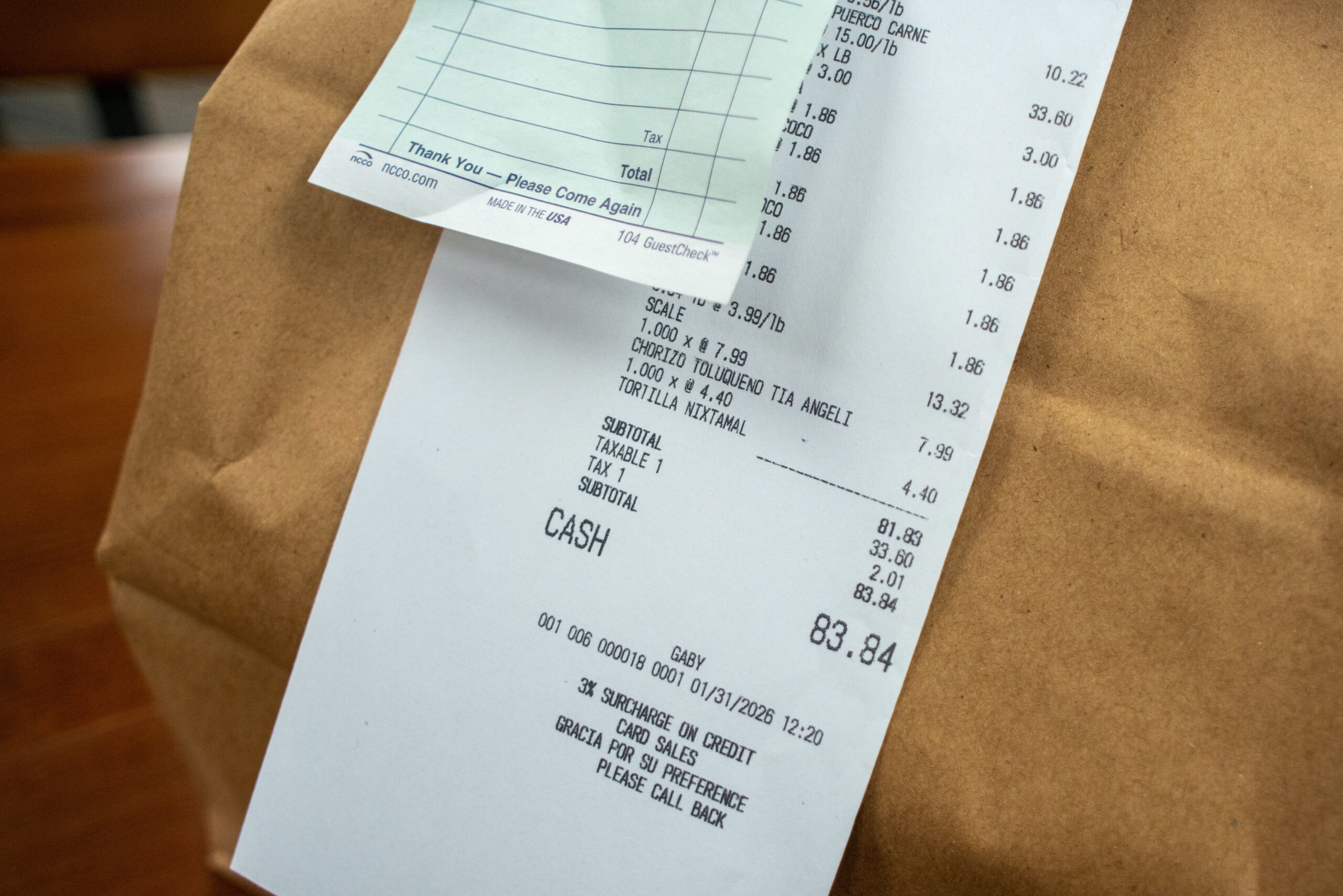
    A receipt attached to a bag of groceries that José Hernández will deliver to local undocumented immigrants in Bensalem.

    After 25 years, she said, she thought she was part of Bensalem. That changed when a neighbor complained there were “too many cars” on Maira’s driveway when her sister visited. After that, she said, she stopped hosting family gatherings, concerned that the neighbor would call ICE.

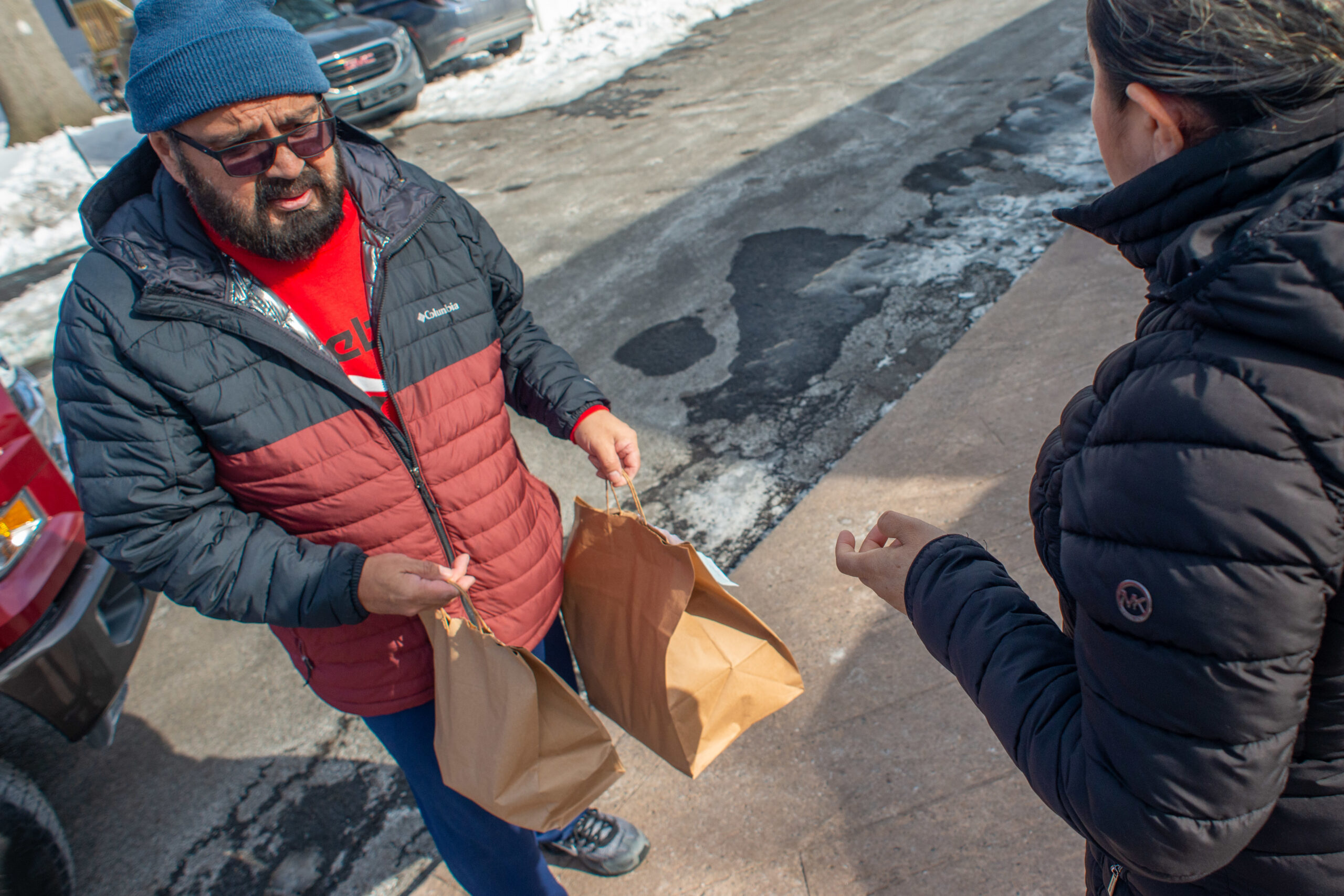
    Hernández handed her the groceries and turned to leave.

    Maira tried to give him a $5 bill.

    “No, no, no,” he said. “How can I be of help if I charge you?”

    Hernández likes to think he brings more than groceries, that with him comes a kind word, a smile, and maybe even some hope. Don José, as folks call him, says his worry is not the weight of the bags or the length of the checkout lines in stores.

    “I am scared,” he said, “that we will get used to this [ICE enforcement], that it will be so normalized that people stop helping one another.”

    As the day wound down, Hernández’s wife phoned to see how he was doing. He drove to a nearby Walgreens pharmacy to check out a report that ICE agents were in the parking lot. They weren’t.

    His phone rang.

    “Hi, is this Don José?” a young man asked, apologizing for calling. “I really need your help with a delivery.”

    “Don’t worry, place your order,” Hernández replied. “I will be right there.”

  • Two rival sex traffickers arrested in Norristown following shooting, police say

    Two rival sex traffickers arrested in Norristown following shooting, police say

    A street shooting in Norristown last week led investigators to discover two sex-trafficking operations that transported women from New York to Montgomery County to engage in prostitution, prosecutors said Thursday.

    A dispute between two men who ran rival enterprises erupted in gunfire on Feb. 13, police said, when one shot the other in the thigh during a confrontation on the 400 block of Sandy Street.

    On Tuesday, authorities arrested both men.

    Efran Flores-Rodriguez, 24, of Norristown, and Fernando Meza-Ramirez, 42, of Corona, Queens, are each charged with trafficking individuals and involuntary servitude. Flores-Rodriguez faces additional charges, including attempted murder, in connection with the shooting.

    Officers responding to reports of gunfire found Meza-Ramirez inside a bullet-riddled Toyota RAV4, police said. He had been shot in the thigh.

    Meza-Ramirez told police that a stolen white Acura TLX had followed him from Lafayette Street to Sandy Street. When he pulled over, he said, the sedan pulled up beside him and someone opened fire. A witness identified Flores-Rodriguez as the shooter, according to the affidavit of probable cause for his arrest.

    But investigators say the shooting exposed more than a personal feud.

    At the hospital where Meza-Ramirez was treated, officers found business cards in his wallet bearing photographs of scantily clad women posing on beds, according to the affidavit.

    Days later, on Feb. 17, police searched Flores-Rodriguez’s home and encountered a woman from Flushing, Queens, who told them she had worked as a prostitute under his direction last summer.

    She said Flores-Rodriguez, whom she knew as “Guerro,” drove her to Norristown six days a week, provided her a room and charged clients $60 for 10-minute sexual encounters. She told police she sometimes had as many as 15 encounters a day and kept half the money he collected.

    The woman said she also worked this year for Meza-Ramirez, whom she knew as “Leo,” under the same arrangement, according to the affidavit.

    Both men were denied bail at arraignment and are being held at the Montgomery County Correctional Facility.

  • ‘Courage is contagious.’ How Philadelphia churches and neighborhood groups are preparing to confront ICE.

    ‘Courage is contagious.’ How Philadelphia churches and neighborhood groups are preparing to confront ICE.

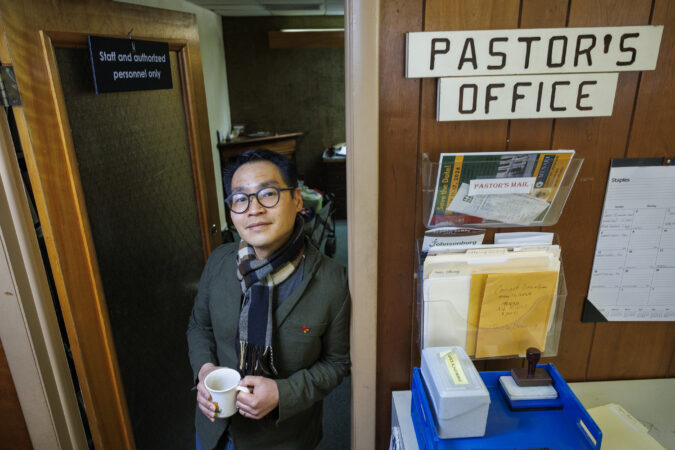
    Within the serpentine halls and stairways of Olivet Covenant Presbyterian Church, congregants have established several private, off-limits rooms ― each a potential last-stand space where members would try to shield immigrants from ICE, should agents breach the sanctuary.

    Church leaders call them Fourth Amendment areas, named for the constitutional protection against unreasonable search and seizure. The plan would be to stop ICE officers at the thresholds and demand proof that they carry legal authority to make an arrest, such as a signed judicial warrant.

    “It’s a protective space,” said the Rev. Peter Ahn, pastor of the Spring Garden church. “While you’re here, you’re safe, is what we want to assert.”

    Could it come to that? A pastor confronting armed Immigration and Customs Enforcement agents in the hallway of a church?

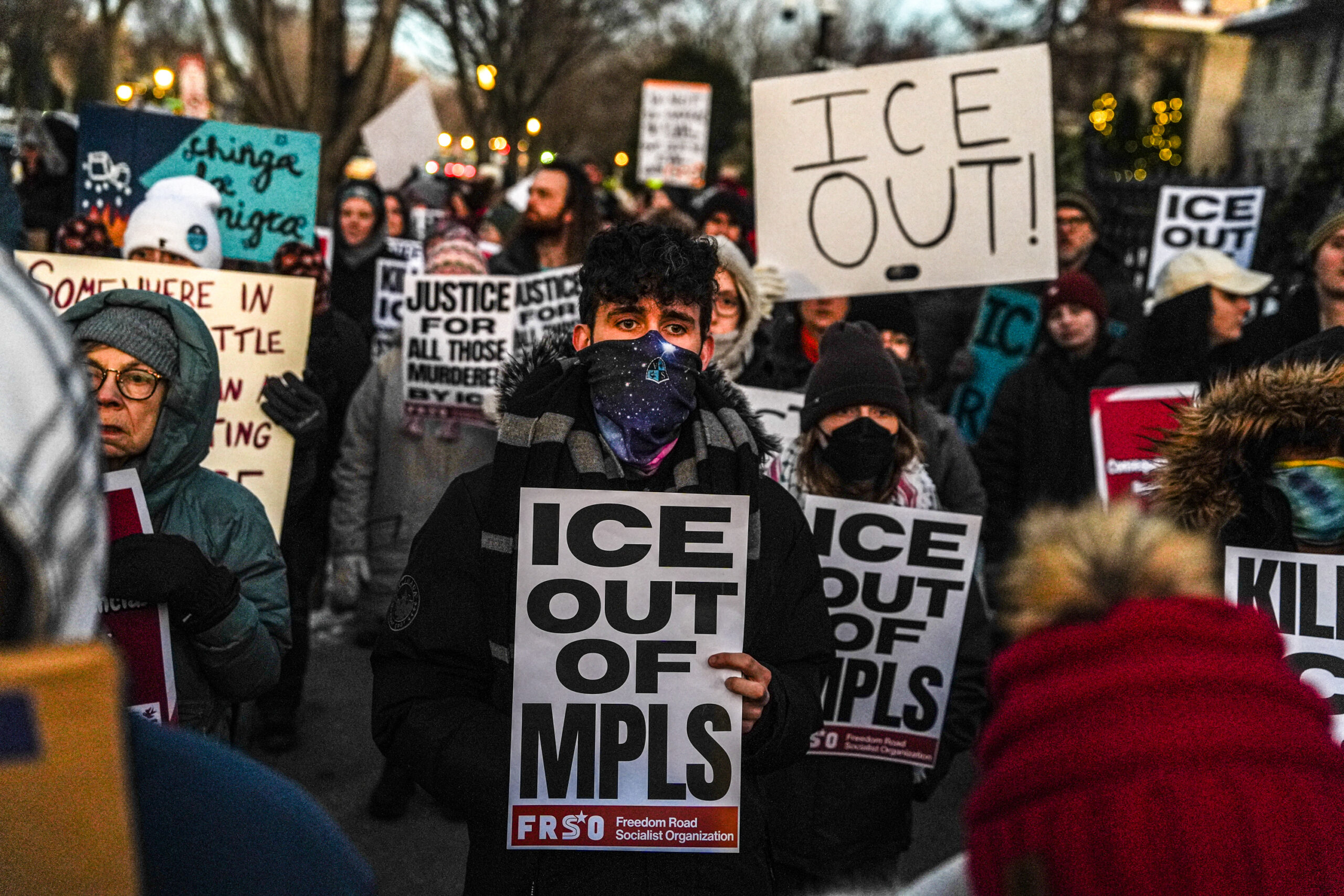
    It’s impossible to know. But across Philadelphia, churches, community groups, immigration advocates, and block leaders are actively preparing for the time ― maybe soon, maybe later, maybe never ― that the Trump administration deploys thousands of federal agents. People say they must be ready if the president tries to turn Philadelphia into Minneapolis ― or Los Angeles, Chicago, or Washington, D.C.

    People participate in an anti-ICE protest outside of the Governors Residence on Feb. 6, in St. Paul, Minn.

    Know-your-rights trainings are popping up everywhere, often to standing-room-only attendance, and ICE-watch groups are abuzz on social media.

    The First United Methodist Church of Germantown held a seminar last week to learn about nonviolent resistance, “so that we will be ready for whatever comes,” said senior pastor Alisa Lasater Wailoo.

    “That may mean putting our bodies in the path to protect other vulnerable bodies,” she said. “We’re seeing that in Minnesota.”

    In Center City, Temple Beth Zion-Beth Israel has ordered 300 whistles ― portable and efficient tools to immediately alert neighbors to ICE presence and warn immigrants to seek safety.

    “There was a sense of needing to support our neighbors if it comes down to it,” said Rabbi Abi Weber. “God forbid, should there start to be ICE raids in our neighborhood, people will be prepared.”

    In other places around the country, immigrant allies have similarly readied themselves for ICE’s arrival, and organized to react in concert when agents show up.

    In Washington state, the group WA Whistles has distributed more than 100,000 free whistles to create what it calls “an immediate first line of community defense.” Chicago residents set up volunteer street patrols to warn immigrants of ICE and to contact family members of those detained. In Los Angeles, people raised money to support food-cart vendors, and organized an “adopt a corner” program to protect day laborers who seek work outside Home Depot stores.

    A small sign at the Olivet Covenant Presbyterian Church, where the Rev. Peter Ahn is creating space to shield immigrants if necessary.

    Ask Philadelphia groups that advocate for immigrants — 15% of the population, including about 76,000 who are undocumented — and they say ICE isn’t about to land in the city. It’s been here.

    The agency’s Philadelphia office serves as headquarters not just for the city but for all of Pennsylvania and for Delaware and West Virginia as well. Arrests take place every day in the Philadelphia region.

    “You all seem to be ‘preparing’ for something that’s already happened,” veteran activist Miguel Andrade wrote on Facebook.

    What has changed, however, is the dramatic escalation in ICE enforcement, particularly visible in Democratic-run cities like Minneapolis, where agents fatally shot two U.S. citizens in January.

    ICE detained 307,713 people across the country in 2025, a 230% increase over the 93,342 in 2024. What federal immigration agencies record as detentions closely mirror arrests.

    Today residents in communities like Norristown and Upper Darby see ICE agents on the streets all the time. Cell phone videos have captured violent footage, including the smashed front door of a Lower Providence home after agents made an arrest on Feb. 9, and two people roughly pulled from a car in Phoenixville earlier this month.

    For immigrants who have no legal permission to be in the U.S. ― an estimated 14 million people ― the rising ICE presence steals sleep and peace of mind. They know not just that they could be arrested and deported at any moment, which has always been true, but also that the U.S. government is expending vast resources to try to make that happen.

    A woman who came to Philadelphia from Jamaica last year, and who asked not to be identified because she is undocumented, said she rarely leaves her home. She said she steps outside only to go to the grocery store, a doctor, or an attorney.

    She recently asked her daughter to check something on the computer, and the girl balked ― afraid to even touch the machine, worried that ICE could track her keystrokes and identify their location, the woman said.

    “How can I tell her it’s going to be OK when I don’t know it’s going to be OK?” asked the woman, who came to the U.S. to escape potential violence in Jamaica. “You come here expecting freedom, but here it’s like you’re in jail except for the [physical] barriers of the four walls.”

    Even as arrests have soared, Philadelphia has been spared the federal intrusions visited on other American cities.

    Why?

    Some say President Donald Trump doesn’t want to ruin the summer celebration of the nation’s 250th birthday, or spoil the grandeur of the World Cup or Major League Baseball’s All-Star Game. Others suggest that he might be timing an ICE deployment to do exactly that.

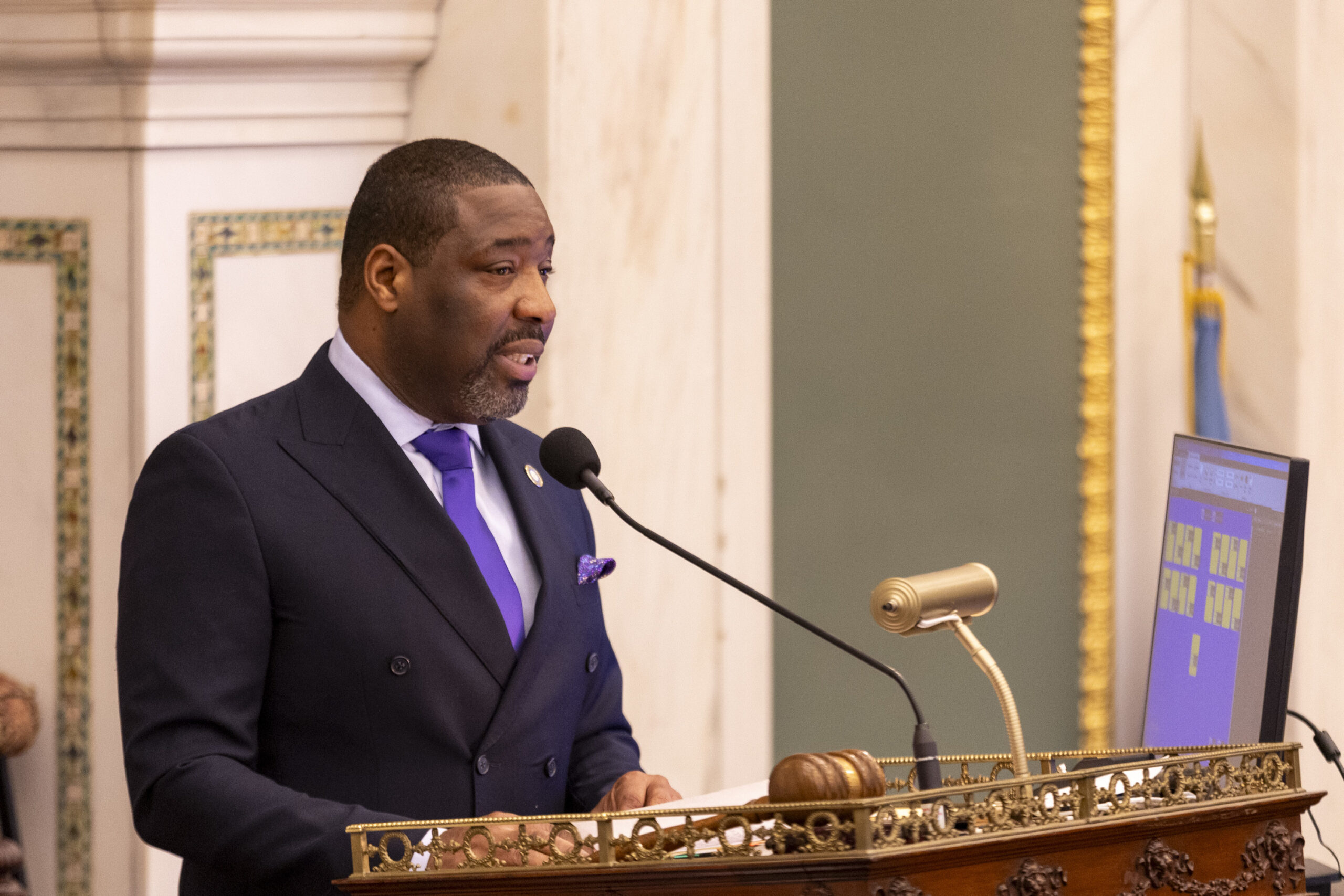
    City Council President Kenyatta Johnson speaking at the City Council’s first session of the year Jan. 22. He said this month that it’s time to stand up for immigrants in Philadelphia. “It’s my responsibility to step up in this space and be more vocal,” he said.

    That as Philadelphia City Council prepares to consider “ICE Out” legislation that would make it more difficult and complicated for the agency to operate in the city.

    Trump told NBC News this month that he is “very strongly” looking at five new cities.

    Some people are not waiting to see if Philadelphia is on the list.

    The monthly Zoom meeting of the Cresheim Village Neighbors usually draws about 20 people. But a hundred logged on in January to hear a presentation: What to do if/when ICE comes to our neighborhood.

    The short advice: If it happens, get out your phone and hit “record.”

    “If I see ICE agents, I will film,” said neighbors group coordinator Steve Stroiman, a retired teacher and rabbi. “I have a constitutional right to do that.”

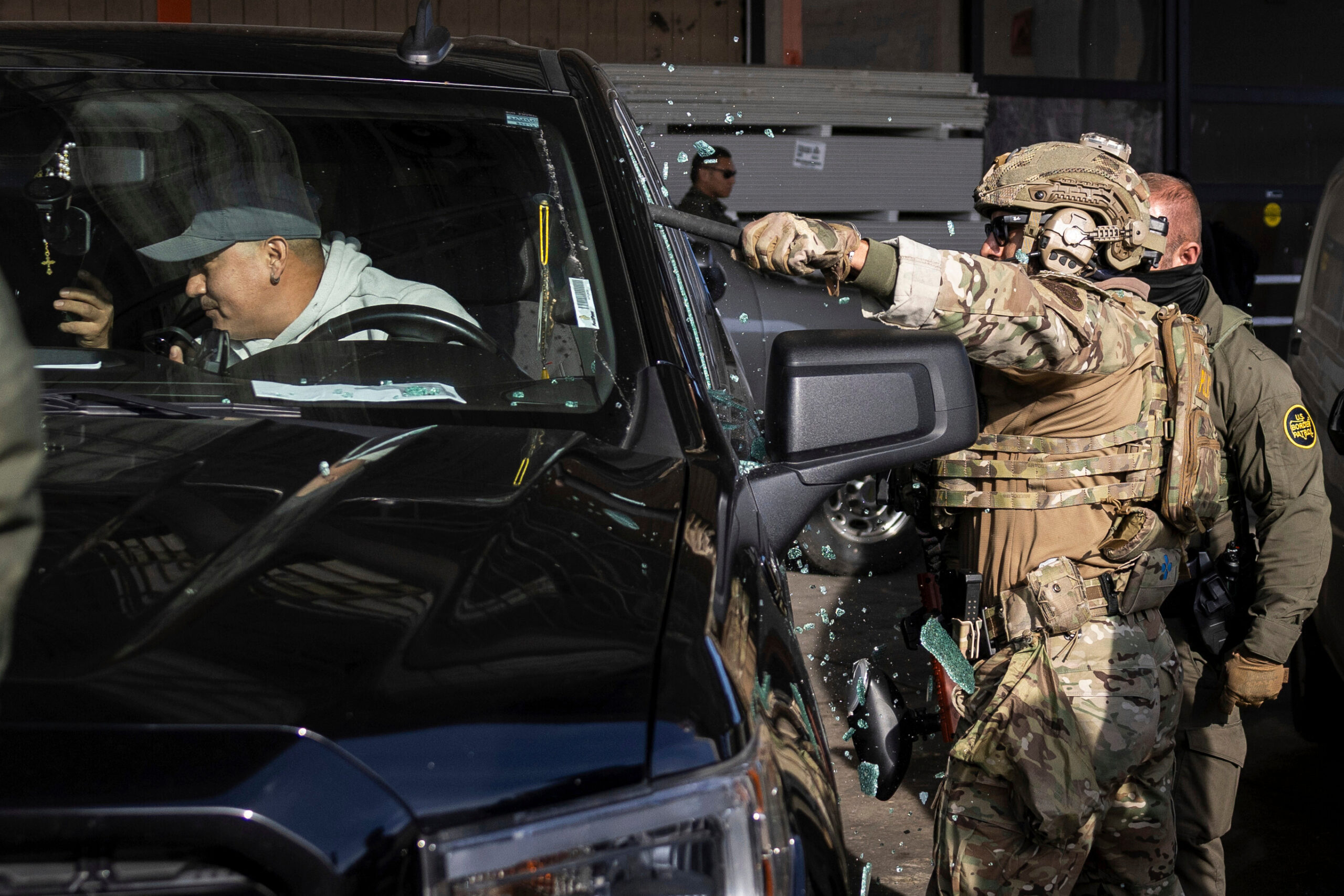
    Federal immigration enforcement agents shatter a truck window and detain two men outside a Home Depot in Evanston, Ill., on Dec. 17, 2025.

    In a sliver of University City, Miriam Oppenheimer has helped lead three block meetings where neighbors gathered to discuss how they would respond.

    They set up a Signal channel so people can communicate. And they formulated a loose plan of action: People will come outside their homes and take video recordings ― and try to get the names and birth dates of anyone taken into custody, so they can be located later.

    “Courage is contagious,” Oppenheimer said. “Everybody is waiting for somebody else to do something, but we have to be the ones.”

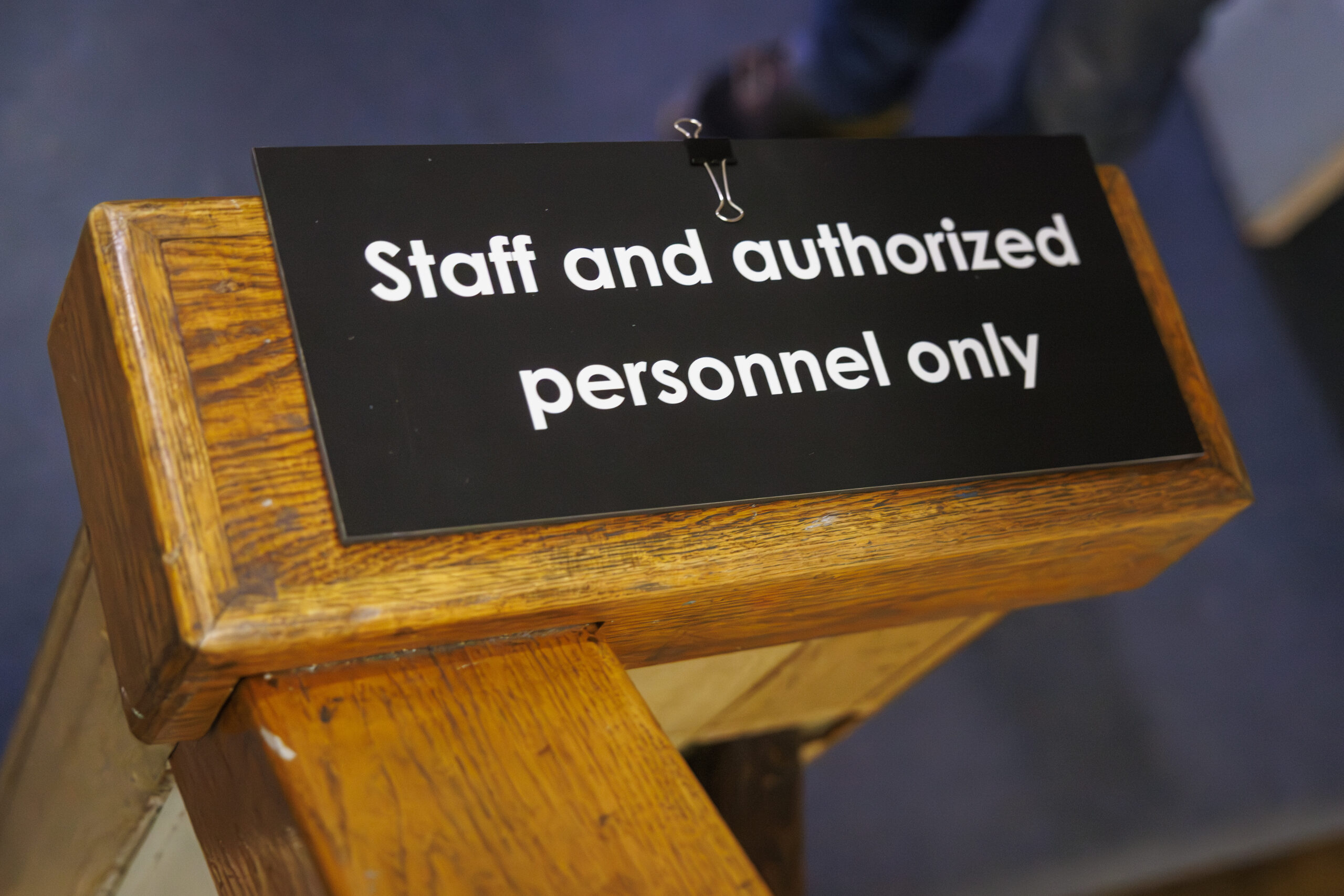
    Inside Olivet Covenant Presbyterian Church, doorways to some rooms now bear black-and-white signs that say, “Staff and authorized personnel only.”

    Issues around ICE access to churches have become more urgent since Trump rescinded the agency policy on “sensitive locations,” which had generally barred enforcement at schools, hospitals, and houses of worship.

    Legal advocates such as the ACLU say ICE agents can lawfully enter the public areas of churches, including the sanctuaries where people gather to worship. But to go into private spaces they must present a warrant signed by a judge.

    “There are many front lines right now,” said Ahn, the Olivet pastor. “We’re not trying to be simply anti-ICE, or anti-anybody. We’re just trying to be for the rights of the Fourth Amendment.”

    Staff writer Joe Yerardi contributed to this article.

  • Shareholders approve merger of American Water and Essential Utilities, which serve Pa. and N.J.

    Shareholders approve merger of American Water and Essential Utilities, which serve Pa. and N.J.

    Shareholders of Camden-based American Water Works and Bryn Mawr-based Essential Utilities, which owns the Aqua water and sewer companies, voted overwhelmingly Tuesday to merge and create a combined company with nearly $30 billion in yearly water and sewer sales.

    More than 99% of the 161 million American Water shares that were voted were cast in favor of the deal, the company told the Securities & Exchange Commission. Essential’s online proposal to merge was approved by around 95% of voting shareholders.

    The planned combination of these rivals, which have competed for more than 100 years to manage water and sewer for the small number of U.S. communities that allow for-profit operators, still needs approval from state public utility commissions.

    The combined companies’ sales are concentrated in Pennsylvania and New Jersey. In suburban Philadelphia, Aqua serves West Chester, northern Delaware County, parts of Lower Bucks, and Main Line communities. American Water serves Abington, King of Prussia, Norristown, Phoenixville, and nearby towns.

    New Jersey American Water serves towns along the PATCO rail line in Camden County, in northern and central Burlington County, and in Shore communities such as Absecon and Ocean City. Aqua New Jersey has customers in the three suburban South Jersey counties and at the Shore.

    American Water’s 14 million U.S. customers include systems in 12 other states, and on 18 U.S. military bases. Essential has around 3 million customers, including systems in six other states, and Pittsburgh-based Peoples Gas, which serves 750,000 in western Pennsylvania and Kentucky.

    American Water is already the nation’s largest private operator of water and sewer systems, and the deal will make it a larger player in competition with Florida-based NextEra Water Group and France-based Veolia’s U.S. operations, among other private systems that have been seeking to expand.

    A separate vote on an Essential executive pay package drew some opposition, with 85%approving.

    That package included more than $17 million in severance compensation and stock grants for departing Essential CEO Christopher H. Franklin, plus medical benefits and up to three years’ professional assistance helping him land another job, plus millions more for his four top deputies.

    The merged company’s larger size, as big as many of the leading natural-gas companies that dominate utility stock-index funds, will boost its visibility to investors, John C. Griffith, the American Water chief executive who will run the combined companies, said in announcing the deal last fall.

    The companies disclosed the approvals Tuesday afternoon and said more details on the vote and their plans would come later this week.

    Deal backers say the combination should enable Griffith to cut management costs, boost profits, drive up the share price, and could ease pressure to keep raising water rates.

    Regulators in New Jersey and Pennsylvania are weighing the company’s latest rate increase requests. American Water’s New Jersey affiliate is asking the state Board of Public Utilities for an average 10% water and 8% sewer rate hike on Jan. 16 for 2.9 million customers, which it said would fund improvements to aging water and sewer systems. Customers would pay an average of $18 more a month.

    Pennsylvania’s Public Utility Commission said last month that it would consider the company’s request to boost water and sewer rates on 2.4 million customers by an average 15%, or $20 a month.

    Critics had urged Essential to seek rival buyers to drive up the share price and shareholder profits from the sale, noting that both stocks had dropped after the merger was proposed last year.

    Tim Quast, founder of Colorado-based ModernIR, a consultant the companies hired to help explain the merger, said share price declines are now typical, even for merger-target companies like Essential whose shares command a premium from buyers like American Water because index-fund investors such as Vanguard and BlackRock tend not to buy more shares of merging companies until a deal is completed.

    Even after long competition from U.S. and foreign utility owners, private water companies serve only about one in six Americans. In recent years, customers of public utilities serving parts of Chester, Delaware, and Bucks Counties have defeated privatization campaigns, though some towns in Pennsylvania and New Jersey have signed on. Pennsylvania also has asked private operators to take over small, troubled public systems.

  • Norristown police officer who struck a naked man with his patrol vehicle has been charged with assault, authorities say

    Norristown police officer who struck a naked man with his patrol vehicle has been charged with assault, authorities say

    A Norristown police sergeant who struck a naked, unarmed man with his patrol SUV last week has been charged with assault, official oppression, and related crimes, prosecutors said Tuesday.

    Sgt. Daniel DeOrzio, 52, used unnecessary force in the Feb. 4 incident, Montgomery County District Attorney Kevin Steele said. He was placed on administrative leave after the encounter.

    Prosecutors said officers had been dispatched to the intersection of West Airy and Stanbridge Streets after reports that the naked man was yelling and damaging cars in the intersection. DeOrzio was among several officers who responded and, according to investigators, he positioned his police SUV behind a gray pickup truck blocking the roadway.

    After ordering the truck removed, authorities said, DeOrzio accelerated and struck the man, who was standing in the intersection with his hands on his hips.

    The impact sent the man airborne before he slammed onto the pavement, prosecutors said. He was taken to Main Line Health Paoli Hospital and released two days later.

    Investigators concluded that DeOrzio, the highest-ranking officer at the scene, used unnecessary force and failed to attempt basic de-escalation tactics, including verbal commands, before resorting to violence, the district attorney said.

    “This was not a necessary use of deadly force in this response incident,” Steele said in a statement.

    The incident drew criticism at a public meeting last week, where Norristown Police Chief Mike Trail fielded questions from residents upset over the officer’s actions. Trail said he would like to form a mental health co-responder program that would pair officers with mental health experts to de-escalate future situations.

    “People experiencing mental health behavioral episodes are more likely to … be subject to use of force by responding law enforcement officers because they lack the tools and the sophisticated training necessary to de-escalate,” he said.

    DeOrzio turned himself in Tuesday morning and was arraigned. District Judge Cathleen Kelly Rebar set his bail at $100,000. DeOrzio could not be immediately reached for comment.