Tag: Norristown

  • We cannot understand American history without Black history

    We cannot understand American history without Black history

    One cannot truly claim to understand American history without knowing African American history, and without understanding America’s complete history, we’re condemned to repeat past mistakes.

    The recent removal of the slavery exhibit at the President’s House made me realize that there were forces at work actively trying to erase uncomfortable truths about America’s history.

    With that recent obfuscation in mind — and in celebration of Black History Month — I’d like to introduce readers to some little-known history from Philadelphia during World War II.

    Discrimination decades ago in Philadelphia is not to be confused with racial murder in Philadelphia, Miss. However, to understand current race-related issues, we must acknowledge that whatever violence was inflicted on African Americans down south, equally insidious behavior took place in Northern cities like Philadelphia.

    A postcard depicts an aerial view of the Sun Shipyard in the 1930s.
    • Although the Fair Employment Practices Committee barred racial discrimination during World War II, Chester’s Sun Shipyard maintained a 5,000-plus man segregated shipyard, which company officials claimed was needed to limit racial strife.
    • Philadelphia’s newspapers legally listed nonfederal defense job openings and apartment rentals by race.
    • Newsreels and movies about the iconic battles of Guadalcanal, Saipan, the Bulge, Iwo Jima, and Okinawa almost never featured any Black servicemen, but they were there.
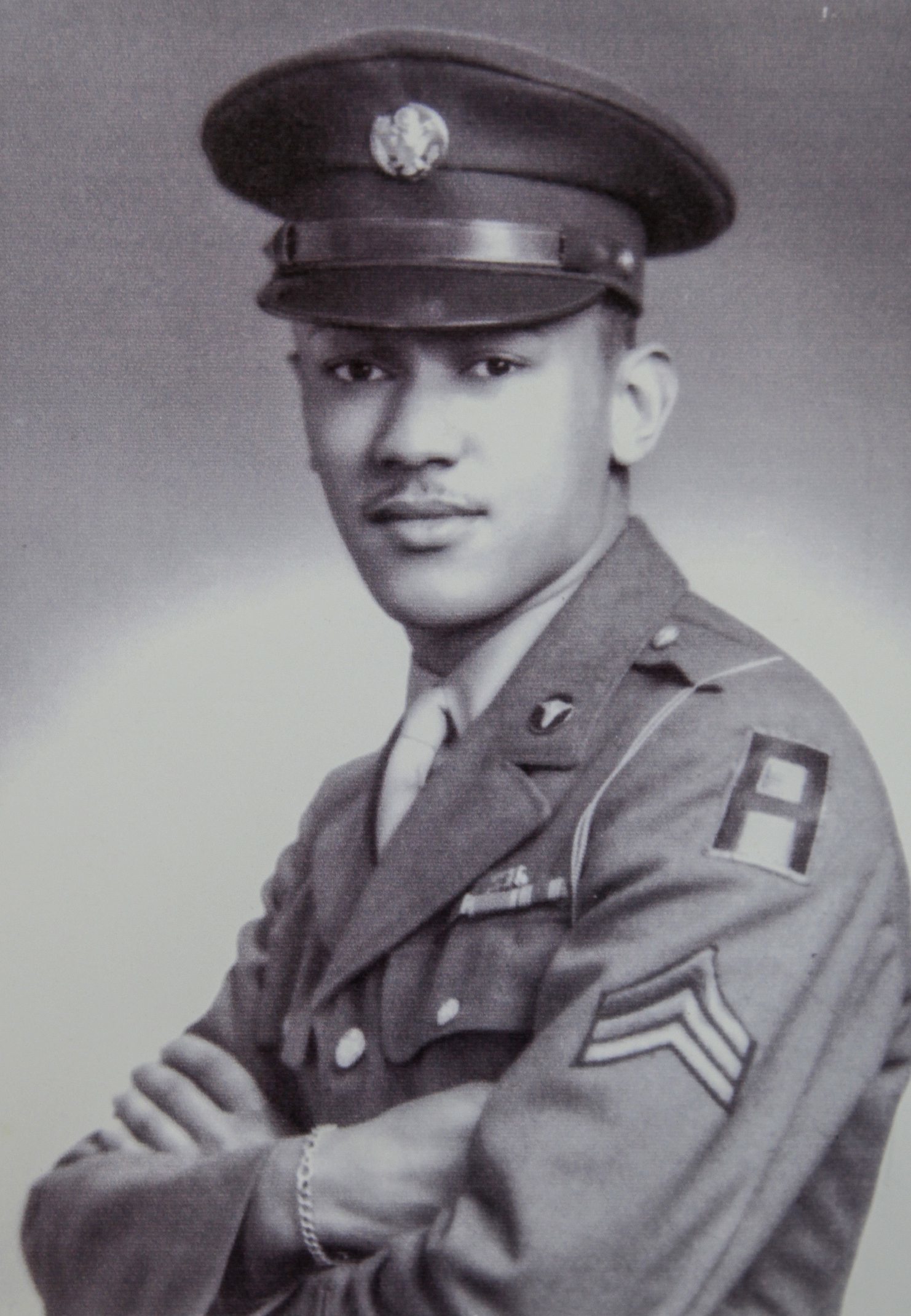
    Cpl. Waverly B. Woodson Jr. was an army medic assigned to the 320th Barrage Balloon Battalion. The battalion’s job was to set up explosive-rigged balloons to deter German planes. At a time when the military was still segregated by race, the balloon battalion was the only African American combat unit to land on Normandy on June 6, 1944.
    • On D-Day, Overbrook High grad Waverly B. Woodson Jr., a Black combat medic who, despite being wounded, treated over 200 soldiers at an Omaha Beach field dressing station. After toiling for over 30 straight hours and being completely exhausted, he resuscitated three soldiers who had nearly drowned in the frigid waters off the English Channel.
    • In 1943, Milton R. Henry, a Philadelphia Tuskegee pilot, got into a confrontation with an armed white Montgomery, Ala., bus driver over being forced to sit in the back of a bus. Henry might have been murdered if not for the quick intervention of several white English pilots.
    • In 1944, a racist Durham, N.C., bus driver murdered Pvt. Booker T. Spicely in cold blood. They had “had words” over Spicely’s initial choice of a bus seat. The bus driver was tried and quickly acquitted. Spicely lived in Philadelphia with his sister prior to his enlistment.
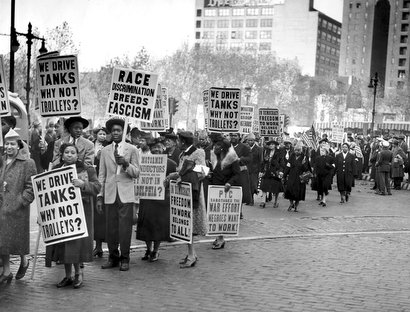
    A Philadelphia Transit Co. (which would eventually become SEPTA) protest supporting Black trolley drivers enters Reyburn Plaza across from City Hall on Nov. 8, 1943.
    • In 1944, racists struck the Philadelphia Transit Co., SEPTA’s predecessor, and prevented workers from using trolleys, buses, and subways for several days. Worker absenteeism caused the loss of a million war matériel production hours. President Franklin Delano Roosevelt ordered 5,000 troops to Philadelphia — instead of to Europe or the Pacific — to restart and guard its transit system.
    • In a top-secret 1945 operation, African American paratroopers fought West Coast forest fires ignited by Japanese balloon bombs. Norristown native Pfc. Malvin L. Brown died during one of the 555th Parachute Infantry Battalion’s firefighting operations.
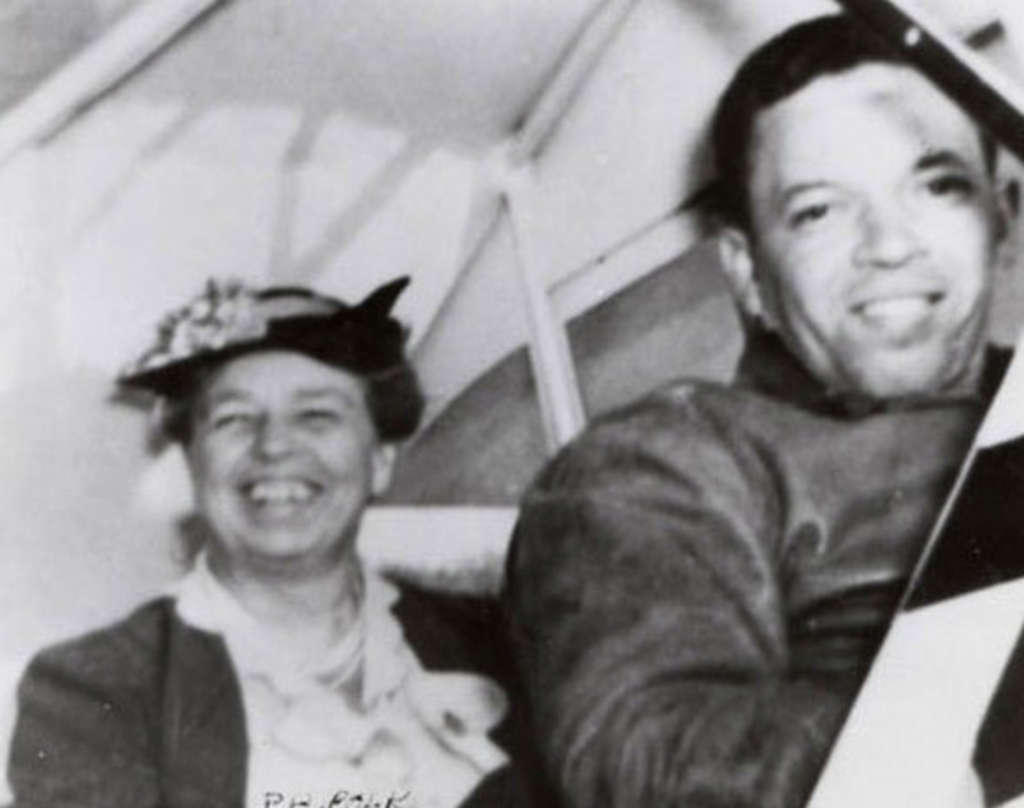
    First lady Eleanor Roosevelt got a flight over the Tuskegee Institute with C. Alfred Anderson at the controls.
    • Irrespective of the Tuskegee Airmen’s flying skills, after the war, none was hired by a commercial airline. Some pilots had received their initial training from Bryn Mawr native C. Alfred “Chief” Anderson. In March 1941, Anderson flew Eleanor Roosevelt around Tuskegee, Ala., which caused some War Department skeptics to reevaluate their initial hesitancy with Black pilot training.
    • In April 1945, 101 Tuskegee Airmen, including several Philadelphians, were arrested for disobeying an unlawful discriminatory order. The charges were quickly dropped, but administrative reprimands were placed in these officers’ 201 files.
    • Philadelphia native William T. Coleman, a summa cum laude University of Pennsylvania graduate, interrupted his Harvard Law School studies to serve as an Army Air Force officer. Honorably discharged, he returned to Harvard, graduated first in his class, and clerked for a federal appeals court judge and a U.S. Supreme Court justice. Armed with his very substantial résumé and glowing recommendations, he initially moved to New York — as no white Philadelphia firm would hire him.
    • Throughout the war, while Philadelphia-based Whitman’s Chocolates was producing millions of pounds of “Samplers,” it was also producing “Pickaninny Peppermints,” despite protests by the NAACP to remove the offensive slur from the product’s name.
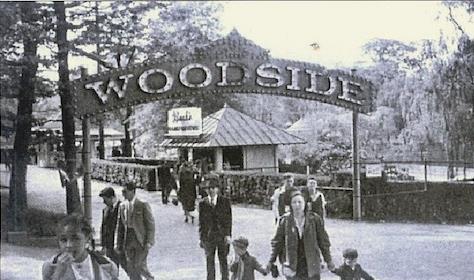
    The Woodside Amusement Park. The Fairmount Park Transit Co.’s trolley stopped at the park until the line closed in 1946.

    Over the last few years, some politicians have claimed that the United States is not a racist country, that slavery didn’t cause the Civil War, and that slavery benefited enslaved people by teaching them useful skills. The ignorance of these 21st-century politicians, who have many followers, makes it imperative that everyone study African American history, not just in February, but all year long.

    Paul L. Newman is an amateur historian specializing in African American history of the first half of the 20th century. He has created a mini-series docudrama that highlights the events in this essay.


  • Former Villanova professor says she was fired after accusing the law school of racial discrimination

    Former Villanova professor says she was fired after accusing the law school of racial discrimination

    A former Villanova professor says in a federal lawsuit filed this week she was fired from the Catholic university after accusing its law school of racial discrimination involving one of her students.

    Stephanie Sena, who had been an anti-poverty fellow in the law school and taught at Villanova for more than 20 years, was dismissed in 2024 for what the school said were “student complaints,” according to the lawsuit.

    But Sena’s lawyers say the dismissal was due to her filing an ethics complaint against the school for racial discrimination for comments that administrators made around a decision not to give her student a financial award that would have alleviated her debt, citing a speech the student made at a law school symposium.

    The student, Antionna Fuller, accused Villanova of racial discrimination and failing to appropriately support her with financial aid during a 2021 symposium speech at the university, titled “Shifting the Poverty Lens: Caritas in Focus.” Sena hosted the symposium, during which Fuller also publicly asked for an apology from Villanova.

    “How can you say caritas [which means love and charity in Latin] and Black lives matter with no thought to a Black life in front of you, systematically oppressed by your hands?” Fuller said, according to a video of the speech. “It’s not only hypocritical, but it’s embarrassing. We cannot talk about oppression and white supremacy without acknowledging its very presence here.”

    Her speech drew a standing ovation, but later caused consternation among law school leadership.

    Sena found out that law school dean Mark Alexander, in a letter to the scholarship committee, asked that Fuller not receive the debt relief award because she “maliciously maligned” the law school, according to the suit.

    Sena‘s lawsuit alleges that then-law school vice dean Michael Risch said after the student’s speech that the student was “lucky” to have gotten into the law school and that she would not be there if she were white.

    Villanova said in a statement Wednesday that Sena’s lawsuit “lacks merit” and that the university “will vigorously defend against these baseless allegations.”

    “We look forward to presenting the actual facts surrounding the plaintiff’s separation from Villanova. To be clear, Villanova University does not tolerate discrimination or retaliation of any kind, and the allegations in Plaintiff’s lawsuit are contrary to our written policies and conflict with the core values of our University.”

    Sena, 46, of Media, declined to comment.

    Fuller, 29, who now lives with her mother in the South, said in an interview Wednesday that she feels both relieved and anxious about seeing the issue aired publicly.

    “I am happy, at least relieved, that truth is coming out,” said Fuller, who graduated summa cum laude from the University of South Carolina and got her Villanova law degree in 2022. “I’ve been in such an isolated place and just carrying this trauma for so long.”

    She said she sought therapy after the reaction she got to her speech from Villanova administrators and last year wrote a book, I Almost Sued My Law School, about her journey as a first-generation, low-income Black student. She no longer wants to practice law, she said, and is still figuring out her next steps.

    But she said she was grateful to Sena, whom, during the symposium speech, she called “my hero, advocate, and my friend.”

    “She was the first person to publicly stand up for me,” Fuller said.

    Stephanie Sena stands at site of an encampment along Kensington Avenue in 2021.

    Fallout from symposium speech

    Sena, a longtime activist who has worked to help people experiencing homelessness and opened a homeless shelter in Upper Darby in 2022, was fired in 2016 from her job as an adjunct professor at the Pennsylvania Academy of the Fine Arts after defending students who accused a classmate of rape. She sued PAFA and the case ended in a confidential settlement.

    She also led activists in lawsuits against the city in 2021 over its intentions to remove homeless people in a Kensington encampment. In 2023, the head of Norristown’s municipal council planned to bus homeless people to Villanova’s campus because of Sena’s advocacy for the homeless in Norristown. Villanova at the time was criticized for not defending Sena and making a stronger response.

    Sena was hired to teach at Villanova in 2003 and began to work at the law school in 2020, serving as a full-time faculty member and anti poverty fellow. She was also an adjunct professor at Villanova’s Center for Peace and Justice.

    In her lawsuit against Villanova, Sena asserts that law school leadership met with her in 2022, several months after Fuller’s symposium speech, and asked her if she had known what Fuller planned to say. Matthew Saleh, former assistant dean for admissions, told her it would be harder to attract Black students to the school because of the speech, according to the suit. Risch, the vice dean, made the comment about Fuller not being at Villanova if she had been white, the suit says.

    Saleh, who now is the senior associate dean of enrollment management and financial aid at Rutgers’ law school, said in an interview that he does not recall making that comment and that he doesn’t think it’s even the case that Fuller’s speech would hurt recruiting.

    “That would not have even come to my mind,” he said. “I couldn’t reasonably see a way that it would impact recruiting.”

    Sena “objected to the race discriminatory and retaliatory comments” made to her in that meeting, according to the suit.

    In October 2023, she complained again about the comments in an email to two administrators who headed diversity, equity, and inclusion at Villanova, according to the lawsuit complaint. Then came the award committee meeting on Jan. 30, 2024, where the dean in a letter argued against Fuller’s receiving the award, according to the suit.

    Students who were in the award committee meeting and were upset about the law school dean’s reaction approached Sena and asked what they could do, according to the suit. Sena said the students, who are not named in her lawsuit, could contact the diversity, equity, and inclusion office and file a climate complaint.

    Sena, according to the suit, complained again one day after the award committee meeting that Villanova “had engaged in a dangerous pattern of race discrimination” and filed an ethics complaint with the university. She also expressed her concerns in an email to faculty and in a meeting with a law professor, who told her the students had committed an ethics violation by revealing confidential details of the awards meeting they were in, according to the suit.

    After filing the complaint, Sena said in her lawsuit, she was “treated differently,” “unjustly criticized,” and “blamed for issues outside her control.”

    In June 2024, human resources informed her that she was under investigation after students said she had pressured them to file complaints against the deans, which Sena denied, the suit said.

    She was fired July 30, 2024, even though, the suit said, she had no prior performance or disciplinary issues and had received awards and promotions. She is seeking damages including economic loss, compensatory and punitive, and attorneys’ fees and costs.

    An apology and acknowledgement

    During the symposium, Fuller had said she wished Villanova would apologize and acknowledge what happened. She said that the school had given her $15,000 in financial aid toward her annual $65,000 cost, but that she subsequently learned other students had gotten more, even though her mother worked multiple jobs as a nurse’s aide to support the family.

    “I was confused,” she told the audience. “How can a student with seemingly the most need graduate with the most debt?”

    She learned of a free-tuition public interest scholarship that Villanova awards to incoming students and sought it after she was enrolled, she said. She was turned down repeatedly, she said, even though Villanova had recently awarded its largest group of the scholarships.

    “Am I invisible?” she asked. “To walk into this law school building every day, to be surrounded by wealth and prestige, while struggling and burdened with debt, and while expected to perform like those who are not feels inhumane.”

    She said during the speech she would graduate with almost $200,000 in student debt. Villanova officials, she said Wednesday, later accused her of exaggerating because she was including her undergraduate debt, too, and maintained that the total was really $160,000 — $126,000 of which was from the law school.

    Fuller said Wednesday she had apologized to law school leadership, hugged them at graduation, and thought everything had been resolved. She said she was surprised to hear that the dean wanted to block her access to the debt award, she said.

    “My intent wasn’t to harm, attack or mislead,” Fuller wrote in her book, “but to share my personal experience — my fears and financial anxieties — as part of the larger conversation about finding solutions to reduce poverty, which the conference was centered around.”

    Staff writer Abraham Gutman contributed to this article.

  • The new Norristown school board plans to oust its superintendent, citing poor test scores

    The new Norristown school board plans to oust its superintendent, citing poor test scores

    The Norristown Area School District’s board is moving to oust its superintendent, saying the district needs a new leader to reverse years of poor test scores.

    The move to replace Superintendent Christopher Dormer, who has led the Montgomery County district since 2018 and whose contract expires June 30, comes after five new members were elected to the nine-person school board in November. The board voted unanimously Jan. 20 to give Dormer notice they would not renew his contract.

    Some community members expressed shock at the decision to part ways with Dormer, who is also the president of the Pennsylvania Association of School Administrators. Dormer has been a vocal advocate for increasing funding to Norristown, which is considered underfunded by the state, and where nearly three-quarters of students are economically disadvantaged.

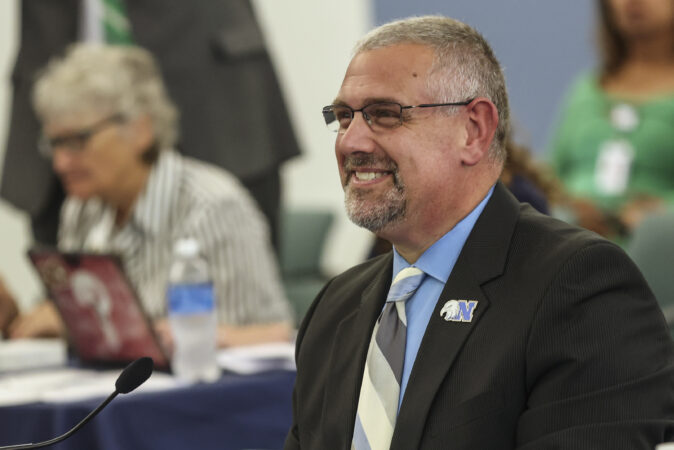
    Jeremiah Lemke, who joined the Norristown school board in December and is now its president, acknowledged Dormer as “a leader statewide” in advocating for a new school funding system and a superintendent who has done “many good things for the district.” But, he said at the Jan. 20 meeting, test scores are a concern.

    “Student achievement in Norristown hasn’t been winning, under Mr. Dormer, for years, not months, but years — seven to be exact,“ Lemke said in an emailed statement Wednesday. ”If the Eagles didn’t win for seven years, regardless of what positive developments happened in the organization, there would be no questions asked when the head coach was replaced.“

    Norristown, a majority Hispanic district, enrolls about 8,000 students.

    About 28% of Norristown’s third-through-eighth graders scored proficient or above in English language arts on the Pennsylvania System of School Assessment standardized tests last year, compared to 48.5% statewide. In math, 27.4% of Norristown students were proficient, compared to 41.7% statewide.

    Over the last few years, changes in Norristown’s test scores have largely tracked Pennsylvania’s as a whole, with ELA scores sliding, and math scores improving. In 2023, 30.7% of Norristown students scored proficient in ELA, compared to 53.7% of students at the state level. In math, 21.6% of Norristown students scored proficient in 2023, compared to 39.4% statewide.

    In a message to staff and families after the Jan. 20 vote, Dormer said he was proud of what the district had accomplished during his tenure — “including consecutive years with minimal to no tax increases, the sizable and significant additions in staffing after years of reductions, the sustained investment in new instructional resources and educational opportunities after years of unaffordability, the development and implementation of our facilities master plan after decades of deferred maintenance, and the commitment to the principles of equity, inclusion, and belonging as we navigated a worldwide pandemic and an increasingly politically divided country.”

    Dormer, who began his career in education as an educational assistant in the Lower Merion School District, spent 13 years as a teacher, coach, and athletic director in the Upper Darby School District before moving into administration in 2005. He became Upper Darby High School’s principal in 2008, a role he held for five years, and came to Norristown in 2016.

    Performance reviews on the district’s website show Dormer was rated “proficient” by the board in 2021-22 and 2022-23. More recent reviews were not listed online.

    On Wednesday, Dormer declined to comment.

    Lemke — who works for a Philadelphia nonprofit, Jounce Partners, that has coached charter school leaders to improve teacher performance — said in a statement Wednesday that the decision was “thoughtful, reflective, data-informed, and unanimous, amongst new and continuing board members.”

    The board last week voted to approve a $79,500 contract with Alma Advisory Group, a Chicago-based firm, to conduct a national search for a new superintendent.

    Jordan Alexander, another new school board member, said during that board meeting that members “often have to make decisions that are very unpopular.”

    “I’m gonna be honest, I wasn’t so sold,” Alexander said. A former Norristown student, Alexander said that when Dormer “came to the scene, the pride did go up, and it was a breath of fresh air.”

    But “we cannot advocate ourselves to be the best if our performance does not reflect that,” Alexander said.

    Community reaction to the ouster

    Some community members accused the board of a predetermined decision.

    “Staff were not aware of these changes … the community was not aware, or anybody. You guys just threw it out there,” Ericka Wharton, a parent and leader of a Norristown community center, told the board at last week’s meeting. Wharton warned the decision could create instability, including a decline in student achievement.

    Carmina Taylor, a local advocate, told the board that community members deserved “a full explanation with dates and details that led to your decision.”

    “This decision is short-sighted, abrupt, without consideration as to how the students will be impacted by this major shift in leadership,” said Taylor, co-founder of the Movement for Black and Brown Lives in Montgomery County.

    The election of the new board came after infighting in the local Democratic Party. Chris Jaramillo, the former board president, lost the local Democratic Party’s endorsement for reelection last year. Jaramillo had opposed a tax break for a senior affordable housing development. Last week, the new board voted to rescind a November district policy that restricted tax abatements, saying it would replace it.

    Jaramillo is also a co-founder of the Movement for Black and Brown Lives in Montgomery County. In an interview Wednesday, he described the board’s new leaders as inexperienced and questioned how it could quickly replace Dormer without causing disruption.

    “I don’t think it’s a sound decision,” said Jaramillo. He said he worried the board would pick someone “without any sort of knowledge of how diverse Norristown and its surrounding area are.”

    Taylor said Wednesday she wasn’t speaking on behalf of Jaramillo. She accused the board of “plotting” to remove Dormer.

    “How in the world, if they didn’t have a sense of what they wanted to do, could they have even attempted to do that in the last 45 days?” said Taylor, who has filed a complaint with the school board, alleging insufficient transparency.

    Lemke said it is “categorially false” that the board acted too quickly and without transparency. “Once we were installed, we had a short time period in which to make a decision because we knew that if we didn’t renew his contract it would not be a quick task to do a national search for a superintendent,” he said.

    Taylor noted that while the district’s test scores “are bad,” Norristown has only been receiving additional state money under a new formula intended to remedy constitutional underfunding for the past two years. (The budget proposed by Gov. Josh Shapiro Tuesday would give underfunded districts their third installment of a nine-year plan.)

    “It’s not enough to address the systemic issue, period,” she said.

  • This South Philly restaurant has a killer soup cocktail

    This South Philly restaurant has a killer soup cocktail

    Cocktails in Philly have been getting ever more savory, taking inspiration from pickles, salad, even soup — the last being the most seasonally timed. Several local bars like El Techo and Jerry’s Bar have even been poking fun at cocktail’s “soup season,” posting videos of people consuming their margaritas and espresso martinis with spoons, blowing on the sips as they go.

    But there’s at least one soup cocktail taking the trend more seriously. Chef Thanh Nguyen’s signature pho cocktail at Gabriella’s Vietnam is a many-layered marvel. It’s not like drinking pho broth spiked with vodka. Instead, it’s warming and softly spicy — the heat hits the back of your throat and sinks into your chest — the beefiness only an umami-laden back note. It’s complex, mildly sweet, and more well-balanced than, say, a typical spicy margarita. A tiny squirt of Sriracha muddled with fresh culantro and ginger adds a soft orange hue.

    Chef Thanh Nguyen prepares drinks at Gabriella’s Vietnam in Philadelphia on Wednesday, Aug. 28, 2024.

    “Culantro is what gives you the true pho flavor,” said Nguyen. “In South Vietnam, we use culantro more for pho than basil, which they do here [in Philly]. And of course, we need Sriracha.”

    The cocktail is shaken up with fresh lime juice, simple syrup, and a mix of vodkas (one part pho-infused vodka, three parts plain vodka).

    The liquor license at Gabriella’s (a two-time pick for The 76 most essential restaurants in Philadelphia) is a satellite license associated with Five Saints Distilling — allowing the restaurant to serve any beer, wine, and liquor made in Pennsylvania — and so the Norristown distillery’s line of spirits forms the backbone of Gabriella’s bar program.

    Two bottles of beef infused vodka: the one on the left has been steeping with herbs for six weeks and the one on the right has beef only and has been steeping for three weeks.

    There’s actual beef steeped in the vodka that forms the base of Gabriella’s pho cocktail. Thin slices of brisket and eye of round, like the ones in a typical bowl of phở tái, are seared, then crammed into the bottles of vodka, to sit for three weeks, creating a lava-lamp effect as they release droplets of fat into the liquid. At the three-week mark, the vodka is strained multiple times through coffee filters. (Nguyen discards the beef that infuses the vodka with its meaty flavor. I tried a bite before it went in the bin, but that was all: If I had kept on eating, I risked inebriation by beef.)

    Next, toasted spices are added to the bottle: fresh ginger, star anise, coriander, fennel seed, cardamon, cloves, and cinnamon. “The exact same spices for when I made pho,” said Nguyen. The concoction steeps for another three weeks, “until it’s the color of Coke,” said Nguyen.

    Nguyen approaches mixing cocktails with the mind of a chef. This is most apparent in this cocktail, which is simultaneously an ode to the pho she served at her former restaurant, Melody’s Vietnam Grill in Ambler, and to the medicinal concoctions her now 94-year-old grandfather made her drink as a child and, later, as a postpartum mother.

    “He would make vodka — yes, homemade vodka — and put garlic, ginseng, or ginger in it. This was his medicine. He’s never taken any other medicine in his life,” said Nguyen. “After I had my daughter, he had me drink this liquor with ginger soaked in it.”

    Chef Thanh Nguyen posed for a portrait at her restaurant, Gabriella’s Vietnam on Thursday, Sept. 11, 2025 in Philadelphia.

    Pho-spiced cocktails are common in bars in Vietnam, made popular at upmarket places like the Michelin-starred Anan Saigon and the Anantara Hoi An (whose pho cocktail is heavily garnished with fresh cilantro and whole star anise). The cocktail is frequently credited to Hanoi bartender Pham Tien Tiep. But each of these versions take the inspiration of pho far less literally than Nguyen does.

    “I don’t want to limit myself to one thing,” Nguyen said, explaining her experimentation behind the bar. “I love cooking but I have more fun behind the bar sometimes.” And she wants there to be constant crossover between her kitchen and bar. The passion fruit that her beef carpaccio is marinated in goes into her margarita. The kumquats that appear seasonally in her salads are muddled into her Saigon smash cocktail and blended into margaritas.

    As for the future of her soup-based cocktails, Nguyen is working on developing a bún bò huế-infused vodka. “I’m still trying to get shrimp paste and lemongrass flavors to come through,” she said.

  • A ‘vital’ Norristown day shelter is racing to find its own new home

    A ‘vital’ Norristown day shelter is racing to find its own new home

    A lifeline for Montgomery County’s low-income and homeless residents is running out of time.

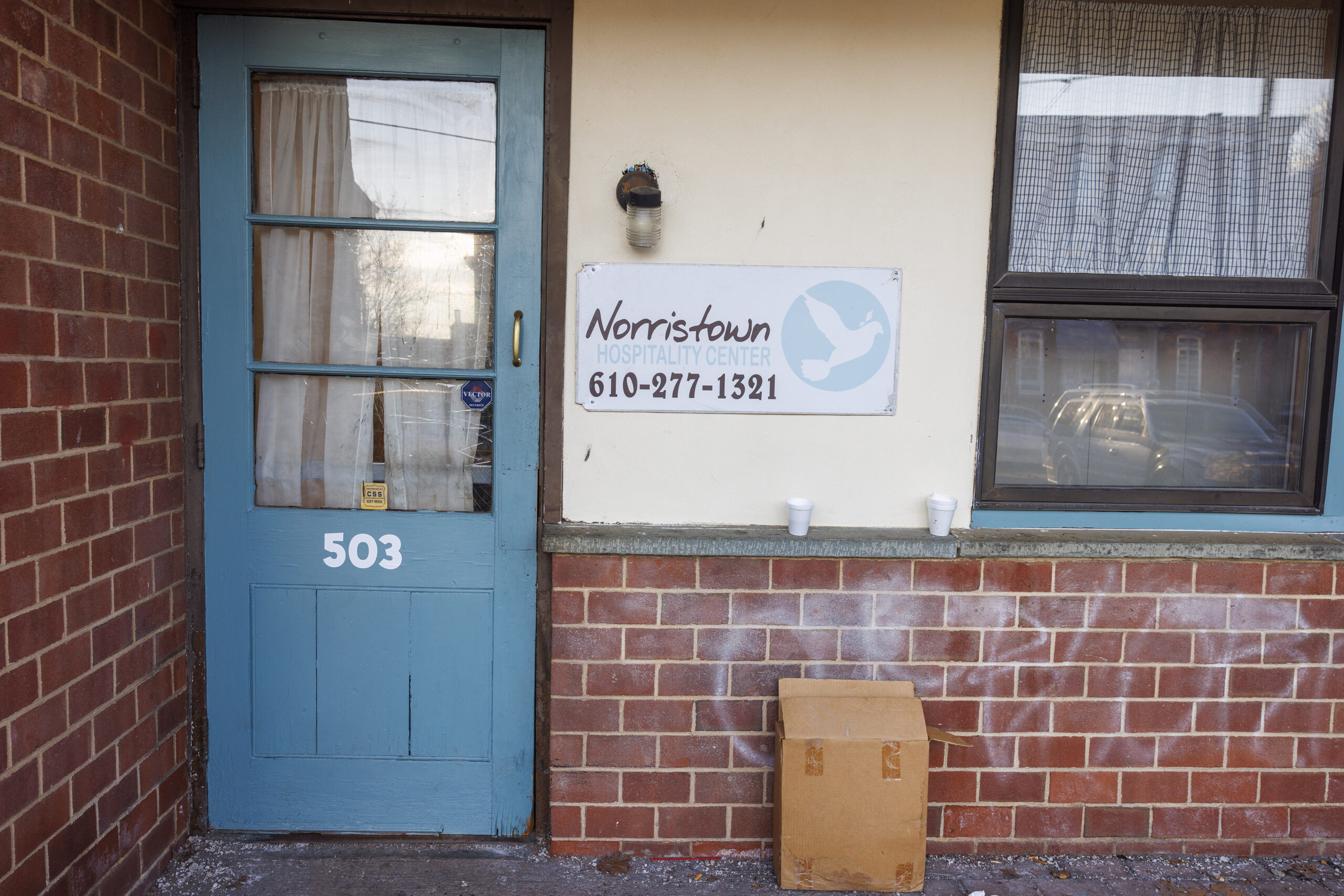
    The Norristown Hospitality Center, a nonprofit day shelter offering free meals, showers, laundry, legal aid, and other services, must move out of its home by the end of January.

    Last year, the Hospitality Center offered services to 1,400 people, roughly a third of whom lacked housing, according to executive director Sunanda Charles. No other similar day shelters offer the same array of services in the immediate area.

    “The community would be losing a very vital resource,” Charles said.

    The Norristown Hospitality Center, which provides services for the homeless, is looking for a new location.

    The Hospitality Center, which opened in 1992, has been heading toward this inflection point since it vacated its home of over two decades at 530 Church St. by the end June 2025.

    It arranged a six-month lease with the Senior Adult Activities Center of Montgomery County, originally set to expire on Dec. 31. The center was granted a one-month extension, but is still searching for its next temporary and permanent home.

    Zoning woes

    The Hospitality Center’s search for a new location has been complicated by the organization’s needs and vocal NIMBYism.

    The Hospitality Center’s longtime Church Street home was owned by St. John’s Episcopal Church, which notified the center in 2024 it needed to vacate the building. Charles said the church told them it was because of concerns about the optics of visitors loitering outside. The notice came as a surprise, she said, but they were given a year to find their next location.

    St. John’s Rev. Christopher L. Schwenk disputed Charle’s characterization of why the church required the Hospitality Center to vacate the building, and said the center did not report property damage in 2023 that required renovations, and failed to pay rent on time for seven months of that year.

    “After months of conversation with Director Sunanda Charles, and then the Center’s Board, we made the difficult decision to end their lease due to breach of contract. Director Charles’ characterization of this decision as rooted in ‘the optics of loitering’ is as disappointing as it is false. We see Christ in the faces of our neighbors living in homelessness and are proud to continue serving them right here on Church St.,” he said in a statement.

    The Hospitality Center only shut down for three days as staff moved operations to the Senior Activities Center, but they knew this home would be temporary. Charles said the Senior Activities Center received funding for extensive renovations through the American Rescue Plan Act, which would expire if they don’t begin construction soon.

    After a process of careful planning and community outreach, the Hospitality Center identified a new building at 336 E. Moore St. and entered a purchasing agreement for it in December 2024.

    Mike Kingsley, program manager at the Norristown Hospitality Center, greets clients as they enter the center for breakfast Friday.

    But doing so required a zoning variance request, which brought the matter before the Norristown Zoning Hearing Board in May. The proposed building was located in a residential area, which ignited the public. Norristown residents testified for hours both for and against the Hospitality Center’s move, with some speaking about the essential services the center provides, while others worried about those suffering from substance abuse loitering where their children are.

    The board ultimately voted 2-1 against the center’s request.

    “I get to see firsthand those who are truly living on the margins of the city of Norristown. It is extremely disappointing — the whole ‘not-in-my-backyard’ attitude — it’s disheartening,” the Rev. Andrea Gardner, board president of the Norristown Hospitality Center, told The Times Herald following the vote.

    Charles said that the Hospitality Center has learned important lessons about the regulatory process and building community support from that experience as it searches for other options.

    But most potential properties in Norristown would require a similar variance request or special exemption for the Hospitality Center to move in. When that time comes, Charles anticipates needing to argue again for the center’s existence in the heart of Norristown.

    “These are people in the community. It is the community’s responsibility as well. Everyone can make a difference. And sometimes, the difference may be in the perspective of how you view people,” she said.

    Staying in position

    Until the Hospitality Center’s future is settled, Brian Van Scoyoc plans to keep spending every day there that he can.

    Van Scoyoc, 54, has been homeless for about five years, since the Norristown home he shared with his ex-girlfriend caught fire and burned down. His ex had to pull him back from jumping into the blaze to rescue his dog, Loggie, who died in the fire.

    “I got sort of displaced and didn’t know where to go or what to do,” he said.

    He’s worked odd jobs here and there, spending his nights at a shelter or in a tent in the woods. But his visits to the Hospitality Center have been a welcome reprieve.

    He comes for coffee and breakfast to start his day, a pleasant escape from the cold early mornings after the overnight shelter closes its doors. He enjoys the chance to chat, watch TV, and play games with the other visitors, and appreciates the center’s laundry and legal aid services. Having a place to plug in his phone and store his belongings in a locker are helpful too, he said.

    Lockers at the Norristown Hospitality Center have been posted so clients know to empty them by Jan. 23.

    Van Scoyoc recently picked up frostbite after spending a night in his tent when he believes he didn’t let his wet feet dry properly. It’s difficult and painful for him to walk, so the center has helped arranged rides for him to get around.

    If the Hospitality Center were to close for an extended period time, Van Scoyoc said it would be a great distress.

    “It’s a great place to be. You should go check it out,” he said.

    As news has spread of the center’s plight, Charles said she’s received countless calls and emails from people who used its services in the past. They’ve expressed their support and gratitude, as well as their sadness at hearing that the center is up against the clock.

    One voicemail in particular has kept Charles motivated. A woman who spent time at the center in 2009 called her to share that she has been sober since connecting them, and is no longer homeless. She said in her message: “God is going to do a wonderful thing for you. Stay in position,” according to Charles.

    “We do believe there is a plan for us. And we are excited about it,” Charles said.

  • A Philly-area university prof is competing in the Jeopardy! tournament of champions

    A Philly-area university prof is competing in the Jeopardy! tournament of champions

    As Joshua Weikert shared ground rules for quizzes in his early morning international relations class, he sought to put his students at ease.

    “I don’t want you stressing out about these,” he said Tuesday, as the new semester got underway at Immaculata University in Chester County. “I myself was a terrible student.”

    Weikert, 47, of Collegeville, may not have been a star student, but he sure knows a lot.

    The politics and public policy professor will compete on Jeopardy! 2026 Tournament of Champions at 7 p.m. Friday on ABC, having won six games when he was on the show in March.

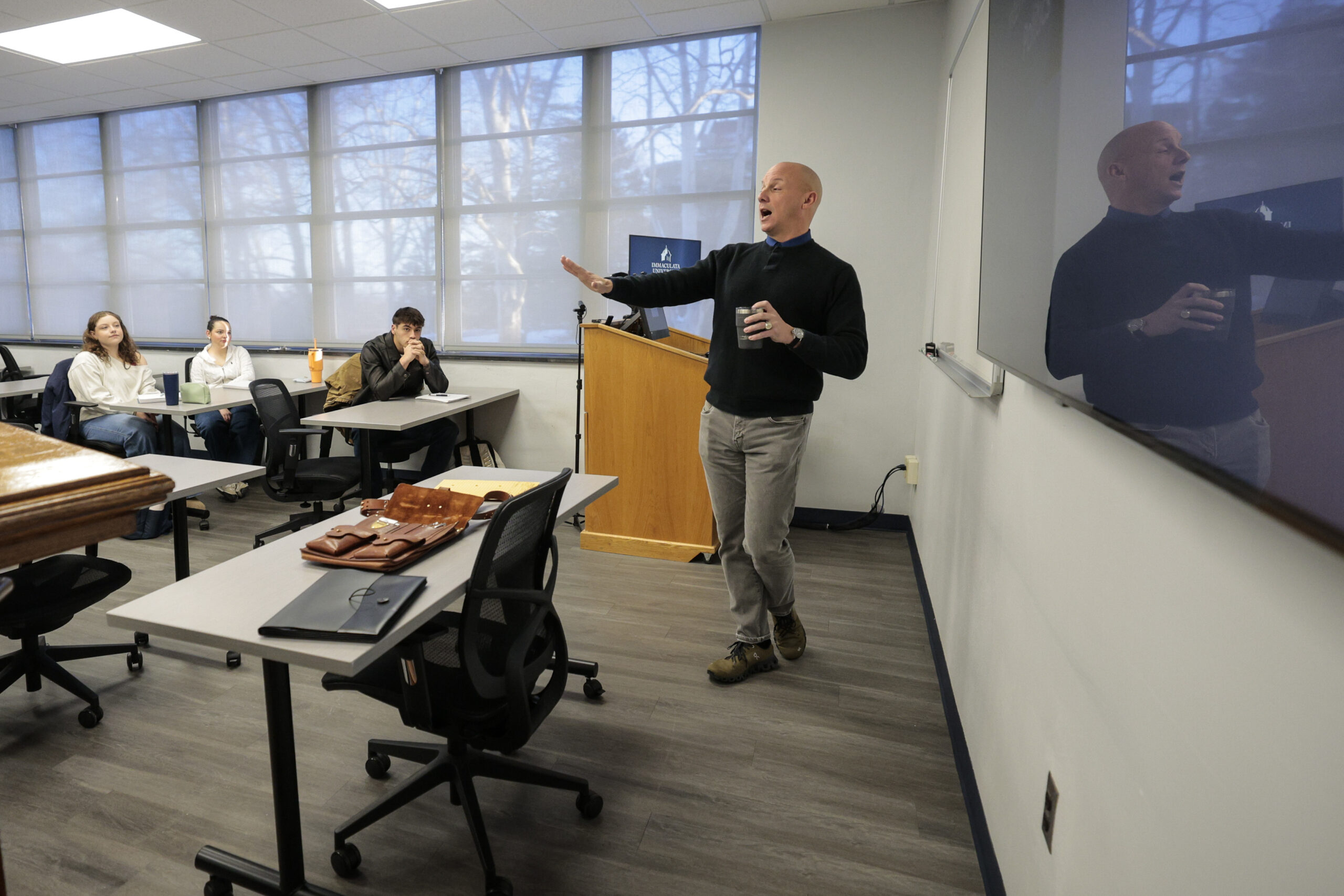
    Joshua Weikert teaches a class in international relations at Immaculata University.

    Over a couple weeks, Jeopardy! shows will feature him vying against 20 other champions, including Allegra Kuney, a doctoral student at Rutgers University’s New Brunswick campus, and Matt Massie, a Philadelphia lawyer who moved to the area in 2024, who also will appear on Friday’s show.

    Friday’s match is a quarter-final, and if Weikert wins, he’ll advance to the semifinals. (Kuney won her quarter-final Tuesday.)

    Weikert won about $103,000 when he competed last year, 10% of which he donated to a memorial scholarship fund named for his late friend, Jarrad Weikel, a Phoenixville man who died unexpectedly at age 40 in 2022. The winner of the champions tournament —which will conclude sometime in early February — will take home a grand prize of a quarter million.

    Weikert will watch the show Friday among family and friends — including his fellow contestant Massie — at Troubles End Brewing in Collegeville, which named one of its beers after him. It’s an English Bitter, one of Weikert’s favorites, called “Who is Josh?”

    At Immaculata, a Catholic college where Weikert has taught since 2016, students and staff are stoked. A campus watch party is planned, President Barbara Lettiere said.

    His appearance last year, she said, has put a welcome spotlight on the school and brought an outpouring of enthusiasm from alumni. On tours, some prospective students and their parents who spot Weikert have recognized him, she said.

    “I never knew that this show was as watched as it appears to be,” she said. “Win or lose, Immaculata wins.”

    Student Ben Divens talks about his Jeopardy-star professor Joshua Weikert.

    Ben Divens, 19, said it’s “jaw-dropping” and “surreal” to know his teacher will compete in the Jeopardy! champion tournament.

    “I knew from the first time I met him he was a super, super smart person,” said Divens, a prelaw major from Souderton.

    “He’s guided us so much in our major already,” added Bailey Kassis, 18, a political science major from Fort Washington.

    “He’s guided us so much in our major already,” student Bailey Kassis said about her professor Joshua Weikert.

    An early gamer

    Weikert said he has watched Jeopardy! ever since he can remember, probably since 1984 when he was 6, and it came back on the air with Alex Trebek as host. He grew up just outside of Gettysburg in a family that loved to play games, he said.

    “We took them very seriously, which is to say that they didn’t just let the kids win,” he said of his parents, both of whom had accounting degrees. “We were destroyed routinely in the games we played.”

    About his performance as a student, he said he often skipped his homework.

    “Just give me an exam,” he said, describing his attitude at the time. “I’ll pass it.”

    He got his bachelor’s degree in international relations from West Chester University, master’s degrees from Villanova and Immaculata, and his doctorate from Temple. He also attended the Defense Language Institute Foreign Language Center, where he studied modern standard Arabic while serving in the U.S. Army.

    Joshua Weikert sets expectations for students as a new semester gets underway at Immaculata University.

    In addition to teaching, he also works as a policy adviser to the Pennsylvania House of Representatives under state Rep. Joe Webster, a Democrat serving part of Montgomery County. He vets legislators’ ideas and offers ideas of his own.

    “The only thing they’ve ever told me no on was [when] I tried to abolish the Pennsylvania Senate,” he said.

    So many bills pass one body, then die in the other, he explained. If there were one legislative body where all House and Senate members served, that might be different, he said.

    Weikert’s office walls are lined with framed newspaper front pages highlighting major events: “Nixon Resigns,” “Nazis Surrender,” “Man Walks on Moon,” “Kennedy Shot to Death.”

    “Every once in a while, I just get up and read one of the stories,” he said.

    He got them from his mother-in-law’s basement and put them up after his wife told him his office needed some decor.

    Weikert’s status as a Jeopardy! champion makes clear he’s a fast thinker. He’s also a fast talker.

    “I don’t really drink caffeine. I just talk this fast,” he told his students.

    His wife, he told the class, tells him to slow down.

    “Keep up,” he tells her, he said.

    The road to Jeopardy

    Since his mid-20s, Weikert has been trying to get on Jeopardy!. Years ago, he got a call from the game show, but he put the caller on hold to get to a quiet place. They hung up.

    “I was like, well, I guess I missed that opportunity,” he said.

    But he kept trying and started taking the online tests, which typically draw 200,000 participants annually. In 2024, he got an email, inviting him to take the test again — and then again under Zoom surveillance.

    Next came a virtual audition and practice game in August 2024. That earned him a place in a pool of about 3,000 people, of whom a few hundred eventually became contestants.

    Weikert got the call last January and was invited to fly to California the next month to compete.

    In reality, his varied interests and life path had already prepared him for the show. He reads a lot. He’s a fan of historical fiction, pop culture, and movies. His work as a public policy scholar helps, too.

    But to try and up his game, he read plots of Shakespeare plays and a book on great operas. He flipped through lists of presidents and vice presidents. His wife, Barbara, a Norristown School District middle school music teacher, read questions to him from old Jeopardy! shows. He knew about 80% of the answers, he said.

    That, however, didn’t stop him from having panic dreams of being on stage and knowing nothing.

    The toughest category for him, he said, is popular music. Movies, history, and politics are his strongest.

    But the hardest questions, he said, are the ones with four or five strong possible answers.

    “Getting a Jeopardy! answer right is more about knowing what it’s not than what it is,” he said.

    Ultimately, he said, it’s impossible to really study for the game show.

    “The odds that something you study would come up is almost zero,” he said.

    It was an intense experience on stage last March, but the staff put contestants at ease, he said. Host Ken Jennings, formerly one of the show’s most successful contestants, told them, according to Weikert: “I promise you something today is going to be a win for you, so just relax and have fun.”

    He has a hard time remembering his winning answers. He readily recalls his dumbest, he said.

    The answer was “sacred cow.” He uttered “holy cow.”

    “Even as it was coming out of my mouth, I knew it was wrong,” he said.

    He’s proud that he only froze on one answer involving lyrics from the B-52’s “Love Shack,” he said.

    There was less pressure competing in the championship match last month, given he was already a winner, he said. But it was harder in that the contestants were the best of the best.

    “During the regular season, it’s a little under a quarter of a second between when you can start to buzz in and when the buzz actually comes,” he said. “In the tournament of champions, that drops to 0.08 seconds.”

    This time, he also prepped by reading children’s books on topics such as basic cell biology, a tip he got from another contestant.

    “It’s the simplest language they can use to convey the information,” he said.

    He also read the book, Timelines of Everything: From Woolly Mammoths to World Wars.

    He most enjoyed the camaraderie among contestants, he said. When filming was over, they hung out in a bar and — watched Jeopardy!.

    “We were yelling out the answers,” he said.

  • Philly demonstrators block ICE garage at agency’s Center City headquarters

    Philly demonstrators block ICE garage at agency’s Center City headquarters

    About 30 demonstrators blocked the garage doors at the Philadelphia ICE office Tuesday morning, saying they intended to stop agency vehicles from going to “terrorize” local residents.

    Only one car attempted to leave, and Philadelphia police moved demonstrators aside so it could depart.

    No one was arrested.

    Organizers with No ICE Philly had pledged to block the garage until they were forcibly removed or arrested, but halted the protest after about two hours. They said that they had accomplished their goal, and that the bitterly cold weather was too harsh on demonstrators who are older or who have medical conditions.

    Demonstrators with No ICE Philly block the garage at U.S. Immigration and Customs Enforcement at 8th and Cherry Street, Philadelphia, Tuesday, Jan. 20, 2026.

    The temperature was about 15 degrees when the protest began shortly before 8 a.m.

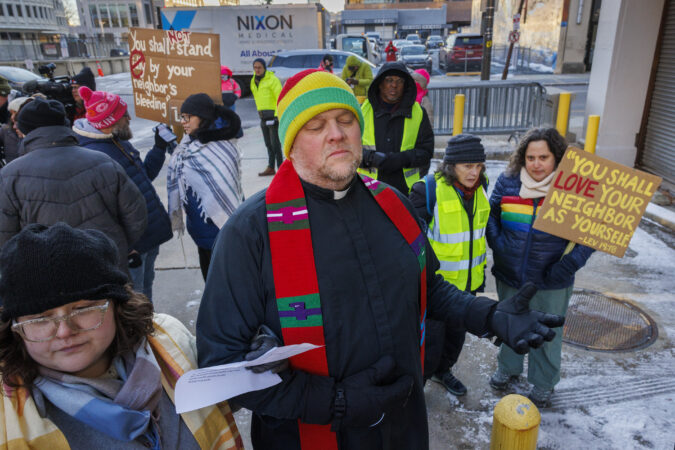
    “All of us here have proven in our song and our prayer that we can slow down the machine of authoritarianism, of fascism, that we can delay the operations that will detain and kidnap and destroy our neighbors, our families, our community,” said the Rev. Jay Bergen, a leader of No ICE Philly and pastor of the Germantown Mennonite Church.

    The protest was the latest in a string of anti-ICE demonstrations and vigils in the Philadelphia region; another was planned in Norristown on Tuesday evening. In October, a No ICE Philly protest outside the agency headquarters erupted into physical confrontations with police, with several people knocked to the ground and four arrested.

    Immigration and Customs Enforcement officials did not reply to a request for comment Tuesday.

    The clergy-led protest was boosted by City Councilmember Nicolas O’Rourke, who is a pastor of the Living Water United Church of Christ in Oxford Circle.

    O’Rourke said that it was natural for him to join fellow clergy, that Tuesday’s action was part of a long tradition of faith leaders being at the forefront of the “struggle against oppression,” as led by the Rev. Dr. Martin Luther King Jr. and others.

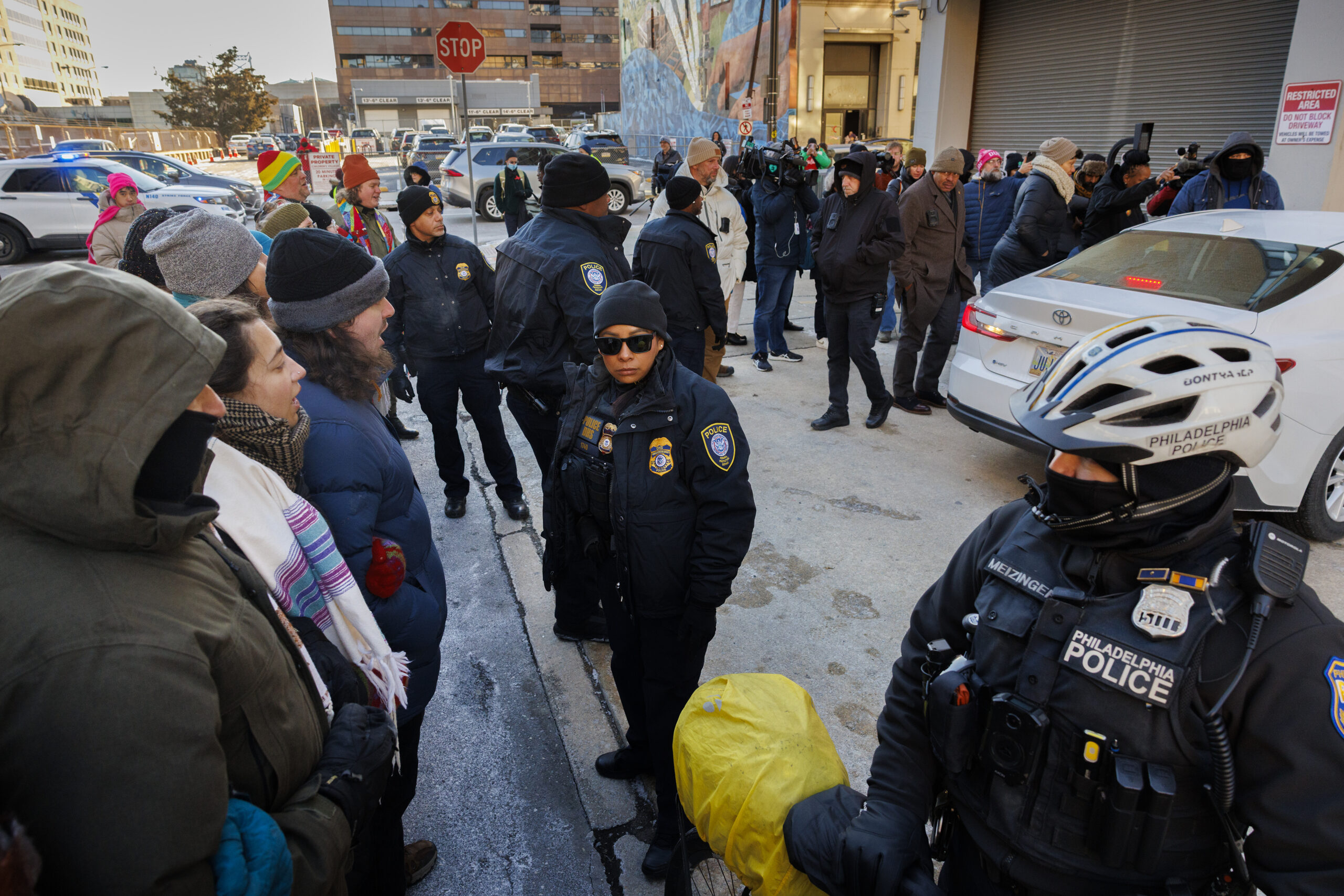
    Philadelphia Police and Department of Homeland Security officers block demonstrators from No ICE Philly as they attempt to block vehicles from leaving the garage at U.S. Immigration and Customs Enforcement at 8th and Cherry Street, Philadelphia, Tuesday, Jan. 20, 2026.

    “We are a day after King’s day, and it’s important that we don’t just wax eloquent about the nice things that King said or the image that he’s been painted of now,” he said, “but we continue in that tradition of resisting the oppression as he saw it, we’re doing in our own time.”

    The group locked arms and sang, offering prayers and songs of peace and affirmation.

    The Rev. Hannah Capaldi, minister at the Unitarian Society of Germantown, noted that all around her were clergy of different faiths wearing collars, tallits, and stoles.

    “We’re saying, listen, we have some level of moral authority in this city, and we’re trying to tell you where to look and what to pay attention to,” she said.

    The Rev. Jonny Rashid, a protest organizer, outside of U.S. Immigration and Customs Enforcement at 8th and Cherry Street, Philadelphia, Tuesday, Jan. 20, 2026.

    Capaldi hoped to plant “seeds of resistance” in the broader public, encouraging people to get involved.

    “We need more people every day willing to do this,” she said, “to stand between the vehicles and the work that they’re doing to kidnap our neighbors.”

  • Haverford Township bars police from cooperating with ICE in noncriminal immigration enforcement

    Haverford Township bars police from cooperating with ICE in noncriminal immigration enforcement

    Haverford Township officials voted this week to bar the township’s police department from cooperating with U.S. Immigration and Customs Enforcement in the agency’s civil deportation efforts.

    Township commissioners overwhelmingly approved the resolution, which says Haverford police officers and resources will not be made available for ICE’s 287(g) program. The nationwide initiative allows local police departments to perform certain federal immigration duties, should they choose to enter an agreement with the agency.

    The Monday evening vote came after a weekend of anti-ICE protests in cities across the country spurred by the fatal shooting of 37-year-old Renee Good by an immigration agent during an enforcement operation in Minneapolis.

    On Wednesday, Bucks County’s sheriff ended the department’s own 287(g) agreement with ICE, saying the “public safety costs” of the partnership vastly outweighed the benefits.

    “The last thing I want to see happen is that our relationship with our police department be hurt by the reckless and criminal activity of ICE,” Haverford Commissioner Larry Holmes said before the vote. “We have the power to prevent that.”

    Local law enforcement agencies that enter a 287(g) agreement with ICE are offered a variety of responsibilities and trainings, such as access to federal immigration databases, the ability to question detainees about their immigration status, and authority to issue detainers and initiate removal proceedings.

    The program is voluntary and partnerships are initiated by local departments themselves, though some Republican-led states are urging agencies to enter them. The Department of Homeland Security recently touted that it has more than 1,000 such partnerships nationwide, as the Trump administration continues to make a sweeping deportation effort the focus of its domestic policy.

    Critics such as the American Civil Liberties Union say the program turns local departments into an “ICE force multiplier” and that the agreements, which require officers to shift from local to federal duties, are a drain on time and resources.

    Haverford Township’s police department has not made any request to initiate such an agreement with ICE, according to commissioners, who called the resolution a preemptive measure. While ICE has ramped up enforcement in Philadelphia and in surrounding communities like Norristown, there have not been sizable operations in Delaware County.

    Judy Trombetta, the president of the township’s board of commissioners, said the resolution was about protecting the civil liberties of those living in Haverford, as well as the township’s public safety.

    In Trombetta’s view, a 287(g) agreement could mean those without legal immigration status could be deterred from reporting crimes to Haverford police or showing up to court hearings, while leaving officers confused about their own responsibilities.

    And as a township, she said, it is “not our role” to act as federal immigration agents.

    “It’s our job as a township to keep people safe, [to] uphold the Constitution,” Trombetta said.

    Commissioners voted 7-2 to approve the resolution.

    The motion still requires Haverford police to cooperate with federal immigration agencies in criminal investigations. But because many cases involving those living in the country illegally are civil offenses, much of ICE’s activities are exempt.

    Commissioner Kevin McCloskey, voicing his support for the resolution, said the week after Good’s killing had been “incredibly taxing on the American people,” and in his view, it was important to adopt the resolution even if ICE wasn’t active in the community.

    But for Commissioner Brian Godek, one of the lone holdout votes, that reality made the resolution nothing more than “political theater.”

    Tensions over Good’s killing were on full display during the meeting, as both the resolution’s supporters and detractors filled the seats of Haverford’s municipal services building.

    “I do not want my tax dollars or Haverford’s resources to be used to support a poorly trained, unprofessional, and cruel secret police force that is our current federal U.S. Immigration and Customs Enforcement agency,” said resident Deborah Derrickson Kossmann.

    Brian Vance, a resident and a lawyer who opposed the resolution, said he was approaching the matter like an attorney. He questioned whether noncompliance with a federal department would open up the possibility of lawsuits, or the federal government withholding funds for the township.

    “It’s legal, it’s proper, whether we agree with it or not,” Vance said of ICE’s authority.

    After the vote, McCloskey, the commissioner, made a plea for unity to those divided over the issue.

    That included residents who said the resolution’s supporters had gotten caught up in the “emotion” of the Minneapolis shooting.

    “I just ask that you take a step back,” McCloskey said. “On some level, we should all be able to appreciate that none of us wanted to see a 37-year-old mother in a car get shot.”

  • How Montco is addressing homelessness with an unusually bipartisan effort

    How Montco is addressing homelessness with an unusually bipartisan effort

    By the end of this year, Montgomery County will have three emergency short-term shelters with beds for 190 people in Pottstown, Lansdale, and Norristown.

    In late 2024, it had zero full-time shelters, even as homelessness soared to new heights in the county — Pennsylvania’s second wealthiest.

    The three-member board of commissioners is currently composed of two Democrats and one Republican, but in the past year they have operated with an unusual degree of cohesion on both the challenge of homelessness and on a county budget that included a small property tax increase.

    “We came in with similar goals around addressing the homeless problem throughout the county,” said Tom DiBello, the Republican commissioner. “We all heard it when we were campaigning [in 2023] and when we got elected, we felt that we needed to do something. We can’t continue doing it the way it’s always been done in the past, where people just kept talking about it.”

    Although the Montgomery County commissioners have formed a united front on many issues last year, housing policy issues are more likely to divide them in 2026.

    In Pennsylvania, county governments’ revenue sources are restricted to the politically sensitive property tax. And counties have no direct influence over municipal-level zoning restrictions that limit how much housing can be built.

    But the Democrat commissioners, Neil Makhija and Jamila Winder, have ideas about how to get around those limitations to directly fund more affordable housing and encourage local governments to allow more building.

    DiBello is not excited about many of the proposals being considered by the two Democrats. He opposes creating new county-level taxes and says zoning powers should be left to localities.

    Still, DiBello has further housing policy goals he would like to pursue — such as developing more affordable homes for senior citizens.

    As the county releases its 2026 housing blueprint, expected early this year, the first round of these debates will begin in earnest. This planning document, created by county government staff with commissioner feedback, lays out goals for the county based on a comprehensive housing policy — the first its seen in recent memory, Makhija says.

    “It’s going to be the first time that the entire board has had a voice and a view on what our role is to address a crisis in the cost of housing,” said Makhija. “There are things we can do to help people.”

    How the shelters got built

    Making policy to address homelessness is difficult because many municipalities and community groups fight against having shelters placed in their neighborhoods.

    The number of people in Montgomery County experiencing homelessness has grown with the cost of housing. In 2024, there were 435 people living without a roof over their heads. In 2025, the number grew to 534.

    Meanwhile, Montgomery County’s last full-service homeless shelter closed in 2022.

    Opposition to new shelters or affordable housing bloomed in Norristown, where officials said the rowhouse-dominated municipality was already asked to shoulder too many social services, and in Lower Providence where the local government denied a shelter application (the legal fallout is ongoing).

    The county commissioners decided to get involved by courting local governments and personally attending zoning hearings about potential placements. DiBello attended meetings in Pottstown, near where he lives. Winder went to hearings in Norristown, including one that stretched past midnight, then stuck around to discuss neighbors’ concerns.

    A homeless encampment near the Schuylkill River Trail and Norristown in Montgomery County.

    In some parts of the county, efforts to address the issue overcame opposition.

    Communities like East Norriton have established more code blue shelters, which only operate during freezing weather, and in wealthy Lower Merion, a new affordable housing complex for seniors and people with disabilities, called Ardmore House II, is under construction.

    “It takes political courage in these moments,” Winder said, referring to local officials who have embraced shelters and affordable housing. “Sometimes you have loud voices in the room and just have to say, well, this is the right thing to do.”

    The commissioners provided $5.3 million in county funding for the shelters. The county also provided a quarter of Ardmore House II’s $20 million budget. And as federal funding cuts loom under President Donald Trump’s administration, the commissioners have also been engaging with philanthropists and foundations.

    Earlier this month, Nand Todi, president of Montgomery County-based Penn Manufacturing Industries, announced a $1 million donation to the Lansdale shelter.

    Nand Todi, president of Montgomery County-based Penn Manufacturing Industries, and County Commissioner Neil Makhija at a walk-through of the completed Lansdale shelter.

    Winder hopes this example of generosity is just the beginning.

    “I come from the private sector, so I believe in public-private partnerships,” said Winder. “We’re home to some of the largest corporations in the southeast area. We know that companies have social responsibility goals. So how do we partner with corporations?”

    What can a county government do?

    This year, the commissioners want to continue to tackle housing issues.

    But county-level politicians do not have large budgets at their command, and unlike their municipal-level counterparts, they do not set zoning policy.

    Makhija and Winder want to push those limits.

    For example, the county dispenses infrastructure grants, and Makhija says the rules around that funding could be rewritten to incentivize municipalities to reform their zoning codes, perhaps using model ordinances established by the county.

    Such ordinances could, for example, allow more transit-oriented development. Or they could legalize accessory dwelling units — small living spaces such as a garage apartment or in-law suite that can be rented out.

    “If you have a grant program and it says these are the requirements, then people are going to prioritize getting those things done,” said Makhija, though, he said, he still has to make the case to his colleagues.

    He also noted that county planning staff can help implement new municipality policies.

    DiBello is skeptical of the county getting involved in local zoning policy.

    “The governing structure in Pennsylvania is that municipalities are autonomous to county and state when it comes to zoning,” said DiBello. “It’s up to the communities.”

    The Democrats would also like to find revenue sources to pay for more housing projects without increasing the property tax, which would cut against their goal of affordability.

    But for that they would need permission from Harrisburg, which Republicans in the state Senate have denied.

    “There are opportunities for us to advocate to the state legislature, to give counties like ours other means to generate revenue,” said Winder. “It’s not sustainable to continue to burden taxpayers by increasing property taxes, and we can’t fund these programs unless we have the money to do so.”

    DiBello is also opposed to creating new taxes (if Harrisburg allows it), and doesn’t want to see more property tax increases either. But he still wants to see proactive housing investments by county government.

    These debates will unfold next year as the housing blueprint dominates the commissioners’ agenda.

    “We’re the second wealthiest county in Pennsylvania, and people struggling to find housing can be quite invisible in these communities,” said Winder. “We’ve got an embarrassment of riches, but there are people that are struggling and so we’re trying to be on the ground helping to solve these issues.”

  • Can’t score a Longwood Gardens reservation this week? See these other festive Philly-area options.

    Can’t score a Longwood Gardens reservation this week? See these other festive Philly-area options.

    Deanna Baker made reservations for A Longwood Christmas in late summer.

    The 32-year-old Downingtown resident has been gifted a Longwood Gardens membership each of the past five years, but even the member reservations for the annual holiday light show book up well in advance. So she secures her family’s time slots while the weather is still warm.

    “Yes, it’s ridiculous this time of year,” she said of the Longwood demand at Christmastime. But “yes, it’s worth it.”

    Baker, who works in operations for Victory Brewing Co., said there is “a magical element” to the experience, whether she’s going with her toddler or her adult friends and relatives. She went once in early December and plans to return in the afternoon on Christmas Day.

    Every holiday season, hundreds of thousands of people visit A Longwood Christmas, which serves as an “economic engine” for the business communities in Kennett Square and surrounding towns, as Cheryl B. Kuhn, CEO of the Southern Chester County Chamber of Commerce, recently described it.

    Longwood Gardens’ holiday attendance has increased nearly 42% since pre-pandemic times. Last year, 650,000 people visited the gardens at Christmas, up from 609,000 the prior holiday season and from 458,000 during the 2019-2020 event (the show ends in the beginning of January).

    Many of these guests book months in advance, leaving last-minute planners few options for afternoon and nighttime visits during the holiday week.

    More than 500,000 lights shimmer at Longwood Gardens’ A Longwood Christmas through Jan. 11, 2026.

    “We open ticketing in July, and there are always a few early planners that buy tickets and make reservations then,” Longwood Gardens spokesperson Patricia Evans said in a statement. “By late Octoberish, the most desirable evening time slots on the weekends and the week of and following Christmas tend to be sold out.”

    But as of Monday, Evans noted, some tickets were available for time slots before noon and after 8:30 p.m. for the remaining days of December. Availability opens up in January, she added. The holiday lights stay on through Jan. 11.

    If nonmembers snag tickets, the experience will cost $45 a person for adults and $25 a person for kids, which Evans said is a $2-$3 per person increase from last year. Children 4 and under are free.

    window.addEventListener(“message”,function(a){if(void 0!==a.data[“datawrapper-height”]){var e=document.querySelectorAll(“iframe”);for(var t in a.data[“datawrapper-height”])for(var r,i=0;r=e[i];i++)if(r.contentWindow===a.source){var d=a.data[“datawrapper-height”][t]+”px”;r.style.height=d}}});

    Philly-area holiday attractions that have availability

    For Philly-area residents who want to enjoy a festive experience before 8 p.m., or at a slightly lower price point, other options have availability this week.

    As of Monday afternoon, the ice skating rinks at City Hall and Penn’s Landing had online reservations available for any day this week, though spokespeople said some time slots can sell out around the holidays. Both cost about $20 per person for admission and a skate rental.

    LumiNature at the Philadelphia Zoo also still had tickets available every operating night through Jan. 3 as of Monday afternoon.

    A family walked into the Philadelphia Zoo’s LumiNature holiday light display in this December 2021 file photo.

    “While tickets are available, the most popular times that guests reserve their tickets for are from 5-6 p.m., and it is likely that that particular hour will sell out on our most popular nights,” zoo spokesperson Maria Bryant said.

    Last year, LumiNature saw nearly 70,000 guests, according to Bryant, and it is on pace to exceed that number this season.

    Depending on the day, tickets cost between $25 and $29 per nonmember 12 and over, and $20 and $24 per child between the ages of 2 and 11. Younger children are free.

    Nighttime turned the Philadelphia Zoo into a wonderland of lights as LumiNature returned for its third year in December 2022.

    In the suburbs, the Elmwood Park Zoo’s Wild Lights “will not sell out,” with “plenty of tickets for each day of the rest of the event,” marketing director Kyle Gurganious said. Guests can buy at the gate, he added, or book online to save $1 per person.

    For nonmembers, online tickets are $27 per person 13 and older and $24 per child between the ages of 3 and 12. Children under 3 are free.

    Last season, the Norristown attraction brought in about 50,000 visitors, a number Gurganious said the zoo is “on track to eclipse … significantly” this year.

    Throughout the region, there also free events, such as the Wanamaker Light Show and the Comcast Holiday Spectacular. But be prepared: They can come with long lines and large crowds at popular times.

    Another holiday sellout in Philly

    A miniature Art Museum was on display in the Holiday Garden Railway at the Morris Arboretum & Gardens in 2023.

    At least one other Philly-area holiday attraction is completely sold out this week: The Holiday Garden Railway Nighttime Express at the Morris Arboretum & Gardens.

    Because it’s “so popular and because we only have a limited number of nights, the Nighttime Express sells out every year,” said Christopher Dorman, the director of visitor experience for the arboretum, which is part of the University of Pennsylvania.

    Those looking to snag tickets for next year may want to mark their calendars: Holiday tickets go on sale at the beginning of November for arboretum members and a week later for the general public.

    Added Dorman: “While the Nighttime Express is sold out, folks can still see the trains all lit up [and the rest of the garden] during normal daytime hours through Dec. 30.”

    And for those turned off by the planning — and expense — required for these paid festivities, there’s always the low-cost, low-commitment option: touring your neighborhood’s home light displays.