Tag: Norristown

  • How Philly-area grocery workers handle the holiday stress — and find joy along the way

    How Philly-area grocery workers handle the holiday stress — and find joy along the way

    Crowds of last-minute shoppers, customers looking for seasonal ingredients, sappy hands from tying Christmas trees to cars, and of course, hours and hours of cheery holiday music playing on a loop.

    Such is the life of a grocery worker during the holidays.

    “Everyone wants to get, like, the biggest tree on, like, the smallest car,” said Edward Dupree, who has worked at the Center City Whole Foods for over nine years.

    Working at a grocery store during the holiday season can be hectic and intense, requiring a lot of patience, he said.

    “It’s, I think, definitely under-appreciated,” said Dupree.

    Grocery employees from across the region say this time of year brings a surge of stressed shoppers making larger purchases, even in the age of DoorDash, grocery delivery, and curbside pickup.

    Customers rush into the store for their last-minute shopping, said Erika Keith, who works at the Fox Street ShopRite in Nicetown. And they’re often hurried as they fill their carts, said Charletta Brown, of the Acme in Trooper, juggling year-end demands at work and pressures at home as they prepare for the holidays.

    “Those three days moving into Thanksgiving are just insane,” said Dupree. He said the store starts getting busier in September as students return to the area, and it stays hectic through the end of the year.

    Customers aren’t just getting their regular groceries and Christmas trees. They’re looking for specialty seasonal items including cranberries, decorative gourds, chestnuts, eggnog, and black-eyed peas for the New Year.

    “Even in spite of the current economy — we do hear a lot that things are a little rougher than they have been in past years — people still want that tradition,” said Brown.

    Specific holiday wishes

    As the holidays approach, the Philadelphia Whole Foods bakery makes hundreds of pies and a slew of custom orders, said baker Jasmine Jones. During the holidays, they said, “the cakes get bigger.”

    Many are seeking out pie crusts and fillings, as well as phyllo dough to make hors d’oeuvres, said Brown, of Acme. These freezer items are hidden “way in the back” for most of the year, but they get the star treatment, “front and center” for the holidays.

    Keith, of ShopRite, said the holidays bring in more business for the store’s Western Union service, as people send money to loved ones as gifts.
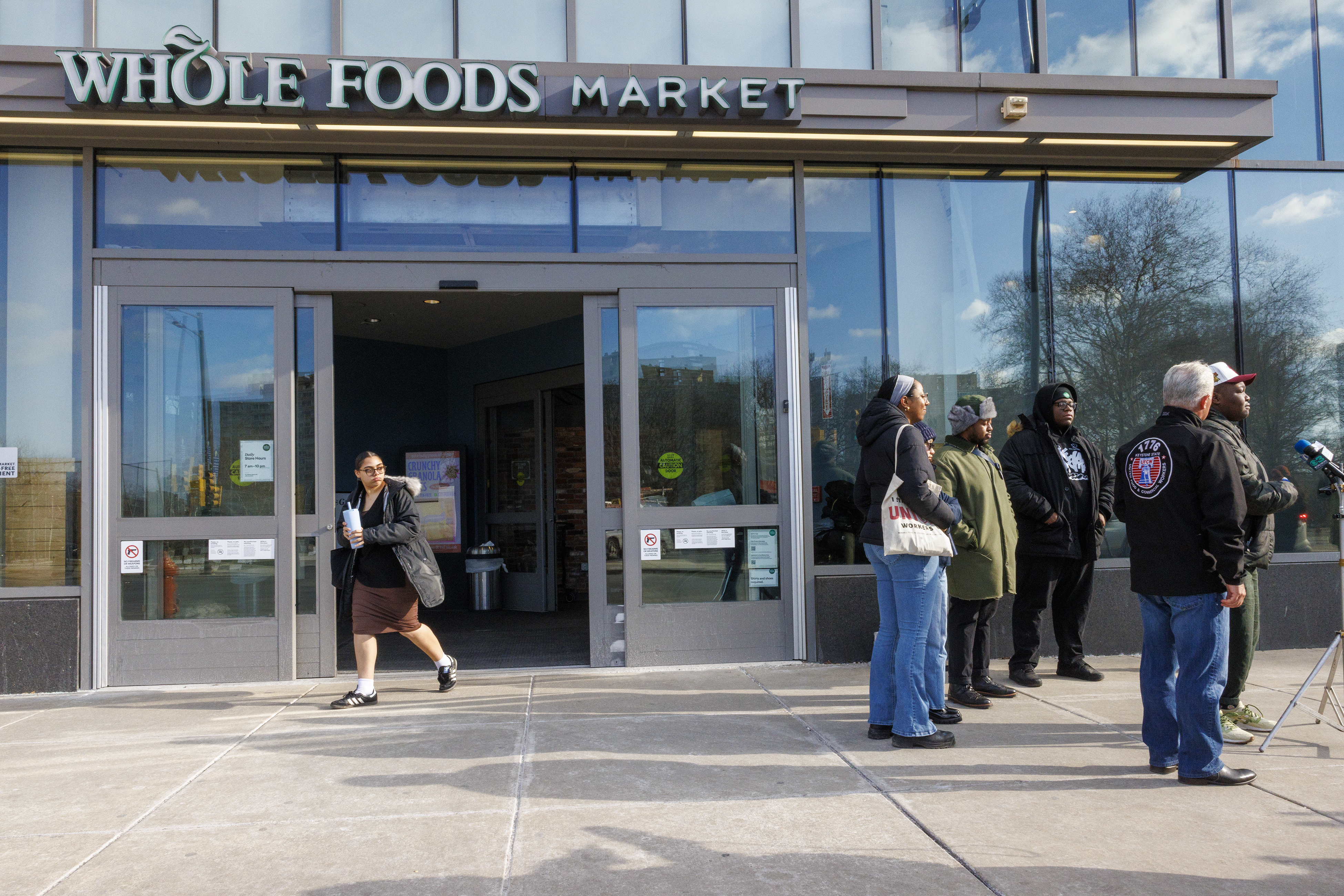
    Union workers gather outside the Center City Whole Foods Market in January.

    At the Trooper Acme, Brown said, shoppers start looking for Ivins Famous Spiced Wafers starting around Halloween, and as the holiday season progresses, they’re looking for specific nostalgic sweets to fill their candy dishes — minty After Eight chocolates or the multicolored, straw-shaped Plantation hard candies, for example.

    “Some people say, ‘We don’t eat them, but we just want them to sit out in the candy dish, because I had that as a kid, and my mother and father always had it out,’” she said.

    Holiday gripes

    For Jones, Whole Foods is a second job on weekends. They said they’re “stretched kind of thin” during the holidays as they juggle another full-time job. Jones sometimes volunteers to work extra hours for the money during the holidays, but they don’t like losing the time with loved ones.

    And, Jones added, the holiday music is not a perk.

    “It kind of makes me angry,” said Jones, adding that they’re “still an overworked worker.”

    “It kind of just reminds me that I could be home if you paid me more.”
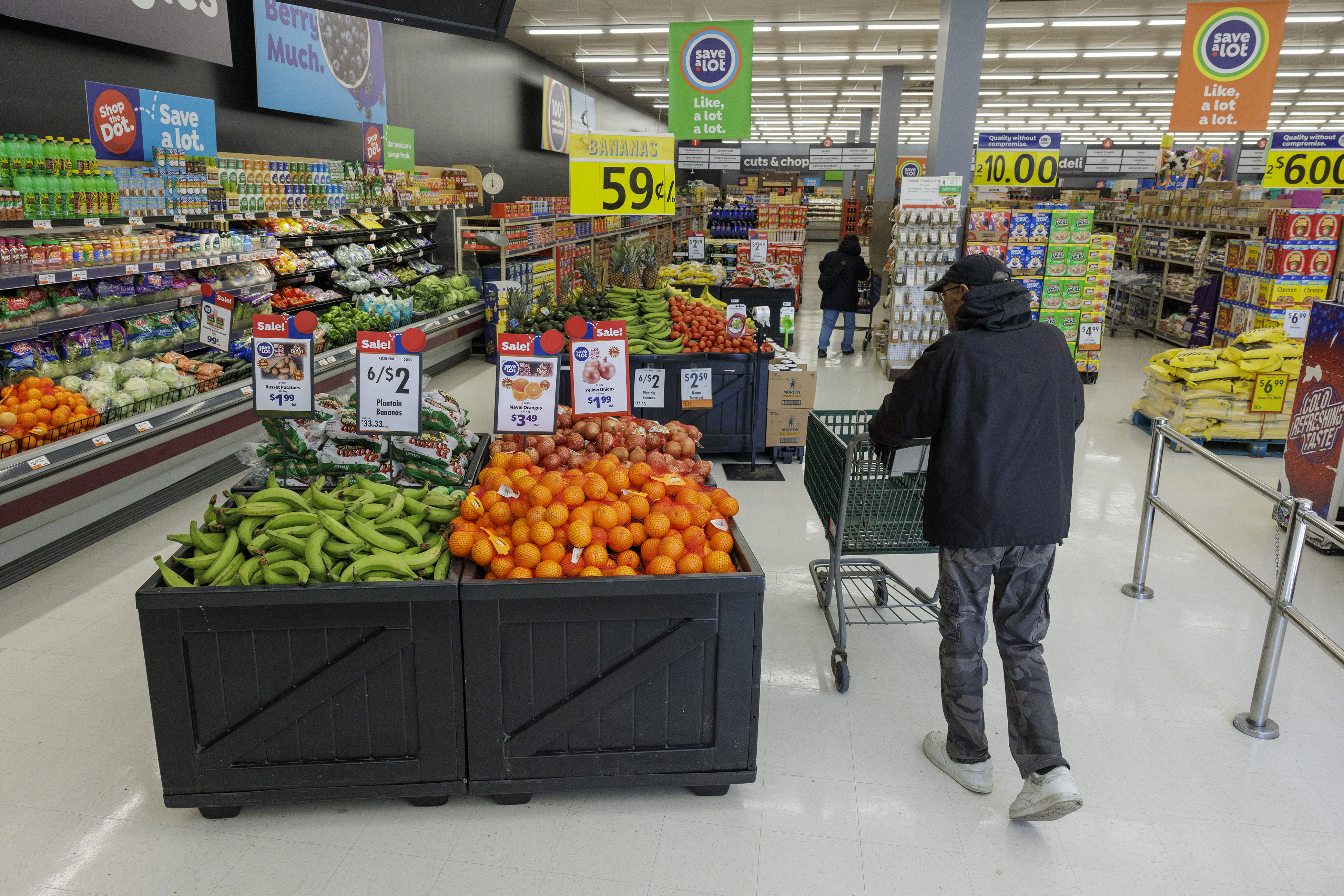
    Shoppers peruse the Save-a-Lot grocery store in Atlantic City in this Jan. 2024 file photo.

    Dupree, also of Whole Foods, isn’t a fan of the constant seasonal music either.

    “If I want to go listen [to the song] ‘This Christmas,’ I’ll listen to it on my own — don’t play it 82 times a day,” he said. “It’s a bit intrusive.”

    The customers

    Some customers, for their part, avoid the busiest times at the grocery store.

    In Wayne, Lisa Goldschmidt has become dependent on Instacart grocery deliveries most of the year. But when it’s time to shop for her holiday dinners, she makes a couple in-person trips to her local Acme. For her sanity, she keeps to a personal code, she said: “Avoid the weekends and the after-work times when it typically gets crazy.”

    Goldschmidt, a 58-year-old attorney who works from home, said she’s fortunate that she can run out midday on weekdays to buy her holiday essentials, which include an expansive antipasto assortment that her family eats on Christmas Eve and the prime rib they make on Christmas Day.

    April Beatty, 51, of Broomall, also tries to avoid peak shopping times at her go-to stores — Wegmans, Trader Joe’s, and Gentile’s produce market. She aims to pick up all her groceries at least a couple days before Christmas, and she also buys more this time of year with her two children home from college.

    But her job, too, keeps her busy during this season — she works in supply-chain logistics — so shopping the way she prefers, at “off times, just because it’s more efficient,” isn’t always an option.

    This year, her Wegmans trip for Thanksgiving happened during a shopping rush: “aisles packed, parking lot packed,” she said. During the holidays, she added, “at least people are polite.”
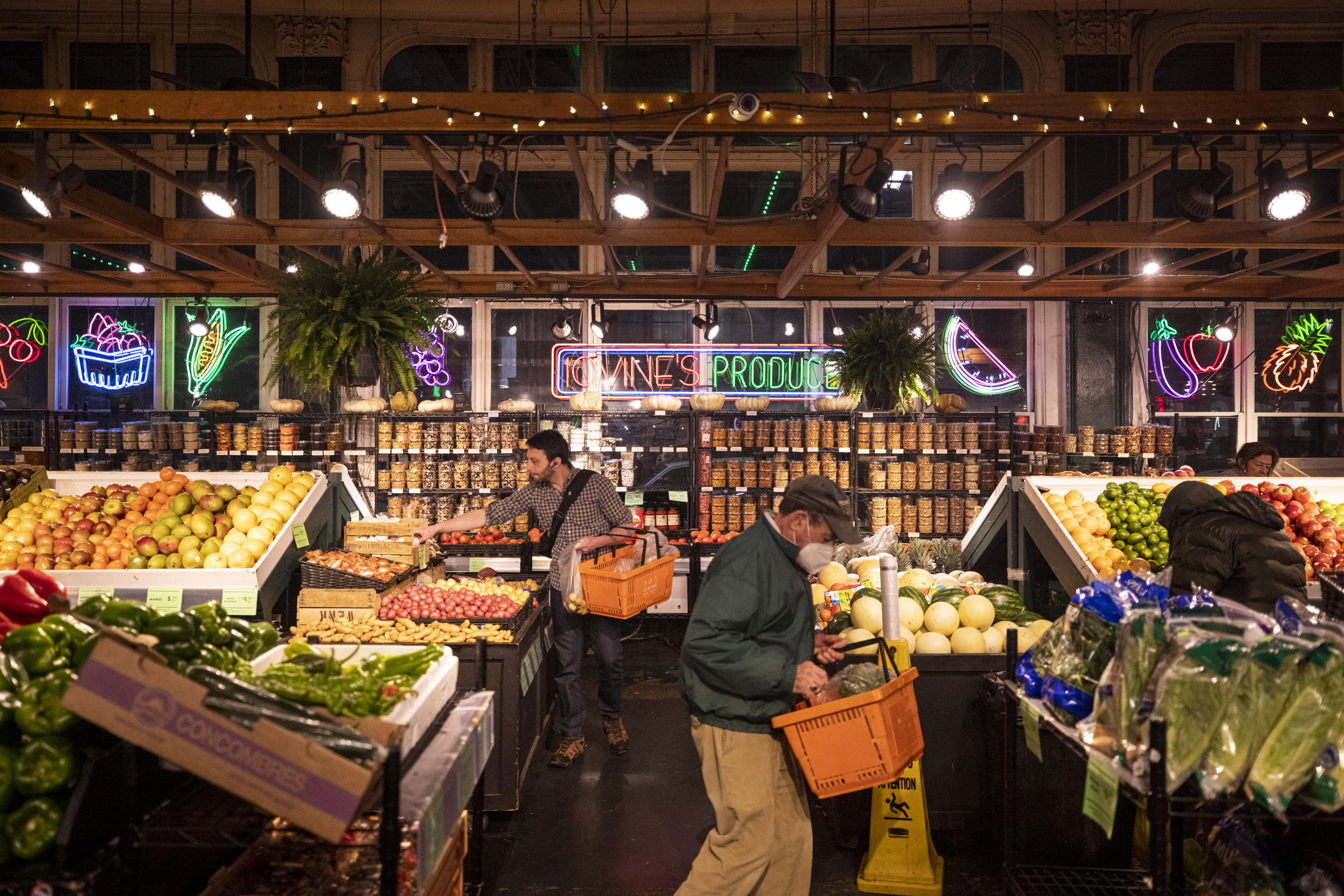
    Customers browse Iovine Brothers Produce at Reading Terminal Market in this 2022 file photo.

    Customers at Whole Foods are more outgoing during the holidays, said Dupree, part of a kind of jolly Christmas mentality around this time of year.

    The days leading up to Thanksgiving are usually the busiest — more so than Christmas — but he didn’t notice quite as much Thanksgiving hustle this year.

    “I wonder if this is because, you know, people’s pockets are hurting,” Dupree pondered aloud.

    At ShopRite, Keith said, some of the busiest shopping days she recalls are the day before Thanksgiving and Christmas Eve.

    “We have our last-minute shoppers — and, you know, I get it. I get the busy life,” she said.
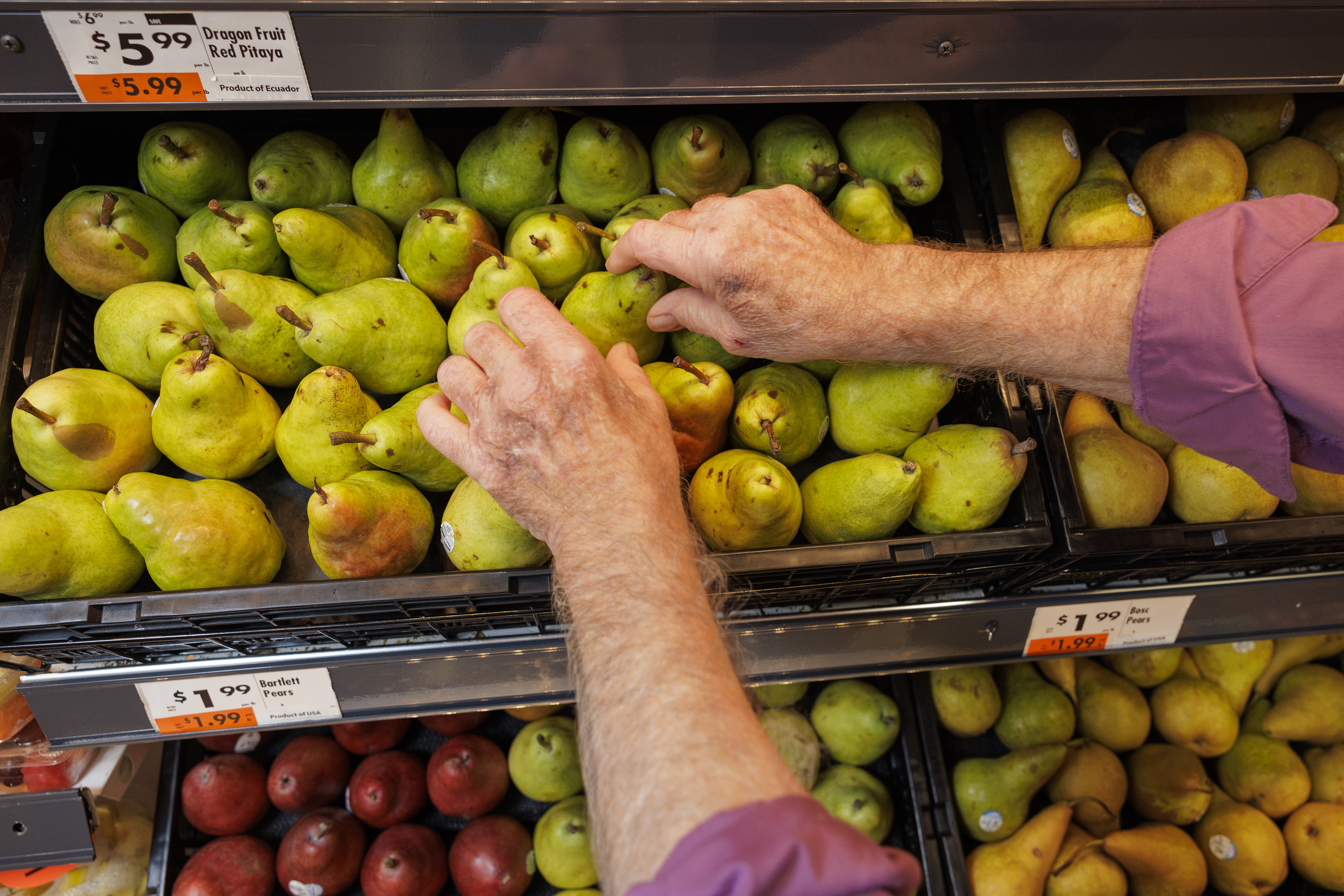
    A Save-a-Lot supermarket employee arranges pears at the chain’s Camden store in this January 2024 file photo.

    At Acme, Brown sees pressure and stress on some customers.

    “Being sympathetic to that, listening to them, is probably half the battle of dealing with any stresses or strain that I might be under — and also what they might be under,” she said.

    Brown said she tries to get a head start on her own holiday decorating and planning each year because there isn’t a lot of downtime once the store gets busy.

    “I have to manage that time effectively in order to be able to really decompress and enjoy the holidays myself,” she said.

    This year, for the first time in a while, she won’t be working on Christmas Eve because it‘s on a Wednesday, her usual day off.

    But Brown said she actually loves working Christmas Eve, “because it just seems to me like everybody’s just so happy.”
  • Man who killed five people in the Kingsessing mass shooting pleads guilty, is sentenced to decades in prison

    Man who killed five people in the Kingsessing mass shooting pleads guilty, is sentenced to decades in prison

    The man who walked through the streets of Kingsessing and shot people at random in 2023, killing five and wounding five others in one of Philadelphia’s deadliest mass shootings, pleaded guilty Wednesday to multiple counts of murder and was sentenced to decades in prison.

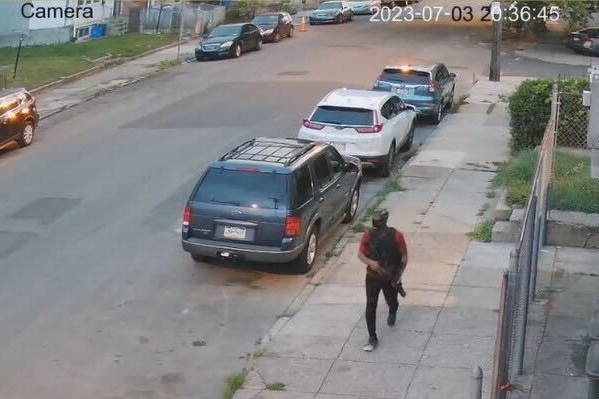
    Kimbrady Carriker, 43, admitted that on the evening of July 3, 2023, he calmly walked through a Southwest Philadelphia neighborhood dressed in body armor and wearing a ski mask, and pointed his AR-15-style rifle at seemingly random passersby — then pulled the trigger.

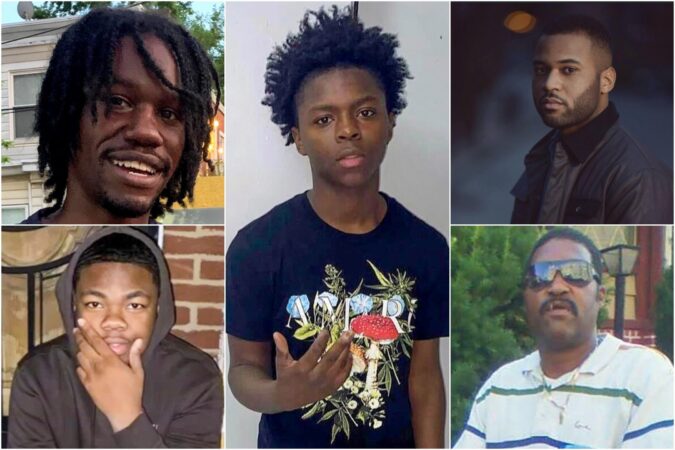
    He killed five people: DaJuan Brown, 15; Lashyd Merritt, 21; Dymir Stanton, 29; Ralph Moralis, 59; and Joseph Wamah Jr., 31.

    Five others were injured: a 13-year-old boy he shot multiple times in the legs, and a mother who was driving with her 2-year-old twins and 10-year-old niece when he fired more than a dozen bullets into her car.

    Wamah was killed first in the early morning of July 2, targeted in his home for reasons that remain unclear. Carriker returned to Wamah’s block nearly two days later, armed with the same gun, and shot the others.

    Carriker’s admission to the killings marks the end of the legal saga in a shooting that shocked the city, shattered families’ lives, and traumatized a community.

    “This was 14 minutes of terror for the residents of the Kingsessing neighborhood,” Assistant District Attorney Robert Wainwright said of Carriker’s carnage.

    Prosecutors say surveillance video showed Kimbrady Carriker, dressed in a ballistic vest and ski mask, walking through Southwest Philadelphia shooting people at random on July 3, 2023.

    Carriker’s attorneys had been expected to argue at trial that he was legally insane when he gunned down his victims, and that he should be housed in a secure psychiatric facility for most of his life, not state prison.

    Carriker suffered from “severe delusions and religious preoccupations” and “had a fixed illusion that he was working for the National Security Agency,” said Gregg Blender, assistant defender at the Defender Association of Philadelphia.

    Even after he was arrested, taken to Norristown State Hospital, and medicated, he believed that he had done something wrong only because the “National Security Association personnel did not come and rescue me,” Blender said he told doctors.

    Prosecutors disagreed that Carriker was legally insane and said his actions were deliberate and he should spend the rest of his life in state prison. But as they prepared for trial, an expert hired by the Philadelphia District Attorney’s Office interviewed Carriker and agreed with defense lawyers that he did not appear to know that what he was doing that night was wrong.

    Prosecutors did not want to risk that a jury might find Carriker not guilty by reason of insanity, Wainwright said. So they offered Carriker the opportunity to plead guilty to five counts of third-degree murder, five counts of attempted murder, and gun crimes. They asked a judge to sentence him to 37½ to 75 years in prison.

    On Wednesday, Carriker agreed.

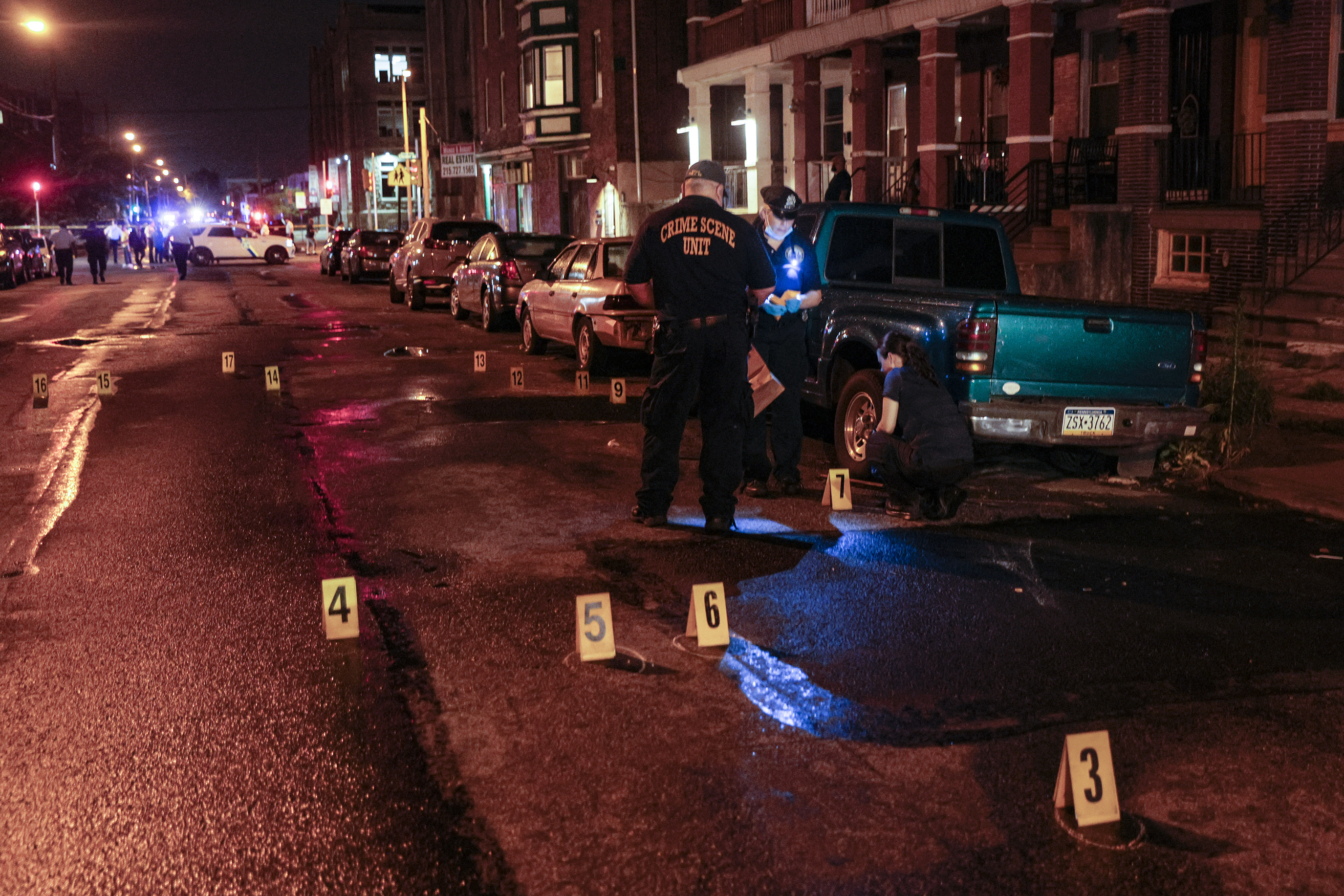
    Police gather evidence near 56th Street and Chester Avenue after the mass shooting on July 3, 2023.

    Common Pleas Court Judge Glenn B. Bronson sentenced Carriker to the agreed-upon decades behind bars. The judge said that, in his 15 years of handling homicide cases, this was the worst he had seen, but that he would respect the deal reached by prosecutors and Carriker’s defense team.

    “It traumatized an entire community,” the judge said of the shooting. “It traumatized an entire city.”

    Survivors of the shooting, and loved ones of the people who died, spoke emotionally in court Wednesday of the devastation of that July night, and the lasting impact on their lives.

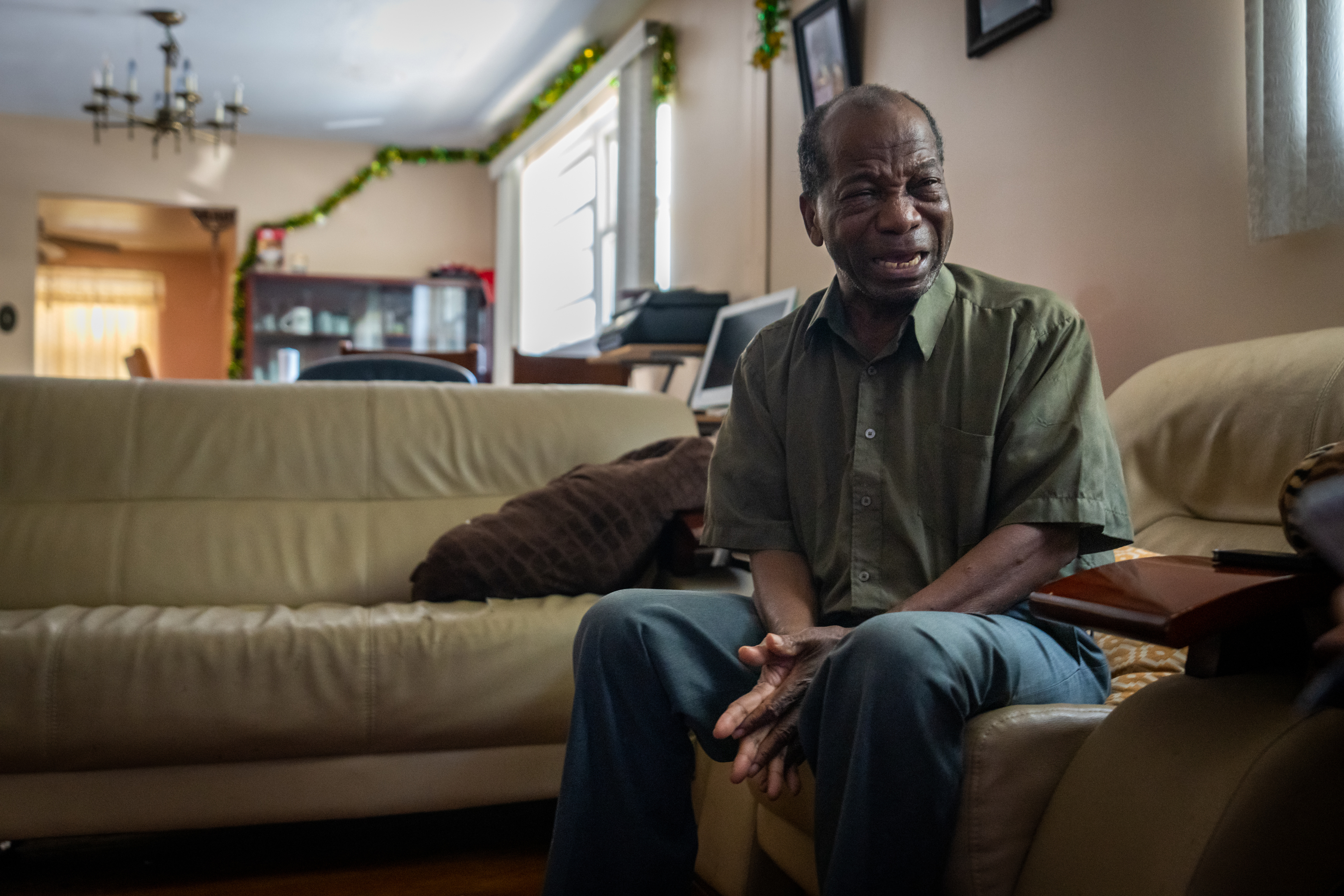
    The father of Joseph Wamah Jr., consumed by the trauma of finding his son’s dead body inside his home, died earlier this year. His daughter said he could not mend his broken heart, and spiraled into a health crisis.

    Jonah Wamah, the father of Joseph Wamah, one of the victims in the Kingsessing mass shooting, spoke of the impact of losing his son in June 2024. He died earlier this year, in September, after his family said he could not recover from the grief of his son’s killing.

    “He faded in front of my eyes,” Jasmine Wamah said of her father.

    Other family members spoke of being hospitalized for their mental health, of looking after children without fathers and caring for kids with bullet scars in their legs.

    Odessa Brown spoke of holding her 15-year-old grandson as he bled out from his injuries.

    “When DaJuan was born, he was given to me and I held him in his arms,” she said. “And that day, I held him when he was on the ground, dying, praying, asking God, please save my child.”

    Ralph Moralis’ daughter, Taneisha Moralis, said that, at six months pregnant, she can’t stop thinking about how her child will never know their grandfather.

    And Charlotte Clark, the girlfriend of Dymir Stanton, said she struggles to get up each day to care for their daughter, who was only 3 when her father was killed.

    “I am still yearning for him from my soul. It makes me crazy,” she said, shaking.

    She said she hoped Carriker would rot in prison for what he took from her family.

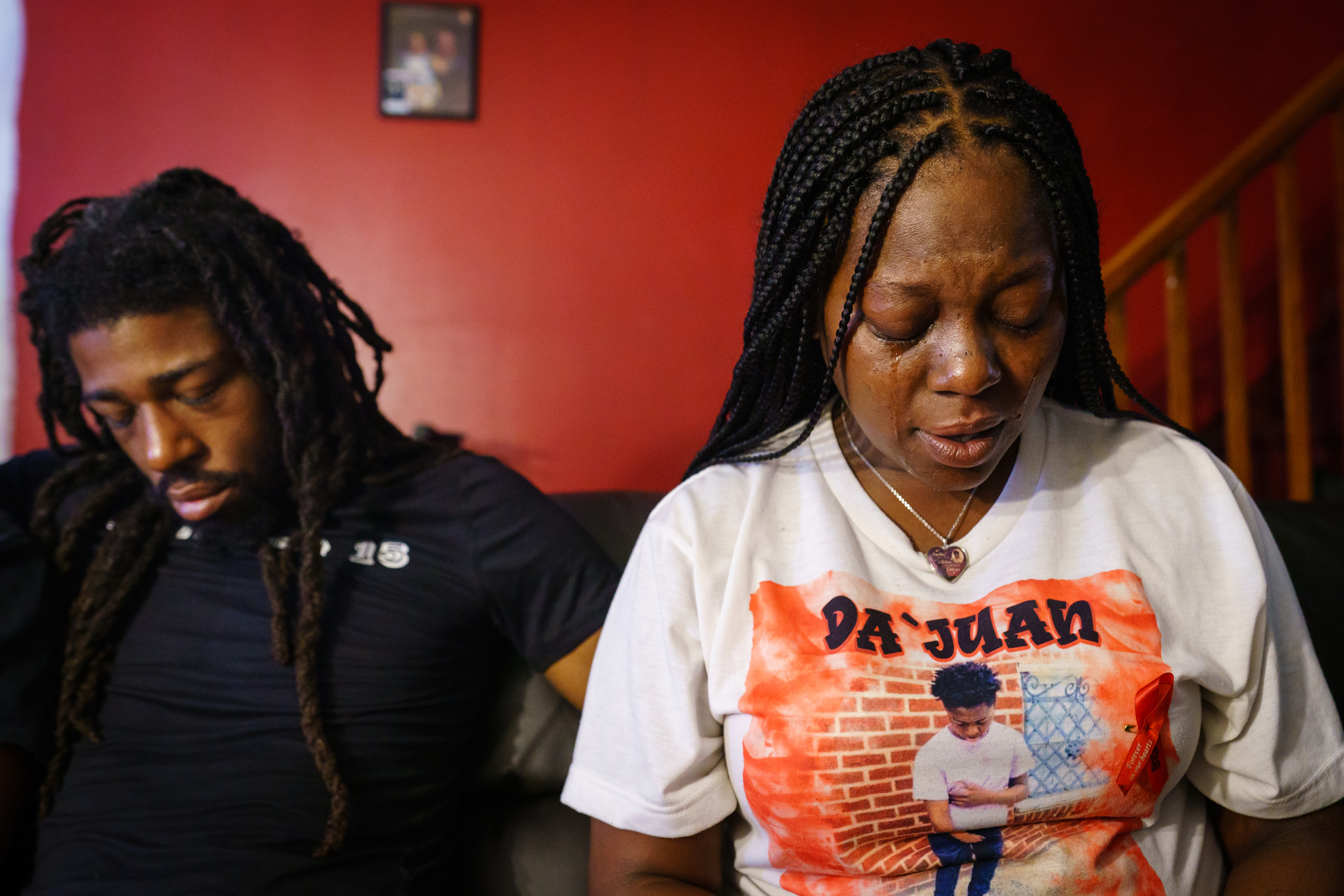
    Nyshyia Thomas misses her son, DaJuan, every day. At the sentencing of her son’s killer on Wednesday, she said: “I will never get to see his face as a grown man. I will always just know the child.”

    A killing spree

    Carriker’s killing spree began shortly after midnight on July 2, when he showed up at Wamah’s home on the 1600 block of South 56th Street. He shot multiple bullets through the door, then walked in and shot Wamah nine times.

    It remains unclear why Carriker targeted Wamah. Police did not know he had been killed until days later.

    Nearly two days later, just before 8:30 p.m., Carriker returned to that block with the same rifle and a semiautomatic handgun. First, he fired 18 shots into the Jeep of Octavia Brown, a young woman driving her 2-year-old twins and 10-year-old niece to a family barbecue.

    One of the toddlers was shot multiple times in the leg, and the other twin was grazed by a bullet. Glass shards exploded into Brown’s face and eye. The boys survived their injuries, but the family was traumatized. Brown said Wednesday that her son still has pain in his legs from the shooting.

    As nearby police rushed to the scene, Carriker walked south down 56th Street, coming across 13-year-old Ryan Moss and shooting him multiple times in the legs. His friend, DaJuan Brown, was on his grandmother’s porch and ran out to help his friend. DaJuan and a responding officer found the boy screaming for help behind a car.

    As DaJuan ran home for help, Carriker shot him multiple times, killing him.

    Carriker continued on, next shooting Moralis as he got out of his car. Then, as he reached Greenway Avenue, he came to face Lashyd Merritt leaving his home, and shot him. Both men died.

    Carriker then turned up South Frazier Street, where he shot and killed Dymir Stanton. Stanton’s brother, Kaadir, shot at Carriker in self-defense as he tried to get to his brother.

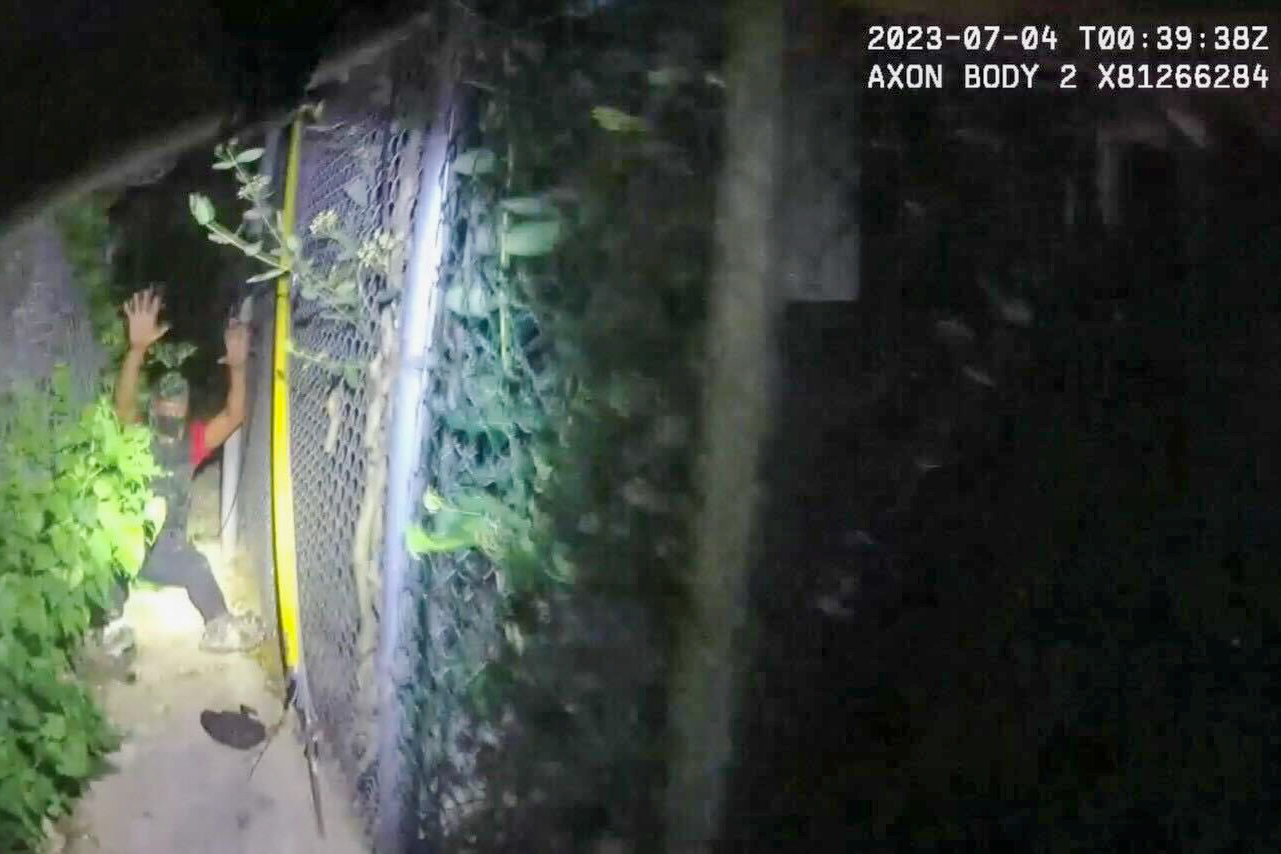
    Philadelphia police responded to a sprawling scene nearly a mile long. Officer Ryan Howell ran toward the sounds of gunfire, then found Carriker in a dark alleyway. The gunman quickly surrendered.

    Police Officer Ryan Howell’s body worn camera footage showed how he found Kimbrady Carriker surrendering in a narrow alleyway.

    ‘I am sorry’

    Prosecutors said Carriker told Howell “good job” as he took him into custody, and said, “I’m out here helping you guys.” Law enforcement sources have said Carriker told police that the shooting spree was an attempt to help authorities address the city’s gun violence crisis, and that God would be sending more people to help.

    Carriker’s attorneys said he was profoundly delusional and did not understand the impact of his actions.

    Blender, of the defender association, said Wednesday that there was nothing he could say to comfort to the victims’ families — or the relatives of Carriker, who live with their own guilt.

    “He was under a mental health disease that prevented him from understanding what was going,” Blender said. “It is not an excuse. It is not to justify this horrific, horrific behavior.”

    Later in the sentencing, Carriker, dressed in a red jumpsuit, attempted to apologize.

    “All I ever wanted to do was help my community. I never meant to cause this harm,” he said. “I am sorry for the pain I have caused. I would take it back, but I can’t, so I will say that I am sorry and maybe one day you can forgive me.”

    After the hearing, the heartbroken families poured into the streets.

    A man who said he was like a father to Carriker said: “All families are hurting. If there’s anything that we could ever say, it’s that we are sorry that this happened.”

    And the loves ones of the victims left with little comfort. Wamah’s sister did not get the answer to the question that she says haunts her every day: “Why?”

    When she asked Carriker in court, he said nothing.

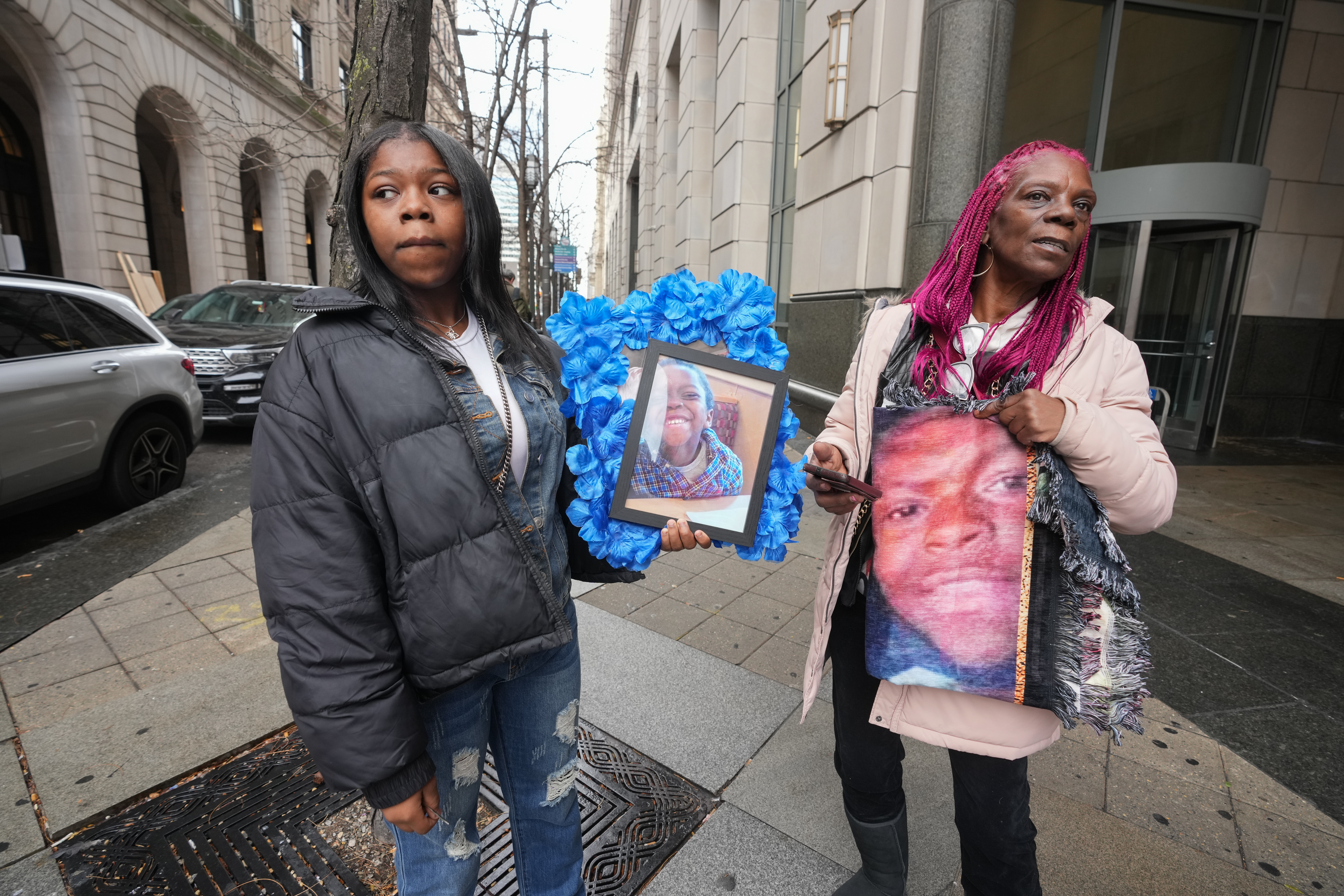
    Ne’siyah Thomas-Brown, left, sister of Da’Juan Brown, and, Odessa Brown, right, grandmother, outside the Juanita Kidd Stout Center for Criminal Justice, in Philadelphia, December 17, 2025.
  • Gov. Shapiro ‘was instrumental’ in preventing SEPTA strike

    Gov. Shapiro ‘was instrumental’ in preventing SEPTA strike

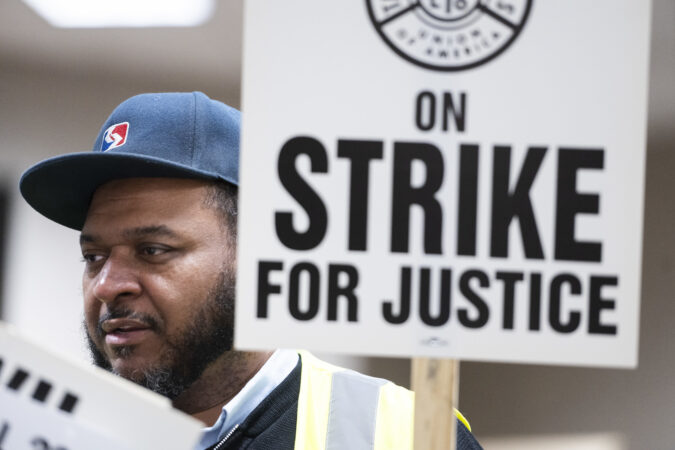
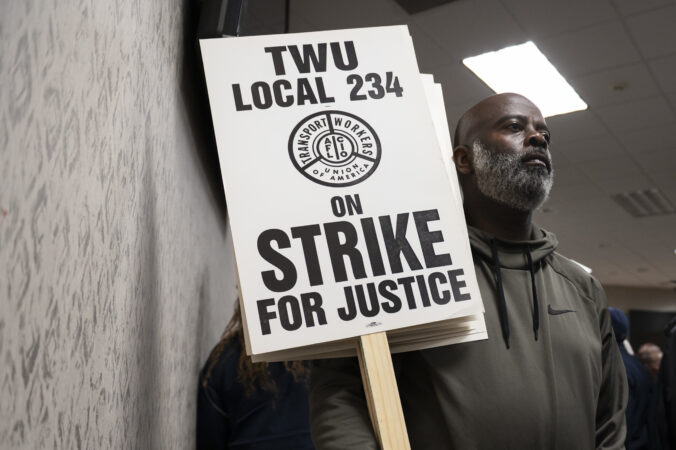
    Transport Workers Union Local 234 and SEPTA agreed Sunday night to continue contract talks in the morning, avoiding for now a strike that could have ground to a halt much of Philadelphia.

    Beginning in late afternoon, members of Gov. Josh Shapiro’s staff met with union leaders and SEPTA senior managers at the governor’s Philadelphia office. The goal was to unstick talks that had faltered, seeing if compromise was possible.

    The union’s push for an increase in pensions and SEPTA’s proposal for union members to pay a greater share of the cost of their healthcare coverage emerged over the last week as the biggest obstacles to an agreement, according to both union and transit authority sources.

    “Gov. Shapiro’s office brought the parties together and they made progress,” SEPTA spokesperson Andrew Busch said. “It was significant.”

    In a statement, the union said “significant progress” was made.

    “Gov. Shapiro was instrumental in preventing a strike that could have started as soon as Monday morning. We’re grateful for his close involvement,” said TWU Local 234 President Will Vera.

    Sticking points

    On Friday, Vera declared he was out of patience at what the union saw as SEPTA’s intransigence and threatened to lead members in a walkout.

    A work stoppage would have brought chaos to a mass transit system that carries a weekday average of 790,000 riders.

    TWU Local 234 represents 5,000 bus, subway, elevated train and trolley operators, as well as mechanics, cashiers, maintenance people and custodians, primarily in the city.

    Their one-year labor contract expired Nov. 7, but members stayed at their posts. On Nov. 16, they authorized Local 234’s leaders to call a strike if needed. The vote was unanimous.

    SEPTA and the union were not far apart on salary and both wanted a two-year deal after a series of one-year pacts during a time of financial crisis for the transit agency, sources said.

    Management wanted to hike what union members pay for health coverage and increase co-pays for doctor and hospital visits.

    The union pushed for an enhancement to the formula that determines retirees’ monthly pensions, based on years of service. It was last increased in 2016.

    SEPTA officials calculated that TWU’s proposed changes would have created an annual unfunded liability of about $6 million for an undetermined length of time. The union says the pension plan books showed a bump was affordable.

    Because TWU Local 234 is the largest SEPTA union, its contracts are used as a template for the other locals working for the transit system, which could boost costs.

    Regional Rail was a concern to SEPTA because commuter railroad workers, like others, receive a federal pension that has tended to be less generous. Those unions would have wanted a SEPTA sweetener to their retirement benefits too.

    TWU Local 234 also wanted changes to work rules involving sick time benefits and the length of time it takes new members to qualify for dental and vision benefits — currently 15 months.

    The local also represents several hundred suburban workers, primarily operators, in SEPTA’s Frontier district, which runs 24 bus routes in Montgomery County, Lower Bucks County, and part of Chester County.

    The Victory district has a similar number of employees, who are represented by SMART Local 1594. They run Delaware County’s two trolley lines, the Norristown High Speed Line, and 20 bus routes in the suburbs.

    Unions for both the Frontier and Victory districts could choose to strike alongside TWU Local 234. If that happened, Regional Rail, already plagued by delays and cancellations due to federally-mandated repairs on train cars, would be the only public transit running.

    Strike-prone reputation

    SEPTA unions have walked off the job at least 12 times since 1975, earning the authority a reputation as the most strike-prone big transit agency in the United States.

    TWU last struck in 2016. It lasted for six days and ended the day before the general election. Democrat Hillary Clinton’s presidential campaign was worried about voter turnout, and the city sought an injunction to end the strike. That proved unnecessary.

    Regional Rail would operate during a TWU strike. Locomotive engineers and conductors on the commuter service are represented by different unions than transit employees, and are working under current contracts.

  • Gov. Shapiro allocated $220 million to SEPTA to get Regional Rail back on track

    Gov. Shapiro allocated $220 million to SEPTA to get Regional Rail back on track

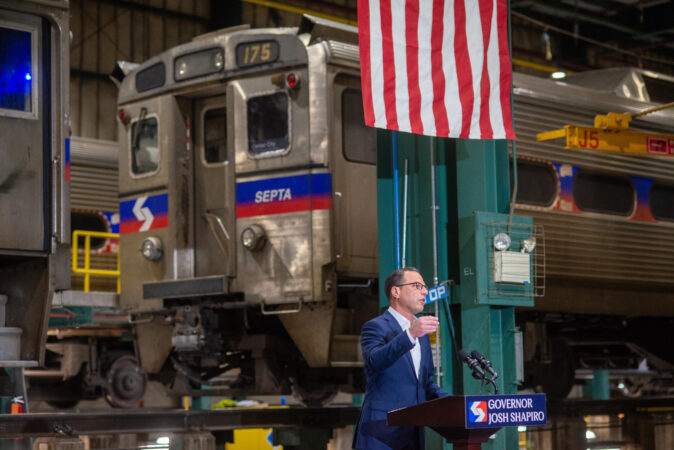
    Gov. Josh Shapiro is sending $220 million to SEPTA as it repairs fire-prone Silverliner IV Regional Rail cars and a damaged overhead power system in the trolley tunnel that together have brought commuting chaos.

    With the new capital funds, SEPTA will be able to restore Regional Rail to its normal capacity within a few weeks.

    Shapiro has directed PennDot to transfer money set aside for emergencies from the Public Transit Trust Fund to SEPTA, his office said.

    SEPTA’s increasing needs

    He announced the aid Monday at the transit agency’s train yard and maintenance shop in Frazer, Chester County.

    Federal regulators on Oct. 1 ordered SEPTA to inspect and repair, as needed, all of its Silverliner IV fleet after five train fires involving the 50-year-old cars.

    Delays, cancellations, station skips, and overcrowded Regional Rail trains running with fewer than the normal number of cars have been regular challenges for riders during six weeks of inspections and repairs focused on electrical components of the 223 Silverliner IVs.

    Earlier this month, the Federal Transit Administration ordered SEPTA to inspect its trolley power system after four incidents, including two times trolleys stalled in the Center City tunnel, requiring 415 passengers to be evacuated.

    The budget impasse

    Shapiro said he was forced to act for the second straight year because Senate Republicans wouldn’t support additional recurring funding for mass transit operations in the state budget.

    “They’ve come up with a ton of excuses, but they haven’t come up with the funding,” Shapiro said.

    Last November, he redirected $153 million in federal highway funding to SEPTA following a similar impasse in passing state transit subsidies.

    After the governor decided in September that no budget agreement on transit funding was possible, PennDot allowed SEPTA to tap $394 million in state money allocated for future capital projects to pay for two years of operating expenses.

    The transit agency was facing a $213 million recurring deficit in its operating budget.

    In late August, SEPTA had canceled 32 bus lines and significantly curtailed other service as part of a “doomsday scenario” the agency said was caused by lack of new state funding.

    Riders were inconvenienced, a lawsuit was filed, and a Philadelphia judge ordered the cuts to be reversed.

    Then the $394 million reprieve arrived.

    Yet the problems with the rail cars and trolleys served to underscore the risks of using capital funds for day-to-day operations.

    “A history of chronic underinvestment has led us to this point,” said Chester County Commissioner Marian D. Moskowitz, who is vice chair of SEPTA’s board.

    She noted that SEPTA has a much smaller capital budget than other large transit agencies.

    What this money will do

    In addition to the repairs, $17 million of the new state money announced Monday is intended to pay for the lease of 10 Silverliner IV rail cars from Maryland’s commuter railroad and the possible purchase of 20 cars from Montreal.

    Highlights of SEPTA’s plans for the $220 million:

    • $95 million for electrical system upgrades, overhauled propulsion motors and more on the Silverliner IV train cars and the newer Silverliner V models.
    • $48.4 million to update the overhead catenary wires in the trolley tunnel, along with three new catenary-maintenance cars for the tunnel and along trolley lines, and on long Regional Rail lines.
    • $51.5 million to upgrade 13 escalators at SEPTA stations, install AI-powered inspection cameras to catch potential problems earlier, and technology improvements at SEPTA’s Control Center
    • $8 million to install replacement parts for Broad Street Line and Norristown High Speed Line cars.

    “These funds are going to make a significant difference in our efforts to overcome the current crises,” SEPTA general manager Scott Sauer said, and to help avoid future ones.

    He thanked the governor and pledged “a comprehensive effort to identify potential problems sooner before they grow and lead to delays, cancellations, or shutdowns.”

    Shapiro had proposed an increase in the share of general sales-tax revenue devoted to transit subsidies over five years.

    Leaders of the GOP-controlled Senate said the $1.5 billion price tag was too high and proposed shifting capital money to operating subsidies for the state’s transit systems and roads — an idea partially reflected in the Shapiro administration’s temporary solution.

    “I am glad the Governor continues to take our advice and use existing resources to support public transit,” Senate Majority Leader Joe Pittman (R., Indiana) said in a statement.

    “It’s unfortunate that just one year ago, he took $153 million of funding from critical [road] infrastructure projects to fund transit, neglecting the needs of those who use our roadways every single day,” Pittman said.

    Republicans also argued that SEPTA had been mismanaged and needs change.

    As the next state budget cycle nears, the debate is likely to continue.

    “I want you to know I’m going to be a continue to be a governor who supports mass transit, who gives a damn about SEPTA, who cares about those 800,000 people that rely on SEPTA every single day,” Shapiro said.

  • SEPTA workers authorized a strike for the fourth year in a row. Here’s when they walked off the job in the past.

    SEPTA workers authorized a strike for the fourth year in a row. Here’s when they walked off the job in the past.

    Members of the Transport Workers Union Local 234 on Sunday, Nov. 16 voted to authorize a strike if union and SEPTA negotiators can’t reach an agreement on a new contract.

    Shortly before the current contract ran out at 11:59 p.m. on Nov. 7, TWU’s new president, Will Vera, urged union members to stay on the job. In an unusual move, he delayed a strike vote at the time of contract expiration, saying he had hope that a deal could be reached without the usual brinksmanship.

    “We’re asking you to please continue to come to work and put money aside. We want you to be prepared in case we have to call a work stoppage,” he told members in a video at the time.

    Local 234 leaders say they’re prioritizing a two-year deal with raises and changes to what the union views as onerous work rules, including the transit agency’s use of a third party that Vera said makes it hard for members to use their allotted sick time.

    Three TWU contracts in a row have run for one year each, all negotiated as SEPTA weathered what it has called the worst period of financial turmoil in its history.

    In a statement, SEPTA said it was aware of the authorization vote and is committed “to continue to engage in good-faith negotiations, with the goal of reaching a new agreement that is fair.”

    SEPTA unions have walked off the job at least 12 times since 1975, earning the authority a reputation as the most strike-prone big transit agency in the U.S.

    Here is what happened in previous SEPTA strikes:

    2023 Fraternal Order of Transit Police Lodge 109 (three days)

    SEPTA police officers walked off the job after bargaining with the transit agency for almost nine months, largely over the timing of a 13% pay raise for members. The agreement, partially brokered by Gov. Josh Shapiro, came amid heightened fears about safety on public transit and a funding crisis for SEPTA.

    2016 TWU Local 234 (six days)

    TWU Local 234 walked off the job for six days; the biggest issue was retirement benefits. SEPTA’s contributions toward union members’ pensions did not rise in tandem with wages when workers made more than $50,000. Managers’ pension benefits were not capped. The union also wanted to reduce out-of-pocket health-care costs and win longer breaks for bus, trolley, and subway operators between shifts and route changes.

    SEPTA and the union reached an agreement Nov. 7, the day before the general election. Democrat Hillary Clinton’s presidential campaign was worried about voter turnout, and the city sought an injunction to end the strike. It proved unnecessary.

    2009: TWU Local 234 (six days)

    Talk about leverage. TWU was ready to strike just before the first home game of the World Series between the Phillies and the New York Yankees. Gov. Ed Rendell pushed the two sides to continue talking, and the transit workers waited to walk out until three hours after the end of Game 5, the last in the series played at Citizens Bank Park.

    It was a bitter strike, coming just a year after the stock market’s meltdown started the Great Recession. TWULocal 234 President Willie Brown called himself “the most hated man” in Philadelphia. Mayor Michael Nutter was harshly critical. Brown called him “Little Caesar.”

    The strike was settled Nov. 7 with a deal on a five-year contract. Transit workers got a $1,250 bonus, a 2.5% raise in the second year, a graduated increase in SEPTA pension contributions from 2% to 3.5%, and the maximum pension benefit was raised to $30,000 from $27,000.

    2005: TWU Local 234 and United Transportation Union Local 1594 (seven days)

    Two unions walked off the job on Halloween, halting most bus, subway, and trolley service in Philadelphia and its Pennsylvania suburbs.

    Negotiations collapsed mostly over SEPTA’s insistence that workers pay 5% of medical insurance premiums. At that point, the authority paid 100% of the workers’ premiums for family coverage.

    In the end, it was solved by Gov. Rendell, a Democrat who had been Philadelphia mayor in the 1990s. He agreed to give promised state money to SEPTA early, so it could pay premiums in advance, reducing its costs.

    In the resulting four-year deal, the unions had to pay for 1% of their medical premiums. They also received 3% yearly raises.

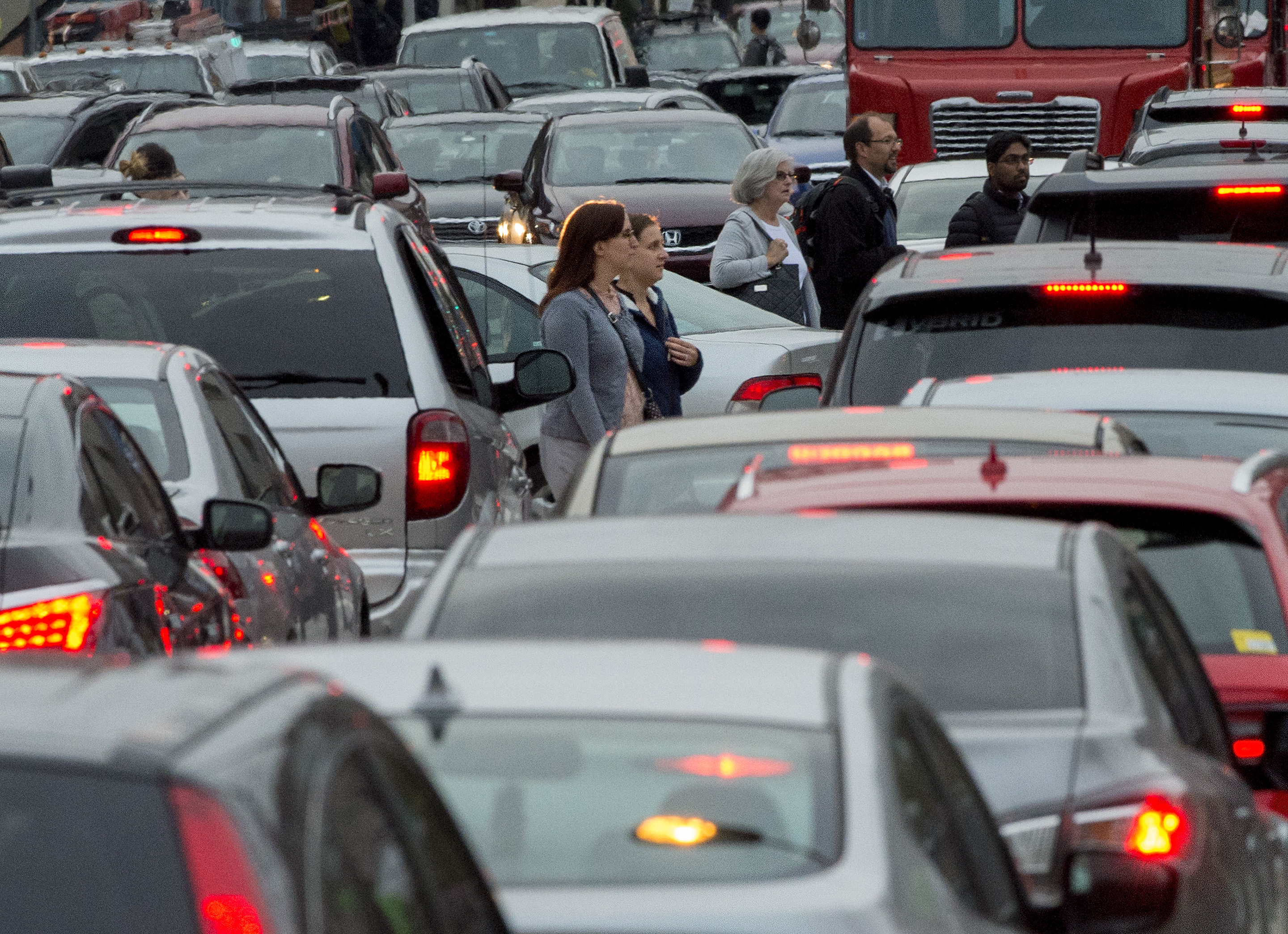
    Pedestrians and cars in a chaotic dance at the intersection of Market and 30th Streets during the afternoon commute on the first day of the SEPTA city workers’ strike Nov. 1, 2016.

    1998: TWU Local 234 (40 days)

    City transit workers’ contract expired in March, but they did not strike until June — and then stayed out for 40 days. The two sides reached an agreement in July, but it fell apart. TWU members had returned to their jobs and kept working under an extension of their old contract. A final agreement was signed Oct. 23.

    The union agreed to SEPTA’s demand that injured-on-duty benefits be limited. The old contract gave them full pay and benefits while on leave after a work injury. SEPTA wanted to hire an unlimited number of part-time workers. The union agreed to 100 part-timers to drive small buses.

    SEPTA’s chief negotiator was David L. Cohen, famous for reining in unions representing city workers during Philadelphia’s bankruptcy in 1992, as Rendell’s mayoral chief of staff.

    1995: Local 234 TWU (14 days)

    A two-week strike stilled city buses, trolleys and subways until an agreement was reached April 10. Transit workers would get 3% raises per year over the three-year span of the new contract, as well as increases in pension benefits and sick pay.

    The union agreed to several cost-reduction measures, including a restructuring of SEPTA’s workers compensation policies.

    Mayor Ed Rendell, a villain to many in labor for winning givebacks from city unions in 1992, pushed SEPTA to offer more generous terms to TWU than it had initially. Cohen, who was his chief of staff, crunched the numbers to make it work. Three years later, out of the city administration and working as a lawyer, he was hired as SEPTA’s chief negotiator.

    1986: TWU Local 234 (four days) and UTU Local 1594 (61 days)

    When TWU struck the city transit division in March 1986 over a variety of economic issues and work rules, some bus drivers pulled over mid-route and told passengers to dismount, The Inquirer reported.

    Members were particularly incensed at what they considered SEPTA’s draconian disciplinary procedures. Union leaders said the issue was a basic lack of respect. The strike was settled in four days.

    Drivers for 23 suburban bus routes, two trolley lines in Delaware County and the Norristown High-Speed Line — all members of the United Transportation Union — struck for just over two months, affecting about 30,000 passengers a day.

    Employees in what was then known as SEPTA’s Red Arrow Division — after the private transit company that used to own the routes and lines — made considerably less than their city counterparts and had weaker pension benefits. They won raises and pension changes that brought them closer to parity.

    1983: Regional Rail (108 days)

    Thirteen separate unions walked off the job on the commuter rail lines that SEPTA had taken over at the beginning of the year from Conrail, successor to the bankrupt Pennsylvania and Reading Railroads.

    In addition to wages, a key issue was SEPTA’s demand that union train conductors accept pay cuts. The authority had already cut the number of those workers by more than half.

    Eventually SEPTA reached deals with a dozen of the unions. The 13th local, which represented 44 railroad signalmen, held out longer. Main issue: Whether SEPTA had the right to contract with outside firms for some types of signal work.

    The Regional Rail strike remains SEPTA’s longest work stoppage since 1975.

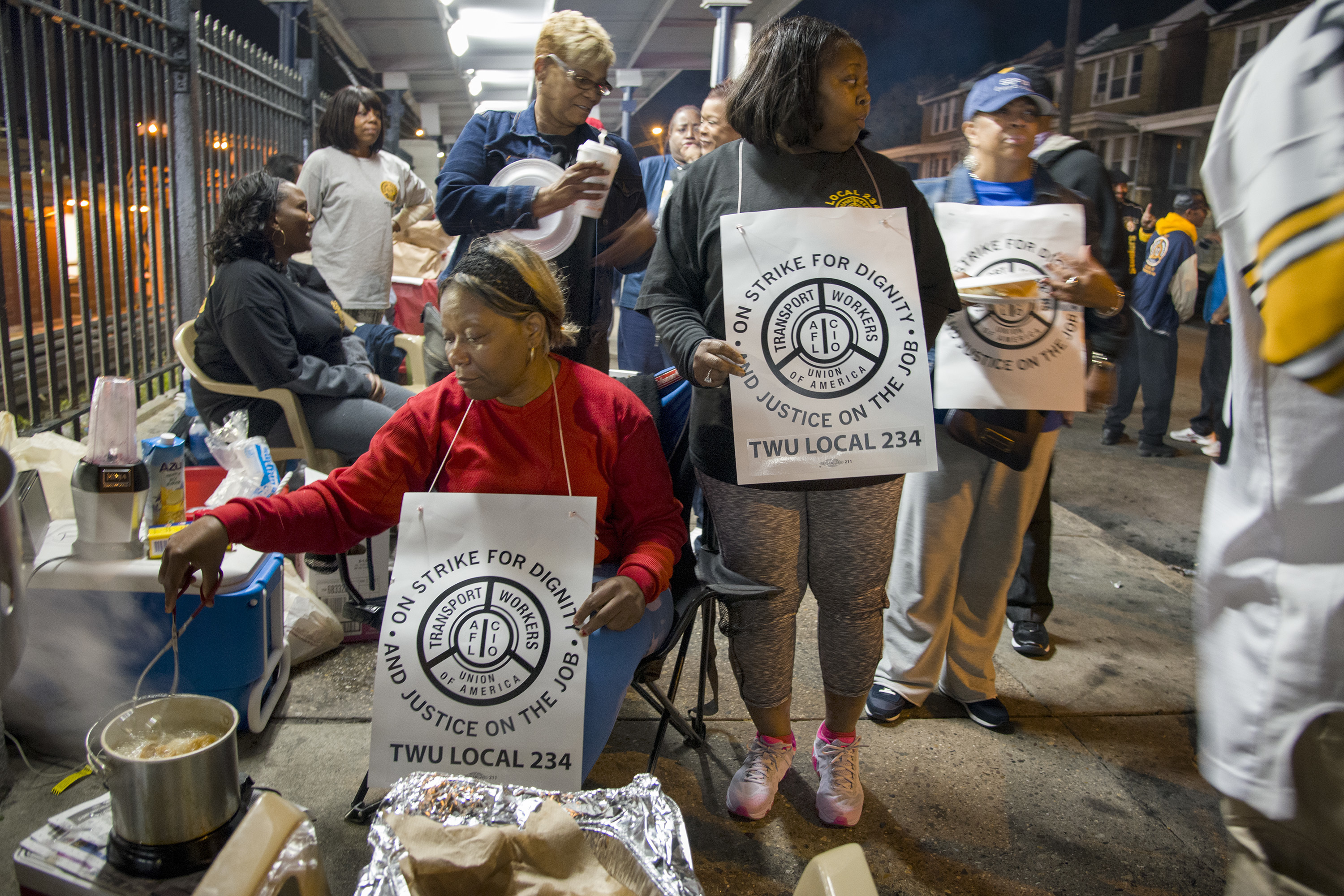
    Joyce Woodford (center), a 25-year veteran cashier on SEPTA’s Broad Street Line, serves up fried fish for her fellow striking cashiers outside the Fern Rock Transportation Center during dinnertime on the third day of the SEPTA strike in 2016.

    1982: TWU Local 234 (34 days)

    About 36 suburban bus drivers and mechanics operating routes primarily in Montgomery County, and some routes in Bucks, won an 8.5% wage increase over three years.

    The bus routes were the descendants of the Schuylkill Valley Lines and the Trenton-Philadelphia Coach Lines, which SEPTA acquired in 1976 and 1983, respectively. Service has grown, and the collection of bus routes is known as the Frontier Division today.

    1981: TWU Local 234 (19 days) and UTU Local 1594 (46 days)

    Transit workers shut down buses, trolleys and subways in the city on March 15, seeking job security in the form of a no-layoff clause, wage increases and a bar on SEPTA hiring part-time workers.

    And the Red Arrow division went out for 46 days seeking higher wages and better medical benefits. SEPTA also backed down a demand for permission to hire private contractors for some work on the suburban buses, trolleys, and the Norristown High Speed Line.

    1977: TWU Local 234 (44 days)

    After a bitter strike, union members who run the city transit division got higher wages and more benefits, after rejecting an arbitrator’s proposed contract that was portrayed in news reports as generous.

    A furious Mayor Frank Rizzo told reporters the strike “can last 10 years for all I care.” He said of the union’s rejection of the earlier offer: “It is outrageous, and I hope the people won’t forget it.”

    1975: TWU Local 234 (11 days)

    Transit workers, concerned about the ravages of inflation, wanted a clause giving them cost-of-living increases and enhancements to health-care benefits. Those were granted after Rizzo agreed to add $7.5 million to the city’s annual SEPTA contribution. Perhaps that’s one reason the mayor was so annoyed two years later.

    Staff writer Erica Palan contributed to this article.

  • Sixers and Comcast hope to open up a block of East Market for ‘pop-ups’ during the World Cup and America 250

    Sixers and Comcast hope to open up a block of East Market for ‘pop-ups’ during the World Cup and America 250

    The companies that own the 76ers and Flyers earlier this year made a high-profile commitment to help transform the long-distressed East Market Street corridor.

    The first development to come out of that promise? Perhaps a mini-soccer pitch. Or a pop-up beer garden.

    The teams recently hired a contractor to demolish buildings they own on the 1000-block of the beleaguered thoroughfare with the goal of eventually erecting a major development that could help revitalize the area.

    But, until then, City Councilmember Mark Squilla said Friday the teams and city leaders hope to “activate” the lots slated for demolition with “pop-up” opportunities related to the FIFA World Cup and the nation’s 250th birthday being hosted in Philadelphia next summer.

    “The goal was: If they could demolish it by then and fill it, we could program an open space on 1000 Market Street,” Squilla said, tossing out the soccer pitch and beer garden ideas as examples. “This will give us an opportunity to try to do something special for 2026 while we’re doing a longterm plan for East Market.”

    (function() { var l = function() { new pym.Parent( ‘sixersbuild__graphic’, ‘https://media.inquirer.com/storage/inquirer/ai2html/sixersbuild/index.html’); }; if(typeof(pym) === ‘undefined’) { var h = document.getElementsByTagName(‘head’)[0], s = document.createElement(‘script’); s.type = ‘text/javascript’; s.src = ‘https://pym.nprapps.org/pym.v1.min.js’; s.onload = l; h.appendChild(s); } else { l(); } })();

    Jacklin Rhoads, a spokesperson for the teams’ development venture, said Friday the demolitions come as the partners “continue to make progress towards future development on East Market Street.”

    “The demolition of these vacant storefronts improves the streetscape and will give us the ability to work with community partners to activate the site ahead of groundbreaking,” Rhoads said. “We are committed to working with the City to help jump start the revitalization of Market East and this is the next step in that process.”

    The teams’ commitment to work together as Market East boosters stems from the controversial and since-abandoned proposal by the 76ers’ owner, Harris Blitzer Sports & Entertainment, to build an arena in Center City.

    The basketball team had pitched that proposal as an opportunity to rejuvenate the blocks east of City Hall. But when the plan crumbled in January — in no small part due to opposition from the Flyers’ owner, Comcast Spectacor — the teams vowed to work as partners both on a new arena in the South Philadelphia stadium complex as well as on a joint development venture for East Market Street.

    The Sixers and Flyers recently hired a joint venture of New York-based Turner Construction Co. and Indiana-based AECOM Hunt to manage construction of the arena, which will be home to the city’s NBA and NHL teams and its planned, as-yet-unnamed WNBA team.

    And the teams have hired Philadelphia- and Norristown-based contractor Pride Enterprises Inc. to demolish the vacant storefronts they own on East Market Street in Center City.

    Tearing down and popping up

    Demolitions are so far only planned for part of the 1000-block, across the street from where the Sixers had previously envisioned building their new home.

    HBSE and Comcast Spectacor — a subsidiary of the Philadelphia-based entertainment, cable television, and internet giant — bought properties on East Market Street in a series of transactions totaling $56 million earlier this year. The buildings were formerly home to Rite Aid, Reebok, and other stores totaling 112,000 square feet.

    The properties currently slated for demolition are 1000-1024 E. Market St. That includes most of the former stores on the block’s south side. The teams also own 920-938 E. Market St., the western half of the adjacent block, but those properties are not currently planned for tear-downs.

    The teams’ plan to flatten the stores, making the space temporarily available for events related to the FIFA World Cup or the nation’s 250th anniversary next summer.

    Squilla said an East Market task force will be announced soon, and that group would have input on what happens at the site assuming it is demolished in time for the 2026 celebrations.

    After that, the teams will redevelop the properties, although plans aren’t finalized, Rhoads said. The teams declined to provide any details about the redevelopment project’s ambitions or scale.

    The city Department of Planning & Development did not respond to a request on the status of the development plans.

    The neighborhoods around East Market, a thriving department store district that has languished for decades, have recently begun to rebound with the development of hundreds of apartments and neighborhood retail to serve new residents.

    Stadium construction vets tapped for South Philly arena

    The new arena in South Philly will replace the Flyers and Sixers’ current home at the recently renamed Xfinity Mobile Arena, which was known as the Wells Fargo Center until this year.

    Currently, Comcast Spectacor owns the building, and the 76ers pay rent. For the next facility, the teams will be joint owners.

    The teams have tapped an outfit with ample experience in stadium and arena construction for the job. Over the past 20 years, Turner-AECOM Hunt joint ventures have built the Barclays Center in Brooklyn, the SoFi Stadium and Intuit Dome in Los Angeles, State Farm Arena in Atlanta, and Nissan Stadium in Nashville.

    In Philadelphia, they built the Eagles’ Lincoln Financial Field, the FMC Tower, the One uCity Square office building in University City, and the Chubb Center in Center City, the insurance company offices set to open next year.

    For the South Philly project, the partners, doing business as PACT+, have brought on Philadelphia-based union contractors to do much of the work, including Black-owned general construction company Perryman Construction, construction manager Hunter Roberts Construction Group, and Camfred Construction.

    The teams haven’t said how large the arena will be. HBSE and Comcast Spectacor in June hired a design team at the firm Populous and Moody Nolan.

    David Adelman, the Philadelphia student housing developer and investor who chairs the teams’ development venture, in a statement promised “the most technologically advanced and fan-focused sports and entertainment venue.”

    Adelman earlier said the new arena will open in 2030, and the WNBA team will play its first game there.

    The project “is a chance to build something that becomes part of Philadelphia’s fabric,” said Turner’s Philadelphia-based vice president, Dave Kaminski, in a statement.

    Jason Kopp of AECOM Hunt promised “cutting-edge amenities for athletes, performers, and visitors.”

    Although the teams are making moves related to the new arena, they don’t yet appear to have shared much of their plan with City Council President Kenyatta Johnson, whose 2nd District includes the South Philadelphia stadium complex.

    Building an arena at that location will likely require involve fewer legislative and bureaucratic hurdles than the 76ers’ abandoned Center City proposal. But in Philadelphia, Council members hold enormous sway over their districts, and the teams will likely need Johnson’s support if they want a smooth approval process.

    Johnson was asked Thursday what the teams need to do to meet their proposed timeline for opening the arena in 2030.

    “I have no idea,” Johnson told reporters. “That’s not even on my radar at the moment.”

    Staff writer Mike Newall contributed to this article.

  • How the 3 Pennsylvania Supreme Court justices on the ballot have ruled in major cases

    How the 3 Pennsylvania Supreme Court justices on the ballot have ruled in major cases

    Three Pennsylvania Supreme Court justices are on the ballot this November, when voters will decide whether to extend each of their tenures for another 10-year term.

    There are currently five justices who were elected as Democrats and two who were elected as Republicans on the bench.

    This year’s retention race has drawn heightened attention, as Republicans have launched a campaign to sink the retention bids of Justices Kevin Dougherty, Christine Donohue, and David Wecht — all elected as Democrats in 2015 — in hopes of flipping the court’s balance.

    Once on the bench, judges are expected to shed their partisan label, which is why Pennsylvania extends judicial terms through retention elections instead of head-to-head races.

    Still, advocacy groups on both sides of the aisle are trying to make the case that control of the judicial seats is critical, if not existential, to their causes.

    The Inquirer reviewed the cases that have come before the Pennsylvania Supreme Court over the last decade, and how Dougherty, Donohue, and Wecht voted.

    Here are some of the most significant cases of their tenure.

    Abortion

    Pennsylvania’s highest court stopped just short of recognizing a constitutional right to abortion access in January 2024.

    The ruling came in a case challenging a state law limiting Medicaid funding for abortions except in cases involving rape, incest, or danger to the life of the mother.

    The 219-page majority opinion included language that strongly endorsed access to abortion as a right derived from the Pennsylvania Constitution, but the judges could not agree on whether they were ready to make the call in this case.

    The majority sent questions about a specific funding limit and broader constitutional protection for abortion access back to a lower court — setting up another round of legal battles that will likely, again, make it before the state Supreme Court.

    How the three justices ruled: Donohue wrote and Wecht joined the majority opinion. The two justices said they believed Pennsylvania’s 1971 Equal Rights Amendment clearly established a right to abortion access. Dougherty wrote a separate opinion saying this case did not call on the court to opine on the right to an abortion. “At least, not yet,” he wrote.

    Voting rights and elections

    The Pennsylvania Supreme Court has ruled on a litany of challenges to Pennsylvania’s election rules, many of them focused on the state’s mail voting law.

    In 2018, the justices threw out the state’s GOP-drawn congressional maps as unconstitutionally gerrymandered.

    In 2020, the court issued a major ruling ahead of the presidential election allowing for ballot drop boxes and allowing local election offices to accept ballots for up to three days after the election as long as those ballots were postmarked by 8 p.m. on Election Day.

    How the three justices ruled: Donohue, Dougherty, and Wecht each joined the majority opinion in the redistricting case. On the 2020 election ruling, Dougherty and Wecht joined the majority opinion. Donohue joined the majority opinion but dissented from the decision to extend the ballot deadline.

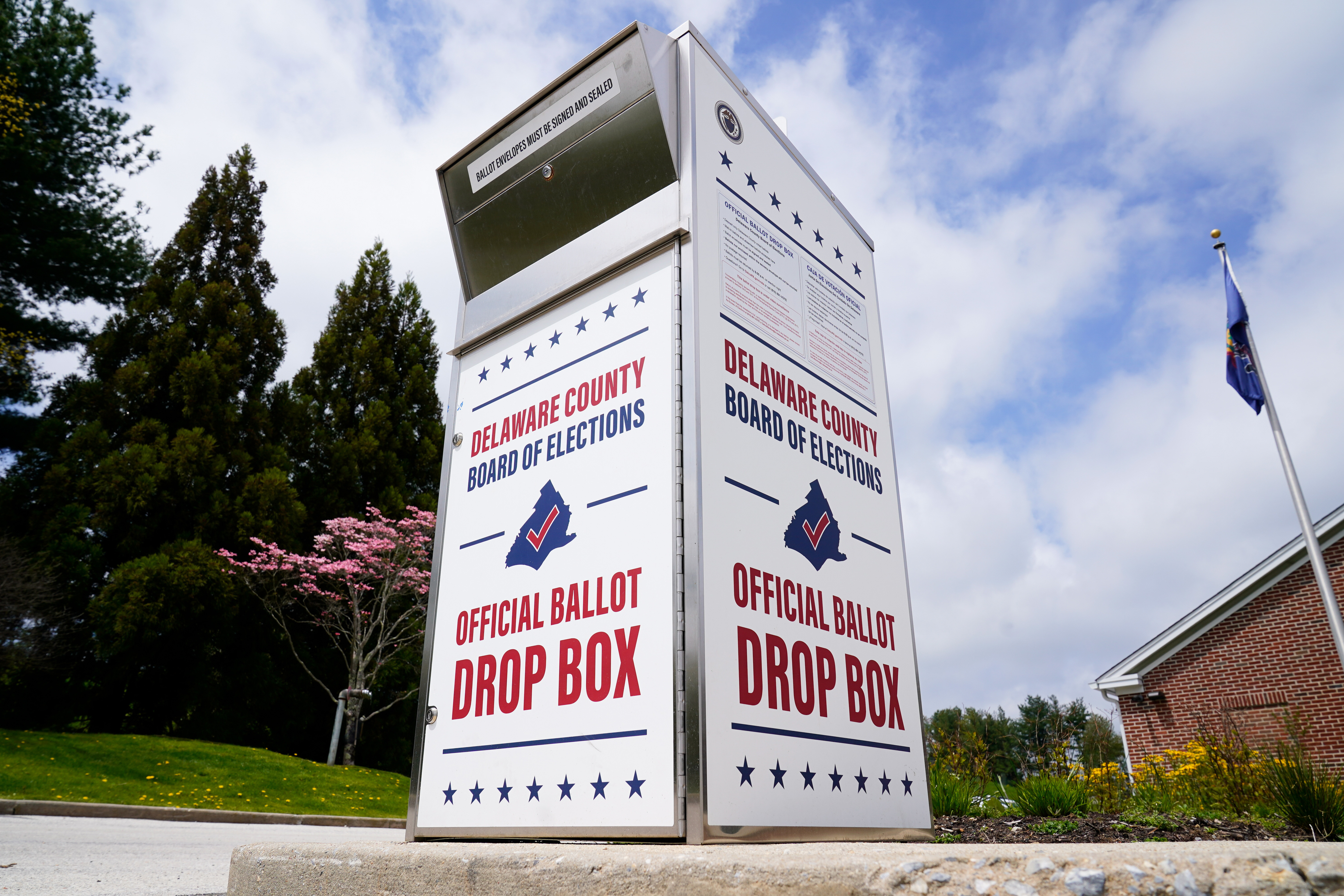
    A Delaware County secured drop box for the return of mail ballots in 2022 in Newtown Square.

    Education

    A Delaware County school district had the right to challenge Pennsylvania’s school-funding system, the Supreme Court ruled in 2017.

    The decision affirmed the role of courts in ensuring that state funding leads to equitable education and sent the case back to Commonwealth Court to proceed with litigation.

    In 2023, Commonwealth Court ruled, as part of the same case, that the state’s funding system for school districts led to disparities that prohibit quality education for all students, rendering it unconstitutional.

    How the three justices ruled: Wecht wrote the majority opinion, which Dougherty and Donohue joined.

    Environment

    Pennsylvania, which partly sits on the natural gas-rich Marcellus Shale, found itself in the midst of the fracking boom of the early 2000s.

    The state sold leases to oil and gas companies to drill wells. The practice raised questions, and legal challenges, as to how the state should use the revenues in the context of the Pennsylvania Constitution’s Environmental Rights Amendment.

    The court ruled in 2017 that it is unconstitutional for the state to use revenue from the royalties of oil and gas leases on public land to pay for anything but conservation and maintenance of the environment.

    How the three justices ruled: Donohue wrote the majority opinion, which Dougherty and Wecht joined.

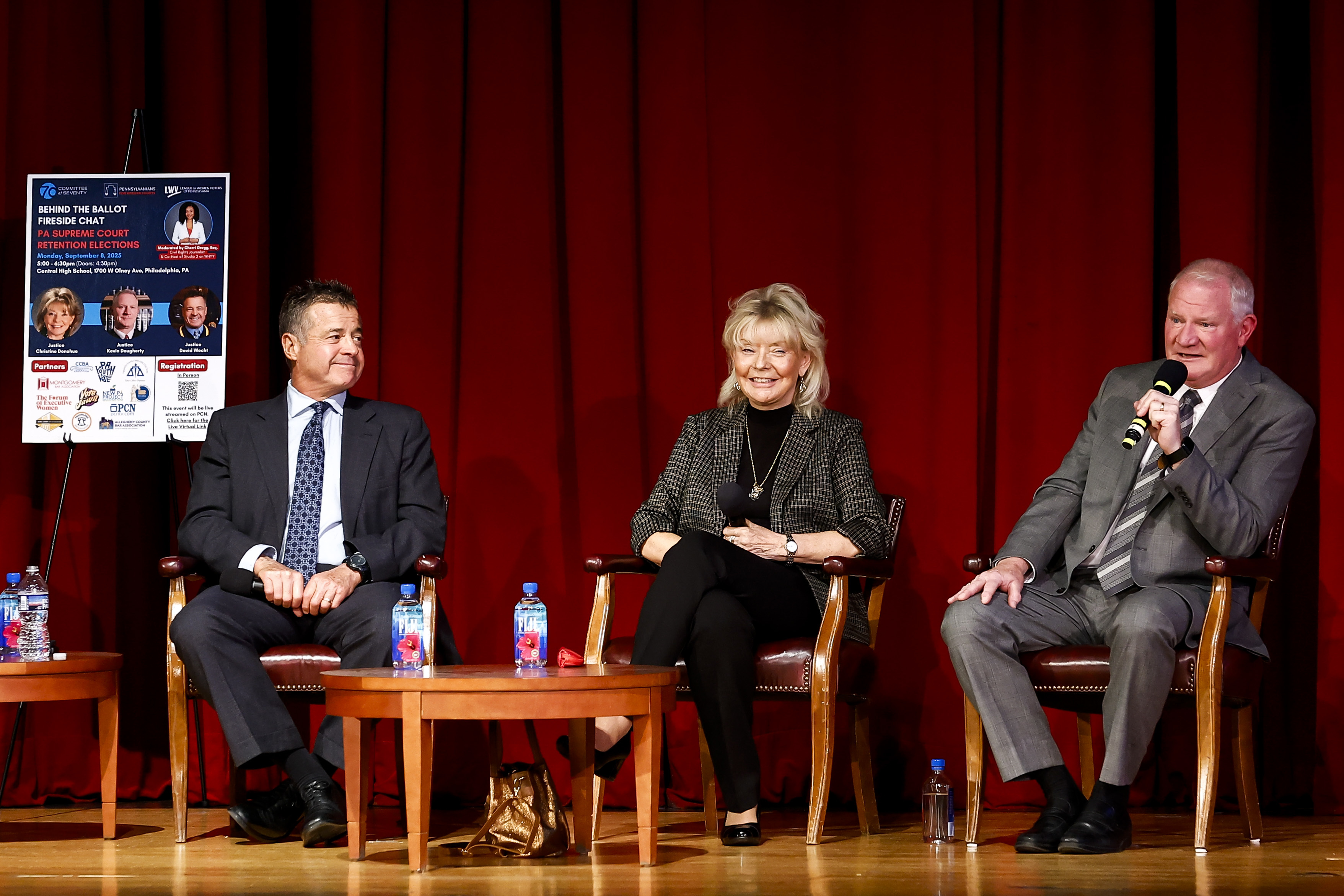
    Justices David Wecht, Christine Donohue and Kevin Dougherty sit onstage during a fireside chat at Central High School in September. The conversation was moderated by Cherri Gregg, co-host of Studio 2 on WHYY, and presented by the Committee of Seventy, Pennsylvanians for Modern Courts, and the League of Women Voters of Pennsylvania.

    Criminal justice

    Pennsylvania has had the nation’s largest population of juvenile lifers: people sentenced as minors to life in prison without the possibility of parole.

    In 2017, the Supreme Court made it harder to sentence a juvenile to life. The majority opinion says there is a “presumption” against life without parole for juveniles who are found guilty of murder, and prosecutors must show that the offender is “unable to be rehabilitated” when seeking the sentence.

    How the three justices ruled: Donohue wrote the majority opinion, which Dougherty and Wecht joined.

    Second Amendment

    In 2024, for the first time, the Pennsylvania Supreme Court issued an opinion that interpreted the wording in the U.S. Constitution that gives Pennsylvanians the right to bear arms.

    In Stroud Township, a zoning ordinance that prohibited the discharge of a firearm within the township’s borders limited the possible locations for shooting ranges. The ordinance barred a resident from having a personal outdoor shooting range on his property, and he sued the township for violating his Second Amendment rights.

    The court ruled that the ordinance was constitutional.

    How the three justices ruled: Dougherty wrote the majority opinion, which Wecht joined. Donohue wrote her own opinion, reaching the same conclusion as the majority but disagreeing with the analysis.

    Larry Krasner

    Did Republican lawmakers make a procedural error in their 2022 effort to impeach Philadelphia District Attorney Larry Krasner? The Supreme Court in 2024 said they did, effectively ending a campaign in Harrisburg to oust the progressive prosecutor.

    Philadelphia District Attorney Larry Krasner talks about Republican-led efforts to investigate his record addressing crime and gun violence at the Pennsylvania Capitol in 2022.

    The decision said that the articles of impeachment approved by the state House in late 2022 were “null and void” because they were sent to the Pennsylvania Senate on the last day of that year’s legislative session, and the upper chamber did not complete its work on the matter before the next session began. The attempt to carry the process from one two-year session to the next was unlawful, the court said.

    The majority also agreed with a lower court that none of the articles of impeachment met the required legal standard of “misbehavior in office.”

    How the three justices ruled: Donohue and Wecht joined the majority opinion. Dougherty did not participate in the deliberations.

    Bill Cosby

    Disgraced actor and comedian Bill Cosby walked out of prison a free man in 2021 after the state Supreme Court reversed his sexual assault conviction.

    The court did not weigh in on the facts of the case or whether Cosby was guilty. Instead, it focused on a former Montgomery County prosecutor’s decade-old promise that Cosby would never be charged with drugging and assaulting Andrea Constand if he gave incriminating testimony in a civil case filed by his accuser. The justices found that the testimony was improperly used years later against Cosby at his criminal trial, calling it a “unconstitutional coercive bait-and-switch.”

    How the three justices ruled: Wecht wrote the majority opinion, which Donohue joined. Dougherty wrote a separate opinion, saying he would allow for Cosby to be retried, but would order his testimony from the civil case to be suppressed.