Tag: North Philadelphia

  • The first week of July is typically Philly’s most violent. This year, the holiday weekend was markedly calmer.

    The first week of July is typically Philly’s most violent. This year, the holiday weekend was markedly calmer.

    The first week of July has typically been one of Philadelphia’s most violent, with recent Independence Day weekends marked by mass shootings, police officers shot, and bursts of violence that left a dozen dead.

    But this year, amid a dramatic decline in violence and a flood of visitors to the city, the holiday weekend was noticeably calmer than in years past, offering another encouraging sign that the dramatic decline in shootings held through one of its toughest tests.

    Twenty-three people were shot from July 1 through July 7 — a slightly higher total than most weeks in 2026, but nearly half the average number of shooting victims during the same period over the last decade, according to city data. In 2021, at the height of the city’s gun violence crisis, more than 70 people were shot in that week alone.

    If the current pace continues, Philadelphia is on track to record fewer than 200 homicides for the first time since the 1960s, a remarkable turnaround from just five years ago, when nearly three times as many people were killed.

    (function(){function e(){window.addEventListener(`message`,function(e){if(e.data[`datawrapper-height`]!==void 0){var t=document.querySelectorAll(`iframe`);for(var n in e.data[`datawrapper-height`])for(var r=0,i;i=t[r];r++)if(i.contentWindow===e.source){var a=e.data[`datawrapper-height`][n]+`px`;i.style.height=a}}})}e()})();

    Philadelphia Police Commissioner Kevin Bethel said in an interview that the July Fourth weekend is historically one of the most challenging for urban police departments.

    In each of the last four years, Philadelphia’s celebrations were overshadowed by violence: Last year, 13 people were shot in South Philadelphia; nine people were struck by bullets at a teen party in Southwest Philadelphia in 2024; five people were killed at random by an armored gunman in Kingsessing the year before; and in 2022, two officers were grazed by bullets on the Benjamin Franklin Parkway, sparking a stampede of fireworks spectators.

    Bethel said he and other city, state, and federal law enforcement officials spent about two years planning for this holiday weekend, preparing for potential crises that never came.

    Anticipating hundreds of thousands of visitors for FIFA Club World Cup events and the nation’s 250th birthday celebrations, the department canceled many officers’ vacation requests over the last month and, on the Fourth, deployed more than 2,000 members of local and state law enforcement across the city, he said.
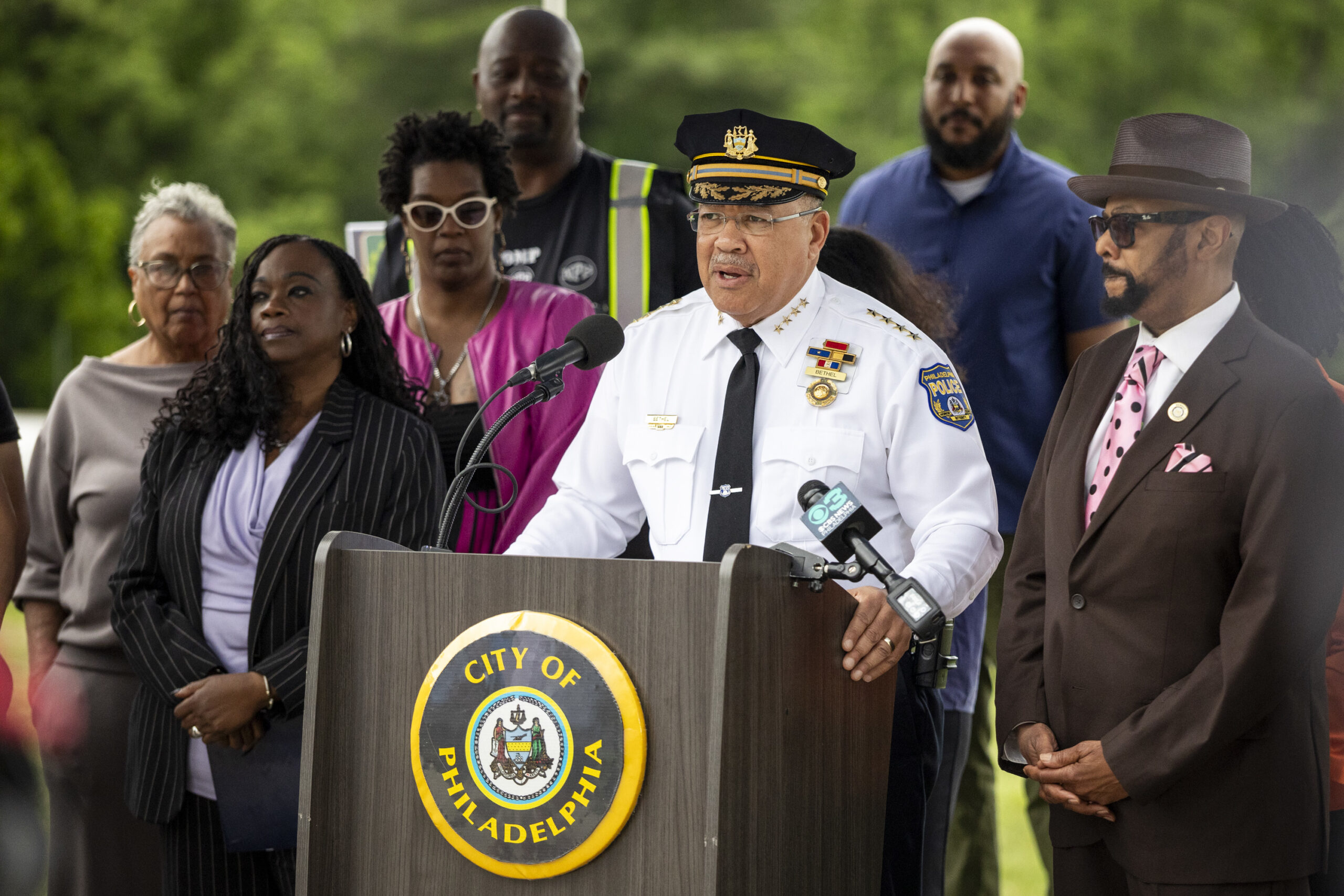
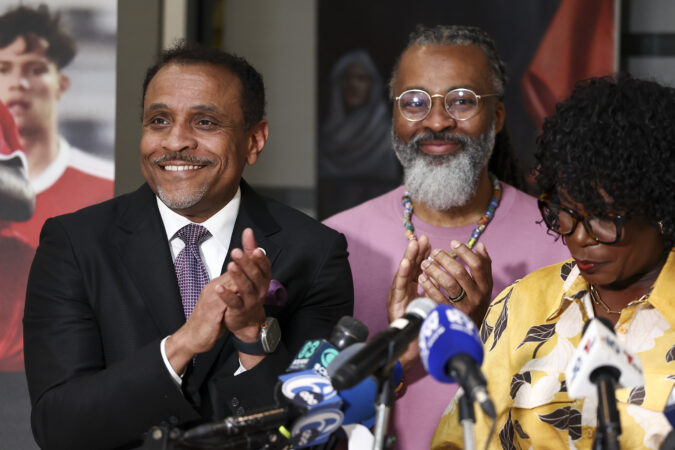
    Philadelphia Police Commissioner Kevin J. Bethel, speaks at a press conference on the details for the Roots Picnic in May 2026.

    Reinforcements from the Pennsylvania State Police and neighboring municipalities helped the city maintain staffing levels in neighborhoods that have historically seen more violence, Bethel said. Officers worked in the record-breaking heat, he said, with some starting their shifts at 7 a.m. and clocking out only after the concert on the Parkway ended at 3 a.m.

    The FBI took the lead on monitoring the skies, Bethel said, intercepting several drones that were flying illegally. (None of the drones, he said, was flying with “nefarious” intent.)

    He called the weekend a validation of the city’s planning and broader work that has contributed to the decline in gun violence.

    “I can’t tell you how many people grabbed me and said they felt welcomed and felt safe,” he said of the events over the last month. “Let’s own the win. Let’s not hide from it.”

    Bethel also said there had been no acts of violence around the approximately two dozen bars that were approved to stay open until 4 a.m. from June 11 to July 19 to accommodate crowds attending the FIFA, July Fourth, and MLB All-Star celebrations.

    “We’re seeing zero issues,” he said.
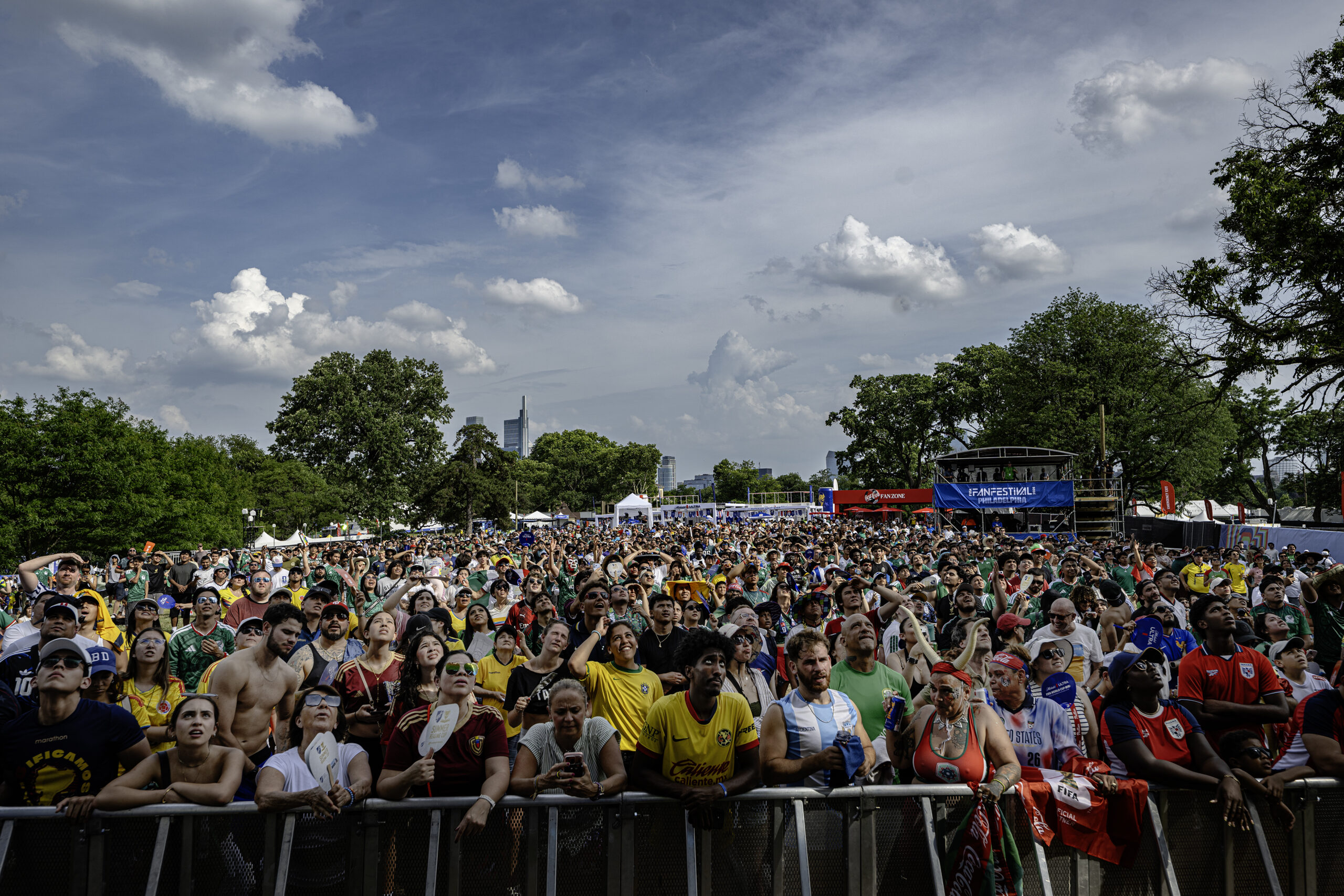
    Soccer fans gather to watch Mexico play South Africa on a giant screen during the opening day of the FIFA Fan Festival at Lemon Hill on Thursday, June 11, 2026, in Philadelphia.

    The reduction in violence over the holiday weekend fits a broader pattern. Shootings and homicides in the city began to decline in 2023, mirroring a national trend, and have continued to fall. So far this year, 90 people have been killed in homicides — less than a third of the number recorded at the same time three years ago, according to police data.

    Just as there was no clear explanation for the spike in crime that began in 2019, criminologists and law enforcement officials say, it is similarly difficult to pinpoint the reasons for its decline. But there are theories: an overall return to normal life after the pandemic, expanded community-based violence prevention programs, more arrests in shootings and homicides, and targeted prosecutions of some of the city’s most violent gangs.

    One measurable change has been the police department’s improved clearance rates, which researchers have long viewed as a potential deterrent to future violence.

    The homicide clearance rate — the share of killings solved, including arrests made this year in both new and older cases — has climbed to nearly 99%, up from about 47% in 2022. The clearance rate for nonfatal shootings has risen to about 41%, roughly double what it was in 2021.

    Bethel said those arrests take would-be shooters and victims off the streets and interrupt cycles of violence.

    “We’re impacting retaliation, we’re impacting somebody being shot again, we’re impacting someone who may shoot and kill somebody,” he said.

    Jeff Asher, a New Orleans-based national crime analyst, said because the decline is likely driven by many programs and societal changes, it is hard to know what will sustain the progress.

    “I keep expecting [the crime rate] to stop falling, and it’s just not,” he said in an interview. “So, maybe this is the new normal. We just can’t say with a ton of confidence.”

    Still, the quieter weekend was not wholly peaceful.

    Three men were killed between Friday and Monday morning, leaving families and neighbors to mourn loved ones even as the city showed signs of sustained progress.

    On Monday morning, Shawn Caddell, 32, was killed during a robbery inside a Logan beer deli, police said. And on Sunday, two men were slain in areas that have long been hot spots for shootings: Emanuel Aguirre, 27, was fatally shot in the Hunting Park section of North Philadelphia, and Donald McPhaul, 51, was gunned down on Salford Street in West Philadelphia.

    A 16-year-old in South Philadelphia was among more than a dozen people who were shot and survived.
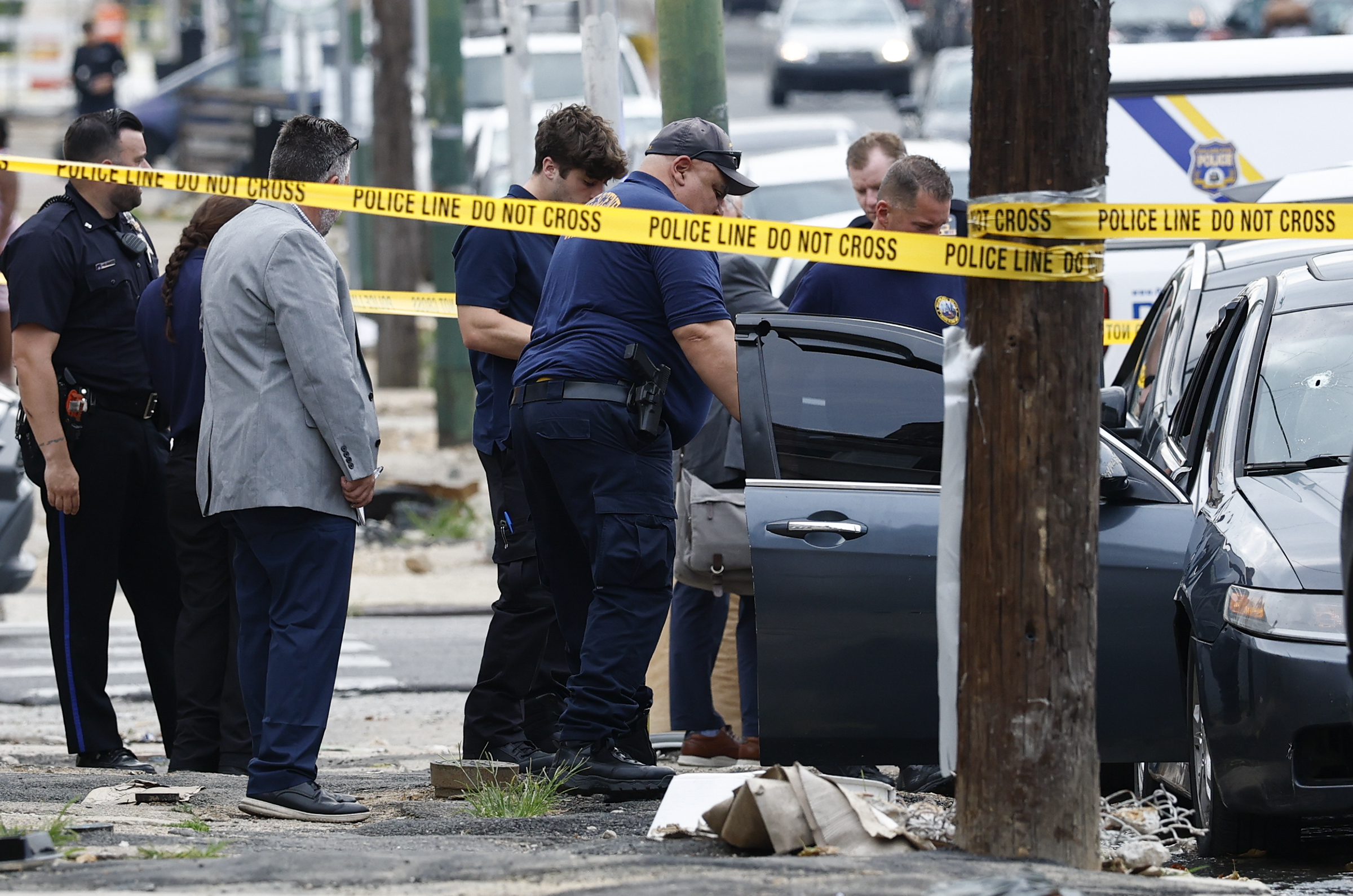
    Philadelphia police examine a car with a bullet hole after a man was fatally shot along the 500 block of East Wyoming Avenue on July 5, 2026.

    Bethel said the pockets of the city that have long experienced higher rates of violence — and that continue to see shootings, albeit fewer, today — remain a priority.

    “We are never going to give up in those communities,” he said. “We are going to keep working in those areas.”

    Recent polls have found that a majority of Philadelphians have noticed the decline and feel safer. But for residents on blocks where shootings remain a recurring threat, a citywide trend line can feel distant from daily life.

    Chantay Love, president of the victim-advocacy organization EMIR Healing Center, said the communities seeing recurring violence are still grappling with “the trauma and collateral damage that is left behind” from the last six years.

    Along the stretch of Market Street near where McPhaul was killed, more than 100 bullets were fired into a party on July 4, 2021, leaving two men dead. Earlier this year, 20-year-old Imani Ringgold was walking down the block with a slice of pizza when she was caught in the crossfire of an escalating gang feud and killed.

    Linda Days, 72, who lives in the area, said the shooting that killed McPhaul was another reminder of the violence she has come to expect since moving there seven years ago from Olney.

    Standing in her doorway on Tuesday, Days said it feels as if gunfire has become part of the soundtrack outside her home. But during the Fourth of July weekend, she said, she is especially careful to stay inside.

    “I don’t even come out to watch the fireworks,” she said.
  • After years of delay, a Francisville apartment building is under construction

    After years of delay, a Francisville apartment building is under construction

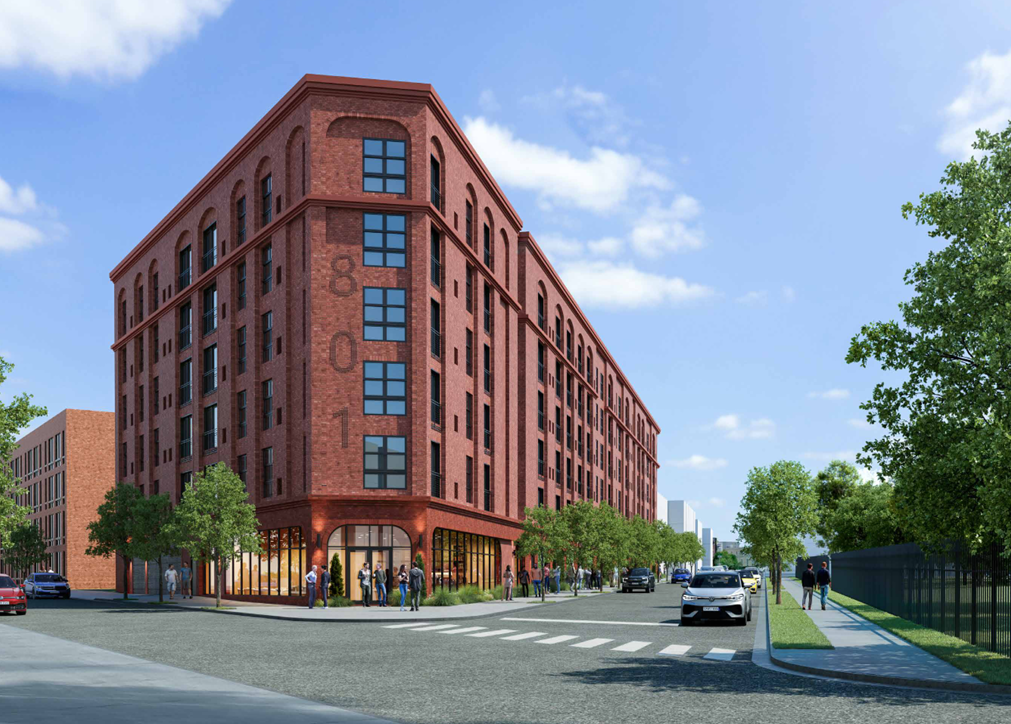
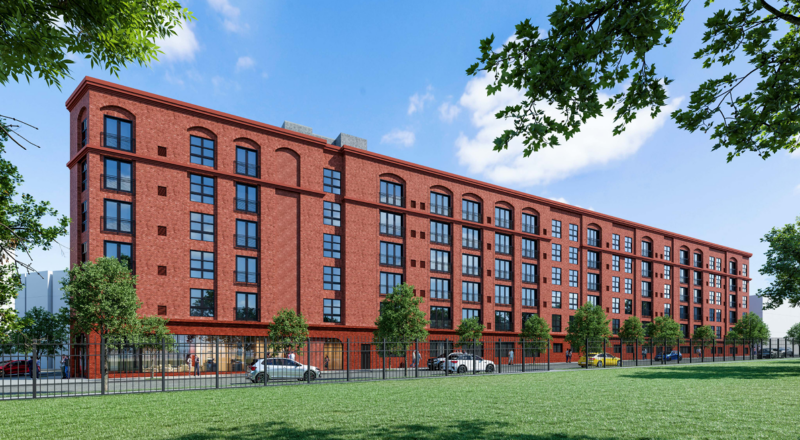
    North Philadelphia’s Francisville is getting an apartment building at 801 N. 19th St. after years of delay and a complex change in ownership.

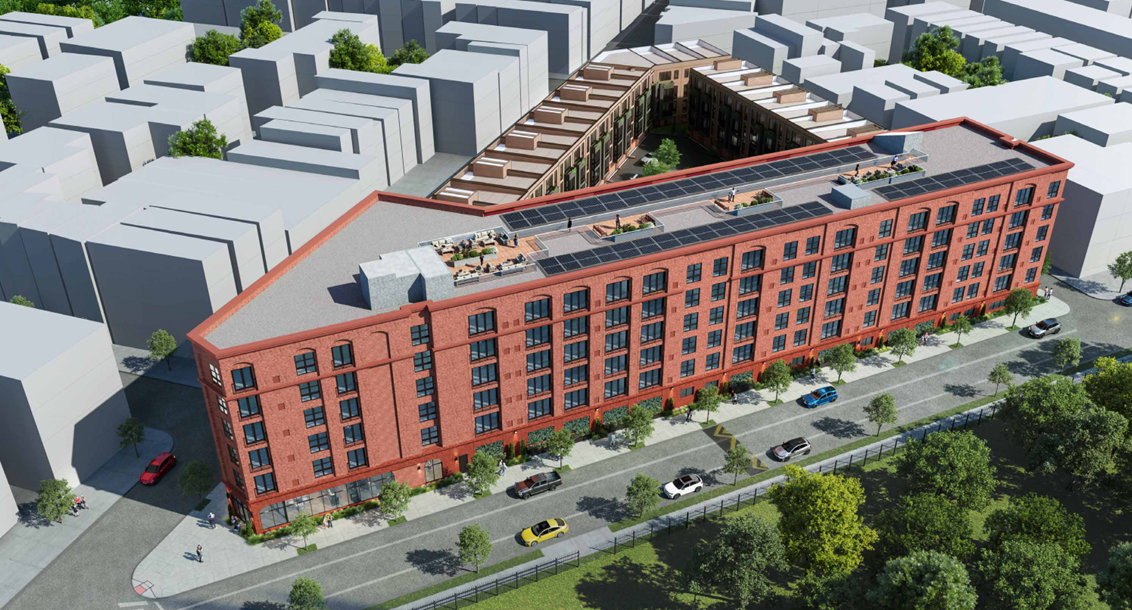
    The six-story project, clad in red brick, will include 110 apartments and 49 underground parking spaces. The foundations are built, and construction is underway.

    The project sits on an oddly shaped lot between 19th Street, Cameron Street, and Wylie Street, which neighbors call “the triangle lot.”

    The property used to be owned by the Exton-based Hankin Group, which secured building permits for a 115-unit apartment building during the pandemic.

    Hankin sold the property in 2021. Now two different townhouse projects are being developed on the site, one by West Philadelphia-based Guy Laren.

    The apartment project is being built under the name of Cameron Square Partners LLC, which is registered at a West Philadelphia property owned by Laren.

    On the Department of Licenses and Inspections website, violations for “walkway not provided” and a failure to post permits are being appealed by the Philadelphia-based developer, contractor, and property manager Vicintas.

    Laren did not respond to a request for comment. Vicintas confirmed it is the general contractor and future property manager for the apartment building but did not reply to an interview request.

    Hankin’s building permit is old enough that the Philadelphia Planning Commission decided it has to go through an advisory-only Civic Design Review process again, five years after its first go-around.

    The new iteration of the project is different from what Hankin proposed, with 110 instead of 115 apartments but larger layouts. It has a new architect, too, with Philadelphia-based Harman Deutsch Ohler Architecture replacing global firm NORR.

    “The new owner wanted some bigger units, so we’re down five units, and we increased the height by five feet, and then we redid the entire facade,” said Rustin Ohler, a principal with the firm.

    The new plans call for 40 one-bedroom apartments and 35 two-bedroom units, with the remainder mostly being larger studio units known in the industry as “junior one-bedrooms.”

    The apartments will have “more square footage, not necessarily more bedrooms,” Ohler said. “The previous design had a lot of studios. This is more ones and twos [bedrooms], and they’re a little larger than your average new construction coming to the market.”

    Parking has been reduced from 52 to 48 spaces, although the development team plans to expand the number of spaces by automating the garage.

    Such a system would eliminate the need for people to enter the facility, depending on mechanical systems to distribute and receive cars and allowing for a much larger parking capacity.

    The latest design for the new apartment building at 801 N. 19th St., with an articulated brick identifier spelling out “801.”

    The apartment building contains no retail but will have amenities including a gymnasium and a narrow roof deck, including a dog park, that is set back from the edge so it is not visible from the street.

    At a June meeting of the Civic Design Review committee, a representative of the United Francisville Civic Association criticized the amount of parking in the project, the increased height, the roof deck, and the new building materials.

    “What was originally approved was a five-story building,” said the representative, whose name was obscured in a recording. “This is now a six-story building, and it really towers above. It just adds a lot more height to the building based on the surroundings.”

    At the June and July meetings, however, Ohler noted that the three projects on the triangle lot are already under construction and that the apartment project is hemmed in by the bordering townhouse developments.

    That restricts what changes could be made to the architecture and layout of the project, despite community concerns.

    A new rendering of the apartment building shows the roof deck broken into smaller chunks, to cut down on large crowds making noise and separated from the edges of the building by newly proposed solar panels.

    The development team increased “the garage ceiling height in order to accommodate future stacked mechanical parking, which would potentially double our number of cars that we could have,” Ohler said.

    Since the June meeting, the development team also added darker brick spelling out “801,″ as an identifier on the building’s south-facing facade and entrance.

    Ohler noted that the roof deck has been broken up into four separate pockets to prevent large groups of residents from congregating. It also was pushed back from the street to accommodate neighbor concerns.

    “The roof decks have been designed to be centered into the building, so that nobody can get near the edge,” Ohler said. “And we did add the solar panels, there’s no way for anybody to get near the edge, so that would address their concerns of sound from the roof deck.”

  • Pa. officials mourn the death of former State Sen. Shirley Kitchen, who represented North Philly for 20 years

    Pa. officials mourn the death of former State Sen. Shirley Kitchen, who represented North Philly for 20 years

    Pennsylvania elected officials are mourning the death of former State Sen. Shirley Kitchen, the second Black woman to serve in the state Senate and a champion for progressive issues who represented parts of North Philadelphia for more than two decades. She died Saturday at 79. A cause of death was not immediately clear.

    Kitchen represented the 3rd Senatorial District, composed of parts of North Philadelphia, for 20 years. She is remembered by her former colleagues as a pillar and matriarch of her community who worked tirelessly to improve the lives of low-income people, even after she retired.

    “She did so many things for so many people. Now that I’m old enough to appreciate it, I’m not quite sure how she did it — and she did it with such force,” said State Sen. Anthony H. Williams (D., Philadelphia), who served alongside Kitchen in the Senate and had known her for decades. Kitchen was elected to the state Senate in 1996 and served five terms before retiring in 2016.

    Her former colleagues, some through tears, credited many of Pennsylvania’s recent criminal justice reforms as being born under Kitchen’s leadership, with her early legislative proposals paving the way for their passage years later. For example, Kitchen authored early drafts of what is now known as the Clean Slate Act, which automatically seals some nonviolent convictions after 10 years, hiding them from most employer and landlord background checks. She first introduced similar legislation in Harrisburg years earlier and it failed. In 2018, two years after Kitchen retired, the Clean Slate Act became law in Pennsylvania and was heralded as a first-in-the-nation model for criminal justice reform.

    Elected officials across the city shared their condolences, remembering Kitchen as an advocate who cared deeply for her community.

    Mayor Cherelle L. Parker in a social media post on Sunday recalled Kitchen as “fighting for people who often had no one else to fight for them,” and as a trailblazer for Black women in politics.

    “Shirley Kitchen cared about working people, and she cared about Philadelphia,” said Parker, the city’s first Black female mayor and a former state representative.

    City Council President Kenyatta Johnson said in a statement that Kitchen “never forgot who she was fighting for,” dedicating her life to making people’s lives better.

    State Rep. Joanna McClinton (D., Philadelphia), Pennsylvania’s first Black female speaker of the House, wrote in a social media post that Kitchen was “a mentor and her service in the state House and Senate inspired me greatly.”

    Williams added that Kitchen also sought to elevate other Black politicians, like himself, to elected office — and laid the groundwork for much of the city’s current political progressivism.

    “The reality is that a lot of the infrastructure that helps them, Shirley had everything to do with it, and more,” Williams said, noting her advocacy and experience during the Civil Rights Movement. “I would hope the progressives in this generation would tip their hat to a generation that really created the progressive movement.”

    State Sen. Sharif Street (D., Philadelphia) had known Kitchen since he was a child, and said she helped him see the power a Senate seat has in improving the lives of his neighbors. When she decided to retire, Kitchen encouraged Street, who was on her staff at the time, to run to fill the vacancy in the 3rd District following her fifth and final term in the state Senate.

    Williams and Street recalled Kitchen as a fair but demanding mentor.

    “If she told you to do something, you better do it,” Williams said, with a laugh.

    For Street, Kitchen “didn’t limit her advice. She had opinions about everything in my life, including when my wife was right and I needed to listen to her.”

    Street said he spoke with Kitchen weekly, and Williams said he remained in touch with her as recently as last month. She often had ideas or issues she wanted the senators to take up. Street spoke with her last week about a forthcoming Registered Community Organization meeting that she was leading about a new proposed development nearby, emblematic of her continued involvement in her community.

    Prior to her election to the state Senate, Kitchen was involved in the National Welfare Rights Movement, which was a progressive advocacy group for the dignified treatment of women and children, largely led by Black women, during the 1960s and 1970s, Williams said.

    Kitchen served as the minority chair of the Senate Public Health and Welfare committee, in which she often leaned on her social work experience to inform her legislative proposals.

    A Democrat in a time where Republicans controlled the state legislature, she served her entire tenure in the minority party, but was still able to garner bipartisan support for some of her legislative proposals.

    “This image of her being an urban Black woman from Philadelphia would limit her ability to get stuff done in the Senate just wasn’t true,” Williams added. “She could analyze people and figure out what way to approach them with exceptional skill.”

    Born in 1946 in Augusta, Ga., Kitchen attended the Philadelphia School District and graduated from Antioch University in 1979 with a bachelor’s degree in human services, according to her Senate Library biography. She went on to work for former Philadelphia Mayor John Street, Sharif Street’s father, before she was elected to the state House in a special election in 1987. After she lost reelection to the seat in 1989, Kitchen returned to Harrisburg a decade later after her election to represent the 3rd Senatorial District.

    “She was a transformational figure that loved her community and understood that the purpose of those of us holding elected power is to be able to make a difference in the lives of the people we serve, in a way that they can feel and see,” Sharif Street added.

    Funeral services will be announced in the coming days, he said.

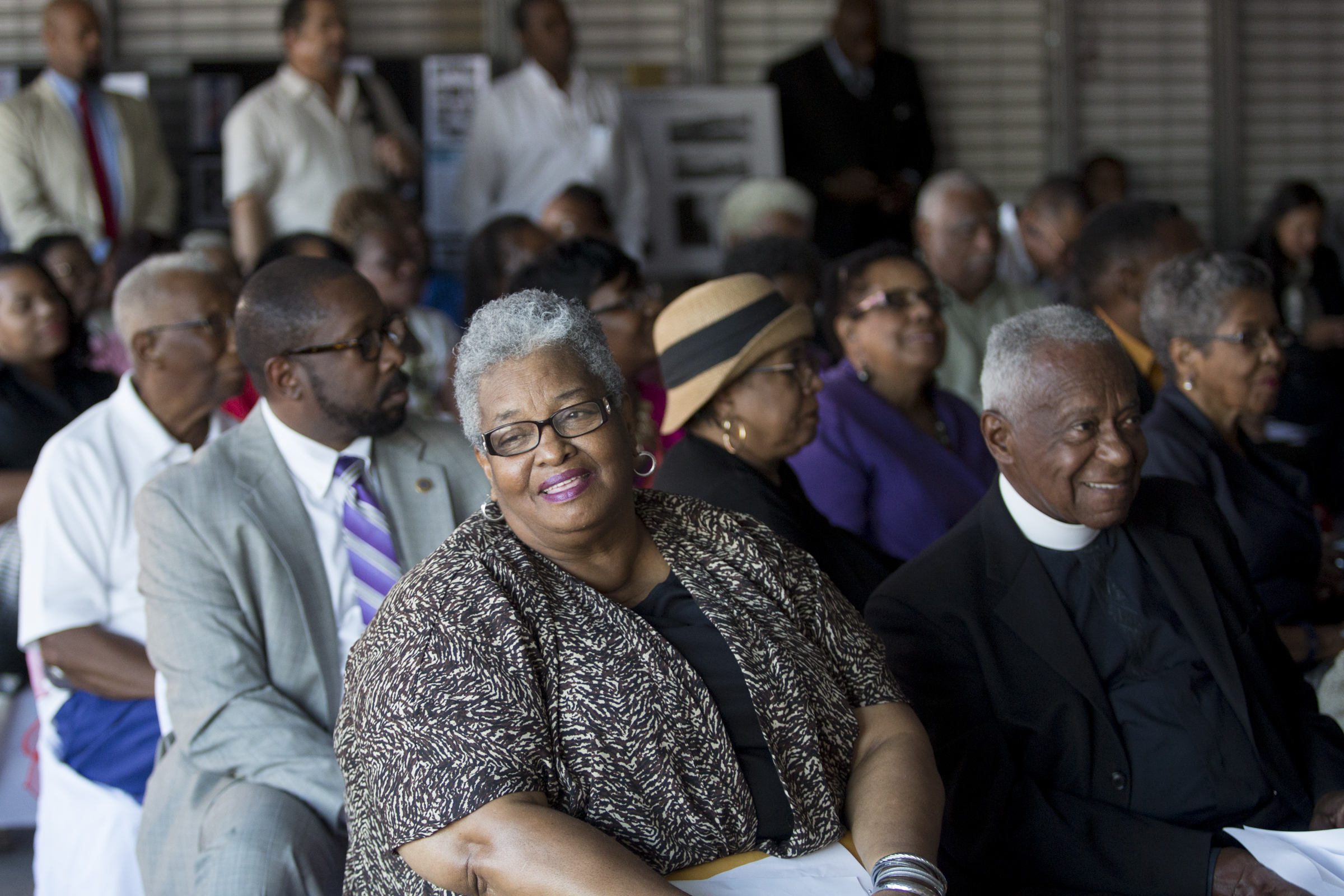
    Senator Shirley Kitchen in the audience during speeches in honor of the historical marker that was unveiled at Sullivan Progress Plaza September 14, 2016. The plaza was the first black-owned and operating shopping center in America. Wednesday, Sept. 14, 2016.
  • ‘I’m on this roller coaster’: Philly teachers and school staff are stuck in limbo despite promises to save hundreds of jobs

    ‘I’m on this roller coaster’: Philly teachers and school staff are stuck in limbo despite promises to save hundreds of jobs

    When a deal was struck to save 340 classroom-based jobs in the Philadelphia School District, Mayor Cherelle L. Parker and Superintendent Tony B. Watlington Sr. declared it “Christmas in June.”

    It’s July now, but manystaffers still don’t have clarity on exactly who’s allowed to come back to positions that were almost cut and how that affects vacancies system-wide.

    “It’s a mess, and it’s getting messier,” said Alison Andrawos, a teacher at Potter-Thomas Elementary in North Philadelphia who accepted a job in another district after learning this spring that her position would be cut and still doesn’t know whether it will be restored.

    Monique Braxton, the school district spokesperson, said the system is “moving forward with restoring the approximately 340 school-based positions approved in the revised budget,” but that staffing the positions is separate from restoring them.

    “We have been meeting with our union partners on implementation and are now working with principals on school staffing,” Braxton said in a statement. “All approved positions will be restored in the district’s budget system by Wednesday, July 9.”

    The complex process is causing additional uncertainty for teachers and staff members and prolonging an already tumultuous hiring season as the district deals with fallout from 17 forthcoming school closings and the back-and-forth over millions in cuts stemming from a $300 million district budget deficit.

    Watlington this spring directed school principals to build their 2026-27 budgets factoring in the cuts, including about $50 million in school-based trims and the elimination of 340 classroom jobs. Parker then proposed a $1-per-trip rideshare tax she said would cancel the classroom cuts, but City Council balked, and for a time, the position losses appeared inevitable.

    After a breakthrough with city officials on June 10 — after the district’s deadline to pass its 2026-27 spending plan — officials triumphantly said the cuts were off the table.

    But restoring the positions was always going to be complicated.

    Schools’ hiring timeline means that many of the teachers, counselors, and climate staff who were told they were going to be force-transferred because of the cuts sought and found new jobs over the past few months, either inside the district or elsewhere. Now, those workers either must rescind their acceptance of those new jobs or say “no thanks” to returning. Either way, that creates new vacancies in July, months after most schools have filled jobs and when many people are on vacation.

    “We haven’t heard whether our positions are going to be reinstated, we don’t know what positions are available, and we don’t know what we’re doing in a few short weeks,” said Andrawos, an English as a second language specialist who began teaching in Philadelphia schools in 1997.

    ‘I’m pretty sure I’m going to be leaving’

    Andrawos said she didn’t want to leave the city, but amid the worry of the past few months, she felt she had to explore jobs outside the district. Andrawos has been offered a position at a Delaware County school that comes with a raise and a shorter commute.

    “I’m pretty sure I’m going to be leaving the School District of Philadelphia because of this,” Andrawos said.

    She said the decision is tough — she’s forged real bonds with her students’ families, and has been fielding messages saying they hope she stays at Potter-Thomas.

    It’s not clear whether Andrawos’ position at Potter-Thomas, in North Philadelphia, will be restored because of the complicated way budgets are built, and the latitude principals have to shift positions based on school need and their own judgment calls.

    Jobs are filled in city schools two ways — first, by a process called site selection, where principals hire any candidate they choose for open positions. Once the site selection window closes, district staff without positions choose from among open jobs in seniority order. Site selection closed weeks ago; force transfers without jobs have had their hiring sessions pushed back multiple times so far, and are still waiting.

    Jane Roh, a spokesperson for the Philadelphia Federation of Teachers, said the union notified members June 19 that all positions cut due to the deficit would be restored; the PFT was told that district notifications to affected employees would immediately follow. So far, that has not happened.

    That leaves staff sweating and frustrated by a lack of answers, some said.

    A roller coaster

    One K-8 teacher, who asked that his name be withheld because he feared repercussions, was on the force transfer list because of budget cuts. With no notice that’s being walked back, he’s left with the possibility of having to get emergency certified to teach in another subject area, which would mean taking more courses.

    The uncertainty is tough, and the answer to every question posed to the district and the union so far has been, we don’t know yet.

    “For this whole summer, where teachers are supposed to have the space to reflect and rest and plan, we can’t do that to any degree,” the K-8 teacher said.

    A teacher at a district high school, who also asked to remain anonymous because her employment situation is not settled, is in a similar boat. When her position was cut because of the deficit, she site selected into a job at another district high school.

    The process has been frustrating, she said. She once got an email saying her transfer was canceled, but that turned out to be incorrect, though she never got official notice from the district about its error and had to make calls herself to figure it out.

    When Parker and Watlington made their good-news announcement, she had no idea what to make of it. She still doesn’t, the teacher said.

    “I’m on this roller coaster; I literally don’t know which school I’m going to work at in the fall,” said the high school teacher, who would be teaching different classes, depending on where she lands. “I want to prepare for the upcoming school year, and that’s impossible if you don’t know what you’re teaching.”

    Staff at Olney High, the district school perhaps most affected by budget cuts, have been pressuring the district, publicly and in private, to halt the losses planned for their school — Olney had been slated to give up 17 staffers.

    The school had been overstaffed four years ago as it navigated a complicated, unprecedented transition from a charter school back to a district school. It has soared, adding programs and opportunities and building a strong school culture; the community fears weathering steep staff cuts would jeopardize its progress.

    Sarah Apt, a longtime Olney teacher active in the pushback against cuts, said Wednesday that the school was told it’s getting back three of its 17 staffers.

    “We’re happy about that, but still fighting for more,” said Apt.

    Among those still in limbo is Eric Baker, an Olney English teacher who’s been struggling with the back and forth, and the possible implications for the school he’s come to love — the school recruited students for a college prep track that’s potentially losing most of its teachers, including Baker.

    “Because of this uncertainty, I’ve had to interview other places. I don’t know where I’m going to go. I would rather have the certainty of knowing where I’m going to work than having to deal with this,” said Baker. “It’s been frustrating.”

  • Philadelphia police shoot, kill man outside St. Christopher’s Hospital for Children

    Philadelphia police shoot, kill man outside St. Christopher’s Hospital for Children

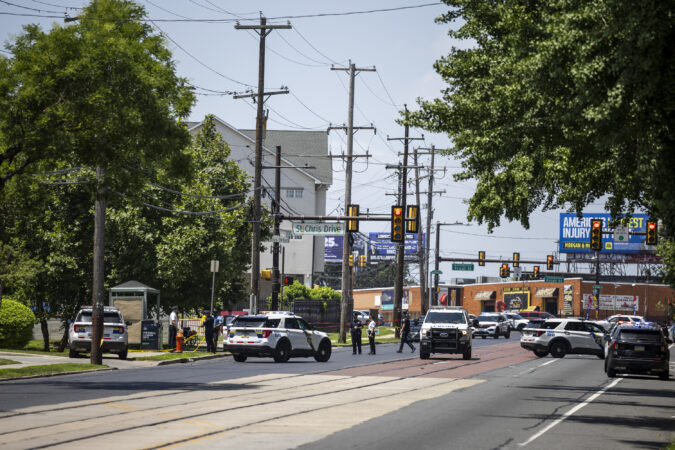
    Police shot and killed a man outside St. Christopher’s Hospital for Children in North Philadelphia on Thursday, authorities said.

    Officers were called to the hospital shortly before 10:30 a.m. for a report by hospital staff of an “irate man,” said Police Commissioner Kevin Bethel.

    At a briefing with the media Thursday evening, Bethel clarified that the man, whose name and age were not released, did not threaten anyone at the hospital.

    “The hospital was at no time under threat,” Bethel said.

    The man was at the hospital yesterday related to something involving a “child in the hospital,” Bethel said, then later adding that it was the man’s son.

    The man was asked to leave Wednesday, and when he returned Thursday, he was not allowed to enter the hospital, said Bethel, who did not elaborate on why the man was asked to leave.

    But when he returned Thursday, “he did not threaten” staff and was “compliant.”

    Shortly thereafter, a relative called police and reported that the man was suicidal and may have a gun, Bethel said.

    Police drove to the bus stop on Erie Avenue outside the hospital where the man was and an officer was just exiting from the passenger side of a police vehicle when the man allegedly pulled out a gun, Bethel said. The officer then fired.

    The man was transported to Temple University Hospital, where he later died. Bethel said a gun was recovered at the scene.

    A woman standing next to the man, who Bethel described as his girlfriend, was grazed by a bullet. He said she was in good condition.

    “He did not fire his weapon,” Bethel said about the man.

    The officer who fatally shot the man was placed on administrative duty while the shooting is investigated.

    At an earlier media briefing, Bethel described the shooting as a tragedy that unfolded in a matter of minutes.

    He added: “We have a lot to sort through,” including the mental state of the man who was killed. “He may have been going through some mental issue,” Bethel said.

    No patients or hospital staff were injured, said hospital spokesperson Bill Tierney. The man who was shot did not come inside the hospital, he said.

    The hospital initially went into a lockdown, which has since been lifted, Tierney said. Some entrances to the hospital were closed during the initial police investigation but they had reopened by Thursday afternoon, he said.

    Police have not released the name, age, or rank of the officer who discharged his weapon.

    Michael Lopez, a senior staffer at a sports complex across the street from the hospital, said he heard about a half dozen gunshots. Initially mistaking the gunfire for July Fourth fireworks, Lopez said he came out to Erie Avenue, where he saw a throng of police officers — and a woman he said appeared to be bleeding from her neck.

    “It was gruesome,” Lopez said.

    Thursday’s shooting was the second fatal shooting by a Philadelphia police officer in less than three weeks.

    On June 14, three officers were injured and Eric Franks was fatally wounded after exchanging gunfire in the Wynnefield neighborhood of West Philadelphia. The officers — who were shot in the hip, leg, and face — were hospitalized and recovered, police said.

    Their names had not been released as of Thursday because of an active threat assessment, said police spokesperson Sgt. Eric Gripp.

    — Staff writer Robert Moran contributed to this article.

  • Police are searching for a man who shot and killed two men and injured a third near Hunting Park Rec Center

    Police are searching for a man who shot and killed two men and injured a third near Hunting Park Rec Center

    Police have identified a man who they say shot and killed two men near the Hunting Park Recreation Center within days last month and shot and wounded a third man in May in what investigators believe are linked crimes.

    Jahylin Melchur, 21, is wanted in connection with two homicides and the shooting near the large North Philadelphia park, according to police.

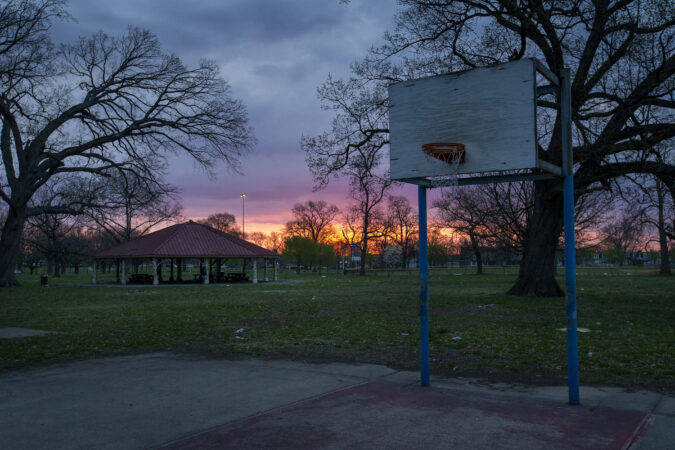
    He is accused of killing 45-year-old Martin Higgins in the park on June 20. Officers found Higgins on the bleachers of the baseball field around 10 p.m. that evening suffering from a gunshot wound to the torso, police said. He was pronounced dead at the scene.

    Less than a week later, police said, Melchur shot and killed 29-year-old Sharef Holman not far from where Higgins was killed.

    Officers responded there on June 26 just before 11 p.m. and found Holman suffering from multiple gunshot wounds near the basketball courts. He was taken to Temple University Hospital, where he died a short time later.

    And on May 29, investigators said, Melchur shot a 55-year-old man in Juniata Park, about two miles from the recreation center. The victim told police Melchur had attempted to rob him before shooting him in the elbow and torso.

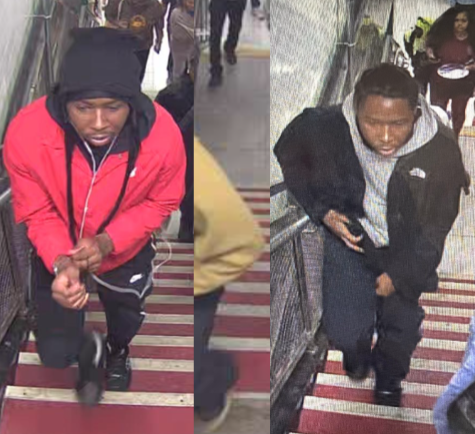
    Police are seeking the public’s help in finding Melchur, who they say is considered armed and dangerous and whose image, captured on surveillance footage at a Broad Street Line station, was circulated widely last week in an effort to locate him.

    Law enforcement sources said the victims were found partially clothed, and that they were looking into whether they had met the suspect through a dating app.

    Deputy Police Commissioner Frank Vanore declined to address that aspect of the investigation in a news conference last week and said police were looking into whether the incidents were related to robberies.

    Who were the victims?

    Sharef Holman’s loved ones said the 29-year-old lived a life of faith and compassion, and that he was the life of any party he attended.

    His mother, Danielle, said her son was beloved on both sides of his large family.

    “He was tall in stature, and the children in our family loved to climb him,” she said. “The reason why I start there is because Sharef had a heart for the youth.”

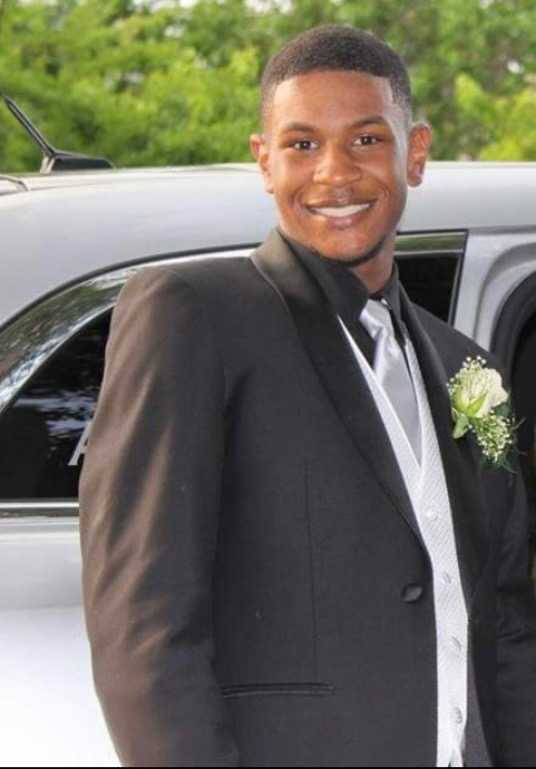
    Sharef Holman, a 29-year-old man who was shot and killed near the Hunting Park Recreation Center in June.

    Holman, who was born in Philadelphia and graduated from Samuel Fels High School in Crescentville, loved playing the saxophone and dancing, his mother said. He excelled in his school’s musical theater program, and once played Ebenezer Scrooge, the lead role in A Christmas Carol.

    He had most recently worked at The Belvedere nursing home in Chester, where he assisted residents with recreational programs, and he tutored schoolchildren with the Greenhouse Project, a nearby Christian nonprofit.

    For a time, his mother said, Holman struggled with drug addiction, and she remembers the pride she felt when he graduated from a rehab program two years ago.

    “He had been fighting addiction for some years, and this last one was the one where he was the most successful,” she said, adding that her son’s progress allowed him to get an apartment of his own.

    Danielle Holman said she and her family are planning a celebration of her son’s life this weekend. As they prepare to honor and remember him, she said, they hope police will find and bring their son’s killer to justice.

    The family of Martin Higgins, who was shot and killed days before Holman, declined to be interviewed as they deal with their loss.

    Higgins, 45, was a graduate of Temple University’s business school and worked as an inspector for the city’s Community Life Improvement Program, according to his obituary.

    He had a “kind heart, generous spirit, and unwavering support for those he loved,” the obituary said, and he “was the person who showed up when someone needed him, always making time for family and friends no matter what was going on in his own life.”

    Police ask that anyone with information about Melchur contact the homicide unit at 215-686-3334 or submit an anonymous tip by calling 215-686-TIPS (8477).

  • Temple Hospital asks public for help identifying patient

    Temple Hospital asks public for help identifying patient

    Editor’s note: The patient has been identified, Temple officials said Wednesday afternoon.

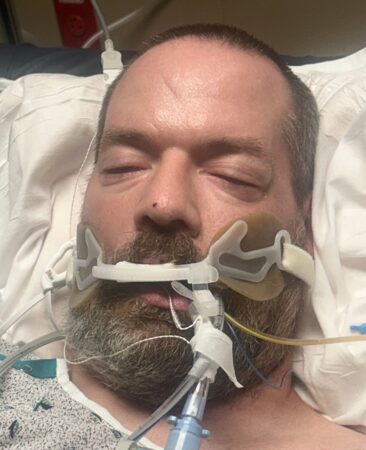
    Temple Health seeks help from the community identifying a patient at its main hospital in North Philadelphia.

    The health system on Wednesday released a photo of the patient, who appears to be in his 50s and was admitted to Temple University Hospital on June 8. It hopes to locate his friends and family.

    Anyone with information can call 215-707-2000.

  • Three men have been shot near Hunting Park Rec Center over the last month in what appear to be linked crimes, officials say

    Three men have been shot near Hunting Park Rec Center over the last month in what appear to be linked crimes, officials say

    Philadelphia police are investigating whether three men shot near the Hunting Park Recreation Center in the last month — two of them fatally and just six days apart — were targeted by the same gunman, according to law enforcement sources.

    The two men killed this month were found partially undressed and shot in the torso inside the large North Philadelphia park, said the sources, who spoke on the condition of anonymity to discuss an ongoing investigation. A third man was shot in late May and survived.

    Police believe the same person was involved in both killings, the sources said, and are looking into whether the men had met the suspect through a dating app.

    Deputy Police Commissioner Frank Vanore said investigators have identified a person of interest interest in the case, a man in his late teens or early 20s, after capturing his image on surveillance footage as he entered and exited a Broad Street Line station.

    The man — whom investigators did not identify — is considered armed and dangerous, Vanore said at a news conference Monday.

    Philadelphia police said this man is a person of interest in the shooting deaths of two men near the Hunting Park Recreation Center in separate incidents within the last 10 days.

    “All three incidents are perpetrated very similarly, in the same geographic area,” he said. “We’re believing now that they’re all connected and being done by the same person.”

    On June 20, officers responded to the park, at 1101 W. Hunting Park Ave., shortly after 10 p.m. and found Martin Higgins, 45, on the bleachers of the baseball field, suffering from a gunshot wound to the torso. He died at the scene, police said.

    Then, on June 26, police responded and found another man just before 11 p.m. suffering from multiple gunshot wounds near the basketball courts. Police have not yet identified the man but said he was 29-years-old.

    Police now believe a third shooting last month is linked to the gunman.

    In that May 29 incident, a 55-year-old man was shot in the elbow and torso in the park just before 10 p.m. The victim later told investigators that a man wearing all black who appeared to be in his 20s approached and told him that he was being robbed, according to Vanore.

    Vanore said investigators had yet to determine a motive tying the cases together, though they believe robbery is the motivation behind the shooting that was not fatal.

    Asked whether the victims had met the suspect on a dating app — a detail law enforcement sources said they are investigating — Vanore declined to comment, citing the ongoing investigation.

    “If that is [part of the case], that’s something we’ll have to develop moving forward,” he said. “But at this point we know that this individual appears to be preying on people.”

    Higgins’ relatives could not be immediately reached for comment Monday. An obituary shared online said he was a graduate of Temple University’s business school and worked as an inspector for the city’s Community Life Improvement Program.

    “Marty was known for his passion for clothing, style, and self-expression,” the obituary said. He had a “kind heart, generous spirit, and unwavering support for those he loved” and “was the person who showed up when someone needed him, always making time for family and friends no matter what was going on in his own life,” his family wrote.

    He was one of six children and was an uncle to many nieces and nephews.

    Meanwhile, as investigators continue to search for the gunman, they are asking anyone with information about the crimes to contact the homicide unit at 215-686-3334 or submitting an anonymous tip at 215-686-TIPS (8477).

  • The historic Conkling-Armstrong House in North Philly is poised for affordable redevelopment

    The historic Conkling-Armstrong House in North Philly is poised for affordable redevelopment

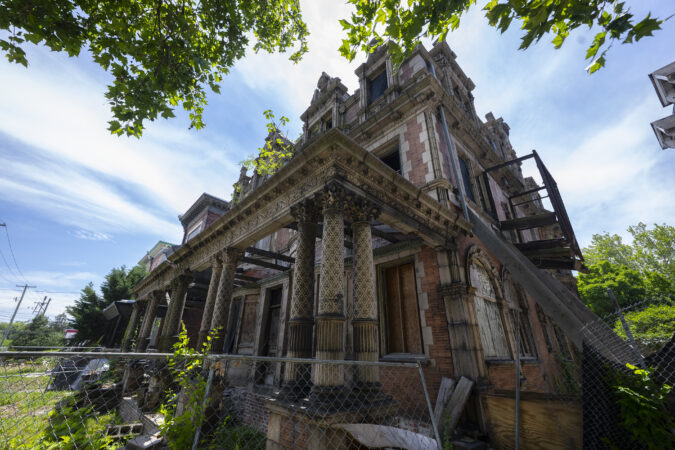
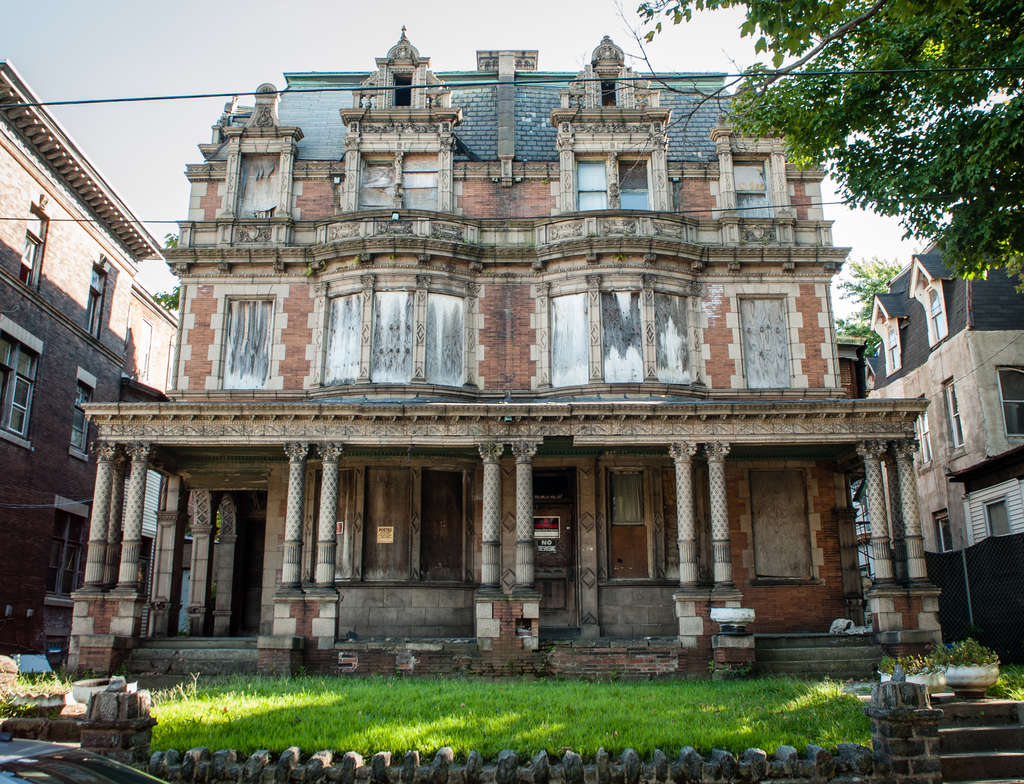
    They don’t make them like the Conkling-Armstrong House anymore. They never really did — except this once.

    Located at 2224-26 W. Tioga St., each of the two roughly 5,000-square-foot houses in this twin mansion are encrusted with terra-cotta flourishes that set them apart from their neighbors and from pretty much any other building in the city.

    That’s because this almost 130-year-old mansion in North Philadelphia was built as a towering advertisement for what the Conkling-Armstrong Terra Cotta Co. could offer late-19th-century developers and architects.

    They studded it with beautiful decorations and elaborate details to demonstrate what their products could look like on future buildings.

    When this one-of-a-kind house was built in 1898, the company’s factory stood mere blocks away. Now it is gone, demolished in 2011, and the house itself hasn’t been occupied in even longer.

    That period of vacancy will end soon, if local affordable housing developer Brian Wise gets his way. He’s already invested almost $1 million in bringing the Conkling-Armstrong house back from the brink of demolition.

    “When we first had the property, we could not even walk through it,” said Wise, managing partner of Wise Holding Group LLC. “There was so much deterioration from the roof all the way down to the basement.”

    Wise plans to build 12 apartments in the twin buildings and another 12 in two additions behind the twins, each over 4,000 square feet. They will extend into the vacant lot behind the Conkling-Armstrong house, fronting on Estaugh Street.

    The plan is to lease most of the units to tenants who use rent vouchers from the Philadelphia Housing Authority.

    “It’s a pretty ambitious job to do and something that will be a challenge, but sometimes we like challenges,” Wise said. “We’ll do everything we can to keep the building stabilized and bring it back to its original form, especially the exterior.”

    Earlier this month, the city’s Zoning Board of Adjustment gave Wise the go-ahead to begin the project.

    “This is one of these projects that you’ll remember over the course of your career,” Wise’s attorney, Alan Nochumson, said in his pitch to board members to preserve the building.

    Wise needed permission to build beyond the allowable density on the site, arguing that the rents from additional units were the only way to make the project economically feasible.

    The Conkling-Armstrong house on the 2200 block of West Tioga Street in 2018.

    His case was supported by two local community groups, the Allegheny West Civic Association and the Swampoodle Neighborhood Parcels Association.

    Wise anticipates an 18-month to two-year timeline, given the final Historical Commission approvals he needs.

    Wise originally came to this block of West Tioga Street to try to buy one of the other venerable, if less ornamented, stone twin houses on the block.

    He decided against that purchase, but while he was in the neighborhood, he noticed the intricate design and decoration of the Conkling-Armstrong House, as well as its dilapidated state.

    After acquiring the building, Wise considered demolishing it. But the Conkling-Armstrong House is on the Philadelphia Register of Historic Places, which makes razing it a challenge. Instead, the developer decided to embark on his first adaptive reuse proposal. He needs a final Historical Commission approval to begin construction.

    “My first impression, obviously, was that the architectural nature of the property was unique,” Wise said. “It was something that we weren’t used to seeing … so instead of knocking it down, we said let’s try to bring this building back to life.”

    At the zoning board, Wise faced questions from commissioners who wanted him to add a porch to the new addition facing Estaugh Street, which he promised to do.

    The new buildings behind the Conkling-Armstrong house will be more modest, with a design that echoes other houses in the neighborhood.

    “We decided that trying to match all of these ornate features of the front building is not a tenable solution,” said Matt Masterpasqua of the Mass Architecture Studio, which is designing the project.

    “So we tried to take context from the rear street, as well as some of the more modest neighboring buildings to inspire our new design,” Masterpasqua said. “It’s a little more feasible for us to construct.”

    He anticipates the redevelopment of the Conkling-Armstrong Terra Cotta Co.’s house-and-showroom will cost at least $3 million, but he could be aided by federal Historic Preservation Tax Credits.

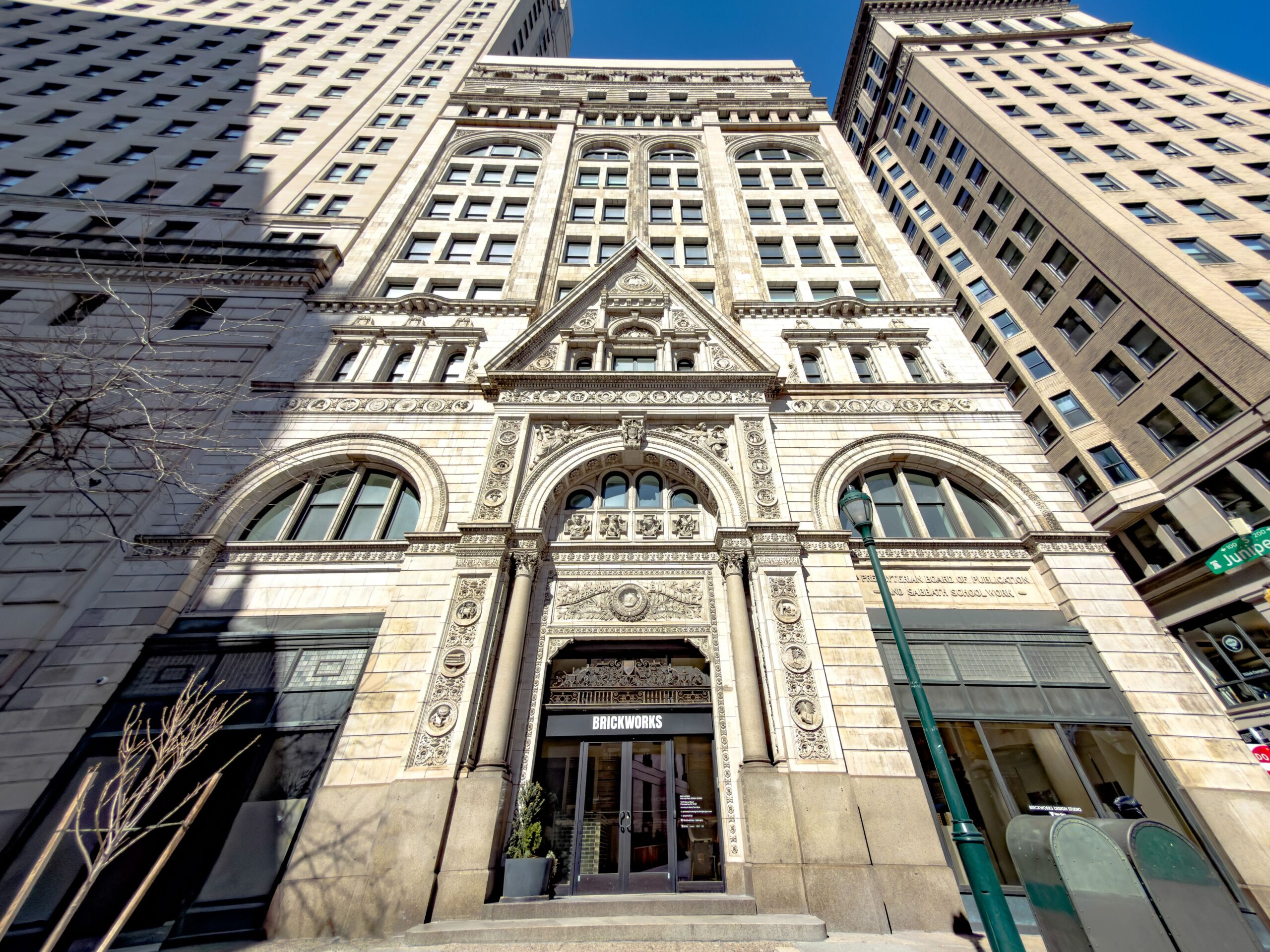
    The Witherspoon building, ornamented by the Conkling-Armstrong Terra Cotta Co.

    The company’s historical legacy in Philadelphia includes ornamenting such structures as the Witherspoon building and the former Curtis publishing house. Like many historically protected gems, those buildings are in Center City, not residential North Philadelphia.

    “It was a showcase for the capabilities of their company, but it’s also just really an incredible building,” Masterpasqua said. “It’s really great to be part of something that’s going to be able to salvage the neighborhood and this piece of architecture.”

  • Olney house raid uncovers curious letter, drugs, chemicals, fake DEA badges — and possible links to two missing women

    Olney house raid uncovers curious letter, drugs, chemicals, fake DEA badges — and possible links to two missing women

    During a weeklong search of a crumbling Olney twin, federal agents and Philadelphia police found guns and drugs, tubs of chemicals, a curious unsigned letter, and fake law enforcement badges as they were investigating the homeowner’s connection to at least two women who have been missing for years.

    The unusual investigation began under similarly bizarre circumstances: U.S. Park Police encountered Eugene Albert Horsch, 44, acting suspiciously in his black BMW parked near Sixth and Market Streets on the morning of June 19, Deputy Police Commissioner Frank Vanore said.

    As the ranger approached the car, Vanore said, he heard a woman in the backseat say, “You’re going to hurt me.” The woman then falsely identified herself to the officers using the name of a 38-year-old woman who had been reported missing in Kensington in February 2023, said the sources, who spoke on the condition of anonymity to discuss an ongoing investigation.

    The woman, 39, later told investigators that she’d given the alias because she had open warrants for her arrest in ongoing drug cases, and that Horsch had previously made her fake identification cards in that name, telling her she could use it if she was ever stopped and questioned by police, the sources said.

    And later, the sources said, she told officials that she did not know that missing woman — but feared something bad may have happened to her.

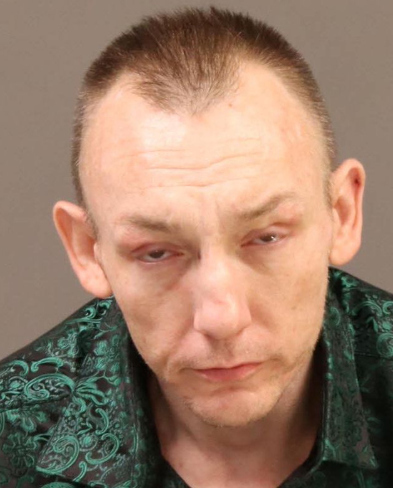
    Eugene Albert Horsch, 44, of Philadelphia.

    When police searched Horsch’s car outside Independence Hall, they recovered two firearms with obliterated serial numbers, as well as cocaine, fentanyl, and marijuana, according to an affidavit of probable cause for his arrest. What’s more, a source said, the car also contained a collapsible baton, a cattle prod, switchblade knives, and a fake U.S. Drug Enforcement badge with Horsch’s photograph under the name “Eugene Frederick Steiner.”

    Horsch was taken into custody and charged with illegal gun possession and drug crimes. He’s currently being held on $500,000 bail at Curran-Fromhold Correctional Facility.

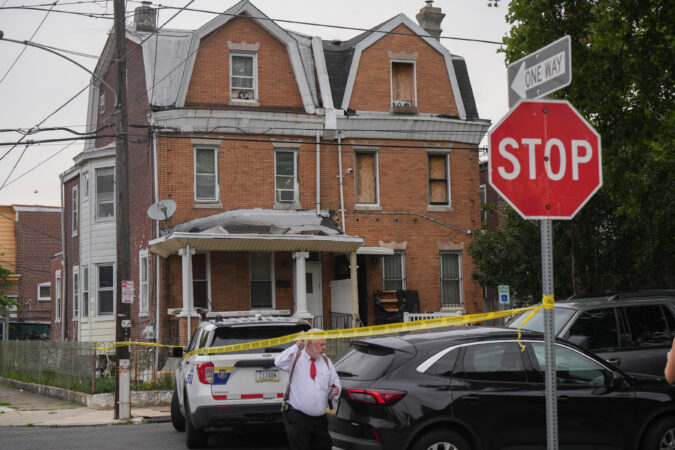
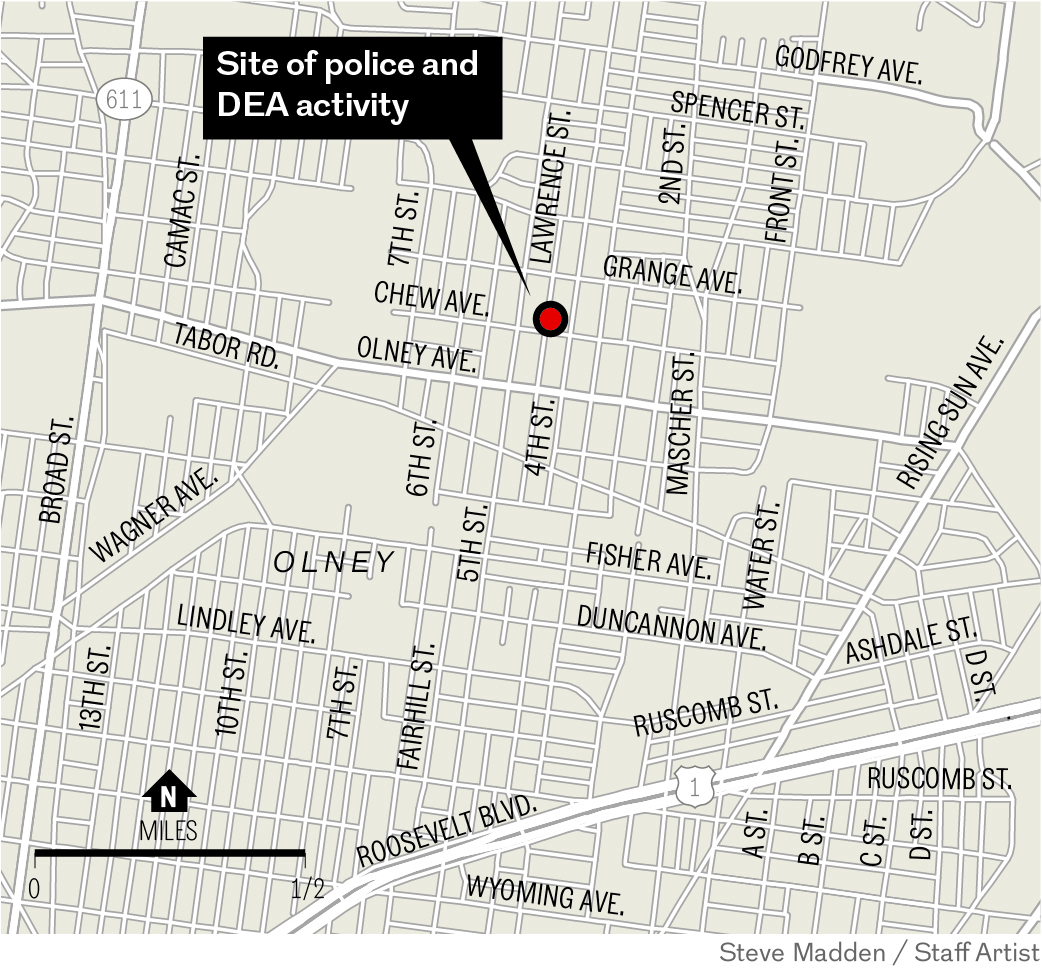
    Officials with federal drug enforcement began searching Horsch’s home on the 400 block of West Chew Avenue alongside Philadelphia police on June 19.

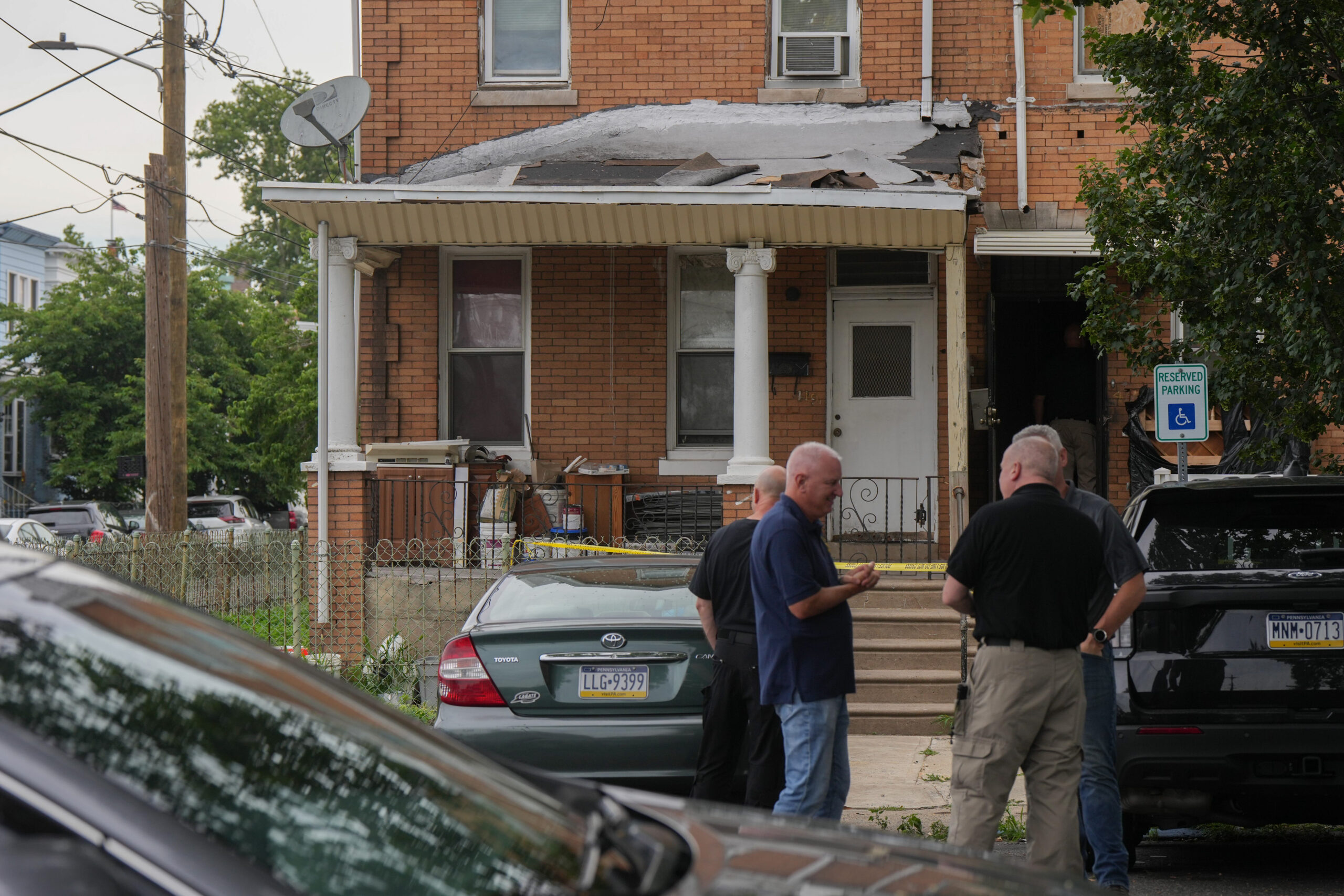
    The house at the 400 block of W. Chew Avenue in Olney being investigated.

    Vanore, in a news conference Friday, said the conditions of the boarded-up twin and materials recovered inside of it — including hidden compartments, drums filled with chemicals, and what appeared to be urns holding at least one of Horsch’s relatives’ cremated remains — only deepened the mysteries of the case.

    And investigators soon found themselves confronting a second concerning thread: Horsch’s late father, R.C. Horsch, a convicted drug manufacturer and erotic filmmaker, had an ex-wife who was last seen at the Olney property in 2016 and has never been found.

    Horsch’s attorney, Jerome Brown, said he did not have details about the ongoing police investigation.

    Brown said R.C Horsch, who died in 2025, had been questioned in the June 2016 disappearance of his ex-wife Amy McHale, of South Philadelphia. She suffered from mental health and substance abuse issues, he said.

    “This is much ado about nothing,” Brown said of the missing persons investigation. “They’re barking up the wrong tree.”

    Inside Horsch’s home, investigators found another handgun, chemicals and bottles of liquid that forensics investigators in white hazmat suits were still working to identify on Friday, Vanore said. There was also a 55-gallon drum with connections to waterlines leading into a hole in the ground, he said, and materials to grow marijuana upstairs.

    Federal investigators also found a multipage and unsigned handwritten letter that described references to hurting unspecified people, and references to the serial killer Ted Bundy, according to an affidavit of probable cause to search the home that was obtained by The Inquirer.

    “Acting on emotion is where problems occur. What I don’t think I told you was that the first time it was planned ahead of time. The threat was made before you know who came over and I already had a 2ft zip tie in my pocket and a drum set up,” the letter said, according to the affidavit.

    According to the warrant, it went on: “I had been ready and waiting and I damn sure showed no hesitation. And it was fun.”

    Law enforcement sources said investigators were working to verify the authenticity of the letter, who wrote it, and whether it was meant to serve as a portion of a novel or screenplay. Horsch’s father published several works of fiction with masochistic themes, including one described as an “autobiographical memoir of a caring, empathetic serial killer.”

    Police also found bank cards in the name of the woman who went missing in 2023, and also recovered what appeared to be a death certificate for another woman who died last year, the document stated.

    Vanore said no human remains were found inside the home.

    Forensic experts from the FBI are now analyzing the liquids and materials recovered in the home, he said.

    Vanore said it wasn’t clear whether the chemicals were intended for a drug manufacturing operation or another purpose.

    “We just don’t know what he’s doing, if he’s producing something, if he’s making something, if he’s irrigating something, we don’t know,” Vanore said. “I’m not a chemist, but from what I’ve been told … they could have been explosives.“

    And, he said, it was too early to say whether the evidence would speak to any of the missing person cases tied to the property. He declined to identify the woman who had been reported missing in 2023 and did not answer questions related to the ongoing investigation into McHale’s disappearance.

    “We’re certainly going to look into the activities that went on at that house,” he said.

    Investigators on W. Chew Avenue.

    News reports of the search of the Horsch home reopened wounds for McHale’s family. Gloria McHale said her daughter struggled with mental health issues and a drug addiction, and was married to R.C. Horsch for several years before disappearing June 14, 2016.

    In an interview Friday, she said when police questioned R.C. Horsch at the time of her daughter’s disappearance, he said he last saw McHale drinking vodka before he went to bed, and that when he woke up, she was gone.

    “I knew that wasn’t right,” McHale’s mother said. “She wouldn’t disappear. She had a daughter and grandkids. Her daughter was about to get married.”

    Prior to his arrest last week, Eugene Horsch had a criminal history that included at least 10 other arrests for drug possession, dealing, assaults and drunk driving. He was sentenced to four to eight years in prison after police discovered $1.9 million worth of cannabis inside the Chew Avenue home in 2013, court records show.

    He was arrested again in May 2025 for possession of marijuana and amphetamines and handed three years’ probation.

    Then, in March, he was charged with aggravated assault after police said he stabbed a man in the stomach at Eighth and Market Streets. Prosecutors withdrew the charges in May after a witness failed to appear in court, court records show.

    Since his release from jail, he appeared to be living back at his rundown home on Chew Avenue, a property that city inspectors cited as vacant and unsafe in recent years and that neighbors described as an increasingly off-putting presence on the block.

    On Friday morning, anxiety swirled along the typically quiet residential neighborhood, about a mile from the Montgomery County border.

    A security camera mounted on Horsch’s home between the boarded-up windows on the upper floors looked out over an overgrown yard where at least a dozen local and federal agents collected and tested evidence into the late afternoon.

    Sid Brunson, a construction worker who lives nearby and occasionally cut the grass in front of Horsch’s house, said Horsch often had women who appeared to use drugs at his property. A fire broke out on the upper floors of the property several months ago, he said, which led to plywood covering the windows.

    He described his neighbor as a “quiet” and “real jittery” man who kept to himself.

    “He always had a nice shirt on like he was going to the office,” Brunson said, “but he never gave you enough time to talk because he was always rushing.”

    Staff Writers Ryan W. Briggs, Samantha Melamed, Brett Sholtis, Michelle Myers, Isabel Maney, Andrea Padilla, and Jesse Bunch contributed to this article.