Tag: North Philadelphia

  • Philly’s school closure plan targets middle schools. Here’s why the district is moving away from them.

    Philly’s school closure plan targets middle schools. Here’s why the district is moving away from them.

    The Philadelphia School District is walking away from middle schools — mostly.

    Of the 20 schools Superintendent Tony B. Watlington Sr. has recommended to close, six are middle schools — AMY Northwest, Conwell, and Stetson in Kensington; Harding in Frankford; Tilden in Southwest Philadelphia; and Wagner in West Oak Lane.

    The district plans to expand elementary schools to take in those students in most cases, and Conwell, a magnet middle school, would send students to AMY at James Martin.

    “Our research does not say that traditional middle school children in Philadelphia perform better academically than K-8 students,” Watlington said when he rolled out his tentative plan in January. “Nationally, and in Philadelphia, there’s a mixed bag.”

    While the school district says the K-8 model reduces transitions for students and helps maximize resources, critics of the district’s plan say closing middle schools will uproot their children and abandon successful schools.

    Education experts, meanwhile, say instructing middle school-age students has long been a complex and controversial issue — and it’s a debate that Philadelphia district officials are reigniting with their sweeping facilities proposal.

    Among the top complaints from critics of the plan: The pivot isn’t absolute. Though many middle schools are disappearing, Philadelphia will still have 13 standalone middle schools and secondary-middle schools if those six close. And some will even grow.

    Middle-grades students from Masterman, the popular and elite city magnet, would take over the closing Laura Wheeler Waring school building in Spring Garden “to expand access” to Masterman, officials said.

    The district is also adding a new Academy at Palumbo Middle School to give students a feeder pattern into the South Philadelphia high school magnet. The new middle school will co-locate with Childs Elementary in Point Breeze.

    And in the Northeast, where schools are bursting at the seams, two standalone middle schools — Castor Gardens and Baldi — will be untouched. So will a handful of others, including Roberto Clemente in North Philadelphia, Feltonville School of Arts and Sciences, Grover Washington in Olney, AMY at James Martin in Fishtown, and MYA and Science Leadership Academy Middle School in West Philadelphia.

    Why is the district targeting middle schools?

    Though officials said the facilities plan is not driven by finances, it’s clear that the underfunded school system needs to shrink its footprint.

    With 70,000 empty seats citywide and an inequitable distribution of programs and opportunities, system officials say they need to make changes to do better for all kids.

    “We can more efficiently distribute our limited resources in a K-8 model by operating 13 grade spans as opposed to six,” Watlington told City Council at a hearing on March 17. “This is an efficiency issue.”

    At present, the district has 13 different grade spans throughout its schools — from a single K-2 to K-4s, K-5s, K-8s, 5-8s, 6-8s, and others. It is proposing shrinking, mostly, to six different grade bands, and emphasizing K-8 or 5-12 as preferred models.

    Students, teachers, and supporters rally before a community meeting at John B. Stetson Middle School this month. It’s one of six middle schools that is slated for closure.

    Officials say they’re also relying on feedback received in surveys taken and meetings held prior to the plan’s release, despite critics’ worry that the feedback was crafted to give the district the answers it wanted.

    Hilderbrand Pelzer III, an associate superintendent, told a crowd of more than 100 people gathered at a Stetson Middle School meeting this month that in the surveys, families told the district they wanted to minimize transitions.

    “Think of safety in the sense that young people should remain in one place longer, pre-K to 8,” Pelzer said. “Hence why we want to recommend some of our K-4s, K-5 schools grow to K-8. Now that may not be the answer you want to hear, but the voices that have informed that have allowed us to make that a recommendation.”

    But critics of the district’s plan say they worry that the feedback was crafted to give the district the answers they wanted. And the audience at Stetson that day pushed back: Minimizing transitions is not what they want. They want their middle school to stay at their current school.

    “Why can’t you inform recommendations from people at Stetson?” one person shouted.

    The long and thorny history of middle schools

    Wrestling with where middle-grades learners should attend school is nothing new, said Penny Bishop, dean of Boston University’s Wheelock College of Education and Human Development.

    “We have been struggling to figure out how to provide appropriate schooling for this age group for well over a century,” Bishop said. “It’s a question with a long and thorny history” dating to the 1800s, she said, with much back and forth.
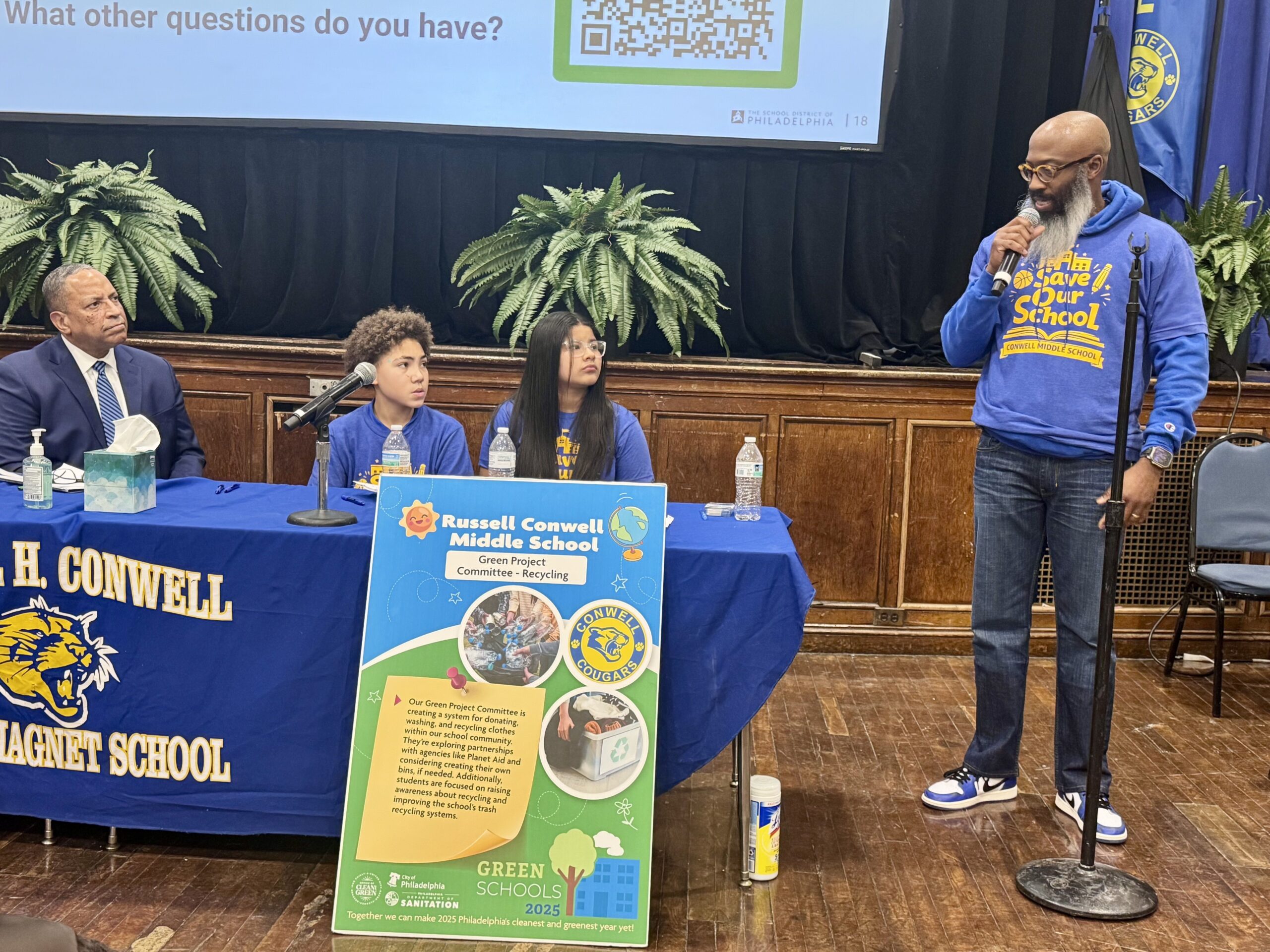
    Philadelphia School District Deputy Superintendent Oz Hill (left) and student moderators listen to Andre Sanford-Adams, Conwell Middle School’s health and physical education teacher, speak during a recent community meeting about why he thinks it’s a mistake to close Conwell.

    Many of Philadelphia’s middle schools began as junior highs. Middle schools as a concept first surfaced in the United States in the 1960s and took off in the 1980s as part of an explicit attempt to create schools “designed based on the developmental needs of this particular age group, as opposed to saying, they’re short high schoolers or they’re tall elementary students,” Bishop said.

    But tweens and early adolescents can be a tough age group to educate well, and middle schools got a bad rap among some, said Bishop. As school choice and shifting birth rates caused belt-tightening in some places, some districts began to shift grade configurations.

    Boston recently shut its last standalone middle school as that district contracted amid enrollment losses, for instance.

    Both Bishop and Katie Powell, director for middle level programs at the Association for Middle Level Education, said that research doesn’t support one kind of grade configuration or another.

    “What matters most for middle school-age students is that we understand that they are going to need a different experience than their elementary counterparts in a K-8 building, and having a defined middle school, even within that K-8 school — that’s what tends to be most successful,” Powell said.

    And, Bishop said, “a lot of this is tied up in the degree to which the leadership understands the developmental needs of the students.”

    At a recent meeting at slated-to-close Wagner Middle School, Kim Newman, another Philadelphia associate superintendent, vowed that the district will spend time and resources planning thoughtful transitions as grade configurations change.

    Adding middle grades to elementary schools hasn’t always been done well in the district, Newman said.

    “In the past, what we’ve done is said, ‘Let’s just add some furniture and books, great,’ grow a grade each year, and that’s really not what children need,” said Newman.

    She said she hopes receiving schools and closing middle schools will work together on what middle-grades learners need in the newly expanded elementary schools.

    Philly skepticism

    Claire Andrews has taught at Wagner Middle School for 40 years — years ago, it had 1,000 students, but today, fewer than 300 are enrolled.

    In the past, “we had opportunities for students, and as the years have gone on, they have just disappeared,” Andrews said. “Over the years, everything has just been pulled away.”
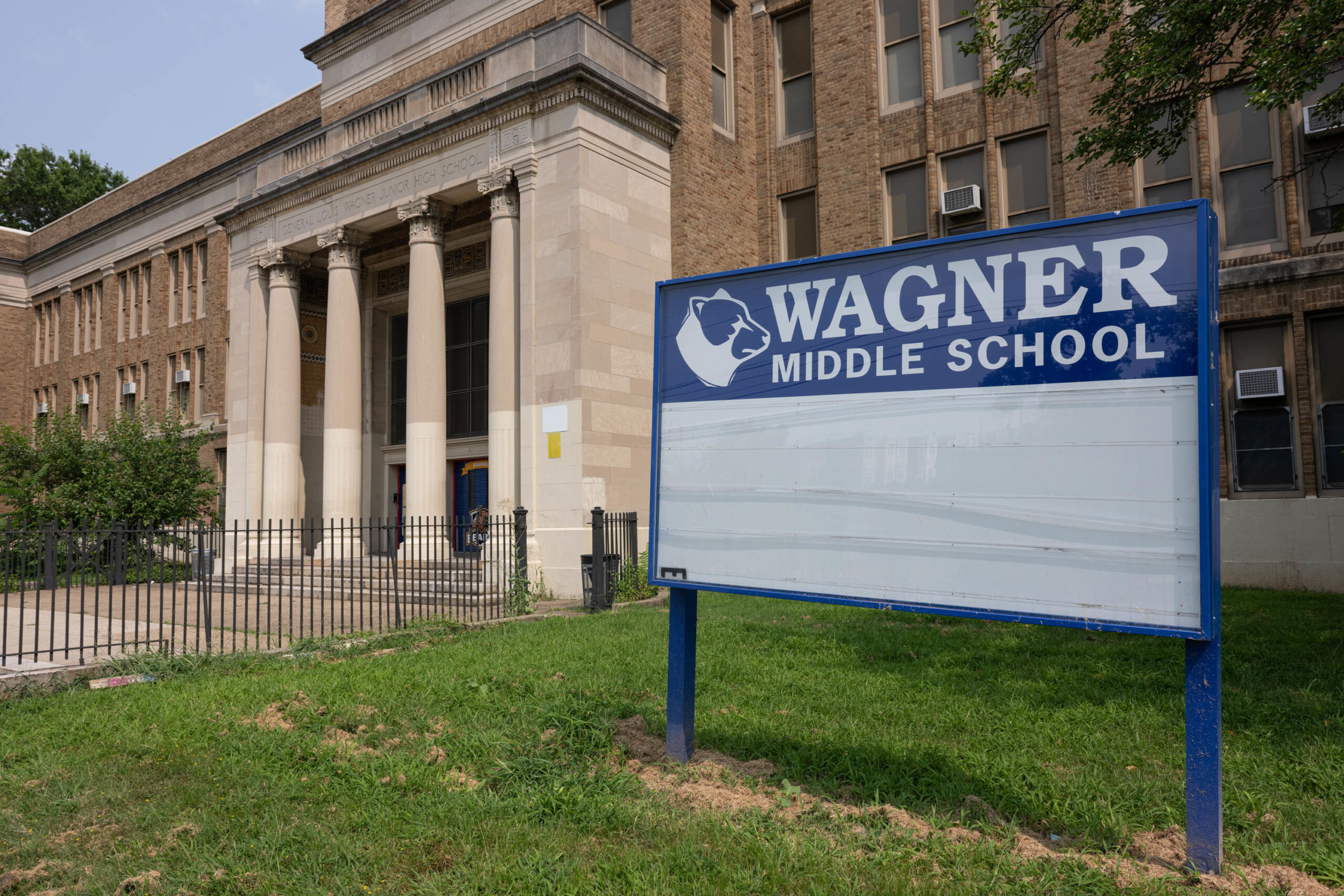
    Wagner Middle School is one of six middle schools that is facing potential closure in Philadelphia.

    Andrews, like others in the city, raised questions of equity.

    “Are they closing schools in the Northeast?” Andrews said.

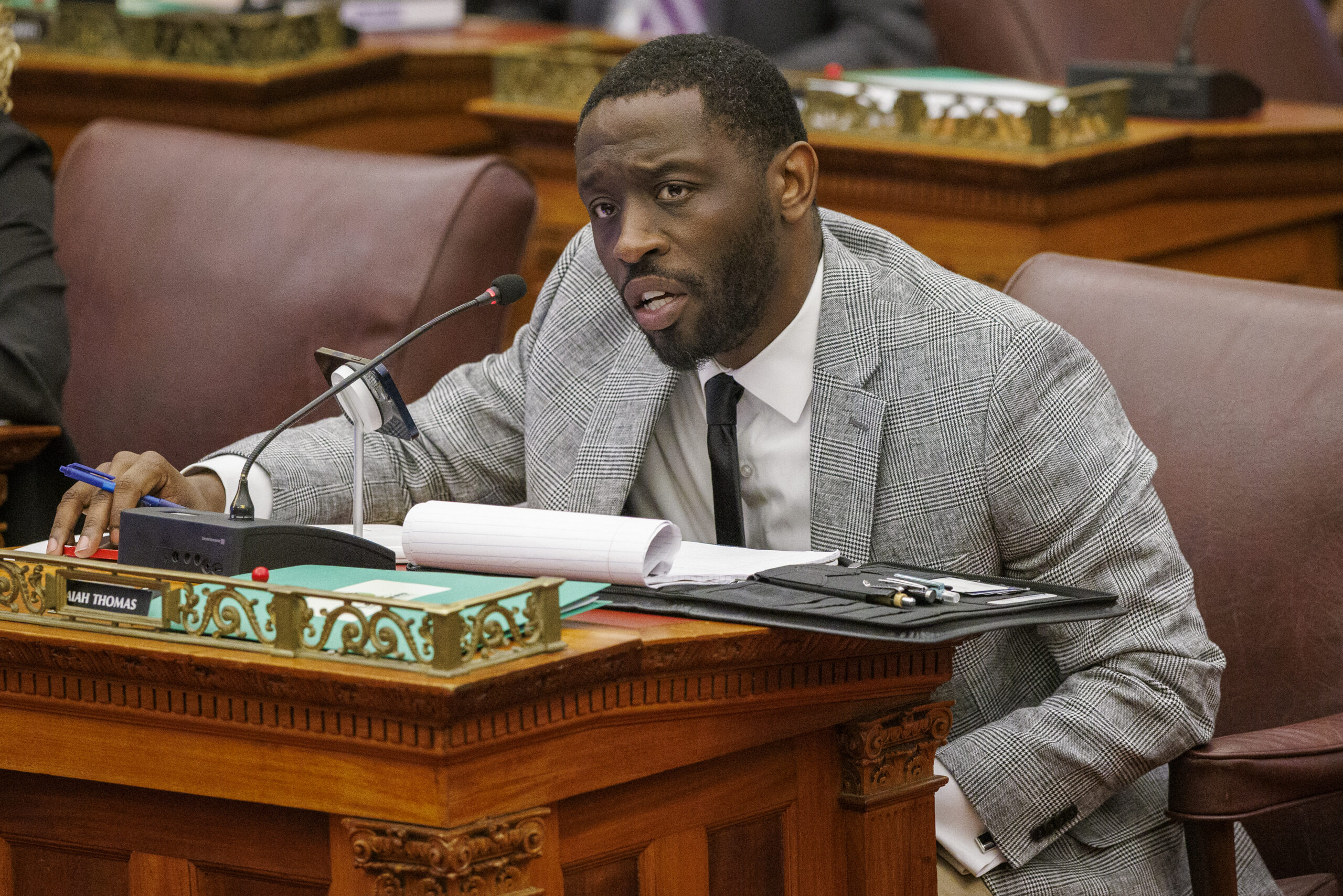
    Councilmember Isaiah Thomas, chair of City Council’s education committee, highlighted Philadelphia’s complicated middle school position at a Council hearing last week.

    The district’s talking points around middle school sound good, he said. But he questioned decisions to expand middle grades at magnet schools, like Masterman and Carver High School of Engineering and Science, while closing a number of neighborhood middle schools.

    “I want us to have nuanced dialogue around where we are and what we need to do,” said Thomas, who has spoken out against closing Conwell, of which he’s an alumnus. “And I also recognize that there’s pushback on every decision you made. I understand that we have to make tough decisions somewhere else, there is no real facilities plan, and we do need a plan.

    But the reality is that we’re still not sending the right message to people, and I think our position around middle school is problematic.”

    Watlington stressed the research around middle schools and the surveys.

    The superintendent said the district is committed to modernizing and expanding receiving schools, where needed, and was not just focused on the Northeast.

    “We absolutely will not present a plan that just pushes resources in parts of the cities that’s growing fastest,” Watlington said. “I think this is as strategic a plan as we could create.”

  • A three-year ban on puppy breeding in Philly is likely to become law | City Council roundup

    A three-year ban on puppy breeding in Philly is likely to become law | City Council roundup

    A three-year ban on puppy breeding in Philadelphia is likely to become law after City Council members on Thursday passed a bill to relieve overcrowded animal shelters.

    Lawmakers unanimously approved legislation to institute a three-year moratorium on puppy breeding in the city, a ban that applies to all breeders except those that have a state kennel license or are breeding service dogs.

    The bill now heads to Mayor Cherelle L. Parker’s desk. If she signs the bill and it becomes law, the moratorium will take effect 90 days later.

    Also on Thursday, a Council member amended his legislation that would allow lawmakers to keep their jobs while running for another office — but there are exceptions.

    Here’s what happened during Thursday’s meeting.

    What was today’s highlight?

    Tightening the leash on backyard breeders: The bill was authored by Councilmember Cindy Bass, a Democrat who represents parts of North and Northwest Philadelphia.

    Bass was sick and absent from Council on Thursday, but she has previously said that her bill is aimed at limiting people from breeding more puppies than they can sell.

    “Every litter means more dogs in our shelter, more cost for taxpayers, and more suffering that we can prevent,” Bass said last year. “This isn’t about punishment; it’s about compassion and responsibility.”

    Under the bill, it would be illegal to sell puppies or post ads to sell them within city limits. Breeders who violate the moratorium could face a $1,000 fine, with the proceeds going to the city’s Animal Care and Control Team, also known as ACCT Philly. The animal control agency would also enforce the ban.

    Sammi Craven, a local animal welfare advocate, testified Thursday about overcrowding at ACCT Philly’s North Philadelphia shelter. She named the dogs that were recently euthanized or are scheduled to be put down: Stella, Cheese Burrito, Luna, and Muffin, among others.

    “Philadelphia’s current animal welfare policy is ineffective,” Craven said, “and infrastructure and prevention have not kept pace with intake.”

    In this 2022 file photo, Brian Martin, 31, and Vanessa Green, 29, look at their new dog they plan to adopt while Green holds Autumn, 1, at ACCT Philly, which was hosting a pet adoption event.

    Critics of the moratorium say it will be challenging to enforce and could harm smaller, responsible breeders as opposed to those already operating illegally.

    Charley Hall, a government relations official with the American Kennel Club, called on Council to hold the bill and establish a working group to draft new regulations.

    “Working together, we can stop the flow of irresponsible breeders and improve animal welfare and fewer dogs ending up in Philadelphia’s shelters,” Hall said. “The question is how to achieve that goal in a way that is effective, fair, and legally sound.”

    What else happened today?

    Resign to run gets amended: City Councilmember Isaiah Thomas has been trying for more than a year to pass legislation amending a rule that requires city employees quit their jobs to run for higher office.

    He’s attempting to amend the rule so that city officeholders can keep their jobs only if they are running for a state or federal office. That means Council members running for mayor would still have to give up their seats.

    Councilmember Isaiah Thomas makes a statement at the start of a hearing last week.

    But Thomas has run into roadblocks, including opposition from the city’s Board of Ethics, which asked him to make changes to the legislation in December, just before it appeared poised to pass.

    On Thursday, he introduced an amendment that made a series of tweaks, including clarifying that sitting city officeholders may only run for one public office in any election.

    Jordana Greenwald, general counsel for the city’s Board of Ethics, testified that the board still has concerns and requested more amendments, including prohibiting certain forms of politicking in the workplace.

    She also said the legislation should clarify that the mayor can’t run for another office while serving as the city’s chief executive, a rule that is already enumerated elsewhere in the city charter.

    However, making additional amendments could require Thomas re the legislation entirely. He said he would prefer for the bill to be called up for a final vote next week.

    Amending the resign-to-run rule requires changing the city’s Home Rule Charter, meaning voters would have to approve it through a ballot question. Voters have rejected earlier attempts to repeal resign-to-run.

    Codifying the youth watchdog: Council members also approved legislation to make the city’s Office of the Youth Ombudsperson permanent.

    The office was created through an executive order signed by former Mayor Jim Kenney and is responsible for monitoring child welfare, juvenile justice, and behavioral health residential placement facilities in the city.

    Making the office permanent also requires an amending the charter. A ballot question is likely to appear in the May primary election.

    Quote of the week

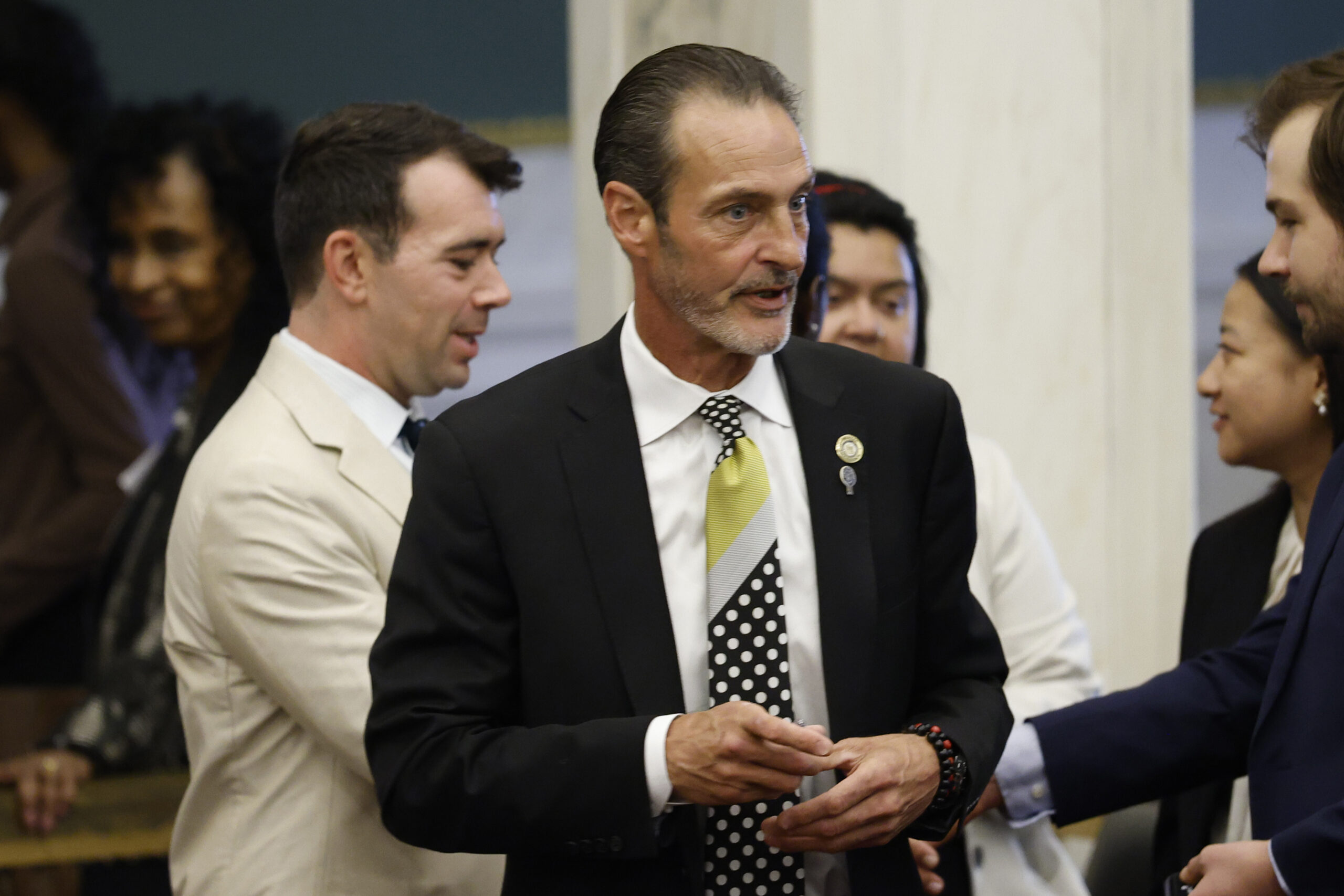
    Councilmember Jim Harrity in Council Chambers in September 2025.

    That was Councilmember Jim Harrity, an Irish Catholic who in a speech Thursday honored the sacrifices made during the Muslim holy month of Ramadan.

  • State Rep. Chris Rabb isn’t running for reelection to Harrisburg as he goes ‘all in’ for Congress

    State Rep. Chris Rabb isn’t running for reelection to Harrisburg as he goes ‘all in’ for Congress

    State Rep. Chris Rabb announced Thursday he will not seek reelection to Harrisburg this year while he runs for a seat in Congress.

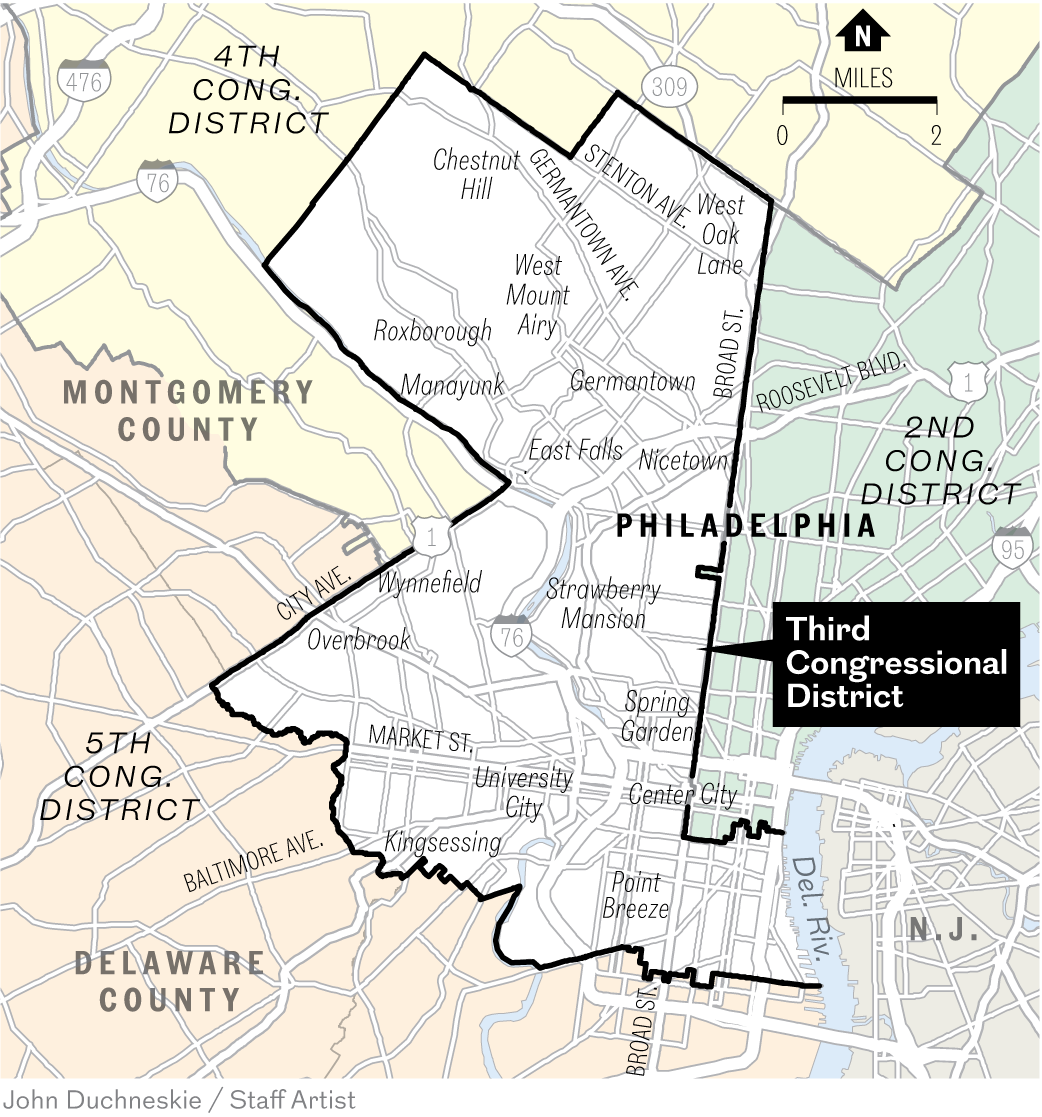
    State lawmakers are allowed to simultaneously run for two offices. But Rabb, a Democrat, said he is fully committed to his campaign for Pennsylvania’s 3rd Congressional District, which covers roughly half of Philadelphia and is, by some measures, the most Democratic district in the nation.

    “I’m so inspired and overwhelmed by the tremendous outpouring of support we are seeing all across the city, and today I want to send a message loud and clear: I am all in on this race for Congress,” Rabb said in a statement.

    Rabb served five terms in the Pennsylvania House’s 200th District in Northwest Philadelphia, a seat once held by Mayor Cherelle L. Parker. A progressive who often operates as a political lone wolf, Rabb has frequently clashed with the city’s Democratic establishment, especially Parker and her allies in the Northwest Coalition political organization.

    In his first election, Rabb in 2016 defeated Tonyelle Cook-Artis, Parker’s close friend who now serves as an aide in the mayor’s office. Two years later, he bested Melissa Scott, who is now the Parker administration’s chief information officer. In 2022, redistricting forced Rabb to run against fellow incumbent State Rep. Isabella Fitzgerald, and he won again.

    Two other state lawmakers from Philadelphia are running in the crowded Democratic primary for the 3rd Congressional District, which is being vacated by retiring U.S. Rep. Dwight Evans (D., Philadelphia).

    Map of Pennsylvania’s Third Congressional District.

    State Sen. Sharif Street, of North Philadelphia, is not up for reelection this year, meaning he will keep his seat in Harrisburg if he loses the congressional race without having to run two campaigns. Street last year resigned as chair of the Pennsylvania Democratic Party after facing questions about whether his congressional campaign would conflict with his party leadership role.

    State Rep. Morgan Cephas, who chairs the Philadelphia delegation in the state House and represents a West Philadelphia district, is up for reelection this year. Her campaign on Thursday said she intends to simultaneously run for another term while vying for the congressional seat.

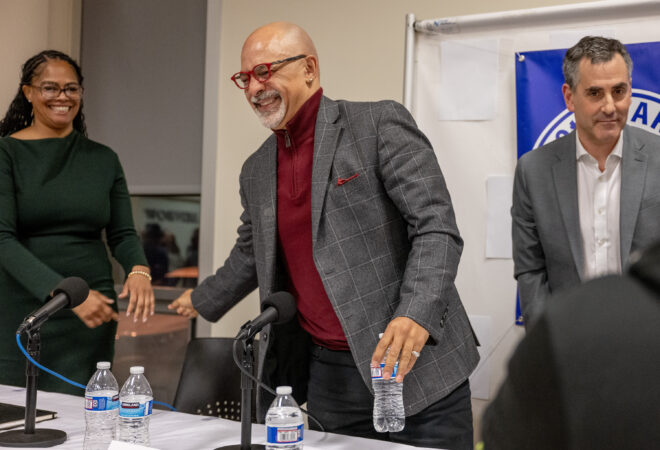
    (left to right) Alex Schnell, physician Dave Oxman, State Sen. Sharif Street, physician Ala Stanford, State Rep. Morgan Cephas, and Pablo McConnie-Saad appear during a candidate forum for the 3rd Congressional District seat at Church of the Holy Trinity on Monday, Feb. 9, 2026 in Philadelphia. The seat vacancy comes from Rep. Dwight Evans’ retirement.

    It is common for state legislators to run two simultaneous campaigns while seeking federal office. Their reelection bids often require little effort, as incumbents rarely face serious challenges. (Rabb’s career as an anti-establishment legislator in the backyard of one of Philadelphia’s most powerful political factions, however, has made him an outlier in that regard.)

    Rabb’s decision to fully commit to the congressional race follows the revelation last week that he let go of his campaign treasurer, Yolanda Brown, and reported her to federal authorities after she made “unauthorized withdrawals” from his campaign bank account.

    He declined to say how much money went missing. In his most recent campaign finance report, Rabb reported raising $127,000 in the last three months of 2025 and entering the year with $99,000 in cash on hand, which at the time represented the fifth-largest reserve among the 3rd District hopefuls.

    Rabb’s decision not to run for reelection means the Northwest Coalition now has its best opportunity in a decade to recapture the 200th District state House seat. Northwest Philadelphia’s liberal voter base, however, also opens the door for another progressive to follow in Rabb’s footsteps.

    “It has been the honor of a lifetime to serve Philadelphia families across the 200th House District for the past 10 years and I look forward to seeing the great candidates who will run,” Rabb said. “In the coming weeks, I’m committed to working with my fellow progressive leaders and advocates across this district to ensure that this seat continues to be held by a true champion for Philadelphia’s working families.”

    Anyone hoping to succeed Rabb in Harrisburg will have to act quickly. Candidates must submit petitions to appear on the ballot. The window to gather signatures opened this week and closes March 10.

    Rabb said Wednesday that his congressional campaign collected the required 1,000 signatures in just 12 hours, which he said makes him the first candidate in Pennsylvania to submit qualifying petitions and shows that his campaign “continues to build strong grassroots support across Philadelphia.”

  • After a Philadelphia cancer patient ran out of options, a novel T-cell therapy at Rutgers kept her alive

    After a Philadelphia cancer patient ran out of options, a novel T-cell therapy at Rutgers kept her alive

    Jefferson Health oncologist Jennifer Johnson had exhausted all the standard treatment options for her 49-year-old patient with esophageal cancer, who was likely to die within months.

    Surgery, chemotherapy, radiation, and immunotherapy had kept the Northeast Philadelphia woman alive for six years after her diagnosis, but no longer were enough to stop her cancer from spreading.

    Johnson knew her patient needed something novel. She recalled a presentation several years prior at a conference for head and neck cancers, where a doctor discussed an experimental treatment called T-cell receptor (TCR) therapy.

    This type of cancer immunotherapy works by engineering the immune system to fight cancer, and falls into the same family of treatments as CAR-T, or chimeric antigen receptor (CAR) T cell therapy, an approach pioneered at the University of Pennsylvania that has revolutionized treatment for blood cancers.

    She thought TCR therapy’s clever approach could work against solid tumors, where CAR-T had not been effective.

    “I just remember sitting in the room and watching him present, thinking, I’m gonna use that one day,” the oncologist and cancer researcher recalled.

    As it would happen, the approach was being tested in a phase II clinical trial at Rutgers Cancer Institute against tumors just like her patient’s: metastatic cancers driven by a virus called human papillomavirus 16. One of the most common strains, HPV16 causes roughly half of cervical cancer cases worldwide, as well as cancers of the head and neck area, anus, and genitals.

    Cases that reach the metastatic stage like Johnson’s patient often run out of treatment options. Whether T-cell receptor therapy would work was unknown, but the alternatives were expected to fail.

    “Anything that you might offer them would definitely not be expected to make their cancer go away completely and do it for a long time,” said Christian Hinrichs, the oncologist and scientist heading the trial whose presentation Johnson saw.

    But interim results from the first half of the trial showed improvement in six out of 10 patients, whose tumors at least partially shrank. And two of them had no evidence of cancer after treatment.

    Johnson’s patient, Maria Pascale, was one of the two whose promising early results were presented at a medical conference and highlighted in a research abstract in the Journal for ImmunoTherapy of Cancer in November.

    She arrived at the health system in New Jersey in the summer of 2024 in such poor health that her lungs were starting to collapse.

    The therapy has enabled her to celebrate two birthdays, start martial arts classes, reunite with old friends visiting from Argentina, and see her 23-year-old son get engaged.

    “Imagine the wedding, then later the grandkids, I’m always thinking about [that],” she said.

    What is a T-cell receptor therapy?

    In the immune system, T cells act as frontline defenders against viruses, bacteria, and other threats.

    Sometimes, these cells aren’t great at their jobs.

    In the face of cancer, T cells can become exhausted over time, and fail to recognize invaders or mount attacks.

    The idea behind immunotherapy is to transform these regular immune cells into cancer-fighting super-soldiers.

    The Rutgers approach, an engineered TCR therapy, involves collecting T cells from a patient’s blood and genetically engineering them to better target a cancer cell for attack.

    Afterward, the scientists grow more of the enhanced T cells in the lab and infuse them back into the patient.

    The “prototype” for this style of therapy is CAR-T, a treatment that has saved tens of thousands of lives since the first FDA approval in 2017. Scientists have not yet been able to replicate the therapy’s success in blood cancers in solid cancers, although some early stage trials have shown potential.

    TCR therapy is thought to be more promising against the latter cancer type — which is what’s being treated in the Rutgers trial — due to differences in the way the engineered T cells identify cancer cells.

    CAR-T therapy uses what’s called a chimeric antigen receptor, a protein that recognizes a cell as cancer based on what’s on the outside of the cell.

    It’s like knowing you’re at your friend’s house because of a specific doormat or set of house numbers on the exterior.

    TCR therapy uses what’s called a T-cell receptor, which can recognize cancer cells based on what’s inside the cell.

    It’s like knowing you’re at your friend’s house because you can see your friend inside.

    Sometimes cancer cells have more unique identifiable elements on the outside, but other times they don’t. Imagine if multiple houses had the same doormat.

    “That target would be on other cells that aren’t cancer cells and cause lots of toxicity,” said Carl June, the pioneering cancer scientist at Penn who developed the first FDA-approved CAR-T therapy and was not involved in the Rutgers trial.

    That’s been the problem that’s held back CAR-T’s use in solid tumors.

    The target in the Rutgers trial is a protein called HPV16 E7, found inside the cell. In tumors driven by the virus HPV16, it plays a key role in turning a cell into cancer.

    “That’s like going after its Achilles’ heel,” June said.

    Swarming the cancer

    Pascale first arrived at Thomas Jefferson University Hospital in Center City in 2018 after suffering injuries in a car accident.

    Doctors found a mass in the 43-year-old’s neck that turned out to be cancer.

    Surgeons removed the mass, and she was fine until 2021 when doctors, including Johnson, found the cancer at the top of her esophagus.

    They treated her with a combination of chemotherapy and radiation, which worked until March of 2022, when the cancer started appearing in Pascale’s lungs.

    “All bets were off,” Johnson said.

    Doctors gave Pascale chemotherapy and immunotherapy over the next couple of years, but in the spring of 2024, she developed an allergy to one of her chemotherapy drugs.

    Around the same time, the cancer spread to the skin on Pascale’s back.

    That’s when Johnson transferred her care to Hinrichs’ team at Rutgers.

    Pascale started preparations for the treatment in July 2024, spending a couple weeks in the hospital.

    The Rutgers team took T cells from her blood, gave her chemotherapy to knock her immune system down, and then transfused the engineered cells back into her body.

    Within 48 hours, Pascale started feeling horrible.

    “It was painful. It was my whole body, like I had pneumonia,” she said.

    She had trouble breathing as the cells fought the cancer in her lungs. Hinrichs described it as “the T cells swarming the cancer,” leading to an inflammatory reaction.

    The same thing occurred on her back. When Pascale’s sister came over, she saw one of the tumors in her skin was suddenly the size of a lemon.

    Another one appeared red and felt like someone was burning a cigarette on her back.

    The pain continued for three days, and then she felt well enough to go home. Pascale and her sister could see and feel the nodules on her back get smaller, until eventually they were gone.

    Roughly five months later, Pascale’s scans showed no evidence of cancer. As of last month, a year and a half after she received the treatment, that was still true.

    “What’s three days of pain compared with the opportunity that I have to live a lot of beautiful things with my family and friends?” Pascale said.

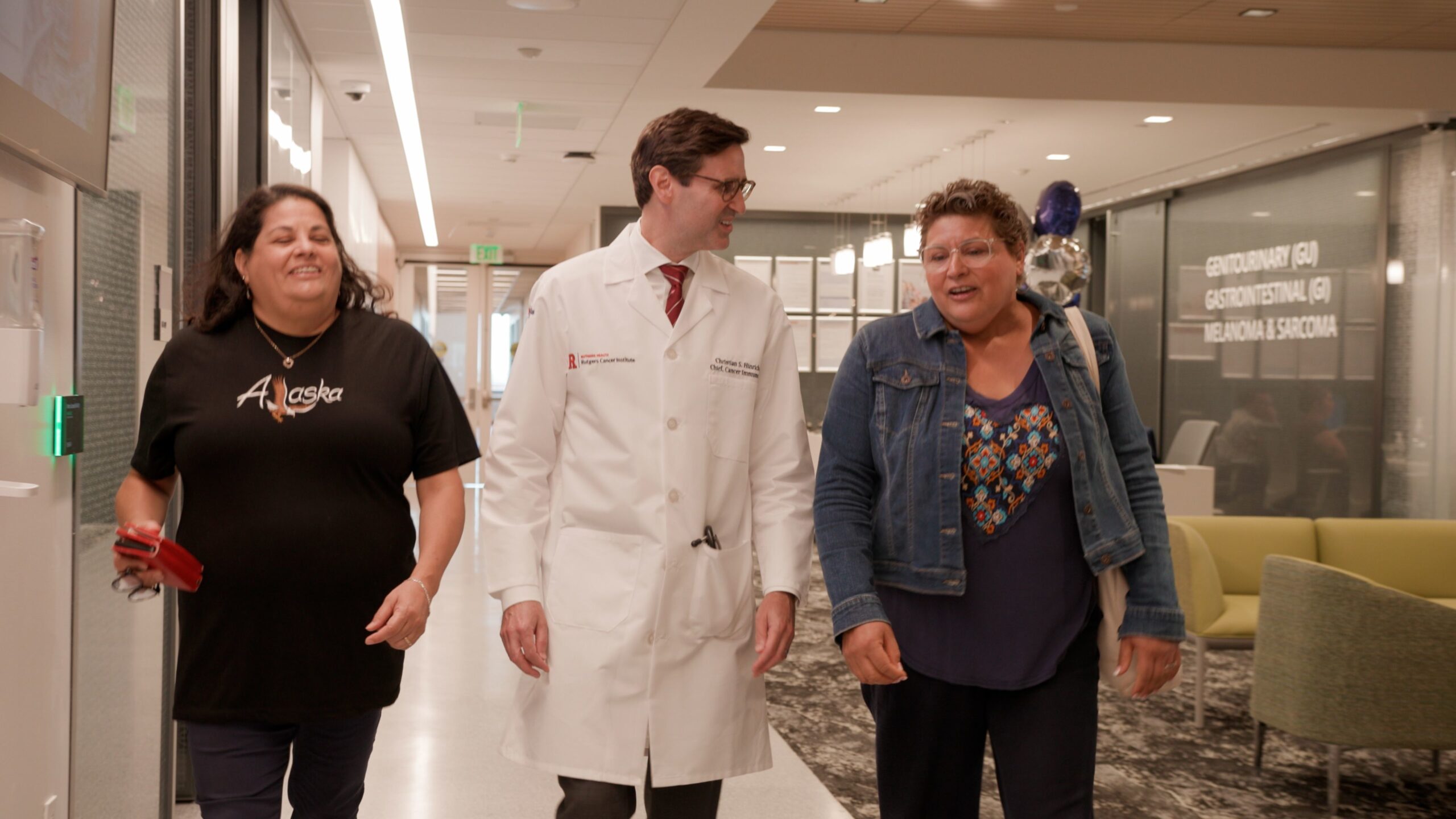
    Maria Pascale walks with her sister Maria Durante and her doctor Christian Hinrichs at Rutgers.

    The future of the treatment

    Hinrichs said his team is working to figure out why two of the patients, including Pascale and a patient with anal cancer, responded better to the treatment.

    He cautioned that it’s too early to draw sweeping conclusions since the sample size is small. (Researchers will seek to recruit another 10 patients for the ongoing trial.)

    The patients who had complete responses will need follow-up scans every few months to make sure their cancers have not returned.

    It will still take years to finish evaluating safety and efficacy. Treatments tested in clinical trials often do not advance to become standard practice.

    June, the Penn scientist, called the trial’s early results promising and noted that there weren’t any major safety problems reported.

    Adverse effects seen in the trial were mainly those caused by the chemotherapy.

    However, the drawback of using TCR therapy is that patients need a certain genetic background for it to work, June said. This is similar to how not every organ donor would be a good match for a recipient.

    The genetic profile chosen for the Rutgers therapy is the most common in America. However, it is less common in Black and Asian people compared to white people.

    Scientists hope it could one day be possible to manufacture the therapy with a warehouse approach, where TCR therapies that work across genetic backgrounds could be mixed and matched.

    “It’s a practical issue that the drug companies face,” June said.

    CAR-T, in comparison, can be used more broadly across different genetic backgrounds.

    What matters most, since the treatment is expensive to make, is that the responses hold up over time, June said.

    (The TCR therapy’s cost has not yet been set, Hinrichs said, since it is currently manufactured individually for each patient.)

    “If they’re long lasting, then it’s really going to be a huge advance because nothing else works in the patients he’s treated,” June said.

    At Jefferson, Johnson is cautiously optimistic about the treatment that has kept her patient alive.

    If the therapy makes it through the rest of the trial process and proves effective, she hopes it could become “another thing in our armamentarium against this type of cancer.” (A type that doctors would hope to see less of since the introduction of the HPV vaccine in 2006.)

    “I can’t tell you how wonderful it is to have a patient responding and living well when you saw things going the wrong way,” Johnson said.

    Editor’s note: This story has been updated to clarify where the research has been presented and a reference to the prevalence of the genetic profile used in TCR therapy.

  • Phil Sumpter, celebrated sculptor, artist, and teacher, has died at 95

    Phil Sumpter, celebrated sculptor, artist, and teacher, has died at 95

    Phil Sumpter, 95, formerly of Philadelphia, celebrated sculptor, artist, art teacher, TV station art director, veteran, mentor, urban cowboy, and revered raconteur, died Thursday, Jan. 1, of age-associated decline at his home in San Juan, Puerto Rico.

    A graduate of John Bartram High School and the old Philadelphia College of Art, Mr. Sumpter taught art, both its history and application, to middle and high school students in Philadelphia for 27 years. He was an engaging teacher, former students said, and a founding faculty member at the Philadelphia High School for the Creative and Performing Arts in 1978.

    He started teaching in 1955 and, after a break in the 1960s and ’70s, finally retired in 1992. “You are very lucky to have a teacher in your life that believed in you, nurtured you, challenged you, and loved you,” a former student said on Facebook. “Mr. Sumpter did all that and more.”

    Other former students called him their “father” and a “legend.” One said: “You did a lot of good here on earth, especially for a bunch of feral artist teenagers.”

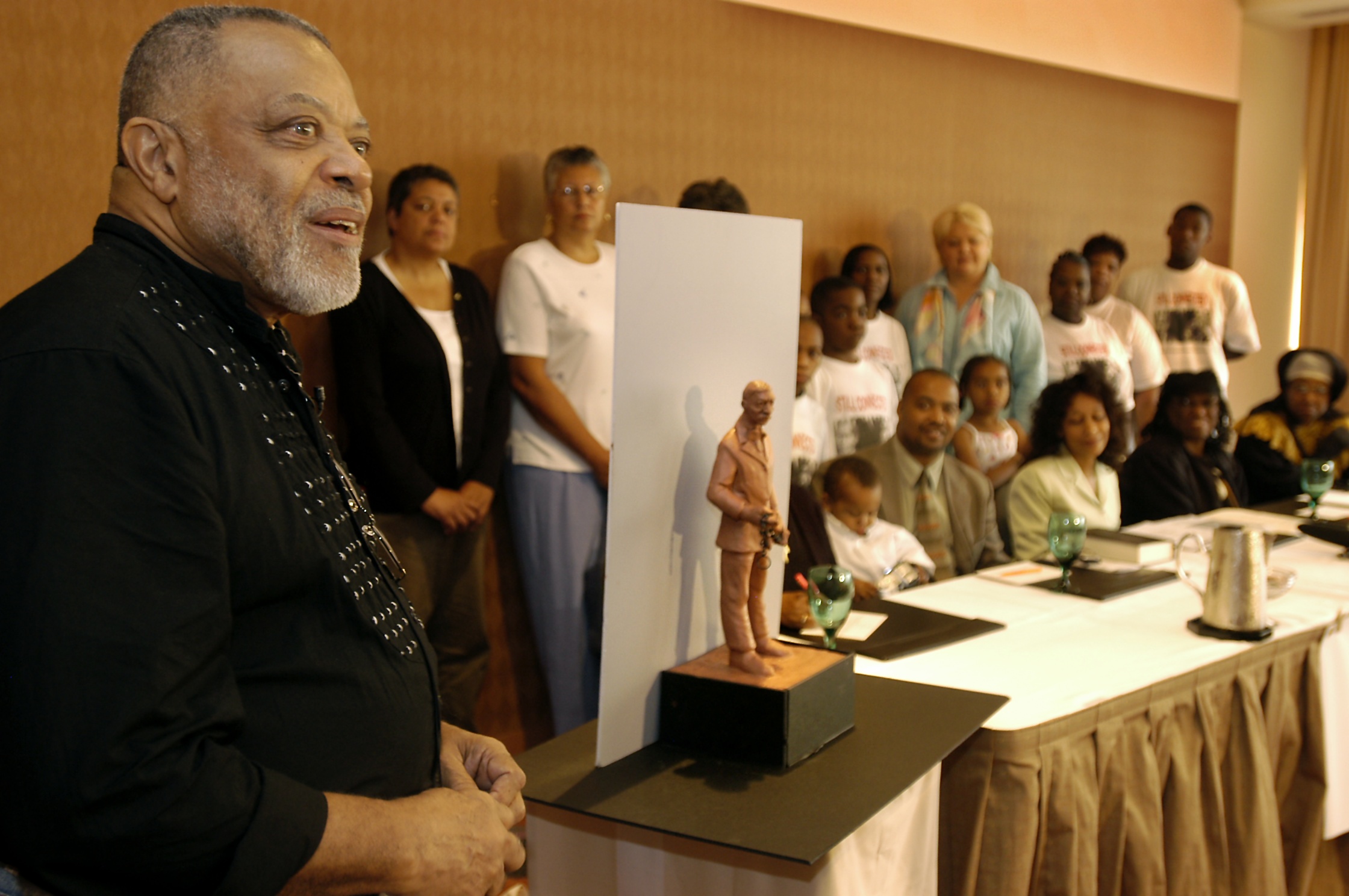
    Mr. Sumpter (left) talks about his sculpture of Underground Railroad organizer William Still in 2003.

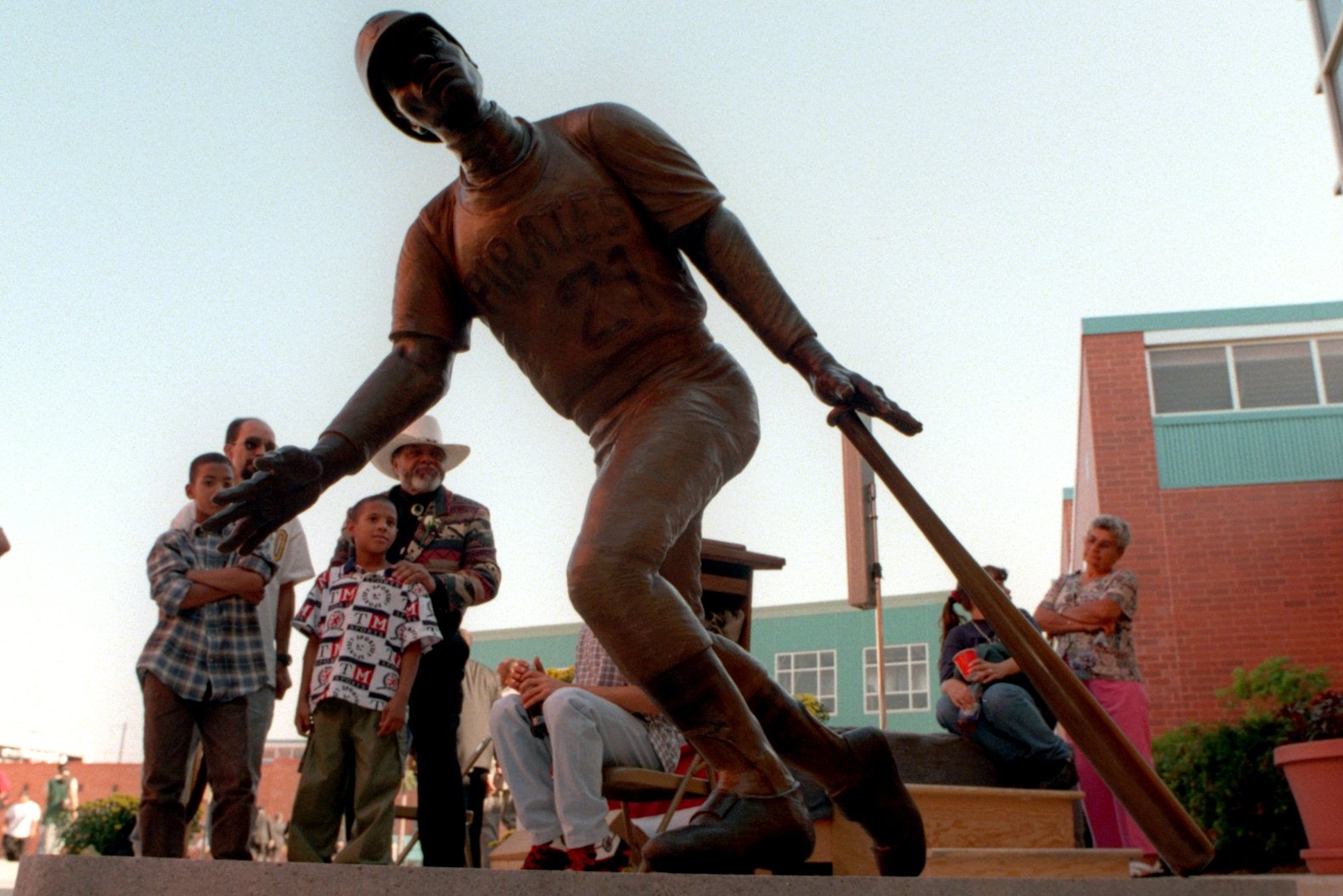
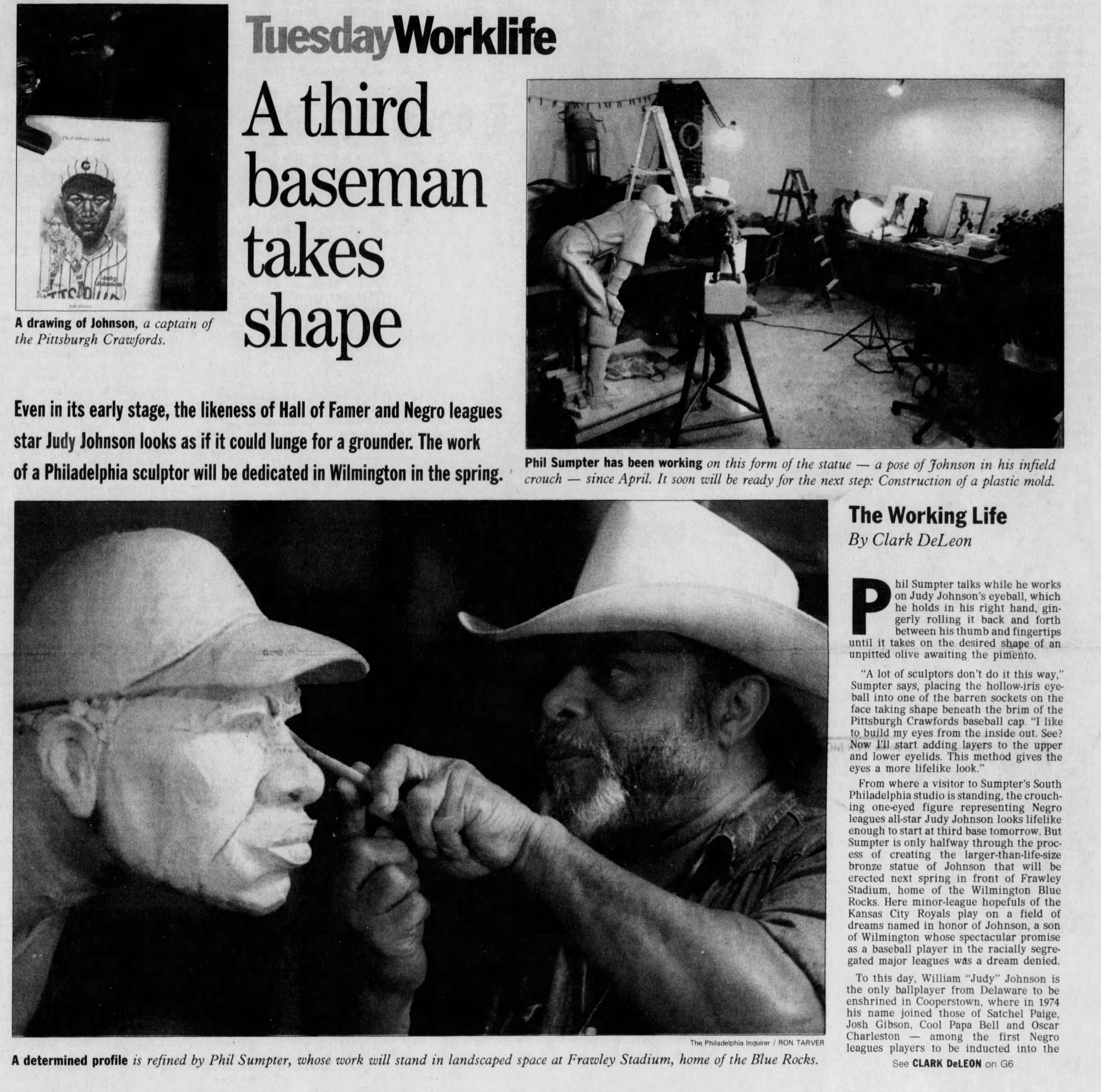
    Outside the classroom, Mr. Sumpter sculpted hundreds of pieces and painted and sketched thousands of pictures in his South Philadelphia stable-turned-studio on Hicks Street. Prominent examples of his dozens of commissions and wide-ranging public art presence include the bas-relief sculpture of Black Revolutionary War soldiers at Valley Forge National Historical Park in Montgomery County, the action statue of baseball star Roberto Clemente in North Philadelphia, the Negro Leagues baseball monument in West Parkside, and the Judy Johnson and Helen Chambers statues in Wilmington.

    He worked often in clay and paper, made murals, and designed commemorative coins and medals. He especially enjoyed illustrating cowboys, pirates, Puerto Rican jibaros, and landscapes.

    His statue of Clemente was unveiled at Roberto Clemente Middle School in 1997, and Mr. Sumpter told The Inquirer: “I think I’ve captured a heroic image, an action figure depicting strength plus determination.”

    He was among the most popular contributors to the Off the Wall Gallery at Dirty Franks bar, and his many exhibitions drew crowds and parties at the Bacchanal Gallery, the Free Library of Philadelphia, the Plastic Club, and elsewhere in the region and Puerto Rico. He hung out with other notable artists and community leaders, and collaborated on projects with his son, Philip III, and daughter, Elisabeth.

    Mr. Sumpter worked often in clay and paper, made murals, and designed commemorative coins and medals.

    He even marketed a homemade barbecue sauce with his wife, Carmen. His family said: “He is remembered for mentorship, cultural fluency, and presence as much as for material works.”

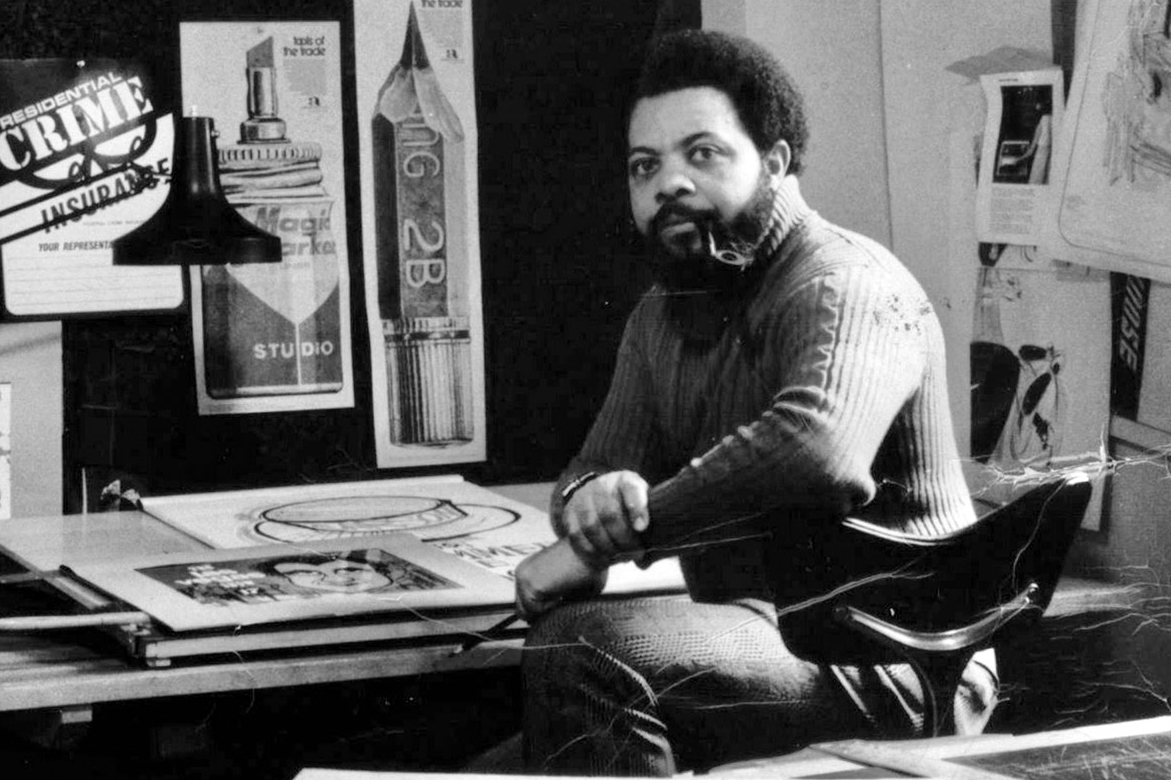
    He founded Phil Sumpter Design Associates in the 1960s and worked on design and branding projects for a decade with institutions, educational organizations, and other clients. He was art director for WKBS-TV, WPHL-TV, and the Pyramid Club.

    “The word for him,” his son said, “is expansive.”

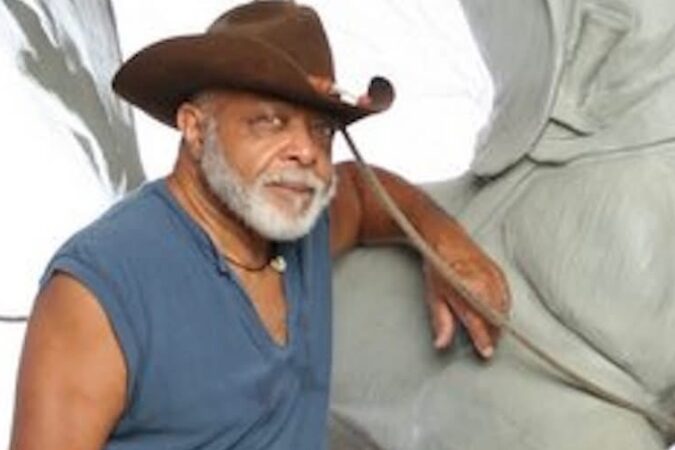
    Mr. Sumpter was friendly and gregarious. He became enamored with Black cowboys and Western life as a boy and went on to ride horses around town, dress daily in Western wear, and depict Black cowboys from around the world in his art. His viewpoints and exhibits were featured often in The Inquirer, the Philadelphia Tribune, Philadelphia Magazine, Dosage Magazine, and other publications.

    Mr. Sumpter (in white cowboy hat) views his statue of Roberto Clemente in 1997.

    He was an air observer for the Air Force during the Korean War and later, while stationed in England, studied sculpture, ceramics, and drawing at Cambridge Technical Institute. His daughter said: “He taught me how to open the portal to the infinite multiverse of my own imagination, where every mind, every soul can be free.”

    Philip Harold Sumpter Jr. was born March 12, 1930, in Erie. His family moved to segregated West Philadelphia when he was young, and he earned a bachelor’s degree in art education at PCA.

    He married and divorced when he was young, and then married Florence Reasner. They had a son, Philip III, and a daughter, Elisabeth, and lived in Abington. They divorced later, and he moved to Hicks Street in South Philadelphia.

    He met Carmen Guzman in Philadelphia, and they married in 2001 and moved to San Juan for good in 2003. He built a studio at his new home and never really retired from creating.

    Mr. Sumpter (second from left) enjoyed time with his family.

    Mr. Sumpter enjoyed singing, road trips to visit family in Pittsburgh, and bomba dancing in San Juan. He was a creative cook, and what he called his “trail chili” won cook-offs and many admirers.

    “He was a larger-than-life person,” his son said. “He was fearless in his frontier spirit.” His wife said: “His joy for life was contagious, as was his laughter.”

    In addition to his wife, children, and former wife, Mr. Sumpter is survived by other relatives.

    A celebration of his life was held earlier in Puerto Rico. Celebrations in Philadelphia are to be from 2 to 5 p.m. Saturday, March 14, at Dirty Franks, 347 S. 13th St., Philadelphia, Pa. 19107, and from 2:30 to 4:30 p.m. Sunday, March 15, at the Plastic Club, 247 S. Camac St., Philadelphia, Pa. 19107.

    Mr. Sumpter’s work was featured in The Inquirer in 1994.
  • WWII-era Philadelphia comes back to life in Count Basie tunes, Strawbridge’s, and South Philly block parties

    WWII-era Philadelphia comes back to life in Count Basie tunes, Strawbridge’s, and South Philly block parties

    When we first meet Bok High graduate Ozzie Phillips — one of three protagonists in Sadeqa Johnson’s latest novel, Keeper of Lost Children — a block party on South Philadelphia’s Ringgold Street is just winding down. In between the last dollops of creamy potato salad and sips of clear corn liquor, Ozzie’s friends and family wish the young serviceman a bon voyage.

    The year is 1948 and 18-year-old Ozzie is headed to Germany to join hundreds of thousands of military men occupying post-World War II Germany.

    He spends the last few weeks with his girlfriend, Rita, picnicking at the Lakes in FDR Park and walking through Center City department stores like Wanamaker’s and Strawbridge’s. One night the couple go to Ridge Avenue’s Pearl Theater to see Pearl Bailey perform.

    The next morning, Ozzie’s Uncle Millard picks him up in a Vagabond-blue Oldsmobile and the two cruise down Broad Street, Count Basie tunes playing on WHAT AM. Uncle Millard circles City Hall, depositing Ozzie at Reading Terminal Station, where he hops on a train to Trenton’s Fort Dix Army Base before embarking on a steam boat to Germany.

    It’s Ozzie’s time in Germany that fuels the plot of the sentimental historical novel.

    “It’s such a joy for me to write the Philly scenes,” Johnson said, during a recent video chat. The book publicist turned New York Times best-selling author was born in South Philadelphia, grew up in North, and graduated from George Washington Carver High School of Engineering and Science. Today, the married mom of three writes from her home in Virginia, right outside Richmond.

    “I left Philly when I went to Marymount Manhattan College in New York,” Johnson said. “But where you grow up is always in your DNA. Philly is in my soul. When I sit down and paint pictures of historical moments in Philadelphia, I get to go home.”

    Cover art for Sadeqa Johnson’s 2026 novel, “Keeper of Lost Children” One of the main characters, Ozzie Ozbourne grew up in 1940s South Philadelphia.

    Johnson has six books out in the world. She self-published her first, Love in a Carry-On Bag, in 2012.

    Her books center young Black women in old-school and modern times trying to do the best with what they got. But in most of her works — especially the captivating historical fiction novels through which she’s made a name for herself on BookTok, podcasts, and traditional bestseller lists — her heroines face overwhelming odds.

    Take the Yellow Wife’s Pheby Delores Brown. Set in antebellum Virginia, Brown’s story is based on the harrowing real-life experience of enslaved woman Mary Lumpkin, who is forced into a relationship with her enslaver for whom she bears five children.

    It was a 2022 finalist for the Hurston Wright Legacy Award. It was also named one of NPR’s Best Books of the Year in 2021.

    “I have this propensity to tell the story of young women 15, 16, 17, who are in a situation that feels insurmountable,” said Johnson, who, until 2023, taught creative writing in Drexel University’s master’s of fine arts program. “And I really love developing those stories that show how those young women get to the other side.”

    The House of Eve, a 2023 New York Times bestseller and a Reese Witherspoon Book Club of the Month pick centers 1950s North Philadelphia teen Ruby Pearsall who falls in love with a Jewish boy whose family runs a corner store. In the book, Ruby must choose between a free ride to Cheyney University and motherhood.

    “I love the research,” Johnson said. “I love learning interesting things about this city that I was brought up in.”

    In Keeper — released this month by 37 INK, a division of Simon & Schuster — Ethel Gathers, a journalist and wife of an Army officer, also stationed in post World War II Germany, is the central character. There, she chances upon a group of multiracial children who she learns are the offspring of Black servicemen and German women.

    Gathers, whose story is based on the life of journalist Mabel Grammer, adopts eight of the “Brown Babies” and starts an adoption agency, ultimately placing hundreds of the children with Black families in the United States. In the book, Grammer visits Philadelphia from her Washington home and books a room at the Divine Lorraine, the country’s first fully racially integrated hotel.

    “I stumbled upon Ms. Grammer while researching The House of Eve,” Johnson said. “And in that moment, I knew I wanted to tell that story.”

    Johnson breathes life into her fictional characters through extensive research, adding vivid details that take the readers back in time and thrust them into the rich tapestry of her story. Fans will often find connections to characters from previous books where they least expect it.

    Ozzie’s military time and South Philly swag is based on Johnson’s great-uncle, 94-year-old Edgar Murray, who, like Ozzie, grew up in South Philly and spent the latter part of the 1940s in Germany. (For the record, Johnson said, her uncle didn’t suffer with alcoholism like Ozzie does in the book.)

    It was Murray who suggested Ozzie live on Ringgold Street and take his date to the Pearl Theater.

    “I like the factual things she puts in there,” said Murray, who lives with family in Denver, Colo. “It makes it more interesting.”

    Philadelphia readers with an eye for history will enjoy seeing the city unfold through Ozzie’s eyes after his 1952 return.

    He leafs through The Philadelphia Inquirer, reading detailed accounts of white veterans securing “large mortgages and moving out to lofty suburbs” on the GI bill that he too applied for. He works a job at the Navy Yard, gets married at Tasker Baptist Church, and experiences a miracle at West Philly’s Mercy-Douglass Hospital.

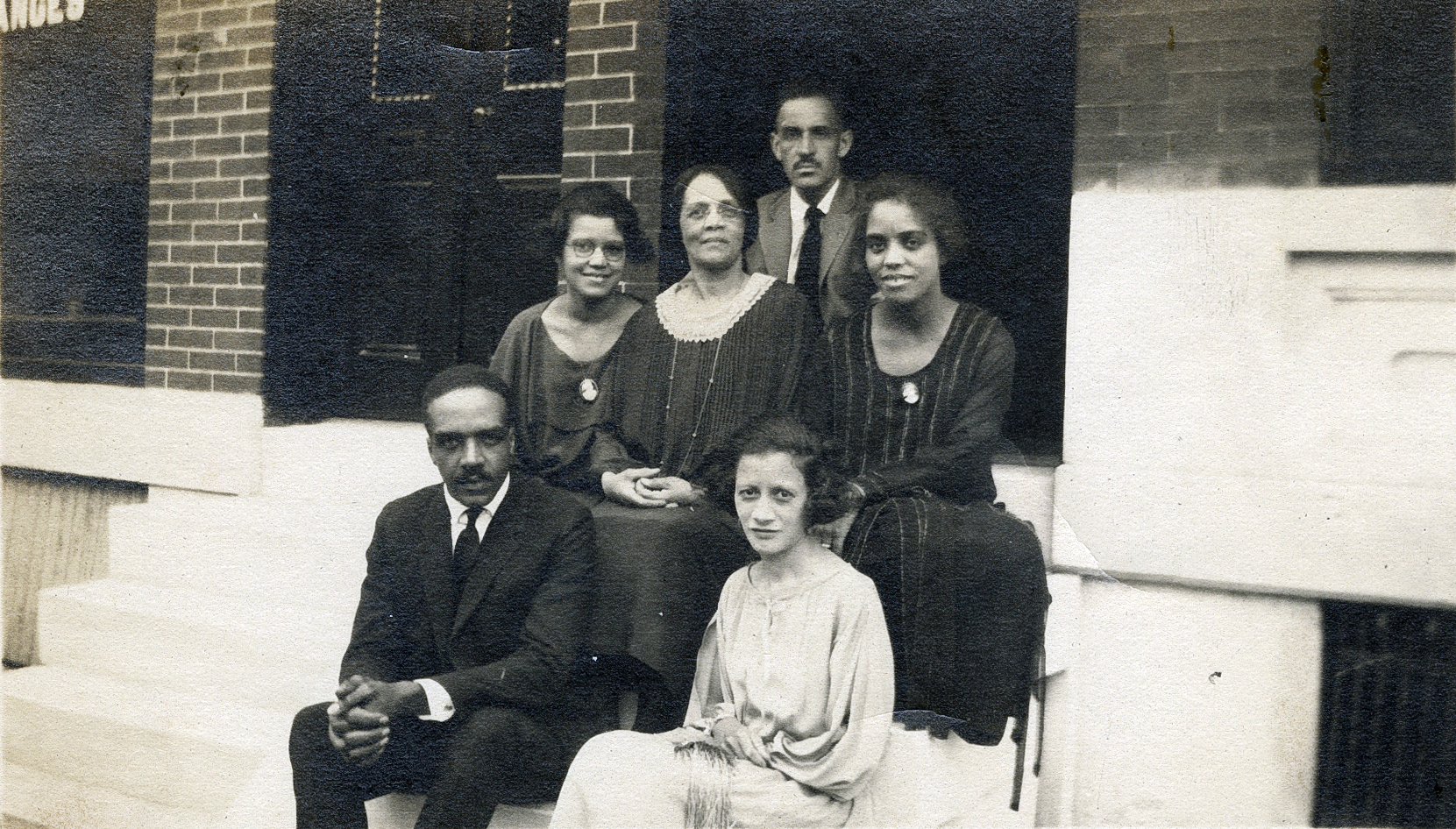
    Tanner family members gather on the front steps of the Tanner House, at 2908 W. Diamond St. in Philadelphia, in this photo taken circa 1920. They are: Bottom row (l-r) Aaron A. Mossell Jr., and his wife, Jeanette Gaines Mossell; Middle row (l-r): Sadie T. M. Alexander, her mother, Mary L. Tanner Mossell, and Sadie’s sister, Elizabeth Mossell Anderson. Top row: Page Anderson, Elizabeth Anderson’s husband.

    Halfway through Keepers, Ozzie attends a party thrown by elite Civil Rights husband-and-wife-team Raymond Pace Alexander and Sadie Tanner Mossell Alexander at their swanky home at 17th and Jefferson.

    Attorneys John Francis Williams and Lewis Tanner Moore Sr., cofounder of the Pyramid Club and whose son, art collector Lewis Tanner Moore Jr. died in 2024 — shoot the breeze about an NAACP fundraiser and Buddy Powell, a 1940s jazz musician who was so severely beaten by the Philadelphia railroad police that he ended up in an asylum.

    “In The House of Eve, I got to dig around in my mom’s memory for Ruby,” Johnson said. “This time around I got to dig around in my dad and Uncle Edgar’s head to get South Philly down. Let’s see what happens in the next book.”

    Sadeqa Johnson will give an author’s talk at the Philadelphia Ethical Society, 1906 Rittenhouse Square, Friday, Feb. 13, 6:30 p.m. to 7:30 p.m. Tickets are $35 and include a copy of “Keeper of Lost Children”

  • Democratic ward leaders endorse Sharif Street for Congress, solidifying him as Philly’s establishment favorite

    Democratic ward leaders endorse Sharif Street for Congress, solidifying him as Philly’s establishment favorite

    Philadelphia’s Democratic Party has endorsed State Sen. Sharif Street for the city’s open congressional seat.

    The endorsement Monday came as no surprise, given Street’s insider connections. He previously chaired the Pennsylvania Democratic Party and is close to party leaders in the city. And Bob Brady, who chairs the Democratic City Committee, said last fall that he expected his fellow ward leaders to vote to endorse Street.

    But it nonetheless strengthens Street’s status as the favorite in the race among the local Democratic establishment. Street, the son of former Mayor John F. Street, was endorsed by the politically powerful unions in the Philadelphia Building & Construction Trades Council last year.

    “I am deeply honored to have received the overwhelming support of the grassroots leaders who power our party,” Street, who represents a North Philadelphia district in the state Senate, said in a statement. “This endorsement is more than just a vote of confidence — it is a demonstration that we are building a broad-based coalition.”

    Street is one of about a dozen Democrats vying to succeed retiring U.S. Rep. Dwight Evans in Pennsylvania’s 3rd Congressional District. Other contenders include State Reps. Morgan Cephas and Chris Rabb and physicians Ala Stanford and Dave Oxman.

    Street has also emerged as the front-runner in the financial race. Recently disclosed campaign reports showed he raised $348,000 from donors in the last quarter of 2025, the largest haul among the candidates.

    The 3rd Congressional District is, by some measures, the most heavily Democratic district in the U.S. House, and includes West and Northwest Philadelphia and parts of Center City, Southwest, South, and North Philadelphia.

    The winner of the Democratic primary in May is all but guaranteed victory in November. Democrats hold a 7-to-1 voter registration edge over Republicans in Philadelphia.

    Map of Pennsylvania’s Third Congressional District.

    Earning the party nod may help Street stand out in a crowded field and will bolster his ground game for campaigning, activating the party’s hundreds of committeepeople to get out the vote for him.

    But it doesn’t guarantee victory. Insurgent candidates have defied the party’s dominance several times in recent city elections, and the district includes several progressive pockets that could open the door for a candidate who can coalesce the left against Street.

    The endorsement followed a vote by the Democratic ward leaders in the district. A candidate must receive at least 50% of the vote to win the party endorsement.

    If no candidate reaches that mark, each ward prints its own sample ballots with its preferred candidates, which often happens in open contests like this year’s primary.

    The party’s endorsement of Street means all ward leaders are now encouraged to include him in the literature distributed to voters before and on election day. Some wards, however, choose to print their own slates anyway.

    The party did not immediately disclose the final vote tally at the endorsement meeting.

    Northwest Philadelphia’s 50th Ward, which is led by Mayor Cherelle L. Parker, has not yet made an endorsement in the race, said Aren Platt, executive director of the mayor’s campaign, People for Parker.

    Top candidates in the race, including Street, were scheduled to face off at a candidates forum hosted by the Center City Residents Association on Monday night.

  • Man dies in North Philadelphia house fire

    Man dies in North Philadelphia house fire

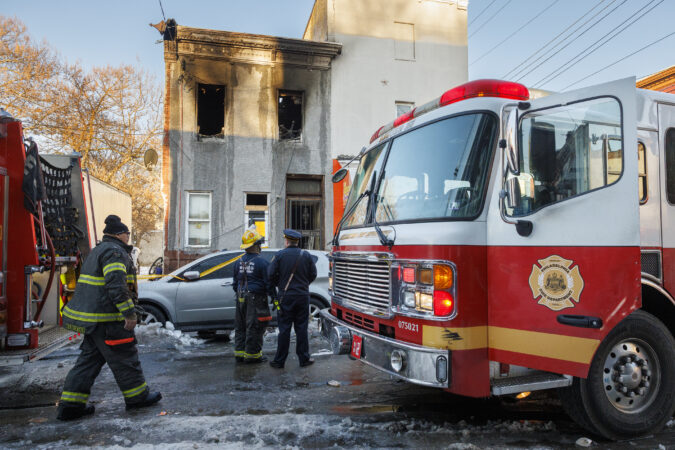
    A man died Thursday morning in a fire inside a North Philadelphia home.

    The fire started around 5:15 a.m. on the 2500 block of North 12th Street, where crews found heavy smoke and fire coming from the two-story rowhouse, according to the Philadelphia Fire Department. Firefighters witnessed fire coming from the second floor, where they found a person dead inside the home.

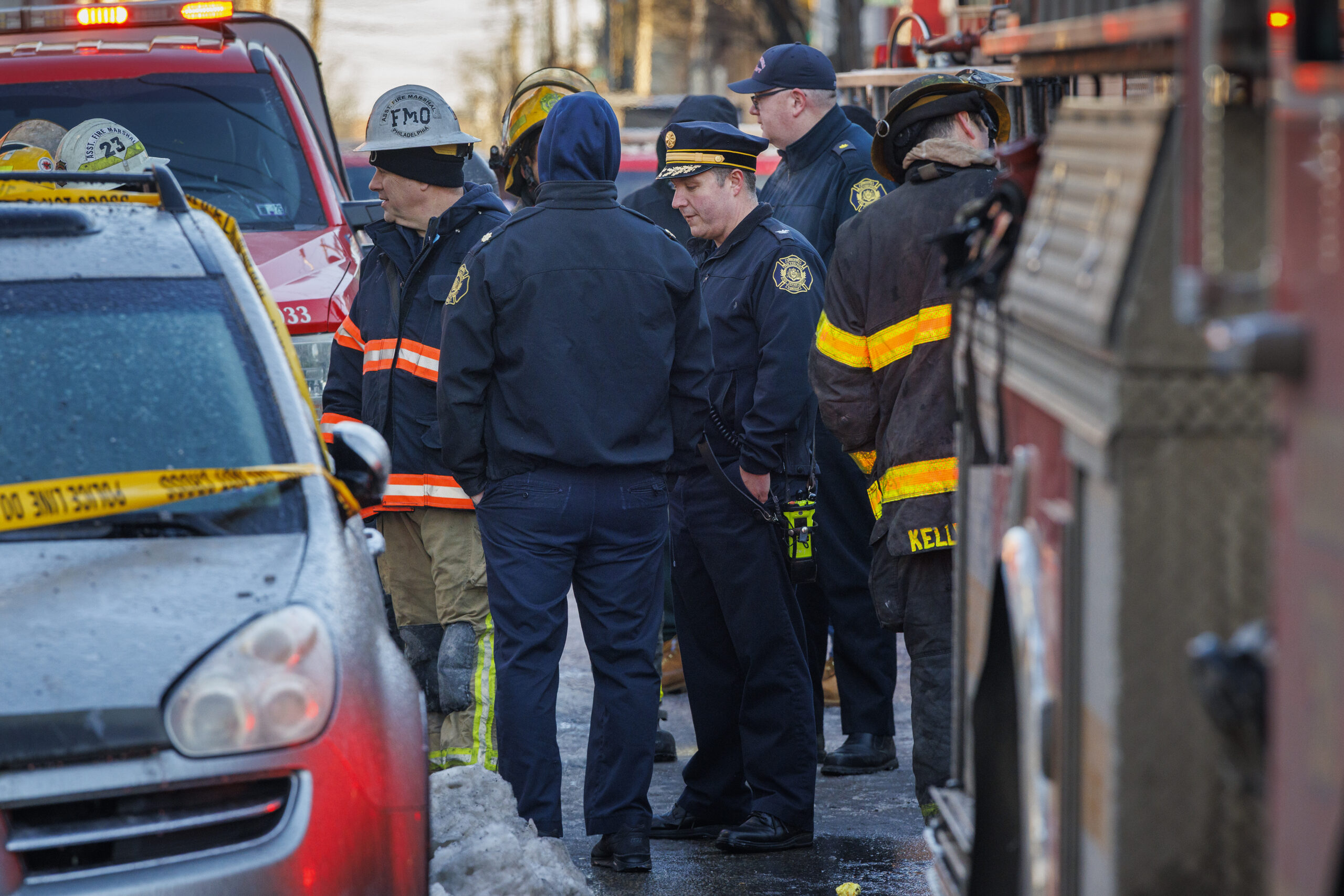
    Philadelphia fire department personnel at scene of fatal fire 2500 block N. 12th Street, early Thursday, Feb. 5, 2026.

    Firefighters placed the fire under control by 5:45 a.m. The cause of the fire remained under investigation.

    The Thursday morning blaze followed a fatal house fire in Kingsessing on Wednesday morning, which the fire marshal’s office determined was intentionally set, and another fatal fire in early January that claimed the life of a woman in the Ogontz section.

  • Police searching for ‘armed and dangerous’ suspect in killings of two men in city’s towing industry

    Police searching for ‘armed and dangerous’ suspect in killings of two men in city’s towing industry

    Philadelphia police are searching for a suspect in connection with the shooting deaths of two tow truck drivers, department officials said Wednesday.

    Najee Williams, 27, is considered armed and dangerous, police said. Homicide investigators say Williams is connected to the fatal shootings of 20-year-old David Garcia-Morales in December and 25-year-old Aaron Whitfield in January.

    Williams faces charges of murder, conspiracy, and related crimes. There is a $20,000 reward for information that leads to his arrest and conviction.

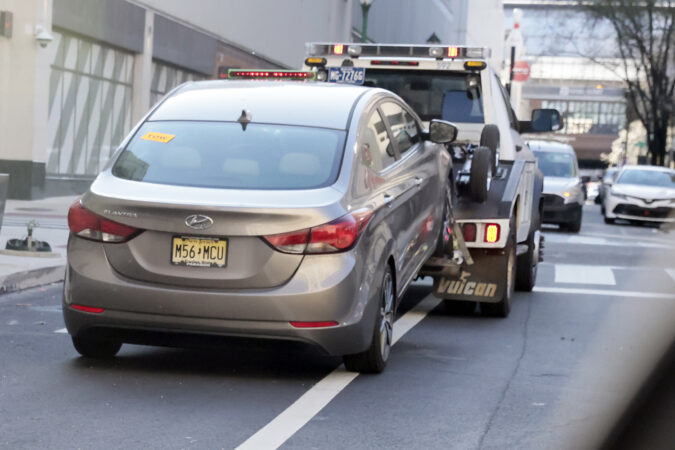
    The killings of Garcia-Morales and Whitfield, who police say worked for the Jenkintown-based towing company 448 Towing and Recovery, rattled the city and put a focus on the competitive business of towing.

    Williams is the owner and operator of N.K.W Towing and Recovery, of North Philadelphia, according to a police source who asked not to be identified to discuss an ongoing investigation.

    A Facebook page for N.K.W features photos of car accidents and messages urging potential customers to call the company.

    “INVOLVED IN A ACCIDENT OR SEE ONE CALL ME” one message says.

    Another post from 2024 says: “Left the streets in a patty wagon, came back home and got right to it! Been home for 2 years now & as I sit here and think how bless I’m to have my freedom back.”

    It was not immediately clear who made the post.

    Staff Inspector Ernest Ransom, commanding officer of the homicide unit, said forensic evidence collected from a stolen Honda used in the shooting of Whitfield led investigators to Williams.

    The department’s fugitive task force and U.S. Marshals are assisting in the search for Williams, whose last known whereabouts were in Montgomery County, authorities say.

    On Dec. 22, police were called to 4200 Torresdale Avenue to find Garcia-Morales shot and injured inside a Ford F-450 towing vehicle. He was struck in the neck and thigh, and died four days later at Temple University Hospital.

    The second shooting, which took place on Jan. 11 on the 2100 block of Knorr Street, left Whitfield dead at the scene after he was struck by gunfire in the head and body.

    Whitfield had also been sitting in a tow truck, according to police. His 21-year-old girlfriend was shot in the leg and survived her injuries.

    Philadelphia’s towing industry is competitive and drivers often traverse the city in search of car accidents, hoping to be the first to arrive at the scene.

    That practice persists despite a city policy that requires police and dispatchers to cycle through a list of approved towing companies to contact when responding to accidents.

  • City Council seeks to stop demolitions as anti-blight measure

    City Council seeks to stop demolitions as anti-blight measure

    Late last year, some members of Philadelphia City Council began pursuing legislation to further regulate demolition.

    Philadelphia has many thousands of vacant properties, and historically, some local politicians have sought to encourage razing such structures to prevent fire risks or eliminate drug havens.

    But in the last couple of decades, as real estate development heated up in many neighborhoods, concerns emerged that potentially historic older buildings were being destroyed to make the vacant land more valuable.

    “We know that when these properties are demolished in certain communities, that typically is a sign of gentrification,” Councilmember Jeffery Young, who represents much of North Philadelphia, said at a Tuesday hearing.

    “When you demolish that property and you build up, you’re trying to make more money than the property was originally stated as a shell,” said Young, whose district also includes parts of Center City.

    Young introduced a bill last year that would ban demolition permits from being issued in his district unless a property owner had secured building permits for a new project.

    He said he saw the legislation as a means to encourage property owners to repair existing buildings and to ensure that vacant lots would not scar his district.

    “When you rehab a property, the price is typically lower than a brand-new house, and so we’re trying to keep homes affordable,” Young said, “and prevent blight from our communities.”

    Young’s bill would not apply to buildings deemed imminently dangerous by the Philadelphia Department of Licenses and Inspections.

    Last year Councilmember Jamie Gauthier passed a law containing a similar provision, but for a more tightly proscribed area that covered properties held by large higher education institutions in University City.

    The Building Industry Association (BIA) presented a litany of concerns about Young’s bill at Tuesday’s Rules Committee hearing.

    The BIA feared the legislation would delay projects, as many developers demolish structures while they are waiting for their building permits. The additional months in limbo would increase insurance, security, and financing costs, the group argued.

    The bill could also encourage bad actors to engage in dangerous behavior, the BIA said.

    “To qualify for an exception based on structural danger, certain property owners may be compelled to intentionally incur code violation or enforcement action to demonstrate instability,” said Kenn Penn, a local developer, who spoke on the BIA’s behalf. It “incentivizes the very condition that the city seeks to avoid.”

    Penn also warned about the danger of preserving long-vacant properties.

    “The bill would prevent demolition of vacant and unsecured structures that are highly susceptible to unlawful occupation,” Penn said. “Philadelphia has already experienced multiple fires this winter, many historically linked to squatters and abandoned buildings.”

    Penn asked Young to limit the legislation to properties that do not have a vacant property license.

    But the bill passed from the committee with only technical amendments.

    “I understand the impacts this will have on the development community,” Young said. “But what I think this bill does is ensures that property owners maintain their properties in a prudent manner.”