Tag: North Philadelphia

  • Ala Stanford is banking on a healthcare message to break through in crowded Philly primary for Congress

    Ala Stanford is banking on a healthcare message to break through in crowded Philly primary for Congress

    At times, Ala Stanford feels like she doesn’t quite fit in.

    She’s a pediatric surgeon — albeit very well-known — who is running for political office for the first time, trying to win a seat in Congress that for decades has been held by a seasoned Philadelphia politician.

    At campaign events, when the top Democrats in the congressional race are chit-chatting among themselves, Stanford has found herself on the margins. Often, she feels more comfortable talking medical procedures with Dave Oxman, the other physician in the race, than whatever the sitting state representatives have going on in Harrisburg.

    The trail may get lonelier. Oxman is planning to drop out Wednesday and endorse Stanford, making her the hands-down most prominent outsider in a race that is stacked with political veterans.

    To amass support ahead of the crowded May 19 primary election — the likely deciding contest in one of the nation’s bluest congressional districts — Stanford will have to chart a path that beats both the Democratic establishment and the progressive left, which have chosen other candidates in the wide-open race.

    Stanford, 55, knows her lack of political experience makes her stand out, and she’s accentuating it on the campaign trail. She is highlighting her career as a physician, and she says she’ll fix a healthcare system her opponents failed to address in their years as public officials. Her candidacy comes as an increasing number of medical professionals are running for office across the country, and as thousands of Pennsylvanians have dropped their healthcare coverage due to rising costs.

    She has kept pace with three sitting lawmakers who are also running for the seat, in part by lending her campaign $250,000 of her own money.

    Candidates (from left) State Rep. Morgan Cephas; physician David Oxman; State Rep. Chris Rabb; physician Ala Stanford and State Sen. Sharif Street appear at a forum hosted by the 9th Ward Democratic Committee in Mt. Airy Thursday, Dec. 4, 2025.

    Stanford also has a cadre of healthcare workers uplifting her. She has won endorsements from prominent doctors, as well as a national super PAC, 314 Action, which backs candidates with backgrounds in science and has poured $1.5 million into a pro-Stanford campaign.

    The group so far funded five weeks of television commercials reminding voters that Stanford founded the Black Doctors COVID-19 Consortium. In the throes of the pandemic, she set up mobile testing sites in majority-Black communities and ran vaccination clinics to inoculate thousands of Philadelphians, a grassroots effort to fill gaps left by government-funded programs.

    Today, she runs a primary care health clinic in North Philadelphia that bears her name.
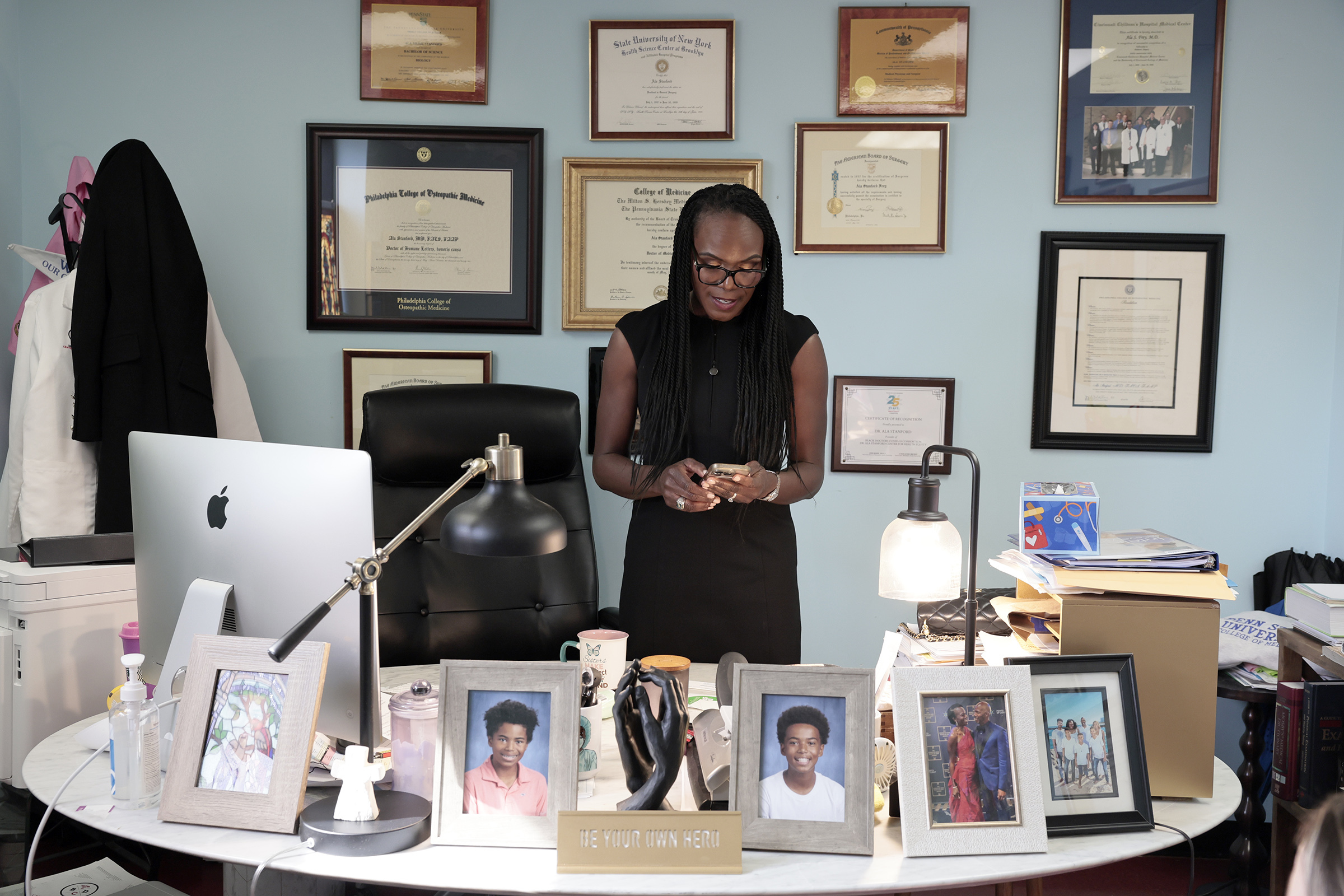
    Ala Stanford texts her son while in her office at the Dr. Ala Stanford Center for Health Equity, 2001 W Lehigh Ave. in Philadelphia on Friday, March 13, 2026

    It is a compelling story that has been told many times — across national media, on podcasts, and in Stanford’s own memoir.

    What hasn’t been told is why it means she should represent the 3rd Congressional District, which covers much of Philadelphia, over her opponents who have spent years in politics.

    “People get so comfortable doing things the same way, the same way, the same way,” she said in a recent interview at her health clinic. “And no one likes change. But the city needs this. The city needs some change.”

    Other candidates say Stanford doesn’t have a monopoly on talking about healthcare. State Sen. Sharif Street, another front-runner in the race, has touted that he and other government officials helped secure funding for Stanford’s pandemic operation.

    “During COVID, he was very proud of his work,” Street spokesperson Anthony Campisi said, “to ensure that Doctor Stanford’s vaccination efforts received the support they needed so that we could get vaccines into arms quickly.”

    Stanford’s opponents also clearly know that her status as a physician may be an asset.

    She submitted paperwork to appear on the ballot as “Dr. Ala Stanford.” But on Tuesday, a member of the Democratic City Committee — which endorsed Street — filed a petition in state court, saying Stanford’s name should appear without the “Dr.” in front of it.

    In the coming days, a judge will decide.

    Leaning on healthcare as a core issue

    Stanford does not fit neatly onto the ideological spectrum.

    Of course, she is not conservative. She doesn’t call President Donald Trump by his name — he’s “47″ — and she uses words like “tyranny” and “running amok” to describe the current White House.

    But unlike some of her opponents, she is not of the Philadelphia Democratic establishment. She said she feels like the city’s long-entrenched party apparatus had always planned to endorse Street, the former head of the state party and the son of a Philadelphia mayor.

    Stanford is also not of the populist left. She believes Palestinians “deserve to have safety and freedom,” but thinks it’s inflammatory when her progressive opponent, State Rep. Chris Rabb, calls Israel’s war in Gaza a “genocide.”

    “I know when you use the G-word how hurtful it is to a group of people,” she said. “It’s like someone saying the N-word around me. I don’t want to hear that. And every time you shout that from the rooftops, how many people are you hurting?”

    What she does believe is that government systems have failed underserved communities, and that most domestic issues can be traced back to inequities in healthcare — points she has consistently emphasized in her campaign.
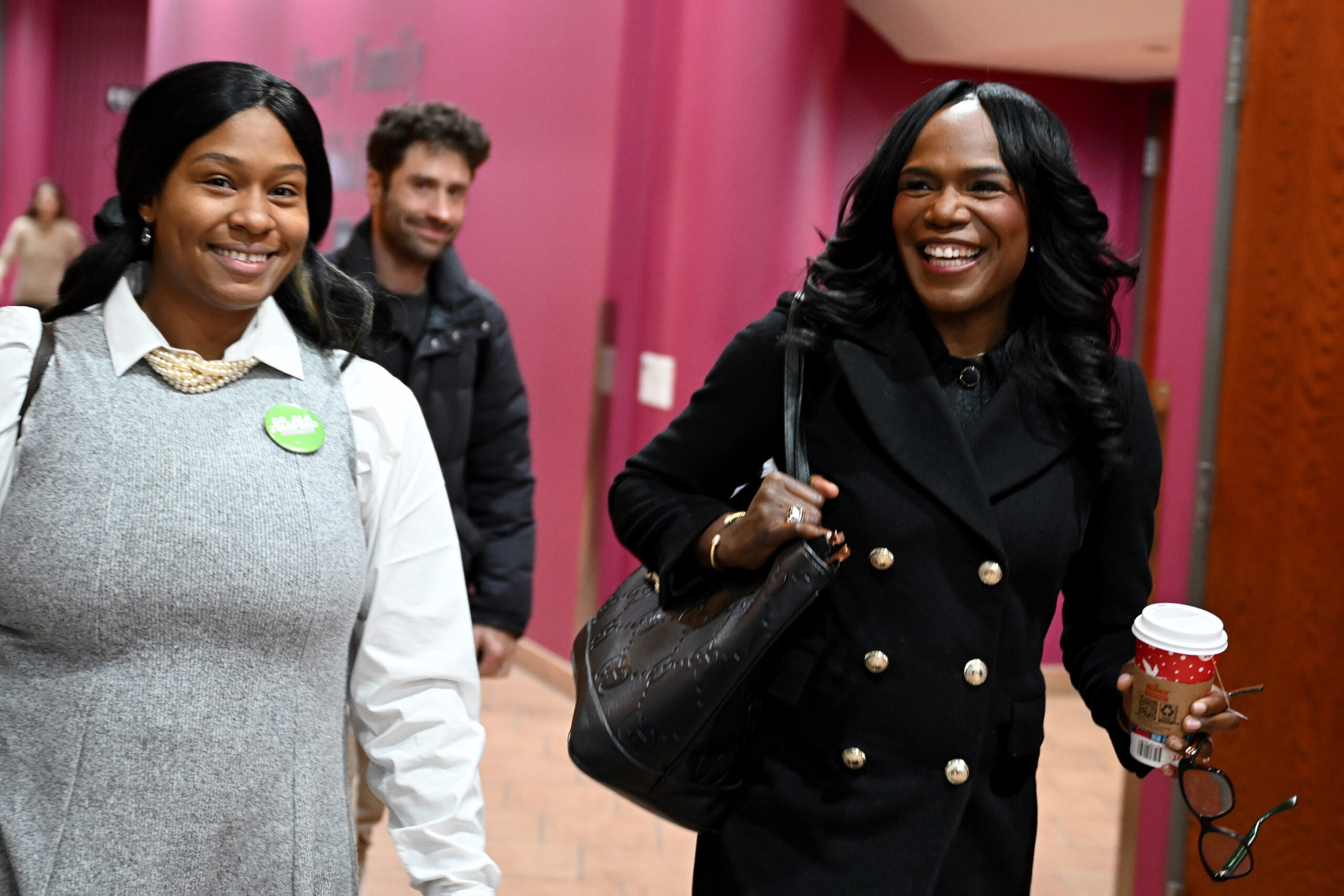
    Physician Ala Stanford (right) arrives at a forum hosted by the 9th Ward Democratic Committee Dec. 4, 2025. She is a Democratic candidate running to represent Philadelphia’s 3rd Congressional District.

    She has hammered Republicans for not extending pandemic-era subsidies that ensured people on Affordable Care Act health plans did not pay more than 8.5% of their income for care. She has advocated for universal healthcare. And she has harshly criticized Health and Human Services Secretary Robert F. Kennedy Jr., who has long been skeptical of vaccines.

    “In this country, wealth is linked to homeownership, home ownership is linked to education, education is linked to health outcomes, and health outcomes are all exacerbated by racial injustice,” Stanford said during a recent candidates forum. “So when you talk about one, you talk about all.”

    Stanford is careful to say that her focus on healthcare doesn’t mean she can’t discuss housing, immigration, or the war in Iran.

    But it is clear that she feels most comfortable talking about what she knows best. Her supporters say that’s an asset in the 3rd Congressional District, which has a disproportionately high number of people who rely on public healthcare systems.

    More than a third of the district’s residents, or more than 284,000 people, were on Medicaid as of December, according to the state Department of Human Services. Among Pennsylvania congressional districts, that’s the second-highest proportion of residents on Medicaid. (The first highest is the 2nd Congressional District, which also includes parts of Philadelphia.)
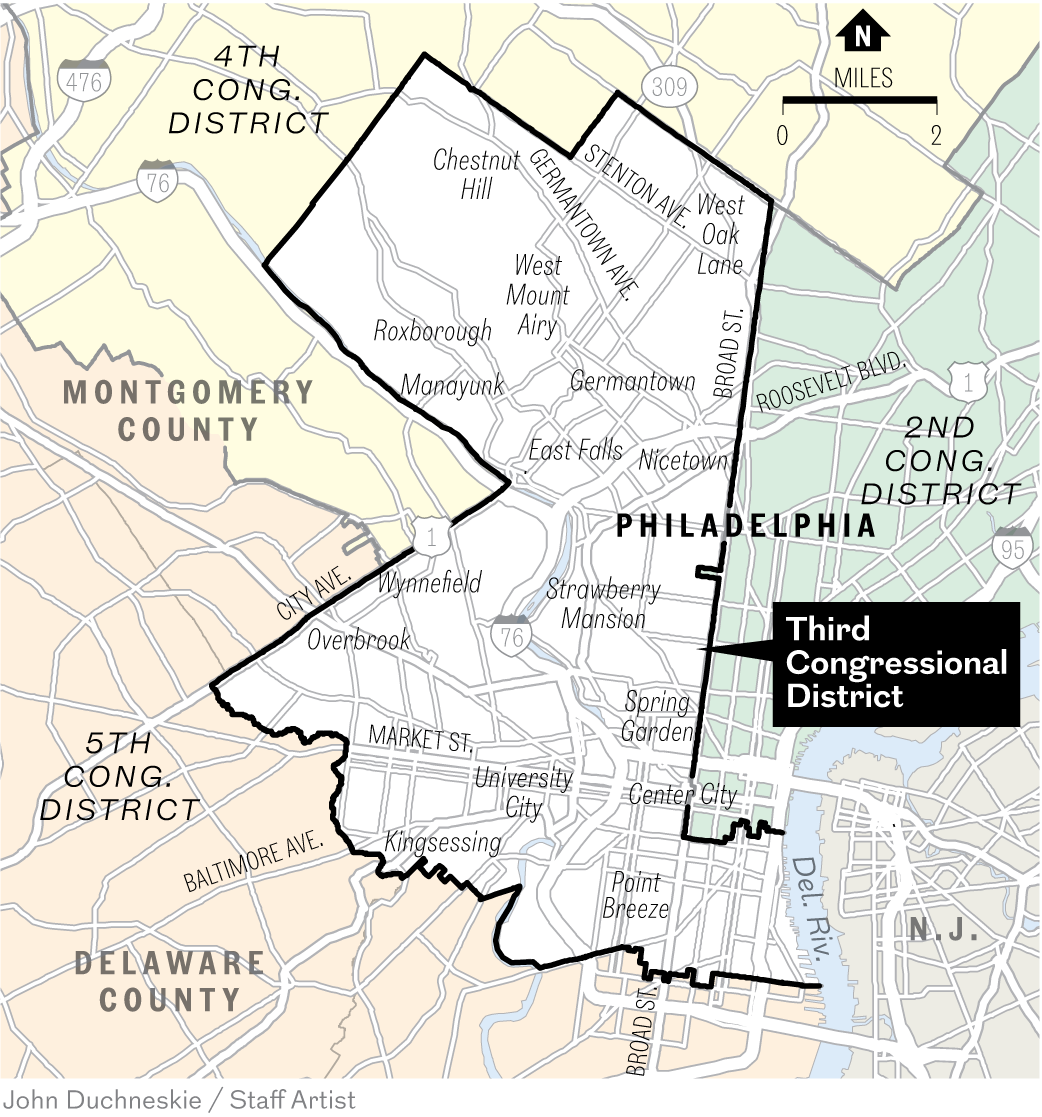
    Map of Pennsylvania’s 3rd Congressional District.

    The state estimates that more than 30,000 people in the district could lose their healthcare as a result of changes to Medicaid eligibility and coverage under Trump’s One Big Beautiful Bill Act.

    There were also more than 80,000 people in the district who last year had health coverage under the Affordable Care Act, either through expanded Medicaid eligibility or a plan they purchased through the marketplace.

    That number is also likely lower now since ACA subsidies expired this year and premiums rose. Statewide, one in five people who bought plans last year from Pennsylvania’s marketplace, Pennie, opted out for 2026.
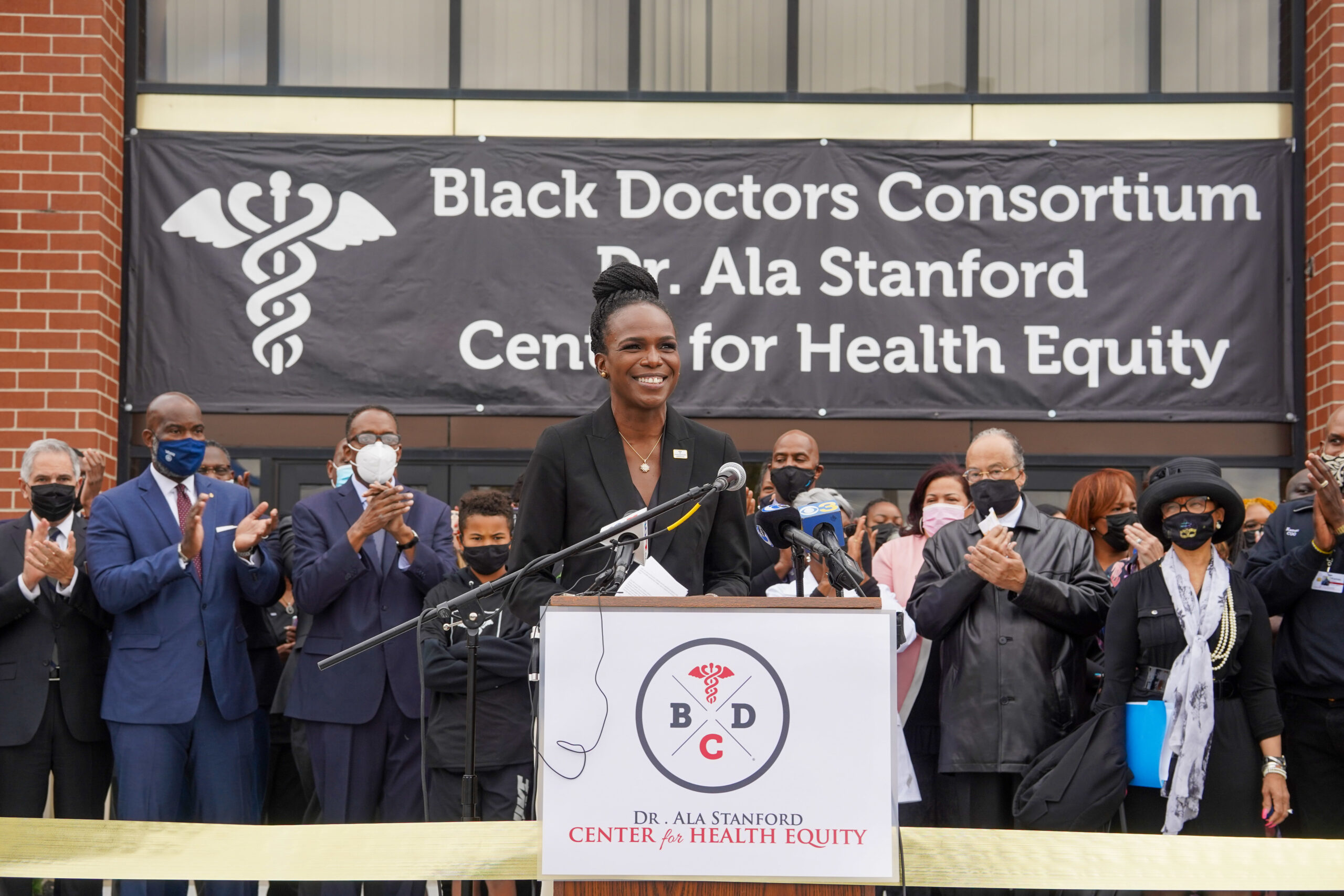
    Ala Stanford speaks at the Black Doctors Consortium Dr. Ala Stanford Center for Health Equity in Philadelphia, Pa., on October 27, 2021. The center was opened with the goal of making healthcare accessible for those in communities who might struggle to get proper healthcare treatment.

    Stanford’s supporters think Philadelphia voters will trust a doctor to ensure affordable healthcare access. They point to a survey released this month by the Annenberg Policy Center at the University of Pennsylvania that found 86% of respondents said their primary healthcare provider is trustworthy.

    Erik Polyak, the executive director of 314 Action, said Stanford’s background differentiates her in a Democratic primary in which most candidates align on key issues.

    “Voters want healthcare decisions made by people who understand patients and the science,” he said, “and not politicians chasing headlines.”

    Oxman, Stanford’s now-former opponent, said physicians running for office can help rebuild a Democratic Party that has “lost the trust of so many people.”

    “So many people see us as not centered on their needs, particularly their economic needs,” he said. “If the Democrats are going to build a party that has a chance of winning in Center City Philadelphia and in central Pennsylvania, it’s got to regain the trust of the voters.”

    New to politics, but not government

    It was the spring of 2020, and the bills were piling up.

    Stanford, who was born in Germantown, had given up her well-paying day job as a surgeon to work full-time with the Black Doctors Consortium. She ran COVID-19 testing clinics in Philly parking lots and churches, and amassed some $200,000 in bills, saying she couldn’t “let one person lose their life for a test that costs $100.”

    That was the beginning of her pandemic experience with government.

    A lot of it was begging. As Stanford tells it, she peppered government officials with emails, telling them how many people she and her volunteers had tested that day, and asking for help securing funding.
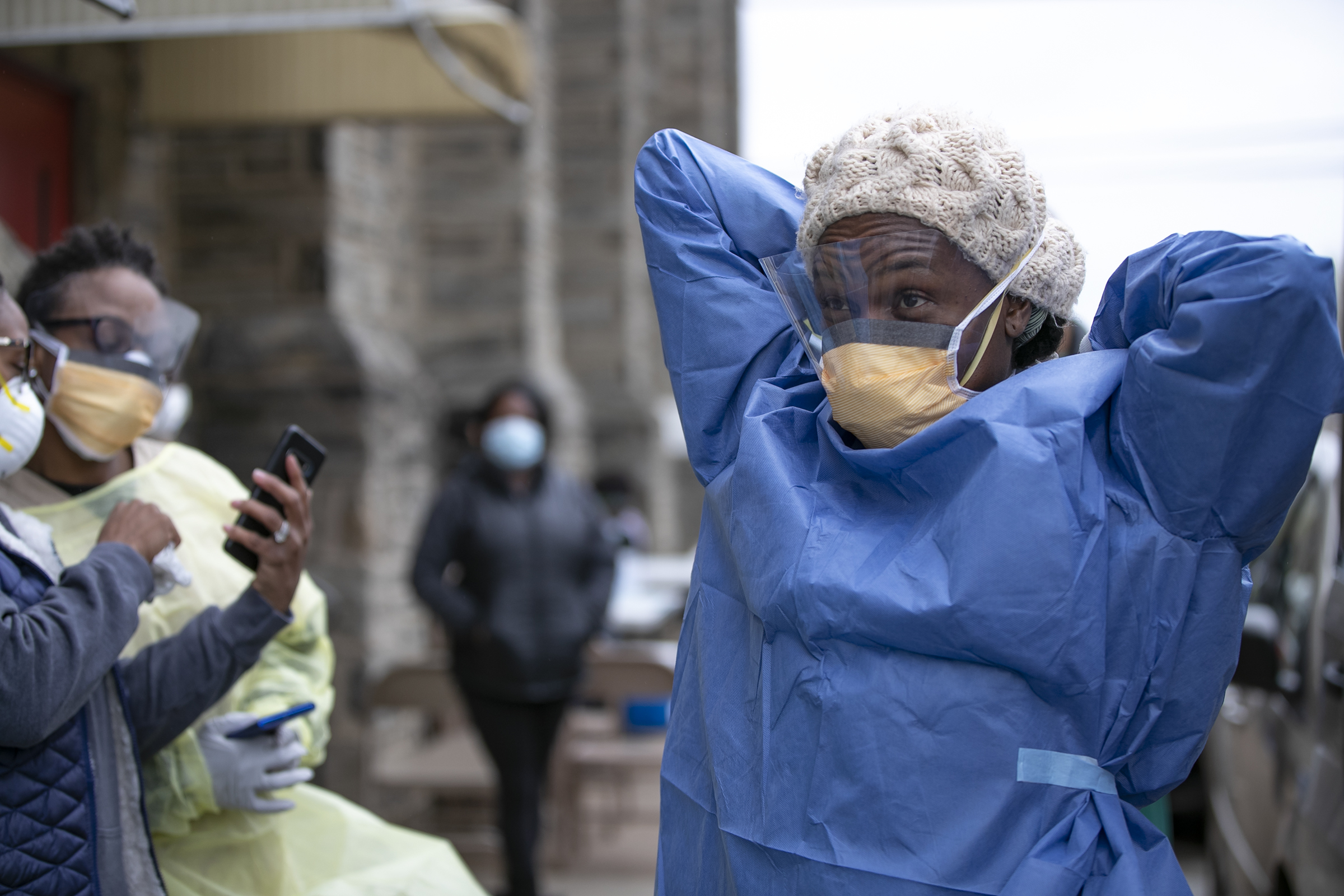
    In this April 2020 file photo, Ala Stanford puts on her mask before running a coronavirus (COVID-19) testing site at the Miller Memorial Baptist Church in Philadelphia.

    U.S. Rep. Dwight Evans was immediately responsive. He connected Stanford with the White House, other members of Congress, and top insurance companies. And he publicly called on former Gov. Tom Wolf and then-Mayor Jim Kenney to allocate funding to Stanford’s organization, citing the group’s outreach to predominately Black communities and its work to address distrust of medical institutions.

    The money came in several months later. It was finally enough for Stanford to pay for testing, compensate her staff, and prepare to vaccinate thousands of Philadelphians.

    Fast-forward five years, and Evans has endorsed Stanford to replace him in Congress as he retires after decades of public service. His backing has been invaluable to Stanford, and it surprised some political observers who figured he might endorse one of the politicians whom he’d served alongside.

    Stanford said Evans’ support has not convinced some Democratic voters. Some tell her they plan to vote for Street, citing his family name, or they say that “it’s his turn now.”

    “What about if he is not what’s best for the people?” Stanford said. “Doesn’t that factor in?”

    She tells voters that despite being new to the campaign trail, she isn’t new to government. She worked as a regional director for the Department of Health and Human Services under former President Joe Biden, who appointed her to the role. And she leads medical services at the Riverview Wellness Village, the city-owned drug recovery center opened last year by Mayor Cherelle L. Parker’s administration.
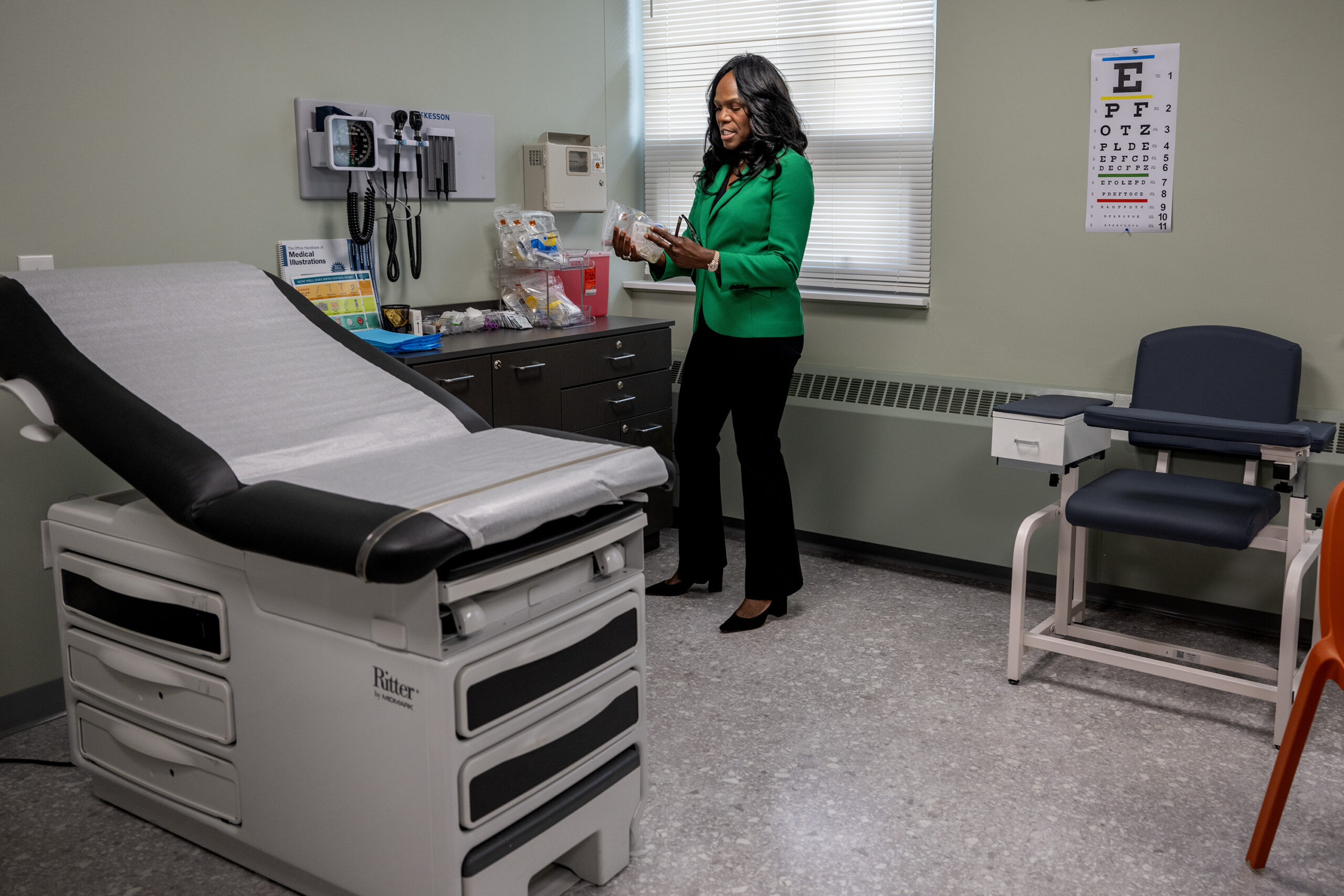
    Physician Ala Stanford in an examination room at the primary medical care center run by her Black Doctors Consortium at Riverview Wellness Village, a city-owned drug recovery home in Northeast Philadelphia Tuesday, Nov. 25, 2025.

    Still, Stanford very much sees herself as a doctor.

    She often works out of a corner office in the North Philadelphia health center, and she still is alerted when the temperature of the vaccine refrigerator dips a degree too low. She has, on more than one occasion, tended to someone experiencing a medical emergency while she was campaigning.

    She knows that overseeing day-to-day operations at the health clinic won’t be possible if she’s in Congress. There’s a succession plan in place.

    “It’s just about, how can I have more significance at a larger scale? Congress is definitely a way to do it, but it might be somewhere else,” Stanford said. “That is, if I don’t win. But I want to win. I should win.”

  • Philly City Council will consider limiting ICE next month as new Pa. detention centers loom

    Philly City Council will consider limiting ICE next month as new Pa. detention centers loom

    Philadelphia City Council next month will consider legislation to place some limits on immigration enforcement in the city and is planning a daylong hearing to parse the proposals.

    Council President Kenyatta Johnson, a Democrat who controls the flow of legislation in the chamber, said he has scheduled a hearing to take place at 10 a.m. on April 6 before the Committee of the Whole, which comprises all 17 Council members.

    That means every lawmaker will have the opportunity to question members of Mayor Cherelle L. Parker’s administration, as well as immigration advocates, about the package.

    The timeline means mid-April is the earliest that Council could pass the package. Fifteen of the body’s 17 members have expressed support, and that constitutes a veto-proof majority.

    City Councilmembers Rue Landau, a Democrat, and Kendra Brooks, of the progressive Working Families Party, sponsored the legislation introduced in January, which prohibits ICE agents from wearing masks, bans them from staging raids on city property, and makes it illegal to discriminate against someone based on immigration status.

    The legislation also clarifies how and when Philadelphia officials can coordinate with federal immigration enforcement.

    Parker has said an executive order signed by her predecessor remains in place, limiting some cooperation between law enforcement and ICE. But the legislation that Council is considering goes further, codifying a prohibition on city officials assisting ICE and prohibiting data-sharing agreements.

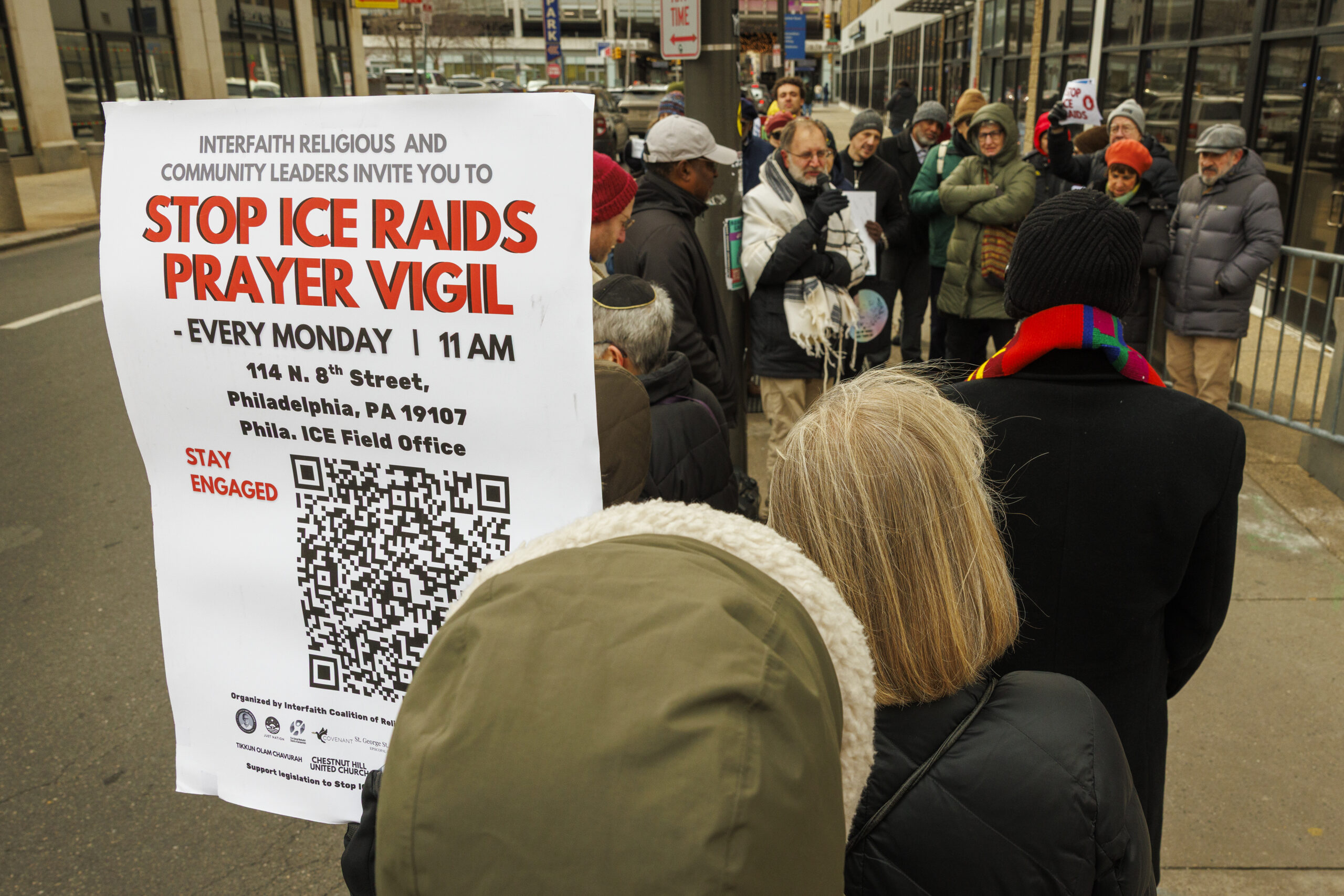
    Interfaith religious and community leaders prayer vigil outside the Philadelphia U.S. Immigration and Customs Enforcement office at 114 N. 8th Street in Center City on March 2.

    It comes as the U.S. Immigration and Customs Enforcement agency is undergoing a revamping to its leadership structure. President Donald Trump on Thursday ousted Department of Homeland Security Secretary Kristi Noem, and said he intends to nominate U.S. Sen. Markwayne Mullin (R, Okla.) to replace her.

    At the same time, Democrats across Pennsylvania, including Gov. Josh Shapiro, continue to denounce ICE, including the agency’s plans to develop two immigration detention centers outside the city.

    Several local officials said this week that they’re worried the federal government will surge enforcement efforts in Philadelphia in order to fill the centers, and that the city must move quickly to pass its legislation.

    “I’m extremely concerned,” said City Councilmember Quetcy Lozada, a Democrat whose North Philadelphia-based district has a large immigrant population. “We need to really figure out what our position is as it relates to working with ICE very closely. We have community residents that we should be protecting.”

    The Trump administration this year quietly spent millions of dollars buying warehouses in two dozen communities across the country.

    Two are in Pennsylvania and could reportedly hold about 9,000 beds in total.

    Spotlight PA reported Tuesday that ICE is referring to a facility in Tremont, located in Schuylkill County, as the “New ICE Philadelphia Mega Center” and one in Upper Bern Township in Berks County as the “New ICE Philadelphia Processing Center.”

    Landau said Council is “paying close attention to these developments and the questions they raise about the expansion of detention facilities in our area.”

    “The majority of Philadelphians are deeply disturbed by ICE’s tactics,” she said.

    Johnson said in an interview last month that the detention centers are a reason to move swiftly on the ICE-related legislation.

    The proposed laws, he said, are a means to “be out in front” of a potential surge of immigration enforcement in the city.

    “Some people say, ‘Well, they’re not even here yet.’ But they just built a warehouse in [Berks County],’” Johnson said. “I believe that was strategic. It took some planning to say ‘We want to set up shop right in your backyard.’”

  • Closing this North Philly school would be ‘severing a lifeline’ for special-education students, supporters say

    Closing this North Philly school would be ‘severing a lifeline’ for special-education students, supporters say

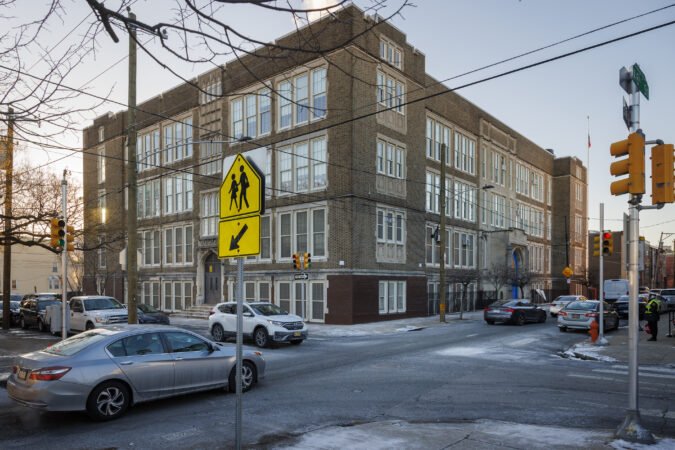
    James R. Ludlow Elementary School in North Philadelphia educates a substantial population of special-education students.

    And the learning environment for those students would be upturned by the school district’s recommendation to close Ludlow after next school year, teachers say.

    “For our children in special education, that consistency isn’t a luxury, but a requirement for them to learn. If we relocate our students, we aren’t just changing their school address; we’re breaking their routines and undoing their progress,” Vanessa Martin, an autistic support teacher in kindergarten through second grade at Ludlow, said at a community meeting last month with school district officials.

    “This building isn’t just a facility. It’s the one predictable place where our students feel safe and supported every single day,” she said.

    The district says Ludlow was slated for closure because of an “unsatisfactory” building quality score, a lack of appropriate space for programming, and only utilizing 47% of its capacity. Ludlow has 237 students enrolled across general and special education, of whom 75% are Black and 20% are Hispanic.

    The K-8 school will celebrate its 100th anniversary in what could be its final school year of operation. The district, which has proposed closing 18 schools, plans to convey the building at 550 Master St. to the city so it could be converted into affordable housing or used for job creation. Ludlow students would be reassigned to one of three schools: Paul L. Dunbar School, Spring Garden School, and Gen. Philip Kearny School.

    ‘Severing a lifeline’

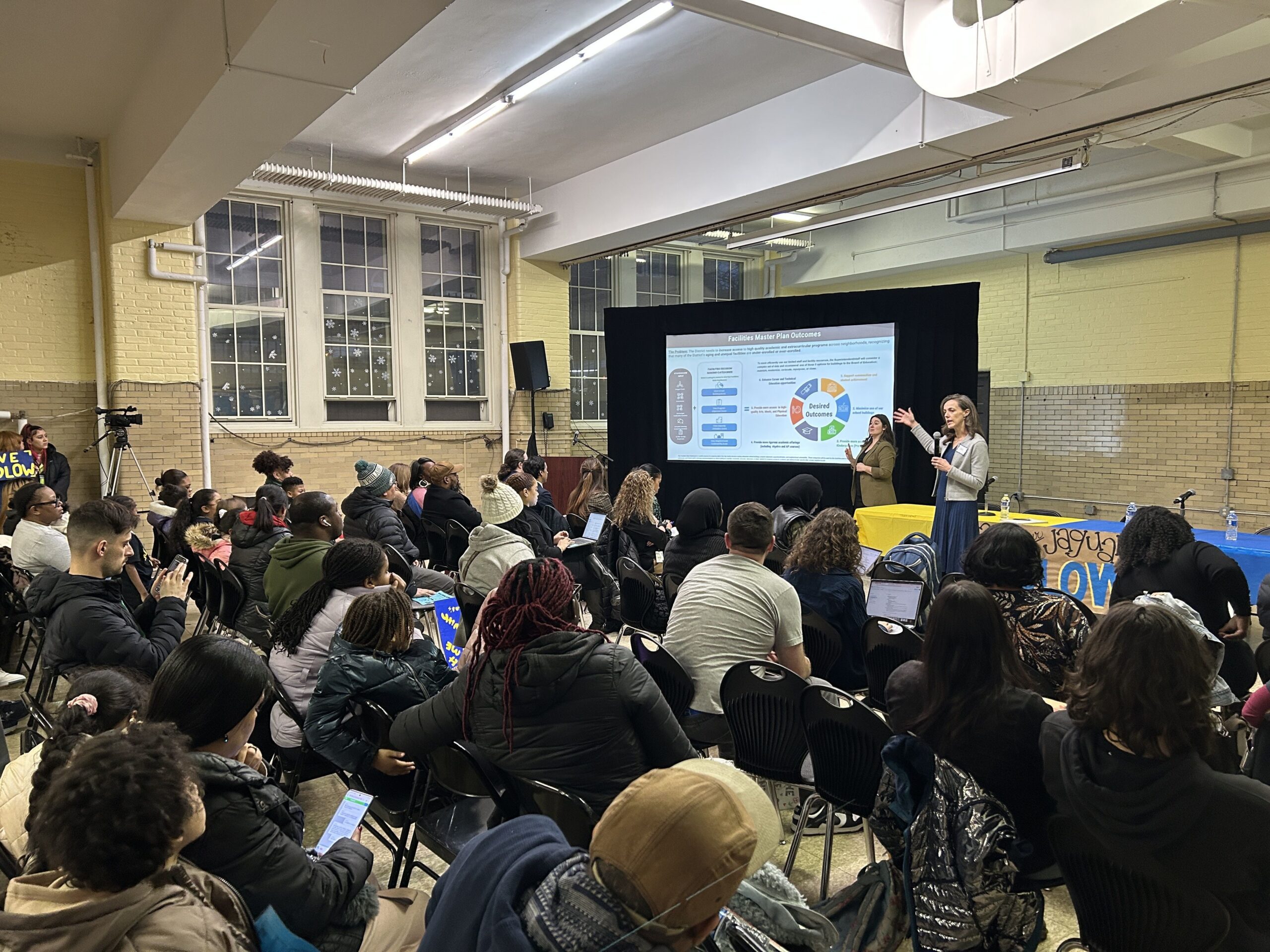
    The Ludlow community is strong and connected, and about a hundred people packed the school’s cafeteria for the community meeting on a recent Thursday evening to show their support for the school and fight against the district’s plan.

    District officials present their plan for closing Ludlow at the February community meeting.

    “I felt very angry. I felt upset. I felt like they were taking something away that was a part of me,” said Deilyhanix Vazquez, a Ludlow eighth-grade student who has attended the school since kindergarten. She said her teachers “feel like home,” and she had been planning to continue visiting the school even after she graduates.

    “I’m worried that the students will have to travel far just to get an education. Something they have to do on the daily starts to feel like a burden,” said Savannah Lindsay, another Ludlow eighth grader.

    Another young student broke down into tears as she spoke into the microphone, saying she had planned to attend Ludlow for “my whole life.”

    If the plan goes forward, she said, she may have to split up from her friends as they get assigned to one of three different schools.

    “I don’t want to leave them,” she said, as others in the room clapped and cheered her on.

    Should Ludlow close, the neighborhood and the wider school district would lose a valuable special-education resource and hub. Its offerings include autistic and other learning support for all grades, and emotional support for grades three through eight.

    Ludlow often receives student referrals from other schools and catchments across the district, staff members said, including from the schools that would take in Ludlow students in the closure plan. It can feel like the district dumps its most difficult students on Ludlow, Martin said, but those children are accepted and become like family.

    District officials have said that in addition to closing buildings that are not operating at full capacity, another goal is focusing on K-8 schools over middle schools to reduce transitions. That goal especially doesn’t square with the plan to close Ludlow, critics said.

    “Ludlow is an exceptional school that works. By moving forward with this proposal, the district would be doing more than just closing Ludlow’s doors — it would be severing a lifeline and dismantling a support system that children and families depend on for their stability,” Martin said.

    Affordable for whom?

    Community members questioned the plan to turn Ludlow into affordable housing. They doubted whether those units would actually be affordable for the people living in the neighborhood, where the annual median household income is about $58,000.

    The area sits next to Fishtown and Olde Kensington, where gentrification has made living more expensive for longtime residents.

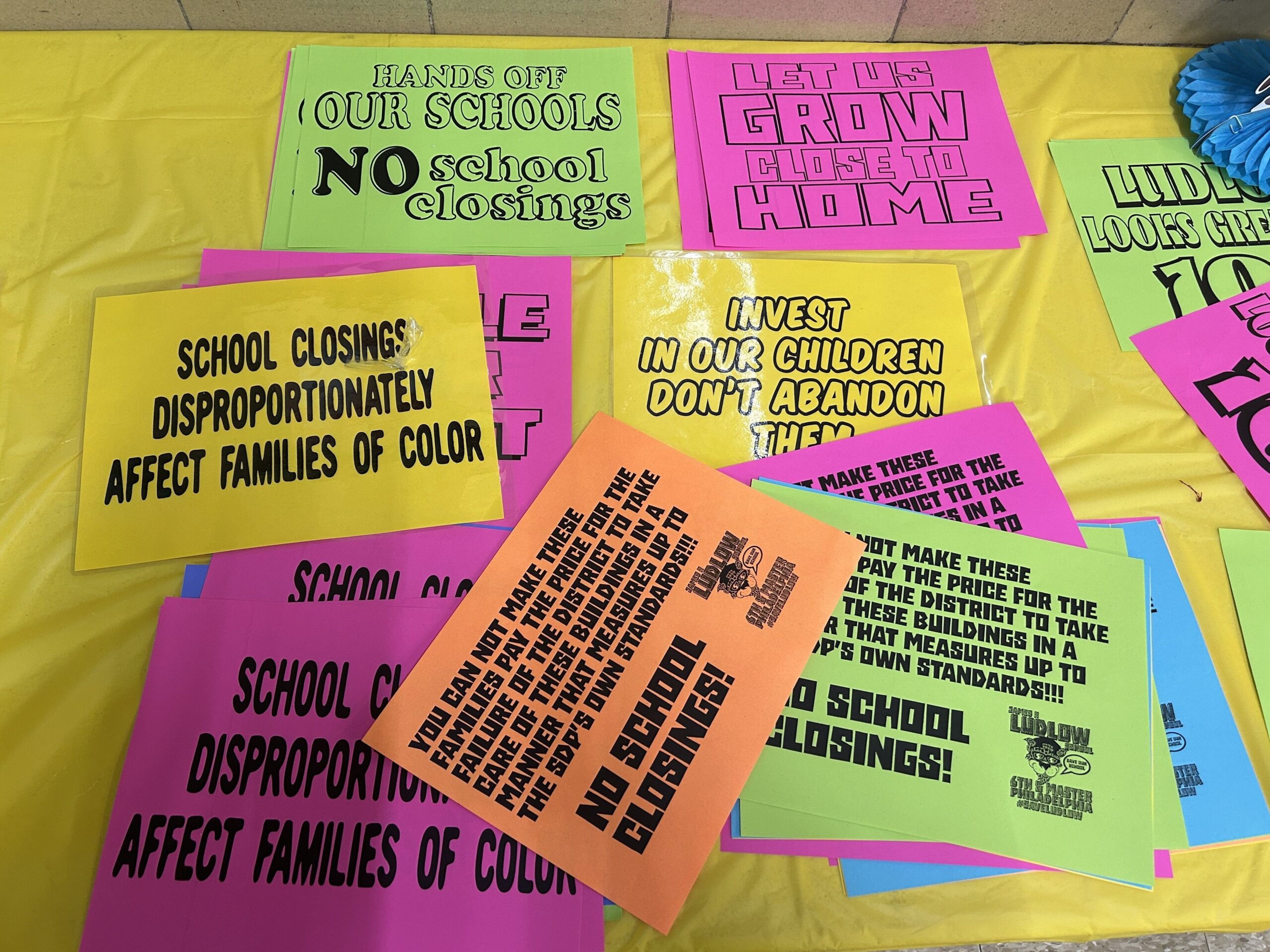
    Various signs protesting the closure of James R. Ludlow School, available at a community meeting with district officials in February.

    Ludlow community members said they did not want or need more housing. They wished the district would instead invest in the building for learning purposes, and said the district had let it fall into its poor condition.

    “It’s money before our kids,” said Valerie Johnson, known better as Valerie Brown, a beloved former Ludlow staff member who worked at the school for more than 30 years.

    While housing may bring new residents and investment to the neighborhood, the loss of Ludlow could drive some to leave, one mother said.

    “I stay in this neighborhood because of Ludlow,” said Darlene Abner, a mother of six whose children have attended the school, including a kindergartner enrolled this school year.

    Abner herself was born in the neighborhood, and she said she does not want her children to attend any school but Ludlow.

    She wears a nearly full face-covering niqab, and credited the school and its teachers for never letting that be a barrier to building a relationship with her and caring for her children.

    “They know me. They see me,” she said.

  • Lawmakers honor Philly-born Palestinian American killed by Israeli settlers | City Council roundup

    Lawmakers honor Philly-born Palestinian American killed by Israeli settlers | City Council roundup

    City Council on Thursday formally honored a Philadelphia-born Palestinian American who was killed last month by Israeli settlers in the occupied West Bank.

    In a unanimous voice vote, Philadelphia lawmakers passed a resolution to celebrate the life of 19-year-old Nasrallah Abu Siyam, who was fatally shot during a violent clash in a village on Feb. 18, the beginning of the Muslim holy month of Ramadan.

    Members of Abu Siyam’s family appeared in Council chambers Thursday alongside representatives from the Council on American-Islamic Relations, who called for an independent U.S.-led investigation into the killing.

    “You don’t know what it means to live under occupation. You don’t know what these settlers are doing,” said Abdelhamid Siyam, Nasrallah Abu Siyam’s uncle. “When justice is attacked, silence is treason. … We should stand together and pressure all those elected officials to stand with justice.”

    City Councilmember Rue Landau, a Democrat who authored the honorary resolution in partnership with Councilmember Nicolas O’Rourke, said Thursday that other members of Abu Siyam’s family are trapped in the Middle East after flying there after his death.

    They are unable to travel home, she said, due to the ongoing war in Iran and restrictions on airspace.

    Landau also called on the U.S. State Department and the Department of Justice to “conduct a full investigation and pursue justice for Nasrallah.”

    “We demand accountability so that no other family here or abroad has to stand where this family stands now,” she said during a later event alongside Abu Siyam’s family.

    Thirty U.S. senators signed a letter to President Donald Trump’s administration Thursday calling for an independent investigation into Abu Siyam’s killing. Pennsylvania’s two senators, Republican Dave McCormick and Democrat John Fetterman, did not sign it.

    Here’s what else happened in Council on Thursday.

    What was the highlight?

    Prioritizing transit-oriented development: Mayor Cherelle L. Parker’s administration is pushing Council to approve a package of legislation that makes it easier to build apartment buildings near SEPTA stations, measures that proponents see as a way to boost ridership and increase the city’s housing stock.

    Parker transmitted a package of zoning bills to Council on Thursday, but no member formally introduced it. Members said they saw the legislation for the first time on Wednesday and want more time to review it before introduction.

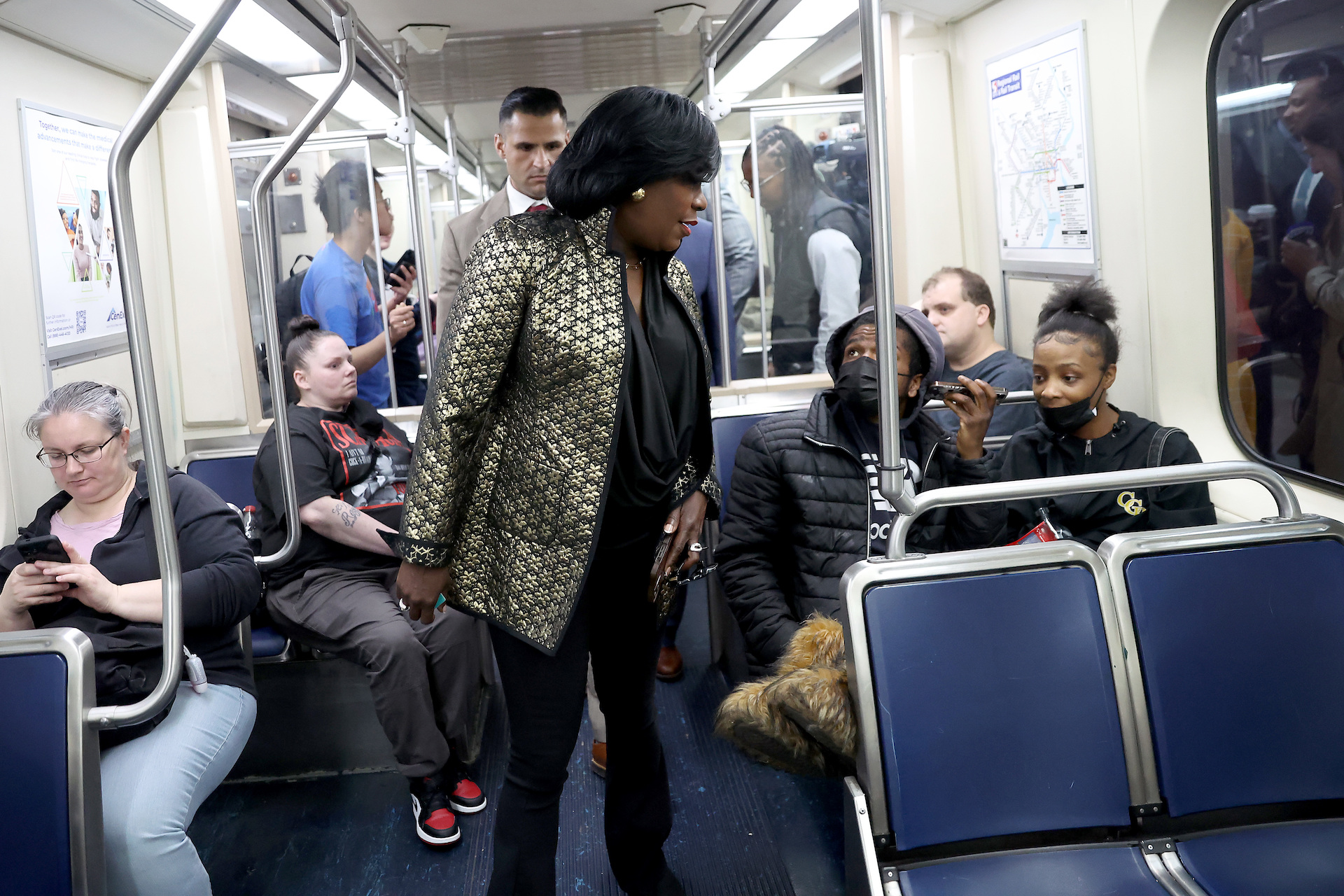
    Mayor Cherelle Parker (center) rides the SEPTA Market-Frankford Line to an event in the Kensington section of Philadelphia, Pa. on Thursday, April 11, 2024.

    The bills are aimed at advancing Parker’s goal to build, preserve, and repair 30,000 housing units.

    Most crucially, one bill expands an existing law that says properties within 500 feet of a Council-designated SEPTA station can receive benefits allowing developers to build more homes. Parker’s legislation increases the radius to 1,320 feet, or a quarter of a mile.

    What else happened?

    Smoke-filled doom: Lawmakers continued their crusade against smoke shops and so-called nuisance businesses Thursday, with Councilmember Katherine Gilmore Richardson bringing legislation to hold commercial landlords accountable for renting to illegal smoke shops.

    The bill is a follow-up to a package of legislation lawmakers passed last year that makes it easier for the city to shut down stores that sell cannabis and tobacco products without permits.

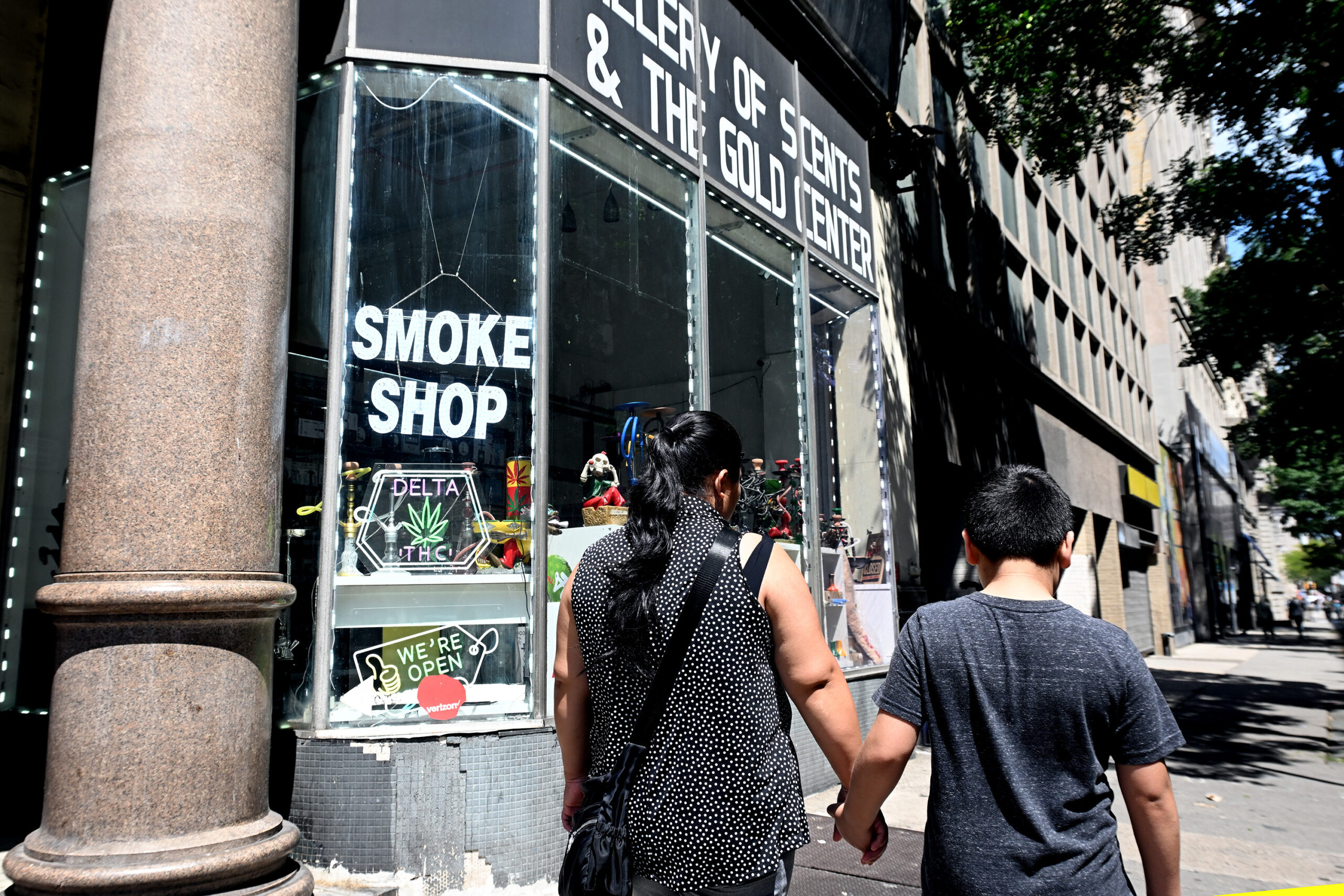
    This file photo shows a city smoke shop exterior on the 1000 block of Chestnut Street in July. City Council has advanced several pieces of legislation aimed at curbing smoke shops.

    Gilmore Richardson introduced a second bill to establish a new license requirement for stores selling products like hemp-based THC and kratom. The ordinance would define the products as “intoxicating substances” and establish a 21-plus age minimum.

    What’s next?

    Block off your calendar: Next week will be a busy one. Parker is scheduled to deliver her annual budget address to Council on Thursday, when she will outline her vision for the coming year.

    The speech will kick off weeks of hearings before Council, when members will have the opportunity to question administration officials from every major department, as well as the leaders of other agencies that receive city dollars, including the city courts, the district attorney, and the Philadelphia School District.

    Quote of the week

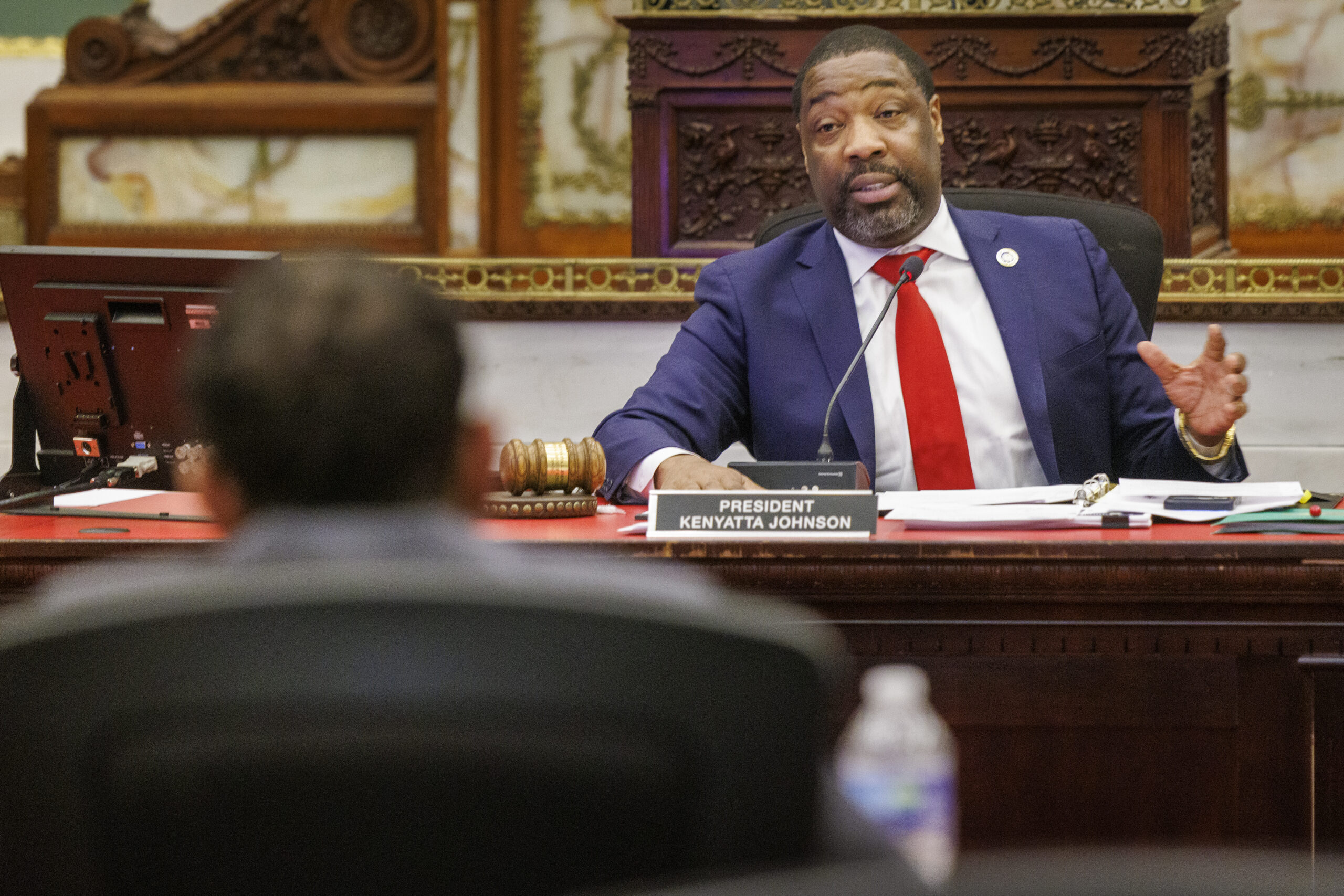
    Philadelphia City Council President Kenyatta Johnson questioning Dr. Tony Watlington, Superintendent of School District of Philadelphia, during a hearing with board members of School District of Philadelphia, Tuesday, Feb. 17, 2026.

    A little school district shade: That was Council President Kenyatta Johnson chiming in on an effort to rename a North Philadelphia street after the late Constance E. Clayton, Philadelphia’s first Black and female schools superintendent.

    Johnson slyly brought up his opposition to parts of the school district’s proposal to close 20 schools as part of its facilities master plan, prompting a wave of “oohs” in the chamber.

    Staff writers Jake Blumgart and Max Marin contributed to this article.

  • Temple University and the Philadelphia Orchestra and Ensemble Arts have signed a deal for a new partnership

    Temple University and the Philadelphia Orchestra and Ensemble Arts have signed a deal for a new partnership

    Broadway stars and orchestral players might lead budding Philadelphia musical talent in master classes, and new college internships could open up at the city’s largest performing arts producer and presenter.

    As Temple University prepares to establish an outpost in Philadelphia’s major arts district, the school, and Philadelphia Orchestra and Ensemble Arts have signed a memorandum of understanding for a new partnership, formalizing a dream stage for joint activities already underway.

    The new arrangement is expected to benefit not only Temple University students, but also younger students of Temple Music Prep and the Philadelphia School District.

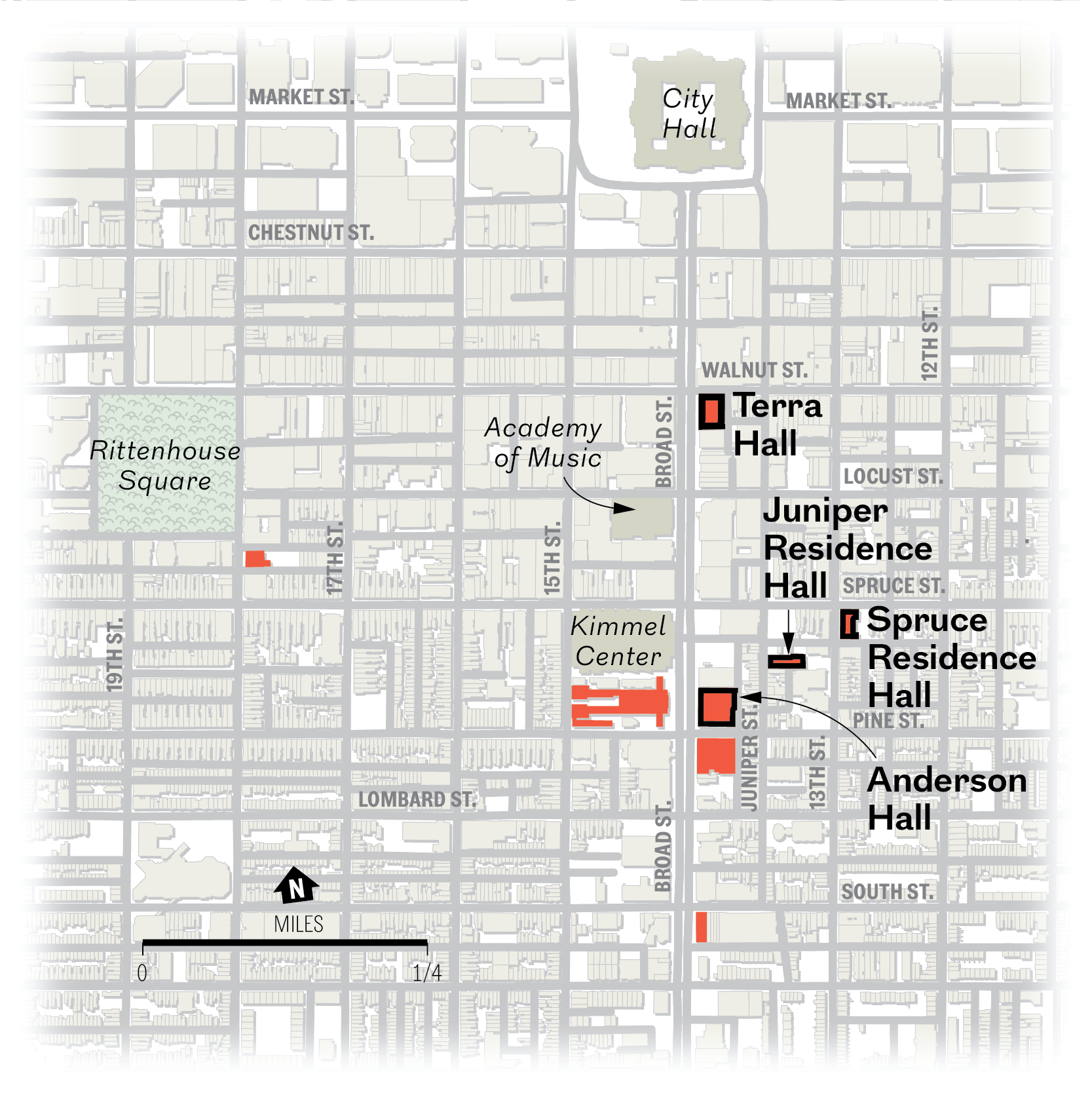
    Temple and the orchestra have long partnered on projects, but the university’s purchase of Terra Hall — near the orchestra and Kimmel Center — will allow a deeper level of involvement, leaders said.

    In the fall of 2027, for instance, about three dozen Philadelphia Orchestra current and retired musicians are expected to move their teaching studios from Temple’s main campus to Terra. Other collaborations are expected to take shape over the next year and half.

    “The gist of it is, Temple University and the Philadelphia Orchestra and Ensemble Arts are committed to working together to build a tangible partnership. It’s aspirational,” said POEA president and CEO Ryan Fleur of the memorandum of understanding, which was signed last month.

    “There’s a lot around the exchange of talent and supporting one another,” said Temple president John Fry.

    Terra Hall – shown here with other former University of the Arts buildings – is near the Academy of Music and Kimmel Center.

    For POEA, the partnership means it will no longer pursue the possibility of building an additional education wing at the Kimmel Center that had been in the early planning stages.

    “When I heard Temple was acquiring Terra Hall,” said Fleur, “the priority shifted from the idea of an education wing over the loading dock to how we could work with Temple to deploy the space in Terra Hall. Our greatest strength is not about building things, and if we unite in Terra Hall for the benefit of Philadelphia students, it’s a win for Philly.”

    An education annex at the Kimmel might have cost in the neighborhood of $100 million.

    “It was a large figure,” said Fleur. POEA is already in the process of raising hundreds of millions of dollars for a variety of needs from endowment to repairing and renovating its facilities, which include Marian Anderson Hall, the Academy of Music, and the Miller Theater.

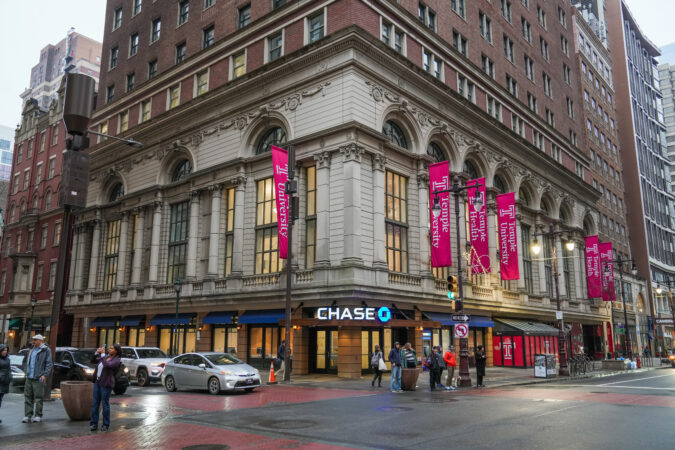
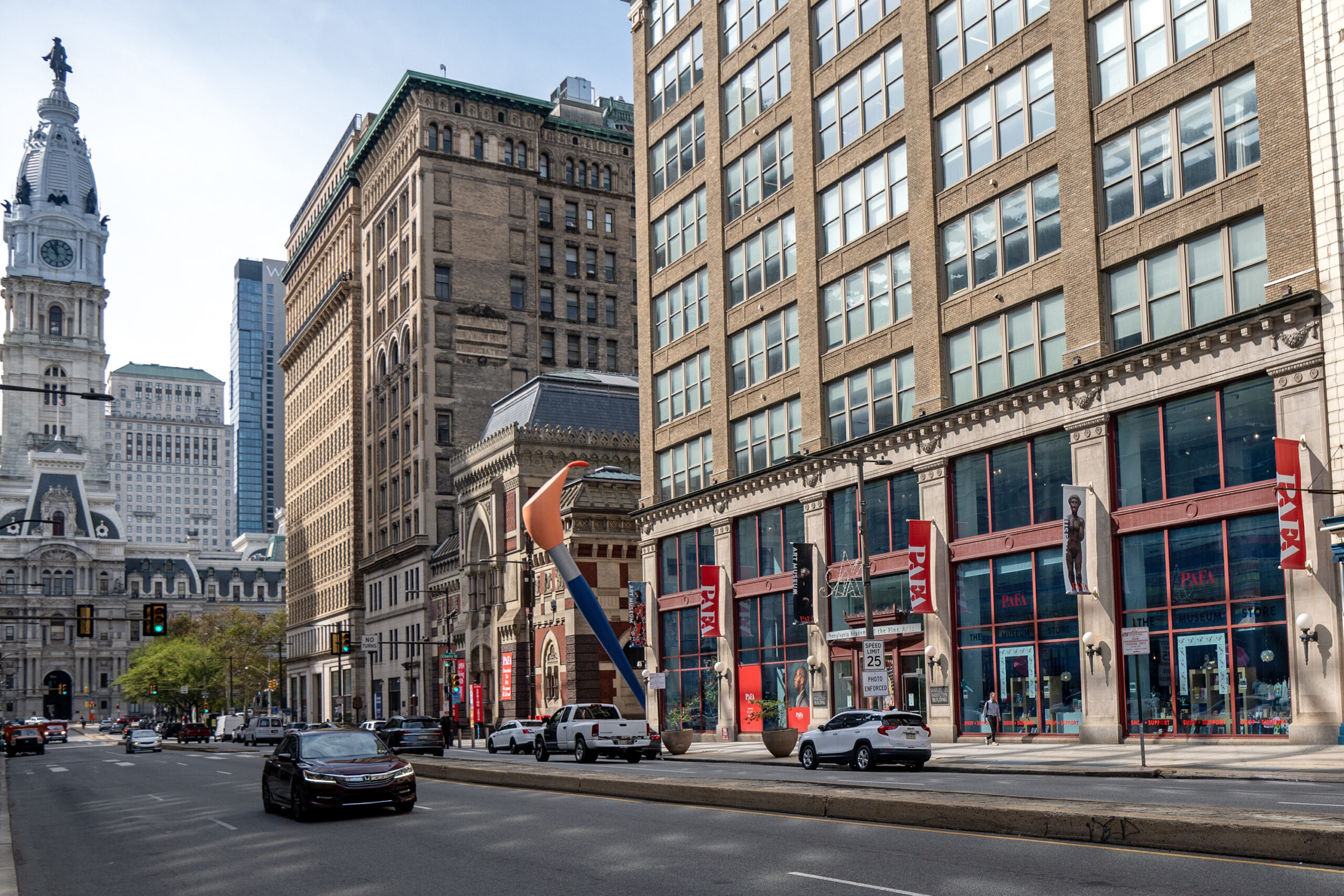
    The Pennsylvania Academy of the Fine Arts on North Broad Street, where Temple University has established a presence in PAFA’s Hamilton building (on right).

    Temple has been establishing a series of partnerships south down Broad Street from its main North Philadelphia campus. It has leased space at the Pennsylvania Academy of the Fine Arts and is developing programs there, and is in the process of taking over the Library Company of Philadelphia, on Locust Street just east of Broad.

    It acquired Terra Hall in 2025 for $18 million after the abrupt bankruptcy and closing of the University of the Arts. Terra was already outfitted with practice rooms, a recording studio, performance space, a dance studio, and classrooms.

    Fry said that Temple is currently doing work on the Terra building, with particular attention to the foundation and elevators, and that the major part of renovations would be done by September 2027. But he said that some of the spaces will be usable this fall.

    Both POEA and Temple have existing relationships with the Philadelphia School District. Fleur said the next step is “uniting” the efforts among the three. Fry said Temple was in discussions with other arts organizations as potential partners in Terra Hall.

    “We want people to think of this as a public resource,” he said, “not a closed academic building just for Temple. Where Temple can play a role, we want to be a part of that.”

  • Inside Philly’s high-stakes charm campaign to lure the 2028 Democratic National Convention

    Inside Philly’s high-stakes charm campaign to lure the 2028 Democratic National Convention

    It was at the end of last year in the hazy stretch between Christmas and New Year’s when time doesn’t feel real, and some of Philly’s top Democrats were huddled around a secret proposal, racing to meet a deadline.

    The group — convened by Mayor Cherelle L. Parker, her aides, and some key Philadelphia boosters — was preparing a lengthy bid to bring the Democratic National Convention back to the city in either 2028 or 2032, a potential economic boon and a chance to show off in front of lawmakers, celebrities, and international media.

    The confidential proposal to the Democratic National Committee included everything from the city’s hotel space to police outfitting to nitty-gritty details about the electrical grid and voltage capacity at Xfinity Mobile Arena. SEPTA officials drafted a section about the public transportation Philadelphia could offer visitors, and tourism agencies chipped in with insights on hotels and restaurants.

    David L. Cohen, a longtime Democratic fundraiser and the president of the recently formed nonprofit host committee called Pick Pennsylvania, said that while the mayor led the effort, the bid also emphasized the “unity of the region and the commonwealth.”

    “She wanted it to be really clear this is more than a Philadelphia bid,” he said. “This is a unified Pennsylvania bid.”

    It appears the Democratic National Committee was impressed. On Monday, the DNC announced that it is considering five cities, including Philadelphia, to host the 2028 convention, where a Democratic presidential nominee will be coronated. The party is also looking closely at Atlanta, Denver, Chicago, and Boston to hold the early August event.

    What comes next is a campaign to lure the convention to Philly, complete with a carefully coordinated public relations effort and a significant fundraising push. Philadelphia’s host committee for 2016, the last time the city held a presidential nominating convention, raised more than $85 million.

    The DNC has asked host cities to raise $5 million before being selected. Philly’s fundraising, Cohen said, “will be substantially higher than that number.”

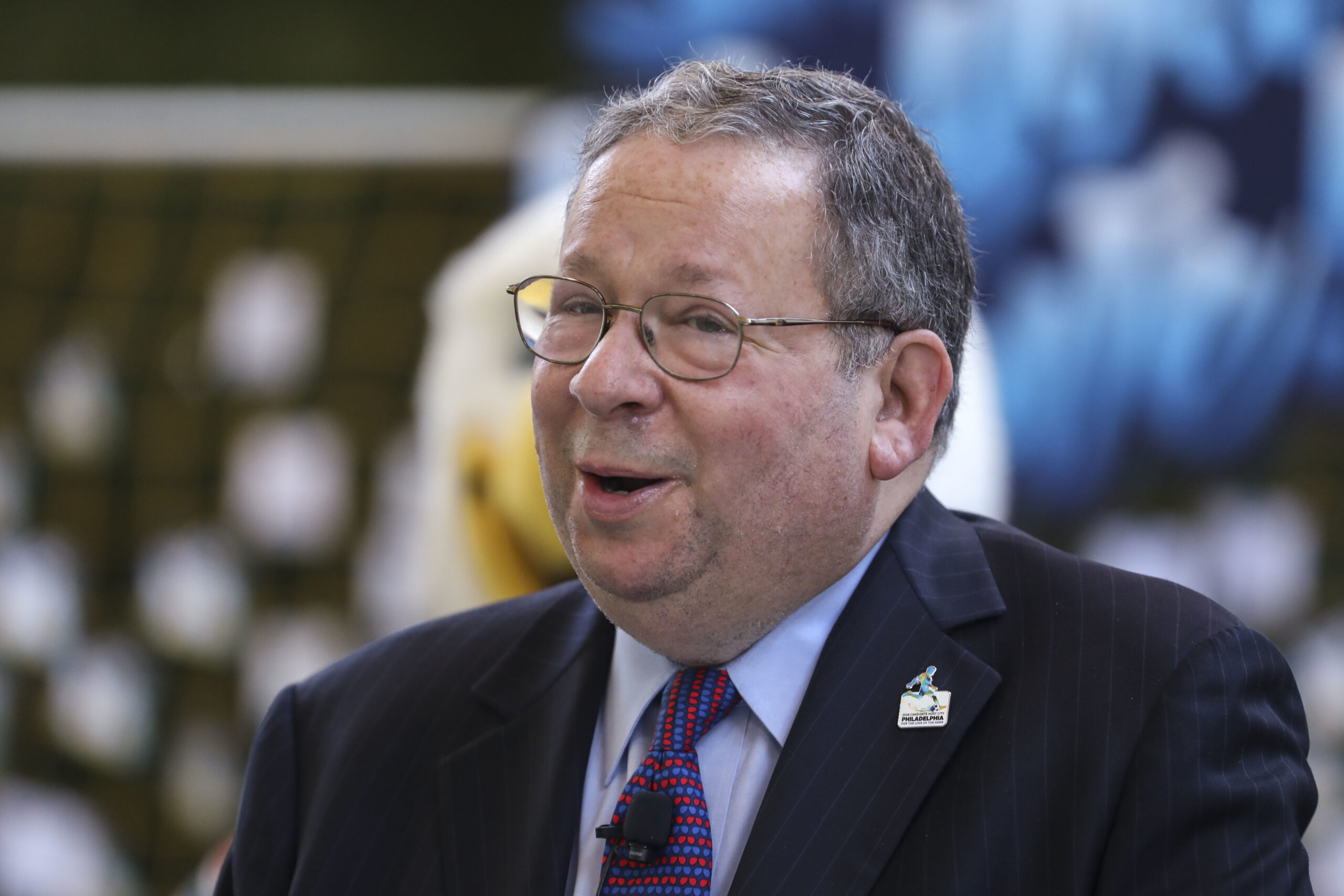
    In this 2021 file photo, David L. Cohen speaks as Philadelphia Soccer 2026, the city’s World Cup 2026 bid committee, launched an interactive exhibit at the Independence Visitors Center in Philadelphia. He is now heading an effort to bring the Democratic National Convention to Philadelphia.

    Cohen, a former Comcast executive and erstwhile chief of staff to former mayor Ed Rendell, is leading the effort alongside Daniel J. Hilferty, now the CEO of Comcast Spectacor.

    Hilferty and Cohen have worked together repeatedly over the last two decades to bring major events to Philadelphia, including a successful bid to become one of a handful of North American cities to host World Cup games this year.

    Also involved in coordinating the DNC proposal was Erin Wilson, a Philadelphia native who was a top aide to former Vice President Kamala Harris. She was the national political director for former President Joe Biden’s campaign and planned his 2021 inauguration.

    When the DNC comes to town

    DNC officials are expected to make a final decision on the 2028 site later this year. That call will likely be made by chair Ken Martin in consultation with top advisers and the committee’s Technical Advisory Group, which assesses logistics and operational matters.

    Philadelphia could also have an advocate in State Rep. Malcolm Kenyatta, who represents parts of North Philadelphia and is a DNC vice chair. He is known to have a close relationship with Martin.

    Committee officials and the advisory group will tour each of the five finalist cities for a yet-to-be-scheduled site visit this spring.

    If history is any indication, the city will roll out the red carpet. In 2014, when 18 members of the DNC came to Philly to check out the city ahead of the 2016 convention, the host committee spent six figures to charm them.

    The trip included a tour of Philly’s most popular sites, like Reading Terminal Market and the Philadelphia Museum of Art, as well as a swanky rooftop party and a breakfast at the Comcast Center. Predictably, cheesesteaks were also involved.

    “The site visits are as much about feel as they are about technical details,” Cohen said. “After site visits, the teams who are making choices leave here and they have their socks knocked off. They can’t believe how vibrant the city is.”

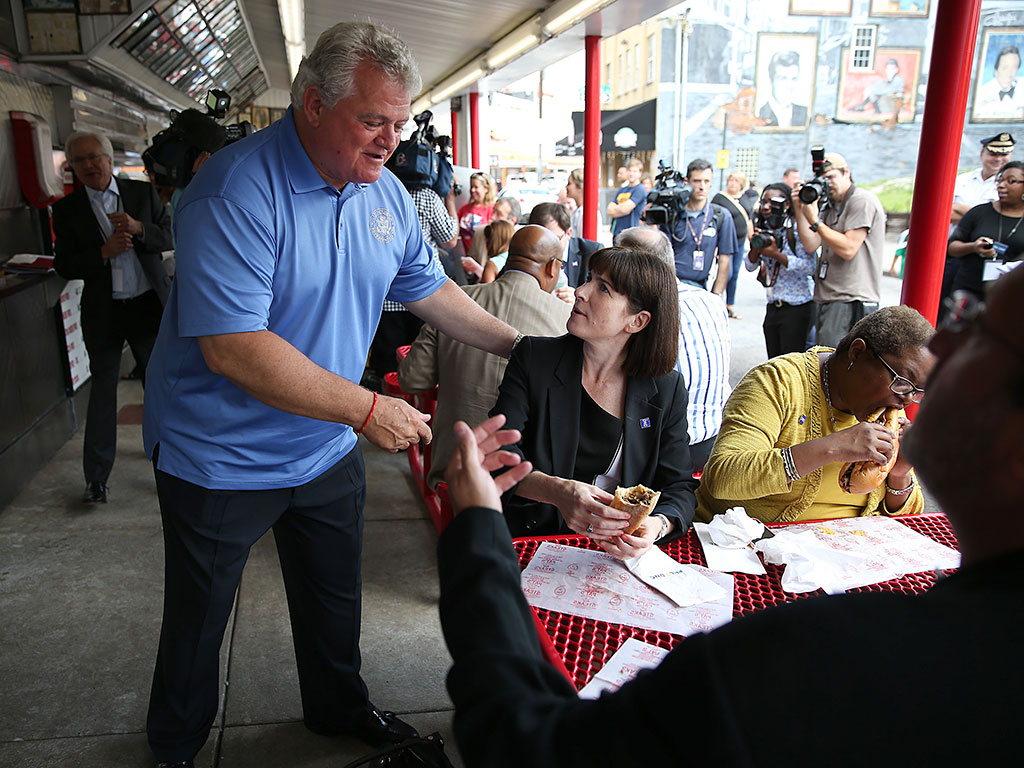
    In this 2014 file photo, Congressman Bob Brady, left, talks with DNC CEO Amy Dacey, center, as they have lunch at Pat’s Steaks in South Philadelphia.

    Ryan Boyer, the head of the Philadelphia Building and Construction Trades Council and a close Parker ally, said one of Philadelphia’s best assets might be its mayor. Parker is an unabashed cheerleader for the city and is leading preparations for several major events this year, including World Cup games, the MLB All-Star Game, and the commemoration of America’s 250th anniversary.

    “She’s the most effective advocate for bringing people together,” Boyer said, “with just her level of passion, her love of the city, and her love of the job.”

    Cohen said he spoke to Parker last year about the potential to bid for the convention, and when she asked him to lead the host committee, he said yes because the city has “a serious chance.”

    “As a friend and longtime supporter of hers, if I didn’t think we had a legitimate shot, I would try to talk her out of it,” Cohen said. “If anything, I have poured gasoline on her flames of enthusiasm and said, ‘We should be all in for this.’

    ”I said, ‘Do what you do best,’” he added. “Get everyone excited about this.’”

    Gov. Josh Shapiro could also play a role in wooing the party. He is one of the most well-known Democratic governors in the country, and is seen by many as a contender for the 2028 Democratic nomination for president.

    That means there is a chance that Shapiro, who was raised in Montgomery County and whose family still lives there, could be nominated in what is essentially his hometown.

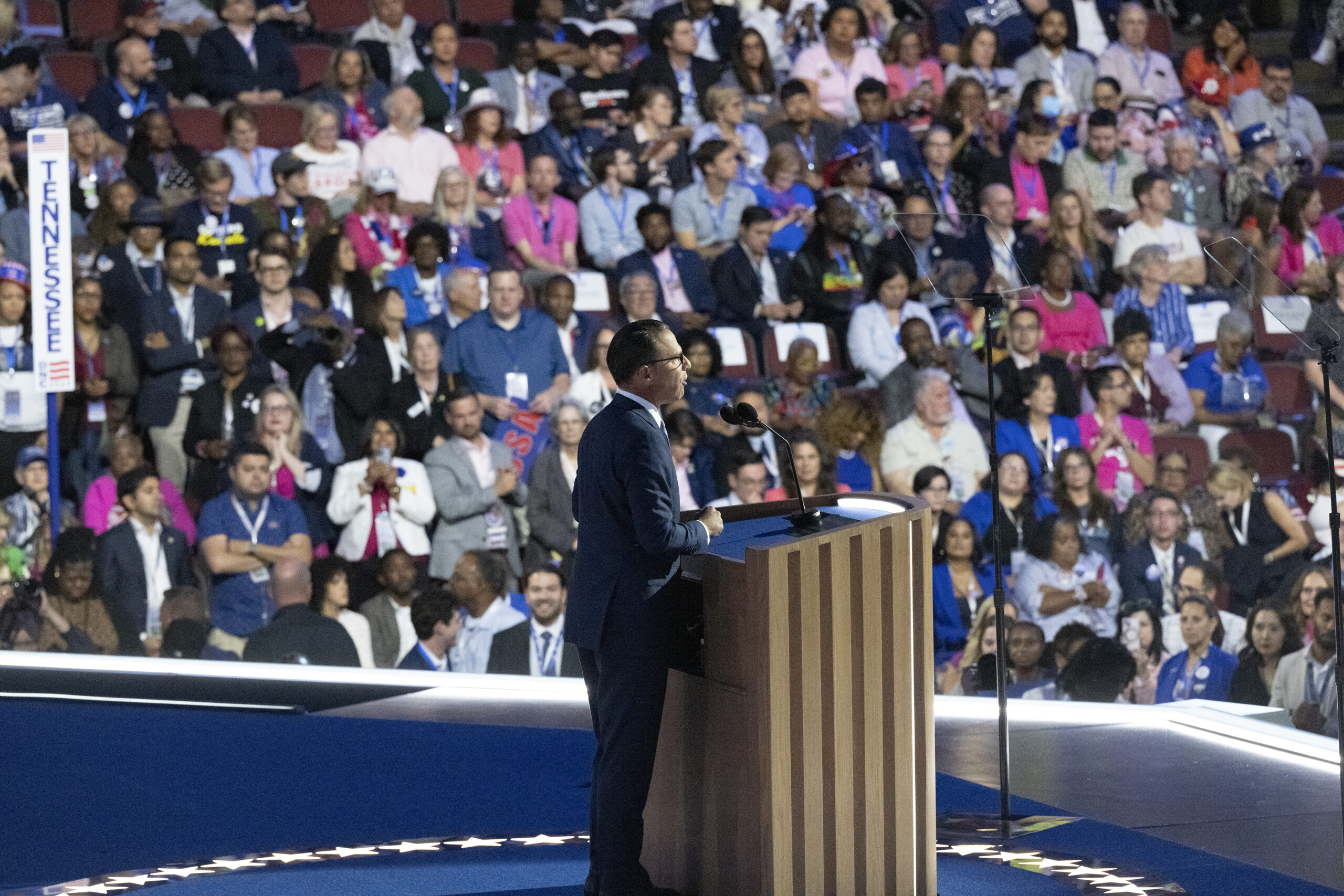
    Pennsylvania Gov. Josh Shapiro speaks during the Democratic National Convention Aug. 21, 2024, in Chicago.

    In a letter to Martin, Shapiro wrote that Philadelphia “would see substantial economic benefits” from hosting the convention and vowed that the state would be “prepared to ensure our infrastructure, public safety agencies, workforce, and business community are equipped to host thousands of delegates and attendees.”

    What’s next: a close look at security and logistics

    Behind the pomp of the DNC’s spring site visit will be a serious evaluation of security, transportation, hotels, and arena logistics.

    The DNC said in a statement Monday that it will value “new and innovative approaches” to hosting a large-scale event that is likely to bring thousands of tourists. In 2016, the convention drew more than 5,000 attendees and an additional 29,000 visitors — nearly 20,000 of whom were media members.

    Nominating conventions are typically designated as National Special Security Events, meaning the federal government leads security because the event is deemed at high risk for terrorism or other criminal activity. That means planners need to know specifics about law enforcement staffing, gear, and other capabilities.

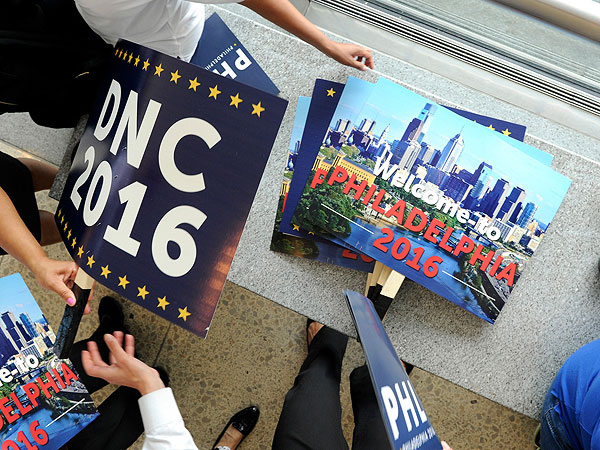
    Placards promoting Philadelphia as the host city of the Democratic National Convention in 2016, while the Democratic National Committee was touring the city in August.

    Support will also have to come from outside the city. During past conventions, federal law enforcement teamed up with Philadelphia police to secure the venue, and they were joined by officers from across the region.

    The DNC also said in its announcement Monday that the committee would prioritize “the importance of forging a strong partnership between the DNC and the host city, including its community, political, and business leaders.”

    To that end, the host committee and Parker asked elected officials and civic leaders from across the state to write letters of support that accompanied the city’s bid.

    Authors ranged from City Council President Kenyatta Johnson, whose district includes the South Philadelphia stadium complex, to labor leaders to Democrats from the Philadelphia collar counties.

    Montgomery County Commissioner Neil Makhija, who wrote a letter to the DNC boosting the bid, said it is important for the committee to see that local governments and law enforcement agencies outside the city are willing to offer support, because “pulling something like this off requires a lot of cooperation on many different fronts.”

    “A real concern now when you’re thinking about hosting a political convention is ‘How are we going to manage public safety and a threat environment?’” he said. “There are a number of reasons to point to our region and see a level of collaboration that inspires confidence.”

  • Nine firefighters were injured in a Wynnefield house fire

    Nine firefighters were injured in a Wynnefield house fire

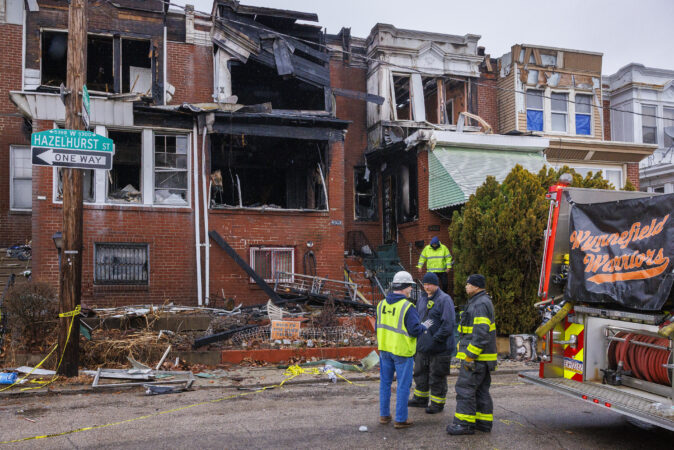
    Nine firefighters were injured, including one who needed to be carried away on a stretcher, after the floor collapsed beneath them as they fought a two-alarm fire Monday night in the Wynnefield section of Philadelphia.

    Firefighters responded to the blaze on the 5300 block of Hazelhurst Street around 10:20 p.m. to find smoke and flames erupting from the roof of the home. Officials confirmed that five firefighters were treated at local hospitals and released, while four remained hospitalized as of Tuesday morning. All were in stable condition.

    “We’re immeasurably grateful for this outcome, as collapses often prove devastating,” a Philadelphia Fire Department spokesperson said.

    Two Houses on Fire @CitizenApp

    5363 Hazelhurst St Yesterday 10:13:25 PM EST

    First responders arrived to heavy fire coming from the first floor of the two-story home, officials said. The situation soon grew, bringing more than 100 firefighters, emergency medical services, and support staff to the scene.

    The fire spread to the adjoining properties and was placed under control just moments before the structure collapsed on firefighters. At least six residents were displaced from their homes, officials said.

    Crews were still on site Tuesday morning working to clear debris and rubble, officials said. The fire marshal’s office will investigate.

    Footage showed one of the firefighters being carried out of the building on a stretcher, and another being assisted down the front steps.

    Two families, a total of nine residents, were receiving support services from the American Red Cross.

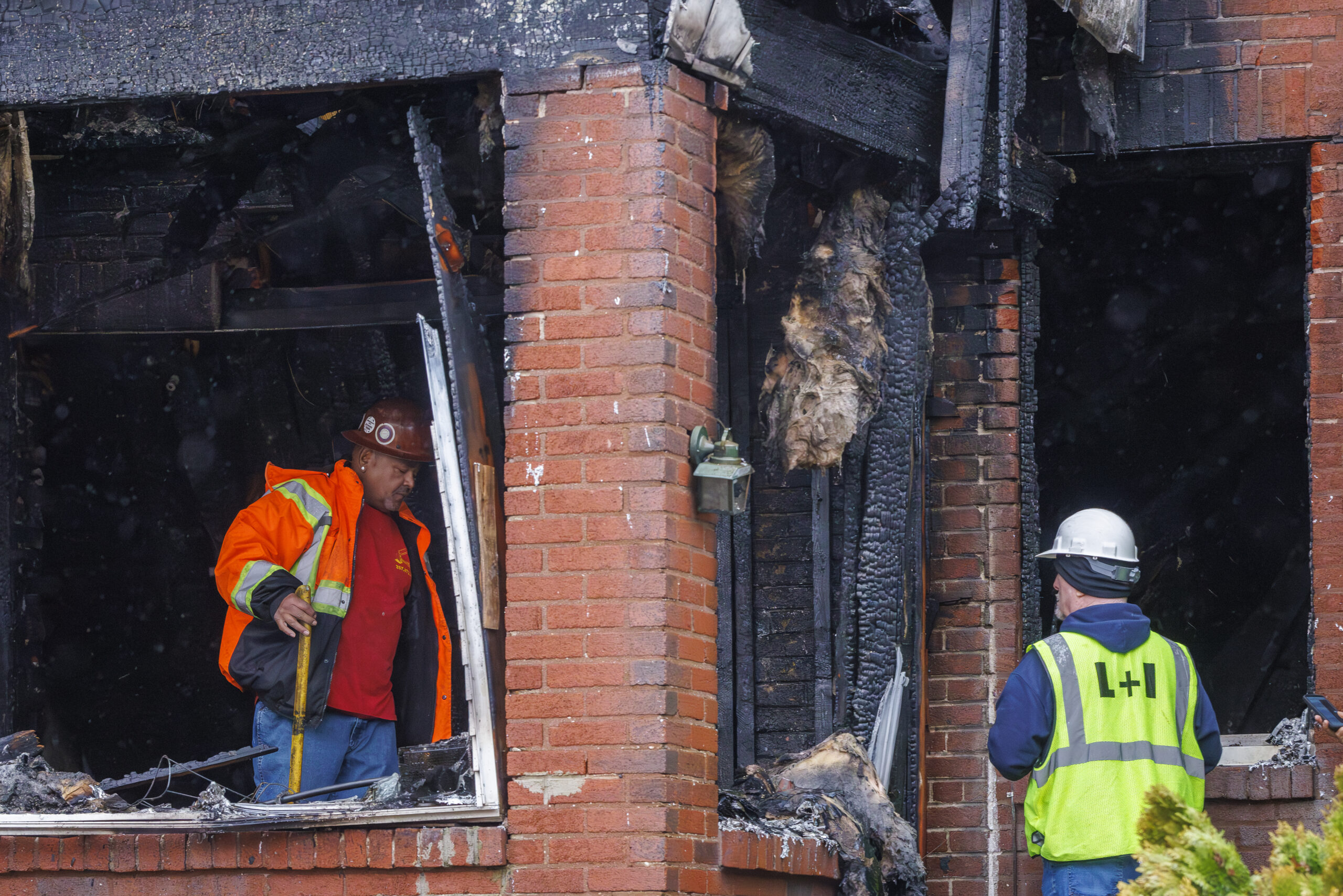
    License and Inspection employees inside a fire, 5300 block of Havenhurst Street, Philadelphia, overnight, Tuesday, March 3, 2026. Several fire fighters were injured in this fire.

    Before the Wynnefield fire erupted, earlier in the evening in Bristol Borough, a three-alarm fire activated multiple firefighting companies from across the region. One person was killed and another injured in a fire that engulfed several homes.

    A man died in a North Philadelphia house fire last month, which followed a January house fire that took the life of a 60-year-old woman.

    The Philadelphia Fire Department and the Red Cross urge city and collar county residents to visit soundthealarm.org/philly, where they can sign up for free smoke alarm installations and learn more about preventing fires.

  • Despite winning awards for improving test scores, this North Philly school is planned to close

    Despite winning awards for improving test scores, this North Philly school is planned to close

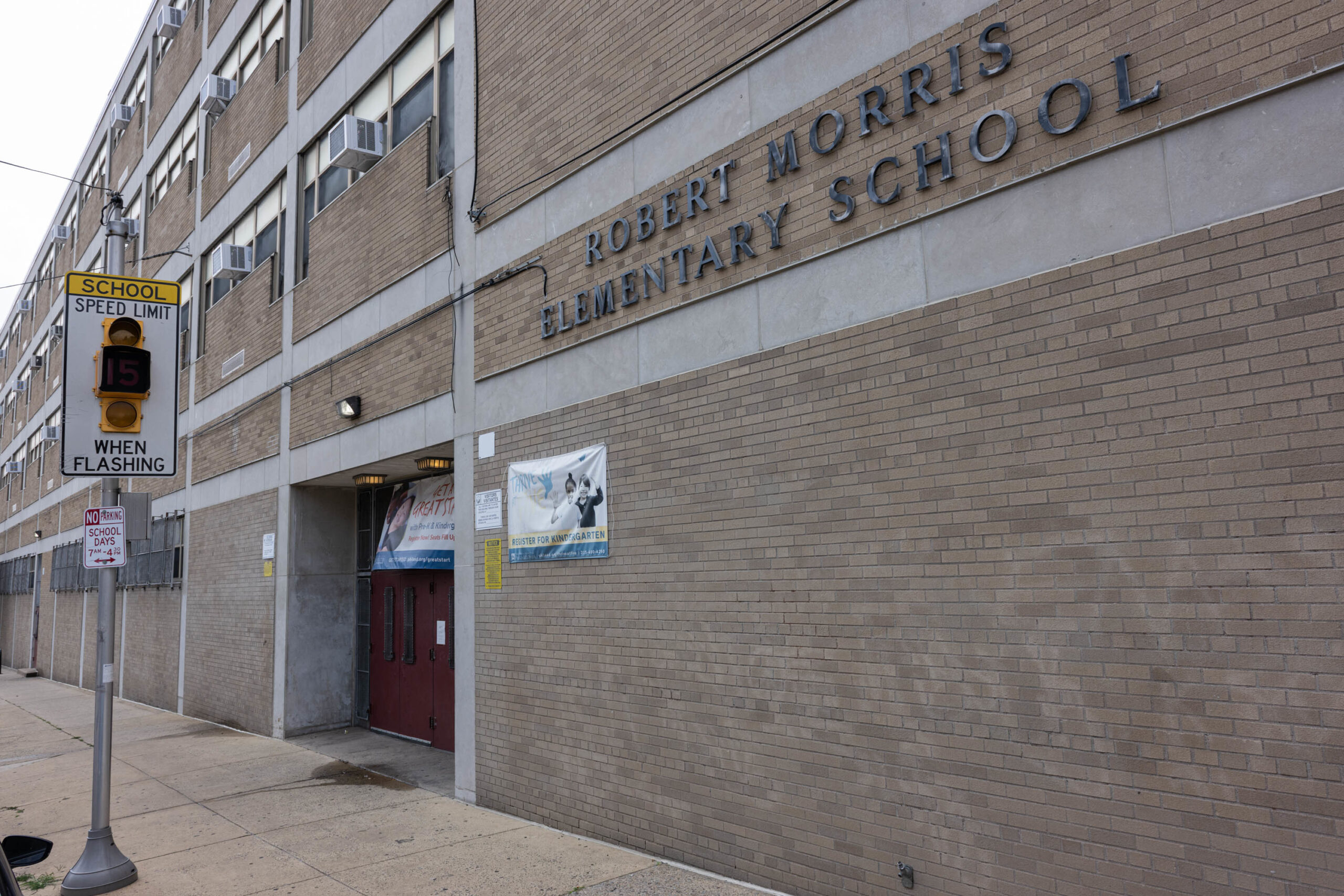
    Robert Morris School in North Philadelphia has been lauded for improving test scores, and it is the last elementary school in its immediate neighborhood.

    But the school district says not enough neighborhood children want to attend.

    The Brewerytown K-8 school’s enrollment is just under 23% full, with 216 students, and Morris is one of 18 schools slated for closure under the district’s facilities plan.

    At a community meeting last week, district officials said the school’s “severely underutilized” capacity was the driving factor behind their recommendation to close Morris after the next school year.

    But community members have questioned why low enrollment alone was enough reason to cut the school — and have voiced concern that the district is closing a school with a majority-Black student population while keeping open a nearby elementary school that has more white students.

    “We want the option for our children to be able to walk a block or two or three and get to their school. And it’s not clear to us the reason why that isn’t a possibility,” said Cierra Freeman, co-lead of culture and strategy for the Brewerytown-Sharswood Neighborhood Coalition.

    Morris students would be reassigned to Bache-Martin School or William D. Kelley School for fall 2027 under the plan.

    The district plans to repurpose the building at 2600 W. Thompson St., which it has categorized as being in “fair” condition, into a hub for its Office of Diverse Learners. Currently, the office operates within district headquarters and has an evaluation center near Central High School.

    District officials also said they want to keep the building so it could be reopened as a school in the future should enrollment interest rise.

    Robert Morris Elementary School in Brewerytown.

    ‘Punished for being so small’

    Morris was honored by the district last year at its Accelerate Philly awards for major improvements in test scores across reading and math. Its third-grade class jumped from 7% proficiency in reading and 14% in math to 48% and 59%, respectively. The district has said it did not consider schools’ academic performance in its facilities plan.

    “It seems like Robert Morris is being punished for being so small,” Paul Brown, a school psychologist at Roxborough High School a Youth and Education co-lead for the Brewerytown Sharswood Neighborhood Coalition and a member of Stand Up for Philly Schools, said at the community meeting.

    Neighbors said the district has not done nearly enough to retain and attract families to Morris, a “neighborhood gem,” according to Siobahn Neitzel, a local resident and youth and education action team co-lead for Brewerytown-Sharswood Neighborhood Coalition.

    “The challenges that the district talks about with regards to Morris … really come from a continued lack of investment on the district’s part,” she said.

    If there must be change at Robert Morris, some speakers urged the district to consider colocating the Office of Diverse Learners with the school instead of closing it. District officials said that option would be considered — but it was not reflected in a revised plan Superintendent Tony B. Watlington Sr. presented Thursday that spared two schools originally slated for closure. Morris is still on the closure list, but the school board could make changes before voting on the plan in the coming weeks.

    A changing area

    Brewerytown and adjacent Sharswood are neighborhoods in flux. The area is experiencing rapid gentrification, with new developments and property values shooting up in recent years, including the $750 million Philadelphia Housing Authority project to clear and redevelop the Norman Blumberg Apartments towers.

    In the last round of mass closures in 2013, the district shuttered Meade Elementary School, less than a mile from Morris. Residents within the Morris catchment area have opted for other choices in recent years, including charters and other public schools. District officials said about 16% of students in Morris’ catchment already attend Bache-Martin.

    Third grade teacher Brendan Yuhas teaches students Trenton Andersen, left, and Serenity Rose Rhoades, right, at Robert Morris Elementary last year.

    Freeman said that is, in part, the district’s fault.

    “This school has not been marketed to parents and families in the neighborhood. It has not been made attractive. It has not been pushed up,” Freeman said.

    Some residents are frustrated with the plan to instead invest more than $50 million in Bache-Martin to handle an infusion of hundreds more students, including from Laura W. Waring School, and $4.7 million into Kelley. They believe Bache-Martin students deserve that kind of investment, but so do Kelley and Morris students. District officials said Kelley has received more funding in recent years, making a similarly large investment unnecessary.

    Residents are concerned the consolidation could result in violence, by putting kids from different neighborhoods and rival gangs suddenly under the same roof at Bache-Martin or Kelley. And some at the community meeting worried that even if the district reopens the Morris building as a new school, it would be as a magnet that excludes local students.

    Undergirding many of their concerns is the reality of race. Morris’ student body is 82% Black, and its community members said its potential closure was another indicator of the major impact the district’s plan would have on Black families. Bache-Martin in Fairmount, poised for significant financial support, has only about 34% Black students.

    “When closures disproportionately affect minority communities, we cannot pretend race is not a part of this story. … What message are we sending to our students, my fifth- and sixth-grade students, when [the] place that nurtured them is going to disappear?” Adrienne Ramsey, a math teacher at Morris, said at the community meeting.

    Freeman insisted that there must be a public education option for elementary school students in the neighborhood. She said she is concerned that charter schools, which are privately run and publicly funded, do not have enough public oversight, and public schools are critical to communities.

    “Schools are one of the places that the real community building and community weaving starts,” she said.

    She said she believed interest in a public elementary school in the Brewerytown-Sharswood area would return, particularly as incoming residents occupying the new developments look for places to send their childrenand current neighbors reconsider their education options.

    “People want to be part of their communities. They want to be part of their neighborhoods. They want their children to have friends whose home they can walk to,” she said.

  • Should Philly politicians have to resign to campaign for new seats? Voters will get to weigh in — again | City Council roundup

    Should Philly politicians have to resign to campaign for new seats? Voters will get to weigh in — again | City Council roundup

    For the third time in two decades, Philadelphia voters this May will have the opportunity to weigh in on a city rule requiring local elected officials to step down from their current jobs if they want to seek higher office.

    Voters rejected City Council’s first two attempts to get rid of the resign-to-run rule, which requires a ballot measure because it is part of the city’s Home Rule Charter.

    The latest proposal, which Council approved Thursday in a 15-1 vote, will go before the voters during the May 19 primary election. Councilmember Isaiah Thomas, who authored the measure, is hopeful it will be approved because his proposal is more limited than Council’s previous attempts.

    “Reforming the resign-to-run rule for local elected officials is a critical first step towards ensuring Philadelphians have the best representation possible at all levels of government,” Thomas said in a statement.

    Rather than eliminating the resign-to-run rule, Thomas’ proposal would amend it to allow all elected city officials except the mayor to run for state or federal offices without resigning. (Council members would still have to step down if they wanted to run for mayor, and mayors would still have to resign to seek any other office.)

    What was this week’s highlight?

    Why stop there? Councilmember Jeffery Young Jr. cast the only vote against Thomas’ proposal.

    He said afterward that he believes a measure to alter the resign-to-run rule should be paired with another charter amendment: one that would impose term limits for Council members.

    “I do believe that we should be limited as elected officials,” said Young, a first-term Council member representing North Philadelphia and parts of Center City. “I do think that as a public office, we shouldn’t do these jobs forever.”

    Young’s position echoes that of the Committee of Seventy, Philadelphia’s business-backed good-government group. Committee of Seventy CEO Lauren Cristella told Council last year that pairing a resign-to-run change with term limits would provide “comprehensive, not piecemeal, reform.”

    The group proposed limiting Council members to three four-year terms. Young said he is open to negotiating about what the right number of terms should be.

    What else happened?

    Never read the comments: Is serving on City Council a “real job”?

    Not according to a recent Instagram comment from Young, whose taxpayer-funded salary is about $166,000 per year.

    On Wednesday, Instagram user Alan Fisher criticized the lawmaker in a comment left on an Inquirer video about a controversial zoning bill that Young had authored.

    “Jay Young is a joke of a councilperson and I cannot wait till he’s replaced,” wrote Fisher, who posts about urbanism issues and has thousands of followers across his social media accounts.

    Young replied: “me too so I can get a real job.”

    After Council ended Thursday, Young said the comment was not an indication of his political future.

    “I’m joking,” he told reporters. “The guy called me a joke, and I made a joke.”

    Councilmember Jeffery Young, Jr. in chambers as City Council meets Dec. 11, 2025.

    The backstory: Young, who represents the North Philadelphia-based 5th District, had proposed a zoning bill to prevent the former Hahnemann University Hospital site on North Broad Street from being redeveloped into housing. Young said he was hoping to see the site return to being an employment hub.

    But instead, his efforts to change the area’s zoning led to a rush of housing permit applications from developers hoping to beat him to the punch as his proposal made its way through the legislative process. He has since pressed pause on the bill, and The Inquirer video laid out how the saga had unfolded.

    In a Council speech Thursday, Young appeared to walk back his comment, although he did not directly mention the episode.

    “People say a lot of vile stuff about us. It seems like we’re not allowed to have a sense of humor about it,” Young said. “But I want my constituents to know that in the 5th Council District, we are fighting each and every day to improve their lives.”

    The Instagram comment was not the first time Young has provided curious commentary about his political future.

    Late last year, when The Inquirer asked if he planned to run for reelection in 2027, Young said: “It’s not up to me to make that decision. … It’s up to the people of the 5th District.”

    Usually, the people’s will is discerned through elections. Young, who has already drawn a potential opponent in next year’s race, said he will instead take the pulse of the 5th District by reaching out to people before deciding whether to seek a second four-year term.

    At the time, Young seemed to think being a member of Council was a real job.

    “I like doing my job,” he said last year.

    Quote of the day

    Jerome Richardson, 21, a senior at Temple who is a native of St. Paul, has been charged along with journalist Don Lemon for an anti-ICE protest at a Minnesota church last month.

    Temple student honored: Council on Thursday recognized Jerome Richardson, a Temple University senior who was arrested by federal authorities on charges connected to a January protest in his native St. Paul, Minn.

    During the surge in immigration enforcement activities and civil unrest in the Twin Cities this winter, protesters interrupted a service at a church whose pastor is also a federal immigration officer.

    The fallout from the demonstration led to the controversial arrest of former CNN anchor Don Lemon, who live-streamed the event and said he was covering it as a journalist. Richardson said in a video he assisted Lemon “by helping with logistics and connecting him with local contacts” and posted a text-message exchange in which Lemon said Richardson could “produce” for him.

    Richardson turned himself in to federal authorities in Philadelphia earlier this month. His case is pending, along with those of Lemon and other defendants.

    “Whenever journalists are under attack, we are all under attack,” Richardson said in a speech to Council.

    Staff writers Anna Orso, Jake Blumgart, and Ryan W. Briggs contributed to this article.

  • Temple’s new provost has an academic background in urban planning and comes from Arizona State University

    Temple’s new provost has an academic background in urban planning and comes from Arizona State University

    An Arizona State University vice provost and dean, who has degrees in mathematics and geography and has studied urban planning, will become Temple University’s next senior vice president and provost.

    Elizabeth “Libby” A. Wentz, 62, an Ohio native with a doctorate from Pennsylvania State University, will step into her new role at Temple July 1, subject to approval by the board of trustees, the school announced Monday.

    “My background in urban planning has kind of shaped who I am and shaped my thinking, and I just think that there’s so many great opportunities for recruiting students, for creating internships for students, for creating research experiences for students in an urban environment that the university’s rural counterparts don’t have in the same way,” Wentz said in an interview.

    Wentz has overseen Arizona State’s Graduate College since 2020 and previously was dean of social sciences, which included geography and urban planning. She will replace David Boardman, who has been Temple’s interim provost since July when Gregory Mandel left the job. Boardman was not a candidate for the job and will continue his role as dean of the college of media and communication.

    As Temple’s provost — essentially the university’s number two leader — she will oversee 17 schools and colleges, multiple campuses, and the school’s undergraduate, graduate, and professional programs.

    She is the first provost in at least more than a decade to come from outside the university and was selected through a national search, chaired by a faculty member and a dean.

    “Libby sort of stuck out for me after the hour I spent with her as being literally right on the same page relative to her ability to articulate the mission and the purpose of Temple and why that was so important,” Temple president John Fry said in an interview.

    He was struck by her commitment to student success, he said. “She obviously had time to interact with students and, I think took like really special care and interest in our students,” he said.

    And, Arizona State has grown tremendously in part because of its commitment to online programs, he said, which are a priority in Temple’s strategic plan. Temple has lost about a quarter of its enrollment over the last decade.

    “We don’t have the kind of online enrollment that you would expect a place like Temple to have,” Fry said. “One of the things Libby and I did speak about was her familiarity with the ASU online infrastructure. She’s taught in it. She obviously has led parts of it.”

    Temple remains amid searches for several other key positions, including chief operating officer and law and engineering school deans.

    Wentz said she was attracted to Temple because she wanted to remain at an urban university and has long admired the work of Fry, who has had a longstanding relationship with Arizona State president Michael M. Crow. Temple a year ago became part of the University Innovation Alliance, a small nonprofit sponsored through Arizona State that is aimed at finding innovations to improve learning and increase college attendance, retention, and graduation rates ― especially for low-income students ― then scaling those innovations.

    “They built a really strong rapport and have a very similar philosophy around higher education which also very much aligns with kind of my own interest and my own philosophy,” Wentz said.

    Both Temple and Arizona State, which has its main campus in Tempe, are major research institutions; Arizona is much bigger with over 194,000 students, compared to Temple with more than 33,000, including its international campuses.

    “Honestly the biggest difference [between the two] is the weather right now,” Wentz joked, noting that it was 81 and sunny in Tempe on Sunday as Philadelphia prepared for blizzard conditions.

    Arizona State does not have a faculty union, so learning to work with Temple’s faculty union will be new.

    “That’s going to be an exciting area for me to learn about,” she said.

    Urban planning background

    Fry has a reputation as an urban planner and in his prior leadership jobs at the University of Pennsylvania, Drexel, and Franklin and Marshall focused on development and improving the campuses and their neighborhoods. He has aspirations for Temple, too, including building an “innovation corridor” stretching from Temple’s recently acquired Terra Hall at Broad and Walnut Streets in Center City to the health campus, a little more than a mile north of main campus on Broad Street.

    Wentz said she and Fry had not talked about urban planning, but that she looks forward to working on the university’s new strategic plan, which includes more green spaces, a new 1,000-bed residence hall, a STEM complex, and an emphasis on more attractive and defined entrances to its North Philadelphia main campus. The three pillars of the plan are student success, research in action, and place-based impact.

    “Those are going to be some really exciting conversations that I look forward to having with John, as well as with the Temple planners to think about how do we make it a safe space for students and a great learning environment.” she said.

    During a 2022 talk at Arizona State, Wentz discussed how urban planning figured into her work.

    “Most of the work that I do applies to the urban environment and urban analytics, so trying to understand how it is that cities work and trying to make the physical urban environment a better place for people to live,” Wentz said during that talk.

    Building trust and collaboration

    In her new role at Temple, she said, early on she will focus on getting to know the community and the university’s financial model and make clear her commitment to shared governance and data-informed decision making.

    Wentz, who grew up near Cleveland and got her bachelor’s in mathematics and master’s in geography at Ohio State University, spent the last 30 years at Arizona State. She became a professor there in 1997.

    She helped the university launch its medical school and has grown graduate enrollment and graduate student funding.

    Wentz said she prides herself on building a culture of trust and collaboration and has worked with the local community. She said she’s looking forward to doing the same at Temple.

    She plans to come to Philadelphia in a couple weeks and look for a place to live, she said.

    “I’m going to come after the snowstorm, I think, instead of before,” she said Sunday.