“Oohhh Loorrrd, they sent me the one that don’t speak no English.”
I was a young doctor in a North Philadelphia emergency department, and I had just stepped into a patient’s room. I had not even had the opportunity to introduce myself with my usual preamble and open-ended questions.
Instead, I started with: “I speak English. And I’m your doctor. How can I help you today?”
I am an emergency physician, public health expert, healthcare executive, associate professor, and a South Philly neighbor. I’m also the daughter of naturalized United States citizens from India, was born in Delaware, and have lived in Philadelphia for 25 years — longer than anywhere else in my life.
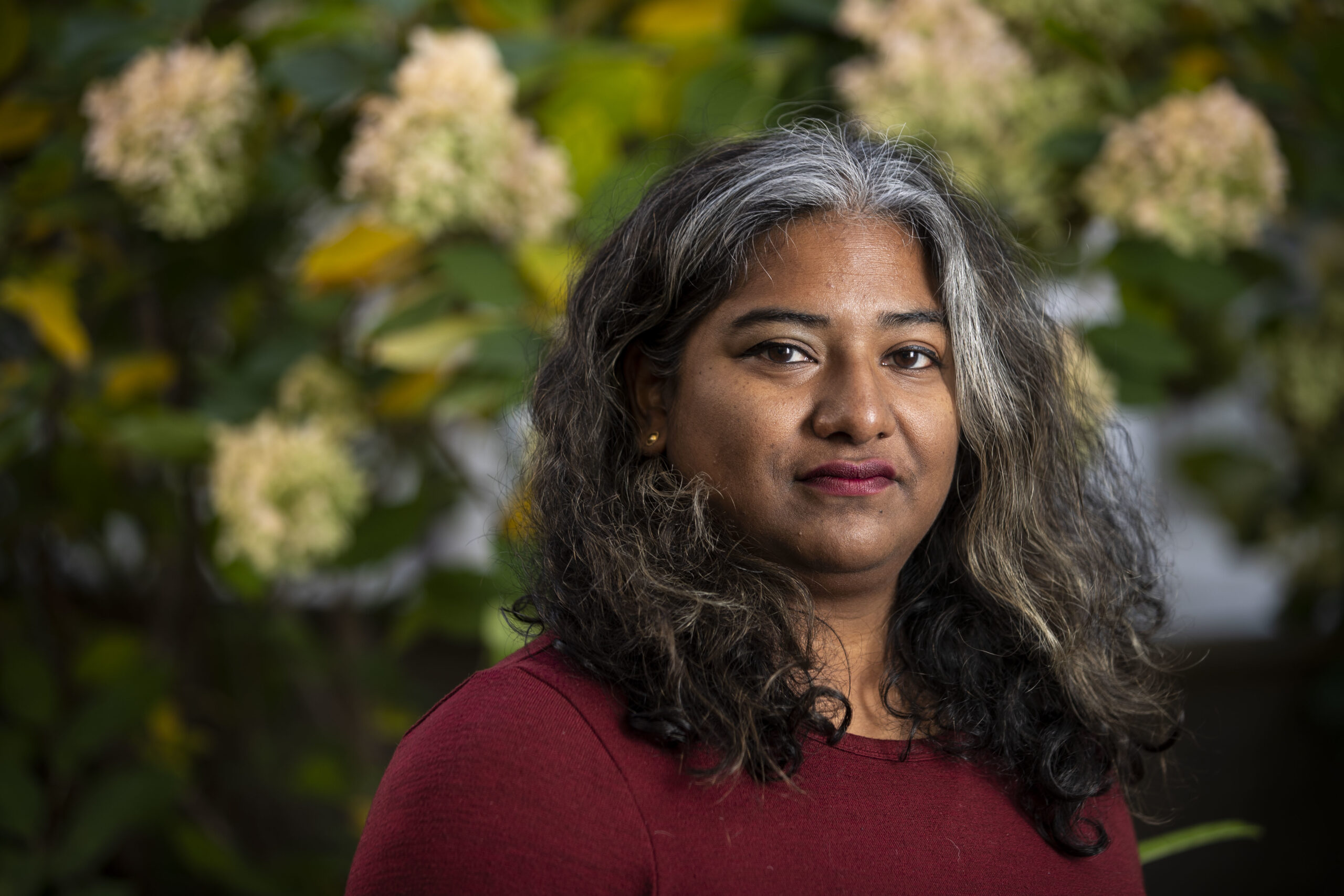
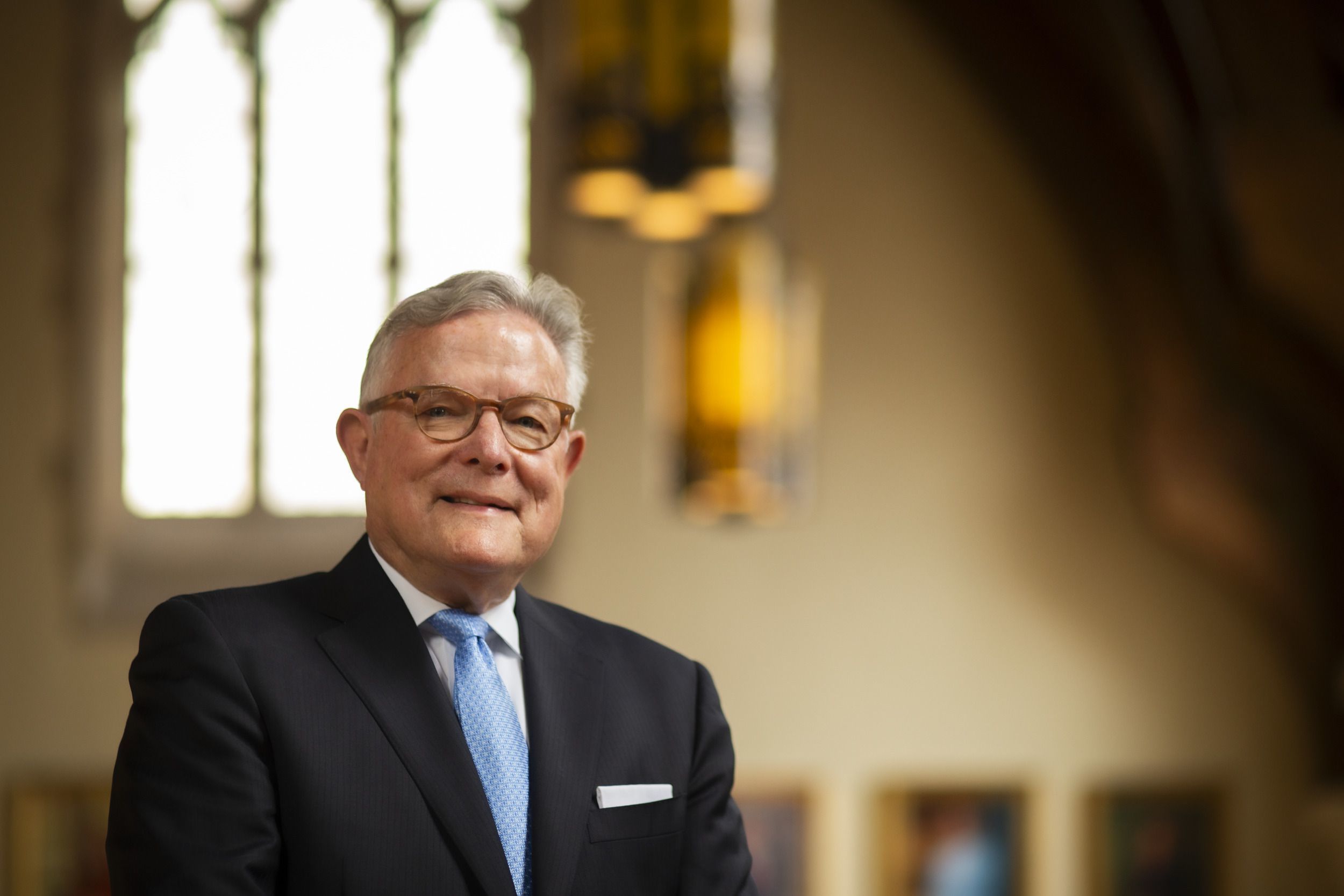
The author poses for a portrait near her home in Philadelphia on Thursday, Nov. 11, 2021.
My whole life is here. I was born in the U.S. I studied and earned several degrees here. I built my career in this country. I created my family here. I am American in every way.
Yet, I often have to answer the questions:
Do you speak English?
Yes, very well.
Where are you from?
Philly.
No, I mean originally?
Delaware.
What do they do in your country?
This is my country.
My husband is from Italy. He left the Tuscan sun for me — or us — when I was in the midst of my medical education and training in Philadelphia. Every time we went to the immigration office for him to do interviews or paperwork, I was the one who was questioned.
The underlying question is clear in every instance: Do you belong here?
In most cases, I shake it off. Disregarding the subtext, I feign a smile in place of rolling my eyes or shaking my head. My inner dialogue is usually a bit more sharp-edged.
But until the last few months, the questions never really evoked fear or a lack of safety.
In the America I have known my whole life, belonging wasn’t something you had to prove in real time. Citizenship carried a presumption: that you could move through your day without interrogation and without having to explain your existence to strangers or the state.
Times are different.
What changed was not the question itself, but what it now implies. Instead of innocent until proven guilty, the questions precede evidence. Instead of being governed by laws, we are ruled by suspicions. Everything feels backward.
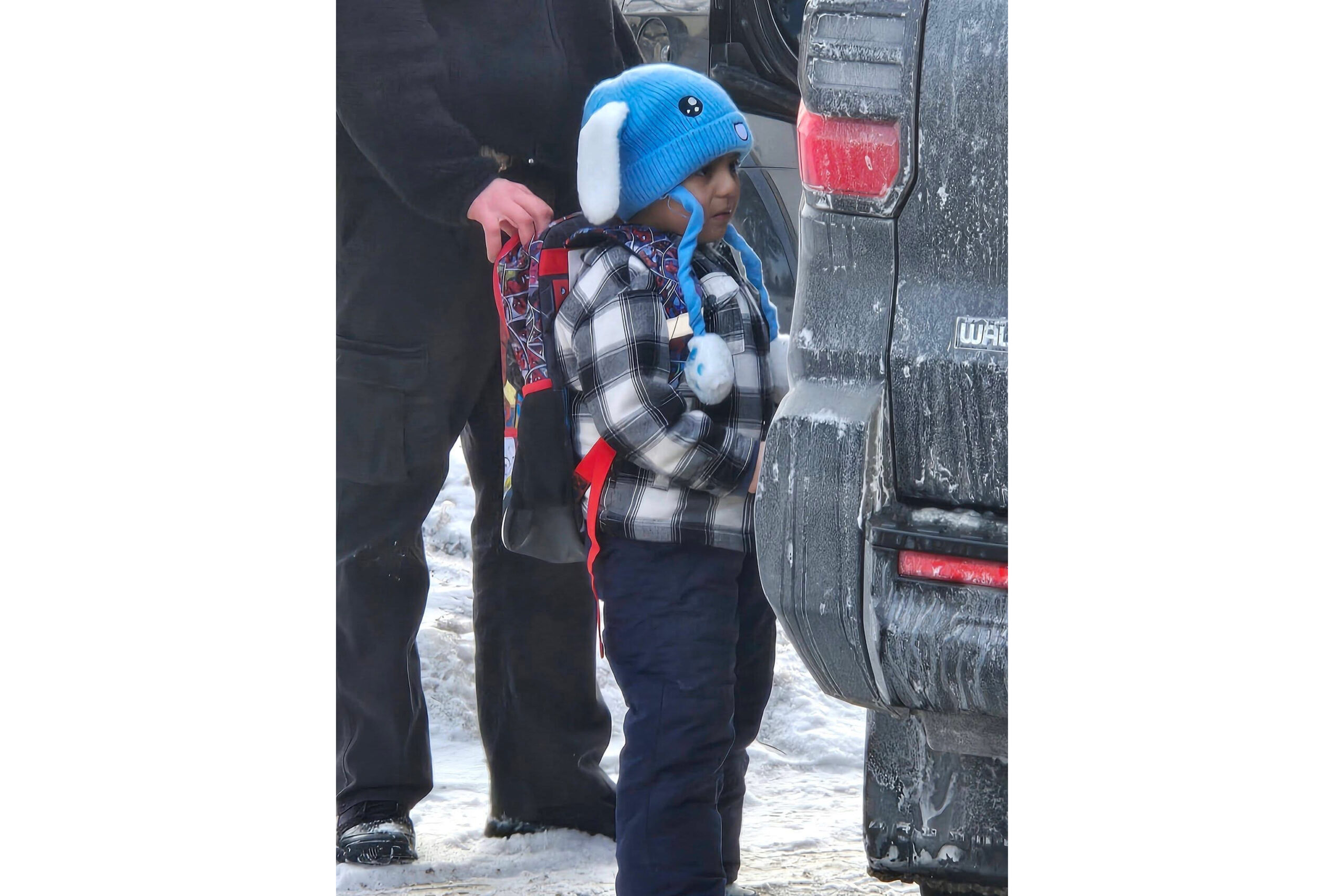
We are living in the era of the U.S. Immigration and Customs Enforcement militia, where enforcement and fear trump everything. These are the days when a 5-year-old, standing alone with a blue bunny snow hat and Spider-Man backpack, faces the consequences of not being able to prove he belongs.
Five-year-old Liam Conejo Ramos is taken into custody by federal immigration officers as he returns home from preschool on Tuesday in Columbia Heights, Minn.
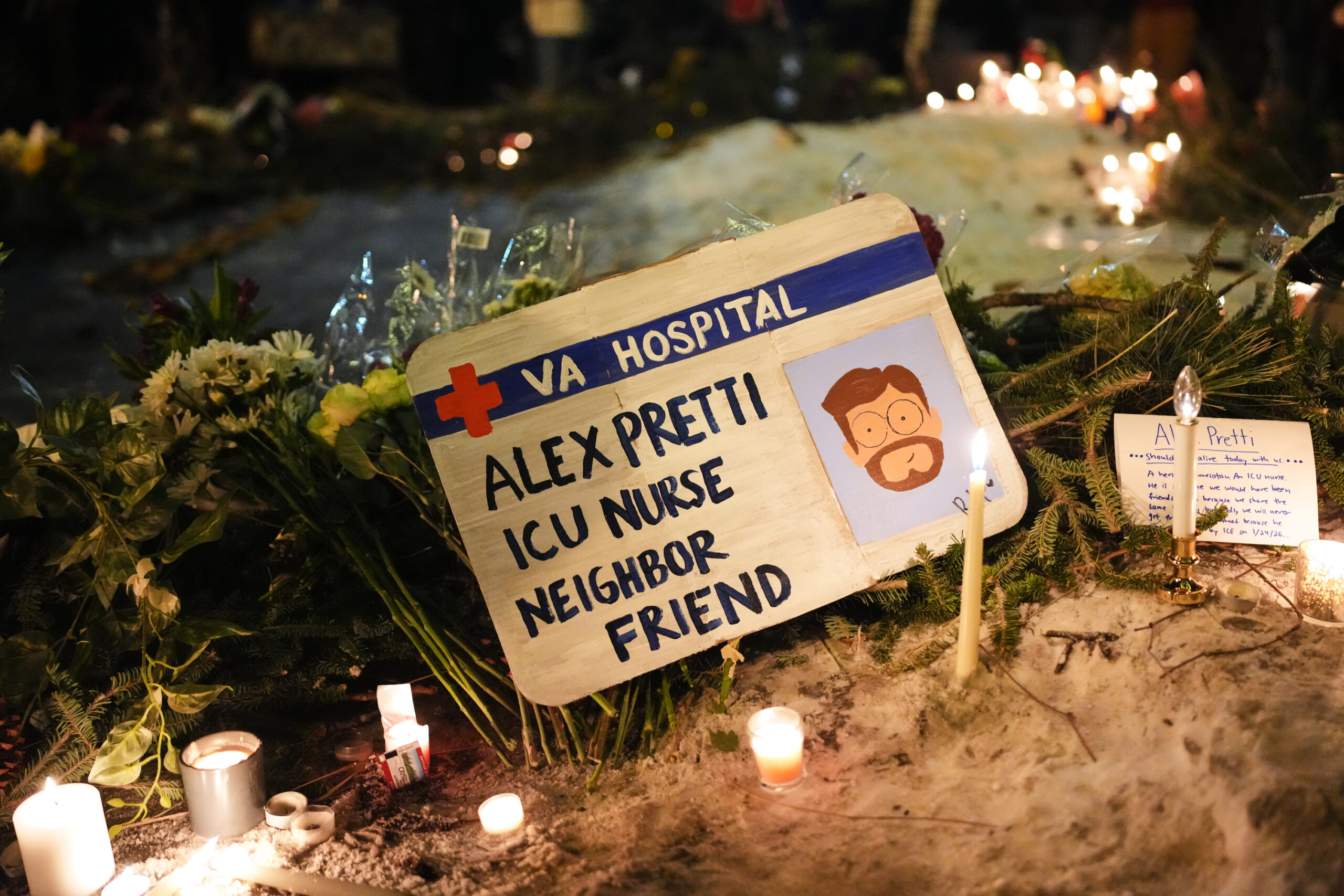
When an intensive care unit nurse, who cares for the sickest veterans, offering critical care to heal them back to life, is attacked and shot while trying to help someone else. When merely voicing dissent and disagreement, or being called a b—, is enough to risk being shot to death.
A sign for 37-year-old Alex Pretti, who was fatally shot by a U.S. Border Patrol officer earlier in the day, is displayed during a vigil Saturday, Jan. 24, 2026, in Minneapolis.
If service, citizenship, and care do not protect you, then it seems we are accepting a hierarchy of who deserves safety — and who does not.
In movies or on the news, people in other parts of the world or other times in history had to carry their identification documents at all times, but not here. Here, my Americanness was something I carried in my saunter or stroll — the confidence that I can exist in public space without explanation.
But maybe that was until now.
I live on the same street where the U.S. Constitution was signed. In my hometown, I am reminded daily about how this country came to be — through determination, courage, intention, and a defiant line in the sand of what would be tolerated.
I believe in “We the People,” in civil liberties, and in the rule of law. I believe that we all deserve equal protections, regardless of race, origin, or religion. I do not believe power should go unchecked or that authority can reign in isolation or concentration.
And despite being incessantly fed a narrative of how deeply divided the United States of America has become, I believe in civilian supremacy — that force exists to serve the people, not silence them.
Being American was never about how you look or sound. It’s about how you demonstrate your beliefs through your actions. We speak, write, protest, and make our voices heard through every avenue.
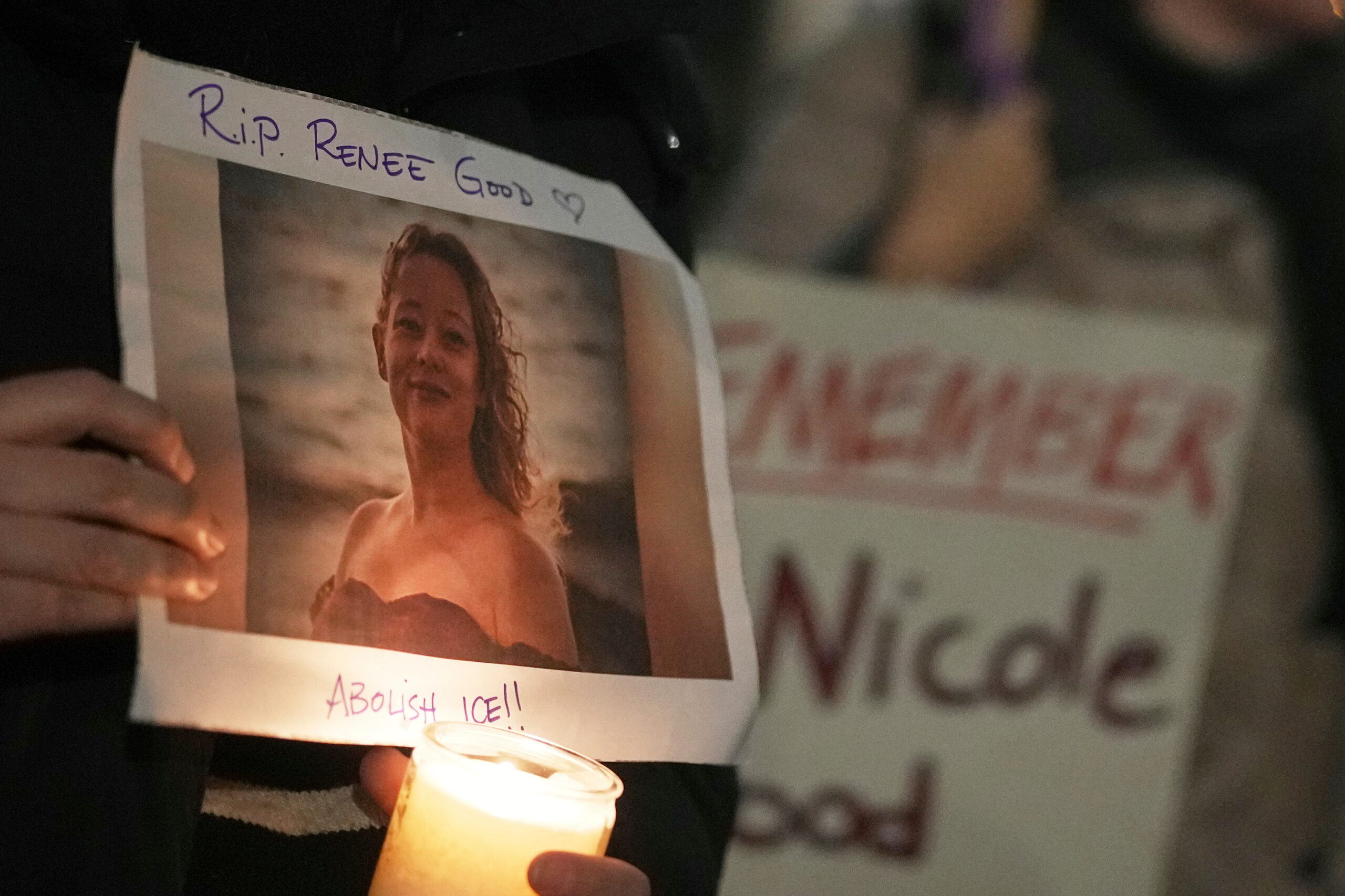
People attend a candlelight vigil at the U.S. Embassy in London, Monday, Jan. 12, 2026, for U.S. citizen Renee Good, who was shot by ICE in Minneapolis.
We vote and hold our elected officials accountable for their actions — including their silence and complicity. We show up, socially and morally, for our neighbors. I spend my money in businesses whose owners share my values and beliefs.
I believe in and honor those who have fought for the freedoms I have always enjoyed. And I am prepared — as I think my city around me is — to defend that freedom and the principles that make us Americans, even when fear might tempt us to look away or cede our power.
I was born in the land of the free and the home of the brave. And I’m ready to prove it.
Priya E. Mammen is an emergency physician, healthcare executive, and public health specialist who helps the nation’s most impactful companies integrate clinical integrity at scale.
No teaching happened inside some Central High classrooms Friday: temperatures were just too low.
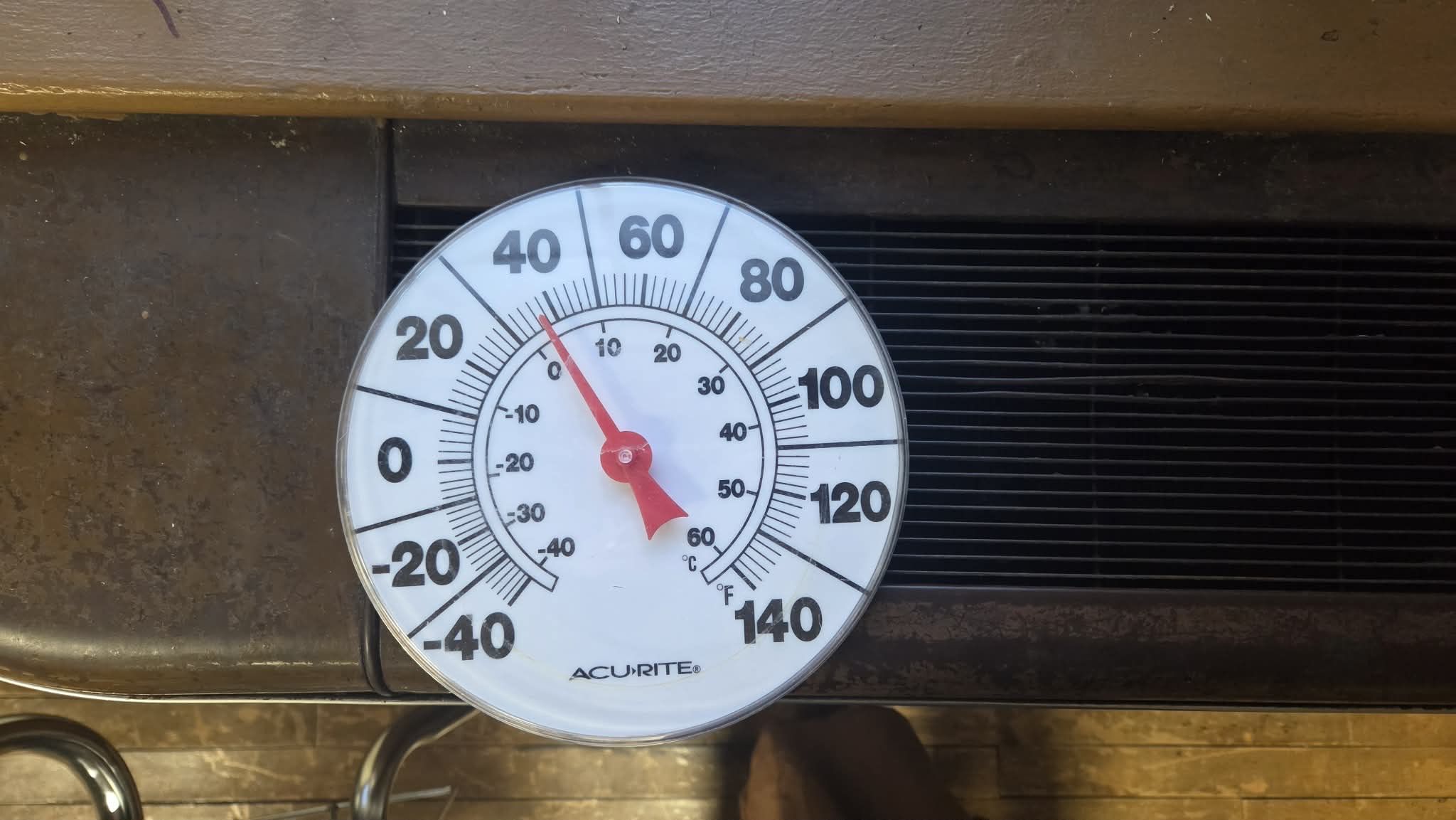
Inside Kristen Peeples’ room, a thermometer read below 40 degrees. Multiple classrooms inside the storied Philadelphia magnet were so cold that classes had to relocate for safety, staff there said.
Normally, Peeples relishes engaging classroom instruction and discussion. On Friday, it was all about survival; conditions were “untenable,” she said. While some rooms were comfortable, many were freezing. Some were overly hot.
Classes that were supposed to be in rooms too cold for occupancy just moved around the school — which enrolls over 2,300.
“One class, I shared an empty space with another teacher,” said Peeples, who “couldn’t teach given the volume of people in the room, but at least we were able to be somewhere warm. Another period, we sat in the library while students worked independently, but again, not tenable for direct instruction.”
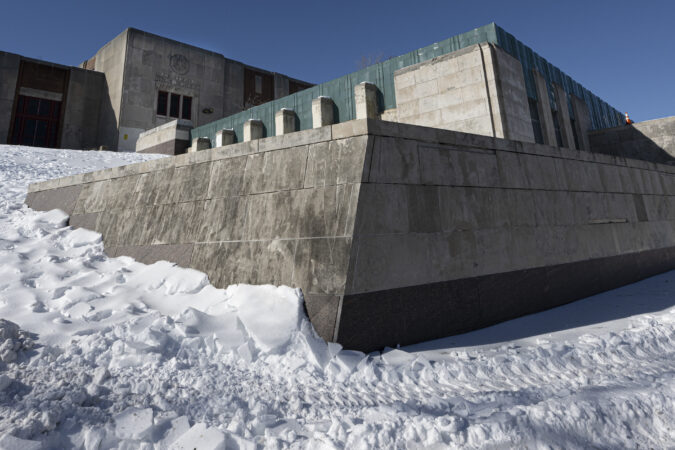
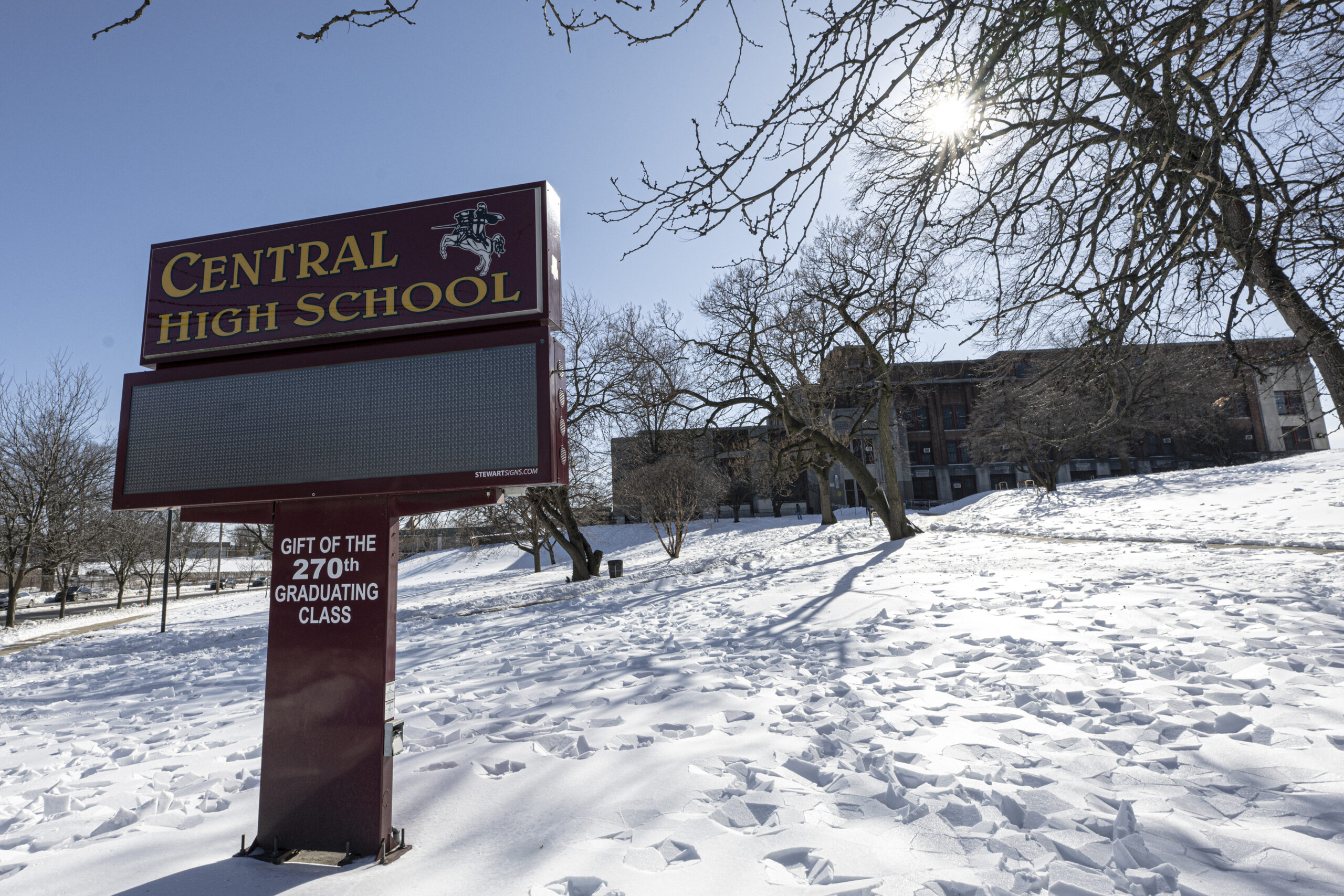
Central High School is shown in the freezing temperature on Friday, January 30, 2026.
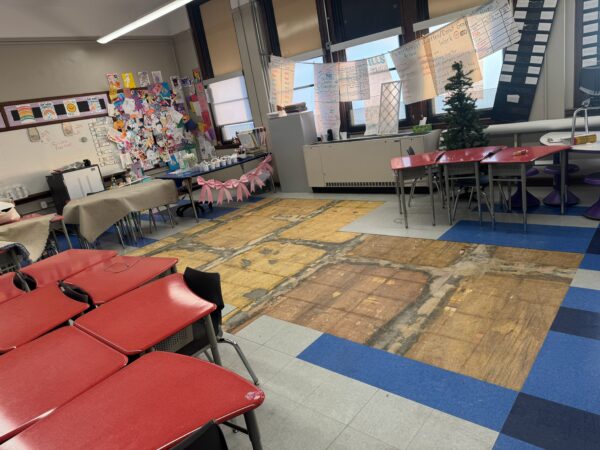
With bitter cold still bearing down on the region, some Philadelphia schools continued to cope with difficult conditions for the second day in a row on Friday — old heating systems struggling to keep up with subfreezing temperatures, giant piles of snow surrounding schools that made getting in and out difficult for students and staff.
All Philadelphia School District schools and offices were closed Monday for a full snow day; Tuesday and Wednesday were virtual learning days as city plows cleared streets.. Superintendent Tony B. Watlington Sr. has said that safety was his first priority in making the decision whether in-person instruction could resume, and made the call to do so Thursday.
But staff at some schools said they thought that was the wrong decision, given conditions in some district buildings Thursday and Friday.
In North Philadelphia’s Taylor Elementary, for instance, two burst pipes rendered five classrooms unusable, according to a staffer who asked to remain anonymous because they were not authorized to speak to a reporter.
Classes had to be combined to account for the out-of-commission rooms. And some rooms were chilly, in the 50s.
“This heating system is just very old and struggling,” said the staffer.
Taylor officials asked the district to pivot to virtual instruction Friday, but their request was denied.
Arthur Steinberg, Philadelphia Federation of Teachers president, said the district’s decision to reopen all schools was “reckless, and a contradiction of their claim of exercising ‘an abundance of caution’ when making such decisions. Forcing students, families, and staff to navigate still-treacherous commutes after a historic snowfall and freezing temperatures was careless.”
Monique Braxton, a district spokesperson, said safety remains paramount and that district and city officials worked round-the-clock to ready buildings as best as they could.
“Across the district, teams are responding in real time to heating concerns, snow and ice conditions, and other weather-related issues as they arise,” Braxton said in a statement. “When conditions do not meet district standards, we work closely with school leaders to take appropriate action and communicate directly with our families.
We will continue to closely monitor building conditions throughout this bitter cold period and make adjustments as needed as, while temperatures remain below freezing.”
At Central High, several classrooms were so cold they were unusable. This was the reading inside a classroom on Friday.
Shivering, and slipping
On Thursday, Penrose Elementary, in Southwest Philadelphia had heating problems some entrances were/ tough to access because of unplowed snow, and a ramp that students with disabilities use to get into the school was blocked. Burst pipes at Vare-Washington Elementary, in South Philadelphia, made six classrooms, the cafeteria, the gym and the entire basement unusable Thursday.
Those schools were in much better shape Friday. But children and adults were still shivering, and slipping, at other schools.
By the end of the short school day — the district had long planned half days for Thursday and Friday, with parent conferences scheduled — the temperature in Peeples’ classroom at Central had dropped even lower.
Teachers and students were in a tough spot, Peeples said, but administrators and building engineers were also put in “an impossible situation” through no fault of their own. They have been working diligently to move students and teachers to warm learning spaces, Peeples said, plowing, shoveling, salting sidewalks and parking lots, and tending to fussy heating systems.
At Taylor in North Philadelphia, staff were told by the district that three of the five unusable classrooms will be fixed and ready for learning on Monday — hopefully.
Watlington recently proposed a facilities plan that would close 20 district schools and modernize 159 over the next 10 years, but the list of schools to receive upgrades has not been divulged.
The $2.8 billion plan also banks on $1.8 billion from the state and philanthropic sources, money that is far from assured.
Meeting for the first time since Superintendent Tony B. Watlington presented his sweeping facilities plan, Philadelphia’s school board heard an outpouring of angst Thursday night from community members upset over 20 proposed school closures.
“Closing schools ruins families and neighborhoods, especially Black, brown, immigrant and working-class communities,” said Caren Bennicoff, a veteran teacher at Ludlow Elementary in North Philadelphia, one of the schools targeted for closure. “A facilities dashboard can’t measure what a school means to children.”
Watlington said the plan represented a “once in a lifetime, significant opportunity” for the city to modernize schools.
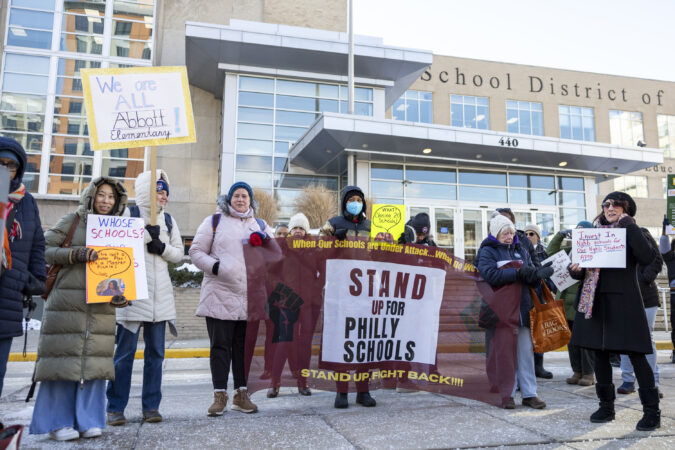
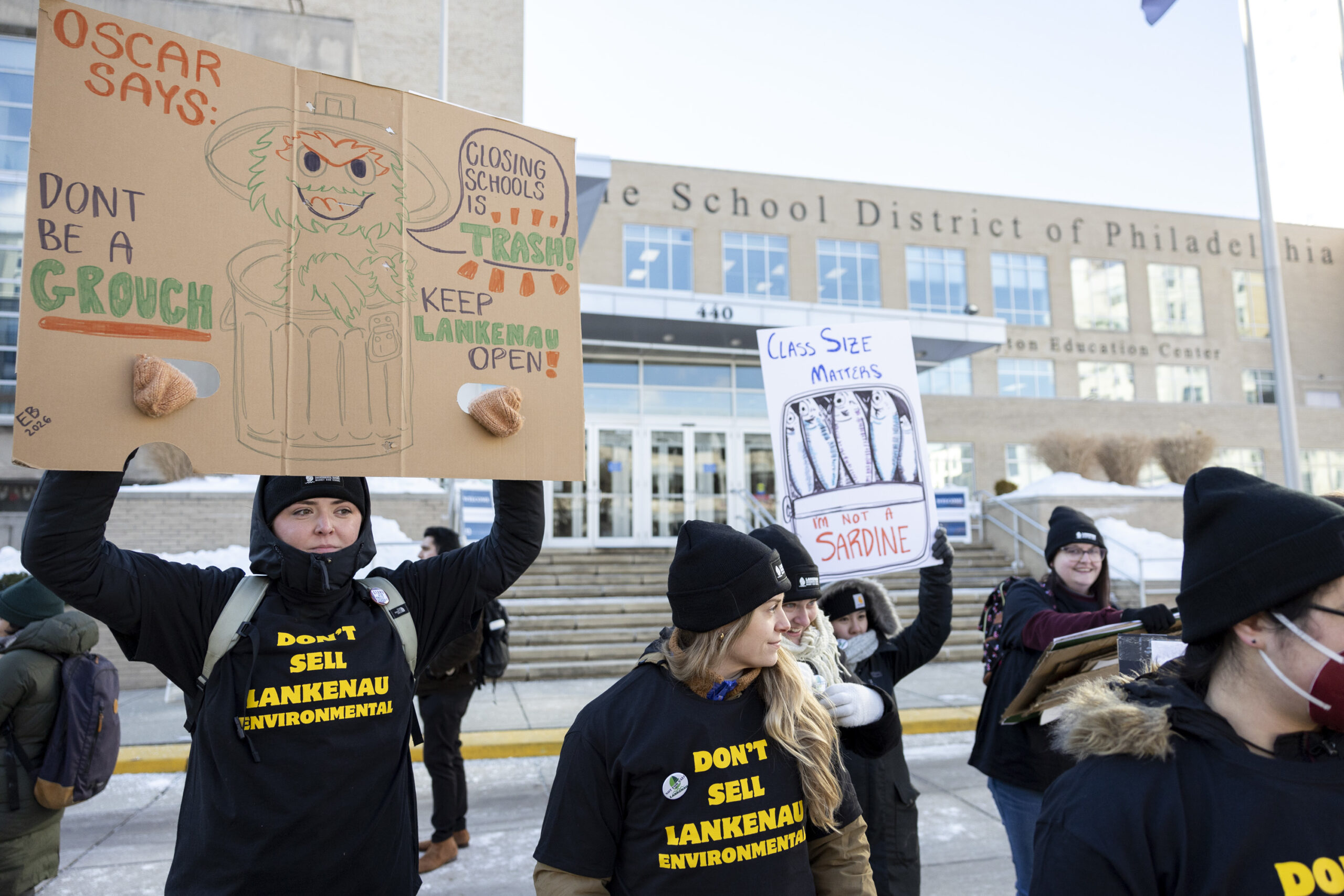
Prior to the meeting, more than 50 people gathered in the bitter cold outside Philadelphia School District headquarters, waving signs and shouting into bullhorns to show their displeasure with Watlington’s proposal.
Emily Brouder, 23, of West Philadelphia, Penn student and intern at Lankenau High School, holds a sign that says “Closing Schools Is Trash.”
Some of the demonstrators warned that removing children from their neighborhood schools would be traumatizing to already vulnerable kids.
“These schools are another home for these families,” said Margarita Davis-Boyer, president of the Lankenau High School Home & School Association. She said schools are a place where kids can get a meal, see a friendly face, and feel safe, especially when home may not offer the same reprieve.
“It’s just an injustice,” she said. Lankenau, the city’s environmental magnet school, would close under the plan, becoming an honors program inside Roxborough High School.
A strong Lankenau contingent packed both the rally and the board meeting, which happened immediately afterward.
LeeShaun Lucas, a Lankenau senior, is upset the school might close.
“To me, closing Lankenau doesn’t make sense,” Lucas said.
Lankenau’s campus is unique in the city — set against a wildlife preserve and a farm, a stream, and a forest.
Lucas has studied how to make the Schuylkill healthier by studying mussels, he said. He’s taking a dual enrollment GIS class — the only such high school in the city to offer such an opportunity, school officials believe.
That exposure has shaped Lucas, he said.
“I truly believe that voting to close Lankenau Environmental would be a mistake,” Lucas said. “Please vote to save Lank so that others may benefit from the type of learning that is only possible at Lankenau Environmental.”
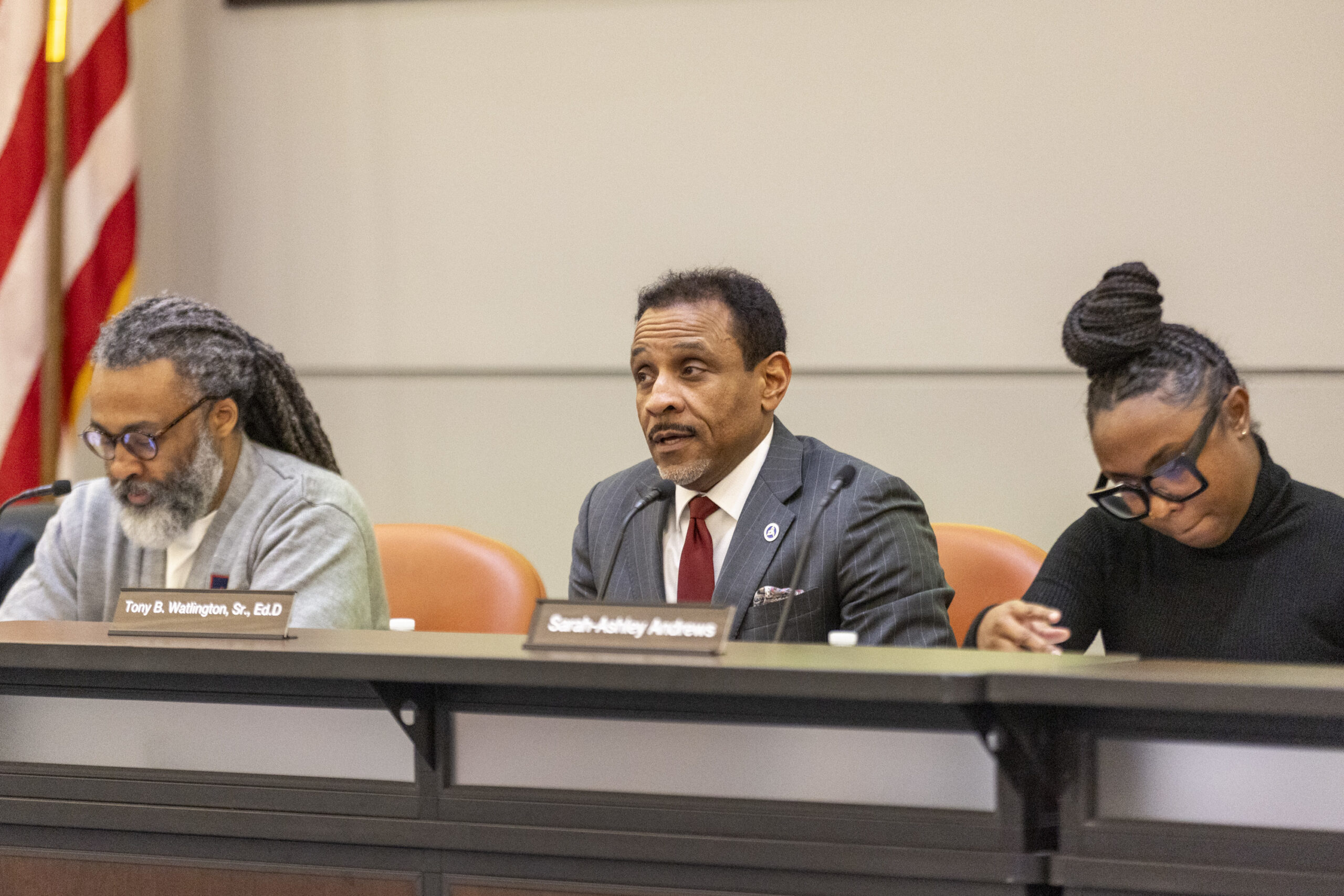
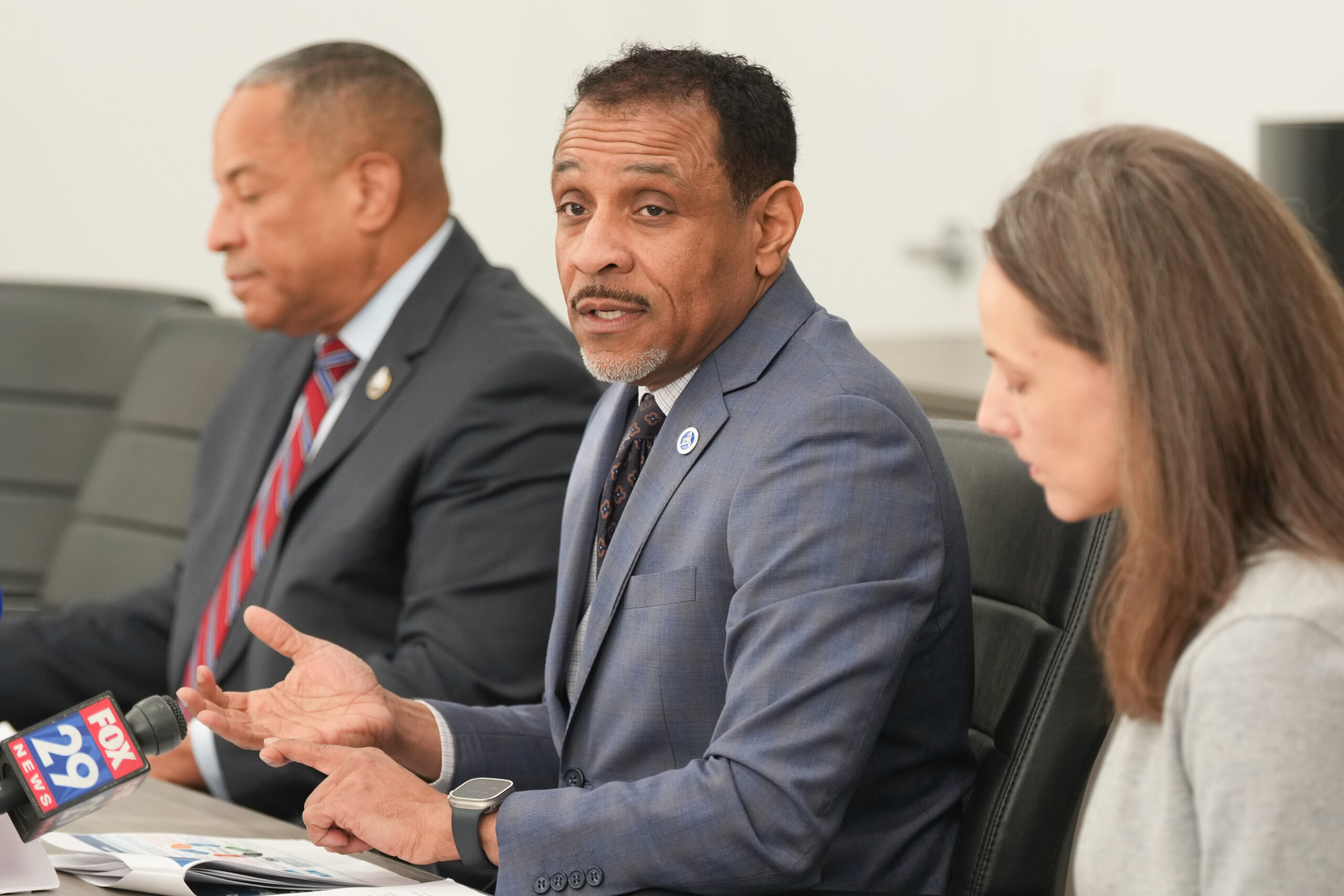
Superintendent Tony B. Watlington (center), Board President Reginald L. Streater, and Board member Sarah-Ashley Andrews at the School board meeting Jan. 29.
Disparate impact
Ryan Pfleger, an education researcher, said if underutilization and facility condition truly shaped Watlington’s recommendation, the burden of closure would fall roughly evenly across racial groups.
But that’s not the case with Watlington’s plan.
“Black students are overrepresented, roughly 1.6 times more likely to be enrolled in schools slated for closure,” Pfleger said. “Fifteen of 20 schools proposed for closure are majority Black. White students are underrepresented, about four times less exposed than expected. The schools slated for closure are also disproportionately low income.”
Pfleger’s conclusions match an Inquirer analysis of the closure data.
The plan, Pfleger concluded, “does not rectify educational injustice.”
Conwell shows up
A strong contingent of Conwell supporters also told the board they were unhappy with the plan to close their school, a magnet middle school in Kensington.
Conwell has just over 100 students in a building that can hold 500. But Erica Green, the school’s principal, said it’s worth saving.
“Conwell for many years has been the cornerstone in the Kensington community, a place where students flourish, where leaders are born; alumni included leaders in government, education, law, media, public safety, and professional sports: Living proof that diamonds truly are in our backyard,” Green said. “Times have changed, but excellence at Conwell has remained the same.”
Conwell is celebrating its 100th anniversary and has been the recipient of public and private donations to advance its building conditions and program offerings.
“Do not let the almighty dollar drive a choice to remove a beautifully designated historic school and beautifully gifted young people,” an impassioned Green said. “The essence, prestige and impact of Conwell Magnet Middle School cannot be duplicated.”
Priscilla Rodriguez, whose two sons attended Conwell, worries about the implications for families that rely on it for stability.
“When a school closes, families don’t just adjust. They struggle,” Rodriguez said. Conwell families “are already dealing with a lot. You won’t make it any better by closing Conwell.”
An incomplete plan?
Katy Egan came to the board with a long list of questions, none of which were addressed in Watlington’s plan: Which schools will be modernized? When? How? How will displaced students get to their new schools? What’s happening to students with special education plans forced to leave their schools? How do you plan to keep kids safe while merging schools?
Egan, a member of Stand Up for Philly Schools, called the blueprint “a 25% plan.”
But, she said, “we deserve more than 25%, and our students deserve everything.”
Community members can weigh in on the plan in the coming weeks at meetings around the city, and Watlington is scheduled to formally present it to the board on Feb. 26.
No vote will happen in February though, said board president Reginald Streater, who declined to weigh in on the merits of the plan until it’s handed over to the board.
In other board news
In other board matters, Watlington said he would soon ask to eliminate half days from the district’s calendar entirely.
The news came as he detailed a slip in year-over-year student attendance: in December, 54% of students attended school 90% of the time, compared to 66% in December 2024. That’s the largest drop in Watlington’s superintendency, he said.
He attributed the challenges to a two-hour delay for snow, light attendance prior to winter break — and light attendance during a half day called for professional development.
Watlington said at next month’s board meeting, he’ll propose amending the 2026-27 schedule to remove half days entirely.
“Half days in the calendar do not serve us well,” he said.
The board also installed three new student board representatives.
The non-voting members are: Brianni Carter, from the Philadelphia High School for Girls; Ramisha Karim, from Northeast High; and Semira Reyes, from the Philadelphia High School for Creative and Performing Arts.
Conditions were rough when staff and students arrived at Penrose Elementary in Southwest Philadelphia — some paths they needed to access to get inside the school were untouched by shovels or plows.
Some buses could not open their doors to let students out at their usual spot because snow banks were so high, according to multiple people who work at the school and teachers union officials. A ramp that students with disabilities use to get into the school was blocked.
And the heat was on the fritz for part of the day as outside temperatures were barely in the double digits.
“It’s about 45 degrees inside this classroom,” one Penrose staffer said Thursday morning. The staffer was not authorized to speak to the media and asked not to be identified. “We’re all in jackets and hats.”
After Monday’s snow day and virtual learning Tuesday and Wednesday, Philadelphia schools reopened Thursday, but for many students, it was anything but an inviting return. The combination of accumulated snow, days of subfreezing temperatures, and a clutch of old buildings — many of which have maintenance issues — made in-person learning challenging across the district.
The rocky return came just hours before a planned rally to protest the district’s proposed $2.8 billion school facilities master plan, which is necessary, officials say, because of poor building conditions and other disparities.
Around some schools, crosswalks were covered by giant piles of snow, forcing children to walk in streets. Elsewhere, there was no place for staff to park.
At Vare-Washington Elementary, in South Philadelphia, pipes burst, rendering six classrooms, the cafeteria, the gym, and the entire basement unusable, according to the Philadelphia Federation of Teachers. There was a strong chemical odor throughout the building.
At Mitchell, another Southwest Philadelphia elementary, “it’s a mess,” said a staffer who asked not to be identified for fear of retribution.
A pipe broke at the school, and Mitchell had no running water for most of the day, with just one brief window where students could use the bathroom. And Mitchell’s student lunches were never delivered, so kids were fed cereal for lunch.
“A lot of our kids rely on those lunches to sustain them throughout the day,” the staffer said.
In addition, Mitchell’s back doors and fire tower exits were blocked by snow, so if there had been a fire or emergency, the only available exits would have been the front doors.
Taylor, also in North Philadelphia, also had burst pipes, with four rooms unusable and most of the school cold. School officials asked for permission to hold classes virtually Friday, but had received no response as of Thursday afternoon.
The Philadelphia Federation of Teachers has called on the district to return to remote learning on Friday in light of “treacherous commutes and dangerous building conditions,” Arthur Steinberg, PFT president, said in a statement issued Thursday afternoon.
Steinberg said in an interview that his office was inundated with reports of heating issues or a lack of snow removal or other problems at schools including School of the Future in Parkside; Farrell, Swenson, Mayfair, and Fox Chase in the Northeast; and others.
“The District must also show respect to students, families, and our members by rectifying the broken heaters, burst pipes, icy sidewalks, and piles of snow in parking lots as soon as possible, so that students and staff can safely resume in-person instruction on Monday,” he said in the statement.
Monique Braxton, a district spokesperson, said “the safety and well-being of our students, staff, and families remains our top priority.”
Staff worked long hours inspecting boilers and buildings, restarting heating systems, clearing snow and ice, and more, Braxton said.
“Across the district, teams are responding in real time to heating concerns, snow and ice conditions, and other weather-related issues as they arise. When conditions do not meet District standards, we work closely with school leaders to take appropriate action and communicate directly with our families,” she said in a statement. “We will continue to closely monitor building conditions throughout this bitter cold period and make adjustments as needed, while temperatures remain below freezing.”
Both Thursday and Friday had long been scheduled as half days for students, with parent-teacher conferences planned. Those would be held virtually.
John Bynum, a former building engineer who is now an official with 32BJ SEIU Local 1201, the union representing 2,000 Philadelphia school building engineers, maintenance workers, and bus drivers, said the going was rough for many schools in terms of building condition.
“Most of these buildings are operating with the original boilers,” Bynum said. “We know with antiquated equipment, there’s going to be problems.”
In some cases, snowblowers that school staff were using to attempt to clear parking lots and sidewalks failed, Bynum said.
And like other school staff, his members often coped with trouble getting to work themselves, he said.
“There were challenges regarding SEPTA not running at a full schedule and the anxiety of getting to work without a robust transportation system,” Bynum said. “Street conditions weren’t the greatest. However, they made the best of it, and they showed up.”
Conditions like Thursday’s, Bynum said, highlight why the district needs more resources to address its buildings — and students’ learning conditions.
An Inquirer analysis of the decisions and the data behind them shows the proposed closures would disproportionately affect Black students. And despite efforts to minimize the impact, schools in the most vulnerable sections of Philadelphia would also be disrupted.
The closures would mostly address buildings with hundreds of unused seats, though some largely empty buildings were spared. And eight of the closures would affect schools given the district’s worst building condition rating — though 30 more buildings in that category would stay open and receive upgrades of some kind.
Monique Braxton, district spokesperson, said the facilities plan was “designed to provide access to high-quality academic and extracurricular programs across every neighborhood regardless of zip code.”
Most affected students — 90% — would be reassigned to schools with similar or better academic outcomes, and all would be reassigned to schools with either similar or better academics or comparable or better building conditions. Receiving schools will get additional supports, Braxton said.
Overall, the proposal would shake up at least 75 schools, with 20 closing entirely, four leaving their current buildings to colocate within other schools’ buildings, and three moving to new buildings. It would create new schools and, in one case, result in a new building. Nearly50 other district schools would take in displaced students from the closing schools, with some adding grades and others modernizing to fit new programming needs.
Collectively, about 32,000 district students learn in the 75 affectedschools — more than a quarter of the district’s total enrollment — not counting children in pre-K programs.
And those are just the changes Watlington introduced this month. Other shifts, some of them major, district officials said, are expected to be announced by the time he presentsthe planto the school board next month. A final vote is planned for later this winter.
Superintendent Tony B. Watlington (center) speaks about his proposal this month for the Philadelphia school facilities master plan.
The racial impact
The 20 schools that could close have twice as many empty seats as the district’s other schools. But The Inquirer’s analysis found that the closures will hit Black students disproportionately.
Among the closing schools, about 68% of the student population is Black, compared with 40% for the rest of the district’s schools — not including disciplinary or other specialized schools.
window.addEventListener(“message”,function(a){if(void 0!==a.data[“datawrapper-height”]){var e=document.querySelectorAll(“iframe”);for(var t in a.data[“datawrapper-height”])for(var r,i=0;r=e[i];i++)if(r.contentWindow===a.source){var d=a.data[“datawrapper-height”][t]+”px”;r.style.height=d}}});
Of the district’s schools where at least 90% of the students are Black, more than half are scheduled to close or take in more students from the closures.
Overall, amajority of students in the 75 schools that could close, take in students, or change in some way are Black, at about 54% of enrollment.
Some majority-Black schools, however, are earmarked for upgrades. Bartram High would get a modern athletics facility after nearby Tilden Middle School in Southwest Philadelphia is closed and upgraded for that purpose.
Nysheera Roberts is the parent of multiple children who attend Waring Elementary, in Spring Garden, which landed on the closure list. Waring now educates under 200 students; its pupils would be sent to Bache-Martin.
Roberts is stunned that her school — which educates mostly Black students like her kids — could close.
She worries about the logistics of getting her kids to school safely further away, then getting to her job in home care in Frankford on time. She worries what will happen to her children, including the niece and nephew she now raises who have lived through significant trauma and have behavioral and learning needs, if they have to adjust to a new and larger school.
“It’s not fair,” Roberts said. “They’re hurting Black kids more.”
Paying attention to vulnerable neighborhoods
In deciding which schools to close or expand, the district considered the vulnerability of the surrounding neighborhood.
Two dozen neighborhood elementary schools were labeled “very high risk,” meaning they have likely dealt with a previous school closure, or the community is otherwise vulnerable to high poverty, housing concerns, or other factors.
(function() {
var l2 = function() {
new pym.Parent(‘school_closing1’,
‘https://media.inquirer.com/storage/inquirer/projects/innovation/arcgis_iframe/school_closing1.html’);
};
if (typeof(pym) === ‘undefined’) {
var h = document.getElementsByTagName(‘head’)[0],
s = document.createElement(‘script’);
s.type = ‘text/javascript’;
s.src = ‘https://pym.nprapps.org/pym.v1.min.js’;
s.onload = l2;
h.appendChild(s);
} else {
l2();
}
})();
Welsh, in North Philadelphia, was the only school building in a neighborhood labeled “very high risk” to land on the closing list.
Bethune in North Philadelphia and Martha Washington in West Philadelphia will colocate with other schools.
But three schools with building conditions considered unsatisfactory, poor programming options, and “very high risk” neighborhood ratings were left off the closure list. Those schools are Philadelphia Military Academy in North Philadelphia, Sheppard in West Kensington — which has successfully fought off closure in the past — and Francis Scott Key in South Philadelphia, the district’s oldest building, constructed in 1889. Sheppard and Francis Scott Key are both majority-Hispanic schools.
Sheppard Elementary School in West Kensington has faced the threat of closure in the past but was spared in the latest proposal.
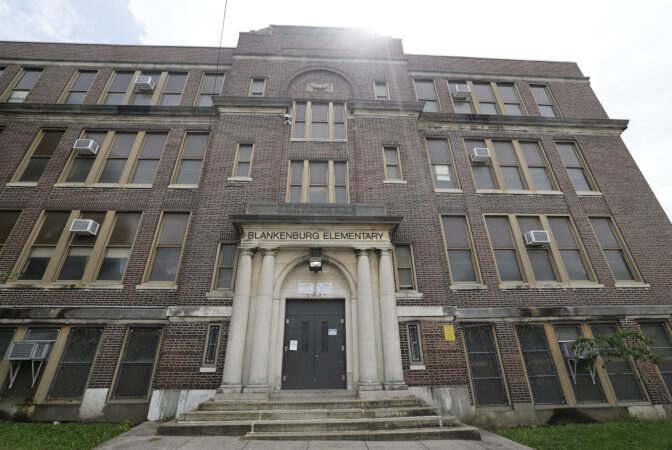
The district plan calls for closing five schools in neighborhoods it deemed to have a “high risk” of vulnerability, the level below “very high”: Blankenburg, Harding, Stetson, Tilden, and Wagner.
Watlington has made it clear that the district is phasing out middle schools when possible, in favor of the K-8 model — and of that list, four are middle schools. Only Blankenburg, in West Philadelphia, is an elementary. Also, of those schools in vulnerable neighborhoods, four of the five are rated as having “unsatisfactory” buildings, the district found.
Perhaps no section of the city faces as much disruption from the recommendations as the lower part of North Philadelphia.
Fourteen schools with a combined enrollment of 5,400 students could be affected, including the closures of Ludlow, Morris, Penn Treaty, and Waring.
“If you are closing schools during a literacy crisis, then you should be held directly accountable to the people you serve,” Young said last week.
Right sizing mostly empty buildings
Underused space was a factor in the district’s decision-making, an Inquirer analysis found.
Data released by the district last year identified about 60 schools that were more than half empty. The recommendations attempt to realign some of these schools by taking significant action on 31 of the 60 half-empty schools.
Of the 20 schools the district wants to close, 14 are currently at less than half capacity.
window.addEventListener(“message”,function(a){if(void 0!==a.data[“datawrapper-height”]){var e=document.querySelectorAll(“iframe”);for(var t in a.data[“datawrapper-height”])for(var r,i=0;r=e[i];i++)if(r.contentWindow===a.source){var d=a.data[“datawrapper-height”][t]+”px”;r.style.height=d}}});
AMY Northwest, Conwell, Robert Morris, Motivation, Tilden, and Welsh are all recommended for closure, with each educating fewer than a quarter of the students they have room for.
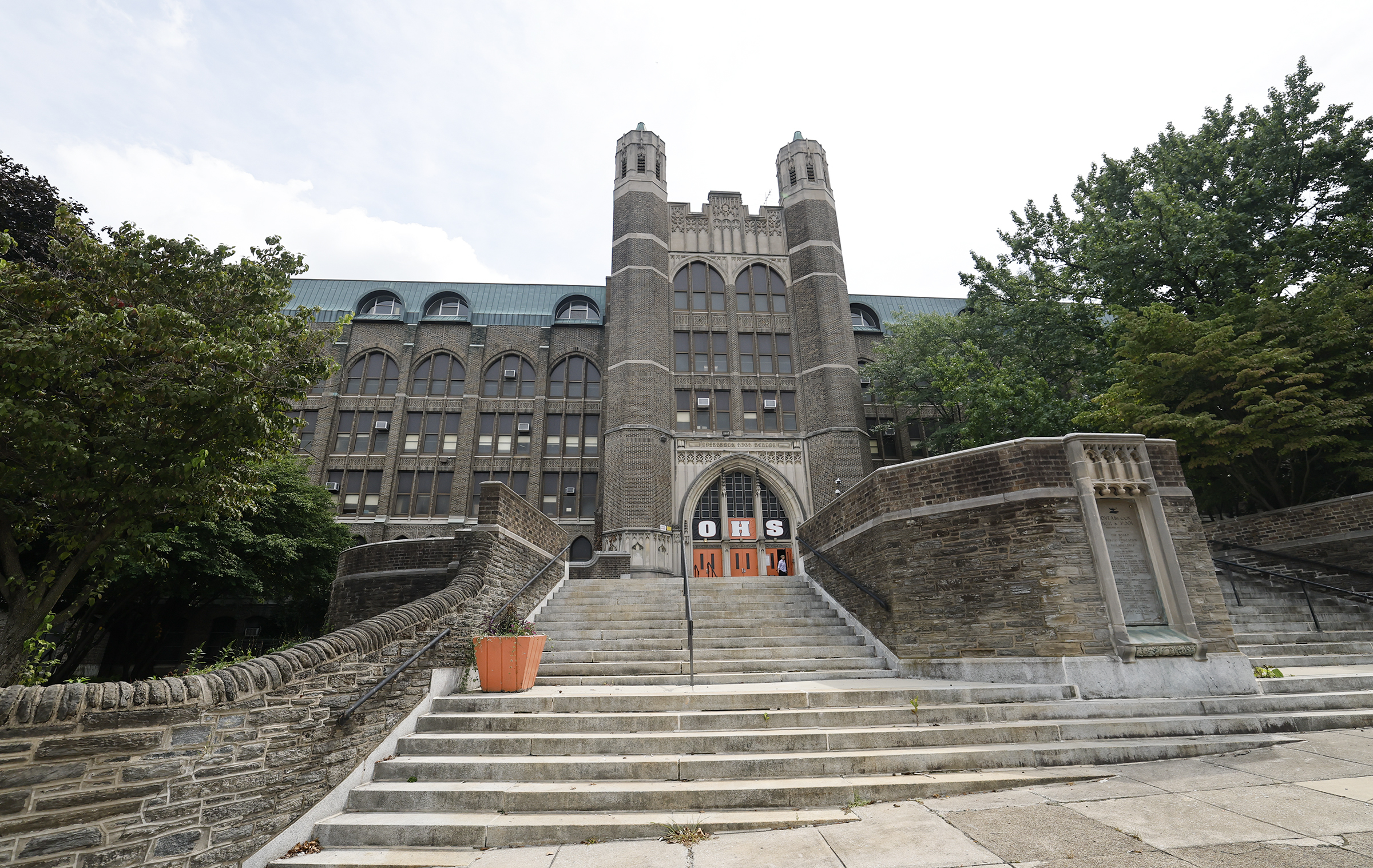
Overbrook High in West Philadelphia — a 100-year-old school with roughly one in four seats filled — would remain open but begin sharing space with the Workshop School, a small, project-based high school located nearby.
Overbrook has received millions in funding from the state for remediation and a new roof. It also has a strong alumni association.
Overbrook High School in West Philadelphia has thousands of empty seats but was not tapped for closure. Instead, The Workshop School, a small, project-based high school now located in another West Philadelphia building, will colocate with Overbrook.
Having a more robust enrollment, however, did not save some schools from landing on the closure list. Harding, Parkway Northwest, Pennypacker, Robeson, and Stetson operate at 50% to 74% of capacity but would still close.
Besides shutting down underused schools, the plan would alter an additional 17 half-empty schools by moving them into colocations, adding grades, or otherwise expanding their use by taking in students from the closing schools.
To make it work, the district’s recommendations often involve a series of logistical steps. A pair of North Philadelphia neighborhood schools built in the 1960s are one example.
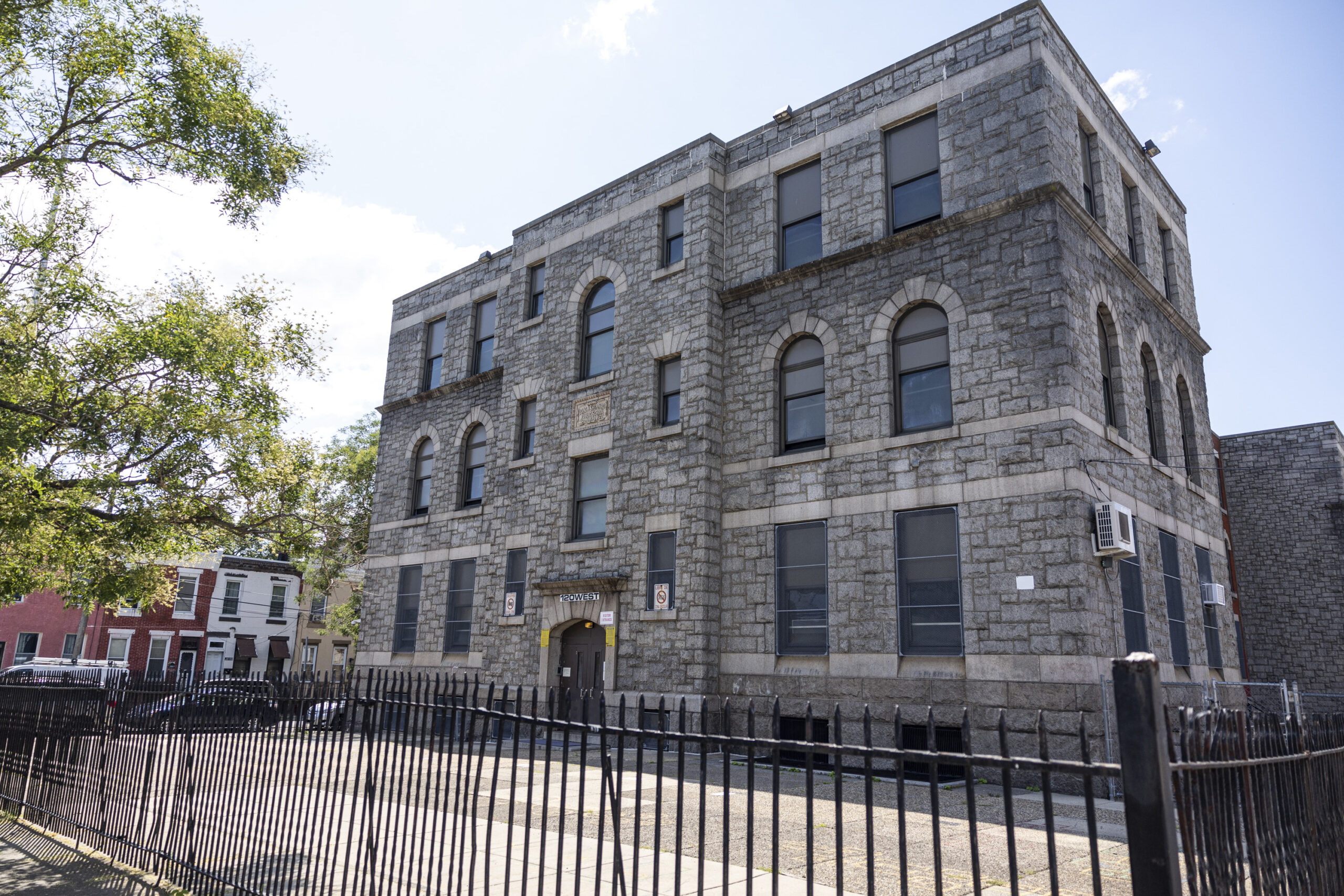
Hartranft, a K-8 school in North Philadelphia with a building rated in “good” condition but only 37% occupied, would take in students from Welsh, a school marked for closure. Welsh teaches the same grades but in a building rated “poor” about a half a mile away. The district would then convert the Welsh building into a new year-round high school.
John Welsh Elementary school is on the list of 20 schools proposed to close by the 2027-28 school year.
Getting students out of (some) fatigued buildings
By one city estimate, district schools need about $8 billion in repair costs for 300-plus buildings that are about 75 years old on average. Watlington’s plan calculates the district could do it for $2.8 billion.
Even with some investments over the last decade, many schools still have asbestos, lead, or mold issues. And many schools that don’t have bad building quality ratings still need improvements.
Eight schools recommended for closure are in buildings rated “unsatisfactory” by the district, its lowest score.
An additional 30 schools also rated “unsatisfactory” would remain open under the plan, including some expected to see an increase of students.
window.addEventListener(“message”,function(a){if(void 0!==a.data[“datawrapper-height”]){var e=document.querySelectorAll(“iframe”);for(var t in a.data[“datawrapper-height”])for(var r,i=0;r=e[i];i++)if(r.contentWindow===a.source){var d=a.data[“datawrapper-height”][t]+”px”;r.style.height=d}}});
Watlington wants the district to pay for $1 billion of the plan’s price tag with its own capital funds over the next decade. That would leave $1.8 billion unfunded, and he wants the state and philanthropic funders to cover the rest.
If the full $2.8 billion plan is funded, Watlington said, the district could improve every building labeled “poor” or “unsatisfactory.”
To achieve this, some buildings could get the same kind of treatment Frankford High received — a $30 million major renovation project to remedy significant asbestos damage. Students had to relocate into an annex and another building for two years while the work was done.
The district plan calls for some of the buildings in the worst shape to receive more students. Bache-Martin, Catharine, Howe, John Marshall, and Middle Years Alternative are in buildings that need significant upgrades, according to the district’s analysis, but all would take on more pupils.
In the case of Howe, the district wants to add grades to keep students who would have attended Wagner, a middle school that is proposed to close.
The district has said Bache-Martin would receive upgrades if the plan is adopted. For other schools, neither the timeline nor the fixes they would receive are clear.
The recommendations so far only mention a handful of schools set to modernize.
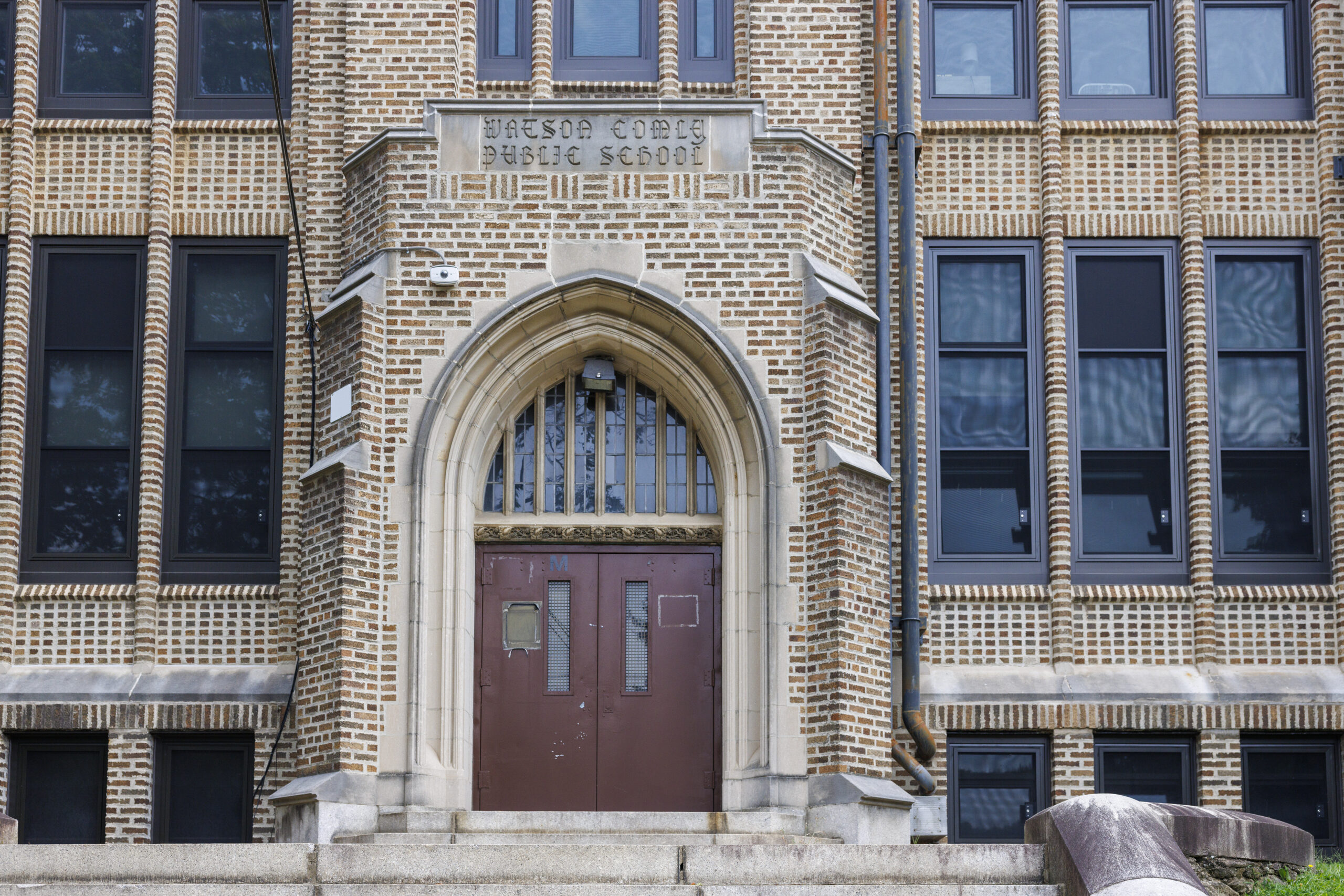
Among them is Comly, a K-5 in the Somerton neighborhood.
Comly now has 660 students enrolled, putting it at 107% of its capacity. But the district recommends modernizing the school and accepting middle grades students from the Comly and Loesche catchments. Students who now attend Loesche, another K-5, go to Baldi Middle School, which is also overcrowded.
Watson T. Comly Elementary School in Somerton. It’s slated to be modernized and accept more grade levels under the district’s proposed plan.
What appears to set schools like Bache-Martin apart from some of the closures is higher occupancy. Together, about two dozen schools that are more than half occupied would remain open, even though the buildings are “unsatisfactory.”
Schools on this list — like Barton Elementary, which runs at about 80% of its capacity — are harder to shutter or colocate if no nearby school has low attendance. That makes building upgrades a more logical solution.
But those two dozen schools are not the only ones in need of significant building upgrades.
An additional 45 schools currently operate in buildings rated slightly better at “poor,” the category just above “unsatisfactory.” The district recommends closing seven of them and colocating two.
And beyond that large number of fatigued schools, many others in poorly rated buildings will remain unchanged for now, with about 10 even taking in more students.
Watlington has said that in total, 159 schools would modernize over a decade if the plan is approved and fully funded, but absent extra state and private money, that number could drop.
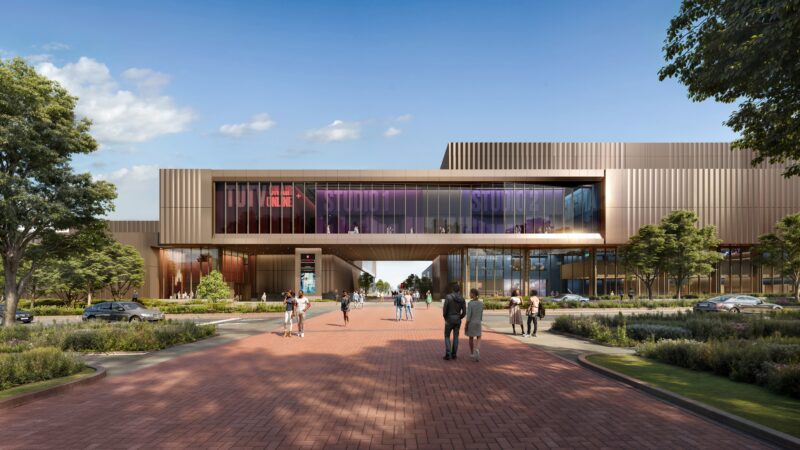
Temple University on Wednesday released its plans for the school’s future, including a new 1,000-bed residence hall, STEM complex, quad with green space, and more attractive and defined entrances to its North Philadelphia main campus.
That’s just part of the 10-year strategic plan, which will take the more than 33,000-student university through its 150th anniversary in 2034 and includes supports for students and learning, a campus development plan, and a new vision for Broad Street both near and beyond its campus.
It emphasizes the student academic experience, with plans to elevate its honors program to an honors college, implement systems to identify and help students who are at risk of failing early on, increase online offerings to accommodate non-traditional students, and require career development and experiential learning for all students.
And the 20-year campus development plan, which is part of the strategic plan, also reiterates President John Fry’s desire to create an “innovation corridor” stretching from the recently acquired Terra Hall at Broad and Walnut Streets in Center City to Temple’s health campus, a little more than a mile north of main campus on Broad Street.
Temple is in the quiet phase of a $1.5 billion capital campaign — itslargest to date — to raise money for faculty support and student financial aid, but also for initiatives outlined in the plan.
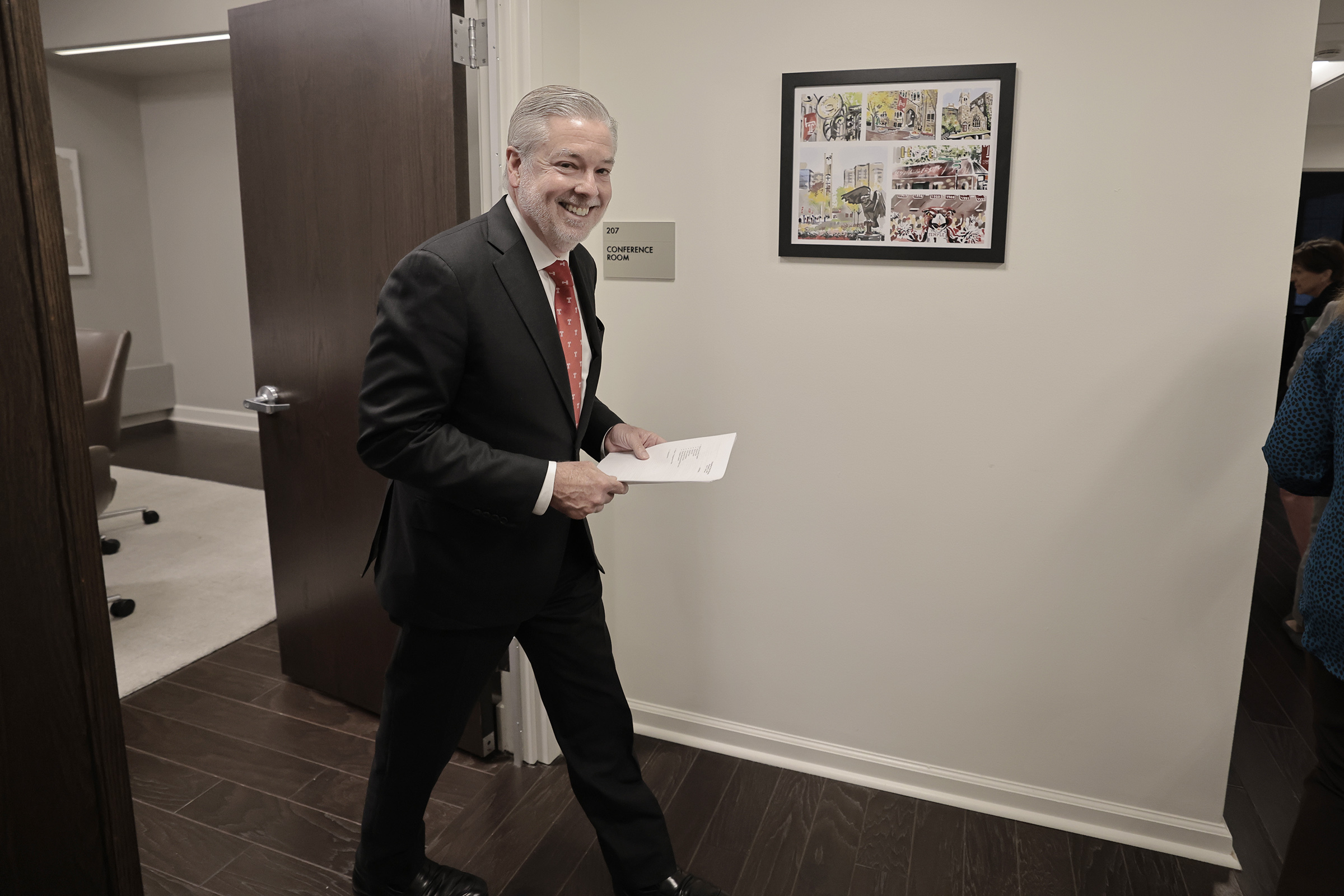
“What we’re trying to do is build on the momentum we think we have right now as already one of the most consequential urban research universities that wants to go to the next level,” said Temple President John Fry.
“What we’re trying to do is build on the momentum we think we have right now as already one of the most consequential urban research universities that wants to go to the next level,” Fry said in an interview before trustees approved the plan Wednesday. “This is a very ambitious plan that I think honestly will be a very big lift for us. But I think it’s achievable.”
Interim Provost David Boardman, who led the strategic planning effort, emphasized that the top priority is student success and new buildings and development are meant to support that.
“That, more than anything, is the heart of what we do,” Boardman said. “This is about providing meaningful research … It’s about us becoming the most important academic institution and partner in this community and really partnering for the future of Philadelphia and the region and the Commonwealth.”
David Boardman, Temple University’s interim provost
The planning effort, which included input from more than 2,000 Temple faculty, staff, students, and community members, started as an update of the 2022 plan that Fry initiated after becoming president in November 2024. But Temple officials realized a newplan was needed, Fry said.
Fry envisions more green space for recreation and events and for making North Broad Street more aesthetically pleasing.
“It is a really harsh streetscape,” Fry said. “It’s really not inviting. Traffic is moving very quickly. …That street needs to be calmed down, and the best way … is to create medians, plants — both sides of Broad Street — making it a much more civilized area than it is now.”
The effort, he said, is modeled after the recently announced $150 million streetscape plan to make the Avenue of the Arts in Center Citygreener. Temple also is involved with that through its ownership of Terra Hall, which will become Temple’s Center City campus, he said.
“But we can’t do that without other public and private partnerships,” he said. “It’s beyond the institution’s capacity to fund that.”
To start, Temple will fund “significant greening” around the entrance to the under-construction Caroline Kimmel Pavilion for Arts and Communication, he said. More green work is planned at Burk Mansion at Broad and Oxford, which Temple owns, as development occurs there, he said.
With a large green lawn and courtyards, a quad is planned for the campus center, surrounded by Paley Hall, Tyler School of Art, the Charles Library, and the biology life sciences building.
Temple in December purchased the former McDonald’s site at 1201-1219 N. Broad St., by Girard Avenue, which is adjacent to the Temple Sports Complex. Fry envisions using that property to create a major campus gateway.
“Right now, you don’t really know when you come onto the Temple campus,” he said. “We would like Broad and Girard to announce you’re starting to enter Temple’s campus district.”
More on-campus student housing
Temple wants more on-campus residential space to improve the student experience and safety, Fry said.
“We think we’re at a minimum several thousand beds short of where we need to be,” he said. “A stronger residential experience really does make for a much more fulfilling undergraduate experience. The more kids living on campus, the more dense campus is, I think the better we’re going to do on safety.”
The plan calls for beginning to build a 1,000-bed residence hall along Broad Street on the former Peabody Hall site, south of Johnson and Hardwick Halls, in 2027. That would increase the current 5,000-bed capacity on the main campus by 20%. When that opens, Temple would upgrade Johnson and Hardwick, which have another 1,000 beds, he said.
The Annenberg Hall/Tomlinson Theater building, which will relocate to the new arts and communication building in 2027, could also be converted into more residential space if needed, Fry said.
An emphasis on STEM
Temple intends to upgrade facilities for science, technology, engineering and math.
“We just don’t have the research space, the wet lab space in particular, to accommodate the work that our faculty are doing,” Fry said.
Several buildings, including the biological life sciences facility, will be renovated, and the school plans a new STEM building, perhaps behind the engineering building, or the conversion of an existing facility, Fry said. The decision on whether to build new will come within six months, he said.
Temple needs to close some current science facilities to gain more space, he said.
The Beury building, next to the Bell Tower and across from the new Barnett College of Public Health, will begin to be demolished this summer, he said.
“Think of that as sort of the first down payment on this quad,” he said.
That would be the first step toward developing an innovation district, Fry said. While not on the scale of University City’s, it would be “a very good attempt to begin to build that capacity in North Philadelphia,” he said.
Terra Hall will nurture an arts hub, and both would contribute to creating an innovation corridor, he said.
The plan also calls for anew ambulatory care center to better serve North Philadelphia. Fry said those plans are in very early stages.
“A lot of outpatient care is occurring within the hospital right now,” Fry said. “It’s not great for patients… It also puts a real strain on our capacity to serve people who need inpatient services.”
A new academic home for star students
Temple aspires to make its honors program into an honors college, like Pennsylvania State University’s popular Schreyer Honors College, though with different parameters.
Boardman said that effortwould require major fundraising. Currently, the programexists within the college of liberal arts and enrolls more than 2,200 students.
Elevating it to a college would require more programming, study-abroad and research stipends, experiential learning opportunities, and an option for those enrolled to live together in a residential community.
Temple’s college would consider more than grade-point averages and SATs for admission, Boardman said. Various talents and leadership potential would be considered, with interdisciplinary studies and public service infused, he said.
Staff writer Peter Dobrin contributed to this article.
On the second day her kindergartener was off from his Philadelphia public school because of snow, Karen Robinson shut herself away in her Fairmount home, hoping to take a 15-minute meeting for an important work project.
Her husband had put up a baby gate to signal to 5-year-old Sam that mom was briefly off limits.
Naturally, “my son crawled under the baby gate to come find me,” said Robinson, whose son attends Bache-Martin Elementary. “If I’m working, he wants to be right next to me.”
Superintendent Tony B. Watlington Sr. gave beleaguered parents a reprieve Wednesday afternoon, saying schools would re-open for in-person learning Thursday. But the week was tough for many to navigate.
For parents who rely on hourly work, or jobs that have no remote flexibility, the inclement weather-forced school changes have meant either foregoing pay or figuring out childcare arrangements that are often costly, complicated, or both.
North Philadelphia mom Asjha Simmons’ son attends a charter school that’s been closed — no virtual learning — since Monday.
Simmons runs her own business, so is able to be flexible with her schedule and stay home with her son. But she’s getting antsy.
“I feel forced to be in the house and it’s killing me,” Simmons said. “I would rather be in the gym than in the house. And I don’t even go to the gym.”
Simmons’ son, who’s 12, relishes the down time since “he has every screen known to man on,” she said. She keeps the snacks coming, and it’s all good. (He was less than thrilled when Simmons made him shovel snow, she said.)
Leigh Goldenberg said she was having uncomfortable flashbacks to the pandemic, when her daughter completed virtual kindergarten.
“For me, it’s an emotional regression to that terrible time,” said Goldenberg. “And I feel for the people that didn’t build up that muscle before.”
Virtual school with a fifth grader is much easier than virtual school with a kindergartener, said Goldenberg, whose daughter attends Kirkbride Elementary in South Philadelphia. Her daughter spent 30 minutes on Tuesday completing schoolwork, and managed to keep herself busy socializing with friends online and outside, a short walk away in their neighborhood.
Goldenberg is trying to keep things in perspective — this is not forever, this is not the pandemic.
But, she’s still frustrated.
“All the suburban schools around us went back already, but here in the city, we’re stuck with a giant pile of snow at the end of our street, and it feels pretty unfair,” she said.
Coral Edwards was prepared for Monday’s snow day, but when the district announced a virtual day Tuesday, she began to panic.
“I was like, oh my gosh, there’s a real possibility the entire rest of the week will be virtual,” said Edwards, who lives in Graduate Hospital and has a seven-year-old son who attends Nebinger Elementary and a four-year-old daughter in a private prekindergarten program.
Her daughter’s pre-K is reopened Wednesday with a two-hour delay. And that means dropoff time came when Edwards would haveneeded to be helping her first grader with virtual learning. So instead, she paid to send both children to Kids on 12th, a Center City school open the full day, so she can get her work done as a marketing consultant and leadership coach.
The scramble has also summoned up emotions and frustrations she last experienced during the pandemic, when her son was 1 and his daycare shut down. While she acknowledged that she is “incredibly privileged,” she said the fact thatparents like herself are in such a bind speaks to a larger systemicproblem with childcare, Edwards said.
“There’s literally no one to help us,” she said. “There’s just no systemic support whatsoever.”
Streets are being plowed, SEPTA is running, and trash is getting picked up, “but there’s nothing in press conferences about how we’re supporting parents and students,” Edwards said. “The schools are like, ‘we have this virtual learning environment’ — are we just supposed to pull another parent out of our butts?” she said.
Edwards’ husband works in-person as a research physician running a lab, and the burden of childcare logistics falls to her.
“There’s a lot of rhetoric about supporting parents, and raising women up, … but when push comes to shove, something about our kids’ childcare is changed or tightened, it falls on those people,” she said.
Hannah Sassaman, a West Philadelphia parent of a district fourth grader and ninth grader, is making it through.
“We had another fourth grader live here for 24 hours randomly. I think they went to school? My ninth grader seems to be going to school. We’re just lucky we don’t have little kids,” said Sassaman.
“The questions that I have knowing that the storm was coming for over a week,” Sassaman said, “is what could the administration have done to help resource our sanitation workers and the rest of our incredible city servants to really focus on what it would take to get our kids back in schools, our teachers and the other staff back in their buildings safety to support not just the economy, but also all of the important supports and services kids access at schools every day?”
A man is dead, and three others are hospitalized after a shooting inside a North Philadelphia house early Monday morning.
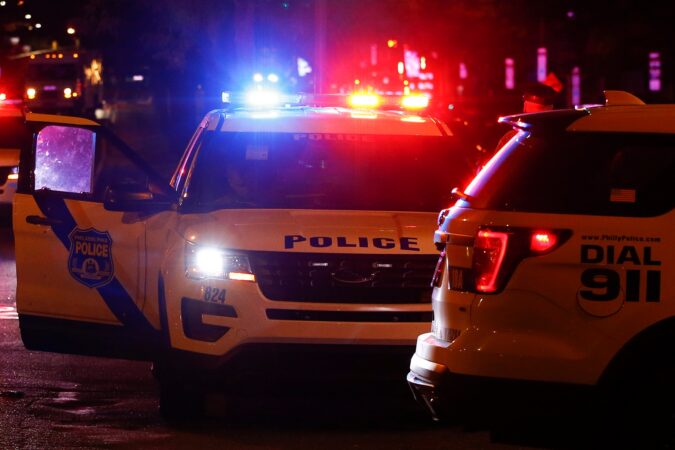
The Philadelphia Police Department responded to a report of a person with a gun on the 1700 block of North Croskey Street at around 4:15 a.m. Upon entering a home on the block, officers say they found four adult male shooting victims.
One man, estimated to be in his 50s, was found with a gunshot wound to the head. He was pronounced dead at the scene by medical personnel at 4:23 a.m., according to police.
Police said the three other men were transported to Temple University Hospital and are in stable condition at the time of writing. None of the victims have been identified.
A 48-year-old man suffered multiple gunshot wounds to the torso. A second man, 46, sustained two gunshot wounds to the stomach. Both are listed as in critical but stable condition.
The third man, 54, who was shot once in the right shoulder, is in stable condition.
Police recovered two firearms and found several spent shell casings inside the home where the men were found. No arrests were made, and no motive has been established as of publication.
Tips and information about this incident can be shared with PPD’s tip line at 215-686-8477.
This morning’s quadruple shooting comes during a January that saw some of the lowest numbers of homicides in Philadelphia in more than a decade, according to police data.
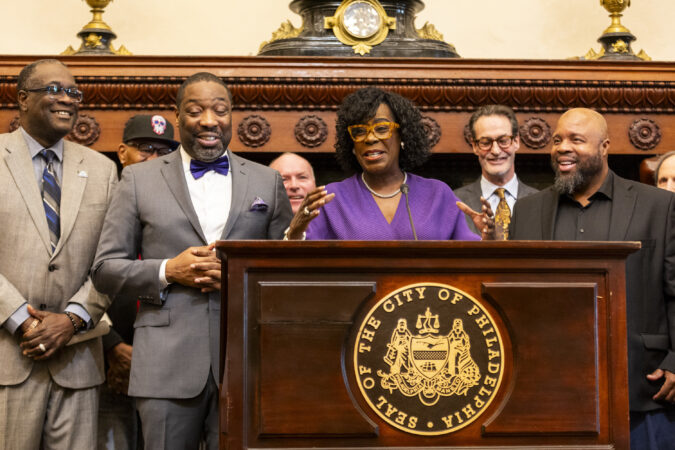
Parker wasted no time, signing the bill into law at a news conference Thursday afternoon to fast-track the process for the city to sell the first $400 million tranche of bonds in late March or early April. The administration plans to sell the second $400 million in 2027.
“We are signing into law the largest and most significant investment in housing in the city of Philadelphia’s history, a $2 billion plan that will create and preserve 30,000 units of housing here in the city of Philadelphia,” Parker said, citing a sum for H.O.M.E.’s budget that also includes other funding steams and the value of city-owned land the administration hopes to redevelop into housing through the plan.
In March 2025, when Parker unveiled her housing plan — with the goal of helping the city build or preserve 30,000 units of housing in her first term — she wanted to issue the bonds that fall. Council initially approved the bond authorization and other legislation related to H.O.M.E. in June.
The most notable changes, championed by progressive Councilmembers Jamie Gauthier and Rue Landau, lowered the income thresholds for some of the programs funded by H.O.M.E. to prioritize lower-income Philadelphians.
Mayor Cherelle L. Parker unveils her long-awaited plan to build or preserve 30,000 units of housing during a special session of City Council Monday, Mar. 24, 2025. Council President Kenyatta Johnson is at left.
Parker opposed the amendment, and administration officials testified that H.O.M.E. was meant to serve residents at a variety of income levels, including middle-class households that are struggling but often make too much to qualify for government support programs.
But Council members argued that even with the new infusion of funds, Philadelphia’s resources are too limited to help the city’s hundreds of thousands of impoverished residents — let alone aid middle-income residents as well.
“City Council demonstrated through its actions — not just its words — that it’s serious about putting City Hall to work for communities that have too often been left behind,” Gauthier, Landau, and their allies said in a group statement Thursday.
The dispute proved to be the most significant public disagreement to date between Parker and Council President Kenyatta Johnson, who sided with Gauthier and Landau.
The changes required Council to pass an updated bond authorization before moving forward because the previously adopted version no longer aligned with the language in the budget resolution. Lawmakers ran out of time to pass the new bond bill before adjourning for their winter break in December.
They approved it unanimously on Thursday.
A couple of hours later, Johnson and Parker profusely praised each other at the bill-signing ceremony, going out of their way to show that their strong working relationship remains intact now that the conflict was behind them.
The moment of congeniality was a stark contrast to the dynamic between the two late last year.
Parker at one point said Council’s delay “means homes are not being restored” and “homes are not being built or repaired.” Johnson fired back, “Council’s responsibility is not to rubber-stamp legislation.”
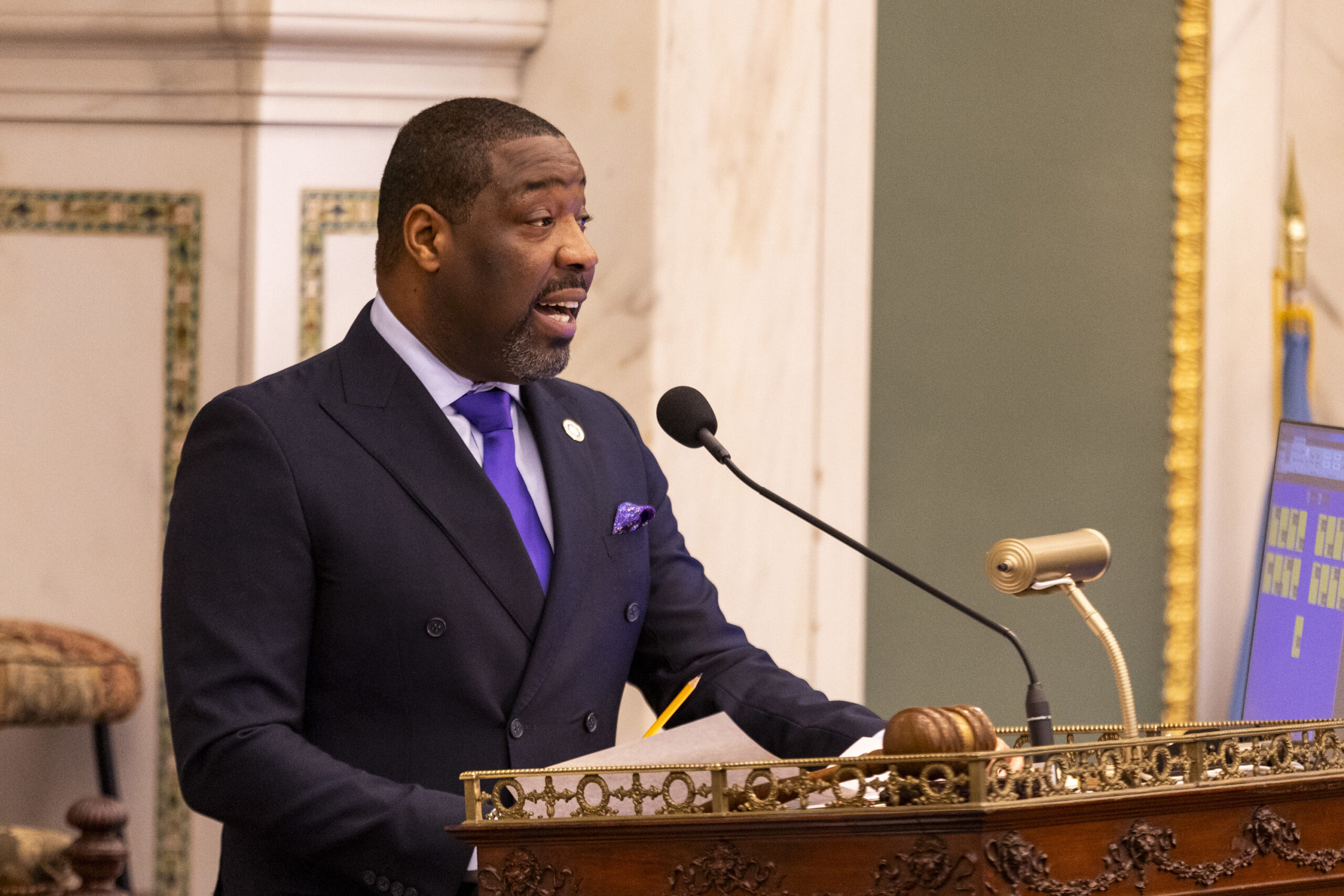
City Council President Kenyatta Johnson speaking at the City Council’s first session of the year in Philadelphia, Pa., on Thursday, Jan. 22, 2026.
But on Thursday, there was enough feel-good energy between the mayor and Council that it extended beyond Johnson to members who have more frequently clashed with the administration.
Gauthier and Councilmember Isaiah Thomas, who questioned the mayor’s agenda last year over concerns that she was taking out too much debt for housing, also stood alongside the mayor at Thursday’s news conference.
After the delays to her agenda at the end of last year, the mayor appears to be trying to regain control of the narrative this week. Thursday’s bill-signing ceremony marked Parker’s third major update related to H.O.M.E. in three days.
On Tuesday, she announced that her administration was partnering with the city’s building trades unions and the Philadelphia Housing Authority to redevelop the Brith Sholom House, a notoriously dilapidated senior facility that closed in 2024, into affordable housing for seniors.
And on Wednesday, she laid out a vision to build a modular housing manufacturing facility on the long-vacant Logan Triangle tract in North Philadelphia. The city issued a request for information from developers potentially interested in building such factories in the city, with a deadline in late March.
Parker on Thursday only indirectly responded to a question about how many units could be built or repaired in the two years left in her term.
She also expects Gov. Josh Shapiro, at his forthcoming budget address, to announce state-level housing reforms that would help “as it relates to streamlining state processes [to] run more efficiently.”
Staff writer Anna Orso contributed to this article.
A Temple student and another individual not associated with the university were robbed by armed men near the school’s North Philadelphia campus early Thursday, according to university officials.
Around 1:30 a.m., the Temple student was walking near the 1500 block of Oxford Street when two men approached with a handgun and stole the student’s phone, Jennifer Griffin, Temple’s vice president for public safety and chief of police, said in a statement.
The men ran off and fired one shot in the air as they fled.
Minutes earlier, in a separate incident several blocks away, those men robbed another individual, stealing that person’s phone, near the 1300 block of Carlisle Street.
The robberies were the second instance of phone theft near Temple’s campus this week.
Around 6:15 a.m. on Wednesday, a man with a handgun approached a Temple student walking on the 1800 block of West Montgomery Avenue and stole that person’s phone, Griffin said in an earlier statement.
The robber fled north on 18th Street. No arrests have been made in the incidents.
On Thursday, Griffin announced that Temple and Philadelphia police would be coordinating a concentrated presence in the area as both departments investigate the robberies.
“Incidents like this are deeply troubling,” Griffin said.
Later in the day, Temple’s public safety department released an image of two suspects wanted in connection with Thursday’s robberies, urging anyone who recognized them to contact Investigations@temple.edu or call 215-204-6200.