Tag: Old City

  • Elfreth’s Alley is getting a park to honor woman who saved it from demolition

    Elfreth’s Alley is getting a park to honor woman who saved it from demolition

    Few Philadelphians may recognize the name Dolly Ottey, yet nearly all know Elfreth’s Alley — the nation’s oldest residential street — which she helped rescue from decline and demolition starting in the 1930s.

    Now, after years of wrangling, a long-neglected vacant lot that some have derided as an eyesore at the historic location is slated for a transformation in time for the 250th anniversary of the Declaration of Independence.

    Plans call for the lot at North Second Street and Elfreth’s Alley to be reborn as Dolly Ottey Park, honoring the woman who first championed preservation of the narrow cobblestone passage starting in the 1930s.

    window.addEventListener(“message”,function(a){if(void 0!==a.data[“datawrapper-height”]){var e=document.querySelectorAll(“iframe”);for(var t in a.data[“datawrapper-height”])for(var r,i=0;r=e[i];i++)if(r.contentWindow===a.source){var d=a.data[“datawrapper-height”][t]+”px”;r.style.height=d}}});

    Job Itzkowitz, executive director of Old City District, said the project took eight years of sporadic effort to get multiple parties to sign off on an agreement to create the park. Old City District is a nonprofit registered community organization.

    “We want it to be a place where residents, tourists, visitors, employers, and employees can take a bit of a respite,” he said. “It’s going to be a drastic improvement.”

    A conceptual rendering of Dolly Ottey park at Second Street and Elfreth’s Alley in Old City, Philadelphia. Organizers hope to transform the existing vacant space into a park by spring.

    On a recent day, families and couples toured Elfreth’s Alley, taking pictures and discussing the history of the area. But none ventured into the vacant lot. Later, a lone woman could be seen walking her dog there.

    Itzkowitz credited a renewed spirit of collaboration for breaking the stalemate.

    He said changes in leadership at the real estate advisory board for the National Old City Apartments, which abuts the park, and crucial support from the nonprofit Elfreth’s Alley Association paved a path for agreement.
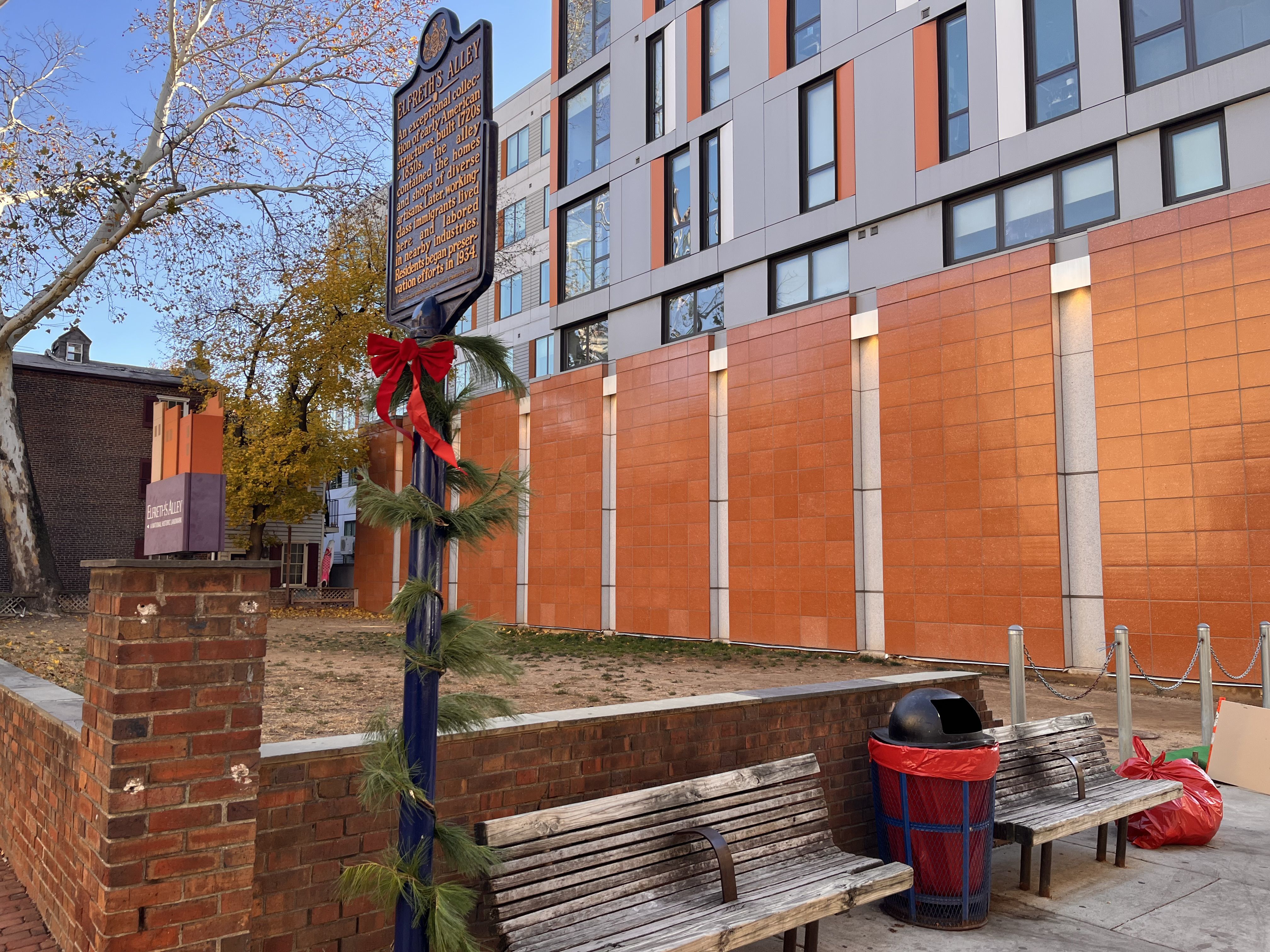
    A view of a vacant lot at Second Street and Elfreth’s Alley in Old City Philadelphia. Plans for creation of Dolly Ottey Park at the location and named after an advocate who helped save Elfreth’s Alley in the early to mid 20th Century.

    The lot is owned by Bit Investment Seventy-Eight LLC, according to city records, and is part of that company’s holdings for National Old City Apartments along North Second Street.

    A usable space by spring

    The pocket park will rise in two phases: an interim stage featuring a crushed stone base, picnic tables, planters, wild grasses, and repairs to a crumbling brick wall, followed by a more permanent design.

    An architect has been hired to craft a cost-effective plan to deliver a usable public space by spring 2026.

    The interim plan design for Dolly Ottey Park carries a modest $60,000 budget, with fundraising to break ground in February and finish by March. Old City District has set up an online link for public contributions.

    Itzkowitz said the timing for the interim phase would ensure the park provides a welcoming experience for visitors during the Semiquincentennial as part of a significant historical landmark.
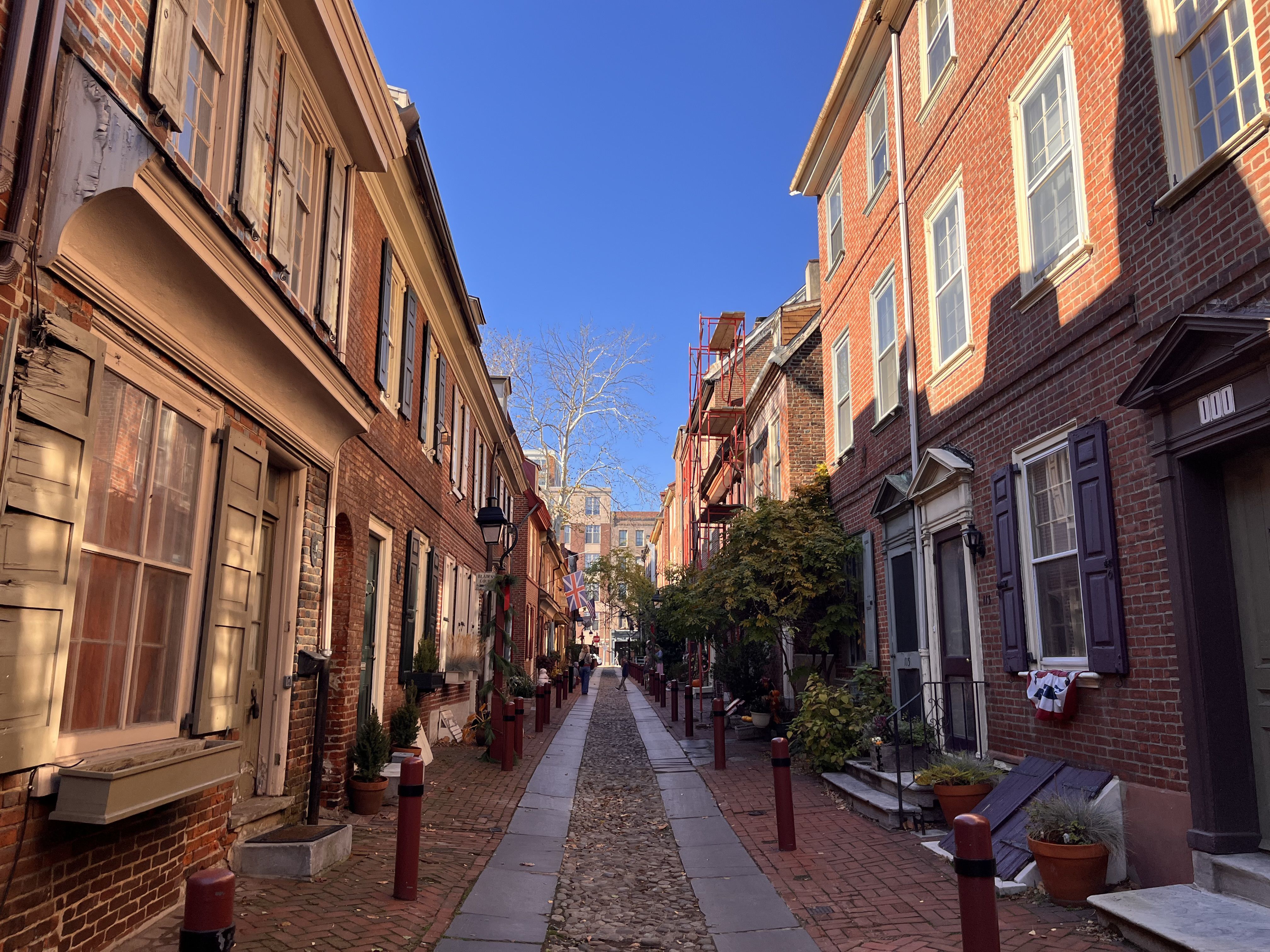
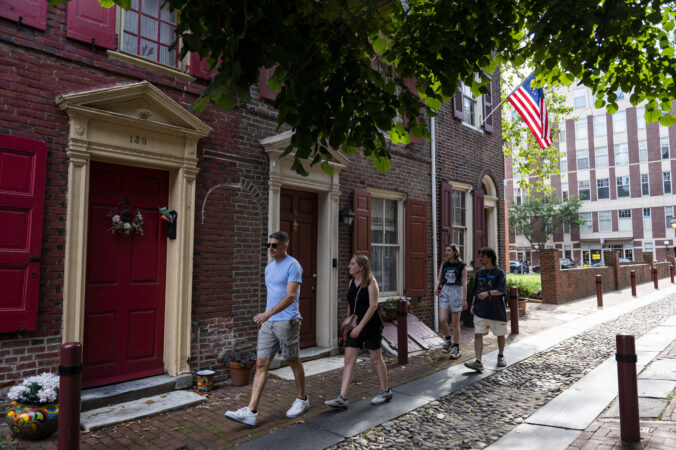
    A view of Elfreth’s Alley.

    Elfreth’s Alley is believed to be America’s oldest continuously inhabited residential street. Its origins trace to the early 1700s, when two landowners combined properties to create a cart path leading to the river. People have been living there since 1713.

    The cobblestone alley, about 400 feet long and lined by 30 brick buildings, was named for Jeremiah Elfreth, an 18th-century blacksmith. It originally housed artisans and merchants, serving as a base for business ventures. Notable figures such as Stephen Girard, who helped finance the War of 1812, are believed to have lived here.

    However, Elfreth’s Alley faced demolition due to neglect and development pressure. From the 1890s to the 1930s, part of the block was rebranded as Cherry Street, leading to the loss of at least one historic home.

    Who is Dolly Ottey?

    Ottey, a resident and owner of the Hearthstone restaurant at 115 Elfreth’s Alley, formed the Elfreth’s Alley Association in 1934 to protect the unique street and save it from destruction.
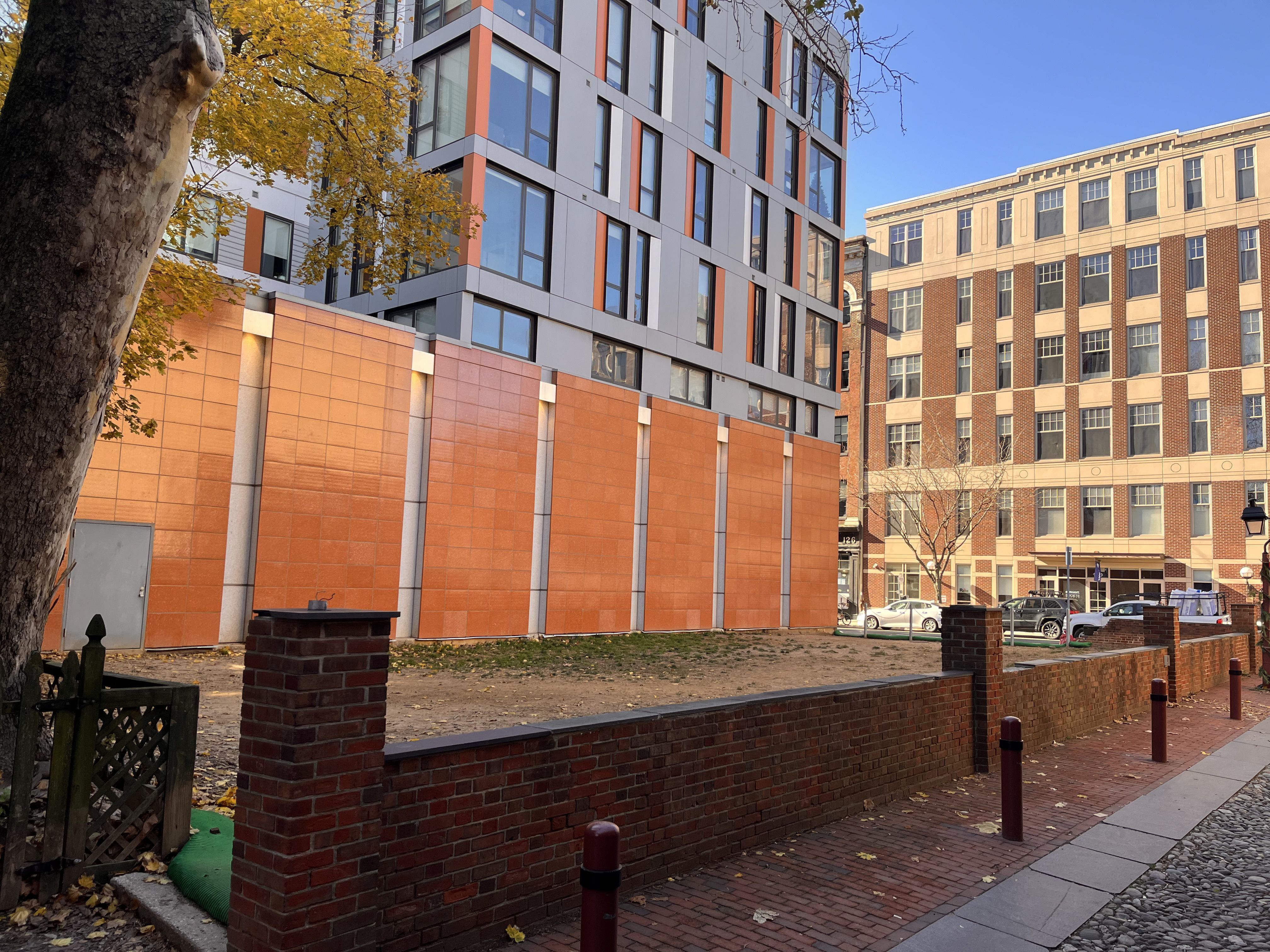
    A view from Elfreth’s Alley facing a vacant lot at Second Street that will be transformed into Dolly Ottey Park.

    Elfreth’s Alley faced an even bigger existential threat in the 1950s and 1960s when proposed construction of I-95 would have demolished at least half the block.

    The demolition was vehemently opposed by Ottey and the Elfreth’s Alley Association. The community gathered 12,000 signatures for a petition presented at City Hall, successfully pleading for the street to be spared.

    Elfreth’s Alley was protected as a National Historic Landmark in the 1960s as a result and is listed on Philadelphia’s historic register.

    Ottey died in 1996, in South Jersey, at age 85.

    Elfreth’s Alley remains not only a residential area but also a cultural and historical attraction. It holds a museum that educates visitors on its history and the lives of early inhabitants.
  • The boozy business of the American Revolution went down in Philly bars

    The boozy business of the American Revolution went down in Philly bars

    The Founding Fathers never suffered sobriety. When they weren’t sweating out independence at Independence Hall, they were bending elbows at City Tavern — pretty much around the clock.

    George Washington developed such a hankering for a rich, malty, Philly-brewed Robert Hare’s porter, he had kegs of the stuff shipped to Mount Vernon.

    John Adams, once virulently anti-tavern, effusively extolled the Philly bar scene in letters to his wife, Abigail. At one “most sinful feast,” Adams recalled sipping what would become his favorite Philly cocktail, the “Whipped Sillabubs.” A popular choice of the colonial-era Philly cocktail set, the boozy, creamy concoction was made from sherry, wine, and lemons.

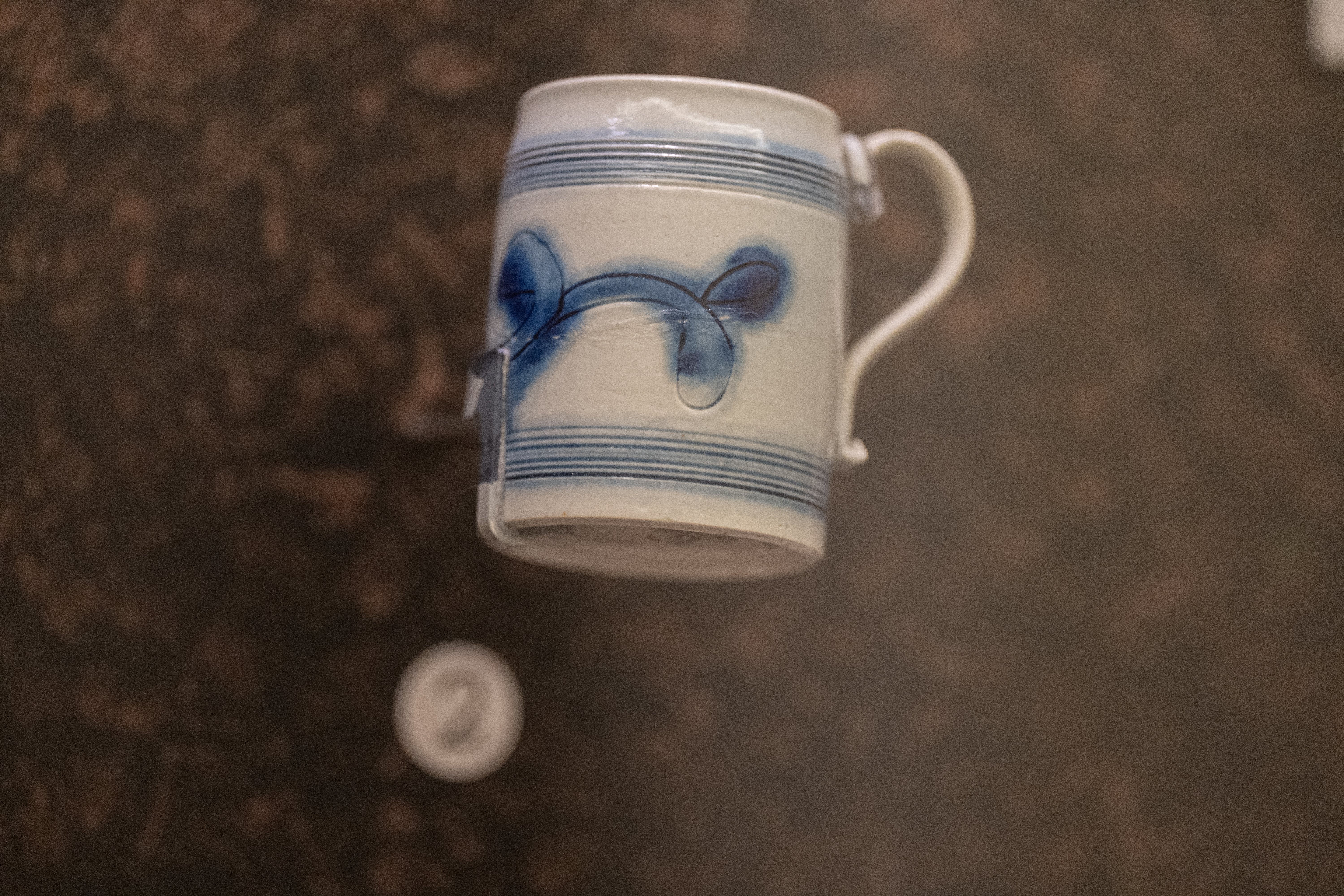
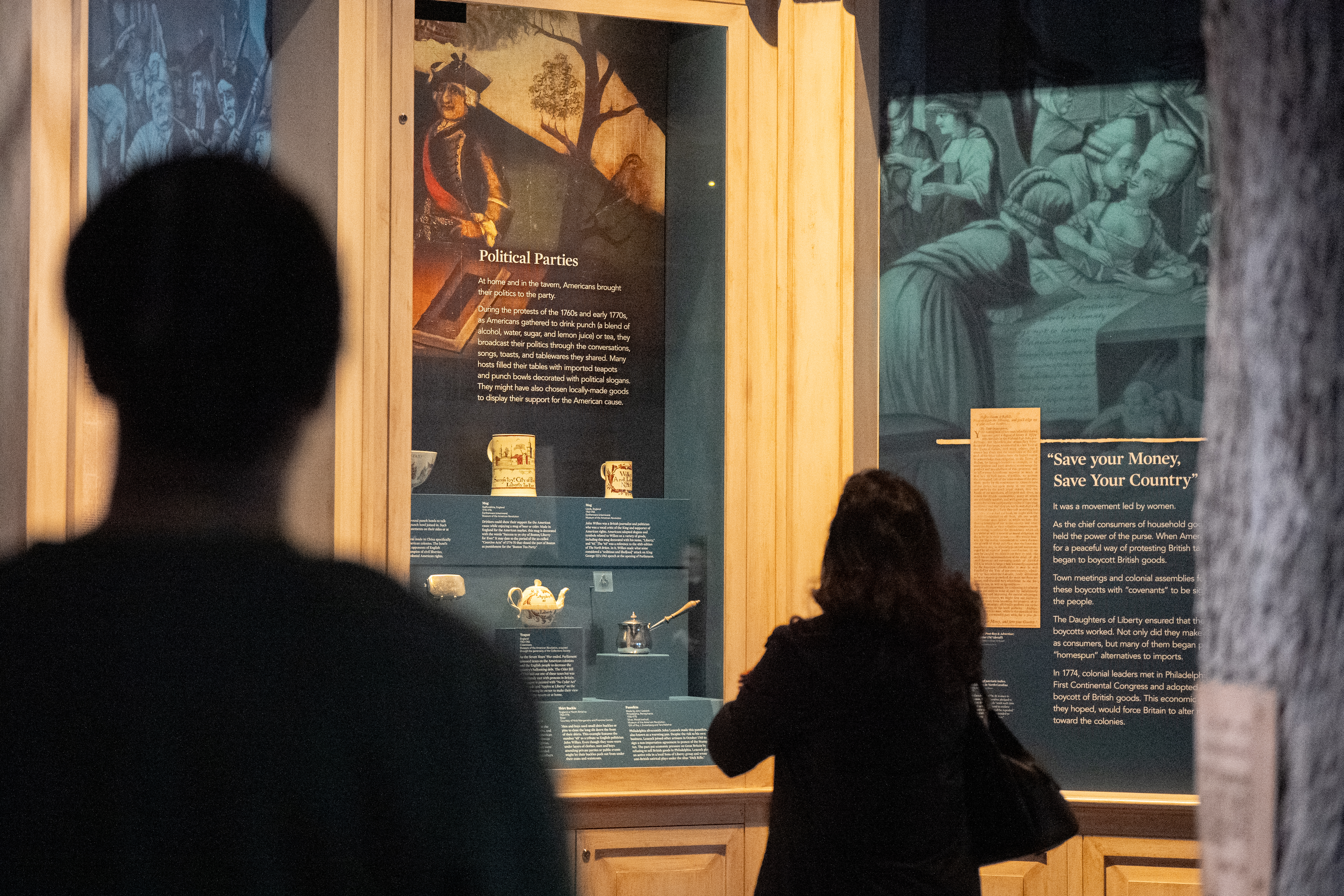
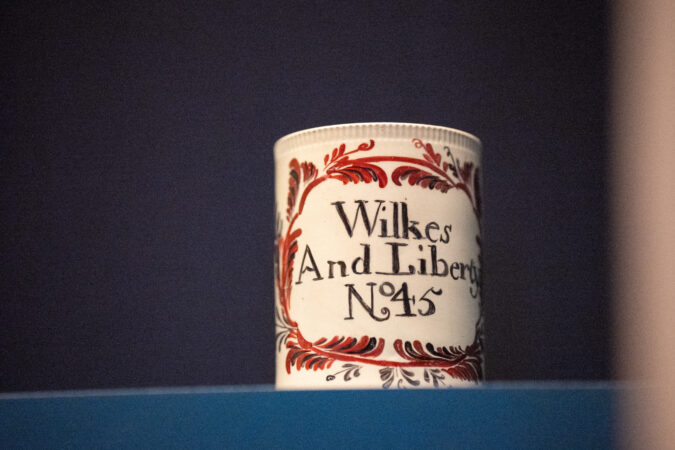
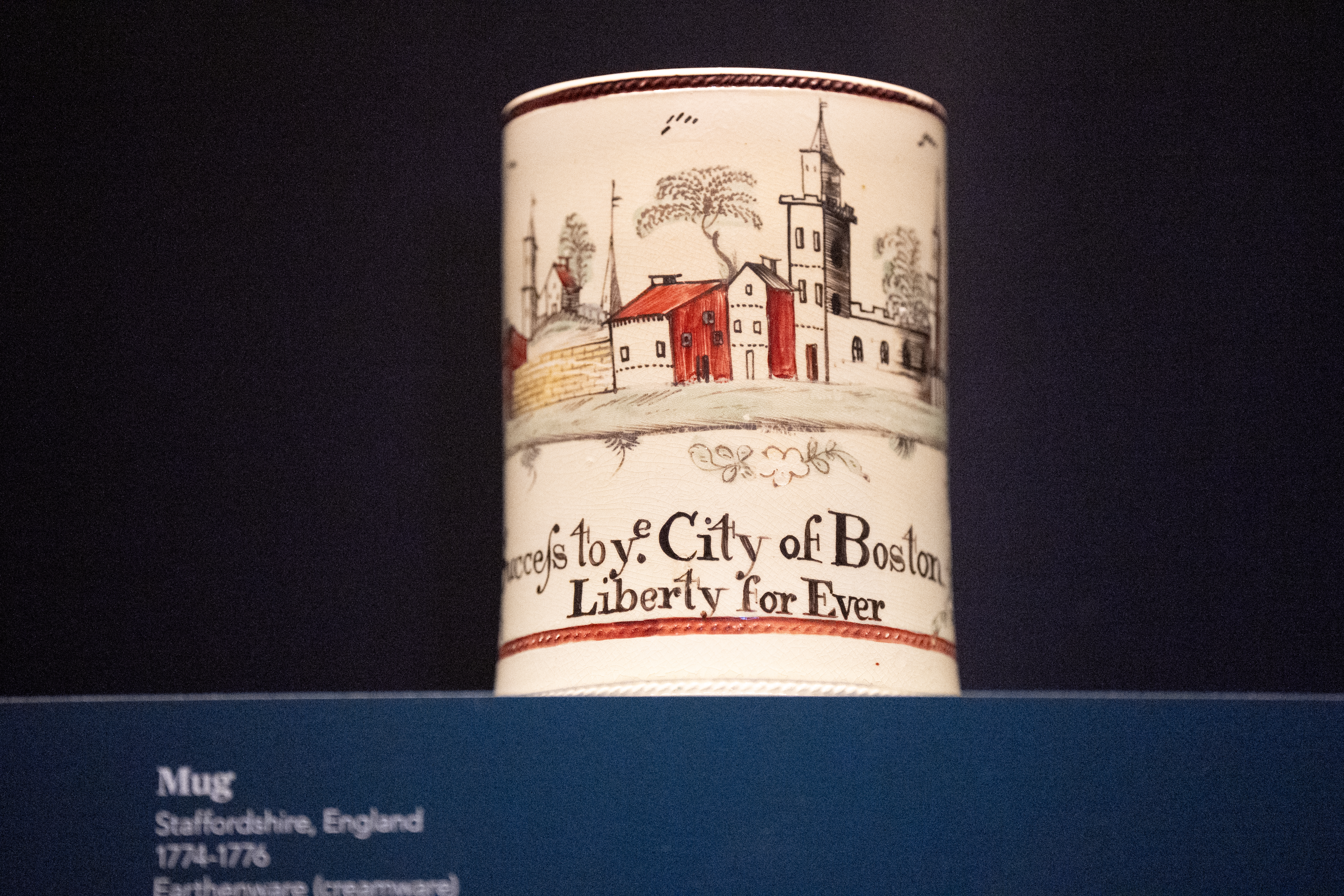
    Items related to drinking at the Museum of the American Revolution, in Philadelphia, PA, November 18, 2025,

    Thomas Paine, the working-class poet, whose thunderous pamphlet Common Sense helped roar in a revolution, oiled up his writing hand with Philly rum.

    It has long been accepted that Thomas Jefferson spent those sweltering summer weeks of 1776 drafting the Declaration from the favored Windsor chair of his Market Street lodgings. But records show he actually spent more time than ever at City Tavern at Second and Walnut. A minor, if tantalizing, historical development, which hints that perhaps the world’s most famous freedom document came fortified by fortified wine.

    Benjamin Franklin, polymath of the Revolution, inventor, scientist, printer, statesman, and lover of French wine (if in moderation), affectionately penned a Drinker’s Dictionary. The tippling tome contained 229 of Franklin’s favorite phrases for drunkenness, including buzzy, fuddled, muddled, dizzy as a goose, jambled, halfway to Concord, and Wamble Cropped.

    ‘Boozy business of revolution’

    Franklin and his ilk were not ringing up 18th-century expense accounts for the hurrah of it. They were doing the boozy business of revolution.

    Revolutionary-era Americans consumed staggering amounts of alcohol compared with today, said Brooke Barbier, historian and author of the forthcoming book Cocked and Boozy: An Intoxicating History of the American Revolution.

    By the end of the 18th century, when beer and spirits were a staple of daily life, the average colonist swilled about 3.7 gallons of hard liquor per year. A dizzying amount, not counting beer and cider, that must’ve set many a patriot’s tricorn hat spinning.

    By comparison, Americans now consume about 2.5 gallons of all alcohol, from beer to whiskey to wine, per year, said Barbier.

    Historians believe booze and bar life played an outsize role in stoking the embers of insurrection.

    Items related to drinking at the Museum of the American Revolution, in Philadelphia, PA, November 18, 2025,

    “Tavern culture was essential to the American Revolution,” said Barbier. “It was not a part of the sideshow. It was part of where the discussions about revolutionary ideas happened. Where spies met. And where others, who weren’t directly involved in politics, gathered to discuss the growing political crisis. Opinions were formed in taverns.”

    Nowhere was this work done more than in Philadelphia.

    By 1776, Philadelphia boasted roughly 200 licensed and illegal watering holes — or about one for every 150 citizens, said Tyler Putman, senior manager for gallery interpretation at the Museum of the American Revolution.

    Revolution with a twist

    The fare of colonial-era drinking spots was as diverse as the budding port town.

    There were posh spots like the newly constructed City Tavern, located blocks from the waterfront, and where the delegates of the First and Second Constitutional Congress drank nightly like fish. Ensconced in an upstairs space, known as the “Long Room,” the Founding Fathers debated liberty over libations late into the night, while imbibing copious amounts of Madeira, whiskey, punch, and everybody’s favorite Robert Hare porter.

    There were taverns and flophouses, where tradesmen and sailors learned of Britain’s newest outrage from newspapers read aloud, or the latest traveler. And there were scores of unlicensed disorderly houses, grungy forebears of the modern dive bar.

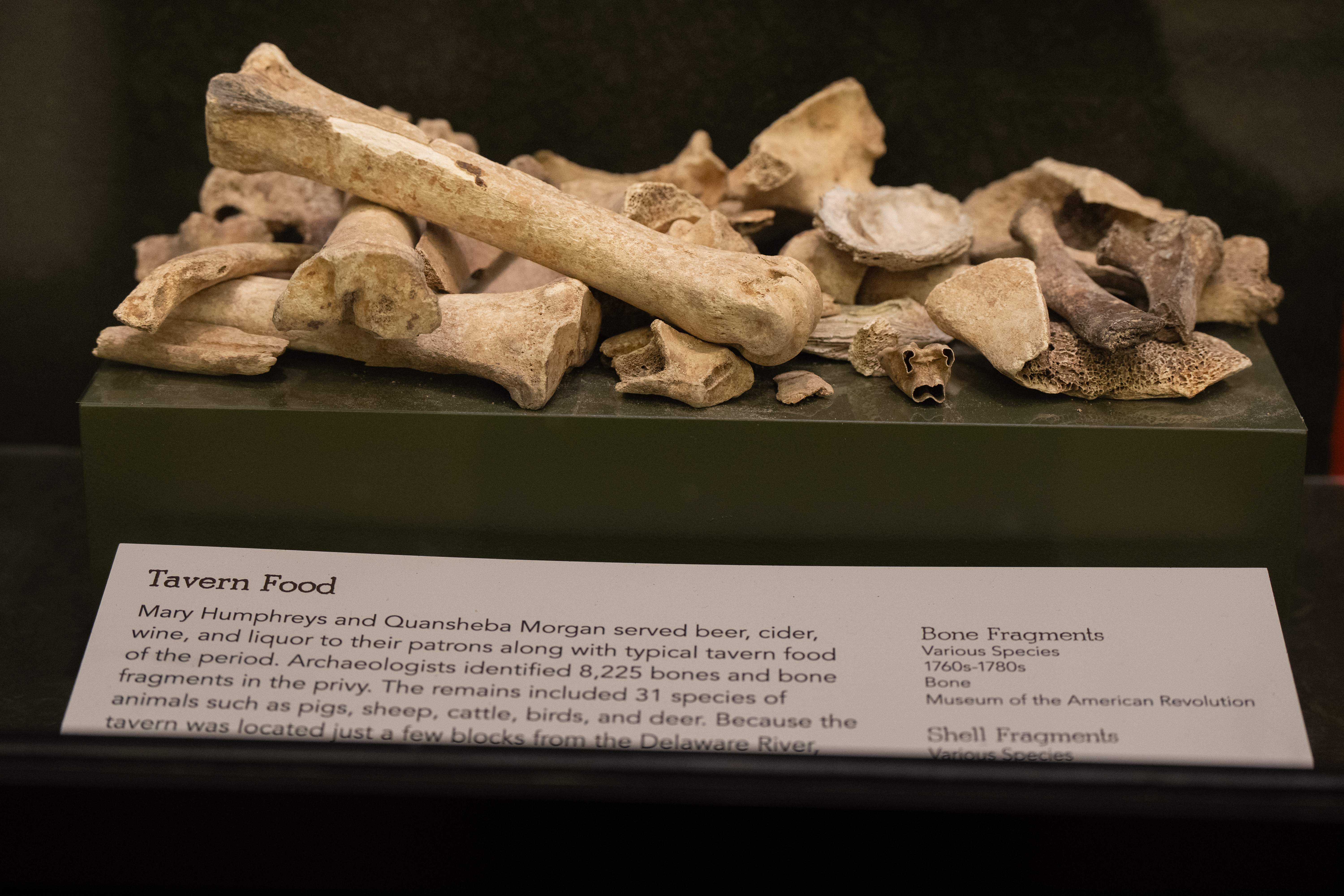
    In 2014, three years before opening, the Museum of the American Revolution conducted a large archaeological dig, discovering thousands of artifacts from a Revolutionary-era disorderly house buried beneath its future Old City home. Among the mounds of mutton bones, glassware, and broken bottles unearthed from the privy of Benjamin and Mary Humphreys’ living room tavern was a broken windowpane inscribed with the initials and names of customers.

    Bones from Tavern food at the Museum of the American Revolution, in Philadelphia, PA, November 18, 2025,

    In what can only be the earliest example of Philly barroom graffiti, one dreamy patriot etched a quote attributed to the ancient Roman senator Cato into the clouded glass: “We admire riches and are in love with idleness.” The etching was meant as a barb toward the British, Putman said.

    “They were obsessed with ancient Rome,” he said, of the American revolutionaries. “They were thinking a lot about, ‘How do you go back to some sort of idealized republic?’”

    A nation born in taverns

    Just as the nation strived to become democratic, its taverns became more undemocratic.

    “In Philadelphia, the elites who are cooking up one version of the revolution are not drinking with the rabble who are cooking up what maybe would become a different version,” Putman said.

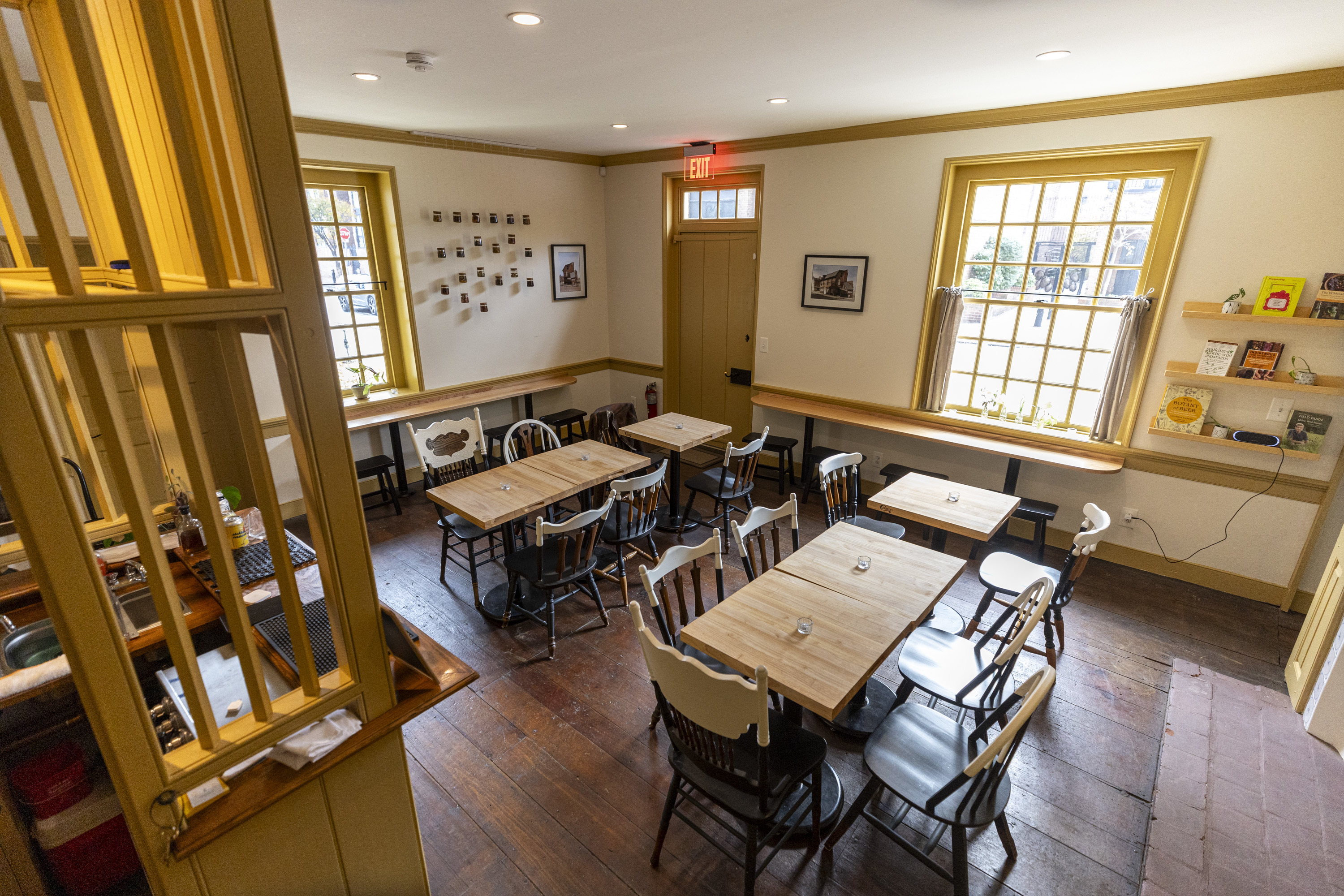
    The newly-renovated Man Full of Trouble Tavern in Society Hill on Saturday Dec. 7, 2024.

    Revolutionary-era drinking and tavern life, and its role in America’s founding 250 years ago, will be explored in full at a Nov. 21 after-hours event at the Museum of the American Revolution. Dubbed “Tavern Night,” the sold-out cocktail reception and boozy symposium serves as a twist to the museum’s grand exhibition celebrating the national milestone, also known as the Semiquincentennial, “The Declaration’s Journey.”

    “Unlike today’s bars, taverns were meeting places at a time when few others were available,” said Dan Wheeler, who last year reopened Philly’s only remaining colonial-era tavern, A Man Full of Trouble, and will join Barbier in speaking at the event. “Revolutionary thoughts were conceived and refined in taverns, and a nation was born.”

    Colonial keggers and the bonds of liberty

    Booze was the social lubricant of the Revolution, said Barbier, a Boston-based historian who also runs tours of Revolutionary-era taverns, who pored over the Founding Fathers’ diaries and account books in recreating their raucous time in Philly.

    The historical record provides no evidence that the nation’s founders were fully loaded — or “cock-eyed and crump-footed,” as Franklin might’ve said — as they went about forming the republic, she said.

    “When you hear someone accusing someone of being drunk, it’s in an overly negative way,” she said.

    Still, she was surprised by just how much the Founding Fathers drank.

    Items related to drinking at the Museum of the American Revolution, in Philadelphia, PA, November 18, 2025.

    Hard cider and small beer, the 18th-century version of light beer, more or less, accompanied breakfast, she said. The midday meal, known as dinner, boasted cider, toddy, punch, port, and various wines. When their workday wrapped up in the late afternoon, the delegates’ drinking began in earnest.

    “There’s certainly a lot of drinking happening in these taverns,” said Barbier, whose book includes recipes of the Founding Fathers’ preferred aperitifs. “I don’t drink and not eventually feel tipsy. Certainly the same would be true for people in the past.”

    Barbier notes the downside of all the drinking, like booze-fueled mob violence that spilled into the streets. And neither will she say that Jefferson, who kept all his receipts, actually penned the Declaration at City Tavern.

    “He was there more frequently than ever during this time,” she said. “Maybe he needed to take a break from his writing, and go there. And sometimes when you’re on break, you develop your best ideas.”

    The Founders’ endless toasting of tankards — including a rager for the ages marking Paul Revere’s arrival in Philly, and held in 1774, the night before a critical vote toward independence — provided crucial trust-building, Barbier said.

    The men who founded America arrived in Philly as strangers, agreeing on little. After so much boozing, they bonded as brothers in liberty, and left a new nation in their wake.

    “Ultimately, this comradery and social bonding leads to the consensus that leads to the Declaration of Independence,” Barbier said.

  • An artist started befriending strangers in Pa. prisons. Now she is turning them into artwork.

    An artist started befriending strangers in Pa. prisons. Now she is turning them into artwork.

    Over the course of three years, Carolyn Harper and Donna Martorano became fast friends.

    The two women, on different sides of Pennsylvania, lived very different lives and shared few similarities. But they bonded over emails, handwritten letters, and virtual visits.

    Martorano shared tales of her family, her health issues, her hopes of reconnecting with her two sons, and her growing sense of detachment from the outside world.

    They spoke daily, but before they could meet, Martorano died in July 2024 at age 74 at the State Correctional Institution in Cambridge Springs. She was serving a life sentence without parole for first-degree murder for contracting two men to kill her husband in 1992.

    The official cause of her death was a heart attack.

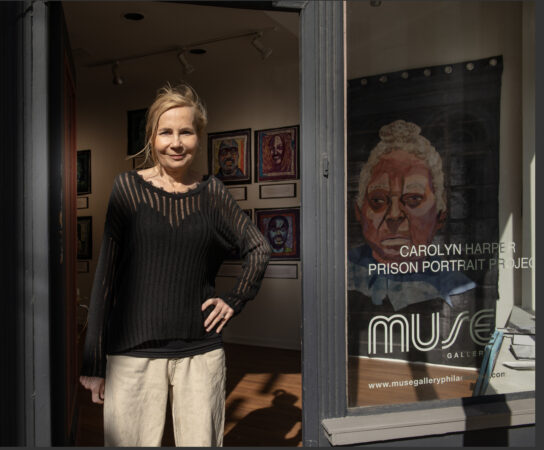
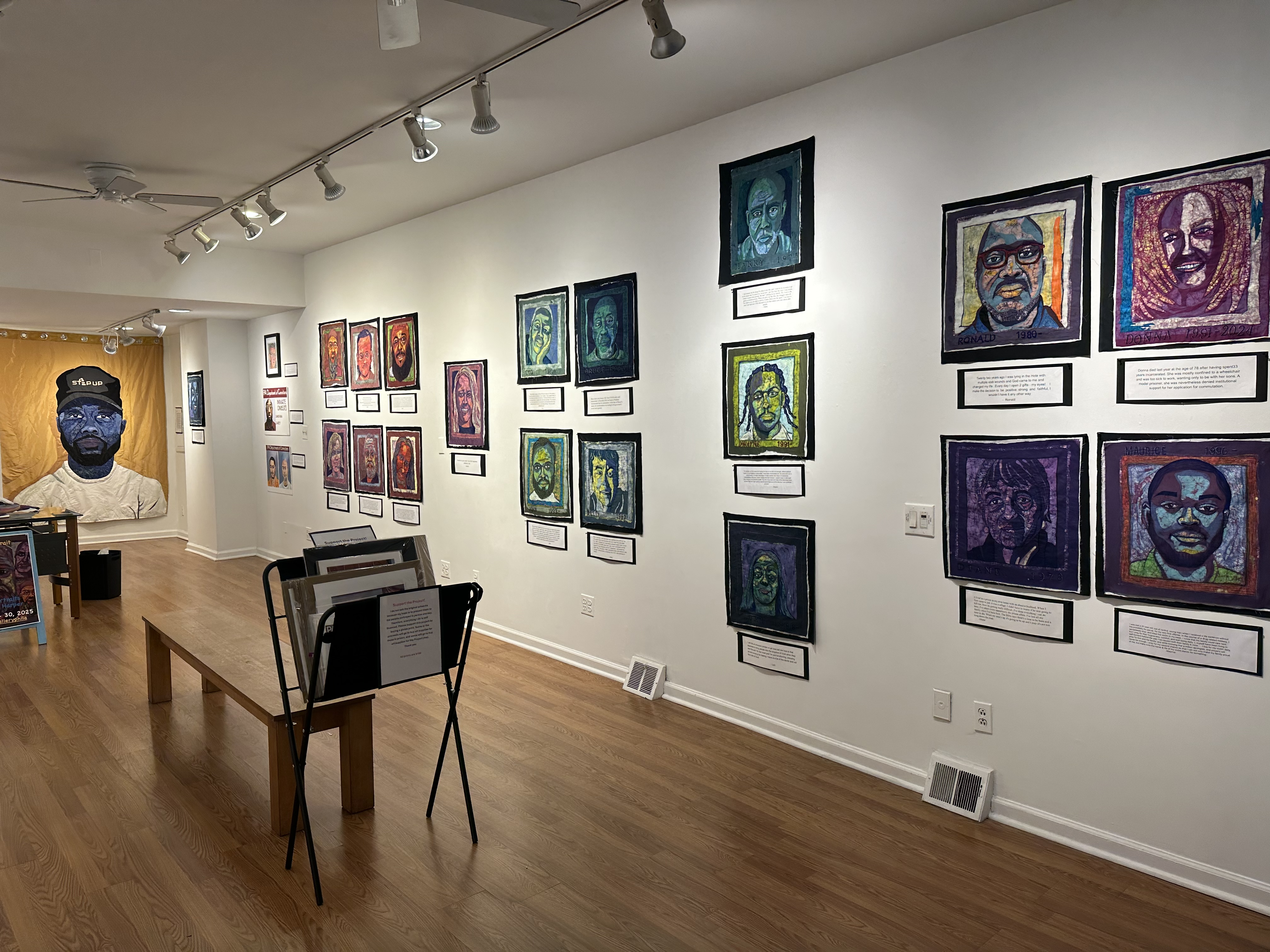
    Artist Carolyn Harper’s portrait series, “Prison Portrait Project: Faces of Despair, Hope and Transformation,” is on display at Old City’s Muse Gallery.

    Harper said Martorano’s past and conviction weren’t the end of her story. In the 32 years she was incarcerated, Harper said, Martorano became a certified braille transcriber and took violence prevention and mentoring programs.

    But in her later years, she grew increasingly “bitter,” Harper said. Martorano was confined to her bed and wheelchair and was often bullied as her health worsened.

    “Her spirits were crushed,” Harper said. “I really feel she died of a broken heart because she was not given institutional support. A lot of prison administrators just don’t care. She told me she had nothing left to live for.”

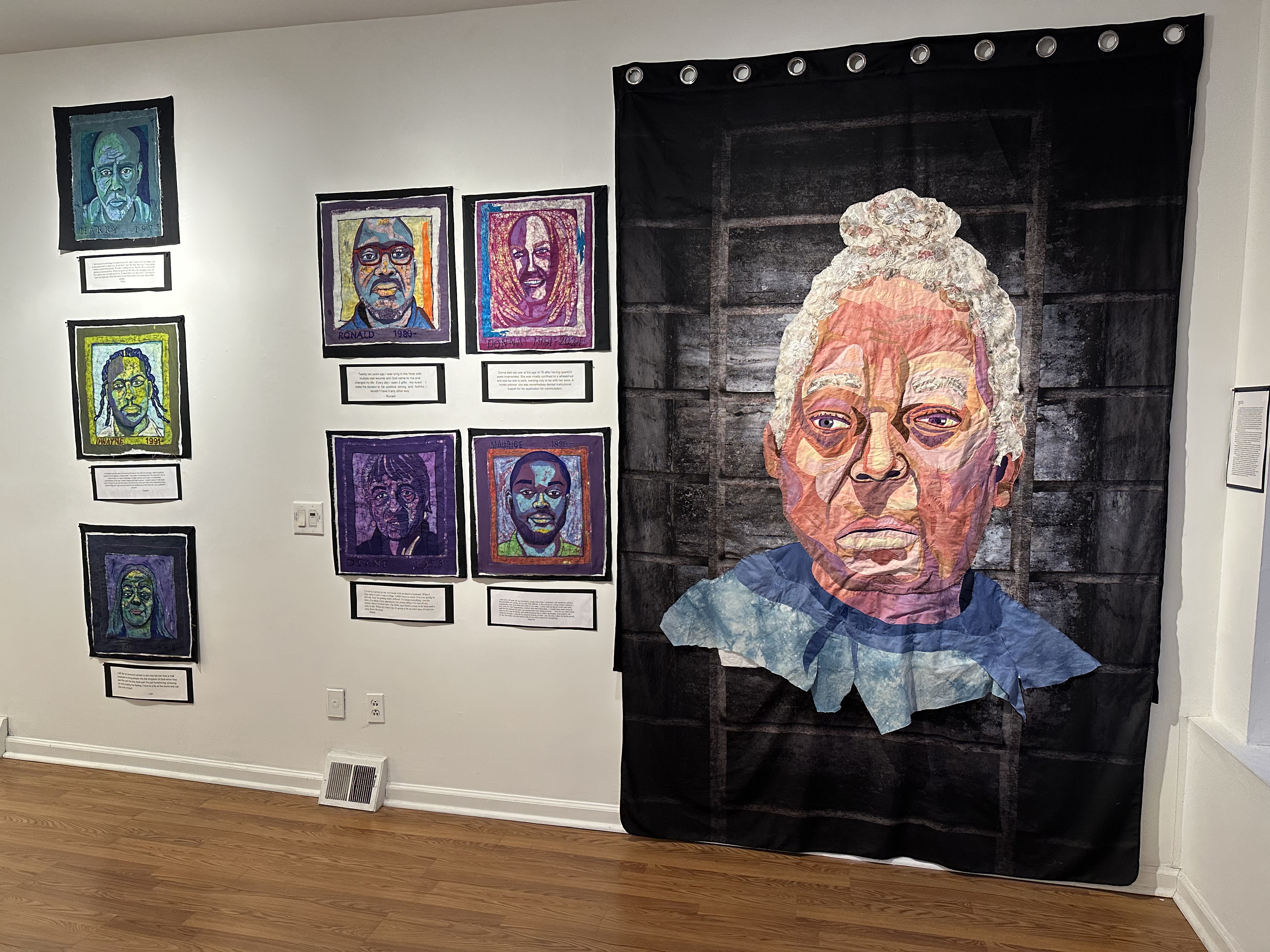
    Artist Carolyn Harper’s portrait of her friend, Donna Martorano, who was incarcerated for decades before her death at age 74.

    For the past five years, Harper, 60, has connected with dozens of other incarcerated people, some with stories similar to Martorano’s and others with far different lives.

    These stories, Harper said, opened her eyes to the emptiness, detachment, and inhumanity people experience in prisons.

    Their names, faces, and stories are now at the center of her latest portrait series, “Prison Portrait Project: Faces of Despair, Hope and Transformation,” on display at Old City’s Muse Gallery.

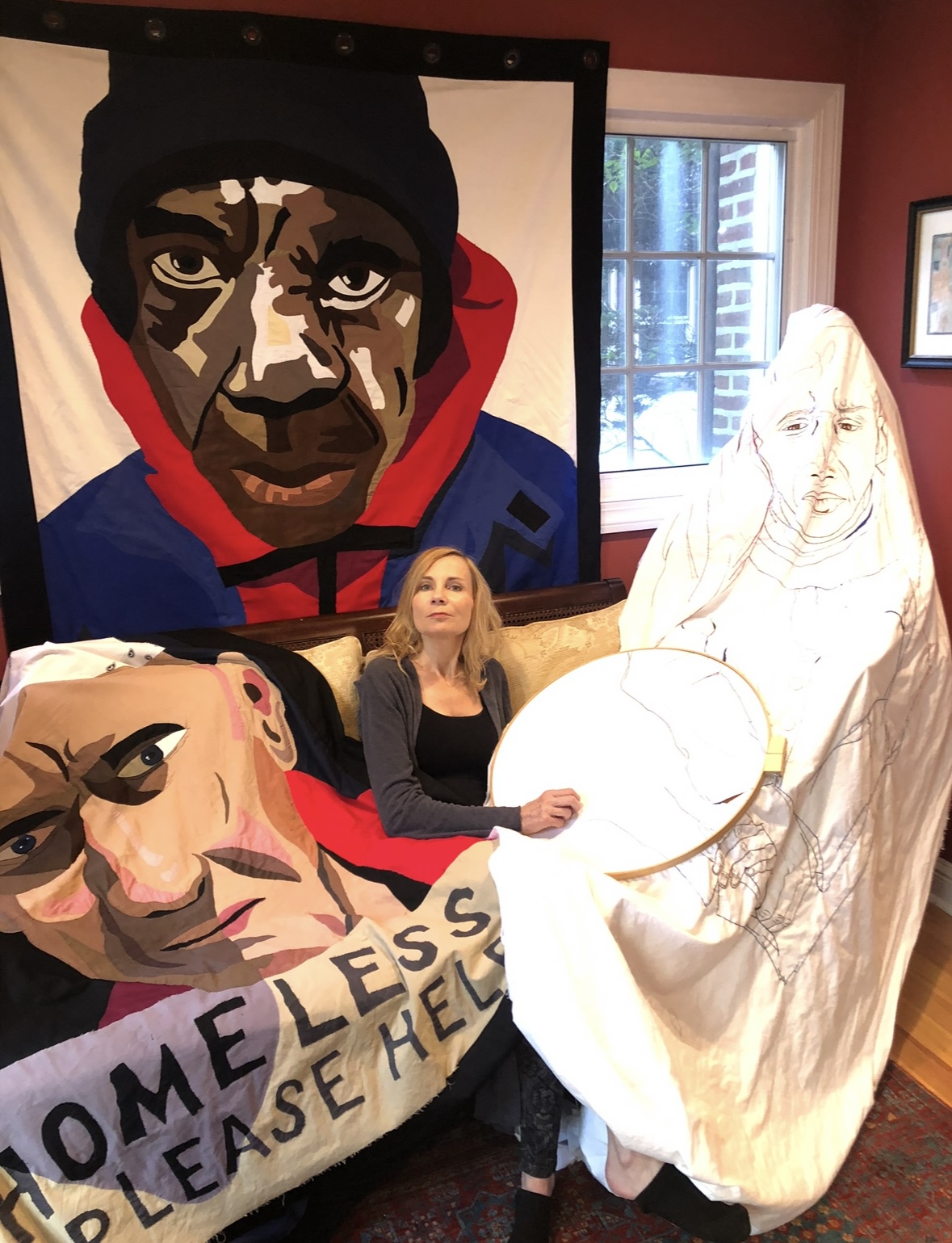
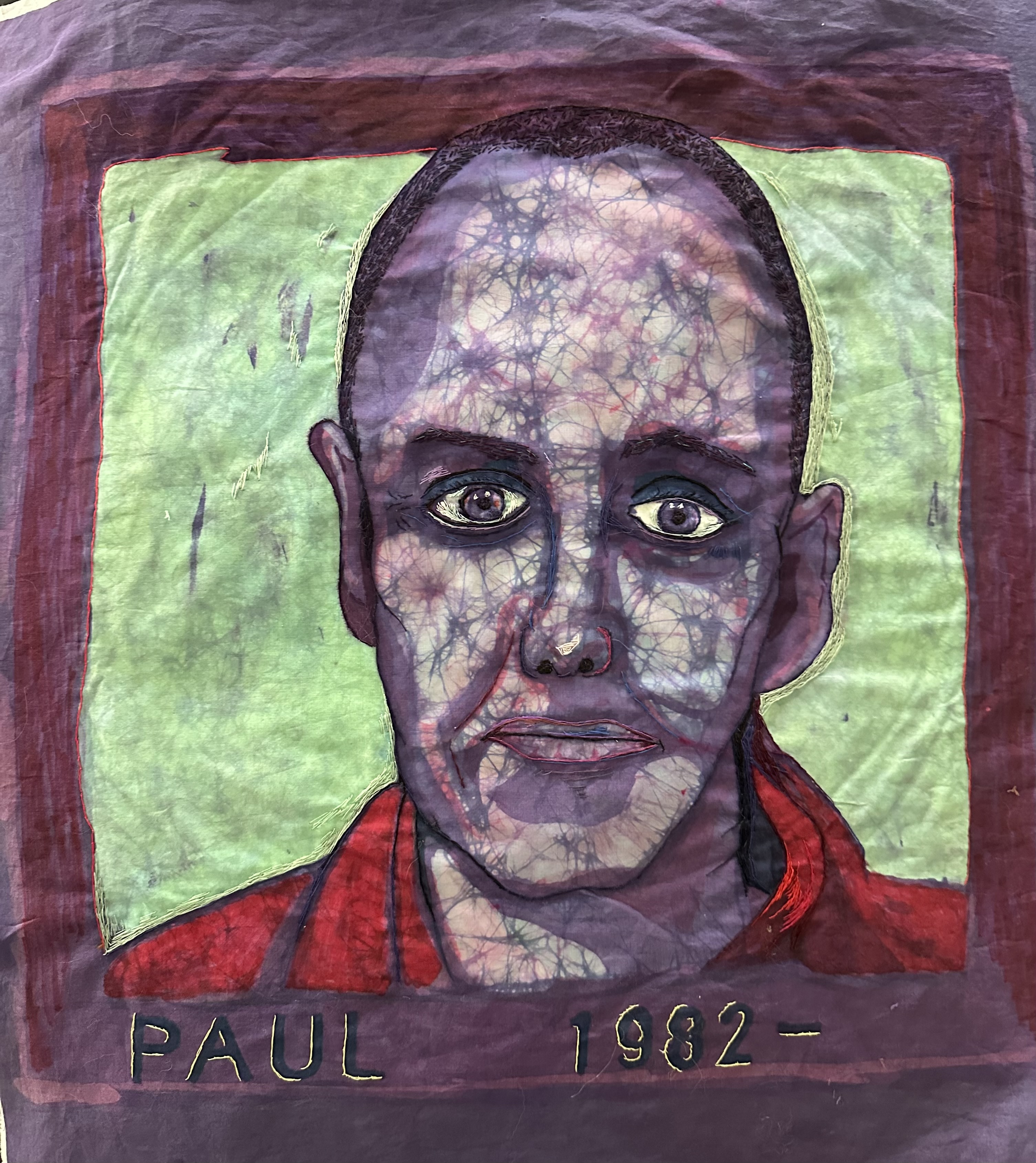
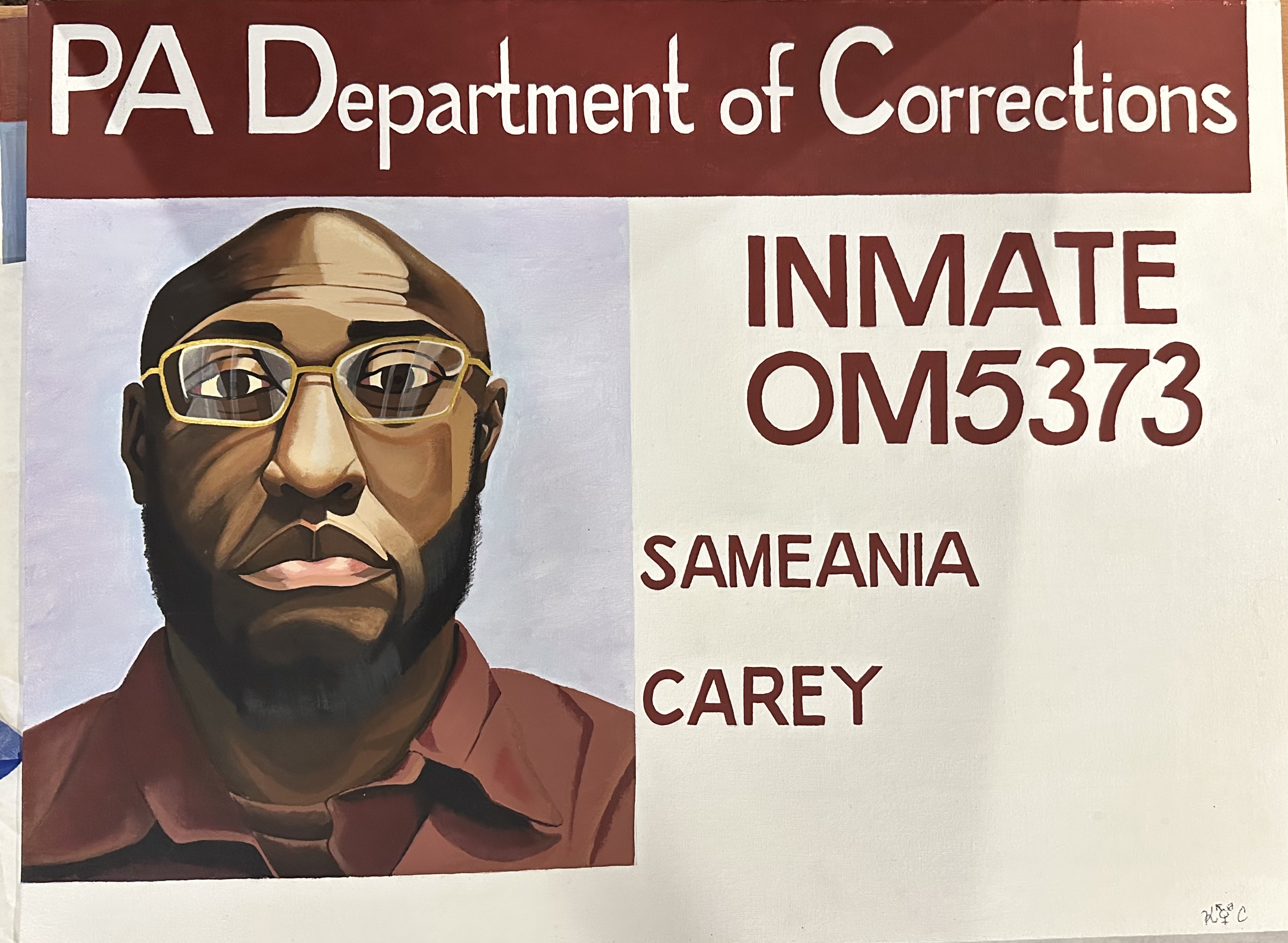
    Harper has placed their portraits on hand-sewn quilts and vibrant batiks, transforming the faces of those suffering from the country’s carceral system into artwork.

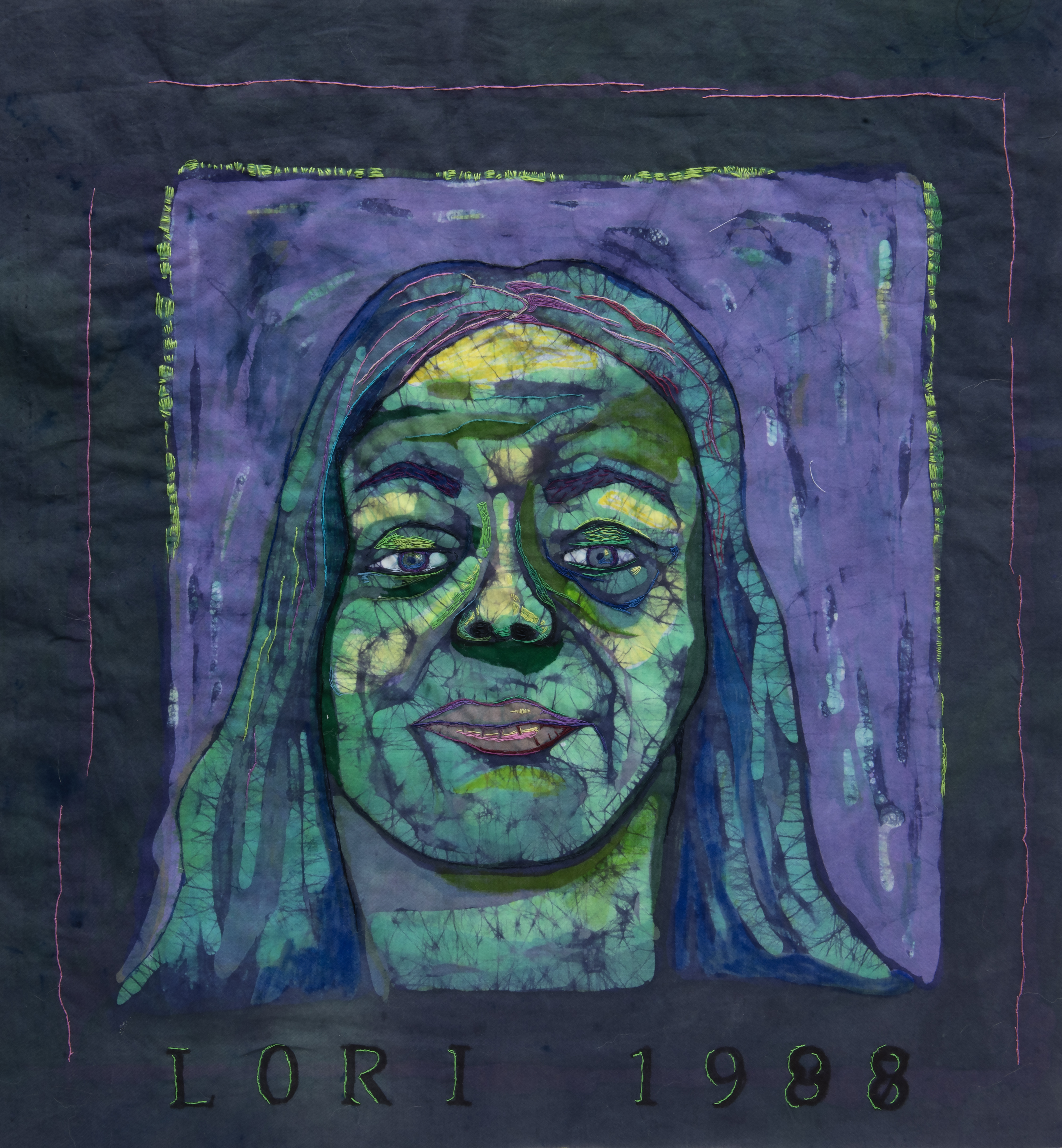
    For artist Carolyn Harper’s new exhibition, she highlighted the stories of incarcerated people in the state prison system. Among them is Harper’s friend, Lori, who has been incarcerated since 1988.

    Like Martorano, several of Harper’s subjects are serving death sentences, with little to no path for early release or commutation. Harper has never asked specific questions about their pasts, and everything she knows about them is what she has been told voluntarily. But she’s certain about one thing: None of the people she has befriended is the same person they were when they were first incarcerated.

    Pennsylvania, she found out, is one of two states in the country that has a mandatory life without parole sentence, known as “death by incarceration,” for both first-degree and second-degree felony murder.

    “I have come to see that guilt or innocence, while important, is not the critical thing here,” Harper said. ”It’s the idea of redemption and rehabilitation. This, to me, is the real story — the story of transformation.”

    For decades, people suffering from abuse, discrimination, and disenfranchisement have made their way onto Harper’s quilts.

    In the mid-1990s, she created panels for the AIDS Memorial Quilt, a visual project that memorializes the hundreds of thousands of Americans who died from AIDS-related causes at the height of the epidemic.

    She also developed a series of textile portraits championing queer love stories, and another shedding light on the systemic issues faced by those wrestling with dispossession and homelessness.

    “People often come out of prison and don’t have a pathway to find a real job or housing,” Harper said. “I started to see that connection, and I became interested in the issue of incarceration.

    “We pay lip service to this idea that prison is reformative, but really it’s punitive.”

    Among the subjects for Harper’s exhibition is Paul. He’s been incarcerated since 1982 for a crime he doesn’t remember committing.

    Born in Rochester, N.Y., Harper moved to Philadelphia in 1989 to study art at the University of Pennsylvania. Her days volunteering as an art teacher at local homeless shelters from 2013 to 2020 are what first drew her to the links between homelessness, dispossession, and incarceration. She was driven to learn more about the state’s prison system.

    After her best friend was arrested in 2020 for abusing his husband, Harper’s interest became a lived reality. The health of her friend, who struggled with addiction and mental health issues, worsened due to his incarceration. Shortly after his release in 2021, he took his own life.

    That pushed Harper to join organizations such as the Coalition to Abolish Death by Incarceration, We The People Coalition, and others. She wrote postcards, letters, and emails to incarcerated people throughout the state.

    Before this, a self-described “snowflake,” Harper would veer away from conversations about incarceration. She started out fearing that she wouldn’t be able to emotionally cope with the struggles incarcerated people endure and write to her about in their letters. But she grew to become a listening ear, resource, and friend to people seeking human connection.

    Through her hand-sewn and fabric-dyed portraits, she encourages her audience to step outside their worlds and enter the worlds of her subjects. Through her art, she highlights the forgotten humanity of incarcerated people and uses their testimonies to draw attention to Pennsylvania’s “harsh sentencing laws,” and correct the misconceptions people hold of those who are incarcerated.

    The “Prison Portrait Project” started off with Harper writing to the people whose names, faces, and stories make up her art. Would they send her a photograph, she asked, and consent to be a part of her exhibition?

    Harper’s exhibit also features self-portraits from incarcerated artists.

    Most replied with a photo or told Harper where she could find one. Others had family members send photos to her. After she sewed them or transferred them onto quilts, Harper shared images of the final pieces with the subjects of the expressive portraits.

    “I think seeing their self-portrait, and knowing it’s going in an exhibition, helps them see themselves in a different light. And that can be empowering,” Harper said.

    Each quilt and batik-style image features a written statement from the person who inspired the portrait, ensuring their stories (along with their faces) are integral parts of the exhibit.

    A binder containing more stories, statements, and poems written by people Harper connected with through the years, sits at the front of the gallery. Three self-portraits of incarcerated artists are also on display.

    An image of Carolyn Harper’s new portrait series, titled “Prison Portrait Project: Faces of Despair, Hope and Transformation,” which is on view at Muse Gallery through Nov. 30.

    Harper is hopeful the show will inspire audiences to view those who are incarcerated as people, rather than lifeless serial numbers and charge sheets.

    “Most of us don’t think about people in prison. If we do, it’s sort of with the feeling, ‘Well, they probably did something and deserve to be there.’”

    She wants people to recognize the lack of redemptive pathways for people upon release, and the need for advocates to protect, defend, and humanize Pennsylvania’s incarcerated population.


    “Prison Portrait Project: Faces of Despair, Hope and Transformation,” through Nov. 30, Muse Gallery, 52 N. Second St., Wednesday to Sunday, noon to 5 p.m. musegalleryphiladelphia.com

  • Philly Music this week with Grammy nominees Leon Thomas and Dijon, plus ‘The Boy Is Mine’ tour in Atlantic City

    Philly Music this week with Grammy nominees Leon Thomas and Dijon, plus ‘The Boy Is Mine’ tour in Atlantic City

    This week in Philly music kicks off in Fishtown with six-time Grammy nominee Leon Thomas, continues in Atlantic City with a Brandy and Monica throwback pop double bill, and continues in North Philly with rising R&B singer and Justin Bieber producer Dijon.

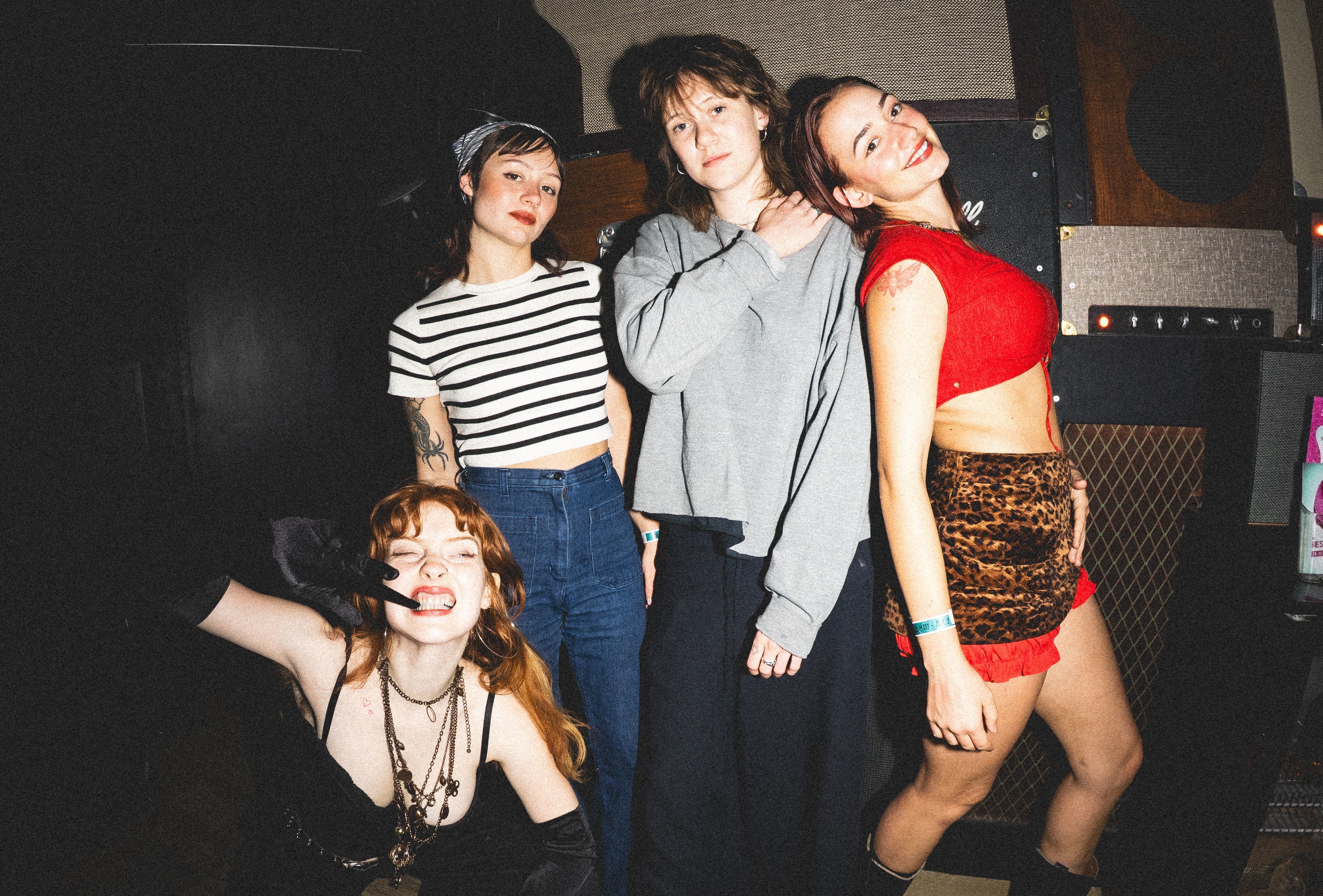
    Austin, Texas, hard rock band Die Spitz play the First Unitarian Church on Wednesday.

    Wednesday, Nov. 19

    Die Spitz

    The music gets started on Wednesday with the four women of Austin, Texas. hard rock foursome Die Spitz, who recorded their unrelenting new album Something to Consume at Studio 4 in Conshohocken with producer Will Yip. Boone, N.C., queer punk duo Babe Haven opens. (8 p.m., First Unitarian Church, 2125 Chestnut St., r5productions.com)

    Leon Thomas

    There weren’t a lot of surprises among the big names with the most nominations when the Grammys were announced this month. Kendrick Lamar and Lady Gaga topped the list, but Leon Thomas, who got six nods along with Bad Bunny and Sabrina Carpenter, was the surprise underdog.

    The crooner and producer, who got his start as a Broadway child actor and star of Nickelodeon’s Victorious, is up for album of the year for Mutt, as well as best new artist and R&B performance for his viral NPR Tiny Desk version of the album’s title song — in which he compares himself unfavorably to a dog. His “Mutts Don’t Heel” tour comes to the Fillmore on Wednesday. (8 p.m., the Fillmore, 29 E. Allen St., livenation.com)

    Library Mixtape

    The free Library Mixtape: A Vinyl Record Listening Club meetup in the music department of the Parkway Central Library on Wednesday is hosted by Alexa Colas, the Clubfriends Radio & Records founder who moved her living room sound system to the Design Philadelphia Center last month. Bring your own vinyl. (5:30-7:30 p.m., 1901 Vine St.)

    Also: There’s live music at Old City vinyl listening room 48 Record Bar. James Everhart of Cosmic Guilt teams with New York songwriter Keenan O’Meara on Wednesday; Hannah Taylor sings and Jake Zubkoff plays keys on Sunday.

    Hannah Cohen plays Johnny Brenda’s on Thursday. Her new album is “Earthstar Mountain.”

    Thursday, Nov. 20

    Hannah Cohen

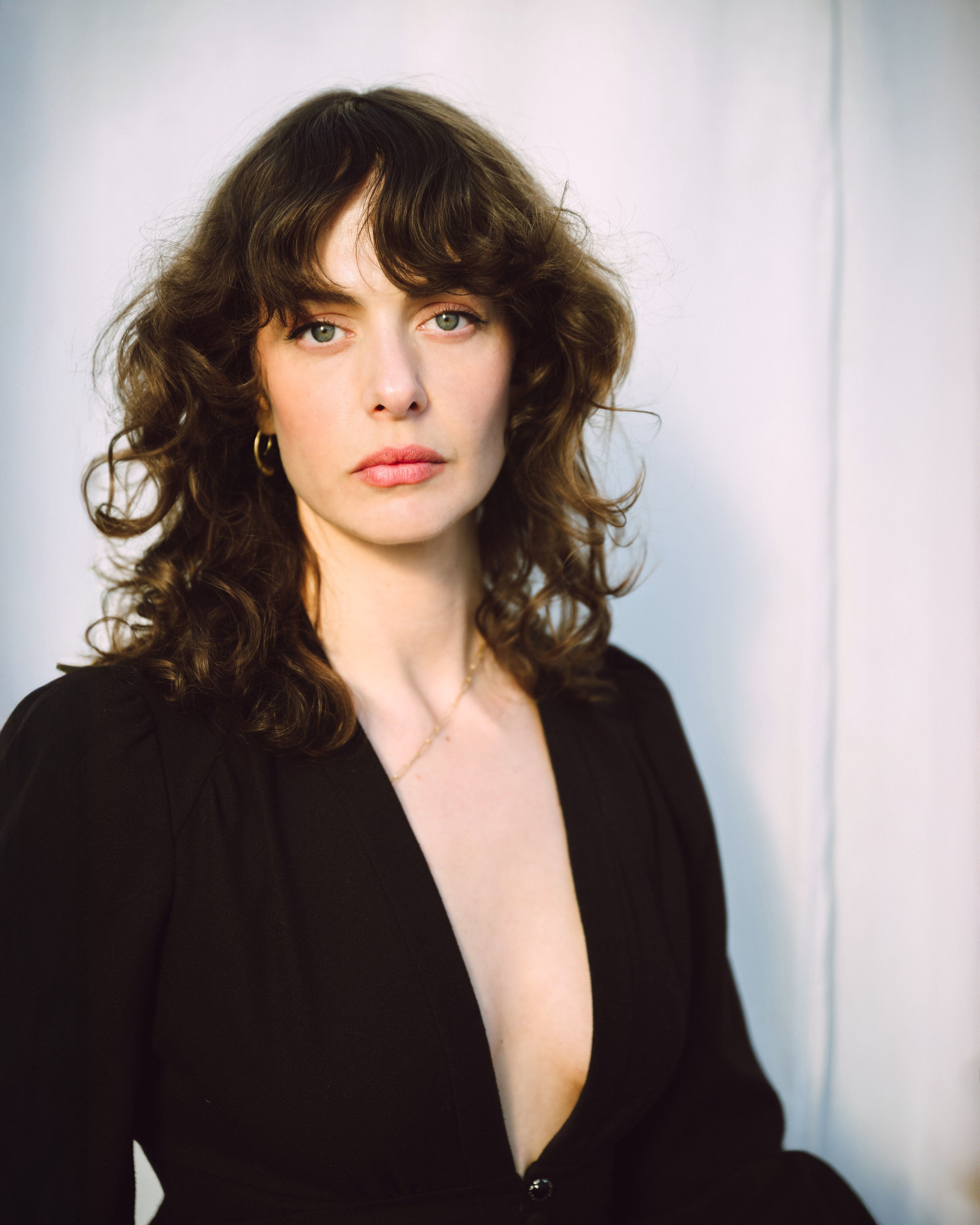
    Hannah Cohen’s Earthstar Mountain is a dreamy, pastoral album that also delivers a sweet kick. She recorded it with producer partner Sam Evian at their studio in a barn in upstate New York. With Sufjan Stevens and Clairo guesting, it’s a 2025 standout releaser. (Salami Rose Joe Louis opens. 8 p.m., Johnny Brenda’s, 1201 Frankford Ave., johnnybrendas.com)

    The New Mastersounds

    British funkateers the New Mastersounds are saying goodbye — at least for a while. The band whose tight Hammond organ-heavy soul-jazz sound bears the influences of Philly keyboard greats Jimmy Smith and Jimmy McGriff, plays its “Ta-Ta for Now” tour on Thursday. (8 p.m., Ardmore Music Hall, 23 E. Lancaster Ave., Ardmore, tixr.com)

    Friday, Nov. 21

    Ron Gallo

    Ron Gallo made headlines this year by posting protest songs on an almost daily basis in the early days of the second Trump administration. He called it 7AM Songs of Resistance for the Internet.

    Now, Gallo has a new album that takes him in a more personal direction, called Checkmate, his second on the Kill Rock Stars label. It’s filled with subtly evocative folk-flavored, even jazzy, music that detours from the bruising garage rock he’s become known for. Gallo plays Free at Noon at Ardmore Music Hall. (Noon, Ardmore Music Hall, eventbrite.com)

    He comes back for a second Philly gig at the First Unitarian Church next Friday.

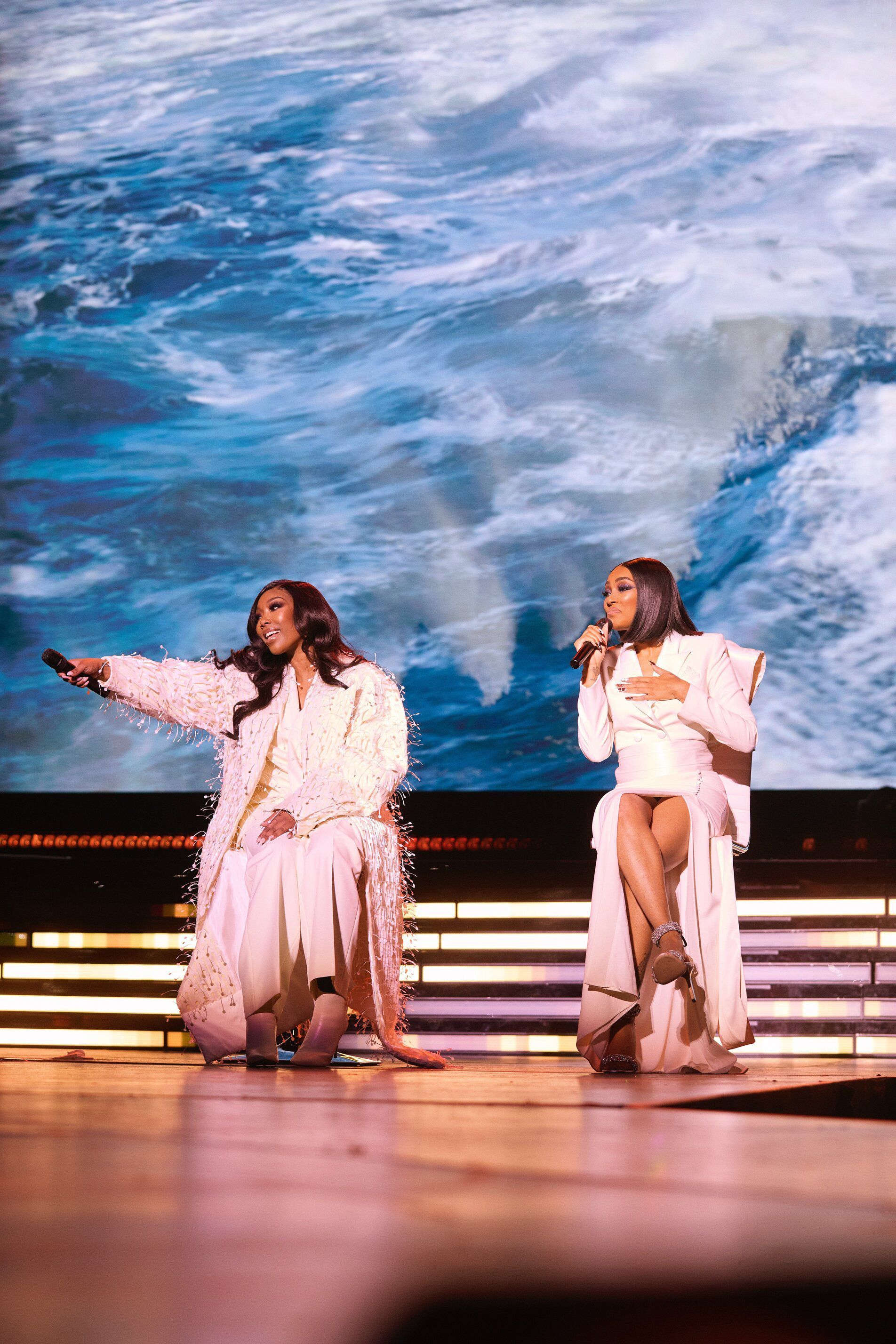
    Brandy and Monica performing in Indianapolis in October on “The Boy Is Mine Tour,” which comes to Atlantic City’s Boardwalk Hall on Saturday.

    Bar Italia

    This month’s edition of David Pianka’s Making Time dance party has an intriguing live band headliner in Bar Italia, the London-based trio named after an iconic Soho coffee bar. The band’s new album, Some Like It Hot, wears the influence of Brit-pop band Pulp on its sleeve. New York rock band Voyeur also plays, along with sets by Dave P., Mario Cotto, Shai FM, and K Wata. (9 p.m., Warehouse on Watts, 923 N. Watts St., wowphilly.com)

    Stinking Lizaveta

    Longstanding West Philly doom metal trio Stinking Lizaveta‘s name was inspired by a character in Fyodor Dostoevsky’s The Brothers Karamazov. The band released its 1996 album Hopelessness and Shame — recorded by the late Steve Albini — on vinyl for the first time this March. On Friday, they headline Johnny Brenda’s with Deathbird Earth and Channls. (8 p.m., Johnny Brenda’s, 1201 Frankford Ave., johnnybrendas.com)

    Tom Morello

    Rage Against the Machine guitarist Tom Morello plays the Music Box at the Borgata in Atlantic City. It will be an agit-pop act of resistance in a hotel casino within earshot of chiming slot machines. Morello’s repertoire is made up of roiling Rage songs, Woody Guthrie, MC5, and John Lennon and Yoko Ono covers, plus originals in his rabble-rousing folk singer mode as the Nightwatchman. He’ll have a full band behind him, plus the help of San Diego hip-hop group the Neighborhood Kids as his special guests. (9 p.m., Music Box at the Borgata, 1 Borgata Way, Atlantic City, ticketmaster.com)

    Saturday, Nov. 22

    Mo Lowda & the Humble

    Philly quarter Mo Lowda & the Humble closes out a five-month North American tour for its new album, Tailing the Ghost, with a hometown show. (8 p.m., Union Transfer, 1026 Spring Garden St., utphilly.com)

    Brandy and Monica

    Back in 1988, Brandy and Monica played out a feud over a dude in the worldwide hit “The Boy Is Mine,” which was cowritten and coproduced by South Jersey’s Rodney “Darkchild” Jerkins. Twenty-seven years later, the pop-R&B singers are on a concert tour together that also features Destiny’s Child’s Kelly Rowland, Muni Long, and 2025 American Idol winner Jamal Roberts. The tour is presented by the Black Promoters Collective. (8 p.m., Jim Whelan Boardwalk Hall, 2301 Boardwalk, Atlantic City, boardwalkhall.com)

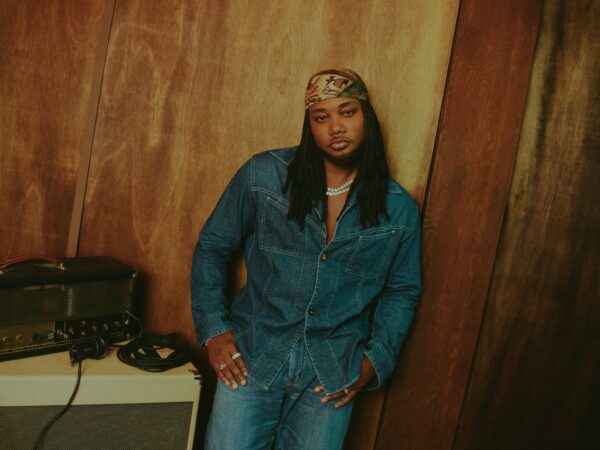
    Grammy-nominated singer and producer Dijon plays the Met Philly on Sunday.

    Sunday, Nov. 23

    Dijon

    Dijon released his debut Absolutely in 2021 and has quickly made his mark. He regularly works with Mk.gee, the guitarist and songwriter with whom he shares a twitchy, low-fi sensibility. He’s also teamed with Bon Iver and Justin Bieber and is up for producer of the year and album of the year at the Grammys. Sometimes, he sounds like Prince.

    His new album Baby! is a joyous, shape-shifting adventure. Two measures of how hip he is at the moment: He’s among the musicians with roles in Paul Thomas Anderson’s One Battle After Another, and on Dec. 6 will be musical guest on Saturday Night Live. He plays the Met Philly on Sunday. (8 p.m., Met Philly, 858 N. Broad St., ticketmaster.com)

    Amy LaVere and Will Sexton

    Memphis wife-and-husband duo Amy LaVere and Will Sexton are Americana artists who specialize in a brand of smoky Southern noir, perhaps best exemplified by LaVere’s “Killing Him,” about trying to rid oneself of a bad boyfriend only to find that he comes back to haunt you. (8 p.m., 118 North, 118 N. Wayne Ave., Wayne, tixr.com)

  • Philadelphia must imagine its next 250 years

    Philadelphia must imagine its next 250 years

    Thirty years ago next February, the world’s first high-profile competition between human and machine intelligence took place in Philadelphia.

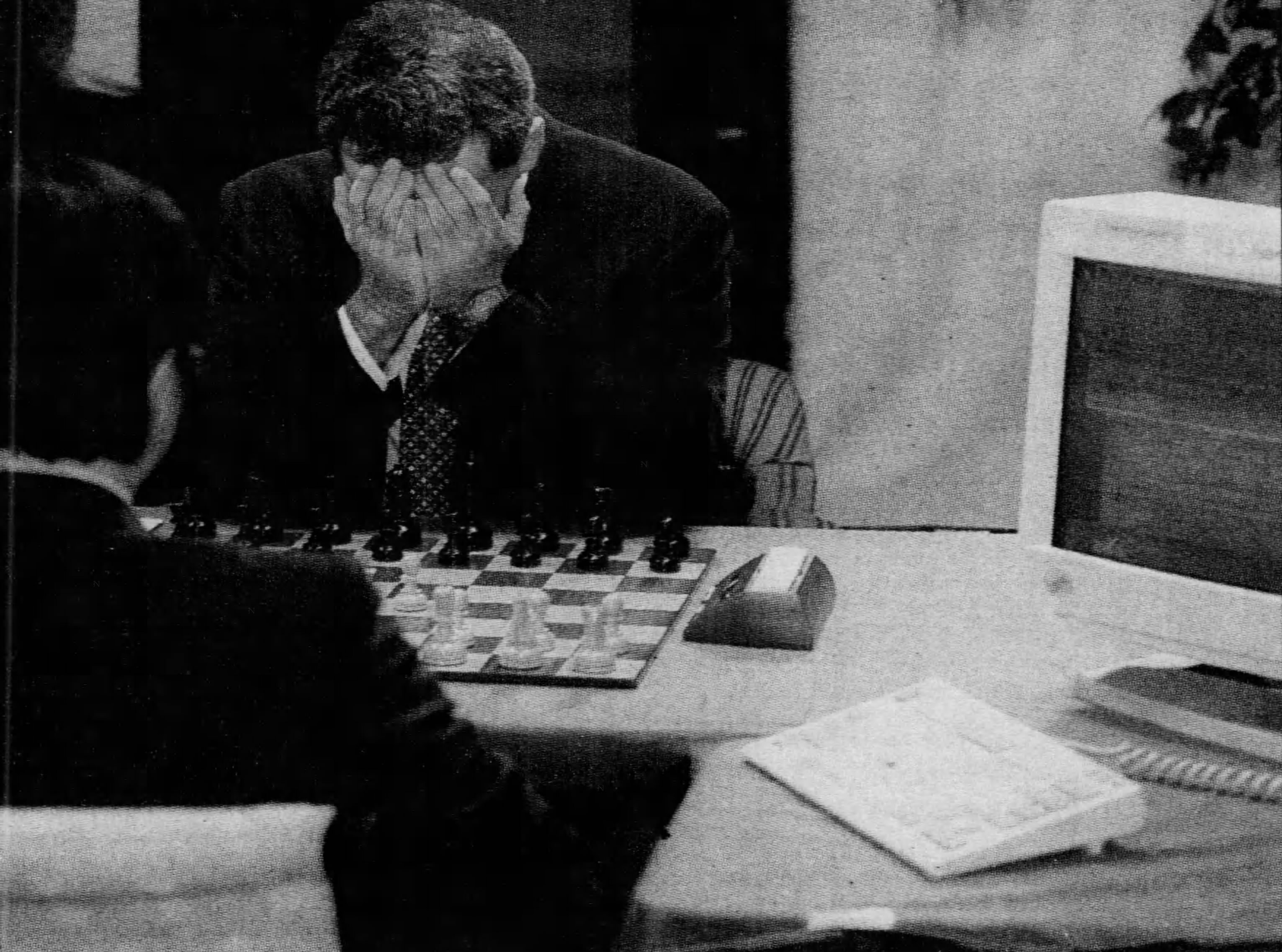
    IBM’s Deep Blue supercomputer faced world chess champion Garry Kasparov at the still-new Pennsylvania Convention Center. It was timed with the 50th anniversary of the unveiling at the University of Pennsylvania of ENIAC, the world’s first supercomputer, and a reminder that Philadelphia once led the world into the computer age.

    Russian chess grandmaster Garry Kasparov, hunched over a chessboard and holding his furrowed brow in his hands, competes against the supercomputer Deep Blue in February 1996.

    Back then, artificial intelligence felt distant. Today, it feels existential.

    As we prepare to host the nation’s 250th anniversary in 2026, I’ve been asking: In a city so rich in history, are we still interested in the future?

    How it started

    This spark began in 2023, during a reporting project on economic mobility called Thriving that Technical.ly — the news organization I founded and lead — published with support from the William Penn Foundation, the Pew Charitable Trusts, and the Knight Foundation. Our newsroom followed 10 Philadelphians for a year to produce an award-winning audio-documentary and hosted a dozen focus groups across the city.

    One Brewerytown resident said something that inspired a previous op-ed I wrote for this paper: “Leaders here talk a lot about hundreds of years in the past, but nobody is looking very far in the future.”

    Across this region — in boardrooms, nonprofits, universities, and regional corporate offices — too many leaders manage the wealth and institutions created by past entrepreneurs, but too rarely invent anything new. We fight over what exists instead of building what’s next.

    The Semiquincentennial is our chance to prove we can balance our past, present, and future.

    Why this matters now

    My career has been spent listening to and challenging the inventors, entrepreneurs, and civic leaders shaping tomorrow’s economy. They act while others analyze.

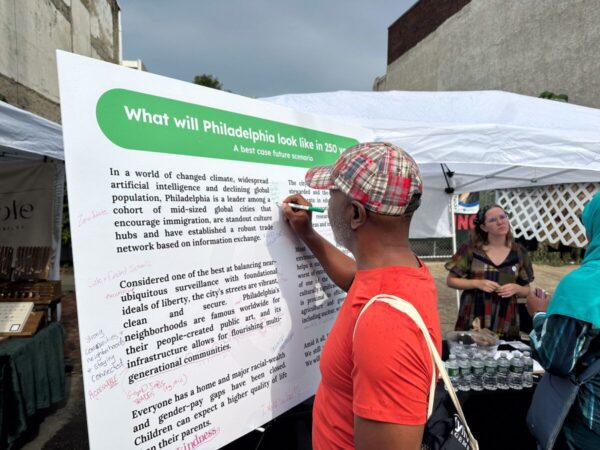
    In that spirit, we spent two years developing a vision for Philadelphia 250 years in the future. Nearly 1,000 Philadelphians have shared ideas at festivals, community events, and small-group gatherings. The current draft, open for one final round of feedback at Ph.ly, isn’t a plan but an invitation — a shared view of what we wish for our descendants in 2276.

    The coming decades could bring population decline, climate strain, and sweeping technological change. Yet, many local leaders still struggle to plan even years ahead.

    During a recent private discussion I moderated inside one of our city’s impressively preserved old buildings, a longtime civic leader cited Philadelphia’s poor economic mobility ranking. I reminded him that the same research, with the same warning, was released a decade ago. Why didn’t we plan to make changes then?

    He assured me this time would be different.

    Philadelphia’s past points forward

    Philadelphia’s breakthroughs have nearly always come from outsiders who pushed past local gatekeepers.

    Stephen Girard, a French immigrant dismissed by elites, built a shipping and banking fortune, stabilized the nation’s finances, and endowed Girard College.

    The Drexel family’s daring banking experiments helped fuel the Industrial Revolution before founding the school for engineers.

    Albert Barnes saw beauty where Philadelphia’s art establishment did not.

    ENIAC’s inventors, John Mauchly and Presper Eckert, were a little-known physics professor and a 24-year-old grad student whose entrepreneurial efforts were blocked locally, presaging Silicon Valley.

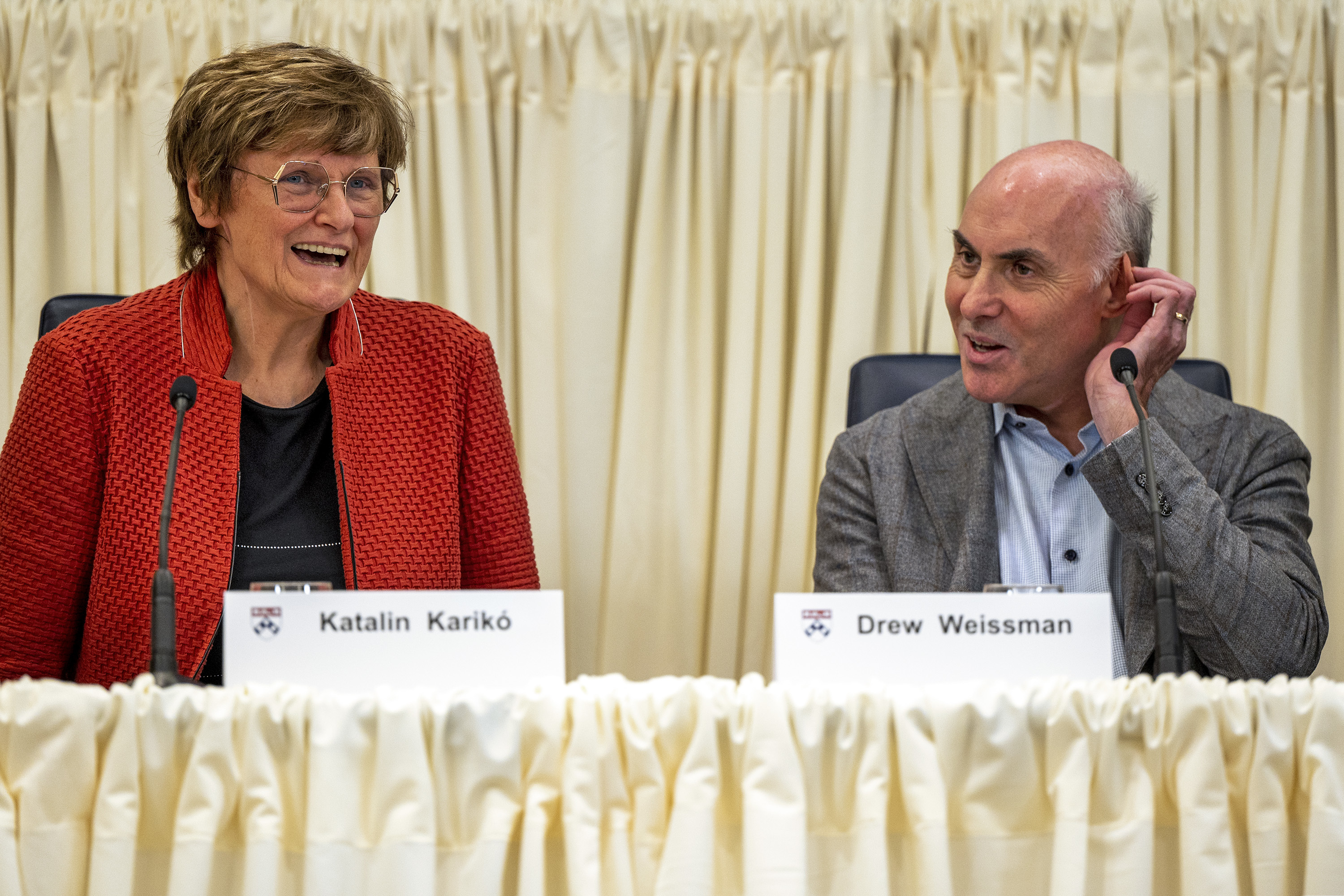
    Katalin Karikó and Drew Weissman attend a news conference at the University of Pennsylvania in October 2023, after they were named winners of the 2023 Nobel Prize in physiology or medicine for their work on messenger RNA, a key component of COVID-19 vaccines.

    Most recently and famously, Nobel laureate Katalin Karikó’s mRNA research that led to the rapid-fast, lifesaving COVID-19 vaccine response was commercialized in Boston, not here.

    The pattern is clear: Visionaries choose to live in Philadelphia, yet often get ignored, if not outright blocked, by local institutions. That’s no way to secure the next 250 years.

    There are signals of change.

    I take inspiration from bold efforts to build, including the Delaware waterfront and the cap of I-95. In the 2010s, Philadelphia’s technology sector earned initial, if timid, attention from successive mayoral administrations and civic leadership — and a half dozen tech unicorns were born.

    That tech community helped inform this multiyear vision statement project, which received $75,000 from a funders collaborative activating Semiquincentennial efforts, including the William Penn and Connelly Foundations. The city’s 2026 planning director, Michael Newmius, has been supportive, urging us to listen to residents and avoid undue filtering.

    Over two years, we’ve tabled at community events, hosted discussions, and led working sessions. The result isn’t mealymouthed or filtered by incumbency; it has grit and humanity — like Philadelphia itself.

    You can read the draft vision at Ph.ly and in the article box in this op-ed. We’re collecting one final round of feedback this fall, and we’ll incorporate what we can. We’re accepting feedback until Dec. 1.

    From conversation to commitment

    Our goal is to enshrine the final version of this statement on a physical plaque at a prominent location in the city. We’ll also host a digital version online, paired with voices from residents across the region.

    This vision doesn’t prescribe policy, nor make fallible predictions; instead, it offers a shared aspiration, a framework that future leaders can measure their plans against.

    In its early drafts, the statement imagined a green-energy Philadelphia with climate-adaptive agriculture, abundant public art, thriving multigenerational neighborhoods, and a culture that “exports ideas and imports opportunity.”

    Over subsequent versions, the specifics were removed to reflect the long time horizon, but the spirit remains: Philadelphia must keep people — not technology, not incumbency — at the center of our future.

    The Semiquincentennial should celebrate our history — I personally cherish it. I was a historic Old City tour guide for a year, and my daily bicycle commute to the Technical.ly newsroom past Independence Hall reminds me what endurance looks like.

    But if we only admire our past, we’ve missed its key lesson. Philadelphia is strongest when we pair cobblestones with invention’s spark.

    Read the vision at Ph.ly. Critique it, add to it, make it better. May it inspire Philadelphians for generations to keep building, not just preserving.

    The Kasparov-Deep Blue rivalry is remembered as the moment a machine beat a human genius. But that was the rematch. The first contest — the one held here in Philadelphia — ended with the human winning. Let’s make sure that’s still true for our city.

    Christopher Wink is the publisher and cofounder of the news organization Technical.ly.

  • The wife of Par Funding’s founder was sentenced to one day in prison — the last prosecution of people tied to the fraudulent firm

    The wife of Par Funding’s founder was sentenced to one day in prison — the last prosecution of people tied to the fraudulent firm

    The wife of the founder of Par Funding, a fraudulent and now-defunct Philadelphia-based lending firm, was sentenced Thursday to one day in jail and 60 days of house arrest for dodging about $1.6 million in taxes she should have paid on income derived from the scheme.

    Lisa McElhone apologized for her conduct during a sentencing hearing before U.S. District Judge Mark A. Kearney, saying the spectacular implosion of her husband’s business — and the criminal prosecution of people associated with it — was the “most painful and transformative period of my entire life,” causing her to lose her home and her future, and watch her husband get sent to prison.

    “It’s difficult, if not impossible, to express how overwhelming and life-altering this has been,” she said.

    Prosecutors acknowledged that McElhone — the owner of an Old City nail salon — had almost nothing to do with Par’s day-to-day operations. And the crimes she was charged with paled in comparison to those of others associated with the business — particularly her husband, Joseph LaForte, who ran the cash-advance firm as a Mafia-style criminal enterprise that defrauded investors out of hundreds of millions of dollars, and resorted to loan shark-style tactics in efforts to collect on debts.

    Still, Kearney said, McElhone, 46, did bear some responsibility by failing to question aspects of the life she was afforded that she should have known were too good to be true.

    “These things only stop when good people … stop and say, ‘Hey, you’re asking me to go a step too far,’” he said. “That’s the only way these things stop. Because otherwise, if everyone falls in line, everyone goes to jail.”

    Kearney said McElhone’s one-day prison stint would be Thursday. She will then serve a three-year term of supervised release, he said, and her 60 days of house arrest will begin in January 2026.

    McElhone’s sentencing was notable as the final criminal proceeding for about a half-dozen people charged in connection with Par Funding, which prosecutors have called one of the biggest financial frauds in Pennsylvania history.

    LaForte received the stiffest sentence: a 15½-year prison term that Kearney imposed earlier this year. LaForte founded Par to offer quick loans at high interest rates to borrowers deemed too risky to secure financing from traditional banks, but lied to investors about the company’s financial health to raise more money, used thuggish tactics to threaten borrowers who fell into default, and hid tens of millions of dollars from the IRS for his personal use.

    Others charged included LaForte’s brother, who also received a lengthy prison term for participating in various aspects of the firm’s crimes. And earlier this week, two financial professionals, Rodney Ermel and Kenneth Bacon, were ordered to serve 2½ years and 6 months, respectively, behind bars for helping devise the fraudulent tax structures connected to the crimes.

    Assistant U.S. Attorney Matthew Newcomer said it was perhaps fitting that McElhone’s penalty was the last to be imposed, given her limited connection to the business.

    “But I think it does speak to the breadth and severity” of Par’s misdeeds, he said, “that even the least-culpable person is still on the hook for a $1.6 million tax loss.”

    Par was founded in 2012 by LaForte, who was legally barred from selling securities because of previous felony convictions for financial crimes.

    One way he got around that was to list McElhone as Par’s chief executive on official documents. Then, LaForte and others he recruited to work for him — including experienced financial professionals — ran radio ads and staged fancy solicitation events to raise more than $500 million, all as they portrayed the business as legitimate and lucrative.

    In reality, prosecutors said, it was losing tens of millions of dollars a year. But to keep the fraud going, some of Par’s executives lied about the business’ financial health to keep raising money, and others threatened to harm or even kill borrowers who fell into default.

    Still, prosecutors said McElhone was effectively uninvolved in the business, spending her workdays instead running the Old City nail salon Lacquer Lounge.

    That doesn’t mean McElhone did not benefit from her husband’s grift. LaForte and his partners extracted cash from Par and spent it on things like a private jet, boats, paintings, expensive watches and jewelry, and homes in the Philadelphia area, Florida, and the Poconos.

    And in the single count to which McElhone agreed to plead guilty last year, prosecutors said she knowingly signed a tax form claiming she and LaForte were living in Florida — where there is no state income tax — even though they spent most of their time that year in their $2.5 million Haverford home.

    That deception led her to avoid paying about $1.6 million in taxes, prosecutors said, an amount she will now be forced to help repay.

    Kearney, the judge, said that others might have been more responsible for the wide array of Par’s wrongdoing — but that she needed to be held accountable for failing to stop the wrongs that unfolded before her.

    “When you get in a relationship with people,” he said, “make sure you keep your identity. Because you don’t want to be the person going to jail for their crimes.”

  • ‘The Comeuppance,’ ‘Poor Judge,’ win big at Barrymore Awards

    ‘The Comeuppance,’ ‘Poor Judge,’ win big at Barrymore Awards

    The Barrymore Awards celebrated the best of Philadelphia’s regional theater Monday night at Temple Performing Arts Center, where Theatre Philadelphia spotlighted about 50 nominated productions from the 2024-25 season. Twenty-one awards were presented to 13 local companies.

    The top winners were Old City’s Arden Theatre Company and Olde Kensington’s Pig Iron Theatre Company, which each took home four Barrymores. Center City’s Wilma Theater — the 2024 Regional Theatre Tony Award recipient — and Inis Nua Theatre Company earned three awards apiece for multiple productions.

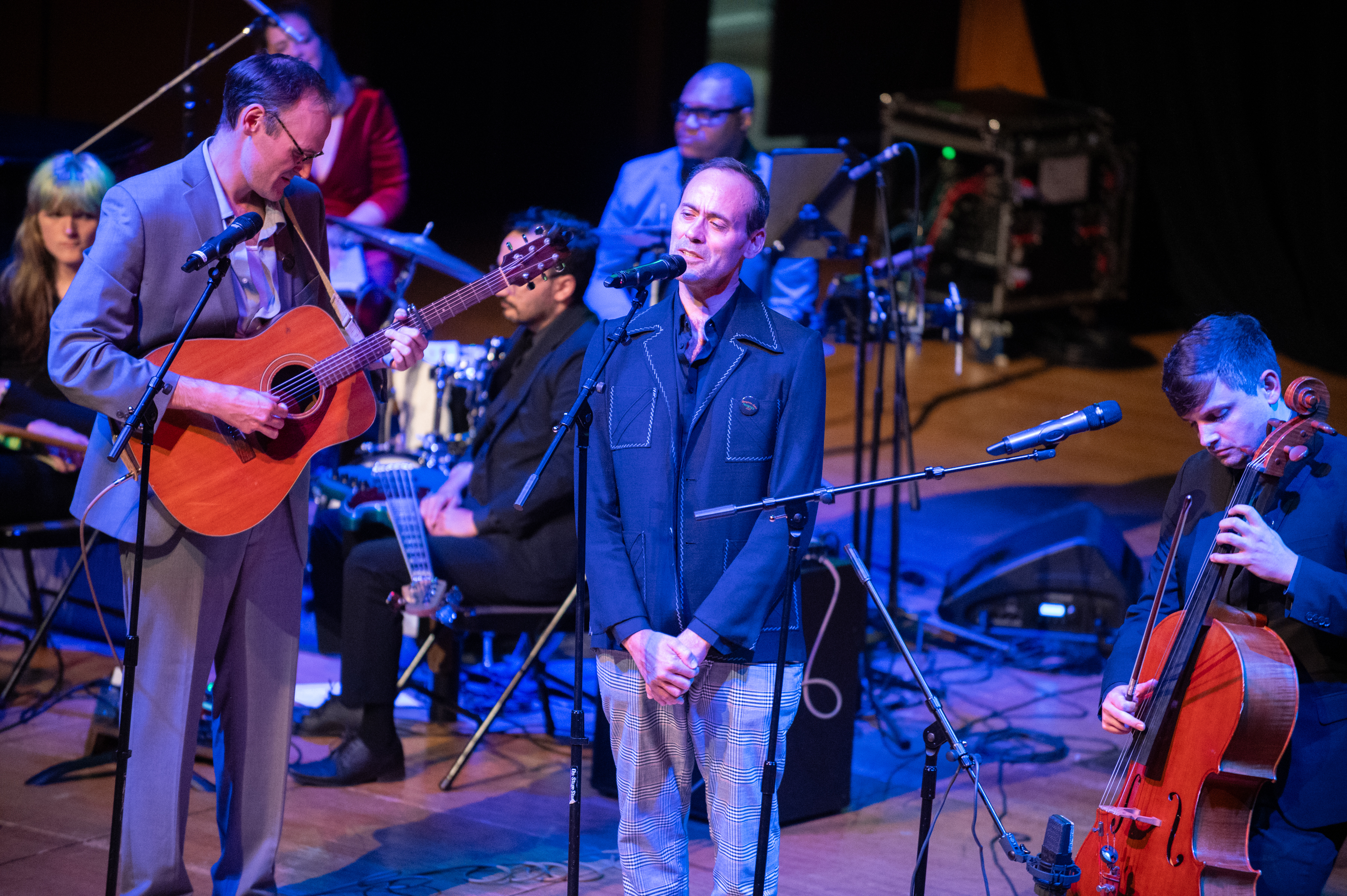
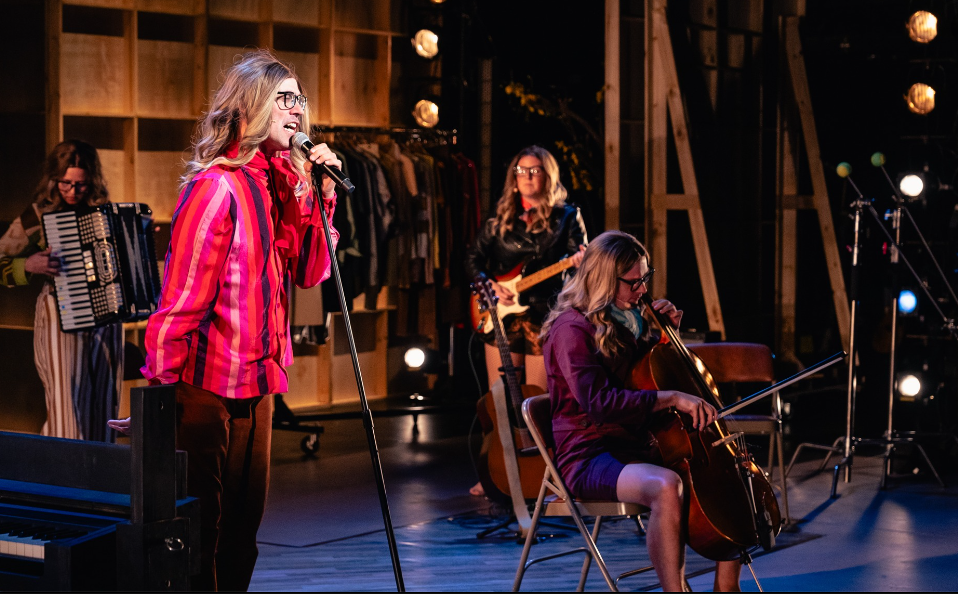
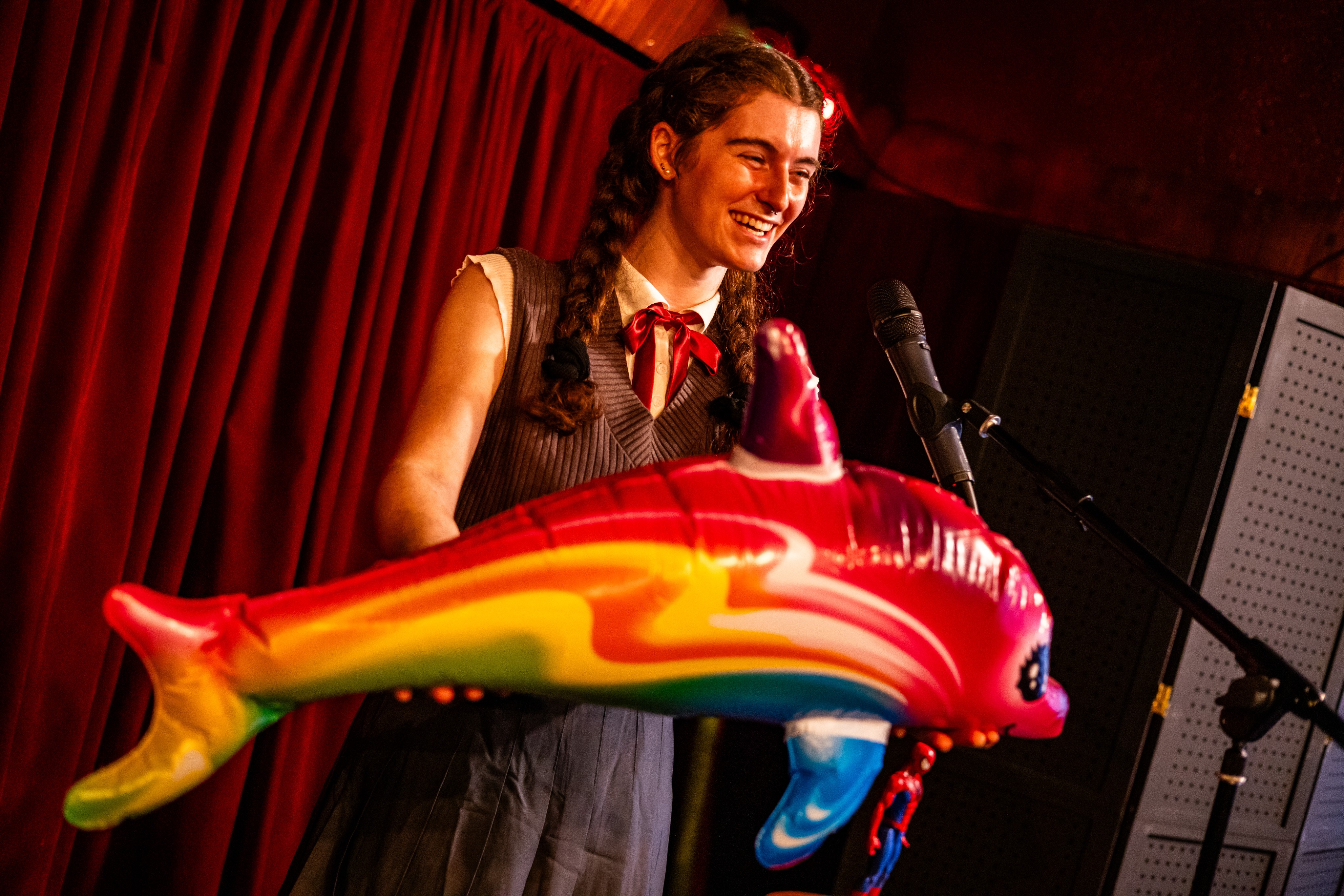
    Dito van Reigersberg (center) performs at the 2025 Barrymore Awards on Monday, Oct. 20, 2025.

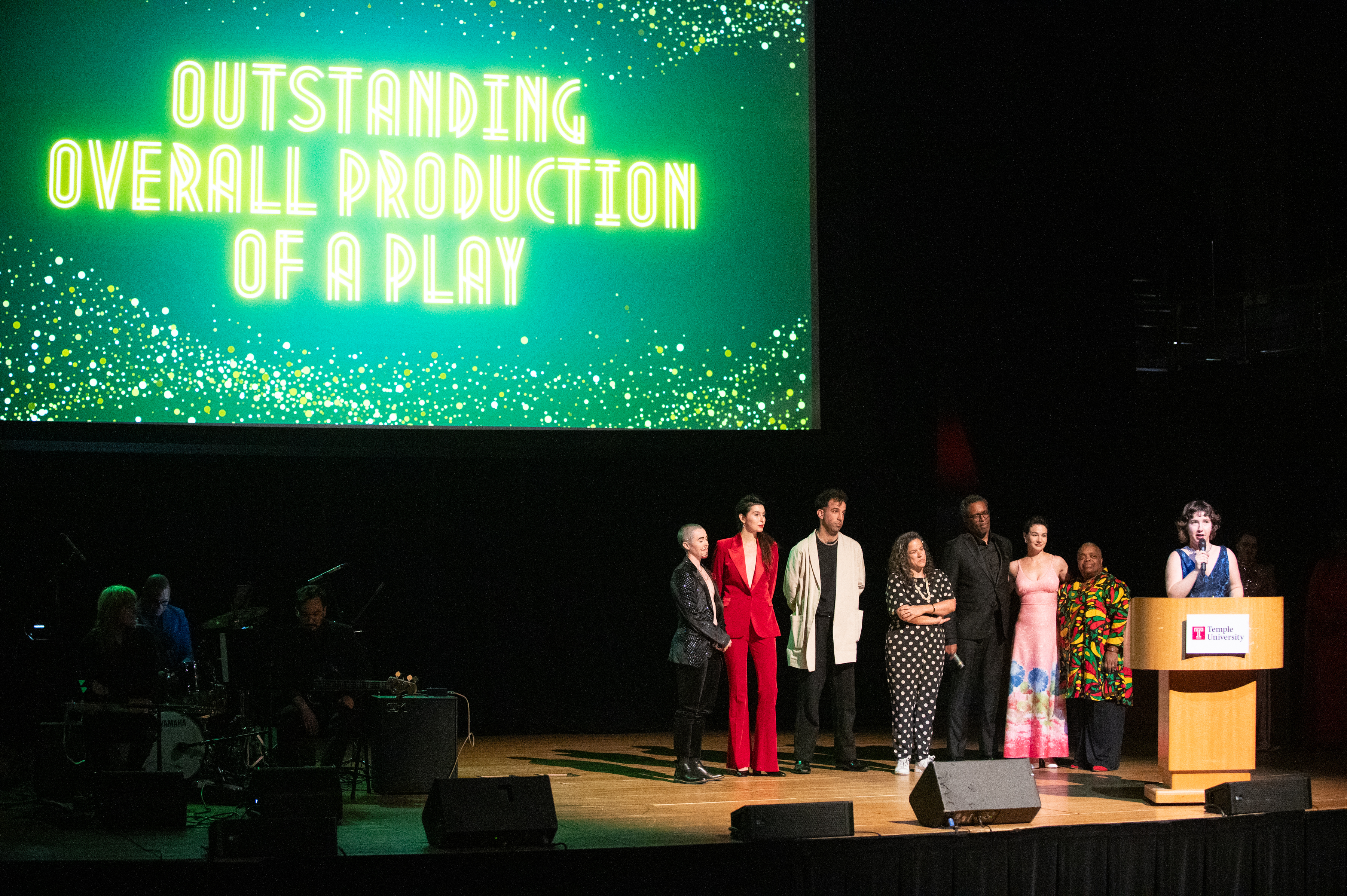
    The Wilma’s production of Branden Jacobs-Jenkins’ The Comeuppance, a spooky-tinged millennial drama directed by Wilma co-artistic director Morgan Green, won three awards: outstanding overall production of a play, outstanding ensemble in a play, and outstanding sound design for Jordan McCree.

    The Comeuppance brings the drama of diverging politics and experiences to a microscopic, interpersonal level,” wrote Krista Mar in her Inquirer review. “No one character is a hero, as each of them wins our empathy, especially when possessed by Death, and then loses it. The play holds a mirror to the audience and makes them confront their own biases, assumptions, and judgment.”

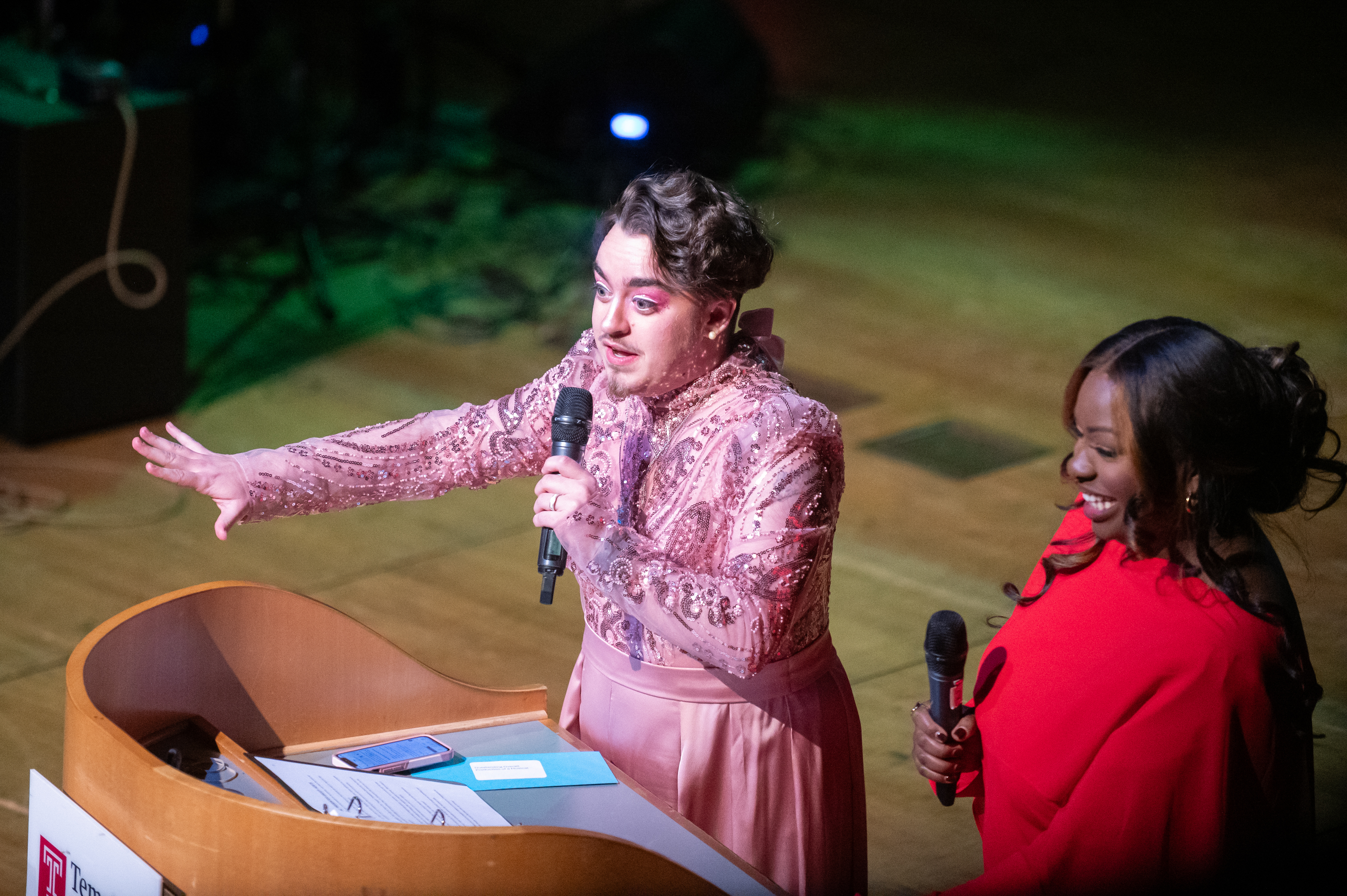
    CJ Higgins, Interim Executive Director of Theatre Philadelphia, cohosts the 2025 Barrymore Awards ceremony with Aunyea Lachelle, entertainment and lifestyle anchor for NBC10’s Philly Live at the Temple Performing Arts Center in North Philadelphia on Monday, Oct. 20, 2025.

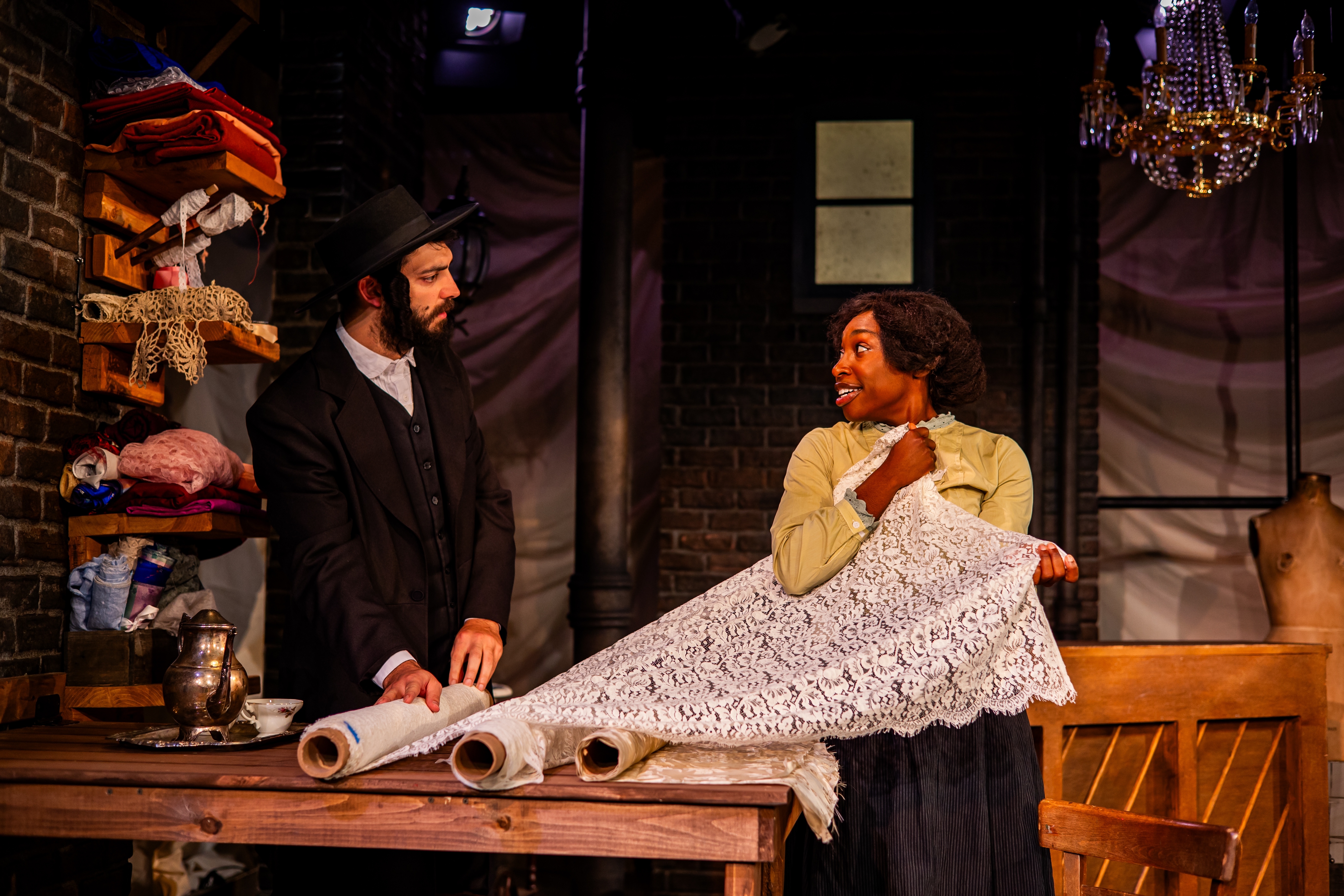
    Arden Theatre’s Intimate Apparel, a touching tale from Pulitzer-winning playwright Lynn Nottage about an African American seamstress hoping for romance, won two Barrymores. Amina Robinson earned outstanding direction of a play, and David Pica, who played love interest Mr. Marks, received outstanding supporting performance in a play. Robinson has previously won two Barrymore Awards for directing a musical for The Color Purple at Theater Horizon and Once on This Island at the Arden.

    Kishia Nixon, the actor behind interior designer Thalia in R. Eric Thomas’ Glitter in the Glass at Theater Exile, also won for outstanding supporting performance in a play. The Inquirer review called the new work “a nimble, nerdy, and very funny play that tries to answer some very tough questions.”

    For outstanding leading performances in a play, both awards went to the stars of InterAct Theatre Company’s Rift, or White Lies. Matteo Scammell and Jered McLenigan played two brothers on opposite sides of the political spectrum and each night they alternated roles. (The Barrymores does not divide acting award categories by gender.)

    The cast and crew of the play “The Comeuppance” accept the award for Outstanding Overall Production of a Play at the 2025 Barrymore Awards at the Temple Performing Arts Center in North Philadelphia on Monday, Oct. 20, 2025. The Barrymore Awards spotlight the best musicals, plays, actors, directors, and backstage creatives in the Philadelphia region

    In musical categories, Pig Iron Theater’s production of Poor Judge, which ran at the Wilma Theater as part of the 2024 Fringe Festival, took home three awards: outstanding overall production of a musical, outstanding media design for Mike Long, and outstanding music direction for Alex Bechtel.

    The eccentric show, conceived and led by Philadelphia legend Dito van Reigersberg (aka Martha Graham Cracker), is a trippy journey through alt-rock singer Aimee Mann’s catalog, enhanced by fascinating live video taping.

    Everyone in the ensemble for the September 2024 production played Aimee with delightfully weird and unexpectedly profound results. It was such a success that the Wilma is bringing it back for another run in January.

    Dito van Reigersberg in the 2024 Fringe Festival’s production of ‘Poor Judge.’

    Bechtel also won the award for outstanding original music for People’s Light’s production of Peter Panto: A Musical Panto. It’s the second year in a row that the composer has been recognized for his original music; last year he won for Alice in Wonderland: A Musical Panto.

    Peter Panto earned another Barrymore as well: Connor McAndrews, who played Smee, won for outstanding supporting performance in a musical, alongside actor Sevon Askew, who won in the same category for playing Benny in Arden Theatre’s RENT.

    Inis Nua’s Drip, a solo comedy that ran at Fergie’s Pub, won two Barrymores recognizing director Kyle Metzger and actor Max Gallagher for outstanding leading performance in a musical. The story follows a teen who desperately wants to build a synchronized swim team but doesn’t actually know how to swim. The Inquirer review said the show was “a small bit of joy that makes a heartfelt statement through its casting and earnestness, reminding us in the final number that whoever we are, we should all ‘make, make, make a splash.’”

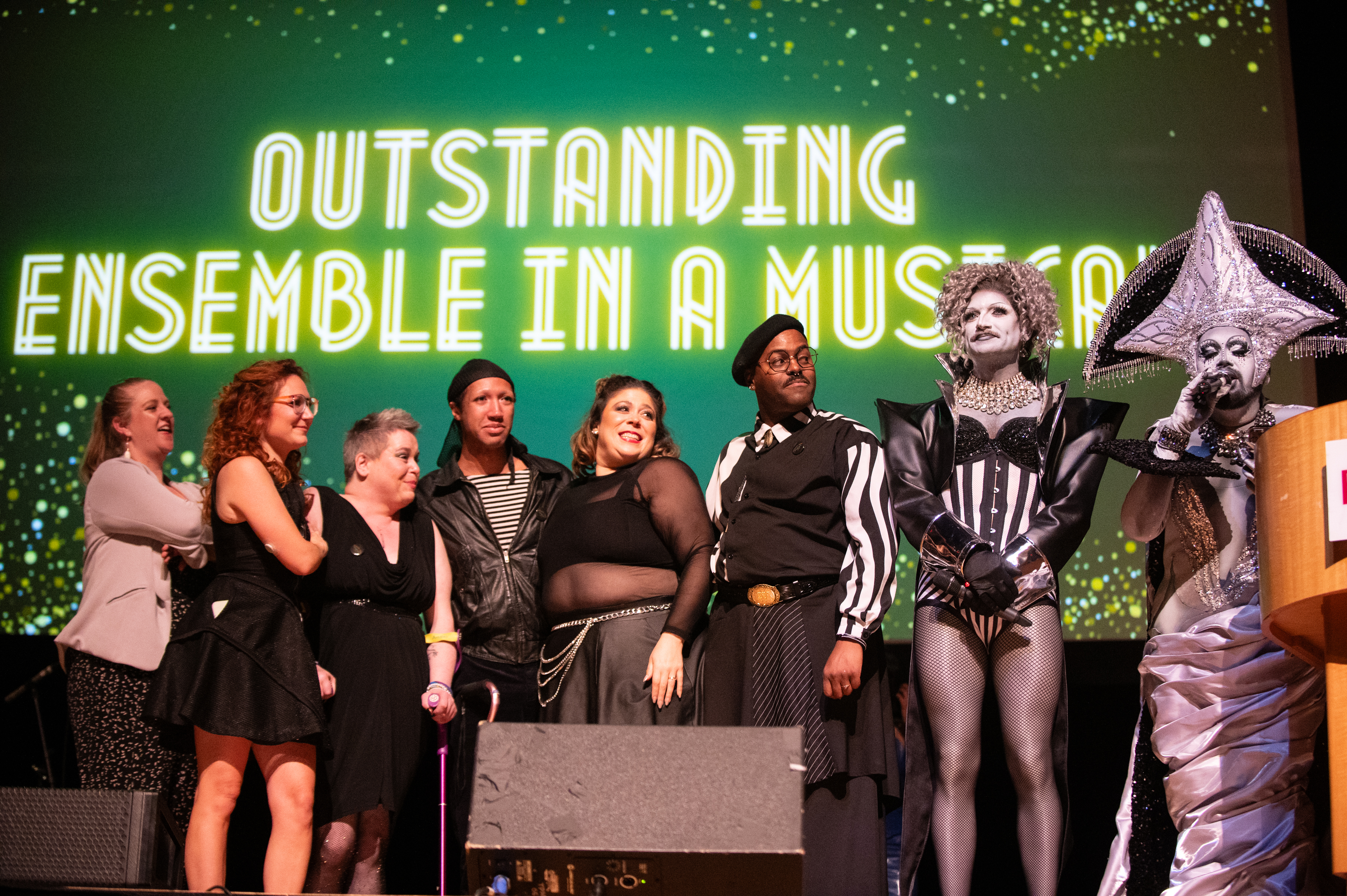
    The cast and crew of “Gay Mis” accept the award for Outstanding Ensemble in a Musical at the 2025 Barrymore Awards at the Temple Performing Arts Center in North Philadelphia on Monday, Oct. 20, 2025. Danny Wilfred (third from right) won for outstanding leading performance in a musical.

    Also winning for leading performance in a musical was Danny Wilfred, who played Parmesan in Gay Mis, a queer parody of Les Misérables from Philly drag queen Eric Jaffe’s Jaffe St. Queer Productions. Gay Mis took home the Barrymore for outstanding ensemble in a musical as well.

    The Philadelphia Award for Social Insight, which comes with a $25,000 prize, went to Esperanza Arts Center for Nichos, a world premiere about Mexican history based on interviews with immigrants in Philly and their families.

    For a second year in a row, Theatre Philadelphia did not grant its F. Otto Haas Award for an Emerging Artist, which spotlights up-and-coming Philadelphia actors with a $15,000 cash prize. The organization said it has been unable to grant the award after losing funding.

    “The F. Otto Haas Award for an Emerging Artist was a meaningful part of our celebration of Philly theatre for many years,” said Theatre Philadelphia in a statement. “While the F. Otto Haas Award is no longer being presented, we remain deeply grateful for the years of support that made it possible and continue to honor emerging artists across the region through our ongoing recognition programs.”

    See the full list of winners (bolded) below.

    Outstanding Overall Production of a Play

    1. The Comeuppance — The Wilma Theater
    2. Glitter in the Glass — Theatre Exile
    3. Archduke — The Wilma Theater
    4. Rift, or White Lies — InterAct Theatre
    5. Nosejob — Lightning Rod Special
    6. Square Go — Inis Nua Theatre
    7. Intimate Apparel — Arden Theatre

    Outstanding Direction of a Play

    1. Amina Robinson — Intimate Apparel, Arden Theatre
    2. Alex Burns — Cyrano de Bergerac, Quintessence Theatre Group
    3. Morgan Green — The Comeuppance, The Wilma Theater
    4. Nell Bang-Jensen — Nosejob, Lightning Rod Special
    5. James Ijames — August Wilson’s King Hedley II, Arden Theatre
    6. Kathryn MacMillan — Square Go, Inis Nua Theatre
    7. Matt Pfeiffer — Red, Theatre Exile
    David Pica (Mr. Marks) and Brandi Porter (Esther) in Arden Theatre Company’s production of “Intimate Apparel.”

    Outstanding Ensemble in a Play

    1. The Comeuppance — The Wilma Theater
    2. Cyrano de Bergerac — Quintessence Theatre Group
    3. Intimate Apparel — Arden Theatre
    4. A Midsummer Night’s Dream — Quintessence Theatre Group
    5. The 39 Steps — Lantern Theater
    6. Nosejob — Lightning Rod Special
    7. Cato (Remixed) — Philadelphia Artists’ Collective

    Outstanding Leading Performance in a Play

    1. J Hernandez — Cyrano de Bergerac, Quintessence Theatre Group
    2. Brandi Porter — Intimate Apparel, Arden Theatre
    3. Matteo Scammell — Rift, or White Lies, InterAct Theatre
    4. Jered McLenigan — Rift, or White Lies, InterAct Theatre
    5. Jessica Johnson — The Half-God of Rainfall, The Wilma Theater
    6. Phillip Brown — American Moor, Lantern Theater
    7. Frank Jimenez — Moreno, InterAct Theatre
    8. Jessica Money — Our Town, New Light Theatre
    9. Adam Howard — Tuesdays with Morrie, Delaware Theatre Co.
    10. Karen Peakes — Much Ado About Nothing, Lantern Theater
    11. Tyler Elliot — Square Go, Inis Nua Theatre
    12. Owen Corey — Square Go, Inis Nua Theatre
    13. Suli Holum — Archduke, The Wilma Theater
    14. Lee Thomas Cortopassi — A Midsummer Night’s Dream, Quintessence Theatre Group

    Outstanding Supporting Performance in a Play

    1. Kishia Nixon — Glitter in the Glass, Theatre Exile
    2. Jessica Johnson — Intimate Apparel, Arden Theatre
    3. Alice Yorke — Nosejob, Lightning Rod Special
    4. Dax Richardson — August Wilson’s King Hedley II, Arden Theatre
    5. Kash Goins — August Wilson’s King Hedley II, Arden Theatre
    6. Zach Valdez — Red, Theatre Exile
    7. Janis Dardaris — Cyrano de Bergerac, Quintessence Theatre Group
    8. Morgan Charéce Hall — A Raisin in the Sun, People’s Light
    9. David Pica — Intimate Apparel, Arden Theatre
    10. Jaime Maseda as Francisco — The Comeuppance, Wilma Theater
    11. Gabriel Elmore — Moreno, InterAct Theatre
    12. Kimberly S. Fairbanks — August Wilson’s King Hedley II, Arden Theatre
    13. Zoe Nebraska Feldman — The Wanderers, Lantern Theater
    14. Tyler Elliot — It’s a Wonderful Life: A Live Radio Play, Hedgerow Theatre Company 1

    Outstanding Movement/Choreography in a Play

    1. Ian Rose — Cyrano de Bergerac, Quintessence Theatre Group
    2. J. Alex Cordaro — Archduke, The Wilma Theater
    3. Ontaria Kim Wilson & J Paul Nicholas — Moreno, InterAct Theatre
    4. Eli Lynn — The Comeuppance, The Wilma Theater
    5. J. Alex Cordaro — Square Go, Inis Nua Theatre
    6. Matteo Scammell — Nosejob, Lightning Rod Special
    7. Yasmine Lee — Franklin’s Key, Pig Iron Theatre

    Outstanding Overall Production of a Musical

    1. Penelope — Theatre Horizon
    2. Poor Judge — Pig Iron Theatre
    3. Gay Mis — Jaffe St. Queer Productions
    4. Night Side Songs — Philadelphia Theatre Co.

    Outstanding Direction of a Musical

    1. Kyle Metzger — Drip, Inis Nua Theatre
    2. Eva Steinmetz — Poor Judge, Pig Iron Theatre
    3. Eric Jaffe — Gay Mis, Jaffe St. Queer Productions
    4. Taibi Magar — Night Side Songs, Philadelphia Theatre Co.
    Max Gallagher plays Liam in Inis Nua’s ‘Drip.’

    Outstanding Leading Performance in a Musical

    1. Max Gallagher — Drip, Inis Nua Theatre
    2. Cookie Diorio — Kinky Boots, New Light Theatre
    3. Danny Wilfred — Gay Mis, Jaffe St. Queer Productions
    4. Eli Lynn — Peter Panto: A Musical Panto, People’s Light
    5. Dito van Reigersberg — Poor Judge, Pig Iron Theatre
    6. Brooke Ishibashi — Night Side Songs, Philadelphia Theatre Co.
    7. Rachel Camp — Penelope, Theatre Horizon
    8. Eric Jaffe — Gay Mis, Jaffe St. Queer Productions

    Outstanding Supporting Performance in a Musical

    1. Andrew Burton Kelly — Kiss Me, Kate!, Quintessence Theatre Group
    2. Hannah Truman — Legally Blonde, Media Theatre
    3. Phoebe Gavula — Grease, Media Theatre
    4. Rajeer Alford — Rent, Arden Theatre
    5. Sevon Askew — Rent, Arden Theatre
    6. Jenna Kuerzi — Grease, Media Theatre
    7. Connor McAndrews — Peter Panto: A Musical Panto, People’s Light
    8. Livvie Hirshfield — Legally Blonde, Media Theatre
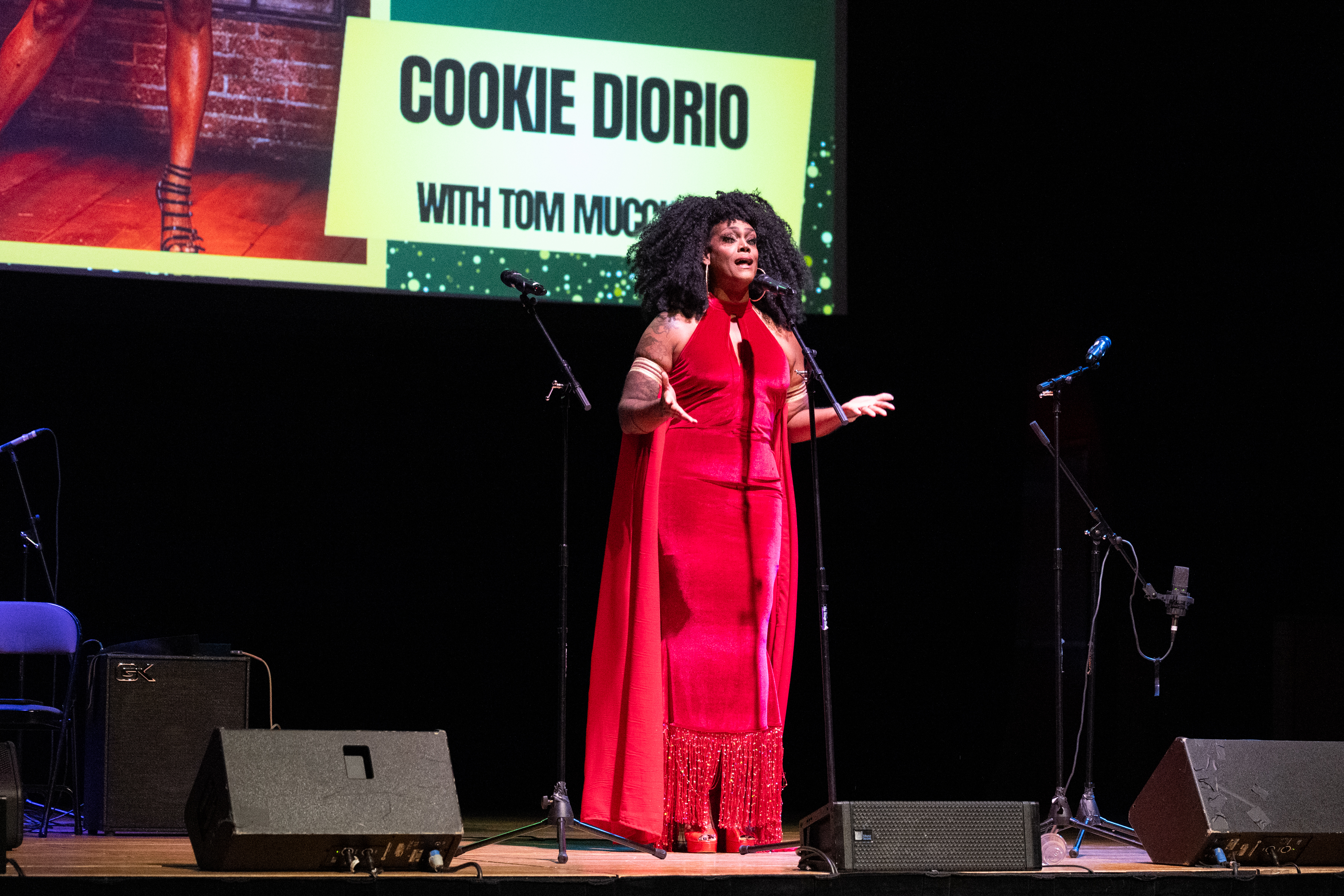
    Cookie Diorio, nominated for ‘Kinky Boots,’ performs at the 2025 Barrymore Awards ceremony at the Temple Performing Arts Center in North Philadelphia on Monday, Oct. 20, 2025. The Barrymore Awards spotlight the best musicals, plays, actors, directors, and backstage creatives in the Philadelphia region.

    Outstanding Choreography/Movement in a Musical

    1. Todd Underwood — Kiss Me, Kate!, Quintessence Theatre Group
    2. Melanie Cotton — Peter Panto: A Musical Panto, People’s Light
    3. Taylor J. Mitchell — Kinky Boots, New Light Theatre
    4. Christian Ryan — Legally Blonde, Media Theatre

    Outstanding Music Direction

    1. Lili St. Queer — Gay Mis, Jaffe St. Queer Productions
    2. Ryan Touhey — Peter Panto: A Musical Panto, People’s Light
    3. Alex Bechtel — Poor Judge, Pig Iron Theatre and Esperanza Arts Center
    4. Justin Yoder — Penelope, Theatre Horizon

    Outstanding Ensemble in a Musical

    1. Poor Judge — Pig Iron Theatre
    2. Gay Mis — Jaffe St. Queer Productions
    3. Night Side Songs — Philadelphia Theatre Co.
    4. Peter Panto: A Musical Panto — People’s Light

    Outstanding New Work

    1. Iraisa Ann Reilly — January 6: A Celebration. A Bodega Princess Remembers Tradition, Not Insurrection, Simpatico Theatre 2
    2. Eva Steinmetz & Dito van Reigersberg — Poor Judge, Pig Iron Theatre
    3. Daniel & Patrick Lazour — Night Side Songs, Philadelphia Theatre Co.
    4. Jennifer Childs — Peter Panto: A Musical Panto, People’s Light
    5. Tanaquil Márquez — Nichos, Esperanza Arts Center

    Outstanding Outdoor Production

    1. All’s Well — Shakespeare in Clark Park
    2. One Monkey Don’t Stop No Show — Theatre in the X
    3. Julius Caesar — Delaware Shakespeare
    4. As You Like It — Shakespeare in Clark Park

    Outstanding Set Design

    1. Chris Haig — The Playboy of the Western World, Inis Nua Theatre
    2. Thom Weaver — August Wilson’s King Hedley II, Arden Theatre
    3. Matt Saunders — Archduke, The Wilma Theater
    4. April Thomson — Hold These Truths, Montgomery Theater
    5. Anna Kiraly — Franklin’s Key, Pig Iron Theatre
    6. Roman Tartarowicz — Tuesdays with Morrie, Delaware Theatre Co.
    7. Misha Kachman — A Summer Day, The Wilma Theater

    Outstanding Costume Design

    1. Nikki DelHomme — The Hobbit, Arden Theatre
    2. Rebecca Kanach — Peter Panto: A Musical Panto, People’s Light
    3. Marla Jurglanis — Much Ado About Nothing, Lantern Theater
    4. Vasilija Zivanic — Archduke, The Wilma Theater
    5. Misha Kachman — A Summer Day, The Wilma Theater
    6. Barbara Erin Delo — The Playboy of the Western World, Inis Nua Theatre
    7. LeVonne Lindsay — The Half-God of Rainfall, The Wilma Theatre

    Outstanding Lighting Design

    1. Alyssandra Docherty — Tuesdays with Morrie, Delaware Theatre Co.
    2. Thom Weaver — Archduke, The Wilma Theater
    3. Minjoo Kim — The Comeuppance, The Wilma Theater
    4. Thom Weaver — Penelope, Theatre Horizon
    5. Drew Billau — Rift, or White Lies, InterAct Theatre
    6. Maria Shaplin — Poor Judge, Pig Iron Theatre
    7. Amith Chandrashaker & Stoli Stolnack — Franklin’s Key, Pig Iron Theatre

    Outstanding Media Design

    1. Mike Long — Poor Judge, Pig Iron Theatre
    2. Jorge Cousineau — Archduke, The Wilma Theater
    3. Jorge Cousineau — Rent, Arden Theatre Company
    4. David Tennent & Joshua Higgason — Franklin’s Key, Pig Iron
    5. Kelly Colburn & Ksenya Litvak — A Summer Day, The Wilma Theater
    6. Michael Long & Kate Coots — The 39 Steps, Lantern Theater
    7. Damien Figueras — Topdog/Underdog, Passage Theatre Co.

    Outstanding Sound Design

    1. Chris Sannino — Poor Judge, Pig Iron Theatre
    2. Christopher Colucci — Red, Theatre Exile
    3. Jordan McCree — The Half-God of Rainfall, The Wilma Theatre
    4. Jordan McCree — The Comeuppance, The Wilma Theater
    5. Chris Sannino — Franklin’s Key, Pig Iron Theatre
    6. Michael Kiley — A Summer Day, The Wilma Theater
    7. Yaim Chong Chia — Archduke, The Wilma Theater
    Connor McAndrews (left) and Jamison Stern (right) in People’s Light Theatre’s ‘Peter Panto,’ which was nominated for 8 awards. McAndrews won the Barrymore for outstanding supporting performance in a musical.

    Outstanding Original Music

    1. Daniel & Patrick Lazour — Night Side Songs, Philadelphia Theatre Co.
    2. Alex Bechtel — Peter Panto: A Musical Panto, People’s Light
    3. Jordan McCree — The Hobbit, Arden Theatre
    4. Lili St. Queer — Gay Mis, Jaffe St. Queer Productions
    5. Ximena Violante & Ampersan (Zindu Cano and Kevin García) — Nichos, Esperanza Arts Center
    6. Jakeya L. Sanders — Fallawayinto: Corridors of Rememory, Ninth Planet

    The Philadelphia Award for Social Insight

    1. Rift, or White Lies — InterAct Theatre
    2. Young Americans — Theatre Horizon
    3. The Drag EgoPo Classic Theater
    4. Night Side Songs — Philadelphia Theatre Co.
    5. The Half-God of Rainfall — The Wilma Theater
    6. January 6: A Celebration. A Bodega Princess Remembers Tradition, Not Insurrection — Simpatico Theatre
    7. Glitter in the Glass — Theatre Exile
    8. Nichos — Esperanza Arts Center
    9. The Playboy of the Western World — Inis Nua Theatre