Tag: Philadelphia City Council

  • Philly students got to be food critics, and their reviews of school lunches ranged from ‘mid’ to ‘bussin’’

    Philly students got to be food critics, and their reviews of school lunches ranged from ‘mid’ to ‘bussin’’

    An array of dishes were set out for the critics — whole-wheat lasagna rollups, veggie samosas, cheeseburger bites with dill pickle ketchup.

    The jurists did not hold back.

    “That’s bussin’,” one student said of the lasagna, indicating his approval of the dish.

    Semia Carter, a student at Crossroads Academy, tastes a burger bite while taste testing potential school lunch food on Wednesday at at Philadelphia School District headquarters.

    “Mid,” another commented on the cheeseburger dish, shrugging his shoulders to emphasize how very mediocre it was.

    Hundreds of city students descended on Philadelphia School District headquarters Wednesday for a food show — their chance to weigh in on dishes that might show up on their school breakfast and lunch plates next year. Thirty-three manufacturers showed off 55 products not yet in district cafeterias, from whole-grain onion rings to turkey sausage bites.

    It’s one of the biggest days of the year for Lisa Norton, the district’s executive director of food services.

    “We give the students voice to select the menu that they will eat every day,” Norton said. “It’s the dietary fuel that students need to learn.”

    Norton knows her critics won’t hold back. She was prepared for that.

    “They will tell the vendors, ‘We don’t like this,’” she said. “But that’s what we need. We want to buy food they’ll eat.”

    All around Norton, students scoped out offerings, tasted things that looked good, then recorded their thoughts after scanning QR codes on their phones. At one station, a man dressed as Elvis danced and encouraged students to try more.

    Three friends from Hancock Elementary in the Northeast said everything they tried was “really good” — an improvement from the food offered in their cafeteria now. (Though Philadelphia is a “universal feeding” district, so every student receives free breakfast and lunch regardless of income, the Hancock students were like most who spoke to The Inquirer — they said they eat school food only sometimes, preferring to bring lunch from home most days.)

    “Sometimes it’s mystery mush,” sixth grader Alina Leone said of current school food offerings.

    “Sometimes it’s not bad,” said her classmate Calie Sharpe.

    “There’s pizza almost every day,” said Aislee Blaney, another Hancock friend.

    Havyn Nelson, a seventh-grade student at Lingelbach Elementary in Germantown, found the brownie bars and the taco meat tasty.

    Peyton Sanders, Havyn’s classmate, scrunched her nose when asked to describe the dishes her school offers now.

    “It’s prison food,” Peyton said.

    Jannette Carpentier of Acxion Foodservice serves Southern hush puppies to students during a taste test at the Philadelphia School District headquarters on Wednesday.

    Angelo Valvanis, who works for the company Grecian Delight, offered students beef gyro with what he marketed as “white sauce” — tzatziki sauce. His firm has dishes that students in Chicago, Detroit, and New York eat, and it was hoping to break into Philly.

    “You guys ever get gyro from food trucks? It’s really good. You know, the meat that turns, and you cut it with a knife? It’s from Greece,” Valvanis said.

    The idea of school lunch still conjures the image of tasteless, lukewarm, floppy food — hot dogs, pizza, chicken nuggets — but school meals have changed, Valvanis said.

    “These kids are much more open,” he said. “They all see these things on YouTube.”

    In front of him, a group of students nodded.

    Gabby Swaminathan, a sixth grader from Meredith Elementary in Queen Village, nibbled the gyro. It was good, she said.

    “Our food at school right now is not that good,” Gabby said. Her strategy was to rate the food she liked — the gyro, the lasagna roll-ups — really highly, with hopes those will eventually replace the food she doesn’t like.
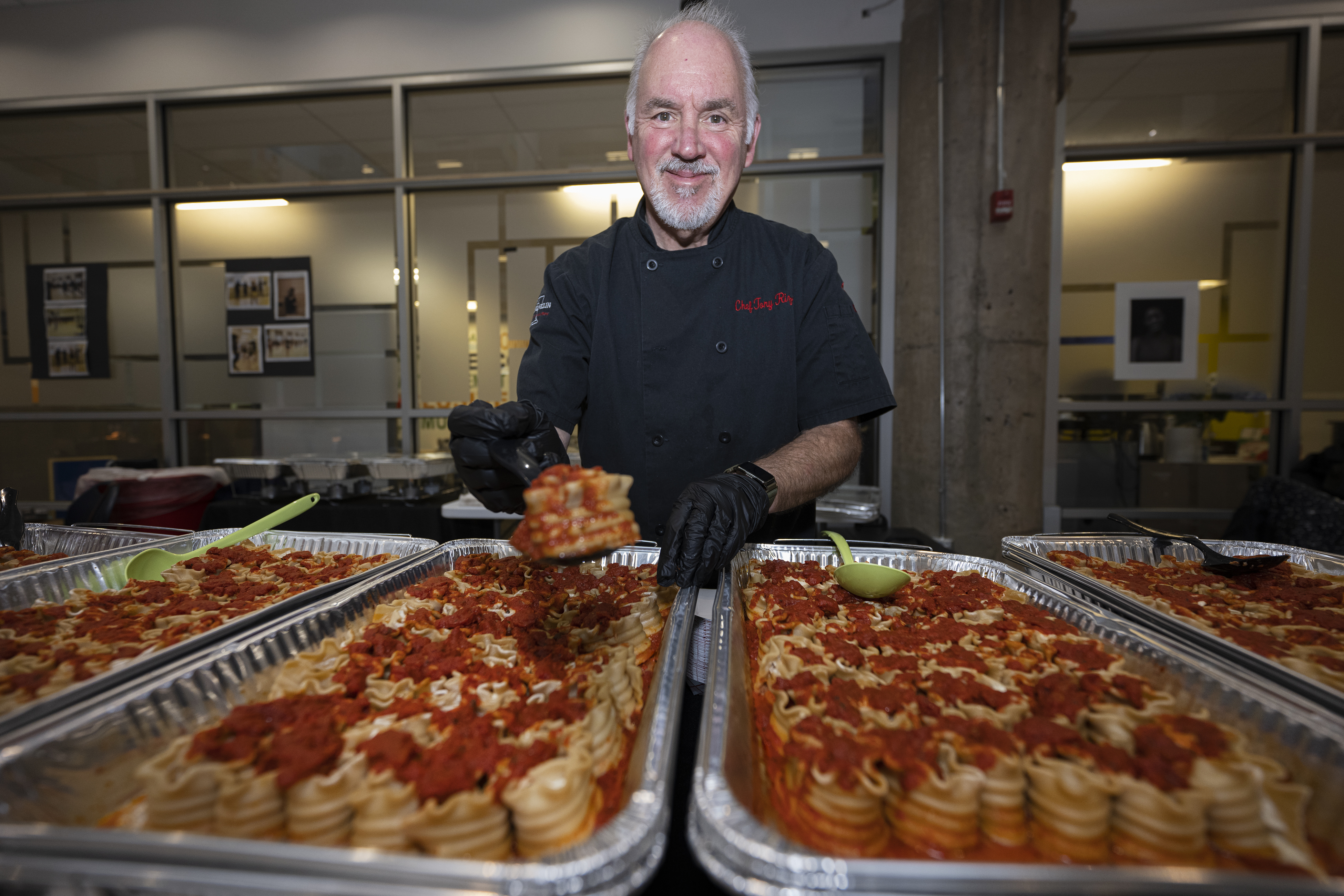
    Chef Tony Rizzo of Chase Franklin Food Company shows Marieta pasta ahead of a student tasting session at the Philadelphia School District headquarters on Wednesday.

    Wednesday’s event was timely. Several members of Philadelphia City Council grilled district officials about the food at a Tuesday hearing on school matters, saying constituents had concerns about the quality of the meals served to students. The elected officials said they want to come to a Center City school to eat the same lunches students eat.

    Superintendent Tony B. Watlington Sr. explained the district’s conundrum — its food service program must be funded completely by reimbursements from the U.S. Department of Agriculture.

    “The dollars are not robust enough to have filet mignon everyday, but it is sustenance, and I say that very respectfully,” Watlington told Council.

    Kameron Garrick and Amaud Burton-Bullock, students at Martin Luther King High, can say definitively they have never been served filet mignon at school.

    They mostly skip school lunch, they said, and buy food at a corner store or eat at home.

    But sure, they were game to try the offerings.

    The cheeseburger bites? OK.

    “I would say it’s mid,” Kameron said. “It needs more seasoning.”

    But they found a bright spot — the cornbread bowls with chicken.

    “I would take that cornbread,” Amaud said. “It was nice and moist.”
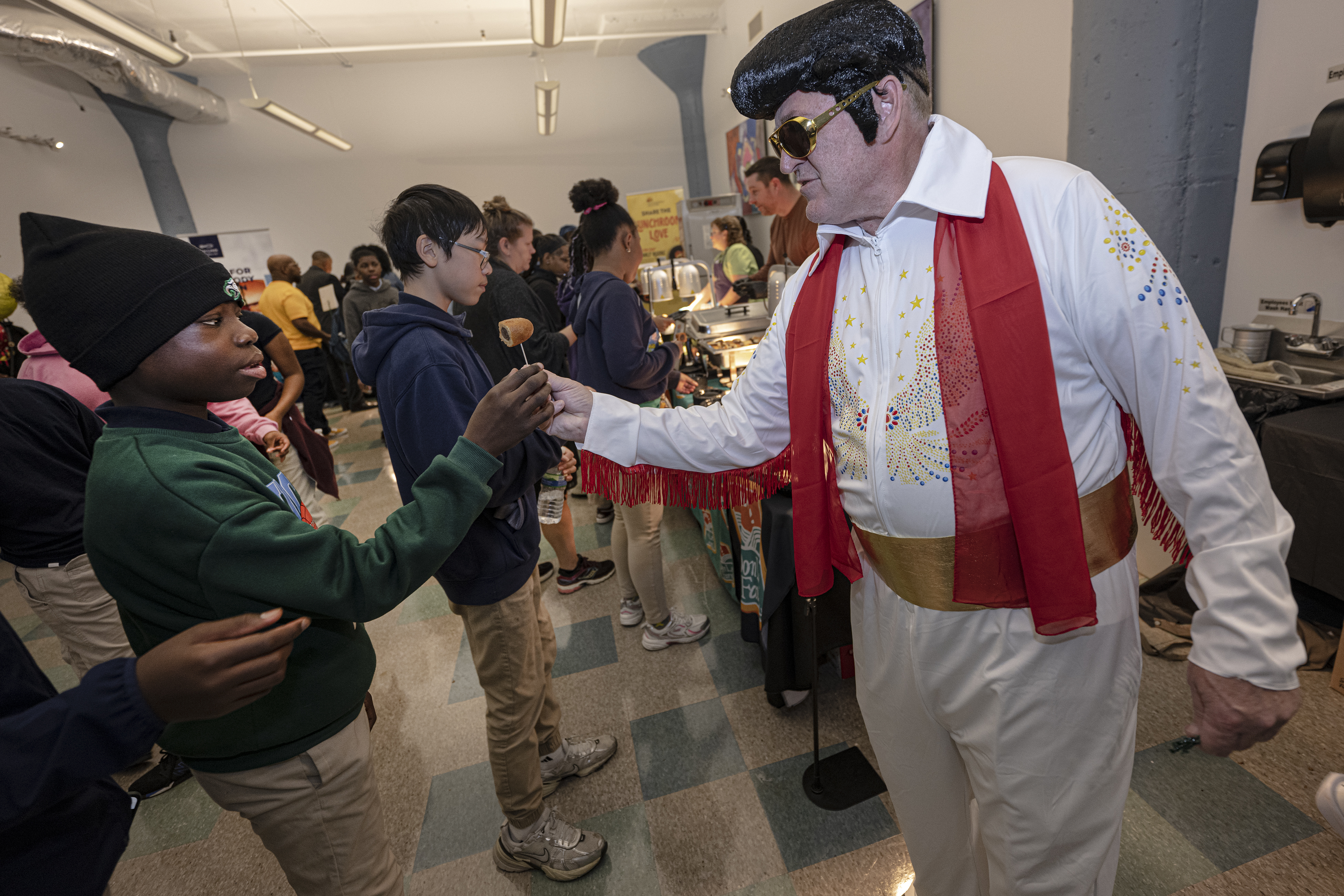
    Kervens Orelus, a student at Lingelbach, gets a corn dog from Elvis during a testing session at the Philadelphia School District headquarters on Wednesday.
  • Pennsylvania’s Working Families Party pledges to support a primary challenger against Sen. John Fetterman

    Pennsylvania’s Working Families Party pledges to support a primary challenger against Sen. John Fetterman

    Pennsylvania’s Working Families Party is recruiting candidates to run against Pennsylvania’s Democratic senator, John Fetterman.

    Fetterman has not announced whether he will run for reelection in 2028, but the progressive party put out a public declaration Tuesday pledging to endorse — and, if necessary, recruit and train — a challenger.

    The announcement, first reported by The Inquirer, is a remarkable step for the left-leaning organization to take more than two years before an election and speaks to the degree of frustration with Fetterman among progressives.

    “At a time when Donald Trump and Republicans in Congress are doing everything they can to make life harder for working people, we need real leaders in the Senate who are willing to fight for the working class,” Shoshanna Israel, Mid-Atlantic political director for the Working Families Party, said in a statement.

    “Senator Fetterman has sold us out, and that’s why the Pennsylvania Working Families Party is committed to recruiting and supporting a primary challenge to him in 2028.”

    Fetterman did not immediately return a request for comment about the Working Families Party’s announcement.

    The Working Families Party is a progressive, grassroots political party that is independent from the Democratic Party, but it often endorses and supports Democratic candidates.

    Israel noted in her statement that Fetterman voted last week in support of the Republican plan to end the government shutdown — along with seven other Senate Democratic caucus members who crossed the aisle.

    Democratic lawmakers in the House, including several from Pennsylvania’s delegation, railed against the decision as caving to the GOP and President Donald Trump without any substantive wins on healthcare, rendering a 35-day shutdown pointless.

    Though he supports extending federal healthcare subsidies, Fetterman has long said he is against government shutdowns as a negotiating tactic and will always vote to get federal coffers flowing and federal employees paid.

    “I’m sorry to our military, SNAP recipients, gov workers, and Capitol Police who haven’t been paid in weeks,” Fetterman said in a post on X after the vote. “It should’ve never come to this. This was a failure.”

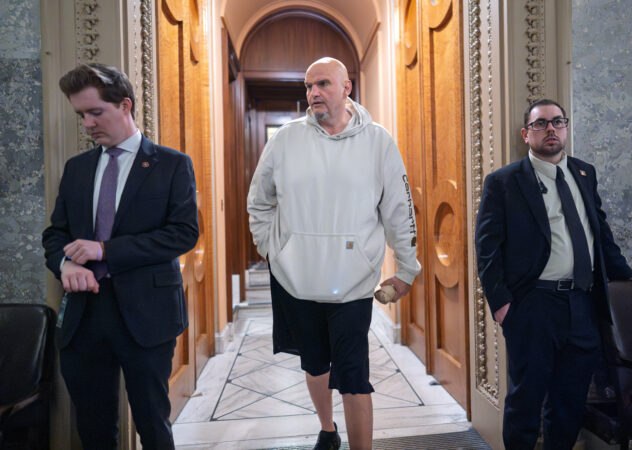
    Already one of the most well-known and scrutinized senators in Washington, Fetterman was back in the spotlight this week as he returns to work following a hospitalization after a fall near his home in Braddock. His staff said he suffered a “ventricular fibrillation flare-up” and hit his face, sustaining “minor injuries.”

    Ventricular fibrillation is the most severe form of arrhythmia — an abnormal heart rhythm — and the most common cause of sudden cardiac death.

    It’s the latest in a string of serious health incidents that have marked the Democratic senator’s time in the public eye. The fall comes three years after he recovered from a near-fatal stroke just days before he won the 2022 Senate primary, which was caused by a blood clot that had blocked a major artery in his brain.

    He spent Thursday and Friday in the hospital and was released Saturday, saying he was feeling good and grateful for his care with plans to be back in the Senate this week.

    Working Families on the offensive

    Israel said in addition to the online portal, the party will hold a number of recruitment events across Pennsylvania in the coming months to train candidates and campaign staff on the basics of running for office and managing a campaign with hopes of finding quality candidates for a variety of races ahead of 2028.

    The party is also pledging a robust ground game and fundraising for a potential challenger it supports.

    It wouldn’t be the first time the Working Families Party has opposed Fetterman. In the 2022 Democratic Senate primary, WFP endorsed State Rep. Malcolm Kenyatta (D., Philadelphia) over Fetterman, who was lieutenant governor at the time.

    The Working Families Party has grown its influence in the region since then. In 2023, WFP became the minority party on Philadelphia’s City Council, defeating Republicans in seats the party had held for over 70 years by electing Councilmembers Kendra Brooks and Nicolas O’Rourke.

    Fetterman has been promoting his book, Unfettered, recounting his stroke during the 2022 Senate run, subsequent struggles with depression, and adjustment to life in the U.S. Senate.

    The book makes no mention of a reelection bid but laments the ugly politics he experienced in both the Democratic primary and his general election race against Mehmet Oz.

    Fetterman said in the book that Oz’s attacks during his rehabilitation from his stroke became so mentally crushing he felt he should have quit the race.

    And he grapples with criticism he faced during the primary surrounding a 2013 incident in which he wielded a shotgun and apprehended a Black jogger he suspected of a shooting. Fetterman calls the backlash an early trigger of his depression.

    Fetterman has said he will remain a Democrat even as Republicans have lauded his independent streak and willingness to work with the GOP.

    Earlier this year, Fetterman was the first Senate Democrat to support the Laken Riley Act, a Republican immigration bill that requires U.S. Immigration and Customs Enforcement to detain and take into custody individuals who have been charged with theft-related offenses, even without a conviction. Critics of the law say it severely cracks down on due process for immigrants.

    Fetterman was the sole Senate Democrat to vote to confirm Attorney General Pam Bondi, who was one of Trump’s attorneys when he tried to overturn the results of the 2020 election.

    And he has been the Senate’s most outspoken defender of Israel during its war in Gaza, sponsoring a resolution with Sen. Dave McCormick (R., Pa.) against antisemitism and appearing for the first time since his fall at an event hosted by the Jewish Federations of North America in Washington on Monday.

    He also received recognition from Israeli Prime Minister Benjamin Netanyahu, who called him the country’s “best friend” and gifted him a silver pager inspired by Israel’s attack on Hezbollah in Lebanon that exploded pagers.

    “He has repeatedly shown disregard for the rights of Palestinians,” the Working Families Party release said. “Refusing to support a two-state solution and breaking with the rest of the Democratic caucus on Israel’s illegal annexation of the West Bank.”

    Staff writer Aliya Schneider contributed to this article.

  • Killing of Kada Scott prompts hearing on Philly’s handling of domestic violence cases | City Council roundup

    Killing of Kada Scott prompts hearing on Philly’s handling of domestic violence cases | City Council roundup

    City Council will probe the Philadelphia justice system’s procedures for “protecting victims of abuse and domestic violence” following the killing of 23-year-old Mount Airy resident Kada Scott.

    Prosecutors have charged Keon King with murder and other crimes for allegedly kidnapping Scott, shooting her, and burying her body behind a closed East Germantown school in early October.

    King was arrested in two separate incidents in December and January in which authorities allege he violently assaulted an ex-girlfriend. In the second incident, he is accused of kidnapping her and choking her in his car.

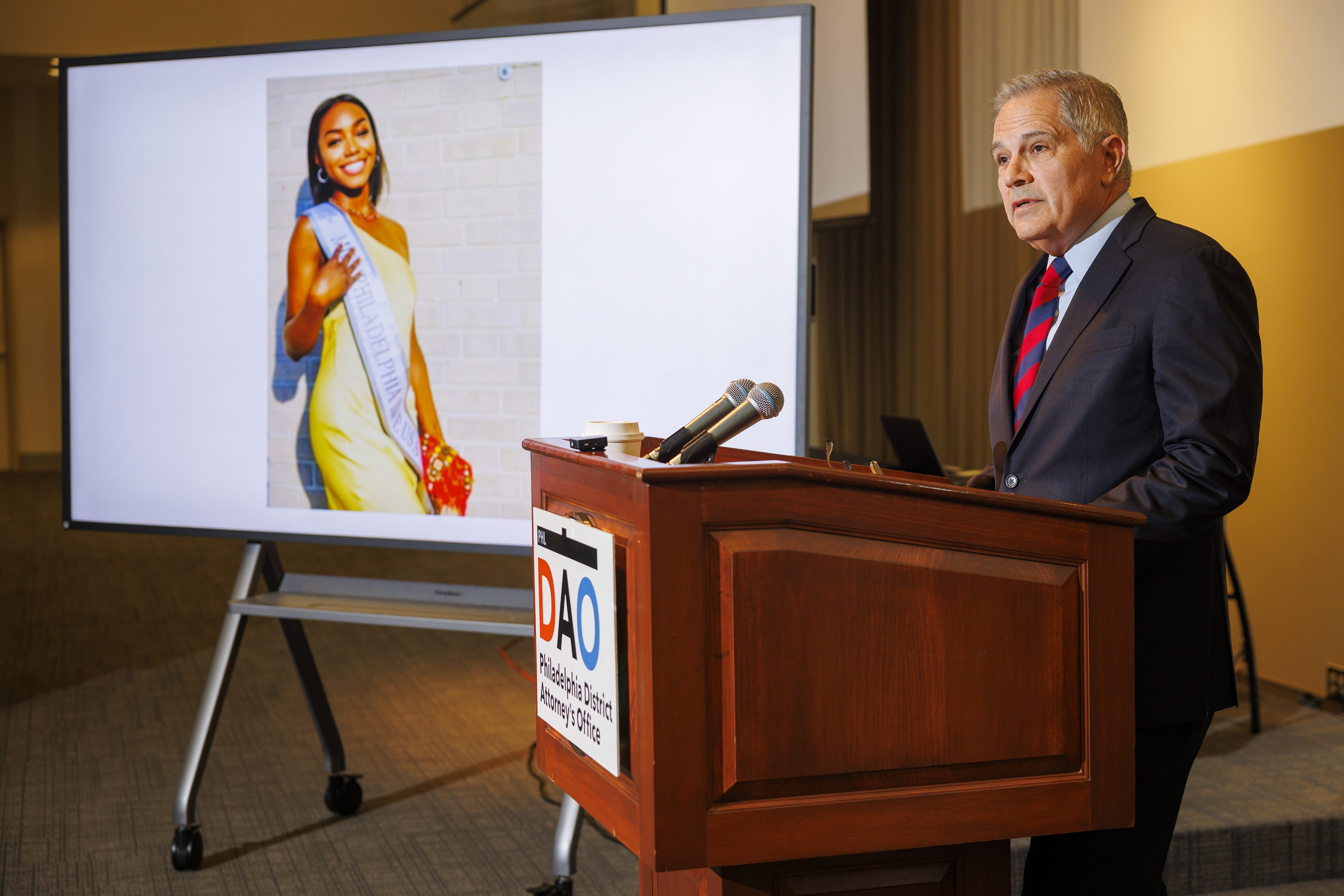
    Philadelphia District Attorney Larry Krasner held a press conference at his office regarding the death of Kada Scott on Monday, October 20, 2025.

    District Attorney Larry Krasner’s office requested bail to be set at just under $1 million in that case. A judge instead set bail at $200,000, allowing King to be released after posting the necessary $20,000. Krasner’s office did not appeal the bond decision.

    Prosecutors then withdrew both cases after the victim and witnesses failed to appear in court. Krasner has admitted that dropping charges against King for the second incident was a mistake because there was enough video evidence to proceed with the prosecution. But he also directed blame at the courts for letting King out on bail following each arrest.

    “As the City of Philadelphia, I think we failed the young lady, right?” Council President Kenyatta Johnson told reporters Thursday. “You got two agencies, two city departments, pointing fingers at one another, and at the end of the day, that’s not going to bring resolution to the family. And so at the end of the day, that needs to be addressed. And so we’ll look at the system as a whole.”

    Council approved a resolution authored by Johnson that will allow the Committee on Public Safety to hold hearings on how the courts, sheriff’s office, district attorney’s office, and police department work to protect domestic violence victims.

    Kada Scott ‘a beacon of light and love’

    Remembering Scott: Council also approved a resolution by Councilmember Anthony Phillips honoring Scott’s life and legacy, describing her as a “a beacon of light and love, remembered for her faith, kindness and countless lives she touched.“

    Scott, who opened a beauty spa in Mount Airy when she was 19 years old, “was the kind of person who made others feel seen,” said Phillips, whose 9th District includes Mount Airy.

    Prosecutors have charged Keon King with the murder of Kada Scott, pictured.

    “Kada was a young woman whose light and kindness reflect the very best of us,” Phillips said in a speech on the Council floor. “She had vision and determination. She believed in the power of self-care, community, and purpose.”

    Councilmember Cindy Bass, whose 8th District includes the school where Scott’s remains were found, added that “it’s never been more important that we get our young men together.”

    “There is a vulnerability that exists, and protection is needed. Protection is important,” Bass said. “What we do and how we handle our situations in our community — there’s just so much to be done.”

    Childcare providers could get tax break

    Targeted relief: Councilmember Isaiah Thomas last spring pushed for the city to aggressively cut the business income and receipts tax, or BIRT.

    Johnson and Mayor Cherelle L. Parker ultimately went with a less aggressive schedule of tax cuts than Thomas had wanted. But the sophomore lawmaker is now trying another route to lighten the BIRT burden: cutting rates for a specific industry.

    Thomas on Thursday introduced a bill that would halve BIRT’s two tax rates for childcare providers, which are facing a nationwide crisis over costs, staffing, and financial viability. The gross receipts portion of BIRT would be reduced from 0.1415% to 0.07075% for daycare owners, and the net income rate would go from 5.81% to 2.805%.

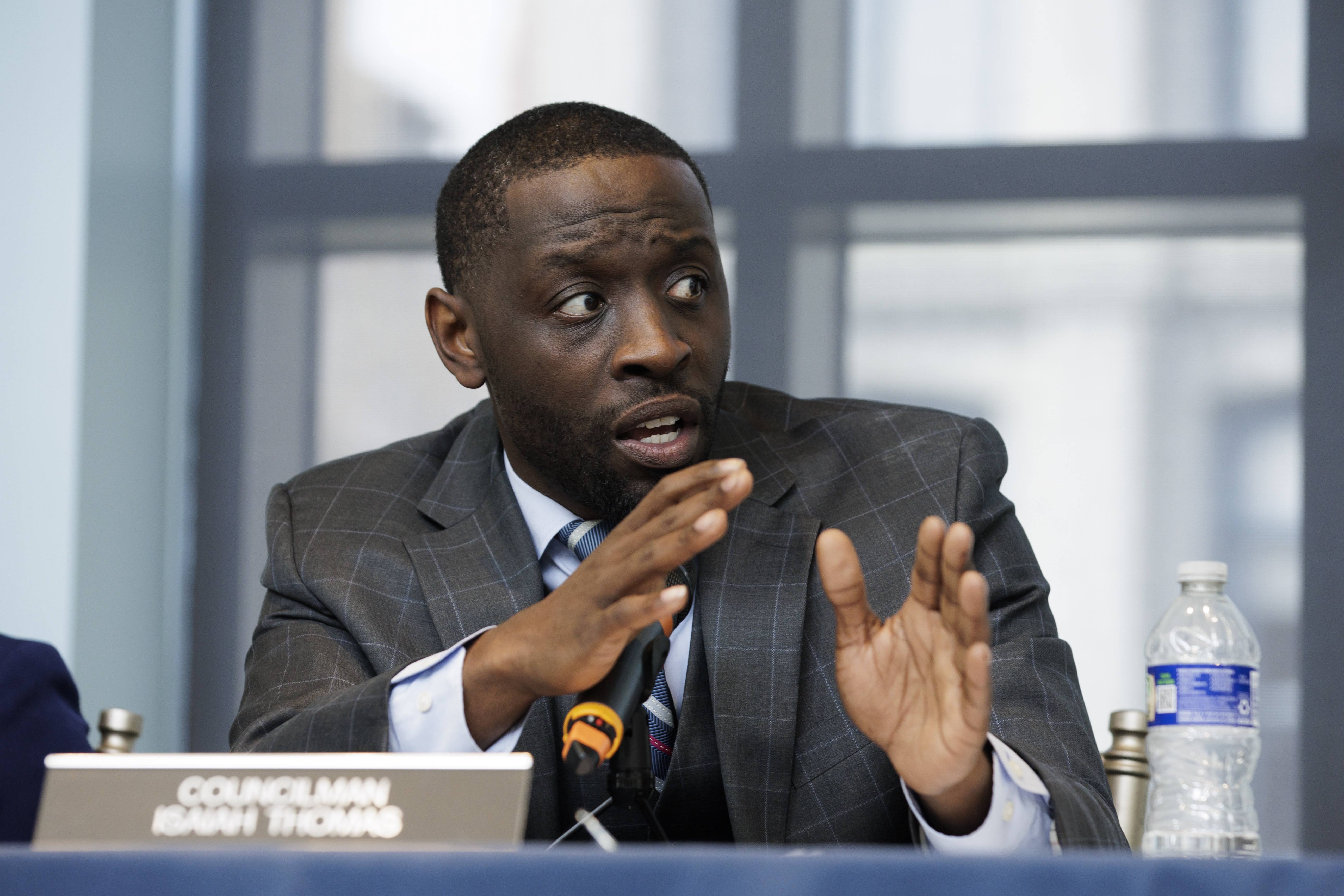
    City Councilmember Isaiah Thomas wants to give daycares a tax break.

    “There’s one business and one industry in the city of Philadelphia that touches every district and a lot of families, especially working families, that are struggling,” Thomas said. “This legislation is another example of us trying to think through what we can do to support businesses who support families as well as families who are in need.”

    Regulatory bill sparked by Center City bike lane debate passes after arduous legislative process

    Unloading over loading zones: Heated fights over legislation with narrow impact are nothing new in City Council, where limited proposals often become battlegrounds in larger disputes over issues such as gentrification or the opioid crisis.

    But a bill on loading zones in parts of Center City, approved Thursday, may have set a new standard.

    The bill, which was proposed by the Parker administration and carried by Johnson, will allow the mayor’s administration to add or remove loading zones in parts of Center City without new ordinances from Council.

    It ultimately passed in a 16-0 vote, with Councilmember Brian O’Neill absent.

    But the journey to Thursday’s vote began with the high-profile death of a cyclist, involved a lawsuit, went through two rounds of amendments limiting and expanding its scope, and ended with plans for further proposals to tweak the law.

    The saga began when Johnson passed a bill making it illegal for vehicles to idle in bike lanes following the 2024 death of Barbara Friedes, who was killed while riding in a bike lane on the 1800 block of Spruce Street. Parker’s administration then adjusted loading zones in Center City streets with bike lanes, with the goal of providing spaces for residents who used the bike lanes for unloading their vehicles.

    After neighbors complained the loading zones would take away a handful of parking spots, attorney George Bochetto successfully sued the city, with Common Pleas Court Judge Sierra Thomas Street this summer ruling the administration did not have the authority to promulgate loading zone regulations without Council approval.

    The case led to the revelation that a 1980s city law granting that regulatory authority was somehow never officially codified, throwing into legal jeopardy hundreds of parking regulations promulgated over the last four decades. The bill passed Thursday was intended to fix that legal conundrum by reiterating Council’s intention to grant the administration that authority.

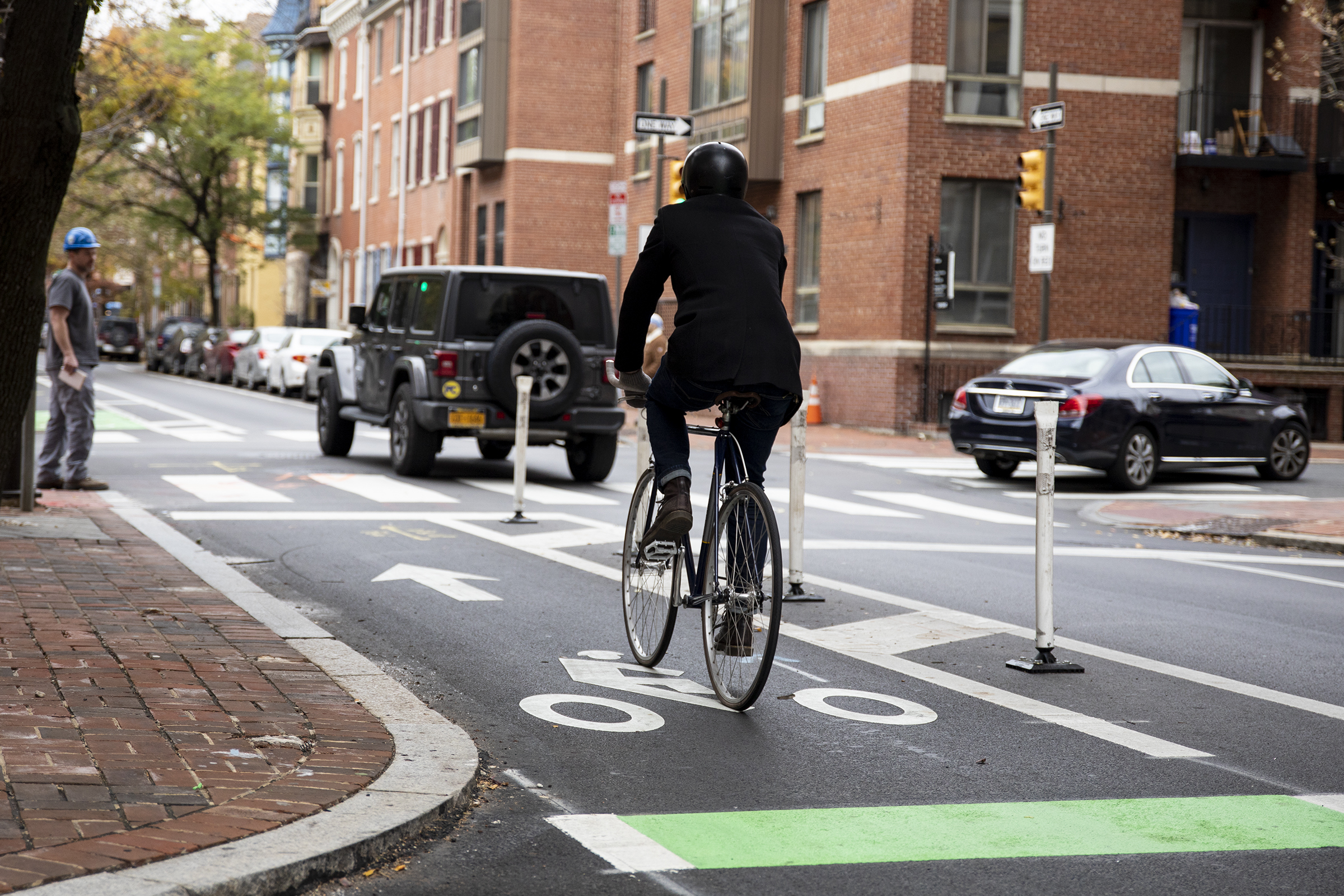
    A cyclist rides along Spruce Street.

    But Johnson and Councilmember Mark Squilla, whose districts include parts of Center City, at one point amended the bill so that it applied only to loading zone regulations and to the Spruce and Pine Streets corridors, which have bike lanes. They eventually reversed course on the geography of the bill, adopting a new amendment allowing it to affect all areas of their districts included in the old law. But they maintained the part of the original amendment narrowing its scope to loading zones and not other parking rules.

    Meanwhile, Councilmember Jeffery “Jay” Young Jr., whose 5th District also has a slice of Center City, removed his territory from the bill entirely.

    Next, Councilmember Jamie Gauthier is expected to work with the administration to fix the regulatory black hole in University City, which is part of her 3rd District. And Johnson said Thursday he may be open to revisiting whether the administration should be given explicit statutory authority to regulate other parking rules beyond loading zones in the affected area of his district.

    “We always have an open mind,” he said.

    Quotable: Honoring the late Philadelphia newspaper editor Michael Days

    Glory Days: Michael Days was a longtime editor of the Philadelphia Daily News, an executive at The Inquirer, and the inaugural president of the National Association of Black Journalists-Philadelphia.

    He died on Saturday in Trenton at 72 years old. Council on Thursday approved a resolution by Johnson and Majority Leader Katherine Gilmore Richardson honoring Days “for his extensive career serving Philadelphians.”

    Philadelphia Daily News Editor Michael Days celebrates with the newsroom after word of the Pulitzer win.

    A North Philadelphia native and devout Catholic, Days was revered as a principled reporter and editor, a mentor for young journalists of color, and a leader who helmed the Daily News when it won the 2010 Pulitzer Prize for investigative reporting.

    Staff writer Ellie Rushing contributed to this article.

  • Philly may see a new fee on paper bags — if it can get through City Hall

    Philly may see a new fee on paper bags — if it can get through City Hall

    Philadelphia lawmakers are for the third time trying to pass legislation requiring that stores charge customers a fee for paper bags. And for the third time, it’s facing opposition from the mayor.

    A City Council committee on Monday advanced legislation requiring all grocery stores, convenience shops, and other retailers in the city charge 10 cents per nonreusable bag. The goal is to update the city’s already existing ban on the plastic variety and encourage shoppers to bring their own bags.

    The full Council could vote on the new legislation in the coming weeks. It is cosponsored by a majority of Council members, meaning it is likely to pass the chamber.

    City Councilmember Mark Squilla, the architect of the plastic bag ban that first passed in 2019, said during the hearing Monday that he’s aiming to “change behavior.” The city says the use of paper bags has skyrocketed since the plastic bag ban took effect — studies show that while they are recyclable, unlike plastic, paper bags are still less energy efficient than reusable ones.

    Squilla’s original plastic bag ban legislation included a required 15-cent fee on paper bags, but he stripped it from the bill after opposition from former Mayor Jim Kenney’s administration. In 2023, Council passed legislation to institute it, but Kenney issued a pocket veto, meaning he left office without taking action on the legislation, effectively killing it.

    It wasn’t clear at the time if Mayor Cherelle L. Parker, who was the incoming mayor, would support the legislation if it were reintroduced. She made cleaning and greening the city a top campaign promise, and environmental advocates hoped she’d support efforts to reduce single-use bag reliance.

    But one of Parker’s top officials testified in opposition to the legislation Monday.

    Carlton Williams, the director of Parker’s Office of Clean and Green Initiatives, called Squilla’s effort well-intentioned. But he said charging bag fees could disproportionately impact low-income Philadelphians experiencing high grocery costs, “especially given the current economy.” He also said the fees could push shoppers out of the city and harm mom-and-pop businesses that already operate with low margins.

    Councilmember Mark Squilla takes his seat in Council chambers on Wednesday, Dec. 11, 2024, before a scheduled committee vote. Squilla authored legislation requiring stores charge a fee for paper bags.

    If the legislation passes Council, Parker could sign or veto it. She could also let it lapse into law without her signature. If she vetoed the legislation — it would be her first since taking office last year — Council could override her veto with 12 votes out of the 17-member chamber.

    When the paper bag bill was introduced in 2019, members of Kenney’s administration also said at the time that they were concerned that fees on paper bags would hurt the poorest Philadelphians. Former City Councilmember Maria Quiñones Sánchez similarly described it as akin to a regressive tax.

    However, proponents of the legislation said Monday that they don’t think the argument holds up.

    Maurice Sampson, the eastern Pennsylvania director of the environmental group Clean Water Action, said prices on essentials such as food could rise for everyone if stores absorb the costs of paper bags.

    “There is no foundation or basis,” he said, ”in the idea that fees on bags will hurt low-income people.”