Tag: Philly First

  • Empowering Philadelphia’s Latino Communities

    Empowering Philadelphia’s Latino Communities

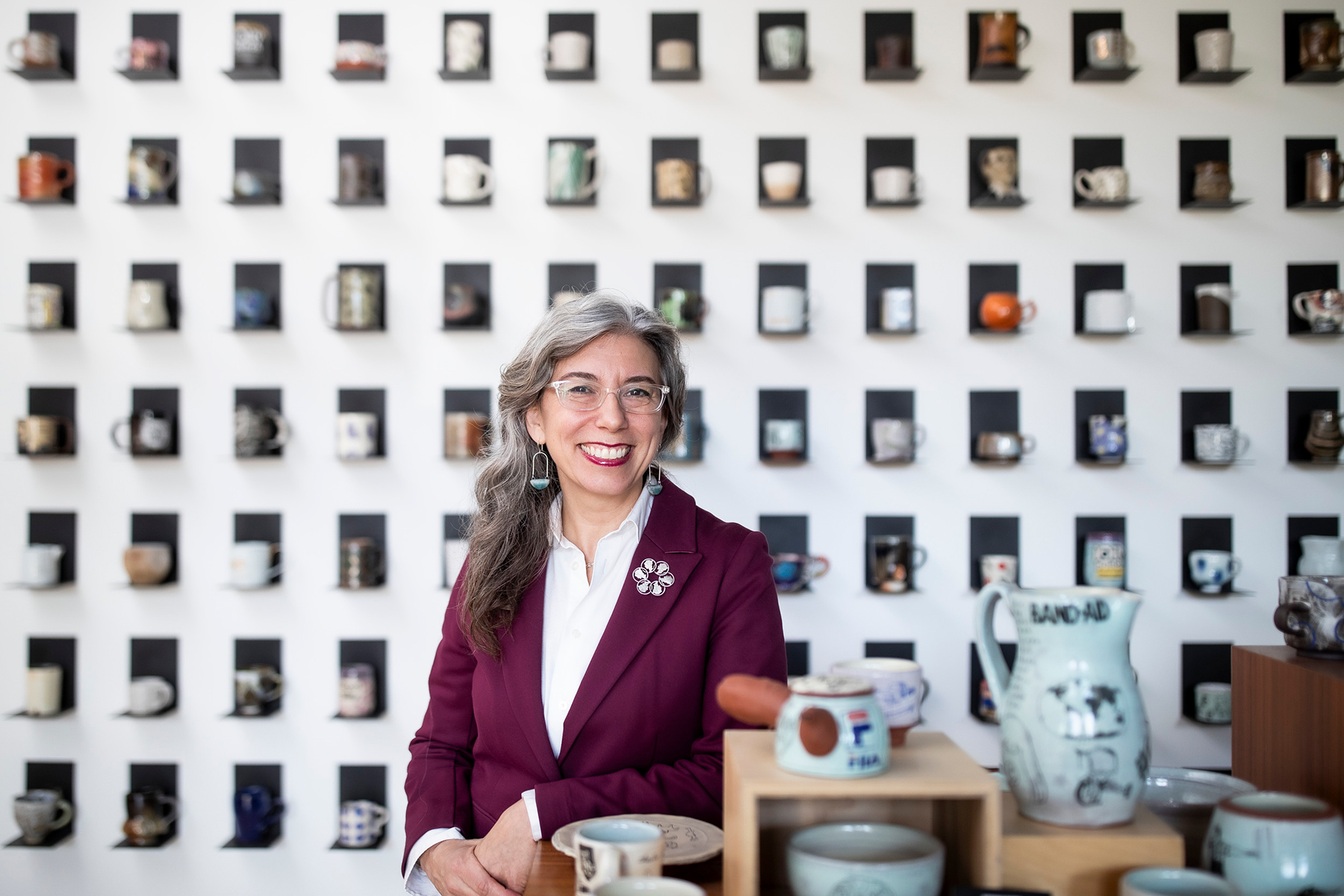
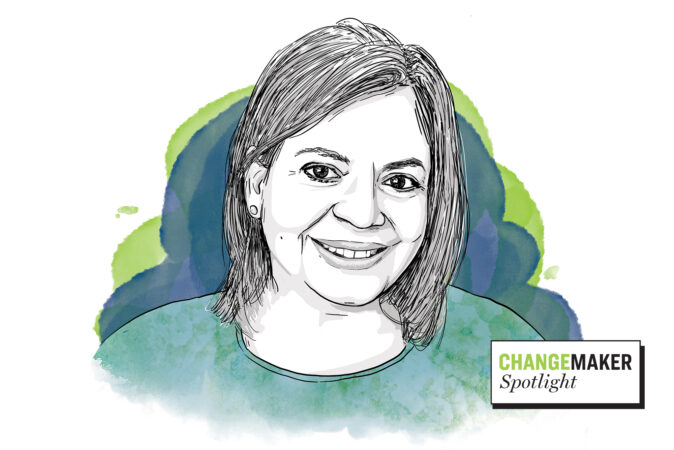
    The youngest of seven children, Jannette Diaz, 59, grew up a few blocks from Congreso de Latinos Unidos, whose mission is “to enable individuals and families in predominantly Latino neighborhoods to achieve economic self-sufficiency and well-being.” Her professional journey within Congreso spans more than a decade. Before her promotion to chief executive in March 2023, she served for two years as chief experience officer, a role created “to boost the organization’s culture.” Diaz also led the organization’s Health Promotion & Wellness division from 2015 to 2021, overseeing the Congreso Health Center, Esfuerzo HIV/AIDS Program, Latina Domestic Violence Program, East Division Crime Victims Services, and Breastfeeding Program.

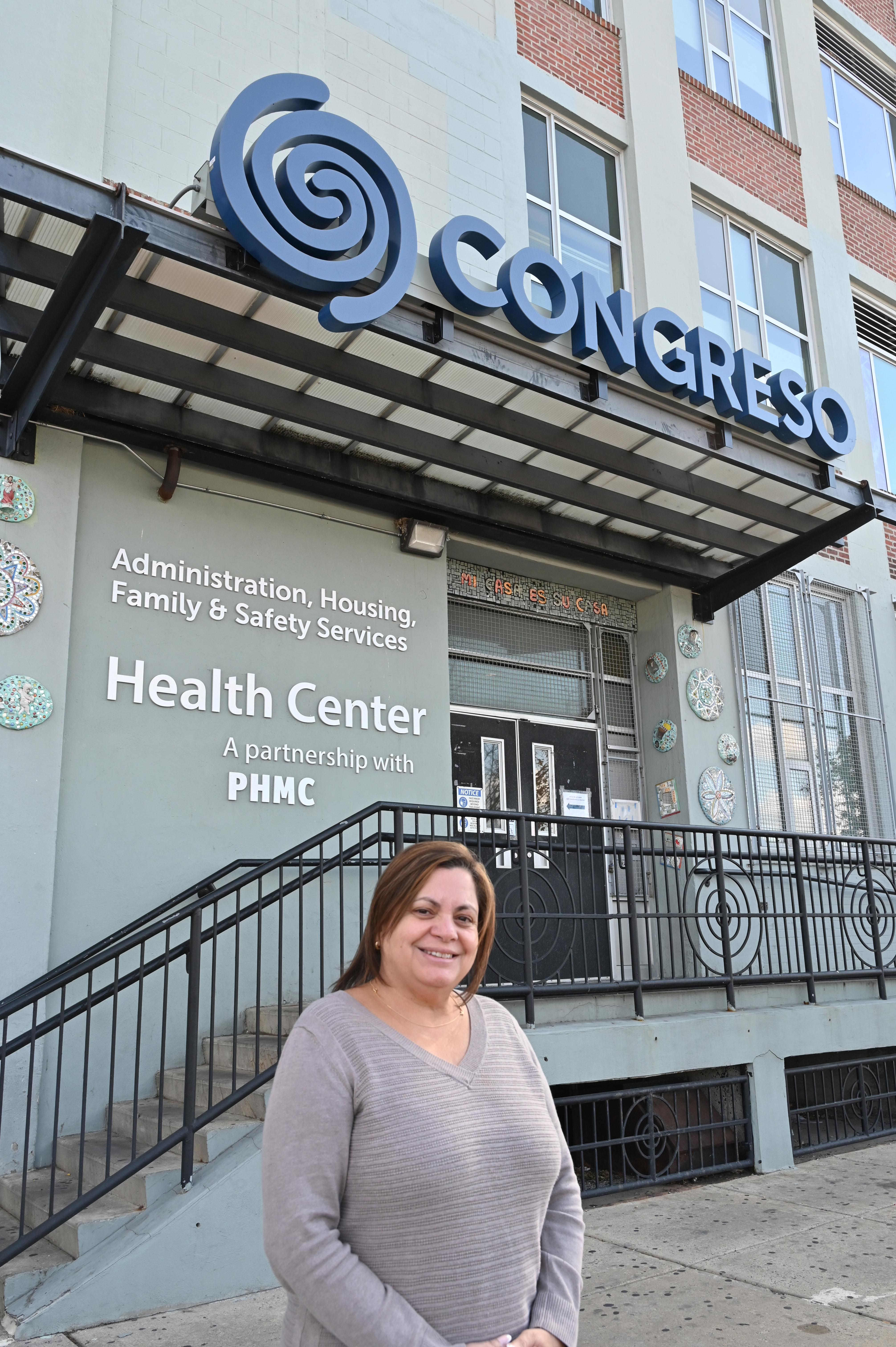
    Diaz leans into the words “Mi casa es su casa” that appear on a mural near the front door of the nonprofit’s office. “We want folks who come in to feel like they’re coming home,” she said. Her forward-thinking leadership of Congreso’s 200-plus staffers is evident in the organization’s achievements. In the past year, the nonprofit has served nearly 14,000 individuals across education, health, workplace, housing, and parenting and family services. Congreso has been recognized with a Top Workplace Award for seven years running.

    Diaz recently served on Gov. Josh Shapiro’s Advisory Commission on Women, where she helped identify and advance solutions for aging with dignity across the Commonwealth. Here, Diaz discusses her upbringing and her advice for young leaders.

    What experiences led you to dedicate your career to social services?

    Growing up, I was always surrounded by family … the essence of learning what community is, the values of giving back, being compassionate — that all shaped me. I got a degree in sociology with a concentration in juvenile and criminal justice.

    I have a soft spot for youth, especially those who are challenged or are either in a dependent or delinquent stream in the court system. That sparked my work. It ties back to leading with heart and knowing I’m helping someone else along the way.

    How has your upbringing influenced the way you lead Congreso?

    I’m the youngest of seven. There was a lot of love in our home, a lot of resilience. Sometimes it was challenging for my parents, but my father was really good at budgeting and ensuring that he tapped into any available services that were in the community if we needed support.

    Education was first and foremost, for all of us. This was a requirement. We didn’t know if we could afford college. We had this saying in Spanish, “Todo se resuelve.” We resolve everything. I was able to learn about opportunities to go to school, and I ended up going to college.

    I’m still working in the very community we grew up in. Congreso has been around for 48 years. My father knew that he could tap into whatever Congreso was offering for services, but he was also really good at being a connector. In the community, [if] someone came into the grocery store [where he worked] and needed something, he would say, “Hey, there’s that program where they offer this. Hey, go down here — they’ll offer you assistance with your LIHEAP [Low Income Home Energy Assistance].” Those are some of the things I learned from him just by listening to the conversations.

    What qualities do you admire in your staffers?

    They’re caring individuals. It doesn’t matter where they sit in the organization. They want to help, whether it’s direct services [to clients] or their colleagues. I work really hard with our executive team to create spaces where they feel they have a voice of influence, that we are all leaders in our own right.

    We host resource seminars, and sometimes those are just [about] understanding ourselves and [learning about] self-care, [and] psychological safety. The work they do is really heavy. Sometimes it could be triggering. We do hire people from our community. There are folks in the community who know [the] people who are coming in to get service. So we try to be mindful and make sure that we invest in them.

    I say to new hires, “Thank you for saying yes to Congreso.”


    Are there particular areas you’re hoping to address in the coming years?

    Economic self-sufficiency [and] mobility [are] key for all of us. When we designed our services we wanted to make sure that we took a holistic approach. We have five core pillars [for] programming: education, workforce development, family parenting services, health, and housing.

    In the housing space, the team supports individuals with preventing [the] loss of homes, like foreclosures, and also supports them in [what] we call “vital living.” [For instance,] we have a tax support site, and we help bring in over a million dollars back [in refunds] into the community almost every year. [The service] is free for folks on the tax site. We also support folks who want to become first-time homebuyers. We take them through counseling and credit building, and we partner with mortgage lenders and banks. Last year, we had 100 individuals purchase a home for the first time here in Philadelphia — and it’s amazing.

    We want to make sure that we are designing and integrating services for greater impact that [will then] scale. Well-being and mental health, we need to explore that. And we don’t have to recreate the wheel; it’s [about] collaboration and partnerships. We have the partnership with PHMC [Public Health Management Corporation]. So what else can we do? We want to strengthen our relationships, and then we want to scale up those programs.

    How are you addressing health and education?

    One of the greatest assets Congreso has instituted in the past couple of years is to bring a health center on site that we operate in partnership with PHMC that serves over 3,000 patients a year in general medical care [and] preventive care. [We] do it in a way where it’s built into the community, where we’re a trusted partner, and it’s really helpful for folks to get care. We have a small panel of pediatricians, and I would like to expand that, but we’re able to provide [care for everyone] from children to adults.

    In education, we provide OST [out-of-school time] services. It’s not just, “Let’s play basketball.” There’s a bit of that, but we have STEM curriculums. We also provide their home tutoring.

    The William Penn Foundation supports our work with two schools where we are [supporting] kindergartners through the third grade with Read by 4th, a program that encourages families to read together. We’re [also] going to be [supporting] the students through a homegrown model that we call Éxito, whose goal is to reduce high school dropout rates and increase graduation rates. The data says that when a child is on track by fourth grade, the chances are better for them to succeed in school [longterm].

    Federal cuts have meant that many nonprofit organizations are losing funding. Has this affected Congreso?

    At this juncture, we are leaning into our reserves. We are heavily government-funded. So we are feeling this every day, compounded by the other [cuts] that are happening nationally with Medicaid and SNAP benefits. This is why it’s so critical to have the ability to fundraise for flexible funding that you can put in reserves and be really fiscally prudent. We did implement a hiring freeze for some roles.

    We have some funding from some of our city contracts and feel confident that as long as we are still getting paid by the city, our runway will take us through this calendar year. But we are still looking at different scenarios should this go into 2026, and I’m sure that we’re not the only nonprofit that will be making some really tough decisions at that point.

    In 2018 Congreso updated its mission, with outcomes tied to its “womb-to-work” service model. Explain the evolution of its mission since its founding 48 years ago.

    It is important that organizations remain agile, remain relevant to their community. We’re here for the community; the community is not here for us. In 2018, we took a look at our mission and a hard look at our data. At that time, we were serving over 17,000 individuals with over 30 programs, and yet only between 10-12% were accessing another service within Congreso. We went on what we now call our “Mission to Impact.” It’s focused on program design, integration, and data, because we need that data to let us know if this is truly working.

    The motivation was [someone] needing a service but having to go to five different places. That’s exhausting. We also took a look at who we were serving and how we wanted to make an impact. That’s when we started saying we need to start from [the] “womb to work” [i.e., offer a range of support to people from pre-infancy to adulthood].

    Explain Congreso’s human-centered design approach. How has it helped transform program outcomes?

    We’re working on becoming a learning institution around innovation. We brought in a consultant who taught us human-centered design [HCD] work. HCD is a problem-solving approach that prioritizes people’s needs, behaviors, and contexts. Congreso applies the technique, called “mapping,” to many of its processes, including intake. We all learned how to map problems. When there’s an issue, we start mapping.

    We’ve developed our own Congreso Human Service Design Toolkit to design our services. We use that to facilitate conversations [with] clients to ensure that what they need aligns with what we can provide. We are really, really intentional now about what we say yes to as an organization.

    For example, we have multiple workforce development programs and what we’re seeing is folks want to get a certification but sometimes what’s happening in their lives prevents them from doing that. We can have case management services support [them] … so that [they] can then focus on working to get that certification.

    What is your greatest wish for the next generation of leaders serving the Latino communities in Philly?

    There’s a lot of pressure, now more than ever. Always be rooted in your purpose, even through the most challenging times. It’s okay to adapt, but you don’t have to assimilate.


    PHILLY QUICK ROUND

    Favorite Philly restaurant? My Philly cheesesteak [place] is Steve’s and my food [place] is Tierra Colombiana.

    You don’t know Philly until you’ve… experienced a live Mummers Parade [on New Year’s Day] and had a real Philly cheesesteak.

    What do you wish people knew about the people who call Philly home? Behind our grit, we have a lot of heart and resilience, and we show up for one another.

    Favorite Philly artist, performer, musician and/or band? Boyz II Men. “A Song for Mama” was the mother-son dance at my son’s wedding.

    What’s one place in Philadelphia everyone should visit? Go up and down North Philadelphia Fifth Street on El Centro de Oro, [the] Golden Block. You will feel and hear (and if you want, taste) the richness of Puerto Rican culture.

    You grew up in the North Philadelphia area. What has changed the most and what is still the same? When I look out my window here, I’ll look to one side and see gentrification: the new buildings. When I look to the other side, I see my childhood. I see the bodegas, I hear the honking and the music. I see that richness of community.
  • Pew announces a new head of arts and culture and millions in grants for Philly

    Pew announces a new head of arts and culture and millions in grants for Philly

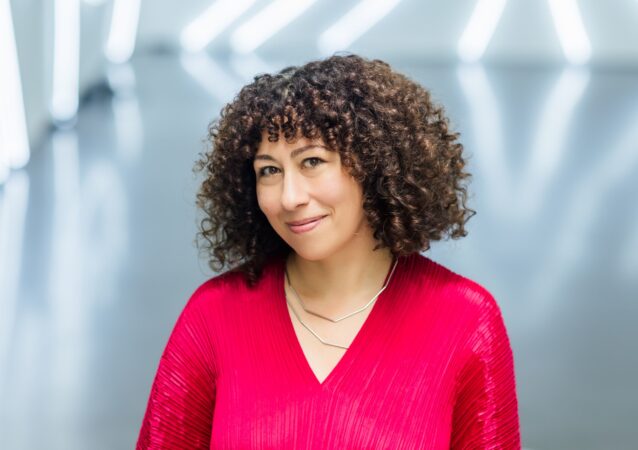
    When Christina Vassallo was head of the Fabric Workshop and Museum, she landed several substantial grants from the Pew Center for Arts & Heritage.

    Now she is moving to the other side of that donor-recipient relationship.

    Vassallo is the newly named executive director of the Pew Center for Arts & Heritage, starting Jan. 5, Pew announced Monday.

    “The center embodies everything I value about arts leadership — intellectual curiosity, rigorous support for artists and arts organizations, and a true commitment to public life,” said Vassallo. “So for the center, I’m drawn to its dual identity as a grantmaker and as a hub for ideas, and for the opportunity to connect the arts with civic purpose.”

    Leadership and operational changes at the Pew arts center are closely watched in Philadelphia’s arts and culture community since the center, along with the William Penn Foundation, accounts for some of the largest foundation giving in the area.

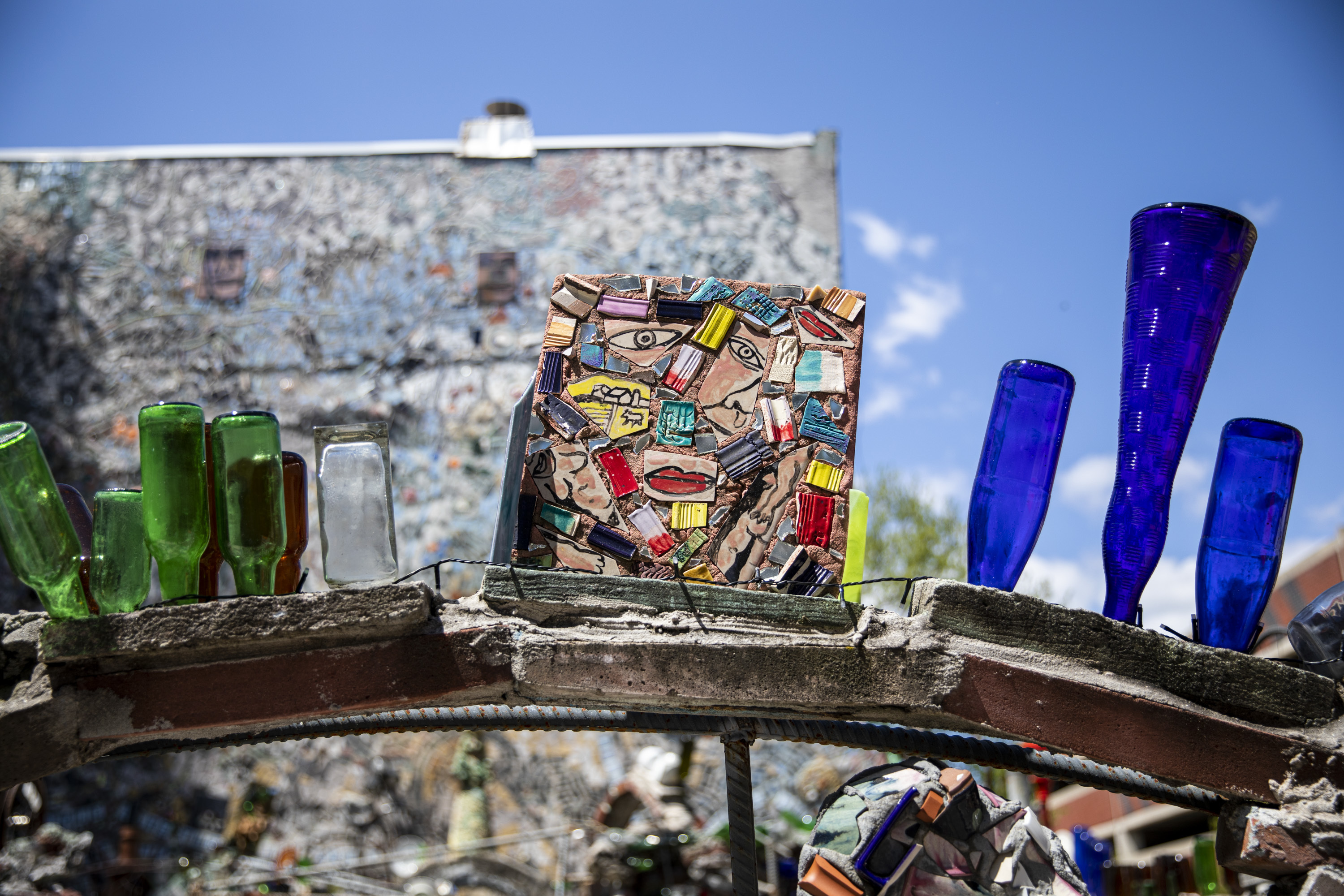
    Pew’s center, for instance, also announced on Monday that it has awarded $8.6 million to 44 Philadelphia-area groups — nearly $180,000 to the Black Pearl Chamber Orchestra for a project on Black women composers, $360,000 to Monument Lab for the creation of environmental soundworks as a “living monument to Philadelphia’s birds,” and to projects by Mural Arts Philadelphia, Philadanco, Philadelphia’s Magic Gardens, theater companies, dance troupes, and museums.

    The Magic Gardens, April 27, 2022.

    Vassallo, 45, follows Paula Marincola, who retired in October after serving as the center’s first director, since 2008.

    After leaving the Fabric Workshop in 2023, Vassallo became director of the Contemporary Arts Center in Cincinnati. Before the Fabric Workshop, she was executive and artistic director of the alternative art gallery SPACES, in Cleveland. She was born in the Bronx and grew up in New York City and northern New Jersey, and holds two degrees from New York University — a bachelor’s in art history and a master’s in nonprofit visual arts management.

    Vassallo arrives as Philadelphia’s arts scene grapples with a number of challenges. Many groups are facing the double whammy of attendance numbers that are still lower than pre-COVID levels, and cuts in federal funding under the Trump administration.

    The Pew arts center specifically has undergone a significant change with the 2024 collapse of the University of the Arts, which had been its operational partner. In June, Pew announced that the Barnes Foundation would take UArts’ place, and Vassallo suggested that the Barnes — which also had a hand in her hiring — could take on a more significant role.

    “I think there is tremendous potential there programmatically beyond their administrative role,” said Vassallo, who called the relationship between the Pew center and the Barnes an “evolving” one.

    Dancers from Philadanco, which received a grant from the Pew Center for Arts & Heritage.

    One significant change has already occurred. Vassallo will report to Barnes Foundation executive director and president Thomas Collins, whereas Marincola reported directly to Pew. The Barnes isn’t seen as getting involved with the Pew center’s grant-making process, but, rather, could work with the center on creating new programming.

    “We could imagine partnerships between the [Pew Fellowships in the Arts] fellows … being able to engage in the collection at the Barnes, for example, we can imagine the center and the Barnes partnering on community conversations,” said Elinor Haider, senior director of Pew’s Philadelphia Program.

    The Pew Center for Arts & Heritage will continue to be based in its offices on Walnut Street, Haider said.

    Vassallo called Philadelphia’s arts scene “incredibly rich and vital.” About its challenges, she said — while noting that she needs to relearn Philadelphia’s arts and culture community — that “we are having to find new ways to fund our work. I have seen this in the form of creating new business models, coming up with innovative ways to increase ticket sales and engage current and new audiences to create new revenue streams.”

    She said she has “always been a strong believer in nurturing the next generation of art enthusiasts, ensuring that kids have access to the arts across disciplines.”

    As for future funding priorities, the center has not yet determined whether it will undertake a strategic planning process, she said.

    “Not only are we assessing feedback from grantees and external parties, but we’re also understanding the state of the city, and then you have the various partners involved — you have Pew, you have the center staff, and now you have the Barnes. So I think within that there’s going to be a very special alchemy that starts to further determine the future of center funding decisions.”

    A complete list of Pew’s latest grants to art and culture groups: pewcenterarts.org/2025grants.

  • In North Philly, Congreso de Latinos Unidos has spent five decades being ‘here for you’ | Philly Gives

    In North Philly, Congreso de Latinos Unidos has spent five decades being ‘here for you’ | Philly Gives

    The litany of horrors never stopped:

    For more than an hour, one domestic violence survivor after another stepped up to the microphone with tales of pain and resilience.

    “When people get close to me, I flinch because I’m afraid they are going to abuse me,” said one woman, speaking in Spanish, her words translated into English by a staffer at Congreso de Latinos Unidos, a nonprofit social services agency in North Philadelphia that provides help with housing, education, medical needs, workforce training, and after-school activities for youngsters.

    Congreso is celebrating its 48th year in operation, and for 30 of those years, it has maintained a program to support people dealing with, and trying to escape from, domestic violence.

    “I was never allowed to go outside. He would show up at my job,” the woman continued in a room decorated with purple balloons, the color symbolizing domestic violence. Each year, Congreso honors survivors and mourns, in a few moments of poignant silence, the people who lost their lives to domestic violence. Last year, in Pennsylvania, there were 102.

    “He would bruise my face so I couldn’t see my family. I worked in a nightclub, and he would drag me out … No one wanted to get involved,” she said.

    No one, until Congreso did and helped relocate her to a new home.

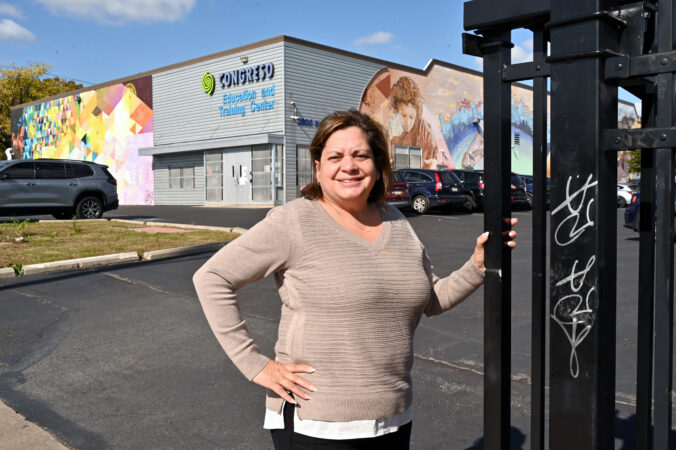
    Jannette Diaz, president and CEO of Congreso, outside the group’s offices in North Philadelphia.“We’re all feeling the crunch,” she said of recent funding challenges.

    “It takes a lot of courage to come up here and share your story,” Ramona Peralta, Congreso’s director of family wellness, said as the woman finished speaking. “We’re very proud of you, and we are here for you all the way.”

    In the main room, the mood vacillated between the heavy silence of shared pain and the cheerful clamoring of babies. Later, there was music, and before, a friendly lunch of rice with pork and chicken.

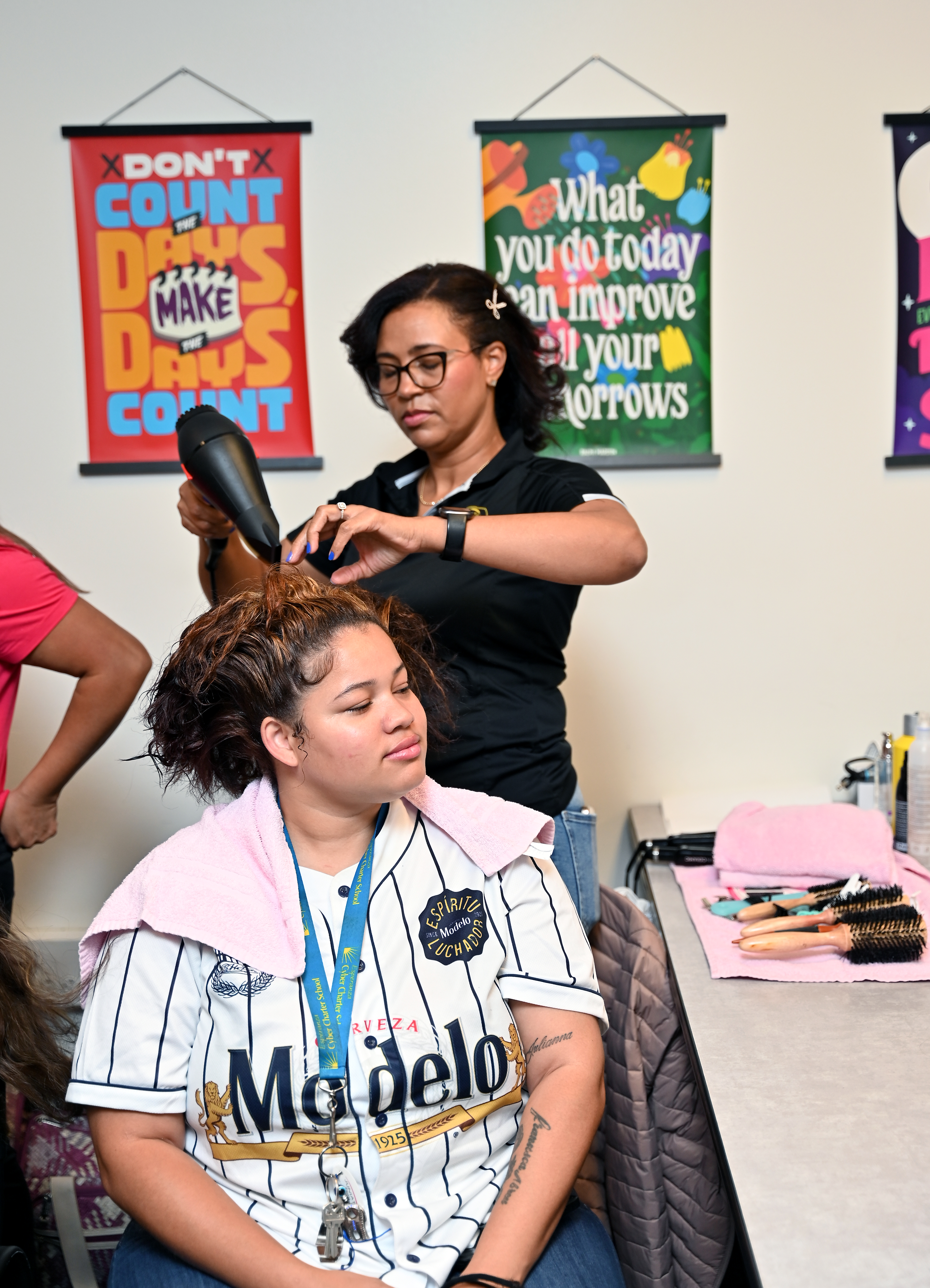
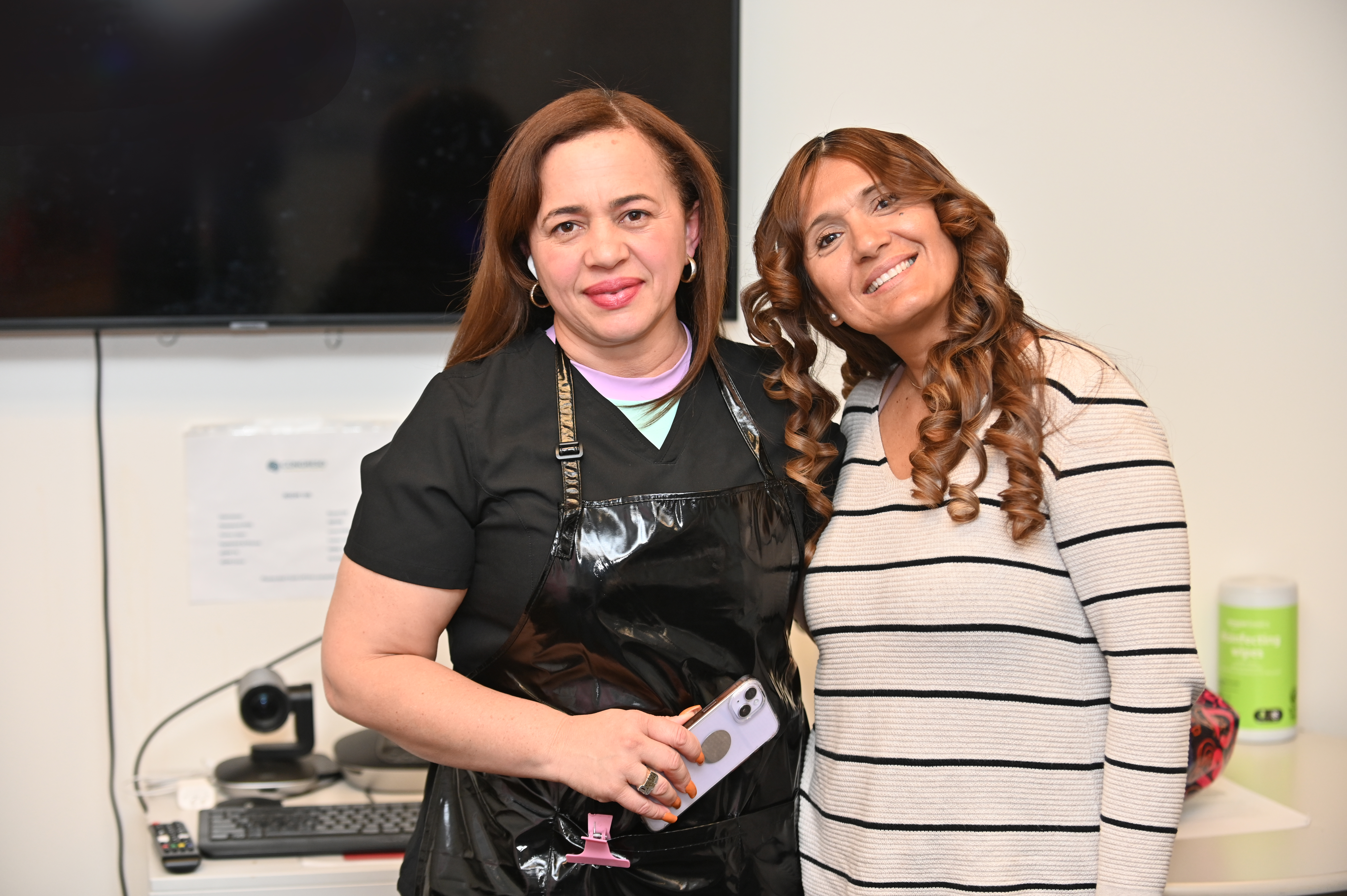
    Across the hall, members of the Asociación de Cosmetologas de Pennsylvania offered free hairstyling to the women who attended the celebration.

    Congreso, as part of its program to teach police, educators, social workers, and others to recognize signs of domestic abuse, had trained this group, as well, and because of the intimacy of their work, the stylists were uniquely positioned to do so. More than most, beauty salon operators could readily see the bruises hidden under hair and makeup. They could feel the cuts and scars on the scalp. And then there were the confidences confessed during shampoos and stylings.

    Wanda Gómez, of the Blessings of God beauty salon, styles Franyeimi Abreu’s hair at Congreso’s offices.

    Among the volunteers was Wanda Gómez, owner of the Blessings of God beauty salon in Northeast Philadelphia. “Thank God, I’m no longer in that situation,” she said, speaking through a translator. But because she survived domestic violence, she said she’s in a better position to help others. She tells them about Congreso.

    Elisa Zaro Doran, owner of Dominican Divas Beauty Salon in Olney, twisted a strand of hair around a curling iron as she styled Maria Rodriguez’s long, dark hair. Like Gómez, Doran survived domestic abuse. “The first time, when he hit me, we were having a lot of problems, so I thought it was normal,” Doran said.

    He’d even come into her beauty salon and hit her. “My clients would try to defend me,” she said. Eventually, when her son tried to protect her, she knew she had to take the necessary steps to get away and be safe — for herself and her children.

    Rodriguez was there yesterday to support her daughter, who survived domestic violence, but still lives in fear — which is the reason she would only agree to be interviewed if her name was not used. “He told me that it doesn’t matter how many years — he will come and burn down my house with me in it,” she said.

    Hairdresser Domaris Rodriguez shows her artistry on Raquel Mendez’s hair.

    Rodriguez’s daughter turned to Congreso for help after Thanksgiving a few years ago. Her oldest son told her that day that he would no longer live with her, because every night he dreamed of killing his father. He couldn’t stay and watch the beatings or watch his father, in a rage, destroy the furniture in their home.

    “I don’t know how many dining room tables I bought,” the daughter said.

    On that Thanksgiving, she told her husband he had to leave. It was the end of the relationship, but the beginning of a new nightmare. He followed her to work and even stood in the pharmacy, watching her as she managed the office.

    Counseling at Congreso helped her name her situation for what it was — abuse. “They made me see that I was in danger,” and that what she thought was normal was anything but. In group sessions, she learned a critical lesson: “I understood that I wasn’t the only one. They made me know it wasn’t my fault.”

    She’s still afraid to leave her home. “I’m going through anxiety, PTSD. It still affects me.”

    As she watched her mother get her hair styled, Rodriguez’s daughter hoped her mother would absorb a lesson from the stories she would hear. The daughter wanted her mother to understand the intergenerational legacy of abuse because she believes her mother also suffered from domestic violence.

    That abuse, Rodriguez’s daughter believes, impacted both her and her sister, whose abuser stopped hitting her only when he thought she was dead. She teaches her sister lessons learned from counseling at Congreso. Counseling includes helping women develop a safety plan.

    Rodriguez’s daughter brings her own little girl, 13, to Congreso’s counseling groups for children impacted by domestic violence. “I’m saving my sister’s life, and I’m saving my daughter’s life,” she said. As for her sons, “I’m not raising abusers,” as she reminds them to respect their girlfriends.

    Last month’s celebration in honor of the survivors of domestic abuse took center stage that day at Congreso, but Congreso’s programming benefits many more people in the community, 75% of whom are Latino, said Jannette Diaz, president and chief executive.

    Diaz grew up a few blocks from Congreso, and her father relied on the nonprofit for help with the family’s utility bills.

    These days, she spends time working on strengthening relationships with fellow nonprofit agencies and with Congreso’s friends in the donor community.

    “We’re all feeling the crunch,” Diaz said, describing a double whammy in mid-October of the state’s failure to pass a budget as the national government moved into another week of shutdown. Congreso gets much of its funding from government reimbursements for services provided.

    At Congreso, “we’re very mindful of our spending. So far, we’re continuing to provide services at 100%, but there’s only so much we can do, tapping into our reserves and our line of credit.”

    “Sometimes it’s heavy, but I’m also hopeful,” Diaz said, explaining that the twin state and federal budget crises required a sharper focus even as demand for services increases. Changes in Medicaid regulations may impact finances at Congreso’s health center, for example.

    But, she said, donors can be confident their dollars are being spent wisely.

    Why? Because as nonprofits come and go, Congreso has survived, thanks to providing trauma-informed and culturally responsive services that are informed by data to its clients, Diaz said.

    “We’ve been around for 48 years, and there’s a reason for that. And that is how we operate within our community,” she said. “We forge a trusting relationship, and we try our best to do what they need. It’s important that we make sure our programs have impact.”

    And that impact, Diaz said, goes beyond help given directly to clients. When Congreso assists a first-time home buyer in qualifying for and landing a mortgage, that homeowner becomes a Philadelphia taxpayer, benefiting the community.

    When someone like Gary DeJesus-Walker earns a CDL truck-driving license through Congreso’s workforce training program, he can go on to build a trucking business. Now he employs three people.

    “Congreso — they changed my life,” he said. “From trucking, I started two other companies.” With Congreso’s CDL program, “if you need a second chance, you can have one for the rest of your life. This is a way you can provide for and feed your family, forever.”

    The stories are an inspiration to Diaz.

    “Even in this season,” she said, “we can strategize and design services that our community needs. We’re not paralyzed by this crisis, and in terms of moving the needle forward, we’re progressing.”

    This article is part of a series about Philly Gives — a community fund to support nonprofits through end-of-year giving. To learn more about Philly Gives, including how to donate, visit phillygives.org.

    For more information about Philly Gives, including how to donate, visit phillygives.org.

    About Congreso de Latinos Unidos

    Mission: To enable individuals and families in predominantly Latino neighborhoods to achieve economic self-sufficiency and well-being.

    People served: 13,435 unique clients served in fiscal year 2025.

    Annual Spending: $30 million

    Point of Pride: Trademarked Primary Client Model that drives Congreso’s bilingual and bicultural approach to delivering services in a client-centered, data-informed, and culturally responsive way, whether a community member is receiving support in education, workforce development, housing, health, or family services.

    You can help: Become a monthly donor, a member of Congreso’s Corporate Advisory Council, or a volunteer in the Congreso Cares Program. Volunteers help with participating in program initiatives like Congreso’s free tax preparation, supporting program and agency events, and assisting with fundraising.

    Support: phillygives.org

    To get help:

    866-723-3014 (Philadelphia Domestic Violence Hotline)

    215-763-8870 (Congreso)

    What your Congreso donation can do

    • $25 can help provide food baskets to individuals living with HIV.
    • $50 can help cover past-due utility bills and prevent shutoffs for a family to stay safe in their home.
    • $100 covers an immunization visit at the Congreso Health Center for a child entering the school system.
    • $200 provides a new uniform or professional wardrobe for a community member entering the workforce.
    • $250 provides a semester of after-school programming for a high school student.
  • Lincoln University receives $25 million donation from philanthropist MacKenzie Scott

    Lincoln University receives $25 million donation from philanthropist MacKenzie Scott

    MacKenzie Scott, one of the world’s richest women through her Amazon shares, has donated $25 million to Lincoln University, the college announced Friday.

    The money — part of the billionaire philanthropist’s series of multimillion-dollar, unrestricted donations to historically Black colleges and universities — will support scholarships and initiatives, according to a news release.

    Lincoln University officials said the no-strings-attached gift “exemplifies her confidence in the university’s mission, vision, and leadership.”

    “Lincoln University was founded to break barriers and create pathways for African Americans to thrive,” president Brenda A. Allen said in a statement. “This investment honors that legacy and propels us forward, enabling us to build on 171 years of excellence and innovation.

    “It is a powerful affirmation of the enduring value of Historically Black Colleges and Universities.”

    A spokesperson for the university and the board of trustees could not immediately be reached Saturday for additional comment.

    This is Scott’s second donation to the southern Chester County university, the first degree-granting HBCU in the nation. The ex-wife of Amazon founder Jeff Bezos gave $20 million in 2020 — then the school’s largest gift from a single donor in its history. As of June 2023, the school’s endowment was $54 million.

    A number of other historically Black colleges also received money from Scott in recent weeks, including Maryland’s Bowie State and Morgan State Universities and University of Maryland Eastern Shore. Scott’s total donations to higher education institutions this year have topped $1 billion, Forbes reported.

    The windfall comes six weeks after gunfire erupted during Lincoln’s Oct. 25 homecoming celebration, killing a 25-year-old man from Wilmington and injuring six people. At least one person was arrested.

  • Lincoln Financial’s 20+ Year Investment in Philadelphia

    Lincoln Financial’s 20+ Year Investment in Philadelphia

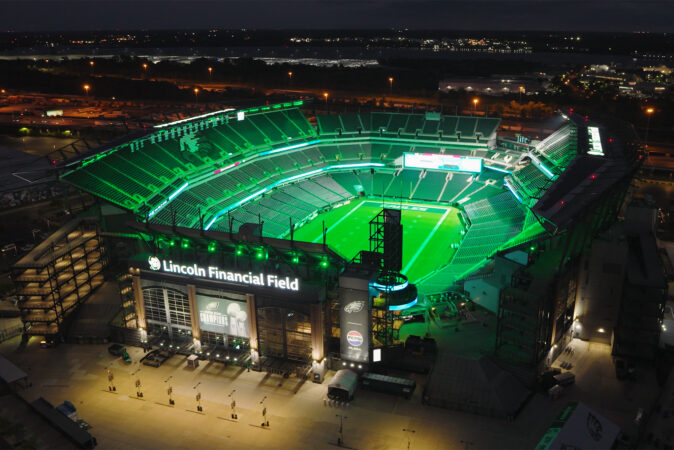
    When Lincoln Financial moved its headquarters from Fort Wayne, Indiana, to Philadelphia in 1999, the financial services company immediately set out to become part of its new community. And nothing captures the city quite like its most beloved institution: the Eagles. Just three years after its move to 1500 Market St., Lincoln Financial inked a 20-year deal that gave the company the naming rights to the Eagles’ new stadium, a partnership that’s since been extended through the 2032 season. Lincoln Financial Field was quickly woven into the city’s fabric, amplifying the company’s brand in Philadelphia and to national audiences.

    “Everyone is happier when the Eagles are playing … the Eagles, they are Philadelphia,” John Kennedy, Lincoln Financial’s executive vice president and chief distribution and brand officer, said. “It gave us wide-spread, lasting brand recognition.” Today, with its headquarters now in Radnor, Lincoln’s partnership with the Eagles extends well beyond the stadium, and so does its investment in the greater Philadelphia region.

    Beyond the Field: Turning Partnership into Progress

    Over the past two decades, Lincoln Financial’s partnership with the Eagles has continued to deepen. The company has joined the football organization in philanthropic efforts that give back to the region that both organizations proudly call home.

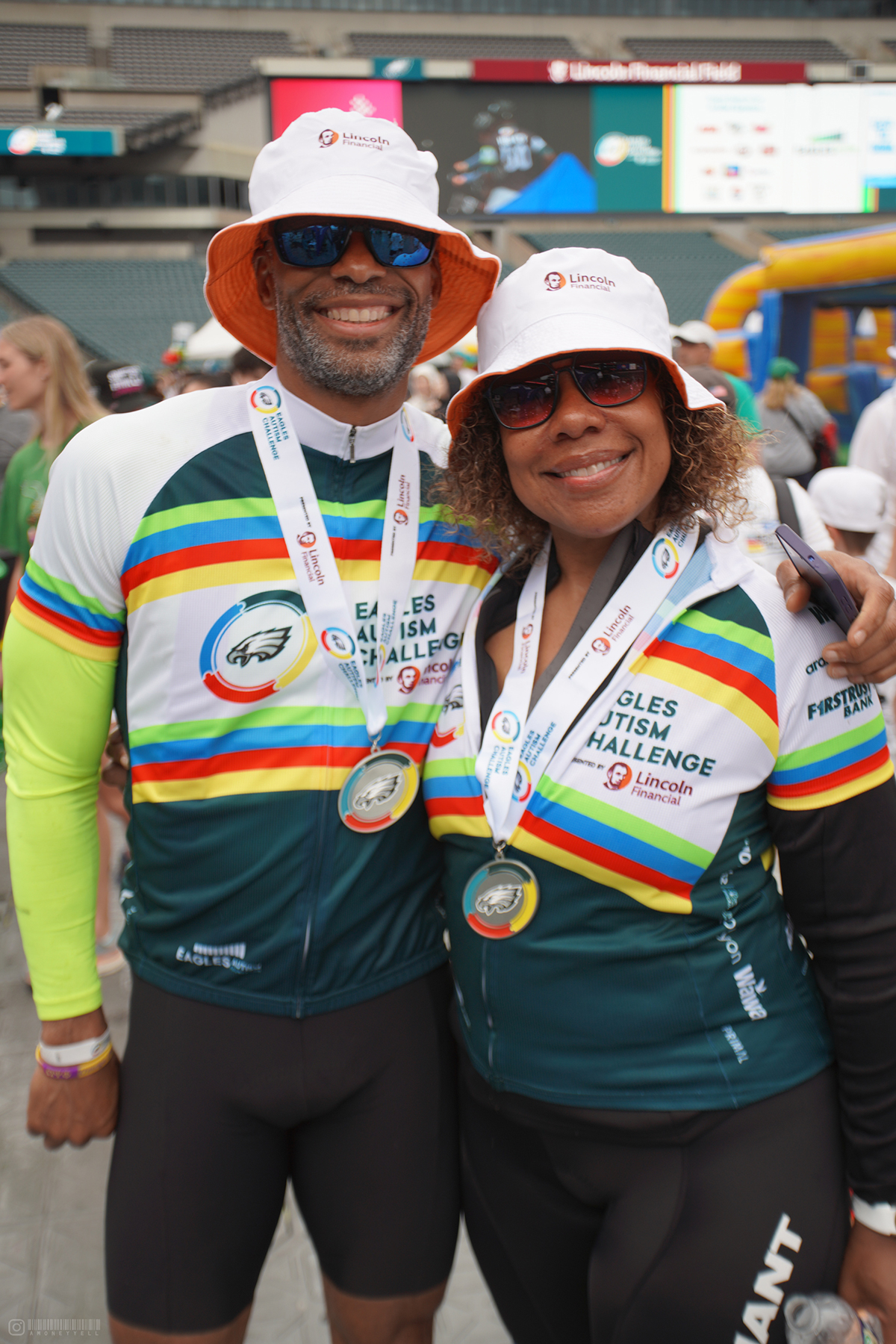
    In 2018, Lincoln Financial became the founding sponsor of the Eagles Autism Challenge, the Eagles’ signature bike ride and 5K run/walk dedicated to raising funds for innovative autism research and care programs. Championed by Eagles chairman and CEO Jeffrey Lurie, this destination event welcomes thousands of participants from around the world, with 100% of the funds raised making a transformational impact on our Eagles autism community. This past May, the Eagles Autism Challenge celebrated a record-breaking year with more than $10 million raised, bringing the total to $40 million raised since inception.


    Hundreds of Lincoln Financial employees and their families join in the Eagles Autism Challenge event each year.

    “One hundred percent of the proceeds are going into bringing greater autism awareness, and we’re all in on that effort,” Kennedy said when asked about Lincoln’s sponsorship of the event. He noted employees come from across the country to participate. “It’s become a big part of Lincoln culture. Employees from across the company are involved and willing to give back to raise money for this challenge.” Since 2018, Lincoln employees alone have raised more than $625,000 for the Eagles Autism Challenge, with hundreds of workers coming out to volunteer or participate in the event every year.

    In the past, Lincoln Financial has partnered with the Philadelphia Eagles on philanthropic initiatives like the Eagles Eye Mobile, a mobile unit that provides free vision screenings, eye exams, and prescription glasses to more than 25,000 Philadelphia students annually. And just last year, the company announced a partnership with the Jalen Hurts Foundation, which works to strengthen communities by serving, mentoring, and advancing youth.

    Lincoln Financial’s partnership with the Jalen Hurts Foundation focuses on promoting financial wellness through community engagement. Together, the two organizations helped to support a mentorship camp for 60 young men ages 11 to 13 years old, which included financial education sessions led by Lincoln team members and career development workshops.

    “It’s not just about business; it’s about community,” Kennedy said.

    A Commitment to Financial Literacy, Education, and Human Services

    Lincoln’s growing partnership with the Eagles aligns closely with the company’s core philanthropic areas of financial literacy, education, and human services. The company’s commitment to these causes extends well beyond its partnership with the football team.


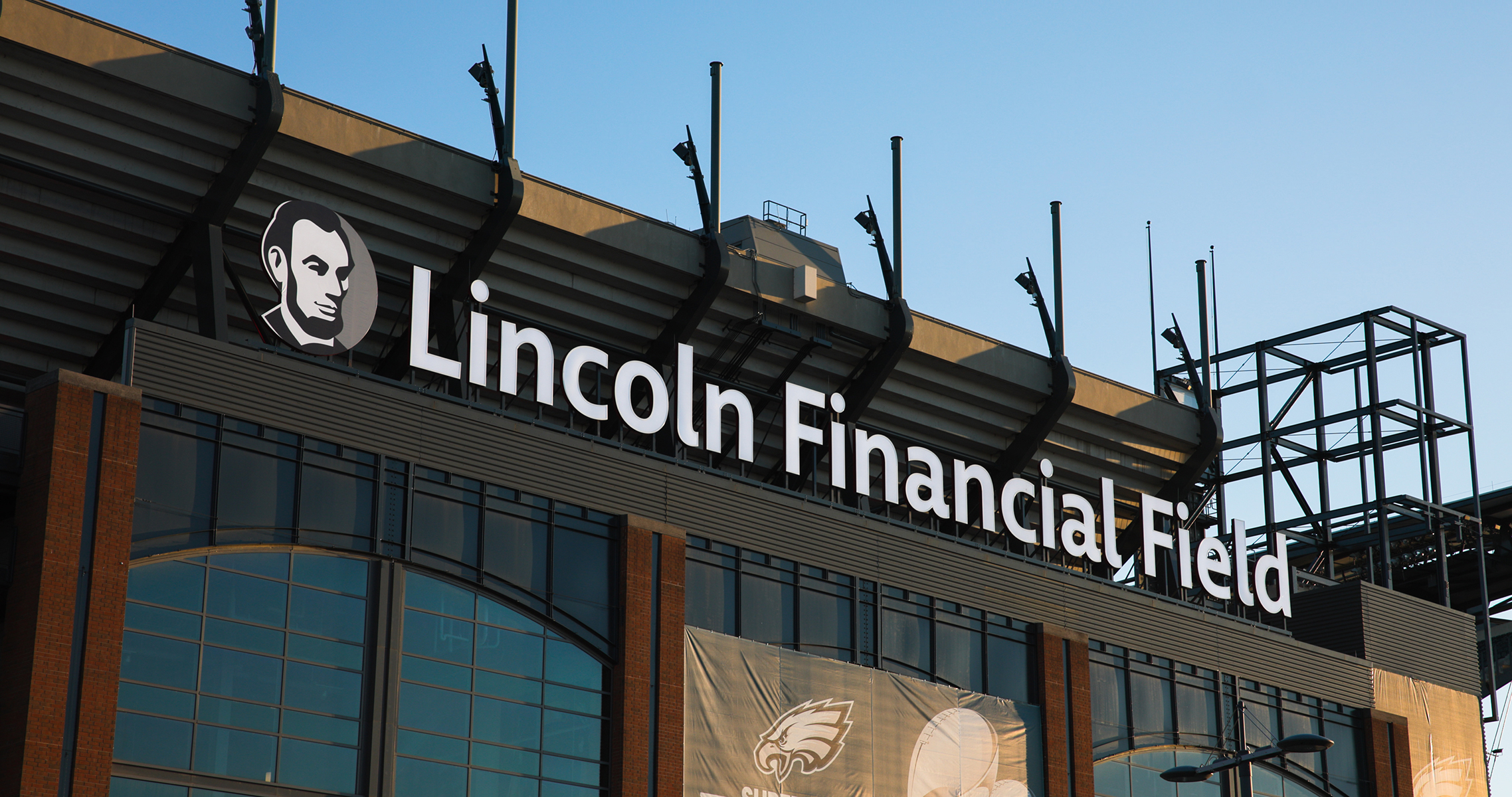
    Lincoln Financial Field’s new signage reflects the brand’s most recent refresh.

    Established in 1962, the company’s philanthropic arm, the Lincoln Financial Foundation, provides grants to hundreds of nonprofit organizations each year. According to Lincoln, the foundation’s mission is to help individuals and communities achieve financial security through impactful grantmaking and partnerships with nonprofit organizations. In 2024 alone, the foundation contributed more than $9.2 million to support more than 250 nonprofits.

    “We focus on education, human services, and financial wellness because each is essential to building long-term financial success,” Allison Green Johnson said. Johnson is the senior vice president of belonging and community impact, and the president of the Lincoln Financial Foundation. “These areas are deeply interconnected, from preparing students for academic, career, and post-secondary achievement, to ensuring access to stable housing and nutritious food, to equipping individuals with the skills needed for financial resilience,” Johnson said.

    Annually, the Lincoln Financial Foundation awards grants to more than 200 grantees across the country, including more than 50 within Philadelphia and the surrounding region. Local partners include organizations such as Hopeworks, which provides technical and workforce training programs for young adults; and the Boys & Girls Club of Philadelphia, which supports youth through programs that build literacy, leadership, and career readiness.


    “Children and teens who learn about saving, budgeting, and responsible spending are more likely to carry those habits into adulthood,” Johnson said. “Early exposure helps normalize financial planning and decision-making.”

    Other partner organizations of the Lincoln Financial Foundation include Heights Philadelphia, which helps break the cycle of generational poverty by guiding students toward college and career success with individualized advising, campus visits, and stipends. The foundation has also backed nonprofits that tackle basic needs across the region, from the Red Cross House, which offers temporary housing and recovery services for families displaced by disaster, to MANNA, which provides medically tailored meals to improve health outcomes for people with serious illnesses.

    A Sense of Pride for Employees

    While Lincoln’s board of directors and local charitable contributions committees typically recommend grantees based on mission alignment, employees also help guide how the company invests in its communities. Lincoln matches employee donations to qualified nonprofits dollar-for-dollar and fuels hands-on service with paid volunteer time.

    “Serving others is at the heart of our business purpose and core values, and our nearly 10,000 employees proudly extend that spirit into the communities where we live and work,” Ellen Cooper, the chairman, president, and CEO of Lincoln Financial, said. “Our employees rally together to create lasting change, and in the process, create a culture of integrity and care that we are very proud of.”

    In 2024, the foundation matched nearly $1 million in contributions to more than 1,000 nonprofit organizations in 47 states and in Washington, D.C. Kennedy notes that both Lincoln’s volunteer culture and the Eagles partnership elicit strong enthusiasm from employees. Both also help to foster a sense of community.

    “It’s a sense of pride for our employees that they can be part of something that’s so much bigger,” Kennedy said.

    Cobbs Creek: Lincoln’s Biggest New Initiative

    This spring, Lincoln deepened its commitment to Philadelphia with one of its most ambitious philanthropic efforts yet: becoming a founding partner of the Cobbs Creek Foundation. The investment supports the reinvention of the 350-acre Cobbs Creek Golf Course, which served the community from 1916 until 2020. The West Philadelphia green was the city’s first public course and one of the earliest in the country to welcome men and women of all races. Years of flooding and erosion combined with a 2016 fire that destroyed its clubhouse forced its closure. In 2022, the Cobbs Creek Foundation committed at least $65 million to revive the historic site, restoring the course and reimagining it as a dynamic hub for education, community, and opportunity, as well as golf.


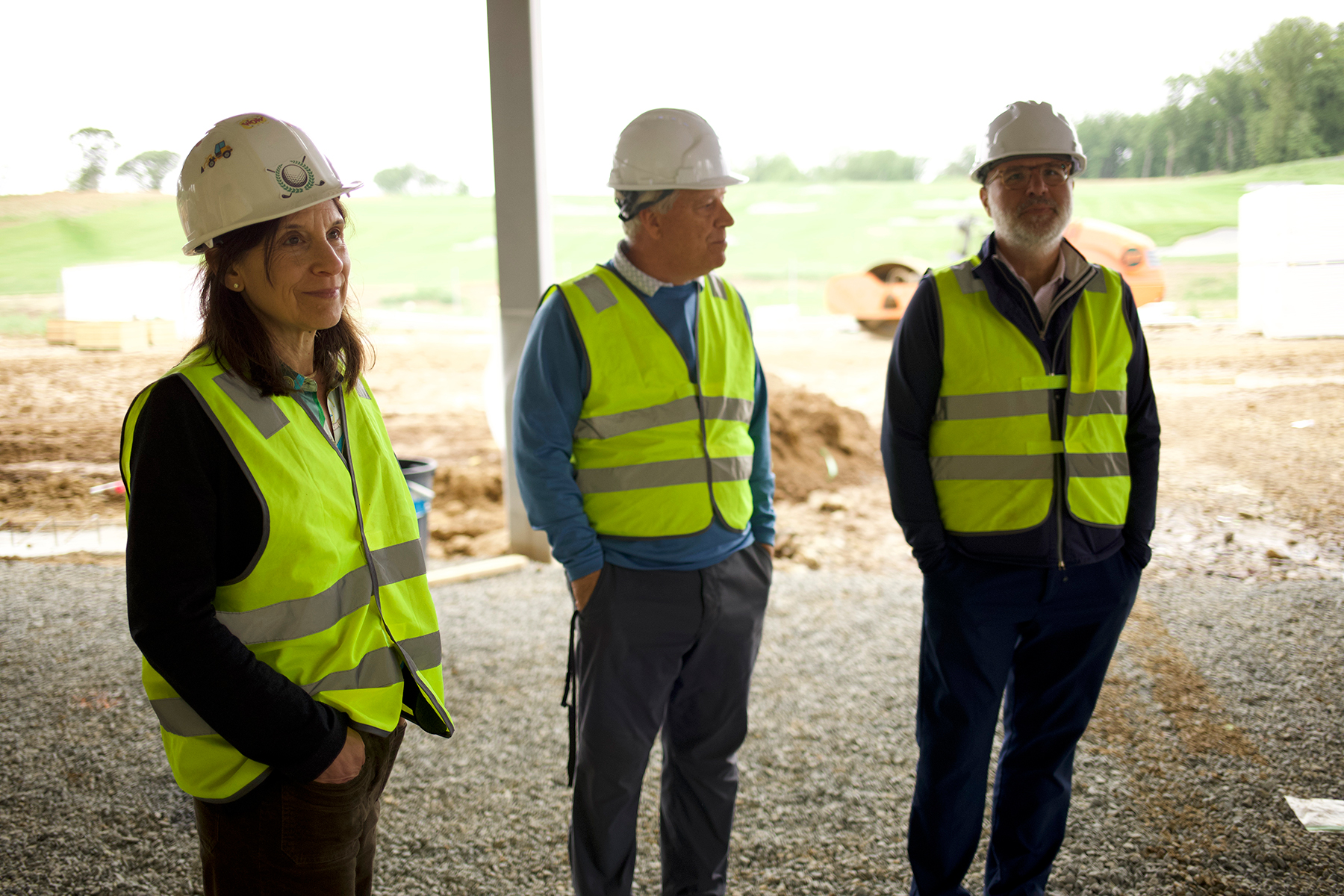
    Lincoln Financial CEO Ellen Cooper, CFO Chris Neczypor, and Cobbs Creek Foundation COO Enrique Hervada visit the Cobbs Creek Golf and Education Campus, which will continue to expand its offerings over the next two years.

    “Cobbs was a melting pot for anyone that wanted to play golf,” Kennedy said. “Now, it will go so much more beyond golf, and 20, 30, 40 years from now, I truly think this will be such a big part of the Philadelphia community.”

    The Cobbs Creek Golf and Education Campus will continue to expand its offerings over the next two years, including the 9-hole TGR Design short course. Led by golf architects Gil Hanse and Jim Wagner, a restored championship course and new nine-hole course will follow, opening in 2026 and 2027.

    “Lincoln Financial’s commitment to Cobbs Creek reflects their continued dedication to the city and people of Philadelphia. Together we are amplifying the power of true community partnership,” Jeff Shanahan, president of the Cobbs Creek Foundation, said. “For decades, Lincoln Financial has been a pillar of Philadelphia’s civic life, and together we’re building a space that honors history while creating pathways to education, recreation, and opportunity for generations to come.”

    At the center of the project’s educational initiative is the TGR Learning Lab, created through a partnership with Tiger Woods’ nonprofit TGR Foundation. The new 30,000-square-foot facility opened in September with nine classrooms and a mission to empower youth through education. It features a full-time instructional staff and offers free, year-round Science, Technology, Engineering, and Math (STEM) education as well as college-access and career-readiness programs for students in grades 1-12. The after-school, weekend, and summer programs are expected to reach more than 4,500 local children and families each year.

    Lincoln is bringing its financial expertise into that work. In collaboration with the TGR Foundation, the company is developing a hands-on financial education curriculum for use at the learning lab and across the campus. The lessons are designed to help young people build financial resilience and prepare for the future workforce. Adding further leadership support, Lincoln Financial chief financial officer Chris Neczypor has joined the Cobbs Creek Foundation’s executive committee and board of advisors to help guide strategy and ensure long-term economic stability.

    Johnson sees Lincoln’s evolving philanthropy as a continuation of the company’s foundational values.

    “Our ultimate goal is to help individuals confidently succeed by supporting strong, thriving communities,” Johnson said. “Since our founding in 1905, giving back has been core to Lincoln’s culture, in alignment with the values of our namesake, Abraham Lincoln: integrity, teamwork and responsibility.”

  • Philly’s Arts Scene Runs on “Temple Made” Talent

    Philly’s Arts Scene Runs on “Temple Made” Talent

    Philadelphia is home to world-class museums, a nationally recognized public art collection, a celebrated orchestra, renowned dance companies, and a thriving film and theater scene. It is a global arts destination. Many of the people who power this cultural engine share the distinction of being “Temple Made.” They are the artists, storytellers, and cultural leaders who keep the city’s creative life moving forward.

    Across generations, alumni from the Tyler School of Art & Architecture, the Boyer College of Music and Dance, and the School of Theater, Film and Media Arts (TFMA) have shaped Philadelphia’s artistic identity. Now, more than 15,000 Temple arts alumni call the region home. They lead cultural institutions, curate cutting-edge exhibitions, and produce prize-winning performances. They work at every level of the creative sector as cultural influencers, independent artists, teachers, clinicians, and community innovators. Together, they are creating new spaces that keep the arts vibrant and accessible. And by fueling the arts in Philly, these Owls are moving Philadelphia forward.

    “The way in which art builds community is critical,” Susan E. Cahan, the dean of Tyler School of Art & Architecture, said. “Art expands what we can imagine, and everything else flows from that: empathy, mutual understanding, and our ability to envision shared futures.”

    Temple’s roots in arts education stretch back more than a century. Today, Tyler, Boyer, and TFMA collectively present hundreds of exhibitions, performances, and productions each year on Temple’s Main Campus. Recently, the university announced a new partnership with the Pennsylvania Academy of Fine Arts. That collaboration, along with the acquisition of Terra Hall in Center City and the construction of the Caroline Kimmel Pavilion for Arts and Communication (scheduled to open in fall of 2027 on Broad Street on Temple’s Main Campus) positions the university as a vital anchor at multiple points along the Avenue of the Arts. Together, these developments are greatly expanding Temple’s creative influence and furthering its mission to combine artistic excellence with public purpose.

    “Philadelphia has a reputation as an arts powerhouse that we’ve had the privilege to build upon, and we take our responsibility to sustain it seriously,” Robert T. Stroker, the Joslyn G. Ewart Dean of Temple’s Center for the Performing and Cinematic Arts, said.

    Here’s how three Temple alumni are stewarding Philadelphia’s cultural infrastructure in order to keep the arts alive, evolving, and rooted in community.


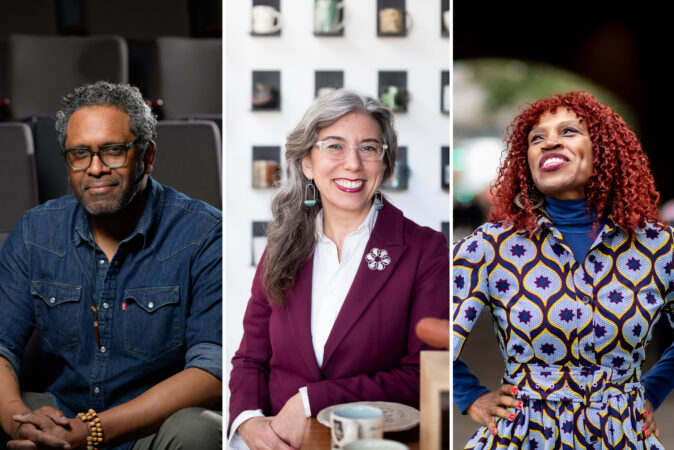
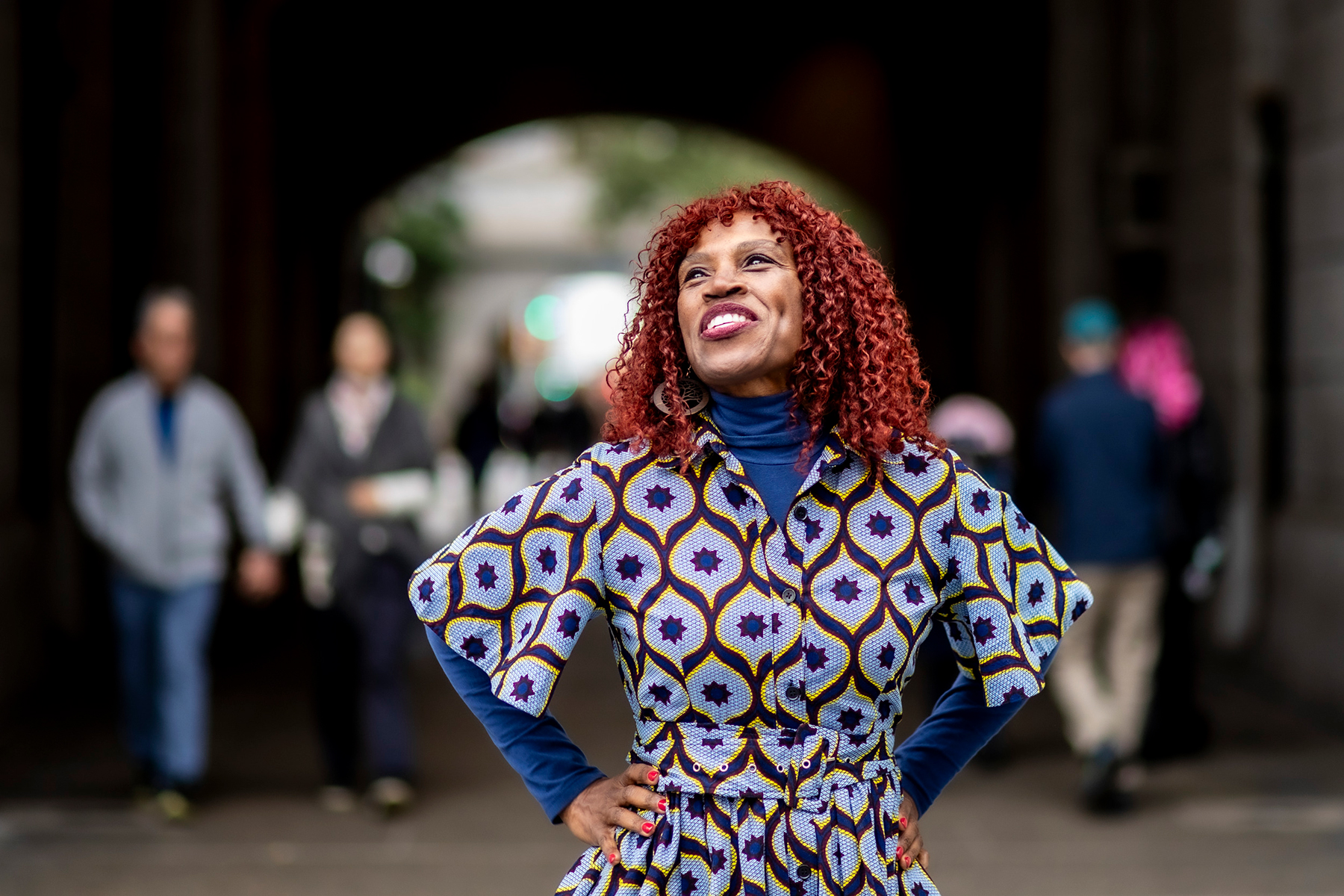
    Valerie Gay

    Chief Cultural Officer, City of Philadelphia

    Executive Director, Creative Philadelphia


    Valerie Gay, who goes by Val, oversees one of the nation’s largest and oldest public art collections, which comprises more than 1,000 works including A Quest for Parity: The Octavius V. Catto Memorial and the forthcoming Harriet Tubman monument, by Alvin Pettit at City Hall. In her role with the City of Philadelphia, she also guides citywide cultural programming; exhibitions in City Hall; and major initiatives such as Healing Verse Germantown, a poetry and public art installation; Mural Arts Philadelphia, a nonprofit that supports the creation of public murals; and the city’s first Arts & Culture Master Plan, an initiative by Creative Philadelphia to imagine the city’s cultural future.

    Gay earned her master’s in voice performance from Temple’s Boyer College of Music and Dance while working full-time. That experience shaped her disciplined, systems-based leadership style. “Temple taught me that structure brings freedom,” she said.

    For Gay, sustaining Philadelphia’s cultural landscape is both a responsibility and a joy. “Philadelphia doesn’t just power the arts,” she said. “The arts power Philadelphia.”


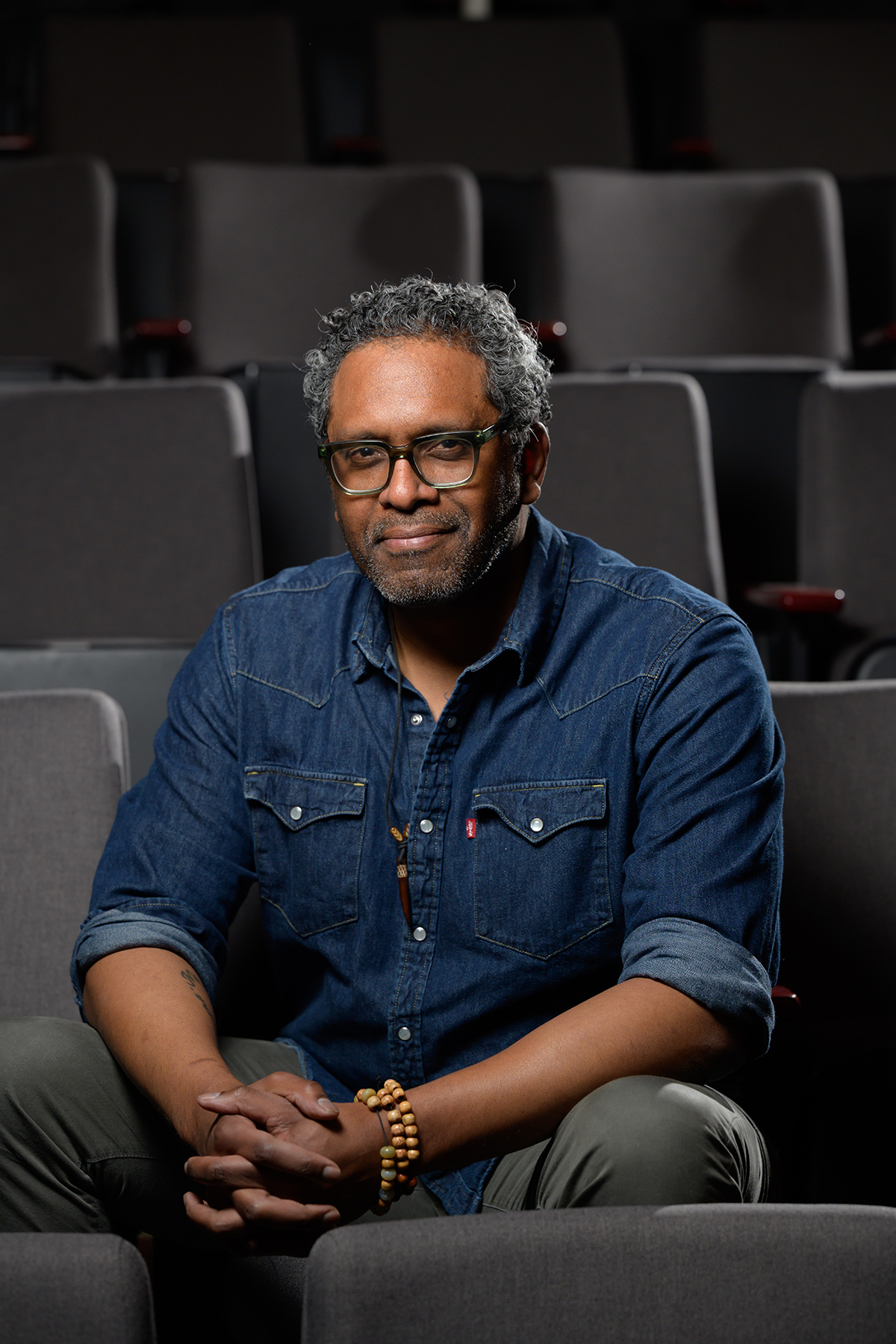
    Lindsay Smiling

    Co-Artistic Director, Wilma Theater


    For Lindsay Smiling, theater has always been a way to explore identity and connection. At the Wilma Theater, one of Philadelphia’s most influential theater companies, he leads with a vision that elevates bold storytelling while ensuring audiences feel invited into the performance.

    “Even when the work is abstract, it shouldn’t feel inaccessible,” he said. After earning his MFA at Temple, Smiling built a wide-ranging acting career before joining the Wilma’s HotHouse Company, known for its collaborative, actor-driven approach. When he later stepped into a leadership role, he was determined to keep artists at the center of the process.

    Now, as part of Temple’s faculty, he’s inspired by the students shaping the future of the field. “I learn from them every day,” he said. For Smiling, seeing Temple alumni across the city reinforces a shared foundation. “We’re coming from something special,” he said.


    Jennifer Zwilling

    Curator and Director of Artistic Programs, The Clay Studio


    Jennifer Zwilling’s work at The Clay Studio helped lay the foundation for Philadelphia’s rise as a national destination for contemporary ceramics. In her role, she leads exhibitions, residencies, and hands-on learning programs that welcome thousands of people, from schoolchildren to working artists, into the studio each year. She has helped to strengthen The Clay Studio’s role as a citywide resource for creativity, connection, and craft.

    A Tyler alum, Zwilling earned her master’s in art history while soaking up the school’s studio culture. Her education shaped her belief that artists and scholars should work side by side. After 14 years at the Philadelphia Museum of Art as an assistant curator of American Decorative Arts and Contemporary Craft, she joined The Clay Studio in 2014 and helped guide its 2022 relocation to a new 34,000-square-foot home in Kensington.

    “Art isn’t just something to look at,” she said. “It’s something people deserve to experience and make. That belief drives everything we do here.”


    Owls in the Arts

    Temple alumni play major roles at these Philadelphia arts organizations and more:

    • BlackStar Film Festival
    • City of Philadelphia’s Office of Arts, Culture and the Creative Economy
    • Crane Arts
    • Highmark Mann Center for the Performing Arts
    • The Clay Studio
    • The Wilma Theater

    Read more about how Temple powers the arts in Philly.

  • How Share Food Program is Leveling the Playing Field

    How Share Food Program is Leveling the Playing Field

    George Matysik, executive director of Share Food Program, paced behind a standing desk in his North Philadelphia office. In the background, the hunger relief program’s warehouse was visible through a window. “There are two slogans that we have around here. One is that food is a human right, and the other is that hunger is solvable,” he said. “It should not be a political question whether or not to feed the hungry.”

    Founded nearly 40 years ago, Share Food Program provides access to food, education, and advocacy through a partner network of community-based organizations and school districts. A native and current resident of North Philadelphia, Matysik has a long history of service in the area. Here, he talks about his roots in the city, being part of a community, and being called to service.

    Walk me through your career journey from Philabundance to the Philadelphia Parks Alliance and now, Share Food Program. What connects all of these roles for you?

    As a high school student [at Mercy Career and Technical High School], I would come over and volunteer here at Share Food, and that’s where I got to know my predecessor, Steveanna Wynn. When I graduated with a degree to be an electrician, I also graduated with a much deeper understanding of service.

    After graduation, I ended up getting a job at University of Pennsylvania as a janitor. Once I got there, I found out that I could go to school in the evenings … and get my degree in urban studies. I wanted to learn more about how cities work, what nonprofits do in that space, and politics — all of that blending together.

    After a chance meeting while cleaning a professor’s office at 6 a.m., I went to work on a congressional campaign [for Joe Sestak]. I worked for him for a couple years when he was a congressman. From there, I met the then-CEO of Philabundance and I started their government affairs department.

    I was doing that up through 2014 and then went to work at the Philadelphia Parks Alliance until my predecessor here at Share Food (a mentor from my childhood days) announced that, after 31 years, she was going to be retiring. My first [thought] when I found out was, “God bless a sucker that tries to fill her shoes.” But as I thought more about what Share Food Program means to the community, I [felt] invested in making sure it was able to move forward in an important way. [I] ended up reaching out and getting the job.

    How did these experiences shape how you approach food insecurity and your work at Share Food Program?

    I’d say I come at this work with the lens of, “How do we alleviate poverty in our city?” But using food as the gateway to be able to do that. It was so important to me to figure out how we, in the richest country in the history of the world, help relieve the poverty that we have. Not only here in Philadelphia, but across the country.

    Is it easier to bring people to the political table through food?

    Yes, but I would say that it’s bigger than that. It’s about equity and how we can close the gaps between the haves and the have nots. There are so many societal challenges that we deal with — addiction or crime or things like that — where there isn’t one single easy answer. But with our work, it’s actually really easy, and that’s the frustrating part. It’s literally just getting the resources and food to the folks who need it, and that should be an easy thing to do.

    But sadly, we are living in a time where the incredible greed within this country has prevented that from happening. And so we have this widening gulf between the haves and the have nots.

    Food is one of the great uniters of cultures and people. It’s also a gateway to communicate all of the other services we can use to help pull people out of poverty. So with many of the organizations that we provide our food to, it’s not just, “Here’s your bag of food, see you next week.” It’s more like, “Here’s your bag of food, and here’s an array of other services, education, programming.”

    Since you took over in March 2019, Share Food’s staff and cold-storage capacity has grown five-fold. What made that possible?

    It wouldn’t have happened without the foundation that my predecessors built here and within the city. In the time that I’ve been here, it’s really been about engaging the broader Share Food community, whether that’s our volunteers, our board, or our staff, who have been the ones to lead all of this. My goal is to bring some of the resources together so that we can do all of that work, but they’re the ones who really have been able to execute it.

    There have been setbacks along the way. Some of those have been external threats, like the pandemic or what we’re seeing right now with the federal government pulling resources away from aid organizations.


    Talk to me about how the pandemic changed the way Share helped the community.

    The food insecurity rate just exploded in that early part of the pandemic. There were many folks who wouldn’t present as food insecure but felt that way for the first time in their lives because they went to the grocery store and they couldn’t get exactly what they wanted. So many of the folks that we serve live that life every day. The food might be on the shelves, but they can’t afford what’s there.

    We were fortunate here at Share. We’d done a $1.5 million food buy in late February in preparation for the pandemic. So while some folks were going to the grocery store and finding empty shelves, our warehouse was bursting at the seams.

    And we were really able to quickly react to all of the logistical challenges. In normal times we served about 7,000 seniors in senior centers or senior-only high rises, but by March 2020, many of them closed their doors to the public. So we called those seniors at home, and we said, “Hey, what if we got you a home delivery?” We had our volunteers step forward and start delivering groceries. It grew so much in such a short period of time that we eventually brought DoorDash in as a partner. Now our location here at Share Food is the largest single DoorDash distribution location in the country. That really rapid scaling happened with government support.

    How did you see government support evolve?

    Throughout the early part of the shutdown, Washington started to handle the health and economic crisis in a bipartisan way: extending unemployment benefits, additional SNAP benefits, and the child tax credit. It was an inspiring example of what can happen when government and nonprofits work together toward the common goal of helping to close that gap again between the haves and the have nots. You had all of these resources go to the folks who we serve and folks that need it the most. By late 2020 and early 2021, we saw the biggest one-year reduction in poverty since 1964, when Lyndon B. Johnson launched the war on poverty.

    Sadly, just as this bipartisan unity was helping us get to the root of hunger, it was clear that the economic crisis was staying with us. Washington pulled back so many of those resources. By January 2022, we started to see [poverty] pick up again. It was maybe just a percentage or two [increase] in the first month, but now we’ve seen about 120% increase from 2022 to 2025, because many of those resources have been pulled from folks.

    And now on top of that, this year has brought additional cuts to our organization and by extension, the folks we serve. We had about $8.5 million of food and funding eliminated in March from our organization by the USDA under the Trump administration. On top of that, the so-called One Big Beautiful Bill pulled additional resources from SNAP benefits, Medicaid, and other programs. And [the] government shutdown [earlier this year] impacted WIC and SNAP. All of those compounding challenges are really what keep us from being able to do the work in the way that we know it needs to be done. And that’s why we rely so heavily on our community, on our donors to step forward to help fill those gaps at a time when the government’s investment in the working class is receding.

    Is there anything you wish people would take away from this collective experience?

    When people are using the working class as a political football, ultimately that means that our fellow humans aren’t getting food. And I do wish that we didn’t look at folks as red voters or blue voters, but as human beings. So many in every political spectrum need basic assistance to put food on their table, to put a roof over their heads.

    What do you find important about living in the community you serve?

    I live within a mile of Share Food. For me, the work that I do here in this neighborhood is all about this community and my home. It matters when one community can come together and show other communities how it can be done.

    Change doesn’t happen in Washington — it comes to Washington: it comes from Selma, it comes from Stonewall, it comes from Ferguson, it comes from small communities that folks might not have even known about until they organized.


    PHILLY QUICK ROUND

    What’s your favorite Philly food splurge, and where do you get it? Georgian Bread up in the Northeast. When I go there, I order everything on the menu.

    Favorite Philly small business? Uncle Bobbie’s is the bookshop that I frequent the most.

    What sports team do you root for? I would say the Sixers are my “live and die.” The Phillies are a very close second.

    What do you wish people knew about the people who call Philly home? I think we get a rap for being a little tough; we are actually, deep down, kindhearted people that care.

    Who’s the greatest Philadelphian of all time? I’m reading a lot about the Reconstruction Era in Philadelphia right now, and Octavius Cato was a young Black man who was an incredible athlete and political organizer who was murdered on Election Day in mid-October 1871 for [his] organizing work.

    Who is your favorite Philadelphia born artist or performer? Ram Squad was my [favorite] hip hop group growing up. They were North Philly, and that was just raw ’90s Philly hip hop, and I loved them.

    What do you do for fun around Philly? I eat a lot of food and then I try to run off the calories.

    Do you have a mental health run recommendation? Forbidden Drive in Wissahickon Trail.

    What is one place in or around Philadelphia you wish everyone would visit at least once? Independence Hall. I’m going to get emotional if I elaborate too much. I think that the two founding documents that were written in Independence Hall are more important now than they ever have been. And I think it is a wonderful opportunity for a reminder for all Americans of what this country truly was founded on.

  • Quinta Brunson wants thousands of Philly kids to have free school field trips

    Quinta Brunson wants thousands of Philly kids to have free school field trips

    Quinta Brunson wants you to dig into your pocket to make free field trips possible for Philadelphia students.

    The actor, writer, and comedian — along with Philadelphia School District officials and the leader of the district’s nonprofit arm — announced the “Quinta Brunson Field Trip Fund” on Tuesday.

    District teachers and administrators will be able to apply for money for field trips by completing a short application subject to evaluation by an independent, internal group of educators. Field trip grants will be made twice a year.

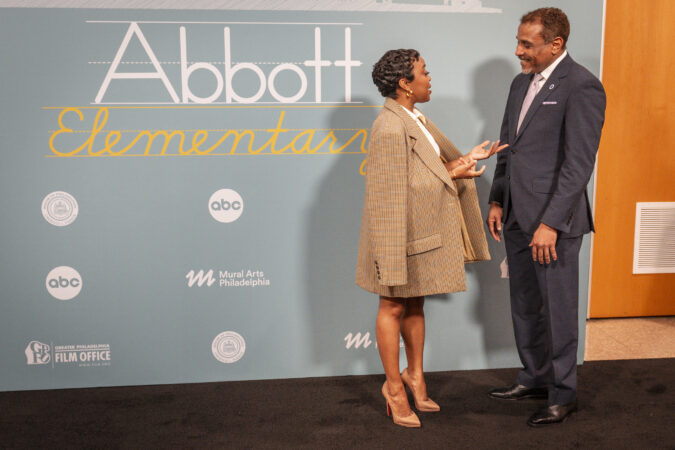
    Brunson, of Abbott Elementary fame, grew up in West Philadelphia and spent time in district and charter schools. She named her smash-hit TV show, now in its fifth season, for Joyce Abbott, her sixth-grade teacher at Andrew Hamilton Elementary.

    Field trips — including ones Abbott’s class sold hoagies to pay for — were a seminal part of her Philly education, Brunson said in a statement.

    “They opened my world, sparked my creativity, and helped me imagine a future beyond what I saw every day,” Brunson said. “Going somewhere new shows you that the world is bigger and more exciting than you believe, and it can shape what you come to see as achievable. I’m proud to support Philadelphia students with experiences that remind them their dreams are valid and their futures are bright.”

    “Abbott Elementary” star Quinta Brunson watches the Phillies play the Atlanta Braves during a taping of the show in Philadelphia in August.

    Every Abbott Elementary season has featured a field trip episode, including visits to Smith Playground, the Franklin Institute, and the Philadelphia Zoo. Brunson’s fund “will remove the financial barriers that too often limit our children’s access to these enrichment opportunities,” officials for the Fund for the School District of Philadelphia said.

    The GivingTuesday launch kicked off with an unspecified donation from Brunson herself.

    Kathryn Epps, president and CEO of the Fund for the School District of Philadelphia, said getting students out of their classrooms is crucial.

    “We are honored to partner with Quinta to expand these experiences for children in Philadelphia’s public schools, helping them to envision and realize any future they desire,” Epps said.

    Tony B. Watlington Sr., Philadelphia School District superintendent, said he was grateful to Brunson.

    “We want our students to venture out and bridge what they’re learning in the classroom to engaging, real-world learning experiences,” Watlington said. “This commitment to equitably expanding opportunities for students to have experiences outside of their classroom will help accelerate student achievement and we are becoming the fastest improving, large urban school district in the nation.”

  • Joan Shepp named one of the best clothing shops in the country by the New York Times

    Joan Shepp named one of the best clothing shops in the country by the New York Times

    Ellen Shepp woke up on Monday morning to the fantastic news that Joan Shepp, her mother’s eponymous clothing boutique, made the New York Times’ list of 50 Best Clothing Stores in America.

    Talk about a great kick off to the holiday shopping season.

    “I’m honored, proud, and excited,” Ellen Shepp said Monday morning. “I mean … I’m really over the moon.”z

    Walking into a great clothing store, New York Times cultural trend reporter Steven Kurutz said, is like being “transported to a different world.” It “will make you think about who you are — and may change that perspective in real time.”

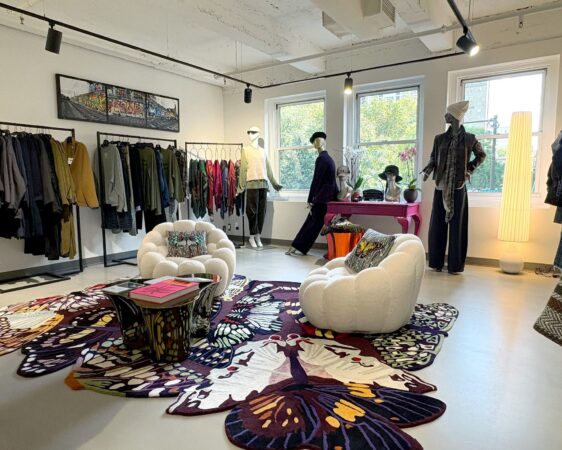
    The interior of Joan Shepp at 1905 Walnut St. The 53-year-old store made the New York Times’ list of “50 Best Clothing Stores in America.”

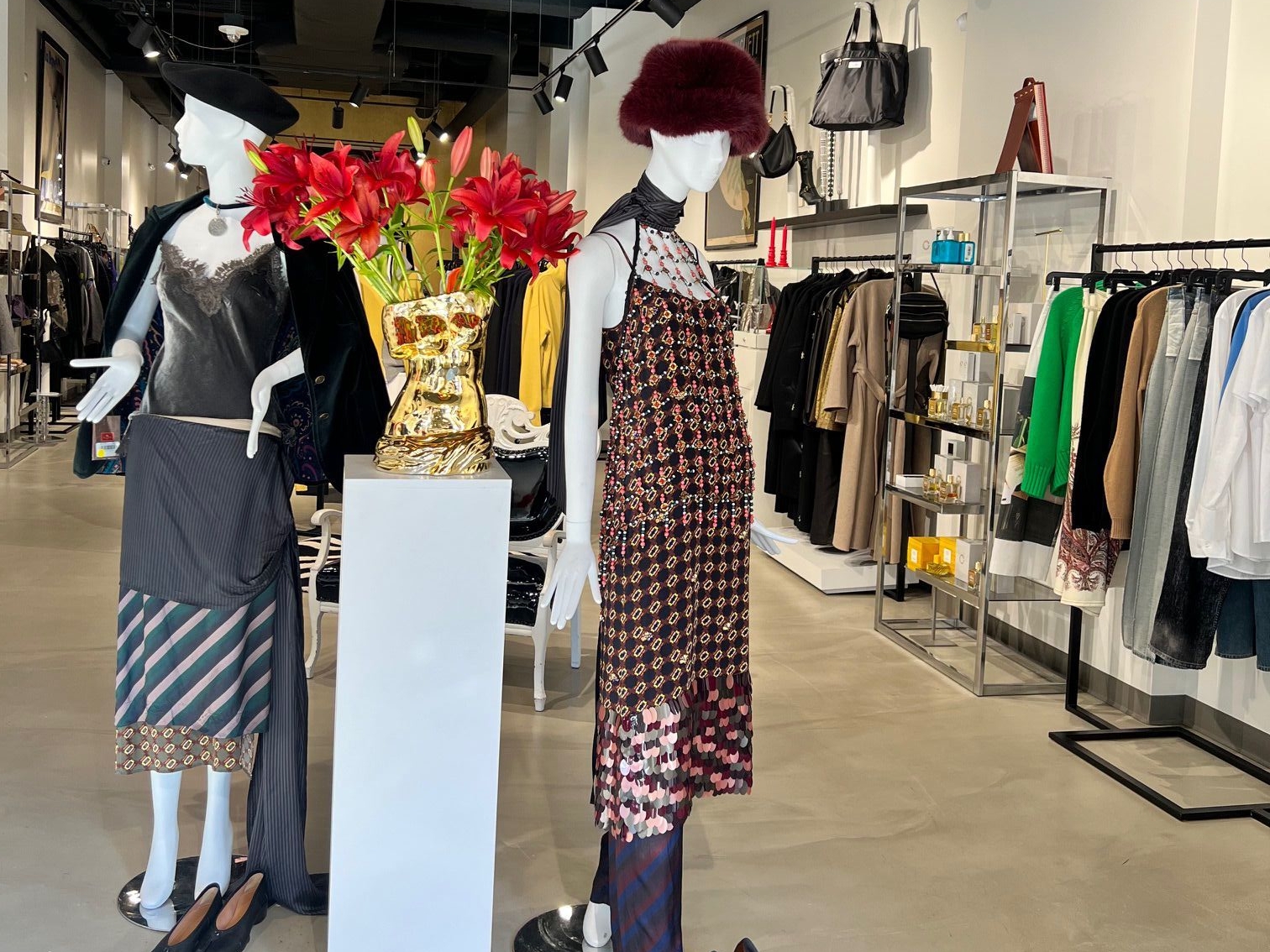
    And yes, walking into Rittenhouse Square’s Joan Shepp does feel like stepping into a sartorial fairytale, which you can leave holding a Yohji Yamamoto hoodie that doubles as a dress, or a perfectly tailored asymmetrical shirt dress from Sacai New York.

    Everything is dreamy, but nothing comes cheap.

    Back in the 1970s, Shepp opened her store to challenge the way the suburban career woman dressed in Philly and introduced her to designer wear, from Yohji Yamamoto to Maison Margiela. One of the earliest entrepreneurs to embrace the store-within-a-store approach to retail, Shepp made space for collections like Yamamoto’s Y-3 and Donna Karan’s Urban Zen.

    The clothing sold alongside furniture, bedding, and candles, making Joan Shepp one of the region’s earliest concept boutiques.

    Joan Shepp founded the store in 1971. She was a 30-year-old single mother of two young children in need of a flexible work schedule that allowed her time for school pickup and drops, to help her daughters with homework, and make them dinner.

    Joan Shepp and her daughter Ellen Shepp, shown here in their Center City store.

    “I have so much fun finding things that are new,” she said to The Inquirer in 2022. “I listen to everyone who comes into my store. I watch them go through the racks. And whether/if they are a customer or a person who wants to open a store down the street, I can pick up on it.”

    Hers is the only store on the Times list from the Philly region.

    The closest is 7017 Reign in Fort Lee, N.J., described by the Times as an “under the radar, street and high fashion” specialty store. There are a handful of stores from downtown New York, but most are in the Midwest and California.

    To produce the list, the Times team selected 120 stores, and then sent reporters, editors, and contributors to visit each of them, sometimes more than once.

    A videographer visited Joan Shepp in early fall, shortly after the store moved to its new home at 1905 Walnut St.

    Noting that Joan Shepp has been in business for more than 50 years — the specialty boutique is in the midst of celebrating its 53rd year — Kurutz wrote “Shepp has flavors of Barneys New York in its heyday.”

    The Barney comparison wowed Ellen Shepp. Christmas had no doubt arrived early for the boutique owner and her team.

    “The whole time they were like, ‘Listen we don’t know whether/if you made this list,’” she said. “They kept it a mystery until right this second.”

    Joan Shepp is located at 1905 Walnut St.

  • Reinvesting in Community

    Reinvesting in Community

    A U.S. Navy veteran with a background in financial services, Citadel Credit Union president and CEO Bill Brown has made it his goal to ensure that Citadel is a trusted partner to its members who, as collective owners of the credit union, are more than just customers. The organization is focused on helping them improve their financial well-being and plan for a stronger financial future.

    Under his leadership, Citadel is expanding its presence across the greater Philadelphia region, with new branches like its upcoming Overbrook Park location, new partnerships, and a renewed focus on small business growth, financial education, and community empowerment. “I have a firm belief that people deserve a financial institution that cares about giving them a better experience and improving their financial well-being,” Brown said. “That’s exactly why I chose Citadel and what we’ll continue to prioritize.”

    Brown’s approach to leadership is rooted in creating partnerships that have impact. His vision for Citadel’s future is clear: create opportunities and help strengthen financial wellness for individuals, families, and businesses throughout the region.

    In this Q&A, Bill Brown talks about what inspires him and how Citadel’s mission of “Building Strength Together” shapes its work in Philadelphia and beyond.

    What inspired you to take on the role at Citadel?

    It was a chance to bring my experience in financial services to a not-for-profit organization. We have the opportunity to help individuals improve their financial lives. And as a result of helping those people, Citadel can strengthen their communities. That really appealed to me. It was a way to return to service, but this time through finance, helping families build financial stability and opportunity.

    Coming back to this region felt a bit like coming home. My wife and I first lived here years ago, near Rittenhouse Square, and we absolutely fell in love with Philadelphia — the energy, the people, the neighborhoods. Our son was born here, so the city has always held a special place in our hearts.

    You’re a U.S. Navy veteran who served at the Pentagon and as a naval flight officer. How has your military experience shaped your leadership style and approach to teamwork?

    Early in my military career, I learned an important lesson: rank matters, but it doesn’t automatically earn you trust and confidence. Those have to be earned. That idea has stayed with me throughout my career in banking, financial services, and now at Citadel.

    What really matters is that our employees feel they’re working with leaders who care, who have their best interests at heart, and who have a clear vision for how we can serve our members and communities. That comes directly from my time as a Naval Flight Officer. On a crew with people from all walks of life, you learn quickly that leadership isn’t about giving orders. It’s about communication, trust, and shared purpose. You explain the mission, you invite input, you listen. When people understand why we’re doing something and feel part of the process, they’re far more engaged and committed.

    You’ve led a variety of large financial organizations. What makes a credit union different from a bank?

    What makes credit unions different is their purpose. A credit union is a not-for-profit financial cooperative. We exist to serve our members, not shareholders.

    Credit unions began in the 1930s, when many people felt overlooked by traditional banks. Groups of employees and community members pooled their money to help one another, lending to coworkers, neighbors, and small businesses. That spirit still defines us today.

    In a publicly traded bank, the board’s fiduciary responsibility is to shareholders. Of course, banks care about their customers and communities, but their primary duty is to deliver shareholder value. At a credit union like Citadel, our responsibility is to our members, the people who trust us with their money.

    That perspective shapes every decision we make: the products we offer, how we serve, and how we give back. For example, through programs like our Home Help grants and small-business lending, we reinvest profits back into our members’ goals. We still must be financially sound and well-run, but our measure of success is how well we help our members and communities thrive.

    What drives you in your leadership of Citadel?

    What drives me is helping others find the same opportunities I’ve been fortunate to have. I don’t think of myself as particularly gifted or special. What’s helped me succeed is my ability to connect with people and bring them together. I want to create an environment where others can do the same, where they feel empowered to take chances and build fulfilling careers.

    When we help our employees grow professionally, that confidence and purpose often carry over into their personal lives, and that ripple effect is meaningful to me.

    When it comes to our members, my deeper purpose is helping people achieve financial well-being. To me, that’s not about wealth or status. It’s about peace of mind. It’s the ability to sleep at night knowing you’re on solid financial footing, that you’re making informed decisions for your family and your future. Not everyone has access to the same financial knowledge or resources. That’s where Citadel can make a difference, by filling those gaps, educating, and empowering people to feel in control of their finances.

    That same mindset extends to how we support our communities. One of the programs I’m most proud of is the Citadel Heart of Learning Award, which recognizes teachers who make an extraordinary impact on students’ lives. Teachers shape futures, often without much recognition or financial reward, so honoring their work feels deeply aligned with our mission. The awards we give may not change a school’s budget, but they can fund that next project or help one teacher make a difference for 30 kids in their classroom.

    Beyond education, we focus on areas like food security, housing, and financial literacy — the essentials that help people live stable, dignified lives. We can’t solve every issue, but we can partner with others to help move the needle.

    Citadel’s tagline, “Building Strength Together,” reflects its commitment to investing in members and communities. What does this actually look like day to day?

    When we talk about “Building Strength Together,” it’s more than a tagline; it’s our mission and how we measure success. I think of it as a lattice, an interconnected network of programs, partnerships, and volunteer efforts that reinforce one another. It’s not one single initiative; it’s the combined effect of many people and organizations working together to create a stronger safety net for our members and our communities.

    Because we’re a not-for-profit, member-owned credit union, our business model lets us reinvest directly in our members. That means consistently offering higher rates on savings and deposits and lower rates on loans compared to traditional banks. The difference is that instead of profits going to shareholders, the value goes right back to our members.

    We also invest heavily in digital tools and products that make banking simpler and more rewarding, things like higher cash-back cards, better digital experiences, and financial education resources. And through our wealth management division, we help people make informed, long-term decisions about their money, whether they’re rolling over a 401(k), starting an IRA, or planning for retirement.

    At the end of the day, “Building Strength Together” means making life a little easier for our members and stronger for our communities, one financial decision at a time.


    Citadel is expanding its presence into Philadelphia with new branches and initiatives. What is the goal with this growth?

    As we expand into Philadelphia with our first branch location in Overbrook Park, our focus isn’t on creating programs just for the sake of visibility. We want to partner with the best local nonprofits and community organizations, bringing our time, talent, and resources to support the great work that’s already making an impact.

    Our goal is simple: educate and empower people. That’s why we formalized our philanthropy group over the past year: to make our efforts more intentional and effective. As we grow, we aim to uplift the programs and people already doing great work. We’ve already committed more than $6 million in community lending and housing-access programs, and that work will continue citywide.

    Citadel recently became an authorized Small Business Administration lender and expanded its commercial banking services. How does supporting small businesses fit into your vision for community development and economic equity?

    Becoming an SBA lender to small businesses helps not just one business, but an entire community. We aim to empower small business owners, and we support them in every way, including educating them on operations and how to handle payroll and other aspects of running a successful business. We are helping bridge gaps in access to credit, financial literacy, and overall financial wellness for individuals and businesses.

    Who in your personal life inspires you to be the leader you are today?

    My kids inspire me every day. My son has a real passion for running, a test of will and perseverance that he didn’t get from me. And my daughter has been an incredible dancer since she was little — so fluid and creative. Watching them dedicate themselves to their passions is both humbling and inspiring.

    What do you do with a few hours of free time?

    My free time is sacred, and I spend it with my wife at our kids’ events whenever I can. Vacations are also important for us as a family, a chance to get away and reconnect. Skiing in the mountains is my favorite getaway because it’s family time. [It’s] a chance to disconnect from everything else. Those chairlift rides are some of my favorite moments to talk with the kids or just enjoy the view.

    I even use the idea in business: When I’m looking for people to join our team, I think about the kind of person I’d enjoy being stuck on a chairlift with for 30 minutes. If we can connect there, they’re probably the kind of person who’ll thrive on our team.


    PHILLY QUICK ROUND

    What’s your favorite Philly food splurge? My wife and I love a special dinner at Giuseppe & Sons. Sunday gravy is a must!

    Favorite small business in Philly? Salty Paws Philly on South Street.

    What’s the biggest misconception non-locals have about Philly? We have a reputation for being tough, but once you crack through the exterior, we’re really soft and gooey on the inside.

    What sports jersey do you wear most often? It just so happens that I got number 11, A.J. Brown [of the Eagles], because I can wear my last name!

    Who is the greatest Philadelphian in history? Nancy Johnson. She invented the hand-cranked ice cream machine in the 1850s. And really, who doesn’t love ice cream?

    I feel most like a Philadelphian when … I am packed in on the train, down in South Philly, with everyone else who’s coming back from a sporting event.