When U.S. Steel opted to build a new mill in Arkansas that had originally been planned for Allegheny County, then-Arkansas Gov. Asa Hutchinson jokedin 2022 that his state could have the mill built faster than Pennsylvania could have it permitted.
Three years later, Pennsylvania politicians and business leaders are hopeful that a series of permitting reforms — the latest of which were approved as part of the state’s $50.1 billion budget — have finally flippedthatdynamic.
The reforms, which are designed to expedite Pennsylvania’s Department of Environmental Protection’s permitting process to allow for quicker development, mark a major step forward in a project that has long been a goal for Democratic Gov. Josh Shapiro and Republican leaders in the General Assembly.
Pennsylvania’s Department of Environmental Protection is responsible for issuing a variety of permits for building plans to ensure they comply with state law and are environmentally safe. The latest reforms will force the agency to automatically approve certain permits relating to stormwater and groundwater within 60 days if it has not completed its review in that time period or sought an extension. For certain permits related to air quality, the changes allow for the permits to be automatically approved 30 days after submission if the DEP has not acted.
The budget, which Shapiro signed into law last month, also expanded an existing program, called SPEED, that allows companies to hire third-party inspectors for certain permits to expedite the process. And lawmakers required the state to create and maintain a database where companies can easily track the progress of their permit applications.
For Senate Majority Leader Joe Pittman (R., Indiana), the change represents a paradigm shift in the state. He recalled the 2022 loss of the U.S. Steel mill at a news conference last month.
“You cannot have economic development without shovels in the ground, and you can’t put shovels in the ground without permits,” Pittman said.
The reforms, he said, will “provide certainty,” which he called, “critical to economic development.”
A longtime goal
Amy Brinton, director of government affairs at the Pennsylvania Chamber of Business and Industry, said it has long been common for businesses to choose other states because of Pennsylvania’s arduous permitting process, and at times begin the process of building in Pennsylvania only to move out of state when permitting becomes a hurdle.
“We lose a lot of projects to Texas and Ohio because of our complicated permitting process,” Brinton said.
Remedying this through permitting reforms, as well as expedited certifications, have been among Shapiro’s top priorities as governor.
“When he took office in January 2023, Governor Shapiro promised to make state government work more efficiently and effectively for Pennsylvanians. Since then, the Shapiro Administration has delivered on that promise to get stuff done — streamlining permitting processes, reducing wait times for licenses, and cutting red tape to attract more businesses to the Commonwealth,“ Kayla Anderson, a spokesperson for Shapiro, said in a statement. ”This budget builds on the Governor’s success.”
Shapiro signed several executive orders aimed at that goal including developing a “Fast Track” program for high-priority projects. DEP has eliminated the 2,400 permit backlog that existed when Shapiro took officein 2023. Additionally, Shapiro’s office said, the average processing time for all permits dropped to 38 days in 2025 from 53 days in 2022.
Lawmakers first approved the SPEED program allowing for third-party inspectors in the 2024 budget. Shapiro’s office said the program has alreadyproduced results, cutting permit wait times in half in some cases.
These projects are a key part of Shapiro’s business-friendly approach, which he’s promoted as he bolsters his resume and bipartisan appeal ahead of a 2026 reelection campaign and a potential future presidential run.
“The permitting was awful,” Ward said in an interview last month. “Permitting now, instead of 300 days, we’re at 30 days. It’s amazing that we were able to come together and get that done.”
Brinton said she is hopeful that the combination of reforms will make it easier for businesses to choose to build in Pennsylvania because the timeline will be more predictable.
“Improved accountability, greater predictability, faster timelines — those are the key kind of drivers that we’re hoping this will continue to provide to our businesses in the hopes that when they look at Pennsylvania they won’t wince at the fact that this is going to take forever,” Brinton said.
Millions of dollars in federal funding for homeless services are at risk after the Trump administration on Friday moved forward with a plan to cut support for most long-term housing programs that serve people otherwise without stable shelter, according to officials in Bucks and Montgomery Counties.
The plan, which is still being fought in court after the Department of Housing and Urban Development released an earlier iteration of the policy shift in November, seeks to upend the way communities across the nation, including Philadelphia, treat people experiencing homelessness and would reroute the spending of $3.9 billion in grants for a program called Continuum of Care that localities rely on to fund housing programs.
The latestdevelopment came Friday night, when HUD appeared to respond to a judge’s ruling in the legal battle by issuing a new set of rules to apply for the federal awards. The new HUD document reduced the amount of funding available for permanent housing by two-thirds, a drastic decrease, said Kayleigh Silver, administrator of the Montgomery County Office of Housing and Community Development.
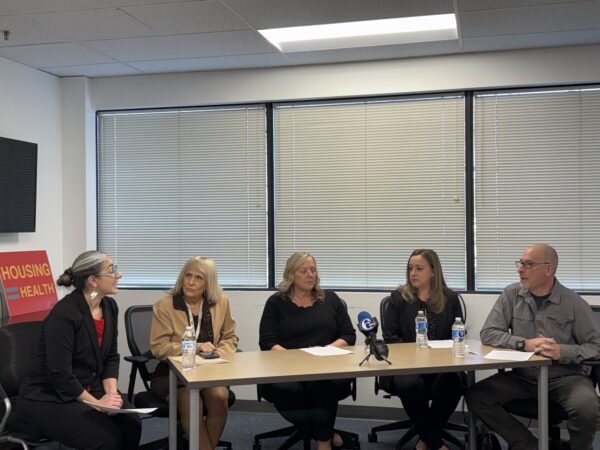
The new plan “we believe will worsen homelessness and destabilize communities, not improve them,” said Kristyn DiDominick, executive director of the Bucks-Mont Collaborative, at a news conference Monday in Warminster. The nonprofit fosters resource sharing between the two counties.
Officials said hundreds of people in the counties, including families, veterans, and people with disabilities, could lose access to housing as a result of the funding shift. Nationwide, the HUD plan could displace 170,000 people by cutting two-thirds of the aid designated for permanent housing, advocates say. In Philadelphia, tens of millions of dollars used to fund the city’s 2,330 units of permanent supportive housing are at risk, city officials said in November
Bucks County Commissioner Diane Ellis-Marseglia, a social worker by trade, said HUD broke its “promise” to continue providing support to programs.
“If we can’t trust HUD, how are we supposed to get the people we work with to trust us?” said Ellis-Marseglia, a Democrat.
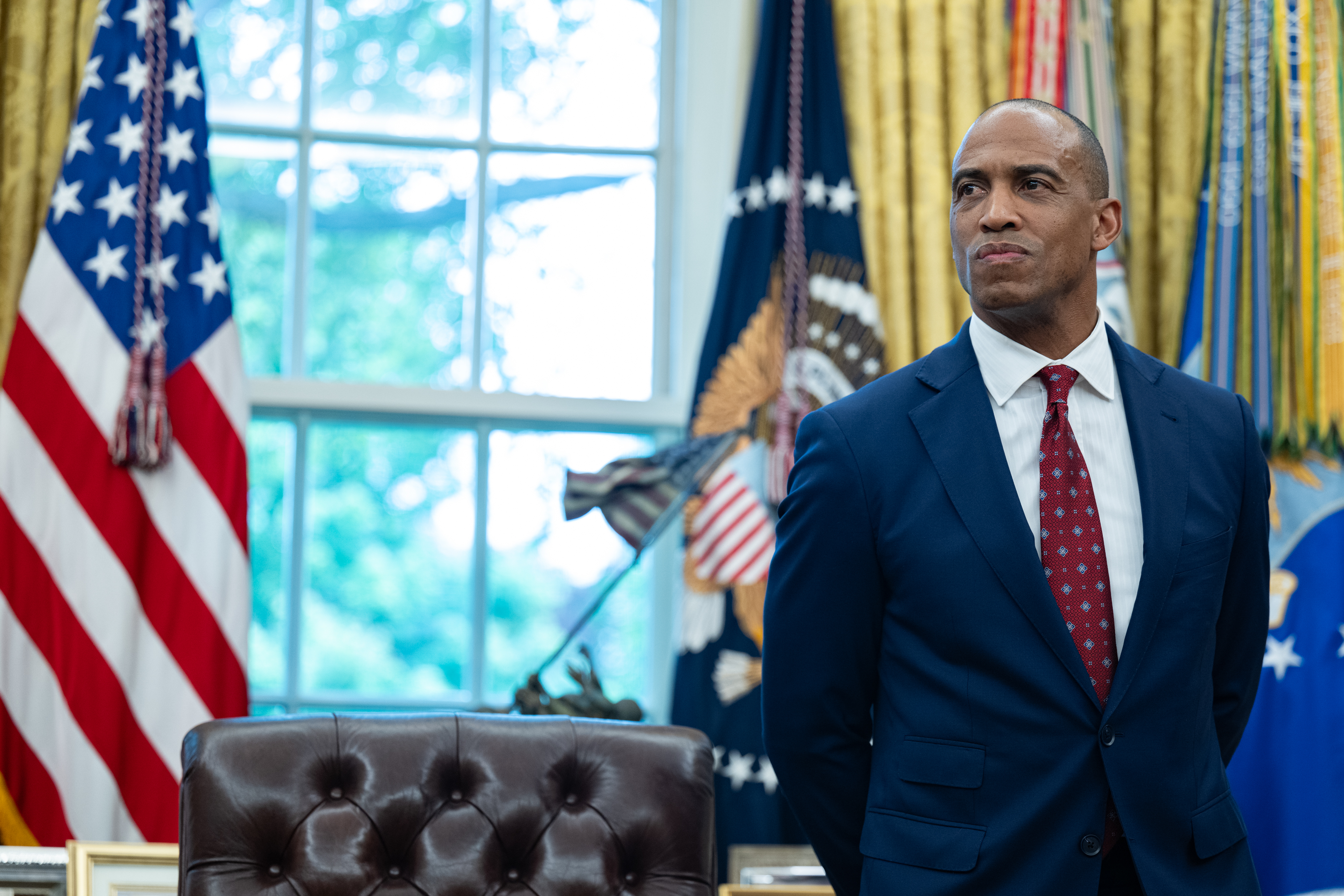
Secretary of Housing and Urban Development Scott Turner in the Oval Office on May 5.
The HUD announcement followed two lawsuits, including one from Pennsylvania Gov. Josh Shapiro and 20 other states’ attorneys general and governors, against President Donald Trump’s administration over the cuts included in the November draft of the plan.
The earlier plan gave HUD the authority to restrict funding for groups that recognize the existence of transgender and nonbinary people, populations that face greater risks for homelessness. County officials are still seeking clarification on whether that provision remains in the new plan.
HUD temporarily rescinded the controversial plan on Dec. 8, just hours before a hearing on the lawsuits, citing an intent to revise it. On Friday, U.S. District Judge Mary S. McElroy, who presided over the hearing, issued a preliminary injunction blocking HUD’s efforts until a new funding notice is issued. It remained unclear to local advocates and service providers the differences between the new plan posted later that night and the original.
“HUD will continue working to provide homelessness assistance funding to grantees nationwide. The Department remains committed to program reforms intended to assist our nation’s most vulnerable citizens and will continue to do so in accordance with court orders,” a spokesperson for the department said in a statement to The Inquirer.
The confusing standoff marks the latest obstacle that nonprofits have had to endure after a lengthy federal government shutdown and Pennsylvania’s state budget impasse, both of which contributed to funding delays and instability.
Bucks and Montgomery County service providers and advocates at Monday’s news conference handed out literature that said“Chaos isn’t a strategy” and called on Congress to step in, noting that the funding process is months behind.
The impacts “land on real people,” DiDominick said.
Housing is also an important resource for survivors of domestic violence, said Stacy Dougherty, executive director of Laurel House, a domestic violence organization in Montgomery County.
“For victims of domestic violence, access to safe housing can be the difference between staying in an abusive relationship and being able to leave, and sometimes even the difference between life and death,” Dougherty said.
Erin Lukoss, CEO of the Bucks County Opportunity Council, added that “housing is the foundation,” a backbone for the entire system that tries to address poverty and food insecurity. A lack of clarity on this funding is another stressor for service providers and those who benefit from the resources
“What makes this moment especially concerning is not just the potential reduction in funding, it’s the instability of the rules themselves,” Lukoss said.
Of course, not all of the Jeffrey Epstein files were released.
Even some files made available late Friday were quickly removed. Large portions were heavily redacted. Some portions contained boldfaced names, but there was little mention of Donald Trump.
As long as Trump keeps his thumb on the scales at the U.S. Department of Justice, no one should ever expect a fair shake — let alone an honest accounting of the yearslong connection between a convicted sex offender and a convicted president who is a congenital liar.
This is life under a brazenly corrupt administration that rewards billionaire cronies, punishes hundreds of political enemies, kills in broad daylight, and tramples the Constitution.
Better to prepare for how to defend against three more years of authoritarian rule mixed with kabuki theater.
In normal times, the Trump administration’s continued cover-up of the Epstein files would be an epic scandal, prompting hearings, investigations, and accountability.
But the Republicans who control the House and Senate have been a profile in cowardice. Until enough voters wake up, Trump and the GOP will continue to provide misdirection, denials, and a flouting of the law.
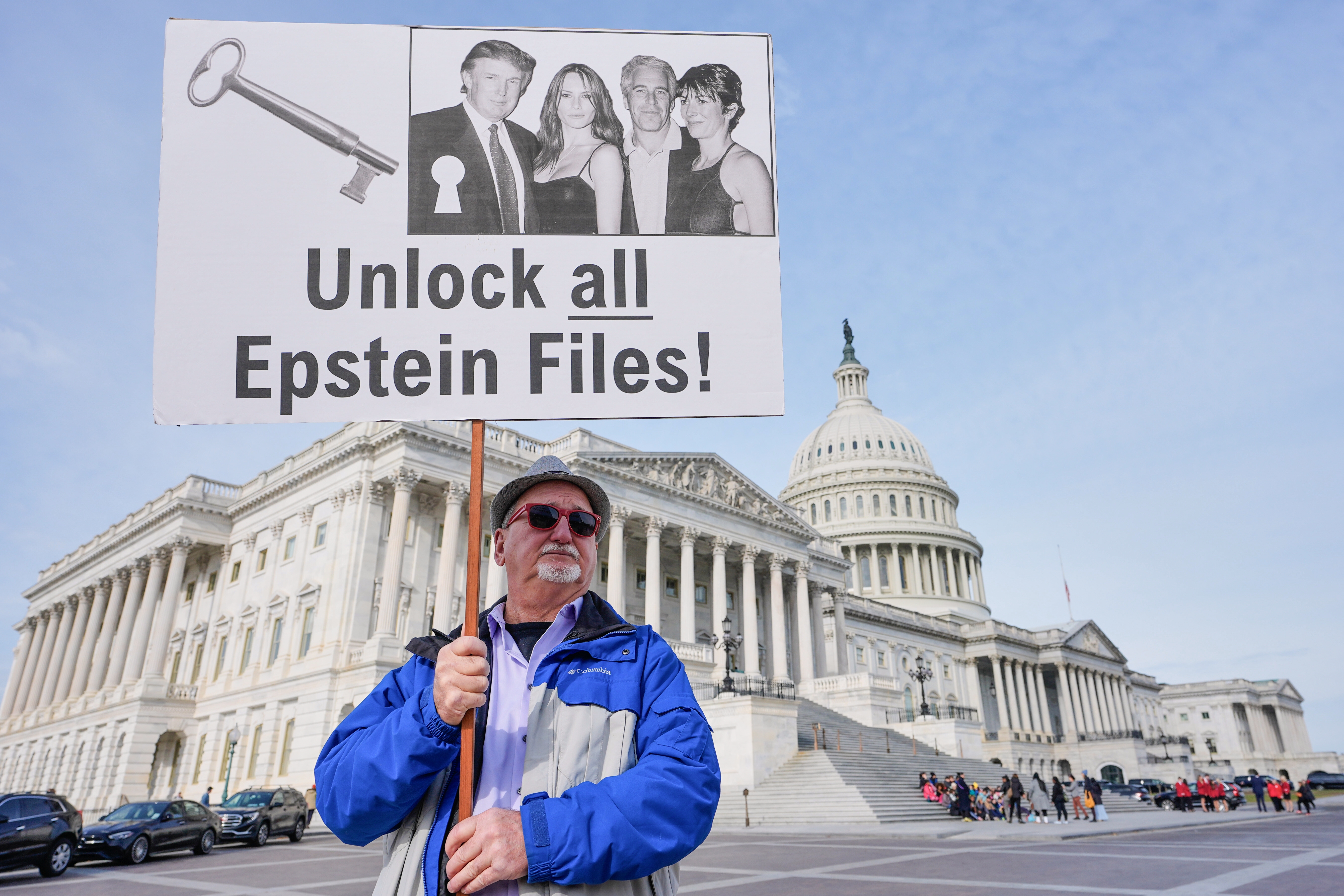
Gary Rush, of College Park, Md., holds a sign outside the U.S. Capitol urging the release of the full Epstein files in November.
Trump has not been implicated in any wrongdoing, but his enablers — including Attorney General Pam Bondi and FBI Director Kash Patel, and most Republicans in Congress — inexplicably continue to protect him.
Doing so obliterates any trust in the justice system and the rule of law.
The main tragedy involves the yearslong sex trafficking, rape, and abuse of hundreds of underage girls, including one alleged 11-year-old, and young, vulnerable women by Epstein and his many rich and powerful friends.
Epstein’s survivors have demanded that the files be released so there can be at least some public accounting of the horror they endured. But instead, the survivors have had to relive the trauma and fear of death threats.
One survivor who Epstein recruited from Trump’s Mar-a-Lago spa when she was a teen took her own life earlier this year. In atelling admission of how Trump views women as objects, he said earlier this year that Epstein “stole” her from him.
A recent story by the New York Times detailed how Trump and Epstein “pursued women in a game of ego and dominance” where “female bodies were currency.”
But the American people have been misled and abused, as well, while other pressing issues have been ignored or made worse.
Trump’s disregard for women has been well documented.
More than two dozen women have accused Trump of sexual abuse. He was caught on tape bragging about grabbing women by their genitals.
Danielle Bensky (left) and Anouska De Georgiou, victims of convicted sex offender Jeffrey Epstein, embrace during a news conference in Washington, D.C., in September.
A separate video showed Trump and Epstein partying at Mar-a-Lago, while Trump patted a woman on her behind. In 2023, a jury found Trump liable for sexually abusing a woman.
Everyone knew Trump was a lout, but more than 77 million Americans, including millions of women, voted for him anyway. And the Republicans in Congress have dutifully stood by him for years, bringing repeated shame to themselves and the country.
During last year’s election campaign, Trump used the Epstein files to stoke conspiracies and rally his supporters. He promised to release the files if elected, but after returning to the White House, called them a hoax.
(Trump also promised to lower prices, but that is a separate editorial, just as is his promise to end the war in Ukraine in one day.)
After mounting pressure from his base, and a 427-1 House vote last month to release the Epstein files, Trump ultimately signed a bill to make them public by Dec. 19.
The deadline passed, and all the files have yet to come out. Expect more gamesmanship and Truth Social rants.
The Epstein saga is a microcosm of Trump’s modus operandi. Lie, steal, cheat. Deny, deflect, delay, and degrade. Blame, complain, pressure, and sue. Line pockets whenever possible. Always overpromise and underdeliver.
Truth, honesty, humility, compassion, or responsibility are nowhere to be found.
Trump’s sinking poll numbers indicate that many supporters are finally catching on. The midterms loom, but so does three more years of hell.
But could the end of our long national nightmare be near?
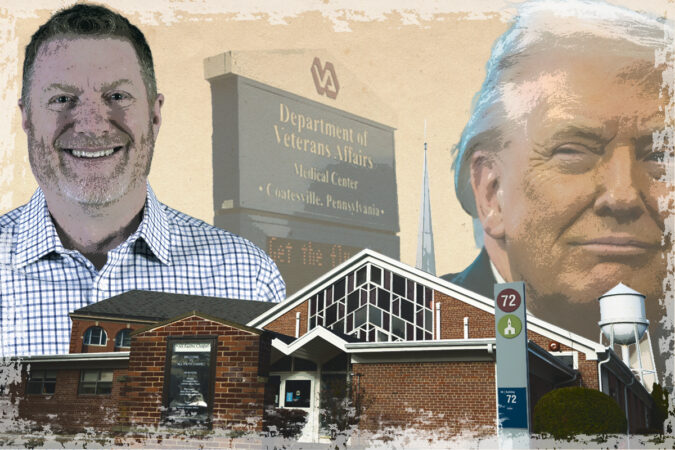
Russell “Rusty” Trubey said he was compelled by God to preach the words that helped set off a national battle over religion at the U.S. Department of Veterans Affairs.
Reading from a sermon titled“When Culture Excludes God,” Trubey, an Army Reserve chaplain, sermonized to a congregation of veterans at the Coatesville VA Medical Center from a Bible passage — Romans 1:23-32 — that refers to same-sex relationships as “shameful.”
Some congregants, upset by the sermon, walked out of the June 2024 service at the Chester County facility, where Trubey has been employed for roughly 10 years. Soon after, Trubey’s lawyers said he was temporarily pulled from his assignment — and transferred to stocking supply shelves — while his supervisors investigated his conduct.
Speaking to Truth and Liberty, a Christian group that advocates for the church to play a greater role in the public sphere, Trubey said he knows that reading the Bible verses about same-sex relationships is “100%” the reason he got in trouble.
One of the entrances leading into Coatesville VA Medical Center.
A month earlier, Trubey’s lawyers had taken hiscase to the White House. In a letter sent a few weeks after President Donald Trump’s inauguration, Trubey’s lawyers asked Trump’s VA secretary, Doug Collins, to interveneon Trubey’s behalf in regard to repercussions for the sermon.
Trubey had delivered the talk during former President Joe Biden’s administration — an environment that Trump officials allege was hostile to Christians.
In the letter, the chaplain’s lawyers from the First Liberty Institute and Independence Law Center accused Trubey’s supervisor of wanting sermons to be screened ahead of time for pre-approval and stated that Trubey received a letter of reprimand, which would later go on to be rescinded by Coatesville VA Medical Center officials.
Soon after the lawyers’ letter reached the new administration, the VA, one of the largest federal employers in Pennsylvania, reinstated Trubey to his position and Collins reaffirmed that chaplains’ sermons would not be censored.
But the fallout from this incident — paired with Trump’s ongoing campaign to root out perceived prejudice against Christians and dismantle diversity, equity, and inclusion — left an undeniable mark on the VA, helping to inspire an agencywide “Anti-Christian Bias Task Force.”
Announced to employees in April 2025, the task force asks employees to report offenses such as “reprimand issued in response to displays of Christian imagery or symbols,” per a department email reviewed by The Inquirer.
And the VA wants names.
In the email, the VA encouraged employees to identify colleagues and workplace practices that violate the policy and send information about the alleged offenses to a dedicated email address. The announcement was in accordance with a Trump executive order from February that ordered federal agencies to “eradicate” anti-Christian bias and create a larger White House task force composed of cabinet secretaries and chaired by Attorney General Pam Bondi.
As of this summer, the VA received more than 1,000 reports of anti-Christian bias and reviewed 500, according to task force documents. Another report is expected in February.
Some of the offenses the VA is on the watch for could be especially pertinent during the holiday season when workers may want their faith represented at their desks.
One union leader at the Veterans Benefits Administration office in Philadelphia called the task force, which does not extend to biases against other religions, “McCarthyism for Christians.”
“What they’re really doing is they’re trying to create a hostile work environment where you’re now afraid to say something because you may be reported,” said the union representative weeks after the VA’s task force announcement. The representative asked to speak anonymously out of fear of workplace retaliation.
The VA said in a statement that the department is “grateful” for Trump’s executive order. The VA did not answer The Inquirer’s questions on an updated number of reports received through the task force, what happens to people or practices that are reported, and next steps of the task force.
“As the EO stated, the prior administration ‘engaged in an egregious pattern of targeting peaceful Christians, while ignoring violent, anti-Christian offenses,’” said VA press secretary Pete Kasperowicz in the statement. “Under President Trump, VA will never discriminate against Veterans, families, caregivers or survivors who practice the Christian faith.”
One of those offenses, as outlined by the VA, is “informal policies, procedures, or unofficial understandings hostile to Christian views.” Another is retaliation against chaplains’ sermons, which appears to be in responseto the Trubey incident from June 2024.
Erin Smith, associate counsel at the First Liberty Institute, who helped represent Trubey said: “If Chaplain Trubey’s story serves as inspiration to help protect the rights of all chaplains in the VA, then that is a wonderful thing to come out of a terrible situation.”
But some VA employees disagree.
Ira Kedson, president of AFGE Local 310, which represents employees at the Coatesville VA Medical Center, said in an interview in June that he heard some employees were “deeply troubled” by the incident with Trubey, especially those who worked in clinical settings with patients who were in attendance of the controversial sermon.
“I was told that some of the residents were deeply hurt and deeply troubled by the situation and it took a long time for them to be able to move past it,” Kedson said.
Religion takes center stage in the Trump administration
Trump is leading what is arguably one of the most nonsecular presidencies in modern United States history with his embrace of a loyal, conservative Christian base.
“We’re bringing back religion in our country,” Trump said at the Rose Garden during the National Day of Prayer in May.
And efforts to elevate religion in the public sphere have gone beyond Trump’s rhetoric. For instance, the Office of Personnel Management, the federal government’s human resources agency, issued guidance that aims to protect religious expression in the workplace for all religions.
Most of the reports submitted to the VA focused on “denying religious accommodations for vaccines and provision of abortion services; mandating trainings inconsistent with Christian views; concealing Christian imagery; and Chaplain program and protections for Chaplains,” according to task force documents.
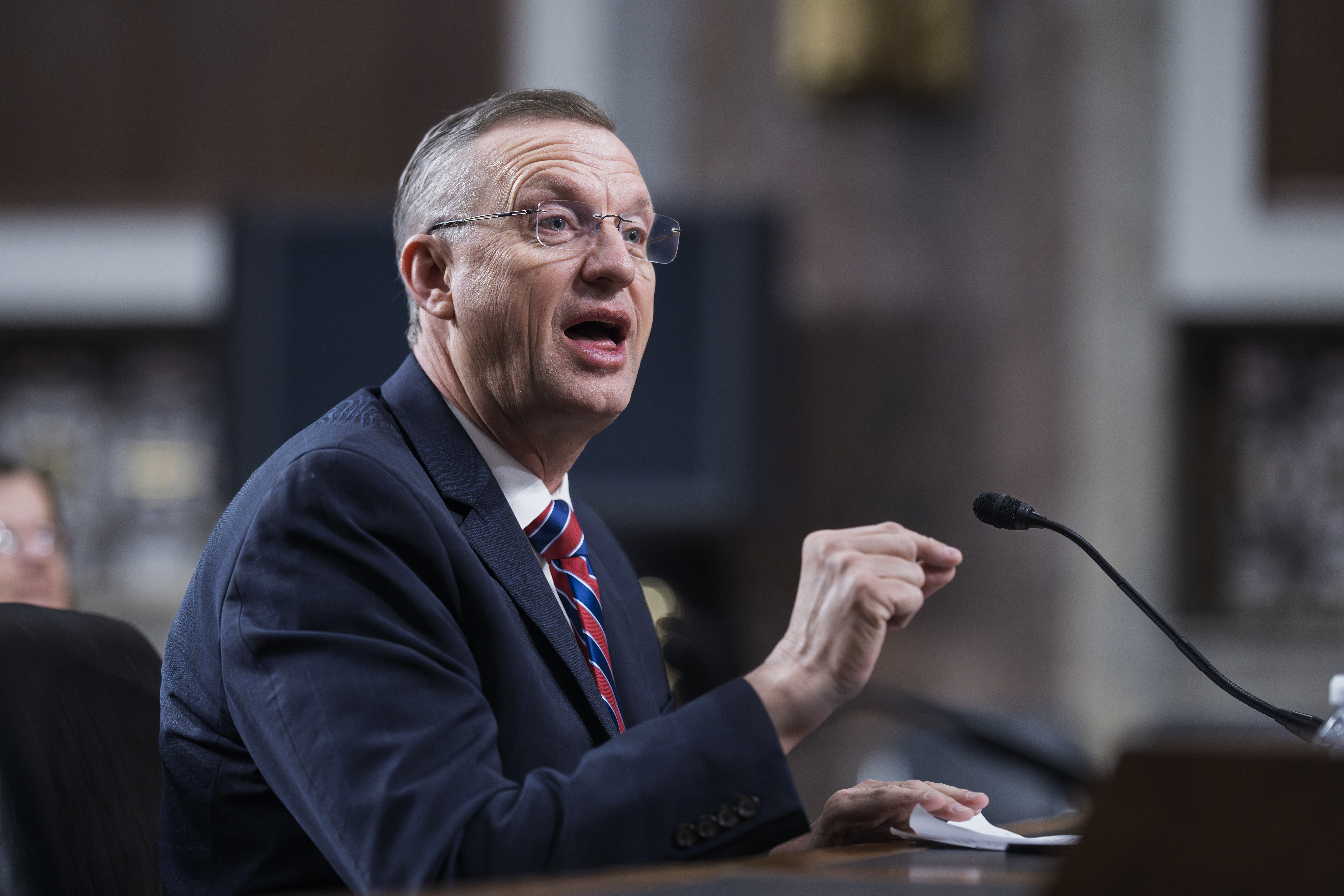
Doug Collins at his Jan. 21 confirmation hearing before the Senate Veterans’ Affairs Committee, at the Capitol in Washington.
Charles Haynes, senior fellow for religious liberty at the Freedom Forum, a nonpartisan organization based in Washington that promotes First Amendment rights, said while it’s not unconstitutional or unprecedented to createa faith-specific task force, “the appearance of [the Christian-bias task force], to many people, is a favoritism of the government for one group over another.”
The White House, in a statement, said Trump has a record of defending religious liberty regardless of faith.
“President Trump has taken unprecedented action to fight anti-Christian, anti-Semitic, and other forms of anti-religious bias while ending the weaponization of government against all people of faith,” said White House spokesperson Taylor Rogers in an email to The Inquirer.
Furthermore, she added, that the media is doing “insane mental gymnastics to peddle a false and negative narrative about the President’s efforts on behalf of nearly 200 million Christians across the country.”
Identifying anti-Christian bias or chasing a ‘unicorn’?
The Trump administration has shared few details about the operations and goals of the anti-Christian bias task force, raising questions from lawmakers and other stakeholders.
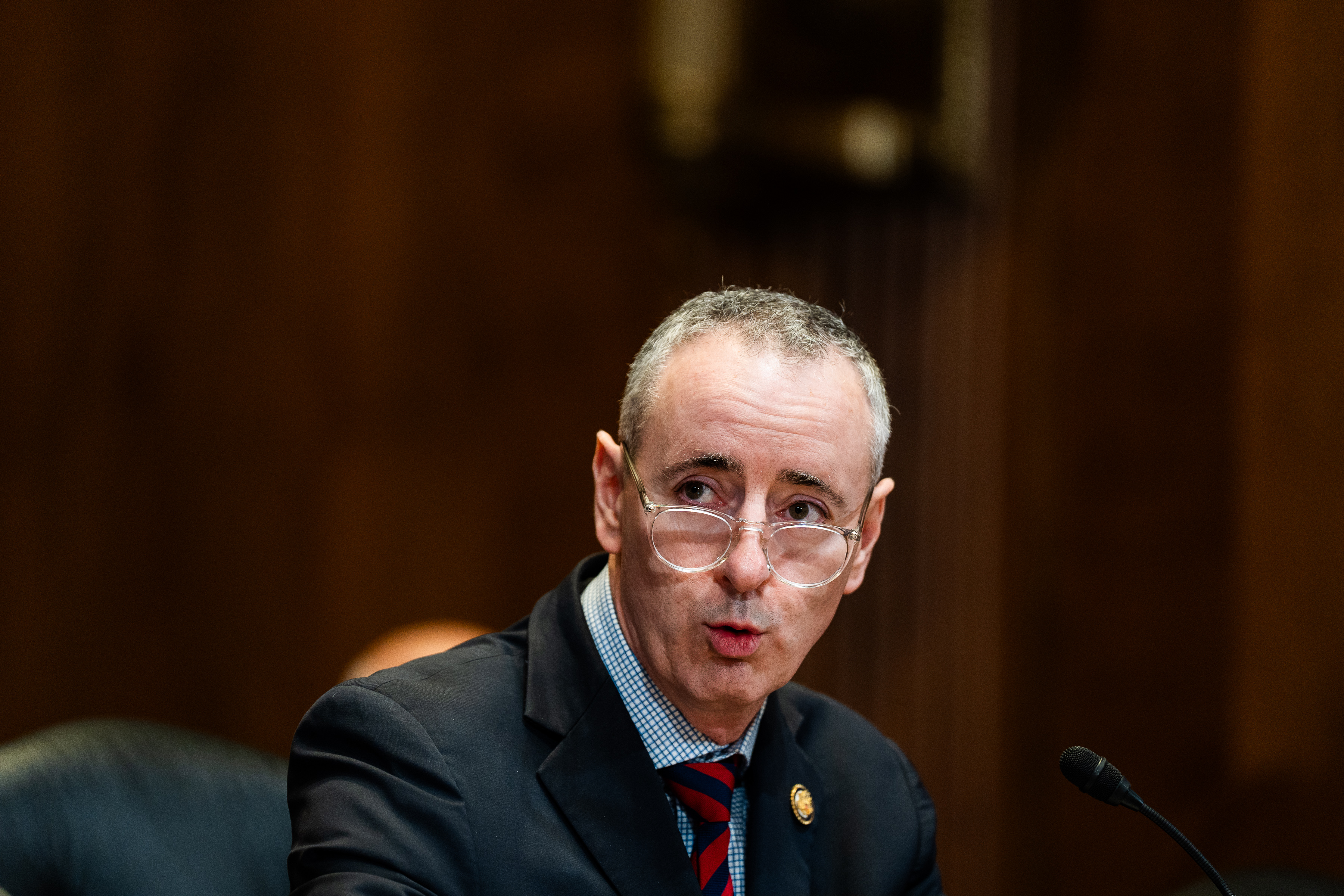
Rep. Mark Takano, the ranking member of the House Committee on Veterans’ Affairs, was in a monthslong back-and-forth with VA Secretary Collins, trying to get answers to an extensive list of questions he initially sent in May, with the California Democrat particularly concerned that the scope of the initiative is limited to bias against Christians.
“To preserve this right to religious freedom, the Department cannot prioritize one faith over others, nor can it allow religious considerations to shape its policies in ways that may conflict with the First Amendment,” Takano wrote in May. “Further, the vagueness of the task force’s mission raises significant concerns about how it will be used and whether it is compatible with the mission of the Department.”
Collins responded in June and did not answer most of Takano’s questions, though he did saythat the task force, which reports to the secretary, will identify, strategize, and potentially alter any policies that discriminate against Christians or religious liberty.
The lawmakerfollowed up a week later. Roughly four months later, in October, Collins’ responses were vague once again.Most recently, Takano is asking for both Democratic and Republican members of the House and Senate’s Veterans’ Affairs Committees to be looped in on future correspondence regarding the task force.
The VA, according to a statement from Takano, has not fully answered their questions and has refused to host a bipartisan briefing.
“The lack of transparency and accountability of this task force leaves me with numerous concerns for the due process and privacy of hardworking VA employees,” Takano said. “VA’s silence won’t stop us from asking the questions we are constitutionally obligated to ask.”
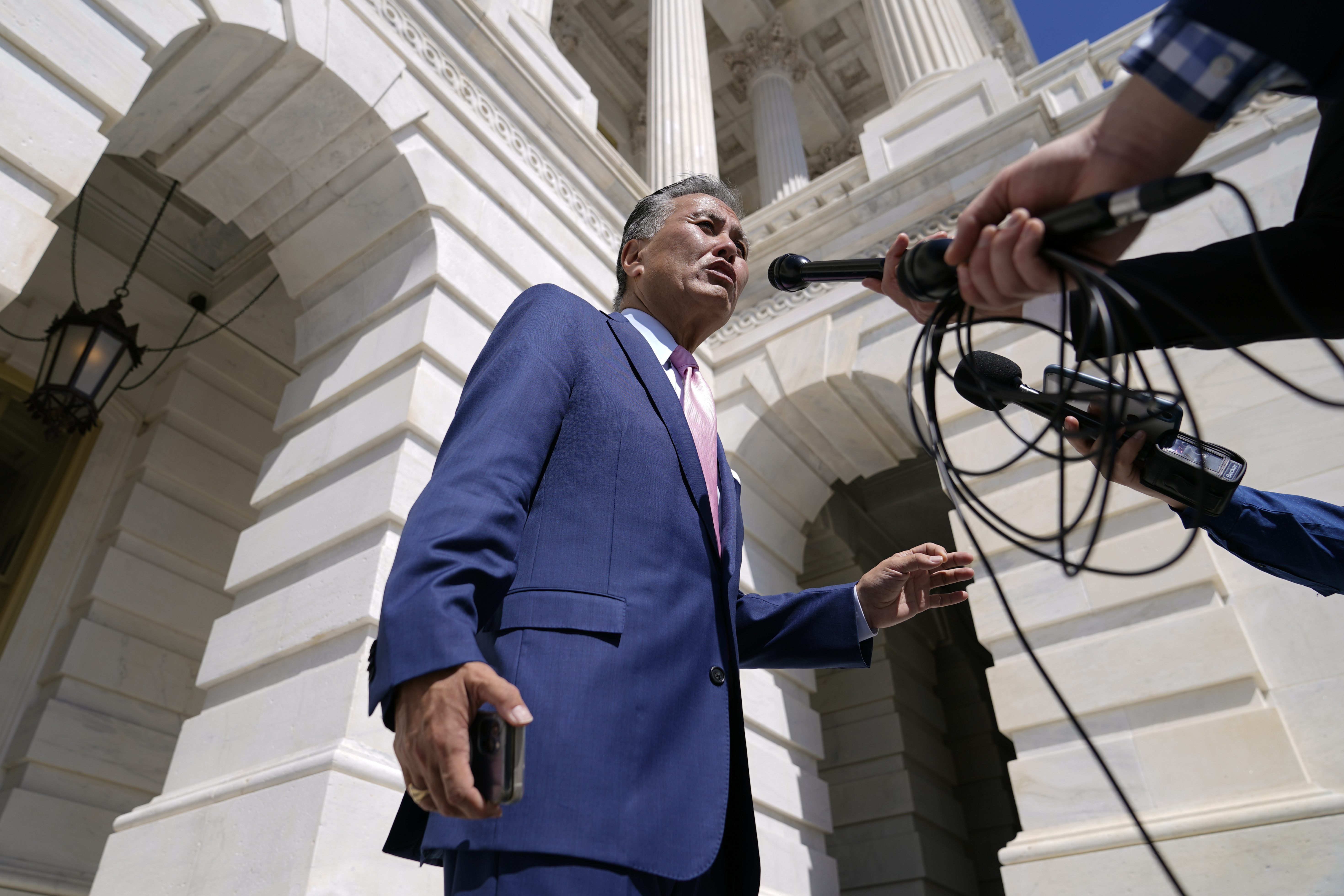
Rep. Mark Takano (D., Calif.) in August 2022, on Capitol Hill in Washington. Takano, ranking member of the House Committee on Veterans’ Affairs, has been trying to get answers from the VA on the Anti-Christian Bias Task Force.
Michael L. “Mikey” Weinstein, former counsel for the Reagan administration turned founder and president of the Military Religious Freedom Foundation, said his group is looking for a plaintiff to sue the government over the task force. The group has been receiving calls from VA employees concerned aboutit, one of whom, he said, was a senior physician at the VA Medical Center in Philadelphia.
The physician, Weinstein said, was distraught to receive the memo about the task force. He had family in town and noted the irony of showing his family around all the historical sites that signified the birthplace of American freedoms while being asked by the federal government to partake in such a project.
“It was like a dagger in his heart,” Weinstein said.
Weinstein is adamant that anti-Christian bias in the federal workforce is nonexistent, like looking for a “unicorn.”
Noticeably absent from the task force, critics say, is any effort to explore instances of discrimination against other faiths within federal agencies.
Trump has historically espoused hateful rhetoric against Muslims, including enacting a travel ban on individuals from predominantly Muslim countries during his first term. The president has issued an executive order this term to combat antisemitism on college campuses, but he also has a history of engaging with antisemites on the political right.
Ahmet Selim Tekelioglu, executive director of CAIR-Philadelphia, a nonprofit that aims to protect the civil rights of Muslims in the U.S., said he believes all forms of discrimination should be stamped out, but he’s concerned the task force isn’t affording those protections to everyone.
“It focuses exclusively on alleged anti-Christian conduct within the federal agencies, and in our opinion of this, risks then entrenching preferential treatment and signaling the protections that should exist for everyone is conditional, right?” Tekelioglu said.
There is hope, however, that this task force could lead to other future initiatives to root out hate, said Jason Holtzman, chief of Jewish Community Relations Council at the Jewish Federation of Greater Philadelphia.
“My hope is that hopefully they’re starting with the task force on Christian bias, and then maybe they’ll initiate one on antisemitism, Islamophobia, because I think task forces need to exist on all of these different forms of hate,” said Holtzman, noting that both Trump and Biden have taken action to combat antisemitism.
Haynes, the religious liberty expert, said anti-Christian bias is a “matter of perspective.”
“How you see it for the conservative Christian, what others would say is just creating an inclusive, safe workplace for everyone, they see, in some respects, as being anti-Christian,” Haynes said.
Haynes said that “anecdotal sort of stories” about prejudice against Christians pushed by conservative groups do not appear to be based in any kind of research into a widespread trend. But it only takes one story — as seen in Trubey’s case — to set off a firestorm.
“Do you realize you are going to end my life by doing this?”
Eliana Chernyakhovsky said she asked the question through an interpreter over and over again to the Pennsylvania Department of Human Services last week, after her 24-hour, state-funded care was cut off without warning. Her meal provider was also cut off. How would she feed herself? What if her oxygen tank ran out?
“Fear had risen in my heart,” Chernyakhovsky said in Russian during an interview through an interpreter on Wednesday. “I was genuinely afraid.”
Chernyakhovsky, 73, of Northeast Philadelphia, was born with spina bifida and has a number of physical disabilities associated with the condition, and uses a wheelchair to get around. She is among the Pennsylvania residents who say they have lost their government-funded services because a state-contracted mail vendor failed to deliver a month’s worth of agency mail.
That breakdown resulted in 3.4 million letters never getting sent, 1.7 million of which were from the Pennsylvania Department of Human Services — the agency that oversees SNAP food assistance and Medicaid and is tasked with serving the state’s most vulnerable populations.
Millions of letters from state agencies — including notices of health and SNAP benefit renewal, driver’s license and vehicle registration renewal invitations, vehicle registration cards, and more — were never sent by a mail presort vendor, who was contracted by the state to tray and sort agency mail in order to save money on postage. The failure went undetected for a month until early December, when Gov. Josh Shapiro’s administration fired Harrisburg-based Capitol Presort Services and hired another vendor on a $1 million emergency contract to work through the backlog.
In Chernyakhovsky’s case, a letter dated Nov. 6 said she had failed to submit a renewal packet to continue receiving in-home care, said her attorney, Louise Hayes of Community Legal Services. Chernyakhovsky had 15 days to appeal to continue receiving services, or else her services would be shut off on Nov. 21.
But due to the monthlong lapse in state agency mail, Chernyakhovsky did not receive the letter until last week, after funding for her in-home nurses and foodservices had already been cut off, she said.
Chernyakhovsky’s home health aides opted to continue her care without pay, and with no assurance they would get paid for the time when her care was restored, because her needs are so great.
Her services restarted last week thanks to efforts by Community Legal Services while her appeal works its way through the system. As of this week, one of her home health agencies has still not received payment from her insurance company.
Alexander Aybinder, her day-shift nurse, said Wednesday it was still unclear when he would get paid. But he said he would still come to Chernyakhovsky’s home, no matter what.
“I will come tomorrow, because she cannot stay without service. I will work,” he said. “She’s absolutely helpless.”
DHS: Extended deadlines and ‘additional flexibility’
DHS spokesperson Brandon Cwalina said in a statement Thursday the agency will extend deadlines for appeals and provide “additional flexibility for affected Pennsylvanians.” Residents affected by the mail issue will receive notice of their appeal options and deadline extensions, Cwalina said.
Medicaid, CHIP, and TANF cash assistance recipients whose benefits were reduced or cut off during the mail delay will have their cases reopened, he added. These cases will be again reviewed to determine if the recipients received the necessary notification of a change in benefits. Renewals for the programs, originally due in December, are now due in January.
DHS cannot extend renewal deadlines for SNAP benefits due to federal guidelines, but affected SNAP recipients who submit the necessary documentation within 30 days of losing their benefits will be able to have them reopened and backdated, Cwalina said.
At least two dozen affected so far, with more expected
At least two dozen Community Legal Services clients have had problems with receiving their benefits because of the mail delay, said Maripat Pileggi, a supervising attorney at CLS. The delay affected state agency letters dated Nov. 3 through Dec. 3, officials have said, and all unsent mail should be received by residents in a few days.
And as the nonprofit legal agency has tried to help restore critical services to some of its most vulnerable clients, CLS attorney Lydia Gottesfeld said, legal advocates have struggled to reach the departments in DHS that could help them, with phone lines going unanswered or hour-long wait times.
“It’s been very difficult to get information about these delays,” she added.
Cwalina said Thursday that any DHS appeal hearings that were missed due to the mail disruption are being reopened and rescheduled, and the agency maintains that its callback system is accessible to recipients.
Cases like Chernyakhovsky’s are among the first and most urgent that CLS has identified since the state said that a month’s worth of agency mail to residents from DHS and the Pennsylvania Department of Transportation was never sent. Residents like Chernyakhovsky who receive care through the Medicaid-funded home and community-based services program often have the most acute health issues and significant needs, meaning a loss in healthcare services can be catastrophic.
Gottesfeld expects that more residents will realize in the coming weeks that they lost services — such as food assistance or health insurance — because of missed hearings or deadlines the next time they visit the doctor or grocery store.
When people lose state-funded services, it is not usually because they suddenly no longer need them, Gottesfeld said. Rather, it is usually due to failing to submit paperwork properly, resulting in a loss of food assistance, healthcare, or other services.
Questions remain
It remains unclear how the state agency mail piled up for more than a month before officials noticed, how the backlog was discovered, or where the millions of agency letters were located after the vendor stopped sorting them.
The reported loss of benefits stemming from the mail delay also comes after several tumultuous months for people who receive public benefits, following a federal government shutdown that cut food assistance, new work requirements to maintain benefits, and future uncertainty under federal cuts passed earlier this year. Shapiro was at the forefront of Democratic opposition to federal cuts to Medicaid and SNAP, and was a vocal critic when the department withheld benefits during the federal shutdown.
On Thursday, a group of 15 state Senate Republicans, including top legislative leaders, sent a letter to the Pennsylvania Department of General Services citing The Inquirer’s reporting and requesting more information about how the mail delivery failure was discovered, why it took a month to find the backlog, and more.
“Given the broad scope of this mail delivery failure, it is critical to ensure every effort is made to minimize the impact on our constituents and the disruption it may cause in their lives,” the senators wrote.
Shapiro’s administration is “exploring all legal options” against the fired vendor, Capitol Presort Services, Cwalina said.
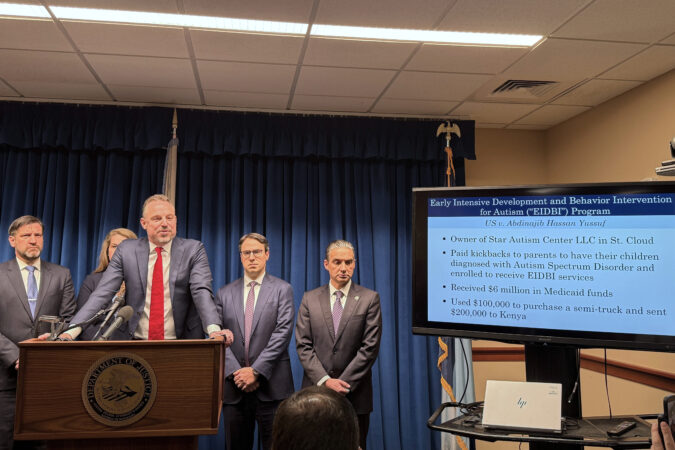
Two Philadelphia men are facing federal charges in Minnesota after authorities said the men had learned of the state’s lax controls around a government-funded housing program, then traveled there to learn how to exploit it — the latest development in a long-running fraud scandal that has enveloped Minnesota and drawn the ire of President Donald Trump.
Anthony Waddell Jefferson, 37, and Lester Brown, 53, were accused of fraudulently obtaining more than $3.5 million in government proceeds — funds that should have gone to Minnesota’s Housing Stabilization Services Program, prosecutors said, but were instead diverted to two companies the men oversaw in Philadelphia.
Jefferson and Brown “came [to Minnesota] not to enjoy our lakes, our beautiful summers, or our warm people,” Joseph H. Thompson, Minnesota’s first assistant U.S. attorney, said Thursday. “They came here because they knew and understood that Minnesota was a place where taxpayer money could be taken with little risk and few consequences.”
Jefferson and Brown each face one count of wire fraud and were charged by information, prosecutors said, which typically means a defendant intends to plead guilty.
Court records for their cases were not immediately available, and it was not clear if either man had retained an attorney.
Thompson cast their case as a novel twist in a scandal that he said was “swamping Minnesota” and had likely bilked taxpayers out of hundreds of millions of dollars intended for daycares, hunger programs, autism support, and other endeavors.
The state had become such a magnet for fraudsters, Thompson said, that Jefferson and Brown had effectively performed “fraud tourism,” visiting the state purely to learn how to take advantage of its reputation for having programs that were ripe for abuse.
The broader issues over the state’s lax disbursements have burst into national view in recent months as Trump and other Republicans have taken interest in the situation. Trump on social media called Minnesota a “hub of fraudulent money laundering activity” and, because many of those charged have ties to Minneapolis’ Somali community, said “Somali gangs are terrorizing the people of that great state.”
Republicans have also blamed Minnesota Gov. Tim Walz — the 2024 Democratic vice presidential nominee — for allowing the situation to unfold on his watch. And right-wing groups have questioned whether some funds were being disbursed to terrorist groups in Somalia or elsewhere in Africa.
Thompson said Thursday that he did not believe that was being done at a large scale, but that the exploitation of the programs was troubling and a phenomenon that had become uniquely common in Minnesota.
Fraud scandals targeting government programs date back at least a decade in that state. But they received renewed attention in 2022, when the FBI raided the offices of Feeding Our Future, a food relief nonprofit that had rapidly expanded through pandemic relief efforts.
Investigators later pointed to about $250 million in federal funding the group had received as part of the Department of Human Services’ Child Nutrition Program, some of which had allegedly been funneled into fraudulent claims for the Medicaid-backed meals program.
Prosecutors did not have evidence to show exactly how much they said had been misspent, but said last month 78 people had been charged in connection with the scheme, which they called one of the largest pandemic-related frauds in the country.
The Feeding Our Future investigation is just one of several schemes that have been fueling discourse over Minnesota’s government disbursements. The discussion has taken a dark turn in recent weeks, as Trump used the situation to insult Walz with a slur for people with intellectual disabilities, and to lash out at Somali immigrants, saying, “I don’t want them in our country.” During a speech in Pennsylvania this month, he called Somalia “about the worst country in the world.”
As for the Philadelphia defendants, prosecutors said the men created two companies — Chozen Runner LLC and Retsel Real Estate LLC — in order to submit “fake and inflated bills” for housing services that were never provided. The program they ripped off was intended to create housing for people with disabilities or substance abuse issues, prosecutors said.
Jefferson and Brown “repeatedly flew together from Philadelphia to Minneapolis,” purportedly to recruit beneficiaries for their LLCs from Section 8 housing or shelters, prosecutors said. But Jefferson and his employees created fake paperwork, sometimes listing bogus employees, to dupe insurance companies into reimbursing them.
In all, prosecutors said, they submitted $3.5 million worth of claims for services they said they provided to 230 people.
Thompson said the men and their companies had virtually no connections to Minnesota other than viewing the state housing funds as “easy money.”
Jefferson, a Brewerytown resident according to voter registration data, describes himself in social media profiles and an online biography as a serial entrepreneur — selling a line of perfumes, working as a gospel musician, while also serving as the CEO of “The Housing Guys,” a group that says it provides housing stabilization services. In a photo posted to social media last summer, Jefferson was pictured being presented with an honorary citation from City Council President Kenyatta Johnson.
Contacted Thursday by an Inquirer reporter, Jefferson hung up.
He was pursued earlier this year in Philadelphia courts over a $103,000 federal tax lien.
Brown formed Retsel — “Lester” spelled backward — in 2021, according to Pennsylvania corporate documents, using a mailing address in the West Oak Lane neighborhood.
Attempts to reach Brown for comment Thursday were unsuccessful.
Let’s start with the easy part. There is absolutely no evidence so far to suggest that the shooter at Brown University targeted Alabama native Ella Cook — one of two students who died in the massacre last Saturday — because of her political opinions.
That’s what several right-wing commentators said, noting that Cook had been vice president of the College Republicans at Brown. Cook “was targeted for her conservative beliefs, hunted, and killed in cold blood,” the national chairman of the College Republicans wrote in a post on X, which has garnered nearly two million views.
Please. We still don’t know who opened fire in a classroom building at Brown, or why. It’s reckless — and cynical — to pretend that we do.
But behind every crazed conspiracy theory lies a small grain of truth. Conservative students are not in danger for their lives, but they do experience ostracism and discrimination. People who claim otherwise are like climate change deniers, except in this case the naysayers are on the left.
I’m on the left, too. And it’s time for us to come clean about the biased environments we have created.
I feel that every time I hear a colleague say all Trump voters are white supremacists or fascists. I feel it when students email me to complain about the left-wing groupthink in their classes.
And I feel it, most of all, when they come out to me as Trump supporters in my office, with the door closed. I plead with them to share their views with others, which is the only way we learn anything. But they tell me the cost would be too high: They’d be vilified and canceled.
A poster seeking information about the shooting suspect is seen on the campus of Brown University on Wednesday.
That’s why so many Republicans disdain higher education. They know that we abhor their views, and they return the favor.
Now they’re trying to impose their will upon us. Start with President Donald Trump’s “compact,“ which is really just an act of extortion: Do what we say, or we’ll cut off your funding. I’m glad that Brown — like Penn — rejected it, but schools with smaller endowments might face a more difficult choice when deciding whether to do so.
Then there are state measures restricting instruction about race and gender. The logic goes like this: You taught things we didn’t like, so we’re going to prevent you from teaching about them at all.
Remember the adage about two wrongs? We seem to have forgotten it. Liberals created an intolerant atmosphere on our campuses. In response, conservatives are taking political measures to silence us.
It’s time to end this madness. And perhaps we can use the Brown tragedy to do just that.
You haven’t heard a lot about Umurzokov in right-wing media, which has been busy memorializing Ella Cook. But neither have my fellow liberals made much mention of Cook; instead, they have been commemorating the remarkable life of Mukhammad Umurzokov.
Imagine a national day of mourning, where we switched all of that up. In Congress and in statehouses, Democratic leaders would hoist large blow-up pictures of Cook — the kind you see in sports stadiums — to memorialize her. And GOP officials would do the same for Umurzokov.
That would require courage on both sides, which is in short supply these days.
Democrats would need to celebrate a brave churchgoing conservative who bucked the dominant liberal consensus on campus. And Republicans would need to challenge their party’s nativist and anti-Islamic rhetoric by praising a young Muslim immigrant who wanted to do good in and for America.
They would also have to call out the conspiracy theorists in their midst. Political violence is real, but there’s no evidence that Ella Cook was killed because of her politics. Honest Republicans know that. They need to say it.
And maybe, just maybe, that can begin the healing that our battered nation so desperately needs. We simply cannot make anything better by hating on each other.
At our schools and universities, we’ll resolve to welcome all points of view. Instead of maligning the other side — or trying to censor it — we’ll bring different sides together.
And we will educate a new generation of citizens, who have both the will and the skill to converse across their differences. That will be a great way to remember Ella Cook and Mukhammad Umurzokov. And it will make America great, too. For all of us.
Soon, you may no longer be able to afford healthcare since Republicans have once again blocked efforts to subsidize the Affordable Care Act.
The most recent government shutdown became the longest in history because Democrats insisted on continuing to fund healthcare while the GOP balked. The Republicans won. America lost.
But don’t despair.
When President Donald Trump’s 80th birthday rolls around on June 14 — which happens to coincide with Flag Day — you will be able to visit a national park for free.
See? Trump really is making America great again.
Kidding aside, most of us aren’t going to mark Trump’s birthday — he hasn’t earned that from us. He can accept all the fake awards he wants, but he’s no hero. He’s a billionaire who has the nerve to claim that “the word affordability is a Democrat scam.” Remember that the next time you’re at the grocery store. Trump promised to bring down costs. It hasn’t happened.
President Donald Trump picks up his FIFA Peace Prize medal before the draw for the 2026 soccer World Cup at the Kennedy Center in Washington, in December.
Trump also said he would fix healthcare. That hasn’t happened either. He said he was going to fix the situation at the border. We now have masked ICE agents terrorizing undocumented immigrants and U.S. citizens alike. Entry into America is for sale y’all. As long as you have $1 million to pay for a green card. Make that a gold car with Trump’s image on it. Next up, a Trump platinum card.
The president’s actions remind me of a narcissist whose world begins and ends with himself. This nation, however, is expansive and needs a president who puts the American people first. That’s not what we have with Trump. He demonstrates that over and over again.
His administration’s decision to make entrance at national parks free on his birthday wouldn’t be quite as egregious if it hadn’t also revoked free admission for visitors on not one, but two federal holidays that honor Black history — Juneteenth and the Rev. Dr. Martin Luther King Jr.’s birthday. It feels like just another way to antagonize African Americans who still haven’t gotten over his calling Somalis “garbage” and saying they should leave the country.
But wait, there’s more.
The Trump administration has ordered the Park Service to clear the shelves of its gift shops, bookstores, and concession stands of any merchandise that runs afoul of its anti-diversity, equity, and inclusion policies. Employees have until Dec. 19 to get rid of any of the so-called offending merchandise. (Note: Let us know when the fire sale is and we’ll take it off your hands.)
Trump only wants to present a sanitized version of American history: So no mention of slavery and Jim Crow and that sort of thing. But lots of red, white, and blue like he sells in his Trump store.
As with practically everything else he sticks his suspiciously bruised hand into, he’s making a mess of things at the National Park Service.
And I’m not just talking about the way officials have slapped the president’s scowling face on the prized annual park pass. An environmental group is suing him for that. I hope the lawsuit wins. I’d love to get one to give as a present for Christmas but I’m not doing it if his face is on it.
A 2026 America the Beautiful National Park Service annual pass features President Donald Trump’s portrait. The Center for Biological Diversity sued the Trump administration, saying the pass must have a contest winner photo taken in federal lands, as deemed by federal law.
Healthcare premiums for more than 24 million Americans may soon skyrocket without government subsidies to bring down costs for everyday people. Remember who is to blame when your insurance premiums suddenly spike.
The day can’t come soon enough when Trump is finally out of office for good. That’s when we, the people, can set about undoing all the damage he has done.
And that includes reinstating admission fees at national parks on Trump’s birthday.
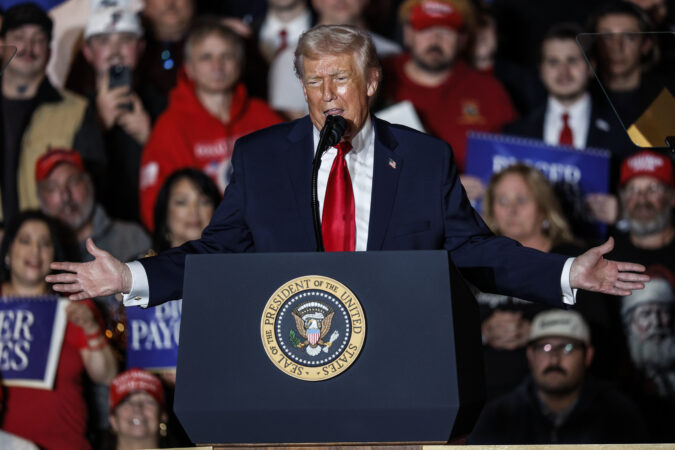
WASHINGTON — President Donald Trump delivered a politically charged speech Wednesday carried live in prime time on network television, seeking to pin the blame for economic challenges on Democrats while announcing he is sending a $1,776 bonus check to U.S. troops for Christmas.
The remarks came as the nation is preparing to settle down to celebrate the holidays, yet Trump was focused more on divisions within the country than a sense of unity. His speech was a rehash of his recent messaging that has so far been unable to calm public anxiety about the cost of groceries, housing, utilities and other basic goods.
Trump has promised an economic boom, yet inflation has stayed elevated and the job market has weakened sharply in the wake of his import taxes. Trump suggested that his tariffs — which are partly responsible for boosting consumer prices — would fund a new “warrior dividend” for 1.45 million military members, a payment that could ease some of the financial strains for many households. The amount of $1,776 was a reference to next year’s 250th anniversary of the signing of the Declaration of Independence.
“The checks are already on the way,” he said of the expenditure, which would total roughly $2.6 billion.
Presidential addresses to the nation carried on network television are traditionally less partisan than rally speeches, but Trump gave a condensed version of his usual political remarks.
Flanked by two Christmas trees with a portrait of George Washington behind him in the White House’s Diplomatic Reception Room, Trump sought to pin any worries about the economy on his predecessor, Joe Biden.
“Eleven months ago, I inherited a mess, and I’m fixing it,” Trump said. “We’re poised for an economic boom, the likes of which the world has never seen.”
Trump seeking to stop the slump in his approval ratings
His holiday wishes came at a crucial time as he tries to rebuild his steadily eroding popularity. Public polling shows most U.S. adults are frustrated with his handling of the economy as inflation picked up after his tariffs raised prices and hiring slowed.
In 2026, Trump and his party face a referendum on their leadership as the nation heads into the midterm elections that will decide control of the House and the Senate.
The White House remarks were a chance for Trump to try to regain some momentum after Republican losses in this year’s elections raised questions about the durability of his coalition. He openly leaned into the politics despite television networks’ past reluctance to broadcast presidential addresses loaded with campaign-style rhetoric.
For example, in September 2022, networks declined to give the Biden White House a prime-time slot for a speech the then-president gave about democracy because it was viewed as too political.
Trump spoke at a rapid-fire clip with a tone that bordered at times on anger. He responded to the public frustration this year over the economy by making even bolder promises on growth next year, saying that mortgage rates would be coming down and that he “would announce some of the most aggressive housing reform plans in American history.”
Trump brought charts with him to make the case that the economy is on an upward trajectory. He made claims about incomes growing, inflation easing and investment dollars pouring into the country as foreign leaders, he claimed, have assured him that “we’re the hottest country anywhere in the world,” a statement he has frequently repeated at public events.
If the argument seemed familiar, that’s because it has echoes of the case that Biden made about the U.S. economy with little success. He, too, in the face of inflation pointed to the enviable rate of U.S. economic growth compared to other nations.
The public sees the economy differently from Trump
The hard math internalized by the public paints a more complicated picture of an economy that has some stability but few reasons to inspire much public confidence.
The stock market is up, gasoline prices are down and tech companies are placing large bets on the development of artificial intelligence.
But inflation that had been descending after spiking to a four-decade high in 2022 under Biden has reaccelerated after Trump announced his tariffs in April.
The consumer price index is increasing at an annual rate of 3%, up from 2.3% in April.
The affordability squeeze is also coming from a softening job market. Monthly job gains have averaged a paltry 17,000 since April’s “Liberation Day,” when Trump announced import taxes that he later suspended and then readjusted several months later.
The unemployment rate has climbed from 4% in January to 4.6%.
Trump said that investment commitments for new factories will boost manufacturing jobs and that consumer activity will improve dramatically as people receive increased tax refunds next year.
While emphasizing the economy, he also faces challenges on other policy fronts.
Trump sought to blame Democrats for the likely increase in health insurance premiums as the subsidies tied to the 2010 Affordable Care Act are expiring. Democratic lawmakers and some Republicans have sought to address that issue, but Trump has pushed back and suggested instead that payments should go directly to the buyers of health insurance instead of the companies. The president has yet to commit to a specific legislative fix.
After his speech ended and the video was no longer being broadcast, Trump turned to his gathered aides and asked them how his address to the nation went. The aides assured him it was great.
Trump then indicated that White House chief of staff Susie Wiles had told him he needed to address the nation. After some back and forth, he asked Wiles how he had done.
“I told you 20 minutes and you were 20 minutes on the dot,” Wiles said.
Four moderate Republicans — including three who are in the hot seat for reelection in swing districts in Pennsylvania — joined Democrats to sign a discharge petition Wednesday to force a vote on a proposal to extend pandemic-era expanded Obamacare subsidies.
While the move may not save the subsidies from expiring, given that Republican-controlled Senate has indicated resistance to the plan, the votes mark the sharpest rebuke of party leadership from within the GOP since President Donald Trump started his second term.
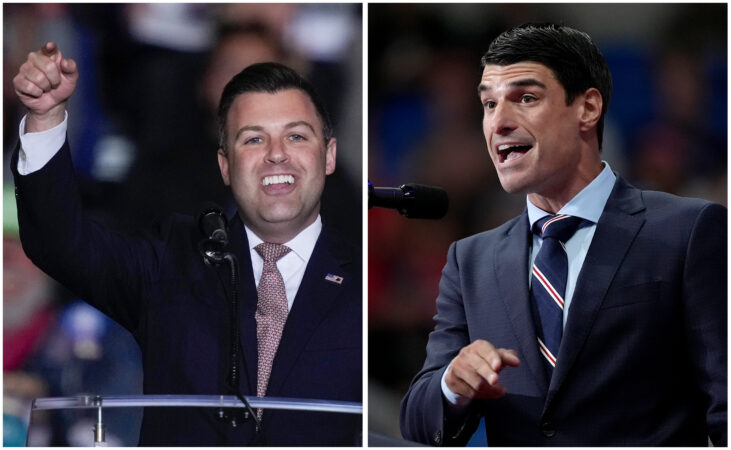
U.S. Rep. Brian Fitzpatrick, who has represented Bucks County since 2017, and two GOP freshmen from elsewhere in the state, U.S. Reps. Rob Bresnahan and Ryan Mackenzie, joined New York moderate Mike Lawler to give Democrats the votes they needed to push a vote on a clean extension of the subsidies to the floor.
The move comes on the heels of other high-profile examples of rank-and-file Republicans bucking Trump and House Speaker Mike Johnson, including last month’s bipartisan vote to release the Jeffrey Epstein files, following a discharge petition after Johnson had slow-walked the legislation.
The “dam is breaking,” U.S. Rep. Marjorie Taylor Greene (R., Ga.) told CNN on Tuesday in reference to the string of incidents in which members of the party had defied the president and speaker ahead of next year’s midterms.
The Republicans who defected on the healthcare bill had favored a compromise that they hoped might have a chance of passing Congress, but that was rejected by Johnson (R., La.), who sided with conservatives against expanding the subsidies, on Tuesday night.
That left them supporting a vote on a bill that extends the program as is, with far fewer restrictions and concessions than the compromise bills included.
“Despite our months-long call for action, leadership on both sides of the aisle failed to work together to advance any bipartisan compromise, leaving this as the only way to protect the 28,000 people in my district from higher costs,” Bresnahan said in a statement posted on X.
“Families in NEPA cannot afford to have the rug pulled out from under them. Doing nothing was not an option, and although this is not a bill I ever intended to support, it is the only option remaining. I urge my colleagues to set politics aside, put people first, and come together around a bipartisan deal.”
Later Wednesday, House Republican leaders pushed to passage a healthcare bill that does not address the soaring monthly premiums that millions of people will soon endure. The bill passed on a mostly party-line vote of 216-211. U.S. Rep. Thomas Massie (R., Ky.) joined with Democrats in voting against the measure.
Fitzpatrick and Lawler tried to add a temporary extension of the subsidies to the bill, but were denied.
“Our only request was a floor vote on this compromise, so that the American People’s voice could be heard on this issue. That request was rejected. Then, at the request of House leadership I, along with my colleagues, filed multiple amendments, and testified at length to those amendments,” Fitzpatrick said in a statement. “House leadership then decided to reject every single one of these amendments.
“As I’ve stated many times before, the only policy that is worse than a clean three-year extension without any reforms, is a policy of complete expiration without any bridge,” Fitzpatrick said.
Bresnahan’s vote for the discharge petition came a little more than a week after he welcomed Trump to his Northeast Pennsylvania district for a rally, which was meant to address voter concerns about affordability ahead of next year’s midterms.
Bresnahan won his election last year by about 1 percentage point. He was also one of just 20 House Republicans to sign a successful discharge petition earlier this month to force a vote for collective bargaining to be restored for federal workers.
“At the end of the day that might have been going against party leadership, but it was what’s right for northeastern Pennsylvania,” he told The Inquirer of the vote at the Pennsylvania Society last weekend.
Rep. Brian Fitzpatrick (R-Pennsylvania) speaks at a hearing on Capitol Hill on Dec. 3.
Mackenzie, in an interview with The Inquirer, blamed Democrats for not signing on to one of the compromise proposals, leaving him and the other three Republicans with no alternative but to sign onto a discharge for a plan he doubts will pass.
“But if you send the Senate anything at this point, I’m of the opinion it will continue the conversation and they’ll consider what their options are,” Mackenzie said. “If they would like to do additional reforms, I welcome those.”
While Republicans who have opposed the extension argue the subsidies were meant to be temporary and affect only about 7% of Americans, Mackenzie said he has been hearing from constituents constantly.
“Healthcare and the current system is unaffordable for many people,” he said. “We recognize the current system is broken for millions of Americans, so to actually get to some kind of better position, you need both short-term and long-term solutions.”
He called the Affordable Care Act subsidy extension a needed short-term solution “to do something for people struggling right now.”
Like Bresnahan, Mackenzie won his Lehigh Valley seat by 1 percentage point last year. And the district will be a top priority for both parties in next year’s election — as shown by Vice President JD Vance’s visit there Tuesday.
U.S. Rep. Scott Perry, a staunch Trump ally, represents a swing district in Central Pennsylvania but voted against the discharge petition. Janelle Stelson, a Democrat seeking Perry’s seat, called him “extreme” for voting against the measure.
“While other Republicans are working across party lines to lower costs, Perry is yet again refusing to do anything to make life more affordable,” said Stelson, who narrowly lost to Perry last year.
Some Republicans do not want to extend the credits at all, while others want abortion restrictions included.
Democrats hoping to unseat Fitzpatrick argue he has a record of pushing back on Trump and GOP leaders only in ways that do not actually damage the party or its priorities. In this case, though, the three Pennsylvanians were critical in getting the petition through, even if the future of ACA tax credits remains uncertain.
“The only thing Brian Fitzpatrick has perfected in his 9 years in Congress is the art of completely meaningless gesture, designed to protect his political future not the people he serves,” his Democratic challenger, Bucks County Commissioner Bob Harvie, wrote on X.
Harvie had previously called on Fitzpatrick to sign the Democrats’ discharge petition.
Not all ACA tax credits are under threat. Under the ACA, people who earn less than 400% of the federal poverty level — about $60,000 — are eligible for tax credits on a sliding scale, based on their income, to help offset the monthly cost of an insurance premium.
That tax credit is part of the law, and therefore not expiring. But what will expire is an expansion passed in 2021 when Congress increased financial assistance so that those buying coverage through an Obamacare marketplace do not pay more than 8.5% of their income.
This article includes information from the Associated Press.

![As long as [REDACTED] has his thumb on the scales of justice, the Epstein files were always going to be [REDACTED] | Editorial](https://wp-brooklyn.enclave.vn/wp-content/uploads/2025/12/56QJ6RRBRHQJHDGZ7NKUDPNTPU-675x450.jpg)