Tag: SEPTA

  • Philly snow cleanup: What to know about plowing, parking, schools, and more

    Philly snow cleanup: What to know about plowing, parking, schools, and more

    As Mayor Cherelle L. Parker put it earlier this week, we’re not out of the woods yet.

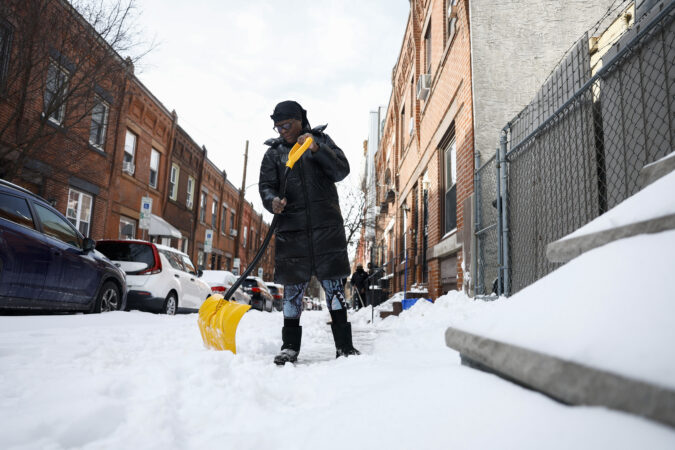
    The storm that hit Philadelphia Sunday brought with it 9.3 inches of snow for the city proper — the most we’ve seen at one time in a decade. And while that really sells the wintery vibe — especially when combined with the bitter cold we’re experiencing — cleanup efforts are ongoing.

    Highways and public transportation in the region are largely restored, but some city streets remain packed with snow and ice. City school buildings Wednesday were in their third day of snow-related closures. And we might even be looking at more snow to come.

    Here is what you need to know:

    Roads (mostly) cleared

    PennDot’s vehicle and speed restrictions have been lifted on all interstates and major highways across the Philadelphia region, as were those on state roads in New Jersey. But street plowing in the city remains a work in progress.

    Residents from around the city told The Inquirer many side streets and some secondary streets remained coated in several inches of snow and ice, making traveling on them difficult or impossible. Data from PlowPHL, a service that tracks plow movement, indicated Tuesday that roughly a quarter of city streets had not received any snow treatment since the storm.

    Parking enforcement resumes

    The Philadelphia Parking Authority reopened its offices Wednesday, and began on-street parking enforcement for safety violations including parking in bus zones and in front of fire hydrants. The 24-hour $5 emergency garage parking rate was also rescinded, with PPA garages returning to their usual rates, the authority said.

    Public transit resuming

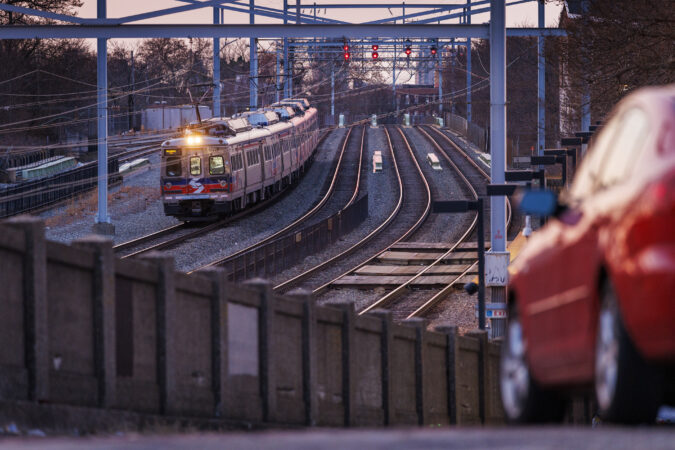
    SEPTA on Monday restored all of its subway, trolley, and suburban trolley services, and as of Wednesday was running Regional Rail lines on their normal weekday schedules. Bus service, SEPTA notes online, is largely operational, though several routes remain suspended due to road conditions.

    Among the suspended buses Wednesday were routes 3, 5, 40, 41, and 115, according to the agency’s alerts page. The suspended routes, SEPTA indicated, would be restored “once it is safe to do so.”

    PATCO, meanwhile, returned to its normal weekday schedule Tuesday.

    Airport operational

    Philadelphia International Airport experienced hundreds of flight cancellations and delays due to the storm, but remained open despite the inclement weather, Parker said at a news conference this week.

    As of early Wednesday afternoon, the airport had experienced about 87 delays and 57 cancellations, according to flight data tracking website FlightAware. On Monday, the day after the storm, there were 326 delays and 290 cancelations, followed by 255 delays and 156 cancelations Tuesday, FlightAware indicated.

    Schools go virtual

    Philadelphia school buildings are slated to reopen Thursday after three straight days of being closed in the wake of the storm. A full snow day was declared Monday, followed by two days of virtual learning Tuesday and Wednesday.

    Archdiocesan high schools and city parochial schools will also go back to in-person classes Thursday.

    Students and staff who arrive late to class due to weather-related issued would not have their lateness counted against them, Superintendent Tony B. Watlington Sr. said.

    This week’s disruption to the usual school schedule had begun taking its toll on some parents. Outside the city, many suburban districts had already reopened by Wednesday.

    More snow possible

    Post-storm, the Philadelphia region faces frigid temperatures that are expected to remain well below freezing until at least Feb. 4. Highs were expected to top out around the teens, and lows consistently in the single digits — along with wind chills reaching down into the negatives.

    And then, of course, there is the potential for more snow this weekend.

    Forecasters said Wednesday that it remained unclear exactly what we should expect, but a major coastal storm is likely to appear during the weekend. Early computer models indicated that the system would remain far offshore enough to spare the Philadelphia area from major snowfall, but accumulation predictions remain in flux.
  • Cabin fever sets in for Philly parents snowed in: ‘It’s an emotional regression to that terrible time’

    Cabin fever sets in for Philly parents snowed in: ‘It’s an emotional regression to that terrible time’

    On the second day her kindergartener was off from his Philadelphia public school because of snow, Karen Robinson shut herself away in her Fairmount home, hoping to take a 15-minute meeting for an important work project.

    Her husband had put up a baby gate to signal to 5-year-old Sam that mom was briefly off limits.

    Naturally, “my son crawled under the baby gate to come find me,” said Robinson, whose son attends Bache-Martin Elementary. “If I’m working, he wants to be right next to me.”

    For thousands of Philadelphia parents, Wednesday was day three of school buildings being shut — a real snow day on Monday, and virtual school Tuesday and Wednesday.

    Superintendent Tony B. Watlington Sr. gave beleaguered parents a reprieve Wednesday afternoon, saying schools would re-open for in-person learning Thursday. But the week was tough for many to navigate.

    For parents who rely on hourly work, or jobs that have no remote flexibility, the inclement weather-forced school changes have meant either foregoing pay or figuring out childcare arrangements that are often costly, complicated, or both.

    But for others, the cabin fever is real. Many are getting into existential angst territory — and conjuring up memories of the pandemic, as parents juggled work and online school, often feeling they were failing at both.

    North Philadelphia mom Asjha Simmons’ son attends a charter school that’s been closed — no virtual learning — since Monday.

    Simmons runs her own business, so is able to be flexible with her schedule and stay home with her son. But she’s getting antsy.

    “I feel forced to be in the house and it’s killing me,” Simmons said. “I would rather be in the gym than in the house. And I don’t even go to the gym.”

    Simmons’ son, who’s 12, relishes the down time since “he has every screen known to man on,” she said. She keeps the snacks coming, and it’s all good. (He was less than thrilled when Simmons made him shovel snow, she said.)

    Leigh Goldenberg said she was having uncomfortable flashbacks to the pandemic, when her daughter completed virtual kindergarten.

    “For me, it’s an emotional regression to that terrible time,” said Goldenberg. “And I feel for the people that didn’t build up that muscle before.”

    Virtual school with a fifth grader is much easier than virtual school with a kindergartener, said Goldenberg, whose daughter attends Kirkbride Elementary in South Philadelphia. Her daughter spent 30 minutes on Tuesday completing schoolwork, and managed to keep herself busy socializing with friends online and outside, a short walk away in their neighborhood.

    Goldenberg is trying to keep things in perspective — this is not forever, this is not the pandemic.

    But, she’s still frustrated.

    “All the suburban schools around us went back already, but here in the city, we’re stuck with a giant pile of snow at the end of our street, and it feels pretty unfair,” she said.

    Coral Edwards was prepared for Monday’s snow day, but when the district announced a virtual day Tuesday, she began to panic.

    “I was like, oh my gosh, there’s a real possibility the entire rest of the week will be virtual,” said Edwards, who lives in Graduate Hospital and has a seven-year-old son who attends Nebinger Elementary and a four-year-old daughter in a private prekindergarten program.

    Her daughter’s pre-K is reopened Wednesday with a two-hour delay. And that means dropoff time came when Edwards would have needed to be helping her first grader with virtual learning. So instead, she paid to send both children to Kids on 12th, a Center City school open the full day, so she can get her work done as a marketing consultant and leadership coach.

    The scramble has also summoned up emotions and frustrations she last experienced during the pandemic, when her son was 1 and his daycare shut down. While she acknowledged that she is “incredibly privileged,” she said the fact that parents like herself are in such a bind speaks to a larger systemic problem with childcare, Edwards said.

    “There’s literally no one to help us,” she said. “There’s just no systemic support whatsoever.”

    Streets are being plowed, SEPTA is running, and trash is getting picked up, “but there’s nothing in press conferences about how we’re supporting parents and students,” Edwards said. “The schools are like, ‘we have this virtual learning environment’ — are we just supposed to pull another parent out of our butts?” she said.

    Edwards’ husband works in-person as a research physician running a lab, and the burden of childcare logistics falls to her.

    “There’s a lot of rhetoric about supporting parents, and raising women up, … but when push comes to shove, something about our kids’ childcare is changed or tightened, it falls on those people,” she said.

    Hannah Sassaman, a West Philadelphia parent of a district fourth grader and ninth grader, is making it through.

    “We had another fourth grader live here for 24 hours randomly. I think they went to school? My ninth grader seems to be going to school. We’re just lucky we don’t have little kids,” said Sassaman.

    But the storm has Sassaman thinking: how is it that New York, which got a foot of snow in some neighborhoods, had kids back in its (much larger) public school system by Tuesday?

    “The questions that I have knowing that the storm was coming for over a week,” Sassaman said, “is what could the administration have done to help resource our sanitation workers and the rest of our incredible city servants to really focus on what it would take to get our kids back in schools, our teachers and the other staff back in their buildings safety to support not just the economy, but also all of the important supports and services kids access at schools every day?”

  • Philly’s building plan would close this high-performing magnet. Lankenau is fighting back.

    Philly’s building plan would close this high-performing magnet. Lankenau is fighting back.

    There’s no place in Philadelphia like Lankenau High School.

    It is the city’s environmental sciences magnet school and the state’s only three-year agriculture, food, and natural resources career and technical education program. It’s set amid 400 acres of woods, with neighbors including a vast environmental center and farm that are active partners with the school. Lankenau’s students have access to dual enrollment and an impressive array of internships.

    But Lankenau just landed on the Philadelphia School District’s closing list, one of 20 schools proposed to shutter for the 2027-28 school year as the district grapples with 70,000 extra seats citywide, billions in unmet capital needs, and a desire to modernize and bring equity to student experiences in the school system.

    The Lankenau community is already gearing up for a fight ahead of a school board vote on the proposal, expected this winter. Community members say the school must be saved because it is one of a kind, offering immersive education in agriculture and sciences and boasting a 100% graduation rate that’s rare in Philadelphia.

    Shutting “the Lank” would be a disastrous move, said Jamir Lowe-Smith, a junior at the school. The district’s proposal would merge Lankenau into Roxborough High as an honors program, but you cannot replicate what his school has built anywhere else, Lowe-Smith said.

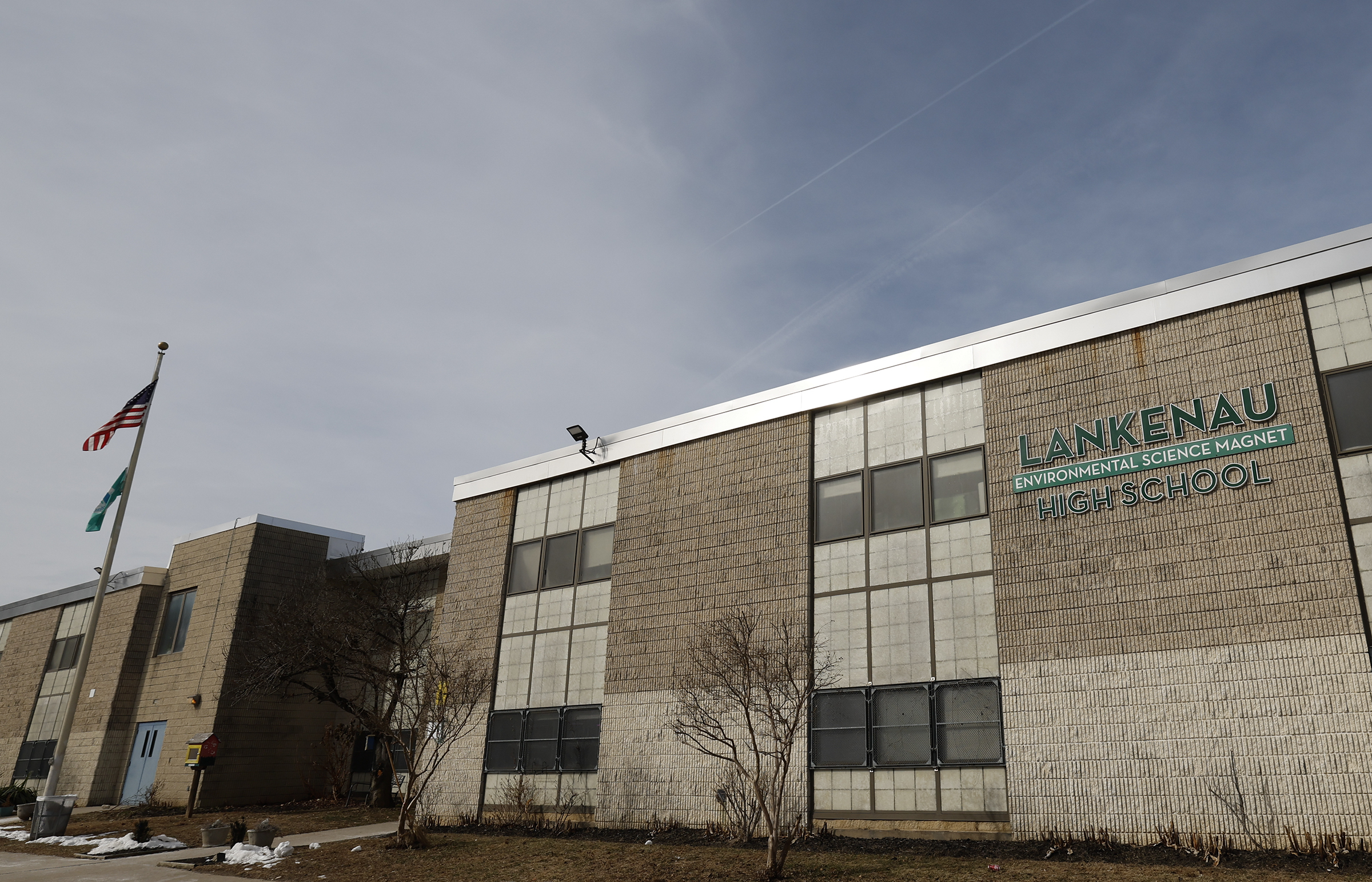
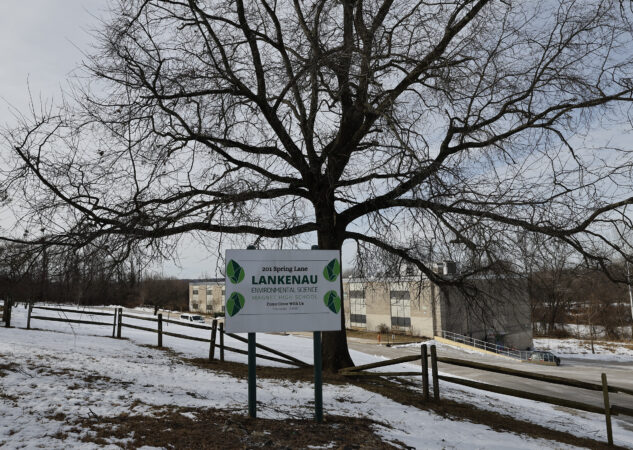
    The Lankenau Environmental Science Magnet High School in Roxborough. The district’s proposal would merge Lankenau into Roxborough High as an honors program.

    “Lankenau takes education to the next level,” said Lowe-Smith, president of the school’s chapter of Junior MANNRS — Minorities in Agriculture, Natural Resources, and Related Sciences — which preps students for jobs in the growing green sciences industry.

    “The environment is beautiful, the woods are — that’s another classroom,“ Lowe-Smith said. ”Nature is like therapy for a lot of people — it changed my life.”

    Being tucked into the woods allows for a Friday advisory bird-watching club at Lankenau and research in a stream that leads directly to the Schuylkill. It lends itself to tick drags — studies of tick species — pesticide classes that will allow students to graduate as certified pesticide applicators, and work with school beehives. Its students engage in innovative project-based learning every day.

    Lankenau students all receive yellow school bus transportation because the campus is not close to any SEPTA routes — adding to the district’s expense to keep it open.

    The school is small — its building, on Spring Lane in Upper Roxborough, is about half full, enrolling about 250 in a building that can accommodate 461. But the recommendations for closing need to be about more than numbers, said State Rep. Tarik Khan, a Democrat whose district includes that area.

    “Respectfully, the recommendation to close Lankenau is one of those things that doesn’t make sense when you look at the full picture,” Khan said. “Right now, it’s a recommendation. Early on, it’s important just to say: This is the wrong decision. I will elevate my voice throughout this process, and I’m not alone.”

    Monique Braxton, a district spokesperson, said the Lankenau recommendation “reflects the district’s commitment to reinvesting in neighborhood high schools as community anchors — a guiding theme of the Facilities Master Plan that received overwhelming support in the recent community survey. This approach expands access to high-quality academic programming and resources across neighborhoods, creating greater opportunity for more students and supporting stronger academic outcomes and postsecondary readiness.”

    Firing on all cylinders

    Lankenau, Khan said, is “firing on all cylinders. The school has so many opportunities for students, so many connections. To take this school out of its environment will break a lot of those connections, will break the cohesiveness.”

    The school lacks a gym. But its students play flag football, hike in the woods, and practice archery. It has a 100% graduation rate, officials say, educating a student body that is primarily Black and brown, with 25% of students requiring special education services.

    Jessica McAtamney, Lankenau’s principal for the last five years, stressed that the school is “doing urban agriculture in a very unique campus setting that is anchored in the space. Agriculture is Pennsylvania’s No. 1 industry. Lankenau is preparing kids to do that. This campus is what allows us to do that.”

    Roxborough High School, by contrast, is in a dense, residential area. Its building, which can hold almost 2,000 students, is about three-quarters empty.

    Like many in the Lankenau community, Erica Stefanovich — who teaches the only Intro to Geographic Information Systems high school course in the city, she believes — was blindsided by word that the school was earmarked for closure.

    “They can say that our building condition is an issue, but how is our building a problem when we have air-conditioning, zero asbestos, and they put a brand-new roof on our school two years ago?” Stefanovich said.

    In 2006, the district actually made plans to expand the Lankenau building, going so far as to contract with an architectural firm to make a model. But those plans went by the wayside as the school system hit rocky financial waters in the early 2010s.

    No slight against Roxborough, Stefanovich said. It does have a park close by, but “we can’t do mussel experiments in that park. We can’t do our internships that our students love. How do we have beehives when there isn’t enough pollinator space around Roxborough High School to have beehives? Our seniors are out of the building 40% of the time; they are off doing things. If we move, we don’t have that.”

    District changes yielded fewer incoming students

    Lankenau used to educate more students.

    Before the district changed its school selection process, in 2021, instituting a centralized lottery in the name of equity, the school had bigger incoming classes. It’s a magnet, meaning students have to have certain grades and test scores to qualify, but in the past, administrators had some leeway to let in students who were close to qualifying if they were a good fit.

    And though district officials said changes to the admissions procedure were necessary to ensure that schools’ demographics mirrored the city’s, Lankenau did not have a diversity problem prior to the changes.

    Lankenau had 106 ninth graders in 2020-21, before the lottery. It dipped to just 28 freshmen in 2023-24, but after a number of parents and administrators raised concerns about the process, some course corrections were made.

    Its numbers are now rising again. Seventy-eight ninth graders entered this school year, and 107 students listed Lankenau as their top choice for the 2026-27 freshman class.

    Even if the proposed school-closing changes go through, Wyntir Alford, a Lankenau 11th grader from West Oak Lane, will be able to graduate from the school as-is — the change is not planned to take effect until the 2027-28 school year.

    But her family was clear: If the closing were happening next year, Alford would have had to transfer.

    “My mom told me her first thought was, ‘There’s no way she’s going to Roxborough.’ She said, ‘The reason we put you in Lankenau is because of all the opportunities and all the nature around.’ I’m not surrounded by any nature at home. So to be able to go to a school like this is a big deal.”

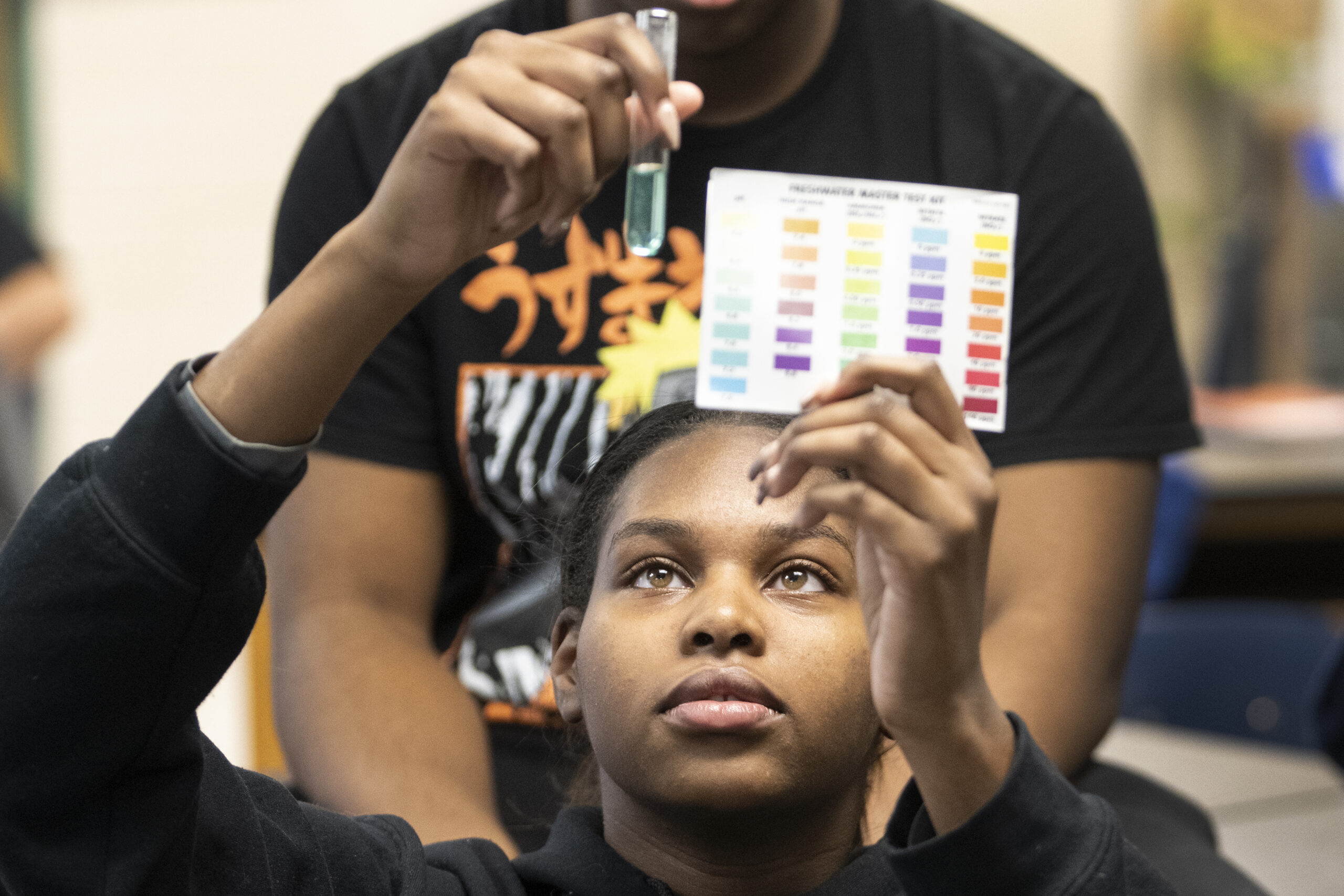
    A student tests a water sample in a Lankenau High school science class in this 2023 file photo.

    Juniper Sok Sarom, a current Lankenau ninth grader, is not sure whether she will transfer to Roxborough if the school board approves the closure recommendation. But she knows she’s happy at a school that gives her plenty of hands-on experience.

    “Our campus — it’s a special learning environment, which you wouldn’t get at any other school, not even Central or Palumbo or SLA,” Sarom said, referring to Science Leadership Academy.

    She and others are gearing up to fight the changes, they said.

    Charde Earley, a Lankenau paraprofessional, dealt with her own sadness the day students found out about the proposed closure, working through tears. And then she marveled at how students pivoted to problem-solving, resolving to write letters and speak at meetings.

    “My motto is, respectfully, ‘Hell, no, we won’t go,’” Earley said. “We’re secluded and we’re safe. You never know what hardship our kids are going through. Imagine what this is doing to our kids.”

  • Moving beyond supervision: It’s time to rethink juvenile probation

    Moving beyond supervision: It’s time to rethink juvenile probation

    Most people hear the phrase “juvenile probation” and think of second chances. They imagine a young person avoiding detention and getting the support they need to stay on track. It sounds compassionate, reasonable, and like progress. But for thousands of young people in Philadelphia and hundreds of thousands across the country, juvenile probation is not freedom; it’s a trap.

    For many youths, probation is not an opportunity to grow, but feels like walking through life with a countdown clock. Every interaction carries risk. Every mistake, no matter how small, can be interpreted as defiance or as a violation of probation. Instead of stabilizing young people, probation often destabilizes them, pulling them deeper into systems that punish rather than support.

    What is described as a “community-based alternative” becomes a constant reminder that freedom is conditional and fragile.

    Juvenile probation places youth under a long list of conditions that most adults couldn’t realistically follow. There are weekly check-ins, strict curfews, school mandates, drug tests, random home visits, and the constant threat of detention if they mess up.

    Missing an appointment, being late, skipping school during a crisis, or being around a family member who is also under supervision can all be labeled “technical violations.” These violations, while not new crimes, can send a young person straight to juvenile detention or state secure placement.

    The public rarely sees this reality, but young people and their families do.

    We both work at YEAH Philly (Youth Empowerment for Advancement Hangout), which has worked with more than 300 Philadelphia youth involved in the legal system, and we see the harm every single day.

    Probation doesn’t work the way people think

    A common narrative around juvenile probation is that it was designed to divert youth from incarceration and connect them to guidance and resources. The reality is different.

    Instead of being a short-term intervention, probation has become a default response applied broadly, regardless of a young person’s actual risk or needs. What was meant to be rehabilitative has become expansive, punitive, and deeply entangled with punishment.

    Across the country, more than 150,000 kids are on juvenile probation, many for minor or “status” offenses like skipping school or missing curfew, not violence. Black youth are disproportionately targeted, placed on probation more often, kept on longer, and violated more quickly.

    In a large study of over 18,000 youth placed on probation for the first time, about 15% broke a probation rule without committing a new crime. Black youth, who made up just over half of the group, were written up sooner than white youth and were more likely to be violated at any point during supervision.

    The system claims to be rehabilitative, but the numbers tell a different story. In many states, more young people are punished for technical violations than for new offenses.

    Youth on probation often remember only a fraction of the rules they are expected to follow, yet remain under court supervision for months or years after any public safety benefit exists.

    A Pew Charitable Trusts study found that in one state, after the first 10 months of probation supervision, there were more arrests for technical violations than for new offenses, and Black youth were more likely to be placed on probation rather than diverted to non-court services, even when offense severity was comparable.

    This is what researchers describe as “net-widening,” where more youth are pulled into the system, more rules are imposed, more pipelines to jail and prison, and more opportunities for failure without improved outcomes.

    What we see at YEAH Philly

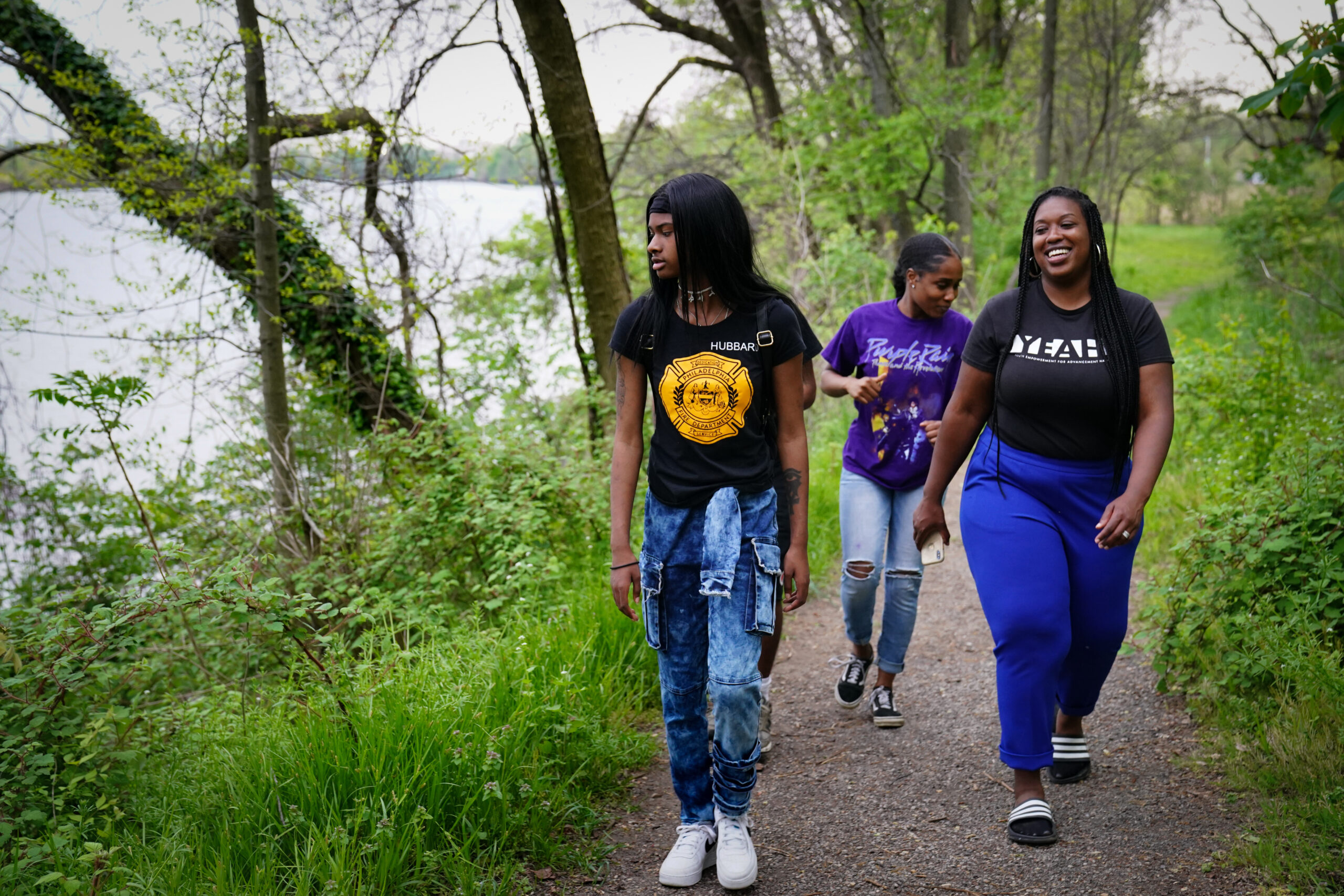
    (From left) Tayanna Hubbard, Jasmine Brown, and Kendra Van de Water walk during a YEAH Philly nature walk at Bartram’s Garden in Philadelphia in April 2021.

    Every week, young people come to us terrified of making a mistake. They are trying to navigate a system built on compliance while also surviving poverty, school instability, community violence, and unmet mental health needs.

    We work with teenagers who miss appointments because SEPTA was delayed, or because they have no reliable way to travel across the city. We see youth violated for missing school when the real issue was a lack of clean clothes, food insecurity, or an unsafe home environment.

    We support young people placed on probation not because they caused harm, but because they needed help; help that juvenile probation was never designed to provide.

    These are not failures of individual responsibility; they are failures of a system that confuses surveillance with support and punishment with accountability. Juvenile probation wears the mask of care, but it operates through control and coercion.

    Why probation can’t be ‘reformed’

    Cities have tried for decades to tweak juvenile probation with fewer conditions, shorter terms, or trauma-informed training. While these reforms may reduce some harm, they do not change the core structure of probation itself.

    Juvenile probation still polices adolescence instead of supporting it. It punishes normal teenage behavior, responds to trauma with surveillance, and relies on the constant threat of incarceration to enforce compliance.

    A system built on control cannot be transformed into one rooted in care through policy tweaks alone. There must be a complete overhaul to create something better.

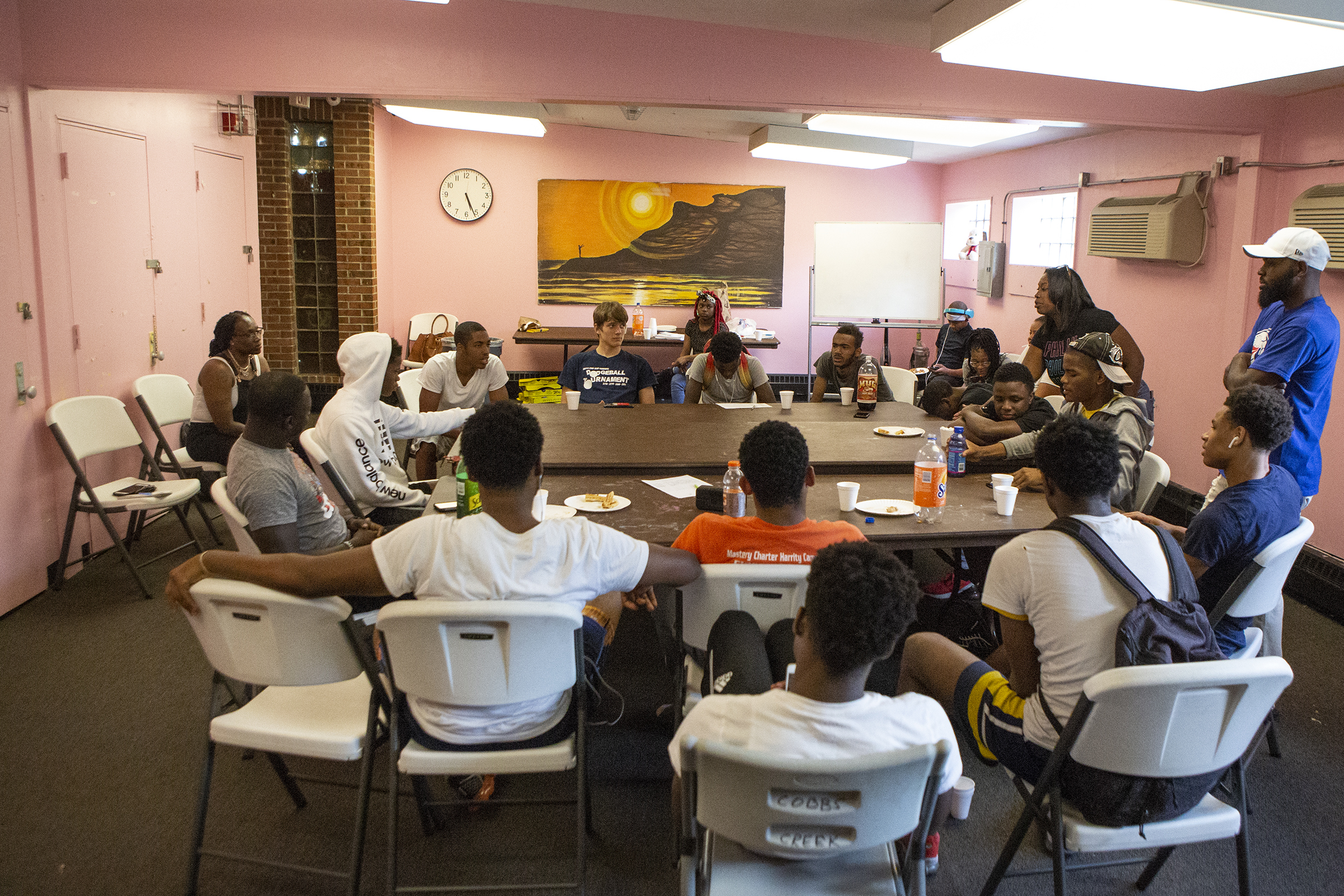
    A group of teens and two police officers meet during the final session of a YEAH Philly pilot program at the Cobbs Creek Recreation Center in June 2019.

    YEAH Philly’s approach through our Violent Crime Initiative and healing-centered youth support model shows what is possible when young people are surrounded by genuine care rather than constant monitoring.

    When youth have trusted adults, access to transportation, meals, basic needs, job opportunities, therapy, mediation, and a safe place to go every day, they grow. They build accountability because they feel connected, not controlled.

    Community-based models across the country show the same results, where healing and restorative approaches reduce reoffending more effectively than supervision ever has.

    People hear “end juvenile probation” and fear it means “end safety.” But abolition does not mean abandoning young people. It means abandoning systems that have consistently failed them.

    Abolition means replacing surveillance with support, punishment with opportunity, control with care, and isolation with belonging.

    Crafting a new vision

    In the coming months, YEAH Philly and the Gault Center, alongside youth, families, and researchers, will launch the Juvenile Probation Accountability Coalition.

    The coalition will expose the harms of juvenile probation through youth-led research, hold systems accountable for the trauma they create, elevate community-based accountability models, and push for policies and models that move us beyond probation.

    Our goal is a national blueprint for real public safety rooted in dignity and care.

    Philadelphia has an opportunity to lead the nation in redefining accountability and safety for young people. We can build systems that help youth grow instead of continuing to invest in systems that wait for them to fail.

    Ending juvenile probation is not a radical idea. It is an overdue commitment to young people’s futures.

    It is time to move from supervision to support, and from punishment to possibility.

    The Juvenile Probation Accountability Coalition is coming — and this is just the beginning.

    Kendra Van de Water is the cofounder and co-CEO and Mona Baishya is the Violent Crime Initiative research director at YEAH Philly. For more information about the Juvenile Probation Accountability Coalition and the forthcoming work, please contact Van de Water (kvandewater@yeahphilly.org) or HyeJi Kim (hkim@defendyouthrights.org).

  • Video of former WHYY intern pepper-spraying influencer on SEPTA bus goes viral on conservative media

    Video of former WHYY intern pepper-spraying influencer on SEPTA bus goes viral on conservative media

    A video of a former WHYY intern yelling expletives and pepper-spraying a local influencer on a SEPTA bus is going viral on conservative media.

    During the encounter on Monday afternoon, 22-year-old Paulina Reyes called 22-year-old Francis Scales a “fascist” and “racist.” Reposts of the video capturing the incident have since garnered millions of views on social media.

    The video depicts Reyes accusing Scales of insulting Muslim people, Black people, and Latino people in posts on his website. Reyes then proceeds to pepper-spray him in the face while Scales’ friend and colleague films.

    Scales runs a website called Surge Philly on which he posts videos of himself interviewing people at protests. He became known for provoking District Attorney Larry Krasner at a town hall and organizing a protest against him.

    Social media accounts, including I Meme Therefore I Am, which has more than 842,000 followers on X, and Libs of TikTok, which has 4.5 million X followers, launched the video and its two subjects into the national spotlight in the days following the encounter. Both social media accounts are known for posting and reposting content geared toward conservative audiences.

    “BREAKING: Antifa agitator attacked two conservative independent journalists on a Philly bus, pepper spraying them, punching them, and trying to grab their phone. She needs to be identified and arrested!” I Meme Therefore I Am posted on X alongside the video on Monday night.

    By Wednesday afternoon the post had 2.3 million views and 8,600 reposts.

    Billionaire Elon Musk got involved, commenting “She has violence issues” on Surge Philly’s X post containing the video of the incident. His comment attracted 222,000 views.

    Soon, the social media posts were linking Reyes to WHYY. Reyes interned there over the summer but neglected to update her LinkedIn profile to reflect that her internship had ended months ago. The lapse led people on social media to post about her as if she were still employed there and led to criticism of the public radio station.

    “Hi @WHYYNews, why are your reporters pepper spraying independent journalists on the bus??” Libs of TikTok posted Tuesday morning.

    Scales has capitalized on the attention, reposting several tweets from popular social media accounts containing the video and messages supporting him and condemning Reyes.

    Meanwhile, Reyes said she has received “nonstop” phone calls from strangers around the country and has gotten private messages from people threatening to rape or kill her.

    Reyes and Scales were peers at Community College of Philadelphia, where Reyes is still a full-time student studying communications and media. Scales was studying biology and got partway through his degree before leaving school and transitioning to full-time content creation, he said. He plans to go back and finish his degree eventually.

    The two had crossed paths a few times at school and were familiar with each other at the time of the encounter on the Route 7 bus, they both said.

    Reyes said she had an overall positive impression of Scales on their first few meetings, and felt he was trying to do right by the students in his capacity as student government president.

    But her attitude changed during his tenure as president. She said she observed him condescend to students and staff of color and carried that behavior over to the content on his Surge Philly website once he left school.

    When she saw him on the bus in South Philly, her initial intention was to have a civil conversation, she said. She planned on asking him why his videos do not offer multiple viewpoints on the issues discussed.

    “I did not want to pepper-spray someone on a public bus,” she said. “This is not something I wanted to do.”

    Scales soon started filming the confrontation “for my own safety,” he said, because “she was attacking me.”

    Reyes said she asked him to stop filming and felt the anger building as he kept the camera rolling. Especially as it started to dawn on her that he would likely post this video online.

    “I got mad and I wanted to defend myself because he wasn’t listening,” Reyes said. “I did what I thought was the safest thing to protect myself. I pepper-sprayed him in the face.”

    Scales said he managed to dodge the first spray. Reyes then got off the bus.

    Knowing this video was likely to reach Scales’ followers, Reyes returned to the bus and came at Scales again with insults about his videos.

    “I wanted to make a message that the content he was making was harmful and it was hurting people,” Reyes said. “It was hurting communities that are trying to feel safe right now.”

    She concluded her tirade by pepper-spraying him again, this time getting him in the eyes.

    SEPTA is investigating the incident, which took place at 23rd Street and Washington Avenue, according to agency spokesperson Andrew Busch.

    Philadelphia police did not respond to a request for comment. Nor did Community College of Philadelphia.

    Scales said he posted the video online partly because it was such a shocking incident, but also, in part, because it felt aligned with the rest of the content on his website.

    “I thought it was relevant,” Scales said. “She was calling me a racist and a fascist and then she committed violence because of what she thought I was.”

    This was not Scales’ first time getting attacked for his interviews and posts, he said. He attributes the attacks to the lines of questioning he often pursues when interviewing people at protests. The protesters seem to sense he’s not “in their circle,” he said.

    Some of Scales’ recent videos consist of him interviewing people at protests and on the street. He typically homes in on one question, such as “Do you think people have a right to disrupt ICE operations?” or “Do you believe in the concept of having a border?”

    “They react aggressively and violently to anybody who they feel may not have their same worldview,” he said. “I think it’s a sign that what I’m doing is good and that I need to stay on this path.”

    As for Reyes’ journalistic aspirations, she said she is nervous.

    “My entire life has been feeling like it’s falling down now,” she said. “I’m just worried about how this would affect my future as a journalist.”

    WHYY spokesperson Gary Bramnick responded to the incident with a statement clarifying Reyes “has no current affiliation, employment, or contractual relationship with our organization.”

    Reyes said she has undergone years of treatment for borderline personality disorder and depression. She has been working on managing her emotions better, she said, but, in this moment, they got the best of her.

    “I’m not a perfect person and I’m learning how to self-regulate better,” she said.

    For Scales’ part, he said he does not feel safe returning to campus until the college makes a public statement in an effort to “denounce political violence.”

  • SEPTA Regional Rail delays this morning are due to a train pulling down overhead wires

    SEPTA Regional Rail delays this morning are due to a train pulling down overhead wires

    SEPTA Regional Rail riders experienced significant delays — at times, 30 minutes to an hour — at the peak of morning rush hour on Tuesday morning, after a train pulled electrical wires down.

    A West Trenton Line train struck overhead electrical wires near Wayne Junction train station in the Nicetown section of Philadelphia at 7:45 a.m., said SEPTA officials.

    The train lost power and was tangled in the wires it had pulled down.

    Marie Pollock, 24, who was on board, felt the train start to gradually slow down before quickly and forcefully coming to a stop. Pollock could see wires hitting the train windows and noted that other passengers were startled during the collision.

    “We were keeping the doors closed because it was so cold,” Pollock said. “We were on kind of a hill, so there wasn’t any room for SEPTA to get a shuttle, and the power was out on both tracks, so we couldn’t get a typical rescue train to us.”

    Pollock, who had already been waiting a half-hour in 20-degree chill for her 6:17 a.m. West Trenton Line train before the ordeal, said passengers waited inside the stuck train for an hour and a half.

    SEPTA crews had to cut through the downed wires to free the train and then used a diesel-powered train to tow the disabled one to Wayne Junction, where passengers took other trains into Center City.

    Pollock’s four-hour journey didn’t end until 10 a.m. when she finally arrived at Jefferson Station.

    Since then, service interruptions have been occurring primarily on the Warminster, Lansdale/Doylestown, and West Trenton lines. However, delays cascade throughout the rail system, leading to 15 to 45-minute delays on other lines, said SEPTA spokesperson Andrew Busch.

    “Repairs are still continuing,” Busch said Tuesday afternoon, “but service has improved. Some minor delays, and we are advising passengers to plan for some extra time during rush hour, but we expect the evening commute to be better than this morning.”

    There is currently no timeline for completed repairs.

    SEPTA urges riders to use the SEPTA mobile app and septa.org for the latest updates.

    Today’s service interruptions follow a streak of solid performance by SEPTA after months of disruptions while SEPTA rushed to inspect and repair a fleet of 223 trains after five caught fire last year.

  • A homegrown and scrappy beauty boom is taking shape right here in Philadelphia

    A homegrown and scrappy beauty boom is taking shape right here in Philadelphia

    On a recent wintry evening at Queen Village’s Moon and Arrow, a group of 10 women poured essential oils into beakers, mixing them with carrier oils.

    They’d gathered for a workshop led by Tasha Gear, founder of local brand Linear Beauty, who instructed as they created a formula for body oils.

    The 10 women took a whiff of each other’s potions, commented on their notes, and took in the smells.

    Here was a perfect picture of Philadelphia’s beauty scene, which is having a moment — not the glossy, influencer-backed boom of coastal cities, but something scrappier, smarter, and deeply local.

    Across the city, indie founders are hand-batching serums, mixing skincare in one-kilogram beakers, and designing products meant to withstand SEPTA, summer humidity, and long work shifts.

    Leila McGurk (left) laughs with Leah Antonia at a DIY body oil workshop organized by local skincare brand Linear Beauty at Moon and Arrow, a boutique in Queen Village on Thursday, Dec. 4, 2025.

    They are united by a commitment to science, transparency, and community,

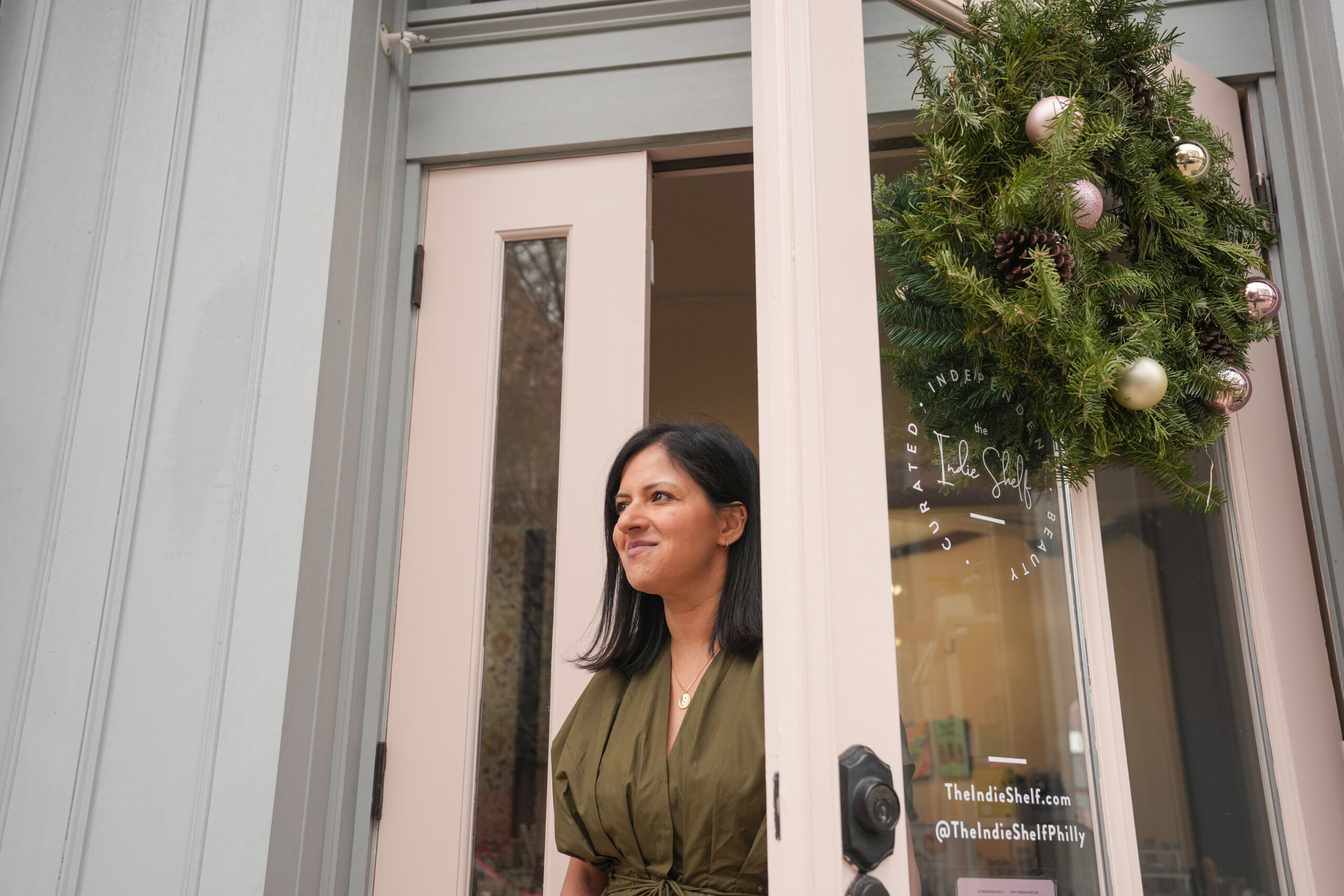
    At the center of this shift is Indie Shelf in Grays Ferry and Malvern, where cosmetic scientist Sabeen Zia helps customers navigate an often confusing clean-beauty landscape.

    “Clean beauty goes beyond ingredient lists,” the Main Line resident said. “It’s how a product is developed, packaged, and the values behind it.” Zia doesn’t draw up fear-based “toxic ingredient” lists. Instead, she relies on science-backed safety standards and direct conversations with product founders.

    “People come in because they want to support small businesses, but they stay because they’re stunned by the changes in their skin,” she said.

    Sabeen Zia runs Indie Shelf, which stocks a bunch of indie beauty brands. She also runs a brand called Muskaan that she sells at the store, in Philadelphia, December 11, 2025.

    Before opening the shop in 2019, Zia ran her own makeup line, Muskaan Beauty, which was cruelty-free, vegan, gluten-free, and halal. It struggled to get visibility — a challenge she realized many indie founders shared. “Philly didn’t have many clean beauty shops at the time,” she said. “It felt like a real gap in the market.”

    A gap that Indie Shelf aims to fill.

    Other local founders, too, swear by that community-first ethos.

    A former professor of English at Stockton University, Adeline Koh of Sabbatical Beauty, hand-batches high-concentration, K-beauty–inspired products, often using ingredients from neighborhood businesses, like Câphe Roasters and Baba’s Brew.

    “I wanted formulas that actually deliver what they promise,” she said. “Philly has so much pride in Philly-owned businesses. That made me feel this would be a really good market to build in. People here show up for their community.” She’s based in the Bok building.

    As for what feels uniquely “Philly” in Sabbatical Beauty’s identity, she doesn’t hesitate when asked.

    “We’re unapologetic about who we are, and that shows up in our emphasis on diversity: skin tones, body sizes, age. We want to expand what beauty means, not narrow it.”

    Sabeen Zia runs Indie Shelf, which stocks a bunch of indie beauty brands. She also runs a brand called Muskaan that she sells at the store, in Philadelphia, December 11, 2025.

    The brand is sold at local shops and spas.

    Sabbatical Beauty also pours back into the city’s maker ecosystem — donating masks and sanitizer during COVID, hosting holiday toy drives, running small-business markets, and partnering with the Equitable Skincare Project to fund donation facials for the trans community.

    It’s a similar story with brow artist Tara Giorgio.

    When the Lancaster native grew frustrated by the discontinuation of her favored brow beauty products, she created Brow Gang — her line of high-pigment brow mousse and powders that are, as she says, made “for real life.”

    Her products are sold in her two salons — in West Chester and Northern Liberties — and online.

    Essential oils and an instruction sheet are pictured before Linear Beauty’s DIY body oil workshop at Moon and Arrow, a boutique in the Queen Village section of Philadelphia, on Thursday, Dec. 4, 2025. Linear Beauty is an independent Philadelphia-based botanical skincare brand founded by Tasha Gear.

    Philly’s beauty customers, she said, are unique because this city is “a true melting pot — all cultures, all backgrounds, all brow textures, all lifestyles. We don’t like fluff in Philly and we want things that work and are priced reasonably.”

    People here are busy and “they want products that make their lives easier — fast routines, long-lasting wear, and formulas that hold up through humidity, work shifts, SEPTA, the gym, real everyday life.”

    Cosmetic chemist Tina D. Williams feels “there’s still a real lack of handmade, natural skincare” in the local market to feed that need.

    Her Center City-based DVINITI Skincare crafts small-batch, food-grade blends of natural oils like argan, jojoba, and almond, which are designed for customization. Her philosophy, too, is rooted in the city: “The first ingredient in every DVINITI product is love — and this City of Brotherly Love is the perfect home for a brand built on self-care.”

    Williams, who grew up in the Olney area and graduated from the Philadelphia High School for Girls, is all too familiar with the city’s cold winters and hot summers. “I grew up here, so I understand the kind of skincare [Philly] people need,” she said. She also sees the city’s scientific backbone as a natural fit for a chemistry-driven brand. “Philly is a tech hub and a leader in research and development. DVINITI is positioned well to scale and grow with the local resources here to support our clients’ needs.”

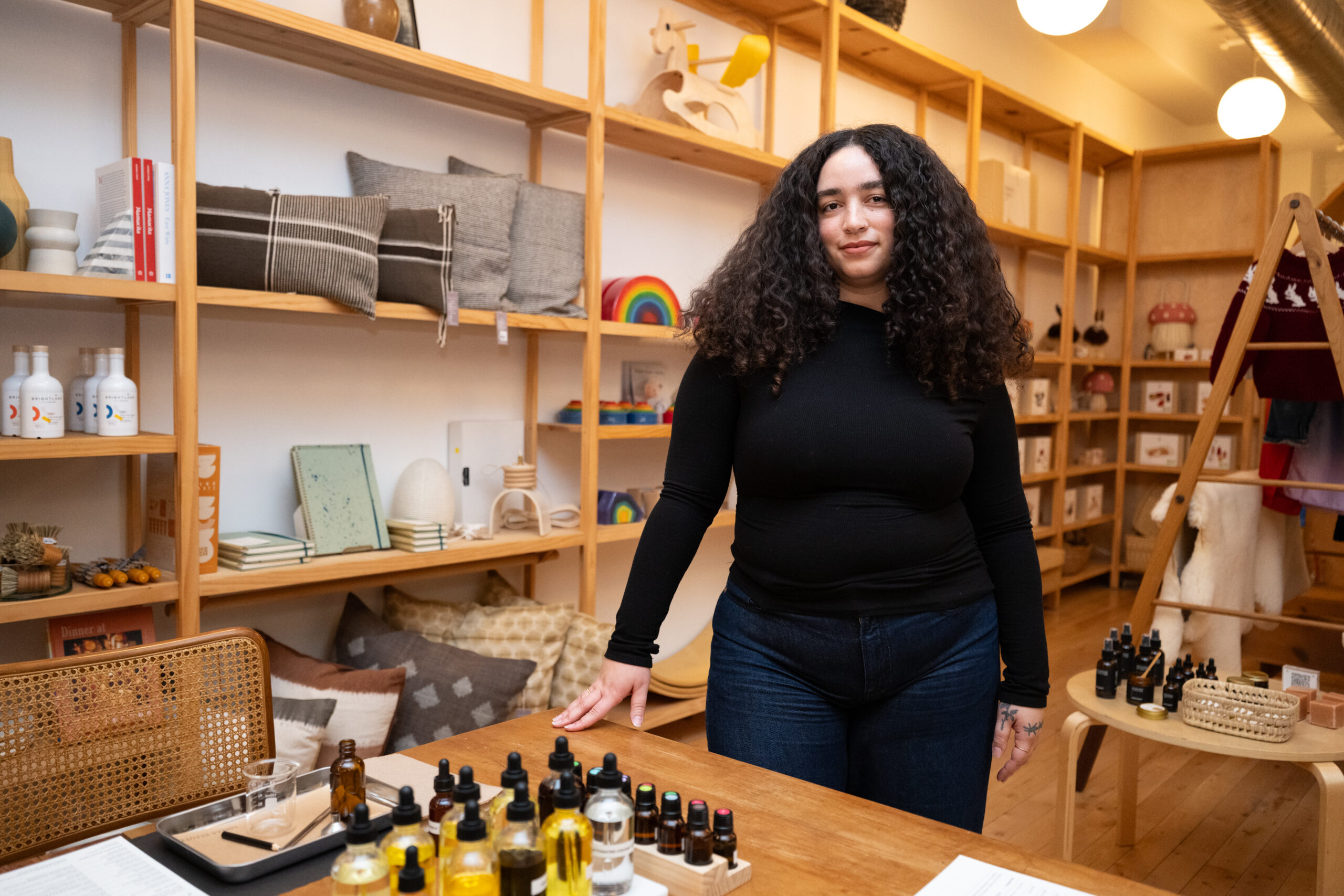
    Linear Beauty founder Tasha Gear poses for a portrait at a DIY body oil workshop hosted by the beauty brand at Moon and Arrow, a boutique in the Queen Village section of Philadelphia, on Thursday, Dec. 4, 2025.

    Another brand shaping the city’s beauty identity is Haiama Beauty, a Black woman–owned haircare line built in Philadelphia “because I love this city wholeheartedly,” said founder Allison Shimamoto.

    Haiama’s Grow & Strengthen Elixir takes four months to make and uses premium, organic argan oil — not because it’s the most profitable, but because it’s the right way to make it.

    Small-batch production allows the brand to source intentionally from BIPOC, LGBTQIA+, and women-owned suppliers and to design products that work across all curl patterns— from the Leona red-light scalp stimulator to the multipurpose Everything Cream.

    What resonates with her Philly consumers, Shimamoto said, is connection. “People here want to know who’s behind the brand.”

    Linear Beauty products are pictured at a DIY Body Oil Workshop hosted by the brand at Moon and Arrow, a boutique in the Queen Village section of Philadelphia.

    Markets like Made@Bok and Art Star have helped Haiama meet customers face-to-face, build community, and grow within the city’s tight-knit maker ecosystem.

    Philadelphia’s indie founders agree that the city’s beauty identity is defined by three traits: creative, authentic, community driven.

    “The passion for high-quality products and supporting small business truly sets Philly brands apart,” said Zia. Even small details — easy drop-offs, quick restocks, face-to-face conversations with founder-formulators — become part of the city’s distinctive customer experience.

    Local customers meet founders in person, pick up their products, return for refills, and show up at pop-ups and farmers markets.

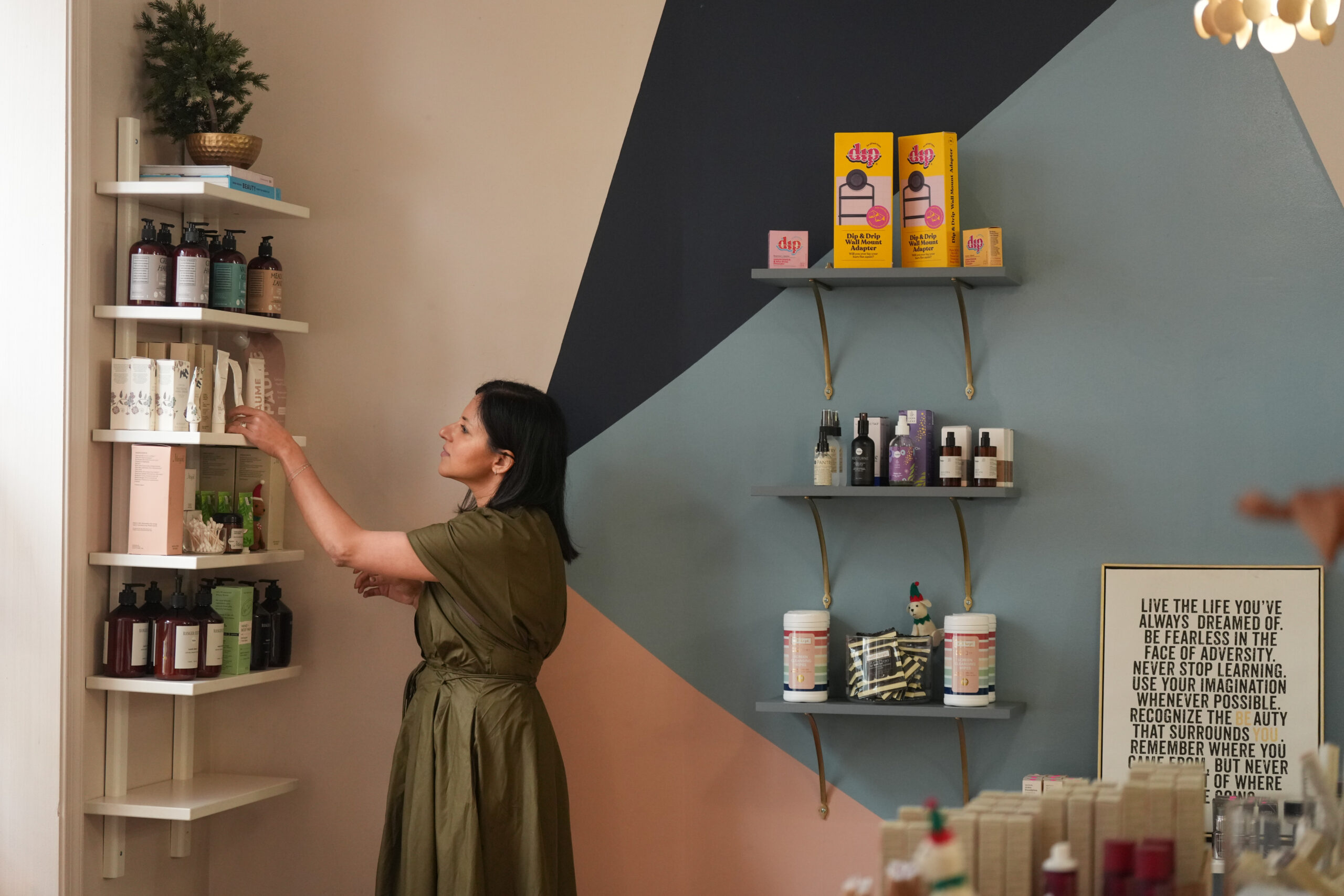
    Products at Indie Shelf, which stocks a bunch of indie beauty brands.

    Despite challenges like tariffs, supply-chain delays, and seasonal slowdowns, Zia remains hopeful. Her dream? “For Philly to be known as the city for indie beauty — a place where founders can scale without losing their authenticity.”

    Gear, who moved to Philadelphia in 2019 after spending a decade working in New York City’s Package Free Shop, agrees.

    “Philly is a pretty no-B.S. city,” she said. “That shows up in everything I make.”

  • Americans take their heroes where they can get them, but they should look past Philly’s sheriff | Shackamaxon

    Americans take their heroes where they can get them, but they should look past Philly’s sheriff | Shackamaxon

    This week’s column talks about heroes with feet of clay, SEPTA’s starts and stops, and America’s 250th birthday celebrations.

    No one’s hero

    Philadelphia Sheriff Rochelle Bilal is having her 15 minutes of fame this week, with her comments at a news conference alongside District Attorney Larry Krasner spreading across social media. After the killing of Renee Good by U.S. Immigration and Customs Enforcement agent Jonathan Ross in Minneapolis, Krasner stated that he would hold federal officers accountable for any violation of the law. Bilal warned that the feds “don’t want that smoke” and called ICE “fake wannabe law enforcement.” She even scored an interview with CNN’s Erin Burnett.

    That’s all well and good, but there’s one big problem with Bilal’s position: The sheriff ultimately has no ability to protect Philadelphians from ICE.

    Despite her title and natty uniform, it is Police Commissioner Kevin J. Bethel who serves as the city’s top law enforcement official, not Bilal. This is a good thing because the sheriff’s track record is disastrous.

    Despite running for the office in 2019 as a reformer, Bilal began her tenure by firing Brett Mandel, her chief financial officer, just five weeks into his tenure. Mandel had flagged her use of what he described as a slush fund. A longtime good government advocate, Mandel objected to using city funds to pay for things like parking tickets and six-figure media consulting contracts.

    Things haven’t improved in the years since. Bilal was publicly criticized by the city’s judges for her failure to protect courtrooms, turning over foreclosure sales to an online operator with little notice, covering up the theft of a department-issued vehicle, one of her deputies was caught selling guns illegally, and her office wasted nearly $10,000 on a new mascot no one asked for. The list goes on, yet city officials have mostly steered clear of criticizing the sheriff for her missteps.

    While Bilal was basking in the media spotlight of talking tough against ICE, Bethel was not amused. Given Mayor Cherelle L. Parker’s clear strategy to avoid poking the orange bear, Bilal’s comments forced the commissioner to make clear in a statement that it is the Philadelphia Police Department that runs law enforcement in the city, not the sheriff.

    If people are looking for a genuine local hero in the national crisis over immigration enforcement, why not opt for Keisha Hudson instead? Hudson, who leads the local Defenders Association, has put together a new unit specializing in immigration cases. An immigrant from Jamaica herself, Hudson has both the right job and the right life experience to help residents who have been mistreated by ICE.

    Bilal, on the other hand, can’t even keep ICE from turning the courts she’s responsible for into a hunting ground for the feds.

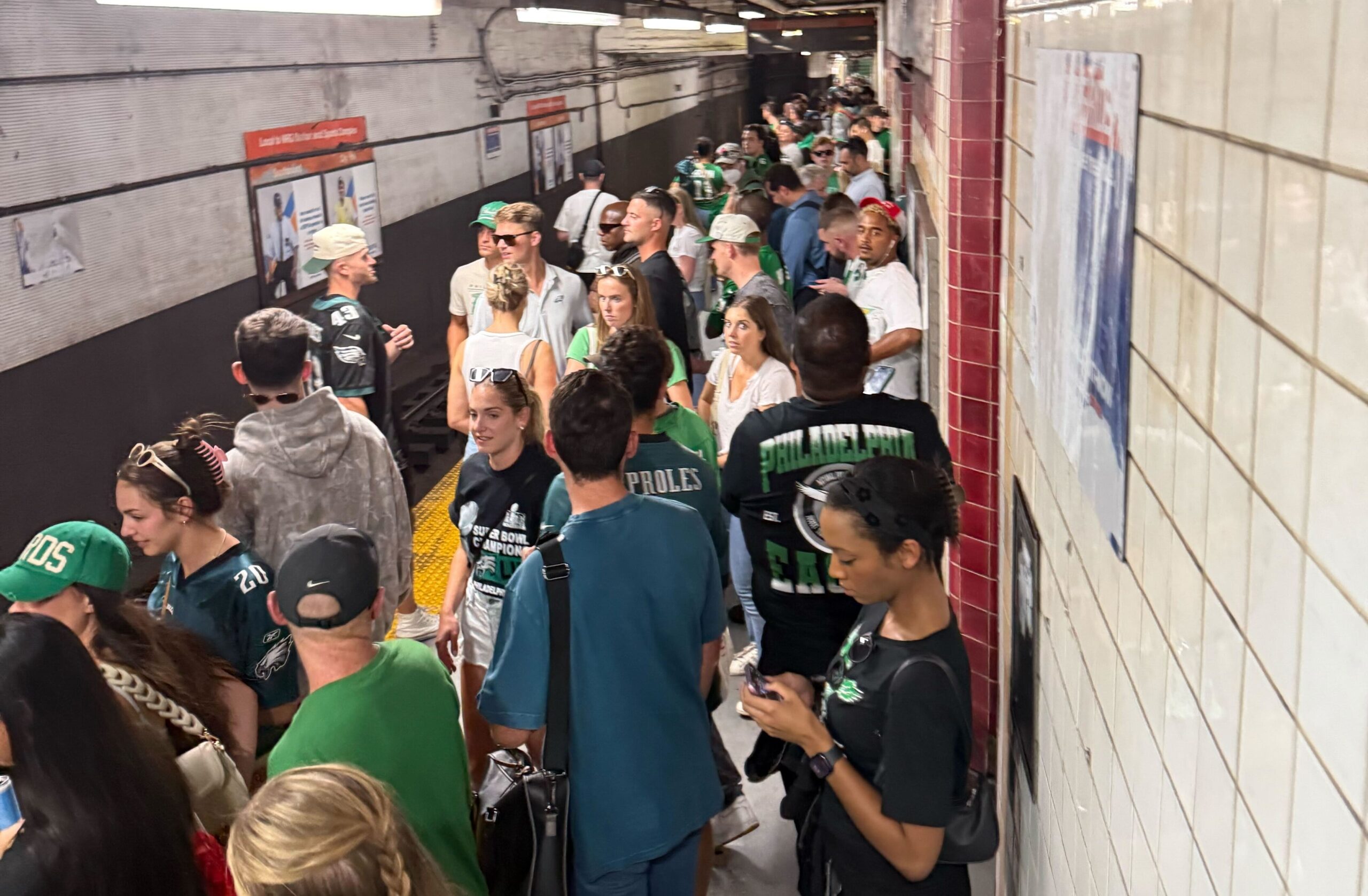
    Eagles fans wait for a Broad Street Line train at City Hall station.

    The wheels on the bus

    During the yearslong debate over transit funding in Pennsylvania, one consistent drumbeat is that SEPTA needed to become more efficient if it wanted to get more support.

    Of course, SEPTA already does more with less when compared with other major agencies, with cost-per-ride lower than in Boston and Washington, D.C. Additionally, trying to save money can sometimes cost agencies in the long run, or at the very least cost scarce political capital.

    In fact, most of the current crises SEPTA faces are the result of trying to save money or insufficient political will. For example, better capitalized agencies would have replaced the Regional Rail fleet a decade or so ago. Meanwhile, the weekslong closure of the trolley tunnel happened because the agency tried using a new part — in the hope that it would be replaced less frequently and cost less.

    Perhaps the Broad Street Line felt left out of the chaos because operations there have become a new pain point for riders. The 1980s Kawasaki trains are well-built. They are also nearly 45 years old. When I first started at The Inquirer five years ago, then-SEPTA General Manager Leslie Richards told me she hoped to avoid replacing the trains until the 2040s. Recent issues on that line make me question that timeline.

    For weeks, the trains have struggled with mechanical issues. Riders have reported jam-packed trains that have been forced to skip stops, line adjustments, and other delays. According to a spokesperson, door faults and general vehicle malfunctions have contributed to the problems.

    It all came to a head at the end of Sunday’s Eagles game.

    After a door issue disabled a train near Snyder Station, already dejected fans were forced to wait until 9 p.m. to catch a ride home. SEPTA is spending $5 million to upgrade the traction motors, which should help. What’s really needed, however, are new trains.

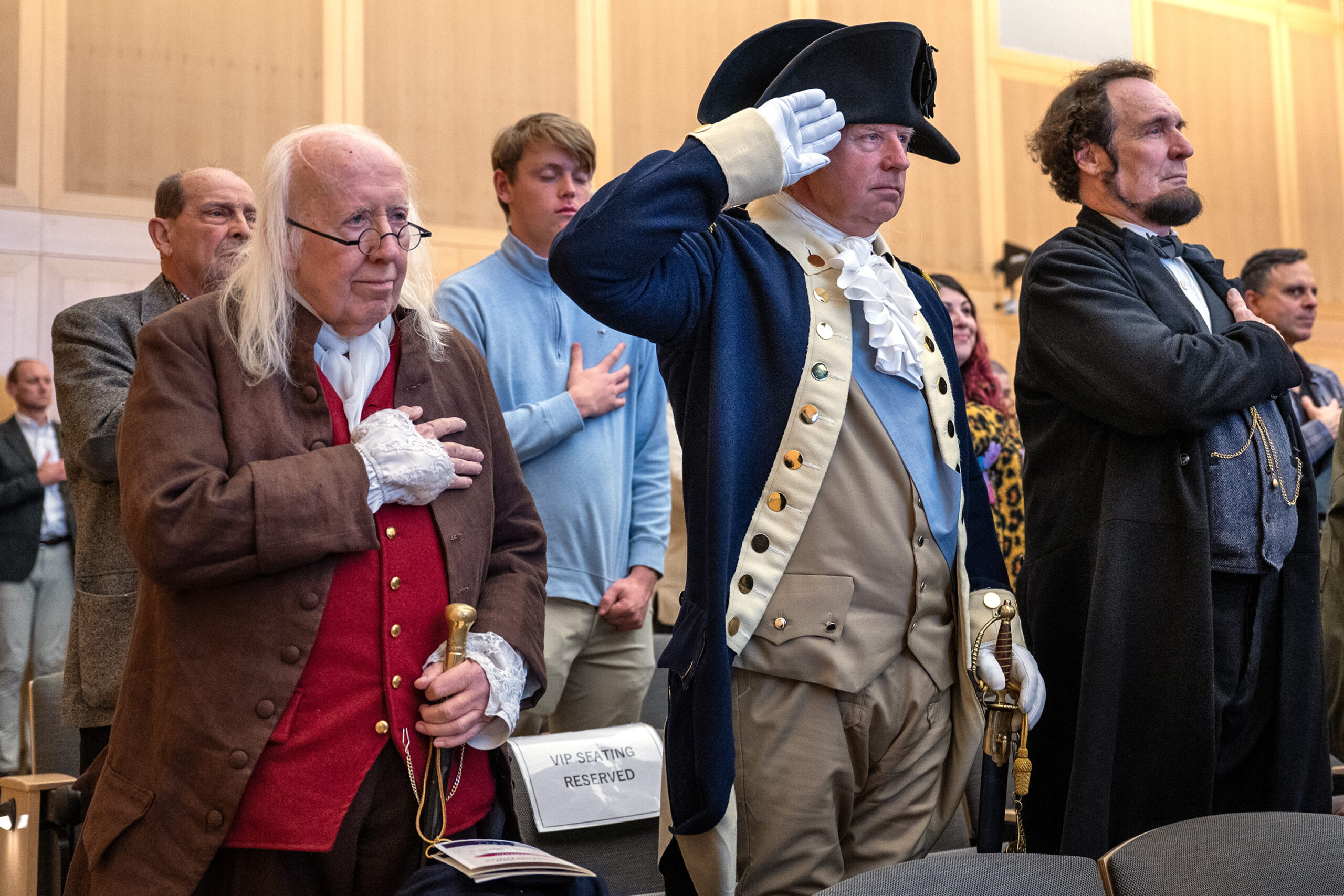
    Historical interpreters (from left) Benjamin Franklin, Gen. George Washington, and President Abraham Lincoln stand with other audience members for the Presentation of the Colors, as the U.S. Mint unveils new coins for the Semiquincentennial at the National Constitution Center in Philadelphia in December.

    Let’s get this party started

    The United States is celebrating a big one this year. America’s big 250th birthday party is here … can you tell?

    I can’t. While big events like the World Cup are planned for later this year, there is currently little to indicate that 2026 is any different from 2025. The patriotic bunting that sprouted all over Philadelphia during the Civil War and the Centennial has yet to appear.

    Still, help is on the way. City and state officials announced an $11.5 million initiative to remove graffiti, plant flowers, and otherwise beautify the city.

    At that price, we should probably do it every year.

  • Suburban Square now has apartments

    Suburban Square now has apartments

    Apartments have come to Suburban Square.

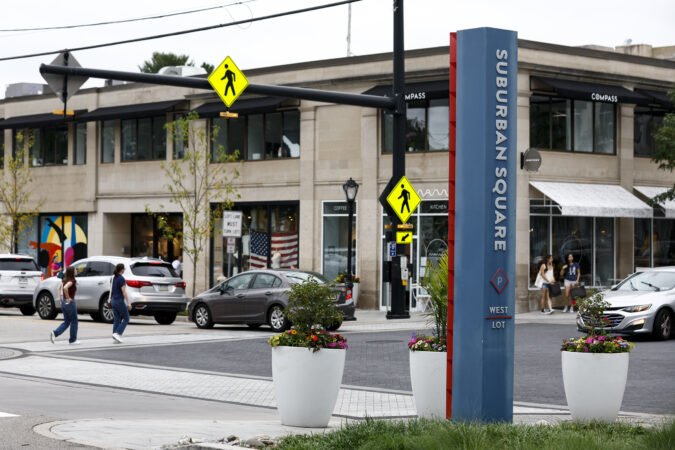
    This week, owner Kimco Realty and developer Bozzuto Development announced the opening of Coulter Place, the first apartment community in the Ardmore shopping destination.

    The five-story, mixed-use development includes 131 apartments with one to three bedrooms and about 20,000 square feet of ground-floor retail space. Amenities for residents include a fitness center, clubroom, game room, pool, coworking spaces, and pet-care spaces. It has two courtyards and garage parking with electric-vehicle charging stations.

    The promise of apartment residents helped attract new retailers to Suburban Square, including New Balance, Sugared + Bronzed, and the apparel brand Rhone on the ground floor of the apartment building.

    The complex is one of a few projects planned in recent years that have added or will add hundreds of apartments near Lancaster Avenue in Ardmore. One Ardmore, a 110-unit apartment complex, opened in 2019 after a yearslong campaign by residents to stop it. The long-awaited Piazza development is expected to add 270 apartments and almost 30,000 square feet of retail space when it opens in a couple of years.

    This rendering shows the outdoor pool at Coulter Place.

    Conor Flynn, CEO of Kimco Realty, said in a statement that Suburban Square is an “iconic, walkable destination” and that the addition of apartments creates “a more vibrant, connected experience for residents, retailers, and visitors alike.”

    “Coulter Place represents the next chapter in Suburban Square’s evolution and a clear example of how we’re unlocking long-term value through thoughtful mixed-use development,” Flynn said.

    The apartments are across from Trader Joe’s and the Ardmore Farmers Market and within walking distance to the Ardmore station for SEPTA and Amtrak trains.

    Apartments available for lease at Coulter Place range from one-bedroom, one-bathroom units for about $3,030 per month to a three-bedroom, two-bathroom unit for $7,035 per month.

    Philadelphia-based JKRP Architects designed the apartment building.

    Suburban Square was developed in 1928 and now has about 80 shops, restaurants, fitness spaces, and more. Businesses include Apple, SoulCycle, Warby Parker, Van Leeuwen Ice Cream, CAVA, and Di Bruno Bros.

    This rendering shows one of the courtyards for residents of Coulter Place.
  • The Avenue of the Arts to break ground on an ambitious $150 million streetscape to make Broad Street greener

    The Avenue of the Arts to break ground on an ambitious $150 million streetscape to make Broad Street greener

    Lush landscaping and public art will soon line Broad Street, impromptu performances may pop up, and vehicular traffic will be calmed with a new Avenue of the Arts south streetscape about to take shape.

    The project — estimated to take $150 million and a decade to realize — will begin modestly.

    The groundbreaking ceremony was held Wednesday morning in front of the Kimmel Center and was attended by more than 200 dignitaries, including Mayor Cherelle L. Parker, City Council President Kenyatta Johnson, and other members of City Council, state representatives, and officials from groups along the Avenue of the Arts.

    The actual construction is slated to start at the end of January on a small portion of the project: remaking the median strip between Spruce and Pine Streets. That phase is expected to be completed by June.

    In 2027, after the end of an anticipated swell in tourism and street activity during the Semiquincentennial, sidewalk beautification will begin on both the east and west sides of that block.

    Eventually, pending funding, all of the blocks between City Hall and Washington Avenue will be remade.

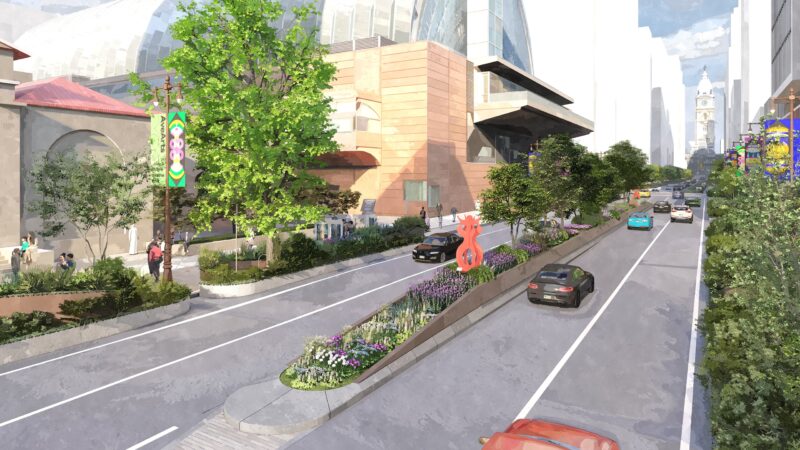
    Looking north toward City Hall, a rendering shows the completed first phase of a South Broad Street streetscape project slated to break ground in January 2026.

    The current streetscape of planters, pavers, and retro light fixtures was designed and installed more than three decades ago. In addition to the wear and tear of the existing scheme, the thinking around public space has evolved since then, said Carl Dranoff, board chair of Avenue of the Arts, Inc., which is overseeing the project.

    “It’s become somewhat aged and dog-eared,” said Dranoff. “In 1993 you didn’t need to have outdoor cafes. We need to activate the street, not just make it palatable. We have the opportunity to really elevate the Avenue of the Arts into one of the world’s great streets.”

    The project was announced in July 2024 at $100 million, but inflation and a more detailed cost analysis has now put the total price tag at about $150 million — $15 million per block. These numbers include not just the planters, lighting, public art, street furniture, and aesthetic elements, but also infrastructure work beneath the surface, said Dranoff.

    “A lot of it is things you don’t see. There’s a lot of underground construction,” he said. “Right now water is leaking from the median strip into the subway concourse. One of the reasons we got support from SEPTA and PennDot and [the Philadelphia] Streets [Dept.], is as we are building the median strips, we are improving deficiencies in the street in each block.”

    In addition, some utilities will have to be moved. One PECO relocation, for instance, will cost the project $250,000, he said.

    Dranoff has a vested interest in the vitality of the Avenue of the Arts. He has led several development projects on South Broad Street, including Arthaus, which is on the same block as the first phase of the new streetscape, and, one block south, Symphony House. He compares the investment in the new streetscape to the ones made in the Pennsylvania Convention Center, Philadelphia Navy Yard, Kimmel Center, and Schuylkill River Trail.

    “If we don’t make investments in the future, which are going to increase revenue and population, we are relegating ourselves to second-place status.”

    The new $15 million streetscape in the block from Spruce to Pine, which includes a $1 million endowment fund to underwrite maintenance, native-species plants, a rainwater-collection cistern, lighting, curved raised planting beds, public art, seating, way-finding devices, and artist-designed banners.

    Of the $15 million needed, $5 million has been raised so far: $3 million from the city over two budget years, $1 million from the state, and $1 million from private donors. Other funding requests are pending, which planners call “very promising.”

    A sidewalk garden on the east side of Broad Street between Pine and Spruce Streets is planned for installation in 2027 as part of a new Avenue of the Arts streetscape.

    Dranoff says that construction of the median between Spruce and Pine — which is the block occupied by the Kimmel Center and defunct University of the Arts — won’t cause “a lot of disruption. They’re only working business hours, not on weekends.” Any blocked lanes will be reopened after work is done for the day, he said.

    The next block to be redesigned hasn’t been decided, but it will likely be north of Spruce Street, Dranoff said. “Part of it will depend on funding. If we get a donor, someone whose offices are near the Academy of Music and is donating $15 million for that block to be next, we might accommodate that,” he said.

    Funding for the entire project is expected to be a mix of public money, corporate and individual donations, and foundation support, he said.

    The goal isn’t to have the mile-plus between City Hall and Washington Avenue end up with a streetscape that looks uniform, Dranoff said. Instead, design firms Gensler and OJB Landscape Architecture may come up with different ideas for different blocks.

    “You don’t need a master plan that’s set for 10 blocks. Every block is different, the institutions are different. It lends itself to block-by-block planning tied together by a common theme.”

    Dranoff said once the block from Spruce to Pine is done, it will show the potential, which he expects will spur fundraising to complete the streetscape for the entire Avenue of the Arts south.

    “The difference between now and the first block being finished is, you’re going to be driving down a tree-lined boulevard.”

    The article has been updated with details from the groundbreaking ceremony.