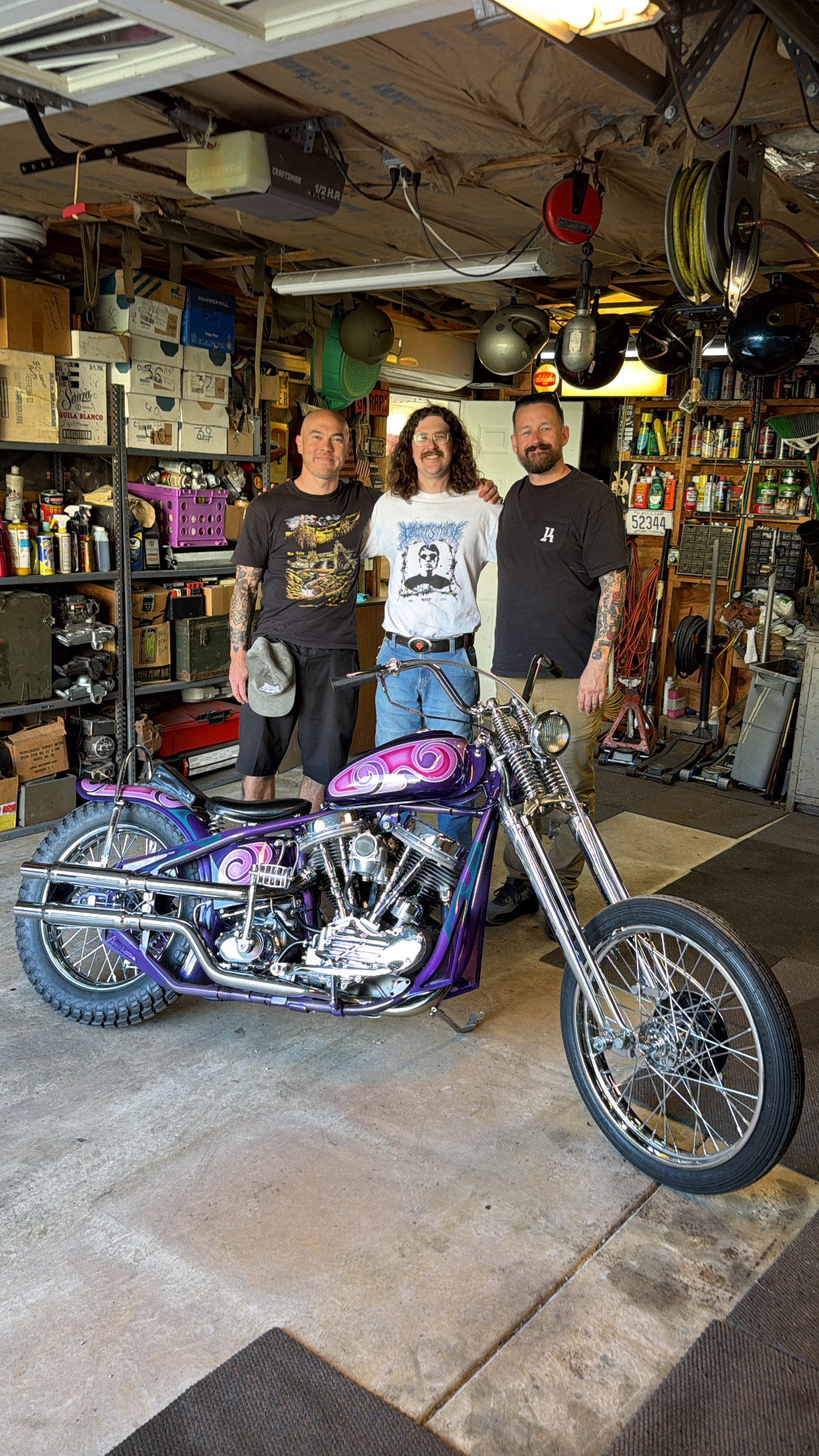
Behold the bike: a custom Harley-Davidson Panhead chopper painted deep purple replete with classic stylings, an iconic Wassell Banana gas tank, and sharp-as-knives merlot-colored acrylic-glass fins that throw shark-fin shadows when the riding is smooth and the sun hits just right.
And designed and built by Jack Weidmayer in his dad’s small basement shop over the last three years.
The custom chopper has won Weidmayer, 27, of Newtown Square, a finalist spot in the Biltwell People’s Champ, an international motorcycle-building competition hosted by the Southern California motorcycle company on June 26.
Designed to spot up-and-coming, grassroots chopper builders — Weidmayer, a Villanova communications grad who rode his first motorcycle in 2018 — the annual, crowd-voted competition features builders from all over, competing for a $10,000 prize and a coveted chance to display their homemade hogs at Harley-Davidson’s Born Free motorcycle show, on June 27 and 28 in Southern California.
Jack Weidmayer, 27, of Newtown Square, poses with two officials from the Biltwell motorcycle company earlier this year.
“I was super surprised to even get in,” said Weidmayer, who works as a machinist at a West Chester tool company when he’s not building bikes.
The final round of the competition — which annually draws hundreds of thousands of votes — began in September when Biltwell scoured the amateur ranks for prospective builders. As of Monday, Weidmayer and five other finalists are competing in five days of online voting. On Friday, the finalists will ride their creations to the legendary Southern California biker bar Cook’s Corner, where final voting takes place — and a winner is declared.
“It’d be nicer if he was interested in something a little safer,” joked Weidmayer’s father, Mark, a former Harley-Davidson mechanic, who builds custom bikes and supervised his son. “I cherish the opportunity to be able to have a close relationship with my son — and for us to share the same interests and be extremely enthusiastic about bikes.”
The bike is a beaut, said the proud dad.
“It’s 100% his design,” said Mark Weidmayer.
Jack Weidmayer has been building choppers out of the small shared shop in his dad’s basement for about five years. Using scrap parts — picked up at local swap meets and shows — and mostly basic hand tools found in the average enthusiast’s garage, he has built eight bikes, including a pinstripe S & S-powered Panhead featured in Choppers Magazine in 2024. In February, an initial round of online voting winnowed 16 contestants down to the finalists.
Weidmayer has worked on the current bike every day for nearly a year, he said.
“I can’t think of one thing that fit correctly or went according to plan,” he said. “This is probably my most modified bike to date.”
An aspiring journalist in college, Weidmayer said he discovered his love of building custom bikes during the pandemic, when he first asked his father to show him the ropes.
It’s the challenge of envisioning a design — and then making it ride from bare-bones parts that he loves most, he said, before loading his chopper onto a trailer for the 2,700-mile journey to the competition.
“I know so many people who’ve done lots of cross-country trips, I’m scared to call myself a real-deal biker,” he said. “It’s more just having an idea and making it tangible that is the more appealing aspect for me.”
And he, too, cherishes the time with his dad, he said.
“He has been an invaluable resource in any build I have done, especially this one,” said Weidmayer. “I would not have finished this project on time or nearly as nice quality without his advice, and pro tips.”
In true Philly fashion, he considers himself an underdog in the People’s Champ, noting that most of the other builders have bigger social media presences than his own — an unenviable lot in an online voting competition.
Regardless, he’s truly proud of the purple acrylic-glass fins, which he said give the bike a much more aggressive silhouette.
“I’ve had that idea in my head for three years now, and it is incredible to see it completed,” he said.
A shooting in the wee hours of Sunday left two men dead and two others injured in the Fairhill section of Philadelphia, police said.
Gunshots prompted police to arrive near 5th and Westmoreland Streets right before 3 a.m.
Police took one man to Temple University Hospital. He was pronounced dead.
Two men brought themselves to Temple University Hospital, police said. They are in stable condition.
A fourth man was taken to St. Christopher’s Hospital for Children, police said. He died soon after.
So far, no arrests have been made. Police have yet to release the men’s ages and names, or a motive, but the investigation is ongoing with the Homicide Unit.
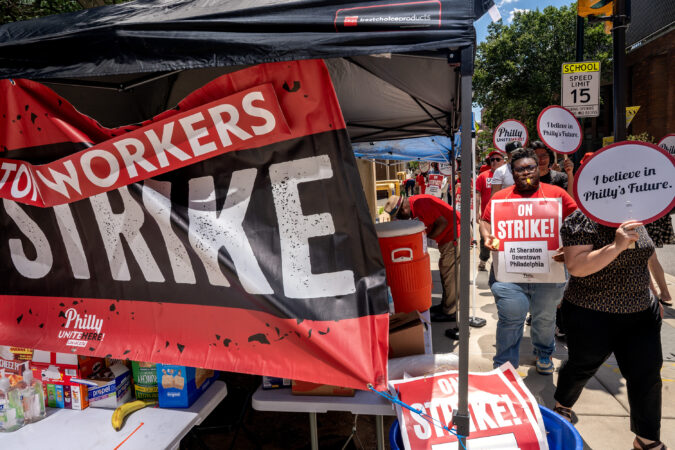
Unionized hotel workers at Sheraton Philadelphia Downtown went on strike and walked off the job Sunday morning after the union and management failed to come to an agreement.
The union, Unite Here Local 274, is bargaining for a $30 per hour minimum wage to be established by 2028, as well as improved benefits, including healthcare coverage for workers’ family members.
The strike comes just one day before France and Iraq compete in a FIFA World Cup soccer match at Lincoln Financial Field (aka “Philadelphia Stadium” for soccer fans) and a few days before another match between Curacao and Ivory Coast. Previous World Cup matches have flooded the city with tourists from around the world.
“These hotel rooms are selling, and they’re charging exorbitant rates,” said Unite Here Local 274 Vice President Briheem Douglas.
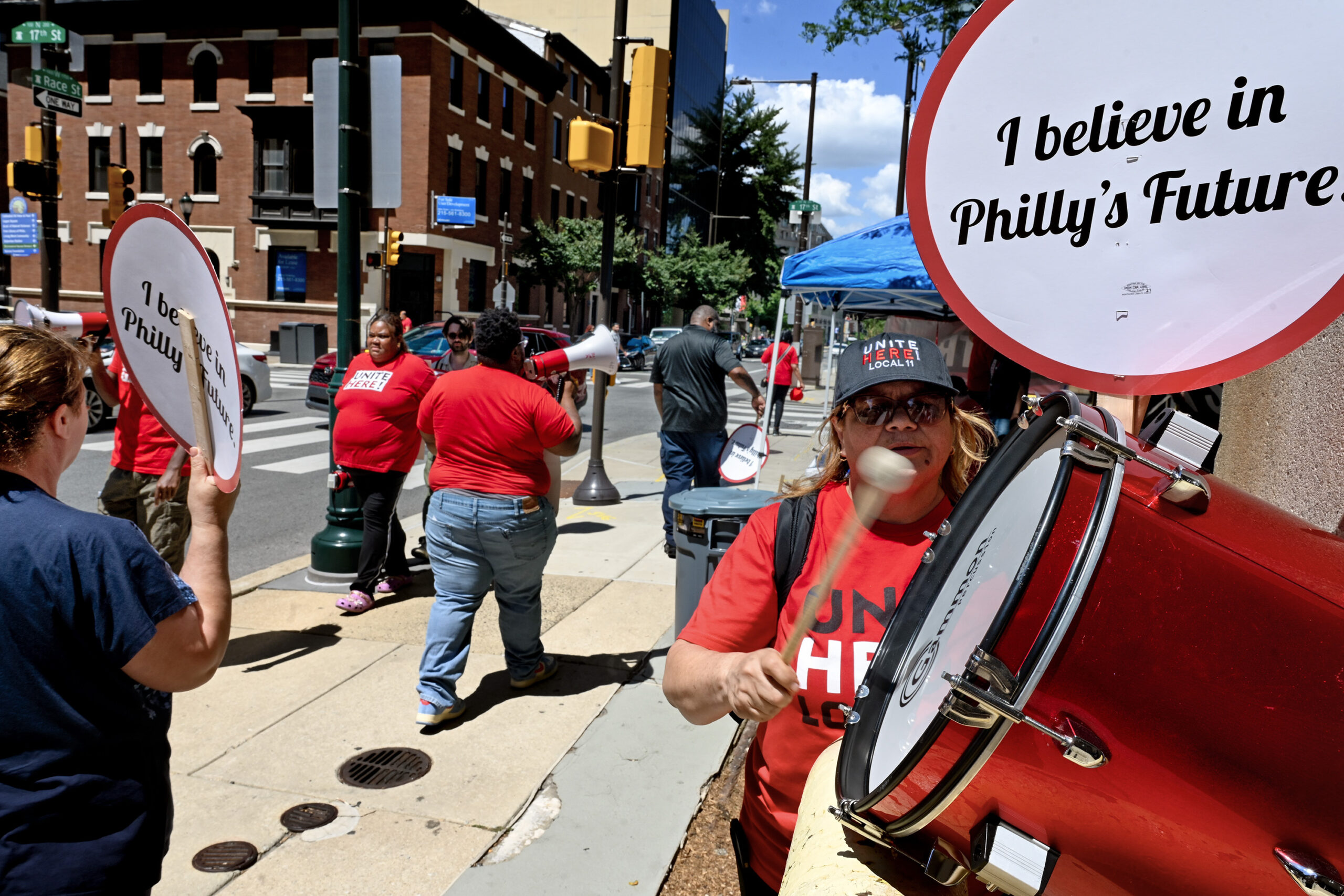
Priscilla Vasquez bangs a drum as employees at the Sheraton Philadelphia Downtown hotel represented by Unite Here Local 274 picket outside the hotel Sunday morning, June 21, 2026, after they walked off the job demanding $30 per hour wages by 2028, additional healthcare resources, and other benefits that would put them on par with what other hotel workers have recently gotten in new union contracts.
The prospect of a busy summer tourist season provided the union with leverage to get hotel owners to agree to contracts at five other unionized hotels in the city, Douglas said.
“Workers have bargained in good faith with this company way before the World Cup started,” Douglas said. “Other hotels have gotten there, and this place hasn’t.”
Eight unionized hotels in Center City had been without a contract since 2024, Douglas noted. However, within the last year, workers have successfully bargained contracts, locking in the $30 hourly wage and improved benefits, at the Hilton Philadelphia at Penn’s Landing, Wyndham Philadelphia Historic District, Sonesta Philadelphia Rittenhouse Square, Sheraton Philadelphia University City Hotel, and Hampton Inn Philadelphia Center City-Convention Center.
Douglas noted that the Sheraton Philadelphia Downtown is the biggest unionized hotel in the city, with about 200 Unite Here employees.
“For our workers to not be at the standard is disrespectful,” Douglas said.
Douglas said workers face added pressure to secure healthcare after the Trump administration’s “One Big Beautiful Bill” reduced access to Children’s Health Insurance Program (CHIP) benefits.
Francine Eason, a unionized housekeeper at the Sheraton Philadelphia Downtown, said nearly every union employee at the hotel has children.
Eason has an adult daughter, a grandchild, and a teenaged niece in her household in Wilmington. But swelling gasoline prices and spiking grocery bills have eaten away at the buying power of her $22 per hour wage over the last year.
“Everybody is on hard times,” Eason said. With gas prices backing off, she said this weekend was the first time in a while she’d been able to fill the gas tank on her 2017 Kia Optima — she’d been in the habit of only filling it halfway, in case she needed money for food.
“Oh, my gosh, it was lovely,” Eason said, and recalled musing, “This is a full tank.”
The union also is seeking a reduction in the number of rooms housekeeping staff are required to prepare per shift for guests, from 16 to 15.
The hotel is owned by Miami-based CL Hotels and is run by Aimbridge Hospitality.
In a statement, the Sheraton’s management said: “We respect our team members’ rights to engage in legally protected activities and look forward to reaching a fair contract. While discussions are ongoing, we remain committed to ensuring our guests enjoy their stay.”
In addition to this summer’s surge of World Cup fans and tourists, Sheraton’s regular business includes flight attendants, said Keturah Johnson, the international vice president for the Association of Flight Attendants, a union.
Johnson participated in the strike as a show of solidarity with the hotel workers. She said the flight attendants’ union made the decision to have flight attendants stay elsewhere in the city during the strike as a show of support.
“We don’t cross picket lines,” Johnson said. “We join them.”
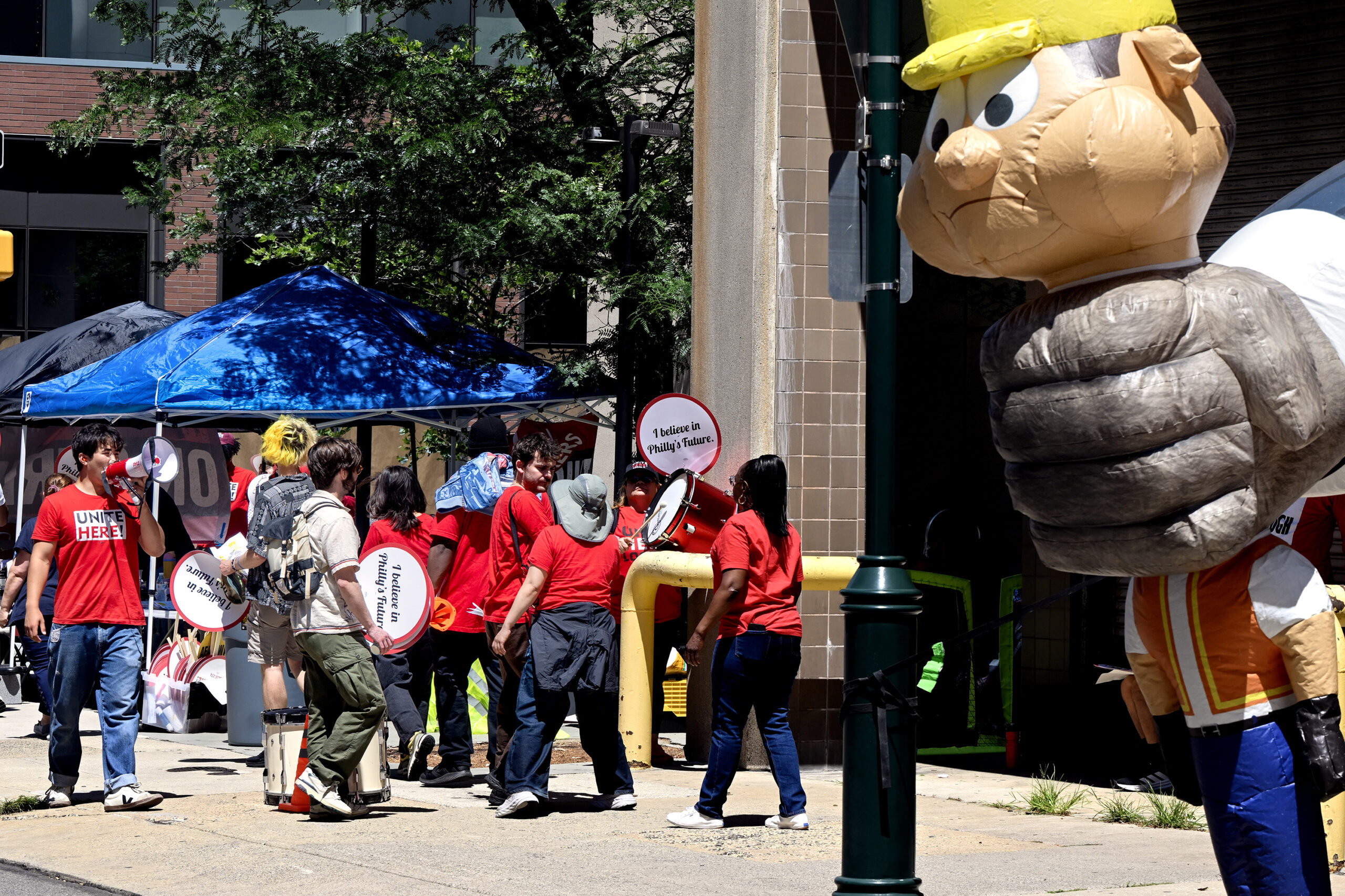
Employees at the Sheraton Philadelphia Downtown hotel represented by Unite Here Local 274 picket outside the hotel Sunday morning, June 21, 2026, after they walked off the job demanding $30 per hour wages by 2028, additional healthcare resources, and other benefits that would put them on par with what other hotel workers have recently gotten in new union contracts.
Last month’s summit in Beijing between Donald Trump and Xi Jinping, the presidents of the world’s largest economies, drove home the magnitude of the crisis facing democracy. At the scale of decisions affecting billions of people, nobody was properly represented.
Trump and Xi were negotiating for all of us, but representative of hardly any of us, whether American, Chinese, or, like most of the world, completely voiceless in the selection of either leader.
Americans have a bigger say than most nations in the selection of their leaders, but when the leader of the world’s preeminent representative democracy is openly envying the power of the leader of the world’s biggest autocracy, we know that democracy is in trouble.
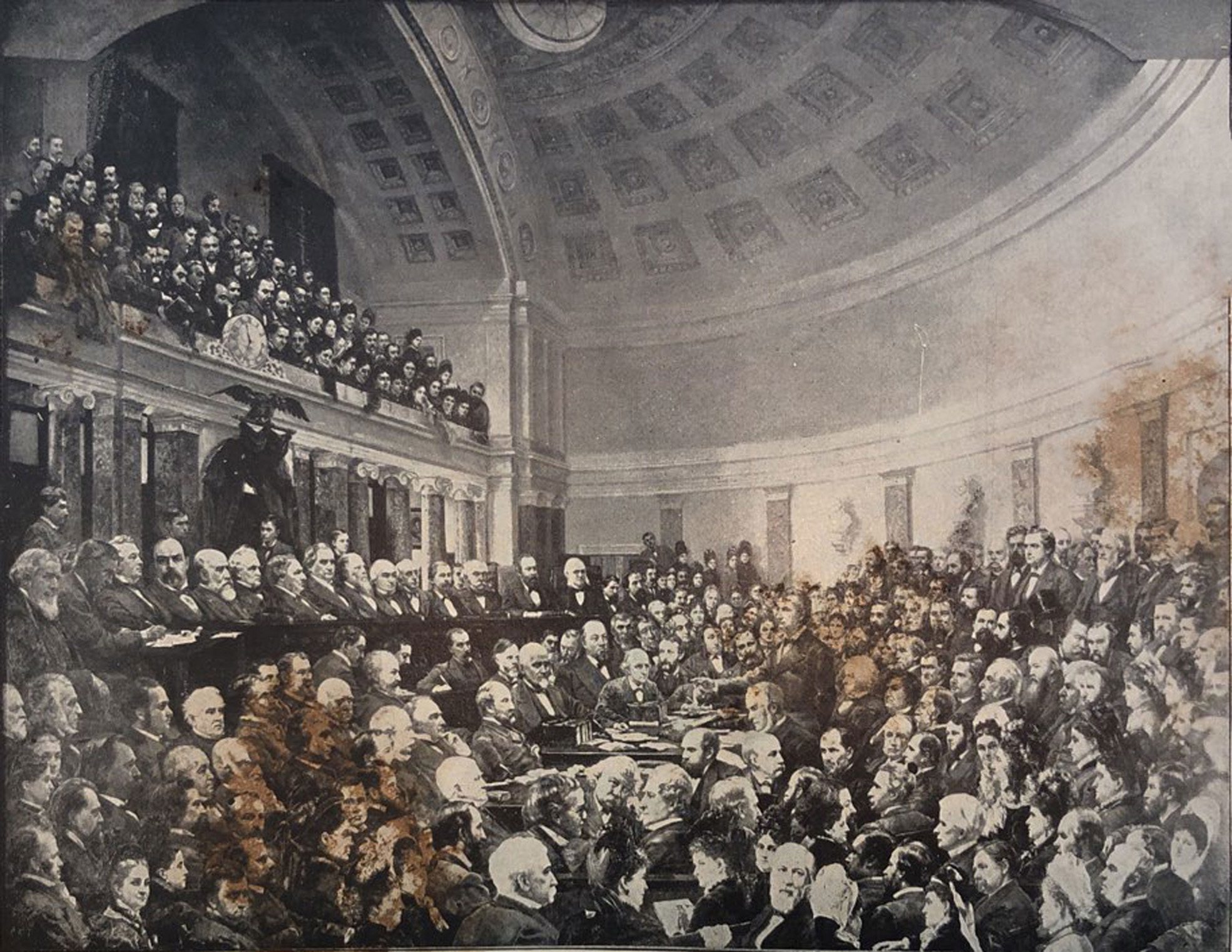
In 1787, the Constitutional Convention in Philadelphia hammered out a blueprint for representative democracy. Today, we are in a crisis because democracy has failed to scale up to fit the nearly 100-fold growth in population since then. We need to think of alternative ways of ensuring that diverse interests and diverse expertise are represented for the good of the people. We need a new constitutional convention.
In 1787, the Constitutional Convention in Philadelphia hammered out a blueprint for representative democracy, writes Colin Allen.
This is not the first time that democracy has failed to scale.
Athenian direct representation was only barely functional at the scale of the Greek city-state. Even though only male landowners were enfranchised, it was still impossible to accommodate them all at once in the Pnyx, so each voter was required to show up only for a subset of the votes.
It took another two millennia to invent representative democracy: a manageable number of legislators, each of them elected to represent the interests of thousands of people. The first U.S. census in 1790 recorded just shy of 4 million inhabitants. The newly formed House of Representatives had 65 members: roughly one per 60,000 people.
Today, over 331 million Americans are represented by 435 members: a ratio of roughly 1 to every 760,000. Not only is each member tasked with representing so many more people, but the diversity of interests in each constituency and the sheer range of issues that must be addressed at this scale mean that practically nobody is properly represented on all issues.
Voting often feels like selecting the lesser of several evils, and is at best a compromise forced by the need to decide which issue is most important to you, writes Colin Allen.
Electors face impossible choices. The chance that any one candidate represents all of a voter’s views is vanishingly small. Casting a ballot often feels like selecting the lesser of several evils, and is at best a compromise forced by the need to decide which issue is most important. At worst, voters disengage entirely or resort to preferring qualities that would be more suitable for dominance contests among apes. These problems are aggravated because social media has fractured communal purpose, and gerrymandering is splitting natural constituencies.
The possibility of electing leaders with autocratic tendencies has always been a weakness of democracy. This weakness is magnified at scale: Larger, more diverse constituencies can come to seem ungovernable, favoring politicians who project strength. We need to grapple collectively with these problems and find better ways of allocating our votes among representatives whose values and expertise match the scope of their powers.
How might this be done?
The whole approach to democratic governance needs to be reengineered from the ground up. For example, the existing separation among legislative, executive, and judicial powers should be supplemented by erecting firewalls among different spheres of political decision-making.
Existing government departments (health, education, agriculture, defense, etc.) provide an initial sketch of where separate legislative bodies might be desirable. Separating legislative functions along these lines would serve to concentrate expertise where it is needed.
Legislation in one domain would no longer be encumbered by riders that belong in other domains. Funding of health or science initiatives would not be held hostage to disputes about unrelated matters. Reducing the scope of individual legislators would also make them less prone to targeting by the full spectrum of lobbyists.
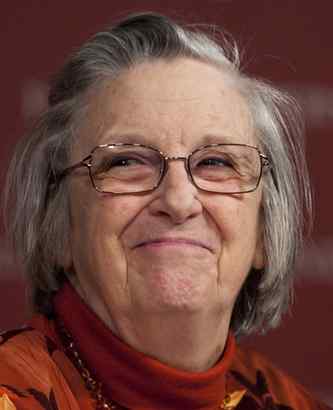
The Nobel Prize-winning work of Elinor Ostrom, pictured here, showed how management of scarce common resources is often best handled through local self-governance.
We also need to rethink the relationship between geography and representation. Some areas of governance are inherently more tied to location than others. The Nobel Prize-winning work of Elinor Ostrom showed how management of scarce common resources is often best handled through local self-governance. People whose livelihoods depend on shared resources they jointly control make better decisions than those acting under rules imposed remotely.
Current political systems (whether democratic or not) aggregate legislative and economic power hierarchically over increasingly large geographic areas. This favors decisions by people who have little or no skin in the game when it comes to good stewardship of local resources. Hence, in the domains of agriculture or the environment for example, it makes sense that one’s choice of representative should be tied to your location.
But for other issues, such as justice and civil rights, national defense, or international trade, a voter’s interests and values may be better represented by someone living far away than by local politicians. At-large representation could provide a mechanism for voters to select representatives for domains where geographic location is less important. For some domains, a mixture of local and at-large representation may produce the best deliberative bodies and the greatest sense by voters that their views are adequately represented.
These ideas merely provide one set of suggestions. They admittedly bring new problems with them. An obvious challenge for multiple specialized legislative bodies is that of coordination among them. Possible solutions to be explored include constitutionally mandated joint sessions. Elected delegations from one legislature could also have voting rights in another. Other solutions come from the power of the purse.
I suggest giving some of that power back to the people by allowing voters to allocate a certain number of shares of the government’s total revenue to various legislative bodies. A pacifist might opt to allocate zero shares to defense while splitting the remainder 50-50 between health and education, for instance. Other voters with different priorities could steer the money differently. Such a scheme would help to address “not with my tax dollars” complaints that are often heard when people don’t like some government programs that others believe essential.
In a pluralistic society we can be fairly confident that the allocations emerging from these individual choices would keep the essential parts of the government going via the wisdom of crowds. But there are many reasons for retaining some degree of top-down control. An elected body specializing in finance and taxation would be particularly important. This body could be constitutionally mandated to control some percentage of the total budget, say 30% with the other 70% being allocated through voter preferences.
The finance body might itself consist of a mixture of at-large representatives and district-based representatives. It could be constitutionally mandated to allocate a substantial portion of revenues to domain-crossing projects, such as education that serves agriculture, or medical research that serves defense department needs, and it could also provide funding in cases where an urgent or unanticipated need has arisen.
I present these ideas in the spirit of trying to think creatively about how we can harness democracy for the large-scale challenges of the 21st century. I am sure that all of these proposals can be improved upon collectively through the mechanism of a constitutional convention.
Pie in the sky? Clearly this is not an overnight project. The Philadelphia Convention took place 11 years after the signing of the Declaration of Independence. The deliberations that occurred there were a matter of intense public scrutiny.
The Constitution took another two years to be ratified. Compromises were necessary and were made. We are still living with the effects of some of those compromises today. But something workable emerged, although it notoriously failed to treat all people as equal.
The system we have is no longer suited to a modern society in which hard-won gains of underrepresented groups are being rolled back by a Supreme Court that regards the application of the Constitution more as an academic exercise than a serious attempt to deal with all that has changed in the past 239 years.
Those on both wings can be suspicious of the motives of those on the other side, but all should be able to take seriously the idea that the United States has outgrown the clothes originally tailored for it almost 250 years ago.
Colin Allen is a distinguished professor of philosophy at University of California, Santa Barbara and a Public Voices fellow of the OpEd Project.
MARGATE, N.J. — Hillary Bor had had enough of running the acclaimed Pumpkin BYOB in Philly after two decades.
Around the time Pumpkin closed in 2024, she uprooted her life and moved to the Shore full time. Also around this time, she fell in love with Tim Nedzwecky, whom she met through their respective white pit bulls, Piggy and Loki.
They hadn’t planned to launch a food venture, but when Scott Bonar, of Scott’s Dock on the bay in Margate, talked about wanting a food option, the pieces fell together.
Dogs. The Shore. A view.
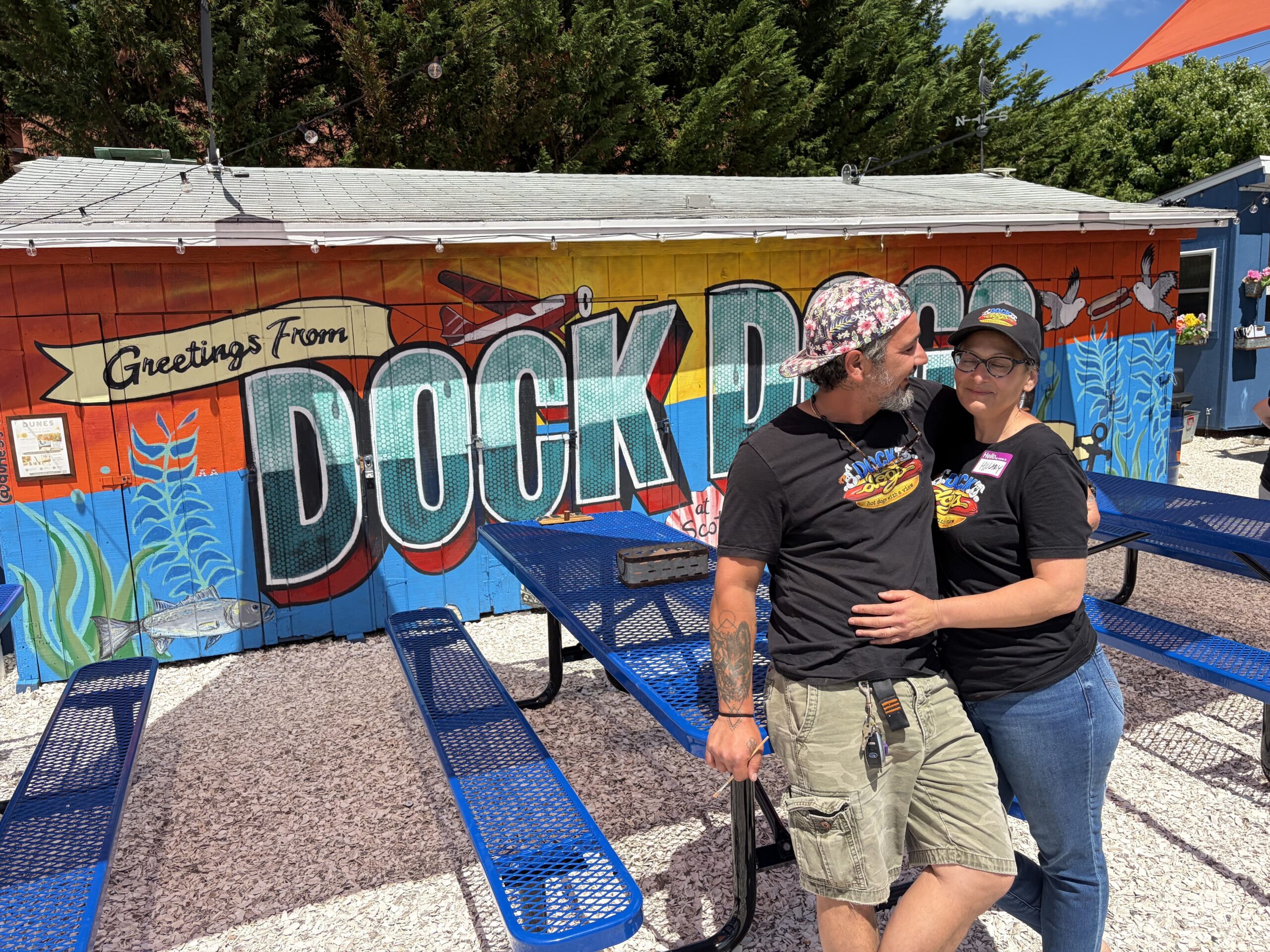
Thus was born Dock Dogs (hot dogs with a view), a permanent fixture next to Scott’s Dock, with a complimentary lovely sunset over the bay.
Tim Nedzwecky and Hillary Bor, the former owner of Pumpkin BYOB in Philadelphia, opened Dock Dogs on the bay in Margate.
“We wanted to do something together,” Bor said. “He asked us, ‘You guys want to do food?’”
Hot dog stands have a history in Margate. There’s Junior’s nearby and the old Lenny’s, famous for its pepper hash, which was set up back in the 1960s and 1970s near Lucy the Elephant. Now, Dock Dogs has started carrying — by popular demand — the pepper hash from the original Lenny’s outside Philadelphia.
But does running a hot dog cart, even one with a beautiful view, offer fulfillment after owning Pumpkin BYOB with its elevated cuisine and prime South Street Graduate Hospital location, for 20 years?
Bor does not hesitate to answer.
“This is so fulfilling,” said Bor, who rides a bike everywhere and still doesn’t own a car. Plus, “I get to be with my soulmate. I get to be with wonderful people to work with. We get to be on the water.”
“It’s a dream come true,” said Nedzwecky.
Tim Nedzwecky and Hillary Bor at their hot dog stand on the bay in Margate, Docks Dogs. Bor is the former owner of Pumpkin BYOB in Philadelphia, which closed in 2024.
Dock Dogs has a menu item in memory of Scott’s mother, Robin, a familiar face around the marina, who died in 2021: Robin’s Reuben with Swiss cheese, sauerkraut, and Russian dressing. ($12).
The Windy Dog with mustard, relish, onions, peppers, pickles, celery salt, tomatoes, and a side of Lenny’s pepper hash, at Dock Dogs in Margate, opened by Hillary Bor, the former owner of Pumpkin BYOB in Philadelphia, and partner Tim Nedzwecky.
All hot dogs are Hebrew National and served on Martin’s potato rolls with kettle chips, pickles, and coleslaw.
There’s chicken and egg salad options (no hot dog) as well, and the Keeper, a crab cake shaped like a hot dog ($22). The Captain’s Choice ($14) has bacon, barbecue sauce, and cheddar and a “simple sailor” hotdog with choice of ketchup, mustard, relish, sauerkraut, and sriracha is $10.
They’re hoping people come for the food as well as the vibe. Mondays are for families, with face painting and other kid-friendly activities out back, where picnic tables line the docks. You can come by boat. Wednesdays feature a house band.
There’s also a “Hook the hot dog” game that carries a prize.
The response has been enthusiastic.
“Saturday night, the vibe here, it was so special,” said Nedzwecky. “Everybody, the kids, were dancing.”
“We were looking at each other like, ‘Oh my God it’s amazing.’, ” said Bor.
“It makes us really happy,” said Nedzwecky. “People are saying this is exactly what this area needed.”
As we approach America’s 250th anniversary, the political party that brags of its patriotism is actively undercutting national security.
Although many GOP House members and senators are versed in foreign affairs and grasp the irresponsibility of their actions, they are too cowardly to confront the biggest security threat America has faced in decades: President Donald J. Trump.
As his Iran debacle laid bare, Trump’s ego-driven foreign policy is making America more vulnerable to our enemies — both at home and overseas. Yet, the aging POTUS seems ever more determined to ignore real security dangers. His main focus is on seeking quick military hits he thinks will win him personal acclaim.
His failed Iran war perfectly displays his misuse of the U.S. military for unnecessary battles that decrease capacity for any future conflicts with Russia and China. And Republican legislators — who claim a monopoly on love of country — don’t have the guts to call him out.
Why? Because they value their chairs more than keeping Americans safe.
The Iran war, and the memorandum of understanding that has temporarily halted it, are a perfect example of Trump’s failure to protect the nation.
In February 2026, Iran presented no threat to the United States. Tehran’s enriched uranium was deeply buried under rubble after the U.S. and Israel waged a 12-day war on Iran in June 2025.
But, driven by ego, POTUS let Israel’s Benjamin Netanyahu persuade him that a quick bombing run could achieve regime change in Tehran and remake the entire Middle East.
President Donald Trump poses for a photo in October with Israel’s Prime Minister Benjamin Netanyahu before he boards Air Force One at Ben Gurion International Airport, near Tel Aviv, as Israel’s President Isaac Herzog watches at left.
Don’t blame Bibi, because only a president who knows nothing about Iran and obsessively seeks a Nobel Peace Prize could have believed such nonsense. POTUS ignored warnings from U.S. military brass that Iran would respond by blocking the Strait of Hormuz, because he insists he knows best.
After four months of war, what has Trump’s ego wrought?
In desperation to get Iran to reopen the strait and push gas prices down before the midterms, Trump has promised Tehran huge and immediate economic benefits.Meantime, nuclear talks are pushed back to 60 days of negotiations, which will probably be extended indefinitely.
The one-and-a-half page memo contained only one paragraph on nuclear talks, but POTUS has already revealed a host of U.S. concessions in interviews. They guarantee that if a nuclear deal is ever reached, which is far from certain, it will be similar or worse than President Barack Obama’s JCPOA nuclear accord, from which he withdrew in 2018.
Rather than ending Iran’s nuclear program altogether, as Trump promised, any deal will permit Tehran to enrich uranium to low levels, as did the JCPOA. It will also allow Iran to downgrade its highly enriched uranium inside their country, rather than send 97% out of the country as required by Obama’s deal.
In fact, Trump now debunks the importance of rushing to extract Iran’s enriched uranium from the rubble, because Tehran can’t access it. “Nobody’s touching it,” he said. “We have Space Force cameras [monitoring the sites]. It’s actually not valuable. …”
So tell me again, Mr. President, why you started this war?
Supporters pass by a billboard showing leaders of Hezbollah, outside the grave of the late Hezbollah leader Hassan Nasrallah, as they mark the first day of Ashoura in Beirut, Lebanon, on Wednesday. The preliminary agreement between Iran and the United States leaves unresolved the two issues at the heart of the conflict: Israel’s occupation and Hezbollah’s arsenal.
The list of Trump concessions to Iran goes on, each one explained more bizarrely by the president. Trump casually declared he would allow Iran to keep its ballistic missiles, which were fired at Israel and U.S. bases — a total reversal of his pledge before the war started. “I’m saying that if other countries have them, it’s a little bit unfair for them not to have some,” Trump told reporters in Paris the other day. Say what?
What is particularly dangerous — and requires Congress to confront the president — is that this unnecessary war has degraded the U.S. military, and revealed its weaknesses to our adversaries.
The war has also exposed the erratic style of the U.S. commander in chief, who treats the U.S. military like his personal plaything. Both he and his showman “secretary of war,” Pete Hegseth, have proved they lack the judgment and temperament to command this force.
By keeping such a huge percentage of our air force and naval assets in the Mideast for months, Trump has worn out the readiness of our military. This war also used up a staggering amount of U.S. long- and medium-range missiles that are badly needed to stabilize the Indo-Pacific against Chinese aggression, and by NATO allies to ward off Russian aggression.
Yet, instead of selling such missiles to Taiwan, or letting Europeans buy them to protect Ukraine from massive Russian bombing, Trump used them up against Iran.
Moreover, the Iran war revealed the continued Pentagon failure to prepare for the new drone and artificial intelligence-driven 21st century form of warfare. The U.S. military used billions worth of $2 million missiles to intercept $20,000 Iranian drones because the Pentagon has been unable to speed up drone production and refuses proffered help from Ukraine.
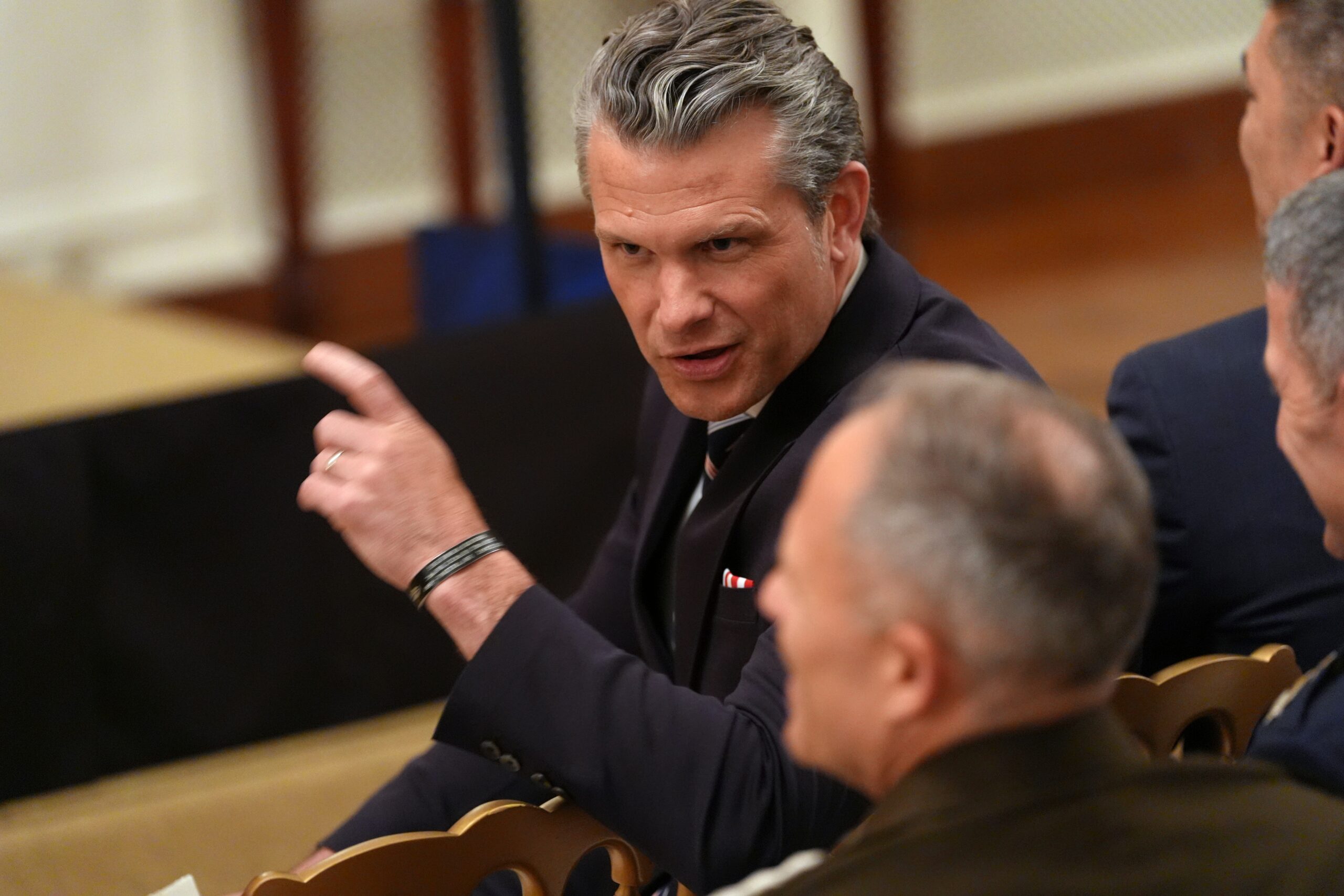
Defense Secretary Pete Hegseth attends a Medal of Honor ceremony in the East Room of the White House, Thursday.
In fact, at the G7 summit in France on Tuesday, Trump made a point of how unimportant the Ukraine conflict was to America. “Look, we have nothing to do with it,” he said of that war. “It has no impact on us, other than we sell weapons” to Ukraine, he added. “We’re thousands of miles away.”
That kind of dumb remark, in a world where satellites and electronic warfare make distance irrelevant, is proof positive of Trump’s total misunderstanding of geopolitics. The U.S. abandonment of Kyiv and coddling of Russia enhances China’s belief that America’s power is declining and the global balance of power is shifting.
Indeed, the most vivid illustration of the president’s blindness to the fallout from his Iran fiasco, came when he thanked Vladimir Putin and Xi Jinping for their help with ending the Iran war. What head spinning brain-blank could prompt gratitude for Putin giving intelligence information to Tehran to target U.S. bases? Or to Xi for providing all the parts for Iranian drones that killed Americans in Kuwait?
Which side is Trump on?
POTUS’s conviction that his personal relationships with Putin and Xi will prevent them from doing America harm is endangers America’s safety. He won’t critique them for aiding Iran, because he believes both men are his comrades. His easily manipulated ego plays into both dictators’ hands.
This war has provided proof that America’s adversaries need only wait and watch as the U.S. president undermines the U.S. military’s fighting capacity by wasting it on delusionary wars.
Instead, Trump and Defense Secretary Hegseth make a point of slamming our allies, whose help we need to deter to Russian and Chinese imperialism.
Even as POTUS was signing the surrender document with Iran, Hegseth announced the U.S. will pull back troops from Europe and weapons support for NATO. Thus, Trump openly advances Putin’s dreams of splitting the transatlantic alliance, at a time when Russia is openly hostile to the West.
President Donald Trump with Prime Minister Giorgia Meloni of Italy after a Group of 7 photo in Evian-les-Bains, France, Tuesday.
POTUS even infuriated his closest European ally, Italian Prime Minister Giorgia Meloni, who accused him of “fabricating” claims that she “begged him” for a joint photo.
“I can only say it is disappointing that he does not show the same determination with the enemies of the West and of the United States, whose leaders he instead treats with far greater indulgence [than his allies],” Meloni stated angrily.
There is a name for a leader who coddles the enemy while alienating friendly democracies that share our values. Such treachery, whether carried out wittingly or blindly, betrays our nation.
Trump’s indifference to U.S. security isn’t just evident in his misadventures abroad.
At a time when foreign terror threats to the nation are high, the president just refused to reauthorize critical U.S. foreign spy powers, unless they were tied to a voter suppression bill.
The same week, he used political trickery to officially appoint a fervently loyal ally, Bill Pulte, as temporary director of national intelligence, over bipartisan Senate objections. Pulte has zero intel experience, but is tasked by POTUS to pursue his political enemies and undermine the midterms.
Never mind the serious risk of terror attacks during FIFA matches or sesquicentennial celebrations — or during fall balloting. GOP senators bowed to their boss man rather than make a big fuss.
So as July Fourth approaches and Trump busies himself with architectural destruction in the nation’s capital, his GOP enablers in Congress are helping a doddering egomaniac undermine the. security of the citizens he supposedly serves. These Republicans know what POTUS is doing, yet they refuse to stand up and make their voices heard.
On America’s 250th, GOP pols are aiding Trump in betraying constitution and country. How they can look in the mirror and call themselves patriots mystifies me.
VENTNOR, N.J. — The e-bike revolution will not be coming to Ventnor’s famously chaotic boardwalk. The city banned motorized bicycles decades ago, and raised the penalties in 2023, citing dangers from the speeds and heavier bicycles.
Ocean City tried doing the same in 2024, but reversed course on the lowest speed e-bikes after an outcry, particularly from seniors who have grown to cherish the electric bikes that take them farther and faster, and against the wind without breaking a sweat.
Wildwood allows them but has a 10 mph speed limit for any vehicle. Atlantic City prohibits them.
But while boardwalk rules vary, the state’s e-bike law, passed in January with a grace period through July 19, requires New Jerseyans with e-bikes to register them and, in some cases, purchase insurance.
The law was adopted amid a sense of urgency after a 13-year-old Scotch Plains boy on an electric bike was killed in a collision with a landscaping truck. Earlier this month, Chase Sudano, 16, a rising wrestling star at St. Augustine Prep, was killed after he collided with a UPS delivery truck in Southhampton, Burlington County.
The law defines two classes of e-bikes: low-speed, where the motor assists only while pedaling and shuts off when the bicycles reaches 20 miles per hour, and a motorized bicycle that is throttle-capable of assisted speeds up to 28 miles per hour.
All users of both categories must have a permit or driver’s license and wear helmets. Nobody under 15 can ride one at all.
‘It’s a mess’
So far, there is no way to actually comply. The state’s own Motor Vehicle Commission website has no way to register an e-bike. The state now says it will begin taking appointments only after the grace period ends.
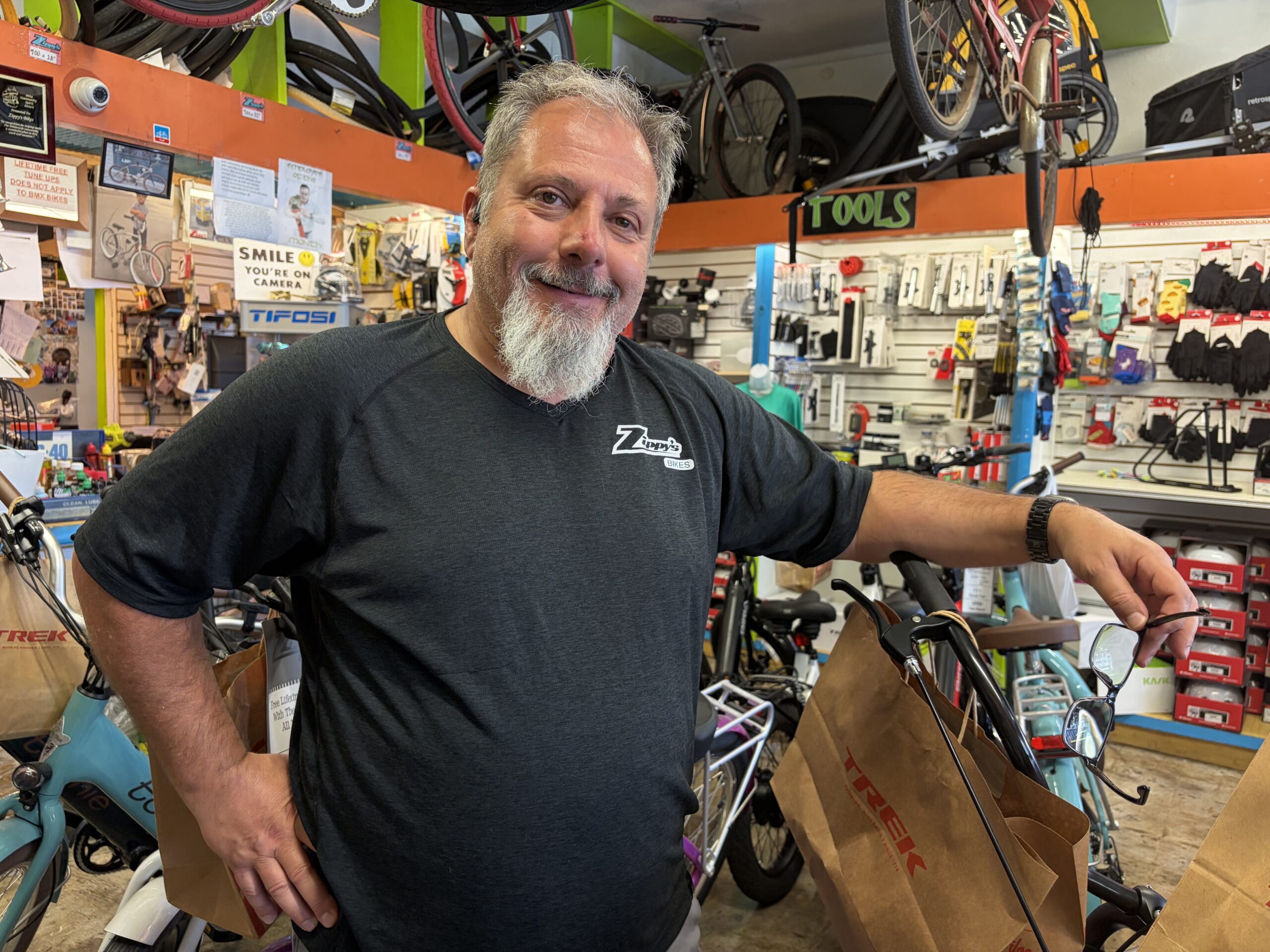
Scott Chambers, owner of Zippy’s Bikes in Wildwood, says the new e-bike law in New Jersey “is a mess,” with no way for people to comply with registration requirements, and confusion over other issues.
“It’s a mess,” said Scott Chambers, owner of Zippy’s Bikes in Wildwood. “It’s so overwhelming because they created this law, I don’t want to say haphazardly, but they rushed it.”
Crawford said his customers are reluctant to buy an e-bike until they know they can ride it in compliance with the law.
He says the law doesn’t mention e-tricycles, so it’s not clear where those might fall. (The state now says the law does not apply to e-tricycles.)
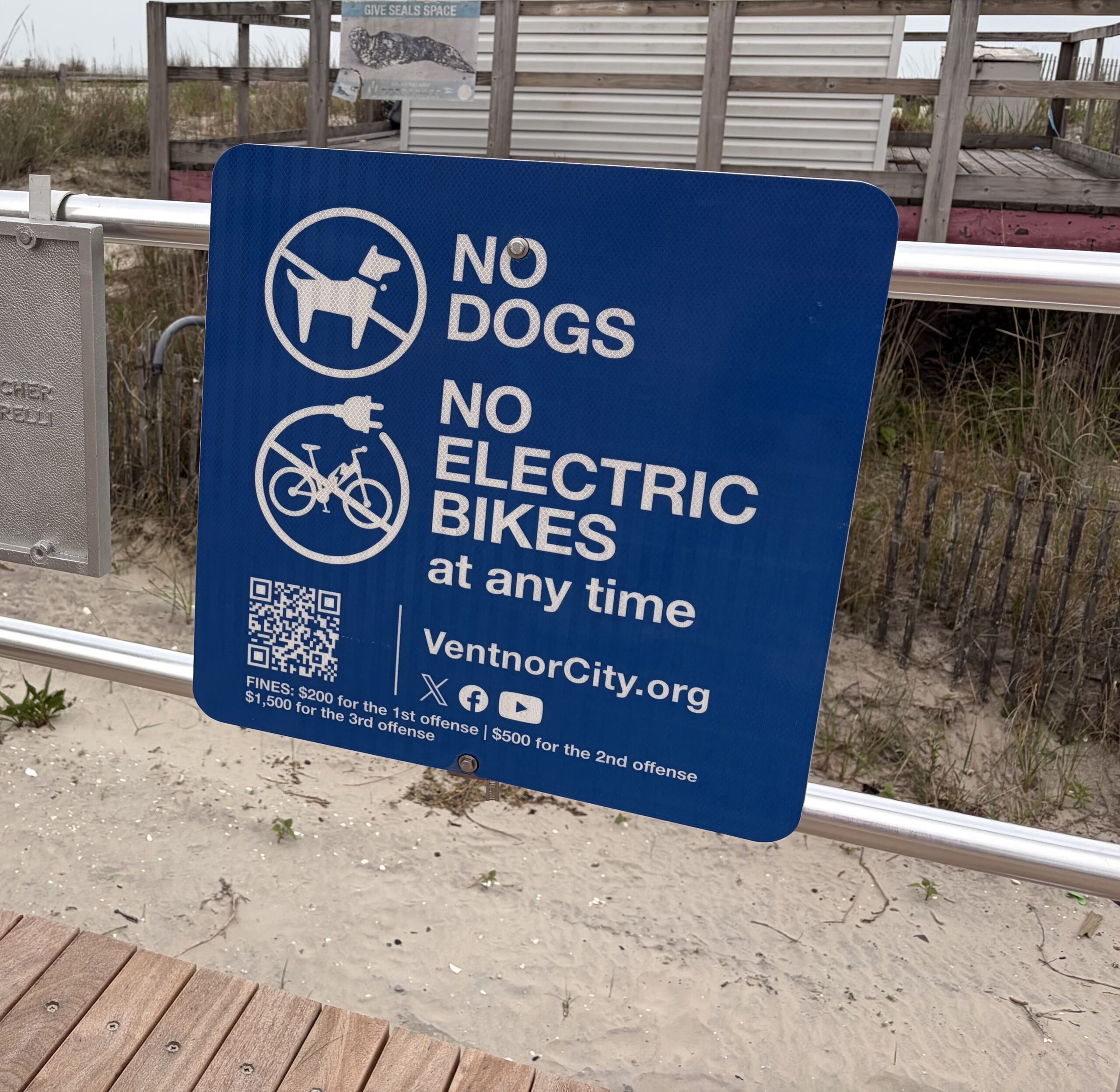
In Ventnor, there’s a big electronic sign on Atlantic Avenue alerting people to the new law’s helmet, insurance, and registration requirements. A new sign was added to the Boardwalk itself, highlighting two prohibited categories: e-bikes and dogs.
Ventnor police Lt. Bryan Gaviria says the department will have its hands full, educating and, at some point, enforcing the new e-bike law.
But first, he said, they need some answers themselves.
“We’re absolutely waiting for clarity all around,” he said, adding that the city’s bicycle officers are choosing to ride on non-electric bikes because they don’t want to be out of compliance themselves, and they don’t want to be on e-bikes while enforcing an e-bike ban.
Ventnor installed this sign on the Boardwalk warning that electric bikes were prohibited (as well as dogs). The state’s new e-bike law goes into effect July 19, but Pennsylvanians will not be required to register their e-bikes while in New Jersey, the state says.
Waiting on the state
The state recently clarified some of the issues that were causing confusion.
William Connolly, the press secretary for the N.J. Motor Vehicle Commission, says the MVC will begin offering appointments for e-bike licensing and registration in July. The law’s grace period ends July 19.
“We will be making an announcement later this month about when appointments will become available, along with offering newly updated resources and step-by-step guidance for e-bike licensing and registration,” he said.
He said the delay was due to the “extensive IT upgrades” required for new licensing and registration systems, educational resources and testing procedures, not to mention buying new materials such as “specialized license plate stickers,” that will have to be displayed on the registered bikes.
“We are establishing a first-of-its-kind, comprehensive process for e-bikes,” he said.
Ventnor installed this electronic sign on Atlantic Avenue to educate people about the state’s new e-bike law. Pennsylvanians will not be required to register their e-bikes while in New Jersey, the state says.
Connolly said there is one category of e-bikes that will not require insurance, though they will still require registration: the lowest speed e-bikes.
“These are the low-speed e-bikes with a motor that provide pedal assist only when the rider is pedaling and cease to provide assistance when the e-bike reaches 20 mph,” he said.
So what if you’re visiting the Shore and bring an e-bike?
Connolly said: “E-bike registration through the New Jersey MVC is only available to New Jersey residents.” Meaning, Pennsylvanians can bring their bikes and use them without registering them.
But bicycle advocates say the law is confusing, because it also states that any bike must display a sticker showing that it is registered.
While the law was prompted by a series of crashes, and particularly by the ubiquitous use by teenagers, it has been seniors that have taken to the e-bikes and urged towns to let them ride on their boardwalks.
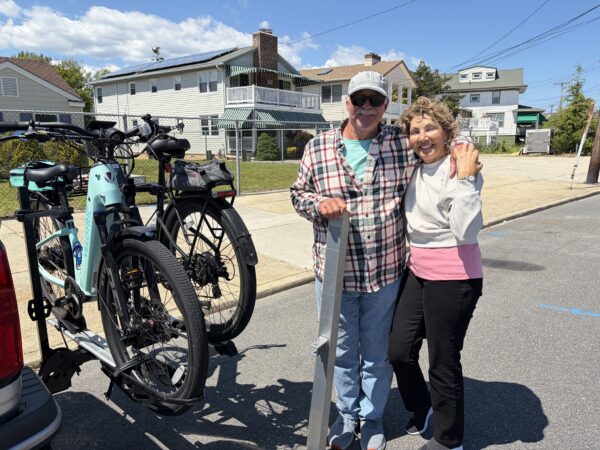
Annamarie, 70, and Mike Carr, 71, of Ventnor are best known for the Jagielky’s candy shops they own, but it’s e-bikes that have become their passion.
Loading their bikes back onto their truck in Ocean City, where they began and ended a bike ride around various bridges, Mike Carr said he’d be sure to wear a helmet, because he believes that will be the thing that officers will focus in on in the beginning.
Annamarie said, “Sure we’re upset,” about not being able to ride on Ventnor’s boardwalk, but they recognize the risks from people going too fast, particularly on electric scooters.
E-bikes have allowed the couple to go on numerous bike rides a week, for upward of 30 or more miles. They’d never do that on a regular bike.
“We parked here, we went the whole length of the boardwalk, we went down to 29th Street, we went back to Haven Avenue, came back and went over the bridge to go see the birds,” Mike said, describing the couple’s route that day.
With the e-bikes, they don’t have to worry about the wind, he said. The couple will typically go 13 miles an hour.
They are hooked on the freedom, distance, and exhilaration that e-bikes have given them, even as they passed 70. They ride all over the bridges of the barrier islands.
Mike’s got some of his regular routes timed so that he can get over the bridge without getting a red light and without automobile traffic catching him from behind. “When we’re going into Longport, you turn around, you look at the light. When it’s red, you have four minutes to get over. You hit the throttle and you go as fast as you can.”
He said they’ll try to register the bicycles and comply with the law, once they’re able to:
“I’ll have to wear a helmet because I’m guessing they’ll look for the guys with no helmet, pull them over.”
E-bike riders can sign up for direct updates from MVC here.
Gen Xers watched dial-up phones shrink to pocket size, typewriters turn into touch screens, and appointment TV give way to streaming binges.
But Bicentennial babies are a special group of Xers. Born in 1976, they are celebrating a milestone birthday this year right along with the country. As America turns 250, they are turning 50. And on the cusp of the Semiquincentennial, Philadelphia’s Bicentennial babies are feeling reflective.
1976 was just three years after Roe v. Wade, the landmark Supreme Court ruling giving a woman the constitutional right to end a pregnancy. It came 11 years after the Voting Rights Act of 1965 made it illegal to try to stop Black Americans from voting, and 12 years after the Civil Rights Act of 1964 ended legal segregation.
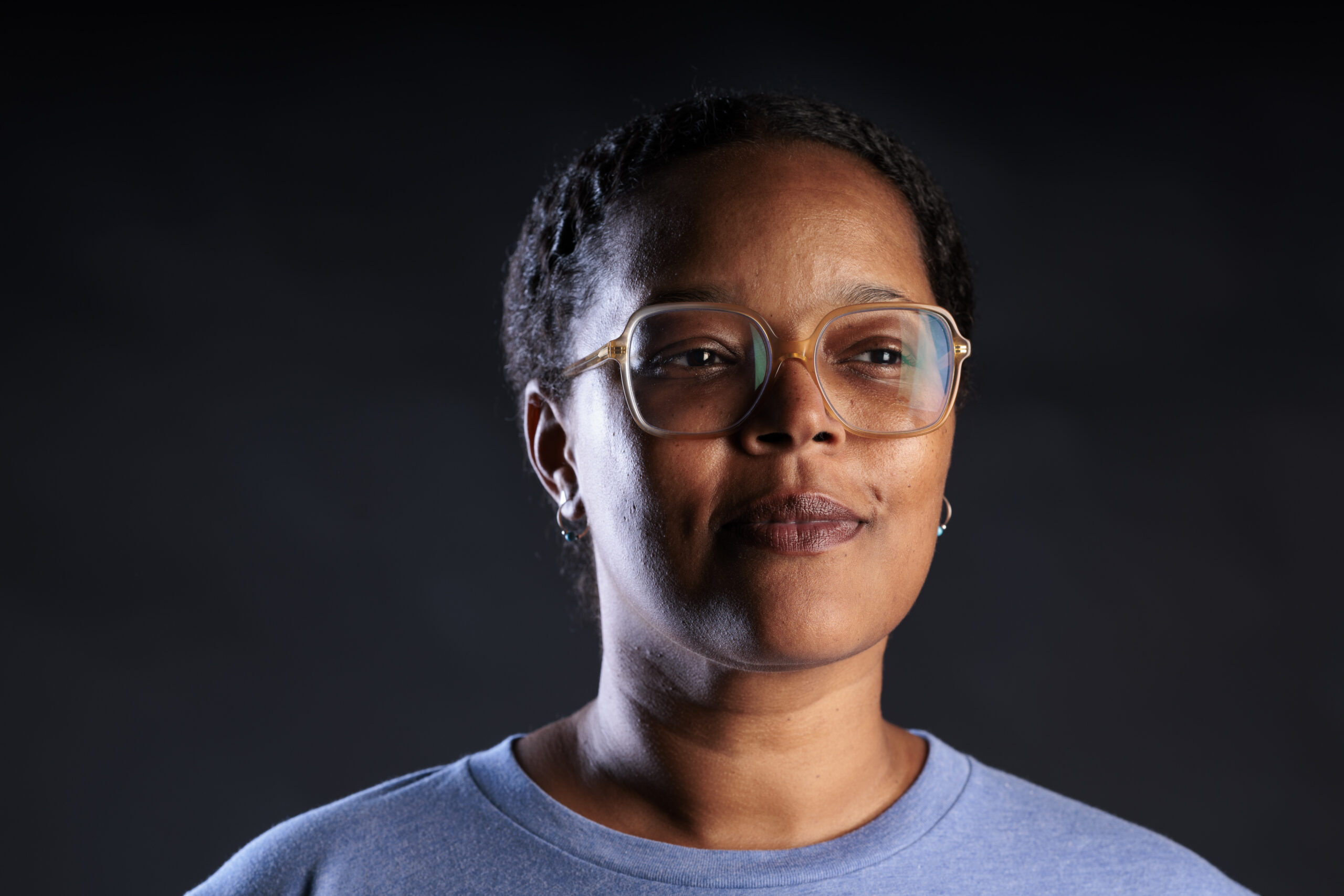
Yolanda Wisher, producer of the “Bicentennial Baby” podcast, photographed in the Philadelphia Inquirer studio on May 28.
These changes to the American landscape gave Bicentennial babies a level of personal freedom and agency when they were coming of age during the turn of the 21st century that their parents and grandparents did not have. But in the last decade, they’ve seen the Supreme Court reverse Roeand weaken civil rights laws to the point that Bicentennial babies’ babies now don’t have the same privileges their parents did.
“I felt like this opportunity was the best way to study this major moment in American history from a personal angle and revisit what it means to be a Bicentennial baby from a Philadelphia perspective,” Wisher said.
Each of the 10- to 15-minute Bicentennial Baby episodes bubbles with late ’80s and early ’90s nostalgia from the cassette tape centered in the podcast’s logo, to the funky theme music lending to its WDASQuiet Stormvibe, to references to banana clips and acid-washed jeans.
At its core, however, Bicentennial Baby is unapologetically Philly.
Today’s 50-year-olds were in the first grade when Thriller was released, but they also remember 1982 as the year Constance Clayton became the first Black person to serve as the superintendent of Philadelphia public schools. They watched the Flyers on PRISM and music videos on MTV.
Earlier this year, Wisher put a call out on social media asking Philadelphians turning 50 in 2026 to join her in conversation about their unique perspective as they enter middle age.
“I was interested in finding the diversity of the Bicentennial babies’ experience,” Wisher said. “What does it mean to be a 50-year-old born and raised here? Or to be that person, who wasn’t born here, fell in love with the city, and decided to make it home?”
A dozen applied. Wisher chose six.
They are Laurie Allen, a librarian who lives in South Philly; Maleka Fruean, a community journalist who lives in Germantown and is a mom of four; Kenny Guy,who lives in Mount Airy and is a father of six; Michiko Hunt, a development associate at Greene Street Friends School, who lives in Germantown, and is a mom of two; and Stewart Varner, a manager of the University of Pennsylvania’s Digital Humanities Lab who lives in West Philly.
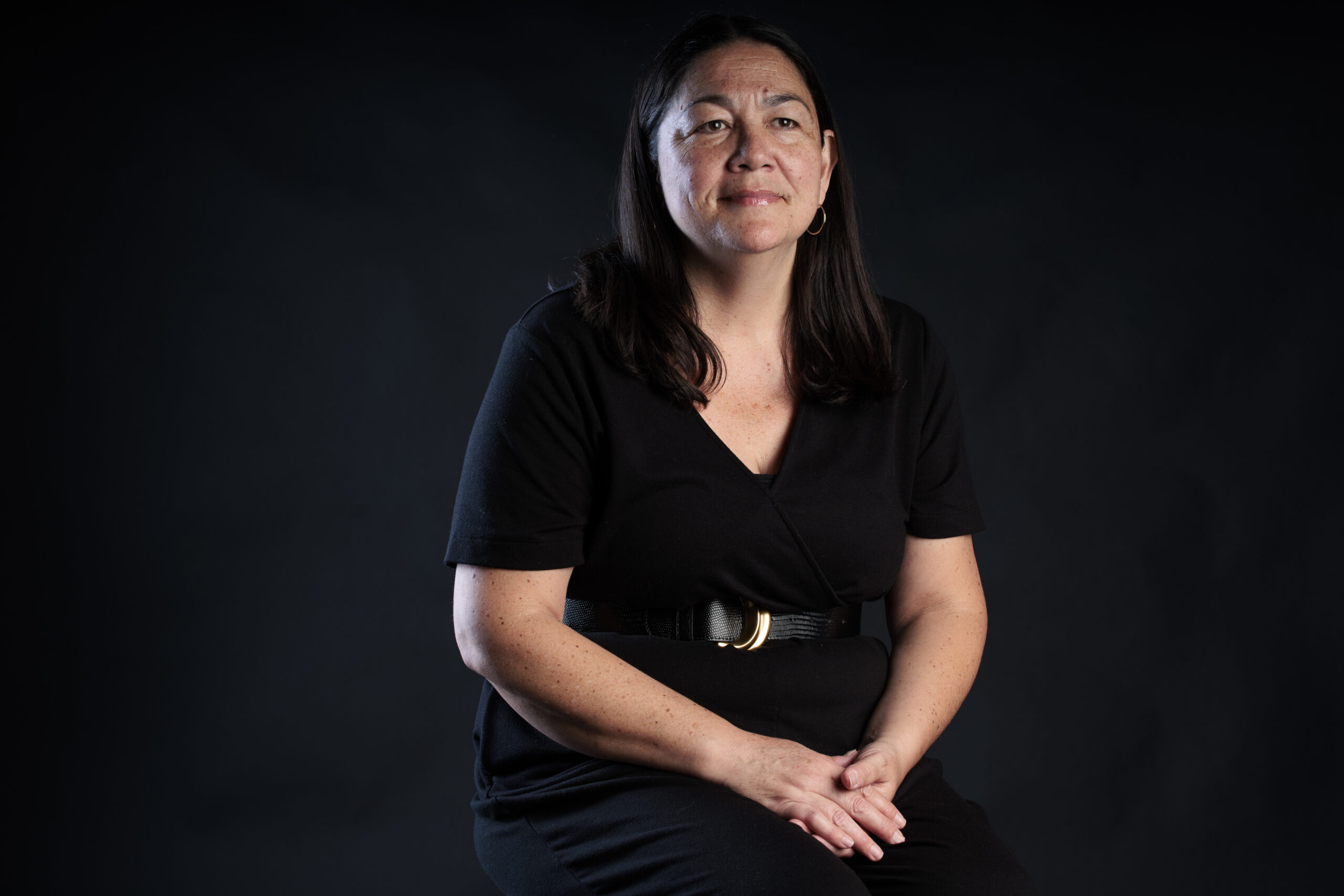
Naila Mattison was selected to participate in the “Bicentennial Baby” podcast. Mattison died in late February, shortly after the podcast was taped.
Naila Mattison, a poet, artist, and mom from West Philly, was the guest on the podcast’s first episode, which aired in late May. She died in February of cancer.
“She came to us with such a sense of urgency,” Wisher said. “She wanted to share her story. I’m so glad we made space for her.”
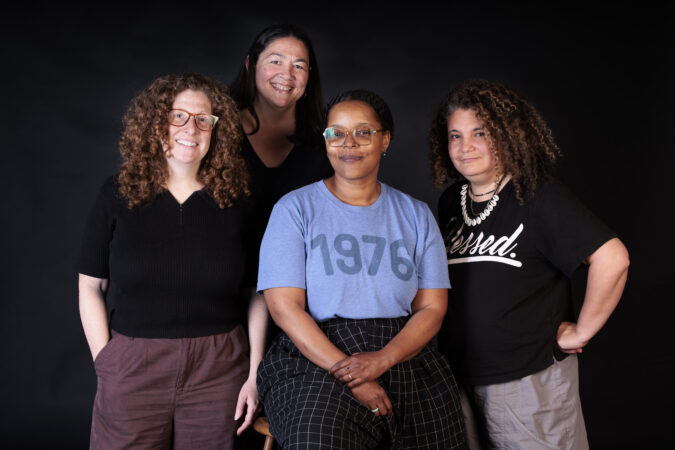
The Inquirer invited the Bicentennial babies to our studios earlier this month for a photo shoot. Allen, Fruean, Hunt, and Wisher — in her blazing blue 1976 T-shirt — came in and shared how being born during the Bicentennial impacted their outlook, is shaping their present, and is setting them up to be cool elders.
The interviews have been edited for clarity.
On Gen X culture
Michiko: In Philly, I was always conscious of being a part of this microgeneration because there were literally less of us. In the 1980s, all the entertainment we watched was focused on our parents, L.A. Law, Hill Street Blues, even The Cosby Show. My parents bought Thriller and Bruce Springsteen. But then when I was in my 20s, everything was teen-focused. I mean, Britney Spears? I was too old for that. There were all these kids who were born in 1982 who loved her. And I just missed it.
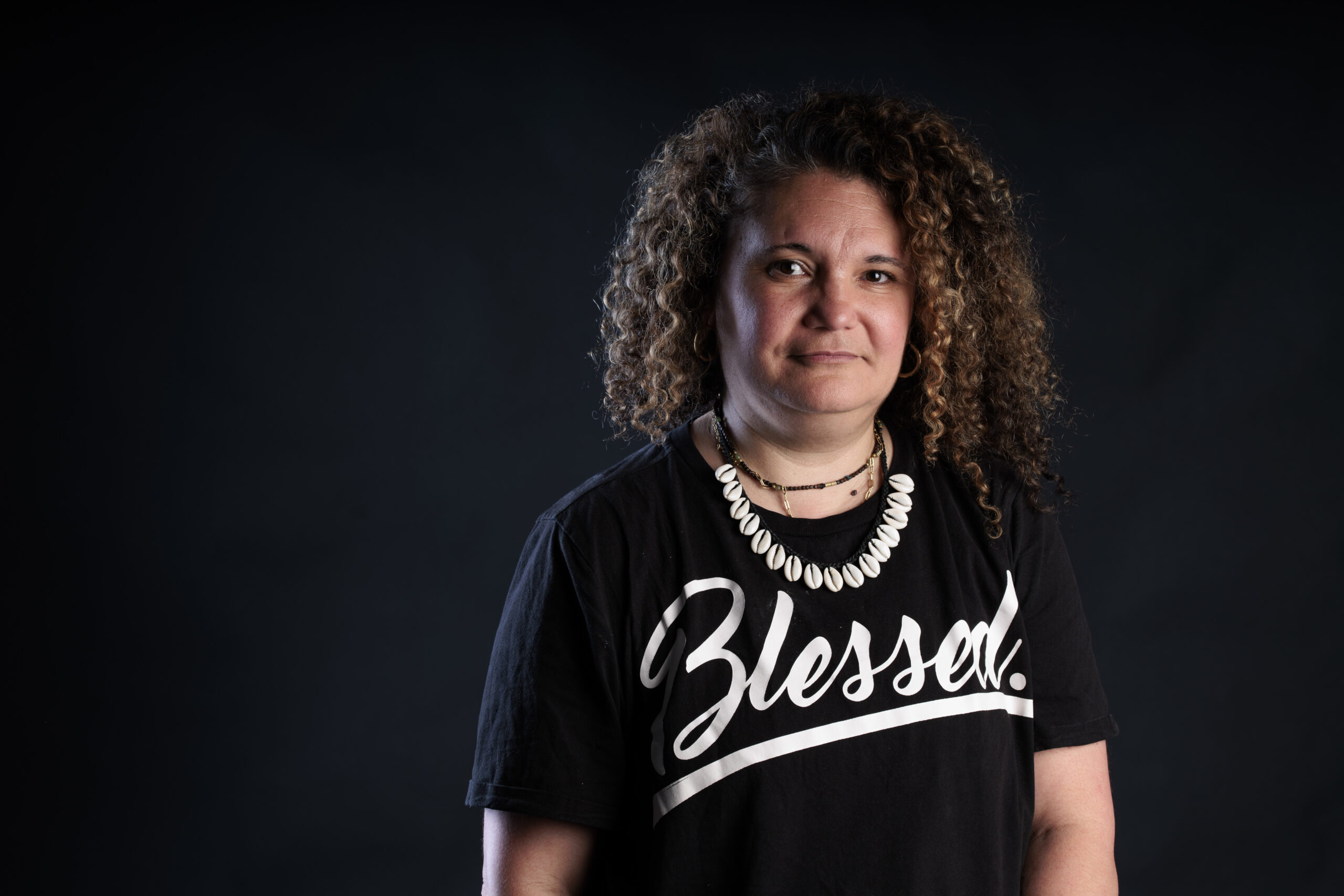
Michiko Hunt photographed in the Philadelphia Inquirer studio on May 28. Hunt is featured in the “Bicentennial Baby” podcast, produced by Yolanda Wisher.
On technology
Michiko: I went to my father’s office at 19th and Cherry Streets and typed my college applications on his electric typewriter. It was fancy. You could delete mistakes with correction tape.
Yolanda: My grandmother had a rotary phone. We had a push button phone. I had a pager.
Maleka: And right around our senior year in high school, that’s when cell phones started to come in.
Yolanda: And they were huge, like theNew Jack City phone … They were crazy expensive like video recorders. Like, if you had one of those …
Michiko: You were rich!
On fashion
Michiko: It’s true: What’s old is new again. What we called flare, my mother calls bell-bottom, and my daughter calls wide-legged. We had a distinct style though. Fashion bubbled up from specific subcultures like goth or hip-hop. Now everything comes from the internet. It’s really flattened style.
Maleka: And analog is a style now. Analog, as in not digital. It’s a fashion category. Like what people carry in their analog basket is a thing: a pencil and a notebook? That’s just what I put in my backpack.
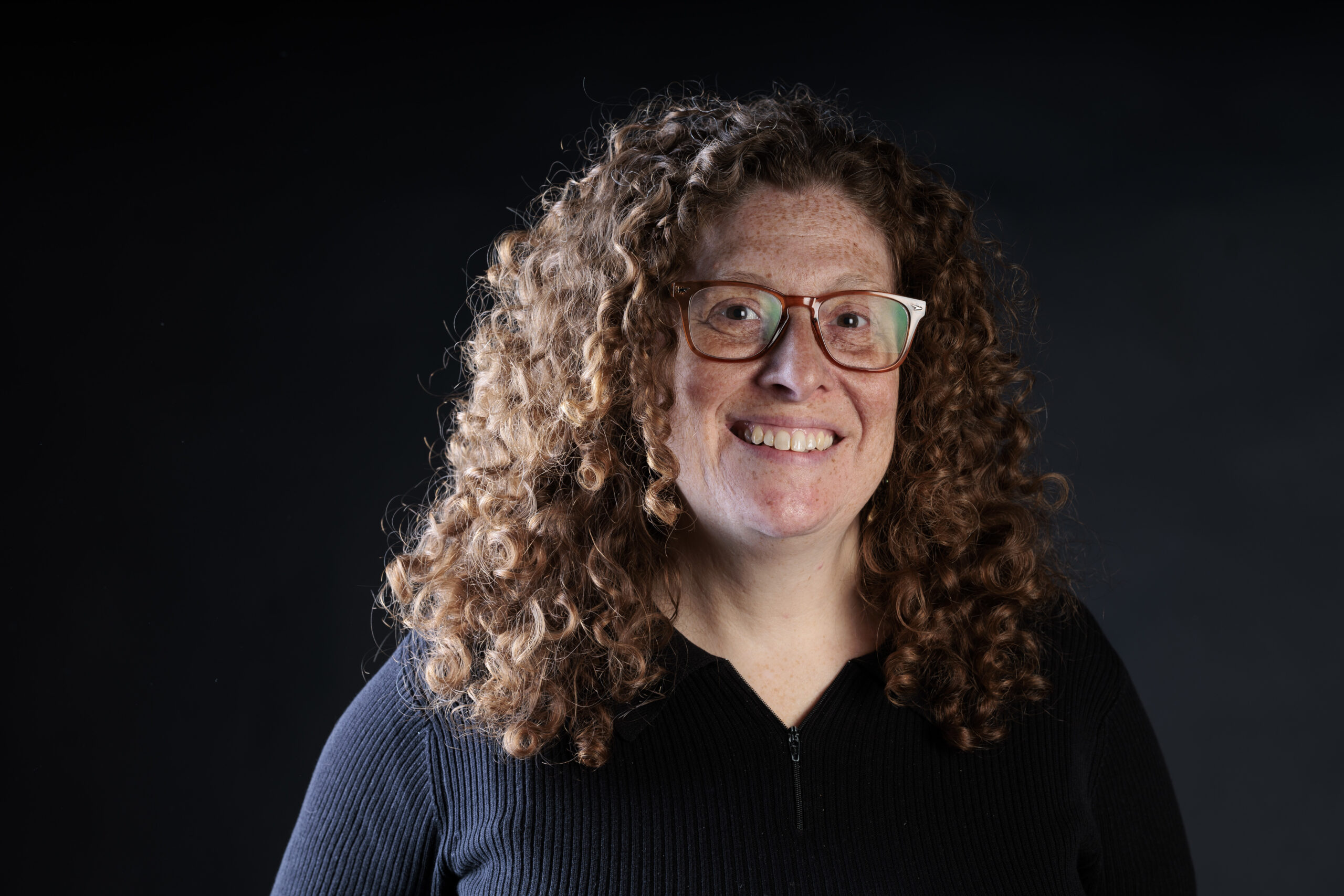
Maleka Fruean photographed in the Philadelphia Inquirer studio on May 28. Fruean is featured in the “Bicentennial Baby” podcast, produced by Yolanda Wisher.
On music
Michiko: Our music was the best. I still have ticket stubs when I went to see the Roots. We all listened to hip-hop but we also listened to other kinds of music, too.
Yolanda: Tears for Fears!
Maleka: The Eurythmics!
Michiko: MTV!
Laurie: I remember when the radio was the only thing that mattered. Then we went to tapes, then to CDS, MP3s streaming. Each time I was like, I’m not going to do it. Yet every time I made the switch. Every. Single. Time. But I think it’s going full-circle. I miss playing guilty pleasure music without a digital trail of what I listened to.
On working
Yolanda: I watched my mom work hard everyday. When she retired from her job at Merck, all she got was a watch. That said something to me. I watched my mom struggle as a single mom, work her way up, put my siblings and I through college. That job was in the background of our lives our whole life.
Maleka: My children understand [better than I do]. They are not going to break their backs for a pittance. I’ve worked so hard my whole life. Still, I have no idea what my retirement is going to look like.
On learning from elders and turning 50
Yolanda: Womenfolk in my grandmother’s generation were more matronly. My grandmother had a whole closet full of church hats. She kept her house a certain kind of way. She had a routine. She was very straitlaced, at least in public. She had a secret life we didn’t ordinarily see.
Michiko: We have a blessing of choices. My dad’s mom was Japanese American. She was born in California, a first generation immigrant. She was a teenager during the Depression. Her family worked in a packaged frozen food factory. Today she would have been an artist. She made all of our Cabbage Patch Dolls and all of those beautiful doilies. She had the soul of an artist.
Maleka: We have access to so much more information. And because of that we have wonder.
Laurie Allen photographed in the Philadelphia Inquirer studio on May 28. Allen is featured in the “Bicentennial Baby” podcast, produced by Yolanda Wisher.
On becoming an elder
Laurie: My body does not look like it does when I was 20, 30, or even 40. And I assumed when I got this age I would want to go back in time. But I don’t. Instead, I’m grateful for the wisdom for knowing who I am. I don’t want to go back to those uncertain times. I may have looked better, but I felt worse.
On being American
Maleka: When I was growing up, I had mixed feelings because I saw so many vulnerable people who needed to be protected. I didn’t have the language to define institutionalized or systemic racism. Now that I do, I want America to do better. But I’m still proud to be an American.
Yolanda: The Semiquincentennial isn’t a one-sided story, but one that celebrates the complicated history of America. The racial, cultural, and social point of view of the people who are running isn’t the only perspective. We should be able to hold all of these voices at the same time and move forward.
“Bicentennial Baby“ is available on Apple, Spotify, and Amazon Music.
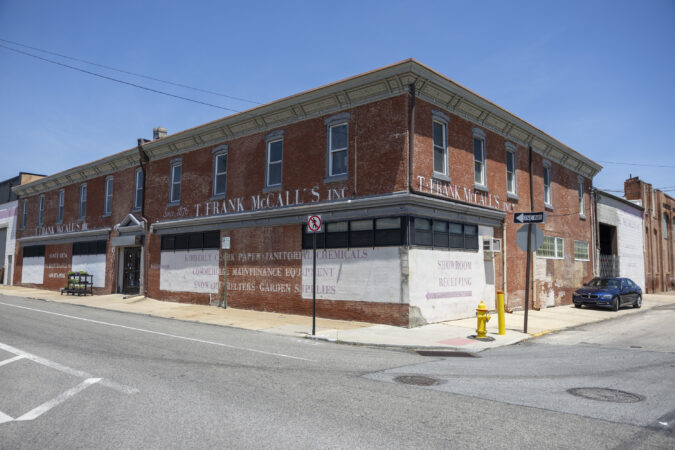
Humans still answer the phones. The business is family-owned and run by women. But perhaps the most remarkable aspect of T. Frank McCall’s is the reality that the store is still there, next to the railroad tracks in the Delaware County riverfront city of Chester, where it has been since 1876.
It has somehow survived through the administrations of 28 presidents, 32 governors, and 32 mayors; two world wars; the Great Depression; and the collapse of Chester’s economy that has climaxed with a rare municipal bankruptcy, By the time the Philadelphia Phillies played their first game in 1883, McCall’s had been in business for seven years at Sixth and Madison Streets.
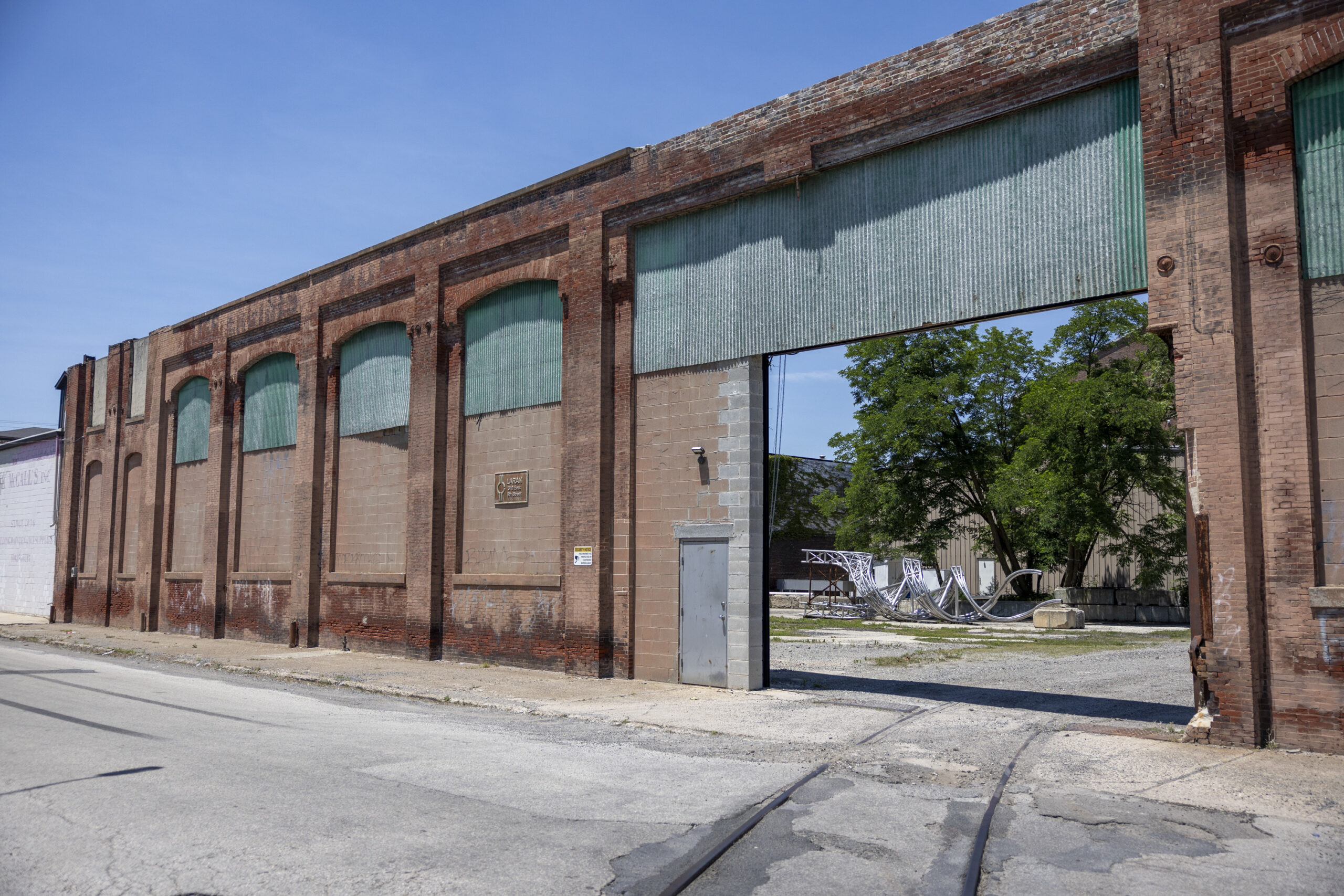
The building has retained the faint odors of the company’s seed-and-grain roots. But these days the houses that had lined the streets are long gone. The nearest neighbor is a remnant of a factory that once was part of the city’s industrial might. The store’s owners are bemused by the unused bicycle lane on the other side of Madison Street, and the superfluous parking restrictions.
The remnants of an abandoned factory building sit next to McCall’s.
McCall’s sells janitorial and cleaning supplies, but rather than a traditional “jan/san” business, it is more like a hybrid wholesale general store. That its website features a snowfall image is fitting: It made a killing selling ice-melters this winter to SEPTA, Philadelphia, and other customers.
The assortment evidently continues to work; McCall’s generates about $10 million in annual revenue, said owner Lisa Witomski, whose father bought the company from the family of the original owners in 1957 in a decade when businesses were pulling out of Chester.
What explains the staying power?
In part, Witomski said, McCall’s sells things people have to have. “Nobody really wants to buy janitorial supplies, but if you have customers or employees, you need them.”
Staying in the one location in Chester, even though only a tiny percentage of the revenue comes from in-store sales, has been an asset, Witomski said. Customers know where to find them, and the company owns the 50,000-square-foot facility outright; the mortgage was paid off in 1880.
The county estimates the property’s value at about $850,000, and the company contributes about $17,000 annually to the city and the Chester-Upland School District in property taxes. It also pays a 6% sales tax to the city, and the 16 employees pay earned-income levies. The size of the workforce has not changed much through the years.
Most of the building’s space, which includes a former stable for the horses that delivered the company’s goods in the wayback when Chester was transforming from a rural outpost to an industrial power, is devoted to warehousing. About 95% of the company’s business is shipped on McCall’s trucks, Witomski said, and the location has outstanding road access, close to I-95 and the Blue Route.
When customers call during business hours, “a human being always answers the phone,” she said. “People are shocked when you say, ‘Hello,’ and they’re waiting for ‘press 1.’”
Being a family business that has resisted corporate takeover has given McCall’s an edge with customers, said Witomski, who recalled playing hide-and-seek among the store’s galvanized trash cans as a kid.
“Unlike almost all our competition, we haven’t sold out.”
The original McCalls
George McCall started his feed-and-grain business in 1876, when Chester’s population was growing rapidly. He eventually turned over the keys to his son Thomas, who later passed on the business to his sons under the name T. Frank McCall.
A breakthrough came in the 1880s when nearby Scott Paper — on the Chester riverfront, the company that is believed to have been the first to market toilet paper on a roll and disposable paper towels — hired McCall’s as its distributor. (The plant now bears the Kimberly-Clark name, but the Scott brand name survives.)
Along with Scott products, through the years it would sell and distribute a wide variety of janitorial and other products while remaining in the seed-and-grain business.
The McCalls would run the company for 80 years.
McCall’s today
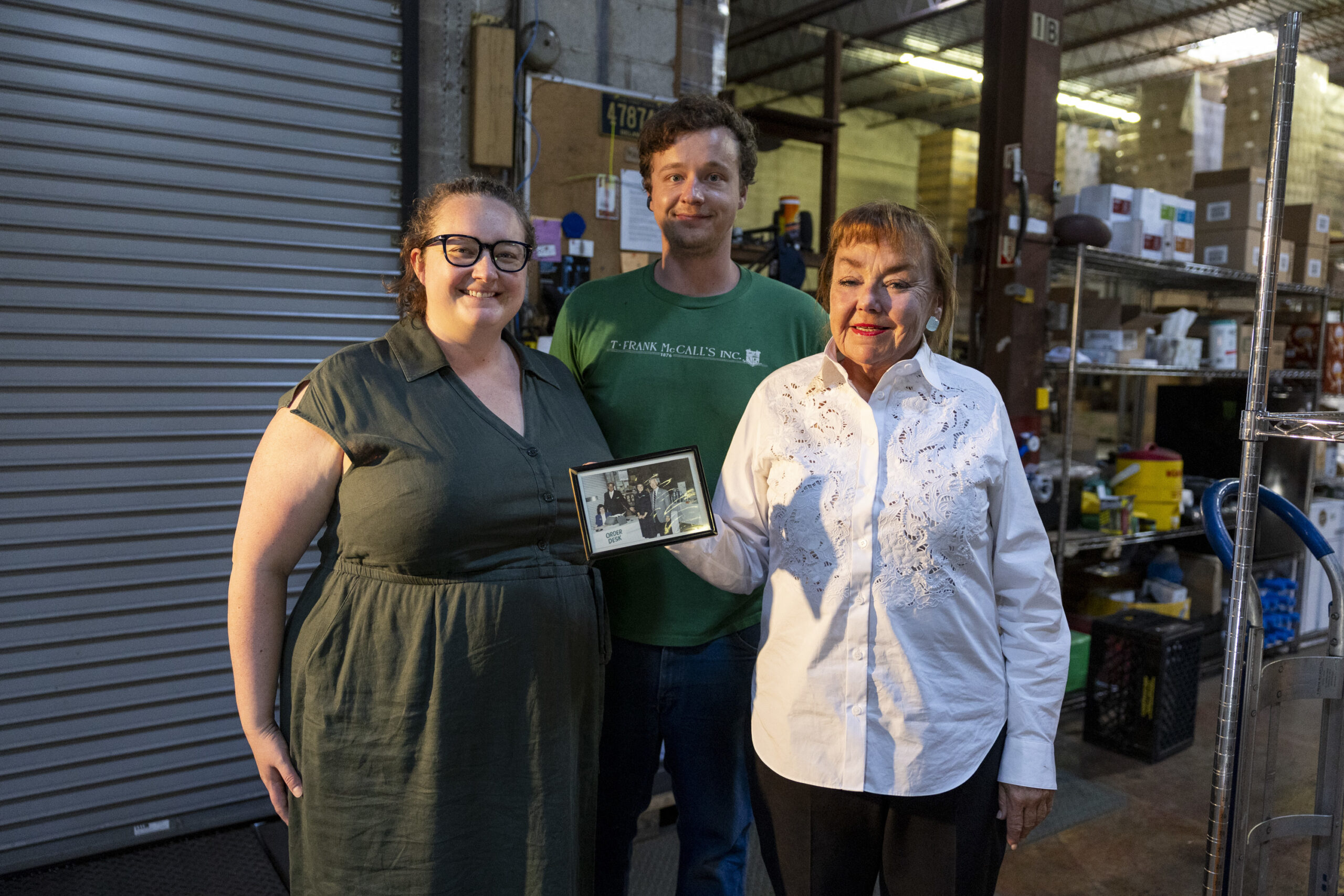
Owner Lisa Witomski (right) with her niece Lisa Claire, McCall’s office manager, and nephew Chas Wiley, warehouse manager, inside the store.
They sold the company in 1957 at a time when Chester was entering a postwar decline: In the 1950s, the number of apparel and general merchandise stores in the city fell from 68 to 19, according to Chester Planning Commission documents.
Brothers Edward and Charles Witomski purchased the business on the advice of a member of the legendary Pew family, founders of the Sun Oil empire. The brothers had owned a bar in Essington and were looking for an enterprise that would be more family-friendly, Lisa Witomski said.
Like the McCalls, they continued the tradition of selling and distributing a wide variety of products, including paints and even baby chicks at Easter time. Eventually the business was passed on to Charles Witomski’s daughters, Marcie and Lisa, the company president. Marcie Witomski’s daughter, Lisa Claire, is the office manager; Marcie’s son Chas Wiley manages the warehouse.
In recent years their regular customers have included casinos throughout the region that have needs for paper and enzyme cleaning products. (Gamblers have been known to make a mess.)
And ice melter has been a source of considerable cold cash — this winter in particular.
“It was a doozy,” Claire said. It wasn’t just the 30 inches of snow, but the subsequent Arctic freezes that locked in the snow-and-ice coverage. The result was the sale of mass quantities of calcium chloride melter.
On occasion, a motorist along Madison Street, which is part of Route 320, stopped in to buy some melter, Lisa Witomski said, but the store never was heavily trafficked even when the neighborhood was well-occupied in the 1950s and ’60s.
Save for a few incidents — one person tried to walk off with a lawn mower, another tried to make off with a 100-pound barrel that he couldn’t carry — crime has not been an issue, Lisa Witomski said, even when the city went through a period a decade ago when it had the nation’s highest per capita homicide rate.
“We are not exactly in a populated area,” she said.
Cars parked in front of the store these days are anomalies. “We think the two-hour parking is very funny,” she said.
Said Michelle Cubler, the purchasing manager, “We’ve never seen them actually ticket on this street.”